

























































Final Israeli polls point to stalemate ahead of Tuesday’s election
With no more polls allowed to be released before the election, neither Netanyahu’s bloc nor the opposition is reaching the 61-seats necessary for an outright majority
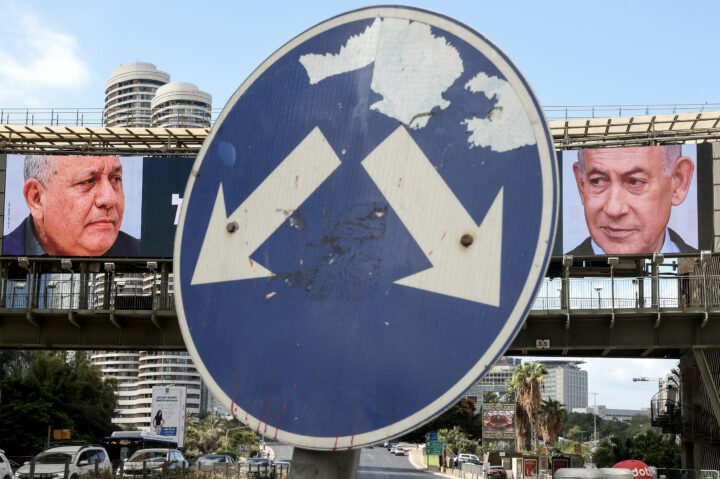
ack GUEZ / AFP via Getty Images
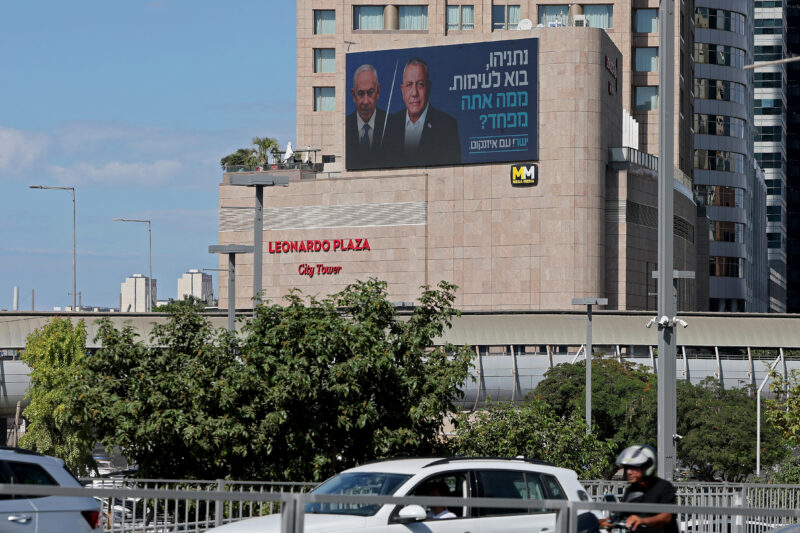
A road sign stands in front of a large billboard featuring Israel's Prime Minister Benjamin Netanyahu (R) of the Likud party and former military chief and leader of the centrist Yashar party, Gadi Eisenkot, in Ramat Gan on October 20, 2026.


 Add JewishInsider on Google
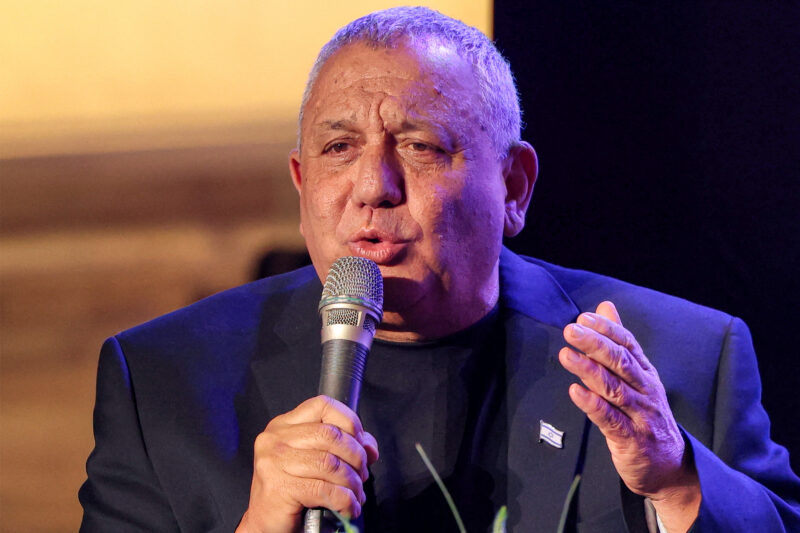
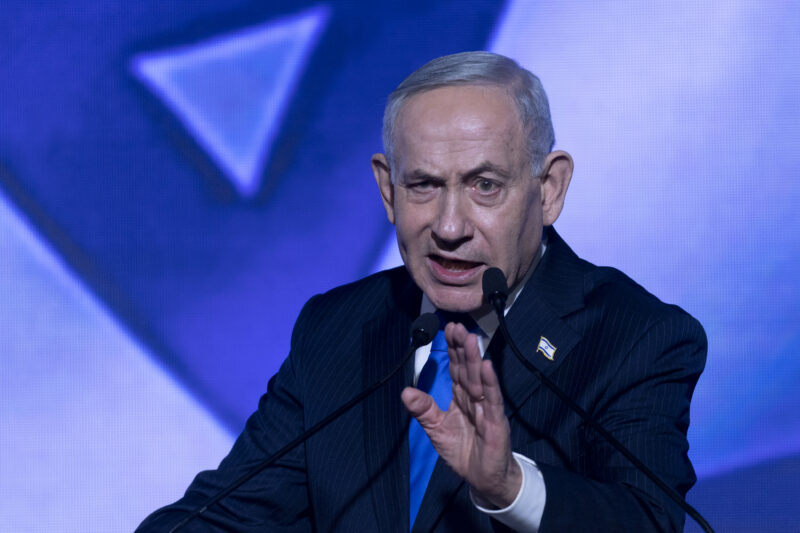
The likeliest outcome of Israel’s upcoming election is a stalemate, according to the final polls ahead of next Tuesday’s election, with neither side — Israeli Prime Minister Benjamin Netanyahu’s bloc and the bloc opposing him, led by Gadi Eisenkot — projected to reach a majority of the Knesset.
Israeli law prohibits the publication of new polls from Friday until the Oct. 27 election.
The overall polling average put the bloc led by Netanyahu ahead, with 54 seats, while the opposition would get 50 seats, both short of the necessary 61-seat majority. Netanyahu’s Likud polled at 23 seats compared to 21 for Eisenkot’s Yashar party.
However, the gap between polls from right-leaning news outlets and those from the mainstream networks and publications was significant.
In the average of six mainstream TV and newspaper polls, the Eisenkot-led bloc had more seats than the current coalition. An average of polls from the last two days showed Eisenkot’s bloc narrowly ahead, holding 52 seats to the Netanyahu bloc’s 50 seats.
Meanwhile, an average of the polls on Israel’s Channel 14 and i24 News, which use pollsters who had previously worked for Likud, found Netanyahu’s coalition projected to receive a 61-seat majority of the Knesset, while Eisenkot’s bloc would only have 45 seats.
The Arab parties, the Joint List and Ra’am, are polling at an average of 14 seats, just short of their record 15 seats in 2020 when they ran together.
Arab voter turnout has hovered around the 50% mark in the last decade. However, Stat-Net, a polling institute specializing in the Israeli Arab population, has said that it may be as high as 68-69% this year, which may give the parties representing the Arab minority even more seats than projected.
Increased Arab turnout would contribute to higher overall turnout, which would increase the number of votes needed to meet the minimal threshold to enter the Knesset.
In both the general polling average and the right-leaning media’s polls, neither Amcha Yisrael nor the Reservists and Economy Party, which have hovered near the 3.25% electoral threshold in recent weeks, received enough votes to enter the Knesset. In the more left-leaning polls, Reservists and Economy, which has not pledged to recommend either Netanyahu or Eisenkot for prime minister, receives an average of three seats.
More Stories
ALBANY ALLIANCE
Jewish New York Dems launch PAC to counter antisemitism and anti-Zionism

Presidential Prelude
Josh Shapiro launches federal PAC in potential signal of 2028 plans

NEW HIRE
El-Sayed hires veteran political consultant Lenore Goldman as Jewish liaison
analysis
Democrats hope to ride a historic Senate wave, but face several speed bumps

EXCLUSIVE
JDCA launches streaming and digital ads supporting Cait Conley, attacking Lawler

DFL DISCORD
Amy Klobuchar, Angie Craig condemn Hasan Piker ahead of Minneapolis event with Ilhan Omar
Please log in if you already have a subscription, or subscribe to access the latest updates.
 Continue with Google

 Continue with Apple