


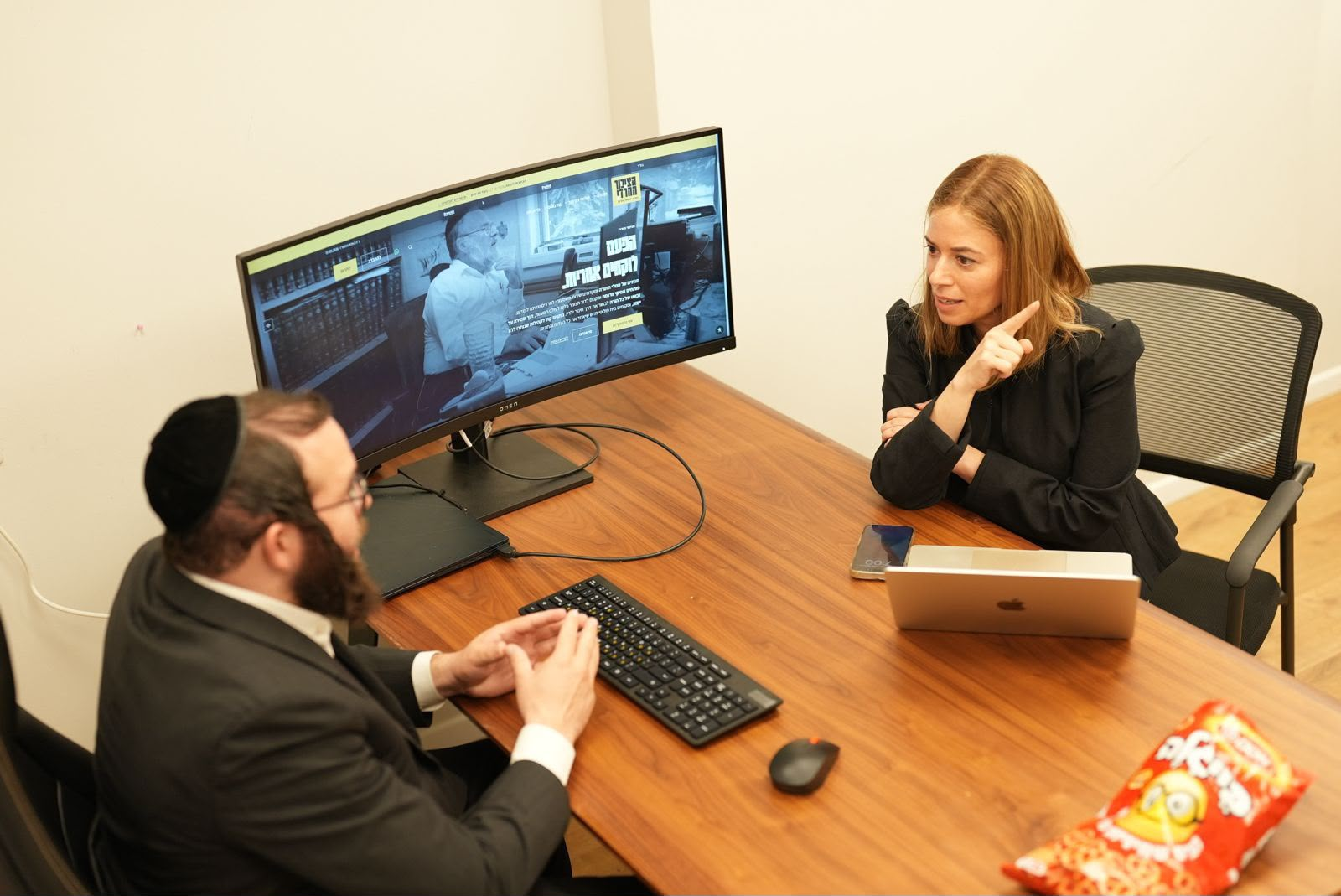
Hatzibur HaHaredi
First female Haredi candidate promises reform to ultra-Orthodox politics
Path-breaking academic Nechumi Yaffe is running for Knesset in a party of Orthodox Israelis who want to bring change to their community


 Add JewishInsider on Google
Just don’t call it “change.”
Nechumi Yaffe, a norm-shattering Haredi woman, and her fledgling political party, Hatzibur HaHaredi, may be tilting at ultra-Orthodox windmills, but they are seeking nothing less than a wholesale transformation of Haredi society. Yaffe wants to pull the community out of poverty. She wants to alter its relationship to the army on the contentious issue of Haredi conscription. And she wants to “make higher education the default” in order to bring more men into the labor force.
Call it “repair, rehabilitation, healing,” she said, but don’t call it “change,” a word she said was too threatening to a community bound by tradition and ritual.
Yaffe is the first woman to run for Knesset in a Haredi party, after a series of career firsts: She’s the first Haredi woman to receive a Ph.D. from Hebrew University, and the first Haredi woman faculty member at Tel Aviv University, where she teaches at the School of Public Policy, focusing on Haredi society. She also founded “Achdut,” a Haredi volunteer command center, after the Oct. 7, 2023, Hamas-led attacks on Israel, coordinating over 100,000 volunteers.
Yaffe, who is 50, spoke with Jewish Insider on Wednesday about Hatzibur HaHaredi’s plans and why change has been so difficult in the Haredi community. A graduate of the prestigious Gateshead Jewish Academy in the U.K., a Haredi teachers’ seminary, and with a post-doctorate from Princeton University, she spoke near-perfect English.
“I think the Haredi community needs to take more responsibility and take initiative and do its share,” she said. “Most Haredi people feel like victims and feel like they’ve been [persecuted] … I think people have broad ignorance of what it means to be citizens and do their share. … They were never taught civics and don’t understand their duties and obligations.”
Most Haredim, Yaffe argued, feel that they contribute by learning Torah, which they believe leads God to protect Israel. They think they pay taxes, she said, because they have sales tax and that they are major consumers because they have many children, not understanding that far fewer of them pay income and municipal taxes than in general society, because of widespread poverty in their sector. The average Haredi household’s consumption was 58% of the average Israeli household in 2024, according to an Israel Democracy Institute study. But when the broader public makes demands, Yaffe said, the Haredi population thinks, “what more do these people want from us?”
Meanwhile, those who should know better pursued “short-sighted, lazy policies” and ignored the needs of the Haredi population, she added.
“A bad political agreement was made for them,” Yaffe said. “Haredi politicians [tell potential coalition partners] ‘all we want is autonomy and we will vote any way you want.’ Non-Haredi politicians would overlook what that really means for the economy and said ‘let them rot in their ghetto.’ All that came back to bite us. … We have rapid growth in a community that doesn’t understand what is wrong. They are not participating in the army or the economy. Their poverty is affecting the Israeli population. The autonomy is a threat to the entire country.”
Hatzibur HaHaredi (“Haredi Public”) are people who are “loyal to our Haredi identity, put Torah at the center of our lives … but we want to take responsibility for the financial and educational future for our children and for the State of Israel. We want to be part of designing our future,” Yaffe said.
The party’s first priority is education, by promoting Haredi public schools that are affiliated with the Education Ministry. Currently, most Haredi schools are independent, meaning that they do not use a government-backed curriculum, though they still receive government funding, and very few prepare students for national high school matriculation exams.
“We want to change norms through resource allocation, to encourage people to move their kids” to the public schools, Yaffe said. “My vision is that [the schools] become the mainstream, the natural automatic choice. Those who don’t want their children to get a secular education should be the ones deviating from the norm.”
Yaffe took issue with the current situation regarding Haredi conscription in the IDF, by which over 100,000 young Haredi men are considered to be illegal draft-dodgers who could, potentially be arrested.
“It’s not conducive to making them love their country more or go to the army. It’s making people illegitimate and not pushing them in the right direction,” she said, calling for the government to “be very strategic.”
She called to start with the young men who do not actually study in a yeshiva. The rabbis of those yeshivas know which students are falsely registered and which actually study, she said.
“They should be recruited ASAP,” Yaffe said. “This should be done tomorrow. Thousands can be recruited. This will normalize the army” in Haredi society.
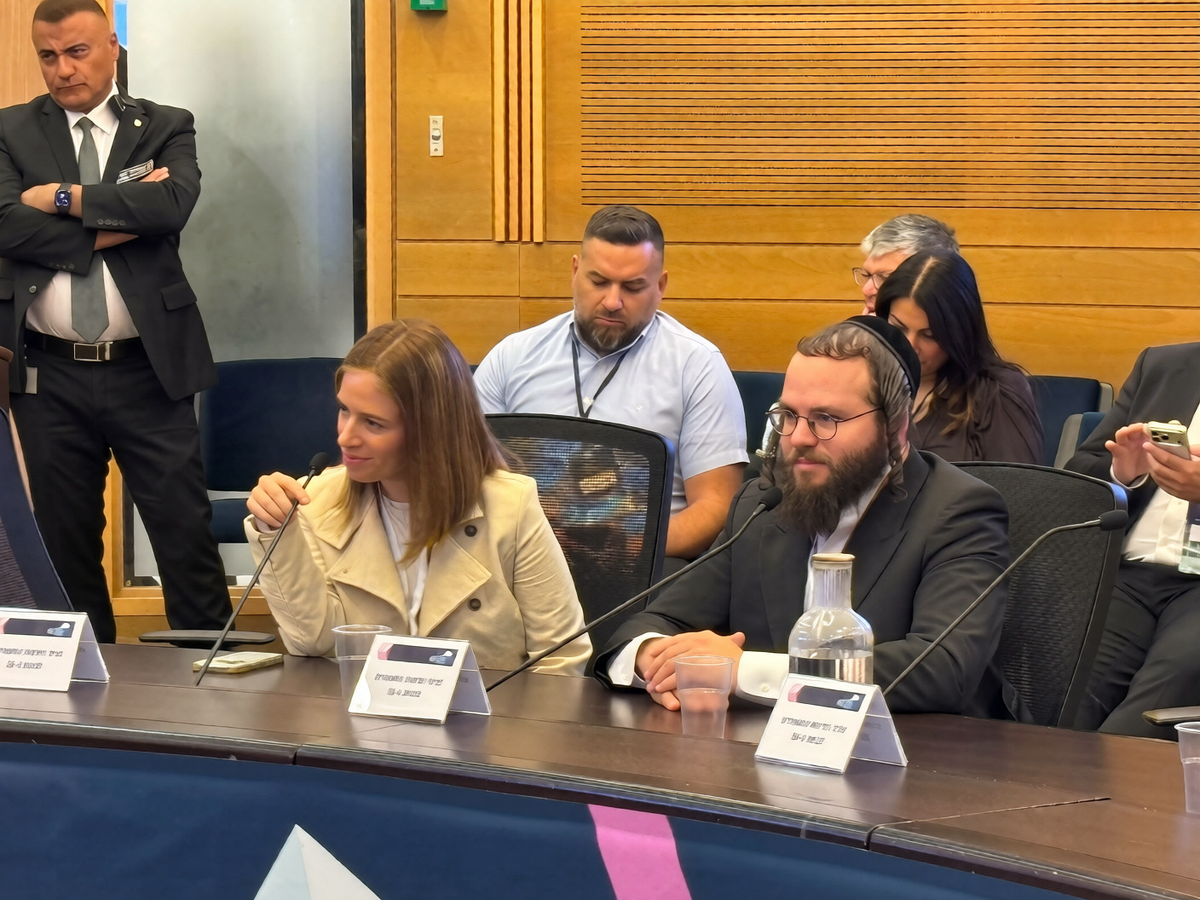
As for leading Haredi rabbis who have said that even those who are not actually learning Torah should not join the IDF, Yaffe said: “My research has shown that we always think the rabbis are the movers and shakers, but statistically, it’s social norms. No one wants to be alienated from the community. We have to normalize the army as part of life.”
Another major priority for Hatzibur HaHaredi is employment for men after yeshiva and military service. While about 83% of Haredi women work, only 54% of men do.
“We have to make higher education the default in order to realize their potential and create jobs for thousands of men who could be part of the labor force,” she said.
Increasing employment will better integrate Haredim into society, Yaffe said.
“One of the main components of poverty is having no control over your life,” she said. “When these men get jobs and have a salary, they can normally plan their monthly expenditures and gain control of their lives … and then I trust people to get things right.”
Yaffe compared the potential of Haredim in the workforce to major waves of Jewish immigration “that revived and strengthened the country. The next wave will be Haredi immigration into Israeli society. We’re going to take the talent and ambition of this community and harness it.”
Yaffe also plans to fight for the rights of “neglected, overlooked and used” Haredi women. She believes that they are the party’s “weapon,” and will be a large part of their voter base.
“We are sent to work and bring in money, but have no legal protections,” she said.
Haredi women are often employed as teachers, but their labor rights are frequently violated, and contrary to nearly all public school teachers in Israel, few Haredi teachers are union members. A common practice in Haredi schools – including those once managed by the current head of United Torah Judaism, Yitzhak Goldknopf – is to hire teachers as contractors and sign new contracts with them annually, so they do not receive tenure or raises. Yaffe also said that hiring and promotions are often based on personal connections.
“It’s like a third-world country; it’s so corrupt,” Yaffe said of employment practices in Haredi schools. “The corruption needs to end, full stop. We need to get women into senior jobs and around the decision-making table.”
While one may think that being the primary breadwinners would grant haredi women more power, Yaffe said that “the culture is that Torah is more important than money, and they don’t have access to Torah [at the same level as the men].”
“It ends with us,” Yaffe promised. “Women are making the money and don’t get to make the decisions. That will end when women are around the table and see the mechanisms and say we won’t play this game anymore.”
Much of Israeli Haredi society has very closed social ranks, and those who break the norm are often ostracized. Haredi commentators have attempted to criticize Yaffe and others in the party as not really Haredi.
“The easiest way to refute criticism is to ostracize someone,” Yaffe said. “I think it’s hard to say that about me. I wasn’t just a teacher; I wrote the curriculum. My name is on their children’s textbooks.”
Yaffe said she has gotten “mixed reactions” and some people think she’s “off,” but that “most say [I am] trying to do something good.”
She is used to deviating from the norm, since she turned to academia, but the criticisms are more difficult for other members of her family, who received phone calls telling them that she is “terrible and how dare [she] go against the establishment.”
“Some people disapprove, but I don’t care,” she said. “I hope my kids are OK receiving criticism, because they may not be as resilient as I am. … It’s not easy having this kind of a parent, but you can’t choose your parents.”
Earlier this week, leading Haredi Rabbi Dov Lando sparked controversy by saying that religious Zionist soldiers were killed in the war because of their “distorted Torah.”
Yaffe was careful not to criticize specific rabbis, but said that Hatzibur HaHaredi is “demonstrating that there are enough Haredi people who want to do things differently and are proud to be part of this country. We want to serve. We are not alienated from the pain, sacrifice and heroism of our brothers who are keeping us safe and alive. We don’t take this state for granted and are grateful for the miracle of this country’s establishment.”
“We are trying very hard to do something different, and with God’s help we will succeed,” she added.
As to their consistently polling under the threshold, Yaffe said: “This is a country of miracles. We hope we’ll be part of it and get in [to the Knesset].”
“This is a movement of repair, responsibility, of a shared fate [with the rest of the country]. We’re here to stay. Eventually, we’ll make it in and lead the Haredi community into normal lives,” she said.



Please log in if you already have a subscription, or subscribe to access the latest updates.
 Continue with Google

 Continue with Apple