








































Israel’s Syria strikes shine light on growing divide with U.S. over Middle East policy
Israeli strikes on a Syrian airbase this week served as the latest disagreement between the U.S. and Israel over how to engage with Damacus and increased Turkish influence inside the country
Syrian Presidency
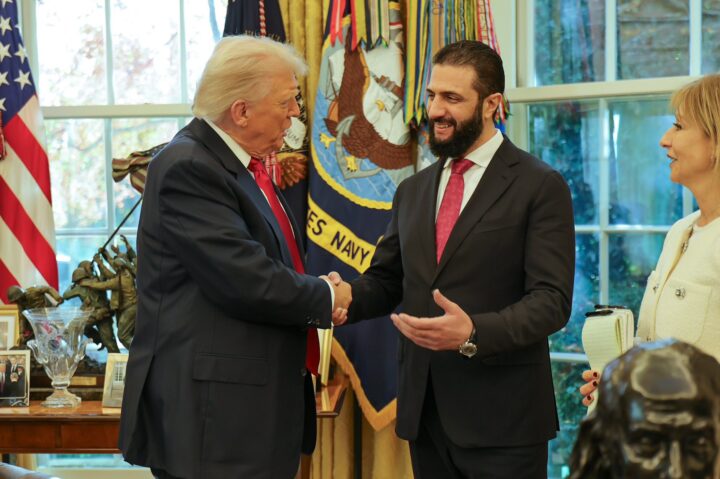
President Donald Trump greets Syrian President Ahmad al-Sharaa in the Oval Office on Nov. 10, 2025.


 Add JewishInsider on Google
The aftermath of Israeli airstrikes in Syria earlier this week are shining a light on the growing divide between the United States and Israel over how to approach Damascus’ government and its relationship with Turkey.
Israel said it struck Syria’s Abu al-Duhur air base in the country’s northwest on Monday based on intelligence that Turkey was preparing to deploy forces there, arguing that such a move would threaten Israeli security. Turkey and Syria denied any involvement from Ankara at the base, though the Syrian foreign minister said a Turkish military delegation had visited it shortly before the strikes.
The incident garnered a rebuke from U.S. Ambassador to Turkey Tom Barrack, who labeled the Israeli move as an “unnecessary escalation that does not advance regional stability.”
The episode is the latest disagreement between the U.S. and Israel over how to engage with Syria’s government and increased Turkish influence inside the country following the fall of former President Bashar al-Assad in December 2024.
The Trump administration has sought to stabilize and support the government of President Ahmad al-Sharaa while maintaining close diplomatic ties with Ankara. Israel, however, has remained more skeptical of Syria’s new leadership — owing in part to al-Sharaa’s having previously led an al-Qaida offshoot — and has viewed Turkey’s military posturing north of its borders as a security threat.
Jonathan Ruhe, a fellow at the Jewish Institute for National Security of America, told Jewish Insider, “The United States and Israel haven’t seen eye-to-eye on Syria since the fall of the Assad regime, both in terms of what al-Sharaa’s government represents and how to approach Syria’s new leadership.”
For Israel, Ruhe said, the removal of Assad and the weakening of Iran’s position in Syria did not eliminate the threat from the country. Instead, Jerusalem increasingly sees Turkey — a major backer of al-Sharaa — as a potential replacement for Iran as the dominant outside power in Syria.
“From Day One, Israel has worried that al-Sharaa simply replaces the Iranian threat in Syria with a Turkish one,” Ruhe said. “For the Trump administration, Syria and Turkey represent diplomatic and investment opportunities, not military problems.”
Israel, Ruhe said, has pursued a “proactive military approach,” including strikes aimed at preventing weapons and military infrastructure from falling into the hands of Islamist actors and Ankara.
“This explains Israel’s proactive military approach to Syria, starting with its decision to eliminate Assad’s arsenals as al-Sharaa took power in late 2024,” Ruhe said. “After targeting potential Turkish bases in central Syria last year, the latest airstrikes show Israel is willing to preempt Turkey’s military presence in northern Syria, farther from Israel’s borders.”
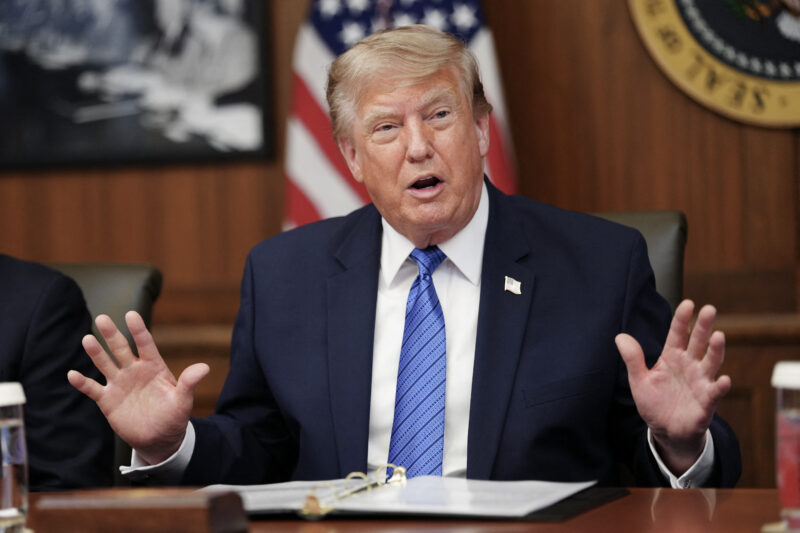
Meanwhile, the U.S. has taken a different approach as President Donald Trump has repeatedly expressed fondness for al-Sharaa and Turkish President Recep Tayyip Erdoğan – even as Israel has taken a more hostile stance to both leaders.
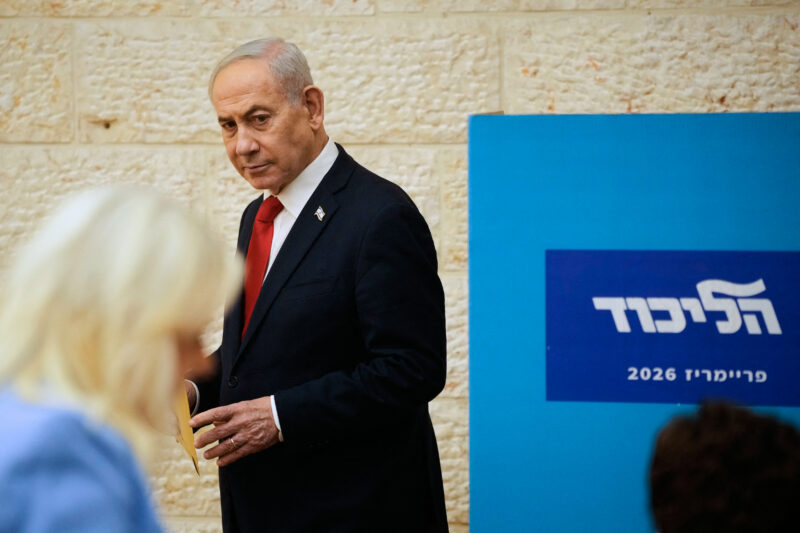
James Jeffrey, who served as the first Trump administration’s special envoy for Syria and ambassador to Turkey, said Washington has long been aware of tensions between Erdoğan and Israeli Prime Minister Benjamin Netanyahu.
“The U.S. has been pressing for deconfliction arrangements and talks between Israelis and Turks and formally Israel and Syria,” Jeffrey said. “The U.S.’ short- term goal is to calm [the] situation.”
Barrack told The Jerusalem Post following the strikes that the U.S. is looking to resume a deconfliction mechanism between the countries.
Sinan Ciddi, a senior fellow at the Foundation for Defense of Democracies, said Washington is also looking to avoid new conflicts in the region while it tries to wind down tensions with Iran.
“I suspect the Trump administration, mainly as advised by Tom Barrack, feels the administration is juggling way too many balls in the region, Iran being the main one, and the last thing they need is military escalation on the part of Israel,” Ciddi said.
That approach has increasingly put Washington and Jerusalem at odds when Israeli security concerns have collided with the administration’s broader effort to stabilize Syria.
Ciddi noted that Barrack — in his additional role as special envoy to Syria — is contributing to the divide between U.S. and Israel policy approaches to Damascus. He pointed to Barrack’s controversial comments equating Israel to Hezbollah and promoting Turkey’s inclusion in the F-35 fighter jet program as being at odds with Israeli interests.
“He is the premier voice that Trump listens to in this space,” Ciddi said, noting that Barrack holds “a clear preference for siding with Turkey” and “is unduly influencing Trump himself and preventing other members of his administration from providing him best advice.”
“I think Tom Barrack and some of the other members of the Trump administration clearly believe that Israel is really pushing an agenda that compromises U.S. national interests, which I would not agree with,” he added.
Analysts warned that continued disagreements between the U.S. and Israel could eventually produce a much more serious problem for Washington, particularly if the administration is unable to balance its partnerships with Jerusalem and Ankara.
“The danger is at some point Israel could miscalculate and get into a serious incident with Turkey either in Syria or [in the Eastern Mediterranean],” Jeffrey said. “This would be a huge blow to the U.S. [which is] tied closely with both. And, most importantly, it would advantage Iran in Syria and beyond.”
Ciddi also said the U.S.-Israel divergence over Syria leads “nowhere good,” especially given the increasingly hostile posturing between Turkey and Israel inside Syria.
“Incidents like this over and over again, added to heated rhetoric and posturing, could lead to a significant miscalculation or an intentional action that results in a retaliatory response that would put Turkey and Israel into armed conflict,” Ciddi said.
More Stories

SURVEY SAYS
New poll shows Vance with very low support among Jewish voters

GRANITE GAMBIT
Stefany Shaheen’s anti-AIPAC attacks haven’t boosted her fortunes in New Hampshire
SCOOP
Sen. Rick Scott urges Trump to pave pathway for Canadian Jews to emigrate to U.S.

Mamdani’s Mensch
The Chabadnik inside Zohran Mamdani’s ‘people-powered’ office
TEPID RESPONSE
Rubio holds back criticism of U.K. sanctions against Israeli settlements

Democracy Deficit
New report warns civics education crisis is fueling antisemitism, eroding support for Israel
Please log in if you already have a subscription, or subscribe to access the latest updates.
 Continue with Google
 Continue with Apple