

































































Rogers describes El-Sayed as a national security threat in final Michigan Senate debate
The GOP nominee also made appeals to disaffected Jewish and other Democratic voters who feel uncomfortable voting for El-Sayed
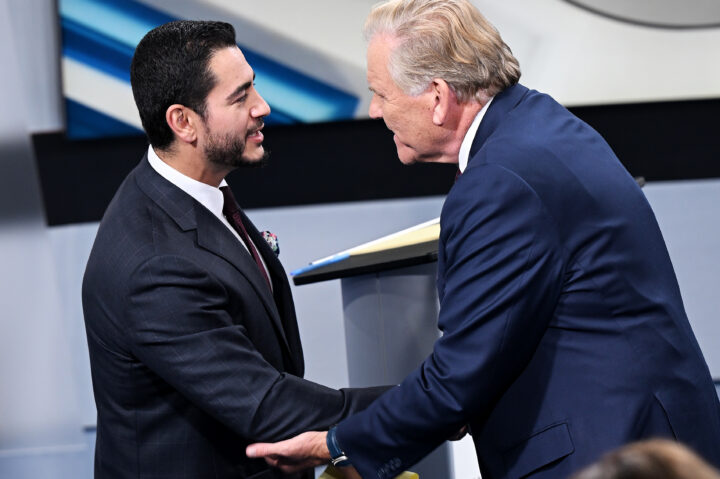
U.S. Senate candidates Democrat Abdul El-Sayed, left, and Michigan Republican Senate candidate, former U.S. Rep. Mike Rogers (R-MI) shake hands after the debate on October 21, 2026 at WXYZ Channel 7 in Southfield, Michigan. (Photo by


 Add JewishInsider on Google
Michigan Republican Senate nominee Mike Rogers described his Democratic opponent, Abdul El-Sayed, as a national security threat in their second and final debate, while appealing to Jewish and other disaffected Democratic voters to support him.
Overall, however, the debate was considerably more restrained and sedate than a previous debate two weeks ago.
“If you are going to the United States Senate, we need to know: Are you for America, or are you for these terrorist groups overseas?” Rogers said, referencing ties between El-Sayed supporters and Hamas, Hezbollah and the Muslim Brotherhood. “You can grin and you can smile and you can talk real pretty, but I’m going to tell you what — that is a risk to our national security.”
“My opponent can’t even condemn the [Islamic Revolutionary Guard Corps], which is the terrorist enforcement arm of Iran, and doesn’t believe Iran is any more dangerous than Israel,” he said. “That is an absolute non-starter if you’re going to send somebody back to the United States Senate.”
Rogers also accused El-Sayed of lying about his ties to the Muslim Brotherhood, and of declining opportunities to distance himself from Muslim Brotherhood-backed Egyptian President Mohammed Morsi, whom El-Sayed previously praised.
“This is about an ideology, an ideology that’s banned in five Muslim countries, an ideology that’s banned in another six different countries, an ideology that is very concerning to law enforcement in the United States because they use it for funding overseas operations,” he added later in the debate.
El-Sayed insisted that he has never been a part of the Muslim Brotherhood and said that the attack “doesn’t make any sense” and “it’s actually really quite beneath you.”
“I’m proud to be an American,” El-Sayed said. “I’m proud of our Constitution that guarantees all of us the right to pray as we choose to pray. And the question that you would ask that, I think, is actually really quite shameful.”
El-Sayed accused Rogers of being “bought off” by AIPAC, among other special interest groups, pointing to a report in The New York Times on Wednesday that the pro-Israel group plans to transfer $9 million to pro-Rogers groups ahead of Election Day.
Rogers also repeatedly appealed to Democratic voters, including members of the Jewish community, who have concerns about or say they won’t vote for El-Sayed, referencing an op-ed by former Michigan Democratic Party Chair Lon Johnson and David Kramer, a prominent Jewish Democratic fundraiser in the state. Johnson has said he plans to leave the Senate race blank, while Kramer has said he won’t support El-Sayed but hasn’t said if he would support Rogers.
“We’re doing exceptionally well with Jewish Democrats who are literally afraid,” Rogers said. “I’ve talked to ones with tears in their eyes about the future of their kids and grandkids because of the anger and division that he is laying out on the street. … Jewish Democrats who are afraid for their children when their daughters can’t wear their Star of David walking across Michigan’s campus — these are real. My opponent’s rhetoric, his vitriol, is having consequences.”
He also made a direct appeal to voters who supported Rep. Haley Stevens (D-MI) in the Democratic primary, telling them, “You have a home with us.”
Asked whether he considers Iran to be a threat to the United States, El-Sayed said that there’s “no doubt” that it is, but said that “that threat had been contained” by the Obama administration’s Joint Comprehensive Plan of Action agreement.
Rogers said that the U.S. launched the war in Iran because it had achieved the capability to produce a nuclear weapon, and warned that an Iranian nuclear weapon would cause gas prices, elevated by the current war, to skyrocket. And he emphasized that Iran continues to fund terrorist groups attacking the U.S. and its allies.
Ahead of the debate, members of the Nonnegotiable campaign — which has sought to pressure El-Sayed to affirm Israel’s right to exist and make commitments to Jewish security — issued an open letter to El-Sayed highlighting El-Sayed’s refusal to engage with their requests.
The letter also reiterates comments by members of the campaign to Jewish Insider that El-Sayed’s comment about protecting Jews’ right to pray safely “betrays a fundamental misunderstanding of contemporary anti-Jewish prejudice and bigotry,” ignoring that Jews are being attacked over their connection to Israel and not their faith.
“You cannot fight antisemitism without naming and condemning the kind of anti-Jewish bigotry rooted in the Jewish people’s inextricable connection to the land, people and State of Israel. You cannot protect Jews while refusing to address that violent strain of this ancient bigotry,” the letter states.
It also chastises him for keeping online his statement following the Temple Israel terrorist attack, “hurt people hurt people,” stating that “your answers about our safety seemingly always end with a caveat” and that his rhetoric seems to threaten Jewish political participation.
“When you are asked about our safety here at home, you offer platitudes about Jews and Judaism, then pivot immediately to Israel and foreign wars. It sounds painfully similar to the language of President Trump — but rather than blaming immigrants for all our country’s woes, as he does, you blame Israel and American supporters of Israel — which includes most of mainstream Jewry,” the group said. “Even worse, this language traffics in the same Israel-related antisemitism that has made us so vulnerable in the first place.”
More Stories
analysis
Democrats’ 2028 hopefuls reveal the limits of the party’s leftward shift on Israel
Daily Overtime
Senate Dems call to nix Israel cooperation provision
CONDITIONAL CONFIRMATION
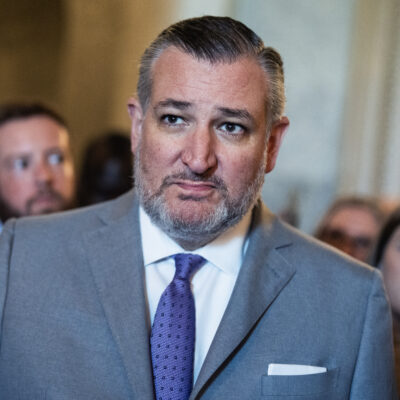
Cruz ties support for Somalia ambassador nominee to U.S. recognition of Somaliland

COMMITTEE CHANGEOVER
In blow to efforts to fight antisemitism, Rand Paul set to join Bernie Sanders atop Senate education panel
SHOW OF SOLIDARITY
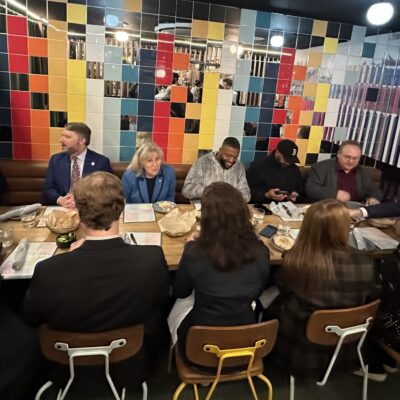
Philadelphians rally in support of Jewish businesses threatened by antisemitic bike protest
PENTAGON SHOWDOWN
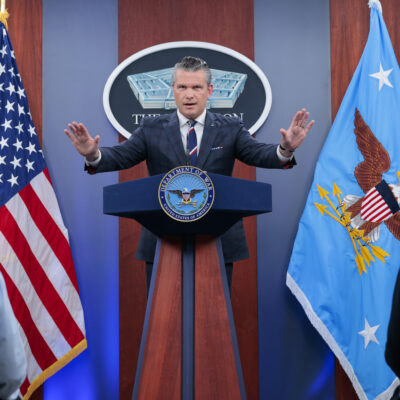
Hegseth accuses Massie of carrying out personal vendetta in impeachment effort
Please log in if you already have a subscription, or subscribe to access the latest updates.
 Continue with Google

 Continue with Apple