














































Brett McGurk pushes back on former Biden WH colleagues who called for greater pressure on Israel
At an Atlantic Council event, McGurk said there was no clear path to an earlier hostage deal and cited Hamas' delays and shifting demands
Aspen Security Forum
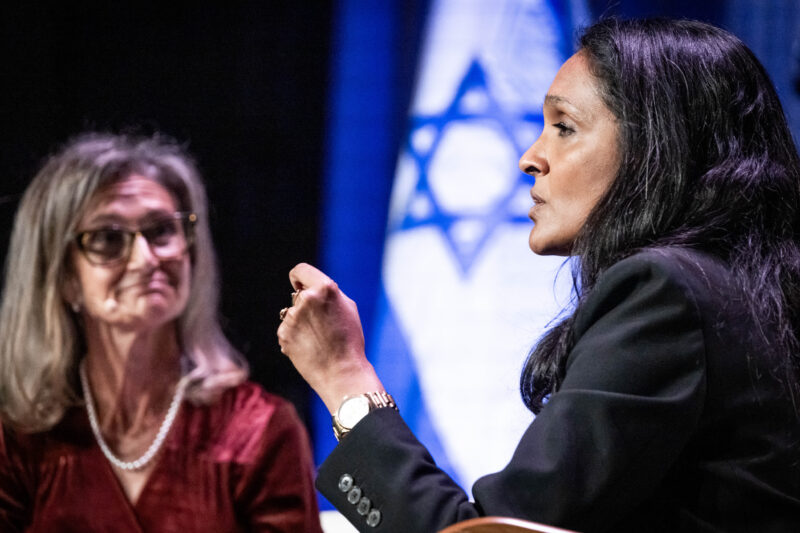
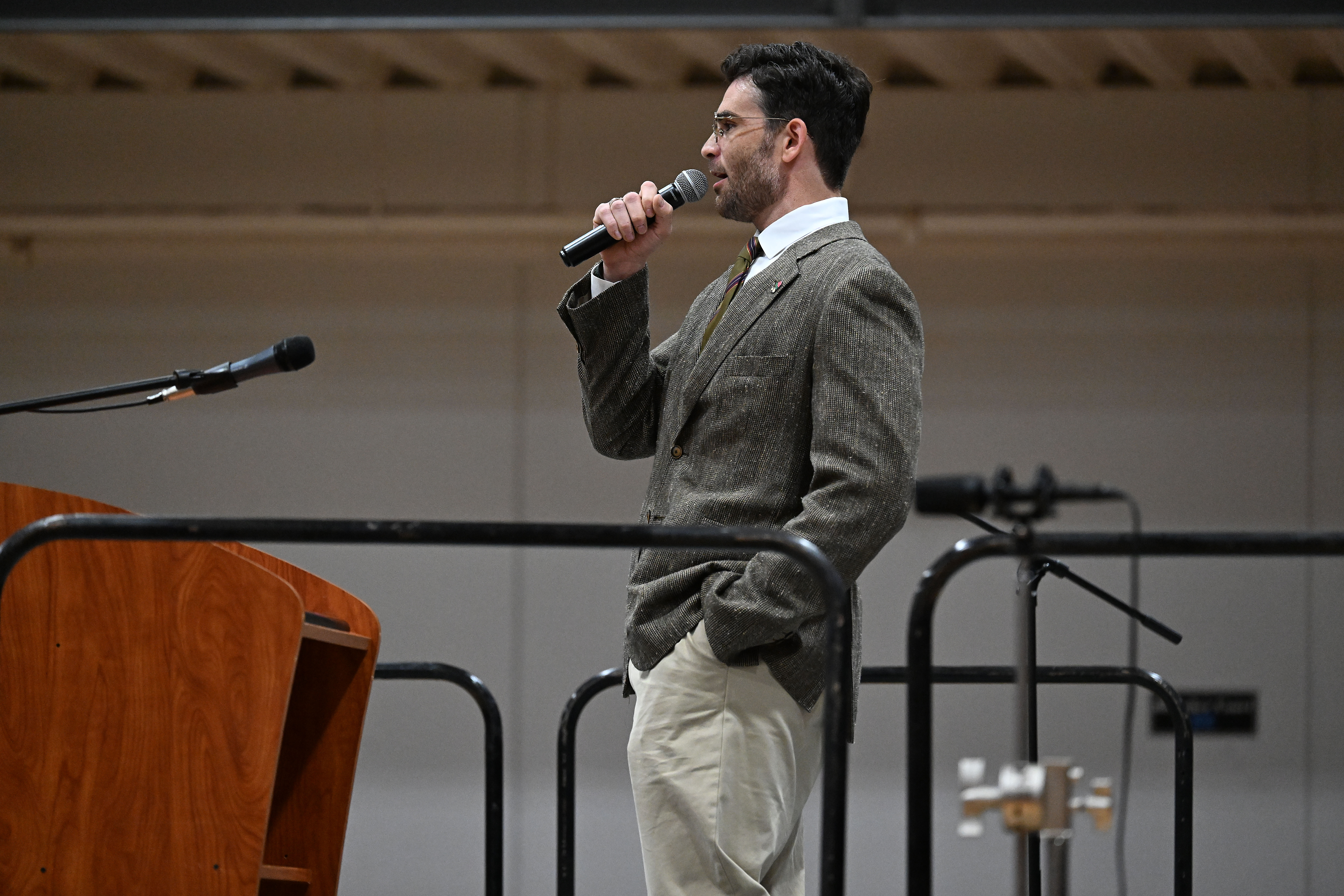
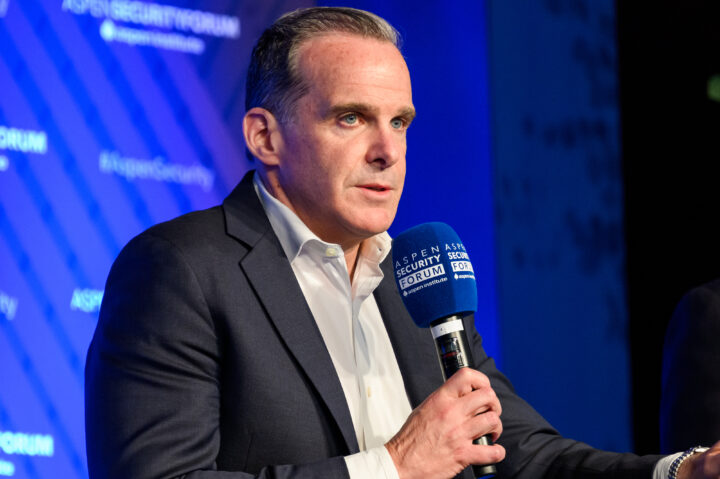
Former national security official Brett McGurk speaks at the Aspen Security Forum on July 16, 2025.


 Add JewishInsider on Google
Brett McGurk, a veteran national security official who has served in Republican and Democratic administrations, pushed back on Thursday against arguments from his Biden administration colleagues that former President Joe Biden should have applied more pressure on Israel to end the war in Gaza and secure the release of the hostages sooner.
Debate in Democratic foreign policy circles over the Biden administration’s handling of the war in Gaza has intensified following the release earlier this month of McGurk’s new book, Brink: Inside the Race to Free the October 7th Hostages, in which he argues that Biden’s efforts to pressure Israel during hostage negotiations emboldened Hamas and complicated efforts to reach a ceasefire agreement.
In the book’s prologue, McGurk made the claim that “every time that Biden had curtailed assistance for Israel — or even threatened to do so — it had the perverse effect of emboldening Hamas, which would shut down the negotiations to release the hostages it was holding in exchange for a ceasefire.”
However, some of his former Biden administration colleagues have argued that Biden’s pressure on Israel was both necessary and effective. Among them are Phillip Gordon, who served as national security advisor to then-Vice President Kamala Harris, and Jake Sullivan, who served as Biden’s national security advisor.
Gordon — a prominent Democratic foreign policy voice, potential national security advisor in a future Democratic administration and a consistent critic of Israel’s conduct in Gaza — argued that pressure on Jerusalem had worked and that “most” White House staff believed Biden should have taken an even tougher line against Israel.
“I would say most of my former colleagues think that President Biden should have put more pressure on Israel to conduct the war differently and end it sooner, and few think that the biggest mistake Biden made was to show daylight with Israel,” Gordon wrote on X on Saturday, in a direct reference to McGurk’s book.
In July, unrelated to McGurk and prior to the book’s release, Sullivan told The New Yorker, “I will say straightforwardly — we should have put more pressure on Israel to take a different approach.”
Speaking Thursday at an Atlantic Council event about his book, McGurk was asked by Washington Post columnist David Ignatius to respond to his colleagues’ statements and address whether Biden should have applied more pressure on Israel to end the war sooner.
But McGurk pushed back on that argument, saying there was no clear opportunity to reach a deal faster and challenging critics to identify the specific moment and action that could have secured an agreement sooner.
“If there was a shortcut, Joe Biden would have taken [it]. And if somebody could point to a key moment in which we would have been able to get a deal sooner, I’m open to that conversation. But I don’t think there was,” McGurk said. “To say in 2026 [that we] should have done something. I think you have to say, ‘What, and in what moment?’”
McGurk pointed to repeated delays and shifting demands by Hamas as obstacles to the negotiations, including in May 2024, when the Biden administration put forward a ceasefire proposal that Israel accepted.
“Hamas doesn’t answer for five weeks. They then put on new demands that Israel answered at a very hard line, and the process kind of goes on and on,” McGurk said.
He also recalled negotiations in December 2024, when mediators were seeking a list of 33 hostages to be released as part of an agreement, but Hamas initially offered only 12, prolonging the process by another six weeks.
“All we need is a list of hostages coming out. Thirty-three hostages, and Hamas offered 12. And it took another six weeks to get the deal,” he said.
McGurk also pointed to an earlier breakdown during the November 2023 temporary truce brokered by Qatar, Egypt and the United States, when Hamas refused to release younger women as agreed and proposed releasing older men instead.
“We have a deal for all women and children, and Hamas sends a message saying, ‘No, we’re not going to release the younger women. Let’s skip to the older men,’” McGurk said. He argued that accepting the change could have jeopardized the release of the remaining women.
Meanwhile, Elliott Abrams, who served as the Trump administration’s special representative for Iran, rejected Gordon’s criticism and said McGurk’s account was “persuasive,” arguing that the dispute reflects a broader shift in Democratic foreign policy.
“McGurk’s account and critique are entirely persuasive, and I find Gordon’s attack on it to be a sad display of the way the Democratic Party is moving,” Abrams told Jewish Insider.
Abrams said Gordon was likely correct that many of his former colleagues favored greater pressure on Israel, noting that Gordon himself had advocated that approach. But Abrams argued that some officials’ criticism of Israel was also shaped by their future political ambitions.
“People whose main goal is a job in the next Democratic administration will be more and more critical of Israel — which is why McGurk should be honored for his candor and his refusal to bow to that kind of pressure,” he said.
Daniel Shapiro, who served as U.S. ambassador to Israel under Obama and deputy assistant secretary of defense under Biden, offered a more nuanced perspective, arguing that both McGurk and Gordon had identified real dynamics that shaped the hostage negotiations.
“Hamas wanted to drag out the negotiations. They often delayed giving answers. They hoped to keep hostages while reaching an end to the war,” Shapiro said. “Also true, Netanyahu at times seemed far less interested in concluding a hostage deal than in pursuing his broader war aims.”
Shapiro agreed that public friction between the U.S. and Israel often complicated negotiations, as Hamas viewed the tensions as an opportunity to seek better terms. However, he noted that Netanyahu sometimes initiated the disputes himself, giving Hamas an opening to exploit divisions between the allies.
“Any time there was public friction between the United States and Israel, Hamas tended to pull back from negotiations and harden their positions, hoping the United States would deliver a better deal for them from Israel,” Shapiro said. “And also true is sometimes the public friction between the United States and Israel was initiated by Netanyahu. So some of the opportunities Hamas had that resulted from that friction was responding to things that were initiated from his direction as well.”
Shapiro also noted that Israeli negotiators have since suggested that an agreement could have been reached sooner — with senior team members like IDF Brig. Gen. (res.) Oren Setter and IDF Maj. Gen. Nitzan Alon later stating that political delays caused missed opportunities for a deal in 2024 — and argued that the U.S. “was right to push Israel to recalibrate its operation in Rafah to allow Palestinian civilians to evacuate before the offensive and was right to express concern about a high rate of civilian casualties and insufficient humanitarian aid.”
Shapiro described the negotiations as “a messy and complex situation,” adding that the prolonged captivity of the hostages underscored how difficult it had been to secure a deal.
Jason Greenblatt, who served as the White House’s Middle East envoy during the first Trump administration, also rejected Gordon’s argument that Biden should have applied more pressure on Israel, agreeing with McGurk’s assessment that doing so would have strengthened Hamas’ negotiating position.
“Those who argue that President Biden should have pressured Israel even more have it completely backwards,” Greenblatt said. “Pressuring Israel instead of Hamas rewarded the terrorists and gave them reason to believe that the longer they held out, the more concessions Israel would be forced to make.”
More Stories
ON DEFENSE
El-Sayed dismisses half-sister’s comments about family’s Muslim Brotherhood ties as ‘hearsay’

EVENT RESCHEDULED
State Department to hold Oct. 7 commemoration event on Wednesday

PEACH STATE POLITICS
Ossoff defers to ICC on Israel genocide accusations, but says IDF violated int’l law

COURSE CORRECTION
ADL, Gratz College launch antisemitism training for college administrators, faculty

DRAWING A LINE
British PM rules out partnership with Greens over ‘Zionism is racism’ motion

TWO JEWS, THREE OPINIONS
Jewish podcast ‘Chosen People Problems’ finds new home with Ark Media
Please log in if you already have a subscription, or subscribe to access the latest updates.
 Continue with Google
 Continue with Apple