




































Ben Shapiro criticizes JD Vance over ‘disaster’ Iran MOU
The conservative commentator said Vance has not served the president well in his most direct criticism of the VP’s job performance
Samuel Corum/Getty Images
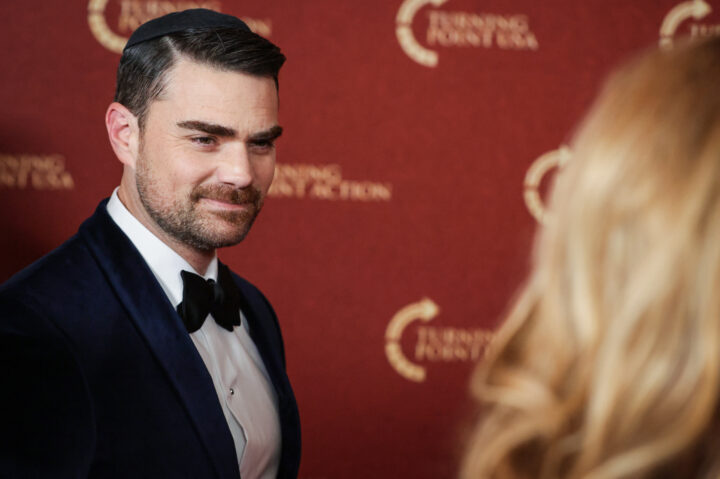
Ben Shapiro walks the red carpet at the Turning Point USA Inaugural-Eve Ball at the Salamander Hotel on January 19, 2025 in Washington, DC.


 Add JewishInsider on Google
Conservative commentator Ben Shapiro criticized Vice President JD Vance on Wednesday, arguing that Vance’s support for the memorandum of understanding between the U.S. and Iran suggested that he was not serving President Donald Trump well.
Shapiro made the comments, which mark his most direct criticism to date of Vance’s approach to Iran, to Fox News’ “The Story with Martha MacCallum”while offering a harsh assessment of the MOU in the hours after the Trump administration released the text of the agreement. He described the deal as “a disaster” and called out the vice president for his role in leading this particular diplomatic effort.
“The president deciding to go into Iran and to hit nuclear facilities in Operation Midnight Hammer and then to go after Iran’s ballistic missile facilities and nuclear facilities, army, navy and air force in this current operation was the signal act of political bravery perhaps of my lifetime,” Shapiro said.
“With that said, this MOU appears to be, just from the text, a disaster that does not achieve any of the actual signal goals that were set by the administration at the beginning,” he continued. “In my opinion, the vice president of the United States, the chief negotiator on this particular project, has not well served the president.”
On his latest podcast episode on Wednesday, Shapiro praised Vance for his appearance on ABC’s “The View” and described him as an “undeniably talented politician,” though he questioned Vance’s decision to appear on Megyn Kelly’s show “to make overtures to Tucker Carlson.”
“Megyn Kelly is a person who has said that the Israelis manipulated the administration into war, who has laughed along to the proposition that the Republican Party is a bunch of Israel-loving pedophiles,” Shapiro said. “This is where the vice president chose to retail the argument.”
Shapiro also disputed Vance’s assertion to Kelly that opponents of the MOU were “promoting endless conflict” in the region. “They don’t have an alternative. If your alternative is just to drop bombs without any clear goal or any clear American interest implicated, then you’re not making wise decisions on behalf of the American people,” Vance said.
“An entire field of strawmen is now burning because this is what we colloquially call a lie. This is a lie,” Shapiro said. “An endless conflict would be, say, a 47-year conflict with an intransigent radical Islamist enemy that wants to destroy America.”
“Some of us have been calling for the president to end this war quickly, like from the beginning,” he continued. “I’ve been saying for literally months that instead of signing onto a useless ceasefire, that we ought to take or bomb Kharg Island, open the Straits with operations like Project Freedom, which the president announced and then unannounced, and then leave overwatch to our allies like Israel and the UAE. That is not an endless war.”
Shapiro went on to detail his objections to the MOU itself in his Fox appearance, arguing that the text of the deal did not address several major sticking points that led to the U.S. launching the war in the first place.
“There were effectively five goals that were set by the administration at the beginning. One was ending the nuclear program, not just nuclear weapons, no nuclear enrichment, zero enrichment. That is not in the deal. Ballistic missiles ended, that is not in the deal,” Shapiro said. “Then you have the support of terrorism, that is not part of the deal, anything that looks like an attempt to end terrorism.”
“A permanent opening of the Strait of Hormuz toll free, not only is that not in the deal, the deal appears to have a provision allowing Iran and Oman to attempt to toll the Straits after 60 days,” he added. “Then finally, the idea that Iran would receive some sort of sanctions relief after all of those things happened. We are already seeing, from day one, relief in their ability to ship oil out of Iran.”
Shapiro expressed bewilderment at Trump’s comments earlier Wednesday suggesting that the U.S. would not forbid Iran from possessing ballistic missiles and downplaying the threat of the regime continuing to have those weapons — despite it being a key goal in entering the conflict. He also responded to Trump’s criticism of Israel’s conduct in its war against Hezbollah, defending the Israelis and pointing to previous statements by the president in support of Israel’s war aims.
“The president today suggested that ballistic missiles should actually continue to be held by the Iranians because the Saudis, our allies, also hold ballistic missiles,” Shapiro said. “The fact is that the president himself has suggested that Israel has a right to defend itself. Ambassador [Mike] Huckabee, our ambassador to Israel, has said that Israel has a right to defend itself. Hezbollah is a terrorist group. It’s not the government of Lebanon, and in fact is opposed to the government of Lebanon. They’ve been firing ordnance over the border at Israel for literally years at this point.”
“The idea that Israel should be held back from defending itself against a terror group that is a proxy army of Iran, because we have some sort of deal over the Strait of Hormuz, is a massive tactical blunder that gives Iran one of the things that Iran actually wants, which is to reconstitute its forward operating base in Lebanon,” he continued. “Anything that allows them to reconstitute their terror army would be a huge regional mistake.”
Sen. Ted Cruz (R-TX) offered a similar take on Wednesday, arguing that Trump was given “some very poor advice on this deal” while declining to go after the vice president by name.
“Giving billions of dollars to theocratic lunatics who want to murder us is not a good idea. Setting up Iran to be in charge of the Strait of Hormuz in perpetuity, and to charge tolls is not in America’s interest, in my view. The Ayatollah should not reap a single penny from the free transit of the seas,” Cruz told reporters. “I think the president, unfortunately, is receiving bad advice once again.”
Asked if he believes the president should not sign the MOU and abandon peace talks, the Texas senator replied: “That’s a decision he’s going to have to make.”
Donald Trump Jr., the president’s son and one of Vance’s closest allies outside the White House, went on to attack Cruz on social media for his criticisms of the agreement.
Trump Jr. accused Cruz of “lying thru [sic] his teeth about the deal,” claiming in a post on X that the U.S. is “not giving them [Iran] a cent and he [Cruz] knows that.” He then alleged Cruz was “using fake news about the peace deal to undermine” the president, which he described as “the opposite of MAGA.”
According to the text of the MOU released on Wednesday, however, the U.S. “undertakes to develop a definitive, mutually agreed reconstruction and economic development plan for the Islamic Republic of Iran valued at a minimum of $300 billion (USD).”
The deal also includes language terminating “all sanctions against the Islamic Republic of Iran — including UN Security Council resolutions, IAEA Board of Governors resolutions, and all unilateral U.S. primary and secondary sanctions.”
More Stories

NEW CHAPTER
High Line Publishing launches with fanfare to counter barriers for Jewish authors

EXCLUSIVE
JDCA launches streaming and digital ads supporting Cait Conley, attacking Lawler

CAMPAIGN CALCULUS
El-Sayed focuses on attacking Israel in closing stretch of the campaign
PIKER PROBLEM
Hasan Piker event in Minnesota with Ilhan Omar faces growing backlash
SCOOP
AIPAC to end candidate endorsements, PAC contributions to allies
CALLING IT OUT
Rep. Don Bacon blasts Dan Osborn over ‘anti-Jewish’ ad
Please log in if you already have a subscription, or subscribe to access the latest updates.
 Continue with Google
 Continue with Apple