
























































Playing to the cameras in the West Bank
Two incidents this week were the product of activists’ missions to advance radically different political agendas in an arena where the institutions meant to protect and maintain law and order fall short
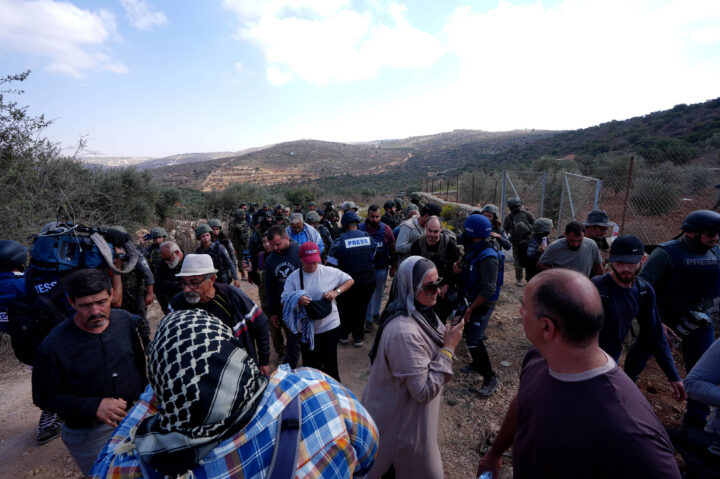
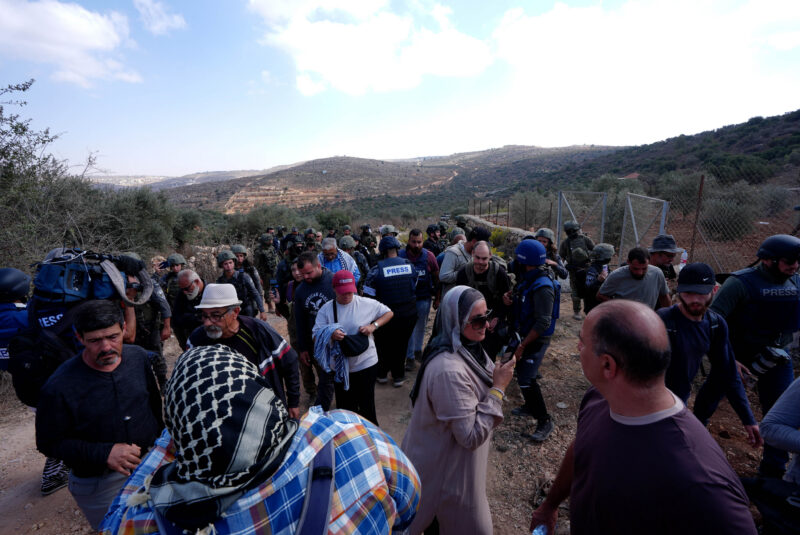
(Issam Rimawi/Anadolu via Getty Images)
Israeli forces declare Turmus Ayya town a closed military zone, restricting the movement of Palestinian farmers heading to their land to harvest olives and Israeli settlers in Ramallah, West Bank, on October 21, 2026.


 Add JewishInsider on Google
Two decades ago, Democratic candidates traveled to Jerusalem to meet with the Israeli prime minister and visit the country’s holiest sites.
Now, they still travel to the Holy Land. But, this year, the destination is no longer Jerusalem’s Western Wall for the signature photo op — it is, more often, the West Bank or Tel Aviv. Sometimes, the trip also includes a brief detention by the IDF, or a confrontation with extremist settlers.
Rep. Ro Khanna (D-CA) made the trip over the summer, where he clashed with Israeli settlers after traveling to a restricted area of the West Bank. Former U.S. Ambassador to Japan Rahm Emanuel, who is mulling a 2028 presidential bid, also traveled to Israel in July, delivering a speech on U.S.-Israel relations at Tel Aviv University, but sidestepping meetings with any current Israeli officials, except for President Isaac Herzog.
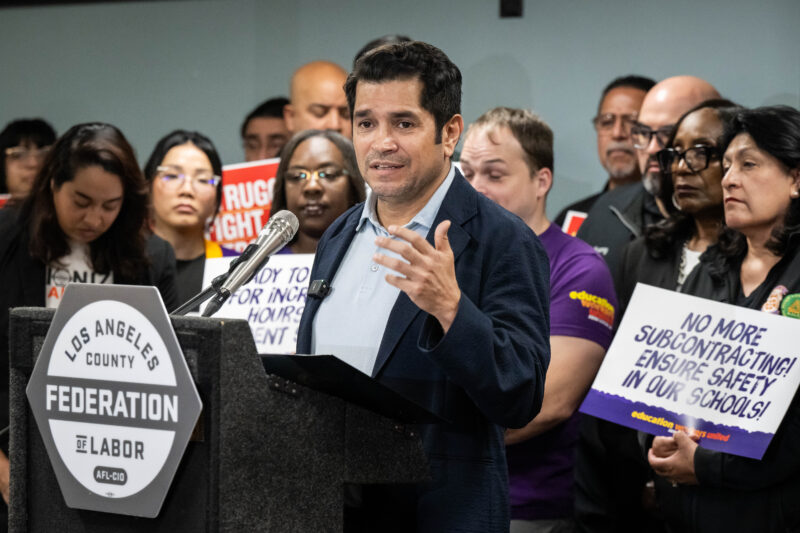
Brad Lander, the former New York City comptroller who is now likely to win a House seat next month, is the latest high-profile Democrat to travel to the region. On Wednesday, Lander was detained, along with the delegation he was traveling with, during the olive harvest in the West Bank.
Lander was traveling with a delegation of activists associated with Protect the Harvest, which sends Israeli and international participants to Palestinian farms in the West Bank during harvest season to act as observers and occasionally participate in the annual olive harvest. Yehoshua Schoffman, a former deputy attorney general, was among the Israelis detained with Lander.
The IDF claimed in a statement following the incident that the group had failed to coordinate its visit with authorities ahead of time. But Haim Goodrich, a reporter for Israel’s Kan channel, suggested that the activists were in an area that did not require coordination, an account that was corroborated by an individual with knowledge of the situation with whom JI spoke hours after the incident. After the incident, the IDF retroactively designated the area a closed military zone, and released all those who were detained without charges.
Lander was quick to post about his detention on social media, garnering an array of headlines similar to those Khanna’s visit drew, when he claimed to have been harassed by West Bank settlers while traveling in a restricted area. IDF soldiers, Khanna said at the time, approached the scene and spoke with the settlers before departing.
Efforts to deepen the West Bank’s status as a hyperpoliticized global issue are not limited to a particular ideology or political leaning. Earlier in the week, a group of Israeli influencers — all of whom are native English speakers with predominantly Western audiences — traveled to the West Bank on a trip organized by the right-wing group Regavim, an organization that opposes Palestinian construction in the West Bank and was cofounded by Bezalel Smotrich, the far-right Religious Zionism leader who now serves as the country’s finance minister.
The group came under attack by individuals throwing concrete blocks, according to videos posted by some of the participants. In a statement, Regavim described the incident as “a terrifying encounter with Palestinian violence.”
The incident with the influencers drew speculation for its timing, which came days after a Washington Post photojournalist was assaulted by extremist settlers, prompting her hospitalization and surgery for a nearly severed finger. In recent months, journalists from CNN and NBC News have also clashed with settlers in the enclave. Few arrests have resulted from those incidents or more deadly ones involving Palestinian victims, giving credence to concerns that the Israeli government, under National Security Minister Itamar Ben-Gvir, is not taking seriously the deteriorating security situation in the West Bank.
Neither Lander’s participation in the harvest nor Regavim’s influencer trip broke any laws. Both delegations were in areas they were legally entitled to enter. But the tensions that permeate the West Bank — an area where truth and the law can often come second to the realities on the ground — run deep, and activist efforts have the potential to serve as a lit match in a haystack.
The IDF, which is ostensibly tasked with maintaining law and order, frequently falls short in its efforts, allowing extremists on both sides to fill that vacuum, prompting the breakdown of the rule of law that has turned the West Bank into a Wild West of sorts.
Settler violence in the West Bank is increasingly being seen both in Israel and abroad as a problem that the Israeli government is not addressing satisfactorily. Israel Democracy Institute’s September survey found that 58.5% of its Jewish respondents want the next Israeli government to take action against settler attacks in the West Bank.
In Washington, Democratic senators last month voted nearly unanimously on legislation, which failed, to require the State Department to provide reports on settler violence. Forty-six Democrats voted for the legislation, far more than the 11 who voted on a similar resolution in January 2024 — another sign of the party’s rapidly shifting headwinds on Israel.
The two incidents this week were the product of activists’ missions to advance radically different political agendas in an arena where the institutions meant to protect and maintain law and order fall short. But in doing so, they share one through line: making the West Bank issue the next big political staging ground.
More Stories
Daily Overtime
MKs back Eisenkot, but Herzog withholds mandate

LEADING THE PACK
Rebeca Grynspan gains ground in latest U.N. secretary-general straw poll
EXCLUSIVE
Republican AGs highlight case of antisemitic university professor in Supreme Court brief
Daily Kickoff
It’s Miller time
Daily Overtime
Senate Dems call to nix Israel cooperation provision
SHOW OF SOLIDARITY
Philadelphians rally in support of Jewish businesses threatened by antisemitic bike protest
Please log in if you already have a subscription, or subscribe to access the latest updates.
 Continue with Google

 Continue with Apple