





























































Republicans squabble over pro-Israel provision in NDAA
Critics falsely assert the provision would merge the U.S. and Israeli militaries or otherwise compromise U.S. sovereignty and control of the U.S. military
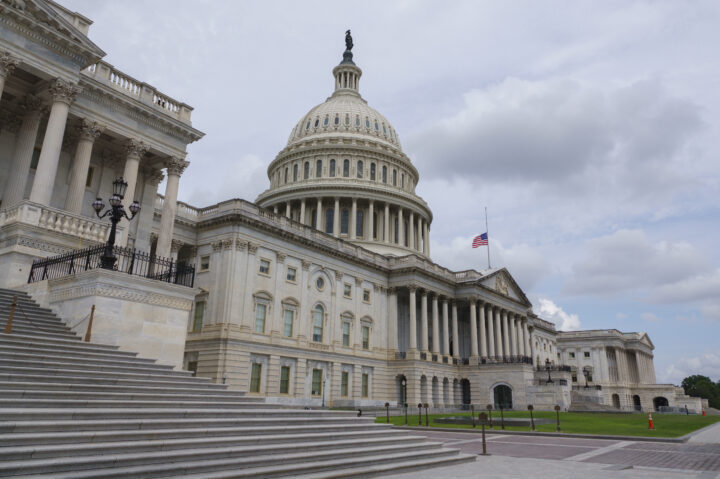
Kevin Carter/Getty Images
U.S. Capitol building on July 12, 2026 in Washington, DC.


 Add JewishInsider on Google
A provision in the draft 2027 National Defense Authorization Act that aims to coordinate and enhance cooperation between the U.S. and Israeli militaries has proven to be a significant source of controversy among Democrats, with even some senior lawmakers who defended the provision on its merits flipping against it under pressure.
And, as Congress will have only months to pass the NDAA when it returns from recess after the November elections, the provision may face some resistance from Republican lawmakers as well — an indication of skepticism of the U.S.-Israel partnership building among the GOP base as part of the debate between hawks and isolationists.
“There’s nobody here who’s more of an ardent supporter of Israel’s right to exist and ability to defend themselves, but I don’t think we should integrate our military with anybody, not even the Bahamas,” Sen. Bernie Moreno (R-OH) told the far-left outlet Drop Site News earlier this year. His office has declined to provide further comment.
Critics falsely assert the provision would merge the U.S. and Israeli militaries or otherwise compromise U.S. sovereignty and control of the U.S. military.
Rep. Lauren Boebert (R-CO) also expressed opposition to the provision, and claimed that the White House and Pentagon wanted the provision removed from the bill. Neither have expressed such a view publicly, but did not respond to requests for comment.
Some in the far-right online sphere have previously criticized the provision.
Two other senators aligned with the restrictionist foreign policy wing of the party, Sens. Eric Schmitt (R-MO) and Josh Hawley (R-MO) — who have also generally been strong supporters of Israel — were also noncommittal.
“I know there was a House version that was a little more controversial, but we’ll take a look,” Schmitt told Jewish Insider in late July. His office did not respond when asked if his stance has changed since then.
“Let’s see what happens with the NDAA. That’s going to be a long wait, I think,” Hawley told JI in early August. “I don’t know what version is going to come to us.”
Yet Sen. Jim Banks (R-IN), who has sought a “middle path” on foreign policy between internationalism and restrictionism, while urging Republicans not to label each other “isolationists,” expressed strong support for the provision.
“I think [the concerns are] overblown. That cooperation is important. It’s cooperation that’s always existed,” Banks told JI. “I’m sure we’ll have a thorough debate on that one when it gets to the floor, but having served myself, I know how important that relationship is. Strengthening that relationship is more important than ever.”
Sen. Roger Wicker (R-MS), who chairs the Senate Armed Services Committee, told JI in August he has not been concerned about Republican opposition to the provision. “I haven’t been worried about that, no,” Wicker said at the time. He declined to answer additional questions on the subject, and his office did not respond to follow-up questions.
More Stories

analysis
From Oct. 7 to FlyDubai, ordinary Israelis keep filling the gaps left by the government

Daily Overtime
New York braces for Oct. 7 protests

DOHA DEALINGS
Moskowitz challenger visited Qatar in 2024, photographed with Qatari official

NO COMMENT
Rogers honors Oct. 7 anniversary and bashes El-Sayed, as El-Sayed remains silent
Daily Kickoff
Three years, familiar fears on 10/7 anniversary

EARLY ADOPTER
El-Sayed accused Israel of genocide before Gaza ground war began
Please log in if you already have a subscription, or subscribe to access the latest updates.
 Continue with Google
 Continue with Apple