















































Next steps in Gaza murky as Hamas reasserts itself, keeps most hostage bodies
With Hamas refusing to disarm, there may be “two Gazas,” with war in one part, Trump’s proposed technocratic government in another, experts tell JI
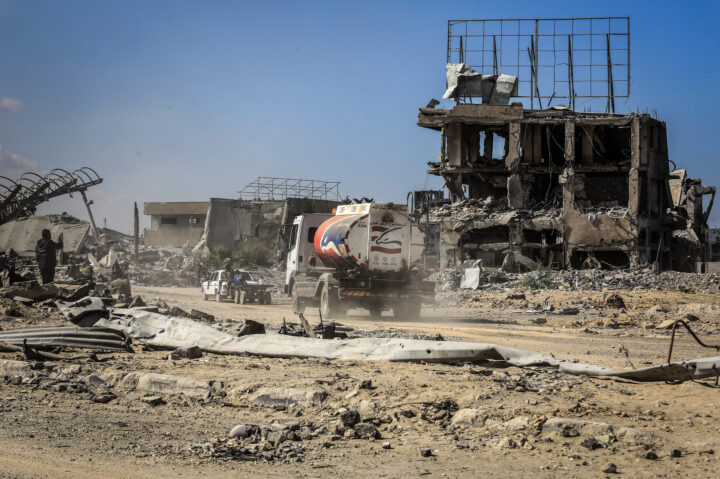
Abed Rahim Khatib/picture alliance via Getty Images
16 October 2025, Palestinian Territories, Khan Yunis: A truck carrying fuel enters Khan Yunis through the Karem Shalom crossing as part of the ceasefire agreement between Israel and Hamas.


 Add JewishInsider on Google
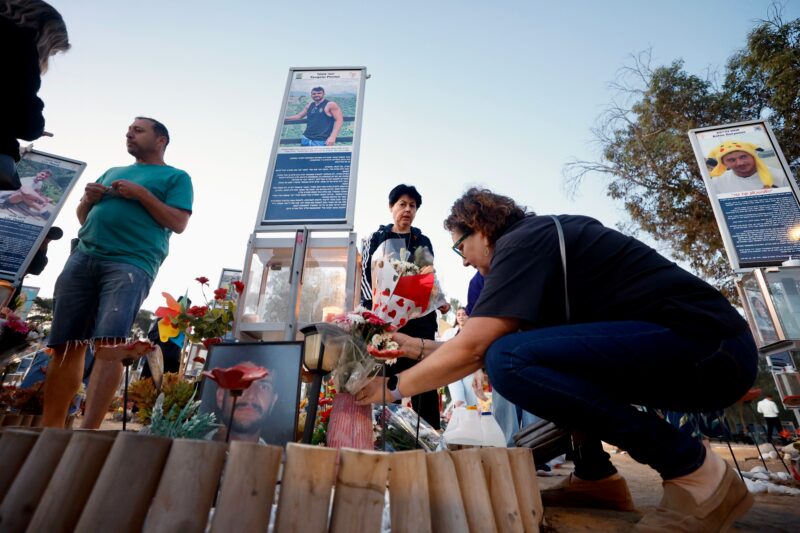
Following the joy in Israel over the return of the remaining living hostages on Monday and President Donald Trump’s declaration that “the long and painful nightmare is finally over” came the letdown: Hamas, as of Thursday, had returned only nine out of 28 bodies of the deceased hostages and started to execute rivals and reestablish itself in the areas of Gaza from which the IDF withdrew.
While Trump has repeatedly said the war in Gaza is over, when asked by CBS News if that’s the case, Israeli Prime Minister Benjamin Netanyahu said that Israel “agreed to give peace a chance,” and later in the interview said it still needs to “finish the war as speedily as possible.”
The future of Gaza remains unclear, despite Israel agreeing to Trump’s 20-point plan for the region. Hamas only agreed to the immediate steps in the plan: stopping the war, freeing the hostages in exchange for 1,950 prisoners, including those who killed Israelis in terrorist attacks, and Israel withdrawing to a specified line within Gaza.
Trump posted on Truth Social on Wednesday that the plan’s second phase, which entails Hamas’ disarmament and demilitarization of the Gaza Strip, “begins right NOW!!!” Yet, an Israeli official confirmed to Jewish Insider a report that, with Hamas withholding most of the remaining hostages’ bodies, negotiations to continue to the next phase of the plan are on hold.
Disarming Hamas and the demilitarization of Gaza are meant to take place “under the supervision of independent monitors,” but those monitors have yet to be selected and sent to the region. The Peace Board announced — and led — by Trump, with the involvement of former U.K. Prime Minister Tony Blair that is meant to oversee Gaza’s administration by Palestinian technocrats has not yet been formed, nor has the temporary International Stabilization Force meant to train Palestinian police and be part of the “long-term internal security solution” for Gaza and Israel.
Meanwhile, Hamas has entered the vacuum and, in recent days, has tried to consolidate its power by killing members of clans that it accused of collaborating with Israel.
On Tuesday, Trump called the clans “gangs that were very bad,” adding that Hamas’ attacks “didn’t bother me much” and that the terror group had his “permission” to proceed; Trump compared Gazan opponents of Hamas to gang members from Venezuela who entered the U.S. illegally.
At the same time, Trump said that Hamas must disarm, threatening U.S. involvement if the group does not lay down its weapons. “They will disarm or we will disarm them,” Trump said. “If they don’t disarm, it’ll happen quickly and perhaps violently, but they will disarm.”
Netanyahu told CBS News that he “hope[s] we can do this peacefully. We’re certainly ready to do so.”
Kobi Michael, a senior researcher at the Misgav Institute for National Security and Zionist Strategy, told the Misgav Mideast Horizons podcast co-hosted by Jewish Insider’s Lahav Harkov this week that although Trump’s plan “has 20 articles, it is not very well-detailed. Actually, it is a framework … [Trump] isn’t very interested in the details. He is very focused on the final outcome, on the vision. He leaves the details for the professionals.”
“If President Trump will lose his focus, determination, decisiveness with regard to the further phases of his own plan — and I mean disarming Hamas, demilitarization of the Gaza Strip, and so on — [Israel] might find [itself] in a stalemate. This, I would say, is the main challenge of the State of Israel — keep President Trump focused,” Michael warned.
Ofer Guterman, a senior researcher at the Institute for National Security Studies at Tel Aviv University, told JI that Hamas reestablishing itself within the “yellow line” to which the IDF withdrew is “unpleasant but expected,” because “up until now, Israel refused to deal with all the systems we wanted to put in place instead of Hamas.”
“The technocratic administration, international forces, Palestinian police, etc. – these are just headlines with nothing behind them. We need to start building them. Some will only be relevant in weeks or maybe months,” Guterman argued.
Guterman also pointed out that, while the second phase of the deal may go into effect in the coming weeks, it will likely last for years.
“We need to remember that we are still in phase one,” he said. “Not all the hostages are back, and that influences the decision-making in Israel. … Our first, central goal is to bring back most, if not all, or the hostages’ bodies that remain there.”
Former Israeli National Security Advisor Maj.-Gen. (res.) Yaakov Amidror said that Hamas is likely to return most of the bodies to the best of its capability.
“Hamas understands that, without [returning the bodies], it will clearly not be fulfilling its obligation to the Americans and Qatar and other countries, and may find itself in a war in which it doesn’t have its main card, the hostages,” Amidror said in a Jerusalem Press Club briefing.
Michael warned that while countries such as Qatar and Turkey that support the Muslim Brotherhood and Hamas “were clever enough to understand … what is important for President Trump is to release the live hostages and declare the end of the war, and when it comes to the other phases, President Trump will be much more tolerant and they will be able to convince him that they need more time and Israel has to make further concessions.”
“Hamas does not intend to dismantle itself … [or] give up its influence and position, not only in the Gaza Strip, but the entire Palestinian arena,” Michael said. “The Qataris and the Turks are interested in keeping Hamas as a relevant player in the Gaza Strip, first of all, as a platform for increasing its influence on the entire Palestinian Authority.”
The priority in Gaza must be removing Hamas’ control over any part of the enclave, including humanitarian or civilian services, Amidror argued.
“The people of Gaza are suffering from the strong hand of Hamas,” he said. “Today, Hamas is killing many Gazans. … We have to find a way to disarm Hamas for them and for Israel.”
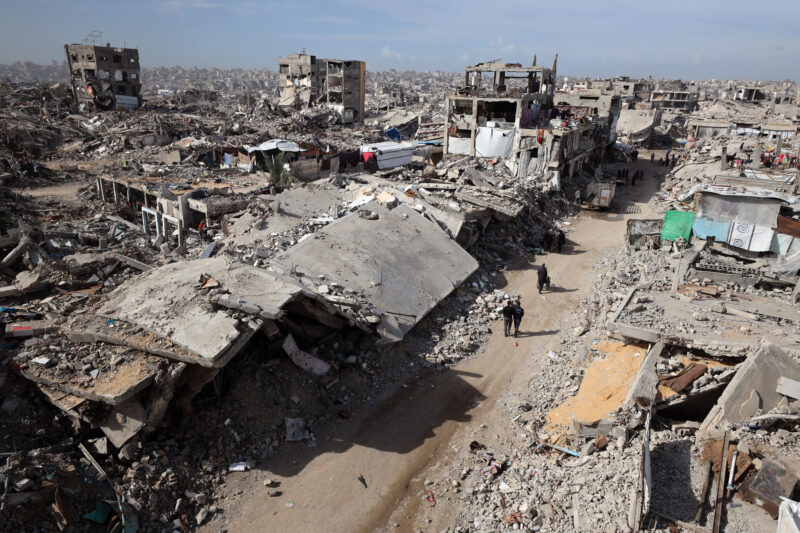
Amidror also said that it is “clear that nothing can be done in Gaza, not to rebuild, not to bring in forces that will implement civilian change, if Hamas is still so strong. Hamas cannot attack Israel anymore, but it is the strongest force in Gaza, and in that situation, no one will rebuild Gaza.”
As long as Hamas does not disarm, Guterman said, “Israel must prevent the rehabilitation of the areas of Gaza controlled by Hamas.”
Michael pointed out that Trump’s plan allows Israel and partner countries to proceed with establishing a technocratic administration and International Stability Force in Gaza before Hamas is disarmed.
“If Israel will agree to do that in the southern part, the area between Khan Younis and Rafah, I think there is a high probability for the success of security personnel and the Palestinian Authority,” Michael said. “They will enter the region empty of Hamas, with the presence of the government of technocrats, and everything will be fully coordinated with the IDF. … Begin the reconstruction process there, and continue the war in the north against Hamas, until Hamas is dismantled.”
In such a scenario, Michael posited that residents of Gaza will try to move south to the areas being rebuilt to try to make a better life than in the areas controlled by Hamas.
“Then Hamas will lose its strength, which [comes from] the population, and it will be much easier for the IDF to besiege the areas that Hamas is present in, to dismantle Hamas,” he said.
Guterman thought that Israel implementing the plan in only part of Gaza was the likely scenario, but that progress would halt there and there would be “two Gazas.”
“Hamas will be within the yellow line, trying to grow more powerful as we try to fight it, and Gaza will have a security corridor in over 50% of the territory, making it easier to defend the [Israeli] towns near the border and create a better base for actions against Hamas,” he said.
For there to be an alternative administration in the IDF-controlled areas of Gaza that would undermine Hamas’ legitimacy, run by countries in the region, Israel’s “concession will have to be … committing to a viable path to a two-state solution,” Guterman argued.
More Stories
HILLTOP FORECAST
Democratic foreign policy veterans preview party’s shifts on Middle East policy
TEXTBOOK TEST
Syrian textbooks under al-Sharaa deny Israel’s right to exist and promote antisemitism, report finds
Daily Overtime
Deadlocked dash to Israeli elections
analysis
Playing to the cameras in the West Bank

STARS, STRIPES AND SEATS
Meet the Americans hoping to secure a seat in the next Knesset
SECURITY SETBACK
Saudi Arabia postpones ‘Davos in the Desert’ until 2027 amid Houthi attacks
Please log in if you already have a subscription, or subscribe to access the latest updates.
 Continue with Google
 Continue with Apple