


































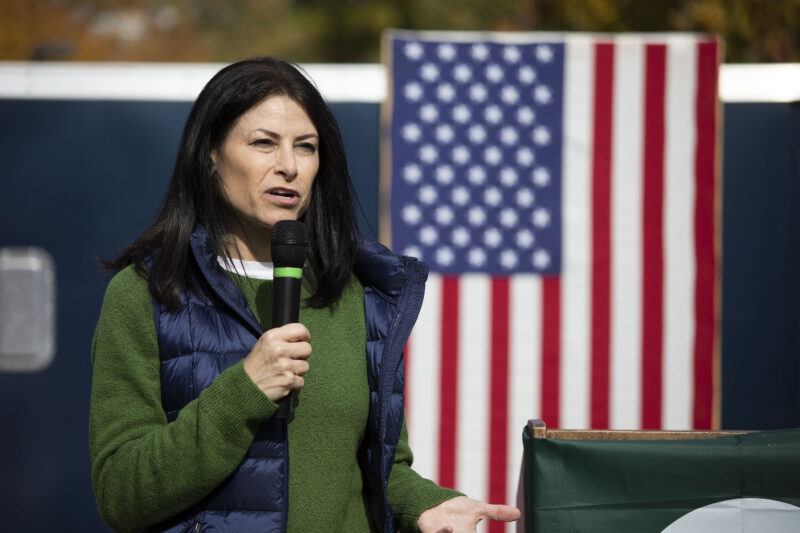













Darline Graham’s foreign policy flub rattles GOP ahead of S.C. Senate runoff
GOP campaign veteran Colin Reed called Graham’s debate performance a ‘seismic moment in an otherwise sleepy race’
Peter Zay/Anadolu via Getty Images
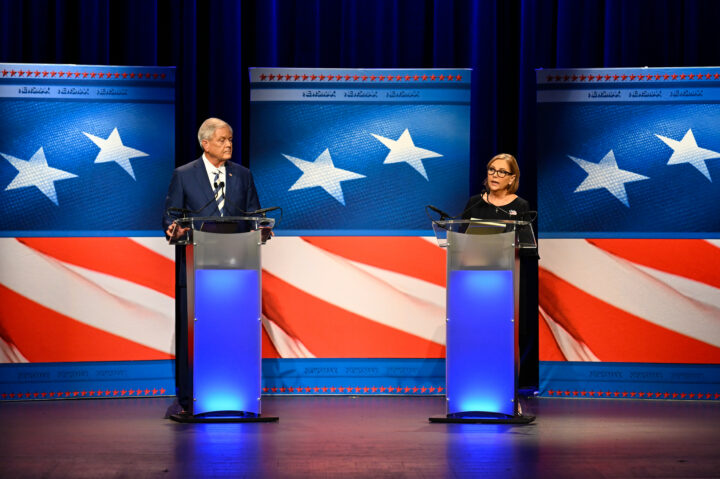
Sen. Darline Graham (R-SC) and Rep. Ralph Norman (R-SC) participate in a televised debate ahead of the Republican primary runoff in Newberry S.C., on August 18, 2026.


 Add JewishInsider on Google
Sen. Darline Graham’s (R-SC) stumbling performance at the final GOP primary debate on Tuesday has prompted questions among Republicans in Washington about her prospects in next week’s runoff against Rep. Ralph Norman (R-SC).
Graham’s debate performance has been widely panned for her response to a question about Taiwan and the South China Sea, during which she admitted that she is “not that informed on national security.” The moment prompted national Republican operatives to question her qualifications to replace her late brother, Sen. Lindsey Graham (R-SC), and led to an avalanche of attacks from critics about her lack of policy experience.
Senior Republicans who have been involved in the race privately described Graham’s foreign policy flub as a pivotal moment that could cost her the nomination.
“It was always going to be a lot harder than she was told when she got into this, but I thought she could win before the debate. Now, I think she’s done for,” a senior GOP campaign official involved with the race told JI. “This loss is going to be an unfortunate embarrassment, and the way this played out could be somewhat of a stain on Lindsey’s legacy even though he had nothing to do with it.”
A spokesperson for Graham’s campaign declined to comment about her debate performance. Graham defended her answer while speaking to reporters in the spin room following the debate, arguing that, “The people of South Carolina, they’re worried about their pocketbooks more than they’re worried about the South China Sea, quite honestly.”
Veteran Republican strategists who have been involved in high-profile Senate races called Graham’s performance one of those rare moments that could change the trajectory of the race.
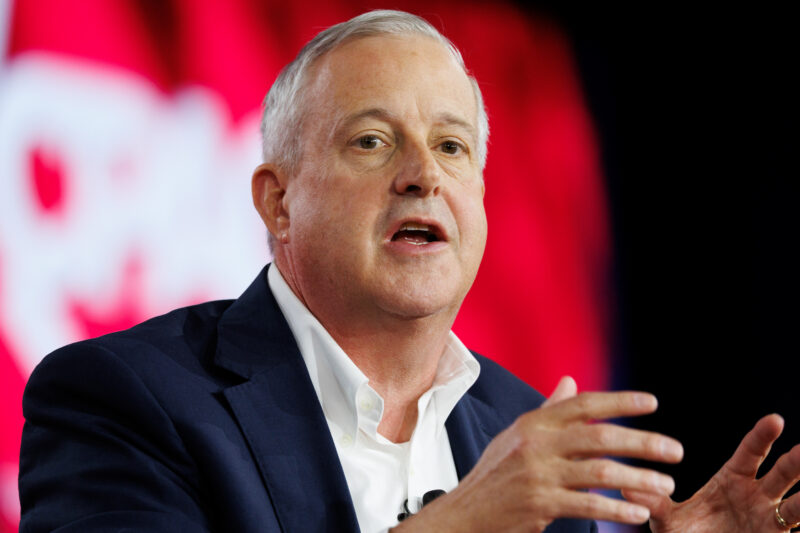
“The debate seems fairly consequential for a number of reasons,” Colin Reed, a founding partner of South & Hill Strategies and a GOP campaign veteran, told Jewish Insider. “To me, it seems like a fairly seismic moment in an otherwise sleepy race.”
Reed predicted that Graham’s inability to sound articulate on foreign policy — all but taking a pass on a consequential national security question — was likely to have an impact on the outcome of the race because of the importance of national security issues to South Carolina’s “heavy military presence and large veteran community.”
He added that her comments are already drawing comparisons to “the towering figure her brother was on the matter of foreign affairs” and the fact that the U.S. “happens to be engaged in multiple conflicts, or at least one conflict overseas with Iran, right now.”
“This is a late-summer primary and runoff, and only the most engaged audiences turn out,” Reed said. “Those types of audiences are the ones who were likely paying attention or discussing the debate.”
He argued that Graham’s lack of political experience makes her a “blank canvas” to voters and that, combined with the special election to replace her late brother on the ballot as the GOP nominee being truncated despite Republican primary voters being “wary of coronations,” the South Carolina senator had already been in a vulnerable political position prior to the debate.
Should Graham lose to Norman, it would mark the first time this cycle that a GOP candidate endorsed by President Donald Trump in a Senate race has lost their primary contest.
The president will hold a campaign rally for Graham in Myrtle Beach on Friday, even as he has scaled back his campaign appearances in recent months. Republicans in Washington expressed skepticism that the rally would significantly alter the outcome of this race, with two sources predicting that most of the attendees were only going to see the president speak. (For his part, Lindsey Graham was frequently booed and heckled when appearing at Trump rallies through the years.)
Norman said in a statement following the debate that South Carolina deserves to have a senator with “know-how” on foreign policy matters.
“Whether it’s spy balloons flying overhead or buying up land near South Carolina military bases, China continues to prove that it is a threat to the United States,” the House lawmaker told Politico.
Republican senators were told that Graham was not interested in seeking a full term when she agreed to the appointment in the immediate aftermath of her brother’s unexpected death last month. Graham said in a pre-debate interview on Monday that she “didn’t even realize I’d be asked to fill the seat temporarily” and did not accept the appointment last month with the idea of running for a full term. She instead credited the president with convincing her to run during an Oval Office meeting in her first week as senator.
Graham’s surprise decision to run, which two sources told JI came at the urging of Trump and several of Lindsey Graham’s campaign consultants, was met with apprehension in Washington. GOP circles. After Graham launched her campaign, Republican senators and strategists skeptical of her chances of winning began quietly voicing concern to one another about her lack of voting record or political background, the fact that she lacked a policy platform and the optics of sending a grieving sister out on the campaign trail. They also took note of how competitively Norman, Graham’s opponent in next week’s runoff election, was polling in the race.
One senior Senate GOP operative put it bluntly: “If we’re going to do a coronation, we need to be able to do a coronation. If we can’t get our s**t together, then we shouldn’t keep trying.”
Graham was cautioned by several Republicans, including two senators, that she would be setting herself up for a contentious election fight if she got in the race, according to two sources familiar with the matter. She was told by several of her brother’s campaign consultants, however, that while the contest would be challenging, she was likely to win with the president’s endorsement.
Graham prevailed in the first round of the primary election earlier this month, but only tallied 33% of the vote, far short of the majority necessary to avoid a runoff. She got a campaign boost after winning the endorsement of one leading rival, Rep. Russell Fry (R-SC), but her debate stumble only underscored her biggest vulnerability: lack of experience.
“The debate was challenging to watch. Her performance was very bad. We all empathize with her because of the circumstances she’s under, but that makes it all the more disturbing that folks who claim to love Lindsey would get in her ear and tell her she should run,” the Senate Republican campaign source said.
The winner of the Republican runoff next Tuesday will face Democrat Annie Andrews in the November election. Andrews, a pediatrician, is a decided underdog running in a solidly Republican state, but has been a strong fundraiser, bringing in over $10 million during the campaign cycle.
More Stories
DAMASCUS DIARIES
Syrian president blames Israel for diplomatic difficulties, rejects Trump push to send forces into Lebanon

POLICY PIPELINE
Deborah Lipstadt launches Emory institute to train the next generation of policymakers fighting antisemitism
CANDIDATE CALCULATIONS
Vulnerable Republican candidates urge end to Iran war
NUCLEAR NEWS
House Democrats introduce resolution to block Saudi nuclear deal

ALTERNATE REALITY
Pezeshkian denies Iran seeks nuclear weapons at UNGA
on the hill
Shaheen holding up $2.8 billion arms sale to Israel
Please log in if you already have a subscription, or subscribe to access the latest updates.
 Continue with Google
 Continue with Apple