








































Rubio defends Israeli operations in Lebanon, despite Trump-Netanyahu spat
The secretary of state largely defended Israel’s strikes in response; ‘Israel has a right to act in its defense’
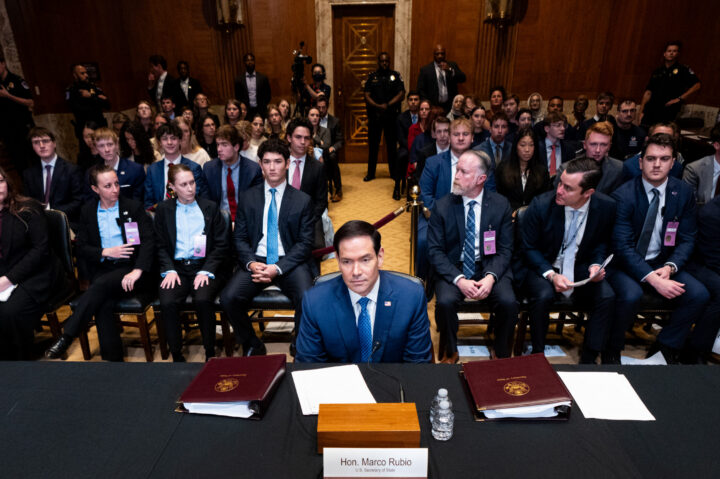
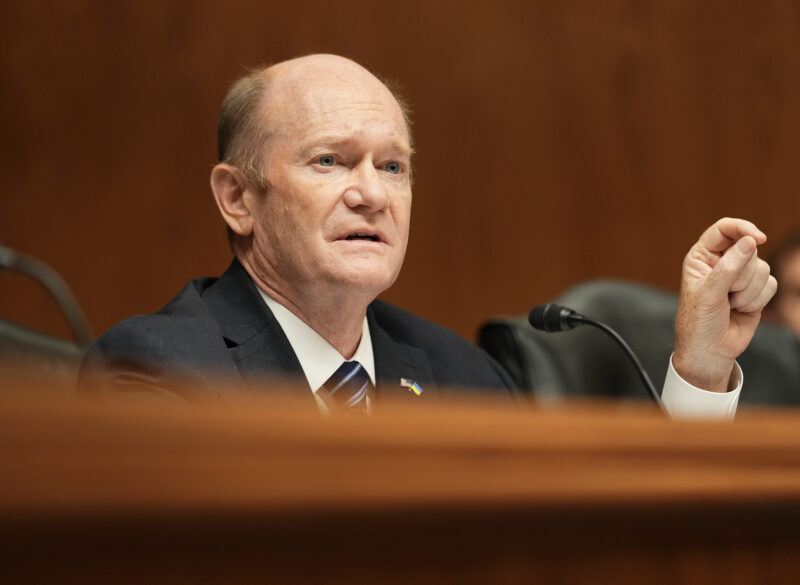
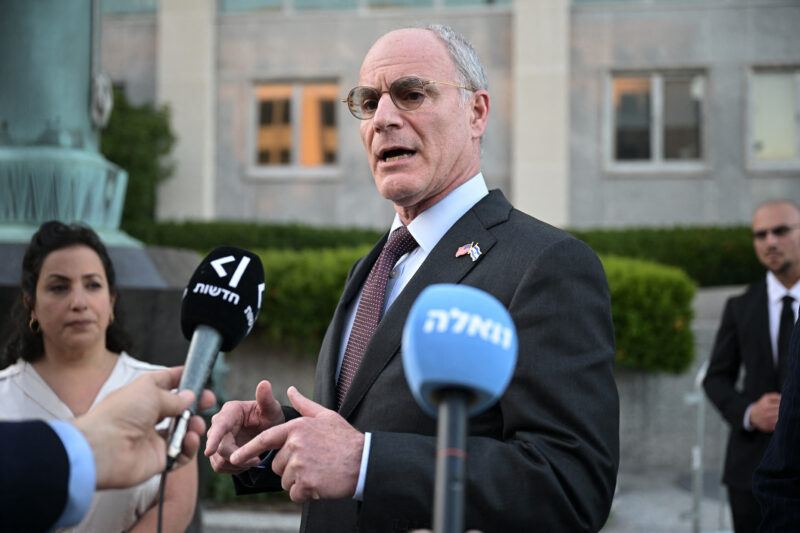
Bill Clark/CQ-Roll Call, Inc via Getty Images
Secretary of State Marco Rubio appears before the Senate Appropriations Subcommittee on State, Foreign Operations, and Related Programs hearing on the State Department budget request on Wednesday, June 3, 2026.


 Add JewishInsider on Google
Despite President Donald Trump’s public acknowledgement of a confrontational phone call with Israeli Prime Minister Benjamin Netanyahu regarding Israeli operations in Lebanon, Secretary of State Marco Rubio on Wednesday largely defended Israel’s attacks against the Lebanese terrorist group.
He said that Hezbollah reached out to the U.S. government through the Lebanese authorities approximately two weeks ago and said that it would stop launching missiles into Israeli territory if Israel did not attack Beirut. But Rubio said that Hezbollah went back on that agreement and launched rockets at Israel within hours.
“Israel has not conducted massive operations in Beirut for some time,” Rubio said at a House Foreign Affairs Committee hearing. “Israel has a right to act in its defense.”
Israeli strikes have taken place largely to prevent imminent attacks by Hezbollah forces preparing to attack Israel, Rubio said. He said that Israel’s seizure of territory in southern Lebanon has been intended to deny Hezbollah freedom to operate and launch missiles, and that Israel has not been conducting large-scale operations in Beirut.
Pressed on the current U.S. position in negotiations with Iran, particularly in comparison to the first Trump administration’s condemnation of the 2015 Iran nuclear deal, Rubio largely focused on the nuclear elements of the deal, but said that Iran’s missile program would also be discussed.
He said that Iran would not receive money or sanctions relief unless it agrees to dispose of its highly enriched uranium and give up its enrichment program.
Asked whether the administration would submit any deal reached to Congress, he said that the administration would comply with the Iran Nuclear Agreement Review Act, which requires such review. He said in a Senate Appropriations Committee hearing in the afternoon that the bill, known as INARA, has “very specific requirements about elements of the nuclear program that would have to be noticed to Congress.”
Pressed by Sen. Lindsey Graham (R-SC) on whether Iran’s support for proxy terrorism would be part of any deal, Rubio said that the U.S. would like to see limits on that activity in a deal, but said that there could also be U.S. sanctions “just on that.”
He also suggested at the House hearing the U.S. is seeking to address Iran’s supply of 20% enriched uranium, in addition to 60% enriched uranium.
Asked about recent comments by Trump describing the Iranian military as moderate, and saying that the U.S. has left it “alone,” Rubio drew a distinction between military equipment and capabilities, which the U.S. has targeted, and certain figures inside the regime who have been more open to negotiations with the U.S. or a more conciliatory posture.
He also framed all U.S. operations since the ceasefire as defensive — retaliatory attacks to respond to or prevent attacks on commercial shipping, to which Iran has responded with strikes on facilities throughout the region.
“These are completely defensive in nature. But they are happening in response to an Iranian action. If they don’t shoot at those ships, we don’t shoot. But we have to respond,” Rubio said. “You have a civilian commercial vessel transiting the straits and they’re being targeted by drones.”
He denied a report that Iran had threatened to test a nuclear weapon if the U.S. does not make concessions in negotiations.
Asked about congressional action on Iran, Rubio noted that Iranian state media has framed congressional votes in favor of war powers resolutions to block operations against Iran as a victory which would tie the U.S.’ hands.
He also said that the administration does not feel it needs an Authorization for Use of Military force to carry out any potential further operations against Iran, but said that the administration would engage with Congress if that occurs and that it would welcome any further congressional authorities.
Pressed by Rep. Joaquin Castro (D-TX) about Israel’s alleged nuclear capabilities, Rubio emphasized that Israel has never acknowledged that it has a nuclear program, though most of the world believes it does. “But they’ve never acknowledged that publicly, and as a feature of our foreign policy, for a variety of reasons, we don’t discuss it in that way either,” he said.
He said that the State Department might be able to discuss the issue further in a closed session and in a different context than a letter Castro and other Democrats sent to Rubio on the subject.
Rubio also affirmed that Turkey is currently not eligible to receive F-35 fighter jets as long as it operates a Russian S-400 missile defense system, under U.S. statute.
More Stories
EXHIBIT A
No major U.S. art museum counts Jewish identity in its diversity commitments, ADL report finds

IN THE CROSSHAIRS
Posters target University of Oregon Hillel executive director as ‘enemy of the people’
REGIONAL SHIFT
Amb. Kaploun: More Latin American countries plan to adopt IHRA definition of antisemitism

Cross-Party Call
JCPA urges candidates in both parties to reject antisemitism ahead of midterms

MINORITY PROTECTIONS
House Democrats urge Rubio to respond to Turkey’s crackdown on LGBTQ community

CAMPAIGN OFFENSIVE
Rogers calls El-Sayed ‘threat to our national security’ in new ad
Please log in if you already have a subscription, or subscribe to access the latest updates.
 Continue with Google
 Continue with Apple