






























Plus, Rial pain for Tehran

Joe Raedle/Getty Images
President Donald Trump shakes hands with Israeli Prime Minister Benjamin Netanyahu during a press conference at his Mar-a-Lago club on December 29, 2025 in Palm Beach, Florida.


 Add JewishInsider on Google
Good Thursday morning.
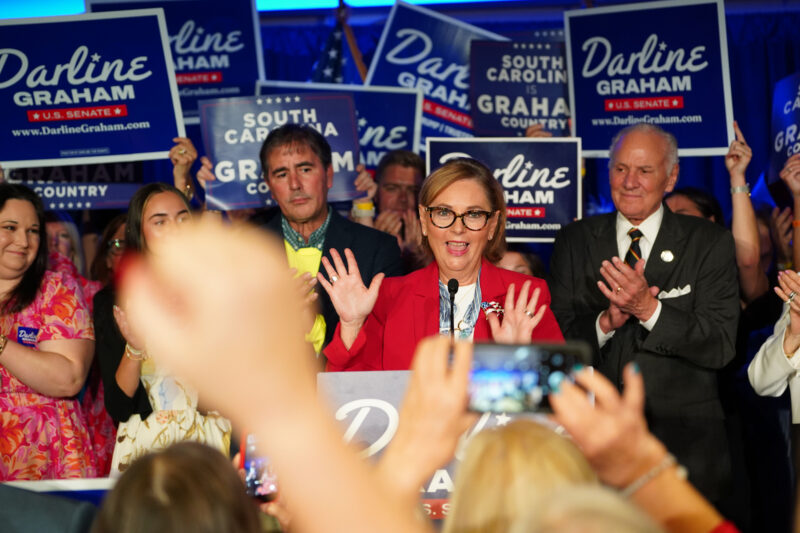
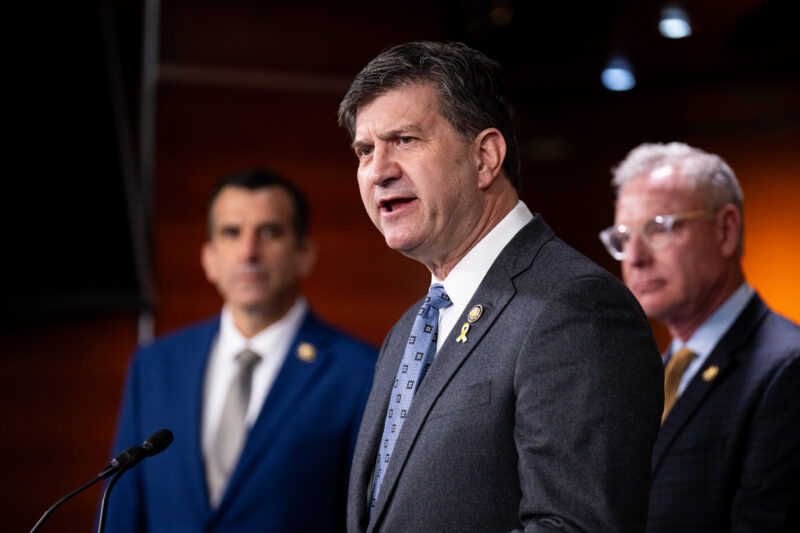
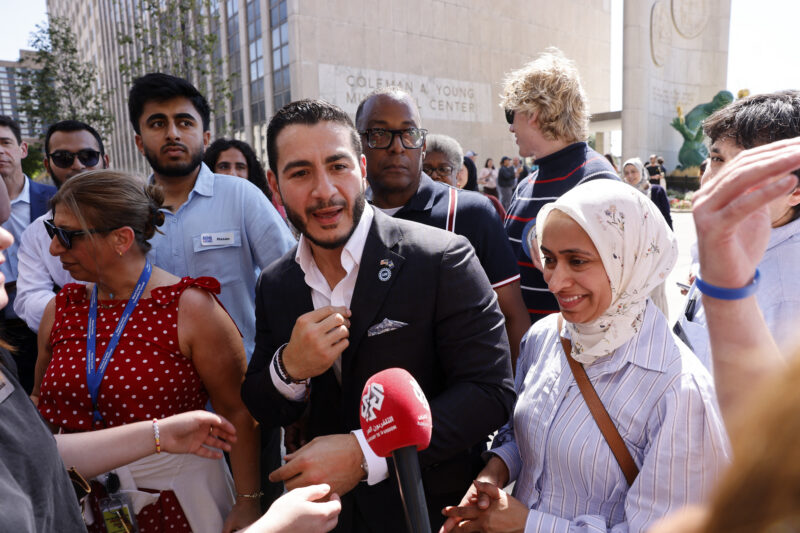
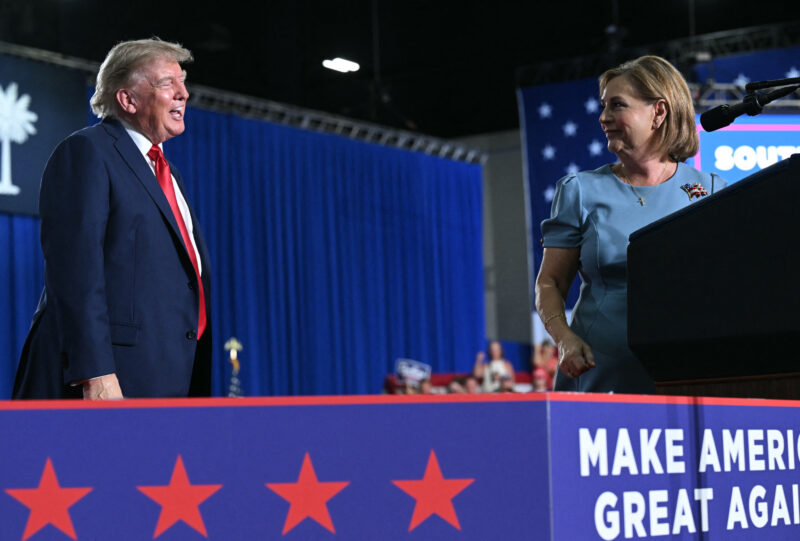
In today’s Daily Kickoff, we look at how Sen. Darline Graham’s shaky debate performance earlier this week is prompting questions in the GOP about her electability, do a deep dive into efforts by the Democratic Socialists of America to win local and state-level races and report on Rep. Ryan Zinke’s advertised participation in an event hosted by the Turkey-linked group involved in the Eric Adams bribery scandal. Also in today’s Daily Kickoff: Marc Brown, Lauren Sherman and Eliya Cohen.
Curated by JI Executive Editor Melissa Weiss and Israel Editor Tamara Zieve, with assists from Danielle Cohen-Kanik and Marc Rod.
Today’s Agenda
We’re monitoring the situation in the Middle East following President Donald Trump’s announcement yesterday that the U.S. was launching a campaign of “economic warfare and isolation on an unprecedented scale” targeting Iran. The president called the move the “MOST CRUSHING ECONOMIC OPERATION EVER TAKEN AGAINST ANY COUNTRY,” and warned that efforts to assist Tehran would be met with “economic consequences.” Read more here.
In Massachusetts, Sen. Ed Markey (D-MA) and Rep. Seth Moulton (D-MA) will face off in the last debate before the Sept. 1 Senate primary. A WCVB/University of Massachusetts Amherst poll released earlier this week showed Markey with a significant lead over Moulton in the race.
One Thing To Know
JINSA calls for change in U.S.-Israel military alliance
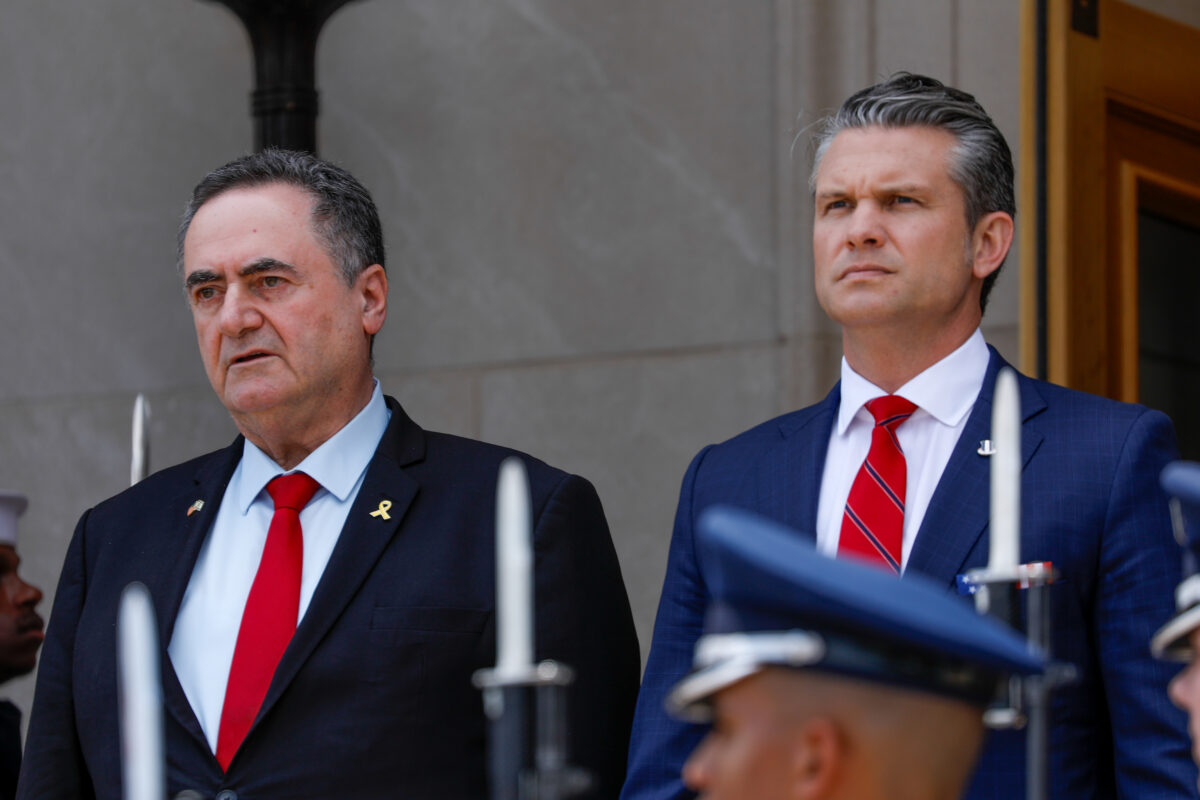
By Matthew Shea
As Israel and the Trump administration negotiate the next U.S.-Israel memorandum of understanding, a new report from the Jewish Institute for National Security of America demonstrates how even among hawkish experts in Washington, the question is increasingly not how to preserve the traditional military aid model, but what should replace it.
The report, titled “Shifting the Center of Gravity: Transforming the U.S.-Israel Security Partnership,” recommends that the two countries sign one final 10-year MOU — a sea change for Israel supporters who previously wouldn’t have dreamt to advocate for the end of these kinds of agreements between Jerusalem and Washington, though they largely hope for it to be replaced with cooperative and enduring programs.
The report comes as Israeli Prime Minister Benjamin Netanyahu has himself championed the eventual end of direct U.S. aid to Israel and as elements of both parties become resistant to defense spending overseas, a new reality that is forcing a reassessment of how Washington can sustain its commitment to Israel without relying on the traditional aid model.
The Big Reads
palmetto state politics
Darline Graham’s foreign policy flub rattles GOP ahead of S.C. Senate runoff
Sen. Darline Graham’s (R-SC) stumbling performance at the final GOP primary debate on Tuesday has prompted questions about her prospects in next week’s runoff against Rep. Ralph Norman (R-SC), Jewish Insider’s Emily Jacobs reports. “The debate seems fairly consequential for a number of reasons,” said GOP campaign veteran Colin Reed. He predicted that Graham’s inability to sound articulate on foreign policy — all but taking a pass on a consequential national security question — was likely to have an impact on the outcome of the race because of the importance of national security issues to South Carolina’s “heavy military presence and large veteran community.”
GOING LOCAL
Socialist surge happening in under-the-radar local and state legislative races
Even as attention has focused on the Democratic Socialists of America’s victories in Senate and House primaries, many of the group’s more overlooked victories have happened at the state legislative level, where the DSA members are poised to wield significant power if they win, Jewish Insider’s Marc Rod reports. A new study by the Brookings Institution, released Wednesday, found that of the 104 state legislative candidates endorsed by national or local DSA chapters in 2026, 76 have won their primaries or advanced to the general election without a primary. At the local level, another 64 of the 99 DSA-endorsed candidates are moving on to the general election.
COLD TURKEY
Turkey-linked group in Eric Adams bribery scandal advertising event with Ryan Zinke
A Turkish-tied organization that launched in 2023 with an alleged straw-donor fundraiser for former New York City Mayor Eric Adams has spent recent weeks selling tickets for a Sept. 20 gathering listing Rep. Ryan Zinke (R-MT) as a “featured speaker” — even as Zinke’s office insists he’s not attending the event, Jewish Insider’s Will Bredderman reports. The CEO Club New York and Turkish-American Business Association have posted materials online and created a listing on Eventbrite advertising the “World Business Summit New York & Award Ceremony 2026” next month, with the name and photo of the retiring Montana congressman, who served as secretary of the interior during the first Trump administration, prominently displayed.
The Rundown
EAST BAY SHOWDOWN
Wahab holds narrow lead over AIPAC-backed Hernandez in East Bay congressional runoff
CLOSE TO HOME
N.J. Jewish bridal shop owner detained by ICE
moving for mike
Michigan Jewish Dems circulate letter endorsing Republican Mike Rogers for Senate
On Our Radar
● The Live Briefing. Word on the street, clips, podcasts and quick updates — the items we’re tracking all day in our Live Briefing on the app (on Apple and Android) and website.
The U.S. has reportedly quietly established in recent weeks a shipping route through the Strait of Hormuz that has allowed between 15-20 tankers to transit through the waterway nightly, allowing some 10 million barrels of oil to move out of the region each day…
In an interview with The Jerusalem Post on Wednesday, U.S. Ambassador to Turkey Tom Barrack doubled down on his criticism of Israeli strikes on a Syrian air base earlier in the week, which Israel said had been prompted by Turkish involvement at the base…
Qatari Prime Minister Mohammed bin Abdulrahman Al Thani met on Wednesday in Doha with Hamas leaders including Khalil Al Hayya; Al Thani praised the terror group for accepting the Board of Peace’s disarmament road map, which analysts told JI Hamas likely has no intention of abiding by, and called on the international community to “pressure Israel to fulfill its obligations”…
Reps. Greg Meeks (D-NY) and Sydney Kamlager-Dove (D-CA) pressed Commerce Secretary Howard Lutnick over his decision to loosen export controls on the United Arab Emirates, arguing he had failed to provide “justification or evidence that proliferation or diversion risk had been mitigated” and questioning whether the moves were driven by political or financial interests…
U.S.-based missile manufacturer Castelion closed a more than $1 billion round of funding co-led by Carlyle, JPMorgan Chase and Andreessen Horowitz to boost production of hypersonic missiles…
Fortune looks at ServiceNow’s acquisition of Yevgeny Dibrov’s Armis earlier this year, as the company — which was bought from Dibrov and cofounder, Nadir Izrael, for nearly $8 billion — becomes a core component of ServiceNow’s pushback against the AI-driven “SaaSpocalypse”…
The New York State Department of Financial Services issued a notice warning Holocaust survivors and their families about potential fraud by an organization calling itself the “Jewish Holocaust Claims Center” that is contacting such individuals about their eligibility for compensation…
Author and illustrator Marc Brown, the creator of the “Arthur” series, sold his Martha’s Vineyard home for $6.4 million…
The New York man accused of assaulting two people at Manhattan’s Central Synagogue last week is facing federal hate crimes after initially being charged with state-level hate crimes related to the incident…
L.A. City Councilmember Nithya Raman’s mayoral campaign confirmed plans to work with Fight Agency, as the consulting firm faces criticism from elements of the Democratic Party over its work with former Maine Senate candidate Graham Platner, who dropped his bid following a rape allegation made by a former romantic partner…
Vanity Fair spotlights Puck’s Lauren Sherman, the lead author of the online publication’s “Line Sheet” newsletter, described as “one of the most influential — and polarizing — figures in fashion media”…
U.K. Foreign Secretary Ed Miliband said London was preparing targeted sanctions against Israelis engaged in “illegal settlement expansion,” and summoned Israel’s chargé d’affaires in the country over the issue…
The IDF said it was opening an investigation into the death of 5-year-old Hind Rajab in Gaza in January 2024 after finding that Israeli troops had fired at her family’s vehicle as it was traveling opposite the direction of an evacuation route; the IDF had previously denied responsibility for the incident, which drew global attention and inspired an Oscar-nominated film titled “The Voice of Hind Rajab”…
Australia summoned Israel’s ambassador in Canberra following the IDF’s announcement that it would not move forward with criminal proceedings regarding a 2024 IDF strike in Gaza in which seven World Central Kitchen workers, including an Australian citizen, were killed…
The Dubai-based DP World is moving forward with an $800 million plan to redevelop the Syrian port of Tartous on the Mediterranean…
Former Israeli hostage Eliya Cohen married his longtime girlfriend, Ziv Abud, on Wednesday night; the couple, who attended the Nova music festival along with Abud’s nephew and his girlfriend, survived a siege on the bomb shelter in which they were hiding during the Hamas-led Oct. 7 attacks before Cohen was taken captive and held for more than 500 days…
Worthy Reads
Find more Worthy Reads in our Live Briefing via our app (on Apple and Android) and website.
Iran’s Best Friends: In The Washington Post, the Foundation for Defense of Democracies’ Bradley Bowman and Cameron McMillan call on the U.S. to address continued Russian and Chinese support for Iran. “Perhaps most startlingly, Russia reportedly provided Iran with satellite imagery and other forms of intelligence to enable Iranian attacks on American military positions in the region, likely improving Tehran’s ability to target U.S. forces and high-value assets — such as radars and command-and-control sites — with drones and ballistic missiles. … Beijing has long provided Tehran with dual-use support, meaning items that can be used for civilian and military purposes. This is perhaps most evident in Iran’s ballistic missile program.” [WashPost]
Village People: In The Wall Street Journal, David Cohen, the CEO of Algemeiner, reflects on the communal response to the recent death of his brother, Jonathan. “The people filling the mourning house weren’t merely responding to Jonathan’s death. They were responding to Jonathan’s life. A few weeks later, my wife put it succinctly: ‘To have a village, you have to be a villager.’ We talk about the disappearance of community. Americans report loneliness despite technology that lets us reach anyone, anywhere, instantly. … Perhaps we have the equation backward. A village isn’t something we find when we need one. It’s something we build long before that.” [WSJ]
Picture of the Day

The IDF’s chief of staff, Lt. Gen. Eyal Zamir, visited Israeli troops in Syria on Wednesday, days after an Israeli strike targeted an air base in northern Syria meant to deter Turkish troops from deploying in the area. Credit: IDF
Birthdays
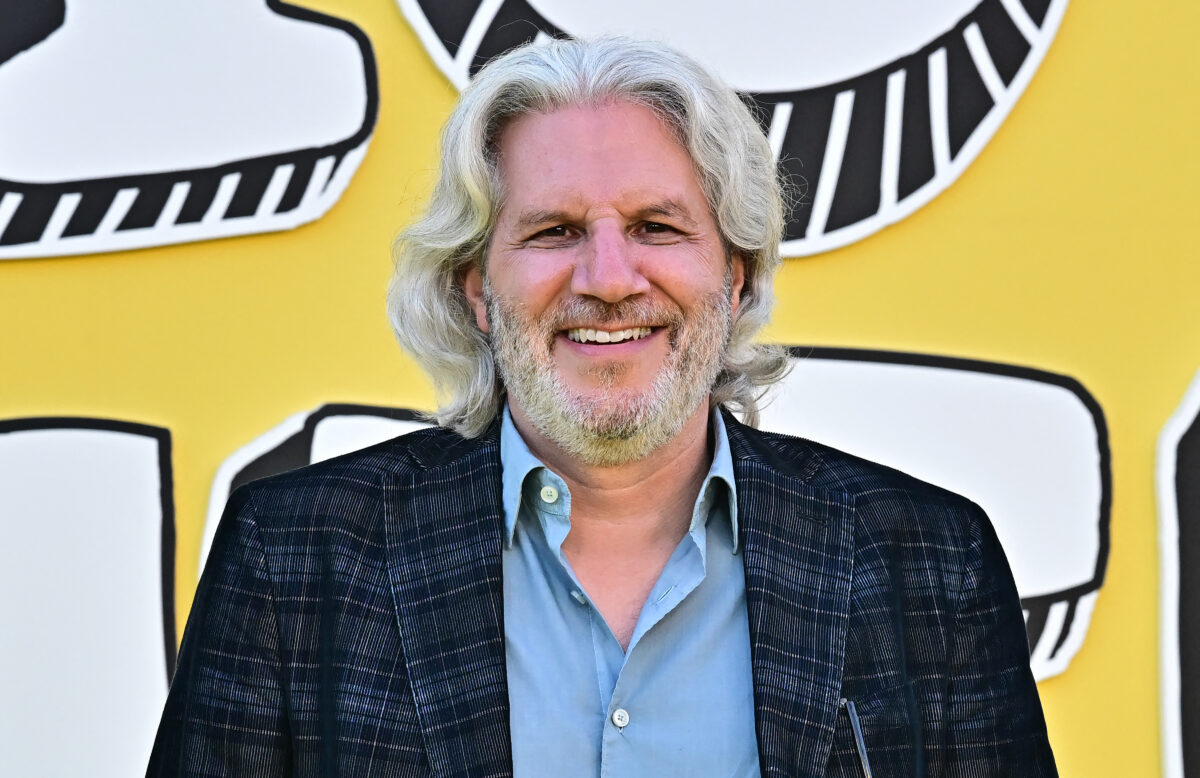
Mark Levin, film director, television producer and screenwriter, turns 58
Phoebe Bryan, Laguna Hills, Calif., resident
Connie Chung, news anchor and reporter for ABC, CBS, NBC, CNN and MSNBC, turns 80
Larry Kudlow, director of the National Economic Council during the Trump 45 administration, now a commentator for Fox Business, turns 79
Lana Gordon, former Kansas secretary of labor, turns 76
Steven Klinghoffer, immediate past chair of the Golda Och Academy in West Orange, N.J.
Sam Katz, mayor of Winnipeg, Manitoba, from 2004 to 2014 and the owner of minor league baseball’s Winnipeg Goldeyes, turns 75
Jay Knopf, managing director of equity derivatives at Rice Financial Products
Bradley Schneider, U.S. representative (D-IL), turns 65
Suzanne Grant, Wilmington, Del., resident and former treasurer of the board of the Jewish Federations of North America
Michael Froman, president of the Council on Foreign Relations, he was the U.S. trade representative during the Obama administration, turns 64
Steve Daines, U.S. senator (R-MT), turns 64
Patrick Drahi, founder and controlling shareholder of the Altice Group, he acquired Sotheby’s during 2019, turns 63
Etgar Keret, Israeli writer known for his short stories and graphic novels, turns 59
Matthew Gould, British ambassador to Israel from 2010 to 2015, the first Jewish U.K. ambassador to be posted to Tel Aviv, and former CEO of the Zoological Society of London, turns 55
Asher Fentahun Seyoum, Ethiopian-born, former member of the Knesset for Kulanu, turns 55
Ari Goldberg, chief communications officer at Nova Ukraine
Abigail Michelson Porth, executive director of Lisa Stone Pritzker’s LSP Family Foundation
Karen Brunwasser, co-CEO and one of the founders of the Jerusalem Season of Culture, a summer music festival that showcases Jerusalem
Rachel Fish, co-founder of Boundless Israel
Elhanan Miller, Israeli teacher and writer, he is the founder of People of the Book focused on communicating about the Jewish faith with the Arab world, turns 45
David Adelman, partner in the Iowa office of Cornerstone Government Affairs and foundation president of the Jewish Federation of Greater Des Moines
Meghan Ory, Canadian television and film actor, turns 44
Josh Flagg, real estate agent, author and television personality as an original cast member on the show “Million Dollar Listing Los Angeles,” Josh Flagg, turns 41
Simon Shnapir, ice skating professional at The Skating Club of Boston, turns 39
Gianmarco Soresi, stand-up comedian, actor, podcaster and internet personality, turns 38
Roy Ziv, Canadian guitarist, YouTuber, producer and music teacher, turns 35
Sella Sharlin, triathlete and beauty pageant titleholder who was crowned Miss Israel 2019, turns 30
A Brookings Institution study found that of the 104 Democratic Socialists of America-backed candidates running for state legislature, nearly 75% have won their primaries

Spencer Platt/Getty Images
Members of the Democratic Socialists of America May 01, 2019 in New York City.
The Democratic Socialists of America notched another win this week in Florida’s Democratic Senate primary, with the shock victory of state Rep. Angie Nixon, a DSA member, over a much better-funded, establishment-backed challenger.
The far-left group has also notched at least six new victories in deep-blue House districts where its members are all but guaranteed to be elected, and could lead four major U.S. cities — New York, Los Angeles, Seattle and Washington, D.C. — after the midterm elections.
But some of the group’s more overlooked victories have happened at the state level, where the DSA members could wield significant power if they win. A new study by the Brookings Institution, released Wednesday, found that of the 104 state legislative candidates endorsed by national or local DSA chapters in 2026, 76 have won their primaries or advanced to the general election without a primary.
At the local level, another 64 of the 99 DSA-endorsed candidates are moving on to the general election. By comparison, at the congressional level, only 20 of the 64 total DSA-endorsed candidates have made it to general election races.
In New York City, already a comparative bastion of DSA representation in the state Assembly and Senate, eight DSA endorsees have advanced to the general election, including state Senate candidate Aber Kawas, who downplayed the 9/11 attacks, as well as seven state Assembly candidates. In total, the group is expected to have at least 15 members in Albany next year.
Sara Forman, the former executive director of the New York Solidarity Network, a state-level Jewish advocacy organization, said that after New York City Zohran Mamdani’s victory, the DSA seems to be emboldened to “flex their muscles” nationwide, after previously taking a more “surgical” approach at the state and local level.
Forman, who is now a senior advisor at Optimistic Labs, said she thinks the group learned lessons from the Mamdani race, including targeting highly engaged communities and neighborhoods. She also emphasized that the group has spent two decades building out the infrastructure that fueled the recent victories highlighted in the Brookings data.
“The Jewish community needs to take a hard look at this and really decide whether or not we’re willing to break bread” with a group that only looks at the Jewish community for “how they can use us,” she continued, while adding that Jewish community members will likely need to engage with some DSA elected officials in some capacity..
The national DSA organization endorses only a small subset of the DSA-affiliated candidates running nationwide. But outside of New York, five of its endorsees have advanced to general election races in state assembly seats around the country, with some set to coast to election and others facing competitive general election races: Robert LeVertis Bell in Kentucky, Tammy Carpenter in Oregon, Chris Gilmer-Hill in Michigan, Luke Alfaro-Jungmann in New Mexico and Mathewos Samson in Georgia.
Local DSA groups have racked up many more wins, such as state Rep. Maryam Khan’s ouster of an incumbent in a recent Hartford, Conn.-area state Senate seat.
“It’s interesting to me that the places where you’ve seen a lot of the newer elected officials pop up were a little unexpected, Connecticut being one example,” Forman said.
The state-level wins carry the potential to advance the DSA’s agenda, particularly in places such as New York, where the DSA expects its endorsees to work as a bloc in coordination with DSA leaders.
The Brookings study found that most DSA candidates hailed from already liberal areas — 111 were from California and New York alone — and most from districts that heavily favor Democrats. And DSA candidates contested and were nominated in a small fraction of the 7,386 total legislative seats around the country.
“From one perspective, the story of DSA candidates’ influence is overblown. The scarcity of candidates and their lack of strong success rates overall make this look more like a skirmish than a war,” the study’s authors conclude. “Nonetheless, the high-profile wins, fueled by young, white, educated voters, represent a warning to the rest of the party. They signal that unhappiness with the Democratic establishment and, in the post-Biden world, opposition to elderly officeholders can be leveraged by young, charismatic DSA candidates — and reflect an impatience with party leadership that transcends ideology.”
The rapid rise of the far left has alarmed Jewish leaders, who have seen candidates aligned with the DSA or affiliated with other virulently anti-Israel groups and in some cases, embracing antisemitic views. Those ties haven’t stopped them from winning deep-blue primaries across the country.
“Just judging on Missouri, it’s worse than people are realizing,” said Stacey Newman, a former Democratic state lawmaker who now leads the Missouri Alliance Network.
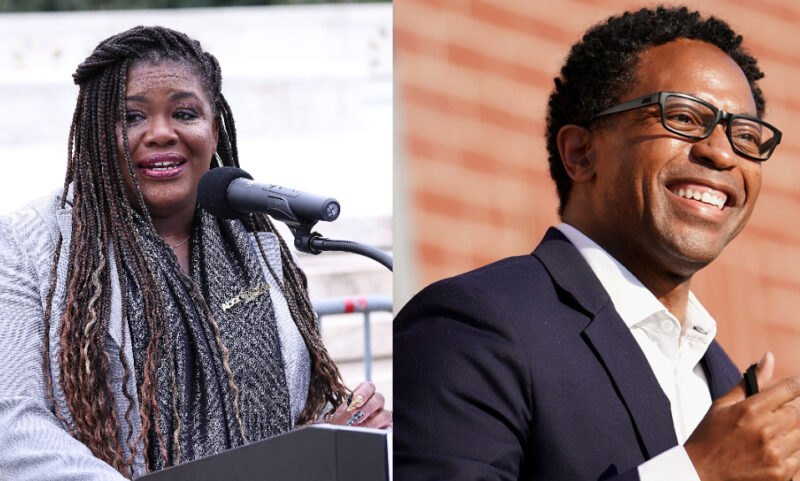
She emphasized that St. Louis-area Democrats elected a growing number of far-left candidates — albeit most not formally DSA-endorsed — and others hostile to Jewish community interests to the Legislature even while reelecting a close Jewish community ally in Rep. Wesley Bell (D-MO). “They all have the same anti-Israel, anti-Jew platforms,” she said.
Forman said that Jewish advocates and their allies at the state level “need to be prepared for what I’m assuming is going to be the incoming push to try to make Israel a state and local issue,” as Mamdani and other DSA members did in New York State with legislation such as the Not On Our Dime Act.
“We really need to be making sure that our advocates and our allies are prepared to push back on that narrative,” Forman said, “but second of all, to remind people that state and local office has nothing to do with foreign policy.”
She said that the existing Jewish educational infrastructure needs to have the “toolkit to be able to say and push back hard and aggressively that this has no place in the state legislature,” and have its messaging clear and prepared.
Newman, whose group led advocacy for an antisemitism bill in the Missouri Legislature, said she feels that the Jewish community increasingly can’t rely on Democrats in Missouri’s legislature to support their priorities. And, she emphasized, much more policy work happens at the state level than the federal level.
“As a former Jewish state legislator, I’m petrified, because we’re all watching what’s happening around the country,” Newman said. “We’re watching Michigan, Wisconsin, we’re watching the Democratic Party throw caution to the wind.”
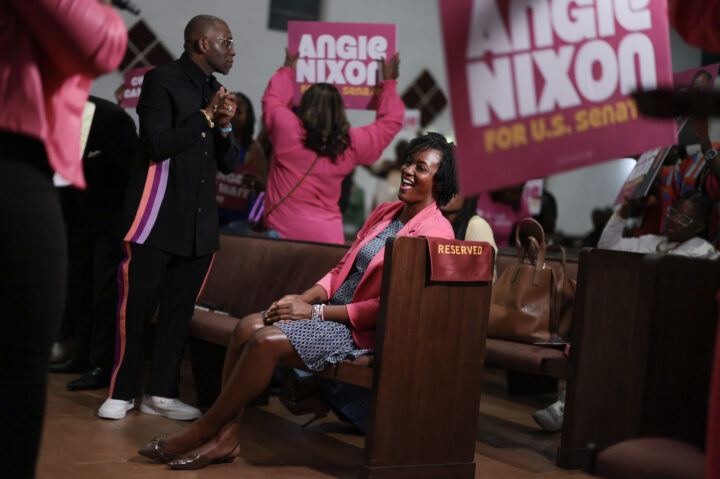
Angie Nixon, who called Israel’s war against Hamas a genocide and campaigned with Rep. Rashida Tlaib, will be the party’s candidate against GOP Sen. Ashley Moody
Joe Raedle/Getty Images
Democratic U.S. Senate candidate, Florida state Rep. Angie Nixon participates in a worship service during a visit to the Ebenezer Missionary Baptist Church on August 17, 2026 in Hallandale Beach, Florida.
Democratic Socialists of America-affiliated candidate Angie Nixon, a Florida state representative, won the Democratic primary for Florida’s Senate seat on Tuesday, scoring a major upset over the establishment-backed Alex Vindman.
Vindman, who is Jewish and gained national attention as a whistleblower in President Donald Trump’s first term, brought in $16 million during the campaign while Nixon raised less than $1 million. Her victory is a sign of the shifting political tides in the Sunshine State. .
Her left-wing affiliations are also likely to concern Democrats in the general election in light of the various immigrant constituencies in the state that have generally been hostile to socialist ideology.
Nixon said recently that she would have supported efforts to cut off all U.S. aid to Israel: “We cannot continue to send money to countries that are violating international law, that are violating human rights, that are actively destroying,” she said on local radio.
Nixon campaigned alongside and was endorsed by a series of anti-Israel figures and groups, including Reps. Rashida Tlaib (D-MI) and Ilhan Omar (D-MN), former Rep. Cori Bush (D-MO), former Ohio state Sen. Nina Turner, the virulently anti-Israel group TrackAIPAC and Jewish Voice for Peace.
A month after Hamas’ Oct. 7, 2023, attacks on Israel, Nixon faced accusations of antisemitism by Jewish Democrats in the Statehouse over a resolution she led calling for a ceasefire “in Israel and occupied Palestine,” with just one other lawmaker joining her in support of it. Most House members turned their backs to Nixon as she spoke on the House floor in support of the resolution.
“To be called a terrorist on the House floor. Ignorant. Antisemitic. That was very hurtful. But I will always fight to stand on the right side of history, and I believe that I was on the right side of history then just like I’m on the right side of history now,” Nixon said recently.
Rick Stark, chair of the Florida Democratic Jewish Caucus, said that Nixon joined a Zoom meeting with the group to discuss issues including Israel policy. He characterized her as having no clear understanding of the region.
Stark said that Nixon had not offered a clear answer on whether Israel has a right to exist as a Jewish state, and was not interested in traveling to Israel.
He recounted that she was not familiar with the meaning of the slogan “from the river to the sea,” but she said that she had been told by Palestinian friends that it did not constitute a call for the destruction of Israel.
Steve Schale, a Florida Democratic strategist, told JI before the primary that Nixon had “created a bunch of buzz for herself,” and that she would have a strong base in the Jacksonville area and among Black voters statewide — beyond only the progressive and DSA-aligned coalition.
The results indicated that Nixon, indeed, won comfortably in heavily Black counties and precincts, giving her a broader base of support than just far-left voters.
Vindman is also relatively new to Florida, having moved to the state only recently and attracting accusations of carpetbagging.
“Who would’ve ever thought that a Jewish refugee would make it to the U.S. Army, to the White House, and to becoming a candidate for the U.S. Senate. Only in America is that possible,” Vindman said in a statement.
“I still believe in the American Dream, because I’ve lived it. It’s worth fighting for. Rep. Nixon ran a strong campaign. I will be standing by her side in the fight against Ashley Moody. I hope you’ll join me.”
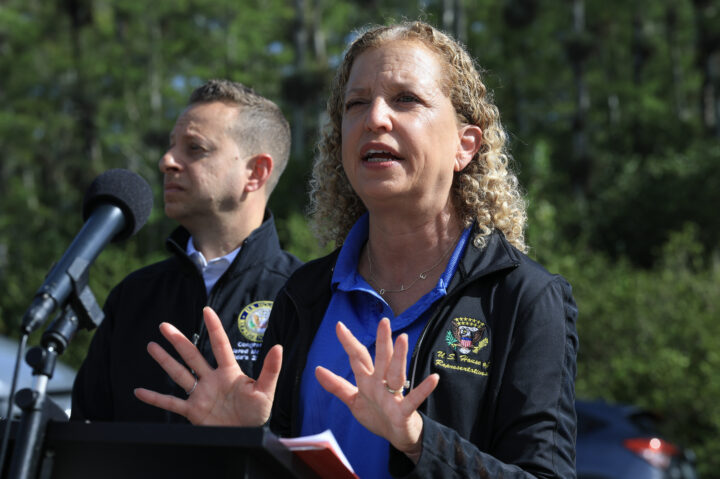
Reps. Jared Moskowitz (D-FL) and Debbie Wasserman Schultz (D-FL) are the latest DSA targets
Joe Raedle/Getty Images
Reps. Jared Moskowitz (D-FL) and Debbie Wasserman Schultz (D-FL) speak to the media before a visit to the Dade-Collier Training and Transition Airport on July 12, 2025 in Ochopee, Florida.
Reps. Jared Moskowitz (D-FL) and Debbie Wasserman Schultz (D-FL), two Florida Jewish Democrats known as champions of Israel, are facing primary battles on Tuesday against Democratic Socialists of America-aligned candidates who have made criticism of the incumbents’ stances on Israel major planks of their campaigns.
Moskowitz, running in a heavily Jewish south Florida district, faces a challenge from DSA member Oliver Larkin.
Wasserman Schultz is facing a slew of Democratic opponents after redistricting broke up her previous district. She decided to run instead in a plurality Black seat, a decision that has sparked controversy in both the state and on the Hill. Her most prominent challenger is Elijah Manley, a former DSA member who converted to Judaism as an adult.
Larkin and Manley — alongside progressive Senate candidate Angie Nixon, who faces Jewish Democrat Alex Vindman — rallied on Friday with Rep. Rashida Tlaib (D-MI), one of the most prominent critics of Israel in the House. The event was forced to relocate after the original business hosting the event, The Venue Fort Lauderdale, cancelled the reservation following backlash from Democratic state Rep. Michael Gottleib and others, including far-right commentator Laura Loomer.
“Once we became aware of the full scope and nature of the event and reviewed the publicly circulated promotional materials, we immediately began addressing the matter. Due to security concerns as well as the welfare of attendees and staff, the decision was then made that the event would not proceed at our property,” The Venue said in a statement. “The Venue Fort Lauderdale is Jewish-owned and operated and our values and commitment to the Jewish community are deeply important to us.”
Local media reported that a second venue also backed out of hosting the event before organizers were able to secure a third location, where the event went forward.
Larkin, Tlaib and Nixon also attended a Shabbat event organized by Jewish Voices for Peace. JVP did not identify any Jewish leaders attending the Shabbat event on the invitation.
In spite of the national attention toward the races, longtime Democratic insiders in the state are skeptical that far-left politics is a winning formula in Florida.
“I don’t think this entire state is great for that,” Steve Schale, a longtime Florida Democratic strategist said, pointing to the defeats of former gubernatorial candidate Andrew Gillum and Sen. Bernie Sanders’ (I-VT) presidential campaign in the state.
Mitch Ceasar, a former chair of the Broward County Democratic Party and a former state Democratic chairman, agreed that far-left and anti-Israel positions aren’t likely to have much purchase in the Sunshine State. “I don’t think either one of those things plays in Florida like it would in New York or some other places.”
Neither Larkin nor Manley have picked up the prominent national endorsements of figures such as Sanders or Rep. Alexandria Ocasio-Cortez (D-NY) that have been a boon to other progressive congressional hopefuls. Manley, for his part, secured the endorsement of Rep. Ro Khanna (D-CA).
But other far-left figures have been rallying in support of Larkin in particular, including antisemitic streamer Hasan Piker; far-left Democratic nominees Darializa Avila Chevalier, Claire Valdez and Melat Kiros; former Rep. Jamaal Bowman (D-NY); childrens’ entertainer Ms. Rachel; former Ohio state Sen. Nina Turner; and anti-Israel activist Linda Sarsour.
Manley also appeared on Piker’s livestream show.
Moskowitz — despite an unrelenting barrage of attacks from Larkin’s campaign — has largely stuck to a positive message and declined to engage directly with Larkin.
But Moskowitz has said he believes that he’s “being targeted simply because of my faith and being pro-Israel” and that Larkin has embraced supporters who have “repeatedly trafficked in antisemitic rhetoric and hostility toward the Jewish community.”
Moskowitz has raised nearly $3 million, but has reserved close to $2 million of that for the general election. Larkin raised $689,000 and would enter the general election with just $170,000 left on hand.
Ceasar said Larkin’s campaign has also brought in “a lot of very anti-Jewish overtones,” which have raised particular concerns in light of the public death threats and assassination attempts that Moskowitz has faced.
Schale said he’s been dubious of polling and other data the Larkin campaign has put out that has suggested Larkin is gaining ground on Moskowitz. He added that a Larkin victory would virtually guarantee that Democrats lose the seat in November.
“I remain skeptical that that race is actually going to be all that close,” Schale said, emphasizing that the district, geographically and demographically, is very different from most of the other districts where DSA candidates have had success, including being less urban, older and heavily Jewish.
A poll from Larkin’s campaign on Aug. 5 of 403 likely voters showed Moskowitz leading Larkin by two points, while a Moskowitz poll on July 22 showed Moskowitz leading by 36 points.
Ceasar agreed that Moskowitz should win reelection, noting his strong fundraising performance and that his new district shares about half of its territory with the previous one. “Jared’s a hard worker,” Ceasar said.
He also emphasized that Moskowitz is a well-known quantity in the district since the beginning of his political career.
An individual close to Moskowitz’s campaign noted that half of the expected voters have already voted early, and that the district is generally older. The district is also 25% Jewish and 25% Hispanic — mostly of Cuban and Venezuelan ancestry, populations that are generally hostile to socialist policies. The source noted that the district is deeply purple — split around evenly among Democrats, Republicans and Independents.
All of those factors are likely to favor Moskowitz. There’s also been an effort among Republican-leaning Orthodox Jewish voters to re-register as Democrats to vote for Moskowitz in the primary.
Another source who requested anonymity to speak freely told Jewish Insider they expect Moskowitz to win, but said that his one potential vulnerability is that he’s been somewhat absent from local Democratic club meetings and other gatherings in the district. Moskowitz has also faced criticism, including from the Sun Sentinel — which declined to reendorse him — for failing to appear with or debate Larkin.
Moskowitz, who has young children, faced a credible assassination attempt in 2024 and repeated death threats and other harassment, largely tied to his Jewish identity.
The source said, however, that Moskowitz is very well-known and well-liked and has a long history in the district, and noted that his father was also a leader in the Broward County Democratic Party.
Schale said he was skeptical of a characterization of Moskowitz as disengaged. The lines of the district, Schale noted, changed around three months ago and around 40% of the district is new to him, so campaigning on the ground in much of the district would have been difficult before then as well. He said he’s found Moskowitz to be “incredibly in-touch with his constituents” and “responsive” to them throughout his career.
Caesar told JI that Wasserman Schultz remains the favorite in her race in part because her opponents failed to consolidate. Some Black community leaders had hoped to narrow the field to a head-to-head challenge against Wasserman Schultz, but ultimately the other candidates declined to do so.
Democrats have expressed frustrations with Republicans for creating the redistricting situation, accusing them of deliberately stoking racial tensions through their decisions in drawing the district boundaries in addition to carving up Democratic-held seats.
“I hate the situation all around,” Schale said.
“What the Republicans are doing is they’re going for what I would call a political [Buy One, Get One], and that is that they’re seeking to steal Democratic districts in Florida, while also creating racial disharmony,” Ceasar said.
Wasserman Schultz, Ceasar noted, maintains a substantial fundraising advantage over her opponents. She’s raised $3.3 million, far surpassing Manley’s $1 million, former Broward County Mayor Dale Holeness’ $394,000, former Rep. Sheila Cherfilus McCormick’s (D-FL) $389,000 and rapper and free speech activist Luther Campbell’s $163,000.
The seat has a plurality Black population but not necessarily a majority, and includes a diverse set of communities, Schale noted.
“I’ve talked to several people that think she probably is going to win,” Schale said. “She’s probably in the strongest position to win this thing, but assuming she wins, she’s going to have a very real challenge on Day 1 to build trust in the community with folks who feel like she shouldn’t have run there … and to deliver in a real way. The one thing about her that I know is she’s as tireless as any human being I’ve ever known and she’ll work her tail off.”
Though Manley’s campaign has gained the most national attention, as well as endorsements from some local newspapers, Schale said that Holness is likely to be a strong candidate as well. Cherfilus-McCormick, he said, likely still maintains a base of support in spite of the scandals that led to her resignation from Congress earlier this year, while Campbell has also been an interesting and unique candidate.
“I wouldn’t be surprised if Elijah finished second if he doesn’t win. I also wouldn’t be surprised if Dale was [second],” Schale said. “I don’t know that [Holness] is raising the kind of money and communicating in the same way, but he’s also got a substantially deeper relationship with the district than Elijah does.”
He said Manley’s path to victory would be if other candidates split the more moderate vote and he’s able to squeeze through to victory with around 30% of the vote. With significant Black, Caribbean, Cuban, Venezuelan and Colombian voting populations, “just demographically, the district isn’t set up well for a socialist. And also … a good chunk of them came there escaping socialism.”
A third pro-Israel Jewish Democrat, Rep. Lois Frankel (D-FL), is also facing a challenge that’s gone largely unreported at the national level. Rick Stark, the chair of the Florida Democratic Party’s Jewish Caucus, said that Frankel’s reelection race may be flying under the radar as a true contest.
Her main opponent, Victoria Doyle, who is running to Frankel’s left and has expressed hostility toward AIPAC, has loaned her own campaign $325,000. Frankel is in a much stronger position financially, having raised $2.2 million.
Stark, who lives in Frankel’s district, said he hasn’t seen much outreach from Doyle’s campaign, but noted that Democrats have been particularly hostile this cycle toward older and long-tenured Democratic leaders like Frankel.
“I do think [Frankel] pulls it off, [but] I think it’s going to be a lot closer than [people are] thinking,” Stark said. “A lot of the young folks are tired of us old folks.”
Schale said he hadn’t heard any indication that Frankel’s race would be competitive.
“Our campaign is directed at fighting Donald Trump‘s policies and not on attacking other Democrats. I’m laser-focused on building an affordable America, protecting our Social Security and Medicare, and fighting Trump’s threat to our democracy,” Frankel said in a statement to JI.
In the Senate race, Schale predicted victory for Vindman, a military veteran and National Security Council whistleblower, but said that Nixon is likely to put up a strong performance.
“Angie’s running a very energetic [campaign]. I think she’s created a bunch of buzz for herself,” Schale said. “I think Alex will win, but I wouldn’t be surprised if it’s not close-ish.”
He emphasized that many Florida voters will be unfamiliar with either candidate going into the polls — though Vindman has been able to communicate with more voters — but Nixon will have a base of voters in Jacksonville and Black voters statewide, beyond only progressive and DSA-aligned voters.
Stark said that Nixon had spoken at a Jewish Democratic Caucus Zoom event where she did not demonstrate a clear understanding of issues in the Middle East.
Bashing Israel and a tolerance for antisemitism wasn’t really part of the woke equation in the first iteration of the left’s social justice activism. It’s now a litmus test in this new era, with major implications for American Jews
Sven Hoppe/picture alliance via Getty Images
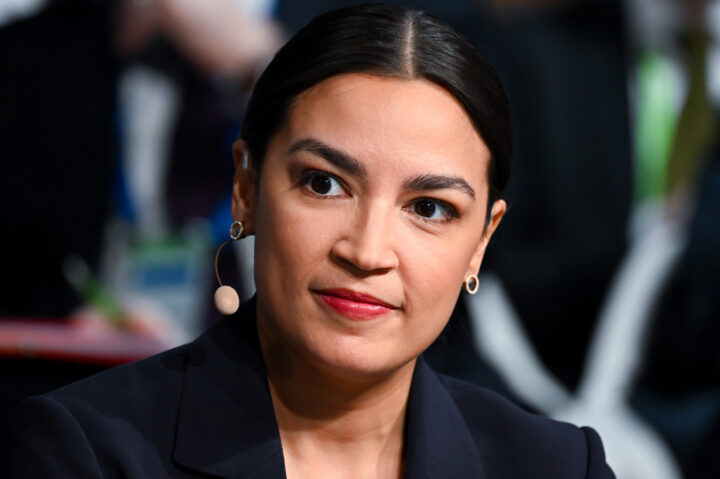
Rep. Alexandria Ocasio-Cortez (D-NY) takes part in the Munich Security Conference.
Rep. Alexandria Ocasio-Cortez (D-NY), openly considering a presidential campaign in 2028, made waves over the weekend when she declared that “Woke 1.0 was crazy” in a nationally televised ABC News interview where she distanced herself from the most unpopular elements of the progressive movement.
Left unsaid during the conversation is what specific policies in the party’s last activist wave does she think were crazy, and does she still agree with any of them? After all, the platform of the Democratic Socialists of America currently outlines many of the same issues that played a role in Democrats’ defeat in 2024 — from progressive candidates’ support for defunding the police to the Biden administration’s open-ended immigration policy that led to the second Trump administration’s harsh crackdown on refugees and undocumented immigrants.
Presumably, she’ll be asked to answer more of the specifics in subsequent interviews. But the implication of her comments was that it’s hard for Democrats to publicly embrace the panoply of left-wing issues that became liberal conventional wisdom around the time of the pandemic without suffering a significant political penalty. Democrats aren’t exactly speaking the language of climate change activists or transgender advocates or supporting watering down penalties for criminals anymore, as was commonplace in 2020.
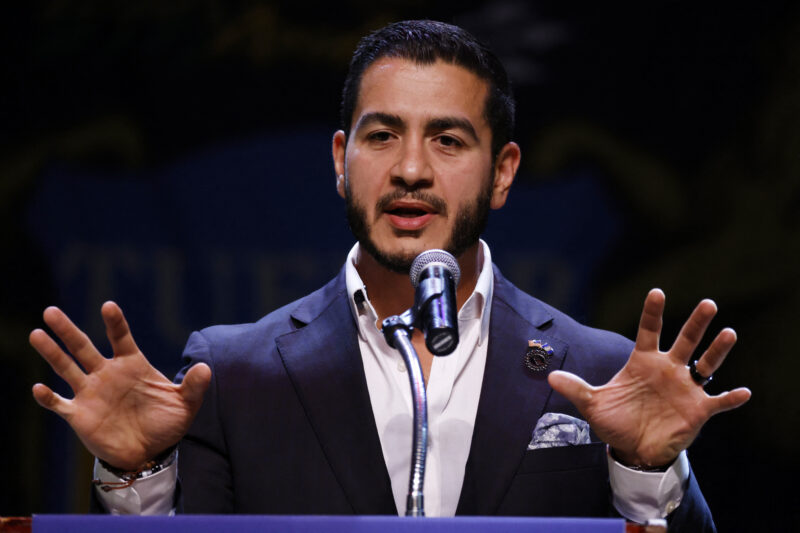
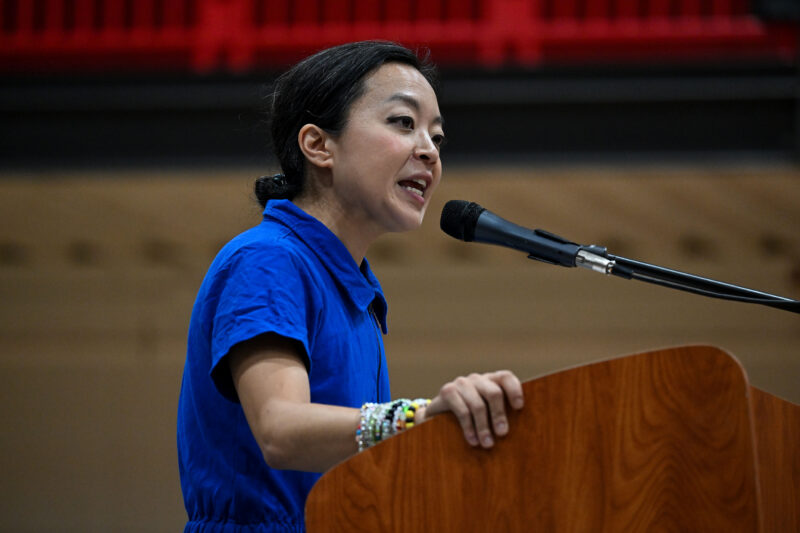
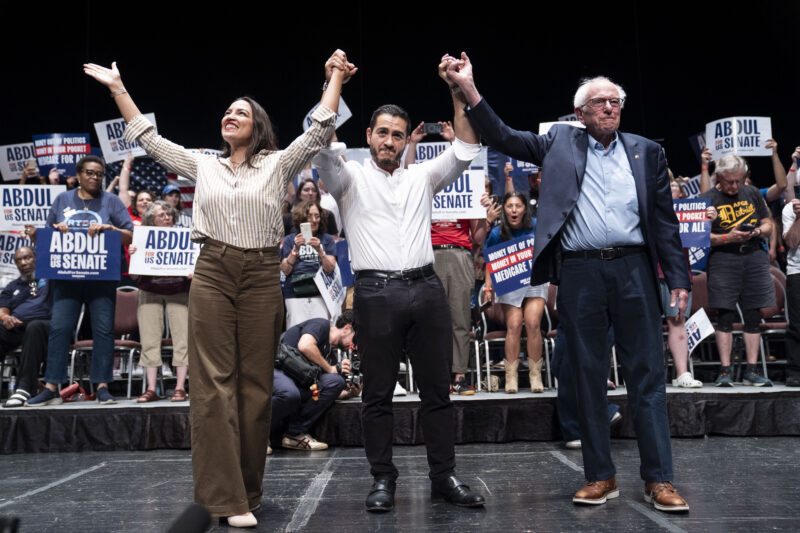
But they aren’t confronting the far-left forces that drove these issues to the forefront of the conversation for much of the last decade, either. The scandal surrounding Francesca Hong’s view of Thanksgiving as a “colonizer holiday” and Abdul El-Sayed’s comments bashing football, July 4 fireworks and Mackinac Island only underscore the impression that their deeply-held views are at odds with a majority of Americans.
And meanwhile, the DSA faction is as influential as ever in Democratic Party politics.
How did that happen, even as a prominent progressive like AOC now acknowledges the excesses of the far left? It’s because the activists have refocused their attention away from their (still deeply held) unpopular social and cultural positions, and are now singularly focused on demanding candidates label Israel’s war against Hamas in Gaza as a genocide. That’s the biggest litmus test right now. And their efforts are aided by the overall decline in support for Israel within the Democratic Party that’s accelerated in the last year.
By focusing on a foreign policy issue that is less impactful to many Americans than the economy or crime, they’re hoping they won’t suffer as much backlash as they did when they alienated a broad swath of the electorate with outside-the-mainstream proposals that affected people’s day-to-day lives.
Progressive activists have also reframed their socialist messaging around more politically palatable issues, aiming to capitalize on the backlash against data centers, corporate excess and income inequality. You can see that strategy in Abdul El-Sayed’s catchy slogan “get money out of politics, money in your pocket, and pass Medicaid for All.” (It’s the last part — supporting a government-run health care system — that has historically been political poison for Democrats.)
The handful of general election contests pitting mainstream Republicans against activist-aligned Democrats — the Michigan Senate race being the biggest one — will offer a clear test of whether this rebranded (if more radical) iteration of wokeness, focusing on anti-Israel hostility and an accompanying tolerance for antisemitic rhetoric, business bashing and socialized medicine will garner more political support. Historically, these views have also been a tough sell with average Americans.
When AOC is talking about the latest iteration of woke, this is what she’s referring to. Bashing Israel and a tolerance for antisemitism wasn’t really part of the woke equation in the first iteration of the left’s social justice activism. It’s now a litmus test in this new era, with major implications for American Jews.
‘If you put people in an open-air concentration camp … you have to expect that they are going to not take that for that long,’ Megan Romer said of the Oct. 7 attacks
Adam Gray/Getty Images
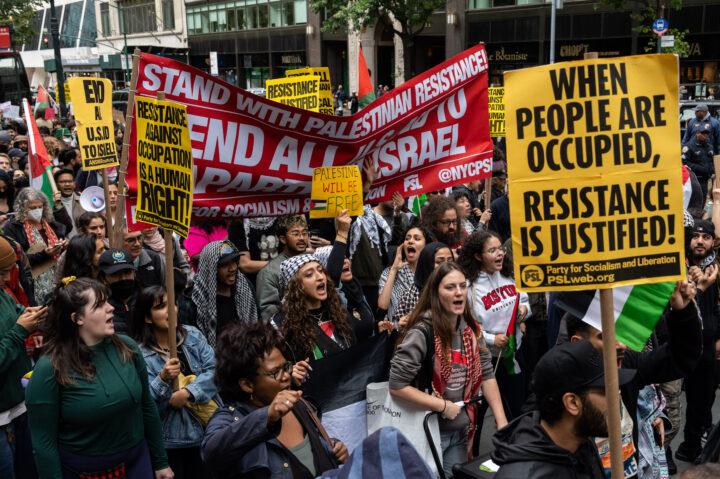
Demonstrators march in support of the Oct. 7 terror attacks on Oct. 8, 2023 in New York City.
A national co-chair of the Democratic Socialists of America said last week that she would have attended an anti-Israel rally in Times Square one day after the Oct. 7, 2023, Hamas terror attacks had she been in New York City at the time, describing the terror group’s slaughter of more than 1,200 people across southern Israel as “inevitable.”
“I think that Oct. 7 was largely inevitable. If you put people in an open-air concentration camp and you deprive them of rights, of dignity, of food, of the ability to live in safety, you have to expect that they are going to not take that for that long,” Megan Romer, who has served as a DSA co-chair since 2023, said in a podcast interview with The New Yorker’s David Remnick. “That is not defending any harm of civilians or non-combatants,” she added.
In the interview, Romer also came to the defense of Darializa Avila Chevalier, a Democratic congressional candidate in New York City who attended the Oct. 8 rally, which was organized by the DSA. The gathering was announced just hours after the attacks in Israel.
Romer described “no defense or economic support for Israel” as a “solid red line” for the DSA.
“Our position is a free Palestine with the capital in Jerusalem,” she said. “I think that could be safely read as a one-state solution.” When Remnick asked if she would have accepted the Camp David Accords negotiated by President Bill Clinton, which would have created a Palestinian state alongside the existing Israeli state, Romer intimated that she did not know what they were.
“Good question. I need to look at what the actual specifics there were. I don’t know them off the top of my head,” she said.
Later, Romer described Cuba as having “the most queer-friendly constitution” in the world. She said Hamas is not “queer-friendly,” but placed the blame for that on Israel.
“I would not say that you can get a lot of social rights when you’re under siege,” said Romer. “I think that most queer people who have been killed in Palestine have been killed by Israeli bombs.”
In the interview, Romer took a more open-minded approach to Russia. DSA has been critical of NATO’s expansion in Eastern Europe and U.S. military support for Ukraine, suggesting both are partially to blame for Russia’s invasion in 2022.
Romer said that DSA does “not believe in pouring U.S. money [and] military weapons into anything.” At the same time, she criticized Russia as an “oligarchic dictatorship, which is hyper-capitalist, and Putin is this crazy right-wing oligarch.”
She said the war could be ended with better diplomatic efforts, and said the U.S. should “be sending huge teams of diplomats” to figure out “how to get Russia off Ukraine’s back.”
As a number of DSA-aligned candidates have won Democratic primaries in recent weeks, Romer has embarked on a media tour to answer questions about the group’s policies — including its support for abolishing the Senate, taxing the rich and defunding the police. She told Remnick that DSA now has 129,000 members after seeing a bump following the election of New York City Mayor Zohran Mamdani last year.
In our decentralized political environment, it’s easier than ever for a critical mass of ideologically committed small-dollar donors to power insurgent, ideologically driven campaigns

GETTY IMAGES
Large amount of US dollar cash
The second-quarter congressional fundraising reports, which were posted on Wednesday, paint a picture of far-left, anti-Israel candidates drawing financial fuel from a growing small-dollar donor network of like-minded individuals.
Nearly all of the Democratic Socialists of America-aligned or virulently anti-Israel candidates were among the Democrats’ leading fundraisers, including lawmakers (like Reps. Rashida Tlaib [D-MI] and Ilhan Omar [D-MN]) who are not facing particularly competitive races.
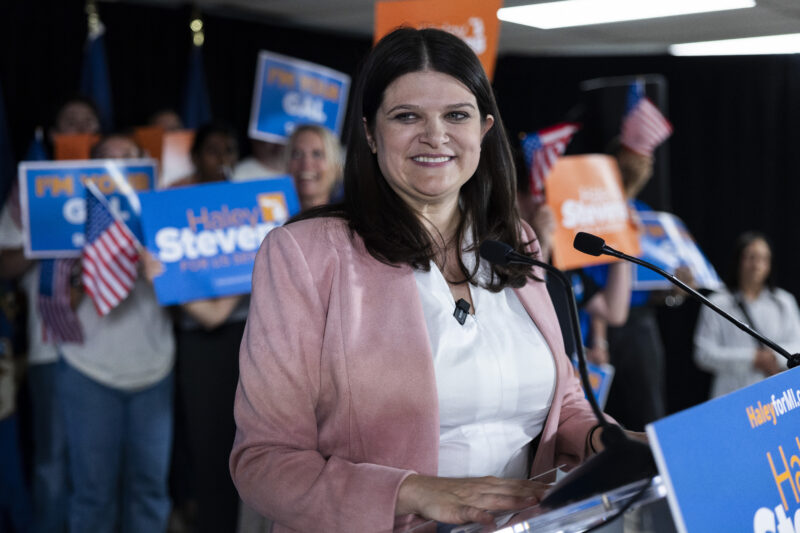
The highlights: Abdul El-Sayed raised $4.6 million between April and June in the Michigan Senate primary, more than double the $2.1 million that Rep. Haley Stevens (D-MI) brought in. Disgraced former Maine Senate candidate Graham Platner took in a whopping $9.1 million before dropping out amid allegations of rape, outpacing Sen. Susan Collins’ (R-ME) $5.7 million haul.
On the House side, the DSA duo who won New York City congressional nominations last month — doctoral student Darializa Avila Chevalier and state Assemblywoman Claire Valdez — nearly hit the million-dollar mark in fundraising.
Avila Chevalier raised $952,000 in the run-up to her primary against Rep. Adriano Espaillat (D-NY), coming close to matching the Congressional Hispanic Caucus chairman’s fundraising. Meanwhile, Valdez brought in $942,000 for the quarter, significantly more than the party-backed progressive favorite Antonio Reynoso, the Brooklyn borough president.
The list goes on: Adam Hamawy’s past ties to Islamist radicals didn’t prevent him from winning the nomination in New Jersey’s 12th District, and certainly didn’t stunt his fundraising. Hamawy raised $987,000 in the second quarter, a staggering sum for a low-profile open-seat race. That’s well more than double the total of his nearest fundraising rival.
Melat Kiros, the 29-year-old DSA-backed insurgent who ousted Rep. Diana DeGette (D-CO), also outraised the longtime lawmaker in the homestretch of the campaign. Kiros brought in $712,000 between April and June, while DeGette only raised $694,000.
What does this say about the state of our politics?
In the recent past, radical candidates faced significant hurdles, not just because their message generally turned off moderate-minded voters but because they lacked institutional support, which limited their ability to raise money and be financially viable.
It was once common for party leaders and other aligned outside groups to flood favored candidates with donations and leverage their financial advantage to create institutional guardrails.
But in our decentralized political environment, it’s easier than ever for a critical mass of ideologically committed small-dollar donors to power insurgent, ideologically driven campaigns. And with party-aligned organizations (like labor unions and EMILY’s List) atrophied and the impact of pro-Israel money diminished in Democratic primaries as the party turns against the Jewish state in the wake of the war in Gaza, the establishment has lost a lot of its juice.
As important, the victory of Mayor Zohran Mamdani in New York City opened up the pocketbooks of a growing roster of Muslim and Arab donors whose top political issues include their deep antipathy towards Israel.
The notion of a socialist, anti-Israel candidate winning in New York City sounded fanciful before the rise of Mamdani. His victory proved that if like-minded individuals mobilize behind favored candidates, they can have an outsized impact in the political process — especially given the Democratic public’s declining support for the Jewish state.
The rise of an anti-Israel super PAC like American Priorities to compete against AIPAC in Democratic primaries wouldn’t have been possible without Mamdani’s victory. The time when pro-Israel groups could rely on their financial firepower — without facing a countering force in competitive primaries — is now over.
It’s a reminder that money alone can only go so far in politics, and that strategy, tactics and message are just as important in determining electoral success. If the far-left forces face their comeuppance, it’s going to be because their message is unappealing to average Americans, not because they’re going to be outspent by the establishment.
JI looked into how ascendant anti-Israel candidates raised and spent money just before and after their primaries

Getty Images
Illustrative
Left-wing candidates, including several members of the Democratic Socialists of America, rode a wave of anti-Israel sentiment — and donor cash — to victory in primaries in New York and New Jersey in June.
The latest fundraising filing period highlighted the diverse donor bases backing some of the most outspoken critics of Israel and capitalism, with candidates raking in hundreds of thousands from executives and entrepreneurs in tech, medicine and finance:
Here’s a round-up of how some of the most prominent figures got that windfall — and what they did with it:
- Darializa Avila Chevalier, the radical grad student who defeated Rep. Adriano Espaillat (D-NY), reported nearly $350,000 in donations in the last three weeks of June. Among the many medical professionals to cut checks to Avila Chevalier was Dr. Mohammed Hadi, a Long Island-based physician charged in 2015 with conspiring to defraud Medicare and distribute oxycodone. Hadi ultimately pleaded guilty in 2024 to misdemeanor theft of government funds. Another filing the former Columbia encampment leader submitted on Wednesday lists among the campaign’s expenses $7,000 in compensation to Avila Chevalier herself on June 1. Federal law allows for candidates to pay themselves salaries out of their donor dollars.
- Another candidate getting revenue from their campaign is Adam Hamawy, who in early June became the Democratic nominee to succeed Rep. Bonnie Watson Coleman (D-NJ). The candidate paid $23,700 of the $504,855 his campaign brought in during the latest filing period to his own plastic surgery practice, continuing a pattern Jewish Insider first reported on in May. The Federal Election Commission also allows candidates to purchase goods, services and working space from themselves and family members so long as the transactions are market-rate. The Hamawy campaign — which has leaned into the candidate’s military record and fierce criticism of Israel while downplaying his past ties to Islamist figures — told JI in May that an outside consulting firm arrived at the $7,900 monthly rent paid to Princeton Plastic Surgeons.
- Assemblymember Claire Valdez reported just shy of $293,000 in campaign contributions for her bid to succeed Rep. Nydia Velazquez (D-NY). One of her most notable donors was Shanti Singham, the sister of Shanghai-based Maoist tech mogul Neville “Roy” Singham, currently under federal investigation in connection to his bankrolling of far-left nonprofits that promote pro-Iran, pro-Russia and pro-Chinese propaganda. Shanti Singham — who gave Valdez $2,000 in the most recent filing period, bringing her total contributions to her fellow DSA member to $3,500 — has her own ties to China, having held a post at state-run East China Normal University and promoted the country’s controversial Confucius Institutes in Africa. The Marxist academic’s daughter, Alicia Singham Goodwin, served as political director for the anti-Zionist group Jews for Racial and Economic Justice and is a leading activist in DSA’s electoral efforts, having even helped shape New York City Mayor Zohran Mamdani’s platform in 2025.
- A key cash-raising tool for both Avila Chevalier and Valdez has been their joint fundraising committee, which raised $165,551 in less than a month, and disbursed most of it to their campaigns. One of its largest contributors was prominent Jewish Democratic donor Morris Pearl, chairman of Patriotic Millionaires, a group that advocates heavier taxes on high earners such as himself. The former BlackRock managing director, who has in past years advocated for peace processes in the Middle East, donated $7,000 to the fundraising committee.
- The biggest winner of all this cycle may be Mamdani himself: not just for getting his slate of House candidates elected, but for raising more than $300,000 for his reelection campaign, even though he is three years away from a reelection bid. The haul was big enough that the campaign told local outlet City & State that it will abstain from the city’s matching funds program, which provides public cash to amplify small-dollar donations but caps donation size and spending. And Mamdani is already spending his war chest, contributors to which include tech investor Omer Hasan, who also underwrote his 2025 super PAC and new anti-AIPAC super PAC American Priorities. On July 10, the campaign paid more than $9,500 to longtime DSA activist Nadia Tykulsker. In 2023, it fell to Tykulsker to defend her organization’s decision to promote a celebratory rally in Times Square one day after Hamas’ Oct. 7 attacks — a gathering even Mamdani, then a state lawmaker, condemned.
Plus, Sun Valley set lands in Idaho

Photo by Andrew Harnik/Getty Images
President Donald Trump delivers remarks during a meeting with President of Turkey Recep Tayyip Erdogan in the Oval Office at the White House on September 25, 2025 in Washington, D.C.
Good Monday morning.
In today’s Daily Kickoff, we look at how Mallory McMorrow’s departure from the Michigan Democratic Senate primary could impact the race now between Rep. Haley Stevens and Abdul El-Sayed, and report on Gov. Josh Shapiro’s prediction that the Democratic Party will face an ideological “battle” in light of the growing influence of the Democratic Socialists of America. We cover a Democratic effort led by Rep. Dina Titus to block the sale of advanced fighter jets to Turkey, and report on the National Education Association’s protocol changes ahead of the group’s annual convention aimed at avoiding similar allegations of antisemitism that it faced at its conference last year. Also in today’s Daily Kickoff: Eyal Shani, Ruth Cohen Dar and Rep. Yassamin Ansari.
We have also launched a new on-demand Live Briefing that you can access throughout the day via our new app (on Apple and Android) and on our website.
Today’s Daily Kickoff was curated by JI Executive Editor Melissa Weiss and Israel Editor Tamara Zieve, with an assist from Danielle Cohen-Kanik and Marc Rod. Have a tip? Email us here.
What We’re Watching
- World leaders — including President Donald Trump — are traveling to Turkey today ahead of the start of the NATO Ankara Summit tomorrow.
- A number of Israeli officials are reportedly expected to travel to the U.S. in the coming weeks for meetings with their American counterparts amid floundering U.S.-Iran talks. Trump told Axios that Israeli Prime Minister Benjamin Netanyahu had asked for a meeting, which could take place soon after Trump returns from Turkey, while i24News reports that Israeli Foreign Minister Gideon Sa’ar is expected to meet next week in Washington with Secretary of State Marco Rubio.
- Funeral proceedings for former Iranian Supreme Leader Ayatollah Ali Khamenei that began over the weekend continued today with the slain leader’s funeral. Three of Khamenei’s sons have been seen at the ceremonies, though Ayatollah Mojtaba Khamenei, who succeeded his father following an Israeli strike on the first day of the war, has yet to make a public appearance.
- Allen & Co.’s annual Sun Valley retreat is taking place this week in Idaho. Those expected to attend this year include David Ellison, David Zaslav, Barry Diller, Bob Iger, Mark Zuckerberg, Alex Karp, Jeffrey Katzenberg, Bari Weiss, Jared Kushner and Josh Kushner.
- The Christians United For Israel Summit continues today in Washington, with its annual Night to Honor Israel dinner scheduled for tonight.
- In Jerusalem, the National Library of Israel is marking the U.S.’ semiquincentennial with an evening event focused on “Celebrating America at 250.”
- Startup Nation Central founder Wendy Singer will moderate a conversation between Rabbi Abi Dauber Sterne, former Israeli Ambassador to the U.S. Michael Oren and B’nai Jeshurun Senior Rabbi Felicia Sol.
What You Should Know
A QUICK WORD WITH JI’S MARC ROD
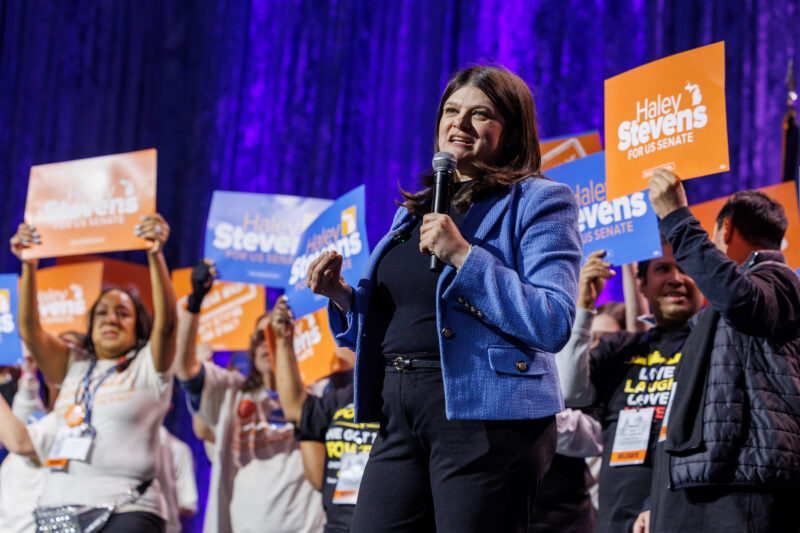
Michigan state Sen. Mallory McMorrow dropped out of the Democratic primary for U.S. Senate on Sunday, narrowing the race to a contest between Rep. Haley Stevens (D-MI) and Abdul El-Sayed, a former public health official.
McMorrow suspended her campaign without endorsing either of her rivals, saying only that “whoever wins this primary on August 4th will have my full support.”
Recent polling has shown a relatively close race between the moderate Stevens and far-left El-Sayed, with El-Sayed leading in several surveys. With McMorrow generally claiming around 10% of the vote in polls, her withdrawal could shift dynamics in the race.
At the same time, mail-in ballots in the state have already been dispatched — with McMorrow’s name still on them.
The end of McMorrow’s campaign marks a significant fall for the up-and-coming state senator, who posted strong performances in early polls but has seen flagging support and enthusiasm in recent months. Her voting base will likely end up divided among both candidates, and both are making efforts to attract her supporters.
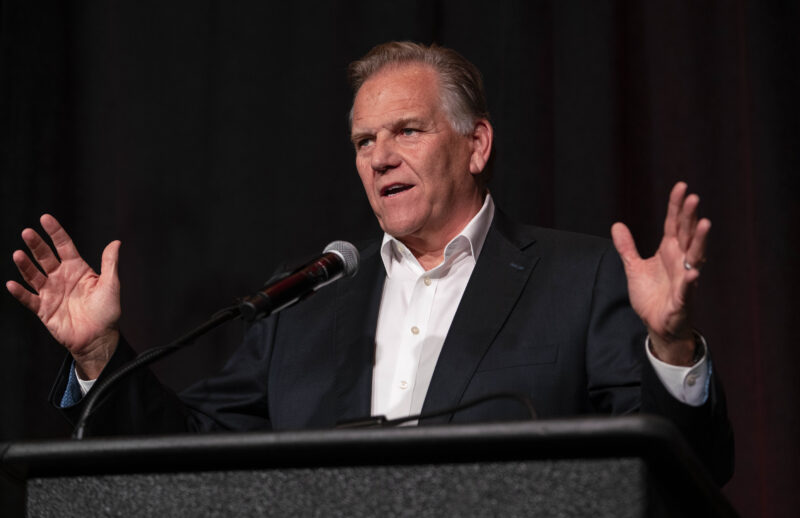
McMorrow had sought to carve out a middle ground between Stevens and El-Sayed, running as a somewhat progressive anti-establishment candidate but claiming a more pragmatic lane than El-Sayed, who some Democrats worry will not be electable in a general election against former Rep. Mike Rogers (R-MI), the expected GOP nominee. The race offers the biggest test yet of the progressive, anti-Israel movement’s ability to win in a critical swing state.
BAIT AND SWITCH
Arizona Jewish leaders regret supporting Yassamin Ansari after she turns against Israel
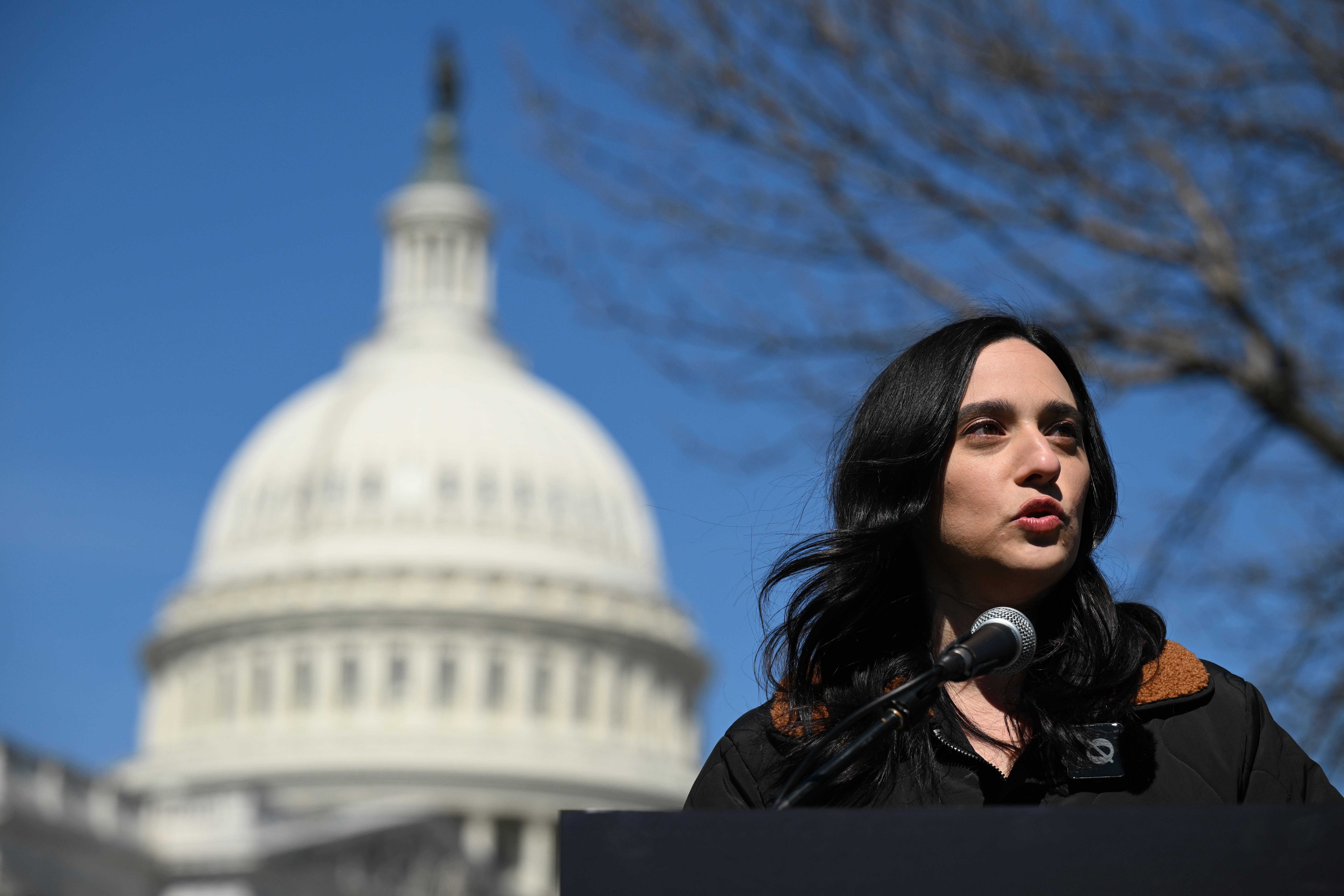
When Rep. Yassamin Ansari (D-AZ) narrowly prevailed in the Democratic primary for an open House seat in Phoenix in 2024, winning by just 39 votes in a deep-blue district, the Arizona lawmaker could attribute her success, in part, to strong backing from the local Jewish community as well as a surge of outside spending from a prominent pro-Israel group. Now, however, Ansari, 34, is aligning with a range of far-left policy positions that have led several Jewish and pro-Israel leaders to feel they were misled, they told Jewish Insider’s Matthew Kassel.
Flip-flop: Alma Hernandez, a Democratic state representative in Tucson who had been one of Ansari’s top Jewish campaign surrogates in the 2024 primary, said she “was really excited for the idea of having someone like” Ansari in office, noting that she attended the congresswoman’s swearing-in ceremony in Washington to demonstrate her solidarity. “I have not talked to her since,” Hernandez said last week in an interview with JI. “I think a lot of folks in the community feel they were really used in a sense,” she added, alleging that Ansari “was very careful with all her words because she wanted the support and the financial backing” in a closely contested race.
NO FLIGHT PLAN
House Democrats introduce legislation to block sale of jet engines to Turkey

A group of House Democrats introduced a resolution last week that aims to block the sale of advanced jet engines to Turkey, as the Trump administration pushes ahead with the sale despite legal restrictions on U.S. military sales to the country, Jewish Insider’s Marc Rod reports.
Titus’ take: The resolution is led by Rep. Dina Titus (D-NV), a vocal critic of Ankara, and co-sponsored by Reps. Chris Pappas (D-NH), Brad Schneider (D-IL), Josh Gottheimer (D-NJ), Mike Quigley (D-IL), Jim Costa (D-CA), Jim McGovern (D-MA), George Latimer (D-NY) and Brad Sherman (D-CA). “The regime of Turkish President Erdoğan has made repeated threats of military action against NATO allies and other partner nations throughout the Middle East,” Titus said on X. “I am introducing a Joint Resolution of Disapproval to stop the $700 million sale of F110 jet engines to Turkey which would undermine regional stability and pose a threat to U.S. allies.”
Exclusive: A bipartisan group of House lawmakers wrote to President Donald Trump on Thursday to “express deep concern about any effort to sell F-35s to Turkey.”
FAULT LINES
Shapiro predicts ‘battle’ ahead for Democratic Party amid rising socialist influence
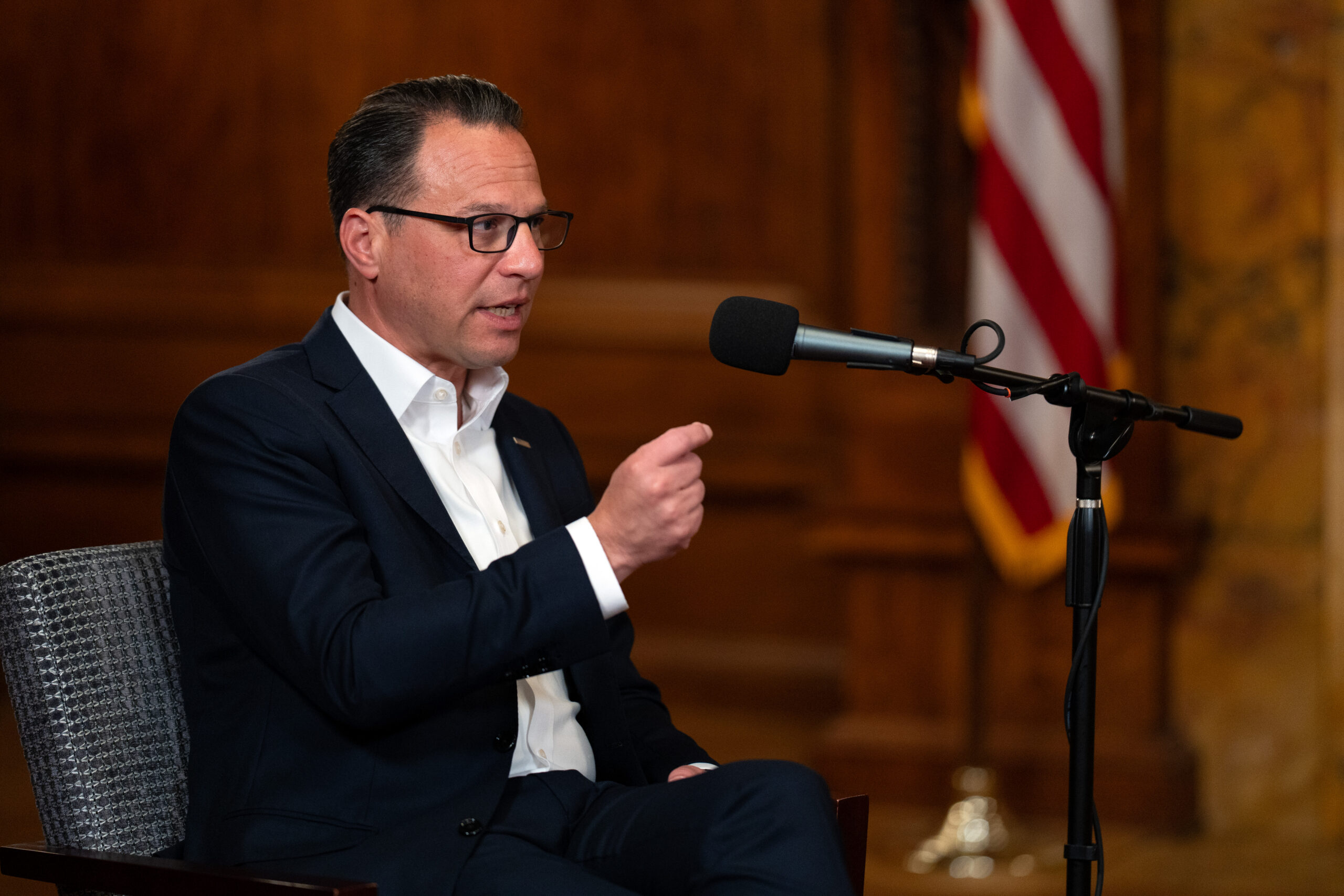
Pennsylvania Gov. Josh Shapiro, a potential 2028 Democratic presidential contender, predicted in a TV interview that aired on Sunday that Democrats will soon face a “battle” over the rising influence of socialists in the party and distanced himself from such far-left candidates, Jewish Insider’s Haley Cohen reports.
What he said: In an interview with CNN’s Dana Bash, Shapiro cited “profound differences” with Darializa Avila Chevalier, a socialist New York City congressional candidate who won her primary last month against incumbent Rep. Adriano Espaillat (D-NY) and was endorsed by New York City Mayor Zohran Mamdani. Avila Chevalier has a history of incendiary online rhetoric, including railing against Democratic leaders and praising communism, and defended attending an anti-Israel rally the day after the Oct. 7 Hamas attacks. “She’s not someone who seemingly I would agree with on many things or that we share similar values. She ran on the Democratic ticket, I guess, as a socialist,” said Shapiro.
Bonus: The Wall Street Journal looks at Avila Chevalier’s swift political rise and primary victory over Espaillat, describing the DSA member as being “at the forefront of a shocking blitz by Democratic socialists that has upended Democratic politics.”
ONLINE ACTION
JFNA helps push for passage of major bipartisan children’s online safety bill

In a bid to protect Jewish children from rampant antisemitism on the internet, the Jewish Federations of North America is pushing lawmakers to support the KIDS Act, a major bipartisan package of legislation focused on children’s safety online that passed the House late last month by a 267-117 vote, Jewish Insider’s Marc Rod reports.
About the effort: Omer Yarden-Oppenheim, director of government relations at JFNA, told JI that online antisemitism has been a major conversation and challenge for Jewish families, especially since the Oct. 7, 2023, Hamas attacks on Israel. He said the group identified four bills in the House’s online safety push that it felt could play a role in addressing online antisemitism, which were ultimately packaged into the KIDS Act. But the Senate and House remain divided on how best to approach the problem, so roadblocks remain.
TEACHING MOMENT
NEA adopts new rules ahead of convention — but union members are reserving judgment

Following last year’s contentious assembly mired in allegations of antisemitism, the National Education Association — the nation’s largest teachers’ union — adopted new policies for its Denver convention aimed at preventing the same chaos, the NEA confirmed to Jewish Insider’s Haley Cohen.
Details: The new rules for the four-day Representative Assembly, which ends on Tuesday, include stricter conduct enforcement for delegates, electronic voting to prevent shouting on the floor, de-escalation training for staff and regular public reminders of assembly rules, according to the Jewish Council for Public Affairs, which said it worked with the union’s Jewish Affairs Caucus to lobby the NEA for the changes.
ON THE AIR
UDP launches first attack ad targeting Abdul El-Sayed in Michigan Senate race
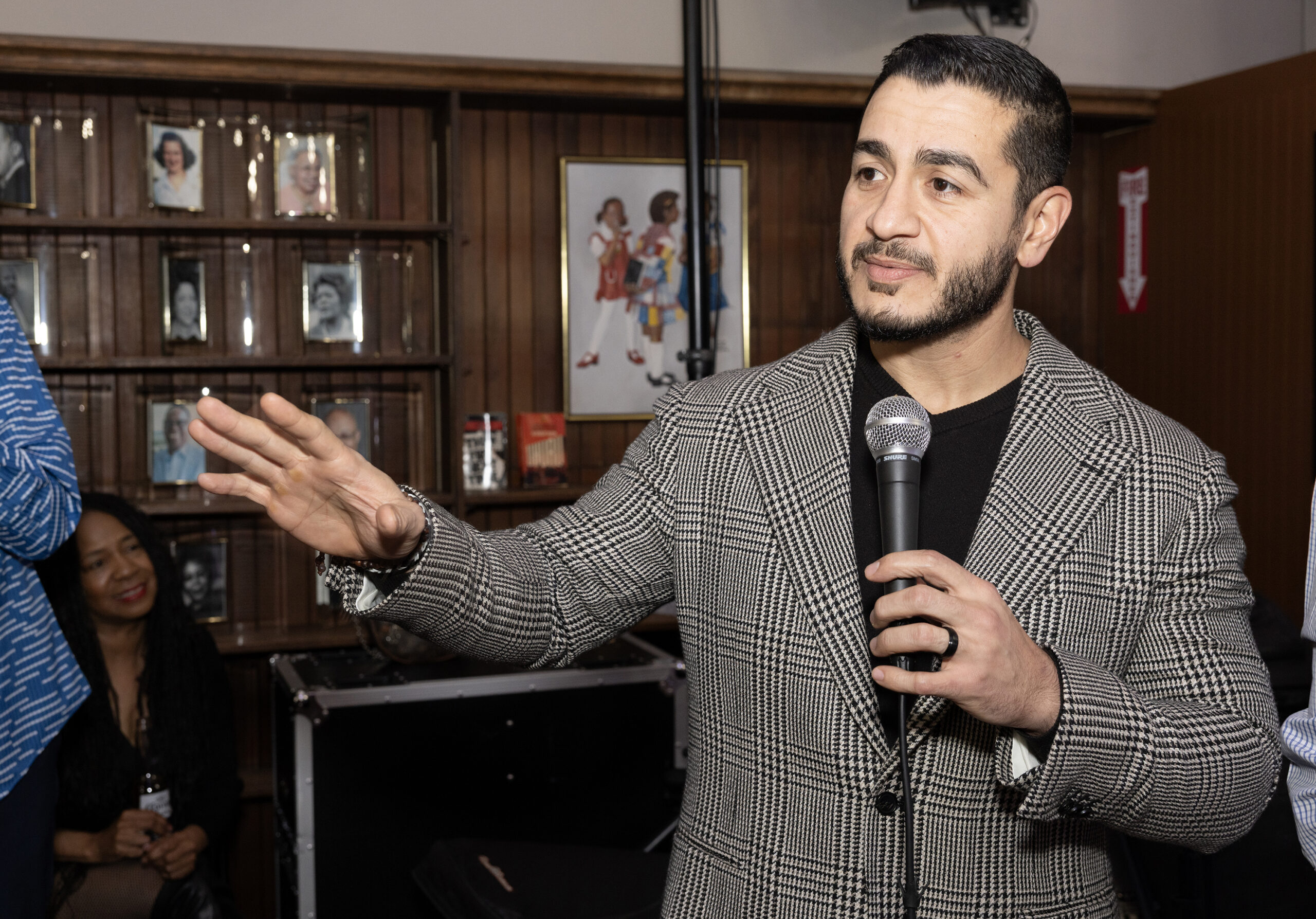
The AIPAC-linked United Democracy Project is launching its first negative ad in the Michigan Senate race, targeting Democratic candidate Abdul El-Sayed, just over a month before the state’s primary elections, Jewish Insider’s Marc Rod reports.
Money moves: According to FEC filings, the group spent more than $2 million in the initial ad buy targeting El-Sayed, a former public health official. The 30-second ad highlights El-Sayed’s “long history of disrespecting women,” including criticisms of former First Lady Michelle Obama and Michigan Gov. Gretchen Whitmer. UDP has spent more than $10 million in the race boosting Rep. Haley Stevens (D-MI).
Called out: Colorado Attorney General Phil Weiser, the Democratic nominee for governor, criticized his party’s socialist congressional nominee, Melat Kiros, for her refusal to describe the deadly firebombing of a Boulder, Colo., hostage awareness march last year as an act of antisemitism. “We cannot look at that murder and say anything else happened than a hate crime, and so if someone isn’t going to acknowledge that I’m concerned about that, because this was tried, this was how we have a conviction” for a hate crime, Weiser told 9News, a Denver station, last week.
Worthy Reads
Battle Plan vs. the DSA: In The Wall Street Journal, Mark Penn and Andrew Stein suggest how Democrats can counter the Democratic Socialists of America’s rising influence in the party. “Political-action committees and advocacy groups that have focused on federal races have to realize that the DSA initially focuses on low-turnout local races and nonprofit boards as easy targets. Once in power, its members degrade law enforcement with policies that encourage street vagrancy, drug abuse and higher taxes, fueling more voter anger, which they exploit at election time. Moderate PACs and other groups need a battle plan for every campaign from district attorney to Congress, city council to state legislature.” [WSJ]
Singled Out in San Francisco: In the San Francisco Standard, Eric Kingsbury reflects on a recent incident in which California state Sen. Scott Wiener, who is Jewish, was filmed being heckled as he was forced by demonstrators to leave a transgender march last month. “Connie Chan, his opponent in the congressional race, holds the same positions on Gaza and Israel that Wiener has publicly endorsed, yet she faced no such harassment and marched in peace. If it’s not his record, why is Wiener singled out? It’s because he’s Jewish. And because of that, nothing he can ever do or say will be enough. He will always be held to a different standard. That is antisemitism.” [SFStandard]
The Erdogan Loophole: In Foreign Policy, Steven Cook, a senior fellow at the Council on Foreign Relations, observes the response by Western leaders to Turkish President Recep Tayyip Erdogan’s jailing of political opponents and gutting of the country’s main opposition party. “This is odd, especially given how much time and attention leading Democrats and Republicans have spent on human rights in China, Saudi Arabia, the United Arab Emirates, Cuba, North Korea, and especially Israel.” [ForeignPolicy]
Word on the Street
The Wall Street Journal reports that NASA administrator Jared Isaacman superseded FAA objections to flying vintage Northrop F-5 Tiger II jets in the America 250 air show in Washington over the weekend; Isaacman, whose company owns three planes that were part of the group, said guidelines for planes participating in the flyover differed from rules regarding civilian aircraft that fall under FAA regulations…
Ahead of the start of the NATO summit in Ankara, Turkey, tomorrow, former U.S. Ambassador to Japan Rahm Emanuel, who is mulling a 2028 presidential bid, called for a “23-state solution” in which all Arab countries, including a newly formed Palestinian state, establish “full diplomatic relations” with Israel…
Seven anti-Israel demonstrators arrested during a 2024 protest that shut down traffic on San Francisco’s Golden Gate Bridge were convicted of misdemeanors tied to the incident; the judge overseeing the case declared a mistrial on felony conspiracy charges when jurors were unable to reach a verdict…
The board of the Committee to Protect Journalists voted 17-1 to uphold its existing definition of a journalist that includes members of media groups affiliated with militant organizations “provided they are not engaging in combat or inciting violence in a manner likely to have imminent effect”…
Eyal Shani will open a Los Angeles outpost of his Malka restaurant this summer at the boutique hotel SIXTY Beverly Hills, a year and a half after opening a Miami branch of the popular Tel Aviv eatery, which also has a location in New York…
U.S. Ambassador to France Charles Kushner’s America 250 celebration in Paris — which concluded on Friday before Shabbat — included a fully kosher spread (including kosher wines) and a performance by Italian tenor Andrea Bocelli…
The New York Times spotlights the challenges facing Jewish museums across Europe amid the explosion of antisemitism that followed the Oct. 7, 2023, Hamas terror attacks and ensuing war in Gaza…
A Meta executive denied to Australia’s royal commission investigating antisemitism that the company’s changes to its content moderation rules led to increased instances of antisemitism on its platforms…
Israel’s central bank is expected to cut interest rates to 3.50% from 3.75%, citing the shekel’s strength and inflation expectations…
An American man studying at a seminary in Israel was charged with spying on behalf of Iran in exchange for $1,400 in cryptocurrency; the yeshiva student allegedly took photos of sites and carried out assigned tasks as instructed by a foreign agent operating on behalf of Tehran…
The Wall Street Journal spotlights Gadi Eisenkot as the former IDF chief of staff, who is making his first bid as a party leader, rises in the polls against Prime Minister Benjamin Netanyahu…
Israeli Transportation Minister Miri Regev gave the first Israeli confirmation that the country deployed an Iron Dome battery to the United Arab Emirates during the recent war with Iran; the deployment was previously reported by Axios and also confirmed by U.S. Ambassador to Israel Mike Huckabee…
The Israeli government voted unanimously to appoint Ruth Cohen Dar — who serves as nonresident ambassador to Slovenia and Malta — to be Jerusalem’s first permanent envoy in Slovenia, following Foreign Minister Gideon Sa’ar’s announcement that Israel will open an embassy in the country…
The Israeli Cabinet rejected a Supreme Court decision striking down the government’s creation of an alternative television regulating body as it works to block the sale of Channel 13 to a group led by Assaf Rappaport, a Netanyahu critic…
Judah Gribetz, a longtime New York political aide who played a key role in restituting $1.25 billion to Holocaust survivors and later served as president of the Jewish Community Relations Council of New York, died at 97…
Geneticist Stanley Gartler, whose work advanced research into the origins and growth of cancerous tumors, died at 102…
Find on-demand Live Briefing updates throughout the day via our new app (on Apple and Android) and website.
Pic of the Day

Former Israeli hostages Sasha Trufanov and Sapir Cohen, who were kidnapped from Kibbutz Nir Oz during Hamas’ Oct. 7, 2023, attacks, were married on Sunday outside of Netanya. The couple walked down the aisle to Idan Raichel’s “Mi’Ma’amakim” — “Out of the Depths.”
Those in attendance included former hostages Arbel Yehud, Ariel Cunio, Shani Goren, Moran Stella Yanai, Rom Braslavsky, Eitan Horn and Daniel Aloni, as well as Israeli President Isaac Herzog, who had previously said he wouldn’t attend any weddings until all of the hostages had been released.
Birthdays

Founder of Tumblr, which he sold to Yahoo in 2013 for $1.1 billion, David Karp turns 40…
Chairman of NYC-based GFP Real Estate, Jeffrey Robert Gural turns 84… 43rd president of the United States from 2001 to 2009, George W. Bush turns 80… Former member of the Knesset for the National Religious Party, Yitzhak Levy turns 79… Lobbyist and former president of AIPAC, Marshall Aaron Brachman… Journalist, pundit and author, known for writing the blog “Kausfiles,” Robert Michael “Mickey” Kaus turns 75… Israeli cryptographer, he is a co-inventor of the RSA algorithm and one of the inventors of differential cryptanalysis, Adi Shamir turns 74… Sole member of the Knesset for the Noam party, Avigdor “Avi” Maoz turns 70… Founder of Kehilas Pnei Menachem, a breakaway in 2019 from the Ger Hasidic dynasty, Rabbi Shaul Alter turns 69… Professor of Bible at JTS and former senior fellow at the Shalom Hartman Institute of North America, Benjamin D. Sommer turns 62… Partner at SKDK, she served as a board member of Jewish Foundation for Group Homes (now known as Makom), Jill Zuckman… CEO of Holocaust Museum LA, Beth Kean… Widow of Beau Biden, she is the board chair of the Beau Biden Foundation, Hallie Olivere Biden turns 53… Stand-up comedian, writer and actor, Mark Moshe Kasher turns 47… British actor, Louisa Clein turns 47… Former chief of staff on the Hill, now CoS at Blue Frontier, Shira Siegel… Israeli freestyle wrestler, she was born on the day her parents made aliyah, Ilana Kratysh turns 36… Postdoctoral research fellow at Emory University, Josh Lipson… Jeannie Gerzon…
The same day Francesca Hong appeared on the livestream of antisemitic conspiracy theorist ‘Mike From PA,’ she also joined Hasan Piker’s Twitch show
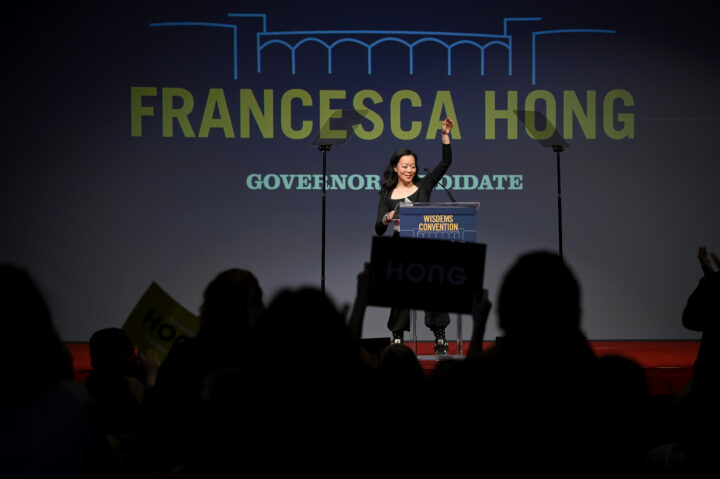
Daniel Boczarski/Getty Images for WisDems
Gubernatorial candidate Francesca Hong speaks on stage during Wisconsin Democrats 2026 Convention on June 14, 2026 in Madison, Wisconsin.
Francesca Hong, a Democratic Socialists of America-affiliated candidate for governor of Wisconsin, appeared on Tuesday on the Twitch stream of Mike Beyer, known by his online handle “Mike From PA,” a fringe far-left influencer who has espoused open antisemitism.
Beyer was suspended from Twitch last year for comments in which he said that “Jewish is not an ethnicity” and Jewish identity is “a constructed ethnicity, this demonic ethnicity, wholly invented.” He subsequently apologized, claiming he had intended to refer to Zionists, rather than Jews.
The Anti-Defamation League praised Twitch for the suspension. “Streamers with such reach and influence should use their platforms responsibly and not engage in inflammatory, dehumanizing and antisemitic rhetoric,” the group said in 2025.
Despite the walkback, Beyer has continued to spread other antisemitic conspiracy theories, including boosting a claim that “Zionists were obsessed with destroying the Soviet Union” so that they could enslave children from the Soviet bloc and use them for child trafficking and prostitution.
Amid scrutiny of his interview with Hong, Beyer on Tuesday blamed an organized conspiracy trying to slander “grassroots politicians like they are getting direct orders from [Israeli Prime Minister Benjamin] Netanyahu.”
Later on Tuesday, Hong also appeared on antisemitic streamer Hasan Piker’s Twitch show.
Asked about the two appearances, Allison Geyer, a spokesperson for Hong’s campaign said, “Rep. Hong has been clear throughout this campaign that antisemitism, Islamophobia, racism, transphobia, and all forms of dehumanization have no place in Wisconsin politics or in the movement we are building.” Geyer also said that Hong condemns the Oct. 7 Hamas terror attacks as well as the “ongoing genocide” in Gaza, despite the monthslong ceasefire in the Israel-Hamas war.
Geyer said Hong was not aware of Beyer’s comments prior to the appearance, but noted that he “issued a very lengthy apology” and said he was “talking about Zionist political ideology and held himself accountable for his statement.”
“Appearing on a podcast or livestream is not an endorsement of every statement a host has ever made. Fran is willing to go anywhere and talk to anyone about her vision for a better, more compassionate world. Sometimes that means talking to people who have said pretty nasty things,” Geyer continued. “Speaking with them isn’t an endorsement of those perspectives; it’s a way to reach people who have been isolated from conversations about community, compassion, and the systems of power and control that contribute to the struggles we share.”
Geyer said that non-traditional platforms “are going to shape this election” and that they will be dominated by “the right, … conspiracy theorists … or people who do not share our values” if Democrats don’t appear.
“Trying to turn every interview into a referendum on everything a host has ever said is a distraction from the material issues that will shape people’s lives,” Geyer said. “Fran sees every conversation as an opportunity to bring more people into the tent, especially voters who have been turned off by establishment politicians and status-quo politics, and to build a positive future for Wisconsin together.”
One of Hong’s opponents, Joel Brennan, the former secretary of the Wisconsin Department of Administration, condemned Beyer and Piker.
“Joel wouldn’t join that livestream and disagrees with much of what he’s said. This race isn’t about clicks or views, it’s about Wisconsin,” a Brennan spokesperson said. “Joel is laser-focused on talking directly with Wisconsinites about what’s keeping them up at night: the cost of living, including health care, child care, and housing, and fixing our school funding problem.”
State Sen. Kelda Roys accused Hong of associating with controversial figures to benefit her campaign financially, emphasizing that Roys raises most of her own money from grassroots supporters.
“How candidates raise money reflects the type of leader they are and the type of governor they would be. Kelda’s campaign is built on support from progressive grassroots donors in Wisconsin, over 90% of her contributions come from everyday Wisconsinites whose trust she has earned through conversations and events around the state,” Jalen Knuteson, a spokesperson for Roy, said. “Hong made a lucrative choice to align herself with an influencer who has cashed in on divisive, antisemitic, and offensive comments,”
David Crowley, the Milwaukee county executive, also criticized Hong.
“Anyone seeking public office should exercise good judgment about the platforms they choose to elevate, and should have zero tolerance for antisemitism, political violence, or any form of hate. David Crowley believes leadership is about bringing people together, not courting controversy or seeking attention through divisive platforms,” a Crowley campaign spokesperson said. “The Crowley campaign has been clear that antisemitism is unacceptable and has no place in Wisconsin. Leaders have a responsibility to exercise sound judgment and make clear where they stand. David is focused on earning the trust of every Wisconsinite by leading with decency, respect, and a commitment to bringing people together rather than dividing them.”
“Joel wouldn’t join that livestream and disagrees with much of what he’s said. This race isn’t about clicks or views, it’s about Wisconsin,” a Brennan spokesperson said. “Joel is laser-focused on talking directly with Wisconsinites about what’s keeping them up at night: the cost of living, including health care, child care, and housing, and fixing our school funding problem.”
Other candidates in the gubernatorial race — including 2022 Democratic Senate nominee Mandela Barnes and Lt. Gov. Sara Rodriguez — did not immediately respond to requests for comment.
Plus, Bruce Pearl's warning to JD Vance

Photo by Michael Ciaglo/Getty Images
Democratic congressional candidate Melat Kiros speaks to supporters at an election-night watch party after winning the Colorado primary on June 30, 2026 in Denver, Colorado.
Good Wednesday morning.
In today’s Daily Kickoff, we cover the results of yesterday’s Democratic primaries in Colorado, where the momentum for far-left, anti-Israel candidates in the party continued. We talk to House Democrats about whether they think Israel’s right to exist in safety and security should continue to be a policy position of their party and highlight the division within their party over a push by Rep. Thomas Massie (R-KY) to slash $3.3 billion in military aid the U.S. is set to provide Israel. We also report on a failed effort, which most House Democrats voted for, to block U.S. support for Israeli operations against Hezbollah. Also in today’s Daily Kickoff: Ellie Cohanim, Bruce Pearl and Mark Isakowitz.
Today’s Daily Kickoff was curated by JI Israel Editor Tamara Zieve and U.S. Editor Danielle Cohen-Kanik with an assist from Marc Rod. Have a tip? Email us here.
What We’re Watching
- Technical delegations from the U.S. and Iran are meeting separately with Qatari and Pakistani mediators in Doha, but have no plans to meet directly. A senior Iranian official told Reuters that the focus of the discussions is the release of Tehran’s frozen funds and the Strait of Hormuz, while President Donald Trump indicated on Monday that the negotiations would focus on Iran’s nuclear program.
- The Wall Street Journal reveals that after Saudi Arabia blocked U.S. military access needed for Project Freedom — Trump’s operation to crack open the Strait of Hormuz — and prompted the White House to threaten to withhold missile interceptors from the kingdom, the confrontation triggered a widening rift in the U.S.-Saudi relationship, with the U.S. now considering reducing its military footprint in the kingdom. Secretary of State Marco Rubio visited the Gulf last week but skipped a visit to Saudi Arabia; the week before, Saudi Crown Prince Mohammed bin Salman declined an invitation to attend the G7 summit in France, reportedly in protest of the U.S.’ handling of the war with Iran.
- Some of the most prominent figures in U.S.-Israel diplomacy, Israeli national security and the American Jewish community are gathering at Bar-Ilan University in Ramat Gan, Israel, to help train a new generation of leaders confronting Israel’s evolving strategic challenges, as part of a pilot program that ends on Thursday. Among the faculty is former Ambassador Dennis Ross, the veteran Middle East negotiator who advised four U.S. presidents; Howard Kohr, the former longtime executive director of AIPAC; and Malcolm Hoenlein, who for decades served as executive vice chairman of the Conference of Presidents of Major American Jewish Organizations. Read more in eJewishPhilanthropy.
- The Herzliya Conference wraps up today in Israel: Among the many top national security and political officials speaking are former Prime Ministers Naftali Bennett and Yair Lapid; former Israeli Ambassadors to the U.S. Danny Ayalon and Michael Herzog; former U.S. Ambassador to Israel Dan Shapiro; EU Ambassador to Israel Michael Mann; Yashar party leader Gadi Eisenkot; Yisrael Beiteinu party leader Avigdor Liberman; Democrats party leader Yair Golan; Ra’am party leader Mansour Abbas; and Nadav Tamir, executive director of J Street Israel.
- And the Aspen Ideas Festival concludes today in Colorado. Jeff Flake, the former U.S. senator and former U.S. ambassador to Turkey; the Atlantic Council’s Ian Brzezinski; and the Stimson Center’s Emma Ashford will speak on a panel about the “next chapter of the trans-Atlantic relationship.”
What You Should Know
A QUICK WORD WITH JI’S JOSH KRAUSHAAR
Progressives in Colorado scored a number of key victories Tuesday night, including Democratic Socialists of America-aligned candidate Melat Kiros’ defeat of Rep. Diana DeGette (D-CO) in the state’s 1st Congressional District.
The Colorado results suggest that, far from being contained to a few scattered congressional districts in New York City, the momentum for far-left, anti-Israel candidates is only growing within the Democratic Party, especially within urban population centers.
Kiros, a 29-year-old doctoral student, campaigned on her hostility to Israel and faced scrutiny when she declined to call the firebombing attack on a hostage awareness march in Boulder, Colo., antisemitic. DeGette, despite a long-standing progressive record in Congress, struggled to satisfy a critical mass of Democratic voters who preferred a more radical choice, especially when it came to opposing Israel.
Sen. John Hickenlooper (D-CO) survived a scare from a little-known socialist challenger, state Sen. Julie Gonzales, but only won renomination with less than 60% of the Democratic vote. Even in the vote-rich Denver suburbs, the far-left challenger came within striking distance of the state’s well-known senator and former governor.
Former state Rep. Shannon Bird, a moderate championed by Democratic Majority for Israel, lost badly to state Rep. Manny Rutinel for the Democratic nomination in Colorado’s swing 8th District, currently held by Rep. Gabe Evans (R-CO). With most votes counted, Rutinel holds a 28-point lead over Bird, 62-34%.
PLATFORM PUNT
Top Democrats won’t commit to supporting Israel’s security in party platform

The official 2024 Democratic Party Platform, released by the DNC for former President Joe Biden and former Vice President Kamala Harris, stated that party leaders “believe a strong, secure, and democratic Israel is vital to the interests of the United States” and that the party’s “commitment to Israel’s security, its qualitative military edge, its right to defend itself … is ironclad.” Several House Democrats, including in leadership and top progressives, however, remain divided or noncommittal over whether Israel’s right to exist in safety and security should continue to be a policy position of the Democratic Party, Jewish Insider’s Matthew Shea reports.
What they’re saying: When asked on Tuesday whether support for Israel’s right to exist in safety and security should continue to be an official policy position of the Democratic Party moving forward, House Minority Leader Rep. Hakeem Jeffries (D-NY) instead told JI that Democrats are “continuing to focus on driving down the high cost of living, fixing our broken healthcare system and cleaning up corruption in an environment where the Trump cartel is the most corrupt administration in American history.” Rep. Alexandria Ocasio-Cortez (D-NY) also did not provide a concrete answer, telling JI she is “less concerned with slogans” and more interested in “what it would mean in terms of policy.”
Read the full story here with additional comments from Reps. Greg Casar (D-TX), Pete Aguilar (D-CA), Jamie Raskin (D-MD) and Jim McGovern (D-MA).
Breaking away: Rep. Rosa DeLauro (D-CT), the ranking Democrat on the House Appropriations Committee, said she’ll no longer accept support from AIPAC, a major break with the pro-Israel group by one of the key power players in the House, JI’s Marc Rod reports.
DEM DEBATE
Democrats remain divided over push to eliminate Israel aid amid House floor gridlock
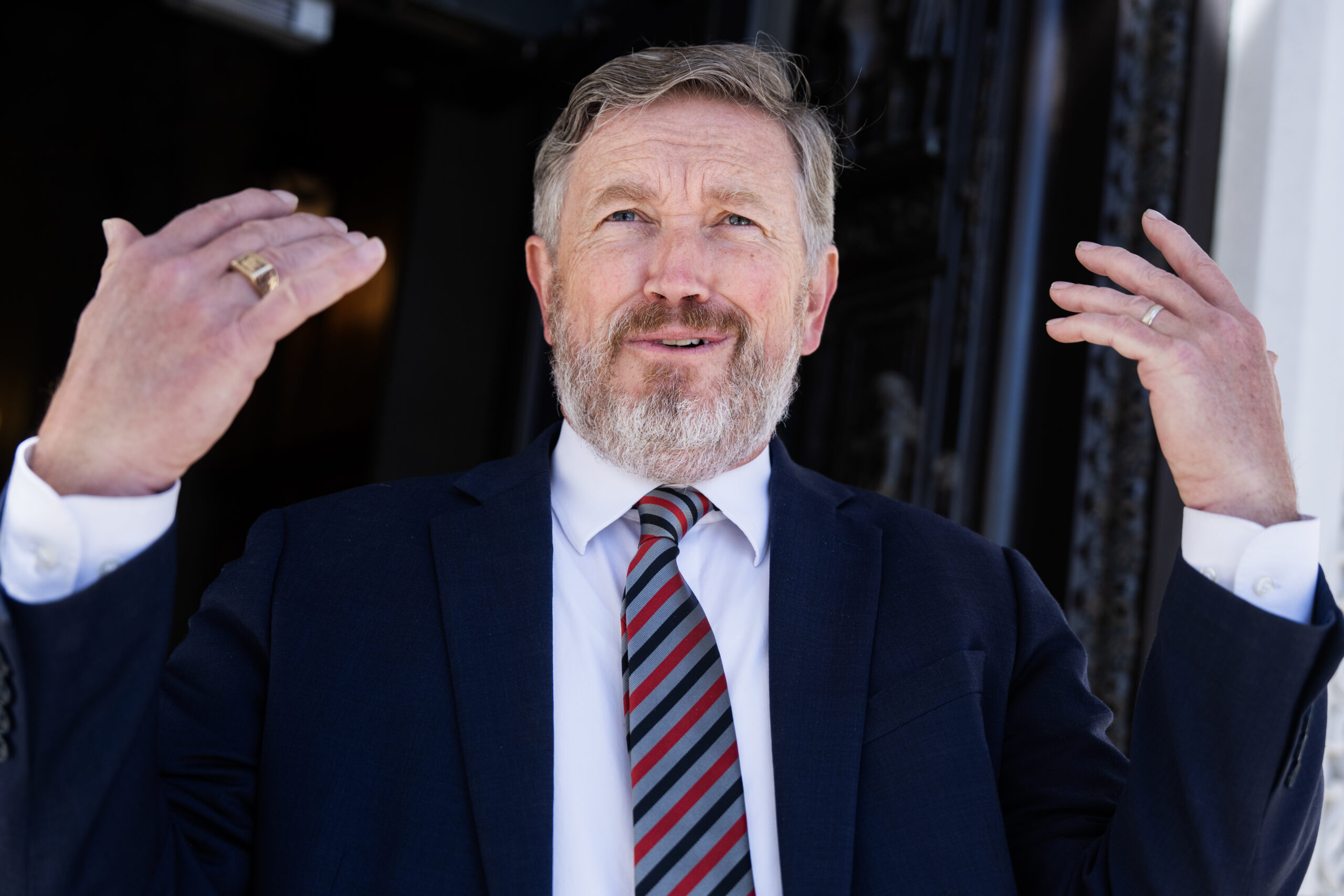
House Democrats remain divided over a push by Rep. Thomas Massie (R-KY) to slash $3.3 billion in military aid the U.S. is set to provide Israel in the 2027 State Department funding bill, and top Democratic leaders are continuing to keep their own positions vague, Jewish Insider’s Marc Rod reports. Consideration of the amendment is now delayed until at least July 13, after hard-right Republicans again brought proceedings on the House floor to a halt.
Where things stand: House Democratic leaders on Tuesday declined to say how they plan to vote or advise other members to vote following a closed-door caucus meeting. Minority Leader Hakeem Jeffries (D-NY) said, “Those conversations are ongoing,” while No. 3 House Democrat Rep. Pete Aguilar (D-CA) suggested that U.S. “aid and support” for Israel may not “go on forever.” Meanwhile, Rep. Jim Himes (D-CT), the top Democrat on the Intelligence Committee, joined colleagues on other national security committees in saying he’ll oppose the amendment, but progressive leaders maintained that many members will support the effort.
War powers play: Nearly all House Democrats voted for a war powers resolution on Tuesday that aimed to block U.S. support for Israeli operations against Hezbollah in Lebanon, though the legislation failed to secure a House majority, with nearly all Republicans and 22 Democrats voting against the measure.
RED SCARE
Democratic leaders brush off Avila Chevalier’s posts praising communism, say she’s changed
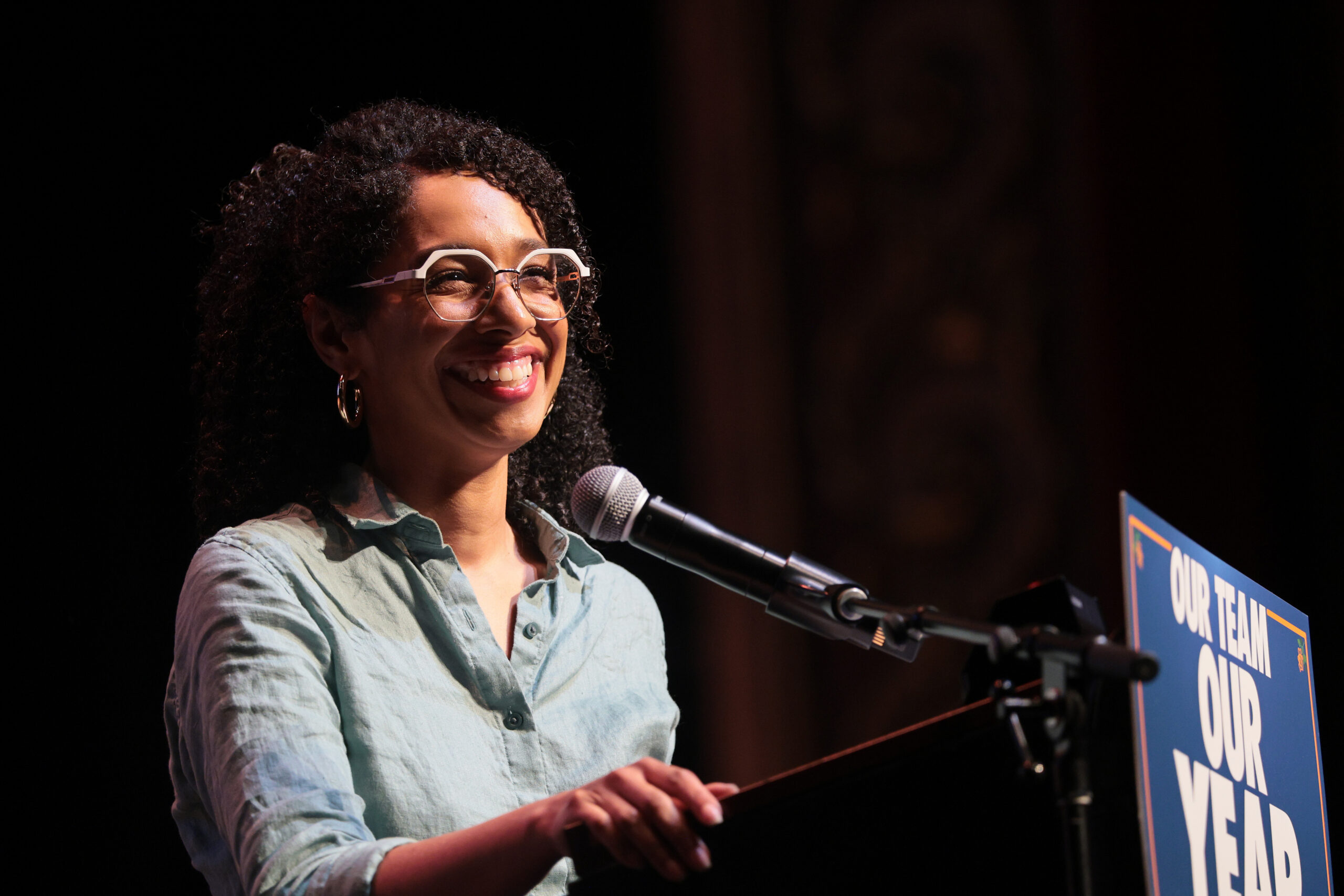
Asked about New York City congressional candidate Darializa Avila Chevalier’s reported past comments supporting communism, House Democratic leaders suggested this week that she had changed and moderated her views,Jewish Insider’s Marc Rod reports.
Jeffries’s defense: House Minority Leader Hakeem Jeffries (D-NY) said, when asked about Avila Chevalier’s previous comments supportive of communism, that Avila Chevalier is “going to have to speak for herself in terms of what she said in the past” but said she has been “pretty clear that she’s walked away from many of the things that have been unearthed, and has pretty clearly indicated that she’s a different person, but that’s for her, ultimately, to communicate, and I’m confident that she will, as best she can.”
Party problem: New York City Council Speaker Julie Menin — the first Jewish person to hold her role — slammed a newly elected Brooklyn Democrat’s promotion of antisemitic conspiracy theories, but declined to call her commentary disqualifying, JI’s Will Bredderman reports.
BORN IN THE USA
Several Jewish groups celebrate Supreme Court ruling protecting birthright citizenship
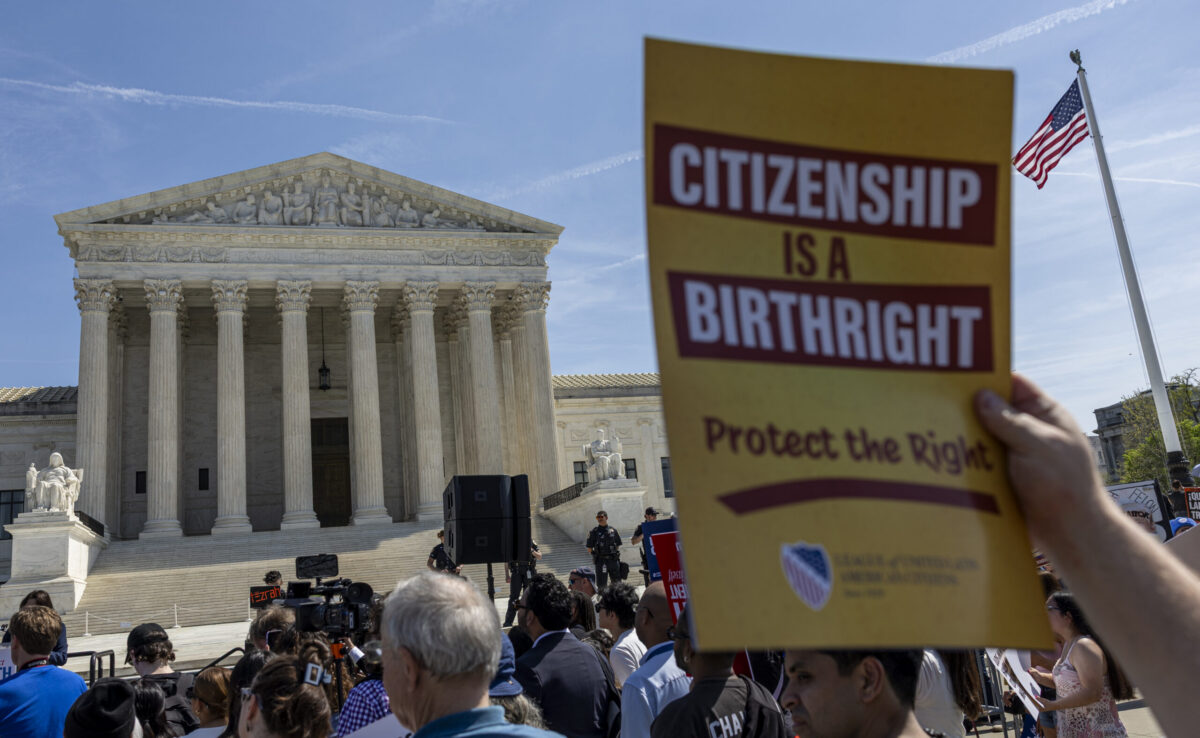
Several Jewish groups celebrated the Supreme Court’s decision on Tuesday to uphold birthright citizenship and strike down a Trump administration executive order that aimed to eliminate citizenship for children of undocumented immigrants and those in the U.S. on temporary visas, Jewish Insider’s Marc Rod reports.
Weighing in: The American Jewish Committee, HIAS and the Religious Action Center of Reform Judaism all joined an amicus brief against the executive order with various other religious groups, and praised the Supreme Court’s decision. The National Council of Jewish Women and Jewish Council for Public Affairs also weighed in in support of the justices’ ruling.
PEARL OF WISDOM
Bruce Pearl won’t commit to backing JD Vance in 2028 unless the VP breaks from Tucker Carlson

Bruce Pearl, the veteran former Auburn University men’s basketball coach, told Jewish Insider’s Emily Jacobs that Vice President JD Vance needs to “make a decision” about his continued association with far-right commentator Tucker Carlson, warning that his support of Vance’s expected 2028 presidential bid will be contingent on the vice president severing ties with the antisemitic podcaster.
‘Enemies of the state’: Pearl, who is currently splitting his time between pro-Israel political advocacy and serving as an analyst for TNT and CBS Sports, made the comments in an interview with JI on Monday while discussing the rise of right-wing antisemitism and the prominence of Carlson, neo-Nazi Nick Fuentes and other commentators who promote antisemitic ideas within the America First right-wing movement. Pearl argued that Carlson and Fuentes “are absolutely enemies of the state. What they’re doing is treasonous, it’s disgusting and it’s not based on fact. It’s based on lies and propaganda and antisemitism. They’re bought and paid for, but they’ve got huge followings.”
COHANIM COMEBACK
Former antisemitism official Ellie Cohanim tapped as advisor to U.N. Ambassador Mike Waltz
Ellie Cohanim, who served as deputy special envoy to monitor and combat antisemitism in President Donald Trump’s first term, recently joined his administration as a senior policy advisor to U.S. Ambassador to the U.N. Mike Waltz, Waltz announced on Tuesday, Jewish Insider’s Gabby Deutch reports. Cohanim was born in Tehran and left Iran as a child in 1979, following the Islamic Revolution. She came with her family to New York.
Waltz’s words: “Ellie’s story is the American story,” Waltz said in a statement. “Her family fled persecution in Iran, built a life in New York, and she has spent her career looking for ways to serve America, fighting for freedom, standing with the persecuted, and calling out antisemitism wherever it hides. That is exactly the kind of conviction and courage we need at the United Nations.”
Scoop: As Washington prepares to host a weekend of July Fourth hoopla on the National Mall, senior Trump administration officials, diplomats and Jewish communal leaders will gather on Friday evening across from the Lincoln Memorial for a Shabbat dinner celebrating America’s 250th birthday.
Worthy Reads
When the DSA Came for Lander: Park Avenue Synagogue Rabbi Elliot Cosgrove penned a letter dated two years from now, published in the New York Daily News, to New York Democratic congressional nominee Brad Lander, predicting that he will be ousted by a Democratic Socialists of America-backed candidate in the next primary. “They told you it was never about being a Jew — only about being a Zionist — as if the two could be peeled apart, as if your Jewishness had nothing to do with the nation they demanded you disown. There’s an old teaching about the man who thinks he can ride the tiger and dismount whenever he likes. You didn’t tame the coalition you joined. You were, for one term, useful — until the moment it decided to disown you. You could renounce the policy, the lobby, even Zionism, but you could not renounce being a Jew.” [Daily News]
Drone Prone: Foreign Policy’s John Haltiwanger unpacks Israel’s “Hezbollah drone problem.” “After the fighting resumed in March, it wasn’t long before explosive drones were a leading cause of battlefield deaths for Israel in Lebanon. As a result, Netanyahu established a team of experts to address the issue and pledged to give the IDF an unlimited budget to address the Hezbollah drone threat. But there are no simple solutions. … In ancient Rome, gladiators used nets to entangle opponents before moving in for the kill. Today, Israeli troops are using the same primitive tool to defend against drones and intercept them before they reach their targets. The situation is indicative of how militaries have struggled to find countermeasures to drones and have been forced to adapt, particularly as the technology evolves at such a rapid pace.” [FP]
Separate But Equal: Hannah Rosenthal, former special envoy to monitor and combat antisemitism under the Obama administration, argues in the Jewish Telegraphic Agency against the proposal of combining the role of the antisemitism envoy with that of the special envoy on Holocaust issues. “The office of special envoy on antisemitism and the special envoy on the Holocaust are complementary, but not duplicative. The former works to address contemporary antisemitism, hate crimes, extremism and government policy around the world. The latter focuses on historical justice, restitution, remembrance, archives and Holocaust-era accountability. The United States deliberately created separate offices because both missions are full time responsibilities.” [JTA]
Jews Turning on Israel: Actor and Jewish commentator Jonah Platt argues in a post on X against the trope of the young, “self-hating” Jew in an essay on X. “It’s maddening. It’s dangerous. It’s irresponsible. It’s shameful. But it isn’t nefarious. It isn’t Jew-hatred, it isn’t self-hatred, and honestly, it isn’t that hard to understand. These are disconnected, uneducated people, surrounded by like-minded peers, all reinforcing one another in a disconnected, uneducated worldview — one they’re not especially invested in anyway, and focus on only because progressive society says they’re supposed to.” [X]
Word on the Street
President Donald Trump is considering returning to a full-scale military conflict with Iran and has discussed the idea with Defense Secretary Pete Hegseth and Joint Chiefs Chairman Dan Caine in recent days, The Wall Street Journal reports, but has decided to continue on the diplomatic track for now…
In an analysis of the U.S.-Iran memorandum of understanding, the Foundation for Defense of Democracies found that the Trump administration is “evidently not applying [the 2015 Iran Nuclear Agreement Review Act’s] requirements and restrictions to the MOU, apparently on the basis of an opinion from the Department of Justice,” but the White House and DOJ “have apparently not shared this surprising opinion, or its arguments, with either Congress or the public”…
Homeland Security Secretary Markwayne Mullin said on Monday that he did a “happy dance,” after Iran was knocked out of the FIFA World Cup, telling reporters that Iranian officials tried to bring into the U.S. individuals with ties to the Islamic Revolutionary Guard Corps and that accommodating the team while protecting national security had demanded incomparable attention…
The Terrorist Financing Targeting Center — a coalition comprised of Bahrain, Kuwait, Oman, Qatar, Saudi Arabia, the UAE and the U.S. — announced joint sanctions against five entities and 16 individuals tied to Hezbollah’s financial network…
Oman has submitted a proposal to the U.S. for Muscat and Tehran to collect service fees from shipping companies seeking to transit the Strait of Hormuz, according to The New York Times. One of Iran’s deputy foreign ministers, Kazem Gharibabadi, said on Monday if Iran was unable to come to an arrangement with Oman it would move forward on its own…
A person close to the anti-Israel American Priorities super PAC told CNN many of its contributors weren’t very politically active until New York City Mayor Zohran Mamdani’s campaign victory, which was the “moment that inspired them and brought them into the fold”…
Former Vice President Kamala Harris called Mamdani last week, and is holding lengthy, closed-door meetings with Palestinian activists in the run-up to a possible presidential campaign, Axios reports…
Rep. Dan Goldman (D-NY), speaking to CNN’s Jake Tapper, warned of the “tremendous danger and fear” for American Jews as they are being “dehumanized” and antisemitism is “becoming normalized”…
Phylisa Wisdom, the liberal activist appointed by New York City Mayor Zohran Mamdani as executive director of his Office to Combat Antisemitism, got a harsh reception at a Holocaust memorial event in Brooklyn on Sunday. Video from the event shows a small group of hecklers booing, calling Wisdom a “kapo” and shouting that she was supportive of Adolf Hitler, JI’s Will Bredderman reports…
Far-left Michigan Senate candidate Abdul El-Sayed dismissed a question on CNN about the Democratic Party’s “embrace” of antisemitic streamer Hasan Piker as a “ridiculous way to think about politics”…
Adam Jentleson, former chief of staff to Sen. John Fetterman (D-PA) who went on to found the center-left Searchlight Institute think tank, urged Democrats to “just say no to AIPAC,” arguing the pro-Israel organization has “evolved from a group to a ‘Group,’” in the pejorative sense…
Israeli Prime Minister Benjamin Netanyahu visited southern Lebanon on Tuesday for the first time since the U.S.-brokered security agreement was signed last Friday. Netanyahu told IDF troops, “We will not leave southern Lebanon until the threat is removed”…
“Pod Save America” co-host Jon Lovett said the harassment of California state Sen. Scott Wiener at a transgender pride march last week was “as pure antisemitism as you can see”…
The Supreme Court agreed to hear the case of Daniel Grand, an Orthodox Jewish man from Ohio who was barred from holding Shabbat prayer meetings in his home without a “special use permit” and later faced harassment from city officials who encouraged neighbors to watch his home for signs of religious activity…
Haaretz tracks the carbon footprint of FIFA President Gianni Infantino as he has traveled between World Cup matches across North America on a Qatari private jet, racking up 47,337 kilometers (29,000 miles) from the tournament’s opening days through the first knockout match, after championing the body’s sustainability strategy…
Ellie Gottheimer and Larra Mullin, the children of Rep. Josh Gottheimer (D-NJ) and Homeland Security Secretary Markwayne Mullin, are releasing Shmoo & Ozzie Go to Washington today, a children’s book on bipartisanship. Proceeds from the book will go to support homeless children…
Mark Isakowitz, Sen. Dave McCormick (R-PA)’s chief of staff, is set to release a book in January about his personal journey following the loss of his father, who immigrated to America after surviving Auschwitz, and Isakowitz’s daily practice of reciting the mourner’s prayer at a synagogue in Washington, JI’s Gabby Deutch reports…
Axel Springer CEO Mathias Döpfner tapped Carolin Hulshoff Pol to serve as CEO of Telegraph Media Group following the German media company’s completion of its £575 million acquisition of the British publisher, ending a three-year ownership transition…
Former Israeli Air Force Commander Maj. Gen. (res.) Amikam Norkin is a leading candidate to head Anduril’s operations in Israel, as the American defense tech company explores a major expansion into the Israeli market, Calcalist reports…
The Iranian regime plans to take over St. Peter Evangelical Church, the oldest Protestant church in Iran, and evict the 20 families living there, The Free Press reports. The theocratic regime had thus far left it alone in fear of the U.S.’ retaliation, according to the outlet…
The Washington State Democratic Party adopted into its platform during its June convention an amendment blaming the “dramatic resurgence in antisemitism … in part [on] actions taken by the Israeli government,” Jewish News Syndicate reports…
Pentagon official Jason Olson has departed his position as the director of deradicalization for the Gaza Board of Peace, an official from the body told The Times of Israel, as the BoP is convening for discussions in Cyprus…
Tuesday marked the end of Steffen Seibert‘s four-year term as German ambassador to Israel. In a farewell social media video, he paid tribute to the country by listing 25 things he will miss. Seibert is succeeded by Alexander Graf Lambsdorff, who most recently served as the German Ambassador to Moscow…
Judah Gribetz, who as a top aide to Gov. Hugh Carey helped negotiate New York City‘s rescue from financial collapse in the 1970s and later devised a distribution plan for $1.25 billion in restitution to Holocaust survivors in a landmark class-action suit against Swiss banks, died Friday at 97…
Pic of the Day

Comedian Judy Gold spoke at an event hosted by the Israeli Embassy in Washington, “A Zionist LGBTQ+ Celebration,” at Adas Israel Congregation on Tuesday — a night of solidarity in memory of Sarah Milgrim, the embassy staffer murdered alongside her partner, Yaron Lischinsky, outside the Capital Jewish Museum in May 2025. Milgrim spent her time at the embassy building bridges between Israel and marginalized communities, including D.C.’s LGBTQ+ Jewish community.
Birthdays
Television, film and theater actor, including early career roles in Yiddish theater, Michael Burstein turns 81…
Applied mathematician, statistician and physicist, professor emeritus at both MIT and Harvard, Herman Chernoff turns 103… Former U.S. assistant secretary of education and former research professor at NYU, Diane Silvers Ravitch turns 88… Nobel laureate in economics for 1997 and co-creator of the Black-Scholes model for valuing options and other derivatives, Myron Scholes turns 85… Noted British art dealer and founder of an eponymous London art gallery, Victoria Marion Miro turns 81… Born in a DP Camp to her Holocaust survivor parents, she was the first Jewish woman to serve on the Canadian Supreme Court, Rosalie Silberman Abella turns 80… Israeli-Russian businessman, with holdings in energy and international real estate development, Shalva Chigirinsky turns 77… Partner in the Encino, Calif.-based law firm of Nolan Heimann, Douglas E. Mirell… Campaign, communications and fundraising consultant, Robert Kaplan turns 69… Hall of Fame player and coach in the WNBA and now an NBA broadcaster, Nancy Lieberman turns 68… Attorney and longtime Democratic activist in Pittsburgh, he is a regional chair of the ADL, Steven D. Irwin turns 67… Senior columnist at The Forward and former CEO of the A-Mark Foundation, Rob Eshman… President emeritus of the Orthodox Union and a retired partner at Ropes & Gray, Mark “Moishe” Bane… Under secretary of state for political affairs during most of the Biden administration, Victoria Jane Nuland (family name was Nudelman) turns 65… Journalist, filmmaker and educator, he is the co-founder of Aish[dot]com, Shraga Simmons turns 65… Professor of Jewish thought at Hebrew University, Benjamin Brown turns 60… Member of the Virginia House of Delegates since 2014, Marcus Bertram Simon turns 56… U.S. senator (R-IA), Joni Ernst turns 56… Screenwriter, producer and film director known for romantic comedy films, Marc Silverstein turns 55… Los Angeles resident, Adam B. Siegel… NASA astronaut, on her 2019 trip to the International Space Station she took novelty socks with Stars of David and menorahs, Jessica Meir turns 49… Co-founder of Edgeline Films, Elyse Steinberg… Hasidic musician mixing elements of dancehall, reggae, hip-hop and R&B, known by his stage name DeScribe, Shneur Hasofer turns 44…
In upsets for moderates, DSA-aligned Melat Kiros’ defeated Rep. Diana DeGette, and Manny Rutinel defeated Shannon Bird

(Michael Ciaglo/Getty Images)
Democratic congressional candidate Melat Kiros holds a cutout of Sen. Bernie Sanders (I-VT) as she speaks to supporters at an election-night watch party after winning the Colorado primary on June 30, 2026 in Denver, Colorado.
Progressives in Colorado scored a number of key victories Tuesday night, including Democratic Socialists of America-aligned candidate Melat Kiros’ defeat of Rep. Diana DeGette (D-CO) in the state’s 1st Congressional District.
The Colorado results suggest that, far from being contained to a few scattered congressional districts in New York City, the momentum for far-left, anti-Israel candidates is only growing within the Democratic Party, especially within urban population centers.
Kiros, a 29-year-old doctoral student, campaigned on her hostility to Israel and faced scrutiny when she declined to call the firebombing attack on a hostage awareness march in Boulder, Colo., antisemitic. DeGette, despite a long-standing progressive record in Congress, struggled to satisfy a critical mass of Democratic voters who preferred a more radical choice, especially when it came to opposing Israel.
Sen. John Hickenlooper (D-CO) survived a scare from a little-known socialist challenger, state Sen. Julie Gonzales, but only won renomination with less than 60% of the Democratic vote. Even in the vote-rich Denver suburbs, the far-left challenger came within striking distance of the state’s well-known senator and former governor.
Former state Rep. Shannon Bird, a moderate championed by Democratic Majority for Israel, lost badly to state Rep. Manny Rutinel for the Democratic nomination in Colorado’s swing 8th District, currently held by Rep. Gabe Evans (R-CO). With most votes counted, Rutinel holds a 28-point lead over Bird, 62-34%.
As an undergraduate at the University of Florida, Rutinel attended a demonstration in 2014 that was co-organized by Students for Justice in Palestine, the extreme anti-Israel group that has expressed alignment with Hamas. A Rutinel spokesperson told JI that Rutinel did not have any affiliation with SJP and said the demonstration was focused on police brutality in the U.S.
In the state’s gubernatorial primary, Colorado Attorney General Phil Weiser, a traditional progressive who campaigned on his efforts suing the Trump administration, comfortably defeated Sen. Michael Bennet (D-CO), a leading moderate on Capitol Hill whose Washington ties proved to be a vulnerability with the anti-establishment Democratic electorate. With most votes tallied, Weiser leads Bennet by a 10-point margin, 55-45%.
Weiser, who is Jewish, was opposed by the Denver chapter of the DSA because of his support for Israel. The Republican primary was still too close to call, with state Sen. Barb Kirkmeyer holding a narrow lead.
Plus, moderates’ big Colorado test
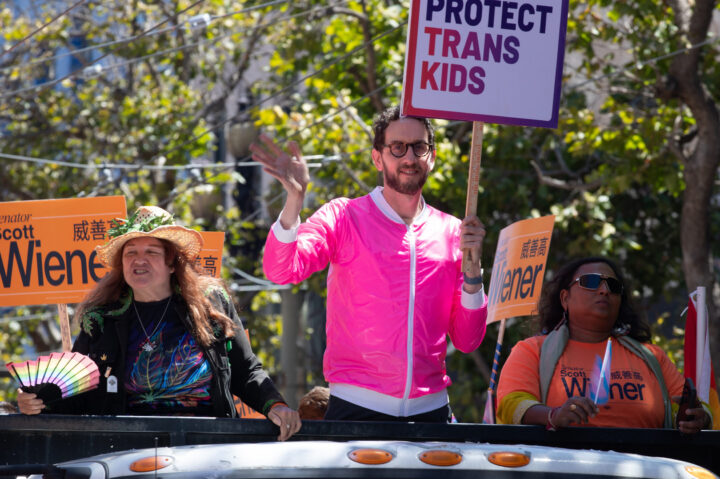
Miikka Skaffari/Getty Images
California state Sen. Scott Wiener during the San Francisco Pride Parade on June 28, 2026 in San Francisco, Calif.
Good Tuesday morning.
In today’s Daily Kickoff, we preview tonight’s Democratic primaries in Colorado, where a wave of Democratic Socialists of America-backed challengers is testing whether even the party’s pragmatic epicenter is vulnerable to the socialist left, and report on comments by Rep. Suzan DelBene (D-WA), the chair of the Democratic Congressional Campaign Committee, downplaying concerns about the party’s response to antisemitism. We cover the conflicting messaging put out by the U.S. and Iran about the continuation of talks in Qatar, and report on remarks by Rep. Brian Mast (R-FL) on the expected timeline for a final agreement between the countries. We also follow up on the reactions to the harassment of California state Sen. Scott Wiener at a transgender pride march, highlighting a divide between politicians who described the incident as antisemitic and those who did not. Also in today’s Daily Kickoff: Susie Wiles, Gen. Frank McKenzie and Luke Moon.
Today’s Daily Kickoff was curated by JI Israel Editor Tamara Zieve and U.S. Editor Danielle Cohen-Kanik with an assist from Marc Rod. Have a tip? Email us here.
What We’re Watching
- White House Special Envoy Steve Witkoff and Jared Kushner arrived in Qatar to represent the U.S. in talks with Iran, as the status of the negotiations remains unclear. The technical talks on the memorandum of understanding meant to be taking place separately are also up in the air — Iran’s foreign ministry said an Iranian technical delegation will be in Doha this week but will not be meeting with American officials. More below.
- Representatives of President Donald Trump’s Board of Peace are meeting this week in Cyprus as they seek to advance plans for a committee of Palestinian technocrats to replace Hamas in governing the Gaza Strip, The Times of Israel reports. Former U.K. Prime Minister Tony Blair, who sits on the Board of Peace’s executive board and has recently taken on a larger role in the organization, is set to participate in the “strategic workshop” being held from Tuesday to Thursday.
- Colorado voters will head to the polls in today’s Democratic primaries, where moderate candidates are fearing a far-left wave. More below.
- Russell Vought, director of the Office of Management and Budget, will testify before the House Appropriations Committee where he is expected to address the White House’s $88 billion supplemental funding request for the war with Iran and FY2027 budget request.
- The Israeli Embassy in Washington will hold a “Zionist LGBTQ+ celebration” on the last day of Pride Month in memory of slain embassy staffer Sarah Milgrim’s allyship.
- In Israel, Reichman University’s Herzliya Conference kicks off, focusing this year on national security and national resilience. Israeli President Isaac Herzog will address the confab, as well as U.S. Ambassador to Israel Mike Huckabee; Amos Hochstein, who served as a Middle East envoy under former President Joe Biden; former Mossad chief Tamir Pardo; former Israeli National Security Advisor Tzachi Hanegbi; journalist Barak Ravid; and Aliyah Minister Ofir Sofer.
What You Should Know
A QUICK WORD WITH JI’S JOSH KRAUSHAAR
Colorado is a state famous for its moderation, with its governor (Jared Polis) and two senators (Michael Bennet and John Hickenlooper) among the most pragmatic figures in Democratic politics. So if a far-left, anti-Israel wave sweeps over the Democratic Party in tonight’s statewide primaries, it will be a true wake-up call for those downplaying the rise of the socialist left.
The biggest race we’re tracking — and the one where a Democratic incumbent looks most vulnerable — is the primary between longtime Rep. Diana DeGette, 68, an influential progressive who has left an imprint on major legislation in Congress, and Democratic Socialists of America-affiliated 29-year-old doctoral student Melat Kiros, whose deep-seated antagonism against Israel is a top focus of her campaign.
Kiros is the latest example of how radical candidates running for office on their hostility toward Israel are also indulgent of the rising antisemitism around them. Her political awakening came after she was fired from the law firm Sidley Austin for writing a public letter denouncing the hundreds of law firms that signed a petition calling on law schools to do a better job addressing antisemitism on their campuses.
Kiros was angered that the law firms considered those calling for the elimination of Israel as antisemitic. In the last week, she also refused to call the firebombing of a hostage awareness march in Boulder, Colo., antisemitic. Sense a pattern?
As JI’s Marc Rod reported, Kiros’ extreme views have done little to dent her support in a progressive Denver-area district that DeGette has easily held for the last three decades. In March, DeGette barely won the 30% of the vote from party activists necessary to qualify for the primary ballot — in what could be a foreshadowing of the primary results tonight.
PRIDE AND PREJUDICE
California Democrats divided over calling harassment of Scott Wiener antisemitic
Elected officials in California swiftly condemned an incident last week in which protesters accosted and harassed California state Sen. Scott Wiener at a transgender pride march, with one demonstrator shouting “F*** you and your Zionist handlers. F*** you and your Israeli masters.” A divide emerged, however, between the politicians who described the incident as antisemitic and those who did not. It was the second such incident in days, after Wiener was harassed at a bar by a protester demanding he say “Free Palestine” on camera, Jewish Insider’s Gabby Deutch reports.
Reactions: Wiener told CNN on Monday that the incident was “absolutely” antisemitic. “There were elected officials in that march who have not taken the positions that I’ve taken, and they were left alone,” said Wiener, who is running to replace retiring Rep. Nancy Pelosi (D-CA) in the San Francisco-based seat. San Francisco Mayor Daniel Lurie, who is Jewish, criticized the incident as “targeted, hateful and antisemitic.” San Francisco Supervisor Connie Chan, Wiener’s competitor in the congressional race who is running to his left, said in a statement that she stands “firm against threats of violence and hate speech. There is no place for hate and violence in our city.” Asked whether Chan believed the specific incident targeting Wiener to be hate speech, a spokesperson for Chan declined to say.
Read the full story here with additional comments from Sens. Adam Schiff (D-CA) and Alex Padilla (D-CA), Pelosi, Rep. Ro Khanna (D-CA) and former Health and Human Services Secretary Xavier Becerra, the Democratic nominee for governor in California.
Leadership message: Rep. Suzan DelBene (D-WA), the chair of the Democratic Congressional Campaign Committee, responsible for electing House Democrats, downplayed concerns about the party’s response to antisemitism in the wake of New York City elections that elevated several far-left candidates, JI’s Marc Rod reports. “If you look across the board and talk to individual candidates, that’s not representative of where other candidates land,” she said in an interview with former NBC News anchor Chuck Todd.
ON THE HILL
Top House Democrats say they’ll oppose effort to cut $3.3 billion in aid to Israel

The top House Democrats on the Foreign Affairs and Armed Services committees said Monday that they will oppose efforts led by Rep. Thomas Massie (R-KY) to cut the $3.3 billion in U.S. aid to Israel expected under the memorandum of understanding if and when they come to a vote on the House floor, Jewish Insider’s Marc Rod reports.
No go: Reps. Greg Meeks (D-NY) and Adam Smith (D-WA), the ranking Democrats on the House Foreign Affairs and Armed Services committees, both told JI they intend to oppose the amendment. Meeks said there are “so many unanswered questions” about the implications and effects of the amendment. “I know there is still danger [in Israel]. I don’t want Israel to be without what they need,” Meeks said. He also noted that many of the weapons that would be purchased with the funding would not be built for years to come.
Read the full story here with additional comments from Reps. Rosa DeLauro (D-CT) and Greg Casar (D-TX).
Tehran talk: Rep. Brian Mast (R-FL), the chair of the House Foreign Affairs Committee, suggested following both unclassified and classified briefings from the Trump administration on Iran on Monday that talks with the regime for a final agreement could continue past the 60-day timeline laid out in the U.S.-Iran memorandum of understanding finalized earlier this month.
BOMBS TO BARGAINS
Trump confirms U.S., Iran to meet in Qatar after weekend strikes

President Donald Trump confirmed on Monday that the U.S. and Iran will meet in Qatar on Tuesday to continue negotiations, as both nations attempt to step back from a weekend exchange of military strikes that threatened to derail the fragile ceasefire agreement. “IRAN HAS REQUESTED A MEETING. IT WILL TAKE PLACE TOMORROW IN DOHA!” Trump posted on Truth Social, Jewish Insider’s Matthew Shea reports.
Yes, but: Iran’s deputy foreign minister and senior negotiator Kazem Gharibabadi, however, dismissed the reports, telling Iranian state news agency IRNA that the technical talks in the Qatari capital “are not confirmed.” Esmaeil Baghaei, a spokesperson for Iran’s foreign ministry, later said Iran has no discussions scheduled with the U.S. and that an Iranian technical delegation heading to Qatar this week will not be meeting with U.S. officials.
Chief concerns: White House Chief of Staff Susie Wiles, according to a new book by New York Times journalists Maggie Haberman and Jonathan Swan, initially pushed back on U.S. military engagement against Iran, skeptical of Israel’s efforts to convince Trump to join a bombing campaign on Iran’s nuclear sites and fearful that any involvement from the U.S. military could “spiral into an Israeli regime-change war,” JI’s Gabby Deutch reports.
TEXAS TILT
Texas Democrats embrace toned-down anti-Israel language in party platform
Texas Democrats adopted several anti-Israel amendments into their party platform at a state party convention last weekend — a significant move to the left on Israel policy in a generally conservative state with marquee Senate and gubernatorial races this November. That said, much of the anti-Israel language was toned down from the original amendments as introduced — and the party also adopted some pro-Israel language in the platform, Jewish Insider’s Marc Rod reports.
Notable provisions: The platform offers support for the right of return for Palestinian refugees as well as for Palestine becoming a U.N. member state “when qualified under the U.N. Charter” and the International Court of Justice’s interim judgement in the genocide case against Israel — though it acknowledges that the ICJ has not ruled that Israel committed genocide — and recognizes the Palestinian “Nakba.” The platform urges Texas Democratic members of Congress to support the Block the Bombs Act and the end of U.S. offensive weapons sales to Israel, as well as calling for the repeal of Texas’ anti-Boycott, Divestment and Sanctions legislation.
WESTWARD BOUND
Former CENTCOM chief backs basing U.S. assets in Israel to counter Iran

Former U.S. CENTCOM Commander Gen. Frank McKenzie on Monday voiced his support for the U.S. to shift its military footprint in the Middle East westward, including in Israel, to mitigate threats from Iran, Jewish Insider’s Matthew Shea reports.
Location, location, location: Speaking on a Jewish Institute for National Security of America webinar, McKenzie said, “No one in their right mind would ever put the CENTCOM forward headquarters, you know, 100 miles away from Iran [in Qatar], yet that’s where it is. Because when we put it in place many years ago, we were thinking Iraq, we were thinking Afghanistan, we were thinking other things, and not the growing threat from Iran.”
BACK IN THE FOLD
Christian critic of right-wing antisemitism joins Heritage Foundation after cutting ties
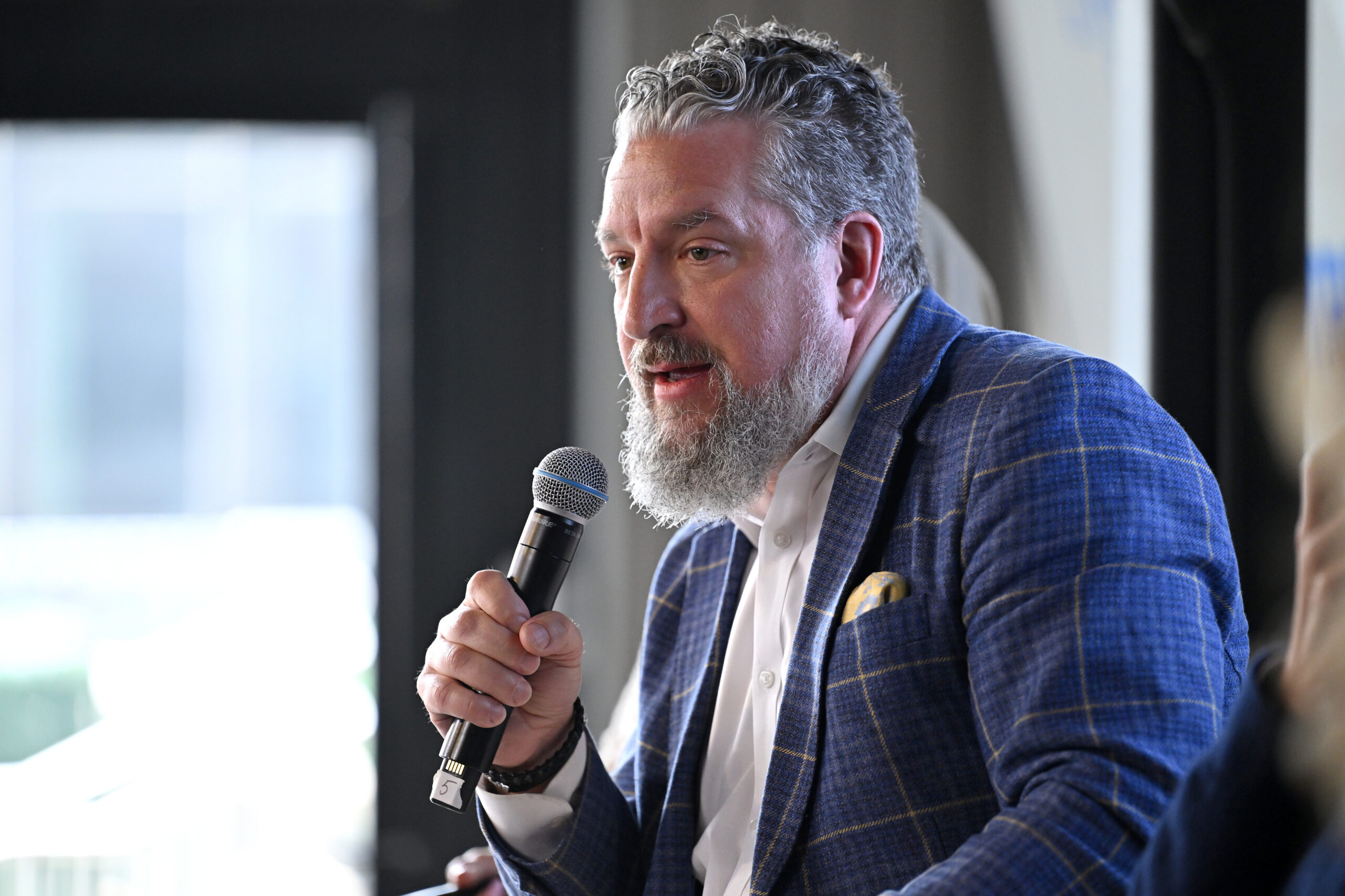
Luke Moon, a conservative Christian activist who has emerged in recent months as an outspoken critic of antisemitism on the right, has joined the Heritage Foundation as a part-time visiting fellow supporting the think tank’s work to combat antisemitism, Jewish Insider’s Gabby Deutch reports. Moon publicly disaffiliated from the prominent conservative institution in November after its president, Kevin Roberts, released a controversial video defending Tucker Carlson following the podcast host’s friendly interview with neo-Nazi Nick Fuentes.
Shift in position: Moon told JI in an interview on Monday that he believes the conservative movement has begun to make progress in fighting back against antisemitism within its ranks. “It’s a war where we lose some battles and win some battles, and I think I’m winning more than I’m losing,” Moon said. “What I didn’t have a year ago was enough allies and tools, and now I have a lot more allies, and I think I have a lot more tools, and so I’m actually optimistic.”
Worthy Reads
Mamdani’s Misunderstanding: Israeli journalist Nadav Eyal argues in his Substack that New York City Mayor Zohran Mamdani’s comments to ABC News rejecting support for Israel as a Jewish state reveal a fundamental misunderstanding of the Jewish people. “Either he knows very little about Judaism — an astonishing level of ignorance for the mayor of New York — or his hostility toward Israel has blinded him to one of the most elementary historical facts about the Jewish people. Judaism is both a religion and a nation. For thousands of years, Jews have understood themselves as a people with a shared history, a common language, collective institutions, diverse religious traditions, and — crucially — a homeland from which they originated.” [Substack]
Unfortunate Turn of Events: In The Wall Street Journal’s “Free Expression” newsletter, Masada Siegel uses “A Series of Unfortunate Events” — the children’s book series about orphans trying to elude a disguised villain and his followers — as a lens to examine institutional failure in addressing antisemitism in American schools and universities. “In the series, the children’s guardian Mr. Poe hesitates, doubts the children and is useless whenever the villain reappears. Mr. Poe isn’t evil; he’s self-absorbed and personifies institutions that exist to stop threats, but refuse to do their jobs. Since Oct. 7, the international community has acted as a global Mr. Poe. Institutions like the United Nations and Red Cross allowed hostages, including children, to be held by Hamas and to languish in terror tunnels. In the U.S., institutions failed our youth. School boards and Ivy League administrations showed little to no moral clarity, leaving Jewish students to fend for themselves in hostile environments.” [WSJ]
The Rubio Accord: The Wall Street Journal’s editorial board applauds Secretary of State Marco Rubio’s work securing the U.S.-Israel-Lebanon agreement signed last week. “Some Iran analysts associated with Vice President JD Vance have criticized the framework as ‘incompatible’ with the memorandum of understanding with Iran. But Trump Administration sources tell us this framework is the U.S. interpretation of the MOU’s language regarding Lebanon. On this the Vice President backs Mr. Rubio; nobody on the Trump team wants to force Israel to cede all of southern Lebanon to Iran’s proxy, as Iran demands.” [WSJ]
From Corbyn to Mamdani: Simone Rodan-Benzaquen, the Foundation for Defense of Democracies’ senior envoy for Europe, argues that New York City Mayor Zohran Mamdani poses the same threat to the Democratic Party as Jeremy Corbyn did to the U.K.’s Labour Party when he served as leader. “From London to Paris, from Paris to New York, one finds the same mechanism: anti-Zionism presented as courage, accusations of antisemitism dismissed as a right-wing maneuver, and the worried Jew transformed into an obstacle to progress. Labour thought it could absorb Corbyn. Part of the French left thought it could contain [Jean-Luc] Mélenchon. The Democratic Party may believe it can confine Mamdani and the DSA to a handful of urban districts. This is always how capitulations begin: with the idea that the problem will remain local.” [FDD]
Word on the Street
CENTCOM Commander Adm. Brad Cooper met with Lebanese Armed Forces chief Gen. Rodolphe Haykal in Beirut and senior civilian and military personnel in Israel to discuss implementing the Israel–Lebanon framework agreement signed last week…
New documents released by the State Department under Freedom of Information Act litigation show top Trump administration staffers continued to use the encrypted messaging app Signal for government communications after President Donald Trump suggested they stop when Atlantic Editor-in-Chief Jeffrey Goldberg was inadvertently added to an administration chat about bombing the Houthis last year…
New York state Democratic Party Chairman Jay Jacobs told the New York Post that anti-Israel sentiment helped propel to victory New York City Mayor Zohran Mamdani’s slate of candidates for Congress in last week’s primaries…
A new New York Times/Portland Press Herald/Siena poll shows Democratic Senate candidate Graham Platner and Republican Sen. Susan Collins in a statistical tie in Maine, 49-47%, among likely voters…
J Street President Jeremy Ben-Ami wrote on Substack that Mamdani “missed the mark” when he called AIPAC the “monsters of our time” and warned broadly against characterizing “every organization connected to Israel … as part of a uniquely sinister enterprise”…
Trump nominated acting Labor Secretary Keith Sonderling, who is the grandson of Holocaust survivors, to assume the role permanently. Read JI’s profile of Sonderling here…
CNN reports on since-deleted tweets from far-left New York congressional candidate Darializa Avila Chevalier hailing communism, Marxism and Soviet figures, including revolutionary Vladimir Lenin…
Jewish Voice for Peace Action, the political arm of the anti-Israel advocacy group, issued its first-ever Senate endorsement, backing far-left candidate Abdul El-Sayed in the Democratic primary for U.S. Senate in Michigan. The Detroit Free Press endorsed one of his opponents, state Sen. Mallory McMorrow…
Minneapolis Mayor Jacob Frey is backing Rep. Angie Craig (D-MN) for U.S. Senate against her more-progressive primary opponent, Lt. Gov. Peggy Flanagan, and Sen. Bernie Sanders (I-VT) endorsed Sen. Ed Markey (D-MA) as he fends off a generational primary challenge from Rep. Seth Moulton (D-MA)….
The New York Times talks to Jennifer Mnookin, who on Wednesday will begin her role as Columbia University’s fifth president in four years — and first Jewish leader in three decades…
TheNYTexplores how the raging debates over Israel and Iran are fracturing both parties ahead of the midterms, with far-left primary victories in New York rattling establishment Democrats and isolationist MAGA voters souring on Trump over the Iran war…
The Wall Street Journal reports that while a Trump administration waiver last week to let Iran sell its oil and receive dollar payments could bring in up to $10 billion over two months, it is likely to take much longer to reach the pockets of ordinary Iranians, some of whom have expressed skepticism that the deal will improve their daily life…
The IDF’s Military Intelligence Directorate and Southern Command told Chief of Staff Lt. Gen. Eyal Zamir last week that Hamas is reconstituting in order to resume war against Israel, Israeli broadcaster Kan reports, indicating the IDF is urging a return to fighting against the terror group but that the U.S. is opposed as it seeks to promote Trump’s Board of Peace…
Armenian Prime Minister Nikol Pashinyan, asked about Israel’s recent recognition of the Armenian Genocide, said, “We do not see a need for response,” adding that it is in his country’s interest to avoid “the weaponization of the Armenian Genocide”…
The New Yorker‘s Oscar Schwartz examines how former Prime Minister John Howard — architect of Australia’s celebrated post-Port Arthur gun laws — broke with Prime Minister Anthony Albanese after the massacre at a Hanukkah party at Bondi Beach, arguing the real culprit was rising antisemitism rather than lax gun control, a framing that has reshaped the country’s political discourse…
Former Walt Disney Co. CEO Bob Iger and Thrive Capital founder Josh Kushner are weighing making a bid for the NBA expansion team in Las Vegas, Bloomberg reports…
Yair Rosenberg, a longtime journalist and commentator on American Jewry, is joining The New York Times as a reporter covering Jewish American life, the Times announced on Monday, JI’s Haley Cohen reports…
Pic of the Day
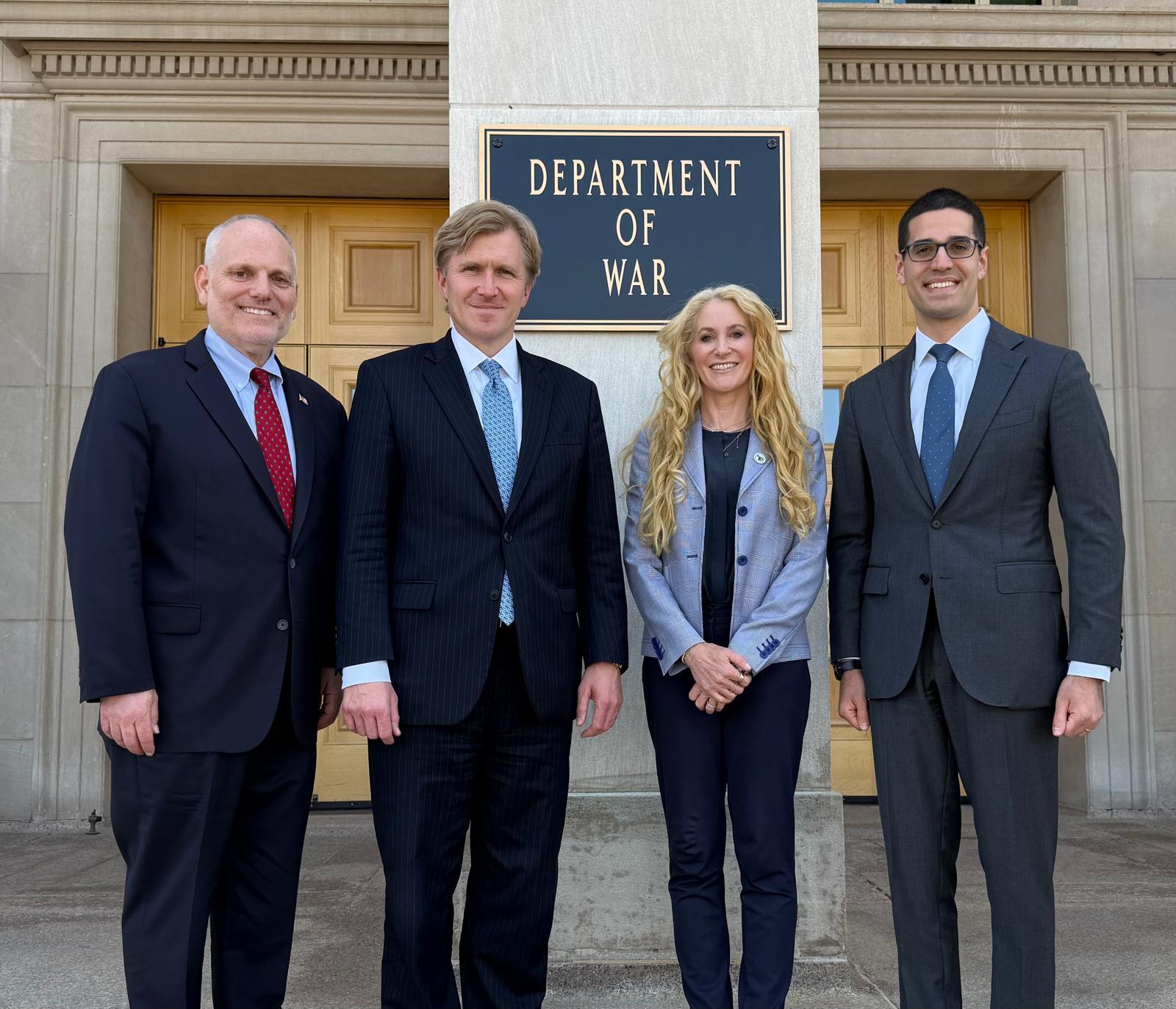
Conference of Presidents of Major American Jewish Organizations CEO William Daroff (left) and Chair Betsy Berns Korn met with Under Secretary of Defense Elbridge Colby (second from left) and Alex Velez-Green, the embattled nominee to be deputy under secretary, at the Pentagon on Monday. The group’s discussion focused on the rapidly evolving geopolitical environment, regional security dynamics and the strategic challenges and opportunities facing the United States, Israel and the broader Middle East.
Birthdays

Film and television actor, Elizabeth Anne “Lizzy” Caplan turns 44…
Rapid City, S.D., resident, Leedel Chittim Williamson turns 82… Palm Beach Gardens, Fla., resident, podiatrist, Dr. David Peter Bartos… Executive coach to nonprofit leaders, he was the founding director of the Museum of Jewish Heritage, Dr. David Altshuler… Former New York state assemblyman for 36 years, he is the founder of Americans Against Antisemitism, Dov Hikind turns 76… Former Harvard professor and author of books on the Holocaust and antisemitism, Daniel Goldhagen turns 67… Staff writer at The Atlantic, podcaster, author of 10 books and former Bush 43 speechwriter, David Frum turns 66… Chief justice of the New Jersey Supreme Court, Stuart Jeff Rabner turns 66… Professor of astrophysics at McGill University, Victoria Michelle Kaspi turns 59… Independent philanthropic advisor, formerly the founding executive director of JOIN for Justice: the Jewish Organizing Institute and Network, Karla Van Praag… Professor of Jewish studies at the University of Georgia, he is the co-editor of a handbook on 25 different Jewish languages, Aaron David Rubin turns 50… Columnist, author, poet and screenwriter, Matthew “Matthue” Roth turns 48… Former sports business analyst and reporter, now focused on the collectibles market, Darren Rovell turns 48… Reggae and alternative rock musician, known by his stage name Matisyahu, Matthew Paul Miller turns 47… Partner at OnMessage Public Strategies, Kyle J. Plotkin turns 44… Senior software engineer at Bloomberg LP, Noam Lustiger… Chief marketing officer for Aleph Venture Capital, Erica Marom (Chernofsky)… COO at the Conference of Presidents of Major American Jewish Organizations, Stephanie Hausner… Head coach of the men’s lacrosse program at Long Island University, Jordan Levine turns 40… Rhythmic gymnast who represented the U.S. at the 2012 Olympic Games, now a fitness coach and personal trainer, Julie Ashley Zetlin turns 36… English teacher in Tel Aviv, Michal Adar… Real estate director at AIPAC in New York, Abbey Taub…
Rep. Diana DeGette is facing a formidable challenge from DSA-backed Melat Kiros, who recently declined to call the Boulder firebombing attack antisemitic
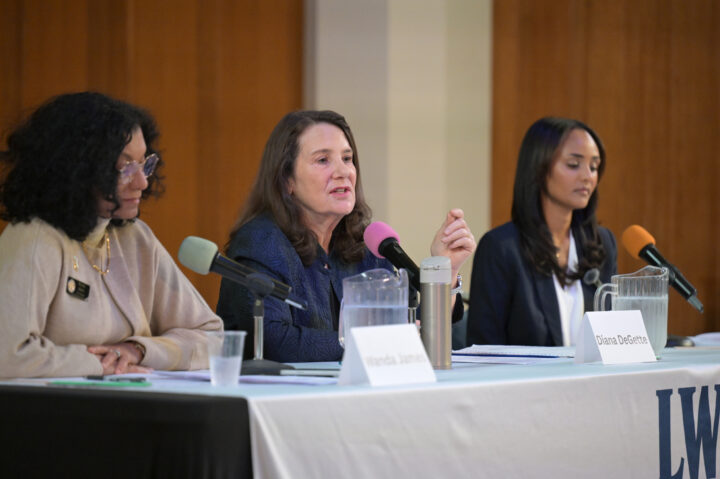
RJ Sangosti/MediaNews Group/The Denver Post via Getty Images
From left, Wanda James, Diana DeGette and Melat Kiros participate in a League of Women Voters Congressional District 1 candidate forum on May 28, 2026, in Denver, Colorado.
The wave of victories for Democratic Socialists of America-aligned candidates in New York City on Tuesday is buoying the hopes of progressives that the far left can pull off upsets against two Democratic incumbents in Colorado’s Tuesday primary elections.
Rep. Diana DeGette (D-CO) is facing a challenge from Melat Kiros, whose campaign has attracted substantial national attention and backing from several anti-Israel organizations and individuals including the Justice Democrats, DSA, Sunrise Movement, Jewish Voice for Peace, TrackAIPAC, the Council on American-Islamic Relations, Chris Rabb, Hasan Piker and, most recently, Sen. Bernie Sanders (I-VT).
Sen. John Hickenlooper (D-CO) is also facing a DSA-aligned challenger, state Sen. Julie Gonzales, though her campaign hasn’t garnered as much attention as Kiros’.
Just this week, in an interview with the local channel 9News, Kiros declined to call the firebombing of a hostage awareness march in Boulder, Colo. last year antisemitic.
“I don’t know what was in the heart of the perpetrator. All I know is that he went and attacked innocent people because of what they might have believed, and I don’t even know what the people that were at that protest believed too,” she said. “I don’t know what his intentions were.”
The House voted unanimously last year to condemn the attack as an antisemitic incident. Only Reps. Rashida Tlaib (D-MI) and Thomas Massie (R-KY), two of the leading anti-Israel lawmakers in Congress, voted present.
Kiros lost her job at the law firm Sidley Austin in 2023 for publishing a column denouncing hundreds of top law firms that called on law schools to do more to address antisemitism on their campuses. The column argued that calling for the elimination of Israel is not antisemitic and defended Hamas and those who have expressed support for it.
Kiros has made a complete arms embargo on Israel a central part of her campaign and has described the war in Gaza as a genocide and Israel as an apartheid state.
“I believe that our selling of arms to Israel, defensive or offensive, gives them the cover to continue the genocide that’s taking place in Palestine, and now the ethnic cleansing that’s taking place in Lebanon,” Kiros said in the local interview.
Kiros said in the interview that she did not agree with Piker that Hamas is a “lesser evil” than Israel, and denied that she thought the Oct. 7, 2023, Hamas attacks were justified.
Jim Carpenter, a Democratic political strategist in the state, predicted that DeGette “will ultimately win” but “this is certainly the toughest primary challenge she’s had in a really long time, if ever, since she was elected — lots of visibility, lots of interest.”
A poll commissioned by the Justice Democrats found Kiros leading DeGette 41-36%.
Multiple local venues recently declined to host a rally led by Kiros and Piker, which Kiros blamed on pressure from DeGette’s donors — something DeGette’s campaign has called “ridiculous.” Piker and Gonzales, citing security threats, declined to appear at a rescheduled rally in front of the state Capitol.
DeGette has been blasting Kiros over her affiliation with Piker, highlighting the streamer’s comments — supporting Hamas, dismissing sexual violence on Oct. 7, claiming that the U.S. deserved 9/11 and that he “hate[s] this country so much.”
“If Melat Kiros wants to campaign with someone who said America deserved 9/11 we’d do nothing to stop her,” a DeGette spokesperson told Colorado Newsline.
Carpenter highlighted the Sanders endorsement of Kiros as particularly valuable, noting that the senator has been popular in the state. But he also highlighted the significant influx of outside spending that has flowed into the race in favor of DeGette and targeting Kiros.
One group, Pro-Choice Majority Action, has spent more than $1.5 million boosting DeGette and attacking Kiros. Some observers have tied that spending to AIPAC, noting that the group took in close to $900,000 from EDW Action Fund, which in turn received $1 million from the AIPAC-linked United Democracy Project in May.
A UDP spokesperson did not respond to a request for comment. DeGette has not been consistently supportive of Israel, including signing a letter calling for unilateral U.S. recognition of Palestinian statehood and opposing additional offensive aid to Israel, but UDP has at times supported candidates not fully aligned with AIPAC’s policies in the interest of defeating others with more extreme records.
Rep. Pramila Jayapal (D-WA), a former Progressive Caucus chair, also recorded a last-minute video offering support for DeGette, describing her as critical to advancing Medicare for All.
Meanwhile, Justice Democrats has spent more than $500,000 supporting Kiros and opposing DeGette, and the anti-Israel American Priorities super PAC has spent $150,000 in support of Kiros.
Carpenter told Jewish Insider that, particularly in the wake of a party delegate vote earlier this year when DeGette was badly beaten by Kiros and came close to falling short of the threshold to appear on the ballot, the congresswoman has been campaigning aggressively.
Carpenter said that the anti-DeGette vote might ultimately come out split: University of Colorado Regent Wanda James is also challenging DeGette, and is likely to win support from some Black voters.
Though some in the progressive sphere have interpreted the New York City victories as a sign of momentum for an ascendant far left nationwide, Carpenter said that the results in New York don’t necessarily reflect Colorado’s own voting base.
“Colorado’s politics are very different,” he said. “All politics are local. I get the enthusiasm, and I get everybody trying to point to a trend and all of that. I just don’t think that’s going to hold in Colorado. Denver is very liberal but it’s a different kind of Democrat than the DSA.”
Gonzales is less likely to pose a serious challenge to Hickenlooper, the state’s former governor, having trailed significantly behind him in fundraising. “Gonzales just hasn’t had the resources really to compete statewide,” Carpenter said.
She’s been visible on social media and active in the Denver media market but “she just hasn’t had the ability to do paid advertising in a way that I think is any kind of real threat to Hickenlooper,” Carpenter said. Hickenlooper’s biggest vulnerabilities may be his age, 74, and a perception of him as an establishment Washington Democrat.
But Hickenlooper has also “taken this very seriously” and has been campaigning actively, reminding voters of his record during his two terms as senator and one term as governor, Carpenter said. The state also allows unaffiliated voters to choose the party’s primary in which to vote, and such voters have typically been a boon for Hickenlooper in the past, Carpenter added.
From the start of her campaign, Gonzales has made criticism of Israel a centerpiece of her bid, accusing Israel of genocide, supporting an arms embargo and fundraising based on her opposition to Israel and AIPAC. TrackAIPAC also endorsed Gonzales.
Also on Tuesday, state Rep. Manny Rutinel faces former state Rep. Shannon Bird in a primary for a key swing seat held by Rep. Gabe Evans (R-CO). Carpenter said that the race is difficult to predict and both have been strong candidates with built-in advantages and key endorsements.
Democratic Majority for Israel is supporting Bird and called the race one of its top priorities for the cycle. Bird has long been a strong supporter of Israel and vocal in opposition to antisemitism. Rutinel’s views on Israel have been less clear, and his past as a campus activist has worried some pro-Israel Democrats.
As an undergraduate at the University of Florida, according to a local news report, Rutinel attended a demonstration co-organized by Students for Justice in Palestine, but a Rutinel spokesperson, in a statement to JI, denied that Rutinel had any affiliation with SJP and said the demonstration was focused on police brutality in the U.S.
“Manny supports Israel’s right to exist and supports a two-state solution with secure borders to bring peace,” a campaign spokesperson said. Rutinel also “supports U.S. security assistance to Israel in line with the Obama administration’s 2016 memorandum of understanding,” the spokesperson added.
Carpenter said that Bird has a longer political record and deeper roots in the district, which she has leaned on in her campaign, but also may face headwinds from a perception of her as a moderate Democrat. Rutinel might benefit from the substantial Latino vote in the district.
“Bird is making the argument that because it’s a swing district that is more moderate … that’s what’s going to appeal” in the general election, Carpenter said. “That’s a harder message in a Democratic primary.”
Rutinel leaned into more of a progressive posture but “it seems to me like he’s trying to moderate that a little bit, and has gotten tripped up in a couple of debates on some of the more left progressive positions that he had taken in the past. It’s not a simple progressive-versus-establishment divide there, but it is kind of shaking out that way,” Carpenter continued.
Bird is also backed by moderate groups including the NewDems, Blue Dog PAC and Welcome PAC, as well as EMILY’s List and Elect Democratic Women.
Rutinel is backed by an array of both moderate and progressive lawmakers including Sen. Cory Booker (D-NJ) and Reps. Adriano Espaillat (D-NY), Lou Correa (D-CA), Robert Garcia (D-CA), Teresa Leger Fernandez (D-NM), Rob Menendez (D-NJ), Emily Randall (D-WA), Luz Rivas (D-CA), Linda Sanchez (D-CA) and Pat Ryan (D-NY).
The state’s gubernatorial primary is also set for Tuesday, where recent polling shows Attorney General Phil Weiser taking the lead for the first time against Sen. Michael Bennet (D-CO). The poll was conducted by a group supporting Weiser and showed that a significant portion of the voting base is still undecided.
Carpenter said that Weiser’s last-minute surge might signal that Bennet’s longtime service in Washington is being seen as a negative on the campaign trail, and he’s been tagged as not being anti-Trump enough in his time in the Senate.
But he said he didn’t think that the anti-establishment mood would necessarily be sufficient to oust DeGette or Hickenlooper, noting that Weiser himself is a well-known quantity and popular among Colorado Democrats going into the race.
“I think he benefits a little bit more from that than Gonzales or Kiros would,” Carpenter said.
Reached for comment, Carmella Charrington defended boosting Henry Ford's 'The International Jew' and repeatedly told JI to ‘get your rabbi’

An activist that two politicians from the Democratic Socialists of America helped elevate to a leadership position in the Brooklyn Democratic Party on Tuesday posted a vitriolic antisemitic screed to her Instagram last year — declaring as “the truth” a notorious work beloved by Adolf Hitler that describes a Jewish world conspiracy.
Carmella Charrington was part of an army of left-wing insurgents who captured office on Tuesday: in her case, the role of district leader in the Brooklyn Democratic Party, an unpaid but important position that elects the party’s influential chairperson and plays a significant role in nominating judges and filling jobs at the city Board of Elections.
Although the DSA itself did not formally endorse Charrington for the post, two of its most important local figures campaigned with her and helped her make the ballot: state Sen. Jabari Brisport and state Assembly candidate Eon Huntley, who defeated an incumbent lawmaker in a closely watched race earlier this week.
Charrington’s candidacy was part of a broader campaign to depose the present centrist leadership of the official party organization. But in November 2025, Charrington shared a video to her Instagram account — which features various photos and videos of herself at Brisport and Huntley’s joint campaign headquarters — promoting the “hidden history” in industrialist Henry Ford’s notorious 1920s series of conspiracy pamphlets, The International Jew.
“This better be the topic at the table#dad #deedtheft #ceo #love #ericadams #brooklyn #lovers #lovers #corruption #diddy #nyc ##cardio#cardib #trump,” Charrington captioned the since-deleted post, adding in the comments: “The only way to change is understanding the truth!”
The video itself is a summary and update of Ford’s century-old conspiracy theories, presented by a wellness influencer.
“You find out who owns all the social media, and then who also owns the tobacco industry, the cotton industry, the banking industry, the theater, the newspaper, the radio, and then we can clearly see who owns the government as well,” the speaker in the video says. “This is why in school things like reading the Bible, praying, celebrating Christmas, got to get rid of all that. Then it gets deeper when you find out who brought in all the liquor and all the drugs, and also made people into drunks during the Great Depression, because the same people caused the Great Depression.”
The video further asserts that Jewish people created plastic surgery to “blend in,” “brought the slaves” to America, established the gay rights movement and plotted the infamous 1921 massacre of Black residents of Tulsa, Okla. It asserts Jewish people are “always changing their names” and variously call themselves Zionists, Communists and Bolsheviks.
It then pivots to the issue that propelled Tuesday’s socialist sweep: Israel.
“It gets deeper when you talk about Palestine and the takeover of that with the Rothschilds, same people, and the whole Palestine thing connects back to the Rothschilds, who are the bankers, who then control everything, including the schools,” the speaker continues. “All the media and the newspapers and the radios are owned by a small group of people who control everything.”
The video concludes with an image promoting the Swedish neo-Nazi film series “Europa: The Last Battle,” the conspiracy tome The Curse of Canaan: A Demonology of History, the Holocaust denial tracts of Fred Leuchter and the anti-Israel pamphlet Zionism: The Terrible Secret of the Cold War.
Reached by Jewish Insider, Charrington maintained that she was not prejudiced, but also insisted the video “was some facts.” She repeatedly told the reporter to “get your rabbi,” as she intended to hold a future “roundtable” on what she called a “bullying community.”
“There’s so much harm that your community has done to me,” she said. “It’s a problem in our community and it needs to be addressed.”
Charrington rose to prominence as part of a legal fight over possession of her family’s brownstone in the historically Black but fast-gentrifying Brooklyn neighborhood of Bedford-Stuyvesant. She alleged in numerous media appearances that she was the victim of deed theft, a form of fraud, but New York state Attorney General Letitia James’ office determined it was a complicated but legal inheritance dispute.
In one of several phone calls with JI, Charrington railed against Jewish investors she accused of gaining access to her home and a Jewish judge who sentenced her to six days on Rikers Island for contempt of court.
Helping to promote her cause has been another leading DSA official: New York City Councilman Chi Ossé, who was arrested demonstrating outside the home in April. The incident inspired New York City Mayor Zohran Mamdani to create a new Office of Deed Theft Prevention.
Ossé, for his part, stressed in a phone conversation with JI that he had not endorsed Charrington for district leader and was unfamiliar with her posting history.
“We condemn this antisemitism and bigotry in the harshest possible terms,” Ossé said in a subsequent written statement to JI. “There is no room for this kind of hate in Brooklyn. I reject it completely.”
Brisport similarly said he was unaware of Charrington’s views but repeatedly refused to answer whether he would have supported her for party office had he seen the video she shared — or if he considered such beliefs disqualifying for a person to hold power in the Democratic Party. Huntley, the nominee for Assembly, did not respond to repeated calls or emails.
However, the two DSA leaders subsequently sent a joint statement denouncing the content of the video, and harping on the right-wing elements of its message.
“The antisemitic post that Carmella shared has no place in our movement. This incident illustrates exactly what antisemitism does — it misdirects the justified anger of working people and oppressed communities away from systems of power and onto Jews,” they wrote. “We are committed to working with all constituents and fellow electeds alike to unlearn and dismantle these deeply antisemitic, anti-LGBT, and anti-communist narratives which hurt and divide our communities.”
JI also contacted Mark Hanna, a Mamdani ally and Brooklyn district leader who served as election attorney for the insurgent slate on which Charrington ran. Hanna is also the treasurer of American Priorities PAC, a committee dedicated to combatting the influence of AIPAC and uplifting anti-Israel candidates.
“Any kind of antisemitism or Islamophobia or hatred I’m not going to be supportive of,” Hanna said in an initial phone conversation.
After JI sent him the video, he wrote back that he hoped the post “can be a teachable moment.”
“I will have to speak with her about it,” he wrote. “I want to work with Carmella on issues related to deed theft and the other concerns she has in her community, and I think calling her in to learn and ensure inclusivity, rather than calling out for a repost, will be more fruitful.”
Hitler reportedly kept German translations of The International Jew in his office, where he also displayed a portrait of Ford. He praised the American industrialist in Mein Kampf, and in 1938 awarded him the Grand Cross of the Order of the German Eagle, a medal the Nazi leader created to honor foreign allies of his genocidal regime.
The mayor flexed his political muscle as Brad Lander, Claire Valdez and Darializa Avila Chevalier triumphed in their congressional primaries
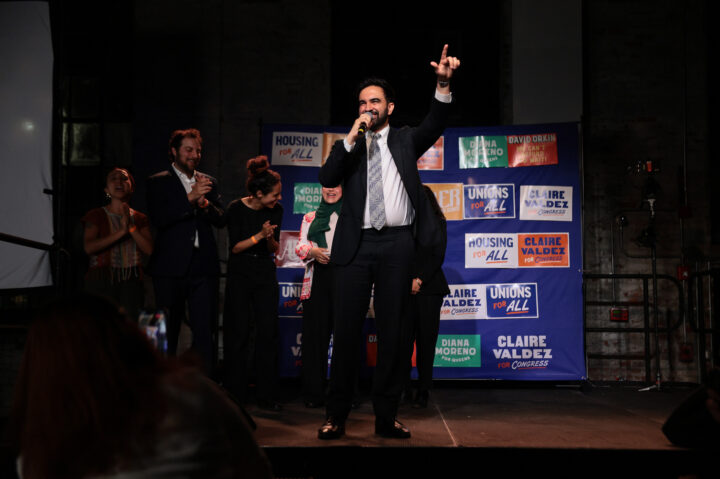
Michael M. Santiago/Getty Images
New York City Mayor Zohran Mamdani speaks during a primary night watch party for congressional candidate Claire Valdez on June 23, 2026.
It’s New York City Mayor Zohran Mamdani’s party now — even if not everybody in the Big Apple feels invited.
The mayor’s candidates for Congress jumped out to early leads Tuesday night, with former City Comptroller Brad Lander comfortably defeating Rep. Dan Goldman (D-NY), a stalwart opponent of President Donald Trump who nonetheless lost support from his party’s base over his lukewarm support for the new mayor and longstanding pro-Israel record. Lander won 66% of the vote to Goldman’s 34%, with 90% of the vote counted as of Wednesday morning.
The shocks to the party establishment continued throughout the night, as Democratic Socialists of America-endorsed state Assemblywoman Claire Valdez jumped to a commanding advantage over party favorite, Brooklyn Borough President Antonio Reynoso. Valdez easily defeated Reynoso, 56%-36%, with 92% of the vote counted.
And the capstone on the night for Mamdani’s Israel-critical congressional trifecta came when networks announced the ouster of Rep. Adriano Espaillat (D-NY), the chairman of the Congressional Hispanic Caucus, against radical doctoral student and Columbia encampment leader Darializa Avila Chevalier, whose inflammatory X feed — and attendance at an anti-Israel rally the day after the Oct. 7 Hamas attacks — did little to derail her candidacy. In a much tighter race, Avila Chevalier beat the incumbent, 49%-46%, with 88% of the vote counted.
Signs of the ascendance of the far left within overwhelmingly Democratic big cities have been visible for months. Mamdani’s astounding mayoral victory in 2025 mobilized a slew of like-minded candidates to run for office — in New York City and beyond. In Philadelphia, DSA-endorsed candidate Chris Rabb won a Philadelphia-based congressional seat last month. Last week, DSA-backed Janeese Lewis George romped to victory in the race for mayor in the nation’s capital, and is on track to become the city’s next top executive.
In many ways, Lander was the most conventional of the Mamdani-backed candidates.
The former mayoral candidate was a heavy favorite from the moment it became clear he would not receive a job in Mamdani’s administration and instead took aim at the Brooklyn-Manhattan House seat, parts of which he had represented in local government since 2010.
Nonetheless, the self-described “progressive Zionist” bear-hugged the democratic socialist mayor and courted his left-wing base with escalating criticism of Israel. This at times created embarrassing moments for Lander, as when Jewish Insider discovered that his top consultant recruited from the independent “Hot Girls for Zohran” social media campaign had pushed pro-Hamas content and anti-Israel conspiracy theories online — and on the day of the vote, when New York City First Lady Rama Duwaji snubbed him by leaving him off her own list of endorsements.
The race also put Lander in the awkward spot of appearing in an ad that aired during the NBA finals with Mamdani and his two other endorsed House candidates, even as Lander insisted he was backing neither of them.
But in the end, it mattered little to Democratic voters, and the mayor and the new Democratic congressional nominee embraced in front of cameras at his campaign celebration in Brooklyn.
Nor did Lander’s non-endorsement seem to damage Mamdani’s other candidates. A registration and turnout operation among the Satmar Hasidim proved insufficient to lift Reynoso over Valdez in the race to replace Rep. Nydia Velazquez (D-NY).
Reynoso and Valdez largely echoed each other in their condemnation of the Jewish state, but Valdez made it a centerpiece of her campaign, even going so far as to falsely suggest AIPAC was financing a PAC backing her opponent. The real money behind the last-minute spending campaign was Randi Weingarten’s American Federation of Teachers, in alliance with former City Comptroller Scott Stringer, one of Mamdani’s unsuccessful opponents last year.
Stringer and the AFT also sought to block Mamdani’s boldest play of all: dislodging Espaillat, a reliable pro-Israel Democrat, and replacing him with Columbia encampment leader and doctoral student Avila Chevalier. Mamdani declined to denounce Avila Chevalier’s history of attacking interracial relationships, promoting COVID-19 disinformation and parroting Russian government talking points online — or her denunciations of Democratic stalwarts such as former President Joe Biden and former Vice President Kamala Harris.
Mamdani also refused to condemn her participation in an anti-Israel rally one day after the Oct. 7 attacks, a gathering he had denounced at the time, even as Avila Chevalier defended her decision to attend the event.
Strong turnout in gentrifying Manhattan sections of Espaillat’s district, and weak participation in the working-class Bronx areas, gave Avila Chevalier a decided advantage over the incumbent.
Even downballot, Mamdani-aligned candidates romped, with public defender and Jews for Racial and Economic Justice member Eli Northrup easily defeating Rabbi Stephanie Ruskay in a Manhattan state Assembly district with a large Jewish population. Both contenders for the seat emphasized their Jewish identity in the closely watched primary, but Ruskay — related by marriage to former UJA-Federation CEO John Ruskay, and an associate dean of The Rabbinical School at the Jewish Theological Seminary — was the favored candidate of longtime Upper West Side political establishment.
Northrup, who has expressed ambivalence about Zionism, represented an insurgent politics in the Mamdani mold, even though he is not a member of the Democratic Socialists of America.
In Queens, Palestinian-American activist Aber Kawas rode the mayor’s endorsement to an effortless victory. Mamdani’s candidate to take over Valdez’s seat in the state legislature, Samantha Kattan, rolled over her opposition. Another Mamdani contender in Queens, Brian Romero, similarly romped. In Lower Manhattan, his candidate for Assembly Illapa Sairitupac —like the others, a member of the DSA — won with a plurality.
Three additional DSA candidates tossed out incumbents without the mayor’s endorsement, bringing the organization’s total wins on the evening to six. This means the mayor and DSA can now count on a growing bloc of loyalists in Albany, which has power over many aspects of city policy. It also means a shift in the makeup of a body long dominated by lawmakers supportive of Israel.
In assembling his slate, the mayor spurned and burned allies: rejecting his old ally Velazquez’s favored successor for his own DSA loyalist in Valdez, breaking a reported pledge not to back a challenger to Espaillat and even — as sources told JI — shrugging off a request from one of his most prominent Jewish supporters, former Manhattan Borough President Ruth Messinger.
But on Tuesday night, Mamdani towered triumphant over friends and enemies alike, building a bloc in Congress to squeeze House Minority Leader Hakeem Jeffries (D-NY).
Even in the one contentious House race where he declined to weigh in, to replace Rep. Jerry Nadler (D-NY), a candidate working with his political advisor Morris Katz prevailed: Assemblymember Micah Lasher beat out a crowded and costly field to victory.
Rama Duwaji urged followers to vote for the DSA’s congressional candidates — but left off the lone Jewish House contender her husband endorsed
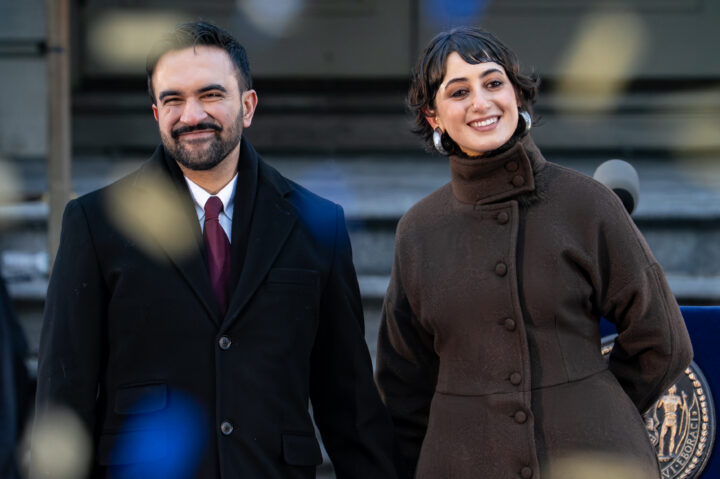
David Dee Delgado/Getty Images
New York Mayor Zohran Mamdani and his wife Rama Duwaji smile as confetti falls after his ceremonial inauguration as mayor at City Hall on Jan. 1, 2026 in New York, NY.
Former New York City Comptroller Brad Lander has bear-hugged Mayor Zohran Mamdani as he seeks to unseat Rep. Dan Goldman (D-NY) — but got a primary day cold shoulder from New York City First Lady Rama Duwaji.
The left-wing illustrator posted an Instagram story Tuesday flashing an “I Voted” sticker and encouraging her followers to support the two congressional candidates endorsed by both her husband and the Democratic Socialists of America: Assemblymember Claire Valdez and doctoral student Darializa Avila Chevalier.
Valdez is battling Brooklyn Borough President Antonio Reynoso for the seat of retiring Rep. Nydia Velazquez (D-NY) while Avila Chevalier hopes to oust Rep. Adriano Espaillat (D-NY).
“today’s the day NYC!!!” she wrote in a story on her personal account. “vote @claireforny @darializaforny”
The post excluded Lander, who alone among Mamdani’s candidates identifies as a Zionist — albeit as one who has accused the Jewish state of genocide in its military campaign in the Gaza Strip and even Lebanon — and who renounced his DSA membership after the group promoted an anti-Israel rally one day after Hamas’ 2023 attacks. Mamdani, then an unwed state lawmaker, denounced the event at the time.
Duwaji had liked Instagram content from the Oct. 8 gathering and the assault itself, as reported in Jewish Insider; The mayor has dismissed criticism of Duwaji’s social media activity by asserting his wife was a “private person,” although she has featured prominently at public events and granted interviews to magazines.
Lander, for his part, has attracted some fire from online leftists in recent days for declining to endorse Avila Chevalier and appearing in a video from the progressive Working Families Party with Reynoso — despite his also appearing in an ad aired during the NBA finals with the mayor and his other endorsed candidates.
Plus, Vance takes center stage

Wisam Hashlamoun/Anadolu via Getty Images
Streaks of light from Iranian ballistic missiles are seen in the night sky above Hebron, West Bank, as Iran resumes its retaliatory strikes against Israel.
Good Thursday morning.
In today’s Daily Kickoff, we report on Sen. Roger Marshall’s insistence that Iran “be able to defend themselves,” and look at former NYC Comptroller Scott Stringer’s effort to team up with teachers’ unions to counter Democratic Socialists of America-backed candidates in the city’s congressional races. We report on an open letter from American Jewish leaders commemorating America 250, and talk to lawmakers frustrated with President Donald Trump’s last-minute decision to pause Jay Clayton’s nomination to be director of national intelligence. Also in today’s Daily Kickoff: Ron Arad, Stephen Schwarzman and Jamie Dimon.
Today’s Daily Kickoff was curated by JI Executive Editor Melissa Weiss and Israel Editor Tamara Zieve, with an assist from Marc Rod. Have a tip? Email us here.
What We’re Watching
- President Donald Trump is back in Washington today after three days in France for the G7, where the U.S.‘ memorandum of understanding with Iran was a major topic of conversation both on the summit’s sidelines and in the president’s public comments. Last night, Trump, sitting alongside French President Emmanuel Macron, signed the MOU in Versailles, though a formal ceremony in Switzerland, with Vice President JD Vance in attendance, had initially been planned for Friday. More below.
- In Washington, Sen. Joni Ernst (R-IA) is slated to speak this morning at the Hudson Institute about defense spending, debt and diplomacy.
- Elsewhere in Washington, votes are still being counted in the district’s mayoral and City Council races. Mayoral candidate Janeese Lewis George, currently a member of the City Council, continues to maintain a sizable lead over former D.C. Councilmember Kenyan McDuffie.
- In New York, thousands of people are expected to visit the Ohel in Queens today to mark the yahrtzeit of the Lubavitcher Rebbe, Menachem Mendel Schneerson, at his burial site.
What You Should Know
A QUICK WORD WITH JI’S MELISSA WEISS
Vice President JD Vance is increasingly becoming the face of Washington’s negotiations with Iran — setting him up to claim victory if the agreement is successful, or to take the fall if talks with the historically intransigent adversary collapse.
President Donald Trump said as much yesterday in France: “If it works out, I’m going to take the credit. If it doesn’t work out, I’m blaming JD,” Trump quipped on the sidelines of the G7 summit, hours before signing the agreement alongside French President Emmanuel Macron in Versailles.
Trump is far from the only Republican in Washington to tie Vance to the deal. Some GOP legislators swiftly moved to tie Vance to the MOU — hours after it was announced. Sen. Lindsey Graham (R-SC), who has long advocated for military pressure against Iran, was one of the first, saying Sunday that it was “imperative that the architect of the deal, Vice President Vance and his negotiating partners, be part of the process in presenting the final deal to Congress.”
But the pressure on Vance quickly has spread through the party. On Wednesday, Sen. Josh Hawley (R-MO), a longtime backer of the president who is largely aligned with the GOP’s isolationist wing (where Vance has also found his political home), told reporters, “I wish the VP all the best of luck.” Sen. Ted Cruz (R-TX), without mentioning Vance by name, said that in moving forward with the MOU, “the president, unfortunately, is receiving bad advice once again.”
The criticism of Vance over the agreement with Iran extends beyond the capital. Conservative commentator Ben Shapiro said on Fox News on Wednesday that the MOU “appears to be, just from the text, a disaster that does not achieve any of the actual signal goals that were set by the administration at the beginning.” Directly addressing Vance’s role, Shapiro said, “The vice president of the United States, the chief negotiator on this particular project, has not well served the president.” Read more here on Shapiro’s comments.
Vance’s high-profile presence around the Iran negotiations draws attention to other senior members of the Trump administration — including Secretary of State Marco Rubio and Defense Secretary Pete Hegseth — who have been notably absent from the White House’s public efforts to talk up the MOU.
MARSHALL PLAN
Sen. Roger Marshall: Iran needs to ‘be able to defend themselves’
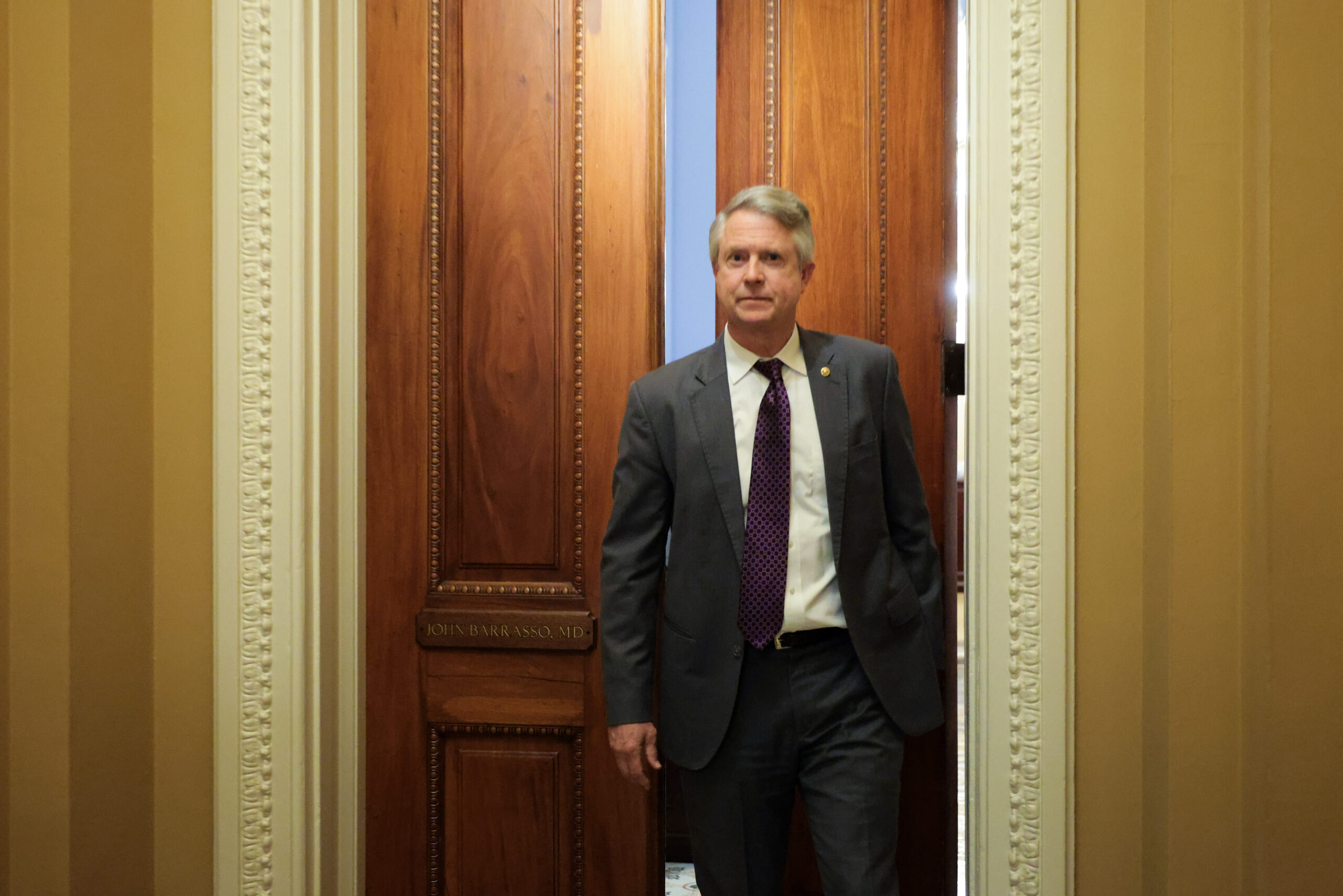
Sen. Roger Marshall (R-KS) said on Wednesday that Iran has to be “able to defend themselves,” suggesting the U.S. would “never” get a full surrender from Tehran, Jewish Insider’s Melissa Weiss reports. The Kansas Republican was responding to a question from CNN’s Kaitlan Collins, who asked Marshall if he was OK with Tehran having missiles.
In defense of defense: “I’m hesitating. I’d prefer that they not,” Marshall replied. “I certainly don’t want them to have long-distance missiles. I don’t want them to have nuclear-armed missiles. I would prefer they didn’t. But I don’t think that’s the key issue here. I think that they have to be able to defend themselves.” Collins interjected, asking, “You think Iran needs to be able to defend itself?” Marshall replied: “I do. I think they have to be able to defend themselves … Otherwise we turn this into a forever war. You’re never going to get them — short of boots on the ground — of surrendering everything, an unconditional agreement, if you will.”
BREAKING RANKS
‘Worst foreign policy blunder in decades’: Senate Republicans break with Trump on Iran
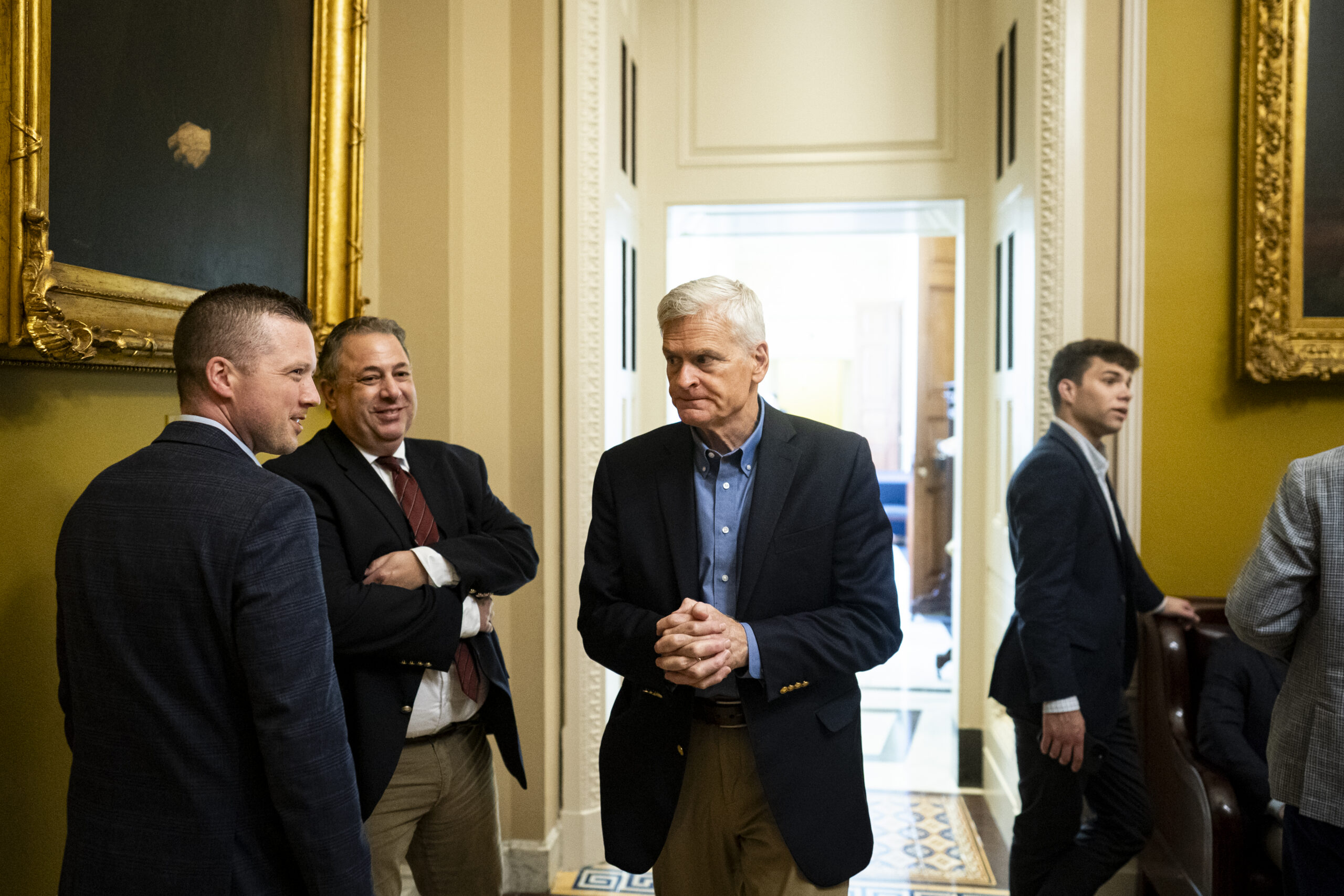
Some Senate Republicans are breaking with President Donald Trump over his handling of Iran, pushing back on the memorandum of understanding’s significant financial relief to the regime and Trump’s comments on Wednesday that he is willing to accept an Iranian ballistic missile program and some level of nuclear enrichment, Jewish Insider’s Marc Rod reports.
Notable quotable: “Reagan is rolling over in his grave,” retiring Sen. Bill Cassidy (R-LA) said on X. “This is the worst foreign policy blunder in decades.” Given that eliminating Iran’s nuclear enrichment and ballistic missile capacity were stated objectives of the war, “$100 billion and 13 lives later, I’ll need to understand that rationalization,” Sen. Thom Tillis (R-NC) told JI of Trump’s comments. Sen. Ted Cruz (R-TX) warned against giving Iran a financial windfall. “History teaches that giving billions of dollars to theocratic lunatics who want to murder us is not a good idea,” Cruz said. “I think the president is receiving some very poor advice on this deal.”
Read the full story here with additional comments from Sens. Rick Scott (R-FL), Pete Ricketts (R-NE), Mike Rounds (R-SD), Lindsey Graham (R-SC), Josh Hawley (R-MO), Roger Wicker (R-MS) and Richard Blumenthal (D-CT).
heat from haifa
‘Nobody in the Western world is willing to fight,’ Israeli security expert argues after Trump’s Iran deal

Israeli national security expert Dan Schueftan said on Monday that President Donald Trump’s memorandum of understanding with Iran “proves nobody in the Western world is willing to fight. If we need to get permission from countries like Iran in order to use international waterways then we are in very deep trouble,” Jewish Insider’s Haley Cohen reports.
Standing solo: The one exception, according to Schueftan, is Israel, which he called the “only one power in the Middle East that can contain the radicals … the only real power in this region that is committed to fighting the radicals and will fight the radicals.” Schueftan, the chairman of the National Security Studies Center at the University of Haifa, made the comments while appearing on British journalist Jonathan Sacerdoti’s YouTube show.
WE THE PEOPLE?
‘The single best diaspora experience’: Jewish leaders mark America’s 250th with open letter
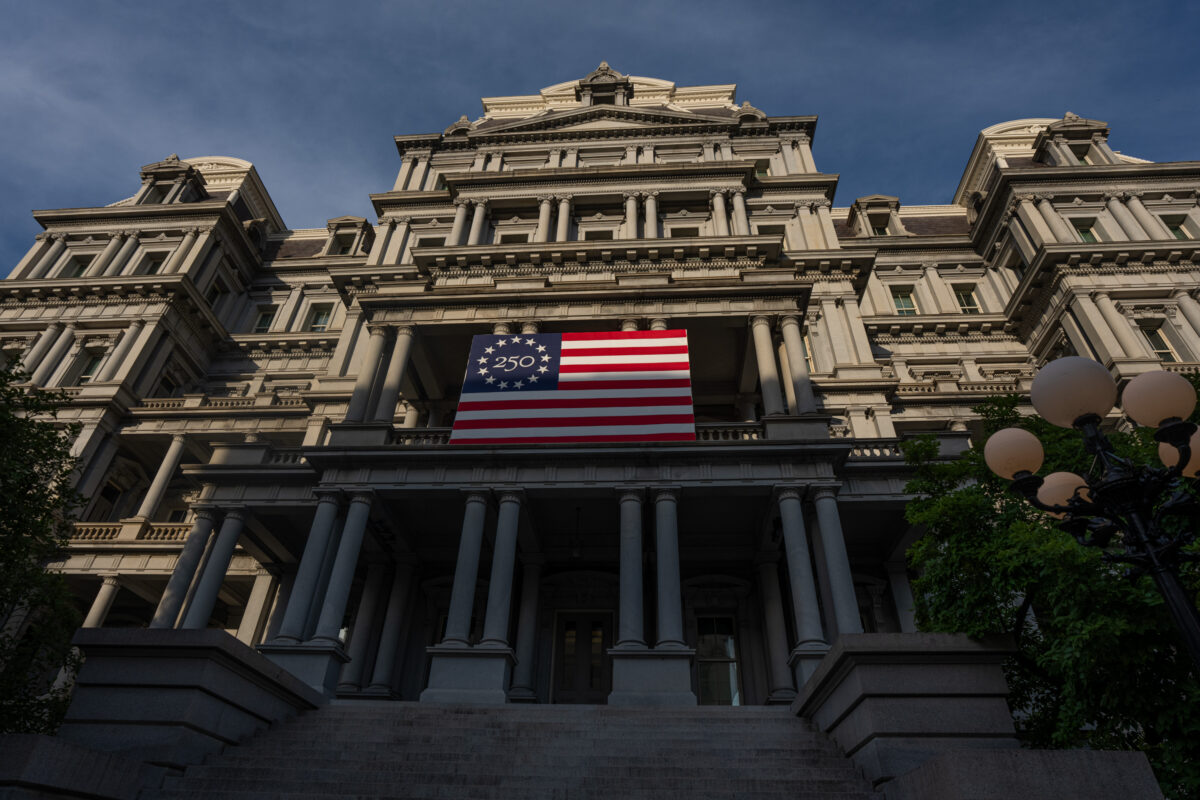
As the U.S. approaches its 250th anniversary, American Jewish leaders have signed an open letter expressing gratitude to a nation “unlike so many others through Jewish history [that] did not merely tolerate Jewish life, but made possible its flourishing,” while also highlighting Jewish contributions to the country’s founding, Jewish Insider’s Haley Cohen reports.
What it says: “From the earliest days of the American experiment, Jews were drawn to the promise of a nation founded not on bloodline, monarchy, or established religion, but on liberty, covenant, and the dignity of the individual,” the letter reads. “Having known the weight of persecution and exclusion, Jews recognized in America’s founding ideals something rare in human history: the possibility of belonging without surrendering our identity.”
CLAYTON CONUNDRUM
Lawmakers on both sides of the aisle express frustration over Trump’s Clayton pause
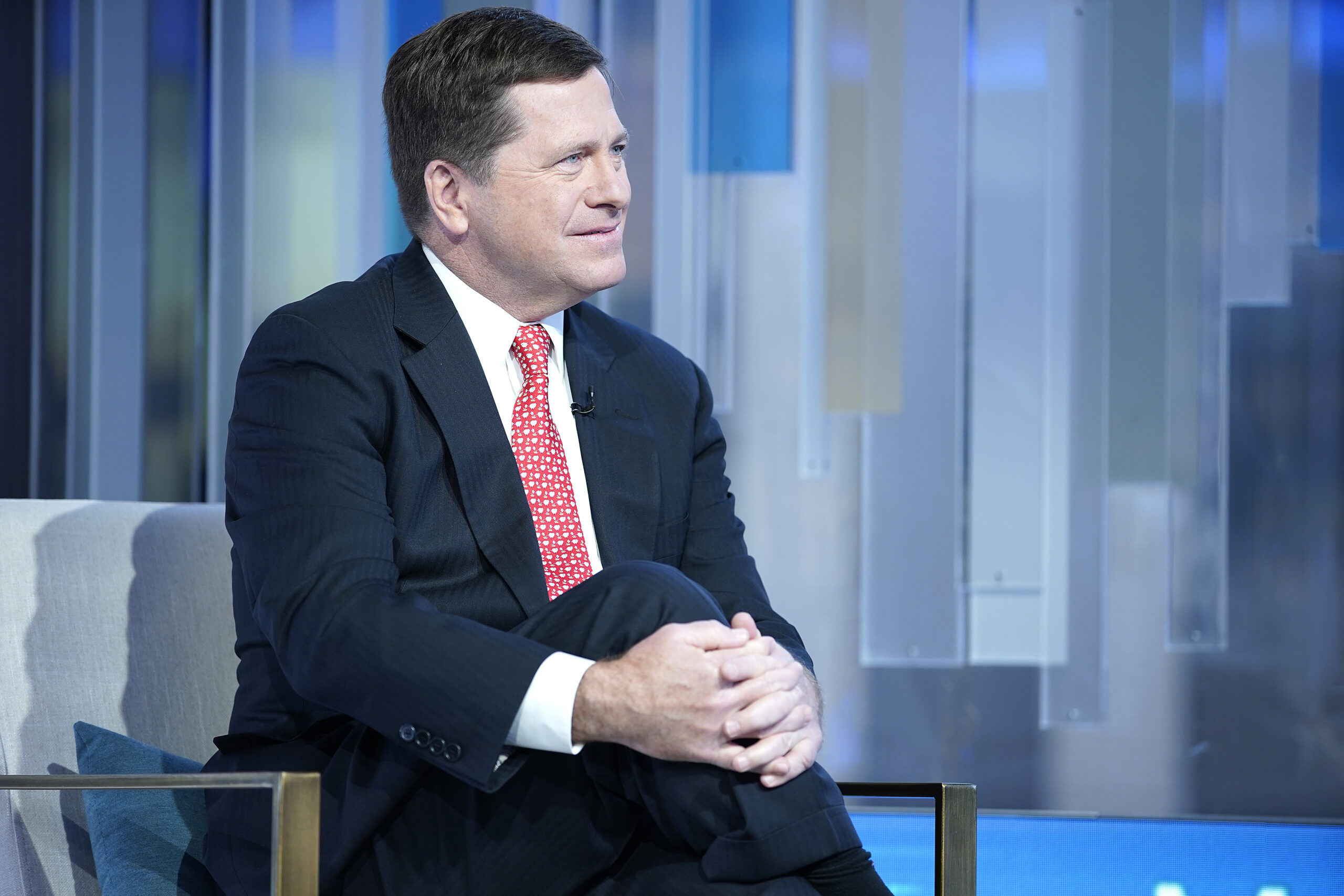
Lawmakers on both sides of the aisle are expressing frustration that President Donald Trump directed Jay Clayton, his nominee to be director of national intelligence, not to appear at a scheduled confirmation hearing on Wednesday afternoon, upending plans for the Senate to quickly confirm Clayton and renew lapsed federal surveillance authorities, Jewish Insider’s Marc Rod reports.
Chair’s concern: “It’s regrettable that the president has directed Jay Clayton not to appear at his confirmation hearing today,” Sen. Tom Cotton (R-AR), the chair of the Senate Intelligence Committee, said on X, announcing the hearing was postponed after initially indicating he planned for it to continue despite Trump’s objections. “Mr. Clayton is a patriot and a highly qualified nominee, as the president has said repeatedly. While today’s hearing is now unfortunately postponed, I look forward to proceeding with his confirmation in the near future.”
Read the full story here with additional comments from Sens. John Barrasso (R-WY), Thom Tillis (R-NC), Susan Collins (R-ME), Todd Young (R-IN), Mike Rounds (R-SD), Mark Warner (D-VA) and Senate Minority Leader Chuck Schumer (D-NY).
BEHIND THE CURTAIN
Old Mamdani foe teams up with teachers’ union to defeat DSA congressional contenders

Abetting two recently established PACs spending millions to defeat two of New York City Mayor Zohran Mamdani’s candidates for Congress is a veteran politician who sought Gracie Mansion last year — former City Comptroller Scott Stringer, according to multiple sources with knowledge of the committees and their activities, Jewish Insider’s Will Bredderman reports.
Key force: Stringer declined to comment on the record for this story. But JI first reported in March that the Upper West Side Democrat was a key force behind a political committee, Next NYC PAC, committed to defeating the Democratic Socialists of America’s candidates for Assembly and state Senate. According to several individuals who spoke on the condition of anonymity to protect their relationships, the team behind the Progressive Unity Fund and Real Fight NYC PACs — which have released a wave of ads attacking activist Darializa Avila Chevalier and Assemblymember Claire Valdez, Mamdani’s candidates to defeat Rep. Adriano Espaillat (D-NY) and replace retiring Rep. Nydia Velazquez (D-NY), respectively — overlaps considerably with the personnel behind Next NYC PAC.
Worthy Reads
The Name of the Game: The Atlantic’s Shane Harris looks at the outsized role Qatar has played in the war with Iran and other conflicts, as it seeks to portray itself as a neutral interlocutor despite its stakes in regional conflicts. “Qatar’s regional rivals have long seen Doha as a political and financial enabler of Iran-backed extremism throughout the Middle East. Qatar characterizes its ties to Tehran as a relationship of necessity, based on geography and shared economic interests, but its neighbors see something far more cynical and sinister. What Doha calls neutrality in its foreign policy, they call hedging bets and buying influence, particularly through lobbying spending in Washington that is out of proportion for a country of only about 300,000 citizens.” [TheAtlantic]
Slipping Through My Fingers: The New York Times’ David French considers the missteps made by President Donald Trump and Israeli Prime Minister Benjamin Netanyahu in their handling of the war with Iran. “Prime Minister Benjamin Netanyahu of Israel had too much confidence in his ability to persuade Trump. For his part, Trump had too much confidence in his ability to bully Iran. And so it turned out that the ‘dumb presidents’ understood reality far better than Trump. There are no shortcuts. If you’re going to destroy your opponent, you’re going to have to use immense force. If you’re going to compromise with your opponent, it’s best not to lose a war (or blink in the face of adversity) as a prelude.” [NYTimes]
He Is Your Brother: The Financial Times’ Michael Stott, Andres Schipani and James Shotter look at the deepening relationship between Israel and India. “Once a leading light in the Non-Aligned Movement of developing nations, which resisted cold war superpower alliances, embraced the Palestinian cause and criticised Israel, India now leans much more closely towards the Jewish state. … Israel’s closeness to India is also viewed in the Middle East as part of a deepening alignment between both countries and the United Arab Emirates. Abu Dhabi is doubling down on its relations with Israel and India, while Saudi Arabia has become more closely aligned with Pakistan, signing a defence pact with Islamabad last year.” [FT]
When All Is Said and Done: The Wall Street Journal’s Sadanand Dhume posits that Pakistan, which served as a mediator between Washington and Tehran, has emerged from the U.S.-Iran talks with greater global standing. “Other countries may end up studying Pakistan’s playbook to understand how to cozy up to the White House. For Islamabad, the benefits are obvious. Mr. Trump has repeatedly praised Pakistan’s leaders in public — he refers to the country’s de facto ruler, army chief Asim Munir, as his “favorite field marshal.” And the U.S.-Iran talks held in Islamabad in April gave Pakistan a rare opportunity to bask in favorable international media coverage.” [WSJ]
Word on the Street
Blackstone CEO Stephen Schwarzman and JPMorgan Chase CEO Jamie Dimon were among the high-profile invitees at a dinner in France on Wednesday during which President Donald Trump signed the memorandum of understanding between the U.S. and Iran…
At a markup on Wednesday, the Senate Foreign Relations Committee approved the Eastern Mediterranean Gateway Act, to promote the IMEC corridor and other security and economic partnerships in the Eastern Mediterranean; a bill repealing additional sanctions on Syria; a bill to promote Iranian internet access and address human rights abuses; and legislation requiring the administration to assess whether both sides of the Sudanese civil war meet the conditions for designation as terrorist groups…
The Department of Health and Human Services’ Office for Civil Rights is investigating the American Psychological Association following complaints from Jewish and Israeli members over the association’s handling — and in some cases promotion — of anti-Israel activism by some members in its affinity groups; read JI’s deep dive into the APA’s challenges to confront antisemitism in its ranks here…
A new bill introduced by the House Abraham Accords Caucus instructs the administration to work to expand the Abraham Accords to include nations in Central Asia and the South Caucasus, Jewish Insider’s Marc Rod reports…
Sen. Ruben Gallego (D-AZ) grilled a Trump administration nominee on Wednesday at a Senate Homeland Security and Governmental Affairs Committee about a seemingly antisemitic cover and article published by a student newspaper under his leadership in college. Also during the hearing, Cameron Hamilton, the nominee to be the FEMA administrator, said he plans to offer recommendations on reforms and additional funding for the NSGP in his first 30 days in office, Jewish Insider’s Marc Rod reports…
Sen. Rick Scott (R-FL) wrote a letter to IRS CEO Frank Bisignano calling on the Trump administration to rescind CodePink’s 501(c)(3) status over the far-left activist group’s connections to China…
Sen. Chris Van Hollen (D-MD), said in a NOTUS podcast released on Thursday that he was “kicking the tires” on a possible 2028 presidential run…
The New York Times looks at the degree to which the Israeli-Palestinian conflict has become an “inescapable issue” in the Democratic primary between Rep. Dan Goldman (D-NY) and former New York City Comptroller Brad Lander in New York’s 10th Congressional District…
The Wall Street Journal spotlights the Democratic primary in Florida’s redrawn 20th District, a majority-minority district that favors the Democrats, where longtime Rep. Debbie Wasserman Schultz (D-FL) is mounting a bid amid opposition from local Black leaders who have thus far failed to coalesce around a single candidate that could win a primary against the former DNC chair…
A former chair of Michigan’s Democratic Party said that five of the eight individuals indicted by federal prosecutors last week on charges of intimidating University of Michigan officials seen as being pro-Israel were members of the party, and called for the party’s leadership to investigate their actions…
Israeli-British designer Ron Arad was appointed a Commander of the Order of the British Empire, an honor given in recognition of contributions to British society and culture…
Qatar’s sovereign wealth fund, a major shareholder in Volkswagen, is complicating talks between the German automaker and the Israeli state-owned defense company Rafael over Rafael’s intention to buy a plant from Volkswagen to manufacture components for Israel’s Iron Dome missile-defense systems…
A new report from Germany’s Federal Association of Departments for Research and Information on Antisemitism found more than 8,700 reported cases of antisemitism in the country in 2025, roughly equivalent to the number of reported instances the prior year…
Thani Al Zeyoudi, the United Arab Emirates’ minister of foreign trade, said that the Gulf state was “moving toward having zero Hormuz dependency” even after the waterway is fully reopened, as it plans to expand its existing ports, build at least one new one and further develop its rail and road networks…
Israeli Foreign Minister Gideon Sa’ar said he was severing “all contact” with the E.U.’s Kaja Kallas over her recent comments comparing the situation in the West Bank to apartheid South Africa…
Somaliland Defense Minister Mohamed Yusuf Ali, who traveled to Israel this week with the African nation’s president, dismissed reports that Israel has a base in Somaliland, but said that Israel was training the country’s police and military forces…
Austin-based tech entrepreneur Joshua Baer, 50, was killed in a plane crash near Laredo, Texas…
Italian author Carlo Ginzburg died at 87…
Pic of the Day

French President Emmanuel Macron and his wife, Brigitte, accompanied President Donald Trump as he departed following a dinner held at the Château de Versailles on Wednesday, where Trump signed the memorandum of understanding with Iran.
Birthdays

Former music business mogul, he previously owned multiple record labels and represented musical artists including Justin Bieber and Ariana Grande, Scott Samuel “Scooter” Braun turns 45…
Chicago-based attorney, he is the first ordained rabbi to have served as an alderman on the Chicago City Council, Solomon Gutstein turns 92… Former Washington Post editor, reporter and London bureau chief, Fred Barbash turns 81… Retired IT management advisor at Next Stage, Steven Shlomo Nezer… Croatian entrepreneur, he was previously the minister of economy, labour and entrepreneurship in the Croatian government, Davor Stern turns 79… Rebecca Diamond… Best-selling author and journalist, she was editor-in-chief of USA Today, Joanne Lipman turns 65… Retired professor of English at Southwestern University in Georgetown, Texas, she was on the editorial board of Shofar, a peer-reviewed academic journal of Jewish studies, Helene Meyers… Executive of the William Pears Group, a large U.K. real estate firm founded by his father and grandfather, Sir Trevor Steven Pears (family name was Schleicher) turns 62… White House senior aide during the first Trump administration, he is a principal of Cordish Companies, a real estate and gaming empire, Reed Saunders Cordish turns 52… Film director and screenwriter, Jonathan A. Levine turns 50… Actor, comedian, satirist and writer, known professionally as Ben Gleib, Ben Nathan Gleiberman turns 48… Television producer and writer, Jeremy Bronson turns 46… Baseball pitcher for Team Israel at the 2020 Summer Olympics, he is now assistant general manager of the Arizona Diamondbacks, Jeremy Bleich turns 39… Of counsel at Gibson, Dunn & Crutcher, Esther Lifshitz… Israeli musician, producer, singer, songwriter and multi-instrumentalist, known by his stage name Dennis Lloyd, Nir Tibor turns 33… Director at Silver Point Capital, Jacob E. Best… Rachel Hazan…
The candidates’ views on Israel did not define the mayoral race, but they were a throughline in the background
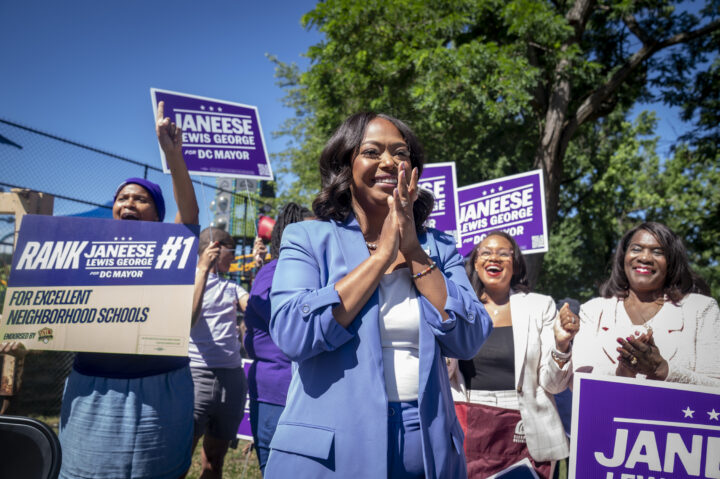
Maxine Wallace/The Washington Post via Getty Images
Janeese Lewis George volunteers continue to campaign for her at the Benning Stoddert Recreation Center on June 16,2026 in Washington, DC.
Voters in Washington, D.C., appeared poised to select Councilmember Janeese Lewis George to be their Democratic nominee for mayor, all but guaranteeing that she will be elected in November to replace Mayor Muriel Bowser, who is not seeking another term after 12 years in office. The race has not been called, but Lewis George leads by more than 15,000 votes with 64% of the votes counted.
Lewis George, a 38-year-old member of the Democratic Socialists of America, ran a campaign powered by local labor unions that was focused on cost-of-living issues and countering President Donald Trump. She is on track to defeat Kenyan McDuffie, a former councilmember who ran on a more pragmatic platform that eschewed DSA’s brand of radical politics.
The candidates’ views on Israel did not define the race, but they were a throughline in the background. Lewis George filled out a DSA endorsement questionnaire early in the campaign in which she pledged to avoid engaging with “the Israeli government or Zionist lobby groups.” Later, she promised to stand firm in fighting antisemitism while also supporting Palestinian human rights. McDuffie tried to use the comments to appeal to anti-DSA voters and Jewish Washingtonians.
Lewis George will represent a shift from Bowser, a moderate Democrat who in 2019 led a trade mission to Israel and who regularly addressed the annual AIPAC policy conference in Washington before AIPAC canceled the event after 2020.
Elsewhere in Washington, Councilmember Robert White was elected in the Democratic primary to serve as Washington’s delegate to Congress, a nonvoting role. He’ll succeed Rep. Eleanor Holmes Norton, who is retiring after 35 years.
Aparna Raj, a DSA-backed candidate for D.C. Council, appeared likely to win the Democratic primary for Ward 1, a district that includes the neighborhoods of Adams Morgan and Columbia Heights. She told the D.C. Jewish Community Relations Council in a voter guide released last month that she “will not work with AIPAC or organizations whose mission is to lobby for pro-Israel policies.”
Meanwhile, it was a short night in Georgia, where Rep. Mike Collins (R-GA) quickly claimed victory over former college football coach Derek Dooley in a Senate primary runoff. Collins picked up a last-minute endorsement from President Donald Trump, while Dooley’s backing by Gov. Brian Kemp wasn’t enough to push him to victory.
Collins ultimately finished the race around 10 points ahead of Dooley, a similar margin as in the primary election earlier this year. Dooley dominated in Atlanta and Athens, Ga., home of the University of Georgia, while Collins led around the rest of the state.
Dooley was widely seen as the more moderate and more electable of the two Republicans, as compared to Collins, who has been trailed by a series of scandals. Republicans may struggle to reclaim the seat from Sen. Jon Ossoff (D-GA) with Collins as their standard-bearer in the race.
The race may also present a difficult choice for Jewish voters in the state, many of whom have been frustrated by Ossoff’s leftward turn on Israel issues and repeated votes to block arms sales. Some Jewish Ossoff donors sought, earlier in the cycle, to recruit Kemp to run for the seat.
But Collins might not be a palatable alternative for some Jewish voters, having endorsed a post by an antisemitic X account attacking a reporter for being Jewish. His current chief of staff was also recently revealed to be part of a group chat with several white nationalists, where he discussed his efforts to use his congressional influence to free a Holocaust denying far-right activist from prison. He also opposed the Antisemitism Awareness Act.
Many prominent Jewish conservatives supported Dooley in the primary, but could line up behind Collins for the general, given his consistently pro-Israel voting record in the House.
Already, some commentators are discussing the possibility that a decisive victory by Ossoff in the critical swing state could massively boost the rising Democratic star’s chances in the 2028 presidential primary, should he decide to throw his hat in the ring.
The former NYC comptroller claimed he’s part of Mayor Zohran Mamdani’s ‘team’ — but not supporting fellow Mamdani endorsee Darializa Avila Chevalier
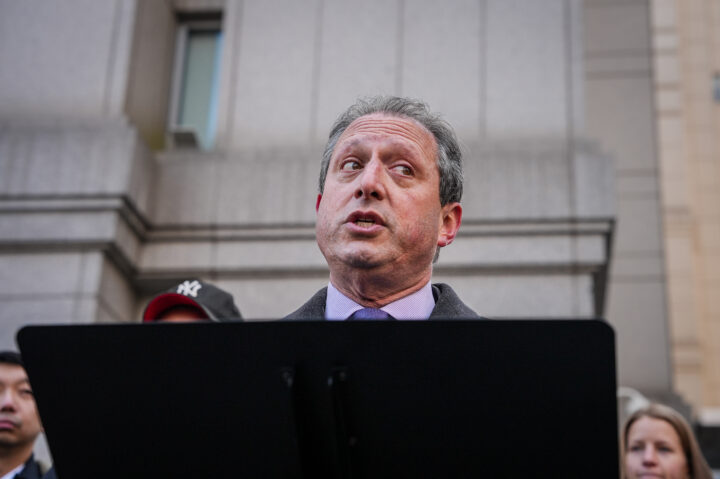
Ryan Murphy/Getty Images
Former New York City Comptroller Brad Lander speaks to members of the media, alongside supporters, before appearing in court on February 12, 2026 in New York City.
Former New York City Comptroller Brad Lander, now running to oust Rep. Dan Goldman (D-NY), denied he’s backing Democratic Socialists of America-affiliated Darializa Avila Chevalier in her race against Rep. Adriano Espaillat (D-NY) — even though the two appeared together in an ad paid for jointly by both of their campaigns.
Avila Chevalier has come under fire for promoting Russian propaganda lines and COVID-19 disinformation online, as well as for participating in an anti-Israel rally the day after Hamas’ Oct. 7, 2023, attacks, a demonstration that Lander himself denounced as “vile” and “heinous.” But pressed about his choice to pay for and appear in an ad with Avila Chevalier that aired during the NBA finals, Lander only talked about the man in the middle of the TV spot: New York City Mayor Zohran Mamdani, who has endorsed both candidates.
“I’m honored to have the support of Mayor Mamdani and to be part of his team in this congressional election,” Lander said. “He and his team suggested a Knicks colors-themed ad to show what a team looks like, and how you show up for the city you love.”
Lander maintained that just because he and Avila Chevalier are on the same “team,” that doesn’t mean he’s on her roster of endorsers.
“I’m not supporting any other congressional candidates in New York City, I am focused on my election,” he said, adding when pressed. “Different members of a team play different roles.”
Lander is unique among the three candidates Mamdani has backed for Congress in that he is not a member of the DSA nor has he sought the group’s endorsement. While running for mayor in 2025, he said he had left the DSA after 30 years of membership over their promotion of the post-Oct. 7 rally attended by Avila Chevalier, who is both a member and endorsee of the leftist group.
Will Avila Chevalier’s ‘beyond the pale’ views sink the DSA challenger’s campaign against Espaillat?
Avila Chevalier has a long record of extreme views, including calling for the abolition of police, voicing pro-Russia sentiment and rejecting Israel’s existence
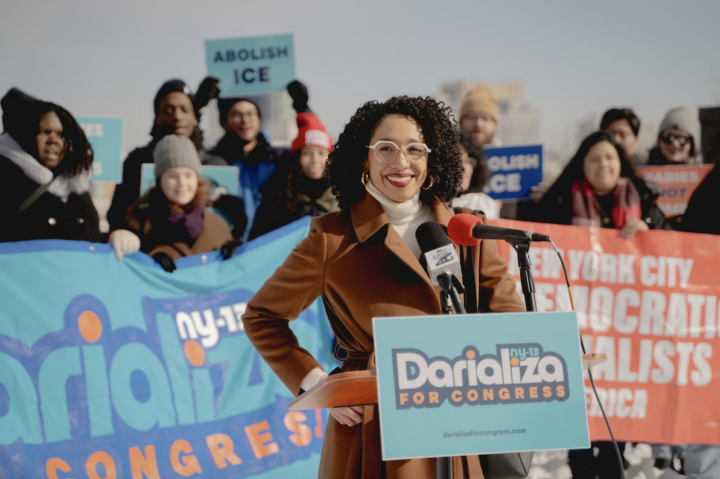
CAMPAIGN PAGE
Darializa Avila Chevalier
As Darializa Avila Chevalier mounts an insurgent campaign against Rep. Adriano Espaillat (D-NY) in Upper Manhattan, the democratic socialist has faced mounting scrutiny over past controversial posts that have surfaced in recent days, raising questions about whether the negative publicity will blunt her chances in the June 23 primary election.
While she has struggled to defend her posts when pressed by reporters, some strategists suggested that her incendiary views could get overlooked amid a national political landscape favoring extreme, anti-establishment sentiments now fueling the rise of several far-left candidates in Democratic primaries around the country.
“It seems to not matter in a way that it would have been a deal-breaker 15 or 20 years ago,” Chris Coffey, a Democratic strategist in New York City who is not involved in the primary, told Jewish Insider on Monday. “This race feels like our new outlier, where some of the things she’s said are so far beyond the pale.”
Avila Chevalier, endorsed by the Democratic Socialists of America and New York City Mayor Zohran Mamdani, has drawn backlash for a series of now-deleted social media posts in which she called for abolishing the police, voiced anti-American and pro-Russian sentiments, shared a post saying “Israel doesn’t exist,” and harshly criticized former President Joe Biden as well as former Vice President Kamala Harris, among other inflammatory comments that recently surfaced.
The 32-year-old Afro-Latina community organizer has been at pains to explain her remarks, which she has largely refused to disavow, alternately accusing Espaillat of “relitigating” old social media posts, saying that her “understanding of how to approach the systems has grown” and claiming that she is “not sure about the context” of some comments — including one arguing the United States had “bullied” Russia into attacking Ukraine.
Avila Chevalier, who helped lead anti-Israel protests at Columbia University, also showed no regret about her decision to join a widely condemned pro-Hamas rally in Times Square just a day after the terror group’s Oct. 7, 2023, attacks on Israel.
Despite the range of offensive posts, some strategists speculated that Avila Chevalier’s statements specifically calling Biden a “rapist” and “war criminal” and dismissing Harris with an expletive could dent her ascendant campaign in vote-rich Harlem — where older Black constituents would be most likely to find such views off-putting.
“The Biden-Harris tweets could be very damaging to her in Harlem, where the race will be won and lost,” Hank Sheinkopf, a Democratic strategist who is not affiliated with the race, told JI.
Still, he added, “There are a lot of people who will say she’s right.”
The primary challenge appears to have crept up on Espaillat, who has found himself playing defense in the closing stretch of the campaign, amid a surge of outside spending hoping to boost his reelection bid.
While some pro-Espaillat messaging has sought to highlight Avila Chevalier’s past posts, one strategist familiar with the congressman’s campaign, who was granted anonymity to speak candidly, said the congressman’s team broke an unwritten rule of political messaging when it went negative in a recent attack ad that ripped her remarks about Biden and Harris.
Typically, outside groups are tasked with such messaging, unless a campaign “really, really has to,” the strategist, who interpreted the Espaillat ad as a sign of weakness, said of the decision.
“It was an emotional, really irrational move from the campaign to put it out,” the political strategist told JI. “They’re being reactive and not proactive.”
The Latino Victory Fund and BOLD PAC, the political arm of the Congressional Hispanic Caucus chaired by Espaillat, have spent heavily in the race to bolster the endangered incumbent.
A Democratic operative familiar with the primary also indicated to JI that Espaillat could count on a separate seven-figure independent expenditure to boost his bid, but with early voting set to begin this weekend, the status of that spending was unclear as of Monday afternoon.
Justice Democrats, a far-left group that works to unseat incumbents, and American Priorities, a new anti-Israel super PAC created to counter AIPAC, have likewise invested aggressively on behalf of Avila Chevalier — even as she has condemned outside spending on her campaign site.
While she has accused Espaillat of being beholden to pro-Israel donors linked to AIPAC, the group’s super PAC is not expected to engage in the primary with just two weeks remaining.
Some strategists privately expressed surprise that Mamdani, who had reportedly promised to endorse Espaillat, backed his opponent, while raising doubts about whether the mayor and his team had properly vetted her online history.
Unlike Mamdani, who distanced himself during his mayoral bid from past social media comments calling to defund the police, Avila Chevalier has, for her part, strained to formulate a compelling argument for why she has evolved, her critics have noted.
Mamdani’s decision to wade into the closely watched race for Espaillat’s seat represents a major risk to his political credibility, as he also backs a challenger to a pro-Israel House incumbent while throwing support behind a DSA-aligned candidate running against the favored successor to an outgoing congresswoman in a pair of bitterly fought primary matchups.
But while those candidates — Brad Lander and Claire Valdez, respectively — are seen as likely to win, the results of Avila Chevalier’s race are more uncertain, observers note.
In light of her numerous problematic posts, Coffey, the strategist, said the outcome ultimately will show whether voters view such sentiments as disqualifying — especially among younger constituents most likely to back her campaign.
“We’re going to find out whether people care or not,” he told JI.
Darializa Avila Chevalier also denied knowledge about her own past pro-Russia posts
CAMPAIGN PAGE
Darializa Avila Chevalier
Darializa Avila Chevalier, New York City Mayor Zohran Mamdani’s endorsed candidate to unseat Rep. Adriano Espaillat (D-NY), on Friday defended her attendance at an anti-Israel rally one day after Hamas’ Oct. 7 attacks on Israel, denied knowledge regarding her own history of posting anti-U.S. and pro-Russian sentiments online and maintained she owed nothing to the Texas tycoon underwriting a PAC backing her campaign.
The Democratic Socialists of America-endorsed congressional contender faced a battery of questions from reporters following a press conference, including over her decision to participate in an anti-Israel protest organized by pro-China, pro-Iran groups on Oct. 8, 2023, that even Mamdani and then-city Comptroller Brad Lander condemned at the time. Chevalier maintained that she had consistently opposed Hamas and “the celebration of the loss of life,” but refused to speak to the taking of hostages or to whether she had denounced the attack from the outset.
She also showed no regret for joining the demonstration.
“I was at this rally because I have always, as someone who has followed the issues that happened in the region, I have seen a pattern in which whenever there is an incident, the State of Israel engages in a response that is often disproportionate and creates a greater loss of life,” she said. “And that is what I was there to stand against.”
The candidate also asserted she had learned of GOP-leaning Dallas-area businessman Hussein “Sam” Mahrouq’s support for her candidacy via the anti-Israel American Priorities PAC from news reports. She insisted that she is in no way indebted to her financial backers, even though she has accused Espaillat of being “bought by the Israeli lobby” for support he has received from AIPAC and its supporters.
She also professed ignorance of why she had called the U.S. “a f***ing disgrace” on X and accused the country of having “bullied” Russia into attacking Ukraine.
“I’m not sure what the context of those comments was coming from,” she said.
Plus, Rubio, Shapiro show momentum in new 2028 polling

Fabrice COFFRINI / AFP via Getty Images
President Donald Trump as he leaves the World Economic Forum (WEF) annual meeting in Davos on January 21, 2026.
Good Thursday morning.
In today’s Daily Kickoff, we report on the Democratic Socialists of America’s efforts to boost affiliated candidates in New York City’s congressional primaries next month, and talk to the State Department’s Sarah Rogers about the Trump administration’s moves to fight antisemitism while preserving free speech protections. We report on NY-15 candidate Michael Blake’s endorsement from a group that attacked incumbent Rep. Ritchie Torres over his “Jewish donors,” and cover President Donald Trump’s suggestion that he may not agree to a deal to end the war with Iran absent commitments from Gulf states to join the Abraham Accords. Also in today’s Daily Kickoff: Eyal Shani, Ron Baron and Tali Farhadian.
Today’s Daily Kickoff was curated by JI Executive Editor Melissa Weiss and Israel Editor Tamara Zieve, with assists from Danielle Cohen-Kanik and Marc Rod. Have a tip? Email us here.
What We’re Watching
- Kuwait said that it activated its air defenses overnight in response to what it called “hostile missile and drone threats,” without identifying the source of the attacks. The announcement from Kuwait’s armed forces came hours after the U.S. struck Iranian attack drones in the Strait of Hormuz — the second time in three days that the U.S. has conducted strikes on Iranian targets — and Islamic Republic forces fired on four ships attempting to traverse the strait.
- U.S. Ambassador to Israel Mike Huckabee is slated to deliver the commencement address at Yeshiva University at the school’s graduation ceremony this afternoon.
- New York City Mayor Zohran Mamdani is scheduled to appear with NYPD Commissioner Jessica Tisch today to brief media about security ahead of Sunday’s Israel Day on Fifth parade.
- The Weitzman National Museum of American Jewish History is holding its annual Only in America Gala tonight in New York, honoring Jane and Stuart Weitzman.
- Democratic Senate candidates in Michigan will square off in a debate this afternoon at the Mackinac Policy Conference.
What You Should Know
A QUICK WORD WITH JI’S MARC ROD AND MATTHEW SHEA
We reported earlier this month on the series of vacancies in key ambassador-level posts throughout the Middle East — in countries including Saudi Arabia, the United Arab Emirates, Qatar, Iraq and Kuwait. A senior State Department post overseeing Middle East issues also remains vacant, after the previous nominee was blocked by lawmakers.
At this point, time is running short for President Donald Trump to fill any of those vacant posts before the confirmation process potentially becomes more difficult in the Senate after the midterm elections.
Processing the nominations will take time: The chamber is set to be out of session for significant portions of the next few months. And there will be various other critical bills — including government funding, the annual defense bill and a potential third reconciliation package, to process on the Senate floor. Even ahead of floor proceedings, the vetting process in the Senate Foreign Relations Committee can, itself, take months before nominees appear for a confirmation hearing.
If Trump seeks to fill these posts, it will likely be in the administration’s interest to do so before the end of the current Congress, as GOP control of the Senate for the final two years of Trump’s term is not assured, and even if Republicans retain the majority, it could be with an even smaller margin.
It’s not just Democrats who have proven to be an obstacle to some of the administration’s picks. Amer Ghalib, Trump’s original nominee to be ambassador to Kuwait, was blocked by Republicans over his history of antisemitism, among other issues. And Joel Rayburn, tapped for a top Middle East job in the State Department, was blocked by Sen. Rand Paul (R-KY), who also slowed down proceedings for U.N. Ambassador Mike Waltz.
That said, it’s not clear whether the administration will prioritize filling these vacancies. Earlier this month, experts told Jewish Insider that the White House has seemed content to vest responsibility for broad Middle East portfolios within a tight circle of personal allies of the president, including White House Special Envoy Steve Witkoff, Jared Kushner and Ambassador to Turkey Tom Barrack — whose role has particularly concerned some Republicans. Many experts have argued that leaving the positions open is unwise and risks harming U.S. influence and diplomacy in the region.
State Department spokesperson Tommy Pigott told JI that “the department has confidence in our ability to communicate with our counterparts around the world and advance the national interest.”
NEW YORK STATE OF MIND
DSA quietly poised to make inroads in NYC’s congressional delegation

As an emboldened socialist wing of the Democratic Party gains traction across New York City in the aftermath of Mayor Zohran Mamdani’s victory, Jewish leaders and moderate officials are bracing for the possibility of multiple upsets in key House races that could reshape the ideological orientation of the state’s congressional delegation, Jewish Insider’s Matthew Kassel reports.
State of play: Three races have drawn heightened attention in recent weeks, including a marquee House contest playing out largely in progressive Brooklyn where Rep. Dan Goldman (D-NY) is seeking to fend off a serious challenge from former New York City Comptroller Brad Lander. Meanwhile, in upper Manhattan and the Bronx, Rep. Adriano Espaillat (D-NY) is facing what looks like an increasingly credible challenge from an anti-Israel organizer. And in the race to replace retiring Rep. Nydia Velazquez (D-NY), her favored primary candidate is struggling to compete against a democratic socialist endorsed by Mamdani.
MINNESOTA MANEUVERS
Angie Craig will not seek Dem Party endorsement amid opposition from left-wing activist
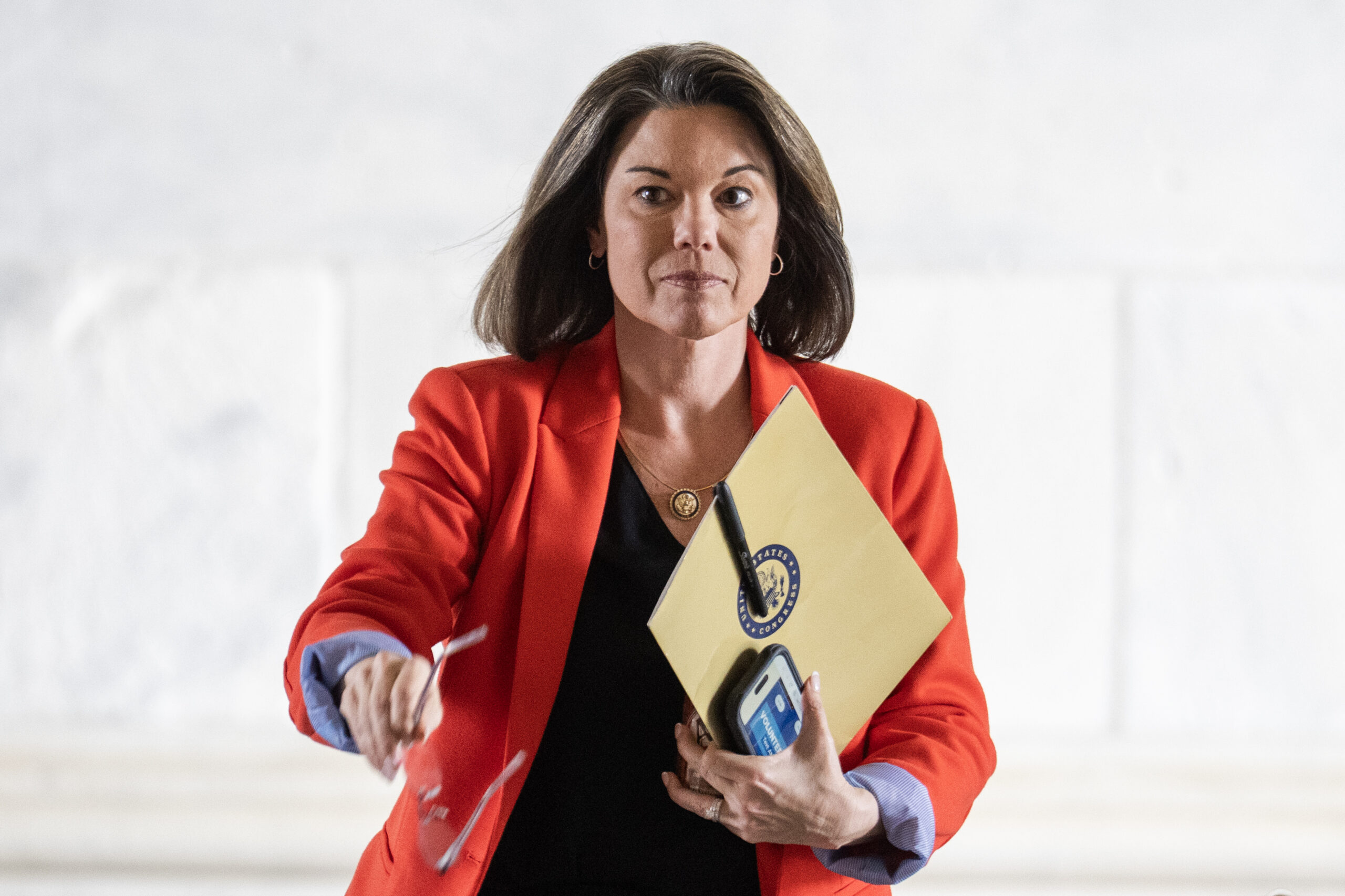
Rep. Angie Craig (D-MN), a moderate Democrat running for Minnesota’s open Senate seat, said on Wednesday that she would not seek the support of the state Democratic Party at its convention being held this weekend — effectively ceding that endorsement to Lt. Gov. Peggy Flanagan, her left-wing opponent, Jewish Insider’s Matthew Kassel reports.
What she said: Craig, who will still run in the Aug. 11 primary, said “the DFL endorsement process just doesn’t reflect the full scope of the party that we are and the purple state that we have become,” referring to the Democratic-Farmer-Labor Party, Minnesota’s Democratic affiliate, which was already expected to back Flanagan.
ESCAPE HATCH
Trump suggests he may not sign Iran deal without Abraham Accords commitments from Gulf countries

President Donald Trump signaled on Wednesday that he may not agree to a deal to end the war with Iran if Saudi Arabia, Qatar and other countries in the region do not join the Abraham Accords, arguing that the Gulf nations “owe that to us,” Jewish Insider’s Emily Jacobs reports.
Deal or no deal: The president made the comments while taking questions from reporters during a Cabinet meeting at the White House, where he was asked if he would accept a peace agreement with Iran that did not address uranium enrichment. Trump responded that he would agree to a deal that allows for continued negotiations on some issues, though he repeatedly said he would not allow for “a crummy agreement.”
Q&A
State Dept. official Sarah Rogers urges protecting free speech while fighting antisemitism
Sarah Rogers, the under secretary of state for public diplomacy, maintained that the Trump administration’s commitment to free speech, including for extreme views, does not take away from its opposition to antisemitism, telling Jewish Insider’s Emily Jacobs in a wide-ranging interview that “the Nazis may have the right to post, but also the Nazis are bad and sick and stupid.”
Also, and: “I don’t see this as a line-drawing exercise between opposed priorities,” Rogers said. “There’s really no conflict between opposing antisemitism on the one hand and opposing censorship on the other. America has a proud history of opposing both. Censorship has not kept antisemites out of power, it has been deployed by antisemites who gain power.”
ON THE SCENE
In fiery address, Rabbi Ammiel Hirsch rails against HUC ordaining anti-Zionist rabbis
In a fiery keynote address opening the Re-Charging Reform Judaism conference on Wednesday morning, Ammiel Hirsch, Stephen Wise Free Synagogue’s senior rabbi, denounced Reform religious seminaries that ordain anti-Zionist clergy members and doubled down on the importance of Jewish particularism, eJewishPhilanthropy’s Nira Dayanim reports.
What he said: “We cannot succumb to those who preach a false philosophy of Jewish universalism that camouflages disdain for Jewish particularism under the guise of a sometimes sweeping, self-righteous, sanctimonious and suffocating misunderstanding of tikkun olam,” said Hirsch, to wide applause. “Any seminary that either in word or deed, in principle or impression, acquires the reputation of being hostile to Zionism – a seminary that ordains anti-Zionist clergy – has no future in America,” he said, also to wide applause.
Read the full story here and sign up for eJP’s Your Daily Phil newsletter here.
NOT CONVINCED
Ritchie Torres challenger Michael Blake endorsed by group that attacked congressman over ‘Jewish donors’
Michael Blake, the anti-Israel candidate challenging Rep. Ritchie Torres (D-NY) in a Democratic primary in the Bronx, accepted an endorsement on Wednesday from a small progressive group that, in its announcement, attacked Torres for his relationship with “Jewish donors,” Jewish Insider’s Marc Rod reports. The group, Progressive Voters Network, also maintains an active endorsement of Maureen Galindo, the antisemitic Texas Democratic primary candidate who faced condemnation from across the party and was repudiated even by other far-left groups.
What they said: “This AIPAC puppet has raked in millions from the zionist lobby while our people struggle with rent, groceries, and crumbling NYCHA buildings,” the announcement reads. “Torres prioritizes his Jewish donors over his own Black and Brown constituents, cheerleading genocide and shielding war criminals instead of fighting for affordability and justice.”
Denial: House Speaker Mike Johnson’s (R-LA) political spokesperson denied on Wednesday allegations that Johnson was involved in boosting Galindo.
Worthy Reads
Bridge Over Troubled Waters: The Free Press’ Eli Lake profiles the Pentagon’s Elbridge Colby, as the under secretary of defense for policy, an opponent of military action against Iran, finds himself defending the Trump administration’s policies vis-a-vis Iran. “The perception inside Washington in the early months of the second Trump presidency was that Colby and the Pentagon bureaucracy would slow-walk military plans for Iran. The hawks may still have sway in Congress, but the populist restrainers were taking over the national security state. That’s not what happened. Instead, the military provided Trump with war plans for Iran, and the president approved them. … What emerges is a man caught between the contradictions of Trump’s second-term foreign policy. ‘The president is not with him when it comes to Iran,’ one administration official told me.” [FreePress]
Undoing UNRWA: In The Wall Street Journal, Eugene Kontorovich considers how President Donald Trump could effectively shutter the U.N. Relief and Works Agency, which he describes as the “front office” of Hamas. “Mr. Trump cut Unrwa’s funding in 2018 and again in 2025, citing revelations that a dozen employees participated in the Hamas invasion of Israel on Oct. 7, 2023. But U.N. agencies, and Unrwa especially, are designed to be insulated from accountability. Unrwa was created by the General Assembly in 1949 as a temporary mechanism to assist Arabs displaced during Israel’s War of Independence. While it can be closed only by the General Assembly, strategically applied pressure from the U.S. could go a long way.” [WSJ]
Tea Party for Dems: Semafor’s Burgess Everett, Nicholas Wu and David Weigel talk to Democratic officials about the growing concerns around statewide nominating conventions, which in a number of cases this cycle have served to amplify ideological rifts within the party. “The role of party conventions and assemblies is sparking heated debate in the Democratic Party as it seeks to both capitalize on anti-Trump sentiment and anoint candidates who can win general elections. Some Democrats see closed, activist-driven state party events as opportunities to tap into powerful grassroots energy, but others worry that the functions are brewing a liberal version of the anti-establishment tea party.” [Semafor]
A Path Out of Isolation: In The New York Times, RAND’s Shira Efron considers how Israel’s upcoming elections provide an opportunity to reverse Israel’s deepening global isolation. “The task ahead is twofold: to protect Israelis from real dangers, and to persuade the wider world that Israel’s security and its democratic character are not mutually exclusive. The coming elections may not answer everything the international community asks for, but they can stop the slide into isolation, rebuild some trust and allow pragmatic steps that make Israel less alone, and more secure.” [NYTimes]
Word on the Street
A new Emerson College national poll finds that Secretary of State Marco Rubio, if he runs for president in 2028, would be statistically tied with Vice President JD Vance; the poll finds Vance winning 36% of the GOP vote (down from 52% in February), with Rubio tallying 35% (up from 20%)…
The poll also finds former Transportation Secretary Pete Buttigieg leading the field of prospective Democratic presidential candidates with 18% of the vote; Pennsylvania Gov. Josh Shapiro landed in fourth place with 10% of the vote, one of his strongest showings in any national poll to date…
Politico reports on NY-12 congressional candidate Jack Schlossberg’s recent comments to a private group at New York’s Harmonie Club, in which he diverged from some of his recent, critical positions on Israel, telling attendees he was “a stronger supporter of Israel than I ever thought I would be”; in a series of X posts responding to Politico, Schlossberg claimed the article “isn’t true” and was “written in bad faith”…
Chicago Jewish leaders raised concerns about Mayor Brandon Johnson’s plan, released Tuesday, for the city to combat hate crimes; Alderwoman Debra Silverstein, the only Jewish member of Chicago’s City Council, called Johnson’s plan “a watered-down version” of a proposal recommended by the city’s Commission on Human Relations…
The Washington Jewish Week endorsed former D.C. Councilmember Kenyan McDuffie in the capital’s Democratic mayoral primary, arguing that “Washington deserves better” than Councilmember Janeese Lewis George, a member of the Democratic Socialists of America who earlier in the campaign vowed to avoid events that “promote Zionism” and campaigned with a Washington legislator who accused Jews of controlling the weather…
The Wall Street Journal profiles Baron Capital’s Ron Baron, the longtime tech skeptic who has in recent years made significant investments in Elon Musk’s ventures, including X and SpaceX…
The New York Times reports on what Jewish students and faculty at Harvard University describe as a changed campus climate in the two years since anti-Israel and antisemitic activity at the school garnered national attention during the 2023-2024 academic year…
Israeli chef Eyal Shani opened an outpost of his restaurant chain Miznon at Brooklyn’s Barclays Center…
The American Jewish Committee is selling its longtime Manhattan headquarters to real estate developer Gary Barnett’s Extell Development for $39 million, eJewishPhilanthropy‘s Judah Ari Gross reports…
Authorities in London determined that a fire at a kosher grocery store in the heavily Jewish suburb of Golders Green, an area that has faced several arson attacks in recent months, was “non-suspicious”…
The British Museum postponed an event slated for today to celebrate Jewish Culture Month, saying that “a significant proportion of registered attendees were individuals intending to deliberately disrupt the event, preventing others from participating in good faith and undermining the purpose of the programme”; the museum said it intended to reschedule the event “when it can take place in an environment that properly safeguards both the audience experience and the integrity of the programme itself”…
Yad Vashem announced plans to open a Holocaust education center in Munich, which will be the museum’s first international educational center…
An IDF soldier in the Givati Brigade’s Rotem battalion was killed in a Hezbollah drone attack along Israel’s border with Lebanon; two reservists were injured by a second explosive, one seriously…
The Wall Street Journal reports on the “elaborate deception” effort in which sanctioned Iranian oil is transferred between ships at sea to obscure the cargo’s origin and enter markets…
Israeli Attorney General Gali Baharav-Miara intends to file an indictment against Yonatan Urich, an advisor to Prime Minister Benjamin Netanyahu, in connection with the leak of classified documents to German newspaper Bild…
Iran expanded its restrictions on international news organizations operating in the country that would ban the outlets from sharing material with Israeli media as well as Farsi-language media outside of the Islamic Republic…
The U.K.’s Jewish Chronicle interviews Somaliland President Abdirahman Mohamed Abdullahi about relations between Hargeisa and Jerusalem following Israel’s recognition of the East African nation; Abdullahi said he plans to visit Israel later this year as the countries build “links in security, the economy, trade and diplomacy”…
Former federal prosecutor Tali Farhadian was named the CEO of New York’s Museum of Jewish Heritage…
The Heritage Foundation announced that Mollie Hemingway, Yoram Hazony, J.C. Huizenga and Lawrence Blanford are joining the think tank’s board of trustees…
Pic of the Day

Reps. Abe Hamadeh (R-AZ), left, and Marlin Stutzman (R-IN), who are in Israel this week while the House is in recess, met with Israeli Prime Minister Benjamin Netanyahu on Wednesday in Jerusalem. The two GOP legislators also met with Foreign Minister Gideon Sa’ar and visited the Western Wall complex, where they met with Rabbi Shmuel Rabinowitz, the rabbi of the Western Wall and holy sites.
Birthdays

Fashion designer and the founder of WeWoreWhat, Danielle Bernstein turns 34…
American oncologist whose work has contributed to major developments in childhood leukemia treatment, he was the president of the Judea Reform Congregation in Durham, N.C., John Laszlo turns 95… Founding rabbi of both Lincoln Square Synagogue in NYC and later Efrat, Rabbi Shlomo Riskin turns 86… Director of UCSF’s Institute for Neurodegenerative Diseases, he won the 1997 Nobel Prize in medicine, Stanley Benjamin Prusiner M.D. turns 84… Executive director of Ner Israel Rabbinical College, Jerome H. Kadden… Former mayor of New York City, Rudy Giuliani turns 82… Former mayor of Toronto, John Howard Tory turns 72… Author of 14 novels and a children’s book, Millions of Maxes, Meg Wolitzer turns 67… Winnipeg-born attorney, previous campaign chair for Winnipeg’s Combined Jewish Appeal and governor of the Hebrew University of Jerusalem, Gail Sheryl Asper turns 66… British comedian, screenwriter and singer, he is the author of a 2021 book on antisemitism, Jews Don’t Count, David Lionel Baddiel turns 62… Secretary of state of the United States, he is also serving as acting national security advisor, Marco Rubio turns 55… Four-time U.S. national fencing champion and a two-time Olympian, then an attorney who clerked for Justice Ruth Bader Ginsburg, Eric Oliver “Nick” Bravin turns 55… Longtime member of the Knesset on behalf of the Likud party, now serving as Israel’s consul general to New York, Ofir Akunis turns 53… Guitarist, composer and leader of the bands Rashanim and Zion80, Jon Madof turns 52… Rabbi of Boston’s South Shore Congregation Sha’aray Shalom, Eric M. Berk… Dancer and choreographer, Brian L. Friedman turns 49… Senior manager in the executive office at The Pew Charitable Trusts since 2015, Lauren Mandelker… Singer-songwriter, artist and filmmaker, Adam Green turns 45… Entrepreneur focused on real estate, technology, media, consumer products and manufacturing, he is a member of the Pritzker family of Hyatt Hotels, Matthew Pritzker turns 44… Former Jewish liaison for New York Gov. Andrew M. Cuomo, he is now the managing principal of Asher Strategies, David A. Lobl… Founder and CEO of At The Well, a women’s wellness organization rooted in Jewish spirituality and women’s health, Sarah Michal Waxman… Founder and CEO at Vista Nexum, Adelle Malka Nazarian… Freelance journalist writing about culture, she was previously an associate editor for The Forward, Thea Glassman… Named for his father, a Wall Street Journal bureau chief who was kidnapped and murdered by Pakistani terrorists a few months before he was born, Adam Daniel Pearl turns 24… Israeli swimmer, she competed in the 2020 and 2024 Summer Olympics, Aviv Barzelay turns 24… Irwin Weiss…
Lewis George, in her JCRC questionnaire: ‘I will not be a mayor who includes or excludes you based on your opinions or feelings on matters here and across the world’
Jewish Community Relations Council of Greater Washington
D.C. City Councilmember Janeese Lewis George speaks at a "Lox and Legislators" breakfast held by the Jewish Community Relations Council of Greater Washington on Dec. 18, 2025
Washington, D.C. mayoral candidate Janeese Lewis George raised eyebrows among Jewish Washingtonians earlier this year for answering in the affirmative to a Democratic Socialists of America candidate questionnaire that asked her to pledge to reject the “Zionist lobby.”
Now, in a new voter guide from the Jewish Community Relations Council of Greater Washington that featured answers from the candidates on a series of questions, Lewis George pledged that if elected, she would not seek to exclude anyone based on their political beliefs.
“I want to use this questionnaire to be clear, I will not be a mayor who includes or excludes you based on your opinions or feelings on matters here and across the world,” said Lewis George, a D.C. councilmember who earned DSA’s endorsement in next month’s Democratic primary.
Lewis George pledged to stand against antisemitism, and though she did not address her past comments about Zionism, she made note of the Oct. 7 attacks in Israel.
“I hear the concerns people have about rising antisemitism. I know the pain that Jews around the country and in D.C. felt on October 7,” Lewis George said. “When two staff members from the Israeli Embassy were shot and killed at the Capital Jewish Museum in downtown DC, I made clear that such horrific acts of violence are sickening and have no place in our community.”
She said that she will support security funding for Jewish institutions, a position she said she adopted as a councilmember, and that she will make sure city agencies work to address antisemitic threats.
“I will ensure D.C.’s Homeland Security and Emergency Management Agency has a plan to protect Jewish schools and synagogues, be transparent about its efforts, and DPW’s graffiti team will remove any antisemitic marks within 24 hours of a report,” said Lewis George. “I have also pushed to ensure our schools address antisemitism and have education around it.”
She did not discuss her views on the Israeli-Palestinian conflict, after saying in the past that she will remain committed to both “Palestinian human rights” and fighting antisemitism. The only candidate for local office who told JCRC they will avoid certain constituencies is Aparna Raj, a DSA-endorsed candidate for Ward 1 on the D.C. Council, who said she “will not work with AIPAC or organizations whose mission is to lobby for pro-Israel policies.”
Kenyan McDuffie, a former councilmember and Lewis George’s main competitor, has said throughout the campaign that he would reject any organization that requires candidates to make a “divisive pledge” to earn its endorsement.
“I will never yield to pressure to exclude Jewish community partners from civic life based on their political or deeply-held beliefs,” he said in the JCRC questionnaire. “As Mayor, I will engage with the full breadth of DC’s Jewish community on the issues that affect daily life in the District.”
Both McDuffie and Lewis George will appear in separate virtual candidate forums hosted by the JCRC on Thursday.
The NYC mayor has tapped an anti-Zionist Brooklyn rabbi who backed his campaign for the newly created role
John Lamparski/Getty Images
Then-New York City mayoral candidate Zohran Mamdani speaks during the Jews For Racial And Economic Justice's Mazals Gala on September 10, 2025 in New York City.
New York City Mayor Zohran Mamdani will appoint Rabbi Miriam Grossman — a veteran of various far-left and anti-Israel organizations, and one of the few Jewish religious leaders to back his campaign — to a taxpayer-funded post in his newly created “Office of Mass Engagement,” Jewish Insider has learned.
Multiple sources confirmed that Grossman, a graduate of the Reconstructionist Rabbinical College who formerly led the independent congregation Kolot Chayeinu in Brooklyn, will take on the role of “faith liaison” inside the new department, which has imported personnel and outreach strategies from the Democratic Socialists of America into City Hall.
A listing for the position posted on May 1 shows a salary in the $90,000 to $110,000 range, and indicates Grossman will be responsible for engaging the city’s Jewish religious community, the world’s largest outside Israel.
The listing indicated that Grossman will also be responsible for maintaining key relationships with Jewish religious leaders and organizations, representing Mamdani at community events and acting as the primary link between the community and City Hall.
Grossman, however, is well to the left of even some of the most progressive-minded Jews when it comes to Israel. A self-identified “member-leader” of far-left Jews for Racial and Economic Justice and a veteran of the rabbinical council of the pro-Boycott, Divestment, and Sanctions group Jewish Voice for Peace, in a 2021 NPR interview she referred to her father as an “AIPAC rabbi” and recounted turning against Zionism while protesting construction of an oil pipeline in North Dakota as an Oberlin College student in 2008.
“I was really specifically taught not to trust or empathize with Palestinians and how to dismiss charges of anti-Zionism or criticism of Israel as antisemitism,” she said of her youth. “I was beginning to criticize the United States and I was starting to feel that way about Israel as well.”
Seven months before the Oct. 7 attacks, she participated in a march on the Brooklyn home of Senate Minority Leader Chuck Schumer (D-NY) to protest U.S. military aid to the Jewish State. In the immediate aftermath of Hamas’ atrocities, Grossman doubled down, joining a JFREJ protest demanding a halt to military aid to Israel and speaking with the Islam Channel on YouTube at a demonstration outside the White House.
“We are here to take it to the White House to tell the White House and Congress it is in our power to prevent a genocide to stop this cycle of death for all of us — for Palestinians and most especially this moment for the people of Gaza who are suffering and crying out for help, and the world is watching,” she said.
She also participated in multiple DSA-led events protesting the Israeli response to the assault. She later appeared in a JFREJ “New York Rabbis for Mamdani” video, endorsing the anti-Israel democratic socialist’s campaign.
Grossman did not respond to requests for comment, and Mamdani’s administration would not remark on the record about the hire. The faith liaison role is distinct from the executive directorship and deputy directorship of the Mayor’s Office to Combat Antisemitism, to which the mayor has appointed Phylisa Wisdom of New York Jewish Agenda and J Street veteran Josh Binderman, respectively.
Binderman and Wisdom’s groups are also critical of Israel, but identify as Zionist.
One Orthodox Jewish leader, who asked to remain anonymous to avoid antagonizing Mamdani, despaired at the news.
“If true it would send a terrible signal and would be one more indication that this mayor is not a friend to the Jewish community,” he said. “JVP is a radical fringe group that does not represent the views of the overwhelming majority of Jewish New Yorkers.”
Plus, the case of the missing ambassadors

Andrew Harnik/Getty Images
Rep. Thomas Massie (R-KY) speaks to reporters as he arrives for a House Republican caucus meeting at the U.S. Capitol on February 25, 2025 in Washington, DC.
Good Friday morning.
In today’s Daily Kickoff, we preview Tuesday’s GOP primary in Kentucky, where Rep. Thomas Massie (R-KY) faces the fight of his political life against Ed Gallrein, and look closely at the rise of the Democratic Socialists of America in local politics. We cover the testimony of Adm. Brad Cooper, the head of U.S. Central Command, about the achievements of the U.S. and Israel in the war against Iran, and speak to former U.S. diplomatic officials and Middle East experts about the dozens of ambassador-level Middle East posts that remain empty. Also in today’s Daily Kickoff: Rep. Dan Goldman, UCLA Chancellor Julio Frenk and Reps. Brad Schneider and Craig Goldman.
Today’s Daily Kickoff was curated by JI Israel Editor Tamara Zieve, with assists from Melissa Weiss, Danielle Cohen-Kanik and Marc Rod. Have a tip? Email us here.
| For less-distracted reading over the weekend, browse this week’s edition of The Weekly Print, a curated print-friendly PDF featuring a selection of recent Jewish Insider and eJewishPhilanthropy stories, including: Longtime ADL head Abe Foxman remembered as ‘the kind of leader that all of us aspire to be’; Race to replace Pelosi offers early test of whether progressive Jews welcomed on the left; and Minnesota Vikings owner Mark Wilf leads players, high school students on Holocaust Museum trip. Print the latest edition here. |
What We’re Watching
- Senior Israeli and Lebanese officials will reconvene today at the State Department to continue peace talks, a State Department official said, after the parties concluded the first day of negotiations in the third round of the U.S.-led talks on Thursday with no further agreements secured. Read more here.
- Indian Prime Minister Narendra Modi begins a five-country tour today in the United Arab Emirates. From the UAE, Modi will travel on to the Netherlands, Sweden, Norway and Italy.
- President Donald Trump’s “National Sabbath” begins tonight at sundown. The White House’s official Shabbat 250 reception is slated to take place at 6 p.m. ET in the Indian Treaty Room. Read more here about the events taking place in Washington this weekend.
- The Lennart Meri Conference kicks off this afternoon in Tallinn, Estonia. Speakers include E.U. foreign policy chief Kaja Kallas; Albanian Prime Minister Edi Rama; Jordanian Foreign Minister Ayman Safadi; former Israeli National Security Advisor Eyal Hulata; Israeli-Russian researcher Elizabeth Tsurkov, who was held hostage for more than two years by an Iran-backed militia in Iraq; Thomas DiNanno, under secretary of state for arms control and international security; and MENA2050 CEO Eli Bar-On.
- The inaugural World Symposium Against Antizionism will take place on Sunday in Toronto. The Daily Wire’s Ben Shapiro is set to keynote the conference, which will also include Mark Goldfeder, Casey Babb and Loay Alshareef.
- Also Sunday, Jewish California, a statewide coalition of Jewish organizations, is holding a forum for candidates for superintendent of public instruction.
What You Should Know
A QUICK WORD WITH JI’S Marc Rod
Rep. Thomas Massie (R-KY) will enter Tuesday’s closely watched primary against Ed Gallrein, a Navy veteran and farmer backed by President Donald Trump, politically damaged — but it remains to be seen whether he’s taken enough hits to end his career in Congress.
Scott Jennings, a Kentucky-based GOP strategist and CNN political analyst, said that he’s spoken to operatives on both sides of the race who are very confident in victory. “Based on some of the polling I’ve personally seen and heard about, it feels like Massie’s image has been severely degraded by the sustained campaign that’s been run against him,” Jennings told Jewish Insider.
The question is whether Massie’s image has been tarnished enough to cause his defeat, or if he’ll emerge wounded but still standing. Jennings said that Massie has built a “popular brand” in the district during his seven terms in office, but also hasn’t before faced a full-frontal assault from Trump and the associated avalanche of spending.
Al Cross, a professor emeritus at the University of Kentucky School of Journalism and a political columnist, said he’s “loath to make predictions about that race, but Gallrein clearly has the momentum.”
He explained that Gallrein has received significant positive coverage in pro-Trump media, has stronger support among older voters, who are more likely to turn out, has a significant advantage in outside spending and has Trump’s influential endorsement.
DEM DYNAMICS
DSA’s ascent tests Democratic Party’s ideological boundaries

On paper, the two leading candidates for mayor of Washington, D.C. — Janeese Lewis George and Kenyan McDuffie — appear almost identical, both touting affordability and safety on the campaign trail, with promises to build more housing and stand up against President Donald Trump. But if elected, Lewis George’s victory would hand a major win to Washington’s Democratic Socialists of America chapter, of which Lewis George has been a member for years — the latest front in a battle over the Democratic Party’s soul that stretches from city councils to the halls of Congress, Jewish Insider’s Gabby Deutch reports.
Pushing back: The centrist Democratic group Third Way plans to launch a major PR campaign against the DSA in the coming months, arguing that its far-left positions and incendiary brand of politics will be harmful for the party’s electoral prospects. “We are going to raise money and develop a plan over the course of the next few months to try to make them toxic, to make it unacceptable for major figures in the party or anybody actually running for office to be affiliated with the DSA, the way it should be unacceptable to be affiliated with [neo-Nazi influencer] Nick Fuentes if you’re running as Republican,” Third Way’s senior vice president for public affairs, Matt Bennett, said.
EMPTY POSTS
Former White House officials warn Trump admin over Middle East ambassador vacancies

Former U.S. diplomatic officials and Middle East experts, in interviews with Jewish Insider’s Matthew Shea, called on the Trump administration to fill dozens of ambassador-level Middle East posts, warning that not doing so could carry damaging consequences for U.S. influence and diplomacy in the region, while other former Trump officials argued the administration can manage regional diplomacy in its current format.
Weighing in: Elliott Abrams, who served as Iran envoy during the first Trump administration and is now a senior fellow at the Council on Foreign Relations, called the vacancies a “huge mistake.” Abrams told JI, “It’s a foolish and damaging failure by the Trump administration, and there’s no excuse for it. There are top career diplomats, such as the ones the administration has sent to Jordan, Bahrain and Oman, who could be sent, and surely there are potential political appointees who’d love to be in Riyadh or Abu Dhabi.”
Brainstorm session: Reps. Brad Schneider (D-IL) and Craig Goldman (R-TX), co-chairs of the Abraham Accords Caucus, convened on Thursday with former U.S. Ambassador to Jordan Yael Lempert and Karen Young, a senior fellow at the Middle East Institute, to discuss the global energy crisis stemming from the closure of the Strait of Hormuz. The lawmakers raised ideas for how Congress could assist, including diversifying energy routes.
STATUS REPORT
Iranian capabilities severely degraded, CENTCOM head testifies
Adm. Brad Cooper, the head of U.S. Central Command, testified on Thursday that the U.S. and Israeli campaign against Iran had severely degraded its capabilities across a variety of fronts, to the extent that it will take years to reconstitute, Jewish Insider’s Marc Rod reports.
Achieved objectives: Cooper told members of the Senate Armed Services Committee that 90% of Iran’s defense industrial base had been destroyed, setting the country back years, and that support to key Iranian proxies Hamas, Hezbollah and and the Houthis had been “completely cut off.” He said that the operation had also set back Iran’s nuclear breakout time. “We met every military objective for Epic Fury,” Cooper said.
But: Pressed on reports that Iran still has access to nearly three-quarters of its missiles and missile launchers, Cooper declined to discuss specific numbers in a public setting, but said that open source data on the subject were not accurate.
A House divided: The House voted by the narrowest possible margin to reject Democrats’ latest effort to force an end to the war in Iran, with a final tied vote of 212-212, JI’s Marc Rod reports.
UNION LABEL
Dan Goldman notches key endorsement from United Federation of Teachers
Rep. Dan Goldman (D-NY), a pro-Israel Democrat facing a formidable primary challenge from former New York City Comptroller Brad Lander next month, won a key endorsement on Thursday from the United Federation of Teachers, a union representing around 200,000 members, Jewish Insider’s Matthew Kassel reports.
UFT statement: “Dan Goldman has the integrity we need in Washington,” UFT President Michael Mulgrew said in a statement. “He fought to curb Trump’s abuses and supported raising taxes on the wealthy — like himself — to level the playing field so all Americans can live with dignity. We are proud to support Dan Goldman for New York’s 10th Congressional District.”
Flag flashpoint: The NYPD is investigating an incident where a flag displaying swastikas and a Star of David was flown atop an NYU building on Wednesday, JI’s Haley Cohen reports.
scoop
Rashida Tlaib plans to force House vote on Lebanon war powers resolution

Rep. Rashida Tlaib (D-MI) plans to force a House vote next week on a war powers resolution blocking any U.S. involvement in or support for Israeli military operations in Lebanon, according to a memo distributed by Tlaib’s office to progressive lawmakers and obtained by Jewish Insider’s Marc Rod.
About the resolution: Tlaib’s resolution, co-led by Rep. Delia Ramirez (D-IL), aims to prevent any U.S. assistance to Israel in its operations in Lebanon, including intelligence sharing and targeting assistance for operations against Hezbollah. Neither the legislation nor Tlaib’s memo make mention of Hezbollah nor acknowledge its attacks on Israel or its refusal to disarm.
BRUIN BUSINESS
UCLA task force urges stronger policies against antisemitic harassment on campus

An antisemitism task force championed by UCLA Chancellor Julio Frenk released a report on Thursday urging the university to intensify its crackdown on anti-Jewish harassment, as the school continues to be enmeshed in legal battles with the Trump administration, Jewish Insider’s Haley Cohen reports.
Committee recommendations: The 42-page set of recommendations, issued by the Initiative to Combat Antisemitism action group, suggested that UCLA set a deadline of 120 days to resolve disciplinary cases. It also said the university should more clearly define consequences for violations to Title VI of the Civil Rights Act of 1964. The committee further urged UCLA to prevent faculty groups from using university resources or authority to express institutional support for anti-Zionism or the Boycott, Divestment and Sanctions movement and to implement the International Holocaust Remembrance Alliance’s working definition of antisemitism into rule enforcement and policy formation.
Worthy Reads
Conspiracy Nation: Tablet Magazine’s Izabella Tabarovsky writes about the growing conspiracism in American politics, on both the far left and far right: “It should be clear by now that what is taking shape in American public discourse is in no way a conventional political disagreement over the rightness or real-world effectiveness or this or that Israeli policy. It is the normalization of a way of thinking that flattens reality into a single, self-confirming narrative that has always led to the same place: the mental and political unraveling of the societies that embrace it.” [Tablet]
UAEasy Does It: The Wall Street Journal’s Anat Peled and Stephen Kalin consider the limits of Israel’s relationship with the United Arab Emirates, following the latter’s denial that Israeli Prime Minister Benjamin Netanyahu had visited the country during the war with Iran. “Such disagreements are extremely unusual in the world of high-level international diplomacy. The prickly back-and-forth shows that while Israel has proven a valuable security partner for the U.A.E., there are still political considerations that need to be managed in the relationship … The Gulf monarchy had likely wanted to keep the meeting quiet and continued with quieter and unpublicized coordination, analysts said. The U.A.E. was displeased with the Israeli announcement and saw it as embarrassing, according to a person close to Emirati officials.” [WSJ]
The Abbas Paradox: In Commentary, Seth Mandel analyzes the complex intersection of Israeli domestic politics, Arab-Israeli civic integration and the strategic calculus of Middle Eastern governance through his profile of Ra’am party head Mansour Abbas. “A leader can’t get too far in front of his constituents, I suppose. The problem is that Abbas is arguably a once-in-a-generation figure in Arab politics, someone who has legitimacy within the Islamic movement and among working-class Arabs alike and can retain that legitimacy while integrating his party into mainstream Israeli politics. So there isn’t really time for incrementalism. He isn’t just working within a brief window; he is the window.” [Commentary]
Word on the Street
President Donald Trump departed Beijing following his three-day trip to China. The White House said Trump had a “good meeting” with Chinese President Xi Jinping, highlighting that “the two sides agreed that the Strait of Hormuz must remain open,” that Xi “made clear China’s opposition to the militarization of the Strait and any effort to charge a toll for its use” and that “both countries agreed that Iran can never have a nuclear weapon”…
Xi, according to the Chinese readout, flagged Taiwan as the “the most important issue in China-U.S. relations,” warning that it could lead to “clashes and even conflicts” between the two countries if not “handled properly”…
IDF Chief of Staff Lt. Gen. Eyal Zamir and other Israeli military officials visited the United Arab Emirates during the war with Iran, Israeli broadcaster Kan reported on Friday, following Israeli Prime Minister Benjamin Netanyahu’s revelation earlier this week that he had visited the UAE during the war in late March…
The UAE was left frustrated after it tried in vain to convince some of its neighbors, including Saudi Arabia and Qatar, to participate in a joint military response to Iran’s strikes, Bloomberg reports…
The Wall Street Journal spotlights efforts by Homeland Security Secretary Markwayne Mullin to clean house following the removal of his predecessor, Kristi Noem, from the post, firing officials linked to her and reviewing her spending decisions…
Vice President JD Vance, speaking at a rally in Maine, praised Sen. Susan Collins (R-ME) — despite her strained relationship with the president — as she heads to a competitive general election against presumptive Democratic nominee Graham Platner…
The New York Times looks under the hood of the campaign of Jack Schlossberg, running in New York’s 12th Congressional District Democratic primary, which sources described as “so erratic and plagued by turnover that it raises questions about how he might handle himself as a member of Congress”…
Sen. Bill Cassidy (R-LA) is at risk of finishing in third place in Saturday’s Louisiana GOP primary, with the senator trailing Trump-endorsed Rep. Julia Letlow (R-LA) and state Treasurer John Fleming, according to Punchbowl News…
Tune Inn, the D.C. bar where William Paul, son of Sen. Rand Paul (R-KY), accosted Rep. Mike Lawler (R-NY) with an antisemitic rant, announced that the younger Paul would be barred from the establishment going forward. The elder Paul hasn’t made any statement on the confrontation…
Ohio Gov. Mike DeWine, a Republican, received the Jewish Federation of Cleveland’s Charles Eisenman Award for Exceptional Civic Contributions at the Federation’s 122nd Annual Meeting on Tuesday…
Highlighting Spain‘s efforts to hamper U.S. operations against Iran, Rep. Lance Gooden (R-TX) urged Secretary of Defense Pete Hegseth to “reconsider existing arrangements with Spanish entities, especially major government contracts benefitting Spanish companies at the expense of the American taxpayer.” Gooden’s letter focused on ACS Group, Spain’s largest construction company and a U.S. military contractor…
The Israeli government said it is initiating a defamation lawsuit against The New York Times following the publication of an opinion column by Nicholas Kristof alleging widespread Israeli sexual violence against Palestinian prisoners, which critics said used dubious sourcing and elevated conspiracy theories, JI’s Matthew Shea reports…
The Times dismissed Israel’s stated intention to sue “as part of a well-worn political playbook that aims to undermine independent reporting and stifle journalism that does not fit a specific narrative”…
More than 200 people demonstrated outside the Times headquarters in Manhattan on Thursday, demanding a retraction of the article, an event organized by pro-Israel groups…
The U.S. government is suing a Chick-fil-A franchisee for religious discrimination over the employer’s alleged refusal for a Christian employee to take Saturdays off to observe the Sabbath, as her denomination observes…
Saudi Arabia has begun to consider a nonaggression pact between Middle East countries and Iran for when the war against the Islamic Republic ends, according to the Financial Times, fearing that the conflict will leave Iran weaker but more hard-line and conflict-prone. Several European countries are reportedly supporting the effort…
Iraq voted on Thursday — six months after its election — to approve a new government, led by Prime Minister Ali al-Zaidi alongside 14 ministers, though parliament failed to reach consensus on several key posts including interior and defense…
Scandal-plagued filmmaker Brett Ratner, who moved to Israel after being accused of sexual misconduct, joined Trump’s delegation to China this week to scout out locations for the newest “Rush Hour” movie, JI’s Haley Cohen reports…
Richard Attias, a Moroccan-born consultant and longtime advisor to Saudi Crown Prince Mohammed bin Salman, also reportedly joined the delegation…
The Financial Times spotlights tensions surrounding Israel’s participation in Saturday’s Eurovision Song Contest, over which the Netherlands, Spain, Ireland, Slovenia and Iceland have pulled out of this year’s event…
Ye, the artist formerly known as Kanye West, who has previously been mired in antisemitism scandals, is set to perform in Tbilisi, Georgia, at a June concert produced by Live Nation Israel…
Pic of the Day

King Charles III met with Michael Shine, a victim of a stabbing attack, and his sister Doreen, during a visit on Thursday to the Jewish Care charity in Golders Green, two weeks after the antisemitic attack in the London suburb.
Wine of the Week

JI wine columnist Yitz Applbaum reviews the Yonatan Cabernet Sauvignon and Petit Verdot:
Thirty-two years ago, I celebrated the cutting of my son’s hair on Lag B’Omer in Meron, Israel. A memorable moment in life. I still recall the bottle we opened the following Friday night, a 1984 Yarden Cabernet, and I can taste it to this day. These days, in the current situation, we did not have the opportunity to make the pilgrimage to Mount Meron on Lag B’Omer, and so we marked my my 3-year-old grandson’s first haircut in Tel Aviv, over a new bottle of wine. G-d willing, I shall be present for my great-grandson’s in turn.
Charley Winery in the Judean Hills is a new discovery for me, and I suspect it will feature regularly in my reviews in the months to come. The Yonatan Cabernet, lifted by a whisper of petit verdot, awakened a passion in me that had been dormant for some time. The opening was unmistakably Judean Hills, generous in fruit, with tannins of considerable poise; the mid-palate offered a sumptuous course of blackberry; and the finish revealed something altogether unexpected: a serene, earthen, fleshy register more often encountered in Bordeaux. The wine held me in contemplation from first sip to last. Pair it with bison, or with a cut of meat worthy of the occasion. This is a wine built to age for many years to come.
Birthdays
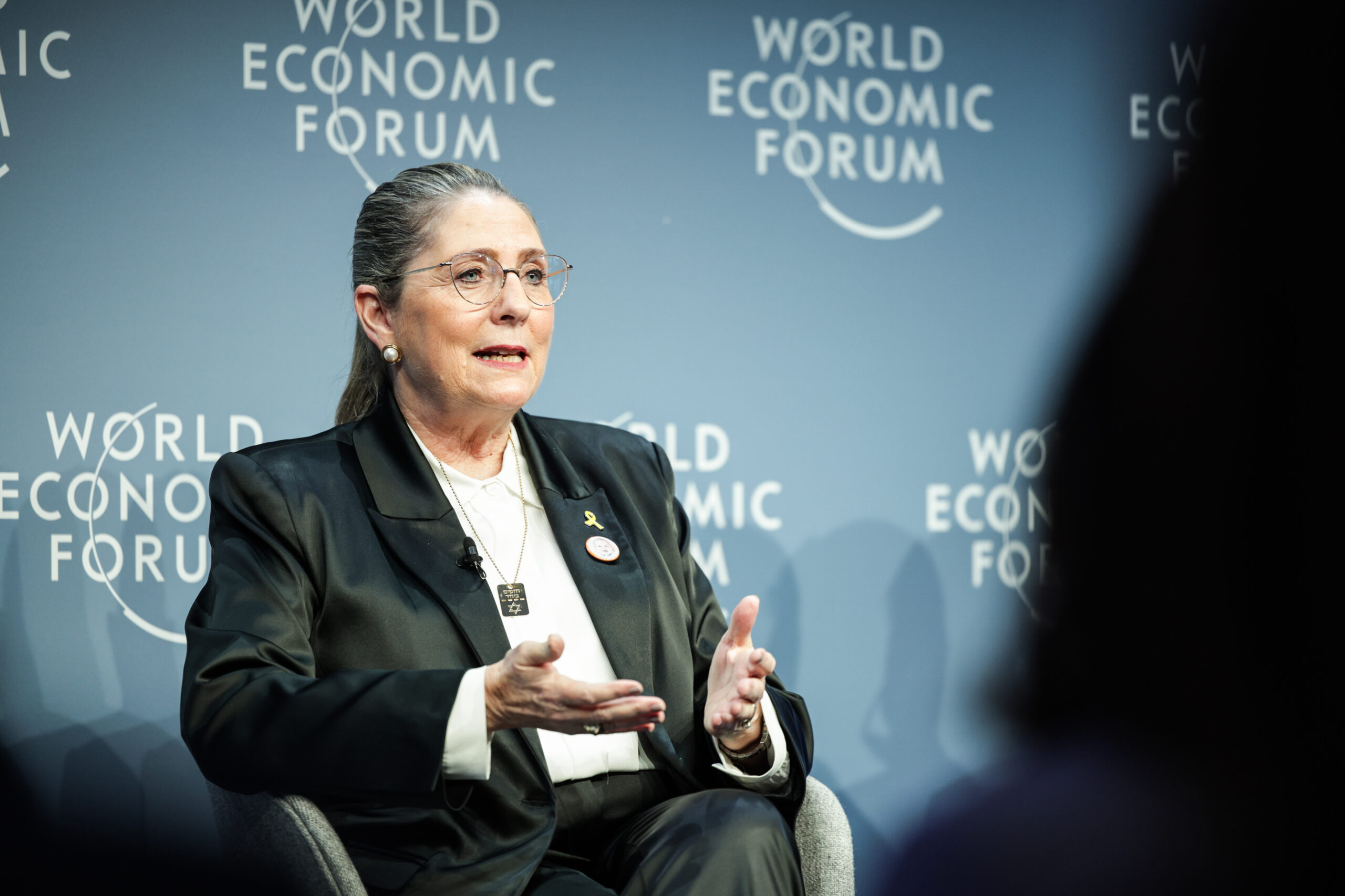
First lady of Israel, Michal Herzog turns 65 today…
FRIDAY: Chairman of Queens-based Muss Development, a major real estate development company founded by his grandfather Isaac in 1906, Joshua Lawrence Muss turns 85… Chairman emeritus of The Raoul Wallenberg Committee of the United States, a human rights organization in NYC, Rachel Oestreicher Bernheim turns 83… Chairman of the Religious Zionists of America, he was born in a DP camp as a child of Holocaust survivors, Martin Oliner turns 79… Retired major general in the IDF, he served as Israel’s national security advisor and is now a senior fellow at the Jerusalem Institute for Strategy and Security, Yaakov Amidror turns 78… Israeli diplomat who served as Israel’s ambassador to the Holy See, Mordechay Lewy turns 78… CEO of Emigrant Bank, real estate developer, financier and philanthropist, he has co-chaired the annual campaign for the UJA-Federation of New York, Howard Philip Milstein turns 75… Professor of pathology and genetics at the Albert Einstein College of Medicine, he is the author of Legacy: A Genetic History of the Jewish People, Harry Ostrer turns 75… Professor of Jewish studies at Dartmouth College who is serving as visiting professor at Harvard for the 2025-26 academic year, she is the daughter of Rabbi Abraham Joshua Heschel, Susannah Heschel turns 70… Owner of Midnight Music Management and one of the founders of The Happy Minyan in Los Angeles, Stuart Wax… Former editor and columnist at The Washington Post, Ruth Allyn Marcus turns 68… Five-time Emmy Award-winning journalist, producer, filmmaker and Latin media marketing entrepreneur, Giselle Fernandez turns 65… Founding rabbi of The Shtiebel in NYC and a member of the Talmud faculty at Yeshivat Maharat, Adam Mintz turns 65… Owner/president of the NFL’s Minnesota Vikings, he is the chairman of the Board of Governors of The Jewish Agency for Israel, Mark Wilf turns 64… Former member of the Nevada Assembly, she served as secretary of the National Association of Jewish Legislators, Ellen Barre Spiegel turns 64… Director, screenwriter and former film critic, Rod Lurie turns 64… Actor and filmmaker known for his collaborations with George Clooney, Grant Heslov turns 63… Vice chancellor of Brown University, she is the founder of Reeves Advisory, Pamela Ress Reeves… Actor and comedian, David Krumholtz turns 48… Executive director in the Office of Crime Victim Services at the Wisconsin Department of Justice, Shira Rosenthal Phelps… Noam Finger turns 48… Director of the center for civics, education and opportunity at the Ronald Reagan Presidential Foundation & Institute, Daniel M. Rothschild… Actor best known for her role as Tony Soprano’s daughter, Meadow, Jamie-Lynn Sigler turns 45… Pulitzer Prize-winning writer-at-large for The New York Times, Eli Eric Saslow turns 44… Senior editor at Vogue, Chloe F. Schama turns 43… Director of career services at Georgetown’s McDonough School of Business, Lisa Dubler turns 39… Rochelle Wilner… Ofir Richman…
SATURDAY: Scholar, author and rabbi, he is the founding president of CLAL: The National Jewish Center for Learning and Leadership, Irving “Yitz” Greenberg turns 93… Retired judge of the Circuit Court for Baltimore City, she has served as president and chair of the American Jewish Joint Distribution Committee, Ellen Moses Heller turns 85… Senior official in the Carter, Bush 41, Clinton and Obama administrations, Bernard W. Aronson turns 80… Member of the New York state Assembly for 52 years (longest tenure ever), his term ended in 2022, Richard N. Gottfried turns 79… Chairman of NBC News and MSNBC from 2015 to 2020, Andrew Lack turns 79… Member of the House of Representatives since 2013 (D-FL), she was previously the mayor of West Palm Beach, Lois Frankel turns 78… Harvard history professor, a member of the Rothschild banking family of England, Emma Georgina Rothschild turns 78… Proto-punk singer, songwriter and guitarist, Jonathan Richman turns 75… Radio voice of the Texas Rangers baseball organization since 1979, Eric Nadel turns 75… Rochester, N.Y., resident and advisor to NYC-based Ezras Nashim volunteer ambulance service, Michael E. Pollock… U.S. ambassador to France and machatunim of President Trump, Charles Kushner turns 72… Managing partner at Accretive LLC, a private equity firm, he served as executive chairman of Fubo TV until its October 2025 merger with Disney, Edgar Bronfman Jr. turns 71… Film and stage actor, noted for “An Officer and a Gentleman” and “Terms of Endearment,” Debra Winger turns 71… President of Tribe Media, publisher and editor-in-chief of the Jewish Journal, David Suissa… Real estate mogul and collector of modern and contemporary art, Aby J. Rosen turns 66… Executive assistant at Los Angeles-based FaceCake Marketing Technologies, Esther Bushey… U.S. ambassador to the European Union in the Obama administration, he had a bar mitzvah-like ceremony in Venice in 2017, Anthony Luzzatto Gardner turns 63… Social entrepreneur, Jonathan Shawn Landres turns 54… Actor, television personality and author, Victoria Davey “Tori” Spelling turns 53… Host of programs on the Travel Channel and the History Channel, Adam Richman turns 52… VP and associate general counsel at CNN, Drew Shenkman… Managing director at FTI Consulting, Jeff Bechdel… Chef and food blogger, her husband Ryan played baseball for Team Israel, Jamie Neistat Lavarnway… Composer, conductor and music producer known for his film and television scores, Daniel Alexander Slatkin turns 32…
SUNDAY: Founder of the Philadelphia-based Honickman Foundation, her family owns one of the largest soft drink bottlers in the U.S., Lynne Korman Honickman turns 90… Annapolis, Md., attorney, Robert M. Pollock… News anchor for 46 years at WPVI-TV (ABC Channel 6) in Philadelphia until he retired in 2022, known professionally as Jim Gardner, James Goldman turns 78… Canadian philanthropist and the first woman to serve as lieutenant governor of Nova Scotia, Myra Ava Freeman turns 77… Corporate and securities attorney at NYC’s Eilenberg & Krause, he serves as counsel for Israeli technology companies doing business in the U.S., Sheldon Krause turns 71… Comedian, puppeteer and actor, Marc Weiner turns 71… Founder and president of ENS Resources, a D.C.-based consulting and lobbying firm focused on natural resources and sustainable energy, Eric Sapirstein turns 70… Special correspondent for Marketplace by American Public Media, David Brancaccio turns 66… Author of the 2005 book Stars of David: Prominent Jews Talk About Being Jewish and a 2017 book about Jewish holidays, she is an honorary president of NYC’s Central Synagogue, Abigail Pogrebin… and her identical twin sister, Robin Pogrebin, reporter on the culture desk for The New York Times, both turn 61… Formerly the general manager for corporate strategy at Microsoft and an EVP at Hillel, she is mounting a bid for Washington’s congressional delegate seat, Kinney Zalesne turns 60… Retired CPA and founder of the Baltimore Hunger Project, it provides food packs for the weekend that are discretely slipped into poverty-stricken public-school children’s backpacks each Friday, Lynne Berkowitz Kahn… Israeli author and playwright, Sarah Blau turns 53… Reporter for The New York Times covering politics, campaigns and elections, Reid J. Epstein… Former member of Knesset, when elected in 2013 she became the youngest female Knesset member in Israel’s history, Stav Shaffir turns 41… Founder of Sound Strategies and digital strategy advisor to Democratic organizations and candidates, Jenna Ruth Lowenstein… Social media and content integration brand strategist at AARP, Sarah Sonies… Senior writer at Microsoft’s AI at Work group, Rebecca Rose Nelson Kay… Retired Israeli judoka, he was the 2019 World Champion and won a team bronze medal at the 2020 Olympics, Sagi Aharon Muki turns 34… Director of congregational engagement at Mount Zion Hebrew Congregation in St. Paul, Minn., Heather Renetzky… Senior communications manager at Rystad Energy, she was an assistant area director in the Houston office of AIPAC, Katherine “Katie” Keenan…
If elected mayor of Washington, D.C, Janeese Lewis George’s victory would hand a major win to Washington’s Democratic Socialists of America chapter

Craig Hudson for The Washington Post via Getty Images
D.C. councilmember and mayoral candidate Janeese Lewis George is seen on Capitol Hill for a press conference in Washington, DC on March 10, 2025.
The open race for mayor of Washington, D.C., has been largely uneventful ahead of next month’s primary — so much so that the first TV ads run by the leading candidates, Kenyan McDuffie and Janeese Lewis George, sound nearly identical. Both candidates tout affordability and safety on the campaign trail, with promises to build more housing and stand up against President Donald Trump.
But if elected, Lewis George’s victory would mark a significant shift away from the centrist brand of politics espoused by outgoing Mayor Muriel Bowser over the last 12 years, and would instead hand a major win to Washington’s Democratic Socialists of America chapter, of which Lewis George has been a member for years.
Lewis George has faced criticism throughout the campaign from some in the Jewish community for comments she made on a DSA endorsement questionnaire pledging to boycott events that “promote Zionism” and criticizing Jewish activists’ approach to combating antisemitism. Ron Halber, CEO of the Jewish Community Relations Council of Greater Washington, on Tuesday called DSA an “evil” organization that seeks “to make being Jewish unacceptable in polite society.”
DSA has activated its small but growing membership to knock on doors for Lewis George, a member of the D.C. Council, tapping into a grassroots energy that they hope translates into success at the ballot box. Rep. Rashida Tlaib (D-MI), one of two DSA members currently serving in Congress, attended a recent DC DSA rally alongside Lewis George.
DSA’s Metro DC chapter is relatively small. Yet its current roster of roughly 3,400 members represents a massive increase from its pre-2016 nadir of just 200 members — and mirrors DSA’s growing clout nationally.
“For most of the ‘80s and ‘90s and 2000s, DSA was a small organization with maybe 5,000 or 8,000 people at the most. I would say the average age was probably over 60, maybe higher than that,” said Peter Dreier, an emeritus professor of politics at Occidental College in Los Angeles. “Then Bernie [Sanders] ran for president in 2016 and started talking about democratic socialism in a way that made sense to, particularly, a lot of young people, and he kind of opened the door to people to be in DSA.”
Overall, DSA is still a small organization on the fringes of Democratic politics. Even the highest membership counts — adding up DSA’s local chapters — don’t top 100,000. But the unexpected popularity of Sanders’ 2016 presidential run sparked a resurgence of interest in democratic socialism not seen in generations, and that has continued well past his two campaigns. A 2025 Gallup poll found that 42% of Democrats have a positive image of capitalism, down from 54% a decade ago, while 66% have a positive view of socialism.
“If [young people] don’t remember the Cold War, then what do they think when they hear the word socialism? There’s still a battle over that, but they’re more likely to think, ‘Oh, countries that have more equality, or students that get free or almost free higher education, everybody has access to healthcare,’” said Dreier.
“We are going to raise money and develop a plan over the course of the next few months to try to make them toxic, to make it unacceptable for major figures in the party or anybody actually running for office to be affiliated with the DSA, the way it should be unacceptable to be affiliated with [neo-Nazi influencer] Nick Fuentes if you’re running as Republican,” Third Way’s senior vice president for public affairs, Matt Bennett, said.
The key question now facing capital-D Democrats — one they sound unsure of how to answer, or perhaps unwilling — is how to handle an insurgent faction that has galvanized people over its straightforward messaging on corporations (bad), taxing the rich (good) and Medicare for All (necessary), while at the same time promoting far-left positions like prison and police abolition that are nowhere near the Democratic mainstream. The group has long promoted the Boycott, Divestment and Sanctions movement, as well as calling for an arms embargo on Israel, and its members passed a resolution last year affirming their commitment to anti-Zionism. On Oct. 7, 2023, DSA released a statement holding Israel accountable for the Hamas attacks and calling on members to take to the streets to protest U.S. support for Israel.
The centrist Democratic group Third Way plans to launch a major PR campaign against DSA in the coming months, one of the group’s executives told JI, arguing that its far-left positions and incendiary brand of politics will be harmful for the party’s electoral prospects.
“We are going to raise money and develop a plan over the course of the next few months to try to make them toxic, to make it unacceptable for major figures in the party or anybody actually running for office to be affiliated with the DSA, the way it should be unacceptable to be affiliated with [neo-Nazi influencer] Nick Fuentes if you’re running as Republican,” Third Way’s senior vice president for public affairs, Matt Bennett, said.
In the decade since Sanders’ 2016 campaign, DSA has had an outsized impact on national politics. The 2018 congressional victory of Rep. Alexandria Ocasio-Cortez (D-NY), a DSA member, raised the group’s profile. A steady stream of more than 200 DSA-aligned candidates have been elected to state and local offices since, culminating with the election of DSA member Zohran Mamdani as mayor of New York City last year.
“To the degree that people need to pay attention to DSA, it’s because they built this kind of political machine,” said Micah Sifry, a journalist focused on left-wing political organizing. “In a time when people are, for the most part, not very organized, the ability of any small group, relatively speaking, to punch above its weight grows.”
Perhaps unsurprisingly, New York has the largest bench of DSA-affiliated state lawmakers. The group has slowly but steadily been gaining electoral power in state and local offices in some unexpected places, too, like Minnesota, Colorado, Delaware and Wisconsin. The group’s largest foothold is in city council races, where a small but committed cadre of volunteers can swing elections in low-turnout races.
National Democratic leaders are divided about how to treat the small but vocal socialist minority in the party.
House Minority Leader Hakeem Jeffries (D-NY) declined to support Mamdani in the primary election but ultimately endorsed him ahead of the general election last year. Weeks later, Jeffries voted in favor of a Republican-led resolution condemning socialism. He has been skeptical of the left-wing ideology throughout his political career: “There will never be a moment where I bend the knee to hard-left democratic socialism,” he said in 2021. A spokesperson for Jeffries declined to comment this week when asked if he believes Democrats should be welcoming socialists into the party.
Democratic National Committee Chair Ken Martin has been more open-minded about socialists. Asked by Fox News last year whether progressives like Mamdani and Ocasio-Cortez make his job harder, he said no.
“The party is a big tent. But just like we have to believe it’s a big tent, the DSA also has to believe it’s a big tent, and I’m not sure they do,” Brian Romick, CEO of Democratic Majority for Israel, said. “Democratic leaders want to win elections, and that means a big tent, and that means that Democratic base voters and pro-Israel voters and moderate people who maybe voted for [Donald] Trump sometimes because they’re concerned about prices have to be in the tent.”
“I don’t think they make it difficult at all,” Martin said in August 2025. “The difference between the Democratic Party and the Republican Party is that we’re a big tent. We have lots of people in that tent from all of the different ideological wings, from conservative Democrats, to centrists, to progressives, to these new leftists.” A DNC spokesperson did not respond to multiple requests for comment this week.
Brian Romick, CEO of Democratic Majority for Israel, told Jewish Insider this week that he is concerned about the inroads DSA is making in the party. He agreed with Martin that the Democratic Party should be a big tent, but noted that DSA members — who are at times intent on putting litmus tests even on would-be allies — don’t extend the same understanding to more moderate members of the party.
“The party is a big tent. But just like we have to believe it’s a big tent, the DSA also has to believe it’s a big tent, and I’m not sure they do,” Romick said. “Democratic leaders want to win elections, and that means a big tent, and that means that Democratic base voters and pro-Israel voters and moderate people who maybe voted for [Donald] Trump sometimes because they’re concerned about prices have to be in the tent.”
The questionnaire Lewis George filled out in Washington to earn DSA’s endorsement reveals how important hard-line opposition to Israel is to the organization, which requires even candidates for local offices with no connection to foreign policy to all but disavow the Jewish state. Most voters who support DSA-aligned candidates likely are not drawn to them because of their views on the Middle East; Mamdani’s message was first and foremost about affordability. But DSA’s growing reach among Democrats gave a foothold to anti-Israel views that may have once been rare, though global attention on the war in Gaza also contributed to shifting Democratic orthodoxy on the conflict. (Other far-left groups like Justice Democrats have played a role, too.)
Zach Shartiag, a Jewish Democratic campaign operative from Chicago, told JI that Democrats he has talked to who support DSA candidates generally do not do so because of DSA’s stance on Israel, even if the activists are themselves critical of Israel.
“People might be very anti-Israel now, but at the same time, it’s like, what does that have to do with local politics?” said Shartiag, who is currently working on a congressional campaign in Hawaii. “I’ve talked to a lot of people, just in general, normal humans, and it’s like, ‘Yeah, I might be against what Israel’s doing, but what does that have to do with the local and the city and the state?’”
The full picture of DSA’s influence in the party will not be known until all the votes are tallied at the end of this year’s midterm elections. A number of DSA-affiliated candidates are gaining ground in congressional primaries, such as Pennsylvania state Rep. Chris Rabb, who has garnered progressive endorsements in a Philadelphia-area open seat, and New York state Assemblymember Claire Valdez, who has Mamdani’s backing for her congressional campaign.
Still, the election outcomes in states across the country this year will present only a partial picture of where the Democratic Party is moving. In the same year that Mamdani won in New York City, for instance, Democratic moderates Abigail Spanberger and Mikie Sherrill won gubernatorial races in Virginia and New Jersey, respectively.
The only certainty, then, is that the battle between centrists and socialists will continue into 2028.
“I think you’re going to have a real mixed verdict, with us yelling about our side and the left yelling about their side,” Third Way’s Bennett acknowledged. “So what that means is, unsurprisingly, we’re going to go into the presidential primary season with the two camps demanding that they are right.”
There hasn’t been much incentive for party groups to set red lines against radicals looking to disrupt the party in lower-profile races
Spencer Platt/Getty Images
Members of the Democratic Socialists of America May 01, 2019 in New York City.
As the Democratic Party lurches left in the run-up to the midterms — and amid the rise of high-profile, far-left Senate candidates such as Graham Platner in Maine and Abdul El-Sayed in Michigan — candidates affiliated with the Democratic Socialists of America (DSA) have gradually been making inroads and positioning themselves to win nominations in several key House races.
This has happened without much protest or opposition from Democratic Party leadership. And given that the urban districts where the DSA-endorsed candidates have the most support are so heavily Democratic, there hasn’t been much incentive for party groups to set red lines against radicals looking to disrupt the party in these lower-profile races.
One of the most insidious aspects of the advocacy of many DSA chapters is the demand that its endorsees cut ties with any Jewish group that recognizes the State of Israel. Some chapters celebrated or justified Hamas’ Oct. 7 terror attacks against Israel.
“They are trying to do in America what [the Boycott, Divestment and Sanctions movement] seems to do internationally, which is to make being Jewish unacceptable in polite society,” Ron Halber, the CEO of the Jewish Community Relations Council of Greater Washington, recently said on a webinar of D.C-area Jewish leaders.
But despite the group’s radical views, DSA-endorsed candidates have a real shot at prevailing in several upcoming Democratic primaries in major cities.
Pennsylvania state Rep. Chris Rabb, one of several Democrats looking to succeed retiring Rep. Dwight Evans (D-PA) in his Philadelphia district, has the notoriety of recirculating an Instagram post blaming the Bondi Beach terrorist attack that killed 14 Jewish Australians on “Zionists,” insinuating the terror attack was a false flag. (His campaign later blamed a former staffer for reposting the item.)
Rabb, who has been endorsed by many of the leading anti-Israel progressives in Congress, also recently campaigned with antisemitic streamer Hasan Piker. His far-left views and virulent criticism of Israel has alarmed Gov. Josh Shapiro, according to Axios, and the popular Pennsylvania governor has worked behind the scenes to oppose his campaign.
Democratic sources familiar with the primary, however, suggest that any behind-the-scenes efforts aren’t having much effect in derailing the DSA candidate’s campaign. Rabb’s two leading opponents — surgeon Ala Stanford and state Sen. Sharif Street — are both mainstream Democrats and may potentially split the more-moderate vote. The primary is on Tuesday.
Next month, a similar clash between the Democratic mainstream and socialist wing of the party is taking place in New York City, where state Assemblymember Claire Valdez, who is backed by Mayor Zohran Mamdani and New York’s DSA chapter, is squaring off against Brooklyn Borough President Antonio Reynoso, the progressive establishment’s favorite.
The race, in one of the most left-wing districts in the city, which covers part of Brooklyn and Queens, will mark a major test of Mamdani’s political capital — and whether the DSA brand is more compelling to progressives than the endorsement of Reynoso by retiring liberal stalwart Rep. Nydia Velazquez (D-NY).
Reynoso, in an interview with The New York Editorial Board, proclaimed himself the underdog in the race despite boasting endorsements from organized labor, the outgoing congresswoman, state Attorney General Letitia James and the left-wing Working Families Party line. “Zohran Mamdani is a celebrity-status, inspiring figure at the levels of AOC and Bernie Sanders. He is a movement and is deeply important,” Reynoso said.
Meanwhile, in Denver, another DSA hotbed, Rep. Diane DeGette (D-CO) faces a primary threat from DSA-backed challenger Melat Kiros, a 28-year-old attorney. Kiros has made criticism of Israel a centerpiece of her campaign, accusing Israel of genocide, and she supports an arms embargo against the Jewish state. Kiros dominated DeGette at a districtwide party convention filled with activists in March, and the congresswoman has been airing ads touting her progressive record, in anticipation of a competitive June primary.
And in St. Louis, the local DSA chapter is again backing former Rep. Cori Bush (D-MO), who was one of the most extreme anti-Israel lawmakers when serving in Congress, in her attempt at a comeback against Rep. Wesley Bell (D-MO).
(The other major contest featuring a DSA-endorsed contender is next month’s D.C. mayoral primary, where Jewish groups have been alarmed by Janeese Lewis George’s rhetoric around Israel and antisemitism.)
All told, there could be at least four Democratic Socialists of America-endorsed lawmakers in the next Congress, with limited party efforts to marginalize the extremists from within. It underscores how fast the Democratic Party is evolving, and how quickly the guardrails that kept the party centered — and largely free of antisemitism — are falling out of place.
JCRC CEO Ron Halber: ‘They're a fringe, radical, antisemitic organization’
Spencer Platt/Getty Images
Members of the Democratic Socialists of America May 01, 2019 in New York City.
Amid the rise of a DSA-aligned mayoral candidate in the city, a senior Jewish community leader in Washington, D.C., excoriated the Democratic Socialists of America as an “evil” organization committed to driving Jews out of society.
Speaking on a webinar with other Washington-area Jewish leaders on Tuesday, Ron Halber, the CEO of the Jewish Community Relations Council of Greater Washington, stridently criticized the far-left group.
“I think they’re a fringe, radical, antisemitic organization, and I happen to even think they’re evil,” Halber said. “They are trying to do in America what [the Boycott, Divestment and Sanctions movement] seems to do internationally, which is to make being Jewish unacceptable in polite society.”
He said that the group wants to make Jews feel “isolated” and force them to “renounce Zionism” and their connection to Israel in order to participate in the political process. Antisemitism is “core to their belief,” he continued.
Halber described the activist group as emboldened and energized during the second Trump administration — as numerous DSA-aligned candidates make gains in local and national elections — and said that the Jewish community “should view DSA with alarm, because they are having a radical impact.”
And, he added, the Jewish community should be “very, very wary of political candidates who go out and seek their endorsement and who wish to affiliate.”
The Metro DC DSA did not immediately respond to a request for comment.
Halber said it’s the responsibility of Jewish organizations to come together with allies to expose the DSA as “the fringe of American society that most people in America would be repulsed by.”
Tali Cohen, the Anti-Defamation League’s Washington regional director, said on the webinar that she has been “astonished by the rhetoric coming out of the D.C. DSA chapter.”
Cohen said the group is attempting to “isolat[e] the Jewish community through exclusionary policies” — requiring endorsees to cut ties with “the overwhelming majority of organized Jewish community institutions” — and has “embrace[d] antisemitism as an organizational orthodoxy” through its embrace of anti-Zionism.
“If you read DSA’s platform, they have disproportionately and overwhelmingly chosen to focus on the world’s only Jewish state,” she continued. “The selective focus can suggest that something else is at work beyond just policy concerns.”
Cohen also raised concerns about the group’s opposition to the International Holocaust Remembrance Alliance’s working definition of antisemitism and its efforts to defund the D.C. police, a project she said endangers the Jewish community.
The event comes following a high-profile clash between Jewish communal groups and the Washington DSA chapter over its endorsement questionnaire for the city’s mayoral race that required candidates to pledge to refrain from engaging with “Zionist lobby groups.”
Mayoral candidate Janeese Lewis George, a DSA member endorsed by the group, said in response to the questionnaire that she would not attend events “promoting Zionism and apartheid.”
Alan Ronkin, the regional director of the American Jewish Committee in Washington, and ADL experts also spoke on the webinar.
Daniel Moraff also recruited Rep. Summer Lee, a leading anti-Israel Democrat, to pursue her political career
Bill Clark/CQ-Roll Call, Inc via Getty Images
Independent Senate candidate Dan Osborn speaks during his campaign stop at the in O'Neill, Neb., on Monday, October 14, 2024.
A former Democratic Socialists of America organizer has been a top advisor to independent Nebraska Senate candidate Dan Osborn and Democratic Maine Senate candidate Graham Platner.
Daniel Moraff was a longtime DSA member, including acting as a local and national DSA organizer and leader in the mid-to-late 2010s, though he said his membership lapsed in 2019 because his local chapter became too focused on internal matters. He argued in a now-deleted 2017 article that the best way for socialists to gain political power and achieve elective office would be by running in Democratic primaries.
He subsequently recruited now-Rep. Summer Lee (D-PA), among the farthest-left and most anti-Israel members of the House, to run for the Pennsylvania Statehouse, and served as her campaign manager.
Moraff reportedly helped recruit Osborn into the Nebraska Senate race in 2024 and has continued to serve as a consultant for Osborn. Campaign disclosures show that Osborn’s wife, Megan Osborn, has received compensation from Moraff’s firm for work on her husband’s current Senate campaign.
Osborn has cultivated an image as a heterodox populist, seeking to appeal to moderate and Republican voters, by adopting center-right views on border security and government spending while maintaining progressive views on abortion rights and unions.
Osborn was also recently endorsed by the anti-Israel group A New Policy.
“Daniel Moraff has advised candidates across the country who seek to give the working class a voice in our politics. The fact those candidates have diverse backgrounds and beliefs is not a story,” an Osborn spokesperson said in a statement to Jewish Insider.
Amid a reshuffle of Platner’s campaign — he shed staff as revelations emerged about his tattoo of a Nazi symbol and extreme prior social media posts — Moraff reportedly served as Platner’s de-facto campaign manager.
Platner’s campaign did not respond to a request for comment, nor did Moraff personally.
In addition to his DSA ties, as a Brown University student in 2012, Moraff was an undergraduate representative on an advisory committee on investment practices, responsible for “dialogue” with Brown Students for Justice in Palestine over its push for Brown to divest from Israeli-linked companies.
The committee, with Moraff as a signatory, said in a letter to Brown’s president that “the documented abuses of Palestinian citizens by the Israeli Defense Force in the Occupied Territories are deeply troubling” and “Israel is indisputably engaged in ongoing systemic abuses of human rights and violations of international law, as documented by the United Nations Human Rights Council and the International Court of Justice.”
The committee said that Brown University may be invested “in firms whose products and services are being used to commit human rights violations in Palestine” and recommended further discussions over divestment.
‘I didn't seek, nor would I accept, the endorsement of Democratic Socialists of America,’ McDuffie told JI in an interview
Craig Hudson for The Washington Post via Getty Images
Council member Kenyan R. McDuffie (I-At Large) is seen before Mayor Muriel E. Bowser (D) testifies to the DC City Council outlining the Fiscal Year 2025 Budget in Washington, D.C., on April 03, 2024.
As Washington, D.C., voters get ready to elect their first new mayor in more than a decade, the two leading candidates — former colleagues on the Council of the District of Columbia — are proposing drastically different visions for the city’s future: political moderation or democratic socialism.
In an interview with Jewish Insider this week at his campaign headquarters in Northeast Washington, former Councilmember Kenyan McDuffie drew a direct contrast between his campaign and that of his Democratic Socialists of America-endorsed rival, Janeese Lewis George.
“I didn’t seek, nor would I accept, the endorsement of Democratic Socialists of America, or any organization, for that matter, that requires some sort of divisive pledge to exclude people that are a part of the fabric of the community of the District of Columbia,” McDuffie said.
He was referring to a DSA endorsement questionnaire that asked candidates not to engage with “the Israeli government or Zionist lobby groups.” Lewis George, a longtime DSA member, vowed not to attend events that promote Zionism when she filled out the questionnaire, which earned her the DSA endorsement.
Lewis George’s responses sparked concern among many in the Jewish community, and she apologized in a closed-door meeting with rabbis in March. But she has not offered any public remorse.
“I think it’s important for elected officials to have the courage to say in public things that they say in private,” McDuffie said. “Any message that depends on taking a pledge to exclude entire communities as a condition of a political endorsement is extraordinarily divisive and disturbing.”
Amid the controversy surrounding her DSA questionnaire and the meeting with rabbis, Lewis George released a statement last month pledging to stand firm in both her opposition to antisemitism and her support for “Palestinian human rights.” McDuffie told JI that he did not see the mayoral race as a place to litigate debates about the Israeli-Palestinian conflict.
“I think a mayor’s responsibility is to look out for all of its residents, particularly our most vulnerable residents,” said McDuffie. “At a time where the Jewish community is seeing rising antisemitism worldwide, and even the District of Columbia, it’s important that they understand that their elected officials are going to use every tool possible to protect them.”
“I didn’t bring those issues into this race. My opponent did it when she sought the endorsement of Democratic Socialists of America,” McDuffie said. “I’m not running for Congress. I’m not engaging in the crafting of foreign policy. I’m running for mayor of Washington, D.C., the most beautifully diverse city in America, and I’m running to fight and deliver for all D.C.”
McDuffie is actively courting votes in the Jewish community. He will appear next week at a meet-and-greet with Jewish young professionals in the District.
“I think a mayor’s responsibility is to look out for all of its residents, particularly our most vulnerable residents,” said McDuffie. “At a time where the Jewish community is seeing rising antisemitism worldwide, and even the District of Columbia, it’s important that they understand that their elected officials are going to use every tool possible to protect them.”
McDuffie pledged to speak out against antisemitic violence and rhetoric so that the District’s Jewish residents “understand that they have a mayor and elected leadership who’s going to strongly oppose those kinds of activities and threats and do everything humanly possible to protect them.” He called the city’s nonprofit security grant program, which provides funding to several local synagogues to pay for security expenses, a “nonnegotiable,” even if the city faces other budget challenges.
Born and raised in Northeast Washington, McDuffie entered politics circuitously. He worked as a mail carrier for the USPS before ultimately going to college and law school, in a career pivot he said was inspired by witnessing the death of two friends to the crack cocaine epidemic of the 1980s and 1990s. He spent a few years as a prosecutor, in Maryland and at the Justice Department, before running for Council in 2013. McDuffie represented Ward 5, which includes the neighborhoods Bloomingdale, Eckington, Brookland and Fort Totten, until being elected to a citywide at-large position in 2022 where he served until January.
His message now is about affordability, a buzzword brought into style last year by New York City Mayor Zohran Mamdani, a DSA member like Lewis George. The way to make the city more affordable, according to McDuffie, is “economic growth with guardrails” — a contrast to the sweeping changes promised by Lewis George, the viability of which McDuffie has questioned.
“They want experience. They want vision. They want bold. They want change. What they don’t want is more empty promises,” said McDuffie. “What they don’t want is rhetoric that isn’t supported by an actual plan. What they don’t want is somebody who engages with organizations seeking to divide residents, and what we think we have as an advantage is both a vision that is about building a big tent and inviting people in and a record.”
“We’re the nation’s capital. We can walk and chew gum,” McDuffie said. “I think that’s important for people to understand, that we can have innovative, transformational policies at the same time that we’re delivering core services on time and within a budget that doesn’t default to raising taxes on hard-working residents.”
McDuffie seemed to recognize that pushing a vision of pragmatism may not be as seductive as promises powered by major spending increases. For instance, both Lewis George and McDuffie want to build new housing in the city, but Lewis George has promised to build 72,000 new units compared to 12,000 suggested by McDuffie, The Washington Post reported. But McDuffie argued that voters want honesty.
“They want experience. They want vision. They want bold. They want change. What they don’t want is more empty promises,” said McDuffie. “What they don’t want is rhetoric that isn’t supported by an actual plan. What they don’t want is somebody who engages with organizations seeking to divide residents, and what we think we have as an advantage is both a vision that is about building a big tent and inviting people in and a record.”
Though McDuffie and Lewis George are widely viewed as the frontrunners in the race, they are not the only candidates running in the Democratic primary which, in deep blue Washington, will almost certainly decide the eventual victor. Other candidates in the June 16 primary include real estate developer Gary Goodweather and former Councilmember Vincent Orange.
The advantage of having a defined group of reliable donors can be neutralized by an online feeding frenzy that galvanizes enough individuals to give to a radical cause or candidate

Nam Y. Huh/AP
Democratic candidate for Congress, Kat Abughazaleh, right, and her boyfriend Ben Collins, leave the Chicago Park District Loyola field house after voting in the primary election for the upcoming midterms, in Chicago, Tuesday, March 17, 2026.
Tomorrow (April 15) isn’t just Tax Day, but it’s also the deadline for candidates vying in the pivotal midterms to report their latest fundraising figures — an important marker on the political calendar in determining which candidates are raising enough money to run credible campaigns and which will be left financially behind.
Historically, having a critical mass of prominent, well-heeled supporters was a prerequisite for a congressional candidate being able to get their message out to the public.
Not long ago, candidates with extreme or exotic views — such as those affiliated with the Democratic Socialists of America on the left or those embracing conspiracy theories on the far right — would have a hard time being taken seriously by rank-and-file donors, who typically want a back a winner and would shy away from those with far-out-of-the-mainstream views.
Similarly, the pro-Israel community historically benefited from the presence of strong organizations like AIPAC that helped pool supporters’ money to favored candidates, giving them outsized impact within both parties. More recently, AIPAC’s super PAC has led the way in engaging directly in political campaigns, directly spending money on behalf of favored candidates and attacking some of the most radical candidates on the ballot.
But in our brave new decentralized world of politics and media, where a critical mass of small-dollar donations from passionate individuals can easily be amassed online (especially through an incendiary video clip or well-timed fundraising appeal), the comparative advantage of having a defined group of reliable donors can be neutralized by an online feeding frenzy that galvanizes enough individuals to give to a radical cause or candidate.
At the same time, the social media-driven public conversation — without any guardrails and few standards — has totally transformed what is viewed as normal. One recent example: 27-year-old Kat Abughazaleh, a far-left social media influencer without any roots in the Chicago-area district she was running in, raised well over $3 million for her (unsuccessful) primary campaign, fueled by high-volume, low-dollar, largely out-of-state contributions.
If Tip O’Neill once said all politics is local, the opposite is true today. All politics is now nationalized, with the most outlandish hot takes and incendiary commentary most likely to go viral.
The same viral clips that lead unsuspecting audiences to extreme voices like Hasan Piker and Candace Owens live in the same ecosystem that makes it easy for a candidate like Abughazaleh to bring in big money. It’s not a coincidence that former Rep. Marjorie Taylor Greene (R-GA) and Rep. Alexandria Ocasio-Cortez (D-NY) were among the top fundraisers within their respective parties this cycle.
There are two different ways for Jewish and pro-Israel voices to adapt to this still-evolving revolution in both media and politics — one on the supply side and one on the demand side.
On the demand side, it’s clear that the algorithmic preferences for leading social media platforms prioritize constant unthinking engagement (at best) and rage and radicalism (at worst).
It doesn’t seem like a coincidence that Twitter/X’s decision to unblock neo-Nazi influencer Nick Fuentes from the platform in May 2024 quickly led to an upsurge in antisemitic content being embraced by a wide range of far-right podcasters. There are thoughtful policy proposals that have been floated to do a better job regulating what has increasingly become an anarchic space.
Most of the focus, however, has been on how politicians and outside groups can adapt on the supply side. As Obama campaign manager David Plouffe wrote in The New York Times last week, “A successful campaign in 2026 must operate like a full-time production studio… It means creating output tailored specifically for TikTok or Instagram or YouTube.”
Plouffe also noted that campaigns need to focus on what he called “answer engine optimization” for artificial intelligence, essentially working to ensure friendlier responses from AI bots.
If the old media and fundraising model was to rely on scale (of donations) and volume (of ads) to persuade voters, the new media ecosystem requires nimbleness and adaptability. Raising the most money and saturating the airwaves with advertisements was once a time-tested tool of success.
Now, campaigns and advocacy groups alike are facing a multifront challenge, figuring out whether to accommodate what appears to be a new political and media reality where the loudest and most polarizing voices prevail — or fight for a more fair-and-balanced ecosystem while also engaging with the fractured landscape as best as possible.
‘I have not once ever voted to authorize funding to Israel, and I will never,’ Ocasio-Cortez said during a Democratic Socialists of America endorsement call, according to an editor from City & State New York
Sven Hoppe/picture alliance via Getty Images
Rep. Alexandria Ocasio-Cortez (D-NY) takes part in the Munich Security Conference.
Rep. Alexandria Ocasio-Cortez (D-NY) reportedly committed on Tuesday to opposing “any spending on arms for Israel, including so-called defensive capabilities” for Israel as well as the International Holocaust Remembrance Alliance’s working definition of antisemitism, according to an editor from City & State New York.
The New York Democrat made the comments on a Democratic Socialists of America endorsement call on Tuesday evening.
“I believe the Israeli government is well able to fund the Iron Dome system, which has proven critical to keep innocent civilians safe from rocket attacks and bombardment. Consistent with my voting record to date, I will not support Congress sending more taxpayer dollars and military aid to a government that consistently ignores international law and U.S. law,” Ocasio-Cortez said in a statement.
“Netanyahu’s allies in the Knesset just approved a $45 billion defense budget, and the Prime Minister himself also asserted his interest in withdrawing from the MOU in January,” she continued. “It is fully within their ability to fund Iron Dome and other defensive systems. Our allies who need our military aid must understand that we will provide it consistent with the Leahy amendment and the foreign assistance act.”
Though Ocasio-Cortez has not voted in favor of aid to Israel, she did vote against an amendment last year by then-Rep. Marjorie Taylor Greene (R-GA) to cut funding for defensive systems such as Iron Dome, earning the ire of the far left.
“I have not once ever voted to authorize funding to Israel, and I will never,” Ocasio-Cortez reportedly said during the forum. “The Israeli government should be able to finance their own weapons if they seek to arm themselves.”
The systems in question have no offensive use, and are only used to intercept incoming attacks on Israel. Just five lawmakers — Reps. Ilhan Omar (D-MN), Al Green (D-TX), Summer Lee (D-PA), Thomas Massie (R-KY) and Rashida Tlaib (D-MI) — voted with Greene on the amendment.
Last year, Ocasio-Cortez framed the vote as a clear choice.
“Marjorie Taylor Greene’s amendment does nothing to cut off offensive aid to Israel nor end the flow of U.S. munitions being used in Gaza. Of course I voted against it,” she said. “What it does do is cut off defensive Iron Dome capacities while allowing the actual bombs killing Palestinians to continue. I have long stated that I do not believe that adding to the death count of innocent victims to this war is constructive to its end. That is a simple and clear difference of opinion that has long been established.”
Some on the far left have resurfaced that vote in recent days to criticize Ocasio-Cortez, and circulated a petition opposing an endorsement if she didn’t change her stance. During a standalone vote in 2021 on Iron Dome funding, Ocasio-Cortez ultimately voted present, but said she regretted not voting against the funding.
She suggested on the forum that DSA members were misrepresenting her record in a way that would make it harder to grow the group’s membership. “It does not benefit us as a movement, because I see when we try to persuade our colleagues, I see the effect that that has when people feel like if they vote our way, they are just going to be lied about anyway,” she said.
Ocasio-Cortez’s commitment to the DSA suggests she has no plans of moderating her stance on Israel — even to support purely defensive systems that still enjoy support among progressives critical of Israel — as she looks toward a potential bid for higher office.
Though she voted against the Antisemitism Awareness Act, which would codify the Department of Education’s use of the IHRA definition, Ocasio-Cortez still took heat from the far left for voting for a nonbinding resolution expressing support for the State Department’s global guidelines on combating antisemitism.
Those nonbinding recommendations, issued by the State Department under the Biden administration and dozens of international partners, recommend that governments around the world adopt the IHRA definition.
Just 21 House members — mostly from the right wing of the GOP — voted against the resolution, including Omar, Tlaib and then-Rep. Cori Bush (D-MO), who were the only Democrats to oppose the resolution.
The sister, niece and brother-in-law of Maoist magnate Neville ‘Roy’ Singham have gained influence in New York’s ascendant socialist movement
John Lamparski/Getty Images
Then-New York City mayoral candidate Zohran Mamdani speaks during the Jews For Racial And Economic Justice's Mazals Gala on September 10, 2025 in New York City.
Relatives of a Shanghai-based software magnate devoted to promoting Chinese, Iranian and Russian interests are operating inside the New York City chapter of the Democratic Socialists of America, supporting Mayor Zohran Mamdani’s preferred candidates for Congress and playing significant roles in shaping and advancing key elements of his agenda, Jewish Insider has found.
Onstage with Sen. Bernie Sanders (I-VT) last September, Mamdani credited one of his signature campaign promises to the political director of the far-left nonprofit Jews for Racial and Economic Justice.
“The idea of making buses fast and free was not my idea,” the video posted to JFREJ’s Instagram account shows the then-Democratic nominee announcing. “It was an idea I had given to me in a meeting with another New Yorker who was passionate about transit, Alicia Singham Goodwin.”
The name prompted applause from the crowd at Brooklyn College, and the mayor quickly added that he and his team had solicited Singham Goodwin’s input. What he did not mention was that just months earlier, the New York Post had identified Singham Goodwin — who spearheaded “Jews for Zohran,” an independent canvassing initiative targeting Jewish New Yorkers — as the niece of Maoist financier Neville “Roy” Singham, who has poured the fortune from the sale of his software firm, Thoughtworks, into undermining the interests of the U.S., Israel and Ukraine.
Besides running Jews for Zohran, Singham Goodwin bundled thousands of dollars in contributions for Mamdani’s campaign, including $1,000 each from her father, Daniel Goodwin, and from her mother, Shanti Singham, an academic and sister of the far-left financier.
Mamdani’s team did not respond to repeated questions about his relationship with Singham Goodwin and his reasons for consulting her as a candidate. No member of the Singham-Goodwin family replied to JI’s inquiries regarding their personal, political and financial relationships with Roy Singham, their interactions with Mamdani or their status and influence in NYC-DSA.
Business ties further link the New York-based clan to Singham, whose network of propaganda- and protest-spreading nonprofits was the subject of a recent congressional hearing: Records show that Daniel Goodwin served as Thoughtworks’ CFO and general counsel. Meanwhile, the Singham siblings have also long been politically aligned, having joined their names to the same petitions and collaborated with the same “third-worldist” scholars.
They also share a relationship with Chinese government interests. The New York Times found Neville Singham had collaborated with the country’s propaganda apparatus, while Shanti Singham holds a post at the state-controlled East China Normal University — which hails her instruction on “Pan-Africanism, Marxism and Socialism” and its “profound impact on Chinese academia” — and she has advocated for the Beijing-backed Confucius Institutes across Africa.
Singham Goodwin, meanwhile, posed for photos at a 2022 protest with her uncle’s wife, Jodie Evans, co-founder of far-left outfit CODE PINK, which the Times identified as part of her husband’s global influence operation.
Days after Hamas’ Oct. 7, 2023, attacks on Israel, Singham Goodwin and Mamdani, then a member of the state Assembly, were among a raft of activists arrested for protesting outside the Brooklyn home of Senate Minority Leader Chuck Schumer (D-NY) over his support for Israel. A few months later, she took a photo with the future mayor at a 5K fundraiser for the United Nations Relief and Works Agency.
Meanwhile, records show how Singham Goodwin and her parents have worked behind the scenes to advance leftist causes in New York City. Materials from NYC-DSA meetings show the trio, all members, have collaborated on resolutions shaping the group’s practices and policies, including its candidate endorsement process.
Joining the family on this last initiative was Mamdani. Singham Goodwin and Mamdani also collaborated in shaping NYC-DSA’s Socialists in Office Committee, a key instrument of its influence, through which its supported candidates agree to take direction on legislation and votes. The future mayor was an early and abiding participant of the committee during his time as a state lawmaker.
NYC-DSA did not respond to repeated queries about the family’s membership and leadership roles in the organization.
But materials reviewed by JI show that Singham Goodwin and her parents’ efforts on Mamdani’s behalf did not end with his victory last November. One week after the mayor’s January swearing-in, Singham Goodwin helped lead a DSA call with current state legislators in the Socialists in Office program on developing a “pressure campaign” to secure needed approval from the state Senate and Assembly for the mayor’s proposal to raise taxes on high-earners to finance social programs.
“We need to understand how Albany works in order to know how to push the players in Albany to get what we want,” Singham Goodwin says on a recording of the call obtained by JI. “We have to figure out what tactics we believe are going to effectively get them to do what we want.”
More recently, the Singham-Goodwin clan has been involved in the campaign of former city Comptroller Brad Lander, Mamdani’s endorsed candidate against Rep. Dan Goldman (D-NY). Singham Goodwin is featured in multiple photos Lander has shared on social media of his canvassing team, while her parents have both donated to his campaign.
Federal Election Commission filings also show Shanti Singham and her husband have given money to Assemblywoman Claire Valdez, the mayor’s endorsed candidate to succeed Rep. Nydia Velazquez (D-NY) in Congress.
Neither the Valdez nor Lander campaigns responded to questions for this story.
Lewis George pledged not to exclude Jews ‘based on your opinions or feelings on matters here and across the world'
Jewish Community Relations Council of Greater Washington
D.C. City Councilmember Janeese Lewis George speaks at a "Lox and Legislators" breakfast held by the Jewish Community Relations Council of Greater Washington on Dec. 18, 2025
After Janeese Lewis George met last week with Washington rabbis and other local Jewish leaders who were concerned about her views on Israel and antisemitism, the Washington, D.C., mayoral candidate released a statement pledging to stand firm in both her opposition to antisemitism and her support for the Palestinian cause.
“Those two things are not in conflict,” Lewis George, who is endorsed by the Democratic Socialists of America, wrote in a statement that was posted to her campaign website on Wednesday.
Her campaign has not publicly acknowledged the meeting at Congregation Ohev Sholom, where Lewis George discussed a DSA questionnaire she filled out in which she pledged to avoid events that promote “Zionism and apartheid” and took issue with local Jewish groups’ approach to fighting antisemitism, according to attendees who spoke to Jewish Insider.
At the meeting, Lewis George apologized for the language she used in the questionnaire and attributed it to a staff member. She said she would have responded differently if she had written the answers herself. A spokesperson for Lewis George did not respond to requests for comment from JI about the meeting.
“To the Jewish community in DC: I will not be a mayor who includes or excludes you based on your opinions or feelings on matters here and across the world. I will always protect your freedom, safety, and sense of belonging,” Lewis George, a D.C. councilmember, wrote in the statement. She described going to synagogues when she was growing up and working with Jewish organizers in Washington.
“As Ward 4 Councilmember, I worked with Jewish organizations and neighbors to secure security grants for our schools and synagogues,” Lewis George wrote. “Antisemitism is morally wrong and unacceptable, and it is spreading. It is part of the same machinery of division and fear used against Black people, immigrant communities and others. We must work together to stop it.”
Lewis George then noted that she was one of the first councilmembers in the District to call for a ceasefire in Gaza and that she met with students at George Washington University who were advocating for a ceasefire.
“Together, we mourned the innocent lives that have been lost in Israel as well as in Gaza and the West Bank. I will continue to stand up against efforts to silence local pro-Palestinian speech and organizing,” Lewis George wrote. “I have no problem voicing my disagreement, loudly, when it is needed. I do not shy away from standing by my values in front of all audiences.”
Kenyan McDuffie did not name his rivals, though Janeese Lewis George recently said she would avoid events ‘promoting Zionism’
Pete Kiehart for The Washington Post via Getty Images
Mayoral candidate Kenyan McDuffie speaks during the Free DC candidate forum on March 14, 2026 in Washington, DC.
Washington, D.C., mayoral candidate Kenyan McDuffie criticized his Democratic primary opponents for pledging to avoid campaigning with elements of the Jewish community — an apparent jab at Democratic Socialists of America-endorsed rival Janeese Lewis George, who is facing backlash from Jewish leaders over her pledge to boycott events she described as promoting Zionism.
“Recent reporting has raised serious concerns about how some candidates for office in DC have pledged not to engage with the majority of Jewish organizations in exchange for political support,” McDuffie wrote in a campaign email on Tuesday. “That is wrong. Full stop.”
McDuffie did not mention Lewis George or any specific candidates in his email.
Lewis George, who earned the endorsement of the Metro D.C. chapter of Democratic Socialists of America, wrote in a DSA questionnaire that she would not attend events focused on “promoting Zionism and apartheid.” She met last week with rabbis and local Jewish leaders who were concerned about her posture toward the Jewish community, Jewish Insider reported on Monday.
She privately apologized for her responses and blamed them on a staff member, but has not expressed that sentiment publicly.
“There is no place in this city for shutting out any community — especially in pursuit of political gain,” McDuffie wrote. “Not antisemitism. Not Islamophobia. Not racism. Not sexism.”
The DSA questionnaire also asked candidates to refrain from affiliating with the Israeli government and “Zionist lobby groups.” In her responses, Lewis George defended her appearance at a Jewish Community Relations Council of Greater Washington meeting in December, but said she was there to talk about immigration enforcement.
She said she did not align with JCRC’s stance on Israel and Zionism, and that she disagrees with the organization’s “definition of anti-semitism that criminalizes dissent, and their attacks on activists.”
“Leadership matters in moments like this,” wrote McDuffie. “As your next mayor, I will bring people together across lines of difference. I will engage every community in this city, especially when it is not easy or politically convenient.”
Washington, McDuffie said, “must be a city where every resident — regardless of faith, race, gender, or identity — feels safe, respected and heard.”
Janeese Lewis George said she regrets committing not to attend events focused on ‘promoting Zionism,’ but hasn’t said so publicly
Craig Hudson for The Washington Post via Getty Images
D.C. councilmember and mayoral candidate Janeese Lewis George is seen on Capitol Hill for a press conference in Washington, DC on March 10, 2025.
Janeese Lewis George, a Democratic Socialists of America-endorsed candidate for mayor of Washington, D.C., met with prominent local rabbis and Jewish community leaders last week amid fallout over a DSA questionnaire she filled out outlining her views on Israel and antisemitism.
The March 19 meeting, at the Orthodox Ohev Sholom Congregation in Shepherd Park, was arranged after her responses to a DSA endorsement questionnaire were made public last month, according to two sources familiar with the meeting.
In the questionnaire, Lewis George pledged not to attend events focused on “promoting Zionism and apartheid.” She also said that she had attended a D.C. Jewish Community Relations Council event in December only to talk about opposing Immigration and Customs Enforcement’s deportation measures in the region, and that she did not agree with JCRC’s stances on Israel, Zionism and antisemitism.
At the meeting at Ohev Sholom, Lewis George apologized for her statements in the questionnaire, one of the event’s attendees told Jewish Insider, and cried when someone in the meeting described feeling hurt by her answers in the questionnaire.
She blamed the anti-Israel responses on one of her staff members, and said she would have submitted a different response if she had seen it before it was submitted.
However, she has not expressed that same sentiment publicly. A spokesperson for Lewis George did not respond to multiple requests for comment on Monday.
Lewis George did not make any promises to apologize publicly or to further address her comments in the DSA questionnaire, according to the meeting attendee.
The meeting included rabbis and senior leaders from Milton Gottesman Jewish Day School, the Edlavitch D.C. JCC, Temple Sinai, Ohev Sholom, Adas Israel Congregation, Tifereth Israel Congregation, the JCRC and Tzedek DC, a legal services organization.
Lewis George will appear at a rally hosted by the Metro DC DSA chapter on Wednesday alongside Rep. Rashida Tlaib (D-MI), one of the most vocal detractors of Israel in Congress.
Ron Halber, the CEO of the Jewish Community Relations Council of Greater Washington, wrote in an op-ed published Monday that Metro DC DSA threatens “the sense of attachment and belonging that we [Jews] have long enjoyed in D.C.”
“Their questionnaire for political candidates encourages the systematic erasure of Jewish and pro-Israel Americans from public life. It is an outrageous and revolting display of religious discrimination,” Halber wrote in Washington Jewish Week. He did not specifically mention Lewis George.
Correction: A previous version of this article identified Temple Micah as one of the participants in the meeting. They did not have a representative in the room.
Sources say Next NYC PAC seeks to unite NYC mayor’s foes, including former Comptroller Scott Stringer and Cuomo alums
Leonardo MUNOZ / AFP via Getty Images
New York City Mayor Zohran Mamdani arrives for a news conference at Gracie Mansion in New York City on March 9, 2026.
A veteran operative for former Chicago mayor and congressman Rahm Emanuel has established a new political action committee to fight New York City Mayor Zohran Mamdani and the Democratic Socialists of America in the Big Apple — an effort that sources say could involve former city Comptroller Scott Stringer and aides to former Gov. Andrew Cuomo.
The Next NYC PAC registered with the New York State Board of Elections on March 11, using the address of Gregory Goldner’s home in the Mid-North District of Chicago. Goldner, who helmed Cuomo’s mayoral campaign in the final weeks of the 2025 cycle and ran a PAC aimed at preventing the election of Chicago Mayor Brandon Johnson two years prior, did not respond to repeated requests for comment.
However, sources — who spoke anonymously with Jewish Insider as Next NYC remains in its formative stages — said that it could fuse the political infrastructure of two candidates who failed to block Mamdani from City Hall last year: Cuomo and Stringer.
Stringer, once a powerful figure on Manhattan’s affluent Upper West Side, declined to confirm or deny his role in the new independent expenditure committee when reached for comment.
However, Stringer, one of the few candidates in the 2025 mayoral race to tout his pro-Israel credentials and specifically refer to himself as a Zionist, spoke to The New York Times in February about a need for a similar committee that would support moderate candidates for local office.
Multiple insiders who had participated in or been informed of meetings related to the new PAC asserted that Jen Bayer Michaels, a longtime Cuomo fundraiser, would also help acquire funds for Next NYC’s efforts, which will focus on protecting and electing centrist candidates for the state legislature over Mamdani- and DSA-backed contenders.
Bayer Michaels gained some prominence in December with a Wall Street Journal editorial that spoke out against growing antisemitism on the left, in which she called for a “Democratic Party that Believes Jewish Lives Matter.”
D.C. JCRC CEO Ron Halber called the DSA’s requirements for its backing ‘an antisemitic manifesto’
Jewish Community Relations Council of Greater Washington
D.C. City Councilmember Janeese Lewis George speaks at a "Lox and Legislators" breakfast held by the Jewish Community Relations Council of Greater Washington on Dec. 18, 2025
Washington, D.C., mayoral candidate Janeese Lewis George told the Metro D.C. chapter of the Democratic Socialists of America that she will not attend events focused on “promoting Zionism and apartheid,” according to a questionnaire from the group that she filled out prior to earning its endorsement earlier this month.
“I will refrain from going on any political junkets to Israel. I will also not attend events focused on obfuscating the realities of occupation or promoting Zionism and apartheid,” Lewis George wrote in her answers on the questionnaire, which the local DSA group posted to its website. Lewis George described herself as “a proud member of Metro DC DSA.”
The DSA questionnaire asks candidates to publicly support the Boycott, Divestment and Sanctions movement, and to refrain from engaging with “the Israeli government or Zionist lobby groups” — a category that it said includes AIPAC, Democratic Majority for Israel, Christians United for Israel and the more liberal J Street.
It also asks candidates in the region to “oppose legislation that harms Palestinians and supporters of the Palestine solidarity movement,” including legislation promoting the International Holocaust Remembrance Alliance’s working definition of antisemitism, efforts to counter the BDS movement or measures that “send any military or economic resources to Israel.”
Lewis George did not say if she backs the BDS movement but said she supports “the right of all people, including Palestinians, to use nonviolent strategies like boycotts and calls for divestment to build a more just world.” She said D.C. “has no business sending military or economic resources to Israel.”
Lewis George, a D.C. Council member who is running in the open race to replace Mayor Muriel Bowser, defended her appearance at a Jewish Community Relations Council of Greater Washington event in December, where she committed to taking proactive steps to protect the Jewish community.
“In my current role as a councilmember and as mayor, however, I will have to attend events and meet with many people and organizations who do not share my values or with whom I’m not totally aligned,” Lewis George wrote in the questionnaire. “The JCRC legislative breakfast in December was an example. I disagree with the JCRC on a number of issues, including their opposition to using the word ‘genocide’ to describe Israel’s actions in Gaza.”
Lewis George told DSA that she disagrees with JCRC’s “definition of anti-semitism that criminalizes dissent, and their attacks on activists.” At the JCRC event, she gave a speech criticizing antisemitism and pledging to stand by Jewish Washingtonians, although she did not mention that in the DSA questionnaire.
“Attending that JCRC event was not an endorsement of JCRC and does not signal that I agree with their stance on Israel or Zionism. I did not go to the JCRC event to talk about Israel and that was not the focus of the event,” Lewis George wrote. “I went to the event to advocate for an end to ICE collaboration, seek allies in that effort, and build on our shared goal of ending the inhumane treatment of our neighbors who are being taken by ICE.”
Lewis George reiterated her support for George Washington University students who had organized an anti-Israel encampment in the spring of 2024.
“I will continue to stand up against efforts to silence local Pro-Palestinian speech and organizing,” she wrote. “I believe that democracy requires freedom of expression and I oppose the government penalizing anyone for participating in non-violent protest, no matter the subject. People surely disagree on many important issues but I think our community and country are at their best when the government does not stifle dissent.”
Lewis George represents Washington’s Ward 4, which encompasses Upper Northwest D.C. around Rock Creek Park, including the neighborhoods of Shepherd Park, Chevy Chase, Brightwood, Petworth and Sixteenth Street Heights.
JCRC CEO Ron Halber told Jewish Insider on Wednesday that he’s noticed the D.C. DSA chapter has been more active since Zohran Mamdani was elected as mayor of New York City with the backing of DSA in November.
“What we noticed was there’s been an uptick in DSA locally, both in Montgomery County [Maryland] and in D.C., approaching candidates for their endorsement,” Halber said. “They’re basically saying that candidates should not be with any Jewish organization, whether it be a synagogue or a mainstream organization like JCRC, through the criteria they establish. As far as I’m concerned, [the questionnaire] is an antisemitic manifesto. They are making the price of their endorsement the social exclusion of Jews.”
Halber declined to comment on DSA’s endorsement of Lewis George, saying JCRC does not get involved in electoral matters as a nonprofit organization.
Councilmember Shahana Hanif faced pushback while interviewing for the endorsement of NYC-DSA for having belatedly condemned Hamas for the Oct. 7 attacks

Michael M. Santiago/Getty Images
Council Member Shahana Hanif speaks during a rally before a City Council Oversight hearing at City Hall on March 1, 2023, in New York City.
A New York City councilmember known for her fervent criticism of Israel faced harsh questioning at a recent gathering of the Democratic Socialists of America — because she had also spoken out against Hamas, as well as supporters of the terrorist organization who demonstrated outside New York synagogues.
The comments came during Councilmember Shahana Hanif’s interview earlier this month with the NYC-DSA Socialists in Office committee. Hanif, a DSA member who long lambasted Israel prior to facing a centrist challenger last year, appeared before the group in order to receive formal endorsement and volunteer support from the organization in the future.
But during the interview process, held both in-person and over Zoom, Hanif faced questioning for her condemnation of Hamas for its Oct. 7, 2023, attacks — which came belatedly in April 2024 — and her denouncement of protesters who chanted, “We support Hamas” outside a Queens synagogue in January, according to a recording obtained by Jewish Insider.
“Something that concerned me is the comparison of protesters who chanted support of Hamas to neo-Nazi protests, equating them both as antisemitism. Many of us, with 60% of Gen Z supporting Hamas against Israel, many of us are realizing now that we’ve been lied to all our lives,” one participant in the interview said to Hanif. “We do so under fear knowing that the politicians that represent us are supporting a genocide, as well as supporting political repression against us. So will you fight back against that effort to repress us, or will you take part in it yourself?”
Hanif asked the questioner to clarify her query.
“When we are accused of antisemitism for supporting the Palestinian resistance, many leftist politicians equate that to the antisemitism of neo-Nazis and I feel that is extremely dangerous,” the young woman said.
In response, Shanif did not directly engage with the speaker’s comments on Hamas but appeared to agree that too many protesters had been identified as antisemitic.
“The propaganda on antisemitism and what is antisemitism has certainly hurt our city in many, many ways,” the Brooklyn Democrat said. “I’m only looking forward to making sure to call out the bullshit where there is. And listen, I’m not perfect on messaging. This takes not only practice, but it also takes learning.”
Hanif further indicated that if admitted to the Socialists in Office group, which currently includes only two of the Council’s 51 members, they could collectively coordinate to push back on allegations of antisemitism.
“I think it’s a very important question, and I think having this cohort of city SIOs to work with will provide a healthy scholarship on issues pertaining to what is antisemitism, or calling out what is not antisemitism that is being called antisemitic,” Hanif continued.
Hanif’s office did not answer questions seeking clarity on her post-election stance toward Hamas. In a statement to JI, NYC-DSA stressed that all dues-paying members had access to the forum and that the group did not vet questions in advance. It also maintained it has criticized the conduct of both Israel and Hamas, even though it promoted protests against the Jewish state just one day after the Oct. 7 attacks.
“Individual participants and members do not reflect the positions of the organization,” said NYC-DSA Vice Chair Grace Mausser. “We have long been on the record in condemning all war crimes and massacres.”
The Network Contagion Research Institute found that DSA trips abroad coincided with increases in the group’s promotion of U.S. adversaries’ priorities
Spencer Platt/Getty Images
Members of the Democratic Socialists of America May 01, 2019 in New York City.
The Network Contagion Research Institute accused the Democratic Socialists of America, in a report released in late January, of activities that may run afoul of the Foreign Agents Registration Act — alleging that the far-left group may be acting as an unregistered agent of various U.S. adversaries.
The report points to foreign trips by DSA members to Venezuela, Cuba and China which have included access to top level officials and, the report alleges, lodging, transportation and other services provided by the host governments “that may constitute in-kind benefits from foreign government-linked entities” and “participation in quasi-official functions.”
The report claims that the DSA’s foreign engagements are followed by brief upticks in the group’s promotion of U.S. adversaries’ priority issues, such as removing sanctions on Cuba and Venezuela, “consistent with campaign-style political activity rather than incidental commentary.”
The NCRI alleges that the DSA’s “pattern of conduct across multiple countries raises material questions as to whether certain political activities were undertaken with foreign support, facilitation, or expectations of continued engagement.”
Noting that the DSA itself has stated its desire to create formal partnerships with foreign governments, the report suggests that a FARA investigation could look into “whether these stated partnership goals remained aspirational or were operationalized through material coordination, facilitation, or support, and whether any resulting activities required registration or remedial compliance.”
The report acknowledges that none of the activities described “conclusively establish that DSA or its members acted as agents of a foreign principal” but argues that the “pattern of conduct,” taken in sum, “meets the threshold for a good-faith FARA compliance inquiry.”
Adam Sohn, the co-founder of NCRI, is set to testify at a House Ways and Means Committee hearing on Tuesday on foreign influence in U.S. nonprofit organizations.
The fight to succeed Rep. Nydia Velazquez pits Mamdani and the DSA faithful against the congresswoman and her protege
Michael M. Santiago/Getty Images
Mayor Zohran Mamdani speaks at a press conference during moving day at Gracie Mansion on January 12, 2026 in New York City.
New York City Mayor Zohran Mamdani and his allies in the Democratic Socialists of America are set on contesting congressional turf home to one of the city’s biggest Hasidic Jewish communities — setting up a battle royale in the 7th Congressional District that could either blunt Mamdani’s brand of socialist politics, or bolster the new mayor and his far-left supporters.
Mamdani was only days into his term when he endorsed New York state Assemblymember Claire Valdez, who, like Mamdani, is a DSA member, to succeed retiring Rep. Nydia Velázquez (D-NY), whose district delivered Mamdani’s strongest primary margins last year and contains most of the so-called “commie corridor”: a chain of trendy, gentrifying Brooklyn and Queens neighborhoods where socialist support runs strong.
Velázquez, meanwhile, has backed Brooklyn Borough President Antonio Reynoso to be her successor, and some community and labor organizations have aligned behind him, pitting Mamdani’s hard-left bloc against the older progressive establishment.
Mamdani has so far been cautious in spending his political capital on behalf of DSA allies. Even before entering City Hall, Mamdani scuttled a left-flank challenge to House Minority Leader Hakeem Jeffries (D-NY) and persuaded a DSA-aligned city councilwoman to drop her bid against Rep. Dan Goldman (D-NY) to consolidate a left-wing lane for former city Comptroller Brad Lander.
Democratic observers who spoke to Jewish Insider were split over whether Mamdani is steering DSA or DSA is steering the mayor.
But Mamdani has now put his name and credibility on the line in this race, argued veteran Democratic strategist Hank Sheinkopf.
“He’s not a mayor. He’s a movement,” Sheinkopf said. “If he beats [Velázquez’s candidate], he gets more powerful than he’s ever been. As long as you’re winning, people are afraid of you. You start losing, the fear is no longer there and it makes him less significant.”
Not long ago, Velázquez and Reynoso themselves were considered the left wing of the party, defying the once-feared power of the Brooklyn Democratic machine, helping to build a coalition of idealistic new arrivals, community groups, unions and longtime political reform organizations that became the dominant force in the borough’s politics. But the political struggles of the last 20 years are long forgotten, and with the rise of DSA and Mamdani, the residents of what local political observers have humorously tagged the “commie corridor” are no longer content to be one factor among many — or to accept compromise candidates — in their demographic heartland.
“Progressive’s not good enough any more. If you aren’t part of the DSA, that isn’t enough,” said Marcos Masri, a political consultant and native of the district. “They are hungry, they want to hold the reins.”
Valdez’s career path is stereotypical for a DSA member. The daughter of an engineer from Texas, she studied sculpture at the prestigious School of the Art Institute in Chicago before arriving in New York for a job at a Queens-based museum. She then took a role in the visual arts department at Columbia University, and pivoted from creative pursuits to politics when an organizer recruited her to a bargaining unit for the United Auto Workers — itself amid a pivot in New York from its old base of industrial employees and dealership mechanics to radicalized grad students and administrative workers.
At Local 2110, Valdez signed an open letter just weeks after the Oct. 7, 2023, Hamas terror attacks that blasted the American labor movement for its historic support of Israel, and demanded the UAW as a whole embrace the Boycott, Divestment, and Sanctions movement against Israel. The letter makes no reference to the Hamas massacre in Israel that incited the latest phase of conflict.
“Workers in the U.S. are struggling against many of the same capitalist forces that maintain and bolster the Israeli occupation of Palestine. These forces rely on racialized exploitation, dispossession, and policing in the United States and around the world,” reads the missive, which makes no mention of Hamas or the then-fresh terror attacks. “A global class of workers will not achieve liberation if fragmented by colonization, apartheid, and borders. These are the structures on which an ascendant global fascist movement is shoring up white supremacy, nativism, militarism, heteropatriarchy, and other tools of oppression to further divide us.”
The epistle ends with the sign-off “Until Liberation and Return.” A little over a year later, Valdez won election as a DSA-backed insurgent to the New York state Assembly, where she co-sponsored Mamdani’s “Not on our dime!: Ending New York funding of Israeli settler violence act.” This legislation would forbid nonprofit organizations in New York from “unauthorized support of Israeli settlement activity,” including in Jerusalem, and establish both monetary penalties as well as a basis for individual lawsuits for damages.
Reynoso, born in Brooklyn to Dominican immigrant parents, has followed a more traditional political career path. He served as an organizer for the now-defunct Association of Community Organizations for Reform Now (ACORN), before he joined the staff of City Councilwoman Diana Reyna. He succeeded Reyna in the City Council in 2013, part of a progressive wave that also lifted Bill de Blasio to the mayoralty, and participated in a council trip to Israel in 2015 over the protests of some activists. He won the largely symbolic borough president’s office in 2021.
A Valdez victory would enhance both DSA and Mamdani’s reach and prestige, said Sheinkopf, as well as give the mayor “a wedge” against the more pragmatic Jeffries in the House. If Reynoso wins the seat, Masri said it would show the mayor and his socialist cadres still depend on other, older institutional actors to win and exercise power, and their clout — and ability to pressure elected officials leftward — would diminish.
But the race promises to be a test, too, for the district’s large Hasidic Jewish community, the bulk of whom belong to the Satmar movement. Despite their religious objections to Zionism and strong network of social service networks that rely on city funding — and despite a few of their rabbis’ receptiveness toward Mamdani — sources predicted the group’s leaders would largely endorse Reynoso. The borough president, who had an at-times fraught relationship with Satmar leadership in the City Council, has heavily networked within the community in his current role.
But Masri questioned whether the community’s mobilization would match the inevitable DSA get-out-the-vote campaign, which will draw on a city-spanning web of activists to knock doors for Valdez.
Further complicating the picture is the recent entry of another Democrat, Councilwoman Julie Won, into the contest. Won, who filed paperwork to run on Monday, has little institutional support, but could scrape off more centrist or right-leaning voters who might otherwise support Reynoso.
“If it’s a very close race, and she pulls like 2,000 votes, that is something that can decide the race,” Masri said.
Sheinkopf was more bullish on Reynoso’s prospects, noting the political organization and trust Velázquez, his backer, built during her 16 terms in Congress. He argued Mamdani risks alienating potential progressive allies loyal to the borough president and congresswoman as he seeks to expand his socialist domain.
“He believes he is immune from any blowback,” the strategist said. “This is not a credit card with unending credit. At some point the credit runs out. The shine runs out. You can’t do this forever.”
The lawmakers said the groups have been ‘conspicuously silent’ after showing ‘no hesitation’ in condemning Israel

Kamran / Middle East Images / AFP via Getty Images
Iranians gather while blocking a street during a protest in Kermanshah, Iran on January 8, 2026.
Reps. Josh Gottheimer (D-NJ), Claudia Tenney (R-NY) and Jared Golden (D-ME) blasted a roster of progressive groups for their silence regarding the Iranian regime’s violent crackdown on recent protests, following the organizations’ outspoken criticisms of Israel over the past two years.
In a letter sent on Monday addressed to the League of Conservation Voters, Democratic Socialists of America, Sierra Club, Council on American-Islamic Relations, Jewish Voice for Peace, Queers for Liberation, Sunrise Movement and Justice Democrats, the lawmakers said that “as the Iranian regime guns down peaceful protesters, tortures dissidents, and shuts off the internet to hide its crimes, your voices are unfortunately and conspicuously silent.”
They said the groups had “shown no hesitation in loudly and unequivocally condemning our democratic ally Israel, after terrorists brutally raped, burned alive, decapitated, and murdered more than 1,200 people, including dozens of Americans.”
They called for the groups to speak out against the Iranian regime, in alignment with their own professed principles.
“The Iranian government is violently repressing its own people for demanding basic freedom and dignity. Silence in the face of such clear oppression is a failure to uphold the principles you claim to defend,” the letter continued. “If you claim to stand against oppression, your outrage cannot be selective.”
Hirsch: ‘He is making an effort to reach out to as many representatives, particularly in the Jewish community, as he can’
Spencer Platt/Getty Images
Democratic socialist candidate Zohran Mamdani, who won the Democratic primary for mayor of New York City, attends an endorsement event from the union DC 37 on July 15, 2025, in New York City.
Prominent Reform Rabbi Ammiel Hirsch left a meeting on Thursday afternoon with New York City Mayor-elect Zohran Mamdani and a dozen diverse rabbis and community leaders feeling “encouraged,” saying that there is “reason to be optimistic” that Mamdani will protect the Jewish community.
Still, given Mamdani’s affiliation with the Democratic Socialists of America and antagonistic views on Israel — including his refusal to condemn the term “globalize the intifada” — Hirsch told Jewish Insider there remains “reason for the New York Jewish community to be anxious about Israel and safety.”
“I hope that our concerns will be proven to be less acute given the mayor-elect’s behavior in office, but we’ll have to wait and see,” said Hirsch, senior rabbi of the Upper West Side’s Stephen Wise Free Synagogue and a self-described liberal who voiced opposition to Mamdani throughout the mayoral election.
Hirsch, who spoke with JI following the mayor-elect’s private meeting with the New York Board of Rabbis, of which Hirsch is the president, said he was “encouraged by [Mamdani’s] willingness to continue to dialogue, knowing in advance that he’s going into meetings with people who have significant disagreements with him, and that he continues to be open to having these kinds of discussions.”
“That’s good for the New York Jewish community,” he continued. “I wasn’t surprised that this meeting happened because I think he is making an effort to reach out to as many representatives, particularly in the Jewish community, as he can. I think he’s trying to do that for his own sense of what is in his political interest and the well-being of the Jewish community. There’s reason to be optimistic.”
The meeting was held just weeks before Mamdani’s Jan. 1 inauguration — and as the Jewish community remains divided about his victory. Hirsch was among the leading Jewish voices expressing concern during Mamdani’s election over his hostility toward Israel. Hirsch also publicly expressed frustration with the lack of organized effort among Jewish leaders to oppose the then-candidate. Days before the election, he told JI that opposition to Mamdani is a Jewish “imperative.”
Hirsch declined to share the content of Thursday’s meeting, but called it “productive.”
“The mayor-elect stayed a little longer than anticipated so we were pleased with that,” he told JI. “He listened attentively. We shared our concerns. We agreed that we’ll set up a mechanism to meet regularly with him and his senior staff so we can keep lines of communication open. We agreed to keep content and details confidential.”
Ahead of the meeting, invitees told CNN that several rabbis planned to “propose a unified agenda, asking Mamdani to back away from his rejection of Israel’s right to exist as a Jewish state” and his support for the Boycott, Divestment and Sanctions movement.
Some Jewish leaders also said they “will put pressure on other New York officials like Gov. Kathy Hochul and incoming city council speaker Julie Menin to not work with Mamdani more broadly if he follows through on promised anti-Israel moves and doesn’t provide more reassurances to Jews in the city.”
In addition to Hirsch, other rabbis in attendance on Thursday, according to CNN, included Rabbi Joshua Davidson of Temple Emanu-El, a Reform synagogue; and Rabbi Chaim Steinmetz of the Modern Orthodox Kehilath Jeshurun synagogue.
“It’s in the interest of the Jewish community to keep an open line of communication with [Mamdani],” said Hirsch. “He’s a talented politician and very charismatic. You can understand how he was able to connect with people. I hope, for our sake and the sake of New York generally, he will pursue the policy matters that he ran on and not focus on things that happen overseas.”
On Wednesday night, Mamdani — wearing a kippah — attended an event hosted by the Satmar Hasidic movement in Brooklyn marking Kuf Alef Kislev, an annual celebration of the Satmar Rebbe Joel Teitelbaum’s escape from the Nazis in 1944. The New York City Satmar movement, which is anti-Zionist, was split over its endorsement of Mamdani during the election.
The Minneapolis mayoral candidate’s communications manager wrote on social media that Israel ‘must be dismantled’
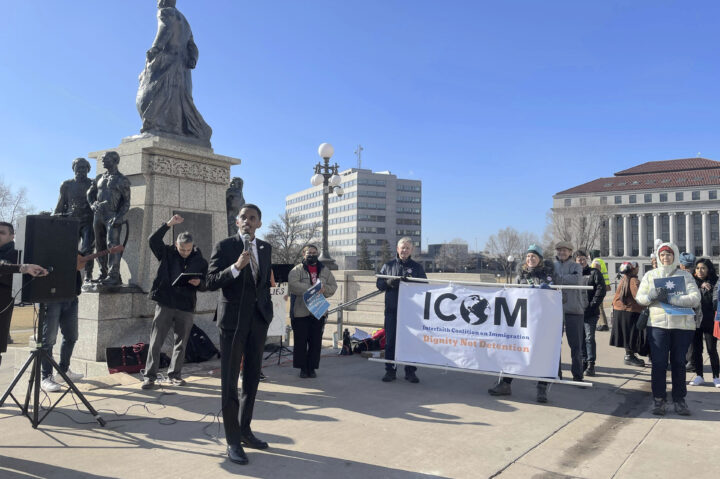
Trisha Ahmed/AP Photo
Minnesota Sen. Omar Fateh, of Minneapolis, speaks in front of the state capitol building in St. Paul, Minn., on Monday, Feb. 12, 2024.
Two political activists closely affiliated with Omar Fateh, a far-left Minnesota state senator who is now running for mayor of Minneapolis, have expressed a range of extreme views on the Hamas terror attacks of Oct. 7, 2023, endorsing the violence as a justified act of resistance and accusing Israel of initiating the war in Gaza, among other inflammatory comments.
Their rhetoric could fuel concerns among local Jewish leaders who sounded alarms about Fateh’s close alliances with anti-Israel activists after he won the state Democratic Party endorsement last month over Jacob Frey, the incumbent seeking a third and final term. Fateh, a 35-year-old democratic socialist whose campaign has recently drawn comparisons to New York City Democratic mayoral nominee Zohran Mamdani, has likewise been a staunch critic of Israel, calling its conduct in Gaza a genocide and pushing for a ceasefire 10 days after Hamas’ attack.
In a mayoral candidate questionnaire solicited by the Twin Cities chapter of the Democratic Socialists of America — which endorsed his bid after facing widespread criticism over its response to the Oct. 7 attack — Fateh also backed the Boycott, Divestment and Sanctions movement targeting Israel, according to portions of the form reviewed by Jewish Insider.
He additionally pledged, without explanation, to “refrain from any and all affiliation” with what the DSA questionnaire dismissed as “Zionist lobby groups,” citing AIPAC, J Street, Christians United for Israel and, most notably, the Jewish Community Relations Council, a nonpartisan organization that typically engages with a diverse group of elected officials in both parties. The local JCRC — which represents the Jewish community to Minneapolis government officials — has voiced reservations about its ability to interact with Fateh if he is elected, in light of his statements on Israel.
But some of Fateh’s campaign staffers have gone significantly further than the state legislator, raising questions over his tolerance for incendiary language on a sensitive issue that has stoked growing internal tensions in the state party and could possibly inflect an increasingly bitter mayoral race in the lead-up to November.
In a series of now-deleted social media posts, for instance, Fateh’s communications manager, Anya Smith-Kooiman stated that Israel “does not have a ‘right’ to exist” and “must be dismantled,” while amplifying comments dismissing widespread reports of sexual violence on Oct. 7 as “propaganda” and hailing the attacks as a form of “resistance” that succeeded where the peace process had failed.

Elsewhere, Smith-Kooiman, who joined Fateh’s campaign in December, according to her LinkedIn page, declared a month after the Oct. 7 attacks that she did “not give a flying f**k about Hamas,” claiming “the root of the problem is a colonial government segregating, ethnically cleaning, murdering Palestinians, stealing their land with impunity and not expecting a resistance group to violently fight back.”
“Colonial and oppressive regimes love to call everyone but themselves a terrorist,” she continued in her November 2023 post to X, now removed from her profile. “Israeli terrorism created Hamas and the cycle will go on and on until Israel, Britain and the U.S. are held accountable for their violence and thievery. Let’s address root causes: imperialism.”
More recently, Smith-Kooiman, in a June social media post, advocated for the release of what she called “all Palestinian hostages,” equating prisoners held in Israel with the captives who were kidnapped by Hamas on Oct. 7.
In addition to Smith-Kooiman, another activist with ties to Fateh’s mayoral bid, David Gilbert-Pederson, has unreservedly praised the Oct. 7 attack, which he has characterized as a heroic feat of defiance against “imperial domination.”

Speaking on a panel discussion about “connecting movements for collective liberation” in December 2023, Gilbert-Pederson — who has been listed as a Fateh campaign staffer in filings — celebrated “what happened collectively for the people of Palestine on Oct. 7,” saying it was not his place to cast judgment on the violence.
“We as Americans, people who live in the imperial core, our job is to stand in unconditional solidarity with those resisting oppression,” Gilbert-Pederson, a close ally of Rep. Ilhan Omar (D-MN), explained in his panel remarks. “Unconditional solidarity does not mean that we get to say, ‘Oh, this tactic you did, we don’t really like that,’ or, ‘We agree with you, but I think that some of your methods are too extreme.’ That’s not what unconditional solidarity means.”
“We live in the core of the empire,” he said, “so it is our job to demand that our government divest from Israel, divest from the colonial project, and start to free the U.S. as well.”
Broadly summarizing his approach, he argued that “all resistance to that kind of imperial domination is justified.”
Fateh’s campaign did not respond to a request for comment on Wednesday about Gilbert-Pederson and Smith-Kooiman, both of whom have previously faced some scrutiny for their rhetoric on Israel and Oct. 7, or his answers to the DSA’s questionnaire.
For his part, Frey, a Jewish Democrat, has been outspoken against rising antisemitism in the wake of Hamas’ attacks. The mayor, 44, has clashed with the City Council over anti-Israel resolutions he has dismissed as one-sided, even as he has condemned Israeli Prime Minister Benjamin Netanyahu and his government’s handling of the ongoing war in Gaza.
Ye, who most recently was a staffer for Rep. Dan Goldman, is backed by a pro-Israel super PAC as well as a group with ties to the real estate industry

Michael M. Santiago/Getty Images
Council Member Alexa Aviles speaks during a press conference outside of City Hall on April 10, 2025 in New York City.
In recent years, Jewish and pro-Israel activists in New York City have been successful in defending favored incumbents while boosting candidates in open-seat local races. But they have struggled to go on the offensive against far-left Israel critics on the City Council aligned with the Democratic Socialists of America, which has gained prominence in some districts.
Now, however, some Jewish community activists and pro-Israel strategists are expressing optimism that a competitive City Council election in southern Brooklyn could be their best pick-up opportunity in next week’s citywide primaries, delivering a possible upset that has so far proved elusive at the local level.
In one of the city’s most hotly contested local races, Alexa Avilés, a two-term councilmember backed by the DSA, is facing a formidable challenge from Ling Ye, a moderate former congressional staffer making her first bid for elective office with a focus largely on public safety.
The race is playing out in a redrawn district that now includes more moderate constituents in Dyker Heights who are likely less receptive to reelecting a socialist, strategists say, fueling hopes among allies of Ye eager to pick off an incumbent whose hostility to Israel while in office has rankled Jewish leaders.
Ye, who immigrated to the United States from China in her early teens, is also depending on the sizable population of Chinese American voters who live in the ethnically diverse district — which covers such progressive pockets as Red Hook, winds down through a heavily Latino section of Sunset Park and terminates around Bensonhurst and Dyker Heights in southwestern Brooklyn.
“She is hyper focused on the issues impacting the community she grew up in and served through her many roles in government,” Haley Scott, a spokesperson for Ye, told JI. “She’s fighting to make south Brooklyn safer and more affordable, and to make sure every community in this district is being heard and represented in City Hall.”
One political consultant supportive of Ye said that he had seen recent polling showing Avilés with an eight-point lead over her opponent, but cautioned the district is difficult to accurately survey because the electorate is so diverse and voters speak several different languages.
“There are a bunch of voting pockets, between the Asian population and working-class moderate white voters, that could break toward Ye,” the consultant, who spoke on condition of anonymity to address the race, told Jewish Insider this week.
Haley Scott, a spokesperson for Ye, also projected confidence ahead of Tuesday’s primary, saying the first-time candidate “is running a campaign to win” and built “overwhelming grassroots support and an aggressive turnout operation to make sure everyone who can vote exercises that right.”
“She is hyper focused on the issues impacting the community she grew up in and served through her many roles in government,” Scott told JI. “She’s fighting to make south Brooklyn safer and more affordable, and to make sure every community in this district is being heard and represented in City Hall.”
Ye, who most recently was a staffer for Rep. Dan Goldman (D-NY), is backed by a pro-Israel super PAC as well as a group with ties to the real estate industry that has invested in attack ads targeting Avilés over past calls to defund the police, among other issues.
Like some other candidates who have previously endorsed such efforts — which have more recently become a political liability — Avilés has softened her rhetoric on public safety issues as she faces scrutiny over her positions while seeking reelection to a third term in the changed district.
As recently as last August, for instance, Avilés had explicitly advocated for “defunding the NYPD” in a platform section on her campaign site, according to archived screenshots on the Wayback Machine. But her current platform features no such language, and even acknowledges that a “police presence” coupled with public services like “better street lighting” have helped constituents “feel safe” in their communities.
Rather than calling for a wholesale divestment from law enforcement, Avilés’ platform now pushes for increased police accountability while arguing that officers are unfit to respond to mental health calls, among other things.
Her campaign did not return a request for comment from JI on Thursday.
The Puerto Rican-born councilwoman, who chairs the Committee on Immigration, has otherwise been emphasizing constituent services, citing her efforts to protect residents from federal agents conducting what she has called “unlawful” raids and arrests as President Donald Trump’s immigration crackdown targets New York City.
For her part, Ye has countered that Avilés’ tenure has been more defined by what she characterizes as performative gestures such as voting against the city budget, while suggesting that her vociferous support for defunding the police has damaged relations with law enforcement at the expense of the community’s immediate needs. Ye has called for “strengthening relationships between local police precincts and the neighborhoods they serve” amid local concerns over violent crime, among other policies that she casts as practical solutions better aligned with the district.
Ye, who has drawn donations from Jewish and pro-Israel donors, is supportive of Israel but has stressed that the City Council is not an appropriate venue for litigating foreign policy and has sought to focus on local issues throughout the race, according to her campaign. The district is home to just a small number of Jewish voters, according to experts, even as it includes some parts of Borough Park, a Hasidic enclave.
“New York’s AIPAC is spending big against me,” Avilés said during her speech on Saturday before a packed audience at Terminal 5, referring to Solidarity PAC, a local pro-Israel advocacy group supporting Ye that has no formal ties to the Washington-based federal lobbying organization. “Because I’ve stood up over and over to demand a ceasefire in Gaza,” she added defiantly to cheers from the crowd. “We want to end the genocide and we want a free Palestine!”
Still, Israel’s ongoing wars have fueled tension in the district. Pro-Palestinian activists have heckled Ye on the campaign trail, according to video seen by JI, accusing her of supporting “genocide” and taking “blood money” from Israel, a false claim that echoes antisemitic tropes about Jewish control of American politics. Ye has also faced xenophobic rhetoric amid the race, as one of her public campaign posters was defaced with graffiti labeling her a “Zionist” as well an affiliate of the “CCP,” or the Chinese Communist Party, a photo recently shared with JI shows.
Even as Avilés has somewhat tempered her rhetoric on law enforcement, she has continued to speak out stridently in opposition to Israel, most recently at a campaign rally in Manhattan for Zohran Mamdani, a far-left state assemblyman from Queens polling in second place in the Democratic mayoral primary on Tuesday.
“New York’s AIPAC is spending big against me,” Avilés said during her speech on Saturday before a packed audience at Terminal 5, referring to Solidarity PAC, a local pro-Israel advocacy group supporting Ye that has no formal ties to the Washington-based federal lobbying organization. “Because I’ve stood up over and over to demand a ceasefire in Gaza,” she added defiantly to cheers from the crowd. “We want to end the genocide and we want a free Palestine!”
In keeping with the DSA, which drew widespread backlash for promoting a Manhattan rally at which attendees were seen celebrating Hamas shortly after the Oct. 7, 2023, attacks, Avilés backs the Boycott, Divestment and Sanctions moment targeting Israel and has faced scrutiny for being among a handful of City Council members who abstained from voting in favor of a City Council resolution to establish an annual “End Jewish Hatred Day.”
Sara Forman, who leads Solidarity PAC, criticized Avilés in a statement to JI as “a DSA ideologue” who during her time in office has “sidelined” key issues such as affordable housing “in favor of empty promises, an obsession with foreign policy and political posturing.”
Solidarity PAC, Forman said, “proudly supports Ling Ye, who has called Brooklyn’s 38th District home since immigrating to the United States at 14, as someone who understands the real and pressing needs of the community.”
As she seeks to fend off her primary challenger, Aviles’ allies have raised some concerns about the race, even as she has won a range of high-profile endorsements from such progressive leaders as Rep. Alexandria Ocasio-Cortez (D-NY) and the Working Families Party. In a recent Zoom discussion about the “Israel lobby,” Yuh-Line Niou, a former far-left state assemblywoman who lost a tight congressional contest in 2022, warned that Avilés is running in “a very tough race” and urged viewers to support her campaign.
“There are people who are Asian voters who will literally see an Asian name on the ballot and be willing to vote for them,” suggested Niou, who is Taiwanese American.
Despite some unease among supporters of Avilés, the race has largely flown under the radar and has been overshadowed by a separate City Council race in Brooklyn where Shahana Hanif, the DSA-aligned incumbent, has drawn backlash from Jewish voters over her strident criticism of Israel.
“It’s going to be the closest of the DSA races,” said one Jewish leader, speaking anonymously to discuss the primary. “But Alexa still wins,” he predicted, while speculating that Mamdani’s “coattails” in the district “will help.”
In her primary, Hanif is defending her seat against Maya Kornberg, a pro-Israel Jewish Democrat also backed by Solidarity PAC who, like Ye, has accused her opponent of failing to provide solid constituent services while advocating for policies like defunding the police that have not helped the district.
But while the race has drawn national attention as well as spending from outside groups backing both candidates, some strategists and Jewish leaders who are eager to see Kornberg win expressed skepticism she will ultimately unseat Hanif — owing largely to the ideological makeup of the district that includes deeply progressive Park Slope.
Some Jewish community activists are also cautious about Ye’s race further south. “It’s going to be the closest of the DSA races,” said one Jewish leader, speaking anonymously to discuss the primary. “But Alexa still wins,” he predicted, while speculating that Mamdani’s “coattails” in the district “will help.”
Still, others following the race are holding out hope that Avilés’ new district lines will favor a moderate Democrat like Ye, who has argued the community “doesn’t need another professional protester” in City Hall.
“There’s a really good chance for a pick-up here,” said another Jewish community activist who has tracked the race.
Please log in if you already have a subscription, or subscribe to access the latest updates.
 Continue with Google
 Continue with Apple