


































As filing deadline hits, campaign cash shows the power of online extremes
The advantage of having a defined group of reliable donors can be neutralized by an online feeding frenzy that galvanizes enough individuals to give to a radical cause or candidate
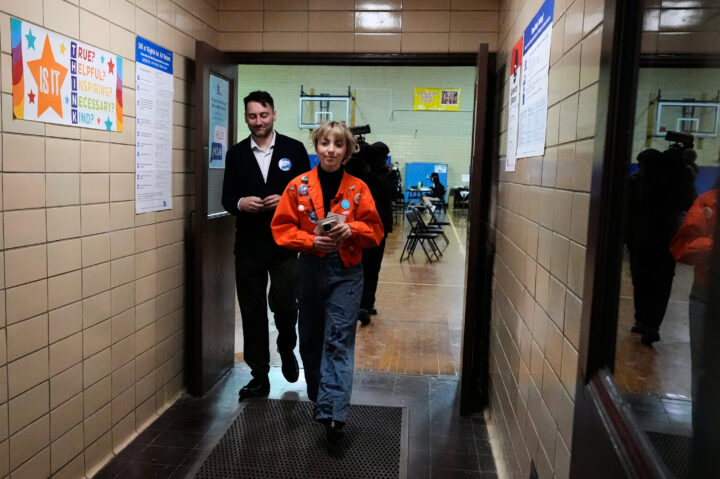
Nam Y. Huh/AP
Democratic candidate for Congress, Kat Abughazaleh, right, and her boyfriend Ben Collins, leave the Chicago Park District Loyola field house after voting in the primary election for the upcoming midterms, in Chicago, Tuesday, March 17, 2026.


 Add JewishInsider on Google
Tomorrow (April 15) isn’t just Tax Day, but it’s also the deadline for candidates vying in the pivotal midterms to report their latest fundraising figures — an important marker on the political calendar in determining which candidates are raising enough money to run credible campaigns and which will be left financially behind.
Historically, having a critical mass of prominent, well-heeled supporters was a prerequisite for a congressional candidate being able to get their message out to the public.
Not long ago, candidates with extreme or exotic views — such as those affiliated with the Democratic Socialists of America on the left or those embracing conspiracy theories on the far right — would have a hard time being taken seriously by rank-and-file donors, who typically want a back a winner and would shy away from those with far-out-of-the-mainstream views.
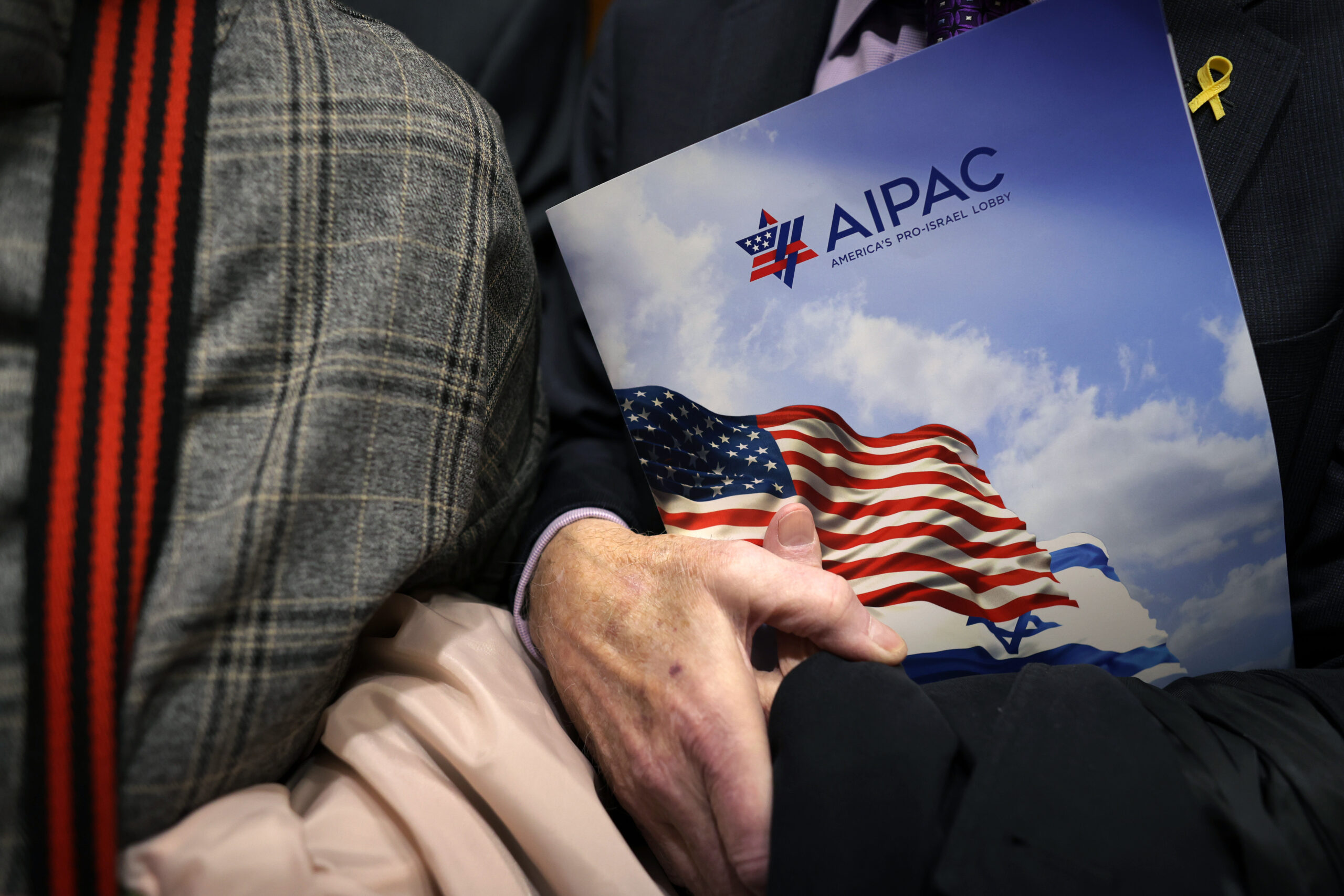
Similarly, the pro-Israel community historically benefited from the presence of strong organizations like AIPAC that helped pool supporters’ money to favored candidates, giving them outsized impact within both parties. More recently, AIPAC’s super PAC has led the way in engaging directly in political campaigns, directly spending money on behalf of favored candidates and attacking some of the most radical candidates on the ballot.
But in our brave new decentralized world of politics and media, where a critical mass of small-dollar donations from passionate individuals can easily be amassed online (especially through an incendiary video clip or well-timed fundraising appeal), the comparative advantage of having a defined group of reliable donors can be neutralized by an online feeding frenzy that galvanizes enough individuals to give to a radical cause or candidate.
At the same time, the social media-driven public conversation — without any guardrails and few standards — has totally transformed what is viewed as normal. One recent example: 27-year-old Kat Abughazaleh, a far-left social media influencer without any roots in the Chicago-area district she was running in, raised well over $3 million for her (unsuccessful) primary campaign, fueled by high-volume, low-dollar, largely out-of-state contributions.
If Tip O’Neill once said all politics is local, the opposite is true today. All politics is now nationalized, with the most outlandish hot takes and incendiary commentary most likely to go viral.
The same viral clips that lead unsuspecting audiences to extreme voices like Hasan Piker and Candace Owens live in the same ecosystem that makes it easy for a candidate like Abughazaleh to bring in big money. It’s not a coincidence that former Rep. Marjorie Taylor Greene (R-GA) and Rep. Alexandria Ocasio-Cortez (D-NY) were among the top fundraisers within their respective parties this cycle.
There are two different ways for Jewish and pro-Israel voices to adapt to this still-evolving revolution in both media and politics — one on the supply side and one on the demand side.
On the demand side, it’s clear that the algorithmic preferences for leading social media platforms prioritize constant unthinking engagement (at best) and rage and radicalism (at worst).
It doesn’t seem like a coincidence that Twitter/X’s decision to unblock neo-Nazi influencer Nick Fuentes from the platform in May 2024 quickly led to an upsurge in antisemitic content being embraced by a wide range of far-right podcasters. There are thoughtful policy proposals that have been floated to do a better job regulating what has increasingly become an anarchic space.
Most of the focus, however, has been on how politicians and outside groups can adapt on the supply side. As Obama campaign manager David Plouffe wrote in The New York Times last week, “A successful campaign in 2026 must operate like a full-time production studio… It means creating output tailored specifically for TikTok or Instagram or YouTube.”
Plouffe also noted that campaigns need to focus on what he called “answer engine optimization” for artificial intelligence, essentially working to ensure friendlier responses from AI bots.
If the old media and fundraising model was to rely on scale (of donations) and volume (of ads) to persuade voters, the new media ecosystem requires nimbleness and adaptability. Raising the most money and saturating the airwaves with advertisements was once a time-tested tool of success.
Now, campaigns and advocacy groups alike are facing a multifront challenge, figuring out whether to accommodate what appears to be a new political and media reality where the loudest and most polarizing voices prevail — or fight for a more fair-and-balanced ecosystem while also engaging with the fractured landscape as best as possible.
More Stories
analysis
Democrats hope to ride a historic Senate wave, but face several speed bumps

PREDECESSOR PROBLEMS
The Lander policy at the heart of Levine’s Israel bonds reversal
EDIT WARS
Wikipedia failed to address coordinated anti-Israel campaign, new ADL study finds

analysis
Is Israel’s anti-Netanyahu bloc fracturing?
Please log in if you already have a subscription, or subscribe to access the latest updates.
 Continue with Google
 Continue with Apple