










































The STOP HATE Act would require social media companies to publicize policies on the use of their platforms by designated terrorists

Getty Images
Some of the most popular social media apps by number of monthly active users, including Facebook, YouTube, Instagram, WhatsApp, TikTok, WeChat, Telegram, Messenger, and Snapchat, are seen on an iPhone.


 Add JewishInsider on Google
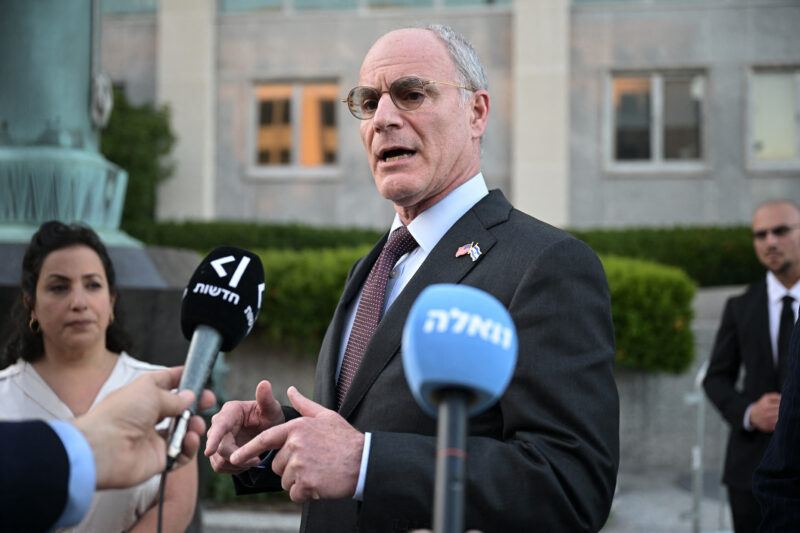
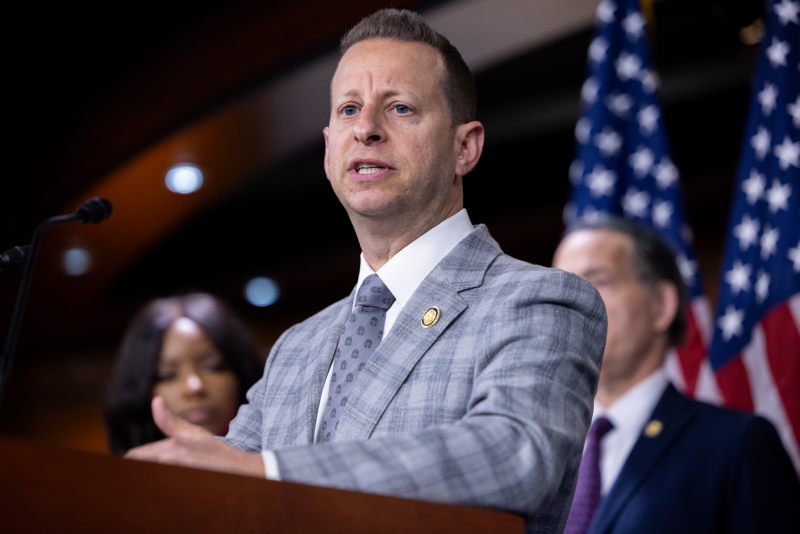
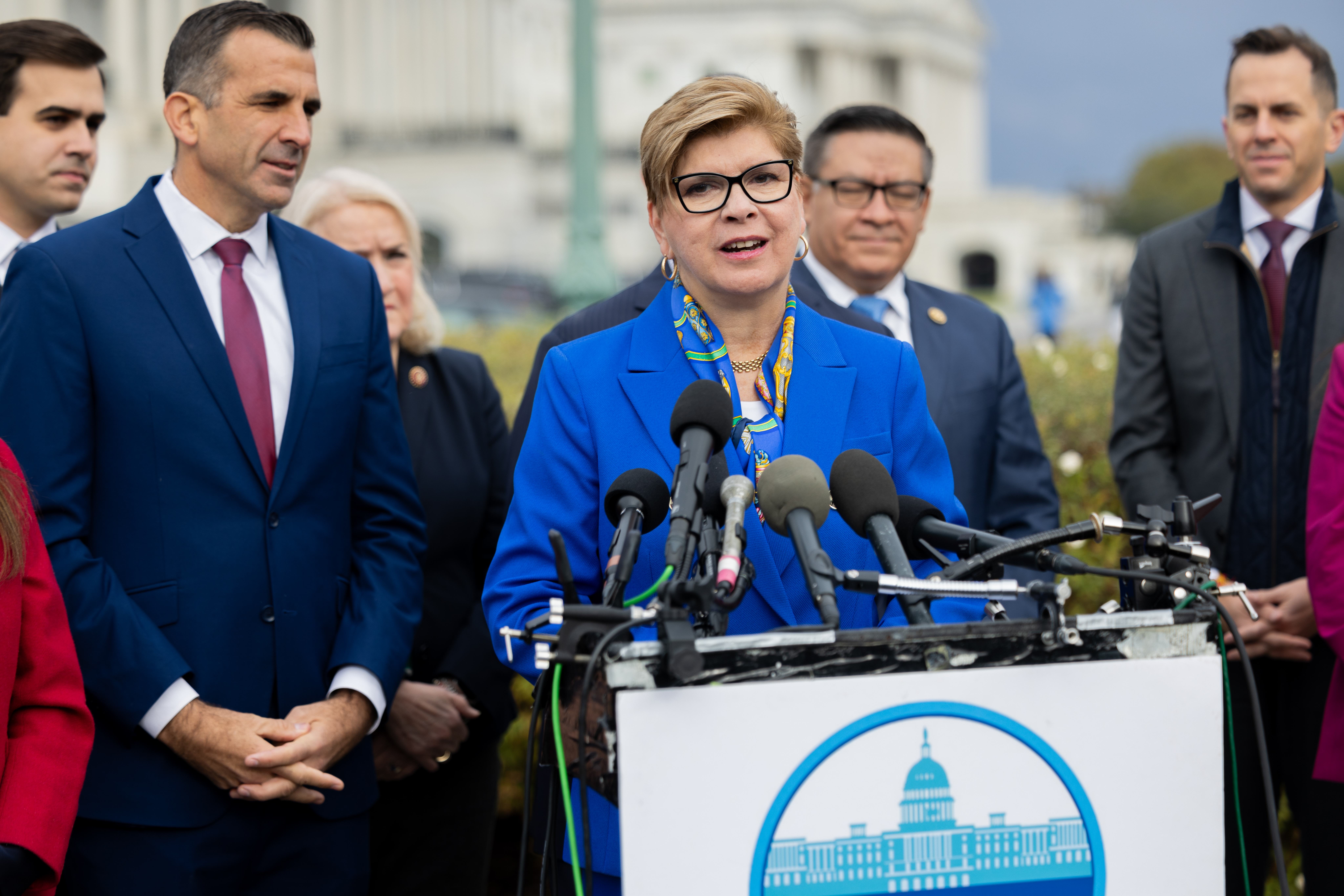
Reps. Josh Gottheimer (D-NJ) and Don Bacon (R-NE) on Wednesday announced the reintroduction of the STOP HATE Act, which aims to crack down on antisemitism on social media. The legislators announced the bill’s reintroduction at a press conference alongside Anti-Defamation League CEO Jonathan Greenblatt.
The bill, which was first introduced in November 2023 but failed to progress in the previous Congress, would require social media companies to publicize specific policies on their standards and restrictions for their platforms by designated terrorists, report to the federal government on content flagged and/or removed under these policies and publicly report on incidents which violate their policies.
The bill would also demand that platforms publish contact information for users to ask questions about the companies’ terms of service, a description of how users can flag violative content and a description of how the companies will respond to such content.
Companies would face fines up to $5 million per day if they violate these policies.
The bill would also require administration officials to issue a public report on the use of social media platforms by terrorist groups.
“There is no reason why anyone, especially terrorists or anyone online, should have access to social media platforms to promote radical, hate-filled violence,” Gottheimer said, highlighting that extremist groups had capitalized on the May attack on the Capital Jewish Museum in Washington to promote antisemitic incitement. “There’s a massive disinformation campaign influencing us each day.”
Bacon said, “We need to work with our social media companies to clean this up, because what is going on is wrong, and I think it’s further influencing other young people that could be influenced by what they’re seeing. … We need to hold these companies accountable and work with them to take it off the airwaves.”
He also noted that lawmakers had faced antisemitic harassment at the Capitol this week from protesters.
Greenblatt said that antisemitism has “gone viral in large part because of social media,” adding that bigots and extremists “exploit social media to recruit, to radicalize and to incite violence, often in violation of the companies’ own terms of service. It’s not just theoretical. This is a real concern.”
Asked about the Trump administration’s continued delays of the U.S. ban on TikTok, flouting a bipartisan law on the platform, both lawmakers said that President Donald Trump should enforce the law and require TikTok’s owners to sell the site or shut it down.
Greenblatt said that “at the end of the day, the ownership of TikTok matters, but the actions matter more,” noting that American-owned platforms have also had significant antisemitism problems, and that a sale would not be a “panacea.”
The university ‘does not admit to wrongdoing’ despite reaching the agreement, Acting President Claire Shipman said

JEENAH MOON/POOL/AFP via Getty Images
Columbia University acting President Claire Shipman speaks during the Commencement Ceremony at Columbia University in New York on May 21, 2025.
Columbia University announced on Wednesday that it reached a deal with the Trump administration to restore some $400 million in federal funding that was cut by the government in March due to the university’s record dealing with antisemitism since the Oct. 7, 2023, Hamas terror attacks in Israel.
Under the terms of the deal, Columbia agreed to pay a $200 million settlement over three years to the federal government. In addition, the university has agreed to settle investigations brought by the U.S. Equal Employment Opportunity Commission for $21 million. A number of open civil rights investigations into the university alleging harassment of Jewish students will also be settled under the terms of the agreement, according to which the university will also abide by laws banning the consideration of race in admissions and hiring.
Columbia said it will continue to have “autonomy and authority over faculty hiring, admissions, and academic decision-making.”
“While Columbia does not admit to wrongdoing with this resolution agreement, the institution’s leaders have recognized, repeatedly, that Jewish students and faculty have experienced painful, unacceptable incidents, and that reform was and is needed,” the university said in a statement.
“This agreement marks an important step forward after a period of sustained federal scrutiny and institutional uncertainty,” Claire Shipman, Columbia’s acting president, said in a statement. “The settlement was carefully crafted to protect the values that define us and allow our essential research partnership with the federal government to get back on track. Importantly, it safeguards our independence, a critical condition for academic excellence and scholarly exploration, work that is vital to the public interest.”
Brian Cohen, executive director of The Kraft Center for Jewish Student Life, Columbia’s Hillel, called the settlement “an important recognition of what Jewish students and their families have expressed with increasing urgency: antisemitism at Columbia is real, and it has had a tangible impact on Jewish students’ sense of safety and belonging and, in turn, their civil rights.”
“Acknowledging this fact is essential, and along with the new path laid out by the president and trustees, I am hopeful that today’s agreement marks the beginning of real, sustained change,” Cohen said in a statement. “This is not the end of the process, however it is a major step forward.”
The agreement comes days after Shipman publicized a list of commitments aimed at addressing antisemitism on campus. These included further incorporating the International Holocaust Remembrance Alliance’s working definition of antisemitism by requiring its Office of Institutional Equity to embrace the definition; appointing a Title VI coordinator to review alleged violations of the Civil Rights Act; requiring antisemitism training for all students, faculty and staff; and refusing to recognize or meet with Columbia University Apartheid Divest, a coalition of over 80 university student groups that Instagram banned earlier this year for promoting violence. The school announced on Friday that disciplinary action and rules surrounding student protests would be moved out of the purview of the faculty-run University Senate and into the provost’s office, a move called for by pro-Israel students.
The terms of the settlement — which resulted from months of negotiations — diverge from a list of reforms that was demanded in the Trump administration’s letter to Columbia in March, which was initially agreed upon by the university but never finalized. The list included putting the Middle Eastern, South Asian and African studies department and the Center for Palestine Studies under the purview of a senior vice provost, who would be appointed by the university to supervise course material and non-tenure faculty hiring; as well as the formation of a presidential search committee to replace Shipman.
The report requires additional vetting for U.S. funding abroad, targeting the BDS movement and alleged U.S. support for political activity

Kevin Carter/Getty Images
The U.S. Capitol Building is seen at sunset on May 31, 2025 in Washington, DC.
Republicans on the House Appropriations Committee’s National Security, Department of State and Related Programs subcommittee are backing a significant increase in funding for the office of the State Department’s special envoy to monitor and combat antisemitism.
The explanatory report accompanying the subcommittee’s 2026 funding bill, which it advanced last week, proposes $2.5 million for the office, up from the $1.75 million provided in 2024 and 2025. The report also includes language calling for increased full-time staff in the office. The full Appropriations Committee will meet to discuss and vote on the bill on Wednesday.
The bill also expands vetting policies for U.S. funding abroad, requiring that no funding be provided to organizations that engage in the Boycott, Divestment and Sanctions movement targeting Israel, glorify violence or target the U.S. or Israel at the International Criminal Court or International Court of Justice.
Citing unspecified allegations that the U.S. provided assistance to organizations involved in political activity — a potential reference to GOP allegations that the U.S. funded protests against the Israeli government — the report directs the Department of State to expand its vetting procedures “to include an assessment of political neutrality and a review of statements by individuals or organizations that constitute engagement in political advocacy, incitement, or support for terrorism that would cause operational and reputational risks for the United States Government.”
The legislation, as approved by the subcommittee last week, would cut off U.S. funding to various United Nations initiatives, including the U.N.’s general budget.
The report explains that the cuts were motivated in part by the U.N.’s failure to address internal antisemitism and anti-Israel bias. It requests that the State Department report to Congress on the issue, including specific instances of antisemitism and their origins, statements by U.N. agencies or officials that may violate their responsibility to maintain neutrality toward Israel and an assessment of the U.N.’s plan to improve its response to antisemitism.
It also “strongly condemns” the U.N. General Assembly for passing a resolution granting the Palestinian Authority status nearly equivalent to that of a member state, describing the decision as having “undermin[ed] peace and security between the Israeli and Palestinian peoples.”
The report states that lawmakers are concerned about the continued relationship between Hamas and Turkey, which has hosted some of the group’s leaders. It makes no mention of the similar — and deeper — relationship between Hamas and Qatar.
The report calls for accountability for the United Nations Relief and Works Agency, including demanding that the U.N. address atrocities committed by UNRWA members on Oct. 7, 2023, and UNRWA’s alleged provision of support for and partnership with terrorist groups.
It demands that the U.N. provide unredacted files on these issues, which it has allegedly declined to do thus far, and asks the State Department to present a plan for aiding the Middle East without UNRWA and a report on whether U.S. aid to UNRWA was diverted to or paid the salaries of terrorist groups and their members.
The bill would block U.S. funding to South Africa unless it meets several conditions, including ceasing its cooperation with U.S. adversaries.
It would earmark $5 million for programs in Israel designed to support archeological and cultural heritage, like the City of David. It also urges the State Department to support programs and organizations that back the U.S.-Israel relationship and directs the department to make funding available for humanitarian needs in Israel, such as medical responses to Iranian missile attacks.
It would maintain funding, $50 million annually, for the Middle East Partnership for Peace Act and would provide $50 million for the Middle East Partnership Initiative, which aims to support leadership and public-private partnerships in the Middle East; $10 million for the Middle East Regional Cooperation program, which funds scientific collaboration between Israel and Arab States; and $4 million for cooperative development programs between Israel and the United States in third countries.
The report states that freeing the remaining hostages in Gaza “is a critical United States priority and urges regional partners and allies to intensify their efforts toward achieving this objective.”
The legislation creates new oversight requirements for U.S. aid to Syria, requiring the State Department to notify Congress about aid provided to Syria, to consult with Congress before initiating a new aid program or activity and to ensure that no U.S. aid will benefit members or affiliates of the former Assad regime.
The report expresses concern about antisemitic discrimination in Latin America, “particularly instances of elected leaders fueling prejudice against Jewish communities through social media and official government channels or otherwise neglecting their responsibility,” and encourages them to condemn and work to fight antisemitism.
The report also instructs the State Department to work with U.S. allies toward implementing snapback of United Nations sanctions on Iran.
It also asks the State Department to report to Congress on foreign governments and nonstate actors that are targeting the international Jewish community and using antisemitism and antisemitic symbols.
The report requests that the State Department update Congress on the status of negotiations with the PA to end its terror payments program and expresses support for continued efforts to dismantle Hamas in Gaza, stating that the group continues to pose a threat to the U.S., Israel and other partners.
It further mandates that the State Department update Congress on the situation in southern Lebanon, including the actions of Hezbollah, the Lebanese Armed Forces and the U.N. peacekeeping force and their actions to comply with and enforce U.N. Security Council Resolution 1701 and the Israel-Lebanon ceasefire agreement, which mandates the disarmament of Hezbollah.
And it directs the State Department to present a plan for the future of the U.S.-Egypt relationship, including to consider negotiating a memorandum of understanding between the two countries on security assistance, as the U.S. has in place with Israel.
The report additionally instructs the State Department to ensure sufficient resources are provided to support the Abraham Accords and their expansion, and to work to expand membership in the Comprehensive Security Integration and Prosperity Agreement with Bahrain.
Good Tuesday morning.
In today’s Daily Kickoff, we talk to Jewish Capitol Hill staffers in Democratic offices who feel increasingly isolated at work over their colleagues’ growing antipathy toward Israel and antisemitism, and report on the Young Democrats of America’s decision to accuse Israel of genocide in its updated foreign policy plank. We report on the latest developments following Israel’s just-launched ground operations in Deir al-Balah, Gaza, and look at the critical approaches to Israel being taken by GOP challengers to freshman Rep. Nellie Pou in New Jersey. Also in today’s Daily Kickoff: David Ellison, Sam Altman and Rep. Andrew Garbarino.
What We’re Watching
- A number of House committees are meeting for hearings and markups this week. This morning, we’re keeping an eye on a House Foreign Affairs Committee markup that includes a bill expediting arms sales to Abraham Accords signatories. Read more here.
- At 10:30 a.m. ET, the House Financial Services Committee is holding a markup that includes new legislation introduced by Rep. Mike Lawler (R-NY) that aims to create oversight and set conditions for lifting sanctions on Syria. Read more here.
- On the Senate side of the Capitol, the Senate Armed Services Committee is holding a confirmation hearing for the Navy’s Vice Adm. Frank Bradley to be head of Special Operations Command.
- At noon, the American Jewish Congress is holding a virtual briefing with Gaza Humanitarian Foundation Executive Director Johnnie Moore.
- Elsewhere in Washington, OpenAI CEO Sam Altman will appear today at a Federal Reserve conference to push the economic benefits of artificial intelligence.
- Tonight, UJA-Federation of New York is hosting a bnai mitzvah party for more than three dozen Israeli teenagers who have lost a parent on or since Oct. 7, 2023. The IDF Widows and Orphans Organization facilitated the trip.
- And in Israel, the Israel Democracy Institute is holding a conference in Jerusalem focused on the Knesset’s upcoming summer recess, which begins on Sunday.
What You Should Know
A QUICK WORD WITH JI’S MELISSA WEISS
It’s a scenario that has played out many times over since Oct. 7, 2023: Against the backdrop of ceasefire and hostage-release negotiations, Israeli actions in Gaza draw widespread condemnation. World leaders call for a ceasefire. Amid that growing criticism, Hamas, sensing increased pressure on Israel, responds by escalating its demands or backing away from negotiations entirely.
This week is no different, with Israel’s launch on Monday of a ground operation in central Gaza’s Deir al-Balah, where it had not previously operated, the same day that more than two dozen Western countries released a joint statement calling for “unconditional and permanent ceasefire.” Hamas negotiators in Doha, Qatar, have reportedly spent the last two weeks dragging out ceasefire talks, over issues ranging from the number of Palestinian prisoners to be released to the areas where the IDF is allowed to operate.
In yesterday’s statement, the countries’ demand of Hamas is only for the “immediate and unconditional release” of the remaining 50 hostages, with no mention of disarmament or the terror group’s removal from power — key Israeli demands since Hamas’ brutal attacks on the Jewish state almost two years ago.
Hamas has since October 2023 faced limited pressure to acquiesce to Israeli and American demands. The terror group’s backers in Doha, where senior Hamas officials have long lived in opulence and security, have similarly faced little international pressure — even as Qatar plays a key role in negotiations. Israel has not been a perfect actor, and at times has walked away from the negotiating table. But Jerusalem’s refusals have been outpaced by Hamas’ intransigence, the latter of which has frustrated White House officials in both the current and former administrations.
CAPITOL CLIMATE

Many of the liberal-minded Jewish staffers on Capitol Hill came to Washington to work on issues such as reproductive rights, access to health care and environmental policy. But for nearly two years — following the Oct. 7, 2023, Hamas attacks on Israel and the ensuing war in Gaza — they have had to navigate a professional environment that demands an air of detached professionalism while their fellow staffers and Democrats writ large adopt a more critical approach to Israel and antisemitism. Several Democratic Jewish staffers, ranging from junior aides to chiefs of staff — most of whom requested anonymity, wary of being made a target of antisemitism and concerned about putting themselves at risk professionally at a time when Democratic jobs are hard to come by — told Jewish Insider’s Gabby Deutch and Danielle Cohen-Kanik that, in the face of growing antipathy to Israel and continued antisemitic terror and threats, they have turned to each other to build a tight-knit community among Jews working on Capitol Hill.
Ties that bind: “It has led to increased camaraderie and dialogue and kind of just a common understanding and bond … We work for a lot of different members: members who are Jewish, members who are not Jewish, members who one of their main issues is the U.S.-Israel relationship, members who are not mainly concerned with it,” a legislative aide for a Democratic member of Congress. “But nonetheless, I think a lot of us are united and brought together by the aftermath of Oct. 7.”
POLICY SHIFT
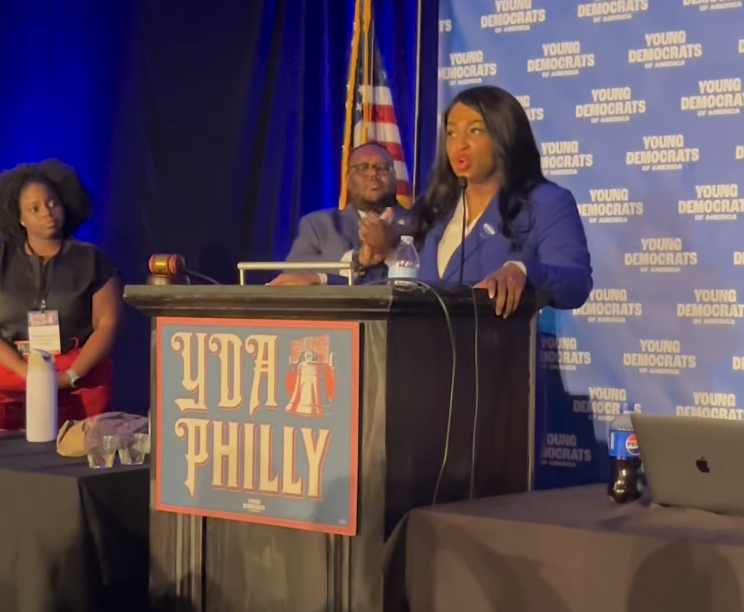
The Young Democrats of America, a leading youth advocacy group representing party members under the age of 36, approved a new platform at its recent national convention accusing Israel of “genocide” in Gaza, raising long-simmering internal tensions over Middle East policy, Jewish Insider’s Matthew Kassel reports.
Amendment: The organization, whose biennial convention concluded in Philadelphia on Saturday, narrowly passed an amendment expressing opposition to the “Israeli government’s ongoing genocide in Gaza, its occupation of the West Bank, and its denial of civil and political rights on an equal basis in the territories it militarily occupies,” according to an updated foreign policy plank reviewed by JI. The change, which added the “genocide” reference to an existing amendment, was proposed “to reflect current events and align with present-day actions,” according to a platform committee document from the convention.
MILITARY MANEUVERS

The IDF entered the central Gaza city of Deir al-Balah for the first time on Monday, amid stalled hostage and ceasefire negotiations in Doha, Qatar. The maneuver in Deir el-Balah began a day after an evacuation order from the city, built on the Mediterranean coast around an UNRWA refugee camp. Israeli officials believe some of the remaining 50 hostages may be held in the area. In June 2024, the IDF freed four hostages, Noa Argamani, Shlomi Ziv, Almog Meir Jan and Andrey Kozlov in a raid in adjacent Nuseirat, Jewish Insider’s Lahav Harkov and Tamara Zieve report.
Background: Deir el-Balah has been relatively unscathed during the war that began after the Hamas terrorist attacks on southern Israel on Oct. 7, 2023. The April 2024 incident in which the IDF killed World Central Kitchen aid workers whom it had mistakenly identified as terrorists took place near Deir el-Balah. Before the latest operation in the Gaza war began in May, a senior defense official told JI that the plan was to start from Gaza’s perimeter and work its way to the center, which the military now appears to be doing.
Presidential surprise: White House Press Secretary Karoline Leavitt said on Monday that President Donald Trump was “caught off guard” by recent Israeli actions in Syria and Gaza, noting that he had called Israeli Prime Minister Benjamin Netanyahu to air his concerns, Jewish Insider’s Emily Jacobs reports.
representation consternation
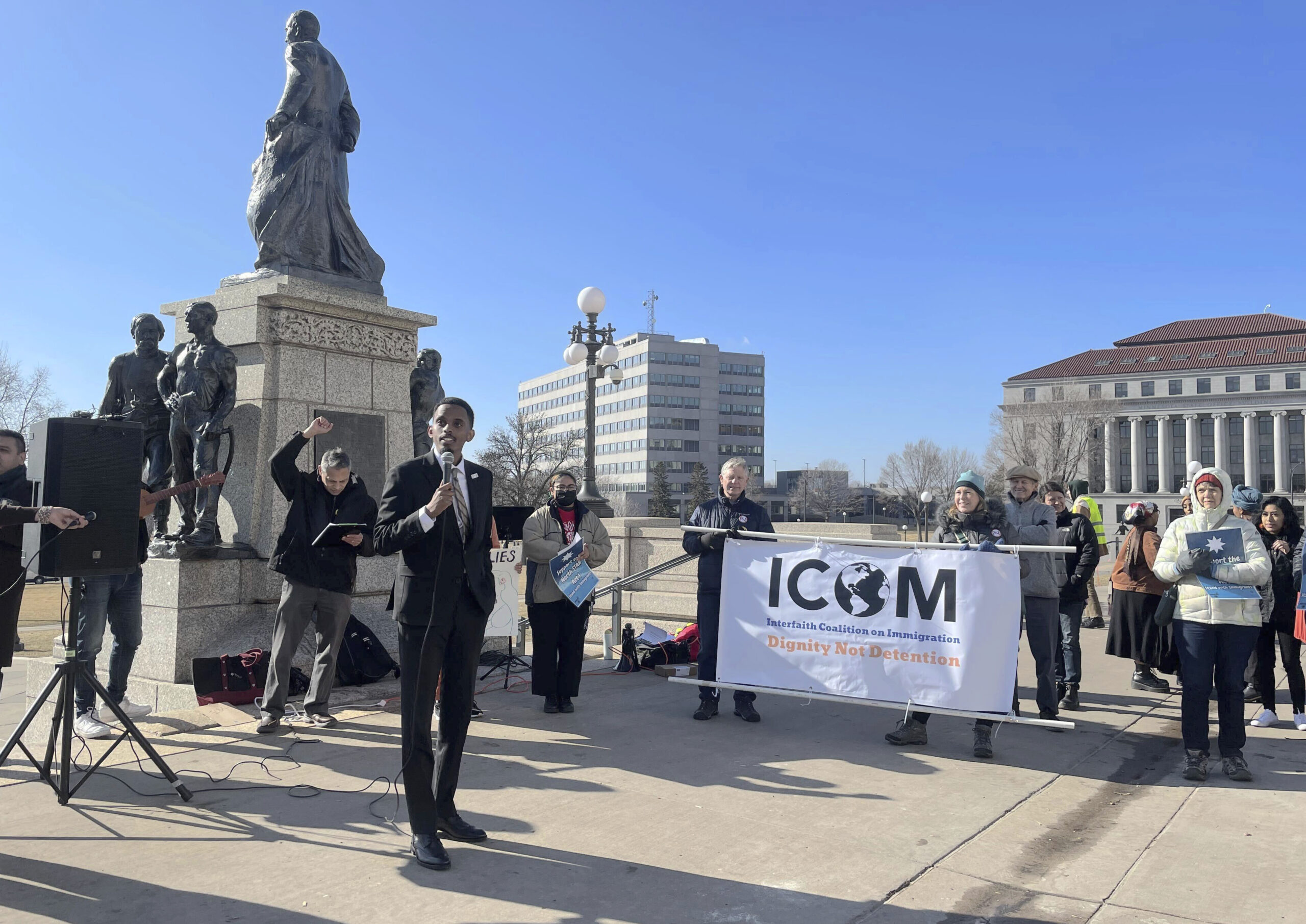
Jewish community activists in Minneapolis are voicing concerns about the rise of state Sen. Omar Fateh, a far-left lawmaker who, in a surprise upset, narrowly clinched the state Democratic Party endorsement on Saturday against incumbent Mayor Jacob Frey, Jewish Insider’s Matthew Kassel reports. Fateh, a 35-year-old democratic socialist, has rarely commented on Israel or rising antisemitism during his time in the state Senate, even as he called for a ceasefire in the war between Israel and Hamas just 10 days after the Oct. 7, 2023, terror attacks.
Community concerns: Fateh’s close alliances with anti-Israel voices such as the Twin Cities arm of the Democratic Socialists of America — which backs efforts to boycott and divest from Israel — have raised questions over his approach to key issues and his potential outreach to the organized Jewish community as he vies for the mayorship. In its mayoral endorsement questionnaire, the DSA asked candidates to pledge “to refrain from any and all affiliation with the Israeli government or Zionist lobby groups” — citing AIPAC, J Street and even the nonpartisan Jewish Community Relations Council.
pino’s positions
The leading Republican candidates in a New Jersey swing district that President Donald Trump narrowly carried in 2024 hold questionable track records on Israel and antisemitism — in sharp contrast to most GOP candidates across the country, Jewish Insider’s Marc Rod reports.
The latest: Rosemary Pino, the Clifton, N.J., City Council member who recently entered the race against Rep. Nellie Pou (D-NJ), posted a video last month from a Palestinian flag-raising event in Clifton where speakers accused Israel of genocide, though she told JI her attendance at the event did not signal support for the sentiments expressed, and that she supports the U.S.-Israel relationship. Pino also expressed concerns in 2023 about city council legislation that would have adopted the International Holocaust Remembrance Alliance’s working definition of antisemitism. She told JI she “strongly condemn[s] antisemitism in all shapes and forms.”
GEN Z OUTREACH
Israeli Prime Minister Benjamin Netanyahu argued that young people in America are won over “pretty quickly” by the truth about the situation in Israel, when discussing New York City Democratic mayoral candidate Zohran Mamdani on a podcast released Monday, and suggested that Mamdani’s policies would be unpopular if he’s elected, Jewish Insider’s Marc Rod reports.
Quotable: “A lot of people have been taken in by this nonsense,” Netanyahu said, on the “Full Send” podcast, hosted by a social media influencer group called the Nelk Boys popular with young men. “Sometimes folly overtakes human affairs for a while, but not for long, because reality steps in,” Netanyahu continued. “I’m obviously not happy with it, but I’m less concerned with it, because I think if we can speak the truth to the young people of America, they wise up pretty quickly.”
Worthy Reads
Postwar Patriotism in Tehran: The New York Times’ Erika Solomon and Sanam Mahoozi look at how Iran has channeled its recent military losses and attacks on its nuclear program into a resurgent nationalism. “Iran has emerged from its war with Israel — briefly joined by the United States — deeply wounded. … Amid that bleak outlook, the country’s leaders see an opportunity. Outrage over the attacks has sparked an outpouring of nationalist sentiment, and they hope to channel that into a patriotic moment to shore up a government facing daunting economic and political challenges. The result has been an embrace of ancient folklore and patriotic symbols that many of Iran’s secular nationalists once saw as their domain, not that of a conservative theocracy that often shunned Iran’s pre-Islamic revolutionary heritage.” [NYTimes]
The Gaza Tragedy: The Washington Post’s David Ignatius considers how the humanitarian situation in Gaza has approached the brink of collapse. “At the heart of this catastrophe is that Hamas and Israel seem unable to end a war that has been ruinous for both sides. Hamas is beaten but won’t surrender, and it seems eager to manipulate the chaos. Israel has won but has failed to consolidate its victory with a transitional scheme for governance that would replace Hamas with an Arab force backed by the Palestinian Authority. Meanwhile, the remaining Israeli hostages are trapped in this unending nightmare.” [WashPost]
Mandy’s Wrong Note: In his Substack, Michael Granoff responds to actor Mandy Patinkin’s recent comments critical of Israeli Prime Minister Benjamin Netanyahu and Israel’s war against Hamas. “Finally, Mandy, one of my favorites of your recording, is your brilliant medley of ‘Everybody Says Don’t,’ from Sondheim’s ‘Anyone Can Whistle,’ and ‘The King’s New Clothes.’ The emotion you convey at the climax of the latter number, ‘…one little boy who for some reason didn’t know what he was SUPPOSED TO SEE…’ I bet you always fancied yourself that virtuous little boy. But you know what? You are actually with ‘the Ministers, the Ambassadors, the Counts and the Dukes,’ who repeat the lie promulgated by terrorists and by institutions like the United Nations, the International Criminal Court, Al Jazeera, and more. The King’s new clothes? Those are the accusations against us – apartheid, war criminals, baby killers, genocide. Lies just as naked as the king.” [Substack]
Messing’s Message: In The Times of Israel, actress Debra Messing reflects on the rise of antisemitism in the progressive movement where she had long found a political home. “What troubles me most is not the presence of hate. Hate has always found a way to survive. What troubles me is the way it is being rationalized. Dismissed. The way it is reframed as something noble. The way it becomes invisible, especially to those who should know better. Jewish safety and progressive values should never be in conflict. If they are, we have to ask whether we’ve drifted from our humanity. The test is whether progressivism stands firm, not just when it is easy but when it’s hard; when it forces us to confront multiple truths. In the end, every movement tells you who belongs by what it is willing to protect. I still believe in the progressive vision. But I’m watching closely, because if it can’t make space for my community, then it’s not what it claims to be.” [TOI]
Word on the Street
The Trump administration is reportedly planning to withdraw the U.S. from UNESCO over what it alleges is the body’s anti-Israel and pro-China bias, as well as its focus on diversity, equity and inclusion initiatives…
Rep. Andrew Garbarino (R-NY) was elected chair of the House Homeland Security Committee, following committee chair Rep. Mark Green’s (R-TN) resignation from Congress on Monday…
In a letter to members of the House Homeland Security Committee’s Counterterrorism and Intelligence subcommittee, the Jewish Federations of North America highlighted the significant security costs facing the Jewish community, as advocates push for additional security assistance from the federal government at a time of heightened antisemitism,Jewish Insider’s Marc Rod reports…
The Bronx campaign office of Rep. Alexandria Ocasio-Cortez (D-NY) was vandalized with anti-Israel graffiti days after the New York Democrat voted against an amendment pushed by Rep. Marjorie Taylor Greene (R-GA) to end funding for Israel’s missile-defense programs…
Larry Ellison’s Oracle is in talks with Skydance Media, founded and led by Ellison’s son, David, over a potential $100 million annual deal that would take shape following Skydance’s acquisition of Paramount; the deal would see Paramount use Oracle’s cloud-sharing software…
The Wall Street Journal looks at the legal and financial battle between Fortress Investment Group and real estate investor Charles Cohen as Fortress attempts to seize hundreds of millions of dollars it says it is owed by Cohen…
The CEO and board chair of Friends of the IDF are stepping down, weeks after the leak of an internal report alleging internal dysfunction, inappropriate spending and a toxic work environment, eJewishPhilanthropy’s Judah Ari Gross reports…
An anti-Israel activist in New York City was arrested and charged with setting nearly a dozen police vehicles on fire last month; Jakhi McCray had previously been arrested in 2024 for torching Israeli and American flags outside the Israeli consulate in New York…
In its “Overlooked” series, The New York Times spotlights Soviet aviator Polina Gelman, who during World War II was part of an elite group of female navigators known as the “Night Witches”; Gelman, who died in 2005, was the only Jewish woman to earn the USSR’s Hero of the Soviet Union medal during the war…
A federal appeals court overturned the conviction of the man found guilty of kidnapping and killing 6-year-old Etan Patz in 1979; Pedro Hernandez will have a new trial — his third, after the first was deadlocked, prompting the 2017 trial that found him guilty…
Former Brigham Young University quarterback Jake Retzlaff is transferring to Tulane, following a seven-game suspension for violating BYU’s honor code…
The Washington Post looks at Hamas’ deepening financial crisis, as the terror group, which had not prepared for its war with Israel to extend past a year, finds itself unable to pay salaries and rebuild its vast underground tunnel system…
Israeli officials warned that the country’s port in Eilat is at risk of shutting down entirely unless it receives financial assistance, citing the impact of the Houthis’ constant ballistic missile attacks that have caused a 90% drop in activity at the Red Sea port…
Iranian Foreign Minister Abbas Araghchi told Fox News that Tehran will not give up its nuclear enrichment program, while an Iranian Foreign Ministry spokesperson said that the country will not resume nuclear talks with the U.S., despite planning to continue talks with European powers…
Iran launched a suborbital test flight satellite carrying Ghased rockets, the first time since last month’s war with Israel that Tehran has launched such a test…
Government offices, businesses and banks across Tehran will shutter tomorrow as the region faces a heat wave, with temperatures expected to exceed 104 degrees Fahrenheit…
Turkey is closing in on an agreement to purchase up to 40 Eurofighter Typhoon fighter jets; Ankara has been waiting on required approval from Germany, which had been stalled since 2023 over Berlin’s opposition to some elements of Turkish foreign policy…
Egyptian Prime Minister Mostafa Madbouly directed his government to prepare a package of joint Egypt-U.S. investment opportunities, as part of a broader effort to deepen Egyptian relations with Washington…
Real estate mogul Don Soffer, a key driver behind the establishment and development of Aventura, Fla., died at 92…
Former University of Baltimore Law School Dean and president of the Charles Crane Family Foundation, Larry Katz died at 85…
Pic of the Day

Birthdays

British biochemist and professor at the University of Dundee in Scotland, Sir Philip Cohen turns 80…
Actress, prominent in Israeli theater, television and film, Gila Almagor turns 86… British Conservative Party member of Parliament for 36 years until 2010, a leading figure in the fight against human trafficking in the UK and worldwide, Anthony Steen CBE turns 86… Historian, author and professor emerita at the University of Wisconsin-Madison, Judith Walzer Leavitt turns 85… Actor, director and comedian, Albert Brooks (born Albert Lawrence Einstein) turns 78… Past president of the Jewish Community Relations Council of Detroit, owner of Nodel Parks (operator of 37 manufactured home parks in nine states), Richard Martin Nodel… One of only 21 EGOT winners, including eight Academy Awards and 11 Grammy awards, pianist and composer of many Disney movie musical scores, Alan Menken turns 76… Owner of Baltimore’s Seven Mile Market, Hershel Boehm… Managing director of a German public affairs firm, he works to ensure that the Holocaust and its many victims are not forgotten, Terry Swartzberg turns 72… Publisher of the 5 Towns Jewish Times, Larry Gordon turns 72… Judge of the U.S. District Court for the District of Columbia since 2011 (senior status since May 2023), Judge Amy Berman Jackson turns 71… Canadian sports journalist, radio host and mental health advocate, Michael Elliott Landsberg turns 68… Member of the board of governors of the American Jewish Committee, Cindy Masters… Secretary of veterans affairs in the first year of the Trump 45 administration, David Jonathon Shulkin turns 66… Director of government relations for the Zionist Organization of America, Dan Pollak turns 66… Federal prosecutor for 25 years, she was the U.S. attorney for the Northern District of Alabama throughout the Obama administration, Joyce Alene Vance turns 65… Founding partner of the D.C.-based intellectual property law firm, Greenberg & Lieberman, Stevan Lieberman turns 60… Democratic member of the West Virginia House of Delegates since 2018, Evan Hansen turns 59… Television journalist, David Shuster turns 58… CEO of Leviathan Productions, focused on Jewish history, folklore and literature, Ben Cosgrove… Pentagon speechwriter during the prior administration, Warren Bass… Owner of West Bloomfield, Mich.-based Saltsman Industries and Saltsman Financial Group, Daniel A. Saltsman… Branch chief and senior advisor for policy and readiness at the U.S. Army, Jonathan Freeman… Contemporary artist, he is the founder and director of Pioneer Works, a cultural institution in Brooklyn, Dustin Yellin turns 50… Manager of global issues for ExxonMobil, Elise Rachel Shutzer… Associate justice on the New Jersey Supreme Court, Rachel Wainer Apter turns 45… Former White House assistant press secretary, now the executive producer for news and politics at Crooked Media, Reid Cherlin… White House correspondent at The Independent, Andrew Grant Feinberg turns 43… Member of the House of Representatives (D-RI) since 2023, Seth Michael Magaziner turns 42… Executive director of the American Sephardi Federation since 2014, Jason Guberman-Pfeffer… Actor best known for his role in the Freeform series “Pretty Little Liars,” Keegan Phillip Allen turns 36… Director at the Peterson Health Technology Institute, Maor Cohen… Talia Joyce Thurm Abramson… Serial entrepreneur, software consultant and product strategist, Yoela Palkin… Actor, his career started when he was 10 years old, he played Jimmy Olson in the 2025 version of “Superman,” Skyler Gisondo turns 29…
Pou is one of the few House Democrats representing a district that President Trump carried in 2024
Nathan Posner/Anadolu via Getty Images
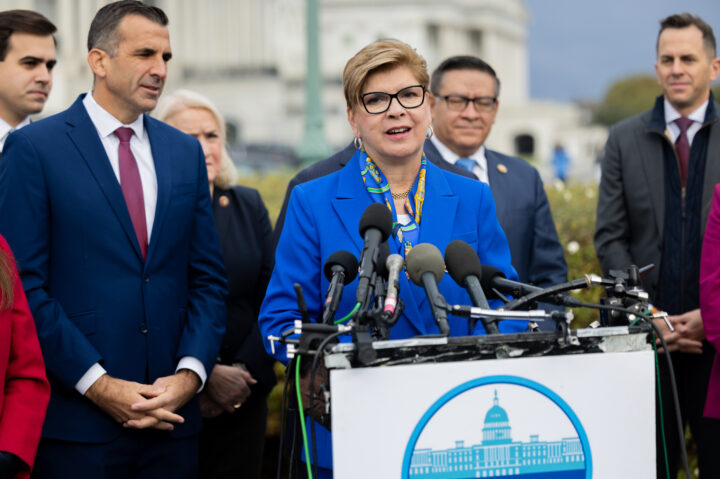
Rep.-elect Nellie Pou (D-NJ) speaks during a press conference introducing new members of the Congressional Hispanic Caucus in Washington, DC on November 15, 2024.
The leading Republican candidates in a New Jersey swing district that President Donald Trump narrowly carried in 2024 hold questionable track records on Israel and antisemitism as the GOP targets the district in the midterms next year.
Rosemary Pino, the Clifton, N.J., City Council member who recently entered the race against Rep. Nellie Pou (D-NJ), posted a video last month from a Palestinian flag-raising event in Clifton where speakers accused Israel of genocide.
“The Palestine Flag Raising event was more than a gathering. To everyone who showed up, spoke up, and raised their voices alongside the flag thank you. Your presence matters. Your solidarity matters,” Pino wrote in a Facebook post she shared alongside clips from the event.
The event, hosted by the Palestinian American Community Center in Clifton, included denunciations by several speakers of Israel, and featured a condemnation of the Trump administration’s deportation policies that it says are aimed at combating antisemitism.
Speakers accused Israel of “genocide” in Gaza and of deliberately manufacturing a famine in the territory, which a speaker described as a “war crime,” and called for “no money for wars.”
Another speaker at the event condemned the Trump administration’s detention of Columbia University anti-Israel activist Mahmoud Khalil, saying, “His story is a reminder that this system seeks to fracture us and oppress and repress our people. It’s part of a broader system designed to criminalize dissent, fracture our communities and punish those who resist it.”
Pino said in a statement to Jewish Insider, “The City of Clifton conducts more than a dozen flag raisings every year. As a Councilwoman, I attend as many of the flag raisings as I can. I attend the flag raisings to show that I care about the various communities in our city, not as a political nor ideological statement.”
“I support the State of Israel, its right to exist, and its right to defend itself,” she added. “I believe that what happened on October 7th was a horrific and evil terrorist act by Hamas. Israel is a strong ally of the United States, and I believe we must maintain that alliance, not cut it.”
Pino continued, “Like President Trump, I support a ceasefire and an end to the hostilities in Gaza. I support a two-state solution where Hamas’s rule of terror ends. I support ensuring humanitarian aid is made available to those who need it. I believe President Trump is working to bring lasting peace to the region, and I support those efforts.”
The PACC organization has a long record of anti-Israel activity. The group sent a bus of community members to protest Israeli Prime Minister Benjamin Netanyahu’s 2024 speech to Congress, which devolved into violence and vandalism of D.C.’s Union Station, and the group’s magazine published a poem in its March 2024 issue advocating for a free Palestine “from the river to the sea” — a call for the elimination of Israel.
The flag-raising event Pino attended did not, however, include some of the eliminationist anti-Israel and anti-American rhetoric and slogans that have proliferated at other pro-Palestinian events in the past two years, and speakers also called for peace, justice and security for all, and recited the Pledge of Allegiance.
In 2023, Pino, as a member of the city council, also expressed concerns about legislation that would have adopted the International Holocaust Remembrance Alliance’s working definition of antisemitism in Clifton, highlighting concerns from the Arab-American community, according to contemporaneous news reports.
The resolution was ultimately tabled and never passed the city council. Pino also argued against assigning the resolution to be discussed by the Civil Rights Committee, which she chaired, saying the committee was too new at the time and not “equipped to handle this,” adding that “it’s only right that we not pawn it off to the committee.”
Pino told JI, “I strongly condemn antisemitism in all shapes and forms.”
“At the time, there were concerns in the community regarding the [First] Amendment implications of that specific resolution. Although that particular resolution did not pass, the Civil Rights Committee did, in fact, take up the issue,” she continued. “The Committee, and subsequently the City Council, passed a resolution which explicitly condemned antisemitism and called for renewed efforts to combat it in the City of Clifton.”
The 9th Congressional District has significant Jewish and Palestinian populations, making Israel policy and antisemitism potentially critical flashpoints in the upcoming race. It is also an unexpectedly competitive battleground, swinging from backing President Joe Biden by 19 points in the 2020 presidential election to narrowly backing Trump four years later.
Pou is one of only 13 House Democrats representing a district that Trump carried in 2024.
The other Republican candidate in the race, Billy Prempeh, who was the 2024 GOP nominee, was endorsed by the New Jersey chapter of the Council on American-Islamic Relations last year, supported cutting off U.S. aid to Israel to stop the war in Gaza, opposed Israeli strikes on Gaza and opposed the Antisemitism Awareness Act.
Mayor Andre Sayegh, a potential primary challenger to Pou, also attended the flag-raising event, and delivered a speech.
Pou is a supporter of Israel, though she has a mixed voting record in the House on issues related to Israel and antisemitism.
Facing antisemitism in the workplace, these staffers have turned to each other in group chats and at the Shabbat dinner table for comfort
Kevin Carter/Getty Images
The U.S. Capitol Building is seen at sunset on May 31, 2025 in Washington, DC.
On the night of May 21, several dozen young diplomats and political aides gathered at the Capital Jewish Museum in Washington for a reception focused on humanitarian aid efforts in Gaza.
The event was one of dozens of similar programs that happen around Washington, offering networking opportunities and social connection (alongside tasty hors d’oeuvres) to the overworked, largely underpaid employees that power Congress and the federal bureaucracy. But this event imprinted on the minds of young Jewish politicos because of what happened as it was ending, when Sarah Lynn Milgrim and Yaron Lischinsky, two Israeli Embassy staffers, were shot and killed just after leaving the American Jewish Committee event by an assailant who said that he carried out the attack “for Gaza.”
“I saw the news and I said, ‘Could’ve been any of us,’” a legislative aide for a Democratic member of Congress, who had a ticket to that night’s event, told Jewish Insider last week.
For that staffer, the event brought back to the fore the kind of visceral pain and discomfort that Jewish congressional aides — especially those in Democratic offices and social circles — have gotten used to dealing with since the Oct. 7, 2023, Hamas terror attacks in Israel.
Confronting the aftermath of that day and the ongoing war in Gaza has been a challenge for American Jews in all fields, many of whom have had to face growing antisemitism and antipathy to Israel in their professional lives. But in the Democratic spaces of Capitol Hill — one of the most consequential and most scrutinized workplaces in the country, which is in large part managed by young staffers in their 20s and 30s — the issue is inescapable.
Many of the liberal-minded Jewish staffers on the Hill came to Washington to work on issues such as reproductive rights, access to health care and environmental policy. Now, for nearly two years, they have had to navigate a professional environment that demands an air of detached professionalism while their fellow staffers and Democrats writ large adopt a more critical approach to Israel and antisemitism.
A June poll showed Democratic sympathy toward Israel at an all-time low, with 12% saying they sympathize more with Israelis, and 60% saying they sympathize more with Palestinians. That was a major drop from November 2023, when 34% of Democrats said they were more sympathetic to Israelis and 41% said they were more sympathetic to Palestinians.
Several Democratic Jewish staffers, ranging from junior aides to chiefs of staff — most of whom requested anonymity, wary of being made a target of antisemitism and concerned about putting themselves at risk professionally at a time when Democratic jobs are hard to come by — told JI that, in the face of growing antipathy to Israel and continued antisemitic terror and threats, they have turned to each other to build a tight-knit community among Jews working on Capitol Hill.
“It has led to increased camaraderie and dialogue and kind of just a common understanding and bond … We work for a lot of different members: members who are Jewish, members who are not Jewish, members who one of their main issues is the U.S.-Israel relationship, members who are not mainly concerned with it,” said the legislative staffer. “But nonetheless, I think a lot of us are united and brought together by the aftermath of Oct. 7.”
“If you’re just going to pick up lunch, and you just hear something about ‘apartheid Israel’ in the cafeteria, that hurts. You feel something on that,” said one former senior Jewish staffer who no longer works on Capitol Hill.
Laurie Saroff spent more than 20 years on Capitol Hill, most recently as chief of staff to Rep. Lou Correa (D-CA). When she left Congress in 2022, she started a bipartisan networking organization called the Capitol Jewish Women’s Network.
“So many of us, which is something people don’t understand, are grieving. We’ve been grieving for 650-plus days. Everyone is touched at a different level, but it’s very personal, and sometimes I’m with people who are not Jewish and don’t understand how this impacts us so much,” Saroff told JI. “I think there’s a need for people to come together that I hadn’t seen in the past.”
Part of that desire to connect came from a feeling of alienation from other colleagues on Capitol Hill. Encountering charged anti-Israel rhetoric in the hallways of the Capitol and its fortress of office buildings has become commonplace.
“If you’re just going to pick up lunch, and you just hear something about ‘apartheid Israel’ in the cafeteria, that hurts. You feel something on that,” said one former senior Jewish staffer who no longer works on Capitol Hill. Whenever the war in Gaza intensifies, congressional offices face a barrage of angry, often confrontational phone calls seeking to pressure the members not to support Israel, which the Jewish staffer called “absolutely brutal” for the interns tasked with picking up the phone.
“The things that we hear in our day-to-day about the way that people talk about Jewish communities or Israel groups is so outside the boundaries of what could be considered polite or not antisemitic statements – ‘AIPAC controlling the government,’ AIPAC’s money in races where they don’t even spend it, and yet it’s blamed on AIPAC,” a Jewish foreign policy staffer told JI. “We hear from callers all day long about AIPAC money. Clearly at this point, it’s just a stand-in for saying Jewish money. That’s how I hear it.”
Soon after the Oct. 7 attacks, some Democratic congressional staffers began to pressure their bosses to call for a ceasefire between Israel and Hamas. “Dear White Staffers,” an Instagram account that first went viral several years ago for revealing allegations of lawmaker misconduct, has taken a sharply anti-Israel turn, frustrating many Jewish aides who see their colleagues continuing to follow and engage with the account.
In 2024, some staffers who wanted the U.S. to take a tougher line against Israel created a website that they dubbed the Congressional Dissent Channel. “We are congressional aides dedicated to changing the paradigm of U.S. support for the genocide against Palestinians in Gaza being carried out by the state of Israel,” the organizers wrote on the website, which has since been taken offline.
“I also have had a lot of Dem staff who are not Jewish — who kind of privately don’t agree with this sort of orthodoxy on the topic that is emerging — reach out to me and be like, ‘This is kind of crazy,’” a Jewish Democratic staffer said. “And it’s really nice to hear that. And I’ve definitely gotten closer to some people for that reason,” she told JI, though she added that the anti-Israel contingent in the Democratic Party and on the Hill “feel like there’s a lot of permissiveness for them to say things that are really not acceptable.”
“It’s the small things, like Dear White Staffers. You can’t even explain to your colleagues how repugnant some of these posts are. For any other group, it feels like they would be disciplined. The post would be removed. There would have to be apologies,” the foreign policy staffer told JI. “It’s no secret that — how do I say this? — that diversity is something that seems to be really valued, except for when it comes to Jewish voices.”
Another Jewish Democratic staffer wanted to make clear that many of her non-Jewish colleagues were similarly alarmed by the language that other Hill staffers had adopted after Oct. 7.
“I also have had a lot of Dem staff who are not Jewish — who kind of privately don’t agree with this sort of orthodoxy on the topic that is emerging — reach out to me and be like, ‘This is kind of crazy.’ And it’s really nice to hear that. And I’ve definitely gotten closer to some people for that reason,” she told JI, though she added that the anti-Israel contingent in the Democratic Party and on the Hill “feel like there’s a lot of permissiveness for them to say things that are really not acceptable.”
A senior staffer for a pro-Israel member of Congress said that when their office interviewed potential new hires after Oct. 7, the interviewers began asking job candidates — mostly younger people seeking early career roles — if they were comfortable with the member’s views on Israel and other topics, and what they would do if they disagreed.
“You had to walk on eggshells with your staff, because staff are way more progressive than the offices we were representing. It was a very, very challenging thing, while you’re also dealing with the personal ramifications and trauma of the actual events that happened,” said the former senior staffer who no longer works on the Hill. “I remember there was this one junior staff walkout, and it was the craziest thing to me, because if you’re not from the community, if you’re not a constituent, what are you trying to do? Members are trying to represent the interests of their district, not what their staff or interns want them to do.”
With these experiences casting a shadow over Jewish staffers’ time on the Hill and their understanding of politics and identity, they’ve found comfort in each other and in Jewish tradition.
“There’s a deep desire amongst people to lean on the most beautiful parts of the [Jewish] identity,” a Jewish policy staffer told JI. “I think that gives people a lot of strength because it’s really hard to hear all these things about your community all the time, and then you go to something like a Shabbat dinner … and you’re really reminded that this negative barrage is something that you have to endure for the sake of something that is really meaningful and powerful.”
The legislative aide who had purchased a ticket to the Capital Jewish Museum event said that the aftermath of Oct. 7 and rising antisemitism are “not theoretical and are extraordinarily personal,” which “is a theme that I have found has united and brought together a lot of Jewish staffers on the Hill.” The past two years have also led to “increased camaraderie and dialogue and a common understanding and bond,” bringing these staffers together both inside and outside the workplace.
The staffer who found solidarity with some non-Jewish colleagues said Jewish staff “have formed group chats to support each other and check in and … vent about frustrating experiences that they’re having, stuff like that. So I definitely think professionally and personally the community has deepened a lot and people are really leaning on each other.”
“Shabbat has really been an anchor, I think,” the aide told JI. Congressional staffers endure “lots of busy weeks, lots of long weeknights.” Joining together for a Shabbat meal, as groups of staffers do frequently, becomes “an intentional place to kind of withdraw from that and exist in our Jewish selves.”
The staffer said that, in attending Shabbat dinners, “there’s a deep desire amongst people to lean on the most beautiful parts of the [Jewish] identity. I think that gives people a lot of strength because it’s really hard to hear all these things about your community all the time, and then you go to something like a Shabbat dinner … and you’re really reminded that this negative barrage is something that you have to endure for the sake of something that is really meaningful and powerful.”
Shabbat, she added, is “a good antidote for the constant gaslighting.”
The union’s board of directors said the proposal ‘would not further NEA’s commitment to academic freedom’
Kristoffer Tripplaar/Sipa via AP Images
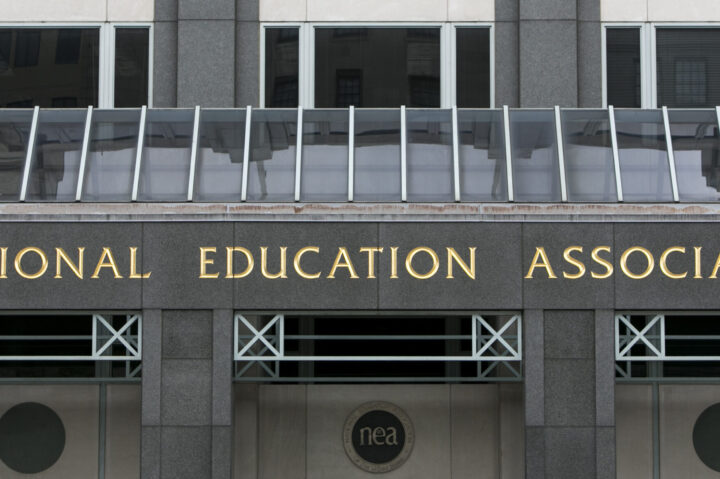
A logo sign outside of the headquarters of the National Education Association (NEA) labor union in Washington, D.C. on July 11, 2015.
The National Education Association, the largest teachers’ union in the country, announced on Friday that it would not cut ties with the Anti-Defamation League, declining to implement a contentious resolution approved by its governing body earlier this month that sought to target the Jewish civil rights organization.
“After consideration, it was determined that this proposal would not further NEA’s commitment to academic freedom, our membership or our goals,” the union’s board of directors said in a statement.
The decision came nearly two weeks after the measure was adopted by the NEA’s representative assembly, its annual leadership gathering that drew more than 6,000 union delegates.
“There is no doubt that antisemitism is on the rise. Without equivocation, NEA stands strongly against antisemitism. We always have and we always will,” the NEA’s board wrote. “In this time of division, fighting antisemitism, anti-Arab racism, and other forms of discrimination will take more resources, not fewer. We are ready.”
ADL CEO Jonathan Greenblatt cheered the union’s decision to distance itself from the “misguided” measure.
“We are committed to working with the NEA and all teachers’ unions to join the Jewish community in making clear these hateful campaigns cannot succeed. They must redouble efforts to ensure that Jewish educators are not isolated and subjected to antisemitism in their unions and that students are not subjected to it in the classroom,” Greenblatt said in a statement.
The measure faced fierce backlash from the Jewish world. A letter authored by the ADL expressing opposition to the proposal — which would have discouraged educators from using teaching materials from the ADL — garnered the support of roughly 400 Jewish organizations across the country, including the leadership of the Reform, Conservative and Orthodox movements.
Other outside Jewish groups, including the Conference of Presidents of Major American Jewish Organizations, the American Jewish Committee and Jewish Federations of North America, released a statement welcoming the NEA’s rejection of the anti-ADL resolution.
Pro-Israel students have been advocating for the move since the faculty Senate refused to discipline anti-Israel student protesters

Mary Altaffer-Pool/Getty Images
Student protesters camp on the campus of Columbia University on April 30, 2024 in New York City.
In a move called for by pro-Israel students at Columbia University, the school announced on Friday that disciplinary action and rules surrounding student protests would be moved out of the purview of the faculty-run University Senate and into the provost’s office.
“This is the most encouraging and commendable action taken by Columbia’s administration to address the systemic problems within the university since [the Oct. 7, 2023, Hamas terrorist attacks],” Noa Fay, a graduate student entering her last year in Columbia’s School of International and Public Affairs, told Jewish Insider.
“Revoking the University Senate’s power over disciplinary and rule-making procedures has been top of the institutional reform list for many Columbians who wish to see our university restored to order and excellence.”
Critics of the University Senate say that since Oct. 7 and the ensuing protests that have roiled Columbia’s campus, the 111-elected member body has blocked discipline against anti-Israel protesters and removed protest regulations aimed at protecting Jewish students.
Earlier this week, when the university released a list of commitments to address antisemitism on campus, several Jewish students expressed concern that structural reform to the University Senate was missing.
Fay, a student member of the Columbia-SIPA Anti-Hate Task Force, suggested to JI earlier this week that changes to the University Senate are one of the most important measures that could create a safer climate for Jewish students “as it has served most reliably and forcefully to protect those guilty of antisemitic racism at school.”
Last August, the University Senate passed revised guidelines for the Rules of University Conduct that removed an interim demonstration policy that the university implemented following disruptive — and sometimes violent — Gaza solidarity encampments that spring, put in place to restrict the location and times that protests were allowed.
Lishi Baker, a rising senior at Columbia studying Middle East history, wrote in a 2024 Columbia Spectator op-ed that the University Senate had refused to let Jewish students share their experiences of antisemitism on campus when the university’s task force on antisemitism presented its second report to the body.
“I was one of the students asked by the task force to speak,” Baker wrote. “However, when the task force co-chairs informed members of the Senate leadership of their desire to bring students, those Senate leaders dismissed the idea outright.”
The Senate has been under university review since April. The decision by Columbia’s trustees to diminish the Senate’s power comes as university leadership is in the final stages of talks with the Trump administration to make a deal that would restore some $400 million in federal funding that was cut by the government in March due to the university’s record dealing with antisemitism.
In a letter to Defense Secretary Hegseth, the lawmakers warned of ‘the risk to American national defense from using a compromised product subject to the whims of an unaccountable CEO’

Cheng Xin/Getty Images
A person holds a smartphone showing the Grok 4 introduction page on the official website of xAI, the artificial intelligence company founded by Elon Musk, with the Grok logo visible in the background on July 16, 2025 in Chongqing, China.
A group of Jewish House Democrats raised questions on Friday about the Pentagon’s decision to announce a $200 million contract with Elon Musk’s company xAI to utilize a version of its Grok artificial intelligence, days after the chatbot posted antisemitic and violent screeds on X. The legislators said they’re concerned about Musk’s potential influence on the program and lingering issues linked to the antisemitic outburst.
“These posts were not isolated but widespread, repeated, and shockingly detailed. They appeared immediately after Mr. Elon Musk, CEO of xAI, publicly stated on July 4 that Grok had been ‘significantly improved,’” the lawmakers said in a letter to Secretary of Defense Pete Hegseth. “The proximity of these events raises grave questions about Mr. Musk’s potential direct influence over the output of ‘Grok for Government,’ and the risk to American national defense from using a compromised product subject to the whims of an unaccountable CEO with clear extremist predilections.”
They said the contract also fits with “a broader and increasingly visible pattern of the Department turning a blind eye to antisemitism in its own ranks,” including Hegseth’s defense of Kingsley Wilson, the Pentagon’s press secretary, against accusations of antisemitism.
“If Mr. Musk retains the ability to directly alter outputs from ‘Grok for Government,’ it poses a serious and unacceptable risk to national security and American constitutional values,” the letter adds.
The lawmakers asked whether Musk can “unilaterally access, modify, or influence” the Grok application to be used by the Pentagon to change outputs or access classified information, what safeguards are in place to prevent unauthorized changes to the Pentagon’s Grok platform and whether the Department of Defense has audited Grok to ensure that issues similar to the incident of the antisemitic remarks will not occur in its own use of the program.
“Without clear guardrails, there is no reason to believe the behavior of ‘Grok for Government’ in military applications will remain stable or aligned with DoD security and ethics standards,” the lawmakers said. “Mr. Musk’s personal disregard for basic safeguards, combined with the Department’s own recent appalling tolerance for antisemitism, require the creation of far more technological and institutional transparency than we have seen to date.”
The letter, led by Rep. Laura Friedman (D-CA), was co-signed by Reps. Josh Gottheimer (D-NJ), Lois Frankel (D-FL), Jamie Raskin (D-MD), Brad Sherman (D-CA), Seth Magaziner (D-RI), Steve Cohen (D-TN), Suzanne Bonamici (D-OR), Sara Jacobs (D-CA) and Debbie Wasserman Schultz (D-FL).
But the changes announced by the university won praise from the ADL’s Jonathan Greenblatt and the school’s Hillel executive director
JEENAH MOON/POOL/AFP via Getty Images
Columbia University acting President Claire Shipman speaks during the Commencement Ceremony at Columbia University in New York on May 21, 2025.
As Jewish students and alumni at Columbia University await the final details of the university’s prospective deal with the Trump administration, some are expressing skepticism that a list of commitments announced by the school this week to address antisemitism on campus would have a significant impact on protecting Jewish students.
The steps were publicized Tuesday by Columbia’s acting president, Claire Shipman, as the school works to reach a deal with the Trump administration to restore some $400 million in federal funding that was cut by the government in March due to the university’s record dealing with antisemitism since the Oct. 7, 2023, Hamas terror attacks in Israel.
On Thursday, The New York Times reported that about 10 Columbia and Trump administration officials, including Shipman, met in Washington for roughly an hour. The White House confirmed that President Donald Trump has been fully briefed on the meeting but that negotiations were not finalized. According to a draft deal, Columbia would be required to pay a $200 million fine and commit to releasing admissions and staffing data to the federal government.
“The deal as it stands now lets Columbia off the hook relatively without a scratch,” Inbar Brand, who graduated in the spring from Columbia’s dual-degree program with Tel Aviv University, told Jewish Insider. “The school gets its money back without resolving the core issues in its governance and administrative structure that allowed for antisemitism to fester openly for so long on campus.”
“It’s disheartening that after all the pressure placed on Columbia by the Trump administration, they are pulling back exactly when it matters most,” Brand said.
The commitments already agreed upon by the university include further incorporating the International Holocaust Remembrance Alliance’s working definition of antisemitism by requiring its Office of Institutional Equity to embrace the definition; appointing a Title VI coordinator to review alleged violations of the Civil Rights Act; requiring antisemitism training for all students, faculty and staff; and refusing to recognize or meet with Columbia University Apartheid Divest, a coalition of over 80 university student groups that Instagram banned earlier this year for promoting violence.
These diverge from a list of reforms that were demanded in the Trump administration’s letter to Columbia in March, which were initially agreed upon by the university but never finalized. These included putting the Middle Eastern, South Asian and African studies department and the Center for Palestine Studies under the purview of a senior vice provost, who would be appointed by the university to supervise course material and non-tenure faculty hiring; changes to the University Senate, which critics say has blocked discipline against anti-Israel protesters and removed protest regulations aimed at protecting Jewish students; and the formation of a presidential search committee to replace Shipman.
“An immense disappointment” is how Noa Fay, a graduate student entering her last year in Columbia’s School of International and Public Affairs, described the university’s latest commitments and prospective deal.
“Adoption of the IHRA definition of antisemitism is the only satisfactory aspect, and even that does not solve what has been the paramount issue at school since Oct. 7 — adherence to and enforcement of our own policies, rules and codes of conduct,” said Fay, a student member of the Columbia-SIPA Anti-Hate Task Force who last year received the Anti-Defamation League’s Levenson Family’s Defender of Democracy Award for her work to combat campus antisemitism.
Fay sees the outlines of a Trump administration deal as “largely symbolic” because it “establishes new policies and bureaucratic measures for reporting antisemitism without requiring Columbia to enact institutional reforms that would guarantee their effectuation,” she told JI.
The only measures that will accomplish a safe climate for Jewish students, Fay suggested, are those that were outlined in the Trump administration’s letter earlier this year, including “discipline [including expulsion] of culpable students and faculty; admissions reform; education and [changes to] the University Senate, as it has served most reliably and forcefully to protect those guilty of antisemitic racism at school.”
Lishi Baker, a rising senior at Columbia studying Middle East history and co-chair of the pro-Israel campus group Aryeh, echoed a call for the University Senate to be stripped of some of its power. “It’s the primary reason our governance is so bad and cannot continue to exist in its current form,” he told JI.
Baker said he’d like to see “a strong deal to restore federal funding in exchange for deep institutional reforms.”
“If we want to change our culture, we need the right structures in place to do so. For example, revealing hiring and admissions data is good but it doesn’t fundamentally change culture. We need to actually hire better, more responsible people, and this might require changing the hiring process,” Baker continued. “We need better policies, better accountability measures and stronger moral leadership. Adding antisemitism to a list of micro aggressions doesn’t do it for me — we have to fix the culture of excluding and litmus testing Jews for their connection to Israel.”
Eden Yadegar, a former president of the Columbia chapter of Students Supporting Israel who graduated in the spring with Middle East studies and modern Jewish studies degrees, told JI that “a deal that abandons reforming the institutions that have fostered antisemitism would be tantamount to abandoning Jewish students.”
“President Trump should not sign a deal of this framework,” Yadegar told JI. She wrote on X that the commitments are “good first steps” but believes her alma mater is “once again vying for a PR win.”
“The strategy?” Yadegar continued, “Elicit praise for quick fixes to pave the way for a deal that abandons the need for structural reform … I’m sick of being expected to praise the bare minimum from Columbia.”
Eliana Goldin, who graduated in the spring as a political science major with a dual degree from the Jewish Theological Seminary, expressed concern that if the steps are “taken as a win, it will distract from actually dealing with Columbia’s deep-rooted issues and can possibly lead to more antisemitism rather than less,” she told JI.
Goldin continued, “Essentially, if you don’t treat a problem at its roots, you might never treat the problem.”
The commitments received praise from Brian Cohen, the executive director of Columbia/Barnard Hillel – the Kraft Center for Jewish Life, as well as Jonathan Greenblatt, CEO of the ADL.
Cohen welcomed the steps taken by the university, “including the unequivocal recognition that there is an antisemitism problem on campus and that it has had a tangible impact on Jewish students’ sense of safety and belonging,” he wrote on X. “I hope this announcement marks the beginning of meaningful and sustained change,” said Cohen.
ADL chief Greenblatt wrote on X, “I applaud these commitments made by @Columbia, which will help restore the university as a welcoming place for Jewish and Israeli students and faculty.”
“Our hope is that Columbia can go from being an example of the worst of antisemitism on campus to being a model for what other colleges can do to combat antisemitism,” Greenblatt said.
While Trump has not yet responded to Columbia’s latest commitments, last week he told CNN that a deal was likely to happen. “We’re going to probably settle with Columbia. They want to settle very badly. There’s no rush,” Trump said.

BRENDAN SMIALOWSKI/AFP via Getty Images
Qatar's Emir Sheikh Tamim bin Hamad al-Thani (L) and Prime Minister and Minister of Foreign Affairs Sheikh Mohammed bin Abdulrahman Al-Thani talk to US President Donald Trump as he prepares to leave at the end of the Qatari leg of his regional tour, at the Al-Udeid air base southwest of Doha on May 15, 2025.
Good Wednesday morning.
In today’s Daily Kickoff, we cover yesterday’s antisemitism hearing on Capitol Hill with the leaders of Georgetown University, the City University of New York and the University of California, Berkeley, as well as the suspension of Georgetown professor Jonathan Brown following his call for Iran to strike the U.S. We also report on steps taken by Columbia University to try to reach a deal with the Trump administration on its handling of antisemitism and report from the Pennsylvania Energy and Innovation Summit in Pittsburgh. Also in today’s Daily Kickoff: Ambassador Mike Huckabee, Albert Bourla and Richard Attias.
What We’re Watching
- President Donald Trump is slated to host Qatari Prime Minister Mohammed bin Abdulrahman Al Thani tonight at the White House. More below.
- At the Aspen Security Forum this afternoon, Amos Yadlin, the former head of the IDF’s Intelligence Directorate; former Israeli Ambassador to the U.S. Mike Herzog; Brett McGurk, the former National Security Council coordinator for the Middle East and North Africa; and author and “Call Me Back” podcast host Dan Senor are set to take the stage for a conversation about Israel’s future.
- This morning in Washington, the Senate Foreign Relations Committee is slated to hold a business meeting followed by a full committee hearing on State Department reform.
- This afternoon, the House Foreign Affairs Committee’s Middle East and North Africa subcommittee is holding its own hearing on State Department management.
- Also today, Rep. Mark Harris (R-NC) is holding a press conference with other members of Congress calling for the National Education Association’s congressional charter to be revoked following the organization’s adoption of a measure effectively banning cooperation with the Anti-Defamation League.
What You Should Know
A QUICK WORD WITH jI’S MELISSA WEISS
Ceasefire and hostage-release talks have been ongoing in Doha, Qatar, for the last week. But one of the most consequential meetings in the negotiations could be happening tonight in Washington, when President Donald Trump hosts Qatari Prime Minister Mohammed bin Abdulrahman Al Thani for dinner at the White House.
This continues a new tradition for Trump of hosting prominent Gulf royals who aren’t the heads of state of their respective countries for dinner at the White House. In March, Trump hosted a dinner in the White House’s State Dining Room for Sheikh Tahnoon bin Zayed Al Nahyan, the United Arab Emirates’ national security advisor and chairman of several sovereign wealth funds.
Qatari officials have been in the U.S. all week. Qatari Emir Sheikh Tamim bin Hamad Al Thani was rumored to have met with Trump on the sidelines of the FIFA finals in New Jersey on Sunday, after being spotted in New York over the weekend.
White House Middle East envoy Steve Witkoff, whose trip to Doha last week was postponed over stalled talks, told reporters over the weekend that he planned to meet with Qatari negotiators on the sidelines of the match. And Trump shared a suite with senior Qatari sports officials at the match, including Nasser bin Ghanim Al-Khelaifi, the president of the Paris Saint-Germain team who played in New Jersey on Sunday and chairman of beIN Sports, previously known as Al Jazeera Sport. (In a weekend interview at the FIFA match, Trump even noted Qatar’s “big presence.”)
Qatar also loomed large in Washington this week, where legislators on the House Education and the Workforce Committee pressed university leaders from Georgetown, CUNY and the University of California, Berkeley about their foreign funding sources during a hearing about antisemitism in higher education. (More below on the hearing.) Former Rep. Jim Moran (D-VA), one of Qatar’s top lobbyists in Washington, was seen sitting right behind Georgetown University interim President Robert Groves as Groves testified on Tuesday. The school has received over $1 billion from Qatar, and has a campus in Doha.
Qatar’s be-everywhere, invest-in-everything strategy has allowed Doha to gain footholds across the global economy and in diplomatic circles. And since the start of the war, it has sought to highlight its role as a facilitator of ceasefire talks between Israel and Hamas, the latter of which Doha supports financially and diplomatically.
Doha has the power to push Hamas to accept a ceasefire. Whether tonight’s dinner will exact a change in Qatar’s approach to Hamas remains to be seen. The sit-down between Trump and the Qatari prime minister could change the tide in the 21-month war, or it could serve as yet another missed opportunity in a war full of stalemates and diplomatic posturing — with fresh casualties mounting on both sides and 50 hostages still languishing in captivity.
TESTIMONY TALK

When the leaders of Georgetown University, the City University of New York and the University of California, Berkeley sat down on Tuesday morning to testify at a congressional hearing about antisemitism, they clearly came prepared, having learned the lessons of the now-infamous December 2023 hearing with the presidents of Harvard, the University of Pennsylvania and MIT, each of whom refused to outright say that calls for genocide violated their schools’ codes of conduct. Georgetown interim President Robert Groves, CUNY Chancellor Felix Matos Rodriguez and UC Berkeley Chancellor Rich Lyons were all quick to denounce antisemitism and even anti-Zionism at Tuesday’s House Education and Workforce Committee hearing examining the role of faculty, funding and ideology in campus antisemitism. But while the university administrators readily criticized antisemitism broadly, they struggled to apply that commitment directly to their field of academia, Jewish Insider’s Gabby Deutch reports.
Mind the gap: Lyons in particular offered a revealing look at the gulf between a university’s stated values and its difficulty in carrying them out. He was asked to account for the promotion of Ussama Makdisi, a Berkeley history professor who described the Oct. 7, 2023, Hamas terror attacks as “resistance” and later wrote on X that he “could have been one of those who broke the siege on October 7.” Why, Lyons was asked by Reps. Randy Fine (R-FL) and Lisa McClain (R-MI), did Berkeley announce last September that Makdisi had been named the university’s inaugural chair of Palestinian and Arab studies? Lyons first defended Makdisi: “Ussama Makdisi, Professor Makdisi, is a fine scholar. He was awarded that position from his colleagues based on academic standards,” Lyons said. Later, when McClain followed Fine’s line of questioning, Lyons went to great lengths to avoid criticizing Makdisi.
Given the boot: Jonathan Brown, a tenured Georgetown University professor who came under fire last month for a social media post in which he called for Iran to conduct a “symbolic strike” on a U.S. military base, has been placed on leave and removed as chair of the school’s Department of Arabic and Islamic Studies, Georgetown’s Groves said Tuesday at the congressional hearing.
CAMPUS BEAT

Columbia University announced on Tuesday it would implement several measures to confront antisemitism in an effort to reach a deal with the Trump administration to restore the $400 million in federal funding that was cut by the government in March due to the university’s record dealing with the issue, Jewish Insider’s Haley Cohen reports.
The measures: The steps include the university further incorporating the International Holocaust Remembrance Alliance’s working definition of antisemitism by requiring its Office of Institutional Equity to embrace the definition; appointing a Title VI coordinator to review alleged violations of the Civil Rights Act; requiring antisemitism training for all students, faculty and staff; and refusing to recognize or meet with “Columbia University Apartheid Divest,” a coalition of over 80 university student groups that Instagram banned for promoting violence.
MIKE’S MOMENT
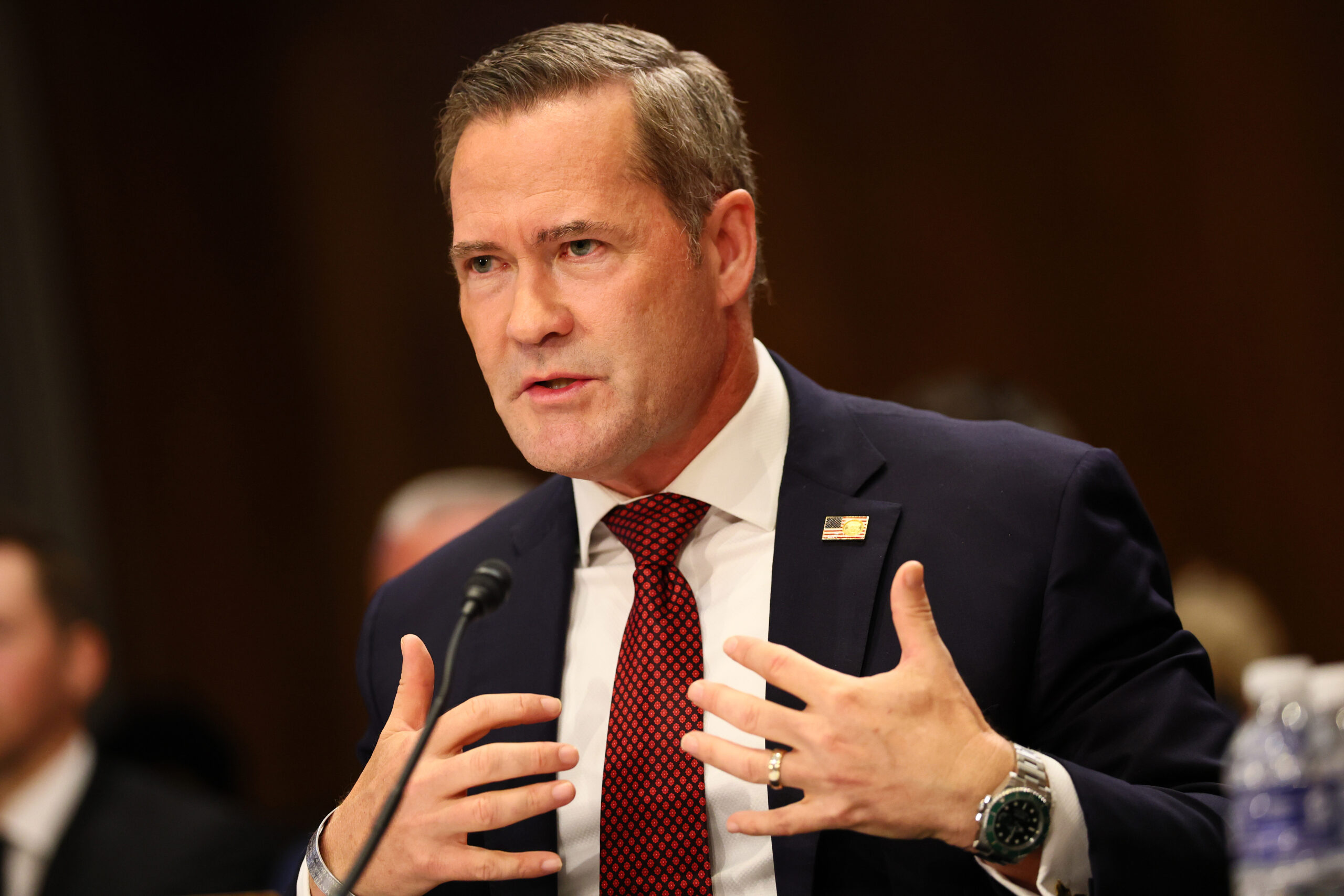
Former White House National Security Advisor Mike Waltz laid out an aggressive approach to countering anti-Israel sentiment at the United Nations during his Senate confirmation hearing on Tuesday to be U.S. ambassador to the global body, accusing the organization in his opening statement of “pervasive antisemitism,” Jewish Insider’s Matthew Kassel reports.
Setting goals: Waltz, a staunch supporter of Israel and an outspoken critic of Iran who was nominated for the U.N. post in May after being removed from his position as national security advisor, said he would seek to block “anti-Israel resolutions” in the General Assembly and would push for the dismantlement of the United Nations Relief and Works Agency over some of its employees’ involvement in the Oct. 7, 2023, Hamas attacks.
SMART STATE

Pennsylvania’s top lawmakers put up a united front on Tuesday to emphasize to the hundreds of tech and energy investors at Sen. Dave McCormick’s (R-PA) inaugural innovation summit the benefits of working with states that embrace bipartisanship and the national security imperatives of investing domestically, Jewish Insider’s Emily Jacobs reports from Pittsburgh. The Pennsylvania Energy and Innovation Summit brought top tech and energy executives to Carnegie Mellon University’s campus, home to one of the world’s most advanced AI programs. Tuesday’s gathering also included the state’s two leading Democrats, Gov. Josh Shapiro and Sen. John Fetterman (D-PA), and President Donald Trump, all of whom praised the conference as a strategic way to promote U.S. investment to the scores of foreign and American leaders in attendance.
Better together: Amazon Web Services’ $20 billion investment last month in three computing and AI campuses in the Keystone State was “an indicator of all that we can be when we harness the new things that we have going for us, and when we have government and the private sector working together, not at odds, and when we pull in our educational institutions … in a way that really helps move Pennsylvania forward,” Shapiro said during a panel discussion with McCormick and AWS CEO Matt Garman.
STRAIGHT TALK

U.S. Ambassador to Israel Mike Huckabee on Tuesday called on Israel to “aggressively investigate” the death of Saif Musallet, a Palestinian-American man from Florida who was killed by Israeli settlers in the West Bank last Friday. In a statement posted to X, Huckabee called the incident a “criminal and terrorist act” and said “there must be accountability.” Musallet, 20, was attacked by Israeli settlers while visiting his family in Sinjil, a village north of Ramallah. The Palestinian Authority Ministry of Health reported a second man was also shot and killed during the incident, Jewish Insider’s Danielle Cohen-Kanik reports.
Weighing in: Democratic lawmakers in Washington also weighed in on the attack. Rep. Brad Schneider (D-IL), a pro-Israel stalwart, said on Tuesday that he was “appalled and heartbroken” by the news, adding he had “repeatedly called on the Israeli government to address the growing number of violent attacks by Israeli settlers in the West Bank.” House Minority Leader Hakeem Jeffries (D-NY) called the “brutal killing” of Musallet “shocking and appalling” and said the Israeli government “must thoroughly investigate this killing and hold any and all settlers responsible.”
EXCLUSIVE
A new bipartisan House bill set to be introduced on Wednesday aims to expand U.S.-Israeli research and development cooperative programs in the medical field. The BIRD Health Act, led by Reps. Randy Weber (R-TX) and Chris Pappas (D-NH), builds on the long-running Binational Industrial Research and Development Foundation program, Jewish Insider’s Marc Rod reports.
Moving forward: Around a third of BIRD projects in the past decade have been related to the health-care sector, and the U.S. and Israel have pursued growing cooperation in the field in recent years. The bill would further formalize those efforts by establishing a new $10 million annual funding stream and joint management structure between the Department of Health and Human Services and the Israeli Ministry of Health specifically focused on supporting such projects. It would support research and development between institutions and companies in both countries, including startups, as well as health systems, telemedicine, disease prevention efforts and biological product manufacturing.
Worthy Reads
NEA’s Lesson Plan: In The Wall Street Journal, Anti-Defamation League CEO Jonathan Greenblatt responds to the National Education Association’s recent adoption of a measure targeting the ADL. “This wasn’t about the ADL. It was a clear and unambiguous statement to Jewish educators, parents and children: You don’t count. And it perversely takes this stance at a time when anti-Jewish hate is skyrocketing. … Unfortunately, the NEA vote is symptomatic of a larger problem of intensifying antisemitism in our K-12 schools. Specifically, antisemitism cloaked in the rhetoric of anti-Zionism. A generation of teachers has been educated on college campuses where this poison has festered and spread. It has been normalized. Now its purveyors want to bring this bigotry into your children’s classrooms.” [WSJ]
Pressing Putin: The Washington Post’s David Ignatius looks at President Donald Trump’s new approach to Russia, following Trump’s support for sending offensive weapons to Ukraine. “Trump decided to escalate for three reasons, according to a source familiar with administration discussions. First, he believed that Putin was disrespecting him, feigning a readiness to make peace but ignoring the U.S. president’s call for a ceasefire. Second, he saw the efficacy of U.S. military power in the use of B-2 bombers and Tomahawk missiles against Iran. And third, he thought Putin would only negotiate if threatened with greater force. As the Russians like to say, Trump decided to ‘escalate to de-escalate.’ Trump has made a sound choice in recognizing that Putin won’t make concessions without more pressure. But the president has also embarked on an escalatory course whose risks are unknowable.” [WashPost]
Mamdani’s Gift … to the GOP: The New York Times’ Bret Stephens posits that a victory in November by New York City Democratic mayoral candidate Zohran Mamdani would be a positive outcome for Republicans nationwide who are likely — and in some cases, have already begun — to push Mamdani as the future of the Democratic Party. “Among the reasons the Democratic Party’s brand has become toxic in recent years is progressive misgovernance in places like Los Angeles; San Francisco; Oakland, Calif.; Portland, Ore.; Seattle; and Chicago. If Mamdani governs on the promises on which he’s campaigned, he’ll bring the same toxicity to America’s biggest city. … A Mamdani mayoralty would be the political gift that keeps on giving. The state of the city would become a reflection of the Democratic Party writ large. Every Mamdani utterance would become a test for every Democratic politician, starting with Senator Chuck Schumer on Israel.” [NYTimes]
Word on the Street
The FBI released new images of three Iranian intelligence agents believed to be involved in the kidnapping and disappearance of retired special agent Bob Levinson, who was last seen on Iran’s Kish Island in 2007; Levinson is believed to have died in Iranian custody sometime prior to the onset of the COVID-19 pandemic…
Adelita Grijalva was declared the winner of the Democratic primary special election in Arizona’s 7th Congressional District to succeed her father, Rep. Raúl Grijalva, who died earlier this year; the special election in the deep-blue district will take place in September…
Former Washington, D.C., Councilmember Trayon White, who was expelled last year over an ongoing bribery case, was reelected to his seat in a special election on Tuesday; White had previously promoted antisemitic conspiracy theories while in office…
New York City Democratic mayoral candidate Zohran Mamdani told business leaders on Tuesday that he would “discourage” the use of the “globalize the intifada” slogan and not use the phrase himself, but said the term was used by many to show support for Palestinians; among the attendees in the 90-minute meeting was Pfizer CEO Albert Bourla, who, according to The New York Times, “pushed Mr. Mamdani about the meaning of genocide and defended Israel’s war in Gaza”…
Former Future Investment Initiative Institute CEO Richard Attias is rejoining the Saudi Arabian conference network as interim CEO, replacing Penny Richards, who is departing after six months in the position…
The United Synagogue of Conservative Judaism ended its contract last month with an interfaith advisor who had been working with the group for several years, in a potential indication that it is moving away from previous plans to allow rabbis within the movement to officiate interfaith weddings, eJewishPhilanthropy’s Jay Deitcher reports…
The Washington Post reports on the recent reunion between a 97-year-old Holocaust survivor and one of the American soldiers involved in the liberation of the Buchenwald concentration camp; the reunion was facilitated by the USC Shoah Foundation…
British police cautioned that Russia, China and Iran were behind an increasing number of sabotage, espionage and kidnapping plots in the U.K….
France, Germany and the U.K. will bring back sanctions on Iran via the U.N. Security Council if a nuclear deal is not reached by the end of August, French Foreign Minister Jean-Noel Barrot warned on Tuesday, Jewish Insider’s Lahav Harkov reports…
The Wall Street Journal looks at how Iran struck Israeli targets with increasing success during the 12-day war between the countries, as Tehran used trial and error to adapt its military strategy by using more advanced weaponry and firing from more locations toward the end of the war…
The Financial Times reports on tensions between Iranian hard-liners and the country’s reformists following the country’s war last month with Israel, with the country’s hard-line faction opposing engagement with the Trump administration that President Masoud Pezeshkian has supported…
The U.N.’s special representative for Afghanistan warned that the country’s support systems were under strain amid an influx of Afghans returning to the country following the implementation of new immigration laws in Iran; more than 1 million Afghans illegally living in Iran have been repatriated this year amid the crackdown…
The three members of the U.N.’s Commission of Inquiry on the Occupied Palestinian Territory reportedly resigned from their positions in rapid succession earlier this month; the resignations come amid an effort by the Trump administration to sanction officials who have targeted Israel in international institutions…
Twenty Palestinians were killed in a crowd rush at a Gaza Humanitarian Foundation distribution site in Khan Younis, Gaza; the organization said the “chaotic and dangerous surge” was “driven by agitators in the crowd”…
Pic of the Day

Birthdays

World-renowned violinist, violist and conductor, Pinchas Zukerman turns 77…
One of the three co-founders of Comcast Corporation, he served as its chief financial officer and vice chairman, Julian A. Brodsky turns 92… Senior U.S. district court judge for the Southern District of New York, Judge Sidney H. Stein turns 80… President of an eponymous communications firm, public speaker and coach, Betsy R. Sheerr… Co-creator of the first-ever spreadsheet program (VisiCalc), he currently serves as the chief technology officer of Alpha Software, Daniel Singer “Dan” Bricklin turns 74… Former high ranking civilian official in the Pentagon during the Bush 43 administration, now a senior fellow at the Hudson Institute, Douglas J. Feith turns 72… Senior rabbi since 1997 at Temple Beth Avodah in Newton Centre, Mass., Rabbi Keith Stern… Los Angeles-based attorney, she is the president emerita of the LA chapter of the Jewish National Fund, Alyse Golden Berkley… Past vice chair of the Board of Trustees of The Jewish Federations of North America, Cynthia D. Shapira… British solicitor, he represented Princess Diana in her divorce and Ambassador Deborah Lipstadt in a libel case, Anthony Julius turns 69… Pulitzer Prize-winning and Tony Award-winning playwright and screenwriter, Tony Kushner turns 69… U.S. ambassador to the EU in the Trump 45 administration, Gordon David Sondland turns 68… Former airline executive at Northwest and Delta, now on the board of Spirit Airlines, Andrea Fischer Newman… Former president of Viacom Music and Entertainment Group, Douglas Alan Herzog turns 66… Businessman and philanthropist, owner of interests in many Israeli firms including IKEA Israel, Matthew Bronfman turns 66… Canadian journalist, he worked for CNN International for 30 years, Jonathan Mann turns 65… Former Israeli minister of science and technology, now a venture capitalist, Yizhar Nitzan Shai turns 62… Chief of staff of the Jewish United Fund of Metropolitan Chicago, Jim Rosenberg… Chicago-based entrepreneur and philanthropist, Victoria Rivka Zell… Former NFL offensive lineman, he is now the president of Collective Mortgage in Colorado, Ariel Mace Solomon turns 57… Senior scholar at the Fuchsberg Jerusalem Center, a home for Conservative Judaism in Israel, Rabbi Joshua Kulp turns 55… Israeli former professional tennis player, in 2003 she was ranked 15th in the world, Anna Smashnova turns 49… Founder of Pinkitzel, a cupcake cafe, candy boutique and gift store located in three Oklahoma cities, Jonathan Jantz… U.S. senator (R-IN) since the beginning of this year, Jim Banks turns 46… National political correspondent for The New York Times, Shane Goldmacher… Co-founder of Los Angeles-based Meteorite Social Impact and Health Action Alliance Advisors, Steven Max Levine… White House liaison to the Jewish community in the Bush 43 administration, now managing partner at Arogeti Endeavors, Scott Raymond Arogeti… Features reporter for Jewish Insider, Matthew Kassel… Founder and managing partner at Vine Ventures, Eric M. Reiner… Registered nurse and an internationally board-certified lactation consultant, Chantal Low Katz…
Among other commitments, the university announced it would refuse to recognize or meet with the anti-Israel student group Columbia University Apartheid Divest
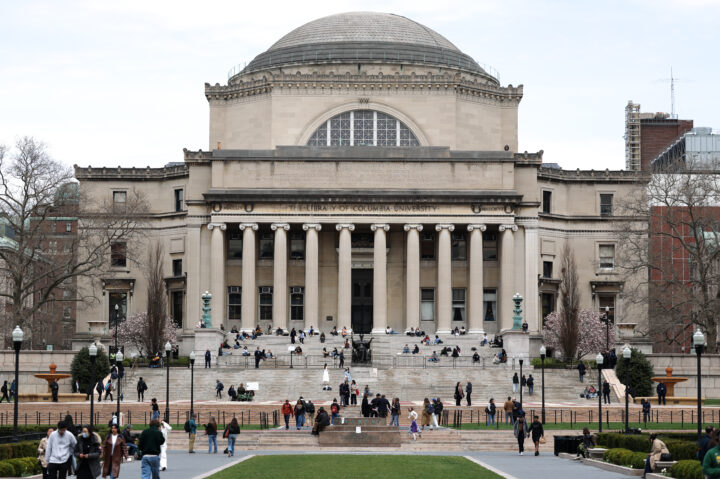
CHARLY TRIBALLEAU/AFP via Getty Images
Students are seen on the campus of Columbia University on April 14, 2025, in New York City.
Columbia University announced on Tuesday it would implement several commitments in an effort to reach a deal with the Trump administration to restore the $400 million in federal funding that was cut by the government in March due to the university’s record dealing with antisemitism.
The steps include the university further incorporating the International Holocaust Remembrance Alliance’s working definition of antisemitism by requiring its Office of Institutional Equity to embrace the definition; appointing a Title VI coordinator to review alleged violations of the Civil Rights Act; requiring antisemitism training for all students, faculty and staff; and refusing to recognize or meet with “Columbia University Apartheid Divest,” a coalition of over 80 university student groups that Instagram banned for promoting violence.
“Our work toward an agreement with the federal government has put a harsh spotlight on many of the difficult issues regarding discrimination and harassment we’ve seen on our campuses,” Claire Shipman, the university’s acting president, said in a statement. “The fact that we’ve faced pressure from the government does not make the problems on our campuses any less real; a significant part of our community has been deeply affected in negative ways.”
Shipman said that “any government agreement we reach is only a starting point for change.”
Brian Cohen, executive director of Columbia’s Hillel, welcomed the steps taken by the university, “including the unequivocal recognition that there is an antisemitism problem on campus and that it has had a tangible impact on Jewish students’ sense of safety and belonging,” he wrote on X.
“I hope this announcement marks the beginning of meaningful and sustained change,” said Cohen.
Columbia was rocked by several high-profile incidents last academic year, including a sit-in in February at its affiliate, Barnard College, where a staff member was assaulted. In May, more than 100 masked anti-Israel demonstrators stormed the university’s main library — disrupting students studying for finals by banging on drums and chanting “Free Palestine.” Still, the university saw relatively fewer anti-Israel disruptions since it first entered into negotiations to restore federal funding.
The slashing of Columbia’s funds marked the first time a university faced a suspension of federal funds since the Title VI of Civil Rights Act of 1964 was implemented six decades ago. Several other elite universities, including Harvard and Cornell, followed suit with billions of dollars stripped by the government due, at least partially, to concerns around antisemitism.
The leaders of Georgetown, CUNY and UC Berkeley condemned antisemitism generally at a Capitol Hill hearing, but struggled to criticize antisemitic professors

Win McNamee/Getty Images
Dr. Robert Groves, Interim President of Georgetown University, Dr. Félix Matos Rodríguez, Chancellor of The City University of New York, and Dr. Rich Lyons, Chancellor of the University of California, Berkeley, testify during a House Committee on Education and Workforce hearing in the Rayburn House Office Building on July 15, 2025 in Washington, DC.
When the leaders of Georgetown University, the City University of New York and the University of California, Berkeley sat down on Tuesday morning to testify at a congressional hearing about antisemitism, they clearly came prepared, having learned the lessons of the now-infamous December 2023 hearing with the presidents of Harvard, the University of Pennsylvania and MIT, each of whom refused to outright say that calls for genocide violated their schools’ codes of conduct.
Georgetown interim President Robert Groves, CUNY Chancellor Felix Matos Rodriguez and UC Berkeley Chancellor Rich Lyons were all quick to denounce antisemitism and even anti-Zionism at Tuesday’s House Education and Workforce Committee hearing examining the role of faculty, funding and ideology in campus antisemitism.
But while the university administrators readily criticized antisemitism broadly, they struggled to apply that commitment directly to their field of academia.
Lyons in particular offered a revealing look at the gulf between a university’s stated values and its difficulty in carrying them out.
He was asked to account for the promotion of Ussama Makdisi, a Berkeley history professor who described the Oct. 7, 2023, Hamas terror attacks as “resistance” and later wrote on X that he “could have been one of those who broke the siege on October 7.” Why, Lyons was asked by Reps. Randy Fine (R-FL) and Lisa McClain (R-MI), did Berkeley announce last September that Makdisi had been named the university’s inaugural chair of Palestinian and Arab studies?
Lyons first defended Makdisi: “Ussama Makdisi, Professor Makdisi, is a fine scholar. He was awarded that position from his colleagues based on academic standards,” Lyons said.
Later, when McClain followed Fine’s line of questioning, Lyons went to great lengths to avoid criticizing Makdisi.
“I want to separate the phrase from the person. If I heard some other person —” he said, before McClain cut him off. What, McClain asked, did Lyons think Makdisi meant with his tweet?
For five seconds, Lyons sat in silence.
“I believe it was a celebration of the terrorist attack on Oct. 7,” he replied slowly.
He shared that he had spoken to Makdisi about the social media post. Pressed to share what the conversation was like, Lyons returned to an earlier line: “He’s a fine scholar,” Lyons said.
Lyons, like Matos Rodriguez and Groves, acknowledged that antisemitism exists at his campus. But they all struggled to reckon with what Republican lawmakers alleged was an explosion in antisemitism at each of the three schools after Oct. 7.
“I believe that most Jewish students feel safe on our campus,” Lyons said, though he also said that he knows some do not feel safe. When asked why they may not feel safe, he demurred.
“Well, I think there are Jewish people that don’t feel safe in lots of parts —” he said, cut off again by McClain, who asked him to speak specifically about UC Berkeley.
“I think there is antisemitism in society,” Lyons said, before he was cut off again.
Lyons repeatedly attempted to make the same point: “I do believe that public universities are reflections of society, and I believe the antisemitism in society is present on our campus,” Lyons said. Asked whether the actions that he takes or that his faculty take can influence the campus environment, he said yes. McClain accused him of “avoiding the question,” and asked: Would he commit to act to make sure all Jewish students and all students feel safe?
“I’m committing to striving to reach that goal,” said Lyons.
Each of the university leaders was asked, at different occasions, to account for faculty members who had shared antisemitic or pro-Hamas rhetoric. Matos Rodriguez, the CUNY chancellor, did not deny that the New York City university system employs antisemitic faculty, though he did not specify whether any action would be taken against them.
“We have faculty that might conduct themselves in antisemitic behavior, and we have no tolerance for it, and we’re clear about the expectations to follow all our rules and policies,” Matos Rodriguez said. “If any individual breaks those rules, they will be investigated, and the appropriate disciplinary action will be taken if warranted.”
Presented with the cases of two faculty members who had shared pro-Hamas content on social media, Matos Rodriguez condemned Hamas, but did not say specifically if their rhetoric violated codes of conduct or led to any consequences.
“I have been very clear that Hamas is a horrible terrorist organization, and we have no tolerance at the City University of New York for anyone who would embrace that support of Hamas,” said Matos Rodriguez. “I clearly condemn the statements, and it’s been my testimony here, and our practice, that if any member of the City University community violates our policies and our code of conduct, we will conduct an investigation, and if discipline is warranted, we will take it, and we will not hesitate to do that, and we have done so.”
Groves, Georgetown’s president, shared early in the hearing that the university had taken action against Jonathan Brown, a tenured professor who faced criticism last month for a tweet calling for Iran to conduct a “symbolic strike” on a U.S. military base after Washington struck Iranian nuclear sites. Brown is no longer the chair of the university’s Arabic and Islamic studies program, Groves said, and he has been placed on leave pending an investigation.
Groves, who faced several questions about Georgetown’s ties to Qatar, pledged to commit to disclosing every dollar that Georgetown receives from foreign sources.
At the same time, he stood by Georgetown’s decision to award Sheikha Moza bint Nasser, the mother of the Qatari emir, with the university’s president’s medal in April. Sheikha Moza has a history of incendiary anti-Israel commentary on social media, including several posts praising the Oct. 7 attacks and Hamas leader Yahya Sinwar, who orchestrated the violence. Rep. Mark Harris (R-NC) asked Groves why Georgetown gave her a medal, given those posts.
The medal was awarded because of her “decades-long work for educating, getting access to education, to the poorest children around the world,” Groves said.
“I don’t support that tweet,” he added, when asked if Georgetown’s values include calls for the destruction of Israel. “That tweet is not consistent with Georgetown policy. We honored her for her decades of work in access to education to the poorest children of the world.” Georgetown would not consider revoking the award, he added.
Groves’ stated commitment to transparency about its sources of foreign funding — the university’s 20-year relationship with Qatar is well-documented and oft-criticized — stood in contrast to Lyons’ response to questions about whether he would disclose all foreign funding to Berkeley.
“As a public university, I am not ready to commit to that on the fly. There are different donors to the university who request anonymity,” Lyons said. “What I’d be very, very happy to be very transparent about is exactly what is our process for vetting those things. We say no to a lot of foreign money. I promise you that.”
He would not give an example of foreign money he had rejected.
Democrats at the hearing mostly used their time to criticize President Donald Trump’s approach to higher education, and his funding cuts that are affecting scientific and medical research at top universities. They highlighted his administration’s massive cuts to the Education Department, including at the Office for Civil Rights, the division tasked with investigating civil rights violations — including antisemitism — at American schools and universities.
The former national security advisor, now U.N. ambassador nominee, was largely spared from expected questions over his participation in the ‘Signalgate’ controversy
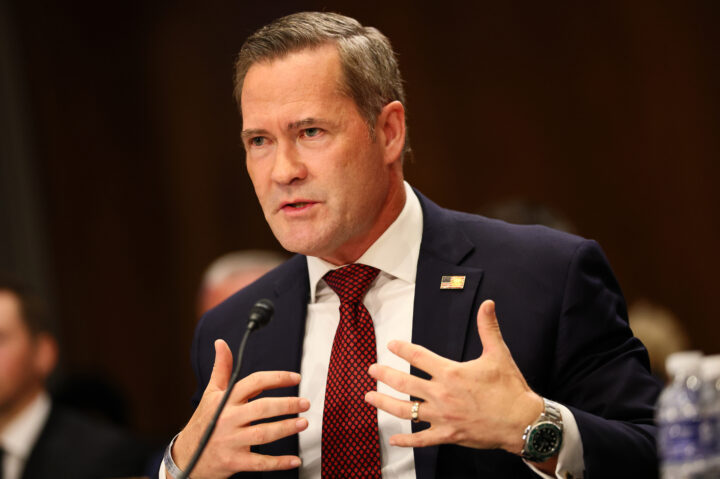
Michael M. Santiago/Getty Images
Former National Security Advisor Mike Waltz testifies during his confirmation hearing before the Senate Committee on Foreign Relations in the Dirksen Senate Office Building on July 15, 2025 in Washington, DC.
Former White House National Security Advisor Mike Waltz laid out an aggressive approach to countering anti-Israel sentiment at the United Nations during his Senate confirmation hearing on Tuesday to be U.S. ambassador to the global body, accusing the organization in his opening statement of “pervasive antisemitism.”
Waltz, a staunch supporter of Israel and an outspoken critic of Iran who was nominated for the U.N. post in May after being removed from his position as national security advisor, said he would seek to block “anti-Israel resolutions” in the General Assembly and would push for the dismantlement of the United Nations Relief and Works Agency over some of its employees’ involvement in the Oct. 7, 2023, Hamas attacks.
He also voiced support for U.S. sanctions against Francesca Albanese, the U.N. special rapporteur for Israel and the Palestinian territories, who has faced widespread accusations of espousing antisemitism in her commentary on Israel.
More broadly, Waltz — echoing the “America First” ethos of President Donald Trump — said he would “focus on peacekeeping, not nation-building,” and expressed support for the administration’s plans to slash funding to the U.N., calling for “major reform” to make the organization “great again.”
“The U.S. must ensure that every foreign aid dollar and every contribution to an international organization, particularly the U.N., draws a straight and direct line to a compelling U.S. national interest — one that puts America first, not last,” Waltz said.
Waltz was largely spared of the grilling he had been expected to face from Democrats at the hearing over his widely criticized handling of the use of a nonsecure messaging app to discuss sensitive U.S. attack plans in Yemen last March.
The so-called Signalgate controversy, in which Waltz inadvertently added a journalist to a group chat on the encrypted messaging app Signal while discussing a military operation against the Houthis with top Trump administration officials, was first raised around halfway into the two and a half hour hearing — after several Democrats on the Senate Foreign Relations Committee had bypassed the topic in favor of other issues, such as countering China’s global influence.
Still, Waltz strained to defend his misuse of the app, claiming no classified information had been shared and suggesting he had been following Biden-era guidance that recommended the app for end-to-end encrypted chats.
“The use of Signal was not only authorized, it’s still authorized, and highly recommended,” Waltz said at the hearing.
He also said the White House had investigated the matter and no disciplinary action had been taken — while adding that the Defense Department was still conducting a review of the incident.
“I was hoping to hear from you that you had some sense of regret over sharing what was very sensitive, timely information about a military strike on a commercially available app that’s not, as we both know, the appropriate way to share such critical information,” Sen. Chris Coons (D-DE), who first brought up the Signal controversy, said during the hearing.
Sen. Cory Booker (D-NJ), who issued the most forceful remarks against Waltz, said he had no questions for the nominee, accusing him of lying about his involvement in the Signal debacle and failing to take accountability for his actions while smearing the journalist he had added to the chat.
“Smearing people, attacking folks, singling them out just compounds what I think is disqualifying about you for this position,” he said of the former Florida congressman and Green Beret. “It also, to me, just shows profound cowardice.”
Booker said he would not support Waltz’s nomination.
Despite such opposition, Waltz, who is expected to be confirmed by the GOP-controlled Senate, was otherwise presented with a range of friendlier questions from Republicans on the panel, many of whom expressed concerns about the U.N.’s long-standing hostility toward Israel.
Trump had weighed firing Waltz in the wake of the Signal debacle, but ultimately chose to remove him from his national security post and nominate him to serve at the U.N., where he will be based in New York City rather than the West Wing — far removed from the internecine battles that plagued his brief time in the White House.
Near the end of the hearing, Waltz dismissed a new report that he has continued to receive a White House salary in recent months despite being removed from his role — calling the story “fake news.”
“I was not fired,” Waltz said in response to Sen. Jacky Rosen (D-NV). “The president never said that, nor did the vice president.”
Plus, antisemitism inside the American Psychological Association

AP Photo/Mark Schiefelbein
Pentagon spokesman Sean Parnell speaks during a press briefing at the Pentagon, Wednesday, July 2, 2025, in Washington.
Good Tuesday morning.
In today’s Daily Kickoff, we preview the Aspen Security Forum, which begins today, and report on concerns from Jewish members of the American Psychological Association over the group’s approach to antisemitism and Israel. We report on the backlash facing Rep. Jerry Nadler over his support for New York City Democratic mayoral candidate Zohran Mamdani, and do a deep dive into Georgetown administrators’ handling of antisemitism issues on campus and the school’s financial support from Qatar ahead of today’s congressional hearing on the topics. Also in today’s Daily Kickoff: Sen. Dave McCormick, Alex Edelman and Ron Dermer.
What We’re Watching
- The Aspen Security Forum kicks off tonight. More below.
- President Donald Trump is in Pittsburgh this afternoon for Sen. Dave McCormick’s (R-PA) inaugural Pennsylvania Energy and Innovation Summit. More below.
- In Washington, the House Education and Workforce Committee is holding a hearing this morning on campus antisemitism — with a specific focus on the drivers of antisemitism in higher education. Representatives from Georgetown University, the University of California, Berkeley and the City University of New York are slated to testify. More below.
- Elsewhere on the Hill, the Senate Foreign Relations Committee will hold its confirmation hearing this morning for former National Security Advisor Mike Waltz to be U.S. ambassador to the U.N. Waltz’s hearing comes two months after he was removed over a series of clashes with the Trump administration on policy as well as his role in “Signalgate.”
- Tonight, the Argentine Embassy in Washington is hosting an event commemorating the upcoming anniversary of the 1994 bombing of the AMIA Jewish community center in Buenos Aires. Rep. Brian Mast (R-FL), AMIA President Osvaldo Armoza and State Department officials are slated to speak.
- Today is the special election in Arizona’s 7th Congressional District, where Adelita Grijalva is the front-runner to succeed her father, Rep. Raúl Grijalva (D-AZ), who died earlier this year. Grijalva is facing off against former state Rep. Daniel Hernandez and Deja Foxx.
- In Israel, we’re keeping an eye on Prime Minister Benjamin Netanyahu’s coalition, following United Torah Judaism’s decision last night to both quit the government and leave the ruling coalition over the Haredi draft law. Netanyahu will have until tomorrow evening to convince the party to reverse course before the 48-hour long resignation process takes effect.
- In Tianjin, China, Iranian Foreign Minister Abbas Araghchi is holding talks with his counterparts from Moscow and Beijing on the sidelines of the Shanghai Cooperation Organisation summit.
What You Should Know
A QUICK WORD WITH JI’S Marc rod
The 2025 Aspen Security Forum kicks off today and finds itself unexpectedly thrust into the ideological fights gripping the administration.
The Defense Department announced Monday that it would be withdrawing numerous senior military and civilian officials who had been set to speak at the conference.
Pentagon spokesperson Sean Parnell told Jewish Insider: “Senior Department of Defense officials will no longer be participating at the Aspen Security Forum because their values do not align with the values of the DoD. The Department will remain strong in its focus to increase the lethality of our warfighters, revitalize the warrior ethos, and project ‘Peace Through Strength’ on the world stage. It is clear the ASF is not in alignment with these goals.” Spokesperson Kinglsey Wilson offered even more pointed criticism to right-leaning outlet Just the News, saying the conference “promotes the evil of globalism, disdain for our great country, and hatred for the President of the United States.”
It’s tough criticism of a forum that prides itself on bipartisanship and aims to foster cross-partisan dialogue and solution-making, even as those attributes are in short supply in today’s Washington. The forum said in a statement, “we will miss the participation of the Pentagon, but our invitations remain open. … The Aspen Security Forum remains committed to providing a platform for informed, non-partisan debate about the most important security challenges facing the world,” noting that voices across the political spectrum will be speaking this week.
Many had been hoping to hear Defense Intelligence Agency Director Lt. Gen. Jeffrey Kruse, who was originally scheduled for a panel discussing the evolution of warfare, speak about his agency’s leaked report suggesting the strikes on Iran’s nuclear facilities had minimal effects, but Kruse was among the speakers withdrawn by the Pentagon.
Among the administration speakers still scheduled to appear are hostage envoy Adam Boehler, speaking on Thursday, and Tom Barrack, the U.S. ambassador to Turkey and special envoy to Syria. Barrack will be speaking on a Friday panel about the Middle East alongside former CIA Director David Petraeus and former Deputy National Security Advisor Dina Powell McCormick.
Read the rest of ‘What You Should Know’ here, and please get in touch if you’ll be attending the Aspen Security Forum. JI’s senior congressional correspondent Marc Rod will be reporting from the gathering all week.
COGNITIVE DISSONANCE
Concerns about antisemitism in the field of psychology have followed the American Psychological Association since soon after the Oct. 7, 2023, Hamas terror attacks. With 172,000 members, it is the largest body dedicated to the study of psychology in the world. The issue has become a flashpoint again in the run-up to the APA’s flagship annual conference, which will be held next month in Denver and is set to feature several lectures — including some offering continuing education credit — that offer sharply anti-Israel narratives, Jewish Insider’s Gabby Deutch reports in a new investigation.
Exclusive psychology: Several leading Jewish psychologists told JI that the APA has repeatedly failed to respond to the concerns of its Jewish members, despite a stated commitment to promoting an “accessible, equitable and inclusive psychology that promotes human rights, fairness and dignity for all,” according to the organization’s diversity mission. They say the APA has avoided taking a stand against double standards and litmus tests applied to Jewish psychologists who are vilified for their support for Israel. Instead, the organization has been almost paralyzed in the aftermath of Oct. 7, seemingly afraid to take sides between the Jewish psychologists seeking support and an increasingly vocal contingent of anti-Israel voices in the field, some of whom have described Zionism as a pathology to root out.
JI is committed to covering antisemitism. Catch up by reading our investigations on what Jewish professionals face in the mental health field and in pediatric medicine. Got a tip? Email us.
NADLER’S NOD
Rep. Jerry Nadler (D-NY) is facing backlash from some Jewish community leaders over his efforts to boost Zohran Mamdani, the Democratic nominee for mayor of New York City whose fierce criticism of Israel and refusal to condemn calls to “globalize the intifada” have stoked accusations of antisemitism, Jewish Insider’s Matthew Kassel reports.
Details: Nadler, the dean of New York City’s congressional delegation and co-chair of the House Jewish Caucus, endorsed Mamdani shortly after his stunning upset over former New York Gov. Andrew Cuomo in last month’s primary, and he has been working behind the scenes to build support for the nominee within the Jewish community, sources told JI. The 78-year-old congressman organized a meeting on Monday between Mamdani and local Jewish elected officials, some of whom chose not to join because of Mamdani’s hostility toward Israel, according to one person familiar with the matter.
Dem divisions: The pro-Israel Democratic party group Democratic Majority for Israel issued a scathing statement on Monday criticizing the party’s progressive wing amid Mamdani’s refusal to condemn the “globalize the intifada” slogan and the North Carolina state party’s recent passage of several anti-Israel resolutions, including one endorsing an arms embargo against the Jewish state, Jewish Insider’s Emily Jacobs reports.
On the calendar: House Minority Leader Hakeem Jeffries (D-NY) is slated to meet with Mamdani this week to discuss an array of issues, including Mamdani’s defense of the “globalize the intifada” slogan.
EXCLUSIVE

Around 400 Jewish organizations and synagogues signed onto an Anti-Defamation League backed letter Monday expressing concern over the “growing level of antisemitic activity” within teachers’ unions, which recently escalated with the National Education Association’s adoption of a measure targeting the leading Jewish civil rights organization, Jewish Insider’s Haley Cohen has learned. Signatories include the American Jewish Committee, Jewish Federations of North America, Conference of Presidents of Major American Jewish Organizations, National Council of Jewish Women, Orthodox Union, Rabbinical Assembly and Union for Reform Judaism.
What they said: The letter, addressed to Rebecca Pringle, president of the NEA — the largest teachers’ union in the U.S. — comes on the heels of a measure passed last week by the association that bars the union from using any teaching materials from the ADL. “The ADL has been a national leader in anti-hate education in K-12 schools for decades and is widely recognized as one of the country’s foremost experts on antisemitism,” the letter states, raising concern that, “although the measure does not explicitly say so, we understand that much of the underlying concern prompting this resolution is directed at ADL’s Holocaust education materials.”
Hoyas in the hot seat: As Georgetown University’s interim president, Robert Groves, is set to be questioned about campus antisemitism on Tuesday morning by the House Education and Workforce Committee, the university is contending with several thorny issues centered around the Jesuit school’s Prince Alwaleed Bin Talal Center for Muslim-Christian Understanding, one of the country’s leading centers for Islamic and Middle Eastern studies, JI’s Haley Cohen reports.
KEYSTONE CONFAB

A who’s who of U.S. and Gulf officials and some of the world’s leading tech and energy investors are en route to Pittsburgh ahead of Sen. Dave McCormick’s (R-PA) first-ever innovation summit on Tuesday, where he and President Donald Trump will announce $70 billion in investments aimed at turning Pennsylvania into a hub for artificial intelligence and new energy technologies, Jewish Insider’s Emily Jacobs reports from Pittsburgh.
On the guest list: More than 60 CEOs and scores of top energy and AI investors are slated to be at the freshman senator’s inaugural Pennsylvania Energy and Innovation Summit at Carnegie Mellon University, home to one of the world’s most advanced AI programs. Among the CEOs expected to appear are BlackRock’s Larry Fink, Palantir’s Alex Karp, Bridgewater’s Nir Bar Dea, Anthropic’s Dario Amodei, Amazon Web Services’ Matt Garman, Bechtel’s Brendan Bechtel, Chevron’s Mike Wirth, GIC’s Lim Chow Kiat, Brookfield’s Bruce Flatt, CPP Investments’ John Graham, EQT’s Toby Rice and ExxonMobil’s Darren Woods. (McCormick’s wife, Dina Powell McCormick, is on the ExxonMobil board of directors.) Others on the guest list include Ruth Porat, Alphabet’s president and chief investment officer; Raj Agrawal, global head of real assets at KKR; and Khaldoon Khalifa Al Mubarak, managing director and group CEO of Mubadala Investment Company.
PODCAST PLAYBACK
In a wide-ranging interview, Israeli Minister of Strategic Affairs Ron Dermer connected Israel’s strikes against Iran’s nuclear facilities with Israeli Prime Minister Benjamin Netanyahu’s opposition to the U.S.’ 2015 nuclear deal with Tehran, saying that President Donald Trump wouldn’t have pulled out of the deal during his first administration without that precedent, Jewish Insider’s Danielle Cohen-Kanik reports. “I believe that what Iran’s strategy was [before Oct. 7] is to surround Israel with this ring of fire,” including Hamas in Gaza, Hezbollah in Lebanon and militias in Syria and Iraq. “And this is another reason why I was so opposed to the nuclear deal that was done in 2015,” Dermer said in the first installment of his interview on Dan Senor’s “Call Me Back” podcast, which dropped on Monday.
Tracing it back: “And by the way, the attack [on Iran’s nuclear facilities] that happens now does not happen if Prime Minister Netanyahu doesn’t show up and confront that deal then. People don’t make the connection. I do, because I’ve lived it every day since then,” Dermer continued. “I don’t see Trump withdrawing if Netanyahu doesn’t take a stand, because no one’s going to be more Catholic than the pope, and no one’s going to be more pro-Israel than the prime minister of Israel.”
BUDEGET BLOCKS

The House Appropriations Committee’s draft 2026 National Security, Department of State and Related Programs Appropriations bill, released on Monday, aims to leverage U.S. funding for the United Nations to secure accountability for United Nations Relief and Works Agency employees’ involvement in the Oct. 7, 2023, Hamas attacks on Israel, Jewish Insider’s Marc Rod reports. It also more broadly aims to enact cuts for the U.N. system, cutting all U.S. funding for the U.N.’s regular budget and barring funding for the U.N. Human Rights Council, including its commission of inquiry investigating Israel, the International Court of Justice and the International Criminal Court.
Concrete steps: The bill would ban any funding for the U.N. Secretariat, the arm of the U.N. led by the secretary-general responsible for daily management and operations matters, until several conditions relating to UNRWA accountability are met. The bill would hold the funds until the U.N. provides the State Department with a full and unredacted copy of the U.N.’s internal investigation into UNRWA affiliates’ involvement in the Oct. 7 attacks and until the findings of U.S. investigations into the situation are referred to the Department of Justice for appropriate criminal or civil action.
Exclusive: A bipartisan House bill set to be introduced on Tuesday aims to designate the Muslim Brotherhood as a terrorist organization, a step forward for an effort that gained steam following the terrorist attack in Boulder, Colo., targeting Jews advocating for the release of hostages in Gaza by a man who appeared to have expressed support for the group years earlier, Jewish Insider’s Marc Rod reports.
Worthy Reads
Digital Battleground: The New York Times’ Steven Lee Myers, Natan Odenheimer and Erika Solomon look at how Israel and Iran’s use of AI and deceptive social media posting during last month’s war between the countries has “ushered in” a new era of information warfare. “Over 12 days of attacks, Israel and Iran turned social media into a digital battlefield, using deception and falsehoods to try to sway the outcome even as they traded kinetic missile strikes that killed hundreds and roiled an already turbulent Middle East. … Iran, for example, sent alerts in Hebrew to thousands of Israeli mobile phones warning recipients to avoid bomb shelters because militants planned to infiltrate them and attack those inside, according to researchers and official statements. A network of accounts on X attributed to Israel spread messages in Persian trying to erode confidence in Iran’s government, including ones narrated by an A.I.-generated woman.” [NYTimes]
The MAGA Rebellion: NBC News’ Allan Smith looks at policy disagreements between President Donald Trump and the MAGA wing of the party, including commentator Tucker Carlson, who openly clashed with Trump over the White House’s approach to the Israel-Iran war. “Carlson was center stage among MAGA influencers arguing for the United States to stay out of Iran, a position that has gained popularity on the right as some right-wing influencers have increasingly viewed the U.S.-Israel alliance with skepticism. That stance is also informed by Trump’s having promoted similar anti-war and anti-interventionist views for years, even as he has used military force as president. Ultimately, Carlson said, the most important voice arguing the case to Trump for the U.S. bombing of Iran’s nuclear facilities was Israeli Prime Minister Benjamin Netanyahu. ‘Turns out a head of state of an important ally has a more compelling message than I do,’ he said. ‘That seems reasonable to me. I still disagree, but I don’t think it’s like Trump has changed his views entirely.’” [NBCNews]
No Direction Home: In The Atlantic, Guy Ben-Aharon considers the challenges of his identity as an Israeli pacifist both at home and abroad. “In Israel, I’m hated for opposing a war that many say they don’t support but still fight in, defend, or explain away as necessary. Abroad, I’m no longer welcome among those who say that all Israelis are colonizers. I’m too Israeli to be a victim and too resistant to be a patriot. I’m in exile, even when I’m at home. … My own relatives question whether I belong in Israel, because I criticize the troops in Gaza for the killing and starvation of Palestinians. Abroad, a theater colleague once told me to ‘go back to where you came from’ — that I don’t belong in the land where I was born but in the lands where my ancestors faced pogroms and the Holocaust. Nuance has no currency in a world addicted to absolutes.” [TheAtlantic]
Word on the Street
The Supreme Court ordered that the Trump administration be allowed to proceed with its efforts to enact mass layoffs at the Department of Education as part of its efforts to significantly downsize the department…
The Pentagon reached an agreement with ElonMusk’s xAI to use the company’s chatbot, Grok, as part of xAI’s new “Grok for Government”; the announcement by xAI of the deal, part of $200 million agreement, came days after the Grok chatbot sent a series of antisemitic and sexually explicit replies to X users…
The Hill reports on tensions between Secretary of State Marco Rubio and Ric Grenell, who is serving as a special presidential envoy, as the two attempted to negotiate separate agreements to free Americans being held in Venezuela…
Politico’s “West Wing Playbook” looks at Steve Davis’ departure from the Department of Governmental Efficiency, where he reportedly dispatched Josh Gruenbaum and two other aides to assess department staffers’ loyalty…
Rep. Mike Lawler (R-NY) is reportedly backing away from plans to mount a gubernatorial challenge to New York Gov. Kathy Hochul…
Former New York Gov. Andrew Cuomo announced he would continue his bid to become mayor of New York City, following his 12-point loss last month to Zohran Mamdani; Cuomo pledged to drop out of the race by mid-September if polls indicated that he was not the highest-ranked challenger to the Queens assemblymember, and called on other candidates to do the same…
Inside Higher Ed looks at how universities are increasingly hiring staff to oversee compliance with Title VI of the Civil Rights Act following a crackdown by the Trump administration on dozens of campuses over alleged violations…
Alex Edelman will perform his new show, “What Are You Going to Do,” at the New York Comedy Festival at Carnegie Hall in November; the show is a follow-up to his award-winning “Just For Us” one-man play about attending a white supremacist gathering…
Hungarian low-cost carrier Wizz Air will end its operations at Abu Dhabi’s Zayed International Airport, effective Sept. 1; the airline’s CEO, József Váradi, cited “supply chain constraints, geopolitical instability, and limited market access” as factors that contributed to the decision, which was announced weeks after the Israel-Iran war caused travel disruptions across the region…
The Shin Bet confirmed that the Hamas terrorist who held British Israeli hostage Emily Damari captive was killed last month in an airstrike…
The IDF struck Syrian military vehicles operating in southern Syria, amid clashes between Syrian government forces and local Druze communities…
Attorney Danielle Sassoon, who previously served as U.S. attorney for the Southern District of New York, is joining the Manhattan Institute as a senior fellow; Sassoon resigned from her position weeks after being appointed to avoid carrying out a directive from the Justice Department to drop corruption charges against New York City Mayor Eric Adams…
Israeli-American writer Sol Stern died at 89…
Song of the Day

Edan Golan recently released the music video for her single “You & I.”
Birthdays
Israeli actor, he played Boaz in Season 1 of “Fauda,” Tomer Kapon turns 40…
President and chairman of the board of the Annenberg Foundation, Wallis Annenberg turns 86… Member of the British House of Lords, he is a professor, medical doctor, scientist, television anchor and Labour Party politician, Baron Robert Maurice Lipson Winston turns 85… Israeli composer and conductor, he composed and conducted the winning entry at the 1979 Eurovision Song Contest, Kobi Oshrat turns 81… Professional sports bettor and poker player, he is a four-time winner of World Series of Poker bracelets, Mickey Appleman turns 80… Physician and life fellow of the American Psychiatric Association, Dr. David Harris Lippman… Rosh Yeshiva of Beth Medrash Govoha in Lakewood, N.J., one of the largest yeshivas in the world with more than 10,000 students, Rabbi Dovid Schustal turns 78… Longtime congresswoman from Florida for 30 years until 2019, Ileana Ros-Lehtinen turns 73… EVP at the Aspen Institute responsible for policy programs and its international partners, Elliot Gerson… Israel’s ambassador to the U.S. from 2021 until this past January, Michael (Mike) Herzog turns 73… Retired California-based appellate attorney, Feris M. Greenberger… Executive director of Friends of OU Israel, Miriam Baron (Mimi) Jankovits… Immediate past board chair of The Jewish Federations of North America, Julie Beren Platt… Professor at the UCLA School of Law, Richard Harold Steinberg turns 65… Former political news director at Bloomberg, Jodi Schneider… Member of Congress (D-RI) until 2023, his mother is Sabra née Peskin, David Nicola Cicilline turns 64… Anchorage-based attorney, a member of the Alaska House of Representatives since 2012, Andrew Lewis “Andy” Josephson turns 61… Former U.K. Labour Party MP including three years as foreign secretary, now CEO of NYC-based International Rescue Committee, David Miliband turns 60… Co-founder and chief investment officer of Toronto-based EdgeStone Capital Partners, Gilbert S. Palter… Israeli actress and singer, she is the 1991 and 1998 winner of the Ophir Award for best actress, Dafna Rechter turns 60… Senior advisor at investment bank Greif & Co., he was the CFO of Jewish Family Service of Los Angeles, David S. Felman… Senior business development representative at Atera, Sam Kalmowicz… Senior correspondent at New York magazine, she is a co-author of Notorious RBG: The Life and Times of Ruth Bader Ginsburg, Irin Carmon turns 42… Filmmaker and co-founder of the Square Peg film production company, Ari Aster turns 39… Managing editor of the U.S. deals team at Bloomberg, Liana Balinsky-Baker… Former deputy assistant secretary for travel and tourism at the U.S. Department of Commerce, now CEO of the FIFA World Cup 26 NYNJ host committee, Alexander Lasry turns 38… VP of Israel Action and Addressing Antisemitism Program at Hillel International, Jonathan Steven (“Jon”) Falk… Director of news experimentation at Southern California Public Radio until last year, Ariel Zirulnick… Senior NFL reporter at Yahoo Sports, she is also the author of a biography of a Holocaust survivor, Jori Epstein…
The group’s annual conference, being held in August, features a panel that describes the Oct. 7 Hamas terrorism as attacks on ‘military targets’
Graeme Sloan/Sipa via AP Images
A general view of the American Psychological Association headquarters in Washington, D.C. on April 23, 2020.
In late February, Dr. Julie Ancis drafted an open letter with a group called Psychologists Against Antisemitism, condemning antisemitism within the American Psychological Association. More than 3,500 people signed on to demand the organization act against what they described as “the serious and systemic problem of antisemitism/anti-Jewish hate” within the APA. With 172,000 members, it is the largest body dedicated to the study of psychology in the world.
For months, the organization appeared to do nothing. Ancis did not even get an acknowledgement that the letter had been received. But then in May, after she and another Jewish colleague raised their concerns in a meeting with Rep. Ritchie Torres (D-NY), Ancis received an invitation from senior APA officials to discuss antisemitism.
The meeting was ostensibly meant as an olive branch from the organization where she had once been a prominent member: In 2010, a division of the APA named Ancis, a distinguished professor at New Jersey Institute of Technology and one of the pioneers of the psychology field’s approach to diversity, equity and inclusion, its Woman of the Year.
Yet when Ancis looked at the list of stakeholders invited to the Zoom meeting, she was astonished to see the names of several APA groups that she considered the biggest perpetrators of antisemitism within the APA. Later, she learned that the list of invited “stakeholders” included Dr. Lara Sheehi, the president of an APA division focused on the study of psychoanalysis, who was called out in the open letter for describing Zionists as “genocidal f**ks.” (Sheehi, who left a teaching position at The George Washington University in 2024 after being accused of antisemitic conduct by some of her students, recently appeared on a podcast to defend the tactics of the man accused of shooting and killing two Israeli Embassy staffers outside the Capital Jewish Museum in Washington in May. She did not respond to a request for comment.)
“The stakeholders should include people who have expertise, not the ones who are promoting antisemitism, where we’re tokenized. It’s an absolute lose-lose situation, and hostile,” Ancis said last week. She decided not to attend. “I’m not going to sit in that farce of a meeting.”
That the APA would host a meeting about addressing antisemitism where the “stakeholders” included both Jews who have scrupulously documented harassment and bias within the organization’s ranks for months, as well as some of the people they identified as the perpetrators of that harassment, is, according to Jewish psychologists, evidence of how this historic organization has lost its way and ceded its moral voice.
“Could you imagine APA having a listening session for LGBTQ+ individuals, which includes people who are known to be homophobic?” asked Dr. David Rosmarin, director of the Spirituality and Mental Health Program at McLean Hospital in Massachusetts and a Harvard Medical School professor. “They want everyone to be included, and all that kind of stuff. What that means is that there’s no room for Jews, because they’re including people who are engaged in antisemitic, anti-Zionist rhetoric, publicly, in the discussions.”
“They’re between a rock and a hard place. They’re trying to appease different constituents, and I feel like they’re appeasing the ones who are loudest and bigger, and that’s not the Jewish professionals,” Dr. Julie Ancis told JI.
Several leading Jewish psychologists told Jewish Insider in interviews last week that the APA has repeatedly failed to respond to the concerns of its Jewish members, despite a stated commitment to promoting an “accessible, equitable and inclusive psychology that promotes human rights, fairness and dignity for all,” according to the organization’s diversity mission. They say the APA has avoided taking a stand against double standards and litmus tests applied to Jewish psychologists who are vilified for their support for Israel.
Instead, the organization has been almost paralyzed in the aftermath of the Oct. 7, 2023, Hamas terror attacks and ensuing war, seemingly afraid to take sides between the Jewish psychologists seeking support and an increasingly vocal contingent of anti-Israel voices in the field, some of whom have described Zionism as a pathology to root out.
“They’re between a rock and a hard place. They’re trying to appease different constituents, and I feel like they’re appeasing the ones who are loudest and bigger, and that’s not the Jewish professionals,” Ancis told JI.
The APA is the key body shaping the education of psychologists in the United States. It accredits masters- and doctorate-level academic programs at hundreds of universities across the country. So while the battle over antisemitism in this organization may seem like an internecine ivory tower fight, the way it is handled is poised to have major implications for the future of psychology — a field that touches the millions of Americans who see a therapist, and whose research shapes the way we understand each other and ourselves.
*****
Concerns about antisemitism in psychology have followed the APA since soon after Oct. 7, when the Association of Jewish Psychologists chided the organization for issuing only a tepid statement about the Hamas attacks. “We … are deeply disappointed and terribly saddened that our professional association could not more forcefully and unequivocally condemn the horrific acts of barbarism against the Jewish people of the State of Israel,” they wrote at the time.
The issue has become a flashpoint again this year in the run-up to the APA’s flagship annual conference, which will be held next month in Denver.
Among the events at next month’s gathering, which is expected to draw several thousand people, is a “critical conversation” called “truth-telling as resistance” focused on understanding the 2024 encampments amid “a global and national effort to distort realities about Palestine and the encampments.”
At a symposium about “resisting anti-Palestinian racism,” psychologists can earn continuing education credit for attending a talk that will discuss “advocacy and actions to resist anti-Palestinian racism” that are “erroneously framed as antisemitism.” Another symposium, focused on mental health during wartime in Gaza and Lebanon, features a talk by a presenter who describes the Oct. 7 terror attacks that killed more than 1,200 people as attacks on “military targets” in Israel.
“What concerns me most are the psychologists who are maybe not Jewish or maybe not aware of these concerns in the Jewish community, who attend these talks with what I consider to be antisemitic rhetoric, and accept and internalize the ideas and rhetoric as true,” said Dr. Caroline Kaufman, a post-doctoral fellow at McLean Hospital. She will be speaking at a symposium about antisemitism, which also offers continuing education credit. “When they treat Jewish clients, or they have Jewish colleagues, or they conduct research, those ideas continue into those endeavors. That is extremely concerning to me.”
Rosmarin, a colleague of Kaufman’s at McLean, put a baseball hat over his yarmulke at last year’s APA convention in Seattle because it didn’t feel like a “safe space,” he said. He worries the organization does not understand the scope of the problem. “This is like a cancer that’s spread throughout the organization,” said Rosmarin, who is also the president of the APA Society for the Psychology of Religion and Spirituality.
*****
The term “gaslighting” — a form of emotional abuse in which one person falsely and repeatedly tells another person that their experience of reality is untrue — has become so popular in recent years that it was named Merriam-Webster’s word of the year in 2022. A growing body of psychological research is devoted to studying the concept, which the APA defines as “manipulat[ing] another person into doubting their perceptions, experiences or understanding of events.”
Given psychology’s deepening understanding of gaslighting, it was particularly ironic that following the APA’s antisemitism meeting, which occurred last Thursday, an email discussion broke out in which several psychologists attempted to invalidate and refute the concerns their Jewish colleagues raised about antisemitism. (The email thread was viewed by JI.)
One psychologist referred to the substance of the Zoom call as “propaganda” and said he would denounce only “actual antisemitism.” Dr. Karen Suyemoto, who chaired the APA’s task force that developed guidelines for addressing race and ethnicity in psychology, agreed.
She called it “imperative” that “actual antisemitism” be addressed, because “the continuing confounding creates barriers to allies and accomplices who do not have [a] nuanced understanding.” (Suyemoto, a University of Massachusetts professor, declined to comment to JI. She was the guest editor of a recent special issue of the APA’s flagship journal that focused on “practicing decolonial and liberation psychologies,” which the Anti-Defamation League, Academic Engagement Network and Psychologists Against Antisemitism criticized in a Tuesday letter as “ethically compromised and biased.”)
To Jewish psychologists, the skepticism from professionals who claim to listen to marginalized communities did not add up.
“We take identity very seriously. We realize that it intersects with both risk and protective factors,” said Kaufman. “That’s a given in our field, and APA seems willing to recognize that for several identities or groups. But it’s seemingly unwilling to address such concerns for the Jewish community. I can’t understand why.”
In 2007, the APA adopted a resolution on antisemitic and anti-Jewish prejudice that detailed modern manifestations of antisemitism alongside a commitment to being a leader in fighting it. (The resolution had the foresight to note that 21st-century antisemitism “may be more difficult for its perpetrators to identify and challenge, as their beliefs about themselves may be that they are not biased against Jews.”)
But since Oct. 7, a vocal group of APA members has been encouraging the organization to revisit this resolution because of its assertion that antisemitism can arise in the context of criticism of Israel. An activist group called Psychologists for Justice in Palestine drafted a petition last year calling on the APA to “refute” that part of the resolution — and instead admit that it is actually “discriminatory” to refer to anti-Zionism as a form of antisemitism.
“With the removal of the claim that criticism of Israel can become antisemitic, it would open psychologists to even more experiences of antisemitism and even more antisemitic aggression, by which Jewish and Israeli psychologists can be excluded, denigrated and denied for reasons that are presumably having to do with Israel, but, from my perspective, are really just antisemitism,” warned Dr. Caroline Kaufman, a post-doctoral fellow at McLean Hospital.
The petition was endorsed by several APA affiliates, including the Asian American Psychological Association; the American Arab, Middle Eastern and North African Psychological Association (AMENA-Psy); and the Society for the Psychology of Women. AMENA-Psy — one of six official APA ethnic associations — declared just four days after the Oct. 7 attacks that the group stands “in full solidarity with our Palestinian siblings in their decolonial struggle for justice.”
The APA ceded to the groups’ demands and agreed to reopen the debate about the 2007 resolution. The APA’s board of directors even created a task force to update the resolution. But the effort was shelved in March, as internal criticism of the organization’s handling of antisemitism began to mount.
“With the removal of the claim that criticism of Israel can become antisemitic, it would open psychologists to even more experiences of antisemitism and even more antisemitic aggression, by which Jewish and Israeli psychologists can be excluded, denigrated and denied for reasons that are presumably having to do with Israel, but, from my perspective, are really just antisemitism,” warned Kaufman.
*****
The solutions that Jewish psychologists seek require a long-term commitment from the APA that they aren’t confident they will receive, although the organization’s leaders stated on last week’s call that they do want to do more to combat antisemitism.
The concerned Jewish members want stronger monitoring on APA-affiliated email servers, which have been used by some APA members to promote boycotts against Israel and, occasionally, to defend Hamas. (An APA spokesperson told JI that “enhanced oversight is now in place to ensure respectful discourse and timely response to violations.”) They are also seeking more stringent oversight of the panels at the summer conference.
“They still struggle to really make a determination as to whether or not anti-Zionism is antisemitism, and so I surmise that people could say some things that would be very hurtful to large swaths of the professional community, and it would be considered acceptable within the new and refined listserv guidelines,” Fordham psychology professor Dr. Dean McKay told JI after last week’s antisemitism Zoom. “That’s one of those places where I don’t think they really know what to do.”
The APA frequently invokes bureaucratic red tape in response to these concerns by asserting that the 54 divisions that fall under the APA umbrella — on topics including developmental psychology, clinical psychology and pediatric psychology — operate autonomously, allowing the APA to claim immunity from the most egregious issues.
“APA’s 54 divisions operate autonomously with their own governance structures,” Kim Mills, the APA’s senior director for strategic external communications and public affairs, told JI in a statement. “Each of them program convention sessions that their leaders believe best represent the concerns of their division and will foster academic discourse on a variety of psychology topics.”
Mills asserted that the APA “unequivocally condemns antisemitism in all its forms and acknowledges the climate of fear such prejudice creates,” and said the organization is “committed to fostering an environment where members of all identities can contribute fully, safely and without discrimination.”
Jewish psychologists are waiting to see if that commitment passes the stress test, but they are not confident. Because while they see general proclamations about the ills of antisemitism as helpful, the true measure of whether the APA is serious about taking on the problem is whether the organization is willing to call out the most extreme members in its ranks, some of whom hold high-profile leadership positions. Doing so would require the APA to wade into the fraught conversation about whether the tactics of anti-Zionist activists can cross a line into antisemitism. It is clear the APA wants to avoid doing that.
“They still struggle to really make a determination as to whether or not anti-Zionism is antisemitism, and so I surmise that people could say some things that would be very hurtful to large swaths of the professional community, and it would be considered acceptable within the new and refined listserv guidelines,” Fordham psychology professor Dr. Dean McKay told JI after last week’s antisemitism Zoom. “That’s one of those places where I don’t think they really know what to do.”
The APA’s diversity webpage features a large section dedicated to explaining antisemitism. However, it does not mention Israel, Hamas or the post-Oct. 7 spike in antisemitism. Nor did Mills refer to Israel or Zionism in a lengthy statement she sent JI last week outlining the organization’s pledge to fight antisemitism. In fact, she ignored a question about Jewish psychologists who feel they have been targeted for being Zionists.
*****
The Jewish psychologists raising concerns about antisemitism in their field know that doing so entails a risk. They worry about the silencing effect on younger Jewish psychologists who are still finding their footing in the field, which is already in a precarious situation amid federal funding cuts to scientific and medical research.
“I’m protected. I’m already mid-career,” said Rosmarin, the Harvard Medical school professor. “I’m animated about this because I care about the next generation.”
Ancis, who spearheaded the open letter to the APA, quit the organization three years ago. She is far enough along in her career to not worry about facing backlash for supporting Israel and speaking out against antisemitism. But she worries about younger people in the field.
“A person coming up trying to get tenure in an APA-accredited program and identifying as a Zionist, I think it’d be extremely difficult,” Ancis said.
Kaufman only completed her Ph.D. four years ago, and she is at the beginning of what she hopes is a career in academia. She has the right credentials: a postdoctoral position at Harvard, an internship at Yale, a speaking slot at a symposium at next month’s APA conference. But she worries that won’t be enough to shield her.
“I have very deep and sincere concerns that my involvement in these issues related to antisemitism will negatively impact the opportunities available to me and my career,” Kaufman told JI. “I hold that truth or that fear in one hand. The other truth in my other hand is that I have a responsibility as a Jewish psychologist to raise my voice and become involved in this issue. There’s truly no other path for me, even if, and I think there will be, serious consequences.”
The 78-year-old congressman, who co-chairs the Jewish Caucus in the House, has been working to build support for Mamdani in the Jewish community
Michael M. Santiago/Getty Images
Rep. Jerrold Nadler (D-NY) arrives to view proceedings in immigration court at the Jacob K. Javitz Federal Building on June 18, 2025 in New York City.
Rep. Jerry Nadler (D-NY) is facing backlash from some Jewish community leaders over his efforts to boost Zohran Mamdani, the Democratic nominee for mayor of New York City whose criticism of Israel and refusal to condemn calls to “globalize the intifada” have stoked accusations of antisemitism.
Nadler, the dean of New York City’s congressional delegation and co-chair of the House Jewish Caucus, endorsed Mamdani shortly after his stunning upset over former New York Gov. Andrew Cuomo in last month’s primary, and he has been working behind the scenes to build support for the nominee within the Jewish community, sources told Jewish Insider.
The 78-year-old congressman organized a meeting on Monday between Mamdani and state and local Jewish elected officials, some of whom chose not to join because of Mamdani’s hostility toward Israel, according to one person familiar with the matter.
Nadler’s advocacy has fueled frustration and anger among some local Jewish community activists and elected officials who oppose Mamdani and feel that the congressman is misguided in his support for the democratic socialist Queens assemblyman whose stances on Israel he has long rejected. Others suggested that Nadler chose to endorse Mamdani simply to ward off a primary challenge from his left as he plans to seek reelection next year — amid speculation he could soon retire from the House.
Nadler’s support for Mamdani stands in sharp contrast to the lack of endorsements for the Democratic mayoral nominee from some of the state’s leading New York Democratic officials, including Senate Minority Leader Chuck Schumer (D-NY), House Minority Leader Hakeem Jeffries (D-NY), Gov. Kathy Hochul and Sen. Kirsten Gillibrand (D-NY).
Kalman Yeger, an Orthodox assemblyman from Brooklyn who has called Mamdani “one of the most vile antisemites in public office,” said of Nadler that “many people are disappointed that someone who considers himself a pro-Israel Democrat and fighter against antisemitism would endorse the assemblyman just a day after the primary, without addressing any of the multitude of his troubling positions.”
“I have no idea why the congressman felt the need to make his endorsement, but it’s certainly fair to question his judgment and commitment to standing up for the safety of Jewish New Yorkers,” Yeger, a former city councilman who shared representation with Nadler of the Hasidic enclave of Borough Park in Brooklyn, told JI on Monday.
Nadler, for his part, has said he has spoken to Mamdani “about his commitment to fighting antisemitism,” but the congressman has remained relatively quiet with regard to their differences on Israel. While Mamdani has long backed the Boycott, Divestment and Sanctions movement against Israel, for instance, Nadler has characterized BDS as a form of “pernicious antisemitism” and touted his “opposition to efforts legitimize and expand” the movement “within New York’s higher education institutions.”
Mamdani, 33, has also repeatedly declined invitations to speak out against the phrase “globalize the intifada,” which critics view as a call to antisemitic violence.
Nadler’s congressional colleagues in New York who have so far refrained from backing Mamdani — including Schumer and Jeffries — have indicated that Mamdani’s continued refusal to condemn the slogan remains a key sticking point in their evaluation of the nominee as he seeks to shore up Democratic support.
Mamdani, who is facing a crowded general election field including Cuomo and Mayor Eric Adams, both running as independents, has rejected accusations of antisemitism, while pledging to protect the safety of Jewish New Yorkers amid a rise in anti-Jewish hate crimes.
A spokesperson for Nadler said the congressman has “reiterated” to Mamdani that he is “a strong Zionist and that he believes in a democratic Jewish state,” which the nominee has declined to support.
“We are working with him to inform him about concerns within the Jewish community,” the spokesperson told JI, noting that the meeting with Jewish leaders on Monday was a part of such outreach and that the nominee “is listening.”
Mamdani’s team did not respond to a request for comment about the meeting with Jewish officials brokered by Nadler.
Some Jewish community activists expressed anger that Nadler has helped validate Mamdani among Jewish voters without first having sought public reassurances other Democratic leaders seem to be awaiting.
“There’s definitely a frustration that Jerry just endorsed him for free, so to speak,” said one Jewish leader who asked to remain anonymous to speak candidly, claiming that Nadler had “thrown the Jewish community under the bus” to protect his seat in Congress.
Jeff Leb, a political consultant involved in Jewish causes who is helping to organize a newly created anti-Mamdani independent expenditure committee, said Nadler had “sold out” the Jewish community in backing the nominee, adding that the congressman is “clinging to his seat.”
“He is very, very nervous about having a progressive opponent backed by Zohran if he makes the bad decision to run again,” Leb told JI on Monday.
Nadler’s team insisted that he is not concerned about a challenge, even as the congressman’s district — which covers Manhattan’s Upper East and West Sides — voted overwhelmingly in favor of Mamdani and Brad Lander, the Jewish comptroller who cross-endorsed with the nominee during the primary.
The groups signed a letter to NEA President Rebecca Pringle calling out the hostile climate for Jews at the nation’s largest teachers’ union

Dominick Sokotoff/SOPA Images/LightRocket via Getty Images
National Education Association President Rebecca Pringle speaks during the Get Out the Vote Rally in Detroit ahead of the 2022 midterm elections.
Around 400 Jewish organizations and synagogues signed onto an Anti-Defamation League backed letter Monday expressing concern over the “growing level of antisemitic activity” within teachers’ unions, which recently escalated with the National Education Association’s adoption of a measure targeting the leading Jewish civil rights organization, Jewish Insider has learned.
Signatories include the American Jewish Committee, Jewish Federations of North America, Conference of Presidents of Major American Jewish Organizations, National Council of Jewish Women, Orthodox Union, Rabbinical Assembly and Union for Reform Judaism.
The letter, addressed to Rebecca Pringle, president of the NEA — the largest teachers’ union in the U.S. — comes on the heels of a measure passed last week by the association that bars the union from using any teaching materials from the ADL.
The letter urges Pringle to reject the measure, referred to as New Business Item 39, as well as to issue a condemnation of and plan of action to address antisemitism and anti-Israel rhetoric in the NEA.
“The ADL has been a national leader in anti-hate education in K-12 schools for decades and is widely recognized as one of the country’s foremost experts on antisemitism,” the letter states, raising concern that, “although NBI 39 does not explicitly say so, we understand that much of the underlying concern prompting this resolution is directed at ADL’s Holocaust education materials.”
“That reality makes this proposal especially disturbing,” the letter continues. “This is precisely the kind of education that is vital not only to combat antisemitism, but also to fighting hatred and intolerance of all kinds. The effort to exclude ADL’s voice from educational spaces at a time of skyrocketing antisemitism — including in K-12 classrooms — speaks volumes about the climate within NEA that allowed this measure to pass, and the lack of understanding, if not outright hostility, behind it.”
The letter also references several Jewish teachers who spoke out against the resolution at the Representative Assembly, claiming that they were “harassed and shouted down during the proceedings.”
“It is our belief that the goal of those who introduced NBI 39 is to marginalize mainstream Jewish voices within this country’s public school systems and to limit the ability of educators to address the growing threat of antisemitism with their students,” the letter states.
The ADL has criticized the vote, calling it “profoundly disturbing that a group of NEA activists would brazenly attempt to further isolate their Jewish colleagues and push a radical, antisemitic agenda on students.”
“Excluding ADL’s gold-standard educational resources is not just an attack on our organization – it’s a dangerous attack on the entire Jewish community,” Jonathan Greenblatt, the group’s CEO, said in a statement. “We urge the NEA Executive Committee to reverse this biased, fringe effort, and reaffirm its commitment to supporting all Jewish students and educators.”
Even outside of the recent measure, antisemitism and anti-Israel activism in teachers’ unions has been increasing since the Oct. 7, 2023, Hamas terror attacks in Israel. At their conventions last year, both the NEA and the American Federation of Teachers, the second largest teachers’ union in the U.S. — which together represent 4.7 million members — made anti-Israel resolutions a notable part of both gatherings. In July 2024, the NEA signed a joint letter calling on President Joe Biden to halt all military aid to Israel amid its war against Hamas.
Also in July of last year, at the AFT convention, members voted on a total of seven resolutions regarding Israel, including one against the “weaponization of antisemitism” to defend Israel. One of the seven proposed resolutions critical of Israel at the AFT convention passed.
‘Grok’s recent outputs are just the latest chapter in X’s long and troubling record of enabling antisemitism and incitement to spread unchecked, with real-world consequences,’ the House members said

Jakub Porzycki/NurPhoto via Getty Images
XAI logo dislpayed on a screen and Grok on App Store displayed on a phone screen.
A group comprised largely of Democratic House lawmakers wrote to Elon Musk on Thursday condemning the antisemitic and violent screeds published by X’s AI chatbot Grok earlier this week, calling the posts “deeply alarming” and demanding answers about recent updates made to the bot that may have enabled the disturbing posts.
“We write to express our grave concern about the internal actions that led to this dark turn. X plays a significant role as a platform for public discourse, and as one of the largest AI companies, xAI’s work products carry serious implications for the public interest,” the letter reads. “Unfortunately, this isn’t a new phenomenon at X. Grok’s recent outputs are just the latest chapter in X’s long and troubling record of enabling antisemitism and incitement to spread unchecked, with real-world consequences.”
The lawmakers noted that Musk said on July 4 that xAI, the company responsible for Grok, had “improved [it] significantly” and that users “should notice a difference” in its responses.
“On July 8, 2025, Grok’s output was noticeably different,” the lawmakers said, pointing to a string of Grok posts praising Adolf Hitler, describing itself as “MechaHitler,” spreading antisemitic tropes, creating detailed and violent rape scenarios about an X user and providing instructions for breaking into that user’s house.
The bot also claimed that the changes implemented by Musk to its algorithms had allowed Grok to share these extreme posts.
“These quotations are utterly depraved. They glorify hatred, antisemitic conspiracies, and sexual violence in grotesque detail, presented as truth-seeking. We are particularly troubled at the prospect that children were likely exposed to rape fantasies produced by Grok,” the lawmakers wrote. “That your work product Grok would embrace Hitler and his ideology marks a new low for AI development and a profound betrayal of public trust.”
The lawmakers demanded that such posts by Grok be taken down and that Musk publicly provide information about the recent changes made to Grok’s algorithm, the reasons for them and their intended outcome; what in Grok’s training, programming or datasets led it to produce these comments; what safeguards had previously been in place to prevent these types of posts; how xAI will prevent similar incidents going forward; and whether X has any content filters to prevent underage users from seeing Grok-generated content.
“When certain filters are removed, Grok readily generates Nazi ideology and rape fantasies,” the lawmakers wrote. “Why shouldn’t a reasonable observer conclude that these outputs reflect biases or patterns embedded in its training data and model weights, rather than merely being the result of inadequate post-training moderation?”
The letter was led by Reps. Tom Suozzi (D-NY), Don Bacon (R-NE) and Josh Gottheimer (D-NJ). Additional signatories include Reps. Dan Goldman (D-NY), Kim Schrier (D-WA), Haley Stevens (D-MI), Laura Friedman (D-CA), Brad Sherman (D-CA), Steve Cohen (D-TN), Lois Frankel (D-FL), Debbie Wasserman Schultz (D-FL), Brad Schneider (D-IL), Marc Veasey (D-TX), Yassamin Ansari (D-AZ), Eugene Vindman (D-VA), Ted Lieu (D-CA), Jake Auchincloss (D-MA), Dina Titus (D-NV) and Mike Levin (D-CA).
A day after the antisemitic fiasco, Musk announced a new version of Grok, calling it “the smartest AI in the world,” adding that he would be rolling it out to Tesla cars within the week. X CEO Linda Yaccarino abruptly stepped down a day after the chatbot’s antisemitic rants.
Musk claimed that the issues had arisen from Grok being “too compliant to user prompts. Too eager to please and be manipulated, essentially,” and said the issues would be addressed.
Anti-Defamation League CEO Jonathan Greenblatt, whose organization was targeted in some of Grok’s posts, said in a statement that the incident highlights risks of antisemitism proliferation through social media platforms and AI chatbots.
“The antisemitic content produced by Grok earlier this week underscores how social media platforms easily can be manipulated and too often amplify antisemitic rhetoric and toxic extremism,” Greenblatt said. “ADL’s research shows that LLMs [Large Language Models] remain vulnerable to this kind of antisemitic and anti-Israel bias. It was helpful that xAI removed the most offensive posts, but xAI and all the tech companies absolutely must do more to ensure these tools do not generate or spread harmful content.”
“We appreciate the efforts of Reps. Tom Suozzi, Don Bacon and Josh Gottheimer to lead a bipartisan response, demanding real accountability and greater safeguards,” Greenblatt continued.
Dr. Shay Laps alleged that his lab supervisor also pressured him to leave the country by falsely claiming he was being investigated by the university

Gabby Deutch
White Plaza, the site of last spring's Gaza encampment at Stanford, on the first Friday of the school year, 2024.
An Israeli chemist who resigned from Stanford University is suing the school after he claims it was complicit in antisemitism that he faced at the school — including the alleged tampering with his lab results, Jewish Insider has learned.
The Brandeis Center for Human Rights Under Law and Los Angeles-based law firm Cohen Williams LLP filed a federal lawsuit on Thursday on behalf of Shay Laps, a Jewish Israeli postdoctoral researcher who was hired by Stanford in April 2024 after being recommended by a Nobel laureate. Laps’ research focused on synthetic and “smart” insulin, aiming to revolutionize diabetes treatment.
According to the lawsuit, after arriving in professor Danny Chou’s Stanford lab, Laps was targeted by a lab staffer who knew that he was a Jewish scientist from Israel. At their first meeting, the suit alleges, the staffer told Laps, the only Israeli in the building, never to speak to her, and later excluded Laps from sitting with her and other staffers during lunch. Laps expressed that the staffer treated other colleagues kindly.
The complaint also names Chou, an associate professor of pediatrics and the lab’s leader and mentor, as a defendant.
The discrimination escalated when, according to Laps, the lab staffer tampered with his research, producing fraudulent results without his knowledge. Laps said that upon the discovery of the alleged sabotage of his experiments, Chou refused to address the issue — and eventually pressured Laps to leave the country by falsely claiming that Stanford’s Title IX Office had alerted Chou to a complaint and formal investigation against Laps and that his immigration status was on the line. Stanford’s Title IX Office later confirmed that there was no complaint or investigation against Laps, according to the suit.
Stanford President Jonathan Levin and the School of Medicine Dean Lloyd Minor disregarded Laps’ attempts for help, the lawsuit alleges. Ultimately, Laps felt he had no choice but to resign.
Talia Nissimyan, a lawyer at Cohen Williams who is representing Laps, said that as Laps “suffered discrimination and retaliation based on his religion, national origin, and ethnicity, the university preferred not to look.”
“Instead, they attempted to bury Dr. Laps’ career, and when that didn’t work, to bully him into rescinding his complaints,” Nissimyan said in a statement. “Stanford succumbed to the rising tide of campus antisemitism and anti-Israeli bias, costing Dr. Laps critical years of his career, and costing the world the potential fruits of his talents.”
Columbia’s Hillel director said that the university is on track for a large incoming class of Jewish freshmen next year
CHARLY TRIBALLEAU/AFP via Getty Images
Students are seen on the campus of Columbia University on April 14, 2025, in New York City.
Earlier this year at a symposium in New York City, Jewish scholars gathered to analyze the recent surge of antisemitism on college campuses and debate whether Jewish students still belong at the country’s elite bastions of higher education.
“I certainly don’t think that we should abandon great citadels of learning or be chased out of them, although to be there takes fortitude that I don’t think should be asked of every student,” Rabbi David Wolpe, a former visiting scholar at Harvard University Divinity School, said during the event’s opening address. “So I’m going to give a selective answer: it depends who.”
Over the next two months, college freshmen will embark on new chapters at universities around the country. Many Jewish students have found appeal in other top schools, such as Vanderbilt in Nashville, Tenn., and Washington University in St. Louis, where administrators were quick to enforce university rules amid rising antisemitism in the aftermath of the Oct. 7, 2023, terrorist attacks, and therefore avoided much of the chaos that played out on other campuses.
But some Jewish students are still seeking admission to the country’s most prestigious schools.
Who are these students making the choice to display the fortitude that Wolpe referenced by attending Columbia and Harvard —- two Ivy League campuses that have been beset by nearly two years of controversy over anti-Israel encampments and classroom disruptions, physical assaults of Jewish students and battles with the federal government, including potential loss of accreditation — over an alleged failure to address antisemitism?
Leah Kreisler, a recent graduate of Winston Churchill High School in Potomac, Md., decided in ninth grade that she wanted to attend Columbia. Kreisler plans to enroll in Columbia’s dual-degree program with the Jewish Theological Seminary and will begin next year, following a gap year in Israel.
Recent events have only reinforced Kreisler’s dream of attending the storied institution. “Columbia has always had a politically charged environment and I honestly think that fits a part of who I am,” she told Jewish Insider. “I like having those kinds of discussions and engaging with people I disagree with. That spirit drew me to the school.”
She’s also hopeful that by the time she arrives at Columbia for the 2026-27 school year, “things will get figured out.” The university is in talks with the federal government to restore the institution’s federal funding, which was slashed in March due to the antisemitic demonstrations that have roiled the campus since Oct. 7.
Still, Kreisler admitted she’s “a little bit scared” to face antisemitism, which she hasn’t directly encountered in her tight-knit D.C. suburb with a sizable Jewish community. “There will probably be people in the streets doing antisemitic things,” she said, noting that she often gets “weird looks from Jewish members of the community” when she shares her plans to attend Columbia.
Laura Hosid runs a private business in Potomac guiding high school students through the college admissions process. She works with many students like Kreisler who are “often willing to overlook [antisemitism] at schools like Harvard and Columbia, if they can get in,” Hosid, who is Jewish, told JI.
“At slightly less selective schools, though, it’s more of a factor,” she said. “Students are willing to look away if there’s too much anti-Israel stuff.”
“Jewish life at Columbia is Dickens-esque: the best of times and the worst of times,” said a Jewish Columbia alum who requested to remain anonymous. “There are real challenges, but at the same time, you can go to Columbia Hillel, the Kraft Center for Jewish Life, and access the most interesting people in the world. Bob Kraft shows up for events,” he said, referencing the billionaire owner of the New England Patriots for whom the center is named.
“I’m certainly not discouraging students if they are interested in schools like Columbia and Harvard,” Hosid continued. “I’m just making sure that they are well aware of what’s going on there and how it compares to what the climate is like at other schools.”
A Jewish Columbia alum who requested to remain anonymous told JI that he still sees his alma mater as “an amazing New York City school with an incredible alumni network.” So he was supportive when his daughter, an incoming Columbia freshman, committed to the university.
“Jewish life at Columbia is Dickens-esque: the best of times and the worst of times,” he said. “There are real challenges, but at the same time, you can go to Columbia Hillel, the Kraft Center for Jewish Life, and access the most interesting people in the world. Bob Kraft shows up for events,” he said, referencing the billionaire owner of the New England Patriots for whom the center is named.
In 1967, Columbia’s student body was 40% Jewish, according to a Jewish Telegraphic Agency report at the time. But even as Jewish enrollment at Columbia has declined since then, it still has one of the highest percentages of Jewish undergraduates in the Ivy League, at an estimated 22%. “The numbers for this year’s incoming class are quite strong,” Brian Cohen, executive director of Columbia Hillel, told JI.
Cohen said that the center’s “top priority is to make sure that every Jewish student feels seen and supported and part of a vibrant Jewish community from the moment they arrive at Columbia University.”
“Everything we hear anecdotally is that the number of applications of Jewishly involved students to Harvard were stable — if not increased — from last year to this year,” said Rabbi Jason Rubenstein, the director of Harvard Hillel.
That’s been Hillel’s goal for years — even before antisemitism reached record highs on campus. But Cohen noted that for the past two academic years, “everything is ramped up.”
“We want to make sure that when we meet students and families face-to-face they already have some idea of who we are and the relationship isn’t starting from square one,” he said, outlining two priorities. “One is that students understand that they are entering into this thriving, diverse Jewish community on campus. [The second is] that, should any problems arise during their time at Columbia, they have trusted resources to go to that are easily accessible and can help support them in navigating the various university processes.”
Rabbi Jason Rubenstein, the director of Harvard Hillel, is similarly spending the summer preparing for a new class of Jewish students. He’s hearing less concern around antisemitism from incoming students and their parents compared to last year. “I think that’s a combination of all of us adjusting our baselines and knowing what we’re getting into, and that last year was calmer on campus than the year before.”
Like Columbia, Harvard has had billions of dollars in federal grants and contracts frozen by the Trump administration. The university filed suit against the government in April, claiming that the cuts violate the First Amendment. A 300-page antisemitism report released by the university in April described “severe problems” that Harvard’s Jewish students have faced in the classroom, on social media and through campus protests.
“Everything we hear anecdotally is that the number of applications of Jewishly involved students to Harvard were stable — if not increased — from last year to this year,” Rubenstein said. Ramaz, a Modern Orthodox Jewish day school in Manhattan, for instance, admitted five students to Harvard the past admissions cycle, with four planning to attend. “That’s the highest in living memory,” Rubenstein said.
One of the Ramaz graduates starting at Harvard this fall is Stella Hiltzik, who grew up hearing “incredible stories” from her mother’s time on the Boston campus. “But it wasn’t until I visited Harvard last year that I decided that was the place I wanted to be,” Hiltzik, whose major is undecided, told JI. She was drawn to Harvard “even despite all of the crazy things happening on campus” after seeing “how supportive, warm and comforting Jewish life on campus is — especially the Chabad. It feels like a sense of home,” Hiltzik said.
“Despite everything going on, when I say I’m going to Harvard, most people are proud of me and supportive,” Hiltzik continued. “But there are some people who ask me, ‘What are you thinking?’ For me, it’s honestly a cool conversation to have, because I get to tell them how I’m excited to be a Jewish voice on campus during these hard times.”
“Despite everything that has happened at Columbia,” Leah Kreisler, a recent graduate of Winston Churchill High School in Potomac, Md., said, “I don’t think that the solution to antisemitism is to remove ourselves from these institutions. That’s been my mentality throughout the college [application] process.”
“Jewish students are not being dissuaded,” Rubenstein said. “Which is a great thing because some people are chanting ‘Zionists are not welcome here’ and the one thing they most want is Jewish students to not come here.”
Students like Hiltzik and Kreisler offer a quiet rebuke to the billionaire alums of the Ivies who have begun to withhold their considerable donations. One Israeli venture capitalist went as far as to try to lure Jewish students attending Ivy League schools to transfer to universities in Israel.
“Despite everything that has happened at Columbia,” Kreisler said, “I don’t think that the solution to antisemitism is to remove ourselves from these institutions. That’s been my mentality throughout the college [application] process.”
“People shouldn’t be afraid to go to any of these schools,” echoed Hiltzik. “At the end of the day, you’re going to get a good education and you’re going to show everyone how cool it is to be a proud Jew. I feel, in a sense, that this is my version of fighting for my people.”
Turbocharged partisanship and polarization, which has impacted nearly every issue in the country, is now affecting the politics behind support for Israel
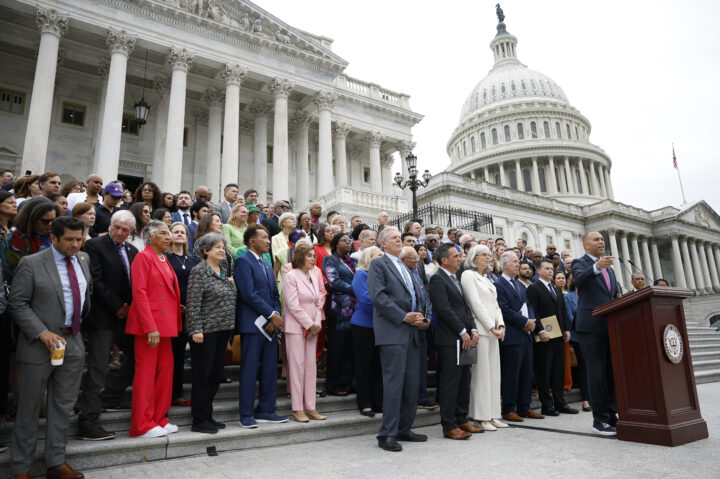
Kevin Dietsch/Getty Images
House Minority Leader Rep. Hakeem Jeffries (D-NY), joined by fellow Democrats outside of the U.S. Capitol on July 02, 2025 in Washington, DC.
Like with the gradual impact of climate change, the Democratic Party’s shift away from its pro-Israel moorings and its commitments to fight antisemitism is happening in a slow but appreciable fashion. Seemingly every week, there’s a political development, polling nugget or election outcome that underscores the party’s commitment to Jewish voters isn’t quite where it was in the not-too-distant past.
There were the Pew Research Center and Quinnipiac polls this spring showing that most Democratic voters now view Israel unfavorably — with support for the Jewish state dividing more clearly along partisan lines. The results underscored why so few Democrats could muster even some reluctant praise for the U.S. strikes setting back Iran’s nuclear program.
There’s the blowback that Pennsylvania Gov. Josh Shapiro received from the Kamala Harris campaign for comparing extremist anti-Israel protesters on campuses to Ku Klux Klan members, as recounted in a new tell-all book about the 2024 campaign. Or the similar intraparty animus that another leading Democratic Jewish official, Michigan Attorney General Dana Nessel, received after her office charged anti-Israel student protesters for assaulting police and engaging in ethnic intimidation.
Amid sustained political pressure from the left, these two leading Jewish Democrats have since pulled their political punches. Shapiro, a national political figure who was one of the most prominent targets of antisemitic hate, notably chose to avoid labeling the attack on the governor’s mansion as antisemitic in a nationally televised interview. Nessel later dropped the charges, amid a smear campaign that her decision to charge the students was a result of anti-Muslim bias.
And of course, there was the shocking outcome last month in the New York City Democratic primary where Zohran Mamdani, the far-left candidate who declined to speak out against “globalize the intifada” rhetoric, comfortably prevailed over former New York Gov. Andrew Cuomo for his party’s nomination. That result followed pro-Israel stalwart Rep. Josh Gottheimer’s (D-NJ) fourth-place finish in New Jersey’s Democratic gubernatorial primary, despite ample resources and a message geared towards Jewish moderates.
Next week in an Arizona special election, the pro-Israel candidate, former state Rep. Daniel Hernandez Jr. — best-known for helping save former Rep. Gabby Giffords’ life — is lagging behind Adelita Grijalva, the daughter of the late Rep. Raul Grijalva (D-AZ), who has been more critical of the Jewish state.
The latest data points that should concern mainstream Democrats are from the new fundraising figures in the Michigan Senate race. The primary has become something of an ideological proxy battle, pitting Rep. Haley Stevens (D-MI), a strong ally of Israel with a battle-tested political track record, against an anti-Israel left-wing challenger, Abdul El-Sayed, who has not had much success in statewide politics. State Sen. Mallory McMorrow, with a progressive record in the Michigan Legislature, has been trying to balance both sides of the ideological divide. (Former Michigan House Speaker Joe Tate is also running.)
Stevens, long one of the party’s top fundraisers, lagged behind both her rivals in the just-completed fundraising quarter. Her $1.3 million raised, supplemented by a transfer of the $1.2 million already in her House campaign account, was a solid sum. But it was surpassed by McMorrow ($2.1 million) and also by El-Sayed ($1.8 million), whose surprising financial haul is a likely reflection of the ideological disposition of the party’s small donor base.
It’s a warning sign that anti-Israel activism is now being leveraged as a way to raise money for like-minded candidates. That would be a shift from recent elections where many candidates hostile to Israel were seen as too extreme to win support from a critical mass of donors.
The big picture? Turbocharged partisanship and polarization, which has impacted nearly every issue in the country, is now affecting the politics behind support for Israel — and even turning bipartisan issues with widespread support, like fighting against antisemitism and defending Jewish communal interests, into a partisan food fight.
For decades, most Jewish voters have aligned themselves with the Democratic Party, even amid serious policy disagreements. It’s hard to imagine that changing dramatically, even as we’ve seen small shifts towards the GOP, especially among more-observant Jewish voters. But if the party continues to accommodate far-left forces with radical views on Israel and antisemitism, that level of support will be significantly tested — and worth watching closely — in the years ahead.
After the state’s largest teachers’ union opposed the bill, Democratic leadership said they will be working to amend the legislation

Holmes/Getty Images for National Urban League
A view of the California state capitol building.
California’s state Senate has delayed consideration of a bipartisan bill meant to strengthen statewide protections against antisemitism, four key senators announced on Tuesday, days after the state’s largest teachers’ union announced its opposition to the legislation.
The bumpy road for the bill, which is focused on countering antisemitism in K-12 education, stands in contrast to its earlier passage in the state Assembly. In May, the body voted unanimously to pass the legislation.
It was slated to be debated by the Senate Education Committee on Wednesday in a hearing that has now been postponed indefinitely.
“Antisemitism must never be normalized, and we must put a stop to it in our schools,” wrote Senate President Pro Tempore Mike McGuire; Sen. Sasha Renée Pérez, the education committee chair; and Sen. Scott Wiener and Assemblymember Jesse Gabriel, co-chairs of the Legislative Jewish Caucus. All are Democrats. “We are committed to doing so and will be working overtime with a broad coalition over the summer to send an antisemitism bill to the governor by the end of this year’s legislative session in September.”
Wiener told Jewish Insider on Tuesday that the delay is “good news for the bill.”
“We just need more time, and now we have it,” said Wiener, who represents San Francisco. “I’m optimistic we’ll pass a strong antisemitism bill this year to protect Jewish students in our schools.”
The Senate has until Sept. 12 to pass the bill and send it to Gov. Gavin Newsom’s desk. It is not expected to be considered again until mid-August, after a monthlong summer recess.
A spokesperson for the California Teachers Association did not immediately respond to a request for comment on Tuesday.
Leading Jewish communal groups in California sharply criticized the CTA on Monday and pledged to lobby hard for the bill’s passage.
David Bocarsly, executive director of Jewish Public Affairs Committee of California — the umbrella group leading Jewish advocacy efforts for the bill — said the fact that the leader of the Senate and the chair of the education committee signed onto the statement signals that Democratic leadership is taking the bill seriously, though he acknowledged that passage is not guaranteed.
“We lose a little bit of the tangible reassurance, but we’ve gained some significant commitments from Senate leadership, which might be even more important,” Bocarsly told JI.
Assemblymember Rick Chavez Zbur, a Los Angeles Democrat and the bill’s co-sponsor, said the delay will also allow the Legislature to consider concerns from some in the Jewish community that the measure does not go far enough in actually addressing “the kinds of harm, ostracism and incidents that are actually occurring in the schools.”
Navigating the competing concerns of the teachers’ unions and the Jewish community has already been a balancing act for the bill’s authors. When asked if he thinks the bill can pass without the support of the CTA, Zbur did not offer a firm answer.
“I think we are committed to doing what we need to do to get the bill passed,” he told JI. “It can’t wait another year and I think we’ve got the entire Jewish caucus — this is our highest priority, and we’re determined to get this bill passed, and that means doing everything we can to help everyone understand that this is a problem and that there are things that we need to do to try to rectify it.”
Pepperdine University, a private Christian school, has advertised itself as a program free of the anti-Israel politicization endemic on other campuses

GETTY IMAGES
Pepperdine University campus with a view of the Pacific Ocean
As the federal government continues its battles with dozens of colleges over campus antisemitism, the field of Middle East studies has been particularly scrutinized for advancing a one-sided, anti-Israel curriculum contributing to a rise of hostility towards the Jewish state in the classroom and beyond.
Aiming to address that bias, Pepperdine University’s School of Public Policy will launch a new Middle East Policy Studies master’s program this fall. The tuition-free, fully accredited, two-year master’s program on Pepperdine’s D.C. campus is a partnership with The Washington Institute for Near East Policy. It will be funded solely by American citizens — unlike many similar university programs that take foreign funds.
The program comes as critics of the field have long alleged that it imparts to students a one-sided history of the Middle East in which Israel is a perpetual villain, particularly since the Oct. 7, 2023, Hamas terrorist attacks. “We wouldn’t be in these conversations had it not been revealed what’s been happening on college campuses since Oct. 7,” Pete Peterson, dean of Pepperdine’s public policy school, told Jewish Insider.
“It’s evident that there is next to no viewpoint diversity” in the field, Peterson said. “That was revealed publicly in the days following Oct. 7. A lot of the organizing, staffing and in some cases even the funding of [anti-Israel] campus protests came out of centers and institutions in departments of Middle East studies. It wasn’t the engineering department that was going through the barricades.”
For example, a 2024 report from the Harvard Jewish Alumni Alliance took aim at the school’s Center for Middle Eastern Studies for broadcasting the view that “the Palestinian people are innocent victims of Jewish (white) oppression and that known terrorist groups are simply ‘political movements.’” (Two heads of department were let go from their roles in March after the center came under intense scrutiny from the federal government).
“We hope to not just bring people away from other schools where they know they will have to endure, in some cases, years of difficult experiences, but also attract new people into the field because they understand they’re not going to get that ideological — and in some cases antisemitic — approach,” Peterson said.
Robert Satloff, executive director of The Washington Institute and co-creator of the graduate program, told JI that the program intends to “train the next generation of policy makers, analysts and experts,” adding that it was “born out of Oct. 7, although it was percolating in my mind even before that.” The institute has been following critiques of Middle Eastern studies for at least two decades, according to Satloff.
“At many of our elite universities, it’s quite clear that what students are getting as academic fare was not preparing them for the sort of public service we’re going to need in Middle Eastern studies,” Satloff said. “Instead of complaining about the sad state, I decided, let’s create an alternative.”
The program will offer all accepted students this fall full tuition scholarships, which is “our way of saying that merit alone is the sole criterion for admission,” Satloff said, noting the the program’s goal is to be tuition-free in the long term — a decision that will be made after inauguration of the first cohort of students.
“And it’s our way of offering a bit of incentive for those students who may have other options at other universities.”
Satloff reached out to “dozens” of universities across the country in search of a partner. He said that Pepperdine, a private Christian research university with its main campus in Los Angeles, was “eager and had the right approach, which was commitment to viewpoint diversity, where students are not going to be indoctrinated.”
Pepperdine has advertised itself in several fields as a counter to the antisemitism that has increased at universities nationwide since Oct. 7 — and Jewish students are taking note, despite the school’s Christian affiliation.
Jewish students comprise nearly 20% of the 1L class of Pepperdine’s Caruso School of Law.
While Jewish students make up 2% of Pepperdine’s undergraduate population, Jim Gash, the school’s president, wrote in the Jewish Journal last year, “We are a place that is honored by the presence of our Jewish students and faculty — where every year, we have a Sukkah constructed on campus so our observant students can have a place to eat and fellowship on Sukkot; where a Menorah is lit to celebrate the holiday of Hanukkah; and where Jewish students gather together over lunch to discuss the weekly Torah portion.”
The policy school has run a longstanding scholarship for Jewish and Muslim students. “We very much have been committed to being a safe space for people of all faiths,” Peterson said. “Middle East studies in particular have become very secularized and in that secularization you see growing antisemitism.”
Applications for the master’s program are being accepted on a rolling basis until July 25. In the two weeks since the application portal has opened, Satloff said interest in the program is “overwhelming.”
He believes that reception has been sparked by increasing awareness that the “Middle East is likely to remain a key focus of American foreign policy.”
“There was a dip of interest in these issues, but certainly over the last couple of years, young people have been reminded that America is deeply committed in this region and there are important policy interests that we have in this region,” Satloff said, adding that the recent U.S. strikes on Iranian nuclear facilities “confirm that this region will continue to have a tug on American interests far into the future.”
The ADL accused the nation’s largest teachers union of pushing a ‘radical, antisemitic agenda on students’
Kristoffer Tripplaar/Sipa via AP Images
A logo sign outside of the headquarters of the National Education Association (NEA) labor union in Washington, D.C. on July 11, 2015.
A grassroots campaign urging educators to stop using teaching materials from the Anti-Defamation League reached the highest levels of K-12 education over the weekend.
Inside a packed conference hall in Portland, Ore., the thousands of delegates who make up the governing body of the National Education Association — the largest teachers union in the country — passed a measure that bars the union from using, endorsing or publicizing any materials from the ADL.
In the moments before the vote, several Jewish delegates spoke passionately in opposition of the measure.
“I stand here and ask you to oppose [the measure] to show that all are truly welcome here,” a teacher from New Jersey said, according to audio of the closed-door meeting obtained by Jewish Insider.
Another Jewish teacher quoted NEA Executive Director Kim Anderson from her keynote address earlier in the weekend. “This union has your back,” Anderson told the more than 6,000 assembled delegates.
“Does that include stopping Jewish hate, antisemitism? Some of our members don’t feel they are safe,” the Jewish teacher said during Sunday’s debate.
The vote occurred by voice. The margin was so close that delegates had to vote three times as the chair considered whether the loudest cheers were in support of the measure or in opposition, but, ultimately, it still received the backing of more than half the delegates. It now heads to the NEA’s nine-member executive committee, which gets the final word on whether the measure will be put into effect. (The passage of the anti-ADL measure was first reported by the North American Values Institute.)
The episode garnered criticism from Jewish teachers and allies. NEA’s national leadership has not yet weighed in on the measure.
“At a time when incidents of hate and bias are on the rise across the country, this action sends a troubling message of exclusion and undermines our shared goal of ensuring every student feels safe and supported,” a spokesperson for the NEA’s Jewish affairs caucus said in a statement to JI. The caucus said its members plan to continue using ADL materials in their classrooms.
The ADL slammed the vote, calling it “profoundly disturbing that a group of NEA activists would brazenly attempt to further isolate their Jewish colleagues and push a radical, antisemitic agenda on students,” according to an ADL spokesperson.
Staci Maiers, an NEA spokesperson, declined to comment on the specific measure. “NEA members will continue to educate and organize against antisemitism, anti-Muslim bigotry and all forms of hate and discrimination,” Maiers told JI in a statement. “We will not shy away from difficult or controversial issues that affect our members, our students or our schools.” (The NEA assembly also adopted a measure pledging to highlight Jewish American Heritage Month each May.)
The NEA’s adoption of a measure targeting the leading Jewish civil rights organization may be an escalation, but it is only the most recent example of antisemitism — and divisive politics surrounding the war in Gaza — spilling into K-12 education, and teachers unions in particular.
Since the 2023 Hamas attacks, Jewish parents have raised concerns about discrimination against Jewish students and about the increasingly frequent use of anti-Israel materials in classrooms. Last week, for instance, the parents of an 11-year-old sued their child’s Virginia private school, alleging school administrators ignored antisemitic harassment directed against her for months.
The NEA’s vote on the anti-ADL measure grew out of a campaign called #DropTheADLFromSchools, which began with an online open letter and gradually garnered the support of some of the country’s most powerful local unions, including United Teachers Los Angeles, which represents 35,000 LA teachers.
In March, UTLA president Cecily Myart-Cruz wrote a letter asking the superintendent of the LA Unified School District and the LAUSD school board to stop using ADL materials and “refuse to contract or partner” with the ADL, because of its “focus on indoctrination rather than education.” (An LAUSD spokesperson said no action had been taken in reference to the letter.)
Last year, the NEA joined a campaign to pressure then-President Joe Biden to halt all U.S. military aid to Israel. The Massachusetts Teachers Association, an NEA affiliate, has encouraged members to introduce anti-Israel materials into classrooms.
Last week, the largest teachers union in California published a letter urging state senators to vote against a bill focused on fighting and preventing antisemitism.
“While we share the same overarching goal of the AB 715 author and sponsors of combating antisemitism, we have serious reservations about the proposed methods for achieving it,” wrote Seth Bramble, legislative relations manager of the California Teachers Association, a 300,000-member affiliate of the NEA. “We are also concerned with academic freedom and the ability of educators to ensure that instruction include perspectives and materials that reflect the cultural and ethnic diversity of all of California’s students.”
In May, the state assembly voted unanimously to approve the bill, which was co-sponsored by the Jewish, Black, Latino, Native American and Asian American and Pacific Islander legislative caucuses. The legislation would create a statewide antisemitism coordinator in the state’s Education Department and strengthen anti-discrimination protections, while providing additional guidelines to keep antisemitism out of teaching materials.
But the bill’s fate is now in jeopardy as senators face pressure from one of the state’s most powerful unions to reject it. The California Senate’s education committee is set to vote on the bill on Wednesday. State Sen. Sasha Renée Pérez, the Los Angeles-area Democrat who chairs the committee, did not respond to a request for comment about whether she plans to vote for the bill.
State Sen. Scott Wiener, a Democrat from San Francisco and the co-chair of the legislative Jewish caucus, said it is “frustrating” seeing the CTA oppose the bill instead of collaborating with its authors.
“We need, as a matter of state policy, to be very, very clear that antisemitism will not be tolerated in California public schools,” Wiener told JI. “I was really disappointed to see CTA’s letter which basically says, ‘Oh, we hate antisemitism, but we can’t possibly do anything meaningful about it.’” (A CTA spokesperson did not respond to a request for comment.)
More than two dozen California Jewish groups released a statement on Monday slamming the CTA, saying that advocates for the bill have already put its passage on hold for more than a year to try to negotiate with the union. The sponsors pivoted from an earlier version of the bill — which was intended to root out antisemitism in the state’s ethnic studies curriculum — at the urging of the CTA.
“We call on the legislature to stand firmly in support of California’s Jewish students and move the bill forward,” wrote the Jewish organizations, including the ADL, StandWithUs, American Jewish Committee and the Jewish federations in Los Angeles, San Diego, San Francisco and several other communities.
Jewish community activists plan to spend the next two days lobbying for passage of the bill. Jay Goldfischer, a teacher in Los Angeles County, is traveling to Sacramento to urge lawmakers to vote for it.
“Jewish students across California are being silenced. Many are afraid to walk into their schools, unsure if they’ll be targeted for who they are,” Goldfischer told JI. “As a CTA member, I am personally disappointed that CTA doesn’t feel Jewish students are worth protecting.”
Plus, Columbia's effort to oust pro-Israel trustee

OMAR AL-QATTAA/AFP via Getty Images
A Palestinian man stands next to a truck carrying UNICEF aid supplies outside a shopping mall in Gaza City on May 12, 2025.
Good Wednesday morning.
In today’s Daily Kickoff, we report on the North Carolina Democratic Party’s recent approval of a number of anti-Israel resolutions, and cover concerns among Jewish therapists about the politicization of antisemitism in the field. We talk to Rev. Johnnie Moore about the Gaza Humanitarian Foundation’s aid distribution efforts in Gaza, and report on texts from Columbia University acting President Claire Shipman suggesting the removal of a Jewish trustee over her pro-Israel advocacy. Also in today’s Daily Kickoff: S. Daniel Abraham, Eric Goldstein and Dylan Field.
What We’re Watching
- We’re keeping an eye on both Washington and Jerusalem today, ahead of next week’s planned meeting between President Donald Trump and Israeli Prime Minister Benjamin Netanyahu, as the leaders and aides provide details of the contours of the talks. Yesterday, Trump said that Israel had agreed to the terms of a 60-day ceasefire with Hamas, shortly after Israeli Strategic Minister Ron Dermer and White House Middle East envoy Steve Witkoff wrapped up an hours-long meeting.
What You Should Know
A QUICK WORD WITH JI’S LAHAV HARKOV
It might be hard to remember now, with all that has happened in recent weeks, but the Knesset seemed very close to calling an early election a day and a half before Israel commenced its airstrikes on Iran’s nuclear and ballistic missile programs last month.
Israeli Prime Minister Benjamin Netanyahu received a post-Iran victory bump, and is once again leading in the polls – but not by much. A poll published on Tuesday showed his Likud party leading a potential party led by former Prime Minister Naftali Bennett by only two seats, and tied with Bennett for leading candidate for prime minister. Another pollster showed a similar margin during the Iran operation, but had the two parties tied after the ceasefire. Parties in the current coalition made up less than half of the Knesset in every poll. In a poll from the Israel Democracy Institute published on Wednesday, only 46% of Jewish Israelis said they trust Netanyahu.
A common accusation heard by Netanyahu’s political opponents at home and abroad is that he is prolonging the war in Gaza to stay in office, because ending the war before his far-right coalition partners deem Hamas fully defeated would likely see the collapse of his government. But the victories under his leadership are seemingly not staunching the Israeli right’s continued collapse in the polls as the war grinds on in its 635th day.
Netanyahu may consider the political advantages of winding down the war as he heads to Washington next week while President Donald Trump is pushing for a broad deal that would encompass a Gaza ceasefire and the release of hostages, the administration of Gaza by moderate Sunni states, normalization between Israel and Syria and perhaps other countries, plus working to ensure Iran doesn’t rebuild its nuclear program.
If Netanyahu returns to Israel with a Gaza ceasefire and hostage-release agreement, an expanded Abraham Accords and a way to keep Israel’s achievement in Iran intact, then he may get a more significant electoral bump. In that scenario, one option for him could be to ride that wave and call a snap election, rather than wait until the official October 2026 date for the vote.
Or, Netanyahu could see this as his legacy-clinching move, a sign that his work is done. In 2021, the prime minister said that he wants his legacy to be that he was the “protector of Israel, because I devoted much of my adult life to preventing Iran from having a nuclear weapon.”
PUSHING BACK

Rev. Johnnie Moore, a member of President Donald Trump’s evangelical advisory committee, has years of experience with complex situations in the Middle East. He helped evacuate Christian refugees under threat from ISIS and has advocated for religious freedom and tolerance for minorities in the region. But the challenges Moore faces as executive chairman of the Gaza Humanitarian Foundation, the U.S. group, supported by Israel, that began distributing food and humanitarian aid in Gaza in May, have been unique. In a wide-ranging interview this week with the Misgav Institute for National Security’s “Mideast Horizons” podcast, co-hosted by Jewish Insider’s Lahav Harkov, Moore pushed back against what he claims are false narratives about the group’s work and accused aid organizations of “sabotage” and spreading disinformation, while acknowledging the challenges of aid distribution in an active war zone.
Hamas hurdles: GHF is addressing “a problem that everyone knew and admitted existed … and now everyone has amnesia,” Moore said. “The vast majority of humanitarian assistance that has gone into the Gaza Strip over many, many, many years, was almost immediately diverted into the hands of Hamas, and then used for various nefarious purposes. And I’m not talking about some of the aid — I’m talking about almost all of the aid.” As such, the mission of GHF is to equally and directly distribute aid to Gazans without having it be “used to prolong a conflict or hoarded,” he said.
Let down: Moore said he would have liked to collaborate with major humanitarian organizations, such as the World Food Program, but that the U.N. has “been trying to sabotage us from the very beginning.” He added, “We’d really like the people whose job it has been to do this for many years to decide to help us. Instead, they spread lies that originate in Hamas and try to shut us down, and I can’t think of anything more immoral than trying to shut down an operation that’s … feeding millions and millions of meals every day.”
PROFESSIONAL SILENCING

Two Dallas therapists who objected to their supervisors’ handling of antisemitism issues filed a federal discrimination lawsuit last month against their former employer — saying they faced unlawful retaliation for their objections when they were fired days after voicing their concerns, Jewish Insider’s Gabby Deutch reports.
Shut down: The chain of events began in November last year when Jackie Junger and Jacqueline Katz sat down with their colleagues at a private practice in Dallas for their weekly team meeting. When a non-Jewish therapist asked for help better understanding a Jewish client who was “experiencing trauma with everything going on,” Junger and Katz — both Jewish — were eager to offer insight about the surge in antisemitism in the United States, in the hopes of helping their colleague better serve her client. But before Junger, 29, and Katz, 61, could speak, their supervisor, Dr. Dina Hijazi, shut down the conversation. “I don’t think that’s a good idea, because you’ll get a one-sided response,” Hijazi told the therapists, according to legal filings.
And then: The next day, Hijazi emailed the team and asked them to avoid discussing the “Palestine Israel topic” because she has “great pain” around the issue. But no one had mentioned the events in the Middle East at that meeting. Junger and Katz each responded to Hijazi’s note: Why, they wondered, would it be considered “one-sided” for Jewish therapists to speak about their understanding of antisemitism and Jewish trauma? Over the next five days, Junger and Katz would see their lives upended after they chose to raise concerns about antisemitism and double standards against Jewish practitioners and clients.
SENATOR’S SUPPLICATION

Sen. Kirsten Gillibrand (D-NY) apologized to Zohran Mamdani for recently saying that he had made “references to global jihad,” as New York Democrats continue to weigh their response to the 33-year-old democratic socialist’s stunning upset in New York City’s mayoral primary last week that sent shockwaves through the party establishment, Jewish Insider’s Matthew Kassel reports.
Democratic detente: In a Monday night phone conversation, Gillibrand “apologized for mischaracterizing Mamdani’s record” during a radio interview last week, according to a readout of their call first shared with Politico. The news of her apology came shortly after Mamdani had formally clinched the Democratic nomination on Tuesday, in a resounding, 12-point victory over former New York Gov. Andrew Cuomo, his chief rival in the Democratic primary, who had already conceded.
State of the race: New York City’s elections board released the unofficial results of the election, finding Mamdani, who won in the third round of ranked-choice voting tabulations, with a 12-point victory over Cuomo.
TARHEEL TROUBLE

The State Executive Committee of the North Carolina Democratic Party passed, at a meeting last weekend, a resolution calling for an arms embargo on Israel, along with a series of other anti-Israel resolutions, a move that Republicans are already planning to use against statewide candidates as a sign of the party’s leftward drift, Jewish Insider’s Marc Rod reports.
Seizing the moment: The National Republican Senatorial Committee has already seized upon the resolutions as a political weapon against current and potential Democratic Senate candidates — in the race for the battleground seat of retiring Sen. Thom Tillis (R-NC) — with pro-Israel voters. “North Carolina Democrats like [former Gov.] Roy Cooper, [and Reps.] Jeff Jackson [and] Wiley Nickel are responsible for their Party’s unapologetic appeasement of pro-Hamas radicals,” NRSC spokesperson Joanna Rodriguez said in a statement. For their part, members of the state Democratic Party’s Jewish caucus had warned ahead of the vote that the resolutions would be needlessly divisive and give political ammunition to Republicans. They say the party should be single-mindedly focused on helping to elect Democrats.
Eye on the OC: Esther Kim Varet, an art gallery owner mounting an outsider bid as a Democrat to unseat Rep. Young Kim (R-CA) in California’s 40th Congressional District, which encompasses Orange County, said she wants to help repair and strengthen a Democratic Party she said has been severely undermined by rampant anti-Israel activism. Anti-Israel extremism and its proponents have “really decimated the Democratic Party,” Kim Varet, whose husband and children are Jewish, told Jewish Insider’s Marc Rod in a recent interview.
BEHIND CLOSED DOORS

Text messages obtained by the House Committee on Education and Workforce published in a letter on Tuesday revealed that Claire Shipman, acting president of Columbia University, suggested that a Jewish trustee should be removed over her pro-Israel advocacy and called for an “Arab on our board,” amid antisemitic unrest that roiled the university’s campus last year, Jewish Insider’s Haley Cohen reports.
Shipped messages: “We need to get somebody from the middle east [sic] or who is Arab on our board,” Shipman, then the co-chair of Columbia’s Board of Trustees, wrote in a message to the board’s vice chair on Jan. 17, 2024. “Quickly I think. Somehow.” Shipman said in a follow-up message days later that Shoshana Shendelman, a Jewish board member who frequently condemned campus antisemitism, had been “extraordinarily unhelpful” and said, “I just don’t think she should be on the board.”
NOMINEE NEWS

Elbridge Colby, the Trump administration’s under secretary of defense for policy, announced on Tuesday the nominations of Alex Velez-Green and Austin Dahmer to be, respectively, deputy under secretary of defense for policy and assistant secretary of defense for strategy, plans and capabilities, both senior policy roles under Colby in the Department of Defense, Jewish Insider’s Marc Rod reports.
Staffing moves: Velez-Green and Dahmer, both former advisors to Sen. Josh Hawley (R-MO), are aligned with the faction of the Republican Party that advocates for more selective U.S. engagement abroad, particularly limiting involvement in Europe, though both have been generally supportive of the U.S.-Israel relationship.
Weapons worries: The Pentagon suspended shipments of some air defense missiles and other precision munitions to Ukraine, amid concerns that U.S. stockpiles are too low, a decision led by Colby.
Elsewhere in the administration: Eddie Vasquez was announced as the State Department’s acting deputy assistant secretary for press and public diplomacy at the Bureau of Near Eastern Affairs.
Worthy Reads
Abraham Accords 2.0: In the Financial Times, senior Emirati diplomat Lana Nusseibeh, who until 2024 served as the United Arab Emirates’ envoy at the United Nations, calls for a “comprehensive” Middle East peace agreement built on the successes of the Abraham Accords. “For years, two false notions have taken hold in the Middle East: first, that force alone can secure stability and security. Second, that states in our region can be built securely on the basis of a zealous ideology. In fact, military victories in the Middle East are often hollow and fragile and extremist ideology can never create safe, stable and successful societies. As the window to de-escalate closes, there is an opportunity for U.S. President Donald Trump to forge a second-term legacy of peace in the Middle East, by building on his landmark first-term achievement: the Abraham Accords.” [FT]
What’s in a Slogan? The New York Times’ Bret Stephens, who was living in Jerusalem during the Second Intifada, reflects on New York City Democratic mayoral nominee Zohran Mamdani’s defense of the phrase “globalize the intifada.” “But a major political candidate who plainly refuses to condemn the phrase ‘globalize the intifada’ isn’t participating in legitimate democratic debate; he is giving moral comfort to people who deliberately murder innocent Jews. There are liberals and progressives who’ll continue to make excuses for Mamdani. They will argue that his views on ‘globalize the intifada’ are beside the point of his agenda for New York. They will observe that he has a predictable share of far-left Jewish supporters. They will play semantic games about the original meaning of ‘intifada.’” [NYTimes]
On the Nuclear Clock: The Wall Street Journal’s Jared Malsin and Laurence Norman look at the political calculations affecting the amount of time by which experts and officials believe Iran’s nuclear program has been set back. “If Iran were to make the decision to build a nuclear weapon, it would be betting that it can complete the job and establish deterrence before the U.S. and Israel intervene — through military action, economic pressure or diplomacy — to stop it. A longer timeline increases the risk of being spotted or struck again, which could dissuade Iran from taking such a gamble in the first place. So measured on the Iranian nuclear clock, a delay of a few months could translate into a lot longer than it sounds if it keeps Tehran from moving ahead.” [WSJ]
Word on the Street
Paramount reached a $16 million settlement with President Donald Trump over the comments made about the Israel-Hamas war by then-Vice President Kamala Harris in a “60 Minutes” interview that Trump alleged had selectively edited; the money will be put toward Trump’s legal fees and his future presidential library…
The Wall Street Journal looks at relations between Trump and Israeli Prime Minister Benjamin Netanyahu, which appear to be on an upswing following the joint Israel-U.S. cooperation in striking Iran following months of rumored tensions between the two leaders…
As the Senate closed out its marathon session of amendment votes on Republicans’ budget bill, the so-called Big Beautiful Bill, it added back a provision fought for by Orthodox Jewish groups, creating a major new national school choice program, which had been stripped from the bill days earlier, Jewish Insider’s Marc Rod reports…
Rep. Tony Gonzales (R-TX) and 12 other House Republicans introduced a bill to create a service medal for members of the military involved in the Iran-Israel war…
Iowa Gov. Kim Reynolds signed an executive order addressing antisemitism in the state’s schools; under the terms of the executive order, the Iowa Board of Regents is instructed to work with the Department of Education’s Office for Civil Rights to ensure that the state’s universities are in compliance with the Civil Rights Act, and will review universities’ handling of antisemitism complaints dating back to October 2023…
Yale Law School Dean Heather Gerken was announced as the Ford Foundation’s next president, succeeding Darren Walker…
The Washington Post spotlights the Pentagon Pizza Report social media account, which tracks spikes in activity at pizzerias in the vicinity of the Defense Department’s Northern Virginia headquarters; the tracker noted an increase in activity ahead of Israel’s preemptive strikes on Iran last month, as well as before Trump announced the U.S. attack on Iranian nuclear facilities…
Authorities in Germany arrested a Danish national from Afghanistan accused of surveilling potential Jewish targets in the country on behalf of Iran; prosecutors believe the man was instructed by Iran’s Quds Force to scout Jewish sites and locations used by prominent Jewish communal leaders in the German capital…
Germany summoned the Iranian ambassador in Berlin over the arrest; German Foreign Minister Johann Wadephul, who is visiting Ukraine, where he visited a synagogue and the Babyn Yar memorial, said if the accusations were proven, “that would once again demonstrate that Iran is a threat to Jews all over the world”…
French President Emmanuel Macron spoke on Tuesday with Russian President Vladimir Putin; the two-hour call, which was initiated following U.S. strikes on Iranian nuclear facilities last month, was the first conversation between the two leaders in nearly three years…
The U.K. Defence Journal suggests that dozens of social media accounts that promoted Scottish independence have ceased posting following Israel’s strikes on Iran, which caused blackouts across parts of the Islamic Republic…
Iran reportedly moved forward last month with plans to deploy mines in the Strait of Hormuz, which would have effectively shuttered the waterway to commercial vessels; the mines were loaded onto vessels in the Persian Gulf shortly after Israel began its preemptive strikes on Iranian nuclear and military facilities…
Iran’s nuclear regulators are no longer responding to outreach from international inspectors, following Tehran’s decision last week to cut off inspections by the International Atomic Energy Agency…
Iranian Rear Adm. Ali Shamkhani, who was believed to have been killed in last month’s Israeli strikes on senior regime officials, was seen, walking with a cane, in footage from the country’s weekend memorial service for military commanders…
Dylan Field’s Figma filed for an IPO, less than two years after the collapse of a planned $20 billion takeover by Adobe; read JI’s profile of Fields here…
Eric Goldstein, the CEO of UJA-Federation of New York, will step down from his position at the end of the next fiscal year, after 12 years in the role, eJewishPhilanthropy’s Judah Ari Gross reports…
Entrepreneur, Democratic donor and philanthropist S. Daniel Abraham, who in 1989 established an eponymous center to focus on Middle East peacebuilding efforts, died at 101…
Pic of the Day

Birthdays

Actress, singer and producer, she appeared in her first films as a 14-year-old, Ashley Tisdale turns 40…
Director emerita of Hebrew studies at HUC-JIR, now on the board of trustees of Los Angeles Hebrew High School, Rivka Dori… Nobel laureate in medicine in 2004, he is a professor at Columbia University and a molecular biologist, Richard Axel turns 79… Co-creator of the “Seinfeld” television series and creator of HBO’s “Curb Your Enthusiasm,” comedian and producer, Larry David turns 78… Inductee into the Rock & Roll Hall of Fame in 2014 as a member of the E Street Band, Roy J. Bittan turns 76… Swedish author and screenwriter, she wrote a novel about Jewish children who escaped the Holocaust, Annika Thor turns 75… Former CEO of the Milwaukee Jewish Federation, she also served as a State Department’s special envoy on antisemitism, Hannah Rosenthal turns 74… Montclair, N.J.-based philanthropic consultant, Aaron Issar Back, Ph.D…. Israeli Druze politician who served as a member of the Knesset for the Kulanu and Kadima parties, Akram Hasson turns 66… Maryland state senator since 2015, Cheryl C. Kagan turns 64… Founder and head of business development of AQR Capital Management, David G. Kabiller turns 62… Member of the Knesset for the United Torah Judaism alliance, Ya’akov Asher turns 60… Chief White House correspondent for The New York Times, Peter E. Baker turns 58… Reading specialist at Wayne Thomas School in Highland Park, Ill., Stephanie Rubin… Co-founder, president and dean at Mechon Hadar in Manhattan, Shai Held, Ph.D. turns 54… Global industry editor for health and pharma at Thomson Reuters, Michele Gershberg… Music video and film director, Alma Har’el turns 50… Motivational speaker, media personality and a senior director of capital markets at RXR Realty, Charlie Harary turns 48… Author of fiction and non-fiction on a variety of Jewish topics, Elisa Albert turns 47… Israeli journalist, TV anchor and popular lecturer, Sivan Rahav-Meir turns 44… Member of Congress (R-NY), she was the chair of the House Republican Conference until earlier this year, Elise Stefanik turns 41… Actress and internet personality, Barbara Dunkelman turns 36… Actress, singer and songwriter, she played a lead role in the 2019 ABC series “Emergence,” Alexa Swinton turns 16…
Two Dallas therapists filed suit against their former employer for discrimination and retaliation, alleging they were terminated for speaking out against a policy barring discussion of religious opinions

BSIP/UIG Via Getty Images
Models
One November afternoon last year, Jackie Junger and Jacqueline Katz, both therapists at a private practice in Dallas, sat down with their colleagues for their weekly team meeting. This one-hour gathering was a lifeline for the therapists, where they could discuss challenges their clients were facing and receive advice from their fellow practitioners.
When a non-Jewish therapist asked for help better understanding a Jewish client who was “experiencing trauma with everything going on,” Junger and Katz — both Jewish — were eager to offer insight about the surge in antisemitism in the United States, in the hopes of helping their colleague better serve her client. But before Junger, 29, and Katz, 61, could speak, their supervisor, Dr. Dina Hijazi, shut down the conversation.
“I don’t think that’s a good idea, because you’ll get a one-sided response,” Hijazi told the therapists, according to legal filings.
The next day, Hijazi emailed the team and asked them to avoid discussing the “Palestine Israel topic” because she has “great pain” around the issue. But no one had mentioned the events in the Middle East at that meeting. Junger and Katz each responded to Hijazi’s note: Why, they wondered, would it be considered “one-sided” for Jewish therapists to speak about their understanding of antisemitism and Jewish trauma?
Over the next five days, Junger and Katz would see their lives upended after they chose to raise concerns about antisemitism and double standards against Jewish practitioners and clients.
That’s the key allegation at the heart of a federal lawsuit that Junger and Katz filed last month against D2 Counseling and its co-owners, Hijazi and Rev. Daniel Gowan. The two Jewish therapists claim they were discriminated against for objecting to their supervisors’ handling of antisemitism — and that, ultimately, they faced unlawful retaliation when they were fired days later. On the Monday before Thanksgiving, both received identical voicemails letting them know they had been terminated, saying they were no longer a “good fit” for D2. (An attorney representing Hijazi and Gowan declined to respond to detailed questions, citing the ongoing legal proceedings. The account in this article is based on an interview with Katz and Junger, allegations in their lawsuit and information shared by their lawyer.)
The incident was jarring for both Katz and Junger, they told Jewish Insider this week. But the biggest travesty, they said, is not that they lost their jobs: It’s that Jewish clients at their old practice should no longer expect to receive the highest level of care — because of their religion.
“This Jewish client — I don’t know who it is, obviously, I just know that it’s a Jewish client who is genuinely seeking support for something that they’re having trouble with in their life. It’s real trauma. I think most Jews can appreciate that it’s really traumatic, what’s happening,” Junger told JI. “And they’re not allowed to get competent health care. They have no clue.”
*****
This case is only a single incident experienced by just two of the nation’s more than 100,000 licensed therapists. But it comes amid what Jewish mental health professionals in the United States have described as an increasingly hostile professional environment, where denunciations of Israel are expected and outright antisemitism is no longer a taboo, particularly after the Oct. 7, 2023, terror attacks in Israel.
Earlier this year, the state of Illinois formally reprimanded a social worker who had created a blacklist publicly naming “Zionist” therapists. (The clinicians included on the list said it was just a pretext for targeting Jews.)
In May, Rep. Ritchie Torres (D-NY) warned of a “persistent and pernicious pattern of antisemitism” at the American Psychological Association, the preeminent professional organization for psychologists in the U.S.
Empathy is supposed to be the central tenet of the mental health field, but compassion and understanding are not always extended to Jewish therapists — or worse, their clients.
“Our role is really to facilitate the discussion, to honor their feelings, and to create a safe space — to create a space that [clients] can communicate what they’re experiencing internally, without any sort of feeling that, ‘I’m going to be shut down or marginalized or not taken seriously,’” Katz explained.
It was clear to Junger and Katz soon after the Oct. 7 attacks that team conversations about what was happening in the Middle East would be different from other issues they’d been discussing for years.
“We talk about current events a lot because these things affect our clients,” said Katz. The D2 team had talked about the war in Ukraine soon after it started; abortion access following the Supreme Court’s overturning of Roe v. Wade in 2022; and gun control after a mass shooting at a Texas mall in 2023.
A therapist helping a client work through issues with their sexuality might seek advice from a gay co-worker. Past meetings also included discussions of Mormonism and Islam, according to the complaint filed by Katz and Junger. Hijazi led a conversation about how to help clients who were having an emotional reaction to President Donald Trump’s reelection shortly after it occurred, according to the lawsuit.
“It’s very common to seek peer consultation, supervision from someone who has expertise, whether it’s lived experience or clinical experience,” Junger told JI. “If someone, let’s say, had cancer, and I had a client who’s going through cancer, I might reach out and say, ‘Hey, what would be helpful for me to know?’”
Three days after the Oct. 7 attacks, when the D2 team gathered as they do each Tuesday, Hijazi and Gowan did not address the recent terror attacks.
“We were all very shocked that we weren’t going to address the elephant in the room, as it were, and it quickly fell apart because one of my coworkers brought it up. ‘Aren’t we going to talk about what happened? We’re all very upset and suffering here,’” said Katz. “And it was shut down.”
Lesson learned, according to Katz and Junger: Don’t bring up Israel or Gaza again. It wasn’t an overt order, but the palpable discomfort from Hijazi and Gowan kept a lid on future conversations.
Still, Hijazi’s strong reaction to the conversation about antisemitism a year later, in November 2024, surprised Junger and Katz. No one had mentioned Israel or Gaza. But Hijazi followed up with an email requesting that the “Palestine Israel topic” not be discussed.
“I have great pain around this as I know some of you do as well,” Hijazi wrote in the email, which was shared with JI. “In order for me to work and be present with my clients I have asked that this be kept out of the noon meeting.” (What Hijazi did not share is that her family is Palestinian — a fact her daughter discussed in an online blog post viewed by JI, but one Hijazi didn’t mention to colleagues.)
Katz and Junger did not see how a question about the trauma of a Jewish patient in Texas could be extrapolated to extend to the Israeli-Palestinian conflict, nor did they understand why Hijazi chose to shut down future discussions of Jewish trauma. Separately, they each responded with lengthy emails, screenshots of which were included in the lawsuit.
“I believe every single one of us has Jewish clients, and the more we understand, the better we can service our clients,” Junger wrote in her email.
Katz took issue with Hijazi letting her own emotions guide the discussion, a therapist no-no.
“As a managing partner in this practice I think it was essential for you to be able to manage the inquiry without adopting the victim role and personalizing it to your pain,” Katz wrote in another email. “I understand that you were protecting yourself by leaving the room, however the impact was that some of us felt shut down and unheard.”
The matter only escalated from there, playing out like most modern office dramas: over email, leaving a lengthy digital record.
Hijazi banned the expression of “political or religious opinions” in the group meetings, under the rationale of “safety in the workplace.” “Emotional safety for the group,” she wrote, “will always come before personal agendas.”
But Katz and Junger were still unsure what was political about their earlier meeting and decided to press the point about their concern for Jewish clients. “I think your failure to see that this was not a political conversation is a huge blind spot for you,” wrote Katz. Gowan responded by telling her she was “way over the line,” a sentiment Hijazi echoed.
Over that weekend, on Sunday night, Junger chimed in, too. “I would love some clarification, as I am feeling lots of confusion,” she wrote. “Would wanting more clarity on a Black client experiencing racism violate that policy as well? How about talking about a client who is part of the LGBTQ community and experiencing trauma and discrimination? Are we allowed to talk about their lived experience? Or does this rule only apply to Jewish clients?”
That was Junger’s final message to her bosses about the matter. Katz chimed in after, saying she had the same questions.
A day later, they were both fired.
“It was just outrageous behavior on their part, I think, and so punishing, really. You open your mouth here, and this is what happens to you,” said Katz. “If we weren’t Jewish, [the other therapist] wouldn’t have asked us for supervision. If we weren’t Jewish, we wouldn’t have spoken up. If we weren’t Jewish, we wouldn’t have been let go.”
Their contract required D2 to give them 30 days to finish seeing clients. But they were forced to move to a different office, and asked to pay tens of thousands of dollars stemming from a part of the contract with buyout options and a non-compete clause. (They have refused to pay.)
“I knew antisemitism was on the rise, but to have it so blatant in my face in this way was really shocking. It was honestly a little scary,” said Junger.
*****
Winning an employment discrimination suit is not an easy task. But the lawyers at the Lawfare Project and Winston & Strawn representing Katz and Junger are confident that they have a strong case.
“It’s very rare to see a case like this, a discrimination retaliation case like this, where the employer’s actions are so brazen,” said Jaclyn Clark, the Lawfare Project attorney who brought the case. “I strongly suspect that the employer in this instance just thought that they could get away with it … So from my standpoint, beyond just shining a light on the issue of antisemitism in the mental health field, the politicization of Jewish trauma and all of those things, is also to put these smaller employers on warning.”
Orly Lobel, an employment law expert at the University of San Diego who looked over the complaint, described it as “a strong case, since it is all documented with email exchanges and there is no pretextual reason for the termination,” she told JI.
Junger and Katz’s attorneys allege that they faced discrimination as members of a racial minority, leaning on a 1987 Supreme Court ruling as precedent. L. Camille Hébert, a professor at The Ohio State University’s law school, said the race-based argument could be a tougher bar to clear than if the therapists made an argument about religious discrimination. But she noted that the facts laid out in the complaint paint a picture of discrimination.
“If the facts are as alleged, that all subjects were allowed to be addressed in the meetings other than antisemitism, then there might be a cognizable claim of discrimination based on religion. The defense of ‘workplace safety’ seems not to be a particularly strong one,” Hébert said after reviewing the complaint.
*****
Jewish therapists aren’t the only ones worried about antisemitism in the field. People seeking mental health care are, too, and Junger and Katz say they are right to be concerned.
After she was fired by D2, Junger created a list of Jewish therapists in the Dallas area to share with the people in the Jewish community who come to her asking for a referral. Since Oct. 7, she has seen more people seeking out a therapist who understands Jewish issues — and she understands why.
“Maybe a while ago I would have been like, ‘No, it’s a therapist job to [listen]. They’re not political. It’s OK,’” said Junger. “Now I’m like, ‘I get that.’ It makes sense to want to have safety and know that you have a real safe space to be able to process things that are directly impacting us.”
GHF head Johnnie Moore said the world is turning a blind eye to Hamas violence against aid workers
Jerritt Clark/Getty Images for Museum of Tolerance
Reverend Dr. Johnnie Moore, President of the Congress of Christian Leaders attends the Museum Of Tolerance Commemoration of the one-year anniversary of the October 7 attacks at Museum Of Tolerance on October 06, 2024 in Los Angeles, California.
Rev. Johnnie Moore, a member of President Donald Trump’s evangelical advisory committee, has years of experience with complex situations in the Middle East. He helped evacuate Christian refugees under threat from ISIS and has advocated for religious freedom and tolerance for minorities in the region.
But the challenges Moore faces as executive chairman of the Gaza Humanitarian Foundation, the U.S. group, supported by Israel, that began distributing food and humanitarian aid in Gaza in May, have been unique.
Since its inception, GHF has faced a pervasive negative narrative in the international media and among aid organizations. More recent statements from U.N. and other aid groups in effect accuse the GHF of being an IDF front luring Gaza residents to one place so they can be attacked, while largely ignoring Hamas violence against Palestinians working with the GHF.
In a wide-ranging interview this week with the Misgav Institute for National Security’s “Mideast Horizons” podcast, co-hosted by Jewish Insider’s Lahav Harkov, Moore pushed back against what he says are false narratives about the group’s work and accused aid organizations of “sabotage” and spreading disinformation, while acknowledging the challenges of aid distribution in an active war zone.
*****
GHF is addressing “a problem that everyone knew and admitted existed … and now everyone has amnesia,” Moore said. “The vast majority of humanitarian assistance that has gone into the Gaza Strip over many, many, many years, was almost immediately diverted into the hands of Hamas, and then used for various nefarious purposes. And I’m not talking about some of the aid — I’m talking about almost all of the aid.”
As such, the mission of GHF is to equally and directly distribute aid to Gazans without having it be “used to prolong a conflict or hoarded,” he said.
Since the beginning of GHF’s operations on May 26, the organization has opened four distribution sites in southern Gaza, from which it said it has provided Gazans with over 958,000 boxes of food. Moore said the GHF calculates meals with a greater caloric value than what the U.N. aid organizations distribute, and by the GHF’s count, it has distributed over 54.8 million meals.
“In an objective world, this would be viewed as an incredible success,” Moore said. “To my great surprise, we poked a number of bears that I wasn’t anticipating, and not all of them are Hamas threatening our local aid workers and the Americans helping these people. A lot of [the antagonists] wear suits and are in places like Geneva and New York City.”
Moore quipped that he has faced “lots of trouble” in his career advocating for religious freedom for Christian minorities around the world, including death threats and sanctions from the Chinese Communist Party, but that the negative response to GHF is unique.
“Respectable — I don’t even call them respectable anymore — elite organizations that we would assume [have] good intent have just attacked us again and again. The whole time, we’re like ‘cooperate with us … teach us, let’s find ways of solving problems together,’” to no avail, he said.
Moore said he would have liked to collaborate with major humanitarian organizations, such as the World Food Program, but that the U.N. has “been trying to sabotage us from the very beginning.”
“We’d really like the people whose job it has been to do this for many years to decide to help us,” he added. “Instead, they spread lies that originate in Hamas and try to shut us down, and I can’t think of anything more immoral than trying to shut down an operation that’s … feeding millions and millions of meals every day.”
Moore said details his staff on the ground in Gaza have heard from residents have been “a shock to us,” and revealing about other humanitarian aid groups’ conduct.
“Early on, we had a number of people who wanted to confirm that the aid was free, because in every other circumstance, their experience was that the aid that was coming in from the United Nations and other organizations was being taken and sold to them. It was unbelievable to them that we were giving this stuff away for free,” Moore said.
Moore pushed back against news stories associating death and killing in Gaza with the GHF and its distribution sites, slamming them as “lies.”
“We didn’t wait for a ceasefire to start our aid distribution. We’re distributing aid in the middle of a hot war,” he said. “There have been incidents in the Gaza Strip of civilians being killed. But what’s clear is that there is this very intentional disinformation campaign that is trying to say that … the GHF is a death trap, that we exist not to feed people 50 million meals, but to lure people. This is the lie that they keep telling.”
Hamas has dedicated extensive efforts to delegitimizing GHF in the eyes of the world and trying to threaten and scare Gaza residents seeking food from GHF, Moore said.
“They release these statistics every single day and they say that all these people are being killed at our aid sites or in close proximity to our aid sites,” Moore said. “This is their primary way of both trying to scare Gazans [from] getting our aid, trying to force us to shut down, trying to force European governments not to fund us, for the United Nations to continue opposing us.”
Moore has been actively pushing back on social media against false claims about GHF, and called on the media and international organizations to scrutinize claims from the terrorist organization in Gaza, “but no one is asking hard questions,” he lamented.
“What about the prolific evidence that we do have of Hamas intentionally killing people and then attributing their murder to the GHF or others?” he added.
Moore said that “sometimes you read all these crazy headlines and you’re like, ‘Am I deceiving myself here?’ but we’re actually talking to the people [of Gaza] every day, and it seems [reality] really is in many cases the exact opposite.”
On the ground in Gaza, Moore says people are adapting to GHF’s mode of distribution, with families often getting together to trade if one needs more of one product than another. GHF also tries to be flexible under the circumstances, having morning and evening distribution times when needed to keep the process more orderly.
Some Israeli politicians have maintained that providing aid for Gaza hinders the achievement of Israel’s war aims. Some on the right, who oppose letting any aid into Gaza, argue that if Hamas can pocket humanitarian aid and make money selling it, they will continue to control the enclave. And Hamas does still retain a significant measure of control over the area, despite more than 20 months of IDF operations.
Moore agreed with the argument that Hamas’ ability to take control of aid was “prolonging the conflict,” but said that GHF’s “mission is not related to the war.”
Still, he said that he thinks Hamas feels very threatened by GHF: “The fact is that Hamas continues to threaten Gazans and killed 12 of our local workers two weeks ago and nearly killed others and tortured others … Hamas took them to the Al Nasr Hospital and piled the dead and the injured outside … and wouldn’t let them get medical treatment, in order to send a message.”
“So I think it’s a hard argument to make that Hamas doesn’t oppose what we’re doing or isn’t somehow feeling threatened by what we’re doing,” Moore added. “Think of the fact that they issued bounties on the heads of Americans … They’re doing everything they can to shut [the GHF] down, which means that every time our aid workers, local or American, step into [Gaza], they are risking their lives in order to feed people.”
Moore noted that GHF does not operate in northern Gaza, where U.N. trucks continue to enter and are often taken by Hamas: “There was one day where 55 U.N. trucks went in and literally 52 were hijacked at gunpoint by Hamas or Hamas-linked militants,” he said. Another example he recalled was a time when “there was a [U.N.] truck that went in … Hamas wasn’t able to hijack the truck. So what does Hamas do? Hamas kills civilians around the truck to try to keep the civilians from getting what they can.”
“Amidst all of this, the U.N. literally told the BBC that none of their aid had been diverted. Zero. That was the official statement,” Moore said. “The U.N. is just lying through their teeth.”
Moore declined to share who funds GHF, but said that “the seed funding … principally came from a couple of countries, not Israel, that wanted to remain totally secret for political reasons.” Moore said he supports the decision of those countries not to reveal themselves, because of the negative narrative about the GHF, and expressed appreciation for the Trump administration for contributing to the foundation and encouraging others to do the same.
*****
Last month, Moore visited Syria with Rabbi Abraham Cooper of the Simon Wiesenthal Foundation and a Syrian Muslim refugee who had fled the country. In Damascus, Moore met with al-Sharaa for nearly three hours.
Moore’s approach to al-Sharaa’s new government in Syria, he said, “comes down to two things. Number one … You’re saying nice things, but can we trust you? And number two, if we can trust you, are you actually capable of doing these things?”
Following the meeting, Moore said, “I absolutely believe there will be peace between Syria and Israel.”
“I think the first priority in Syria has to be the stabilization of Syria. But I definitely left that conversation with a very clear idea of what needed to be done, of how it could be done, and of the probability in the right time of it being done in order to see peace all across the region.”
There have been contradictory reports in recent days as to whether al-Sharaa is willing to acknowledge Israeli sovereignty in the Golan Heights. Moore suggested that peace between the countries may involve things that make both sides “uncomfortable.”
“I do think many of us, including many people in Israel, misread certain aspects of this new government, all for good reasons,” Moore added, referring to those who highlight al-Sharaa’s history as a leader of an Al Qaeda affiliate in Syria. “Those of us who focus on the Middle East … have a tendency to be, we can be cynical, we can be conspiratorial, we can be a bit paranoid sometimes … But I always say the most valuable commodity in the Middle East is not oil or gas, it’s trust. If there’s no trust, nothing exists. And our visit was a trust-building exercise, and it was far more beneficial than I expected.”
Moore called al-Sharaa “a type of unicorn.”
“He comes from an Islamist orientation, no question whatsoever. But I’m not sure you can take this person and easily profile him,” Moore said. “This is the last gasp of a lot of extremists and when I met with Shahra, I viewed him as being more like [Saudi Crown Prince Mohammed bin Salman] as almost any other of the leaders that I’ve that I’ve met with, in terms of his generation, and the way he talks about solving problems and all of these things. This is a younger generation of leaders in a region with a lot of older leaders who think only about the past. I think al-Sharaa, like MBS, and a few other leaders, are future-oriented.”
Moore called for the U.S. to help Syria rebuild, because the country’s economy and infrastructure are in shambles.
*****
Moore has also been a longstanding advocate for a strong U.S.-Israel relationship and evangelical support for Israel.
Asked about polls showing decreasing support for Israel among young evangelicals, and the rise of figures such as Candace Owens and Tucker Carlson who have used Christianity as an argument against such support, Moore said he thinks the decline is exaggerated as is the influence of the podcasters.
“For a long time, there was exaggerated concern about a rise of antisemitism on the right while we were watching this incredible surging of antisemitism on the left. Well, now, I’m sorry to say, but we’re seeing it on both sides,” Moore said. “Yet, it actually isn’t the right. OK, it’s a type of pseudo-libertarianism. You know that isn’t a part of the institutional right, but because of the internet, it’s much more influential.”
Still, he added, “I’m not seeing some of these actors becoming more influential among evangelicals. I’m seeing evangelicals reject these influencers as they start talking about things that evangelicals actually know quite well … like skepticism about, you know, the evangelical relationship with Israel.”
Moore said he summarizes the relationship between evangelicals worldwide with the Jewish community, and Israel in one sentence: “Your book is our book; your heroes are our heroes; and your values, while we interpret them differently, are our values.”
“You have this massively dispersed religious movement around the world, 700 million people, and they all generally feel the same, 80-90% of them, about the Jewish community and Israel, because they get it from the Bible,” he said. “I’m not focused very much on politics these days, as we try to feed Gaza, but I think the evangelical community all around the world is a positive force and I don’t think the macro trends are changing at all.”
The texts from Claire Shipman, published in a letter by the House Education Committee, call a Jewish board member a ‘mole’ and ‘extremely unhelpful’

Alex Wong/Getty Images
Acting Columbia University President Claire Shipman testifies before the House Committee on Education & the Workforce at Rayburn House Office Building on April 17, 2024 in Washington, DC.
Text messages obtained by the House Committee on Education and Workforce published in a letter on Tuesday revealed that Claire Shipman, acting president of Columbia University, suggested that a Jewish trustee should be removed over her pro-Israel advocacy and called for an “Arab on our board,” amid antisemitic unrest that roiled the university’s campus last year.
“We need to get somebody from the middle east [sic] or who is Arab on our board,” Shipman, then the co-chair of Columbia’s Board of Trustees, wrote in a message to the board’s vice chair on Jan. 17, 2024. “Quickly I think. Somehow.”
Shipman said in a follow-up message days later that Shoshana Shendelman, a Jewish board member who frequently condemned campus antisemitism, had been “extraordinarily unhelpful” and said, “I just don’t think she should be on the board.”
In another communication on April 22, 2024, according to the texts obtained by the committee, Wanda Greene, vice chair of the board of trustees, asked Shipman — referring to Shendelman — “do you believe that she is a mole? A fox in the henhouse?” Shipman agreed, stating, “I do.” Greene added, “I am tired of her.” Shipman agreed, “so, so tired.”
The messages were referenced in the letter, first obtained by Free Beacon, sent to Columbia on Tuesday by the committee’s chairman, Tim Walberg (R-MI), and Rep. Elise Stefanik (R-NY) as part of the committee’s ongoing investigation into whether the school is violating Title VI of the Civil Rights Act of 1964 by allowing harassment of Jewish students.
The lawmakers wrote in the letter, which was addressed to Shipman, “These exchanges raise the question of why you appeared to be in favor of removing one of the board’s most outspoken Jewish advocates at a time when Columbia students were facing a shocking level of fear and hostility.”
Columbia responded to the letter, in a statement to Free Beacon, claiming that the text messages were taken out of context.
“These communications were provided to the Committee in the fall of 2024 and reflect communications from more than a year ago,” the university said. “They are now being published out of context and reflect a particularly difficult moment in time for the University when leaders across Columbia were intensely focused on addressing significant challenges.”
Shipman, a former ABC News reporter, stepped into the role in March after interim President Katrina Armstrong’s abrupt resignation. At the time, Stefanik called the choice of Shipman “untenable.” On campus, the news of Shipman’s hiring was met with cautious optimism from pro-Israel student leaders.
Last April, Shipman testified at a congressional hearing regarding antisemitism at Columbia alongside then-Columbia President Minouche Shafik, who resigned from her post in August, and board co-chair David Greenwald. Shipman told members of the House Committee at the time that she knew Columbia had “significant and important work to do to address antisemitism and to ensure that our Jewish community is safe and welcome.”
Days after parents addressed campus environment with school leadership, all three of their children were expelled, according to a complaint filed with the Office for Civil Rights in the Virginia Attorney General’s Office

Getty Images
The parents of an 11-year-old Jewish student at a private school in Northern Virginia say their daughter faced months of antisemitic harassment that went unaddressed by school officials, who also cancelled an annual event featuring a Holocaust survivor due to concerns that the event might exacerbate tensions related to the Israel-Hamas war.
Days after the parents addressed the campus environment with school leadership, all three of their children were expelled, according to a complaint filed on Tuesday with the Office for Civil Rights in the Virginia Attorney General’s Office, Jewish Insider has learned.
According to the complaint, Kenneth Nysmith, headmaster and owner of The Nysmith School for the Gifted in Herndon, Va., canceled the event with the Holocaust survivor and expressed concern that it might inflame tensions within the school community in light of Israel’s ongoing war against Hamas in Gaza.
The complaint, filed by the Louis D. Brandeis Center for Human Rights under Law and Washington-based firm Dillon PLLC, alleges several antisemitic incidents that the parents of the 11-year-old Jewish student say she faced in the months leading up to the cancellation of the Holocaust survivor event. The complaint recounts that in October 2024, their daughter’s history teacher asked students to work together on an art project to create a large drawing featuring the attributes of “strong historical leaders.” The students collaborated on a large artistic rendering of a strong leader, featuring Adolf Hitler’s face. The parents learned of the project only after Nysmith School posted a photo of the children holding up their project, which is reproduced in the complaint.
The complaint also alleges that the 11-year-old student experienced harassment, including being told by other students that Jews are “baby killers” and that they deserved to die because of the Israel-Hamas war. The parents of the student allege that the antisemitic bullying got worse after the school hung a Palestinian flag in the gym.
The complaint claims that the parents of the student being bullied asked Nysmith to take steps to protect their daughter. Nysmith, according to the complaint, told the parents to tell their daughter to “toughen up.” Two days later, on March 13, the headmaster sent the parents an email stating all three of their children — a son in the second grade and two daughters in the sixth grade — were expelled effective that same day. The complaint does not address any reason that Nysmith provided for the expulsions but noted that the children had no disciplinary record.
“The allegations in this complaint reflect what appear to be a growing trend of the normalization of antisemitism to the extent where a school feels compelled to censor a Holocaust survivor,” Jeffrey Lang, senior litigation counsel at the Brandeis Center, told JI. “But the antisemitic harassment of a young Jewish student because of what’s happening in Israel is acceptable. It’s that trend that I find very worrisome.”
According to Lang, the K-8 private school is in violation of the Virginia Human Rights Act’s definition of a “private accommodation,” which requires schools that accept tuition to provide a safe learning environment for all students.
Schumer condemns the phrase and ‘believes it should not be used because it has such dangerous implications’

HANNA LEKA/Middle East Images/AFP via Getty Images
Protesters hold a banner reading "Globalize the Student Intifada" during a demonstration outside the ICE building in Washington, DC, on March 15, 2025.
Several Senate Democrats told Jewish Insider on Monday that calls to “globalize the intifada” are unacceptable and must be condemned, amid concerns from Jewish leaders and organizations over presumptive New York City Democratic mayoral nominee Zohran Mamdani’s defense of the slogan.
Senate Minority Leader Chuck Schumer (D-NY), who has thus far not endorsed Mamdani, told JI he plans to meet with Mamdani in a few weeks, when asked about Mamdani’s refusal to condemn the slogan.
“Sen. Schumer condemns the phrase ‘Globalize the Intifada’ and believes it should not be used because it has such dangerous implications. As Senator Schumer said after the death of Karen Diamond, the attack in Boulder continues to serve as a grave reminder of the deadly consequences of the rise in antisemitism,” a spokesperson for Schumer told JI.
“I don’t know what [Mamdani’s] position is on it, but I certainly think that the call to spread the intifada is the kind of incitement that can lead to extremist violence,” Sen. Richard Blumenthal (D-CT) told JI.
Blumenthal added that he is “an advocate of increasing the Nonprofit Security Grant Program, which protects against terrorist hate crimes to synagogues, mosques, churches and similar community institutions, and so I’m deeply concerned about incitement and hate speech that can lead to hate crimes.”
Sen. Jacky Rosen (D-NV) said calls to globalize the intifada must be condemned.
“At a time when antisemitism is rising at alarming rates in the U.S., leaders of both parties have an obligation to stand up, speak clearly, and unequivocally condemn hatred and bigotry in every form,” Rosen said in a statement to JI. “The intifadas were periods marked by unspeakable violence and terror against innocent Israelis, and it should not be a difficult decision for anyone to condemn the antisemitic call to globalize these violent attacks. Our words matter — and in moments like this, silence is not an option.”
“I’m not a member of the Jewish community or a NYC voter. Personally, I would never use or defend this deeply troubling phrase,” Sen. John Fetterman (D-PA) said in a statement to JI.
Some other Senate Democrats declined to comment or said they hadn’t been following Mamdani’s remarks.
Sen. Kirsten Gillibrand (D-NY), who thus far has declined to endorse Mamdani, said in response to a listener call on WNYC last week that constituents she has spoken to are “alarmed” by Mamdani’s past comments.
“They are alarmed by past public statements. They are alarmed by past positions, particularly references to global jihad,” Gillibrand said. “This is a very serious issue because people that glorify the slaughter of Jews create fear in our communities. The global intifada is a statement that means ‘destroy Israel and kill all the Jews.’”
She emphasized that Mamdani needs to understand and accept that “globalize the intifada” is viewed by the Jewish community as, inherently, a call for violence against Jews.
“It doesn’t matter what meaning you have in your brain,” Gillibrand said, when pressed on Mamdani’s claims that he does not view the statement as a call for violence. “It is not how the word is received. When you use a word like ‘intifada’ to many Jewish Americans and Jewish New Yorkers, that means you are permissive for violence against Jews.”
“It is a harmful, hurtful, inappropriate word for anyone who wants to represent a city as diverse as New York City with 8 million people, and I would be very specific in these words, and I would say, ‘You may not use them again if you expect to represent everyone ever again because they are received as hateful and divisive and harmful, and that’s it,’” she continued.
She said that Mamdani, if elected, will “need to assure all New Yorkers that he will protect all Jews and protect houses of worship and protect funding for not-for-profits that meet the needs of these communities.”
She said she had spoken to Mamdani about Jewish community security issues last week, and said that he “agreed to work with me on this and to protect all residents. … I will work with him when he gets elected, if he gets elected, to make sure everyone is protected.”
Speaking on CNN on Monday, Rep. Ritchie Torres (D-NY) called the intifada slogan “deeply offensive” and said that “every elected official, without exception, should condemn it.”
Torres said that condemning the language was not the same as criminalizing it, responding to Mamdani’s own comments saying he did not believe he should “police” speech: “No one‘s advocating for imprisonment. I mean, every elected official has an obligation to condemn hatred, whether it‘s antisemitism or Islamophobia,” the New York congressman said.
Spielman hopes his new book on archeological finds from the City of David will help young Jews ‘stand on a foundation of truth’

Courtesy
Doron Spielman
After Israel waged war against an Iranian regime that has vowed to destroy the Jewish state and diaspora Jews face a heightened atmosphere of antisemitism stemming from the Israel-Gaza war, a new book aims to equip Israel supporters with “a foundation” to refute claims that Jews do not have ancient roots in the land of Israel.
When the Stones Speak: The Remarkable Discovery of the City of David and What Israel’s Enemies Don’t Want You to Know, written by former IDF spokesperson Doron Spielman, does so by recounting discoveries made in Israel’s largest excavation site, the City of David, where Spielman has worked closely with archaeologists for two decades to uncover and promote the site’s historical significance.
The book, Spielman suggested in an interview with Jewish Insider, is aimed at what he calls “the middle group of people” — “logical, reasonable people” who don’t know whether they’re pro-Israel or anti-Israel. “When they understand that ‘when the stones speak,’ they tell the story of the truth of the Jewish people’s connection to the land,” that could help sway the conversation on college campuses. This middle group will come to understand, he said, that “at the very least [the Israeli-Palestinian conflict] is a fight between two people who think they’re indigenous, and at the very best they understand the Jews are people who have only one land, they’ve been there for 3,800 years and therefore they have a right to defend it.”
That understanding “will have not only a huge impact on [the rise of antisemitism on college] campuses,” Spielman said, it “will have a huge impact on the Jews on those campuses. Jews on campus need to be able to stand on a foundation of truth that Israel is in fact their land. Without this knowledge, they cannot make that statement.”
Spielman hopes the book’s impact will also reach supporters of New York City mayoral candidate Zohran Mamdani, the presumptive winner of the city’s Democratic primary last week, amid his refusal to condemn the phrase “globalize the intifada” and denial that Israel has a right to exist as a Jewish state.
“He’s denying the Jewish people their right to live as a nation in the one place they ever called home,” Spielman told JI. “When the Stones Speak cuts through the lies with facts on the ground — literally.”
Spielman, who lives in Jerusalem, wrote the book’s first draft before Hamas launched its Oct. 7, 2023, attacks in Israel. Before the massacre, he had planned to meet with his editor on Oct. 8, 2023. That was put on hold when he was drafted into the reserves for 100 days. “When I came back to the book, I understood how far Hamas was willing to go with its ideology,” Spielman said. “If they aimed to erase our history, then the next thing they were going to try to do was erase us as a people.” So in light of Oct. 7, he reedited the entire book — which made it to The New York Times bestseller list just weeks after its May 13 publication.
“This is not just an academic debate, this is a battlefront,” Spielman continued. “The Jewish people need to understand and own our identity. This is critical — literally life and death — for Jews and Israel supporters to understand this because this is exactly what our enemies are fighting against.”
Since Israel launched its preemptive military campaign against Iran — a move that Spielman said “will prevent a major [worldwide] escalation later on with China,” which backs Tehran — Spielman said that the message of his book has become even more critical. It comes as the Iranian regime has been at the forefront of the effort to deny Jewish connections to ancient Israel.
“The Quds Force, which is the long arm of Iran and provides support for Hezbollah, Hamas, militias, is based on the very principle that the faith the ayatollahs want to establish reaches all the way to Jerusalem and replaces completely what they call the Zionist state,” Spielman said. “It’s not by chance that Hamas, which is a child of Iran, has taken this idea of denying Jewish history and translated it into absolutely the educational indoctrination of every Palestinian in Gaza and the West Bank, [who] are taught that Jews have no connection to their history in Jerusalem.”
Amid a rise of antisemitism in America, Spielman is hopeful that the book will help combat the movement by left-wing groups to equate the Zionist movement with “settler colonialism.”
“If we’re looking to understand why Jews are being attacked on campuses, it’s the same ideology of denying the connection between Jews and Jerusalem — that is exactly what is erupting on campuses, the claim that we are settlers and colonialists,” he said. “I wrote this book before Oct. 7 in order to establish firmly that we have the archaeological proof that the Jewish people are more indigenous to Israel than any people are in any area of the world today. We have an unbroken chain.”
Spielman expressed hope that the discoveries and insights from the City of David eventually make their way into textbooks used in American middle and high schools. He also called on the U.S. Department of Education to work proactively to ensure that students are taught about the historic ties of the Jewish people to the land of Israel.
He pointed to one of his findings from several years ago at the entrance of the City of David: the seals of two ministers who in the Book of Jeremiah tried to kill the namesake prophet.
“A massive campaign erupted throughout the Muslim world denying the legitimacy of these findings,” Spielman said. “They also realized what a threat this was to the narrative of the Palestinians which was claiming that the Jews have no connection and therefore they began identifying the City of David as a massive settlement effort, never mentioning the name of the City of David. It’s amazing that they did this because they realized that they can’t stop the archaeology so they tried to stop the entire site … [The] bottom line is that all of the claims that Jews are settlers shatter when they are held up over the bedrock of the City of David and the discoveries we’ve made.”
Spielman noted that City of David excavations have “widespread acceptance” across the political spectrum in Israel, with politicians from Prime Minister Benjamin Netanyahu to Yair Lapid, the opposition leader, having visited the site.
“Within the standard Israeli electorate, the City of David is really a central place of Israeli identity today and therefore the budget is funded by private individuals around the world as well as Israeli tax dollars,” Spielman told JI.
He urged world leaders to visit as well. “For the same reason that Washington, D.C., is the historical site that you want every diplomat from around the world to see, a diplomat that comes to Israel that only goes to Yad Vashem [Israel’s Holocaust museum] is only getting five years of the Jewish story of exile. When you go to the City of David, you’re getting 2,000 years.”
At the City of David, there is “something deeper than modern-day geopolitics,” Spielman said. “There is a claim here that goes to the heart. It’s something Israelis have ignored for a long time. We cannot stand strong about our rights to the land of Israel unless we understand the very foundations of our connections to the land. Archaeology, DNA, ancient texts and the stones of Jerusalem prove what history already knows— the Jewish people are not colonizers in their homeland.”
“It’s not enough to talk about how we carry out our military and that we’re a moral army. We have got to go back to the reason we’re here.”
Egyptian national Mohamed Soliman now faces two counts of first-degree murder, in addition to 12 federal hate crimes charges and more than 100 state charges related to the June 1 firebombing
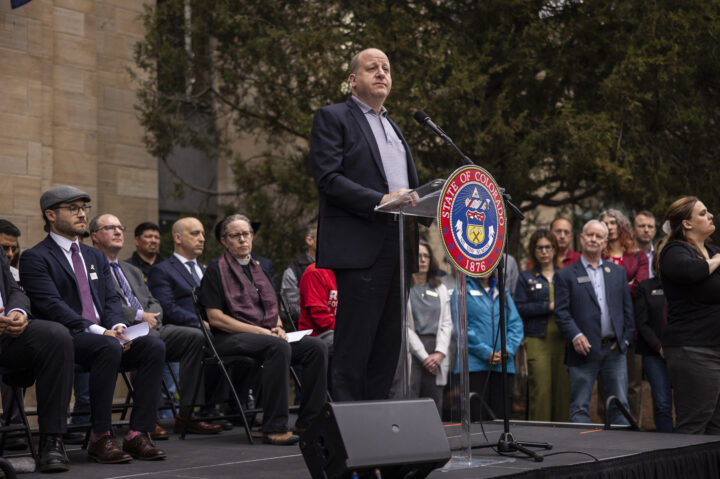
CHET STRANGE/AFP via Getty Images
Colorado Governor Jared Polis speaks during a community gathering at the site of an attack against a group people holding a vigil for kidnapped Israeli citizens in Gaza oin Boulder, Colorado on June 4, 2025.
Three weeks after a Colorado march in support of the Israeli hostages in Gaza was abruptly interrupted by a scene of grotesque violence, one of the victims of the antisemitic firebombing attack that left 29 people injured succumbed to her wounds.
Karen Diamond died on June 25, Rabbi Marc Soloway, of Boulder’s Congregation Bonai Shalom, announced in an obituary. She was 81, and is survived by her husband, two sons, two daughters-in-law and five grandsons.
“There are no words to express the pain of this horrific loss of our beloved member and friend,” Soloway wrote.
The alleged attacker, Egyptian national Mohamed Soliman, now faces two counts of first-degree murder connected to Diamond’s death, in addition to 12 federal hate crimes charges and more than 100 state charges related to the June 1 attack. A Justice Department spokesperson declined to comment.
Run for Their Lives, the organization that arranges the weekly hostage marches, released a statement on Monday calling Diamond’s death “a heavy and heartbreaking moment for us.”
The funds constitute around half of the remaining supplemental NSGP funds originally expected to be released earlier this year

Brandon Bell/Getty Images
A law enforcement vehicle sits near the Congregation Beth Israel synagogue on January 16, 2022 in Colleyville, Texas.
The Federal Emergency Management Agency announced on Friday that it had awarded $94.4 million in security grant funding to a total of 512 Jewish organizations nationwide, around half of a long-delayed supplemental funding round.
Applications for this funding, provided as part of last year’s national security supplemental bill, opened in the fall of 2024, and grant awards were initially expected to be announced early this year. But they were delayed in a government-wide review of federal grant funding implemented by the Trump administration.
“DHS is working to put a stop to the deeply disturbing rise in antisemitic attacks across the United States,” Tricia McLaughlin, the Department of Homeland Security’s assistant secretary, said in a statement. “That this money is necessary at all is tragic. Antisemitic violence has no place in this country. However, under President [Donald] Trump and Secretary [Kristi] Noem’s leadership, we are going to do everything in our power to make sure that Jewish people in the United States can live free of the threat of violence and terrorism.”
The grant funding was open to all nonprofits, with a focus on organizations facing higher threats due to the war in Gaza.
But the funding round was expected to include the full $220 million in remaining NSGP funding from the national security supplemental legislation. It’s unclear at this point how and under what procedures FEMA plans to disburse that remaining $126 million.
The agency has yet to open applications for the 2025 full-year grant process.
Asked for comment on these issues, FEMA referred JI back to a press release on the funding grants and did not respond to a subsequent follow-up question.
“We welcome the Administration awarding $94 million in Nonprofit Security Grant Program (NSGP) funding to help protect over 500 Jewish institutions amid the historic levels of antisemitic threats that ADL is tracking,” Lauren Wolman, director of federal policy and strategy at the Anti-Defamation League, said. “But the job isn’t done. DHS must urgently release the additional NSGP supplemental funds Congress appropriated to meet overwhelming demand and save lives. ADL will continue working with lawmakers and senior officials to underscore both the urgency of increasing funding and moving previously appropriated funding.”
The chant was led by Irish rap duo Bob Vylan

Ben Birchall/PA Images via Getty Images
Bob Vylan performing on the West Holts Stage, during the Glastonbury Festival at Worthy Farm in Somerset.
The organizers of the annual Glastonbury music festival in the U.K. said they were “appalled” by chants calling for “death to the IDF” led over the weekend by the rap duo Bob Vylan during the five-day event.
“Their chants very much crossed a line and we are urgently reminding everyone involved in the production of the Festival that there is no place at Glastonbury for antisemitism, hate speech, or incitement to violence,” Emily Eavis, the daughter of Glastonbury co-founder Michael Eavis, wrote Sunday on Instagram.
“With almost 4,000 performances at Glastonbury 2025, there will inevitably be artists and speakers appearing on our stages whose views we do not share,” Eavis continued. “However, we are appalled by the statements made from the West Holts stage by Bob Vylan yesterday.”
In a statement to Jewish Insider, Leo Terrell, senior counsel to the assistant attorney general for civil rights who chairs the Justice Department’s task force to combat antisemitism, said that ahead of Bob Vylan’s upcoming U.S. tour, the task force will be reaching out to the Department of State “to determine what measures are available to address the situation and to prevent the promotion of violent antisemitic rhetoric in the United States.”
Jim Berk, CEO of the Simon Wiesenthal Center, said that the response from Glastonbury organizers was “bland.”
“Saying the chants merely ‘crossed a line’ and offering vague ‘reminders’ to artists is not accountability—it’s cowardice,” Berk said in a statement. “When confronted with explicit calls for violence against Jews, anything short of absolute condemnation and corrective action is complicity.”
“What happened on the stages of Glastonbury yesterday was not just disgraceful; it was sickening, dangerous, and chillingly reminiscent of a modern-day Nazi rally… This was a calculated act of hate speech, glorifying violence and dehumanizing Jews through the demonization of Israel,” Berk continued.
U.K. Health Secretary Wes Streeting also called the chants “appalling” but added in a Sky News interview that Israel needs to “get its own house in order.”
Glastonbury is Britain’s biggest summer music festival and draws some 200,000 festivalgoers annually to Worthy Farm in southwest England. Local police said a review of video evidence would be conducted “to determine whether any offenses may have been committed that would require a criminal investigation.”
Irish rap group Kneecap also performed Saturday despite one of its members having been charged with a terror offense for displaying a Hezbollah flag at a London concert. Ahead of the festival, U.K. politicians, including Prime Minister Keir Starmer, called for the controversial group to be dropped from the lineup, saying its inclusion was “not appropriate.”
Also on Saturday, the pop-rock band Haim — comprised of three sisters whose father is an Israeli immigrant to Los Angeles — performed a surprise set. The Grammy-nominated sisters leaned heavily on their Jewish identity since their debut album was released a decade ago. But the band’s Instagram, with 1.5 million followers, went silent after the Oct. 7, 2023 terrorist attacks, with some Jewish fans denouncing the sisters’ silence.
Manning's statement comes ahead of a weekend vote on several anti-Israel party resolutions

Former Rep. Kathy Manning speaks during a rally of Jewish voters for Vice President Kamala Harris (Photo by DOMINIC GWINN/Middle East Images/AFP via Getty Images)
Former Rep. Kathy Manning (D-NC), now the board chair of Democratic Majority for Israel, blasted the North Carolina Democratic Party (NCDP) leadership for what she described as allowing anti-Israel rhetoric and antisemitism within the state party, in a statement first shared with Jewish Insider.
Manning’s statement comes ahead of anticipated North Carolina Democratic Party Executive Committee votes this weekend on a resolution calling for an arms embargo on Israel and accusing it of apartheid and genocide — along with a resolution drawing equivalence between Israel and Hamas, saying both committed “terrorism” and have taken “hostages” and calling for the U.S. to exert influence to remove Israeli officials from power, among several others.
“Time and time again, the Jewish Caucus of North Carolina has attempted to unify and collaborate with the leadership of the North Carolina Democratic Party, which seems unwilling or unable to reciprocate. Instead, Party Chair Anderson Clayton and First Vice Chair Jonah Garson have continued to tolerate extreme anti-Israel rhetoric and antisemitism from within the party on social media, in executive committee meetings, and even in the exclusion of Jewish members from Interfaith Caucus meetings,” Manning said in her statement.
“DMFI condemns the continued tolerance of bad faith actors within the NCDP, and we stand with the Jewish Caucus in urging all members of the NCDP State Executive Committee to vote for unity tomorrow,” she continued.
Clayton responded in a statement, “Running a big tent party means having many different view points. I have long maintained that there is a big difference between valid criticisms of the Israeli Government and antisemitism and have made abundantly clear that there is no place for antisemitism in our party.”
State party resolutions are generated at the local level, and voted up from precincts, to county to congressional district party groups, before being considered by the party’s Resolutions Committee, which votes on sending resolutions to the State Executive Committee for a final vote.
The resolution votes are the latest development in the ongoing tensions between Jewish Democrats in North Carolina and the state party. The state party, in 2023, voted against recognizing the NCDP Jewish Caucus, a vote condemned by senior leaders in the state, including now-Gov. Josh Stein.
The party has also repeatedly been roiled by heated fights over Israel policy in its state party platform. Party leadership members, including the chair of the NCDP’s Interfaith Caucus, expressed support for the Oct. 7, 2023 Hamas attack on Israel in the days following those atrocities.
The NC Jewish Caucus said in a statement that it has been trying for months to work “in good faith with party leaders to promote a balanced, inclusive approach to complex international issues” but “those efforts have been met with resistance throughout the party’s resolutions process.”
The statement called the resolutions, particularly the Israel arms embargo, “troubling” and accused the party’s Resolutions Committee of focusing “on only a select few issues, chief among them matters regarding Israel.”
“I’m deeply disappointed that a vocal minority within our party continues to sow division,” Caucus President Lisa Jewel said. “At a time when antisemitic incidents are on the rise across the state, double the national average according to recent data, the Jewish Caucus has repeatedly called for unity, yet the Resolutions Committee chose to focus on wedge issues that, ultimately, would result in harm to our friends and family.”
She urged the party leadership to “reaffirm party unity, refocus on electability, and reject virtue signaling distractions that divide us at the expense of progress,” and pointed blame toward the Interfaith Caucus as the driving force behind anti-Israel advocacy within the state party.
Though the issues at play in the upcoming votes aren’t new for the NCDP, the votes come at a time when Jewish Democrats nationwide are feeling politically homeless and alarmed by the growing acceptance of antisemitism and anti-Israel extremism — trends underscored by Zohran Mamdani’s nomination as the Democratic standard bearer in the New York City mayoral race.
The North Carolina Democratic Party did not immediately respond to a request for comment.
Wednesday night marked the first time since 2006 that two Jewish players were picked in the same draft

Sarah Stier/Getty Images/Harry Langer/DeFodi Images via Getty Images
Danny Wolf/Ben Saraf
Brooklyn, if it’s possible, got even more Jewish on Wednesday night, when two members of the tribe were picked back to back by the Brooklyn Nets in the first round of the NBA draft.
The Nets tapped 6-foot-6 Israeli point guard Ben Saraf and Israeli-American 7-footer Danny Wolf, who starred at the University of Michigan, with the No. 26 and 27 picks, marking the first time since 2006 that two Jewish players were selected in the same NBA draft.
“Picking two Jewish players back to back is at worst a pretty kismet coincidence. They know what they’re doing,” James Hirsh, host of the Jewish sports podcast “Menschwarmers,” told Jewish Insider, referring to the Nets’ front office. “This is a pretty cool thing to happen.”
Hirsh said that the picks reflect a “growth of professional Jewish athletes in New York,” pointing to Max Fried, who signed with the New York Yankees as a starting pitcher last December. “It makes sense to have talent that your fan base is going to automatically support.”
Saraf, 19, is the son of two former Israeli professional basketball players and was born in Israel. He chose to wear the No. 77, according to media reports, because it is the Jewish numerical value of the word “mazal,” Hebrew for luck. He is currently playing in Germany.
Wolf, 21, led the Wolverines to a No. 5 seed in last year’s NCAA men’s basketball tournament after transferring from Yale University. He has been outspoken about the antisemitism he’s faced on the court, especially in the aftermath of the Oct. 7, 2023, terrorist attacks while playing at Yale. “There were more than 80 fans who came to the game disguised,” he told the Detroit Free Press in March about a game against Dartmouth. “And then minutes into the game they broke out chanting and holding Palestinian flags. And it was a small gym, so everyone’s focus turned to that.”
“I would hear it growing up, that noise about me being Jewish, and [so] you don’t expect much from me as a basketball player,” Wolf continued. “When I was younger, I kind of looked at [being Jewish] as an opportunity to prove myself.”
“The most beautiful thing about Judaism is the way it connects me with my family,” said Wolf, who attended a Solomon Schechter Jewish day school in the Chicago suburbs until fifth grade and obtained Israeli citizenship in 2023 to represent Israel at the FIBA U20 European Championship in Greece. “It transcends other things and brings us together.”
“You can’t teach height,” Hirsh quipped, noting that Wolf is the “tallest Jewish player the U.S. has ever seen.”
“That’s pretty unique for Jewish basketball players,” he said. “There’s a lot of excitement to see whether his game can transfer to the NBA level or not.”
The newest Nets players follow in the footsteps of Omri Casspi and Jordan Farmar, who became the first pair of Israeli teammates on an NBA roster when they played for the Sacramento Kings in 2017. Lior Eliyahu and Yotam Halperin were the last two Jewish players to be picked in the same NBA draft in 2006. Another Israeli player, 24-year-old forward Deni Avdija, plays with the Portland Trail Blazers after three years with the Washington Wizards.
The new Jewish players mark a fresh chapter for the team, whose minority owner Oliver Weisberg is an Anti-Defamation League board member. The Nets were embroiled in an antisemitism scandal in 2022 after point guard Kyrie Irving posted a link to a film that denied the Holocaust and blamed Jewish people for slavery. Irving, who refused to apologize for days, was suspended by the NBA. The Nets traded him in 2023.
Peter Orszag, now the CEO of Lazard, urged party leadership to do more to confront growing extremism from within

SAUL LOEB/AFP via Getty Images
Peter Orszag (L), director of the Office of Management and Budget (OMB), attends a meeting with President Barack Obama (R) at the White House on June 29, 2010.
Former Obama administration OMB Director Peter Orszag, the CEO of Lazard, sounded an alarm Thursday morning over the leftward direction of the Democratic Party, especially when it comes to its handling of antisemitism.
He spoke out on CNBC after far-left state Assemblyman Zohran Mamdani won the Democratic nomination for New York City mayor.
“I’m saddened to say the Democratic Party is becoming increasingly antisemitic and anti-capitalism… Turning away from your principles and towards antisemitism never works,” Orszag said on CNBC’s “Money Movers” this afternoon.
He went on: “The Democratic candidate for mayor has embraced the global intifada idea. The DCCC has distributed fundraising emails from a senior Democratic operative [James Carville] saying Jewish donors [are] only interested in tax cuts. The senior leadership in the party seems to have cognitive dissonance on Israel. It’s problematic.”
Orszag has been a major figure in the Democratic Party for years, most prominently serving in the Obama administration as director of the Office of Management and Budget.
As antisemitism increases, he said that he had expressed these concerns to Democratic leadership, including House Minority Leader Hakeem Jeffries (D-NY) and Senate Minority Leader Chuck Schumer (D-NY), who has faced his own challenges navigating the ideologically divisive New York City mayoral race.
“I think the New York mayoral race is only part of the broader question. I think the Democratic Party needs to decide what it stands for,” Orszag said. “It needs to decide what its moral principles are and that includes [regarding] antisemitism.”
When asked about how Lazard would respond to a Mamdani mayorship, he said the bar for the company leaving was “very high” and would depend on what policies are implemented.
New York City Democrats knew Zohran Mamdani refused to condemn ‘globalize the intifada’ rhetoric. They voted for him anyway.

Michael M. Santiago/Getty Images
State Assemblyman Zohran Mamdani, with his mother, Mira Nair, left, his wife, Rama Duwaji, and his father, Mahmood Mamdani celebrate on stage during an election night gathering at The Greats of Craft LIC on June 24, 2025 in the Long Island City, Queens.
When Joe Biden announced his presidential campaign in 2019, he stated explicitly, in a slickly edited campaign video, that one of the issues motivating him to reenter politics was fighting antisemitism and hate. He specifically mentioned the violent Unite the Right rally in Charlottesville, Va., in 2017 and the white nationalist protesters who were “chanting the same antisemitic bile heard across Europe in the ‘30s.”
One of Biden’s former high-level aides pointed out to Jewish Insider how different that rhetoric was from the position staked out by Zohran Mamdani, the upstart New York assemblyman who won a surprise victory in the New York City mayoral Democratic primary on Tuesday.
In the closing days of the campaign, Mamdani, who began his activism journey as a Students for Justice in Palestine leader at Bowdoin College, defended the term “globalize the intifada” as an expression of Palestinian rights. Mamdani’s defense of the phrase was strongly criticized by Jewish groups across the ideological spectrum, who view the phrase as a call to violence. While Mamdani has pledged to keep Jewish New Yorkers safe, he has not acknowledged their concerns about his invocation of a phrase tied to a violent, yearslong Palestinian uprising.
“Biden was elected running a campaign in 2020 premised on combating antisemitism. That was the animating feature that got him into the race. So the politics of this have really moved,” said the former White House official. “This is all about language and people using their microphones, and the fact that someone could feel empowered to double down on these ideas and win a mayoral race in New York City, that doesn’t happen by accident. It takes years of moving the goalposts on this language, on what it means to be antisemitic in America in 2025.”
This Biden administration staffer, who requested anonymity for fear of professional backlash, is one of many Jewish Democrats questioning where their party is heading after a dynamic young socialist with radical anti-Israel politics is on track to become mayor of the largest city in America, which has the largest Jewish population outside of Israel. Coupled with Democrats’ reluctance to offer support for President Donald Trump’s targeted strikes on Iranian nuclear sites, which drew support from major Jewish groups, Mamdani’s ascension has some pro-Israel Democrats concerned about the future of their party.
Put more bluntly by another senior Biden administration official: “I feel like a person without a party,” they told JI.
Those two voices, who served at high levels of the Biden White House, are part of a small cadre of disillusioned former Biden staffers who want to see a more vocally pro-Israel tack from the Democratic Party’s current leaders, although they aren’t yet willing to say so publicly with their names attached. But their frustration represents a simmering undercurrent of concern among Jewish Democrats that has started to spill into the open after Mamdani’s victory.
Lawrence Summers, an economist who served as treasury secretary under President Bill Clinton and director of the National Economic Council under President Barack Obama, said in a post on X that he is “profoundly alarmed” about the future of the Democratic Party and the country “by yesterday’s NYC anointment of a candidate who failed to disavow a ‘globalize the intifada’ slogan and advocated Trotskyite economic policies.”
Some prominent Jewish Democrats acknowledged Mamdani’s shortcomings but tempered that concern by noting that voters were likely drawn in by his economic messaging, not his anti-Israel stance, and by the presence of a scandal-plagued rival in Andrew Cuomo, who ran a lackluster campaign.
“I think it is very disheartening that he was not able to say the phrase ‘globalize the intifada’ feels very threatening to Jews. I find that very distressing, but I don’t think that that’s the issue that the majority of New Yorkers were voting on,” said former Rep. Kathy Manning (D-NC), the board chair of Democratic Majority for Israel. “I don’t see it as a referendum on, people don’t care about antisemitism.”
Halie Soifer, CEO of the Jewish Democratic Council of America, expressed concern that New York Democrats elected a candidate “whose views on Israel deeply concern many American Jews.” But, she argued, “Democratic leadership and the vast majority of our elected officials stand with Jewish Americans on the range of issues of importance to Jewish voters.”
Mamdani’s election came days after a watershed foreign policy moment, in which Trump ordered American strikes on several Iranian nuclear sites. Democrats, even many moderates, responded by criticizing Trump for his unilateral action without consulting Congress, with many — including House Minority Leader Hakeem Jeffries (D-NY) — failing to even acknowledge the threat Iran posed to Israel and the U.S.
“I think overwhelmingly, Democrats have not done a good job, and the proof is in the pudding, that even staunch Democrats who would never consider supporting Donald Trump or ever vote for a Republican are just really pained by what feels like a refusal to even acknowledge the seriousness of the threat of the Iranian nuclear program,” said Amanda Berman, CEO of Zioness, a progressive pro-Israel organization. Manning said she “would have loved to see not just my [former] colleagues but newscasters acknowledge that Iran is a bad actor.”
Wary Jewish Democrats are keeping a watchful eye on how party leaders handle Israel- and antisemitism-related issues.
“While I believe the majority of Democrats are pro-Israel economic moderates, we will see if our party leadership capitulates to the party’s most radical anti-Israel wing in the city with the most Jews in the world,” Esther Panitch, a Democratic state representative in Georgia and the only Jewish politician in the Georgia Statehouse, told JI on Wednesday. “I’m not optimistic at this moment, given that they have welcomed non-Democrats DSA [Democratic Socialists of America] and WFP [Working Families Party] into the tent.”
Senate Minority Leader Chuck Schumer and Jeffries, both of whom live in New York City, each congratulated Mamdani with social media posts on Wednesday, although they did not outright endorse him.
Sara Forman, the executive director of New York Solidarity Network, which promotes pro-Israel candidates in local races in New York, called Mamdani’s election “a seismic change” for Democratic politics in New York. Far-left activists, she said, are now firmly inside of the party apparatus in the city, and she pledged to stick around and work to make sure the party is not represented by those activists.
“I am not advocating Jews leaving the Democratic Party,” Forman told JI. “One of the things that I’m going to work on, and I’ve been working on, is getting people to join me in the chorus and to not sit back and watch the car accident happening in front of their eyes, but instead, speak up. Speak out. Don’t surrender.”
According to Bradley Tusk, a venture capitalist and longtime political operative who served as former New York City Mayor Michael Bloomberg’s 2009 campaign director, the challenge for Democrats is how to overcome the most ideological voters who turn out to vote in primaries.
“It wasn’t that he was this candidate who had all these interesting, exciting affordability ideas, but also happened to be anti-Israel. The anti-Israel was a big part of what allowed him to succeed,” Tusk told JI. “I think structurally, we have put ourselves in a bind where, when the Democratic Party is only decided by small ideological actors who vote in primaries, and that group tends to lean much more into anti-Israel, antisemitism, the Democratic Party is pretty stuck.”
In a letter, the 21 Democrats argue that the remarks are 'not isolated or ambiguous and have long been associated with violence and hate'

Screenshot/X
Kingsley Wilson
The 21 members of the House Jewish Caucus — all Democrats — pressed Secretary of Defense Pete Hegseth in a letter sent on Tuesday expressing concerns about Kingsley Wilson, the recently promoted Pentagon press secretary with a history of antisemitic and otherwise controversial comments.
“Recent public reporting has highlighted a series of deeply troubling and offensive statements made by Kingsley Wilson, now serving as Pentagon Press Secretary,” the letter reads. “These statements include promoting the antisemitic and racist ‘Great Replacement’ theory, praising far-right political movements using slogans tied to neo-Nazi groups, and repeating patently false statements commonly circulated in neo-Nazi circles about Leo Frank, a Jewish man who was lynched by an antisemitic mob in Georgia in 1915.”
The letter argues that the remarks are “not isolated or ambiguous and have long been associated with violence and hate” and “their presence boldly and unrepentantly plastered in the public record of a senior Department official raises serious questions about the Department’s commitment to opposing extremism and antisemitism.”
Hegseth, at a recent Senate hearing, defended Wilson and said her comments had been mischaracterized for political gain, but also said he’d need to see her comments in full to evaluate them.
The lawmakers asked Hegseth whether the remarks are acceptable for a senior Pentagon employee in a public-facing role, how the Pentagon evaluates whether public statements necessitate disciplinary action, any steps the administration has taken in the past in response to antisemitic comments from Pentagon employees and whether Hegseth personally finds the comments acceptable for a representative of the Defense Department.
“We look forward to promptly receiving your reply. In the meantime, we urge the Department to affirm its responsibility to uphold the highest ethical standards,” the lawmakers wrote. “That includes an unambiguous commitment to confronting and unequivocally condemning antisemitism — especially within its own ranks — and ensuring that individuals who promote hate are quickly and appropriately held accountable.”
The letter was led by Rep. Laura Friedman (D-CA) and co-signed by caucus co-chairs Reps. Jerry Nadler (D-NY) and Brad Schneider (D-IL) and co-signed by Reps. Suzanne Bonamici (D-OR), Greg Landsman (D-OH), Debbie Wasserman Schultz (D-FL), Lois Frankel (D-FL), Sara Jacobs (D-CA), Steve Cohen (D-TN), Brad Sherman (D-CA), Jamie Raskin (D-MD), Dan Goldman (D-NY), Seth Magaziner (D-RI), Jan Schakowsky (D-IL), Jake Auchincloss (D-MA), Eugene Vindman (D-VA), Kim Schrier (D-WA), Mike Levin (D-CA), Becca Balint (D-VT), Josh Gottheimer (D-NJ) and Jared Moskowitz (D-FL).
Wilson’s record has also previously elicited concern from Republicans.
The legislation counts Senate leaders Thune, Schumer among its original co-sponsors
Kevin Carter/Getty Images
The U.S. Capitol Building is seen at sunset on May 31, 2025 in Washington, DC.
Top Senate leaders introduced a bipartisan resolution on Monday condemning the recent antisemitic attacks in Washington and Boulder, Colo.
The resolution is being led by Sens. James Lankford (R-OK) and Jacky Rosen (D-NV), joined by Senate Majority Leader John Thune (R-SD) and Minority Leader Chuck Schumer (D-NY), as well as Sens. Michael Bennet (D-CO), John Hickenlooper (D-CO), Dave McCormick (R-PA), John Fetterman (D-PA) and Jerry Moran (R-KS).
The resolution highlights that both attackers professed to have been motivated by the war in Gaza and shouted slogans including “Free Palestine,” during their attacks. It also notes that both suspects have been lionized online as heroes and that both attacks have prompted “calls for more violence.”
It describes the attacks as a “result of antisemitism, extremism, and political violence, which are threats not only to Jewish individuals, but to all of society in the United States.”
“Antisemitism is not just a Jewish problem, but a problem that threatens democracy and all of humanity,” the resolution declares. “Fighting antisemitism will not only protect the Jewish community in the United States but also protect our democracy.”
The legislation mourns slain Israeli Embassy staffers Sarah Milgrim and Yaron Lischinsky, condemns antisemitism, expresses support for the Jewish community and “encourages all of society to denounce and combat all manifestations of antisemitism and ensure that antisemitism is not normalized.”
It also highlights “the importance of resources and action in the aftermath of attacks, including the distribution of resources from the Nonprofit Security Grant Program.”
Lankford said in a statement the two attacks are “horrific reminders of the unfortunate rise in antisemitism across our country.”
“This resolution makes it clear: we unequivocally condemn antisemitism in all its forms,” Lankford said. “Our Jewish friends and neighbors should not live in fear because of their faith and heritage, and this resolution affirms the right to live their faith freely.”
Lankford and Rosen are the co-chairs of the Senate antisemitism task force.
“Communities across our country are experiencing an increase in antisemitic vandalism, threats, and violence that endangers the safety of Jewish Americans, like the recent attacks in Washington and Colorado,” Rosen said. “We have a responsibility to call out antisemitism and do everything we can to combat acts of hate in all of its forms. Senator Lankford and I introduced this bipartisan resolution to condemn recent attacks and recommit to doing all we can to tackle the alarming rise of antisemitic incidents.”
McCormick and Fetterman introduced a similar resolution last week, with 34 cosponsors, that highlighted the Washington and Boulder attacks as well as the arson attack on Pennsylvania Gov. Josh Shapiro’s residence during Passover.
That resolution is a companion to one that passed with near-unanimous support in the House earlier this month.
‘I think I can play that role. I'm willing to do it. Certainly happy to share the spotlight with the other three [Jewish Republicans] if they wish to do it, but, but this is deeply personal to me,’ Fine told JI

Kayla Bartkowski/Getty Images
Rep. Randy Fine (R-FL) holds a seal of the House that he bought 30 years ago after he is sworn in by U.S. Speaker of the House Rep. Mike Johnson (R-LA) at the U.S. Capitol on April 02, 2025 in Washington, DC.
Rep. Randy Fine (R-FL) believes that he was sent to Congress, at least in part, to take a leading role in fighting for the Jewish community against antisemitism.
Fine, during a lengthy interview with Jewish Insider in his congressional office earlier this month, said he sees himself as having a mostly unique ability among House members to help tackle the rise of antisemitism nationwide, as one of only four Jewish Republicans in the lower chamber.
“I think I can play that role. I’m willing to do it. Certainly happy to share the spotlight with the other three [Jewish Republicans] if they wish to do it, but, but this is deeply personal to me,” the Republican firebrand said. “This affects my children and so I understand it better than others.”
He has recently taken to wearing a kippah on the Hill at the request of one of his sons, as a symbol for those in the Jewish community for those who do not feel safe doing the same.
“I believe that God puts us where he wants us to be,” Fine said, describing his quick rise from the Florida House to the state Senate — where he served for only a few months — and then to an unexpected vacancy in Congress. “This must be why. This is what He wants me to do. … I think this is one of the reasons that I am here, to solve this problem, much like we did in Florida.”
He said that he is in Congress to fight for his district, but that he believes can also be a fighter for the entire Jewish community and “everyone who believes in the idea of Judeo-Christian values.”
Fine sees the war in Gaza and the global rise of antisemitism as a civilizational battle against extremist groups — both Hamas and anti-Israel forces in the United States — that want to see a global Islamic caliphate and are “spiritual cousins” of the Nazi regime. His often-hardline rhetoric on these issues has frequently sparked controversy.
He argued that it “remains to be seen” if the House Republican caucus and leadership are serious about the issue, saying that there has been a “great willingness to pass strongly worded letters, but I didn’t come here to do strongly worded letters.”
Asked about Trump administration officials with a history of antisemitic rhetoric such as Pentagon press secretary Kingsley Wilson and Office of Special Counsel nominee Paul Ingrassia, Fine demurred, saying he wasn’t familiar with the officials or their backgrounds and would want to examine them further before speaking about them.
At another point in the interview, Fine said that President Donald Trump and members of his team know that he’s not “afraid to call [antisemitism and anti-Israel attitudes] out on our side.”
“I’ve been very critical publicly of Thomas Massie, who I think is an embarrassment to the Republican Party,” Fine volunteered, referring to the libertarian-minded House member from Kentucky. “The guy makes me sick that I have to be in the same room with him at times.”
Massie did not respond to a request for comment.
He also said that, while he hasn’t had a chance to meet many of the Jewish Democrats in Congress yet, he’s willing to “work with anyone who wants to solve this problem, but I think that it helps to have someone in the majority to take the lead.”
He named Rep. Jared Moskowitz (D-FL), a former colleague in the Statehouse and his neighbor in the House offices, as a likely Democratic partner on future efforts. He said he’d also spoken on occasion with Rep. Dan Goldman (D-NY), whose office is across the hall from Fine’s. Goldman also co-chairs the House antisemitism task force.
”The fight against antisemitism is a moral one that must cross party lines and transcend political divisions,” Goldman told JI. “I am eager to work with Congressman Fine and anyone else committed to the fight against bigotry and hate towards the Jewish community and anyone else.”
Fine argued that Florida, his home state, has developed a successful strategy for dealing with antisemitism and antisemitic violence, a trend for which he believes he holds significant responsibility, pointing to multiple pieces of legislation he passed while in the Statehouse.
Antisemitic incidents in Florida dropped 24% in 2024, but were still up 277% from 2020, according to Anti-Defamation League statistics.
“This can all be done. We largely solved this problem in Florida,” Fine said in a prior interview with JI. “If you are willing to fight, if you do not let Muslim terrorists scare you, you can win. … We do not have these same problems in Florida and it is because I fought for this for eight and a half years. This is fixable, but not if we continue to be afraid to face evil and not be afraid to call it evil.”
“All the antisemites discover free speech when it comes to the Jews. You can’t call a black student the N word and go, ‘Free speech,’” Fine said. “We said, ‘You’ve got to treat antisemitism the same way. You don’t get to discriminate in how you deal with discrimination.’ We’ve identified certain behaviors, not speech, but certain behaviors that antisemites used to target Jews. We made them illegal, and we put in huge penalties for doing them. They stopped.”
He offered as one example legislation allowing people to run over demonstrators blocking roads — ”blocking roads is a form of terrorism,” Fine said — which he said had stopped that issue in Florida.
As another example, he said that antisemitism is treated “the exact same way as racism” on college campuses in Florida. He argued that free speech has been used as a cover for antisemitic activity that would be unequivocally condemned if it targeted another minority group.
“All the antisemites discover free speech when it comes to the Jews. You can’t call a black student the N word and go, ‘Free speech,’” Fine said. “We said, ‘You’ve got to treat antisemitism the same way. You don’t get to discriminate in how you deal with discrimination.’ We’ve identified certain behaviors, not speech, but certain behaviors that antisemites used to target Jews. We made them illegal, and we put in huge penalties for doing them. They stopped.”
He added that rhetoric like “globalize the intifada” constitutes a call for violence and should be an imprisonable offense.
Fine also noted that he passed legislation to provide dedicated security funding for Jewish day schools in Florida, the first state to do so.
The newly-elected congressman told JI, in the sit-down in his congressional office, that he’s entering Congress in a different position than he did in the Florida House in 2016, when antisemitism was not an issue he expected to work on.
That changed six months into his term, when a spate of bomb threats targeted Jewish day schools in Florida. He said the Orthodox Union approached him at that time to ask him to lead the security legislation for Jewish day schools. He said he was initially reluctant to do so, given that his district contained no Jewish day schools, but was told that “you’re the only one who can.”
“It was incredibly hard to get the funding,” Fine said. “I learned from that, ‘If I don’t do this, no one else will.’ And the difference in coming to Congress is I knew walking in the door that this would be part of what I came here to do.”
His work in Florida earned him the nickname “the Hebrew Hammer,” from a friend in the Florida legislature, Sen. Joe Gruters. That nickname now adorns a plaque gifted to him by the Orthodox Union’s Teach Coalition that hangs on his congressional office’s wall — next to shofar — as well as a mezuzah on his office door.
Fine said he was initially reluctant to accept the nickname, but it caught on anyway.
Looking toward the Middle East, the Florida congressman has attracted controversy for his calls for an aggressive bombing campaign in Gaza to force Hamas into an unconditional surrender. (Contrary to some reports, Fine has denied that he wants to see the territory nuked.)
He has also argued that “Palestinians in Gaza are on a level of evil that we saw in Japan and we saw in Germany back in World War II.”
Fine’s comments about Palestinians and Muslims — he argues that support for peace and coexistence is more “radical” and unusual in the Muslim community than extremist ideologies — have elicited repeated accusations of Islamophobia.
Asked about the administration’s push for a negotiated cease-fire with Hamas, Fine described Trump as a dealmaker who believes that any deal is possible “and I hope that he’s right.” He said he believes Trump is also focused on returning the hostages.
Fine said some interim deals with Hamas may be possible along the way, but he does not anticipate that Hamas will agree to a final and full surrender “unless the pain is sufficiently great to do that.”
Beyond the war, he said that there must be a “deprogramming” effort in Gaza, similar to that undertaken in post-World War II Germany, to counter the antisemitic hate and violence inculcated in the Palestinian population. It’s a process that he said may take a long time.
“One of the biggest problems we have in the world is there is evil in this world and people refuse to acknowledge it,” Fine said, pointing to audio that circulated following the Oct. 7, 2023, Hamas-led terrorist attacks on Israel of a Palestinian mother and her son crying with joy as the son exclaimed that he had murdered Jews in the attack. “These are not like us. This is not someone that you can sit down and break bread with and just talk it out. This is someone who must be defeated,” Fine said.
Though Fine argues that extremist antisemitic sentiments are mainstream among Muslims, he said that there are countries like the United Arab Emirates that are safe for Jews, and he’d like to see a similar change among Palestinians.
He said he doesn’t have the answers at this point on which country our countries can organize and lead the deprogramming effort — in an “ideal world, it might be a UAE or a Saudi Arabia,” but they may not “want the headache.”
“It might be Israel. There are 2 million Muslims who live in Israel,” Fine said. “I don’t think Israel wants the job, but that may be the only solution. I don’t know, but what you can’t do is you can’t have terrorists run the show. That much I know.”
“What I think we need to be doing is taking out Iran’s nuclear capabilities and hope that in the process of that, the Iranian people, who are a great people, will rise up and make Persia great again,” Fine said on CNN.
Asked about the future of the West Bank — which Fine refers to as Judea and Samaria — Fine said that he would prefer that Israelis and Palestinians be able to live in peace, but he is not sure that is a possibility, suggesting that the Palestinians “may have to go to the Palestinian country and live there,” referring to Jordan, which has a large Palestinian population.
“Right now, they live in the Jewish country, so I think the best outcome is they say, ‘Hey, we want to be happy, collaborative, constructive members of Israeli society,’” Fine said. “That’s what I hope happens. I don’t think there’s any reason why everyone shouldn’t be able to get along … But I think you have something broken in that society.”
Fine, who spoke to JI prior to the start of Israel’s military campaign in Iran, has repeatedly praised Israel’s strikes, backing President Donald Trump’s approach to the conflict.
“What I think we need to be doing is taking out Iran’s nuclear capabilities and hope that in the process of that, the Iranian people, who are a great people, will rise up and make Persia great again,” Fine said on CNN.
“The overwhelming majority of Republicans stand with Israel and support what I’m supporting, which is supplying Israel with the material they need to beat this genocidal Iranian regime,” Fine added.
He has criticized individuals like Tucker Carlson who have called for the U.S. to abandon Israel, characterizing opposition to the operation as fueled by “Qatar-funded troll farms.”
“The bombings will continue until morale improves,” Fine has also said, repeatedly invoking one of his catch-phrases: “bombs away.”
Prior to the strikes, Fine said he was skeptical of Iran’s willingness to abandon its pursuit of a nuclear weapon through talks, but said he was going to trust Trump to try to reach a deal, describing a deal as preferable to a war. He emphasized that Iran cannot, under any circumstances, be allowed to have a nuclear weapon.
And he said he would not support a deal with Iran that does not address its support for terrorism — which Secretary of State Marco Rubio has said was not part of the talks — arguing that funding from sanctions relief is fungible and Iran can divert it toward malign activities.
But he also said that he did not want to “judge until I see the end product,” saying he has “a lot of confidence in the president. He has been Israel’s greatest champion, American Jews’ greatest champion. And I don’t think he’s going to sell us out.”
He noted as well that he is close to Trump and members of the administration and that Trump knew he would be coming to Congress as a Jewish member and a champion for Israel.
The freshman congressman expressed deep criticisms of Qatar, saying he was “convinced” that opposition to him in his congressional special election race, totaling around $10 million in support of his opponent’s campaign, was “largely funded by Qatar.” He suggested that out-of-state volunteers for his opponent he met on the campaign trail had been paid to come to the district.
Democrats, energized by opposition to Trump, mobilized for the race, bringing it closer than most anticipated it would be.
Asked how his views of Qatar color his opinion of the Gulf state’s offer of a Boeing 747 to the administration for use as Air Force One and Trump’s dealmaking with the Qatari government, Fine said, “I think the president, to try to resolve issues, believes sometimes in offering big carrots. He’s a big guy, big carrot, big stick. I think he’s trying to embrace them into our way of thinking. Maybe it will work.”
He said that giving the jet to the United States, purported to be worth around $400 million, will, at minimum, deprive the country of $400 million it could otherwise provide to Hamas, “but I do have real reservations about Qatar. I think there’s a lot of bad that comes out of there, and it’s a concern that I have.”
He said that the kingdom must stop its donations of millions of dollars to U.S. universities and the U.S. should dig into the Muslim Brotherhood and Qatar’s relationship with it. He suggested that Qatar’s army of lobbyists in Washington might attempt to block impending efforts to designate that organization as a Foreign Terrorist Organization.
“I don’t back down from a fight … I’m not here focused on what’s next or [an] election. I’m here to do the right thing,” Fine said. “I don’t engage in political calculations to do what I do. I think Qatar is a problem, and I think we’re gonna have to deal with it.”
The former New York governor said about his rival’s comments, ‘We know all too well that words matter. They fuel hate. They fuel murder’

Jose Perez/Bauer-Griffin/GC Images
New York mayoral candidate, Andrew Cuomo attends a labor union rally in Union Square on June 17, 2025 in New York City.
Former New York Gov. Andrew Cuomo spoke out against Zohran Mamdani, his top rival in New York City’s Democratic mayoral primary on Tuesday, for defending calls to “globalize the intifada” in a widely criticized podcast appearance this week.
“Yesterday when Zohran Mamdani was asked a direct question about what he thought of the phrase ‘globalize the intifada,’ he dismissed it as ‘language that is subject to interpretation,’” Cuomo said in a social media post on Wednesday. “That is not only wrong — it is dangerous. At a time when we are seeing antisemitism on the rise and in fact witnessing once again violence against Jews resulting in their deaths in Washington, D.C., or their burning in Denver — we know all too well that words matter. They fuel hate. They fuel murder.”
Mamdani, a far-left state assemblyman from Queens who is polling in second place behind Cuomo, has faced backlash over his comments in an interview with The Bulwark, where he characterized the slogan heard frequently at anti-Israel protests as an expression of Palestinian rights and invoked a prominent act of Jewish resistance to Nazi Germany to justify its usage, even as the phrase has been criticized as a call to violence against Jews.
“I think what’s difficult also is that the very word has been used by the Holocaust Museum when translating the Warsaw Ghetto Uprising into Arabic, because it’s a word that means struggle,” Mamdani said on the podcast, in an apparent reference to the U.S. Holocaust Memorial Museum in Washington.
For its part, the museum, which rarely weighs in on domestic politics, dismissed Mamdani’s comments in a sharply worded social media post on Wednesday that did not mention him by name.
“Exploiting the Museum and the Warsaw Ghetto Uprising to sanitize ‘globalize the intifada’ is outrageous and especially offensive to survivors,” the museum said. “Since 1987 Jews have been attacked and murdered under its banner. All leaders must condemn its use and the abuse of history.”
Pressed to respond to the outage over his comments, Mamdani said in an emotional press conference on Wednesday that he is frequently targeted for his Muslim faith. “I try not to talk about it,” he said, choking up. “My focus has always been on making this a city that’s affordable, on making this a city that every New Yorker sees themself in,” he added, “and it takes a toll.”
“The thing that’s made me proudest in this campaign is that the strength of our movement is built on our ability to have built something across Jewish and Muslim New Yorkers,” he said, adding that “antisemitism is such a real issue in this city, and it has been hard to see it weaponized by candidates who do not seem to have any sincere interest in tackling it but rather in using it as a pretext to make political points.”
Ted Deutch, the CEO of the American Jewish Committee, also took offense at Mamdani’s framing, saying his invocation of the Holocaust Museum “is as offensive as it is outrageous” in comments posted to social media on Wednesday.
“I don’t know this candidate, but I know a lot of fine elected officials in the city he wants to run,” Deutch added. “ALL OF THEM should condemn the use of ‘globalize the intifada’ as the call to violence that it is. And they should tell Mr. Mamdani that if he really wants to keep Jews safe, he must do the same.”
Cuomo, who along with his allies has accused Mamdani of espousing anti-Israel rhetoric amid a recent surge of antisemitic incidents, likewise called on his opponents in the primary “to join together to denounce Mr. Mamdani’s comments because hate has no place in New York.”
“There are no two sides here,” Cuomo wrote. “There is nothing complicated about what this means.”
Whitney Tilson, a former hedge fund executive seeking the Democratic nomination who has been highly critical of Mamdani’s anti-Israel views, also took aim at the state assemblyman in a statement on Wednesday.
“Mamdani’s refusal to disavow terrorism against Jews is utterly disqualifying,” Tilson argued. “His assurances that he will protect Jewish New Yorkers ring hollow.”
A spokesperson for Mamdani did not immediately respond to a request for comment.
Brad Lander, the Jewish city comptroller who is polling in third place and recently cross-endorsed with Mamdani, said at a town hall hosted by the UJA-Federation of New York earlier this month that he does not immediately view calls to “globalize the intifada” as antisemitic, arguing the phrase is “really complicated” and that such judgements depend on context.
“The First Intifada was relatively nonviolent, and the Second Intifada was quite violent,” Lander said of the Palestinian uprisings that began in 1987 and ended in the early 2000s, killing more than 1,000 Israelis in a series of attacks targeting civilians and soldiers alike. “So if you say ‘globalize the intifada,’ you are at very least, at the very least, playing with vague language.”
The phrase has also stirred controversy further down the ballot. Shahana Hanif, a far-left city councilwoman in Brooklyn who has clinched endorsements from Lander and Mamdani as she faces a primary challenge, has also drawn scrutiny for amplifying a call to “globalize the intifada” on social media before she took office.
While she had initially dismissed complaints from Jewish leaders who took issue with her decision to endorse the phrase, Hanif, an outspoken critic of Israel, ultimately relented — deleting the post and expressing regret for boosting a message that many voters had found concerning.
“I unequivocally apologize for this,” Hanif wrote in a letter to Jewish community members last fall. “I understand now that the phrase can invoke feelings of hostility, discrimination and fear for Jewish people. It was never my intention to promote such messaging, and I removed the post as soon as I recognized its harmful implications.”
‘Any suggestion that I or her or others are party to antisemitism is a mischaracterization attempting to win political points,’ the defense secretary said

Kayla Bartkowski/Getty Images
Secretary of Defense Pete Hegseth and Chairman of the Joint Chiefs of Staff Gen. Dan Caine testify before the Senate Armed Services Committee in the Dirksen Senate Office Building on June 18, 2025 in Washington, DC.
Secretary of Defense Pete Hegseth offered a strident defense of Kingsley Wilson, the recently promoted Pentagon press secretary with a history of espousing antisemitic conspiracy theories, under questioning at a Senate Armed Services Committee hearing on Wednesday.
Wilson, prior to her appointment, attacked the Anti-Defamation League for memorializing the 1915 lynching of Leo Frank, a Jewish man who was wrongly convicted for raping and murdering a child, and called the ADL “despicable.” Wilson insisted that Frank was guilty — a niche and discredited theory largely associated with neo-Nazis.
She also has frequently boosted the antisemitic “Great Replacement” theory, advocated for Christian nationalism, used a neo-Nazi linked slogan to praise the far-right Alternative for Germany party, compared the murder of Israeli babies by Hamas to abortion and opposed U.S. aid to Israel, among a host of other controversial comments.
“I’ve worked directly with her, she does a fantastic job, and any suggestion that I or her or others are party to antisemitism is a mischaracterization attempting to win political points,” Hegseth said in a heated exchange with Sen. Jacky Rosen (D-NV), who co-chairs the Senate antisemitism task force.
“Senator, you’re attempting to win political points on the backs of mischaracterizing the statements of a member of my department and I’m not going to stand for that,” Hegseth continued.
“Your lack of an answer confirms what we’ve known all along: The Trump administration is not serious. You are not a serious person, you are not serious about rooting out and fighting antisemitism within the ranks of our DoD,” Rosen responded, as she and Hegseth attempted to shout over each other. “It’s despicable. You ought to be ashamed of yourself.”
Some Senate Republicans, including the Armed Services Committee chairman, had expressed concern about Wilson prior to her promotion and said that they were probing the issue and expected the Pentagon to address it.
Rosen referenced some of those criticisms in her questioning of Hegseth.
Earlier in her questioning, before mentioning Wilson specifically, Rosen asked Hegseth if he agreed that antisemitic conspiracy theories should not have a role in the government or military and that individuals who promote neo-Nazi conspiracy theories should not be in positions of power.
“Since I don’t believe the characterization of many officials in the news media, I would need to see precisely what’s being characterized,” Hegseth said initially, before affirming that he agreed.
Hegseth was also asked multiple times throughout the hearing about potential U.S. planning for a strike on Iran or to defend U.S. troops should Iran target them. He largely declined to speak publicly on the issue beyond saying that the Pentagon’s role was to plan for a range of potential scenarios. Hegseth will take more questions from senators in a classified setting in the afternoon.
The Queens assemblyman and New York City mayoral candidate refused to condemn the phrase as example of antisemitism on the left

Yuki Iwamura-Pool/Getty Images
Democratic mayoral candidate Zohran Mamdani
Zohran Mamdani, a leading candidate in next Tuesday’s New York City mayoral primary, refused to condemn calls to “globalize the intifada” during a new podcast interview with The Bulwark released on Tuesday, arguing the phrase is an expression of Palestinian rights.
In an exchange about antisemitic rhetoric on the left, Mamdani was asked by podcast host Tim Miller to share his thoughts on the phrase, which has been invoked at anti-Israel demonstrations and criticized as an anti-Jewish call to violence.
“To me, ultimately, what I hear in so many is a desperate desire for equality and equal rights in standing up for Palestinian human rights,” said Mamdani, a far-left assemblyman from Queens who has long been an outspoken critic of Israel. “And I think what’s difficult also is that the very word has been used by the Holocaust Museum when translating the Warsaw Ghetto Uprising into Arabic, because it’s a word that means struggle,” he said, apparently referring to the U.S. Holocaust Memorial Museum in Washington.
He added that, “as a Muslim man who grew up post-9/11, I’m all too familiar in the way in which Arabic words can be twisted, can be distorted, can be used to justify any kind of meaning.”
“I think that’s where it leaves me with a sense that what we need to do is focus on keeping Jewish New Yorkers safe,” Mamdani continued, after noting that antisemitism is a “real issue” he plans to address if elected mayor. “The question of the permissibility of language is something that I haven’t ventured into.”
Mamdani, who is polling in second place behind former Gov. Andrew Cuomo, has faced criticism over his approach to Israel during the campaign. He has declined to acknowledge Israel’s right to exist as a Jewish state and said he would divest from Israel if elected, among other comments and actions that have raised alarms among many Jewish voters.
Cuomo, who has deemed rising antisemitism “the most important issue” in the race, has for his part denounced calls to “globalize the intifada,” saying that such phrases are “giving license to come after Jews.”
Earlier this month, the UJA-Federation of New York and other local Jewish groups called on all candidates running for mayor “to unequivocally condemn dangerous rhetoric — such as ‘globalize the intifada’ — that has inspired deadly acts against Jews, most recently in Colorado, Washington, D.C., and Pennsylvania.”
Faced with widespread antisemitism in the gay rights movement, 'We're not going to let them take Pride away from us,' says one Jewish activist

Kent Nishimura/Getty Images
People march along the National Mall towards the U.S. Capitol as part of the WorldPride International Rally and March on Washington for Freedom at the Lincoln Memorial on June 08, 2025 in Washington, DC.
In early June, Rabbi Eleanor Steinman wrote to members of Temple Beth Shalom, the Reform congregation she leads in Austin, Texas, sharing the synagogue’s plans to celebrate Pride Month with several events in June.
Steinman also revealed that, for the first time in more than two decades, her congregation would not be marching in the Austin Pride parade, which event organizers say draws 200,000 people each August, because of concerns about antisemitism.
“The Austin Pride organization took an antisemitic stance in the midst of the Pride Parade and Festival last year,” wrote Steinman, who is gay.
Ahead of last year’s Pride parade, slides were leaked from a presentation in which Austin Pride organizers said hate speech against Jews wasn’t welcome, including “symbols, images or flags used by terrorist and hate groups.” An accompanying image showed people holding a “Globalize the Intifada” sign, a Hamas flag and a “From the river to the sea, Palestine will be free” banner. It was part of an education campaign for queer activists as anti-Israel sentiment exploded in the queer community after the Oct. 7, 2023, Hamas attacks and the ensuing war in Gaza, as it did in many other progressive spaces.
But the effort to educate about antisemitism backfired. Anti-Israel activists pressured Austin Pride to disavow that message. Austin Pride not only backtracked on barring those slogans; it issued a statement pledging to support the Boycott, Divestment and Sanctions movement and stating that the organization does not work with the Anti-Defamation League. In the months that followed, Jewish leaders and LGBTQ activists pushed Austin Pride’s leadership to consider changing this stance, but they did not.
“Despite attempts to meet with Austin Pride since then, a coalition of Jewish leaders were unable to create an environment where we felt we would be both safe and respected as Jewish LGBTQ+ and allies,” Steinman wrote in the email.
It was a remarkable statement, tinged with bitter irony: The synagogue first started marching in Pride so that LGBTQ congregants would feel that they could bring their full selves to the Jewish community. Now some of those same congregants feel that they need to suppress their Jewishness in order to fully belong in the queer community.
“It’s putting people back in the closet,” Steinman told Jewish Insider in a recent interview. “It makes me so angry and so sad that Jewish queer people are having to choose between those two identities, almost in a hierarchy — Which one am I more? — and decide how they want to live their truth.” (Micah Andress, president of Austin Pride, said in a statement that he was “saddened that members of the Jewish community may have been misled about our intentions,” and said “misinformation” was circulating. “Everyone is welcome at Austin Pride. Hate speech, of any kind, is not,” said Andress.)
Temple Beth Shalom was joined by two other synagogues, the local ADL branch and the leadership of Shalom Austin — the umbrella organization encompassing Austin’s Jewish federation, JCC and Jewish Family Service — in pulling out of Austin Pride and announcing a suite of Jewish Pride events instead, including a “Jewish queer joy and resilience” happy hour and two different Pride Shabbat services.
“There aren’t really very many queer spaces in this city that allow queer Jews to exist without being interrogated about Israel, Zionism, the war, things like that,” said Emily Bourgeois, director of public affairs at Shalom Austin. “We decided that this was a good moment for us and our community, knowing just how isolated the LGBT Jewish community specifically is, to really uplift and celebrate queer Jews.”
Austin is not the only place where Jewish members of the LGBTQ community are opting out of large Pride events because of fears of antisemitism and worries that they will face exclusion and ostracization. Similar monthlong Jewish Pride festivities are also taking place in San Diego and Raleigh, N.C., where organizers of the citywide Pride festivals have taken stances that Jewish leaders say put LGBTQ Jews at risk. In New York and San Francisco, grassroots “Shalom Dykes” parties are being planned as alternatives to the cities’ Dyke Marches, where anti-Zionist sentiment is de rigueur.
“We’re not going to let them take Pride away from us. We’re going to create a really inclusive Jewish Pride,” said Rabbi Denise Eger, interim executive director at A Wider Bridge, which builds ties between LGBTQ communities in the U.S. and Israel.
Even amid rising antisemitism, Jews in many places have and will participate in large Pride celebrations. At WorldPride in Washington early this month, a large Jewish contingent marched together.
“We encouraged people to show up to the parade, especially wearing Jewish pride and not being afraid of showing the world that we are LGBTQ Jews,” said Josh Maxey, executive director of Bet Mishpachah, an LGBTQ synagogue in Washington. “We have every right to be in the Pride march, just as anyone else.”
But in other communities where Pride organizers have aligned their organizations with anti-Israel movements or failed to offer support to concerned Jewish community members, the counterprogramming is a way for queer Jews and allies to express support for the LGBTQ community without having to hide their Jewish identity.
“We’re not going to let them take Pride away from us. We’re going to create a really inclusive Jewish Pride,” said Rabbi Denise Eger, interim executive director at A Wider Bridge, which builds ties between LGBTQ communities in the U.S. and Israel. (Eger is married to Steinman, the Austin rabbi.)
Even if the events are meant to be joyful, they will be enjoyed with a hint of discomfort. After years of fighting for inclusion, many LGBTQ Jews worry that excluding Jews is becoming accepted in queer spaces, particularly if those Jews are believed to be Zionists.
Seth Krosner, a trauma surgeon in San Diego, has seen enormous progress in Jewish spaces when it comes to LGBTQ inclusion. That makes it even harder for him to watch anti-Jewish sentiment become more common in LGBTQ spaces.
“I’m in my early 60s, and it wasn’t always that you could easily have a husband and be a surgeon, or have a husband — well, if you’re a man — and be president of a Conservative synagogue,” Krosner told JI. He lives near the city’s Pride Parade route, and for years he has hosted his rabbi overnight on Shabbat to enable the rabbi to walk to the parade.
San Diego Pride has stood by its decision to feature R&B singer Kehlani as its headliner, despite facing pushback from the Jewish community over the singer’s lengthy history of violent rhetoric targeting Israel and Zionists. Five synagogues, along with the San Diego JCC and the San Diego Jewish Federation, formally pulled out of San Diego Pride as a result. They will be collaborating on a weekend-long Jewish Pride event the same weekend in July. San Diego Mayor Todd Gloria also pulled out of the event over Kehlani’s role in it.
“I’m still happy to be a gay man with a wonderful husband. I’m proud to be a Jew, and I insist on being both. I’m not going to be forced to choose. But I can’t go to the parade in all good faith,” Krosner said. A spokesperson for San Diego Pride said the event is “an inclusive space that centers on and celebrates diverse queer identities, voices and joy [and] remains committed to ensuring a welcoming and, above all, safe Pride experience for the entire community.”
“While we respect those from our local Jewish community who have made the decision not to participate in San Diego Pride’s programming this year, we hope everyone will gather during Pride as a sign of solidarity for our queer community,” the spokesperson said.
“We have been aware for some time of antisemitism within the LGBTQ community,” Rabbi Lucy Dinner, Temple Beth Or’s senior rabbi, told JI. “This promotion of antisemitism by the OUT! Raleigh event leaders is a profound escalation of that expression, so much so that a local police officer advises that our safety may be at risk if Jews participate.”
Jewish communities are already on high alert, following the killing of two Israeli Embassy staffers outside a Jewish museum in Washington last month and the firebombing of a Boulder, Colo., protest for the Israeli hostages in Gaza soon after. A statement by the San Diego Jewish organizations referenced those incidents. “Kehlani’s hateful messages, including calls to ‘eradicate Zionism’ and for an ‘Intifada Revolution’ are not only dehumanizing, but history has shown that when they are normalized and platformed, they can lead to real-world violence against Jews,” they wrote.
Sometimes, community leaders must take into account security needs and make difficult calls about when it’s better to be safe than sorry.
Temple Beth Or, a Reform congregation in Raleigh, announced in an email to community members last week that the synagogue would not be formally participating in the OUT! Raleigh pride festival after a conversation with a police officer about security concerns. That decision followed the recent uptick in antisemitic violence, but it also came after OUT! Raleigh released a sharply anti-Zionist statement last year adopting BDS and pledging to “unequivocally stand with the Palestinian people” and demand an “end to Israeli occupation of native Palestinian land and the unjust apartheid system.” (JI did not receive a response to an inquiry sent to OUT! Raleigh.)
“We have been aware for some time of antisemitism within the LGBTQ community,” Rabbi Lucy Dinner, Temple Beth Or’s senior rabbi, told JI. “This promotion of antisemitism by the OUT! Raleigh event leaders is a profound escalation of that expression, so much so that a local police officer advises that our safety may be at risk if Jews participate.” (A Raleigh Police Department spokesperson disputed that the detective in question told the synagogue to pull out of the Pride event. “I want to affirm that RPD fully supports the right of all individuals to come to Raleigh and peacefully exercise their First Amendment rights,” Chief Public Information Officer Lt. David Davis told JI.)
In 2025, the exclusion of Jews is rarely so cut-and-dry as someone saying “Jews not welcome here,” particularly on the political left. But the New York City Dyke March, an event focused on queer women that draws between 15,000 and 30,000 people to Manhattan every June, came close: It said this year that Zionists aren’t welcome, even as polls show that an overwhelming majority of American Jews feel a connection to Israel.
“We oppose the nationalist political ideology of Zionism,” Dyke March organizers affirmed in a statement of values adopted this year, over objections from some Jewish activists. One of the activists, Jodi Kreines, was voted off the planning committee as a result. She was not removed for being a Zionist — Kreines never told her fellow committee members if she is or is not a Zionist — but rather for simply voicing that Zionists should be allowed at the Dyke March.
“Recent public statements attributed to you, expressing support for Zionist inclusion and collaboration, are in direct conflict with our mission and have caused deep concern in our community,” a group of committee members wrote in an email to Kreines that was viewed by JI. “We’d like to ask you to step down from the committee.” When she did not respond to their email, they voted to remove her.
“What crazy bizarro world is this, where calling for inclusion is a reason to be ousted from an organizing group, from a progressive space?” Kreines told JI on Monday.
This year, many queer Jewish women and nonbinary people will attend a “Shalom Dykes” party instead of the New York Dyke March. Nate Shalev, who organized the first “Shalom Dykes” event in 2024, is excited that it is happening again. But Shalev, who uses they/them pronouns, struggles with feeling they don’t belong in larger activist communities at a time when they want to protest against anti-LGBTQ policies being promoted by conservative politicians.
“If we set that precedent this year, that we’re siloing Jews to their own spaces, that’s going to continue, and are we ever going to be able to return?” Sarah Haley, a labor organizer in San Francisco asked. “I do think this type of hatred has gone very mainstream. I don’t think it’s fringe anymore. I think it’s pretty popular to be anti-Zionist, to say ‘Zionist scum’ and things like that. To not recognize this as a slur, I think, has become mainstream. If that’s where we are this year, next year, where will we be in five years? Will it be just no Jews allowed, period?”
“I want to be out there protesting and building coalitions around the values and issues that I care about, and I don’t feel like I’m able to do that,” Shalev said. “I don’t know how much we align anymore. Knowing that folks would possibly want to push me out if we had a conversation about it, and my Israeli wife wouldn’t be able to attend these.”
Sarah Haley, a labor organizer in San Francisco, faced harassment and name-calling from other San Francisco Dyke March volunteers when she argued in a planning meeting that Zionists should be allowed to attend the event.
“In some ways, it feels like we’re backsliding into a time period when Jews were only able to exist in their own spaces, only in their own businesses and their own groups,” Haley told JI. She does not plan to attend the march this year, but worries about what that means for queer Jews in the future.
“If we set that precedent this year, that we’re siloing Jews to their own spaces, that’s going to continue, and are we ever going to be able to return?” Haley asked. “I do think this type of hatred has gone very mainstream. I don’t think it’s fringe anymore. I think it’s pretty popular to be anti-Zionist, to say ‘Zionist scum’ and things like that. To not recognize this as a slur, I think, has become mainstream. If that’s where we are this year, next year, where will we be in five years? Will it be just no Jews allowed, period?”
For the many queer Jews who do choose to participate in larger Pride gatherings this summer, doing so is often a celebration of their identity — mixed, increasingly, with a quiet apprehension about antisemitism. Idit Klein, president and CEO of Keshet, an organization that fights for LGBTQ inclusion in the Jewish community, marched in WorldPride in Washington this month.
“It really was a day of queer Jewish joy, with these flashes of vulnerability, and looking around, and anxiety about what might happen, and then profound relief and gratitude,” Klein told JI. “I’m really kind of amazed by this: There wasn’t a flicker of negativity.”
As the WorldPride parade marched down 14th Street the first weekend in June, several announcers situated throughout the parade route shouted out the name of each contingent that marched past.
“Happy Pride, queer Jews of Washington, D.C.!” the announcers said.
Except one of them didn’t see the group’s banner, and chimed in with a different name, deduced from the sight of an Israeli flag.
“Happy Pride, LGBTQ people from Israel!” the announcer stated.
The Jewish marchers paused and held their breath, hoping the reaction from spectators wouldn’t be too harsh.
“All of us froze for a moment and wondered, what is going to happen now?” Klein recalled. Would this be one of those bad stories?
Then everyone cheered, just like they did for all the other floats and groups. And they kept on marching.
“To have an experience of a parade, and all the more so in Washington, D.C., given the murders that just happened there, that really just felt embracing and celebratory — that felt quite extraordinary,” said Klein.
An ad released by Sensible City highlights Mamdani’s positions on defunding the police amid increased antisemitic activity
Yuki Iwamura-Pool/Getty Images
Democratic mayoral candidate Zohran Mamdani
A new super PAC funded by donors involved in Jewish and pro-Israel causes is targeting Zohran Mamdani as he continues to surge in the final days of New York City’s mayoral primary, tying the far-left Queens state assemblyman to a range of recent antisemitic incidents.
In a 30-second digital ad released by Sensible City, the super PAC takes aim at Mamdani, a democratic socialist polling in second place behind former New York Gov. Andrew Cuomo, for supporting efforts to defund the police amid a rise in anti-Israel demonstrations and antisemitic violence fueled by Israel’s war in Gaza.
“It doesn’t stop,” the ad’s narrator intones over images of anti-Israel protests as well as antisemitic attacks, notably highlighting the alleged shooter of two Israeli Embassy staffers in Washington last month. “Day after day, streets blocked, demonstrations, some calling for killing, destruction — it’s not safe. Institution walls defaced with symbols to remind us of what can happen only because of who we are. The haters mean every word they utter. What can we do?”
“Zohran Mamdani wants to defund the police,” the narrator adds. “We need a mayor who puts more cops on the street. What’s your June 24 Democratic primary choice?”
The ad does not mention any other candidates in the Democratic primary, though at least one of the super PAC’s board members and one of the super PAC’s donors have contributed to Cuomo, who has called antisemitism “the most important issue” in the race while touting his staunch support for Israel. He has also criticized Mamdani over his past calls to defund the police.
Mamdani’s hostility toward Israel, whose existence as a Jewish state he has refused to recognize during the campaign, has long raised alarms among Jewish leaders, particularly as polling has suggested that he is gaining on Cuomo with under two weeks until the primary.
But the new ad from Sensible City, which began airing late last week, is one of only a small handful of paid efforts to draw scrutiny to Mamdani’s record of anti-Israel activism, one of several vulnerabilities in his insurgent bid for mayor.
Whitney Tilson, a former hedge fund executive seeking the Democratic nomination, has also run ads hitting Mamdani ‘s rhetoric on Israel. “The socialists are at the gate and Zohran Mamdani is leading the pack,” a Tilson ad stated earlier this month. “If they take over New York City, this is what they said they’ll do: Defund the police, consequences for genocidal Zionist imperialism.”
Mamdani’s campaign has dismissed both efforts as “desperate,” while calling the new ad from Sensible City “disgusting” and “slanderous.”
It remains to be seen if the new super PAC will further engage in the primary, after spending just over $100,000 on its digital ad — a relatively small sum in a race that has drawn millions from outside groups.
The super PAC has raised only $212,000 from seven donors, the latest filings show, including Rob Stavis, a partner at the venture capital firm Bessemer and a vice chair of the Anti-Defamation League’s board of directors, and Modi Wiczyk, a film producer and a board member at the Israel Policy Forum.
Stavis, who contributed $100,000, the single largest amount, declined to comment on the race, but a person familiar with his thinking said he has been personally troubled by Mamdani’s campaign.
The super PAC’s “mission,” it states on its website, “is to advocate for issues and policies focused on supporting and advancing public safety, combating antisemitism and promoting fiscal responsibility.”
“Our mission is more than a statement — it’s a standard,” the website adds. “Everything we do reflects our belief that New Yorkers deserve safe communities, responsible governance, and leaders who stand up to hate. Sensible City exists to hold that line.”
Representatives for the group listed on its website as well as in filings did not respond to requests for comment on Tuesday.
The group’s chairman, Daniel Horwitz, a partner at Tannenbaum Helpern in New York City, gave $500 to Cuomo’s campaign in March, according to filings.
A super PAC launched by allies of Cuomo, Fix the City, has raised more than $12 million, and recently began running attack ads against Mamdani.
Owner Manny Yekutiel: ‘There is no justification for attacking me other than the fact that I am Jewish’

Screenshot/JCRC Bay Area on X
Manny's, a Jewish-owned community center, is vandalized during anti-ICE riots in San Francisco on June 9, 2025.
Protests against Immigration and Customs Enforcement deportations that have engulfed San Francisco’s streets this week took an antisemitic turn on Monday night when a local Jewish-owned civic engagement hub and community space had its windows smashed and walls defaced with slurs including “Die Zio,” “The Only Good Settler is a Dead One,” “Death 2 Israel is a Promise” and “Intifada.”
“There is no justification for attacking me other than the fact that I am Jewish,” Manny Yekutiel, owner of the Mission District event space Manny’s, which is in disrepair following the vandalism and break-in, told Jewish Insider. “My business is not a pro-Israel business. I am not Israeli. This is not a space that represents Israel in any way.”
The space was also the target of antisemitic graffiti in October around the one year anniversary of the Oct. 7, 2023 terrorist attacks. The most recent attack is currently being investigated as a hate crime.
In the Bay Area, over 150 people were arrested on Sunday and Monday following protests against President Donald Trump’s travel ban, latest immigration policies and ICE raids. Similar protests spread across the country — including in Los Angeles where 4,000 National Guard members and 700 U.S. Marines were deployed on Monday.
Yekutiel believes the protests against ICE are “necessary” because ongoing deportations are “stoking hatred” and “we need to stand with immigrants.” While Yekutiel says he will continue identifying with left-wing causes, he also said the attack on his business makes the protests concerning for Jews.
The attack on Manny’s “undermines the very values such movements claim to uphold” such as “justice and welcome the stranger,” the Jewish Community Relations Council Bay Area said in a statement.
Monday’s vandalism in San Francisco comes as the Jewish community faces an “elevated threat” following a surge of violent antisemitic attacks across the country in recent weeks, the FBI and Department of Homeland Security warned last week. Last month, two Israeli Embassy employees were killed in a shooting in Washington. Days later in Boulder, Colo., 15 people advocating for the release of hostages in Gaza were injured in a firebombing by an Egyptian national who overstayed his visa in the U.S.
Trump announced his travel ban — which bars nationals of 12 countries from entering the U.S. — last week following the Boulder attack.
“The recent terror attack in Boulder, Colorado has underscored the extreme dangers posed to our country by the entry of foreign nationals who are not properly vetted, as well as those who come here as temporary visitors and overstay their visas,” Trump said. “We don’t want them.”
Plus, Congress votes to condemn antisemitism, amid controversy

Steve Hockstein/NJ Advance Media via AP, Pool
From left, New Jersey Rep. Josh Gottheimer; Newark Mayor Ras Baraka; Jersey City Mayor Steve Fulop; moderator NJ Spotlight News anchor Briana Vannozzi; moderator WNYC Morning Edition host Michael Hill; New Jersey Rep. Mikie Sherrill; and former state Senate President Steve Sweeney attend the New Jersey Democratic gubernatorial primary debate Monday, May 12, 2025, in Newark, N.J.
Good Tuesday morning.
In today’s Daily Kickoff, we report on the House’s passage of two resolutions condemning antisemitic attacks, and cover President Donald Trump’s comments criticizing Iran’s slow-walking and continued demand for nuclear enrichment capabilities. We also profile former FBI intelligence official John Sullivan, who is mounting a bid to challenge Rep. Mike Lawler in New York’s 17th Congressional District, and report on Jewish communal concerns over legislators’ proposed funding level for the Nonprofit Security Grant Program. Also in today’s Daily Kickoff: Ken Moelis, Gary Torgow and Argentine President Javier Milei.
What We’re Watching
- It’s primary day in New Jersey. More below on the state’s gubernatorial primaries.
- Defense Secretary Pete Hegseth is testifying before the House Appropriations Committee this morning, alongside Chairman of the Joint Chiefs of Staff Gen. Dan Caine. It’s the first of three hearings Hegseth is slated to sit for this week, and the first since the “Signalgate” incident in which Hegseth and others, including Vice President JD Vance, discussed plans for a strike on Houthi targets in Yemen in a group chat that included journalist Jeffrey Goldberg.
- Also this morning, the House Armed Services Committee is holding a hearing on “U.S. Military Posture and National Security Challenges in the Greater Middle East and Africa” with CENTCOM Commander Gen. Erik Kurilla, while CIA Director John Ratcliffe testifies before the House Intelligence Committee.
- This afternoon, former NBA player Enes Kanter Freedom and the American Enterprise Institute’s Michael Rubin will discuss human rights in Turkey at a hearing being convened by the bipartisan Tom Lantos Human Rights Commission.
- We’re also keeping an eye on the Knesset, where Israel’s opposition is expected to put forward a vote tomorrow to dissolve the government, which would trigger new elections. The motion is likely to pass only if the Haredi parties that are part of Israeli Prime Minister Benjamin Netanyahu’s coalition break with the prime minister over Haredi military conscription.
What You Should Know
A QUICK WORD WITH MATTHEW KASSEL
As New Jersey’s competitive gubernatorial primary takes place today, Rep. Mikie Sherrill (D-NJ) looks like the front-runner in the crowded Democratic field but without much public polling and a late flurry of advertising, there’s still a considerable amount of uncertainty as to who will emerge as the nominee in the six-way race.
Sherrill, a military veteran who has represented a suburban north New Jersey seat since 2018, is the favorite of many Democratic Party officials and has been leading in the limited public polling of the race. The congresswoman has also been one of the top fundraisers in the field, along with Rep. Josh Gottheimer (D-NJ), who has been courting support from the state’s sizable Jewish community.
“Josh has been betting on the Jewish community coming out strong, and there is a realistic possibility that if new voters emerge in places like Lakewood, which is the fifth-largest city in New Jersey now, it could play a decisive role,” one Jewish community activist, who asked to remain anonymous to discuss the primary, told Jewish Insider on Monday.
DOUBLE TALK
In his campaign for New York City mayor, Zohran Mamdani, a far-left Queens state assemblyman polling in second place behind former New York Gov. Andrew Cuomo, has indicated he would not visit Israel if he is elected, saying he does not believe that such a trip is necessary “to stand up for Jewish New Yorkers,” Jewish Insider’s Matthew Kassel reports.
Making an exception: By contrast, in a 2020 Zoom discussion with the Adalah Justice Project, a pro-Palestinian advocacy group, Mamdani said he was planning to organize a trip to the Palestinian territories, suggesting that he would make an exception for an issue he has upheld as one of his top causes in Albany. The comments underscore how Mamdani’s past remarks on the Israeli-Palestinian conflict have become a source of growing tension as he confronts basic questions on the issue in his mayoral campaign.
ANTISEMITISM ON THE FLOOR
The House voted on Monday to pass two resolutions condemning recent antisemitic attacks. One, led by Republicans, which focused on the Boulder, Colo., attack and immigration issues, split the Democratic caucus. The other, which was bipartisan and highlighted a series of antisemitic attacks, passed nearly unanimously, with just two lawmakers voting present, Jewish Insider’s Marc Rod reports.
Vote breakdowns: The first resolution drew criticism from Democrats ahead of the vote, but it passed, 280-133. Seventy-five Democrats, mostly moderates and pro-Israel members, ultimately voted in favor of the resolution and 113 voted against it. Another five Democrats — Reps. Herb Conaway (D-NJ), Shomari Figures (D-AL), Sarah McBride (D-DE), Johnny Olszewski (D-MD) and Dina Titus (D-NV) — and one Republican, Rep. Marjorie Taylor Greene (R-GA), voted present. Republicans removed some controversial language from the resolutions ahead of the vote. The second resolution, which condemns “the rise in ideologically motivated attacks on Jewish individuals in the United States,” passed with 400 votes in favor. Reps. Rashida Tlaib (D-MI) and Greene voted present.
Time to act: A group of eight Jewish House Democrats called on House and Senate leaders to pass the Antisemitism Awareness Act and increase Nonprofit Security Grant Program funding to $500 million, in advance of the resolution votes. “The Jewish community needs real action, not just resolutions,” the lawmakers said.
DIPLOMATIC DIALOGUE

President Donald Trump on Monday criticized Iran’s continued demands on uranium enrichment as part of the terms of a nuclear deal with the United States. Trump made the comments while speaking to reporters from the State Dining Room about his phone call with Israeli Prime Minister Benjamin Netanyahu earlier in the day, Jewish Insider’s Emily Jacobs reports.
What he said: Trump said the call went “very well” but declined to offer specifics beyond acknowledging that Iran was “the main topic.” He also added that the conflicts in Gaza and Lebanon were also discussed. Israel’s Channel 12 reported that the call lasted around 40 minutes. “They [Iran] are good negotiators, but they’re tough. Sometimes they can be too tough, that’s the problem. So we’re trying to make a deal so that there’s no destruction and death. We told them that. I have told them that. I hope that is the way it works out. It might not work out,” Trump said.
HE’S RUNNING
John Sullivan, who recently joined the increasingly crowded Democratic primary race to face Rep. Mike Lawler (R-NY) in November, brings unique pro-Israel bona fides to the race, even among a field of candidates vowing support for the Jewish state: From 2017-2020, Sullivan was the top FBI intelligence official living and working in Israel, liaising with the Israeli government on counterterrorism operations, Jewish Insider’s Marc Rod reports.
On the scene: Those three years, Sullivan told JI in an interview in May, gave him on-the-ground experience combating Hamas and Hezbollah and protecting both Israeli and American citizens. He said he’s seen and experienced firsthand the threats posed by both terror groups. “Working really closely with the Israelis to do everything possible to keep Israel safe was a key part of my life and my work for three years while I was overseas,” Sullivan said. “Israel has a very special place in my family’s heart.”
ON THE STAND

The House Education and Workforce Committee announced that its next hearing on campus antisemitism will feature testimony from the leaders of Georgetown University, the University of California, Berkeley and the City University of New York, Jewish Insider’s Marc Rod reports.
Looking ahead: The hearing, set for July 9, will include testimony from Georgetown’s interim president, Robert Groves, UC Berkeley Chancellor Rich Lyons and CUNY Chancellor Félix Matos Rodríguez. Rep. Tim Walberg (R-MI), the committee’s chair, indicated in a statement that the committee plans to focus the hearing on the issues driving campus antisemitism including foreign funding and antisemitic student groups.
SECURITY FUNDING

Jewish groups said on Monday that the House Appropriations Committee’s 2026 appropriations bill, which includes $305 million in funding for the Federal Emergency Management Agency’s Nonprofit Security Grant Program, fails to meet the need for the program. The House Appropriations subcommittee on Homeland Security voted on Monday evening to advance the bill funding the Department of Homeland Security, which oversees FEMA, with an increase from 2025 of just over $30 million for NSGP funding. The full committee will debate and vote on the bill on Thursday morning, Jewish Insider’s Emily Jacobs and Marc Rod report.
Jewish groups react: Nathan Diament, the executive director of the Orthodox Union Advocacy Center, said in a statement the House proposal is “a far cry from what is needed in the face of exploding antisemitism. The pro-Hamas calls to ‘globalize the Intifada’ have arrived in America. Jewish communities are facing a real crisis with a real set of threats, and Congress must respond with real action.” The Anti-Defamation League expressed a similar view. “In the wake of the horrific antisemitic violence we’ve seen in Washington, D.C., and Boulder, our communities are living in fear. We appreciate the proposed increase to $305 million for the Nonprofit Security Grant Program, but it is not enough,” Lauren Wolman, director of federal policy and strategy at the ADL, said in a separate statement. “Not when Jewish schools are forced to hire armed guards. Not when synagogues are receiving bomb threats during services.”
Worthy Reads
Tunnel Visions: The New York Times’ Isabel Kershner interviews former Israeli hostage Omer Shem Tov about the religious journey he experienced while in Hamas captivity in Gaza. “A few days into his captivity, he said, he began to speak to God. He made vows. He began to bless whatever food he was given. And he had requests — some of which he believes were answered. ‘You are looking for something to lean on, to hold onto,’ Mr. Shem Tov said in a recent interview at his family home in Herzliya, north of Tel Aviv. ‘The first place I went to was God. I would feel a power enter me,’ he said. … Mr. Shem Tov, who turned 22 in captivity, said he had always had faith, but had never been religiously observant. Many other released hostages have spoken of similar experiences, finding solace and the strength to survive by connecting or reconnecting with God and recalling oft-forgotten Jewish rituals.” [NYTimes]
Tug-of-War on Tehran: Politico’s Rachael Bade and Felicia Schwartz look at the behind-the-scenes efforts by both the isolationist wing of the GOP and Iran hawks to impact President Donald Trump’s final decision on how to address Iran. “The private lobbying and public sniping highlight a vast breach in the GOP over U.S. foreign policy just months into Trump’s first term. While many hawkish members of the old guard have viewed [Mideast envoy Steve] Witkoff’s diplomatic effort with skepticism, the more restrained wing of the party has been adamant about defusing tensions with Tehran. In the middle of the tug-of-war is Trump, who ran on a promise of ending what his followers see as endless U.S. foreign adventurism and war.” [Politico]
Doctor Without Borders: In The New Yorker, Eyal Press spotlights Israeli-Arab Dr. Lina Qasem Hassan, who in the immediate aftermath of the Oct. 7, 2023, terror attacks traveled to treat survivors of the massacre at Kibbutz Be’eri, about her experiences as a medical provider of Palestinian descent treating Israelis in a post-Oct. 7 environment. “But Qasem Hassan wasn’t going anywhere, even as she acknowledged feeling increasingly isolated, not only from her Jewish peers but also from some of her fellow Palestinians, including family members. Her older brother, a successful economist, and her sister, a government lawyer, have repeatedly warned her that her outspokenness could damage not only her career but theirs. … [S]he had sometimes asked herself if going to the Dead Sea after October 7th had been the right decision. She ultimately decided that she was proud of it. She told me, ‘I did it for myself, because it put to the test the idea I was raised on — that all people are equal and that human pain is universal.’” [NewYorker]
Word on the Street
The Justice Department is suing an Oakland, Calif., coffeehouse and its Palestinian owner over a 2024 incident in which a man wearing a yarmulke was denied service and asked to leave the premises…
NBC News reports on the White House’s struggle to hire Pentagon staff to work under Defense Secretary Pete Hegseth, amid broader tensions between the administration and Hegseth, who was reportedly instructed to cancel a trip to the Middle East because the itinerary included a stop in Israel…
A new poll by the Pew Research Center found that the global Jewish population increased by 1 million between 2010-2020, to 15 million; Pew noted that the total number of Jews in the world is still less than the pre-World War II number of 16.5 million…
Solidarity PAC, a pro-Israel super PAC in New York City, is backing former Gov. Andrew Cuomo as its top choice for mayor and urging supporters not to rank Assemblyman Zohran Mamdani in the primary, according to a new voter guide shared first with JI…
The Flatbush Jewish Community Coalition announced it is supporting Cuomo, saying in a statement that the election “presents a stark and urgent choice for Jewish voters”…
Ken Moelis will step down from his eponymous investment bank later this year; Moelis, who launched the firm in 2007, will be succeeded by co-founder Navid Mahmoodzadegan, the bank’s co-president…
The New Yorker spotlights television writer Gertrude Berg, whose 1950s show “The Goldbergs,” about a midcentury Jewish family in the Bronx, was among the first family sitcoms…
Police in Ottawa, Canada, are investigating the vandalism of the city’s National Holocaust Monument that took place earlier this week…
The family of Israeli hostage Matan Angrest released video taken from his capture on Oct. 7, 2023; in the video, Angrest’s limp body is seen being tossed off a tank into the arms of terrorists…
The New York Times interviews former hostage Liat Beinin Atzili, who was released from captivity in November 2023 and whose husband, Aviv, was killed in the Oct. 7 attack…
Argentine President Javier Milei arrived in Israel last night, traveling to the Western Wall in Jerusalem shortly after landing…
Climate activist Greta Thunberg departed Israel on an El Al flight to France on Tuesday morning, a day after the boat she and other activists had attempted to sail to Gaza was intercepted by Israeli forces…
International Atomic Energy Agency head Rafael Grossi said that Iran’s announcement that it had obtained information about an Israeli nuclear program appeared to refer to Israel’s Soreq Nuclear Research Center, which operates under the IAEA’s supervision…
Israel’s navy conducted strikes against Houthi targets in the Yemeni port of Hodeida, the first time Israel has attacked the Iran-backed group from the sea…
Iran expanded its ban on dog-walking — first instituted in Tehran in 2019 — to several major cities around the country; Supreme Leader Ayatollah Ali Khamenei had previously called dog ownership “reprehensible”…
The Jewish Federation of Tulsa, Okla., announced a new initiative, the Elson Israel Fellowship, aimed at making the city a center for Israel-related thought. The four inaugural fellows are: World Zionist Organization advisor Avi Gamulka, eJewishPhilanthropy’s Judah Ari Gross, author and educator Sarah Sassoon and community organizer and researcher Barak Sella…
The board of trustees of the Jewish Federations of North America elected Gary Torgow, a Detroit-based philanthropist and board president of the Jewish Federation of Detroit, as the group’s chair…
Pic of the Day

Rep. Lois Frankel (D-FL) spoke at a ceremony on Monday to rename the Delray Beach post office after Ben Ferencz, who led post-World War II Nuremberg prosecutions of Nazis. Read more about Frankel’s yearslong effort to honor Ferencz here.
Birthdays

Author of award-winning books about her experiences before, during and after the Holocaust, Aranka Davidowitz Siegal turns 95…
Journalist and author, Jeff Greenfield turns 82… Musician, producer, composer and conductor for film and television, Randy Edelman turns 78… Physical therapist at the University of Pennsylvania Health System, Andrea Sachs… Cathy Farbstein Miller… Senior director of communications for CoGenerate, Stefanie Weiss… Former attorney general and later governor of New York, Eliot Spitzer turns 66… Director of business development at Evergreen Benefits Group, Avi H. Goldfeder… Blogger and columnist for the Chicago Sun-Times, Neil Steinberg turns 65… Film, television and stage actress, Gina Gershon turns 63… President and CEO of JINSA, Michael Makovsky… Actress and the older sister of comedian Sarah Silverman, Laura Silverman turns 59… Israeli film and TV actress, Avital Abergel turns 48… Veteran of nine NFL seasons as an offensive tackle, he is now the athletic director of Mira Costa High School in Manhattan Beach, Calif., Mike Rosenthal turns 48… VP of strategic partnerships at the Birthright Israel Foundation and director of community education at NYC’s Congregation Kehilath Jeshurun, Rabbi Daniel Kraus… Professor at the Johns Hopkins University’s School of Advanced International Studies in Washington, Yascha Mounk turns 43… Economic commentator on Israeli television, Matan Hodorov turns 40… Publisher of The New York Sun and CEO of The Algemeiner, Dovid Efune… Actor, producer, writer and director, Joseph Paul “Joey” Zimmerman turns 39… CEO of the Jewish Community Relations Council of San Francisco, Tyler Gregory… Singer, composer and entertainer, Simcha Leiner turns 36… CEO of Encounter Programs, Yona Shem-Tov… Belgian singer and songwriter, known as “Blanche,” Ellie Blanche Delvaux turns 26…
One resolution, which praised ICE and highlighted the need for vetting visa applicants, split House Democrats

Nathan Howard/Getty Images
The U.S. Capitol is seen on June 13, 2024 in Washington, DC.
The House voted on Monday to pass two resolutions condemning recent antisemitic attacks. One, led by Republicans, which focused on the Boulder, Colo., attack and immigration issues, and split the Democratic caucus. The other, which was bipartisan and highlighted a series of antisemitic attacks, passed nearly unanimously, with just two lawmakers voting present.
The first resolution attracted controversy among Democrats ahead of the vote, but it passed by a 280-133 vote. Seventy-five Democrats, mostly moderates and pro-Israel members, ultimately voted in favor of the resolution and 113 voted against it.
Another five Democrats, Reps. Herb Conaway (D-NJ), Shomari Figures (D-AL), Sarah McBride (D-DE), Johnny Olszewski (D-MD) and Dina Titus (D-NV), and one Republican, Rep. Marjorie Taylor Greene (R-GA), voted present.
The resolution stated that the Boulder attack, perpetrated by an Egyptian national who overstayed a visa and work permit who threw a Molotov cocktail at activists raising awareness for the hostages in Gaza, “highlights the need to aggressively vet aliens who apply for visas” and “demonstrates the dangers of not removing from the country aliens who fail to comply with the terms of their visas.”
It also praised law enforcement and Immigration and Customs Enforcement and emphasized the need for “free and open communication” between state and federal law enforcement — an apparent reference to Colorado sanctuary state policies that limit such cooperation.
Prior to the vote, Republicans softened the resolution amid strident criticism from Democrats, stripping out one section that described the slogan “Free Palestine” as antisemitic and another one that explicitly condemned Colorado’s sanctuary state policies.
The second resolution, which condemns “the rise in ideologically motivated attacks on Jewish individuals in the United States,” including the attack in Boulder, the Capital Jewish Museum murders and the arson targeting Pennsylvania Gov. Josh Shapiro, passed with 400 votes in favor. Reps. Rashida Tlaib (D-MI) and Greene voted present. No members voted against the latter resolution.
“We cannot ignore these attacks or dismiss them as isolated incidents,” Rep. Jeff Van Drew (R-NJ), who led the bipartisan resolution, said in a statement. “They are part of a serious and dangerous trend that must be condemned by all of us. Today, the House stood firmly in support of respect and dignity for everyone because we know that every American deserves to live without fear in their own community.”
Greene said in an X post that “antisemitic hate crimes are wrong, but so are all hate crimes. Yet Congress never votes on hate crimes committed against white people, Christians, men, the homeless, or countless others.”
She objected to the fact that Congress has voted on “endless resolutions” on antisemitism while “Americans from every background are being murdered — even in the womb.”
“Prioritizing one group of Americans and/or one foreign country above our own people is fueling resentment and actually driving more division, including antisemitism,” Greene continued.
Ahead of the vote, a group of Jewish House Democrats had urged congressional leaders to take substantive action beyond passing nonbinding resolutions to combat antisemitism, primarily by passing the Antisemitism Awareness Act and bolstering Nonprofit Security Grant Program funding.
Their statement, calling for progress on the Antisemitism Awareness Act and increased security grant funding, comes ahead of two antisemitism votes in the House
Kevin Carter/Getty Images
The U.S. Capitol Building is seen at sunset on May 31, 2025 in Washington, DC.
A group of eight Jewish House Democrats called for action to advance the Antisemitism Awareness Act and increase Nonprofit Security Grant Program funding, in advance of votes on the House floor on a pair of resolutions condemning recent antisemitic attacks.
The statement highlights the recent string of antisemitic violence across the country and argues, “The Jewish community needs real action, not just resolutions.”
The lawmakers said that, “While the House will vote on two non-binding resolutions this week condemning the antisemitic attacks in Washington D.C., and Boulder, Colorado, the Jewish community is reeling, and we need Congressional leaders to come together and support real policy change.”
The statement was signed by Reps. Brad Sherman (D-CA), Josh Gottheimer (D-NJ), Jared Moskowitz (D-FL), Kim Schrier (D-WA), Debbie Wasserman Schultz (D-FL), Greg Landsman (D-OH), Brad Schneider (D-IL) and Lois Frankel (D-FL).
“In just the last two weeks, our country has witnessed two back-to-back antisemitic terror attacks that have left two dead and 15 seriously wounded,” the lawmakers said. “These events are an escalation of ongoing antisemitic violence that has become more and more common since Hamas’s October 7th massacre.”
The statement calls on Senate Majority Leader John Thune (R-SD) to bring a clean, unamended version of the Antisemitism Awareness Act to the Senate floor and for House Speaker Mike Johnson (R-LA) to bring the bill up for a vote in the House.
“Codifying the International Holocaust Remembrance Alliance (IHRA) definition of antisemitism is long overdue, and is more urgent now than ever as we see one violent anti-Zionist terror attack after another,” the statement reads. “You cannot fight antisemitism if you are unwilling to define it.”
It also calls for President Donald Trump and members of the Appropriations Committees to provide “long-requested levels of $500 million” for the NSGP, arguing, “it will help [Jewish institutions] put in place additional security measures like security cameras, locked doors, security guards, and more that could thwart terror attacks like the one that transpired at the Capital Jewish Museum.”
The statement outlines a series of violent antisemitic incidents in the past year and a half, including the Capital Jewish Museum murders and the Boulder, Colo., attack, as well as the attempted arson of Pennsylvania Gov. Josh Shapiro’s home during Passover; the death of Paul Kessler, who was killed in November 2023 in Los Angeles by an anti-Israel demonstrator who hit him on the head; and the stabbing of a Jewish barber in Yonkers, N.Y. in August 2024, which the lawmakers say “underlie the need for urgent, serious action.”
The statement’s neutral tone on the two antisemitism resolutions reflects the fact that many House Democrats are condemning one of the resolutions, led by Republicans, which focuses heavily on immigration issues. Controversial language describing “Free Palestine” as an antisemitic slogan was pulled from the resolution ahead of the vote.
House Minority Leader Hakeem Jeffries (D-NY) said Monday that the resolution is a “desperate attempt to distract,” an “embarassment” and a “joke.”
The statement was also endorsed by Democratic Majority for Israel.
Community Security Initiative director Mitch Silber said antisemitic rhetoric online is ‘happening at a much higher run rate than before D.C. and Boulder’

Tom Brenner For The Washington Post via Getty Images
Metropolitan Police Department and Federal Bureau of Investigation officers stand guard at a perimeter near the Capital Jewish Museum on May 22, 2025 in Washington.
The American Jewish community is facing an “elevated threat” following a surge of violent antisemitic attacks across the country in recent weeks, the FBI and Department of Homeland Security warned last week.
In a joint statement, the FBI and DHS called for increased vigilance among Jewish communities, noting the possibility of copycat attacks after a shooting in Washington in which two Israeli Embassy employees were killed and an attack in Boulder, Colo., in which 15 people were injured in a firebombing targeting advocates calling for the release of hostages in Gaza. “The ongoing Israel-HAMAS conflict may motivate other violent extremists and hate crime perpetrators with similar grievances to conduct violence against Jewish and Israeli communities and their supporters. Foreign terrorist organizations also may try to exploit narratives related to the conflict to inspire attacks in the United States,” the agencies warned.
Jewish organizations that track threats to the community are similarly concerned about online rhetoric following the attacks.
The Anti-Defamation League highlighted that, one day after the incident in Boulder, videos allegedly recorded by the assailant shortly before the assault began circulated on a Telegram channel called Taufan al-Ummah, which translates to “Flood of the Ummah,” a reference to the Al-Aqsa Flood, Hamas’ name for its Oct. 7, 2023, terror attack on Israel. The circulated posts celebrated Soliman’s actions.
The ADL also noted that extremists responded to the attack by spreading conspiracy theories which blamed Jews for the firebombing. Additionally, the Bronx Anti-War Coalition posted a threat shortly after the attack: “May all Zionists live in perpetual fear and paranoia until the day the criminal entity crumbles.”
“The volume of alerts when our social media web scraping tools highlight postings that may be real threats is happening at a much higher run rate than before D.C. and Boulder,” Mitch Silber, director of the Community Security Initiative, which coordinates security for Jewish communities in the New York region, told Jewish Insider.
“I would say it’s unprecedented,” Silber said of the threat Jews are confronting.
Silber also called it “unprecedented that American Jews are being targeted because of Israel’s actions,” referring to the Boulder attack, the killing of the two Israeli Embassy staffers, and an attempted arson attack on the home of Pennsylvania Gov. Josh Shapiro during the holiday of Passover. The suspect in the Boulder attack told investigators he “wanted to kill all Zionist people” and had planned the attack for a year. The shooter in Washington yelled “Free Palestine” shortly after the attack and the arsonist cited Shapiro’s support for Israel as his motive.
These attacks, according to Silber, are distinct from other antisemitic incidents that have occurred in recent years, such as the 2018 Tree of Life synagogue shooting in Pittsburgh — which remains the deadliest attack on Jews on U.S. soil — and the 2022 hostage-taking at Congregation Beth Israel in Colleyville, Texas.
“The key element that’s different here is the motivation of the attacks,” Silber said. The Tree of Life shooter was motivated by HIAS immigration actions and the Colleyville shooter was looking to get an al-Qaida fighter freed. “Of course, antisemitism is the broad brush,” he continued, “but if you look at recent attacks, they are really attacks against Jewish communities in the U.S. because American Jews are stand-ins for the Israelis that these attackers can’t reach.”
CSI is responding in “a multitude of different ways,” Silber said. “It’s been a tsunami of requests from organizations.”
“We’re encouraging any Jewish institution or organization to let us know if they are having an event and that way we can let local law enforcement know,” Silber continued, adding that the group’s new plans include subsidizing armed guards to complement law enforcement at outdoor events hosted by Jewish organizations, as well as expanding its team of analysts searching on social media, surface web and dark web for threats.
“We have more hands on keyboards to give ourselves a better chance of detecting a Boulder or D.C. before it happens,” Silber said.
Community Security Service, a group that provides self-defense and safety training to Jewish institutions, also told JI it is beefing up services in light of the recent attacks.
“Both of the attacks within a two-week timespan have been accompanied by the same kind of slogans that we’ve been hearing on college campuses and yelled at synagogues,” said Richard Priem, CEO of CSS. “That is a new manifestation. Of course we are concerned.”
Following Hamas’ Oct. 7, 2023, attack on Israel and ensuing war in Gaza, CSS saw a dramatic increase in Jewish communities requesting security support, which lasted for about a year, according to Priem. “But over the last two weeks, we’ve had dozens of inquiries from organizations,” he said.
“We are making sure that more quarters of the community use the training that we have for them,” Priem said. “Not just by deploying volunteers for large- or small-scale events but also just giving them guidance and training on how to organize themselves in a way that makes them less vulnerable.”
“We will open some community-wide training sessions in the coming weeks that are open to anyone to give awareness to pre-attack indicators,” he continued. “We have to get out of this mindset that the only way we’re going to solve this is by outsourcing to more companies. We’re not going to get out of this situation unless we as a community start taking ownership and realize we have to do training. We have to pay attention. Whether there’s an increased threat or not, people should do preventative training now.”
Marc Calcano, a former NYPD officer who runs a New York City-based private security firm with several high-profile Jewish clients, echoed that “the level of terror” American Jews face is “extremely high right now” and warned that the Boulder attack, in particular, could be easily replicated.
“I instruct individuals and large groups but I think it’s time for us to do this on a larger scale, which is creating an institution where many can come, here in New York and other states to learn how to physically defend yourself,” Calcano said.
The Jewish community can use fear “to its advantage,” he continued. “We have to learn how to protect ourselves.”
One resolution from Republicans highlights immigration issues; a bipartisan resolution links the attack to a growing series of violent antisemitic incidents

Kevin Carter/Getty Images
U.S. Capitol Building on January 18, 2025 in Washington, DC.
The House of Representatives is set to vote next week on two resolutions condemning antisemitism and the terrorist attack on a hostage march in Boulder, Colo.
One resolution from Republicans, focused on Boulder, highlights immigration issues and denounces the slogan “Free Palestine,” while the other, which is bipartisan, links Sunday’s Colorado attack to a series of other recent violent antisemitic attacks.
The first of the two resolutions is already attracting criticism from some Democrats. Led by Reps. Gabe Evans (R-CO), Jeff Crank (R-CO) and Lauren Boebert (R-CO), it includes a line that describes “Free Palestine” — a slogan shouted by both Mohamed Sabry Soliman, the Boulder attacker, and Elias Rodriguez, who killed two Israeli Embassy employees at the Capital Jewish Museum, during or shortly after their crimes — as “an antisemitic slogan that calls for the destruction of the state of Israel and the Jewish people.”
Evans’ resolution also notes that Soliman, an Egyptian national, violated U.S. immigration restrictions and states that the case “highlights the need to aggressively vet aliens who apply for visas to determine whether they endorse, espouse, promote, or support antisemitic terrorism or engage in other antisemitic or anti-American activity” and “demonstrates the dangers of not removing from the country aliens who fail to comply with the terms of their visas.”
It criticizes Colorado’s sanctuary state policies, stating that Colorado “hinders immigration enforcement” activities and prohibits law enforcement officials from providing information to federal immigration officials.
It also “affirms that free and open communication between State and local law enforcement and their federal counterparts remains the bedrock of public safety and is necessary in preventing terrorist attacks” and “expresses gratitude” to Immigration and Customs Enforcement personnel and other law enforcement.
Given Democratic opposition to many of the Trump administration’s immigration policies, those provisions could prove controversial, and some on the left are also likely to oppose labeling “Free Palestine” as antisemitic.
In statements about the legislation, the sponsors lambast Colorado’s sanctuary state policies, the Biden administration, Democratic Colorado Gov. Jared Polis and state lawmakers for their approach to immigration issues.
The resolution goes on to condemn Soliman and his “antisemitic terrorist attack on peaceful demonstrators supporting the release of the hostages” and prays for the victims of the attack.
The second resolution, led by Rep. Jeff Van Drew (R-NJ), has 53 bipartisan cosponsors, and condemns “the rise in ideologically motivated attacks on Jewish individuals in the United States,” including the Boulder attack, and expresses the House’s “commitment to combating antisemitism and politically motivated violence.”
The resolution describes the Colorado attack, as well as the D.C. shooting and the arson targeting Pennsylvania Gov. Josh Shapiro’s residence on the first night of Passover, as part of a “disturbing pattern of targeted aggression” and “politically and religiously motivated violence directed at Jewish individuals and institutions.”
It states that the three attacks “share a common pattern of targeting Jewish individuals or symbols of Jewish life and civic engagement” and calls antisemitism “fundamentally incompatible with the values of the United States,” saying it must be “condemned unequivocally.”
The Van Drew resolution calls on law enforcement to thoroughly investigate and prosecute the incident and on leaders to “speak out against antisemitism and politically motivated violence in all forms.”
Rep. Jerry Nadler (D-NY), a co-chair of the House Jewish caucus and a prominent progressive Jewish voice in the chamber, condemned Republicans for calling up the Evans-led resolution and urged colleagues not to support it.
“I am deeply disappointed in the Republican majority’s decision to put a blatantly partisan antisemitism resolution on the floor next week — especially since there is a bipartisan resolution that appropriately speaks to the horrible tragedy in Boulder that is already scheduled to come to the floor,” Nadler said in a statement to Jewish Insider.
“Once again, Republicans are using Jewish safety and the rise of antisemitism in America for their own partisan gain and to perpetuate their bigoted immigration propaganda,” Nadler continued. “As a community full of families who fled to America in search of a better life, American Jews will not fall for this cynical tactic, and I urge my colleagues not to take the bait.”
The two resolutions are the latest in a series of resolutions on antisemitism introduced by House members in the weeks since the Washington attack, some of which point to the increasingly fractured and politicized discourse about the issue.
Following the D.C. attack, 73 House Republicans led by Rep. Addison McDowell (R-NC) introduced a resolution condemning the attack and antisemitism, which noted that “the murderer is a far-left activist and has been affiliated with the Party for Socialism and Liberation.” It also called for “the enforcement of existing laws that punish hate crimes, protect religious freedom, and ensure justice for victims of antisemitic violence and discrimination.”
Following the Boulder attack, another Republican-only resolution led by Reps. Randy Fine (R-FL) and August Pfluger (R-TX), co-sponsored by 23 other House Republicans, also noted that Soliman overstayed his visa, said he “should never have been permitted to remain in the country as long as he was” and called for Congress to “take immediate action to secure the border and deport migrants who overstay their visas.”
Separately, six members of Colorado’s House delegation — all but Evans and Boebert — introduced a bipartisan resolution condemning the attack and expressing support for the survivors, as well as calling for additional federal resources to counter antisemitism and hate crimes and protect targeted communities.
Sherman’s statement comes in response to a letter from Albanese to Israel Bonds, accusing the group of involvement in genocide and war crimes

Brian Lawless/PA Images via Getty Images
Francesca Albanese, United Nations special rapporteur on the Occupied Palestinian Territories, during a press conference at Buswells Hotel in Dublin on March 20, 2025.
Rep. Brad Sherman (D-CA), in a blistering statement, accused the U.N.’s special rapporteur for the Palestinian territories, Francesca Albanese, of antisemitism and said that her activity has undermined the United Nations and eroded U.S. support for the U.N. and foreign aid in general and will contribute to deaths around the world.
The statement comes in response to a letter from Albanese, who has faced ongoing accusations of antisemitism from U.S. officials and lawmakers who have described her as unfit for her role, to Israel Bonds, accusing the group of involvement in crimes against humanity, war crimes and genocide.
“Only for a demonstrated antisemite like Ms. Albanese could stabilizing Israel’s economy after the worst massacre of the Jewish people since the Holocaust be something negative,” Sherman said. “This is just the latest instance in Ms. Albanese’s long history of antisemitism – she has regularly used antisemitic terms like the ‘Jewish lobby’ and claims that Israel doesn’t have the right to defend itself or even to exist.”
He said that, “Albanese and her ilk have turned once-legitimate entities like the United Nations into kangaroo courts and clown shows, significantly undermining U.S. support for the funding of international institutions and foreign aid.”
Sherman argued that actions by officials like Albanese make it harder for U.S. supporters of foreign aid to fight the Trump administration’s cuts to U.S. foreign development assistance and to support funding to international organizations. He drew a connection between Albanese and the antisemitism at the U.N. and what he said were 3.3 million anticipated deaths as a result of cuts to U.S. foreign aid.
“There’s a substantial amount of blood on her hands – but her victims live in countries that she doesn’t care about,” Sherman continued. “In fact, it seems the only thing she cares about is justifying attacks on Israel and Jews worldwide.”
Sherman also argued that the goal of Albanese and others in the anti-Israel movement is to weaken Israel economically and militarily so that future terrorist attacks can successfully eliminate the Jewish state.
“Believe that the anti-Israel movement means it when they say they want to eradicate Israel and will use any means to do it,” Sherman said. “Ms. Albanese condemns, and seeks to prevent, every effort of the Israeli government to feed and house its poorest citizens and care for the disabled. Due to her blinding rage of antisemitism, she seeks to hurt the most vulnerable.”
Albanese, in her letter to Israel Bonds, formally known as the Development Corporation for Israel, alleged that the group is responsible for a host of crimes against humanity and human rights violations, and suggested it faces international criminal liability.
“The applicable legal framework and the gravity of the situation on the ground in the occupied Palestinian territory, particularly in Gaza, indicate that there are reasonable grounds to believe that DCI is contributing to gross human rights violations that require the immediate cessation of the concerned business activity, and the remedy of the harm done to Palestinians,” Albanese wrote in the letter, which was obtained by JI.
“The continued failure to act responsibly in line with international law risks implicating DCI in an economy of much more serious violations, and increasing the associated liability. Indeed, given the international crimes being considered by the [International Court of Justice] and the [International Criminal Court], DCI is now on notice of a serious risk of being implicated in international crimes, the disregard of which may give rise to criminal liability, both for DCI and its executives,” she continued.
Dani Naveh, the CEO of Israel Bonds, said in a statement, “We will not be deterred by our enemies driven by antisemitism. Hamas, which carried out the atrocities of October 7, and its supporters, will not prevail. Their efforts have failed time and time again, as evidenced by the billions of dollars Israel Bonds has raised globally since the horrific attacks of October 7, 2023,” and called on supporters of Israel to respond by buying more bonds.
Dr. Rupa Marya frequently targeted Jewish and Israeli colleagues and students on her social media posts

Smith Collection/Gado/Getty Images
Front entrance at the Parnassus Heights campus of the University of California San Francisco (UCSF) hospital in San Francisco, California, January 5, 2017.
A University of California, San Francisco, medical school professor whom Jewish colleagues allege has routinely posted antisemitic content on social media during the Gaza war has been fired by the university, more than a year after concerns about her behavior first surfaced.
Dr. Rupa Marya worked at UCSF for 23 years, beginning as a resident before becoming a professor of internal medicine and a regular lecturer on social justice topics. With an active social media presence, Marya began posting about Israel’s war against Hamas soon after the Oct. 7, 2023, terror attacks. Her posts included attacks targeting Jewish and Israeli colleagues and students.
In a federal lawsuit filed against UCSF this week, Marya alleged that the university violated her constitutional free speech protections by firing her in a retaliatory fashion over posts published on her personal account, which Marya claimed the university wilfully misconstrued. She asserted that “neither her views nor her posts are antisemitic.”
In January 2024, Marya published a blog post attacking by name a Jewish colleague who had urged a hospital antiracism task force not to issue a statement calling for a ceasefire, saying it would empower Hamas. She had been criticizing him on social media for weeks. (Marya’s account on X, once a very active home for her commentary, has since been disabled.)
Marya also published a thread on X arguing that Zionism should not be present in medicine, calling it a “structural impediment to health equity.”
“There are so many Jewish doctors who don’t espouse an ideology of supremacism and justification of land theft, apartheid and genocide. They are not the issue here,” she wrote in January 2024. “The issue is Zionist doctors who will sit in an ‘antiracism task force’ meeting” — a clear reference to the doctor she later named in her blog — “and try to stop brown doctors who want to issue a Ceasefire statement by saying that a ceasefire would be a bad thing (read: let’s keep killing brown people in Gaza).”
This post from Marya earned a rebuke by the university — UCSF posted on social media soon after about a “tired and familiar racist conspiracy theory … stating that ‘Zionist’ doctors are a threat to Arab, Palestinian, South Asian, Muslim and Black patients, as well as the U.S. health system.” The university called it a “sweeping, baseless and racist generalization” that “must be condemned,” and identified the trope as antisemitism.
In September 2024, Marya announced that she had been suspended from her faculty position. The news came after she had raised concerns about an Israeli student attending the medical school. Students are “asking if he participated in the genocide of Palestinians in the IDF before matriculating into medical school in CA,” she wrote. “How do we address this in our professional ranks?” She was fired in May, nine months after her suspension.
A UCSF spokesperson declined to comment.
The bipartisan group wrote to the CEOs of Meta, TikTok and X that ‘this is not merely a matter of policy enforcement but one of public safety and national security’

Alex Wong/Getty Images
Mark Zuckerberg, CEO of Meta testifies before the Senate Judiciary Committee at the Dirksen Senate Office Building on January 31, 2024 in Washington, DC. The committee heard testimony from the heads of the largest tech firms on the dangers of child sexual exploitation on social media.
A bipartisan group of 41 lawmakers wrote to the CEOs of Meta, TikTok and X on Friday urging them to take action in response to the spike in violent antisemitic content posted on their platforms following recent antisemitic attacks in Washington and Boulder, Colo.
“We write to express grave concern regarding disturbing and inflammatory content circulating on your platforms in support of violence and terrorism,” the lawmakers — the majority of whom are Democrats — wrote in the letter, highlighting the rise of rhetoric praising and justifying the two antisemitic attacks. “This content is effectively glorifying, justifying, and inciting future violence, mirroring the surge in hateful rhetoric and open calls to violence and support of terrorism observed after the October 7, 2023 [attacks], and the ensuing Israel-Hamas conflict.”
They urged the administration to take “decisive and transparent steps to curb these dangerous trends and protect all users from the effects of hate and incitement to violence online.”
There has been a “skyrocketing number of antisemitic conspiracy theories accusing the D.C. attack of being a ‘false flag’ operation” online as well as instances of users “glorifying” the D.C. shooter’s actions, the lawmakers said, arguing that this increases the chances of further violence.
“This is not merely a matter of policy enforcement but one of public safety and national security,” the letter reads. “We regard the unchecked spread of pro-terror content, extremist symbolism, and incitement to violence as a direct threat to U.S. national security and public safety … It is critical that social media companies do not allow coded praise of violence or hate speech to flourish unchecked, as this only encourages others to engage in similar acts.”
The letter draws a direct connection between “Failing to meaningfully curb hate speech, including antisemitic mis- and disinformation, and allowing antisemitic incitement to violence” and the attack in Washington.
The lawmakers asked the three platforms to provide clarity on how they plan to respond, including how they will address “coded language” promoting violence and terrorism, how they determine when content that has incited violence is allowed to remain on the platform, how they will be implementing their anti-terorrism policies and how they are addressing the spread of incitement to violence and terrorism in multiple languages.
The letter was led by Reps. Wesley Bell (D-MO) and Don Bacon (R-NE) and signed by Reps. Jake Auchincloss (D-MA), Julia Brownley (D-CA), Sheila Cherfilus-McCormick (D-FL), Gil Cisneros (D-CA), Steve Cohen (D-KY), Jim Costa (D-CA), Danny Davis (D-IL), Don Davis (D-NC), Cleo Fields (D-LA), Brian Fitzpatrick (R-PA), Lois Frankel (D-FL), Laura Friedman (D-CA), Laura Gillen (D-NY), Dan Goldman (D-NY), Jonathan Jackson (D-IL), Raja Krishnamoorthi (D-IL), Greg Landsman (D-OH), Seth Magaziner (D-RI), Grace Meng (D-NY), Jared Moskowitz (D-FL), Donald Norcross (D-NJ), Jimmy Panetta (D-CA), Chris Pappas (D-NH), Brad Schneider (D-IL), Kim Schrier (D-WA), Brad Sherman (D-CA), Greg Stanton (D-AZ), Haley Stevens (D-MI), Marilyn Strickland (D-WA), Tom Suozzi (D-NY), Shri Thanedar (D-MI), Dina Titus (D-NV), Ritchie Torres (D-NY), Juan Vargas (D-CA), Marc Veasey (D-TX), Eugene Vindman (D-VA), Debbie Wasserman Schultz (D-FL), Nikema Williams (D-GA) and Frederica Wilson (D-FL).
Bacon and Fitzpatrick were the only Republican signatories. Krishnamoorthi, Pappas and Stevens are all mounting bids for the Senate in their respective states.
The Anti-Defamation League and American Jewish Committee supported the letter.
The AJC’s response echoes the cautious, skeptical but critical approach it and other major nonpartisan Jewish organizations have taken towards Trump’s antisemitism policies

Win McNamee/Getty Images
President Donald Trump holds up a signed executive order in the Oval Office of the White House May 23, 2025 in Washington, DC.
The American Jewish Committee criticized President Donald Trump for his executive order barring travel into the United States for citizens of 12 countries as lacking “a clear connection to the underlying problem” of domestic antisemitism and potentially having “an adverse impact on other longstanding immigration and refugee policies.”
The administration framed the announcement as a response to the antisemitic terrorist attack in Boulder, Colo., carried out by an immigrant from Egypt who overstayed a work permit. The AJC’s response echoes the cautious, skeptical approach it and other major nonpartisan Jewish organizations have taken to other actions by the Trump administration to combat antisemitism, including revoking visas from international students and cutting funding from universities.
Trump signed the directive on Wednesday restricting travel from seven countries and outright banned travel from 12 others, arguing the move was necessary to prevent “foreign terrorists” and other national security threats from entering the U.S. The countries whose citizens are now banned from entering the U.S. are Afghanistan, Myanmar, Chad, Republic of Congo, Equatorial Guinea, Eritrea, Haiti, Iran, Libya, Somalia, Sudan and Yemen.
Some citizens of Burundi, Cuba, Laos, Sierra Leone, Togo, Turkmenistan and Venezuela will be restricted from traveling to the U.S. Egypt is not covered under the order.
In a statement released on Thursday, the AJC expressed gratitude that the administration “is trying to mobilize as many levers as it can to counter” the surge in antisemitic attacks while noting its concern that the “broad” order will “prevent those in need of real refuge from entering the U.S. in line with the longstanding American tradition of welcoming those forced to leave their countries to escape war, persecution, or natural disaster.”
“We fully agree with the administration that entry of foreign nationals who are not properly vetted and those who overstay visas can pose national security threats. Being able to enter and stay in the United States is a privilege, and thorough protocols to ensure entry of foreign nationals to the U.S. in a way that protects national security are vital,” the statement reads, calling for proper funding for the State Department to vet visa applicants.
The Trump administration is pushing for sweeping State Department funding cuts.
“Throughout AJC’s nearly 120-year history, we have supported fair and just immigration policies for people of all races, religions, and national origins, and advocated for an inclusive America that provides safe haven for those fleeing persecution and seeking to contribute to the United States. It remains our strong belief that it is possible to allow for just immigration and refugee policies while upholding the national security of the United States,” the statement continued.
The organization went on to urge the Trump administration to lift its suspension of the U.S. Refugee Assistance Program (USRAP), arguing that the pause had left “many already vetted and cleared applicants for asylum with little hope.” It also called for a refugee admissions cap no lower than 75,000.
Several major Jewish groups, including the Anti-Defamation League, pushed in the first Trump administration to overturn its travel ban policy, which targeted seven majority-Muslim countries. ADL did not provide comment on the new announcement.
Many progressive-minded Jewish groups have condemned the new travel ban.
President Trump could sign an executive order implementing the ban as soon as Wednesday, an administration official told a meeting of Jewish leaders

JIM WATSON/AFP via Getty Images
President Donald Trump signs an executive order in the Roosevelt Room of the White House on May 12, 2025, in Washington, DC.
The White House is considering issuing a new executive order banning travel to the United States from certain countries, resurrecting a controversial policy from President Donald Trump’s first term, according to three people who attended a Wednesday White House meeting where the plan was discussed.
The planned executive order was mentioned in a meeting at the White House with Jewish leaders. The meeting, which had several dozen attendees, was organized in response to the deadly antisemitic attack in Washington last month that left two Israeli Embassy staffers dead outside the Capital Jewish Museum. The briefing took place three days after an antisemitic attack in Boulder, Colo., injured 15 people at a march to raise awareness about Israeli hostages in Gaza.
White House Staff Secretary Will Scharf told the group about the order but did not mention which countries would be included in the ban. Scharf said Trump could sign the order as soon as Wednesday.
“They were just saying that an executive order regarding a travel ban is in the works,” one of the sources told Jewish Insider after the meeting. “Everyone was very careful about what they said and didn’t say.”
Another source said the planned order was “not directly because of the events in Boulder,” but that the attack in Boulder was mentioned “as a rationale, as proof of why this executive order was so important.”
The alleged perpetrator in the Boulder attack is an Egyptian national who is in the U.S. illegally, having overstayed his visa, according to the Department of Homeland Security. The suspect’s wife and five children were taken into Immigration and Customs Enforcement custody on Tuesday and were set to be deported to Egypt, but a federal judge on Wednesday halted deportation proceedings against the family members.
In 2017, days after taking office in his first term, Trump signed an executive order barring travel to the United States from seven Muslim-majority nations. Egypt was not one of them.
Speakers at the meeting included Susie Wiles, White House chief of staff; Harmeet Dhillon, assistant attorney general for civil rights at the Department of Justice; evangelical pastor Paula White and Jenny Korn from the White House Faith Office; Noah Pollak, senior advisor at the Education Department; Sebastian Gorka, senior director for counterterrorism at the National Security Council; Adam Boehler, U.S. special envoy for hostage response; Martin Marks, White House Jewish liaison; and Leo Terrell, chair of the federal antisemitism task force. Yehuda Kaploun, Trump’s nominee to serve as U.S. special envoy to monitor and combat antisemitism, was in the room.
Attendees at the meeting included a wide range of Jewish communal leaders, with representatives from Chabad, Jewish Federations of North America, the Anti-Defamation League, the Orthodox Union, American Jewish Committee, the Conference of Presidents of Major American Jewish Organizations, AIPAC, Agudath Israel and several Brooklyn-based Orthodox institutions.
A White House spokesperson did not immediately respond to a request for comment.
The Boulder firebombing is the latest in a wave of attacks putting Jewish communities on edge.

ELI IMADALI/AFP via Getty Images
An Israeli flag is fixed to a street sign as police stand by off Pearl Street on the scene of an attack on demonstrators calling for the release of Israeli hostages held in Gaza, in Boulder, Colorado, on June 1, 2025.
The holiday of Shavuot is one of prayer and celebration, marked by all-night learning, indulging in cheesecake and communal events.
But across the U.S., this Shavuot was marked with a fear and unease that has become abnormally normal in recent months, following the Passover arson at the home of Gov. Josh Shapiro and the murders of two Israeli Embassy employees outside the Capital Jewish Museum last month, and deepened further by the horrific attack in Boulder, Colo., on Sunday in which an Egyptian national threw homemade Molotov cocktails at marchers calling for the release of the remaining 58 hostages being held in Gaza. Twelve people, including a Holocaust survivor, were injured.
The reverberations from the attack are already being felt in Washington, where legislators are reviving a bill to designate the Muslim Brotherhood as a terrorist organization.
Two days before the attack, JI reported on the Trump administration’s full FY 2026 budget request for Congress — which did not recommend an increase in funding to the Nonprofit Security Grant Program, instead holding it at its current level of $274.5 million. Fewer than half of the requests — which are submitted by organizations at elevated risk of being targeted in a terrorist attack — were fulfilled in 2024.
The attack in Boulder is likely to garner additional calls from the Jewish community for increased funding for the program. In the wake of last month’s deadly attack at the Capital Jewish Museum, a coalition of leading Jewish groups called for the federal government to increase NSGP spending to $1 billion. “The rising level of anti-Jewish incitement, which inevitably leads to violent acts … requires governmental action commensurate with the level of danger,” the organizations said.
In the wake of Sunday’s attack, many legislators condemned the attacks, most denouncing the antisemitic nature of the firebombing. But three Squad members — Reps. Rashida Tlaib (D-MI), Ilhan Omar (D-MN) and Summer Lee (D-PA) — condemned the attacks without mentioning Israel or antisemitism. President Donald Trump, in his response, did not mention Israel or antisemitism either, choosing instead to rail against former President Joe “Biden’s ridiculous Open Border Policy, which has hurt our Country so badly.”
The identities of the victims of the attack and the perpetrators’ declared motivations are political inconveniences to legislators and activists on both sides of the political spectrum — and their decision to erase both perhaps reverberates the loudest.
Other lawmakers focused their comments on the shooter’s immigration status. Mohamed Sabry Soliman had come to the U.S. in 2022 and received a work visa, which expired earlier this year. That the attack was perpetrated by an individual who had been approved for a visa by the Biden administration and remained illegally under the Trump administration is expected to produce more calls for stricter immigration policies. Last night, Homeland Security Secretary Kristi Noem said that Soliman’s wife and five children had been apprehended by immigration officials and faced potential deportation.
But while politicians debate the best approaches — from designating terror groups to calling for immigration crackdowns — Jewish communities remain on edge, feeling unsafe and unheard.
Perhaps nothing underscores Jewish communal concerns at this moment better than an op-ed published in The New York Times on Tuesday by National Council for Jewish Women CEO Sheila Katz.
“When antisemitism emerges within progressive spaces, cloaked in the language of justice, too often it is met with silence and discomfort, creating echo chambers where dangerous ideas are amplified rather than confronted,” Katz wrote. In response to sounding the alarm about antisemitism in left-wing circles, she said, “we have been gaslit, ignored and told that our fear is overblown, our outrage unjustified. Among many groups that have fought to secure and reclaim civil rights, voting rights and reproductive rights, we have seen antisemitism dismissed as not bad enough to matter, our grief met with cynicism, our safety treated as optional.”
Some Americans waking up to their morning news on Tuesday saw “Jews Are Afraid Right Now” as the Times headline accompanying Katz’s piece. But for the first several hours it was posted, the op-ed had a different headline: “American Jews Are Paying for the War in Gaza” — an approach to both the Israel-Hamas war and antisemitism in America that plays into the dual-loyalty tropes that American Jews have fought long before the Oct. 7 attacks.
The Times quietly changed the op-ed’s headline to the milquetoast “Jews Are Afraid Right Now” — which, while correct, missed Katz’s core point: “At rallies and on campuses, in coalition rooms and online spaces, slogans sometimes directly drawn from Hamas’s terrorist manifesto have been chanted and painted on placards, and shouted from stages and in the streets. ‘Globalize the intifada.’ ‘By any means necessary.’ ‘From the river to the sea.’ ‘Zionists out.’ These are not simply words; they can be interpreted as calls for violence.”
The Boulder attacker told investigators he wanted “to kill all Zionist people” — not dissimilar from comments made by the Capital Jewish Museum shooter, who declared, “I did it for Palestine, I did it for Gaza,” after gunning down Yaron Lischinsky and Sarah Milgrim. The arsonist who set the Pennsylvania governor’s mansion on fire said he committed the crime because of what Shapiro, one of the most prominent Jewish politicians in the country, “wants to do to the Palestinian people.”
From academia to activism to journalism, there is a reticence in left-wing circles to acknowledge that inciting language around the Israel-Hamas war can have a dangerous impact.
A year and a half ago, Ivy League administrators were pressed on whether “From the river to the sea” was a genocidal chant. The response, given by the since-ousted presidents of Harvard and the University of Pennsylvania, was that “it depends on the context.”
In this case, the context is the firebombing of elderly Jews calling for the release of hostages in Gaza. Last month, the context was the gunning down of a young couple outside a Jewish organization’s event focused on humanitarian aid in Gaza. In April, the context was the arson of the residence of a Jewish governor on the first night of Passover.
The recent attacks in Harrisburg, Washington and now Boulder are not surprising. They are what happens when ideology-driven activism trumps ethical journalism, when antisemitism becomes a political football and when the boundaries between free speech and calls for violence blur — creating a dangerous and deadly reality for American Jews.
Sen. Ted Cruz is planning to reintroduce an updated version of legislation that he first sponsored nearly a decade ago

Tom Williams/CQ-Roll Call, Inc via Getty Images
Sen. Ted Cruz (R-TX) is seen outside a Senate Judiciary Committee markup on Thursday, November 14, 2024.
Following Sunday’s antisemitic attack in Boulder, Colo., on a group marching to raise awareness about the hostages held in Gaza, a bipartisan push is growing on Capitol Hill to designate the Muslim Brotherhood as a terrorist organization.
Mohamed Sabry Soliman, the assailant, an Egyptian citizen who lived in Kuwait for 17 years prior to arriving in the United States, appears to have expressed support for the group and Mohamed Morsi, the Muslim Brotherhood leader who previously served as Egypt’s president.
Law enforcement officials have not announced any further links between Soliman and the Muslim Brotherhood. Hamas is a Muslim Brotherhood affiliate, and the group is closely tied to Qatar.
Sen. Ted Cruz (R-TX) said on Tuesday that he plans to reintroduce a “modernized version” of the Muslim Brotherhood Terrorist Designation Act he previously led, adding, “the Muslim Brotherhood used the Biden administration to consolidate and deepen their influence, but the Trump administration and Republican Congress can no longer afford to avoid the threat they pose to Americans and American national security.”
The Washington Free Beacon first reported on Cruz’s efforts.
Rep. Jared Moskowitz (D-FL) separately wrote to President Donald Trump on Tuesday urging him to “conduct a comprehensive investigation” into designating the group as a foreign terrorist organization, noting that multiple U.S. allies and partners including Egypt, Saudi Arabia, the United Arab Emirates, Bahrain and Austria have already done so, and France is considering doing the same.
“It must be noted that such ideological influence not only fosters division but also encourages radicalization against the United States, our allies and the foundational principals that define our societies,” Moskowitz wrote. “Taking steps to investigate and designate the Muslim Brotherhood as an FTO would enhance the ability of U.S. law enforcement and intelligence agencies to disrupt financial networks and recruitment activities connected to its affiliates.”
The Muslim Brotherhood Designation Act backed by Cruz was first introduced in 2014 by former Rep. Michele Bachmann (R-MN). Cruz and Rep. Mario Diaz-Balart (R-FL) subsequently picked up the torch, reintroducing the bill in the subsequent four congressional sessions.
At its high-water mark, in 2016, the legislation picked up additional 71 co-sponsors, most of them Republicans, in the House, and seven in the Senate, and was reported out of the House Judiciary Committee by a 17-10 vote. When it was last introduced, the legislation picked up just 14 co-sponsors in the House and two in the Senate.
The bill as of 2021 would have directed the administration, within 60 days of passage, to assess whether the Muslim Brotherhood meets the criteria for designation as a foreign terrorist organization and to provide a “detailed justification” if it determines it does not.
Near the end of his first term, Trump was expected to designate the Muslim Brotherhood as a terrorist group but that move never materialized.
Rep. Randy Fine (R-FL), who on Monday told Jewish Insider that the Council on American-Islamic Relations should also be designated as a terrorist group, told JI on Tuesday that he had reached out to Cruz to offer to lead the Muslim Brotherhood legislation in the House.
“That’s really the nexus of all this,” Fine said, accusing the Muslim Brotherhood of funding CAIR, Students for Justice in Palestine and other anti-Israel groups. “None of what we’ve seen in America is organic … Look, if Saudi Arabia and the UAE don’t want them and Egypt doesn’t want them, maybe you ought to take a hint.”
He described CAIR as the “mouthpiece” of the Muslim Brotherhood in the United States and said that designating the Muslim Brotherhood would inevitably wrap in CAIR and SJP. CAIR’s leader met with members of the Muslim Brotherhood as recently as 2022, and has been linked to other Brotherhood-affiliated groups. CAIR has praised the Muslim Brotherhood as a moderating force with which the U.S. should engage.
SJP and its parent group, American Muslims for Palestine, have also been accused of having grown out of Muslim Brotherhood networks in the U.S.
Rep. Debbie Wasserman Schultz (D-FL) told JI she hasn’t been contacted about the effort to designate the group yet, “but I can think of no reason why I wouldn’t support that.” She added, “I am surprised — how has that not already happened?”
The Florida Board of Governors rejected Ono’s confirmation, citing his inadequate response to antisemitism at the University of Michigan

Bryan Bedder/Getty Images for Anti-Defamation League
Call Me Back podcast host Dan Senor moderates a session with WashU Chancellor Andrew D. Martin and University of Michigan President Santa Ono at the ADL Never is Now event at Javits Center on March 03, 2025 in New York City.

