





















‘Life and death’: Survivors of antisemitic attacks lobby Congress for security aid
‘Everybody, no matter where you fall, should get behind’ the Right to Worship Act, said Temple Israel attack survivor Cassi Cohen, calling it a ‘no-brainer’
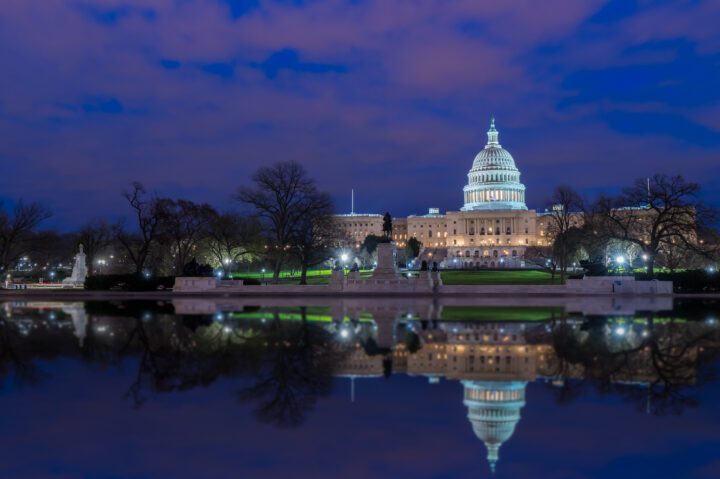
Worawat/Adobe Stock
U.S. Capitol Building


 Add JewishInsider on Google
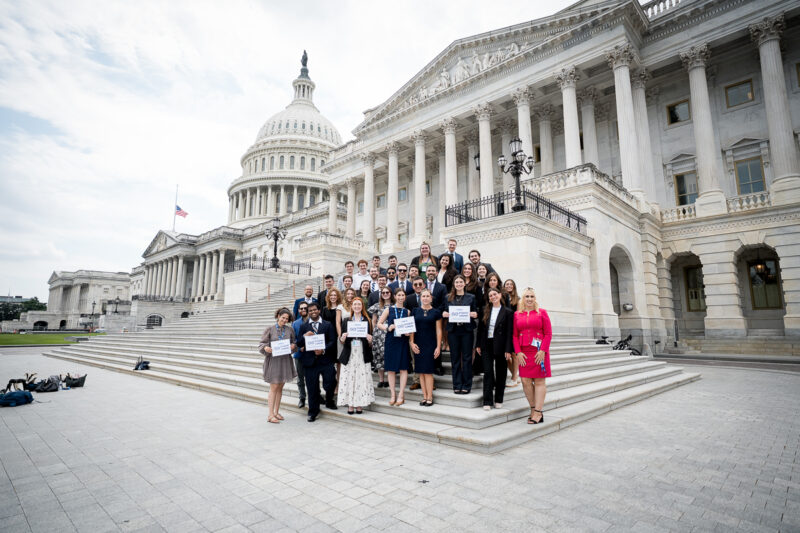
A group of survivors of antisemitic attacks across the nation is visiting Capitol Hill on Wednesday to lobby in favor of legislation aimed at protecting Jewish community institutions from future attacks.
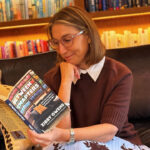
“I want to use my story and my voice and show firsthand how federal funding that we did receive through grants actually made the difference between life and death,” Cassi Cohen, the director of strategic development at Temple Israel in West Bloomfield, Mich., told Jewish Insider ahead of the meetings. “I’m living proof of that right now, because of the security measures we were able to put in place. I want every member of Congress to hear that loud and clear, and hopefully use that as a platform to create change and safer environments for our Jewish institutions.
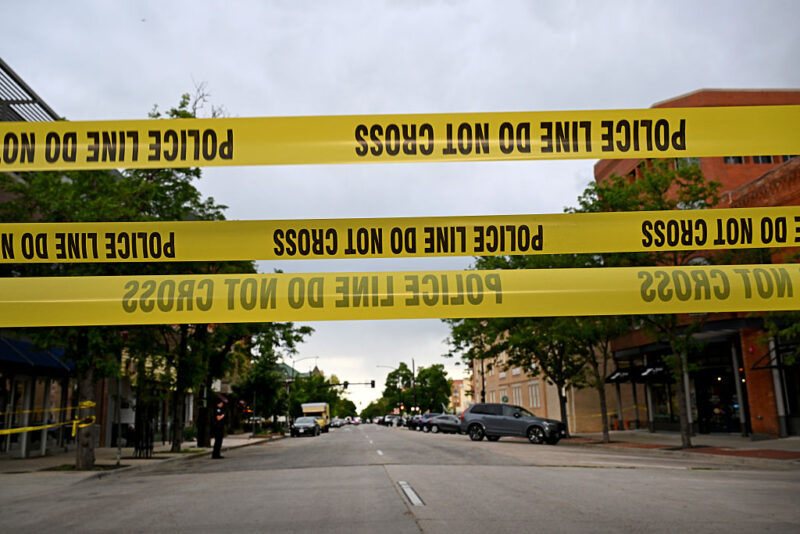
Temple Israel was the site of a car-ramming and shooting terror attack in March, targeting the congregation and its attached preschool. Cohen was present for that attack.
The group, organized by the Anti-Defamation League, also included JoJo Drake Kalin, who helped organize the American Jewish Committee event at the Capital Jewish Museum where two Israeli Embassy staffers were murdered in May 2025, and Ed Victor, who was part of the Israeli hostage awareness march in Boulder, Colo. that was firebombed shortly after.
The group’s lobbying agenda included the Jewish American Security Act, which aims to supplement federal security grants among other measures; the Right to Worship Act, which would establish a “buffer zone” around religious institutions during services; and the Pray Safe Act, which would assist institutions in accessing security grants and other security resources.
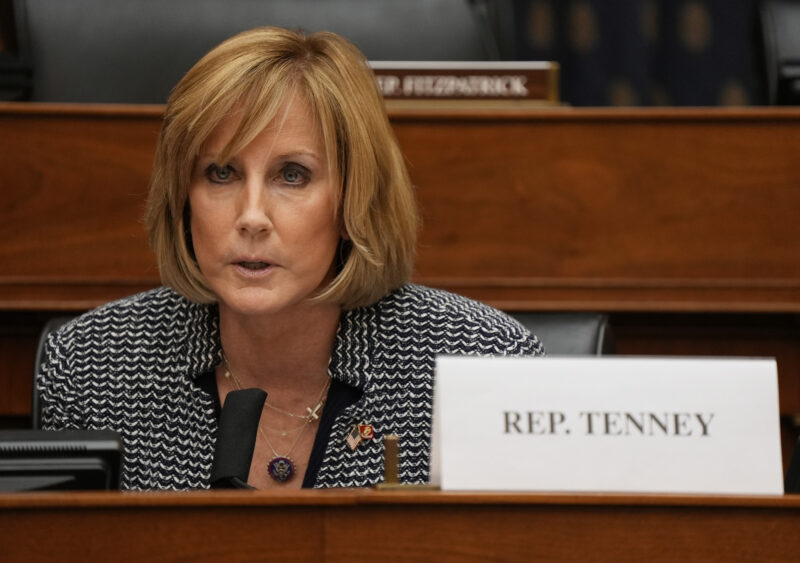
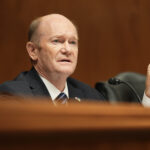
The group is set to meet with the offices of Sens. Mark Kelly (D-AZ), Maggie Hassan (D-NH), Raphael Warnock (D-GA) and Chris Coons (D-DE) and Reps. Tim Walberg (R-MI), Lisa McClain (R-MI), Nicholas Langworthy (R-NY), Jeff Hurd (R-CO), Claudia Tenney (R-NY), Mike Levin (D-CA), Andrew Garbarino (R-NY) and Bill Huizenga (R-MI).
Cohen explained that Temple Israel had received federal security funding two years ago through the Nonprofit Security Grant Program, which allowed the synagogue to install a security camera system.
She said that system allowed the security staff to immediately identify where on the large Temple Israel campus the attacker had rammed a truck into the building and respond to the site within seconds, “and that made a world of difference.”
Temple Israel, which has had to undergo extensive reconstruction and renovations, was able to reopen its sanctuary and pre-school for the High Holy Days, which Cohen said was an emotional experience for her and others in the community.
“We were displaced for nothing that we did, and to be able to spend the holiest days of the year together as a community really showed our resilience, our strength and our resolve to ensure that this won’t stop us, and we are stronger,” she said. “And it really was the healing moment that I think our community needed in order to take that next step forward.”
But the synagogue has also needed to install new enhanced security measures to ensure safe access to the campus.
Kalin said that she’s trying to turn her “pain into purpose,” adding that that mission feels especially urgent when she is expecting her first child. She also emphasized that she and the other advocates are visiting the Hill to speak on behalf of those like Sarah Milgrim and Yaron Lischinsky, who died in the D.C. attack, and Karen Diamond, who died in the Boulder attack, who cannot speak for themselves.
“If that can happen in the nation’s capital, in ostensibly one of the safest places in the shadow of the FBI offices, it can happen anywhere,” she said. “Had there been more funding for the museum that would have allowed for increased security, they could have had someone canvassing the building, [where] the perpetrator was lurking. I’m here today to just talk about how much of a difference that funding and access to that funding makes.”
Victor said that the firebombing attack “changed me” and provided “propulsion” to try to find ways to use his experience to help others, including advocating for security for Jewish communities. He said he also felt a degree of “survivor’s guilt” after the attack because he wasn’t personally hurt, as his friends were.
He praised the responses of everyone who was present at the attack, both Jewish and non-Jewish: “Nobody ran away, everyone ran in to help.” One man, a doctor and former IDF soldier, used his own body to help put out the fire, laying on Diamond.
Victor noted that he had served on the security committee for his local synagogue several years ago and at the time didn’t fully appreciate the need for all of the levels of security under discussion.
“I’ll say my — and I think many in the Jewish community — mindset has shifted. It’s now not just nice to have, but a requirement, sadly to say,” Victor said.
Lauren Wolman, ADL’s senior director of government relations and strategy, said that the legislation on the group’s agenda constitutes “tangible steps that Congress can take … that will make Jewish communities safer — but also many vulnerable communities safer — in this moment.”
Cohen, Kalin and Victor all said that the attacks have had a mix of impacts on their communities. Some people have leaned into Jewish life in defiance and their bonds have grown stronger, but others have been afraid to engage and stepped back from the community.
“The thing that I’m most concerned about is the people who don’t show up, the people who were there that step back, and you don’t know who they are. I’ll call them the missing people, and I feel very sad about that because I know that people step back, and I don’t know what it takes for them to come back into that community,” Victor said.
Kalin said that some of those at the site of the Capital Jewish Museum attack are leaning into solidarity and Jewish communal life, but others have been afraid to attend Jewish events — even High Holy Day services — since then.
“That’s then isolating people from their community,” she said. “There shouldn’t have to be a calculus of, ‘Will I be safe if I go … and observe my culture, my identity and be with my community?’”
Kalin said that, as a convert to Judaism, seeing the level of security needed at synagogues as compared to churches can be difficult to “fathom.” She said that she was nervous visiting Adas Israel, D.C.’s largest Conservative synagogue, for the first time after the attack, and noted that the synagogue had a sharpshooter on the roof for security.
She said she also continues to carry trauma from the attack, questioning her safety, wrestling with her choice to join the Jewish people and questioning whether her unborn child will be safe at a Jewish preschool.
“I keep saying ‘unfathomable,’ but I think that’s the apt word here,” she said. “Those are questions that we have to sit in and wrestle in, and that you never thought you would have to.”
Cohen noted that the attacks cause fear but also bring the Jewish community together across the country.
“There’s of course fear. … It makes you question whether or not you’re safe going to conceivably what should be the safest place. … It also really brings a community together,” she said. “The outpouring of support — forget just in our local area, but within the first 24 hours, national support, people from all over the country. Because any Jew, no matter where you are, identifies with this.”
She said that it’s unfortunate that these attacks keep happening, but that they are having the opposite of the intended effect, bringing the Jewish community together and strengthening its resolve.
Kalin and Cohen visited the Hill earlier this year for similar advocacy meetings under the auspices of the ADL. Kalin said that, returning to the Hill, she is getting more comfortable sharing and explaining her story to lawmakers.
She added that it’s powerful for lawmakers to be able to hear individual stories and put faces to the data that the ADL gathers on nationwide antisemitic attacks. “This isn’t just a number from a survey,” she said.
The Right to Worship Act is new since the last time they visited Capitol Hill, and Cohen argued that it’s a “no-brainer.”
“You should be able to go to your house of worship and not have to worry about someone harassing you as you’re going there. So everybody, no matter where you fall, should get behind that,” she said. “I really hope people just look at it as plain and simple as that, and get behind it.”
“This is part of our mission as well, that we have to be leaders in this and help create change,” Cohen added. Temple Israel has also welcomed various political leaders to the synagogue campus. “We want them to see firsthand. I think there’s something powerful in being able to witness what the destruction was and what the attack looked like,” she added.
She said she sees both her trauma and the work as a lifelong mission for herself and her children.
“This is now part of our responsibility forever,” she said. “It’s a club we don’t want to be part of, but we are now, and we’re going to do everything we can to utilize that to make change.”
More Stories
DIPLOMACY DIARIES
AJC plans ‘diplomatic marathon’ amid U.N. General Assembly in New York

ON THE HILL
House passes Iran, Russia sanctions bill, over objections from leading Democrats
BEHIND THE VEIL
Senators urge administration to declassify information on Saudi nuclear deal
RIYADH'S RECKONING
Saudi Arabia’s Houthi crisis is partly of its own making, analysts say
ON ALERT
NYPD braced for ‘multiple protests every day’ around U.N. summit
NUCLEAR NEWS
House Democrats introduce resolution to block Saudi nuclear deal
Please log in if you already have a subscription, or subscribe to access the latest updates.
 Continue with Google
 Continue with Apple