


































Congressional Jewish Caucus opposes proposal to combine State Dept. Holocaust, antisemitism offices
Nineteen Jewish House Democrats urged Secretary of State Marco Rubio not to allow a push to merge the two offices proceed and to keep Holocaust issues distinct

AP Photo/Luis M. Alvarez
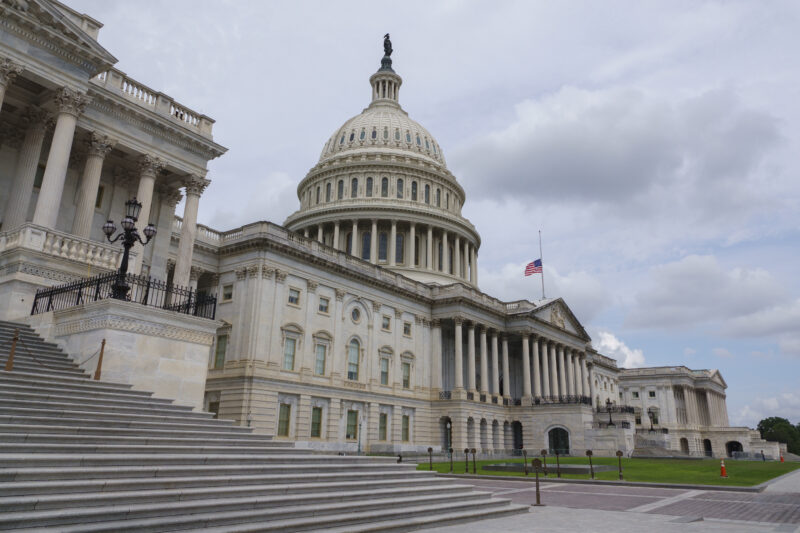
State Department in Washington


 Add JewishInsider on Google
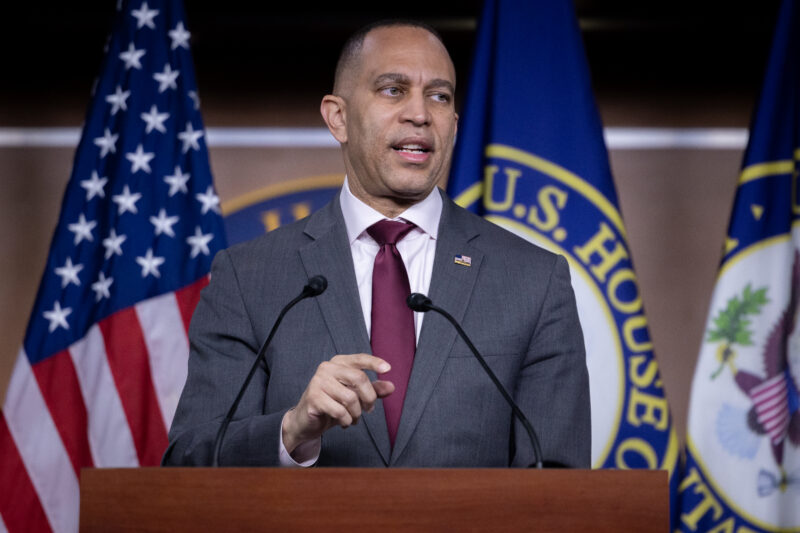
Nineteen Jewish House Democrats, writing under the auspices of the Congressional Jewish Caucus, sent a letter to Secretary of State Marco Rubio on Wednesday opposing a reported plan to merge the offices of the State Department’s special envoy for Holocaust issues (SEHI) and special envoy to monitor and combat antisemitism (SEAS).
Longtime Holocaust envoy Ellen Germain recently retired from her post, and antisemitism envoy Ambassador Yehuda Kaploun has been pushing to merge the two posts, a prospect that has received mixed reactions from Jewish communal organizations.
In their letter, the Jewish Democrats urged Rubio to “immediately appoint” a new Holocaust envoy and maintain the office “as a distinct, permanent office led by a dedicated career State Department official” and expressed concern about reports that the offices might be merged.
Reps. Brad Sherman (D-CA) and Seth Magaziner (D-RI) were the only two members of the caucus not to join the letter.
The lawmakers noted bipartisan support for SEHI and argued that its work on restitution issues is increasingly urgent as the number of living Holocaust survivors shrinks, and that survivors and their families need a “dedicated advocate within our government.”
“SEHI and SEAS have clearly distinct mandates and responsibilities,” they said, adding that the Holocaust envoy’s work has historically been aided by their status as an experienced career official, rather than a presidential appointee.
“Both are full-time responsibilities that require full-time principals with unique areas of focus and full-time staff with unique expertise,” the lawmakers continued. “Combining them would not streamline efficiency or eliminate any meaningful duplication; it would risk diminishing the focus, experience, and institutional capacity necessary for each.”
The letter suggests that the potential merger is being driven, at least in part, by “a desire to expand the influence of certain personnel within the State Department,” seemingly a reference to Kaploun.
The lawmakers warned that any delay in appointing a new envoy “risks losing opportunities for restitution, accountability, and historical preservation that may never return.”
Though under discussion for months, the merger efforts have not yet been formalized inside the department.
Jewish groups have come down on both sides of the issue. The American Jewish Committee, American Joint Distribution Committee, Agudath Israel of America, Anti-Defamation League, B’nai B’rith International, Conference on Jewish Material Claims Against Germany, the National Coalition Supporting Eurasian Jewry, the World Jewish Restitution Organization and the USC Shoah Foundation called for Rubio to appoint a new full-time Holocaust envoy.
But others including the Combat Antisemitism Movement, American Association of Jewish Lawyers and Jurists, Chabad-Lubavitch World Headquarters, Coalition for Jewish Values, Institute for the Study of Global Antisemitism and Policy, Orthodox Union, World Jewish Congress, Zionist Organization of America, Simon Wiesenthal Center, former U.S. Ambassador to Israel David Friedman, former antisemitism envoy Elan Carr, former deputy antisemitism envoy Ellie Cohanim and former deputy antisemitism envoy Karen Paikin Barall wrote to Rubio urging him to merge the two positions.
Proponents of a merger said that Holocaust denial and revisionism is inextricably linked to rising antisemitism today, that the current division hampers U.S. efforts and that the shrinking number of Holocaust survivors makes Holocaust memory and antisemitism a more core part of the Holocaust envoy’s work, overlapping with the antisemitism envoy’s duties. They said that consolidating the responsibilities under an ambassador-rank official would elevate Holocaust issues.
Kaploun has claimed behind closed doors that, given his unique connections to the White House and world leaders, he would be able to resolve all remaining Holocaust restitution issues before the end of President Donald Trump’s time in office — a difficult task that requires reaching agreements with international partners that have resisted providing restitution for decades.
More Stories

IN THEIR MEMORY
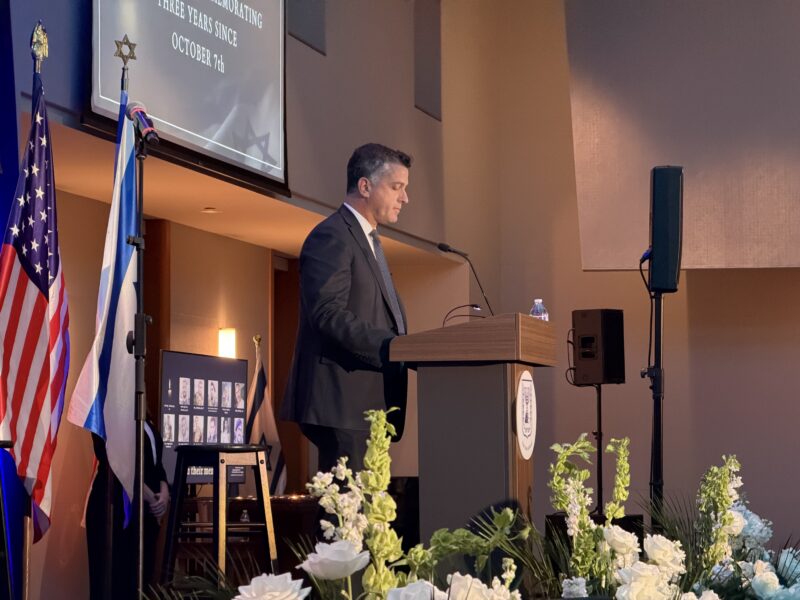
Administration officials join bereaved families for Oct. 7 commemoration event

COURSE CORRECTION
ADL, Gratz College launch antisemitism training for college administrators, faculty
Daily Overtime
Mamdani resists DSA over Tisch tensions
SECURITY SETBACK
Saudi Arabia postpones ‘Davos in the Desert’ until 2027 amid Houthi attacks

RELATIONSHIP STATUS
How Israel’s parties say they would rebuild support in America

EXCLUSIVE
JDCA launches streaming and digital ads supporting Cait Conley, attacking Lawler
Please log in if you already have a subscription, or subscribe to access the latest updates.
 Continue with Google
 Continue with Apple