

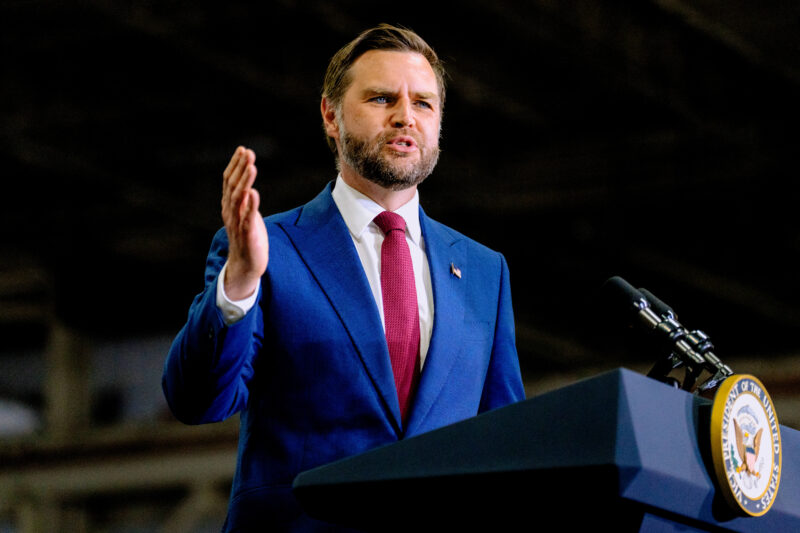

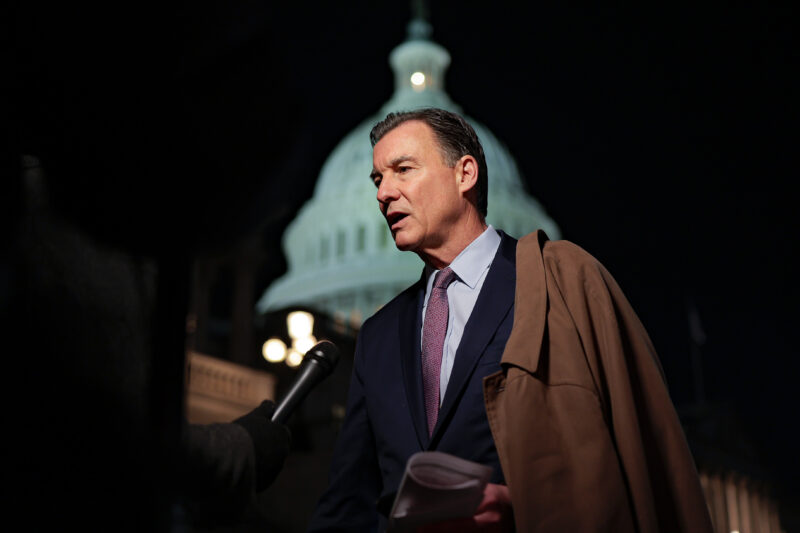









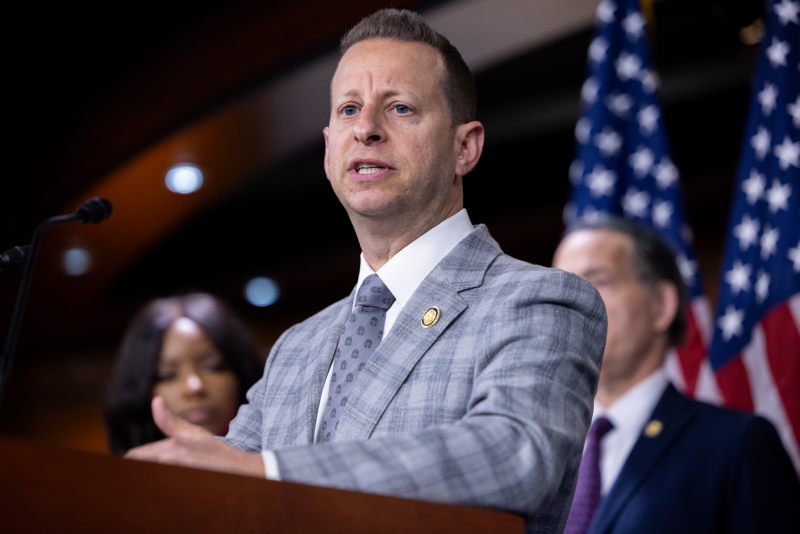
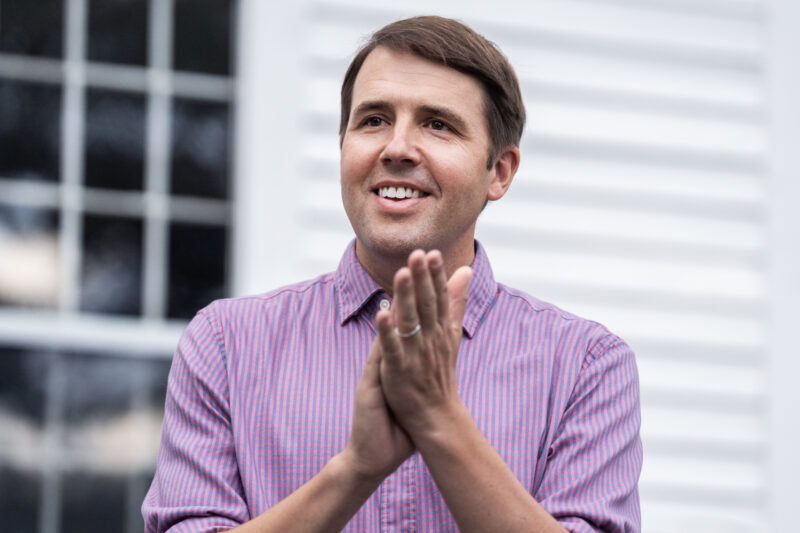
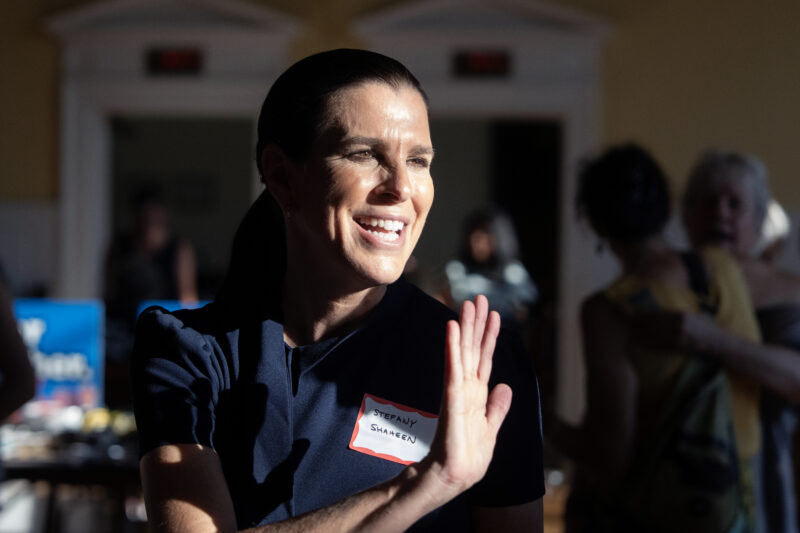



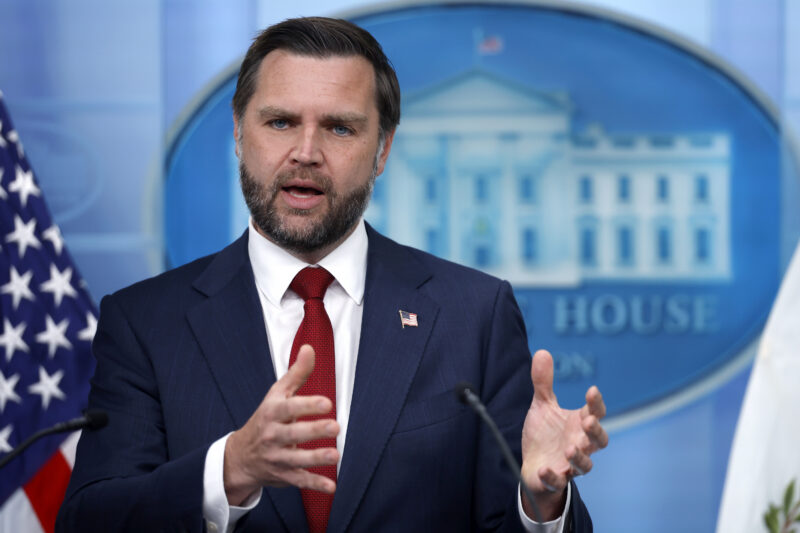
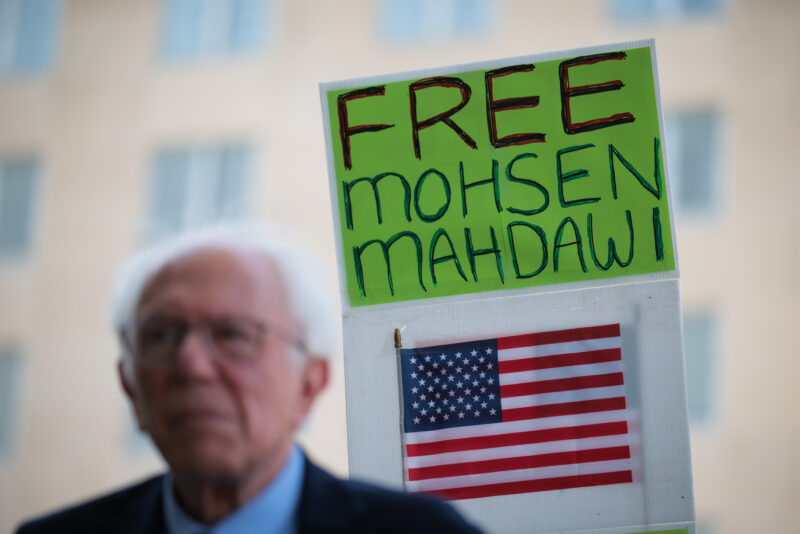














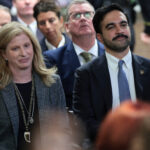
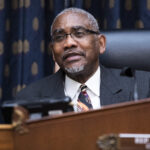



Jeffries said Avila Chevalier has ‘walked away from many of the things that have been unearthed’ following a CNN report on her past sympathetic posts about communism and Soviet figures

Photo by Michael M. Santiago/Getty Images
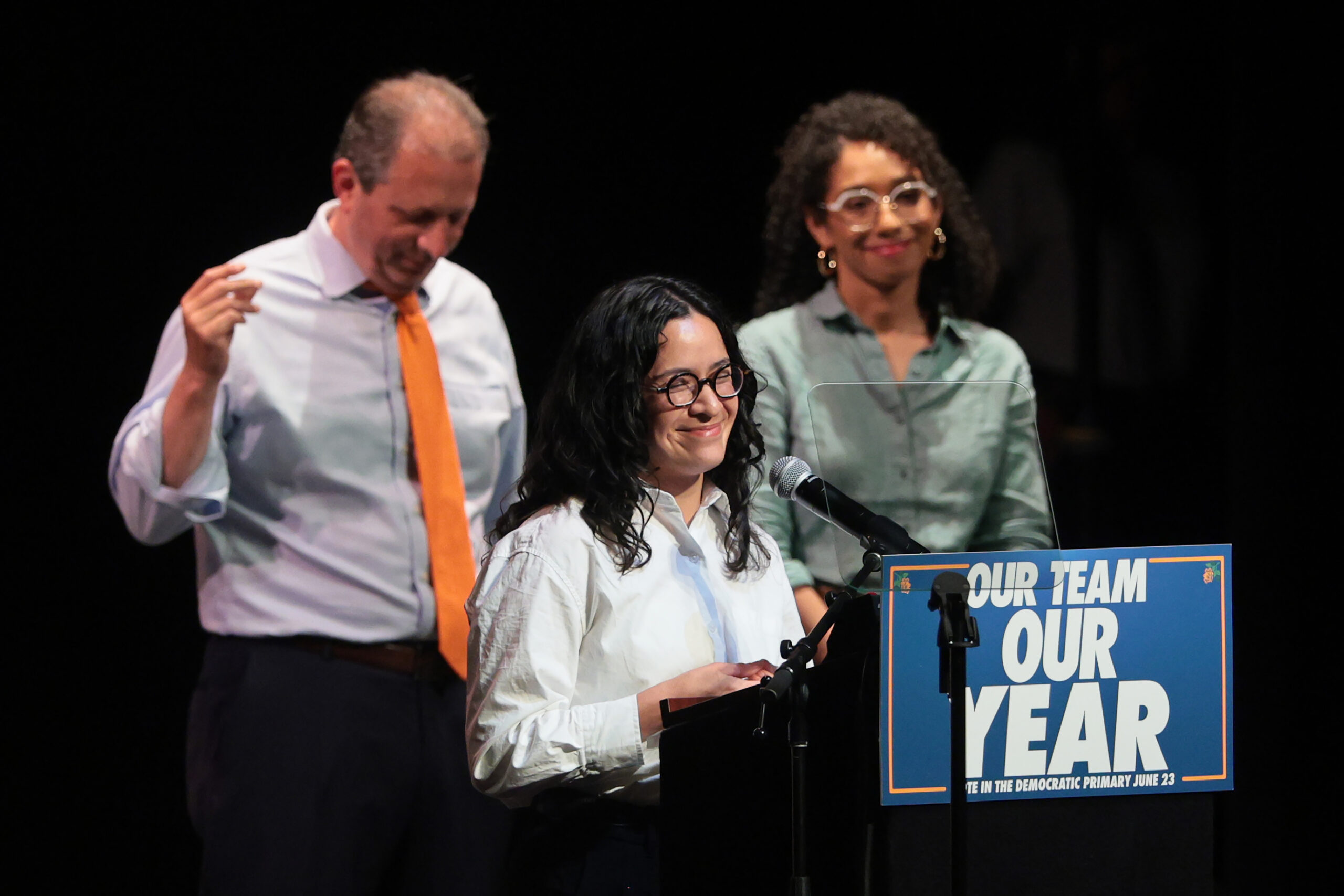
Congressional candidate Darializa Avila Chevalier speaks at a rally at King's Theater on June 18, 2026 in New York City.


 Add JewishInsider on Google
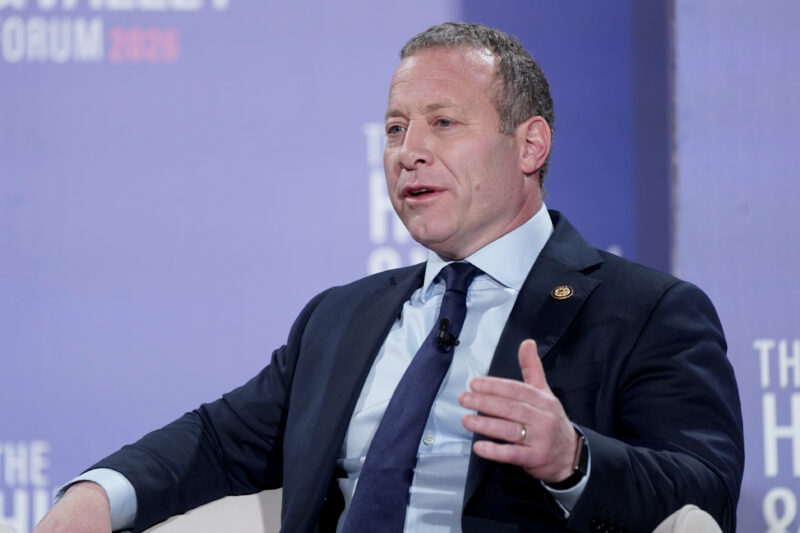
Asked about New York City congressional candidate Darializa Avila Chevalier’s reported past comments supporting communism, House Democratic leaders suggested this week that she had changed and moderated her views.
CNN reported earlier this week that Avila Chevalier had repeatedly shared on a now-deleted Twitter account sympathetic posts about communism, Marxism and Soviet figures including revolutionary Vladimir Lenin. In an MS NOW interview on Monday, she denied being a communist and said that scrutiny of her past comments is a “distraction.”
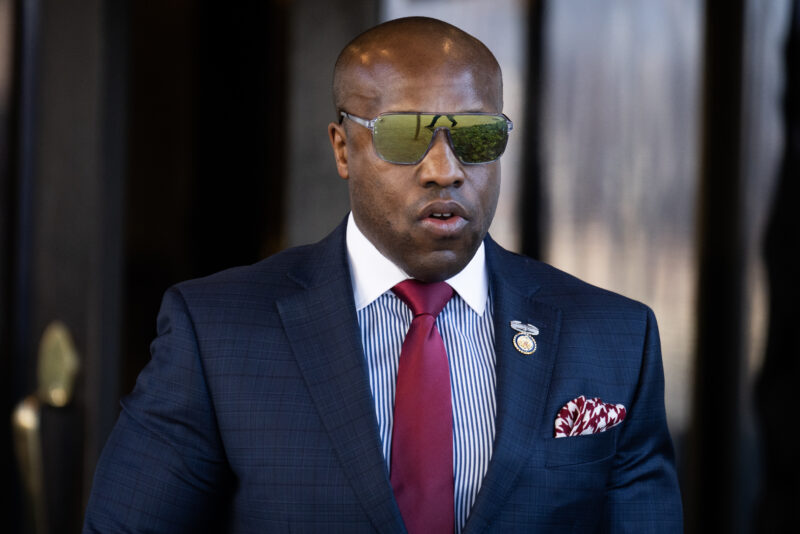
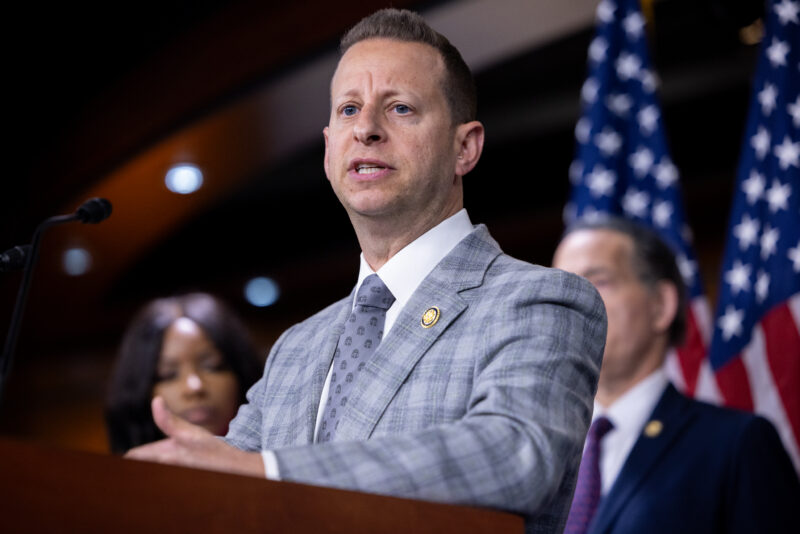
Asked about the CNN report and whether communists have a place in the Democratic caucus, House Minority Leader Hakeem Jeffries (D-NY) said, “I don’t think there’s a single member of the House Democratic Caucus right now that identifies as communist.”
He said that Avila Chevalier is “going to have to speak for herself in terms of what she said in the past” but said she has been “pretty clear that she’s walked away from many of the things that have been unearthed, and has pretty clearly indicated that she’s a different person, but that’s for her, ultimately, to communicate, and I’m confident that she will, as best she can.”
Jeffries then pivoted to discussing affordability issues.
Rep. Pete Aguilar (D-CA), the No. 3 House Democrat, offered a similar response, telling Jewish Insider that he is personally a capitalist and that New York City Mayor Zohran Mamdani had indicated that some of the candidates he endorsed, including Avila Chevalier, had changed their views. He said that he would give all of the incoming members a “clean slate” as they enter the House.
Asked more broadly about progressive-versus-moderate divides in the Democratic caucus, Aguilar said at a Tuesday press conference, “This is a big-tent Democratic Party. Going into the fall [general elections], there is room for you, no matter where, no matter where you are.”
He denied any clashes between Democratic factions, saying “every person in that tent” is focused on holding the Trump administration accountable and delivering on Democratic priority issues.
“There may be different places within the broad tent that candidates and members come from, but all of us are aligned on that agenda, and that comes down to the values that we share,” Aguilar said. “This is what a coalition looks like, and people might not be used to it, because the Republican Party is the party of [President Donald] Trump, there’s no room for disagreeing with him.”
He insisted the party could remain united despite ideological differences, and would hash out differences, even if there may be “friction” at times.
If a far-left, anti-Israel wave sweeps over the Democratic Party in tonight’s statewide primaries, it will be a wake-up call for those downplaying the rise of the socialist left
RJ Sangosti/MediaNews Group/The Denver Post via Getty Images
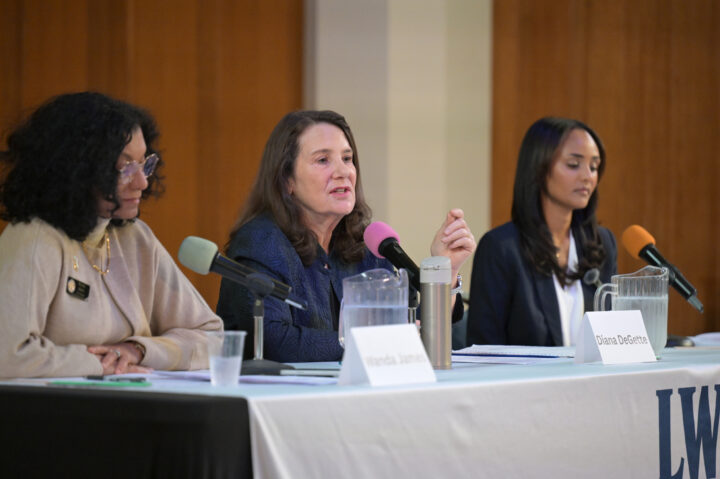
From left, Wanda James, Diana DeGette and Melat Kiros participate in a League of Women Voters Congressional District 1 candidate forum on May 28, 2026, in Denver, Colorado.
Colorado is a state famous for its moderation, with its governor (Jared Polis) and two senators (Michael Bennet and John Hickenlooper) among the most pragmatic figures in Democratic politics. So if a far-left, anti-Israel wave sweeps over the Democratic Party in tonight’s statewide primaries, it will be a true wake-up call for those downplaying the rise of the socialist left.
The biggest race we’re tracking — and the one where a Democratic incumbent looks most vulnerable — is the primary between longtime Rep. Diana DeGette, 68, an influential progressive who has left an imprint on major legislation in Congress, and Democratic Socialists of America-affiliated 29-year-old doctoral student Melat Kiros, whose deep-seated antagonism against Israel is a top focus of her campaign.
Kiros is the latest example of how radical candidates running for office on their hostility toward Israel are also indulgent of the rising antisemitism around them. Her political awakening came after she was fired from the law firm Sidley Austin for writing a public letter denouncing the hundreds of law firms that signed a petition calling on law schools to do a better job addressing antisemitism on their campuses.
Kiros was angered that the law firms considered those calling for the elimination of Israel as antisemitic. In the last week, she also refused to call the firebombing of a hostage awareness march in Boulder, Colo., antisemitic. Sense a pattern?
As JI’s Marc Rod reported, Kiros’ extreme views have done little to dent her support in a progressive Denver-area district that DeGette has easily held for the last three decades. DeGette barely won the 30% of the vote from party activists necessary to qualify for the primary ballot — in what could be a foreshadowing of the primary results tonight.
The overall landscape in Colorado is looking similarly treacherous for other Democratic moderates, even if they end up prevailing. Sen. John Hickenlooper, once considered a shoo-in to win renomination, is facing a credible challenge from DSA-backed state Sen. Julie Gonzales. If Hickenlooper loses, it would be a political earthquake across the country, but even a close race against a fringe candidate would be a major warning sign for the health of the Democratic Party.
And well outside of Denver, another primary in a swing district is being closely watched for ideological signals of where the party is headed. Early in the cycle, Democratic Majority for Israel’s political arm rallied behind former state Rep. Shannon Bird, a moderate who has been a reliable supporter of Israel and outspoken critic of antisemitism in the state Legislature, in her race against Rep. Gabe Evans (R-CO).
State Rep. Manny Rutinel, a progressive who has attacked Bird as insufficiently liberal on immigration, has been vague on where he stands on Israel policy, but his record as a college student has raised concerns from the broader Jewish community.
As an undergraduate at the University of Florida in 2014, Rutinel attended a demonstration that was co-organized by Students for Justice in Palestine, the extreme anti-Israel group that has expressed alignment with Hamas, according to a local news story covering the event at the time. A Rutinel spokesperson told JI that Rutinel did not have any affiliation with SJP and said the demonstration was focused on police brutality in the U.S.
Neither candidate has focused much on Israel policy — a sign that opposing Israel isn’t a winning message in swing districts like Colorado’s 8th District, which also features a sizable Hispanic population.
The state’s Democratic gubernatorial primary between Bennet and Attorney General Phil Weiser will also be closely watched as a signal of voters’ discontent with Washington. Bennet was viewed by many as an early favorite, but Weiser holds a powerful statewide role that allowed him to position himself in opposition to the Trump administration by filing dozens of lawsuits against federal government policy.
Weiser, who is Jewish and told JI he blocks off Shabbat to spend with his family, is running as the progressive in the race but has kept his focus on campaigning as an anti-Trump candidate and as a Washington outsider.
The DSA chapter in Denver is opposing his gubernatorial campaign because, they write, he “remained a strong supporter of Israel despite the ongoing genocide.” (They also are opposing Bennet because of his votes for military aid to Israel.)
Pressed by former NBC News anchor Chuck Todd if democratic socialists are welcome in the Democratic Party, Rep. Suzan DelBene said she ‘want[s] to make sure that our big tent is a tent that is in the majority’
Tom Williams/CQ-Roll Call, Inc via Getty Images
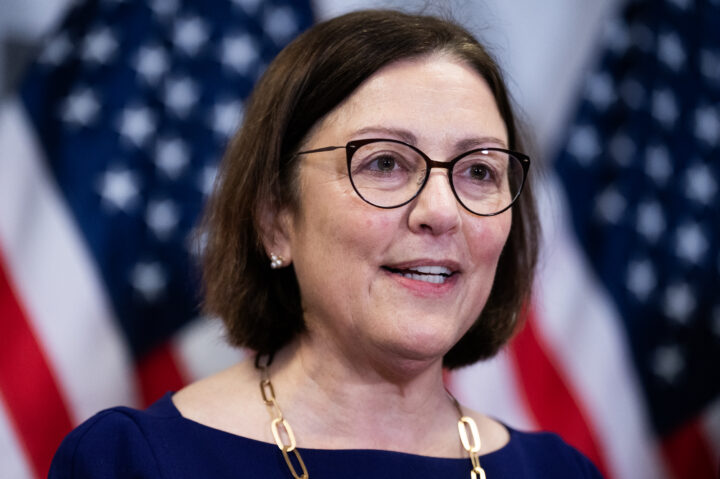
Rep. Suzan DelBene (D-WA) conducts a news conference at the Democratic National Committee on Wednesday, April 22, 2026.
Rep. Suzan DelBene (D-WA), the chair of the Democratic Congressional Campaign Committee, responsible for electing House Democrats, downplayed concerns about the party’s response to antisemitism in the wake of New York City elections that elevated several far-left candidates.
Asked repeatedly about Jewish Democrats’ concerns in an interview on former NBC News anchor Chuck Todd’s program “Sunday Night with Chuck Todd” on the platform Noosphere, DelBene repeatedly brushed those concerns aside. She said that Democratic leaders’ condemnation of and efforts to defeat openly antisemitic candidate Maureen Galindo in Texas show that the party has been strong in response to rising antisemitism.
But the response from Democratic leadership to New York congressional candidate Darializa Avila Chevalier — who attended an anti-Israel rally a day after the Oct. 7, 2023, Hamas attacks on Israel, shared a post rejecting the existence of Israel and was an organizer of anti-Israel encampments at Columbia University — has been muted.
DelBene avoided commenting on Chevalier, who defeated incumbent Rep. Adriano Espaillat (D-NY), directly. “If you look across the board and talk to individual candidates, that’s not representative of where other candidates land.”
“I think folks have been very forceful across the board. I think there always is a focus on what any one individual said, but I think if you look collectively at what people have said and stood for across the country, I think people have been very clear on many issues on where they stand.”
DelBene dismissed the New York City results as unrepresentative of the rest of the country.
Asked broadly if democratic socialists are welcome in the Democratic Party, DelBene said, “We’re a big tent. I want to make sure that our big tent is a tent that is in the majority and that we have the gavels.”
Pressed if her response indicates socialists are welcome, the Washington congresswoman again demurred: “People, voters are choosing people across the country, and those are part of folks who are being elected, and they’re going to come and join the caucus. I gotta tell you, we have just incredible candidates running and my job, our job, is to make sure we have those gavels so we can do the work of the American people.”
Plus, how Ritchie Torres outplayed the far left

Evan Vucci
President Donald Trump shakes hands with Turkish President Recep Tayyip Erdoğan after a news conference in the East Room of the White House, Wednesday, Nov. 13, 2019, in Washington.
Good Thursday morning.
In today’s Daily Kickoff, we talk to moderate and establishment Democrats who are raising alarms over the surge of socialists in Tuesday’s New York City congressional primaries and report on how Rep. Ritchie Torres (D-NY) dodged the DSA wave in the city. We cover last night’s Senate vote to block a Democratic-led war powers resolution seeking to end military operations against Iran and report on the shouting match between President Donald Trump and Sen. Bill Cassidy (R-LA) that preceded it. We also report on the Trump administration’s consideration of Turkey’s eligibility to receive F-35 fighter jets. Also in today’s Daily Kickoff: Rep. Dan Goldman, Sen. Adam Schiff and Rep. Judy Chu.
Today’s Daily Kickoff was curated by JI Israel Editor Tamara Zieve and U.S. Editor Danielle Cohen-Kanik, with an assist from Marc Rod. Have a tip? Email us here.
What We’re Watching
- Jewish and Israeli aid and rescue organizations are preparing to send teams to Venezuela after the poverty-stricken South American country was hit by massive back-to-back earthquakes on Wednesday night, representatives of the groups told eJewishPhilanthropy’s Judah Ari Gross. At least 164 people have been pronounced dead so far, and the number is expected to rise considerably as search efforts get underway, with some projections putting the death toll into the tens of thousands. Read more here.
- Under Secretary of State for Economic Affairs Jacob Helberg is hosting the State Department’s two-day Pax Silica Summit at the U.S. Institute of Peace. Attendees include representatives from the signatory countries to the strategic initiative — which include Israel, Qatar, the UAE, India, Germany and the U.K., among others — and senior business executives.
- On the Hill, acting Pentagon Comptroller Jules W. Hurst III will appear before the Senate Armed Services Committee for his confirmation hearing to be permanently appointed to the role — Hurst is likely to face questions about the Trump administration’s $88 billion supplemental funding request, largely to cover the cost of the Iran war, sent to Congress on Wednesday.
- The House Committee on Education and Workforce will mark up the No Antisemitism in Education Act, and Homeland Security Secretary Markwayne Mullin is slated to testify at an oversight hearing in the House Appropriations Committee.
- The Alliance for Responsible Citizenship‘s third annual conference wraps up in London today. Speakers at the summit, which focused on the future of Western civilization at the 250th anniversary of the United States, included House Speaker Mike Johnson; Energy Secretary Chris Wright; former Virginia Gov. Glenn Youngkin; Under Secretary of State for Public Diplomacy Sarah Rogers; and Axel Springer CEO Mathias Döpfner.
- The Texas Democratic State Convention begins today: The three-day event will feature remarks from Sens. Cory Booker (D-NJ) and Bernie Sanders (I-VT), Texas U.S. Senate candidate James Talarico, Illinois Gov. JB Pritzker and Democratic National Committee Chair Ken Martin. Activists are set to consider close to 20 resolutions critical of Israel.
- The annual Aspen Ideas Festival, which brings together leading figures from politics, business, media and academia, kicks off in Colorado with an opening session featuring Aspen Institute leaders and journalists Fareed Zakaria and David Brooks.
What You Should Know
A QUICK WORD WITH JI’S JOSH KRAUSHAAR
There’s little doubt that socialism is on the march within the Democratic Party after the latest primaries, with extreme candidates who would have been dismissed as nonviable prevailing in numerous congressional primaries and mayoral contests from coast to coast.
Factor in the political resilience of far-left Maine Senate nominee Graham Platner despite numerous scandals and the momentum of anti-Israel Senate candidate Abdul El-Sayed in a contested Michigan primary despite facing well-funded opposition, and there’s the potential of radicals toppling mainstream candidates well outside the deep-blue confines of major urban centers.
Ultimately, that’s a major question looming for the Democratic Party’s future — and the health of our democracy. Is the rise of socialism primarily a product of urban angst and college-age naivete, or does it have staying power beyond the most-progressive precincts in the country? Can left-wing candidates prevail in swing districts, far away from the urban progressive centers that make up its base? Or will they end up being more of a noisy but powerless faction in Congress?
Either way, socialist candidates have gone from a curiosity that rarely won any congressional seats to riding a Democratic Socialists of America-organized grassroots wave that now has to be reckoned with. You could count the number of Squad members on one hand when Rep. Alexandria Ocasio Cortez (D-NY) and her like-minded allies were first elected in 2018 and 2020. Now their representation is poised to double from its previous peak — and AOC now counts as downright pragmatic, compared to several of her soon-to-be-colleagues.
SOCIALIST SWEEP
Some moderate and establishment Democrats are raising alarms over the surge of democratic socialists in New York City congressional primaries on Tuesday — which took down two Democratic incumbents. But others are dismissing the phenomenon as one localized to New York City and not applicable to the party at large, Jewish Insider’s Marc Rod, Matthew Shea and Christina Sher report.
Wider view: Rep. Greg Meeks (D-NY), a longtime Democratic leader from Queens, lamented Tuesday’s results, particularly Rep. Adriano Espaillat’s (D-NY) loss. Meeks told reporters that the party as a whole is not a socialist party, and that socialist ideas are very much out of step with the country overall. “That’s not where America is, that only happens in certain parts — like New York City now, apparently — deep, deep, deep blue,” Meeks said. If the entire party follows the same path, “that means that all the other seats that are not [deep blue], we can never win, which means we will never be in the majority, and we [will] never get anything done.”
Read the full story here with additional comments from Senate Minority Leader Chuck Schumer (D-NY), Reps. Tom Suozzi (D-NY), Josh Gottheimer (D-NJ), Wesley Bell (D-MO), Jared Moskowitz (D-FL), Pete Aguilar (D-CA), Jamie Raskin (D-MD) and Ro Khanna (D-CA) and Sens. John Fetterman (D-PA), Ruben Gallego (D-AZ), Gary Peters (D-MI), Raphael Warnock (D-GA), Dick Durbin (D-IL), Tim Kaine (D-VA) and Bernie Sanders (I-VT).
Eye on Washington: Having conquered New York City with a stunning primary night sweep on Tuesday, Mayor Zohran Mamdani is wasting no time in moving on Capitol Hill. In an uncharacteristically long question-and-answer session at an unrelated announcement on Wednesday, the mayor announced he would sit down later in the day with House Minority Leader Hakeem Jeffries (D-NY), JI’s Will Bredderman reports.
TORRES TACTICS

Rep. Ritchie Torres (D-NY) has long been a target of the far left in New York City, largely because of his outspoken support for Israel and his Jewish constituents. But Torres emerged with a commanding victory over a far-left challenger in Tuesday’s Democratic primaries, even as pro-Israel Reps. Dan Goldman (D-NY) and Adriano Espaillat (D-NY) were defeated by democratic socialist-aligned challengers, Jewish Insider’s Marc Rod reports.
Standout factors: Observers attribute Torres’ landslide win against former New York Assemblymember Michael Blake to a variety of factors, including the different demographics of his district — which includes the heavily Jewish neighborhood of Riverdale, as well as some of the poorest neighborhoods in the city — his strength as a member of Congress and as a campaigner and Blake’s own weaknesses as a candidate. Torres is popular in the district, has prioritized constituent services, has been a longtime presence in the district — as a city councilman from 2014 to 2020 before his time in the House — and maintains a strong reputation locally, Torres campaign spokesperson Benny Stanislawski said.
Concession speech: Goldman, a pro-Israel Jewish Democrat who was unseated in a bitter primary on Tuesday, warned in his concession speech that antisemitism “will ultimately be the undoing of our democracy if we all don’t lean in and speak out,” JI’s Matthew Kassel reports.
ON THE HILL
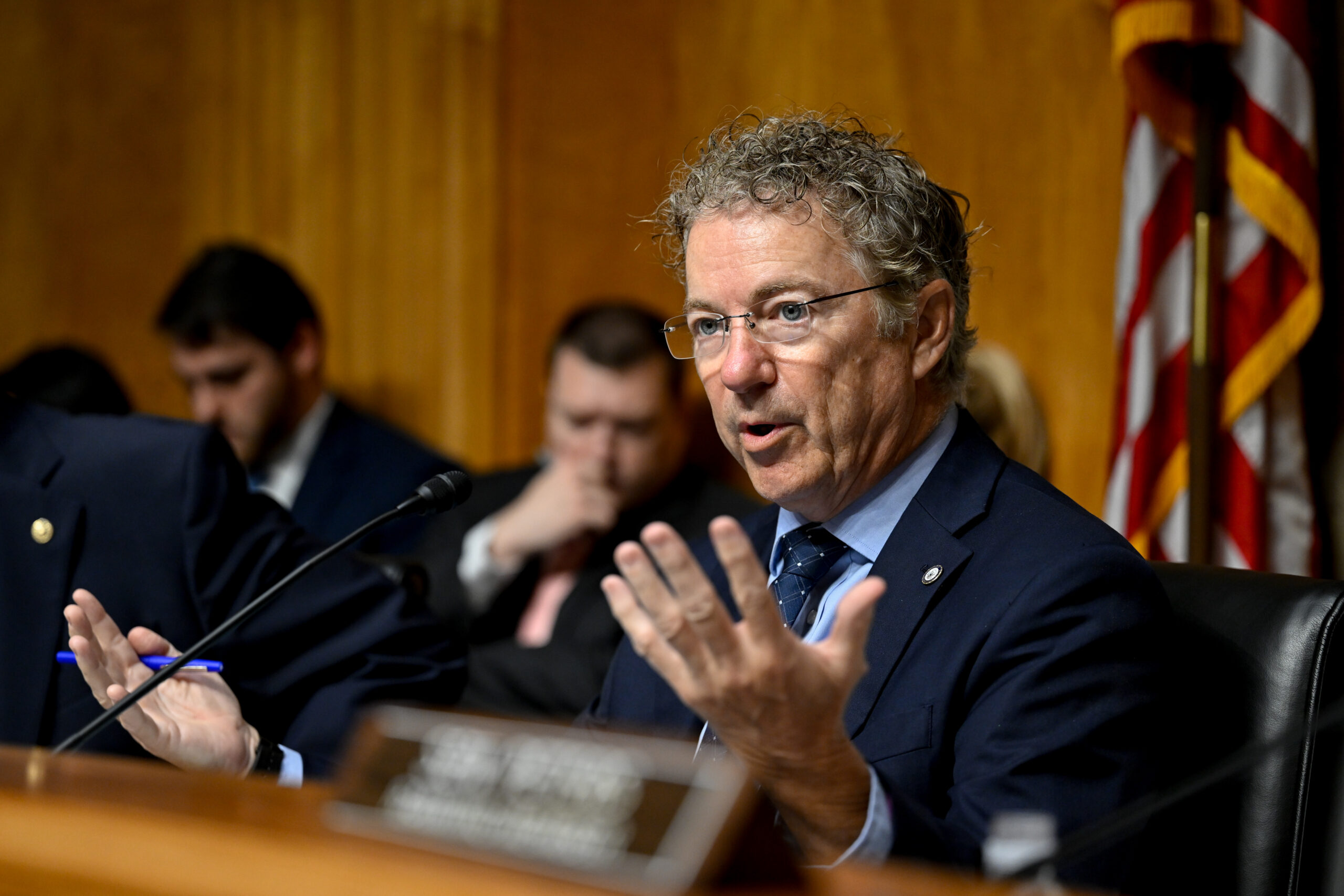
The Senate voted on Wednesday night to block a Democratic-led war powers resolution seeking to end military operations against Iran, after a heated meeting between President Donald Trump and Senate Republicans where he berated a handful of lawmakers over their votes in favor of a successful war powers resolution the previous day, Jewish Insider’s Marc Rod and Emily Jacobs report.
How it happened: Sens. Bill Cassidy (R-LA) and Rand Paul (R-KY), supporters of previous war powers efforts, changed their votes on the resolution on Wednesday, which had previously passed a procedural hurdle — Cassidy now voting no and Paul voting present. Sens. Susan Collins (R-ME) and Lisa Murkowski (R-AK) again voted yes, while Sen. John Fetterman (D-PA) voted no. The final vote was 50-47. Cassidy, who engaged in a shouting match with Trump in the meeting over his recent war powers votes, told reporters after the meeting that he would not change his vote until he had been briefed on the war. Hours later, Cassidy received a private briefing on the war from Vice President JD Vance and White House Special Envoy Steve Witkoff.
Supplemental request: The Trump administration on Wednesday formally sent an $87.6 billion supplemental funding request to replenish stockpiles and otherwise cover the costs of the war with Iran to Congress, JI’s Emily Jacobs and Marc Rod report.
SHOWN THE DOOR

Acting Director of National Intelligence Bill Pulte forced out Will Ruger, the deputy director for mission integration, from the agency as part of a series of cuts said to be targeting the “deep state,” according to CBS News. Ruger previously held senior positions at groups tied to the libertarian Koch network, and had been affiliated with the isolationist Defense Priorities think tank, Jewish Insider’s Marc Rod reports.
Background: Ruger had been a vocal opponent, prior to his government service, of both the maximum pressure sanctions campaign against Iran and potential U.S. military operations against the regime. He was also a defender of the 2015 Iran nuclear deal. Ruger’s role included overseeing the president’s daily intelligence briefing.
ANKARA OPPORTUNITY

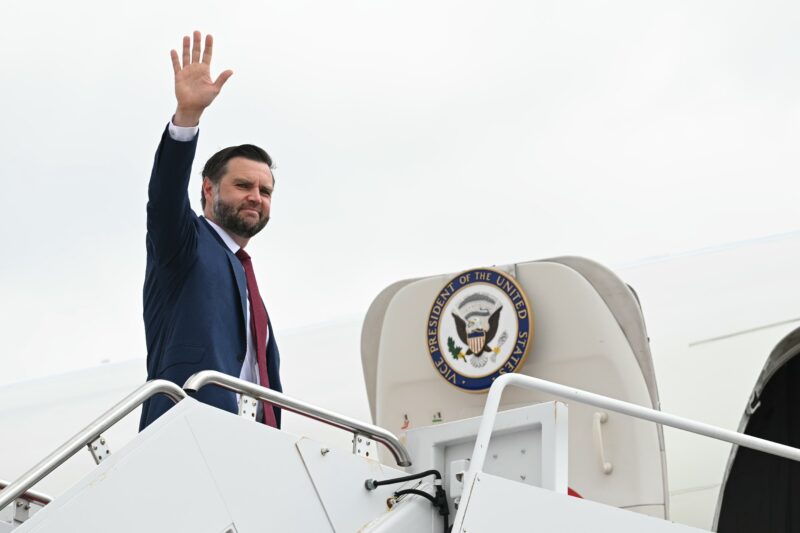
Vice President JD Vance said on Wednesday that the administration is “confirming” Turkey has fulfilled its obligations under U.S. law in order to receive advanced F-35 fighter jets, which Ankara has long sought but has been barred from purchasing since 2020 after it acquired the S-400 air-defense system from Russia, Jewish Insider’s Danielle Cohen-Kanik and Christina Sher report.
Legal requirement: U.S. law requires the secretaries of state and defense to certify to Congress in writing, prior to any F-35 transfer, that Turkey no longer possesses the S-400 system and has provided credible assurances it will not acquire similar Russian air-defense systems. Latest reports indicate the S-400 system is inactive but still intact in Turkey, which would not fulfill the obligations required under law to lift the sanctions.
Strait security: Lawmakers and Middle East analysts are expressing support for Washington’s reported agreement to help Oman strengthen its maritime intelligence and monitoring of transit through the Strait of Hormuz, saying the move could help secure free access to the critical waterway and deter Iranian influence, JI’s Matthew Shea reports.
SCHOOL CONTROVERSY

A Massachusetts middle school principal is receiving criticism from Jewish groups for apologizing to Arab students who he claimed “felt unseen” during a Holocaust education lesson, Jewish Insider’s Haley Cohen reports.
Back and forth: In a message sent to seventh graders via a school portal, a screenshot of which was obtained by JI, Diamond Middle School Principal Johnny Cole said the lesson at the Lexington, Mass., school was aimed at teaching the students to recognize hate and to speak out against it, something he called “an important goal.” Cole then apologized after he said some students’ families had expressed that the lesson left them feeling “unseen.” Cole wrote, “Some of you felt like your own history, your identity, or your community was left out or erased. Some of you left that session feeling less safe, not more. We have heard this from families, and we believe you.”
Worthy Reads
Radical Shift: Reason’s senior editor Robby Soave examines Democratic congressional candidate Darializa Avila Chevalier’s record as she is set to become what he calls Congress’ “first campus radical.” “In 2019, when I published my first book, Panic Attack: Young Radicals in the Age of Trump, I predicted that the era’s campus protesters would not shed their radicalism when they graduated college and moved out into the so-called real world — rather, they would force the world to conform to their quixotic expectations. This would be particularly felt in the areas of American life most susceptible to their influence: education, media, entertainment, and eventually, politics. Now that day has finally arrived. Welcome, congresswoman.” [Reason]
The Socratic AI Method: The Economist examines the rise in philosophers being hired by AI firms. “Some of the lessons that philosophy can offer AI researchers are ancient. The Socratic method — as described by Plato, an ancient Greek philosopher — uses feigned ignorance and sequential questioning to clarify meanings, spot contradictions and reveal ramifications. Many current AI systems tend towards sycophancy. Models trained in the Socratic method, says Jörg Noller, an expert on philosophy and AI at Ludwig Maximilian University of Munich, are less keen on people-pleasing and more willing to pursue the truth.” [Economist]
House Majority Math: Joel Wanger, DMFI PAC’s chief political officer, breaks down the results from Tuesday night’s primary elections. “Here’s the thing about House Majority math, and it’s something I’ve said before: it isn’t won in New York City or San Francisco. It’s won in places like San Diego and South Texas — and that’s exactly where pro-Israel Democrats had some of their best nights this cycle, nominating strong general-election candidates in competitive seats. … The pattern I’ve tracked all cycle keeps repeating: pro-Israel Democrats win decisively when they take primary challenges seriously and early, build broad coalitions rather than narrow ones, and talk about the kitchen-table issues — affordability, economic anxiety — that are actually driving voters right now. Where that didn’t happen, races were close. Where it did, they weren’t.” [Substack]
No Socialist Takeover: The Atlantic’s Adam Serwer argues that the Democratic Party is not being taken over by democratic socialists as a unified national force, but rather is becoming more ideologically diverse and locally shaped. “The modern Democratic Party, by virtue of its class and ethnic diversity, has always been ideologically heterodox. An approach that works for a Zohran Mamdani or a Janeese Lewis George will not necessarily work for a James Talarico in Texas or a Mary Peltola in Alaska. Many people outside of the democratic socialists’ cities and districts will focus on whether the candidates’ stances on Israel and Palestinian rights reflect a shift within the party (and they do) and the fact that they differ from more centrist Democrats (also correct). But whether they succeed as leaders and politicians will depend on much more local concerns — matters such as jobs, public safety, and affordability.” [Atlantic]
Word on the Street
Israeli and Lebanese officials have reportedly denied a claim by a State Department official, cited by Reuters, who said that Israel had withdrawn from some of the southern Lebanese territory it has held during its war against Hezbollah…
Saudi Arabia is planning to host reconciliation talks between Gulf countries and Iran, a diplomat with knowledge of the arrangements told Agence France Presse. The summit, aimed at mending ties between Gulf nations, Iran and possibly other regional neighbors in the aftermath of the war, will be independent of ongoing U.S.-Iran talks, the diplomat said…
Secretary of State Marco Rubio met with UAE President Sheikh Mohamed bin Zayed in Abu Dhabi on Wednesday; pictured sitting next to the secretary of state in a working lunch with MBZ was Michael Boulos, Trump’s son-in-law, whose father serves as a senior advisor to the president on the Middle East…
Bahraini National Security Advisor Sheikh Nasser bin Hamad Al Khalifa met separately with Sens. Jacky Rosen (D-NV), Lindsey Graham(R-SC) and Brian Schatz (D-HI) and Rep. Brian Mast(R-FL) during a visit to Washington…
FBI Director Kash Patel hosted Qatari Interior Minister Sheikh Khalifa bin Hamad Al Thani in Washington…
CENTCOM announced that the U.S. killed senior ISIS leader Ali Husayn al-‘Ulaywi in an airstrike in northwest Syria last Friday…
Sen. Adam Schiff (D-CA) and Rep. Judy Chu (D-CA) introduced a resolution to award a Congressional Gold Medal to Americans and relief organizations involved in saving Jewish Holocaust refugees…
An intelligence report obtained by journalists from the Israeli public broadcaster Kan details how Qatar became a central channel of economic and military strength for Iran, helping it to circumvent sanctions after the 2018 cancellation of the Joint Comprehensive Plan of Action and also after the Oct. 7, 2023, Hamas attacks on Israel…
A Kuwaiti air-defense officer shared a firsthand account of the opening moments of Iran’s missile and drone attacks on the Gulf country, describing at a conference in London the frantic five minutes as ballistic missiles filled the sky and the air-defense network scrambled to respond…
Vice President JD Vance and his allies are embracing his role as the public face of President Donald Trump’s Iran deal, Semafor reports, arguing that backing an end to the conflict distinguishes him from the GOP’s neoconservative wing and strengthens his standing with the MAGA base ahead of a potential 2028 presidential run…
The New York Times traces a generational and ideological shift on the American right toward viewing Iran as a pragmatic country the U.S. can learn to live with — a pivot led by Trump but driven by other factors that include younger Republicans’ war fatigue and waning support for Israel…
New Lines Magazine spotlights the unrest surrounding a resort project in Albania’s Vjosa-Narta protected area by Jared Kushner and Ivanka Trump that has sparked unprecedented mass protests in the country; the demonstrations have evolved from an environmental campaign to a broad expression of frustration with long-serving Prime Minister Edi Rama…
Ari Emanuel, TKO CEO and Mari Group founder, is in advanced talks to buy theater group ATG for $6 billion…
Morris Dancyger, a child survivor of Auschwitz who built a successful pharmacy and real estate career and co-founded the first modern art gallery in Calgary, Canada, died at 86…
Pic of the Day

Haredi demonstrators blocked major highways in Israel on Wednesday, causing massive traffic disruptions, in a nationwide protest against the imprisonment of yeshiva students who fail to comply with military draft orders.
Birthdays

Free agent center fielder, formerly in the San Francisco Giants organization, he was the 10th overall pick in the 2019 MLB draft, Hunter David Bishop turns 28…
Music publicist in the 1970s and 1980s for Prince, Billy Joel and Styx, later an author on human behavior, Howard Bloom turns 83… Founder and CEO of Bel Air Partners, a financial advisory firm for automotive retailers, Sheldon J. Sandler turns 82… Real estate developer in Brooklyn, Manhattan, Las Vegas and Miami and founder of The Continuum Company, Ian Bruce Eichner turns 81… Florida resident, Joseph C. Goldberg… Southern California-based mentor, coach and consultant for business executives through Vistage International, Gary Brennglass… Associate justice of the Supreme Court of the United States, Justice Sonia Sotomayor turns 72… Former member of the Knesset for the Meretz party, Michal Rozin turns 57… Founder and CEO of The Agency, a high-end real estate brokerage, Mauricio Umansky turns 56… Managing director of A-Street, an investment fund focused on seeding and scaling innovative K-12 student learning, Mora Segal… Senior media and PR specialist at Hadassah, Helen Chernikoff… Israeli philosopher, writer and publicist, he teaches at Yeshivat Har Etzion and Midreshet Lindenbaum, Rabbi Chaim Navon turns 53… Founder and director of The Biblical Museum of Natural History in Beit Shemesh, Israel, popularly known as the “Zoo Rabbi,” Natan Slifkin turns 51… Former fashion model and television presenter, Michele Merkin turns 51… Deputy director of government relations at Bread for the World, Zachary Silberman… President of Gratz College in Melrose Park, Pa., Zev Eleff turns 41… One-half of the husband-and-wife duo known for their YouTube channel h3h3Productions with more than 1.3 billion views, Ethan Edward Klein turns 41… Organizational change management specialist at CACI International, Isaac Snyder… VP of strategy at Saint Paul Commodities and co-founder of Veriflux, Daniel “Dani” Charles turns 39… Family Medicine Residency Faculty at Jefferson Einstein Hospital in Philadelphia, Pa., Avital Mintz-Morgenthau, MD… Senior reporter and writer covering the White House for CNN, Betsy Klein…
Is the rise of socialism primarily a product of urban angst and college-age naivete, or does it have staying power beyond the most-progressive precincts in the country?

Spencer Platt/Getty Images
Members of the Democratic Socialists of America May 01, 2019 in New York City.
There’s little doubt that socialism is on the march within the Democratic Party after the latest primaries, with extreme candidates who would have been dismissed as nonviable prevailing in numerous congressional primaries and mayoral contests from coast to coast.
Factor in the political resilience of far-left Maine Senate nominee Graham Platner despite numerous scandals and the momentum of anti-Israel Senate candidate Abdul El-Sayed in a contested Michigan primary despite facing well-funded opposition, and there’s the potential of radicals toppling mainstream candidates well outside the deep-blue confines of major urban centers.
Ultimately, that’s a major question looming for the Democratic Party’s future — and the health of our democracy. Is the rise of socialism primarily a product of urban angst and college-age naivete, or does it have staying power beyond the most-progressive precincts in the country? Can left-wing candidates prevail in swing districts, far away from the urban progressive centers that make up its base? Or will they end up being more of a noisy but powerless faction in Congress?
Either way, socialist candidates have gone from a curiosity that rarely won any congressional seats to riding a Democratic Socialists of America-organized grassroots wave that now has to be reckoned with. You could count the number of Squad members on one hand when Rep. Alexandria Ocasio Cortez (D-NY) and her like-minded allies were first elected in 2018 and 2020. Now their representation is poised to double from its previous peak — and AOC now counts as downright pragmatic, compared to several of her soon-to-be-colleagues.
So far, nearly all of the major victories from the far-left candidates are in the most left-wing constituencies in the country — in big cities and college towns. We first saw the socialist stirrings last year in three prominent mayoral races: New York City, Seattle and St. Paul, Minn., and flagged the three contests as an early bellwether of socialism’s standing in the party. The socialist candidates won two out of three contests, led by New York City Mayor Zohran Mamdani’s shocking success against far more established and mainstream Democratic Party leaders.
Mamdani’s out-of-nowhere victory fueled the rise of like-minded anti-Israel, DSA-aligned candidates, proving that radical records weren’t necessarily an obstacle to success in Democratic primaries. The DSA-endorsed Chris Rabb’s primary victory in a Philadelphia congressional district in May was at the leading edge of how far-left candidates were making inroads with Black voters who have typically been skeptical of ideologically driven campaigns.
Even more shocking was the nomination of Adam Hamawy in a largely urban New Jersey district with a large Jewish population. Hamawy was a former associate of the Blind Sheikh, Omar Abdel-Rahman, and previously held ties with Islamist extremist groups. Not only did he prevail with a plurality in the crowded race, but many of his Democratic opponents didn’t bring up his obvious vulnerabilities.
The commanding victory of Janeese Lewis George, a socialist candidate in the D.C. mayoral primary, and Mamdani’s ouster of two well-respected New York City Democratic leaders in Congress (Reps. Dan Goldman and Adriano Espaillat) — in no small part over their support for Israel — was the capstone to the tidal wave occurring in Democratic Party, at least in the urban centers that make up its geographical base.
It’s also worth noting that while more-competitive districts have tended to nominate traditional center-left Democratic candidates, there have been some notable outliers that underscore the rising tide of radicals within the party. Democratic Party leaders had to furiously organize to stop an outright antisemitic candidate, Maureen Galindo, who broadcast deeply disturbing conspiracy theories about Jews, to prevail in a battleground Texas district.
And in New Jersey, partly as an unintended result of AIPAC spending against a more-traditional front-runner, a Bernie Sanders acolyte and left-wing activist (Rep. Analilia Mejia) prevailed in the heart of the state’s wealthy suburbs. Hamawy’s New Jersey district, too, contained many affluent suburban pockets that nonetheless swung in his direction.
These are the signals that raise the possibility that far-left Democratic candidates, like Platner and El-Sayed, can prevail in larger, more ideologically diverse battlegrounds. If neo-Nazi tattoos, anti-American sloganeering and antisemitic signaling doesn’t move the needle for a critical mass of Democratic voters, it’s fair to wonder how much damage they will cause in a general election.
In all too many of these races featuring extreme anti-Israel candidates, Jewish voters — left without any moderate allies — were the only Democratic constituency who swung away from backing the radical Democratic nominee. Mamdani got record-low support from Jewish voters, but it didn’t matter. Mejia badly underperformed her moderate Republican challenger in Jewish communities, but it barely made a dent in a Democratic-friendly district.
So, the Michigan Democratic Senate primary in August — featuring Israel-bashing Democrat El-Sayed and Rep. Haley Stevens (D-MI), a long-standing ally to the Jewish community — is ultimately the more consequential test of whether this unapologetic brand of socialism can find political purchase outside its home turf.
If it does — and if Platner prevails in Maine despite his significant baggage — it will serve as a five-alarm fire for American Jews and their place in American society.
‘That’s not where America is, that only happens in certain parts — like New York City now, apparently — deep, deep, deep blue,’ Meeks said
Michael M. Santiago/Getty Images
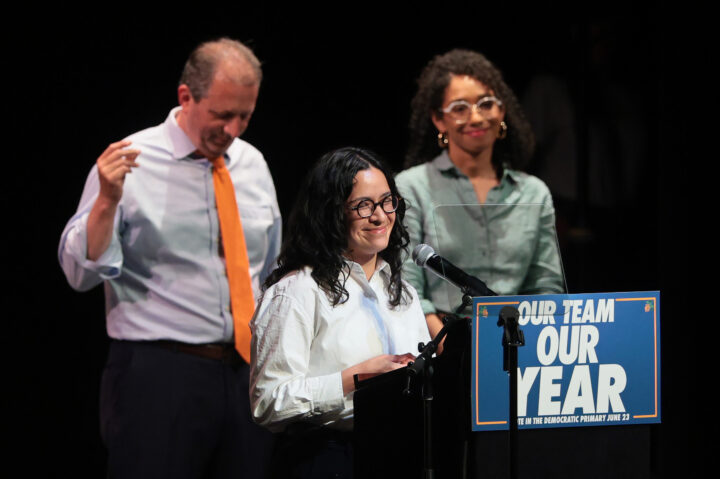
Congressional candidate Claire Valdez speaks during a Get Out the Vote (GOTV) rally at Kings Theater on June 18, 2026 in New York City.
Some moderate and establishment Democrats are raising alarms over the surge of democratic socialists in New York City congressional primaries on Tuesday — which took down two Democratic incumbents. But others are dismissing the phenomenon as one localized to New York City and not applicable to the party at large.
Rep. Greg Meeks (D-NY), a longtime Democratic leader from Queens, lamented Tuesday’s results, particularly Rep. Adriano Espaillat’s (D-NY) loss.
Meeks told reporters that the party as a whole is not a socialist party, and that socialist ideas are very much out of step with the country overall. He said he doesn’t see the party headed in that direction, potentially outside of certain cities.
“That’s not where America is, that only happens in certain parts — like New York City now, apparently — deep, deep, deep blue,” Meeks said. If the entire party follows the same path, “that means that all the other seats that are not [deep blue], we can never win, which means we will never be in the majority, and we [will] never get anything done.”
Meeks told reporters that he believes in capitalism, not socialism, but argued that free markets and opportunities are fully compatible with assistance to help uplift those in need.
He criticized chants of “you’re next” targeting House Minority Leader Hakeem Jeffries (D-NY) at candidate Claire Valdez’s victory party on Tuesday night as unproductive, and noted that ousting Jeffries would deprive New York of a potential speaker of the House, who would also be the first Black House speaker in history.
Meeks said he hopes that the far left doesn’t become a Democratic version of the GOP’s House Freedom Caucus, which routinely sparks gridlock on the House floor with various obstructionist tactics.
“You can’t criticize the MAGAs and then be like the MAGAs, that’s inconsistent,” Meeks said. “That’s why we have the most unproductive Congress right now. … We shouldn’t be that, we want to be the opposite of that. We want to be productive, we want to be able to go help folks.”
Meeks noted that Black and Hispanic communities in Espaillat’s district overwhelmingly sided with the congressman — with newcomers more supportive of his challenger, Darializa Avila Chevalier.
“I understand that neighborhoods don’t always stay the same … but we got to look at the people that have been there for a long period of time, also, so that they are not just pushed to the side. And how do you work collectively together to bring folks together?” Meeks said.
Pressed on whether some of the candidates’ past statements suggest they want to eliminate Israel, rather than see coexistence and a two-state solution, Meeks told Jewish Insider that “we’ll see when they get there” but “if you go by what they’ve said in the past, that would worry me if they stay [there].”
Rep. Tom Suozzi (D-NY), a leading moderate, told JI, “The results in New York City should be a wake-up call for every common-sense Democrat,” arguing that mainstream Democrats are being caught flat-footed by the far left. He called for the party to “reject extremism and embrace common sense.”
“The DSA is not the Democratic Party, and if moderates don’t organize, the far left will continue pushing our party toward an agenda that is increasingly disconnected from mainstream voters,” Suozzi, a co-chair of the House Problem Solvers Caucus, said. “Americans want leaders who solve problems and bring people together. They also expect Democrats to confront antisemitism clearly and unequivocally.”
He told reporters that Democratic moderates have to “work harder to organize. It’s not enough to just talk at a cocktail party” and complain, they need to “do the hard work necessary to provide solutions to the problems people face in their lives.”
Suozzi told JI that Democrats “should be able to support Israel’s right to exist and defend itself and still work toward a lasting peace that protects innocent lives” and “cannot allow those who excuse antisemitism, tolerate anti-Jewish hatred or traffic in division to define our party.”
Rep. Josh Gottheimer (D-NJ) said that the night was a victory for those who “hate America and hate the U.S.-Israel policy.
“This was a night where bomb throwers won, and problem solvers lost,” Gottheimer said. “Those who believe deeply in supporting the U.S.-Israel relationship, but beyond that, believe deeply in fighting antisemitism — your candidates didn’t win.”
Sen. John Fetterman (D-PA) called the winning NYC candidates “a treasure for Republicans,” referencing some past incendiary comments by Chevalier.
Meanwhile, multiple Democrats facing DSA-aligned challengers say they’re not concerned that the results are an omen for their own races.
Asked whether he’s worried about his primary challenge from state Sen. Julie Gonzales, a former DSA member who dominated internal Democratic Party proceedings, Sen. John Hickenlooper (D-CO) laughed and said simply, “No.”
Rep. Wesley Bell (D-MO), who is facing off next month against former Rep. Cori Bush (D-MO), also said he doesn’t see how Tuesday’s results are applicable to his own race.
“Why would primaries in New York concern me in my race?” Bell told JI. “All politics are local and our base, the folks in St. Louis, are going to make and we’re going to make our case — democracy in action.”
Rep. Jared Moskowitz (D-FL) told JI “they’re making blue seats bluer” and are “not helping us take control of Congress,” but also said that the DSA is “uniquely a New York problem” that doesn’t impact him in Florida. Moskowitz faces a primary challenge from DSA-endorsed challenger.
At the same time, Moskowitz described anti-Israel trends as a larger problem within the Democratic Party.
“I’m concerned about the entire movement, [through]out the whole party,” Moskowitz said. “It’s not just what happened in New York last night.”
Senate Minority Leader Chuck Schumer (D-NY) said that the primaries show that the party as a whole is energized.
“There’s tremendous energy in the Democratic Party in the more moderate places, like we saw in the governorships of New Jersey and Virginia, like Iowa this year, and from the more progressive places like New York, and we’re all fighting hard together to stop [President Donald] Trump,” Schumer said.
Rep. Pete Aguilar (D-CA), the No. 3 House Democrat, said he’s “not at all concerned” about the growing socialist bloc employing similar tactics to the Freedom Caucus, and downplayed the idea that radical nominees would be a drag on other Democrats in the midterms.
“They’re going to put folks in ads all the time,” he said, referring to concerns that Republicans will highlight far-left Democrats to defeat other members of the party. “Republicans don’t have a track record to run on, so they’re going to use other issues. We’ve seen that time and time again.”
Rep. Jamie Raskin (D-MD) said that you “never want to read too much into what’s essentially a local or regional political context.”
He said that he sees the results as an “indisputable” sign of Mayor Zohran Mamdani’s role as “the commanding political force” in the New York City area, and added that “there’s a lot of energy on the progressive side of the political equation in America today. That also seems pretty clear.”
Asked about the role Israel had played in the races, particularly the race between Goldman and Brad Lander, where there were few other obvious policy differences between the two candidates, Raskin noted that both Goldman and Lander “described themselves as liberal Zionists.”
He said that Israeli Prime Minister Benjamin Netanyahu is obviously unpopular in the Democratic Party, and argued that there are many in the party who strongly support Israel but reject Netanyahu, “and that sentiment undoubtedly carried the day.”
“It’s a loss to us on the Judiciary Committee to have Dan Goldman go because he was such an excellent prosecutor and he’s a great cross-examiner of administration witnesses and agendas,” Raskin continued. “But that race undoubtedly turned on questions of the Middle East.”
Sen. Ruben Gallego (D-AZ), a potential 2028 presidential contender, also said the results aren’t a reflection of the whole country or party.
“All politics is local,” Gallego said. “I think that’s what you … see right there. The candidates who ran very localized campaigns, that helped them [win].”
Gallego added that the results show the party is a “big tent, and that’s kind of coming through right now.”
“Every state is different, every place is different, every candidate’s going to be different,” he said.
Sen. Gary Peters (D-MI), who chaired the Democratic Senatorial Campaign Committee for two cycles, said that the results reflect the voter base in New York City.
“Those are really deep blue districts, so you expect that kind of vote in a Democratic primary,” Peters said.
Sen. Raphael Warnock (D-GA) also emphasized that his state is distinct from deep-blue New York City and said, “I think pundits are doing what pundits are doing. The takeaway from last night is that the Democratic Party is a big tent, and we’re having a robust conversation about how to make the lives of ordinary people better.”
Sen. Dick Durbin (D-IL), the outgoing No. 2 Senate Democrat, said he doesn’t know much about the races beyond that Mamdani-backed candidates won. He said he wasn’t aware of the fact that the candidates all shared an anti-Israel approach but called it “worrisome.”
Sen. Tim Kaine (D-VA) said he hadn’t followed the races closely enough to understand the outcomes, but said, “I am a Virginia elected official, and Virginia is what I know really well. I just don’t know enough about New York politics — and I think it would be not a good idea to extrapolate New York City to a national level.”
Meanwhile, members of the far left are treating the results as a mandate for the Democratic Party and a signal of rising popularity for their chosen policies.
“Last night, voters across New York delivered a powerful message: the era of status quo politics is over,” Sen. Bernie Sanders (I-VT) said. “If Democrats regain control of Congress next year, they must listen to the people who put them in office. Status quo establishment policies are not enough. We must be bold. We must take on Oligarchy. We must represent working families and create a government that works for all, not just the few.”
He also called the victories a rebuke of AIPAC, the cryptocurrency and artificial intelligence industries and other moneyed interests.
Rep. Ro Khanna (D-CA) said the results on Tuesday were “the beginning of a new, strong, bold Democratic Party” and pointed to other progressive victories outside of New York City.
Several Democrats considering presidential bids have cast the Iran agreement as evidence of weak leadership, arguing that Trump has been outmaneuvered by Tehran
Meg Kinnard/AP
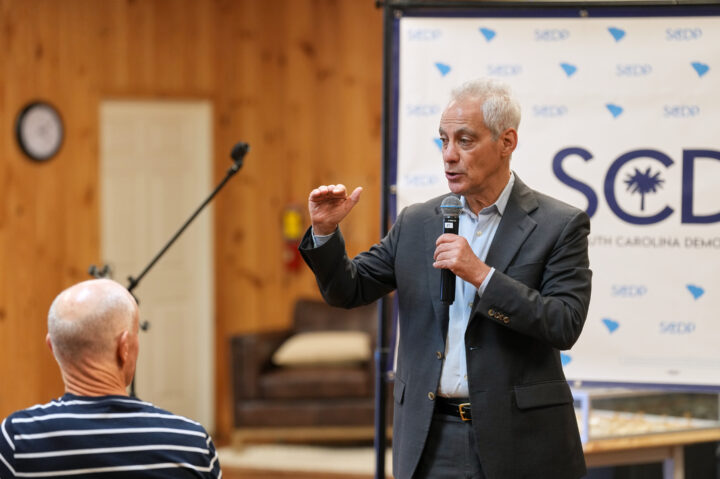
Former U.S. ambassador to Japan Rahm Emanuel speaks to voters as he participates in the South Carolina Democratic Party's "On the Road" series on Thursday, April 2, 2026, in Abbeville, S.C.
Among the Democrats mulling a presidential run in 2028 — a group that is ideologically divided, each with their own diagnosis about what’s wrong with the Democratic Party and how to fix it — there was a unified reaction in February when President Donald Trump decided to attack Iran: opposition to a war they viewed as reckless and unconstitutional.
As those Democrats respond to the U.S.-Iran memorandum of understanding that Trump announced last week, another consensus is emerging, which holds that the deal is just another example of Trump’s ineffectual leadership — yet another instance, these Democrats argue, of Trump getting taken advantage of and undermining the American people.
“They’re negotiating a deal that, truthfully, every single detail we continue to hear just looks like the Iranians continue to do better than us. I think they should have been the one to write The Art of the Deal, not Donald Trump,” Maryland Gov. Wes Moore said in a TV interview on Tuesday.
Rahm Emanuel, the former U.S. ambassador to Japan, member of Congress and chief of staff to President Barack Obama, offered a similar quip at a recent Financial Times event after describing the deal as “the memorandum of misunderstanding.”
“While the president thinks he wrote a book called The Art of the Deal, they’re going to teach him a lesson, which is the Persian lesson: the art of the negotiation,” Emanuel said. “And he just got schooled, unbelievably.” He called the war with Iran “the single worst — and there’s a lot of competition for it — American national security mess that I’ve ever seen.”
The MOU offered immediate sanctions relief for the Islamic Republic and launched a 60-day window for nuclear negotiations.
The 2028 contenders who have commented on the deal have generally done so without much detail. Pennsylvania Gov. Josh Shapiro criticized the agreement in an interview with CNBC on Monday, though he shared little in the way of specific critiques or concerns.
“I think what’s clear is the Trump administration, the president, specifically chose to enter this war and had absolutely no plan when he went in, and that’s why he’s got no idea how to get out,” said Shapiro. “The president created a mess, and now he’s dispatched JD Vance … to try and figure out a way out of it, and seemingly both of them are getting played by the Iranians.”
A spokesperson for Shapiro declined to comment further.
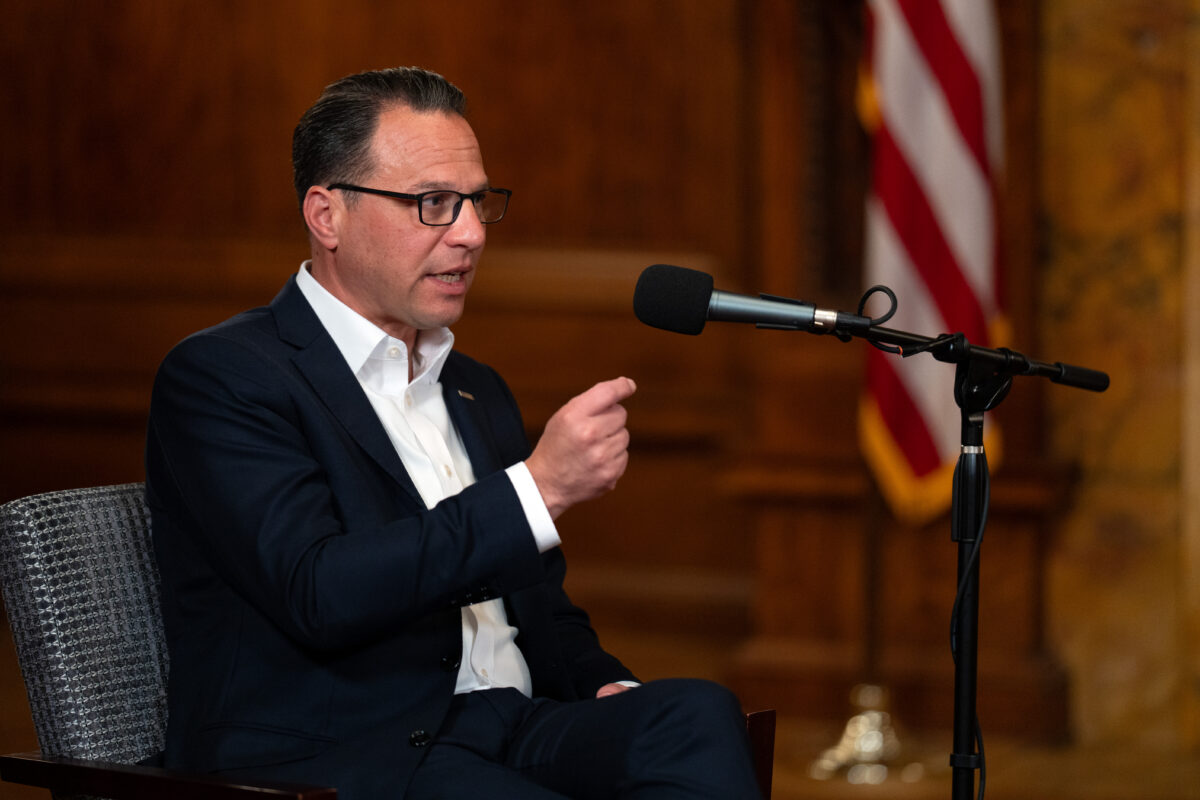
Illinois Gov. JB Pritzker has used the deal as a political talking point. He was asked by reporters on Monday and Tuesday to respond to a social media post where Trump called on Pritzker to seek his help in responding to gun violence in Chicago. In response, Pritzker referred to Trump’s Iran negotiations as a reason why he would never want to ask Trump for help.
“This is the president who wants to blame everybody else for algae that showed up at the Reflecting Pool in Washington, D.C.,” Pritzker told reporters during an event in Illinois on Tuesday, “the same president that thinks that after bombing Iran, that they should pick up the phone and call him, and indeed, who’s failing to put together an agreement that is anywhere near as good as the JCPOA [Joint Comprehensive Plan of Action], that was the agreement that he ripped up as president of the United States.”
Last week, he said at a Punchbowl News event that the deal sounds like it is “really just a cessation of hostilities and pushing off into the future negotiations about things.”
Some Democrats considering a 2028 run are avoiding the question entirely for now.
California Gov. Gavin Newsom, who on the day the U.S. began its campaign in Iran referred to the American actions as an “illegal, dangerous war,” has thus far not weighed on the MOU. Anthony Martinez, a spokesperson for Newsom, said that “Trump’s reckless war” has been costly to Americans. “That’s a bad deal for hardworking Americans, plain and simple,” Martinez said. He declined to comment on the MOU.
Kentucky Gov. Andy Beshear, Sen. Jon Ossoff (D-GA) and Rep. Alexandria Ocasio-Cortez (D-NY) have also criticized the war but so far refrained from discussing the agreement.
Most potential Democratic 2028 contenders view the Iran war as a hard-to-solve morass, with little offered in the way of alternatives to a war and deal that they oppose. Merely criticizing Trump for an unpopular war appears to be enough.
Shapiro acknowledged that he wants the U.S. to come out ahead in the war, but he said he doesn’t see how that will be possible with Trump leading the negotiations.
“I’m on Team USA. I want us to win, but this is the problem when you have a president who is just hell-bent on creating chaos around the world,” Shapiro said on CNBC. “What we need instead is steady-handed leadership, and we don’t have that right now.”
Pritzker pointed to the 2015 Obama nuclear deal as the best-case alternative, although that deal is now defunct.
“It’s a real question whether there’s any advancement at all of U.S. interests,” said Pritzker. “I think the question I think we’re all going to have to ask is, is this any better than the JCPOA that was already in place when Donald Trump tore it up in his first term?”
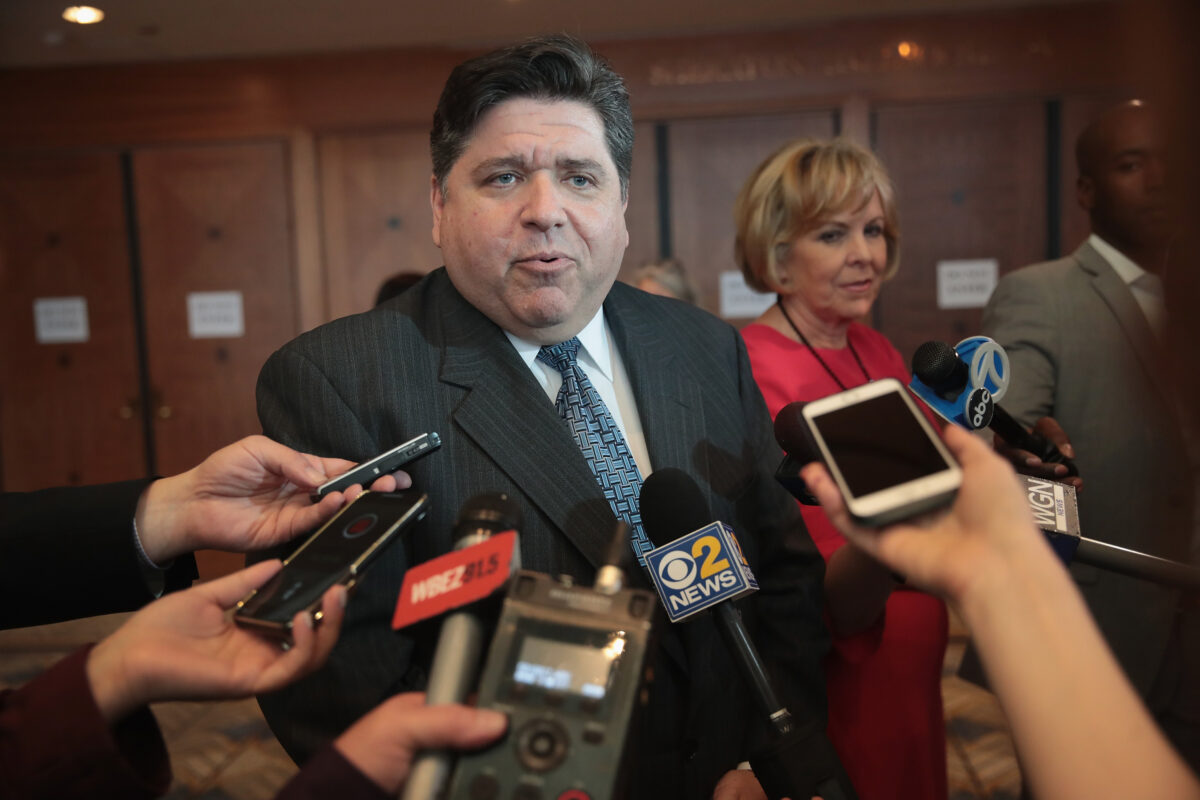
It was a line that former Vice President Kamala Harris, who is also mulling a presidential bid in 2028, echoed recently.
“This is a president who has proven himself to be entirely self-indulgent. And we will see what happens in the coming hours and days in terms of the negotiation. And really, it’s a concept of an agreement,” Harris said last week at a speech during a conference in Vienna. “Whatever is being negotiated, this president is going to declare victory, and we’ll end up where we were after the JCPOA and call that a victory.”
Far-left lawmaker Rep. Ro Khanna (D-CA), who has said he is considering a 2028 run, called the ceasefire between the U.S. and Iran “welcome news that Americans should support.” But he said it “delivers Iran a better deal” than the JCPOA that Trump “spent years ridiculing.” His message got a boost on X on Tuesday from former Secretary of State Tony Blinken.
“Wise words from my friend,” Blinken wrote.
The main difference between the three candidates backed by most Democratic leaders and Mamdani’s favored challengers is the challengers’ hostility to Israel
Michael M. Santiago/Getty Images
Congressional candidate Claire Valdez speaks during a Get Out the Vote (GOTV) rally at Kings Theater on June 18, 2026 in New York City.
2026 has been the year of the democratic socialist, with numerous far-left, anti-Israel candidates winning mayoralties and congressional primaries in cities up and down the Northeast corridor, from New York to Washington, D.C — and beyond.
Zohran Mamdani, the New York City mayor who proved that radicalism can win hearts and minds among voters in deep-blue jurisdictions, is now trying to utilize valuable political capital by electing three like-minded congressional candidates in primaries in the Big Apple on Tuesday — backing two challengers running against well-funded incumbents, and a third against a well-established progressive borough president.
The outcomes of these three races will go a long way in determining whether Democratic Party voters still draw any red lines around candidates holding views and values that fall outside the party mainstream.
Let’s be clear: The main difference between the three candidates backed by most Democratic leaders and Mamdani’s favored challengers is the challengers’ hostility to Israel.
Mamdani handpicked Darializa Avila Chevalier, a doctoral student with no obvious congressional credentials who protested against Israel the day after it suffered the worst terror attack in its history, to run against Rep. Adriano Espaillat (D-NY), the head of the Congressional Hispanic Caucus and a progressive supporter of the Jewish state.
Avila Chevalier has a laundry list of recent social media posts in which she called for abolishing the police and voiced anti-American and pro-Russian sentiments, while sharing a post saying “Israel doesn’t exist.” That hasn’t disqualified her, in the eyes of a critical mass of the district’s voters.
Mamdani recruited state Assemblywoman Claire Valdez to challenge Brooklyn Borough President Antonio Reynoso, despite the latter’s backing from party leaders. Valdez, a sculptor, has made her opposition to Israel a central part of the race, even falsely accusing AIPAC of being involved in the race when the outside spending against her came from a major teachers’ union. Reynoso, who has been a vocal critic of Israel, hasn’t made the Middle East a central part of his candidacy.
And Mamdani convinced former City Comptroller Brad Lander to run against pro-Israel Rep. Dan Goldman (D-NY), even working to clear the field of other challengers who threatened to split the anti-Israel vote against Goldman. Despite calling himself a progressive Zionist, Lander spent his final debate attacking the congressman for not calling Israel’s war against Hamas in Gaza a genocide and for supporting aid to the Jewish state.
As JI’s Will Bredderman has documented, all three of Mamdani’s picks have made their opposition to Israel a major part of their closing messages. And while polls show Goldman as the underdog in a progressive district, the other two races are highly competitive. Outside groups representing mainstream forces have mobilized on behalf of Espaillat and Reynoso in the final weeks of the race, giving them a fighting chance to prevail.
There’s no doubt that pro-Israel forces within the Democratic Party are facing uphill challenges, especially in deeply progressive districts where voters are increasingly open to far-left candidates. The outcome in New York’s primaries this week will indicate whether the establishment has the ability to slow down the radicals’ momentum.
The Michigan senator endorsed the pro-Israel congresswoman as Craig trails Lt. Gov. Peggy Flanagan
Kent Nishimura/Bloomberg via Getty Images
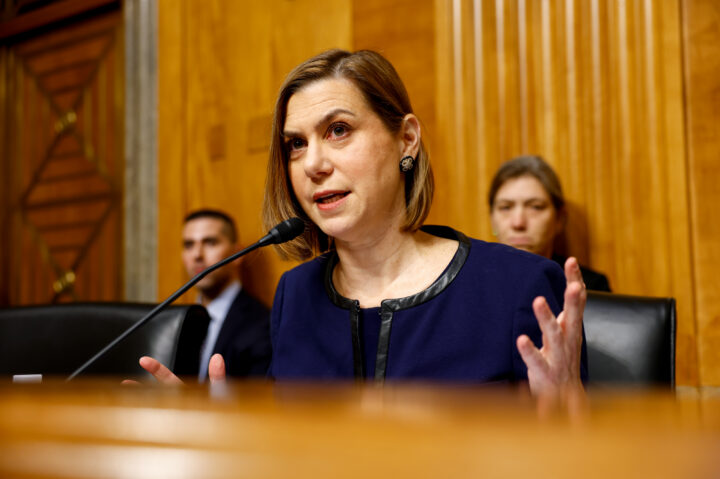
Senator Elissa Slotkin (D-MI) during a Senate Homeland Security and Governmental Affairs Committee confirmation hearing in Washington, DC, on March 18, 2026.
Sen. Elissa Slotkin (D-MI) announced her endorsement on Thursday of Rep. Angie Craig (D-MN) in Minnesota’s Senate primary, calling the moderate congresswoman “a leader and a fighter” who has “stepped up” while serving in the House.
“The Democratic Party needs a new generation of leadership, and we need more of those leaders to be from the Midwest — Angie Craig is both,” Slotkin, a Jewish Democrat viewed as a potential 2028 presidential contender, said in a statement. “I hope to serve with her in the U.S. Senate.”
Craig, a pro-Israel Democrat, has also earned endorsements from Sens. Tammy Baldwin (D-WI), Andy Kim (D-NJ), Ruben Gallego (D-AZ), Jacky Rosen (D-NV) and Catherine Cortez Masto (D-NV), among other lawmakers.
Slotkin’s support comes as polls have shown Craig trailing her Democratic rival in the Aug. 11 primary, Lt. Gov. Peggy Flanagan, a progressive who has won endorsements from several leading Israel critics such as Sens. Bernie Sanders (I-VT), Elizabeth Warren (D-MA), Chris Murphy (D-CT) and Chris Van Hollen (D-MD). Flanagan is also backed by Sen. Tina Smith (D-MN), who is retiring at the end of the year.
In the most recent poll, conducted for Flanagan’s campaign between May 31 and June 3, the lieutenant governor held a 17-point lead over Craig, with 55% of the vote share. Other surveys have similarly shown Flanagan with a commanding advantage in the race.
Last month, Craig announced that she would not seek support from the state Democratic Party at its convention, effectively ceding that endorsement to Flanagan, who was widely expected to win.
Earlier, Craig’s campaign had called on the state party to formally investigate a series of alleged instances of antisemitic activity among delegates ahead of the convention, which in recent years has been marked by mounting intraparty divisions over Israel.
The Pennsylvania senator heavily criticized the normalization of anti-Israel platforms and the validation of extreme views among Democratic voters
Tom Williams/CQ-Roll Call, Inc via Getty Images
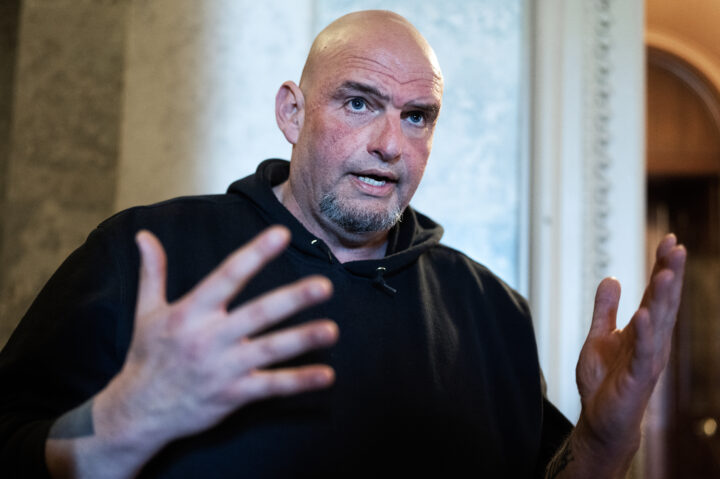
Sen. John Fetterman (D-PA) talks with reporters after the Senate luncheons in the U.S. Capitol on Tuesday, March 11, 2025.
Sen. John Fetterman (D-PA), a stalwart ally of Israel and the Jewish community who has become increasingly isolated within a Democratic Party facing internal friction over its Middle East policy, warned on Wednesday that the outlook for Jewish voters within his party has become “bleak.”
“I’m not a member of the Jewish community, but if I was one, it would be bleak as a Jewish voter in the Democratic Party,” Fetterman said, speaking at a conference hosted by the Culture for Peace Institute, a nonprofit organization focused on advancing “sustainable peace” by bringing together political leaders and researchers, in Washington. “If [Democratic voters are] willing to support these kinds of candidates across the map — look in Michigan [Abdul El-Sayed], look at the one in Maine [Graham Platner], look at New York City [Mayor Zohran Mamdani], look across the map — these are defined by how much anti-Israel rhetoric you can cram into your platform.”
Fetterman expressed concern that the trajectory of the party will continue to “deteriorate,” noting that he “refuses to be part” of what he claims to have predicted would occur within the Democratic ranks. He added that he is “constantly disappointed but not surprised by the way things have drifted within the party.”
“I expect that it’s going to continue to deteriorate,” Fetterman said. “A lot of these extreme views were validated during the midterms. It’s stunning, astonishing to me, the kind of people with these views who [Democratic voters] will now choose to be their representatives. It’s heartbreaking to me, but unsurprising, and that’s what history would have predicted will happen.”
The Pennsylvania senator pointed specifically to Platner’s victory in the Maine Democratic Senate primary on Tuesday, calling it a “capstone” example of deterioration within the party, taking concern with the amount of people “defending” the scandal-plagued candidate.
“I think the capstone of that recently was where you have the kind of garbage candidate like Platner — like full-on Nazi ink on his body — and now you have people defending it,” Fetterman said. “I read an interview with a Maine voter where [a woman said] she would not vote or support someone if they have an Israeli flag tattoo, but it’s OK that [Platner has a Nazi tattoo] on his body. That’s how insidious it’s become within the party, and the calculus where it’s OK to have these views.”
Fetterman stated that the problem is most acute among the “young generation,” arguing that the environment on college campuses and behavior of certain Democratic candidates have contributed to the alarming shift.
“The young generation’s been lost, and that’s 100% on social media,” Fetterman said. “If the Democratic Party is convinced that Hamas or Hezbollah or Iran were the wronged party, that’s absurdity.”
“If you are angry, blame Iran — don’t blame America, or don’t blame Israel for demanding that they turn over their nuclear dust,” he continued. “Don’t keep hostages, don’t attack Israel, don’t fire thousands of rockets into northern Israel. This response was entirely appropriate.”
On the war in Iran, Fetterman discussed his decision to be the sole Senate Democrat to vote against multiple war powers resolutions, clarifying that it was a “pro-no-nuclear-weapons-for-Iran” vote rather than a pro-war stance. Despite his isolation in the caucus on that specific measure, Fetterman insisted he stood on the “right side” of history.
“Can’t we just agree that every single Democrat in the caucus would agree that we can never let Iran build a nuclear bomb?” Fetterman said. “When someone [the Trump administration] actually tries to make sure that doesn’t happen, why can’t you support that?”
Fetterman recalled that Democrats once stood firmly and unanimously against Iran acquiring a nuclear weapon. However, he argued that a policy position that used to be mainstream for Democrats has now “become a controversial one.”
Fetterman further asserted that support for Israeli military objectives has also become “controversial” within the Democratic Party. Nonetheless, he emphasized that he will continue to back Jerusalem’s operational goals regardless of the shifting political tides.
“This might be controversial for Democrats now, but I’ll say it again. I think it’s magnificent the way Israel continues to this day to eliminate people in Hamas and everyone that is tied to [the Oct. 7, 2023, terrorist attacks],” Fetterman said. “Everyone should be held accountable and pick off the new leaders before the new business cards even come in.”
Ultimately, he warned that an Iranian nuclear breakout would carry severe consequences for the Middle East and economic fallout globally.
“I can’t imagine the circumstances in the Middle East if that happened,” Fetterman said. “If you think gas is too expensive today, let Iran become a nuclear power because they could do anything and charge any kind of toll once they’re nuclear. They would be truly untouchable, and this is why as a Democrat I’m willing to embrace perhaps the most toxic thing a Democrat can do right now.”
Sens. Chris Van Hollen (D-MD) and Chris Murphy (D-CT), as well as Rep. Ro Khanna (D-CA), have been among the party’s most prominent critics of Israel on Capitol Hill amid a marked decline in Democratic support for the Jewish state
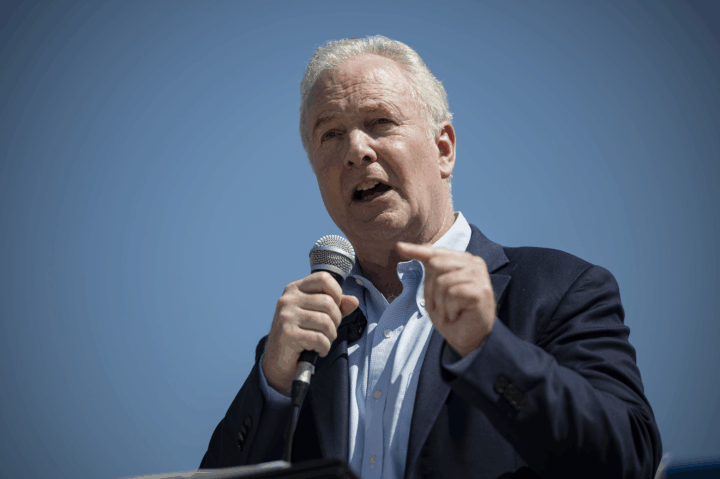
Celal Gunes/Anadolu via Getty Images
Sen. Chris Van Hollen (D-MD) speaks during a rally around the National Mall in Washington, D.C., on September 19, 2025.
As the 2028 presidential campaign season nears, a handful of prospective candidates from the Democratic Party’s left flank are raising their profiles with efforts to shape a more critical approach to U.S. policy toward Israel.
Sens. Chris Van Hollen (D-MD) and Chris Murphy (D-CT), as well as Rep. Ro Khanna (D-CA), all of whom are seen as potential presidential prospects, have been among the party’s most prominent critics of Israel on Capitol Hill amid a marked decline in Democratic support for the Jewish state.
Recent moves suggest they are each testing voter appetite for a possible White House campaign. Even as they are not considered top-tier contenders in what is likely to be a crowded primary field, history has shown they could be positioning themselves for a Cabinet role — particularly if they prove successful in driving the national conversation on the debate stage and other forums.
Murphy, for instance, released a book last month, Crisis of the Common Good: The Fight for Meaning and Connection in a Broken America, of the sort that typically presages a bid for higher office. The senator has otherwise continued to promote what he terms a “forward-looking foreign policy,” which has included an increasingly antagonistic assessment of Israel and its relationship with the United States.
Van Hollen, meanwhile, published a deeply disputed op-ed in The New York Times last week that argued for wholly jettisoning the Democratic Party’s “unconditional support to Israeli governments” that, he warned, has “increasingly undermined American interests and values.” He also proposed several steps that the next Democratic president should take with respect to Israel — such as recognizing a Palestinian state “subject to clear benchmarks” and ending U.S. “taxpayer-funded support to Israel,” which has also recently been championed by more moderate voices such as former Chicago Mayor Rahm Emanuel.
In a noteworthy aside at the end of his essay, Van Hollen, who, like Murphy, sits on the Senate Foreign Relations Committee, stated that voters “won’t trust any Democratic presidential candidate who does not have a record of moral and strategic clarity on these issues” — a possible advertisement for his own 2028 ambitions.
The senator also insisted that voters will not be open to a presidential “candidate who plans to re-enlist the senior Democratic decision makers who whitewashed the truth during the Biden administration and refuse to acknowledge their complicity.”
Left unmentioned was that Van Hollen’s dictates could reasonably be seen as planting the seeds for a possible post in a future administration, including secretary of state or another top foreign policy role.
Khanna, long seen as harboring presidential ambitions, has for his part moved swiftly to the far left on Israel policy in recent years, while giving his endorsement to a range of Israel critics running for House and Senate this cycle that have helped him to build a progressive imprint throughout the country.
None of the three lawmakers, however media-savvy, possesses the name recognition or national profile of other prominent Democrats who are more frequently cited as presidential prospects, such as Pennsylvania Gov. Josh Shapiro from the moderate wing of the Democratic Party and Rep. Alexandria Ocasio-Cortez (D-NY) on the left.
But if they do choose to mount what would likely be long-shot presidential bids, each has the potential to become a more significant player in national politics, as previous presidential contests have demonstrated.
During the 2020 primary, for instance, Andrew Yang rose to prominence as a Democratic outsider thanks in part to his calls for unconventional policies such as universal basic income. And Pete Buttigieg channeled his short-lived primary surge from small-town mayor in Indiana to leading the Transportation Department under former President Joe Biden.
With intraparty conflict over Israel poised to inflect the 2028 presidential race, it would not be surprising if Khanna, Murphy or Van Hollen seized the national spotlight while championing Middle East policy positions that had once been considered off-limits for a viable campaign.
Kenneth Baer, a former Obama administration official who now leads a communications firm, voiced concerns about the possibility, albeit hypothetical, of a lawmaker like Van Hollen helming the State Department, say, in a future administration.
“The only thing more menacing to a strong U.S.-Israel relationship than Van Hollen as SFRC chair is him as secretary of state,” Baer, a constituent of the senator, told Jewish Insider. “It’s a sad commentary about the state of our party that more than a few presidential hopefuls would seriously consider him for that role.”
His critics once saw him as an ally, but fear he’s pandered to extremists as he raises his national profile ahead of the 2028 presidential election

Chip Somodevilla/Getty Images
Rep. Ro Khanna (D-CA) leaves the U.S. Capitol on March 13, 2024 in Washington.
Rep. Ro Khanna’s (D-CA) emergence as a leading Democratic party critic of Israel — while affiliating with and embracing individuals and groups that have been accused of antisemitism and support for terrorism — is creating divisions within the local Jewish community in his Silicon Valley-centered district.
While Khanna maintains unified support from Jewish elected officials in the district, other Jewish community leaders say they feel abandoned, ignored and even attacked by their congressman, whom they once saw as an ally, as he faces what could be his most credible primary challenge in years.
For some in the district, ties with the congressman have been strained for years, and were further inflamed by the March attack on two Israeli Americans in San Jose’s Santana Row shopping district.
Khanna strongly condemned the attack but some in the community said his words rang hollow after months of escalating anti-Israel rhetoric. Some Jewish leaders in the district say that they saw a direct connection between Khanna’s incendiary language condemning the Jewish state and attacks such as the one their community experienced.
Two days after the attack, Khanna posted about how he is “proud to stand” with Maine Senate candidate Graham Platner and New York Mayor Zohran Mamdani, as well as to join far-left streamer Hasan Piker’s show, all of whom have faced criticism from the Jewish community — comments that prompted condemnation by Anti-Defamation League CEO Jonathan Greenblatt.
Jewish leaders in the district who are now critical of the congressman said the community’s relationship with Khanna started out strong when he was first elected in 2016, but has significantly deteriorated over time, particularly in the past few years. Khanna’s Silicon Valley district includes substantial, concentrated Jewish and Israeli-American communities.
Tali Klima, a spokesperson for Bay Area Jewish Coalition Action, a local grassroots advocacy group, said that Khanna was “warmly welcomed” by the Jewish community when he was first elected and that many in the community had supported him.
Khanna traveled to Israel three times while in office, and has expressed support for the Abraham Accords, voted in 2019 to condemn the Boycott, Divestment and Sanctions movement, condemned calls to “globalize the intifada,” voted in early 2024 to condemn the slogan “from the River to the Sea, Palestine will be free” and introduced a Holocaust education resolution in 2024. Amid rising antisemitism in recent years, he has touted appointing a point of contact for addressing antisemitism in the district on his congressional team.
But, Klima and other critics said, they’ve seen the congressman’s posture change over time.
“He’s become more and more divisive and more extremist in his views, that we never heard when he was first elected, especially since Oct. 7. It’s been a massive shift in the way that he communicates about things that we care about,” Klima continued.
“At this point, the community has really lost trust in him,” Klima said. “Much of the community is afraid of him, and much of the community is also very angry and feels betrayed by him.”
“Having participated in local town halls with Representative Khanna and spoken with him about various community concerns, I am thankful for his commitment to open dialogue and remaining accessible even when we disagree,” Assemblymember Patrick Ahrens said. “His dedication to peace and justice for all people and support for a two-state solution is laudable. He has been a leader for accountability and transparency with the Trump Administration, particularly with the bipartisan push for the release of the Epstein files.”
Khanna has frequently and repeatedly accused Israel of genocide, was among the first lawmakers to endorse calls for cutting off U.S. support for Israel’s Iron Dome missile-defense system and led an effort for U.S. recognition of a Palestinian state, among a range of other stances and votes, and has repeatedly faced scrutiny for his affiliations with groups and individuals condemned by the Jewish community.
Later this week, he’s set to offer an amendment to strip a provision advancing U.S.-Israel cooperative programs out of the 2027 defense bill. Though one former Biden administration called the provision “quite unremarkable” and in keeping with existing programs, Khanna called it a “fusion” of the U.S. and Israeli militaries to prevent scrutiny and accountability for U.S. aid to Israel.
Jewish elected officials supporting Khanna, in statements shared with Jewish Insider, praised the congressman for his support for a two-state solution and for engaging with local Jewish communities.
“Having participated in local town halls with Representative Khanna and spoken with him about various community concerns, I am thankful for his commitment to open dialogue and remaining accessible even when we disagree,” Assemblymember Patrick Ahrens said. “His dedication to peace and justice for all people and support for a two-state solution is laudable. He has been a leader for accountability and transparency with the Trump Administration, particularly with the bipartisan push for the release of the Epstein files.”
State Sen. Josh Becker added, “While Congressman Khanna gets a lot of ink for his criticism of Israel he gets less for his vocal support of a two state solution and Israel as a safe democratic Jewish state.”
Others, such as San Jose City Councilmember David Cohen, more broadly praised him for his work on local issues.
“The fact that an elected official like Khanna defends [people like Hasan Piker and Zohran Mamdani] and their dangerous antisemitic views is not only shameful — but it also actively endangers the lives of Jewish people both in his district and around the country,” Oleg Ivanov, executive director of StandWithUs Northern California, said.
“Times are very difficult these days in Washington D.C., and Congressmember Khanna remains a steady advocate for our region and economy. We need people who understand the tech industry and also who bring money back to our community from the federal budget,” Cohen said. “He has shown courage and has been willing to face his constituents at monthly town hall meetings ever since he was elected. While I don’t agree with every position he takes, I admire his thoughtfulness and transparency.”
Cohen declined to speak further on Khanna’s foreign policy work or his relationship with the local Jewish community.
But others in the community feel that their concerns aren’t being heard or listened to by the congressman. Daniel Klein, CEO of Jewish Silicon Valley, a Jewish nonprofit which runs a local JCC and other community programs and resources, said he’s communicated to Khanna directly that he thinks the legislator is out of step with his constituents.
“The fact that an elected official like Khanna defends [people like Hasan Piker and Zohran Mamdani] and their dangerous antisemitic views is not only shameful — but it also actively endangers the lives of Jewish people both in his district and around the country,” Oleg Ivanov, executive director of StandWithUs Northern California, said.
Ivanov also accused Khanna of spreading a “blood libel” in accusing Israel of genocide in Gaza.
Oded Shekel, executive director of Bay Area Jewish Coalition Action, emphasized that members of the Jewish and Israeli community in Khanna’s district feel afraid, isolated and that they have to hide who they are, and don’t feel they’re getting the support they expect from their congressman.
Shekel said that he doesn’t necessarily think Khanna is personally or openly antisemitic, but that he is supporting and rationalizing extreme voices, to the point that has made many Jews like him feel that Khanna is the “strongest voice [that] hurts Jews in his district.”
Khanna joined a town hall in 2024 hosted by the Bay Area Jewish Coalition — a separate entity from Bay Area Jewish Coalition Action led by the same individuals — but the relationship has soured since then.
Sunnyvale Mayor Larry Klein, a Khanna supporter, said he’d attended the BAJC town hall, and met with Jewish community members alongside Khanna to discuss the challenges that Jewish high schoolers were facing from antisemitism in the district, and how the congressman could address them.
“Good to hear directly from High School Students and their parents on the district issues,” Mayor Klein said in a statement. “It was valuable to hear firsthand about the harassment that Jewish Students had endured.
Mayor Klein also praised Khanna’s “bipartisan approach to leadership” on issues including “working to halt reckless foreign intervention” and the release of the Epstein Files, saying that Khanna, “consistently puts principles over politics.” He also praised Khanna’s engagement with constituents more broadly and work on securing federal funding for the district.
Daniel Klein of Jewish Silicon Valley described Khanna’s stances and statements as hostile to the Jewish community. He said that the violent attack in Santana Row, and other similar incidents, are the “natural maturation” of the rhetoric Khanna has used and elevated.
“I appreciate the congressman being outraged” about the Santana Row attack, “but statements and what he normalizes and who he platforms before these incidents, and then who he chooses to stand with and platform and normalize after these incidents, makes the community feel unseen and unsupported by the congressman,” Klein said he told Khanna’s office in the wake of the attack.
Yet, Klein said, Khanna’s rhetoric does not appear to have shifted substantially since the March attack.
“I’m a big fan of Congressman Khanna,” Ben Linder, a J Street board member who lives just outside Khanna’s district, told JI. “The majority of the Jewish community is squarely behind him and very aligned with him,” Linder continued, emphasizing that he has seen Khanna speak on multiple occasions to busy synagogue audiences.
Klima echoed that, expressing frustration that Khanna’s condemnation of the attack was quickly followed by a return to his usual rhetoric and activity.
In addition to Jewish elected officials backing him, Khanna maintains support among segments of the local Jewish community. Ben Linder, a J Street board member who lives just outside Khanna’s district, told JI he continues to strongly support the congressman. J Street has endorsed Khanna, but Linder spoke to JI in a personal capacity, not on behalf of the progressive Israel advocacy group.
“I’m a big fan of Congressman Khanna,” Linder, who was born in Israel and moved to the U.S. in high school, said. “The majority of the Jewish community is squarely behind him and very aligned with him,” Linder continued, emphasizing that he has seen Khanna speak on multiple occasions to busy synagogue audiences.
He called critics “out of touch with the view of the majority of Jews right now” both in Khanna’s district and nationally, pointing to a Washington Post poll last year that found a majority of Jews are critical of the way the war in Gaza has been conducted.
He asserted that discontent with Khanna traces to a “vocal minority in the district, mainly led by right-wing Israeli expats that dislike Congressman Khanna” and are “out of touch with where our community is.”
“I consider Ro Khanna very pro-Israel. He is clearly anti-Netanyahu and anti- the policies of Israel’s right wing government, but so am I, and, I think, so are the majority of Jews in this district,” Linder said.
Critics of Khanna said that the congressman’s activity following the Santana Row attack matches a pattern they’ve observed repeatedly when Khanna is called out for conduct or statements they find offensive — Khanna will apologize, or offer targeted condemnations, but won’t substantially change his behavior, and ultimately continues doubling down.
They said this pattern ignores the way that Khanna’s own rhetoric is fueling antisemitism.
Klima emphasized that Khanna’s constituents have come to him on numerous occasions asking him to dial down his rhetoric. At this point, she said, his “symbolic condemnations” of antisemitism “ring very hollow.”
“He’s speaking out of both sides of his mouth, basically,” she said, adding that, as a longtime congressman, his comments “[legitimize] this rhetoric,” driving similar activity from other local officials as well.
Ivanov said it’s easy for Khanna to denounce antisemitic attacks or vandalism, “but as soon as he does that, he continues to spread the antisemitic conspiracy theories, to defend antisemitic speakers that are out there every day, fueling the antisemitism that leads to these actions.”
“We will not accept Khanna’s pro-forma denunciation of antisemitic incidents while he himself continues to fuel antisemitism and defend antisemites,” Ivanov said.
Linder, the Khanna supporter, argued that Khanna has made clear that he “will speak with anyone” and “dialogues with people he disagrees with, and I respect that.” Khanna has expressed similar sentiments to JI in the past.
Linder said he strongly disagreed with the notion that Khanna’s rhetoric is fueling violence, and emphasized that the Santana Row attack was not charged as a hate crime.
“I don’t believe there was sufficient evidence to show that it was hate-motivated,” Linder said. “The congressman came out very quickly and denounced that attack, denounced the violence, and I fundamentally am not a subscriber to the notion that criticizing Israel fuels antisemitism. I see a clear delineation between criticism of Israel and Jew hatred. I don’t believe the two are connected. As a matter of fact, I think some of the actions of Netanyahu and the Israeli government, the extreme right Israeli government foment antisemitism.”
Shekel, a Khanna critic, said that, during conversations with Khanna about antisemitism that community members are facing, Khanna has expressed sympathy while pivoting to emphasize his disputes with various Israeli government policies.
“We feel that he is fixated, obsessed with Israel,” Klima added.
“The organized Jewish community is telling you exactly where the majority of the Jewish community stands, and if you choose not to listen, it is not due to lack of knowing where your constituents are. It’s a choice,” Daniel Klein, CEO of Jewish Silicon Valley, said. “It’s a choice at that point, and then that begs the question of why the member of Congress is choosing to ignore the Jewish community while also at the same time saying he’s being responsive to the Jewish community. That’s a contradiction I don’t have the answer to.”
Klein said that some in the community see Khanna as not only ignoring their concerns but attacking the Jewish community for elevating those issues in the first place. He pointed to an incident in which Khanna shared on his X account a clip of Holocaust denying social media influencer Ian Carroll as one such instance.
Klein said he and representatives of the local Jewish Community Relations Council sat down in person with Khanna’s staff about the video — “not only the fact that this person was platformed, the person wasn’t taken down immediately, and instead of listening to the Jewish community’s concerns, at least publicly, he seemed to attack the Jewish community instead.”
Klein also characterized Khanna as deflecting the concerns of the local Jewish community in conversations, offering a variety of excuses, including pointing to national polling on Israel policy issues.
“The organized Jewish community is telling you exactly where the majority of the Jewish community stands, and if you choose not to listen, it is not due to lack of knowing where your constituents are. It’s a choice,” Klein said. “It’s a choice at that point, and then that begs the question of why the member of Congress is choosing to ignore the Jewish community while also at the same time saying he’s being responsive to the Jewish community. That’s a contradiction I don’t have the answer to.”
Critics in the district see a political motivation behind Khanna’s rhetoric and positioning.
Ivanov said that he first met Khanna several years ago, when Ivanov was working for the American Jewish Committee. The congressman at the time emphasized “the importance of maintaining progressive support for Israel in American society. That has obviously changed over the past few years, where he has embraced this tide of vilification of Israel as a way to appeal to the rising popularity of bashing Israel among certain voters,” Ivanov said.
Klima said that the “general sentiment” among members of the Jewish community is that Khanna’s stance is “opportunistic” and that he’s following anti-Israel trends for the sake of popularity, rather than any “deeply held view.”
“We feel like he’s throwing us, his constituents, under the bus for his political game, because he feels like this is a win for progressives,” she said.
The congressman is widely seen as preparing for a presidential campaign in 2028.
Khanna’s frequent commentary about the “Epstein Class” — he was one of the leading advocates in the House for releasing files related to sex offender Jeffrey Epstein — has also set off alarm bells for Khanna’s critics.
Klima said that many in the Jewish community read those references as code for the Jewish community writ large, “because of our history with him, our recent history with him.” She said that Khanna’s pattern of rhetoric and actions has sowed distrust of him and his motives.
Khanna has dismissed the notion that the phrase is antisemitic, pointing to Jewish elected officials who have also spoken about the “Epstein Class.”
Critics in the district say that Khanna has a lot of work to do to repair his relationships with the Jewish community — and that it will take more than the pro forma condemnations of antisemitism that they feel he’s been offering over the past few years.
Klein encouraged Khanna to “stop feeding the extreme left and the alt-right” on social media and called on him to apologize for “ignoring the Jewish community,” and “actually start listening to the organized Jewish community,” rather than the “fringes.”
Klima said that she is fed up with what she sees as “symbolic gestures” by the congressman.
“We feel like we’re just pawns in his political game, because the very next day, he’s back to the ‘genocide’ and his political obsession,” she said. “[He] is clearly hurting us and it needs to be something much deeper than just a statement.”
Renewed scrutiny of congressional hopefuls Graham Platner and Adam Hamawy highlight the potential for far-left candidates to complicate the party’s midterm ambitions
Sophie Park/Bloomberg via Getty Images
Graham Platner, Democratic Senate candidate for Maine, left, and Sen. Bernie Sanders (I-VT) during a Fighting Oligarchy event in Portland, Maine, on May 25, 2026.
The latest revelations that Graham Platner, the Democrats’ anti-establishment, far-left standard-bearer in the Maine Senate race, was sending sexually explicit texts to as many as a dozen women while he was married — an issue his wife raised to campaign staff as a potential liability — is another sign that the candidate’s extensive baggage may be too much for the party to handle. (As commentator Haviv Rettig Gur posted on X: “I’m starting to think that SS tattoo might have been a red flag.”)
Meanwhile, a New York Times interview, published over the weekend, with leading New Jersey Democratic congressional candidate Adam Hamawy about his past affiliations with Islamist extremists is going to raise more red flags for Democrats.
Asked about his travels with Omar Abdel Rahman, known as the “Blind Sheikh,” who was connected to the 1993 World Trade Center bombing, Hamawy downplayed the spiritual leader’s jihadist sermons. “He wasn’t preaching death and destruction all the time,” Hamawy said. “He had certain views that he spoke in certain forums, but that’s not what he did every single day.”
With the calendar now approaching June, it’s yet another reminder that Democrats are on the verge of nominating some truly radical and damaged candidates for congressional office as a critical mass of primaries take place this month.
Many of the races are taking place in safely blue seats, so Democrats haven’t raised that much concern over candidates such as Hamawy, whose terror ties (including volunteer work for what was later revealed as an al-Qaida front group) at the very least, raise questions about suitability for public office.
But others, such as Platner, are running in battleground Senate seats where the stakes couldn’t be higher. In California and Montana, candidates are running in swing districts where the battle for the House majority will be fought.
If May was the month that tested President Donald Trump’s power over the Republican Party (lesson: he’s still firmly in control of GOP voters), June will be the month that determines whether the Democratic Party is going to abandon its moderate moorings and nominate a roster of radicals.
The stakes couldn’t be higher — especially for Jewish Democrats, who have been among the leading voices alarmed by the rise of these candidates, who, not surprisingly, often hold virulently anti-Israel views and don’t have a problem mainlining antisemitic rhetoric.
While Platner’s expected nomination and Hamawy’s potential one are generating the most attention, several under-the-radar races will have a direct bearing on the Democrats’ midterm prospects.
In California’s congressional races, the pro-Israel advocacy group Democratic Majority for Israel has been involved in two swing-district races where the group fears left-wing candidates could jeopardize the party’s chances of a pickup. In the seat held by Rep. David Valadao (R-CA), the group endorsed Assemblywoman Jasmeet Bains and has been airing ads on her behalf in the Central Valley-based district.
Bains is facing a Democratic challenge from school board trustee Randy Villegas, who has landed endorsements from many of the leading anti-Israel lawmakers in Congress and who many Democrats fear could cost the Democrats a seat if he’s the nominee against the battle-tested Valadao.
In the race to succeed retiring Rep. Darrell Issa (R-CA) in a San Diego-area district, the pro-Israel group has endorsed San Diego Councilwoman Marni von Wilpert, who is running against Ammar Campa-Najjar, who is of mixed Palestinian and Mexican American descent and has twice unsuccessfully run for Congress. The district was redrawn to elect a Democrat, but it still remains a competitive battleground.
In Iowa, Democrats will be choosing whether to nominate the party-favored state Rep. Josh Turek, the more moderate candidate, or go with a true-blue progressive in state Sen. Zach Wahls. The nominee is expected to face Rep. Ashley Hinson (R-IA) in a state that Democrats hope will become competitive, given the rough national environment for Republicans.
And in Montana’s 1st District, in the race to succeed retiring Rep. Ryan Zinke (R-MT), Jewish leaders are alarmed by several candidates in the Democratic primary field over their anti-Israel rhetoric and online antisemitic activity. Army veteran Matt Rains appears to be the most mainstream Democratic candidate of the four in the race, but lags behind in fundraising.
The district has been solidly Republican since its creation, but in a Democratic wave, it’s competitive enough that it could flip. Given the extreme rhetoric of some of the Democratic candidates, however, that prospect would be less likely.
Also of note: Los Angeles voters will be determining which two candidates will square off in a runoff for mayor. Assuming embattled Los Angeles Mayor Karen Bass finishes in the top two, her opponent will either be running further to her left (Los Angeles City Councilwoman Nithya Raman) or to her right (reality star Spencer Pratt). The matchup will determine whether the campaign focuses more on catering to progressive voters or moderates disenchanted with the direction of the city.
Meanwhile, Rep. Haley Stevens avoided a question about receiving support from pro-Israel donors, while Abdul El-Sayed blamed rising antisemitism on white supremacy
Jim West/UCG/Universal Images Group via Getty Images
Mallory McMorrow, a candidate for U.S. Senate, campaigns at the Michigan Democratic Nominating Convention
State Sen. Mallory McMorrow offered a straightforward answer when asked at a debate on Thursday, alongside the other two Democrats vying for an open Senate seat in Michigan, whether there is an antisemitism problem in the Democratic Party.
“There is,” said McMorrow. She told the story of an attendee at last month’s Democratic Party convention in Detroit who yelled an antisemitic slur at her Jewish husband, in front of their young daughter.
“That is terrifying. We need to be able to state very clearly that what the Netanyahu government is doing is wrong, that the violence needs to end, that we need to bring about long-term peace and security for Palestinians and for Israelis, and that turning that into not an anti-Netanyahu, but an anti-American Jewish message is dangerous,” McMorrow said, earning applause from the room.
The other two candidates — Rep. Haley Stevens (D-MI) and former public health official Abdul El-Sayed — did not directly address the question about Democrats.
Stevens condemned “rising political violence and extremism,” including the attack at Temple Israel in West Bloomfield, in her district, which she said was carried out by a “homegrown terrorist.” She described herself as a lawmaker who is “leading on combating antisemitism in a bipartisan way. That does not have to be a partisan thing.”
El-Sayed said he understands discrimination because he has faced it himself. He blamed antisemitism in the U.S. on white supremacy.
“I know that antisemitism and Islamophobia tend to go hand in hand, and the real issue when it comes to either of them is the scourge of white supremacy,” he said, while arguing that respecting American Jews does not require supporting Israel.
The Democratic primary for the open Senate seat in Michigan is one of the most contentious in the country, and antisemitism has become a major issue, alongside U.S. foreign policy and support for Israel. It is perhaps the most high-profile seat where debates about the role of AIPAC might actually have an impact on the outcome.
Stevens, a longtime ally of the pro-Israel group, was the early frontrunner in the race but has faced attacks from her opponents for not criticizing AIPAC.
Presented with an opportunity on Thursday in a primary debate to help voters understand why she continues to receive support from the pro-Israel advocacy group, Stevens chose not to speak about the group at all.
“You take money from AIPAC. Walk us through what that money means and what it buys, and maybe what it doesn’t,” one of the debate’s moderators asked Stevens, as part of a question about how much influence individual donors have over their decisions.
“Michiganders are frustrated because we have not done comprehensive campaign finance reform. Mike Rogers will not vote for comprehensive campaign finance reform like I have in the House of Representatives,” Stevens said, referring to former Rep. Mike Rogers (R-MI), the expected GOP nominee for Senate. “We squarely need to put people at the front of our agenda.”
She also said she is “deeply proud to have grassroots support coming from grocery clerk workers to retired teachers to factory workers and the like,” and named some of the politicians who have endorsed her, including former Rep. Brenda Lawrence (D-MI), former Sen. Debbie Stabenow (D-MI) and former Gov. Jennifer Granholm.
When asked about her views on foreign policy, Stevens attacked President Donald Trump for the “harmful and ridiculous” steps he took to pare back U.S. humanitarian aid abroad, and pledged to focus on peace.
“We need to see the United States work with our allies to achieve lasting peace between Russia and Ukraine, between the people of Israel and Palestine and of course between China and Taiwan,” said Stevens. “But when you remove the tools from our tool kit, you fail this country and you fail us, to allow us to work alongside our allies.”
Both McMorrow and El-Sayed used Thursday’s debate to remind voters that they do not accept donations from AIPAC. (AIPAC has not made an endorsement in the Senate race, but it has encouraged its supporters to donate to Stevens’ campaign.)
“I have not taken a dime of corporate PAC donations. I have not taken a dime of AIPAC donations,” said McMorrow, who is endorsed by the progressive Israel advocacy group J Street.
El-Sayed, who regularly accuses Israel of genocide and has said he struggles with the question of whether Israel has the right to exist as a Jewish state, slammed Stevens for taking AIPAC supporters’ donations.
“Let me tell you what absolutely would not shape my perception [of foreign policy]: it’s AIPAC money,” said El-Sayed.
Two DSA-backed challengers have a credible shot at winning seats, while Rep. Dan Goldman is down in polls against Brad Lander

Erik McGregor/LightRocket via Getty Images
NY Assemblymember Claire Valdez
As an emboldened socialist wing of the Democratic Party gains traction across New York City in the aftermath of Mayor Zohran Mamdani’s victory, Jewish leaders and moderate officials are bracing for the possibility of multiple upsets in key House races that could reshape the ideological orientation of the state’s congressional delegation.
Three races have drawn heightened attention in recent weeks, including a marquee House contest playing out largely in progressive Brooklyn where Rep. Dan Goldman (D-NY) is seeking to fend off a serious challenge from former New York City Comptroller Brad Lander. Meanwhile, in upper Manhattan and the Bronx, Rep. Adriano Espaillat (D-NY) is facing what looks like an increasingly credible challenge from an anti-Israel organizer. And in the race to replace retiring Rep. Nydia Velazquez (D-NY), her favored primary candidate is struggling to compete against a democratic socialist endorsed by Mamdani.
“If you have two socialists and Brad Lander” who are elected, “that’s a real move to the left — and it’s a lot of people who are bringing down the seniority of the congressional delegation,” said Chris Coffey, a New York City Democratic strategist not involved in the races. “That is probably the biggest shift we’ve seen at the congressional level in generations,” he told Jewish Insider, adding that there are “a lot of ifs baked into that.”
A recent public poll showing Goldman trailing badly behind Lander underscored how an emboldened far left is asserting itself in a race that is hinging in large part on the candidates’ differences over Israel. The independent survey, released last week by Emerson College, strongly indicated that Goldman is in serious trouble in the closely watched June 23 primary, lagging badly behind Lander, who held a commanding 57% of the vote.
Goldman, a pro-Israel Democrat who gained prominence as an outspoken critic of President Donald Trump, touts a relatively progressive record on domestic issues like healthcare, climate policy and immigration. But as he seeks a third term, Goldman has faced backlash from left-wing activists over his continued support for U.S. funding to Israel, which Lander, notably endorsed by Mamdani, has vowed to end, even for missile defense.
In a rare convergence on Middle East-related issues, the candidates opposed a successful effort this week to implement a boycott of Israeli products at a high-profile local food cooperative in the Park Slope neighborhood of Brooklyn, which sits in the district. (In a sign of the times, the boycott vote passed by a 2-to-1 margin.) But they otherwise disagreed on whether the measure was antisemitic, as Goldman and other Jewish community activists, including an influential rabbi in the district, had described the divisive effort.
Both Goldman and Lander are slated to address Jewish community concerns on June 7 during off-the-record town hall events at Congregation Beth Elohim, a Reform synagogue in Park Slope that is led by that rabbi, Rachel Timoner, according to an email recently sent to members. They will answer questions from congregants independently in the back-to-back, hour-long forums.
Despite tensions over Israel, some strategists note that Lander’s dominance in the progressive district covering sections of Brownstone Brooklyn and Lower Manhattan can be attributed to his standing as a popular former councilman and citywide elected official who also ran for mayor last cycle — a level of name ID that marks him as a sort of de facto incumbent.

But other races have also sharply demonstrated how anti-Israel sentiment is fueling the rise of candidates endorsed by the Democratic Socialists America’s New York City chapter. The group, which has championed anti-Zionism as a core element of its platform, is now backing challengers in two high-profile congressional primaries as well as some down-ballot races for seats in the state Legislature.
The closest race, for an open House seat spanning parts of Brooklyn and Queens, pits Claire Valdez, a democratic socialist assemblymember who is known for her anti-Israel activism, against Antonio Reynoso, the progressive Brooklyn borough president boasting establishment support from the outgoing incumbent, Velazquez, and the state attorney general, Letitia James, among other elected officials and groups.
But even as Reynoso entered the race in a favorable position, well-known to voters for his reputation as a more traditional progressive, he has struggled in his campaign to gain traction, recently calling himself an underdog, thanks to Valdez’s support from Mamdani paired with the grassroots organizational muscle of a resurgent DSA. A recent poll showed Valdez narrowly leading Reynoso by two points, with 23% of the vote, even while she is comparatively new to the district as a first-term state lawmaker.
Valdez’s favorable position has come as she has made opposition to Israel a primary focus of her campaign, while facing some scrutiny over her decision to sit for a friendly discussion earlier this month with a Twitch streamer who was once suspended from the platform for calling Jews a “demonic ethnicity.” Her campaign did not respond to a request for comment concerning the interview.
In a separate House primary in upper Manhattan as well as parts of the Bronx, Jewish leaders have begun to raise alarms about an insurgent challenger to Espaillat, a veteran incumbent who, like Goldman, is backed by the pro-Israel group AIPAC. In the final weeks of the race, he is now facing what Democratic strategists say is an increasingly serious threat from Darializa Avila Chevalier, a DSA-endorsed organizer who helped lead campus anti-Israel demonstrations at Columbia University.
“Folks seem to be getting very nervous,” one Jewish leader following the race told JI, echoing others who relayed similar concerns about the contest as it enters its closing stretch.
An internal campaign poll conducted in March, for instance, put Avila Chevalier at 28% among primary voters, with Espaillat at 42%, a poor showing for an incumbent who has held office for close to a decade. Political observers suggested the race could be closer as the primary nears and Avila Chevalier rides a wave of anti-establishment, leftist sentiment now shaping several races across the country where the DSA is involved.
In addition to backing an arms embargo on Israel and efforts to boycott the Jewish state, both Avila Chevalier and Valdez pledged to “refrain from any affiliation with the Israeli government and Zionist lobby groups, including but not limited to AIPAC, J Street, or DMFI,” according to DSA questionnaires reviewed by JI.
Justice Democrats, the far-left group that has frequently targeted incumbents, has also endorsed both candidates and is now spending to boost their campaigns. On Wednesday, it dropped $260,000 on ads to help boost Avila Chevalier — suggesting it sees the race as in play. The group also made its first foray into Valdez’s primary this week, according to filings, spending $11,000 on digital ads to prop up her bid.
Reynoso and Espaillat, meanwhile, can expect seven figures spent independently on their behalf in the coming weeks, a Democratic operative familiar with the matter told JI, but did not disclose the source of such funding.
The upcoming expenditures foreshadow what is shaping up to be a bitterly contested fight between the Democratic establishment and the far left now seeking to supplant it.
Still, there are signs that the far left is struggling to gain traction outside of deeply progressive districts. For example, Rep. Ritchie Torres (D-NY), a pro-Israel stalwart facing a challenge from former state lawmaker Michael Blake, who has made opposition to AIPAC a key part of his messaging, is expected to prevail. A recent poll showed Torres with a commanding 60% of the vote share, far outpacing Blake, who held just 15% in the Bronx-based district.
Torres’ position “shows that if you are actually working hard in your district and are there and present and delivering, then you should be OK,” Coffey, the Democratic strategist, told JI, noting that the congressman also developed a positive relationship with Mamdani, despite their disagreements on Middle East policy.
Hank Sheinkopf, a veteran Democratic strategist in New York City, characterized the DSA’s strategy as part of a “long-term plan” to “take over legislatures” across the country and influence foreign policy at the congressional level, as other far-left candidates have made inroads in key House races in Philadelphia and Denver. “New York is just the beginning,” he told JI.
Craig will be facing off against Lt. Gov. Peggy Flanagan in the state’s August Senate primary
Tom Williams/CQ-Roll Call, Inc via Getty Images
Rep. Angie Craig (D-MN) arrives for a vote in the U.S. Capitol on Thursday, March 26, 2026.
Rep. Angie Craig (D-MN), a moderate Democrat running for Minnesota’s open Senate seat, said on Wednesday that she would not seek the support of the state Democratic Party at its convention being held this weekend — effectively ceding that endorsement to Lt. Gov. Peggy Flanagan, her left-wing opponent.
Craig, who will still run in the Aug. 11 primary, said “the DFL endorsement process just doesn’t reflect the full scope of the party that we are and the purple state that we have become,” referring to the Democratic-Farmer-Labor Party, Minnesota’s Democratic affiliate, which was already expected to back Flanagan.
“Most Minnesotans don’t have the luxury of choosing a sub-caucus over a Saturday soccer game with their kids. Most Minnesotans can’t choose a convention over a closing shift. And most Minnesotans can’t put a delegate vote over driving their dad to a doctor’s appointment,” she said in a press conference while criticizing the DFL’s endorsement process.
In a statement, a spokesperson for Flanagan’s campaign countered that “DFLers overwhelmingly consolidated behind” the lieutenant governor “because they’re hungry for a leader who will stand up to corporate power, not bend to Republicans, and fight unapologetically for working people.”
Last month, Craig’s campaign called on the DFL to launch a formal investigation into a series of alleged instances of antisemitic activity among delegates in advance of its state convention, which has navigated mounting intraparty divisions over Israel.
Shapiro, to Politico: ‘When you have people who are advocating for issues that they feel strongly about and they are having their voices silenced, I think that's a problem in our system’
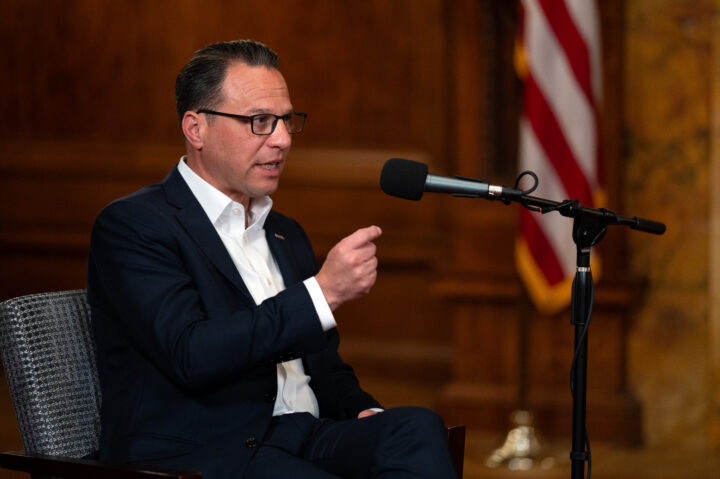
Peter W. Stevenson/The Washington Post via Getty Images
Pennsylvania Gov. Josh Shapiro sits for an interview at the Pennsylvania State Capitol on June 11, 2025.
Pennsylvania Gov. Josh Shapiro warned of the dangers of efforts within the Democratic Party to single out AIPAC, telling Politico in a new interview that painting the pro-Israel group as “toxic” could be seen as silencing Jewish voices in the American political system.
“I think it’s been used cynically by some to try and silence certain voices, to try and say that certain people participating in politics shouldn’t count, or should be viewed in a toxic way,” Shapiro said in the interview, which was released on Tuesday.
Where some Democrats have recently distanced themselves from AIPAC, Shapiro declined to do so.
“Do I agree with every political decision they’ve made, every endorsement they made? Of course not,” said Shapiro. “I think what we have seen is a weaponization of that. And I think that is a danger for our system. When you have people who are advocating for issues that they feel strongly about and they are having their voices silenced, I think that’s a problem in our system.”
Shapiro, a potential 2028 presidential contender, declined to say whether he would accept support from AIPAC, which does not get involved in state or presidential races, nor did he address AIPAC’s tactics or its involvement in any particular race.
He cautioned that efforts to vilify the group have sometimes crossed a line into targeting American Jews’ political advocacy, noting that sometimes Jewish donors who currently or have in the past supported AIPAC are tarred just for being part of the political process.
“I think it does get blurred because now what you are seeing is not ‘AIPAC money,’” said Shapiro, “but you’re getting the Jews who give to that candidate who also support AIPAC. I think it’s very dangerous in our system, if you are trying to silence certain voices based on their race, based on their faith, based on their particular ideology.”
Pennsylvania Gov. Josh Shapiro is warning about the dangers of efforts within the Democratic Party to single out AIPAC.
— Jewish Insider (@jewishinsider) May 26, 2026
“I think it’s been used cynically by some to try and silence certain voices, to try and say that certain people participating in politics shouldn’t count, or… pic.twitter.com/uighmwoMgu
Shapiro, who is one of the most prominent Jewish politicians in the U.S., described a “dramatic spike in antisemitism across this country.” He condemned the Islamophobic attack on a mosque in San Diego last week in which three people were killed while also pointing out that, overall, antisemitism is a much larger problem than other forms of hate.
“There is rising hatred and bigotry targeting people across the board, but it is also undeniable, and no one’s pain is greater or more important than others, but from a data perspective, there has been a dramatic spike in antisemitism that is unmatched elsewhere, and that’s a problem,” said Shapiro.
Asked whether he plans to run for president, Shapiro declined to answer. But he said his family had to consider whether he should run for reelection this year in Pennsylvania after an arson attack on the governor’s mansion last year on the first night of Passover.
“My family and I spent a bunch of time thinking about running for reelection. It is hard for me as a dad to know that doing this job I love, this job I find great purpose in where I get to help people, puts my kids’ lives at risk,” said Shapiro. “I’m not going to cower. I’m not going to be fearful.”
Republican nominees Lena Epstein and Michael Schostak, who both identify as Jewish, told JI they’re campaigning on fighting antisemitism at the school
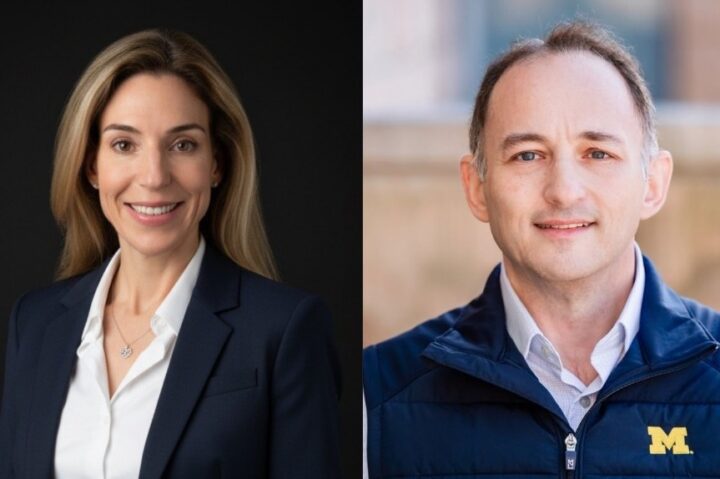
Campaign website
Lena Epstein and Michael Schostak
Michigan’s statewide election for two seats on the University of Michigan Board of Regents — the body that governs the state’s flagship university — has become a surprisingly contentious race in a swing state full of high-profile match-ups.
After Amir Makled, a trial attorney with a history of antisemitic and pro-Hezbollah social media posts, unseated incumbent Regent Jordan Acker at the Democratic Party nominating convention last month, the two Republican candidates running for the board see an opening to pitch themselves to Democrats and Independents.
Acker, who is Jewish, had spoken out against efforts to divest Michigan’s endowment from Israeli companies, and faced antisemitic harassment from pro-Palestinian campus activists, while Makled has promoted efforts to boycott Israel. (Acker and Brown campaigned together during the primary, but Acker did not respond to a request for comment about who he’s backing in the general election.)
Lena Epstein, an oil executive who chaired President Donald Trump’s campaign in Michigan in 2016 before running for regent, told Jewish Insider in a recent interview that reaching disaffected Democrats who are upset about Makled’s place on the ticket is a priority for her.
“There are the individuals that believe that I’ll be a fabulous regent and really great at the job and able to effect positive change over these next eight years, and for the long term,” said Epstein, who also ran for the board in 2022 and narrowly lost. “Then there’s the other folks that simply don’t want the other gentleman who is nominated to win, and we accept support from Democrats, independents and Republicans.”
Epstein has an MBA from Michigan, as does the other Republican on the ticket, Michael Schostak, the treasurer of Bloomfield Township, a Detroit suburb. Schostak told JI in an interview that since Makled’s nomination, Michigan alumni around the country who are now closely following the race have been calling him.
“They care about their alma mater and they want to make sure that it stays in good hands, and they’re very concerned about what they’ve seen from Amir Makled,” Schostak said. “I’m not running to be the Jewish candidate. I am Jewish, but that’s not why I’m running. I got into this race eight months ago because I cared about affordability of tuition and college costs.”
The two regents who are elected this November to serve on the eight-person board will join an ongoing search for a new university president following a tumultuous few years for Michigan, one of the top public universities in the country — and the school with the fifth-largest Jewish student population, according to Hillel International.
Both Schostak and Epstein identify as Jewish, though Epstein has at times described herself as a messianic Jew, meaning she believes in the divinity of Jesus. For that reason, the mainstream Jewish community considers messianic Jews to be Christian. She recently told the Forward that she is “100% Jewish,” and that her family belongs to a Reform synagogue in Bloomfield Hills.
Both Republicans say fighting antisemitism is a priority for them if elected to the board of regents.
“Antisemitism should never be minimized, normalized or explained away. Jewish students deserve the same protection and dignity as every other student on campus,” Epstein said. “One of the most troubling failures that we’ve seen at the University of Michigan is the hesitation to call antisemitism what it is.”
Schostak recalled conversations with Jewish students who were afraid to wear Star of David necklaces on campus or scared to walk to class during the anti-Israel encampments two years ago.
“I felt terrible, just sick to my stomach for the Jewish students on campus who had to live through that, and the pro-Israel students. There are a lot of pro-Israel students who are not Jewish,” said Schostak. “We’ve got to acknowledge them, who felt like they couldn’t express themselves because they were going to be harassed or followed or shouted at, or whatever, and the fact that all this was going on, the encampments, and people felt like it wasn’t safe.”
Both candidates said the university did a poor job of handling the firestorm of campus events in the 2023-2024 school year after Hamas’ Oct. 7 attacks and called for more clarity about rules surrounding campus protests.
“When it comes to protests on campus at U of M, peaceful protest has been a very long-standing tradition at this fine university,” said Epstein. “Students have every right to speak out. Students do not have the right to make other students feel unsafe walking to class. A university simply can’t function if rules are enforced selectively, depending on politics.”
Schostak and Epstein said they will emphasize support for free speech across all viewpoints at a school where they think intellectual diversity is lacking. But the response to anti-Israel protests, even hateful ones, cannot be shutting all protests down, according to Shostak.
“Free speech to me is very important, and they have the right to protest and make noise, as long as they don’t disrupt the university’s business,” said Schostak. “What I would tell the Jewish and pro-Israel students is, ‘Look, you need to be just as vocal in your beliefs and standing up for Israel and standing up for the Jewish people as they are standing up for the Palestinian people.’”
After a Michigan professor delivered an anti-Israel speech at commencement this month, Epstein and Schostak released a joint statement questioning the choice of the professor, Derek Peterson, as a speaker and criticizing his rhetoric. “There is a time and a place for emotionally charged debate. A commencement ceremony is not it,” they wrote.
Makled and Paul Brown, the other Democratic nominee who was first elected to the board of regents in 2018, have both criticized President Donald Trump’s approach to higher education, and pledged to push back on funding cuts where possible. Schostak expressed concern about the cuts as well, while noting that the regents should encourage the university to work to not get additional funding cut off.
“I am concerned,” Schostak said. “The university is going to have to tap dance around that to make sure that they abide by all the rules to make sure that our research funding isn’t cut off or any of our other funding isn’t cut off.”
Epstein has declined to say much on the issue. When asked about Trump’s adversarial approach to universities, she pointed out that Michigan is a public institution.
“We do accept public funds, and we do work in concert with the government based on those financial dynamics,” she said. “With that said, I believe that the University of Michigan should be an autonomous organization.”
Both candidates understand that to the extent to which Michigan voters are even paying attention to the race, most will not make a decision based on issues related to Israel or campus protests. So their focus remains on issues like college affordability and job opportunities.
“[Voters] care about sending their kids to college, being able to afford to pay for it, having their kids stay here when they graduate, so that we can provide an environment where they can thrive,” said Schostak. “That’s what they care about, and those are the issues that I’m going to be speaking to.”
DNC Chair Ken Martin added his condemnation of Galindo: ‘This kind of vile, antisemitic rhetoric has no place in the Democratic Party’

U.S. House of Representatives
Reps. Josh Gottheimer (D-NJ) and Jared Moskowitz (D-FL)
Reps. Josh Gottheimer (D-NJ) and Jared Moskowitz (D-FL) said on Wednesday that they would seek to expel Maureen Galindo, a Democrat running for Congress in Texas who has expressed extreme antisemitic views, if she is elected.
Their comments mark an escalation among Democrats condemning Galindo since comments by the House candidate, in which she called for the interment and castration of Zionists, gained widespread attention.
“If for some reason, Maureen Galindo wins the Congressional election in TX-35, as soon as she is sworn in, we will force a vote to expel her every single day we are here,” Gottheimer and Moskowitz said in a joint statement. “Maureen’s insane, antisemitic views — including putting Americans in concentration camps — have no place in our Party or country.”
Moskowitz added in a post on X about Galindo, “My grandmother was part of the Kindertransport out of Berlin. Her parents were killed in Auschwitz. My kids are never going to ‘the camps.’”
He made a similar comment, and expounded on the situation, during a House hearing earlier in the day, describing Galindo’s comments as a logical escalation of attacks on Jewish and pro-Israel Americans and U.S. support for Israel, which have become increasingly common in Democratic politics.
“We’ve gone from, ‘Oh there’s Americans who donate to elected officials that are AIPAC,’ and then it’s ‘ok, Netanyahu,’ and then it’s ‘ok, maybe we shouldn’t support foreign money,’ and ‘ok, now we’re going to call all these people Zionists.’ And now we’re at concentration camps,” Moskowitz said. “By the way, we got to concentration camps much faster than I thought we would, but here we are. And it’s real scary.”
“People are scared. People don’t want to show their Jewish stars anymore, they’re moving into neighborhoods just to be around other Jews because they’re concerned,” he continued.
Galindo came in first place in the March 3 primary race, leading sheriff’s deputy Johnny Garcia, despite Garcia being the party-backed candidate. Since the primary, a host of national Democratic groups, including the Democratic Congressional Campaign Committee and Democratic Majority for Israel, have been boosting Garcia ahead of a runoff race.
But Lead Left PAC, a secretive GOP-linked super PAC, has been airing ads backing Galindo with close to $1 million in outside spending ahead of next week’s runoff.
Galindo had previously made numerous antisemitic comments, including claiming that Jews “own Hollywood” and “worship at the synagogue of Satan,” but her comments about placing Zionists into concentration camps gained greater attention.
All Jewish Democratic House lawmakers joined in another joint statement on Wednesday to condemn the “vile, bigoted, and antisemitic views spewed by the desperate and unhinged Maureen Galindo,” which they said “[merit] no safe harbor anywhere in American politics, and for sure not in the Democratic Party.” In a first, the group expressed their joint support for Garcia.
They also said they were “appalled” by reports of a GOP-linked super PAC supporting Galindo, “shamefully embracing and elevating her disgusting antisemitic views and ideas.”
Democratic National Committee Chairman Ken Martin also condemned Galindo.
“This kind of vile, antisemitic rhetoric has no place in the Democratic Party,” Martin said. “No matter someone’s political party, we must confront and stand up to hate wherever and whenever it appears.”
A group of Texas Democratic Party leaders, including the state party chair, also condemned Galindo on Wednesday.
“Antisemitism and hateful rhetoric have no place in the Democratic Party or in our communities. Maureen Galindo’s comments do not reflect our values as Democrats or Texans,” their statement reads. “The Texas Democratic Party and its county parties remain committed to standing against antisemitism in all its forms.”
The Center for American Progress hosted leading Democratic officials and featured several panels on foreign policy. Israel was barely discussed

Screenshot
Sen. Ruben Gallego (D-AZ) speaks at the Center for American Progress’ IDEAS Conference, May 19, 2026
On Tuesday, a gilded ballroom inside a Washington hotel served as a soapbox for more than a dozen Democrats — many with national ambitions — to pitch their vision for America to a room full of liberal donors, staffers and funders.
The setting was the Center for American Progress’ IDEAS Conference, a convening put on by the Democratic think tank that pledged to bring together “the broad center-left’s leading thinkers and doers” to offer ideas on a range of policy topics.
American foreign policy was, naturally, one of those topics. In the two sessions on national security, each of which devoted significant discussion to the Middle East, one topic was notably absent: Israel.
Democratic support for Israel has shifted dramatically since the Oct. 7 attacks and the resulting war in Gaza. Over the last few months, particularly since the war in Iran began, that policy shift has quickly solidified. Forty out of 47 Senate Democrats voted last month to block some arms sales to Israel, and the progressive Israel advocacy group J Street has urged Democrats to move toward ending all U.S. aid to Israel.
Democrats’ attitude toward the U.S.-Israel relationship is in flux, and is almost certain to be a major point of contention in the 2028 primary campaign. But if CAP’s conference is any indication, many mainstream Democrats — the ones who are not pushing firebrand far-left views on Israel — would rather avoid the topic if they are not forced to discuss it.
Certainly, it made clear that they no longer see Israel as the kind of ally that will earn applause in the same way that Taiwan and Ukraine garner cheers from rank-and-file Democrats.
Sen. Ruben Gallego (D-AZ) kicked off the gathering with an address billed as “National Security Ideas for the Future.” He cited his own experiences as a member of the Marine Corps who served in Iraq, arguing that the war in Iran is misguided and harming Americans.
”I’m here today because right now our country is in danger. Will this president continue to drag America into another endless Middle East war?” Gallego said. “This is a war that wasn’t planned, wasn’t authorized and is not making us safer. [Donald] Trump got his war, and working families got stuck with the bill every day.”
Gallego made clear that his opposition to the Iran war does not mean he thinks America should step off the world stage. The U.S., he argued, should still come to the defense of Taiwan and Ukraine.
“I see on Twitter all the time, ‘Well, if you’re against the war in Iran, why do you support the war in Ukraine?’” Gallego said. “Let me be clear: The Ukrainian people are fighting for their independence, and it’s in our strategic interest to make sure that they win, that Europe wins and that we all win and defeat Russia.”
He extended the argument to Taiwan, calling for Washington to continue arms sales to the country and to help it grow its self-defense capabilities.
“We have allies that have fought with us and will continue to fight with us, but not if we abandon Taiwan, Ukraine and NATO,” said Gallego. He did not mention Israel in his speech.
Later in the day, a conversation on the future of American policy featured Sen. Andy Kim (D-NJ), former Secretary of State Tony Blinken and former U.S. Ambassador to the United Nations Linda Thomas-Greenfield. Like Gallego, they slammed Trump’s campaign against Iran as illegal.
“This is not a situation where we should normalize the idea that a president can start a war on their own, and then it’s up to Congress later to disapprove of it, right?” said Kim. “Just from the outset, this is wrong. This is an illegal, unconstitutional war.”
The only mention of Israel in their 30-minute conversation was a brief aside from Blinken, as part of a broader point he was making about Iranian missile attacks on the United Arab Emirates. All three speakers doubled down on U.S. support for Ukraine and for Taiwan, particularly in the face of Trump’s meeting with Chinese President Xi Jinping last week.
At the end of the day, CAP President Neera Tanden said she hopes attendees walk away with a sense of where the Democratic Party is going. “To win the future we have to tell people where to go, what the path is, what the path is forward,” Tanden said.
Other speakers included California Gov. Gavin Newsom, Maryland Gov. Wes Moore, Virginia Gov. Abigail Spanberger, House Minority Leader Hakeem Jeffries (D-NY), Senate Minority Leader Chuck Schumer (D-NY), Cory Booker (D-NJ) and Elizabeth Warren (D-MA).
There hasn’t been much incentive for party groups to set red lines against radicals looking to disrupt the party in lower-profile races
Spencer Platt/Getty Images
Members of the Democratic Socialists of America May 01, 2019 in New York City.
As the Democratic Party lurches left in the run-up to the midterms — and amid the rise of high-profile, far-left Senate candidates such as Graham Platner in Maine and Abdul El-Sayed in Michigan — candidates affiliated with the Democratic Socialists of America (DSA) have gradually been making inroads and positioning themselves to win nominations in several key House races.
This has happened without much protest or opposition from Democratic Party leadership. And given that the urban districts where the DSA-endorsed candidates have the most support are so heavily Democratic, there hasn’t been much incentive for party groups to set red lines against radicals looking to disrupt the party in these lower-profile races.
One of the most insidious aspects of the advocacy of many DSA chapters is the demand that its endorsees cut ties with any Jewish group that recognizes the State of Israel. Some chapters celebrated or justified Hamas’ Oct. 7 terror attacks against Israel.
“They are trying to do in America what [the Boycott, Divestment and Sanctions movement] seems to do internationally, which is to make being Jewish unacceptable in polite society,” Ron Halber, the CEO of the Jewish Community Relations Council of Greater Washington, recently said on a webinar of D.C-area Jewish leaders.
But despite the group’s radical views, DSA-endorsed candidates have a real shot at prevailing in several upcoming Democratic primaries in major cities.
Pennsylvania state Rep. Chris Rabb, one of several Democrats looking to succeed retiring Rep. Dwight Evans (D-PA) in his Philadelphia district, has the notoriety of recirculating an Instagram post blaming the Bondi Beach terrorist attack that killed 14 Jewish Australians on “Zionists,” insinuating the terror attack was a false flag. (His campaign later blamed a former staffer for reposting the item.)
Rabb, who has been endorsed by many of the leading anti-Israel progressives in Congress, also recently campaigned with antisemitic streamer Hasan Piker. His far-left views and virulent criticism of Israel has alarmed Gov. Josh Shapiro, according to Axios, and the popular Pennsylvania governor has worked behind the scenes to oppose his campaign.
Democratic sources familiar with the primary, however, suggest that any behind-the-scenes efforts aren’t having much effect in derailing the DSA candidate’s campaign. Rabb’s two leading opponents — surgeon Ala Stanford and state Sen. Sharif Street — are both mainstream Democrats and may potentially split the more-moderate vote. The primary is on Tuesday.
Next month, a similar clash between the Democratic mainstream and socialist wing of the party is taking place in New York City, where state Assemblymember Claire Valdez, who is backed by Mayor Zohran Mamdani and New York’s DSA chapter, is squaring off against Brooklyn Borough President Antonio Reynoso, the progressive establishment’s favorite.
The race, in one of the most left-wing districts in the city, which covers part of Brooklyn and Queens, will mark a major test of Mamdani’s political capital — and whether the DSA brand is more compelling to progressives than the endorsement of Reynoso by retiring liberal stalwart Rep. Nydia Velazquez (D-NY).
Reynoso, in an interview with The New York Editorial Board, proclaimed himself the underdog in the race despite boasting endorsements from organized labor, the outgoing congresswoman, state Attorney General Letitia James and the left-wing Working Families Party line. “Zohran Mamdani is a celebrity-status, inspiring figure at the levels of AOC and Bernie Sanders. He is a movement and is deeply important,” Reynoso said.
Meanwhile, in Denver, another DSA hotbed, Rep. Diane DeGette (D-CO) faces a primary threat from DSA-backed challenger Melat Kiros, a 28-year-old attorney. Kiros has made criticism of Israel a centerpiece of her campaign, accusing Israel of genocide, and she supports an arms embargo against the Jewish state. Kiros dominated DeGette at a districtwide party convention filled with activists in March, and the congresswoman has been airing ads touting her progressive record, in anticipation of a competitive June primary.
And in St. Louis, the local DSA chapter is again backing former Rep. Cori Bush (D-MO), who was one of the most extreme anti-Israel lawmakers when serving in Congress, in her attempt at a comeback against Rep. Wesley Bell (D-MO).
(The other major contest featuring a DSA-endorsed contender is next month’s D.C. mayoral primary, where Jewish groups have been alarmed by Janeese Lewis George’s rhetoric around Israel and antisemitism.)
All told, there could be at least four Democratic Socialists of America-endorsed lawmakers in the next Congress, with limited party efforts to marginalize the extremists from within. It underscores how fast the Democratic Party is evolving, and how quickly the guardrails that kept the party centered — and largely free of antisemitism — are falling out of place.
JDCA’s top activists made clear this week that a major concern is making sure pro-Israel Jews continue to be welcome in the party
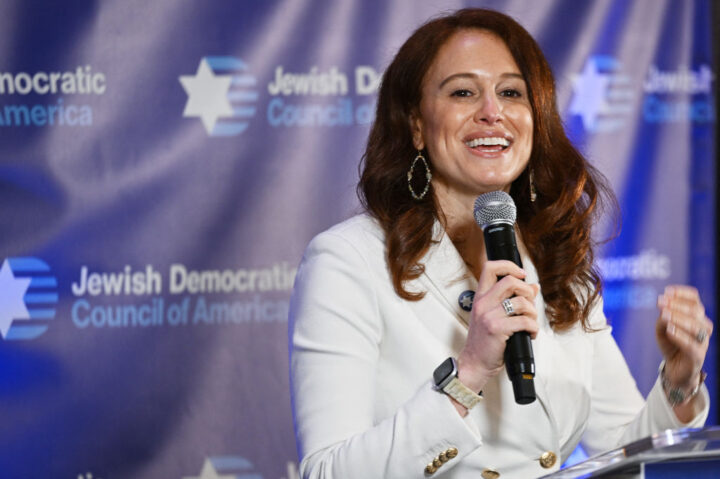
MANDEL NGAN/AFP via Getty Images
Jewish Democratic Council of America CEO Halie Soifer in Washington on May 24, 2023.
When a group of Jewish Democratic activists and donors convened in Washington this week for the annual leadership summit of the Jewish Democratic Council of America, the message seemed to be one of defiance: defiance against President Donald Trump, to be sure, but also a defiant attitude pushing back against some of the recent shifts within the party.
JDCA’s primary objective is to elect Democrats. But as more Democrats have taken positions critical of or outright hostile to Israel, JDCA’s top activists made clear this week that another major concern is making sure pro-Israel Jews continue to be welcome in the party.
“We are fighting to ensure that the views and values of Jewish Americans continue to find their political home in the Democratic Party in Michigan and beyond, and we have work to do,” Halie Soifer, the group’s CEO, said on Tuesday night. She noted that the JDCA hopes to help defeat Michigan Senate candidate Abdul El-Sayed, a far-left candidate who appears to be rising in the polls.
“It’s clear there’s one candidate whose views are antithetical to ours, and we want to ensure he’s defeated,” said Soifer, though she did not name El-Sayed directly. JDCA has not endorsed either of his opponents, state Sen. Mallory McMorrow or Rep. Haley Stevens (D-MI).
“We at JDCA only support Democrats, but we do not support them all,” Soifer told the summit. “We understand it’s not just about electing Democrats. It’s about electing Democrats who align with us, and this includes efforts to ensure that candidates who have espoused anti-Israel and/or antisemitic views are defeated before November.”
Over the two-day gathering, a parade of high-profile speakers from Democratic leadership — Senate Minority Leader Chuck Schumer (D-NY) and House Minority Leader Hakeem Jeffries (D-NY), along with Reps. Nancy Pelosi (D-CA) and Steny Hoyer (D-MD), respectively the former House speaker and majority leader — addressed the convening. Their appearances seemed designed to affirm that Democrats remain pro-Israel and committed to fighting antisemitism.
“We have to decisively confront antisemitism from wherever it comes from,” said Jeffries. “I will always hold firm in my support for the State of Israel as a Jewish and democratic state and eternal homeland for the Jewish people.”
Schumer did not specifically discuss Israel but raised concerns about the increasing use of the word “Zionist” as a slur.
“I’ve long said we must fight antisemitism wherever and whenever it appears, even if it’s in our own party. I’ll continue to do so,” said Schumer. “Today, antisemitism takes all different forms: Holocaust denialism, conspiratorial delusions of Jewish or Zionist control of the world, replacing the word ‘Jewish’ with the word ‘Zionist’ to demonize Jewish communities.”
The outgoing Democratic leaders were not as sanguine, instead offering a note of caution about how the dynamic towards Israel has shifted within the Democratic Party.
“Always, but right now, we really have to work together to make sure that support for Israel is, without question, bipartisan,” Pelosi said. “It doesn’t mean we don’t have our differences of opinion … but it should not weaken the fact that we have bipartisan support. That has always been the tradition, and we must make sure we get through this place where we are, where there may be some doubt in people’s minds as to whether that is a value.”
Pelosi is retiring at the end of this year, as is Hoyer, who was even more blunt: “How many of you have been anxious yourselves about rhetoric heard from some Democratic officials and candidates? We ought to be,” he said.
Speaking to reporters on Wednesday, Sen. Chris Coons (D-DE) said he hoped to prove that Sen. Bernie Sanders (I-VT) does not speak for the party on matters related to Israel, though he noted with worry that Sanders’ attitude — one that is deeply critical of Israel — appears to be on the rise.
“It’s clearer and clearer to me that there is real alarm about a fundamental break between Democrats as a party and Israel as a nation, and I’m going to do everything I can to resist and oppose that break, while criticizing [Benjamin] Netanyahu and his values and decisions,” said Coons. “I’m trying to be an effective and engaged voice with a perspective that you just heard and not have Bernie Sanders be the only senator whose perspective and attitude is heard across the country.”
Forty Senate Democrats voted last month for a Sanders-authored resolution attempting to block some arms sales to Israel, a record high. Coons said he knows those senators still support Israel’s right to exist, but cautioned that being too critical of Netanyahu can give cover to people who are actually anti-Israel.
“I strongly support Israel’s right to exist, its right to be a Jewish homeland and a democracy, and its value to the American people as a partner and ally,” said Coons. “I think we are at risk of some of my colleagues, in trying to send a message to Netanyahu or in opposition to his policies and stances, to be misunderstood as abandoning that commitment.”
Coons said that on the campaign trail, and on recent trips around the country, he hears “profound concern about where’s the Democratic Party going on Israel.” Some Jewish politicians who addressed the JDCA summit expressed a deeper sense of unease and discomfort about their Jewish identity, against the backdrop of rising antisemitism.
Sen. Elissa Slotkin (D-MI), who spoke at a cocktail reception Tuesday evening, talked about how challenging it is to be a Jewish elected official in the current environment.
“It has become deeply, deeply complicated to be a Jew in America,” said Slotkin. “There’s not a single day that goes by for myself representing the state of Michigan that I am not feeling torn.”
Minneapolis Mayor Jacob Frey delivered a jolt of energy to the room with an impassioned speech about his community’s support for immigrants in the face of ICE enforcement activity, which resulted in the killing of two American citizens by ICE agents in his city in January. When a JDCA member asked him for advice on how to respond to others in the Democratic Party who have made anti-Zionism a political litmus test, he expressed concern.
“It has been deeply concerning for me personally, as a proud Jew,” Frey said. “I am a great supporter of the endurance of our American Republic, a big believer that America should continue to exist, and an adamant opponent of Donald Trump. The same thing can apply to Israel.”
Ultimately, though, the gathering was a political pep rally — a chance for Democratic activists and donors to hear from politicians at all levels of government and gin up excitement ahead of this year’s midterm elections. Everyone who addressed the gathering all but guaranteed that Democrats would take back control of the House and Senate.
The conversations seemed meant to ressure Jewish Democrats about both the party’s fortunes for November and its treatment of pro-Israel Jews. One JDCA activist described the group’s work as “grasstops,” which was demonstrated by the appearances from top party leaders.
But the anti-Israel sentiment that has steadily grown within the party over the past three years is not coming from party leaders; it is driven by far-left activists. Whether JDCA has a plan to counter that grassroots energy remains to be seen — and the answer will only come at the ballot box later this year.
The former House majority leader urged American Jews not to abandon the Democratic Party, despite acknowledging many now feel unwelcome

JDCA
Rep. Steny Hoyer (D-MD) at the Jewish Democratic Council of America’s annual leadership summit, May 12, 2026
Rep. Steny Hoyer (D-MD), a pro-Israel stalwart and a former House majority leader, said on Tuesday that Jewish Democrats “ought to be” concerned about the critical way that some of their Democratic colleagues talk about Israel.
“How many of you here tonight have been trying to convince a family member, a friend, a neighbor not to abandon the party that has long been their political home?” Hoyer said in remarks at the Jewish Democratic Council of America’s annual leadership summit, where he was honored with an award marking his upcoming retirement, after 45 years in Congress.
He was introduced by three of his current and former Jewish senior staffers, including Brian Romick, the CEO of Democratic Majority for Israel.
“How many of you have been anxious yourselves about rhetoric heard from some Democratic officials and candidates? We ought to be,” said Hoyer. “I will stand up and say, ‘I do not agree with that.’”
Hoyer, a longtime champion of pro-Israel legislation, used the speech to reiterate his commitment to the Jewish state and explain why he thinks Democrats should support Israel. But even as he acknowledged issues of antisemitism and anti-Israel sentiment in the party, he also pitched American Jews to maintain their historic support for Democrats and urged those who are unhappy with the party’s leftward shift on Israel to allow room for nuance, and to work to reverse it.
He said he disagreed with the 40 Senate Democrats who voted in April against certain arms sales to Israel, but added that he still believed those lawmakers would support the Jewish community. He encouraged JDCA activists to keep calling those senators to push them to change their minds.
“Those same 40 senators will stand up for you all the time. I disagree with them, but the fact of the matter is, keep in mind, it is not day to day. It is long-term commitment that counts. They need to keep hearing from you,” said Hoyer. “They need to keep seeing us fight to keep our party strong and pro-Israel, and consistent with its values. And they need to see our passion and our resolve.”
Reflecting on his 22 visits to Israel over the last five decades, Hoyer called the trips particularly meaningful due to his Baptist faith. Still, he said he could not distill into words the reason for his deep-rooted affection for Israel.
“I really can’t put my finger on why, but I know that’s what I feel. I know that I feel that the Jewish community … for millennia has been the object of scorn, derision, prejudice, hate and violence,” said Hoyer. “At a very early age, I thought that was wrong, and I am so proud that I had the opportunity to not only say it was wrong, but to try and make it right.”
Hoyer described himself as “a champion for Israel,” a title he said made him proud. He insisted he is not alone in that category among Democrats.
“The majority of Democrats still stand, in my view, and will continue to stand with Israel and with the Jewish people,” said Hoyer. “I’m confident we will be able to overcome this moment and defeat Trumpism at the ballot box, while defeating antisemitism and anti-Zionism in our politics.”
In the speech, Hoyer praised American Jews for the leading role they have played in Democratic politics. He insisted that he will make sure they are still welcome even as he leaves office.
“The Democratic Party has long stood for the same values that Jewish tradition teaches: caring for the sick and hungry, ensuring equal opportunity for all, freedom of conscience, freedom of religion, freedom of choice, freedom for workers to organize and justice for all under the rule of law,” said Hoyer.
“For as long as I am in office, and even in retirement,” he continued, “I will stand with you in strong support, strong foundation for our party as the warm and welcoming home for pro-Israel Jewish voters who care deeply about equal rights, justice and opportunity for all Americans.”
Plus, the race to replace Pelosi

Tasos Katopodis/Getty Images
U.S. President Donald Trump waves to the media after walking off of Air Force One at Miami International Airport on April 11, 2026 in Miami, Florida.
Good Tuesday morning.
In today’s Daily Kickoff, we do a deep dive into the race to succeed Rep. Nancy Pelosi, in what has become something of a proxy battle in the war for the identity of the Democratic Party, and report on an effort by Democratic Majority for Israel to boost a Texas congressional candidate whose far-left opponent has trafficked in antisemitic tropes. We talk to Senate Republicans about the possibility of resuming military operations against Iran, and have the scoop on Gerald Steinberg’s decision to step down from the helm of NGO Monitor early next year, and the first interview with his successor, Olga Deutsch. Also in today’s Daily Kickoff: Daniel Septimus, Rom Braslavski and Ben Shapiro.
Today’s Daily Kickoff was curated by JI Executive Editor Melissa Weiss and Israel Editor Tamara Zieve, with assists from Danielle Cohen-Kanik and Marc Rod. Have a tip? Email us here.
What We’re Watching
- Defense Secretary Pete Hegseth and Chairman of the Joint Chiefs of Staff Gen. Dan Caine are both slated to testify this morning at back-to-back House and Senate Appropriations Committee budget hearings. In the afternoon, FBI Director Kash Patel will testify before Senate Appropriations.
- The Anti-Defamation League is holding a Jewish American Heritage Month reception this evening on Capitol Hill.
- Elsewhere in Washington, the Jewish Democratic Council of America is kicking off its annual summit tonight with a reception at the Watergate Hotel. The group will honor Sen. Elissa Slotkin (D-MI) and Rep. Steny Hoyer (D-MD), and will hear from Sens. Jacky Rosen (D-NV) and Mark Kelly (D-AZ) and Reps. Debbie Wasserman Schultz (D-FL), Jason Crow (D-CO), Chris Deluzio (D-PA), Maggie Goodlander (D-NH) and Chrissy Houlahan (D-PA).
- The funeral for former Anti-Defamation League head Abe Foxman, who died on Sunday, will take place this morning at Park Avenue Synagogue.
- In New York City tonight, three of the top candidates in the open congressional race in NY-12 — George Conway and Assemblymembers Alex Bores and Micah Lasher — will participate in a forum at the West Side Institutional Synagogue moderated by Jewish Insider Editor-in-Chief Josh Kraushaar.
- Elsewhere in New York, the American Jewish Committee will present Cardinal Timothy Dolan with the group’s Nostra Aetate at Sixty Award, honoring Dolan’s interfaith efforts on the 60th anniversary of the groundbreaking Vatican declaration.
- Across the Hudson, the New Jersey Globe is hosting a primary debate for the Democrats running in New Jersey’s 7th Congressional District. ER physician and former government official Tina Shah, former Navy pilot Rebecca Bennett and businessmen Brian Varela and Michael Roth will participate in tonight’s debate, which starts at 7 p.m. ET.
- Israeli Eurovision entrant Noam Battan will perform tonight when the contest’s semifinals kick off in Vienna.
What You Should Know
A QUICK WORD WITH JI’S GABBY DEUTCH
Over the last two years, the second semester of the academic year at American universities coincided with crisis and chaos. In 2024, it was anti-Israel encampments overtaking campus quads across the country; last year, it was threats from the Trump administration to slash hundreds of millions of dollars in funding and ban foreign students.
By comparison, the spring of 2026 has been relatively smooth sailing for research universities, even with a bit of hubbub over graduation speakers scrutinized for their stance on Israel and Gaza at a few schools, including the University of Michigan and Georgetown Law.
But it’s not that things have gone back to the pre-Oct. 7, pre-Donald Trump normal. University administrators have just gotten better at managing an ambient sense of friction: Conflict between university leaders and activist faculty and students is still bubbling under the surface, and the threat of funding cuts at the federal level lingers.
According to several university presidents who gathered last week at the Milken Institute Global Conference in Los Angeles, the task before universities is to win back the trust of skeptical Americans.
“The world of higher education, I think, is still in turmoil,” Vanderbilt University Chancellor Daniel Diermeier told Jewish Insider in an interview at the Milken confab. “I think the time when a university does say that’s all overblown and everything is great, that’s over. At least the vast majority of university presidents know that there are challenges, and they want to take them on.”
democratic fault lines
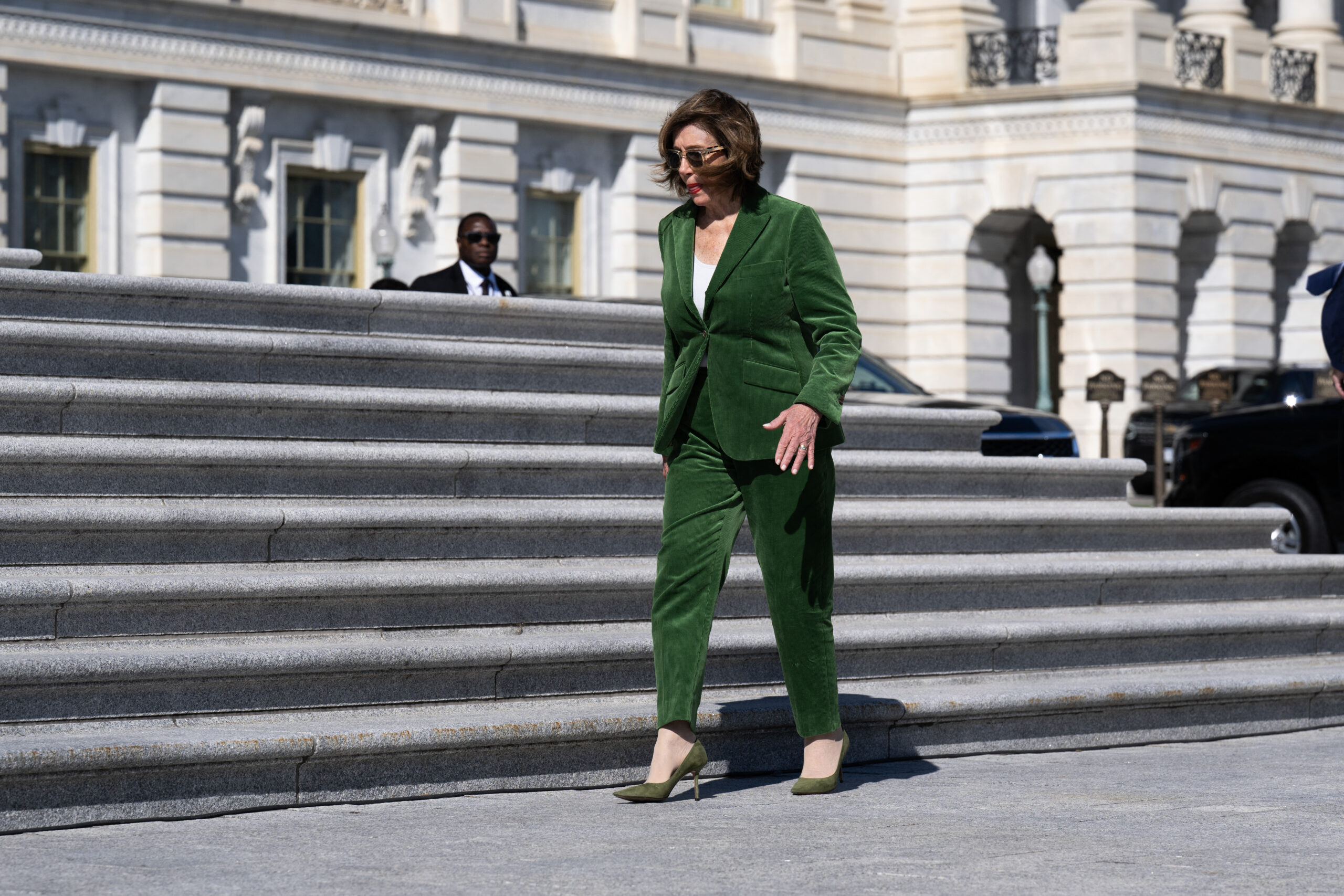
The race to fill the seat of Rep. Nancy Pelosi (D-CA) in California’s 11th Congressional District has become somewhat of a proxy battle in the war for the identity of the Democratic Party, where describing Israel’s war in Gaza as a genocide, supporting arms embargoes to Israel and attacking Zionism as a racist ideology have become much more common since the Oct. 7, 2023, Hamas terrorist attacks and the subsequent war in Gaza, Gabe Stutman reports for Jewish Insider. The outcome of the race will help answer an important question: Can a progressive candidate still win in a deep-blue district like San Francisco without fully embracing the politics of the anti-Zionist left?
State of play: The race is by most accounts a three-way contest between state Sen. Scott Wiener, Connie Chan, a progressive member of the San Francisco Board of Supervisors who has the backing of major labor organizations but has struggled to compete in fundraising, and Saikat Chakrabarti, a wealthy tech entrepreneur who entered progressive politics working for Sen. Bernie Sanders (I-VT) during his 2016 presidential bid and later served as Rep. Alexandria Ocasio-Cortez’s (D-NY) chief of staff.
EXCLUSIVE

Democratic Majority for Israel’s political arm is kicking off an ad campaign on Tuesday to boost Johnny Garcia, a sheriff’s deputy in Bexar County, Texas, in his Democratic runoff election later this month against Maureen Galindo, a San Antonio activist who has faced scrutiny for trafficking in antisemitic tropes, Jewish Insider’s Matthew Kassel reports.
Getting behind Garcia: “Democrats need candidates who can build broad coalitions and win in November,” Brian Romick, the chair of DMFI PAC, told JI. “Johnny Garcia is a coalition builder who supports a strong U.S.-Israel relationship and has been clear in standing against antisemitism. His opponent, on the other hand, proudly embraces vile, antisemitic conspiracies and if she advances could put a Democratic House majority at risk.”
TEHRAN TALKS

With President Donald Trump publicly mulling the resumption of military action against Iran, fault lines are opening up among Senate Republicans over the prospect of a renewed military effort, Jewish Insider’s Marc Rod reports.
State of play: Some Senate Republicans are publicly calling for the U.S. to resume military operations. Others are leaving the prospect of military action on the table without fully ruling out a diplomatic path, while offering varying degrees of skepticism about how realistic a deal actually would be. Sen. Josh Hawley (R-MO) urged Trump to ignore calls from some of his more hawkish colleagues to restart military operations.
Pakistan problems: Senators on both sides of the aisle, including Sens. Lindsey Graham (R-SC), Mark Kelly (D-AZ) and Ted Budd (R-NC), on Monday expressed concerns about a report by CBS News that Pakistan had sheltered multiple Iranian military aircraft at an air force base in the country since shortly after the U.S.-Iran ceasefire in April, raising questions about the country’s neutrality as a mediator, JI’s Marc Rod reports.
PARTY SWITCH

The Israeli financiers, investors and entrepreneurs who attended last week’s Milken Institute Global Conference in Beverly Hills brought an upbeat attitude about Israel’s economy, even two-and-a-half years into near-constant war that began with Hamas’ Oct. 7, 2023, attacks, Jewish Insider’s Gabby Deutch reports.
Exceeded expectations: “When the war began, I think none of us — none of the regulators in Israel, and almost none of the players or the investors in Israel — thought or believed that after two-and-a-half years of war, Israel would show such growth, such resilience,” Seffy Zinger, chair of the Israel Securities Authority, told JI in an interview. “I’m not an investment advisor, but you can see that if you were not in Israel in the past two years, you probably missed out, if Israel was not part of your portfolio.”
SPEAKING OUT
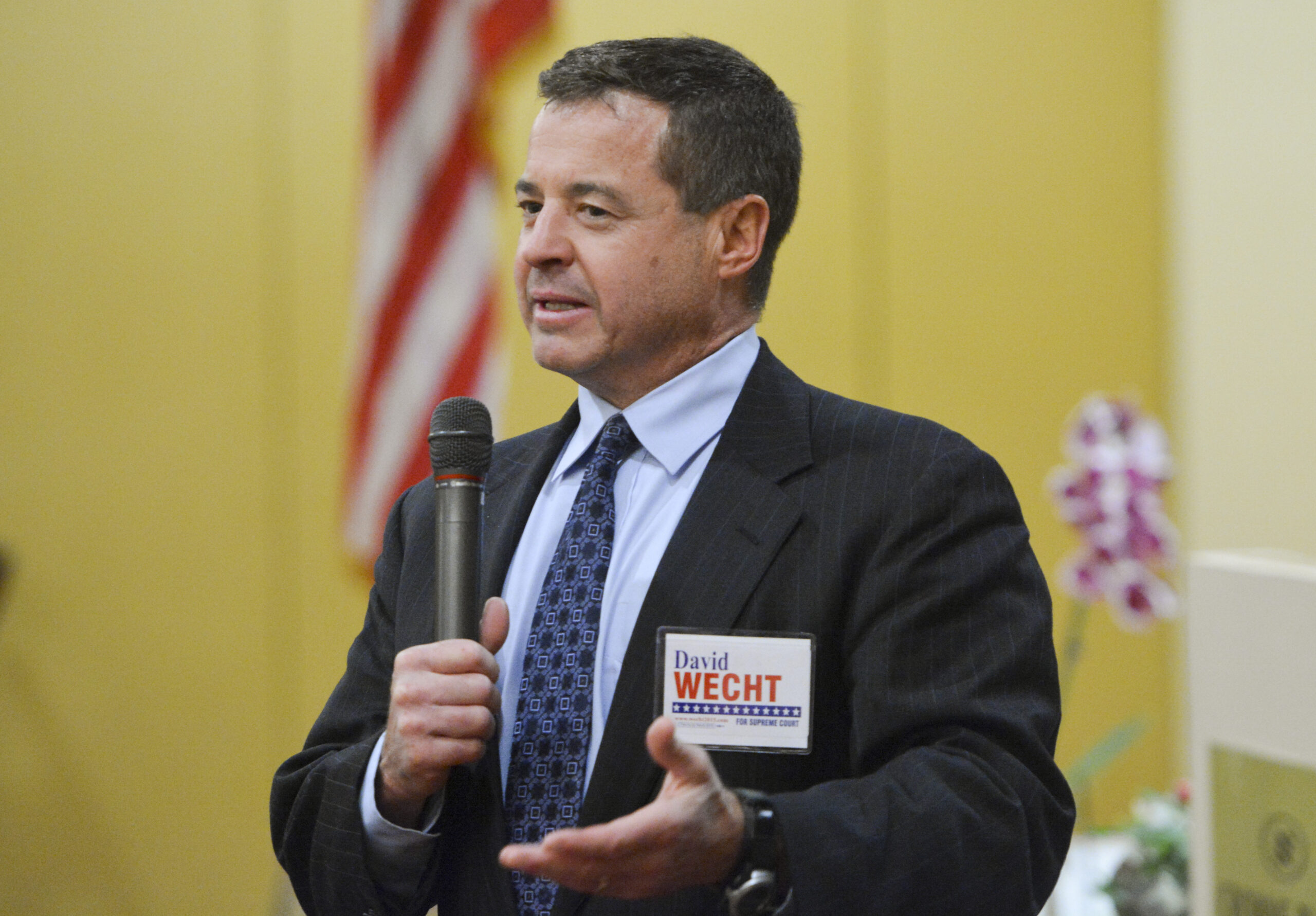
Pennsylvania Supreme Court Justice David Wecht, a former vice-chair of the Pennsylvania Democratic Party, announced Monday he has left the party, citing “anti-Jewish” actions and “acquiescence to Jew-hatred” within the party, including from elected officials, Jewish Insider’s Haley Cohen reports.
What he said: “Acquiescence to Jew-hatred is now disturbingly common among activists, leaders and even many elected officials in the Democratic Party. I can no longer abide this,” wrote Wecht, who was elected as a Democrat in 2015. He added that he is no longer affiliated with any political party. “That terror came from the right,” he wrote. “Jew-hatred has always festered on the fringe of that sector.” But, Wecht continued, “in the quarter century that has passed” since his leadership position, “the Democratic Party has changed.”
scoop
NGO Monitor President Gerald Steinberg is set to step down in January, 25 years after founding the Jerusalem-based watchdog group focused on scrutinizing nonprofit organizations critical of Israel and their funding sources, Jewish Insider’s Tamara Zieve reports. Olga Deutsch, 47, currently NGO Monitor’s vice president, will succeed Steinberg following a months-long transition process at the organization, which since its inception has been closely associated with its founder.
Passing the baton: Steinberg, 74, who resigned from his position as a professor of political science at Bar-Ilan University seven years ago, told JI, “There is a point in one’s life where one has to decide the different priorities. And I’ve done this long enough, and other people can have more energy and can take over.” Deutsch told JI that she hopes to “open the next exciting chapter,” while preserving the “character of the organization that Gerald created, which is serving as pioneers and continuing to flag the new fronts through which the Jewish state and the Jewish people are being attacked or put in danger.”
Worthy Reads
Abe as Mentor: In eJewishPhilanthropy, William Daroff, the CEO of the Conference of Presidents of Major American Jewish Organizations, eulogizes former Anti-Defamation League head Abe Foxman, who died on Sunday. “He combined toughness and warmth in a way few leaders can. He expected seriousness. He spoke with moral clarity. He pushed younger Jewish leaders to think bigger about our responsibility to the Jewish people and the broader democratic society in which we live. He also challenged me, usually in private, though occasionally in the public pages of newspapers. Abe Foxman knew exactly when to make a point, and exactly how to make it land.” [eJP]
Miller Lite: The Atlantic’s Michael Scherer and Nick Miroff spotlight the waning influence of Stephen Miller in the second Trump administration. “White House insiders said that Miller remains a top adviser to the president, that he has a singular relationship to Trump built over the past decade, and that his job is not in jeopardy. Immigration enforcement remains a central theme of the administration and is expected to feature prominently in Trump’s midterm-election messaging. … But Trump, who has previously joked that Miller’s ‘truest feelings’ are so extreme that they should not be aired publicly, has also told others in recent weeks that he understands Miller sometimes goes too far, advisers told us.” [TheAtlantic]
Word on the Street
President Donald Trump said that the ceasefire with Iran was on “life support” following Washington’s rejection of Tehran’s latest response to the U.S. proposal to end the war, Jewish Insider‘s Emily Jacobs reports…
CNN looks at efforts by Iran to recruit operatives in Europe to carry out attacks on Jewish targets…
The United Arab Emirates reportedly carried out strikes on Iran during the active military campaign launched by the U.S. and Israel, targeting among other things an oil refinery on the Lavan Island in the Persian Gulf…
U.S. Ambassador to Israel Mike Huckabee, speaking at the Tel Aviv Conference today,confirmed that Israel sent missile-defense batteries and operating personnel to the UAE during the war with Iran…
The Financial Times spotlights Iran’s “mosquito fleet” of Islamic Revolutionary Guard Corps fast-attack boats that are engaging commercial and military vessels in the Strait of Hormuz…
Rep. Pat Ryan (D-NY) and 17 other Democrats introduced a bill to ban further funding for military operations against Iran…
Trump nominated Cameron Hamilton to head FEMA, a year after Hamilton, who mounted a failed 2024 bid for Congress, was fired as the interim head of the agency…
Kevin Warsh is expected to be confirmed as the next head of the Federal Reserve as early as tomorrow…
Trump invited several business leaders to join him on his trip later this week to China, including Elon Musk, outgoing Apple CEO Tim Cook, BlackRock’s Larry Fink, Meta’s Dina Powell McCormick, Goldman Sachs’ David Solomon, Citi’s Jane Fraser and Blackstone’s Stephen Schwarzman, among others…
Trump announced the nominations of Kari Lake, the former head of the U.S. Agency for Global Media, and Pennsylvania state Sen. Doug Mastriano to be, respectively, the ambassadors to Jamaica and Slovakia…
Former Rep. Billy Long (R-MO), who has been nominated to be U.S. ambassador to Iceland, shared a three-minute clip of a speech by neo-Nazi influencer Nick Fuentes on X on Sunday, Jewish Insider’s Marc Rod reports…
The New York Times spotlights the work of Fuentes’ acolytes to build on the antisemitic conspiracy theorist’s political movement, an effort that coalesced around a conference of influencers and fringe candidates from both parties in a sparsely attended summit; the low turnout was attributed in part to the absence of Fuentes, who distanced himself from the gathering…
Puck News does a deep dive into the recent layoffs at Ben Shapiro’s Daily Wire, finding that the recent decision to cut approximately 20% of the company’s staff was fueled by a combination of internal business disagreements and the “‘vibe shift’ among the MAGA base” that has divided conservatives in recent years…
A judge in Santa Clara County, Calif., ordered a Jewish prosecutor to recuse himself from a case against anti-Israel student protesters at Stanford University after the prosecutor described the incident as antisemitic in campaign literature, Jewish Insider’s Haley Cohen reports…
The Wall Street Journal’s Shira Kaplan reflects on the sanctity of Shabbat following President Donald Trump’s call for the American Jewish community to observe a “national Sabbath” this weekend…
Daniel Septimus is departing Sefaria after 13 years atop the organization, eJewishPhilanthropy’s Jay Deitcher reports…
Australian Jewish musicians testifying on Tuesday before the country’s royal commission into antisemitism in the country detailed the yearslong ostracization they experienced from the arts community for their support for Israel…
Israeli journalist Haviv Rettig Gur breaks down the “obvious propaganda” in a recent New York Times opinion piece by Nicholas Kristof about alleged Israeli abuses of Palestinian prisoners…
Former Israeli hostage Rom Braslavski, who was one of the last hostages to be freed after spending more than 700 days in Hamas captivity, called for the resignation of all members of the current Israeli government, whom he called “miserable cowards”…
Israel’s Civil Commission on October 7 Crimes Against Women and Children released its comprehensive report on sexual violence during the Oct. 7, 2023, Hamas terror attacks and during hostages’ time in captivity…
The Knesset passed, with the support of 93 of the body’s 120 lawmakers, a law establishing a military tribunal to try terrorists who took part in the Oct. 7 attacks…
E.U. member states unanimously voted to sanction Hamas leaders as well as Israeli settlers in a bid to target extremism; the vote came after Hungary, no longer under the leadership of Viktor Orbán, removed its longstanding opposition to the measure…
Israel denied entry to YouTuber Tyler Oliveira, who in recent months has posted videos suggesting that Jews were “invading” communities in New York and New Jersey…
The Israeli soldier photographed desecrating a statue of the Virgin Mary in a southern Lebanese village was sentenced to three weeks in a military prison, while the soldier who took the photo received a sentence of two weeks…
Iran executed a graduate student convicted of spying on behalf of the CIA and Mossad; Erfan Shakourzadeh, who attended the prestigious Iran University of Science and Technology, denied the charges in a letter written before his execution…
Pic of the Day

Ukrainian President Volodymyr Zelensky (left) met in Kyiv earlier today with Palantir CEO Alex Karp.
Birthdays

Acclaimed architect and master planner for the World Trade Center site in Lower Manhattan, he also designed the Jewish Museum in Berlin, Daniel Libeskind turns 80…
Israeli agribusiness entrepreneur and real estate investor, he was chairman and owner of Carmel Agrexco, Gideon Bickel turns 82… Former member of the California state Senate for eight years, following six years as a member of the state Assembly, Lois Wolk turns 80… Chairman of the Israel Paralympic Committee, he served for four years as a member of the Knesset for the Yisrael Beiteinu party, Moshe “Mutz” Matalon turns 73… Former Washington correspondent for McClatchy and then the Miami Herald covering the Pentagon, James Martin Rosen turns 71… SVP and deputy general counsel at Delta Air Lines until 2024, now chief legal officer at private aviation firm Wheels Up, Matthew Knopf turns 70… Professor at Emory University School of Law, he has published over 200 articles on law, religion and Jewish law, Michael Jay Broyde turns 62… Actress known for her role as Lexi Sterling on “Melrose Place,” she also had the lead role in many Lifetime movies, Jamie Michelle Luner turns 55… Founder of strategic communications and consulting firm Hiltzik Strategies, Matthew Hiltzik turns 54… Communications officer in the D.C. office of George Soros’ Open Society Foundations until last year, Jonathan E. Kaplan… First-ever Jewish governor of Colorado, he was a successful serial entrepreneur before entering politics, Jared Polis turns 51… Professor of mathematics at Bar-Ilan University and a scientific advisor at the Y-Data school of data science in Israel, Elena Bunina turns 50… Italian politician, she is the first-ever Jewish mayor of Florence, Sara Funaro turns 50… Israeli pastry chef and parenting counselor, she is married to former Israeli Prime Minister Naftali Bennett, Gilat Ethel Bennett turns 49… Author, blogger and public speaker, Michael Ellsberg turns 49… Senior advisor at Accelerator for America Action, Joshua Cohen… Technology and social media reporter at Bloomberg, Alexandra Sophie Levine… Executive director of government affairs at BridgeBio, Amanda Schechter Malakoff… A government affairs and public policy manager for YouTube, Erica Arbetter… Haifa-born actress and model, she is known for her lead roles in seven films since 2014, Odeya Rush turns 29…
Justice David Wecht: 'Acquiescence to Jew-hatred is now disturbingly common among activists, leaders and even many elected officials in the Democratic Party. I can no longer abide this'
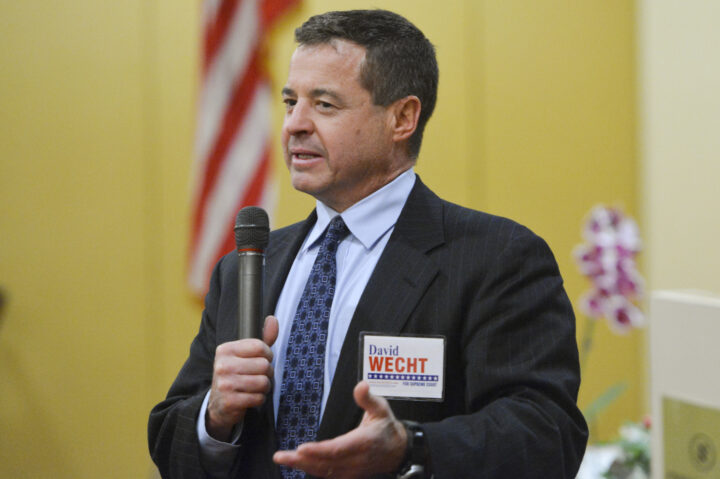
Ben Hasty/MediaNews Group/Reading Eagle via Getty Images
Judicial candidate David Wecht
Pennsylvania Supreme Court Justice David Wecht announced Monday he has left the Democratic party, citing “anti-Jewish” actions and “acquiescence to Jew-hatred” within the party, including from elected officials.
“Acquiescence to Jew-hatred is now disturbingly common among activists, leaders and even many elected officials in the Democratic Party. I can no longer abide this,” wrote Wecht, who was elected as a Democrat in 2015. He added that he is no longer affiliated with any political party.
A former vice-chair of the Pennsylvania Democratic Party, Wecht wrote that he and his wife were married at Pittsburgh’s Tree of Life Congregation, the site of the 2018 synagogue shooting. “That terror came from the right,” he wrote. “Jew-hatred has always festered on the fringe of that sector.”
But, Wecht continued, “in the quarter century that has passed” since his leadership position, “the Democratic Party has changed.”
“Nazi tattoos, jihadist chants, intimidation and attacks at synagogues, and other hateful anti-Jewish invective and actions are minimized, ignored, and even coddled,” he wrote.
Israeli Ambassador to the U.S. Yechiel Leiter, also speaking at the event, highlighted college campuses as an epicenter of anti-Jewish hate

Matthew Shea
Rep. Don Bacon (R-NE) speaks at Israel Advocacy Day on Capitol Hill on May 5, 2026.
Rep. Don Bacon (R-NE), a co-chair of the House Antisemitism Task Force, warned on Tuesday that anti-Israel sentiment has moved from the political fringes to a “dominant” position within the Democratic Party and warned the same could happen to his own party.
“My colleagues across the aisle on the Democrat side, what I see right now is a very anti-Israel dominance on the Democrat side and that scares me because it used to be bipartisan,” Bacon said. “I got a lot of friends on the Democrat side that are pro-Israel, but right now the anti-Israel tone is dominant.”
“I see it in my primary back in Nebraska right now, where there’s two Democrats vying for the nomination and one is attacking the other for being pro-Israel,” said Bacon, who is retiring at the end of his term. “I don’t want to let that happen on my side of the aisle, and I’ve seen it grow on our side of the aisle.”
Speaking at a packed auditorium in the U.S. Capitol for Israel Advocacy Day, an event organized by pro-Israel evangelical Christian groups and featuring a lineup of largely conservative speakers, Bacon warned that “all parties are grappling” with antisemitism. The event brought more than 300 rabbis and pastors to Capitol Hill to advocate for support for Israel, combating antisemitism and supporting protections for Jewish and faith-based communities.
Bacon, who has also served on the U.S. Holocaust Memorial Council, noted that this sentiment is being fueled by social media misinformation, including claims that lawmakers support Israel for financial rather than moral reasons — a narrative he dismissed by citing the “win-win” nature of the partnership, particularly in military intelligence and technology like the F-35 fighter jet program.
“There’s a lot of misinformation out there,” Bacon said. “I see all the time on social media that ‘Israel is paying me to do this.’ No, these are U.S. citizens who love Israel and who hate antisemitism. And it’s important for us to know that U.S. citizens are doing this.”
“We are blessed. I mean, we provided a lot of these weapons to Israel and they make them better. A lot of our missiles they [Israelis] perfect it. They tell us on the F-35 it can be used better, because they have been using them in combat a lot longer than we have been,” Bacon continued. “We gain intelligence from Israel. It’s also a win-win when it comes to economics. We both gain from this relationship. And so I think it’s important to tell that to our neighbors in our circles and defend it. I do not retreat from it at all.”
Also speaking at the event, Israel’s ambassador to the U.S., Yechiel Leiter, similarly noted the growing threat of antisemitism. “Antisemitism has tested America,” he said, acknowledging that it has “exposed the degree to which America’s institutions, notably higher learning institutions, have been poisoned by radical ideas.”
“The Muslim Brotherhood has strategically manipulated language to deceive the West by redefining Zionism as the epitome of evil, and by disconnecting the Holy Land from scripture. This radical Islamic group attempts to drive a wedge between us — Jews and Christians — and erode Western civilization,” Leiter said. “Across [college] campuses, spineless administrators sign multi-million dollar contracts with Qatar, which exports this Muslim Brotherhood ideology.”
Leiter also said that antisemitism has been promoted by extremist podcasters, without specifying individuals in particular.
“Libels of genocide and starvation proliferate, and then antisemitism spreads like contagion and it kills in the name of goodness and liberation,” said Leiter. “This fiction about Jews as foreign occupiers extends to others. Particular podcasters have pontificated that the people of the Bible are not the people of the modern State of Israel today.”
Far-right podcaster Tucker Carlson made that argument in a heated interview with U.S. Ambassador to Israel Mike Huckabee in February, drawing condemnation from Huckabee and others.
“Zionism is moral and just, and we must start carrying ourselves like it, unapologetically, unequivocally,” Leiter continued. “We shouldn’t have to thank people for acknowledging the right of Israel to defend herself or the right of Israel to exist.”
“Claims that Jews are not indigenous to the land [of Israel] is what legitimizes” Hamas’ Oct. 7 attacks, he said.
Beyond the ideological battle in the West, the ambassador framed the current conflict in Iran as a pivotal struggle for the future of the region, emphasizing that it is a fight for “moderation.”
“A healthy battle within Islam has taken place between those who seek to accept Judeo-Christian civilization and those who continue to seek to reject it and eradicate it. The war against Iran is part of a broader struggle for moderation in the Middle East and the Muslim world, and I can tell you with confidence it is happening,” Leiter said.
In an interview with Jewish Insider, Emanuel outlines his views amid changing winds in a Democratic Party increasingly antagonistic to the pro-Israel perspective that had long been central to his identity
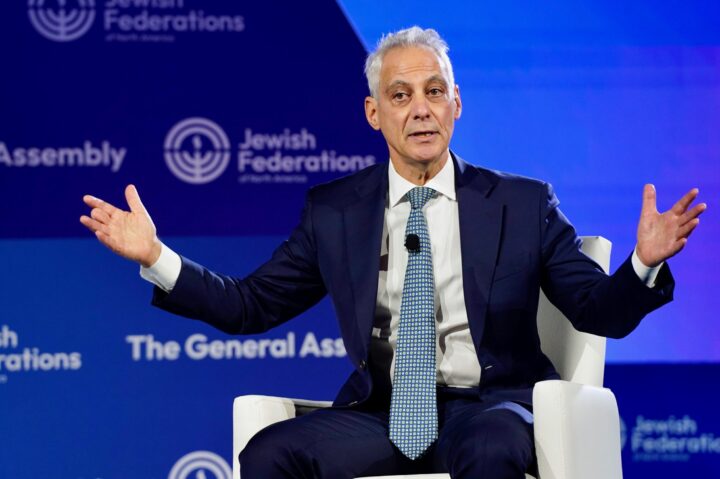
Jewish Federations of North America
Rahm Emanuel speaks at the Jewish Federations of North America's 2025 General Assembly opening plenary on Nov. 16, 2025.
Last November, Rahm Emanuel, the tough-talking Democratic operative and prospective presidential candidate, took the stage of the Jewish Federations of North America’s annual conference in Washington to deliver a blunt word of warning about Israel’s declining reputation in the United States and around the globe.
“I don’t mean to be the party pooper, but look, this is not going to be helpful if we’re not going to be honest with each other,” he said on an opening panel, urging the crowd to reckon with a marked downturn in support for the Jewish state over its war in Gaza, particularly among younger voters. “Israel is extremely unpopular.”
Emanuel, a veteran Jewish politician and party official who had recently concluded a tour as U.S. ambassador to Japan in the Biden administration, acknowledged his message might not ingratiate him to the thousands of Jewish communal leaders in the audience who were no doubt deeply familiar with the issue he was highlighting.
“This may be the last time I’m asked to speak to you. I get it,” he said with a hint of indifference. “But we have to be honest about the task we have” for those “who believe that there is something special” to the U.S.-Israel relationship. “We have our work cut out, and it’s not here to get applause,” he told the crowd.
In hindsight, Emanuel’s frankly worded comments marked something of a turning point in his approach to Israel and the Jewish community, foreshadowing more recent remarks in which he has voiced harsh criticism of the country’s military tactics in the wake of Hamas’ Oct. 7 terror attacks and championed new policy proposals against American military aid to Israel.
Yet even as he builds a profile as a potential candidate willing to tell the Democratic Party hard truths and challenge orthodoxy on a range of issues from trans rights to child social media bans to age limits for politicians, Emanuel, 66, was reticent in exploring his views on Israel in more depth during an interview with Jewish Insider, which he had resisted for nearly a month.
“What I said couldn’t have been clearer,” he told JI last Thursday, referring to his recent comments on “Real Time With Bill Maher” calling for an end to U.S. military aid to Israel that raised eyebrows in the Jewish community. “There will no longer be U.S. taxpayer subsidies for the purchase of U.S. military equipment. Israel will be like every other ally. They can buy what they want, and they have to live within the restrictions.”
“You can decide to slice it, dice it, but that’s what it is,” he said.
While U.S. military funding to Israel has increasingly faced pushback in the Democratic Party, particularly on the far left, Emanuel’s argument that Israel no longer needs the sort of special treatment that he helped promote in the Obama White House has been striking to watch precisely because he has long been a staunch defender of the Jewish state and its founding ideals.
Emanuel, whose middle name is Israel and who speaks fluent Hebrew, holds a uniquely personal connection to the Jewish state. His late father, an Israeli immigrant born in Jerusalem, served in the Irgun, the Zionist paramilitary force that fought for Israeli independence. As a child, he spent summers in Israel and later volunteered as a civilian assistant to the Israel Defense Forces during the Gulf War. His son celebrated his bar mitzvah in Israel.

Emanuel, a moderate former congressman and mayor of Chicago, pointed out in the interview that Israeli Prime Minister Benjamin Netanyahu had himself proposed winding down U.S. military aid over the next 10 years, saying in January that the country had “come of age” and “developed incredible capacity” to continue on its own.
Emanuel, however, said that he would instead suspend the assistance “immediately,” characterizing his position as “part of an overall policy” tied to Israel’s strategically secure position in the region as well as its political isolation on the world stage — both of which he argued have never been greater than now.
“If you or anybody thinks you’re going to continue the American taxpayers paying for this, good luck passing that in the U.S. Congress. You’re asking a president of the United States to spend X amount of political capital to do something that even Israel’s own prime minister acknowledged isn’t going to happen,” he said, referring to continued U.S. military aid.
The Jewish state “has made a decision to only lean on its defense and not lean on its diplomatic front,” he told JI, adding that Netanyahu had chosen to “walk away” from pursuing a two-state solution, support for which has declined in Israel since the Oct. 7 attacks and ensuing war in Gaza.
In his view, the U.S. should continue to stand with Israel only if its efforts in the region help contribute to peace. “Every risk you will take, the State of Israel takes, for peace, then America will stand by you,” he said. “We understand there’s risks. We have stood by Israel through thick and thin.”
“But,” he said, “when one friend in that relationship abandoned something that’s contrary to our interests and contrary, in my view, also to Israel’s interests,” it is reasonable, he suggested, to rethink that alliance.
“There will no longer be U.S. taxpayer subsidies for the purchase of U.S. military equipment. Israel will be like every other ally. They can buy what they want, and they have to live within the restrictions,” Emanuel said of his vision of the future of military aid to Israel.
His comments indicate that he is now embracing a fundamental reassessment of the U.S.-Israel alliance, abandoning even the pretense of tough love that once characterized his approach, among other moderate voices in the Democratic Party.
For example, Pennsylvania Gov. Josh Shapiro, a centrist Jewish Democrat who is also weighing a presidential campaign in 2028, recently reiterated his support for continued U.S. aid to Israel but said that it should be seen as “leverage” to exert pressure over the country’s use of American-made weapons.
“Rahm’s move tells you a lot about the politics of the Democratic Party on Israel now. And that is a sign of how Israel’s image has changed in the country,” said Dennis Ross, a former U.S. diplomat and Middle East negotiator who overlapped with Emanuel in the Obama administration.
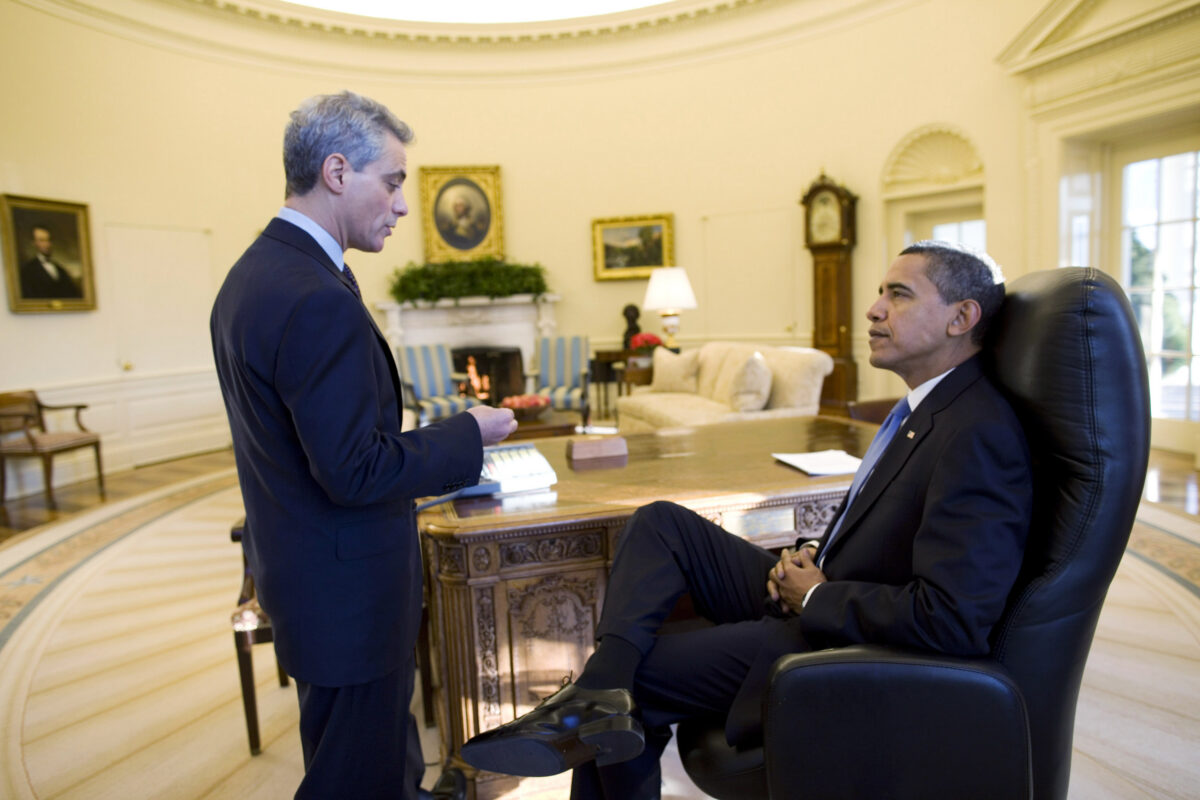
Despite his strong attachment to Israel, Emanuel is reckoning with a changing party no longer broadly sympathetic to the pro-Israel perspective that had long been central to his political identity, even as he has tussled with Israeli leadership during his time as a public figure.
Last Friday, for example, Emanuel signaled he would back Graham Platner, the far-left Senate candidate in Maine now poised to become the Democratic nominee, even as the Marine veteran has called to block U.S. military aid to Israel while facing controversy over a Nazi tattoo he recently covered up.
“Whether it’s people chanting ‘Jews will not replace us’” in Charlottesville, “or somebody bombing Gov. Shapiro’s home, or somebody painting Nazi insignia on my fence, or the candidate saying ‘I did not know that was a Nazi’” insignia on his chest, “we’re going to have to confront this,” Emanuel told JI the day before announcing his support for Platner, while touting his record of fighting antisemitism.
“I’ve dealt with it when I ran for Congress,” he said on the phone from Chicago, noting that he was outside an Anne Frank exhibition opening in his home city. “And I’ve also been upfront when I think a decision is going to lead to the strategic and diplomatic isolation of, not only the State of Israel, but, more importantly, the Jewish people.”
Still, Emanuel seemed reluctant and even somewhat frustrated to answer further questions seeking clarity on the implications of his new approach to Israel and how he arrived at his position. He refused to confirm explicitly, for example, if he would back defensive aid for Israel’s Iron Dome missile defense system, which has recently emerged as a subject of intense debate in some corners of the Democratic Party.
It is a significant contrast with where Emanuel stood during his time as Obama’s chief of staff. In the White House from 2009-2010, Emanuel was one of Obama’s top consiglieres on policies relating to Israel. He was involved in initial funding to boost Israel’s Iron Dome system, an effort that culminated in a 10-year memorandum of understanding between the two countries that provides $3.8 billion in annual aid through 2028, which the White House touted, at the time, as “the largest single pledge of military assistance in U.S. history.”
In 2009, Emanuel shared more reassuring words in his address to the JFNA’s annual gathering, praising Netanyahu while citing his own familial ties to Israel as well as what he had called the “privileged point of view” from understanding the Jewish state’s “value as a homeland.”
“Those who have questioned” whether the Obama administration’s opposition to Israeli settlement building in the West Bank and outreach to the Arab world “implies diminished support for Israel, that is not the intent,” he said, filling in for his boss. “It is not the case and it never will be. The truth is the opposite. Only through dialogue will Israel achieve the peace it seeks.”

Emanuel now takes a more jaundiced view of Israeli diplomacy, fueling his calls for an end to U.S. aid. “Under Prime Minister Netanyahu, in the last three years, you’ve lost Europe, you’ve lost the American public, and you picked up Somaliland,” he scoffed to JI, referring to Israel’s decision to formally recognize the secessionist region in the Horn of Africa last year. “As my grandmother would say, ‘Such a deal.’ That is your only diplomatic achievement.”
Julie Fishman Rayman, senior vice president of policy and political affairs at the American Jewish Committee, called Emanuel’s views “disappointing and worrying,” arguing that U.S. security assistance to Israel “is not just vital to deterring further attacks and ensuring the survival of the state of Israel, but is integrally tied to safeguarding American interests in the region.”
Emanuel argued that his position on U.S. aid is a logical extension of sentiments he had conveyed in 2009 while in the Obama administration, when he repeatedly clashed with Netanyahu over settlement expansion in the West Bank, which the White House cautioned would jeopardize prospects for achieving a two-state solution.
“I went straight to the prime minister to his face and said, ‘What you’re doing is going to lead to the great isolation of Israel,’” Emanuel recalled, noting, as he often does, that Netanyahu called him a “self-hating Jew,” underscoring the highly personal tenor of their long-testy relationship. “Look, I have a longstanding relationship,” he explained. “I’m honest about it.”
But even as he argues that Israel is today “a different country from a sense of wealth and capacity,” he has strained to harmonize the motives now animating his current approach. He has dismissed speculation over the sincerity of his stance and whether it is rooted in a good-faith view of Israel’s economic standing or if it is instead a more cynical political calculation tailored to a rising anti-Israel faction in the Democratic Party.
Though in contrast with high-profile voices on the far left, Emanuel has shied away from charged rhetoric about genocide in Gaza, saying it is a legal question, as well accusations that Israel had tricked President Donald Trump into war with Iran, which he says ignores U.S. agency in the conflict. He has said it is a “mistake” to restrict arms sales to Israel, suggesting that he is not aligned with related resolutions that were introduced by Sen. Bernie Sanders (I-VT) last month and notably drew backing from most Senate Democrats.
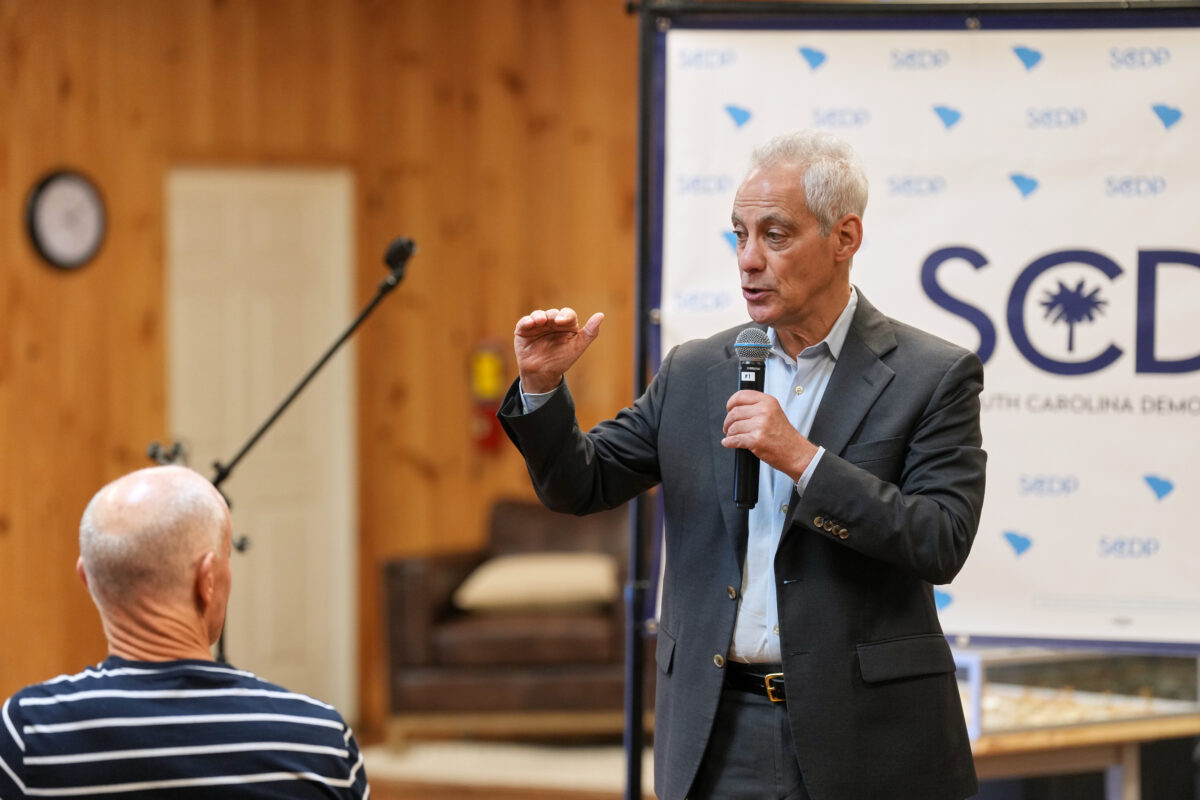
Emanuel’s allies said in recent interviews that they were not surprised with his approach, saying that he has been building to this moment for some time. “Do I agree with him? Not necessarily,” former Rep. Steve Israel (D-NY), who served with Emanuel in Congress, told JI. “But this is not a breakthrough position. He’s expressed those concerns for years.”
David Axelrod, a former chief strategist to Obama, likewise agreed in a text message to JI that “Rahm’s basic concerns about where Bibi is leading are not new,” using Netanyahu’s nickname. “Rahm, like a lot of us, has always believed a two-state solution was the only road to peace and Bibi has been deeply, irretrievably opposed and actively hostile to the notion.”
“You ask these questions like somehow I’ve changed. The prime minister used to articulate a two-state solution. He was for it. He’s the one that’s changed,” Emanuel said of Israeli Prime Minister Benjamin Netanyahu.
One prominent Jewish Democrat, who asked to remain anonymous to discuss a charged issue, called Emanuel’s stance a practical response that “takes the wind out of the sails of the far left and the far right,” which have politicized funding for Israel. “As long as we’re giving aid to Israel, Americans will feel like they have a say in Israeli policy and how that investment is managed.”
But if that is Emanuel’s aim, he has not made it clear. In conversation with JI, he was hesitant to clarify his own positions when pressed. Asked if he would back Iron Dome funding, he said he had been “part of the financing” for a “joint project” that he called “key for Israel’s security” when it was first developed with the United States.
He declined to elaborate further about such aid. “U.S. taxpayers should not be in the position of subsidizing a country,” he reiterated. “You know my history with the Iron Dome,” he said. “I’m done. I’ve answered it.”
Though some allies of Emanuel are willing to indulge his views more favorably than other 2028 prospects with thinner resumes related to Middle East policy, a range of Jewish and pro-Israel organizations are now pushing back on his recent turn against U.S. military aid.
“It’s in America’s interests to keep our word and help a democratic partner shield innocent civilians from missiles,” Deryn Sousa, a spokesperson for AIPAC, told JI, referring to the Iron Dome. “Reneging on the Obama administration’s signed agreement with our closest ally in the Middle East would send a devastating message to our allies, empower our enemies and do nothing to advance peace.”
Brian Romick, president of Democratic Majority for Israel, said that “Israel’s situation is not comparable to our other close allies.”
“Unlike Japan, South Korea and Germany, Israel does not have permanent U.S. troops on the ground,” he told JI recently. “It’s also surrounded by enemies who actively want to wipe it off the face of the earth. U.S. security assistance reflects that reality and the significant strategic benefits the aid provides.”
Michael Makovsky, president and CEO of the Jewish Institute for National Security of America, told JI in a recent interview that he disagreed with Emanuel, even as he acknowledged the sentiment as a “legitimate view.” Still, he added that it is “in the U.S. interest” to continue providing military aid to Israel, “which anyway all goes to buying U.S. weaponry.”
Even some pro-Israel Democrats sympathetic to Emanuel and his perspective said his comments on military aid raise more questions than they answer. One influential Jewish Democrat who has long been acquainted with Emanuel, speaking on the condition of anonymity to address a sensitive topic, expressed concerns that ending aid to Israel could stoke further calls from the far left to condition military funding or block future weapons sales outright.
For his part, Emanuel avoided commenting on the question of Israel’s qualitative military edge, which the U.S. is legally obligated to ensure but allies say could suffer without military aid. “I feel like we’re taking the same question from 50 angles,” Emanuel told JI. “I want Israel to fight for peace the way it’s proven that it’s fought in the last three years. That’s what’s missing,” he said last week.
“You ask these questions like somehow I’ve changed,” Emanuel said earlier in the call. “The prime minister used to articulate a two-state solution. He was for it. He’s the one that’s changed.”
National Security Action named Maher Bitar, a former Biden official and Students for Justice in Palestine student activist, as its new leader
Screenshot/C-SPAN
Maher Bitar
Several top Jewish Democrats are expressing concerns about the ideological direction of a newly revived foreign policy group now aiming to shape the party’s approach to Israel in the 2028 presidential election as well as a future Democratic administration.
National Security Action, an influential Democratic foreign policy organization that launched in 2018 and helped staff the Biden administration, is returning to the political arena with a new leader, Maher Bitar, who has served in high-level defense and intelligence roles on Capitol Hill and in the White House, the group confirmed on Sunday.
Bitar, a deputy assistant to President Joe Biden and coordinator for intelligence and defense policy at the National Security Council who most recently served as chief counsel and national security advisor to Sen. Adam Schiff (D-CA), has faced scrutiny over his past record of anti-Israel activism.
During his time in the Biden administration, Bitar, who is Palestinian American, drew criticism from Republican lawmakers who alleged that he had demonstrated bias against Israel, citing, among other things, his past board membership with Students for Justice in Palestine while attending Georgetown University. As a student, he had also helped organize a pro-Boycott, Divestment and Sanctions conference and was shown in a university yearbook performing a dance in front of a banner that called to “divest from Israeli apartheid.”
Ben Rhodes, a former deputy national security advisor in the Obama administration who is now a leading left-wing critic of Israel, co-founded NSA with Jake Sullivan, most recently Biden’s national security advisor. Sullivan drew headlines last year when he came out in support of withholding arms to Israel, an argument he reiterated last month on “Real Time With Bill Maher” while defending the majority of Senate Democrats who had recently voted to block some weapons sales to the Jewish state.
Both sit on NSA’s board and will be involved in the group, Rhodes told Axios, saying he is invested in building a “pipeline” to help “populate a Democratic administration” as well as crafting “ideas that can form a progressive or Democratic foreign policy going forward.”
“The center of gravity has shifted on the relationship with Israel, and there will be a debate about the nature of the relationship going forward,” Sullivan told the outlet.
“We urge National Security Action to continue to be an honest convener about these important issues,” Brian Romick, the president of Democratic Majority for Israel, told Jewish Insider. “There is a strong majority of Americans, including Democratic primary voters, who support the U.S.-Israel relationship because they understand that doing so is in the best interest of the United States.
“DMFI is proud to advocate for those voices and we recognize they have a major role to play in choosing our 2028 nominee,” Romick said.
Bitar told Axios, which first reported his role, that NSA would be a “big-tent” organization seeking to unite the party. “We are not excluding anyone,” he said, noting that the group will serve as a “hub” to discuss Democratic foreign policy “to be ready for 2028 and beyond.”
A former senior foreign policy official in the Biden administration, who was granted anonymity to address a sensitive issue, told JI that Bitar “was part of a small cohort of senior White House advisors who worked to actively undermine President Biden’s policy preferences by inserting their own anti-Israel ideology, especially” following Hamas’ Oct. 7 attacks.
“National Security Action exists to help empower our leaders and broad community of stakeholders to communicate effectively about foreign policy and bring together a wide range of perspectives,” David McGonigal, a spokesperson for the group, said in a statement to JI.
“Maher’s deep relationships across the national security community and the outpouring of support for his appointment — including from members of Congress and organizations such as J Street, the Jewish Democratic Council of America and the Nexus Project — underscore how National Security Action is uniquely positioned to carry out this important mission.”
Ethan Wolf, a Democratic strategist who previously worked as a communications director for Rep. Tom Suozzi (D-NY), told JI he was “concerned National Security Action is rewriting everything they’ve ever stood for and putting their pen in the hand of a ‘Pod Save America’ bro,” referring to Rhodes’ association with the left-wing political podcast hosted by former Obama officials who have grown increasingly hostile to Israel.
DMFI, for its part, also alluded to Rhodes and the podcast in a heated social media post on Monday. “Democrats and Americans do not want Pod Save America hosts dictating our future national security platform,” the group wrote.
Despite other reservations over Bitar’s new role, some Jewish Democrats voiced positive views about his extensive resume.
“Maher has held multiple high-level national security positions in government — in the House, in the Senate and in the Biden and Obama administrations — where he was deeply respected for his pragmatism, depth and expertise,” said Halie Soifer, CEO of the Jewish Democratic Council of America. “I enjoyed working with Maher in the Obama administration and think National Security Action is lucky to have him at the helm.”
Daniel Shapiro, a U.S. ambassador to Israel in the Obama administration who served as a top defense official in the Biden administration, said he had worked with Bitar “in various capacities for over a decade, and know him to be a thoughtful and talented national security professional.”
“When we agree and when we disagree — and we do both — Maher has always been dedicated to pursuing smart, strategic, productive policy in the national interest,” Shapiro told JI. “I am confident we will continue to have a productive dialogue. And I completely reject the prejudiced attacks against him based on his Palestinian-American identity.”
In an unsolicited statement shared by a spokesperson for Schiff, the senator said Bitar “has been devoted to addressing the country’s most complex foreign policy challenges while upholding our values and protecting America’s national security interests.”
“In this new role with National Security Action, I know Maher will continue to provide the great insights and leadership we need to get through these turbulent times,” Schiff told JI.
Joel Rubin, a progressive strategist involved in Jewish and pro-Israel causes, acknowledged what he called a “freak-out” among some Jewish leaders over Bitar, but expressed optimism that the new NSA head would be open to constructive dialogue on a divisive issue.
“As long as multiple voices are included at the table, and I have no reason to believe they won’t be, this is the reality of the Democratic Party,” said Rubin, who is releasing a new book on Democratic foreign policy this week.
Michael Makovsky, the president and CEO of the hawkish Jewish Institute for National Security of America, said, “Given the recent anti-Israel statements and actions of possible Democratic presidential candidates, even historically pro-Israel ones such as Rahm” Emanuel “and centrist former officials like Jake Sullivan, it will be interesting to see if the big tent the organization says it’s seeking will include real pro-Israel voices.”
NSA is also hiring an associate director for polling and outreach to “support its work advancing a smart, principled vision of U.S. foreign policy, while pushing back on the Trump administration’s reckless national security policies,” according to a job listing posted to its website.
The group’s previous executive director, Caroline Tess, a former National Security Council official in the Obama administration, stepped down in 2025.
One X-factor keeping Republicans competitive is the Democratic Party’s lurch leftward in the last year, leading to the emergence of extreme, exotic and out-of-the-mainstream candidates in pivotal battleground races
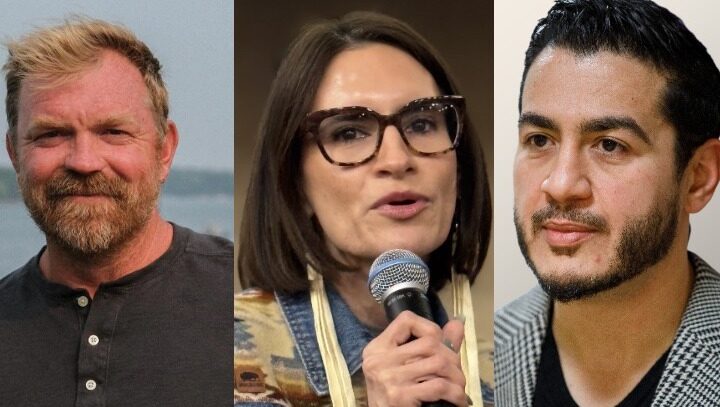
Graham Platner campaign/Travellers & Tinkers/Wikimedia Commons/Kenneth C. Zirkel/Wikmedia Commons
Graham Platner/ Lt. Gov. Peggy Flanagan/Abdul El-Sayed
The combination of history and polling is pointing to the likelihood of a Democratic wave election in the 2026 midterms, which would give Democrats control of the House and a fighting chance to claw back a Senate majority.
Polls show Democrats holding a sizable edge on the generic ballot, their favored candidates are running competitively even in red states and congressional districts, all while President Donald Trump’s approval rating is sagging amid high gas prices, executive overreach and an uncertain outcome in the aftermath of the war in Iran.
But the one X-factor keeping Republicans competitive is the Democratic Party’s lurch leftward in the last year, leading to the emergence of extreme, exotic and out-of-the-mainstream candidates in pivotal battleground races.
Indeed, a new poll commissioned by The Argument magazine finds that the generic ballot shows Democrats have been stuck with a six-point lead for a while even as Trump’s job approval has declined precipitously in the last several months. They’re voting to put a check on the GOP’s dominance of Washington, without endorsing the direction of the Democratic party.
“Democrats still have tangible policy misalignments with many voters who dislike Trump,” The Argument concluded in its polling analysis.
All told, the question becomes: Will the anticipated Democratic wave closely resemble the Democrats’ version of the GOP Tea Party election of 2010? In that election, Republicans swept into power in the House but far-right and extreme Senate candidates in key races blew golden opportunities, costing Republicans the upper chamber.
That dynamic repeated itself in 2022, when many experts anticipated a Republican wave election, but the party’s nomination of hard-line MAGA candidates in battleground contests led to a marked underperformance.
The alternative outcome is that partisanship and tribalism now run so deeply that an individual candidate’s flaws — even seemingly disqualifying ones — don’t mean what they used to. Right now, Democratic primary voters look like they’re ignoring personal baggage in favor of candidates that are the most ideologically progressive, personally authentic and who are burning hot with rage against Trump and the leadership class.
On the Senate side, Maine Democrat Graham Platner fits that profile to a tee, and is all but locking down a primary victory against longtime Gov. Janet Mills, the favorite of the party establishment. If he’s the nominee, he’d then face Sen. Susan Collins (R-ME), who has a record of winning tough races even in dismal environments for her party.
In Michigan, Abdul El-Sayed holds both a radical record and support from a dedicated progressive base of young voters and Arab Americans. That has put him in contention for the Democratic nomination, but many Democrats fear he’d lose the seat to former Rep. Mike Rogers, the expected Republican nominee.
And in Minnesota, Lt. Gov. Peggy Flanagan holds lots of left-wing baggage but that’s not hurting her insurgent primary campaign against Rep. Angie Craig (D-MN), a more traditional and moderate Democratic contender. Former sportscaster Michele Tafoya is the GOP favorite in this race.
There are even more House races where problematic candidates are in contention in swing districts — like Ammar Campa-Najjar in the race of retiring Rep. Darrell Issa (R-CA) and Colorado state Rep. Manny Rutinel, running to unseat Rep. Gabe Evans (R-CO).
If 2010 offered any lessons, it’s that ideologically extreme, problematic candidates typically underperform expectations. That often makes the difference in a battleground state or district, where the margin of victory is typically close. It’s easy to get nostalgic for a time when a candidate like Christine O’Donnell (who notoriously proclaimed she was not a witch!) was as exotic as it got in politics. Now one of the Democrats’ leading Senate candidates is known for proclaiming he’s “not a secret Nazi.”
But given the tribalism of the current environment and the intense anti-Trump sentiment among Democrats and independents, do voters care about candidate quality anymore? Last November, Virginia voters elected an attorney general who survived revelations that he wished violence on a political opponent, only mildly underperforming the rest of the Democratic ticket.
This year’s midterm elections will put that proposition to the test. With strong battle-tested moderate recruits — like former North Carolina Gov. Roy Cooper and former Alaska Rep. Mary Peltola — in purple and red states, Democrats are expanding the Senate map and giving themselves a fighting chance for a clean sweep.
But they risk jeopardizing those gains with some (potentially) not-ready-for-primetime players in the biggest battlegrounds of all: Maine and Michigan.
The Senate candidate shared that her husband, who is Jewish, was verbally attacked in front of their 5-year-old daughter
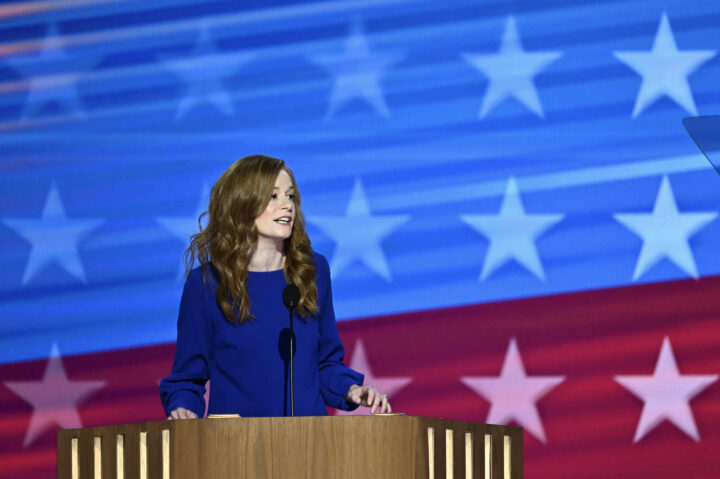
MANDEL NGAN/AFP via Getty Images
Michigan state Sen. Mallory McMorrow speaks on the first day of the Democratic National Convention (DNC) at the United Center in Chicago, Illinois, on August 19, 2024.
An activist at this month’s Michigan Democratic Party convention in Detroit screamed an antisemitic slur at the husband of Michigan Senate candidate Mallory McMorrow, in front of the couple’s 5-year-old daughter, McMorrow revealed in a radio interview airing Wednesday.
McMorrow, a state senator seeking the Democratic nomination for an open U.S. Senate seat, is not Jewish, but her husband is and their daughter attends a Jewish preschool. The incident occurred at a convention where far-left activists also booed one of her primary opponents, Rep. Haley Stevens (D-MI), a moderate pro-Israel lawmaker.
The third candidate in the race is physician Abdul El-Sayed, a progressive who has a longstanding hostile record towards Israel.
“At the convention a few weeks ago, there was a mood,” McMorrow said in an interview with WHMI, a radio station in metro Detroit. “They booed Haley, but there was a man who walked up to my husband and my daughter — I was not there, just my husband and my daughter, and screamed an antisemitic slur at him in his face, in front of my 5-year-old.”
On the campaign trail, McMorrow has made a point of trying to cater to both the state’s sizable Jewish population and its large Arab population. She described herself in the interview as trying to be “the bridge,” while navigating conflicting views that she hears from voters.
“I got in an Uber the other day and unprompted, the man said to me, ‘Why is it that this country can afford to drop bombs on other countries, but we can’t feed our kids?’ There is a truth in that anger that we as a country have to figure out how we solve that,” McMorrow said.
But she cautioned that politicians and activists who are unhappy with American policy in the Middle East need to ensure their criticism does not veer into antisemitism.
“I will be the first to say, and I’ve taken a lot of heat for it — when it crosses the line into antisemitism, I will be the first to say so,” said McMorrow. “We have to make space for you to be angry and do so in a way that does not make people feel scared, truly scared, to just exist as a Jewish person in this country.”
McMorrow has been endorsed by J Street and pledged not to accept any funding from AIPAC. But she has also taken aim at El-Sayed for his approach to the Middle East. After he announced that he would hold campaign rallies with the far-left, antisemitic streamer Hasan Piker, McMorrow slammed El-Sayed in an interview with Jewish Insider last month.
She reiterated that position to WHMI, although she said she has “no problem” with people who appear on Piker’s show if they want to try to reach his audience and push back on his point of view.
“Bringing somebody in to campaign for you implies that you endorse that person’s point of view, and it tells your audience that this messaging is who I am,” said McMorrow, noting that the timing of Piker’s appearance in Michigan was particularly striking, just weeks after the attack on Temple Israel in West Bloomfield.
Asked whether she believes Piker to be antisemitic, McMorrow said no — but added that it almost doesn’t matter.
“I don’t think that he is. I think he gets dangerously close,” she said. “I think there is justifiable anger at the ongoing war. I think a lot of what he says is uninformed and hurtful. I can’t purport to speak for what he believes in his heart, but I can tell you, for my family, a lot of what he says is really hurtful.”
The plan proposed by the Florida governor eliminates seats held by four pro-Israel House Democrats, including two Jewish members

Joe Raedle/Getty Images
Florida Gov. Ron DeSantis on September 17, 2024 in West Palm Beach, Florida.
The hyperpartisan gerrymandering arms race is threatening to derail the careers of several of the strongest allies to the Jewish community within the Democratic Party.
A newly redrawn congressional map proposed by Florida Gov. Ron DeSantis on Monday targets four seats held by pro-Israel Democrats, raising concerns among many Jewish leaders at the state and national levels about the implications of losing pivotal voices helping moderate the Democratic Party’s rhetoric on Israel and antisemitism.
The aggressive redistricting plan, the broad outlines of which were first shared with Fox News, appears to eliminate a pair of South Florida House seats held by two of the most vocal pro-Israel Jewish Democrats in Congress, Reps. Jared Moskowitz (D-FL) and Debbie Wasserman Schultz (D-FL), as well as two districts in Tampa and Orlando held respectively by Reps. Kathy Castor (D-FL) and Darren Soto (D-FL), both of whom are viewed as dependable voices in support of Israel.
The map, which comes amid nationwide redistricting efforts from both parties, is expected to pass the Republican-controlled Legislature in a special session this week, though Democrats have said they intend to challenge it in court. Democrats currently hold seven of the state’s 28 congressional seats, after Rep. Sheila Cherfilus-McCormick (D-FL) resigned last week amid a House ethics investigation. Her seat did not seem to be affected by the map, which is facing accusations of partisan gerrymandering that could run afoul of state laws.
DeSantis has cast the new map as a necessary corrective meant to reflect the state’s changing population. But Jewish Democrats questioned the Republican governor’s motives, while expressing alarm that his plan threatens pro-Israel members, especially as the party has grown increasingly divided on Middle East policy and the rise of antisemitism.
The new congressional lines “risk drawing out members who have represented large Jewish constituencies for decades and dedicated their careers to combating antisemitism and strengthening the U.S.-Israel relationship,” Rep. Josh Gottheimer (D-NJ), a Jewish Democrat who is one of his party’s most outspoken supporters of Israel, told Jewish Insider on Monday. “Losing them would be a massive blow to Congress.”
Former Rep. Ron Klein (D-FL), a Jewish Democratic leader in South Florida, told JI he was troubled by the new map, calling the effort to “throw out” four pro-Israel members “very problematic” and “very dangerous” for the Jewish community, particularly amid dwindling Jewish representation in the House.
“When I was in Congress, there were a lot more Jewish representatives than there are today,” Klein noted. “It’s a big deal,” he said of the implications of potential redistricting.
Andrew Weinstein, a Democratic activist in South Florida close to Moskowitz and Wasserman Schultz, echoed that sentiment. “At a time when the Jewish community is constantly under threat, it would be a real loss to no longer have them in Congress,” he told JI in an interview, describing the two lawmakers as “proudly and openly supportive of” Jewish issues.
“Their prominence, I would say, is an important factor,” he explained.
Brian Romick, president of Democratic Majority for Israel, dismissed the map as a “blatant attempt to push out pro-Israel Democratic champions in Congress.”
“It’s bad for our country, it’s bad for those who care about Israel and it’s a violation of Florida’s redistricting constitutional amendment,” he said in a statement to JI. “We urge lawmakers to reject this shameless partisan stunt.”
Halie Soifer, the CEO of the Jewish Democratic Council of America, told JI that “South Florida is home to one of the largest Jewish communities in the country, which is why most of South Florida is represented by Democrats — because historically, and certainly under” President Donald Trump, “it’s only Democrats who share democratic and Jewish values.”
She suggested that DeSantis’ plan could ultimately “backfire on the GOP and and benefit Democrats in November,” citing Trump’s low approval ratings as well as Republicans’ unilateral effort to formalize a new map without voter feedback, in contrast with recent successful Democratic redistricting efforts in California and Virginia.
Richard Stark, president of the Florida Democratic Party Jewish Caucus, told JI he was “outraged that the supposedly pro-Jewish governor of Florida seeks to eliminate the congressional seats of mostly Jewish members,” adding of DeSantis, “Not surprising and certainly not pro-Jewish.”
For her part, Wasserman Schultz claimed that “DeSantis drew up illegal, partisan maps in a backroom and made sure Fox News got them before lawmakers did.”
“This clear effort to steal more seats for Republicans shows his total contempt for Florida voters, who voted two-to-one in favor of a ban on partisan gerrymandering in our Constitution,” she said in a statement to JI on Monday. “This nakedly partisan scheme breaks state law. While Republicans focus on cherry-picking their voters, I’ll keep fighting for better jobs and schools and take on the healthcare and housing high-cost crisis that Republicans continue to ignore.”
Soto, meanwhile, called the map “illegal,” telling reporters on Monday he plans to continue to run in Florida’s 9th Congressional District — which could be significantly redrawn to favor Republicans.
Moskowitz told JI he would need to take a closer look at the map but that DeSantis’ effort could result in some “dummymander situations,” as other Democrats suggested in response to the effort.
He said he did not believe DeSantis had intentionally targeted pro-Israel Jewish members. “DeSantis is just trying to eliminate Democrats,” Moskowitz said. “It just so happens that the Democrats in South Florida happen to be Jewish. If he wants four seats, where is he getting four seats from?“
Even as Jewish Democrats say they are worried that the new map could push dependable members out of Congress, some strategists expressed skepticism that the plan, pending further information, would have its intended effect of adding four new Republicans to the delegation.
Steve Schale, a Democratic strategist in Florida, said the map “clearly impacts both” Wasserman Schultz and Moskowitz, “but both will have a place where they can run and win — particularly this cycle.”
“Just based on what I know of these communities, this isn’t a map that guarantees a four-seat pick up by any stretch of the imagination,” he told JI, “and one can argue, might create some additional Democratic opportunities that didn’t exist before this map.”
Senior congressional correspondent Marc Rod and Washington reporter Matthew Shea contributed to this report.
Jewish Democrats described a ‘shell-shocked’ atmosphere at their statewide convention that saw marked hostility to pro-Israel voices
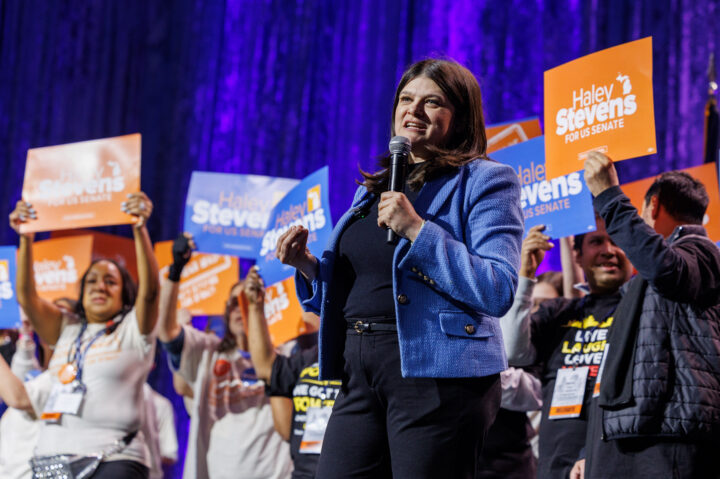
Andrew Roth/Sipa USA via AP Images
U.S. Rep. Haley Stevens speaks at the Michigan Democratic Party Endorsement Convention in Detroit, Mich., on April 19, 2026.
When thousands of Michigan’s most ardent Democratic activists gathered in Detroit on Sunday for the party’s nominating convention, Decky Alexander was thrilled: 200 people were in the room for a Jewish Democratic Caucus meeting, more than double the 70 people who showed up last year in its first official gathering.
Candidates for statewide office, from the U.S. Senate to attorney general, came by to pitch voters as activists schmoozed over bagels.
“It was incredibly energizing and affirming. That’s how the day began,” Alexander, who chairs the caucus, told Jewish Insider in an interview on Tuesday. “It didn’t end that way.”
As the day went on, Jewish Democrats were alarmed to see pro-Israel voices within the party marginalized and shouted down.
“Our Jewish caucus brought a lot of people to the convention, and I was with many of those people who were first-time conventiongoers. They were — I would use the term shell-shocked,” said Joan Lowenstein, a lawyer and former Ann Arbor city councilmember.
Rep. Haley Stevens (D-MI), a moderate and pro-Israel candidate for Senate, faced loud, sustained boos when she spoke in front of the main convention room. One person spotted an attendee on Sunday wearing a shirt that said “Resistance until liberation,” with an image showing someone wearing a keffiyeh throwing rocks.
The main reason that activists gathered that day was to vote to nominate candidates for a range of positions, including attorney general and secretary of state, distinct from other states where voters directly elect their party’s primary nominees.
The outcome of one relatively low-level race generated the most headlines: delegates’ decision to nominate Amir Makled, a Dearborn attorney with a history of social media posts praising Hezbollah, for a position on the University of Michigan Board of Regents. He unseated incumbent Jordan Acker, who is Jewish and was in part targeted due to his calls to discipline anti-Israel student protesters during the 2024 encampment at the Ann Arbor campus.
Acker told The Detroit News afterward that the level of antisemitism among Michigan Democrats is “extensive.”
“The question we have to ask as Jews is whether we still belong here,” said Acker, a Democrat.
The Democratic Party congratulated Makled in social media posts. What remains unclear is just how far party leaders will go to support Makled as he proceeds to the general election. Curtis Hertel, the chair of the Michigan Democratic Party, did not respond to a request for comment.
But Makled’s nomination is cause for concern among many Jewish Democrats.
“I certainly cannot vote for somebody who praises Hezbollah and uplifts posts that use ‘Jew’ as a slur. This was an unacceptable nomination, and I simply cannot affiliate with somebody who harbors those views,” Jeremy Moss, a state senator who is running for Congress in the Detroit suburbs, told JI on Tuesday.
Rep. Kristen McDonald Rivet (D-MI), a moderate Democrat representing a swing district, who is not Jewish, on Tuesday described the scenes from the convention as “deeply troubling,” and in particular criticized the party’s nomination of Makled.
For Jewish Democrats who are not willing to disavow Israel, the question of what to do in a race like the Board of Regents is uncertain. Lowenstein, the Ann Arbor activist, said she would “never” support Makled, but that she also would not vote for a Republican.
“I think Jewish voters are now in a position where we have to look at each person, and not look at their party, but look at what they stand for,” she said.
“I need to create the table, not just always be invited to the table. I just don’t know what that looks like,” said Decky Alexander, the Jewish caucus chair. “It’s a heartbreak. I felt, in moments, is this going to be a breakup? I don’t think so, but we’ve been feeling this way, a lot of us, for a long time.”
The Jewish voters who attended the convention on Sunday are among the most committed Democrats in the state, which makes it more notable that some were left questioning their place in the party.
“They think that there’s shrinking room for them in spaces that claim to be inclusive,” said Elyssa Schmier, the Anti-Defamation League’s Michigan director. “That’s kind of the saying of the Democratic Party: ‘We have a big tent, big-tent politics.’ It did not feel that way at the convention.”
Even the activists most disillusioned by Sunday’s events acknowledge that the convention attendees are not necessarily representative of the state’s Democratic electorate. All it took to attend the convention was registering as a party member a month beforehand and paying a nominal fee.
“I don’t know that it was an accurate representation of where the broader Democratic electorate would be, say, in a primary,” said Moss. “But there’s no question, there was incivility at best [and] displays of Jewish antagonism at worst in the convention hall.”
Jewish activists hope this moment of upheaval can be a chance for Jewish Democrats to reassert their place in the party, even if things feel tenuous and difficult at present.
“I need to create the table, not just always be invited to the table. I just don’t know what that looks like,” said Alexander, the Jewish caucus chair. “It’s a heartbreak. I felt, in moments, is this going to be a breakup? I don’t think so, but we’ve been feeling this way, a lot of us, for a long time.”
Between now and the general election, Alexander wants to talk to as many candidates as possible about whether they plan to take the concerns of Jewish voters seriously.
“I haven’t changed. I am not a Republican or a conservative. I cannot win my district as an independent. But I also wonder how I can continue to carry this party banner with anything approaching pride, or rather, without anxiety and ambivalence,” state Rep. Noah Arbit, a Democrat who represents West Bloomfield, told JI.
“This isn’t identity politics. This is figuring out, in a pluralistic nation like the United States, does everyone have a place? And we want the people who are running for office to answer: Do the Jews have a place in your vision and your platform?” she said.
Moss said he intends to use his platform as a state lawmaker and congressional candidate to answer that question clearly: Jews do have a place in the Democratic Party.
“My solution is to offer my candidacy for everybody and to ensure that folks know that there is a lane for Jewish Democrats in this moment, that we don’t have to feel hopeless, we don’t have to feel politically homeless, that this is a lane that we have to solidify here,” said Moss. “My core values as a Democrat are really Jewish values.”
For state Rep. Noah Arbit, a Democrat who represents West Bloomfield, the site of an antisemitic attack last month, Sunday’s convention adds to angst he has been feeling about his party for years. He was the one who founded the Jewish caucus in 2019, in response to rising antisemitism on the political left.
“I haven’t changed. I am not a Republican or a conservative. I cannot win my district as an independent. But I also wonder how I can continue to carry this party banner with anything approaching pride, or rather, without anxiety and ambivalence,” he told JI. Yet he said he will not cave to pressure from the party’s far-left flank.
“I certainly won’t be run out of representing my community by a band of extremists,” said Arbit. “So I need to stay.”
‘We have to win in Michigan all up and down the ticket, and it's not helpful for people to be shouting down candidates who care deeply about the future of this country,’ Peters told JI
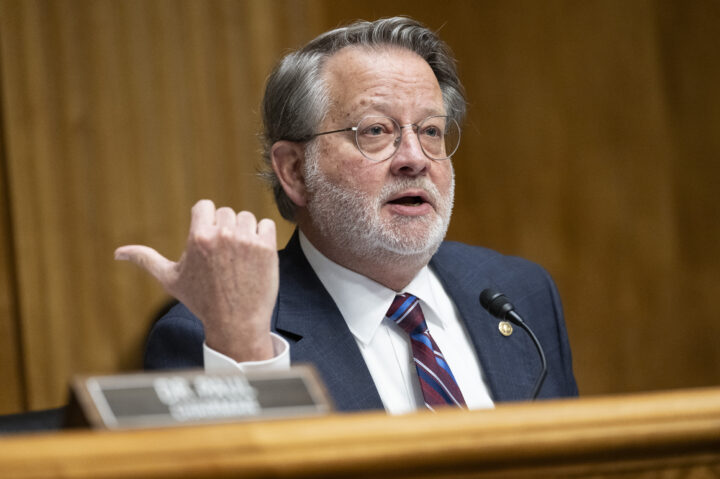
Luke Johnson/Getty Images
Sen. Gary Peters (D-MI) speaks in Dirksen Senate Office Building on April 15, 2026 in Washington, DC.
Sen. Gary Peters (D-MI) criticized divisive behavior by Democratic Party activists at the Michigan Democratic Party convention last weekend, where activists shouted down pro-Israel voices including Rep. Haley Stevens (D-MI) and a speaker supporting University of Michigan regent Jordan Acker. State Sen. Mallory McMorrow also faced some jeers.
“I was really disappointed by some of the behavior, by some folks who were just so negative to Democratic candidates,” Peters told Jewish Insider in a brief interview on Tuesday. “The way we win elections is when we are all united and I would hope that everyone would realize that the most important election for Democrats is going to be in November.”
Peters served for two election cycles as the chair of the Democratic Senatorial Campaign Committee, working to boost Democrats in swing states. He is retiring at the end of this term.
“We have to win in Michigan all up and down the ticket, and it’s not helpful for people to be shouting down candidates who care deeply about the future of this country,” he continued.
He follows Rep. Kristen McDonald Rivet (D-MI) in condemning the behavior of activists at last weekend’s convention.
Plus, Dems concerned over fraying Israel-Europe ties

Daniel Torok/The White House via Getty Images
President Donald Trump and Secretary of State Marco Rubio (R) sit in the Situation Room as they monitor the mission that took out three Iranian nuclear enrichment sites, at the White House on June 21, 2025 in Washington, DC.
This P.M. edition is reserved for our premium subscribers — offering a forward-focused read on what we’re tracking now and what’s coming next. Please don’t hesitate to share your thoughts and feedback by replying to this email.
📡On Our Radar
Notable developments and interesting tidbits we’re tracking
President Donald Trump announced this afternoon, with the status of negotiations with Iran up in the air and the expiration of the ceasefire quickly approaching, that he is indefinitely extending the ceasefire at the request of Pakistani negotiators (despite having said, as recently as this morning, that he was not inclined to do so).
“Based on the fact that the Government of Iran is seriously fractured … we have been asked to hold our Attack … until such time as their leaders and representatives can come up with a unified proposal,” Trump wrote on Truth Social. “I have therefore directed our Military to continue the Blockade and, in all other respects, remain ready and able, and will therefore extend the Ceasefire until such time as their proposal is submitted, and discussions are concluded, one way or the other”…
Talks were meant to begin shortly in Islamabad, but Vice President JD Vance’s trip was reportedly put on hold and he remains in Washington. Vance, Special Envoy Steve Witkoff and Jared Kushner were all spotted arriving at the White House for meetings this afternoon.
Iran also had not committed to sending its own delegation — Iranian Foreign Minister Abbas Araghchi accused the U.S. of violating the ceasefire through its blockade of Iranian ports and seizure of an Iranian-flagged cargo ship, calling it an “act of war. … Iran knows how to neutralize restrictions, how to defend its interests, and how to resist bullying,” he wrote…
U.S. forces boarded an oil tanker in the Indian Ocean that had been sanctioned for working with Iran which defense officials said was currently carrying Iranian oil, in a further escalation of the U.S. campaign against Tehran-aligned assets and actors outside of the Middle East.
The Treasury Department also announced sanctions on 14 individuals and entities in Iran, Turkey and the United Arab Emirates for “their involvement in procuring or transporting weapons or weapons components on behalf of the Iranian regime”…
Six weeks after he was announced as Iran’s new supreme leader after the assassination of his father, Mojtaba Khamenei has still not been seen in public, raising speculation he is incapacitated from injuries sustained in a U.S.-Israeli airstrike or has been smuggled abroad…
Senate Foreign Relations Committee Chairman Jim Risch (R-ID) endorsed Sen. Roger Wicker’s (R-MS) view that the U.S. should reconsider its funding for the Lebanese Armed Forces in light of its continued inaction to disarm Hezbollah, in addition to the Lebanese government’s failure to “follow through on long-promised economic reform. The era of complacency & unconditional bailouts must come to end,” Risch said…
Sen. Chris Murphy (D-CT) clarified that his post calling it “awesome” that several Iranian oil tankers had bypassed the U.S. blockade — reporting that has been disputed as Iranian propaganda — was written as sarcasm. “[O]bviously Trump’s bungled mismanagement of this war is not ‘awesome.’ As I have said a million times here, it’s a disaster and he should end the war immediately,” Murphy wrote on X…
Democratic lawmakers are expressing concern over Israel’s fracturing relationship with key European allies, while experts say the shifting dynamics could carry longer-term economic and political risks for Jerusalem, even if Israel weathers threats to unwind largely symbolic defense agreements, Jewish Insider’s Matthew Shea reports.
Among other recent moves, Spain and Ireland led a push today to suspend the EU’s association agreement with Israel. The initiative stalled as member states remained divided on the issue; still, Rep. Josh Gottheimer (D-NJ) called the developments “deeply alarming.”
“NATO allies like Spain, France and Italy are turning their backs on Israel, a key democratic partner that is actively fighting on the front lines against Iran,” Gottheimer said. “Singling out Israel represents a double standard”…
The arsonist who pleaded guilty to attacking a North London synagogue on Saturday night was released on bail by the Westminster Magistrates’ Court today, JI’s Haley Cohen reports. The 17-year-old boy who threw a bottle containing accelerant through the window of Kenton United Synagogue must live and sleep at his home address and not enter any synagogue, the judge said. It was the third such attack on a Jewish institution in London within a week…
Rep. Sheila Cherfilus-McCormick (D-FL) resigned from Congress this afternoon, half an hour before her House Ethics Committee sanctions hearing was due to begin. Having lost jurisdiction in the matter, the committee canceled the hearing…
The Board of Peace is reportedly in discussion with the UAE-owned DP World logistics company about managing supply chains and humanitarian aid in Gaza, including potentially building a new port and developing a free-trade zone, according to Financial Times, as part of the Trump administration’s vision of privatizing much of Gaza’s services and infrastructure…
⏩ Tomorrow’s Agenda, Today
An early look at tomorrow’s storylines and schedule to keep you a step ahead
Keep an eye out in Jewish Insider for a look at how Jewish Democrats in Michigan are making sense of their place in the party in the wake of a state convention where pro-Israel voices were shouted down and a pro-Hezbollah candidate won the party’s nomination for a statewide race.
The House Financial Services Committee will hold a hearing evaluating the effectiveness of U.S. sanctions.
A vote on the fifth Iran war powers resolution in the Senate, expected today, has been pushed to tomorrow.
92NY will host a discussion on the future of New York’s Jewish community with New York City Council Speaker Julie Menin, Manhattan Borough President Brad Hoylman-Sigal and New York City Comptroller Mark Levine.
The New York City Council’s Task Force to Combat Antisemitism will hold its first hearing. The task force was established by Menin in January, shortly after her election, to make recommendations and work towards her five-point plan to combat antisemitism.
Robert Kraft’s Blue Square Alliance Against Hate will host a unity dinner in partnership with the NFL, Hillel International, United Negro College Fund and the Pittsburgh Steelers for Black and Jewish college students from the Pittsburgh area. The event will include a fireside chat featuring Kraft, Pennsylvania Gov. Josh Shapiro and former Pittsburgh Steelers quarterback Charlie Batch.
Washington, D.C., mayoral candidate Kenyan McDuffie will hold a meet-and-greet with young Jewish professionals.
Rep. Elise Stefanik (R-NY) will speak in conversation at Yeshiva University with its president, Rabbi Ari Berman, about her new book, Poisoned Ivies: The Inside Account of the Academic and Moral Rot at America’s Elite Universities.
Stories You May Have Missed
IRON DOME DECISIONS

J Street’s Ilan Goldenberg said the surge in far-left calls to cut off missile-defense aid ‘stirred up the conversation a little more’ but says the group was moving that way regardless
CAMPAIGN CLASH

Adam Hamawy said on Hasan Piker’s show that he does not support Israel’s Iron Dome missile-defense system, arguing that it insulates Israel from the consequences of war
Plus, Israel-Lebanon talks to continue Thursday
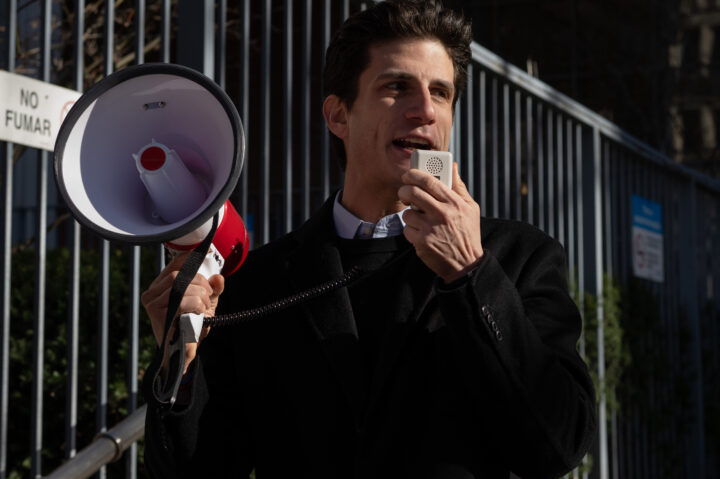
Edna Leshowitz/Getty Images
Jack Schlossberg, grandson of former President John. F Kennedy who is currently running for Congress, on Jan. 12, 2026 in New York City.
This P.M. edition is reserved for our premium subscribers — offering a forward-focused read on what we’re tracking now and what’s coming next. Please don’t hesitate to share your thoughts and feedback by replying to this email.
📡On Our Radar
Notable developments and interesting tidbits we’re tracking
Iranian officials have signaled they will attend talks with the U.S. in Islamabad, Pakistan, this week, with Vice President JD Vance, White House Special Envoy Steve Witkoff and Jared Kushner expected to depart for the meeting tomorrow (despite President Donald Trump’s claim that they were already in transit this morning).
Negotiators are up against a running clock, as Trump said today that his two-week ceasefire with Iran will end “Wednesday evening Washington time” and it’s “highly unlikely that I’d extend it” if no deal is reached…
In a series of heated social media posts, Trump again denied that Israel dragged the U.S. into war with Iran: “[T]he results of Oct. 7th, added to my lifelong opinion that IRAN CAN NEVER HAVE A NUCLEAR WEAPON,” were his motivation, he wrote on Truth Social.
Trump also boasted that the deal under negotiation will be “far better” than the 2015 Iran nuclear deal. “If a Deal happens under ‘TRUMP,’ it will guarantee Peace, Security, and Safety, not only for Israel and the Middle East, but for Europe, America, and everywhere else,” he wrote. Lashing out at the media, Trump insisted, “I’m winning a War, BY A LOT, things are going very well,” claiming the U.S. blockade, “which we will not take off until there is a ‘DEAL,’ is absolutely destroying Iran”…
The State Department confirmed that the U.S. will host the second round of ambassador-level talks between Israel and Lebanon on Thursday, as the 10-day ceasefire between the two countries that began last Thursday, after the first round of talks, continues to hold…
Republican operatives and strategists are growing increasingly concerned that the GOP may lose the Senate in the midterm elections, several told Politico, as rising gas prices and unease around the war with Iran create a poor national environment for Trump’s party.
The New York Times’ Nate Cohn argues that Democrats have a “realistic chance” to flip the four seats they need to win back the chamber because “they’ve recruited unusually strong candidates in three states that supported Mr. Trump three times: North Carolina, Ohio and Alaska.”
“In all three states, the Democrats’ likely nominees are popular recent statewide office holders. They either won their last campaign or were highly competitive in losing re-election under less favorable political conditions. So far, the polls show those Democrats running well ahead of what one might otherwise expect,” Cohn writes…
Kennedy scion Jack Schlossberg’s shifting views on Israel policy and decision to skip two upcoming Jewish community candidate forums are raising eyebrows in New York’s heavily Jewish 12th Congressional District, Jewish Insider’s Matthew Kassel reports.
During a candidate forum at 92NY last week, for example, Schlossberg rejected continued U.S. funding for offensive weapons to Israel amid the war in Iran — even as he emphasized support for boosting the Iron Dome missile-defense system, which he described as a “critical” technology…
Minnesota’s Democratic Party is poised to endorse progressive Lt. Gov. Peggy Flanagan for U.S. Senate at its convention next month, Flanagan’s campaign said, after the lieutenant governor secured support from over 90% of Democratic-Farmer-Labor Party local conventions held statewide. The party endorsement, however, will not determine the nominee, as Democratic voters are set to choose their candidate in the Aug. 11 primary election.
The campaign of Rep. Angie Craig (D-MN), Flanagan’s primary opponent and the favorite of pro-Israel activists, called on the DFL last week to launch a formal investigation into a series of alleged instances of antisemitic activity among its delegates. One instance at a local convention last month reportedly saw an unnamed delegate argue that “we should nuke” Israel…
The Wall Street Journal reports on the growing feud between Defense Secretary Pete Hegseth and Army Secretary Dan Driscoll, which “spilled out into public view on Thursday, when Driscoll described to lawmakers his fondness for the Army’s former top general, Randy George, whom Hegseth fired as the service’s chief of staff on April 2 while Driscoll was on vacation”…
A Washington Post investigation found that, since January 2025, neo-Nazi influencer Nick Fuentes has made nearly $900,000 through paid messages on his livestreams from roughly 11,000 fans. His top 500 donors are responsible for almost half of that amount…
The UAE has asked the U.S. to consider offering it financial assistance amid the war with Iran, as the Gulf country has borne the brunt of Iran’s drone and missile strikes, taking a heavy toll on its oil, economic and tourism industries. Emirati officials raised the idea of a currency-swap line, which would allow Abu Dhabi inexpensive access to U.S. dollars…
European officials hosted two meetings on Gaza reconstruction today — one gathering, led by EU representative Kaja Kallas and Norway, centered on coordinating aid with the U.S.-led Board of Peace, where White House advisor Josh Gruenbaum requested international assistance in rebuilding the enclave. The other forum, led by Kallas and Belgium, focused on a two-state solution and was attended by Palestinian Authority Prime Minister Mohammad Mustafa…
In response to Israeli Foreign Minister Gideon Sa’ar’s condemnation of an IDF soldier found to have desecrated a statue of Jesus in southern Lebanon, Radosław Sikorski, Poland’s deputy prime minister and foreign affairs minister, accused the IDF of committing war crimes.
“Lessons should also be drawn regarding the way they are being trained,” Sikorski wrote on X. “IDF soldiers themselves admit to war crimes. They killed not only civilian Palestinians but even their own hostages”…
Incoming Hungarian Prime Minister Peter Magyar affirmed that his country is bound by rules of the International Criminal Court to arrest those sought under its warrants, including Israeli Prime Minister Benjamin Netanyahu; Magyar said he intends to prevent Hungary from leaving the ICC, a move his predecessor, Prime Minister Viktor Orban, had initiated.
Responding to questions about Netanyahu’s claim that Magyar had invited him to the country for a ceremony marking the 70th anniversary of the Hungarian Uprising, Magyar responded, “Every leader is welcome to attend this important commemoration,” but “we have a legal obligation to enforce the court’s rulings, and I’m sure [Netanyahu] knows this”…
Apple CEO Tim Cook announced this afternoon that he will step down from the helm of the tech giant and become its executive chairman in September. Succeeding Cook is John Ternus, head of the company’s hardware engineering…
⏩ Tomorrow’s Agenda, Today
An early look at tomorrow’s storylines and schedule to keep you a step ahead
Keep an eye out in Jewish Insider for an interview with Rachel Goldberg-Polin on the release of her book, When We See You Again, which debuts tomorrow.
The Senate Committee on Banking, Housing and Urban Affairs will hold a nomination hearing for Kevin Warsh, son-in-law of Jewish philanthropist Ronald Lauder, to be chairman of the Board of Governors of the Federal Reserve. Democrats intend to press Warsh on his personal fortune, which he has only partially disclosed thus far.
The House Ethics Committee will hold a public hearing to determine whether to apply sanctions to Rep. Sheila Cherfilus-McCormick (D-FL), after finding last month that she had committed serious ethics violations and campaign finance misconduct.
The U.S. Helsinki Commission will hold a hearing on Iran’s support for Russia amid its war with Ukraine.
The Senate Foreign Relation Committee’s subcommittee on Africa will hold a hearing on U.S. approaches to counterterrorism on the continent.
Stories You May Have Missed
LATIN LINKS

An Israeli diplomatic source told JI that Ecuador and Paraguay are expected to join the Isaac Accords
MICHIGAN MOMENT
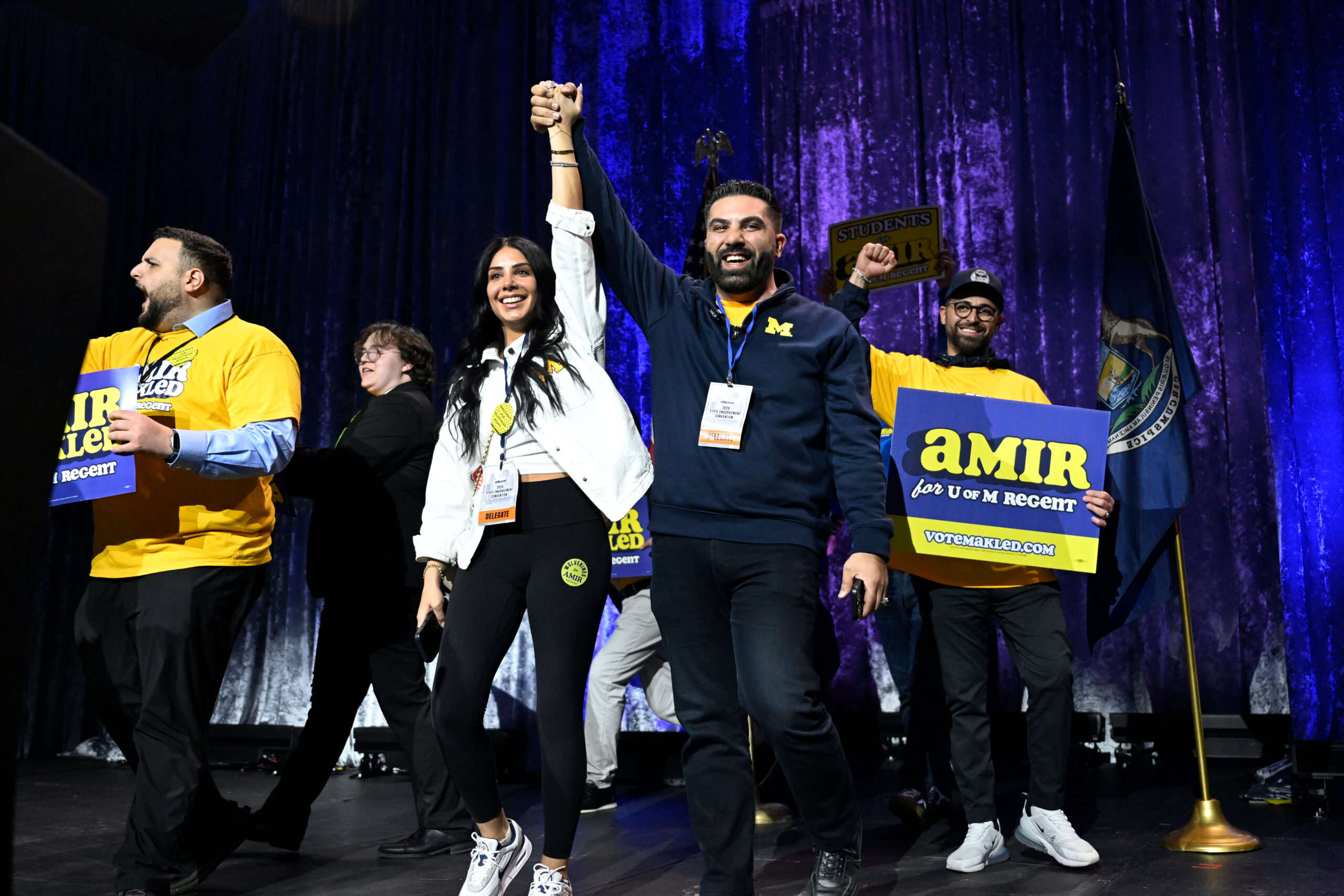
Platner, in Reddit post on Hamas terrorist attack: ‘From a strictly professional standpoint, this was a damn fine looking and successful raid against a superior opponent’
Michigan is a closely watched bellwether of the direction of the Democratic Party, and the latest developments underscore that a more radical faction of the party appears to be growing

Al Drago/Bloomberg via Getty Images
Democratic National Convention (DNC) at the United Center in Chicago, Illinois, US, on Thursday, Aug. 22, 2024.
Events in recent days may well be marking a tipping point in the decline of the Democratic Party — at least when it comes to its treatment of Jews, on top of its growing hostility toward Israel.
The weekend ended with the news that Michigan Democratic delegates, at their statewide convention Sunday, nominated a Hezbollah supporter, Amir Makled, to the University of Michigan Board of Regents, choosing to oust a Jewish member, Jordan Acker, whose home and car were repeatedly vandalized with antisemitic graffiti and his family threatened.
Acker’s offenses? He backed efforts to hold anti-Israel campus protesters at the University of Michigan accountable for assaulting police and engaging in intimidation of Jewish students, among other instances of student misconduct. He declined to support efforts to divest university funds from Israel, along with other members of the Board of Regents, as a radical faction of students had demanded.
Acker’s non-Jewish Democratic ticketmate, Paul Brown, who also supported discipline against anti-Israel students, wasn’t targeted and was renominated for election. But the Democratic delegates ousted Acker in exchange for Makled, who has posted on social media with comments praising Hezbollah’s leaders and retweeted antisemitic messages from the conspiracy-theorizing influencer Candace Owens.
The results mark a new low for Michigan Democrats. Also over the weekend, Michigan Senate candidate Abdul El-Sayed told CNN that he believes the Israeli government is just as evil as Hamas.
In the same interview, El-Sayed also said that Sen. Chris Van Hollen (D-MD) should replace Senate Minority Leader Chuck Schumer (D-NY) as the Democratic leader in the upper chamber, citing Schumer’s continued support for U.S. aid to Israel. Van Hollen is among the most vocal critics of Israel in the Senate.
Michigan is a closely watched bellwether of the direction of the Democratic Party, and the latest developments underscore that a more radical faction of the party appears to be growing. This, in the state where dozens of Jewish preschoolers were nearly killed in a terrorist attack last month by a Hezbollah sympathizer who targeted the state’s largest synagogue.
But it’s not just in Michigan where the weekend’s developments suggest an ominous turn in the Democratic Party’s evolution.
Today’s Daily Kickoff includes comments made by Sen. John Fetterman (D-PA), one of the few pro-Israel Democratic stalwarts left, who blasted his party for tolerating antisemitism, calling out Democrats’ acceptance of Senate candidates with checkered histories, including Graham Platner in Maine and El-Sayed.
In particular, Fetterman expressed shock that party leaders had nothing to say about revelations that Platner praised Hamas’ tactics in a 2014 Reddit forum that shared video of the terrorist group killing several Israeli soldiers.
We cover the implications of the election results from New Jersey’s 11th Congressional District, a moderate-minded, affluent suburb, where voters elected a far-left Israel critic who withheld criticism of Hamas after the Oct. 7, 2023, attacks — except for the Jewish Democrats in the district, who swung decidedly to the right.
And we report on the pained comments from Yehuda Kurtzer, the president of the Shalom Hartman Institute (a liberal, pluralistic think tank dealing with issues affecting the Jewish community), who called on American Jews to “embrace political homelessness” as part of a pointed perspective on how badly things have gotten within the progressive movement, the longtime home for many American Jews.
“We’re stuck as an American Jewish community between an illiberal argument on the right, which is currently in power, and an illiberalism of the left,” he said.
Also notable from the weekend: Likely Democratic presidential candidate Rahm Emanuel, who is portraying himself as a bold, moderate truth teller against the left wing of his party, championed the fact on HBO’s “Real Time with Bill Maher” that he wants to cut off all U.S. military aid to Israel — in a clear political pander to the growing anti-Israel wing of his party. Truth-telling only goes so far when public opinion against Israel within the Democratic party has grown to such a high level.
It’s surely comforting to believe that Israel’s aggressive war against Hamas and Hezbollah in Gaza and Lebanon and tough tactics against Iran or Israeli Prime Minister Benjamin Netanyahu’s haughty approach to his engagement with Washington are the main factors driving the Democratic Party towards its estrangement of Israel. Maybe then, after a possible change of Israeli leadership in the country’s October elections, Democratic public opinion would shift.
But if that was truly the case, you wouldn’t see the party tolerating candidates with neo-Nazi tattoos who “dig” Hamas’ terror tactics and ones who compare the mistakes of a democratic state with a terrorist group that seeks in its charter to eliminate all Jews.
You wouldn’t see a Jewish regent of the University of Michigan and a Jewish Michigan attorney general being personally threatened for enforcing the law — with little protest from party leadership.
And you wouldn’t see Hasan Piker, an antisemitic social media figure with a laundry list of terror-justifying rhetoric, become the progressive movement’s trendy surrogate, in this fraught moment for American Jews.
Kurtzer is right that illiberalism is rising on all sides. But when the party that has long positioned itself as the bulwark against bigotry now tolerates terrorist apologists and antisemitic hate — while abandoning pro-Israel Jews who long called it home — it should be a wake-up call that something is broken.
The Michigan Senate candidate also said in the CNN interview that he supports Chris Van Hollen as Senate Democratic leader over Chuck Schumer
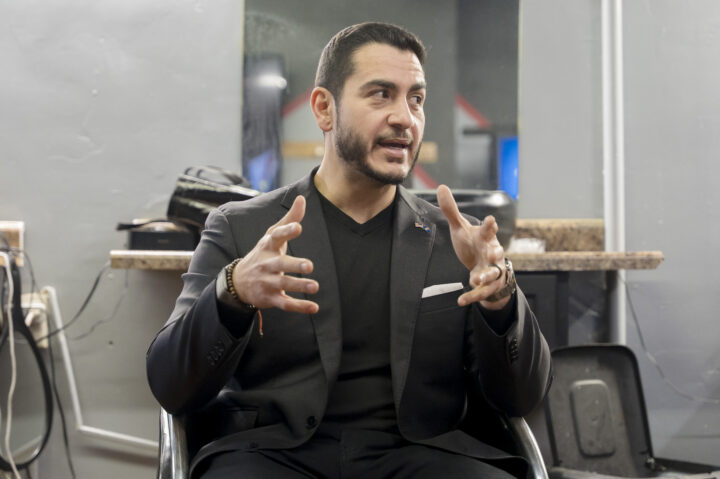
Evan Cobb for The Washington Post via Getty Images
Michigan Senate candidate Abdul El-Sayed speaks with customers and barbers at Blazin Wade Cuts in Grand Rapids, Michigan, on Saturday, Feb. 21, 2026.
Far-left Michigan Senate candidate Abdul El-Sayed said in an interview with CNN that aired Sunday that he believes the Israeli government is just as evil as Hamas.
Responding to a question from CNN anchor Manu Raju on that issue, El-Sayed answered in the affirmative, adding, “Killing tens of thousands of people makes you pretty damn evil. It’s not, ‘How evil is this one versus that one?’ Hamas — evil. Israeli government — evil. We can say both,” he said.
He also said that he believes Israeli Prime Minister Benjamin Netanyahu is a war criminal and responsible for a genocide.
El-Sayed also defended his decision to campaign with far-left streamer Hasan Piker, brushing off criticisms of Piker as “cancel culture.”
“My understanding of America is, it’s a place where we have freedom of speech. My understanding of America is, it’s a place where we’re willing to have conversations with folks with whom we disagree,” El-Sayed said. “I went on ‘Fox and Friends’ this morning. Is it un-American to go and speak on ‘Fox and Friends’? Or are we drawing certain kinds of lines? And it’s that penchant for cancel culture that I think people hate about Democrats.”
He said that Piker is “having a conversation with a number of folks who feel locked out.”
El-Sayed also said that Sen. Chris Van Hollen (D-MD) should replace Senate Minority Leader Chuck Schumer (D-NY) as the Democratic leader in the Senate, due to Schumer’s continued support for U.S. aid to Israel. Van Hollen is among the most vocal critics of Israel in the Senate.
Michigan has been a closely watched bellwether of the direction of the Democratic Party, and El-Sayed’s candidacy — defined by his virulent anti-Israel rhetoric — will test how hostile Democratic partisans have become toward Israel.
At the state’s Democratic nominating convention on Sunday, which all three Senate candidates attended, Rep. Haley Stevens (D-MI) was booed by a contingent of left-wing activists hostile to her longstanding support for Israel.
Also receiving heckles from a loud contingent of Democratic delegates: a speaker supporting Jordan Acker, who is seeking reelection to the University of Michigan Board of Regents. Acker has been targeted by the university’s anti-Israel activists, facing harassment and vandalism of his home that Michigan leaders have called plainly antisemitic.
Former Vice President Kamala Harris spoke at a party event the day prior to the convention, where she said President Donald Trump “got pulled into” the war in Iran by Israeli Prime Minister Benjamin Netanyahu, adding that the war “has always been [Trump’s] feeble attempt to distract from the Epstein files.”
‘The guy that’s going to win the primary in Maine has a Nazi tattoo on his chest and now that’s no problem for a lot of voters. … That’s crazy,’ Fetterman told CNN
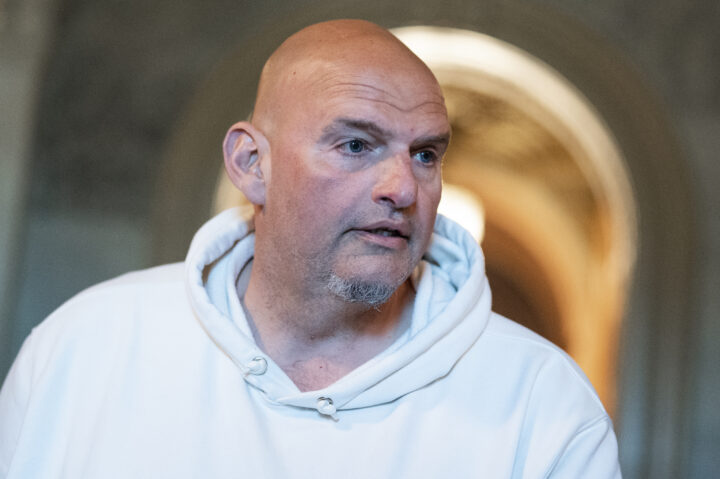
Tom Williams/CQ-Roll Call, Inc via Getty Images
Sen. John Fetterman (D-PA) is seen after the Senate luncheons in the U.S. Capitol on Tuesday, April 14, 2026.
Sen. John Fetterman (D-PA) said on Friday that the Democratic Party “absolutely” has an issue with rising antisemitism, calling out the party’s embrace of candidates including Graham Platner in Maine and Abdul El-Sayed in Michigan while criticizing the recent progressive push to cut off defensive aid to Israel.
The Pennsylvania senator made the comments after being asked on CNN’s “The Arena with Kasie Hunt” if he believed the Democratic Party has a problem with antisemitism. Fetterman argued that the growing support for both candidates in their respective primaries was indicative of a tolerance for antisemitism within the party.
He pointed to Platner surviving the controversy surrounding his Nazi tattoo and Jewish Insider’s reporting in recent days that the first-time candidate repeatedly praised Hamas’ tactics in a 2014 Reddit forum that shared video of the terrorist group killing several Israeli soldiers.
“I mean, the guy that’s going to win the primary in Maine has a Nazi tattoo on his chest and now that’s no problem for a lot of voters,” Fetterman said. “I don’t know why. That’s crazy. And now, I mean, we know he knows, he knew what that was. I mean, if you’re back over 12, 13 years, cheering about the death of Israeli soldiers, I mean, you clearly have a serious issue, and the left has a serious issue with antisemitism.”
“It was just released that he was praising and celebrating a video online where Hamas was beating and torturing Israeli soldiers to death,” Fetterman said, referring to Platner.
Fetterman also made note of El-Sayed’s lead in one recent primary poll despite his decision to campaign alongside antisemitic streamer Hasan Piker.
“The guy in Michigan, he’s leading now in that race, as my party becomes more and more hostile to Israel,” Fetterman said. “They’re just palling around someone like Hasan Piker, you know the guy that, absolutely, I mean, he absolutely is proud to cheer for Hamas, loves Hamas.”
“The Democrats are proud to stand with him and campaign with him,” he added. “Go ahead, try to win Pennsylvania and campaign around Hasan Piker, or saying, ‘Yeah, America deserved 9/11’ or ‘Hamas is 1,000% better than Israel’ or ‘I don’t care about the rapes and for all this other things.’ We have a serious problem with my party.”
Fetterman, one of most vocal pro-Israel Democrats in the Senate, told Hunt that Israel is “becoming more and more toxic for a Democrat to support,” pointing out that “80% of Democrats view Israel in a negative way.” He specifically condemned the uptick in progressive and far-left voices coming out against continued defensive aid to Israel.
“You have people like [Rep. Alexandria Ocasio-Cortez] voting against Iron Dome, the technology that prevents tens and tens of [thousands] of Israeli deaths from the rockets that those cowards fire at civilians,” he said.
Fetterman went on to criticize members of his party for opposing the war in Iran, saying that there were other Democrats who felt the same as him in supporting the effort but were not speaking out because doing so would be “politically toxic.”
“Every single Democrat has already been on record saying, ‘We can‘t ever allow Iran to acquire a nuclear bomb,’” Fetterman said, specifically naming former Vice President Kamala Harris and former Secretary of State Hillary Clinton and “everyone that’s run for president” who said “we can’t ever allow that to happen.”
“Then, [President Donald] Trump happened to do something about that to prevent that. That’s why I support that,” he continued. “I’m not the only Democrat who supports this, but I’m the only Democrat that’s willing to stand up and say it’s the right thing because I know how politically toxic it is as a Democrat to support this.”
Fetterman surmised that he is the “only Democrat … perhaps left in the entire Congress” who will say publicly that recent U.S. military action in Iran “was necessary” because doing so “contradicts every single thing that every Democrat has said” about how “we can’t ever allow Iran to acquire a nuclear bomb.”
Fetterman went on to criticize the Democratic lawmakers who voted for the recent war powers resolutions in the House and Senate, arguing that their opposition to the war has been “celebrated” by Iranian leadership and calling their response to the conflict “absurd.”
“Iran has celebrated this,” Fetterman said of the broad Democratic opposition. “A lot of people in my party and a lot of people in the media has turned Iran into the underdog. They’re like Rudy” — making a reference to the 1993 sports movie — “and putting them up on their shoulders and cheering for Iran at this point.”
Asked to respond to Sen. Elissa Slotkin’s (D-MI) statement that “being pro-Israel today is not about simply supporting the political or military agenda of Prime Minister [Benjamin] Netanyahu, just like being pro-American should not be equated with loyalty to President Trump,” Fetterman argued that her comments on her votes for Sen. Bernie Sanders’ (I-VT) measures on Thursday blocking military sales to Israel were similarly “absurd.”
“She’s a Democratic senator. Why aren’t you criticizing Iran? Why aren’t you criticizing Hamas or Hezbollah or these other kinds of forces? If you have to pick a side here, criticize that. So that’s where we are as a Democratic Party, and you’re going to vote against the kinds of critical aid that Israel requires and needs in order to beat back and destroy an organization like Hezbollah. Like I said, if you have to pick a side in a war, and clearly we have a side, I’m proud to stand on the side of Israel and America.”
Pressed on if he was still committed to being a Democrat given that his comments marked his harshest criticism yet of his party, Fetterman responded affirmatively.
“Well, of course. Yeah, I am absolutely committed to [remaining a] Democrat, absolutely,” Fetterman said. “I vote 91, 92 percent the Democratic line, but I am the only Democrat now that’s proud to consistently stand with Israel, and I’m going to do that, and that’s been very damaging with my standing as a Democrat.”
“If it’s what’s necessary, I’ll be the last Democrat standing with Israel through this,” he later added.
Fetterman also predicted that the war in Iran would not go on much longer, noting that “things kind of continue to wind down,” and said it’s “important to support” the U.S. securing an outcome in which Iranian leadership “surrenders.”
“I think these are very positive developments,” he said of Israel and the U.S. targeting Iran and their leading proxies.
“I think it seems like it’s going to wind down,” Fetterman said. “And we’re heading to a strong end at this point.”
Former ADL chief Abe Foxman: 'This is a calamity for the Democratic Party, if it will not be contained and stopped'

Andrew Harnik/Getty Images
(L-R) Senate Democratic leadership, Sens. Brian Schatz (D-HI), Bernie Sanders (I-VT), Elizabeth Warren (D-MA), Amy Klobuchar (D-MN), Senate Majority Leader Chuck Schumer (D-NY), Senate Majority Whip Richard Durbin (D-IL), Tammy Baldwin (D-WI), Cory Booker (D-NJ), Mark Warner (D-VA), Catherine Cortez Masto (D-NV), and Chris Murphy (D-CT), pose for a group photo in the U.S. Capitol on December 3, 2024 in Washington, DC.
The Democratic shift on Israel policy was on full, dramatic display on the Senate floor on Wednesday night as 40 of 47 Senate Democrats voted for at least one of two resolutions to block U.S. shipments of bulldozers and bombs to Israel.
The votes left many pro-Israel Democrats shocked and disillusioned — exemplified in the muted statements, if any, on the vote from key pro-Israel groups — and is being seen by some as the marker of a new era of Democratic policy on Israel, in which critics of Israel are firmly in the party mainstream.
“It’s yet another data point that the bipartisan consensus [in support of Israel] is, at least at the moment, no longer,” a former Biden administration official told Jewish Insider on Thursday. “Democrats think it’s politically advantageous to take these votes that would have been completely out-of-bounds just two-and-a-half years ago. … It’s deeply concerning if you care about the relationship, if you care about the security of [Israel]. But that’s the state of play at the moment, I think until or unless there’s an event that changes the trajectory.”
Abe Foxman, the former head of the Anti-Defamation League, said the vote highlights the “progressive socialist wing” of the Democratic Party’s increasing takeover. “This is a calamity for the Democratic Party, if it will not be contained and stopped,” Foxman told JI. “What’s also disturbing to me is that this litmus test is being first administered to every Jewish candidate.”
He added that the votes send a terrible message to U.S. allies beyond Israel that the U.S. can’t be relied upon.
Pro-Israel Democrats who spoke to JI said the votes came about as a combination of several factors: They served as a proxy for the war in Iran that nearly all Democrats oppose, but also were a signal of opposition to Israel’s operations in Lebanon, settler attacks and settlement expansion in the West Bank, the war in Gaza and — to a substantial degree — the Democratic enmity that has been growing for years toward Israeli Prime Minister Benjamin Netanyahu, his government and his alignment with President Donald Trump and Republicans.
And lawmakers are also responding to the growing progressive pressure, fueled by two years of imagery from the war in Gaza, amplified by social media platforms that boosted antisemitic content, that has changed the politics around Israel in a “really dramatic way” in the Democratic Party, the former Biden administration official said.
“Those [resolutions], at this moment in time, were just a proxy for real discomfort with the direction of the Trump-Netanyahu relationship in this war, which is not the right reason to vote for these,” another former Biden administration official told JI. “I understand the [vote to block] bulldozers at this moment in time. [Withholding] the munitions — I think it’s really, really troubling.”
Sen. Tim Kaine (D-VA), an early supporter of efforts to block weapons sales to Israel, said that the growing opposition can’t be blamed solely on Netanyahu. “I also think it’s watching how the weapons are used,” Kaine told reporters. “I think the observation of how the weapons are used is probably a little bit more the reason that the vote total is going up than a feeling about the domestic politics of Israel.”
Some pro-Israel Democrats say that the impact and meaning of the votes shouldn’t be overstated, and that there remains a sizable pro-Israel Democratic contingent, even including some of the lawmakers who voted for the resolutions on Wednesday.
“There were pro-Israel senators, and senators who are close partners and allies of the Jewish community, on both sides of this vote last night,” Halie Soifer, the CEO of the Jewish Democratic Council of America, said. “This didn’t occur in a vacuum, and it’s not necessarily driven by anti-Israel, and certainly not antisemitic, views. It also doesn’t necessarily represent a wholesale shift in the Democratic Party. It’s a snapshot of where we are in this moment as it relates to these particular arms sales and this particular Israeli government and its policies. But I have no doubt that there’s the chance that that will change in the future.”
Soifer said that she and JDCA didn’t support the resolutions, but emphasized that some of the Democrats who voted for the resolutions said in their statements that they remain strong supporters of Israel. And she said JDCA doesn’t view the votes as “inherently anti-Israel” or necessarily an expression of alignment with the far left.
She called the vote on the bulldozers, which received 40 supporters, a particularly potent “symbolic message” — many Democrats associate the machines with the destruction of Palestinian homes and expansion of settlements in the West Bank. But she said it was something of an “anomaly” as compared to previous efforts to block systems such as bomb guidance kits.
“It’s a challenging time where both things are true at once: You do have an increased number of Democrats who are supporting these [resolutions], and you also still continue to have a majority of Democrats who support the U.S.-Israel security relationship,” Soifer said.
A common refrain in conversations with those in the Democratic pro-Israel world after the votes — and even before then — was that the end of Netanyahu’s premiership would provide a critical opening and opportunity to start rebuilding support for Israel among Democrats.
Kaine said that a change in the Israeli government would lead lawmakers to step back and analyze the potential implications, but said it wouldn’t necessarily bring sweeping changes. “I don’t think the 40 [Democrats voting for the resolutions] is baked in, I also don’t think it will immediately change.”
But a Netanyahu defeat in this year’s Israeli elections is far from a sure thing. So what happens if Netanyahu wins again? “I think it will be very difficult for Democrats to hold any center on support for Israel,” one former Biden administration official said.
The other former Biden administration official said that the intense anti-Israel pressure on Democrats would likely fade if Middle East policy issues are out of the headlines on a day-to-day basis. They further argued that the 2028 primaries will be an “inflection point,” on both sides of the aisle.
And they said that the Jewish community, particularly the non-Orthodox community, needs to be more organized and active locally and on a grassroots level in advocating for their representatives to be supportive of the U.S.-Israel relationship.
Foxman said he hopes to see more Democratic lawmakers — naming Sen. Jacky Rosen (D-NV) specifically — standing up directly to the anti-Israel wing of the party, just as Sen. Ted Cruz (R-TX) has spoken out against antisemitism on the right.
With opposition to weapons systems for Israel apparently firmly within the mainstream, we wrote earlier this week about the emerging progressive push to cut off U.S. support for Israel’s missile-defense systems as well.
Asked whether he takes a similar view, Sen. Bernie Sanders (I-VT), the lead driver of the Senate votes, did not directly respond. “Let’s take one thing at a time. Right now, I think we made progress yesterday,” he told JI.
Kaine took a firmer stance in support of missile-defense aid, calling those who want to cut it off “a tiny minority,” especially in the Senate. He noted that no Democrats have offered similar resolutions to block defensive systems, and that other weapons sales to Israel have gone entirely unchallenged — though he acknowledged that the distinction between offensive and defensive weapons can be fuzzy at times.
One of the former Biden administration officials warned that opposing missile-defense support is a “totally unproductive, terrible” policy — not just for Israel, but also sending a message to allies around the world that the U.S. can’t be relied upon to follow through for its partners.
Plus, Vance courts pro-Israel donors ahead of 2028

Adri Salido/Getty Images
The Lebanese capital is seen from a viewpoint after U.S. President Donald Trump announced a ceasefire between Israel and Lebanon that would commence at midnight local time on April 16, 2026 in Beirut, Lebanon.
This P.M. edition is reserved for our premium subscribers — offering a forward-focused read on what we’re tracking now and what’s coming next. Please don’t hesitate to share your thoughts and feedback by replying to this email.
📡On Our Radar
Notable developments and interesting tidbits we’re tracking
President Donald Trump announced the start of a 10-day ceasefire between Israel and Lebanon to begin at 5 p.m. ET today, after he held phone calls with Lebanese President Joseph Aoun and Israeli Prime Minister Benjamin Netanyahu earlier in the day.
Trump added that he will be inviting Aoun and Netanyahu to the White House for “meaningful talks,” later telling reporters such a meeting could happen in the “next week or two.”
The text of the agreement released by the State Department indicates the ceasefire is a “gesture of goodwill” on Israel’s part “intended to enable good-faith negotiations” toward a permanent agreement. The temporary pause in hostilities could be extended if Lebanon “effectively demonstrates its ability to assert its sovereignty” and prevent Hezbollah from carrying out attacks against Israel…
Trump again indicated further talks with Iran could take place this weekend and said the two sides are “very close to making a deal,” telling reporters this afternoon that Iran has already agreed to “give us back the nuclear dust,” referring to its highly enriched uranium.
Hours earlier, Secretary of Defense Pete Hegseth warned at a press briefing that U.S. forces are “maximally postured” to return to military operations against Iran if negotiations are unsuccessful, and will look to attack “infrastructure, power and energy”…
The House narrowly voted to block a Democratic resolution to force an end to the war in Iran by a vote of 214-213-1, with all but one of the four Democrats who opposed a similar effort in March changing their votes to support today’s measure, Jewish Insider’s Marc Rod reports.
Reps. Greg Landsman (D-OH), Juan Vargas (D-CA) and Henry Cuellar (D-TX), who voted last month against a similar resolution, flipped their votes to support the war powers effort. But Rep. Jared Golden (D-ME), who is retiring at the end of his term, voted no again. On the Republican side, Rep. Warren Davidson (R-OH), who voted for the war powers resolution last time, switched his vote to “present.” Rep. Thomas Massie (R-KY) was the only Republican who voted for the resolution…
Vice President JD Vance, the first vice president to serve simultaneously as finance chair of his party, is building donor relationships that may prove useful should he choose to run for president in 2028, The New York Times reports, including attempting to woo some pro-Israel donors who have otherwise been wary of his ties to far-right commentator Tucker Carlson.
Among others, Vance has developed relationships with Jewish philanthropists Miriam Adelson, whom he spent New Years Eve with at Trump’s Mar-a-Lago resort, and Paul Singer; has appeared as the guest of honor at a dinner hosted by Palantir and 8VC co-founder Joe Lonsdale; and has been featured at a Republican National Committee event hosted by tech executive Keith Rabois, who is married to Under Secretary of State Jacob Helberg…
With less than six weeks to go until the Texas primary runoff election, Sen. John Cornyn (R-TX) is defending his seat against Texas Attorney General Ken Paxton with a significantly larger war chest: As the first quarter of 2026 closed, Cornyn had more than $8 million in cash on hand (including a small donation from former President George W. Bush), while Paxton had $2.6 million in the bank. Whoever clinches the GOP nomination will face state Sen. James Talarico, who has nearly $10 million on hand…
Josef Palermo, who was the first curator of visual arts and special programming at the Kennedy Center until his dismissal last month, recounts his experience as Trump and the center’s then-President Richard Grenell initiated an overhaul of the building, a process Palermo describes as “cronyism, incompetence, and a series of bizarre moves.”
Palermo recounts an exhibition he organized commemorating the Oct. 7 Hamas attacks in the building’s Israeli Lounge: “Speaking at the opening reception, Grenell warned the mostly Jewish audience that unless donors came forward to sponsor the space and pay for renovation costs, the lounge would be given away to a new donor. … Such a strong-armed fundraising pitch, at an event commemorating a pogrom, struck many of us in the room as inappropriate. I was mortified”…
Asked for his perspective on antisemitic streamer Hasan Piker’s reach on his platform, Twitch CEO Daniel Clancy said at the Semafor World Economy summit in Washington today that “one of the challenges is when you’re livestreaming you say a lot … you might say a lot of things that are over the top. … If you violate [community guidelines] then we take enforcement actions and we suspend you — it’s designed not to kick you off forever.”
“Whenever Hasan has stepped over the line, we’ve taken action … Folks will get worked up from both the right and the left on this because we have also conservative people that are saying certain things that some people don’t like. … In general, we think it is important for us to allow people to express themselves,” Clancy said…
⏩ Tomorrow’s Agenda, Today
An early look at tomorrow’s storylines and schedule to keep you a step ahead
Keep an eye out in Jewish Insider for a temperature check on support for Israel within the Democratic Party, in light of 85% of Democratic senators voting in favor of a Sen. Bernie Sanders (I-VT)-led measure to block military sales to the Jewish state.
France and the U.K. will co-host a conference tomorrow focused on restoring freedom of navigation through the Strait of Hormuz, with leaders from several European, Asian and Gulf countries participating via video.
Michigan’s Democratic Party will hold its endorsement convention on Sunday, where party activists will nominate their two preferred candidates for the University of Michigan’s Board of Regents. The election has reignited the campus’ debate over Israel, as candidate and anti-Israel activist Amir Makled seeks to unseat Jewish regent Jordan Acker, who became the target of antisemitic vandalism and harassment in the aftermath of the Oct. 7 Hamas attacks. (The SEIU labor union recently pulled its endorsement of Makled over his past support of Hezbollah.)
National party leaders including former Vice President Kamala Harris and Sen. Cory Booker (D-NJ) will appear at events in Detroit ahead of the convention.
We’ll be back in your inbox with the Daily Overtime on Monday. Shabbat Shalom!
Stories You May Have Missed
CAPITAL CONTEST
‘I didn’t seek, nor would I accept, the endorsement of Democratic Socialists of America,’ McDuffie told JI in an interview
SCOOP
Platner, in Reddit post on Hamas terrorist attack: ‘From a strictly professional standpoint, this was a damn fine looking and successful raid against a superior opponent’
Plus, Senate Dems dominate 2026 fundraising

Kevin Dietsch/Getty Images
Rep. Ilhan Omar (D-MN) speaks at a press conference on committee assignments for the 118th U.S. Congress, at the U.S. Capitol Building on January 25, 2023, in Washington, D.C.
This P.M. edition is reserved for our premium subscribers — offering a forward-focused read on what we’re tracking now and what’s coming next. Please don’t hesitate to share your thoughts and feedback by replying to this email.
📡On Our Radar
Notable developments and interesting tidbits we’re tracking
A war powers resolution brought by Senate Democrats to force an end to the war in Iran was blocked by Republicans yet again this afternoon, the fourth failed attempt mounted by Senate Democrats since the war began in late February, Jewish Insider’s Marc Rod reports.
Nevertheless, top Senate Democrats have said they intend to continue forcing such votes weekly (they have nine more resolutions already filed) in the hopes that more Republicans will change their votes as the war drags on…
Texas state Sen. James Talarico announced he raised $27 million in the first quarter of 2026 in his run for U.S. Senate, a massive haul that his campaign claimed is the largest amount ever raised by a Senate candidate in the first quarter of an election year. Democrats hope the funds will put Texas in play as Talarico seeks to challenge either Sen. John Cornyn (R-TX) or Texas Attorney General Ken Paxton, who are still locked in their own hotly contested primary.
The top Senate fundraisers behind Talarico this quarter were also Democrats: Sen. Jon Ossoff (D-GA) brought in $14 million — breaking the record for first-quarter fundraising in Georgia — former North Carolina Gov. Roy Cooper raised $13.8 million and former Sen. Sherrod Brown (D-OH) raised $12.5 million…
Rep. Tom Kean Jr. (R-NJ) said he raised $1.1 million in this year’s first quarter, bringing his total to $4.4 million raised — more than any other House incumbent or candidate in New Jersey this cycle, according to the New Jersey Globe — as he defends his swing seat from several well-funded Democratic challengers.
But even as he’s pulled in plenty of support, Kean has missed a month’s worth of votes on Capitol Hill due to an unspecified medical issue, with his staff declining to say when he will return…
Rep. Ilhan Omar (D-MN) in an interview on the “Pod Save America” podcast praised former Rep. Marjorie Taylor Greene (R-GA) — once a vocal Omar foe who called for the congresswoman’s deportation while they were both in the House — and far-right influencer Candace Owens over the pair’s break with President Donald Trump, JI’s Marc Rod reports.
“I believe the thing that has been very fascinating, especially about Marjorie and Candace, is that … they’re saying, ‘This action is wrong,’ right? They’re saying, ‘I am done with you.’ We should give them credit for that, the fact that they’ve had this wake-up call to finally seeing this con man, this corrupt, chaotic man for what he is,” Omar said…
Sebastian Gorka, the White House senior director for counterterrorism and a deputy assistant to the president, is reportedly angling for the position of director of the National Counterterrorism Center, which was recently vacated by Joe Kent amid Kent’s opposition to the Iran war. Gorka has been a staunch defender of Trump and backed his war with Iran, as well as repeatedly praised Israel amid its war in Gaza…
Israeli Prime Minister Benjamin Netanyahu spoke with Péter Magyar, the presumptive next prime minister of Hungary, for the first time today, calling the conversation “warm” and saying that Magyar indicated he will continue the close relationship the countries enjoyed under his predecessor, outgoing Prime Minister Viktor Orbán…
New York Gov. Kathy Hochul defended her proposal to bar demonstrations of more than two people from occurring within 25 feet of a house of worship today, JI’s Will Bredderman reports, legislation that has drawn legal scrutiny over its creation of a new felony offense for violators.
“I believe I have the right to protect people’s constitutional right to free exercise of religion,” Hochul told reporters when asked if she had concerns that the legislation might provoke challenges on First Amendment grounds. “So if that means we test it in court, bring it on”…
After holding its final public hearing earlier this week, the White House Religious Liberty Commission is now preparing a set of recommendations to be presented to the president next month. Ambiguity and confusion about the commission’s mandate has left commissioners unsure if they’ll continue to meet — their first year on the panel was marred by the firing of one commissioner over her disruption of a hearing on antisemitism…
Progressive media organization More Perfect Union is launching More Perfect University, an effort aimed at college students to act as an alternative to the conservative Turning Point USA, with a focus on urging young people to share left-wing political and economic messaging through social media. Faiz Shakir, the head of More Perfect Union who is also chief political advisor to Sen. Bernie Sanders’ (I-VT) campaign, said he hopes to jump-start “an economic populist movement for the next generation”…
Duke University’s Students for Justice in Palestine chapter has been suspended as a student group and had its funding frozen after it posted virulently antisemitic imagery depicting Israel and the U.S. as pigs frothing at the mouth on its Instagram page, prompting student complaints to campus administration…
University of Michigan President-elect Kent Syverud announced today he has been diagnosed with brain cancer and will no longer assume the presidency, leaving the future of the school’s leadership in question. Jewish leaders had praised Syverud’s appointment as a positive development for UM, which had seen rampant anti-Israel activity in the aftermath of the Oct. 7, 2023, Hamas attacks…
⏩ Tomorrow’s Agenda, Today
An early look at tomorrow’s storylines and schedule to keep you a step ahead
Keep an eye out in Jewish Insider for a preview of a first-of-its-kind antisemitism conference taking place tomorrow at Harvard, created as an outcome of last year’s settlement of a Title VI lawsuit against the school.
New Jersey’s 11th Congressional District will hold its special election for the remainder of Gov. Mikie Sherrill’s congressional term, where progressive Analilia Mejia is expected to prevail against Republican Joe Hathaway.
The Senate Foreign Relations Committee will hold nomination hearings for John Breslow to be U.S. ambassador to Cyprus, Todd Steggerda to be U.S. representative to the U.N. in Geneva and Preston Wells to be U.S. representative to the International Atomic Energy Agency, among others.
The Shalom Hartman Institute will host a discussion at the Capitol Jewish Museum in Washington with Jeffrey Goldberg, editor-in-chief of The Atlantic, on American Jewry ahead of the 250th anniversary of the founding of the United States.
The House Appropriations Committee will hold a budget hearing on the Department of Homeland Security, including the Federal Emergency Management Agency, which oversees the Nonprofit Security Grant Program.
Stories You May Have Missed
SCOOP

The Oct. 7 mastermind died in ‘heroic’ style, according to Donald Borenstein, director of video for the Mamdani campaign and City Hall
DEM DIVIDES
The question facing the Middle East working group’s members is whether they will actually be able to agree on anything — or if the group is simply a way to push the issue off until 2028
Plus, positive readouts from Israel-Lebanon talks in D.C.

Stefano Costantino/SOPA Images/LightRocket via Getty Images
Italian Prime Minister Giorgia Meloni addresses the Italian Chamber of Deputies in Rome.
This P.M. edition is reserved for our premium subscribers — offering a forward-focused read on what we’re tracking now and what’s coming next. Please don’t hesitate to share your thoughts and feedback by replying to this email.
📡On Our Radar
Notable developments and interesting tidbits we’re tracking
U.S.-Iran talks could restart in the next two days, President Donald Trump told the New York Post. “[S]omething could be happening over the next two days, and we’re more inclined to go [back to Islamabad, Pakistan]” rather than a different mediating country, he said in an interview today.
Trump also indicated he wasn’t happy with reports that his own negotiating team had offered Iran a 20-year pause on its ability to enrich uranium. “I’ve been saying they can’t have nuclear weapons, so I don’t like the 20 years,” he said…
CENTCOM announced that no ships made it past the U.S. blockade of the Strait of Hormuz in its first 24 hours, and six merchant ships “complied with direction from U.S. forces to turn around”…
Saudi Arabia is reportedly pressuring the U.S. to end the blockade, fearing retaliation and disruption to other trade routes. Iran has threatened to mobilize the Houthis in Yemen to close off the Bab al-Mandeb Strait, which Riyadh utilizes to move its oil exports out of the Red Sea…
European countries are drafting a plan to restore freedom of navigation in the Strait of Hormuz after the war ends, possibly without the participation of the U.S. As part of this effort, French President Emmanuel Macron announced that France and the U.K. will co-host a conference on Friday of “non-belligerent countries ready to contribute” to the “multilateral and purely defensive mission”…
The Treasury Department said it will not renew a waiver set to expire later this week that temporarily lifted sanctions on Iranian oil — the waiver had drawn condemnation from some lawmakers who had worked to institute those sanctions…
Secretary of State Marco Rubio emphasized at the outset of negotiations between Israel and Lebanon in Washington this morning that the talks are a “process” that will “take time,” and that the objective of today’s meeting was to “outline a framework upon which a permanent and lasting peace can be developed” and bring a “permanent end to Hezbollah’s influence” in the region.
The State Department said after the meeting, the highest-level talks between Jerusalem and Beirut in over 30 years, that the sides “agreed to launch direct negotiations at a mutually agreed time and venue,” though it did not indicate when or where further talks may take place. Israeli Ambassador to the U.S. Yechiel Leiter told reporters that the parties “discovered today that we’re on the same side of the equation. That’s the most positive thing we could have come away with”…
Italy is suspending its defense agreement with Israel, Italian Prime Minister Giorgia Meloni said today, declining to renew the agreement “in consideration of the current situation.” Italy had grown critical of Israel’s war in Gaza and has been noncooperative in the war with Iran, reportedly not allowing U.S. aircraft to land at its bases.
Trump railed against Meloni, who has thus far been an ally of his, in an interview with an Italian outlet today, saying he’s “shocked by her. I thought she was brave, but I was wrong,” and claiming she’s “no longer the same person” after she called the president’s attack on Pope Leo XIV yesterday “unacceptable.” “It’s her who’s unacceptable, because she doesn’t care if Iran has a nuclear weapon and would blow up Italy in two minutes if it had the chance,” Trump said…
Hamas has rejected the U.S.-led Board of Peace’s disarmament proposal, according to the BBC. The parties seem to once again be at an impasse, as Hamas tells mediators it will not continue onto the second phase of the ceasefire until it feels Israel has complied completely with the first phase, while Israel says it will not move forward until there is progress on disarming Hamas…
The New York Times details a tense event held by Rep. Mike Lawler (R-NY) in his Hudson Valley-based swing district where the lawmaker was pressed by constituents demanding answers and accountability on the Iran war; it’s seen as a harbinger of the growing discontent some Republicans will have to contend with around the largely unpopular war in the lead-up to the midterms…
The Union for Reform Judaism released a statement yesterday voicing concern about “efforts to single out AIPAC as a particularly malign influence in campaign finance. … [T]he harsh language being used by some to denigrate and vilify AIPAC borders on — and in some cases crosses over into — antisemitism.”
“Until such time as [C]ongress reforms the nation’s broken campaign finance system overall — an effort we would enthusiastically welcome — to single out AIPAC’s activity will continue to raise questions of antisemitic motivation,” the organization wrote, in a sign of how the demonization of pro-Israel donors and groups is raising alarms across the Jewish political and religious spectrum…
California state Sen. Scott Wiener, a progressive Jewish legislator running to fill Rep. Nancy Pelosi’s (D-CA) seat, was accused at a campaign event earlier this week of taking $50,000 from AIPAC by a constituent citing the far-left group TrackAIPAC. “I just want to be clear, I’m not accepting any support from AIPAC,” Wiener responded. “There are people who are gonna list out all my Jewish donors and say that. I’m not taking any support from AIPAC and I support the Block the Bombs Act”…
The Michigan arm of the powerful SEIU labor union announced today that it had rescinded its endorsement of Amir Makled, a candidate for the University of Michigan board of regents, in light of Makled’s deleted social media posts praising the terrorist group Hezbollah, Jewish Insider’s Gabby Deutch reports.
Makled is a Dearborn attorney who represented an anti-Israel protester who was arrested during the 2024 anti-Israel encampments at UM’s flagship Ann Arbor campus. A Detroit News report found that Makled had deleted posts praising Hezbollah’s leaders and retweets of antisemitic messages from the far-right influencer Candace Owens, as he now seeks to unseat Jewish regent Jordan Acker…
The relationship between New York City Mayor Zohran Mamdani and City Council Speaker Julie Menin appears to be growing increasingly acrimonious as Menin publicly distances herself from some of the mayor’s policies, Politico reports, including apparently helping to plan a protest outside Mamdani’s speech marking his first 100 days in office…
France is exploring legal options to bar rapper Kanye West from entering the country to perform at a concert in Marseille in June, after he was similarly banned and prevented from performing in the U.K. earlier this month. “I refuse to let Marseille be a showcase for those who promote hatred and unapologetic Nazism,” the city’s mayor, Benoit Payan, wrote on social media…
⏩ Tomorrow’s Agenda, Today
An early look at tomorrow’s storylines and schedule to keep you a step ahead
Keep an eye out in Jewish Insider for a look into the work of the Democratic National Committee’s Middle East working group, established last summer, including how it’s approaching intraparty divides over Israel policy.
Two of Sen. Bernie Sanders’ (I-VT) three joint resolutions of disapproval seeking to halt $658.8 million in sales of munitions to Israel are expected to receive a vote in the Senate tomorrow. Sanders and other progressive Democrats have forced votes on similar efforts to block arms sales to Israel on three previous occasions since the war in Gaza began, with a majority of the Democratic caucus — 27 lawmakers — voting to block at least one arms sale in July of last year, a significant jump in support from similar efforts in November 2024 and April 2025.
Sen. Tim Kaine (D-VA) told reporters Democrats will likely force a vote tomorrow on another Iran war powers resolution, the third such vote after the previous two failed largely along party lines.
The Senate Foreign Relations Committee will hold a hearing on reforming the U.N. with U.S. Ambassador to the U.N. Mike Waltz and U.S. Representative for U.N. Management and Reform Jeff Bartos.
The Stephen Wise Free Synagogue in Manhattan will host an antisemitism town hall with Senior Rabbi Ammiel Hirsch and Anti-Defamation League CEO Jonathan Greenblatt.
Israel’s Sheba Medical Center will unveil ARC Landing Boston, its first health care accelerator based in the U.S., at an event featuring Democratic Massachusetts Gov. Maura Healey.
Stories You May Have Missed
MINNESOTA MATTERS
Angie Craig calls on Minnesota Democrats to investigate antisemitism ahead of state party convention
Delegates are expected to take up divisive anti-Israel resolutions at the convention being held next month
HUNGARY FOR MORE

Economic ties and broader European alliances are likely to preserve the bilateral relationship, even as the expected prime minister-elect moves to rejoin the ICC and potentially pivot back towards the EU
Angie Craig calls on Minnesota Democrats to investigate antisemitism ahead of state party convention
Delegates are expected to take up divisive anti-Israel resolutions at the convention being held next month
Tom Williams/CQ-Roll Call, Inc via Getty Images
Rep. Angie Craig (D-MN) arrives for a vote in the U.S. Capitol on Thursday, March 26, 2026.
The Senate campaign of Rep. Angie Craig (D-MN) is calling on Minnesota’s Democratic Party to launch a formal investigation into a series of alleged instances of antisemitic activity among delegates in the lead-up to its state convention being held at the end of next month.
In a letter sent last week to Richard Carlbom, chair of Minnesota’s Democratic-Farmer-Labor Party, Craig’s campaign wrote that one of its staffers had received a threatening anonymous phone call last month from a person “believed to be a delegate” who used an ethnic slur for Jews and said that the congresswoman “takes dirty Jewish money.”
The letter, shared exclusively with Jewish Insider, also cited a local DFL organizing convention in late March at which an unnamed delegate allegedly said that “we should nuke” Israel, among other examples of extremist violent rhetoric.
Mara Kunin, Craig’s campaign manager, said in the letter to state party leadership that such “incidents should be investigated promptly and that the DFL should take appropriate action and make clear that antisemitism in addition to other forms of hate will not be tolerated in our party.”
“Hate in all forms must be called out, whether it comes from the right or the left,” Kunin wrote. “We hope this serves as a necessary wake-up call for the DFL. We urge prompt and decisive action — action that allows the DFL to live up to our shared goal of building a big-tent party rooted in the principles of respect, dignity and integrity.”
In a statement shared with JI, Carlbom said that the DFL “condemns antisemitism and harassment in all forms without reservation,” and called the incidents raised by Craig’s team “disgusting and wrong, full stop.”
“We have responded directly to the Craig campaign, connected them to our Code of Conduct Committee, and encouraged those affected to file a police report,” he continued. “We will enforce our Code of Conduct and hold every leader and member to the standard our party demands. That work is happening and it won’t stop.”
The letter comes as Jewish and pro-Israel Democrats have voiced concerns about growing hostility toward Israel that has overlapped with a creeping extremism among some high-profile party influencers who have gained prominence espousing antisemitic rhetoric.
In Michigan’s Senate race, for example, Hasan Piker, an antisemitic streamer who has praised Hamas, has recently emerged as a flash point in a broader debate about whether Democratic candidates should appear with him publicly or join his show.
The issues raised by Craig’s campaign also dovetail with an uptick in anti-Israel sentiment during state and national party conventions around the country. Last week, at the Democratic National Committee’s meeting in New Orleans, party activists voted down one controversial resolution that criticized AIPAC’s “undue influence” in primary elections, while kicking two other measures to a Middle East working group.
Similar efforts are now poised for consideration at several state conventions in the coming months, including a series of new resolutions introduced by Democratic activists in Texas seeking to formally condemn Israel for alleged genocide while labeling pro-Israel political activity as “foreign interference in U.S. elections.”
In Minnesota, where Craig is facing off against Lt. Gov. Peggy Flanagan for the DFL endorsement, the party’s convention in late May is expected to feature some divisive resolutions related to Israel as in past years, according to local Jewish community activists familiar with the ongoing preparations.
During a recent local convention among several that take place before the statewide meeting, for instance, one new resolution advocated for removing language from the DFL’s official platform recognizing “Israel’s right to exist within secure borders, Palestinian rights to self-determination, and continued peace efforts in the Middle East.”
“Israel with the full support & shielding of the U.S. Government has conducted an intensification of genocide & ethnic cleansing in the past 2+ years, murdering more than 75,000 Palestinians since October 2023,” the resolution states. “The DFL party cannot claim any sort of morality while providing support to a state that’s founded on and committed to ongoing occupation, apartheid, and genocide. The two-state solution has long been an illusion, and so-called ‘peace’ without justice is not worth supporting.”
The DFL did not return a request for confirmation about the status of the resolution and if it would be taken up at the state convention in its current form.
Manny Houle, a Democratic pro-Israel strategist based in Minnesota, said it was “highly unlikely this divisive verbiage makes it as is to the state ballot at the end of May,” noting “there is an entire other round of editing when it comes to resolutions and most of the greatly divisive platforms are not getting the statewide support needed to make the ballot.”
“However, some sort of floor petition resolution is likely,” he told JI. “In addition there likely will be a resolution, if not multiple, about Middle East peace.”
One local Jewish activist now involved in efforts to oppose such resolutions, speaking on condition of anonymity to address a sensitive matter, predicted “other problematic” measures will also arise at the state convention. “We have been strategizing about how to handle any anticipated nastiness at the state convention this year, likely to arise through ‘debate’ over these resolutions,” the activist told JI, pointing to a DFL Jewish community outreach organization that is seeking to become an official party caucus.
In the August Senate primary to be held three months after the convention, Craig, a moderate favored by the pro-Israel community, has claimed backing from the party’s establishment wing, while Flanagan is largely coralling progressive support in what is regarded as a proxy fight between opposing Democratic factions.
While AIPAC has not made an endorsement in the race, Craig’s past support from the advocacy group have drawn criticism from activists working to force the party leftward on Israel.
Antoine Givens, a Craig spokesperson, said her team “will continue to make clear that antisemitism and all forms of hate cannot be tolerated in our party,” while referring to the recent alleged incidents of antisemitic behavior among party members.
“Violence and the threat of violence have no place in our politics and no place in the DFL,” he told JI in a statement. “These actions are unacceptable, and it’s on all of us to demand better.”
Plus, Hasan Piker calls Hamas 'orphan children'

Jacquelyn Martin - Pool/Getty Images
Vice President JD Vance arrives for talks with Iranian officials on April 11, 2026 in Islamabad, Pakistan.
This P.M. edition is reserved for our premium subscribers — offering a forward-focused read on what we’re tracking now and what’s coming next. Please don’t hesitate to share your thoughts and feedback by replying to this email.
📡On Our Radar
Notable developments and interesting tidbits we’re tracking
The U.S. blockade of the Strait of Hormuz began this morning, with more than 15 American warships involved in the operation intended to pressure Iran into concessions after this weekend’s failed negotiations.
President Donald Trump said hours later that the U.S. was “called this morning by the right people, the appropriate people, and they want to work a deal.” Mediators including Pakistan, Egypt and Turkey are also reportedly attempting to revive talks between the parties…
One reported sticking point in the negotiations is a U.S. request that Iran agree not to enrich uranium for 20 years. The 2015 Iran nuclear deal was highly criticized for its sunset clauses, which lifted limits on activity including uranium enrichment after 15 years.
Israeli Prime Minister Benjamin Netanyahu invoked a similar timeframe at a Cabinet meeting today, saying he spoke with Vice President JD Vance yesterday who told him that the U.S. aims to ensure “there is no more enrichment in the coming years, and that could be in decades, no enrichment within Iran.”
Sen. Lindsey Graham (R-SC) took issue with the timeline: “If this reporting is accurate, the idea that we would agree to a moratorium on enrichment rather than a ban on enrichment would be a mistake in my view. Would we agree to a moratorium for al Qaeda to enrich? No,” he wrote on X. “No enrichment means no enrichment”.…
Six additional Senate Democrats plan to file new war powers resolutions this week to halt the war in Iran, a move that would allow Democrats to continue forcing votes on the war for the foreseeable future, Jewish Insider’s Marc Rod reports.
Previously, a different group of six Democrats introduced similar resolutions, and Democrats have called up two of them thus far, with plans to call up a third this week. The latest group of lawmakers spans from staunch progressives and critics of Israel to generally more pro-Israel members, including Sens. Jeff Merkley (D-OR), Kirsten Gillibrand (D-NY), Chris Van Hollen (D-MD), Mark Kelly (D-AZ), Raphael Warnock (D-GA) and Andy Kim (D-NJ)…
Citing an “increasingly sour national environment for Republicans,” the Cook Political Report shifted its ratings for four key Senate races in Democrats’ favor: The North Carolina and Georgia races now lean Democratic, the Ohio race is a toss-up and the Nebraska race is likely Republican, rather than solidly. Democrats would need to flip four seats to take back the chamber…
In another heated Senate race where Democrats hope to pick up a seat, former Rep. Mary Peltola (D-AK) raised nearly $9 million in the first quarter of 2026, four times the amount her opponent, Sen. Dan Sullivan (R-AK), pulled in. The GOP super PAC Senate Leadership Fund has pledged to spend $15 million in the race, as polls show Peltola with a slight lead…
In an appearance on the “Pod Save America” podcast released yesterday, antisemitic streamer Hasan Piker said he “stands by” his statement made in January that “Hamas is a thousand times better than a fascist settler-colonial apartheid state,” referring to Israel.
“I would vote for Hamas over Israel every single time,” he said on the podcast, claiming Hamas is “entirely comprised … of orphan children that have had their parents killed by an apartheid state that has been dominating the lives of Palestinians for 80 years at this point. … Hamas’ tactics, which I oppose at times, or its like internal governance issues are secondary to this conversation”…
Sen. Rick Scott (R-FL) called for the federal government to “immediately” pull funding from Yale University over Yale Political Union’s decision to host Piker, who previously suggested that the senator should be killed. Piker is scheduled to speak on campus tomorrow for a debate titled “Resolved: End the American Empire.”
For Scott, Piker’s incendiary language is personal: the streamer was briefly suspended from Twitch last year after urging his followers to “kill Rick Scott.” “An elite private university that hosts an antisemite who says a Senator should be killed, capitalists should be killed, and the U.S. deserved 9/11, shouldn’t get ONE CENT from taxpayers,” Scott wrote on X on Friday…
J Street is seeking to “set the record straight” after the group backed the growing calls among far-left lawmakers to end U.S. support for Israel’s missile-defense systems, including Iron Dome, despite its own criteria for its endorsees stating otherwise.
In a new FAQ, the group called Iron Dome “a critically important defense system” which it “supports and consistently lobbies for.” After the end of the Memorandum of Understanding between the U.S. and Israel, which runs through Fiscal Year 2028, however, “financial subsidies to Israel should be rapidly and responsibly phased out. … Israel should pay for these systems”…
More Jews were killed in antisemitic incidents outside of Israel in 2025 than any year in the past three decades, according to a report from Tel Aviv University. Twenty Jews were killed last year in attacks in countries including Australia, the U.S. and the U.K., while the previous record was set in 1994 with the AMIA bombing, which killed 85 people in Buenos Aires, Argentina…
⏩ Tomorrow’s Agenda, Today
An early look at tomorrow’s storylines and schedule to keep you a step ahead
Keep an eye out in Jewish Insider for a look at a new poll assessing the partisan divide emerging among American Jews over pro-Israel political engagement.
The U.S. Holocaust Memorial Museum will host a Yom HaShoah remembrance event at the Capitol, with a keynote address delivered by Commerce Secretary Howard Lutnick. Other speakers include several Holocaust survivors as well as House Speaker Mike Johnson (R-LA), House Minority Leader Hakeem Jeffries (D-NY), Sen. Kirsten Gillibrand (D-NY) and Reps. Joe Wilson (R-SC) and Lois Frankel (D-FL).
Amid the International Monetary Fund and World Bank Group’s spring meetings being held in Washington this week, Jacob Helberg, under secretary of state for economic affairs, will speak at an event with the Atlantic Council about U.S. economic leadership in the Middle East, including utilization of the India-Middle East-Europe Corridor, which has been floated as an alternative trade route to the volatile Strait of Hormuz.
Stories You May Have Missed
THE VIEW FROM ISRAEL
Israelis uncertain if Iran war made them safer after ceasefire brings combat to an inconclusive halt

After the ceasefire went into effect, there was a pervading feeling in Israel that the war with Iran was not complete, and the return to routine life may be short-lived
COMFORT FOOD

A traveling program called ‘Soul and Roll’ by singer Hananel Edri and Foodish CEO Merav Oren tells the Jewish story through an immersive culinary and musical experience
The vote was the latest defeat by anti-Israel activists within the Democratic National Committee
Alex Wong/Getty Images
Committee members wait for the beginning of a meeting of the Democratic National Committee’s Rules and Bylaw Committee in Washington, DC
Democratic Party activists on Thursday voted to reject a measure that criticized the involvement of AIPAC in Democratic primaries and the American political system.
The resolution was debated during a meeting of the Democratic National Committee’s Rules Committee at the DNC’s New Orleans meeting. Committee members were considering new policy resolutions, including one introduced by a Florida activist that took aim at AIPAC and the group’s “undue influence over democratic debate and policymaking.” It was voted down in a voice vote.
“The DNC made clear today that all Democrats, including millions who are AIPAC members, have the right to participate fully in the democratic process,” AIPAC spokesperson Deryn Sousa told Jewish Insider.
Jewish Democratic advocates who were in the meeting room praised the decision.
“We’re pleased that the resolution that wrongly singled out AIPAC was defeated, and that the other anti-Israel resolutions failed to move forward. These measures would be a gift to Republicans, would further fracture our party and do nothing to bring Israelis and Palestinians closer to peace,” Democratic Majority for Israel CEO Brian Romick, who attended the meeting, told JI after the vote.
Halie Soifer, the CEO of the Jewish Democratic Council of America, said the group agrees with the goal of getting dark money out of politics but that AIPAC should not be targeted explicitly.
“We agree with the rejection of dark money in politics — a topic covered in another more expansive resolution adopted by the committee — but also believe that singling out any individual organization is both unproductive and unnecessarily divisive,” Soifer, who also attended the meeting, told JI.
Earlier in the meeting, the committee voted to support a measure “condemning the influence of dark money in the 2026 Democratic primary elections” that called out the artificial intelligence and cryptocurrency industries.
The vote by the DNC’s resolutions committee comes as the Democratic Party faces growing internal strife about its long-standing support for the U.S.-Israel relationship, as some party activists seek to push the group to the left. A new Pew Research Center poll released this week revealed that 80% of Democrats and Democratic-leaning independents have an unfavorable view of Israel — an increase from 69% who said the same last year.
Two other resolutions that touched on Israel-related issues were referred to a working group on the Middle East that DNC Chair Ken Martin created last summer to help smooth over some of the party’s fissures on the Israeli-Palestinian conflict.
One of these referred to Israel’s actions in Gaza as a genocide and called for conditioning U.S. military aid to Israel, and the other called for de-escalation in Iran and Gaza. A third resolution on the Middle East, condemning the U.S. missile strike that hit a girls’ school in Iran and killed at least 165 people, passed.
Plus, Joe Kent amplifies Iranian propaganda

Tom Williams/CQ-Roll Call, Inc via Getty Images
President Donald Trump conducts a news conference in the White House briefing room about the war in Iran on Monday, April 6, 2026.
This P.M. edition is reserved for our premium subscribers — offering a forward-focused read on what we’re tracking now and what’s coming next. Please don’t hesitate to share your thoughts and feedback by replying to this email.
📡On Our Radar
Notable developments and interesting tidbits we’re tracking
Amid reports that Iran has rejected the U.S.’ ceasefire framework, President Donald Trump told reporters Tehran has made its own “significant” proposal, though it is “not good enough.”
Asked if he may push the deadline again for Iran to reopen the Strait of Hormuz or face increased U.S. military action — as he has already done three times — Trump said, “Highly unlikely. They’ve had plenty of time.”
Trump also claimed the U.S. had “sent guns, lot of guns” into Iran. “They were supposed to go to the people so they could fight back against these thugs. You know what happened? The people that they sent them to kept them, because they said, ‘What a beautiful gun. I think I’ll keep it,’” he said…
At a press conference this afternoon, Defense Secretary Pete Hegseth said today would mark “the largest volume of strikes since Day 1” of the Iran war, with more to come tomorrow.
Trump doubled down on his threats, warning that all of Iran “can be taken out in one night, and that night might be tomorrow night.” If Tehran does not acquiesce by his 8 p.m. ET deadline tomorrow, Trump said, “they’re going to have no bridges. They’re going to have no power plants. Stone ages.”
The president also floated the possibility of charging U.S. tolls to ships transiting the Strait of Hormuz once it is reopened and potentially seizing Iran’s oil. Trump and defense officials further detailed the harrowing rescue of a fighter jet pilot, who reportedly treated his own wounds while scaling mountainous terrain to evade capture after being downed over Iran…
Israeli Prime Minister Benjamin Netanyahu said he spoke yesterday with Trump, who thanked him for Israel’s assistance in rescuing the pilot…
Joe Kent, the former director of the National Counterterrorism Center who resigned over his opposition to the Iran war, shared a post on social media on Saturday spreading false claims from Iranian state-linked media and Drop Site News that the U.S. was attempting to kill the servicemember whose fighter jet was shot down over Iran prior to him being rescued, Jewish Insider’s Matthew Shea reports.
The initial statement from Drop Site, a far-left news outlet sympathetic to Hamas and totalitarian regimes, cited a report by Tasnim News, which is linked to the Islamic Revolutionary Guard Corps, claiming that the U.S. had “lost hope” of recovering the airman and was instead “attempting to kill him”…
Rep. Pat Fallon (R-TX), who previously served in the Air Force, predicted that the U.S. will deploy ground troops into Iran: “I just don’t see any other way,” he said on Fox News. “I personally think it’s going to be boots — at least special ops, American special operators — on the ground, with allies in the region and air cover,” he said…
The U.S.-led Board of Peace is pressing Hamas to finalize a Gaza demilitarization agreement by the end of the week, The New York Times reports, which would require the terror group to give up its weapons and maps of its tunnel network in the enclave. Negotiators from both sides are expected to meet in Cairo, Egypt, tomorrow…
Democratic Michigan state Sen. Mallory McMorrow announced she raised more than $3 million in the first quarter of 2026 in her bid for U.S. Senate. “There was not a dime of corporate PAC donations, not a dime of AIPAC donations,” she said in a video. The pro-Israel group was the only organization she named.
While McMorrow’s opponents have not yet publicized their latest fundraising figures, her haul surpassed those of last quarter, when Rep. Haley Stevens (D-MI) led the pack with $2.1 million raised in the final quarter of 2025…
The Senate Leadership Fund, the Senate GOP’s top super PAC, revealed its $350 million plan to retain control of the upper chamber, focusing on defending incumbents in Ohio, North Carolina, Maine, Iowa and Alaska and seeking to flip seats in Michigan, Georgia and New Hampshire.
The funds will largely be used for ad campaigns, with the most money being spent to defend Sen. Jon Husted (R-OH), who must win his first Senate election for the remainder of his term against the likely Democratic nominee, former Sen. Sherrod Brown (D-OH)…
Ukrainian President Volodymyr Zelensky received a grand welcome upon touching down in Damascus yesterday for his first meeting with Syrian President Ahmad al-Sharaa. The two leaders “explored avenues for strengthening economic cooperation and the exchange of expertise,” al-Sharaa said…
Sovereign wealth funds from Saudi Arabia, Qatar and the UAE have signed equity commitments to the tune of $24 billion to back Paramount’s acquisition of Warner Bros. Discovery, The Wall Street Journal reports…
⏩ Tomorrow’s Agenda, Today
An early look at tomorrow’s storylines and schedule to keep you a step ahead
Keep an eye out in Jewish Insider for a preview of tomorrow’s special election runoff in Georgia’s 14th Congressional District, where Republican military veteran and Israel supporter Clay Fuller is expected to win the ruby-red seat of former Rep. Marjorie Taylor Greene (R-GA).
Defense Secretary Pete Hegseth and Gen. Dan Caine, chairman of the Joint Chiefs of Staff, will hold another press briefing on the Iran war tomorrow morning.
Michigan Senate candidate Abdul El-Sayed will host rallies tomorrow at Michigan State University and the University of Michigan with guests including Rep. Summer Lee (D-PA) and antisemitic streamer Hasan Piker, a move which has drawn condemnation from some Democrats and sparked a broader debate about the mainstreaming of Piker within the party.
The Democratic National Committee will begin its five-day meeting in New Orleans tomorrow, where its resolutions committee will consider several resolutions condemning AIPAC and Israel, including calls for conditions on or a suspension of U.S. military aid to the Jewish state.
NATO Secretary-General Mark Rutte will meet with Trump and administration officials in Washington on Wednesday, as the president continues to slam the organization for its refusal to engage in the Iran war.
In observance of Passover, we’ll be back in your inbox with the Daily Overtime on Monday, April 13. Chag Pesach Sameach!
Stories You May Have Missed
ALTERED LIVES

The foiled attack at the Michigan synagogue is being called a miracle — but those who were inside now face the lasting impact of trauma and a search for safety
O CANADA

After a series of targeted attacks in Toronto and beyond, Jewish leaders are raising the alarms on Canada’s failure to properly protect its Jews amid ‘systemic’ antisemitism
Plus, judge rules against UPenn in antisemitism investigation

Haidar Mohammed Ali/Anadolu via Getty Images
Mourners carry the coffin of Kata'ib Hezbollah member on March 2, 2026 amid Kata'ib Hezbollah flags.
This P.M. edition is reserved for our premium subscribers — offering a forward-focused read on what we’re tracking now and what’s coming next. Please don’t hesitate to share your thoughts and feedback by replying to this email.
📡On Our Radar
Notable developments and interesting tidbits we’re tracking
President Donald Trump lashed out at European countries this morning for their posture during the war in Iran: He wrote on Truth Social that France is prohibiting planes with military supplies destined for Israel from flying over its territory, calling Paris “VERY UNHELPFUL … The U.S.A. will REMEMBER!”
Trump also named the U.K. among the countries “which refused to get involved in the decapitation of Iran” and are now struggling to acquire fuel due to the effective closure of the Strait of Hormuz. “[G]o to the Strait, and just TAKE IT. You’ll have to start learning how to fight for yourself, the U.S.A. won’t be there to help you anymore, just like you weren’t there for us,” the president warned…
Trump told the New York Post about reports that he’s willing to end the war without reopening the Strait of Hormuz: “I don’t think about it, to be honest. My sole function was to make sure that they don’t have a nuclear weapon. They’re not going to have a nuclear weapon. When we leave the strait will automatically open.”
He similarly said to CBS News about removing Iran’s enriched uranium, “I don’t even think about it. I just know that, you know, that’s so deeply buried it’s gonna be very hard for anybody. … It’s pretty safe. But, you know, we’ll make a determination”…
During a press briefing this morning, Defense Secretary Pete Hegseth revealed that he took a secret trip to the Middle East in recent days to meet with U.S. servicemembers, including Air Force intelligence analysts, Army troops and pilots.
CENTCOM also confirmed that Adm. Brad Cooper visited Israel earlier this week where he met with Defense Minister Israel Katz and Lt. Gen. Eyal Zamir, the IDF’s chief of staff…
Israel is ending all arms purchases from France and “replacing it with domestic Israeli procurement or purchases from allied countries,” the Israeli Ministry of Defense said today, adding that there will be “no new professional engagement with the French military” in the latest rift in the deteriorating relationship between Jerusalem and Paris…
A week after Lebanon declared Iran’s ambassador to Beirut persona non grata and expelled him from the country, the ambassador has still refused to leave the embassy compound, and Iran has stated that the embassy remains open…
China and Pakistan, which has been the intermediary for indirect negotiations between the U.S. and Iran, put forward a ceasefire proposal that would see the immediate cessation of hostilities, the safeguarding of nonmilitary targets and the restoration of transit through global shipping lanes…
American journalist Shelly Kittleson was kidnapped in Baghdad, Iraq, today, according to the Iraqi interior ministry, reportedly by Kataib Hezbollah, the same group that held researcher Elizabeth Tsurkov for over 900 days. Kittleson is a freelance journalist primarily based in Europe who has written for outlets including Al-Monitor and Foreign Policy.
Dylan Johnson, assistant secretary of state for global public affairs, said in a statement that the State Department “is aware of the reported kidnapping” and had “previously fulfilled our duty to warn this individual of threats against them.” Johnson said an “individual with ties” to Kataib Hezbollah “has been taken into custody” in connection with the kidnapping and that the department will coordinate with the FBI to secure Kittleson’s release…
New York City Mayor Zohran Mamdani attended a dinner for Eid last week where he spoke with antisemitic streamer Hasan Piker, a conversation that Piker called “very productive” on a recent Twitch stream.
“No, he did not disavow me,” Piker said in response to a listener’s question. “‘Did you tell him to tune out the bad faith haters?’ I did,” Piker continued. Mamdani appeared on Piker’s Twitch for an interview during the mayoral campaign but has not met with him publicly since…
“Nope,” Rep. Josh Gottheimer (D-NJ) said in response to a video of Sen. Bernie Sanders (I-VT) claiming that, “in many respects,” Piker “is doing a very good job.” “Hasan Piker is a proud antisemite … His voice should have no place in our political discourse and all elected officials should condemn his rhetoric,” Gottheimer wrote…
Michigan Attorney General Dana Nessel, a Jewish Democrat, shared an image of a sign which read, “A Jewish data center has no home here,” displayed outside a town hall she held yesterday urging caution around the approval of data centers. “If you think antisemitism isn’t a problem in Michigan, think again,” Nessel wrote…
A new poll commissioned by former Maine state Sen. Troy Jackson, now a Democratic candidate for governor, found oyster farmer Graham Platner — whom Jackson is backing — nearly 40 points ahead of Gov. Janet Mills in the state’s Senate race (66-28%) among likely Democratic primary voters. The survey was conducted after Mills had started running ads against Platner based on his past controversial statements, a sign that her line of attack may not be persuading voters…
And another poll commissioned by the Senate Majority PAC, a Democratic group, found Texas Attorney General Ken Paxton leading in the heated Republican primary runoff for Senate against incumbent Sen. John Cornyn (R-TX), 47-42%…
A federal judge ruled that the University of Pennsylvania must comply with a subpoena from the Trump administration that seeks information about Jewish university affiliates, which the university had said resembled nefarious efforts by governments over history to gather lists of Jews…
⏩ Tomorrow’s Agenda, Today
An early look at tomorrow’s storylines and schedule to keep you a step ahead
Keep an eye out in Jewish Insider for a report from West Bloomfield, Mich., where JI’s Gabby Deutch sat down with community members still reeling from the attack on Temple Israel earlier this month.
Democrat Analilia Mejia and Republican Joe Hathaway will participate in a debate tomorrow evening ahead of the April 16 special election in New Jersey’s 11th Congressional District, after Mejia eked out a surprise victory in last month’s primary. While this race will decide who serves out the rest of Gov. Mikie Sherrill’s House term, the progressive Mejia is also running essentially unopposed by other Democrats for the full term.
In observance of Passover, we’ll be back in your inbox with the Daily Overtime on Monday, April 6. Chag Pesach Sameach!
Stories You May Have Missed
COMMUNITY TIGHTROPE
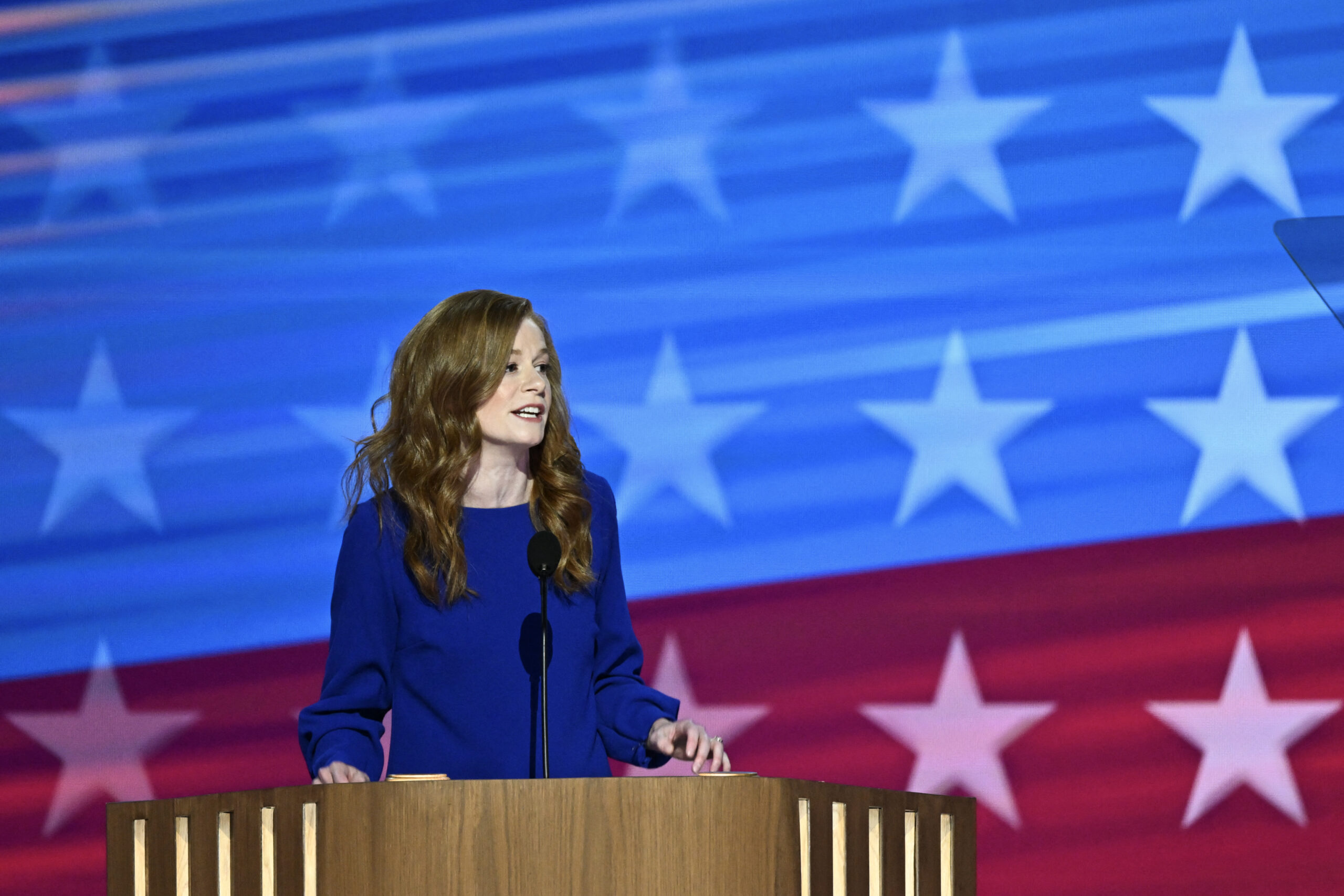
In an interview with JI, the state senator described herself as someone who supports the U.S.-Israel relationship, but not unconditionally
DECISION TIME

As the president touts progress in talks with Tehran while escalating military pressure, analysts say the administration is keeping its options open — but will need to make a move soon
Democratic insiders expressed skepticism that the resolutions would pass as written, but called anti-AIPAC targeting within the party concerning
Al Drago/Bloomberg via Getty Images
Democratic National Convention (DNC) at the United Center in Chicago, Illinois, US, on Thursday, Aug. 22, 2024.
The Democratic National Committee’s resolutions committee is set to consider resolutions condemning AIPAC and Israel at its upcoming meeting next week in New Orleans — a sign of the continued and growing discord in the party over Middle East policy.
It’s unclear at this point how great of a chance the resolutions stand of passing in their current form, but they are emerging as the AIPAC brand has been tarnished inside the Democratic Party.
The resolution targeting AIPAC, described in a resolution packet obtained by Jewish Insider as a “Resolution On Electoral Integrity, Transparency, And Limiting The Influence Of Corporate Money In Democratic Elections,” specifically calls out the pro-Israel group for its spending.
“The use of massive outside spending to support or oppose candidates based on their positions regarding international conflicts or foreign governments raises concerns about undue influence over democratic debate and policymaking, potentially constraining elected officials’ ability to represent the views of their constituents including the American Israel Public Affairs Committee (AIPAC) spending approximately $14 million in a single Illinois Democratic primary,” the resolution reads.
It goes on to accuse “corporate money PACs” of also weighing in against “candidates who have advocated for Palestinian human rights, ceasefire efforts, or changes to U.S. foreign policy.” It states that opposition to such spending should be part of the party’s 2028 platform. Though the rest of the resolution is generally aimed at condemning dark money and independent spending in primaries, AIPAC is the only group singled out by name.
AIPAC and the DNC declined to comment on the resolution.
The resolution was submitted by a DNC delegate from Florida who pushed a resolution last year calling for an arms embargo and a suspension of U.S. aid to Israel, which was ultimately rejected by the same panel. At DNC Chair Ken Martin’s direction, the DNC set up a working group to discuss Israel-related issues.
In addition to the AIPAC resolution, another resolution highlights accusations of genocide against Israel and suggests that Israeli military units are in violation of U.S. arms sales laws, requiring a suspension or conditioning of arms transfers. A third condemns U.S. and Israeli military operations against Iran and its partners, and calls for conditions on U.S. aid to Israel.
Democratic insiders took differing views on whether the resolutions — particularly the one relating to AIPAC — are likely to pass in their current form.
Halie Soifer, the CEO of the Jewish Democratic Council of America, emphasized that any of the 44 members of the resolutions committee can introduce resolutions. She said that the fact of a resolution being introduced doesn’t mean that it will be considered by or adopted by the full DNC. Resolutions are debated and can be amended by the resolutions committee before they are voted on.
“What you’re seeing here doesn’t reflect a position that’s been adopted by the DNC. It reflects one person[’s] — who filed these resolutions — views,” Soifer said. “I don’t expect that these resolutions will be adopted as they’re drafted.”
Soifer argued that, though there’s “broad concern” about dark money across the U.S. political system, targeting AIPAC in particular doesn’t serve the goal of combating the issue as a whole.
“There are many ways to express such concern, I don’t think solely identifying one organization — especially not in this incredibly difficult moment when such a singling out can be viewed as potentially antisemitic — I don’t think that that is effective,” Soifer said.
A DNC official told JI that the resolutions committee is required by DNC bylaws to consider all resolutions as long as they are compliant with DNC rules, that the committee considers dozens of resolutions at each meeting — totaling more than a hundred in the last year — and that the resolutions are not legally binding. If the resolutions committee votes to advance a resolution, it is then voted on by the entire DNC.
Manny Houle, a Democratic pro-Israel strategist in Minnesota, said that he also doesn’t see the AIPAC resolution going forward because it lacks “teeth” — the DNC “can’t tell candidates where they can and cannot raise money … that’s not our purview.” He also emphasized the diversity of DNC delegates, many of whom do not have an intensive focus on AIPAC or the Middle East.
He also lamented that some Democratic activists seem “hyper-focused on something that doesn’t impact [the day-to-day lives of Americans] and [something] they have very little knowledge on, but they have big emotions for,” referring to the situation in the Middle East. But he also predicted the party will ultimately come together around a nuanced position of supporting allies and opposing Iranian aggression while also opposing “needless war.”
But another senior Jewish Democrat, speaking to JI on condition of anonymity, predicted that an anti-AIPAC resolution of some form could move forward, pointing to discontent and frustration among Democratic insiders over AIPAC’s spending to block former Rep. Tom Malinowski’s (D-NJ) special election primary bid earlier this year, as well as its involvement in Democratic primaries in Illinois.
“I think anyone who is surprised by this sort of potential action by the DNC hasn’t been paying close attention to how AIPAC has been seen within the Democratic Party, especially after their relatively recent decision to get actively involved in Democratic primaries,” the Jewish Democrat said. “The Democratic Party is going to respond when outside groups try to manipulate primaries.”
The Jewish leader said that AIPAC has alienated even some Democrats who were previously aligned with or had donated to AIPAC through its recent political maneuvering, potentially putting more fuel on the fire.
At the same time, the leader urged the party to “go out of their way to ensure that they were not singling out AIPAC for any other reason than it was actively involved in Democratic primaries, which of course other outside forces were too. It’s totally legitimate to criticize a pack in a way that you would criticize any other PAC or outside organization trying to influence Democratic primaries.”
Joel Rubin, a Democratic strategist, former senior J Street official and former Jewish liaison for Sen. Bernie Sanders’ (I-VT) presidential campaign, emphasized that he’s worked at odds with AIPAC at many points in his career, but said he is nonetheless concerned about the singling out and targeting of the group.
“Anytime you single out a specific organization where … at least half of the members are Democrats, and you say they’re banned, you’re opening up a litmus test Pandora’s box that is not going to be easily shut. It’s just bad politics,” Rubin said. “There are ways to criticize — as there should be — an organization’s views and even their electoral efforts without putting forward a resolution of policy of the party that is creating a dynamic that will only further alienate Jewish Democratic voters, period.”
Jewish Americans, he emphasized, have been a core constituency to the Democratic Party for decades, as voters, organizers and fundraisers, and the specific targeting of AIPAC “is a great way to kick out perhaps the most loyal voting bloc from the party.” He said that the effort “plays right into the Republicans’ hands.”
And, Rubin noted, the DNC has no ability to control which candidates run in Democratic primaries, from whom they accept contributions or how AIPAC and its supporters spend their money.
He also predicted that some Democratic activists would treat the resolution, and rejection of AIPAC, as an organizing tool and litmus test for Democratic candidates going forward, regardless of whether this particular resolution is approved.
“It’s going to take leadership amongst people to say, ‘This is not how we treat people in our party. This is not what we do. And if we have a problem with AIPAC and the way they use dark money and the way they have Republican donors go through in a sort of stalking horse, we should call that out and point that out every single time,’” Rubin said. “But that does not mean every single dollar that AIPAC uses … is solely Republican.”
Plus, one AI rabbi down but more pop up

Emily Elconin/Getty Images
Caution tape near the front entrance of Temple Israel a day after an active shooter incident on March 13, 2026 in West Bloomfield, Michigan.
This P.M. edition is reserved for our premium subscribers — offering a forward-focused read on what we’re tracking now and what’s coming next. Please don’t hesitate to share your thoughts and feedback by replying to this email.
📡On Our Radar
Notable developments and interesting tidbits we’re tracking
President Donald Trump doubled down on threats to escalate the war in Iran while simultaneously heralding the success of ongoing negotiations: He claimed on Truth Social this morning that the U.S. is in “serious discussions” with a “new” and “more reasonable” Iranian regime and that “great progress has been made.”
“But,” he added, “if for any reason a deal is not shortly reached, which it probably will be, and if the Hormuz Strait is not immediately ‘Open for Business,’ we will conclude our lovely ‘stay’ in Iran by blowing up and completely obliterating all of their Electric Generating Plants, Oil Wells and Kharg Island (and possibly all desalinization plants!)”…
Trump confirmed to the New York Post that the U.S. is engaging with Iranian parliament speaker Mohammad Bagher Ghalibaf and assessing whether he’s a reliable partner: “We’re gonna find out. I’ll let you know that in about a week.” He also said the U.S. believes new Supreme Leader Mojtaba Khamenei is “probably” alive “but in extraordinarily bad shape” after he was injured in an airstrike…
Treasury Secretary Scott Bessent claimed in a Fox News interview that the U.S. is “going to retake control of the straits and there will be freedom of navigation, whether it is through U.S. escorts or a multinational escort”…
A series of surveys released today reveal how Jews and Israelis are perceiving the war in Iran: A poll conducted by the Mellman Group found 55% of American Jews oppose the war while 32% are in favor. Another poll of American Jews, solicited by J Street, found 60% of respondents opposed and 40% in support.
In Israel, meanwhile, a poll released by the Israel Democracy Institute found that the war is losing some support among Israelis, Jewish Insider’s Lahav Harkov reports. In the first week of the war, 93% of Jewish Israelis supported continuing it, while in the latest poll — conducted nearly a month into the war — 78% support it. Nearly three times as many Israeli Jews (12%) now oppose the war as did at the beginning of March (4%)…
The FBI announced findings that the attack on Temple Israel in suburban Detroit earlier this month was “a Hezbollah-inspired act of terrorism purposely targeting the Jewish community and the largest Jewish temple in Michigan.” The brother of the assailant was a Hezbollah commander who had been killed in Lebanon by the IDF the week before the attack…
Michigan Democratic Senate candidate Abdul El-Sayed told campaign staff that he did not want to take any public position on the killing of former Iranian Supreme Leader Ayatollah Ali Khamenei at the beginning of the war because “there are a lot of people in Dearborn who are sad,” according to meeting audio obtained by The Washington Free Beacon.
If asked by reporters, El-Sayed said his strategy would be to “go straight to pedophilia, frankly. I’ll just be like, ‘Pedophile president decides that he doesn’t like the front page news, so he decides to take us into another war’”…
Allies of New York City Mayor Zohran Mamdani told Politico that the mayor’s dismissal of criticisms of his wife, Rama Duwaji, for her past extreme rhetoric and social media posts — calling her “a private person” — doesn’t comport with Duwaji’s very public profile.
“‘She is the first lady of New York City. She has a police detail and a government staff,’ said one of the elected officials, who believes Duwaji should explain herself publicly. ‘She would need to do an interview, better explain herself, and have her do some visits and meetings with key constituencies, like Jewish museums’”…
An AI-generated Instagram account, which featured a fake Orthodox rabbi spreading antisemitic conspiracies to its more than 1.4 million followers, was taken offline over the weekend following major backlash from Jewish groups and one Democratic lawmaker — yet several similar, hate-peddling accounts have emerged with little to no public action from Meta, JI’s Haley Cohen reports.
Several new Rabbi Goldman accounts started posting similar videos within the past two weeks — two of which already have followings of 18,500 and 10,000. Both remain active on Instagram and their bios state, “only Backup account for @rabbigoldman” and “old account got banned”…
The Knesset passed a controversial law today allowing courts to impose the death penalty on convicted terrorists found guilty of murder, JI’s Lahav Harkov reports.
The law, championed by National Security Minister Itamar Ben-Gvir, applies in military courts to non-Israeli residents of the West Bank — meaning, in the vast majority of cases, Palestinians. In civilian courts, the law permits applying the death penalty to those who “intentionally cause the death of a person with the aim of denying the existence of the State of Israel” — language which would also likely exclude Jewish assailants. Critics say it will likely be struck down by the High Court…
The Times of Israel breaks down the legislative maneuver used in Knesset by the coalition that caused opposition members to accidentally vote in favor of allocating 800 million shekels (~$250 million USD) to Haredi schools as they passed the state budget this morning…
In an interview on Israel’s Channel 12, Ukrainian President Volodymyr Zelensky said he has barely spoken to Israeli Prime Minister Benjamin Netanyahu since their last meeting at the United Nations General Assembly in September 2023…
⏩ Tomorrow’s Agenda, Today
An early look at tomorrow’s storylines and schedule to keep you a step ahead
Keep an eye out in Jewish Insider for a look at the resolution coming under consideration by the Democratic National Committee that explicitly criticizes AIPAC’s political spending.
The House and Senate left for recess until mid-April, after failing to come to an agreement to fund the Department of Homeland Security, which has now reached its longest-ever shutdown. Calls have already begun from at least one Republican senator to bring Congress back into session sooner, but prospects for an early return are currently unclear.
Sen. Cory Booker (D-NJ) will speak at Temple Emanu-El in New York City tomorrow about his new book, Stand, on the one-year anniversary of his delivery of the longest-ever speech on the Senate floor.
Stories You May Have Missed
SEAT SHAKE-UP
The lawmaker, who may soon be expelled from the chamber, is already in a heated primary race with Elijah Manley, a young far-left candidate endorsed by TrackAIPAC
PHONE A FRIEND
The sister, niece and brother-in-law of Maoist magnate Neville ‘Roy’ Singham have gained influence in New York’s ascendant socialist movement
Plus, fake AI rabbis peddle antisemitism
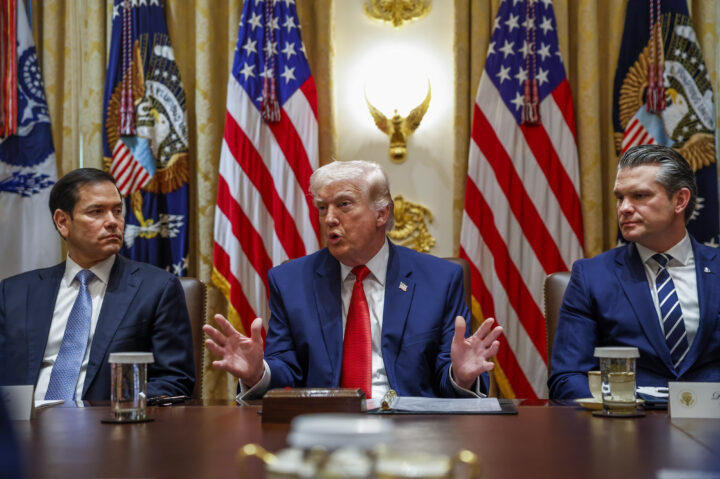
Will Oliver/EPA/Bloomberg via Getty Images
Secretary of State Marco Rubio, President Donald Trump and Defense Secretary Pete Hegseth during a Cabinet meeting at the White House in Washington, DC, US, on Thursday, March 26, 2026.
This P.M. edition is reserved for our premium subscribers — offering a forward-focused read on what we’re tracking now and what’s coming next. Please don’t hesitate to share your thoughts and feedback by replying to this email.
📡On Our Radar
Notable developments and interesting tidbits we’re tracking
President Donald Trump announced this afternoon that he’s extending his original five-day delay on strikes on Iran’s energy sector, which was set to expire tomorrow, by another 10 days. “As per Iranian Government request … I am pausing the period of Energy Plant destruction by 10 Days to Monday, April 6, 2026, at 8 P.M., Eastern Time,” he wrote on Truth Social, adding that negotiations continue and are “going very well”…
At a Cabinet meeting earlier today, Trump revealed that the “present” Iran had provided the U.S. earlier this week was allowing eight Pakistani-flagged oil tankers to pass safely through the Strait of Hormuz, which he said proved the U.S. was speaking with the “right people” in Iran with the authority to make such decisions.
Special Envoy Steve Witkoff, meanwhile, confirmed reports that the U.S. had presented Iran with a “15-point action list” as a starting offer in peace talks between the two countries, and that Pakistan is acting as mediator…
Speaking at the FII Priority summit in Miami, Jared Kushner said that, during his negotiations with Iran prior to the war, “We basically saw that there was no seriousness, and that they were trying to play different games to just get beyond President Trump in order to preserve their capabilities and pathway to get to a nuclear weapon in a way that would have been very, very hard to be stopped in the future”…
CENTCOM applauded an Israeli strike that killed Alireza Tangsiri, the commander of the IRGC Navy, and warned all IRGC Navy members to “immediately abandon their post and return home.” Tangsiri had been named a Specially Designated Global Terrorist by the U.S. in 2019 and was leading Iran’s efforts to shutter the Strait of Hormuz…
Even as U.S.-Iran negotiations continue, the U.S. is considering diverting weapons for Ukraine to the Middle East, The Washington Post reports, including air-defense interceptor missiles.
Ukraine has proved a stalwart ally to the Gulf as it comes under attack from Iran — around 200 Ukrainian military personnel have been deployed around the Middle East to help defend against Iranian drones and President Volodymyr Zelensky arrived in Saudi Arabia today for a surprise visit…
Resources are also being redirected to Gaza — the Trump administration has reportedly pulled $1.25 billion from international peacekeeping and disaster assistance programs for the Board of Peace’s operations, for which Trump had pledged $10 billion in U.S. funding…
An AI-generated Instagram account portraying an Orthodox-looking rabbi is pushing antisemitic conspiracy theories to its more than 1.4 million followers, and it’s not the only one, according to a study published Wednesday by Combat Antisemitism Movement.
Jewish Insider’s Haley Cohen reports: Researchers identified 12 AI-generated “rabbis” with a combined following of 2.1 million Instagram users, all of which promote classic antisemitic stereotypes. The “Rabbi Goldman” account features many of these, including one video in which the “rabbi,” wearing a tuxedo and seemingly seated in a luxury airplane, claims that Jews utilize empty private jets to evade taxes…
A new Emerson College poll of the Maine Senate race found oyster farmer Graham Platner with a nearly 30 point lead over Gov. Janet Mills (55-28%) in the Democratic primary. Both Platner and Mills lead Sen. Susan Collins (R-ME) in the general election matchup, 48-41% and 46-43%, respectively…
California Gov. Gavin Newsom again reaffirmed his support for Israel in an interview with The Bulwark, likening his love for the country but strong disapproval of its current government with how he feels about the U.S…
Democrat Analilia Mejia and Republican Joe Hathaway will participate on April 1 in what is likely to be the only debate of the New Jersey 11th Congressional District’s special election, after the far-left Mejia won the Democratic nomination in a hotly contested primary last month. The New Jersey Globe, which is hosting the debate, acknowledged it had chosen to do so on the first night of Passover, in a district with a sizable Jewish population…
The College Republicans chapter at the University of Florida is suing the school, after a photo of one of its members doing what appeared to be a Nazi salute led to the chapter’s ban from campus.
The chapter argues that the ban violated its First Amendment rights as the member “expressed a viewpoint off-campus that was alleged by some to be anti-Semitic,” and claims it was deactivated in part because it recently hosted James Fishback, a candidate for Florida governor who has expressed antisemitic and anti-Israel views…
⏩ Tomorrow’s Agenda, Today
An early look at tomorrow’s storylines and schedule to keep you a step ahead
Keep an eye out in Jewish Insider for comments from Michigan state Sen. Mallory McMorrow on Israel and antisemitism as she seeks the Democratic nomination for U.S. Senate against Rep. Haley Stevens (D-MI) and Abdul El-Sayed.
President Donald Trump will provide closing remarks at the FII Priority summit in Miami tomorrow afternoon.
Texas Attorney General Ken Paxton will headline CPAC’s Ronald Reagan Dinner. His primary opponent, Sen. John Cornyn (R-TX), will not be making an appearance, despite the confab taking place in his home state and calls from its leadership for him to attend.
Secretary of State Marco Rubio is traveling to France to attend a meeting of G7 foreign ministers where he is expected to press allies on the Iran war — he told reporters as he departed today, echoing a line from Trump, that the countries involved “get far more of their fuel from” the Strait of Hormuz “than we do.”
Stories You May Have Missed
TROUBLE IN THE NEIGHBORHOOD

Frustrated UAE leaders are questioning the ‘impotence’ of countries like Egypt — and warn that silence on Iranian aggression will push the Gulf closer to U.S., Israel
MICHIGAN MOMENT
Stevens said that by associating with Piker, El-Sayed is ‘choosing to campaign with someone who has a history of antisemitic rhetoric’
The dispute erupted Tuesday after Piker revealed that he would join Abdul El-Sayed, a Democratic Senate candidate in Michigan, for two upcoming rallies in the state

Shauna Clinton/Sportsfile for Web Summit Qatar via Getty Images
Hasan Piker during day two of Web Summit Qatar 2026 at the Doha Exhibition and Convention Center in Doha, Qatar.
A nasty intraparty divide intensified this week as Democrats publicly debated whether to associate with Hasan Piker, the far-left streamer who has faced criticism for antisemitic commentary and pro-Hamas rhetoric, among other extreme remarks.
The dispute erupted Tuesday after Piker revealed that he would join Abdul El-Sayed, a Democratic Senate candidate in Michigan, for two upcoming rallies in the state, marking the Twitch streamer’s first major campaign appearance of the midterms.
For mainstream Democrats increasingly troubled with Piker’s rising influence on the left, El-Sayed’s decision was particularly alarming. In a statement on Tuesday, Jonathan Cowan, president of the centrist Democratic think tank Third Way, said Democrats’ associations with Piker are “morally repugnant and strategically self-defeating,” and alleged that candidates “eager to campaign with” him are, “at best, comfortable overlooking his antisemitic and anti-American extremism and, at worst, endorsing it.”
Meanwhile, Rep. Brad Schneider (D-IL), a top moderate voice in the House, became one of the first prominent Democratic officials to speak out against Piker in comments on Tuesday, calling on the party to reject and distance itself from a figure he characterized as “an unapologetic antisemite.”
In a statement to social media, Schneider said Democrats “cannot allow those who preach hate and seek division to find safe harbor among us,” urging his colleagues to “call out hate and reject those who champion ideologies of exclusion and demonization.”
On Wednesday, El-Sayed faced further blowback from high-profile Michigan Democrats, including Rep. Haley Stevens (D-MI), a top rival in the Senate race, who said “choosing to campaign with someone who has a history of antisemitic rhetoric” would not be a winning formula in the swing state. Sen. Elissa Slotkin (D-MI) echoed that sentiment, saying Piker “sounds deeply antisemitic” and he is “not someone that should be helping anybody out in the Michigan political environment.”
A spokesperson for El-Sayed’s campaign did not respond to a request for comment asking if he had weighed Piker’s antisemitic rhetoric in choosing to appear with him. The Senate candidate has said he is unconcerned with backlash to his decision, while arguing that his “politics resonates with people who have been locked out.”
Piker, for his part, has appeared to relish the new controversy, calling Schneider an “AIPAC dog” in an X post. “Democrats that spend any amount of time chirping about me love israel [sic] more than defeating Republicans and preserving democracy,” he wrote in another.
Even as prominent progressives have come to Piker’s defense, none seem to have meaningfully reckoned with his record of extreme commentary, which features a range of offensive statements about Jews and Israel. He has labeled Orthodox Jews as “inbred,” compared Zionists to Nazis and dismissed reports of sexual violence perpetrated by Hamas on Oct. 7, 2023. More recently, he unequivocally sided with Hamas, saying the terror group “is a thousand times better” than Israel — which he condemned as a “fascist settler colonial apartheid state” in a social media post last January to his 1.6 million followers.
Rep. Ro Khanna (D-CA), for instance, a potential 2028 presidential contender who has appeared on Piker’s show, said in mid-March that he is “proud” to join the streamer’s feed. But when asked to share his views on Piker’s antisemitic comments, Khanna — in keeping with other progressive elected officials and activists who likewise have ties to the influencer — has demurred, stating broadly that he condemns antisemitism while reiterating he has called Hamas a terrorist organization.
The debate over Piker raises questions about the meaning of progressivism as left-leaning figures have continued to tolerate and in some cases even condone Piker’s extreme commentary, which has frequently shown a penchant for illiberalism that is sharply at odds with traditional progressive values.
In addition to espousing antisemitism and using eliminationist rhetoric with regard to Israel, Piker has said “America deserved 9/11,” downplayed the U.S.-designated Uyghur genocide in China, voiced approval of Hezbollah, called Russia’s annexation of Crimea “justifiable” and endorsed political violence, among other radical sentiments regularly expressed on his Twitch stream and on social media.
Jeremiah Johnson, co-founder of the Center for New Liberalism, who has written critically about Democrats embracing Piker, said the fundamental issue with the streamer “is that he does not believe in liberal democracy.”
“I am generally in favor of a big tent for the Democratic Party,” he told Jewish Insider. “If we want to win large majorities, we’re going to have to accept that some of the people who vote for us will have idiosyncratic, outdated or even outright wrong and bigoted views. But that doesn’t mean we should make those voices the face of the party, and I think it’s a dangerous game for Democrats to promote people like Piker.”
Piker’s status otherwise underscores how some progressive leaders are increasingly aligning with extreme figures in the Democratic Party based on broad policy agreements, without fully accounting for the implications of ignoring or validating baggage that voters would likely find off-putting.
Last week, for example, Sen. Elizabeth Warren (D-MA) joined a growing cohort of Democratic senators in endorsing Graham Platner, a far-left candidate running for Senate in the battleground state of Maine, saying he’s “got the grit to fight for what’s right on behalf of Maine’s working families — not billionaires and giant corporations.”
Her statement made no allusion to the lingering concerns over Platner’s now-covered Nazi tattoo — whose symbolism he claims not to have known until recently — even as she raised alarms last year about one of Defense Secretary Pete Hegseth’s tattoos that is reportedly linked to white supremacist ideology.
Warren’s team did not respond to a request for comment from JI asking if she had considered Platner’s tattoo while making her endorsement.
Some critics argue that progressives who overlook Piker’s disturbing record or dismiss Platner’s tattoo do so at their own peril.
Shannon Watts, a prominent gun control activist who has vocally criticized both Piker and Platner, said it is “disheartening to watch some Democratic politicians and pundits align with the most morally vacant and dangerous people in our party, just as we watched happen on the right for over a decade.”
“Too many Democrats are deciding one compromise at a time that their political survival matters more than principle,” she told JI this week. “Anyone who embraces hatred cannot call themselves progressive; they are simply an emerging version of MAGA on the left. Aligning with and supporting antisemitic behavior is a moral stain on our party and a stark warning sign for our future.”
Plus, is Stevens losing steam in Michigan Senate race?
Anna Rose Layden/Getty Images
House Armed Services Committee Chairman Mike Rogers (R-AL) speaks to the press at the U.S. Capitol on October 17, 2025 in Washington, DC.
This P.M. edition is reserved for our premium subscribers — offering a forward-focused read on what we’re tracking now and what’s coming next. Please don’t hesitate to share your thoughts and feedback by replying to this email.
📡On Our Radar
Notable developments and interesting tidbits we’re tracking
White House Press Secretary Karoline Leavitt downplayed reports that Iran has rejected President Donald Trump’s ceasefire proposal, saying in a press briefing today that “talks continue” and “are productive.” She further confirmed, while cautioning against speculation, that there are “elements of truth” to the 15-point plan that has been reported.
About potential face-to-face negotiations, which International Atomic Energy Agency head Rafael Grossi said could take place in Pakistan as soon as this weekend, Leavitt said she “would not get ahead of our skis on reporting about any talks this weekend until you hear directly from us”…
Emerging from a classified House Armed Services Committee briefing on Iran, Chairman Mike Rogers (R-AL) expressed frustration that the administration isn’t forthcoming enough about its war plans. “We want to know more about what’s going on, what the options are and why they’re being considered, and we’re just not getting enough answers on those questions,” Rogers told reporters.
And Senate Armed Services Committee Chairman Roger Wicker (R-MS), asked about his House colleague’s comments, said, “Let me put it this way: I can see why he might have said that.” It’s the latest sign of cracks in the GOP nearly a month into the war effort…
For the first time since the start of the war, the UAE — which has faced the brunt of Iran’s attacks — reported zero Iranian ballistic missile attacks today, raising questions about the Islamic Republic’s potentially dwindling supplies.
Yousef Al Otaiba, the Emirati ambassador to the U.S., called for a “conclusive outcome” to the war, as opposed to a “simple cease-fire.” Writing in The Wall Street Journal, he argued that “building a fence around the problem and wishing it goes away isn’t the answer. It would simply defer the next crisis”…
European authorities are investigating whether a new group that has claimed responsibility for several recent terror attacks on Jewish institutions across Europe, the Islamic Movement of the Righteous Companions, is a front for Iran, which has likely recruited people online to carry out the attacks on its behalf…
The Journal profiles Iranian parliament speaker Mohammad-Bagher Ghalibaf as he emerges as a potential leader and negotiating partner for the U.S., with one expert calling him a “wannabe strongman” who simultaneously has “the necessary credentials to deliver a potential deal with the Trump administration”…
An internal poll from the campaign of Michigan state Sen. Mallory McMorrow shows her leading the pack in the Democratic primary for U.S. Senate, followed by the far-left Abdul El-Sayed with Rep. Haley Stevens (D-MI) trailing in third place, a sign her campaign is struggling to build momentum. A fifth of potential primary voters still identified themselves as undecided.
Stevens’ campaign then released its own internal poll that showed her in first place, followed closely by El-Sayed with McMorrow in third, though the survey was conducted in mid-February…
As the Trump administration sues Harvard — again — over alleged civil rights violations and failure to address campus antisemitism, Rabbi Hirschy Zarchi, president of Harvard Chabad, told The Harvard Crimson that the school is in fact “taking the issue” of antisemitism “very seriously.”
“While there is much more to be done, the only plausible characterization of Harvard’s current leadership is as principled and effective in confronting and removing the intolerance which had taken root on campus over more than a decade,” added Jason Rubenstein, executive director of Harvard Hillel…
Asked at a recent event at Harvard’s Kennedy School whether the Biden administration could have done more to save lives in the war in Gaza, former Secretary of State Tony Blinken said, “Could we, should we have done things differently such that the suffering that people endured, the loss of the children you just listed and so many others could have been averted? The short answer is: Maybe yes.”
Blinken also called on people not to be “binary” in their thinking about the Middle East, Jewish Insider’s Gabby Deutch reports. With the Gaza war, he said, “Where did we start? We started with Oct. 7. We started with the most horrific massacre of Jews since the Holocaust. It’s very easy to say, ‘Oh, yeah, that’s a given.’ Except it wasn’t a given for Israelis and Israeli society”…
⏩ Tomorrow’s Agenda, Today
An early look at tomorrow’s storylines and schedule to keep you a step ahead
Keep an eye out in Jewish Insider for a look at the growing divide in the Democratic Party over engagement with antisemitic streamer Hasan Piker — and the questions it raises about the meaning of progressivism in the current political landscape.
The Atlantic Council and U.S.-Syria Business Council will host a symposium on Syria’s energy sector with keynote remarks from U.S. Special Envoy to Syria Tom Barrack. Also speaking are several oil executives and Jacob McGee, the State Department’s deputy assistant secretary for Israeli-Palestinian affairs.
The FII Priority Summit continues in Miami; among other sessions tomorrow, Jared Kushner will speak on U.S.-Gulf investment and Zach Witkoff, co-founder of World Liberty Financial and son of Special Envoy Steve Witkoff, will discuss crypto.
CPAC, which President Donald Trump is seemingly not attending for the first time in a decade, continues in Dallas. GOP candidates who are in attendance include Brandon Herrera, the far-right influencer running in Texas’ 23rd District; Michael Whatley, the front-runner in North Carolina’s open Senate race; Rep. Mike Collins (R-GA), running in a competitive primary to challenge Sen. Jon Ossoff (D-GA); Rep. Kevin Hern (R-OK), seeking the Senate seat vacated by new Homeland Security Secretary Markwayne Mullin; and Nate Morris, running to succeed retiring Sen. Mitch McConnell (R-KY).
The House Ethics Committee will hold a rare public hearing on Rep. Sheila Cherfilus-McCormick’s (D-FL) alleged ethics violations, including her laundering of funds from a FEMA-backed contract for her family business into her congressional campaign.
Stories You May Have Missed
STRAIT TALK
Some disagree on who should claim ultimate responsibility for the strait — the U.S. or other countries in the region
GUARDING THE GATES
Schneider called Piker ‘an unapologetic antisemite’ and warned ‘Democrats risk losing our credibility to condemn those on the right who traffic in bigotry’ if they continue to embrace him
The major Democratic donor said the outsized scrutiny of AIPAC’s political involvement is an effort to ‘chase Jews and their allies out of our big tent coalition’

Vernon Yuen/NurPhoto via Getty Images
Michael J. Sacks at the Global Hong Kong Global Financial Leaders Investment Summit on October 8, 2023 in Hong Kong, China.
A prominent Jewish Democratic donor in Chicago is raising alarms that growing efforts to demonize AIPAC and its engagement in political campaigns are part of a more sinister effort to make pro-Israel Jews feel unwelcome in a party they have long called home.
In an opinion article published in The Chicago Tribune on Tuesday headlined “Why I support AIPAC and a big tent Democratic Party,” Michael Sacks, an asset manager and longtime ally of former Chicago Mayor Rahm Emanuel, pointed to what he called a “double standard” for AIPAC’s political involvement, and warned of “a coordinated effort to make support for Israel a litmus test for Democratic primary candidates in 2026 and beyond.”
“Let’s be clear: The campaign against AIPAC is not a policy discussion,” he wrote. “It’s a thinly disguised effort to make support for Israel politically toxic in the Democratic Party, to chase Jews and their allies out of our big tent coalition.”
His public comments on a hot-button issue come in the wake of a contentious primary cycle in Illinois earlier this month, where AIPAC’s spending in a range of contested House races was a subject of particularly heated criticism that is expected to play a role in the midterms and 2028 presidential election.
His op-ed also lands as some Democratic leaders have distanced themselves from AIPAC, including Illinois Gov. JB Pritzker, a rumored 2028 presidential contender and a former AIPAC donor who in recent interviews has said he abandoned the pro-Israel group because it leaned too heavily to the right and lost its commitment to bipartisanship. He has also accused AIPAC of “interference” in Illinois’ recent House races, where its affiliated groups spent more than $20 million across four major primaries.
Despite their differences over AIPAC, Pritzker defended Sacks on Tuesday during an unrelated press conference. “Do I think that people who supported AIPAC can be good Democrats? I can tell you Michael Sacks is a very good, decent, honorable human being who cares deeply about the Democratic values I expressed to you,” Pritzker said.
He added that it was “very unfair for people to have targeted” Sacks “when what he believes is the same thing,” referring to “the security of the state of Israel and the security of the Palestinian people at the very same time.”
During the primaries, Sacks himself faced personal blowback after a progressive House candidate said he was rejecting his campaign contribution because of Sacks’ ties to AIPAC — a move Sacks lamented at the time as a sign of growing “anti-Israel sentiment and outright Jew hate.”
Sacks contributed a combined $1.2 million to two super PACS linked to AIPAC that faced scrutiny for obscuring their donors until after the primaries on March 17. He also donated to pro-Israel candidates who were backed by AIPAC, including former Rep. Melissa Bean (D-IL), who clinched the nomination in Illinois’ 8th Congressional District, and state Sen. Laura Fine, who lost to an outspoken Israel critic in Illinois’ 9th.
In the Tribune, Sacks clarified that he has not always aligned with AIPAC, saying he had “stepped away” from the group in 2017 over its fierce opposition to President Barack Obama’s Iran nuclear agreement, after decades of involvement.
But following the Hamas attacks of Oct. 7, 2023, Sacks wrote, “as I watched anti-Israel sentiment accelerate within my party, including in Illinois,” he reconnected with AIPAC, asking how he could help to “ensure we didn’t send more people to Congress from Chicago who would deny Israel access to even essential defensive weapons.”
His experience observing the Illinois primaries, where other special-interest groups linked to the crypto and artificial intelligence industries had also invested heavily, ultimately exposed what he called a “stark and deliberate” attempt to single out AIPAC and broader pro-Israel activism as a unique source of backlash, he said, arguing that such criticism had not been evenly allocated throughout the campaign.
“I don’t agree with everything Israel and AIPAC do. Like many Israeli leaders as well as elected officials who receive AIPAC support, I believe in a two-state solution,” Sacks wrote. “If you’re not for two states, you’re for endless war. I also believe in a big tent Democratic Party. Democratic leaders claim to be for those things as well. Yet we demonize AIPAC and pro-Israel Jewish Democrats, while accepting those who cannot even say they support a two-state solution that includes Israel.”
Sacks, who chaired the 2024 Democratic National Convention host committee in Chicago, concluded the op-ed with a call to “Democratic leadership to brave this issue,” saying “we need more thermostats and fewer thermometers.”
“Real leadership recognizes that we can hold complicated views about the Israeli government and still refuse to make Jewish identity and pro-Israel sentiment a political disqualifier in our party,” he said in his article on Tuesday. “We can defend the big tent when it is inconvenient, not just when it is easy.”
Plus, media misdirection over AIPAC money
Shauna Clinton/Sportsfile for Web Summit Qatar via Getty Images
Hasan Piker during day two of Web Summit Qatar 2026 at the Doha Exhibition and Convention Center in Doha, Qatar.
This P.M. edition is reserved for our premium subscribers — offering a forward-focused read on what we’re tracking now and what’s coming next. Please don’t hesitate to share your thoughts and feedback by replying to this email.
📡On Our Radar
Notable developments and interesting tidbits we’re tracking
Rumblings of a potential peace summit between Washington and Tehran have begun — sources told Axios that the U.S. and several mediating countries are waiting for Iran to respond to a proposal for peace talks this Thursday, while President Donald Trump reposted a message from Pakistan offering to “be the host to facilitate meaningful and conclusive talks”…
Trump told reporters in the Oval Office this afternoon that “we’re dealing with the right people” in Iran because they “gave us a present, and the present arrived today. It was a very big present worth a tremendous amount of money,” but would only tease that it was “oil and gas related.” Asked if he is negotiating over who will control the Strait of Hormuz, Trump said, “No … we’ll have control of anything we want”…
Saudi Crown Prince Mohammed bin Salman has encouraged Trump to continue the campaign against Iran and push towards toppling the regime, The New York Times reports, believing that Iran’s threat to the Gulf will only be removed through the transition of its government and not if the war results in a failed state. MBS has reportedly argued in favor of striking Iran’s energy infrastructure and putting U.S. troops on the ground…
The Pentagon is expected to announce the deployment of about 3,000 soldiers from the military’s 82nd Airborne Division to participate in the campaign against Iran, The Wall Street Journal reports, a move that opens the possibilities for boots on the ground, as the division is trained to parachute into hostile territory…
Israeli Defense Minister Israel Katz said today that the IDF will now maintain control over a security zone south of the Litani River in Lebanon and prevent the return of Lebanese residents who have been evacuated from the area “until the security of northern [Israeli] residents is assured”…
Lebanese Minister of Foreign Affairs Youssef Raggi declared Iran’s ambassador to Beirut persona non grata and expelled him from the country, as Iranian proxy Hezbollah continues to fire on Israel against the Lebanese government’s orders.
Shortly after, an Iranian ballistic missile was launched towards Beirut for the first time — it was reportedly intercepted by a “foreign naval vessel,” presumably the U.S., though fragments struck Lebanese towns…
Secretary of State Marco Rubio is being dispatched to France later this week to discuss the Iran war, among other issues, with the U.S.’ G7 allies, including Britain, Canada, France, Germany, Italy and Japan, countries that have all declined to participate in the war effort…
Majed al-Ansari, spokesperson for the Qatari foreign ministry, said today that Qatar is not involved in mediating any U.S.-Iran negotiations, a shift for the country that has traditionally played the part of go-between. Al-Ansari said there has been no communication between Doha and Tehran since a phone call early in the conflict when Qatar made clear its anger with Iranian strikes on its territory…
Politico reports that several 2028 Democratic presidential hopefuls said they wouldn’t or haven’t taken money from AIPAC, including Sen. Cory Booker (D-NJ), California Gov. Gavin Newsom, Sen. Ruben Gallego (D-AZ), Kentucky Gov. Andy Beshear, Illinois Gov. JB Pritzker, Pennsylvania Gov. Josh Shapiro, Sen. Elissa Slotkin (D-MI) and former Chicago Mayor Rahm Emanuel.
But while framing the statements as rejections of AIPAC and Israel, the outlet buried or declined to mention Booker’s rebuke of the Democratic Party’s singling out of the pro-Israel group, several respondents’ inability to accept funds from AIPAC since it only participates in congressional elections and Newsom’s own about-face on Israel, where in the same publication he walked back critical comments he’s made and said he’s “proud to support the state.”
AIPAC said in response that it has “never given to a presidential campaign” and that “singling out and excluding millions of pro-Israel Democrats” who are AIPAC members “is wrong and undemocratic”…
Michael Sacks — a prominent Democratic donor and supporter of former President Barack Obama who chaired the 2024 Democratic National Convention host committee — denounced Democratic criticism of AIPAC as a “thinly disguised effort to make support for Israel politically toxic in the Democratic Party, to chase Jews and their allies out of our big tent coalition.”
Sacks wrote in the Chicago Tribune, “Real leadership recognizes that we can hold complicated views about the Israeli government and still refuse to make Jewish identity and pro-Israel sentiment a political disqualifier in our party. We can defend the big tent when it is inconvenient, not just when it is easy”…
Jonathan Cowan, president of the moderate Democratic think tank Third Way, condemned far-left Michigan Senate candidate Abdul El-Sayed for his upcoming rallies with antisemitic streamer Hasan Piker, Jewish Insider’s Danielle Cohen-Kanik reports.
“It is morally repugnant and strategically self-defeating for Democrats like Abdul El-Sayed and Members of Congress like Summer Lee to cozy up to antisemitic extremists like Hasan Piker,” Cowan said in a statement. “Anyone eager to campaign with Hasan Piker is, at best, comfortable overlooking his antisemitic and anti-American extremism and, at worst, endorsing it”…
El-Sayed stood by his controversial statement about the shooting attack at Temple Israel in suburban Detroit earlier this month, in which he condemned the attack but blamed Israel’s military campaign in Lebanon for the perpetrator’s actions (the attacker’s brother was a Hezbollah commander).
The statement “was a risk,” El-Sayed said on an internal campaign call, per Punchbowl News, “but leadership is being willing to say the thing if you believe it to be true that nobody else is going to say”…
⏩ Tomorrow’s Agenda, Today
An early look at tomorrow’s storylines and schedule to keep you a step ahead
Keep an eye out in Jewish Insider for coverage of another war powers resolution expected to receive a vote this evening in the Senate.
President Donald Trump will give the keynote speech at the National Republican Congressional Committee’s annual President’s Dinner in Washington.
The House Homeland Security Committee will hold a hearing assessing the impact of the Department of Homeland Security shutdown, as lawmakers make progress on negotiations to fund the agency.
D.C. councilmember and mayoral candidate Janeese Lewis George will rally alongside other members of the Democratic Socialists of America including Squad-member Rep. Rashida Tlaib (D-MI), days after Lewis George held a private meeting with Jewish leaders to apologize for saying in a DSA questionnaire she would boycott events “promoting Zionism” and avoid the “Zionist lobby.”
Scholar of Jewish literature Ruth Wisse will deliver the annual Jefferson Lecture in the Humanities, the highest honor the federal government gives for intellectual achievement in the humanities, at the Kennedy Center in Washington.
The FII PRIORITY Summit, a high-profile investment and policy conference, will kick off in Miami, with speakers over the rest of the week including Trump; Donald Trump Jr.; Jared Kushner; White House Special Envoy Steve Witkoff; Dina Powell McCormick, president of Meta; Saudi Ambassador to the U.S. Princess Reema Bandar Al Saud; former Treasury Secretary Steve Mnuchin; Massad Boulos, senior White House advisor on the Middle East; and many more.
The Conservative Political Action Conference, known as CPAC, also begins tomorrow in Dallas.
The Jewish Book Council will hold the 75th National Jewish Book Awards Gala, hosted by entertainer Jonah Platt, at Temple Emanu-El in New York City.
Stories You May Have Missed
SECOND ACT


PAIN TO POWER

In the wake of Oct. 7, some in the Jewish community turned to faith, philanthropy or federal advocacy. Others set their sights closer to home, organizing to shape school boards and influence city councils
Plus, GOP losing hope in unseating Ossoff

Roberto Schmidt/Getty Images
President Donald Trump speaks to reporters before boarding Air Force One at Palm Beach International Airport on March 23, 2026 in West Palm Beach, Florida.
This P.M. edition is reserved for our premium subscribers — offering a forward-focused read on what we’re tracking now and what’s coming next. Please don’t hesitate to share your thoughts and feedback by replying to this email.
📡On Our Radar
Notable developments and interesting tidbits we’re tracking
President Donald Trump revealed today that White House Special Envoy Steve Witkoff and advisor Jared Kushner have been negotiating with Iran amid the ongoing war, Jewish Insider’s Emily Jacobs reports, which played a role in Trump’s decision to delay by five days potential strikes on Iranian energy infrastructure.
“We have had very strong talks,” Trump told reporters. “Mr. Witkoff and Mr. Kushner had them. They went, I would say, perfectly. If they carry through with that, it’ll end that problem.” But the president kept the option of continued military action open: “If it goes well, we’re going to end up with settling this. Otherwise, we’ll just keep bombing our little hearts out,” he said.
At an event in Tennessee this afternoon, Trump added, “My whole life has been a negotiation, but with Iran we’ve been negotiating for a long time, and this time they mean business” and claimed the U.S. has taken out 90% of Iran’s missile launchers…
Israeli Prime Minister Benjamin Netanyahu said in a video statement that he spoke with Trump today about the negotiations, which the president believes could result in “an agreement that will safeguard our vital interests.”
“At the same time,” Netanyahu said, Israel is continuing to strike targets in Iran and Lebanon; the IDF announced it had struck several “regime headquarters” in Tehran and CENTCOM also said it continues “to aggressively strike Iranian military targets with precision munitions”…
Senate Minority Leader Chuck Schumer (D-NY) declined to directly address whether the degradation of Iran’s military infrastructure should be viewed as a positive outcome, JI’s Matthew Shea reports, instead emphasizing the war’s potential economic and geopolitical consequences.
Asked on MS NOW’s “Morning Joe” if the degradation is a “good thing,” Schumer said it’s a “premature question. What is going to happen in the next several months? Is it worth it? Will the world economy collapse? … If you ask the American people, if you have the choice of degrading the military structure in Iran, but having gasoline be $6 a gallon and our economy falling into a deep recession where millions lose their job, what do you think?”…
The New York Times reports on the apparent failure of a plan by the Mossad to foment internal Iranian rebellion that could lead to the overthrow of the regime amid the ongoing war, as American and Israeli intelligence indicates the regime is weakened but intact…
UAE Foreign Minister Abdullah bin Zayed said Abu Dhabi will “never be blackmailed by terrorists,” in response to a post from French diplomat Gérard Araud who called the UAE’s further embrace of the U.S. amid bombardment from Iran “strange”…
The Associated Press examines Israel’s use of Iran’s network of surveillance cameras to carry out intelligence operations including the assassination of former Supreme Leader Ayatollah Ali Khamenei…
Asked if former intelligence official Joe Kent was leaking classified information, as he is reportedly under investigation by the FBI for doing, Trump said “that’s possible,” and largely derided Kent for his failed congressional campaigns and for remarrying “quickly” after his first wife was killed in 2019 while serving in Syria.
“I felt badly for him, so I told my people, ‘Reach out to him, give him a job at the White House.’ This is the thanks I get,” Trump told reporters. He also dismissed Kent’s opposition to the Iran war as an effort “to get publicity”…
Heritage Foundation President Kevin Roberts said that internal MAGA divisions over the Iran war, like those espoused by Kent, are “good” for the movement. “As it relates to tensions in the movement or disagreements about national security, actually, it’s good that those exist,” he told The Hill. But, Roberts said, he believes Trump “has executed [the war] perfectly, including not involving untrustworthy European, quote, unquote allies in the conversation”…
Politico looks at the decision of pro-Israel groups including AIPAC and the Republican Jewish Coalition not to spend money against Texas congressional candidate Brandon Herrera as they did during his first run for Congress, despite Herrera’s history of extreme views and antisemitic rhetoric. Trump endorsed Herrera last week after Rep. Tony Gonzales (R-TX) withdrew from the race…
New filings from the Federal Election Commission show that two super PACs rumored to be established by pro-Israel groups during the Illinois Democratic primaries were primarily funded by United Democracy Project, the AIPAC-affiliated super PAC, which spent more than $5.3 million through Elect Chicago Women and Affordable Chicago Now.
Among the other major donors who backed the two groups was prominent Democratic philanthropist Michael Sacks, who had lamented the rising “Jew hate” among candidates who refused to take money from donors affiliated with AIPAC earlier in the election…
Republicans are quietly losing hope in their ability to defeat Sen. Jon Ossoff (D-GA), a seat which the GOP had named as one of its main targets to flip, The Washington Post reports. “This guy’s no slouch,” Rep. Buddy Carter (R-GA), running in the GOP primary, told a crowd of Republican voters, calling Ossoff “articulate” and “handsome.”
Jewish leaders in Georgia told JI last year that Ossoff was making amends with their community after he had voted to block some aid to Israel, though the Jewish lawmaker is now drawing fresh controversy by adopting Rep. Ro Khanna’s (D-CA) rhetoric about the “Epstein class,” which some have identified as antisemitic…
⏩ Tomorrow’s Agenda, Today
An early look at tomorrow’s storylines and schedule to keep you a step ahead
Keep an eye out in Jewish Insider for a look at how the aftermath of the Oct. 7 attacks has sparked a wave of grassroots Jewish political activism across the U.S., as community members organize locally — from city councils to school boards — to respond to rising antisemitism and shape down-ballot races.
The Hill & Valley Forum, a summit focused on connecting government and the tech and innovation industries, will hold its annual gathering in Washington tomorrow with opening remarks by its co-founder, Jacob Helberg, now under secretary of state for economic affairs. Ahead of the summit, Helberg announced today that the U.S. will contribute $250 million alongside a consortium of countries involved in the Pax Silica initiative to invest in energy projects and critical minerals.
Also speaking tomorrow are Sens. Mike Rounds (R-SD), Chris Coons (D-DE), Todd Young (R-IN), Maria Cantwell (D-WA), Jim Banks (R-IN), Rick Scott (R-FL) and Mark Warner (D-VA); House Speaker Mike Johnson (R-LA); Reps. Josh Gottheimer (D-NJ) and John Moolenaar (R-MI); OpenAI COO Brad Lightcap; JPMorgan Chase CEO Jamie Dimon; NASA Administrator Jared Isaacman; Palantir CTO Shyam Sankar; Michael Duffey, under secretary of defense for acquisition and sustainment; and Ben Black, CEO of the U.S. International Development Finance Corporation.
Stories You May Have Missed
PERSIAN COVERAGE PUSH
The international broadcaster, along with Radio Free Europe, has struggled to deploy its Persian-language services to provide coverage amid an internet blackout in Iran
IVY LEAGUE INQUIRY

The report’s author argued Harvard has been ‘ambivalent’ about its decreasing Jewish population, while other Jewish leaders cast doubt on its findings
Plus, Temple Israel seeks to 'tell its story'

Andrew Harnik/Getty Images
Tulsi Gabbard is sworn in as Director of National Intelligence in the Oval Office at the White House on February 12, 2025 in Washington, DC.
This P.M. edition is reserved for our premium subscribers — offering a forward-focused read on what we’re tracking now and what’s coming next. Please don’t hesitate to share your thoughts and feedback by replying to this email.
📡On Our Radar
Notable developments and interesting tidbits we’re tracking
Director of National Intelligence Tulsi Gabbard distanced herself — to a degree — from two of her isolationist-minded aides, Joe Kent and Dan Caldwell, who have taken a hostile stance to the U.S.’ Middle East policy, Jewish Insider’s Marc Rod reports.
Gabbard affirmed, after being pressed at a House Intelligence Committee hearing today, that the conspiratorial views about Israel espoused by Kent in his resignation letter earlier this week did concern her, and said about Caldwell that he would have no influence over intelligence reports at her agency.
Gabbard, who has previously been a vocal critic of military engagement with Iran, further acknowledged that her current position requires her to “check” her personal views “at the door”…
Reports of a potential $200 billion emergency funding request from the Pentagon for the war in Iran are drawing firm Democratic opposition and hedged responses from Republicans on the Hill: House Speaker Mike Johnson (R-LA) said he’ll “look at” the request “but obviously it’s a dangerous time in the world and we have to adequately fund defense,” while Sen. Lindsey Graham (R-SC) said he’d “hate to be the senator that denied the request if it made sense.” Rep. Pat Ryan (D-NY) responded with a simple “No,” while Sen. Richard Blumenthal (D-CT) called it a “nonstarter”…
The Senate is set to hold another round of votes on blocking U.S. arms transfers to Israel, after Sen. Bernie Sanders (I-VT) filed three new joint resolutions of disapproval against $658.8 million in sales of over 20,000 bombs to Israel, JI’s Marc Rod reports.
A majority of the Democratic caucus — 27 lawmakers — voted to block at least one arms sale in July of last year, a significant jump in support from previous similar efforts; Israel’s standing in the party has largely declined since then amid Democratic criticism of the war with Iran…
During a meeting with Japanese Prime Minister Sanae Takaichi at the White House today, President Donald Trump reiterated that he had told Israeli Prime Minister Benjamin Netanyahu not to attack Iranian oil facilities, after an Israeli strike on the South Pars gas field yesterday: “I told them, don’t do that. We didn’t discuss. … It’s coordinated, but on occasion, he’ll do something.”
Trump also put pressure on Takaichi to help secure the Strait of Hormuz, while European leaders released a joint statement “express[ing] our readiness to contribute to appropriate efforts to ensure safe passage through the Strait,” after repeatedly declining to get involved. A team of British military planners is now consulting with CENTCOM on options to assist short of military action, The New York Times reports…
Asked if he will deploy more U.S. troops in the region, Trump told reporters he’s “not putting troops anywhere. If I were, I certainly wouldn’t tell you — but I’m not putting troops”…
Secretary of Defense Pete Hegseth compared Iran to Hamas in a briefing today, saying that, “just like Hamas and their tunnels,” Iran has “poured any aid, any economic development … into tunnels and rockets”…
A group of congressional Democrats is urging the State Department to restart chartered evacuation flights out of Israel and take additional steps to help U.S. citizens who wish to leave the country amid the ongoing war with Iran, JI’s Marc Rod reports.
The lawmakers described the State Department’s current partnership with El Al, which launched on March 13 with a limited number of special evacuation flights for U.S. citizens, as insufficient. The Israeli airline has currently suspended registration for the flights, and government-imposed security restrictions are limiting passenger capacity on each flight and reducing airport operations…
Treasury Secretary Scott Bessent said that the U.S. may lift sanctions on Iranian oil already at sea in order to blunt rising gas prices. “In essence, we will be using the Iranian barrels against the Iranians to keep the price down for the next 10 or 14 days as we continue this campaign,” he explained on Fox News…
Saudi Foreign Minister Prince Faisal bin Farhan warned the kingdom is reaching a breaking point after continued Iranian attacks, saying “what little trust” Riyadh had with Tehran has “completely been shattered.”
On a potential Saudi military response, Prince Faisal said, “Do they have a day, two, a week? I’m not going to telegraph that.” It’s a notable shift for Riyadh, which had been pivoting away from its traditional allies and towards Iran and other Islamist countries prior to the war…
Illinois Gov. JB Pritzker condemned AIPAC after a primary cycle in which the pro-Israel group spent millions backing — and opposing — candidates across the state, calling it “an organization that was supporting Donald Trump and people who follow Donald Trump.”
Pritzker, a Jewish Democrat who was once an AIPAC donor himself, said it “really is not an organization that I think today I would want any part of.” He further echoed far-left sentiments that Israel dragged the U.S. into conflict with Iran, claiming Trump “simply follow[ed] Netanyahu into that war”…
Rep. Jared Moskowitz (D-FL) details his experience with a would-be assailant, a man described by authorities as a “ticking time bomb,” who was arrested near his home last year after police discovered an arsenal of weapons and a handwritten list of targets that included Jewish sites and Moskowitz.
“Besides the police presence outside his house, Moskowitz himself will not appear in parades and says he won’t speak at outdoor staged events. ‘It’s not worth it. I’d rather lose my election,’” the lawmaker told Roll Call…
Temple Israel in suburban Detroit released photos of the devastation to the building caused by an attacker last week, noting that it had “chosen thus far not to make [the photos] public” but are doing so now “to take back control of our narrative” after several were leaked to the media.
“We share these images because our community deserves to see our building through eyes of love, not through the lens of spectacle. This is our sacred space, and we will be the ones to tell its story,” the synagogue wrote…
The University of California, Berkeley reached a settlement in its lawsuit with the federal government, agreeing to pay $1 million and make changes to its discrimination policy following accusations that the university had failed to properly address campus antisemitism.
Among the policy changes, the school will clarify that the word “Zionist” cannot be used as a proxy for Jew or Israeli. The claims in the lawsuit predate the recent campus unrest over Israel’s war in Gaza, stemming from an incident in 2022 when student groups adopted policies saying they would not host Zionist speakers…
⏩ Tomorrow’s Agenda, Today
An early look at tomorrow’s storylines and schedule to keep you a step ahead
Keep an eye out in Jewish Insider for a look at the struggles facing international broadcasters Voice of America and Radio Free Europe in reaching Iranian citizens during the ongoing war due to budget cuts and roadblocks from the U.S. Agency for Global Media.
The House Appropriations Committee will hold a field hearing at the U.S. Mission to the U.N. in New York City on “accountability and reform” at the U.N.
We’ll be back in your inbox with the Daily Overtime on Monday. Shabbat Shalom!
Stories You May Have Missed
DEADLINE LOOMING

The prime minister’s governing coalition is struggling to stay intact to pass 2026 budget amid shifting political priorities
QUARREL ON THE QUAD
Anti-Israel activists are singling out regent Jordan Acker, hoping to unseat him with attorney Amir Makled, who represented a member of the school’s encampment
Plus, JD Vance says he likes Joe Kent
Oliver Contreras/AFP via Getty Images
DHS Secretary Markwayne Mullin testifies during a Senate Committee on Homeland Security and Governmental Affairs confirmation hearing on Capitol Hill in Washington, DC
This P.M. edition is reserved for our premium subscribers — offering a forward-focused read on what we’re tracking now and what’s coming next. Please don’t hesitate to share your thoughts and feedback by replying to this email.
📡On Our Radar
Notable developments and interesting tidbits we’re tracking
Director of National Intelligence Tulsi Gabbard said during a Senate Intelligence Committee hearing today that the Iranian regime “appears to be intact but largely degraded,” Jewish Insider’s Marc Rod reports, as the U.S. and Israel continue to target Iranian leaders and assets. If it survives the war, she said, the regime would “seek to begin a yearslong effort to rebuild its military, missiles and UAV forces.”
Gabbard, a longtime opponent of war with Iran, repeatedly declined to say whether the intelligence community had assessed Iran to be an imminent threat to the United States, after her former deputy, Joe Kent, alleged in his resignation letter yesterday that no such threat existed. CIA Director John Ratcliffe, however, was clear in his view that “Iran has been a constant threat to the United States for an extended period of time, and posed an immediate threat at this time”…
Regarding Kent’s resignation over his opposition to the war in Iran and claims that Israel coerced the U.S. into the war, White House Press Secretary Karoline Leavitt said Kent “was not someone who was involved in … the president’s intelligence briefings over the last several months. Have not seen him here at the White House for quite some time.”
She said President Donald Trump finds it “disappointing” that Kent would “resign with a letter filled with falsehoods, accusing the president of the United States [of] being controlled by a foreign country. That’s both insulting and laughable.”
Vice President JD Vance told reporters, “I know Joe Kent a little bit. I like Joe Kent … It’s fine to disagree, but once the president makes a decision, it’s up to everybody who serves in his administration to make it as successful as possible. That’s how I do my job”…
In his nomination hearing to be secretary of homeland security, Sen. Markwayne Mullin (R-OK) said he will aim to “streamline the process” for grants, including the Nonprofit Security Grant Program, JI’s Matthew Shea reports, vowing to work to “cut out the redundancies.”
“The amount of paperwork once you’re approved to get the funding flowing, and then the paperwork that’s followed up on is way too encompassing,” Mullin said. “Taking years to get reimbursed is not acceptable. Taking months to get reimbursed is not acceptable.” His hearing was otherwise colored by personal hostility with Homeland Security Committee Chair Sen. Rand Paul (R-KY), which could complicate Mullin’s path to nomination…
The Israeli Air Force reportedly struck the South Pars gas field in Iran, the largest in the world; Qatar, which owns half of the field, called it a “dangerous and irresponsible step.” The U.S. reportedly had knowledge of the operation, despite the Trump administration asking Israel earlier this month not to strike energy facilities…
Trump issued a veiled threat to American allies who have declined to assist in securing the Strait of Hormuz, musing on Truth Social, “I wonder what would happen if we ‘finished off’ what’s left of the Iranian Terror State, and let the Countries that use it, we don’t, be responsible for the so called ‘Strait?’ That would get some of our non-responsive ‘Allies’ in gear, and fast!!!”…
Michael Blake, the Democrat challenging Rep. Ritchie Torres (D-NY) whose campaign has focused extensively on criticism of Israel and AIPAC, expressed strong support for Kent’s resignation letter and his baseless claim of Israel’s role in initiating the war. “An absolutely breathtaking, courageous and bold resignation letter stating that Iran posed NO IMMINENT THREAT to us and Trump made this decision due to the Israeli government and its American Lobby,” Blake wrote on X…
Maine Senate candidate Graham Platner released an ad in response to one from his opponent, Gov. Janet Mills, highlighting social media comments he had made about sexual assault. “If I saw these ads, I’d have questions,” Platner says in the spot. “Maine, I’m asking you not to judge me for the worst thing I said on the internet on my worst day 14 years ago, but who I am today.”
Mills replied with another ad featuring an interview clip of Platner in which he said about his posts, “I made a lot of comments that I’m not, like, ashamed of. It’s not as though I have this ream of comments in which I look back and I’m like, oh my god, I was a terrible person back then”…
During an economic-focused visit to Detroit today, Vance remarked about the recent shooting attack at nearby Temple Israel, “When something happens to any member of our American family, and this particular incident happened to Jewish members of our American family, it is something that all of us have to stand up and say, it’s disgusting, it’s unacceptable”…
Also in response to the Temple Israel attack, Montgomery County, Md., a heavily Jewish suburb of Washington, announced it will provide $500,000 in supplemental funding for its Nonprofit Security Grant Program for current recipients over the next 90 days. It’s one of the few localities that provides its own funding in addition to the federal program…
⏩ Tomorrow’s Agenda, Today
An early look at tomorrow’s storylines and schedule to keep you a step ahead
Keep an eye out in Jewish Insider for a look at the far-left candidates running against establishment Democrats in Colorado.
The Senate will vote on another war powers resolution this evening aiming to stop the U.S. operation in Iran. The resolution, sponsored by Sen. Cory Booker (D-NJ), is expected to fail largely along party lines, as the previous one did earlier this month.
Administration intelligence officials including DNI Tulsi Gabbard and CIA Director John Ratcliffe will appear before the House Intelligence Committee tomorrow for its rescheduled worldwide threats hearing.
The Senate’s Homeland Security & Governmental Affairs Committee is set to hold a vote on Sen. Markwayne Mullin’s (R-OK) nomination to be secretary of homeland security, though Sen. Rand Paul (R-KY) threatened to cancel it over personal animosity and outstanding questions about a 2016 overseas trip that Mullin claims was classified. If a vote is held, Mullin will need the support of at least one Democrat on the committee in order to advance without Paul’s support, which Sen. John Fetterman (D-PA) has previously pledged to provide.
After his appearance this evening on far-right commentator Tucker Carlson’s podcast, Joe Kent will be interviewed tomorrow by Candace Owens, who similarly deals in antisemitic conspiracy theories, at the Catholic Prayer for America gala in Washington. Also appearing at the gala is Carrie Prejean Boller, the former beauty pageant queen who was removed from the White House’s Religious Liberty Commission after berating Jewish hearing witnesses over antisemitism.
Stories You May Have Missed
LONE STAR LIABILITY

Bexar County sheriff’s deputy Johnny Garcia is facing off against Maureen Galindo, who has made antisemitic conspiracy theories a key feature in her campaign
HORSESHOE POLITICS
Democrats previously slammed Kent as an untrustworthy extremist in opposing his nomination. Now, amid his anti-Israel accusations, some argue he has a point
Plus, airlines push back direct flights to TLV

TIMOTHY A. CLARY / AFP via Getty Images
New York City Mayor Zohran Mamdani (2L), New York City Police Commissioner Jessica Tisch (2R) and Cardinal Timothy Dolan (R) participate in annual St. Patrick's Day Parade in New York on March 17, 2026.
This P.M. edition is reserved for our premium subscribers — offering a forward-focused read on what we’re tracking now and what’s coming next. Please don’t hesitate to share your thoughts and feedback by replying to this email.
📡On Our Radar
Notable developments and interesting tidbits we’re tracking
Joe Kent, director of the National Counterterrorism Center, resigned from his role today over opposition to the war in Iran, baselessly alleging that Israel had coerced the United States into what he characterized as a misguided military conflict, Jewish Insider’s Matthew Kassel reports.
In a letter to President Donald Trump, Kent, a former Green Beret who had reported to Director of National Intelligence Tulsi Gabbard, wrote that he “cannot in good conscience support the ongoing war in Iran,” claiming that the Islamic Republic “posed no imminent threat to our nation, and it is clear that we started this war due to pressure from Israel and its powerful American lobby.”
Kent, a hard-right former congressional candidate with isolationist foreign policy leanings, has previously promoted conspiracy theories, echoed pro-Russia messaging and associated with white supremacists and neo-Nazis, among other controversies. He’s now expected to appear on the podcast of his ally and friend Tucker Carlson…
After being largely rejected by foreign leaders on his repeated calls to assist in the war with Iran, Trump claimed in a post on Truth Social that, “Because of the fact that we have had such Military Success, we no longer ‘need,’ or desire, the NATO Countries’ assistance — WE NEVER DID! … WE DO NOT NEED THE HELP OF ANYONE!”
Asked about the timeline of the war by reporters in the Oval Office this afternoon, Trump said, “We’re not ready to leave yet, but we will be leaving in the … very near future”…
Reports indicate Iran’s security forces, despite being badly battered by the U.S. and Israel, are conducting renewed crackdowns on the Iranian public and potential dissenters. At least 500 people have been arrested since the start of the war, and new security checkpoints are being deployed for regime oversight…
Major U.S. airlines have extended their suspensions of direct flights to Tel Aviv as the war continues, JI’s Haley Cohen reports, with both United and Delta airlines not offering any direct flights until June.
The first direct flight on United Airlines between Newark Liberty International Airport and Ben Gurion Airport is available on June 16, while the first direct New York to Tel Aviv flight on Delta Airlines is available June 1. United’s direct flights from Israel to Chicago O’Hare and Washington Dulles International Airport are also suspended…
U.S. Special Envoy to Syria Tom Barrack denied reports that the U.S. is encouraging Syria to deploy forces into eastern Lebanon to help disarm Hezbollah, as the IDF begins to carry out ground incursions in the south of the country…
Israeli Prime Minister Benjamin Netanyahu continues to post “proof of life” videos on social media amid internet conspiracy theories that he has been killed and replaced by a look-alike…
Trump’s decision to withhold his endorsement in the Texas Senate GOP runoff all but guarantees that Sen. John Cornyn (R-TX) and Texas Attorney General Ken Paxton will both appear on the May 26 runoff ballot, as neither have dropped out of the race ahead of this evening’s deadline…
Maine Gov. Janet Mills released her first attack ad against her Democratic primary rival in the race for U.S. Senate, oyster farmer Graham Platner, highlighting social media comments he made about sexual assault that have marred his campaign. In the ad, several women read disparaging comments made by Platner on Reddit over a decade ago relating to rape, and a picture of Platner’s Nazi tattoo — which he has since had covered — is displayed under a magnifying glass. “The closer you look, the worse it gets,” the ad’s narrator says…
The Wall Street Journal spotlights the gamble being made by Illinois Gov. JB Pritzker as he expends political capital (and actual capital) backing his lieutenant governor, Juliana Stratton, in the state’s Democratic primary for U.S. Senate taking place today. Pritzker’s involvement has drawn the ire of the Congressional Black Caucus, which is backing Rep. Robin Kelly (D-IL), even though both Stratton and Kelly are Black. The race is seen as a test of Pritzker’s political clout in his home state…
New York City Mayor Zohran Mamdani took the occasion of St. Patrick’s Day and the presence of former Irish President Mary Robinson in New York to accuse Israel of committing genocide and to praise Robinson’s controversial tenure as the United Nations’ high commissioner for human rights, JI’s Will Bredderman reports.
“I think also of how she stood steadfast alongside the people of Palestine,” the mayor said in listing Robinson’s accomplishments. “I say this as over the past few years as we’ve witnessed a genocide unfold before our eyes, there has been deafening silence from so many. For those who have long cared about universal human rights and the extension of them to Palestinians, silence, however, is nothing new. For Palestinians are so often left to weep alone. Yet former President Robinson has never been silent”…
⏩ Tomorrow’s Agenda, Today
An early look at tomorrow’s storylines and schedule to keep you a step ahead
Keep an eye out in Jewish Insider for a rundown of the results of Illinois’ Democratic primaries, where polls close at 8 p.m. ET.
Director of National Intelligence Tulsi Gabbard is expected to face questions over the departure of her deputy, Joe Kent, at the Senate Intelligence Committee’s hearing on worldwide threats, where she will testify alongside other intelligence agency heads. Gabbard said today after Kent’s resignation that, as commander-in-chief, Trump “concluded that … Iran posed an imminent threat and he took action based on that conclusion,” but did not say whether she agrees herself in that assessment, something she is likely to be pressed on tomorrow.
The Senate Foreign Relations Committee will receive a classified briefing on the war in Iran from State Department intelligence officials.
The Senate Homeland Security & Governmental Affairs Committee will hold a nomination hearing for Sen. Markwayne Mullin (R-OK) to be secretary of homeland security after Trump’s ouster of Secretary Kristi Noem.
The U.S. Commission on International Religious Freedom will hold a hearing on rising antisemitism abroad.
Stories You May Have Missed
DOMESTIC FRONT

Eighteen-year legal fight over the Iran-tied Alavi Foundation ends with a new group with similar leadership taking over its assets — and NYC skyscraper
NAMING NAMES
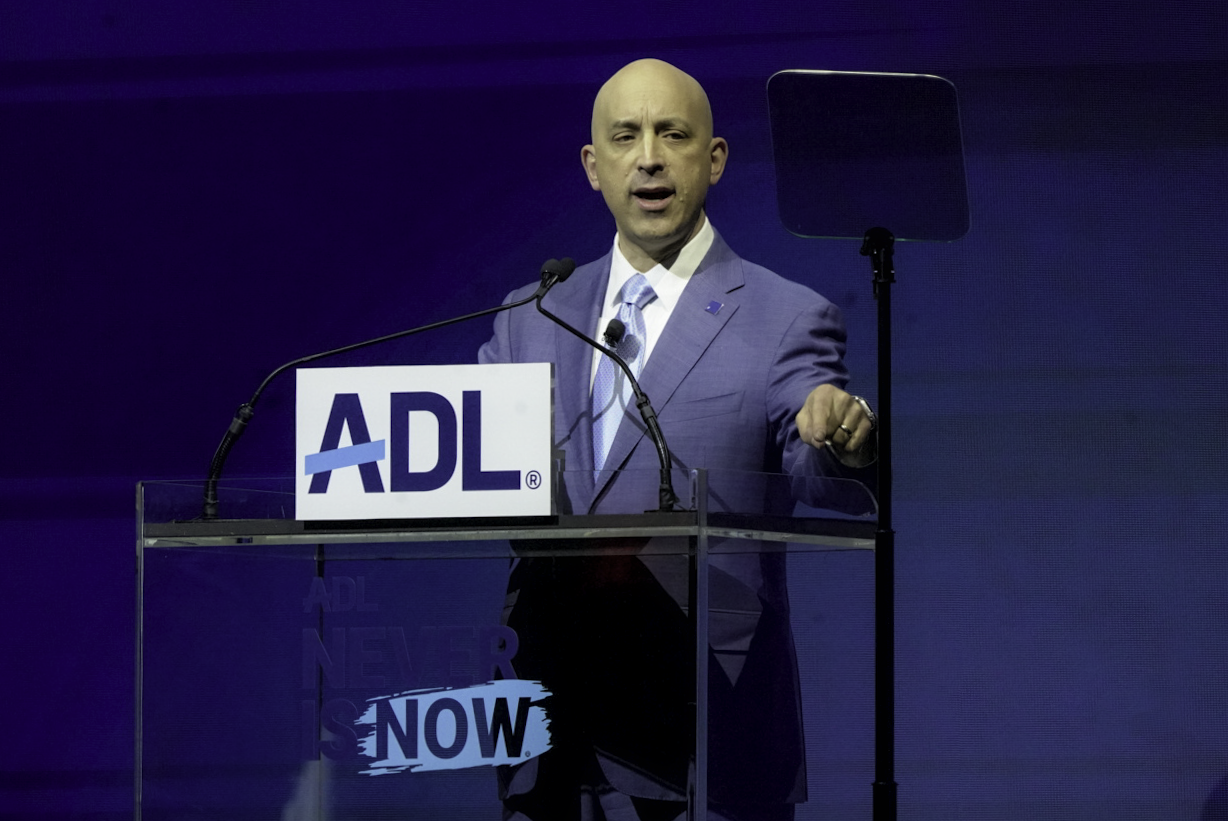
The ADL’s annual summit comes amid high-profile antisemitic attacks during the Iran war
And Europe to Trump: Iran is 'not our war'
Peter W. Stevenson/The Washington Post via Getty Images
Pennsylvania Gov. Josh Shapiro sits for an interview at the Pennsylvania State Capitol on June 11, 2025.
This P.M. edition is reserved for our premium subscribers — offering a forward-focused read on what we’re tracking now and what’s coming next. Please don’t hesitate to share your thoughts and feedback by replying to this email.
📡On Our Radar
Notable developments and interesting tidbits we’re tracking
European countries are largely rebuffing President Donald Trump’s calls to join the war with Iran and help secure the largely impassable Strait of Hormuz. German Defense Minister Boris Pistorius said today, “This is not our war; we did not start it,” while the French foreign ministry said, “Posture has not changed: defensive it is.” Poland, the U.K. and Italy similarly made clear they would not be participating in an offensive capacity…
On potential negotiations with Iran, Trump told reporters, “We don’t even know their leaders. We have people wanting to negotiate. We have no idea who they are.” He said new Supreme Leader Mojtaba Khamenei is “badly disfigured” and noted it’s “unusual” he hasn’t recently been seen in public.
Khamenei narrowly survived an airstrike on his compound on Feb. 28 as he briefly stepped outside, according to leaked audio obtained by The Telegraph, which reportedly contains remarks by an official in the office of deceased Ayatollah Ali Khamenei to senior clerics…
IDF spokesperson Lt. Col. Nadav Shoshani denied reports that Israel is running low on missile interceptors, saying there is no “urgent problem” and that the military re-equips its supplies “in real time”…
Debris and missile fragments from Iranian attacks fell in the Old City of Jerusalem near several sensitive sites including the Western Wall Plaza and feet away from the Church of the Holy Sepulchre…
Twenty-three Democratic members of the House Foreign Affairs Committee wrote to Trump requesting a public hearing with Special Envoy Steve Witkoff and Jared Kushner to understand their role in “lead[ing] diplomatic engagement with Iran”…
Representatives of the U.S.-led Board of Peace met with Hamas officials over the weekend in Cairo, Egypt, Reuters reports, in an effort to keep ceasefire negotiations on track even as the war with Iran proceeds. Aryeh Lightstone, an aide to Witkoff, reportedly represented the U.S. delegation, with more meetings expected this week…
Times of Israel reporter Emanuel Fabian chronicles his experience receiving death threats from users of the prediction market platform Polymarket over his reporting on a recent Iranian missile strike in the city of Beit Shemesh…
Trump announced that Susie Wiles, his White House chief of staff, has been diagnosed with early stage breast cancer and will receive treatment while remaining in her post…
Pennsylvania Gov. Josh Shapiro, a potential 2028 presidential contender, tested out his measured, pro-Israel messaging in a series of recent podcast interviews, Jewish Insider’s Gabby Deutch reports. In his appearances on “Pod Save America” and “Higher Learning,” Shapiro made the case that, as the starting point for any public political conversation about Israel, the fact of Israel’s right to exist as a Jewish state must be respected.
“I think what is dangerous here … is for those who think Israel doesn’t have a right to exist in [the] conversation. That to me is a recipe for permanent war,” Shapiro told “Higher Learning” host Van Lathan. He also pushed back on California Gov. Gavin Newsom, his potential 2028 opponent, for saying Israel could be described as an apartheid state…
Rep. Mike Lawler’s (R-NY) reelection campaign is employing a community activist, Darrell Davis, who has criticized Democratic politicians, including Rep. George Latimer (D-NY) and a county executive, for taking money from pro-Israel groups and traveling to Israel, Politico reports.
Davis accused Latimer of being on the receiving end of a “Jewish organized spending spree” and taking “about $30 million to buy a congressional seat, to represent the interests of Israel,” which he called “a horrific threat to democracy.” About Westchester County Executive Ken Jenkins’ trip to Israel, Davis wrote, “Why are they in Israel?? What more proof do people need that black Dems don’t give a sh*t about you. They are up for sale”…
The day before her primary election in Illinois’ 9th Congressional District, far-left social media influencer Kat Abughazaleh removed language from her campaign website claiming “There is no acceptable scenario that leaves Hamas in charge of the Gaza Strip,” after she had faced criticism from the Hamas-friendly outlet Drop Site News over its inclusion. Her site says that the earlier language on the page “did not accurately reflect Kat’s views or the values of this campaign”…
And the closing drama in the Illinois Senate Democratic primary is Lt. Gov. Juliana Stratton’s claim that she received a deathbed endorsement from civil rights leader Rev. Jesse Jackson, which the Jackson family said today he had never finalized. The late reverend’s support is seen as meaningful in the race, which includes multiple prominent Black candidates, as well as Rep. Raja Krishnamoorthi (D-IL)…
The Atlantic spotlights one of the main obstacles facing Maine Gov. Janet Mills in her Democratic primary for U.S. Senate against oyster farmer Graham Platner: her age. Mills, 78, “does not have a dicey Reddit history or a recently covered-over Nazi tattoo” but is still trailing in the polls, even as Platner continues to be plagued by scandals. “One likely factor: If she is elected, Mills would be the oldest freshman senator in history”…
⏩ Tomorrow’s Agenda, Today
An early look at tomorrow’s storylines and schedule to keep you a step ahead
Keep an eye out in Jewish Insider for a look at the tense runoff in the Democratic primary for Texas’ 35th Congressional District, where a fringe conspiracy theorist eked out a narrow victory over a sheriff’s deputy backed by the pro-Israel establishment.
All eyes will be on the Prairie State tomorrow, as several high-profile Democratic primaries will be decided across Illinois. Read JI’s coverage of the races to watch.
On the Hill, the House Intelligence Committee will hold its annual hearing on worldwide threats, with testimony from Director of National Intelligence Tulsi Gabbard, CIA Director John Ratcliffe, FBI Director Kash Patel, NSA Acting Director William Hartman and DIA Director James Adams.
The House Foreign Affairs Committee will hold a hearing on reforming U.S. defense sales.
Stories You May Have Missed
BREAKING POINT
Democrats began calling out those who traffic in antisemitic rhetoric when they offered platitudes after an attack on a Michigan synagogue
UNDER PRESSURE
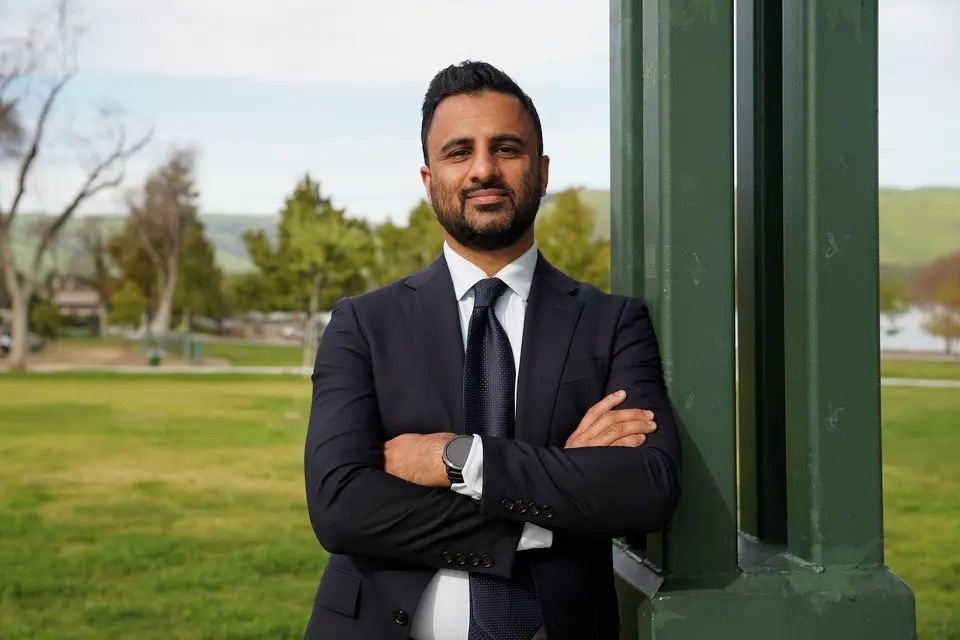
Tech entrepreneur Ethan Agarwal: ‘He thinks being racist against Jewish people is going to help him win the American left. I don’t care if he’s right. I just think it’s unethical and immoral’
Tech entrepreneur Ethan Agarwal: ‘He thinks being racist against Jewish people is going to help him win the American left. I don’t care if he’s right. I just think it’s unethical and immoral’
Courtesy
Ethan Agarwal
Rep. Ro Khanna (D-CA) has become one of the harshest critics of Israel in the House, in recent months associating with some of the leading anti-Israel figures within the Democratic Party — at one point proudly declaring his ties to a far-left antisemitic podcaster.
In his pushback to the U.S. war against Iran, he has caricatured those supportive of taking military action against the Islamic Republic as part the “Epstein class” — which critics have accused of being an antisemitic trope — while defending right-wing commentator Pat Buchanan from past charges of antisemitism.
As a result, he is facing a primary challenge from tech entrepreneur Ethan Agarwal, who is accusing the congressman of embracing far-left views to seek national attention for a potential presidential campaign — at the expense of focusing on constituents back home in the Silicon Valley-based district.
“The district is being represented by a guy who could not care less about the people in the district, and that’s frustrating because I supported Ro when he first ran back in 2012,” Agarwal told Jewish Insider on Friday. “He’s completely [turned around] on basically everything that he said to his supporters.”
Agarwal said he sees Khanna’s activities, including his opposition to the Iran war and outspokenness against Israel, as plays for national attention, rather than representing the district that elected him.
Khanna “just totally does not give a s*** about the district. He’s running for president, and he wants to run to the left on every issue,” Agarwal alleged. “The district needs a representative that’s focused on the district itself, and that’s why I’m running for Congress.”
Those allegations of political opportunism were echoed in a recent Washington Post column by writer James Kirchick, who reported that Khanna professed to being a strong ally of Israel and the Jewish community earlier in his career when he was seeking a role in the Obama administration. The op-ed framed Khanna as a relentless self-promoter willing to change his views for attention and career advancement.
Khanna, in response to the allegations that he’s lost focus on his district back home, told JI he was “proud of my record representing California’s 17th district,” pointing to his work to secure $13.5 million in funding this year for projects including affordable housing, veteran housing, safe routes for children to get to school, clean water and transportation. He added that he has held nearly 80 town halls, is regularly meeting with local community leaders and is in touch with anti-ICE activists, and touted his constituent services and endorsements from local leaders and groups.
“And I’m willing to take on powerful people when accountability is needed. When I called for the release of the Epstein files, many dismissed it and said no one in the district would care. They were wrong. Constituents raise it with me regularly because they want transparency and justice for survivors,” Khanna added.
Agarwal’s criticisms go beyond hitting Khanna for putting national issues ahead of local ones. He accused the congressman of engaging in shoot-from-the-hip social media commentary that has inflamed antisemitism at a time of heightened fears within the Jewish community.
“Even if you weren’t running for Congress or trying to run for president — what is wrong with you?” Agarwal said. “If the congressperson of the district is advocating these kinds of things publicly, it stokes and it inflames the culture on the ground.”
“He thinks being racist against Jewish people is going to help him win the American left,” Agarwal added. “I don’t care if he’s right. I just think it’s unethical and immoral.”
Khanna responded that he has “consistently condemned antisemitism in all forms,” including speaking out specifically against various recent incidents, that he has been “been clear in my support for Israel as a Jewish and democratic state,” that he has worked with Jewish leaders and visited synagogues within the district.
“This issue is personal for me. My nieces and nephews are Jewish through my brother’s marriage, which has deepened my understanding of why it is so important to speak out against antisemitism in any form,” Khanna continued.
Defending his affiliation with New York City Mayor Zohran Mamdani, Maine Senate candidate Graham Platner and far-left influencer Hasan Piker, Khanna said, “I do believe like Franklin Roosevelt and President Obama that we need to build a big tent, and Mayor Mamdani and Graham Platner are part of that. I also engage with media across the political spectrum, from Hasan Piker to Shawn Ryan to Theo Von to Sean Hannity, because we shouldn’t shy away from debates or discussions with people with different ideologies. We must engage.”
Agarwal has publicly linked Khanna’s rhetoric to an assault on two people speaking Hebrew in a San Jose restaurant earlier this week. The attack took place within Khanna’s district.
“It doesn’t take a genius to draw a line between those two things,” Agarwal said.
“We MUST capture and punish the perpetrators. Beyond that, we HAVE to turn down the dial of anti-Israeli rhetoric. [Khanna] acknowledge your role in this, and apologize for inflaming tensions,” he urged the congressman on X last week. “Take responsibility for creating the environment that enables these lunatics.”
In response, Khanna called the assault “horrific” and said it has “no place in our community,” adding that he had “unequivocally condemned” the attack and pushed for the attackers to be prosecuted.
“I’ve taken concrete steps to confront antisemitism locally. I’ve held multiple town halls and meetings with members of the Jewish community across the district to hear directly about their concerns and make sure they feel safe,” Khanna said.
He also highlighted his move two years ago to appoint a staffer in his office to serve as a point of contact for community members on antisemitism and a recent town hall he held with a local Jewish Democratic group.
“My focus has been making sure that when antisemitism occurs, our community knows it will be taken seriously and addressed immediately,” Khanna continued.
While he didn’t weigh in on the broader strategic goals of the U.S. operation in Iran, Agarwal has argued that it’s an unequivocal good for the Iranian people and the world that Iranian Supreme Leader Ayatollah Ali Khamenei, who was killed on the first day of the joint U.S.-Israel operation, is dead, and criticized Khanna for trying to prevent or stop the U.S. operation against Iran.
“I am in support of the murder of Ali Khamenei because he was a brutal dictator and 20,000 Iranian Americans in [this] district — I spoke to many of them — agree with that,” Agarwal said. “I don’t know what happens from here. I think there’s open questions. I think there’s a good path, and there’s mistakes that can be made, but what I do know is that Iran is better off without him, and I think America is better off without him being alive.”
Khanna stood behind his advocacy for the war powers resolution, emphasizing the support it received among House Democrats, including Minority Leader Hakeem Jeffries (D-NY) and two moderate Jewish Democrats who initially opposed it. He said that the issue is a matter of constitutional authority.
“I have been clear that the Iranian regime is brutal and destabilizing, as we have seen in its repression of its own people and the killing of thousands of protestors. But launching a war of choice in the Middle East without fully understanding the risks to our servicemembers or the potential for wider escalation has been reckless,” Khanna said. “People in my district understand the cost of these endless wars and oppose them. They expect their representative to stand up for the Constitution and to ensure that decisions are made carefully and with accountability.”
Agarwal has also blasted Khanna for his comments linking the Iran war to the Epstein case.
“What does [Jeffrey] Epstein have to do with the war in Iran? … aside from these being two topics he thinks are going to help him get elected president,” Agarwal said, adding that he believes that Khanna is using “Epstein class” as a broad pejorative to smear his political enemies, Israelis and the Jewish people.
Khanna told JI, “The ‘Epstein class’ refers to a group of wealthy and powerful elites who use their wealth and connections to operate as if they are above the law and not subject to the same accountability as everyone else. The phrase reflects the reality that Jeffrey Epstein and the people around him were able to operate for years without consequences,” and said “many prominent Jewish Americans” including Sen. Jon Ossoff (D-GA) and columnist Bill Kristol “have used the phrase after I coined it.”
“Attempts to twist the meaning of that phrase into something else is an empty political attack to distract from the real issue, which is accountability for powerful people who believe the rules do not apply to them, including rules of war,” Khanna said.
Agarwal also didn’t expound at length on Israel policy — emphasizing that his first responsibility in Congress would be on local issues in his district. He did say, however, that he believes that Israel is “our strongest ally in the Middle East” and that a stronger relationship between the two countries is good for the U.S., the U.S. economy and the district.
With a nearly decade-long record in Congress, a prominent profile and $15.5 million in donations on hand as of the end of the year, Khanna is strongly favored to win re-election. In the previous election, Khanna picked up 63% of the vote in the all-party primary, rising to 68% in the general election against a Republican challenger.
But with some prominent figures in Silicon Valley’s tech scene getting behind Agarwal, he might have a chance at making Khanna work harder for his re-election.
Agarwal argues that Khanna is also taking the election for granted, and that his alleged lack of attention to local issues will backfire on him, as well as his support for a wealth tax and his breaks with the local Israeli, Jewish, Iranian and other immigrant communities.
“I’m going to win this election by listening to the people in the district and being their advocate, as opposed to focusing on my national profile,” he said, pointing to Khanna’s national travel to 2028 presidential primary states.
Plus, Ro Khanna defends Hasan Piker amid Mich. attack

Emily Elconin/Getty Images
Law enforcement respond near Temple Israel following reports of an active shooter on March 12, 2026 in West Bloomfield, Mich.
This P.M. edition is reserved for our premium subscribers — offering a forward-focused read on what we’re tracking now and what’s coming next. Please don’t hesitate to share your thoughts and feedback by replying to this email.
📡On Our Radar
Notable developments and interesting tidbits we’re tracking
A suspect was killed during an active shooter and car ramming incident at Temple Israel in the heavily Jewish Detroit suburb of West Bloomfield Township, Mich., this afternoon, Jewish Insider’s Haley Cohen reports.
Armed synagogue security engaged the suspect with gunfire, and a security guard who was knocked unconscious is expected to recover. A preschool that was in session at the time of the incident was evacuated safely. Authorities are continuing to investigate the suspect’s identity and motive.
“Everyone is safe. All 140 students in our Susan and Harold Loss Early Childhood Center, our amazing staff, our courageous teachers, and our heroic security personnel are all accounted for and safe,” the synagogue wrote on social media. “This note is coming to you before we know anything about our future programming or services, or any investigation. We wanted you to know we are safe, and we love you all”…
Mojtaba Khamenei, Iran’s new supreme leader, issued his first public statement today that indicates he’s as hard-line as his late father: Khamenei demanded the U.S. shut all its military bases in the Gulf immediately and said he’ll continue to target the Strait of Hormuz in order to “pressure the enemy.” His statement was read on state media indirectly by a presenter, as reports indicate the 56-year-old was injured in an Israeli strike and he has not been seen in public since.
President Donald Trump did not seem dissuaded — he posted on Truth Social, “when oil prices go up” the U.S. makes “a lot of money,” but “of far greater importance to me, as President, is stopping an evil Empire, Iran, from having Nuclear Weapons”…
Following a Republican convening this week focused on combating right-wing antisemitism, the center-left think tank Third Way urged fellow Democrats to follow the lead of Sen. Ted Cruz (R-TX) in calling out antisemitism within their own party.
“We certainly believe that Cruz was right and our side has a real antisemitism problem too that too many Democrats are failing to face squarely,” Matt Bennett, the group’s executive vice president for public affairs, told JI’s Gabby Deutch.
Similar comments from Third Way staff sparked a public clash with Rep. Ro Khanna (D-CA), who defended controversial left-wing figures including antisemitic streamer Hasan Piker and said the true issue lies with the “neocons” in the party…
Less than a week until primary election day in Illinois’ 9th Congressional District, outside spending in the race is approaching $9 million, the majority of which is aimed at boosting state Sen. Laura Fine, a pro-Israel Democrat. Nearly half of all outside spending has come from the Elect Chicago Women super PAC, widely rumored to be connected to pro-Israel groups.
Another PAC rumored to be connected to AIPAC, Chicago Progressive Partnership, has spent over $1 million attacking anti-Israel social media influencer Kat Abughazaleh, including a new ad that spotlights her support from James “Fergie” Cox Chambers Jr., a communist political activist and scion of the billionaire Cox family often involved in radical-left causes…
A new poll commissioned by the far-left advocacy group Justice Democrats finds Rep. Steve Cohen (D-TN) in a competitive race for his seat — he’s now neck-and-neck with his primary opponent, state Rep. Justin Pearson. Pearson, a progressive legislator, gained public attention for being expelled from the Statehouse in 2023 for participating in a gun control protest on the floor…
Former New York City Mayor Michael Bloomberg endorsed Assemblyman Micah Lasher, his former staffer, in the hotly contested primary race for New York’s 12th Congressional District today, calling him “a key part of our team in City Hall.” Bloomberg plans to spend “millions of dollars” on a super PAC and ad campaign to boost Lasher, The New York Times reports, a notable effort by the popular former mayor to elevate Lasher among the pack…
Trump has delayed endorsing Sen. John Cornyn (R-TX) in the Texas Senate runoff against Attorney General Ken Paxton, which Trump implied last week he would do imminently, instead using the potential endorsement to pressure Senate Republicans to change filibuster rules and pass his voter-ID bill. Paxton raised the stakes by saying he might drop out if the bill passes, a move that forced Cornyn to shift his stance on the filibuster…
The Boston Globe looks at Rep. Seth Moulton’s (D-MA) efforts to get on the Democratic primary ballot in his race against Sen. Ed Markey (D-MA), which will require him to receive support from 15% of delegates at the state Democratic Party’s upcoming convention. Moulton is attempting to recruit unregistered voters to become delegates in order to boost his chances, which observers are split on…
Politico uncovers the past political stances and writings of Morris Katz, the Democratic operative and anti-Israel whisperer now behind several high-profile progressive campaigns, when he lauded former New York Gov. Andrew Cuomo and derided progressive icon Sen. Bernie Sanders (I-VT)…
Shortly after the organization elevated a new political director who is closely tied to neo-Nazi Nick Fuentes, College Republicans of America’s chapter at Georgetown University came under investigation by the school for a social media post in which it claimed “Muslims have no place in American society”…
The Wall Street Journal spotlights Adm. Brad Cooper, commander of CENTCOM, as he “stay[s] out of the politics of the war” in Iran “and remains focused on waging it”…
The Treasury Department issued sanctions against four “sham charity” groups in Turkey and Indonesia that it said are funneling money and resources to Hamas’ military wing, JI’s Marc Rod reports…
⏩ Tomorrow’s Agenda, Today
An early look at tomorrow’s storylines and schedule to keep you a step ahead
Keep an eye out in Jewish Insider for reaction to today’s attack on Michigan’s Temple Israel from Jewish leaders and leading lawmakers.
The South by Southwest festival will hold its annual #openShabbat experience for Jews in tech, film and music tomorrow in Austin, Texas.
A Saturday fundraiser for Rep. Zach Nunn (R-IA) with an appearance by Defense Secretary Pete Hegseth in Nunn’s home district in Iowa has been canceled; the event, called “Top Nunn” in reference to the “Top Gun” movies, had drawn scrutiny after several soldiers who had been stationed in Nunn’s district were killed in the course of the war with Iran.
The Jewish Funders Network international conference starts Sunday in San Diego.
HaZamir: The International Jewish Teen Choir performs at Lincoln Center in New York City on Sunday evening.
The Zionist Organization of America will host its Florida Superstar Gala Sunday evening, where it will honor Pastor John Hagee, founder of Christians United for Israel; Justice Department official Leo Terrell; and Rep. Randy Fine (R-FL), among others.
We’ll be back in your inbox with the Daily Overtime on Monday. Shabbat Shalom!
Stories You May Have Missed
POLITICAL TIGHTROPE
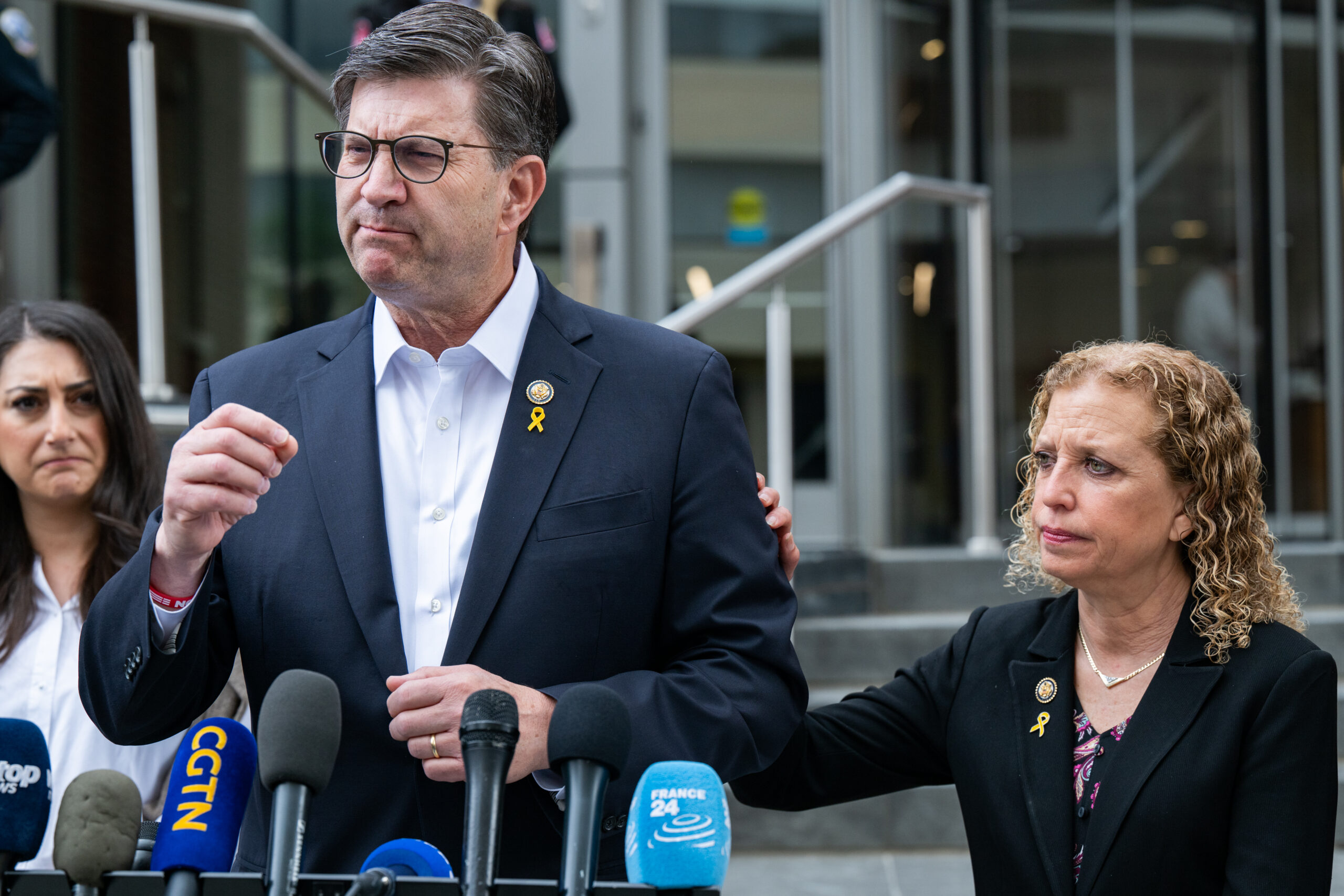
Rep. Debbie Wasserman Schultz said she would likely have voted to authorize force against Iran if the administration had approached Congress properly before launching the war
FEELING THE HEAT

Republican senators argued to JI that the war will ultimately be to the Gulf’s benefit, even if they’re feeling the pain now
Khanna, who has been an outspoken anti-Israel voice, said he stands with Hasan Piker, Graham Platner and Zohran Mamdani — during the Michigan synagogue attack
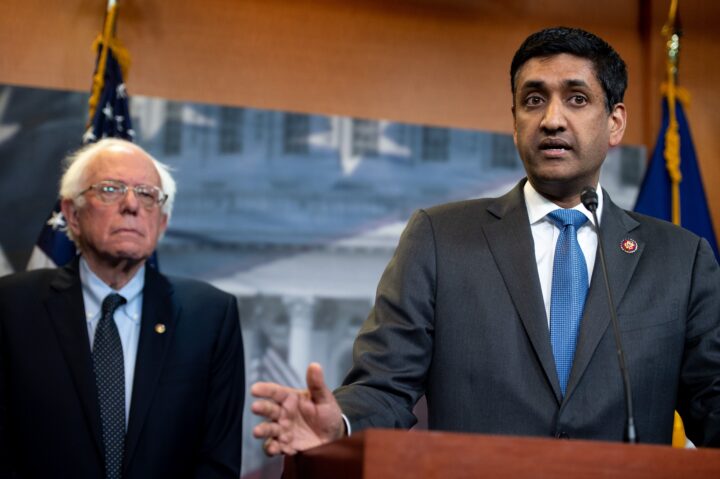
SAUL LOEB/AFP
Rep. Ro Khanna (D-CA)
Following a Republican convening this week focused on combating right-wing antisemitism, a prominent moderate Democratic group urged fellow Democrats to follow the lead of Sen. Ted Cruz (R-TX) in calling out antisemitism within their own party.
“We certainly believe that Cruz was right and our side has a real antisemitism problem too that too many Democrats are failing to face squarely,” Matt Bennett, executive vice president for public affairs at the center-left think tank Third Way, told Jewish Insider on Thursday.
His comments came after Lily Cohen, a press advisor at the organization, shared a post highlighting Cruz’s comments at the Republican Jewish Coalition confab and said she “would love to see more Dems calling out antisemitism on their own side with the same fervor.”
Cohen specifically mentioned Maine Senate candidate Graham Platner, New York City Mayor Zohran Mamdani and the far-left, antisemitic streamer Hasan Piker.
“We do believe that Platner has not remotely done enough to explain why he had a Nazi tattoo for 20 years,” said Bennett.
Cohen’s comments inadvertently spotlighted — and even ignited — the growing feud within the Democratic Party over Israel and antisemitism. Rep. Ro Khanna (D-CA), a progressive lawmaker who has been a frequent critic of Israel and pro-Israel activists in the U.S., responded to Cohen’s post by saying he stands with Platner, Mamdani and even Piker.
“The problem is with the neocons in our party who blundered into Iraq, 20 years in Afghanistan, Libya, Gaza, & now support the Iran war. Out with the old guard. We need a new moral direction,” Khanna wrote — prompting Bennett to call on Khanna directly to do more to oppose antisemitism.
“We do not support the Iran War — we have publicly and strenuously opposed it. But we do stand against antisemitism. It would be good if you did, too,” Bennett wrote.
When Khanna posted a message on X condemning Thursday’s active shooter attack at a suburban Detroit synagogue, Jim Kessler, another senior Third Way official, offered a verbal eye-roll.
“Yadda, yadda, yadda…” Kessler wrote.
While Republicans are now rejoicing over their narrow win, it otherwise largely demonstrated how Democratic leaders effectively sacrificed the seat to the GOP rather than elevate an extremist member of their own party
Muhammed Casim's campaign page
Muhammed Casim
In a low-profile electoral upset that defied the difficult national political environment facing the GOP, a Republican candidate declared victory this week in a down-ballot race for a seat on the Prince William Board of County Supervisors in Virginia — for the first time in nearly 40 years.
But while Republicans are now rejoicing over their narrow win, it otherwise largely demonstrated how Democratic leaders effectively sacrificed the seat to the GOP rather than elevate an extremist member of their own party who had claimed the nomination.
The result underscored the extent to which local Democrats had swiftly mobilized to oppose their own nominee, Muhammed Casim, who faced backlash over a series of recently uncovered past social media comments in which he used racist, misogynistic and antisemitic language. The posts, written more than a decade ago, used the n-word as well as demeaning rhetoric targeting women. He also accused Israel of genocide and promoted a conspiratorial post about U.S. financial assistance to the Jewish state, among other extreme comments.
More broadly, the outcome is an atypical example of how the Democratic Party worked to meaningfully confront extremism within its own ranks, even if its efforts came at the expense of an easily winnable local seat that instead flipped to Republicans for the first time in decades.
Casim apologized for his comments but refused bipartisan calls to drop out of the race, which had motivated a Democratic challenger to launch a write-in campaign that ultimately helped siphon votes away from his embattled bid. He lost to Republican Jeannie LaCroix by a margin of 258 votes. Write-in candidates pulled in 744 votes — a relatively sizable total that appeared to have made a difference in the closely contested race.
“Opposing antisemitism, racism or misogyny isn’t a partisan position,” Marc Broklawski, a Jewish vice chair of the Virginia Democratic Party, told Jewish Insider on Wednesday. “It’s a floor, not a ceiling, and the least we should expect from any party, official candidate or voter. When Democrats hold that floor even when it’s costly, that’s something to be proud of. When we don’t, voters notice that too.”
Casim’s campaign did not respond to a request for comment on Wednesday.
Though some prominent Democrats have sought to reject radicalism in their party, many Jewish party activists have begun to express a growing sense of unease about whether their longtime political home will remain welcoming, amid rising hostility toward Israel that has frequently crossed into antisemitism while producing alliances with controversial figures.
This week, for instance, leading Jewish groups spoke out against New York City Mayor Zohran Mamdani’s decision to host Mahmoud Khalil, the campus anti-Israel activist facing deportation who had justified Hamas’ terror attacks, for dinner at his official residence, while Democratic officials largely stayed silent.
Likewise, a mounting number of Senate Democrats have endorsed Graham Platner in his insurgent bid for Senate in Maine, brushing aside concerns about a recently covered Nazi tattoo whose provenance he has struggled to explain as well as associations with antisemitic conspiracy theorists that have continued to raise alarms among many Jewish party members.
And in Virginia, Jewish Democrats have denounced an anti-Israel state legislator, Sam Rasoul, who has called Zionism “evil” and a “supremacist ideology,” even as high-ranking state party officials have been reluctant to weigh in on his incendiary commentary.
By contrast, several Jewish activists and party strategists said they were encouraged that most Democratic leaders had enforced red lines in the Virginia supervisor election. Even if the party had been forced to endure a short-term hit in losing the seat, they suggested, it was healthy to set standards — particularly in a time of rising extremism on both sides of the aisle.
“Virginia Democratic leaders were clearly repulsed by Muhammed Casim’s racist, misogynistic and antisemitic social media posts,” Sara Forman, a Jewish party strategist who previously worked in the state, told JI. “Their actions, including calling Casim out publicly, should send a strong signal nationally that the entirety of the Democratic Party has not capitulated to the leftist narrative entirely.”
Such opposition was not unanimous, however, as the local party accepted Casim’s apology and said it would stand behind his campaign. “There’s a lesson in there about the integrity of voters and the lack of integrity — and therefore weakened legacy — among some Dem leaders,” Shannon Watts, a gun control activist who has also criticized Platner, wrote in an X post on Wednesday.
“Leadership means speaking out clearly and consistently against antisemitism, racism, misogyny, and not only when it is easy, but especially when it is not — and from whomever,” Eileen Filler-Corn, a Jewish Democrat and former speaker of Virginia’s House of Delegates, told JI. “These values should unite us. We can disagree on policy and politics, but standing against hate and discrimination in all forms should never be up for debate. Our credibility with voters depends on our willingness to apply that standard fairly and without hesitation.”
Still, with most Democratic elected officials in the county refusing to support Casim after his posts had surfaced near the end of the race, nonpartisan Jewish leaders and members of both parties voiced satisfaction regarding the strong show of resistance.
“We think it is imperative that both parties call out the fringe and hateful elements in their own parties, so we’re certainly glad to see the Democratic Party do it in this instance — especially when it was hard and cost them a seat,” Vicki Fishman, the director of Virginia government and community relations at the Jewish Community Relations Council of Greater Washington, told JI. “It’s an important lesson for everybody that hate is hate, and when you see the ugly rhetoric in your own house for what it is, it’s important to call it out.”
Gary Katz, a Jewish Republican activist in nearby Loudoun County, said he was “encouraged by the outcome” of Tuesday’s race, “where principled voices within the Democratic Party chose to reject a nominee whose past comments reflected racism, misogyny and antisemitism — even at the risk of losing the seat to a Republican.”
He said the dynamic “mirrors efforts we’ve seen in the GOP, such as in Fairfax County, to keep hateful elements from gaining leadership roles,” referring to a recent election where Republicans beat back an extreme candidate for county chair who had spread antisemitic conspiracy theories.
“It’s a reminder that combating the rising scourge of antisemitism requires people of good conscience in both parties to prioritize our shared values over partisan wins,” Katz told JI on Wednesday. “We need more of this vigilance to ensure that extreme fringes on either side never hold power, and that we support responsible leadership, even when we disagree politically, rather than those who align with us but betray our core principles.”
Plus, Israel considers building Somaliland base
Cheriss May/NurPhoto via Getty Images
Ben Rhodes, then-deputy national security advisor to President Barack Obama, participates in an interview with press at the White House in on Wednesday, December 14, 2016.
This P.M. edition is reserved for our premium subscribers — offering a forward-focused read on what we’re tracking now and what’s coming next. Please don’t hesitate to share your thoughts and feedback by replying to this email.
📡On Our Radar
Notable developments and interesting tidbits we’re tracking
The Strait of Hormuz continues to be a key site of conflict in the U.S. and Israeli war against Iran — a spokesperson for the Iranian Armed Forces said in a video statement that the regime “will never allow even a single liter of oil to pass through the Strait of Hormuz for the benefit of America, the Zionists or their partners,” shortly after several ships were struck by missiles while passing through or near the strait…
The International Energy Agency announced its member countries will release 400 million barrels of oil from their emergency reserves in order to blunt the impacts of the war, the largest emergency release in history…
President Donald Trump told Axios that the war will end “soon” because there’s “practically nothing left to target” in Iran. U.S. and Israeli officials are reportedly preparing for at least two more weeks of hostilities…
Jewish Insider’s Matthew Shea speaks to experts and former Trump administration officials about Qatar’s potentially changing calculus on hosting Iranian-backed Hamas leaders as Tehran continues to attack the Gulf state…
A preliminary U.S. military investigation has found the deadly strike on a school in Iran was caused by the U.S. as it was targeting a nearby Iranian base, sources told The New York Times…
The FBI recently warned California police departments that Iran may launch a drone attack in the state, ABC News reports. As of last month, “Iran allegedly aspired to conduct a surprise attack using unmanned aerial vehicles from an unidentified vessel off the coast of the United State Homeland, specifically against unspecified targets in California, in the event that the U.S. conducted strikes against Iran,” the bureau’s alert read…
Israel is considering building a base in Somaliland, which it recently recognized as an independent country, in order to combat the threat of the Houthis, which are based in Yemen just across the Gulf of Aden…
Iran will not participate in the 2026 World Cup after the U.S. “assassinated our leader,” Iran’s sports minister told state media, shortly after Trump said he would still “welcome” the team’s participation. Iran’s national men’s soccer team was set to compete in June in Los Angeles and Seattle; several athletes from the country’s women’s team recently defected to Australia after playing in a match there…
Spain permanently withdrew its ambassador to Israel, as the countries’ already tense relations worsen over Madrid’s opposition to the war in Iran…
House Republican leadership discussed ways to incorporate an expected emergency supplemental for the U.S. military into the budget reconciliation process, Politico reports, rather than attempting to rally support from Senate Democrats for the 60-vote threshold that would otherwise be required in the Senate on a stand-alone vote. The move would also sidestep a vote that could be politically challenging for some House Republicans…
Former Obama administration official Ben Rhodes, a leading Israel critic on the left, said on an episode of his “Pod Save the World” podcast that Democrats who vote in favor of funding for the war with Iran “should be primaried. I don’t want you in the Democratic Party.”
Rhodes and co-host Tommy Vietor referenced the four Democrats who voted against a war powers resolution in the House as ripe for primary challenges. Left unsaid: Three of the four — Reps. Greg Landsman (D-OH), Henry Cuellar (D-TX) and Jared Golden (D-ME) — represent GOP-leaning seats that would likely flip with a more progressive Democratic candidate…
In a sign of the political gulfs between the Israeli and American left, Yair Zivan, who is an advisor to Israeli Opposition Leader Yair Lapid, pushed back on Sen. Bernie Sanders (I-VT) after the senator criticized Israeli operations in Lebanon.
“Senator, I work for the Leader of the Opposition in Israel and I’m writing this from a bomb shelter with my children. Israel is under attack by fanatical terrorists who want to murder us. It never ceases to amaze that your humanity never seems to extend to Israeli lives,” Zivan wrote on X…
Pennsylvania Gov. Josh Shapiro said he called New York City Mayor Zohran Mamdani to “check in on him and his wife to make sure they’re doing okay” after the attempted terror attack outside Mamdani’s official residence over the weekend. “As someone who’s had to deal with political violence, I know it can take a toll,” Shapiro said. The governor previously spoke with Mamdani after his win in November to express concerns over his rhetoric about Israel…
⏩ Tomorrow’s Agenda, Today
An early look at tomorrow’s storylines and schedule to keep you a step ahead
Keep an eye out in Jewish Insider for a look at the far-right ties of the new political director of College Republicans of America.
The Senate Health, Education, Labor and Pensions Committee will hold a hearing on foreign influence in American higher education, including testimony from the Foundation for Defense of Democracies’ Craig Singleton.
The annual weeklong South by Southwest festival kicks off tomorrow in Austin, Texas. Appearing at the summit, whose 300,000 attendees include many film and media professionals, is anti-Israel protest leader Mahmoud Khalil, who will speak about “the system that tried to silence him, and the personal and political stakes of resistance.”
Stories You May Have Missed
PRIMARY PRESSURE

The pro-Israel Democratic group warns that nominating far-left candidates will cost the party winnable seats against GOP incumbents
DEMOCRATIC DIVIDE

The Pennsylvania senator told JI about the U.S. military operation’s successes: ‘Why can’t a single Democrat agree that this is a good thing for the world and the region?’
‘If you can't stand against that, you don't stand for a f***ing thing,’ the former Obama admin official said
Cheriss May/NurPhoto via Getty Images
Ben Rhodes, then-deputy national security advisor to President Barack Obama, participates in an interview with press at the White House in on Wednesday, December 14, 2016.
A former top Obama administration foreign policy official said on Wednesday that any Democratic lawmakers who vote to support U.S. strikes on Iran should be primaried.
“If you vote for the funding of this war, you should be primaried. I don’t want you in the Democratic Party,” said Ben Rhodes, co-host of the “Pod Save the World” podcast and former deputy national security advisor under President Barack Obama.
He was referring to Reps. Greg Landsman (D-OH), Henry Cuellar (D-TX), Jared Golden (D-ME) and Juan Vargas (D-CA), the only four Democrats to vote against a war powers resolution last week that sought an immediate end to the U.S. military campaign in Iran.
Rhodes, who was one of the biggest boosters of the 2015 Iran nuclear deal and a leading Israel critic on the left, said the Democratic Party should have a big tent — but that support for President Donald Trump’s actions in Iran falls outside of that tent.
“I would like to have a big tent in this party. I think there should be people with different ideas of how to get health care, different ideas of taxation,” Rhodes said to co-host Tommy Vietor. “To me, this is not a left-center issue. This is a right and wrong issue. Morally, what do we stand for as Democrats?”
Rhodes suggested that Democrats who cast a vote in support of the war are doing so because of donor pressure.
“How is anybody going to trust you to fight for their health care if you’re too afraid to cast a vote, that someone might call you weak or some donor might call you and complain?” Rhodes asked. “If you as a Democrat can’t say that I am against a war and I’m not going to fund a war that is being launched by an authoritarian president, illegally, with no rational basis that is explained to the American people, that has already unleashed these consequences, if you can’t stand against that, you don’t stand for a f***ing thing.”
The Pennsylvania senator told JI about the U.S. military operation’s successes: ‘Why can’t a single Democrat agree that this is a good thing for the world and the region?’

Lev Radin/Pacific Press/LightRocket via Getty Images
Senator John Fetterman speaks during the grand opening of The Altneu synagogue.
Sen. John Fetterman (D-PA) is criticizing his fellow Democrats over their opposition to President Donald Trump’s decision to launch the U.S. war in Iran, arguing that his party should celebrate efforts to bring down the Iranian regime and its military and nuclear capabilities as a “positive development.”
Fetterman, the most vocal pro-Israel Democrat in the Senate, has been one of the leading advocates for striking Iran directly since Hamas’ Oct. 7, 2023, attacks on Israel. He backed Trump’s decision to strike Iran’s nuclear facilities amid the 12-day war with Israel last year, criticizing Democrats at the time for speaking out against the operation, and has since emerged as one of the staunchest Iran hawks in the Democratic Party.
The Pennsylvania senator said, since leading Democrats have long argued that Iran should never have the ability to get a nuclear weapon, criticism from the party of the joint U.S.-Israel efforts to degrade their military capabilities is hypocritical.
“First, let’s get to history. Every single Democratic presidential candidate or Democratic president all agreed, we can never allow Iran to acquire a nuclear bomb. Everyone has run the gamut: sanctions, treaties, proxies, other kinds of negotiations. It never worked,” Fetterman told Jewish Insider in an interview on Tuesday. “But you know what it actually produced? Nine hundred pounds of just pure, weapons-grade uranium.”
“When the country that wants death to America and wants to destroy Israel could have been months away from developing a nuclear weapon, and every single Democratic candidate for president all agreed we can never allow them [to do so], why can’t we just acknowledge what’s happened?” he asked. “It’s a profound development. I don’t get it. I know what the [Democratic] base demands right now: condemn and criticize.”
He said that Democrats should be able and willing to praise the operation for degrading Iran’s regime and its capabilities.
“Why can’t a Democrat call this a positive development given everything that Iran is responsible for and what their ambitions are?” Fetterman said. “This is effectively us destroying the Nazi regime and Hitler before they could’ve even begun. So, to your readers, whether in Israel or here, I ask: Why is that a problem?”
Fetterman also said that the media and fellow Democrats are ignoring what he characterized as the apparent successes and effectiveness of the U.S.-Israel strikes.
“Iran’s capabilities have been effectively ended. Right now, the missile strikes are down by 90 percent. Their Navy is gone. They can’t even project any force at this point,” Fetterman said. “Why do The New York Times and other left-wing media keep making it seem that the region is on fire when this is the breaking free of Iran? Why can’t a single Democrat agree that this is a good thing for the world and the region?”
Fetterman also blasted recent comments from former Vice President Kamala Harris and California Gov. Gavin Newsom, potential 2028 Democratic presidential contenders, criticizing Trump’s decision to launch the U.S. war in Iran and questioning the future of the U.S.-Israel relationship. The Pennsylvania senator said he was not surprised by the mainstreaming of opposition to Israel within the Democratic Party, predicting that the shift away from supporting Israel would continue.
“I expect at the end that our party is going to continue to back away from the moral clarity of Israel. If you are describing Israel as an apartheid state, or you have people in leadership [doing so], that’s profoundly disappointing but unsurprising,” Fetterman said.
Plus, CNN walks back coverage downplaying NYC terror attempt

JULIEN DE ROSA / AFP via Getty Images
A person points at a page on the Marinetraffic website that shows commercial boats traffic on the edge of the Strait of Hormuz near the Iranian coast, in Paris on March 4, 2026.
This P.M. edition is reserved for our premium subscribers — offering a forward-focused read on what we’re tracking now and what’s coming next. Please don’t hesitate to share your thoughts and feedback by replying to this email.
📡On Our Radar
Notable developments and interesting tidbits we’re tracking
President Donald Trump denied reports that U.S. intelligence has found Iran is taking steps to deploy mines in the Strait of Hormuz, but said if it has been done, “we want them removed, IMMEDIATELY!” If not, he warned, “the Military consequences to Iran will be at a level never seen before,” and if they are removed, “it will be a giant step in the right direction.”
Shortly after, Trump confirmed the U.S. has “hit, and completely destroyed, 10 inactive mine laying boats and/or ships.”
Aramco, the world’s top oil exporter out of Saudi Arabia, warned oil markets will face “catastrophic consequences” if the strait continues to be impacted by the war. “While we have faced disruptions in the past, this one by far is the biggest crisis the region’s oil and gas industry has faced,” CEO Amin Nasser told reporters…
The White House asked Israel not to target any more Iranian energy facilities, Axios reports, citing harm to Iranian civilians, the hope to cooperate with the Iranian oil industry after the war and potential for Tehran to retaliate against Gulf states…
Around 140 U.S. servicemembers have been injured in the course of the campaign against Iran, Defense Department spokesperson Sean Parnell said today, the majority of whom have already returned to service…
After receiving a classified briefing in the Senate Armed Services Committee, Sen. Richard Blumenthal (D-CT) told reporters, “I emerged from this briefing as dissatisfied and angry, frankly, as I have from any past briefing in my 15 years in the Senate. … We seem to be on a path toward deploying American troops on the ground in Iran.”
Blumenthal continued, “There is also, as disturbingly as anything else, the specter of active Russian aid to Iran … with intelligence and perhaps with other means, and China also may be assisting”…
The U.S. ordered the departure of its diplomats and their families from southern Turkey after two attempted Iranian missile strikes in the area; it’s the first mandated departure of U.S. officials outside of the Gulf and Lebanon since the start of the war…
Israeli Prime Minister Benjamin Netanyahu issued a statement to the “people of Iran” hinting at a coming opportunity for a popular uprising. He wrote on X, “We are waging a historic war for liberty. This is a once in a lifetime opportunity for you to remove the Ayatollah regime and gain your freedom. … In the coming days we will create the conditions for you to grasp your destiny. … When the time is right, and that time is fast approaching, we will pass the torch to you”…
CNN significantly changed a story and removed a social media post today that downplayed the attempted terror attack outside Gracie Mansion, New York City Mayor Zohran Mamdani’s official residence, over the weekend, initially writing that the suspects traveled from Pennsylvania for “what could’ve been a normal day” during the city’s “abnormally warm weather.”
CNN later deleted its post on X and added an editor’s note to its story, saying that the language “failed to reflect the gravity of the incident thereby breaching the editorial standards we require for all our reporting”…
The NYPD evacuated Carl Schurz Park near the mayor’s mansion today after a suspicious device was found in the vicinity; it was determined to be “non-threatening”…
Secure Community Network said there was no known threat to the Jewish community following an active shooter incident Tuesday afternoon near the Agudath Israel of Baltimore synagogue, during which a Baltimore Police officer and a suspect were shot in what appeared to be a domestic incident…
A week ahead of Illinois’ primary election, a new poll conducted by an outside group backing Rep. Raja Krishnamoorthi (D-IL) shows the congressman with a double-digit lead in the race for Senate, up 11 points over his next closest competitor, Lt. Gov. Juliana Stratton. Over 87,000 early votes have already been cast in the race, 40,000 votes more than had been cast at the same point in early voting during the 2022 primaries…
Morris Katz, the Democratic strategist who has shaped the campaigns of progressive politicians hostile to Israel including Mamdani and Maine Senate candidate Graham Platner, is now behind the campaign of another populist Democrat: Allison Ziogas, a first-time candidate attempting to unseat Rep. Nicole Malliotakis (R-NY). Trump won 61% of the vote in Malliotakis’ Staten Island–based district in 2024, making it difficult for any Democrat to prevail…
The Anti-Defamation League released its 2026 Campus Antisemitism Report Card, which showed a “clear upward trend” in universities taking steps to address antisemitism, the organization said. Almost two dozen schools received A grades.
UCLA Chancellor Julio Frenk celebrated his university’s improvement from a D to a B, but said in a statement, “a grade is a waypoint, not a destination. … While we have made clear progress in addressing antisemitism, we have more to do in our shared goal of eradicating it in its entirety”…
⏩ Tomorrow’s Agenda, Today
An early look at tomorrow’s storylines and schedule to keep you a step ahead
Keep an eye out in Jewish Insider for a look at a late flurry of spending against far-left social media influencer Kat Abughazaleh in Illinois’ 9th Congressional District, as pro-Israel groups indicate concern that the virulently anti-Israel Democrat could win the seat.
President Donald Trump will host an event in Hebron, Ky., tomorrow, with Republican congressional candidate Ed Gallrein in attendance. Gallrein is challenging Rep. Thomas Massie (R-KY) with Trump’s endorsement — Massie will not be attending the event, which is taking place in his district.
Fox News’ Bret Baier will speak in conversation with journalist Gary Rosenblatt at Temple Emanu-El’s Streicker Center in New York City.
Stories You May Have Missed
SCOOP

Local DSA chair Justin Yuan wrote on social media, ‘Love Hamas. Simple as’
BLUEGRASS BATTLE
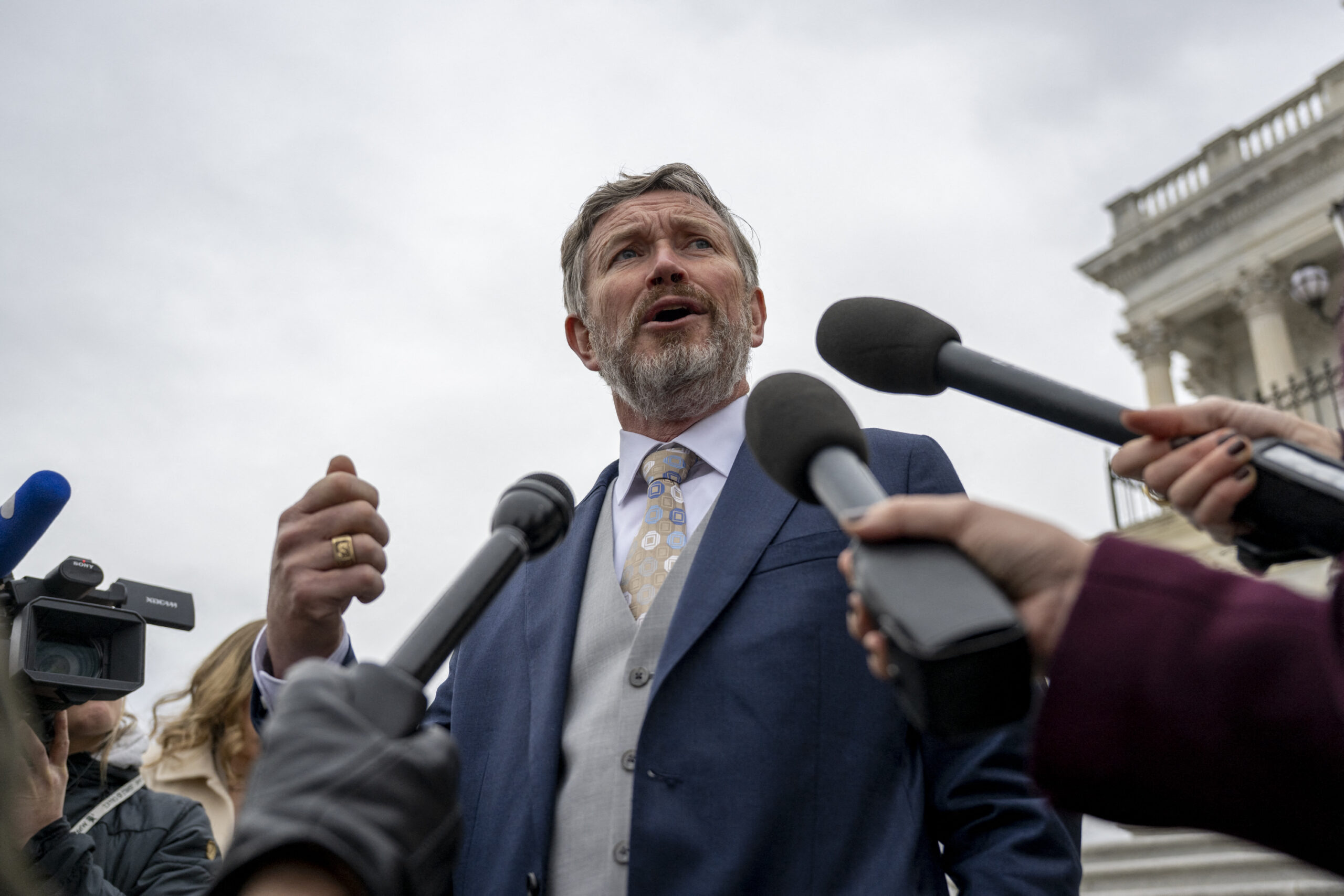
President Trump is set to rally with Massie’s opponent this week
Plus, Trump says Iran operation 'very complete'

Sean Gallup/Getty Images
Sen. Lindsey Graham (R-SC) speaks at the 62nd Munich Security Conference on February 13, 2026 in Munich, Germany.
This P.M. edition is reserved for our premium subscribers — offering a forward-focused read on what we’re tracking now and what’s coming next. Please don’t hesitate to share your thoughts and feedback by replying to this email.
📡On Our Radar
Notable developments and interesting tidbits we’re tracking
President Donald Trump praised Australian Prime Minister Anthony Albanese for assisting the members of Iran’s women’s soccer team, who are in Australia competing in the Women’s Asian Cup, amid fears for their persecution should they be forced to return home.
The president had called for Albanese to grant the athletes political asylum, saying they would “most likely be killed” if they were repatriated to Iran, and later commended him for “doing a very good job having to do with this rather delicate situation,” with five athletes “already taken care of, and the rest are on their way”…
Trump disputed reports that the U.S. is preparing to deploy ground troops to secure nuclear material at the Isfahan enrichment site in Iran, telling the New York Post, “We haven’t made any decision on that. We’re nowhere near it.” He also told CBS News that “the war is very complete, pretty much,” and the U.S. is “very far” ahead of his initial four-to-five-week timeline…
Trump has communicated to aides that he would support the assassination of Mojtaba Khamenei, Iran’s new supreme leader, if Khamenei does not acquiesce to U.S. demands, including ending Iran’s nuclear program, U.S. officials told The Wall Street Journal…
The Lebanese government has requested direct negotiations with Israel, sending the message through U.S. Ambassador to Turkey Tom Barrack, Axios reports. Washington and Jerusalem were reportedly skeptical about the idea, with Beirut thus far failing to disarm or rein in Hezbollah activities as the terror group continues to launch missiles into Israel…
NATO missile defense systems intercepted another Iranian missile heading for Turkey, a spokesperson announced today, the second time Iran has attempted to strike the NATO country’s territory…
Sen. Lindsey Graham (R-SC) threatened to impose “consequences” on Saudi Arabia for its unwillingness to join the U.S. campaign against Iran, as the U.S. evacuates its embassy in Riyadh and the kingdom continues to endure Iranian attacks, which have so far resulted in the deaths of two civilians and one U.S. servicemember. “Question — why should America do a defense agreement with a country like the Kingdom of Saudi Arabia that is unwilling to join a fight of mutual interest?” Graham wrote on X…
Talks to advance Trump’s 20-point peace plan in Gaza, including the issue of Hamas’ disarmament, have been at a standstill during the campaign against Iran, Reuters reports, as Gulf countries that pledged funds to help rebuild the enclave have come under fire and flight disruptions have prevented mediators from traveling…
The criminal complaint filed in the Southern District of New York today against the two Pennsylvania men who allegedly hurled improvised explosive devices toward a protest against New York City Mayor Zohran Mamdani on Saturday stated that both men explicitly identified ISIS as their inspiration, Jewish Insider’s Will Bredderman reports.
“This isn’t a religion that just stands when people talk about the blessed name of the Prophet [Muhammad],” Emir Balat, 18, told police, according to the charging documents. He also said he had hoped to pull off something “even bigger” than the 2013 Boston Marathon bombing, which he noted had caused “only three deaths”…
The White House moved today to designate the Sudanese Muslim Brotherhood as a Specially Designated Global Terrorist entity and announced plans to impose a Foreign Terrorist Organization designation on March 16, JI’s Matthew Shea reports, in the Trump administration’s latest crackdown against Muslim Brotherhood affiliates…
A new poll from the campaign of Rushern Baker, former executive of Maryland’s Prince George’s County, found him leading the crowded Democratic field seeking to succeed retiring Rep. Steny Hoyer (D-MD). Though a plurality of likely primary voters (28%) said they’re still undecided, Baker polled at 22% compared to former U.S. Capitol Police officer Harry Dunn’s 15% and Hoyer-endorsed state Del. Adrian Boafo’s 3%…
Rep. Kevin Kiley of California officially switched his party affiliation from Republican to independent — he had filed for reelection as an independent, but said today he would leave the party for the rest of his term as well. The move narrows the GOP majority even further, 217-214, but Kiley said he’ll continue to caucus with Republicans, blunting the impact…
Politico looks at the flurry of independent candidates seeking to unseat congressional Republicans in GOP-leaning districts, clashing with local Democratic establishments in the process…
⏩ Tomorrow’s Agenda, Today
An early look at tomorrow’s storylines and schedule to keep you a step ahead
Keep an eye out in Jewish Insider — we’ll have a profile of Dario Amodei, the Jewish CEO of Anthropic, which sued the Pentagon today over its decision to label the AI company a “supply chain risk.”
The Senate Armed Services Committee is expected to receive a classified briefing on the status of the U.S. and Israeli campaign against Iran.
The Republican Jewish Coalition and conservative magazine National Review will hold a daylong symposium on antisemitism, with remarks from Sens. Jim Banks (R-IN), Tom Cotton (R-AR) and Ted Cruz (R-TX); Noah Pollak, senior advisor at the Department of Education; Kenneth Marcus, founder of the Louis D. Brandeis Center for Human Rights Under Law; Rabbi Yehuda Kaploun, the State Department’s antisemitism envoy; Leo Terrell, senior counsel to the assistant attorney general for civil rights; and Texas Lt. Gov. Dan Patrick.
Georgia’s 14th Congressional District will hold its special election to fill the seat vacated by Rep. Marjorie Taylor Greene (R-GA), with more than a dozen candidates on the all-party ballot. The district leans strongly Republican but the GOP field is split among nine candidates, raising the possibility that the Democratic front-runner — retired Army Brig. Gen. Shawn Harris — could slip into the April runoff.
Stories You May Have Missed
SCOOP

NYC First Lady Rama Duwaji showed support for far-left orgs applauding Hamas rampage
POWER PLAYER