























































Kennedy, Blumenthal back U.S.-Oman cooperation in the Strait of Hormuz
Analysts say the reported arrangement could strengthen maritime security, deter Iranian influence and reinforce a key Gulf partnership

Shady Alassar/Anadolu via Getty Images
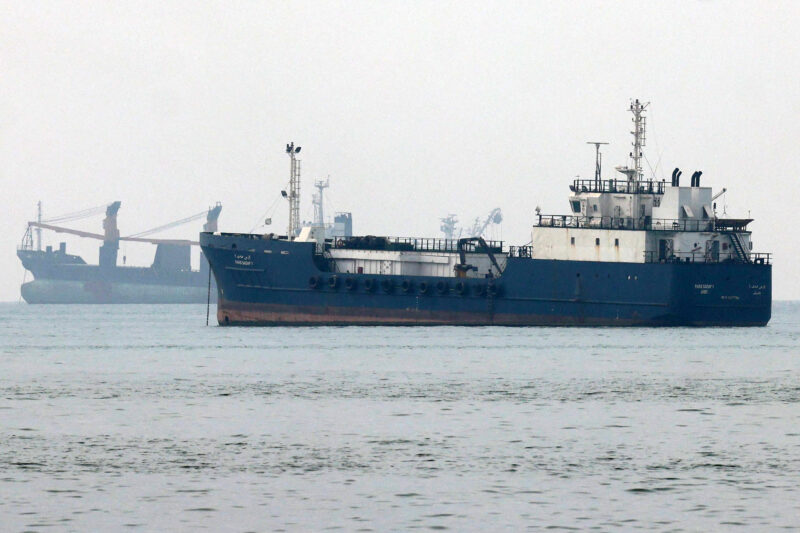
Commercial vessels and oil tankers preparing to transit through the Strait of Hormuz maintain their wait in the Gulf of Oman, on June 17, 2026.


 Add JewishInsider on Google
Lawmakers and Middle East analysts are expressing support for Washington’s reported agreement to help Oman strengthen its maritime intelligence and monitoring of transit through the Strait of Hormuz, saying the move could help secure free access to the critical waterway and deter Iranian influence.
Intelligence Online reported that Oman requested U.S. assistance to strengthen its maritime intelligence and provide surveillance on the Strait of Hormuz to protect shipping during the current ceasefire. The Pentagon received the request last month from the Royal Navy of Oman, sources told the outlet, and Washington has agreed to fulfill it by sending a defense contractor to address the immediate surveillance needs.
Throughout the conflict between the U.S. and Iran, Oman has stated it is maintaining its traditional position of neutrality. However, Washington has heavily criticized Muscat for its ongoing backchannel diplomacy with Tehran, calling on the Gulf nation to sever ties and pick a side.
U.S. officials have also chided Oman for refusing to directly condemn Tehran for drone attacks on regional infrastructure in the Gulf, and the Trump administration previously threatened military action if Muscat cooperated with Iran to impose fees or controls on shipping in the strait. Oman hosted Iranian officials to discuss the “administration” of the strait as recently as Tuesday.
Sen. John Kennedy (R-LA) expressed support for the agreement, assessing that U.S.-Omani cooperation in the strait advances Washington’s interests.
“That would help America,” Kennedy told Jewish Insider. “Therefore, I’m for it. I think it’s great.”
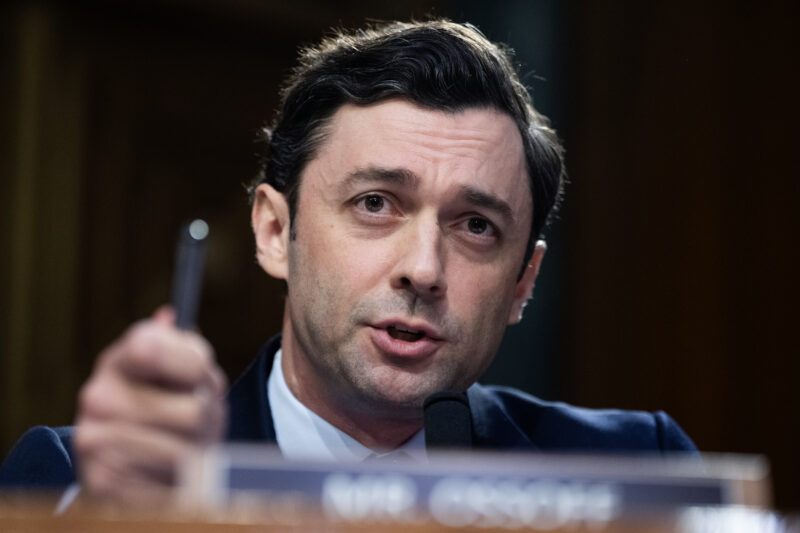
Sen. Richard Blumenthal (D-CT) said that while he did not have independent knowledge of the specifics, he believed closer cooperation is a welcome step.
“Any action that can ensure the strait remains open certainly ought to be welcome,” Blumenthal said. “If the United States can really use Oman’s help, or any other of the Gulf nations, it would be welcome.”
Rep. Tim Burchett (R-TN), however, struck a more skeptical tone.
“Trust but verify,” Burchett said. “I have a hard time trusting anybody in the Middle East right now, so that’s all I can say.”
When asked whether the joint monitoring arrangement could successfully deter Iranian influence or keep the crucial passageway toll-free, Burchett remarked: “I would be wishful for that.”
“The lines change and they get blurred so fast over there,” Burchett added. “I think there’s a new sense of collaboration over there, because a lot of Muslim-leaning countries supported us in our efforts in Iran, so I think they’re sick of the fighting too.”
Analysts said the arrangement is not unusual given the decades-long U.S.-Oman intelligence partnership, but argued it could help repair the countries’ ties, which were strained during the conflict with Iran.
“It’s perfectly in keeping with the Trump administration’s cognitive dissonance to criticize and cooperate with Oman in the same breath,” Jonathan Ruhe, a director of foreign policy at the Jewish Institute for National Security of America, said. “Oman hasn’t been America’s closest Gulf partner, but it long depended on the United States to defend Hormuz against Iran.”
Simon Henderson, a senior fellow at The Washington Institute for Near East Policy, argued that “any policy which helps maintain and improve the ties [between the U.S. and Oman] deserves encouragement.”
“The U.S. needs Oman as an ally if it is to make sure that Iran does not dominate the Strait of Hormuz,” Henderson said. “It will be interesting to see whether the current tension is reparable. Oman is very sensitive to U.S. criticism and may well judge that the future represents a different relationship and direction.”
Edmund Fitton-Brown, a senior fellow at the Foundation for Defense of Democracies, noted that the arrangement yields intelligence benefits for Washington.
“The U.S. will expect to receive all of the intel generated by the Omani navy on the strait,” Fitton-Brown said. “It also keeps Oman, along with Qatar and Pakistan, as a mediator in future conflicts. Above all, the U.S. ability to manage future negotiations and crises in the strait will be enhanced, and it is likely to be able to dictate what stance Oman adopts in such negotiations and crises.”
Fitton-Brown added that while Oman has tried to behave neutrally, its core relationship of trust remains with the U.S. This assistance gives Muscat “reassurance that the U.S. still has confidence in it as an ally masquerading as neutral.”
“[Oman] was worried during the U.S.-Iran conflict that it might be forced to make an overt choice between the U.S. and GCC, which would have antagonized Iran,” Fitton-Brown noted. “Now Oman expects that it will be able to continue its cordial relations with Iran, and continue to host the Houthis, without angering the U.S.”
Ruhe added that the U.S. may be eager to assist due to the Trump administration’s focus on “anything that restores oil flowing from the Gulf and reverses the war’s economic costs here at home.”
Furthermore, analysts emphasized that enhanced surveillance capabilities allow Oman to safeguard its own sovereignty against Iran’s aspirations in the strait.
“Oman probably seeks to ensure that it is at least an equal partner with Iran in arrangements over the passage through the strait,” Henderson said.
Fitton-Brown agreed, noting that the Omanis are “trying to understand the future status of the strait and need all the help they can get.”
“The focus is the Strait of Hormuz, which is likely because of Iranian assertiveness in the strait which infringes upon Omani national security,” Fitton-Brown said. “The Omani navy does not lack capability but is looking for enhancement, particularly in the fields of real-time surveillance and fusion of data from different forms of intelligence collection, including open source. The requirement will be for a training program, which can be provided by a U.S. contractor with an intelligence background.”
More Stories

PLATFORM CHECK
Where Israel’s parties stand on the Diaspora — in their own words
Daily Overtime
Jewish leaders press Miliband on U.K. antisemitism

MAINE EVENT
Maine Senate candidate Troy Jackson says Congress should cut off funding for Iran war

Daily Overtime
Dublin hotel dumps antisemitism conference
booking bias
Irish Jewish leader says Dublin hotel canceled guest rooms for conference on fighting antisemitism

REGGIO REGRETS
Reggio Emilia mayor walks back anti-Israel litmus test for preschool educators
Please log in if you already have a subscription, or subscribe to access the latest updates.
 Continue with Google
 Continue with Apple