











































Shapiro’s decision to go public with allegations that the last presidential nominee’s team exhibited bigotry underscores just how deep the divisions are within the party

RYAN COLLERD/AFP via Getty Images
Vice President Kamala Harris and Pennsylvania Governor Josh Shapiro (L) speak to the press while making a stop at the Reading Terminal Market in Philadelphia, Pennsylvania, July 13, 2024.


 Add JewishInsider on Google
Concerns over rising antisemitism and growing hostility toward Israel within the Democratic Party have long been on a slow boil.
Pennsylvania Gov. Josh Shapiro’s blockbuster revelation in his upcoming memoir that he was asked by Kamala Harris’ presidential campaign during the VP vetting process if he was ever an agent of the Israeli government underscores just how fraught the political environment has gotten for Jewish Democrats who support Israel.
Shapiro’s decision to go public with allegations that the last presidential nominee’s team exhibited bigotry underscores just how deep the divisions are within the party, especially as he considers a 2028 presidential run. These rifts pit the party’s moderate wing — which is generally supportive of Israel and harbors zero tolerance for antisemitism — against an ascendant left wing, exemplified by the disruptive anti-Israel protesters that Harris was pandering to at the time of her veepstakes deliberations.
Shapiro, if he runs for national office, is planting his flag in the mainstream wing of the Democratic Party, willing to call out antisemitism when he sees it, including on college campuses in his state, and supporting Israel — even while strongly criticizing some policies of the Netanyahu government. In his book, he proudly discusses his personal connections to Israel and the role Judaism plays in his life.
These were uncontroversial views within the Democratic Party, until the Oct. 7, 2023, Hamas terror attacks against the Jewish state emboldened an ugly strain of extremism that has, all too often, been accommodated by party leaders. (Shapiro also revealed that Harris insisted he apologize for his condemnation of intimidation targeting Jewish students at the University of Pennsylvania by anti-Israel protesters, which he refused to do.)
Anyone documenting the evolution of Democratic Party politics over the last few years can see the red flags. New York City, the epicenter of Jewish life in the United States, elected a mayor who refuses to recognize Israel as a Jewish state. Jewish Democrats running for office in progressive constituencies buckle under pressure to call Israel’s war against Hamas a “genocide” or decide to suddenly condemn AIPAC to showcase their progressive bona fides. A majority of Democratic voters, according to recent polls, now have an unfavorable view of Israel.
Indeed, Harris’ decision to pick Minnesota Gov. Tim Walz over Shapiro as her running mate — amid concern about backlash from anti-Israel forces within the party — is an example of how politically damaging it can be for Democrats to indulge such far-left activism. Outside of his folksy demeanor, Walz offered little for the national ticket and now is enmeshed in scandal in his home state. If he was tapped, Shapiro boasted the moderate record and swing-state success that at least could have moved the needle a bit more.
A Shapiro presidential candidacy would be a bet on a return to normalcy within the Democratic Party electorate. By calling out the Harris campaign’s behavior during the veepstakes vetting, Shapiro is drawing a red line between those who would tolerate bigotry in favor of those prioritizing electability by appealing to a middle-of-the-road normie voters. (He’s also reminding Democratic voters about the vulnerabilities Harris would bring to the table as a repeat presidential candidate as she mulls over another national campaign.)
For a short time after President Donald Trump’s decisive victory over Harris last November, it seemed like the moderates held the momentum within the party — and that a candidate with a proven record of winning over independents, like Shapiro, would be most appealing for a party desperate to win.
But as the resistance reasserted itself amid Trump’s governing excesses, and Mayor Zohran Mamdani’s brand of far-left, anti-Israel populism proved successful in New York City, the energy has shifted squarely to the left, to the point where it’s difficult for the silent majority to fight back.
It feels like ages ago that former Sen. Joe Lieberman, a proudly observant Jew and pro-Israel stalwart, was embraced by the Democratic Party at all levels and proved an asset to the party’s presidential ticket. Just two decades later, it’s an open question whether another pro-Israel moderate Jewish Democrat will receive the same warm reception.
Last year, Walz looked like he was on the fast track in national politics. Now he looks to be ending his career as a disgraced two-term governor

Stephen Maturen/Getty Images
Minnesota Gov. Tim Walz speaks during a press conference at the State Capitol building on January 5, 2026 in St. Paul, Minnesota.
The political fall of Minnesota Gov. Tim Walz, who just months ago was near the apex of political prominence as Kamala Harris’ running mate in the 2024 presidential election, is an object lesson in the consequences of pandering to the far left of the Democratic Party.
Last year, Walz looked like he was on the fast track in national politics. Now he looks to be ending his career as a disgraced two-term governor.
Walz announced Monday that he’s not running for a third term in office, amid a growing scandal over massive welfare fraud, where dozens of individuals from the state’s Somali diaspora were convicted in schemes involving over a billion dollars stolen from the state’s social services programs.
The scandal offers a snapshot of some of the Democratic Party’s most glaring vulnerabilities. Walz, along with others in the state’s Democratic leadership, oversaw the allocation of generous welfare payments without ample accountability, while turning a blind eye to corruption in a Somali community that’s become a reliable Democratic voting bloc.
A nimbler, and more moderate, politician would have aggressively led the charge against the criminals instead of coming across as a passive bystander. After all, a scandal like this threatens the sustainability of generous social welfare programs that have defined the ethos of the Minnesota Democratic Party. Instead, in his announcement Monday, he decried “political gamesmanship” by Republicans for drawing outsized attention to the issue.
A more pragmatic Walz would also have been comfortable speaking out against scandalous elements within the Somali community (without painting the entire community with a broad brush). Instead, his belated comments speaking out against the fraud typically avoided reference to the perpetrators of the scandal, and he frequently blamed Republicans as racist for invoking their backgrounds. That only dug him into a deeper political hole.
Walz’s sensitivity about not alienating the state’s Somali community also came up in other areas that underscored his progressive instincts. When a leading Somali mayoral candidate (state Sen. Omar Fateh) came under fire for employing virulently antisemitic staffers at the top levels of his campaign, Walz remained silent, even as Sen. Amy Klobuchar (D-MN) spoke up.
Walz also has been supportive of far-left Rep. Ilhan Omar (D-MN) even when she’s faced controversies over using antisemitic tropes and embracing anti-Israel views that have placed her out of the Democratic Party’s mainstream. His selection as Harris’ running mate over Pennsylvania Gov. Josh Shapiro was cheered on by the anti-Israel wing of the party.
The fact that Walz’s time in office is ending, in part, over his ideological stubbornness, is a shift from his early political career. Representing a swing district in the House for over a decade, Walz generally voted with his party’s moderates and broke with liberals on gun rights and energy policy while maintaining strong support for Israel. But as governor, he tacked to the left, embracing criminal justice reform and gun control, while often pandering to his party’s activists.
In one notable exchange last year with California Gov. Gavin Newsom, he argued that MAGA Republicans were driven by racism and sexism — a point that the 2028 presidential contender disagreed with. Since his elevation to the national stage, Walz has often invoked racism and sexism in criticizing the Republican Party — an impolitic attack that distinguished him from prospective presidential contenders like Newsom and Shapiro.
Walz’s departure from the governor’s race gives Democrats the opportunity to replace him with Klobuchar, a more pragmatic figure who has coasted to reelection since first winning her Senate seat two decades ago. Klobuchar, if she runs, she’ll benefit from being distant from the state’s fraud scandal.
But she could face challenges on her left that could expose the divisions within the party. Minnesota Attorney General Keith Ellison, a progressive and longtime critic of Israel, has also been mentioned as a leading candidate. But his role as the state’s lead law enforcement officer during the fraud scandal — already an issue in his reelection campaign — would bring the same political vulnerabilities as Walz with more ideological baggage.
The former state assemblyman told JI: ‘I confess to being disappointed that Democrats aren’t making a bright line litmus test out of whether someone supports the existence of the Jewish state’

Courtesy
Rory Lancman volunteering on an army base in Israel in December 2023.
While the Democratic Party’s far-left wing has gained ground in New York City — an ascendance reflected in Mayor-elect Zohran Mamdani’s victory — in the moderate-minded suburbs outside of the city, Democrats are reeling from the party’s embrace of its radical elements.
To that end, moderate Democrats are stepping up in key races, aggressively distancing themselves from the far-left wing of the party — and hoping the taint doesn’t affect the party’s brand at large heading into next year’s midterm elections.
Rory Lancman, a civil rights attorney and former state assemblyman, is one of those moderate candidates looking to showcase the other side of the Democratic Party. He launched an exploratory committee on Monday in a heavily Jewish state Senate district in Long Island, which is currently held by Republican state Sen. Jack Martins.
“The Democratic brand has been severely damaged by Mamdani and others, particularly [for] those Democrats like myself who are deeply committed to the safety and security of Israel, and deeply committed to the safety and security of the American Jewish community — whether it’s in our synagogues or on college campuses,” Lancman told Jewish Insider.
Lancman, 56, previously served as a member of the New York State Assembly, representing the 25th District in Queens from 2007 to 2013. He then served in the New York City Council from 2014 until 2020, where he was among the sponsors of a resolution condemning the Boycott, Divestment and Sanctions movement targeting Israel.
Currently, he serves as director of corporate initiatives and senior counsel at the Louis D. Brandeis Center for Human Rights Under Law, where he oversees lawsuits alleging antisemitism in the workplace, in labor unions and on college campuses.
Lancman’s interest in returning to the political arena is driven by a desire to counter “the kind of anti-Israel agenda that Mamdani has committed himself to,” he told JI, referring to the incoming mayor’s hostile views about Israel, including his refusal to denounce the phrase “globalize the intifada” and pledge to discontinue the New York City-Israel Economic Council, a new joint initiative between the two governments aimed at building economic ties.
“There’s a lot the state legislature could do,” Lancman continued. “It’s important for New York state to adopt the definition of antisemitism that is clear to be applied in circumstances all across the state, that’s the International Holocaust Remembrance Alliance definition which many states have adopted. It’s hard to solve a problem if you lack a basic definition of what that problem is.” (The definition is recognized and used by specific local governments, state entities and institutions within New York, but has not been universally adopted by the state.)
Lancman also called for reform to New York anti-discrimination laws “to make it easier for Jewish students to bring claims of discrimination under state law and to make it easier for Jewish businesses experiencing BDS to bring claims under state law.”
“We need to protect our houses of worship by adopting a New York State version of the Federal Faith Act, which is a law that can be strengthened and made useful in New York,” said Lancman. “I would like to see New York state explicitly prohibit any film production company that is engaged in BDS from being eligible for a New York state film tax credit.”
“We need to take real steps to protect our houses of worship and protect us from violence on the street. All of these tools are the ones I’ve used in the last two years [at the Brandeis Center] to protect Jews who have experienced antisemitism.”
For example, he’d like to see New York’s longstanding anti-mask laws, which were abolished during the COVID pandemic, reinstated. “If someone is walking around in a protest and covering their face, whether it’s with a white hood or a keffiyeh, it’s probably because they’re up to no good. We had a mask law in New York for decades and everyone understood its value.”
“We need to protect our houses of worship by adopting a New York State version of the Federal Faith Act, which is a law that can be strengthened and made useful in New York,” continued Lancman. “I would like to see New York state explicitly prohibit any film production company that is engaged in BDS from being eligible for a New York state film tax credit.”
Identifying himself as a centrist, Lancman said he is well-placed to earn the trust of Democratic voters, many of whom cite their primary issue as the high cost of living in Nassau County. Like many Democrats, Lancman is “disturbed by things coming out of Washington,” but also has a “lingering mistrust about whether the Democratic Party is committed to defending Jewish life in this country.”
The state Democratic Party chair, Jay Jacobs, who has spoken out against Mamdani, backed Lancman’s effort to flip the seat, saying earlier this week that “Rory’s lifetime of service to New York and record of delivering for Long Islanders would make him an excellent candidate, and we’re enthusiastic at the prospect of him running.”
Martins’ office did not respond to multiple requests for comment from JI. While representing Nassau County’s District 7, which has a sizable Jewish community, Martins has advocated for increased security funding for Jewish (and other nonpublic) schools through the Nonpublic School Safety Equipment Grant. In February 2023, the NYS Senate Republican Conference appointed him to chair the Antisemitism Working Group, which produced a report on the rise of antisemitism in 2024.
The campaign arm of the state Senate Republicans called Lancman the product of “extreme City Council policies that drove up costs.”
“We can’t sacrifice one of our two major political parties to the antisemitic leadership and agenda, that would be catastrophic for the Jewish community in the United States and I refuse to surrender my party to the Zohran Mamdanis of the world,” said Lancman.
“My record, my consistent views, my outspoken opposition to Mamdani, will earn people’s trust on the issue of Israel and combating antisemitism,” Lancman told JI. “From there, we can talk about the things that clearly favor Democrats, which are making life more affordable from property taxes to energy costs, those are our issues. In a district like this though, a Democrat has got to establish a real connection and trust on defending Jewish life in this country.”
In the state Assembly, Lancman said he would draw on a mantra he’s adopted from his time at the Brandeis Center: “That civil rights laws also protect Jews and that those laws need to be exercised to their fullest and need to be expanded and made robust as possible to address the antisemitic threats we are experiencing at this moment in time,” he said.
“We can’t sacrifice one of our two major political parties to the antisemitic leadership and agenda, that would be catastrophic for the Jewish community in the United States and I refuse to surrender my party to the Zohran Mamdanis of the world,” continued Lancman. “Being able to convert one’s beliefs and point of view into actual legislation and policy, and have an effect on protecting Jews, is not easy. The job is not just proclamation. The job is making people’s lives better, and in the case of the Jewish community, it is quite literally protecting our place in this country.”
“I confess to being disappointed that Democrats aren’t making a bright line litmus test out of whether someone supports the existence of the Jewish state,” said Lancman, adding that his work at Brandeis Center since the Oct. 7, 2023 terrorist attacks has “reinforced” the belief that “anti-Zionism is antisemitism and that if you hate the Jewish state, you hate the Jewish people.”
“We see that played out every day in this country and around the world. We cannot let that ideology take hold in the Democratic party, and I’m committed to defeating anti-Zionism and antisemitism in the Democratic party. You don’t need to bend the knee to antisemitism or socialism to be a Democrat.”
Jerry Nadler protege Micah Lasher: ‘The spread of violence against Jews is intertwined with the social acceptability of violent rhetoric directed at Jews’

(Photo by DAVID GRAY / AFP via Getty Images)
A man lays flowers at the Bondi Pavillion in memory of the victims of a shooting at Bondi Beach, in Sydney on December 15, 2025.
The deadly terrorist attack during a Hanukkah celebration in Australia on Sunday is sparking a renewed debate within the Democratic Party over anti-Israel slogans including “globalize the intifada,” and whether such extreme rhetoric fuels antisemitic prejudice that can lead to violence against Jews.
Some candidates and elected officials in New York City, where recent anti-Israel demonstrations have raised alarms within the largest Jewish community in the world, are tying such rhetoric directly to the carnage at Bondi Beach in Sydney — after two gunmen killed at least 15 people and wounded more than three dozen in the deadliest attack against the Jewish community in Australian history.
Eric Adams, the outgoing mayor, said on Sunday that “the attack in Sydney is exactly what it means to ‘globalize the intifada,’” and cast the shooting as “the real-world application of that call to violence.”
Erik Bottcher, a city councilman who is among several Democrats now competing to succeed Rep. Jerry Nadler (D-NY) in a heavily Jewish district in Manhattan, said that, in the wake of “an attack like Bondi Beach, we should be unequivocal: antisemitic violence is unacceptable, full stop.”
“And we should also be honest that slogans like ‘globalize the intifada’ don’t advance justice, they escalate hostility and make Jewish communities feel targeted,” Bottcher continued in a statement shared with Jewish Insider on Monday. “Leaders should be lowering the temperature.”
Alex Bores, a state assemblyman also seeking to replace Nadler, called the attack “horrifying and despicable” and said “antisemitism is a growing threat around the world,” while noting that “New York City has a special responsibility to confront it head‑on.”
“Any rhetoric or actions that dehumanize Jews, incite violence or put Jewish communities at risk must be called out and stopped, without exceptions. I have repeatedly condemned the use of the slogan ‘globalize the intifada,’” Bores told JI. “I believe that phrase, regardless of a specific speaker’s intent, has been tied inextricably to violent attacks, strikes fear in many New Yorkers and has no place in our city.”
Micah Lasher, a Jewish state assemblyman and another Democrat in the race, asked rhetorically in a social media post Sunday whether there was “any question” that “the spread of violence against Jews is intertwined with the social acceptability of violent rhetoric directed at Jews.”
“People of good will must confront this reality,” he concluded.
Such discourse is likely to intensify in next year’s primaries, where several anti-Israel candidates in New York City are seeking to challenge incumbent Democrats over their positions on Gaza and ties to AIPAC, the pro-Israel advocacy group increasingly demonized by the far left.
For now, however, those challengers were largely reluctant to weigh in on the heated rhetoric used by anti-Israel protesters — including just last month at at a synagogue in Manhattan where demonstrators chanted such phrases as “globalize the intifada” and “death to the IDF” — and if such language deserves further scrutiny amid heightened security concerns in the Jewish community following the Bondi Beach attack.
Darializa Avila Chevalier, an organizer in Harlem who helped to lead anti-Israel protests at Columbia University and recently launched a bid to challenge Rep. Adriano Espaillat (D-NY), did not respond to a request for comment.
Michael Blake, a former state assemblyman who is now challenging Rep. Ritchie Torres (D-NY) in the Bronx and who has drawn charges of hypocrisy for pivoting from his past outspoken support for Israel and close relations with AIPAC, also did not return a request for comment — even as he condemned the shooting in Australia.
For his part, Torres, a pro-Israel stalwart and top ally of the Jewish community, described the attack as “part of a global surge in antisemitism fueled by an ever-escalating campaign of demonization and dehumanization.”
A spokesperson for Brad Lander, the outgoing city comptroller mounting a newly launched bid to unseat Rep. Dan Goldman (D-NY) in a left-leaning district covering Lower Manhattan as well as parts of Brooklyn, likewise declined to comment, instead referring to his “several public comments about the Sydney shooting.”
The spokesperson also cited previous remarks in which Lander voiced reservations about calls to “globalize the intifada,” shortly after Zohran Mamdani, who is now the mayor-elect of New York City, had faced widespread backlash for refusing to denounce the slogan.
“Maybe you don’t mean to be saying it’s open season on Jews everywhere in the world, but that’s what I hear,” Lander, a top Jewish ally of Mamdani, said in comments in June. “And I’d like to hear that from other people.”
A spokesperson for Goldman, a pro-Israel Jewish Democrat, also declined to weigh in on the matter.
Mamdani, who condemned the Bondi Beach attack as a “vile act of antisemitic terror” in a social media post on Sunday, has refused to denounce the phrase “globalize the intifada,” but has vowed to discourage its usage.
In a Friday interview with WCBS in New York, Mamdani responded to feedback from a prominent local rabbi, Ammiel Hirsch, who expressed concern about the mayor-elect’s “ideological hostility to the very existence of Israel” and said that “anti-Zionist rhetoric and anti-Israel policies will threaten Jewish safety” in the city.
“Rabbi Hirsch is entitled to his opinions,” Mamdani stated. “The positions that I’ve made clear on Israel and on Palestine, these are part of universal beliefs of equal rights and the necessity of it for all people everywhere.”
A spokesperson for Mamdani did not respond to a request for comment.
Despite reluctance among Mamdani and some of his allies to now more openly grapple with rhetoric many Jews have found threatening, one progressive challenger to Rep. Grace Meng (D-NY), a pro-Israel incumbent in Queens endorsed by AIPAC, said that he has come to view phrases such as “globalize the intifada” as harmful, thanks to conversations with his Jewish friends.
Chuck Park, a former City Council aide and foreign service officer who has criticized Meng’s donations from AIPAC, said “Jewish people around the world — from Bondi Beach to Bushwick — are very scared right now,” while adding “it is the job of non-Jewish leaders like myself to listen to them.”
“When I listen to my Jewish friends,” he said in an interview with JI on Monday, “they tell me that they hear” the phrase particularly “as a call to violence against them.”
“The swastika is no longer a Buddhist symbol of good fortune, right?” Park added. “The pointed white hood is no longer a Catholic symbol of penance. And in a very similar way, that phrase is not a call for the liberation of an oppressed people, and I think it has instilled and maybe even inspired dangerous attacks on Jewish people around the world.”
Lander has been criticizing Goldman for not fighting against Trump, even though he led impeachment efforts against the president

Mary Altaffer/AP
Rep. Dan Goldman (D-NY), left, is joined by New York City Comptroller Brad Lander during a news conference outside the Metropolitan Detention Center in the Sunset Park neighborhood of Brooklyn on Tuesday, Aug. 16, 2022.
The hotly anticipated primary matchup between outgoing New York City Comptroller Brad Lander and Rep. Dan Goldman (D-NY) was widely expected to be a bellwether race that would test the strength of pro-Israel sentiment within the Democratic Party.
Featuring two prominent Jewish New Yorkers with sharply opposing views on the Middle East, the race notably pits Lander, an outspoken critic of Israel and its war in Gaza, against Goldman, a more moderate incumbent viewed as a strong defender of the Jewish state.
But nearly a week after announcing his challenge, Lander, the progressive New York City comptroller, is so far tiptoeing around such differences, even as they are arguably the driving contrast in the primary. Instead, he has more actively emphasized a message that is casting Goldman as ineffective in countering President Donald Trump — declaring it is “time for fighters” and “not folders” in Congress.
His top surrogates — including a range of vocal Israel critics including Sens. Elizabeth Warren (D-MA) and Bernie Sanders (I-VT) and Zohran Mamdani, the mayor-elect of New York City — have made no mention of Middle East policy in their statements endorsing his campaign to represent New York’s 10th Congressional District, which covers Lower Manhattan and a swath of northwest Brooklyn.
“We need more fighters in Washington now more than ever, and Brad is a fighter,” Warren said last week, adding that Lander has “the grit to not just win this race, but deliver for working families.”
Such comments, however, have failed to note that Goldman, who was elected to Congress in 2022, is recognized as a leading Trump antagonist, having served as the top prosecutor in the president’s first impeachment case. Like Lander, he has frequently confronted the Trump administration on a range of issues including its immigration agenda. Last week, for instance, Goldman seized the spotlight during a fiery House hearing in which he clashed with Kristi Noem, the Homeland Security secretary — accusing her of illegally deporting asylum seekers in a grilling that drew headlines and social media virality.
Warren’s team did not respond to a request for comment when asked why she was not satisfied with Goldman’s record opposing Trump and his administration’s policies.
The early effort by Lander and some of his allies to employ rhetoric focused largely on fighting Trump has obscured how Israel is the clearest dividing line in the race — raising questions about Lander’s strategy as he seeks to shape a narrative Goldman’s supporters have dismissed as a misdirection. Rep. Nancy Pelosi (D-CA), in a statement last week, countered that her colleague is one of the “best members” she has “ever served with” and said he “is exactly the right fighter for this moment.”
With opposition to Trump likely a major motivating force for midterm voters, Lander is now facing scrutiny over his attacks targeting a two-term incumbent who has long staked his reputation on effectively battling the president. Meanwhile, in the wake of Israel’s recent ceasefire with Hamas, it remains to be seen if Gaza will continue to be an animating issue heading into the June primary election that is already shaping up to be a heated and expensive race.
Goldman, a Levi Strauss heir whose estimated net worth is up to $250 million, spent nearly $5 million of his own money during his first primary bid three years ago, when he narrowly prevailed in a crowded field of progressive rivals who split the vote. Lander has also targeted Goldman’s personal wealth, saying that the “oligarchy” should not “be able to buy a seat in Congress.”
Even as Lander, a former longtime city councilman from Brooklyn, touts high-profile support from the Senate, House progressives have for their part so far stayed on the sidelines.
Rep. Alexandria Ocasio-Cortez (D-NY), an Israel critic who backed Lander’s comptroller bid in 2021 and called him a “talented hero” after his arrest by federal agents at an immigration courthouse last June, said she is “not weighing into that race right now,” echoing other like-minded lawmakers who also declined to take sides in the looming primary.
While Lander has long identified as a progressive Zionist, he has been outspoken in criticizing Israel’s conduct in Gaza, accusing the country of war crimes and ethnic cleansing. He has additionally called for conditioning U.S. aid to Israel, a measure Goldman has rejected.
“What Lander is counting on now is the sentiment of the moment, which is further to the left and more anti-Israel,” Hank Sheinkopf, a veteran Democratic consultant in New York City, told Jewish Insider in a recent interview.
In a speech before the mayoral election, where he rose to prominence as a top surrogate for Mamdani after losing his own primary bid, Lander advocated for building a “coalition of anti-Zionists and liberal Zionists,” seeking to unify opposing factions to end “the horrors in Gaza.”
Goldman, for his part, chose not to endorse Mamdani, citing concerns about his approach to Israel and rising antisemitism, but he has said he looks forward to working with the mayor-elect on promoting his affordability agenda.
“What Lander is counting on now is the sentiment of the moment, which is further to the left and more anti-Israel,” Hank Sheinkopf, a veteran Democratic consultant in New York City, told Jewish Insider in a recent interview.
Still, in the days after launching his campaign, Lander has sent mixed signals about how he plans to highlight differences with his opponent on Israel.
In his campaign announcement video released last Wednesday, for example, he took a thinly veiled jab at Goldman in vowing not to do “AIPAC’s bidding,” referring to the increasingly demonized pro-Israel group, but did not mention the incumbent by name.
Lander told The New York Daily News in an interview last week that he views contrasts over Gaza as ancillary to their approaches to confronting the Trump administration, drawing raised eyebrows from observers who noted that hitting Goldman on his strongest issue avoids addressing a more salient tension over Middle East policy.
“On this issue, we have some disagreements,” he said of Israel, “but the core rationale is because it’s time for fighters not folders,” Lander elaborated on his approach to the race.
One Jewish community leader supportive of Goldman expressed frustration at the logic behind Lander’s challenge. “I’m just pissed that there’s not a single thing they can point to what Goldman isn’t doing right other than being pro-Israel,” he told JI, speaking on the condition of anonymity to address a sensitive subject.
During a campaign kickoff event in Brooklyn last week, Lander accused Goldman of failing to hold Israel accountable for its behavior in Gaza, saying “only I, of the two of us, recognize that Netanyahu’s leveling of schools and hospitals and the destruction of Gaza was a war crime,” in reference to the Israeli prime minister. He also reiterated that New Yorkers “don’t want elected officials who do AIPAC bidding in a district that recognizes that our safety and our freedom is bound up together.”
Lauren Hitt, a spokesperson for Lander’s campaign, disputed criticism that he is avoiding Israel as a top issue. “Brad literally called out AIPAC in his launch video, so safe to say he will continue to spend quite a bit of time discussing Israel in this race,” she said in a statement to JI on Friday.
On Friday, Lander also said on social media that, if he were a member of Congress, he would introduce a resolution censuring Rep. Randy Fine (R-FL) over his recent incendiary comments calling for Muslims to be “destroyed.” Lander, without directly citing his opponent, also noted he would “not have voted with Republicans” to censure Rep. Rashida Tlaib (D-MI) over incendiary comments against Israel during the Israel-Hamas war in 2023, as Goldman himself had done.
Hours later, Goldman also denounced Fine in an X post for remarks assailing Muslims as “barbarians,” calling the statement “despicable and unacceptable” and saying he “must apologize and retract this tweet immediately.”
Lauren Hitt, a spokesperson for Lander’s campaign, disputed criticism that he is avoiding Israel as a top issue. “Brad literally called out AIPAC in his launch video, so safe to say he will continue to spend quite a bit of time discussing Israel in this race,” she said in a statement to JI on Friday.
“Brad will also speak to the other issues concerning NY-10 voters, including affordability — another topic where the heir to the Levi Strauss fortune is out of step with the district’s experience. NY-10 voters don’t need a representative that’s palling around with Don[ald Trump] Jr. in the Bahamas, they need someone who understands and represents their views,” Hitt added, referring to an October social media post in which Trump’s son sarcastically thanked Goldman for his “kind words” about the president’s ceasefire and hostage deal during the government shutdown.
For now, it is unclear how AIPAC and pro-Israel groups more broadly are assessing the matchup — and if they will choose to engage in the primary. A spokesperson for AIPAC declined to weigh in.
In 2022, AIPAC disclosed after Goldman had won his primary that its super PAC, United Democracy Project, had quietly contributed at least $350,000 to a separate group established near the end of the race to fund a series of attack ads against Yuh-Line Niou, a far-left rival who had drawn controversy for voicing alignment with the Boycott, Divestment and Sanctions movement targeting Israel.
One pro-Israel consultant, who was granted anonymity to address a sensitive topic, suggested “AIPAC’s involvement in the race would probably be a negative against Goldman.” Mamdani, an ally of Lander who has long been a fierce critic of Israel, performed well in the district — where Goldman’s views on Israel have faced backlash from left-wing voters.
Democratic Majority for Israel, which is backing Goldman, had been wary of a one-on-one contest with Lander, whom polling has shown is a strong opponent, according to a person familiar with the group’s discussions. Lander’s early consolidation of progressive support helped to push two other rivals on the left not to run in the race, effectively clearing the field for the outgoing comptroller. A spokesperson for DMFI did not respond to requests for comment regarding its plans.
Goldman, meanwhile, said in an interview with a local news outlet last week he welcomes Lander’s challenge but is “not really thinking about” the race “right now.” A campaign spokesperson said that he is “focused on stopping” Trump and “will deal with Brad and other challengers in the new year,” when he is “planning to roll out a flood of” endorsements from fellow House members.
Despite differences over Israel, Goldman is also endorsed by J Street, a progressive Israel advocacy group that has long been close to Lander. A spokesperson for J Street told JI in a statement the group is “proud” to back Goldman and “we deeply value his pro-Israel, pro-peace and pro-democracy leadership.”
“Dan has a progressive record,” said Chris Coffey, a Democratic strategist. “It’s not always as far left on Israel as Brad, for sure, and that is one of the things that differentiates them on policy.” Israel, he added, “could be a defining issue in this race,” regardless of Lander’s messaging efforts to prioritize Trump.
“We are also grateful for our years-long friendship with Brad Lander, who is a vocal leader for our values. We know that the issue of peace is close to both of their hearts,” the spokesperson continued. “Ultimately, it is up to the district to determine who they want to represent them in Congress, and we are glad to see two J Street-aligned voices in this race.”
A top J Street official, speaking on background to address the primary, confirmed the group will not be engaging materially in the race as it is satisfied with both candidates’ records. “I expect our donor base will give to both,” the official told JI. “There’s definitely a split of opinion on this race, to say the least.”
“Dan has a progressive record,” said Chris Coffey, a Democratic strategist. “It’s not always as far left on Israel as Brad, for sure, and that is one of the things that differentiates them on policy.” Israel, he added, “could be a defining issue in this race,” regardless of Lander’s messaging efforts to prioritize Trump.
Lander, for his part, could also face backlash from far-left activists in the district who have bristled at his identification as a progressive Zionist and have taken issue with his investments in an Israeli arms producer as comptroller, even as he chose to cease holdings of Israel bonds during his four years in office.
The Democratic Congressional Campaign Committee, which is focused largely on winning back the House in next year’s midterms, declined to comment on the primary, though it has traditionally backed incumbents.
Locally, a political advocacy group in the district called Brooklyn BridgeBuilders, which is dedicated to fighting antisemitism and anti-Israel sentiment, is planning to support Goldman and is currently in the process of formalizing its strategy, according to Ramon Maislen, its CEO.
“The decision to challenge a highly effective liberal Jewish incumbent is incredibly fraught,” Maislen, a Jewish community activist who lives in Park Slope, told JI. “Dan is someone who has been unwavering in taking on Trump, defending our democracy and standing with the Jewish community.”
Democrats are concerned that the trend of voters rallying behind far-left candidates who aren’t electable is percolating far beyond Texas
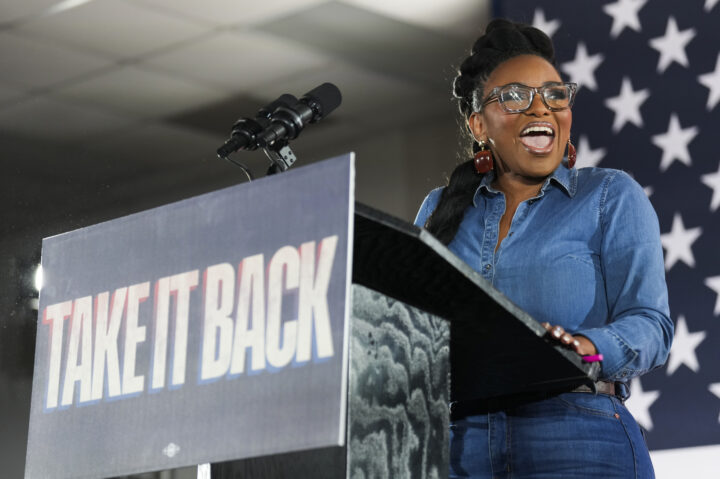
Jason Fochtman/Houston Chronicle via Getty Images
Rep. Jasmine Crockett (D-TX) speaks during a rally in Houston, Saturday, Nov. 8, 2025.
The leftward lurch of the Democratic Party over the last year can be documented in many ways: The sudden rise of Zohran Mamdani as mayor-elect of New York City, the surge of far-left candidates running on socialist, anti-Israel platforms and the party accommodating a panoply of activist views, including anti-Israel activism, instead of drawing red lines against extremism.
But all of these developments don’t directly impact the party’s electoral fortunes, especially since the surge of left-wing activism has mainly predominated in the most-progressive parts of the country, like New York City, Seattle and safe Democratic districts.
But now there are clear signs that Democratic voters are rallying behind out-of-the-mainstream, in-your-face candidates in battleground and even GOP-leaning states and districts, developments that are putting races out of play for a party that’s hoping to ride an anti-Trump wave back into power in next year’s midterms.
Nowhere is the party’s leftward evolution clearer than in Texas, a conservative-minded state where the Senate race was potentially competitive as a result of GOP infighting. Sen. John Cornyn (R-TX) is facing a serious primary threat from the state’s right-wing, scandal-plagued attorney general, Ken Paxton. The Democratic thinking: If Paxton won the nomination, a mainstream candidate with a track record of winning persuadable voters could at least force Republicans to spend money to defend red-state turf next year.
To that end, Colin Allred, a former NFL player and center-left suburban lawmaker who was elected to the House in 2018 by winning over independents and some moderate Republicans, jumped into the race. Allred lost to Sen. Ted Cruz (R-TX) in 2024, but cut the GOP victory margin in the race to eight points — about half of President Donald Trump’s 14-point margin against Kamala Harris.
Allred’s brand of pragmatic politics was quickly overtaken this year by candidates drawing attention for their social media virality. Texas state Rep. James Talarico quickly emerged as an Allred alternative, offering a brand of TV-ready, populist progressivism that some party strategists thought could be a model for candidates looking to appeal to the base without insulting conservatives. Even though his voting record is liberal, the fact he went on Joe Rogan’s podcast and talked about faith drew him a niche following within the party.
But all that strategic posturing was rendered moot, after the polarizing and progressive Rep. Jasmine Crockett (D-TX) announced her candidacy on Monday, emerging as a front-runner in the Democratic primary even as most strategists view her as a surefire loser in a general election — no matter who Republicans nominate. What’s concerning Democrats even more is that if she’s nominated, her long history of controversial comments could hurt Democrats looking to hang on for reelection in competitive districts.
In a sign of where the energy in the party lies, Allred quickly announced he was dropping out of the Senate race and instead is pursuing a comeback bid in the House. Talarico is sticking around, and while his team is optimistic they can win the primary, they acknowledge they’re starting out with a double-digit deficit against the more-prominent Crockett.
If Democrats want to entertain any hopes of winning back the Senate majority, they have to prevail in at least two GOP-held seats in conservative territory — Ohio, Texas, Iowa and Alaska being the most realistic options. Putting Texas in play was always seen as part of that playbook, even as Democrats privately acknowledged their odds are long.
With Crockett as the nominee, not only does Texas fall out of contention, but the opportunity for Democrats to drain GOP resources in defending a red state also would become more unlikely.
And what’s worrying Democrats is that the trend of voters rallying behind far-left candidates who aren’t electable is percolating far beyond Texas. In a Tennessee congressional special election this month, the party nominated state Rep. Aftyn Behn, a candidate nicknamed the “AOC of Tennessee,” as their standard-bearer against more-moderate alternatives in the primary. The race in a Trump-friendly district became competitive because of the GOP’s political problems, but Behn wasn’t able to exploit the opportunity because of her record.
There are many candidates emerging with backgrounds like Crockett and Behn in congressional primaries across the country. They’re the type of candidates who can win in deep-blue constituencies, but the party pays a price when they’re nominated in swing districts.
CNN’s Edward-Isaac Dovere summed up the Democrats’ dilemma clearly: “This seems like a classic case of the party seeing a potential Republican disaster it could take advantage of, then laying the groundwork for the Democrats’ own disaster.”
The potential 2028 presidential candidate spoke candidly about his faith in two recent high-profile interviews
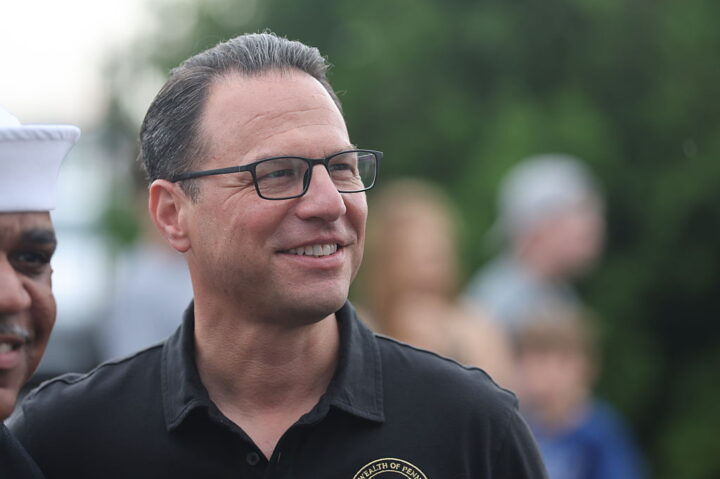
Andrew Mordzynski/Icon Sportswire via Getty Images
Pennsylvania Gov. Josh Shapiro looks on during the NASCAR Cup Series at The Great American Getaway 400 on June 22, 2025, at Pocono Raceway.
The 2028 presidential race is still well over a year away from beginning in earnest. But if there’s any indication about whether Pennsylvania Gov. Josh Shapiro, long considered a rising star in the Democratic Party, is seriously considering running, it’s that the moderate swing-state governor recently sat down for interviews for two major magazine features — in The Atlantic and The New Yorker — both published in the last week.
Shapiro faced questions about his ambitions, his successes and failures and his take on the increasingly divisive and vitriolic nature of American politics. The two interviews also offer a fresh look at how Shapiro, one of the most prominent Jewish politicians in America, thinks about and practices Judaism from his perch in Harrisburg.
When he ran for governor in 2022, his first major campaign ad featured footage of him and his family observing Shabbat. He told The Atlantic’s Tim Alberta that Friday night dinners are “still a sacrosanct moment for our family.” But he also shared that he and his family have lately attended synagogue services “far less than at any other point in our lives.”
Shapiro regularly invokes religion in public addresses, choosing to speak about “my faith” rather than more specifically referring to his Jewish faith.
“I feel more connected to my faith today than at any other time in my life. Truly. And I probably pray more now than at any other time in my life. But my connection to an institution of prayer, or a sort of formal structure of that prayer, has dramatically decreased,” Shapiro shared. “The sort of ritualistic practices became less of a focus of the way we practice our faith — with the exception, of course, of Friday nights.”
In conversation with The New Yorker’s Benjamin Wallace-Wells, Shapiro opened up about the arson attack on the governor’s residence in April, hours after his family had concluded their Passover Seder. At the October sentencing hearing for the assailant, Shapiro said for the first time that he may have been targeted, in part, for his Jewish faith.
“The prosecutor felt it was important to introduce into evidence the bomber’s claims that he did that because of ‘what I did to the Palestinians,’ so clearly there was some motivation because of my faith,” Shapiro told The New Yorker, which reported that the dining room — now restored after being severely burned — features a small display of charred cups and dishes from the Seder, to remember that frightening evening.
But Shapiro’s subsequent comments backed away from personally tagging an antisemitic motive on the perpetrator: “I think it is dangerous for you or anyone else to think about those who perpetrate these violent attacks as linear thinkers, meaning that they have a left-wing ideology or a right-wing ideology, or that they have a firm set of beliefs the way you might or I might. These are clearly irrational thinkers.”
Shapiro talked to The New Yorker about rising antisemitism in the U.S., and said that he disagreed with President Donald Trump’s handling of antisemitism. Trump “is using Jews as his excuse for trying to take over universities and restrict their funding,” Shapiro said. But he does not deny that Jewish students were targeted, sometimes violently, on American campuses after the Oct. 7 attacks. “These are crimes,” Shapiro said. “And to me, that’s where a line was crossed.” He flexed his gubernatorial power to pressure the University of Pennsylvania — albeit indirectly — to crack down on antisemitism.
Ultimately, as Shapiro continues in a political career that has so far only taken him higher, often with great momentum, he will face a question beyond just who is the best candidate in 2028: Can a Jewish person get elected president in the U.S.? The Atlantic asked Shapiro directly.
“There aren’t a whole lot of folks who pray like me,” Shapiro acknowledged. But, he added, “I have found that by living openly and proudly with my faith that it’s brought me closer to the people of Pennsylvania. And I think the people of Pennsylvania are pretty indicative of where large swaths of the American people are.”
The Maryland congressman recently said the Democratic Party should have ‘room for Marjorie Taylor Greene if she wants to come over’
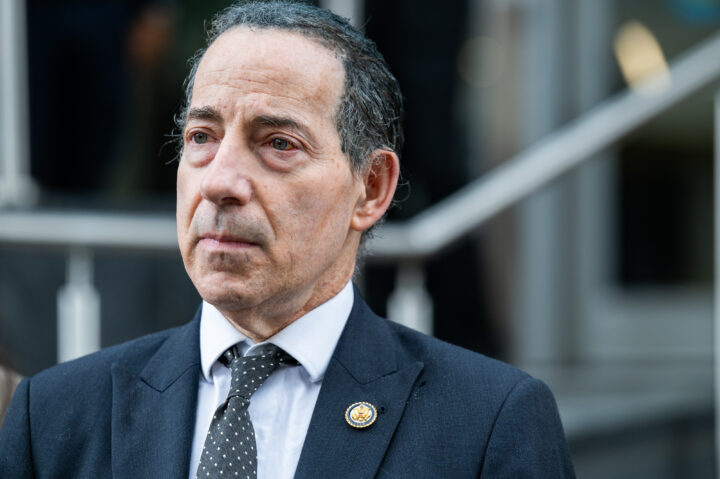
Annabelle Gordon/Bloomberg via Getty Images
Rep. Jamie Raskin (D-MD) during a news conference in Washington, D.C., on Thursday, May 22, 2025.
Rep. Jamie Raskin (D-MD) told Jewish Insider on Tuesday that Rep. Marjorie Taylor Greene (R-GA) would need to reject antisemitism and other forms of bigotry if she wanted to join the Democratic coalition, tempering his recent comment that the Democratic Party should be enough of a “big tent” to accommodate Greene.
Greene, who has recently earned friendly treatment from some Democrats and liberal-leaning media programs such as “The View” over her break with President Donald Trump, has continued to invoke antisemitic tropes, most recently suggesting over the weekend that Israel had pressured Trump to denounce her, and has promoted a variety of other conspiracy theories.
But that rhetoric, for which many liberals previously condemned Greene, has gone increasingly overlooked.
“We are a big tent. We must be a huge, vast tent. I say this is a party that’s got room for Marjorie Taylor Greene if she wants to come over. We’ve got room for anybody who wants to stand up for the Constitution and the Bill of Rights today,” Raskin said in remarks to Florida Democrats shared on social media last weekend.
Asked about Greene’s ongoing promotion of antisemitic tropes and conspiracy theories, Raskin told JI in a statement, “Before I would welcome Rep. Greene or any other leaders who might flee from Trump’s autocratic personality cult, I would of course want to see them repudiate all the forms of authoritarianism, antisemitism, racism, transphobia and bigotry that they have promoted as Republicans and that have become so intertwined with the MAGA Republican brand under Trump.”
He said he believes that some of his colleagues may end up switching parties.
“I have real hope that a whole lot of my Colleagues will continue to evolve away from the dangerous and divisive swamps of MAGA politics,” Raskin said. “I meet Independents and Republicans every day joining the Democratic Party, and I am delighted to work with them and anyone else who will stand up against antisemitism, racism and corruption and for democracy, equality, freedom and progress for all.”
Jewish Democratic groups urged Democrats to keep Greene at a distance.
“She has a track record of antisemitism and opposition to Israel that goes back before she was even in Congress and continued as recently as a few days ago,” Democratic Majority for Israel CEO Brian Romick told Jewish Insider. “The House is a legislative body and you need to get 218 [votes]. You should get 218 [with] whoever you can get to 218, but just because someone votes with you today doesn’t make them a good person or your friend.”
Halie Soifer, the CEO of the Jewish Democratic Council of America, said that Greene’s rift with Trump “doesn’t change her many years of espousing extremist views, including dangerous lies about Jewish Americans, whether it be the infamous ‘space laser’ accusation or other antisemitic conspiracy theories. So if she really wants to distinguish herself from the toxic politics of Donald Trump, she needs to do more than simply call for the release of the Epstein files.”
Soifer also argued that Greene’s views of Israel — she has accused the country of genocide in Gaza and sought to cut off military aid — “are not aligned with those of Jewish Dems either.”
“If she’s going to provide an additional vote for passage of critically important measures for the American people, including reducing their otherwise skyrocketing prices of health care, then the Democrats should gladly take that support,” Soifer said. “However, that doesn’t mean aligning with her and her extremist views. It doesn’t change the fact that she has continued to perpetuate antisemitic conspiracy theories and espouse extremist and even antisemitic views.”
At the JFNA General Assembly, Emanuel predicted that no candidates will travel to Israel in the 2028 Democratic presidential primary
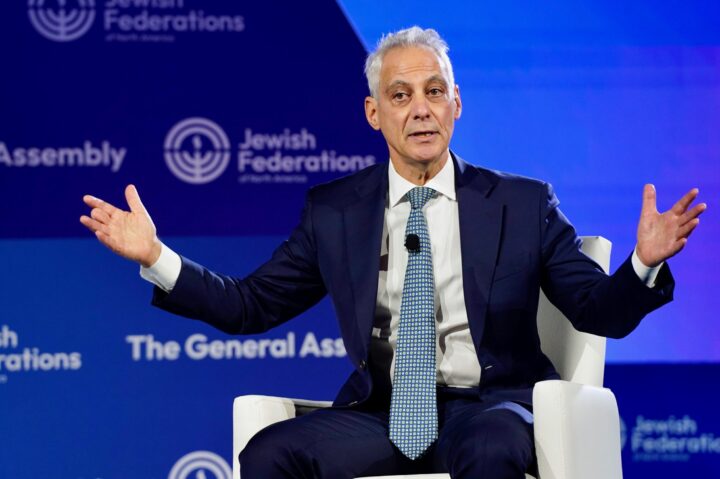
Jewish Federations of North America
Rahm Emanuel speaks at the Jewish Federations of North America's 2025 General Assembly opening plenary on Nov. 16, 2025.
Longtime Democratic official Rahm Emanuel offered a word of warning on Sunday night to the thousands of Jewish communal leaders gathered in Washington to kick off the Jewish Federations of North America’s General Assembly: Don’t expect 2028 presidential candidates to visit Israel like his old boss, Barack Obama, did on the campaign trail in 2008. He used an ice cream metaphor to make his point.
“If in 2024 the Democrats didn’t have a choice, in 2028 it’s going to be like Baskin-Robbins. There’s gonna be, like, 31 flavors. Some of us are gonna be chocolate mint. Nobody is going to Jerusalem,” Emanuel said at the opening plenary. “Nobody is leaving America to go travel to Jerusalem. That’s the politics. And it’s not just in the Democratic primary.”
Emanuel, Obama’s former chief of staff and the former U.S. ambassador to Japan, beseeched the attendees to reckon with the shifting political winds on Israel and work to make a stronger case for the U.S.-Israel relationship.
“For the generation under 30, the last two years will be as seminal a definition as what the Six-Day War was for those six days for a generation. We have our work cut out for us,” said Emanuel, who acknowledged that his message may not make him popular in a room of pro-Israel professionals. “This may be the last time I’m asked to speak to you.”
Emanuel has discussed the possibility of running for president in 2028, and this year has positioned himself as an independent-minded truth-teller willing to break with Democratic Party talking points. He urged the Jewish leaders, who are in Washington for a three-day conference focused on philanthropy and advocacy, to take stock of the task that awaits them.
“The task here is a major long-term rehabilitation of the narrative around what Israel needs, and if we don’t understand the depth of where we are, we’re never going to fix the problem,” said Emanuel, who was speaking on a panel with conservative CNN analyst Scott Jennings.
Emanuel described the American Jewish community as being “on the precipice,” when asked about a 2024 Atlantic article that argued that antisemitism on both sides of the aisle threatens to end the so-called “golden age” of American Jewish life.
“Whether that era, that golden era, closes or stays open for another generation is not only incumbent upon the people in this room, but incumbent upon all of us who believe in a set of values that, as noted, are universal,” he said. “I think what we’re seeing on the left and the right, not only about Israel, but now fully open about Jews and who they are, sits on the precipice. It can go either way.”
Andrew Cuomo carried the district in the NYC mayoral race, underscoring its pro-Israel constituency
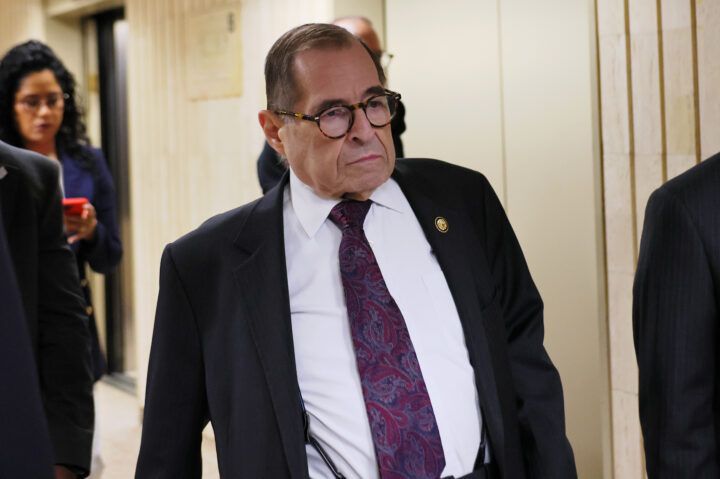
Michael M. Santiago/Getty Images
Rep. Jerrold Nadler (D-NY) arrives to view proceedings in immigration court at the Jacob K. Javitz Federal Building on June 18, 2025 in New York City.
An increasingly crowded race for a coveted House seat in the heart of Manhattan is shaping up to be among the most vigorously contested Democratic primary battles in next year’s midterms, with half a dozen — and counting — contenders now jockeying for the chance to succeed retiring Rep. Jerry Nadler (D-NY).
In a district home to one of the largest Jewish constituencies in the country, the open primary next June is likely to center in part on Israel as the candidates signal where they stand on an issue that has grown intensely charged over the war in Gaza.
Even as the far left now seeks to ride momentum from Zohran Mamdani’s mayoral victory — which elevated an unabashed socialist to executive office — experts suggested the primary could largely serve as an exception to the anti-Israel sentiments that became a trademark of his stunning rise.
Former New York Gov. Andrew Cuomo, who ran as an independent in the mayoral election this month, won the district by five points with 50%, indicating that a potentially meaningful share of Jewish voters were resistant to Mamdani’s hostile views on Israel and refusal to condemn rhetoric seen as antisemitic.
The district, which includes the Upper East and West Sides of Manhattan, “is more moderate and pro-Israel than” another heavily Jewish House seat in Brooklyn where Mamdani performed well, Chris Coffey, a Democratic strategist who is not involved in the race, told Jewish Insider on Thursday.
So far, however, most of the declared candidates have been relatively cautious about sharing their positions on Israel — underscoring the hazards of addressing a subject that has fueled deep divisions within the Democratic Party. “I would be surprised if they want to lead on this,” Coffey speculated. “It’s a contentious issue.”
With the exception of Alex Bores, an assemblyman who represents the Upper East Side, none of the top candidates who have launched bids in recent weeks answered a question from JI on Thursday asking whether they would support an embargo on offensive weapons to Israel, a measure backed by Nadler after he revealed in September that he would step down at the end of his current term.
“There are laws on the books about this and they should be applied across the board,” Bores said in a statement indicating he would oppose such efforts if elected. “There is no singling out or exemptions for any one country.”
Privately, Bores has been “clear” that an arms embargo is not “negotiable for him,” according to a person familiar with his thinking. Former Rep. Steve Israel (D-NY), a pro-Israel Jewish Democrat, endorsed the assemblyman on Tuesday but was not available to comment about his decision.
Alan Pardee, a former financial executive who is also seeking the nomination, was more direct in a statement shared with JI. “I believe that Israel has the right to defend itself, and that the United States is a critical ally in that regard. I do not support the proposed embargo,” he said.
Micah Lasher, a Jewish assemblyman on the Upper West Side and a protégé of Nadler who is viewed as traditionally pro-Israel, has yet to publicly confirm his own stance on the matter, even as he is expected to reject an embargo. Lasher also dodged a question about the issue while speaking at an Assembly town hall in September before he launched his House bid, saying he was unwilling to discuss topics outside his state legislative purview, according to audio shared with JI.
A poll that circulated in the district in September, which some observers suspected was affiliated with Lasher or allies of his campaign, asked respondents whether they supported Congress blocking “the sale of weapons to Israel” in order to “send a message to Israeli Prime Minister Benjamin Netanyahu,” a sign of the significance of such questions to voters in the race.
Like Nadler, a veteran Jewish lawmaker who has long sought to balance his progressive politics with support for Israel that dwindled during the war in Gaza, Lasher had faced backlash from some Jewish community leaders in the district for having endorsed Mamdani, though he has clarified they are not aligned on Israel issues.
Other candidates in the primary who backed the mayor-elect have similarly distanced themselves from his positions on Israel. Erik Bottcher, a city councilman from Chelsea who joined the primary on Thursday, has confirmed that, unlike Mamdani, he supports Israel’s right to exist as a Jewish state. Jack Schlossberg, an influencer and the grandson of John F. Kennedy, who also entered the primary this week, has said he disagrees with Mamdani’s pledge to arrest Netanyahu if he steps foot in the city. The political scion was raised Catholic but identifies as Jewish.
Bores, who endorsed Mamdani in September, has objected to a failed bill the mayor-elect introduced as an assemblyman to strip nonprofit groups of their tax-exempt status for “engaging in unauthorized support of Israeli settlement activity.” Bores has said he viewed the bill as “immediately suspicious” because it “singularly applies to organizations providing aid to a specific country and its people.“
And Liam Elkind, a Jewish former nonprofit leader who had launched a primary challenge to Nadler before he announced his plans to retire, has expressed his concern that Mamdani has refused to denounce the phrase “globalize the intifada” — seen by critics as a call to violence against Jews. Mamdani has, instead, pledged to “discourage” usage of the phrase.
Rounding out the primary field is Jami Floyd, an attorney and journalist who is seeking to occupy a centrist lane and has said that she did not vote for Mamdani.
The field could grow as other potential candidates are said to be mulling campaigns, including George Conway, a lawyer and outspoken critic of President Donald Trump who is an independent, and Nathalie Barth, former president of Park Avenue Synagogue.
Cameron Kasky, a young gun-violence prevention activist, has filed to run and said on Thursday he is now exploring a bid. He is expected to soon join the race, according to a person familiar with the matter. He would be one of the lone anti-Israel voices in the current primary field, testing the resonance of such views among an electorate that denied Mamdani the majority of the vote.
Kasky, who is Jewish, has frequently criticized Israel on social media and is in favor of an arms embargo. “If you are a Democrat running in 2026 and do not fully support an arms embargo to the to State of Israel amidst their ongoing genocide in Gaza despite Trump’s fake ‘ceasefire,’” he said in a recent post, “Stop wasting everybody’s time. It’s over. The people have spoken. Moral clarity is winning.”
Despite his recent loss, Cuomo, a staunch defender of Israel, is also exploring a campaign and has been making calls to donors who backed his mayoral bid, though it was unclear how seriously he is considering the move, people familiar with the matter told JI. Cuomo, who was once married to a Kennedy, has suggested that he can pull support from Schlossberg and told people he “already has the Kennedy voters,” one of the sources told JI. A spokesperson for Cuomo has dismissed speculation that he has been considering a House campaign.
The primary is also expected to attract outside spending from super PACs and major Democratic donors, including Reid Hoffman, the co-founder of LinkedIn who has reportedly committed to backing Elkind. One person familiar with the race suggested Lasher could claim support from a powerful former boss, Michael Bloomberg, the former mayor of New York City, for whom he once worked as a legislative director.
AIPAC, the pro-Israel advocacy group that has actively engaged in recent primary cycles, did not respond to a request for comment about how it is assessing the race.
If Republicans are unable to recreate the Trump 2024 coalition without Trump on the ballot, they will face serious political disadvantages for the midterms and beyond

Yuri Gripas/Abaca/Bloomberg via Getty Images
US President Donald Trump during a breakfast with Senate Republicans in the State Dining Room of the White House in Washington, DC, US, on Wednesday, Nov. 5, 2025.
With a week since the off-year gubernatorial elections in New Jersey and Virginia, a clear dynamic is emerging: President Donald Trump’s gains with nontraditional GOP voters — especially working-class Black and Hispanic voters and Gen Zers — are not translating into support for the Republican Party this year.
If Republicans are unable to recreate the Trump 2024 coalition without Trump on the ballot, they will face serious political disadvantages for the midterms and beyond.
The double-digit margins of victory of incoming Democratic governors Mikie Sherrill in New Jersey and Abigail Spanberger in Virginia speak volumes about the current political environment. Their sweeping wins underscore that, while Democrats may be divided as a result of ideological infighting, the antipathy towards Trump and the GOP is the glue that holds the party together.
The historic tendency of voters taking out their dissatisfaction on the party in power is alive and well, and is much more of a factor than the favorability ratings of the political parties.
The most revealing outcome from the gubernatorial elections is the fact that the majority-making elements of Trump’s coalition swung decisively back to the Democrats, according to the AP/Fox News voter analysis. In New Jersey, young men between 18-29 backed Sherrill by 14 points (57-43%) after narrowly supporting Trump in last year’s presidential election. In Virginia, Spanberger won 58% of young men, a huge margin for a demographic that had assumed to be trending away from the Democratic Party.
The Democratic Party’s comeback with Hispanic voters is equally as significant. Because of continuing inflation and backlash to the Trump administration’s aggressive deportation of illegal immigrants and ICE tactics, Hispanic voters once again voted like reliable elements of the Democratic coalition. In New Jersey, over two-thirds (68%) of Hispanic voters backed Sherrill —12 points more than Kamala Harris’ support with Hispanics in the state in 2024. In Virginia, Spanberger’s 67% support with Hispanics was eight points ahead of Harris’ vote share with the key constituency.
Meanwhile, Black voters overwhelmingly sided with the Democratic nominees this year, after a notable minority of them backed Trump in last year’s presidential election. Spanberger won 93% of the Black vote, seven points more than Harris, even though she was running against a Black opponent in Republican Lt. Gov. Winsome Earle-Sears. Sherrill won 94% of the Black vote in New Jersey, a whopping 15 points more than Harris carried in 2024.
There are a number of lessons from the gubernatorial results, even if they don’t neatly extrapolate into different states in future elections.
First, the presence of pragmatic-minded Democrats with moderate voting records in Congress at the top of the ticket was a major selling point. In the 2024 presidential election, more voters viewed Harris as out of the ideological mainstream — a dynamic that was impossible to shake, given her long record of progressive posturing. That’s a clear lesson for Democrats to learn as they weigh their presidential nomination options for 2028.
Second, it’s evident that the GOP’s inroads with nonwhite working-class voters in 2024 was more of a short-term blip —mainly in response to former President Joe Biden’s handling of inflation — than any kind of lasting realignment. Republicans may come to regret their aggressive, partisan gerrymandering in Texas, given that it’s reliant on moderate-minded Hispanic voters in the state maintaining an affiliation with the Republican Party. That’s far from a sure thing.
Finally, it’s a reminder that the economy remains the dominant issue for voters — especially with these politically cross-pressured constituencies, which are generally less financially secure than their counterparts. One way to tamp down the so-called “culture wars” and rising extremism is by ensuring economic security and a broader safety net for less advantaged Americans.
At the post-election Somos conference, Jewish officials tried to find areas of common ground with the new mayor

Angel Valentin/Getty Images
New York City Mayor elect Zohran Mamdani meets with the press after he joined members of the Centro Islamico del Caribe -Masjid Ebadur Rahman mosque in prayer, on November 7, 2025 in San Juan, Puerto Rico. Mamdani was in San Juan for the annual SOMOS political retreat.
SAN JUAN, Puerto Rico — The humid air was swelling with anticipation as thousands of New York politicos descended on Puerto Rico’s capital last week to attend the annual Somos conference, a multiday marathon of post-election elbow-rubbing where receptions and panels occur alongside covert negotiations and late-night schmoozing at local bars and hotels.
The extended Democratic gathering, which kicked off on Wednesday and continued into the weekend, was adjusting to the ascendant political order led by Zohran Mamdani, whose victory in New York City’s mayoral election earlier that week had upended the Democratic establishment and led to new alliances that until recently would have seemed improbable.
While Mamdani was still largely unknown during Somos last year, just weeks after announcing his long-shot mayoral bid, the 34-year-old democratic socialist and state assemblyman now seized the spotlight as attendees swarmed his arrival Thursday at the Caribe Hilton, where the incoming mayor was later fêted by some of the state’s top elected officials at a crowded beachside reception.
For many Jewish leaders who joined the Caribbean confab, however, the feeling was far more subdued, as they openly grappled with the sensitive question of how to work with a mayor-elect whose stridently anti-Israel views conflict with their own core values.
It is a wholly unfamiliar position for Jewish leaders and mainstream Jewish institutions in New York City, where the mayors have long been proudly pro-Israel. But Mamdani’s stunning rise challenged the conventional thinking that a winning candidate in New York, a place with the largest Jewish community of any city in the world, must show strong support for Israel. In breaking with decades of precedent, Mamdani still faced skepticism from a significant number of Jewish voters who cast their ballots for former New York Gov. Andrew Cuomo, who lost the Democratic primary and then ran as an independent. Exit polls showed that Cuomo, a vocal supporter of Israel, had doubled Mamdani among Jewish New Yorkers, with around two-thirds of the vote.
As Mamdani prepares to assume office in less than two months, Jewish leaders mingling at Somos were freshly processing his looming mayoralty with a mix of shock, hesitation and bemused detachment. Even if some voiced hope for a positive relationship, most were not ready to specify how they planned to move forward or what was expected of his administration.
One well-connected Jewish attendee cited the five stages of grief in characterizing the reactions among Jewish community leaders who had largely resisted engaging with Mamdani’s campaign. Many of them, it seemed, were dealing with the first stage of denial — and were far from finally reaching acceptance.
“We’re so screwed,” one Jewish political activist was overheard lamenting at an event on Friday evening.
Still, some Jewish community leaders who spoke with Jewish Insider over the course of the retreat suggested they were willing to give Mamdani the latitude to follow through on areas where they are aligned, pointing to a sort of provisional detente in the aftermath of a bruising and emotionally fraught election.
“The mainstream Jewish community is open to dealing with reality,” Noam Gilboord, the chief operating and community relations officer at the Jewish Community Relations Council of New York, said diplomatically while attending the conference.
The JCRC, for its part, has not yet held any direct meetings with Mamdani, though members of his team privately reached out about some key issues during the election and have continued to stay in touch, according to Mark Treyger, the group’s chief executive. The campaign gave a heads-up to JCRC leadership, for instance, before Mamdani publicly announced that he would ask Jessica Tisch to stay on as police commissioner, an encouraging choice to Jewish community leaders who favored her for the role.
“We are here to represent the transition with the Jewish community, and we’re so happy to be here,” Ali Najmi, a Mamdani confidante and chief counsel to the mayor-elect’s transition team, told JI in a brief exchange. “We see so many good friends and old friends, and we’re so looking forward to our new friends.”
Mamdani’s team also checked in with the JCRC after he had won the primary to give assurances that the newly anointed Democratic nominee was committed to providing continued security for its annual Israel Day on Fifth parade — even if he was unlikely to attend, as a supporter of the Boycott, Divestment and Sanctions movement against the Jewish state.
While Mamdani was absent from a Thursday night reception the JCRC hosted with the UJA-Federation of New York, he sent two of his top aides, Ali Najmi and Elle Bisgaard-Church, to join the event instead. They were warmly greeted by attendees in a public easing of tensions that would have been difficult to imagine just a few weeks ago.
“We are here to represent the transition with the Jewish community, and we’re so happy to be here,” Najmi, a Mamdani confidante and chief counsel to the mayor-elect’s transition team, told JI in a brief exchange. “We see so many good friends and old friends, and we’re so looking forward to our new friends.”
Najmi did not share further details regarding the transition’s formal plans to address Jewish issues, steps that are certain to be aggressively scrutinized in the coming months.
Yeruchim Silber, the director of New York government relations at Agudath Israel of America, an Orthodox advocacy group, said he appreciated the outreach and looked forward to meeting with Najmi again. “We’re hopeful that we could always find some common ground and work together,” he told JI during the reception. “Look, the mayor-elect said very clearly in his victory speech that he’s going to tackle antisemitism,” he added, “so we’ll take him at his word.”
“My understanding is there is interest in more formal Jewish outreach” from Mamdani’s team, said Phylisa Wisdom, the executive director of New York Jewish Agenda, a liberal Zionist group that has been receptive to the mayor-elect. Wisdom, who joined a private conversation with Mamdani at a Reform synagogue in Brooklyn before the election, said the appearance of his aides at the reception on Thursday demonstrated “a desire to be in all kinds of Jewish spaces they may not have been during the election,” in order to “build relationships and show goodwill.”
“This is a very, very divided time for the city, I think I can acknowledge that,” Mark Levine, the incoming city comptroller who endorsed Mamdani, said in his remarks to the room.
Mamdani, whose presence at formal Somos events drew throngs of eager admirers seeking selfies with the mayor-elect, likewise steered clear of an annual Shabbat gathering convened by the Met Council, the Jewish anti-poverty charity. Despite his victory, the event, which featured Rep. Gregory Meeks (D-NY), New York state Attorney General Letitia James and other prominent officials, made no direct allusion to Mamdani — further highlighting his uncomfortable relationship with the Jewish community.
Instead, the speakers at the Met Council’s widely attended reception zeroed in largely on such issues as hunger, poverty and the Trump administration’s efforts to withhold payments for food stamps amid the government shutdown.
“This is a very, very divided time for the city, I think I can acknowledge that,” Mark Levine, the incoming city comptroller who endorsed Mamdani, said in his remarks to the room.
Levine, who is Jewish, is now facing pressure from some Mamdani allies to divest the city from Israel bonds. He has refused to change course, saying last week that he has “criticism of the Israeli government” but still maintains “deep personal ties to Israel.” Mamdani, meanwhile, has voiced support for ending “the practice of purchasing Israel bonds,” though Levine has indicated he does not believe the mayor-elect has the power to enforce such a policy.
The Shabbat reception was disrupted by anti-Israel protesters two years ago, weeks after Hamas’ Oct. 7, 2023, attacks. But no such demonstrations occurred last Friday.
Mamdani, who will soon become New York City’s first Muslim and South Asian mayor, has frequently vowed to fight rising antisemitism. The day after the election, he swiftly moved to condemn vandalism of a Jewish day school in Brooklyn that was defaced by swastika graffiti, calling the attack a “disgusting and heartbreaking act of antisemitism” and pledging to “always stand steadfast with our Jewish neighbors to root the scourge of antisemitism out of our city.”
In his outreach to different parts of the Jewish community and in his public remarks during the election, Mamdani called for increased funding to prevent hate crimes and boosting police protection at Jewish institutions. He has expressed interest in a city curriculum backed by leading Jewish groups, even as it uses a definition of Zionism contradicting his own views on Israel. Mamdani has said he does not recognize Israel as a Jewish state.
Despite his pledges to counter antisemitism, that tension underscores how many Jewish leaders see his positions as an active threat and an impediment to upholding support for Israel, as the war in Gaza has fueled deep divisions in the Democratic Party.
Mamdani’s anti-Israel stances have provoked concerns that he will act on his views when he takes office. He has indicated, for instance, that he would reassess the partnership between Cornell University and Israel’s Technion, situated on Roosevelt Island. He has also pledged to arrest Israeli Prime Minister Benjamin Netanyahu for war crimes if he steps foot in New York City, in a controversial move that legal experts have questioned as legally dubious.
Mamdani has faced scrutiny for his ties to the Democratic Socialists of America, whose avowedly anti-Zionist mission includes demands that the mayor-elect implement several policies that would sever New York City’s relations with Israel. His refusal to explicitly condemn calls to “globalize the intifada” have otherwise continued to frustrate Jewish community leaders.
Robert Tucker, a Jewish philanthropist who had served as the commissioner of New York City’s Fire Department until last week, announced that he was resigning after Mamdani’s win, reportedly owing to the mayor-elect’s anti-Zionist stances.
But some Jewish leaders at Somos speculated that Mamdani may now see his vocal opposition to Israel as an albatross as he seeks to enact an ambitious affordability plan that will need buy-in from the state leadership.
During his time at Somos, the mayor-elect seemed careful to largely avoid the issue. “I will make clear that we are not looking to remake New York City in my image,” he said in remarks at a labor breakfast Saturday. “We are looking to remake it in the image of struggling workers across the five boroughs.”
In comments to a mosque he visited in San Juan, where the imam had mentioned Palestine during his own sermon, Mamdani spoke in metaphorical terms as he addressed the audience. “If you are not at the table, you may find yourself on the menu,” he noted. “It was a Muslim brother, Malcolm X, who reminded us that sitting at the table does not make you a diner. You have to be eating some of what’s on that plate.”
Still, some of Mamdani’s allies on the far left indicated that they were eager to use momentum from his victory to push a more hostile view of Israel into the mainstream discourse and to challenge incumbents who accept donations from AIPAC while promoting pro-Israel policies.
In a panel discussion on Thursday billed as “Colonialism, Resistance and Solidarity: Puerto Rico and Palestine,” Mamdani’s supporters — including City Councilmember Alexa Avilés, Beth Miller of Jewish Voice for Peace Action and Linda Sarsour, a Palestinian-American activist who has spread antisemitic rhetoric — were emboldened by his recent win, as attendees chanted “From the river to the sea, Palestina will be free!” and “Viva, viva Palestina!” Sarsour described Mamdani’s election as “a new day” and said “we’re not going back.”
“Being someone who supports the Palestinian people is no longer a political liability,” Sarsour, who has vowed to hold Mamdani “accountable” as mayor, told the room. “It is what gets you elected into office.”
In statements following the election, a range of Jewish organizations promised to hold Mamdani responsible for keeping Jews in New York City safe. The mayor-elect’s “victory marks the beginning of a new political chapter for New York, one that many in our community view with enormous concern,” Eric Goldstein, the CEO of the UJA-Federation of New York, said in a letter to supporters. “His rhetoric on Israel and Zionism raises serious questions about whether Jewish New Yorkers will continue to feel seen and protected in the very city we indelibly helped build and grow.”
He said the Jewish community would be watching closely to ensure “that antisemitism is not given any oxygen in our neighborhoods,” adding that “actions matter more” than “words.”
Rabbi Ammiel Hirsh, who leads Stephen Wise Free Synagogue on Manhattan’s Upper West Side, said in a post-election sermon that he “will readily engage in dialogue” with Mamdani if he chooses to reach out. “We will support Mayor Mamdani’s policies where we can — and oppose them when we must,” he concluded.
New York Gov. Kathy Hochul, who, at Somos, celebrated Mamdani’s win, also stressed to reporters on the sidelines of the conference that Jewish New Yorkers still need to “see action” from the mayor-elect to address their concerns. “That’s one area where I know that there’s some opportunities for him to demonstrate, as he has said, but also demonstrate that he is there to protect all New Yorkers, to protect anyone’s right to worship or their beliefs but also their institutions,” she explained.
The Anti-Defamation League, for its part, launched a “Mamdani Monitor” to track policies that could impact Jewish safety and security. Jewish leaders in attendance at Somos, however, voiced reservations with the effort, suggesting they did not see it as productive as some in the community look for common ground to work with the mayor-elect.
Others voiced hope that a leading candidate for City Council speaker, Julie Menin, who is Jewish, would serve as a counterweight to Mamdani — in contrast with a leftist rival, Crystal Hudson, seen more as an ally of the mayor-elect. Menin, who declined to join a meeting between Mamdani and Jewish officials in the primary, is known as an outspoken supporter of Israel in the City Council.
New York Gov. Kathy Hochul, who, at Somos, celebrated Mamdani’s win, also stressed to reporters on the sidelines of the conference that Jewish New Yorkers still need to “see action” from the mayor-elect to address their concerns. “That’s one area where I know that there’s some opportunities for him to demonstrate, as he has said, but also demonstrate that he is there to protect all New Yorkers, to protect anyone’s right to worship or their beliefs but also their institutions,” she explained.
Hochul, for her part, has also drawn backlash from Jewish donors for choosing to back Mamdani’s campaign in the general election, people familiar with the situation told JI. “She’s got a lot to prove,” one Jewish leader said of the governor, long regarded as a staunch defender of Israel.
Rep. Dan Goldman (D-NY), a pro-Israel Jewish Democrat who declined to endorse Mamdani in the general election, told JI at Somos that, despite their disagreements on Israel, he was looking forward to working with the mayor-elect on areas of alignment such as cost of living issues.
But some Jewish community activists were more suspicious of the incoming mayor. One Brooklyn organizer dismissed the possibility of working with Mamdani outright, saying that his stances on Israel had foreclosed any hope of finding common ground, even on unrelated issues.
Leon Goldenberg, an Orthodox business leader in Brooklyn who serves as an executive board member of the Flatbush Jewish Community Coalition, which endorsed Cuomo in the general election, told JI that he has been struggling to decide whether he will ask Mamdani for a meeting.
“I’m really at a loss,” he said on Thursday. “What are we going to talk about, Israel?”
The FJCC itself, which long enjoyed a close relationship with outgoing Mayor Eric Adams, was more optimistic, according to Josh Mehlman, the group’s chairman. “We have met, and will meet with them again,” he said of Mamdani’s team. “We are confident we can work together for the best interest of the Flatbush community and the Orthodox Jewish community citywide.”
Frey’s success against DSA-aligned state Sen. Omar Fateh may be repeated in Seattle, where Mayor Bruce Harrell leads over socialist Katie Wilson, though results are incomplete
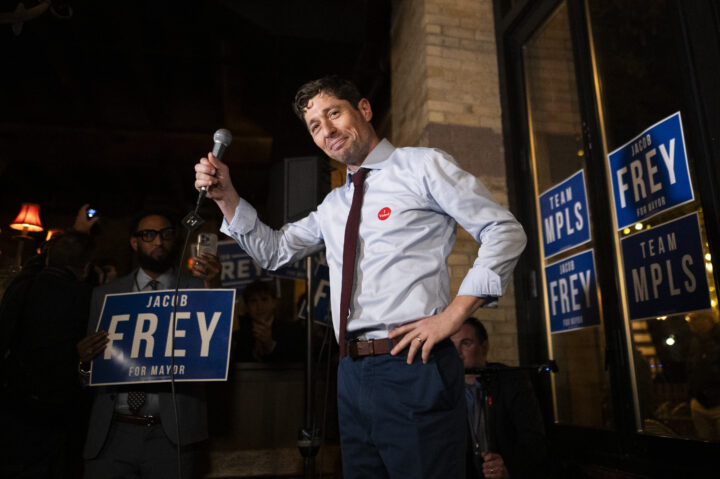
Stephen Maturen/Getty Images
Minneapolis Mayor Jacob Frey speaks at an Election Night party on November 4, 2025 in Minneapolis, Minnesota.
Democratic Mayor Jacob Frey of Minneapolis won reelection on Wednesday over his far-left, DSA-aligned challenger, state Sen. Omar Fateh, marking a win for the more pragmatic wing of the Democratic Party.
A similar result may be emerging in Seattle, where preliminary results showed the Democratic incumbent, Mayor Bruce Harrell, leading over his socialist challenger, though many ballots remain to be counted.
Frey, who is the second Jewish mayor to preside over Minneapolis, secured his third term, winning by six percentage points, 50% to 44%, in the final round of the city’s ranked choice voting on Wednesday.
Fateh, a progressive affiliated with the Democratic Socialists of America, has accused Israel of committing “genocide,” among other anti-Israel views, and campaigned with Rep. Ilhan Omar (D-MN), who remains one of Israel’s harshest critics in Congress.
Members of Fateh’s staff had also expressed hostile views towards Israel; His communications manager, Ayana Smith-Kooiman, said in a series of now-deleted social media posts that Israel “does not have a ‘right’ to exist” and “must be dismantled,” and said she did not care about Hamas a month after the Oct. 7, 2023, terror attacks — statements that drew rebuke from Sen. Amy Klobuchar (D-MN).
Frey’s victory in Minneapolis signals a wariness of a socialist candidate in the heavily Democratic city, in contrast with Zohran Mamdani’s win in New York City’s mayoral election on Tuesday.
Meanwhile, in Seattle, the first wave of ballots counted Tuesday night found Harrell holding a seven-point lead over self-described socialist Katie Wilson, 53% to 46%.
Wilson, who has expressed hostile views towards Israel, including calling the Jewish state’s war on Hamas a “genocide,” led over Harrell in the primary. Wilson has expressed support in the past for divesting from investments in Seattle that support Israeli actions, which is in line with the BDS movement.
Additionally, some Seattle Jewish community leaders have expressed deep concern over Wilson’s candidacy and her relationships with anti-Israel activists, including Kshama Sawant, a former far-left Seattle city councilmember who has faced accusations of stoking antisemitism.
However, the race is still far from being decided. Many ballots are left to be counted, including a significant share from left-leaning parts of the city. The next tranche of ballots is set to be reported around 5 p.m. local time on Wednesday.
More than a dozen Democratic operatives told JI that the party’s support for Israel has declined, but hope that the end of the war will create space for skeptics to reengage with the Jewish state

Eric Lee/Bloomberg via Getty Images
Representative Katherine Clark, a Democrat from Massachusetts, center left, and Representative Hakeem Jeffries, a Democrat from New York, center right, arrive for a news conference with House Democrats outside the US Capitol in Washington, DC, US, on Wednesday, Oct. 15, 2025.
One thing Betsy Sheerr knows for sure is that most Democratic lawmakers still believe in Israel’s right to exist. She also knows that needing to reestablish this basic fact may not be a good sign for her party, and, more broadly, for American support for Israel.
“I can’t believe the bar is so low that that’s where we have to start,” said Sheerr, a longtime Democratic activist and a board member of the Jewish Democratic Council of America.
That’s the position in which many pro-Israel Democratic advocates find themselves as they begin to take stock of the domestic political damage wrought by Israel’s two-year war with Hamas that followed the Oct. 7, 2023, terror attacks.
Unlike naysayers on the right who suggest Democrats have abandoned Israel — a claim made frequently by President Donald Trump — the Jewish activists and communal leaders who advocate for a strong U.S.-Israel relationship and for U.S. aid to Israel still insist that support for the Jewish state remains bipartisan, and that congressional Democrats remain broadly pro-Israel. That proposition faced its toughest test during a two-year war, when Democrats became increasingly sympathetic to the Palestinians as Israel’s effort to eradicate Hamas left the Gaza Strip in ruins and claimed thousands of lives.
As a fragile ceasefire holds, Jewish Democrats see an opportunity to reengage party activists and elected officials who have grown frustrated with Israel’s actions in Gaza.
Jewish Insider spoke to more than a dozen fundraisers, activists and professionals in the pro-Israel space, most with a long history of involvement in Democratic politics. Their pitch to Democrats at this precarious moment involves two parts: First, push to make Trump’s peace plan a reality. Second, ensure that Democrats understand that the value of America’s relationship with Israel is independent from the leader of either country — and that Israeli Prime Minister Benjamin Netanyahu, who remains unpopular with the American left, won’t be in power forever.
“I think ending the war turns the temperature down pretty dramatically,” said Brian Romick, CEO of Democratic Majority for Israel. “Right now, what we’re saying is, no matter where you were in the previous two years, we all need the deal to work, and so being for the deal [and] wanting the deal to work is a pro-Israel position right now, and then you build from there.”
At the start of the war, 34% of Democrats sympathized more with Israel, and 31% sympathized more with Palestinians, according to New York Times polling. New data released last month shows that 54% of Democrats now sympathize more with the Palestinians, compared to only 13% with Israel. That stark shift in public opinion corresponded to more Democratic lawmakers voting to condition American military support for Israel than ever before.
This summer, 55 Democrats in the House co-sponsored legislation that would significantly restrict arms sales to Israel. Twenty-seven Democratic senators voted in July to support a bill put forward by Sen. Bernie Sanders (I-VT) that aimed to reject Israeli arms sales. The bill failed, but it marked a watershed moment for the party, with more than half of all Democrats voting in support of the measure. Not long ago, voting to condition aid to Israel would have been seen as a red line by pro-Israel groups. But with a growing number of Democrats who have already done so, such threats could ring hollow.
“I do think that there is room to build forward,” said Jeremy Burton, CEO of the Jewish Community Relations Council of Greater Boston, which works closely with Democratic lawmakers in deep-blue Massachusetts. “We have to be secure enough in our own belief in the future and our hope for the future to say ‘OK, if your point was that you’re committed to the long-term project of Israel’s security and safety, and you were looking for short term ways to pressure the government of Israel, then let’s move forward with the long-term project, even if we disagreed with you in the short term.’”
The pro-Israel lobby AIPAC maintains that it is committed to bipartisanship on Capitol Hill, even as the group has faced sharp criticism from progressive activists — including some who have pressured political candidates to swear off donations from the group. A spokesperson for the organization downplayed the shifting political headwinds, noting that American military aid to Israel continued throughout the war.
“It is important to separate the noise from anti-Israel extremists of the right and left and actual impact,” AIPAC spokesperson Marshall Wittmann told JI. “For example, time and time again Congress has resoundingly rejected the efforts of those extremists to cut defense assistance to Israel.”
AIPAC has a long-standing policy of not criticizing the Israeli government no matter who is in power, and that isn’t shifting. But other pro-Israel advocates believe that approach may not work with Democrats who are fed up with Netanyahu’s governance.
“We know that can one be critical of certain Israeli government policies and still be pro-Israel, and we also know that’s increasingly the case for many Democrats, just as it is for a majority of Jewish Americans,” said Halie Soifer, CEO of the Jewish Democratic Council of America.
“The vast majority of Democrats are far more sympathetic to the people of Israel than its current leadership,” echoed Tyler Gregory, who leads the Bay Area JCRC and works closely with progressive leaders in San Francisco. “We need to bring it to a human level.”
Andrew Lachman, president of California Jewish Democrats, was more overt in his hope that Israel elects a new leader in its next election, set to take place next October, unless it’s called sooner.
“If there’s a new change in leadership in Israel, that has the opportunity to be able to reset some of those relationships,” Lachman told JI.
It’s a sentiment echoed by Sheerr, who regularly interacts with Democratic lawmakers on Capitol Hill. “I think a lot of people, both lawmakers and others, are looking forward to the next Israeli elections, frankly, and life after Bibi,” she said. That is, of course, assuming that Netanyahu isn’t reelected — a risky bet given that Netanyahu has held the role through multiple elections since 2009, except for one 18-month stretch.
Rep. Seth Moulton (D-MA), who is challenging Sen. Ed Markey (D-MA) in Massachusetts’ Senate primary next year, said this month that he would return donations from AIPAC, an organization that has previously endorsed him. He told JI last week that he took issue with the group’s “steadfast support for the Netanyahu government.”
“My views on Israel as an essential partner of the United States and our most important ally in the Middle East have not changed,” Moulton said.
Markey, for his part, has been one of Israel’s leading critics in the Senate, making next year’s Democratic primary one between a candidate who condemns the leading U.S.-Israel advocacy group and a candidate with a record of voting against military aid to Israel.
Ron Halber, who leads the Jewish Community Relations Council of Greater Washington and maintains close ties with Democratic lawmakers in Maryland and Virginia, said that Israeli leaders also have a responsibility to repair ties between Democrats and the Jewish state.
“For Israel to align itself, or for the current government or for advisors to think that working with the Republican Party is the way to the future, is about the dumbest strategic mistake I can imagine,” said Halber. “The bipartisan nature of the U.S.-Israel relationship is the fundamental blanket of Israel’s support in the world.”
The leftward shift of Democratic lawmakers has come despite advocacy campaigns by major Jewish groups who urged senators to vote against Sanders’ resolutions restricting aid to Israel. But some within the mainstream Jewish community recognize that the longtime approach of offering unequivocal support to Israel’s government is not sustainable.
“My opinion is that this government is harmful,” said Sam Lauter, a public affairs consultant in San Francisco and Democratic fundraiser who helped create DMFI in 2019. “I used to be one of those people who would be sort of silent about that, because ‘I’m a diaspora Jew, and I don’t get a say.’”
Halber said he believed that many Democrats supporting Sanders’ bill “did so symbolically,” because they knew it was going to fail. “They were trying to send a message to Israel that this is a bridge too far, when they believed humanitarian aid [to Gaza] was being cut off,” he added.
The “million-dollar question,” according to Ilan Goldenberg, J Street’s vice president of policy, is whether lawmakers’ support for conditioning military assistance to Israel will continue after the war, when they have to vote to approve the annual $3.8 billion security package to Israel.
“I think it’s going to be, ‘We need accountability, and we need certain behavior that we would like to see,’ and if you’re not getting that out of the Israelis, then a willingness to use more leverage and pressure and accountability,” said Goldenberg, who served as Jewish outreach director on Vice President Kamala Harris’ presidential campaign last year. “I think that is where the center of the Democratic Party is likely to settle, which is a very different place from where we were before the start of the war.”
J Street has supported Sanders’ resolutions restricting arms sales to Israel.
If any of the support for the bills that sought to reject certain weapons sales carries over into the regular appropriations process, it would mark a significant shift.
“It seems indisputable that the Overton window has shifted dramatically over the last two years in terms of what ‘the left’ broadly deems acceptable about Israel, Zionism and even the Jewish American community,” said Amanda Berman, CEO of the progressive group Zioness. “This kind of rhetoric doesn’t just disappear when the news cycle moves on. That said, the vast majority of liberals and progressives are not uniquely obsessed with Jews or Israel, and have any number of urgent issues of concern.”
Even as pro-Israel activists seek to rebuild frayed ties with erstwhile allies, they recognize that not everyone should be welcomed back into the tent, even if the tent is bigger than it was before.
“We don’t need to be forgiving or ignoring those who chose to just demonize and be dismissive of our anxieties, our fears, our hopes over the last two years,” said Burton.
The dust has hardly settled in Gaza, and it is too soon to know what the lasting impact of the war will be. But given that this was Israel’s longest war, and that it played out under scrutiny of the traditional media and social media, “it’s going to be a lot harder to put the genie back in the bottle than previous times,” as one person involved in Jewish philanthropy and Democratic politics quipped.
The book, titled 'Where We Keep the Light,' will discuss Shapiro’s family and faith, and details the arson attack at the governor’s residence last Passover
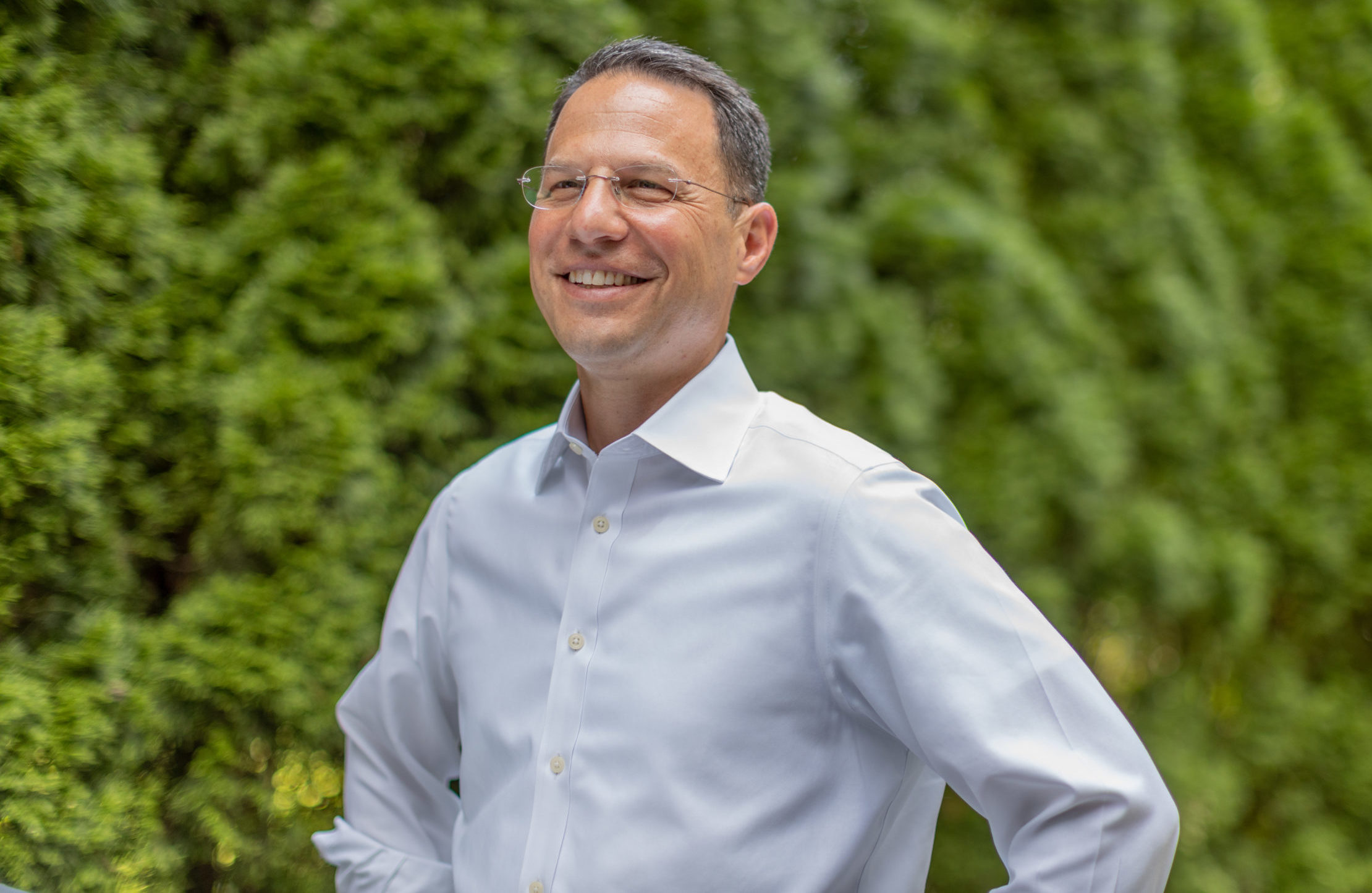
Courtesy
Pennsylvania Gov. Josh Shapiro, widely viewed as a likely 2028 Democratic presidential contender, plans to publish a memoir early next year.
The book, called Where We Keep the Light, is being marketed by publisher HarperCollins as an important story from “a leading voice in the Democratic Party.” For politicians with national ambitions, writing a memoir is generally seen as a stepping stone toward greater name recognition and future campaigns.
In the book, Shapiro will discuss his family and his faith, and remind “us of the faith that guides so many and that there is more that unites us as Americans than divides us.” He will write about his path toward public service and his rise through the ranks of Pennsylvania politics.
A HarperCollins press release said the book goes into detail on the arson attack at the governor’s residence during Passover in April and the period in 2024 when Vice President Kamala Harris was considering naming him her running mate, a topic about which Shapiro has shared very little publicly.
The book will be published on Jan. 27, 2026.
The New York Democrat praised Trump for the hostage deal: ‘We thank God and congratulate President Trump and all those who helped make the return of the hostages a reality’

Craig Ruttle-Pool/Getty Images
Rep. Tom Suozzi (D-NY) debates in the race for governor at the studios of WNBC4-TV June 16, 2022 in New York City.
In recent months, Rep. Tom Suozzi (D-NY) has stood apart from many of his Democratic colleagues in offering staunch support for Israel, openly praising President Donald Trump for finalizing a deal to free the hostages in Gaza and maintaining a hard line against New York City Democratic mayoral nominee Zohran Mamdani.
Suozzi, a moderate Democrat who hails from a swing district on Long Island with a significant Jewish population, is a longtime stalwart supporter of Israel, and argued in a recent interview with Jewish Insider that maintaining bipartisanship on the issue is critical.
Suozzi has been among the minority of Democrats who have openly credited Trump for the ceasefire that secured the release of the remaining living hostages in Gaza last week.
“We thank God and congratulate President Trump and all those who helped make the return of the hostages a reality. As we celebrate this moment, let us also pause to pray for all those who have endured so much suffering, death and destruction along the way,” Suozzi told JI last Monday, after the hostages were freed.
“It’s plain on its face that the president orchestrated this and put a tremendous amount of effort into this,” he continued. “I disagree with the president on certain things, but when it comes to this issue, I’m fully aligned with him.”
Suozzi said that the Torah and Old Testament teach that it’s critical to stick to one’s values and keep moving forward in hard times.
“One of the values that we need to stick by right now is to stand with the State of Israel, who’s our great ally and shares our values during what has been difficult times,” Suozzi said. “The president is the one who’s accomplished — along with a lot of help from other people — this very important thing, we have to praise him for that, even though I disagree with him on a whole host of other things. On this, he’s really done something remarkable.”
Suozzi noted that he had also supported Trump’s signing of the Abraham Accords and decision to move the U.S. Embassy in Israel to Jerusalem during his first term.
“We have to get back to a place in our American governing and politics where people can disagree, where they disagree respectfully, but also give credit where credit is due in trying to work together to to solve problems,” Suozzi explained. “I want to work with the president. … If he could do Ukraine and an immigration deal — which would require some bipartisan cooperation — he would truly have cemented his place in history. I want to be helpful in that respect.”
Asked about those in the Democratic Party — including some of the most vocal critics of Israel — who have refused to credit Trump or acknowledge the ceasefire that went into effect earlier this week, Suozzi said he sees them as hypocritical.
“It’s the pot calling the kettle black. They criticize Trump for being partisan, or they criticize Republicans for being partisan — which they are, I’m not saying they’re not,” Suozzi said. “When you have something like this that happens, you can’t just base it on your party. It has to be based on what’s right and what’s wrong. This is clearly right. This is clearly a good thing.”
He also said that people, on both sides of the aisle, who understand the damage wrought by antisemitism, “have to join league with each other, regardless of our political party, and work together to do everything we can to stamp it out. In the short term: hold people accountable and prosecute them. In the long term: educate our society about where antisemitism comes from and why it’s so destructive.”
Suozzi said that both in the Democratic Party and the country as a whole, “we have to do a better job” of rooting out and calling out antisemitism.
“It’s not always easy to take on people that are on your team, so to speak,” he continued. “But I think there’s a lot of people on the wrong side of history here. This is an important moment with the enabling of the haters, with social media, with the algorithms on the different platforms — especially TikTok — that are inciting this hateful behavior and the foothold that some malign actors have been working — not just recently but over decades — to build this hate machine. We have to really stand strong against this, even when we have to disagree with people that are on our team, so to speak.”
“At a time when most have hidden beneath the parapet, the Jewish community is very lucky to have fearless leaders like Tom, who willingly stands up to the antisemitic haters and unflinchingly protects the U.S.-Israel relationship,” Rep. Josh Gottheimer (D-NJ), another outspoken pro-Israel moderate, told JI.
Suozzi, along with Rep. Laura Gillen (D-NY), has been among the most vocal opponents within New York Democratic politics of Mamdani’s candidacy — publicly condemning the democratic socialist and explicitly rejecting the prospect of endorsing him, when other Democrats have fallen in line or remained silent. Among other issues, Suozzi has called out Mamdani for his refusal to condemn the slogan “globalize the intifada.”
Suozzi has also pushed back more broadly on the left wing of his party.
“If [Mamdani] wants to be a socialist, he should form his own party and not be part of the Democratic Party,” he said, a sentiment he has directed at the Democratic Socialists of America as a whole.
Asked how he thinks supporters of Israel and opponents of antisemitism can go about rebuilding the eroding bipartisan consensus on these issues, Suozzi said that it’s critical for supporters of Israel to vote for Democrats like himself who are aligned with them on that issue.
He recounted a conversation he had with longtime friends who are Orthodox Jews and who said they had voted against Suozzi in the last election, opting instead to vote down the Republican Party line.
“The person I was speaking with said, ‘We need to get your party back to what it was,’” Suozzi recounted. “I said, ‘Well then you have to support Democrats like me that are working on that. Because you don’t know what things are going to be like in five years, or 10 years, or 15 years or 20 years. The key to the future is to ensure that this continues to be a bipartisan effort, this relationship between the United States and Israel.’”
Suozzi said that his commitment to standing with Israel and the Jewish people is deep-rooted, tracing back in part to his father, his own history and the values and democratic principles shared by the U.S. and Israel.
His father — “the best man I ever knew” — was an Italian immigrant who fought in World War II and faced discrimination at home after the war. “He would not tolerate any sort of discrimination [against] anybody. … If anybody said something that was anti-Jewish or anti-Black or anti-anything, he’d either confront you or get up and walk out of the room.”
Suozzi said that he found an Israeli war bond in his father’s files after he passed away. “He never talked about anything like that, it was just who he was.”
Suozzi said that reading Man’s Search for Meaning by Viktor Frankl, about the psychologist’s experience in the Holocaust, was deeply impactful on him as a high school student. He first traveled to Israel as Nassau County executive in October 2002, meeting with key leaders during the Second Intifada.
He said that his hotel was largely empty due to terrorism concerns, that heavy security was necessary for his group and that the trip organizers attempted to prohibit him from going to mass at the Church of The Holy Sepulchre in Jerusalem for security reasons.
Undeterred, Suozzi snuck out of his hotel to go and initially felt “so courageous” but, walking out of the church, “I see these little girls getting on the bus to go to school that morning. … It was like, ‘Wow, I’m not courageous. People have been living like this … 60 years, living their lives, making this place successful, despite the fact that everybody in the area is trying to kill them. And they’ve held onto their values, and they’ve held onto the things that I believe in.’ So I decided right then and there that I would always stand strong with Israel, no matter what.”
Plus, Mandela's granddaughters visit Israel, Gaza
Graham Platner campaign
Graham Platner
Good Friday morning.
In today’s Daily Kickoff, we report on Rep. Seth Moulton’s plans to return money bundled by AIPAC following his entry into Massachusetts’ Senate race, and cover White House Special Envoy Steve Witkoff’s prediction that the Abraham Accords will “significantly expand” as the Israel-Hamas war winds down. We talk to the granddaughters of Nelson Mandela about their recent trip to Israel and Gaza, and report on Zohran Mamdani’s efforts to distance himself from far-left streamer Hasan Piker. Also in today’s Daily Kickoff: Jacob Helberg, Ari’el Stachel and Rep. Mikie Sherrill.
Today’s Daily Kickoff was curated by Jewish Insider Executive Editor Melissa Weiss and Tamara Zieve with assists from Marc Rod and Danielle Cohen-Kanik. Have a tip? Email us here.
What We’re Watching
- Ukrainian President Volodymyr Zelensky returns to Washington today for a sit-down at the White House with President Donald Trump.
- We’re keeping an eye on the fragile ceasefire between Israel and Hamas, amid reports that Sunni Arab states, including Saudi Arabia, the United Arab Emirates and Bahrain, have warned senior White House officials that Hamas’ ongoing refusal to disarm could collapse the agreement.
- Republican Party leaders in New York State are set to hold a vote to disband the state’s Young Republicans chapter today, after the publication of racist text messages shared in a chat of the national Young Republican leaders that implicated members of New York’s delegation. The state party plans to eliminate the group’s charter and rebuild the group with new leadership.
- On Sunday, Americans for Ben-Gurion University is holding a benefit in New York City featuring former Israeli hostage Sasha Troufanov and comedian Alex Edelman.
What You Should Know
A QUICK WORD WITH JI’S JOSH KRAUSHAAR
With all of the living hostages released from Gaza and an end (at least for the time being) of Israel’s war in the Palestinian territory, the coming months could offer the mainstream Jewish community something of a breather to assess the changed political landscape.
In the war’s final months, the anti-Israel far left gained a foothold in Democratic Party politics, most prominently in the New York City mayoral race with Zohran Mamdani, but also in urban contests ranging from Seattle to Somerville, Mass. The antisemitic forces on the far right have been less of a political force, but have gained strength on podcasts and among younger right-wingers, and have been embraced to a greater extent by a few populist lawmakers like Rep. Marjorie Taylor Greene (R-GA).
With the return of the living hostages, Israel’s success in degrading Hamas and additional enemies, and the apparent end of the Gaza war, Jewish optimists can plausibly argue that some degree of normalcy could creep back in the political sphere. Israel should become a less salient issue for low-information scrollers, with the war’s end reducing the constant anti-Israel and antisemitic propaganda being fed on so many screens.
With a ceasefire finally achieved, the anti-Israel forces have been remarkably silent, and have been exposed for the Hamas-sympathizing extremists that they always have been. That faction of the anti-Israel Democratic left is as politically exposed as it’s been since the immediate aftermath of Oct. 7, 2023.
There’s also the possibility that, with Israeli elections being held next year, a new Israeli prime minister would get elected, bringing with him or her a new Israeli government that may not be as polarizing to liberal critics of Israel back in the U.S.
Jewish pessimists also have a plausible case to make. Support for Israel has declined in the past year, with the most significant slippage coming from Democratic Party voters and some independents. It’s hard to imagine it will rebound anytime soon. The youngest Gen Z voters are the most hostile towards Israel and have been even before Oct. 7. It’s reasonable to expect their future growth in the electorate will only grow the pool of anti-Israel voters.
Furthermore, the rise of anti-Israel and antisemitic sentiment isn’t happening in isolation; it’s a symptom of the rise of larger illiberal and extreme forces within both parties. The fact that polls show an upward tick in the toleration of political violence, growing antipathy to capitalism on the left, and growing sympathy for authoritarianism on the right is the broader context of the growing hostility Jews are facing, and it’s not showing any signs of abatement.
In the coming year, it will be important to track whether the political outlook for Jews is getting better or whether the trends we’ve seen worsen in the last couple years are accelerating.
We’ll be debuting an election scorecard next week, examining the most meaningful elections in the coming year that will test the influence of the political mainstream against the extremes. Stay tuned: it will be worth bookmarking and tracking as we approach Election Day this November, and in the runup to next year’s congressional primaries.
CUTTING TIES
Seth Moulton says he will return, reject AIPAC donations in Senate campaign
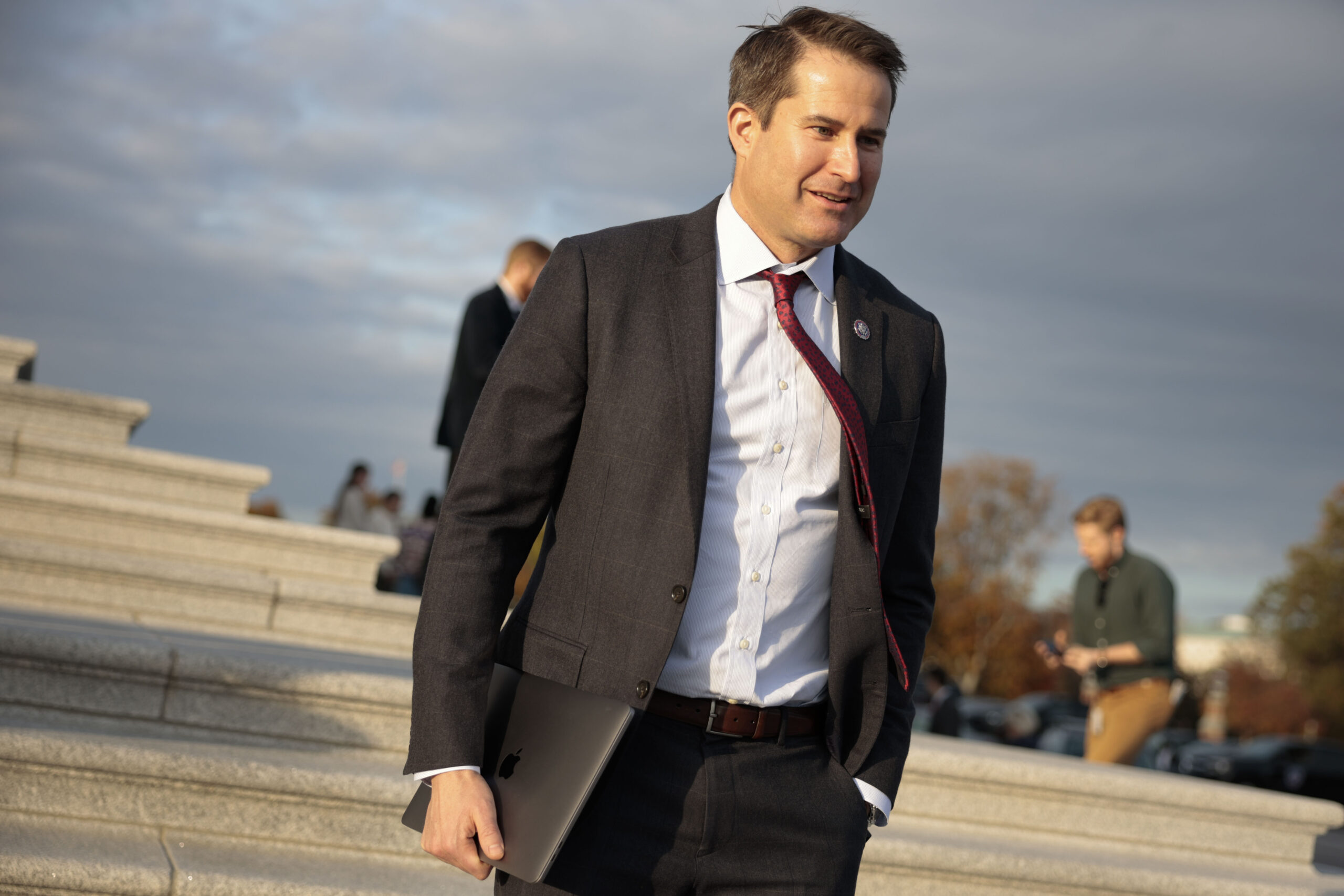
Rep. Seth Moulton (D-MA), who on Wednesday announced a primary challenge to Sen. Ed Markey (D-MA), announced Thursday that he will return donations he has received from AIPAC and will reject further donations from the group, Jewish Insider’s Marc Rod reports. Moulton’s changed stance on accepting support from AIPAC is a sign of how even more-moderate Democrats are facing pressure from the party’s activist base to distance themselves from embracing Israel.
What they’re saying: “I support Israel’s right to exist, but I’ve also never been afraid to disagree openly with AIPAC when I believe they’re wrong. In recent years, AIPAC has aligned itself too closely with Prime Minister [Benjamin] Netanyahu’s government,” Moulton said in a statement. AIPAC spokesperson Marshall Wittmann responded, “Rep. Moulton is abandoning his friends to grab a headline, capitulating to the extremes rather than standing on conviction.”
DEBATE DISPATCH
Mamdani distances himself from Hasan Piker’s 9/11 comments at mayoral debate
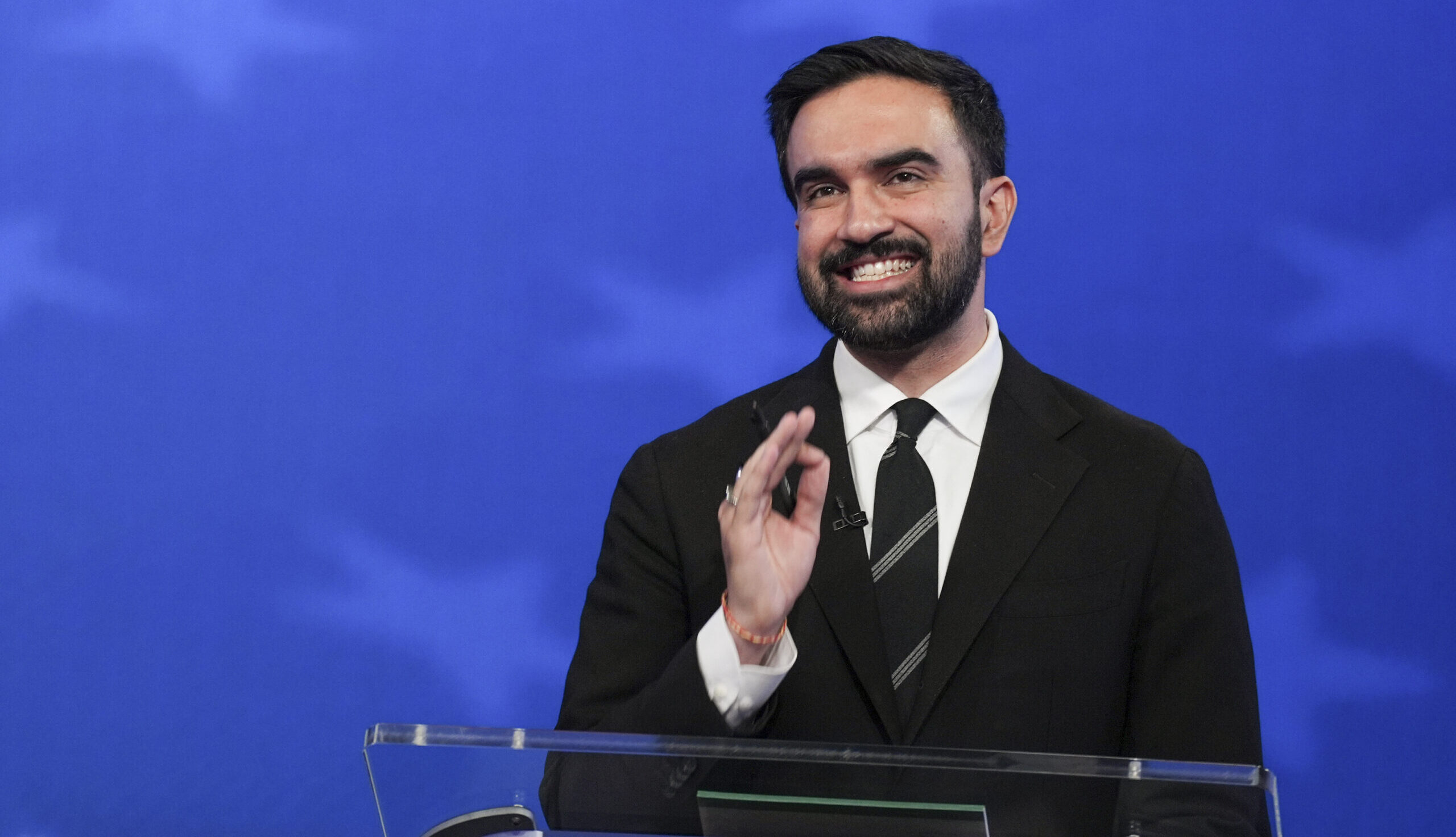
Zohran Mamdani, the Democratic nominee for mayor of New York City, expressed disagreement on Thursday with comments by Hasan Piker, a far-left streamer who has said “America deserved 9/11,” after several months in which the state assembly member had declined to condemn such rhetoric, Jewish Insider’s Matthew Kassel reports. “I find the comments that Hasan made on 9/11 to be objectionable and reprehensible,” Mamdani said during the first general election debate on Thursday night, where he traded barbs with former New York Gov. Andrew Cuomo, who is trailing in the polls as he mounts an independent run following his primary loss to Mamdani in June.
More from Mamdani: Elsewhere during the debate, Mamdani, an outspoken critic of Israel who was arrested in October 2023 during a ceasefire demonstration outside the Brooklyn home of then-Senate Majority Leader Chuck Schumer (D-NY), declined to confirm that he would not participate in protests if he is elected mayor. “The important thing is to lead from City Hall,” Mamdani said. “That’s what I’ll be doing.” Mamdani had faced intense backlash before the debate for comments during a Fox News interview released on Wednesday in which he avoided directly answering a question about whether Hamas should disarm and relinquish its leadership role in Gaza. He clarified at the debate that Hamas, as well as “all parties,” “should lay down” their arms but did not comment on its future role in the conflict.
PROXY BATTLE
Maine Senate primary emerging as bellwether of Democrats’ ideological direction
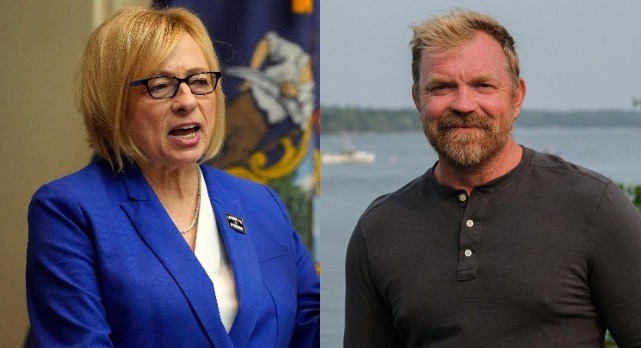
The Democratic Senate primary in Maine is shaping up to be among the most significant proxy battles over Israel in the upcoming midterm elections, pitting the state’s moderate two-term governor against a left-wing populist upstart who has vocally embraced an anti-Israel platform. Gov. Janet Mills, who announced her campaign to unseat Sen. Susan Collins (R-ME) on Tuesday and is backed by Senate Democratic leadership, is set to face a well-funded challenge from Graham Platner, a veteran and oyster farmer who boasts high-profile support from Sen. Bernie Sanders (I-VT), Jewish Insider’s Matthew Kassel reports.
Platner’s positions: In contrast with Mills, who has criticized anti-Israel divestment efforts in her state and warned against a “deeply troubling” rise in antisemitic incidents after Hamas’ Oct. 7, 2023, attacks, Platner has promoted more hostile views on Israel and its alliance with the United States. Since entering the race in August, Platner has accused Israel of genocide in Gaza and endorsed measures to block U.S. arms sales to Israel. His campaign did not respond to a request for comment regarding the recently brokered ceasefire and hostage-release deal between Israel and Hamas. Platner has also been an outspoken critic of the pro-Israel advocacy group AIPAC, whose affiliated political arm is supporting Collins, one of the most vulnerable Republicans now seeking reelection — in a state President Donald Trump lost by seven points in 2024.
SHERRILL SAYS
Mikie Sherrill previews New Jersey state antisemitism plan if elected governor

Speaking on a Jewish Democratic Council of America webinar on Thursday, Rep. Mikie Sherrill (D-NJ) outlined a plan of action on antisemitism she said she would implement statewide if she wins next month’s gubernatorial race in the Garden State, Jewish Insider’s Marc Rod reports. Sherrill and Republican nominee Jack Ciattarelli look likely to split the Jewish vote in next month’s election.
Notable quotable: She emphasized her willingness to call out antisemitism among her political allies, pointing to the example of an employee of the New Jersey Educational Association — which endorsed Sherrill — who had made “horrible antisemitic [comments] online.” Sherrill said she had condemned the individual and demanded she be fired. “I’m going to call out anybody in this space that is promoting hate in any way against all of our citizens, but especially our children,” Sherrill said.
WITKOFF’S WORDS
Steve Witkoff predicts Abraham Accords will ‘seriously expand’ after Gaza ceasefire
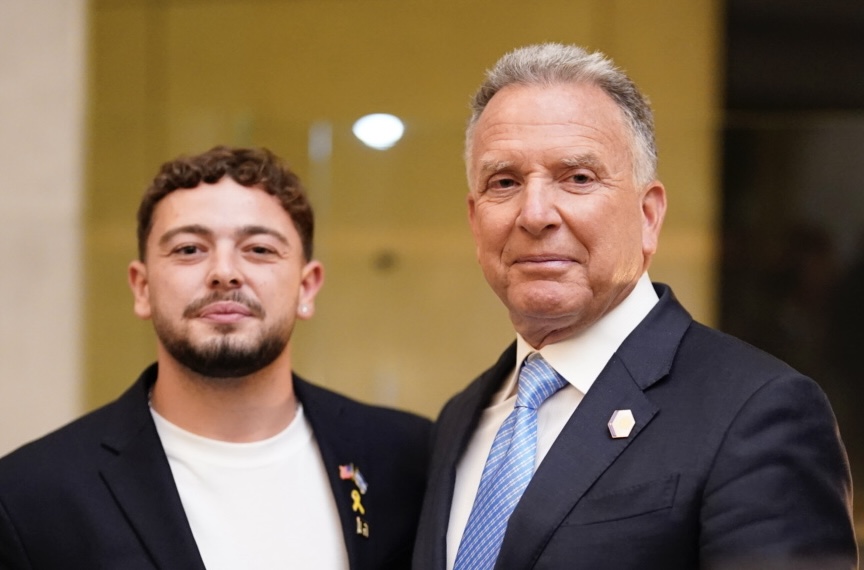
White House Special Envoy Steve Witkoff predicted on Thursday that the Abraham Accords will “seriously expand” in response to the end of fighting in Gaza. Witkoff was addressing attendees at an event commemorating the second anniversary of the Oct. 7, 2023, Hamas terror attacks, Jewish Insider’s Emily Jacobs reports.
What he said: “No leader has done more for the Jewish people or the State of Israel than President Trump,” Witkoff, speaking at an event at the U.S. Holocaust Memorial Museum in Washington, said. “He moved our embassy to Jerusalem, he recognized Israel’s sovereignty over Judea and Samaria [the West Bank] and the Golan Heights. He forged the Abraham peace Accords, which will seriously expand now,” Witkoff said. The White House envoy, who returned from the region earlier this week after the implementation of the first phase of the ceasefire, posited that Trump winning a second term last November was “the major breakthrough of this conflict.”
HERITAGE OF HOPE
In Israel and Gaza, Nelson Mandela’s granddaughters find hope amid devastation

“What has emerged from all my conversations is that the yearning for peace is very intense,” former South African President Nelson Mandela, visiting Israel in 1999 as part of a broader Middle East, said as he reflected on his meetings with leaders across the region. More than a quarter century later — despite the ceasefire between Israel and Hamas, the degradation of Iran and its proxy network and numerous wars between Israel and its neighbors — that peace remains elusive. It was against that backdrop that two of Mandela’s granddaughters, Zamaswazi (Swati) Dlamini-Mandela and Zaziwe Dlamini-Manaway, traveled to Israel and the Gaza Strip earlier this month. Dlamini-Manaway and Dlamini-Mandela spoke to Jewish Insider’s Melissa Weiss about their trip.
Mutual motivation: “For us, it’s important to actually go and actually experience the story for yourself,” Dlamini-Mandela said of the trip, which was organized by the National Black Empowerment Council and included meetings with Israeli hostage families and survivors of the Oct. 7, 2023, Hamas terror attacks, as well as a day on the ground in Gaza where Mandela’s granddaughters assisted the Gaza Humanitarian Foundation in its efforts to distribute aid in the enclave. “Coming from a high-profile family like ours, and also living in the media for years, all our lives have been pretty much lived in public, it’s very interesting what type of bias or viewpoints the news can take. So we always felt like, ‘Let’s go and see for ourselves. Let’s experience for ourselves, and let’s actually go on humanitarian missions to try and understand and really get to know what’s going on.’
Worthy Reads
Political Cover: In The New York Times, Dana Stroul, who served as deputy assistant secretary of defense for the Middle East in the Biden administration, posits that President Donald Trump’s “key intervention” in the Israel-Hamas war “was to give a political lifeline” to Israeli Prime Minister Benjamin Netanyahu, who had faced threats from the far-right members of his government over efforts to reach a ceasefire. “Many analysts assumed Mr. Netanyahu, constrained by his far-right coalition, would not accept any end to the war without a complete Hamas surrender. Any compromise in which Hamas could reassert itself could have triggered early elections in Israel, costing Mr. Netanyahu the premiership and exposing him to his ongoing trials for corruption. Mr. Trump flipped the script. Mr. Trump lavished praise on his counterpart, extending him the political protection of Trump’s overwhelming popularity in Israel. In return, Mr. Netanyahu agreed to Trump’s proposal to free the hostages and let Hamas survive, for now.” [NYTimes]
JD’s Deflection: The Atlantic’s Jonathan Chait considers what Vice President JD Vance’s response to leaked racist text messages sent by Young Republican leaders portends for the future of the party. “Some Republicans, including those who have directly employed the people in these chats, condemned these messages. But Vice President J. D. Vance had a different, and more telling, response. ‘I refuse to join the pearl clutching,’ he posted on X defiantly. … Given Vance’s evident ambitions to succeed Donald Trump as the Republican standard-bearer, his response is revealing. The vice president apparently grasps that openly defending references to Black people as ‘watermelon eaters’ and quips about sending political rivals ‘to the gas chamber’ would hurt his political standing, but he also clearly needs these Young Republican leaders if he hopes to consolidate the Trump base behind him. Deflection is a calculated response.” [TheAtlantic]
Rabbi Hauer’s Chavruta: In eJewishPhilanthropy, Rabbi Rick Jacobs reflects on his friendship with Rabbi Moshe Hauer, the Orthodox Union leader who died earlier this week. “A few years back, Rabbi Hauer sent me a marked-up copy of a statement I had published. My words were covered with his voluminous comments in red ink. He took issue with pretty much every point I had made. Rather than just thanking him for ‘sharing his thoughts,’ I asked if we could sit and discuss his rather extensive rebuttal. How could I not be impressed by the seriousness with which he debated my views about the latest news from Israel? With his characteristic humility, he took me to task, never once raising his voice or dismissing my deeply held convictions. As consummate students of Torah, our session felt like a chavruta, an intense one-on-one learning session with a wise colleague. I thanked him for his thoughtful critique.” [eJP]
Word on the Street
Former National Security Advisor John Bolton was indicted by a federal grand jury on a combined 18 counts of transmitting or retaining national defense information, stemming from his keeping and sharing of digital diaries — according to the indictment, more than 1,000 pages of entries, some including confidential information — that detailed his work during the first Trump administration…
Jacob Helberg was sworn in as under secretary of state for economic growth, energy and the environment…
Rep. Dave Taylor (R-OH) blamed the appearance of an American flag bearing a swastika in his office on an orchestrated “ruse” to distribute such flags that were “initially indistinguishable from an ordinary American flag to the naked eye.” But Politico reported that a staffer from another office that received such a flag in the mail said that “it was plainly obvious to us that there was a swastika on the flag with the naked eye.” Taylor denied any intentional wrongdoing by any of his staff…
California state Sen. Scott Weiner is reportedly planning to announce a bid for the congressional seat held by former House Speaker Nancy Pelosi (D-CA)…
Claudia Milne, who served as head of standards at CBS News since 2021, is departing the media company; Milne is the first senior CBS News executive to leave the network following CBS parent company Skydance’s acquisition of Bari Weiss’ The Free Press and installation of Weiss as editor-in-chief of CBS News…
Warner Bros. Discovery rejected calls for the media company to boycott Israeli film institutions, saying that such a move would run afoul of its nondiscrimination policy…
Pomona College opened an investigation on Thursday after an on-campus event held Wednesday commemorating the second anniversary of Hamas’ Oct. 7, 2023, terrorist attacks was disrupted by four masked and keffiyah-clad individuals who barged in chanting “Zionists not welcome here,” Jewish Insider’s Haley Cohen reports…
The owners of the Washington-area vegetarian chain Shouk, which served Israeli fare in the capital region for a decade, closed all its locations, citing financial losses resulting from a sustained boycott of the chain; Shouk is co-owned by Dennis Friedman and Israeli entrepreneur Ran Nussbacher…
The New York Times interviews actor Ari’el Stachel about his new one-man, off-Broadway show “Other,” about his conflicting identities as an Arab Jew…
Australia’s National Gallery of Victoria quietly restituted a 17th-century Gerard ter Borch painting to the descendants of Max Emden, a Swiss-German art collector who was forced to sell some of his pieces under financial duress in the lead-up to World War II…
U.K. Prime Minister Keir Starmer ordered a review of antisemitism within the country’s National Health Service, citing “too many examples, clear examples, of antisemitism that have not been dealt with adequately or effectively”; 10 Downing Street is also asking the NHS to adopt the International Holocaust Remembrance Alliance’s working definition of antisemitism…
Starmer also condemned the decision by English Premier League team Aston Villa to prohibit attendance by Maccabi Tel Aviv supporters at an upcoming match in Birmingham and called on Aston Villa to reverse the decision, which the team said was due to “a number of physical and safety factors”; Emily Damari, a British-Israeli former hostage and a fan of Maccabi Tel Aviv, called on Aston Villa to “come to your senses and reconsider”…
A court in Oslo convicted a Norwegian man who worked as a guard at the U.S. Embassy of espionage on behalf of Russia and Iran…
The Iran-backed Houthis in Yemen confirmed that the terror group’s chief of staff, Maj. Gen. Muhammad Abdul Karim al-Ghamari, had been killed in an Israeli airstrike in August…
The Washington Post spotlights the difficult and traumatic conditions, including beatings, starvation and uncertainty over the fates of their loved ones, that the last group of living Israeli hostages, who remained in Gaza until earlier this week, endured while in captivity…
The Wall Street Journal reports on the challenges in repatriating the bodies of the remaining Israeli hostages, citing both the difficulty in locating all of the bodies as well as Israel’s allegations that Hamas is holding onto some bodies as future leverage…
The New York Times does a deep dive into the whereabouts of former Syrian officials who have fled the country or otherwise evaded officials amid a broader crackdown on Assad-era officials believed to be complicit in the regime’s atrocities…
Michael Ratney, Nimrod Novik, Farah Bdour, Ibrahim Dalalsha, Elisa Ewers, Garrett Nada and Neri Zilber were named as members of a new Israel Policy Forum policy council…
Susan Stamberg, an early employee of NPR who hosted its “All Things Considered” from 1972-1986, died at 87…
Arts journalist Milton Esterow, whose brand of investigative journalism focused on artwork looted by the Nazis, died at 97…
Independent film distributor Toby Talbot, who with her husband operated art-house cinemas in New York City from 1960-2018, died at 96…
Pic of the Day

Israeli Prime Minister Benjamin Netanyahu participated in a state memorial ceremony on Thursday for the fallen soldiers of the Israel-Hamas war at Jerusalem’s Mount Herzl.
Birthdays

Emmy Award-winning film and television music composer, Nicholas Britell turns 45…
FRIDAY: Chair emeritus of the board of directors of NYC’s 92nd Street Y, Jody Gottfried Arnhold turns 82… Judge of the U.S. Court of Appeals for the 9th Circuit since 1999, Ronald Murray Gould turns 79… Filmmaker and novelist, Michael L. Tolkin turns 75… U.S. district judge for the District of Connecticut since 1994, he took senior status in 2017, Robert Neil Chatigny turns 74… Movie and television producer, Lawrence Bender turns 68… Rochester, N.Y., resident, Peggy Futerman… Number theorist and professor at the University of Waterloo in Ontario, he has written a highly critical report on the world’s leading Holocaust deniers, Jeffrey Shallit turns 68… Partner in Becker & Poliakoff, she has been a member of both houses of the Florida Legislature, Ellyn Setnor Bogdanoff turns 66… Rosh yeshiva at Yeshiva University, he is a son of professor Isadore Twersky and a grandson of Rabbi Joseph B. Soloveitchik, he also serves as the rebbe of the Talne Hasidic dynasty, Rabbi Mayer E. Twersky turns 65… Former Northwest regional director of J Street, Andrew Straus… Professor of economics at Harvard, he served as a member of the Board of Governors of the Federal Reserve System, Jeremy Chaim Stein turns 65… Ramsey, N.J.-based licensed professional counselor, Shemsi Prinzivalli… Member of the California state Senate until last November, Josh Newman turns 61… Co-founder of AQR Capital Management, Cliff Asness turns 59… Jerusalem bureau chief of The New York Times, David Halbfinger turns 57… Founder of Maniv Investments in 1997 and Maniv Mobility, Michael Granoff turns 57… U.S. senator (D-NM), Martin Heinrich turns 54… CEO and founder of Crosscut Strategies, a D.C.-based public affairs firm, Kenneth Baer… Rheumatologist and director of the rehabilitation division of Arthritis and Rheumatism Associates in the D.C. area, Dr. Shari B. Diamond… Author and staff writer at The New Yorker magazine, Ariel Levy turns 51… VP and head of U.S. public policy at TikTok, Michael Beckerman turns 47… Los Angeles-based consultant to the beauty industry and former CEO of several companies, Jessica Goldin turns 46… CEO at Citizen AI, Tomer Kagan turns 42… D.C.-based director of federal affairs for New York University, Katharine Nasielski… Co-founder and executive director at the Constructive Dialogue Institute, Caroline Mehl… Member of the Maryland state Senate since early this year following seven years in the Maryland House of Delegates, Dalya Attar turns 35… Staff software engineer at Zocdoc, Adam Greenspan…
SATURDAY: Co-founder and former chairman of Qualcomm, Irwin M. Jacobs turns 92… Former mayor of Amsterdam and leader of the Dutch Labour Party, Marius Job Cohen turns 78… Linguist, he is a professor emeritus at the University of Chicago, Victor A. Friedman turns 76… Former U.S. ambassador to Morocco, he is president of the Coalition for a Safer Web, Marc Ginsberg turns 75… Physician and political activist In Henrico County, Va., Dr. Max S. Maizels turns 74… Professor of intelligence and global security studies at Capitol Technology University, Joshua B. Sinai, Ph.D…. Bakersfield, Calif.-based attorney focused on adoption and reproductive law, Marc Dennis Widelock… Television director, writer, producer, composer and actor, Chuck Lorre (born Chaim Levine) turns 73… Film producer and founder and head of Dimension Films, Robert “Bob” Weinstein turns 71… President of the Economic Future Group, a consulting firm, Jonathan Bernard Yoav Tasini turns 69… Award-winning illustrator and writer of books for children, Eugene Yelchin turns 69… Chair of the U.S. Securities and Exchange Commission during almost all of the Biden administration, Gary Gensler turns 68… Retired NFL running back, he writes of his conversion in From Rose Bowl to Rashi: My Unique Journey to Judaism, Leon Calvin (now Yosef) Murray turns 67… Israeli journalist, political commentator and author of two books highly critical of PM Benjamin Netanyahu, Ben Caspit turns 65… Retired in 2021 after 20 years as the director at Rutgers Hillel, followed by a year at Harvard Hillel, Andrew Getraer… Founder of Coalesce Advisors, he is a former president at Birthright Israel Foundation, David Fisher… Professor and director of Jewish studies at the University of Pennsylvania, Steven Phillip Weitzman turns 60… Weather anchor for NBC 4 New York, David M. Price turns 59… Former ESPN television host, sports reporter and anchor, Rachel Nichols turns 52… CEO of Future Today Strategy Group, she is an adjunct professor of strategic foresight at NYU, Amy Lynn Webb turns 51… Fashion designer, stylist and art director, Maryna Asauliuk turns 45… SVP and COO at the American Enterprise Institute, Suzanne Gershowitz… Academy Award-winning screenwriter and author, Graham Moore turns 44… Founding partner and Washington correspondent for Puck News, Julia Ioffe turns 43… Congressional correspondent for The New York Times, Annie Karni… Support team leader at Moovit, Ayal Kellman… Popular Israeli singer, Idan Yaniv turns 39… Staff writer at The New Yorker, Emma Green…
SUNDAY: Professor emeritus and first-ever Jewish president of the University of Minnesota, Kenneth Harrison Keller turns 91… CEO of Aramark Corporation for 34 years ending in 2014, he is a past chairman of the University of Chicago’s Board of Trustees, Joseph Neubauer turns 84… Founder and former ringmaster of the Big Apple Circus, Paul Binder turns 83… Pulmonologist in Plano, Texas, he is also the author of six mystery novels, Dr. Kenneth L. Toppell turns 83… Writer, scholar and former Israeli ambassador, Yoram Ettinger turns 80… Obstetrician and gynecologist at the Center for Fetal Medicine in Los Angeles, Lawrence David Platt, MD… Retired hospitality executive, Michelle Fischler… Pulitzer Prize-winning reporter, she directed the journalism program at the Massachusetts Institute of Technology until this past July, Deborah Blum turns 71… Founder and president of Americans for Tax Reform, Grover Norquist turns 69… Retired supervisor for Minnesota’s Pollution Control Agency, David Alan Cera… Israel’s minister of the economy and former mayor of Jerusalem for 10 years, both positions following a successful high-tech career, Nir Barkat turns 66… Co-owner of the NFL’s Tampa Bay Buccaneers and English soccer club Manchester United, Avram A. “Avie” Glazer turns 65… Social psychologist and professor at New York University focused on the psychology of morality and moral emotions, Jonathan David Haidt turns 62… Canadian business executive and board member of Toronto’s Mount Sinai Hospital, David Cynamon turns 62… Chief rabbi of Ukraine, Rabbi Yaakov Dov Bleich turns 61… Founder of Global Policy Associates where he is now an advisory board member, he was the White House Jewish Liaison in the Clinton administration, Jay Footlik… Ritual coordinator at Congregation Emanu El in Houston, Shira Kosoy Moses… Actor, director, producer and screenwriter, his television production company is Golem Creations, Jon Favreau turns 59… Former mayor of Portland, Maine, now a non-profit executive, Ethan King Strimling turns 58… Technology journalist and record producer, Joshua Ryan Topolsky turns 48… Film director, screenwriter and producer, Jason R. Reitman turns 48… Chief growth officer at itrek, Evan Majzner… Executive at Nefco, David Ochs… Pittsburgh-based founder and CEO of Mamalux, Lindsay Applebaum Stuart… Founder of iTrade[dot]TV, equities trader and financial marketer, Elie Litvin… Infielder in the Athletics organization, he played for Team Israel in the 2023 World Baseball Classic, Zack Gelof turns 26… Jim Vespe…
The coming months could offer the mainstream Jewish community something of a breather to assess the changed political landscape

(Noam Galai/Getty Images)
The Maccabeats perform during 'March For Israel' at the National Mall on November 14, 2023 in Washington, DC.
With all of the living hostages released from Gaza and an end (at least for the time being) of Israel’s war in the Palestinian territory, the coming months could offer the mainstream Jewish community something of a breather to assess the changed political landscape.
In the war’s final months, the anti-Israel far left gained a foothold in Democratic Party politics, most prominently in the New York City mayoral race with Zohran Mamdani, but also in urban contests ranging from Seattle to Somerville, Mass. The antisemitic forces on the far right have been less of a political force, but have gained strength on podcasts and among younger right-wingers, and have been embraced to a greater extent by a few populist lawmakers like Rep. Marjorie Taylor Greene (R-GA).
With the return of the living hostages, Israel’s success in degrading Hamas and additional enemies, and the apparent end of the Gaza war, Jewish optimists can plausibly argue that some degree of normalcy could creep back in the political sphere. Israel should become a less salient issue for low-information scrollers, with the war’s end reducing the constant anti-Israel and antisemitic propaganda being fed on so many screens.
With a ceasefire finally achieved, the anti-Israel forces have been remarkably silent, and have been exposed for the Hamas-sympathizing extremists that they always have been. That faction of the anti-Israel Democratic left is as politically exposed as it’s been since the immediate aftermath of Oct. 7, 2023.
There’s also the possibility that, with Israeli elections being held next year, a new Israeli prime minister would get elected, bringing with him or her a new Israeli government that may not be as polarizing to liberal critics of Israel back in the U.S.
Jewish pessimists also have a plausible case to make. Support for Israel has declined in the past year, with the most significant slippage coming from Democratic Party voters and some independents. It’s hard to imagine it will rebound anytime soon. The youngest Gen Z voters are the most hostile towards Israel and have been even before Oct. 7. It’s reasonable to expect their future growth in the electorate will only grow the pool of anti-Israel voters.
Furthermore, the rise of anti-Israel and antisemitic sentiment isn’t happening in isolation; it’s a symptom of the rise of larger illiberal and extreme forces within both parties. The fact that polls show an upward tick in the toleration of political violence, growing antipathy to capitalism on the left, and growing sympathy for authoritarianism on the right is the broader context of the growing hostility Jews are facing, and it’s not showing any signs of abatement.
In the coming year, it will be important to track whether the political outlook for Jews is getting better or whether the trends we’ve seen worsen in the last couple years are accelerating.
We’ll be debuting an election scorecard next week, examining the most meaningful elections in the coming year that will test the influence of the political mainstream against the extremes. Stay tuned: it will be worth bookmarking and tracking as we approach Election Day this November, and in the runup to next year’s congressional primaries.
AIPAC responds: ‘Rep. Moulton is abandoning his friends to grab a headline, capitulating to the extremes rather than standing on conviction’
Anna Moneymaker/Getty Images
Rep. Seth Moulton (D-MA) speaks with a reporter outside of the U.S. Capitol Building on November 16, 2021 in Washington.
Rep. Seth Moulton (D-MA), who on Wednesday announced a primary challenge to Sen. Ed Markey (D-MA), announced Thursday that he will return donations he has received from AIPAC and will reject further donations from the group.
Massachusetts is a solidly Democratic state but has also a large population of Jewish pro-Israel voters who might be inclined to support the more-moderate Moulton. Though his record on Israel policy is somewhat mixed, Moulton’s record on the issue is more pro-Israel than that of Markey, who is a prominent critic of Israel and has voted repeatedly against weapons transfers to the Jewish state.
“I support Israel’s right to exist, but I’ve also never been afraid to disagree openly with AIPAC when I believe they’re wrong. In recent years, AIPAC has aligned itself too closely with Prime Minister [Benjamin] Netanyahu’s government,” Moulton said in a statement. “I’m a friend of Israel, but not of its current government, and AIPAC’s mission today is to back that government. I don’t support that direction. That’s why I’ve decided to return the donations I’ve received and will not be accepting their support.”
According to campaign finance watchdog group Open Secrets, Moulton received around $43,000 from AIPAC and its supporters in the 2024 election cycle, out of a total of $2.8 million raised. The Boston Globe reported that Moulton plans to return $35,000 in donations from the current election cycle.
AIPAC issued a blistering statement in response to Moulton.
“Rep. Moulton is abandoning his friends to grab a headline, capitulating to the extremes rather than standing on conviction,” spokesperson Marshall Wittmann said in a statement. “His statement comes after years of him repeatedly asking for our endorsement and is a clear message to AIPAC members in Massachusetts, and millions of pro-Israel Democrats nationwide, that he rejects their support and will not stand with them.”
Moulton’s stance echoes those taken by other prominent Democratic candidates across the country seeking to appeal to the progressive Democratic base increasingly hostile to Israel.
Moulton’s changed stance on accepting support from AIPAC is a sign of how even more-moderate Democrats are facing pressure from the party’s activist base to distance themselves from embracing Israel. The Massachusetts congressman had been endorsed by AIPAC prior to declaring his Senate campaign.
“I’m cautiously optimistic that the recent breakthrough in Gaza will move us closer to ending the horrific violence in the region,” Moulton added in the statement. “A political resolution that allows Israelis and Palestinians to live side by side in peace is exactly the kind of framework I’ve been calling for from the beginning.”
Barry Shrage, the longtime former president of the Combine Jewish Philanthropies of Greater Boston and a professor of practice in Brandeis University’s Hornstein Jewish Professional Leadership Program said it’s tough to predict where pro-Israel Jewish voters will land.
“I think a lot of people will remember what Markey has been doing and where Markey was coming from — kind of a leader of the anti-Israel ‘progressive’ Democratic faction,” Shrage said. “But then people are going to want to know, really, what Moulton really thinks.”
“He made a decision that the progressive wing of the Democratic Party is more important to him than the Jewish community — or he thinks that the Jewish community has also turned against Israel, which, by the way is not the case, not in Boston,” Shrage said, of Moulton’s denunciation of AIPAC. “It’s kind of a cop-out for him to say, ‘I disagree with Netanyahu and that’s why I won’t take any AIPAC support.’”
Shrage noted that he saw Markey aligning himself more closely with anti-Israel figures and groups during his 2020 campaign, pointing to an op-ed in which he wrote, “his campaign … has made a concerning shift by welcoming and featuring support from individuals and organizations with highly divisive and polarizing approaches to Israel, our country and our world and all that goes with it, socially, politically, and economically.”
Shrage supported then-Rep. Joe Kennedy (D-MA) against Markey in 2020.
He told JI that Markey’s leftward shift on Israel issues has continued in the ensuing six years, noting that Markey “won the race, in a way, by selling himself” to the left wing of the party.
Moulton has a mixed record on Israel votes, but his foreign policy outlook is more moderate than the sitting senator’s
Al Drago/Bloomberg via Getty Images
Representative Seth Moulton, a Democrat from Massachusetts, speaks during the US Chamber of Commerce's Global Aerospace Summit in Washington, DC, US, on Wednesday, Sept. 10, 2025.
Rep. Seth Moulton (D-MA) announced on Wednesday that he plans to mount a challenge to Sen. Ed Markey (D-MA), grounding his campaign in an argument for generational change.
“I just don’t believe Sen. Markey should be running for another six-year term at 80 years old,” Moulton said in his Senate race announcement. “Even more, I don’t think someone who’s been in Congress for half a century is the right person to meet this moment and win the future. Sen. Markey is a good man, but it’s time for a new generation of leadership.”
But unlike many of the younger challengers taking on older Democratic incumbents in the current election cycle, Moulton, 46, is generally more moderate, including on foreign policy issues, than Markey, an outspoken progressive. While Moulton has been strongly critical of Israeli operations in Gaza, his record as a whole leans more pro-Israel than Markey’s.
Markey faced a similar challenge from former Rep. Joe Kennedy (D-MA) in 2020 — ahead of the current anti-gerontocracy push in parts of the Democratic Party. Young progressives rallied around Markey, who won the race by 10 points. In that campaign, Kennedy sounded more supportive of Israel than the senator he was attempting to unseat.
A recent Fiscal Alliance Foundation poll of the Senate race found that 63% of Massachusetts voters think Markey should not run for another term. In that same survey, Moulton led Markey, 38-30% among Democratic primary voters.
Markey is a prominent progressive voice in the Senate and voted seven times in the last year in favor of resolutions led by Sen. Bernie Sanders (I-VT) to block various weapons transfers to Israel. He memorably faced boos at a pro-Israel rally just days after the Oct. 7, 2023, attacks when he called for de-escalation between Israel and Hamas.
He also joined a letter accusing Israel of violating U.S. arms sales conditions imposed by the Biden administration, and pushed to incorporate those conditions into the supplemental aid package for Israel and other allies.
Markey called the U.S. strike on Iran’s nuclear program “illegal and unconstitutional” and said the attack “holds dangers for all Americans.”
“This attack may set back but will not stop Iran’s efforts to get a nuclear bomb. The regime can rebuild its program and will now be highly motivated to do so. A diplomatic solution remains the best way to permanently and verifiably prevent Iran from acquiring a nuclear weapon,” Markey continued. “Trump’s illegal actions raise the risk of escalation into a wider regional war with grave risks for U.S. troops and personnel and civilians in the region.”
During a committee markup of the Antisemitism Awareness Act earlier this year, Markey led an amendment opposing the revocations of visas, detentions and deportations of students and faculty based on “protected conduct under the First Amendment,” one of a series of amendments that helped torpedo the bill.
Markey appeared on the streaming show of Hasan Piker, a far-left commentator who has repeatedly faced criticism for antisemitic rhetoric and support for terrorism, during last year’s Democratic National Convention.
While Moulton, a Marine veteran, has been critical of Israel’s war operations in Gaza and called for increased humanitarian aid, he has not backed congressional efforts to condition, withhold or end U.S. aid to Israel since Oct. 7. He voted — with most House lawmakers — in favor of supplemental aid to the Jewish state last year.
After a meeting in May 2024 with then-Israeli Ambassador to the U.S. Michael Herzog, Moulton said he opposed Israel’s plans to launch a full-scale invasion of the southern Gazan city of Rafah and backed President Joe Biden’s threat to withhold weapons if Israel proceeded with that operation. In 2019, prior to the recent war in Gaza, Moulton offered support for a bill that would have placed restrictions on the use of U.S. military aid to Israel.
In July 2025, Moulton said in a statement that it is “a moral imperative for the Netanyahu government to alleviate this suffering” in Gaza and that “Hamas bears primary responsibility, but Israel has the ability and the obligation to help.”
“I want Israel to succeed in defeating Hamas and bringing the hostages home. But that won’t happen if its policies undermine its own mission, and you cannot win a war against terror by allowing civilians to starve,” Moulton continued, citing his own experience serving in Iraq. He said he told the Israeli ambassador directly that “what’s happening in Gaza is unacceptable.”
Weeks after the Oct. 7 attacks, Moulton cautioned Israel against launching an operation in Gaza without a robust plan for what would come after the war.
Moulton voted against several Republican-led measures — which split the Democratic caucus — that would have tightened U.S. sanctions on Iran and limited presidential authority to waive such sanctions, as well as against sanctions on the International Criminal Court.
At the same time, he voted in favor of redesignating the Houthis as a Foreign Terrorist Organization, having previously led a letter to the Biden administration supporting such action, and was a lead co-sponsor of a bill to expand funding for a cooperative counter-tunneling program with Israel.
Moulton stopped short of the blanket condemnation that many Democrats expressed for the U.S. strikes on Iran, saying, “One of the reasons I was reticent to just immediately condemn the strikes is because anything that gets us back to the negotiating table is helpful — that’s where we need to be at the end of the day,” though he said he would not have voted to provide congressional approval for those strikes.
He subsequently accused administration officials of “outright lying about things that we just don’t know yet” for declaring shortly after the strikes that the U.S. had completely “obliterated” Iran’s key nuclear facilities.
On antisemitism, Moulton voted in favor of the Antisemitism Awareness Act, as well as for resolutions describing anti-Zionism as antisemitic, calling for college presidents to resign over their testimony to Congress on campus antisemitism and for a GOP-led resolution condemning the firebombing of a hostage advocacy rally in Boulder, Colo., which also praised Immigration and Customs Enforcement.
Shortly after the Oct. 7 attacks, when a coalition of Harvard University student groups issued a statement condemning and blaming Israel for the event, Moulton, a Harvard alumnus, said that he “cannot recall a moment when I’ve been more embarrassed by my alma mater” and later condemned then-Harvard President Claudine Gay’s comments at a House hearing on antisemitism.
Both Markey and Moulton have supported expanded funding for the Nonprofit Security Grant Program to help protect Jewish and other nonprofit institutions.
Plus, new study suggests X is safe harbor for antisemitism

Jim Lo Scalzo/EPA/Bloomberg via Getty Images
President Donald Trump, right, and Benjamin Netanyahu, Israel's prime minister, during a news conference in the State Dining Room of the White House in Washington, DC, US, on Monday, Sept. 29, 2025.
Good Monday afternoon.
This P.M. briefing is reserved for our premium subscribers like you — offering a forward-focused read on what we’re tracking now and what’s coming next.
I’m Danielle Cohen-Kanik, U.S. editor at Jewish Insider and curator, along with assists from my colleagues, of the Daily Overtime briefing. Please don’t hesitate to share your thoughts and feedback by replying to this email.
📡On Our Radar
Notable developments and interesting tidbits we’re tracking
In a press conference this afternoon at the White House, President Donald Trump and Israeli Prime Minister Benjamin Netanyahu announced that Israel had agreed to sign onto the White House’s 20-point peace plan to end the war in Gaza.
The plan, which has not yet been agreed to by Hamas, would see the release of all of the remaining hostages in Gaza in exchange for an immediate end to the war and the release of 2,250 Palestinians in Israeli jails, including 250 serving life sentences. Hamas would be removed from power in Gaza with its members offered amnesty if they “commit to peaceful co-existence and to decommission their weapons.”
Netanyahu and Trump weren’t in lockstep on the future of Gaza, though. The Israeli PM said in his remarks that “Gaza will have a peaceful civilian administration that is run neither by Hamas nor by the Palestinian Authority,” while the White House’s plan says that the PA will control Gaza once the body has reformed (a process that could take years).
Even if Hamas rejects the plan, humanitarian aid operations will continue to be scaled up, and terror-free areas of Gaza will be handed over from the IDF to an international stabilization force. But Trump said that Israel will have the “full backing” of the U.S. to resume fighting in Gaza if Hamas does not accept.
“If Hamas rejects the deal — which is always possible, they’re the only one left. Everyone else has accepted it. But I have a feeling that we’re going to have a positive answer. But if not, as you know, Bibi, you’d have our full backing,” said Trump. Read JI’s coverage of the press conference here…
During their meeting beforehand in the Oval Office, Netanyahu and Trump held a phone call with Qatar’s prime minister, Sheikh Mohammed bin Abdulrahman al-Thani, where Netanyahu apologized for killing a Qatari serviceman in an attempted strike on Hamas leadership in Doha and promised not to violate Qatari sovereignty again.
The conversation came after Trump has repeatedly expressed his dissatisfaction with Israel’s decision to strike a major non-NATO U.S. ally without providing sufficient notice to the White House.
The apology was met with frustration and scorn from Netanyahu’s right-wing political allies and left-wing opponents in Israel. Finance Minister Bezalel Smotrich compared the apology to U.K. Prime Minister Neville Chamberlain’s appeasement of Adolf Hitler during World War II. Netanyahu’s “groveling apology to a state that supports and funds terror is a disgrace,” Smotrich said on X…
A New York Times/Siena College poll released today found dramatic declines in American support for Israel, with slightly more American voters saying they sympathize more with Palestinians (35%) than with Israelis (34%) for the first time since the Times started asking the question in 1998, though there remains a large segment of the population that is unsure or that sympathizes with both equally (31%).
Around 60% of voters said that Israel should end the war in Gaza “in order to protect against civilian casualties” even if the remaining hostages are not released and even if Hamas is not fully eliminated. Among Democrats, that figure is an overwhelming 81%.
The majority of the shifting sentiment against Israel comes from Democrats: 59% also think that Israel is intentionally killing Gazan civilians. Within the party, the biggest shift is coming from white, college-educated, older voters. In a similar poll two years ago, Democrats ages 45 and older “sympathized with Israel over Palestinians 2-to-1. That is now reversed, with 42% saying they sympathize more with Palestinians, compared with 17% who feel more sympathetic toward Israel”…
Among Israel’s detractors, New York City Democratic mayoral nominee Zohran Mamdani declined to denounce Hamas on Friday, when asked if he agreed with Netanyahu’s remarks at the U.N. General Assembly that Hamas is a terrorist group that needs to be destroyed.
“I’m not going to echo the words of Benjamin Netanyahu,” Mamdani said. “I can, however, share my own words and say them right here, which is that my politics is built on a universality. I can think of no better illustration of that than from the words of the hostage families themselves: Everyone for everyone.”
“What has been so infuriating to me and so many New Yorkers, frankly, is Benjamin Netanyahu’s use of the hostages as a justification to continue a war that has only continued to endanger the lives of those very hostages, as well as of so many Palestinians,” Mamdani said…
A new study by the Center for Countering Digital Hate and the Jewish Council for Public Affairs found that antisemitism is “thriving” on the social media platform X in an analysis of over 679,000 posts. The study found that X took action on only 36 out of the 300 most-viewed posts espousing antisemitic conspiracy theories and only four of them received community notes, which X owner Elon Musk has touted as the antidote to harmful content instead of increased moderation…
⏩ Tomorrow’s Agenda, Today
An early look at tomorrow’s storylines and schedule to keep you a step ahead
Keep an eye on Jewish Insider tomorrow morning for the latest reporting and analysis of the White House’s Gaza peace plan and a breakdown of the anti-Israel candidates running for all four open Chicago-area House seats in hotly contested Democratic primaries.
Tomorrow evening, Democratic Majority for Israel will host a virtual briefing with Rep. Greg Landsman (D-OH) and Jacob Magid, The Times of Israel‘s U.S. bureau chief, on the implications of today’s White House meeting, the status of the war, political developments in Jerusalem and Landsman’s reflections from his recent trip to Israel.
Stories You May Have Missed
BOWING OUT
Eric Adams’ campaign suspension may come too late to block Mamdani’s path to victory
Individuals involved in the race told JI impediments remain to consolidating support behind Andrew Cuomo
INFLUENCER INSIGHTS
TikTok sale could be ‘consequential’ for Israel, Jews, Netanyahu tells influencers

‘We have to fight the fight’ on social media, shore up support on American right, Netanyahu says
Plus, Mamdani rings in new year at anti-Zionist synagogue

Photo by Andrew Harnik/Getty Images
President Donald Trump delivers remarks during a meeting with President of Turkey Recep Tayyip Erdogan in the Oval Office at the White House on September 25, 2025 in Washington, D.C.
Good Thursday afternoon.
This P.M. briefing is reserved for our premium subscribers like you — offering a forward-focused read on what we’re tracking now and what’s coming next.
I’m Danielle Cohen-Kanik, U.S. editor at Jewish Insider and curator, along with assists from my colleagues, of the Daily Overtime briefing. Please don’t hesitate to share your thoughts and feedback by replying to this email.
📡On Our Radar
Notable developments and interesting tidbits we’re tracking
Asked about reports that he had told Arab leaders this week he will not allow Israel to annex the West Bank, President Donald Trump confirmed to reporters in the Oval Office this afternoon, “I will not allow Israel to annex the West Bank, nope, I will not allow it. It’s not gonna happen.”
Pressed if he spoke with Israeli Prime Minister Benjamin Netanyahu about the issue, Trump said, “Yeah, but I’m not going to allow it. Whether I spoke to him or not — I did — but I’m not allowing Israel to annex the West Bank. There’s been enough, it’s time to stop now”…
The comments came shortly after Trump met with Turkish President Recep Tayyip Erdogan at the White House today, where Trump suggested that he may permit Ankara to purchase F-35 fighter jets, which it has been prohibited from doing since it acquired a Russian S-400 missile defense system in 2017.
Trump said without mentioning the F-35s or the less-advanced F-16 jets by name that he expected Erdogan would “be successful with buying the things” he would “like to buy.” “He needs certain things, and we need certain things, and we’re going to come to a conclusion. You’ll know by the end of the day,” Trump said.
The prospect of the sale has sparked concern from lawmakers: Bipartisan groups have urged the administration on several occasions not to change policy on the issue, including in a new letter today…
Elsewhere in the White House, one of the architects of the Trump administration’s negotiations with universities said that the large financial sums being extracted in the settlements are meant to bring attention to the administration’s aggressive approach to tackling discrimination in higher education, rather than punish the schools financially.
May Mailman, a conservative attorney who until last month served as a senior White House strategist, told The New York Times that “These are small dollar figures compared to the amounts that they are getting every year from the federal government and from their donors — but I think it provides a seriousness and a focus on these in ways that promises only wouldn’t.”
“When you see numbers like that, then you pay attention, and you look, and then you’re able to learn a little bit more, something maybe you wouldn’t normally learn,” Mailman said…
Getting in the holiday spirit, New York City Democratic mayoral nominee Zohran Mamdani joined Rosh Hashanah services on Monday night at Kolot Chayeinu, a Brooklyn synagogue known for its anti-Zionist activism, where the rabbi spoke extensively about Israel carrying out a “genocide” in Gaza.
The congregation, one of the first to call for a ceasefire just weeks after the Oct. 7 attacks, faced criticism last year for promoting anti-Israel views in its Hebrew school curriculum. One of its rabbis, a member of Jewish Voice for Peace’s Rabbinical Council, was kicked out of a White House event for disrupting former First Lady Jill Biden to call for an arms embargo on Israel.
Two of Mamdani’s challengers also spent time in NYC synagogues over the holiday: Former New York Gov. Andrew Cuomo joined the Park East Synagogue for its services and Mayor Eric Adams spoke to the Sephardic Lebanese Congregation.
Mamdani also plans to join Rep. Jerry Nadler (D-NY) for Yom Kippur services next week, where Nadler said some of the congregants will be “frankly very upset to see” Mamdani. It remains unclear which synagogue they will attend; the B’nai Jeshurun synagogue on the Upper West Side, which Nadler frequents, told Jewish Insider that Mamdani “will not be joining services with our community”…
Also in New York, Palestinian Authority President Mahmoud Abbas addressed the U.N. General Assembly by video today after the Trump administration revoked his visa to attend in person. He called Israel’s actions in Gaza “war crimes” and said the PA would be willing to govern the enclave, which he said is an integral part of a future Palestinian state…
Elon Musk’s xAI announced today it has reached a deal with the Trump administration to allow federal agencies to use its AI chatbot Grok, just months after the bot went rogue on X proclaiming itself to be “MechaHitler” and espousing extreme antisemitic rhetoric…
Over 1,200 celebrities including Mayim Bialik, Debra Messing, Sharon Osbourne, Howie Mandel, Haim Saban, Gene Simmons and Liev Schreiber have signed on to an open letter urging over 4,000 of their Hollywood colleagues to reconsider their signatures on a recent pledge to boycott Israeli film institutions. “We cannot stay silent when a story is turned into a weapon, when lies are dressed up as justice, and when artists are misled into amplifying antisemitic propaganda,” the letter reads…
⏩ Tomorrow’s Agenda, Today
An early look at tomorrow’s storylines and schedule to keep you a step ahead
Keep an eye on Jewish Insider for reporting on Microsoft’s decision to restrict the IDF’s use of its software after repeated protests by its employees and on what the sale of TikTok’s U.S. business may mean for the platform’s algorithm, which has been accused of promoting antisemitic and anti-Israel content.
This evening, UCLA Chancellor Julio Frenk will speak on Jews United for Democracy & Justice’s “America at a Crossroads” series about President Donald Trump’s approach to higher education. Read JI’s interview with Frenk here.
Israeli Prime Minister Benjamin Netanyahu will be the first world leader to speak at the U.N. General Assembly tomorrow morning, after many of the week’s speeches by world leaders included condemnations of Israel and recognition of a Palestinian state. On Monday, Netanyahu will meet with Trump at the White House.
Also tomorrow, the Nova Music Festival Exhibition opens in Boston.
We’ll be back in your inbox with the Daily Overtime on Monday. Shabbat shalom!
Stories You May Have Missed
Q&A
Post-Paramount sale, Shari Redstone is ‘full speed ahead’ on addressing antisemitism
The media mogul told JI she’s excited to show the world a different view of Israel through the Sipur production company, which she joined as chair
EYE ON UNESCO
Concern mounts in Jerusalem as Qatar, Egypt set to take key roles in UNESCO

‘It’s bad for Israel and bad for America,’ an Israeli diplomat told JI this week
Plus, NY Dem party chair rejects Mamdani

Leon Neal/Getty Images
President Donald Trump and U.K. Prime Minister Keir Starmer hold a press conference at Chequers at the conclusion of a state visit on September 18, 2025 in Aylesbury, England.
Good Thursday afternoon.
This P.M. briefing is reserved for our premium subscribers like you — offering a forward-focused read on what we’re tracking now and what’s coming next.
I’m Danielle Cohen-Kanik, U.S. editor at Jewish Insider and curator, along with assists from my colleagues, of the Daily Overtime briefing. Please don’t hesitate to share your thoughts and feedback by replying to this email.
📡On Our Radar
Notable developments and interesting tidbits we’re tracking
President Donald Trump said at a press conference with British Prime Minister Keir Starmer today that the recognition of a Palestinian state, which the U.K. plans to do this weekend, is “one of [the] few disagreements” between the two leaders.
“We want [the war] to end. We have to have the hostages back immediately. That’s what the people of Israel want, they want them back. And we want the fighting to stop,” the president continued.
Asked why he couldn’t recognize a Palestinian state next to Trump at the press conference — the British PM delayed the announcement of recognition until after Trump departs — Starmer said, “Let me be really clear about Hamas. They’re a terrorist organization who can have no part in any future government in Palestine.” Trump patted Starmer on the back and said, “That’s good”…
One of Starmer’s predecessors, former British Prime Minister Tony Blair, was authorized by Trump to develop a plan for postwar Gaza; a draft of that plan, obtained by The Times of Israel, would create a Gaza International Transitional Authority and guarantee Gazans the right to return to properties they vacate voluntarily in the enclave…
Syrian Foreign Minister Asaad al-Shaibani was on Capitol Hill today lobbying lawmakers to repeal the Caesar Syria Civilian Protection Act, the remaining congressionally mandated sanctions on Syria. The move has bipartisan support in both chambers.
Shaibani, fresh off a visit to London where he met with Israeli Strategic Affairs Minister Ron Dermer and U.S. envoy Tom Barrack to discuss Israel-Syria security arrangements, met with Sen. Lindsey Graham (R-SC), Sen. Jim Risch (R-ID), Rep. Joe Wilson (R-SC), Rep. Abe Hamadeh (R-AZ) and Treasury Department officials, among others, and is scheduled to meet with Secretary of State Marco Rubio tomorrow. It’s the first visit of a Syrian foreign minister to Washington in more than 25 years…
Syrian President Ahmad al-Sharaa told reporters yesterday that Syria and Israel could reach such a security agreement “within days”…
French President Emmanuel Macron told Israel’s Channel 12 that, despite European attempts at negotiating with Iran over its nuclear program, U.N. Security Council snapback sanctions will be implemented at the end of the month, likely on Sept. 27…
i24 News reports it has obtained recent audio of Macron speaking to former French parliament member Meyer Habib where Macron is heard saying, “I will not recognize a Palestinian state without the release of the hostages,” contrary to his reported plan to do so next week…
Two Israelis were killed today at the Allenby Crossing between Jordan and the West Bank by an assailant driving a truck of humanitarian aid destined for the Gaza Strip…
Reps. Josh Gottheimer (D-NJ) and Mike Lawler (R-NY) called on the House today to advance the long-stalled Antisemitism Awareness Act in response to New York City Democratic mayoral nominee Zohran Mamdani’s stated plans to revoke the city’s use of the International Holocaust Remembrance Alliance’s working definition of antisemitism.
The lawmakers, in a joint statement, called Mamdani’s effort “shameful, dangerous, and completely disgusting”…
Jay Jacobs, the chair of the New York Democratic Party, said in a statement today that he will not be endorsing Mamdani because he “strongly disagree[s] with [Mamdani’s] views on the State of Israel, along with certain key policy positions,” including the Queens assemblyman’s affiliation with the Democratic Socialists of America…
New York Gov. Kathy Hochul, meanwhile, facing backlash to her own endorsement of Mamdani, is still trying to “please the hyper-engaged hard-left, protect vulnerable House members and still win reelection with a statewide electorate that is far more moderate than in New York City,” per Politico.
“Behind closed doors, Hochul has pledged to anxious private sector leaders that she will use her power to act as a check on Mamdani’s agenda — much of which relies on state approval”…
Former President Barack Obama said that the firing of Karen Attiah — the anti-Israel Washington Post columnist who justified the Oct. 7 attacks and was let go from the Post earlier this week over social media posts on Charlie Kirk’s killing — is “precisely the kind of government coercion that the First Amendment was designed to prevent”…
The board of directors of Turning Point USA, the organization Kirk founded, unanimously named Erika Kirk, his widow, as its new CEO and board chair…
⏩ Tomorrow’s Agenda, Today
An early look at tomorrow’s storylines and schedule to keep you a step ahead
Keep an eye on Jewish Insider tomorrow morning for a look at how three Biden administration officials’ views have diverged over Israel since leaving the White House.
The Atlantic Festival continues in New York City through Saturday.
Also in New York, an event on “Breaking the Chain: Global Action Against Hostage-Taking” will take place tomorrow and feature the first public remarks from former Israeli hostage Na’ama Levy. Also speaking are a Yazidi survivor of ISIS captivity; Danny Danon, Israel’s ambassador to the U.N.; Dorothy Shea, acting U.S. representative to the U.N.; and Ibrahim Olabi, Syria’s ambassador to the U.N.; among others.
Chabad at Vanderbilt University will honor Vanderbilt Chancellor Daniel Diermeier with Chabad’s Lamplighter award tomorrow. Read JI’s interview with Diermeier and Washington University in St. Louis Chancellor Andrew Martin here.
On Saturday, the Milken Center for Advancing the American Dream is opening with its flagship exhibition, the “American Dream Experience,” in Washington.
On Sunday, Charlie Kirk’s memorial will be held at the State Farm Stadium in Arizona, where speakers will include President Donald Trump, Vice President JD Vance, White House Chief of Staff Susie Wiles, Secretary of State Marco Rubio, Secretary of Defense Pete Hegseth, Director of National Intelligence Tulsi Gabbard and far-right podcast host Tucker Carlson, who has advanced conspiracy theories in the aftermath of Kirk’s murder claiming the conservative activist was being pressured by Israel.
The high-level meetings of the U.N. General Assembly are set to begin next week, with several countries expected to announce their recognition of a Palestinian state.
We’ll be back in your inbox with the Daily Overtime on Monday. Shabbat shalom!
Stories You May Have Missed
BITING THE BULLET
New York Jewish leaders reckon with a potential Mamdani win
Several leaders in the community told JI they continue to have concerns about his record, while others are quietly engaging
EXPLAINING SNAPBACK
What to expect from snapback sanctions on Iran
If sanctions return, the Iran nuclear deal ‘is dead, we’re sitting shiva, it is over. That is an unpredictable reality for the regime, for its economy and its financial stability,’ Rich Goldberg said
Plus, Iron Beam laser system ready for action

Paul Sancya/Pool/Getty Images
Sen. Elissa Slotkin (D-MI) rehearses the Democratic response to President Donald Trump's address to a joint session of Congress.
Good Wednesday afternoon.
This P.M. briefing is reserved for our premium subscribers like you — offering a forward-focused read on what we’re tracking now and what’s coming next.
I’m Danielle Cohen-Kanik, U.S. editor at Jewish Insider and curator, along with assists from my colleagues, of the Daily Overtime briefing. Please don’t hesitate to share your thoughts and feedback by replying to this email.
📡On Our Radar
Notable developments and interesting tidbits we’re tracking
In a moment of Democratic soul-searching, Sen. Elissa Slotkin (D-MI) said in remarks at a security briefing hosted by Jewish groups on Capitol Hill today that she’s grown concerned with left-wing animus towards the Jewish community.
“We’re used to the right-wing side. What is new and what I think has so many in the Jewish community on our heels is that new left-wing antisemitism and how to approach it. How do we counteract it? How do we protect against it? How do we educate?” she said.
“And certainly, we’re watching, on many college campuses, a lot of young people who actually maybe didn’t grow up with the Jewish community at all, get to campus and maybe repeat what they’re hearing, sometimes not even understanding or knowing. I would just say that one of our responsibilities as Jewish leaders and Jewish activists is to try and really parse through how to deal with antisemitism on the left, since antisemitism on the right isn’t good, but it’s more of a well-known threat,” Slotkin continued…
On the other side of the aisle, House Speaker Mike Johnson (R-LA) told a group of pro-Israel leaders in a private meeting today that he’s attempting to push back on the isolationist wing of the GOP in the House and in his candidate recruiting efforts, but that the party is likely bound for a major debate on the issue after President Donald Trump leaves office, attendees told Jewish Insider’s Marc Rod…
Sen. Bernie Sanders (I-VT) and Rep. Becca Balint (D-VT) separately accused Israel of committing genocide in Gaza today, the first Jewish lawmakers to do so…
British Prime Minister Keir Starmer delayed his announcement to recognize a Palestinian state until this weekend, after Trump has departed from his state visit to London…
On the campus beat, Education Secretary Linda McMahon said this morning at the Federalist Society and the Defense of Freedom Institute’s annual Education Law & Policy Conference that the Trump administration is hopeful in reaching a settlement with Harvard and seeing changes in its approach to antisemitism implemented on the elite campus without a protracted legal battle.
“Harvard has already started to put in place some of the things we wanted them to do. They reassessed their Middle East policies. They actually fired a couple of their professors. They are looking at having safe measures on campus, and so without even admitting any guilt in any way, they have started to change their policies, and that is the ultimate goal of our investigation, of making sure that things are proper on campus,” McMahon said.
A federal court recently ruled in favor of Harvard in its First Amendment lawsuit against the Trump administration; McMahon said they intend to appeal…
Engaged in its own negotiations with the Trump administration over hundreds of millions of dollars in frozen federal funding, regents of the University of California met today in San Francisco; this month, UC Berkeley notified 160 people connected to allegations of antisemitism that it had given their information to the federal government as part of the investigation into the school, sparking community uproar at the meeting…
The New York Times spotlights the upcoming governors’ races in New Jersey and Virginia, considered predictive for the 2026 midterms. Yesterday, the Democratic National Committee announced it was doubling its support of Rep. Mikie Sherrill (D-NJ) in the Garden State to a total of $3 million, the most it’s ever contributed to a New Jersey gubernatorial election, in a sign of tightening polls in the Democratic state…
Meanwhile in New York, The Gothamist reports on growing tensions between Democratic New York City mayoral nominee Zohran Mamdani and City Comptroller Brad Lander, just months after they cross-endorsed each other in the primary race.
Lander is reportedly insinuating behind closed doors that he’ll be appointed first deputy mayor, the mayor’s right hand, should Mamdani win the election, while Mamdani is said to have told him to back off and insists no personnel decisions have been made…
Billionaire pro-Israel philanthropist Ronald Lauder injected $750,000 to the Fix the City PAC, which is backing former New York Gov. Andrew Cuomo in his bid to defeat Mamdani as an independent, despite Cuomo’s recent turn away from his full-throated support of Israel…
The Israeli Ministry of Defense announced today that it has completed the development of the Iron Beam laser missile interception system, which will be operational by the end of the year. Each laser interception costs less than $5, while Iron Dome interceptions cost around $40,000-$50,000 each…
The Senate Foreign Relations Committee voted to advance several nominees out of committee for consideration of the full Senate, including Sergio Gor for ambassador to India, Mike Waltz for U.S. ambassador to the U.N., Michel Issa for ambassador to Lebanon and Richard Buchan for ambassador to Morocco…
Top EU diplomat Kaja Kallas announced plans today for the EU to impose tariffs on Israel and sanction Israeli National Security Minister Itamar Ben-Gvir and Finance Minister Bezalel Smotrich, following on European Commission President Ursula von der Leyen’s call last week for the EU to suspend free trade measures with Israel.
The tariffs on Israeli imports, which currently receive preferential access to the EU under existing free trade initiatives, would require a majority of EU countries’ support, while the sanctions would have to be unanimous, neither of which currently has the requisite support from European capitals to pass. While Kallas’ proposals are more limited than some European leaders have called for, the move is another sign of the increasing demand for action against Israel in Brussels…
⏩ Tomorrow’s Agenda, Today
An early look at tomorrow’s storylines and schedule to keep you a step ahead
Keep an eye on Jewish Insider tomorrow morning for a rundown of what to expect from the reimposition of U.N. Security Council snapback sanctions on Iran.
Tomorrow morning, the Senate Committee on Health, Education, Labor and Pensions will hold a hearing on the state of K-12 education.
The Atlantic Festival begins in New York City tomorrow, opening with a session including former Vice President Mike Pence and former National Security Advisor H.R. McMaster.
In the evening, the Israeli Embassy will host its Rosh Hashanah reception in Washington.
United Hatzalah will hold its 2025 Los Angeles gala with honorary guest Gal Gadot. Israeli Eurovision performer Yuval Raphael will receive United Hatzalah’s Hero Award and American venture capitalist Shaun Maguire, fresh off a visit to Israel, will receive its Am Israel award.
Stories You May Have Missed
KARP’S CALL
Palantir’s Alex Karp says Jews need to ‘leave their comfort zone’ to defend community

The Palantir CEO was honored at the American Friends of Lubavitch (Chabad) annual Lamplighter Awards in Washington, D.C.
scoop
Fifty Senate Republicans call on European foreign ministers to hold firm on snapback, enforce Iran sanctions

‘The regime has abused diplomatic processes for years to avoid penalties. Sanctions relief should only be negotiated after snapback is fully implemented,’ the lawmakers wrote
Plus, Shari Redstone's new Israeli venture

SAUL LOEB/AFP via Getty Images
President Donald Trump shakes hands with Israeli Prime Minister Benjamin Netanyahu during a meeting in the Oval Office of the White House in Washington, DC, on April 7, 2025.
Good Tuesday afternoon.
This P.M. briefing is reserved for our premium subscribers like you — offering a forward-focused read on what we’re tracking now and what’s coming next.
I’m Danielle Cohen-Kanik, U.S. editor at Jewish Insider and curator, along with assists from my colleagues, of the Daily Overtime briefing. Please don’t hesitate to share your thoughts and feedback by replying to this email.
📡On Our Radar
Notable developments and interesting tidbits we’re tracking
Israeli Prime Minister Benjamin Netanyahu announced today that President Donald Trump invited him to the White House on Sept. 29, after the prime minister’s Sept. 26 speech at the U.N. General Assembly in New York. This will be Netanyahu’s fourth visit to the White House during Trump’s second term…
At the same press conference, Netanyahu attempted to walk back comments he made yesterday about Israel needing to look towards a self-sufficient, or “autarkic,” economy after the Israeli market reacted negatively, saying that it was a “misunderstanding.”
Netanyahu pointed out the performance of the Israeli stock market and the shekel, unemployment numbers and foreign investment into the country as signs of economic strength, and said he had specifically been speaking about the Israeli defense industry, which has been impacted by western European arms embargoes…
As the IDF begins its takeover of Gaza City, Lt. Gen. Eyal Zamir, the IDF’s chief of staff, responded to concerns about the safety of the remaining hostages, many of whom are thought to be held in the city, in a statement on the operation, saying, “I want to emphasize: the return of our hostages is a war aim and a national and moral commitment.”
Noa Argamani, a former hostage whose boyfriend, Avinatan Or, remains held in Gaza after they were kidnapped together on Oct. 7 from the Nova Music Festival, said on X, “I cannot breathe watching the fighting inside Gaza City. As a former hostage, I know exactly what these moments feel like. The booming blasts, the gunfire, the walls shaking, the helplessness and despair that take over. The emotions come rushing back all at once, and it is unbearable. Right now, I fear deeply for Avinatan’s life”…
In a view from the U.S., former U.S. Ambassador to Israel Dan Shapiro said that as of May 2024, concessions that the U.S. would make to Saudi Arabia in exchange for Saudi-Israel normalization were “all but finished,” having continued to be negotiated even during the Israel-Hamas war, but that the deal cannot be finalized until the war ends.
Speaking at a briefing hosted by the Democratic Majority for Israel, he characterized Netanyahu’s “autarky” comments as the opposite of the goal of the Abraham Accords and regional integration.
Shapiro also called Hamas leaders in Doha “legitimate targets” and said it’s “appropriate” for Israel to eliminate them, but that the “who and the how and the where matters” and the Israeli strike in Doha has “backfired” for Israel.
Rep. Josh Gottheimer (D-NJ), who spoke after Shapiro, encouraged Israel to let Western press into Gaza to see that the issue with humanitarian aid is the U.N.’s failure to distribute it, rather than a lack of it. Shapiro said the humanitarian situation is “not nearly as dire” now as a few months ago but that international reporting hasn’t reflected that…
On the domestic front, Pennsylvania Gov. Josh Shapiro said in an address at the Eradicate Hate Global Summit today in Pittsburgh that “we need to create more opportunities for peaceful and respectful dialogue, respecting each other’s fundamental rights as Americans.”
He invoked the Priestly Blessing, sent to him by a chaplain of a local fire department after his residence was attacked by an arsonist last Passover, which he said he recites to his children every night. “Those are words of healing, words of hopefulness to me. They are also words that again remind us of our shared humanity.”
After his address, Shapiro, who is seen as a Democratic contender for the 2028 presidential election, answered questions from reporters about Israel’s campaign in Gaza City, saying, “I’ve been very outspoken about the fact that these children in Gaza need to be fed, that the violence needs to end, the hostages need to come home, and this war needs to be over.”
“I’ve also been very clear that I think Benjamin Netanyahu is taking Israel down a very dark and dangerous path, isolating Israel in the world even more than they were before, which I think threatens Israel’s security,” Shapiro continued, following on comments he made last month calling Netanyahu’s claim that there is no starvation in Gaza “quite abhorrent”…
Meanwhile in New York, Carl Heastie, the Democratic speaker of the New York State Assembly, is expected to endorse New York City Democratic mayoral nominee Zohran Mamdani this week, The New York Times reports, one of several state leaders in the party who have thus far resisted doing so. Rep. Yvette Clarke (D-NY), chair of the Congressional Black Caucus, is reportedly also set to do so on Monday…
Rep. Elise Stefanik (R-NY) introduced a bill that would “prohibit state and local law enforcement from arresting foreign nationals within the United States” solely based on warrants from the International Criminal Court, as Mamdani has threatened to do to Netanyahu…
After selling Paramount to Skydance Media, Shari Redstone has taken on a new venture: The media mogul was named chair of the Israeli production company Sipur, which she called a “hands-on investment” to build a “global production powerhouse”…
⏩ Tomorrow’s Agenda, Today
An early look at tomorrow’s storylines and schedule to keep you a step ahead
Keep an eye on Jewish Insider tomorrow morning for an analysis of a new poll of Gen Z conservatives’ views on Israel and antisemitism.
This evening, Sens. John Fetterman (D-PA) and Dave McCormick (R-PA) will join Fox News’ “Special Report” to discuss political civility.
Tomorrow morning, the House Foreign Affairs Committee will hold a markup of bills aimed at reorganizing and reforming the State Department. Read JI’s breakdown of the legislation here.
The Senate Foreign Relations Committee will vote to advance a series of nominees out of committee — including Michel Issa to be ambassador to Lebanon; Richard Buchan to be ambassador to Morocco; Ben Black to lead the U.S. International Development Finance Corporation; and a second vote on the nomination of Mike Waltz, the former national security advisor, to be U.S. ambassador to the U.N., in order to prevent a procedural challenge from Democrats.
Also on the Hill, the U.S. Helsinki Commission will hold a briefing on “conspiracy theories, antisemitism and democratic decline.”
The annual Defense of Freedom-Federalist Society Education, Law & Policy Conference begins in D.C. tomorrow, including featured speakers Secretary of Education Linda McMahon and Brandeis Center Chairman Ken Marcus.
Stories You May Have Missed
FIELD FRACTURES
Jewish social workers warn of growing antisemitism in the field: ‘Counter to everything that we learn in social work school’

A new report details the ‘exclusion, isolation and public targeting’ that Jewish social workers have faced — particularly since Oct. 7
WATER UNDER THE BRIDGE
Rubio looking to move past criticism of Israel after Qatar strike

At a press conference with Israeli PM Netanyahu, Rubio said an agreement with Hamas to end war ‘probably won’t happen’ because ‘savage terrorists don’t often agree to disarm’
Plus, anti-Israel WaPo columnist fired over Charlie Kirk commentary
ABIR SULTAN/POOL/AFP via Getty Images
Israel's Prime Minister Benjamin Netanyahu gives a press conference at the Prime minister's office in Jerusalem on August 10, 2025.
Good Monday afternoon.
This P.M. briefing is reserved for our premium subscribers like you — offering a forward-focused read on what we’re tracking now and what’s coming next.
I’m Danielle Cohen-Kanik, U.S. editor at Jewish Insider and curator, along with assists from my colleagues, of the Daily Overtime briefing. Please don’t hesitate to share your thoughts and feedback by replying to this email.
📡On Our Radar
Notable developments and interesting tidbits we’re tracking
Israeli Prime Minister Benjamin Netanyahu predicted that Israel will have to become increasingly self-reliant as countries call for embargoes and sanctions against the Jewish state. Speaking at a Finance Ministry conference in Jerusalem today, Netanyahu said, “We will increasingly need to adapt to an economy with autarkic characteristics.”
“I am a believer in the free market, but we may find ourselves in a situation where our arms industries are blocked. We will need to develop arms industries here — not only research and development, but also the ability to produce what we need,” the Israeli PM said…
Secretary of State Marco Rubio met with Israeli President Isaac Herzog in Jerusalem today, where they gave remarks on the occasion of the fifth anniversary of the Abraham Accords. “Imagine, despite the difficulties the region has confronted over the last few years, how much more difficult it would have been had the Abraham Accords not been in place,” Rubio said…
Elsewhere in the region, after an emergency summit of Arab states convened in Qatar to discuss last week’s Israeli strike in Doha, the leaders of the Gulf Cooperation Council countries today directed the GCC defense ministers to hold an “urgent meeting” to “assess the defense situation of the Council states.”
The countries also issued a communique calling on states to “review diplomatic and economic relations” and “initiate legal proceedings” against Israel…
At the International Atomic Energy Agency’s annual conference happening now in Vienna, Iran is circulating a resolution to censure the U.S. and Israel over their strikes on Iran’s nuclear facilities in June. Iran was unexpectedly elected by other Middle Eastern countries to serve as vice president of the gathering.
Mohammad Eslami, the head of the Atomic Energy Organization of Iran, said in an interview that “if [participating countries] want to obey the law of the jungle and the rule of coercion and force” by blocking the motion, “it’ll end in chaos”…
Stateside, Rep. Tom Suozzi (D-NY) announced he will not be endorsing Democratic nominee Zohran Mamdani for New York City mayor, on the heels of New York Gov. Kathy Hochul’s announcement that she’s supporting the candidate.
Suozzi, who represents a swing district on Long Island, said that, “While I share [Mamdani’s] concern about the issue of affordability, I fundamentally disagree with his proposed solutions. Like the voters I represent, I believe socialism has consistently failed to deliver real, sustainable progress.”
On Hochul, Suozzi said that he did not discuss his decision with her and is “not in a position to give the Governor political advice considering the fact that when I ran against her she beat me soundly”…
In another high-profile New York race, Micah Lasher, a state assemblyman and former aide to Rep. Jerry Nadler (D-NY), officially launched his campaign for his former mentor’s congressional seat today, joining a Democratic primary that’s likely to become crowded in the heavily Jewish Manhattan district. Nadler is expected to offer Lasher his support, a key endorsement in the race…
The New York Times investigates a series of trade and business dealings over the UAE’s access to AI chips that appear to be connected with cryptocurrency windfalls for the Witkoff and Trump families.
When David Feith, then senior director for technology on the National Security Council, attempted to change AI chip policy, which would have inhibited that access, he was fired by President Donald Trump, after a conversation with his influential advisor Laura Loomer…
The fallout from Charlie Kirk’s killing continues: Semafor’s Editor-in-Chief Ben Smith writes about Kirk’s legacy on Israel within the GOP and how both the isolationist and pro-Israel camps of the party are now claiming him as their own.
“A bereft White House official told me that Kirk functioned as something like a Republican chairman and Rush Limbaugh ‘rolled into one.’ Clips of his speeches and debates are everywhere, but movement-building is a subtler thing, and Kirk’s public statements, friends said, often reflected attempts at intraparty diplomacy,” Smith wrote…
Karen Attiah, an opinion columnist at The Washington Post who regularly espoused anti-Israel views, was fired from the paper over her posts on social media about Kirk’s death, including mischaracterizing some of his positions and positing that her “journalistic and moral values” prevented her from “engaging in excessive, false mourning” for Kirk.
Attiah, the Post’s founding Global Opinions editor, retweeted social media messages justifying the Oct. 7 Hamas attacks on Israel as they were taking place and wrote a piece on Oct. 13, less than a week after the attacks, headlined, “We cannot stand by and watch Israel commit atrocities”…
Also in the media, Jewish influencer Hen Mazzig reacts to Jewish actress Hannah Einbinder’s pro-Palestinian commentary at the Emmys last night in The Hollywood Reporter: “Hannah should know there is no such thing as a ‘good Jew’ who can launder antisemitism. The ‘good Jews’ trope — the ones who sign boycott pledges or reassure progressives that this isn’t about hatred — are always used as cover. They are never enough. And at the end of the day, the people demanding ‘good Jews’ don’t actually believe there is anything good about being Jewish”…
After the Vuelta a Espana bike race in Madrid was called off during its finale on Sunday due to anti-Israel protests on the route, Spanish Prime Minister Pedro Sánchez called today for Israel to be banned from sports events due to its military campaign in Gaza, despite the team being protested, Israel-Premier Tech, not being an official Israeli team.
The international union of cyclists voiced its disapproval of Sánchez’s stance, saying in a statement that it “strongly condemns the exploitation of sport for political purposes in general, and especially coming from a government”…
Lynn Forester de Rothschild is exploring a sale of a minority stake in the parent company of The Economist magazine, according to Bloomberg, which would mark the publication’s first ownership shake-up in over a decade…
⏩ Tomorrow’s Agenda, Today
An early look at tomorrow’s storylines and schedule to keep you a step ahead
Keep an eye on Jewish Insider tomorrow morning for an interview with Yaakov Katz, former editor-in-chief of The Jerusalem Post, on his new book about Oct. 7 and an interview with Rep. Zach Nunn (R-IA), a rising national security voice on Capitol Hill.
Pennsylvania Gov. Josh Shapiro will deliver a major address on political violence at the Eradicate Hate Global Summit in Pittsburgh tomorrow, nearly a week after the fatal shooting of Charlie Kirk and several months after the firebombing of Shapiro’s residence over Passover.
Also speaking at the summit will be KIND Snacks founder and former CEO Daniel Lubetzky alongside Lonnie Ali, founder of the Muhammad Ali Center with her eponymous late husband.
The Senate Judiciary Committee will hold a hearing tomorrow morning on oversight of the FBI with FBI Director Kash Patel.
Democratic Majority for Israel will host a live briefing tomorrow with Rep. Josh Gottheimer (D-NJ) and former U.S. Ambassador to Israel Dan Shapiro on Gottheimer’s recent trip to Israel, next steps for the Abraham Accords and the latest in the Israel-Hamas war.
The Center for a New American Security will hold a live fireside chat tomorrow with Adam Boehler, the U.S. special envoy for hostage response.
Alan Dershowitz, a former Harvard Law School professor and prominent defense attorney and Israel advocate, will speak tomorrow at the JFK Jr. forum at Harvard at the first “Middle East Dialogues” event of the academic year, hosted by professor Tarek Masoud, who invites polarizing speakers to debate the Israeli-Palestinian conflict.
In the evening, American Friends of Lubavitch (Chabad) will host its Lamplighter Awards at D.C.’s Union Station. This year’s honoree is Palantir CEO Alex Karp, and House Minority Leader Hakeem Jeffries (D-NY) will receive a leadership award.
Magen David Adom will host its 2025 New York City Gala in Manhattan, where political commentator Meghan McCain will receive its Champion of Israel Award.
Stories You May Have Missed
INTERVIEW TACTICS
Isaac Chotiner, The New Yorker’s interrogator out to trip up Israel supporters

Chotiner recently devoted six consecutive Q&A interviews with guests about Israel, many of them contentious and combative
HAWKEYE STATE RACE
Ashley Hinson emerges as odds-on favorite to succeed Ernst in the Senate

The former TV news anchor boasts a consistently conservative, pro-Israel voting record, and has a history of winning tough races
Plus, Paramount Skydance looks to merge with Warner Bros

Kevin Dietsch/Getty Images
U.S. President Donald Trump speaks to members of the media as he signs executive orders during a press availability in the Oval Office of the White House on September 05, 2025 in Washington, DC.
Good Thursday afternoon.
This P.M. briefing is reserved for our premium subscribers like you — offering a forward-focused read on what we’re tracking now and what’s coming next.
I’m Danielle Cohen-Kanik, U.S. editor at Jewish Insider and curator, along with assists from my colleagues, of the Daily Overtime briefing. Please don’t hesitate to share your thoughts and feedback by replying to this email.
📡On Our Radar
Notable developments and interesting tidbits we’re tracking
Lawmakers, candidates and officials from across the political spectrum continued to reel in the aftermath of the killing of conservative activist Charlie Kirk in Utah yesterday, with many changing their planned appearances.
Vice President JD Vance went to pay his respects to the Kirk family in Salt Lake City instead of attending a 9/11 memorial ceremony at Ground Zero in New York. Kirk’s casket will be flown back to his home state of Arizona on Air Force 2 along with his family and friends.
In addition, President Donald Trump moved a Pentagon 9/11 memorial event to a more secure location, as his team was especially shaken by Kirk’s death; Texas Democratic Senate candidate James Talarico devoted his campaign kickoff speech in San Antonio last night to memorializing Kirk; right-wing media personality Ben Shapiro, a close friend of Kirk, canceled an event tonight at the Ronald Reagan Presidential Foundation in California; Rep. Alexandria Ocasio-Cortez (D-NY) announced she is postponing a rally in North Carolina this weekend out of respect for Kirk and security concerns; and more…
The fallout continues from Israel’s strike against Hamas leaders in Doha this week, with Democratic Majority for Israel accusing Trump in a new scathing statement of betraying Israel by coming out publicly against the strike and potentially foiling its effectiveness by tipping off Qatar (though U.S. and Qatari officials have said that the warning call from Middle East envoy Steve Witkoff came as the strike was already underway).
The statement puts the group at odds with many Democratic lawmakers, who have come out against the strike.
“After years of criticizing Democrats — despite our party’s 75-year history of supporting Israel — President Donald Trump yesterday broke with our vital ally in an unprecedented manner,” DMFI CEO Brian Romick said. “The White House must answer whether their pre-warning of the attack in any way compromised Israel’s ability to eliminate Hamas’ terrorist leadership”…
Doubling down in its displeasure, the Trump administration joined a unanimous U.N. Security Council statement today that condemns the strike, though it does not mention Israel nor Hamas.
“Council members underscored the importance of de-escalation and expressed their solidarity with Qatar. They underlined their support for the sovereignty and territorial integrity of Qatar, in line with the principles of the UN Charter. Council members recalled their support for the vital role that Qatar continues to play in mediation efforts in the region,” the statement read…
Qatari Prime Minister Sheikh Mohammed bin Abdulrahman Al Thani will travel to Washington tomorrow to discuss the incident, Israeli media reports, meeting with senior Trump administration officials and potentially the president himself, and Qatar will host an emergency summit beginning Sunday with Arab states.
Al Thani said in an interview that, prior to the strike, a meeting had been scheduled for Friday between himself, Egyptian and Turkish intelligence officials and Witkoff, but Israel’s attack “destroyed the mediation efforts” for a ceasefire with Hamas and “extinguished the last glimmer of hope”…
Back in Israel, Prime Minister Benjamin Netanyahu authorized a plan to build the long-disputed E1 settlement project, which would make a contiguous Palestinian state nearly impossible, at a signing ceremony today at the Ma’ale Adumim settlement, where the new units will be added.
“We said a Palestinian state will not be established — and indeed, a Palestinian state will not be established,” Netanyahu said at the event…
The New York Times’ Jerusalem bureau announced that David Halbfinger is returning to Israel to serve as the paper’s bureau chief, and Isabel Kershner was named senior correspondent.
The newly merged Paramount Skydance is now preparing a bid to purchase Warner Bros. Discovery, The Wall Street Journal reports, including its cable networks and movie studio. The bid is backed by the Ellison family — Paramount owner David Ellison is the son of billionaire Oracle co-founder Larry Ellison…
⏩ Tomorrow’s Agenda, Today
An early look at tomorrow’s storylines and schedule to keep you a step ahead
Keep an eye on Jewish Insider tomorrow morning for reporting on the belated passage of a K-12 antisemitism bill in the California Legislature that pitted Jewish Democrats and their allies against teachers’ unions in the state.
The Capital Jewish Museum in Washington will host a gala Sunday evening honoring Esther Safran Foer, the former executive director of D.C.’s Sixth & I Synagogue, and David Rubenstein, chairman of the Carlyle Group.
Secretary of State Marco Rubio is expected to land in Israel early next week, with a planned appearance at the opening of the Pilgrimage Road at the City of David archaeological site on Monday. (Read JI’s coverage of the Pilgrimage Road excavation here).
A bipartisan delegation of 250 U.S. state legislators will also land in Israel for a trip next week.
The Climate Solutions Prize Tour, in partnership with the Jewish Climate Trust, will begin in Israel on Sunday, after several days in the UAE.
We’ll be back in your inbox with the Daily Overtime on Monday. Shabbat shalom!
Stories You May Have Missed
IN MEMORIAM
Charlie Kirk remembered as a bulwark against antisemitism on the right
Josh Hammer told JI: ‘He was really holding back some really nasty stuff in some very young, far-right online circles. … Part of me kind of worries, frankly, about what that energy does from here in his absence’
DEFIANT DEFENSE
Amb. Leiter defends Doha strike, amid Trump criticism
Leiter compared Israel’s campaign against Hamas to the U.S. pursuing the perpetrators of 9/11
Plus, Netanyahu links 9/11 to 10/7

George Frey/Getty Images
Law enforcement responds to the scene where political activist Charlie Kirk was shot during an event at Utah Valley University on September 10, 2025 in Orem, Utah.
Good Wednesday afternoon.
This P.M. briefing is reserved for our premium subscribers like you — offering a forward-focused read on what we’re tracking now and what’s coming next.
I’m Danielle Cohen-Kanik, U.S. editor at Jewish Insider and curator, along with assists from my colleagues, of the Daily Overtime briefing. Please don’t hesitate to share your thoughts and feedback by replying to this email.
📡On Our Radar
Notable developments and interesting tidbits we’re tracking
Conservative activist Charlie Kirk died this afternoon after being shot in the neck while speaking at an event at Utah Valley University.
President Donald Trump posted on Truth Social, “The Great, and even Legendary, Charlie Kirk, is dead. No one understood or had the Heart of the Youth in the United States of America better than Charlie. He was loved and admired by ALL, especially me, and now, he is no longer with us.”
Kirk, 31, was a highly influential right-wing leader, co-founding Turning Point USA, one of the most prominent conservative youth organizations in the U.S. The Republican Jewish Coalition said in a statement, “Charlie has been a shining light in these troubled times for the American Jewish community, and we are deeply saddened at his passing. All people of good will must condemn this horrific murder and demand justice for Charlie.”
Law enforcement officials told CNN that there is no suspect in custody. Prior to news of Kirk’s death, the shooting was condemned by lawmakers and activists across the political spectrum…
Ahead of the 24th anniversary of the 9/11 attacks tomorrow, Israeli Prime Minister Benjamin Netanyahu said in a statement today that Israel “also [has] a Sept. 11,” comparing it to the Oct. 7, 2023 Hamas attacks, and drawing parallels between Israel’s strike yesterday targeting senior Hamas officials in Doha, Qatar, to the U.S. killing Osama bin Laden in Pakistan.
Netanyahu highlighted the U.S. resolution at the U.N. Security Council, passed two weeks after 9/11, that said “governments cannot give harbor to terrorists,” accusing Qatar of providing “terrorist chieftains” with “sumptuous villas” and safe haven.
“And I say to Qatar and all nations who harbor terrorists, you either expel them or you bring them to justice. Because if you don’t, we will,” Netanyahu concluded.
The Israeli PM’s remarks seem to contradict the White House, after Trump made clear yesterday that he’s “very unhappy with every aspect” of the strike and White House Press Secretary Karoline Leavitt said the president had assured Qatari leaders “that such a thing will not happen again on their soil”…
Netanyahu’s opposition was busy on Capitol Hill, meanwhile, with Israeli Opposition Leader Yair Lapid spotted walking into House Minority Leader Hakeem Jeffries’ (D-NY) office — Lapid declined to tell reporters what they discussed — and MK Benny Gantz meeting with Sen. John Fetterman (D-PA), the two of whom covered “the importance of leaving no stone unturned in eliminating terrorist Hamas; in Gaza or abroad.” Lapid and Gantz are both attending the MEAD Summit in Washington this week…
Nearby at the White House, Trump met with a delegation of former hostages, including Ohad and Raz Ben Ami, and hostage families, including Ilay and Yeela David, siblings of Evyatar David…
Another former hostage, Elizabeth Tsurkov, the Israeli-Russian academic held captive by an Iranian-backed militant group in Iraq since 2023 and released to the U.S. Embassy in Baghdad yesterday, has landed in Israel, the Prime Minister’s Office and Mossad announced…
On the campaign trail, Maine Democratic Gov. Janet Mills is reportedly interviewing staff for a potential bid against Sen. Susan Collins (R-ME), Punchbowl News reports. Mills would be a strong contender in the race, likely overshadowing Democratic candidate and oyster farmer Graham Platner, who has made his anti-Israel stance a focus of his bid thus far…
European Commission President Ursula von der Leyen said the body would propose suspending EU free trade measures with Israel, in an annual state of the union speech to the European Parliament today. The move is unlikely to be put into effect as it would need broad support from EU countries, which remain divided on the issue, but it’s a concerning step from the EU, which is Israel’s largest trading partner…
In an excerpt from former Vice President Kamala Harris’ forthcoming book, 107 Days, released in The Atlantic, Harris remarks on those in the Biden administration who were worried her visibility as VP would negatively impact President Joe Biden’s standing.
She writes about her appearance in Selma, Ala., in March 2024 where “I gave a strong speech on the humanitarian crisis in Gaza. … It was a speech that had been vetted and approved by the White House and the National Security Council. It went viral, and the West Wing was displeased. I was castigated for, apparently, delivering it too well”…
Oracle co-founder Larry Ellison surpassed Elon Musk as the world’s richest person today after the software giant reported higher quarterly earnings than expected, largely due to significant AI contracts…
Also getting in on the AI rush is Jared Kushner, whose AI firm Brain Co., co-founded with Israeli angel investor Elad Gil and former Mexican Foreign Minister Luis Videgaray, came out of stealth today with an announcement that it raised $30 million in its first funding round…
⏩ Tomorrow’s Agenda, Today
An early look at tomorrow’s storylines and schedule to keep you a step ahead
Keep an eye on Jewish Insider tomorrow morning for news on a surprising congressional endorsement of Democratic nominee Zohran Mamdani.
On the Hill, the Senate Foreign Relations Committee will hold a nomination hearing tomorrow for several diplomats including Sergio Gor, former head of the Presidential Personnel Office, to be ambassador to India. Read JI’s coverage of Gor’s departure from the White House here.
In Jerusalem, the Jewish National Fund and U.S. Embassy will be hosting a 9/11 Memorial Ceremony.
Stories You May Have Missed
SOMEBR DAY
‘We won’t normalize it’: Friends of Ziv and Gali Berman mark twins’ 28th birthday in Hamas captivity
As the Israeli twins spend their second birthday in captivity in Gaza, their close-knit circle from Kibbutz Kfar Aza continues a grassroots campaign to keep their story alive — and push for their release
TALARICO TALK
Texas Democratic Senate recruit James Talarico takes critical view of Israel

The newly minted candidate casts himself as a moderate, but called out his party for not criticizing Israel more in the 2024 election
Plus, Elizabeth Tsurkov released from captivity

SAUL LOEB/AFP via Getty Images
White House Press Secretary Karoline Leavitt speaks during a press briefing in the Brady Briefing Room of the White House in Washington, DC, on September 9, 2025.
Good Tuesday afternoon.
This P.M. briefing is reserved for our premium subscribers like you — offering a forward-focused read on what we’re tracking now and what’s coming next.
I’m Danielle Cohen-Kanik, U.S. editor at Jewish Insider and curator, along with assists from my colleagues, of the Daily Overtime briefing. Please don’t hesitate to share your thoughts and feedback by replying to this email.
📡On Our Radar
Notable developments and interesting tidbits we’re tracking
President Donald Trump was unhappy with Israel’s surprise strike this morning on Hamas leaders in Doha, Qatar, White House Press Secretary Karoline Leavitt conveyed in a statement on behalf of the president today.
Leavitt said Trump was made aware of the strike by the U.S. military, without specifying whether Israel had alerted it or if the operation was detected independently, and “immediately directed” Middle East envoy Steve Witkoff to notify Doha about the impending attack.
(The Qatari Ministry of Foreign Affairs said reports that Qatar was informed in advance are “baseless” and the “call from a U.S. official came during the sound of explosions caused by the Israeli attack.”)
“Unilaterally bombing inside Qatar, a sovereign nation and close ally of the United States that is working very hard and bravely taking risks with us to broker peace, does not advance Israel or America’s goals,” Leavitt said. “The president views Qatar as a strong ally and friend of the United States and feels very badly about the location of this attack.”
The White House spokeswoman said Trump had spoken with Qatari leaders and assured them “that such a thing will not happen again on their soil” and conveyed his displeasure about the location of the strike to Israeli Prime Minister Benjamin Netanyahu…
The president’s reaction puts him at odds with many senior Senate Republicans, who told Jewish Insider’s Marc Rod that they view the attack as justified and unsurprising. Sen. Roger Wicker (R-MS), chair of the Senate Armed Services Committee, said, “I think Hamas has got to be destroyed, and there’s no sense in doing half measures.”
Sen. Lindsey Graham (R-SC) posted on X, “To those who planned and cheered on the October 7 attack against Israel, the United States’ greatest ally in the region: This is your fate.”
Senate Democrats, meanwhile, described the strike as “aggressive,” “provocative” and “unfortunate,” saying it jeopardized ceasefire negotiations and was an insult to Qatar, a longtime U.S. ally.
Sen. Jack Reed (D-RI), the ranking member of the Senate Armed Services Committee, called the move “extremely disruptive, provocative and dangerous” and a “great strategic mistake.” (Read comments from more lawmakers here).
The only Democrats to publicly break with the partisan line were Sen. Richard Blumenthal (D-CT), who told JI that “anything done to destroy Hamas’ leadership or its terrorist capability or military capacity is a step in the right direction,” and Sen. John Fetterman (D-PA)…
Also condemning the strike are several world leaders, including French President Emmanuel Macron who called it “unacceptable, whatever the reason,” and U.K. Prime Minister Keir Starmer, who said it “violate[s] Qatar’s sovereignty and risk[s] further escalation”…
Hamas released a statement claiming Israel failed to assassinate its top leadership in the strike but killed five of its members, including the son of the group’s chief negotiator…
In another hostage crisis, Elizabeth Tsurkov, a Russian-Israeli academic from Princeton University, has been released from captivity of the Kata’ib Hezbollah Iraqi militant group, Trump announced on Truth Social this afternoon.
Tsurkov was kidnapped while doing research in Baghdad in March 2023 and was “tortured for many months,” Trump said.
Tsurkov’s sister, Emma, said on X that their family is “so thankful to President Trump and his Special Envoy, Adam Boehler. If Adam had not made my sister’s return his personal mission, I do not know where we would be”…
Meanwhile, the IDF ordered the first full-scale evacuation of Gaza City in preparation for Israel’s impending takeover, after several days of issuing limited evacuations before targeted strikes and demolitions of buildings in the area. Leaflets dropped by the IDF in the city instructed residents to follow a coastal road to designated humanitarian zones in the south of the enclave…
In Jerusalem, Netanyahu appeared at a belated U.S. Embassy Fourth of July celebration at the Museum of Tolerance where he said in remarks that he convened the heads of Israel’s security organizations earlier today to authorize “a surgical precision strike” on Hamas leaders in Doha after the terror group took responsibility for the death of four IDF soldiers in Gaza and six civilians at a bus stop in Jerusalem yesterday.
“These are the same terrorist chiefs who planned, launched and celebrated the horrific massacres of Oct. 7 … They were meeting in exactly the same place where they celebrated this savagery almost two years ago. At the beginning of the war, I promised that Israel would reach those who perpetrated this horror. And today, Israel and I have kept that promise,” Netanyahu continued.
The event was later briefly interrupted by a missile fired by the Houthis, with rocket sirens causing guests to move temporarily into bomb shelters.
The celebration continued with a musical performance, including U.S. Ambassador to Israel Mike Huckabee on guitar and philanthropist and major Republican donor Paul Singer playing the keyboard, as captured by JI’s Lahav Harkov…
Hedge fund billionaire Bill Ackman is also in Jerusalem this week, meeting with Israeli President Isaac Herzog today and reportedly attending Jefferies TechTrek, Israel’s largest institutional investor technology conference.
Also attending Jefferies are Singer, DreamWorks CEO Jeffrey Katzenberg, venture capitalist Shaun Maguire, hedge fund manager Daniel Loeb and former U.S. Ambassador to Israel Tom Nides…
The MEAD Summit in Washington is lacking some punch this year with no Saudi representation, as opposed to years past, Israeli journalist Yaakov Katz said during an on-record panel with Sen. Jim Risch (R-ID) at the convening…
Down south, Texas state Rep. James Talarico, seen as an up-and-coming leader in Texas politics, jumped into the Democratic primary to run against Sen. John Cornyn (R-TX) today. Talarico will face a competitive race against former Rep. Colin Allred (D-TX), also a former NFL player. Cornyn faces his own high-stakes primary against Texas Attorney General Ken Paxton.
Talarico, 36, is pitching himself for Senate as a Washington outsider coming to shake up the system. When asked by HuffPost today if Israel’s war in Gaza constitutes a genocide, Talarico answered, “I worry that some of these debates happening within elite political circles tend to be a distraction from the immediate goal, which is stopping the human suffering in Gaza. And so getting into discussions about particular legal terms, or, you know, history from, you know, a century ago, to me, feel like more like playing politics than actually trying to get something done”…
⏩ Tomorrow’s Agenda, Today
An early look at tomorrow’s storylines and schedule to keep you a step ahead
Keep an eye on Jewish Insider tomorrow morning for an interview with friends of twins Gali and Ziv Berman who are turning 28 tomorrow, the second birthday they’ve marked in Hamas captivity.
“The Road Between Us: The Ultimate Rescue,” a documentary about retired Israeli general Noam Tibon’s historic rescue of his family from Kibbutz Nahal Oz on Oct. 7, is scheduled to premiere at the Toronto International Film Festival tomorrow, after the festival initially canceled the screening due to the film’s usage of Hamas footage from the attacks, saying the terror organization had not approved it for use.
The House Committee on Education and Workforce’s Subcommittee on Early Childhood, Elementary and Secondary Education will hold a hearing tomorrow morning titled “From Playground to Classroom: The Spread of Antisemitism in K-12 Schools.”
Also on the Hill, the American Jewish Committee will host an event marking the fifth anniversary of the Abraham Accords including remarks from Israeli Ambassador to the U.S. Yechiel Leiter and co-chairs of the House and Senate Abraham Accords caucuses: Sens. James Lankford (R-OK), Joni Ernst (R-IA) and Jacky Rosen (D-NV) and Reps. Sheila Cherfilus-McCormick (D-FL), Brad Schneider (D-IL), Debbie Wasserman Schultz (D-FL), Mike Lawler (R-NY) and Craig Goldman (R-TX).
Around Washington, Sen. Ed Markey (D-MA) will give remarks at the National Press Club at a Brandeis University event on “Reimagining Liberal Arts Education: A National Conversation on Real-World Readiness,” and Sen. Ted Cruz (R-TX) will speak at the Heritage Foundation on “the Muslim Brotherhood Threat, National Security, and America’s Global Leadership.”
In Pittsburgh, Talya Lubit will be sentenced on charges of conspiracy and defacing and damaging a religious building for vandalizing the Chabad of Squirrel Hill and the Jewish Federation of Pittsburgh in July 2024.
Abroad, Israeli President Isaac Herzog is heading to London on a trip his office said was organized to deliver speeches at Jewish organizations’ conferences and to “show solidarity with the Jewish community, which is under severe attack and facing a wave of antisemitism.” His office did not say if he would meet with Prime Minister Keir Starmer or other officials; though Starmer hosted Palestinian Authority President Mahmoud Abbas yesterday.
Stories You May Have Missed
BOOK SHELF
In new book, former Obama speechwriter calls on Jews to stand proud for their values

Sarah Hurwitz said she hopes her second book, As a Jew, resonates with progressive Jews who have distanced themselves from Zionism
ONLINE FOOTPRINT
Newly appointed GM head of global philanthropy has long record of anti-Israel hostility

Sirene Abou-Chakra claimed that pro-Hamas protests during Netanyahu’s D.C. visit were part of a pro-Israel op
Plus, Gillibrand cautions Dems over anti-Israel rhetoric
Michael Brochstein/SOPA Images/LightRocket via Getty Images
Kenneth Weinstein, President and Chief Executive Officer of Hudson Institute, speaking at the Hudson Institute in Washington, DC.
Good Monday afternoon.
This P.M. briefing is reserved for our premium subscribers like you — offering a forward-focused read on what we’re tracking now and what’s coming next.
I’m Danielle Cohen-Kanik, U.S. editor at Jewish Insider and curator, along with assists from my colleagues, of the Daily Overtime briefing. Please don’t hesitate to share your thoughts and feedback by replying to this email.
📡On Our Radar
Notable developments and interesting tidbits we’re tracking
We’re watching developments in ceasefire and hostage-release negotiations after President Donald Trump called for Hamas to accept the latest U.S.-sponsored deal over the weekend, which would see all the hostages, living and dead, released on the first day of the ceasefire.
Middle East envoy Steve Witkoff and former Trump Mideast advisor Jared Kushner met with Israeli Minister for Strategic Affairs Ron Dermer in Miami today to discuss developments in Gaza, Axios’ Barak Ravid reports.
Hamas had claimed it was ready to “immediately sit at the negotiating table” in response to Trump’s statement, but sources for the terror group told a Saudi newspaper today that a complete hostage release would not be possible immediately, claiming a ceasefire would have to go into effect first to reach all the bodies…
In other national security news, The New York Times spotlights the race between defense firms to develop technologies for a future “Golden Dome” missile-defense system.
“Companies chosen for Golden Dome are likely to become the new cornerstones of U.S. defense, military officials involved in the project said,” and firms including Palantir and Anduril as well as innovative startups have been in discussions with the Trump administration, the Times reports.
Mark Montgomery, senior director of the Center for Cyber and Technology Innovation at the Foundation for Defense of Democracies, said, “There are more than 100 companies out there with a sensor, satellite or other devices they want to sell to Golden Dome. This is the Wild West, and this is a massive opportunity for whoever is selected”…
Diplomatic tensions are rising between Israel and Spain after Spanish Prime Minister Pedro Sanchez announced today that his country would be formalizing an existing de facto arms embargo against Israel and banning anyone who has participated in “genocide” in Gaza from entering Spain as well as ships carrying fuel for the IDF from Spanish ports.
“This is not self-defense, it’s not even an attack — it’s the extermination of a defenseless people,” Sanchez said of Israel’s war in Gaza.
In response, Israeli Foreign Minister Gideon Sa’ar announced that Israel had banned two anti-Israel Spanish ministers from entering the country; Spain then summoned its ambassador in Tel Aviv, all shortly after a young Spanish immigrant to Israel was killed in this morning’s terror attack on a bus stop in Jerusalem…
The U.K. has come to a different conclusion about Israel’s actions in Gaza, according to a letter sent last week by former Foreign Secretary David Lammy before he was replaced in a reshuffling of Prime Minister Keir Starmer’s Cabinet.
Lammy wrote to the chair of the U.K.’s international development committee that the Foreign Office had found in an assessment that Israel was not committing a genocide as it was missing “intent” to do so. It’s the first time the U.K. has said so explicitly, previously holding that the matter of genocide was up to international courts to determine, just weeks before the country is expected to recognize a Palestinian state…
Former Hudson Institute CEO and President Kenneth Weinstein will serve as CBS News’ ombudsman, a new role that oversees editorial concerns from employees and viewers, Paramount announced Monday. Alongside reports that Paramount is expected to purchase Bari Weiss’ Free Press and bring her into an editorial role at CBS, the moves mark a new era for the network that has been accused of systemic anti-Israel bias…
Embracing their anti-Israel bona fides, hundreds of actors, filmmakers and film industry workers recently signed a pledge to boycott Israel, which says it was inspired by filmmakers who refused to screen their films in apartheid South Africa.
The signatories, including Hollywood stars such as Alyssa Milano, Mark Ruffalo, Anna Shaffer, Ayo Edebiri, Cynthia Nixon, Hannah Einbinder and Ilana Glazer, promised “not to screen films, appear at or otherwise work with Israeli film institutions — including festivals, cinemas, broadcasters and production companies — that are implicated in genocide and apartheid against the Palestinian people”…
Sen. Kirsten Gillibrand (D-NY) said in comments to Jewish leaders in New York City today that some of her fellow Democratic lawmakers are inadvertently fueling antisemitism through the rhetoric and slogans they use, Jewish Insider’s Marc Rod reports.
“When they say words like ‘river to the sea,’ whey they say words like ‘globalize the intifada,’ it means end Israel. It means destroy Jews,” Gillibrand said. Intifada, she continued, is “not a social movement. It’s terrorism, it’s destruction, it’s death.”
The New York senator had previously offered strong condemnation of NYC Democratic mayoral nominee Zohran Mamdani for his refusal to condemn the “globalize the intifada” slogan and has not endorsed his bid for mayor…
Mamdani’s opponent, New York City Mayor Eric Adams, meanwhile, officially dropped the ballot line “EndAntiSemitism,” running only on the “Safe & Affordable” line, after the New York City Board of Elections said he couldn’t run on both. Adams’ campaign spokesperson said he intends to pursue legal options over the issue…
Graham Platner, an anti-Israel Democratic Senate candidate in Maine, wrote in a high school op-ed shortly after 9/11, during the Second Intifada in Israel, that the media provides an “incomplete story” of terrorist acts and writes “incomplete coverage” of the Israeli-Palestinian conflict “where a sometimes-oppressive Israeli state can be, and often is, portrayed as a victim.”
Platner and his co-authors argued in the article in a local Maine outlet, unearthed by the Free Beacon, that ending terrorist acts would be “best achieved by understanding the circumstances under which they were committed”…
⏩ Tomorrow’s Agenda, Today
An early look at tomorrow’s storylines and schedule to keep you a step ahead
Keep an eye on Jewish Insider tomorrow morning for an interview with former Obama speechwriter Sarah Hurwitz, whose new book As A Jew: Reclaiming Our Story From Those Who Blame, Shame, and Try to Erase Us, comes out Tuesday.
It’s a busy week in Washington, where the 2025 MEAD Summit will kick off tomorrow. The high-profile but elusive gathering will bring together top American and U.S. security officials, diplomats, lawmakers, philanthropists, CEOs and journalists. If you’re attending, make sure to say hello to JI’s Josh Kraushaar and Gabby Deutch!
The Iran Conference, hosted by the National Union for Democracy in Iran, will also begin in Washington tomorrow for analysts, policymakers and activists to discuss Iran policy, just two months after U.S. and Israeli strikes decimated Tehran’s nuclear and military infrastructure.
On the Hill, the House Education and Workforce Committee’s Subcommittee on Health, Employment, Labor and Pensions will hold a hearing on “unmasking union antisemitism.”
Virginia’s 11th Congressional District is holding its special election tomorrow to fill the seat of the late Rep. Gerry Connolly (D-VA). James Walkinshaw, Connolly’s longtime former aide, is the heavy favorite to win. Read JI’s interview with Walkinshaw here.
Looking to New York City, The MirYam Institute will hold an international security benefit briefing tomorrow featuring former Israeli Prime Minister Naftali Bennett; nearby, the Soufan Center will begin its Global Summit on Terrorism and Political Violence, meant to honor the memory of 9/11 victims and address emerging global threats.
The Florida Holocaust Museum is reopening tomorrow with a ribbon-cutting ceremony after an extensive period of renovation.
Abroad, the U.S. Embassy in Jerusalem will host its belated July 4 party tomorrow, and the Hili Forum will convene its last day in Abu Dhabi, United Arab Emirates, covering trade, tech and governance. DSEI U.K., a large defense trade show, is starting up in London, where protests are expected against the dozens of Israeli firms that are participating.
Stories You May Have Missed
CANDIDATE CRITIQUE
Lawler challenger Peter Chatzky says Israel violating U.S. arms sales laws
The Democratic candidate also said he does not believe that far-left NYC mayoral candidate Zohran Mamdani is ‘taking actions I would claim to be antisemitic’
ACROSS THE POND
U.K. Cabinet shake-up not likely to change British position on Israel, experts say
On Sunday, British Jews marched to protest against rising antisemitism in the country
Plus, United resumes Washington, Chicago routes to TLV
Michael A. McCoy/Getty Images
(L-R) Mr. Michael Schill, President, Northwestern University, Dr. Jonathan Holloway, President, Rutgers University and Mr. Frederick Lawrence testify at a hearing called "Calling for Accountability: Stopping Antisemitic College Chaos" before the House Committee on Education and the Workforce on Capitol Hill on May 23, 2024, in Washington, D.C.
Good Thursday afternoon.
This P.M. briefing is reserved for our premium subscribers like you — offering a forward-focused read on what we’re tracking now and what’s coming next.
I’m Danielle Cohen-Kanik, U.S. editor at Jewish Insider and curator, along with assists from my colleagues, of the Daily Overtime briefing. Please don’t hesitate to share your thoughts and feedback by replying to this email.
📡On Our Radar
Notable developments and interesting tidbits we’re tracking
Kicking off the new school year, embattled Northwestern University President Michael Schill announced today he is stepping down as president, remaining in an interim role until his successor is chosen.
Schill’s tenure coincided with a period of antisemitic turmoil on the Chicago-area campus and he was accused of handling the issue poorly, leading some lawmakers to call for his resignation.
A brief recap of Schill’s troubled tenure: He acceded to several demands of an anti-Israel encampment on campus in the spring of 2024, drawing condemnation from Jewish leaders and leading several Jewish members of Northwestern’s antisemitism advisory committee to step down. He then defended the move in a heated House Education and Workforce Committee hearing as being in the interest of Jewish students and was recalled by the committee this spring due to his alleged failure to live up to his own commitments from the previous hearing.
Committee Chairman Tim Walberg (R-MI) said in a statement today that “President Schill will leave behind a legacy of not only failing to deter antisemitism on campus but worsening it. … Northwestern’s next president must take prompt and effective action to protect Jewish students.”
In his resignation announcement, Schill said that “from the very beginning of my tenure, Northwestern faced serious and often painful challenges. … I was always guided by enduring values of our University: protecting students, fostering academic excellence, and defending faculty, academic freedom, due process and the integrity of the institution”…
Columbia University, meanwhile, hired Jonathon Kahn as its senior associate dean of community and culture, a new position created to “build and lead initiatives that cultivate curiosity, civic purpose and meaningful dialogue” and “reimagine what a liberal arts and sciences education can be in the next century,” Jewish Insider’s Haley Cohen reports.
Kahn signed a 2021 letter supporting the Palestinian “indigenous resistance movement” and rejecting “the fiction of a ‘two-sided conflict,’” accusing Israel of carrying out “settler colonialism, apartheid, and ethnic cleansing”…
Secretary of State Marco Rubio called an Israeli proposal by far-right Finance Minister Bezalel Smotrich to annex parts of the West Bank “wholly predictable” in response to European countries’ planned recognition of a Palestinian state.
Rubio said, “We told all these countries. We said, if you guys do this recognition stuff — it’s all fake, it’s not even real — if you do it, you’re going to create big problems. There’s going to be a response from Israel … and it may even trigger these sorts of actions that you’ve seen, or at least these attempts at these actions. So we’re watching it closely.”
Rubio, who was asked about the issue today at a press conference in Quito, Ecuador, continued, “What you’re seeing with the West Bank and the annexation, that’s not a final thing. That’s something that’s being discussed among some elements of Israeli politics. I’m not going to opine on that today.”
“And by the way, let me tell you something. The minute, the day that the French announced their [intent to recognize a Palestinian state], Hamas walked away from the negotiating table. … We also warned that that would happen, and it did. Sometimes, these guys don’t listen,” Rubio said.
The issue of West Bank annexation was due to be discussed in a high-level meeting convened by Israeli Prime Minister Benjamin Netanyahu today but was reportedly removed from the agenda after the UAE warned such a move would be a “red line” for regional normalization…
Israeli officials told The Wall Street Journal that Mossad Director David Barnea and Foreign Minister Gideon Sa’ar have joined IDF Chief of Staff Eyal Zamir in expressing hesitation to Netanyahu over the IDF’s plan to expand its offensive into Gaza City. They have also argued in favor of reaching a partial hostage-release deal with Hamas as an alternative to the comprehensive deal Israel is currently seeking…
A viral accusation that the IDF killed an 8-year-old Palestinian boy at a Gaza Humanitarian Foundation aid site in May was proven false when the boy was found to be alive and safely extracted from the Gaza Strip. The claim had been made by Anthony Aguilar, a former GHF contractor and Green Beret, who repeated the story on far-right and far-left media outlets.
Johnnie Moore, head of the GHF, said in a statement today, “When this lie was brazenly, cravenly shared from the press to the halls of Congress, our team set out to find this little boy — whatever it took.” He attributed the success to “veterans who never stopped working to find him and bring him to safety in the most complex environment imaginable”…
A report by the U.N.’s International Atomic Energy Agency, obtained by the Associated Press, found that, as of one day before Israel’s strikes on Iran’s nuclear facilities began, Iran had escalated its nuclear enrichment and increased its stockpile of near weapons-grade enriched uranium to where it could soon produce at least one atomic bomb…
On the Hill, Sen. Tom Cotton (R-AR) asked the FBI to investigate the Palestinian Youth Movement as a “threat to U.S. national security” after one of its leader, Aisha Nizar, called for Palestinian activists to “disrupt” the supply chain for F-35 fighter jets at the recent People’s Conference for Palestine in Michigan…
Rep. Buddy Carter (R-GA), who is running for Senate in Georgia, filed a resolution today to censure Rep. Rashida Tlaib (D-MI) for “promoting and cheering on terrorism and antisemitism” at the same conference…
Semafor’s David Weigel reports from this year’s National Conservatism conference, which is winding down in Washington today and featured a host of high-level right-wing personalities from Trump administration officials to lawmakers and influencers.
Conference speakers and attendees were jubilant over what they view as conservative successes in President Donald Trump’s second term, but there was one “possible future sore point that conference organizer Yoram Hazony acknowledged openly: Israel.”
“Hazony was upset by the ‘depth of the slander of Jews as a people’ that he saw in corners of the online right. The Israel critics in their fold could make the nationalist ‘revolution consume itself,’ he added, and risk everything,” Weigel wrote…
In long anticipated news, United Airlines announced today it’s restarting direct flights to Tel Aviv from Chicago O’Hare and Washington Dulles in early November…
⏩ Tomorrow’s Agenda, Today
An early look at tomorrow’s storylines and schedule to keep you a step ahead
Keep an eye on Jewish Insider tomorrow morning for reporting on a new cross-faith initiative to address antisemitism led by Robert Kraft’s Foundation to Combat Antisemitism.
This weekend, Sen. Bernie Sanders (I-VT) will be campaigning with New York City Democratic mayoral nominee Zohran Mamdani in the next installment of Sanders’ Fighting Oligarchy tour, after an appearance in Maine last weekend with anti-Israel Democratic Senate candidate Graham Platner.
We’ll be back in your inbox with the Daily Overtime on Monday. Shabbat shalom!
Stories You May Have Missed
ENVOY INTERVIEW
Amb. Leiter: Nature of U.S.-Israel aid may change in coming years
‘It’s a very partisan atmosphere in Washington right now. Strong support for Israel in the [Trump] administration almost drives the Democratic opposition into opposing very close support for Israel,’ the ambassador said
EYE ON ANKARA
Lawmakers take aim at Turkey in 2026 defense bill

House lawmakers introduce series of amendments seeking to place further restrictions on U.S. aid on Ankara over its support for Hamas and hostility toward Israel
Plus, former Sen. Sununu considers a New Hampshire comeback

Yuki Iwamura/AP Photo/Bloomberg via Getty Images
Adrienne Adams, New York City mayoral candidate, from left, Brad Lander, New York City mayoral candidate, Jessica Ramos, New York City mayoral candidate, Zellnor Myrie, New York City mayoral candidate, Andrew Cuomo, New York City mayoral candidate, Whitney Tilson, New York City mayoral candidate, Zohran Mamdani, New York City mayoral candidate, Michael Blake, New York City mayoral candidate, and Scott Stringer, New York City mayoral candidate, during a mayoral Democratic primary debate in New York, US, on Wednesday, June 4, 2025.
Good Wednesday afternoon.
This P.M. briefing is reserved for our premium subscribers like you — offering a forward-focused read on what we’re tracking now and what’s coming next.
I’m Danielle Cohen-Kanik, U.S. editor at Jewish Insider and curator, along with assists from my colleagues, of the Daily Overtime briefing. Please don’t hesitate to share your thoughts and feedback by replying to this email.
📡On Our Radar
Notable developments and interesting tidbits we’re tracking
Advisors to President Donald Trump have discussed giving New York City Mayor Eric Adams and Republican mayoral candidate Curtis Sliwa positions in the president’s administration, sources tell The New York Times, in order to consolidate New York City voters behind former Gov. Andrew Cuomo, running as an independent, as a bid to block far-left Democratic mayoral nominee Zohran Mamdani’s path to Gracie Mansion.
Adams has already been offered a position at the U.S. Department of Housing and Urban Development, Politico reports.
Cuomo told a group of donors last month that he anticipated Trump would get involved in the race and help bolster his prospects…
Turning internationally, Trump appeared to support Israel’s desire for a comprehensive deal to end the war in Gaza, as he posted this morning on Truth Social, “Tell Hamas to IMMEDIATELY give back all 20 Hostages (Not 2 or 5 or 7!), and things will change rapidly. IT WILL END!”
The figure of 20 hostages likely refers to the hostages thought to still be alive; there are a total of 50 hostages being held in Gaza…
U.S. Ambassador to Israel Mike Huckabee held a closed-door briefing for members of the House Foreign Affairs Committee this morning on issues including the hostages and developments in the West Bank, lawmakers told Jewish Insider.
“Given the insistence on the part of the French and other Europeans to recognize a Palestinian state, I thought it was important for my colleagues to have a greater understanding of what we’re actually talking about with respect to Judea and Samaria, or the West Bank, and how it is actually governed post-Oslo,” Rep. Mike Lawler (R-NY), who organized the briefing, said.
Asked whether the group had discussed a potential declaration of Israeli sovereignty in that area, Lawler responded, “No, we had a broad discussion on the entirety of the situation there”…
On the campaign trail, former Sen. John Sununu (R-NH) is considering a bid for Senate to replace retiring Sen. Jeanne Shaheen (D-NH), telling a local outlet he will make a decision by the end of the month.
Sununu would be a formidable candidate in the race, given his name recognition and family connections. (His brother, Chris, served as the state’s popular governor from 2017-2025, and his dad was both the state’s former governor and former President George H.W. Bush’s chief of staff.)
But in a year that’s shaping up to be favorable for Democrats, Sununu would face a challenging race against Rep. Chris Pappas (D-NH), the expected Democratic nominee with a history of winning tough races in a swing district. Pappas launched his candidacy in April shortly after Shaheen announced her retirement…
In academic news, a federal judge ruled today that the Trump administration broke the law in freezing billions of dollars of Harvard’s research funding.
The government had argued that Harvard was no longer deserving of the funds due to antisemitism on campus, but Judge Allison Burroughs wrote, “We must fight against antisemitism, but we equally need to protect our rights, including our right to free speech, and neither goal should nor needs to be sacrificed on the altar of the other … Harvard is currently, even if belatedly, taking steps it needs to take to combat antisemitism and seems willing to do even more if need be.”
The ruling strengthens Harvard’s position in settlement talks with the administration, which were expected to result in a $500 million fine for the university…
After the International Association of Genocide Scholars adopted a resolution accusing Israel of committing genocide, pro-Israel activists made a mockery of the organization by registering to become members online, highlighting that anyone could join the respected academic and professional organization by paying a nominal fee, not necessarily by having recognized expertise.
IAGS took down its member profiles on its website and shut down its X account after the issue was made public…
Yair Rosenberg chronicles the rise of Hitler apologists among far-right media personalities, including Tucker Carlson and Candace Owens, in The Atlantic, highlighting several guests on Carlson’s podcast who have sought to recast Hitler’s actions as misunderstood.
“Carlson and his fellow travelers on the far right correctly identify the Second World War as a pivot point in America’s understanding of itself and its attitude toward its Jewish citizens. The country learned hard lessons from the Nazi Holocaust about the catastrophic consequences of conspiratorial prejudice. Today, a growing constituency on the right wants the nation to unlearn them,” Rosenberg writes…
In a move exciting political junkies and congressional watchers around the nation, C-SPAN announced it will be coming to YouTube TV and Hulu this fall…
⏩ Tomorrow’s Agenda, Today
An early look at tomorrow’s storylines and schedule to keep you a step ahead
Keep an eye on Jewish Insider tomorrow morning for an interview with Israeli Ambassador to the U.S. Yechiel Leiter on the future of U.S. aid to Israel and reporting on a leading Democratic candidate for Senate in Iowa’s support for conditions on Israel’s fight against terror.
Tomorrow, Israeli President Isaac Herzog is set to meet with Pope Leo XIV at the Vatican (after a brief diplomatic kerfuffle over who initiated the meeting) to discuss the hostages and the war in Gaza. Herzog was meant to meet with the pope’s predecessor, Pope Francis, before his death.
Stories You May Have Missed
SUCCESSION IN MANHATTAN
Nadler’s handpicked successor drawing scrutiny over Mamdani endorsement
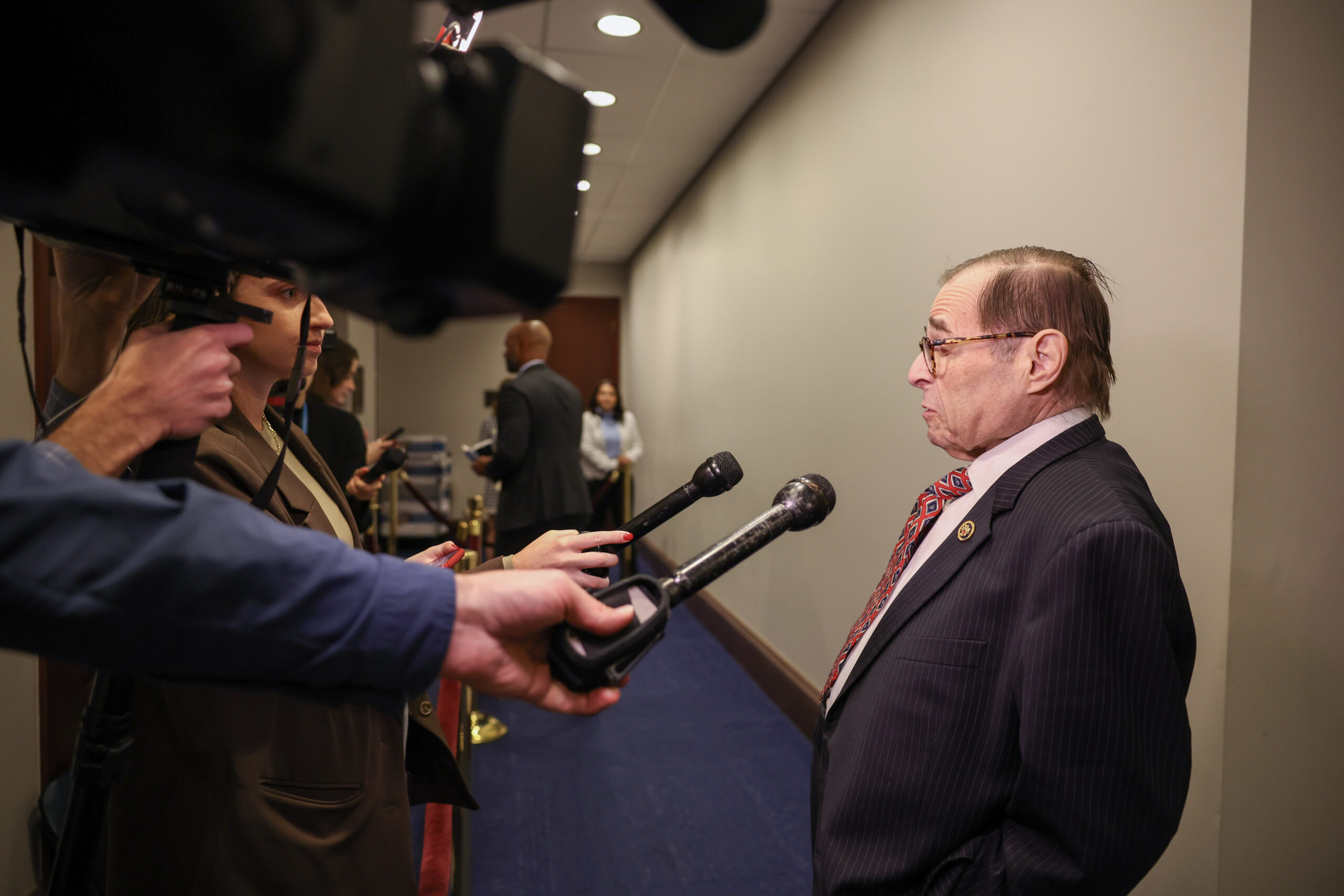
Like the retiring congressman, New York Assemblyman Micah Lasher endorsed the anti-Israel mayoral nominee
MILITARY MUSCLE
China uses WWII memory to project power in military parade and international diplomacy

The parade was an example of how Beijing has used WWII not only to encourage nationalism, but to project power internationally, from Jerusalem to Taipei and beyond
Plus, Platner doubles down on anti-Israel fixation

Mostafa Alkharouf/Anadolu via Getty Images
A general view of Jerusalem on June 13, 2025.
Good Tuesday afternoon.
This P.M. briefing is reserved for our premium subscribers like you — offering a forward-focused read on what we’re tracking now and what’s coming next.
I’m Danielle Cohen-Kanik, U.S. editor at Jewish Insider and curator, along with assists from my colleagues, of the Daily Overtime briefing. Please don’t hesitate to share your thoughts and feedback by replying to this email.
📡On Our Radar
Notable developments and interesting tidbits we’re tracking
Maine Democratic Senate candidate Graham Platner is unusually focused on anti-Israel attacks in his bid to unseat Sen. Susan Collins (R-ME), Jewish Insider‘s Marc Rod reports. Every one of Platner’s active ads on Facebook and Instagram, as well as many of his written advertisements, include a repudiation of AIPAC and around half accuse Israel of genocide…
In another Senate race to keep an eye on, Rep. Ashley Hinson (R-IA) hinted she’ll be running to replace Sen. Joni Ernst (R-IA), who this afternoon officially announced her retirement from the Senate at the end of her current term. Hinson said she would be President Donald Trump’s “strongest ally in the Senate” and “will have an announcement soon”…
Meanwhile in Foggy Bottom, a State Department cable sent to U.S. embassies on Aug. 18 indicated the department has suspended approvals for almost all Palestinians seeking to enter the U.S. on visitor visas, The New York Times reports, shortly before the department revoked visas for Palestinian Authority officials ahead of the U.N. General Assembly meeting in New York this month. The suspension could prevent Palestinians from entering the country for medical treatment, attendance at American universities, business travel and more…
French President Emmanuel Macron and Saudi Crown Prince Mohammed bin Salman announced today that they will co-chair another conference on the two-state solution on Sept. 22 on the sidelines of the UNGA, where several European countries are expected to announce their recognition of a Palestinian state.
Macron called the U.S.’ decision to revoke the visas of PA officials “unacceptable” and said it must be reversed.
Palestinian Vice President Hussein al-Sheikh sent a letter to Secretary of State Marco Rubio similarly asking him to reconsider the revocation of PA President Mahmoud Abbas’ visa to attend the UNGA, arguing it was made on “false pretenses,” according to Axios…
U.S. Ambassador to Israel Mike Huckabee recently told Israeli officials the Trump administration is concerned about the security implications of a potential economic collapse of the Palestinian Authority in the West Bank. “If the Palestinian economy completely collapses, it will not be a victory for anyone. … Desperate people do desperate things,” Huckabee told Israel’s Channel 12…
Rubio is expected to visit Israel the week of Sept. 14 where he will reportedly attend the Sept. 15 inauguration ceremony for the “Pilgrimage Road” at the City of David archeological site, a recently discovered path that led to the Temple Mount during the Second Temple Period. (Read JI’s coverage of the Pilgrimage Road excavation here)…
Also making the long flight, several high-profile venture capitalists, including Palantir co-founders Peter Thiel and Joe Lonsdale as well as Elad Gil and Keith Rabois, were in Israel this past weekend where they attended the wedding of VC investor Zach Frenkel. Some of the attendees reportedly met with Israeli Prime Minister Benjamin Netanyahu while in town…
Michael Velchik, the Department of Justice’s lawyer defending the Trump administration in its battle against Harvard in federal court, called Hitler’s Mein Kampf his favorite book and wrote a paper from the dictator’s perspective during his time as a Harvard undergraduate, which “so unnerved the instructor that he was asked to redo the assignment,” The Boston Globe reports. Velchik said in court in July that Harvard no longer deserved federal funding based on its “wanton” and “deliberate indifference to antisemitism”…
Robert Satloff, executive director of The Washington Institute for Near East Policy, called the International Association of Genocide Scholars’ declaration that Israel is committing genocide in Gaza “one of the most egregious examples of the dereliction of scholarly responsibility in recent history.”
The IAGS resolution, approved by less than a third of its members over the weekend, “reflects not one iota of original or independent research,” Satloff wrote, instead relying on findings from the U.N., Special Rapporteur Francesca Albanese and anti-Israel human rights organizations…
⏩ Tomorrow’s Agenda, Today
An early look at tomorrow’s storylines and schedule to keep you a step ahead
Keep an eye on Jewish Insider tomorrow morning for reporting on China’s shifting rhetoric on Israel amid its aggressive posturing on the international stage, as well as an interview with Rep. George Latimer (D-NY) about his recent trip to Israel with a delegation of freshman Democratic members.
We’re tracking the many potential candidates who may join the race to succeed Rep. Jerry Nadler (D-NY), after he announced his retirement last night.
Though Nadler is expected to support his former aide, state Assemblyman Micah Lasher, as his successor, politicos speculate other contenders for the Manhattan district could include high-profile New Yorkers from Rep. Dan Goldman (D-NY), who represents a neighboring district, to Lina Khan, the former commissioner of the Federal Trade Commission.
Liam Elkind, a 26-year-old Jewish nonprofit leader who launched his bid in July to unseat Nadler in a generational challenge, is also still in the race. Stay tuned to JI for coverage as the field develops.
Tonight, the House Appropriations Committee‘s Labor, Health and Human Services, Education and Related Programs Subcommittee will vote on a funding bill for the Department of Education that includes sweeping new provisions restricting federal funding for universities that fail to address antisemitism but also cuts funding for the Office for Civil Rights.
Also tonight, the Senate will begin the process of finalizing the 2026 National Defense Authorization Act, which may include votes on several amendments relating to Middle East defense programs in the coming days.
Tomorrow, the House Foreign Affairs Committee is holding a members-only virtual briefing with Huckabee focused on the West Bank.
Stories You May Have Missed
MOU MINEFIELD
Negotiations for next U.S.-Israel aid deal faces uphill battle with changing political tides

The next U.S.-Israel memorandum of understanding will need to be secured in a political environment much more hostile to Israel than 10 years ago
WISDOM CARRIED FORWARD
New Humash features Rabbi Sacks’ posthumously published translations

English translation, commentary by former U.K. chief rabbi seeks to ‘make Torah relevant to us today’
Plus, pro-Israel lawmakers criticize Israel on Syria strikes

Anna Moneymaker/Getty Images
Sen. Lindsey Graham (R-SC) in the Senate Judiciary Committee on January 30, 2025 in Washington, D.C.
Good Thursday afternoon.
This P.M. briefing is reserved for our premium subscribers like you — offering a forward-focused read on what we’re tracking now and what’s coming next.
I’m Danielle Cohen-Kanik, U.S. editor at Jewish Insider and curator, along with assists from my colleagues, of the Daily Overtime briefing. Please don’t hesitate to share your thoughts and feedback by replying to this email.
📡On Our Radar
Notable developments and interesting tidbits we’re tracking
A bipartisan group of pro-Israel lawmakers — Sens. Jeanne Shaheen (D-NH) and Joni Ernst (R-IA) and Rep. Joe Wilson (R-SC) — released a statement today criticizing Israeli strikes in Syria overnight.
The lawmakers, who recently returned from Syria, said that the message they heard during their visit “was clear: Syria needs a chance to succeed and move past the violence and strife that consumed the country for over 14 years. Last night’s destabilizing strikes on Syria by Israel make that goal more difficult to achieve.”
“The Syrians are prepared to move forward with Israel to advance peace. It is unclear how long the door to this opportunity will remain open. We call on Israel to seize the moment and immediately cease hostilities,” the group said.
The statement is one of the most public signs yet of friction between even staunch supporters of Israel in Congress and the Israeli government over its approach to the new Syrian government, which has included repeated rounds of strikes on Syrian targets even amid diplomatic engagements. Many U.S. lawmakers, meanwhile, are urging a more optimistic approach.
Syrian state media reported that the strikes also included a ground raid by the IDF near Damascus, which would be the first reported instance of an Israeli ground incursion so far into the country’s territory since the fall of the Assad regime. Syrian forces had reportedly recently uncovered surveillance equipment at a military base in the area…
The IDF also carried out strikes today on Houthi military targets in Sanaa, Yemen, after several Houthi missile and drone attacks on Israel in recent days. Israeli media reported that the strikes, one of which targeted a gathering of top Houthi leaders, may have eliminated the terror group’s minister of defense and chief of staff…
Back in Washington, Israeli Minister of Strategic Affairs Ron Dermer reportedly participated in President Donald Trump’s roundtable on Gaza at the White House yesterday, according to Axios, as he made a last-minute visit to the capital.
A source told the outlet that former British Prime Minister Tony Blair and former Trump Mideast advisor Jared Kushner got the green light from the president to develop a post-war plan for Gaza, though few details were hashed out at the meeting.
Dermer reportedly stressed that Israel doesn’t want to occupy Gaza in the long term and wants to see alternative options for parties that could govern Gaza that are not Hamas. “Dermer’s message was: As long as our conditions are met, we will be flexible about everything else,” the source told Axios…
France, Germany and the U.K. sent a letter to members of the U.N. Security Council this morning announcing they are triggering snapback sanctions on Iran, as anticipated after recent diplomatic talks to roll back the Iranian nuclear program yielded little progress.
The move triggers a 30-day timeline before the sanctions go into effect, during which the European countries said they are open to continuing negotiations with Iran.
Secretary of State Marco Rubio said the U.S. will work with the UNSC to “successfully complete” the reinstatement of sanctions. “At the same time,” he said, “the United States remains available for direct engagement with Iran … Snapback does not contradict our earnest readiness for diplomacy, it only enhances it.”
Iran has threatened previously to withdraw from the Nuclear Non-Proliferation Treaty if snapback sanctions were imposed, which could have wide-ranging consequences, including a potential regional nuclear arms race…
The UNSC was also busy today with a vote to extend the mandate of UNIFIL, the U.N.’s forces in southern Lebanon, whose mission was due to expire on Sunday. The body voted unanimously to extend the mandate one final time until Dec. 31, 2026, when UNIFIL will have one year to withdraw from Lebanon completely.
Dorothy Shea, acting U.S. representative to the U.N., said in a statement supporting the vote, “The United States notes that the first ‘I’ in UNIFIL stands for ‘Interim.’ The time has come for UNIFIL’s mission to end. This is the last time we will support an extension of UNIFIL”…
Sen. Lindsey Graham (R-SC) threatened Norway and its officials with retaliatory tariffs and visa restrictions in response to the decision by Norges Bank Investment Management — the Norwegian sovereign wealth fund — to sell its stake in the American machinery company Caterpillar in response to the Israeli military’s use of its products against Palestinians.
“To those who run Norway’s sovereign wealth fund: if you cannot do business with Caterpillar because Israel uses their products, maybe it’s time you’re made aware that doing business or visiting America is a privilege, not a right,” Graham said on X…
Back in Israel, Prime Minister Benjamin Netanyahu and World Food Program Executive Director Cindy McCain shared a joint statement after meeting in Jerusalem today, where they agreed that “every effort must be made to ensure that humanitarian aid reaches the most vulnerable people where they are, and that humanitarian aid is provided exclusively to civilians”…
Meanwhile, the Boulder chapter of the group “Run for Their Lives,” which hosts weekly marches to advocate for the release of the hostages held in Gaza, announced it will no longer publicly advertise its walking route, after participants faced continued threats and harassment in the wake of a firebombing attack on one gathering several months ago.
In recent weeks, protesters have stalked and shouted slurs at participants, such as “genocidal c**t,” “racist” and “Nazi,” and have threatened organizers’ children, according to the Colorado Jewish Community Relations Council…
No industry is safe: The Wall Street Journal reports on the tech worker “revolt” over Gaza and how companies are responding, including moderating internal message boards by deleting content and closing discussion threads.
Anti-Israel activists have recently escalated their protests against Microsoft, setting up an encampment at the company’s Redmond, Wash., headquarters, occupying President Brad Smith’s office and rowing kayaks up to the waterfront homes of top executives (Microsoft has asked the FBI for help in tracking and combating these activities)…
⏩ Tomorrow’s Agenda, Today
An early look at tomorrow’s storylines and schedule to keep you a step ahead
Keep an eye on Jewish Insider for reporting on the obstacles Israel and the U.S. may face in negotiating a new memorandum of understanding as the current MOU nears its expiration in 2028.
On Monday, Sen. Bernie Sanders (I-VT) will host a campaign event with Graham Platner, the anti-Israel Democrat challenging Sen. Susan Collins (R-ME), as Collins has been facing increasing antagonism from crowds at home.
We’ll be back in your inbox with the Daily Kickoff and the Daily Overtime on Tuesday. Shabbat shalom and happy Labor Day weekend!
Stories You May Have Missed
SULLIVAN SAYS
Jake Sullivan says he now supports withholding weapons from Israel
In an interview with ‘The Bulwark,’ the former national security advisor argued that the argument in favor of restricting military aid is ‘much stronger’ than it was a year ago
BELL CURVE
Contentious Wesley Bell town hall portends a potential primary challenge
Former Rep. Cori Bush or a political ally could attempt to unseat the first-term congressman
Plus, Minneapolis shooting echoes Tree of Life

Nicholas Kamm/Getty Images
Ron Dermer speaks at the American Israel Public Affairs Committee (AIPAC) policy conference in Washington, DC.
Good Wednesday afternoon.
This P.M. briefing is reserved for our premium subscribers like you — offering a forward-focused read on what we’re tracking now and what’s coming next.
I’m Danielle Cohen-Kanik, U.S. editor at Jewish Insider and curator, along with assists from my colleagues, of the Daily Overtime briefing. Please don’t hesitate to share your thoughts and feedback by replying to this email.
📡On Our Radar
Notable developments and interesting tidbits we’re tracking
Israeli Minister of Strategic Affairs Ron Dermer made a last-minute visit to Washington today, according to Israeli media, while President Donald Trump convened a meeting on a “comprehensive plan” for postwar Gaza, as Middle East envoy Steve Witkoff told Fox News last night. It’s unclear if Dermer participated in the meeting himself.
Also in attendance at the White House were former British Prime Minister Tony Blair and Trump’s son-in-law and former Mideast advisor Jared Kushner, according to Axios, who have been working with Witkoff on the issue for several months…
Dermer canceled a meeting with World Food Program head Cindy McCain, who is in Israel for the first time since Oct. 7, as he headed to Washington. McCain did meet with IDF Chief of Staff Eyal Zamir and the head of COGAT, the IDF unit that facilitates humanitarian aid in Gaza. Recall that a whistleblower recently alleged that the WFP had rejected security coordination with the IDF, hampering aid distribution efforts in Gaza…
The alleged gunman who opened fire today on a Catholic school in Minneapolis, killing two children and injuring at least 17 people, most of them students at the school, used a gun that had antisemitic and anti-Israel writings across it, according to the Anti-Defamation League.
Unverified images of the alleged shooter’s gun, taken from a video posted to a YouTube account believed to be associated with the shooter, show scrawlings on the gun and related paraphernalia that say “6 million wasn’t enough,” “Burn Israel,” “Israel must fall” and “Destroy HIAS,” a reference to the Jewish refugee organization.
HIAS, which was also invoked by the Tree of Life synagogue shooter in Pittsburgh in 2018, told Jewish Insider that because of the organization’s focus, it is “sadly often the subject of hateful antisemitic conspiracy theories”…
Israeli Foreign Minister Gideon Sa’ar is in Washington today as well, meeting this afternoon with Secretary of State Marco Rubio in Foggy Bottom. Sa’ar said the two had “a productive meeting on mutual challenges and interests for both our nations” and discussed the Iranian nuclear threat in the aftermath of the U.S. and Israeli strikes in June, among other issues…
Rubio held a call with the foreign ministers of France, Germany and the U.K. today, during which all of the officials “reiterated their commitment to ensuring that Iran never develops or obtains a nuclear weapon,” as the European nations gear up to trigger snapback sanctions at the U.N. Security Council in the coming days…
a16z Speedrun, a startup accelerator program backed by the Andreessen Horowitz venture capital firm, is in Israel this week. Last night, the program convened a dinner of 20 budding startup founders from elite IDF units…
Hollywood heavyweights including Brad Pitt and Joaquin Phoenix are joining the production team of “The Voice of Hind Rajab,” a film about the killing of a six-year-old Palestinian girl in Gaza in January 2024. Jonathan Glazer, who made headlines for using his Oscar acceptance speech last year to equate Israel’s actions in Gaza with the Holocaust, is a director of the project…
Variety spotlights a new film in production starring Jon Voight and directed by the controversial Bryan Singer, which a source described as set in the Middle East during the First Lebanon War. “It makes Israel look really bad and could be polarizing,” the source said…
⏩ Tomorrow’s Agenda, Today
An early look at tomorrow’s storylines and schedule to keep you a step ahead
Keep an eye on Jewish Insider tomorrow morning for reporting on how security experts are viewing the threat of Iranian influence and attacks in the U.S. in the aftermath of disturbing revelations of Iranian attacks in Australia, and on how the replacement of Sergio Gor with Dan Scavino as head of the Presidential Personnel Office may impact national security personnel decisions in the administration.
Also tomorrow, the Atlantic Council will host an event in Washington on the “past, present, and future” of the India-Middle East-Europe Economic Corridor, an initiative launched at the G20 Summit in 2023.
Stories You May Have Missed
MINNEAPOLIS MOMENT
Jewish Democrats sound encouraging note on DNC Israel resolution votes

Democratic insiders told JI that DNC chair Ken Martin withdrew his Israel resolution largely to avoid a disruptive floor debate over Israel on Wednesday
THE CENTER SHIFTS
Leading moderate House Democrat calls for ‘leveraging’ arms sales to Israel
Rep. Adam Smith, ranking member of the House Armed Services Committee, said he recognizes restricting offensive weapons to Israel could ‘embolden Hamas’ but it is ‘time to try something else’
Democrat Maura Sullivan, a military veteran running in a swing district, is aiming to succeed Rep. Chris Pappas in the House
Maura Sullivan for Congress
Maura Sullivan
Maura Sullivan, a Marine veteran who served in Iraq and later worked as a senior Defense Department official, is aiming to leverage that experience to win the New Hampshire congressional seat currently held by Rep. Chris Pappas (D-NH), who is running for the Senate. She’s also leaning on that background as she stakes out her positions on the conflict in the Middle East.
Speaking to Jewish Insider, Sullivan strongly criticized Israel for the humanitarian crisis in Gaza, saying it must take action to ensure more aid to the Palestinian people, but at the same time said that she would not support efforts to cut off U.S. aid to the Jewish state and affirmed her commitment to the U.S.-Israel relationship and the need to eliminate Hamas.
As a Pentagon official, Sullivan said she spent time in the Middle East on “allied reassurance tours,” visiting allies and meeting with top officials, such as Israeli Prime Minister Benjamin Netanyahu and Moshe Ya’alon, then Israel’s defense minister, to learn about Israel’s challenges and capabilities and “talking about the incredibly important relationship between the United States and Israel and strongly reaffirming the United States commitment to our ally Israel.”
“I’ll bring that perspective to the work I do in Congress and will greatly inform because I have that firsthand perspective, experience and knowledge,” Sullivan said, adding that she’d be seeking a spot on the House Armed Services Committee if elected.
“I’ve been very clear since the devastating, absolutely deplorable Oct. 7 attacks that Hamas perpetrated that Israel has the right to defend itself,” Sullivan continued. “I also want to be clear that the conditions in Gaza are inhumane, they’re deplorable and they must be improved immediately. … Hamas can be destroyed and significant aid can be let in at the same time. It’s a false choice to think that those two objectives cannot occur simultaneously.”
She said she has firsthand experience with humanitarian supply issues in a war zone, having served as a logistics and operations officer in Fallujah, Iraq, to move food and other supplies through what was at times an urban combat zone.
Doing so, she said, is “logistically complex” but also “doable” and “necessary.” She said the U.S. should apply “maximum pressure” on Netanyahu to increase aid, or provide aid directly if that fails.
Unlike growing numbers of Democrats in Congress, though, Sullivan said that she does not support efforts to cut off the U.S. supply of arms to Israel in response to the humanitarian situation in Gaza.
“I do not think that the answer in this conflict is to make Israeli civilians less secure due to the actions of their government,” Sullivan said. “In an effort to solve this conflict, the Israeli people need to have the ability to defend themselves against not only Hamas, but also other nefarious actors, [like] Hezbollah and … Iran.”
Sullivan added that she wanted to be clear that Hamas is a terrorist organization, its attack on Oct. 7, 2023, was the “catalyst behind all of this” and that it must return the hostages.
The pathway to a lasting peace, through a two-state solution, requires “eradicating Hamas,” she continued. “The Palestinians need to be able to live in a demilitarized state that they control, not Hamas, and the Israelis need to be able to live beside them in peace.”
Sullivan has visited Israel three times, including visiting extended family of her husband, who is Jewish, in Tel Aviv and Jerusalem. She described a visit to Yad Vashem, while she was a Pentagon official, as particularly “powerful and unforgettable.”
Sullivan said she saw during her time in Iraq that “leadership in Washington was totally out of touch” — on both sides of the aisle — with the actual situation on the ground, “and we were sent to a war we never should have been in without a plan to win and without the resources to succeed, in what was arguably the biggest foreign policy debacle this country has seen since the Vietnam War.”
That experience, she said, showed her firsthand the real consequences of decisions made in Washington. She expressed strong support for long-running efforts in Congress to repeal the Authorizations for Use of Military Force for Iraq and Afghanistan.
“Congress has to go on the record if we are going to declare war,” Sullivan said, asked about the U.S. military strikes on Iran. She urged the administration to prioritize the safety of U.S. troops and “resist any effort to drive the U.S. into another costly and deadly war in the Middle East.”
But, Sullivan continued, “Iran is the leading state sponsor of terrorism, relentlessly driving violence and chaos against the United States, Israel and our allies. A nuclear armed Iran would represent a direct and unacceptable threat to America’s national security, regional stability, as well as Israel’s very existence.”
Given Iran’s recent violations of the Nuclear Non-Proliferation Treaty, she said that “Israel is absolutely justified in taking action to dismantle Iran’s dangerous nuclear ambitions. No nation should be forced to stand by while its survival is threatened.”
Sullivan also served on the American Battle Monuments Commission, visiting gravesites of fallen soldiers around the world, which “greatly heightened my sense of the role of America in the world” and what the U.S. means to its allies.
The Marine veteran described the antisemitism crisis in the United States as particularly personal for her, given that her husband is Jewish and they are raising their children, ages 3 and 5, in an interfaith home.
“I understand these issues at a deep and personal level. Judaism was a first-date conversation for my husband and I,” Sullivan said. “My children are not yet old enough to talk to them about it, but it is something that we will need to address as a family.”
She said that she would be a “strong voice in Washington” against antisemitism and noted that it had recently hit close to home when a group of neo-Nazis marched on the state Capitol in Concord.
Sullivan leads the primary field in fundraising, having pulled in nearly $800,000 as of the end of the last quarter. Her leading Democratic primary challenge is Stefany Shaheen, the daughter of Sen. Jeanne Shaheen (D-NH) and a former Portsmouth city councilor, who raised $532,000 in the last quarter.
Carleigh Beriont, a Harvard professor and Hampton, N.H., selectwoman, entered the race in June, raising $162,000 that month. Multiple Republicans have filed to run for the seat, but none have reported raising any funds thus far.
Sullivan ran in the 2018 primary against Pappas, who is leaving the seat to run for the Senate. Sullivan won 30% of the vote in 2018 to Pappas’ 42%, before Pappas went on to win his first term in Congress.
The Marine veteran said that she believes that the Democratic Party and the country “needs new and different leadership,” and argued that her military background will make her more effective in holding the administration accountable.
Sullivan drew explicit comparisons between herself, and other female veterans running in swing districts, and the class of female national security leaders — including Sen. Elissa Slotkin (D-MI), Reps. Mikie Sherrill (D-NJ) and Chrissy Houlahan (D-PA) and former Rep. Abigail Spanberger (D-VA) — who helped Democrats win back the House in 2018.
She’s part of a group calling itself the Hellcats, which also includes New Jersey congressional candidate and Navy veteran Rebecca Bennett, that is trying to emulate their model.
If elected, Sullivan said she’d be the first female Marine ever elected to Congress.
She said she’s heard from voters in the 1st District, particularly veterans and small business owners who typically vote Republican, that they’re supporting her in part because of her military background.
She said her interest in public office was spurred by a family commitment to service as well — her grandfathers fought in World War II and her grandmothers were both involved in Jesuit education, as well as her own military service.
Coming back from Iraq, Sullivan felt a “very deep-seated obligation to commit my life to public service,” particularly because some of those she served with would not have that chance. “To live your life in a way that matters for something and for people way beyond yourself, something so much bigger than yourself — it was a transformational experience.”
Plus, the clock keeps ticking on snapback sanctions
Audrey Richardson/Bloomberg via Getty Images
Ken Martin, chairman of the Democratic National Committee (DNC), speaks to members of the media during a news conference in Aurora, Illinois, US, on Tuesday, Aug. 5, 2025.
Good Tuesday afternoon.
This P.M. briefing is reserved for our premium subscribers like you — offering a forward-focused read on what we’re tracking now and what’s coming next.
I’m Danielle Cohen-Kanik, U.S. editor at Jewish Insider and curator, along with assists from my colleagues, of the Daily Overtime briefing. Please don’t hesitate to share your thoughts and feedback by replying to this email.
📡On Our Radar
Notable developments and interesting tidbits we’re tracking
Shortly after members of the Democratic National Committee passed a resolution today introduced by DNC Chair Ken Martin that voiced support for humanitarian aid to Gaza and a two-state solution, called for the release of hostages and condemned Hamas, Martin announced he was withdrawing the measure and instead forming a task force to continue discussing the issue.
The surprise reversal came after a competing resolution that called for an arms embargo and suspension of U.S. aid to Israel was voted down. Upon huddling with the co-sponsors of the failed measure, Martin said at the meeting of the Resolutions Committee where the votes took place, “There is a divide in our party on this issue. This is a moment that calls for shared dialogue and calls for shared advocacy.”
“And that’s why I’ve decided today, at this moment, listening to the testimony and listening to people in our party, to withdraw my amendment resolution to allow us to move forward in a conversation on this as a party,” Martin continued. He said that he would “appoint a committee or a task force comprised of stakeholders on all sides of this to continue to have the conversation, to work through this, and bring solutions back to our party”…
Overseas, Sen. Jeanne Shaheen (D-NH), Rep. Joe Wilson (R-SC) and U.S. Syria envoy Tom Barrack, ending their visit to Damascus, traveled to Beirut today where they joined Sen. Lindsey Graham (R-SC).
Along with diplomat Morgan Ortagus and U.S. Ambassador to Lebanon Lisa Johnson, the delegation met with Lebanese President Joseph Aoun, Prime Minister Nawaf Salam, Parliament Speaker Nabih Berri and head of the Lebanese Armed Forces Gen. Rodolph Haykal, with whom they discussed U.S. support of the LAF.
Barrack and Ortagus have been shuttling between Lebanon, Syria and Israel over the past several months in an effort to improve security relations in the region.
During a press conference the lawmakers held in Beirut, Graham announced his support for the United States signing a defense agreement with Lebanon, where the U.S. would commit to defending Lebanon militarily.
“How many nations have a defense agreement with the United States? … The number of nations that America is willing to go to war for is very few. Why do I mention Lebanon being in that group? You have one thing going for you that is very valuable to me. Religious diversity,” Graham said.
The South Carolina senator continued, “Christianity is under siege in the Mideast. Christians are being slaughtered and run out of all over the region, except here. So what I am going to tell my colleagues is, ‘Why don’t we invest in defending religious diversity in the Mideast? Why don’t we have a relationship with Lebanon where we would actually defend what you’re doing?’ I think it’s in America’s interest to defend religious diversity.”
Though it’s been discussed in Israeli and American administrations for decades, the U.S. does not have a mutual defense agreement with Israel, another Middle East country with a large Christian population and religious diversity…
Meanwhile, a meeting of the E3 — France, Germany and the U.K. — and Iran in Geneva today ended with reportedly little progress on scaling back the Iranian nuclear program, leaving the European countries to decide if they’ll follow through on a recent threat to reinstate snapback sanctions at the end of the month…
The Norwegian Sovereign Wealth Fund, the world’s largest sovereign wealth fund, announced it’s selling its shares of the U.S. machinery company Caterpillar over Israel’s use of its bulldozers, which the fund said had contributed to Palestinian suffering, as well as its shares in four Israeli banks, including the country’s two largest.
The fund has already liquidated its holdings in over a dozen Israeli companies and cut ties with Israeli hedge fund managers over concerns with the country’s war in Gaza and treatment of Palestinians…
On the Hill, leading Jewish organizations are set to send a letter to Senate leadership today urging the body to confirm the Trump administration’s nominees for special envoy to monitor and combat antisemitism, Rabbi Yehuda Kaploun, and international religious freedom ambassador, former Rep. Mark Walker (R-NC), Jewish Insider has learned. Schumer currently has a hold on dozens of President Donald Trump’s nominees…
⏩ Tomorrow’s Agenda, Today
An early look at tomorrow’s storylines and schedule to keep you a step ahead
Keep an eye on Jewish Insider tomorrow morning for reactions from Jewish Democrats on Martin’s decision to withdraw his resolution at the DNC and an interview with Democrat Maura Sullivan, the Marine veteran and former Defense Department official running to succeed Rep. Chris Pappas (D-NH).
Stories You May Have Missed
PHONE A FRIEND
Bernie Sanders campaigns with Israel critics running for Senate
Vermont’s democratic socialist senator is on a campaign swing as part of his ‘Fighting Oligarchy’ tour
DOWN UNDER DICTATE
Australia expels Iranian ambassador, three diplomats over attacks on synagogue, kosher restaurant
PM Anthony Albanese blasted the ‘extraordinary and dangerous acts of aggression orchestrated by a foreign nation on Australian soil’
Plus, University of Florida's new (interim) leader
ABIR SULTAN/POOL/AFP via Getty Images
Israel's Prime Minister Benjamin Netanyahu gives a press conference at the Prime minister's office in Jerusalem on August 10, 2025.
Good Monday afternoon.
This P.M. briefing is reserved for our premium subscribers like you — offering a forward-focused read on what we’re tracking now and what’s coming next.
I’m Danielle Cohen-Kanik, U.S. editor at Jewish Insider and curator, along with assists from my colleagues, of the Daily Overtime briefing. Please don’t hesitate to share your thoughts and feedback by replying to this email.
📡On Our Radar
Notable developments and interesting tidbits we’re tracking
Israeli Prime Minister Benjamin Netanyahu called an IDF strike today on a Gaza hospital that reportedly killed 20 people, including at least four journalists, a “tragic mishap” that Israel “deeply regrets.”
“Israel values the work of journalists, medical staff, and all civilians,” Netanyahu said in his statement. “The military authorities are conducting a thorough investigation. Our war is with Hamas terrorists.”
President Donald Trump, asked by reporters in the Oval Office this morning about the strike, said he was “not happy about it. I don’t want to see it.” Trump said at a press conference later he believes that in two to three weeks “you’re going to have … a pretty conclusive ending” to the war in Gaza…
Also turning up the pressure on Netanyahu, IDF Chief of Staff Eyal Zamir said Sunday that the IDF has met its objectives in its war in Gaza, “including deeply damaging Hamas,” and “as a result of the military pressure, we created the conditions for the release of the hostages.”
Zamir reportedly advocated for Netanyahu to accept the deal that Hamas said it agreed to last week and reiterated his concern that the IDF’s impending takeover of Gaza City will imperil the lives of the remaining living hostages…
Lawmakers are making the most of their August recess with several in the Middle East this week.
Sen. Joni Ernst (R-IA) met with Netanyahu in Jerusalem today, after several meetings with Qatari officials in Doha last week.
Sen. Lindsey Graham (R-SC) is in Lebanon today, where he visited a memorial at the U.S. Embassy in Beirut for fallen service members, including the 241 Americans killed in the bombing of U.S. Marine barracks by Hezbollah, under the direction of Iran, in 1983.
Meanwhile, Rep. Joe Wilson (R-SC) and Sen. Jeanne Shaheen (D-NH) joined U.S. Syria envoy Tom Barrack in Damascus, where they met with Syrian President Ahmad al-Sharaa to “discuss a bright, unified, and stable future for Syria.”
Wilson and Shaheen also met with Syria’s minister of social affairs and labor, religious clerics and a leader of the Syrian Democratic Forces. Both lawmakers have led efforts in Congress to repeal congressional sanctions on Syria in order to aid reconstruction and stabilization…
Barrack also visited Israel on Sunday and met with Netanyahu, Minister of Strategic Affairs Ron Dermer, Defense Minister Israel Katz and Foreign Minister Gideon Sa’ar to discuss security arrangements between Israel and Syria as well as Israel and Lebanon, according to Axios…
France requested to delay a U.N. Security Council vote on a French proposal to extend the mandate of the United Nations Interim Force in Lebanon until Friday, due to disagreements with the U.S. — which holds veto power — over a sunset date for the extension.
The current French proposal would allow the force to remain in place indefinitely, while the Trump administration wants an extension of only one year before UNIFIL disbands and withdraws from Lebanon, sources confirmed to Jewish Insider. If no consensus is reached, France could request another delay until Aug. 31, when the current mandate expires…
On the domestic front, the University of Florida’s Board of Trustees voted unanimously to appoint Dr. Donald Landry as interim president of the school, after Florida’s Board of Governors rejected Santa Ono, the former president of the University of Michigan, for the job.
Landry, a renowned physician and chair emeritus of Columbia University’s Department of Medicine, will replace current UF interim President Kent Fuchs, who said the process of choosing a new president had become “more challenging” after Ono’s rejection…
⏩ Tomorrow’s Agenda, Today
An early look at tomorrow’s storylines and schedule to keep you a step ahead
Keep an eye on Jewish Insider tomorrow morning for reporting on how the University of Michigan is becoming an epicenter of anti-Israel activism to start the new school year, and Jewish groups’ response to European officials targeting Katharina von Schnurbein, the EU antisemitism coordinator, for her defense of Israel.
Tomorrow morning, the Democratic National Committee’s Resolution Committee is expected to take up two Israel-related resolutions, including an anti-Israel measure that calls for an arms embargo and a suspension of U.S. military aid to Israel. The resolutions will then be brought to the general session on Wednesday. We’ll be paying close attention to how much support that anti-Israel resolution receives.
Also tomorrow, the Treasury Department will officially remove Syria from its sanctions list for the first time since 2005.
Added to our calendar for next week, Sen. Bernie Sanders (I-VT) is slated to appear at a rally with Graham Platner, a Democrat running against Sen. Susan Collins (R-ME), who has emerged as a harsh critic of Israel during his nascent campaign.
Stories You May Have Missed
MAGA MEETS THE HOLY LAND
A trip to Israel becomes a wake-up call for MAGA influencers

One influencer on the delegation organized by Israel365 said he previously believed IDF soldiers were anti-Christian, but ‘they were just kind of like homies’
THE HOT CORNER
Game changer: Kevin Youkilis reflects on Judaism and antisemitism as an MLB all-star

A new web series launched by ADL and Maccabi USA explores ‘how sports can inspire dialogue and challenge antisemitism’
Longtime observers of the U.S.-Israel relationship expressed concern that Jerusalem has not developed a strategic long-term approach to deal with the emerging political realities in the U.S.

Andrew Harnik/Getty Images
President Donald Trump, seated next to Secretary of Defense Pete Hegseth, hosts Israeli Prime Minister Benjamin Netanyahu for a dinner in the Blue Room of the White House on July 7, 2025, in Washington, DC.
After a tumultuous decade in American politics, both major parties are undergoing ideological and generational shifts that are likely to redefine America’s standing in the world — and its relationship with Israel.
On the left, a new generation of lawmakers from the progressive wing of the Democratic Party, many with more critical views of Israel than those who came before them, is making gains in major cities, state capitals and on Capitol Hill. On the right, the ascendance of the isolationist MAGA movement and the decline in support for Israel among younger evangelical Christians, traditionally a bastion of support for the Jewish state, is challenging what has long been traditional, unequivocal GOP support for Israel.
Longtime observers of the U.S.-Israel relationship with whom JI spoke over the weekend expressed concern that Jerusalem has not developed a strategic long-term approach to deal with the emerging political realities in the U.S.
When asked if he believed there’s a serious effort in Jerusalem to address the longterm political challenges in the U.S., former Israeli Ambassador to the U.S. Michael Oren was succinct: “I do not.”
The U.S.-Israel relationship, Yossi Klein Halevi, a senior fellow at the Shalom Hartman Institute, told JI on Sunday, “has never been in bigger trouble.” What’s so significant about this moment, he said, is that “the erosion is happening in both parties.”
In the past, Halevi explained, “we could always rely on one party or the other to bail us out. And of course, in the past, it was usually the Democrats, and the fact that the erosion is now beginning in the Republican Party should be sending major, major alarms in Jerusalem, but I don’t see any indication of that.”
Former Knesset member Einat Wilf told JI that the warning signs had been evident for years, and that she had pushed for conversations on the future of the U.S.-Israel relationship when Rep. Ilhan Omar (D-MN) began to criticize Israel. “I remember at the time I started talking with people,” Wilf recalled, “And I told them, ‘Look, if I’m Israel, then I’m putting [together] a team now. Doesn’t have to be overt, but I’m putting [together] a team now that begins to plan for a world where we don’t have such strong support.’”
Wilf said that the idea of Rep.Alexandria Ocasio-Cortez as a future president, which would have been “a fringe scenario not long a time ago,” is no longer such a long shot. “Now, it’s almost the mainstream scenario. So we need to take that into consideration. We need to look at it as at least a serious or likely scenario.”
The problem, Halevi said, is that Israel’s government is not thinking long term. “It’s all day-to-day, and it’s all tactical, and it’s not strategic. What happens after Trump and Netanyahu? Scorched earth, as far as [Netanyahu is] concerned. So there’s no one in the government thinking seriously about the relationship with Washington, because he didn’t allow that. It all has to go through him. It goes through him and [Strategic Affairs Minister Ron] Dermer.”
America’s shifting political winds “are not existential issues for Israel, but they’re very, very serious strategic issues for Israel,” Oren said.
Much of the concern from the activist wings of both parties in recent months has been about U.S. military support for Israel amid the IDF’s campaign in Gaza. Lawmakers on the far left and far right have advocated for rolling back military support for Israel. But that sentiment is being to percolate into the mainstream — note former Transportation Secretary Pete Buttigieg’s opposition earlier this month to a new Memorandum of Understanding between the U.S. and Israel, ahead of the current MOU’s expiration in 2028.
Oren had suggested in 2021 a rethinking of U.S. military aid to Israel, from a traditional “donor-to-recipient” model to “a collaborative relationship based on both countries’ interests and strengths.” That sort of cooperation, he suggested at the time, “would bring immediate benefits to American and Israeli security and strengthen their abilities to counter common threats.”
Such a redefined military relationship with the U.S. would likely serve to combat concerns from the isolationist branch of the GOP over entrenchment in foreign conflicts at a time when such engagement is unpopular among the MAGA wing of the party. And it would address, to some degree, concerns from progressive Democrats, some of whom are pushing the “Block the Bombs” bill to end the U.S.’ sale of offensive weapons to Israel.
But ultimately, Israel is at its best strategically and militarily when it gives itself time and runway to prepare for future challenges and threats. Its wars against Hamas and Hezbollah have underscored the results of Israel’s long-term planning: Hezbollah’s dismantlement as a serious threat came swiftly and as the result of years of preparation, while, nearly two years after the start of the Israel’s war in Gaza, Hamas remains in power, holding both Israelis and the entire enclave hostage as Israel fights an elusive threat on the ground and a losing battle for public opinion around the world.
Those with whom JI spoke agreed that taking on an evolvingU.S. political reality now will help future Israeli governments address the long-term challenges facing the U.S.-Israel relationship.
“We’re a crisis-oriented society. That’s partly our strength, that helps us cope, because we don’t think too far in advance,” Halevi said. “It helps us. It keeps us from getting too depressed. But the downside is that you don’t have the kind of serious, strategic conversations that we desperately need, and certainly we should be having those conversations now about what happens after Trump, what happens if we find ourselves stranded without any major party to rely on.”
Plus, Texans do the electoral shuffle

MARC ISRAEL SELLEM/POOL/AFP via Getty Images
Israeli Prime Minister Benjamin Netanyahu stands amid debris outside the Soroka Hospital in the southern city of Beersheba, after it was hit by a missile fired from Iran on June 19, 2025.
Good Thursday afternoon.
This P.M. briefing is reserved for our premium subscribers like you — offering a forward-focused read on what we’re tracking now and what’s coming next.
I’m Danielle Cohen-Kanik, U.S. editor at Jewish Insider and curator, along with assists from my colleagues, of the Daily Overtime briefing. Please don’t hesitate to share your thoughts and feedback by replying to this email.
📡On Our Radar
Notable developments and interesting tidbits we’re tracking
Israeli Prime Minister Benjamin Netanyahu appeared on “Triggernometry,” a conservative podcast based in the U.K., in an episode released yesterday, where he was pressed by co-hosts Konstantin Kisin and Francis Foster about inflammatory comments made by Israeli Finance Minister Bezalel Smotrich about settling Gaza and “things that sound like ethnic cleansing.”
Netanyahu dismissed the comments as democratic disagreements, saying, “In a parliamentary system, people are free to say, sometimes they say things they don’t quite mean. … To the extent that we have these conversations around the Security Cabinet, that is actually not being discussed by these people.”
Netanyahu distanced himself from his ministers who have advocated for reestablishing an Israeli civilian presence in Gaza, clarifying, “It’s not my policy. I don’t intend to build settlements or communities in Gaza, not Israeli ones.”
The prime minister disagreed that the comments from Smotrich may be exacerbating Israel’s “PR problem”: “They ask me, you know, ‘Your minister of finance says this, and what do you say?’ Well, I say I disagree with him, and I say that, you know, he’s entitled to say these things. That’s not ethnic cleansing. It’s a view, a legitimate view, which I happen to disagree with”…
And today, Netanyahu announced that he is working “to approve the plans that the IDF presented” to him and Defense Minister Israel Katz for the impending IDF takeover of Gaza City. “In parallel,” he said, “I have instructed to begin immediate negotiations for the release of all our hostages and the end of the war, on conditions that are acceptable for Israel.”
Netanyahu made no mention of the latest deal reportedly agreed to by Hamas, which only includes the release of some of the 50 remaining hostages…
Israel is also facing increased diplomatic ire over its actions in the West Bank, after Smotrich announced last week his approval of plans to build the E1 settlement, which were previously frozen for decades due in part to U.S. disapproval of its controversial location, which would make a contiguous Palestinian state nearly impossible.
Twenty-two countries, including the U.K., Australia, France and Japan, issued a statement today condemning the move as “unacceptable and a violation of international law,” and the U.K. Foreign Office summoned Israeli Ambassador to the U.K. Tzipi Hotovely in further protest.
Asked about the settlement approval, U.S. Ambassador to Israel Mike Huckabee told the Associated Press that a two-state solution is not a “high priority” for the Trump administration and that there are too many unanswered questions about a potential Palestinian state…
On the campus beat, a New York Times report published yesterday on the hurdles international students are facing entering the U.S. this academic year opened with the line, “Many Iranians are not going to American universities this fall.”
The article, largely sympathetic to the plight of students attempting to enter the U.S., highlighted the revocation of more than 6,000 student visas by the State Department, the majority of which were due to breaking U.S. law and support for terrorism; Secretary of State Marco Rubio’s announcement that the department would review visas of students who participated in disruptive campus anti-Israel protests; and new social media vetting of visa applicants, particularly “for expression of pro-Palestinian sentiment,” as barriers to international student enrollment…
Sen. Joni Ernst (R-IA), on a visit to Doha, met today with Qatari Emir Tamim bin Hamad Al Thani and Prime Minister Mohammed bin Abdulrahman Al Thani. Ernst has previously led efforts to pressure Qatar into forcing Hamas to release the hostages held in Gaza…
In the Lone Star State, Rep. Chip Roy (R-TX), a prominent member of the Freedom Caucus and a thorn in the side of President Donald Trump and House Speaker Mike Johnson (R-LA), announced a bid for Texas attorney general today, seeking to replace Trump ally AG Ken Paxton, who himself is running for U.S. Senate against Sen. John Cornyn (R-TX) in a highly competitive primary.
The Texas game of electoral musical chairs comes as the state is in the midst of a contentious mid-decade redistricting process, which will likely see its Legislature turn even deeper red.
One high-profile Democrat in the Texas Statehouse, James Talarico, was backed by Miriam Adelson’s Texas Sands PAC, Politico revealed today, despite Talarico’s public stance against GOP billionaires‘ influence in politics. The group was his largest donor last year and one of his largest ever…
New York City Mayor Eric Adams, no stranger to scandal, is facing more electoral trouble of his own as he runs for reelection as an independent, facing off against former New York Gov. Andrew Cuomo and Democratic nominee Zohran Mamdani.
Yesterday, reports alleged that Adams’ former advisor and current campaign volunteer, Winnie Greco, surreptitiously gave a reporter an envelope of cash, stashed inside a bag of potato chips. Today, the Manhattan district attorney unsealed four indictments against Adams’ former chief advisor, Ingrid Lewis-Martin, accusing her of receiving more than $75,000 in bribes, and six other individuals, most of whom are associates or supporters of Adams…
⏩ Tomorrow’s Agenda, Today
An early look at tomorrow’s storylines and schedule to keep you a step ahead
Keep an eye on Jewish Insider for reporting on a trip of young MAGA influencers to Israel that changed hearts and minds and an interview with Rep. John McGuire (R-VA) on his reflections from his own recent trip to the Jewish state.
The foreign ministers of Britain, France and Germany will speak with Iranian Foreign Minister Abbas Araghchi by phone tomorrow, sources tell the Substack Diplomatic, to discuss their recent threat to reinstate snapback sanctions on Tehran if it does not sufficiently roll back its nuclear program by the end of this month.
An Iranian delegation will also travel to Vienna tomorrow to meet with the International Atomic Energy Agency, a week after IAEA Deputy Director General Massimo Aparo visited Iran in a bid to restart the agency’s cooperation with Tehran.
On Sunday, the Michigan Democratic Jewish Caucus will host its annual “Summer Simcha” event. Among the attendees will be state Sen. Mallory McMorrow, Abdul El-Sayed and, appearing by video, Rep. Haley Stevens (D-MI) — all of whom are vying for Michigan’s open Senate seat. State Sen. Jeremy Moss, who’s looking to claim Stevens’ seat in the House, and University of Michigan Regent Jordan Acker, who had his home and office vandalized by anti-Israel attackers, will be in attendance. Sen. Elissa Slotkin (D-MI) will also appear by video.
We’ll be back in your inbox with the Daily Kickoff and the Daily Overtime on Monday. Shabbat shalom!
Stories You May Have Missed
MORAN’S MORASS
Qatar’s Washington lobbyist invokes old antisemitic tropes in push for influence

Former Rep. Jim Moran and his team have held dozens of meetings with members of Congress since the Oct. 7 Hamas terror attacks in 2023, mainly to talk about the Qatari role in the Middle East peace process
WEIRDING OUT
Susan Collins hits newly minted challenger over his anti-Israel rhetoric

Democrat Graham Platner entered the race accusing Israel of genocide in Gaza
Plus, Bibi faces coalition chaos

Gage Skidmore
Sen. Amy Klobuchar (D-MN) speaking with attendees at the Moving America Forward Forum hosted by United for Infrastructure at the Student Union at the University of Nevada, Las Vegas in Las Vegas, Nevada.
Good Wednesday afternoon.
This P.M. briefing is reserved for our premium subscribers like you — offering a forward-focused read on what we’re tracking now and what’s coming next.
I’m Danielle Cohen-Kanik, U.S. editor at Jewish Insider and curator, along with assists from my colleagues, of the Daily Overtime briefing. Please don’t hesitate to share your thoughts and feedback by replying to this email.
📡On Our Radar
Notable developments and interesting tidbits we’re tracking
Sen. Amy Klobuchar (D-MN) rebuked antisemitic comments made by Minneapolis mayoral candidate Omar Fateh’s campaign staff in a statement to Jewish Insider today, after initially declining to comment when JI unearthed the statements last week.
Klobuchar’s spokesperson said the senator “strongly and immediately condemned the Hamas terrorist attack, and condemns any statements to the contrary.” She called Fateh’s staffers’ comments “outrageous” and said they “have no place in our politics.”
Klobuchar reiterated her endorsement of Mayor Jacob Frey in the race; Frey’s other supporters, including Minnesota Gov. Tim Walz, and other state Democratic officials have thus far refrained from commenting on the situation…
Staying in the Midwest, protesters interrupted Rep. Wesley Bell’s (D-MO) first in-person town hall last night in St. Louis over Bell’s support for Israel, shouting over the congressman and getting into altercations with police.
In response to a question about “the ongoing genocide in Palestine,” Bell said, “Let’s talk about the word genocide, because we see that differently.” He repeatedly asked protesters to stop shouting and listen.
“There’s a lot of folks who don’t want to have the conversation,” Bell said. “They just want to spew what they think is important, but they don’t want to have an actual debate because these are tough issues. So, now we’re going to have the conversation — whether you like it or not”…
Meanwhile on the campaign trail, Politico reported this morning on Rep. Chris Pappas’ (D-NH) new competitor in the Democratic primary for New Hampshire’s open Senate seat, political activist Karishma Manzur.
Manzur said she would have supported recent resolutions from Sen. Bernie Sanders (I-VT) — which the moderate Pappas said he would have opposed — seeking to block some arms sales to Israel, saying she “will be against any money to any country to kill people” and that the U.S. should take “concrete actions against the harrowing acts of torture of Palestinians” by the IDF …
President Donald Trump called in to Fox News host Mark Levin’s radio show yesterday and said that, at the time of the U.S. strikes on Iran’s nuclear facilities in June, he believed Iran “would have had nuclear weapons in a period of four weeks.”
“If we didn’t [strike Iran], they would probably by this time, just about this time, have a nuclear weapon and they would have used it,” the president said.
Trump also told Levin that the U.S. Air Force pilots who conducted the strikes told him that they and their predecessors had been practicing the flight to Iranian airspace for 22 years…
The New York Times published an analysis on the damage inflicted by U.S. strikes on the Iranian nuclear site Fordow based on the site’s structure and the munitions used…
The State Department responded today to a bipartisan congressional letter led by Pappas last month expressing lawmakers’ concerns that the administration was considering selling F-35 fighter jets to Turkey in a reversal of U.S. policy, which currently bans the sale of the jets in light of Turkey’s purchase of an S-400 missile defense system from Russia.
Paul Guaglianone, senior bureau official in the department’s Bureau of Legislative Affairs, wrote in a letter to Pappas that the “U.S. position on Turkey’s acquisition and continued possession of the Russian S-400 system has not changed, and the requirements for Turkey to acquire U.S. F-35 aircraft are well-known”…
Secretary of State Marco Rubio also announced this morning that the U.S. is sanctioning four additional officials from the International Criminal Court, two judges and two prosecutors, in addition to the four judges sanctioned by the U.S. in June, over the ICC’s continued “efforts to investigate, arrest, detain, and prosecute American and Israeli nationals”…
In Israel, coalition politics are heating up over a potential ceasefire and hostage-release agreement with Hamas, which reports indicate the terror group recently accepted but Israel has not yet responded to.
Israeli media reported that Finance Minister Bezalel Smotrich told hostage families he would resign if Prime Minister Benjamin Netanyahu agreed to a ceasefire, and Minister of National Security Itamar Ben-Gvir is likely to do the same, as he did in January when Israel agreed to a previous ceasefire deal.
Meanwhile, opposition MK Benny Gantz, whose Blue and White-National Unity party is currently hemorrhaging in the polls, is reportedly considering rejoining Netanyahu’s coalition to help bolster support for a deal…
Back stateside, Israeli scholar and dance instructor Yael Nativ is suing the University of California, Berkeley, alleging that the university denied her a teaching position because she is Israeli. Nativ had previously taught at Berkeley and was encouraged to apply to teach another course.
When Nativ’s application was rejected shortly after the Oct. 7, 2023, terror attacks, according to the suit, the dance department chair wrote to her, “My dept cannot host you for a class next fall. Things are very hot right now and many of our grad students are angry. I would be putting the dept and you in a terrible position if you taught here”…
⏩ Tomorrow’s Agenda, Today
An early look at tomorrow’s storylines and schedule to keep you a step ahead
Keep an eye on Jewish Insider tomorrow morning for reporting on Graham Platner, the oyster farmer turned Democratic challenger to Sen. Susan Collins (R-ME), who called AIPAC “weird” in a recent interview.
Tomorrow afternoon, the American Jewish Committee will host a briefing on “Justice for Victims of Hamas’ Sexual Violence: The U.N. Blacklist and What Comes Next,” referring to the U.N.’s recent decision to “blacklist” Hamas as a group that uses sexual violence as a weapon of war.
Stories You May Have Missed
FOREIGN POLICY FEID
Seb Gorka slams Tucker Carlson as ‘Pat Buchanan in a new guise’
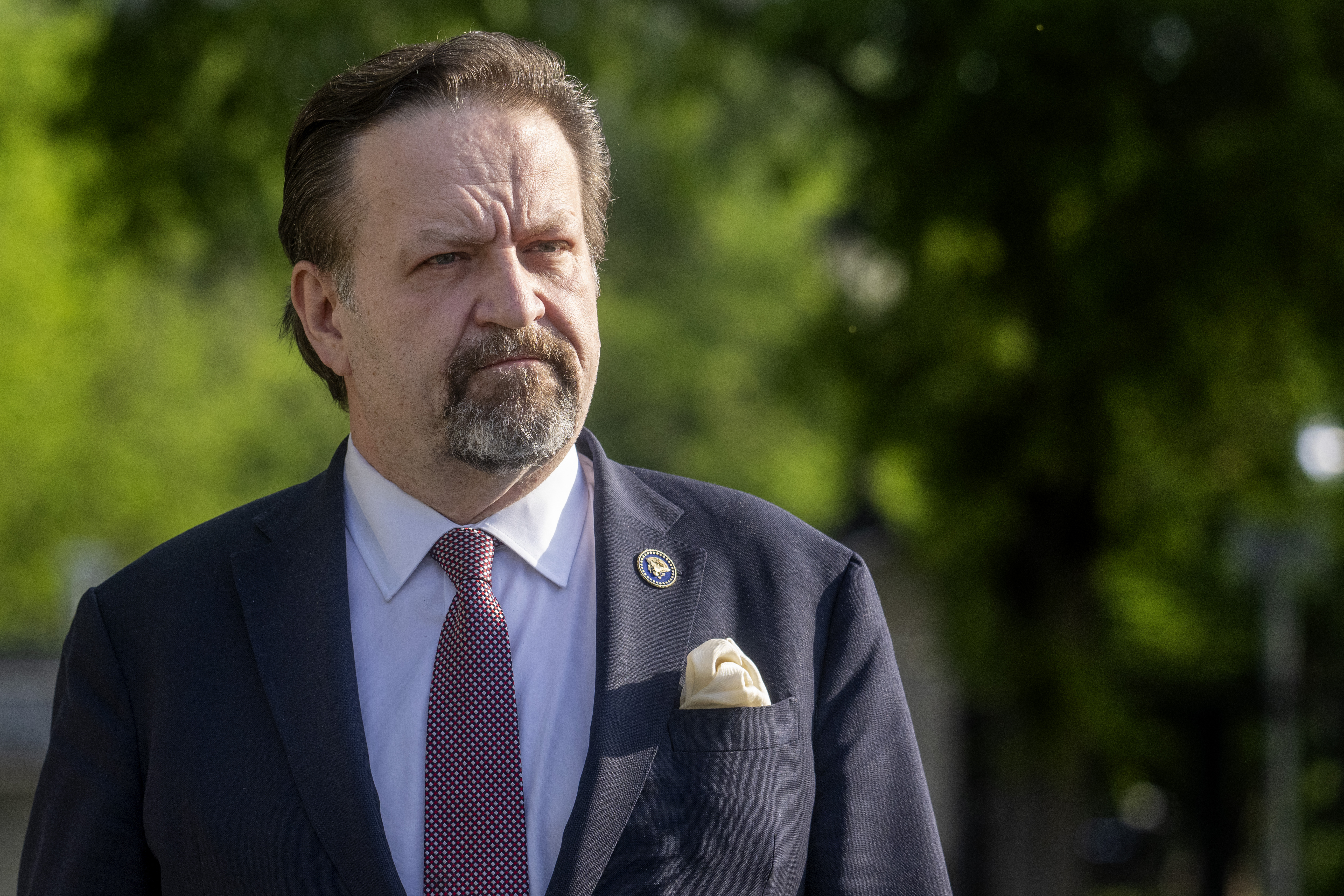
Trump’s senior director for counterterrorism: ‘I was worried by this neo-Buchanan isolationism, but I look at President Trump’s actions, they have no hold on him’
TRIP TALK
Rep. Laura Gillen returns from Israel doubly committed to a strong U.S.-Israel relationship
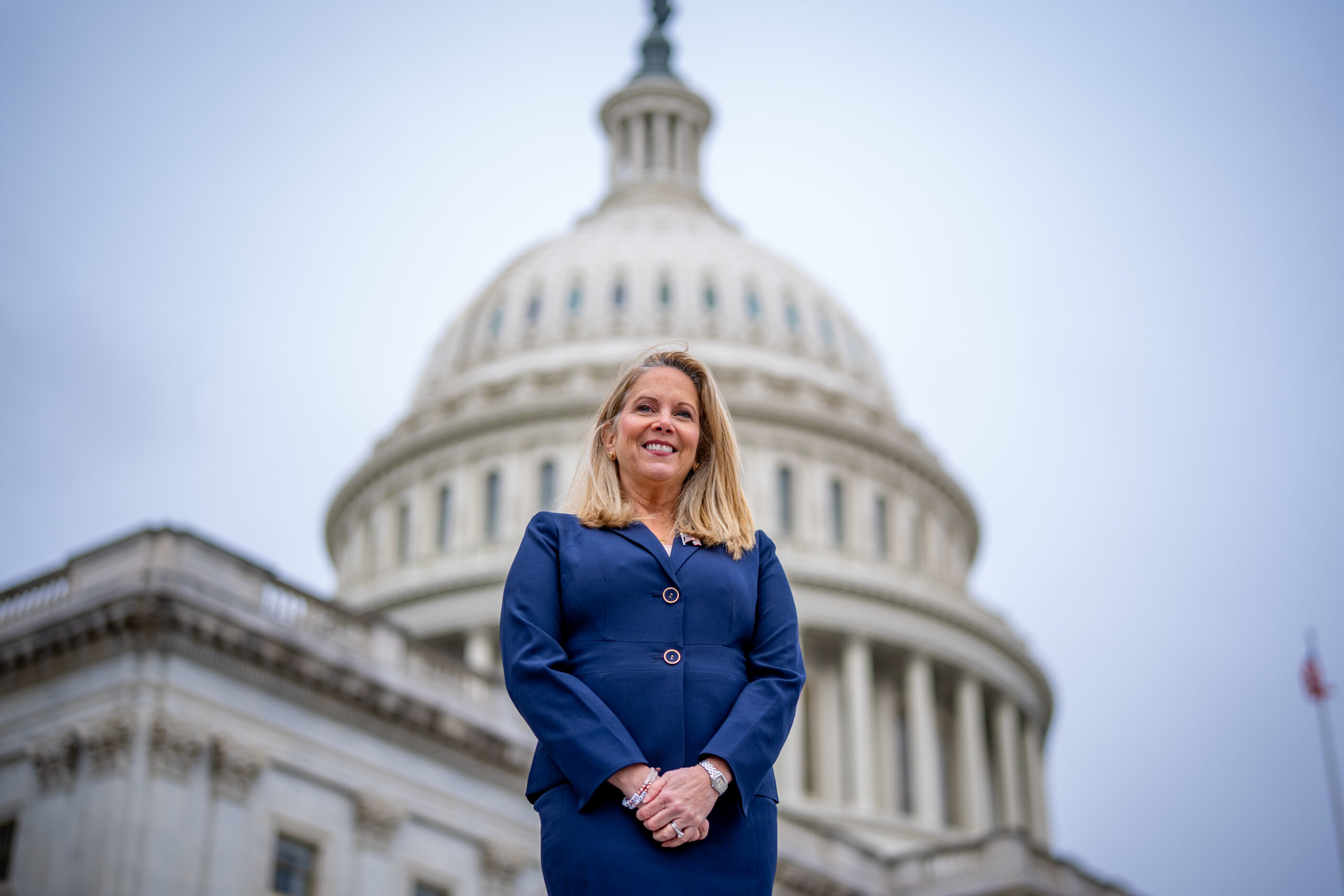
The New York Democrat told JI ‘the majority of people see the value and the special nature of our relationship with our ally Israel’
Plus, Loomer lashes out
Annabelle Gordon/Bloomberg via Getty Images
Rep. Jamie Raskin (D-MD) during a news conference in Washington, D.C., on Thursday, May 22, 2025.
Good Tuesday afternoon.
This P.M. briefing is reserved for our premium subscribers like you — offering a forward-focused read on what we’re tracking now and what’s coming next.
I’m Danielle Cohen-Kanik, U.S. editor at Jewish Insider and curator, along with assists from my colleagues, of the Daily Overtime briefing. Please don’t hesitate to share your thoughts and feedback by replying to this email.
📡On Our Radar
Notable developments and interesting tidbits we’re tracking
Ron Halber, CEO of the Jewish Community Relations Council of Greater Washington, called Rep. Jamie Raskin’s (D-MD) decision to co-sponsor legislation severely restricting U.S. aid to Israel “extremely disappointing,” telling Jewish Insider today that he had a “very honest and frank conversation” with the congressman, whom he considers a friend.
Halber framed his concerns with Raskin, a prominent progressive Jewish lawmaker, within the broader trend of the Democratic Party moving away from its long-standing support for Israel. “It’s difficult when two-thirds of our community is voting for a political party whose base is hostile to Israel,” he remarked.
“Once the war comes to an end, the whole Jewish community is going to have to re-strategize,” Halber said.
The JCRC of Greater Washington CEO said he had asked Raskin to remove himself as a co-sponsor of the bill and instead issue a statement conveying his concerns with Israel’s war in Gaza. “If he doesn’t, we will be disappointed, but that’s his decision to make and he has to live with the ramifications of his decision”…
Speaking this morning at a briefing co-hosted by the American Jewish Congress and World Zionist Organization, U.S. Ambassador to Israel Mike Huckabee sounded a cautious note on the current ceasefire negotiations with Hamas, as reports indicate the terror group has accepted a Qatari- and Egyptian-backed proposal.
“Whether or not [Hamas is] serious about bringing this to a close, all I can tell you is I hope so. But what’s happened before, even when they say they are thinking seriously about bringing this to a conclusion, making a deal, they always add one or more things that are completely unacceptable, bring those to the table, then it all starts over again,” Huckabee said.
Israel has yet to respond to the proposal and White House Press Secretary Karoline Leavitt said at a press briefing today that the U.S. “continues to discuss” it…
Huckabee and his wife, Janet, hosted U.S. Ambassador to France Charles Kushner and his wife, Seryl, in Jerusalem tonight…
Israeli Defense Minister Israel Katz met with Lt. Gen. Eyal Zamir, the IDF’s chief of staff, today to approve the IDF’s plans to take over Gaza City. Israeli officials said Gazans will have until Oct. 7 to evacuate the city, to coincide with the second anniversary of Hamas’ attacks, at which point the IDF offensive will begin. It remains to be seen if a ceasefire and hostage-release deal will be reached before then…
The Israeli government also voted today to approve a $9 billion increase to the country’s budget for the year, including $473 million for humanitarian aid for Gaza…
In other negotiation news, Israeli Minister for Strategic Affairs Ron Dermer is scheduled to meet this evening in Paris with Syrian Foreign Minister Asaad al-Shibani and U.S. Ambassador to Turkey and Syria envoy Tom Barrack to discuss security arrangements on the Israel-Syria border.
The meeting comes a day after Barrack, while visiting Beirut, said Israel needs to “comply with [an] equal handshake” to the Lebanese government’s commitment to disarm Hezbollah by fully withdrawing its troops from Lebanon…
Back stateside, the president of the American Association of University Professors said in a recent interview, “We believe strongly that no weapons should be sent to Israel, at all. Not defensive or offensive, nothing,” escalating the association’s adversarial stance against the Jewish state…
The New York Times chronicles the Trump administration’s attempts to wrest financial settlements from elite universities, including ongoing negotiations with Harvard and the University of California, Los Angeles, the latter of which may pay the administration upwards of $1 billion, according to a draft agreement…
Media mogul Shari Redstone told the Times that she decided to sell Paramount to Skydance in a recent $8 billion merger in part due to her frustrations over anti-Israel bias at CBS, particularly after the Oct. 7 attacks. “Once that happened, I wanted out,” Redstone said. “I wanted to support Israel, and address issues around antisemitism and racism”…
Rep. Ritchie Torres (D-NY) endorsed New York Gov. Kathy Hochul in her reelection bid today, after initially exploring a run against her and criticizing her tenure…
The Free Press reports on growing frustration with Laura Loomer, a right-wing provocateur and informal advisor to President Donald Trump, inside the White House, with some officials speculating she may be paid or influenced by lobbying firms and business interests.
Loomer lashed out on X, telling Free Press reporter Gabe Kaminsky he should “contact your anonymous White House sources who are so horrified by ‘lobbyists’ and their intentions and ask them how they feel about their friendship with” Jeff Miller, a Republican strategist, board member of the Republican Jewish Coalition and Trump-appointed member of the U.S. Holocaust Memorial Council…
⏩ Tomorrow’s Agenda, Today
An early look at tomorrow’s storylines and schedule to keep you a step ahead
Keep an eye on Jewish Insider tomorrow morning for an interview with top New York Democrat Rep. Laura Gillen (D-NY) on her takeaways from a recent visit to Israel.
This evening, Maryland Gov. Wes Moore, a potential 2028 presidential contender, will speak at D.C.’s Politics & Prose on “the role of states in preserving and advancing U.S. democracy.”
Tomorrow, the historic Sinai Temple in Los Angeles will host a conversation with Ahmed Fouad Alkhatib, the director of the Realign for Palestine program at the Atlantic Council who was born and raised in Gaza. It’s the second event in a series the prominent Conservative synagogue has held about the war in Gaza for its congregants, the first of which was held last month with Gaza Humanitarian Foundation head Johnnie Moore. Read JI’s coverage of Moore’s conversation here.
Stories You May Have Missed
CALIFORNIA COMPETITION
Brad Sherman keeps a wary eye on younger primary opposition

Sherman, a stalwart pro-Israel Democrat, is facing several politically connected Democratic challengers in next year’s primary
CLARK’S CLARIFICATION
AIPAC stands by Katherine Clark as she walks back ‘genocide’ comment
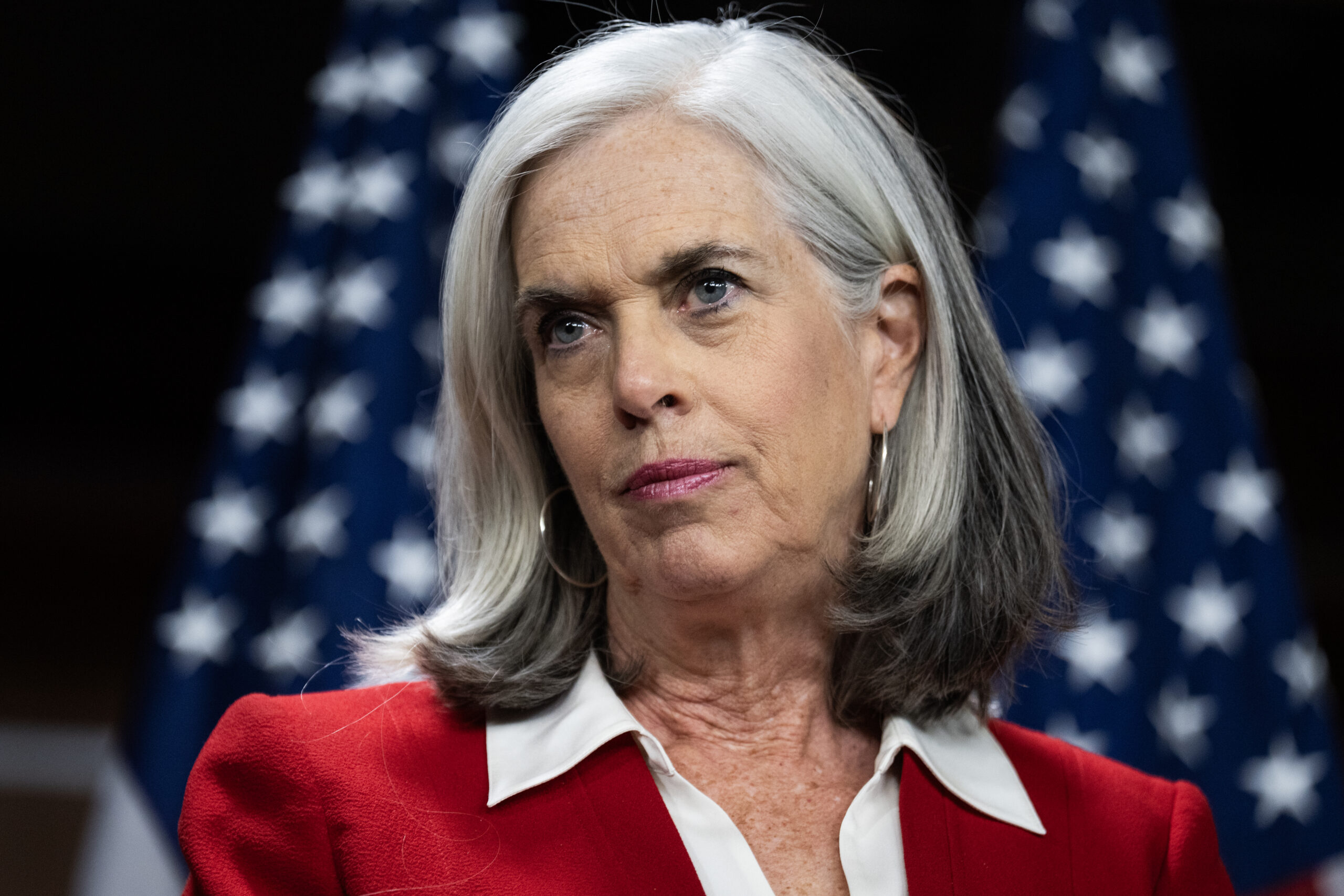
AIPAC said its endorsement is ‘unchanged’ and based on the House minority whip’s ‘long-standing support for the U.S.-Israel relationship’
Mayor Jacob Frey’s most prominent backers are declining to criticize his rival for employing staff that celebrated the Oct. 7 Hamas attack
Stephen Maturen/Getty Images
Omar Fateh, a member-elect of the Minnesota State Senate, speaks during a vigil for Dolal Idd, who was shot and killed by Minneapolis Police on December 31, 2020, in Minneapolis, Minnesota.
Leading elected officials in Minnesota are remaining silent in response to a top Minneapolis mayoral candidate, far-left state Sen. Omar Fateh, whose campaign has faced scrutiny for employing staffers who have celebrated Hamas’ Oct. 7, 2023, attacks and called for Israel’s destruction, among other extreme views he has yet to publicly address.
Fateh, a 35-year-old Democratic socialist, now employs a campaign communications manager, Anya Smith-Kooiman, who, in now-deleted social comments recently unearthed by Jewish Insider, has endorsed the Hamas attacks as a justified act of “resistance,” said Israel “does not have a ‘right’ to exist” and “must be dismantled,” and amplified a comment dismissing widespread reports of sexual violence on Oct. 7 as “propaganda,” according to screenshots.
Meanwhile, David Gilbert-Pederson, a local political activist and City Council aide who has been listed as a Fateh campaign staffer in filings, has unreservedly praised the Oct. 7 attacks, insisting in remarks on a December 2023 panel discussion that supporters of the Palestinian cause must “stand in unconditional solidarity with those resisting oppression.”
But even as some of the state’s leading Democratic lawmakers have endorsed Fateh’s rival, incumbent Mayor Jacob Frey, who is seeking a third term, they have so far declined to weigh in on the staffers’ comments and Fateh’s decision to hire them, which has raised questions about his acceptance of extreme rhetoric on a particularly sensitive issue.
Sen. Amy Klobuchar (D-MN) and Gov. Tim Walz, who are Frey’s most high-profile backers in what is expected to be a hotly contested race, both avoided addressing the matter to JI. A spokesperson for Klobuchar declined to comment on Friday, and representatives for Walz did not return multiple requests for comment.
Prominent Democratic officials who have not taken sides in the mayoral contest also did not respond to requests for comment — including Peggy Flanagan, the lieutenant governor who is now running for U.S. Senate, and Rep. Angie Craig (D-MN), a pro-Israel lawmaker also seeking to replace retiring Sen. Tina Smith (D-MN). A spokesperson for the senator did not respond to a message seeking comment about Fateh.
The muted responses underscore an increasing reluctance among many Democratic elected officials and public figures to speak out against extremist or antisemitic language related to the ongoing war between Israel and Hamas.
In Minneapolis, only one of the three City Council members who have endorsed Frey’s reelection bid was open to weighing in on the matter, denouncing the campaign staffers as well as Fateh’s judgement for choosing to employ them.
“Defending the Oct. 7 terrorist attack is disgraceful, and it’s embarrassing that Sen. Fateh is OK with this behavior,” Linea Palmisano, a Democratic councilwoman, told JI on Friday. “Who mayors surround themselves with matters, and anyone who stands by these remarks isn’t ready for the job.”
LaTrisha Vetaw and Michael Rainville, the other Council members supporting Frey, did not return requests for comment.
While Fateh himself has not used the same rhetoric as his allies, the state legislator has been a staunch critic of Israel — calling for a ceasefire 10 days after the Hamas attacks and accusing Israel of genocide in its war in Gaza.
Fateh has also voiced his support for the Boycott, Divestment and Sanctions movement targeting Israel, which some critics have accused of stoking antisemitism, and has pledged not to engage with the local Jewish Community Relations Council, according to a candidate questionnaire solicited by the Twin Cities chapter of the Democratic Socialists of America, a supporter of his campaign.
In the document, portions of which were recently obtained by JI, Fateh vowed to “refrain from any and all affiliation” with the JCRC, which the DSA dismissed as a “Zionist lobby group” akin to AIPAC, J Street and Christians United for Israel — even as the group is nonpartisan and represents the Jewish community to Minneapolis government officials.

Fateh did not share an explanation for his answer despite space to do so, according to the document reviewed by JI.
Steve Hunegs, executive director of the JCRC of Minnesota and the Dakotas, sharply criticized the state senator’s responses to the DSA in a statement to JI on Friday, while questioning his commitment to combating antisemitism.
“Sen. Fateh’s campaign slogan promises a ‘city that works for everyone,’” Hunegs said. “But how can Sen. Fateh be understood as anything other than a divider when he’s pledged to boycott Jewish organizations? Likewise, how can Jews feel that our safety will be a priority when Sen. Fateh’s staff traffic in antisemitism? As proud Jews we aren’t going to allow Sen. Fateh, the DSA or Hamas apologists drive us from the public square.”
Fateh’s campaign did not respond to a request for comment on Friday.
Fateh, who assumed office in 2021 as the first Muslim and first Somali American to serve in the Minnesota state Senate, won the state Democratic Party endorsement last month over Frey, who has challenged the results.
The mayor, 44, is the second Jewish mayor to represent Minneapolis and has been increasingly outspoken against rising antisemitism in the wake of Hamas’ attacks, while opposing some resolutions on Israel in the City Council that he has dismissed as one-sided. He has also been a critic of Israel Prime Minister Benjamin Netanyahu and his handling of the war in Gaza amid a worsening humanitarian crisis.
Senior Biden official: ‘We’re seeing a trend that’s extremely disturbing’
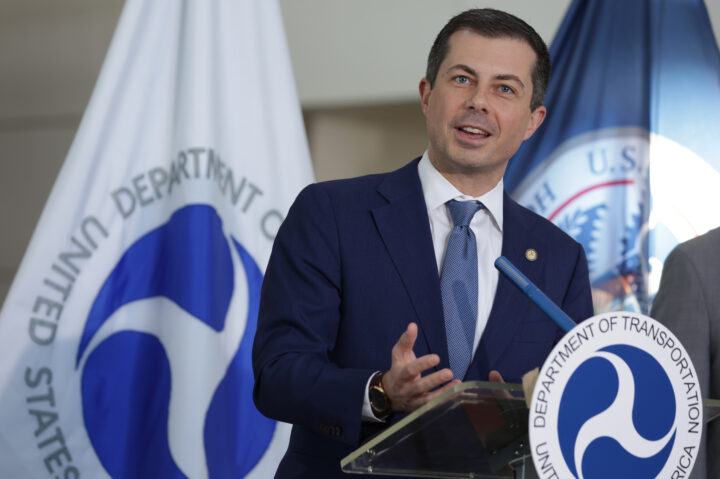
Alex Wong/Getty Images
U.S. Secretary of Transportation Pete Buttigieg speaks during a news conference at Ronald Reagan Washington National Airport November 21, 2024 in Arlington, Virginia.
When Pete Buttigieg was asked a question about Israel and Gaza this week on “Pod Save America,” the former transportation secretary and possible 2028 presidential contender answered in a way that matched many Democrats’ stances on Israel: broadly supportive of the U.S.-Israel relationship while sharply critical of Israeli Prime Minister Benjamin Netanyahu and his role in the humanitarian crisis.
But after facing a barrage of attacks on social media from progressives and anti-Israel activists, Buttigieg did an about face and gave in to critics, telling Politico on Thursday that he would have supported recent Senate resolutions seeking to block certain arms sales to Israel and that he would recognize a Palestinian state as part of a two-state solution.
Most surprisingly, he said the U.S. should not negotiate another 10-year memorandum of understanding with Israel laying out Washington’s military support for the Jewish state — a crucial component of America’s Middle East policy that was last negotiated in the Obama administration and runs through 2028.
“Pete Buttigieg is a viable [contender for] president of the United States. He won the Iowa caucus. He was the transportation secretary. And his words really matter,” one former senior Biden administration official told Jewish Insider. “The fact that he so quickly got wobbly and said his comments about the 10-year MOU suggests that those who still believe in standing strong really need to stand up right now, because we’re seeing a trend that’s extremely disturbing.”
In 2016, the U.S. and Israel signed a 10-year deal that pledged $3.8 billion in military assistance to Israel each year, which President Barack Obama celebrated at the time: “Under President Obama’s leadership, the multifaceted cooperation between the United States and Israel has reached unprecedented levels,” the White House said nine years ago. Even as some progressive Democrats have sought to condition or limit military assistance to Israel, there has not yet been a concerted effort to cancel or significantly alter the MOU.
A spokesperson for Buttigieg said the former South Bend, Ind. mayor stood by his comments and suggested he wants to see a major change in American military support for Israel.
“He said we have to shift to a more case-by-case approach, instead of a blanket approach,” the Buttigieg spokesperson told JI on Thursday. “There is a difference between providing defensive equipment so that they can shoot down Iranian missiles raining down on them, versus contributing to the conduct of a war that now has civilians starving within a few miles of food that is intended for them.”
That Buttigieg so rapidly gave in to pressure from the progressive left is an indication of where the party’s center of gravity is moving when it comes to Israel and Gaza. When Buttigieg ran for president in the 2020 Democratic primary, he was viewed as more liberal than Joe Biden on Israel, but much more centrist than Sen. Bernie Sanders (I-VT).
Buttigieg has for years been seen a more moderate voice in the party who could speak to both progressives and conservatives — as indicated by his frequent appearances on Fox News last year during the 2024 campaign. His willingness to acquiesce to the left in just a matter of days suggests the influence of the left-wing base in Democratic politics is growing.
At a J Street conference in 2019, Buttigieg criticized some Israeli actions and said America should express that disagreement — as a friend. “What you do in that situation is you put your arm around your friends and you try to guide them to a better place,” Buttigieg said. He also said that year that he would not consider cutting aid to Israel.
A year earlier, in 2018, he traveled to Israel with the American Jewish Committee, and said afterward that support for Israel “shouldn’t be” a “left vs. right issue.”
In the original “Pod Save America” interview that aired earlier this week, Buttigieg hinted at frustration with Israel’s actions in Gaza while declining to answer questions about the Senate resolutions or Palestinian statehood. “I think we need to insist that if American taxpayer funding is going to weaponry that is going to Israel, that that is not going to things that shock the conscience,” he said.
Buttigieg suggested, though, that his concerns about Israel’s actions in Gaza come from a position of caring about the country.
“We — I think especially including voices who care about Israel, who believe in Israel’s right to exist, who have stood with Israel in response to the unbelievable cruelty and terrorism of Oct. 7 — I think there’s a reason why so many of those voices are speaking up now too,” he said. “Because this is not just something that is on its face and in itself a moral catastrophe. It is also a catastrophe for Israel for the long run.”
His response was criticized by former Obama administration official Ben Rhodes and Rep. Ro Khanna (D-CA), who has in recent weeks been leading the charge for the U.S. to recognize a Palestinian state.
Andrew Bates, who serves as a deputy press secretary in the Biden administration, told JI he viewed Buttigieg’s answer as pro-Israel and anti-Netanyahu.
“I took Buttigieg’s interview to mean he is strongly committed to America’s alliance with Israel and Israel’s right to self-defense, but that he does not support Netanyahu’s new offensive. I agree,” said Bates. But he declined to weigh in on Buttigieg’s about-face.
Some of the leading pro-Israel voices in the Democratic Party have tried to avoid the intra-party squabble about the Senate resolutions and whether to recognize a Palestinian state. Gov. Josh Shapiro of Pennsylvania and Gov. Wes Moore of Maryland both declined to comment on the topic to Politico.
Shapiro said recently the U.S. has a “moral responsibility” to get aid to Gaza, and he told JI last month that support for Israel should remain bipartisan.
Jewish Democrats are pushing for defeat of a resolution calling for an arms embargo and advocating for a competing, pro-Israel resolution backed by the DNC chair
Audrey Richardson/Bloomberg via Getty Images
Ken Martin, chairman of the Democratic National Committee (DNC), speaks to members of the media during a news conference in Aurora, Illinois, US, on Tuesday, Aug. 5, 2025.
When Democratic National Committee members gather in Minneapolis later this month for the party’s summer meeting, they’ll consider two Israel-related resolutions — a more balanced one, which has the backing of party chair Ken Martin, and an anti-Israel measure that calls for an arms embargo and a suspension of U.S. military aid to Israel.
Sources within the DNC say they don’t expect the anti-Israel resolution, which was authored by a committee member from Florida, to pass. But the fact that it will be considered by the body has unnerved Jewish Democrats, who are working behind the scenes to promote the more balanced resolution. That one calls for an “immediate ceasefire and the unconditional release of all hostages, living and deceased, held by Hamas.” It also reiterates Democratic Party support for a two-state solution. (The text of the two resolutions was first reported by Semafor.)
The Martin-backed resolution is co-sponsored by the DNC’s entire leadership, including DNC associate chair Stuart Appelbaum, the president of the Jewish Labor Committee, according to a copy of the resolution obtained by Jewish Insider. Both measures will first be voted on by the DNC’s Resolutions Committee.
“It sends a strong signal that the chair himself has chosen to sponsor and lead the resolution that clearly condemns the Oct. 7 terrorist attack on Israel, affirms Democrats’ commitment to bringing home the hostages and addresses the need for humanitarian aid in Gaza,” Jewish Democratic Council of America CEO Halie Soifer told JI on Wednesday. “We are hopeful the DNC Resolutions Committee will reject the arms embargo resolution and reaffirm its support of a two-state solution and a release of the hostages.”
A DNC spokesperson declined to comment on the specific measures. “Any DNC member can submit resolutions for fellow members to consider,” the spokesperson told JI, noting that “submitted resolutions might not necessarily represent the views of the entire DNC.”
The anti-Israel resolution was submitted first; the competing resolution came later, as an attempt to reiterate the positions adopted in the Democratic Party platform at the convention in Chicago last year. The platform stated that former President Joe Biden and former Vice President Kamala Harris were committed to “Israel’s security, its qualitative military edge [and] its right to defend itself.” The measure being advanced by Martin and his allies leading the DNC strongly condemns the Oct. 7 Hamas attacks, and it takes aim at both Hamas militants and “far-right ministers in the government of Israel.”
JDCA and Democratic Majority for Israel have both been part of conversations with DNC officials to offer suggestions on the Martin-backed resolution.
DMFI CEO Brian Romick said in a statement that the group is “deeply troubled by the introduction of a flawed, irresponsible” anti-Israel resolution “that will further sow division within our party and do nothing to help bring an end to the Israel-Hamas.”
Other left-leaning Jewish groups, like Zioness, offered feedback as well and called on Democrats to reject the anti-Israel resolution, which did not mention Hamas or the Oct. 7, 2023, terror attacks.
“DNC members should vote against this attempt to reopen and rewrite the party platform that was adopted with overwhelming enthusiasm at the convention less than one year ago,” Zioness CEO Amanda Berman told JI. “Americans want to see Democrats fighting for housing, healthcare, education, economic opportunity and democracy, not fighting about support of our democratic allies abroad.”
The intra-party fight comes soon after Martin faced criticism from some Jewish leaders for an interview in which Martin fumbled a question about New York City mayoral candidate Zohran Mamdani’s refusal to condemn the phrase “globalize the intifada.”
The Maryland senator has emerged as an outspoken critic of Israel in the Senate. A presidential campaign would give him a larger platform for his views

Nathan Howard/Getty Images
Sen. Chris Van Hollen (D-MD) speaks at a campaign rally for Democratic gubernatorial candidate Wes Moore at Bowie State University on November 7, 2022 in Bowie, Maryland.
Sen. Chris Van Hollen (D-MD), one of the most strident critics of the Israeli government in the Senate, is set to deliver the keynote speech next month at an Iowa Democratic Party fundraiser that’s a frequent stop for high-profile Democrats and presidential hopefuls.
The Polk County Steak Fry in Des Moines is a highly watched annual event for Democratic politicos, and Van Hollen’s appearance is a sign of the senator’s ambitions for higher office.
Van Hollen has become a leading voice of the party’s left wing on foreign affairs, and was an early critic of Israel for its war against Hamas in Gaza. He has also asserted himself as a prominent figure in the party on other issues, including pushing for the release of Kilmar Abrego Garcia, who the Trump administration deported for several months to a high-security prison in El Salvador.
A Van Hollen campaign spokesperson told JI the senator is “looking forward to the opportunity to speak to Iowans about the future of the Democratic party as we confront a lawless president and chart a new course.”
Polk County Democrats Chair Bill Brauch told the Baltimore Banner that the party seeks out Democrats with national appeal and that they saw him as a “big get.”
“Throughout his career, he has been a tireless advocate for equal rights, justice, and opportunity, fighting to create good jobs, strengthen small businesses, and expand access to education and job training for all,” the group said in its announcement. “In Congress, Senator Van Hollen has defended Social Security and Medicare, worked across party lines to protect the Chesapeake Bay, expand medical research, fight childhood cancer, and pass the ABLE Act to help families with children with disabilities.”
Illinois Gov. J.B. Pritzker — also seen as a potential presidential contender in 2028 — headlined the event last year, and Minnesota Gov. Tim Walz was the headliner in 2023. Barack Obama delivered the keynote in 2007.
Sen. Ruben Gallego (D-AZ) and former Transportation Secretary Pete Buttigieg have made stop-overs in the Hawkeye State in recent months — which may be restored to its first-in-the-nation status in the 2028 Democratic presidential nomination process.
Right now, this looks more like the party of Sanders, Mamdani and AOC

Trisha Ahmed/AP Photo
Minnesota Sen. Omar Fateh, of Minneapolis, speaks in front of the state capitol building in St. Paul, Minn., on Monday, Feb. 12, 2024.
Based on the latest wave of Democratic primary results, it’s looking more likely that the hard-left “resistance” faction of the Democratic Party, which was muted in the aftermath of the 2024 election, is reasserting itself in a consequential way — especially in the deep-blue cities that make up much of the party’s voting base.
Democratic socialist Zohran Mamdani’s come-from-behind victory in the New York City mayor’s primary was a major wake-up-call for party leadership. His success came after a surge of progressive discontent with the Democratic establishment, a sentiment fueled by the Trump administration’s aggressive (and at times, unlawful) deportation push, the imposition of tariffs and the general sense that party leaders in Washington weren’t doing everything they could to oppose President Donald Trump’s polarizing policies.
The reason the Democratic Party brand is polling at historic lows is because a sizable share of younger, progressive voters are expressing their discontent with their own party leadership — even as most still plan to vote Democratic in a general election. We’re seeing the growth of the left-wing faction within the party, in real time.
The fact that Mamdani’s radical views on the economy, crime and antisemitism did little to dissuade a critical mass of rank-and-file Democrats is a sign of the changing mood of the party.
That same dynamic that drove New York City Democrats was apparent in the first round of results in Seattle’s local primaries Tuesday night.
In the early returns from the city’s all-party primary, moderate incumbents — serving as mayor, city attorney and council president — were all trailing left-wing challengers. The moderate city officials were elected in 2021, largely as a backlash to the crime, homelessness and disorder in the city under progressive leaders.
In the most high-profile race, Mayor Bruce Harrell is trailing progressive activist Katie Wilson, 46-45%. “Wilson’s campaign generated new excitement when Zohran Mamdani, a Democratic Socialist, won the mayoral primary in New York City in June,” Seattle’s NPR affiliate reported.
In Washington, the primary results aren’t determinative; the top two vote-getters compete against each other in the general election. But they suggest moderates will be facing an uphill battle against left-wing insurgents.
The same dynamic is at play in Minneapolis, where conventionally liberal Mayor Jacob Frey decisively lost the Democratic Party endorsement to a democratic socialist state senator, Omar Fateh.
Frey still can win reelection in November, when all candidates appear on the general election ballot regardless of party, but the rebuke from the Democratic delegates is another sign that the party is facing a revolt from its left-wing activists.
Right now, this looks more like the party of Bernie Sanders, Mamdani and AOC. Those are the candidates that are energizing the grassroots and driving social media engagement— especially when it comes to the party’s urban voters.
These results send a strong signal that the Democratic Party vibes have shifted. In the first few months of Trump’s second term, party leaders were desperately trying to distance themselves from the ideological baggage of the left. More recently, they’re coming to terms with the possibility that the left is taking over the party.
Plus, Mike Johnson’s first Israel trip as House speaker ͏ ͏ ͏ ͏ ͏
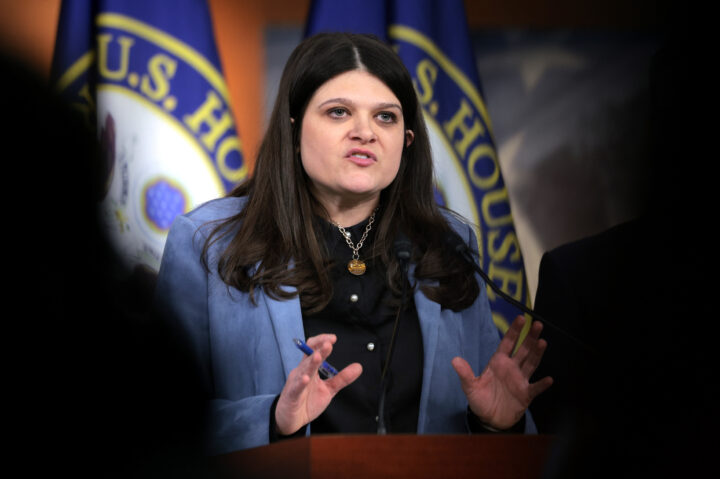
Kayla Bartkowski/Getty Images
U.S. Rep. Haley Stevens (D-MI), joined by fellow House Democrats, speaks at a press conference on overreach by President Donald Trump, Elon Musk and the Department of Government Efficiency (DODGE) at the U.S. Capitol on February 06, 2025 in Washington, DC.
Good Monday morning.
In today’s Daily Kickoff we look at the split in the Democratic Party over Senate resolutions to block military sales to Israel and talk to Maryland Jewish community leaders who are disappointed with Sen. Angela Alsobrooks’ flip-flop on the issue. We talk to Democratic Rep. Greg Landsman about his call for Qatar to detain Hamas leaders and report on House Speaker Mike Johnson’s current visit to Israel. We also interview former Israeli diplomat Emmanuel Nahshon about the mounting isolation of Israeli academia. Also in today’s Daily Kickoff: Aaron Parnas, Loretta Rothschild, and Janet Huckabee and Sarah Huckabee Sanders.
What We’re Watching
- House Speaker Mike Johnson (R-LA) and a group of House Republicans are visiting Israel this week, in Johnson’s first international trip and first visit to Israel since becoming speaker. More below.
- Arkansas Gov. Sarah Huckabee Sanders is on a trade mission to Israel and the United Arab Emirates this week, currently on the first leg of the mission, “to meet with government officials and business leaders and deepen Arkansas’ economic ties.”
- Former college football coach Derek Dooley jumped into the Georgia Senate race against Sen. Jon Ossoff (D-GA) today, a development that shakes up the race. Dooley, who was recruited into the race by Georgia Gov. Brian Kemp, will be facing Reps. Buddy Carter (R-GA) and Mike Collins (R-GA) in the GOP primary. We’re keeping a close eye on whether President Donald Trump chooses a favorite.
What You Should Know
A QUICK WORD WITH JI’S JOSH KRAUSHAAR
After a majority of Senate Democrats voted last week to cut off some military sales to Israel, the issue has emerged as a dividing line in some key Senate primaries. The votes have become a pivotal test in determining which members have maintained their support for Israel, and those who are responding to the political pressure from the party’s progressive activist base.
All told, most of the leading recruits — from former North Carolina Gov. Roy Cooper to Rep. Raja Krishnamoorthi (D-IL) to Rep. Haley Stevens (D-MI) — have said they would have voted with the pro-Israel wing of the party against the two resolutions sponsored by Sen. Bernie Sanders (I-VT). But there are some notable divisions that are emerging in key races.
Here’s a quick overview of the Democratic candidates’ views in the key open seat races:
MI-SEN: Stevens, a pro-Israel stalwart, said she would have voted against the Sanders resolutions on cutting off military aid, as the state’s delegation was divided on the vote. Sen. Gary Peters (D-MI) voted against it, but newly elected Sen. Elissa Slotkin (D-MI), who missed the vote to appear on Stephen Colbert’s talk show, said she would have supported the anti-Israel measure.
State Sen. Mallory McMorrow, who earlier this year had been meeting with Jewish groups to reassure them of her pro-Israel bona fides, publicly broke with her past positions. “The United States has to stop providing Netanyahu with offensive weapons that do nothing but continue to extend this war,” she said. At a campaign event last Wednesday, she slammed the Israeli prime minister further: “We cannot let this man tell us that what we are seeing with our own eyes is not what is actually happening.”
MARYLAND MOOD
Sen. Alsobrooks flip-flops from pledge to maintain aid to Israel during Senate campaign
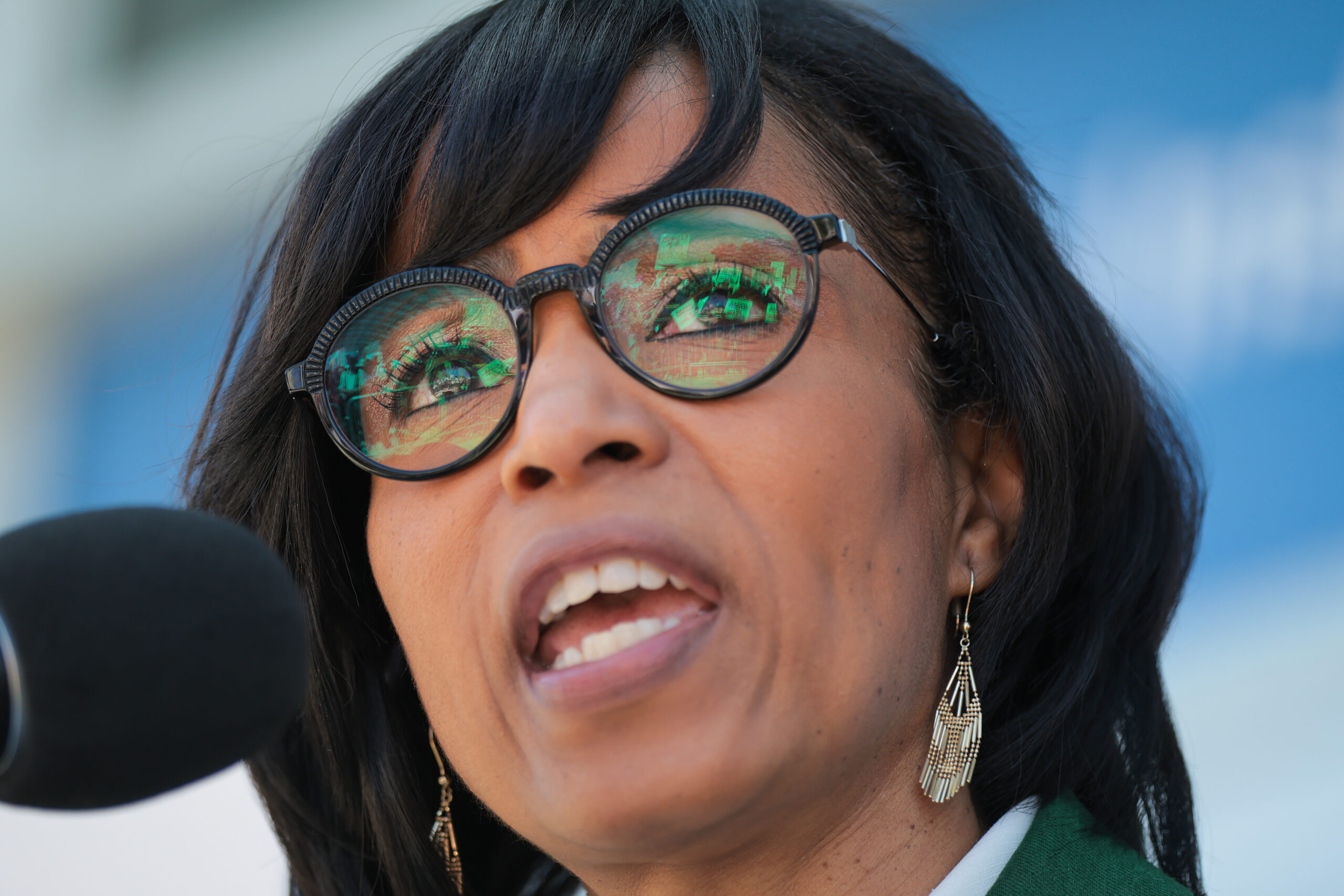
Maryland Jewish leaders are expressing disappointment over Sen. Angela Alsobrooks’ (D-MD) decision to support both of Sen. Bernie Sanders’ (I-VT) resolutions blocking U.S. arms sales to Israel despite vowing to oppose such efforts when she campaigned for the Senate last year. In a statement on her decision, the Maryland senator said she was joining the “voices of so many who feel the moral imperative to demand change. To witness the inhumanity of starving children and say nothing is not just a dereliction of duty but of conscience,” Jewish Insider’s Emily Jacobs reports.
Jewish community reaction: Ron Halber, the CEO of the Jewish Community Relations Council of Greater Washington, said that the JCRC planned to request a meeting with Alsobrooks to “try and figure out what her thoughts were on this matter and express our concern” about her votes on Wednesday. Halber predicted that Alsobrooks was “probably swayed by the humanitarian disaster that has unfolded” in Gaza, pointing out her comments during the campaign and her votes against the April resolutions. He also noted that Alsobrooks was “speaking publicly at JCRC forums and speaking as recently as our legislative breakfast in December of last year” about her support for continued aid to Israel.
QATAR CALL
Landsman calls on Qatar to detain Hamas leaders until hostages are freed
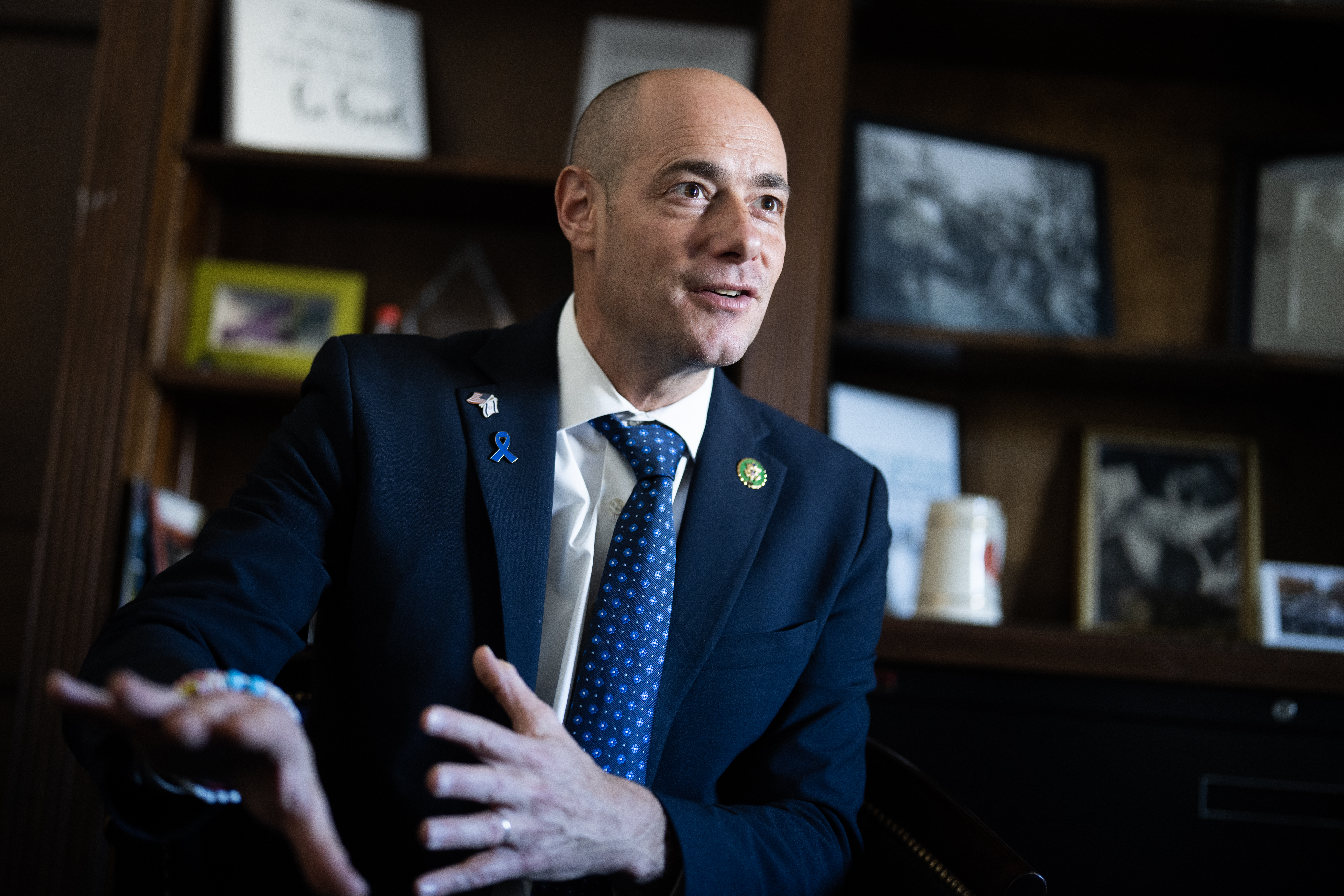
Rep. Greg Landsman (D-OH) called on Qatar last week to step up more forcefully to pressure Hamas and bring about a hostage-release and ceasefire deal in Gaza, including taking into custody the Hamas leaders who have long enjoyed safe haven in Doha, in a lengthy X thread about the conflict in Gaza. “It’s time to call the question on everybody, including the Qataris. There are legitimate questions about whether or not they should be doing more, they could be doing more,” Landsman said in an interview with Jewish Insider’s Marc Rod. “[Hamas] just refuses to engage anymore.”
Leaving no stone unturned: In light of that situation, Landsman argued that every potential lever to change Hamas’ calculus must be explored and pursued. He said that Qatar, as “the entity that has the most influence” over Hamas at this point, “has to feel way more pressure from the international community to do everything in their power” to get to a deal. The status quo of Hamas leaders living lavish lives in Qatar “should absolutely be questioned,” Landsman said. He said he’s heard from Israeli officials and others involved in the hostage talks that the Qataris are “not seen as a trusted partner in this effort to end the war.”
SPEAKER’S SOJOURN
House Speaker Mike Johnson arrives in Israel

House Speaker Mike Johnson (R-LA) and a group of House Republicans arrived in Israel on Sunday, in Johnson’s first international trip and first visit to Israel since becoming speaker. Johnson was set to visit Israel in June to address the Knesset, but postponed his visit after the war between Israel and Iran began. He will not be addressing the Knesset on this visit, a source familiar with his plans told Jewish Insider’s Marc Rod.
Words at the Wall: Johnson and those in his delegation — Reps. Michael McCaul (R-TX), Nathaniel Moran (R-TX), Claudia Tenney (R-NY) and Michael Cloud (R-TX) — have prayed at the Western Wall and met with Israeli Defense Minister Israel Katz and Foreign Minister Gideon Sa’ar. “We’re so grateful to be in Israel, particularly on this day, recognizing the destruction of the two Temples … it is such a moving time for us to be here at the Wailing Wall. We’ve offered our prayers, we’ve put our notes into the wall,” Johnson said in brief video remarks from the Kotel, which he visited on Tisha B’Av. “We’re so moved by the hospitality of the people and the great love of Israel.”
DEM DIVIDE
Illinois Senate field splits over resolutions to block Israel aid
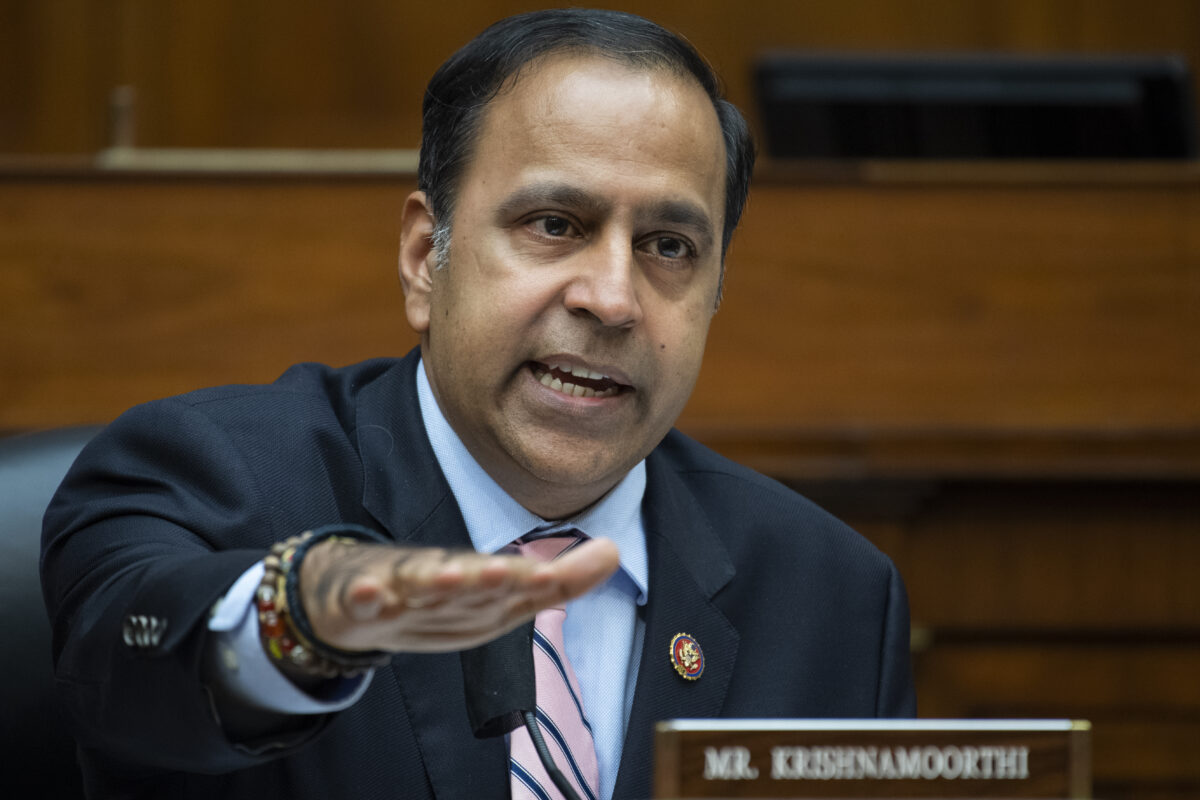
A divide is emerging in the Democratic Senate primary in Illinois over resolutions the Senate voted on earlier this week to block certain arms sales to Israel,Jewish Insider’s Marc Rod reports.
Split paths: Lt. Gov. Juliana Stratton’s campaign and Rep. Raja Krishnamoorthi told JI on Friday that they wouldn’t have supported the resolutions led by Sen. Bernie Sanders (I-VT), even as they condemned the humanitarian crisis in Gaza. But Rep. Robin Kelly (D-IL) announced earlier in the day that she would have voted for the resolutions if she’d been in the Senate. The split could help shape the potentially crucial Jewish community vote in the upcoming Senate primary.
FLIP-FLOP
Klobuchar explains her flip against Israel in supporting cutoff to military aid

Sen. Amy Klobuchar (D-MN) said that she voted, for the first time, for resolutions blocking U.S. arms sales to Israel last week to send a message to the Israeli government of disapproval for the humanitarian situation in Gaza, even as she acknowledged that the vote might not make much of an impact, Jewish Insider’s Marc Rod reports.
Explaining: “I just think it’s really important for people to speak out when they can, even if it’s on a vote that isn’t probably going to make all the difference right now. And it doesn’t mean I’m going to be hard-stop against aid for Israel in the future,” Klobuchar told Punchbowl News. “At some point, you’ve got to seek change. And I think this is one way you can do it,” she continued. “I have supported Israel’s right to defend itself, I always will. But they aren’t changing.”
Tar Heel take: North Carolina Democratic Senate candidate Roy Cooper, the state’s former governor, meanwhile, rejected efforts to withhold U.S. aid to Israel. A Cooper spokesperson told JI’s Marc Rod: “The Governor believes it’s urgent for the United States to use other means of pressure on the Israeli government to step up now and find ways to get food to people who desperately need it and return the hostages. He would consider the specific text of any bills that came before the Senate, but generally does not believe we should withhold aid from a critical ally like Israel when they have to defend themselves against countries like Iran.”
Q&A
‘It’s the slow strangling of the Israeli academic world,’ former envoy warns amid EU sanctions debate

As several European countries moved to recognize a Palestinian state last week, the EU debated suspending Israel from Horizon Europe — its $109.2 billion science and innovation program — citing the humanitarian crisis in Gaza. The proposed partial suspension, which could cost Israeli startups over $11.4 million, failed to pass after Germany and Italy reportedly blocked the move, though talks will continue. Former Israeli diplomat Emmanuel Nahshon, now the coordinator for combating academic boycotts on behalf of the Israeli Association of Universities, warned in an interview with Jewish Insider’s Lahav Harkov that Israeli academia is facing mounting isolation and long-term damage in the wake of the Gaza war.
Snowball effect: “It’s a slippery slope. The more it happens, the more it is bound to happen. Universities copy one another. On top of that, we have the silent, covert boycott. It’s like Voldemort [from ‘Harry Potter’], no one is saying its name, but it is there and we feel it all the bloody time. Israeli lecturers are not invited to international events anymore; articles are rejected; Israelis are not invited to take part in science and research consortia, etc. If it continues for a year or two, we may face dire consequences,” Nahshon said. “It’s the slow strangling of the Israeli academic world. We cannot function without contact with the outside world. Israel is too small a country to be able to have its own, internal academic world. We need contact with …the Ivy League and Western European universities.”
Worthy Reads
Losing the French: The New York Times’ David French, a pro-Israel, anti-Trump conservative, calls on Israel’s allies “to stage an intervention” in order to protect the U.S.-Israel alliance. “The Israeli government has gone too far. It has engineered a staggering humanitarian crisis, and that crisis is both a moral atrocity and a long-term threat to Israel itself. … Hamas’s war crimes — including its murders, its hostage taking and its concealment among civilians and civilian buildings — do not relieve Israel of its own moral and legal obligations. … No nation — not even the United States — can thrive without allies, and Israel (despite its nuclear weapons) is far more vulnerable and dependent on international friendship than the United States or Britain or France. If Israel creates a lasting rift with its European allies and shatters the longstanding bipartisan American consensus on aiding Israel, then the long-term consequences could be grave. … Israel’s friends must speak with one voice: End the famine in Gaza. Drop any talk of annexation. Protect the civilian population. Defeating Hamas does not require starving a single child.” [NYTimes]
Gaza, 20 Years After: Israeli journalist Amit Segal argues in Israel Hayom that opponents of Israel’s withdrawal from Gaza 2005 were right. “It’s trendy these days to pin messianic thinking on the right. Fair enough. But the truth is that two messianic movements crashed head-on in Gaza: the religious-nationalist right that wanted to annex the Gaza Strip and pretended two million Palestinians didn’t exist because ‘it’s our land,’ and the less talked-about secular-liberal left that believed pulling out would create a Gaza Riviera with high-tech and Singapore-style beach clubs. … The whole point was to pay a steep price at home to get better security, not end up with the same nightmare. Unless better security was never really the goal, because no sane group with hundreds of years of military experience would think running away from terrorists would make them put down their guns. Maybe the real goal was always to crush internal opposition in Israeli society. You know: the operation failed, but at least the patient died.” [IsraelHayom]
The Luigi Effect: Jesse Arm, vice president of external affairs at the Manhattan Institute, writes in City Journal about the rise of “Luigism,” evidenced by those celebrating the murder of Blackstone executive and Jewish philanthropist Wesley LePatner on social media. “This grotesque display is part of a broader trend of class rage and Internet nihilism that justifies violence by turning innocent victims into scapegoats for moral fury. The permission structure for such ghoulishness is now fully operational. What were once the disturbing mutterings of the fringe are now public, performative, and proudly cruel. A political movement is testing its power. Call it Luigism. Invoking Luigi Mangione — the Ivy League-educated radical who allegedly assassinated UnitedHealthcare CEO Brian Thompson last December — Luigism is the idea that violence is a legitimate response to the perceived injustices of capitalism. If the victim represents wealth, whiteness, pro-Israel Judaism, or institutional power, the killing can be framed as justified, or even glamorous.” [CityJournal]
TikTok Trend: The Atlantic’s Amogh Dimri explores the rise of TikTok-native news influencers through the lens of Aaron Parnas — a 26-year-old lawyer-turned-political commentator whose rapid-fire video updates have turned him into one of Gen Z’s most influential news sources. “Parnas, who is 26, is a lawyer by trade. He told me that he monitors every court case he deems significant with a legal tracker. He was immersed in politics at an early age. (His father, Lev Parnas, gained brief notoriety as an associate of Rudy Giuliani during Trump’s first term. ‘I love my dad,’ Aaron Parnas has said. ‘And I’m not my dad.’) C-SPAN is on ‘all day every day.’ And he’s enabled X and Truth Social notifications for posts from every member of Congress and major world leader. When he decides that his phone’s alerts are newsworthy, he hits the record button. His rapid-reaction formula for news has made him a one-man media giant: He currently has 4.2 million followers on TikTok. He told me that his videos on the platform have reached more than 100 million American users in the past six months. His Substack newsletter also has the most subscriptions of any in the ‘news’ category, and he recently interviewed Senator Cory Booker, French Foreign Minister Jean-Noël Barrot, and this magazine’s editor in chief.” [Atlantic]
Word on the Street
President Donald Trump declined to characterize Israel’s war against Hamas in Gaza as a genocide yesterday, responding to a reporter saying, “I don’t think it’s that. They’re in a war.” Talking to reporters boarding Air Force One at Lehigh Valley International Airport, Trump said, “We want the people fed. We’re the only country that’s really doing that. We’re putting up money to get the people fed. And [Middle East envoy] Steve Witkoff is doing a great job.” …
Witkoff told hostage families in Tel Aviv on Saturday that the U.S. is now aiming to reach a comprehensive ceasefire and hostage-release deal with Hamas, including ending the war and returning all the remaining hostages, rather than the incremental deals previously attempted…
Hamas released a video of severely emaciated hostage Evyatar David digging his own grave in an underground tunnel in Gaza over the weekend, shortly after the Palestinian Islamic Jihad released a video of hostage Rom Braslavski, similarly emaciated and weak…
Several Democratic members of Congress, speaking with CNN, criticized Israeli Prime Minister Benjamin Netanyahu for declining support of Israel in the party. Sen. Brian Schatz (D-HI) said, “I think there’s a recognition that Netanyahu is making Israel and Israelis and Jews unsafe all over the world.” Rep. Mikie Sherrill (D-NJ) told the outlet, “Netanyahu has to be held accountable”…
Rep. Haley Stevens (D-MI) sent a second letter to Department of Homeland Security Secretary Kristi Noem on Friday asking why 22-year-old Thomas Fugate, a recent college graduate, was tapped to lead the Center for Prevention Programs and Partnerships, a top anti-terrorism role. Stevens chastized Noem for dodging the question in her response to Stevens’ first letter on the issue in July…
The Wall Street Journal spotlights the rise of Omar Fateh, the “Mamdani of Minneapolis,” in his mayoral bid, as a reflection of the widening rift in the Democratic Party…
Semafor obtained internal messages from The New York Times illuminating the outlet’s internal debate over the cover photo for a story on malnutrition in Gaza, which ultimately led to the Times clarifying that the child pictured had previous health conditions…
The Free Press also highlighted the Times’ mistake, in an editorial titled, “Mistakes at ‘The New York Times’ Only Go in One Direction,” highlighting the reach of the mistake in comparison with the quiet correction …
Fourteen Democratic senators and House members threatened Harvard with a potential congressional investigation if it agrees to a reported settlement with the Trump administration and cautioned it against “any settlement that undermines its independence or validates the misuse of governmental power for partisan ends.”…
Politico interviews right-wing provocateur Laura Loomer about her role in the Trump administration’s staffing decisions, including continued firings and pulled nominations based on questions of the individual’s loyalty to the president …
The New York Times details four Iranian Americans being detained by Iran, according to human rights groups and lawyers, including a “70-year-old Jewish father and grandfather from New York who has a jewelry business” who is “being questioned about a trip to Israel”…
Sens. Ted Budd (R-NC) and Mark Kelly (D-AZ) introduced the SEIZE Act, to allow the U.S. to quickly distribute to partners any weapons seized in transit from Iran to its terrorist proxies…
The New York Times spotlights the outlet Campus Reformand its editor-in-chief, Zachary Marschall, whose longtime coverage of leftist bias on college campuses has resulted in several schools coming under investigation from the federal government…
Brazil announced its withdrawal from the International Holocaust Remembrance Alliance, where it held observer status, last week, in a move that Dani Dayan, president of the IHRA, called “a serious crossing of a red line.” “This is the first time a Western country has subordinated Holocaust remembrance to political considerations,” Dayan said…
Over 600 former Israeli security officials — including former Mossad chief Tamir Pardo and former Shin Bet chief Ami Ayalon — who make up the Commanders for Israel’s Security group sent a letter to Trump on Sunday asking him to press Netanyahu to end the war in Gaza…
The American Jewish Committee donated $25,000 to help repair the Holy Family Church, the only Catholic church in Gaza, which was damaged by errant Israeli munitions last month, eJewishPhilanthropy’s Nira Dayanimreports…
Israel’s Ministry of Foreign Affairs announced Friday that its embassy and consulate in the United Arab Emirates remain open and operational, including “ensuring the protection of Israeli diplomats,” after the Israeli National Security Council warned its citizens in the country of heightened terror threats last week and reportedly evacuated some of its diplomats…
The New York Times profiles U.S. Ambassador to Israel Mike Huckabee, including his evangelical support for the Jewish state and his long history of visiting the country…
Azerbaijan will export 1.2 billion cubic meters of natural gas per year through Turkey to Syria to help Damascus rebuild and stabilize, Vice President Elshad Nasirov of SOCAR, the Azeri state energy company, told Reutersat a ceremony to launch the project on Saturday…
Arkansas Attorney General Tim Griffin told the Forward last week that the fringe group “Return to the Land,” which bars Jews and non-white individuals from living in their community, does not violate state or federal anti-discrimination law…
Ami Eden, CEO of JTA’s parent company 70 Faces Media, identifies himself as the former student-body president at Akiba Hebrew Academy who once bested Josh Shapiro in what Shapiro has described, most recently in an interview with Stephen Colbert, as the only campaign defeat of his life…
Ivanka Trump gave a boost to Loretta Rothschild’s new debut novel, Finding Grace, with a glowing review, posted to her Instagram, of the book that was released last month…
Pic of the Day

U.S. Ambassador to Israel Mike Huckabee’s wife, Janet, and daughter, Sarah Huckabee Sanders, the governor of Arkansas, prayed at the Western Wall in Jerusalem on Tisha B’Av on Sunday.
Birthdays
Chief political correspondent and host of Fox News’ “Special Report,” Bret Baier turns 55…
Professor emerita of American history at Yeshiva University and Stern College, she is an expert on the history of McCarthyism, Dr. Ellen Wolf Schrecker turns 87… Talmudic scholar and a leader of New York’s Sephardic Jewish community, Rabbi Eliyahu Ben Haim turns 85… President at Salco Mechanical, Michael Salzberg… Rabbi of Centro Israelita de Bogotá and chief rabbi of Colombia, Alfredo Goldschmidt turns 80… Immediate past board chair of the Jewish Funders Network, Marcia Riklis… Frederic Lewis Bloch… Former Ashkenazi chief rabbi of Israel, Rabbi Yona Metzger turns 72… Retired professor in Memphis, Sheldon Dan… Longtime member of the Knesset for Likud including multiple ministerial positions, Silvan Shalom turns 67… Executive producer of “Live with Kelly and Mark,” Michael Gelman turns 64…44th president of the United States, Barack Obama turns 64… Mayor of Chicago from 2019 until 2023, Lori Lightfoot turns 63… Attorney general of Minnesota, Keith Ellison turns 62… Administrative manager at Edelman, Helen Lapkovsky… Global editorial director for PwC and editor-in-chief of PwC’s management magazine strategy+business, Daniel Gross turns 58… Editor-in-chief of “Cuepoint” at Medium, he is known as Shecky Green, Jonathan Miles Shecter turns 57… Congressman (D-NY-8), he is the minority leader of the House of Representatives, Hakeem Jeffries turns 55… Emmy Award-winning broadcast meteorologist at WJLA-TV in Washington, Steven Rudin… Washington director of Bend the Arc Jewish Action, Rabbi Jason Kimelman-Block… Director-general of the United Nations Educational, Scientific and Cultural Organization (UNESCO), Audrey Azoulay turns 53… Senior editor at Politico, he writes Politico‘s “Capital City” column, Michael Schaffer… Chair of the Arizona Democratic Party from 2011 through 2012, he is a former White House speechwriter, Andrei Cherny turns 50… Head of PR for Unit 42 at Palo Alto Networks, Caren Beth Auchman… CEO of Something Major, a leadership coaching and advisory firm, Randi Braun… Director of corporate growth strategy in the geostrategic business group at EY-Parthenon, Ben-Ari Boukai… CRO and co-founder at Riverside.fm, Jonathan Keyson… Childhood student at the Donna Klein Jewish Academy in Boca Raton, Fla., he is a placekicker for the NFL’s San Francisco 49ers, Greg Joseph turns 31… TikToker, comedian and influencer, Sabrina Plon Brier turns 31… Natalie Roberts… Evelyn Murphy…
BELATED BIRTHDAY: Representative of the World Zionist Organization Executive in North America, Michal Slawny Cababia (was Thursday)…
The former NC governor: He ‘generally does not believe we should withhold aid from a critical ally like Israel when they have to defend themselves against countries like Iran’

Allison Joyce/Getty Images
Former North Carolina Governor Roy Cooper
North Carolina Democratic Senate candidate Roy Cooper, the state’s former governor, rejected efforts to withhold U.S. aid to Israel, days after the Senate voted on legislation to block certain U.S. arms sales to Israel, his campaign told Jewish Insider.
“The Governor believes it’s urgent for the United States to use other means of pressure on the Israeli government to step up now and find ways to get food to people who desperately need it and return the hostages,” a Cooper campaign aide said. “He would consider the specific text of any bills that came before the Senate, but generally does not believe we should withhold aid from a critical ally like Israel when they have to defend themselves against countries like Iran.”
Cooper, a moderate Democrat, has taken other steps in recent days to distance himself from anti-Israel elements of the Democratic Party, including rejecting a series of anti-Israel resolutions passed by state Democratic Party leadership. But it wasn’t until he entered the Senate race that he weighed in against the anti-Israel turn of the North Carolina Democratic party.
The Senate’s Israel votes are proving to be a sensitive issue among Democratic Senate candidates across the country — and is emerging as a dividing line between the party’s moderates and progressives.
Twenty-seven Senate Democrats voted for one Bernie Sanders-led measure, up from the 15 that voted for a similar proposal in April

Chip Somodevilla/Getty Images
Sen. Bernie Sanders (I-VT) speaks in the Eisenhower Executive Office Building on April 03, 2024 in Washington.
Twenty-seven Senate Democrats, a majority of the caucus, voted Wednesday night for at least one of two resolutions to block shipments of U.S. aid to Israel.
The votes are a signal of the depth of Democratic outrage with the humanitarian situation in Gaza and the breadth of the anti-Israel shift within the party. Previous efforts, also led by Sen. Bernie Sanders (I-VT), to advance such resolutions, picked up 19 and 15 votes, in November 2024 and April 2025, respectively.
Twenty-seven Democrats voted for the first of the two resolutions, which addressed automatic weapons that supporters said were destined for police units controlled by Israeli National Security Minister Itamar Ben-Gvir, a far-right official in Israeli Prime Minister Benjamin Netanyahu’s government.
They included Sanders and Sens. Tim Kaine (D-VA), Jeff Merkley (D-OR), Jack Reed (D-RI), Chris Van Hollen (D-MD), Peter Welch (D-VT), Dick Durbin (D-IL), Ed Markey (D-MA), Angus King (I-ME), Raphael Warnock (D-GA), Jeanne Shaheen (D-NH), Patty Murray (D-WA), Brian Schatz (D-HI), Elizabeth Warren (D-MA), Lisa Blunt Rochester (D-DE), Tammy Baldwin (D-WI), Amy Klobuchar (D-MN), Martin Heinrich (D-NM), Andy Kim (D-NJ), Chris Murphy (D-CT), Tina Smith (D-MN), Mazie Hirono (D-HI), Tammy Duckworth (D-IL), Angela Alsobrooks (D-MD), Sheldon Whitehouse (D-RI), Jon Ossoff (D-GA) and Ben Ray Lujan (D-NM).
Reed — the ranking member of the Senate Armed Services Committee, Murray — the ranking member of the Appropriations Committee, Blunt Rochester, Baldwin, Klobuchar, Duckworth, Alsobrooks and Whitehouse have not supported past efforts to cut off aid to Israel.
Ossoff, Warnock, Shaheen and King voted for some or all of the first round of resolutions Sanders introduced to block arms for Israel in November, but opposed a second round in April.
Twenty-four Democrats voted for the second resolution on Wednesday, regarding bombs and bomb guidance kits. Reed, Whitehouse and Ossoff flipped on the second vote, opposing freezing that tranche of aid.
Sens. Ruben Gallego (D-AZ), Mark Kelly (D-AZ) and Elissa Slotkin (D-MI) — who on Tuesday said she would consider cutting off offensive weapons for Israel — were not present for either vote. Both Kelly and Gallego were present for votes earlier in the day on Wednesday. Slotkin spent part of the day taping an interview on Stephen Colbert’s late night television show.
A Kelly spokesperson said he missed the votes due to a “previously planned visit to Cape Canaveral to support his friend and former Astronaut classmate Mike Fincke as he launches into space. Senator Kelly has been pushing the Israeli government and the Trump administration to get desperately needed food into Gaza to prevent the starvation of innocent Palestinians. He also has been consistent about supporting Israel in their self defense.”
Kelly’s office said that he would have voted against both resolutions.
A source familiar with the situation said Gallego, who is a new father, was absent because of family duties, and that the last-minute notice for the votes made scheduling difficult. The source said Gallego would have voted against the resolutions.
Ossoff said in a statement that he voted for the first resolution because he “do[es] not believe the United States Senate should acquiesce without objection to the extreme mass deprivation of civilians in Gaza, including the intolerable starvation of children, that have resulted from the policies of Prime Minister Benjamin Netanyahu’s government. Furthermore, these weapons would likely have been allocated to police forces under the control of Itamar Ben-Gvir.”
He said he voted against the second resolution because, “[d]espite my opposition to Prime Minister Netanyahu’s conduct of the war in Gaza, I believe the United States must continue to support the Israeli people, who face the persistent threat of rocket and missile attack and have been subjected to intense aerial bombardment from Iran, Lebanon, and Yemen. Israel’s capacity to strike those who would launch missiles and rockets at Israeli civilians depends upon the deterrence provided by the Israeli Air Force.”
Up for reelection in 2026, Ossoff faced significant backlash for his previous votes against U.S. aid to Israel, but had been working to repair relations with the Jewish community — though that’s been a rocky process.
Alsobrooks, whose views on Israel policy came under close scrutiny from Maryland’s sizable Jewish community during the 2024 election cycle, characterized this as a history-defining moment.
“There are moments in history where our silence will not only be remembered — it will be judged,” she said. “I joined the voices of so many who feel the moral imperative to demand change. To witness the inhumanity of starving children and say nothing is not just a dereliction of duty but of conscience.”
She said that she remains “committed to the U.S.-Israel relationship and my belief that the people of Israel have a right to defend themselves.”
Duckworth had previously rejected the idea of voting for resolutions to cut off U.S. aid to Israel, arguing that the legislation was “symbolic,” would not produce a resolution to the conflict and would disincentivize Hamas and Hezbollah from agreeing to ceasefires, as well as endanger U.S. forces in the region.
On this vote, Duckworth said in a statement that the Israeli government has ignored pressure from her to take steps to improve the humanitarian situation in Gaza, and that her votes were intended to reflect “deep frustration” with the Israeli government and “send a message” to the Trump administration.
“Israel’s unacceptable choice to restrict humanitarian and food aid from entering Gaza — for months — is now causing innocent civilians, including young children, to starve to death. Ending this famine is not only a moral imperative, it is also in the best interests of both Israel’s and our own country’s long-term national security,” Duckworth said. “While I have always supported Israel’s right to defend itself and protect the Israeli people, these dire circumstances must end.”
Murray said she voted for the resolutions to “send a message” that the Israeli government cannot continue its current strategy.
“This legislative tool is not perfect, but frankly it is time to say enough to the suffering of innocent young children and families,” Murray said. “Israel has a right to defend itself and Hamas is a brutal terrorist organization that should be eliminated, but the level of suffering and loss of life we are seeing in Gaza must come to an end.”
She put the onus on the American and Israeli governments to secure a diplomatic solution to the conflict and accused Netanyahu of dragging the war out to remain in power.
Blunt Rochester said in a statement that “until Israel significantly shifts its military posture to end the dire humanitarian crisis in Gaza and the West Bank, I cannot in good conscience support further military aid and arms sales to Israel.”
She cited a range of concerns including the “seemingly deliberate bombing of civilian infrastructure, the alleged killing of Gazan civilians seeking food aid, the man-made famine among the Palestinian people, the increased presence of illegal settlers and violence in the West Bank, the killing of an American citizen without an impartial investigation, and the continued refusal to responsibly work toward a two-state solution.”
Warnock said that the Israeli government is committing a “moral atrocity that cannot abide the conscience of those who believe in human dignity, freedom and human thriving” and that “the Netanyahu administration must change course.”
Esther Panitch, a Jewish Georgia state legislator, responded by condemning Warnock for failing to mention Hamas’ role in the situation and the United Nations’ failure to distribute aid inside Gaza, adding “it’s becoming increasingly untenable to be a pro-Israel Democrat when the U.S. Senate empowers Hamas.”
Shaheen, the ranking member of the Senate Foreign Relations Committee, said that Israel “has not conducted its military operations in Gaza with the necessary care required by international humanitarian law” or allowed sufficient humanitarian aid into Gaza. “I will also continue to support Israel’s right to defend itself, but I cannot in good conscience vote in support of weapons until the human anguish in Gaza comes to an end,” Shaheen continued.
Senate Minority Leader Chuck Schumer (D-NY) reiterated his opposition to the Sanders efforts, saying in a statement, “I have long held that security assistance to Israel is not about any one government but about our support for the Israeli people. For that reason, I voted no on the resolutions of disapproval on aid to Israel.”
One pro-Israel Democratic strategist lamented the state of discourse about Israel policy within the Democratic Party.
“There is a humanitarian crisis in Gaza, and Netanyahu’s strategy has failed. Yet the alacrity — and even glee — one saw among Democratic officials and commentators to believe and amplify every smear against the Jewish state has been bracing,” the strategist told JI. “When you give no agency to Hamas, Qatar, or the U.N. and reflexively set up Bibi as the devil, there is a word for it — and Jews have seen this movie many times before.”
All Republicans present voted against the resolutions.
Sen. Jim Risch (R-ID), the chairman of the Senate Foreign Relations Committee, called the resolutions “misguided” and said that the conflict and the situation in Gaza is “the fault of Hamas.”
“These are not good people, and it is in the interest of America and the world to see this terrorist group destroyed,” Risch said. “And I couldn’t agree more with my colleagues who want an end to this war. We all want to see an end to this war, an immediate ceasefire, and for the hunger crisis in Gaza to end. But the solution to all of this isn’t to deprive Israel of the weapons it needs. The solution is in the hands of Hamas” if the terror group surrenders and gives up its arms.
Jewish Insider’s congressional correspondent Emily Jacobs contributed reporting.
Torres: ‘The accusations against Israel, whether it’s genocide, apartheid or [deliberate] starvation, are all false. It’s all a propaganda campaign’

Israel on Campus Coalition on X
Rep. Ritchie Torres (D-NY) speaks at the ICC National Leadership Summit in Washington on July 29, 2025.
In comments to a supportive crowd of pro-Israel college students in Washington, Rep. Ritchie Torres (D-NY) said Tuesday that the world needs to be reminded that “Hamas is the central cause of the war in Gaza.”
“We have to remind the world that despite the amnesia, Hamas is the central cause of [Israel’s] war in Gaza. The primary responsibility for a war lies with its cause … Hamas is morally responsible, principally responsible for the war in Gaza,” Torres, a pro-Israel Democratic stalwart in Congress, told about 700 attendees gathered in Washington for the Israel on Campus Coalition’s three-day annual national leadership summit.
Torres went on: “The accusations against Israel, whether it’s genocide, apartheid or [deliberate] starvation, are all false. It’s all a propaganda campaign. But we also have to recognize there is a humanitarian crisis in Gaza … We should be doing everything we can to alleviate the human suffering in Gaza.”
At the same time, Torres offered criticism of the Israeli government’s public diplomacy, saying that it should be “mindful of the words” it speaks.
“Israel is the first country in history to be conducting a war under the scrutiny of 24/7 cable news and social media … so given those realities, you have to be more effective, not only in the actual war but the informational war and be mindful of the words you speak.”
“There are moments when I feel like the Israeli government has the worst PR operation I’ve ever seen,” Torres said. “We are morally better than the other side. We have the moral high ground, we should act like it.”
Asked about the ideological direction of the Democratic Party, which has become increasingly critical of Israel, Torres sidestepped the question. “Look, I reject isolationism whether it’s coming from the far left or the far right. In the end, isolationism is no friend of the United States and it’s no friend of the U.S.-Israel relationship,” Torres said.
But his initial reticence in speaking out against anti-Israel Democratic leaders in his state could become a vulnerability in the red-state contest
Allison Joyce/Getty Images
Former North Carolina Governor Roy Cooper
Former North Carolina Gov. Roy Cooper’s decision to seek the Democratic nomination for North Carolina’s open Senate seat has equipped the party with a moderate standard-bearer with a strong relationship with the state’s Jewish community.
But his handling of anti-Israel activism within the North Carolina Democratic party is expected to become an issue in the Senate race, one that Republicans are already seeking to exploit.
Cooper served two terms as North Carolina governor, winning close contests even in elections when President Donald Trump carried the state. He previously served four terms as the state’s attorney general, where he compiled a tough-on-crime record that allowed him enough bipartisan support to win in a red-leaning state. In his nearly four decades in state politics, Cooper has never lost a race, notching a 16-0 record.
In recent years, Cooper has been forced to address issues of antisemitism among political leaders in the state — one against a Republican rival, and one involving activists within his own political party.
Cooper said he decided to pass up consideration for the role of Vice President Kamala Harris’ running mate because he didn’t want former Lt. Gov. Mark Robinson, a Republican with a history of posting racist and antisemitic content online, to temporarily assume the governor’s responsibilities. (North Carolina’s constitution states that the lieutenant governor, who is elected separately from the governor, assumes power in an acting capacity when the governor leaves the state.)
Cooper told Politico last July that Robinson, who has quoted Adolf Hitler, downplayed the Holocaust in social media posts and referred to himself as a “black Nazi” in an online porn forum, had previously claimed he was the acting governor while Cooper was traveling to Japan on official business.
“I was on a recruiting trip to Japan,” Cooper said, referencing a trip in October of 2023. “He did claim he was acting governor. He did a big proclamation and press conference while I was gone. It was something about support for the state of Israel. It was obviously to make up for all of his antisemitic comments that he’d made, his denial of the Holocaust that he’d made over the years.”
But when confronted with anti-Israel extremism within his own state party, Cooper has been more cautious.
The former governor did not initially weigh in on the resolution passed by the North Carolina Democratic Party last month calling for an arms embargo on Israel, as well as on the other anti-Israel measures adopted by the state party. An advisor to Cooper told CNN at the time that the former governor “generally does not opine on party resolutions.”
Reached for comment on the state party measures by Jewish Insider on Monday, Cooper said in a statement that he opposes the resolutions.
“I don’t agree with the party resolution, and Israel is an important ally. Israel needs to take seriously the job of getting humanitarian aid into Gaza right now. The hostages must be returned and I continue to pray for a swift end to this war and a meaningful peace in the region,” Cooper told JI.
Former Rep. Wiley Nickel (D-NC), who was considering running for the Senate before Cooper announced his candidacy, had condemned the resolution as an “extreme” measure that amounted to a “death sentence for thousands.”
North Carolina Gov. Josh Stein, a Democrat and the state’s first Jewish governor, similarly expressed disapproval with the resolutions to JI on Monday.
“I disagree with the party’s anti-Israel resolutions and believe that our state party should focus on issues we’re facing here in North Carolina like the high cost of living, harmful cuts to people’s health care, and rising levels of antisemitism, Islamophobia, and other forms of hate. What’s happening in Gaza is devastating. Israel must allow in food and humanitarian supplies; Hamas must free the hostages; and they must work to achieve a just and lasting peace,” Stein told JI.
The National Republican Senatorial Committee, Senate Republicans’ campaign arm, have repeatedly hammered Cooper over his initial silence on the matter.
“Cooper’s silence exposes his true character as a radical, pro-Hamas leftist and sends a clear message to Jewish North Carolinians that he’s with the extremists in his party and not them,” Nick Puglia, NRSC’s regional press secretary, said in a statement at the time of the vote.
Cooper offered his thoughts on Israel’s war with Hamas during an interview with the Technician, North Carolina State University’s news site, last March that has since been scrubbed from their website but is available through online archival services, stating that he believes, “This war is devastating. We’re seeing innocent civilians killed.”
“What you have is a terrorist organization, Hamas, that runs Gaza, who invaded Israel and committed atrocities, still holds hundreds of people hostage. At the same time, in Israel’s attempts to defend itself and to rid itself from Hamas, you’re seeing devastating consequences to civilians, women and children,” Cooper told the outlet. “I know that the president is working very hard toward a ceasefire, toward providing aid to Gaza, and that there’s so much hard work going on behind the scenes and now even more publicly, to make sure that the hostages are released, and to make sure that peace is brought to this area of the world.”
“There needs to be a two-state solution here. We need the Arab countries to come together. But I do know that this Biden administration will work hard toward peace. You’re not going to see that from Donald Trump, who talks about how much he admires dictators across the world. That’s not going to be the solution to this,” he continued.
Pointing to the anti-Israel protests taking place on campuses last spring, Cooper added that, “It’s wonderful to live in a democracy when people’s voices can be heard and they’re unafraid to protest. In many countries, that’s not the case.”
In his tenure as governor, Cooper made North Carolina the 37th state in the nation to adopt the International Holocaust Remembrance Alliance’s working definition of antisemitism. Cooper signed the SHALOM Act, which adopted the IHRA language as the state’s official definition of antisemitism, last July after it passed the state House and Senate in bipartisan fashion.
“Defining antisemitism is important to stopping it, and this new law helps do that as antisemitic incidents are on the rise. While we protect the right to free speech, this legislation helps to make our state a more welcoming, inclusive and safe place for everyone,” Cooper said in a statement on the bill.
In the month after the Oct. 7, 2023 attacks on Israel, he co-signed a letter with 10 fellow Democratic governors to congressional leaders urging more funding for the Federal Emergency Management Agency’s Nonprofit Security Grant Program, amid an uptick in “threats in the Jewish and Muslim communities,” according to a press release from his office.
“Many houses of worship in North Carolina rely on the Nonprofit Security Grant Program to protect their congregations, and I encourage Congress to pass more funding for this vital program during this time of increased threats. The right to worship freely and without fear is fundamental to our country, and we are doing everything we can to protect that here in North Carolina,” Cooper said in a statement on the letter.
Stein, the state’s first Jewish governor, told JI that he ‘disagree[s]’ with the resolutions and said the state party ‘should focus on issues we’re facing here’

Gary D. Robertson/AP Photo
North Carolina Democratic Gov. Josh Stein speaks to reporters after a bill-signing ceremony at the Executive Mansion in Raleigh, N.C., on Tuesday, July 8, 2025.
North Carolina Gov. Josh Stein criticized the resolutions passed by the state’s Democratic Party last month targeting Israel, urging party leaders on Monday to instead prioritize efforts that tackle the problems “we’re facing here in North Carolina.”
One of the adopted resolutions calls for an arms embargo on Israel and accuses the Jewish state of apartheid and genocide, while another draws an equivalence between Hamas and Israel, claiming that both have committed “terrorism” and taken “hostages.” Another resolution calls on the U.S. to exert influence to remove certain Israeli officials from power.
Stein, a Democrat and the state’s first Jewish governor, told Jewish Insider in a statement on Monday that he was not in support of the measures, all of which were approved by the North Carolina Democratic Party’s State Executive Committee in late June.
“I disagree with the party’s anti-Israel resolutions and believe that our state party should focus on issues we’re facing here in North Carolina like the high cost of living, harmful cuts to people’s health care, and rising levels of antisemitism, Islamophobia, and other forms of hate. What’s happening in Gaza is devastating. Israel must allow in food and humanitarian supplies; Hamas must free the hostages; and they must work to achieve a just and lasting peace,” Stein told JI.
The resolutions have faced pushback from other Jewish leaders in the Tar Heel State, including former Rep. Kathy Manning (D-NC), who now chairs the board of Democratic Majority for Israel, and former Gov. Roy Cooper, who announced his bid on Monday for retiring Sen. Thom Tillis’ (R-NC) Senate seat.
Cooper similarly called for Israel to ensure enough humanitarian assistance is allowed into Gaza to support Palestinians on the ground in his statement on the measures, which was provided to JI on Monday.
“I don’t agree with the party resolution, and Israel is an important ally. Israel needs to take seriously the job of getting humanitarian aid into Gaza right now. The hostages must be returned and I continue to pray for a swift end to this war and a meaningful peace in the region,” Cooper told JI.
The resolutions have also highlighted tensions between Jewish Democrats in the state and the NCDP, which voted against recognizing the NCDP Jewish Caucus in 2023 and has been beset by intra-party fights over Israel in its state policy platform.
The NCDP Jewish Caucus said in a statement at the time that it had been trying to work “in good faith with party leaders to promote a balanced, inclusive approach to complex international issues” but that “those efforts have been met with resistance throughout the party’s resolutions process.”
The vocal pro-Israel Democrat said he has ‘no real relationship’ with the Israeli government

Al Drago-Pool/Getty Images
Rep. Ritchie Torres, a Democrat from New York, speaks at a House Financial Services Committee hearing on oversight of the Treasury Department and Federal Reserve coronavirus pandemic response on Capitol Hillon September 30, 2021 in Washington, DC.
Rep. Ritchie Torres (D-NY), a vocal Democratic supporter of Israel in Congress, said in an interview with journalist Chuck Todd on Sunday that Israeli Prime Minister Benjamin Netanyahu had done “irreparable damage” to Israel’s relationship with and support among Democrats, tracing the origin of the breach to Netanyahu’s public clashes with President Barack Obama.
“If you’re a Democrat, and if you’re a Democrat of color and if you’re a Black Democrat, you take immense pride in Barack Obama. He represents one of the greatest achievements in politics. We take great pride in his presidency,” Torres said. “To see a foreign leader visibly disrespect him in the manner that Bibi Netanyahu did, I feel did irreparable damage to the relationship with the Democratic Party.”
Asked by Todd how he would advise the Israeli government to repair its relationship with the party, Torres offered no suggestions, repeating that “it feels like the damage may be irreparable.” He added that support for the U.S.-Israel relationship is “eroding, and anyone who denies it is ignoring the numbers.”
(Torres subsequently told Jewish Insider that the “irreparable damage” was referring to “the relationship between Netanyahu and the Democratic Party, not the relationship between Israel and the Democratic Party.”)
Torres also said that he has “no real relationship” with the Israeli government, despite his support for the Jewish state, and said that his conversations are usually general and high-level, and do not yield “useful information.”
“I do not consider myself having a good relationship with the Israeli government,” Torres said.
He said Netanyahu should have been able to disagree with Obama, “but when you inject yourself into partisan politics and put your thumb on the scale in favor of one political party, that sets a dangerous precedent, and I believe that the consequences of geopolitical calculation continue to reverberate to this day.”
Netanyahu and Obama split publicly over the U.S.’s nuclear deal with Iran, and Netanyahu accepted an invitation from then-Speaker of the House John Boehner, a Republican, to address Congress to condemn the deal.
He said that the U.S.-Israel relationship requires bipartisanship and that “if you politicize it, you’re not a friend of the relationship, you’re an enemy.”
Torres said Netanyahu had “made a terrible mistake” and that there is a “legitimate perception that the present Israeli government is just aligned with the Republican Party.”
The Democratic congressman also called for an end to the war in Gaza, the release of hostages, increased humanitarian aid to Palestinians, new Palestinian governance in Gaza and efforts to build on the Abraham Accords, arguing that warnings from Israeli reporters about the deteriorating humanitarian situation in Gaza must be heeded.
He’s one of several pro-Israel Democrats who have grown more critical of the Israeli government’s handling of the humanitarian situation in Gaza in recent days. Additionally, some congressional Republicans have warned that Israel’s conduct is risking American support.
Torres argued that the impact of the war for Israel has been mixed — even as it has severely degraded Iran and its proxies and “emerged from Oct. 7 stronger and … reestablished deterrence,” it has lost significant support in the United States.
The New York congressman has also recently raised eyebrows with his defenses of Democratic New York City mayoral candidate Zohran Mamdani — though Torres has not endorsed Mamdani and said that Mamdani must address “real concerns” in the Jewish community.
Rep. Brad Schneider (D-IL): ‘The world must not turn a blind eye to the fact that children are starving because of this war’
Bill Clark/CQ Roll Call
Rep. Brad Schneider (D-IL)
Amid reports of a mounting hunger crisis in Gaza, some of Israel’s staunchest defenders in the Democratic Party are now calling for Israel to do more to get humanitarian aid to Gazans — a signal that deteriorating conditions in the enclave are shifting public opinion even among those firmly in the pro-Israel camp.
In a series of Friday statements, two major pro-Israel Democratic groups and a top Jewish Democrat in Congress raised concerns about what Rep. Brad Schneider (D-IL) described as “undeniably dire” circumstances in Gaza.
“Israel must take immediate action to ensure sufficient food gets into the territory and to the people in desperate need. The world must not turn a blind eye to the fact that children are starving because of this war,” Schneider said in a statement. “It is Israel’s responsibility, and within its capacity, to address and resolve the situation.”
Israel has said the United Nations is to blame for conditions in the Gaza Strip, alleging that the agency is responsible for failing to distribute much of the assistance. The U.N. has blamed Israel for not giving agency officials the necessary approvals to reach the aid piled up on the Gaza side of Israel’s border crossings.
Israel’s backers in Washington have generally agreed with Israeli leaders that the U.N. and Hamas, which Israel has accused of stealing aid, share the blame for the humanitarian situation in Gaza. U.S. Ambassador to Israel Mike Huckabee told Jewish Insider on Thursday that Hamas is the “biggest reason that people are not getting the food and medicine they need.”
But that patience appears to be growing thin among some Democratic allies.
Democratic Majority for Israel CEO Brian Romick said Friday that even though Hamas has no interest in mitigating human suffering in Gaza, Israel still has a responsibility to help starving children.
“Even as Hamas works to prolong this war and prevent food from getting to people in need, Israel — along with the United States, Egypt, Qatar, and the rest of the international community — must continue to work to get food to innocent children in Gaza,” Romick said in a statement.
Rep. Ritchie Torres (D-NY) called out Rep. Randy Fine (R-FL) for a post in which Fine called for the release of the hostages, writing “until then, starve away.”
“Telling Palestinians in Gaza to ‘starve away’ is an evil thing to say,” Torres wrote on X on Thursday.
Halie Soifer, the CEO of the Jewish Democratic Council of America, expressed “deep concern for Israel’s security, international standing and future as a Jewish and democratic state” while calling “for immediate steps to alleviate the dire and growing humanitarian crisis in Gaza.”
“The situation in Gaza is unacceptable and antithetical to our Jewish values, and it’s incumbent on the Israeli government, the United States and all parties to ensure that Gazans have access to food,” Soifer said in a statement.
The rhetorical shift comes as Israeli reporters acknowledge that the humanitarian situation in Gaza has grown worse in recent weeks.
“Gaza may well be approaching a real hunger crisis,” Israeli journalist Amit Segal wrote in The Free Press on Thursday. “There have been tremendous lies told about Israel’s war. That doesn’t mean the threat of starvation isn’t real. It is.”
Times of Israel editor David Horovitz wrote this week that Israel shoulders some blame for the suffering in Gaza, having refused to distribute the aid itself while at the same time putting untrained Israeli soldiers in charge of controlling access to humanitarian aid sites run by the Gaza Humanitarian Foundation — which has led to the deaths of Palestinians converging on the crowded aid sites.
The Pennsylvania governor told JI: ‘When supporters of yours say things that are blatantly antisemitic, you can't leave room for that to just sit there’

Andrew Harnik/Getty Images
Pennsylvania Gov. Josh Shapiro greets the crowd before the start of a campaign rally at Temple University on August 6, 2024 in Philadelphia, Pennsylvania.
LEWISTOWN, Pa. — Inside a coffee shop in this small town of 8,500 people, hundreds of miles from the bustle of Manhattan, Pennsylvania Gov. Josh Shapiro made his first public comments about Zohran Mamdani, criticizing the New York City Democratic mayoral candidate for not taking a stronger stand against “extremists” who have made “blatantly antisemitic” comments.
“He seemed to run a campaign that excited New Yorkers. He also seemed to run a campaign where he left open far too much space for extremists to either use his words or for him to not condemn the words of extremists that said some blatantly antisemitic things,” Shapiro told Jewish Insider in an interview on Wednesday.
Shapiro’s comments come as Mamdani, who defeated former New York Gov. Andrew Cuomo in the Democratic primary last month, continues to face backlash for declining to condemn the phrase “globalize the intifada.” (Mamdani told business leaders last week that he would “discourage” use of the slogan.)
National Democratic figures have struggled to figure out how to respond to Mamdani’s come-from-behind victory and to assess what the election of a self-proclaimed democratic socialist as the Democratic nominee for mayor of the largest city in the country means for the future of the party.
Neither Senate Minority Leader Chuck Schumer (D-NY) nor House Minority Leader Hakeem Jeffries (D-NY) have endorsed Mamdani, while some progressive leaders — such as Sens. Chris Murphy (D-CT) and Bernie Sanders (I-VT) — have embraced him. Sen. Elissa Slotkin (D-MI), another swing-state Democrat, said on Wednesday that Mamdani’s victory is a “message” that “cost of living and the economy is the driving issue for the average person.”
Democratic National Committee Chair Ken Martin, when asked about Mamdani’s handling of the “globalize the intifada” slogan, said earlier this month that he did not agree with everything Mamdani has said, but that the Democrats are a “big tent” party. Martin later clarified that he found the “intifada” phrase “reckless and dangerous.”
Widely viewed as a possible 2028 presidential candidate, Shapiro has steered clear of weighing in on a number of divisive national issues, preferring instead to focus on Pennsylvania, where he maintains a 61% approval rating. But on Wednesday, he offered a sharp message to Mamdani.
“I’ll say this about Mamdani or any other leader,” Shapiro said. “If you want to lead New York, you want to lead Pennsylvania, you want to lead the United States of America, you’re a leader. I don’t care if you’re a Republican or Democratic leader or a democratic socialist leader. You have to speak and act with moral clarity, and when supporters of yours say things that are blatantly antisemitic, you can’t leave room for that to just sit there. You’ve got to condemn that.”
At a moment of declining support for Israel within the Democratic Party, the Jewish governor told JI that he stands by his pro-Israel bona fides.
“I think one of the things that always strengthened Israel was the fact that the relationship America had with Israel was not even bipartisan, but somewhat nonpartisan. Figuring out ways to build bridges between the parties, between people of different walks of life, to support Israel, I think is important,” he noted. “I think just in general, across the board, I want to see more support for Israel, for a Jewish state. That doesn’t mean that one can’t be critical of Israeli policy.”
There is more that politicians on both sides of the aisle need to do to maintain support for Israel and the U.S.-Israel relationship, Shapiro said, though he added that “the majority of that work is going to happen in Washington.” He declined to specifically address Democrats’ views on Israel or polling that showed a massive drop in Democratic support for Israel since 2023.
“I don’t do foreign policy in Pennsylvania in my role as governor, but I do think it is important to repair that relationship,” Shapiro said. “I am concerned that support for Israel in the United States broadly is down compared to what it was a decade ago.”
It isn’t only American leaders who need to work to strengthen ties between Israel and the U.S., Shapiro said. He placed some of the blame on Israeli Prime Minister Benjamin Netanyahu.
“I think if you care about the future safety and security of Israel, and you’re the leader of Israel as Netanyahu is at present time, you’ve got to find ways to build bridges to people in both parties, to leaders in both parties,” said Shapiro, who has long been a critic of Netanyahu’s leadership. But he asserted that opposition to Netanyahu as prime minister should not be equated with opposition to the existence of a Jewish state.
“There are policies of the Netanyahu government that I don’t support. I’ve been very vocal about that. But there’s a difference between not supporting the policies of whoever’s in charge at a particular time, and the underlying notion of a Jewish state of Israel,” said Shapiro. “I do think it is important to strengthen people’s understanding of Israel and the relationship America should have with Israel and to strengthen that bond.”
Shapiro, one of the most prominent Jewish politicians in the country, has been on the receiving end of antisemitic smears over his support for Israel. In April, the governor’s mansion in Harrisburg was set ablaze in an arson attack just hours after Shapiro and his family had hosted a Passover Seder.
Police said the alleged perpetrator was motivated by anti-Israel animus, but Shapiro has repeatedly declined to characterize the incident as antisemitic in nature, saying that doing so would be “unhelpful” to prosecutors who have not brought hate crime charges.
Shapiro told JI the arson attack left a profound impact on him, both personally and religiously. It brought him closer, he said, to “my faith and my spirituality.”
“It made me believe even more, not just in my God, but in the power of prayer,” said Shapiro. “It’s given me a deeper, spiritual connection of my faith and a deeper connection to people of other faiths.”
In an interview with JI, Varela said that ending the war in Gaza requires Israel’s ousting of Hamas from power
Campaign website
Brian Varela
In a Democratic Party that has lost its grip on the working class — long its base of support and wellspring of its values — Brian Varela is offering a way back home.
Varela, a small business owner and New Jersey political activist vying for the Democratic nomination for New Jersey’s 7th Congressional District, is leaning in to his working-class Colombian roots, suggesting that the Democrats need candidates, like him, who are better connected to the middle-class voters in his district.
“I think that one of the things that the national Democrats really messed up on last year was not understanding what the working-class voter was going through,” said Varela, both of whose immigrant parents worked blue-collar jobs. “And that’s why, while national Democrats were talking about how great the economy was, working-class voters did not understand. I understood that because I’ve lived it. And I think that being able to have that background that is very much aligned with a lot of the people in the district puts you in a unique position, not just to understand them, to represent them.”
With that moderate pitch as a first-generation American who has made good, Varela, 36, has firmly established himself as a serious contender for the Democratic nomination for New Jersey’s 7th Congressional District with his recent announcement of a $700,000 fundraising haul in his first three months in the race.
Varela, who self-funded around half of that total, is one of several Democrats, including former Biden administration official Michael Roth, former Navy helicopter pilot Rebecca Bennett and local Democratic official Greg Vartan, aiming to defeat Rep. Tom Kean Jr. (R-NJ), in a district Kean won by five points in 2024.
Varela has been active for years in various capacities in New Jersey politics: He started as a press intern for Republican Gov. Chris Christie in 2010, later running as a Democratic candidate opposing the party machine against now-Rep. Rob Menendez (D-NJ) and subsequently leading the New Jersey chapter of the Forward Party, the centrist third party founded by former presidential candidate Andrew Yang.
“I consider myself more of a moderate,” Varela told Jewish Insider in an interview. “I do believe that we do need to be tight around budgets, and we can’t just go and haphazardly be cutting programs, but we do need to understand that we cannot allow the deficit to continue increasing. But at the same time, I think that there are some great programs that may seem like social programs, but are actually more programs that are going to help us grow our economy.”
He said he also supports “economic populist” programs like growing the middle class through universal childcare, and investing in research and development, infrastructure and education — particularly in skilled trade programs in high schools and trade schools.
He said his life story and the hardships he faced growing up separate him from the Democratic field — as well as from Kean, whose father was the governor of New Jersey and whose grandfather also served in Congress — and align him with the voters in the district, adding that Democrats need candidates who are better connected to the working class.
Varela said that Israel has been a “strong ally for us, and I think it’s important to make sure that we are there for Israel, that we help Israel with their ability to defend themselves.”
He said he supports continued U.S. aid to Israel, as well as aid to Gaza, and supports a two-state solution in the long term. He said that bringing the conflict in Gaza to a close will require “root[ing] out Hamas entirely,” ending attacks from both sides and bringing “all shareholders to the table” including the United States, the United Nations and surrounding countries.
Varela said he did not have sufficient information to weigh in on the Trump administration’s strikes on Iran, but said that it’s “absolutely critical” that Tehran not obtain a nuclear weapon and that he would support renewed diplomatic efforts floated by the Trump administration.
To address rising antisemitic attacks and other incidents at home, Varela said that the U.S. needs to step up hate crimes enforcement, specifically voicing support for legislation raising the penalties for such activity.
“As a society, as an American culture, any hate crime performed is ultimately destroying our fabric, destroying the future of our country, and we need to be unequivocally and unapologetically at the front lines of combating this kind of hate,” Varela said.
Varela said he entered the race because “I think we need a fighter, and I’ve been a fighter my whole life,” from working full-time to cover his schooling costs to supporting his family when his mother got sick, struggling with financial difficulties, raising his younger brother and building a childcare business during the COVID-19 pandemic.
“But we navigated that and fast forward to now, we built the business with over 100 employees,” Varela said, adding that his company has been recognized locally and nationally for its growth.
He added that he thinks that Congress needs more leaders from different backgrounds and more “humble beginnings,” and said, “I can bring a serious diversity of perspective to representation, and not just the Congress, to our party as a whole.”
He said that Kean is “disconnected … from his voters” and doesn’t understand the impacts of legislation cutting assistance programs like the recently passed budget reconciliation bill.
Varela’s fundraising places him second in the Democratic primary, behind Bennett, who has raised $914,000 total, and ahead of Roth, who has raised $303,000 total and Vartan, who has raised $157,000.
Bennett closed the quarter with $672,000 on hand, Varela with $622,000, Roth with $225,000 and Vartan with $79,000.
Facing antisemitism in the workplace, these staffers have turned to each other in group chats and at the Shabbat dinner table for comfort

Kevin Carter/Getty Images
The U.S. Capitol Building is seen at sunset on May 31, 2025 in Washington, DC.

