




































Anti-Israel Democrats eye 2028 in hopes of reshaping debate
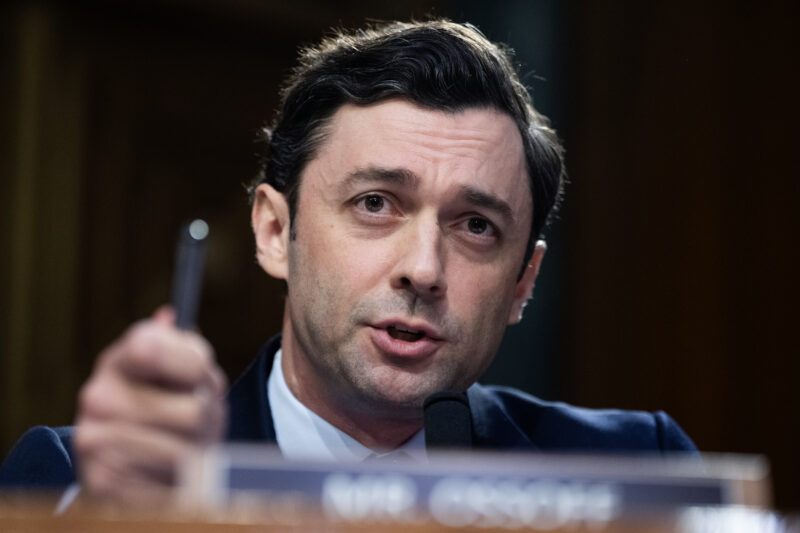
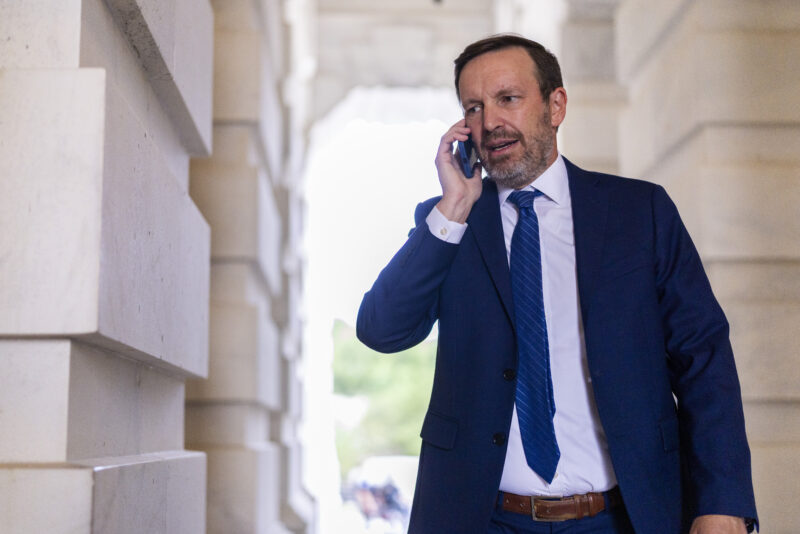
Sens. Chris Van Hollen (D-MD) and Chris Murphy (D-CT), as well as Rep. Ro Khanna (D-CA), have been among the party’s most prominent critics of Israel on Capitol Hill amid a marked decline in Democratic support for the Jewish state
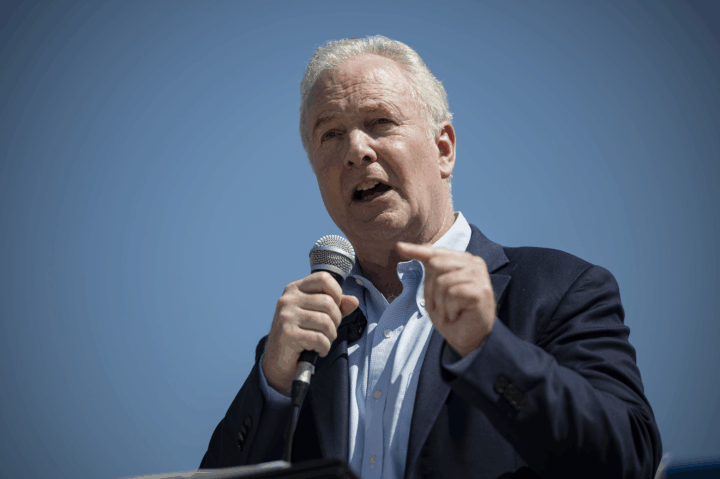
Celal Gunes/Anadolu via Getty Images
Sen. Chris Van Hollen (D-MD) speaks during a rally around the National Mall in Washington, D.C., on September 19, 2025.


 Add JewishInsider on Google
As the 2028 presidential campaign season nears, a handful of prospective candidates from the Democratic Party’s left flank are raising their profiles with efforts to shape a more critical approach to U.S. policy toward Israel.
Sens. Chris Van Hollen (D-MD) and Chris Murphy (D-CT), as well as Rep. Ro Khanna (D-CA), all of whom are seen as potential presidential prospects, have been among the party’s most prominent critics of Israel on Capitol Hill amid a marked decline in Democratic support for the Jewish state.
Recent moves suggest they are each testing voter appetite for a possible White House campaign. Even as they are not considered top-tier contenders in what is likely to be a crowded primary field, history has shown they could be positioning themselves for a Cabinet role — particularly if they prove successful in driving the national conversation on the debate stage and other forums.
Murphy, for instance, released a book last month, Crisis of the Common Good: The Fight for Meaning and Connection in a Broken America, of the sort that typically presages a bid for higher office. The senator has otherwise continued to promote what he terms a “forward-looking foreign policy,” which has included an increasingly antagonistic assessment of Israel and its relationship with the United States.
Van Hollen, meanwhile, published a deeply disputed op-ed in The New York Times last week that argued for wholly jettisoning the Democratic Party’s “unconditional support to Israeli governments” that, he warned, has “increasingly undermined American interests and values.” He also proposed several steps that the next Democratic president should take with respect to Israel — such as recognizing a Palestinian state “subject to clear benchmarks” and ending U.S. “taxpayer-funded support to Israel,” which has also recently been championed by more moderate voices such as former Chicago Mayor Rahm Emanuel.
In a noteworthy aside at the end of his essay, Van Hollen, who, like Murphy, sits on the Senate Foreign Relations Committee, stated that voters “won’t trust any Democratic presidential candidate who does not have a record of moral and strategic clarity on these issues” — a possible advertisement for his own 2028 ambitions.
The senator also insisted that voters will not be open to a presidential “candidate who plans to re-enlist the senior Democratic decision makers who whitewashed the truth during the Biden administration and refuse to acknowledge their complicity.”
Left unmentioned was that Van Hollen’s dictates could reasonably be seen as planting the seeds for a possible post in a future administration, including secretary of state or another top foreign policy role.
Khanna, long seen as harboring presidential ambitions, has for his part moved swiftly to the far left on Israel policy in recent years, while giving his endorsement to a range of Israel critics running for House and Senate this cycle that have helped him to build a progressive imprint throughout the country.
None of the three lawmakers, however media-savvy, possesses the name recognition or national profile of other prominent Democrats who are more frequently cited as presidential prospects, such as Pennsylvania Gov. Josh Shapiro from the moderate wing of the Democratic Party and Rep. Alexandria Ocasio-Cortez (D-NY) on the left.
But if they do choose to mount what would likely be long-shot presidential bids, each has the potential to become a more significant player in national politics, as previous presidential contests have demonstrated.
During the 2020 primary, for instance, Andrew Yang rose to prominence as a Democratic outsider thanks in part to his calls for unconventional policies such as universal basic income. And Pete Buttigieg channeled his short-lived primary surge from small-town mayor in Indiana to leading the Transportation Department under former President Joe Biden.
With intraparty conflict over Israel poised to inflect the 2028 presidential race, it would not be surprising if Khanna, Murphy or Van Hollen seized the national spotlight while championing Middle East policy positions that had once been considered off-limits for a viable campaign.
Kenneth Baer, a former Obama administration official who now leads a communications firm, voiced concerns about the possibility, albeit hypothetical, of a lawmaker like Van Hollen helming the State Department, say, in a future administration.
“The only thing more menacing to a strong U.S.-Israel relationship than Van Hollen as SFRC chair is him as secretary of state,” Baer, a constituent of the senator, told Jewish Insider. “It’s a sad commentary about the state of our party that more than a few presidential hopefuls would seriously consider him for that role.”
More Stories
Daily Overtime
Mamdani resists DSA over Tisch tensions
FOLLOW THE MONEY
Brandeis Center, FDD urge federal court to allow disclosure of campus foreign funding data

booking bias
Irish Jewish leader says Dublin hotel canceled guest rooms for conference on fighting antisemitism
Daily Overtime
Jewish leaders press Miliband on U.K. antisemitism

analysis
Could these two small parties be Israel’s kingmakers?
DAYLIGHT DEBATE
Brett McGurk pushes back on former Biden WH colleagues who called for greater pressure on Israel
Please log in if you already have a subscription, or subscribe to access the latest updates.
 Continue with Google
 Continue with Apple