




































Olga Deutsch to succeed Gerald Steinberg as president of NGO Monitor
Steinberg, who led the group for 25 years, is set to step down in January
Yehoshua Halevi
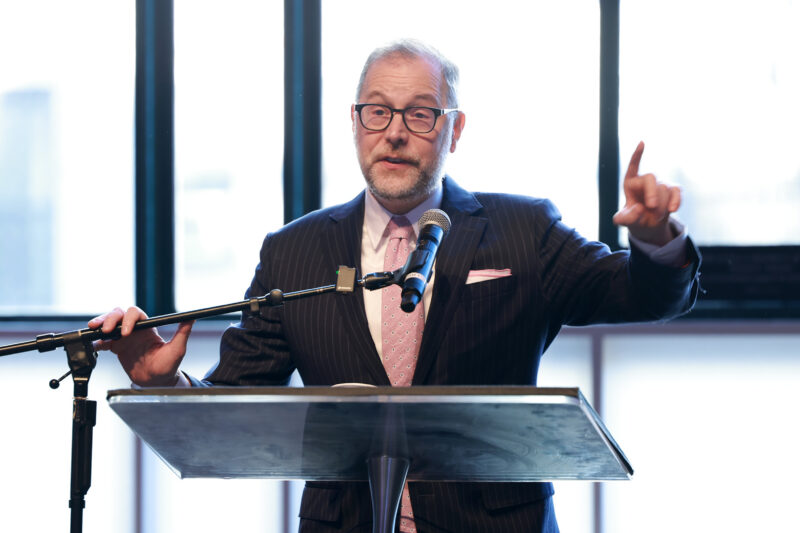
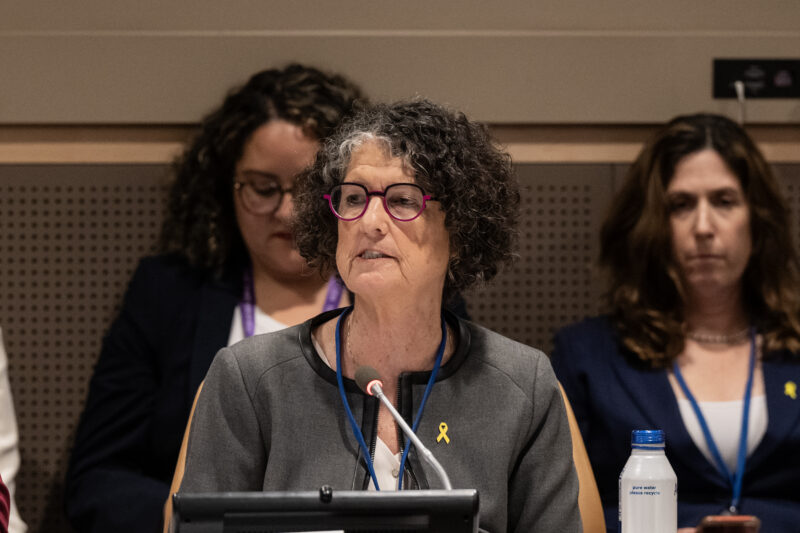
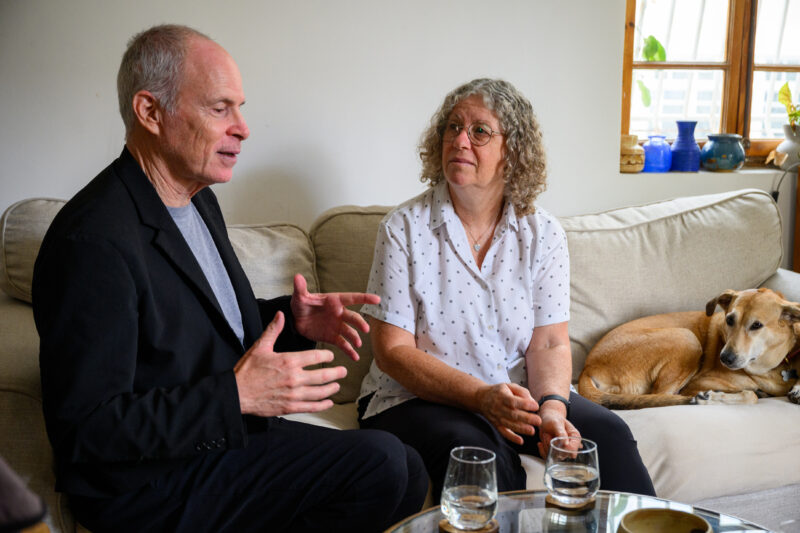
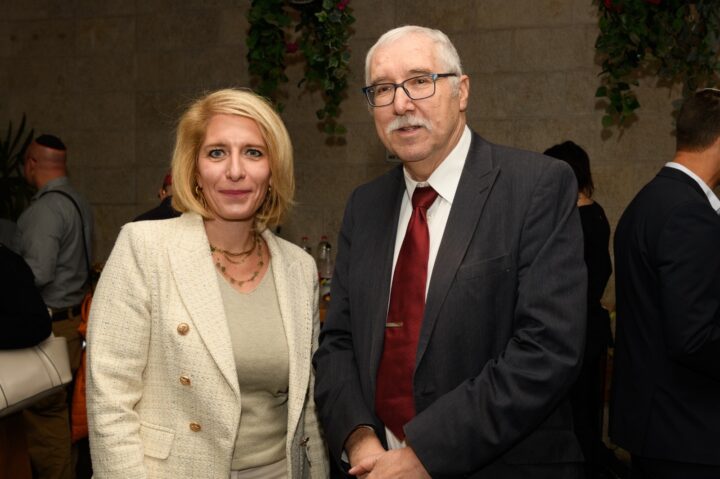
NGO Monitor President Gerald Steinberg and NGO Monitor Vice President Olga Deutsch


 Add JewishInsider on Google
NGO Monitor President Gerald Steinberg is set to step down in January, 25 years after founding the Jerusalem-based watchdog group focused on scrutinizing nonprofit organizations critical of Israel and their funding sources, Jewish Insider has learned.
Olga Deutsch, 47, currently NGO Monitor’s vice president, will succeed Steinberg following a months-long transition process at the organization, which since its inception has been closely associated with its founder.
Steinberg, 74, who resigned from his position as a professor of political science at Bar-Ilan University seven years ago, told JI, “There is a point in one’s life where one has to decide the different priorities. And I’ve done this long enough, and other people can have more energy and can take over.”
Deutsch joined NGO Monitor more than a decade ago, heading the Europe department before becoming VP seven years ago. Deutsch told JI that she hopes to “open the next exciting chapter,” while preserving the “character of the organization that Gerald created, which is serving as pioneers and continuing to flag the new fronts through which the Jewish state and the Jewish people are being attacked or put in danger.”
“No one can step into [Steinberg’s] shoes — I would not dare try that,” Deutsch told JI, describing Steinberg as a trailblazer who “identified 25 years ago what will be — and are — the tactics and the method in which the Jewish state and the Jewish people are being attacked, and that is weaponization and abuse of the language of human rights.”
Steinberg had previously been set on a purely academic career path. But the World Conference against Racism in Durban, South Africa, in 2001, which he said was “hijacked months or even years before as a platform for revitalizing the ‘Zionism as racism’ theme,” changed his trajectory, particularly as he observed the role of NGOs in that drive.
Reflecting on the achievements of the organization he subsequently built, Steinberg said, “I can certainly look back and say that both in the academic realm and in the political realm, NGOs are now recognized as important political actors.”
Steinberg argued that there is greater understanding that NGOs can have malign impacts and can contribute to conflict and antisemitism, despite presenting themselves as human rights organizations.
When he started working on the subject, Steinberg recounted, “People said to me, ‘Why are you bothering with this? They are so unimportant in international politics.’ That’s no longer the case.”
Steinberg said that a challenge for the team going forward “is this tremendous increase in antisemitism as it’s reflected in and fueled by NGOs in a broad sense and how do you prioritize … in the activities of NGO Monitor? I think that that’s a very difficult challenge, because there’s a temptation to be everywhere.”
The group has long drawn criticism from human rights organizations and left-leaning activists who accuse it of seeking to delegitimize NGOs critical of Israeli policy and disproportionately targeting left-wing, pro-Palestinian groups, while aligning itself with Israeli government positions and broader pro-Israel advocacy efforts.
Deutsch rejected those accusations, telling JI, “We have a very, very clear definition of what it is that we research: We focus on NGOs that define themselves as human rights and humanitarian NGOs.”
Deutsch was born in Serbia and lived in Germany and Belgium before moving to Israel. She brought to NGO Monitor expertise in Europe and the European Union, which she highlights as “the single largest aid donor in the world.”
“We try to follow the money, because we understand that understanding the financial streams and who’s behind these organizations can be — and oftentimes is — quite telling,” Deutsch said. She argued that many of the organizations scrutinized by NGO Monitor receive European government funding and that some Palestinian NGOs highlighted in the group’s reports have ties to the Popular Front for the Liberation of Palestine, which is designated as a terrorist organization by the U.S. and the EU.
Last month, the Defense for Children International – Palestine (DCIP) closed its doors, citing “Israel’s targeted criminalization of Palestinian human rights organizations.”
Steinberg said NGO Monitor’s research into alleged ties between DCIP officials and the PFLP led to increased scrutiny of the group and subsequent funding cuts. “We are blamed for that,” he said.
NGO Monitor research has regularly been presented in parliaments in Europe and offers specific policy recommendations in the region, as well as North America and Australia. Deutsch said the group seeks to “inspire that policy conversation with elected officials in how do you prevent aid going directly and indirectly to Hamas again” — a pertinent consideration in the rebuilding of postwar Gaza.
Most recently, the European Parliament in April passed a budgetary resolution citing an NGO Monitor report on internal suspected Hamas documents that “allegedly indicate attempts of Hamas’ infiltration and monitoring through so-called ‘guarantors’ of international NGOs including within Union-funded humanitarian projects in the Gaza Strip.”
The resolution “urges the Commission to investigate all allegations of any type of undue infiltration and influence within Union-funded humanitarian projects and to suspend or recover Union funding where breaches are confirmed.”
“Before Oct. 7, [2023,] it was not always easy to explain why the activities of these non-governmental organizations are dangerous,” Deutsch said. “But after Oct. 7, I think the magnitude and the volume and how publicly it was displayed, of the hatred done in the name of human rights, has made everyone understand why the work that NGO Monitor does is crucial.”
After Steinberg passes the mantle to Deutsch, he will remain involved with the organization’s 20-person team as president emeritus and continue leading its academic activities and research initiatives.
More Stories

FIRING FALLOUT
Hillels of Georgia claims fired Emory rabbi not ‘truthful or transparent’ during hiring process

Regional Responsibility
Amb. Tom Barrack: It’s ‘not America’s job’ to combat Iran-backed threats in the Middle East
SANCTIONS SUPPORT
Lander endorses settlement sanctions bill while on West Bank trip
analysis
Is Israel’s anti-Netanyahu bloc fracturing?

PIKER PROBLEM
Hasan Piker event in Minnesota with Ilhan Omar faces growing backlash

PRAIRIE STATE PRIORITIES
Illinois Democrats spend big for anti-Israel candidate running for state Senate
Please log in if you already have a subscription, or subscribe to access the latest updates.
 Continue with Google
 Continue with Apple