


































Some moderate Dems raise alarms over NYC results, while others dismiss them as localized phenomenon
‘That’s not where America is, that only happens in certain parts — like New York City now, apparently — deep, deep, deep blue,’ Meeks said
Michael M. Santiago/Getty Images
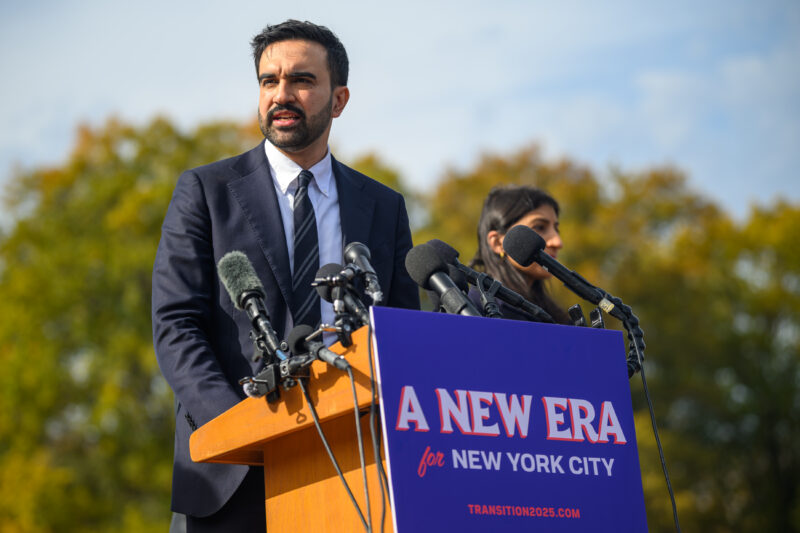
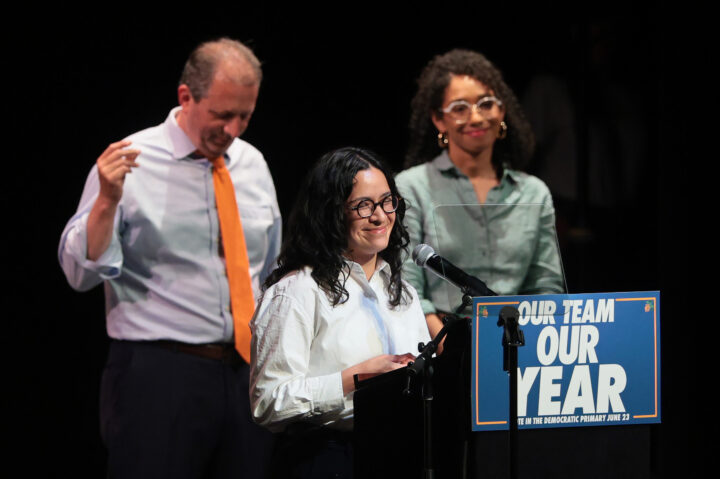
Congressional candidate Claire Valdez speaks during a Get Out the Vote (GOTV) rally at Kings Theater on June 18, 2026 in New York City.


 Add JewishInsider on Google
Some moderate and establishment Democrats are raising alarms over the surge of democratic socialists in New York City congressional primaries on Tuesday — which took down two Democratic incumbents. But others are dismissing the phenomenon as one localized to New York City and not applicable to the party at large.
Rep. Greg Meeks (D-NY), a longtime Democratic leader from Queens, lamented Tuesday’s results, particularly Rep. Adriano Espaillat’s (D-NY) loss.
Meeks told reporters that the party as a whole is not a socialist party, and that socialist ideas are very much out of step with the country overall. He said he doesn’t see the party headed in that direction, potentially outside of certain cities.
“That’s not where America is, that only happens in certain parts — like New York City now, apparently — deep, deep, deep blue,” Meeks said. If the entire party follows the same path, “that means that all the other seats that are not [deep blue], we can never win, which means we will never be in the majority, and we [will] never get anything done.”
Meeks told reporters that he believes in capitalism, not socialism, but argued that free markets and opportunities are fully compatible with assistance to help uplift those in need.
He criticized chants of “you’re next” targeting House Minority Leader Hakeem Jeffries (D-NY) at candidate Claire Valdez’s victory party on Tuesday night as unproductive, and noted that ousting Jeffries would deprive New York of a potential speaker of the House, who would also be the first Black House speaker in history.
Meeks said he hopes that the far left doesn’t become a Democratic version of the GOP’s House Freedom Caucus, which routinely sparks gridlock on the House floor with various obstructionist tactics.
“You can’t criticize the MAGAs and then be like the MAGAs, that’s inconsistent,” Meeks said. “That’s why we have the most unproductive Congress right now. … We shouldn’t be that, we want to be the opposite of that. We want to be productive, we want to be able to go help folks.”
Meeks noted that Black and Hispanic communities in Espaillat’s district overwhelmingly sided with the congressman — with newcomers more supportive of his challenger, Darializa Avila Chevalier.
“I understand that neighborhoods don’t always stay the same … but we got to look at the people that have been there for a long period of time, also, so that they are not just pushed to the side. And how do you work collectively together to bring folks together?” Meeks said.
Pressed on whether some of the candidates’ past statements suggest they want to eliminate Israel, rather than see coexistence and a two-state solution, Meeks told Jewish Insider that “we’ll see when they get there” but “if you go by what they’ve said in the past, that would worry me if they stay [there].”
Rep. Tom Suozzi (D-NY), a leading moderate, told JI, “The results in New York City should be a wake-up call for every common-sense Democrat,” arguing that mainstream Democrats are being caught flat-footed by the far left. He called for the party to “reject extremism and embrace common sense.”
“The DSA is not the Democratic Party, and if moderates don’t organize, the far left will continue pushing our party toward an agenda that is increasingly disconnected from mainstream voters,” Suozzi, a co-chair of the House Problem Solvers Caucus, said. “Americans want leaders who solve problems and bring people together. They also expect Democrats to confront antisemitism clearly and unequivocally.”
He told reporters that Democratic moderates have to “work harder to organize. It’s not enough to just talk at a cocktail party” and complain, they need to “do the hard work necessary to provide solutions to the problems people face in their lives.”
Suozzi told JI that Democrats “should be able to support Israel’s right to exist and defend itself and still work toward a lasting peace that protects innocent lives” and “cannot allow those who excuse antisemitism, tolerate anti-Jewish hatred or traffic in division to define our party.”
Rep. Josh Gottheimer (D-NJ) said that the night was a victory for those who “hate America and hate the U.S.-Israel policy.
“This was a night where bomb throwers won, and problem solvers lost,” Gottheimer said. “Those who believe deeply in supporting the U.S.-Israel relationship, but beyond that, believe deeply in fighting antisemitism — your candidates didn’t win.”
Sen. John Fetterman (D-PA) called the winning NYC candidates “a treasure for Republicans,” referencing some past incendiary comments by Chevalier.
Meanwhile, multiple Democrats facing DSA-aligned challengers say they’re not concerned that the results are an omen for their own races.
Asked whether he’s worried about his primary challenge from state Sen. Julie Gonzales, a former DSA member who dominated internal Democratic Party proceedings, Sen. John Hickenlooper (D-CO) laughed and said simply, “No.”
Rep. Wesley Bell (D-MO), who is facing off next month against former Rep. Cori Bush (D-MO), also said he doesn’t see how Tuesday’s results are applicable to his own race.
“Why would primaries in New York concern me in my race?” Bell told JI. “All politics are local and our base, the folks in St. Louis, are going to make and we’re going to make our case — democracy in action.”
Rep. Jared Moskowitz (D-FL) told JI “they’re making blue seats bluer” and are “not helping us take control of Congress,” but also said that the DSA is “uniquely a New York problem” that doesn’t impact him in Florida. Moskowitz faces a primary challenge from DSA-endorsed challenger.
At the same time, Moskowitz described anti-Israel trends as a larger problem within the Democratic Party.
“I’m concerned about the entire movement, [through]out the whole party,” Moskowitz said. “It’s not just what happened in New York last night.”
Senate Minority Leader Chuck Schumer (D-NY) said that the primaries show that the party as a whole is energized.
“There’s tremendous energy in the Democratic Party in the more moderate places, like we saw in the governorships of New Jersey and Virginia, like Iowa this year, and from the more progressive places like New York, and we’re all fighting hard together to stop [President Donald] Trump,” Schumer said.
Rep. Pete Aguilar (D-CA), the No. 3 House Democrat, said he’s “not at all concerned” about the growing socialist bloc employing similar tactics to the Freedom Caucus, and downplayed the idea that radical nominees would be a drag on other Democrats in the midterms.
“They’re going to put folks in ads all the time,” he said, referring to concerns that Republicans will highlight far-left Democrats to defeat other members of the party. “Republicans don’t have a track record to run on, so they’re going to use other issues. We’ve seen that time and time again.”
Rep. Jamie Raskin (D-MD) said that you “never want to read too much into what’s essentially a local or regional political context.”
He said that he sees the results as an “indisputable” sign of Mayor Zohran Mamdani’s role as “the commanding political force” in the New York City area, and added that “there’s a lot of energy on the progressive side of the political equation in America today. That also seems pretty clear.”
Asked about the role Israel had played in the races, particularly the race between Goldman and Brad Lander, where there were few other obvious policy differences between the two candidates, Raskin noted that both Goldman and Lander “described themselves as liberal Zionists.”
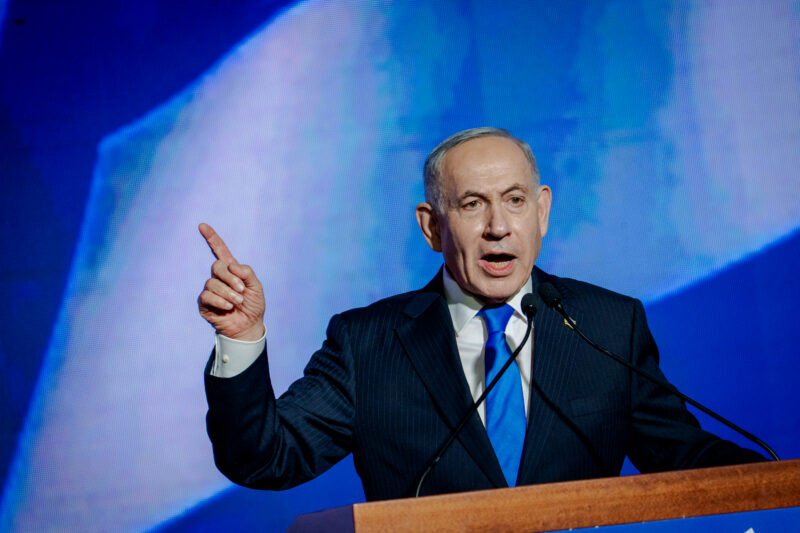
He said that Israeli Prime Minister Benjamin Netanyahu is obviously unpopular in the Democratic Party, and argued that there are many in the party who strongly support Israel but reject Netanyahu, “and that sentiment undoubtedly carried the day.”
“It’s a loss to us on the Judiciary Committee to have Dan Goldman go because he was such an excellent prosecutor and he’s a great cross-examiner of administration witnesses and agendas,” Raskin continued. “But that race undoubtedly turned on questions of the Middle East.”
Sen. Ruben Gallego (D-AZ), a potential 2028 presidential contender, also said the results aren’t a reflection of the whole country or party.
“All politics is local,” Gallego said. “I think that’s what you … see right there. The candidates who ran very localized campaigns, that helped them [win].”
Gallego added that the results show the party is a “big tent, and that’s kind of coming through right now.”
“Every state is different, every place is different, every candidate’s going to be different,” he said.
Sen. Gary Peters (D-MI), who chaired the Democratic Senatorial Campaign Committee for two cycles, said that the results reflect the voter base in New York City.
“Those are really deep blue districts, so you expect that kind of vote in a Democratic primary,” Peters said.
Sen. Raphael Warnock (D-GA) also emphasized that his state is distinct from deep-blue New York City and said, “I think pundits are doing what pundits are doing. The takeaway from last night is that the Democratic Party is a big tent, and we’re having a robust conversation about how to make the lives of ordinary people better.”
Sen. Dick Durbin (D-IL), the outgoing No. 2 Senate Democrat, said he doesn’t know much about the races beyond that Mamdani-backed candidates won. He said he wasn’t aware of the fact that the candidates all shared an anti-Israel approach but called it “worrisome.”
Sen. Tim Kaine (D-VA) said he hadn’t followed the races closely enough to understand the outcomes, but said, “I am a Virginia elected official, and Virginia is what I know really well. I just don’t know enough about New York politics — and I think it would be not a good idea to extrapolate New York City to a national level.”
Meanwhile, members of the far left are treating the results as a mandate for the Democratic Party and a signal of rising popularity for their chosen policies.
“Last night, voters across New York delivered a powerful message: the era of status quo politics is over,” Sen. Bernie Sanders (I-VT) said. “If Democrats regain control of Congress next year, they must listen to the people who put them in office. Status quo establishment policies are not enough. We must be bold. We must take on Oligarchy. We must represent working families and create a government that works for all, not just the few.”
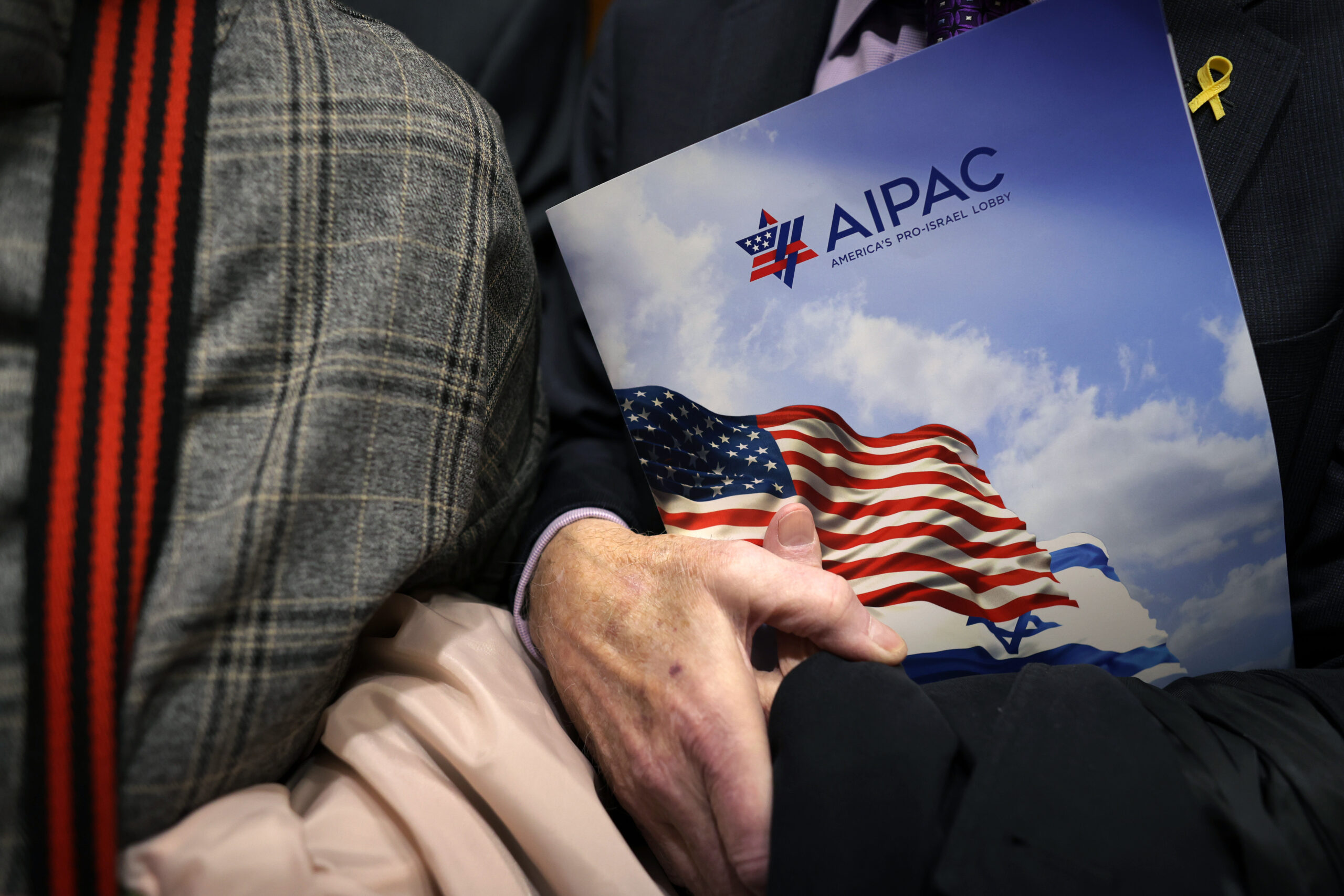
He also called the victories a rebuke of AIPAC, the cryptocurrency and artificial intelligence industries and other moneyed interests.
Rep. Ro Khanna (D-CA) said the results on Tuesday were “the beginning of a new, strong, bold Democratic Party” and pointed to other progressive victories outside of New York City.
More Stories
NEW HIRE
El-Sayed hires veteran political consultant Lenore Goldman as Jewish liaison
analysis
Is Israel’s anti-Netanyahu bloc fracturing?

EDUCATION INVESTIGATION
House Education Committee finds systemic antisemitism in Philadelphia, Berkeley K-12 schools
HILLTOP FORECAST
Democratic foreign policy veterans preview party’s shifts on Middle East policy
MINNESOTA MIC DROP
Jacob Frey, Betty McCollum join Minnesota Dem chorus condemning Piker event
CANCEL CALLS
Democratic push grows for Ilhan Omar, Fateh to cancel Hasan Piker event
Please log in if you already have a subscription, or subscribe to access the latest updates.
 Continue with Google
 Continue with Apple