





























Harvard’s Kennedy School launches new Israel Program
The program, led by Barak Sella, will host research fellow and events, as well as a Shared Society lab focused on strengthening Arab municipalities
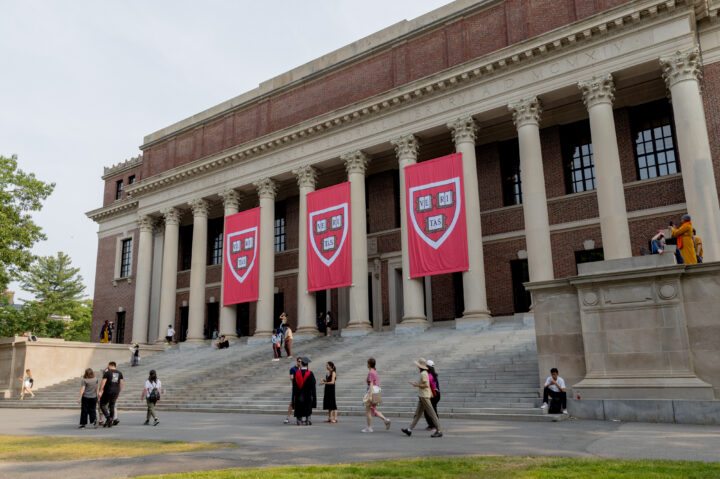
Cassandra Klos/Bloomberg via Getty Images
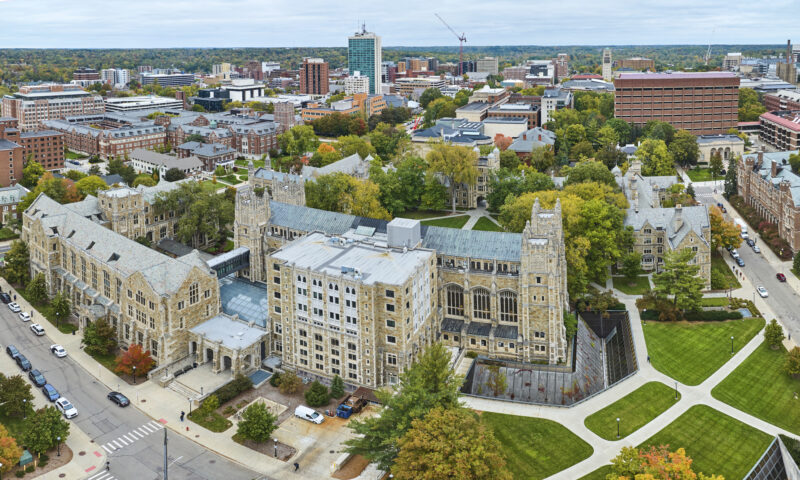
The Widener Library on the Harvard Campus in Cambridge, Massachusetts, US, on Wednesday, June 4, 2025.


 Add JewishInsider on Google
The Harvard-Kennedy School announced this week the launch of a new program focused on Israel that its organizers say will bring a broader, policy-oriented and pluralistic approach to the study of the country and its role in the Middle East, as universities continue to grapple with intense debate over Israel and the war in Gaza.
The Israel Program, housed within the school’s Middle East Initiative, will examine issues including Israeli politics and society, U.S.-Israel relations, Jewish-Arab relations and Israel’s place in the region. Barak Sella, a senior research fellow at the Middle East Initiative who is spearheading the program under the guidance of Prof. Tarek Masoud, told Jewish Insider that the program addresses an “acute need” for serious research on the complexities of the Middle East, rather than being created primarily as a response to campus polarization following the Oct. 7, 2023, attacks.
“You can’t take this program out of the context of the time that we are in,” said Sella. “But I would describe it as something that would be needed anyways.”
Sella, who was a student at Harvard at the time of the attacks, said he witnessed a distinct gap in learning opportunities for peers seeking comprehensive perspectives on the region.
“While there was a lot of discussion about Israel, there was a gap in serious research programs to provide students with in-depth perspectives,” he said. “This program is different because Israel, like many other countries, is a country in the Middle East and if you actually want to do research that can make a difference and support a better future for the region, I think it’s important it be done not only in the local context of Israel but also in the global context.”
The program emphasizes “rigorous, open inquiry and civil, constructive debate.” However, because discussions about Israel on U.S. campuses are so polarized, Sella acknowledged it had been a challenge to make everyone feel comfortable sharing their views.
Addressing that is the “whole basis of the Israel program being housed at the Middle East Initiative,” he said, noting that the initiative already hosts an array of programs including one on Kuwait and research projects on Egypt and Tunisia. “We’re housed in an initiative where the basic idea is that all of the countries in the Middle East have a place,” he said. “The only thing we have to agree on is that we’re sitting at the same table once a week. We have a seminar for all our research fellows and learn from what everyone is researching.”
The program, which is funded by the Middle East Initiative, will host research fellows and events focusing on Israeli and Palestinian Authority elections (the latter last held presidential elections in 2005), alongside a study group examining the future of U.S.-Israel relations. The course “Arguing Israel Palestine” might include a field study visiting Israel and the West Bank in the future, Sella said, though the trip did not run during last year’s pilot course due to the Iran war. Additionally, the Shared Society Lab — led by Dana Schleifer, a graduate of the Harvard Kennedy School and former chief innovation officer for the Tel Aviv-Yafo Municipality — plans to investigate Jewish-Arab cooperation within Israel, with an emphasis on strengthening Arab municipalities.
The lab “is based on the idea that one of the best ways to increase [partnership] between Arabs and Jews in Israel is through local municipalities,” said Sella. “We interviewed dozens of people from Arab municipalities and identified their weak points and strengths. We’re planning to do more research and hopefully leadership initiatives with leaders of the Arab municipalities. We want to use the resources we have here to make sure the Arab municipalities in Israel are getting the best tools they can to provide a better life for their citizens.”
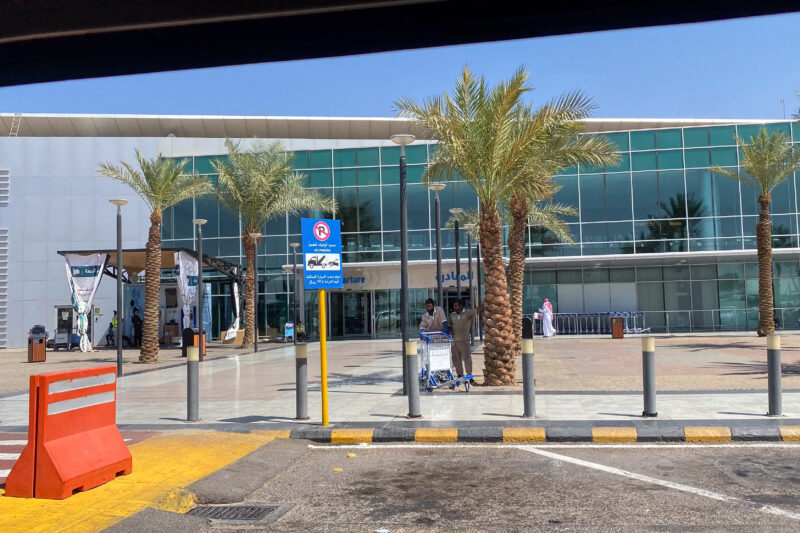
Sella credits his time at Harvard for prompting him to find new ways to study the Jewish state. One of his most formative experiences happened far from the Cambridge campus, during a student delegation to Saudi Arabia and the United Arab Emirates.
“I met a lot of senior people and there were conversations about the economy and the region, but also very difficult conversations about Israel,” he recalled. “They were always conversations about finding a solution and practical approaches. When I was on that program with Harvard, I realized that I want more students to be able to experience that. When we’re talking about a place like Israel, we need to take out the slogans and base conversations on what universities should be based on — rational thinking and pursuit of truth.”
More Stories

HATE MAIL
Son of GOP challenger to Gov. Wes Moore called Jews ‘pedophiles’ and ‘Satan worshipping scum’
TOEING THE LINE
Menin, Levine call for ‘focus’ on Oct. 7 victims — but don’t condemn Mamdani
Mayor Unmoved
Mamdani brushes off pro-Hamas heckling at Oct. 7 vigil
Daily Kickoff
Mamdani meets the vigil-antis
Back to the Future
Israeli election déjà vu
Daily Kickoff
Three years, familiar fears on 10/7 anniversary
Please log in if you already have a subscription, or subscribe to access the latest updates.
 Continue with Google
 Continue with Apple