
































Plus, Ron Klain goes to bat for Platner

Getty Images
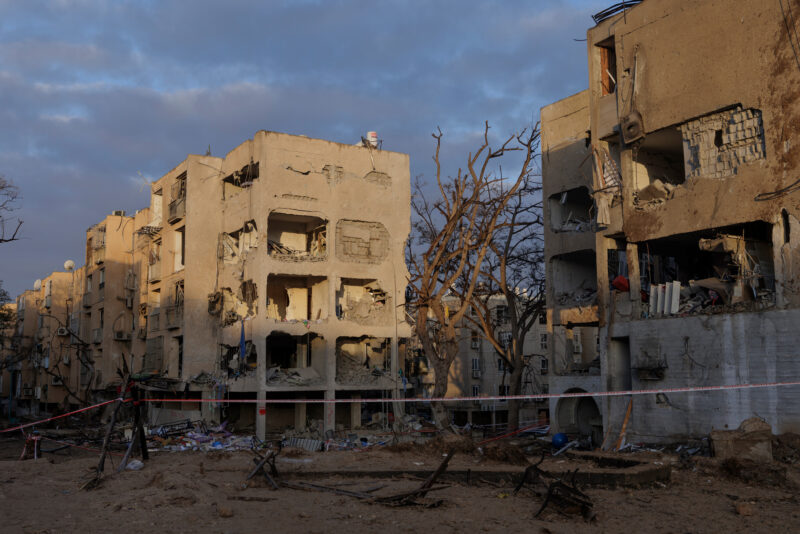
A large plume of smoke rises over Tehran after explosions were reported in the city during the night on March 28, 2026 in Tehran, Iran.


 Add JewishInsider on Google
This P.M. edition is reserved for our premium subscribers like you — offering a forward-focused read on what we’re tracking now and what’s coming next.
Today’s Daily Overtime was curated by JI U.S. Editor Danielle Cohen-Kanik.
📡On Our Radar
Notable developments and interesting tidbits we’re tracking
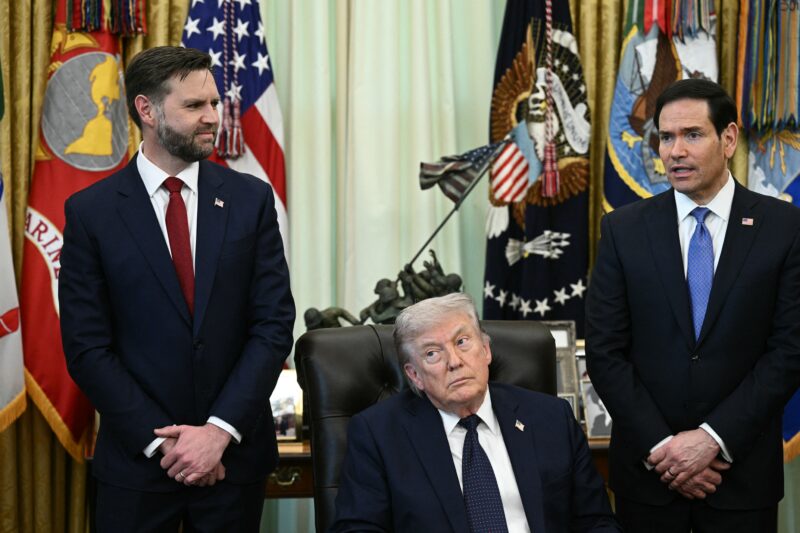
After the U.S. conducted strikes yesterday in Iran, President Donald Trump said from the Oval Office this morning that the U.S. would “hit them hard again today” and told Fox News that he may target Iranian power plants and bridges because Tehran is “tapping the United States along” in negotiations.
As Trump convened his national security team in Washington this afternoon to discuss military options, Defense Secretary Pete Hegseth told reporters CENTCOM will be “busy tonight” with “bombs dropping on key facilities in Iran”…
Trump also revealed today that he directed the U.S. military last month to “execute a secret mission” to assist oil tankers and other commercial vessels in transiting the Strait of Hormuz, an effort that “has resulted in more than 100 MILLION Barrels of Oil” and over 200 commercial ships moving through the waterway. His Truth Social post was a clarification of earlier comments that seemed to suggest the U.S. was stealing this oil directly out of Iran; U.S. operations to facilitate passage in the strait have been previously reported…
Trump provided Fox News with new details of the downing of the U.S. Army helicopter earlier this week, describing how an Iranian drone became lodged between the two pilots in the cockpit who guided the helicopter into the sea, where they were rescued “for the first time in U.S. military history” by an unmanned sea drone…
Qatari mediators visited Tehran today in the hopes of pushing Iranian officials to engage more effectively in negotiations with the U.S., Axios reports, after Trump had grown increasingly frustrated with their intransigence over the last two weeks, even as he continued to signal the two sides were approaching a deal…
U.S. Ambassador to the U.N. Mike Waltz met with UAE Foreign Minister Abdullah bin Zayed Al Nahyan in Abu Dhabi, the highest-level U.S. official to publicly visit the Gulf since the Iran war began…
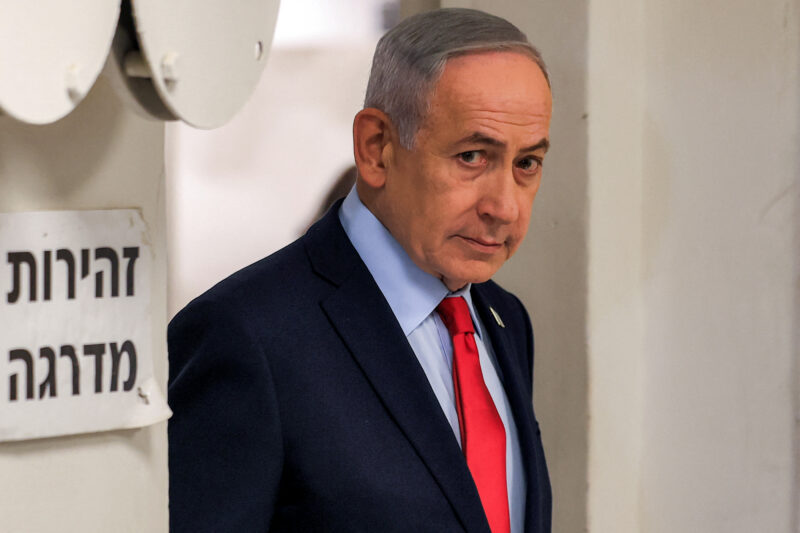
Israeli Prime Minister Benjamin Netanyahu blasted Turkish President Recep Tayyip Erdoğan as an “antisemitic dictator” today after Erdoğan condemned Israel’s “network of murder” in Syria and Lebanon and threatened a “very clear and strong response” if Turkish interests in the region were jeopardized. Netanyahu said Erdoğan, whom he accused of supporting Hamas, lacks the moral authority to criticize Israel.
Trump, when asked in the Oval Office about the potential for war between Israel and Turkey, described Erdoğan as a “hell of a leader” and said, “I don’t think that will happen as long as I’m president”…
More than 20 countries, including the U.S., issued a joint statement condemning “lethal plotting and malign actions” by Iran’s security forces working with international and local criminal groups in Europe, North America and Australia, including their efforts to target “Iranian dissidents, journalists and Jewish and Israeli communities and interests”…
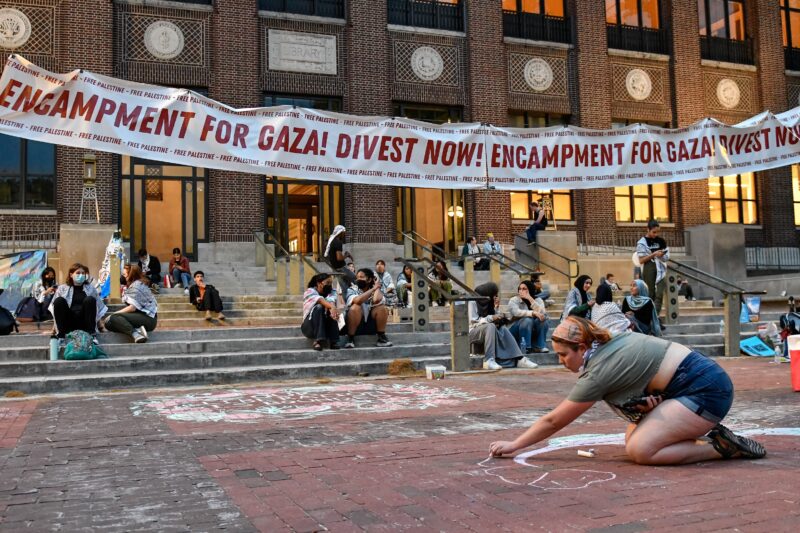
The Department of Justice indicted eight individuals associated with the University of Michigan for allegedly threatening university leaders, law enforcement, businesses and the Jewish Federation of Metropolitan Detroit over the conspirators’ perception of their “purported financial support of Israel.”
The individuals “discussed methods by which to harm the targets and their families, including poison, bombs, and psychological torture,” engaged in extensive vandalism and threw jars filled with noxious chemicals into homes, according to the department…
An immigration judge ordered earlier this month that Columbia University anti-Israel protest leader Mohsen Mahdawi be deported to Jordan, after a lengthy legal battle in which the Trump administration claimed Mahdawi has been involved in and supported terrorist violence. Mahdawi, who has not been charged with a crime, is still seeking review of his removal proceedings in federal court…
The Senate Education and Natural Resources Committee advanced the Holocaust Education and Antisemitism Lessons (HEAL) Act by a voice vote…
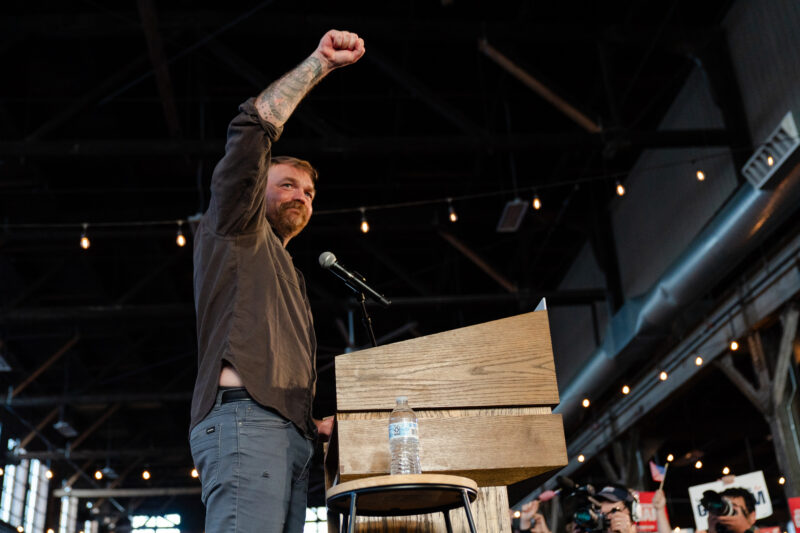
The National Republican Senatorial Committee, in a memo to donors, acknowledged that the “political fundamentals in Maine remain challenging” for Sen. Susan Collins (R-ME) to retain her seat against scandal-plagued challenger Graham Platnerand called it a “fatal mistake to assume Platner is too damaged to win”…
Trump offered Collins his backing today after having long been at odds with the senator: Asked if she has his full endorsement, Trump said, “She does, because she’s a sane woman. She’s not my best friend at all … but she’s a sane person and she’s a respected person.” He called Platner a “thug,” a “phony” and a “bad person”…
Ron Klain, the former chief of staff to President Joe Biden, defended Platner’s tattoo of a Nazi symbol in a comment responding to the Republican Jewish Coalition on Instagram, Jewish Insider’s Marc Rod reports: Klain claimed the Totenkopf “was a skull and crossbones to remember [Platner’s] fallen comrades from his service in Afghanistan,” an explanation Platner’s campaign has not previously offered…
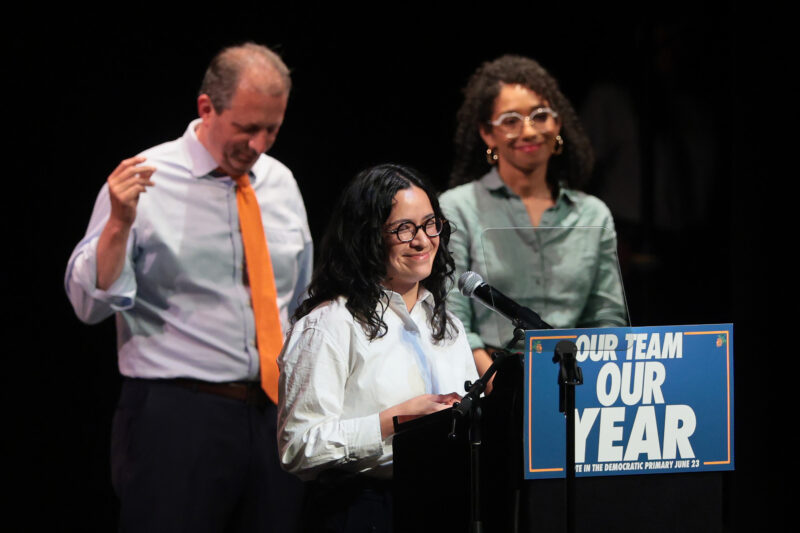
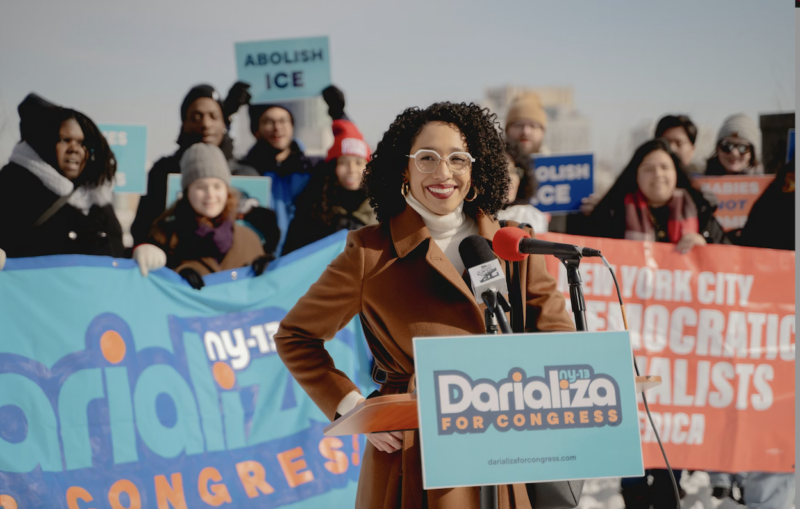
Former New York City Comptroller Brad Lander, running against Rep. Dan Goldman (D-NY) in the 10th Congressional District, denied to JI’s Will Bredderman that he’s backing Darializa Avila Chevalier in her race against Rep. Adriano Espaillat (D-NY) — even as the two appeared together in an ad paid for jointly by both of their campaigns…
Kennedy scion Jack Schlossberg, running in the Democratic primary for New York’s 12th District, came out yesterday in support of the Block the Bombs Act, JI’s Matthew Kassel reports, despite having previously expressed skepticism about the bill seeking to broadly restrict weapons sales to Israel…
Meanwhile, Public First Action, the PAC linked to AI giant Anthropic, is spending $1.2 million on a Knicks-themed ad in support of Schlossberg’s opponent, Alex Bores, who has become a leading advocate for AI regulation on the campaign trail. The ad is set to air tonight during Game 4 of the NBA Finals, Politico reports…
⏩ Tomorrow’s Agenda, Today
An early look at tomorrow’s storylines and schedule to keep you a step ahead
Keep an eye out in Jewish Insider for a look at the state of play in Israel’s elections, taking place this fall.
The House Appropriations Defense Subcommittee will hold a closed-door markup of the 2027 defense spending bill.
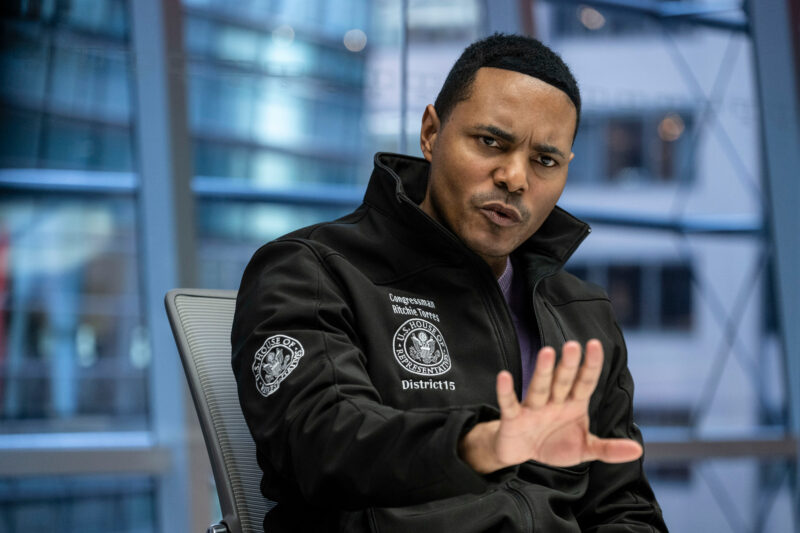
Reps. Don Beyer (D-VA) and Ritchie Torres (D-NY) will speak at a Progressive Policy Institute event on “Working Toward a New Era of Patriotism and Democratic Renewal” at the National Press Club in Washington.
Stories You May Have Missed
SIDESTEPPING QUESTIONS
Senior House Democrats profess ignorance of Hamawy’s controversial past
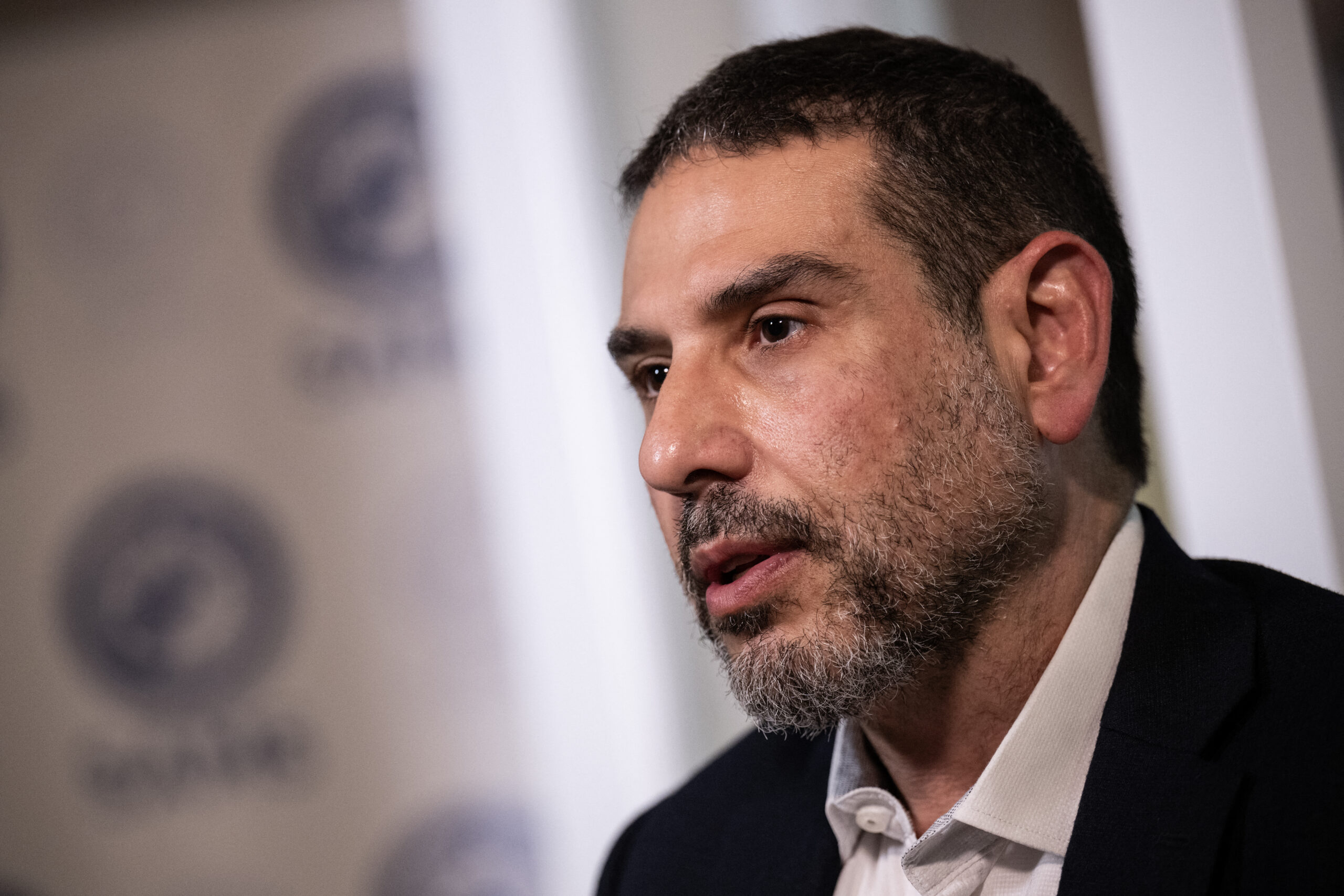
House Foreign Affairs Committee ranking member Greg Meeks said of the Democratic N.J. congressional nominee, ‘I don’t like to talk about somebody I don’t know’
LASHING OUT
Micah Lasher says he’s ‘exhausted’ by political ‘obsession’ with Israel
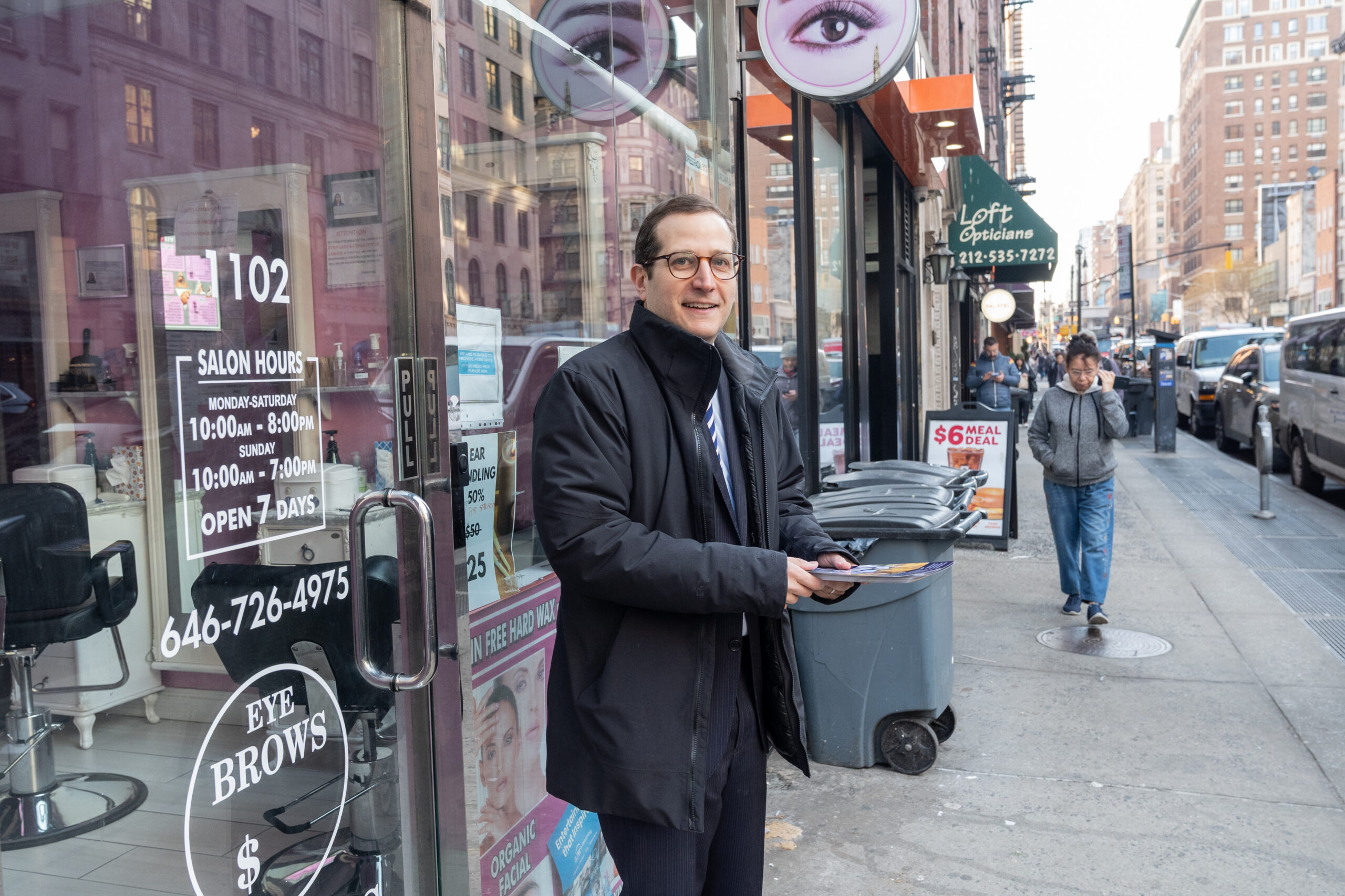
The Democratic congressional hopeful aired his frustration when asked about his stance regarding U.S. aid to the Jewish state at a candidate forum
Plus, Israeli confidence in Trump hits new low

U.S. Navy via Getty Images
A U.S. Sailor signals the launch of an MH-60R Sea Hawk helicopter, attached to Helicopter Maritime Strike Squadron 70, on the flight deck of the world's largest aircraft carrier, USS Gerald R. Ford (CVN 78), while supporting Operation Epic Fury on February 28, 2026.
This P.M. edition is reserved for our premium subscribers like you — offering a forward-focused read on what we’re tracking now and what’s coming next.
Today’s Daily Overtime was curated by JI U.S. Editor Danielle Cohen-Kanik.
📡On Our Radar
Notable developments and interesting tidbits we’re tracking
President Donald Trump announced today that Iran was responsible for downing a U.S. Apache helicopter over the Strait of Hormuz last night, and vowed to respond out “of necessity.” Trump had reportedly told aides his “red line” for resuming military action would be if Iran killed any more Americans, though he confirmed in his post on Truth Social that both American pilots involved were “safe and uninjured.”
Later, however, in a call with The Wall Street Journal, Trump appeared to downplay the incident, saying it “wasn’t a big deal” and that “the pilot is fine”…
Top GOP lawmakers echoed Trump’s initial assessment that the U.S. must respond: Sen. Ted Cruz (R-TX) told Jewish Insider’s Matthew Shea that Iran should face “significant consequences.” Rep. Mike Rogers (R-AL), chairman of the House Armed Services Committee, similarly said the U.S. must “vigorously respond,” and Sen. Ted Budd (R-NC) pushed for “decisive action”…
Iranian Foreign Minister Abbas Araghchi signaled that Tehran is distancing itself from the episodeand not claiming it as a direct attack on the U.S. He said in a statement, “Foreign forces in proximity to our territory are at constant risk on account of their own human errors, plain accidents, or potentially being caught in crossfire. To reduce risk, best solution is for them to leave”…
Trump, speaking to ABC News, openly mused about whether Israeli Prime Minister Benjamin Netanyahu “even wants to continue” and run in Israel’s upcoming elections, slated to take place this fall. “He’s a wartime prime minister. We will very shortly win the war one way or the other, and you know he’s a wartime prime minister,” Trump said…
A gunman from Lebanon entered Israeli territory and fired on IDF troops, who killed him before he crossed the border fence, the IDF said. The infiltration set off a widespread search for potential accomplices, though none were found…
Before the latest round of missile fire between Israel and Iran, U.S. and Iranian negotiators had focused their discussions on four major elements of a nuclear deal, officials told The New York Times, even as the Trump administration has said nuclear issues will be discussed in a subsequent round of negotiations.
The key points reportedly include how long Iran will suspend uranium enrichment, diluting the country’s stockpile of already enriched uranium, dismantling three of its major nuclear facilities and “snap” inspections of all relevant sites inside the country…
A new survey from the Israel Democracy Institute found the share of Israelis who believe the country’s security is a primary consideration for Trump has plummeted to 44%, down from 60% who said the same in March at the beginning of the Iran war, JI’s Matthew Shea reports.
It’s the lowest level of Israeli trust in Trump since the institute began tracking the metric when he was elected to a second term in November 2024, coming as Washington and Jerusalem seemingly diverge on their strategies and ultimate goals of the war with Iran…
Twenty-one countries issued a joint statement urging Israel not to implement a new law requiring international NGOs wanting to operate in the West Bank and Gaza to register with and be vetted by the Israeli government, calling the law “part of a broader pattern of restrictive measures” that “constrain the urgently needed humanitarian response.”
Israel’s Foreign Ministry dismissed the concerns and claims of the countries as “completely unfounded and detached from reality” as it said there are “immense amounts of humanitarian aid entering the Gaza Strip”…
Randy Villegas, a left-wing Democrat running to unseat Rep. David Valadao (R-CA) in California, claimed victory today in the jungle primary over Jasmeet Bains, a moderate Democrat who had been favored by pro-Israel leaders as well as the party’s national leadership, JI’s Matthew Kassel reports. Democratic Majority for Israel’s super PAC had spent heavily to help Bains with a $500,000 TV ad buy opposing Villegas…
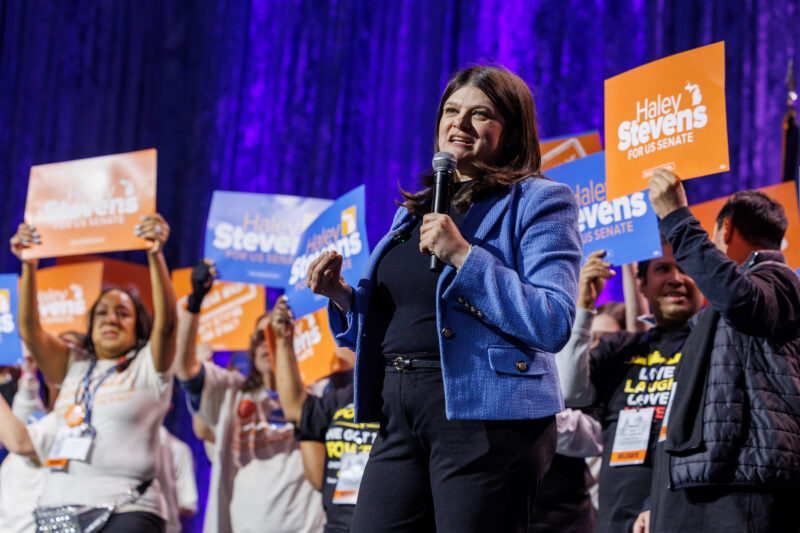
United Democracy Project, the AIPAC-affiliated super PAC, is spending $2 million on an initial ad buy this week to boost Rep. Haley Stevens (D-MI) in the Democratic primary for Michigan’s open Senate seat, a UDP spokesperson confirmed to JI’s Matthew Kassel. The ad touts Stevens’ record fighting for the auto industry, opposing Medicare cuts and working to cap insulin prices in Congress…
⏩ Tomorrow’s Agenda, Today
An early look at tomorrow’s storylines and schedule to keep you a step ahead
Keep an eye out for timely analysis of today’s primary election results in Maine, Nevada and South Carolina from Jewish Insider Editor-in-Chief Josh Kraushaar — premium JI subscribers like you will receive it first.
The Senate Energy & Natural Resources Committee will hold a markup of the HEAL Act, a bipartisan bill examining Holocaust education efforts across the country.
The Culture for Peace Institute will hold a conference in Washington with speakers including State Department antisemitism envoy Rabbi Yehuda Kaploun; Sens. John Fetterman (D-PA) and Dan Sullivan (R-AK); and Reps. Nick LaLota (R-NY), Randy Fine (R-FL), Andy Barr (R-KY), Mike Lawler (R-NY), Max Miller (R-OH), Tom Suozzi (D-NY), Elise Stefanik (R-NY) and Derrick Van Orden (R-WI).
Elsewhere in Washington, Iran International will hold a town hall focused on the conflicts in Lebanon and Iran, featuring the Middle East Institute’s David Hale and Alex Vatanka as well as Dan Diker, president of the Jerusalem Center for Security and Foreign Affairs.
In the evening, lawmakers will take the field for the annual Congressional Baseball Game at Nationals Park.
In New York, the Conference of Presidents of Major American Jewish Organizations will hold its annual antisemitism convening, bringing together communal professionals, experts and others to discuss efforts to combat antisemitism.
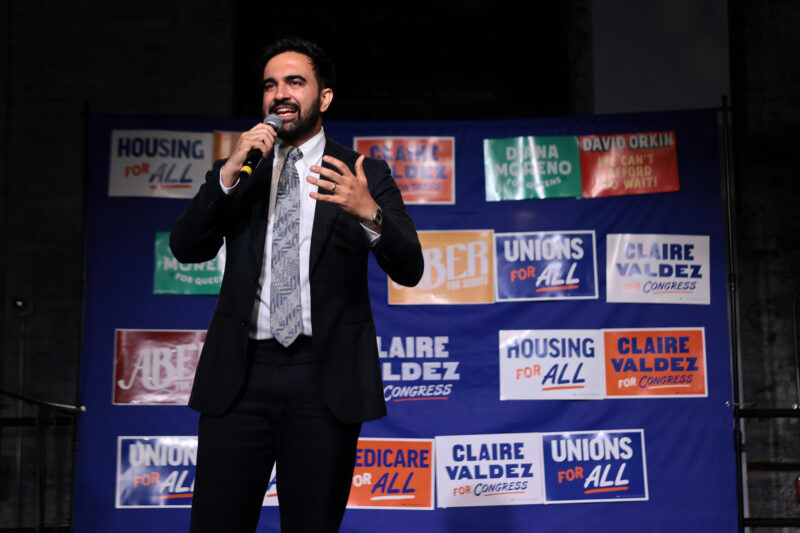
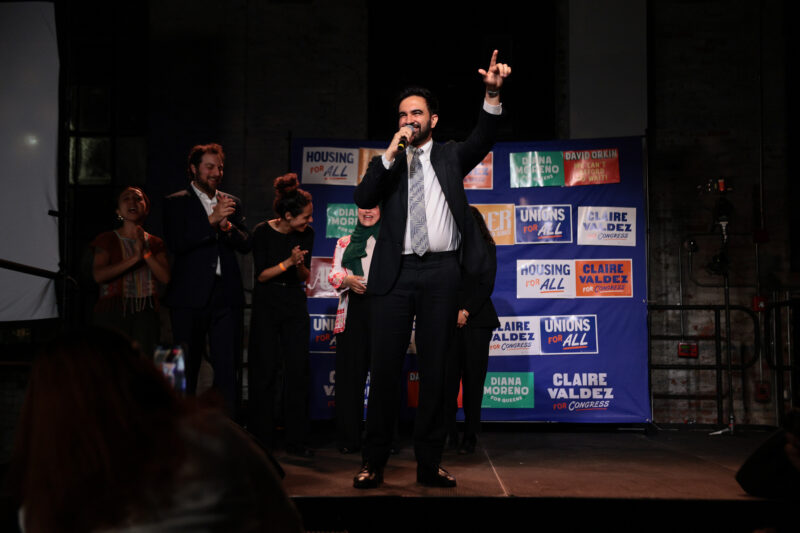
New York state Assemblymember Claire Valdez, Brooklyn Borough President Antonio Reynoso and City Councilmember Julie Won — the top Democratic candidates for New York’s 7th Congressional District to replace retiring Rep. Nydia Velázquez (D-NY) — will face off for a debate on local news channel PIX11.
The Auschwitz Jewish Center Foundation will honor New York City Council Speaker Julie Menin, former Israeli hostage Elkana Bohbot and Gazan human rights lawyer Moumen Al-Natour at its gala in Manhattan.
Stories You May Have Missed
MOUNTING SCRUTINY
Will Avila Chevalier’s ‘beyond the pale’ views sink the DSA challenger’s campaign against Espaillat?
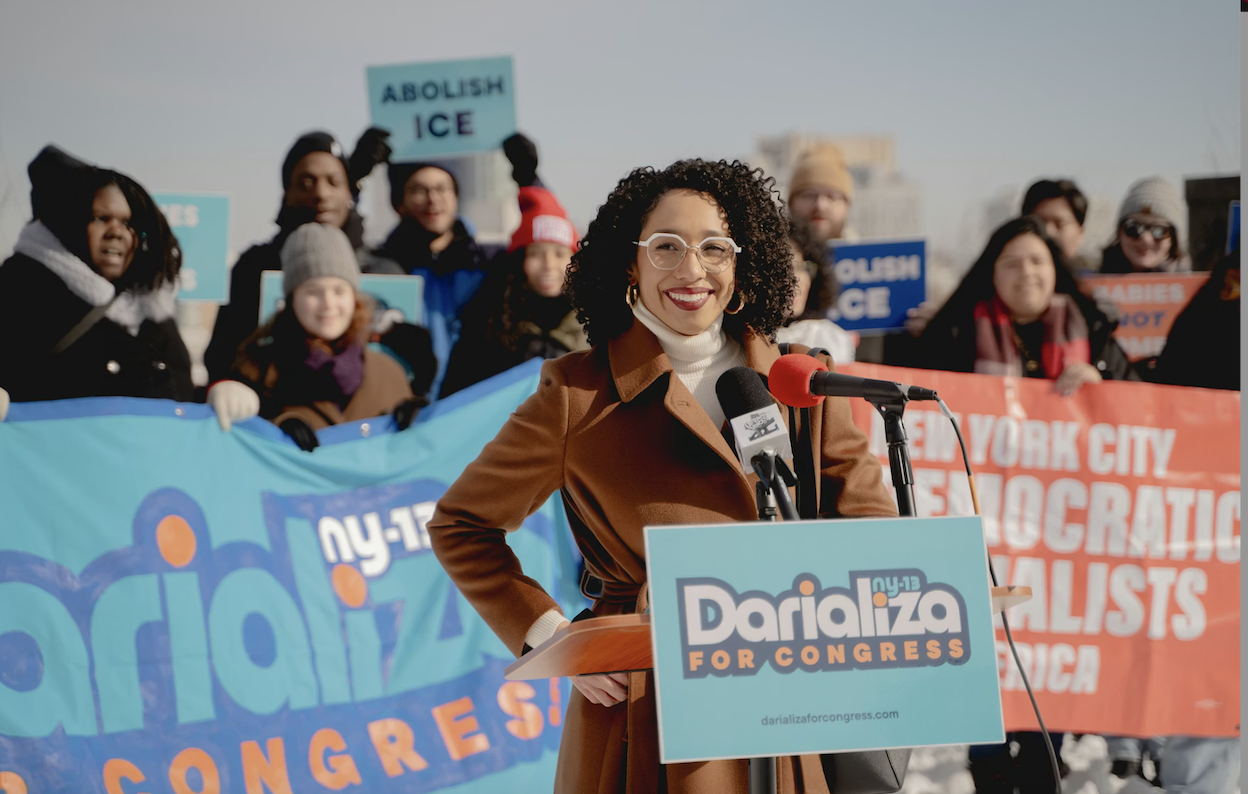
Avila Chevalier has a long record of extreme views, including calling for the abolition of police, voicing pro-Russia sentiment and rejecting Israel’s existence
SPECTATOR SPECTACLE
A who’s who of notables packed Madison Square Garden for Game 3 of the NBA Finals

Trump, Mamdani, Witkoff, Kraft, Lutnick and more watched the game
Plus, AIPAC wades into Mich. Senate race

SAUL LOEB/AFP via Getty Images
President Donald Trump shakes hands with Israeli Prime Minister Benjamin Netanyahu during a meeting in the Oval Office of the White House in Washington, DC, on April 7, 2025.
This P.M. edition is reserved for our premium subscribers like you — offering a forward-focused read on what we’re tracking now and what’s coming next.
Today’s Daily Overtime was curated by JI U.S. Editor Danielle Cohen-Kanik.
📡On Our Radar
Notable developments and interesting tidbits we’re tracking
President Donald Trump cautioned Israeli Prime Minister Benjamin Netanyahu that if Israel went forward with a plan to escalate its strikes on Iran today, “you will be on your own very soon,” the president recalled in an interview with Axios, after which the Israeli leader reportedly called off the attack. Trump also claimed the U.S. and Iran are nearing a “phenomenal deal. We are getting everything we wanted”…
Netanyahu subsequently said in a video statement that, while Israel is “holding its fire” against Iran, Jerusalem has “a full right to self-defense” and is “exercising it to the extent necessary” — a message he said he relayed “with appreciation and respect in my good conversations with my friend President Trump.” But Netanyahu warned that if Iran resumes its attacks on Israel, the IDF would respond with “overwhelming force”…
Mohammad Bagher Ghalibaf, the speaker of the Iranian parliament, said in an address today that Iran’s simultaneous military strikes and diplomacy are part of an intentional strategy and that, though Tehran is seeking to end the war, it does not want to normalize relations with Washington…
U.S. forces disabled another empty oil tanker attempting to sail to Iranian ports today after it failed to disobey orders to stop by firing a precision munition into the ship’s engineering and steering spaces, CENTCOM announced. It’s the seventh such vessel U.S. forces have disabled since the blockade began…
Thirty-eight Senate Democrats, led by Sens. Adam Schiff (D-CA), Tim Kaine (D-VA) and Minority Leader Chuck Schumer (D-NY), demanded in a letter to Trump that the administration provide Congress with the legal opinion backing its determination that U.S. hostilities against Iran have ended, given the ongoing strikes and U.S. presence in the region…
At next week’s G7 summit in France, which Trump will be attending, European leaders will attempt to secure the president’s support for a U.K. and France-led effort to de-mine the Strait of Hormuz, Bloomberg reports…
The J7, a coalition of Jewish communal organizations representing the seven largest Jewish Diaspora populations, urged Canadian Prime Minister Mark Carney to prioritize action over further study after he announced Ottawa’s new Ministerial Advisory Council on Rights, Equality and Inclusion would examine rising antisemitism in the country.
Arguing that the problem has already been well documented, the groups called for a “whole-of-government” response focused on enforcement and countering extremist ideologies and terror movements…
United Democracy Project, the AIPAC-aligned super PAC, began buying ad time in Michigan today, in what appears to be the pro-Israel group’s first foray into the state’s heated Democratic Senate primary…
The Wall Street Journal interviews activists Daniel Moraff and Leanne Fan, who, along with consultant Morris Katz, recruited Graham Platner to run for Senate in Maine. The two said that their own vetting process of Platner did not turn up the Nazi tattoo he had on his chest, nor the full extent of his controversial Reddit posts, but they believed none of what they had seen at the time “will or should stop him from becoming a U.S. senator”…
The two factions of Williamsburg, Brooklyn’s Satmar community united behind Brooklyn Borough President Antonio Reynoso in the race to succeed retiring Rep. Nydia Velazquez (D-NY). Reynoso, a native of the district, clashed with some of the Hasidic sect’s leaders as a city councilmember but rebuilt relationships in subsequent years. New York City Mayor Zohran Mamdani, who has found allies in the Satmar sect while in office, is backing Reynoso’s opponent, Assemblymember Claire Valdez…
Ahead of tonight’s Knicks NBA Finals game against the San Antonio Spurs at Madison Square Garden, The Forward examines the chant sweeping New York City — “My mayor Muslim, my bagel Jewish, my Christian Dior, Knicks in four!” — and what it says about the city’s identity…
⏩ Tomorrow’s Agenda, Today
An early look at tomorrow’s storylines and schedule to keep you a step ahead
Keep an eye out in Jewish Insider for a look at the view from Washington on Trump’s attempt to pressure Netanyahu not to retaliate to Iran’s recent ballistic missile attacks.
Maine, Nevada, North Dakota and South Carolina will hold their primary elections tomorrow.
The House Foreign Affairs Committee will hold a markup of various bills, including one to direct the State Department to impose sanctions on the leaders and family members of the Rapid Support Forces (RSF) and the Sudanese Armed Forces (SAF) responsible for genocide, war crimes and crimes against humanity in the Sudanese civil war.
The House Appropriations Committee will mark up the FY 2027 spending bills for Labor, Health and Human Services and Homeland Security.
The Atlantic Council will kick off its two-day Global Energy Forum with remarks from Energy Secretary Chris Wright; Ben Black, CEO of the U.S. International Development Finance Corporation; Alaska Gov. Mike Dunleavy; and representatives from Kuwait, Egypt, Syria and more.
Agudath Israel of America will celebrate the opening of its new office on Capitol Hill with a tribute to its longtime vice president for government affairs, Rabbi Abba Cohen, who is set to step down after 37 years at the organization.
Stories You May Have Missed
PROMISES AND PERILS
As AI reshapes society, Jewish leaders grapple with what comes next

Rabbi Mordechai Lightstone: ‘When we ascribe human attributes — emotions, consciousness and soul — to AI, we risk transforming a sophisticated instrument into an idol’
GOLDEN MEMORIES
In Altneu art exhibit, artists grapple with the end of American Jewry’s ‘Golden Age’

A new exhibition at the Upper East Side synagogue uses paintings of everyday Jewish life to explore nostalgia and identity as Jewish artists increasingly feel unwelcome in cultural spaces
Plus, John's bolting to a guilty plea
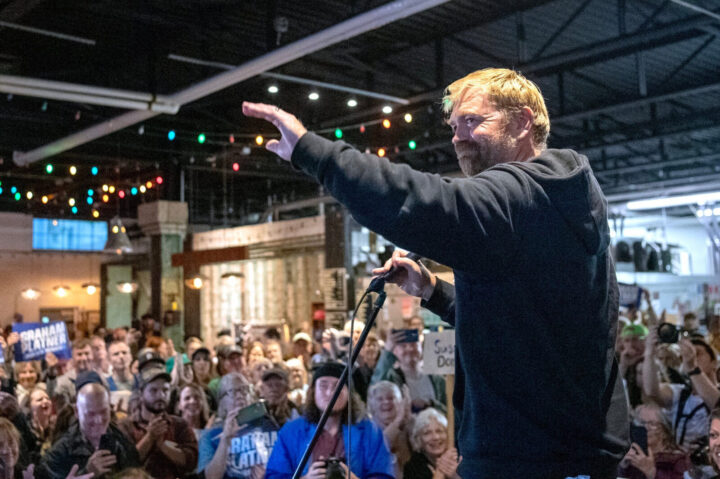
Daryn Slover/Portland Press Herald via AP
Senate candidate Graham Platner acknowledges the large crowd that attended Platner's town hall, Sept. 25, 2025, at Bunker Brewing in Portland, Maine.
This P.M. edition is reserved for our premium subscribers like you — offering a forward-focused read on what we’re tracking now and what’s coming next.
Today’s Daily Overtime was curated by JI U.S. Editor Danielle Cohen-Kanik.
📡On Our Radar
Notable developments and interesting tidbits we’re tracking
Three women who were romantically involved with Maine Senate candidate Graham Platner told The New York Times in a detailed exposé that the presumptive Democratic nominee had been “toxic,” physically threatening, misogynistic and unfaithful during their yearslong relationships.
One former partner, Lyndsey Fifield, confirmed Jewish Insider’s reporting from October that Platner had known what the Nazi symbol tattooed on his chest represented and had taught her the word for it, calling it “my Totenkopf”…
John Bolton, President Donald Trump’s national security advisor during his first term, intends to plead guilty to illegally retaining sensitive national security information, CNN reports, a charge that could carry up to five years in prison…
Trump told aides he would only consider resuming military action against Iran — besides the skirmishes in the Strait of Hormuz, which the administration has insisted do not qualify as warfare — if Iran were to kill American troops, U.S. officials told The Wall Street Journal…
Trump lambasted the House’s “meaningless vote” yesterday passing an Iran war powers resolution “right in the middle of my final negotiations to end the War with the Islamic Republic of Iran. Who would do such an unpatriotic thing,” he mused…
Lebanese President Joseph Aoun told reporters today that the ceasefire announced yesterday with Israel would take effect only after Hezbollah approved of the proposal, given that it’s contingent on the terror group’s disarmament and withdrawal from southern Lebanon; Hezbollah leader Naim Qassem then rejected the agreement, calling the negotiations “absurd, humiliating and insulting,” and claiming Hezbollah’s withdrawal at this time would mean “surrender, defeat and achieving the enemy’s goals”…
Israel and Hezbollah then continued to exchange fire in southern Lebanon, where a UNIFIL peacekeeper was killed today after a mortar shell struck a U.N. position in the area. The IDF said the launch trajectory of the mortar “clearly indicates” it was launched by Hezbollah…
The House rejected a war powers resolution by Rep. Rashida Tlaib (D-MI) that aimed to block U.S. support for the Israeli operations in Lebanon, after House Democratic leaders publicly came out against the effort. But the Democratic leaders said they would support a future effort by Tlaib along similar lines that will include carveouts for other U.S. operations inside Lebanon, indicating that Tlaib’s next effort is likely to pick up greater Democratic support…
Iran and Russia signed a $25 billion memorandum of understanding on nuclear cooperation, Iranian state media reported…
The Times takes a look at how Qatar and the U.S. came to dominate the global liquefied natural gas market and how disruptions to Qatari exports amid the Iran war are exposing the risks of that concentration while potentially increasing America’s energy and geopolitical leverage…
In its markup of the 2027 National Defense Authorization Act, the House Armed Services Committee blocked by a voice vote an effort to strip out a relatively routine provision on cooperation with Israel, which has become the subject of criticism and misinformation online. Both the chairman and ranking member of the committee said that critics were misrepresenting the provision and what it entails…
Republicans on the House Appropriations Committee proposed providing $315 million for the Nonprofit Security Grant Program in 2027, a slight increase from 2026 funding levels but far below the $1 billion that supporters of the program in the House and Jewish and other faith communities have advocated for, JI’s Marc Rod reports. Jewish groups called the proposal appreciated, but vastly inadequate, given the current threat level…
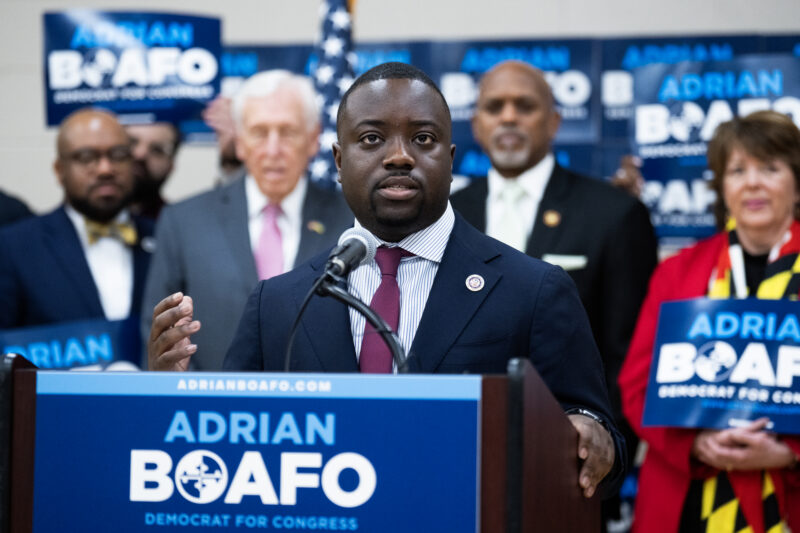
Sen. Chris Van Hollen (D-MD) called out recent AIPAC and crypto-linked spending in the crowded Democratic primary to replace retiring Rep. Steny Hoyer (D-MD), where AIPAC’s super PAC has invested heavily in support of Hoyer-endorsed Adrian Boafo, JI’s Matthew Kassel reports. Van Hollen accused the “outside groups” of “trying to buy this congressional seat,” and said the groups “do not have the voters’ interests at heart”…
A week after winning his primary runoff against anti-Israel Rep. Al Green (D-TX), Rep. Christian Menefee (D-TX) co-sponsored the Block the Bombs Act. Menefee was seen as the more pro-Israel choice in the race, who Jewish community leaders hoped would provide a fresh start after their relationship with Green collapsed…
Israeli Prime Minister Benjamin Netanyahu appointed Brig. Gen. Guy Markizeno as his military secretary, after his previous military secretary, Maj. Gen. Roman Gofman, became director of the Mossad earlier this week. Markizeno, who currently serves as military secretary to Defense Minister Israel Katz, has “extensive experience in coordinating between the political echelon and the military echelon,” Netanyahu said in a statement…
Israeli Foreign Minister Gideon Sa’ar announced Israel will open its first embassy in the Slovenian capital of Ljubljana, calling the rise of center-right Prime Minister Janez Janša, whose government was approved by the country’s parliament today, a “new chapter” in Israel-Slovenia relations after “years of the hostility of the previous government”…
The Times interviews Iranian soccer federation head Mehdi Taj, who said the Iranian national team’s U.S. visas have still not been approved less than two weeks before the team is set to play its first World Cup match in the country, while the team trains in Mexico rather than its planned home base in Arizona. Taj was formerly a commander in Iran’s Islamic Revolutionary Guard Corps…
⏩ Tomorrow’s Agenda, Today
An early look at tomorrow’s storylines and schedule to keep you a step ahead
Keep an eye out in Jewish Insider for a look at the new art exhibit at Manhattan’s Altneu synagogue grappling with the end of American Jewry’s “golden age.”
We’ll be watching to see how the latest revelations about Platner‘s past play out on the campaign trail ahead of Tuesday’s primary election, where Democratic Gov. Janet Mills is still on the ballot. Rep. Ro Khanna (D-CA) is expected to join Platner at his Get Out the Vote rally in Bar Harbor, Maine, tomorrow evening.
We’ll be back with the Daily Overtime on Monday. Shabbat Shalom!
Stories You May Have Missed
SITTING IT OUT
UDP faces questions from N.J. Jewish leaders why it stayed on sidelines against Hamawy

Hamawy, despite his past ties to a convicted terrorist, faced minimal scrutiny from outside groups — including many of his primary rivals
CAPITOL CONCERNS
GOP lawmakers argue Hamawy’s terror ties could pose national security risk in House
‘Anybody that’s tied to that should never be elected to Congress, and if he is, I think should never serve on a national security committee,’ Rep. Michael McCaul told JI
Plus, Rubio defends Israel's Lebanon strikes
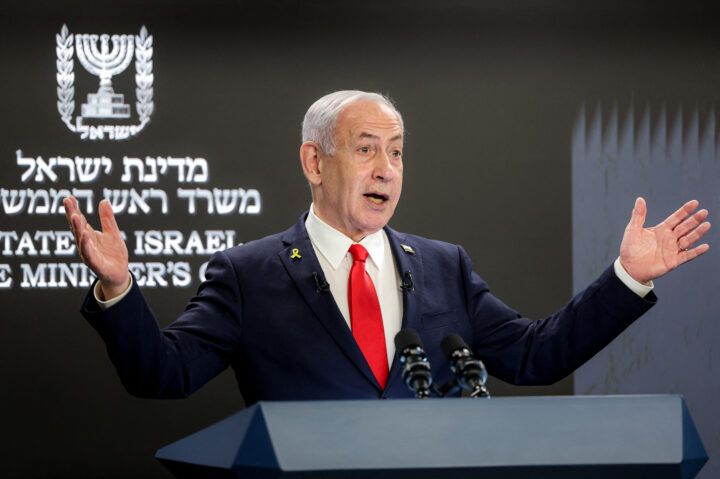
ABIR SULTAN/POOL/AFP via Getty Images
Israel's Prime Minister Benjamin Netanyahu gives a press conference at the Prime minister's office in Jerusalem on August 10, 2025.
This P.M. edition is reserved for our premium subscribers like you — offering a forward-focused read on what we’re tracking now and what’s coming next.
Today’s Daily Overtime was curated by JI U.S. Editor Danielle Cohen-Kanik.
📡On Our Radar
Notable developments and interesting tidbits we’re tracking
Israeli Prime Minister Benjamin Netanyahu told CNBC’s Sara Eisen today that he wants to start the process of winding down U.S. aid to Israel in the final two years of the Trump administration, as both countries work toward reaching a new memorandum of understanding, Jewish Insider’s Emily Jacobs reports.
“We’re now working on a memorandum of understanding which will bring down the aid,” Netanyahu said. “I want it to start in the last two years of the Trump administration and I want it to keep going down, coming to zero.” His comments suggest he’s looking to begin phasing out aid even while the current MOU is set to provide Israel with $3.8 billion in U.S. military assistance annually through FY 2028…
Despite President Donald Trump’s public acknowledgement of a confrontational phone call with Netanyahu regarding Israeli operations in Lebanon, Secretary of State Marco Rubio largely defended Israel’s attacks against the Lebanese terrorist group, JI’s Marc Rod reports.
Rubio said at a House Foreign Affairs Committee hearing today that Hezbollah reached out to the U.S. government through Lebanese authorities and said that it would stop launching missiles into Israeli territory if Israel did not attack Beirut, but Hezbollah went back on that agreement and launched rockets at Israel within hours…
Trump avoided directly answering a question from reporters this afternoon if the U.S. ceasefire with Iran still stands, after Iran launched several ballistic missile attacks around the region last night.
“There is a reason for certain things, and there’s usually a reason that sometimes makes sense. We got it, we nipped it in the bud very quickly … but some people would say they were slightly provoked because we took a strong action for a different reason. So they were reciprocating,” the president said…
Sens. John Fetterman (D-PA) and Dave McCormick (R-PA) told JI’s Emily Jacobs on Tuesday that they both believe antisemitism is worse on the left than on the right, arguing that the electoral success of far-left candidates with antisemitic records in Democratic primaries distinguishes the left from the right, as similarly controversial candidates have struggled in GOP primary contests…
The anti-Israel American Priorities super PAC pledged to spend $2 million backing New York City Mayor Zohran Mamdani’s chosen congressional candidates: former City Comptroller Brad Lander, running to unseat Rep. Dan Goldman (D-NY); Darializa Avila Chevalier, challenging Rep. Adriano Espaillat (D-NY); and Claire Valdez, running to succeed Rep. Nydia Velazquez (D-NY). All three candidates have denounced super PAC spending in the past…
Maine Senate candidate and presumptive Democratic nominee Graham Platner released an internal poll showing he still leads his general election opponent, Sen. Susan Collins (R-ME), by a margin of four points after potential voters are told about his most recent scandals. The latest figures from Platner’s camp mark a drop from the roughly eight-point advantage the Democratic candidate has held in previous polls…
In the race to succeed retiring Rep. Nancy Pelosi (D-CA), state Sen. Scott Wiener and Connie Chan, a member of the San Francisco Board of Supervisors who was endorsed by Pelosi, will advance to the general election. With half of votes counted so far in the jungle primary, Wiener won 41% and Chan received 28%, while Saikat Chakrabarti, a wealthy tech entrepreneur aligned with the anti-Israel left, came in third with 15%…
In Montana’s 1st Congressional District, where Rep. Ryan Zinke (R-MT) is retiring, smokejumper Sam Forstag prevailed in the Democratic primary, where several of the candidates, including Forstag, had expressed views critical of Israel. Forstag now faces an uphill battle against Trump-endorsed Republican military veteran Aaron Flint in the general election, given the district’s GOP leanings…
The NYPD arrested an NYU student today for raising a flag that displayed swastikas and a Star of David atop a university building last month. The perpetrator was a fourth-year NYU student at the time of the incident and has not yet received a diploma, a university spokesperson told JI’s Haley Cohen. The New York Times reported that the man is named Alexander Stepnowsky, a music technology student who was charged with a hate crime and trespassing…
⏩ Tomorrow’s Agenda, Today
An early look at tomorrow’s storylines and schedule to keep you a step ahead
Keep an eye out in Jewish Insider for a look at why pro-Israel groups chose not to engage in New Jersey’s 12th Congressional District to oppose anti-Israel Democratic nominee Adam Hamawy in yesterday’s primary election.
The House Armed Services Committee will hold a markup of the 2027 National Defense Authorization Act, where Rep. Ro Khanna (D-CA) said he will attempt to strip out a routine provision facilitating expanded U.S.-Israel cooperation.
Treasury Secretary Scott Bessent will testify before the House Ways & Means Committee.
New York City Council Speaker Julie Menin and City Councilmember Virginia Maloney will meet with Manhattan Holocaust survivors at UJA-Federation of New York headquarters to mark Holocaust Survivor Day.
Brandeis University’s Jonathan Sarna will sit in conversation with Princeton’s Laura Arnold Leibman at Temple Emanu-El in New York City to discuss the Jewish experience of the American Revolution, a month ahead of the U.S. Semiquincentennial.
UN Watch will hold its annual gala in Geneva, where the group will honor free speech and women’s rights activists Abnousse Shalmani and Ayaan Hirsi Ali.
Stories You May Have Missed
PAC PLAY
AIPAC betting big on pro-Israel Democrat and party favorite in Maryland
State Del. Adrian Boafo is Steny Hoyer’s favored candidate, and is getting support from Democratic leaders across the state
PLATNER POSITIONS
Senate Dems wary after latest Platner revelations, but stick by him
Most aren’t calling for him to leave the race, or throwing their support behind Gov. Janet Mills, who still remains on the primary ballot even after suspending her campaign
Plus, Trump's unconventional pick for intel chief
Brooks Kraft LLC/Corbis via Getty Images
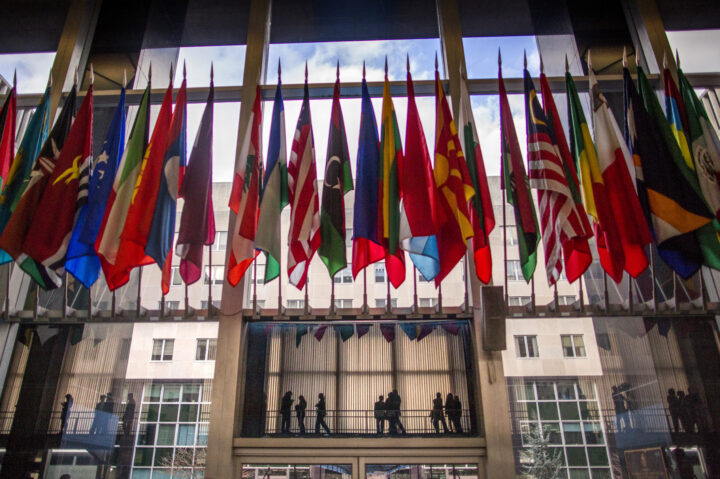
International flags at the State Department in Washington.
This P.M. edition is reserved for our premium subscribers like you — offering a forward-focused read on what we’re tracking now and what’s coming next.
Today’s Daily Overtime was curated by JI U.S. Editor Danielle Cohen-Kanik.
📡On Our Radar
Notable developments and interesting tidbits we’re tracking
President Donald Trump again dismissed reports that Iranian negotiators have cut off dialogue with the U.S. as “false and erroneous,” writing in a post on Truth Social that discussions have continued “four days ago, three days ago, two days ago, one day ago, and today”…
About the current talks, Secretary of State Marco Rubio told the Senate Foreign Relations Committee today that the U.S. is not offering Iran any sanctions relief in exchange for reopening the Strait of Hormuz, and that sanctions relief would only be on the table if Tehran makes concessions related to its nuclear program in the next phase of negotiations, Jewish Insider’s Marc Rod reports…
The Trump administration sent a fresh slate of diplomatic nominations to the Senate for approval today, but noticeably absent was a full-throated push to fill critical ambassadorial vacancies across the Middle East and North Africa, even as the Iran conflict has increased the need for coordination and dialogue in the region, JI’s Matthew Shea reports.
The newest list of nominees included only two names for the MENA area: Donald Blome, tapped to serve as assistant secretary of state for Near Eastern affairs — a role that acts as the principal advisor on U.S. foreign policy across the region — and Nick Oberheiden, nominated to be U.S. ambassador to Egypt…
In a highly unusual move, Trump appointed Bill Pulte, the director of the Federal Housing Finance Agency and chairman of Fannie Mae and Freddie Mac, as acting director of national intelligence, after DNI Tulsi Gabbard announced she will resign effective June 30. Pulte, who has no prior experience in an intelligence role, has been a staunch Trump loyalist and led some of the president’s retribution efforts against his political adversaries…
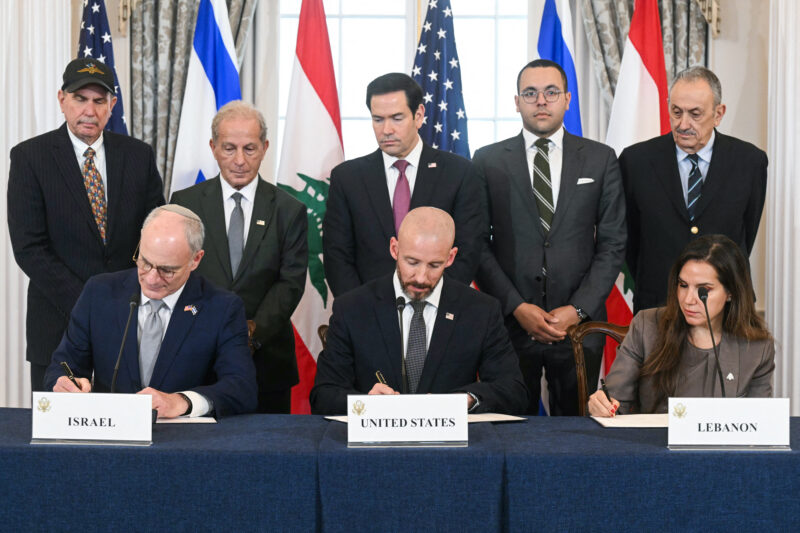
The fourth round of Israel-Lebanon diplomatic talks began at the State Department today, and is expected to last through tomorrow…
At an emergency meeting of the U.N. Security Council yesterday requested by France, every country except for the U.S. called for Israel to immediately withdraw from southern Lebanon and deescalate military hostilities in the country…
The heads of the Conference of Presidents of Major American Jewish Organizations met today with Egyptian President Abdel Fattah El-Sisi and Maj. Gen. Hassan Rashad, head of the country’s General Intelligence Service, in Cairo, where they discussed U.S.-Egypt relations and Middle East security…
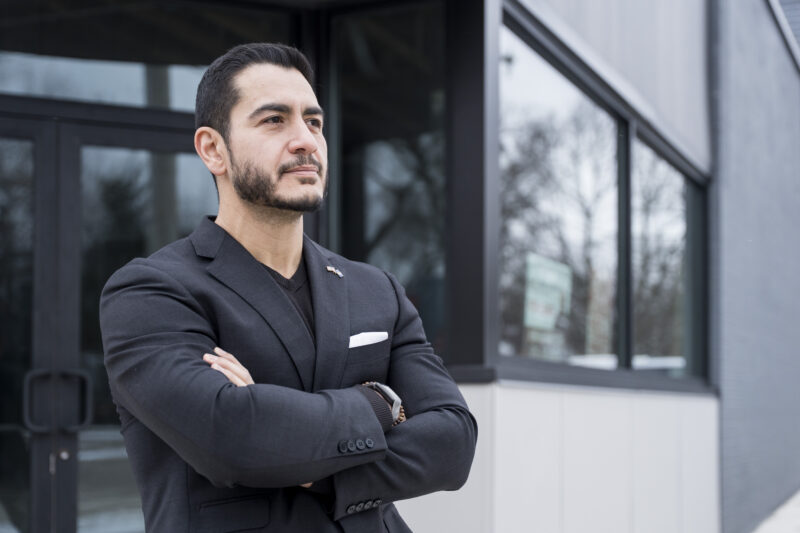
A new poll of 600 likely voters in the Michigan Senate Democratic primary conducted for the campaign of physician Abdul El-Sayed found him leading the pack with 34% of the vote, two months ahead of Election Day. Rep. Haley Stevens (D-MI) came in second with 31% and state Sen. Mallory McMorrow trailed at 19%…
Harmeet Dhillon, the assistant attorney general for civil rights, appearing at the American Jewish Committee’s Global Forum in Washington, condemned the “egregious examples of antisemitism that have transpired here at home on American soil” since the Oct. 7, 2023, attacks on Israel as “devastating and antithetical to our values as a nation,” JI’s Emily Jacobs reports…
The backlash to the participation of Israeli Finance Minister Bezalel Smotrich and other far-right Israeli politicians in the Israel Day on Fifth parade in New York City over the weekend continues: Mark Treyger, the head of the Jewish Community Relations Council of New York, which organizes the parade, told The New York Times that he had been blindsided by their attendance.
“There was a complete lack of transparency here,” Treyger said, adding that the Israeli consulate in New York had declined to share with him who would be attending. Dan Rosenthal, a top official at the UJA-Federation of New York, wrote on X that both New York City Mayor Zohran Mamdani and Smotrich “believe in a one-state solution”…
White House Correspondents’ Association President Weijia Jiang announced that the Correspondents’ Dinner will be rescheduled for July 24, after April’s event was cut short by a shooting attack. Trump said he will once again give remarks at the gathering, which will take place at the Waldorf Astoria hotel in Washington…
⏩ Tomorrow’s Agenda, Today
An early look at tomorrow’s storylines and schedule to keep you a step ahead
Keep an eye out in Jewish Insider for the results of today’s high-stakes Democratic primary in New Jersey’s 12th Congressional District, where plastic surgeon Adam Hamawy, whose past terror ties have raised red flags about his candidacy, is the favorite to win.
Secretary of State Marco Rubio will be back on the Hill testifying before the House Foreign Affairs Committee and a Senate Appropriations subcommittee, while Homeland Security Secretary Markwayne Mullin will appear before the House Homeland Security Committee.
State Department antisemitism envoy Yehuda Kaploun and the Argentine Embassy in Washington will co-host a commemoration ceremony at the U.S. Institute of Peace marking the 32nd anniversary of the bombing of the Argentine Israelite Mutual Association (AMIA), with remarks from House Foreign Affairs Committee Chairman Brian Mast (R-FL) and AMIA President Osvaldo Armoza.
The Jewish Democratic Council of America will host a candidate forum for the New York 12th Congressional District Democratic primary at the Streicker Center in New York City.
Stories You May Have Missed
Hard Ro To Hoe
Khanna’s hostile turn towards Israel divides Silicon Valley Jews

His critics once saw him as an ally, but fear he’s pandered to extremists as he raises his national profile ahead of the 2028 presidential election
GROWING THREAT
Cheap, deadly and hard to spot: Hezbollah’s drones create urgent security threat for Israel

‘You just have Israeli soldiers completely unaware. If you can’t hear the drone, if you don’t know that it’s there until it’s too late, it’s too late,’ said FDD’s David Daoud
Plus, Huckabee says next MOU will end Israel aid

Marwan Naamani/picture alliance via Getty Images
Pro-Iranian Hezbollah supporters wave the party flags during a ceremony in a southern Beirut suburb on May 5, 2026.
This P.M. edition is reserved for our premium subscribers like you — offering a forward-focused read on what we’re tracking now and what’s coming next.
Today’s Daily Overtime was curated by JI U.S. Editor Danielle Cohen-Kanik.
📡On Our Radar
Notable developments and interesting tidbits we’re tracking
President Donald Trump announced that Israel would not carry out strikes against Hezbollah in Beirut in exchange for the terror group halting its attacks on northern Israel, hours after Israeli Prime Minister Benjamin Netanyahu made a statement instructing the IDF to strike Hezbollah targets in the Lebanese capital.
While Trump said he had a “very good call with Hezbollah” as part of the negotiations, the Lebanese Embassy in Washington later clarified that the message was relayed through Lebanese officials rather than communicated directly from the president to the terror group.
Netanyahu said after the announcement that he had informed Trump that “if Hezbollah does not stop attacking our cities and civilians, Israel will strike terrorist targets in Beirut,” while the IDF will continue hitting targets in southern Lebanon as planned…
The news came hours after Iranian state-linked media reported that Tehran had suspended negotiations with the United States and warned it could direct its proxies, including the Houthis in Yemen, to target shipping through the Bab el-Mandeb Strait — another critical global trade route — in response to Israel‘s continued military operations against Hezbollah…
Trump disputed the reporting, writing on Truth Social this afternoon that “talks are continuing, at a rapid pace, with the Islamic Republic of Iran,” despite having told NBC News earlier in the day that he would welcome a pause in talks if the reports were accurate. “I think we’ve been talking too much, if you want to know the truth,” Trump told the outlet. “I think going silent would be very good, and that could be for a long time”…
Amid the diplomatic dance, military operations have escalated: The U.S. struck several sites in Iran over the weekend after Iran downed an American MQ-1 drone. U.S. forces also intercepted two Iranian ballistic missiles targeting American forces based in Kuwait last night, CENTCOM said…
Michael Makovsky, the president and CEO of the Jewish Institute for National Security of America, criticized the Trump administration’s recent handling of the U.S. war in Iran, telling Jewish Insider’s Emily Jacobs on Friday, before the events of this weekend, that the “U.S. has lost the plot on Iran” and that a deal with the regime now “wouldn’t be worth the paper it’s written on”…
Responding to claims from former National Counterterrorism Center head Joe Kent that U.S. aid to Israel does not confer benefits to America, U.S. Ambassador to Israel Mike Huckabee defended the relationship and said the next U.S.-Israel memorandum of understanding, after the current one expires in 2028, will end aid to Israel and “be based on trade”…
Republican Jewish Coalition CEO Matt Brooks celebrated his group’s role in ousting Rep. Thomas Massie (R-KY) in his primary election earlier this month at the organization’s “America 250”-themed gala held last night in Manhattan, JI’s Haley Cohen reports.
“Being anti-Israel in today’s Republican Party is not — unlike the Democratic Party — a path to success,” said Brooks, who called defeating Massie a “critical victory” for the direction of the GOP and conservative movement…
Pennsylvania Gov. Josh Shapiro told CNN that he believes Israel is being unfairly singled out for criticism as a Jewish state: “For those who do not want there to be a Jewish state, oftentimes they will predicate their views on this notion that being grounded in a religion and being a democracy can’t coexist,” he said.
“I think it’s important to point out the hypocrisy of that view when there are 46 majority Muslim nations, 23 of which have Islam as their official religion … and only one has Judaism as their official religion, and yet we’re focused on just the Jewish state,” Shapiro continued. (Important to note: While Israel has a Basic Law declaring it the nation-state of the Jewish people, the country does not have an official state religion)…
El Al announced it will restart nonstop flights between Israel and San Francisco on Oct. 25, citing high demand for the route between the tech hubs, which was paused in 2020 at the beginning of the COVID-19 pandemic. The three weekly flights will be numbered LY49, in a nod to the San Francisco 49ers NFL team…
The Israeli Ministry of Defense said France has barred Israeli officials from participating in the Eurosatory defense show in Paris later this month. Israeli defense firms, which can participate but will not have a dedicated Israeli national pavilion, can only showcase air-defense systems and are prohibited from displaying offensive weapons systems…
⏩ Tomorrow’s Agenda, Today
An early look at tomorrow’s storylines and schedule to keep you a step ahead
Keep an eye out in Jewish Insider for coverage of tomorrow’s key primary elections across the country — including House races in New Jersey, California, Montana, Iowa, New Mexico and South Dakota, California’s gubernatorial race and Montana’s open-seat Senate race — several of which will serve as a referendum on the Democratic Party’s progressive versus establishment divide.
On the Hill, Secretary of State Marco Rubio will appear before the Senate Foreign Relations Committee and the House Appropriations Committee. Homeland Security Secretary Markwayne Mullin will testify at a Senate Appropriations Committee hearing, and acting Attorney General Todd Blanche will speak at a House Appropriations Committee hearing. The Senate Select Committee on Intelligence will also hold a closed intel hearing.
Israeli Prime Minister Benjamin Netanyahu and President Isaac Herzog will attend a command change ceremony at Mossad headquarters to inaugurate Maj. Gen. Roman Gofman as the new head of the agency, after the Israeli High Court rejected petitions today calling for Gofman’s appointment to be annulled on ethical and procedural grounds.
The Israel Democracy Institute will kick off its two-day Eli Hurvitz Conference on Economy and Society in Jerusalem.
Stories You May Have Missed
ANGELENO AFFAIRS
Wide-open Los Angeles mayoral race could hinge on support from Jewish voters

The race features an embattled Mayor Karen Bass facing a spirited challenge from her right in reality TV star Spencer Pratt, and from her left in City Councilmember Nithya Raman
BIG SKY BATTLE
Most Montana Democrats running for Rep. Ryan Zinke’s seat slam U.S.-Israel relationship
Two of the four Democrats in the race have also faced scrutiny over antisemitic activity online
Plus, Jill Biden's advice to Joe on Bibi
Tasos Katopodis/Getty Images
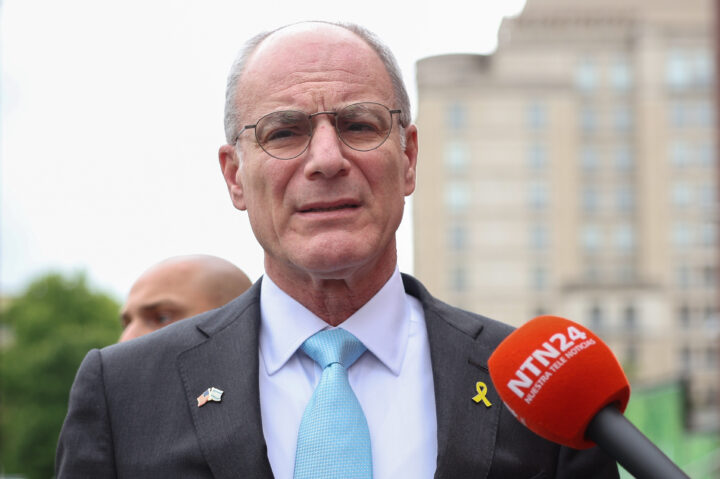
Israeli Ambassador to the United States Yechiel Leiter
This P.M. edition is reserved for our premium subscribers like you — offering a forward-focused read on what we’re tracking now and what’s coming next.
Today’s Daily Overtime was curated by JI U.S. Editor Danielle Cohen-Kanik.
📡On Our Radar
Notable developments and interesting tidbits we’re tracking
Despite recent clashes between the U.S. and Iran — including Iranian missile and drone attacks around the region last night — negotiators from both countries have reportedly agreed to terms for a 60-day ceasefire with continued negotiations on Iran’s nuclear program, U.S. sources confirmed to the White House press pool.
President Donald Trump has not yet given his stamp of approval to the deal, Axios reports, and has told mediators he wants a couple of days to consider it…
In the meantime, Iranian state media reported a renewed exchange of fire in the Strait of Hormuz this afternoon, as Iranian forces were said to have fired “warning shots” at four vessels and engaged air defenses against a “hostile aircraft”…
Treasury Secretary Scott Bessent warned that the U.S. “will not tolerate any effort to impose a tolling system in the Strait of Hormuz,” specifically cautioning Oman that the Treasury Department will “aggressively target” any actors involved in facilitating such tolls. Bessent said during a press conference this afternoon that he spoke with the Omani ambassador to the U.S. this morning who assured him Muscat has no plans to do so…
In an excerpt of her forthcoming memoir, View From the East Wing, shared with The Atlantic, former First Lady Jill Biden recalls leaving her husband notes on the bathroom mirror during his time as president, including her views on Israel’s war in Gaza. “Net has to stop,” she once wrote, in a reference to Israeli Prime Minister Benjamin Netanyahu. Before a phone call between him and President Joe Biden, she advised, “Be strong. Don’t let BN use your goodness”…
A week after describing J Street as “a cancer within the Jewish community,” Israeli Ambassador to the U.S. Yechiel Leiter doubled down on his critique of the organization, stating that the liberal advocacy group’s recent actions are “decidedly not pro-Israel,” Nira Dayanim reports for Jewish Insider.
Speaking today at the Re-Charging Reform Judaism summit at the Stephen Wise Free Synagogue in Manhattan, Leiter was resolute, but more measured in his criticism: “I believe the tent, as we call it, should be wide and as inclusive as possible. But it cannot be inclusive to those who are contributing to the efforts of those seeking the collapse of the tent,” he said…
Rep. Jared Moskowitz (D-FL) announced today that he would seek reelection in a new South Florida House district recently drawn to favor Republicans, after his own was largely erased, JI’s Matthew Kassel reports, setting the stage for what is expected to be a costly and competitive race…
Rep. Josh Gottheimer (D-NJ) met with UAE National Security Advisor Tahnoon bin Zayed Al Nahyan in Abu Dhabi today, where the two “reviewed the distinguished strategic relations” between the UAE and U.S…
Kip Talley, the chief of staff to Rep. Mike Collins (R-GA) — who is currently the front-runner for the GOP runoff in Georgia to take on Sen. Jon Ossoff (D-GA) — used his position to push to free Charles Johnson, a notorious Holocaust denier who was jailed for contempt of court, according to text messages reviewed by Slate. Talley sent the messages in a group chat that also included neo-Nazis Nick Fuentes and Richard Spencer…
A new Democratic super PAC called Project 218 dropped nearly $400,000 in support of progressive organizer Sue Altman in New Jersey’s 12th Congressional District Democratic primary, just days ahead of the election next week. The paid ads are intended to counter the nearly $1.5 million spent by the anti-Israel American Priorities super PAC in support of Altman’s opponent, Adam Hamawy, who has faced scrutiny over his work with a group tied to Al-Qaida…
New York City Mayor Zohran Mamdani is considering endorsing democratic socialist Darializa Avila Chevalier in her insurgent bid to unseat Rep. Adriano Espaillat (D-NY), according to The New York Times, changing course from his pledge to back Espaillat, which came after the congressman endorsed Mamdani in the mayoral general election…
UJA-Federation of New York purchased 20,000 bags of Bamba peanut snacks in response to the Park Slope Food Coop’s decision to boycott Israeli-made products, which the federation intends to distribute at the Israel Day parade in the city on Sunday…
Democratic Michigan Gov. Gretchen Whitmer, seen as a potential presidential contender, ruled out a run for the White House in the next election, telling a local Fox outlet, “I think there will be a robust group of people running for president. I will not be one of them in 2028”…
CBS Editor-in-Chief Bari Weiss tapped former New York Times and Vanity Fair contributor and documentarian Nick Bilton as executive producer of “60 Minutes,” after the former head of the program, Tanya Simon, was fired today amid disagreements over issues including editorial independence of the top-rated weekly news program…
Mutra, a high-end kosher restaurant in North Miami run by Israeli chef Raz Shabtai, received a Michelin star today, which the restaurant said makes it the first fully kosher establishment to do so…
⏩ Tomorrow’s Agenda, Today
An early look at tomorrow’s storylines and schedule to keep you a step ahead
Keep an eye out in Jewish Insider for a look at how Israel and antisemitism have become a flashpoint in the Democratic primary for Montana’s 1st Congressional District. A sneak peek:
“Though the district leans Republican, that hasn’t stopped a majority of Democrats in the field from racing to the left on Israel policy, a dynamic that was on clear display at a recent debate.”
Rep. Jim Clyburn (D-SC) will host his annual Famous Fish Fry tomorrow in Columbia, S.C., an event that has evolved into a key stop for Democratic presidential hopefuls. Among those with an eye on 2028, Rep. Ro Khanna (D-CA) and Kentucky Gov. Andy Beshear are expected to attend the gathering.
Israeli and Lebanese military representatives are expected to hold discussions at the Pentagon tomorrow, Israeli media reports, without diplomatic representation.
Defense Secretary Pete Hegseth is in Singapore, where he will deliver remarks at the Shangri-La Dialogue, a high-level defense summit, on Saturday.
The annual “Israel Day on Fifth” parade will take place in New York City on Sunday, with organizers predicting “one of the biggest turnouts ever” as well as the largest-ever Knesset delegation, JI’s Will Bredderman reports. Breaking with 61 years of tradition, Mayor Zohran Mamdani will skip the festivities, while NYPD Commissioner Jessica Tisch will serve as grand marshal.
Elsewhere in the city on Sunday, the Republican Jewish Coalition will hold its gala celebrating the forthcoming 250th anniversary of the United States with speakers including U.S. Ambassador to the U.N. Mike Waltz, Israeli Ambassador to the U.N. Danny Danon, Knesset Speaker Amir Ohana, Rep. Randy Fine (R-FL) and Republican Nassau County Executive Bruce Blakeman, who is running for New York governor.
In Washington, the American Jewish Committee’s Global Forum kicks off on Sunday with a plenary featuring former Israeli hostages Keith and Aviva Siegel, Vanderbilt University Chancellor Daniel Diermeier and AJC CEO Ted Deutch.
We’ll be back with the Daily Overtime on Monday. Shabbat Shalom!
Stories You May Have Missed
SCOOP
DSA quietly poised to make inroads in NYC’s congressional delegation
Two DSA-backed challengers have a credible shot at winning seats, while Rep. Dan Goldman is down in polls against Brad Lander
Q&A
State Dept official Sarah Rogers urges protecting free speech while fighting antisemitism
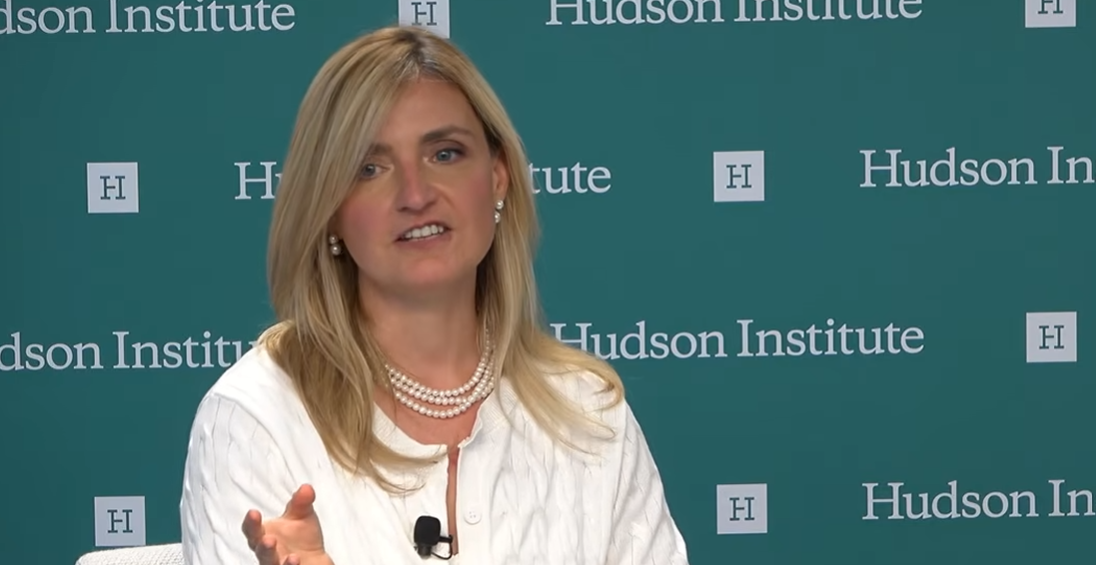
‘The Nazis may have the right to post, but also the Nazis are bad and sick and stupid,’ Rogers told JI
Plus, airlines push back direct flights to TLV
TIMOTHY A. CLARY / AFP via Getty Images
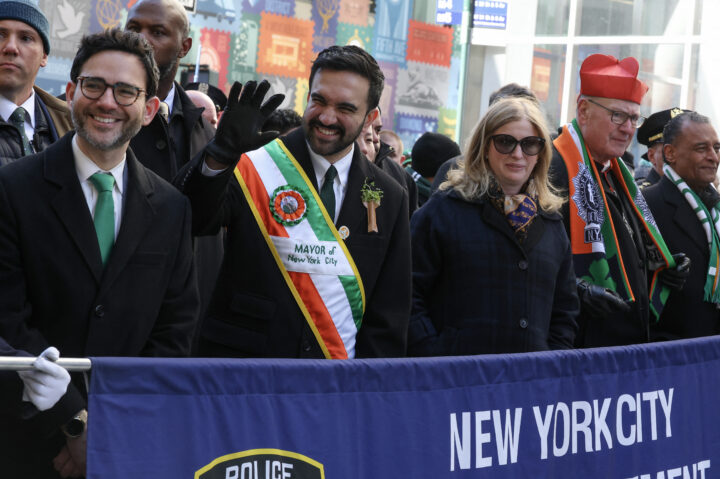
New York City Mayor Zohran Mamdani (2L), New York City Police Commissioner Jessica Tisch (2R) and Cardinal Timothy Dolan (R) participate in annual St. Patrick's Day Parade in New York on March 17, 2026.
This P.M. edition is reserved for our premium subscribers — offering a forward-focused read on what we’re tracking now and what’s coming next. Please don’t hesitate to share your thoughts and feedback by replying to this email.
📡On Our Radar
Notable developments and interesting tidbits we’re tracking
Joe Kent, director of the National Counterterrorism Center, resigned from his role today over opposition to the war in Iran, baselessly alleging that Israel had coerced the United States into what he characterized as a misguided military conflict, Jewish Insider’s Matthew Kassel reports.
In a letter to President Donald Trump, Kent, a former Green Beret who had reported to Director of National Intelligence Tulsi Gabbard, wrote that he “cannot in good conscience support the ongoing war in Iran,” claiming that the Islamic Republic “posed no imminent threat to our nation, and it is clear that we started this war due to pressure from Israel and its powerful American lobby.”
Kent, a hard-right former congressional candidate with isolationist foreign policy leanings, has previously promoted conspiracy theories, echoed pro-Russia messaging and associated with white supremacists and neo-Nazis, among other controversies. He’s now expected to appear on the podcast of his ally and friend Tucker Carlson…
After being largely rejected by foreign leaders on his repeated calls to assist in the war with Iran, Trump claimed in a post on Truth Social that, “Because of the fact that we have had such Military Success, we no longer ‘need,’ or desire, the NATO Countries’ assistance — WE NEVER DID! … WE DO NOT NEED THE HELP OF ANYONE!”
Asked about the timeline of the war by reporters in the Oval Office this afternoon, Trump said, “We’re not ready to leave yet, but we will be leaving in the … very near future”…
Reports indicate Iran’s security forces, despite being badly battered by the U.S. and Israel, are conducting renewed crackdowns on the Iranian public and potential dissenters. At least 500 people have been arrested since the start of the war, and new security checkpoints are being deployed for regime oversight…
Major U.S. airlines have extended their suspensions of direct flights to Tel Aviv as the war continues, JI’s Haley Cohen reports, with both United and Delta airlines not offering any direct flights until June.
The first direct flight on United Airlines between Newark Liberty International Airport and Ben Gurion Airport is available on June 16, while the first direct New York to Tel Aviv flight on Delta Airlines is available June 1. United’s direct flights from Israel to Chicago O’Hare and Washington Dulles International Airport are also suspended…
U.S. Special Envoy to Syria Tom Barrack denied reports that the U.S. is encouraging Syria to deploy forces into eastern Lebanon to help disarm Hezbollah, as the IDF begins to carry out ground incursions in the south of the country…
Israeli Prime Minister Benjamin Netanyahu continues to post “proof of life” videos on social media amid internet conspiracy theories that he has been killed and replaced by a look-alike…
Trump’s decision to withhold his endorsement in the Texas Senate GOP runoff all but guarantees that Sen. John Cornyn (R-TX) and Texas Attorney General Ken Paxton will both appear on the May 26 runoff ballot, as neither have dropped out of the race ahead of this evening’s deadline…
Maine Gov. Janet Mills released her first attack ad against her Democratic primary rival in the race for U.S. Senate, oyster farmer Graham Platner, highlighting social media comments he made about sexual assault that have marred his campaign. In the ad, several women read disparaging comments made by Platner on Reddit over a decade ago relating to rape, and a picture of Platner’s Nazi tattoo — which he has since had covered — is displayed under a magnifying glass. “The closer you look, the worse it gets,” the ad’s narrator says…
The Wall Street Journal spotlights the gamble being made by Illinois Gov. JB Pritzker as he expends political capital (and actual capital) backing his lieutenant governor, Juliana Stratton, in the state’s Democratic primary for U.S. Senate taking place today. Pritzker’s involvement has drawn the ire of the Congressional Black Caucus, which is backing Rep. Robin Kelly (D-IL), even though both Stratton and Kelly are Black. The race is seen as a test of Pritzker’s political clout in his home state…
New York City Mayor Zohran Mamdani took the occasion of St. Patrick’s Day and the presence of former Irish President Mary Robinson in New York to accuse Israel of committing genocide and to praise Robinson’s controversial tenure as the United Nations’ high commissioner for human rights, JI’s Will Bredderman reports.
“I think also of how she stood steadfast alongside the people of Palestine,” the mayor said in listing Robinson’s accomplishments. “I say this as over the past few years as we’ve witnessed a genocide unfold before our eyes, there has been deafening silence from so many. For those who have long cared about universal human rights and the extension of them to Palestinians, silence, however, is nothing new. For Palestinians are so often left to weep alone. Yet former President Robinson has never been silent”…
⏩ Tomorrow’s Agenda, Today
An early look at tomorrow’s storylines and schedule to keep you a step ahead
Keep an eye out in Jewish Insider for a rundown of the results of Illinois’ Democratic primaries, where polls close at 8 p.m. ET.
Director of National Intelligence Tulsi Gabbard is expected to face questions over the departure of her deputy, Joe Kent, at the Senate Intelligence Committee’s hearing on worldwide threats, where she will testify alongside other intelligence agency heads. Gabbard said today after Kent’s resignation that, as commander-in-chief, Trump “concluded that … Iran posed an imminent threat and he took action based on that conclusion,” but did not say whether she agrees herself in that assessment, something she is likely to be pressed on tomorrow.
The Senate Foreign Relations Committee will receive a classified briefing on the war in Iran from State Department intelligence officials.
The Senate Homeland Security & Governmental Affairs Committee will hold a nomination hearing for Sen. Markwayne Mullin (R-OK) to be secretary of homeland security after Trump’s ouster of Secretary Kristi Noem.
The U.S. Commission on International Religious Freedom will hold a hearing on rising antisemitism abroad.
Stories You May Have Missed
DOMESTIC FRONT
As war wages in Iran, Justice Dept. reaches ceasefire with Tehran-backed network in Manhattan
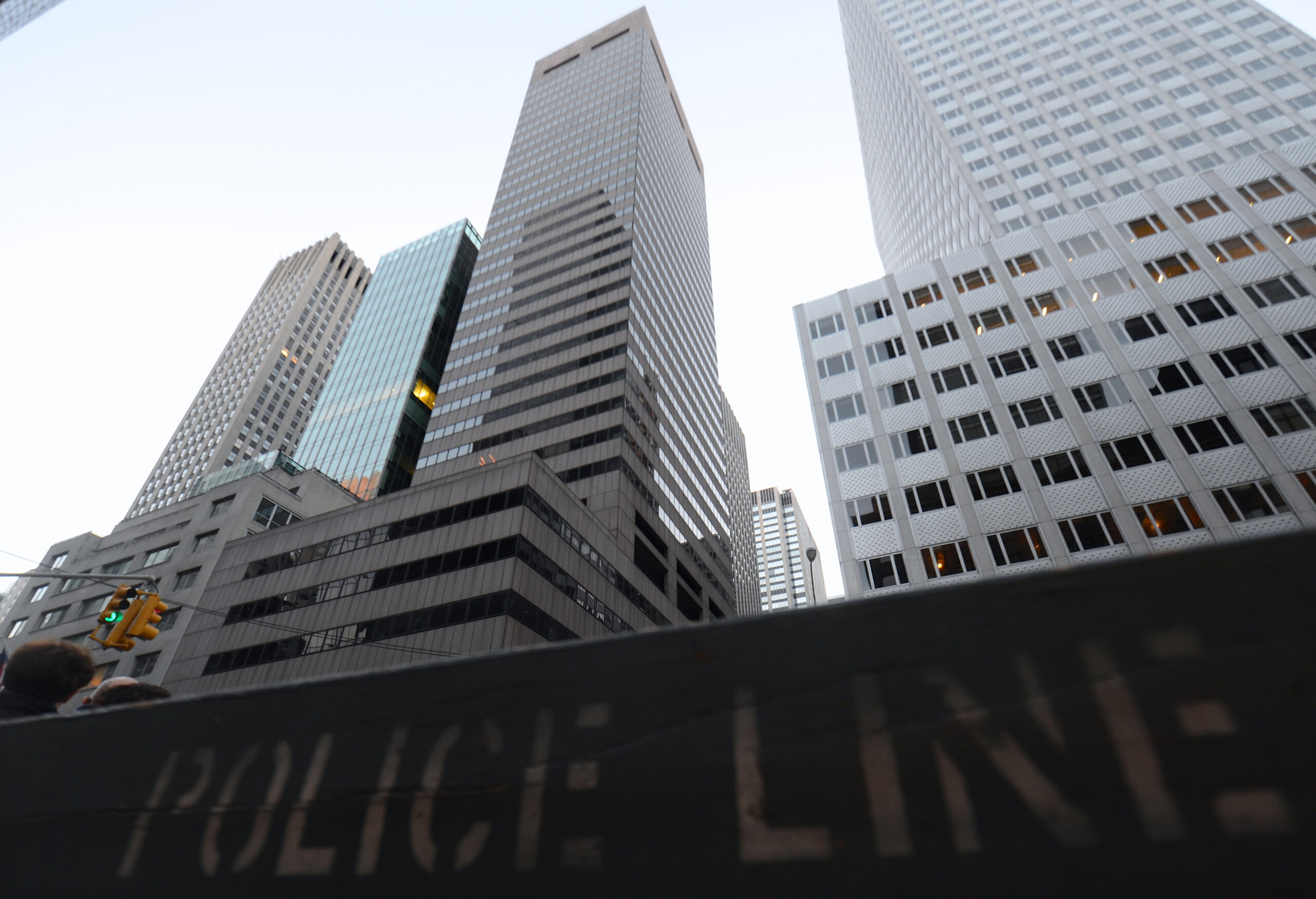
Eighteen-year legal fight over the Iran-tied Alavi Foundation ends with a new group with similar leadership taking over its assets — and NYC skyscraper
NAMING NAMES
Jonathan Greenblatt calls out Chris Van Hollen, Ro Khanna at ADL’s national conference
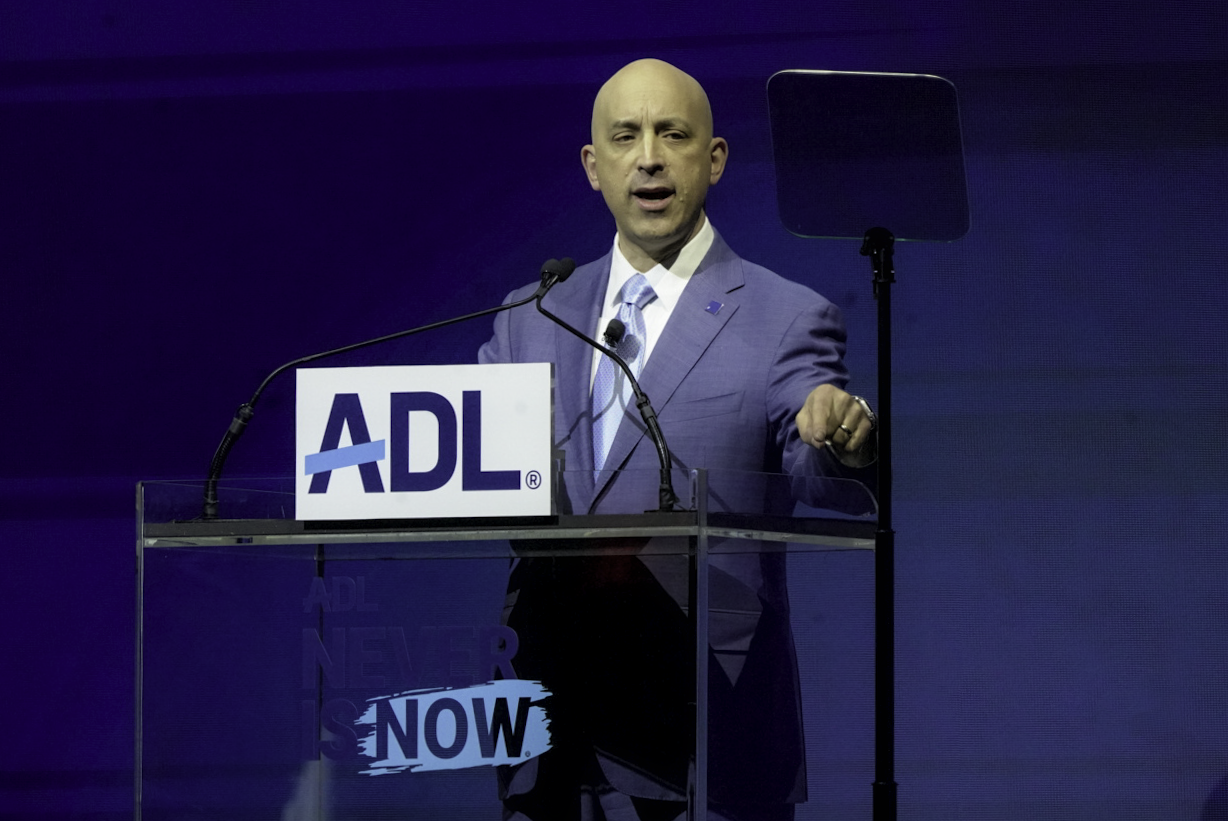
The ADL’s annual summit comes amid high-profile antisemitic attacks during the Iran war
And Europe to Trump: Iran is 'not our war'
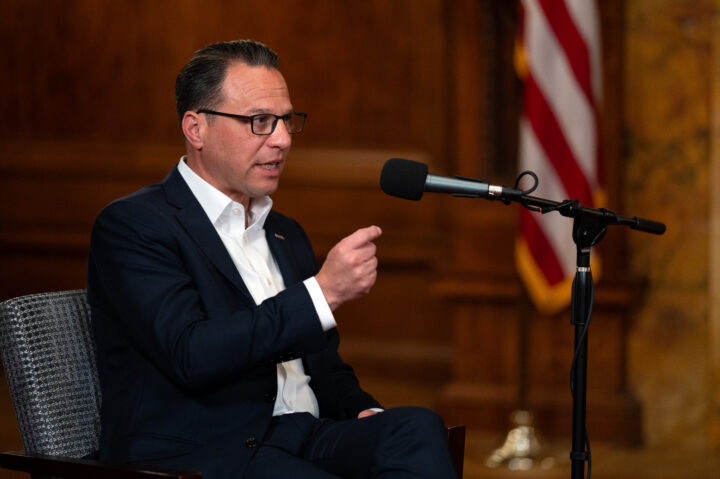
Peter W. Stevenson/The Washington Post via Getty Images
Pennsylvania Gov. Josh Shapiro sits for an interview at the Pennsylvania State Capitol on June 11, 2025.
This P.M. edition is reserved for our premium subscribers — offering a forward-focused read on what we’re tracking now and what’s coming next. Please don’t hesitate to share your thoughts and feedback by replying to this email.
📡On Our Radar
Notable developments and interesting tidbits we’re tracking
European countries are largely rebuffing President Donald Trump’s calls to join the war with Iran and help secure the largely impassable Strait of Hormuz. German Defense Minister Boris Pistorius said today, “This is not our war; we did not start it,” while the French foreign ministry said, “Posture has not changed: defensive it is.” Poland, the U.K. and Italy similarly made clear they would not be participating in an offensive capacity…
On potential negotiations with Iran, Trump told reporters, “We don’t even know their leaders. We have people wanting to negotiate. We have no idea who they are.” He said new Supreme Leader Mojtaba Khamenei is “badly disfigured” and noted it’s “unusual” he hasn’t recently been seen in public.
Khamenei narrowly survived an airstrike on his compound on Feb. 28 as he briefly stepped outside, according to leaked audio obtained by The Telegraph, which reportedly contains remarks by an official in the office of deceased Ayatollah Ali Khamenei to senior clerics…
IDF spokesperson Lt. Col. Nadav Shoshani denied reports that Israel is running low on missile interceptors, saying there is no “urgent problem” and that the military re-equips its supplies “in real time”…
Debris and missile fragments from Iranian attacks fell in the Old City of Jerusalem near several sensitive sites including the Western Wall Plaza and feet away from the Church of the Holy Sepulchre…
Twenty-three Democratic members of the House Foreign Affairs Committee wrote to Trump requesting a public hearing with Special Envoy Steve Witkoff and Jared Kushner to understand their role in “lead[ing] diplomatic engagement with Iran”…
Representatives of the U.S.-led Board of Peace met with Hamas officials over the weekend in Cairo, Egypt, Reuters reports, in an effort to keep ceasefire negotiations on track even as the war with Iran proceeds. Aryeh Lightstone, an aide to Witkoff, reportedly represented the U.S. delegation, with more meetings expected this week…
Times of Israel reporter Emanuel Fabian chronicles his experience receiving death threats from users of the prediction market platform Polymarket over his reporting on a recent Iranian missile strike in the city of Beit Shemesh…
Trump announced that Susie Wiles, his White House chief of staff, has been diagnosed with early stage breast cancer and will receive treatment while remaining in her post…
Pennsylvania Gov. Josh Shapiro, a potential 2028 presidential contender, tested out his measured, pro-Israel messaging in a series of recent podcast interviews, Jewish Insider’s Gabby Deutch reports. In his appearances on “Pod Save America” and “Higher Learning,” Shapiro made the case that, as the starting point for any public political conversation about Israel, the fact of Israel’s right to exist as a Jewish state must be respected.
“I think what is dangerous here … is for those who think Israel doesn’t have a right to exist in [the] conversation. That to me is a recipe for permanent war,” Shapiro told “Higher Learning” host Van Lathan. He also pushed back on California Gov. Gavin Newsom, his potential 2028 opponent, for saying Israel could be described as an apartheid state…
Rep. Mike Lawler’s (R-NY) reelection campaign is employing a community activist, Darrell Davis, who has criticized Democratic politicians, including Rep. George Latimer (D-NY) and a county executive, for taking money from pro-Israel groups and traveling to Israel, Politico reports.
Davis accused Latimer of being on the receiving end of a “Jewish organized spending spree” and taking “about $30 million to buy a congressional seat, to represent the interests of Israel,” which he called “a horrific threat to democracy.” About Westchester County Executive Ken Jenkins’ trip to Israel, Davis wrote, “Why are they in Israel?? What more proof do people need that black Dems don’t give a sh*t about you. They are up for sale”…
The day before her primary election in Illinois’ 9th Congressional District, far-left social media influencer Kat Abughazaleh removed language from her campaign website claiming “There is no acceptable scenario that leaves Hamas in charge of the Gaza Strip,” after she had faced criticism from the Hamas-friendly outlet Drop Site News over its inclusion. Her site says that the earlier language on the page “did not accurately reflect Kat’s views or the values of this campaign”…
And the closing drama in the Illinois Senate Democratic primary is Lt. Gov. Juliana Stratton’s claim that she received a deathbed endorsement from civil rights leader Rev. Jesse Jackson, which the Jackson family said today he had never finalized. The late reverend’s support is seen as meaningful in the race, which includes multiple prominent Black candidates, as well as Rep. Raja Krishnamoorthi (D-IL)…
The Atlantic spotlights one of the main obstacles facing Maine Gov. Janet Mills in her Democratic primary for U.S. Senate against oyster farmer Graham Platner: her age. Mills, 78, “does not have a dicey Reddit history or a recently covered-over Nazi tattoo” but is still trailing in the polls, even as Platner continues to be plagued by scandals. “One likely factor: If she is elected, Mills would be the oldest freshman senator in history”…
⏩ Tomorrow’s Agenda, Today
An early look at tomorrow’s storylines and schedule to keep you a step ahead
Keep an eye out in Jewish Insider for a look at the tense runoff in the Democratic primary for Texas’ 35th Congressional District, where a fringe conspiracy theorist eked out a narrow victory over a sheriff’s deputy backed by the pro-Israel establishment.
All eyes will be on the Prairie State tomorrow, as several high-profile Democratic primaries will be decided across Illinois. Read JI’s coverage of the races to watch.
On the Hill, the House Intelligence Committee will hold its annual hearing on worldwide threats, with testimony from Director of National Intelligence Tulsi Gabbard, CIA Director John Ratcliffe, FBI Director Kash Patel, NSA Acting Director William Hartman and DIA Director James Adams.
The House Foreign Affairs Committee will hold a hearing on reforming U.S. defense sales.
Stories You May Have Missed
BREAKING POINT
Antisemitism meets America’s ‘thoughts and prayers’ ritual
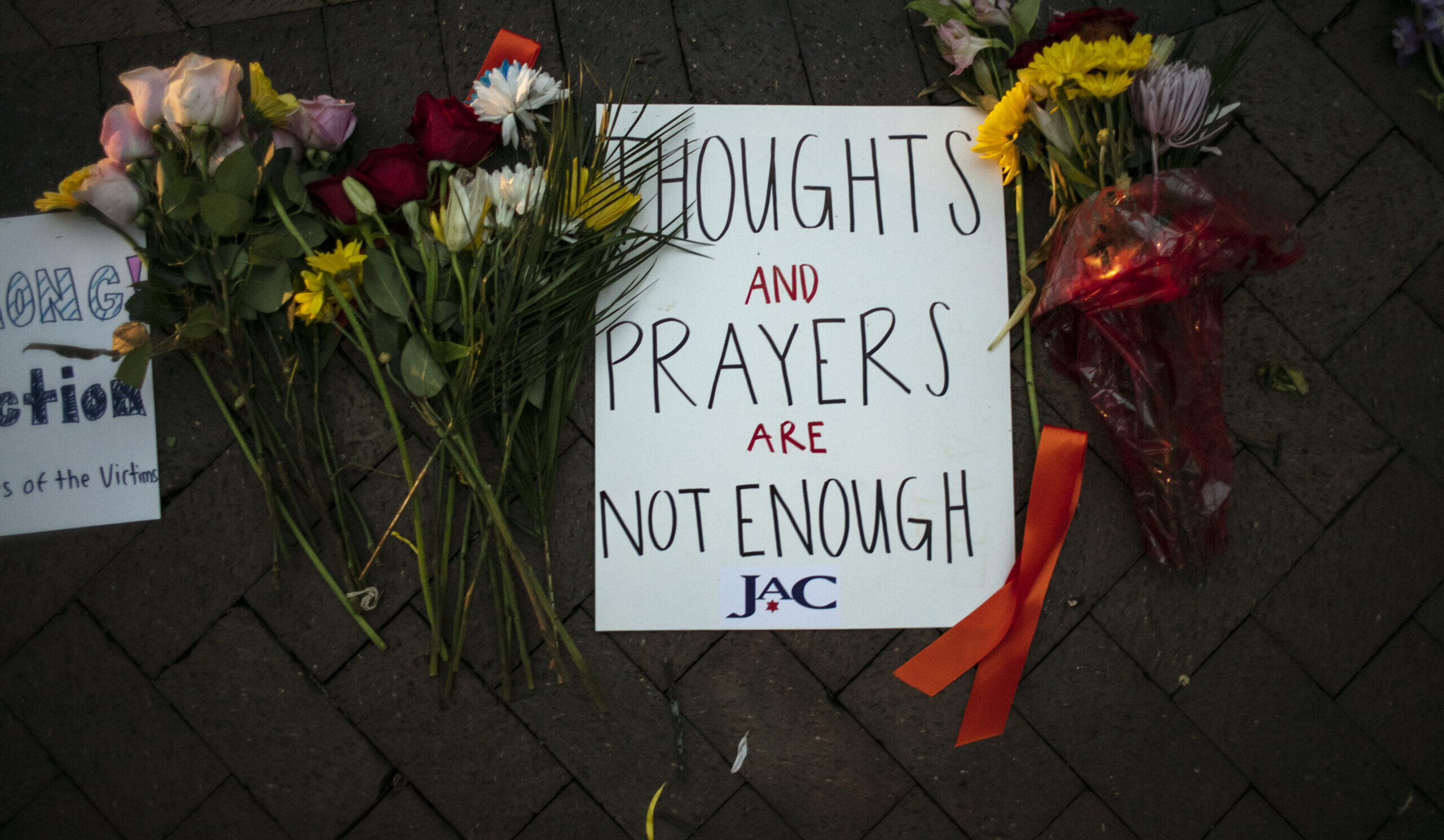
Democrats began calling out those who traffic in antisemitic rhetoric when they offered platitudes after an attack on a Michigan synagogue
UNDER PRESSURE
Ro Khanna facing new Democratic challenger hitting him from the political center
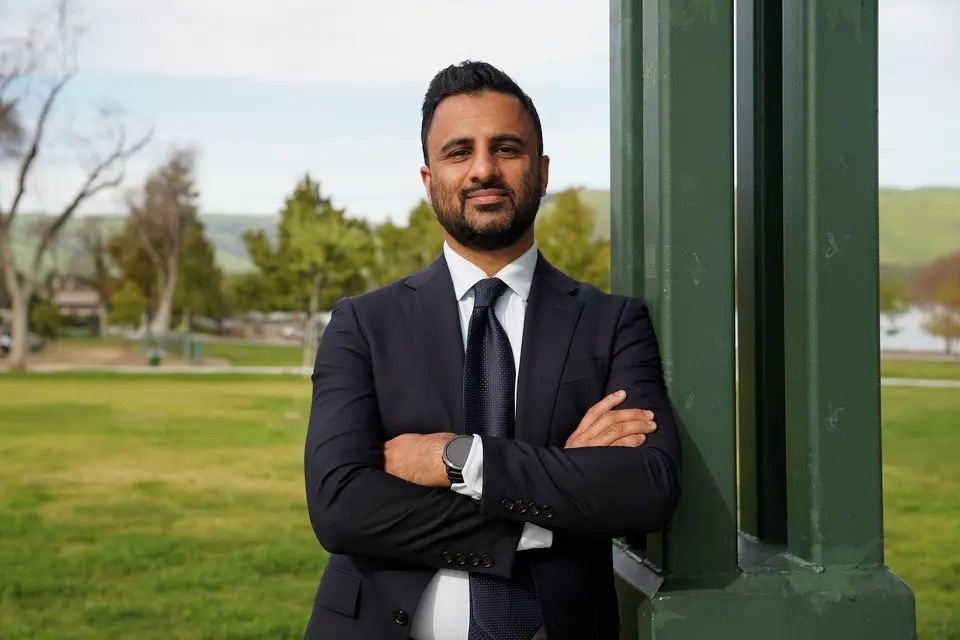
Tech entrepreneur Ethan Agarwal: ‘He thinks being racist against Jewish people is going to help him win the American left. I don’t care if he’s right. I just think it’s unethical and immoral’
Plus, Ro Khanna defends Hasan Piker amid Mich. attack

Emily Elconin/Getty Images
Law enforcement respond near Temple Israel following reports of an active shooter on March 12, 2026 in West Bloomfield, Mich.
This P.M. edition is reserved for our premium subscribers — offering a forward-focused read on what we’re tracking now and what’s coming next. Please don’t hesitate to share your thoughts and feedback by replying to this email.
📡On Our Radar
Notable developments and interesting tidbits we’re tracking
A suspect was killed during an active shooter and car ramming incident at Temple Israel in the heavily Jewish Detroit suburb of West Bloomfield Township, Mich., this afternoon, Jewish Insider’s Haley Cohen reports.
Armed synagogue security engaged the suspect with gunfire, and a security guard who was knocked unconscious is expected to recover. A preschool that was in session at the time of the incident was evacuated safely. Authorities are continuing to investigate the suspect’s identity and motive.
“Everyone is safe. All 140 students in our Susan and Harold Loss Early Childhood Center, our amazing staff, our courageous teachers, and our heroic security personnel are all accounted for and safe,” the synagogue wrote on social media. “This note is coming to you before we know anything about our future programming or services, or any investigation. We wanted you to know we are safe, and we love you all”…
Mojtaba Khamenei, Iran’s new supreme leader, issued his first public statement today that indicates he’s as hard-line as his late father: Khamenei demanded the U.S. shut all its military bases in the Gulf immediately and said he’ll continue to target the Strait of Hormuz in order to “pressure the enemy.” His statement was read on state media indirectly by a presenter, as reports indicate the 56-year-old was injured in an Israeli strike and he has not been seen in public since.
President Donald Trump did not seem dissuaded — he posted on Truth Social, “when oil prices go up” the U.S. makes “a lot of money,” but “of far greater importance to me, as President, is stopping an evil Empire, Iran, from having Nuclear Weapons”…
Following a Republican convening this week focused on combating right-wing antisemitism, the center-left think tank Third Way urged fellow Democrats to follow the lead of Sen. Ted Cruz (R-TX) in calling out antisemitism within their own party.
“We certainly believe that Cruz was right and our side has a real antisemitism problem too that too many Democrats are failing to face squarely,” Matt Bennett, the group’s executive vice president for public affairs, told JI’s Gabby Deutch.
Similar comments from Third Way staff sparked a public clash with Rep. Ro Khanna (D-CA), who defended controversial left-wing figures including antisemitic streamer Hasan Piker and said the true issue lies with the “neocons” in the party…
Less than a week until primary election day in Illinois’ 9th Congressional District, outside spending in the race is approaching $9 million, the majority of which is aimed at boosting state Sen. Laura Fine, a pro-Israel Democrat. Nearly half of all outside spending has come from the Elect Chicago Women super PAC, widely rumored to be connected to pro-Israel groups.
Another PAC rumored to be connected to AIPAC, Chicago Progressive Partnership, has spent over $1 million attacking anti-Israel social media influencer Kat Abughazaleh, including a new ad that spotlights her support from James “Fergie” Cox Chambers Jr., a communist political activist and scion of the billionaire Cox family often involved in radical-left causes…
A new poll commissioned by the far-left advocacy group Justice Democrats finds Rep. Steve Cohen (D-TN) in a competitive race for his seat — he’s now neck-and-neck with his primary opponent, state Rep. Justin Pearson. Pearson, a progressive legislator, gained public attention for being expelled from the Statehouse in 2023 for participating in a gun control protest on the floor…
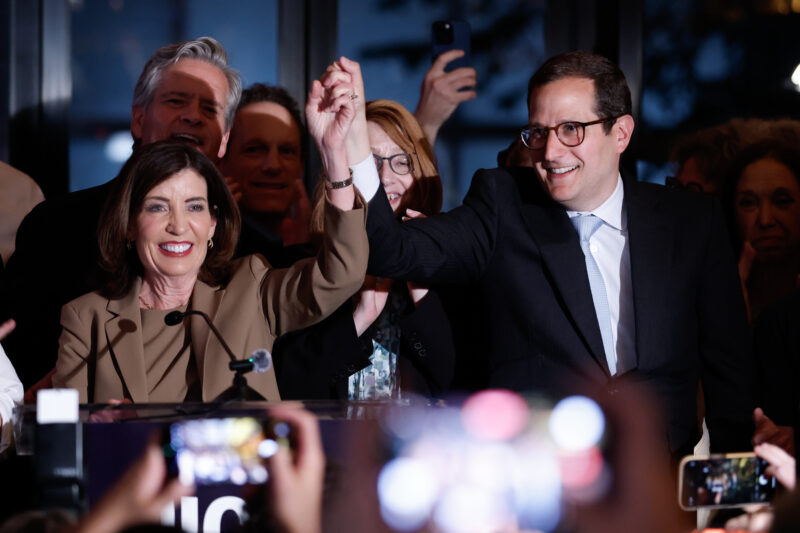
Former New York City Mayor Michael Bloomberg endorsed Assemblyman Micah Lasher, his former staffer, in the hotly contested primary race for New York’s 12th Congressional District today, calling him “a key part of our team in City Hall.” Bloomberg plans to spend “millions of dollars” on a super PAC and ad campaign to boost Lasher, The New York Times reports, a notable effort by the popular former mayor to elevate Lasher among the pack…
Trump has delayed endorsing Sen. John Cornyn (R-TX) in the Texas Senate runoff against Attorney General Ken Paxton, which Trump implied last week he would do imminently, instead using the potential endorsement to pressure Senate Republicans to change filibuster rules and pass his voter-ID bill. Paxton raised the stakes by saying he might drop out if the bill passes, a move that forced Cornyn to shift his stance on the filibuster…
The Boston Globe looks at Rep. Seth Moulton’s (D-MA) efforts to get on the Democratic primary ballot in his race against Sen. Ed Markey (D-MA), which will require him to receive support from 15% of delegates at the state Democratic Party’s upcoming convention. Moulton is attempting to recruit unregistered voters to become delegates in order to boost his chances, which observers are split on…
Politico uncovers the past political stances and writings of Morris Katz, the Democratic operative and anti-Israel whisperer now behind several high-profile progressive campaigns, when he lauded former New York Gov. Andrew Cuomo and derided progressive icon Sen. Bernie Sanders (I-VT)…
Shortly after the organization elevated a new political director who is closely tied to neo-Nazi Nick Fuentes, College Republicans of America’s chapter at Georgetown University came under investigation by the school for a social media post in which it claimed “Muslims have no place in American society”…
The Wall Street Journal spotlights Adm. Brad Cooper, commander of CENTCOM, as he “stay[s] out of the politics of the war” in Iran “and remains focused on waging it”…
The Treasury Department issued sanctions against four “sham charity” groups in Turkey and Indonesia that it said are funneling money and resources to Hamas’ military wing, JI’s Marc Rod reports…
⏩ Tomorrow’s Agenda, Today
An early look at tomorrow’s storylines and schedule to keep you a step ahead
Keep an eye out in Jewish Insider for reaction to today’s attack on Michigan’s Temple Israel from Jewish leaders and leading lawmakers.
The South by Southwest festival will hold its annual #openShabbat experience for Jews in tech, film and music tomorrow in Austin, Texas.
A Saturday fundraiser for Rep. Zach Nunn (R-IA) with an appearance by Defense Secretary Pete Hegseth in Nunn’s home district in Iowa has been canceled; the event, called “Top Nunn” in reference to the “Top Gun” movies, had drawn scrutiny after several soldiers who had been stationed in Nunn’s district were killed in the course of the war with Iran.
The Jewish Funders Network international conference starts Sunday in San Diego.
HaZamir: The International Jewish Teen Choir performs at Lincoln Center in New York City on Sunday evening.
The Zionist Organization of America will host its Florida Superstar Gala Sunday evening, where it will honor Pastor John Hagee, founder of Christians United for Israel; Justice Department official Leo Terrell; and Rep. Randy Fine (R-FL), among others.
We’ll be back in your inbox with the Daily Overtime on Monday. Shabbat Shalom!
Stories You May Have Missed
POLITICAL TIGHTROPE
Pro-Israel Democrats walking a fine line on U.S. operation in Iran
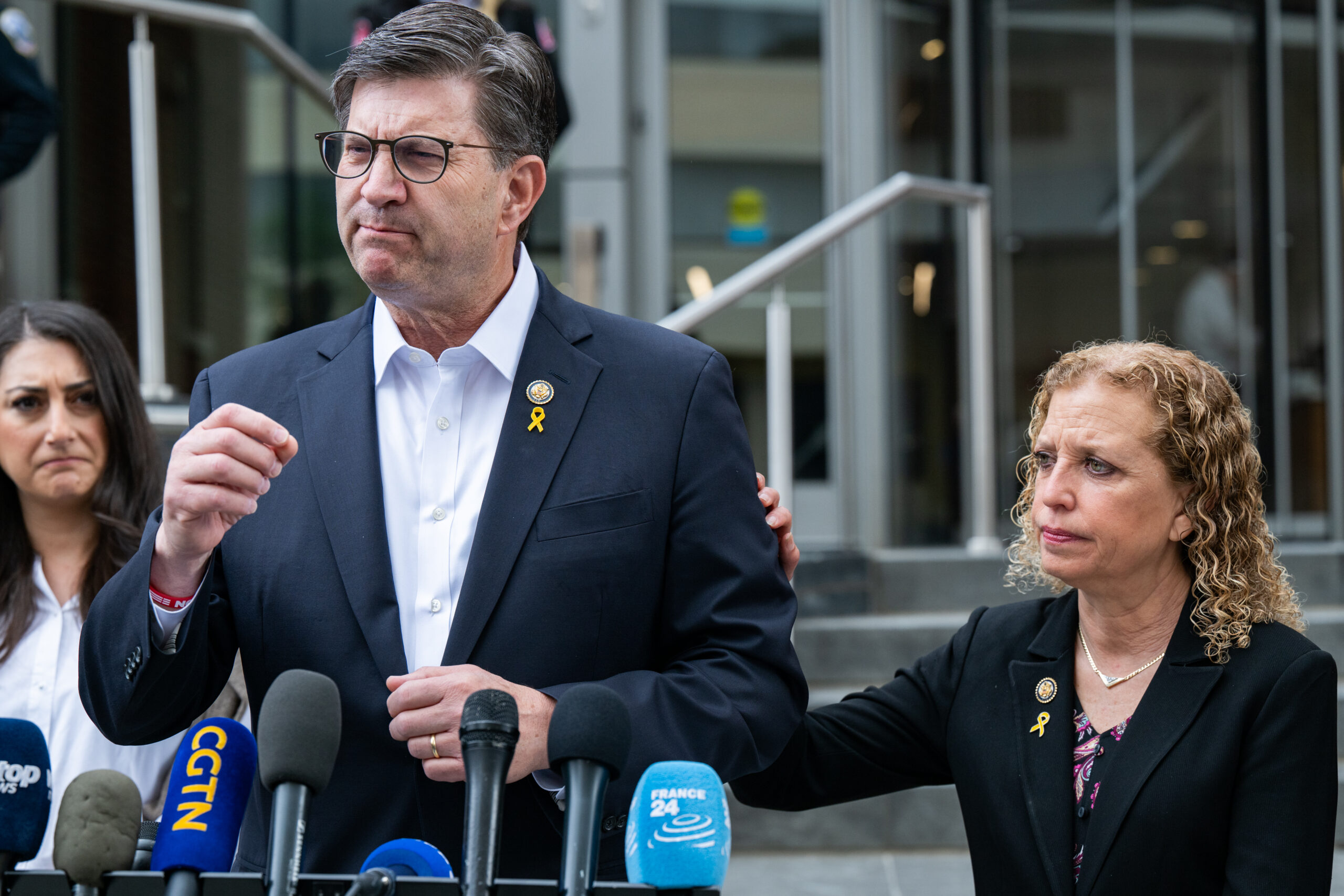
Rep. Debbie Wasserman Schultz said she would likely have voted to authorize force against Iran if the administration had approached Congress properly before launching the war
FEELING THE HEAT
UAE, more than Israel, absorbing bulk of Iranian strikes in war’s early weeks

Republican senators argued to JI that the war will ultimately be to the Gulf’s benefit, even if they’re feeling the pain now
Plus, Israel considers building Somaliland base
Cheriss May/NurPhoto via Getty Images
Ben Rhodes, then-deputy national security advisor to President Barack Obama, participates in an interview with press at the White House in on Wednesday, December 14, 2016.
This P.M. edition is reserved for our premium subscribers — offering a forward-focused read on what we’re tracking now and what’s coming next. Please don’t hesitate to share your thoughts and feedback by replying to this email.
📡On Our Radar
Notable developments and interesting tidbits we’re tracking
The Strait of Hormuz continues to be a key site of conflict in the U.S. and Israeli war against Iran — a spokesperson for the Iranian Armed Forces said in a video statement that the regime “will never allow even a single liter of oil to pass through the Strait of Hormuz for the benefit of America, the Zionists or their partners,” shortly after several ships were struck by missiles while passing through or near the strait…
The International Energy Agency announced its member countries will release 400 million barrels of oil from their emergency reserves in order to blunt the impacts of the war, the largest emergency release in history…
President Donald Trump told Axios that the war will end “soon” because there’s “practically nothing left to target” in Iran. U.S. and Israeli officials are reportedly preparing for at least two more weeks of hostilities…
Jewish Insider’s Matthew Shea speaks to experts and former Trump administration officials about Qatar’s potentially changing calculus on hosting Iranian-backed Hamas leaders as Tehran continues to attack the Gulf state…
A preliminary U.S. military investigation has found the deadly strike on a school in Iran was caused by the U.S. as it was targeting a nearby Iranian base, sources told The New York Times…
The FBI recently warned California police departments that Iran may launch a drone attack in the state, ABC News reports. As of last month, “Iran allegedly aspired to conduct a surprise attack using unmanned aerial vehicles from an unidentified vessel off the coast of the United State Homeland, specifically against unspecified targets in California, in the event that the U.S. conducted strikes against Iran,” the bureau’s alert read…
Israel is considering building a base in Somaliland, which it recently recognized as an independent country, in order to combat the threat of the Houthis, which are based in Yemen just across the Gulf of Aden…
Iran will not participate in the 2026 World Cup after the U.S. “assassinated our leader,” Iran’s sports minister told state media, shortly after Trump said he would still “welcome” the team’s participation. Iran’s national men’s soccer team was set to compete in June in Los Angeles and Seattle; several athletes from the country’s women’s team recently defected to Australia after playing in a match there…
Spain permanently withdrew its ambassador to Israel, as the countries’ already tense relations worsen over Madrid’s opposition to the war in Iran…
House Republican leadership discussed ways to incorporate an expected emergency supplemental for the U.S. military into the budget reconciliation process, Politico reports, rather than attempting to rally support from Senate Democrats for the 60-vote threshold that would otherwise be required in the Senate on a stand-alone vote. The move would also sidestep a vote that could be politically challenging for some House Republicans…
Former Obama administration official Ben Rhodes, a leading Israel critic on the left, said on an episode of his “Pod Save the World” podcast that Democrats who vote in favor of funding for the war with Iran “should be primaried. I don’t want you in the Democratic Party.”
Rhodes and co-host Tommy Vietor referenced the four Democrats who voted against a war powers resolution in the House as ripe for primary challenges. Left unsaid: Three of the four — Reps. Greg Landsman (D-OH), Henry Cuellar (D-TX) and Jared Golden (D-ME) — represent GOP-leaning seats that would likely flip with a more progressive Democratic candidate…
In a sign of the political gulfs between the Israeli and American left, Yair Zivan, who is an advisor to Israeli Opposition Leader Yair Lapid, pushed back on Sen. Bernie Sanders (I-VT) after the senator criticized Israeli operations in Lebanon.
“Senator, I work for the Leader of the Opposition in Israel and I’m writing this from a bomb shelter with my children. Israel is under attack by fanatical terrorists who want to murder us. It never ceases to amaze that your humanity never seems to extend to Israeli lives,” Zivan wrote on X…
Pennsylvania Gov. Josh Shapiro said he called New York City Mayor Zohran Mamdani to “check in on him and his wife to make sure they’re doing okay” after the attempted terror attack outside Mamdani’s official residence over the weekend. “As someone who’s had to deal with political violence, I know it can take a toll,” Shapiro said. The governor previously spoke with Mamdani after his win in November to express concerns over his rhetoric about Israel…
⏩ Tomorrow’s Agenda, Today
An early look at tomorrow’s storylines and schedule to keep you a step ahead
Keep an eye out in Jewish Insider for a look at the far-right ties of the new political director of College Republicans of America.
The Senate Health, Education, Labor and Pensions Committee will hold a hearing on foreign influence in American higher education, including testimony from the Foundation for Defense of Democracies’ Craig Singleton.
The annual weeklong South by Southwest festival kicks off tomorrow in Austin, Texas. Appearing at the summit, whose 300,000 attendees include many film and media professionals, is anti-Israel protest leader Mahmoud Khalil, who will speak about “the system that tried to silence him, and the personal and political stakes of resistance.”
Stories You May Have Missed
PRIMARY PRESSURE
DMFI focusing ire on anti-Israel Democrats running in swing districts

The pro-Israel Democratic group warns that nominating far-left candidates will cost the party winnable seats against GOP incumbents
DEMOCRATIC DIVIDE
John Fetterman again offers scathing criticism of his own party’s foreign policy views

The Pennsylvania senator told JI about the U.S. military operation’s successes: ‘Why can’t a single Democrat agree that this is a good thing for the world and the region?’
Plus, CNN walks back coverage downplaying NYC terror attempt

JULIEN DE ROSA / AFP via Getty Images
A person points at a page on the Marinetraffic website that shows commercial boats traffic on the edge of the Strait of Hormuz near the Iranian coast, in Paris on March 4, 2026.
This P.M. edition is reserved for our premium subscribers — offering a forward-focused read on what we’re tracking now and what’s coming next. Please don’t hesitate to share your thoughts and feedback by replying to this email.
📡On Our Radar
Notable developments and interesting tidbits we’re tracking
President Donald Trump denied reports that U.S. intelligence has found Iran is taking steps to deploy mines in the Strait of Hormuz, but said if it has been done, “we want them removed, IMMEDIATELY!” If not, he warned, “the Military consequences to Iran will be at a level never seen before,” and if they are removed, “it will be a giant step in the right direction.”
Shortly after, Trump confirmed the U.S. has “hit, and completely destroyed, 10 inactive mine laying boats and/or ships.”
Aramco, the world’s top oil exporter out of Saudi Arabia, warned oil markets will face “catastrophic consequences” if the strait continues to be impacted by the war. “While we have faced disruptions in the past, this one by far is the biggest crisis the region’s oil and gas industry has faced,” CEO Amin Nasser told reporters…
The White House asked Israel not to target any more Iranian energy facilities, Axios reports, citing harm to Iranian civilians, the hope to cooperate with the Iranian oil industry after the war and potential for Tehran to retaliate against Gulf states…
Around 140 U.S. servicemembers have been injured in the course of the campaign against Iran, Defense Department spokesperson Sean Parnell said today, the majority of whom have already returned to service…
After receiving a classified briefing in the Senate Armed Services Committee, Sen. Richard Blumenthal (D-CT) told reporters, “I emerged from this briefing as dissatisfied and angry, frankly, as I have from any past briefing in my 15 years in the Senate. … We seem to be on a path toward deploying American troops on the ground in Iran.”
Blumenthal continued, “There is also, as disturbingly as anything else, the specter of active Russian aid to Iran … with intelligence and perhaps with other means, and China also may be assisting”…
The U.S. ordered the departure of its diplomats and their families from southern Turkey after two attempted Iranian missile strikes in the area; it’s the first mandated departure of U.S. officials outside of the Gulf and Lebanon since the start of the war…
Israeli Prime Minister Benjamin Netanyahu issued a statement to the “people of Iran” hinting at a coming opportunity for a popular uprising. He wrote on X, “We are waging a historic war for liberty. This is a once in a lifetime opportunity for you to remove the Ayatollah regime and gain your freedom. … In the coming days we will create the conditions for you to grasp your destiny. … When the time is right, and that time is fast approaching, we will pass the torch to you”…
CNN significantly changed a story and removed a social media post today that downplayed the attempted terror attack outside Gracie Mansion, New York City Mayor Zohran Mamdani’s official residence, over the weekend, initially writing that the suspects traveled from Pennsylvania for “what could’ve been a normal day” during the city’s “abnormally warm weather.”
CNN later deleted its post on X and added an editor’s note to its story, saying that the language “failed to reflect the gravity of the incident thereby breaching the editorial standards we require for all our reporting”…
The NYPD evacuated Carl Schurz Park near the mayor’s mansion today after a suspicious device was found in the vicinity; it was determined to be “non-threatening”…
Secure Community Network said there was no known threat to the Jewish community following an active shooter incident Tuesday afternoon near the Agudath Israel of Baltimore synagogue, during which a Baltimore Police officer and a suspect were shot in what appeared to be a domestic incident…
A week ahead of Illinois’ primary election, a new poll conducted by an outside group backing Rep. Raja Krishnamoorthi (D-IL) shows the congressman with a double-digit lead in the race for Senate, up 11 points over his next closest competitor, Lt. Gov. Juliana Stratton. Over 87,000 early votes have already been cast in the race, 40,000 votes more than had been cast at the same point in early voting during the 2022 primaries…
Morris Katz, the Democratic strategist who has shaped the campaigns of progressive politicians hostile to Israel including Mamdani and Maine Senate candidate Graham Platner, is now behind the campaign of another populist Democrat: Allison Ziogas, a first-time candidate attempting to unseat Rep. Nicole Malliotakis (R-NY). Trump won 61% of the vote in Malliotakis’ Staten Island–based district in 2024, making it difficult for any Democrat to prevail…
The Anti-Defamation League released its 2026 Campus Antisemitism Report Card, which showed a “clear upward trend” in universities taking steps to address antisemitism, the organization said. Almost two dozen schools received A grades.
UCLA Chancellor Julio Frenk celebrated his university’s improvement from a D to a B, but said in a statement, “a grade is a waypoint, not a destination. … While we have made clear progress in addressing antisemitism, we have more to do in our shared goal of eradicating it in its entirety”…
⏩ Tomorrow’s Agenda, Today
An early look at tomorrow’s storylines and schedule to keep you a step ahead
Keep an eye out in Jewish Insider for a look at a late flurry of spending against far-left social media influencer Kat Abughazaleh in Illinois’ 9th Congressional District, as pro-Israel groups indicate concern that the virulently anti-Israel Democrat could win the seat.
President Donald Trump will host an event in Hebron, Ky., tomorrow, with Republican congressional candidate Ed Gallrein in attendance. Gallrein is challenging Rep. Thomas Massie (R-KY) with Trump’s endorsement — Massie will not be attending the event, which is taking place in his district.
Fox News’ Bret Baier will speak in conversation with journalist Gary Rosenblatt at Temple Emanu-El’s Streicker Center in New York City.
Stories You May Have Missed
SCOOP
Ann Arbor mayoral candidate featured Hamas supporter in campaign video

Local DSA chair Justin Yuan wrote on social media, ‘Love Hamas. Simple as’
BLUEGRASS BATTLE
Thomas Massie’s opposition to Iran war could cost him reelection
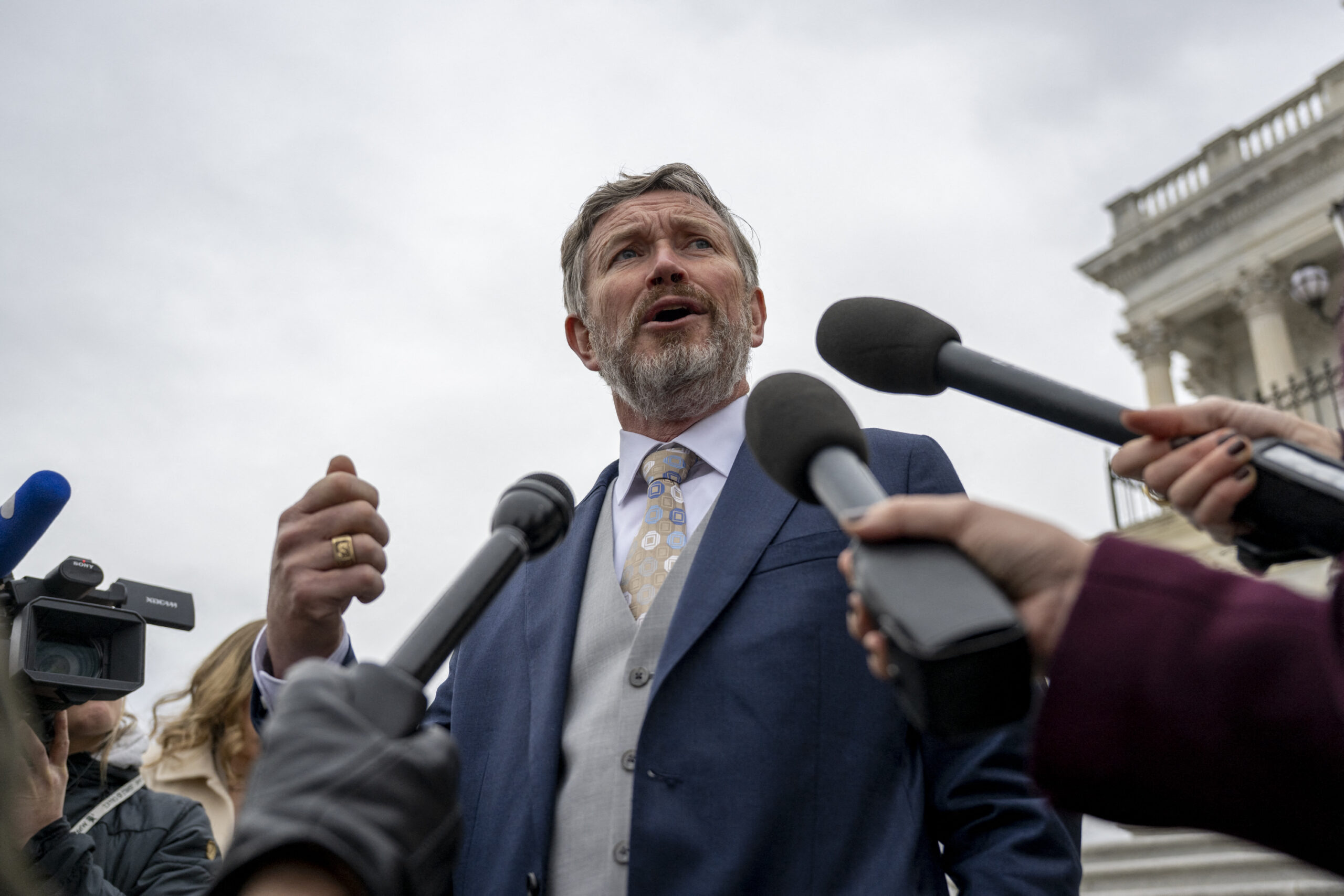
President Trump is set to rally with Massie’s opponent this week
Plus, Trump says Iran operation 'very complete'
Sean Gallup/Getty Images
Sen. Lindsey Graham (R-SC) speaks at the 62nd Munich Security Conference on February 13, 2026 in Munich, Germany.
This P.M. edition is reserved for our premium subscribers — offering a forward-focused read on what we’re tracking now and what’s coming next. Please don’t hesitate to share your thoughts and feedback by replying to this email.
📡On Our Radar
Notable developments and interesting tidbits we’re tracking
President Donald Trump praised Australian Prime Minister Anthony Albanese for assisting the members of Iran’s women’s soccer team, who are in Australia competing in the Women’s Asian Cup, amid fears for their persecution should they be forced to return home.
The president had called for Albanese to grant the athletes political asylum, saying they would “most likely be killed” if they were repatriated to Iran, and later commended him for “doing a very good job having to do with this rather delicate situation,” with five athletes “already taken care of, and the rest are on their way”…
Trump disputed reports that the U.S. is preparing to deploy ground troops to secure nuclear material at the Isfahan enrichment site in Iran, telling the New York Post, “We haven’t made any decision on that. We’re nowhere near it.” He also told CBS News that “the war is very complete, pretty much,” and the U.S. is “very far” ahead of his initial four-to-five-week timeline…
Trump has communicated to aides that he would support the assassination of Mojtaba Khamenei, Iran’s new supreme leader, if Khamenei does not acquiesce to U.S. demands, including ending Iran’s nuclear program, U.S. officials told The Wall Street Journal…
The Lebanese government has requested direct negotiations with Israel, sending the message through U.S. Ambassador to Turkey Tom Barrack, Axios reports. Washington and Jerusalem were reportedly skeptical about the idea, with Beirut thus far failing to disarm or rein in Hezbollah activities as the terror group continues to launch missiles into Israel…
NATO missile defense systems intercepted another Iranian missile heading for Turkey, a spokesperson announced today, the second time Iran has attempted to strike the NATO country’s territory…
Sen. Lindsey Graham (R-SC) threatened to impose “consequences” on Saudi Arabia for its unwillingness to join the U.S. campaign against Iran, as the U.S. evacuates its embassy in Riyadh and the kingdom continues to endure Iranian attacks, which have so far resulted in the deaths of two civilians and one U.S. servicemember. “Question — why should America do a defense agreement with a country like the Kingdom of Saudi Arabia that is unwilling to join a fight of mutual interest?” Graham wrote on X…
Talks to advance Trump’s 20-point peace plan in Gaza, including the issue of Hamas’ disarmament, have been at a standstill during the campaign against Iran, Reuters reports, as Gulf countries that pledged funds to help rebuild the enclave have come under fire and flight disruptions have prevented mediators from traveling…
The criminal complaint filed in the Southern District of New York today against the two Pennsylvania men who allegedly hurled improvised explosive devices toward a protest against New York City Mayor Zohran Mamdani on Saturday stated that both men explicitly identified ISIS as their inspiration, Jewish Insider’s Will Bredderman reports.
“This isn’t a religion that just stands when people talk about the blessed name of the Prophet [Muhammad],” Emir Balat, 18, told police, according to the charging documents. He also said he had hoped to pull off something “even bigger” than the 2013 Boston Marathon bombing, which he noted had caused “only three deaths”…
The White House moved today to designate the Sudanese Muslim Brotherhood as a Specially Designated Global Terrorist entity and announced plans to impose a Foreign Terrorist Organization designation on March 16, JI’s Matthew Shea reports, in the Trump administration’s latest crackdown against Muslim Brotherhood affiliates…
A new poll from the campaign of Rushern Baker, former executive of Maryland’s Prince George’s County, found him leading the crowded Democratic field seeking to succeed retiring Rep. Steny Hoyer (D-MD). Though a plurality of likely primary voters (28%) said they’re still undecided, Baker polled at 22% compared to former U.S. Capitol Police officer Harry Dunn’s 15% and Hoyer-endorsed state Del. Adrian Boafo’s 3%…
Rep. Kevin Kiley of California officially switched his party affiliation from Republican to independent — he had filed for reelection as an independent, but said today he would leave the party for the rest of his term as well. The move narrows the GOP majority even further, 217-214, but Kiley said he’ll continue to caucus with Republicans, blunting the impact…
Politico looks at the flurry of independent candidates seeking to unseat congressional Republicans in GOP-leaning districts, clashing with local Democratic establishments in the process…
⏩ Tomorrow’s Agenda, Today
An early look at tomorrow’s storylines and schedule to keep you a step ahead
Keep an eye out in Jewish Insider — we’ll have a profile of Dario Amodei, the Jewish CEO of Anthropic, which sued the Pentagon today over its decision to label the AI company a “supply chain risk.”
The Senate Armed Services Committee is expected to receive a classified briefing on the status of the U.S. and Israeli campaign against Iran.
The Republican Jewish Coalition and conservative magazine National Review will hold a daylong symposium on antisemitism, with remarks from Sens. Jim Banks (R-IN), Tom Cotton (R-AR) and Ted Cruz (R-TX); Noah Pollak, senior advisor at the Department of Education; Kenneth Marcus, founder of the Louis D. Brandeis Center for Human Rights Under Law; Rabbi Yehuda Kaploun, the State Department’s antisemitism envoy; Leo Terrell, senior counsel to the assistant attorney general for civil rights; and Texas Lt. Gov. Dan Patrick.
Georgia’s 14th Congressional District will hold its special election to fill the seat vacated by Rep. Marjorie Taylor Greene (R-GA), with more than a dozen candidates on the all-party ballot. The district leans strongly Republican but the GOP field is split among nine candidates, raising the possibility that the Democratic front-runner — retired Army Brig. Gen. Shawn Harris — could slip into the April runoff.
Stories You May Have Missed
SCOOP
Zohran Mamdani’s wife liked social media posts celebrating Oct. 7 attacks
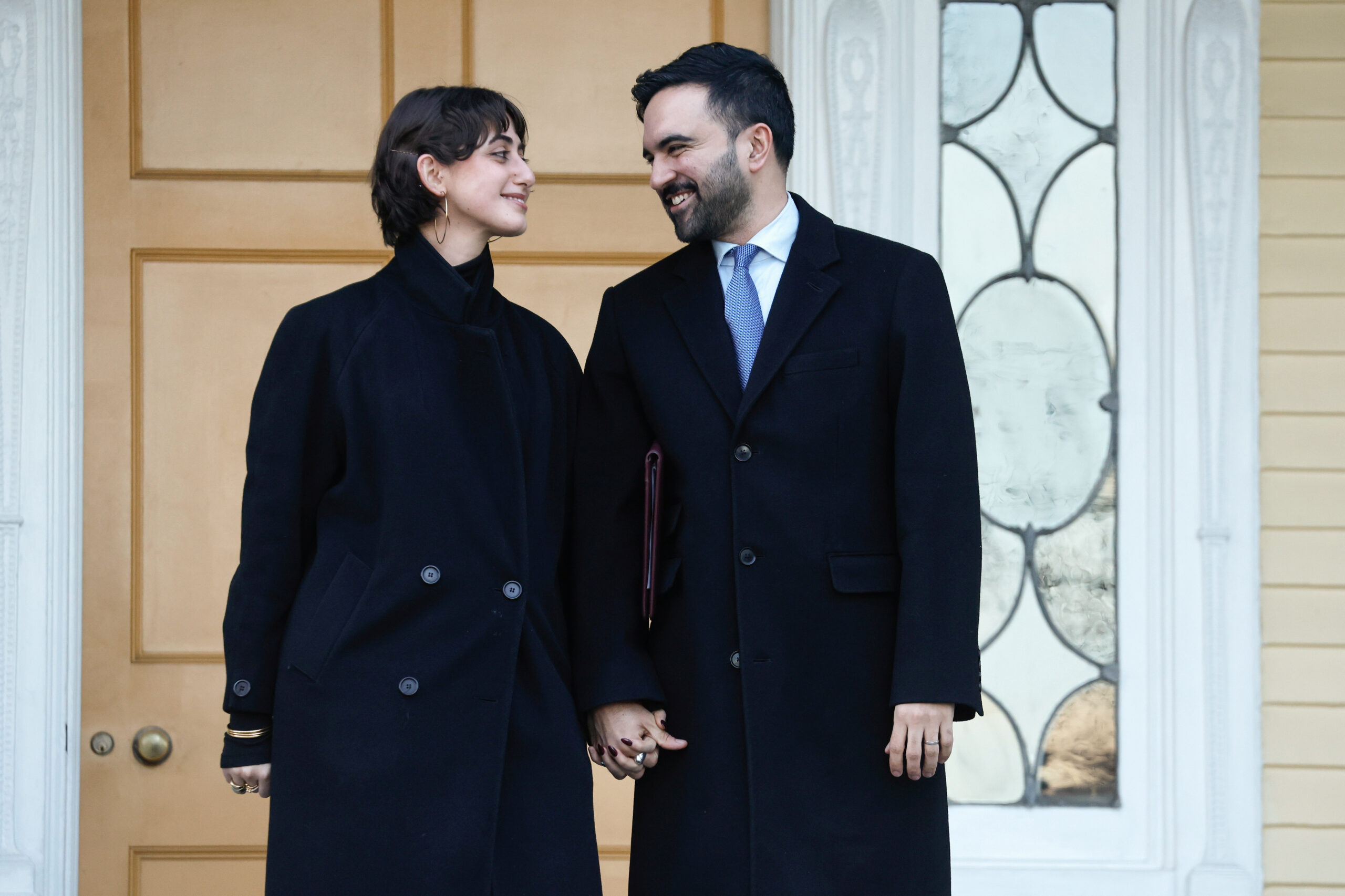
NYC First Lady Rama Duwaji showed support for far-left orgs applauding Hamas rampage
POWER PLAYER
The progressive operative nudging Democrats toward a hostile line on Israel
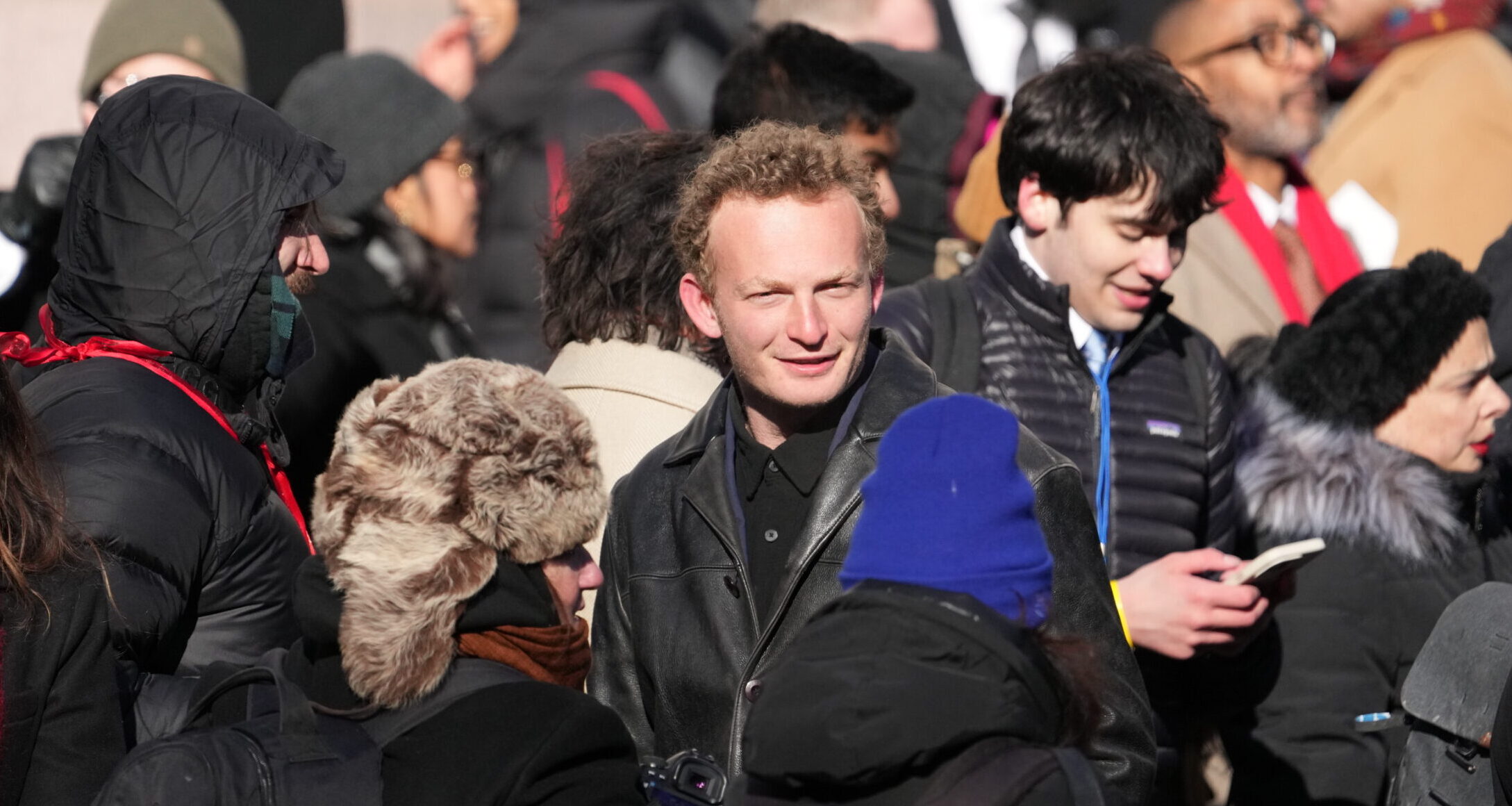
Ad maker Morris Katz has been instrumental in elevating Israel antagonists into office as part of a move to reshape the Democratic Party
Plus, Kristi Noem gets the boot
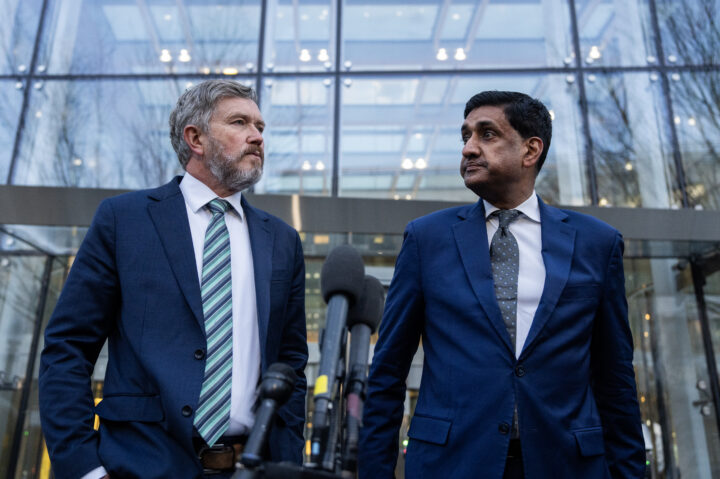
Tom Williams/CQ-Roll Call, Inc via Getty Images
Reps. Thomas Massie, (R-KY), left, and Ro Khanna, (D-CA), conduct a news conference outside a Department of Justice office in NoMa on Monday, February 9, 2026.
Good Thursday afternoon,
This P.M. edition is reserved for our premium subscribers — offering a forward-focused read on what we’re tracking now and what’s coming next.
It’s me again — Danielle Cohen-Kanik, U.S. editor at Jewish Insider and curator, along with assists from my colleagues, of the Daily Overtime. Please don’t hesitate to share your thoughts and feedback by replying to this email.
📡On Our Radar
Notable developments and interesting tidbits we’re tracking
President Donald Trump announced he’s replacing Kristi Noem as homeland security secretary with Sen. Markwayne Mullin (R-OK), after Noem had rankled the president and some Republican members of Congress with her oversight of widespread turmoil at the agency, among other issues. Mullin still needs to be confirmed by the Senate to assume the post.
Mullin, if confirmed, would take the helm of DHS amid its continued partial shutdown, and as it has repeatedly come under fire for its handling of issues related to antisemitism from lawmakers and Jewish community groups. Noem, meanwhile, will become special envoy to a new security initiative for the Western Hemisphere being launched by Trump this weekend…
House Speaker Mike Johnson (R-LA) and other GOP leadership called on Rep. Tony Gonzales (R-TX) to drop out of his reelection race, after the lawmaker admitted yesterday to having an affair with a staffer who later committed suicide. Gonzales is headed to a May runoff with his primary opponent, social media influencer Brandon Herrera; if Gonzales does step aside, Herrera, who has a history of antisemitic posts about the Holocaust, is all but guaranteed the GOP nomination in a solidly Republican district…
Trump said he “[has] to be involved in the appointment” of the next Iranian leader, in an interview with Axios, “like with Delcy [Rodriguez] in Venezuela.” He called Mojtaba Khamenei, son of the late Supreme Leader Ayatollah Ali Khamenei who has emerged as his father’s likely successor, “unacceptable.” The president’s comments seem to widen the administration’s stated war aims, which have thus far focused on eliminating Iran’s naval, air and nuclear assets.
Trump also insisted in the interview that Israeli President Isaac Herzog issue a pardon for Prime Minister Benjamin Netanyahu “today,” as he wants Netanyahu “to focus on the war and not on the f**king court case. I want the only pressure on Bibi to be the fighting against Iran”…
Some Democratic lawmakers — including Sens. Jack Reed (D-RI), Gary Peters (D-MI), Tim Kaine (D-VA) and Elissa Slotkin (D-MI) — told Politico they won’t “rule out” voting in favor of an emergency supplemental funding request to shore up the military should one come from the administration amid the campaign against Iran, despite widespread Democratic condemnation of the White House’s failure to consult Congress beforehand…
A vote on a war powers resolution to stop the military campaign in Iran failed in the House this afternoon 219-212, with two Republicans — Reps. Thomas Massie (R-KY) and Warren Davison (R-OH) — crossing the aisle in support and four Democrats — Reps. Greg Landsman (D-OH), Henry Cuellar (D-TX), Jared Golden (D-ME) and Juan Vargas (D-CA) — breaking with their party to oppose it.
Reps. Josh Gottheimer (D-NJ) and Jared Moskowitz (D-FL) both changed their positions and voted in favor of the resolution, weeks after Moskowitz told Jewish Insider — before the campaign began — that its sponsors “should just rename [the resolution] the Ayatollah Protection Act because that’s what it does.” Asked by JI about the shift in his stance today, Moskowitz answered, “I didn’t flip at all. Circumstances have changed since my first statement”…
Antisemitic podcaster Tucker Carlson’s latest extreme rhetoric took aim at the Chabad Lubavitch movement, with sweeping conspiratorial language accusing the Hasidic sect of seeking to start a “religious war” amid the U.S. and Israeli strikes on Iran, JI’s Gabby Deutch reports.
Carlson argued in an episode of his show that dropped last night that Jews see the war against Iran as an opportunity to feud with Islam and to target Christians. Carlson’s remarks prompted outrage among Chabad’s backers, who pointed out that Chabad emissaries have for decades played a crucial role in connecting American Jews to their faith and to each other…
In a conversation with ABC News, Trump said this afternoon that Tucker “has lost his way. I knew that a long time ago, and he’s not MAGA. MAGA is saving our country. … Tucker is really not smart enough to understand that”…
In a discussion with the New York Post, Trump railed against European countries which have continued to oppose the campaign against Iran, calling Spain “a loser” and the U.K. “very disappointing.” Canadian Prime Minister Mark Carney, meanwhile, said today that the Iran war is a “failure” of the international order, but would not “categorically rule out” Canada’s participation…
Iran’s indiscriminate attacks are bringing allies together worldwide: Ukrainian President Volodymyr Zelensky said he’s deploying specialists to assist the U.S. after Washington requested “specific support in protection” against Iranian Shahed drones, which Ukraine has been battling for several years as Russia has regularly deployed them, and the European Union and Gulf Cooperation Council held a joint meeting to discuss Iran’s “unjustifiable, unprovoked, and unlawful attacks”…
The New York Times profiles Lt.-Gen. Eyal Zamir, the IDF’s chief of staff, as he helps lead Israel’s efforts in the campaign against Iran…
⏩ Tomorrow’s Agenda, Today
An early look at tomorrow’s storylines and schedule to keep you a step ahead
Keep an eye out in Jewish Insider for a look at Jack Cocchiarella, the progressive Gen Z podcaster who has made a name for himself hosting high-profile Democratic candidates — including California Gov. Gavin Newsom in New Hampshire tonight — and who has recently taken a turn towards bashing Israel.
Team Israel will play its first games of the 2026 World Baseball Classic on Saturday against Venezuela and on Sunday against Nicaragua.
Also Sunday, AJ Edelman, the Israeli Olympic bobsled team pilot, will speak in conversation with Neil Goldman at Chabad of West Village in New York.
Birthright Israel’s Excelerate26 summit is also taking place in New York this weekend, with keynote speeches on Sunday from Robert Kraft, owner of the New England Patriots; Anne Neuberger, former deputy national security advisor during the Biden administration; and Sheryl Sandberg, former COO of Meta.
We’ll be back in your inbox with the Daily Overtime on Monday. Shabbat Shalom!
Stories You May Have Missed
MILITARY UPDATE
Day 6: Repatriation flights briefly delayed in the air as Iran shoots missiles at Israel

Tehran also attacked Azerbaijan for the first time, launching drones that injured two at Nakhchivan International Airport
ABOUT-FACE
Ruben Gallego transforms from pro-Israel moderate to face of antiwar opposition

The Arizona senator’s outspoken commentary has repeatedly placed blame for the military operation on Israel, leading one Jewish Democrat to pull her support
Plus, Qatar rebuffs Iranian diplomacy

Kayla Bartkowski/Getty Images
Sen. John Cornyn (R-TX) speaks with press in the Hart Senate Office Building on April 07, 2025 in Washington, DC.
Good Wednesday afternoon,
This P.M. edition is reserved for our premium subscribers — offering a forward-focused read on what we’re tracking now and what’s coming next.
It’s me again — Danielle Cohen-Kanik, U.S. editor at Jewish Insider and curator, along with assists from my colleagues, of the Daily Overtime. Please don’t hesitate to share your thoughts and feedback by replying to this email.
📡On Our Radar
Notable developments and interesting tidbits we’re tracking
On the fifth day of the joint U.S.-Israeli military campaign against Iran, Secretary of Defense Pete Hegseth announced the accomplishment of several key objectives, Jewish Insider’s Matthew Shea reports, including that “the leader of the unit” responsible for the assassination attempt on President Donald Trump in November 2024 “has been hunted down and killed.”
Hegseth also revealed that an American submarine sank an Iranian warship by torpedo, the first time such a thing has been accomplished since World War II. Responding to concerns over whether the U.S. will be able to maintain enough munitions throughout the conflict, Hegseth dismissed “stories and speculation,” instead asserting: “Iran cannot outlast us”…
Iranian Foreign Minister Abbas Araghchi called Qatar’s foreign minister, Sheikh Mohammed bin Abdulrahman Al Thani, to insist that Iranian drones and missiles attacking Qatar are really directed at U.S. assets and “not intended to target the Gulf state.”
Al Thani “categorically rejected” that claim, according to Qatar’s foreign ministry, “citing the civilian and residential areas inside the country struck by the attacks.” He told Araghchi that Iran’s actions do not “indicate any genuine desire for de-escalation or resolution” and are trying to drag Qatar into a war “that is not theirs”…
Israeli Prime Minister Benjamin Netanyahu called the White House Monday to ask about intelligence that indicated the U.S. might be communicating with Iran, Axios reports, which administration officials told him was false. A New York Times report found that Iran’s Ministry of Intelligence had indirectly sent a message to the CIA attempting to start negotiations to end hostilities…
NATO air defense systems shot down an Iranian missile that was flying through Iraq and Syria on its way toward Turkey, the Turkish defense ministry said this morning. It’s the first attack by Iran on a NATO country’s territory. The U.K. and France, also NATO countries, are sending additional planes and warships to the region after Iran targeted a British base in Cyprus…
White House Press Secretary Karoline Leavitt, asked about reports of the U.S. arming Kurdish militias to assist in regime change in Iran, told reporters that Trump has spoken to Kurdish leaders in recent days about the U.S. military base in northern Iraq, but “any report suggesting that the president has agreed to any such plan” about arming the Kurds “is completely false and should not be written”…
Leavitt also said that the U.S. is now coordinating with Spain on the military operation in Iran, after Trump threatened yesterday to cut off all trade with Madrid over its refusal to let the U.S. use military bases on its soil and its lack of defense spending. Spain categorically denied that it is cooperating with the U.S. or has changed its position at all…
Secretary of State Marco Rubio held phone calls with Turkish Foreign Minister Hakan Fidan, Cypriot Foreign Minister Constantinos Kombos and Italian Foreign Minister Antonio Tajani about the campaign against Iran. Turkey and Cyprus have both faced attacks by Iranian projectiles, while Italy summoned its Iranian ambassador to protest the attack on Cyprus…
Trump indicated he’s close to offering his endorsement to Sen. John Cornyn (R-TX), who beat expectations by finishing ahead of right-wing Texas Attorney General Ken Paxton in yesterday’s primary. While both Republicans are headed to a May runoff, a Trump endorsement would make Cornyn the clear favorite to win the Republican nomination — and alleviate a lot of GOP anxiety over the possibility that a scandal-plagued Paxton could lose to state Rep. James Talarico, the newly minted Democratic nominee…
In North Carolina, Rep. Valerie Foushee (D-NC) holds a narrow lead over her far-left opponent, Durham County Commissioner Nida Allam, who has indicated she will seek a recount. Foushee said in a statement that she would “welcome the opportunity” for a recount and is “confident that the Democratic voters of North Carolina will have nominated me to serve a third term”…
Hegseth will headline a fundraiser next week for Rep. Zach Nunn (R-IA), after four servicemembers who were previously stationed in his district were killed by an Iranian drone in Kuwait on Sunday. Nunn, who has been a staunch ally of Israel in the House, is facing a competitive reelection race as Democrats target his seat in their attempt to take back the chamber…
⏩ Tomorrow’s Agenda, Today
An early look at tomorrow’s storylines and schedule to keep you a step ahead
Keep an eye out in Jewish Insider for a breakdown of the Senate’s consideration of the Iranian war powers resolution, led by Sens. Tim Kaine (D-VA) and Rand Paul (R-KY), which is currently on track to fail on a procedural vote.
The House Foreign Affairs Committee will hold a hearing on “advancing national security through diplomacy” with Sarah Rogers, the under secretary of state for public diplomacy.
The Muslim World League will host an interfaith iftar gathering on Capitol Hill.
Stories You May Have Missed
IN THE CROSSHAIRS
Day 5: Israel vows to eliminate Khamenei’s successor
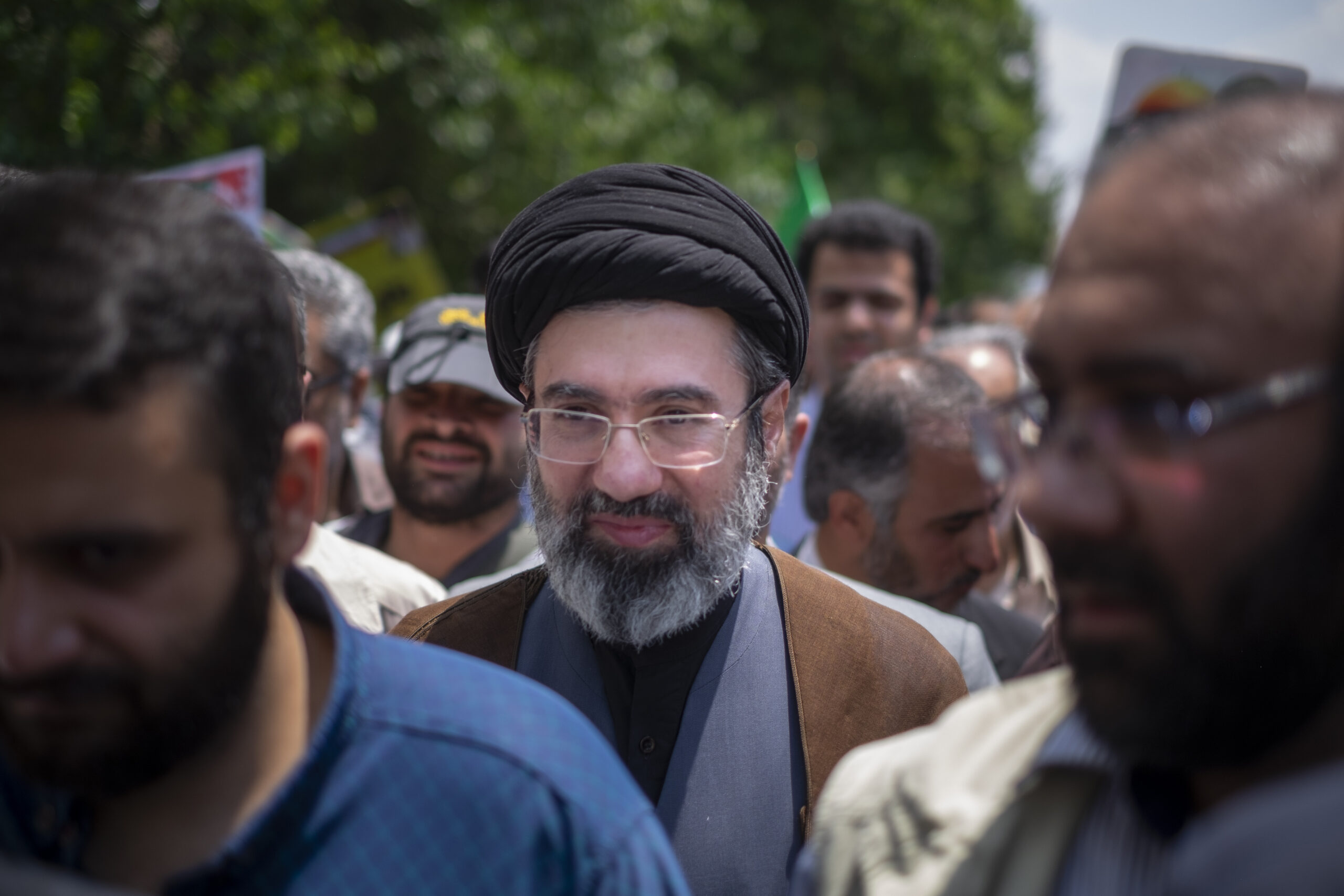
Also Wednesday, an Israeli F-35I fighter jet shot down an Iranian YAK-130 fighter jet over Tehran, marking the first time an F-35 jet shot down a manned fighter aircraft, IDF says
PUSHING BACK
After classified briefing, senators reject claims Israel forced U.S. into Iran war
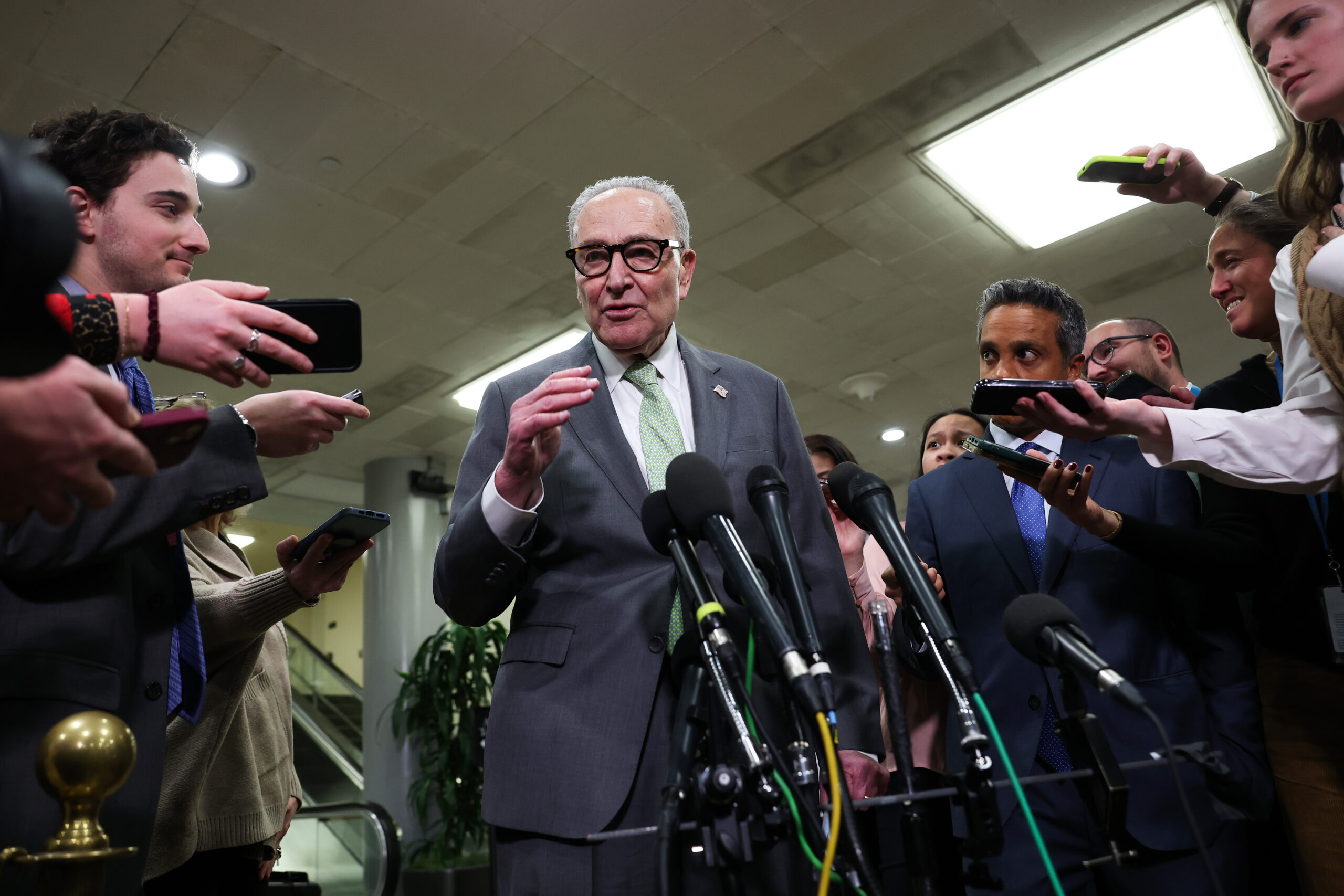
Republicans and some Democrats insisted Trump made the decision, while other Democrats said that the timing of the onset of hostilities was impacted by Israel’s plans
Plus, Alex Soros boosts antisemitic conspiracy theorist
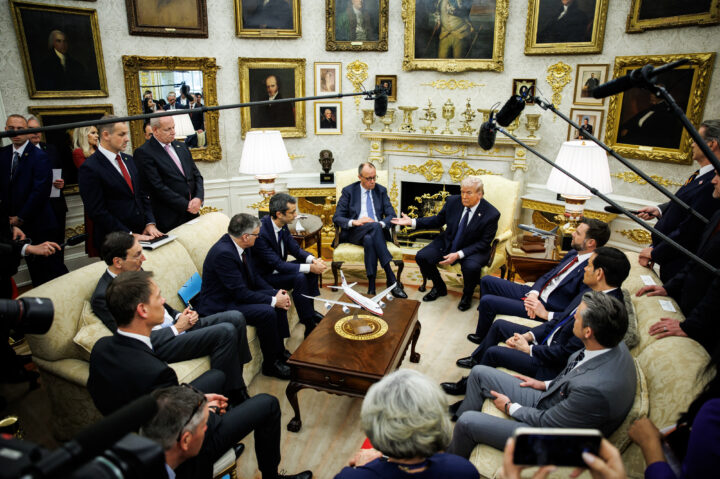
Samuel Corum/Sipa/Bloomberg via Getty Images
Friedrich Merz, Germany's chancellor, center left, and US President Donald Trump during a meeting in the Oval Office of the White House in Washington, DC, US, on Tuesday, March 3, 2026.
Good Tuesday afternoon,
This P.M. edition is reserved for our premium subscribers — offering a forward-focused read on what we’re tracking now and what’s coming next.
It’s me again — Danielle Cohen-Kanik, U.S. editor at Jewish Insider and curator, along with assists from my colleagues, of the Daily Overtime. Please don’t hesitate to share your thoughts and feedback by replying to this email.
📡On Our Radar
Notable developments and interesting tidbits we’re tracking
The Trump administration emphatically denied reports, based on partial comments made by Secretary of State Marco Rubio yesterday, that Israel forced the U.S. to launch the operation against Iran.
“If anything, I might’ve forced Israel’s hand,” President Donald Trump told reporters while meeting with German Chancellor Friedrich Merz in the Oval Office today. “You see, we were having negotiations with these lunatics, and it was my opinion that they [Iran] were going to attack first.”
Defense Secretary Pete Hegseth boosted the president’s comments, saying, “This is 100% correct,” while Rubio insisted his original remarks were misrepresented…
Trump continues to share optimistic assessments of the war’s progress: he told Politico that Iran is running out of missile launchers while claiming the U.S. has “a virtually unlimited supply” of weapons, saying, “wars can be fought ‘forever,’ and very successfully, using just these supplies”…
The Israeli Air Force struck a building where senior clerics had gathered to elect Iran’s next supreme leader, Israeli Ambassador to the U.S. Yechiel Leiter told CNN, “and there’s a very good chance that the electors won’t be readily available for any further meetings”…
Trump is open to backing militias in Iran who will work to mount regime change, U.S. officials told The Wall Street Journal, after he held phone calls with Kurdish leaders who maintain armed groups along the Iran-Iraq border.
Trump has wavered in recent comments on his vision for the future of Iran, saying today that “somebody from within” might be the best option to lead, rather than individuals like exiled former crown prince, Reza Pahlavi. At the same time, Trump told reporters, “Most of the people we had in mind are dead. And now we have another group, they may be dead also. Pretty soon we’re not gonna know anybody”…
Trump ordered the U.S. Development Finance Corporation to provide political risk insurance for all maritime trade traveling through the Gulf, as oil traffic has essentially halted and energy prices have soared. The U.S. Navy will also, if necessary, begin physically escorting tankers through the Strait of Hormuz, Trump said…
Ukrainian President Volodymyr Zelensky offered his country’s assistance to the UAE, as the Gulf country has been targeted by over 1,000 Iranian drones and missiles since the operation began Saturday. Ukraine has become particularly skilled in combating Iranian Shahed drones, something the UAE has little experience with, as Russia has regularly used them in its attacks on Ukraine…
The U.S. Embassy in Saudi Arabia was struck with two Iranian drones, with no casualties reported; the embassy was closed, along with U.S. embassies in Kuwait and Beirut. The State Department ordered the mandatory departure of all non-emergency personnel in several countries and has begun “actively securing military aircraft and charter flights for American citizens who wish to leave” the region…
The International Atomic Energy Agency confirmed that Iran’s underground Natanz nuclear enrichment plant was struck in the course of hostilities in recent days. Trump has claimed the site was rendered inoperable during the U.S.’ June 2025 strikes…
Alex Soros, one of the progressive movement’s most influential donors, boosted a social media post today about U.S. casualties in the war with Iran from Max Blumenthal, a prominent anti-Israel conspiracy theorist, Jewish Insider‘s Matthew Kassel reports.
Soros also praised Spain for its refusal to allow the U.S. to use joint bases on its soil, calling Madrid the “leader of the free world” and reprimanding other European countries for not doing the same…
After issuing a statement solely attacking the U.S. and Israel over the campaign against Iran — which provoked backlash from members of the Iranian dissident and diaspora communities — New York City Mayor Zohran Mamdani acknowledged the “systematic repression” of the Iranian people by the regime, while declining to criticize the late Supreme Leader Ayatollah Ali Khamenei, JI’s Will Bredderman reports.
Even as he acknowledged Tehran’s bloody suppression of protesters, Mamdani did not directly answer a reporter’s question at a press conference today about whether the Middle Eastern nation was better off without the radical cleric who ruled for nearly 37 years…
Amazon Web Services operations are “significantly impaired” after three of its data centers in the Middle East were struck by Iranian drones — two directly hit in the UAE and one sustaining damage in Bahrain. The strikes “caused structural damage, disrupted power delivery to our infrastructure, and in some cases required fire suppression activities that resulted in additional water damage,” AWS said…
⏩ Tomorrow’s Agenda, Today
An early look at tomorrow’s storylines and schedule to keep you a step ahead
Keep an eye out in Jewish Insider for a look at the results of today’s high-stakes primary elections in North Carolina and Texas and their implications for pro-Israel voters.
The Heritage Foundation will hold an event to launch its 2026 “Index of U.S. Military Strength” with remarks from Sen. Jim Banks (R-IN) and Reps. August Pfluger (R-TX), Pat Harrigan (R-TX) and Matt Van Epps (R-TN).
The U.S. Commission on International Religious Freedom will release its annual report tomorrow on Capitol Hill.
Stories You May Have Missed
SQUARING OFF
Mamdani allies, deep-pocketed donors mobilize millions for anti-AIPAC effort
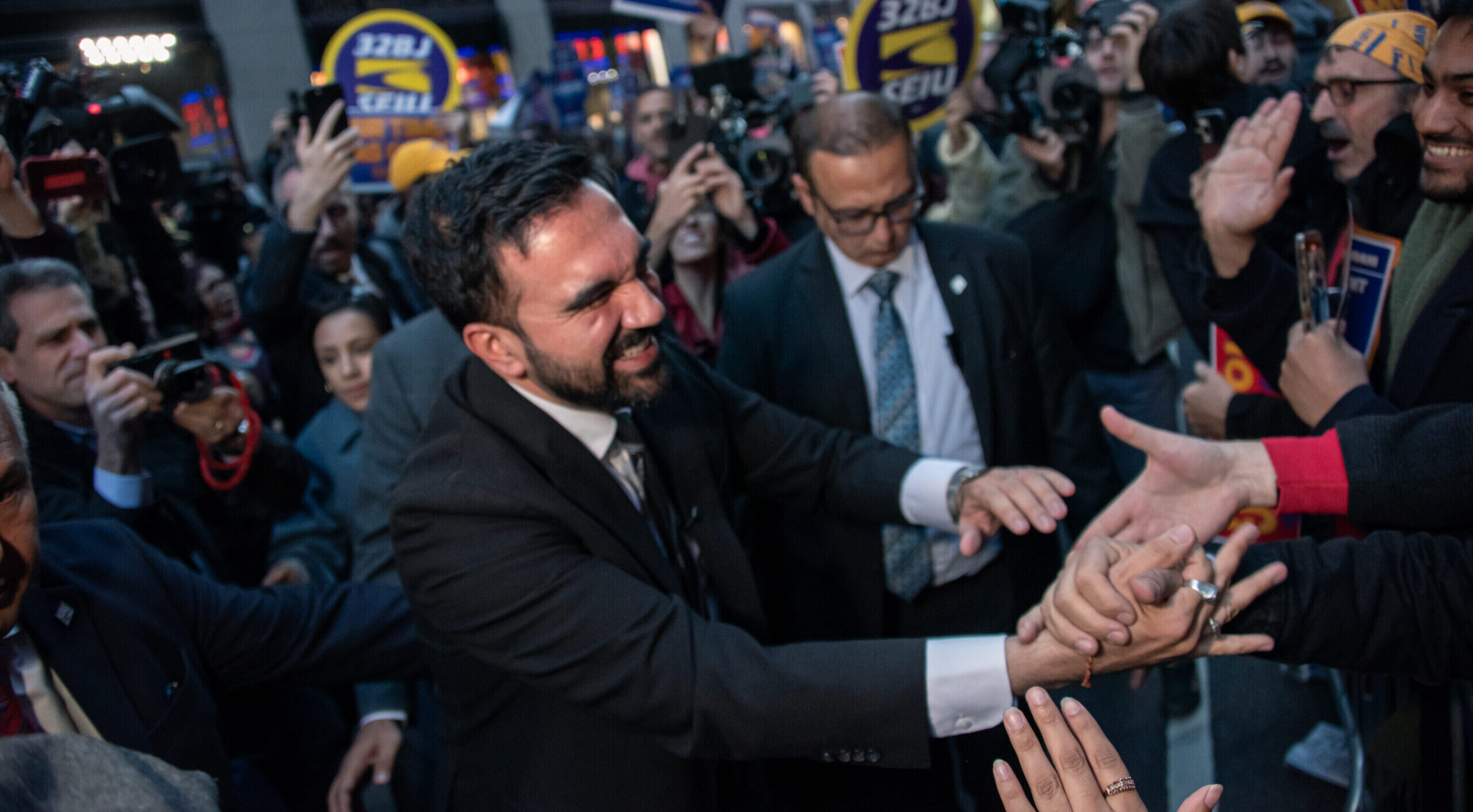
A trio of Mamdani backers united with tech and real estate investors to boost anti-Israel candidates
PARTY PERSPECTIVE
Democrats argue eliminating top Iranian leaders increases dangers to Iranians, Israel, U.S.

Speaking at J Street’s national summit, Sen. Tim Kaine also said ‘virtually all’ Democratic senators now seek the group’s endorsement
Plus, Tehran takes aim at global energy
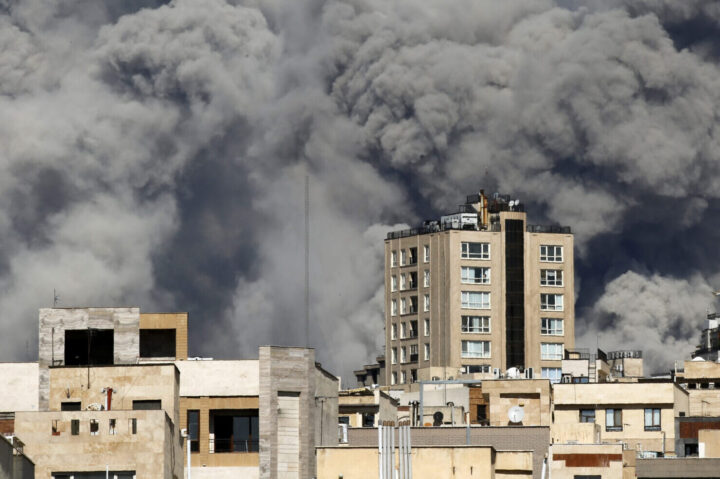
Fatemeh Bahrami/Anadolu via Getty Images
Smoke rises from the area after it was targeted in attacks as a series of explosions are heard in Tehran, Iran on March 01, 2026.
Good Monday afternoon,
This P.M. edition is reserved for our premium subscribers — offering a forward-focused read on what we’re tracking now and what’s coming next.
It’s me again — Danielle Cohen-Kanik, U.S. editor at Jewish Insider and curator, along with assists from my colleagues, of the Daily Overtime. Please don’t hesitate to share your thoughts and feedback by replying to this email.
📡On Our Radar
Notable developments and interesting tidbits we’re tracking
President Donald Trump and senior U.S. defense officials laid out an open-ended timeline for the ongoing bombing campaign against Iran in several press briefings and interviews today, Jewish Insider’s Matthew Shea and Emily Jacobs report.
Trump and Defense Secretary Pete Hegseth both declined to rule out a U.S. ground invasion of Iran, while Joint Chiefs Chairman Gen. Dan Caine announced more American troops are en route to the region. “Every president says, ‘There will be no boots on the ground.’ I don’t say it. I say ‘probably don’t need them,’ [or] ‘if they were necessary,’” Trump told the New York Post.
The president repeatedly said the operation is “ahead of schedule,” but added that the U.S. military is prepared to continue the campaign beyond his initial four-to-five-week timeline. Trump also told CNN that the “big wave” of strikes on Iran “hasn’t even happened. The big one is coming soon”…
On the American public’s perception of the strikes, Trump said, “I think that the polling is very good, but I don’t care about polling. I have to do the right thing. This should have been done a long time ago.” A new CNN poll found that 41% of Americans support the strikes against Iran, while 59% disapprove…
After Hezbollah jumped into the conflict by launching strikes on Israel overnight, prompting Israeli fire on Hezbollah targets in Lebanon in return, Lebanese Prime Minister Nawaf Salam banned the terror group’s “military activities,” restricting it “to the political sphere.”
Salam said the group’s actions are now “illegal” and called on the Lebanese Armed Forces to “prevent any attacks originating from Lebanese territory,” a long-awaited show of resolve from Beirut. The LAF has struggled to disarm Hezbollah forces since the signing of a ceasefire agreement with Israel in November 2024…
On a ground invasion of Lebanon, IDF spokesperson Brig. Gen. Effie Defrin said, similarly to the U.S. position on Iran, “all options are on the table”…
U.S. casualties in the course of the operation increased today to six servicemembers…
Qatar’s Ministry of Defense condemned attacks by Iran on a power plant and an oil facility in the country, further indicating Tehran is setting its sights on civilian and energy infrastructure. The targeted energy plant, Ras Laffan, is responsible for around a fifth of all global natural gas production — Qatar halted production after the strike which, along with decreased passage through the vital Strait of Hormuz, sent oil prices soaring…
Iran continues to sustain heavy losses: The U.S. said it has sunk all 11 of Iran’s warships in the Gulf of Oman while Qatar shot down two Iranian SU-24 tactical bombers, which were developed by Russia; the UAE also intercepted around 150 Iranian drones and 15 missiles today in addition to hundreds over the weekend…
U.K. Prime Minister Keir Starmer reiterated in an address to parliament today that Britain will not be joining the strikes on Iran but will allow the U.S. to use its bases for “defensive actions,” noting that Iran has already struck a military base in Bahrain that houses around 300 British troops. “France and Germany are also prepared to enable U.S. action to destroy Iran’s capability to fire missiles and drones from the source,” Starmer added.
Trump said he was “very disappointed” with Starmer in an interview with The Telegraph, saying the prime minister “took far too long” in deciding to allow U.S. forces to utilize its bases…
NATO Secretary-General Mark Rutte praised the campaign, calling it “really important … because it is taking out, degrading the capacity of Iran to get its hands on nuclear capability, the ballistic missile capability.” But, he said, “there are absolutely no plans whatsoever for NATO to get dragged into this”…
GOP lawmakers are pushing Democrats to agree to a funding deal for the still-shuttered Department of Homeland Security, as hostilities with Iran raise concerns about domestic terror threats…
The war is also making its way into some of the most heated primary races unfolding across the country: In North Carolina’s 4th Congressional District, anti-Israel activist Nida Allam, who is challenging Rep. Valerie Foushee (D-NC), put out a new campaign ad just before tomorrow’s primary slamming “Trump and Netanyahu’s reckless war.”
Allam accused the administration of using “our taxpayer dollars to bomb a school in Iran, killing over 100 elementary school children,” even though there has been no proof that the U.S. was responsible for the strike…
Some pro-Israel Democratic candidates in Illinois also took harsh stances against the Iran operation: state Sen. Laura Fine, running in Illinois’ 9th Congressional District, called for Trump’s impeachment, while Cook County Commissioner Donna Miller, running in the 2nd District, and Chicago Treasurer Melissa Conyears-Ervin, running in the 7th District, called the strikes “reckless” and “immoral,” respectively…
⏩ Tomorrow’s Agenda, Today
An early look at tomorrow’s storylines and schedule to keep you a step ahead
Keep an eye out in Jewish Insider for a rundown of the high-profile primaries on the ballot tomorrow in North Carolina and Texas.
German Chancellor Friedrich Merz will meet with President Donald Trump at the White House for a conversation that was set to focus on negotiations between Russia and Ukraine but will likely be overshadowed by the ongoing operation against Iran. Germany joined the U.K. and France over the weekend in offering a supportive but cautious stance on the hostilities.
It will be a busy day on the Hill, where administration officials including Secretary of State Marco Rubio, Defense Secretary Pete Hegseth, CIA Director John Ratcliffe and Joint Chiefs Chairman Gen. Dan Caine will hold all-member briefings on Iran for the House and Senate. Rubio is briefing the Gang of Eight again this afternoon, and national security committees in both chambers were briefed over the weekend.
Elbridge Colby, the under secretary of defense for policy, will brief the Senate Armed Services Committee on the Pentagon’s National Defense Strategy; Colby has previously drawn bipartisan ire from the committee over a lack of consultation by his team and alleged rogue decision-making on a range of issues by his office.
The Senate Judiciary Committee will hold a hearing on oversight of the Department of Homeland Security with testimony from Homeland Security Secretary Kristi Noem.
The Capitol Jewish Forum will host its annual Capitol Hill Purim celebration, attended by a number of Jewish lawmakers.
Stories You May Have Missed
WEIGHING IN
As Iran war continues, Senate and House set for long-shot votes to cut it short

The resolutions are unlikely to pass; if they do, they will need two-thirds support to override an inevitable presidential veto
CLOSING RANKS
Arab states unite as Iran strikes every member of Gulf Cooperation Council

UAE and Saudi leaders spoke by phone; the GCC affirmed its ‘right to respond’
Plus, Mamdani makes surprise WH visit
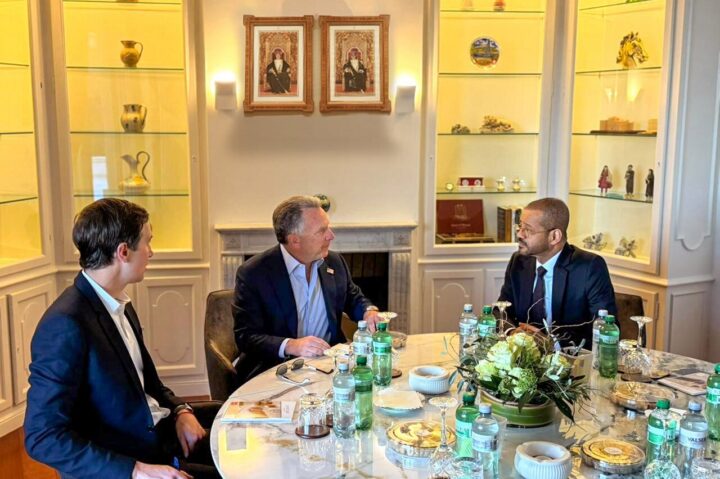
Umman Foreign Ministry/Handout/Anadolu via Getty Images
Special Envoy Steve Witkoff (C) advisor Jared Kushner (L) meet with Omani Foreign Minister Badr bin Hamad Al Busaidi (R), who is mediating between the parties in the third round of Iran-U.S. negotiations held in Geneva, Switzerland, on February 26, 2026.
Good Thursday afternoon!
This P.M. edition is reserved for our premium subscribers — offering a forward-focused read on what we’re tracking now and what’s coming next.
It’s me again — Danielle Cohen-Kanik, U.S. editor at Jewish Insider and curator, along with assists from my colleagues, of the Daily Overtime. Please don’t hesitate to share your thoughts and feedback by replying to this email.
📡On Our Radar
Notable developments and interesting tidbits we’re tracking
U.S.-Iran negotiations wrapped up for the day in Geneva without a decisive result: Omani Foreign Minister Badr Albusaidi said the sides had made “significant progress” while Iranian Foreign Minister Abbas Araghchi told state media they negotiated “very seriously,” but no agreement was reached.
Araghchi said technical experts will meet on Monday in Vienna at the International Atomic Energy Agency and fourth round negotiations will take place later next week, after consultations in both capitals…
Secretary of State Marco Rubio told reporters yesterday that Iran “poses a very grave threat to the United States” and is trying to reconstitute its nuclear program. “After their nuclear program was obliterated, they were told not to try to restart it, and here they are. You can see them always trying to rebuild elements of it. They’re not enriching right now, but they’re trying to get to the point where they ultimately can.”
Beyond the nuclear issue, Rubio said, Iran also has “conventional weapons that are solely designed to attack America and attack Americans. … These things have to be addressed.” While the current talks are focused solely on Tehran’s nuclear program, “it’s also important to remember that Iran refuses to talk about ballistic missiles to us or to anyone, and that’s a big problem”…
House Democratic leaders said in a joint statement today that they plan to force a vote “as soon as Congress reconvenes next week” on a resolution blocking military action against Iran without congressional authorization, Jewish Insider’s Marc Rod reports. Three Democrats have already indicated they will oppose the resolution, with other defections likely to follow…
U.S. forces raided a ship last month and seized cargo heading from China to Iran, officials told The Wall Street Journal, part of a broader effort to head off Iran’s covert arms purchases after the 12-day war last June. The cargo was reportedly intended for Iranian companies that procure weapons for the regime’s missile program…
The Journal interviews fighter pilots involved in the U.S. bombing campaign against the Houthis last spring, as military assets are once again amassing in the Middle East for a potential operation against Iran…
Maine Senate candidate Graham Platner amplified a social media post today from a far-right conspiracy theorist well-known for viciously antisemitic commentary — before quickly deleting the statement, JI’s Matthew Kassel reports. In a comment on X, Platner approvingly boosted a remark opposing war with Iran from Stew Peters, who has said Judaism is “satanic” and a “death cult,” promoted blood libels and called for a “final solution” to mass-deport American Jews…
The issue is particularly sensitive for Platner, who earlier in his campaign faced scrutiny over a Nazi tattoo on his chest, which he has since had covered. He was pressed today on a YouTube call-in show about his knowledge of the tattoo’s symbolism because of his self-identification as a WWII history enthusiast.
“I was well aware that they [Nazis] used a similar-looking thing,” Platner said. “You have to admit it’s not a ‘similar-looking thing,’ it’s the same thing. … Anyone who’s remotely a WWII buff knows what that is,” the caller replied. Platner answered, “I’m not going to apologize for something that I didn’t know about or do”…
New York City Mayor Zohran Mamdani made an unannounced visit to the White House to meet with President Donald Trump today. Among other issues, the two discussed housing and immigration activities…
The family of Francesca Albanese, the U.N. special rapporteur for Israel and the Palestinian territories, sued Trump and other administration officials yesterday in district court, alleging that the sanctions imposed on Albanese by the U.S. violate her First, Fourth and Fifth Amendment rights…
Israeli President Isaac Herzog and Foreign Minister Gideon Sa’ar attended an iftar meal to break the Ramadan fast hosted by UAE Ambassador to Israel Mohamed Al Khaja in Tel Aviv, where Herzog said that the “members of the Abraham Accords should be treated in an upgraded manner as they pursue the noble cause of peace.”
“And this I say especially,” Herzog continued, “when there are nations who are spreading hate, spreading blasphemy against nations who seek peace — against the Emiratis, against the Israelis,” ostensibly referring to Saudi Arabia…
As Indian Prime Minister Narendra Modi wrapped up his trip to Israel today, the two countries signed 16 memorandums of understanding to expand cooperation in fields including agriculture and AI. Modi also met with the cast of “Fauda”…
⏩ Tomorrow’s Agenda, Today
An early look at tomorrow’s storylines and schedule to keep you a step ahead
Keep an eye out in Jewish Insider for a profile of Sam Bregman, the Jewish cowboy-hat wearing former district attorney running for governor of New Mexico.
ADL’s Desert Region will hold its annual conference at Arizona State University, with speakers including ADL CEO Jonathan Greenblatt, Arizona Gov. Katie Hobbs, Phoenix Mayor Kate Gallego and state Rep. Alma Hernandez.
J Street’s annual conference will kick off Saturday in Washington. Speakers will include former Israeli Prime Minister Ehud Olmert, Sens. Chris Van Hollen (D-MD), Brian Schatz (D-HI), Adam Schiff (D-CA), Tim Kaine (D-VA) and Chris Murphy (D-CT) and Reps. Nancy Pelosi (D-CA), Sara Jacobs (D-CA), Sean Casten (D-IL) and Madeleine Dean (D-PA). J Street’s PAC will hold an event with Roy Cooper, the former governor of North Carolina now running for Senate, and phone banking sessions for Evanston, Ill., Mayor Daniel Biss, running for the House.
We’ll be back in your inbox with the Daily Overtime on Monday. Shabbat Shalom!
Stories You May Have Missed
EDUCATION CONSTERNATION
Jewish groups file suit against California for widespread failure to address antisemitism in K-12 schools
The suit highlights several complaints from Jewish parents and children statewide, in school districts including Berkeley, Los Angeles, Santa Clara, San Francisco, Campbell Union, Fremont, Etiwanda and Oakland
PRAIRIE STATE DEBATE
Abughazaleh says she doesn’t support Iron Dome, dodges on Israel’s right to exist

The far-left influencer, running competitively in a Chicago-area district with a sizable Jewish constituency, debated primary rivals Laura Fine and Daniel Biss on Wednesday
Plus, Witkoff calls for indefinite Iran nuclear deal

Mario Tama/Getty Images
An attendee wears a jacket at an Iowa caucus watch party organized by Metro D.C. Democratic Socialists of America, on February 3, 2020 in Washington, DC.
Good Wednesday afternoon!
This P.M. edition is reserved for our premium subscribers — offering a forward-focused read on what we’re tracking now and what’s coming next.
It’s me again — Danielle Cohen-Kanik, U.S. editor at Jewish Insider and curator, along with assists from my colleagues, of the Daily Overtime. Please don’t hesitate to share your thoughts and feedback by replying to this email.
📡On Our Radar
Notable developments and interesting tidbits we’re tracking
Ahead of the third round of U.S.-Iran negotiations taking place in Geneva tomorrow, Vice President JD Vance told Fox News that President Donald Trump “has a number of other tools at his disposal” besides diplomacy to ensure “the craziest and worst regime in the world” does not obtain nuclear weapons, following on the president’s remarks during last night’s State of the Union calling Iran “the world’s No. 1 sponsor of terror”…
In response to Trump’s comments, where he also said Iran was developing advanced ballistic missiles and had killed 32,000 protesters, Iranian Foreign Ministry spokesperson Esmail Baghaei tied Trump to the “law of propaganda coined by Nazi [chief propagandist] Joseph Goebbels.”
“This is now systematically used by the U.S. administration and the war profiteers encircling it, particularly the genocidal Israeli regime … Whatever they’re alleging in regards to Iran’s nuclear program, Iran’s ballistic missiles, and the number of casualties during January’s unrest is simply the repetition of ‘big lies,’” Baghaei wrote on X…
White House Special Envoy Steve Witkoff, who is leading Iran negotiations alongside Jared Kushner, reportedly told AIPAC members at the group’s summit in Washington yesterday that any deal reached with Iran should not have a “sunset clause,” as the 2015 Joint Comprehensive Plan of Action was criticized for.
“We start with the Iranians with the premise that there is no sunset provision. Whether we get a deal or not, our premise is: you have to behave for the rest of your lives,” Witkoff told the group, according to Axios. He said talks are currently focused only on the nuclear issue, but if they are successful, the administration would look to hold additional talks on Tehran’s missile program and support for terror proxies…
Satellite photos analyzed by the Associated Press appear to show U.S. ships that typically dock in Bahrain as part of the U.S. Navy’s 5th Fleet have moved out to sea. The 5th Fleet similarly scattered its ships during the U.S. strikes in Iran last June…
Dutch airline KLM announced a suspension of flights between its hub in Amsterdam and Israel’s Ben Gurion Airport starting March 1 until further notice, saying in a statement that it is currently “not commercially or operationally feasible for KLM to operate flights to Tel Aviv.” It’s the first airline to pause flights amid the current unrest with Iran…
On the campaign trail, Washington, D.C., mayoral candidate Janeese Lewis George vowed to reject the “Zionist lobby” in a questionnaire seeking the endorsement of the Metro D.C. chapter of the Democratic Socialists of America, Jewish Insider’s Gabby Deutch reports, a category that the DSA said includes AIPAC, Democratic Majority for Israel, Christians United for Israel and J Street.
Referencing her appearance at an event with the Jewish Community Relations Council of Greater Washington in December, Lewis George assured the DSA she “disagree[s] with the JCRC on a number of issues,” including its opposition to describing Israel’s actions in Gaza as a genocide and its “definition of antisemitism that criminalizes dissent, and their attacks on activists.”
Ron Halber, CEO of the JCRC, told JI, “As far as I’m concerned, [the DSA’s questionnaire] is an antisemitic manifesto. They are making the price of their endorsement the social exclusion of Jews”…
Illinois state Sen. Laura Fine, a Democrat running for an open Illinois House seat, unapologetically championed her backing for Israel in a position paper obtained by JI’s Marc Rod, amid attacks from anti-Israel activists and groups over her support for the Jewish state and backing from pro-Israel supporters.
Fine described Israel in the paper as “more than just a strategic ally, it is a beacon of democracy in one of the world’s most volatile regions,” as she and some of her primary opponents, including Evanston Mayor Daniel Biss and far-left activist Kat Abughazaleh, are set to participate in a televised debate tonight…
The U.S.-led Board of Peace released a video today laying out its vision for Gaza. The board’s goal by Year 3 is to fully rebuild the southern Gazan city of Rafah and have Gaza “connected to the world through an Abrahamic gateway, linking it with Egypt, Israel, Jordan, Saudi Arabia, the UAE and extending to India and Europe.” By the board’s 10th year, it said, Gaza will be “self-governed,” without specifying who will oversee the enclave and how Hamas will be removed from power…
Knesset Speaker Amir Ohana awarded Indian Prime Minister Narendra Modi the newly established Medal of the Knesset, the highest honor of the body, after Modi’s address there today. His remarks were warmly received by members of Knesset and Israeli Prime Minister Benjamin Netanyahu, who was also in the chamber…
Following Israel’s recognition of Somaliland’s independence in December, Jerusalem accepted the appointment of Mohamed Hagi as the first Somaliland ambassador to the Jewish state (and its first fully accredited ambassador anywhere in the world). Hagi “was a member of the inner circle of officials who promoted the establishment of relations between Israel and Somaliland,” the Israeli Foreign Ministry said, and vowed that a reciprocal Israeli ambassador “will soon be appointed”…
Former Harvard President Larry Summers will remain on leave from his teaching position at the Ivy League school for the duration of the academic year, at which point he will retire, Harvard announced today, after files released by the Department of Justice showed Summers maintained a relationship with sex trafficker Jeffrey Epstein after the financier had been convicted of prostitution involving a minor…
⏩ Tomorrow’s Agenda, Today
An early look at tomorrow’s storylines and schedule to keep you a step ahead
Keep an eye out in Jewish Insider for a preview of Fox Nation’s new docudrama on King David, offering a dramatic reenactment of the biblical coming-of-age story of the Jewish leader.
White House Special Envoy Steve Witkoff and Jared Kushner will hold discussions with Iranian Foreign Minister Abbas Araghchi in Geneva, mediated by Omani Foreign Minister Badr Albusaidi.
California Jewish groups including the JCRC Bay Area, the Jewish Federation of Los Angeles and Jewish California, which rebranded today from its previous name of JPAC, are hosting a forum for candidates running for governor, as Gov. Gavin Newsom reaches his term limit. Participating candidates include former presidential contender Tom Steyer, Rep. Eric Swalwell (D-CA), San Jose Mayor Matt Mahan and former Los Angeles Mayor Antonio Villaraigosa, all of whom are Democrats, as well as Republican commentator Steve Hilton.
Stories You May Have Missed
PUSHING BACK
Moderate Democrats mock notion that Kamala Harris lost because she wasn’t tougher on Israel
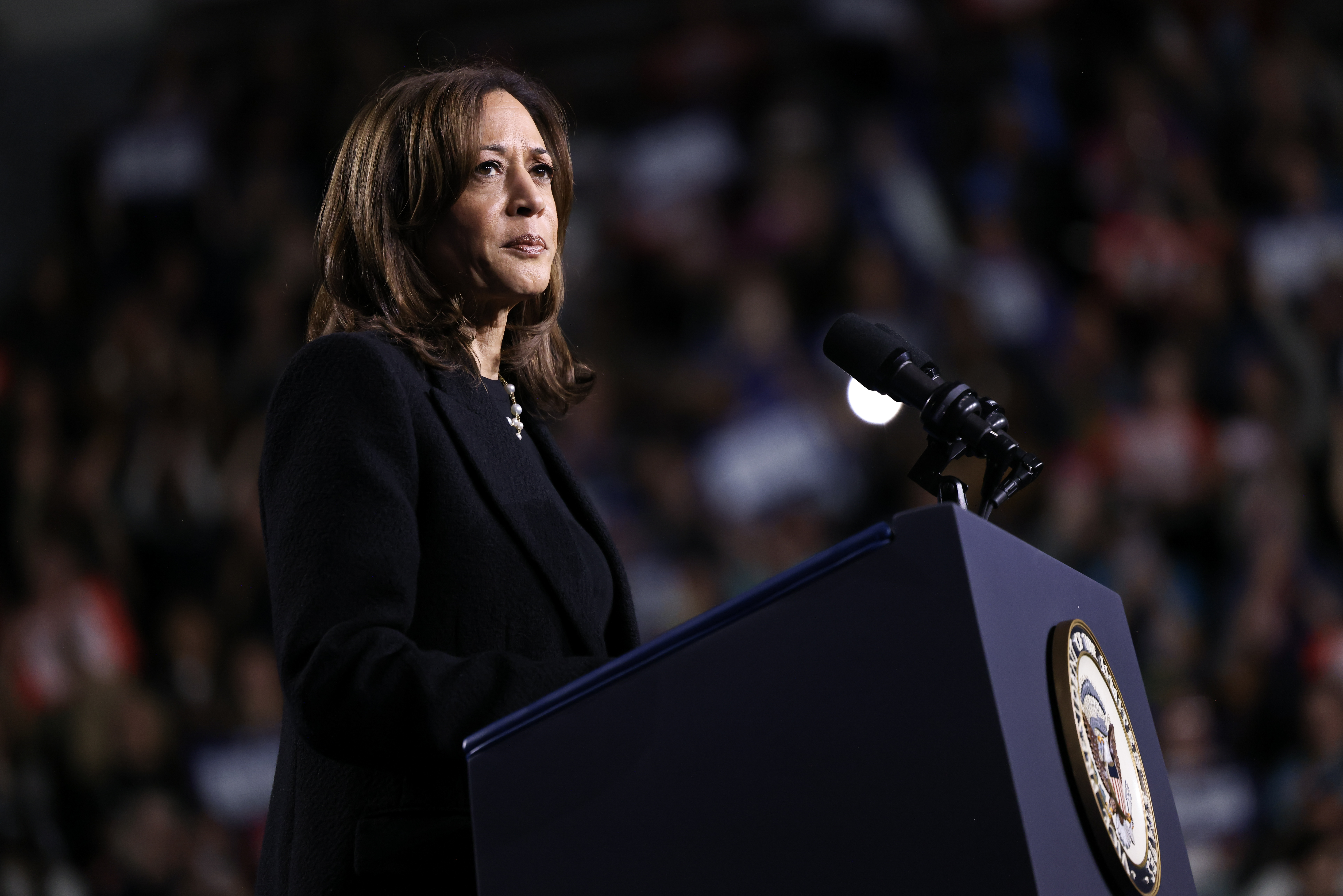
Rep. Jared Moskowitz, representing a swing district: ‘The idea that the vice president lost every swing state because she wasn’t more extreme on this issue is laughable’
CAPPELLO’S CAMPAIGN
Democrat John Cappello brings military experience in Israel to race against Mike Lawler
The Air Force veteran, who served for six years at the U.S. Embassy in Israel, said Israel should continue to make efforts toward peace
Plus, Trump says Iran won't rule out nuclear weapons
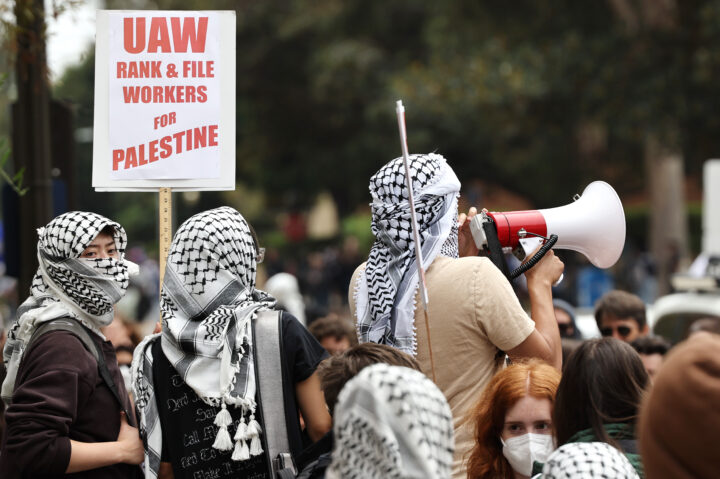
Mario Tama/Getty Images
Protestors gather after police cleared a new encampment on the UCLA campus on May 23, 2024 in Los Angeles, California.
Good Tuesday afternoon!
This P.M. edition is reserved for our premium subscribers — offering a forward-focused read on what we’re tracking now and what’s coming next.
It’s me again — Danielle Cohen-Kanik, U.S. editor at Jewish Insider and curator, along with assists from my colleagues, of the Daily Overtime. Please don’t hesitate to share your thoughts and feedback by replying to this email.
📡On Our Radar
Notable developments and interesting tidbits we’re tracking
Previewing his State of the Union address tonight, where it remains to be seen if he will make any announcements on Iran, President Donald Trump told reporters, “Iran wants to make a deal more than I do, but they just won’t say the sacred phrase: ‘We won’t build nuclear weapons,’” signaling that the two sides are still at an impasse ahead of the third round of negotiations scheduled for Thursday…
Secretary of State Marco Rubio briefed the congressional Gang of Eight, the bipartisan set of leaders advised on classified matters by the executive branch, this afternoon to provide an update on Iran, with CIA Director John Ratcliffe reportedly joining the discussion. The White House did not brief the group before striking Iran last June, drawing ire from Democrats…
Ahead of the meeting, Senate Minority Leader Chuck Schumer (D-NY) told C-SPAN about potential Iran strikes, “Closed-door briefings are fine, but the administration has to make its case to the American people on something as important as this”…
Around a dozen U.S. F-22 stealth fighter jets departed from the U.K. today to be deployed at an Israeli Air Force base in the south of the country, as over 150 aircraft are being moved to the region. Military experts told The Washington Post that the “assets being assembled are indicative of a multiday campaign without a ground invasion”…
The Coast Guard is investigating a swastika drawn at its primary recruit training center in New Jersey, where Coast Guard commandant Adm. Kevin Lunday quickly flew to address recruits and staff about the incident. Lunday recently came under fire from Congress, and had his confirmation delayed, over a change in Coast Guard policy that downgraded the swastika from a prohibited hate symbol to “potentially divisive,” which was eventually walked back.
Regarding the recent incident, Lunday said in a statement to The Washington Post, “Anyone who adheres to or advances hate or extremist ideology — get out. Leave. You don’t belong in the United States Coast Guard and we reject you”…
Rep. Brad Sherman (D-CA) is pushing for legislation to require an affirmative congressional vote prior to the U.S. reaching any nuclear deal with Saudi Arabia, Jewish Insider’s Marc Rod reports, following a notification from the administration to Congress indicating that it is moving toward a deal that could allow Riyadh to enrich uranium for civilian purposes.
The notification procedures, which do not include specific terms of a potential deal, suggest that Saudi Arabia will not be required to agree to more intrusive International Atomic Energy Agency inspections or “gold standard” safeguards — which would require Saudi Arabia to agree not to enrich or reprocess nuclear material — used for the U.S. nuclear cooperation agreement with the United Arab Emirates…
The Justice Department sued the University of California today under Title VII of the Civil Rights Act, which prohibits employment discrimination, alleging that the UCLA campus created a “hostile work environment against Jewish and Israeli faculty and staff.”
During campus anti-Israel protests in 2024, the DOJ said, “the University allowed antisemitic harassment to continue unabated for days” and “has ignored, and continues to ignore, gross and repeated violations” of time, place and manner restrictions on student protest. The department further claimed Jewish and Israeli faculty at the school have been physically threatened, ostracized, harassed, forced to take leave and assaulted…
The New York Times details efforts by New York’s business community and Democratic establishment to organize and promote the moderate wing of the party in response to New York City Mayor Zohran Mamdani’s rise to power. Some of the individuals involved, including former Gov. Andrew Cuomo allies Phil Singer and Steven Cohen, are considering forming PACs, watchdog groups, lobbying campaigns and more…
New York’s Working Families Party endorsed Brooklyn Borough President Antonio Reynoso to replace retiring Rep. Nydia Velázquez (D-NY) yesterday over Mamdani’s objections. The mayor has been backing Assemblymember Claire Valdez, who, like Mamdani, is a member of the Democratic Socialists of America and a vocal critic of Israel, and he had lobbied the WFP to endorse her or to stay out of the race. WFP’s director, Jasmine Gripper, told the Times, “At the end of the day, Zohran is an individual who gets to weigh in as an individual”…
A new poll from the University of New Hampshire found oyster farmer Graham Platner with a commanding lead among likely Senate Democratic primary voters, outdistancing Gov. Janet Mills by 34 points, with the primary less than four months away. In a general election matchup with incumbent Sen. Susan Collins (R-ME), Platner leads Collins by 11 points, while Mills and Collins are neck-and-neck…
Khalid Turaani, executive director of the Ohio branch of the Council on American-Islamic Relations (CAIR), testified at the Ohio Senate Judiciary Committee last week against a bill to codify the International Holocaust Remembrance Alliance’s working definition of antisemitism, where he claimed that Israel operates the world’s largest human skin bank and harvests the skin from deceased Palestinians. “And if I call them Nazis,” Turaani continued, “your law is going to punish me.”
The Anti-Defamation League’s Ohio River Valley office condemned Turaani’s speech, saying that the “antisemitic organ harvesting myth plays on the blood libel trope, which has spurred the torture, murder, and expulsion of Jews for centuries”…
The U.S. Embassy in Israel announced that, as part of the government’s “efforts to reach all Americans,” the embassy will be providing consular services for one day only at several locations across Israel and the West Bank, including Ramallah and the Jewish settlement of Efrat…
⏩ Tomorrow’s Agenda, Today
An early look at tomorrow’s storylines and schedule to keep you a step ahead
Keep an eye out in Jewish Insider for the highlights from President Donald Trump’s State of the Union address, taking place at 9 p.m. ET tonight, as all eyes are on possible U.S. military action against Iran.
Indian Prime Minister Narendra Modi arrives in Israel tomorrow, where he will be greeted by Prime Minister Benjamin Netanyahu before addressing the Knesset. In the evening, the two leaders will have dinner at Jerusalem’s King David Hotel. Read JI’s interview on Modi’s visit with Israeli Ambassador to India Reuven Azar.
The New York City Council will hold its first hearing on Council Speaker Julie Menin’s bill aiming to create “buffer zones” around houses of worship to protect from disruptive protests. The bill’s language was updated last night to remove the original 100-foot figure, which had reportedly emerged as a point of concern for the NYPD.
Congressional candidates from Illinois’ 9th District, where pro-Israel spending is boosting state Sen. Laura Fine and attacking Evanston Mayor Daniel Biss, will hold a debate on local news.
Stories You May Have Missed
SHIFTING STANCE
Sue Altman pivoting on Israel as she runs in safely Democratic N.J. district

The progressive activist ran as a pro-Israel candidate in a neighboring swing district, but is now walking back her support as she runs to succeed Rep. Bonnie Watson Coleman
PRAIRIE STATE OF PLAY
Raja Krishnamoorthi emerging as the strongest ally of Jewish voters in Illinois Senate race
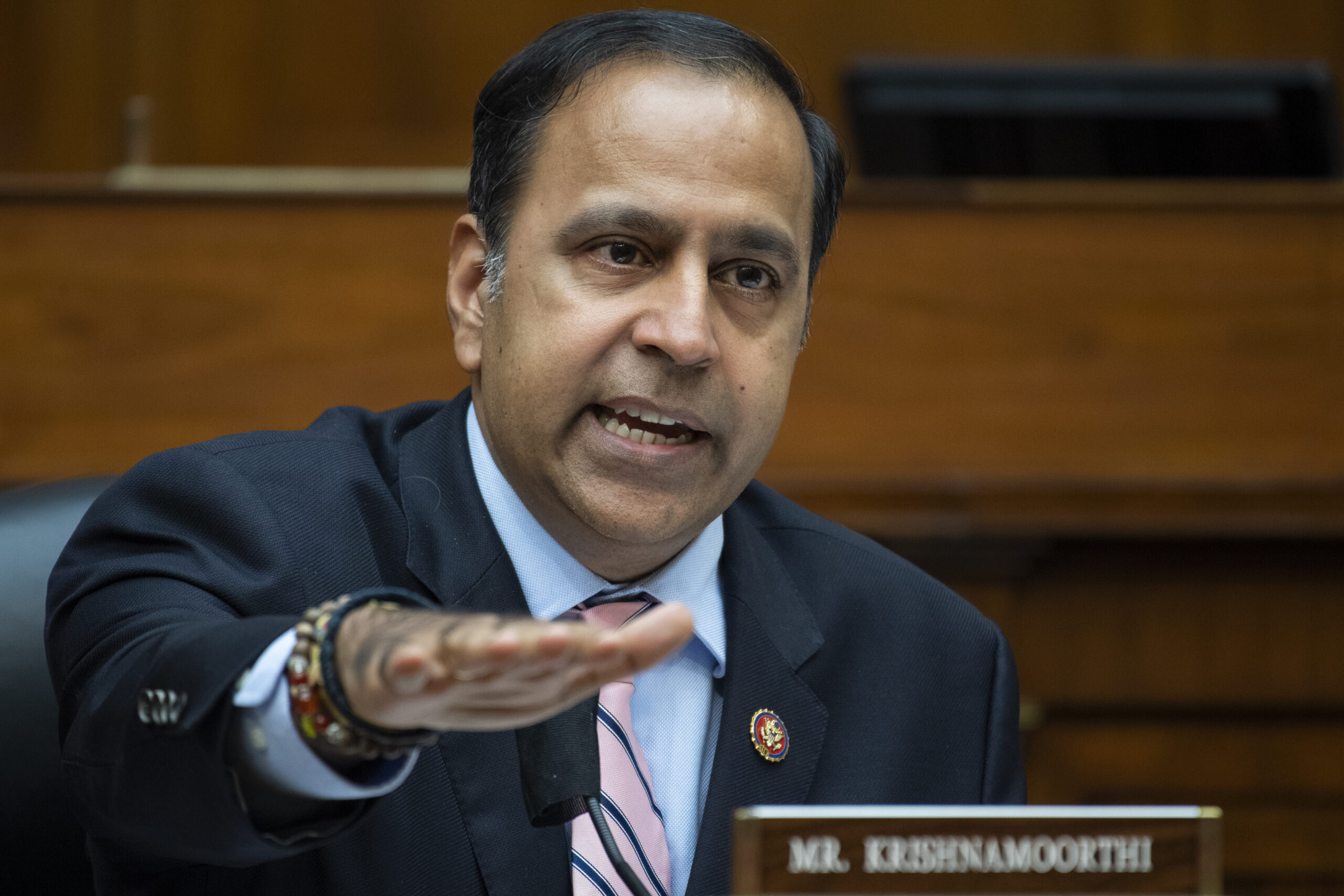
Lt. Gov. Juliana Stratton seems to be running to the congressman’s left on Israel, even as Rep. Robin Kelly is the most outspoken critic of Israel in the race
Plus, major Dem donor calls out 'Jew hate' in party
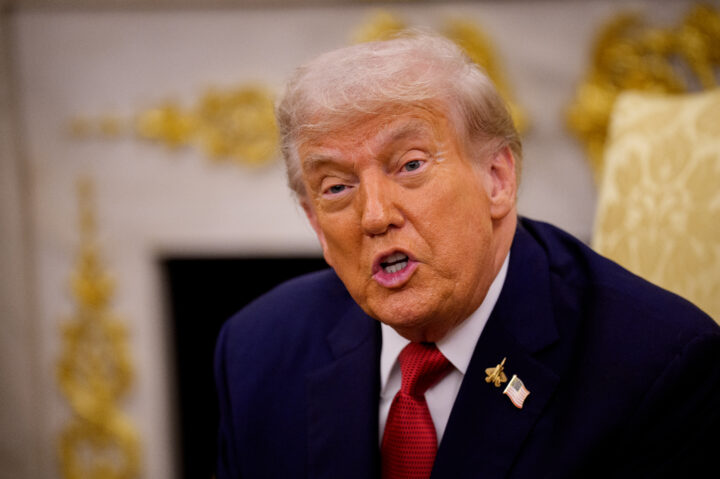
Andrew Harnik/Getty Images
President Donald Trump in the Oval Office at the White House on September 25, 2025 in Washington, DC.
Good Monday afternoon!
This P.M. edition is reserved for our premium subscribers — offering a forward-focused read on what we’re tracking now and what’s coming next.
It’s me again — Danielle Cohen-Kanik, U.S. editor at Jewish Insider and curator, along with assists from my colleagues, of the Daily Overtime. Please don’t hesitate to share your thoughts and feedback by replying to this email.
📡On Our Radar
Notable developments and interesting tidbits we’re tracking
As rumors abound about the possibility and timing of U.S. strikes on Iran, the State Department ordered the evacuation of non-essential personnel and their families from the U.S. Embassy in Beirut. “Based on our latest review, we determined it prudent to reduce our footprint,” a State official told Fox News…
Nearby, amid the buildup of U.S. military assets in the region, American refueling and cargo planes were spotted at Ben Gurion Airport…
President Donald Trump denied reports that Pentagon officials, namely Joint Chiefs of Staff Chairman Gen. Dan Caine, are raising concerns about striking Iran, writing on Truth Social this afternoon, “General Caine, like all of us, would like not to see War but, if a decision is made on going against Iran at a Military level, it is his opinion that it will be something easily won.”
“He has not spoken of not doing Iran, or even the fake limited strikes that I have been reading about, he only knows one thing, how to WIN and, if he is told to do so, he will be leading the pack,” Trump said of Caine, while alluding to the potential breadth of military action against Iran…
Secretary of State Marco Rubio pushed back his visit to Israel, originally scheduled for this weekend, to March 2, The Jerusalem Post reports, days after the next round of U.S.-Iran negotiations in Geneva on Thursday…
Sen. Chris Coons (D-DE), a leader on foreign policy among Democrats in Congress, told Jewish Insider’s Emily Jacobs that he heard “pretty stark early warning signs of some challenges where core allies do not share our priorities” on a potential Iran strike during his recent trip t0 Europe, which included stops at the Munich Security Conference, along with meetings in Ukraine and Moldova with top European diplomats.
Coons laid out what he hopes to see from the president: “A) Consult Congress. B) Make a case to the American people about why this is in our national security interest. C) Clarify what on earth he’s planning with this Board of Peace … And D) If he’s going to work with close allies to ramp up pressure to try and achieve something at the negotiating table, he should work with close allies”…
Anthony Driver Jr., a union organizer and candidate in Illinois’ 7th Congressional District, doubled down on his recent repudiation of AIPAC, despite previously having little public record on Israel policy issues. Following a press conference last week where Driver, who is running against AIPAC-backed Chicago Treasurer Melissa Conyears-Ervin, denounced the pro-Israel group, he returned donations from major Democratic Party donor Michael Sacks over the finance executive’s ties to AIPAC.
Sacks, who was a major backer of former President Barack Obama and former Chicago Mayor Rahm Emanuel, said in his reply, “It is truly sad there is so much anti Israel sentiment and outright Jew hate that Anthony found himself in this position. I can only hope that the electorate rejects hate in all forms”…
As more details emerge about Rep. Tony Gonzales’ (R-TX) alleged affair with a staffer who later committed suicide, a poll commissioned by the campaign of Brandon Herrera, Gonzales’ opponent, shows the congressman trailing Herrera by a whopping 24 points among likely GOP primary voters. The story, which entered the news cycle right as early voting kicked off, could catapult Herrera, a social media influencer with a history of antisemitism, to the Republican nomination and on to Congress…
Investigators at the cryptocurrency giant Binance found last year that about $1.7 billion had been sent from two accounts to Iranian entities with links to terror groups, The New York Times reports, even after Binance pleaded guilty to violating anti-money laundering laws in 2023 and vowed to prevent sanctioned actors from accessing its platform. Trump pardoned Binance founder Changpeng Zhao, who was jailed for his role in the saga, in October 2025…
The Atlanta Jewish Film Festival backtracked in its defense of a juror selected for a judging panel who had posted antisemitic and anti-Israel content online, whom it had stood behind even after the Israeli Consulate in Atlanta announced it was withdrawing its funding and support of the event over the pick.
The festival changed its tune yesterday, saying it is “first and foremost, a Jewish institution” and has “a responsibility, particularly at this fraught time, to stand firmly against antisemitism and to affirm the Jewish people’s right to self-determination.” It said it would review its “organizational processes and policies, including those related to antisemitism, BDS, and cultural boycotts”…
The French Foreign Ministry has moved to block U.S. Ambassador to France Charles Kushner’s access to government officials after he declined to appear for a summons by Foreign Minister Jean-Noël Barrot today, which was issued after the U.S. Embassy reposted comments by Trump about a far-right French activist who was killed in a clash with far-left protesters. It was Kushner’s second summons, after his first last year when he accused the French government of not adequately combating antisemitism…
⏩ Tomorrow’s Agenda, Today
An early look at tomorrow’s storylines and schedule to keep you a step ahead
Keep an eye out in Jewish Insider for a look at Sue Altman’s shifting views on Israel as the formerly pro-Israel congressional candidate is now running in New Jersey’s more heavily Democratic 12th Congressional District.
We’ll be watching for mention of President Donald Trump’s thinking on Iran as he delivers the annual State of the Union address tomorrow night. Virginia Gov. Abigail Spanberger will deliver the Democratic response.
The House Foreign Affairs Committee will hold a hearing on “advancing national security through commercial diplomacy” with Jacob Helberg, under secretary of state for economic affairs, who recently told JI that he hopes the Pax Silica initiative, which he leads, “will pave the way for peace and economic integration” in the Middle East.
Australia’s royal commission on antisemitism, formed after the Hanukkah terror attack at Sydney’s Bondi Beach, will hold its first public hearing, though no testimony or evidence will be heard.
Stories You May Have Missed
OVERTON WINDOW
Jewish Democrats alarmed about whether their party will remain welcoming
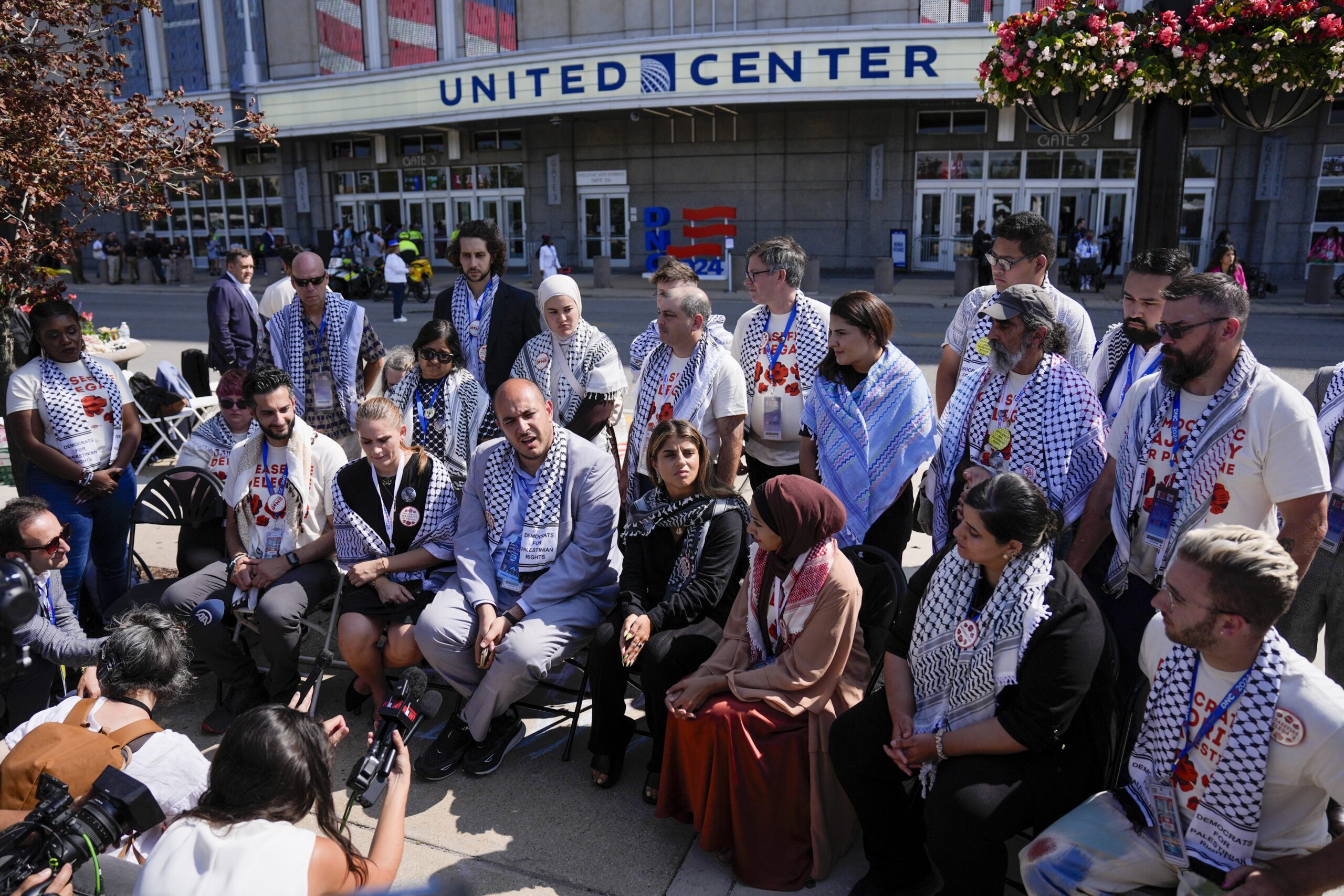
Former Democratic Rep. Kathy Manning: ‘There is no doubt that we are living through very difficult times for American Jews’
BIG TENT SHABBAT
State Dept. Shabbat dinner draws UAE, Saudi ambassadors and senior Trump officials
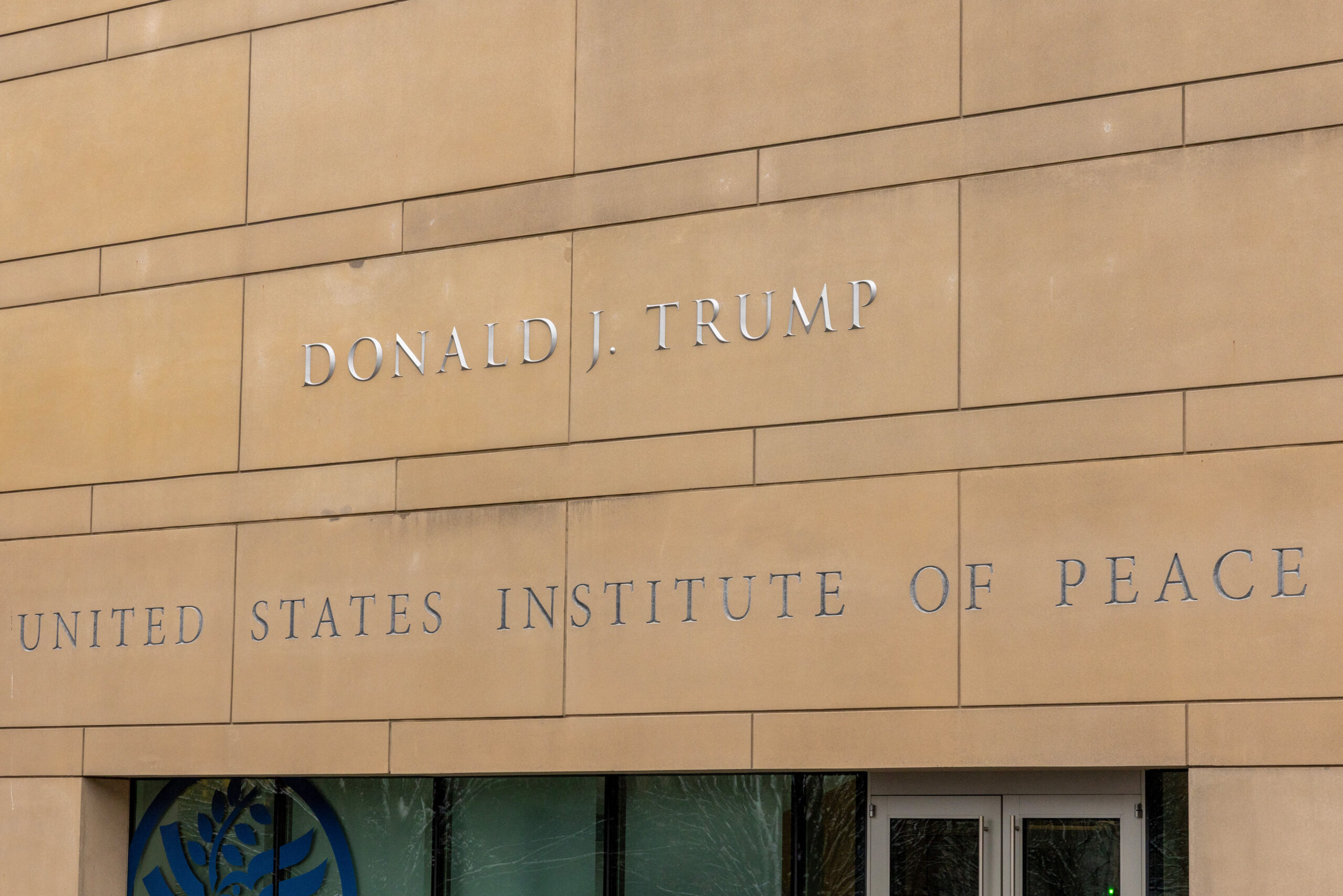
The dinner was hosted by Rabbi Yehuda Kaploun, the U.S. antisemitism special envoy
Plus, Trump's kind words for Qatari PM
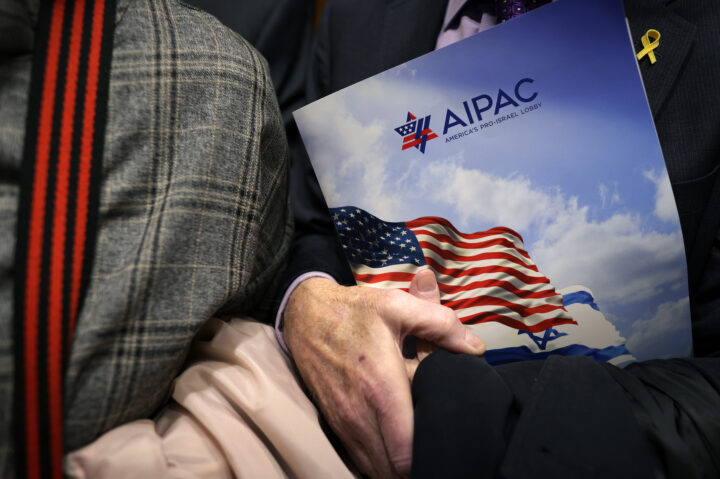
Alex Wong/Getty Images
A visitor holds an AIPAC folder in an elevator in Rayburn House Office Building on March 12, 2024 on Capitol Hill in Washington, DC.
Good Thursday afternoon!
This P.M. edition is reserved for our premium subscribers — offering a forward-focused read on what we’re tracking now and what’s coming next.
It’s me again — Danielle Cohen-Kanik, U.S. editor at Jewish Insider and curator, along with assists from my colleagues, of the Daily Overtime. Please don’t hesitate to share your thoughts and feedback by replying to this email.
📡On Our Radar
Notable developments and interesting tidbits we’re tracking
President Donald Trump used the occasion of the first meeting of the Board of Peace in Washington today to announce significant monetary and troop commitments from the U.S. and other countries to stabilize Gaza, as well as lay out a timeline for military action against Iran, Jewish Insider’s Matthew Shea reports.
The pledges included $10 billion from the U.S. and $7 billion from several Middle Eastern countries for Gaza’s reconstruction, as well as commitments to provide troops and police to the U.S.-led International Stabilization Force. (The Guardian reports the White House is currently exploring plans to build a 5,000-person military base to house the ISF in southern Gaza.)
On Iran negotiations, Trump said in his remarks, “Now we may have to take it a step further or we may not. Maybe we are going to make a deal [with Iran]. You are going to be finding out over the next probably 10 days.”
He later told reporters on Air Force One, “Ten, 15 days, pretty much maximum.” Remember: Last June, Trump said he would decide whether to take action against Iran within two weeks, and carried out strikes on Iranian nuclear facilities two days later…
U.K. Prime Minister Keir Starmer has reportedly not given approval to Washington to use the joint U.S.-U.K. base on Diego Garcia island for a strike on Iran, as Trump said yesterday he is considering. London is concerned that a U.S. strike from the shared base, which the U.K. must grant permission to use, could implicate it in violating international law…
Trump also offered praise for Qatar’s prime minister, Sheikh Mohammed bin Abdulrahman Al Thani, during his Board of Peace remarks, despite widespread criticism of Doha’s backing of Hamas and platforming of anti-Israel actors.
“His excellency, Prime Minister Al Thani of Qatar, just a great and highly respected man,” Trump said. “I always say he needs a public relations agency because you do so much good, and they have you down as evil, and you’re not evil. You help us so much and you’re such a good ally”…
Meanwhile, Hamas is entrenching itself further in Gaza, repositioning its loyalists in government and paying salaries across the enclave, according to Reuters. Hamas has said it is willing to hand power over to the Palestinian technocratic committee established by the U.S. and led by former Palestinian Authority official Ali Shaath, but as one Palestinian source told the outlet, “Shaath may have the key to the car, and he may even be allowed to drive, but it is a Hamas car”…
Former Rep. Tom Malinowski (D-NJ), who recently lost the Democratic primary for New Jersey’s 11th Congressional District, called AIPAC’s attacks against him in the race “bizarre in several ways,” writing in an op-ed today that he has “no problem identifying as a Zionist” and calling on Democratic leaders to collectively “refuse [AIPAC’s] support, instead of letting it pick off candidates one by one”…
Rep. Jan Schakowsky (D-IL) withdrew her endorsement of Cook County Commissioner Donna Miller, the front-runner in Illinois’ 2nd District Democratic primary, over Miller’s backing by groups that are reported to be affiliated with AIPAC, though the pro-Israel group hasn’t endorsed her and neither AIPAC nor its super PAC are publicly spending any money in the district.
“Illinois deserves leaders who put voters first, not AIPAC or out-of-state Trump donors,” Schakowsky told the Chicago Sun-Times. “I cannot support any candidate running for Congress who is funded by these outside interests”…
Ahead of a hearing next week on New York City Council Speaker Julie Menin’s proposed 100-foot ban on protests around houses of worship, Mayor Zohran Mamdani said today that he had the NYPD review the legality of the measure, “and I can tell you, my police commissioner has expressed concerns about that proposal”…
Three officials appointed by Mamdani to administration posts are co-founders of a group that blamed Israel for the Oct. 7 Hamas attacks two days after they took place, the Washington Free Beacon reports.
The group, the Muslim Democratic Club of New York (MDCNY), was founded by Faiza Ali, now commissioner of the Mayor’s Office of Immigrant Affairs; Aliya Latif, now executive director of the mayor’s Office of Faith-Based Partnerships; Ali Najmi, tapped as chair of the mayor’s Advisory Committee on the Judiciary; and anti-Israel activist Linda Sarsour.
On Oct. 9, 2023, the MDCNY posted on X, “Many NYers are feeling pain, fear, and anger after the horrific events in the Holy Land this weekend. Especially as the Israeli apartheid regime have forced millions of Palestinians in Gaza to live under occupation for decades and an open air prison since 2007.” The group went on to condemn “elected officials offering support for Israeli occupation’s rampant violence as it openly declares & enacts its intent to engage in mass violence and genocide against Palestinians,” well before Israel’s ground invasion of Gaza had begun…
The Forward profiles Los Angeles City Councilmember Nithya Raman as she runs for mayor with a unique ideology: Raman is a member of the Democratic Socialists of America, but has also been vocally supportive of Israel. She called DSA’s statement blaming Israel for the Oct. 7 attacks “unacceptably devoid of sympathy” and rejects the BDS movement, but was also condemned by the local Jewish community for introducing a ceasefire resolution in June 2023…
⏩ Tomorrow’s Agenda, Today
An early look at tomorrow’s storylines and schedule to keep you a step ahead
Keep an eye out in Jewish Insider for a preview of the AIPAC Congressional Summit, which is kicking off Sunday amid the group’s increasing involvement in midterm election races.
President Donald Trump is expected to meet with governors at the White House tomorrow, though the meeting will no longer be held under the auspices of the National Governors Association, as is done annually, after the White House declined to invite Democratic Govs. Jared Polis of Colorado and Wes Moore of Maryland to a black-tie dinner on Saturday.
We’ll be back in your inbox with the Daily Overtime on Monday. Shabbat Shalom!
Stories You May Have Missed
FULOP’S FIGHT
Former Jersey City Mayor Steve Fulop brings the fight against antisemitism to NYC’s business community
As the new head of NYC’s leading business advocacy group, Fulop said he’s preparing for ‘this experiment of what it means to be an executive in a DSA world’
TEXAS TROUBLE
How an anti-Israel Republican with an antisemitic history could get elected in Texas

An unfolding scandal involving Rep. Tony Gonzales could cost him his seat at the hands of a far-right social media influencer
Hirsch: ‘He is making an effort to reach out to as many representatives, particularly in the Jewish community, as he can’
Spencer Platt/Getty Images
Democratic socialist candidate Zohran Mamdani, who won the Democratic primary for mayor of New York City, attends an endorsement event from the union DC 37 on July 15, 2025, in New York City.
Prominent Reform Rabbi Ammiel Hirsch left a meeting on Thursday afternoon with New York City Mayor-elect Zohran Mamdani and a dozen diverse rabbis and community leaders feeling “encouraged,” saying that there is “reason to be optimistic” that Mamdani will protect the Jewish community.
Still, given Mamdani’s affiliation with the Democratic Socialists of America and antagonistic views on Israel — including his refusal to condemn the term “globalize the intifada” — Hirsch told Jewish Insider there remains “reason for the New York Jewish community to be anxious about Israel and safety.”
“I hope that our concerns will be proven to be less acute given the mayor-elect’s behavior in office, but we’ll have to wait and see,” said Hirsch, senior rabbi of the Upper West Side’s Stephen Wise Free Synagogue and a self-described liberal who voiced opposition to Mamdani throughout the mayoral election.
Hirsch, who spoke with JI following the mayor-elect’s private meeting with the New York Board of Rabbis, of which Hirsch is the president, said he was “encouraged by [Mamdani’s] willingness to continue to dialogue, knowing in advance that he’s going into meetings with people who have significant disagreements with him, and that he continues to be open to having these kinds of discussions.”
“That’s good for the New York Jewish community,” he continued. “I wasn’t surprised that this meeting happened because I think he is making an effort to reach out to as many representatives, particularly in the Jewish community, as he can. I think he’s trying to do that for his own sense of what is in his political interest and the well-being of the Jewish community. There’s reason to be optimistic.”
The meeting was held just weeks before Mamdani’s Jan. 1 inauguration — and as the Jewish community remains divided about his victory. Hirsch was among the leading Jewish voices expressing concern during Mamdani’s election over his hostility toward Israel. Hirsch also publicly expressed frustration with the lack of organized effort among Jewish leaders to oppose the then-candidate. Days before the election, he told JI that opposition to Mamdani is a Jewish “imperative.”
Hirsch declined to share the content of Thursday’s meeting, but called it “productive.”
“The mayor-elect stayed a little longer than anticipated so we were pleased with that,” he told JI. “He listened attentively. We shared our concerns. We agreed that we’ll set up a mechanism to meet regularly with him and his senior staff so we can keep lines of communication open. We agreed to keep content and details confidential.”
Ahead of the meeting, invitees told CNN that several rabbis planned to “propose a unified agenda, asking Mamdani to back away from his rejection of Israel’s right to exist as a Jewish state” and his support for the Boycott, Divestment and Sanctions movement.
Some Jewish leaders also said they “will put pressure on other New York officials like Gov. Kathy Hochul and incoming city council speaker Julie Menin to not work with Mamdani more broadly if he follows through on promised anti-Israel moves and doesn’t provide more reassurances to Jews in the city.”
In addition to Hirsch, other rabbis in attendance on Thursday, according to CNN, included Rabbi Joshua Davidson of Temple Emanu-El, a Reform synagogue; and Rabbi Chaim Steinmetz of the Modern Orthodox Kehilath Jeshurun synagogue.
“It’s in the interest of the Jewish community to keep an open line of communication with [Mamdani],” said Hirsch. “He’s a talented politician and very charismatic. You can understand how he was able to connect with people. I hope, for our sake and the sake of New York generally, he will pursue the policy matters that he ran on and not focus on things that happen overseas.”
On Wednesday night, Mamdani — wearing a kippah — attended an event hosted by the Satmar Hasidic movement in Brooklyn marking Kuf Alef Kislev, an annual celebration of the Satmar Rebbe Joel Teitelbaum’s escape from the Nazis in 1944. The New York City Satmar movement, which is anti-Zionist, was split over its endorsement of Mamdani during the election.
Gov. Ron DeSantis’ executive order comes less than a month after Texas did the same

Joe Raedle/Getty Images
Florida Gov. Ron DeSantis on September 17, 2024 in West Palm Beach, Florida.
Florida Gov. Ron DeSantis, following a recent move by Texas Gov. Greg Abbott, signed an executive order on Monday designating the Muslim Brotherhood and Council on American-Islamic Relations as foreign terrorist organizations.
The order instructs the Florida Department of Law Enforcement and the Florida Highway Patrol to “undertake all lawful measures to prevent unlawful activities in Florida” by the Brotherhood or CAIR. It states that all executive and cabinet agencies may not provide “any contract, employment, funds, or other benefit or privilege” to either organization or individuals who have “provided material support or resources” to one or both groups.
The order also directs the state’s Domestic Security Oversight Council to “conduct a comprehensive review of existing statutory authorities, regulations, and policies for addressing threats” from the Brotherhood and CAIR, and to “submit recommendations for any additional action needed” from the governor or the state legislature by Jan. 6, 2026.
“The Muslim Brotherhood’s Islamist ideology is irreconcilable with foundational American principles of life, liberty, and the pursuit of happiness reflected in the Declaration of Independence and the United States Constitution, especially including the right to religious freedom and the equal protection of the laws,” the order states.
DeSantis said in a post on X on Monday, “Florida agencies are hereby directed to undertake all lawful measures to prevent unlawful activities by these organizations, including denying privileges or resources to anyone providing material support.”
CAIR and CAIR-Florida jointly responded to the order by vowing legal action against the DeSantis administration.
“We look forward to defeating Governor DeSantis’ latest Israel First stunt in a court of law, where facts matter and conspiracy theories have no weight,” the organizations said in a joint statement. “In the meantime, we encourage all Floridians and all Americans to speak up against this latest attempt to shred the Constitution for the benefit of a foreign government.”
The order comes less than a month after Abbott issued a similar declaration targeting both groups as foreign terrorist organizations, and weeks after President Donald Trump signed an executive order designating the Brotherhood as a foreign terrorist organization.
On Capitol Hill, Republicans in the House and Senate are working on advancing standalone legislation reinstating the Brotherhood’s FTO designation, though House lawmakers recently stripped a key provision from their bill mandating the designation of eligible Muslim Brotherhood branches and the entire Muslim Brotherhood as terrorist organizations.
Septimo would join a field of several challengers from Torres’ left, most of whom are focusing their campaigns squarely on the congressman’s support for Israel
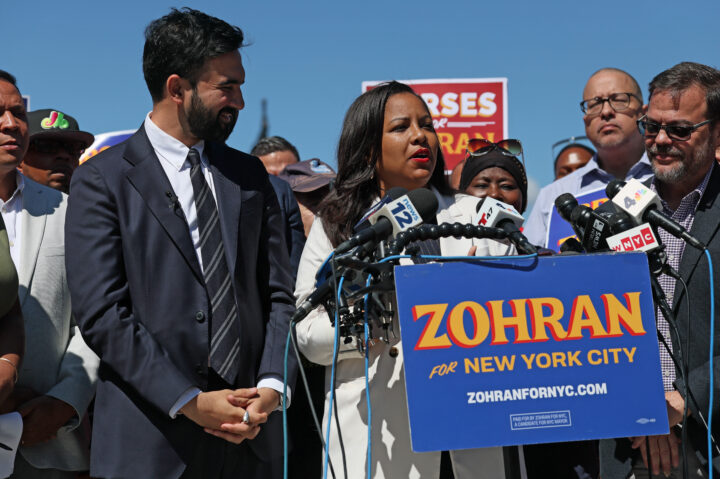
Michael M. Santiago/Getty Images
Assemblymember Amanda Septimo speaks during a rally for New York City Mayoral Candidate Zohran Mamdani at Lou Gehrig Plaza on September 02, 2025 in the South Bronx in New York City.
New York state Rep. Amanda Septimo is planning to declare a primary challenge to Rep. Ritchie Torres (D-NY), two sources informed about her plans confirmed to Jewish Insider.
Septimo has represented the South Bronx in the state Assembly since 2021, after defeating the previous incumbent from the left. She would join a field of several challengers from Torres’ left, most of whom are focusing their campaigns squarely on the congressman’s support for Israel and backing from pro-Israel groups.
The New York Times described Septimo as a member of New York Mayor-elect Zohran Mamdani’s “brain trust”; though she did not endorse him in the Democratic primary, she is reportedly a key advisor to him on policy and political questions after they served together in the Assembly and she spoke at several of his campaign events.
That said, Septimo has a robust history of support for Israel as recently as this summer, and would likely — like fellow Torres challenger Michael Blake — face accusations of hypocrisy if she attempts to criticize Torres for his own support for the Jewish state.
Septimo visited Israel in 2016 on a trip sponsored by the AIPAC-affiliated American Israel Education Foundation, praising the country and the trip in a series of social media posts at the time.
“Clearly Israel acts as a bastion of stability in a part of the world where instability has major global implications,” Septimo said on X, then Twitter. “Spending this week in Israel learning about the rich culture, history, & promising future of this historical land,” she said in another post.
During that trip, she appeared in a group photo alongside Israeli Prime Minister Benjamin Netanyahu.
Earlier this year, she praised Israel’s decision to strike Iran’s nuclear facilities.
“A nuclearized Iran is [a] danger to the United States, to the Middle East, and to our closest ally in the region, Israel,” Septimo said. “After [the] failure of diplomatic efforts, Israel has taken an important step to protect its long term security, and ours, by preventing Iran from gaining the power to destroy life as we know it.”
Septimo faced attacks from at least one prominent anti-Israel organizer for that stance.
Immediately after the Oct. 7, 2023, Hamas attacks on Israel, Septimo issued a strong condemnation of both the attacks as well as individuals in the United States who had justified or defended those atrocities.
“We’ve watched indiscriminate, brutal violence unleashed on innocent civilians, and yet we have parts of our society uplifting this as a victory; but, there is no victory to be found in the slaughtering of unsuspecting civilians,” she said. “While the situation between Israelis and Palestinians is complicated and full of important nuances, there is absolutely no justification for Hamas’ attacks. Narratives that work to paint Hamas as an underdog organization carrying out acts of retribution are deeply misinformed, and incredibly dangerous. Simply put, to justify what has happened to Israelis today is to justify terrorism.”
She said she would “continue to stand by [Israel’s] right to defend itself and its people” and “will not stand by as our Israeli allies are expected to accept this horrifying carnage,” even as she said she would also continue to advocate for diplomacy and peace between Israel and the Palestinians.
Septimo opposed legislation in the Assembly, led by Mamdani, that sought to strip nonprofit groups of their tax-exempt status for “engaging in unauthorized support of Israeli settlement activity.” She described the bill in a statement as a “disturbing effort to bring the delegitimization of Israel to the halls of power in New York” and a “harmful, one-sided, divisive approach which fans the flames of hatred that threaten us all.”
“Any piece of legislation that calls Israel’s sovereignty into question provides unacceptable legitimacy to the hateful rhetoric which dominates this issue, and stymies efforts toward peace,” Septimo continued. “The relationship between New York and Israel brings innumerable benefits to communities across our state. … New York will continue to support Israel by finding new ways to deepen the state’s relationship with the nation, and we will always support our Jewish friends and neighbors by standing against hate in all its forms.”
She has also repeatedly met with pro-Israel advocates and attended AIPAC events as recently as late 2023, per photos shared on her and others’ social media.
Septimo did, however, oppose moving the U.S. embassy in Israel to Jerusalem during the first Trump administration as “a step in the wrong direction re: peace with Palestinians,” she said in a social media post.
One individual familiar with Septimo’s plans and record said she visited Israel weeks after Oct. 7 on a solidarity mission with other New York City leaders, and said that “Were she to win, the pro-Israel community would have absolutely nothing to fear,” predicting that she’s “going to let Torres and Blake fight it out over that issue.”
Septimo did not immediately respond to a request for comment.
State Del. Sam Rasoul, who has been criticized by other Virginia Democrats for his social media posts, is looking to run in a new district if Virginia redraws its congressional maps
Samuel Corum/Getty Images
Sam Rasoul of the Virginia House of Delegates speaks during a rally on the National Mall on May 31, 2021 in Washington, DC.
Sam Rasoul, a Palestinian-American Virginia state delegate with a history of inflammatory anti-Israel rhetoric, announced on Monday that he is considering running for Congress in 2026, pending the outcome of a likely redistricting effort in the state.
The Virginia state Senate recently adopted a measure kicking off a process to allow mid-decade redistricting, following the lead of other states planning to redraw congressional maps to shore up partisan advantages. Texas initiated the political arms race after facing pressure from President Donald Trump to draw maps more favorable to Republicans, and several other GOP-controlled states have followed — and some Democratic-controlled states, like California and Virginia.
The new maps are already putting several pro-Israel incumbents at risk in states like Ohio and Florida.
Rasoul, a Roanoke Democrat who chairs the Education Committee in the House of Delegates, came under fire from prominent Jewish Democrats in the state earlier this year after posting a series of posts on social media that critics say crossed a line into antisemitism.
“Zionism has proven how evil our society can be,” Rasoul wrote on Instagram in July. He called Zionism a “supremacist ideology created to destroy and conquer everything and everyone in its way,” which, he wrote, “shows us the worst in humanity.”
Former Virginia House Speaker Eileen Filler-Corn, a Democrat, told Jewish Insider in August that Rasoul’s language is “fueling one of the oldest forms of hatred in the world, repackaged in the language of activism.” Sen. Tim Kaine (D-VA) said at the time that he “forcefully reject[s] any claim that Zionism — the desire of Jewish people to have a state of Israel — is inherently racist or evil.”
Gov.-elect Abigail Spanberger, who was on the campaign trail at the time, did not mention Rasoul by name. But when asked about his comments, she said, referring to the war in Gaza, that “one can and must denounce these tragedies without using antisemitic language, whether intentional or not.”
In a fundraising email announcing his intention to formally explore a congressional run, Rasoul made his opposition to Israel a central part of his pitch.
“Virginians are looking for bold, experienced, progressive leadership that meets this moment and delivers results by guaranteeing healthcare as a human right through Medicare for All, protecting our access to clean air and water through a Green New Deal, and ending all military aid to Israel, which has waged a genocide in Gaza using our taxpayer dollars in violation of American law,” Rasoul wrote.
Rasoul has served in the House of Delegates for 12 years.
Virginia’s statehouse will decide in January whether to approve the redistricting effort. If it passes, it will then have to be approved in a statewide ballot referendum.
Pro-Israel Democratic Reps. Hakeem Jeffries, Ritchie Torres and Dan Goldman are facing long-shot challengers from the far left
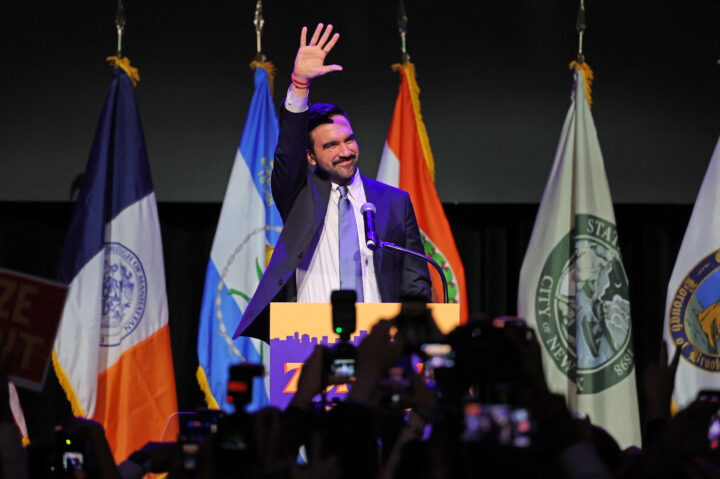
ANGELA WEISS/AFP via Getty Images
New York City Mayoral candidate Zohran Mamdani celebrates during an election night event at the Brooklyn Paramount Theater in Brooklyn, New York on November 4, 2025.
The organized left scored a major victory last week when Zohran Mamdani was elected mayor of New York City, elevating to executive office a politician who became one of the nation’s most prominent democratic socialists during the campaign.
Now, as the movement seeks to ride momentum from Mamdani’s win and grow its influence at the federal level, some emerging challengers are setting their sights on a handful of pro-Israel Democrats in the House — posing what is likely to be the first key test of its political credibility in the upcoming midterm elections.
While next year’s primaries are still more than six months away, some early signs indicate that the far left is already facing obstacles in its efforts to target established incumbents, raising questions about its organizational discipline and messaging ability, not to mention alignment with Mamdani — who is now walking a delicate path in seeking buy-in from state leadership to deliver on his ambitious affordability agenda.
Jake Dilemani, a Democratic consultant in New York, said “there is and should be euphoria among the left” after Mamdani’s victory, “but that does not necessarily translate into toppling relatively popular incumbents.”
“One swallow does not make a summer,” he told Jewish Insider on Tuesday.
In a pair of looming congressional contests in Brooklyn and the Bronx, for instance, potentially divided primary fields are now threatening to split the vote to oppose Reps. Dan Goldman (D-NY) and Ritchie Torres (D-NY), both of whom are preparing to seek reelection amid left-wing backlash over their support for Israel.
Brad Lander, the outgoing comptroller and an ally of Mamdani, has told associates he is planning to challenge Goldman in a progressive district covering parts of Brooklyn and Lower Manhattan, people familiar with his thinking told JI recently.
Lander, who was reportedly boxed out of a top job in Mamdani’s administration over conflict with the mayor-elect, has acknowledged that he is “seriously considering” a House bid, but has yet to confirm his timeline for publicly making a decision. One person familiar with the matter said he is likely to launch a bid after Mamdani assumes office in early January. Lander has denied that there are any tensions with Mamdani or his team.
While polling has shown that Lander would be a formidable challenger to Goldman, thanks to his popularity in the district where he once served as a longtime city councilman, some observers have speculated that he could face skepticism from voters who may see his bid as a consolation after failing to secure a role in City Hall.
Lander and Goldman were seen mingling at some of the same receptions during the Somos conference in San Juan, Puerto Rico, last week, but did not appear to interact.
In addition to Lander, Alexa Avilés, a far-left city councilwoman closely aligned with the Democratic Socialists of America, is also weighing a challenge to Goldman, provoking fears among his critics who say he will benefit from a crowded field that helped him secure a narrow victory in his first House primary in 2022.
Yuh-Line Niou, a former state assemblywoman who placed second in that primary, has been considering another bid as well, sources told JI, after she lost by a margin of just two points in a race that centered in part on her controversial support for the Boycott, Divestment and Sanctions movement.
Goldman, for his part, has sought to downplay the role that Israel could play in the race, arguing that the Trump administration presents a more serious threat to his constituents.
But Avilés, for one, is almost certain to raise Israel in a potential primary challenge, owing to her vocal opposition to the war in Gaza, which she has called a genocide, and outspoken criticism of AIPAC. “The tide is turning, but the forces remain pernicious and persistent,” Avilés said during a panel discussion at Somos last week, warning of “a Congress that is very much controlled by AIPAC.”
“Saying no to violence is not a radical idea,” Avilés added in comments hinting at a challenge. “And you know what, y’all? If people are not stepping up, then we need to remove them.”
In the Bronx, Torres, who is among the staunchest defenders of Israel in the House, has already drawn a primary opponent focusing overwhelmingly on his pro-Israel record and contributions from AIPAC, in an effort to channel the anti-establishment zeitgeist that helped boost Mamdani’s insurgent campaign.
Michael Blake, a former state assemblyman who came in eighth place in the New York City mayoral primary, launched his campaign to unseat Torres last week. But he is facing accusations of hypocrisy over his own previous well-documented ties to AIPAC and past statements voicing strong support for Israel — contributing to a somewhat turbulent rollout that has cast doubts on his viability.
On the sidelines of the Somos retreat last Friday, Blake, who has twice visited Israel and spoken at AIPAC events, insisted that “you can be critical of governmental policies” and it “does not make you antisemitic or anti-Israel.”
Blake, who also ran against Torres in a crowded primary in 2020, said he now supports an arms embargo on Israel, but clarified that, if elected, he would continue to vote for defensive aid for its Iron Dome missile-interception system — views that are unlikely to win converts among voters in Riverdale, a predominantly Jewish Bronx neighborhood where Torres has built a loyal following.
“I do think we have to be attentive of the moment that we’re in right now,” Blake said of his thinking last week, while confirming he would “absolutely” seek support from the DSA, which has so far only endorsed candidates running for state office next year.
Marshall Wittmann, an AIPAC spokesperson, said that the group’s “grassroots members understand the stakes in the upcoming midterms and that is why they are deeply motivated and engaged to help elect pro-Israel candidates and defeat detractors.”
Blake cross-endorsed with Mamdani in the primary and has enthusiastically supported the mayor-elect. But Torres, who once cautioned Mamdani was unfit to lead New York City because of his close ties to the DSA, has since spoken positively about the incoming mayor and praised one of his early appointments as “exceptional” on Monday, complicating the political fault lines in the primary.
A lesser-known primary challenger, Andre Easton, is also campaigning against Torres using similarly hostile rhetoric about Israel and AIPAC. Easton, an independent affiliated with the Party for Socialism and Liberation, has said he is running “to fight for the Bronx — not billionaires who fund genocide in Palestine,” and claims that Torres “pockets money from AIPAC” while children in the district “live in poverty.”
Marshall Wittmann, an AIPAC spokesperson, said that the group’s “grassroots members understand the stakes in the upcoming midterms and that is why they are deeply motivated and engaged to help elect pro-Israel candidates and defeat detractors.”
“The track record demonstrates that being pro-Israel is good policy and good politics as 96% of AIPAC endorsed Democrats won their elections last cycle,” he added in a statement to JI on Tuesday.
Meanwhile, another pro-Israel Democrat, House Minority Leader Hakeem Jeffries (D-NY), is expected to draw a more established far-left primary challenger in the coming weeks, setting up a high-profile fight for the Brooklyn House seat he has held for over a decade.
Chi Ossé, a young city councilman and Mamdani ally who has developed a sizable following on social media, is reportedly planning to seek support from the DSA, as he prepares to launch an insurgent bid to topple Jeffries, long a target of the far left. Ossé recently became a member of the DSA after quitting the group in 2020, he said on social media in 2023, noting that when he first left he “wasn’t aligned with the organization” but that there was “no bad blood.”
Still, he may face resistance from Mamdani, who claimed an endorsement from Jeffries late in the election and is hoping to avoid intraparty conflict while balancing a tenuous coalition to advance his daunting campaign pledges. He has also distanced himself from the DSA’s most extreme positions and said their respective platforms are “not the same.”
“It’s not clear that wins from election night will translate into intra-party primary victories in a midterm election,” Basil Smikle, a professor at Columbia’s School of Professional Studies and a Democratic strategist, said on Tuesday. “There’s a lot of time between now and then but the organizing framework has certainly been established to make a strong run.”
Mamdani, who criticized Jeffries’ pro-Israel views before the mayoral election, had reportedly sought to preempt Ossé’s plans to oppose the congressman who could be the next speaker of the House. As the councilman now moves forward against Mamdani’s apparent wishes, the potential primary battle could place the mayor-elect in an uncomfortable position, possibly fueling tensions with an activist base eager to capitalize on his victory. The DSA did not return a request for comment.
Despite such issues, some experts said that the left remains formidable ahead of next year’s primaries, even as it confronts some potential disorganization.
“It’s not clear that wins from election night will translate into intra-party primary victories in a midterm election,” Basil Smikle, a professor at Columbia’s School of Professional Studies and a Democratic strategist, said on Tuesday. “There’s a lot of time between now and then but the organizing framework has certainly been established to make a strong run.”
Hank Sheinkopf, a veteran Democratic strategist, said that “every pro-Israel Democrat is a target for the newly empowered DSA BDS gang,” and warned that incumbents “should be prepared for a long and costly battle.”
At the post-election Somos conference, Jewish officials tried to find areas of common ground with the new mayor
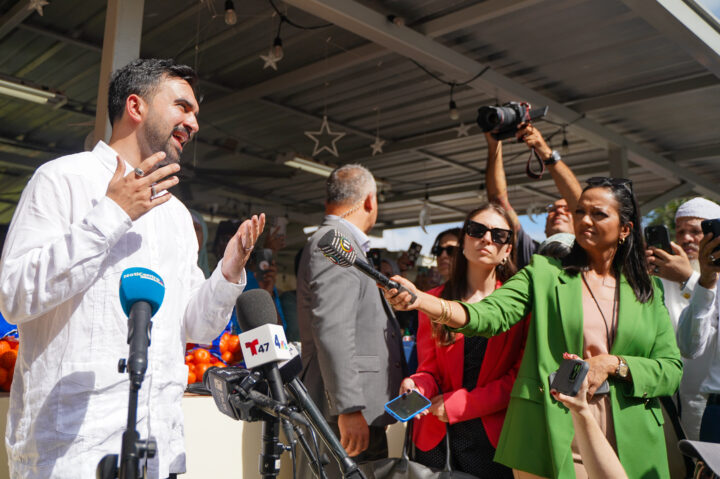
Angel Valentin/Getty Images
New York City Mayor elect Zohran Mamdani meets with the press after he joined members of the Centro Islamico del Caribe -Masjid Ebadur Rahman mosque in prayer, on November 7, 2025 in San Juan, Puerto Rico. Mamdani was in San Juan for the annual SOMOS political retreat.
SAN JUAN, Puerto Rico — The humid air was swelling with anticipation as thousands of New York politicos descended on Puerto Rico’s capital last week to attend the annual Somos conference, a multiday marathon of post-election elbow-rubbing where receptions and panels occur alongside covert negotiations and late-night schmoozing at local bars and hotels.
The extended Democratic gathering, which kicked off on Wednesday and continued into the weekend, was adjusting to the ascendant political order led by Zohran Mamdani, whose victory in New York City’s mayoral election earlier that week had upended the Democratic establishment and led to new alliances that until recently would have seemed improbable.
While Mamdani was still largely unknown during Somos last year, just weeks after announcing his long-shot mayoral bid, the 34-year-old democratic socialist and state assemblyman now seized the spotlight as attendees swarmed his arrival Thursday at the Caribe Hilton, where the incoming mayor was later fêted by some of the state’s top elected officials at a crowded beachside reception.
For many Jewish leaders who joined the Caribbean confab, however, the feeling was far more subdued, as they openly grappled with the sensitive question of how to work with a mayor-elect whose stridently anti-Israel views conflict with their own core values.
It is a wholly unfamiliar position for Jewish leaders and mainstream Jewish institutions in New York City, where the mayors have long been proudly pro-Israel. But Mamdani’s stunning rise challenged the conventional thinking that a winning candidate in New York, a place with the largest Jewish community of any city in the world, must show strong support for Israel. In breaking with decades of precedent, Mamdani still faced skepticism from a significant number of Jewish voters who cast their ballots for former New York Gov. Andrew Cuomo, who lost the Democratic primary and then ran as an independent. Exit polls showed that Cuomo, a vocal supporter of Israel, had doubled Mamdani among Jewish New Yorkers, with around two-thirds of the vote.
As Mamdani prepares to assume office in less than two months, Jewish leaders mingling at Somos were freshly processing his looming mayoralty with a mix of shock, hesitation and bemused detachment. Even if some voiced hope for a positive relationship, most were not ready to specify how they planned to move forward or what was expected of his administration.
One well-connected Jewish attendee cited the five stages of grief in characterizing the reactions among Jewish community leaders who had largely resisted engaging with Mamdani’s campaign. Many of them, it seemed, were dealing with the first stage of denial — and were far from finally reaching acceptance.
“We’re so screwed,” one Jewish political activist was overheard lamenting at an event on Friday evening.
Still, some Jewish community leaders who spoke with Jewish Insider over the course of the retreat suggested they were willing to give Mamdani the latitude to follow through on areas where they are aligned, pointing to a sort of provisional detente in the aftermath of a bruising and emotionally fraught election.
“The mainstream Jewish community is open to dealing with reality,” Noam Gilboord, the chief operating and community relations officer at the Jewish Community Relations Council of New York, said diplomatically while attending the conference.
The JCRC, for its part, has not yet held any direct meetings with Mamdani, though members of his team privately reached out about some key issues during the election and have continued to stay in touch, according to Mark Treyger, the group’s chief executive. The campaign gave a heads-up to JCRC leadership, for instance, before Mamdani publicly announced that he would ask Jessica Tisch to stay on as police commissioner, an encouraging choice to Jewish community leaders who favored her for the role.
“We are here to represent the transition with the Jewish community, and we’re so happy to be here,” Ali Najmi, a Mamdani confidante and chief counsel to the mayor-elect’s transition team, told JI in a brief exchange. “We see so many good friends and old friends, and we’re so looking forward to our new friends.”
Mamdani’s team also checked in with the JCRC after he had won the primary to give assurances that the newly anointed Democratic nominee was committed to providing continued security for its annual Israel Day on Fifth parade — even if he was unlikely to attend, as a supporter of the Boycott, Divestment and Sanctions movement against the Jewish state.
While Mamdani was absent from a Thursday night reception the JCRC hosted with the UJA-Federation of New York, he sent two of his top aides, Ali Najmi and Elle Bisgaard-Church, to join the event instead. They were warmly greeted by attendees in a public easing of tensions that would have been difficult to imagine just a few weeks ago.
“We are here to represent the transition with the Jewish community, and we’re so happy to be here,” Najmi, a Mamdani confidante and chief counsel to the mayor-elect’s transition team, told JI in a brief exchange. “We see so many good friends and old friends, and we’re so looking forward to our new friends.”
Najmi did not share further details regarding the transition’s formal plans to address Jewish issues, steps that are certain to be aggressively scrutinized in the coming months.
Yeruchim Silber, the director of New York government relations at Agudath Israel of America, an Orthodox advocacy group, said he appreciated the outreach and looked forward to meeting with Najmi again. “We’re hopeful that we could always find some common ground and work together,” he told JI during the reception. “Look, the mayor-elect said very clearly in his victory speech that he’s going to tackle antisemitism,” he added, “so we’ll take him at his word.”
“My understanding is there is interest in more formal Jewish outreach” from Mamdani’s team, said Phylisa Wisdom, the executive director of New York Jewish Agenda, a liberal Zionist group that has been receptive to the mayor-elect. Wisdom, who joined a private conversation with Mamdani at a Reform synagogue in Brooklyn before the election, said the appearance of his aides at the reception on Thursday demonstrated “a desire to be in all kinds of Jewish spaces they may not have been during the election,” in order to “build relationships and show goodwill.”
“This is a very, very divided time for the city, I think I can acknowledge that,” Mark Levine, the incoming city comptroller who endorsed Mamdani, said in his remarks to the room.
Mamdani, whose presence at formal Somos events drew throngs of eager admirers seeking selfies with the mayor-elect, likewise steered clear of an annual Shabbat gathering convened by the Met Council, the Jewish anti-poverty charity. Despite his victory, the event, which featured Rep. Gregory Meeks (D-NY), New York state Attorney General Letitia James and other prominent officials, made no direct allusion to Mamdani — further highlighting his uncomfortable relationship with the Jewish community.
Instead, the speakers at the Met Council’s widely attended reception zeroed in largely on such issues as hunger, poverty and the Trump administration’s efforts to withhold payments for food stamps amid the government shutdown.
“This is a very, very divided time for the city, I think I can acknowledge that,” Mark Levine, the incoming city comptroller who endorsed Mamdani, said in his remarks to the room.
Levine, who is Jewish, is now facing pressure from some Mamdani allies to divest the city from Israel bonds. He has refused to change course, saying last week that he has “criticism of the Israeli government” but still maintains “deep personal ties to Israel.” Mamdani, meanwhile, has voiced support for ending “the practice of purchasing Israel bonds,” though Levine has indicated he does not believe the mayor-elect has the power to enforce such a policy.
The Shabbat reception was disrupted by anti-Israel protesters two years ago, weeks after Hamas’ Oct. 7, 2023, attacks. But no such demonstrations occurred last Friday.
Mamdani, who will soon become New York City’s first Muslim and South Asian mayor, has frequently vowed to fight rising antisemitism. The day after the election, he swiftly moved to condemn vandalism of a Jewish day school in Brooklyn that was defaced by swastika graffiti, calling the attack a “disgusting and heartbreaking act of antisemitism” and pledging to “always stand steadfast with our Jewish neighbors to root the scourge of antisemitism out of our city.”
In his outreach to different parts of the Jewish community and in his public remarks during the election, Mamdani called for increased funding to prevent hate crimes and boosting police protection at Jewish institutions. He has expressed interest in a city curriculum backed by leading Jewish groups, even as it uses a definition of Zionism contradicting his own views on Israel. Mamdani has said he does not recognize Israel as a Jewish state.
Despite his pledges to counter antisemitism, that tension underscores how many Jewish leaders see his positions as an active threat and an impediment to upholding support for Israel, as the war in Gaza has fueled deep divisions in the Democratic Party.
Mamdani’s anti-Israel stances have provoked concerns that he will act on his views when he takes office. He has indicated, for instance, that he would reassess the partnership between Cornell University and Israel’s Technion, situated on Roosevelt Island. He has also pledged to arrest Israeli Prime Minister Benjamin Netanyahu for war crimes if he steps foot in New York City, in a controversial move that legal experts have questioned as legally dubious.
Mamdani has faced scrutiny for his ties to the Democratic Socialists of America, whose avowedly anti-Zionist mission includes demands that the mayor-elect implement several policies that would sever New York City’s relations with Israel. His refusal to explicitly condemn calls to “globalize the intifada” have otherwise continued to frustrate Jewish community leaders.
Robert Tucker, a Jewish philanthropist who had served as the commissioner of New York City’s Fire Department until last week, announced that he was resigning after Mamdani’s win, reportedly owing to the mayor-elect’s anti-Zionist stances.
But some Jewish leaders at Somos speculated that Mamdani may now see his vocal opposition to Israel as an albatross as he seeks to enact an ambitious affordability plan that will need buy-in from the state leadership.
During his time at Somos, the mayor-elect seemed careful to largely avoid the issue. “I will make clear that we are not looking to remake New York City in my image,” he said in remarks at a labor breakfast Saturday. “We are looking to remake it in the image of struggling workers across the five boroughs.”
In comments to a mosque he visited in San Juan, where the imam had mentioned Palestine during his own sermon, Mamdani spoke in metaphorical terms as he addressed the audience. “If you are not at the table, you may find yourself on the menu,” he noted. “It was a Muslim brother, Malcolm X, who reminded us that sitting at the table does not make you a diner. You have to be eating some of what’s on that plate.”
Still, some of Mamdani’s allies on the far left indicated that they were eager to use momentum from his victory to push a more hostile view of Israel into the mainstream discourse and to challenge incumbents who accept donations from AIPAC while promoting pro-Israel policies.
In a panel discussion on Thursday billed as “Colonialism, Resistance and Solidarity: Puerto Rico and Palestine,” Mamdani’s supporters — including City Councilmember Alexa Avilés, Beth Miller of Jewish Voice for Peace Action and Linda Sarsour, a Palestinian-American activist who has spread antisemitic rhetoric — were emboldened by his recent win, as attendees chanted “From the river to the sea, Palestina will be free!” and “Viva, viva Palestina!” Sarsour described Mamdani’s election as “a new day” and said “we’re not going back.”
“Being someone who supports the Palestinian people is no longer a political liability,” Sarsour, who has vowed to hold Mamdani “accountable” as mayor, told the room. “It is what gets you elected into office.”
In statements following the election, a range of Jewish organizations promised to hold Mamdani responsible for keeping Jews in New York City safe. The mayor-elect’s “victory marks the beginning of a new political chapter for New York, one that many in our community view with enormous concern,” Eric Goldstein, the CEO of the UJA-Federation of New York, said in a letter to supporters. “His rhetoric on Israel and Zionism raises serious questions about whether Jewish New Yorkers will continue to feel seen and protected in the very city we indelibly helped build and grow.”
He said the Jewish community would be watching closely to ensure “that antisemitism is not given any oxygen in our neighborhoods,” adding that “actions matter more” than “words.”
Rabbi Ammiel Hirsh, who leads Stephen Wise Free Synagogue on Manhattan’s Upper West Side, said in a post-election sermon that he “will readily engage in dialogue” with Mamdani if he chooses to reach out. “We will support Mayor Mamdani’s policies where we can — and oppose them when we must,” he concluded.
New York Gov. Kathy Hochul, who, at Somos, celebrated Mamdani’s win, also stressed to reporters on the sidelines of the conference that Jewish New Yorkers still need to “see action” from the mayor-elect to address their concerns. “That’s one area where I know that there’s some opportunities for him to demonstrate, as he has said, but also demonstrate that he is there to protect all New Yorkers, to protect anyone’s right to worship or their beliefs but also their institutions,” she explained.
The Anti-Defamation League, for its part, launched a “Mamdani Monitor” to track policies that could impact Jewish safety and security. Jewish leaders in attendance at Somos, however, voiced reservations with the effort, suggesting they did not see it as productive as some in the community look for common ground to work with the mayor-elect.
Others voiced hope that a leading candidate for City Council speaker, Julie Menin, who is Jewish, would serve as a counterweight to Mamdani — in contrast with a leftist rival, Crystal Hudson, seen more as an ally of the mayor-elect. Menin, who declined to join a meeting between Mamdani and Jewish officials in the primary, is known as an outspoken supporter of Israel in the City Council.
New York Gov. Kathy Hochul, who, at Somos, celebrated Mamdani’s win, also stressed to reporters on the sidelines of the conference that Jewish New Yorkers still need to “see action” from the mayor-elect to address their concerns. “That’s one area where I know that there’s some opportunities for him to demonstrate, as he has said, but also demonstrate that he is there to protect all New Yorkers, to protect anyone’s right to worship or their beliefs but also their institutions,” she explained.
Hochul, for her part, has also drawn backlash from Jewish donors for choosing to back Mamdani’s campaign in the general election, people familiar with the situation told JI. “She’s got a lot to prove,” one Jewish leader said of the governor, long regarded as a staunch defender of Israel.
Rep. Dan Goldman (D-NY), a pro-Israel Jewish Democrat who declined to endorse Mamdani in the general election, told JI at Somos that, despite their disagreements on Israel, he was looking forward to working with the mayor-elect on areas of alignment such as cost of living issues.
But some Jewish community activists were more suspicious of the incoming mayor. One Brooklyn organizer dismissed the possibility of working with Mamdani outright, saying that his stances on Israel had foreclosed any hope of finding common ground, even on unrelated issues.
Leon Goldenberg, an Orthodox business leader in Brooklyn who serves as an executive board member of the Flatbush Jewish Community Coalition, which endorsed Cuomo in the general election, told JI that he has been struggling to decide whether he will ask Mamdani for a meeting.
“I’m really at a loss,” he said on Thursday. “What are we going to talk about, Israel?”
The FJCC itself, which long enjoyed a close relationship with outgoing Mayor Eric Adams, was more optimistic, according to Josh Mehlman, the group’s chairman. “We have met, and will meet with them again,” he said of Mamdani’s team. “We are confident we can work together for the best interest of the Flatbush community and the Orthodox Jewish community citywide.”
Fearing a pullback of NYPD resources, the Community Security Initiative has formed ‘Task Force Z’ to prepare for potential changes under the incoming mayor

Adam Gray/Getty Images
NYPD Strategic Response Group (SRG) stand guard outside of 26 Federal Plaza on October 21, 2025 in New York City.
New York City’s leading Jewish security organization has prepared a new set of strategies to respond to policies that the city’s Mayor-elect Zohran Mamdani might put into place that would affect public safety.
Among the primary concerns of Mitch Silber, executive director of the Community Security Initiative and former director of NYPD intelligence analysis, is Mamdani’s vow to cut the police department’s Strategic Response Group.
“SRG is what essentially stands in between ‘Free Palestine’ protesters and the Jewish community,” Silber told Jewish Insider on Thursday. Disbanding SRG “will diminish public security and security for the Jewish community,” said Silber. Mamdani pledged he would disband the force as mayor in December 2024, saying it had “cost taxpayers millions in lawsuit settlements and brutalized countless New Yorkers exercising their first amendment rights.”
SRG was created after the 2008 Mumbai terrorist attacks so that New York City could be prepared in the event of similar multi-site attacks. “There’s no way CSI could replicate that,” Silber said.
But there are some elements of what SRG does that Silber said CSI, which is a partnership between the UJA-Federation of New York and the Jewish Community Relations Council of New York that relies on funds from private donors, “might be able to step up and, to some degree, fill a gap.”
Immediately after Mamdani won the Democratic primary in June, CSI formed “Task Force Z,” a group of senior regional security directors charged with understanding what policies Mamdani, as mayor, might put into place that would affect public safety and Jewish security in the city, and began to prepare strategies to deal with challenges.
One of SRG’s primary missions is protest management, such as responding to the anti-Israel encampment on Columbia University’s campus last year. “Having volunteers be trained as how to be a buffer in a protest is something that we’re looking at if need be,” Silber told JI.
Asked how likely Mamdani is to be able to fulfill his pledge of disbanding SRG, Silber said, “The mayor in New York City calls the shots and the police commissioner either gets on board or gets a new job. If Mamdani wants to get rid of SRG, he’s going to get rid of SRG because he’s going to hire a police commissioner who will do it.”
Another threat to the Jewish community’s safety, said Silber, is Mamdani’s desire to reduce NYPD overtime pay.
“The Jewish community is one of the primary beneficiaries of NYPD’s overtime — when NYPD responds because it’s the High Holidays, or there’s an event overseas, they have to use overtime to do it. So if the police department cuts overtime that will cut the Jewish community’s security,” Silber said.
Already, the NYPD has just below 35,000 employees. “The last time the NYPD was 35,000 was 1994 when there were a million less people in the city,” Silber said. “We’re at an extremely low number and Mamdani isn’t going to increase the number of police.”
To help fill the gap, CSI’s new plans involve increased partnerships with other Jewish volunteer security groups.
“Who can we partner with on the ground who is capable, has resources and is proven the community can trust? Some of that is volunteer community security patrols called Shomrim and Shmira that are very connected to their respective communities in Crown Heights, Borough Park, Flatbush, Queens and Far Rockaway,” Silber told JI. “We’ve worked with them in the past and found them to be very capable. They are already doing some of the job that the NYPD would do but because the department is so resource short, when there’s a funeral or wedding in the neighborhood, NYPD calls these groups and asks them to use their own patrol cars. So it’s already happening and we anticipate, as the number of cops in a given precinct continues to fall, Shomrim and Shmira can really amplify our security efforts. These groups need resources, more vehicles, vests and radios if they are going to be a deterrent.”
“We’re finding out what these groups need and then will have conversations with donors,” continued Silber.
In Manhattan and Bronx neighborhoods, CSI is turning to its partnership with the Community Security Service, which has a network of more than 2,000 volunteers across New York City.
Richard Priem, CEO of CSS, told JI that the group has “contingency plans to address different scenarios including gaps in coverage or surges in requests for CSS support — whether from synagogues seeking training for their members to join our volunteer network, Jewish organizations requesting CSS volunteers to protect their events or parents serving as eyes and ears at their children’s day schools.”
“There will also be a fund for private security like we did after the Oct. 7, 2023, terrorist attacks [in Israel],” Silber said. “UJA will give us a fund for when a school or institution is having an event and doesn’t have enough security.”
CSI is also coordinating with Jewish security leadership groups in cities including Johannesburg, South Africa, Mexico City and Toronto “to try to understand how to protect the Jewish community when police don’t respond in a way that you expect them to,” said Silber.
“That informs some of our efforts as well,” he said. “They’ve invested very robustly in control rooms and camera systems so that they have situational awareness of what’s going on. That’s something we’re taking a closer look at.”
But the magnitude of New York City’s population — with about 1 million Jews — poses additional challenges. “Nevertheless, we may look more closely at incorporating cameras into security,” Silber said.
As NYPD officers are increasingly expressing interest in leaving the department, according to Silber, he said CSI is fielding inquiries “looking for landing when Mamdani comes in.”
The group is “looking into trying to figure out who might best fit in our team.”
JI asked senior New York Democratic officials and Jewish community leaders to discuss the top threats that a Mamdani administration could pose to Jewish life in the city
ANGELA WEISS/AFP via Getty Images
New York City Mayoral candidate Zohran Mamdani celebrates during an election night event at the Brooklyn Paramount Theater in Brooklyn, New York on November 4, 2025.
New Yorkers elected democratic socialist Zohran Mamdani on Tuesday as the next New York City mayor, ensuring the city will be headed in a leftward ideological direction for the next four years. Mamdani’s election has also sparked widespread concerns in the city’s Jewish community about how the incoming mayor, who refused to condemn “globalize the intifada” rhetoric or acknowledge the state of Israel as a Jewish homeland, would impact the day-to-day life of Jewish New Yorkers.
Jewish Insider asked senior New York Democratic officials and Jewish community leaders — granted anonymity to offer their candid thoughts — to discuss the top threats that a Mamdani administration could pose to Jewish life in the city.
Respondents expressed worry that Mamdani’s anti-Israel worldview could lead to heightened antisemitism, bring a vanguard of leftist operatives hostile to Jewish concerns into City Hall, impact the effectiveness of the New York Police Department and fray ties between the city and Israeli institutions or businesses. He has even vowed to arrest Israeli Prime Minister Benjamin Netanyahu if he visits, though experts have voiced doubt on the legality of the move.
These are five of the leading concerns from the Jewish communal leadership in New York City, home to the largest Jewish community in the country, about what Mamdani might do as mayor:
1. Mamdani has expressed a desire to defund, or even disband, the NYPD’s Strategic Response Group — the unit that responds to major protests, such as the anti-Israel encampment on Columbia University’s campus last year:
“He’s been pushing for years to disband the NYPD’s Strategic Response Group,” a source with knowledge of city government told JI. In December 2024, Mamdani tweeted, “As mayor, I will disband the SRG, which has cost taxpayers millions in lawsuit settlements and brutalized countless New Yorkers exercising their first amendment rights.”
The SRG responds to hostage situations, riots and protests, including the deadly Park Avenue office building shooting that occurred in July. In April 2024, the Strategic Response Group was called in to assist with clearing the anti-Israel encampment that overtook Columbia University, which saw several incidents of physical assault against Jewish students.
“One question is if he’s actually successful in disbanding them,” the source continued. “That will depend on his will and bureaucracy and whether he can put together an administration to accomplish his tasks. If he’s going to be an effective mayor, then yes he could do it. And if he is, then you’re going to see completely different responses in the city.
“Something super important is whether a Mamdani administration would actually have a proactive approach to policing and using security in a way that will make sure Jewish New Yorkers are safe. If it’s not a priority for them, then I’m afraid to see what will happen.”
2. Mamdani could further politicize NYC Public Schools at a time when anti-Israel rhetoric and related antisemitic incidents have surged dramatically in K-12 schools:
In the aftermath of the Oct. 7, 2023, Hamas terror attacks, New York City Public Schools launched new curriculum materials on antisemitism and Islamophobia in its schools. As mayor, Mamdani will have power to appoint a new chancellor of public schools, who could rewrite that curriculum.
Former Rep. Jamaal Bowman, previously a far-left congressman who lost reelection in part because of his radical views towards Israel, has been discussed as a potential candidate to lead the country’s largest public school system. Bowman embraced a number of hostile positions toward Israel in the aftermath of Oct. 7 and throughout his reelection campaign, including pledging to oppose funding for Israel’s Iron Dome missile defense system and endorsing the BDS movement.
The New York City Public School system has seen a surge of anti-Israel activity since Oct. 7. In November 2023, a Queens high school teacher said she was forced to hide in a locked office as a mob of students tried to push their way into her classroom, after learning she attended a pro-Israel rally.
In May, a “Teacher Career Pathways” newsletter for educators in the city’s 1,800 schools called for students to be heard on the “genocide in Gaza.” NYC Schools Chancellor Melissa Aviles-Ramos apologized for the mass communication, stating that it should not have been released without consultation from the mayor’s office.
A political insider told JI there is anxiety the new administration will fuel anti-Israel discourse in the classroom. “There’s concern about what curriculums will be used to teach about the [Israeli-Palestinian] conflict,” he said. “What vendors will be used?”
The American Jewish Committee announced plans on Wednesday to “boost the ‘Hidden Voices’ curriculum in New York City public schools, which provides resources, lesson plans and workshops to highlight the histories and contributions of underrepresented groups in U.S. history.”
3. Mamdani has expressed support for the BDS movement, which could have a wide-ranging impact on Israeli partnerships with New York City companies or institutions.
Mamdani said in June that he would attempt to divest from Israel if elected mayor — including discontinuing the NYC-Israel Economic Council, which Mayor Eric Adams recently launched.
“His pursuit of discriminatory policies that boycott and divest from Israel, companies doing business in Israel, and U.S.-Israel tech partnerships could cost New York taxpayers billions over the next ten years,” said the head of a leading Jewish organization. “He knows [BDS] policy is discriminatory and antisemitic, yet he refuses to abandon it. Even worse, he continues to double down and has made it an important piece of his economic strategy.”
Mamdani has also said he would “reassess” the partnership between Cornell University and Israel’s Technion, potentially displacing it from its campus on Roosevelt Island. “Ending [the Cornell-Technion] partnership would deal a blow to the city’s booming tech sector, chase away innovators, destroy vital educational opportunities, and damage New York’s reputation as a global business hub,” Ted Deutch, CEO of the AJC, said in a statement.
A political insider and Jewish communal leader told JI those are policies Mamdani could enforce, but “he would have to go out of his way to.”
“He said he’ll divest from Israel but it would be unprecedented for him to start organizing the pension boards under the comptroller,” the source said. “It doesn’t mean he won’t do it, but it’s more complicated than the stroke of a pen. No one knows if he will be passive, aggressive or proactive; there are many options of what we could do.”
4. Mamdani’s inability to condemn antisemitism from his public perch, while associating himself with extremist individuals could lead to a rise in antisemitism:
During the campaign, Mamdani affiliated with anti-Israel activist Linda Sarsour, considered to be one of the mayor-elect’s mentors and Imam Siraj Wahhaj, who Mamdani called one of the “foremost Muslim leaders” in the U.S. Wahhaj has a history of supporting controversial figures involved in terrorism, including testifying as a character witness at the trial of Omar Abdel-Rahman who was found guilty of seditious conspiracy for his role in plotting the 1993 World Trade Center bombing. Jeremy Corbyn, who led Britain’s Labour Party and was suspended over antisemitic comments, also phone-banked for Mamdani in the closing days of the campaign.
Mamdani has said he would oppose using the International Holocaust Remembrance Alliance’s working definition of antisemitism, which would dismantle an executive order signed by Adams in June as part of a push against rising antisemitism.
“Even if Mamdani doesn’t do anything to actually impact the day-to-day of the Jewish community, the symbolic impact of Mamdani’s victory [is] devastating,” another veteran Jewish communal leader said. “It shows that a person espousing views that most of us consider dangerous and antisemitic can get elected. It’s the breaking of a taboo.”
5. Mamdani’s failure to equate anti-Zionism with antisemitism could weaken enforcement of laws protecting Jewish institutions:
Throughout his campaign, Mamdani repeatedly said he does not support Israel’s right to exist as a Jewish state and that his criticism of Israel does not amount to antisemitism. But the majority of Jewish Americans report that Israel is a large part of their Jewish identity.
Antisemitism watchers have noted that anti-Israel demonstrations — especially those on college campuses — have increasingly turned blatantly antisemitic by targeting Jewish, not Israeli, institutions such as Hillels and Chabad houses.
The communal leader and political insider added that it’s uncertain where Mamdani draws a line at anti-Israel activity crossing into antisemitism, and therefore whether he would protect Jewish institutions. For example, they said, “it’s unclear if he would use protesting a university Hillel with ‘Free Palestine’ as antisemitic or anti-Zionist.”
The new initiative will also include an antisemitism reporting tip line
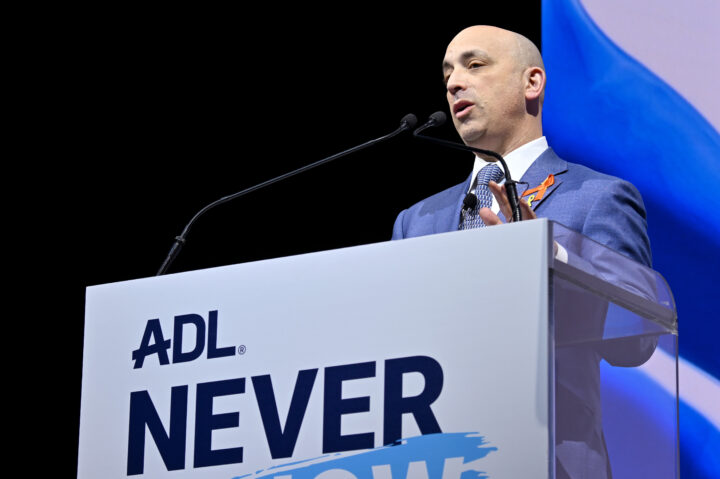
Bryan Bedder/Getty Images for Anti-Defamation League
ADL CEO Jonathan Greenblatt speaks onstage ADL's Never Is Now at Javits Center on March 03, 2025 in New York City.
In the wake of New York City Mayor-elect Zohran Mamdani’s victory on Tuesday, the Anti-Defamation League is launching the “Mamdani Monitor,” an initiative to track and monitor policies and personnel appointments of the incoming administration, Jewish Insider has learned.
The initiative will feature a tip line to report antisemitism as well as investment into researching policies, mayoral appointments and funding decisions coming from City Hall.
The ADL said it will draw from tip line reports to launch a public-facing tracker that monitors policies and other actions from the Mamdani administration that could impact Jewish safety and security — including education policy, budget priorities and security measures. The antisemitism watchdog plans to use the tracker’s findings to mobilize New Yorkers to respond to policies deemed threatening to the Jewish community.
ADL CEO Jonathan Greenblatt told JI that the initiative’s launch comes as Mamdani, throughout his campaign, “promoted antisemitic narratives, associated with individuals who have a history of antisemitism and demonstrated intense animosity toward the Jewish state that is counter to the views of the overwhelming majority of Jewish New Yorkers.”
“We are deeply concerned that those individuals and principles will influence his administration at a time when we are tracking a brazen surge of harassment, vandalism and violence targeting Jewish residents and institutions in recent years,” said Greenblatt.
Antisemitism and anti-Israel incidents reached historic levels in New York City following the Oct. 7, 2023, terrorist attacks. Jewish leaders have expressed concern that some of Mamdani’s proposed policies — such as the desire to disband the NYPD’s Strategic Response Group, which responds to riots — could threaten the safety of the Jewish community. According to the NYPD, in 2024, 54% of all hate crimes in New York City were against Jews.
The NYC mayoral front-runner has said that, if elected mayor, he may displace the campus, a joint project of Cornell University and Israel’s Technion, from Roosevelt Island

Roy Rochlin/Getty Images
A view of Tata Innovation Center at the Cornell Tech campus on Roosevelt Island on July 23, 2022 in New York City. Cornell Tech is joint academic venture between Cornell and the Technion – Israel Institute of Technology.
If elected mayor, Zohran Mamdani has said he would reassess the partnership between Cornell University and Israel’s Technion, potentially kicking the joint Cornell Tech campus out of its home on Roosevelt Island in New York City.
But two Jewish Mamdani backers who represent Roosevelt Island and have supported the project have been silent about his plans.
Cornell and Technion were selected by city officials under Mayor Mike Bloomberg in 2010 to build the campus on city-owned land and received $100 million in other incentives. It opened in 2017.
Mamdani’s campaign told The New York Times and Ynet that he would reassess the partnership if elected. As mayor, Mamdani would have the authority to appoint new members to Roosevelt Island’s governing board, giving him influence over management of the island.
Rep. Jerry Nadler (D-NY) and state Sen. Liz Krueger, both of whom have been supporters of Mamdani, as well as active backers of the Cornell Tech campus, did not respond to requests for comment. Both have appointees on the community task force that supported the construction of the campus, which is within their districts.
Mamdani called for a boycott of the campus shortly after being elected to the state Senate in 2020, and said that “Technion University is an Israeli University that has helped to develop a lot of weapons technology used by the IDF” and that the campus should be assessed through “the lens of BDS” — the Boycott, Divestment and Sanctions campaign targeting Israel — according to the New York Post.
Mamdani’s campaign did not respond to a request for comment on his stance or plans for the campus.
Former U.S. Ambassador to Israel Daniel Shapiro, now a distinguished fellow at the Atlantic Council, said Mamdani’s plans were “terrible.”
“It smacks of an academic boycott of a respected Israeli university,” Shapiro said. “It also is a great way to drive innovation jobs out of the city. Both wrong in principle and self-defeating in practice.”
Mamdani is also expected to attempt to block further investment in Israel bonds in the city’s pension fund and has said he would shut down the New York City-Israel Economic Council launched by Mayor Eric Adams.
Zohran Mamdani is set to prevail thanks to a divided opposition and backing from an enthusiastic left-wing faction of the electorate — not because he’s winning over hearts and minds in Gotham
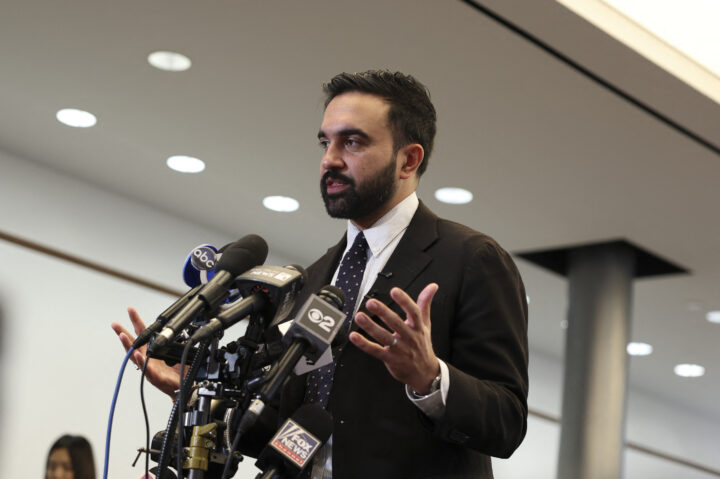
ANGELA WEISS/AFP via Getty Images
New York City Mayor Zohran Mamdani answers questions on October 17, 2025 in New York City.
A new Quinnipiac poll of the New York City mayoral race with less than a week until Election Day shows Zohran Mamdani on track to win, but with a narrow plurality that underscores the breadth and resilience of the political opposition against him. In short, he’s set to prevail thanks to a divided opposition and backing from an enthusiastic left-wing faction of the electorate — not because he’s winning over hearts and minds in Gotham.
If the polling is accurate, Mamdani would be the first New York City mayor to win without a majority of the vote since John Lindsay in 1969. Mamdani leads former New York Gov. Andrew Cuomo 43-33% in the Quinnipiac poll, with Republican Curtis Sliwa tallying 14%. Mamdani, in a sign of his political ceiling, has lost several points of support since the pollster’s survey earlier this month.
Among Sliwa voters, 55% said that Cuomo was their second choice, while only 7% said the same of Mamdani. If New York City utilized a ranked-choice voting system as it did in the primary, this race would be neck-and-neck.
The Quinnipiac poll finds Mamdani building an unconventional coalition of secular progressives and Muslims in New York City politics, running up the score with voters of no religion (71% support) or of a religion other than Christianity and Judaism (50%). Mamdani struggles badly with Jewish voters, winning just 16% support, while only receiving 28% of the vote among Catholics and 36% among Protestants.
Mamdani is winning support from just 59% of Democrats, with 31% backing Cuomo — an unusually weak showing for a Democratic nominee. But Republicans are evenly divided between Cuomo and Sliwa, preventing the former governor from capitalizing on Mamdani’s deep unpopularity with GOP voters. Mamdani is tied with Cuomo among independents at 34% apiece.
There are some indications that the late wave of negative attacks Cuomo has aimed at Mamdani — invoking his embrace of a controversial imam, raising questions about his commitments to fighting Islamic extremism and his ties to antisemitic influencer Hasan Piker — have dented the front-runner’s favorability a bit. Mamdani’s +4 favorability rating in the Quinnipiac poll (45-41%) is a notch worse than his +8 favorability rating (45-37%) in Quinnipiac’s early October poll.
But Cuomo’s favorability remains decidedly worse, with a 54% majority viewing the former governor unfavorably and 34% viewing him favorably. Cuomo resigned from the governorship amid scandal and allegations of sexual misconduct.
The results suggest that an earlier and more aggressive attack against Mamdani from a better-organized anti-Mamdani coalition could have paid dividends. If the opposition hit Mamdani on his vulnerabilities on crime and safety — especially given his recent tone-deaf comments on the 9/11 terror attack — it could plausibly have laid out a more effective narrative that he’s too extreme to lead the nation’s biggest city.
But the last-minute nature of the Cuomo attacks feel more like the equivalent of a Hail Mary pass at the end of a football game.
The one silver lining for Cuomo: There’s only a week of early voting in New York City, and because of the exorbitant cost of airing on New York City television, the swarm of campaign ads doesn’t hit full force until the campaign’s final weeks. Former New York City Mayor Michael Bloomberg, for the first time in the general election, donated $1.5 million to a pro-Cuomo super PAC, an indicator he sees the race getting closer.
That means that even though Mamdani remains the clear favorite, Cuomo still has a narrow path to a political comeback if he can convince enough Republican Sliwa voters to quietly cast a vote for him to stop the democratic socialist.
New polling and early voting data show a tightening New York City mayoral race, as Mamdani faces scrutiny over his allies, rhetoric on Israel and strained ties with Jewish voters
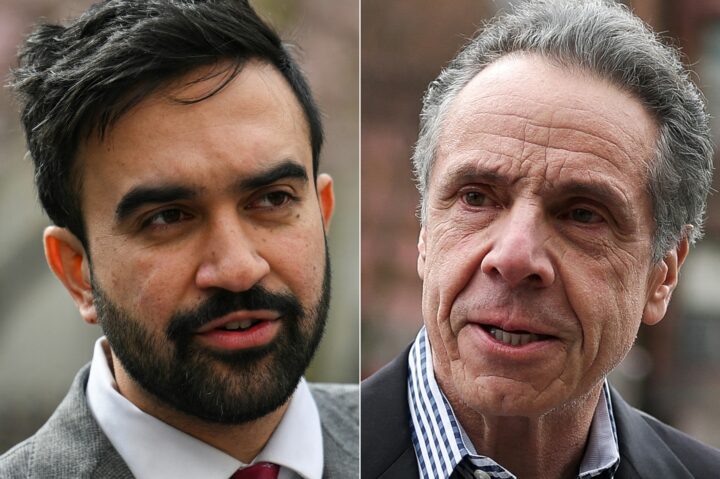
ANGELA WEISS,CHARLY TRIBALLEAU/AFP via Getty Images
New York City mayoral candidate and democratic State Representative Zohran Mamdani (L) in New York City on April 16, 2025 and New York City mayoral candidate Andrew Cuomo (R) in New York City on April 13, 2025.
Even as Zohran Mamdani remains the front-runner heading into New York City’s mayoral election next Tuesday, some emerging signs indicate that his momentum is flagging in the final stretch of the race — underscoring potential vulnerabilities for the 34-year-old democratic socialist.
Early voting returns over the weekend, for example, showed a notable surge among older New Yorkers turning out in City Council districts on the Upper East and West Sides, in what some experts interpreted as more favorable results for former New York Gov. Andrew Cuomo — running as an independent after losing the primary to Mamdani.
Meanwhile, a new Suffolk University poll released on Monday showed a tightening race, with Cuomo cutting Mamdani’s lead in half to just 10 points — 44% to 34% — in the closing week before the election.
The polling followed a debate performance last week in which Mamdani frequently found himself on the defensive — and faced criticism from Cuomo and Curtis Sliwa, the Republican nominee, over his continued refusal to confirm his position on a series of ballot proposals.
“Cuomo’s numbers are going up because people are now paying more attention,” said Hank Sheinkopf, a Democratic consultant leading an anti-Mamdani super PAC.
Mamdani, a state assemblyman from Queens who would be New York City’s first Muslim mayor if elected, had spent the last few days accusing his rivals of pushing Islamophobic attacks, delivering a series of emotional addresses in which he expressed pride in his faith and vowed to “no longer look for myself in the shadows.”
The Democratic nominee came under scrutiny on Monday after clarifying that he had misidentified a family member who he said had stopped riding the subway after the 9/11 attacks, “because she did not feel safe in her hijab.” The woman, Mamdani said, was his father’s cousin, not his “aunt,” as he initially stated during a speech on Friday outside a mosque in the Bronx.
Despite his outreach to Jewish community leaders in recent weeks, Mamdani has doubled down on his base as the election reaches its conclusion. He held a rally on Sunday evening whose attendees included Hasan Piker, the far-left streamer who has espoused antisemitic rhetoric and has said “America deserved 9/11,” a comment Mamdani disavowed during a debate earlier this month.
Cuomo, who has recently escalated his criticism of Mamdani, said on Monday that Piker’s presence at the campaign rally “is insulting to all New Yorkers.” The former governor’s rebuke came after he himself had faced backlash for laughing with a conservative radio host who said that Mamdani would celebrate another attack like 9/11.
Thanks in part to his continued relationships with extreme figures, Mamdani’s recent campaign efforts have done little to reassure many Jewish voters who remain worried about his hostility to Israel and his refusal to condemn calls to “globalize the intifada,” among other issues.
“I think there’s a genuine and legitimate concern that Jews are not going to be comfortable living in New York with him as mayor,” said Mitchell Moss, professor of urban policy and planning at New York University. “This is not a matter of affordability but survivability,” he added, using a twist on Mamdani’s top campaign focus.
In an unprecedented show of organized Jewish opposition to Mamdani, more than 1,000 rabbis from all leading denominations signed on to an open letter last week that raised alarms about his candidacy and said that, if elected, he would threaten “the safety and dignity of Jews in every city.”
Mamdani has vowed to protect Jewish New Yorkers and voiced sensitivity to rising antisemitism across the city. He is likely to receive an endorsement from a Satmar Hasidic faction in Brooklyn representing a sizable constituency, according to a person familiar with the matter, following recent engagement with the community, which is theologically anti-Zionist.
But mainstream Jewish groups and leaders continue to hold reservations with Mamdani’s campaign. New York Solidarity Network, a local pro-Israel advocacy group, released an open letter on Monday urging all of the candidates in the race to recognize Israel as a Jewish state, oppose boycott efforts against Israel and “engage a broad spectrum of Jewish voices, including Zionists,” among other things.
The letter, which was presumably aimed at Mamdani but did not mention him by name, was signed by more than 5,500 Jewish New Yorkers, according to NYSN.
One Democratic consultant not currently involved in the mayoral race said Mamdani has “made some very questionable decisions about who he hangs out with and the rhetoric he uses” with regard to Israel — issues that a number of Jewish New Yorkers believe he has failed to adequately address in his campaign.
While the consultant echoed others who still expect that Mamdani will win next Tuesday, he added that the current trajectory of the race suggests his share of the vote may not ultimately be so commanding to deliver a mandate.
“Based on the data now, five points seems much more likely than 25 points,” the consultant said.
One Democratic consultant speculated that the progressive Lander would be a formidable opponent to Goldman, both of whom are Jewish

Michael M. Santiago/Getty Images
New York City Mayor Zohran Mamdani and former Comptroller Brad Lander speak with members of the press as they greet voters on Broadway on June 24, 2025 in New York City.
Brad Lander, the New York City comptroller, is actively weighing a challenge to Rep. Dan Goldman (D-NY) in next year’s primary election, according to people familiar with the matter, raising the prospect of a competitive race between an ally of far-left Democratic mayoral nominee Zohran Mamdani and a pro-Israel incumbent.
Lander had, until recently, been widely expected to land a top job in a potential Mamdani administration, with whom he cross-endorsed during the June primary.
But following reports of an emerging strain in their alliance, Lander, a 56-year-old Jewish Democrat, is more closely eyeing Goldman’s seat, which covers Lower Manhattan and a section of Brooklyn that includes the progressive enclave of Park Slope. Lander’s thinking was reported on Monday by City & State New York, which said that he had told allies he was planning a primary challenge to Goldman.
Political strategists predicted that Lander, a longtime resident of Park Slope who represented parts of the district as a city councilman, would be a formidable candidate, particularly if Mamdani wins the mayoral race. “The polling and voter data would indicate a progressive running in this district would have a strong chance,” Chris Coffey, a Democratic consultant who resides in the district, told Jewish Insider on Monday.
“Dan will presumably have money and he’s the incumbent,” Coffey said of Goldman, an heir to the Levi Strauss fortune whose estimated net worth is up to $250 million. “But the mayor’s race will hang over this race.”
A primary matchup between Lander and Goldman would serve as a test of the Democratic electorate’s support for mainstream pro-Israel representation in New York City, as Mamdani’s campaign has brought renewed energy to the activist left opposed to Israel’s war in Gaza and lawmakers’ continued support for the Jewish state.
Goldman, a Jewish Democrat, has faced some backlash from constituents in his overwhelmingly left-leaning district over his support for Israel and continued refusal to endorse Mamdani, who is the front-runner in next Tuesday’s mayoral race.
The 49-year-old congressman said in an interview last week that he remains “very concerned about some of the rhetoric coming from” Mamdani with regard to Israel. Goldman told CNN he had asked Mamdani, who has long been a fierce critic of Israel, to speak out against rising anti-Israel violence, but “I frankly haven’t really seen him do much on that.”
The potential race would also set up a unique clash between two Democrats who identify as Zionists but have differing views on what the term means. While Lander has been a vocal critic of Israel’s war in Gaza and called for pulling aid to Israel, Goldman, for his part, has been a defender of Israel during his tenure in office — even as he has not hesitated to challenge the Israeli government on key issues.
A spokesperson for Lander told JI on Monday that he is now “focused on electing Zohran Mamdani as mayor of New York City,” but did not comment on a challenge to Goldman.
Lander, speaking at a rally for Mamdani’s campaign on Sunday evening, made comments about electing progressives that some political observers viewed as a possible hint at his own plans to run for Goldman’s seat next year.
“We’ll take that fight to the halls of Congress, where it’s more important than ever that we have leaders who understand this moment and will be partners to Zohran,” said the outgoing one-term comptroller.
Goldman’s team, which recently dismissed a poll showing that he would lose in a primary opposing Lander, did not respond to a request for comment.
In a statement on Monday, Goldman weighed in on a new lawsuit challenging a House district covering Staten Island and parts of southern Brooklyn, which if successful could reshape the congressional map in New York. The seat, held by Rep. Nicole Malliotakis (R-NY), borders Goldman’s district.
“NY-10 is my home and I will be running for Congress in my home district,” Goldman said in his statement. “If Staten Island is drawn into my district, then I will be ready to step up and take the fight for democracy and a Democratic House majority to Nicole Malliotakis’ doorstep. Nothing can stand in the way of us defeating Donald Trump and his spineless lackeys in Congress. Flipping the House isn’t optional — our future depends on it.”
If Lander chooses to run, he would likely have some company on the left in the primary, as Alexa Avilés, a city councilwoman who is closely aligned with the Democratic Socialists of America, is also reportedly exploring a bid, threatening to split the progressive vote.
One Democratic insider said that Lander had, as of last week, been informing allies he was going to join a likely future Mamdani administration. “Maybe he is floating his name to keep options open and Alexa out,” the insider speculated to JI on Monday.
In addition to Avilés, Yuh-Line Niou, a far-left former state assemblywoman, is also considering a primary challenge to Goldman, people familiar with the matter told JI. Goldman narrowly defeated Niou in a crowded primary in 2022, when he was first elected to the House.
Niou did not respond to a request for comment on Monday.
Even as he has drawn criticism from some left-wing voters, Goldman still maintains solid support in one of the more heavily Jewish congressional districts in the country, according to Ramon Maislen, a Jewish community activist in Park Slope.
“Many progressive and moderate Democrats will happily line up behind Dan,” Maislen told JI.
The Reform leader told JI the Jewish community ‘has an obligation to counter’ the normalization of anti-Zionist views on the left
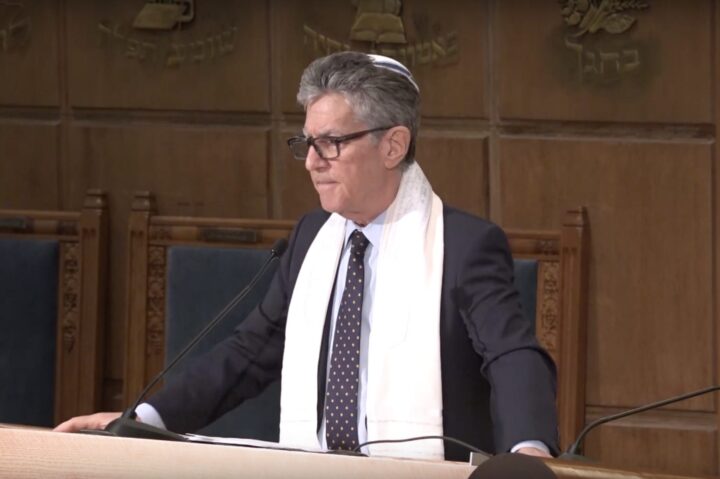
Screenshot
Rabbi Ammiel Hirsch speaks at the Stephen Wise Free Synagogue in New York City on Feb. 28, 2025
As the New York City mayoral race nears its end, Manhattan Rabbi Ammiel Hirsch has a message for his colleagues: It’s not too late to provide “leadership and clarity of perspective” to voters to oppose Democratic nominee Zohran Mamdani, citing the candidate’s hostility towards Israel and refusal to recognize it as a Jewish state.
Hirsch, a prominent and notable moderate pro-Israel voice within the progressive-minded Reform movement isn’t surprised by polling showing Mamdani leading his opponents, former New York Gov. Andrew Cuomo, who is running as an independent, and Republican Curtis Sliwa, among unaffiliated and Reform Jews, who skew overwhelmingly liberal.
But Hirsch, the senior rabbi of the Stephen Wise Free Synagogue, expressed frustration with the lack of organized effort among Jewish leaders to oppose Mamdani, whose affiliation with the Democratic Socialists of America (DSA) and antagonistic views on Israel — including his refusal to condemn the term “globalize the intifada” — have generated private and public criticism.
In an interview with Jewish Insider on Wednesday, Hirsch, who has led the Upper West Side congregation for the past 20 years, said there is still time for left-wing Jewish leaders to find their voice. Even without initiatives and statements from the Reform movement, progressive Jewish leaders can still “make a difference” by “laying out the stakes” — even as early voting begins this Saturday.
Hirsch recently released an online video message, addressing Mamdani directly. “I do not speak for all Jews, but I do represent the views of the large majority of the New York Jewish community, which is increasingly concerned with your statements about Israel and the Jewish people,” the rabbi said. “Your opposition to Israel is not centered on policies, you reject the very existence of Israel as a Jewish state … I urge you to reconsider your long-held rejection of Israel’s right to exist. Be a uniter and a peacemaker.”
Following Hirsch’s video, other Jewish leaders began to follow his lead. Rabbi Elliot Cosgrove of the Conservative Park Avenue Synagogue on Manhattan’s Upper East Side said in an address to his congregation last Saturday, “Mamdani’s distinction between accepting Jews and denying a Jewish state is not merely a rhetorical sleight of hand or political naïveté — though it is to be clear both of those — his doing so is to traffic in the most dangerous of tropes.”
On Wednesday, more than 600 rabbis from around the country signed on to an open letter, “A Rabbinic Call to Action: Defending the Jewish Future,” spearheaded by The Jewish Majority.
“As rabbis from across the United States committed to the security and prosperity of the Jewish people, we are writing in our personal capacities to declare that we cannot remain silent in the face of rising anti-Zionism and its political normalization throughout our nation,” the letter states.
“When public figures like New York mayoral candidate Zohran Mamdani refuse to condemn violent slogans, deny Israel’s legitimacy, and accuse the Jewish state of genocide, they, in the words of Rabbi Ammiel Hirsch, ‘Delegitimize the Jewish community and encourage and exacerbate hostility toward Judaism and Jews.’”
Hirsch, who serves as president of the New York Board of Rabbis, sat down with JI to discuss the current moment, one that he called “an obligation — it’s the call of history — for Jewish leaders to stand up” ahead of the Nov. 4 election.
Jewish Insider: You’ve been raising your voice against Mamdani, but with voting starting this weekend, do you think other Jewish leaders who have just started speaking out took too long?
Ammiel Hirsch: The Jewish world has very serious self-reflection to do in the aftermath of the Oct. 7, 2023, terrorist attacks. Everything has changed and the future will be different than what it was going to be pre-Oct. 7. The American Jewish community has substantial — in some respects unprecedented — challenges in the years to come.
The kind of antisemitism we are seeing now and likely to see in the future is different and more widespread than anything anyone alive has experienced. Our relationship with Israel has to be reassessed and reevaluated. How we teach our young people has to be reassessed and evaluated and the nature of the American Jewish community itself — we are seeing a deep polarization that should have taken everybody by surprise. During crunch time, when Israel was under real existential threat, we didn’t expect this kind of polarization around the idea of the existence of Israel.
Everything needs to be reevaluated. I concluded over the last two years that certain things I was perhaps willing to overlook in favor of other values and interests need to be looked at more carefully now. I’m not prepared to overlook candidates for public office who express fundamental anti-Zionism. We need to draw the line on anti-Zionism because it disenfranchises and delegitimizes Judaism itself. It leads to an intensification of antisemitism.
JI: Are you surprised there hasn’t been more of an organized effort among the Jewish community to challenge Mamdani since he won the primary in June? Has the Jewish world met the moment?
AH: We’ve been slow to respond to widespread, pervasive, global anti-Zionism and we’ve been slow inside the Jewish community in countering Jewish voices who are anti-Zionist. We, the mainstream of the Jewish community, have an obligation to counter that ideology. If it’s not countered, it intensifies and exacerbates the problem and that relates to public candidates as well. It’s imperative for the American Jewish community to stand up and express the kinds of views that I expressed. I think more are doing so. It is a responsibility at this historic moment in time for Jewish leadership to do so.
It would have been better had it been earlier, but it’s welcome — and imperative — at any time. It does make a difference and I urge everybody, especially those in Jewish leadership, to lay out the stakes. I say this as a Jewish leader, but I’m a New Yorker and U.S. citizen as well and care about the well-being of the city and country. It goes way beyond the well-being of the Jewish community.
Judaism has a lot to say about poverty, economics, immigration, the death penalty — all of those issues are important as well. But specifically on the anti-Zionism issue, it goes to the very existence and future of the Jewish people. Anti-Zionism means dismantling the place where half of the world’s Jews live. That’s the intention of the anti-Zionist enemies of Israel and Zohran Mamdani is giving them ideological and communal support. It’s an obligation — it’s the call of history — for Jewish leaders to stand up at this moment of Jewish history. Our people need leadership and clarity of perspective from their leaders. They’re thirsting for Jewish leaders to clarify what is in the best interest of the Jewish people and what is in the best interest of our values. Not to do that is to fail at this inflection point of American and world Jewish history. I’m heartened that more American Jewish leaders are speaking up now, but not enough.
JI: What do you make of the recent IRS reversal allowing rabbis and other clergy members to make political endorsements from the pulpit? One of the most recent examples being by another prominent New York City rabbi, Elliot Cosgrove, who heads the Park Avenue Synagogue. He decried Mamdani in a speech to his congregation last Shabbat, saying he believes the front-runner “poses a danger to the security of the New York Jewish community.”
AH: For me, I uphold the Johnson Amendment [a 1954 provision in the U.S. tax code that prohibits all 501(c)(3) nonprofit organizations from endorsing or opposing political candidates], no matter what the IRS decided to enforce. I do not endorse political parties or candidates. I speak about policies, which are directly relevant to our roles as rabbis and Jewish leaders. Policies reflect public morality. I’m not going to become partisan. It’s wrong on principle, because we receive tax relief status on the basis of our commitment to being nonpartisan. It weakens us because it unnecessarily splits the community and runs the risk of making synagogues into political centers. I try very carefully to speak about general policies and not endorse parties or candidates. That’s why my message was in the form that it was [speaking to Mamdani directly].
In my message, I was turning to the candidate himself. I didn’t tell people what my political preferences were or how they should vote. My message was that anti-Zionism endangers the Jewish community.
JI: Polls that look at Reform, Conservative and Orthodox voters have found Reform Jews are more supportive of Mamdani — why do you think that is? You’ve authored several essays, both before and after Oct. 7, about why the Reform movement is more inclined towards criticizing Israel than other branches of Judaism. Is that a driving factor here for support for Mamdani?
AH: The more liberal a person is the more likely they are to resonate and support liberal candidates, so it’s not surprising to me. The Reform movement started in North America as a religious movement that negated the centrality of Jewish peoplehood, so of course they were going to resonate more to universal values, not as an expression of Jewish peoplehood values, but the negation of it. Part of that still exists and the more years go by that Jews do not perceive an existential threat against the Jewish community, the more they return to that inclination towards universalism — that Jewish peoplehood is the problem. I’ve called that out for years now and I think that does play a role. It’s why I feel so strongly that I need to speak out.
I do not consider anti-Zionism to be a liberal position, it’s illiberal and I think many people are confused. Zionism is the liberation movement of the Jewish people, that’s a liberal philosophy.
JI: Would you like to see the Union for Reform Judaism come out with an official statement against Mamdani?
AH: I don’t participate in the decisions of the URJ. As I said, I believe it’s important for every Jewish leader to speak up at this inflection point of American Jewish history, so I would welcome it from everybody across the board.
I’ve seen some very good statements from our Orthodox colleagues. We need to unite as much as possible. There is room for debate and disputation, it’s part of Judaism, but at this critical moment in Jewish history we should seek to lay aside for another day controversies that distract us from the main objective that we have, which is to counter antisemitism and a form of anti-Zionism that constitutes antisemitism.
All of us need to unite on that because we’re a small minority and the task is monumental. If we don’t voice a common position, then what happens is we give an impression that the Jewish community is split on the very essence of the contemporary Jewish experience, which is the centrality of Jewish peoplehood and support of the Jewish state. We give the impression that the small minority of Jews, who are very noisy, constitute a much bigger component of Judaism than they really are. That’s another reason we need to counter this loudly.
In our movement, which is the most liberal of affiliated American Jews, there are some anti-Zionist voices but the overwhelming majority of the Reform movement is pro-Israel and considers Israel to be a component of their own Jewish identity.
JI: What are some ways in which you would encourage synagogues and Jewish institutions to engage with Mamdani if he is elected mayor?
AH: If he becomes mayor, he will have been elected fair and square. Then we’ll have to try our best to work with him where we can and oppose him when we must.
Given that this anti-Zionist philosophy is mainstream, it is imperative for American Jewish leaders to stand up, push back. People will vote how they vote and whoever wins will reflect the will of the people and then we’ll have to work within those constraints.
Mamdani’s pledge, announced at the last general election debate, is a signal of the DSA-backed candidate’s attempt to moderate on the issue of policing
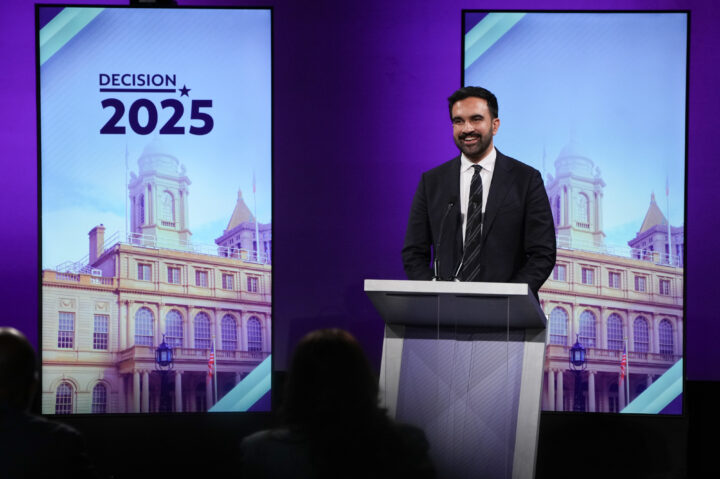
Hiroko Masuike/The New York Times/Bloomberg via Getty Images
Zohran Mamdani, New York City mayoral candidate, during a mayoral debate in New York, US, on Wednesday, Oct. 22, 2025.
Zohran Mamdani, the Democratic nominee for mayor of New York City, confirmed that he would ask Jessica Tisch to stay on as the city’s police commissioner if elected, ending longstanding speculation over his plans for a key role in his potential administration.
Tisch, appointed last year by outgoing Mayor Eric Adams, “took on a broken status quo, started to deliver accountability, rooting out corruption and reducing crime across the five boroughs,” Mamdani said at the second and final general election debate on Wednesday evening.
“I have said time and again that my litmus test for that position will be excellence, and the alignment will be of that position,” Mamdani added. “And I am confident that under a Mamdani administration, we would continue to deliver on that same mission.”
Mamdani’s choice could assuage concerns among moderate Democrats and other crime-conscious New Yorkers who had been hopeful that he would choose Tisch, a widely respected technocrat who previously led the Department of Sanitation.
Tisch, 44, who is Jewish, has not said whether she would plan to continue in her position if Mamdani is elected on Nov. 4.
Mamdani, a 34-year-old democratic socialist and Queens state assemblyman, has faced scrutiny over his past comments on law enforcement — including support for defunding the police. He has moderated during his mayoral campaign and says he no longer backs such efforts, even as he has pledged to pursue some goals that could potentially fuel tension, such as launching a Department of Community Safety “to ensure that mental health experts” instead of police “are responding to the mental health crisis,” he said at the debate.
Mandani’s opponents, former New York Gov. Andrew Cuomo and Curtis Sliwa, also said they would not seek to replace Tisch, though Sliwa, the Republican nominee, said he did not think she would choose to remain in her role if Cuomo or Mamdani is elected. Cuomo, running as an independent, said he did not believe Mamdani would follow through on his promise.
“His position has been to defund, disband the police, she wouldn’t take that,” Cuomo claimed, saying “their philosophies are totally incongruous.”
Elsewhere in the debate Wednesday, Cuomo and Sliwa ramped up their attacks on Mamdani over his strident opposition to Israel and refusal to condemn calls to “globalize the intifada,” continued sources of concern among Jewish voters.
Cuomo, who has recently escalated his criticism of Mamdani to a more personal level, accused him of stoking “the flames of hatred against Jewish people” during a particularly heated moment at the debate — while Sliwa cast the Democratic frontrunner as an “arsonist who fans the flames of antisemitism.”
Mamdani, playing defense on an issue that represents one of his top vulnerabilities, said that there “is room for disagreement on many positions and many policies,” and pushed back against Sliwa’s claim that he supports “global jihad.”
“I’ve heard from New Yorkers about their fears about antisemitism in this city, and what they deserve is a leader who takes it seriously, who roots it out of these five boroughs, not weaponizes it as a means by which to score political points on a debate stage,” Mamdani said.
The NYC Democrat said he asked Mamdani to speak out against anti-Israel violence but ‘I frankly haven’t really seen him do much on that’
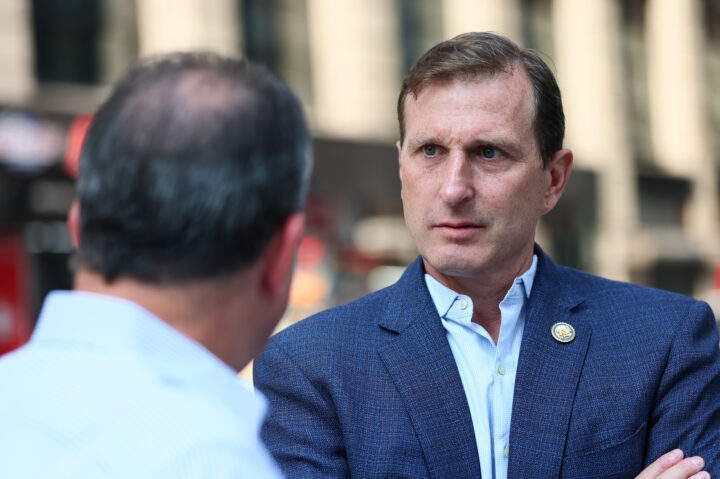
Michael M. Santiago/Getty Images
Rep. Dan Goldman (D-NY) outside the Jacob K. Javitz Federal Building on August 07, 2025 in New York City.
Rep. Dan Goldman (D-NY) said on Tuesday, just days before early voting starts in the New York City mayoral race, that he is still not ready to endorse Democratic nominee Zohran Mamdani, as he hasn’t seen the candidate assuage Jewish communal concerns.
Appearing on CNN, Goldman said he wasn’t sure if he would vote for Mamdani or his rival, former New York Gov. Andrew Cuomo, and that he’s “trying to work through” outstanding issues he has with the candidates.
“You know, I’m a Democrat at heart and I believe in the Democratic Party. I am very concerned about some of the rhetoric coming from Zohran Mamdani, and I can tell you as a Jew in New York who was in Israel on Oct. 7, I and many other people are legitimately scared because there has been violence in the name of anti-Israel, anti-Zionism,” said Goldman, a pro-Israel Democrat whose House district, covering Lower Manhattan and a swath of Brooklyn, leans heavily to the left.
“I’ve asked [Mamdani] to speak out on that and to condemn that and I frankly haven’t really seen him do much on that. And I believe, for my personal reasons as well as my professional reasons as a representative of New York City, that it is my duty to make sure that everybody, including the Jewish community, feels safe here, and many in the Jewish community do not feel safe right now,” the congressman continued.
“And I hope that Mr. Mamdani takes that to heart and takes some action to make the Jewish community understand that he will keep us safe and secure,” he concluded.
Goldman is one of several Democratic New York lawmakers who have refused to endorse their party’s candidate for Gracie Mansion, including swing district Reps. Laura Gillen (D-NY) and Tom Suozzi (D-NY) as well as George Latimer (D-NY).
Other prominent New York Democrats including Senate Minority Leader Chuck Schumer and House Minority Leader Hakeem Jeffries have met with Mamdani but have held back endorsements.
Only five New York City Democratic lawmakers in the state’s congressional delegation have endorsed Mamdani: Reps. Alexandria Ocasio-Cortez (D-NY), Jerry Nadler (D-NY), Adriano Espaillat (D-NY),Nydia Velazquez (D-NY) and Yvette Clarke (D-NY).
The list of signatories includes leaders of some of the largest synagogues in New York City, representing all the leading Jewish denominations
ANGELA WEISS/AFP via Getty Images
New York City Mayor Zohran Mamdani answers questions on October 17, 2025 in New York City.
Over 800 rabbis from around the country signed on to an open letter on Wednesday voicing concern that, if elected New York City mayor, Zohran Mamdani would threaten “the safety and dignity of Jews in every city,” citing the Democratic nominee and front-runner’s antagonistic views towards Israel.
“As rabbis from across the United States committed to the security and prosperity of the Jewish people, we are writing in our personal capacities to declare that we cannot remain silent in the face of rising anti-Zionism and its political normalization throughout our nation,” wrote the rabbis, representing the Reform, Conservative and Orthodox movements.
In the letter, “A Rabbinic Call to Action: Defending the Jewish Future,” spearheaded by The Jewish Majority, signatories called out Mamdani’s refusal to condemn the slogan “globalize the intifada,” noted his denial of Israel’s legitimacy as a Jewish state and condemned his repeated accusations that Israel committed genocide in its war against Hamas in Gaza.
“We will not accept a culture that treats Jewish self-determination as a negotiable ideal or Jewish inclusion as something to be ‘granted,’” the letter continued. “The safety and dignity of Jews in every city depend on rejecting that false choice.”
The signatories include the leaders of some of the largest synagogues in New York City, including Rabbi Joshua Davidson, senior rabbi at Temple Emanu-El; Rabbi David Gelfand, senior rabbi at Temple Israel of the City of New York; Rabbi Chaim Steinmetz, senior rabbi at Kehilath Jeshurun; Rabbi David Ingber, founder of Romemu and senior director of Jewish Life and the Bronfman Center at 92NY; and Rabbi Ammiel Hirsch, president of the New York Board of Rabbis and senior rabbi of Stephen Wise Free Synagogue.
The letter, published three days before early voting for the Nov. 4 election begins, comes as some Jewish leaders have expressed frustration over a lack of organized opposition to Mamdani, who leads against his opponents, former New York Gov. Andrew Cuomo, running as an independent, and Republican nominee Curtis Sliwa.
It points to two recent public pleas from prominent New York City rabbis decrying Mamdani.
“I do not speak for all Jews, but I do represent the views of the large majority of the New York Jewish community, which is increasingly concerned with your statements about Israel and the Jewish people,” Hirsch said in an online video last week, in which he was addressing Mamdani directly. “Your opposition to Israel is not centered on policies, you reject the very existence of Israel as a Jewish state… I urge you to reconsider your long-held rejection of Israel’s right to exist. Be a uniter and a peacemaker.”
Rabbi Elliot Cosgrove of the Park Avenue Synagogue said in an address to his congregation last Saturday, “Mamdani’s distinction between accepting Jews and denying a Jewish state is not merely a rhetorical sleight of hand or political naïveté — though it is, to be clear, both of those — his doing so is to traffic in the most dangerous of tropes.”
The letter goes on to urge “interfaith and communal partners to stand with the Jewish community in rejecting this dangerous rhetoric and to affirm the rights of Jews to live securely and with dignity.”
It continues, “Now is the time for everyone to unite across political and moral divides, and to reject the language that seeks to delegitimize our Jewish identity and our community.”
The Jewish advocacy group slammed Mamdani’s insistence on calling Israel’s war against Hamas a genocide and ‘lack of moral clarity’
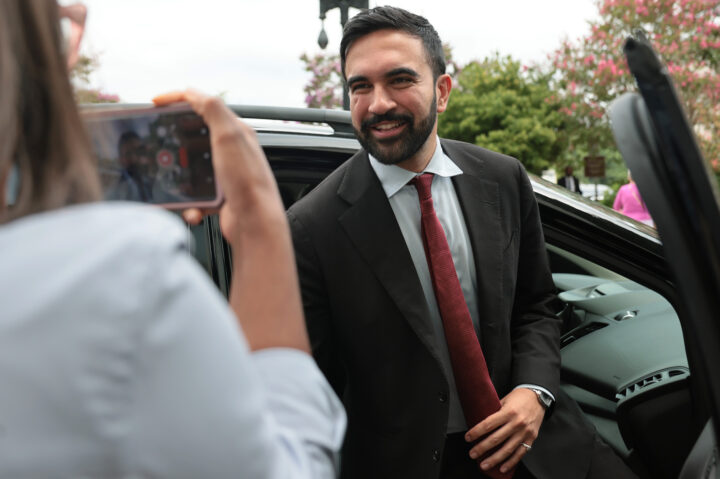
Michael M. Santiago/Getty Images
NYC Mayor Zohran Mamdani briefly speaks with reporters as he leaves the Dirksen Senate Office Building on July 16, 2025 in Washington, DC.
The American Jewish Committee raised alarms on Friday about Zohran Mamdani’s “continued use of problematic rhetoric as it relates to Israel and Jews” and called on the Democratic nominee for mayor of New York City to “change course” as he prepares for the Nov. 4 election.
In a lengthy statement, the nonpartisan organization cited, among other things, Mamdani’s repeated claim that Israel has committed genocide in Gaza, which the AJC called “unequivocally false and dangerous.” The charge “has not been proven in any international court” and “gives fodder to those who continue to use Israel’s self-defensive actions as an excuse to threaten and attack Jews,” the group said.
The AJC also criticized Mamdani’s refusal to recognize Israel’s right to exist as a Jewish state, saying that he is upholding an “unacceptable double standard” in his assessment of the region. “Israel is surrounded by Muslim countries,” the group wrote, “yet Mamdani does not continuously suggest that any of those nations should not exist as they are.”
And the organization took issue with what it characterized as Mamdani’s “lack of consistent moral clarity on Hamas,” pointing to a Fox News interview on Wednesday in which he sidestepped a question about whether Hamas should disarm and relinquish its leadership role in Gaza.
Mamdani, a democratic socialist assemblyman who has long been involved in anti-Israel activism, later clarified during the first general election debate on Thursday that Hamas “should lay down” its arms, but he did not share his views on its future role in the conflict.
The AJC, which has also recently highlighted concerns about Mamdani’s refusal to condemn calls to “globalize the intifada,” said in its statement that it feels “compelled to speak out when public figures use rhetoric or endorse policies that harm Jews.”
It urged Mamdani “to engage in dialogue and consultation with organizations and segments of the mainstream New York Jewish community,” with which he has had a tense relationship throughout the campaign and as an elected official in Albany.
“By continuing to prioritize anti-Zionist synagogues and groups, Mamdani ignores the perspectives and concerns of the vast majority of Jewish New Yorkers,” the group said.
Mamdani, who has stepped up his Jewish outreach efforts in recent weeks with limited success, has rejected claims that his views fuel antisemitism and vowed to increase funding to counter hate crimes by 800% if he is elected.
“One of the most meaningful experiences I’ve had over the course of this campaign has been the conversations I’ve had with Jewish New Yorkers,” Mamdani said at the debate on Thursday.
A spokesperson for Mamdani did not respond to a request for comment.
But the NYC mayoral nominee hasn’t spoken out against the streamer’s long history of antisemitic rhetoric
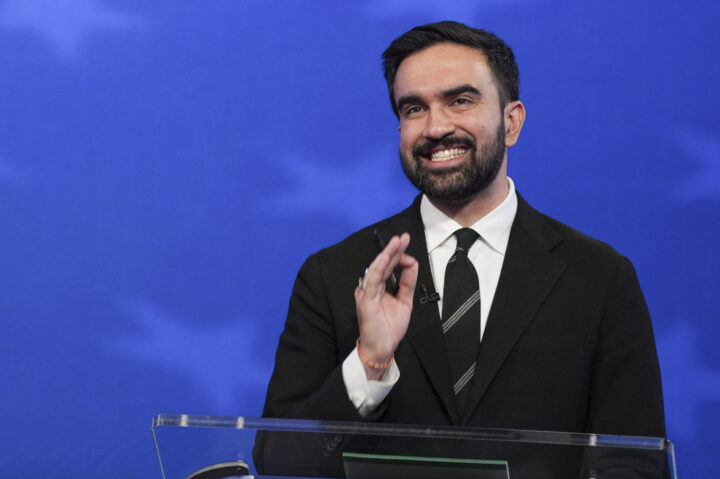
Angelina Katsanis-Pool/Getty Images
Democratic mayoral nominee Zohran Mamdani speaks during a mayoral debate at Rockefeller Center on October 16, 2025 in New York City.
Zohran Mamdani, the Democratic nominee for mayor of New York City, expressed disagreement on Thursday with comments by Hasan Piker, a far-left streamer who has said “America deserved 9/11,” after several months in which the state assembly member had declined to condemn such rhetoric.
“I find the comments that Hasan made on 9/11 to be objectionable and reprehensible,” Mamdani said during the first general election debate on Thursday night, where he traded barbs with former New York Gov. Andrew Cuomo, who is trailing in the polls as he mounts an independent run following his primary loss to Mamdani in June.
Still, Mamdani, a 33-year-old democratic socialist, defended his decision to appear on Piker’s show for an extensive interview during the primary — even as the streamer has otherwise frequently stirred controversy for using antisemitic rhetoric in his commentary on Israel and Jewish issues.
“I also think that part of the reason why Democrats are in the situation that we are in, of being a permanent minority in this country, is we are looking only to speak to journalists and streamers and Americans with whom we agree on every single thing that they say,” Mamdani argued, while making no mention of Piker’s antisemitic comments. “We need to take the case to every person, and I am happy to do that.”
Piker has faced criticism for justifying Hamas’ Oct. 7, 2023, attacks and forcefully denying some of the terror group’s atrocities — including widespread reports of sexual violence. In one notable stream last year, Piker said “it doesn’t matter if rapes f***ing happened on Oct. 7,” while adding that “the Palestinian resistance is not perfect.” He has also described Orthodox Jews as “inbred” and compared Zionists to Nazis, among other slurs seen as antisemitic.
Elsewhere during the debate, Mamdani, an outspoken critic of Israel who was arrested in October 2023 during a ceasefire demonstration outside the Brooklyn home of then-Senate Majority Leader Chuck Schumer (D-NY), declined to confirm that he would not participate in protests if he is elected mayor. “The important thing is to lead from City Hall,” Mamdani said. “That’s what I’ll be doing.”
Mamdani had faced intense backlash before the debate for comments during a Fox News interview released on Wednesday in which he avoided directly answering a question about whether Hamas should disarm and relinquish its leadership role in Gaza. He clarified at the debate that Hamas, as well as “all parties,” “should lay down” their arms but did not comment on its future role in the conflict.
“I’m proud to be one of the first elected officials in the state who called for a ceasefire, and calling for a ceasefire means ceasing fire,” Mamdani said. “That means all parties have to cease fire and put down their weapons. And the reason that we call for that is not only for the end of the genocide, but also an unimpeded access of humanitarian aid.”
He added that “we also have to ensure that [the ceasefire] addresses the conditions that preceded this, conditions like occupation, like the siege and apartheid, and that is what I’m hopeful for.”
Mamdani, who has seen mixed results in his continued outreach to the Jewish community, also once again refused to condemn the phrase “globalize the intifada” — even as he reiterated that it “evokes many painful memories” for Jewish voters and reiterated he will “discourage” its usage.
Individuals involved in the race told JI impediments remain to consolidating support behind Andrew Cuomo
Michael M. Santiago/Getty Images
New York City Mayoral Zohran Mamdani (L) and former Mayor Eric Adams attend the annual 9/11 Commemoration Ceremony on September 11, 2025 in New York City.
New York City Mayor Eric Adams’ decision on Sunday to drop out of his race for reelection was met with a mix of tempered hope and continued resignation among political consultants and Jewish community leaders who have long been waiting for an opening to block Zohran Mamdani, the front-runner and Democratic nominee.
In choosing to suspend his campaign for a second term with just five weeks remaining until the Nov. 4 election, Adams, the scandal-scarred mayor who had been running as an independent, may not offer the escape hatch that many Mamdani critics have been hoping for.
Adams, a deeply unpopular mayor whose tenure in office had been marred by a series of damaging corruption scandals and accusations that he had become cozy with the Trump administration, will remain on the ballot. And Curtis Sliwa, the GOP nominee polling ahead of Adams, reiterated on Sunday that he will stay in the race, rejecting calls for him to step aside and help to clear the field for former New York Gov. Andrew Cuomo — who is also running as an independent after badly losing the June Democratic primary.
But some critics of Mamdani, a democratic socialist and Queens state assemblyman leading in the polls, suggested that the consolidated field could now move previously reluctant donors to invest in a late-stage effort to help bolster Cuomo — who had been casting the race as a two-man contest with Mamdani even before Adams ended his campaign.
“Sentiment among some major donors had been that unless the field started to narrow, they were going to keep their powder relatively dry,” Jake Dilemani, a Democratic strategist who was involved in Cuomo’s primary bid, told Jewish Insider. “With Adams out, that dynamic starts to change, pressure will mount on Sliwa to drop his bid, and dollars will follow.”
Hank Sheinkopf, a veteran Democratic strategist who is leading an anti-Mamdani super PAC called Protect the Protectors, said Cuomo “can win only if there are independent committees that are talking about” Mamdani’s far-left positions and “how they are dangerous to New York.”
“Failure to do that means Mamdani will win,” he told JI, while noting Cuomo’s “argument that he is more experienced isn’t working,” demonstrated by his negative voter ratings in polls.
Sheinkopf speculated that new donors could now be energized to open their checkbooks if they are convinced, as he believes, that a Cuomo victory will require outside groups, which have struggled to raise money even as they have begun to place ads in recent weeks, work on chipping away at Mamdani’s relatively favorable polling numbers.
“You can knock Mamdani to 30 or below,” Sheinkopf predicted. Recent surveys have shown Mamdani’s favorability ratings in the mid to high 40s.
Another political consultant who is involved in a separate anti-Mamdani super PAC, speaking on the condition of anonymity to address the current state of the race, said he is “hopeful that the donors who were sitting on the sidelines will now become more active,” but he had no details to share about any new movement on that front.
The consultant acknowledged that Sliwa’s choice to remain in the race, threatening to peel support from Cuomo, “is certainly an impediment, but hopefully not a major one,” suggesting that “Cuomo can get a lot of Sliwa’s vote.”
Chris Coffey, a Democratic consultant who helped to advise Cuomo’s primary campaign, said that the race had been “frozen” until Adams finally dropped out on Sunday. “Both donors and reporters spent three-plus weeks on whether Eric would drop out,” he told JI. “Now he has. It’s still going to be uphill for Cuomo but to have any shot, he needed Eric out and he’s out.”
“If donors and press now turn to Curtis, that won’t help Cuomo,” Coffey continued. “I’d expect to see national and local GOP push folks to Cuomo. That’s a double-edged sword but again, he needs it to have a meaningful shot.”
Eric Levine, a top GOP fundraiser who had been backing Adams’ bid, said that he is now supporting Cuomo and believes that Sliwa “needs to get out” if the former governor has any chance of prevailing in the race.
While he did not anticipate that Sliwa — whose campaign said in a statement on Sunday that he “is the only candidate who can defeat Mamdani” — will likely step aside, Levine called on GOP leadership in New York to urge him to drop out and help clear the field for Cuomo.
“He was a terrible governor, he’s an even worse person and will be a horrible mayor,” Levine said of Cuomo. “But compared to Mamdani,” the choice is easy, he told JI, citing the nominee’s hostile stances toward Israel that have fueled concern among many Jewish community leaders.
“The city is heading for a world of hurt, and any Republican who thinks that it’s a good idea to have Mamdani be the new face of the Democratic Party is too cynical for me,” Levine, a Republican Jewish Coalition board member, said on Sunday.
Cuomo, for his part, praised the mayor’s decision to ultimately drop out of the race, as he had called on Adams to do. “The choice Eric Adams made today was not an easy one, but I believe he is sincere in putting the well-being of New York City ahead of personal ambition,” the former governor said in a statement on Sunday. “We face destructive extremist forces that would devastate our city through incompetence or ignorance, but it is not too late to stop them.”
But while Cuomo’s campaign hopes to gain new backing from Black and Orthodox Jewish voters who were behind Adams, the mayor himself did not offer an endorsement, even if his announcement left open the possibility he could end up taking a side in the race. Adams otherwise warned, in a veiled swipe at Mamdani, that “insidious forces” are now seeking to “advance divisive agendas.”
“Major change is welcome and necessary,” Adams said in his announcement posted to social media on Sunday. “But beware of those who claim the answer is to destroy the very system we built together over generations.”
Leon Goldbenberg, an Orthodox leader in Brooklyn who is an executive board member of the Flatbush Jewish Community Coalition and had been backing Adams, said that he was encouraged by the mayor’s choice to suspend his campaign. “At this point, it’s more of a horse race,” he told JI, predicting Cuomo will see solid support in the Orthodox community as it seeks to register new voters ahead of the election.
“I think that you are going to see a tremendous turnout in the Orthodox community,” Goldenberg said. “Whether it makes a difference or not, I can’t tell you.”
Some activists in the broader organized Jewish community were less confident that the campaign shake-up on Sunday would meaningfully influence the outcome of a race that Mamdani has continued to dominate.
One Jewish leader, speaking on the condition of anonymity to address private discussions, said it was “too soon yet” to conclude if a critical mass of new donors would now be motivated to step up to help oppose Mamdani. “But new conversations are happening.”
Another Jewish leader who fears a Mamdani win, and also spoke on the condition of anonymity, was far less sanguine about Adams’ decision. “It doesn’t make a difference,” the Jewish leader told JI, while referring to such remaining obstacles as Sliwa and the mayor’s name still appearing on voters’ ballots.
A credible effort to beat Mamdani “would require about $10 to $15 million to make a difference,” the Jewish leader estimated. “I just don’t know that we have that chance.”
With that in mind, “the best thing that I’m hoping for is that we can keep him under 50%,” the Jewish leader said of Mamdani, “to make him govern from a minority position and not a mandated position.”
The swing-district Democrat is the first New York lawmaker outside of NYC to endorse the far-left mayoral nominee
Kayla Bartkowski/Getty Images
Rep. Pat Ryan (D-NY) speaks during a Democratic Steering and Policy Committee hearing in the U.S. Capitol on April 10, 2025 in Washington, DC
Rep. Pat Ryan (D-NY), a swing-district Democrat representing parts of the Hudson Valley, announced his endorsement on Wednesday of Zohran Mamdani, the Democratic nominee for mayor of New York City.
With the endorsement, Ryan becomes the first New York Democratic lawmaker outside of New York City to support the 33-year-old democratic socialist and Queens assemblyman.
“Public service is all about one thing: who do you fight for?” Ryan said in a social media post. “Zohran Mamdani fights for the PEOPLE.”
He also took a swipe at former New York Gov. Andrew Cuomo, who was soundly defeated by Mamdani in the June Democratic primary and is now running as an independent, calling him “a selfish POS who only fights for himself and other corrupt elites.”
“I know whose side I’m on,” Ryan added. “I’m with the people. I’m with Zohran.”
Mamdani, who is leading all polls in the divided race, returned the compliment in a social media post, saying Ryan “fights for the people, too: he’s stood up to the utilities ripping off his constituents and taken on monopoly power in Congress.”
He called it “a true honor to earn” Ryan’s support.
The two-term congressman, who had initially been reluctant to comment publicly on Mamdani’s candidacy, joins a handful of Democratic House colleagues in New York who have endorsed the nominee since the primary, including Reps. Jerry Nadler (D-NY), Nydia Velázquez (D-NY) and Adriano Espaillat (D-NY).
Rep. Alexandria Ocasio Cortez (D-NY), whom Ryan has also praised, had endorsed Mamdani before the primary.
Even as pressure has recently been mounting for Democrats to get behind Mamdani as the November election nears, the party’s leaders — including New York Gov. Kathy Hochul, Senate Minority Leader Chuck Schumer (D-NY) and House Minority Leader Hakeem Jeffries (D-NY) — have all so far withheld endorsements.
Other holdouts include Reps. Dan Goldman (D-NY), Laura Gillen (D-NY) and Tom Suozzi (D-NY), who have raised concerns about Mamdani’s anti-Israel rhetoric.
Shortly after Ryan publicized his endorsement Wednesday, the House Republican campaign arm, which is targeting the congressman in the election next year, quickly pounced on the news, providing an early glimpse of how the GOP is seeking to link Mamdani’s far-left views to the broader Democratic brand.
“Pat Ryan made it official: His agenda and Zohran Mamdani’s are one and the same,” Maureen O’Toole, a spokesperson for the National Republican Congressional Committee, said in a statement. “Together, they want to destroy New York City, making it unsafe and unaffordable for anyone to live, work or travel there. Let that sink in.”
A spokesperson for Ryan did not immediately return a request for comment.
A poll conducted by the Democratic polling firm GQR found Zohran Mamdani, the Democratic nominee, winning only 37% of Jewish voters
Spencer Platt/Getty Images
Democratic socialist candidate Zohran Mamdani, who won the Democratic primary for mayor of New York City, attends an endorsement event from the union DC 37 on July 15, 2025, in New York City.
A new poll of New York City Jewish voters commissioned by the pro-Israel New York Solidarity Network underscores the presence of a cohesive constituency opposed to Zohran Mamdani’s candidacy to become New York City mayor — but also illustrates some of the divisions preventing the city’s Jewish community from speaking with a loud, united voice.
The poll, conducted by the respected Democratic polling firm GQR, found Mamdani, the Democratic nominee, winning only 37% of Jewish voters, with 25% backing Mayor Eric Adams, 21% supporting former Gov. Andrew Cuomo and 14% preferring Republican nominee Curtis Sliwa. The results show that even though most Jewish voters identify as Democrats, a clear majority won’t support the Democratic nominee because of his record on issues of concern to the Jewish community — in a city where registered Democrats outnumber Republicans 6-to-1.
Adams performs particularly well among Orthodox Jews, winning 61% of their vote, while Cuomo leads among Conservative Jewish voters with 35% support. But among unaffiliated and Reform Jews, Mamdani leads with a near majority of the Jewish vote.
Asked if Jewish voters were pro-Israel, two-thirds (66%) responded in the affirmative, while 31% said they weren’t. That’s a slightly larger share of non-Zionist Jews than we’ve seen in national polling. Nearly two-thirds (63%) also said that the “globalize the intifada” rhetoric that Mamdani has defended is antisemitic, with just 27% disagreeing.
Just over half of Jewish voters in New York City (51%) believe Mamdani is antisemitic; 42% of respondents disagree.
The results illustrate the long-standing dynamic of the general election: Mamdani’s political standing is unusually weak as a Democratic nominee, but he continues to benefit from the divided field of opponents — and lack of a coherent strategy to go after the front-runner.
The fact that there isn’t a consensus Mamdani alternative within the Jewish community at this late stage demonstrates the hands-off approach to the race outside groups have taken, despite the very real fears many hold of what a Mamdani mayoralty would look like.
During a private meeting between the NYC mayoral nominee and largely progressive House Democrats on Wednesday, Gottheimer did not raise concerns with Mamdani that he has vocalized elsewhere

Tom Williams/CQ Roll Call via AP Images
Rep. Josh Gottheimer (D-NJ) holds a news conference in the Capitol on Wednesday, December 4, 2019.
Rep. Josh Gottheimer (D-NJ), in a private meeting with House Democrats in Washington on Wednesday, avoided confronting Zohran Mamdani, the far-left Democratic nominee for mayor of New York City, over his controversial defense of calls to “globalize the intifada” and fierce opposition to Israel.
Gottheimer, a moderate Jewish Democrat who is among the most outspoken supporters of Israel in the House, has not been shy about publicly calling out members of his own party when disagreements over Israel and antisemitism have arisen in recent years.
But during the breakfast meeting this week, Gottheimer did not bring up his objections to the 33-year-old democratic socialist, according to a House aide familiar with the matter, even as his views on Israel have raised alarms among Jewish voters and faced pushback from Democratic leaders who have so far withheld endorsements in the New York City mayoral race.
In a statement, Gottheimer reiterated his concerns about Mamdani’s progressive policy proposals and his acceptance of rhetoric that Jewish leaders have condemned as antisemitic. But the New Jersey congressman suggested he was willing to hear from the mayoral nominee about his stunning primary upset that has rattled the political establishment.
“I don’t think higher taxes, anti-job creating socialism, and an acceptance of antisemitic rhetoric is the right direction for America,” Gottheimer told Jewish Insider, echoing comments he shared in an interview with CNBC on Thursday morning and elsewhere in recent weeks. “That said, I am always open to learning how I can reach more people with my commonsense, problem-solving approach.”
He declined to comment further on the meeting to JI on Thursday. “I don’t have anything to say beyond what I put out,” the congressman said.
Later on Thursday, Gottheimer announced he was introducing a bipartisan resolution condemning the phrase “globalize the intifada,” which Mamdani has refused to condemn. The motto chanted frequently at anti-Israel demonstrations is “hate speech, plain and simple,” the congressman wrote in a statement that did not mention Mamdani, arguing such words “incite violence, fuel hate and put Jewish families at risk.”
Still, Gottheimer voiced no such disapproval in the Wednesday breakfast hosted by Rep. Alexandria Ocasio-Cortez (D-NY) — which included several progressive House Democrats and was promoted as a “communication and organizing” session as the party rethinks its messaging strategy ahead of next year’s midterms.
Gottheimer’s reticence to speak out directly during the in-person meeting stands in contrast with his past denunciations of Mamdani, whose defense of the “intifada” phrase — seen by critics as a violent provocation to target Jews — he has called “insane and unacceptable” amid rising antisemitic activity.
The divisive slogan “is a well-known antisemitic chant that calls for the eradication of Israel and violence against Jews,” Gottheimer said in a social media post a week before the primary last month.
“Zohran Mamdani’s pathetic, hateful lies are a blatant slap in the face of the Jewish community,” he added. “He must apologize immediately. I also suggest that he visit the Holocaust Museum in the coming days and learn why these words are so dangerous.”
Even as no discussion of Israel or antisemitism was raised at the Wednesday gathering, top Democrats have continued to signal their hesitation regarding Mamdani’s approach to such issues, particularly his stance on the “intifada” slogan that he has defended repeatedly as an expression of Palestinian rights.
For his part, House Minority Leader Hakeem Jeffries (D-NY), who did not attend the breakfast but is expected to meet with Mamdani in New York City on Friday, has said that the nominee’s comments about the phrase will be a part of their discussion — suggesting that his support is likely contingent on a change in tone.
Mamdani, who has faced questions about the phrase in other meetings this week, has privately indicated he plans to take a more calibrated stance with regard to the matter, a key point of tension as he now works to expand his coalition in a crowded race that includes Mayor Eric Adams and former New York Gov. Andrew Cuomo, both running as independents.
The Democratic mayoral nominee said in a private meeting with business leaders earlier this week that he would “discourage” use of the phrase but still did not go so far as to condemn it himself, according to reports of the closed-door discussion on Tuesday.
Additional reporting contributed by JI senior congressional correspondent Marc Rod
The former Pima County supervisor has struggled to articulate her approach to Israel as she faces Daniel Hernandez, who identities a pro-Israel progressive

Adelita Grijalva campaign page
Adelita Grijalva
The latest Democratic primary battle between the left and center where Israel has emerged as a point of division is playing out in a special House election in Tucson, Ariz., later this month, as five candidates vie to replace former longtime Rep. Raul Grijalva (D-AZ), who died in March.
The July 15 primary in Arizona’s dependably blue 7th Congressional District has kept a relatively low profile, even as it features ideological tensions over Middle East policy that could hold implications for the party’s increasingly fractious approach to Israel in the lead-up to next year’s midterm elections.
Adelita Grijalva, 54, a former Pima County supervisor, is viewed as the heavy favorite to win the seat in what is expected to be a low-turnout race, owing in part to her significant name recognition in the area represented by her late father for over two decades.
She has also consolidated endorsements from top establishment Democrats, including Sens. Mark Kelly (D-AZ) and Ruben Gallego (D-AZ), while securing the backing of progressive leaders such as Reps. Alexandria Ocasio-Cortez (D-NY) and Sen. Bernie Sanders (I-VT), among other high-profile critics of Israel in Congress.
But her limited record of commentary on Israel has raised questions among pro-Israel activists rallying behind one of Grijalva’s chief primary rivals, Daniel Hernandez, a former state lawmaker who identifies as a pro-Israel progressive and claims support from Rep. Ritchie Torres (D-NY) and the political arm of Democratic Majority for Israel.
The 35-year-old Hernandez, recently named the board chair of the Zionist LGTBQ organization A Wider Bridge, has pitched himself as a “consistent champion” of pro-Israel causes, in contrast with the late Grijalva, who during his long tenure embraced hostile positions toward Israel — most prominently when he joined a small handful of House Democrats to oppose additional funding for Israel’s Iron Dome missile-defense system in 2021.
Like her father, the younger Grijalva appears more skeptical of Israel amid its war in Gaza, even as she has yet to publicly clarify her own views on a range of key issues, such as continued U.S. security aid to Israel, which has faced vocal resistance from some of her supporters on the left.
Grijalva called for a ceasefire between Israel and Hamas 10 days after the Oct. 7, 2023, attacks. In her role as a county supervisor, she also reluctantly voted for a resolution that condemned Hamas, while voicing frustration that she “couldn’t talk about peace and humanitarian aid” for Gaza.
More recently, Grijalva has struggled to clearly articulate her approach to Israel and the broader Middle East, suggesting in a recent discussion with a progressive organization that speaking candidly about her views could draw outside spending from pro-Israel advocacy groups such as AIPAC, which has targeted Israel critics in Democratic primaries, into the race.
“The frustration for me, and it will always be, I think, is that there were some things that my dad could get away with that a lot of these organizations that come in and try to influence races and stuff, he predated them,” Grijalva explained during a Zoom call in May with Progressive Democrats of America, an anti-Israel group that is backing her campaign.
Her father, who died at 77, “was like this mountain in the middle, like no one’s moving him one way or the other,” she continued on the call, some portions of which were recently reviewed by Jewish Insider. “But I do think that in this environment, when we are not in normal times and you can’t negotiate with terrorists, there is a difference here, where walking in, I know it’s going to be a different experience for me than it was for my dad.”
A spokesperson for AIPAC said on Wednesday that the group is “not involved” in the race. DMFI PAC, which has also engaged in several House primaries in recent cycles, has so far refrained from investing in the race, despite backing Hernandez. The group did not respond to a request for comment about its plans for the final days of the election, now less than two weeks away.
Elsewhere in the Zoom discussion, Grijalva dodged a question about her position on sending U.S. arms to Israel amid its war against Hamas in Gaza, which she called an “atrocity,” while echoing a section on her campaign site calling for “an immediate release of the remaining hostages in Hamas captivity” and “rapid and complete restoration of humanitarian aid into the Gaza Strip” to set “the foundation for a two-state solution.”
“The surest way to bring them home, defeat Hamas and begin the process of rebuilding Gaza for the Palestinian people,” Grijalva said on the call, “is through a long-term, just and peaceful resolution, which the United States has a responsibility to work towards.”
Still, she suggested that U.S. involvement in the ongoing conflict “has not been helpful at all,” and vaguely argued that “the United States has been a part of interfering with this process and trying to aid in different ways.”
Pro-Israel activists in Arizona, none of whom would agree to speak on the record over concerns of antagonizing a likely future member of Congress, have voiced apprehension about Grijalva’s comments on Middle East policy, pointing to a lack of general clarity on major issues.
During a Zoom conversation this week with the Arizona Democratic Party Jewish Caucus, for example, Grijalva was asked about her “understanding of the term ‘intifada,’” a recent subject of heated debate as Zohran Mamdani, the far-left Democratic nominee for mayor of New York City, has faced backlash for doubling down on defending calls to “globalize” the Palestinian uprisings against Israel — which critics have interpreted as stoking violence against Jews.
Grijalva, who has condemned recent antisemitic attacks, indicated that she was unfamiliar with the term, according to a brief recording of the Zoom discussion shared with JI on Wednesday. “I don’t really know in this case what that means,” she said in response.
Grijalva’s campaign did not respond to a request for comment.
Limited public polling on the primary has shown Grijalva leading the field, which includes Deja Foxx, a 25-year-old political influencer who says she has raised $500,000 as her campaign has continued to gain some traction. On Wednesday, Foxx notched an endorsement from David Hogg’s political action group, which said “she has translated her story to represent a new vision of generational change that speaks truth to” President Donald Trump’s “cruel policies.”
An internal poll commissioned by Foxx’s campaign and publicized earlier this week reportedly showed her in second place behind Grijalva with 35%, marking a major improvement over her standing in a previous survey, released in April, where she claimed 5% of the vote.
Foxx has rarely addressed developments in the Middle East, but she has indicated that she would be among the more outspoken critics of Israel if elected. In a video she shared on social media late last month, Foxx is seen addressing voters about the war in Gaza, arguing that “this is the issue that has politicized my entire generation.”
“We have watched devastation unfold on our screens as we have come of age,” she said in her remarks, while adding, “I want to be really clear that in one of the richest countries in the world, it is unconscionable that we send money abroad for weapons that disproportionately hurt women and children and families when families right here do not have food or insurance or housing.”
Jose Malvido Jr., a longshot candidate who has appeared in debates, has for his part repeatedly called Israel’s military actions in Gaza a “genocide,” an accusation his opponents have at least publicly avoided.
In perhaps a rare moment of unity on Middle East policy, both Grijalva and Hernandez have suggested that they would support an impeachment inquiry on Trump’s unilateral decision to strike Iran’s nuclear facilities last month. Foxx forcefully condemned the attacks, saying that the U.S. “should not be dragged into another endless war by a reality TV president.”
Mike Noble, a pollster and political analyst in Arizona, said Grijalva is “in the driver’s seat” as the primary enters its final stretch, noting it is “her race to lose.” Foxx, he speculated, could potentially peel support from Grijalva’s progressive base, but said it is unlikely that even a split vote would amount to a meaningful change in the outcome. “I’m less bullish on Hernandez,” he told JI, even as he acknowledged that the former state lawmaker could “pull off some votes.”
Grijalva’s ambiguous comments addressing Israel, meanwhile, do not appear to have tangibly stunted her path to the nomination — particularly as recent political developments have shown that embracing firm pro-Israel positions may no longer be as strong a prerequisite for a winning Democratic campaign amid declining voter sympathy for the Jewish state.
Pro-Israel activists are also preparing for a Grijalva victory, while continuing to voice reservations over the direction she will take on key Middle East policy issues if she is elected to succeed her father in the House.
No such questions surround Hernandez, said Alma Hernandez, his sister and a top campaign surrogate, who is an outspoken defender of Israel in the state Legislature.
“His record speaks for itself,” she told JI, saying that he “will always fight for what’s right and bring principled leadership to Congress.”
The senator apologized to Mamdani in a private phone call after saying in an interview that he had made ‘references to global jihad’

Kevin Dietsch/Getty Images
Sen. Kirsten Gillibrand (D-NY) speaks during a press conference at the U.S. Capitol on September 15, 2022, in Washington, D.C.
Sen. Kirsten Gillibrand (D-NY) apologized to Zohran Mamdani for recently saying that he had made “references to global jihad,” as New York Democrats continue to weigh their response to the 33-year-old democratic socialist’s stunning upset in New York City’s mayoral primary last week that sent shockwaves through the party establishment.
The senator, who is among several Democratic leaders who have so far refrained from endorsing Mamdani in the general election, claimed in a radio interview last week that the Democratic nominee had made comments that are alarming to Jewish voters in New York, alluding to his controversial defense of calls to “globalize the intifada,” a phrase critics interpret as provoking violence against Jews.
“They are alarmed by past positions, particularly references to global jihad,” Gillibrand said in the interview on WNYC. “This is a very serious issue because people that glorify the slaughter of Jews create fear in our communities. The global intifada is a statement that means ‘destroy Israel and kill all the Jews.’”
While a spokesperson for Gillibrand, whose comments drew backlash, soon clarified that she “misspoke in that instance,” her team added on Tuesday that the junior senator had also privately apologized to Mamdani on Monday night, according to a readout of their call first shared with Politico.
The senator “apologized for mischaracterizing Mamdani’s record and for her tone on the call,” the readout stated, adding Gillibrand “said she believes Mr. Mamdani is sincere when he says he wants to protect all New Yorkers and combat antisemitism.”
The news of her apology came shortly after Mamdani had formally clinched the Democratic nomination on Tuesday, in a resounding, 12-point victory over former New York Gov. Andrew Cuomo, his chief rival in the Democratic primary, who had already conceded.
Mamdani, who significantly expanded his initial seven-point lead on election night, won 56% of the vote in the third and final round of ranked-choice tabulations, with Cuomo in second place at 44%, according to the New York City Board of Elections results.
“I am humbled by the support of more than 545,000 New Yorkers in last week’s primary,” Mamdani said in a statement. “This is just the beginning of our expanding coalition to make New York City affordable. And we will do it together.”
Mamdani has been seeking to shore up support from Democratic leaders as he prepares for a fall general election against Eric Adams, the incumbent mayor running as an independent; Curtis Sliwa, the Republican nominee; and Jim Walden, an attorney also running as an independent. Cuomo will also be on the November ballot on an independent line, but has not yet indicated if he will mount a campaign.
Even as Mamdani has claimed backing from a growing number of state and local party leaders, federal lawmakers have largely been hesitant to fully embrace him, as he has continued to decline invitations to condemn the phrase “globalize the intifada,” an issue that has dogged his campaign in recent weeks.
Gillibrand, for her part, said in the radio interview last week that she had spoken with Mamdani about Jewish security concerns, and that he had agreed to work with her to “protect all residents” amid rising antisemitism.
“These are things that I think are important to New Yorkers, and I will work with him when he gets elected, if he gets elected, to make sure everyone is protected,” she said.
The Queens assemblyman and New York City mayoral candidate refused to condemn the phrase as example of antisemitism on the left

Yuki Iwamura-Pool/Getty Images
Democratic mayoral candidate Zohran Mamdani
Zohran Mamdani, a leading candidate in next Tuesday’s New York City mayoral primary, refused to condemn calls to “globalize the intifada” during a new podcast interview with The Bulwark released on Tuesday, arguing the phrase is an expression of Palestinian rights.
In an exchange about antisemitic rhetoric on the left, Mamdani was asked by podcast host Tim Miller to share his thoughts on the phrase, which has been invoked at anti-Israel demonstrations and criticized as an anti-Jewish call to violence.
“To me, ultimately, what I hear in so many is a desperate desire for equality and equal rights in standing up for Palestinian human rights,” said Mamdani, a far-left assemblyman from Queens who has long been an outspoken critic of Israel. “And I think what’s difficult also is that the very word has been used by the Holocaust Museum when translating the Warsaw Ghetto Uprising into Arabic, because it’s a word that means struggle,” he said, apparently referring to the U.S. Holocaust Memorial Museum in Washington.
He added that, “as a Muslim man who grew up post-9/11, I’m all too familiar in the way in which Arabic words can be twisted, can be distorted, can be used to justify any kind of meaning.”
“I think that’s where it leaves me with a sense that what we need to do is focus on keeping Jewish New Yorkers safe,” Mamdani continued, after noting that antisemitism is a “real issue” he plans to address if elected mayor. “The question of the permissibility of language is something that I haven’t ventured into.”
Mamdani, who is polling in second place behind former Gov. Andrew Cuomo, has faced criticism over his approach to Israel during the campaign. He has declined to acknowledge Israel’s right to exist as a Jewish state and said he would divest from Israel if elected, among other comments and actions that have raised alarms among many Jewish voters.
Cuomo, who has deemed rising antisemitism “the most important issue” in the race, has for his part denounced calls to “globalize the intifada,” saying that such phrases are “giving license to come after Jews.”
Earlier this month, the UJA-Federation of New York and other local Jewish groups called on all candidates running for mayor “to unequivocally condemn dangerous rhetoric — such as ‘globalize the intifada’ — that has inspired deadly acts against Jews, most recently in Colorado, Washington, D.C., and Pennsylvania.”
NYC mayoral candidate Zohran Mamdani said a trip to Israel is not necessary to support Jews but said in 2020 he would ‘coordinate a trip with other legislators to Palestine’
Yuki Iwamura-Pool/Getty Images
Democratic mayoral candidate Zohran Mamdani
In his campaign for New York City mayor, Zohran Mamdani, a far-left Queens state assemblyman polling in second place behind former New York Gov. Andrew Cuomo, has indicated he would not visit Israel if he is elected, saying he does not believe that such a trip is necessary “to stand up for Jewish New Yorkers.”
“I believe that to stand up for Jewish New Yorkers means that you actually meet Jewish New Yorkers wherever they may be, be it at their synagogues and temples or their homes or on the subway platform or at a park, wherever it may be,” Mamdani, a fierce critic of Israel, reiterated in comments at a mayoral forum hosted by several progressive Jewish groups on Sunday night.
By contrast, in a 2020 Zoom discussion with the Adalah Justice Project, a pro-Palestinian advocacy group, Mamdani said he was planning to organize a trip to the Palestinian territories, suggesting that he would make an exception for an issue he has upheld as one of his top causes during his tenure in Albany.
“Once COVID is over, I am planning on finding a way to coordinate a trip with other legislators to Palestine,” Mamdani said at the time. “We’ll figure that one out. I’ll probably get to the border and get turned away, but at the very least I’m going to organize it and go myself.”
It is unclear if Mamdani organized such a trip. His campaign did not immediately respond to a request for comment on Monday.
The comments, however, broadly underscore how Mamdani’s past remarks on the Israel-Palestinian conflict have become a source of growing tension as he confronts basic questions on the issue during his mayoral campaign.
Several of Mamdani’s Democratic opponents in the June 24 primary have said they would visit Israel if elected — in keeping with a long-standing tradition for New York City mayors who represent the largest Jewish community outside of Israel. Cuomo, who is leading the primary, has vowed it would be his first trip abroad, as have other candidates.
Mamdani, for his part, has suggested he would not visit any foreign country as mayor, saying he would instead “stay in New York City,” as he confirmed at the first mayoral debate last week. “My plans are to address New Yorkers across the five boroughs and focus on that,” he said.
During the mayoral forum on Sunday evening, he also raised doubts about whether he would be able to enter Israel at all, citing Israeli legislation barring non-citizen backers of the Boycott, Divestment and Sanctions movement from visiting the Jewish state.
Despite his long-standing support for BDS, Mamdani, who has faced scrutiny for declining to acknowledge Israel’s right to exist as a Jewish state, did not provide a direct answer about whether he would continue to endorse the movement as mayor when asked at the forum, saying only that he would seek to “bring New York City back into” compliance with international law.
“I think ultimately, the focus of our mayor should be on the issues of New York City at hand,” he insisted, even as he had argued in the Zoom conversation five years ago that BDS is a salient “local” issue and said that mayoral candidates should be pressured to join the movement to boycott Israel.
Elsewhere in that discussion, Mamdani voiced hostility to resolutions in the state Legislature to “disavow BDS” or “stand in solidarity with Israel,” which he dismissed as promoting Israeli interests.
“They use all of these hasbara propaganda talking points in the resolutions,” Mamdani said, using the Hebrew word for Israeli public diplomacy. “That is one place to fight is to stop such resolutions from being passed, to pass different kinds of resolutions.”
Mamdani has faced scrutiny for not signing on to several resolutions commemorating the Holocaust and honoring Israel during his tenure in office. He has defended his decision as consistent with what he now describes as a general policy against joining any such measures.
“In January, I told my Assembly staff not to co-sponsor any resolutions that were emailed to our office,” Mamdani said in a video last month. “It had nothing to do with the content of the resolution. But I understand this has caused pain and confusion for many.”
He said he had “voted every year for the Holocaust Remembrance Day Resolution, including this year, to honor the more than 6 million Jewish people murdered by the Nazis.”
Leon Goldenberg’s early endorsement is among the first formal signs of Orthodox support for the former governor, who has actively courted the community

Spencer Platt/Getty Images
Former New York Gov. Andrew Cuomo speaks at the West Side Institutional Synagogue on April 1, 2025, in New York City.
Leon Goldenberg, a prominent Orthodox Jewish leader in Brooklyn, is endorsing former New York Gov. Andrew Cuomo for New York City mayor, he confirmed exclusively to Jewish Insider on Friday.
“I am fully endorsing Gov. Cuomo,” Goldenberg said. “I think he’s the best candidate by far. He’s accomplished for the city and the state. We need somebody who’s going to get things accomplished and who’s going to fight antisemitism as a major issue.”
Goldenberg, who is an executive board member of the Flatbush Jewish Community Coalition, said that he was backing Cuomo in his personal capacity, but he anticipated his group would also endorse the former governor after the Jewish holiday of Shavuot, which concludes on Tuesday evening.
His early endorsement is among the first major signs of formal Orthodox support for Cuomo with just over three weeks until the June 24 Democratic primary. The former governor has in recent weeks engaged in proactive outreach to Orthodox leaders who represent sizable voting blocs that could prove crucial in the increasingly competitive race.
While polling has shown Cuomo leading the crowded primary field, his comfortable margin has narrowed as Zohran Mamdani, a far-left state assemblyman in Queens, has recently come within eight points of the former governor in the final round of ranked-choice voting, according to an independent survey released earlier this week.
Mamdani, an outspoken critic of Israel who is the only candidate in the primary to publicly back the Boycott, Divestment and Sanctions movement, has voiced rhetoric that has raised alarms among many Jewish leaders as his campaign continues to surge.
Recently, Mamdani faced scrutiny for declining to recognize Israel as a Jewish state while speaking at a town hall last week hosted by the UJA-Federation of New York. He also stirred controversy this week over his comments to a mosque in Queens in which he denounced Israel’s pager attack last year against Hezbollah in Lebanon without mentioning it had been aimed at the terror group’s operatives rather than civilians.
Goldenberg said his lone endorsement of Cuomo was in many ways meant to raise awareness about the stakes of what appears to have become a two-person race.
“We’re trying to get the message out about how important it is to support Cuomo,” Goldenberg said. “Mamdani, who will do very well in ranked-choice voting where Cuomo will not do as well, is really gaining a lot of ground.”
Cuomo has also notched support from Sam Berger, an Orthodox state assemblyman from Queens who has accused Mamdani of stoking antisemitism. But leading Orthodox groups, whose endorsements can traditionally yield thousands of votes that have helped tipped the scales in close elections, have yet to weigh in on the primary.
In recent weeks, Cuomo has met privately with a range of Orthodox leaders to mend relationships that deteriorated over restrictions he implemented at the height of the COVID pandemic, which many community members still recall as discriminatory.
The former governor has voiced regret for creating “the impression that the community was targeted,” which he said was not his intention, and recognized that he “could have done more” to address concerns at the time.
Though Orthodox leaders have been receptive to his outreach, constituents are still bitter about Cuomo’s COVID record, even as he has expressed contrition, according to people familiar with the conversations.
For his part, Goldenberg, whose group in Flatbush met with Cuomo this month, said that he had been satisfied with Cuomo’s response to criticism during their discussion, but emphasized he is now engaging in outreach to younger voters who may not be closely following the primary.
Mamdani “is not going to be a friend of the Jews,” Goldenberg told JI. “That’s the message that just has to get out more and more forcefully, especially in the Orthodox community, which is still incensed about COVID.”
Even as Mamdani has also sought to engage with the community, a recent poll showed his support at 0% among Orthodox voters, while faring better with other Jewish denominations. Cuomo, meanwhile, performs strongest in the Orthodox community, claiming 41% of the vote, according to the poll.
In the broader Jewish community, Cuomo, who has frequently touted his support for Israel while calling antisemitism “the most important issue” in the race, is leading the field with a relatively small plurality of the vote, recent polls suggest.
Despite leading all publicly available polls, Cuomo also holds high unfavorability ratings stemming in large part from his resignation as governor amid allegations of sexual misconduct, which he denies.
In a tight race, the Orthodox community could help close the margins for Cuomo, as previous primaries have shown. Mayor Eric Adams, now running as an independent, narrowly won the nomination in 2021 with critical support from Orthodox leaders, whose communities tend to vote as a bloc.
“The Orthodox community can make a difference,” said Goldenberg, whose group endorsed Adams last cycle. “If we come out forcefully.”
He estimated there are at least 100,000 Orthodox voters in Flatbush alone, but was unable to share a party breakdown. “We have been pushing people to register as Democrats, and have had some success,” he told JI. “We’ll keep pushing it.”
In the meantime, Goldbenberg said he expects other Orthodox leaders will also soon fall behind Cuomo. “I think it really has to happen across the board,” he told JI. “So many others are holding back, but I think we have to get the momentum.”
“Sometimes there’s a choice and you’re wavering until you get near the end,” he said, but dismissed the other candidates as unviable. “There’s no other choice today.”
One Orthodox leader, who spoke anonymously to address private discussions, suggested that “by the end of next week” endorsements would likely begin to roll in.
A major Satmar faction in Williamsburg, home to the largest Hasidic community in New York City, is currently planning to endorse Cuomo the week after next, according to a community leader familiar with the matter.
“Nothing is final until final,” the community leader clarified on Friday, “but that’s the expectation.”
The New Jersey gubernatorial candidate called on DHS Secretary Kristi Noem and AG Pam Bondi to provide more resources for security to Jewish institutions

Bill Clark/CQ-Roll Call, Inc via Getty Images
Rep. Mikie Sherrill (D-NJ)
Following the murder of two Israeli Embassy employees outside the Capital Jewish Museum in Washington, Rep. Mikie Sherrill (D-NJ), a New Jersey gubernatorial candidate, wrote to federal leaders to call for further action to protect the Jewish community and raised concerns about growing trends of antisemitic violence across the country.
Sherrill wrote to Homeland Security Secretary Kristi Noem and Attorney General Pam Bondi to call on the government to provide additional resources and funding to allow houses of worship and nonprofits to protect themselves — including through the Nonprofit Security Grant Program — and ensure that law enforcement can properly investigate and prevent antisemitic violence.
In the letter, Sherrill described the shooting as unequivocally motivated by antisemitism and as “an assault on the core values and ideals of our nation — particularly the right to religious expression and to practice one’s faith without fear of violence” and said “we must take every effort to prevent it from happening again.” She said the attack “highlight[s] the threat of violence against Jewish Americans and residents across the United States.”
“As antisemitic violence and threats have increased, I remain concerned that synagogues, Jewish faith-based organizations, and nonprofits are under-resourced for the heightened threats that they face,” Sherrill said. “I urge you to take whatever actions you can to ensure that the programs that support these organizations are properly resourced and staffed.”
In addition to NSGP funding, Sherrill expressed concerns that funding cuts will leave “initiatives within your departments meant to combat antisemitism and other hate crimes … unable to address the rising threat that we face today.” She pointed specifically to a range of programs to address and prevent hate crimes.
The administration has sought to cut funding from hate crime grant programs it claimed violate the First Amendment. Sherrill urged the administration to “maintain and expand funding for these programs.”
Sherrill linked the shooting to the April arson attack on the residence of Penn. Gov. Josh Shapiro, pointing to the arson as another example of the “ever-present risk of antisemitism and violence to all Jewish Americans,” given that the arsonist, who targeted the governor’s mansion on the first night of Passover, was allegedly motivated by Shapiro’s support for Israel. Sherrill also highlighted vandalism and firebombing incidents at synagogues in her district.
“Our country faces a crisis of antisemitic violence and threats that show no signs of abating,” Sherrill wrote. “It is vital that the federal government take urgent action to protect Jewish communities, prosecute perpetrators of antisemitic hate crimes, and support community programs to counter antisemitism. Jewish Americans face the severe threat of antisemitic violence every day, and it is long past time that the U.S. federal government prioritizes their safety.”
Another gubernatorial candidate, Rep. Josh Gottheimer (D-NJ), publicly urged other candidates in the race to support state legislation to codify the International Holocaust Remembrance Alliance’s working definition of antisemitism last week, in response to the shooting. Sherrill has said she supports that bill.
Some in the Jewish community have seen Sherrill’s record on Jewish issues as spotty at times compared to Gottheimer, but a pair of progressive candidates with more questionable records on such issues have become increasingly competitive against Sherrill, who leads in polling.
Healey visited the Boston-area Jewish restaurant and learning institute to ‘be present in a space that expresses the best of Jewish life’

Gov. Maura Healy on X
Gov. Maura Healey visits Lehrhaus in Somerville, MA on May 23, 2025.
On Thursday morning, as Jews around the world woke to news of an antisemitic attack that left two young people dead in Washington, the team at Lehrhaus, a kosher restaurant near Boston, prepared for another day of service. That night, dozens of people — young and old, Orthodox and secular, Jewish and non-Jewish — stopped by this Jewish tavern and house of learning to gather with community and, of course, to eat delicious food.
Among the guests at the popular Somerville, Mass., restaurant on Thursday night was Gov. Maura Healey, a first-time visitor to a place that has become an institution for Boston’s Jewish community since it opened in 2023. She spent nearly an hour there talking to diners and meeting Lehrhaus’ staff.
“I wanted them to know that I share their heartbreak and outrage over the murders of Sarah Milgrim and Yaron Lischinsky, and that antisemitism has absolutely no place in Massachusetts,” Healey, a Democrat, told Jewish Insider in a statement. “Lehrhaus is a testament to the strength and spirit of the Jewish community in Massachusetts, especially during the most difficult times.”
At a Thursday morning meeting among senior leaders of Boston Jewish organizations, Rabbi Charlie Schwartz, the director of Lehrhaus, suggested that Healey should stop by in the coming days. Jeremy Burton, CEO of the Boston Jewish Community Relations Council, brought the idea to Healey — and within hours, she agreed to visit.
“Maybe not 10 or 15 minutes after Charlie and I spoke, the governor called me sometime before 10 a.m., and we had the kind of chat that we often have at times like this, where she’s expressing her concern, asking about the community, asking about what people are feeling and needing,” Burton said. “One of the things that we talked about was this issue of spaces of Jewish gathering, and this larger question of how to convey that Jews belong and Jews are valued, and Jewish spaces are valued, and it’s safe to gather.”
By the time Healey stopped by, the restaurant was nearly full, with people sampling Jewish cuisine and Jewish-inspired cocktails from around the world. In the library, a class was going on — so packed that Healey had to wave rather than walking in to address the attendees.
“I told her about Lehrhaus, about what we’re doing. I mentioned that we have the best fish and chips in Boston, according to Eater, and she definitely should come back and try them,” said Schwartz.
With Healey’s visit, she came to “just hang out and speak to people, and just be present in a space that expresses the best of Jewish life, even in moments of real tragedy and pain,” Schwartz added.
Like other Jewish institutions, Lehrhaus is well aware of security concerns, and regularly examines its security measures amid antisemitic threats. But it is not the kind of place where guests will find armed guards or metal detectors.
“We understand that as a public-facing tavern and house of learning, where one of our main functionalities is being a bar and restaurant, there’s a different type of security posture that we have to have,” said Schwartz. “The type of security that we have is going to be very different than a museum or a synagogue or an embassy, but will still be present.”
Lehrhaus is planning to open a second location in Washington, but they have not yet announced a timeline for the project.
Plus, the NYC candidate who won't say 'Jewish state’

Andrew Harnik/Getty Images
A police officer stands at the site of a fatal shooting at the Capital Jewish Museum on May 22, 2025 in Washington, DC.
Good Friday morning.
In today’s Daily Kickoff, we cover comments by Zohran Mamdani at last night’s UJA-Federation of New York town hall with the leading Democratic candidates in New York City’s mayoral primary and report on the Trump administration’s move to strip Harvard University of its ability to enroll foreign students. In the aftermath of Wednesday’s deadly shooting outside the Capital Jewish Museum in Washington, we talk to friends of the victims, Yaron Lischinsky and Sarah Milgrim, and report on comments by pro-Israel leaders connecting the murder to anti-Israel advocacy on the political extremes and highlight a statement by 42 Jewish organizations urging additional action from the federal government to address antisemitism. Also in today’s Daily Kickoff: Sen. John Cornyn, Rep. Josh Gottheimer and Ambassador Yechiel Leiter.
Ed. note: In honor of Memorial Day on Monday, the next edition of the Daily Kickoff will arrive on Tuesday, May 27.
What We’re Watching
- The fifth round of nuclear negotiations between the U.S. and Iran will take place today in Rome. Israeli Strategic Affairs Minister Ron Dermer and Mossad Director David Barnea are also set to meet with Middle East envoy Steve Witkoff in Rome to coordinate Israel’s views with the U.S.
- Rep. Ritchie Torres (D-NY) will deliver the keynote address at the 51st commencement ceremony of Touro’s Lander Colleges on Sunday at Lincoln Center.
What You Should Know
A QUICK WORD WITH JOSH KRAUSHAAR
In a series of upcoming Democratic primaries, Jewish and pro-Israel groups are deciding whether to press their political case and go on offense behind stalwart allies — or take a more cautious approach, focused on preventing candidates that are downright hostile to Jewish concerns from emerging as nominees, Jewish Insider Editor-in-Chief Josh Kraushaar writes.
It’s an unusual place to be in. Until recently, most Democratic candidates were reliably attuned to Jewish communal interests, and there wasn’t much of a need for groups to play in primaries, except in rare situations. That changed with the emergence of the anti-Israel Squad of far-left Democrats, which led pro-Israel Democratic groups like DMFI to step up and support mainstream candidates, and pushed AIPAC to launch a super PAC to become much more involved in direct political engagement.
Now, even the issue of fighting or speaking out against antisemitism — far from the more heated debate over Israel policy — is no longer a consensus issue for Democrats. Senate Democrats (when in charge of the upper chamber) hesitated to hold hearings on campus antisemitism, a leading candidate for mayor of New York City declined to sign onto a legislative resolution commemorating the Holocaust and an increasingly credible New Jersey gubernatorial candidate has declined to distance himself from Louis Farrakhan.
What was once the extreme has now come uncomfortably close to the Democratic mainstream. The urgency of ensuring most candidates condemn antisemitism and anti-Israel radicalism wherever it rears its ugly head was made clear after the horrific murder on Wednesday night of two Israeli Embassy employees by a terrorist with a radical, anti-Israel background. Far too often, the growing number of threats to Jews along with the rise of anti-Israel sloganeering featuring antisemitic hate or adoption of terrorist symbols has been met with a benign acceptance.
That’s made the tactical decisions from outside Jewish and pro-Israel groups involved in politics a lot more significant. There are a number of Democratic primaries coming up featuring a stalwart ally of the Jewish community, an anti-Israel candidate with checkered history on antisemitism and a middle-of-the-road candidate whose record on these issues is respectable, but not always reliable.
Take next month’s New Jersey governor’s primary. Rep. Mikie Sherrill (D-NJ), seen as the front-runner, has compiled a generally pro-Israel record in Congress but hasn’t stuck her neck out as much as her Democratic colleague, Rep. Josh Gottheimer (D-NJ). Gottheimer has yet to catch momentum in the crowded primary, and one of the other credible challengers is Newark Mayor Ras Baraka, whose condemnation of Israel’s war in Gaza and praise for Farrakhan is viewed as beyond the pale.
At a certain point, do Jewish groups rally behind the center-left front-runner to block the more problematic candidate, or stick with the most supportive candidate?
The New York City mayoral primary next month provides another key test. State Assemblyman Zohran Mamdani is the favorite of the DSA base, and thanks to strong support from that far-left faction, is polling in second place. But due to his high profile and moderate pro-Israel message, former Gov. Andrew Cuomo looks like the clear front-runner — even as Jewish voters haven’t yet consolidated behind him in the crowded field.
To Cuomo’s benefit, New York City mayoral primaries have a ranked-choice system that prevents a candidate with a small but passionate base from winning a small plurality in a crowded field. In theory, that should help Cuomo. But as the leading moderate candidate in the race, he could also benefit from consolidating the centrist vote, which is still up for grabs.
Within the sizable Jewish constituency in New York City, Cuomo faces pushback from some Orthodox voters still angry about the then-governor’s lockdowns and expansive COVID-19 restrictions during the pandemic, making his pitch in support of Israel and against antisemitism far from a slam dunk in certain circles. His resignation from the governorship amid allegations of sexual misconduct is also a factor for some Jewish voters, as well.
But if pro-Israel, Jewish voters divide their support among other candidates, it could help Mamdani, whose record is the least palatable to these same constituents.
The fact that many Democrats in New Jersey and New York City, two places with among the largest concentrations of Jewish voters in the Diaspora, are not automatically stalwart allies of mainstream Jewish interests, is itself a sign of the changing political times and the evolving nature of the Democratic Party. It may also explain why there appears to be more of an effort to play defense — a focus on blocking the most objectionable candidates from winning high office — rather than hoping for the best, and seeing where the chips fall.
TYING IT TOGETHER
Pro-Israel leaders link anti-Israel advocacy to fatal shooting

Pro-Israel leaders and lawmakers in the United States on Thursday connected the killing of two Israeli Embassy employees outside the Capital Jewish Museum in Washington to the anti-Israel advocacy seen on the political extremes throughout the country since the Oct. 7, 2023, attacks, characterizing it as a culmination of such rhetoric and, in some cases, the failure of some politicians to denounce it, Jewish Insider’s Marc Rod and Emily Jacobs report.
What they’re saying: Sen. John Fetterman (D-PA) told Jewish Insider that the attack should be a signal to the left that it needs to rethink its rhetoric on Israel and Zionism. He compared the anti-Israel movement in the United States to a “cult” that has been stoked online and is using inherently violent slogans while its members “try to hide behind this idea that it’s free speech to intimidate and terrorize members of the Jewish community.” A coalition of 42 Jewish organizations, in a statement, described the murders as “the direct consequence of rising antisemitic incitement in places such as college campuses, city council meetings, and social media that has normalized hate and emboldened those who wish to do harm.”
Hill talk: Sen. John Cornyn (R-TX) called on the Justice Department and the FBI to investigate the political organizations that Elias Rodriguez, the suspect in the shooting outside the Capital Jewish Museum, claims to be an active member of, Jewish Insider’s Emily Jacobs reports.
fondly remembered
Israeli Embassy victims remembered as ‘the perfect diplomat’ and ‘committed to peace’
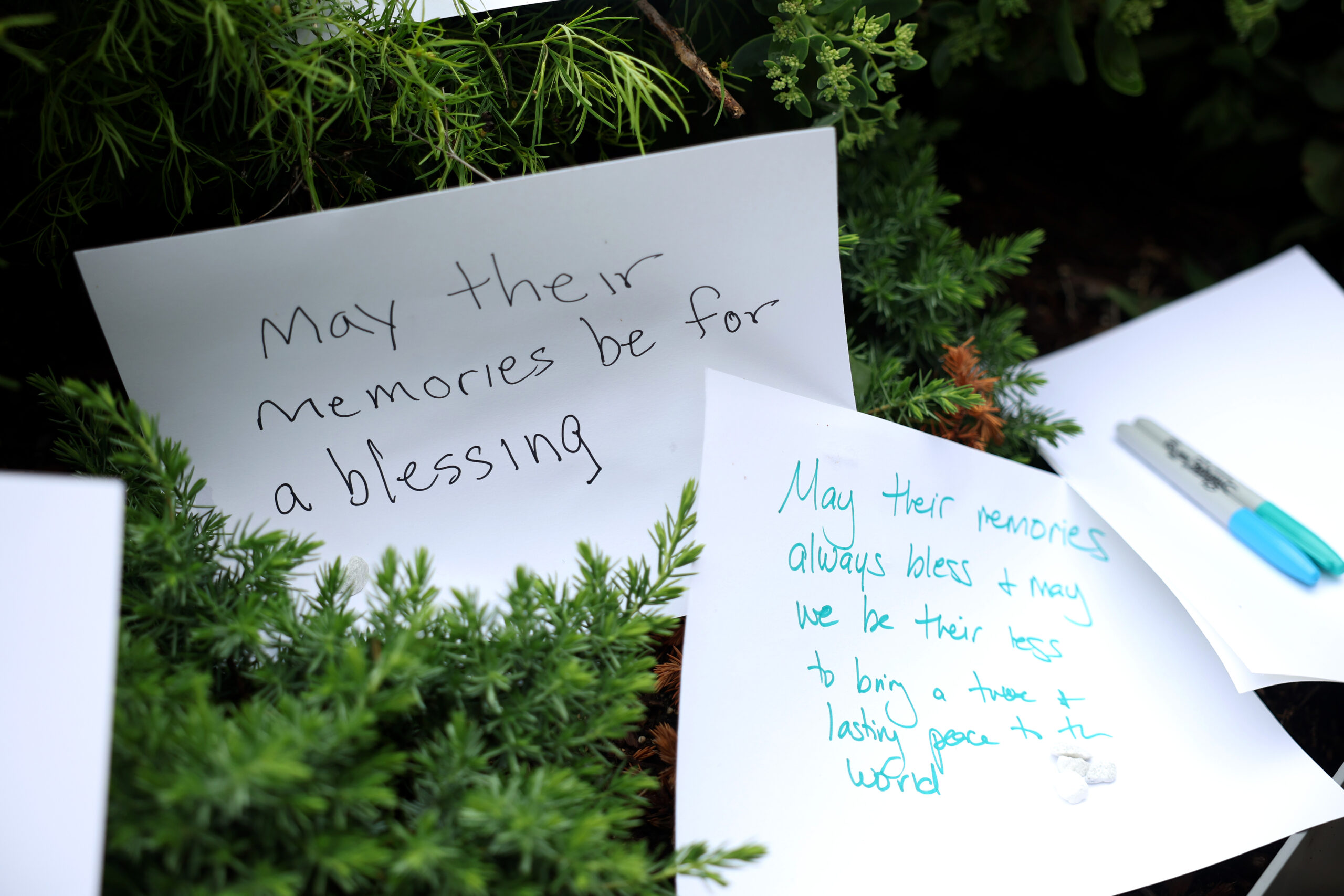
“The perfect diplomat.” That’s how a former colleague and friend of Yaron Lischinsky remembered him on Thursday, the day after the Israeli Embassy staff member was shot dead alongside his girlfriend, Sarah Milgrim, outside of the Capital Jewish Museum in Washington as the couple was leaving an event for young diplomats and Jewish professionals hosted by the American Jewish Committee. “He was diligent and went to D.C. to pursue his dream,” Klil, who interned with Lischinsky, 29, at the Abba Eban Institute for Diplomacy and Foreign Relations at Reichman University in Herzliya, Israel, in 2020 and requested to be identified only by her first name, told Jewish Insider’s Haley Cohen.
Cherry blossoms: The pair mostly lost touch after the internship, when Lischinsky moved to Washington to work at the Israeli Embassy after pursuing a masters’ degree at Reichman. But their interest in Japan kept the two connected via social media, where they would share cherry blossom photos — Lischinsky’s came each spring when the Japanese trees bloomed on the Tidal Basin in Washington. Klil shared her cherry blossom photos from London, where she was living after the internship. “We had a shared experience around that,” she said. Recently, Lischinsky’s Instagram posts featured more than cherry blossoms. Klil took note of the photos he had been posting, posing together with Milgrim. The couple met while both working at the embassy.
Remembering Milgrim: Milgrim, 26, was remembered by a former colleague and friend as “bright, helpful, smart and passionate.” “Sarah was committed to working towards peace,” said Jake Shapiro, who worked with Milgrim in 2022-23 at Teach2Peace, an organization dedicated to building peace between Palestinians and Israelis. “One small bright spot in all of this is seeing both Israelis and Palestinians that knew Sarah sending their condolences and remembering her together,” Shapiro told JI. That gives him hope that a “more peaceful reality is possible.”
COMMUNITY CALL
Jewish community urges additional action from federal government following D.C. shootings

A coalition of 42 Jewish organizations issued a joint statement on Thursday urging additional action from the federal government to address antisemitism in the United States following the killing of two Israeli Embassy staffers outside the Capital Jewish Museum in Washington, and particularly expanded funding for a variety of programs to protect the Jewish community, Jewish Insider’s Marc Rod reports.
What they’re asking for: The demands include a call to massively expand funding for the Nonprofit Security Grant Program to $1 billion, from its current level of $274.5 million. The groups also called for additional funding for security at Jewish institutions, for the FBI to expand its intelligence operations and counter-domestic terrorism operations and for local law enforcement to be empowered to protect Jewish establishments. And they called for the federal government to “aggressively prosecute hate crimes and extremist violence” and hold websites accountable for amplification of antisemitic hate, glorification of terrorism, extremism, disinformation, and incitement.”
UNSAID BUT UNDERSTOOD
Mamdani declines to support Israel’s right to exist as a Jewish state

Zohran Mamdani, a leading Democratic candidate in New York City’s June mayoral primary, declined to say whether he believes Israel has a right to exist as a Jewish state, when pressed to confirm his view during a town hall on Thursday night hosted by the UJA-Federation of New York in Manhattan, Jewish Insider’s Matthew Kassel reports.
Between the lines: “I believe Israel has a right to exist and it has a right to exist also with equal rights for all,” Mamdani said in his carefully worded response to a question posed by JI’s editor-in-chief, Josh Kraushaar, who co-moderated the event. Despite some initial resistance to addressing such questions earlier in his campaign, Mamdani, a Queens state assemblyman and a fierce critic of Israel, has in recent weeks acknowledged Israel has a right to exist. But his remarks on the matter have never recognized a Jewish state, an ambiguity he was forced to confront at the forum — where he avoided providing a direct answer.
DEFINITION DYNAMICS
Following shooting, Gottheimer urges New Jersey governor candidates to support IHRA bill

Rep. Josh Gottheimer (D-NJ), a candidate for governor of New Jersey, challenged his fellow candidates to pledge to sign bipartisan state legislation to codify the International Holocaust Remembrance Alliance’s working definition of antisemitism in response to the murder of two Israeli Embassy officials outside the Jewish museum in Washington, Jewish Insider’s Marc Rod reports.
Background: That legislation has become a major dividing line in the gubernatorial race — Gottheimer and Rep. Mikie Sherrill (D-NJ) support it, while Jersey City Mayor Steven Fulop opposes it, but said recently he would not veto it. Other candidates did not respond to requests for comment on the issue earlier this year. Critics of the legislation say that the IHRA definition — which identifies some criticism of Israel as antisemitic — violates free speech protections. “As Governor, I’ll immediately sign New Jersey’s IHRA bill into law, and I’ll push to dismantle antisemitism and hate in any form whenever it rears its ugly head,” Gottheimer said.
EDUCATION ESCALATION
Trump escalates war on Harvard by barring all foreign students

The Trump administration on Thursday stripped Harvard University of its ability to enroll foreign students, citing Harvard’s collaboration with the Chinese Communist Party, in what the Department of Homeland Security described as an act of accountability for the university “fostering violence, antisemitism and pro-terrorist conduct from students on its campus.” The move is an escalation in President Donald Trump’s battle with Harvard, just one front in his war with elite higher education institutions. But this is the first instance of the White House completely cutting off a university’s ability to admit international students, Jewish Insider’s Gabby Deutch reports.
Israelis on campus: Harvard currently hosts more than 10,000 international students, according to university data, 160 of whom are from Israel. Current students must transfer schools or lose their visa. Harvard Hillel’s executive director, Rabbi Jason Rubenstein, expressed concern about the impact on Israeli students at Harvard. “The current, escalating federal assault against Harvard — shuttering apolitical, life-saving research; threatening the university’s tax-exempt status; and revoking all student visas, including those of Israeli students who are proud veterans of the Israel Defense Forces and forceful advocates for Israel on campus — is neither focused nor measured, and stands to substantially harm the very Jewish students and scholars it purports to protect,” Rubenstein told JI.
Worthy Reads
Today’s Blood Libel: Bari Weiss draws a line in The Free Press between anti-Israel vitriol that has pervaded protests, universities and social media in the aftermath of the Oct. 7 attacks and the murder of two Israeli Embassy staffers on Wednesday. “Venomous, untrue statements about Israel, its supporters, and the war against Hamas in Gaza chipped away at the old taboo against open antisemitism in America. Constant demonization of American Jews and Zionists is how a democratic state and its supporters have been made into targets. It is how the ‘permission structure’ for violence against Jews in America has been erected. Growing up, learning about Simon of Trent or other medieval blood libels, I wondered how something so unnatural, so deranged, could ever happen. How lies could spread so far, transmogrify into a movement, infect culture so comprehensively, and engender deadly action. … How can anyone honest with themselves not draw a connection between a culture that says Zionists are antihumans — even Nazis themselves — and the terrorists now attacking Jews across the globe?” [TheFreePress]
Israeli Resilience: Tablet’s Armin Rosen writes about the resilience of the Israeli diplomatic corps: “In my experience the diplomats of the Jewish state are among the least Israeli of Israelis. They are restrained and secular and quiet and usually know how to dress themselves; they speak with every possible accent, and it’s hard to imagine them whacking at a matkot ball, fighting their way onto a bus, or davening during halftime of a basketball game. They are the normal and cosmopolitan faces of a rambunctious and inherently tribal country. But it is the tension between the rigors of diplomacy and the character of their homeland that also makes them deeply Israeli: whatever their religious practice and whatever their politics, Israeli diplomats are inevitably Jews among the nations, a tiny sub-tribe that serves as the official foreign representation of the world’s only Jewish state, the first in 2,000 years and one of the most hated and lied-about countries in the entire history of humankind. To carry out this mission for fairly low pay on behalf of an often-dysfunctional foreign ministry, in places far from home where spies and activists and journalists and local Jews are circling you or even actively targeting you at any given moment, requires a typically Israeli mix of creativity, resourcefulness, and optimism” [Tablet]
Yaron the Healer: Mariam Wahba, a research analyst at the Foundation for Defense of Democracies, eulogizes her friend Yaron Lischinsky, one of the victims of Wednesday night’s shooting outside the Capital Jewish Museum, in The Free Press. “He told me how his family lived in Israel before they moved to Germany, about moving back when he was 16, and knowing, early and without hesitation, that he wanted to be a diplomat and peacemaker. Language came easily to him: Hebrew, Japanese, English, and of course, his native German. He moved through the world with care and thoughtfulness, as if everyone and everything he touched might break. … Yaron was the kind of person who knew the exact year of the First Council of Nicaea and never made you feel small for getting it wrong. His murder leaves a wound in many hearts, one that may never fully heal, for he was the healer. Yaron was sharp, but more importantly, he was kind. He didn’t just want to understand the world. He wanted to mend it. Quietly and gently. Thoughtfully. Steadily.” [TheFreePress]
Bibi, the Bit Player: The Atlantic’s Yair Rosenberg argues that Israeli Prime Minister Benjamin Netanyahu put too much faith in a second Trump term and has found himself sidelined from the president’s agenda. “By revealing Netanyahu to be a bit player, rather than an elite operator, Trump has not just put the Israeli leader in his place. He has exploded Netanyahu’s carefully cultivated political persona — an act as damaging to Netanyahu’s standing as the Hamas attack on October 7. Worse than making Netanyahu look foolish, Trump has made him look irrelevant. He is not Trump’s partner, but rather his mark. In Israeli parlance, the prime minister is a freier — a sucker. The third-rate pro-government propagandists on Channel 14 might not have seen this coming, but Netanyahu should have. His dark worldview is premised on the pessimistic presumption that the world will turn on the Jews if given the chance, which is why the Israeli leader has long prized hard power over diplomatic understandings. Even if Trump wasn’t such an unreliable figure, trusting him should have gone against all of Netanyahu’s instincts.” [TheAtlantic]
Word on the Street
Elias Rodriguez, the suspected gunman in the deadly shooting of two Israeli Embassy employees in Washington on Wednesday, was charged with two counts of murder and other federal crimes. Interim U.S. Attorney in Washington Jeanine Pirro said investigators are continuing to investigate the attack as a hate crime and terrorism and additional charges may be brought…
The New York Times drew parallels between Wednesday night’s killing of two Israeli Embassy employees in Washington and another murder of an Israeli diplomat in the Washington area in 1973, a case which was never solved…
Scripps News published archive footage from 2018 from an interview it conducted with Elias Rodriguez, the suspected gunman in the Wednesday night shooting of Israeli Embassy employees, during a protest in Chicago where he identified himself as a member of ANSWER Chicago. ANSWER has held protests against the Israeli war in Gaza, which the organization calls a genocide…
The shooting has stoked safety fears among Israelis and Jews amid a spike in global antisemitism, The Wall Street Journal reports…
White House Press Secretary Karoline Leavitt said in a briefing that President Donald Trump and Israeli Prime Minister Benjamin Netanyahu “have a good relationship, one that’s built on transparency and trust.” Leavitt said the president “has made it very clear to not just Prime Minister Netanyahu, but also the world, that he wants to see a deal with Iran struck if one can be struck.”…
The Supreme Court, in a 4-4 decision, rejected an Oklahoma Catholic school‘s bid to receive public funds as a religious charter school; the deadlocked ruling lets stand an Oklahoma Supreme Court decision barring the creation of such a charter school. The Orthodox Union had filed a brief in support of the school and said that a favorable ruling would make Jewish education more accessible…
A federal judge in Massachusetts issued a preliminary injunction blocking the Trump administration and Education Secretary Linda McMahon from dismantling the Department of Education and ordering them to reinstate department employees who had been fired. The administration said it will challenge the judge’s ruling “on an emergency basis”…
The Department of Health and Human Services’ Office for Civil Rights announced on Thursday that Columbia University violated Title VI of the Civil Rights Act by “acting with deliberate indifference towards student-on-student harassment of Jewish students from October 7, 2023, through the present.” Anthony Archeval, acting director of the Office for Civil Rights at HHS, said in a statement, “We encourage Columbia University to work with us to come to an agreement that reflects meaningful changes that will truly protect Jewish students.”…
The Wall Street Journal highlights what it called the “extraordinary blurring of government negotiations and private business dealings” as Zach Witkoff, son of Middle East envoy Steve Witkoff, continues to invoke his father’s work and White House connections as he travels the world pursuing deals for his cryptocurrency venture World Liberty Financial…
Netanyahu on Thursday appointed Maj. Gen. David Zini as the next Shin Bet chief, despite a court ruling that his firing of the previous chief, Ronen Bar, and the determination of the attorney general that the move represented a conflict of interest in light of the agency’s ongoing investigation into Netanyahu’s aides’s ties to Qatar…
The Israeli airstrike that targeted Mohammed Sinwar, Hamas’ leader in Gaza, earlier this month, also reportedly killed several other high-ranking Hamas operatives as they gathered for a meeting…
Iran threatened to “implement special measures” to protect its nuclear facilities and materials if Israeli threats of a strike persist…
A failed Houthi attempt to launch a missile from the vicinity of Sana’a airport caused an explosion this morning, Muammar al-Iryani, Yemen’s information minister, said…
Globes reports that in closed meetings with Israeli officials, U.S. Ambassador to Israel Mike Huckabee conveyed concerns from Washington on several economic issues including initiatives that would affect U.S. energy giant Chevron and streaming services such as Netflix, Amazon Prime and Disney+…
Pic of the Day

Yechiel Leiter, Israel’s ambassador to the U.S. (right), on Thursday stands outside the Capital Jewish Museum in Washington, where two staff members of the Israeli Embassy were killed in a terror attack the night before. With him are (from left) Reps. Brad Schneider (D-IL), Jamie Raskin (D-MD) and Debbie Wasserman Schultz (D-FL).
Birthdays

Actor, voice actor and stand-up comedian sometimes referred to as “Yid Vicious,” Bobby Slayton turns 70 on Sunday…
FRIDAY: Emeritus professor of physics and the history of science at Harvard, Gerald James Holton turns 103… Businessman and attorney, he acquired and rebuilt The Forge restaurant in Miami Beach, Alvin Malnik turns 92… Businessman, optometrist, inventor and philanthropist, Dr. Herbert A. Wertheim turns 86… Former dean of the Yale School of Architecture and founder of an eponymous architecture firm, Robert A. M. Stern turns 86… Founder and chairman of law firm Brownstein Hyatt Farber Schreck, leading DC super-lobbyist but based in Denver and long-time proponent of the U.S.-Israel relationship, Norman Brownstein turns 82… British fashion retailer and promoter of tennis in Israel, he is the founder, chairman and CEO of three international clothing lines including the French Connection, Great Plains and Toast brands, Stephen Marks turns 79… Senior counsel at Cozen O’Connor, focused on election law, he was in the inaugural class of Yeshiva University’s Benjamin Cardozo School of Law, Jerry H. Goldfeder turns 78… Award-winning television writer and playwright, Stephanie Liss turns 75… Israeli diplomat, he served as Israel’s ambassador to Nigeria and as consul general of Israel to Philadelphia, Uriel Palti turns 71… Editor-in-chief of a book on end-of-life stories, she is a special events advisor to The Israel Project, Catherine Zacks Gildenhorn… Israeli businessman with holdings in real estate, construction, energy, hotels and media, Ofer Nimrodi turns 68… President of Newton, Mass.-based Liberty Companies, Andrew M. Cable turns 68… Best-selling author and journalist, whose works include “Tuesdays with Morrie,” he has sold over 42 million books, Mitch Albom turns 67… Resident scholar at the Foundation for Defense of Democracies, Reuel Marc Gerecht… Chairman of the board of the Irvine, Calif.-based Ayn Rand Institute, Yaron Brook turns 64… Actor, comedian, writer, producer and musician, H. Jon Benjamin turns 59… Former ski instructor, ordained by HUC-JIR in 1998, now rabbi of the Community Synagogue of Rye (N.Y.), Daniel B. Gropper… Film and television director, Nanette Burstein turns 55… Australian cosmetics entrepreneur, now living in NYC, she is known as the “Lipstick Queen,” Poppy Cybele King turns 53… Prominent NYC matrimonial law attorney, she is the daughter of TV journalist Jeff Greenfield, Casey Greenfield turns 52… Member of the Knesset for the New Hope party, she previously served as Israel’s minister of education, Yifat Shasha-Biton turns 52… Retired attorney, now a YouTuber, David Freiheit turns 46… Executive director of the Singer Family Charitable Foundation, Dylan Tatz… Tech, cyber and disinformation reporter for Haaretz, Omer Benjakob… Professional golfer on the LPGA Tour, Morgan Pressel turns 37… Senior manager of brand and product strategy at GLG, Andrea M. Hiller Tenenboym…
SATURDAY: Co-founder of the law firm Wachtell, Lipton, Rosen & Katz, he is featured in Malcolm Gladwell’s book “Outliers,” Herbert Wachtell turns 93… Professor emeritus of statistics and biomedical data science at Stanford, Bradley Efron turns 87… Biographer of religious, business and political figures, Deborah Hart Strober turns 85… Born Robert Allen Zimmerman, his Hebrew name is Shabsi Zissel, he is one of the most influential singer-songwriters of his generation, Bob Dylan turns 84… Social media and Internet marketing consultant, Israel Sushman turns 77… Member of Congress since 2007 (D-TN-9), he is Tennessee’s first Jewish congressman, Steve Cohen turns 76… Former director of planned giving at American Society for Yad Vashem, Robert Christopher Morton turns 74… Former Mexican secretary of foreign affairs, he is the author of more than a dozen books, Jorge Castañeda Gutman turns 72… President of the Israel ParaSport Center in Ramat Gan and vice chair of Birthright Israel Foundation, Lori Ann Komisar… First-ever Jewish member of the parliament in Finland, he was elected in 1979 and continues to serve, Ben Zyskowicz turns 71… Pulitzer Prize-winning novelist and short story writer, Michael Chabon turns 62… U.S. ambassador to Singapore during the Obama administration, he is now the managing director and general counsel of KraneShares, David Adelman turns 61… Senior advisor at the MIT Center for Constructive Communication, Debby Goldberg… Ukrainian businessman, patron of the Jewish community in Ukraine, collector of modern and contemporary art, Gennadii Korban turns 55… Film director, in 2019 he became the second-ever Israeli to win an Academy Award, Guy Nattiv turns 52… Swedish criminal defense lawyer, author and fashion model, Jens Jacob Lapidus turns 51… Actor, who starred in the HBO original series “How to Make It in America,” Bryan Greenberg turns 47… Emmy Award-winning host of “Serving Up Science” at PBS Digital Studios, Sheril Kirshenbaum turns 45… EVP and chief of staff at The National September 11 Memorial and Museum, Benjamin E. Milakofsky… Synchronized swimmer who represented Israel at the 2004, 2008, 2012 and 2016 Summer Olympics, Anastasia Gloushkov Leventhal turns 40… Travel blogger who has visited 197 countries, Drew “Binsky” Goldberg turns 34… Member of the Iowa House of Representatives since 2023, Adam Zabner turns 26… Social media influencer and activist, Emily Austin turns 24…
SUNDAY: Academy Award-winning film producer and director, responsible for 58 major motion pictures, Irwin Winkler turns 94… Holocaust survivor as a young child, he is a professor emeritus of physics and chemistry at Brooklyn College, Micha Tomkiewicz turns 86… Co-founder of the clothing manufacturer, Calvin Klein Inc., which he formed with his childhood friend Calvin Klein, he is also a former horse racing industry executive, Barry K. Schwartz turns 83… Judge on the U.S. Court of Appeals for the District of Columbia Circuit since 1986, he is now on senior status, Douglas H. Ginsburg turns 79… British journalist, editor and author, he is a past VP of the Board of Deputies of British Jews, Alex Brummer turns 76… Of counsel in the Chicago office of Saul Ewing, Joel M. Hurwitz turns 74… Screenwriter, producer and film director, best known for his work on the “Back to the Future” franchise, Bob Gale turns 74… Los Angeles area resident, Robin Myrne Kramer… Retired CEO of Denver’s Rose Medical Center after 21 years, he is now the CEO of Velocity Healthcare Consultants, Kenneth Feiler… Israeli actress, Rachel “Chelli” Goldenberg turns 71… Professor of history at Fordham University, Doron Ben-Atar turns 68… President of the Swiss Federation of Jewish Communities, Ralph Friedländer turns 66… U.S. senator (D-MN), Amy Klobuchar turns 65… Senior government relations counsel in the D.C. office of Kelley Drye & Warren, Laurie Rubiner… Israel’s ambassador to Lithuania from 2020 until 2022, Yossi Avni-Levy turns 63… Actor, producer, director and writer, Joseph D. Reitman turns 57… Cape Town, South Africa, native, tech entrepreneur and investor, he was the original COO of PayPal and founder/CEO of Yammer, David Oliver Sacks turns 53… Member of the Australian Parliament since 2016, Julian Leeser turns 49… Former Minister of Diaspora Affairs, she is the first Haredi woman to serve as an Israeli cabinet minister, Omer Yankelevich turns 47… Senior political reporter for the Atlanta Journal-Constitution, Greg Bluestein… COO at Maryland-based HealthSource Distributors, Marc D. Loeb… Comedian, actor and writer, Barry Rothbart turns 42… One of the U.S.’ first radiology extenders at the Hospital of the University of Pennsylvania, Orli Novick… Senior communications manager at Kaplan, Inc., Alison Kurtzman… Former MLB pitcher, he had two effective appearances for Team Israel at the 2017 World Baseball Classic qualifiers, Ryan Sherriff turns 35… Olympic Gold medalist in gymnastics at the 2012 and 2016 Summer Olympics, Alexandra Rose “Aly” Raisman turns 31… Laura Goldman…
The state legislation has divided the New Jersey gubernatorial field thus far

Tom Williams/CQ-Roll Call, Inc via Getty Images
Rep. Josh Gottheimer (R-NJ) leaves a meeting of the House Democratic Caucus at the Democratic National Committee on Tuesday, July 9, 2024.
Rep. Josh Gottheimer (D-NJ), a candidate for governor of New Jersey, challenged his fellow candidates to pledge to sign bipartisan state legislation to codify the International Holocaust Remembrance Alliance’s working definition of antisemitism in response to the murder of two Israeli Embassy officials outside the Jewish museum in Washington.
That legislation has become a major dividing line in the gubernatorial race — Gottheimer and Rep. Mikie Sherrill (D-NJ) support it, while Jersey City Mayor Steven Fulop opposes it, but said recently he would not veto it. Other candidates did not respond to requests for comment on the issue earlier this year. Critics of the legislation say that the IHRA definition — which identifies some criticism of Israel as antisemitic — violates free speech protections.
“I’m heartbroken by the tragic act of violence that took the lives of two young Israeli Embassy staffers in Washington, D.C. Wednesday night … While the investigation continues, one thing is undeniable: antisemitism is fueling violence in this country, and it’s getting worse,” Gottheimer said in a statement shared with Jewish Insider. “Here in Jersey, we feel the effects of hate firsthand in our communities and synagogues. New Jersey had the third highest amount of antisemitic incidents last year, according to the ADL.”
“No one should have to live in fear simply for being Jewish. We must call out antisemitism wherever it appears and hold those responsible for spreading hate and violence accountable to the fullest extent of the law,” he continued. “As Governor, I’ll immediately sign New Jersey’s IHRA bill into law, and I’ll push to dismantle antisemitism and hate in any form whenever it rears its ugly head.”
Gottheimer visited the scene of the shooting outside the Capital Jewish Museum on Thursday morning.
New York mayoral candidate Zohran Mamdani said, ‘I believe Israel has a right to exist and it has a right to exist also with equal rights for all’

Screenshot
New York mayoral candidate and state Assemblyman Zohran Mamdani speaks at a candidate forum hosted by UJA AND JCRC-NY on May 22, 2025.
Zohran Mamdani, a leading Democratic candidate in New York City’s June mayoral primary, declined to say whether he believes Israel has a right to exist as a Jewish state, when pressed to confirm his view during a town hall on Thursday night hosted by the UJA-Federation of New York in Manhattan.
“I believe Israel has a right to exist and it has a right to exist also with equal rights for all,” Mamdani said in his carefully worded response to a question posed by Jewish Insider’s editor-in-chief, Josh Kraushaar, who co-moderated the event.
Despite some initial resistance to addressing such questions earlier in his campaign, Mamdani, a state assemblyman in Queens and a fierce critic of Israel, has in recent weeks acknowledged Israel has a right to exist. But his remarks on the matter have never recognized a Jewish state, an ambiguity he was forced to confront explicitly at the forum — where he notably avoided providing a direct answer to the question.
Many Jewish community members have expressed concerns about Mamdani, who is currently polling in second behind former Gov. Andrew Cuomo, and his outspoken opposition to Israel, including support for the Boycott, Divestment and Sanctions campaign targeting the Jewish state.
While some critics have dismissed BDS as antisemitic, he defended the movement as an effective tool to push Israel into “compliance with international law” that he has accused the country of violating before and after Hamas’ Oct. 7, 2023, terror attacks.
Mamdani, who has frequently alleged that Israel is committing genocide amid its ongoing war in Gaza — an argument he did not raise on Thursday night — also defended his decision last month to join the show of an antisemitic influencer, Hasan Piker, who has fueled controversy for justifying Hamas’ attacks, even as he has forcefully denied some of the group’s atrocities.
Asked if he regretted his appearance on the show in light of the shooting of two Israeli Embassy staffers in Washington on Wednesday, which he denounced at the beginning of his remarks, Mamdani refused to criticize Piker’s past comments, insisting his own “words speak for themselves.”
“I made very clear where I stood,” Mamdani said of his interview with Piker. “I think this is something that I have sought to embody throughout my career as a consistency — and I think that my actions, my words, even in that interview, spoke for themselves. But it is always helpful to hear feedback as to what I have said and how I’ve engaged.”
During the forum, which also featured Cuomo and other candidates vying for the Democratic nomination, Mamdani told the crowd he recognized “that there is no doubt disagreement at the heart of many of these questions.”
“What I strive to show is that it’s a disagreement still based on a shared sense of humanity,” he said, “not a disagreement that is based on the bigotry that is often characterized of these positions.”
The race, which pit a centrist challenger against a far left incumbent, serves as a harbinger for several upcoming competitive Democratic primaries

Allegheny County
Corey O’Connor
Corey O’Connor prevailed in his bid to oust Mayor Ed Gainey of Pittsburgh in the Democratic primary on Tuesday, dealing a major blow to the activist left in a city where progressives had until recently been ascendant.
O’Connor, the Allegheny County controller and a centrist challenger, defeated Gainey, the first-term incumbent aligned with the far left, by a significant six-point margin, 53-47%, on Tuesday evening with most of the vote counted.
“We built this campaign with and for the people of this city, neighborhood by neighborhood,” O’Connor said in a social media post on Tuesday night. “I’m proud to be your Democratic nominee for Mayor. I’m ready to get to work, and I’m grateful to have you with me as we take the next steps forward, together.”
The primary, which drew national attention in the final weeks, grew increasingly acrimonious — featuring particularly sharp divisions over Israel as well as antisemitism that served as a prelude for the sort of intra-Democratic clashes poised to emerge in several races for federal office next year.
During his tenure, Gainey, who had likewise unseated an incumbent when he was elected as Pittsburgh’s first Black mayor four years ago, drew frequent criticism from the city’s Jewish leaders over his alleged lack of outreach and for a record of offensive commentary on Israel’s war in Gaza, among other issues.
O’Connor, for his part, touted his long-standing ties to Pittsburgh’s sizable and politically active Jewish community, while reiterating his support for Israel and condemning rising antisemitism during the campaign.
Previously, O’Connor, the son of a former mayor of Pittsburgh, served on the City Council representing the heavily Jewish neighborhood of Squirrel Hill — where he was also raised.
O’Connor will face Tony Moreno, the Republican nominee, in the November election, but the race is not expected to be competitive as Pittsburgh is a heavily Democratic city.
One Jewish Democratic strategist said that none of the three major candidates have deep ties to the Jewish community, leaving Jewish voters up for grabs

Pete Marovich/Getty Images
Ranking Member Lauren Underwood (D-IL) questions acting FEMA Administrator Cam Hamilton as he appears before a Homeland Security Subcommittee Hearing on Oversight on Capitol Hill on May 7, 2025 in Washington, DC. Hamilton is testifying about the administration's disaster relief efforts, including why it has frozen nearly all FEMA's grant funding.
Rep. Lauren Underwood (D-IL) said on Monday that she would pass on an anticipated run for the Illinois Senate seat being vacated by Sen. Dick Durbin (D-IL) in 2026, leaving what’s likely to be a three-way race among Lt. Gov. Juliana Stratton and Reps. Raja Krishnamoorthi (D-IL) and Robin Kelly (D-IL).
“Our work is not done, and I’ve decided the most powerful way for me to defend our values and hold Donald Trump accountable is to help Democrats win back the House,” Underwood said in a statement, highlighting her leadership roles in the House Democratic Caucus and the Democratic Congressional Campaign Committee.
Stratton is backed by billionaire Illinois Gov. JB Pritzker, as well as Sen. Tammy Duckworth (D-IL), while Krishnamoorthi has $19 million in the bank for the race and members of the Congressional Black Caucus are backing Kelly.
Pritzker could put significant funding behind Stratton’s run and reportedly worked behind the scenes to block Underwood and other candidates from entering the race. Underwood, on CNN, denied that Pritzker had forced her to stay out of the race.
A Jewish Democratic strategist, speaking on condition of anonymity to discuss the race candidly, told Jewish Insider they see the Chicagoland Jewish vote — a sizable community — as largely still up for grabs given that none of the candidates have particularly deep ties to the Jewish community coming into the race. They said Jewish voters will likely take time to evaluate each of the candidates.
“I think there’s a lot of inroads for them to make,” the strategist said. “None of these have that long history with the Jewish community … [and] don’t come from natural Jewish areas.”
Kelly and Krishnamoorthi have mixed voting records on priority legislation for the Jewish community, having both opposed several bills and resolutions to combat antisemitism, counter Iran and sanction the Houthis and the International Criminal Court, among other issues.
On the handful of occasions the two have diverged on votes, Krishnamoorthi has generally come down on the side of Jewish and pro-Israel groups — for instance, he supported the Antisemitism Awareness Act, while Kelly opposed it.
The strategist said Kelly may have a shot at gathering Jewish voters’ support given that she has some existing connections with community leaders, from her time as state party chair in 2021 and 2022.
Krishnamoorthi does not currently represent a sizable Jewish community and has not been prominently involved in Jewish issues, the strategist added.
While Pritzker, who is Jewish, has strong ties to the Jewish community, he has led most of the Jewish outreach from the governor’s office, leaving less of a role for Stratton. The strategist said that Stratton “has a lot of room to grow, especially with Pritzker backing her,” and predicted she’ll make a play for the Jewish vote. “She has a very compelling story that I think will resonate with the Jewish community also.”
Chicago also has one of the nation’s largest Palestinian communities, potentially creating competing political incentives for candidates if Israel policy becomes a prominent issue in the race.
Frank Calabrese, a Chicago-based political strategist, said he sees Stratton and Krishnamoorthi as the likely frontrunners in the race overall at this early stage, with Stratton having an advantage given her relationship with Pritzker.
He said that Underwood’s decision not to run caught many, even well-connected political figures in the state, off guard. Calabrese said Underwood likely felt she would not be able to match Stratton and Krishnamoorthi in fundraising, even though she could have been an “ideal type of candidate.”
“I believe Robin Kelly is the weakest of the three just because it’s going to come down to fundraising,” Calabrese said, adding that Pritzker and his political operation have made strong inroads with the Black community, leaving Kelly at a disadvantage with a potential base. He noted that Kelly and Pritzker have preexisting tension — Pritzker forced her out as state party chair in 2022.
But Calabrese said that Stratton’s close ties to the state’s Democratic establishment — Pritzker and Duckworth — could end up being a liability with some Democrats and progressives, particularly the wing of the party that supported Sen. Bernie Sanders’ (I-VT) presidential campaigns. That said, Krishnamoorthi is not strongly aligned with the Sanders wing of the party either, he noted.
Tom Bowen, a Democratic strategist in the Chicago area, argued that the outcome of the race will ultimately be shaped by events over the course of the coming year and that early metrics are often unreliable, especially in multi-candidate races. He predicted that Democratic voters would “take their time” in deciding.
“It’s very obvious the governor’s hand is at work in this, and that he has a preference for the woman he believes should lead the state,” Bowen said. But he argued that might not help Stratton as much in a cycle when some Democrats are looking for big changes. “I’m not sure anybody else’s opinion but their own is going to be the deciding factor here.”
He said that candidates’ backgrounds, endorsements and fundraising are “not insignificant, but voters pay pretty close attention when there’s a moment of crisis, so the one who meets the moment is going to be the one who is successful.”
The Jewish Democratic strategist said they believe the field may not yet be entirely set, noting that businessman Chris Kennedy — brother of Health and Human Services Secretary Robert F. Kennedy Jr. — may also enter the race.
The strategist said that Underwood’s decision not to run makes sense given that she would have been competing against Stratton and Kelly, two other Black women, she is gaining seniority in the House Democratic Caucus and she is young, giving her time to continue to build her national profile.
They said that it’s likely a wide-open race at this point, adding that, while Kelly may currently be the underdog, there’s plenty of runway for her to gain ground if her allies in the CBC put significant backing behind her.
“Most people have no clue who these people are,” the strategist said, “Money helps, but at the end, they have to connect with the voters. And it’s such a diverse state.”
Plus, DMFI names new president & board chair

JACK GUEZ/AFP via Getty Images
This picture taken from a position in southern Israel on the border with the Gaza Strip shows Israeli tanks and bulldozers deployed as smoke billows over destroyed buildings in Gaza during Israeli bombardment on May 17, 2025.
Good Monday morning.
In today’s Daily Kickoff, we spotlight Andrew Cuomo’s efforts to make amends with the Orthodox Jewish community for his COVID policies as governor in the final weeks of the New York City mayoral primary race and report on Democratic Majority for Israel’s new president and board chair. We interview New Jersey congressional candidate Michael Roth, cover a debate at the Center for Jewish History about the future of Jewish students at elite schools and report on criticism of Chicago Mayor Brandon Johnson over the appointment to a prominent city commission of a local activist who tore down hostage posters. Also in today’s Daily Kickoff: Keith and Aviva Siegel, Pope Leo XIV and Yuval Raphael.
What We’re Watching
- South African President Cyril Ramaphosa is traveling to D.C. today and will meet with President Donald Trump at the White House tomorrow amid tensions between the two countries…
- U.S. Special Envoy to the Middle East Steve Witkoff, hostage envoy Adam Boehler and Yehuda Kaploun, President Donald Trump’s nominee for antisemitism envoy, are among the speakers today at The Jerusalem Post’sconference in New York.
- The National Council of Jewish Women will honor Sen. Cory Booker (D-NJ) and Jennifer Klein, former director of the White House Gender Policy Council and now professor of professional practice at Columbia University, at a Washington Institute event this evening.
- The annual ICSC real estate confab is underway at the Las Vegas Convention Center.
- The second and final day of ELNET’s International Policy Conference in Paris will be held today.
- The three-day Middle East Forum 2025 Policy Conference begins today in Washington. Keynote speakers include Daniel Pipes, Masih Alinejad and Rep. Randy Fine (R-FL).
- The World Jewish Congress is holding its 17th Plenary Assembly in Jerusalem today. Israeli President Isaac Herzog presented WJC President Ronald Lauder, who is up for reelection at the plenary, with a Presidential Medal of Honor. Read eJewishPhilanthropy’s report from the WJC gala here.
What You Should Know
A QUICK WORD WITH JI’S LAHAV HARKOV
What does “total victory” in Gaza mean for Israel? It’s a question that’s been asked since the launch of the war against Hamas in response to the Oct. 7, 2023, mass terror attacks.
The answer has generally been two-pronged: Bringing home the hostages and defeating Hamas, in that order for most of the public, but in the reverse for Israeli Prime Minister Benjamin Netanyahu and much of his government. The first goal is unambiguous, even quantitative, but the second has often seemed amorphous: Destroying its military capabilities? Wiping out its leadership? Killing everyone affiliated with Hamas, including those involved in its civil administration of Gaza?
The Israeli government may be getting closer to what it can call “defeating Hamas.” As Israeli analysts have repeatedly noted in the days since a recent IDF operation targeted Hamas’ leader in Gaza, Muhammad Sinwar, and spokesman Hudayfa Samir Abdallah al-Kahlout, known as Abu Obeida, there aren’t any Hamas leaders left in Gaza that most Israelis can name.
Netanyahu’s office indicated an openness to ending the war in a statement about the ongoing talks in Doha, Qatar, to which the prime minister sent his negotiating team minus its leader, Strategic Affairs Minister Ron Dermer, who is sitting shiva in Jerusalem for his mother, but has been involved remotely.
The negotiators are “acting to exhaust every chance for a deal,” the Prime Minister’s Office said yesterday, “whether it is according to the Witkoff outline” — referring to the release of 10 living hostages in exchange for a temporary ceasefire and hundreds of Palestinian prisoners, including terrorists, as offered by Mideast envoy Steve Witkoff — “or in the framework of ending the war, which would include releasing all the hostages, exiling Hamas terrorists and demilitarizing the Gaza Strip.”
Those have been Israel’s conditions for much of the war, which is why, when asked by Jewish Insider, Netanyahu’s spokesman, Omer Dostri, said that sentence was “nothing new.” Yet the Prime Minister’s Office was more reticent in the past to highlight the option of negotiating an end to the war. Mentioning the conditions at this time may indicate that the Israeli team in Doha sees that as a viable option, now that all that is left of Hamas’ leadership in Gaza is effectively anonymous middle management.
Until there’s a deal, Israel is continuing its policy of “negotiations under fire” to pressure Hamas, with the IDF announcing “extensive ground operations” in Gaza on Sunday, as planned for after President Donald Trump’s Middle East trip, which ended on Friday. The Israeli military’s latest maneuvers involve five divisions, amounting to tens of thousands of soldiers. The IDF killed what it said was a senior terrorist on Monday, apprehending his family; the military denied reports that the special ops mission was meant to rescue hostages.
At the same time, Israel announced it would let “a basic amount of food [into Gaza], to ensure that there will not be a starvation crisis,” 11 weeks after cutting off all humanitarian aid because Hamas was hoarding some of it and using it as a means to pocket money and survive. The policy change came “at the recommendation of the IDF,” the Prime Minister’s Office said, “and out of an operational need to allow for the expansion of intensive fighting to defeat Hamas … Such a crisis would endanger the continuation of [Operation] Gideon’s Chariots to defeat Hamas.”
The shift also comes days after Trump talked about “a lot of people … starving” in Gaza, and, as Netanyahu said in a video posted to social media today, “senators I know as supporters of Israel … say ‘we’ll give you all the help you need to win the war … but there is one thing we cannot stand: We can’t get pictures of famine’” in Gaza.
The U.S. and Israel have been working on a mechanism to allow in aid without Hamas getting access to it. That system has yet to be put into place, though American security contractors who will reportedly be involved in distributing the aid arrived at Ben Gurion Airport yesterday. The Israeli Cabinet did not vote on allowing in food without a new distribution mechanism, and the response from ministers has been somewhat mixed, with Public Security Minister Itamar Ben-Gvir railing against it, while Finance Minister Bezalel Smotrich tried to reassure the public that aid would not end up in Hamas hands.
APOLOGY TOUR
Cuomo faces hurdles to winning over Orthodox Jewish voters in mayoral race

In recent weeks, as Andrew Cuomo has stepped up his outreach to Orthodox Jewish leaders across New York City who represent sizable voting blocs crucial to his mayoral bid, he has found himself involved in an effort that is no doubt unfamiliar to the famously hard-nosed former New York governor: an apology tour, Jewish Insider’s Matthew Kassel reports.
Mending ties: Even as Cuomo has been outspoken in his support for Israel and opposition to rising antisemitism that he has called “the most important issue” in the race, he has continued to face lingering resentment from Orthodox voters who remain bitter over restrictions he implemented during the COVID pandemic. In ongoing listening sessions with Orthodox leaders, Cuomo has sought to mend relationships that deteriorated over his crackdown on religious gatherings.
NEW BOSS
DMFI announces new president and board chair following leadership shake-up

Democratic Majority for Israel, a top pro-Israel advocacy group, is announcing a new president and board chair, after a recent leadership shake-up that resulted in the sudden departure of its founder last month. The organization said in a statement to Jewish Insider’s Matthew Kassel on Friday that Brian Romick, a longtime senior aide to Rep. Steny Hoyer (D-MD), will serve as president and CEO, succeeding Mark Mellman, a veteran Democratic pollster who founded the group in 2019 to counter growing anti-Israel sentiment on the left. Former Rep. Kathy Manning (D-NC), a pro-Israel stalwart and Jewish Democrat who has previously chaired the Jewish Federations of North America, will lead DMFI’s board of directors, the group said.
Romick’s statement: Romick, who has helped guide Hoyer’s efforts to advance pro-Israel legislation and fight antisemitism, said in a statement shared with JI that DMFI is “an essential voice in Washington and in the pro-Israel community across the country,” particularly during what he characterized as a “critical moment in the U.S.-Israel relationship.”
ROTH’S RACE
NJ congressional candidate Michael Roth says he wants to be a strong pro-Israel voice for a new generation

Michael Roth, the former Small Business Administration head running as a Democrat against Rep. Tom Kean Jr. (R-NJ) in a northern New Jersey swing district, says he wants to be a leader of a new generation of voices in support of Israel, pushing back on what he sees as concerning trends and rhetoric infiltrating his generation and American politics, Jewish Insider’s Marc Rod reports.
About the candidate: Roth is the grandson of Holocaust survivors who moved to Israel before settling in New Jersey. “When I go to Israel, it feels like I’m going home again,” Roth said. “My guiding light around Israel is I want my grandkids to feel the same way about Israel as I do, and we’ve got a lot of work to do in order to make that happen. We have to think in long terms.” He added, “I don’t care if you’re a Democrat or Republican, if you’re representing the best interest of America, you must support the elimination of Hamas, and you must have extreme resistance to the growing threats in Iran.” With Israel policy becoming increasingly partisan, “I think it’s really important that we elect Democrats in the primary who are staunchly pro-Israel.”
CAMPUS CLIMATE
At Center for Jewish History event, scholars debate the future of Jewish students at elite schools

Will the recent surge of antisemitism on college campuses mark the end of an era for Jews at elite universities? Jewish scholars and funders analyzed the current crisis — and debated whether Jewish students still belong at elite bastions of higher education — at a symposium on Sunday hosted by the Center for Jewish History in Manhattan, Jewish Insider’s Haley Cohen reports.
Wolpe’s words: Rabbi David Wolpe, a former visiting scholar at Harvard University’s Divinity School, delivered the event’s opening address. “I certainly don’t think that we should abandon great citadels of learning or be chased out of them, although to be there takes fortitude that I don’t think should be asked of every student,” Wolpe said. “So I’m going to give a selective answer: it depends who … It was a dream of our ancestors that Jews be able to go to places like Harvard, Stanford, Yale and Princeton, and on and on, certainly Columbia,” Wolpe continued. “It was their dream and they invested their souls in enabling their children and grandchildren to realize that dream. With all my caveats, I’m not ready to give up on the entire investment of all of those souls because others have been so cruel, so thoughtless, so blunt and even evil in the treatment of their descendants. How many souls have we invested? The answer is a lot.”
FISCAL IRRESPONSIBILITY
Chicago mayor appoints local activist who tore down hostage posters to fiscal board

Chicago Mayor Brandon Johnson is facing sharp criticism from the city’s only Jewish alderman over his decision to appoint a local activist who was caught on video tearing down posters of Israeli hostages to a prominent city commission, Jewish Insider’s Gabby Deutch reports. Ishan Daya, the co-director of a think tank called the Institute for Public Good, was named to Johnson’s new Chicago Fiscal Sustainability Working Group, which will make recommendations to the mayor for a long-term financial plan for the city. The group’s other members include prominent Chicagoans working at institutions including Google, United Way, Microsoft and Chicago Urban League.
Rewind: Daya lost his job as CEO of the food and beverage company Crafty in November 2023, just weeks after the Oct. 7 Hamas attacks, when a video filmed in New York showed him ripping down posters of Israelis who had been kidnapped by the Palestinian terror group. “F*** you and burn in hell,” a woman accompanying him said to the people filming the act. “I am appalled by Mayor Brandon Johnson’s decision to appoint Ishan Daya to the city’s newly formed budget working group,” Alderman Debra Silverstein said in a statement on Friday. “Appointing him to a leadership position in Chicago is a deliberate slap in the face to the Jewish community and to all those praying for the release of the [58] hostages still held in Gaza.”
BITTERSWEET BREAKFAST
Siegel family’s pancake tradition raises awareness for Israeli hostages

The sweet scent of maple syrup wafting through the air and the sound of pancakes sizzling on a griddle: For decades, that was the quintessential Shabbat morning in Keith and Aviva Siegel’s home on Kibbutz Kfar Aza in southern Israel. In that home, the couple’s four children — and eventually five grandchildren — would gather for family meals centered around pancakes — a recipe that originally belonged to Keith’s mother, a recipe that “brings back memories of special and happy family times,” he told Jewish Insider’s Haley Cohen. Those meals were put on hold for 484 days. Keith and Aviva were both kidnapped from their home by Hamas during the Oct. 7, 2023, terrorist attacks.
Pop-up pancakes: On Friday, New Yorkers got a chance to taste the pancakes — cooked by Keith and Aviva — at a one-day pop-up pancake house hosted by 12 Chairs Cafe, an Israeli restaurant in downtown Manhattan. The event, which drew lines around the block and raised nearly $15,000, was a fundraiser hosted by the Hostages Forum to advocate for the 58 hostages that remain in Gaza (about a third of them are believed to be alive).
Worthy Reads
The Donald in the Desert: The New York Times’ Luke Broadwater and Jonathan Swan review President Donald Trump’s five-day trip to the Middle East last week: “If a Democratic president did what Mr. Trump has done — praising a former jihadist, welcoming Qatar’s friendship with Iran and accepting a “gift” of a $400 million airplane — Republicans would have been howling in protest and ordering up congressional investigations. What transpired, instead, was mostly an uncomfortable silence. A few Trump allies, like Senator Josh Hawley of Missouri and the far-right activist Laura Loomer, made clear they did not like the plane gift, but contorted themselves to express their discomfort in ways that would be least likely to offend Mr. Trump.” [NYTimes]
Trump’s Gilded Age: The New Yorker’s Susan Glasser reviews Trump’s Middle East trip as a sign of his transactional approach to foreign policy. “Trump, as far as I’m concerned, is never more fully himself than when he’s in the gilded safe spaces of the Middle East — admiring the ‘perfecto’ marble in a royal palace, basking in the judgment-free approval of fellow-billionaires, commingling his family’s and the nation’s business to a remarkable degree. His foreign-policy doctrine is not Kissingerian or Charles Lindberghian; it is not a doctrine at all, in fact, but a way of life, defined by extreme transactionalism and self-interest above all else. The cursed airplane from Qatar is not just a symbol of Trumpism but also its substance.” [NewYorker]
The New Europe: In The National, Paul Salem, vice president for International Engagement at the Middle East Institute, considers how Trump’s Gulf tour could reshape geopolitics. “For Mr Trump to make the Gulf his first official foreign visit again in his second term also indicates that he sees the Gulf countries and economies as main geopolitical and geoeconomic players in many ways surpassing the states and economies of Western Europe. The leaders of Saudi Arabia, Qatar and the UAE now appear to hold more influence with the US President than do some of the leaders of America’s traditional Nato allies.” [The National]
Biden, in Decline: The Atlantic’s Tyler Austin Harper previews Original Sin, the new book by Jake Tapper and Alex Thompson about former President Joe Biden’s mental decline in office. “Some incidents cataloged in Original Sin suggest that Biden may have been struggling to do the job even early in his term. Cabinet meetings were ‘terrible and at times uncomfortable,’ one Cabinet secretary told the authors. ‘And they were from the beginning.’ Biden relied on note cards and canned responses … As some high-ranking Democrats quoted anonymously in the book put it to Tapper and Thompson after Biden’s disastrous debate with Trump last June: ‘Just who the hell is running the country?’ At least one unnamed source close to the Biden administration was willing to provide the authors with an answer. ‘Five people were running the country,’ this insider said, seemingly referring to the president’s closest advisers. ‘And Joe Biden was at best a senior member of the board.’” [TheAtlantic]
Word on the Street
Former President Joe Biden was diagnosed with an aggressive form of prostate cancer that has spread to his bones, his office said in a statement yesterday…
Vice President JD Vance decided against a visit to Israel Tuesday after the IDF expanded its military operations in Gaza, according to Axios. A Trump administration official said that the White House didn’t want to suggest it was endorsing the ground operation at a time when the U.S. is advocating for a ceasefire deal…
The Trump administration is discussing a plan that would permanently relocate Palestinians living in the Gaza Strip to Libya, according to NBC News. The administration has discussed the proposal with Libya’s leadership…
Hamas’ main goal with its Oct. 7 attacks was to derail peace negotiations between Israel and Saudi Arabia, according to documents Israel’s military found in a Gaza Strip tunnel. Hamas’ Gaza chief, Yahya Sinwar, reportedly believed that an “extraordinary act” was required to derail the talks, the Wall Street Journal reports…
The body of Muhammad Sinwar, his brother’s successor in leading Hamas’ military operations, was reportedly found in a Khan Younis tunnel along with 10 aides…
While President Donald Trump touted pledges from the three Gulf state countries he visited as totaling as high as $4 trillion, The New York Times reports “much of that total comes in the form of long-term pledges that may or may not materialize and counts some deals that were already underway.”…
In an interview with NBC News, former Vice President Mike Pence said, “To have the president in Saudi Arabia questioning America’s global war on terror and describing it as nation building and interventionist, I thought was a disservice to generations of Americans who wore the uniform … particularly giving that speech in Saudi Arabia where 15 of the 19 9/11 hijackers hailed from” …
U.S. Special Envoy to the Middle East Steve Witkoff told ABC News that Iranian nuclear enrichment is the Trump administration’s “one very, very clear red line.” He said, “We cannot have that. Because enrichment enables weaponization.” …
At the WJC gala on Sunday night, American Ambassador to Israel Mike Huckabee sought to assuage concerns of a growing disconnect between the United States and Israel, affirming the bond between the two countries and referring to Jerusalem as Washington’s only “true partner.” Meanwhile, newly appointed WJC Israel Region Chair Sylvan Adams spoke out against Qatar, which WJC President Ronald Lauder recently visited during Trump’s Middle East trip….
Catholic-Jewish dialogue is “very precious” and must continue, Pope Leo XIV said at an audience with leaders of other religions on Monday, according to Italian news wire ANSA, Jewish Insider’s Lahav Harkov reports…
The CIA has appointed a popular and experienced Middle East station chief as its new deputy director for operations, overseeing global covert missions, the Financial Times reports…
The Mossad, in cooperation with a foreign intelligence service, recovered some 2,500 documents, photographs and personal items that had been kept in the Syrian archive of materials connected to legendary Israeli spy Eli Cohen, the Israeli Prime Minster’s Office said yesterday…
The New York Times spotlights Project Esther, the Heritage Foundation’s aggressive playbook to deter antisemitism on college campuses, many elements of which have been embraced by the Trump White House…
The Wall Street Journal interviews businessman and private equity investor Brad Jacobs, the chairman and CEO of QXO…
Bloomberg profiles attorney Marty Edelman, known as Abu Dhabi’s ‘Man in Manhattan,’ and his role in helping advance recent deals between the UAE and the U.S…
New York City mayoral candidate Zohran Mamdani declined to support a resolution in the state Legislature recognizing Israel on the 77th anniversary of its founding. Several months earlier, he also declined to sign onto a separate resolution condemning the Holocaust. Both resolutions were overwhelmingly supported by Democrats in the state Assembly…
Israel’s Yuval Raphael, a survivor of the Oct. 7 Hamas attack at the Nova festival, finished in second place at the Eurovision Song Contest in Basel, Switzerland, winning the public vote for the competition for her song “New Day Will Rise”…
The 2025 AI Status Report, released last week by the Israel Innovation Authority, found that while Israel is a global leader in AI innovation, its public institutions are lagging behind but there is a plan in the works to bridge the gap…
The Wall Street Journal reports that Kanye West’s antisemitic song with the hook “Heil Hitler” is “going viral on social media” after being removed from streaming services like Spotify and Apple Music. Popular podcast host Joe Rogan defended the song’s message…
The man convicted of stabbing Salman Rushdie at the Chautauqua Institution in 2022, leaving the acclaimed author blind in one eye, was sentenced Friday to 25 years in prison…
Iran has summoned the British charge d’affaires in Tehran after the arrest of seven Iranian nationals in the U.K. earlier this month as part of a counterterrorism operation; three of the suspects were charged last week with spying offences in connection with a plot to target journalists critical of the Islamic Republic…
Rebecca Rose is starting a new position as director of grants and regional events at the Foundation for Defense of Democracies…
Pic of the Day

Senate Minority Leader Chuck Schumer (D-NY), New York Gov. Kathy Hochul, Israeli Ambassador to the U.N. Danny Danon and Eric Goldstein, CEO of UJA-Federation, attended the Celebrate Israel parade yesterday on Fifth Avenue in New York.
Birthdays

Retired chief judge of the New York Court of Appeals, now of counsel in the NYC office of Latham & Watkins, Jonathan Lippman turns 80…
Retired senior counsel in the DC office of Blank Rome, Harvey Sherzer turns 81… Clinical psychologist, author, teacher, public speaker and ordained rabbi, Dennis G. Shulman turns 75… Former member of the California state Senate, she was also a member of the California Legislative Jewish Caucus, Hannah-Beth Jackson turns 75… Israeli novelist and journalist, Edna Shemesh turns 72… Nurse and former member of the Wisconsin state Assembly, Sandra (Sandy) Pasch turns 71… Retired chief of the general staff of the IDF, now a member of the Knesset for the National Unity party, Gadi Eizenkot turns 65… Chabad-Lubavitch rabbi, born in Milan, now chief rabbi of Russia, Rabbi Berel Lazar turns 61… Journalist, teacher and playwright, now an editor of Streetsblog NYC, Gersh Kuntzman turns 60… Born in Kyiv, he is a professor of mathematics at the University of Chicago, Alex Eskin turns 60… Author of 28 novels that have sold over 40 million copies in 34 languages, four of which have been adapted into Lifetime Original Movies, Jodi Picoult turns 59… Business manager and spokesperson for NBA Hall of Famer Michael Jordan, Estee Portnoy… Former CEO of Bend the Arc, Stosh Cotler turns 57… Israeli-born chef, owner of multiple NYC restaurants, she is a cookbook author and comedian, Einat Admony turns 54… Israeli actress and fashion designer, Dorit Bar Or turns 50… Canadian food writer and cookbook author, she is a judge on Bravo’s “Top Chef,” Gail Simmons turns 49… Member of the Knesset for the Likud party since 2019, Ofir Katz turns 45… Nonprofit manager and consultant, he is the program director of MyZuzah which aspires to place a kosher mezuzah on every Jewish home worldwide, Alex Shapero… Pitcher for Team Israel at the 2017 World Baseball Classic and is now pitching coach for the UC Davis Aggies, Zachary “Zack” James Thornton turns 37… Activist, advocacy educator, engagement strategist and TED speaker, Natalie Warne… Ice hockey forward currently playing for Sibir Novosibirsk (Russia) of the Kontinental Hockey League, Brendan Leipsic turns 31…
Sinwar has taken over as de facto leader of Hamas in Gaza since his older brother’s death

Mahmoud Issa/Anadolu via Getty Images
Smoke rises after Israeli airstrikes in Gaza City, Gaza, on April 29, 2025.
The IDF targeted Hamas leader Mohammad Sinwar in a strike on the European Hospital in southern Gaza, according to a report in The Times of Israel.
The IDF said it conducted a “precise strike on Hamas terrorists in a command and control center, located in an underground terrorist infrastructure site beneath the European hospital” on Monday evening local time, though did not name the targets.
Sources, including a senior Israeli official, told TOI and CNN that the intended target was Sinwar, the younger brother of former Hamas leader Yahya Sinwar who was assassinated by the IDF in October 2024. The younger Sinwar has become the de facto leader of Hamas in Gaza since his brother’s death.
Initial Palestinian media reports indicated at least four killed, though none named Sinwar.
The New York congressman sparred with Mayor Eric Adams, who said he had no authority to cancel the performance

Gilbert Flores/Variety via Getty Images
Kehlani at the Fashion Trust U.S Awards 2025 held at The Lot at Formosa on April 08, 2025 in Los Angeles, California.
Rep. Ritchie Torres (D-NY) is calling on New York City officials to cancel a Central Park performance at a city-sponsored event by Kehlani, a performer who has called for the destruction of Israel and Zionism.
Kehlani is set to perform in June at a Pride event sponsored by the City Parks Foundation, an independent nonprofit that receives city funding to promote arts, sports, education and other programming in city parks. But Mayor Eric Adams has disputed whether the mayor’s office has any ability to cancel the performance or withhold funds.
Kehlani has posted repeatedly on her Instagram stories calling to “DISMANTLE ISRAEL. ERADICATE ZIONISM,” and calling Zionists “the scum of the Earth.” The performer has also reposted content expressing support for “resistance in all of its forms,” describing Zionists as “evil,” saying that “no one should feel comfortable or safe until Zionism is extinguished” and characterizing all Israelis as settlers.
Other reposts have featured the slogans, “There is only one solution Intifada revolution” and “Long live Palestine, from the river to the sea.”
Torres highlighted Kehlani’s anti-Israel rhetoric in a letter to Mayor Eric Adams, City Parks Foundation Executive Director Heather Lubov and Live Nation Entertainment CEO Michael Rapino, saying, “Our public institutions have a duty to ensure that taxpayer dollars are never misspent on subsidizing or sanitizing antisemitism — especially under the banner of a Pride Event.”
He called on them to cancel the event, adding “her rhetoric flatly contradicts the spirit of Pride Month, which is and must remain a celebration of love and inclusion — not hate and exclusion.”
Torres has also traded messages with Adams about the event on X.
Adams said that the Parks Department “does not select, contract, or pay the artists, and does not fund the City Parks Foundation at all” and that the only city funding it receives is allocated by city council members, not by the mayor or divisions under his supervision.
“Your letter should be addressed to Speaker Adams and her councilmembers who have control over their own discretionary funding,” Adams wrote. “Our administration will not fund organizations that promote antisemitism or any other form of hate.”
He noted that, as a councilmember, Torres himself allocated funding for the City Parks Foundation.
Torres shot back, “The City Charter grants the Mayor the authority to impound city funds. You unquestionably have the power to withhold city funding from any organization or event that provides a platform for antisemitism,” adding, “I find it hard to believe that the most powerful elected official in New York City is powerless to act on a city matter involving city funds.”
The Parks Department, which falls under the mayor’s supervision, also has a contract with the City Parks Foundation to permit festival operations in Central Park.
Torres said he also planned to reach out to Capitol One, a corporate sponsor for the event.
In an interview with ABC News, the Pennsylvania governor pivoted away from questions about the antisemitic motivations of the perpetrator

Kyle Mazza/Anadolu via Getty Images
Pennsylvania Governor Josh Shapiro speaks during a press conference outside of the Governor's Mansion after an arsonist sets fire to the Governor's Residence in a targeted attack in Harrisburg, Pennsylvania, United States on April 13, 2025.
Pennsylvania Gov. Josh Shapiro is holding firm in his choice not to label the arson attack that targeted the governor’s mansion on Passover as antisemitic or a hate crime, saying in a Friday interview on ABC News’ “Good Morning America” that he will leave that question to the prosecutors.
“I think that’s a question for the prosecutors to determine. They’re going to determine motive,” Shapiro said. “I recognize when you’re in these positions of power, there are people out there that want to do you harm, but I try not to be captive to the fear, and I try not to worry or think about why people want to do that harm.”
ABC News anchor George Stephanopoulos pressed Shapiro on the question, noting that Senate Minority Leader Chuck Schumer (D-NY) called on the Department of Justice to investigate the attack as a hate crime. Shapiro stood by his statement made on Thursday that Schumer’s letter was not “helpful.”
Stephanopoulos followed up with an opportunity for Shapiro to address antisemitism by connecting the attack on the governor’s mansion to the 2018 Tree of Life shooting.
Shapiro’s job, Stephanopoulos argued, “is to combat the kind of conditions we’re seeing to create the opportunity for situations like this. Pennsylvania is no stranger to this,” he said. “We saw the attack in the Tree of Life synagogue in Pittsburgh in 2018. How do you combat this kind of hate?”
Shapiro pivoted away from the comparison. “By speaking and acting with moral clarity,” Shapiro responded.
Rather than mentioning antisemitism in his response, Shapiro instead spoke about political violence. He talked about the assassination attempt on President Donald Trump in Butler, Pa., last summer and mentioned the arrest of Luigi Mangione, the man charged with murdering the CEO of UnitedHealthcare, in Altoona, Pa.
“I think it’s also important when you’re not dealing with a traumatic event, in Butler, in Altoona or here in Harrisburg, to be leading every day in a way that brings people together and doesn’t just continually divide us,” said Shapiro.
Growing up immersed in conversations about the weekly Torah portion over Shabbat lunch and spending his summers at Camp Ramah in the Poconos shaped the Pennsylvania budget secretary’s approach to public service

Pennsylvania’s Budget Secretary Uri Monson
Only in a family where nearly everyone is a rabbi does becoming a Cabinet secretary in one of the largest states in the nation make you a black sheep.
That’s the joke that Uri Monson, Pennsylvania’s budget secretary, likes to make when describing his career as a public servant in the context of his family — a brother, father, grandfather and great-grandfather who were rabbis; a stepmother who was a lifelong Jewish nonprofit professional; and a mother who was a renowned Jewish academic and university administrator.
But coming out of that kind of lineage (his great-grandfather was the first person to certify Coca-Cola as kosher!), choosing a career in public service was Monson’s act of “pseudo-rebellion,” he said in an interview with Jewish Insider earlier this month. He didn’t stray that far from his Jewish values, though — during his first internship, at city hall in Philadelphia, he helped draft the mayor’s speech for Israeli Independence Day.
“I grew up a mile from Independence Hall. I’ve always been an American government junkie, and fascinated by and love[d] government and its ability to really help,” said Monson, 56. “I felt, even at 18, that I could make it better, that it had to be able to be done better, and that started me on that path to public service.”
Even if Monson didn’t follow his family members into the Jewish professional world, growing up immersed in deep conversations about the weekly Torah portion over Shabbat lunch and spending his summers at Camp Ramah in the Poconos shaped his approach to public service just as much as his wonky fascination with fiscal policy and his master’s degree in public administration.
“What we’ve seen all along is that that Jewish perspective has shaped his commitment to what government can do and the way that society should work,” said Rabbi Chaim Galfand, the head rabbi at Perelman Jewish Day School in Philadelphia and a close friend of Monson’s.
Monson attended the joint program at List College at the Jewish Theological Seminary, where he earned a bachelor’s degree from Columbia University and another, in midrash, from JTS. The intellectual curiosity and creativity that comes from his expertise in interpreting the Torah — Monson calls himself a “midrash parsha junkie” — colors the way he approaches everything from budgetary policy to his weekly Settlers of Catan board games with Galfand each Shabbat.
The biblical stories about Joseph are his favorite; Joseph’s “rise in the political world,” from slave to advisor to the Egyptian pharaoh, is particularly resonant for Monson. But he doesn’t think there is only one way to engage with these stories, and that’s a lesson that guides his approach to public policy, too.
“When you make that jump to learning that the Talmud is not a book of law, but that it’s a book of how to think about law, it’s a major change. It’s a major jump in thought,” Monson said. “To realize that you had people disagreeing over really complex issues of Jewish law — that’s how they lived their lives, and what they actually record [in the Talmud] is the discussion and the back-and-forth and the debate. They were able to do it while living civilly together.”
Monson started his career in Washington as a policy advisor at the Department of Education during the Clinton administration. He has friends from that era who have lost their jobs as the Trump administration slashes the federal workforce. Monson does not reflexively believe all public employees have a right to keep their jobs; his former boss, President Bill Clinton, also stressed efficiency and shrunk the federal workforce by hundreds of thousands of people. But he does think those workers should be respected.
“There are few of us who have a mantra, and I share this with the governor, that [we] cannot stand the phrase, ‘That’s the way we’ve always done it.’ There are always opportunities for change,” he said, referring to Gov. Josh Shapiro. “The biggest difference for me between what I was a part of and what the current administration is doing is that that change was all about employee empowerment.” Shapiro has made a play for laid-off federal workers, encouraging them to apply to fill vacancies in Pennsylvania.
Monson’s time in Washington got him started on his path to Harrisburg — both because it was his first full-time gig in the government, and also because it was in this era that he reconnected with Shapiro, who was working on Capitol Hill at the time.
“Like most expatriate Eagles fans, we would find each other to watch games, that kind of thing,” said Monson. But their relationship goes back decades: Shapiro and Monson’s younger brother, Ami, were in the same grade at Akiba Hebrew Academy, a pluralistic Jewish day school in the Philadelphia suburbs. (CNN anchor Jake Tapper was another classmate.) Shapiro’s parents and Monson’s were active in the Soviet Jewry movement of the 1970s and 1980s.
“Uri and I both lean on our family and our faith as motivation to serve the good people of Pennsylvania,” Shapiro told JI in a statement last week. “We are both driven by the same Jewish principle of tikkun olam, and from the passage from the Talmud that teaches us that no one is required to complete the task, but neither are we free to refrain from it.”
Shapiro’s first video ad in his 2022 gubernatorial campaign showed him, his wife and their children celebrating Shabbat. Monson, who observes Shabbat and does not work or travel from sundown Friday until Saturday night, receives weekly “Shabbat shalom” emails from Shapiro.
“When he offered me the job, I said, ‘I’m not going to be in Harrisburg on Fridays in the winter’” — when Shabbat begins in the late afternoon — “and he said he understood,” Monson recalled. Over the years, his colleagues have gotten used to Monson’s Shabbat observance, sending emails on Saturdays with the subject line “read me first” to try to capture his attention after Shabbat ends.
“Once in a while they’re like, ‘Maybe I want to be Jewish too,’ because they need a break,” Monson said, laughing.

Monson returned to Philadelphia in the late 1990s for the first in a series of increasingly powerful jobs dealing with municipal and school district budgets. In 2012, when Shapiro was chair of the Montgomery County Board of Commissioners, he tapped Monson to serve as chief financial officer of the commonwealth’s third most populous county. Monson then spent seven years as chief financial officer of the School District of Philadelphia, which has a budget of $4.6 billion, helping shepherd the district through the tumult of the COVID-19 pandemic. He joined Shapiro in Harrisburg in early 2023.
“Uri had a very calming presence of being able to lead with certainty in very uncertain times,” said Larisa Shambaugh, the former chief talent officer in the Philadelphia school district, where she worked closely with Monson. She saw him take a forward-looking approach to budgeting, thinking not just about cost but about how to advance the interests of the school district.
“What was truly a joy about working with Uri is that he wasn’t a CFO that was focused only on finances and only on the bottom line,” Shambaugh explained. “When we would be thinking about proposing a new initiative or a new policy or a new staffing structure, the first question wasn’t, How much would this cost and can we afford it? It was, Why is this best for students?”
Shambaugh also benefitted from another skill Monson brought with him to his next job: his baking skills. He baked lemon squares for a meeting with new school board members. When he found out Shambaugh loved challah, he baked her one. In his new job, he’s baked cranberry walnut muffins twice — once to relax before a budget hearing and once to get rid of flour before Passover — and brought hamantaschen to the capital during Purim. (“We’ve all been on the receiving end of his largesse,” said Galfand.)
Monson has spent the spring testifying at Statehouse hearings about Shapiro’s $51.5 billion budget proposal. This is the forum where he allows his Torah discussion skills to shine: keeping his cool under sometimes hostile questions from Republicans, and disarming them by actually being willing to engage. (When he sat down at this year’s budget hearings, he wore a custom kippah showing the commonwealth of Pennsylvania, made by an artist his wife found on Etsy.)
“I will never claim to have a monopoly on good ideas, and I think that’s something I certainly learned from around the table and from growing up among the rabbis,” said Monson. “I want to learn from everybody, because you can learn from everybody, and be open to the discussion.”
The congressman’s South Florida district went from a safely Democratic seat in 2020 to one that Democrats barely won in 2024

Francis Chung/POLITICO via AP Images
Representative-elect Jared Moskowitz (D-FL) gives an interview in the Longworth House Office Building on Capitol Hill Nov. 29, 2022.
The National Republican Congressional Committee announced on Monday that it’s targeting Rep. Jared Moskowitz’s (D-FL) South Florida district as a potential opportunity to flip a Democratic-held seat in the 2026 midterms, honing in on one of the most heavily Jewish congressional districts in the country.
Moskowitz took office in January 2023 in the district that includes parts of Broward and Palm Beach counties, including some of Fort Lauderdale, Deerfield Beach, Boca Raton, Coral Springs and Parkland. The district, once safely Democratic, has been trending increasingly competitive in recent years, particularly in the wake of the Florida redistricting cycle. The Cook Political Report rates the district “Lean Democrat.”
“Out-of-touch Democrat Jared Moskowitz has repeatedly bent the knee to the most extreme wing of his party instead of putting his constituents — and common sense — first,” NRCC spokesperson Maureen O’Toole said in a statement, pointing to his votes against government funding legislation and a bill banning transgender athletes from participating in women’s sports. “Moskowitz is more interested in getting on TV than delivering for Floridians. With a strong Republican field ready to step up and challenge him, Moskowitz’s days in Congress are numbered.”
The Democratic Congressional Campaign Committee did not respond to a request for comment. Moskowitz was not on the DCCC’s initial list of endangered “frontline” incumbents.
Moskowitz has cut a unique profile in Congress: he’s often shown a willingness to reach across the aisle in policymaking and has appeared on conservative media, even as he has also enjoyed sparring with Republicans. The former state senator also has bipartisan credentials back home, having been appointed by GOP Gov. Ron DeSantis as the director of emergency management in the state, and later as a Broward County commissioner.
He has frequently worked with Republicans, and broken with many in his own party, on issues related to Israel, Iran and antisemitism, at times criticizing the Biden administration’s actions. Given that pro-Israel policy is a major priority for many voters in the district, it could become a focus on the campaign trail.
Moskowitz was briefly floated as a potential nominee for the Trump administration to lead the Federal Emergency Management Agency, and is seen as having ambitions for a statewide campaign.
Ford O’Connell, a Republican strategist in Florida, said that the district is “a jump ball,” noting that President Donald Trump and Republicans continue to gain ground in the state, but said that “the biggest issue the Republicans are going to have is that Jared is pretty skilled” as a politician.
National Republicans did not make concerted efforts to flip the seat in the 2022 or 2024 cycles.
O’Connell said that the NRCC’s early campaign will likely be focused on attacking Moskowitz’s image and popularity to make him an easier target, before looking at specific candidates to recruit or back.
“If they can do that successfully and make the case that he’s not a common-sense Democrat but in fact someone who is hook, line and sinker a Democrat, they think that they can probably knock him off,” O’Connell continued.
Former state Rep. George Moraitis, a graduate of the U.S. Naval Academy, is the most prominent Republican to enter the race on the GOP side thus far. Moraitis is centering his campaign on issues including the economy and national security.
Jewish Democratic leaders in the district largely argue that Moskowitz is popular enough locally — particularly when it comes to pro-Israel policy — that he should be relatively safe from a challenge. Moskowitz won reelection in 2024 with 52% of the vote.
But the Republican inroads in the South Florida district are significant: After President Joe Biden won Moskowitz’s district by a comfortable 13-point margin in 2020, Vice President Kamala Harris barely eked by, with less than a two-point margin of victory four years later.
“I think they’ve underestimated Jared before, and they’ll continue to do that again. I’m convinced he’ll win reelection,” Mitch Ceasar, a former chair of the Broward County Democratic Party, told Jewish Insider. “And as to folks who sometimes think he takes an approach that’s not exactly in line with the party — well, he’s voting exactly in line with his district.”
Ceasar argued that, while the margins may be close, Moskowitz is a skilled campaigner and fundraiser and is deeply in tune with his district, making it difficult for Republicans to challenge him.
Former state Rep. Joseph Geller predicted that, in the more favorable environment Democrats are likely to face in 2026, Moskowitz will expand his margin of victory.
“They can make it a fight, [but] I don’t think they’re going to beat Jared,” Geller said. “That is a function of him doing what he needs to do, but I know Jared. He’s got to raise the money, he’s got to run the campaign, he’s got to get his message out, he’s got to have people see him. But he does those things. That’s why he’s in there to begin with.”
“If he does what he needs to do, and I have every reason to think he will, he will win,” Geller reiterated. He also urged progressives in the district not to “let perfect be the enemy of the good, and [Moskowitz] is a good congressman and a good public servant and a good Democrat.”
Ceasar said he did not have hard data on the issue, but speculated that the growing Orthodox Jewish community in the district, particularly in Boca Raton, may be driving some of the rightward shift in the district.
Geller attributed that shift more to trends unfavorable to Democrats nationally and statewide in the past two election cycles, more than any factors specific to the district itself.
“I think Jared Moskowitz in ‘26 in a better environment does just fine,” Geller said.
The other leading Democratic candidates for New York City mayor condemned the arrest as unconstitutional and authoritarian

Seth Wenig-Pool/Getty Images
Former New York Gov. Andrew Cuomo
Former New York Gov. Andrew Cuomo is so far staying silent with regard to the arrest by federal agents on Sunday of a Palestinian student activist who played a leading role in anti-Israel protests at Columbia University last year — as several primary rivals for New York City mayor condemn the move.
A spokesperson for Cuomo, a Democrat who announced his mayoral bid a week ago, did not return requests for comment from Jewish Insider on Monday. He has otherwise declined to publicly address the matter.
His hesitation to weigh in on the politically charged issue suggests that Cuomo — who has been courting Jewish and pro-Israel voters — is taking a cautious approach to the Trump administration’s polarizing crackdown on campus protests even as he indicates that combating rising antisemitism is among his top priorities.
“The law must be aggressively enforced and our New York should go even further and be at the forefront, leading the fight against the global rise of antisemitism,” Cuomo said in a 17-minute kickoff video, which featured an image of an anti-Israel demonstration outside of Fordham University.
The former governor has also pledged to stand up to President Donald Trump, characterizing him as “the bully in the schoolyard” who “puts his finger in your chest.”
Cuomo’s opponents in the June primary election, meanwhile, have almost unanimously denounced the arrest as a violation of due process and called for the release of Mahmoud Khalil — a green card holder who was detained by U.S. Immigration and Customs Enforcement agents days after the Trump administration said it would slash $400 million in federal funding from Columbia over the university’s handling of alleged antisemitic protests.
Brad Lander, the progressive-minded city comptroller and a Jewish Democrat, called the arrest “an unconstitutional and egregious violation of the First Amendment, and a frightening weaponization of immigration law.”
“I disagree strongly with things that were said in the protests he reportedly led,” Lander said on Sunday. “But it will not make Jews — or any of us — safer for the federal government to deport people for saying things we may find hateful.”
In a statement to JI on Monday, Scott Stringer, the former comptroller and a Jewish Democrat, said it is “absolutely absurd for the government to arrest people they don’t agree with.”
“While I disagree with many of the tactics and rhetoric of the protests at Columbia, the Trump administration detaining a green card holder for engaging in speech they don’t like is a clear violation of First Amendment rights,” Stringer added.
Zohran Mamdani, a state assemblyman from Queens and the most outspoken critic of Israel in the mayoral race, also denounced the arrest as “a blatant assault on the First Amendment and a sign of advancing authoritarianism under Trump,” he wrote on social media. “He must be released now.”
Mamdani added in a separate post that Cuomo’s continued avoidance of the issue shows he is “not prepared to stand up to Donald Trump.”
“This chilling action by the Trump administration crosses another line towards authoritarianism,” said Zellnor Myrie, a Brooklyn state senator who is one of several progressives in the race. “ICE has no right to detain a green card holder who has not been convicted of, or even charged with, any crime. This is profoundly un-American, and Khalil must be released.”
Adrienne Adams, the City Council speaker who officially launched her mayoral bid on Saturday, likewise characterized Khalil’s arrest as an act of “blatant authoritarianism.”
“This is a civil rights issue and an astounding overreach that disregards the U.S. Constitution,” she said on Monday. “It should concern every American and cannot be allowed to stand.”
In a statement shared with JI on Monday, Jessica Ramos, a state senator from Queens, said that the Trump administration had “offered no serious legal justification for Khalil’s detention, instead citing a Trump executive order.”
“We know from history that abuse of detention powers are a hallmark of authoritarian regimes,” Ramos added. “Contrary to his own belief, Trump is not a king. His actions are a threat to all of us, even those who disagree with Khalil’s speech. I demand the immediate release of Mahmoud Khalil.”
The Department of Homeland Security said in a statement on Sunday that Khalil had been arrested “in support of President Trump’s executive orders prohibiting anti-Semitism,” claiming the former Columbia graduate student “led activities aligned to Hamas, a designated terrorist organization.”
“ICE and the Department of State are committed to enforcing President Trump’s executive orders and to protecting U.S. national security,” the statement added.
Khalil, who has not been formally charged with a crime, is being held in an immigration detention facility in Louisiana, according to an online ICE database. His attorney has vowed to challenge the arrest in court.
Trump, in comments posted to social media on Monday, said that Khalil’s detention “is the first arrest of many to come.”
“We know there are more students at Columbia and other Universities across the Country who have engaged in pro-terrorist, anti-Semitic, anti-American activity, and the Trump Administration will not tolerate it,” he wrote. “Many are not students, they are paid agitators. We will find, apprehend, and deport these terrorist sympathizers from our country — never to return again.”
A spokesperson for New York City Mayor Eric Adams, who had aggressively targeted Columbia protestors last year, declined to comment on the arrest. “We don’t have a lot of information on this beyond what has been reported,” the spokesperson told JI, adding that Adams’ team “doesn’t work with ICE on civil immigration enforcement.”
The mayor has in recent weeks faced widespread calls to resign over accusations, which he denies, that he negotiated a deal with the Department of Justice to dismiss his federal corruption charges in exchange for enforcing the Trump administration’s immigration agenda.
Jim Walden, a former federal prosecutor who is running as an independent, shared a more skeptical view of Khalil on Monday, even as he called for due process in handling his arrest. “I cannot lend my voice to someone who strikes me as an antisemitic terrorist sympathizer,” he told JI in a statement. “He deserves due process of law in the United States — unlike the repressive regimes he supports.”
“Offering support to terrorists, attacking Jewish students, and engaging in hate speech seem like valid reasons for authorities to take a closer look at pro-Hamas organizers,” Walden said.
Jason Miyares says AMP refuses to comply with demand for financial documents to scrutinize possible ties to terror

Julia Rendleman for The Washington Post via Getty Images
Virginia Attorney General Jason Miyares.
Jason Miyares, the attorney general of Virginia, announced this week that his office had filed a petition to enforce a judge’s order from last July that a pro-Palestinian advocacy group with alleged ties to Hamas turn over closely guarded financial records that could shed light on its donor network — which has faced growing scrutiny in the wake of the Oct. 7 Hamas terror attacks.
Miyares’ office said in a statement on Tuesday that American Muslims for Palestine (AMP), a nonprofit group headquartered in Virginia that he has been investigating in a probe of its fundraising operations, “has refused to comply” with a civil investigative demand for documents the group has long shielded from public view.
The petition “seeks AMP’s immediate compliance” with the demand, the statement said, reiterating that Miyares’ team has been requesting records as part of an ongoing investigation into allegations that the group “may have used” funds “for impermissible purposes, such as benefiting or providing support to terrorist organizations.”
In a major court ruling last summer, a Richmond judge rejected AMP’s effort to challenge the demand, ordering the group to “produce records” and denying its petition to narrow the focus of the probe, according to a statement from the attorney general’s office after the decision had been made.
But Miyares, a Republican who first launched his investigation shortly after Hamas’ attacks on Israel in October 2023, said that AMP has continued to drag its heels several months later.
“Despite the court denying AMP’s previous efforts to halt my investigation, they continue refusing to comply,” he said in a separate statement posted to social media on Tuesday, while calling the petition “necessary to ensure accountability and uphold the law.”
A spokesperson for his office did not respond to a request for comment on the investigation.
Christina Jump, an attorney for AMP, said that she was unable to comment on the petition because she had “yet to see the referenced enforcement action,” claiming the attorney general’s office had “issued a press release prior to making any effort to contact AMP — or its counsel — about this new step.”
Jump added that AMP had filed a “timely” appeal of the judge’s decision and made “requests for a stay of the enforcement,” accusing the attorney general’s office of attempting to “thwart” the group’s “right to utilize the full legal process,” which she called “both disappointing and premature.”
“We will continue to pursue all legal actions which AMP may rightfully pursue — and its appeal of the underlying decision remains actively pending,” she wrote in an email to Jewish Insider on Wednesday.
Founded in 2006, AMP describes itself as “a grassroots organization dedicated to advancing the movement for justice in Palestine by educating the American public about Palestine and its rich cultural, historical and religious heritage and through grassroots mobilization and advocacy.”
But in the wake of Oct. 7, the group has faced growing scrutiny over its involvement in anti-Israel protests on college campuses around the country and its financial backing of National Students for Justice in Palestine, members and chapters of which have voiced outspoken support for Hamas.
Top officials at AMP, meanwhile, were also once affiliated with a now-defunct group, the Islamic Association for Palestine, found liable for aiding Hamas.
The attorney general’s investigation is one of several legal challenges now targeting AMP’s records, which critics have long suspected of hiding illicit financial activity.
The group has insisted it has never supported or funded terrorism and that it does not send money overseas. Jump, in her email to JI, said “no court, in any jurisdiction, has ever found that AMP has done anything inappropriate regarding its fundraising. It has not.”
AMP’s fiscal sponsor, AJP Educational Foundation, took in more than $2.2 million in revenue in 2023, according to its most recent tax filings, which do not disclose the group’s donors.
In an interview with JI last September, Miyares — who has largely avoided commenting publicly on the active investigation — said that his office has been “aggressively in the process of using the legal system” to obtain additional records that AMP has fought to withhold.
“We have been relentless in that pursuit, and we will continue to be relentless,” he said. “Our job is to get to the truth.”
Ahmed Al-Qazwini said that killing Zionists was a ‘win-win situation’ in a sermon last month

Screenshot/MEMRI
Ahmed Al-Qazwini
Michigan lawmakers from both parties are condemning Ahmed Al-Qazwini, a Dearborn, Mich.-area imam and Shiite scholar, for saying in a sermon last month that killing Zionists is “a win-win situation.”
“Can you lose against a Zionist in the battlefield?” Al-Qazwini said during a Dec. 13 sermon at the Islamic Institute of America in Dearborn Heights, a heavily Arab American area. “It’s impossible to lose, because there is one of two scenarios, one of two outcomes. Either you kill him and you send him to hell, you’ve prevailed, or he kills you and he sends you to paradise. What other option is there? How can you lose? It’s a win-win situation,” Al-Qazwini said during the sermon, a video of which was posted on the Middle East Media Research Institute’s website.
Al-Qazwini described Israeli Prime Minister Benjamin Netanyahu and the Biden administration as each being “the greatest loser today” over the situation in the Middle East, adding, “It’s those Arab puppets, those Arab governments that not only are they indifferent, not only do they neglect. No, but they conspire with the Zionists in killing Muslims.”
The Islamic Institute of America did not respond to Jewish Insider’s request for comment regarding Al-Qazwini’s sermon. The remarks, which began circulating on social media this past week, were met with condemnation from a handful of congressional lawmakers.
Sen. Gary Peters (D-MI) told JI in a statement, “These remarks were shocking. He glorified violence and hatred, and his antisemitic rhetoric has no place in Michigan — or anywhere in our country for that matter. I unequivocally condemn his statements.”
Sen. Elissa Slotkin (D-MI) said, “Advocating for violence is reprehensible. Full Stop. In Michigan, our diverse faiths and diverse beliefs are a strength.”
Rep. Haley Stevens (D-MI) said, “I condemn the dangerous remarks of Mr. Qazwini in December 2024 at the Islamic Institute of America in Dearborn Heights, MI. We do not need religious institutions in the U.S. calling for violence or the killing of other people based on one’s religious beliefs. The path to peace is impeded by words like this.”
“These comments are clearly reprehensible, both in their calls for violence and their blatant antisemitism,” Rep. Shri Thanedar (D-MI) told JI. “Inflammatory language like this sews the seeds of violence, endangering innocent people and moving the conversation away from the peace we would like to achieve.”
Rep. Lisa McClain (R-MI) said, “Antisemitism is on the rise in our country, and comments like this are inexcusable and appalling. I strongly condemn violence and antisemitism of any kind. We must root out this hate from our institutions and the hearts and minds of those who seek to harm our Jewish brothers and sisters.”
“This is absolutely appalling,” Rep. Bill Huizenga (R-MI) told JI. “I completely condemn this violent and unacceptable rhetoric.”
Gov. Gretchen Whitmer, a Democrat, did not respond to JI’s request for comment before publication. Nor did Reps. John James (R-MI), Tim Walberg (R-MI) and Tom Barrett (R-MI).
New York City councilmember is vying to become the next Brooklyn borough president

Matthew Kassel
Robert Cornegy
With his towering 6-foot-10 frame topped by a bundle of impressive dreadlocks, Robert Cornegy, Jr., a New York City councilmember who until recently claimed the title of tallest politician in the world, was hard to miss as he sauntered into Basquiat’s Bottle, a trendy bar and restaurant on a commercial drag in the Brooklyn neighborhood of Bedford-Stuyvesant.
“This is one of the restaurants that’s kind of central to the community,” Cornegy, 55, told Jewish Insider on a recent Sunday afternoon, settling in at a table in the back while contemplating an order of shrimp and grits.
Cornegy, whose district includes Bedford-Stuyvesant as well as Crown Heights, is now competing for the more high-profile role of Brooklyn borough president — and he has been savoring the opportunity to step away from Zoom, hit the pavement and make a more personal impression on potential voters with just weeks remaining until the June 22 Democratic primary.
“Because I’m such an attraction, I’m used to meeting people and engaging people,” said Cornegy, who wasn’t boasting so much as accurately characterizing his striking height. “I’m on the doors, I’m in the streets, I’m in bars, I’m in restaurants talking to people. When people generally get a chance to speak to me and know me, whether they’re with me or not, they walk away with a solid impression.”
But Cornegy is relying on more than just his memorable presence as he jockeys to succeed Eric Adams, the outgoing borough president and mayoral hopeful. In recent months, Cornegy has established himself as a leading contender in the crowded field of more than a dozen candidates, tying for first place in one poll alongside fellow city councilmember Antonio Reynoso, with Assemblymember Jo Anne Simon, who leads in fundraising, not far behind.

Robert Cornegy in Coney Island (Courtesy)
While Reynoso has pulled in support from a number of leading progressives, Cornegy is carving out a center-left lane, having earned endorsements from several prominent Jewish community leaders as well as influential celebrities including Tracy Morgan and Spike Lee.
Facing term limits in the City Council, where he has served since 2014, Cornegy believes that he is best qualified to usher his home borough into a post-pandemic era, citing his current role leading the housing and buildings committee as well as his prior experience chairing the small business committee.
“During the pandemic, it became incredibly evident to me that whoever was going to lead this borough had to have a solid understanding for the recovery process of small business and job creation and responsible development,” said Cornegy, who is also chairman of the council’s Democratic Conference. “While we try to fight for affordability in an ever-increasing, unaffordable borough, the person couldn’t be just a ‘no, no, no’ person. It had to be somebody who was willing to fight the hard fight around affordability and who had some acumen within that.”
The borough presidency is largely ceremonial, holding some substantive duties like community board appointments and zoning and land use recommendations. But Cornegy says he is excited by the role because it nevertheless represents a powerful platform.
“We have the largest bully pulpit probably in the state outside of the mayor of New York and the governor,” he argued, indicating that the primary pillars of his campaign are job growth, affordable housing and public safety — perhaps the issue on which he is most passionate.
The city councilman was an active presence last summer at social justice demonstrations in his district, where a Black Lives Matter mural was painted in bright yellow letters onto a block-length stretch of Fulton Street he helped turn into a pedestrian plaza. But while Cornegy advocates for increased policy accountability, he has distanced himself from efforts to defund or abolish the police.
“I don’t think it’s mutually exclusive to demand reform and accountability in the criminal justice system — I’m a Black man in America — while still supporting a platform for solid public safety,” said Cornegy. “I don’t think you have to abandon one for the other.”
He says his constituents are largely in agreement with his views. “My community, the community of Bedford-Stuyvesant and northern Crown Heights, has never demanded abolishing or defunding the police,” said Cornegy, who believes that police officers should live in the neighborhoods they work in and advocates for the establishment of a mental health emergency response unit. “They’ve demanded policing in their communities that didn’t violate their civil and human rights, and I think most people would agree with that as a narrative.”

Henry Butler and City Councilman Robert Cornegy speak during “The Last O.G. Season 2” Garden Party For Good at the Hattie Carthan Community Garden in Brooklyn on March 28, 2019 in New York City. 547100 (Credit: Mike Coppola/Getty Images for TBS)
Still, Cornegy has found himself at odds with progressives who support more sweeping reforms. “He’s trying to signal that he understands policing is a problem, but almost every elected official is saying that,” said Alex Vitale, a professor of sociology at Brooklyn College and the author of The End of Policing. “He does support some small investments in non-police public safety strategies, but those proposals are very small in scale and don’t reduce the burden of policing.”
Cornegy took issue with such criticism, noting that he is deeply engaged in reform efforts, pointing to his sponsorship of a chokehold criminalization bill as well as his support for ending qualified immunity, which has long protected police officers from wrongdoing.
“I can go all the way back where we’ve been witnessing this regularly in our communities and trying to find a substantive way for long-term, substantial change, and have been working towards that,” he told JI. “I think that there was a little bit of a disregard for that hard work that some of us have put in.”
Others have appreciated his approach. “Security is a major issue, especially considering all the anitsmeitic incidents,” said Leon Goldenberg, a prominent Orthodox Jewish real estate executive and talk radio host in Midwood who, as a member of the Flatbush Jewish Community Coalition, recently endorsed Cornegy.
If elected, Cornegy said he will use the borough president’s office as a “sanctuary” for victims of hate crimes while working to assemble a task force for attacks within Brooklyn. “In order to get a hate crime designation, it takes almost an act of god,” said Cornegy, who adds that he will encourage Brooklyn’s district attorney to act more forcefully on such designations. “This kind of hatred, unchecked, only escalates.”
Cornegy has longstanding ties with Brooklyn’s Orthodox Jewish community thanks in part, he said, to his support for causes like security funding of yeshivas. “My agenda for public safety certainly encompasses the Orthodox community and my narrative around public safety,” he said.
Such relationships, he says, have only accrued over time. “I celebrate the fact that, yes, while I’ve gotten Orthodox support,” Cornegy said, “it has come out of hard work together.”

Robert Cornegy in Cobble Hill, Brooklyn (Courtesy)
“I’ve worked on behalf of an issue that was germane to a particular demographic, and so that demographic now feels confident that, as a Black man, I could still have Jewish issues or Hispanic issues or Polish issues. I have a Polish contingency,” Cornegy told JI. “But those are all forged out of doing work that positively impacted those communities. So there’s this kind of feeling that, ‘OK, he’s Black, but he has a larger view of what the needs of public communities outside of his own are, and potentially can advocate on our behalf as well.’”
“I would say his claim to fame is he’s really a consensus builder,” said David Greenfield, the CEO of the Met Council and a former city councilman who served alongside Cornegy. “In Brooklyn, which is a big, complicated, complex borough, he’s done a good job bringing people together.”
The son of a Southern Baptist minister who grew up in Bedford-Stuyvesant, Cornegy — now a father of six — played basketball at St. John’s University, went to the Final Four and then played professionally overseas for 15 years. He spent some of that time playing in Israel in the early ’90s — while also living briefly on a kibbutz because he wanted to immerse himself in the culture — an experience he describes as formative. “I played on teams where they were professional athletes and still served in the military,” he recalled. “When I would ask why, there was a level of patriotism that existed that I didn’t even think existed in the United States.”
“I’m a patriot,” Cornegy said. “I love the United States of America. But I hadn’t seen that before.”
Cornegy described the recent violence between Israel and Hamas as “incredibly disturbing,” adding: “I was there, and I understand protecting your homeland from people who really have to do that on a consistent basis.”
“Because we’re such a diverse borough, it is always on my mind how to bring peace here, at least, because you’ll see that there are conflicts that are happening on our homeland because of what’s happening there,” Cornegy told JI. “That disturbs me a lot, because for the most part, here in the borough, we kind of live cohesively together, and I’m always thinking about what can I do as the Brooklyn borough president to alleviate some of that pressure that people are experiencing.”

Robert Cornegy at a rally
That impulse was on display, on a smaller scale, at Basquiat’s Bottle in Bedford-Stuyvesant the other day, when a kitchen worker approached Cornegy to thank him for providing a free suit for his graduation not long ago. And although the city councilman only had a glass of water, he still bought a round of drinks for the wait staff — he abstained — rather than leaving the restaurant without having ordered anything.
It was clear that Cornegy was enjoying his status as a kind of community fixture as he campaigns for the opportunity to expand his web of connections.
Cornegy gained some prominence outside of Brooklyn when, having undergone a rigorous vetting process, Guinness World Records deemed him the world’s tallest politician a couple of years ago. But he lost his crown after an insurance commissioner in North Dakota beat him by a centimeter. “A centimeter,” Cornegy emphasized, sounding a note of amused annoyance, “and some obscure elective role that I’ve never even heard of before.”
He didn’t seem too bothered by it, though. “I’m still the people’s champ here in New York,” he said. “I’ll take that.”
As she runs to the left of the field, Morales admits to ‘really complicated feelings’ about Israel

Courtesy
Dianne Morales
Donning their foreign policy hats, candidates in New York City’s hotly contested mayoral race were quick to weigh in as violence erupted between Israel and Hamas this week. “I stand proudly with Israel,” former Citigroup executive Ray McGuire pronounced Monday evening in a statement later echoed by Eric Adams, the Brooklyn borough president. Andrew Yang, the apparent frontrunner who has earned key endorsements from several Orthodox Jewish leaders, also made sure to signal his unwavering support for the Jewish state. “I’m standing with the people of Israel,” he said, condemning “the Hamas terrorists.”
The lone dissenting voice was Dianne Morales, the outspoken former nonprofit executive who, by varying degrees, has positioned herself to the left of every leading candidate in the crowded Democratic primary field. “Our world needs leaders who recognize humanity and the dignity of all lives,” Morales wrote on Twitter early Tuesday morning. “Whether in NYC, Colombia, Brazil or Israel-Palestine, state violence is wrong. Targeting civilians is wrong. Killing children is wrong. Full stop.”
With her statement, rhetorically limp by pro-Israel standards, Morales demonstrated that she is willing to stray from the pack on an issue where most mainstream Democratic candidates in New York, home to the largest Jewish population in the United States, are usually aligned. While the majority of her opponents identify as solidly pro-Israel, Morales has veered in the opposite direction.
During a private virtual event with Jewish high school students last December, for instance, Morales accused Israel of “apartheid” while describing a 2015 mission sponsored by the Jewish Community Relations Council of New York as “propaganda,” according to leaked audio obtained by The Forward.
“I’ve been to Israel, and I participated in what would be considered a propaganda trip,” Morales said bluntly in the recording. “The country is beautiful, so I understand why everybody wants a piece of it. That being said, I believe that Israel is an apartheid state. I think that is highly problematic. I cannot advocate for equity and justice in New York City and turn a blind eye to the challenges around those issues in Israel and with the folks living in Gaza and in Palestine.”

Dianne Morales at a march for transgender rights. (Courtesy)
In a recent interview with Jewish Insider, however, Morales seemed hesitant to invoke the same feisty rhetoric. “The first thing that’s really important to say is that I really appreciate the opportunity to have taken that trip,” Morales said of her week-long excursion with the JCRC, which has been leading missions to Israel for more than two decades. “JCRC does really incredibly important work for the community of New Yorkers around leadership development and advocacy for the Jewish community, and I certainly look forward to continuing to support that work as mayor.”
But Morales admitted to harboring “really complicated feelings” about her visit. “I see myself as a champion for equal rights and protections under the law,” she said, without making mention of “apartheid.” “I don’t think any child should be denied the right to a home or to their full potential and that everyone deserves to be free of state violence.”
Even having softened her views somewhat, Morales’s public and private comments would almost certainly have come at a cost in previous mayoral races. Instead, it is Yang who has drawn intense feedback for his pro-Israel views. After his Monday night tweet, Yang found himself uninvited from a Ramadan event as pro-Palestinian activists disrupted a campaign stop in Queens. “Utterly shameful,” Rep. Alexandria Ocasio-Cortez (D-NY) said of Yang’s comments.
By Wednesday morning, Yang had clarified his initial statement, sending out a white flag of contrition to his 1.9 million Twitter followers. “I mourn for every Palestinian life taken before its time as I do for every Israeli,” he said in a lengthy statement.
“I’ve been to Israel, and I participated in what would be considered a propaganda trip,” Morales was recorded saying. “The country is beautiful, so I understand why everybody wants a piece of it. That being said, I believe that Israel is an apartheid state. I think that is highly problematic. I cannot advocate for equity and justice in New York City and turn a blind eye to the challenges around those issues in Israel and with the folks living in Gaza and in Palestine.”
Adams, too, has faced some criticism for defending Israel in the conflict with Gaza. Earlier this week, the Muslim Action Network announced that it was pulling its endorsement of Adams, claiming he had “failed to take a principled stance.”
For her part, Morales appears to be gaining a modicum of momentum as she slipstreams behind New York’s ascendant far-left, which has carved out prominent footholds at the state and federal levels in recent years. “We’ve been defying all kinds of expectations and also bucking the traditions as to what criteria you need to have in order to be considered viable or a contender,” she told JI. “This campaign is, in fact, resonating with New Yorkers.”
That boast comes with some supporting evidence. Having lagged behind her opponents in most polls, Morales suddenly found herself in third place with 12% of the vote, just four points behind Adams, who topped the list, according to a survey commissioned by the Hotel Trade Council’s political arm and released earlier this week. Those numbers suggest that the June 22 Democratic primary remains in flux as underdog candidates like Morales and Kathryn Garcia, the city’s former sanitation chief who received a surprise endorsement from the The New York Times on Monday, show signs of life.
Further scrambling the dynamics, Scott Stringer, the city comptroller and until recently the leading progressive candidate in the race, was rocked by allegations of sexual assault that have hobbled his once formidable campaign. Morales, who has called for Stringer to withdraw his name from the ballot, believes his embattled position has likely pushed some voters to her side as she notches new endorsements that would otherwise have gone his way.
“I think it’s freed people up who might have felt indebted to him to feel like they can back me or support me or be louder about supporting me,” Morales said, while making sure to add that her grassroots campaign would be cresting with or without the scandal. “We’re just starting to surge,” she said. “The groundwork for that has been laid over the course of the last year.”
***
Morales, a resident of Bedford-Stuyvesant, announced her campaign last November with the hope of becoming New York’s first Afro-Latina mayor. A former employee in the city’s Department of Education, she served for a decade as the executive director and CEO of Phipps Neighborhoods, an affordable housing nonprofit in the Bronx, before seeking office as a first-time candidate. “I spent my entire career actually working on the ground,” said Morales, casting herself as a candidate of the people, “helping communities that have just been historically disenfranchised, underserved, marginalized.”
“She was the most believable, transparent candidate that I met,” said Harvey Epstein, a state assemblyman in Manhattan who endorsed Morales in March. “She had a plan that was achievable and she had a track record that proved she could get things done.”
The platform Morales puts forth is unapologetically progressive, including a municipal Green New Deal, a public bank for underserved New Yorkers and a plan to provide free college education through the city’s public university system.
“She is predictably consistent on the left side of the spectrum,” said David Bloomfield, a professor of education at Brooklyn College and the CUNY Graduate Center, “opposing screens in school admissions, looking toward a highly collaborative form of school governance that gives greater weight to community education councils and parents than most other candidates have indicated.”
Perhaps most notably, Morales is the only candidate in the race who wholeheartedly supports defunding the police. “I understand that the language of defunding is scary to some,” she acknowledged. “But what it really means is that we need to be investing in alternative services and supports for our community members.”
After a shooting in Times Square last weekend, most candidates struck a balance in their messaging on public safety, calling for robust policing while emphasizing a need for reform. But Morales rejects such rhetoric, notwithstanding a violent crime surge that has put many New Yorkers on edge as the city emerges from a destabilizing pandemic. “We’ve seen the escalation in violence despite the fact that there actually has been no real decrease in policing, despite the fact that Times Square is one of the most heavily surveilled communities in the city,” she argued. “I think that we have to debunk the idea that the police are actually creating safer communities.”
Morales advocates for a “multi-pronged” response amid an uptick in hate crimes against Jews and Asian-Americans. “I think antisemitism, anti-Asian violence, anti-Black violence, all of these things are rooted in white supremacy,” she said, while advocating for a humanistic approach to public education that embraces differences. “From a social perspective, I think we need to meet the needs of communities,” Morales continued. “I think the systems right now pit communities against each other and fosters this sort of us-them dynamic, and we need to actually counter that and really sort of lift up this perspective of solidarity and combating these things together.”

Dianne Morales at a rally for Breonna Taylor. (Courtesy)
“I truly believe that all communities that have been historically marginalized or oppressed or harmed deserve to be centered and prioritized moving forward, and to me, that includes the Jewish community,” Morales said, adding: “I understand the history of oppression and discrimination and exclusion and the fear that so often can instill in people. I’m committed to actually creating a safe city for all of us to coexist peacefully and with dignity.”
Morales’s message appears to be falling on receptive ears. Her coalition, she says, represents a diverse patchwork of New York City’s voting populace, including teachers, LGBTQ voters and Hispanic women. Unemployed workers, according to Morales, make up 30% of her donor base. Morales has also been buoyed by a passionate young fan base of volunteers as well as digitally savvy supporters who are enthusiastically promoting her campaign on social media.
Last month, Morales notched an endorsement from the Jewish Vote, the political arm of Jews for Racial and Economic Justice, whose 6,000 members live mostly in New York. “We want to make sure that the next New York City mayor is fighting to really transform New York City and fighting for people who are working-class and fighting for racial justice,” Sasha Kesler, who sits on the Jewish Vote’s steering committee, told JI in an interview. “Dianne fit the bill.”
“We want a mayor who takes a firm, principled stance against forms of state violence, militarism and abuse,” Kesler added, expressing her appreciation for Morales’s recent comment on the conflict between Israel and Gaza. “That’s what she said in her message.”
JFREJ says it remains neutral on the Boycott, Divestment and Sanctions movement, only opposing efforts to criminalize BDS on free speech grounds — and Morales echoed that view in conversation with JI. “We should not create an environment that penalizes people’s right to organize and protest,” she said, adding: “That being said, that doesn’t mean I support hate or fear mongering or antisemitism. I don’t think that those two things are one and the same.”
“I truly believe that all communities that have been historically marginalized or oppressed or harmed deserve to be centered and prioritized moving forward, and to me, that includes the Jewish community.”
Asked for her personal stance on the BDS movement — which is rejected by almost every mayoral candidate in the race as well as by a number of the most progressive candidates now running for public office across the country — Morales was noncommittal. “As a candidate and the mayor of New York City, it’s less important what I believe than what I’m going to uphold for New Yorkers,” she said. “I am going to uphold that it not be criminalized.”
Morales was equally hesitant to weigh in on a controversial questionnaire, distributed last summer by the New York City chapter of the Democratic Socialists of America, asking that City Council candidates pledge not to visit Israel. “I never actually saw the questionnaire,” she said. “But what I understood was that it was just poorly worded.”
Morales said she was open to visiting Israel again if she is elected — something of a rite of passage for New York City mayors. Bill de Blasio, the outgoing two-term mayor, toured the Jewish state on a 48-hour trip in his second year in office. But Morales made clear that any future visit would likely be on her own terms. “I’m not opposed to visiting Israel,” she said. “I would want to do that independently rather than through any kind of sponsored trip because I think it’s important to being able to maintain my own sort of independence, judgment and decision-making.”
Ultimately, Morales was reluctant to discuss such issues in much depth, despite her apparent readiness to speak out on social media and in at least one private forum. “I don’t want to distract from the race that I am in,” she said. “If I had wanted to get mired in the international stuff, I’d probably run for a different thing.”
But while New York City mayors wield no direct influence over foreign policy, Morales may discover that the scope of the job is broader than she expects.
“There was a time in New York City politics, years back, that if you ran for mayor you had to go immediately and visit the three ‘I’s: Italy, Ireland and Israel,” said Hank Sheinkopf, a veteran Democratic consultant in New York. “Now the ethnic population has shifted, so what’s left? Just one ‘I,’ and that’s Israel.”
Please log in if you already have a subscription, or subscribe to access the latest updates.
 Continue with Google
 Continue with Apple