














































Netanyahu’s challengers search for a path to power
Without a resolution to the ongoing tensions with Tehran, Netanyahu could find himself fighting his toughest battle yet
POOL/AFP via Getty Images
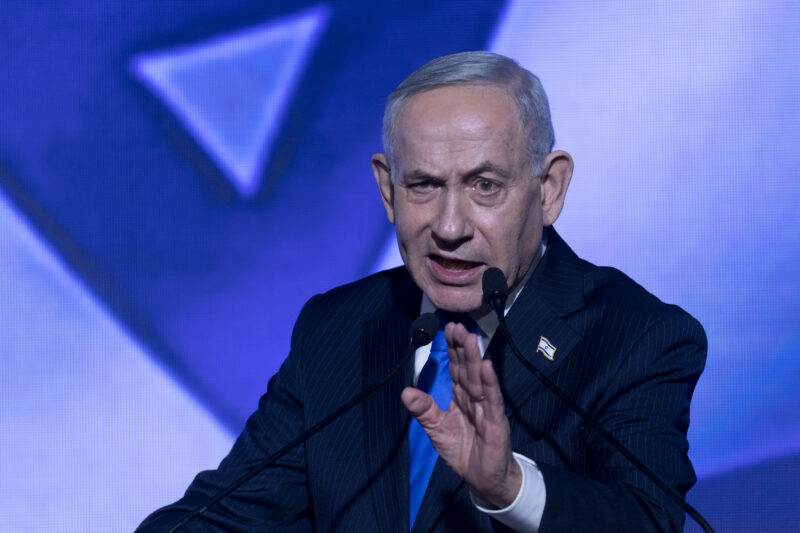
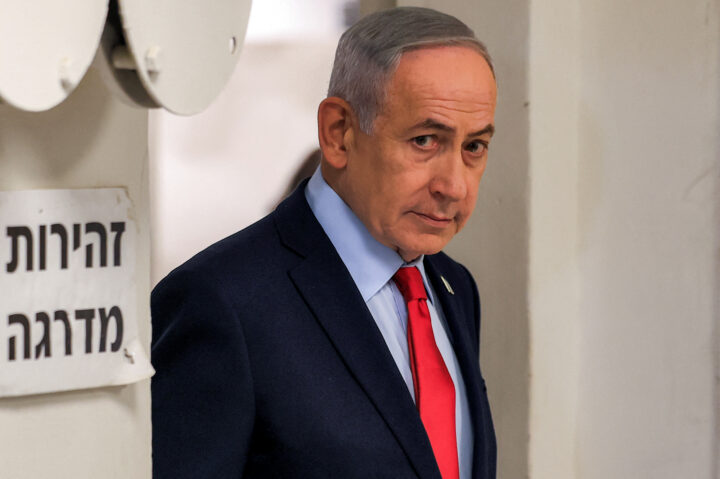
Israeli Prime Minister Benjamin Netanyahu arrives for a press conference in Jerusalem on March 19, 2026.


 Add JewishInsider on Google
The Likud party’s statement on Wednesday confirming that Israeli Prime Minister Benjamin Netanyahu would stand on the ballot this fall put to bed long-swirling rumors that the prime minister was considering forgoing another run — potentially in exchange for the government dropping its legal case against him.
That speculation had deepened earlier in the week, when President Donald Trump publicly mused whether Netanyahu, whom Trump referred to as “a wartime prime minister,” might decide to exit politics. A survey released this week by the Israel Democracy Institute found that 61% of Israelis — including 57% of Jewish Israelis and 87% of Arab Israelis — think Netanyahu should refrain from seeking another term.
With Netanyahu ending speculation about his political future, the focus now turns to the candidates seeking to unseat him.
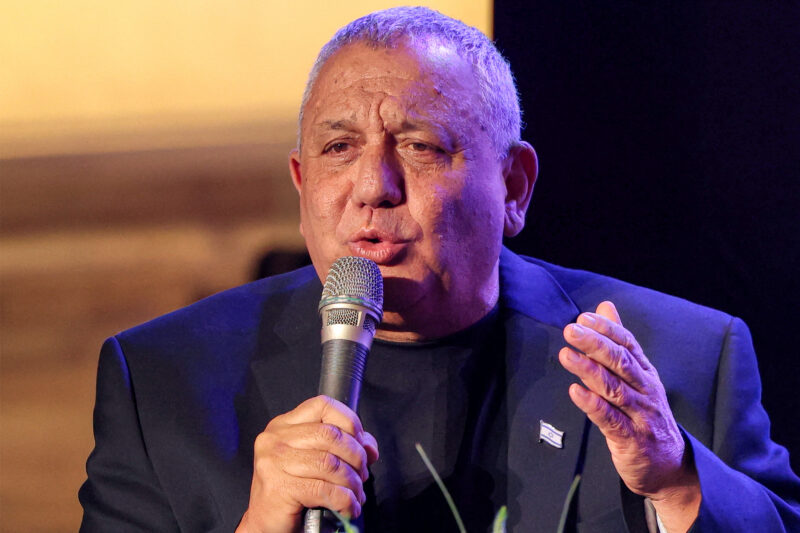
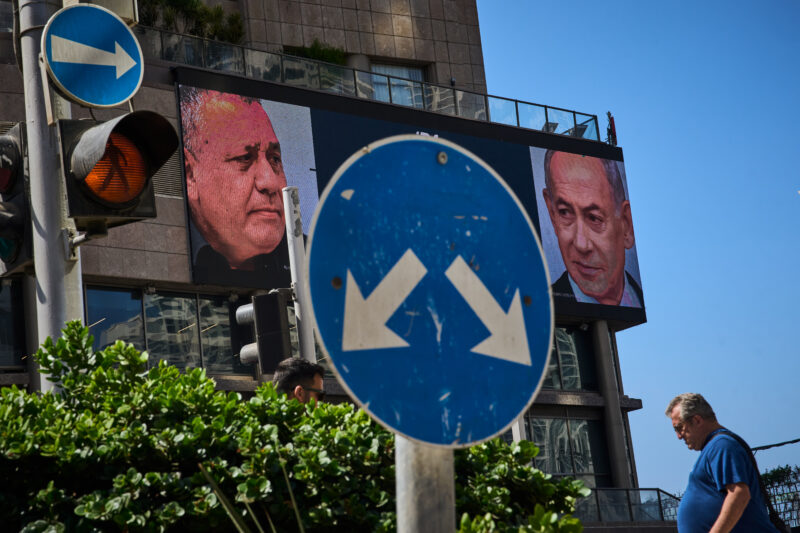
Gadi Eisenkot’s ascent — earlier this week, a Channel 12 poll found for the first time that more Israelis favored him over Netanyahu as prime minister — comes as the former IDF chief of staff, who lost a son and two nephews in the Hamas war, becomes increasingly critical of Netanyahu, in whose war cabinet Eisenkot sat. As Israeli journalist Nadav Eyal points out, Eisenkot “isn’t seen as aggressive toward anyone but Netanyahu.”
Meanwhile, former Prime Ministers Naftali Bennett and Yair Lapid have experienced little momentum after they announced their merger into the “Together” slate in April.
The two made a risky bet in joining forces with many months to go before the election — one that can’t easily be undone. And while their broad coalition was successful in 2021, it’s unclear if Together’s tent is big enough for all the anti-Netanyahu voters — in a changed electorate post-Oct. 7 — whom Bennett and Lapid would need to pick up.
Bennett — whose previous party was called Yamina, the Hebrew word for “right,” and who has described himself as more right-wing than Netanyahu — will have the additional challenge of convincing his potential supporters that he will not be too accommodating to the left. It’s worth recalling that their previous “Change” government was felled by breakaway members who were angry over Bennett’s concessions to his more-liberal coalition partners.
Part of the Change coalition’s success in 2021 — and also its downfall the following year — was its recruitment of Mansour Abbas’ Ra’am party. Now, Ra’am remains the one Arab party not joining forces with the three others, as efforts to form an alliance falter. And Abbas said as recently as a month ago that Eisenkot, Bennett and former Defense Minister Avigdor Liberman “are all worthy and have the experience to lead the next government” — even as all three have distanced themselves from Abbas.
But depending on how the seats are apportioned after votes are counted, the anti-Netanyahu opposition could potentially need Ra’am’s support to get to 61 seats. That possibility — though Bennett has said he will only sit with Zionist parties — could prove to be a poison pill for some right-wing voters disenchanted by Netanyahu who could otherwise be swayed to vote for Bennett in the election.
Though no election date has been set, it is increasingly likely that Israelis will cast their ballots in late October, close to the deadline mandated by Israeli law, and weeks after the anniversary of the Oct. 7 attacks, which occurred on Netanyahu’s watch.
Even in spite of the Oct. 7 attacks, Netanyahu has sought to portray himself as a strongman protecting his country. But he is increasingly seen by Israelis — and even his own supporters — as deferential to Trump (who recently proclaimed, “I call the shots” regarding Iran moves). Netanyahu’s own envoy to Washington, Yechiel Leiter, told CNN last month that Israel was a “junior partner” to the U.S vis-à-vis Iran.
Without a resolution to the ongoing tensions with Tehran — to say nothing of the recent waves of ballistic missile attacks from Iran and Yemen, and Hezbollah’s ongoing fire targeting northern Israel — Netanyahu could find himself fighting his toughest battle yet.
More Stories

Daily Kickoff
Wikipedia’s edit scandal, unedited

EVENT RESCHEDULED
State Department to hold Oct. 7 commemoration event on Wednesday
TISCH TENSIONS
Mamdani stands by NYPD’s Tisch as his allies demand her removal
EMPIRE STATE FEUD
Mamdani rips Blakeman’s claims he wouldn’t protect Jews as ‘directly racist’

SEEKING ANSWERS
After State Department memorial, families of Oct. 7’s American victims call for U.S.-led probe

ACCUSATION AFTERMATH
El-Sayed denies Muslim Brotherhood ties after Rogers debate claim
Please log in if you already have a subscription, or subscribe to access the latest updates.
 Continue with Google
 Continue with Apple