









































The politics behind the Trump-Netanyahu divide
Now that shifting American politics is pushing the president to distance himself from Israel’s preferred policies, Netanyahu is stuck without his trump card

SAUL LOEB/AFP via Getty Images
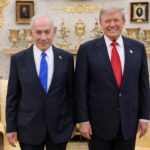
President Donald Trump shakes hands with Israeli Prime Minister Benjamin Netanyahu during a meeting in the Oval Office of the White House in Washington, DC, on April 7, 2025.


 Add JewishInsider on Google
Domestic politics isn’t always the best lens through which to evaluate foreign policy decisions.
But in assessing why President Donald Trump has gone to significant lengths to prevent Israeli Prime Minister Benjamin Netanyahu from striking back against Iran’s attacks, and why Netanyahu went ahead with the first wave of military strikes before standing down, it’s instructive to understand how the domestic politics in the U.S. and Israel are diverging.
The joint U.S.-Israel military operation against Iran, which began on Feb. 28 and has evolved into a very tenuous ceasefire since April 8, has not achieved many of the military goals outlined by both sides. Iran’s extremist leadership is still in place, it still maintains its nuclear ambitions and retains its nuclear material, and its ballistic missile stockpiles, while damaged, still remain.
On the Lebanese front, Hezbollah continues to threaten Israel’s north and not abide by any of the diplomatic agreements recently negotiated between Israel and the Lebanese government.
As a result of the limited achievements so far, public support for renewing military action against Iran has been low among the American public, and the overall operation is receiving lukewarm backing from Republicans.
Over two-thirds of voters in a recent Economist/YouGov poll said the U.S. “should make a deal to end the war in Iran as quickly as possible,” with just 11% disagreeing. Over half of Republicans shared the same sentiment of ending the war, with just 21% opposing.
Support for the war itself was much higher among Republicans than Democrats or independents, but still less than typical partisan support for Trump’s actions, with 67% of GOP voters backing the war in Iran and 20% opposing. (Among all voters, just 28% said they supported the war against Iran, with 60% opposing.)
These polling numbers explain why Trump, ever cognizant of public opinion especially in the run-up to a consequential midterm election, is trying to avoid reengaging with Iran militarily — even as he desperately seeks for some diplomatic off-ramp that Iran isn’t giving him.
In fact, it’s Trump’s very transparent desperation for a deal with Iran — and apparent unwillingness to go back to war —that’s emboldening Iran to continue its rejectionism to the point where it launched ballistic missiles at Israel over the weekend, feeling confident Trump would constrain Israel from any sustained response (which he did).
Only in Trump’s mind is a ceasefire with active fighting still a ceasefire. But he’s hoping he can maintain that illusion long enough to prevent him from losing more ground politically. Gas prices and reopening the Strait of Hormuz are bigger priorities at the moment to him than Israel’s national security.
Meanwhile, in Israel, the public is pushing Netanyahu to continue taking the fight to Hezbollah, whose drones and rockets have made the northern part of the country virtually uninhabitable. And Israelis are increasingly frustrated, despite Trump’s popularity in the country, over how Netanyahu is being restrained from responding against Iran because of American political pressure.
A clear majority of Israelis (59%) in a May poll from the Institute of National Security Studies believed Israel should intensify its fighting against Hezbollah in Lebanon. The pollster also found, a month earlier, that 61% of Israelis opposed the initial American-led ceasefire.
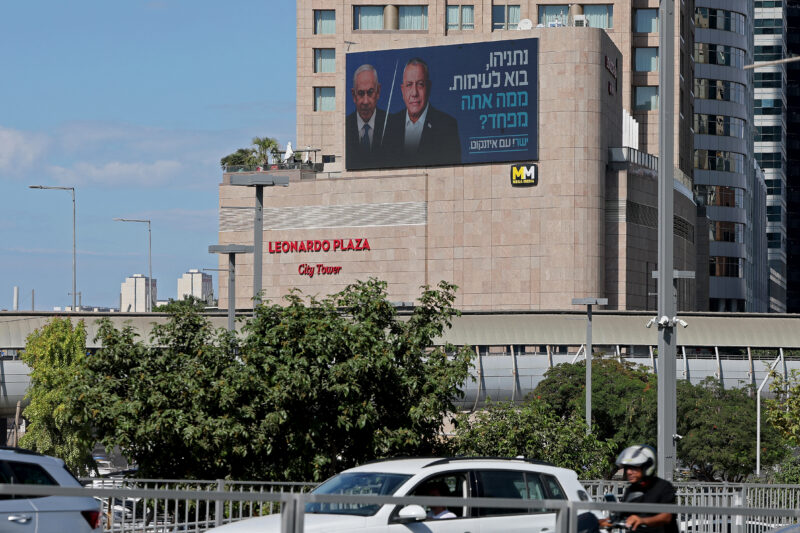
Netanyahu, in an election year, is in a no-win situation where he’s tasked with maintaining solid support from Trump, given their perceived strong relationship has been at the center of his reelection messaging. But now that shifting American politics is pushing the president to distance himself from Israel’s preferred policies, Netanyahu is stuck without his trump card.
This is where Netanyahu’s bet on Trump — and trust in the personal relationship he’s built with him — is looking a bit shaky right now. Support for Israel runs widely in Republican circles (and deeply among Jewish Republicans and evangelicals), but some of the backing is a partisan reflection of the president’s own stalwart support of the Jewish state.
If Trump, for his own political self-interest, decided to change course in his Middle East policy, it’s likely many of his voters would follow to the beat of his drum. And that would leave Israel without much backing within the Democratic Party, and support within the GOP subject to Trump’s own personal whims.
That’s a pretty precarious place for Netanyahu to be in — just several months before his own big election.
More Stories
TISCH TENSIONS
Mamdani stands by NYPD’s Tisch as his allies demand her removal

SMITHSONIAN STUDY
Commission studying potential Smithsonian Jewish museum holds first meeting
PRESIDENTIAL POV
Obama scrutinizes Israel’s founding, says Palestinians want their ‘land back’
DRAWING A LINE
British PM rules out partnership with Greens over ‘Zionism is racism’ motion
BREAKING POINT
For some Jewish Democrats, Michigan’s debate was the ‘final straw’ for El-Sayed
DIPLOMATIC PUSH
Miliband agrees to host international antisemitism meeting at urging of J7 Task Force
Please log in if you already have a subscription, or subscribe to access the latest updates.
 Continue with Google
 Continue with Apple