



















































Goldman: Jewish community needs non-Jewish allies to effectively fight antisemitism
The congressman said he’s confident Congress will pass the Jewish American Security Act by the end of the year
Marc Rod
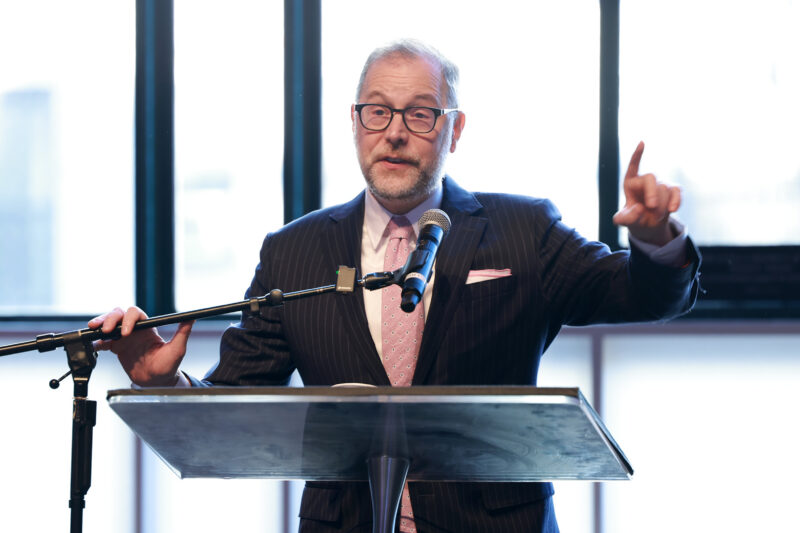
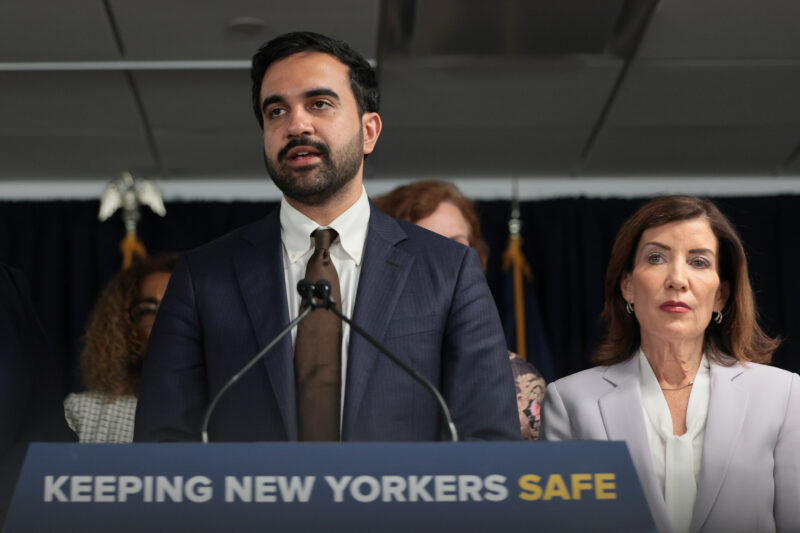
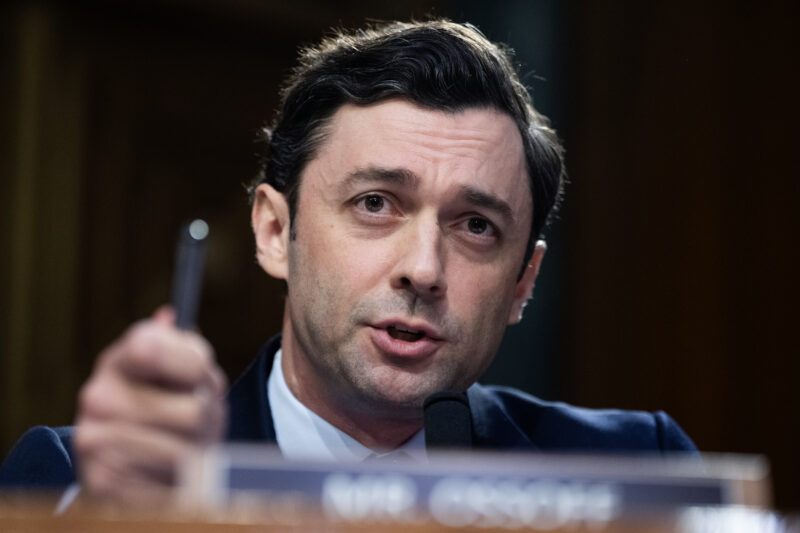
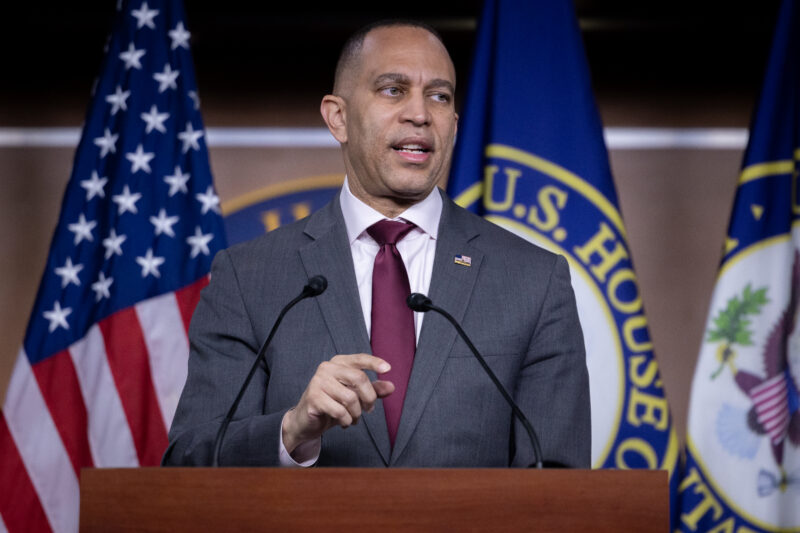
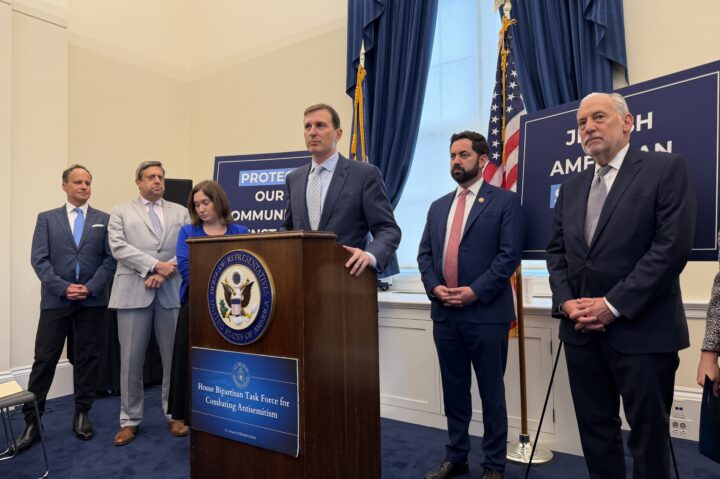
Rep. Dan Goldman (D-NY) speaks at a press conference announcing the Jewish American Security Act being introduced in the House on June 10, 2026.


 Add JewishInsider on Google
Rep. Dan Goldman (D-NY), the chair of the House antisemitism task force, argued in an interview with Jewish Insider on Wednesday that the Jewish community needs non-Jewish allies to help fight antisemitism, following a press conference introducing the Jewish American Security Act (JASA), a bipartisan and bicameral package aimed at tackling attacks on Jewish institutions, campus antisemitism and online antisemitism.
“It’s really important that we gain and bolster allies from outside the Jewish community, because ultimately antisemitism is hate, and hate is easily transferable, and history has taught us that,” Goldman said. “The way we are going to combat antisemitism is not just through Jewish advocacy but through a broad coalition of people who support the democratic value of equal rights and social justice, and so we’re excited that this bill can be a vehicle towards bringing people of all backgrounds together to fight.”
Though some in the Jewish community feel that they’ve been abandoned by longtime allies since the Oct. 7 attacks, Goldman argued that it’s important to continue to reach out to and cultivate allies, in part because “Jewish community is too small to do it ourselves, and we need allies.”
Asked whether there are groups outside the Jewish community supporting JASA, Goldman said, “Broadly speaking, I’ve had really meaningful conversations with a lot of leaders in other communities, and I think that there is a recognition that it is incredibly important to have a united front against hate.”
In spite of Congress’ now yearslong struggle to pass legislation to address the significant rise in antisemitism since Oct. 7, 2023, Goldman said he’s confident that Congress will pass JASA before the end of the year.
The New York congressman said that “part of the reason you see such widespread bipartisan support, and you see so many of the Jewish organizations supporting it, is because we worked very intentionally to streamline it into things that can get bipartisan agreement, so that we can actually get it passed.”
“I’m very optimistic that we are going to pass it this year, because of that broad bipartisan support and because there are no poison pills,” Goldman continued.
He said that the bill’s sponsors have spoken to leadership on both sides of the aisle about the bill, and have received support for it.
Rep. Mike Lawler (R-NY), the lead Republican cosponsor of the bill in the House, said at the press conference that, as a representative of one of the largest Jewish communities in the country, “this issue matters.”
“I am grateful for the local law enforcement agencies in my district that coordinate very closely with our synagogues and with our yeshivas to protect our Jewish students, but it is not enough. We need additional resources to ensure everyone’s safety in New York. We’ve seen firsthand why this program matters,” the lower Hudson Valley Republican said, referring to Nonprofit Security Grant Program funding. “As a practicing Catholic who goes to church, fact is, I can walk into my church without fear. I can walk into my church without passing a security guard stationed outside. Jewish Americans don’t have that luxury, and it’s outrageous, and it should anger each and every one of us.”
He said the bill would also improve protections for Jewish students “by ensuring colleges and universities have clear accountability and enforcement mechanisms” and “increas[ing] transparency and accountability for online platforms as antisemitic content continues to spread across the internet.”
Rep. Jared Moskowitz (D-FL), a cosponsor of the bill, said at the press conference, “This bill shouldn’t be necessary. It shouldn’t be necessary. We shouldn’t have to do this. We’re not doing this because it’s optional. We’re doing it because it is necessary.”
“If people stop trying to hurt Jewish kids in preschools, we won’t have to build walls around them. If people stop trying to blow up synagogues, then we wouldn’t have to have armed guards at every entrance, but we’re seeing all over the country now people going to synagogues to stage foreign policy protests,” Moskowitz said. “We see people in the street, Jews in the street, wearing a Jewish star, having to put that Jewish star away, and if they don’t, they’re accosted.”
He said he saw firsthand the impact and necessity of NSGP funding when he served as Florida’s director of emergency management, where he was responsible for administering those grants at the state level.
Rep. Laura Gillen (D-NY), another supporter of the bill, told JI that antisemitism is an issue she’s been focused on since she was on the campaign trail, and said that the bill tackles many issues she pledged to address as a candidate.
“It talks about putting pressure on social media platforms to moderate hate speech, because we know that that is the hotbed of what is stirring up these hateful feelings — where people hide behind their computers, they say vicious vile things, and they create a lot of false information out there in the universe,” Gillen said.
She added that the security funding increase proposed in the bill, which puts NSGP funding at $1 billion, is also critical. “We saw they got a little bit more of a bump in [the] homeland security [appropriations bill], but we need a [much] bigger bump. There is a tremendous need across my district, and it’s not even just synagogues or yeshivas, it’s also other places of worship.”
Also speaking at the press conference were Amy Spitalnick, CEO of the Jewish Council for Public Affairs; Nathan Diament, executive director of the Orthodox Union Advocacy Center; Eric Fingerhut, CEO of the Jewish Federations of North America; Rabbi Jonah Pesner, director of the Religious Action Center of Reform Judaism; Jessica Bernton, director of congressional affairs at the American Jewish Committee; Lauren Wolman, senior director of government relations and strategy at the Anti-Defamation League; and Elizabeth Cullen, director of government relations at Hadassah.
More Stories
DAYLIGHT DEBATE
Brett McGurk pushes back on former Biden WH colleagues who called for greater pressure on Israel

DIPLOMATIC PUSH
Miliband agrees to host international antisemitism meeting at urging of J7 Task Force
SPENDING SCRAPPED
GOP leadership super PAC cancels spending plans against Rep. Landsman

PREDECESSOR PROBLEMS
The Lander policy at the heart of Levine’s Israel bonds reversal

PLATFORM CHECK
Where Israel’s parties stand on the Diaspora — in their own words

BREAKING POINT
For some Jewish Democrats, Michigan’s debate was the ‘final straw’ for El-Sayed
Please log in if you already have a subscription, or subscribe to access the latest updates.
 Continue with Google
 Continue with Apple