






































Senators, experts skeptical of Trump’s call for Syria to take on Hezbollah in Lebanon
‘Syria’s a pretty complicated mess, currently,’ Sen. James Lankford said. ‘They’ve still got to deal with ISIS’ presence there and the Syrian refugees in Lebanon need to return back to Syria.’
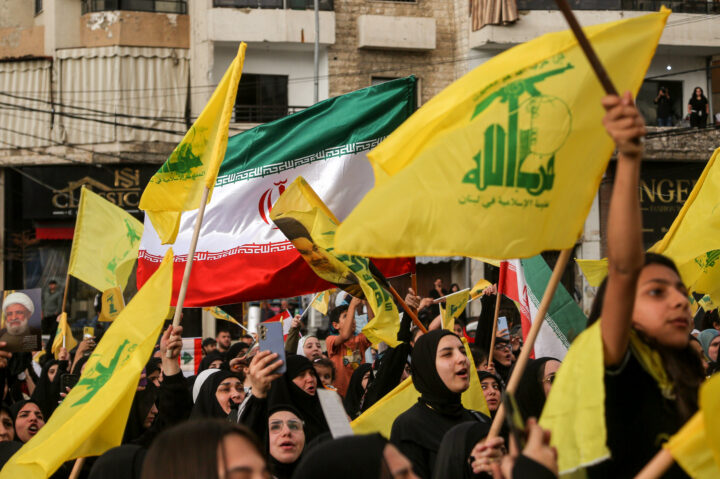
Marwan Naamani/picture alliance via Getty Images
Pro-Iranian Hezbollah supporters wave the party flags during a ceremony in a southern Beirut suburb on May 5, 2026.


 Add JewishInsider on Google
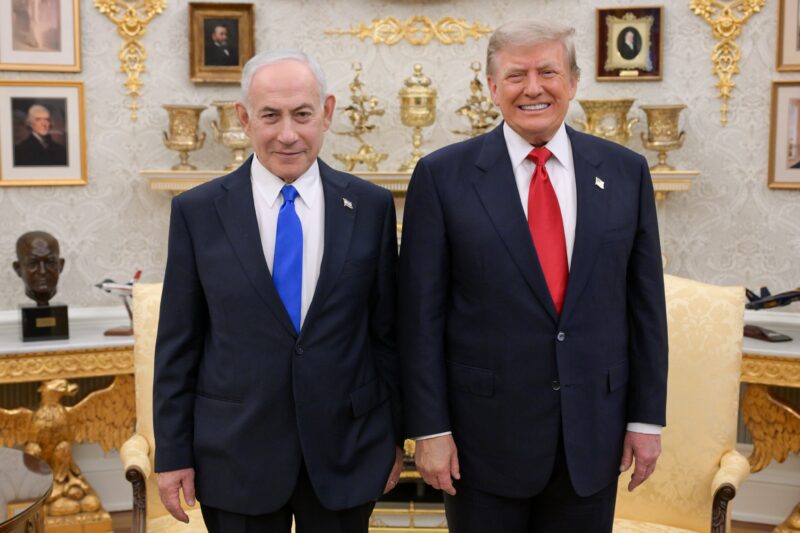
Senators and Middle East policy experts expressed skepticism regarding President Donald Trump’s suggestion on Tuesday that Syria, rather than Israel, should handle the task of combating Hezbollah in Lebanon, following the president’s strident criticism of Israel’s attacks on the Iranian-backed terrorist group.
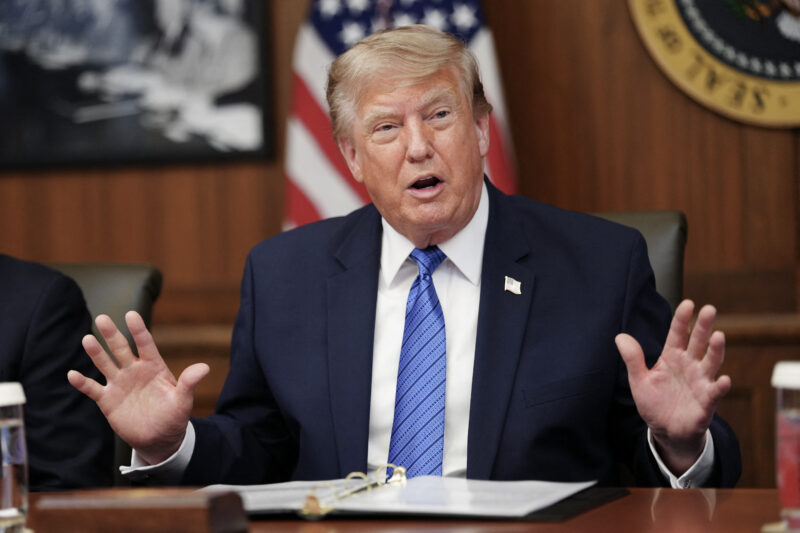
Trump said on the sidelines of the G7 summit in Évian-les-Bains. France, that Israel’s operations in Lebanon had moved too slowly and had been “vicious.” “I suggested to Israel to let Syria take care of Hezbollah, because to be honest with you, I think they do a better job of doing it,” Trump said.
“Syria’s a pretty complicated mess, currently,” Sen. James Lankford (R-OK) said. “They’ve still got to deal with ISIS’ presence there and the Syrian refugees in Lebanon need to return back to Syria. I think that’s the Syria connection there.”
Lankford said that he expected the Lebanese Armed Forces to say they would address the situation in Lebanon rather than bringing Syrian forces into the country. He added that Syria’s role should be limited to repatriating Syrians to Lebanon and eliminating ISIS in Syria as stabilization measures.
Sen. Richard Blumenthal (D-CT) dismissed the idea outright. “I have never heard that Syria is a viable opponent of Hezbollah,” Blumenthal said. “I heard him, literally, live talk about it, and it seems almost absurd to think of Syria as a viable opponent to Hezbollah.”
He also emphasized that “Hezbollah is attacking Israel, not Syria” and “Israel has to defend itself against Hezbollah. It can’t depend on Syria. In fact — it can’t depend on anyone exclusively. It has to defend itself against Hezbollah, and that’s just a fact of life.”
He said that the “solution” to achieve peace “is to stop Iran from supporting Hezbollah.”
“What?” a bewildered Sen. Chris Coons (D-DE) responded when asked by JI for his reaction to Trump’s suggestion.
“Yeah, sure,” Coons added. He then put his hands over his face and sighed before saying in an exasperated tone: “Oh my god.”
Sen. John Cornyn (R-TX) also appeared to dismiss the idea, indicating that he was confused by Trump’s comments, telling JI: “I didn’t understand that.”
Sen. Pete Ricketts (R-NE) was largely noncommittal on the viability of Trump’s proposal, saying, “If Syria would go after Hezbollah, that would be a great thing.”
Middle East policy experts also expressed concern over Trump’s notion that Syria could play a “better” role in confronting Hezbollah than Israel, asserting that Damascus does not have the ability to take on such a task.
“The president’s remarks unfortunately show his complete lack of familiarity with Lebanon and Syria,” Elliott Abrams, former Iran envoy under the first Trump administration, told JI. “Syrian troops entered Lebanon in 1976 and did not withdraw until 2005. While they dominated Lebanon they killed something like 60,000 Lebanese. To suggest the return of Syrian forces to Lebanon is absurd and would instantly be rejected by all Lebanese.”
David Daoud, a senior fellow at the Foundation for Defense of Democracies, similarly criticized the statement, saying it is important to “distinguish the rhetoric from what’s realistic.”
“Syria today does not have the capability nor the will to occupy Lebanon, which is what would be necessary to dismantle Hezbollah,” Daoud said. “Their country has just emerged from a 14-year devastating civil war, they’re economically broke, they’re just starting to reintegrate into the international community.”
He said that such actions would go beyond the responsibilities that the Syrian people expect from Al-Sharaa’s new transitional government.
“The mandate that the Syrian people have given him is ‘Rebuild our country, give us a normal life, we don’t want wars, we don’t want expansionism,’” Daoud explained. “So there’s that element. If they go too far, they end up like [former Syrian President Bashar] al-Assad.”
Yoni Tobin, a senior policy analyst at the Jewish Institute for National Security of America, said the idea that Syria would be better-equipped to take on Hezbollah than Israel “is a fanciful one.”
“Israel has spent decades successfully fighting against, studying, and penetrating Hezbollah, and has eliminated thousands of its field operatives and missile sites,” Tobin said. “When’s the last time, for example, that Syria detonated several thousand Hezbollah walkie-talkies at once?”
Tobin warned that the prospect of Syrian forces entering Lebanon would be “dangerous” and could threaten U.S. and Israeli security interests. He noted that al-Sharaa’s close ties with Turkey are particularly alarming.
“Even if Syrian forces were to somehow succeed at disarming Hezbollah, that would only replace an Iranian sphere of influence on Israel’s northern border with – yet another – Turkish one,” Tobin said. “That prospect alone should alarm Washington.”
Former U.S. Ambassador to Israel Daniel Shapiro suggested that allowing Syrian forces to confront Hezbollah could “unify the Lebanese against that irresponsible proposal.”
“It recalls previous episodes of Syrian occupation, and could unleash violence across the country,” Shapiro said. “What the Syrian government can do is work to shut down smuggling networks across the porous Syrian-Lebanese border, which could deprive Hezbollah of the ability to resupply its weapons.”
Analysts also dismissed Trump’s criticism of Israeli operations in Lebanon.
“Trump’s criticism of Israel for fighting back against Hezbollah is equally wrong,” Abrams said. “Israel’s strike killed Ali Musa Daqduq, who was a Hezbollah terrorist who led the kidnapping and murder of five American soldiers in 2007. The president should be thanking Israel for that — and he should not be making light of drone strikes as ‘a minor little thing.’”
Daoud said that while individual Israeli military actions in Lebanon may have “crossed the line” and are open to criticism, he “totally disagrees” with Trump’s claim and pressure on Israel.
“I think President Trump is framing it in that way because this is undermining his desire for a deal,” Daoud said, arguing that criticism and pressure should instead be directed toward Lebanon.
Daoud said that Hezbollah retains “massive and overwhelming” support from the Lebanese public, adding that Beirut remains “unwilling and unable to deal with Hezbollah properly.”
“I reject this narrative that the Trump administration is trying to promote, which is that Lebanon is not the problem, Hezbollah is the problem, Hezbollah is the enemy of Lebanon,” he added. “This is fiction. I reject the nonsense that Hezbollah is an Iranian occupation of Lebanon. Hezbollah is part of the government…they are in parliament, they are Lebanese.”
More Stories

Daily Overtime
Israel hits back at U.K. sanctions
on the trail
Moskowitz leans into work combating antisemitism as he launches general election campaign

Doha Dealings
CNN’s ties with Qatar deepen with October summit in Doha

CLAUDE CONTROLS
Anthropic report reveals Iran-linked actors used AI tools to target Jews, develop weapons
NUCLEAR NEWS
Mast ‘likely’ to support administration’s nuclear deal with Saudi Arabia
OCEAN STATE OF PLAY
Antisemitism roils Providence mayoral race
Please log in if you already have a subscription, or subscribe to access the latest updates.
 Continue with Google
 Continue with Apple