




































The vice president’s comments echo a warning from President Donald Trump that the terror group would face ‘elimination’ if it doesn’t abide by the terms of the ceasefire agreement
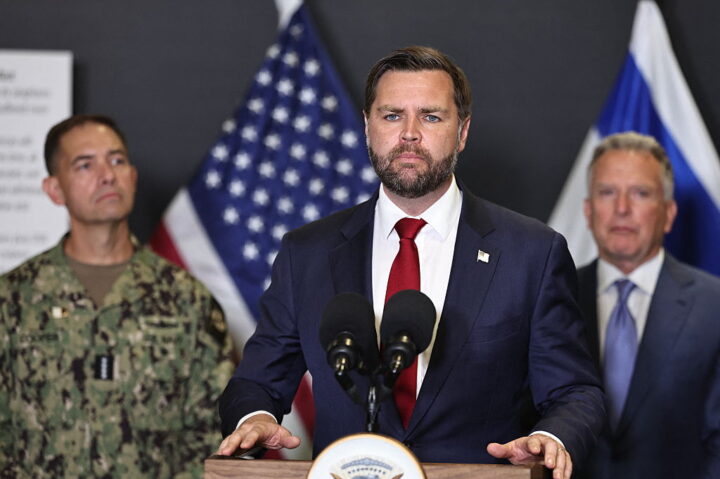
FADEL SENNA/AFP via Getty Images
Vice President JD Vance listens to a question during a press conference following a military briefing at the Civilian Military Coordination Center in southern Israel on October 21, 2025.


 Add JewishInsider on Google
Visiting the new U.S.-run Civilian Military Cooperation Center in southern Israel, Vice President JD Vance said on Tuesday that he is “very optimistic” about the advancement of the peace plan, but warned that Hamas must disarm and cooperate with international interlocutors, or else it would be “obliterated.”
The vice president’s comments came shortly after President Donald Trump, in a post on his Truth Social site, threatened Hamas with “elimination” should the terror group continue to carry out violence in Gaza and violate the terms of the peace deal.
“Numerous of our NOW GREAT ALLIES in the Middle East … have explicitly and strongly, with great enthusiasm, informed me that they would welcome the opportunity, at my request, to go into GAZA with a heavy force and ‘straighten out Hamas’ if Hamas continues to act badly, in violation of their agreement with us,” Trump wrote. “There is still hope that Hamas will do what is right. If they do not, an end to Hamas will be FAST, FURIOUS, & BRUTAL!”
The president’s statement, which came hours after Vance touched down in Israel in part to keep the deal on track, underscored his growing impatience and frustration with the terrorist group.
“Hamas has to disarm,” Vance said. “They’re not going to be able to kill their fellow Palestinians. … If Hamas doesn’t cooperate, as the president of the United States said, Hamas will be obliterated.”
“But I’m not going to do what the president of the United States has thus far refused to do, which is put an explicit deadline on it,” the vice president continued, “because a lot of this stuff is difficult … In order for us to give it a chance to succeed, we’ve got to be a little bit flexible.”
Asked about Turkish troops entering Gaza despite the country’s hostility to Israel, Vance said that Israel will have to agree to any foreign troops on the ground. “We’re not going to force anything on our Israeli friends when it comes to foreign troops on their soil, but I think there’s a constructive role for the Turks to play,” he said. “They already played a constructive role.”
As for reconstruction of Gaza, Jared Kushner, who has played a central role in negotiating the end of the war, said that “no reconstruction funds will be going to areas Hamas still controls. … There are considerations in the area the IDF controls to start reconstruction of a new Gaza, in order to give the Palestinians in Gaza a place to go, a place to get jobs, a place to live.”
Vance said that the eventual governing structure of Gaza is still undetermined, as the plan focuses on getting “to a point where both Gazans and our Israeli friends have some measure of security.” After that, he added, “we’ll worry about long term governance.”
“Let’s worry about security, give people food and medicine,” he said.
Vance said that the CMCC’s focus is on repatriating the bodies of the 15 remaining Israeli hostages, but that “it’s not going to happen overnight.”
The administration’s push for Hamas’ disarmament is expected to face hurdles. “On the one hand, Hamas wants to avoid losing the sympathy of Turkey and Qatar and wants to avoid wasting Egypt’s desire for a political settlement that creates Palestinian unity with Hamas support,” said Rob Satloff, executive director at The Washington Institute for Near East Policy. “On the other hand, it is clear that Hamas has no intention of voluntarily giving up the battle against Israel, let alone voluntarily disarming.”
But while Trump threatened that “many countries” will get involved, other nations have been reluctant to send in reinforcements, despite talks of forming an International Stabilization Force, as laid out in the unfinalized second phase of the peace deal.
At the CMCC facility on Tuesday, the vice president noted that the force is still in the process of being formed, but said no American troops will be on the ground in the enclave. There are about 200 U.S. servicemembers at the CMCC in Kiryat Gat, Israel, tasked with coordinating the effort.
Trump himself emphasized that the U.S. will not send troops into Gaza, telling reporters at the White House on Monday that “Israel would go in in two minutes if I asked them to go in … But right now we haven’t said that.”
“Many countries are hesitant to send troops to serve as peacekeepers,” said David May, a senior research analyst at the Foundation for Defense of Democracies. “So, it will be very difficult to find a country able and willing to strike Hamas as punishment.”
Even if Trump is able to get other countries on board to take a more involved role in defanging Hamas in Gaza, May said more firepower does not always mean better results.
“There’s a certain value in threats and provocative language, especially from an unpredictable president,” said May. “But striking Hamas and not killing civilians requires surgical precision — something the Israelis excel in — not the overwhelming force that the United States alone possesses. [At the same time,] Hamas’ violations are mounting, and the terrorist group cannot be allowed to retake Gaza and execute its potential replacements.”
May said a return to fighting would sink any possibility of the current deal developing into full-fledged peace. The Trump administration has sought to avoid a return to hostilities and build on the momentum from phase one. Experts warned the administration is in a precarious position, balancing between keeping the president’s deal stable and preventing Hamas from reasserting power.
“The Trump administration is trying to navigate between these poles,” said Satloff. “Taking advantage of political pressure while avoiding a showdown with Hamas without the Arab, Muslim or international troops to back it up, all the while trying to avoid a collapse of relapse into full-scale Hamas-Israel war that would undermine the president’s great diplomatic achievement.”
The vice president also spoke of the significance of Israel to him as a Christian, sharing plans to visit the Church of the Holy Sepulcher. “I pray that the Prince of Peace,” he said, using a name for Jesus,” can continue to work a miracle in this part of the world.”
Former Navy SEAL Ed Gallrein jumped in the race today, citing Massie’s refusal to support key parts of the president’s agenda

Andrew Harnik/Getty Images
Rep. Thomas Massie (R-KY) speaks to reporters as he arrives for a House Republican caucus meeting at the U.S. Capitol on February 25, 2025 in Washington, DC.
Ed Gallrein, a former Navy SEAL and fifth-generation Kentucky farmer, launched his bid on Tuesday to unseat Rep. Thomas Massie (R-KY) after being urged by President Donald Trump to challenge the renegade, anti-Israel congressman in the GOP primary.
Gallrein’s campaign launch comes four days after Trump declared that the Kentucky native was his preferred candidate to take on Massie, whom Trump had soured on over his growing antagonism towards Trump’s agenda. Massie was one of the only congressional Republicans to oppose Trump’s landmark “big, beautiful” spending bill and has worked with Democrats to force a floor vote to release Justice Department documents on Jeffrey Epstein.
“I’ve dedicated my life to serving my country, and I’m ready to answer the call again. This district is Trump Country,” Gallrein said. “The President doesn’t need obstacles in Congress — he needs backup. I’ll defeat Thomas Massie, stand shoulder to shoulder with President Trump, and deliver the America First results Kentuckians voted for.”
“Thomas Massie has become one of the biggest roadblocks to President Trump’s America First agenda,” he added. “When Trump fought for historic tax cuts, Massie voted no. When Trump tried to fully fund border security, Massie stood in the way. President Trump endorsed me because Kentuckians deserve a Congressman who will stand with our President, not against him.”
Massie is also a frequent opponent of U.S. support for Israel and legislation to combat antisemitism. The president’s allies recently launched a $1 million ad blitz against Massie, the opening salvo of the Trump-backed effort to unseat the lawmaker, who has swatted down previous primary challenges.
Trump said on Friday in a post on his Truth Social platform that Gallrein was “a true America First Patriot” who would support his Make America Great Again agenda.
“A Brave Combat Veteran, Ed knows the Wisdom and Courage required to Defend our Country, Support our Military/Veterans, and Ensure PEACE THROUGH STRENGTH,” Trump wrote.
Trump went on to call Massie a “Third Rate Congressman” and a “Weak and Pathetic RINO,” adding that residents of Kentucky’s Fourth Congressional District should be served by someone in favor of the president’s agenda given his electoral success there.
“The incredible people of Kentucky’s 4th Congressional District gave us a mandate to, MAKE AMERICA GREAT AGAIN, and the person that will help us do that is Navy SEAL, Army Ranger, and Fifth Generation Kentucky Farmer, Captain Ed Gallrein, a true America First Patriot,” Trump wrote.
Gallrein is a Kentucky native whose family built the state’s largest dairy farm and one of the state’s largest grain farms. He describes himself as a traditional conservative who was inspired by former President Ronald Reagan to enter public service in the 1980s.
Gallrein ran unsuccessfully in a 2024 GOP primary for a Kentucky state Senate seat, losing narrowly to now-state Sen. Aaron Reed. Trump’s political team also considered recruiting Reed, who is also a former Navy SEAL, to run against Massie but the state lawmaker passed on the race.
The vice president’s visit to Israel marks a pivot point in the Trump administration’s efforts for a post-Hamas Gaza

Nathan Howard-Pool/Getty Images
U.S. Vice President JD Vance boards Air Force Two en route to Israel on October 20, 2025 at Joint Base Andrews, Maryland.
Vice President JD Vance landed in Israel on Tuesday with the charge to lead efforts to stabilize the fragile ceasefire in Gaza and assist in the implementation of the second phase of President Donald Trump’s peace deal.
Following the release of the remaining 20 living Israeli hostages from Gaza in exchange for Palestinian prisoners, there was little indication that Hamas would abide by the other elements of Trump’s 20-point plan, which calls on the terrorist group to disarm and cede governance to a technocratic group of Palestinian leaders. In the last week, Hamas began executing Palestinians, clashing with rival groups and reasserting itself as the security and governing force in the Gaza Strip.
Over the weekend, Hamas terrorists shot an anti-tank missile at IDF machinery and killed two soldiers and Israel retaliated with airstrikes in Rafah, further jeopardizing the status of the ceasefire. Israeli Prime Minister Benjamin Netanyahu briefly halted the delivery of humanitarian aid into Gaza, but reversed course following pressure from the Trump administration.
The vice president will now step into the conflict, visiting Israel at an important juncture as the Trump administration looks to avoid another breakdown into renewed hostilities and ensure full compliance with the deal.
“Hamas is going to fire on Israel. Israel’s going to have to respond, of course. There are going to be moments where you have people within Gaza that you’re [not] quite sure what they’re actually doing. But we think it has the best chance for sustainable peace,” Vance told reporters on Sunday, referring to the peace proposal.
The decision to dispatch Vance to Israel is a sign of the Trump administration’s continued engagement in the Middle East after securing the hostage-release deal, according to experts.
“We are in a moment of really intense American engagement and influence that have got us to a stage one that no analyst a month ago would have told you was possible, and so there is a moment of opportunity here,” said John Hannah, a senior fellow at the Jewish Institute for National Security of America. “In order to be sustained, it’s a ceasefire and peace process that is going to require intense and continuous U.S. engagement at the most senior levels.”
While Vance’s foreign policy experience was limited during his time in the Senate, the vice president has remained deeply engaged on issues regarding Israel during the second Trump administration. Hannah said this continued high level involvement will be key to sustaining any peace deal.
David May, a senior research analyst at the Foundation for Defense of Democracies, said deploying Vance shows the significance of this issue to the Trump administration.
“This is a huge legacy item for President Trump, and so trying to make sure that the ceasefire holds is a highly important item for him. They had to send someone of a high profile, and sending the vice president shows that you are serious,” said May.
May said it would be a “huge accomplishment” if Vance is able to keep the ceasefire from collapsing — and secure progress toward other elements of Trump’s peace plan.
“This is now an opportunity for Vance to build on his portfolio and show his vice presidential experience,” said May. “There’s very often vice presidents that sit in the background and don’t do much and don’t have much to show for it. This is an opportunity for him to get in the foreground.”
The key, May says, will be for Vance to leverage the U.S. relationship with Israel and convince Netanyahu’s government to show restraint in responding to Hamas’ provocations.
“In order for the ceasefire not to collapse, the exchanges of fire have to stop. It’s very difficult to get Hamas to stop firing, but if you can get the Israelis to stop responding, or at least to respond less forcefully, then maybe that can lower the temperature a little bit and allow for some of the benefits of the ceasefire to start kicking in,” said May.
But beyond keeping the pause in hostilities afloat, the administration still faces a significant challenge in completely disarming Hamas and removing them from Gaza, a hurdle May says could require further confrontation with the terrorist group.
“I don’t think any power besides maybe the United States or Israel can be trusted and would have the commitment to actually disarming Hamas,” said May. “Unless Hamas is able, or willing, to resume its previous role as being a more religious and cultural and social organization without the same political power or weapons, I don’t foresee a way of implementing the ceasefire without maybe another round of fighting with Israel actually taking out Hamas.”
Vance is slated to stay in Israel until Thursday, according to reports. The vice president will join White House Special Envoy Steve Witkoff and Jared Kushner, both of whom played vital roles in securing the first phase of the deal, who are already in Israel and met on Monday with Netanyahu.
Plus, CAIR sues over antisemitism training video
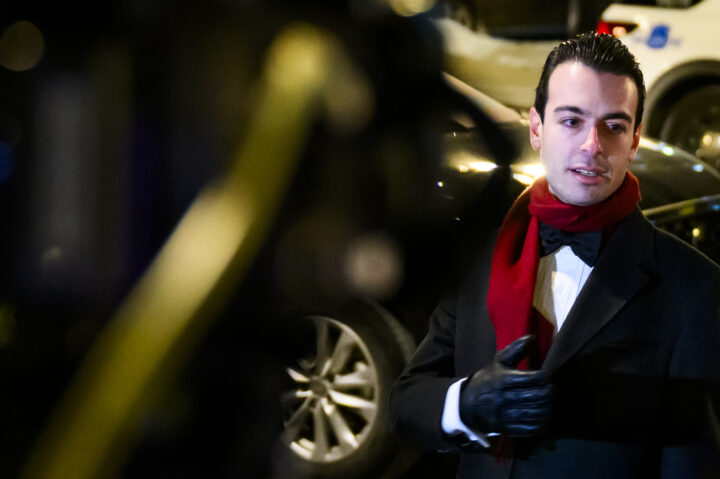
Pete Kiehart for The Washington Post via Getty Images
Paul Ingrassia, forer White House liaison to the Justice Department, left, announces the release of brothers Andrew and Matthew Valentin outside of the DC Central Detention Facility on January 20, 2025 in Washington, DC.
Good Monday afternoon!
This P.M. briefing is reserved for our premium subscribers like you — offering a forward-focused read on what we’re tracking now and what’s coming next.
I’m Danielle Cohen-Kanik, U.S. editor at Jewish Insider and curator, along with assists from my colleagues, of the Daily Overtime briefing. Please don’t hesitate to share your thoughts and feedback by replying to this email.
📡On Our Radar
Notable developments and interesting tidbits we’re tracking
President Donald Trump continued to voice his frustration today with Hamas’ ongoing violence in the Gaza Strip, including a recent ceasefire violation where Hamas terrorists shot an anti-tank missile at IDF machinery and killed two soldiers, though he stopped short of calling for action against the terror group.
At a bilateral lunch at the White House with Australian Prime Minister Anthony Albanese, Trump told reporters, “We made a deal with Hamas that they’re going to be very good, they’re going to behave, they’re going to be nice and if they’re not, we’re going to go in — we’re going to eradicate them if we have to, they’ll be eradicated.”
Trump claimed the violence was committed by rogue members of the terror group: “I don’t believe it was the leadership — they had some rebellion in there among themselves — and they killed some people, a lot of people.”
Despite his phrasing, Trump emphasized that the U.S. will not send troops into Gaza. “We don’t need to [have U.S. boots on the ground] because we have many countries, as you know, signed on to this deal,” he said. “We had countries calling me when they saw some of the killing with Hamas, saying, ‘We’d love to go in and take care of the situation ourselves.’ In addition, Israel would go in in two minutes if I asked them to go in. … But right now we haven’t said that. We’re going to give it a little chance and hopefully there will be a little less violence”…
Trump advisors Steve Witkoff and Jared Kushner, in Israel to help shore up the ceasefire, reportedly told Israeli Prime Minister Benjamin Netanyahu in their meeting today not to take any action that could risk the first phase of the agreement, Israeli media reports, despite the recent violations by Hamas…
Netanyahu appointed Israeli-American businessman Michael Eisenberg as his representative to the U.S.-led international body monitoring the implementation of the ceasefire, according to Israeli media. Eisenberg previously helped establish the Gaza Humanitarian Foundation. Vice President JD Vance, set to land in Israel tomorrow, is expected to visit the monitoring body’s command center…
The Trump administration’s nominee for ambassador-at-large for international religious freedom, former Rep. Mark Walker (R-NC), is also in Israel this week on a trip focused on “religious freedom, unity and resilience after the release of hostages.” Yesterday, he met with American hostage families and today visited Yad Vashem and the Western Wall…
The military wing of the Popular Front for the Liberation of Palestine said today it was handing over the remains of a hostage held in Gaza to IDF troops. The army announced the casket is now in Israel and headed for identification…
Meanwhile in the U.S., Politico reports that Paul Ingrassia, the Trump administration’s nominee to head the Office of Special Counsel, said on a text chain of Republican operatives last year that he has “a Nazi streak” in him “from time to time” and that all holidays commemorating Black communities “need to be eviscerated.”
Ingrassia, who has a history of promoting antisemitic conspiracy theories, including calling the Oct. 7 attacks in Israel a “psyop,” is scheduled receive a confirmation hearing in the Senate on Thursday…
The Council on American-Islamic Relations filed a lawsuit against Northwestern alleging that the university violated Title VI of the Civil Rights Act of 1964 by adopting time, place and manner restrictions on student protest and requiring students to watch an antisemitism training video, Jewish Insider‘s Danielle Cohen-Kanik reports.
Among other allegations, the suit, filed in federal court in Illinois, claims Northwestern violated students’ rights by requiring them to agree to the school’s code of conduct, which now incorporates the International Holocaust Remembrance Alliance’s working definition of antisemitism, as well as mandatory bias training that includes a video on antisemitism created in collaboration with the Jewish United Fund, the city’s Jewish federation…
Dartmouth College joined five other universities in rejecting the Trump administration’s “Compact for Academic Excellence” over the weekend. With a deadline of today, the University of Arizona, the University of Texas at Austin and Vanderbilt University are the only schools offered early access to the compact that have yet to respond publicly…
John Kirby, spokesman for the National Security Council under the Biden administration, is set to become director of the University of Chicago’s Institute of Politics on Nov. 15, according to Axios…
⏩ Tomorrow’s Agenda, Today
An early look at tomorrow’s storylines and schedule to keep you a step ahead
Keep an eye on Jewish Insider tomorrow morning for reporting on the U.K. Jewish community’s reaction to rising antisemitism in the country after the Yom Kippur attack on a Manchester synagogue and reflections from a 21-year-old Argentinian activist who was awarded with a trip to the U.S. Holocaust Memorial Museum for her work in tolerance.
This evening, Aish is hosting former New York Gov. Andrew Cuomo in conversation with Elisha Wiesel on “the future of New York City” about the upcoming mayoral elections.
Tomorrow, the Senate Caucus on International Narcotics Control will hold a hearing on Hezbollah’s drug trafficking activities in Latin America.
Hillel International CEO Adam Lehman will appear at 92NY in New York City tomorrow evening to discuss “the state of Judaism on campus.”
Stories You May Have Missed
SUOZZI’S STAND
Tom Suozzi finds comfort zone in the political middle, speaking up for Israel

The New York Democrat praised Trump for the hostage deal: ‘We thank God and congratulate President Trump and all those who helped make the return of the hostages a reality’
HERITAGE OF HOPE
In Israel and Gaza, Nelson Mandela’s granddaughters find hope amid devastation
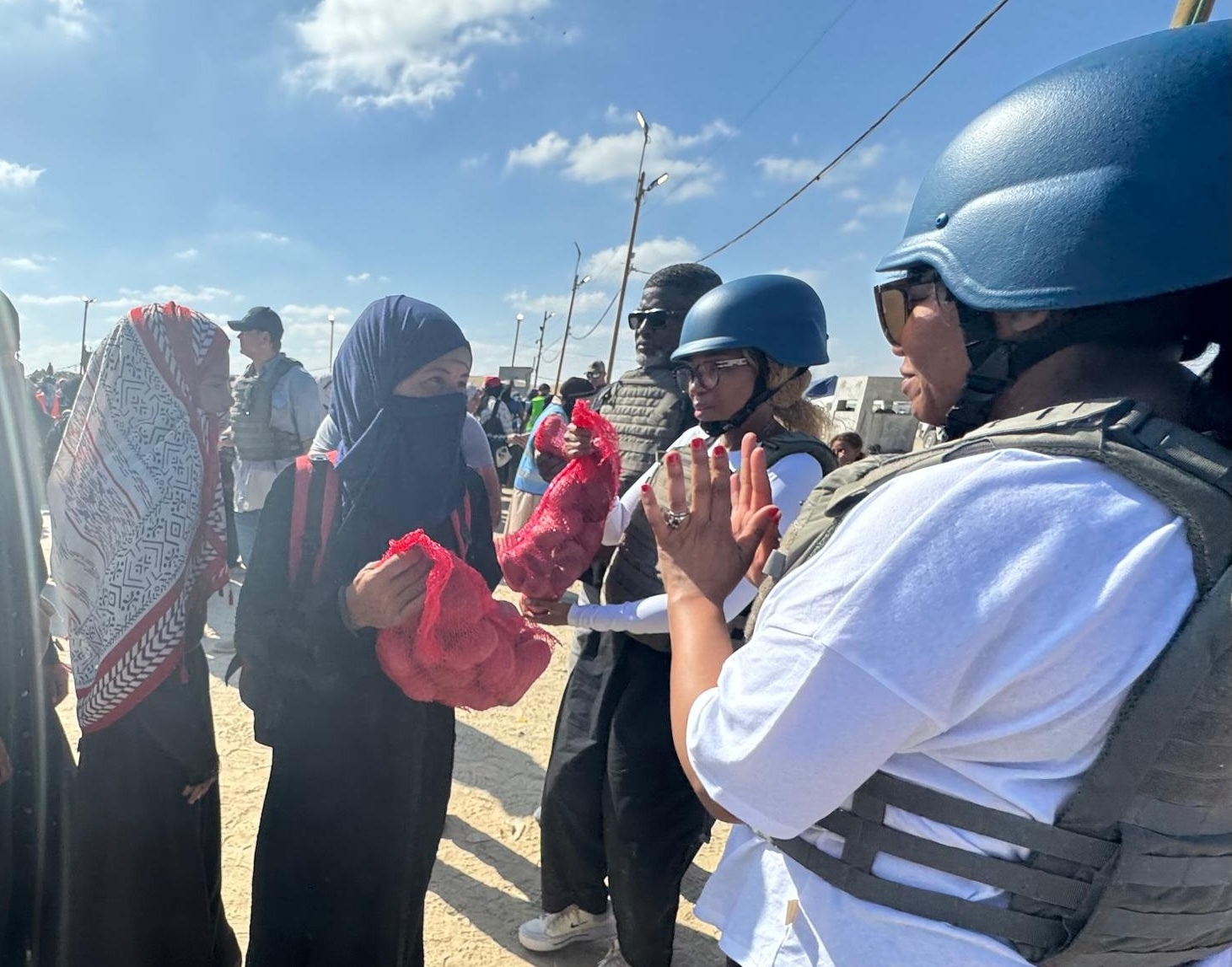
Zamaswazi (Swati) Dlamini-Mandela and Zaziwe Dlamini-Manaway traveled to the region earlier this month, ahead of an announced ceasefire between Israel and Hamas
The New York Democrat praised Trump for the hostage deal: ‘We thank God and congratulate President Trump and all those who helped make the return of the hostages a reality’
Craig Ruttle-Pool/Getty Images
Rep. Tom Suozzi (D-NY) debates in the race for governor at the studios of WNBC4-TV June 16, 2022 in New York City.
In recent months, Rep. Tom Suozzi (D-NY) has stood apart from many of his Democratic colleagues in offering staunch support for Israel, openly praising President Donald Trump for finalizing a deal to free the hostages in Gaza and maintaining a hard line against New York City Democratic mayoral nominee Zohran Mamdani.
Suozzi, a moderate Democrat who hails from a swing district on Long Island with a significant Jewish population, is a longtime stalwart supporter of Israel, and argued in a recent interview with Jewish Insider that maintaining bipartisanship on the issue is critical.
Suozzi has been among the minority of Democrats who have openly credited Trump for the ceasefire that secured the release of the remaining living hostages in Gaza last week.
“We thank God and congratulate President Trump and all those who helped make the return of the hostages a reality. As we celebrate this moment, let us also pause to pray for all those who have endured so much suffering, death and destruction along the way,” Suozzi told JI last Monday, after the hostages were freed.
“It’s plain on its face that the president orchestrated this and put a tremendous amount of effort into this,” he continued. “I disagree with the president on certain things, but when it comes to this issue, I’m fully aligned with him.”
Suozzi said that the Torah and Old Testament teach that it’s critical to stick to one’s values and keep moving forward in hard times.
“One of the values that we need to stick by right now is to stand with the State of Israel, who’s our great ally and shares our values during what has been difficult times,” Suozzi said. “The president is the one who’s accomplished — along with a lot of help from other people — this very important thing, we have to praise him for that, even though I disagree with him on a whole host of other things. On this, he’s really done something remarkable.”
Suozzi noted that he had also supported Trump’s signing of the Abraham Accords and decision to move the U.S. Embassy in Israel to Jerusalem during his first term.
“We have to get back to a place in our American governing and politics where people can disagree, where they disagree respectfully, but also give credit where credit is due in trying to work together to to solve problems,” Suozzi explained. “I want to work with the president. … If he could do Ukraine and an immigration deal — which would require some bipartisan cooperation — he would truly have cemented his place in history. I want to be helpful in that respect.”
Asked about those in the Democratic Party — including some of the most vocal critics of Israel — who have refused to credit Trump or acknowledge the ceasefire that went into effect earlier this week, Suozzi said he sees them as hypocritical.
“It’s the pot calling the kettle black. They criticize Trump for being partisan, or they criticize Republicans for being partisan — which they are, I’m not saying they’re not,” Suozzi said. “When you have something like this that happens, you can’t just base it on your party. It has to be based on what’s right and what’s wrong. This is clearly right. This is clearly a good thing.”
He also said that people, on both sides of the aisle, who understand the damage wrought by antisemitism, “have to join league with each other, regardless of our political party, and work together to do everything we can to stamp it out. In the short term: hold people accountable and prosecute them. In the long term: educate our society about where antisemitism comes from and why it’s so destructive.”
Suozzi said that both in the Democratic Party and the country as a whole, “we have to do a better job” of rooting out and calling out antisemitism.
“It’s not always easy to take on people that are on your team, so to speak,” he continued. “But I think there’s a lot of people on the wrong side of history here. This is an important moment with the enabling of the haters, with social media, with the algorithms on the different platforms — especially TikTok — that are inciting this hateful behavior and the foothold that some malign actors have been working — not just recently but over decades — to build this hate machine. We have to really stand strong against this, even when we have to disagree with people that are on our team, so to speak.”
“At a time when most have hidden beneath the parapet, the Jewish community is very lucky to have fearless leaders like Tom, who willingly stands up to the antisemitic haters and unflinchingly protects the U.S.-Israel relationship,” Rep. Josh Gottheimer (D-NJ), another outspoken pro-Israel moderate, told JI.
Suozzi, along with Rep. Laura Gillen (D-NY), has been among the most vocal opponents within New York Democratic politics of Mamdani’s candidacy — publicly condemning the democratic socialist and explicitly rejecting the prospect of endorsing him, when other Democrats have fallen in line or remained silent. Among other issues, Suozzi has called out Mamdani for his refusal to condemn the slogan “globalize the intifada.”
Suozzi has also pushed back more broadly on the left wing of his party.
“If [Mamdani] wants to be a socialist, he should form his own party and not be part of the Democratic Party,” he said, a sentiment he has directed at the Democratic Socialists of America as a whole.
Asked how he thinks supporters of Israel and opponents of antisemitism can go about rebuilding the eroding bipartisan consensus on these issues, Suozzi said that it’s critical for supporters of Israel to vote for Democrats like himself who are aligned with them on that issue.
He recounted a conversation he had with longtime friends who are Orthodox Jews and who said they had voted against Suozzi in the last election, opting instead to vote down the Republican Party line.
“The person I was speaking with said, ‘We need to get your party back to what it was,’” Suozzi recounted. “I said, ‘Well then you have to support Democrats like me that are working on that. Because you don’t know what things are going to be like in five years, or 10 years, or 15 years or 20 years. The key to the future is to ensure that this continues to be a bipartisan effort, this relationship between the United States and Israel.’”
Suozzi said that his commitment to standing with Israel and the Jewish people is deep-rooted, tracing back in part to his father, his own history and the values and democratic principles shared by the U.S. and Israel.
His father — “the best man I ever knew” — was an Italian immigrant who fought in World War II and faced discrimination at home after the war. “He would not tolerate any sort of discrimination [against] anybody. … If anybody said something that was anti-Jewish or anti-Black or anti-anything, he’d either confront you or get up and walk out of the room.”
Suozzi said that he found an Israeli war bond in his father’s files after he passed away. “He never talked about anything like that, it was just who he was.”
Suozzi said that reading Man’s Search for Meaning by Viktor Frankl, about the psychologist’s experience in the Holocaust, was deeply impactful on him as a high school student. He first traveled to Israel as Nassau County executive in October 2002, meeting with key leaders during the Second Intifada.
He said that his hotel was largely empty due to terrorism concerns, that heavy security was necessary for his group and that the trip organizers attempted to prohibit him from going to mass at the Church of The Holy Sepulchre in Jerusalem for security reasons.
Undeterred, Suozzi snuck out of his hotel to go and initially felt “so courageous” but, walking out of the church, “I see these little girls getting on the bus to go to school that morning. … It was like, ‘Wow, I’m not courageous. People have been living like this … 60 years, living their lives, making this place successful, despite the fact that everybody in the area is trying to kill them. And they’ve held onto their values, and they’ve held onto the things that I believe in.’ So I decided right then and there that I would always stand strong with Israel, no matter what.”
The Trump advisors said the president felt the Israelis were ‘out of control' and it was 'time to be very strong' with them
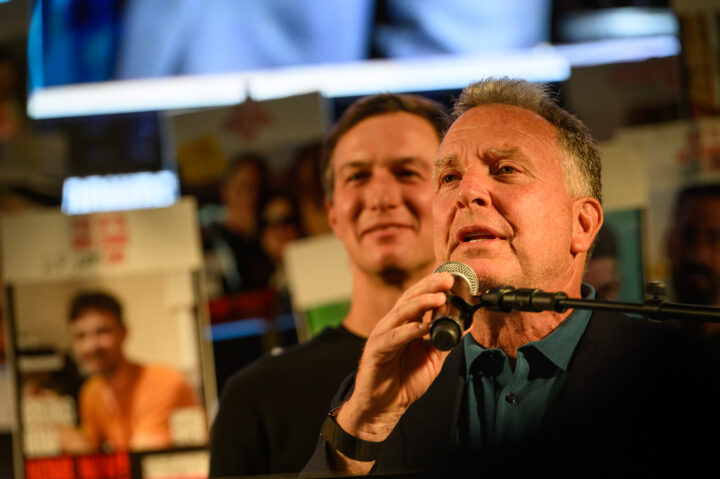
Alexi Rosenfeld/Getty Images
U.S. Middle East envoy Steve Witkoff (C), flanked by Jared Kushner (L), speaks at the weekly 'Bring Them Home' rally in Hostage Square Hostages Square on October 11, 2025 in Tel Aviv, Israel.
Two clashing narratives have emerged about Israel’s strike on a meeting of senior Hamas terrorists in Doha, Qatar, in September, following the release of a preview of an interview with U.S. Middle East envoy Steve Witkoff and Jared Kushner on CBS’ “60 Minutes” program that aired on Sunday evening.
Both narratives posit that the strike hastened the arrival of President Donald Trump’s 20-point plan to free the hostages and end the war. Figures close to Israeli Prime Minister Benjamin Netanyahu said that the attack pushed an anxious Qatar, Hamas’ patron and host of its senior officials, to do more to get the terrorist organization across the finish line.
Trump’s negotiators, however, presented a scenario in which the president, unhappy about the strike, pressured Israel to end the war.
Of the Israeli strike on Doha, Witkoff said that he and Kushner, who in recent months has also played a key role in the administration’s Middle East efforts, “felt a little bit betrayed.”
Kushner added, “I think [Trump] felt like the Israelis were getting a little bit out of control in what they were doing, and it was time to be very strong and stop them from doing things he thought were not in their long-term interest.”
Witkoff said that Qatar, which served as a key mediator between Hamas and Israel for much of the negotiations, said that, following the strike, “we had lost the confidence of the Qataris, so Hamas went underground. It was very difficult to get to them … and it became very, very evident as to how important, how critical [Qatar’s] role was.”
Jerusalem, however, had a different version of the events, as told by Israeli Strategic Affairs Minister Ron Dermer, Netanyahu’s closest confidante, in an Israel Hayom column by journalist Amit Segal.
Israelis involved in the negotiations viewed Qatar as a “spoiler,” such as when they talked Hamas out of accepting a deal proposed by Egypt earlier in the year, according to Segal.
Dermer, Segal wrote, “links the strike to the agreement … The Qataris, it turns out, were convinced that by agreeing to host the negotiations, they had obtained immunity from Israeli strikes on their soil. From their perspective, the strike was a blatant, offensive breach of the commitment. … The Americans’ genius was to convert that negative energy into fuel to propel negotiations to their goal. ‘You want Israel to stop? Then let’s end the war.'”
Netanyahu’s office and the White House closely coordinated throughout subsequent talks to end the war, Segal reported. Then came an agreement backed by several Arab states calling for Hamas to disarm and without the immediate involvement of the Palestinian Authority.
Reactions in Israel to the “60 minutes” preview fell on predictable lines. Netanyahu’s critics said that the U.S. officials’ comments demonstrated that the prime minister did not want to enter the agreement, but instead was pushed into it by Trump.
Israeli Opposition Leader Yair Lapid argued that Witkoff and Kushner’s comments made clear that “after the failed attack on Doha, Trump thought that Netanyahu lost control and forced an agreement on Netanyahu that he didn’t want. … An American administration has never described an Israeli government like this.”
Ha’aretz journalist Amir Tibon, who lived in one of the kibbutzim attacked by Hamas on Oct. 7, 2023, posted on X: “Witkoff and Kushner say in their own voices: Trump understood that Netanyahu was not on the right track and acted aggressively against him to reach a ceasefire and free the hostages.”
Nava Rozolyo, a prominent figure in the protests against Netanyahu years before the Gaza war began, wrote: “Thank you … for forcing Hamas and Netanyahu to reach an agreement on the return of all hostages and ending the war. Thank you for saving us from our own government and for saving lives.”
On the Israeli right, many took issue with Witkoff and Kushner’s retelling of events.
Jerusalem Center for Security and Foreign Affairs President Dan Diker posted on X that “the Israelis ‘getting out of control’ is what helped bring the hostage deal to the table, scaring the Qataris out of their minds.”
Some highlighted Kushner and Witkoff’s business dealings in Qatar. Kushner’s investment company, Affinity Partners, manages billions of dollars in investments from Qatar’s sovereign wealth fund. Witkoff’s son sought Qatari investments in commercial real estate projects earlier this year, and in 2023, Qatar bought the Park Lane Hotel in Manhattan from Witkoff and his partners.
Yishai Fleisher, spokesman for the Jewish community in Hebron and an informal advisor to Israeli National Security Minister Itamar Ben-Gvir, who opposes the ceasefire deal, posted on X in response to the video: “Two American Jews, with no blood on the line in Israel (their wife and kids don’t drive on the roads with Jihadis), but lots of money on the line and business with Qatar, wag their finger at the Jewish State as they cut an awful deal that is certain to bring war.”
Other moments in the interview courted further controversy in Israel, such as when Witkoff described an Israeli cabinet meeting that he attended, in which Ben-Gvir talked about “all the death and all the carnage” from the Oct. 7, 2023, Hamas attacks and was “emotional.” In response, Witkoff described his son Andrew’s death from an overdose and told the Israeli cabinet minister to “let it go, you just can’t play the victim all the time.”
Witkoff also brought up his son’s death in the interview in relation to his meeting with Hamas lead negotiator Khalil al-Haya, whose son was killed in the Doha strike.
“We expressed our condolences to him for the loss of his son, and I told him that I had lost my son and we are both members of a really bad club, parents who had buried children,” he said.
Kushner said of Witkoff and the senior Hamas terrorist: “When Steve and him talked about their sons, it turned from a negotiation with a terrorist group to seeing two human beings kind of showing a vulnerability with each other.”
Kushner also said that he sought to relay a message to Israel’s leadership that “now that the war is over, if you want to integrate Israel with the broader Middle East, you have to find a way to help the Palestinian people thrive and do better.”
“How are you doing with that message?” Leslie Stahl asked.
Kushner smiled and replied: “We’re just getting started.”
This report was updated on Oct. 20, 2025, after the CBS “60 Minutes” interview aired in full.
Amer Ghalib questioned reports of Hamas’ atrocities on Oct. 7 and has supported the BDS movement
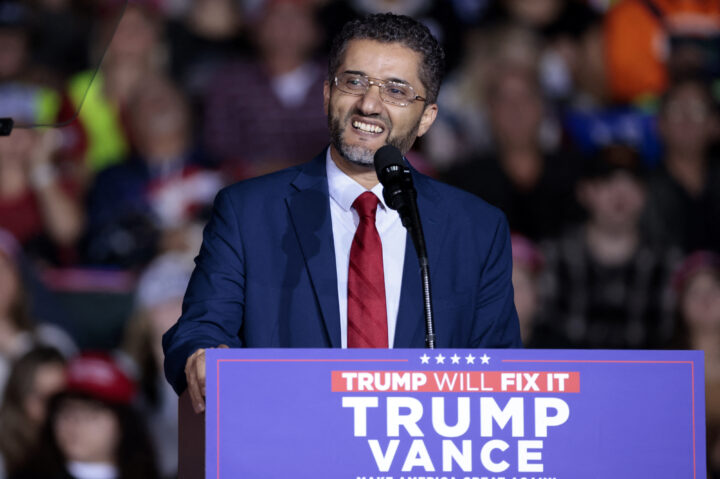
JEFF KOWALSKY/AFP via Getty Images
Democratic Muslim Mayor Amer Ghalib of Hamtramck, Michigan speaks before President Donald Trump holds his final campaign rally before election day at Van Andel Arena in Grand Rapids, Michigan on November 4, 2024.
Amer Ghalib, the mayor of Hamtramck, Mich., and President Donald Trump’s nominee to be U.S. ambassador to Kuwait, is scheduled for a confirmation hearing in the Senate Foreign Relations Committee, a delayed step toward confirmation for a nominee whose background and past comments have come under scrutiny.
Ghalib will come before the committee next Thursday, Oct. 23, at the first confirmation hearing the committee has held in more than a month. Ghalib is currently the only nominee on the agenda for that hearing.
The Democratic Hamtramck mayor, who endorsed Trump in the 2024 election and helped him rally support in Michigan’s Arab and Muslim American communities, has a history of anti-Israel commentary, including questioning reports of Hamas atrocities during the Oct. 7 attacks and supporting the Boycott, Divestment and Sanctions movement, as well as liking antisemitic posts on social media.
The Anti-Defamation League has said Ghalib’s nomination should be withdrawn. “Ghalib routinely traffics in antisemitism, actively supports the antisemitic BDS movement, attempted to justify the 10/7 massacre and refused to take disciplinary action against an appointee who attempted to justify the Holocaust,” the group said on X in March.
Sen. Jeanne Shaheen (D-NH) told reporters that the nomination had been delayed as lawmakers gathered additional information about Ghalib and his background via written questions.
Ghalib announced publicly after such reports that Trump had called him to emphasize his continued support even as “some parties have hindered this appointment.”
Ghalib will likely face questions about his record at the hearing.
The White House envoy spoke at an event at the U.S. Holocaust Memorial Museum in Washington, D.C, commemorating two years since the Oct. 7 Hamas attacks on Israel
United States Holocaust Memorial Museum
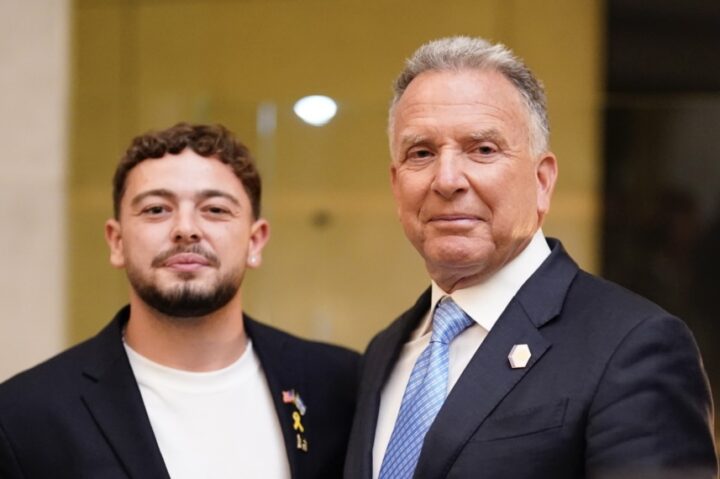
White House Special Envoy Steve Witkoff and Almog Meir Jan
White House Special Envoy Steve Witkoff predicted on Thursday that the Abraham Accords will “seriously expand” in response to the end of fighting in Gaza. Witkoff was addressing attendees at an event commemorating the second anniversary of the Oct. 7, 2023, Hamas terror attacks.
“No leader has done more for the Jewish people or the State of Israel than President Trump,” Witkoff, speaking at an event at the U.S. Holocaust Memorial Museum in Washington, said. “He moved our embassy to Jerusalem, he recognized Israel’s sovereignty over Judea and Samaria [the West Bank] and the Golan Heights. He forged the Abraham peace Accords, which will seriously expand now,” Witkoff said.
The White House envoy, who returned from the region earlier this week after the implementation of the first phase of the ceasefire, posited that Trump winning a second term last November was “the major breakthrough of this conflict.”
“The moment that result was declared, the world changed, and so did the negotiations. Hamas and every party in the region understood that President Trump, his return to office, meant strength, accountability and action,” Witkoff explained. “Even before taking office, President Trump made it clear he wanted progress by the day he stepped into the Oval Office, and shortly thereof, we struck a ceasefire and hostage release deal that began to turn the tide.”
“The success of that first hostage release was made possible by President Trump’s 20-point plan, a strategy that united the Arab world behind this effort. Nations like Egypt, Turkey, Qatar, Saudi Arabia, the UAE, Jordan and many others came aboard because peace and civility are in everybody’s interests,” he added.
Witkoff went on to commend the Arab state negotiators and Jared Kushner, Trump’s son-in-law and former senior advisor, arguing that they collectively pressured Hamas to release the remaining hostages. All 20 living hostages were freed on Monday, while the terror group has slow-walked the repatriation of the bodies of deceased hostages
“In the final phase, at President Trump’s directive, Jared Kushner, a great American, and I flew to Sharm el-Sheikh, Egypt, for the last round of negotiations, led by Qatari, Egyptian and Turkey’s mediators. They were incredible and without them we would not be where we are today,” Witkoff said. “Jared was tremendous. Together, we convinced Hamas that keeping the remaining 20 hostages was no longer an asset, it was a liability, and they began to believe it.”
Witkoff acknowledged that Israel has yet to receive the remains of the deceased hostages still being held by Hamas in Gaza, but said the administration was working toward their release.
“We didn’t get everybody back. We’ve gotten [nine deceased hostages] back and we will pursue the return of the … deceased until they all go home, and I’m confident that they will,” Witkoff said.
Witkoff also referenced his several recent visits to Gaza during his remarks, pointing out that Gazans he’s engaged with “want peace too. They want stability, opportunity, a better life for their children. A future for Gazans must include jobs, education, hope, aspirations, not just guns and violence. Israel should never have to live under the threat of rockets flying at its people or the fear of terrorist attacks, but Gaza’s people must be able to live a decent life as well.”
“We have to be clear, Hamas must unequivocally disarm. They have no future in Gaza,” he continued. “Only when extremism ends does prosperity begin.”
Rabbi Yehuda Kaploun, Trump’s nominee to serve as antisemitism envoy; Ben Ladany, a former IDF sergeant in the elite Oketz K-9 Unit who was shot seven times in November 2023 while fighting Hamas in Gaza; and Almog Meir Jan, an Israeli hostage held by a Palestinian journalist after being taken from the Nova music festival, also spoke at the event.
Nat Shaffir, a Holocaust survivor and USHMM volunteer, and 18 other Holocaust survivors, were among those in attendance, in addition to Rep. Randy Fine (R-FL); Andrew Giuliani, the son of former New York City Mayor Rudy Giuliani and the executive director of the White House task force overseeing the 2026 FIFA World Cup whom Trump appointed in his first term to sit on the U.S. Holocaust Memorial Council; Alex Witkoff, the son of Steve Witkoff and CEO of the Witkoff Group who also sits on the council; Rabbi Levi Shemtov, executive vice president of American Friends of Lubavitch (Chabad); and Alina Habba, the acting U.S. attorney for New Jersey and the president’s former personal attorney.
Plus, NYC Jewish leaders unpersuaded by Mamdani overtures
Anna Moneymaker/Getty Images
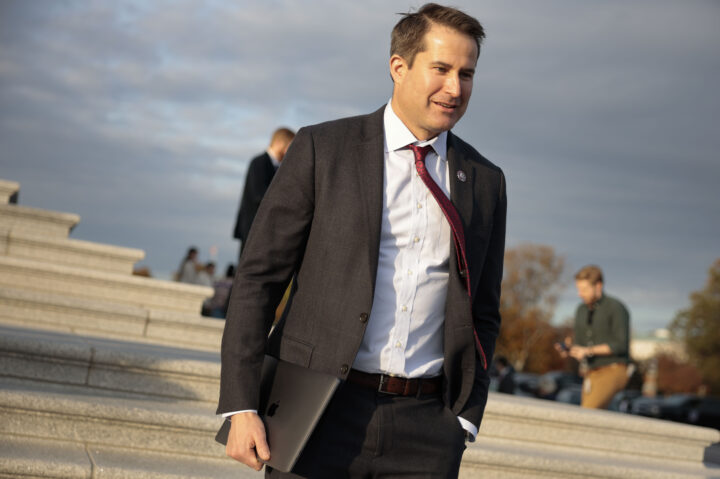
Rep. Seth Moulton (D-MA) speaks with a reporter outside of the U.S. Capitol Building on November 16, 2021 in Washington.
Good Thursday afternoon!
This P.M. briefing is reserved for our premium subscribers like you — offering a forward-focused read on what we’re tracking now and what’s coming next.
I’m Danielle Cohen-Kanik, U.S. editor at Jewish Insider and curator, along with assists from my colleagues, of the Daily Overtime briefing. Please don’t hesitate to share your thoughts and feedback by replying to this email.
📡On Our Radar
Notable developments and interesting tidbits we’re tracking
Hamas continues to delay its return of the deceased hostages in Gaza, citing difficulty in locating and unearthing them. The terror group has so far returned nine out of the 28 bodies it holds, though Israel told mediators yesterday that it believes Hamas knows the whereabouts of at least six other bodies, Arab officials told The Wall Street Journal. Israel shared some of its own intelligence on their locations today and is convening an international task force, including Egypt and Turkey, to work on recovering the rest of the remains…
Hamas is also continuing its campaign to execute its rivals in the enclave; President Donald Trump posted this afternoon on Truth Social, “If Hamas continues to kill people in Gaza, which was not the Deal, we will have no choice but to go in and kill them”…
Israel took credit for the death of Houthi Chief of Staff Muhammad al-Ghamari, announced by the terror group today, as a result of an Israeli strike on Houthi leadership in Yemen in August. Israeli Defense Minister Israel Katz said in a statement that al-Ghamari has “joined his comrades from the thwarted axis of evil in the depths of hell”…
Meanwhile on the campaign trial, New York City Democratic mayoral nominee Zohran Mamdani refused to say that Hamas should disarm on a Wednesday appearance on Fox News, instead asserting, “I don’t really have opinions about the future of Hamas and Israel beyond the question of justice and safety, and the fact that anything has to abide by international law. That applies to Hamas, that applies to the Israeli military, applies to anyone you could ask me about.”
In response, Rep. Laura Gillen (D-NY), a Long Island swing district Democrat who has remained vocally opposed to Mamdani’s candidacy, said on social media, “Pro-Hamas Zohran is unfit to hold any office in the United States”…
Despite maintaining his anti-Israel positions, Mamdani continued his outreach to Jewish leaders in the city over the holiday of Sukkot, including meeting with representatives of the Satmar Hasidic community in Williamsburg as well as with leadership at Reform Congregation Beth Elohim in Park Slope, The New York Times reports.
The conversations have not assuaged communal concerns over his potential mayoralty, with at least one meeting ending with Mamdani and “some attendees ‘totally apart from one another’ on key issues.”
Rabbi Ammiel Hirsch, a progressive Reform leader and senior rabbi at Manhattan’s Stephen Wise Free Synagogue, likewise was unpersuaded in a video and statement he released today, telling Mamdani, “I do not speak for all Jews, but I do represent the views of the large majority of the NY Jewish community, which is increasingly concerned about your statements about Israel and the Jewish people”…
Rep. Seth Moulton (D-MA), mounting a primary challenge to Israel critic Sen. Ed Markey (D-MA), said today that he is returning political donations he has received from AIPAC and will reject the group’s support going forward, Jewish Insider’s Marc Rod reports.
AIPAC said in a statement that Moulton “is abandoning his friends to grab a headline, capitulating to the extremes rather than standing on conviction. His statement comes after years of him repeatedly asking for our endorsement and is a clear message to AIPAC members in Massachusetts, and millions of pro-Israel Democrats nationwide, that he rejects their support and will not stand with them.”
Moulton’s changed stance on accepting support from AIPAC is yet another sign of how even more-moderate Democrats are facing pressure from the party’s activist base to distance themselves from embracing Israel…
CNN unearthed since-deleted social media comments from Maine Senate candidate Graham Platner, who has made opposition to Israel and AIPAC a central focus of his campaign, on a range of far-left issues, including calling himself a communist, saying he’s “disgusted” with America and repeatedly disparaging police officers. “I can honestly say that that is me just being an a**hole on the Internet,” Platner said about the posts…
Claudia Milne, senior vice president for standards and practices at CBS News, announced today that she is stepping down from her position, the first executive to do so since Free Press founder Bari Weiss was named editor-in-chief of the outlet.
Milne oversaw the standards department during a period of perceived anti-Israel bias by the news organization, including when the department instructed CBS employees not to refer to Jerusalem as being in Israel (reported on by The Free Press)…
⏩ Tomorrow’s Agenda, Today
An early look at tomorrow’s storylines and schedule to keep you a step ahead
Keep an eye on Jewish Insider tomorrow morning for reporting on the New York City mayoral debate and an appearance by Middle East envoy Steve Witkoff and antisemitism envoy nominee Yehuda Kaploun at the U.S. Holocaust Memorial Museum in Washington, both taking place this evening.
On Sunday evening, Americans for Ben-Gurion University will hold a benefit in New York City featuring a performance by comedian Alex Edelman and honoring special guest Sasha Troufanov, who was held hostage by Hamas for almost 500 days.
We’ll be back in your inbox with the Daily Overtime on Monday. Shabbat Shalom!
Stories You May Have Missed
EDUCATION CONSTERNATION
With new higher ed compact, Trump’s antisemitism crusade broadens to fight academic bias

Many academics who have fought antisemitism in education said they have concerns towards Trump’s plan
MTG MOMENTUM
As she emerges as populist GOP critic, Marjorie Taylor Greene amplifies antisemitic rhetoric
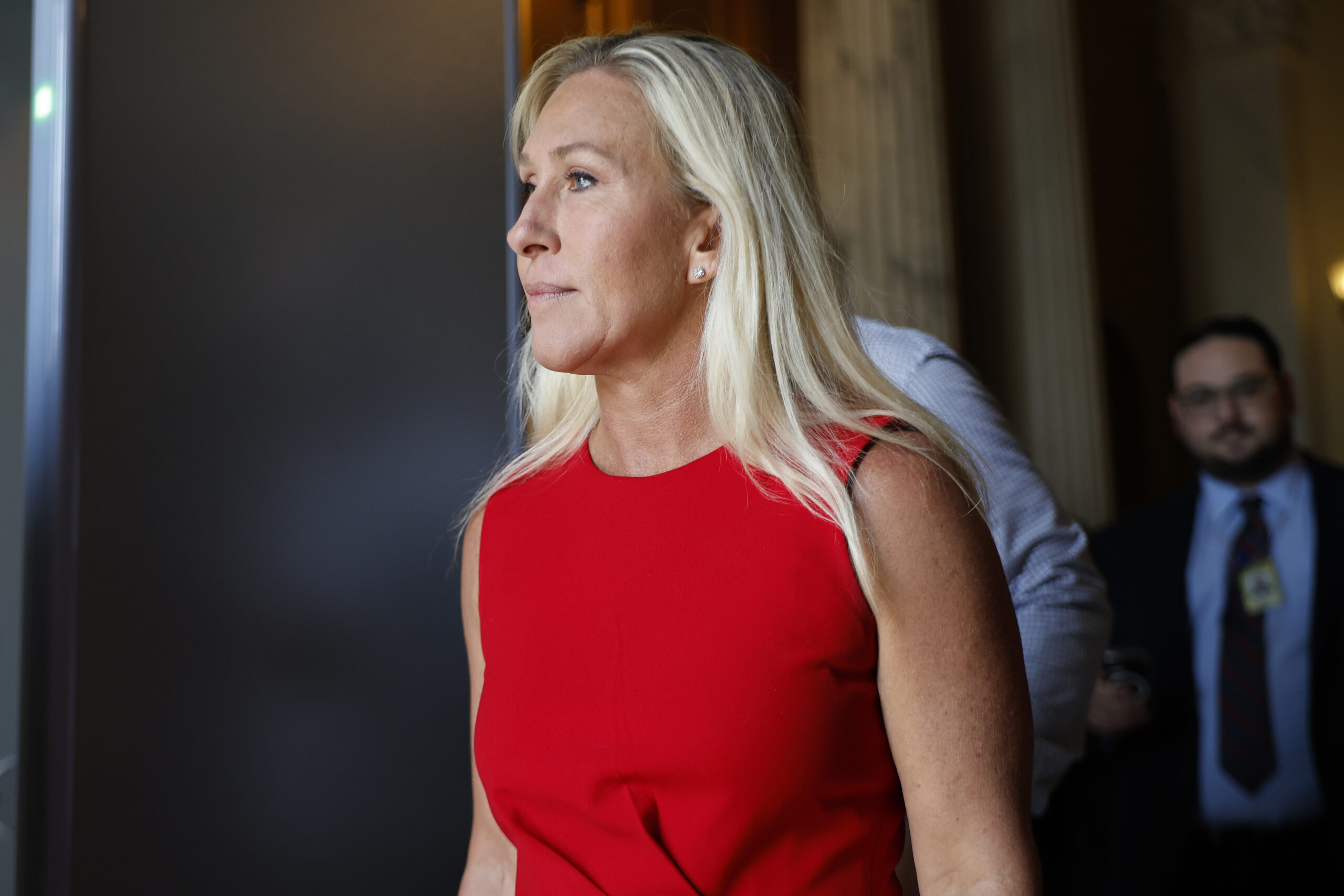
The Georgia congresswoman has recently boosted claims Israel had a hand in assassinating Charlie Kirk, and has baselessly accused the Jewish state of meddling in American elections
With Hamas refusing to disarm, there may be “two Gazas,” with war in one part, Trump’s proposed technocratic government in another, experts tell JI

Abed Rahim Khatib/picture alliance via Getty Images
16 October 2025, Palestinian Territories, Khan Yunis: A truck carrying fuel enters Khan Yunis through the Karem Shalom crossing as part of the ceasefire agreement between Israel and Hamas.
Following the joy in Israel over the return of the remaining living hostages on Monday and President Donald Trump’s declaration that “the long and painful nightmare is finally over” came the letdown: Hamas, as of Thursday, had returned only nine out of 28 bodies of the deceased hostages and started to execute rivals and reestablish itself in the areas of Gaza from which the IDF withdrew.
While Trump has repeatedly said the war in Gaza is over, when asked by CBS News if that’s the case, Israeli Prime Minister Benjamin Netanyahu said that Israel “agreed to give peace a chance,” and later in the interview said it still needs to “finish the war as speedily as possible.”
The future of Gaza remains unclear, despite Israel agreeing to Trump’s 20-point plan for the region. Hamas only agreed to the immediate steps in the plan: stopping the war, freeing the hostages in exchange for 1,950 prisoners, including those who killed Israelis in terrorist attacks, and Israel withdrawing to a specified line within Gaza.
Trump posted on Truth Social on Wednesday that the plan’s second phase, which entails Hamas’ disarmament and demilitarization of the Gaza Strip, “begins right NOW!!!” Yet, an Israeli official confirmed to Jewish Insider a report that, with Hamas withholding most of the remaining hostages’ bodies, negotiations to continue to the next phase of the plan are on hold.
Disarming Hamas and the demilitarization of Gaza are meant to take place “under the supervision of independent monitors,” but those monitors have yet to be selected and sent to the region. The Peace Board announced — and led — by Trump, with the involvement of former U.K. Prime Minister Tony Blair that is meant to oversee Gaza’s administration by Palestinian technocrats has not yet been formed, nor has the temporary International Stabilization Force meant to train Palestinian police and be part of the “long-term internal security solution” for Gaza and Israel.
Meanwhile, Hamas has entered the vacuum and, in recent days, has tried to consolidate its power by killing members of clans that it accused of collaborating with Israel.
On Tuesday, Trump called the clans “gangs that were very bad,” adding that Hamas’ attacks “didn’t bother me much” and that the terror group had his “permission” to proceed; Trump compared Gazan opponents of Hamas to gang members from Venezuela who entered the U.S. illegally.
At the same time, Trump said that Hamas must disarm, threatening U.S. involvement if the group does not lay down its weapons. “They will disarm or we will disarm them,” Trump said. “If they don’t disarm, it’ll happen quickly and perhaps violently, but they will disarm.”
Netanyahu told CBS News that he “hope[s] we can do this peacefully. We’re certainly ready to do so.”
Kobi Michael, a senior researcher at the Misgav Institute for National Security and Zionist Strategy, told the Misgav Mideast Horizons podcast co-hosted by Jewish Insider’s Lahav Harkov this week that although Trump’s plan “has 20 articles, it is not very well-detailed. Actually, it is a framework … [Trump] isn’t very interested in the details. He is very focused on the final outcome, on the vision. He leaves the details for the professionals.”
“If President Trump will lose his focus, determination, decisiveness with regard to the further phases of his own plan — and I mean disarming Hamas, demilitarization of the Gaza Strip, and so on — [Israel] might find [itself] in a stalemate. This, I would say, is the main challenge of the State of Israel — keep President Trump focused,” Michael warned.
Ofer Guterman, a senior researcher at the Institute for National Security Studies at Tel Aviv University, told JI that Hamas reestablishing itself within the “yellow line” to which the IDF withdrew is “unpleasant but expected,” because “up until now, Israel refused to deal with all the systems we wanted to put in place instead of Hamas.”
“The technocratic administration, international forces, Palestinian police, etc. – these are just headlines with nothing behind them. We need to start building them. Some will only be relevant in weeks or maybe months,” Guterman argued.
Guterman also pointed out that, while the second phase of the deal may go into effect in the coming weeks, it will likely last for years.
“We need to remember that we are still in phase one,” he said. “Not all the hostages are back, and that influences the decision-making in Israel. … Our first, central goal is to bring back most, if not all, or the hostages’ bodies that remain there.”
Former Israeli National Security Advisor Maj.-Gen. (res.) Yaakov Amidror said that Hamas is likely to return most of the bodies to the best of its capability.
“Hamas understands that, without [returning the bodies], it will clearly not be fulfilling its obligation to the Americans and Qatar and other countries, and may find itself in a war in which it doesn’t have its main card, the hostages,” Amidror said in a Jerusalem Press Club briefing.
Michael warned that while countries such as Qatar and Turkey that support the Muslim Brotherhood and Hamas “were clever enough to understand … what is important for President Trump is to release the live hostages and declare the end of the war, and when it comes to the other phases, President Trump will be much more tolerant and they will be able to convince him that they need more time and Israel has to make further concessions.”
“Hamas does not intend to dismantle itself … [or] give up its influence and position, not only in the Gaza Strip, but the entire Palestinian arena,” Michael said. “The Qataris and the Turks are interested in keeping Hamas as a relevant player in the Gaza Strip, first of all, as a platform for increasing its influence on the entire Palestinian Authority.”
The priority in Gaza must be removing Hamas’ control over any part of the enclave, including humanitarian or civilian services, Amidror argued.
“The people of Gaza are suffering from the strong hand of Hamas,” he said. “Today, Hamas is killing many Gazans. … We have to find a way to disarm Hamas for them and for Israel.”
Amidror also said that it is “clear that nothing can be done in Gaza, not to rebuild, not to bring in forces that will implement civilian change, if Hamas is still so strong. Hamas cannot attack Israel anymore, but it is the strongest force in Gaza, and in that situation, no one will rebuild Gaza.”
As long as Hamas does not disarm, Guterman said, “Israel must prevent the rehabilitation of the areas of Gaza controlled by Hamas.”
Michael pointed out that Trump’s plan allows Israel and partner countries to proceed with establishing a technocratic administration and International Stability Force in Gaza before Hamas is disarmed.
“If Israel will agree to do that in the southern part, the area between Khan Younis and Rafah, I think there is a high probability for the success of security personnel and the Palestinian Authority,” Michael said. “They will enter the region empty of Hamas, with the presence of the government of technocrats, and everything will be fully coordinated with the IDF. … Begin the reconstruction process there, and continue the war in the north against Hamas, until Hamas is dismantled.”
In such a scenario, Michael posited that residents of Gaza will try to move south to the areas being rebuilt to try to make a better life than in the areas controlled by Hamas.
“Then Hamas will lose its strength, which [comes from] the population, and it will be much easier for the IDF to besiege the areas that Hamas is present in, to dismantle Hamas,” he said.
Guterman thought that Israel implementing the plan in only part of Gaza was the likely scenario, but that progress would halt there and there would be “two Gazas.”
“Hamas will be within the yellow line, trying to grow more powerful as we try to fight it, and Gaza will have a security corridor in over 50% of the territory, making it easier to defend the [Israeli] towns near the border and create a better base for actions against Hamas,” he said.
For there to be an alternative administration in the IDF-controlled areas of Gaza that would undermine Hamas’ legitimacy, run by countries in the region, Israel’s “concession will have to be … committing to a viable path to a two-state solution,” Guterman argued.
Plus, Trump delivers historic Knesset speech

Hostages Family Forum
Captivity survivor Omri Miran arrives at Ichilov Hospital and waves to his family
Good Monday morning!
In today’s Daily Kickoff, we report on the release this morning of the 20 remaining living Israeli hostages, and preview President Donald Trump’s speech to the Knesset. We talk to historian Pamela Nadell about her new book about antisemitism, and look at the race taking shape in Tennessee between Rep. Steve Cohen and state legislator Justin Pearson. Also in today’s Daily Kickoff: Patrick Dumont, Zeev Buium and Ben Shapiro.
Ed. note: The next Daily Kickoff will arrive in your inbox on Thursday. Chag Sameach!
Today’s Daily Kickoff was curated by Jewish Insider Executive Editor Melissa Weiss and Tamara Zieve with assists from Marc Rod and Danielle Cohen-Kanik. Have a tip? Email us here.
What We’re Watching
- We’re following today’s events as they unfold in Israel, following the release this morning of the remaining living hostages and President Donald Trump’s arrival in the country. Trump will travel to Sharm el-Sheikh, Egypt, later today for a signing ceremony that will be attended by officials from around the world. Israeli Prime Minister Benjamin Netanyahu declined an invitation extended earlier today by Egyptian President Abdel Fattah el-Sisi, citing the Simchat Torah holiday, which begins this evening in Israel.
What You Should Know
A QUICK WORD WITH MELISSA WEISS AND TAMARA ZIEVE
It was the day that Israelis have waited for after more than two years — or two years exactly by the Hebrew calendar. Thousands had already assembled by dawn at Tel Aviv’s Hostages Square, where some had slept overnight, for the release of the last remaining hostages known to be alive. Shortly after 8 a.m., the first seven hostages — Omri Miran, Matan Angrest, Ziv Berman, Gali Berman, Guy Gilboa-Dalal, Alon Ohel and Eitan Mor — were released to Red Cross custody.
The song “Habayta,” meaning “home,” the unofficial anthem of the hostage families, played over a montage of photos of the 47 men and one woman who have spent the last 738 days in captivity — a scene that has repeated itself in the square every Saturday night for two years.
Israeli networks split coverage between the live festivities across the country, in-studio reporting and interviews with hostage families and former hostages. Former hostage Emily Damari called into Israel’s Channel 12 upon the release of her neighbors and friends, twins Zvi and Gali Berman, and said the Shehecheyanu prayer giving thanks — a prayer also recited by the thousands thronging in and around Hostages Square. The crowd erupted in joy at the sight of the two brothers being reunited.
By midday, the 20 living hostages — also including Avinatan Or, Bar Kupershtein, Ariel and David Cunio, Eitan Horn, Elkana Bohbot, Evyatar David, Maksym Harkin, Matan Zangauker, Nimrod Cohen, Rom Braslavski, Segev Kalfon and Yosef-Chaim Ohana — were on Israeli soil.
The first images of the men trickled out over the course of the morning: Miran, flanked by his wife and father, wearing a shirt with artwork by his two young daughters; the Berman twins in Maccabi Tel Aviv jerseys; Ohel, pale but smiling and standing on his own, with sunglasses to protect his damaged eyes.
In contrast to previous hostage release, as dictated by the agreement, there were no propaganda ceremonies staged by Hamas as they handed over the captive Israelis. Instead, Hamas made video calls to the hostages’ relatives, who spoke to their loved ones as they stood beside their masked and uniformed captors.
Amid the hostage releases, President Donald Trump descended from Air Force One to the tarmac at Ben Gurion Airport on Monday morning, where he was greeted by Prime Minister Benjamin Netanyahu and President Isaac Herzog. White House Special Envoy Steve Witkoff, Jared Kushner and Ivanka Trump — who spoke at Saturday night’s hostage rally in Tel Aviv. Read our coverage of their speeches at the rally here.
Signing the Knesset’s guestbook after his arrival, Trump wrote, “This is my great honor — a great and beautiful day, a new beginning.”
With the release of the last living hostages, and later today the remains of four of the 28 deceased hostages, Israel will begin the process of releasing close to 2,000 Palestinian prisoners in accordance with the first phase of the deal. After that, attention will turn to negotiations surrounding the deal’s second phase.
After addressing the Knesset, Trump will travel to Sharm el-Sheikh, Egypt, for a signing ceremony that will also include Palestinian Authority Mahmoud Abbas. Trump’s speech was delayed due to a call with Egyptian President Abdel Fattah el-Sisi, who extended an invitation to Netanyahu to join the ceremony. Netanyahu’s office released a statement saying that the prime minister thanked Trump for the invitation, but won’t be able to participate due to the close timing with the beginning of the Simchat Torah holiday this evening.
In Israel, it has been a day of celebration after two years of pain, longing, fear, anxiety. It was the first time in two years that Israelis were able to wholeheartedly greet each other with ‘chag sameach‘ — a greeting that took on a double meaning on the eve of Simchat Torah, which begins this evening.
But the day will take a heavier turn this afternoon when the remains of just four of the deceased hostages are expected to be returned to Israel, bringing a combination of pain and closure to their loved ones who will finally be able to give them a proper burial. Meanwhile, the 24 other hostage families — who were shocked to learn this afternoon of the low number of bodies that will be released — will be left waiting for the remains of their loved ones to be located and returned home. The Hostages Families Forum called the development a “blatant breach of the agreement by Hamas,” and called on the Israeli government and the mediators to “take immediate action to rectify this grave injustice.”
TRUMP’S TALK
President Trump receives hero’s welcome as hostages return to Israel
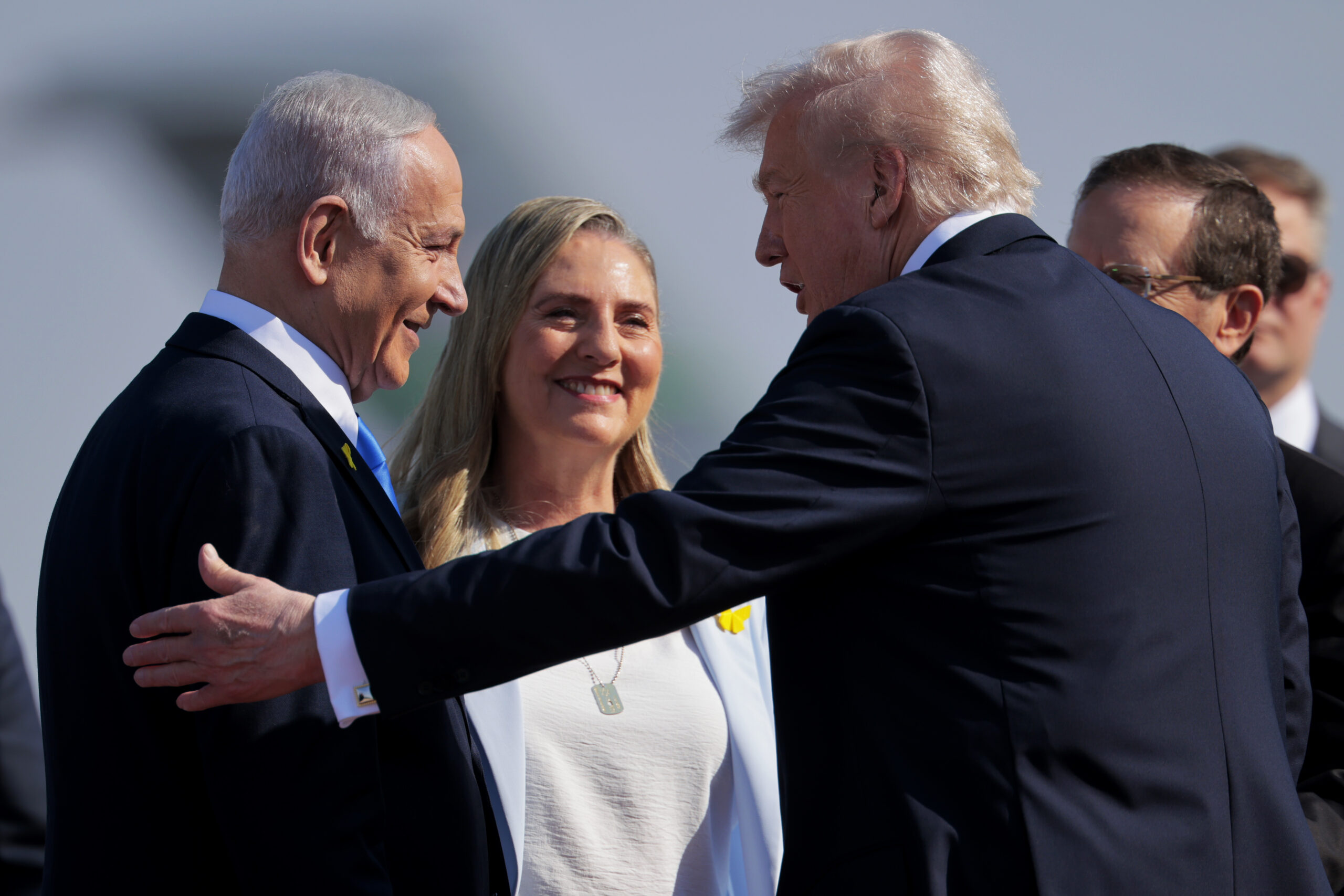
President Donald Trump gave a victory speech in the Knesset as the final 20 living hostages returned to Israel from Gaza on Monday, in accordance with the first phase of his plan to end the war, Jewish Insider‘s Lahav Harkov reports.
Live from Israel: Israeli television stations showed a live screen, with Air Force One landing at Ben Gurion Airport on one side, and IDF vehicles carrying freed hostages Eitan Mor, Gali and Ziv Berman, Matan Angrest, Omri Miran, Guy Gilboa-Dalal and Alon Ohel to their families on the other. Trump was given a hero’s welcome in the Knesset, where he was met with an honor guard and current and former lawmakers gave him a lengthy standing ovation. “The hostages are back – it feels so good to say it!” Trump said.
Tennessee tackle
Rep. Steve Cohen draws younger, far-left challenger hostile to Israel in primary
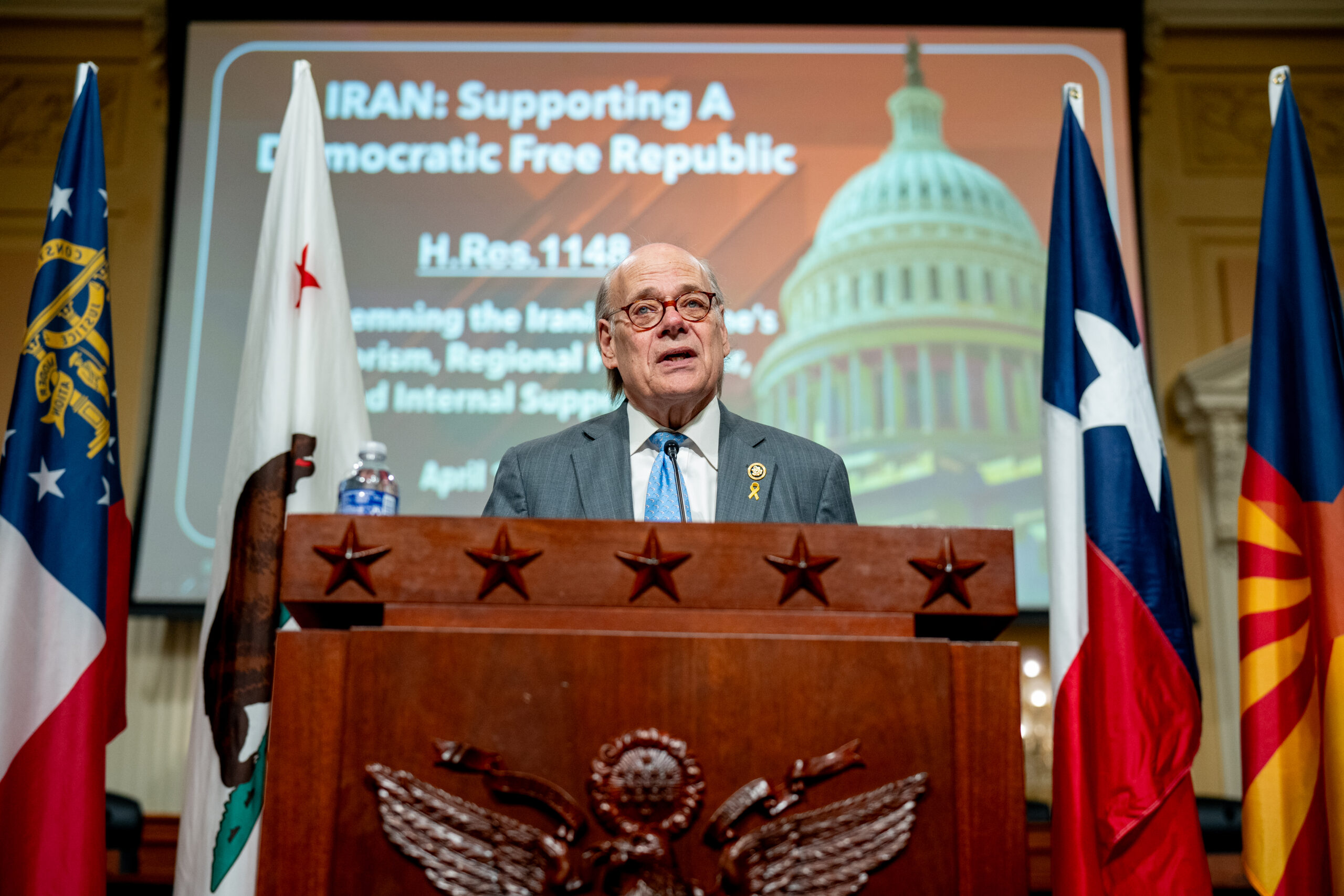
Rep. Steve Cohen (D-TN), a 10-term congressman from Memphis, Tenn., has long occupied a unique position in U.S. politics. The 76-year-old lawmaker, who became Tennessee’s first Jewish member of the delegation when he took office in 2007, is the only Democratic House member in his solidly conservative state. And as the lone white member of either party to represent a majority-Black district, Cohen has also managed to deftly navigate a delicate racial dynamic in his district, only facing occasional primary challenges from Black challengers. Through it all, he has been a political powerhouse in Memphis, holding onto his seat by building a broad and diverse coalition of support. Now, he is facing what could be his biggest test in years as he prepares to go up against a formidable new challenger in the 2026 primaries, at a moment when some veteran Democratic House members are under growing pressure from a crop of younger opponents who are pushing for generational change to revive the party’s declining image among younger, disillusioned voters, Jewish Insider’s Matthew Kassel reports.
New competition: Justin Pearson, a Democratic state legislator from Memphis who rose to national prominence in 2023 when he and a fellow Black colleague were expelled from the Tennessee General Assembly for leading a gun control protest on the House floor, announced last week that he would challenge Cohen in what is shaping up to be a bitterly contested and expensive primary, highlighting differences over identity as well as hot-button issues such as Israel and the war in Gaza.
BOOKSHELF
Jewish studies scholar argues modern-day antisemitism akin to 1950s-era discrimination in new book
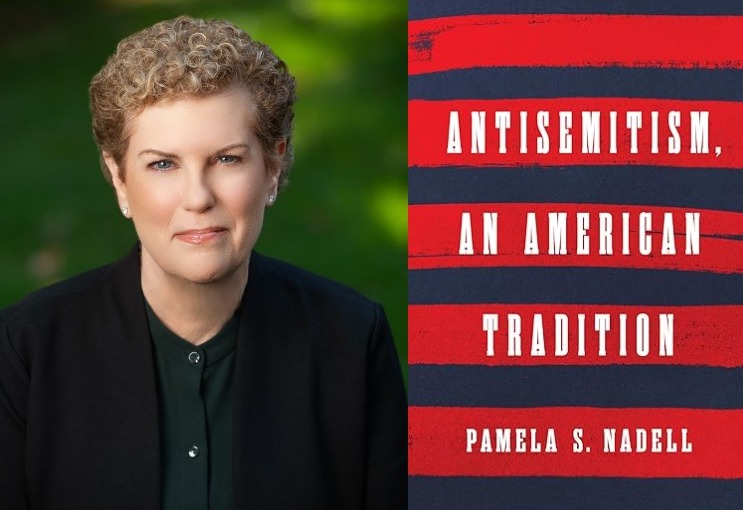
Historian Pamela Nadell is very familiar with the rituals of publishing a book, as she has written nine of them: Secure a release date, present at academic conferences, maybe headline a handful of general-public events. Although she is at the forefront of her field at American University — chair in Women’s and Gender History, director of the Jewish studies program and former president of the American Jewish Historical Society — Nadell knows that success in academia does not often translate to strong book sales. Things appear to be different for her latest book, Antisemitism: An American Tradition, Jewish Insider’s Gabby Deutch reports.
Pertinent timing: Nadell began to understand how much interest a book on antisemitism would generate when her publisher assigned a full-time publicist to promote the book, which will be published on Oct. 14. Nadell is booked at speaking engagements across the country into 2027, starting with an event at the Washington bookstore Politics and Prose next week. The book that she began researching six years ago will now appear on bookshelves at a time when antisemitism has reached record levels since the Anti-Defamation League began tracking data in 1979. “I had hoped, frankly, that the subject would be seen as a historic subject by the time [the book] came out into the world,” Nadell told JI in a recent interview. “And that’s absolutely not the case.”
DOHA DEALINGS
Hegseth signs deal to open Qatari Air Force facility in Idaho
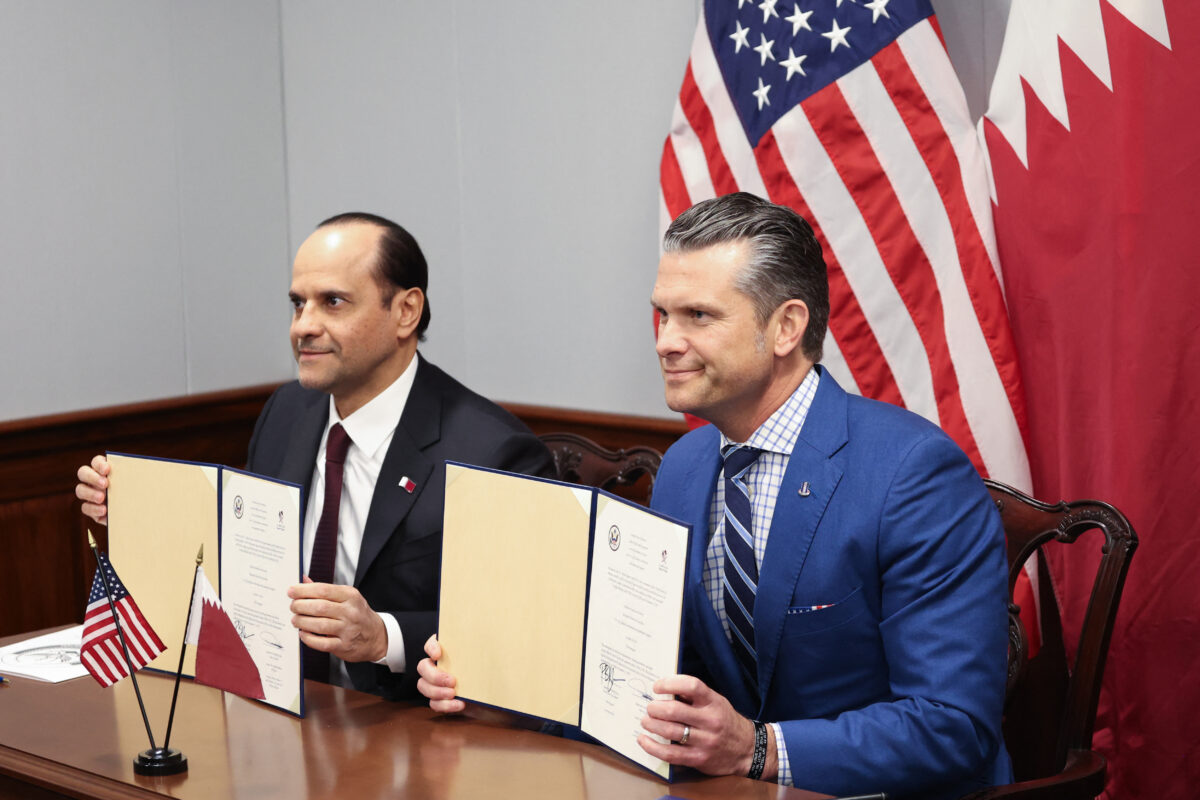
Secretary of Defense Pete Hegseth, in a Pentagon meeting with Qatari Defense Minister Saoud bin Abdulrahman Al Thani on Friday, signed a deal to open a Qatari Air Force facility at the U.S. Mountain Home Air Force Base in Idaho, Jewish Insider’s Marc Rod reports. Facing swift backlash, Hegseth clarified that under the terms of the agreement, “Qatar will not have their own base in the United States — nor anything like a base. We control the existing base, like we do with all partners.”
Broad opposition: The deal has elicited criticism from voices as wide-ranging as Trump ally and far-right influencer Laura Loomer and Democratic National Committee Chairman Ken Martin. “An economic bailout for Argentina. An air force base for Qatar. This guy is doing everything but putting America first,” Martin said, a sentiment echoed by the DNC’s vice chair, Malcolm Kenyatta. Loomer wrote a spree of X posts lambasting the deal, framing it as the vanguard of a Muslim Brotherhood invasion of Idaho and the United States, a threat to national security, a precursor to a potential terrorist attack and the harbinger of the downfall of Western civilization. “Now that the GOP has decided to literally harbor Islamic terrorists on US soil, I don’t really care about fighting for Republicans as much as I did yesterday. I have lost hope for 2026 and 2028 to be totally honest,” Loomer said.
ROLE REALIZED
Senate confirms Trump pick to lead civil rights division at Education Dept.

The Senate voted this week to confirm Kimberly Richey as the assistant secretary for civil rights at the Education Department, eight months after President Donald Trump named her to the role. The Education Department’s Office for Civil Rights, which Richey will lead, is responsible for overseeing investigations into antisemitism at American schools and universities. The Trump administration laid off more than half of the division’s investigators earlier this year, sparking sharp criticism from congressional Democrats, Jewish Insider’s Gabby Deutch reports.
Background: Richey previously served in the same role on an interim basis for the final months of Trump’s first term. For much of that administration, she was deputy assistant secretary of the office that oversees special education issues. She first worked at the Education Department in the George W. Bush administration after being hired by Ken Marcus, now the chairman of the Louis D. Brandeis Center for Human Rights Under Law. Richey comes to Washington from Florida, where she had been serving as senior chancellor for Florida’s Department of Education. Before that, she was deputy superintendent of the Virginia Department of Education.
HILL TALK
Senate moves toward repeal of Caesar Act Syria sanctions in defense bill

The Senate approved the repeal of strict sanctions legislation targeting the now-deposed Assad regime in Syria, as part of its version of the 2026 National Defense Authorization Act, Jewish Insider’s Marc Rod reports.
State of play: The chamber also passed, as part of a bipartisan package of amendments, an amendment led by Sens. Lindsey Graham (R-SC) and Chris Van Hollen (D-MD) — opposed by some Syrian-American activists — that requires regular reports to Congress certifying Syria’s compliance with a variety of U.S. priorities and urges the administration to reimpose sanctions if such verification cannot be completed. The House version of the NDAA does not include a similar provision, so whether the sanctions repeal is included in the final bill, and in what form, will be subject to negotiations between the two chambers.
Worthy Reads
The Families’ Fight: The Free Press’ Matti Friedman reflects on the successes of the movement to free the hostages juxtaposed with the realities of war. “On the day of the Hamas massacres, which ravaged swaths of southern Israel and killed nearly 1,200 people, Israelis saw their feeling of security shattered, along with their faith in their leadership and army and in the basic promise that the helpless chapters of Jewish history had ended conclusively with the founding of the state of Israel. This rupture required psychological repair, and this became inseparable, for some, from the hostages’ return. ‘The slogan ‘Bring Them Home,’ rather than ‘Give Them Back,’ the fact that it’s directed inward, gets at the idea that this is really about restoring our own place and our own agency, which is at the heart of Zionism,’ [Tal] Becker said when we spoke again Sunday. Another popular slogan, seen on bumper stickers and protest signs, reads Nachzir, nakum: ‘We’ll return them and rise.’ Those two acts are linked, the second predicated on the first.” [FreePress]
Sharabi’s Survival: The Atlantic’s Franklin Foer considers what he calls the “existential heroism” of the released Israeli hostages. “Unlike Sharabi, some of the hostages already surmised that they had lost their families in the massacre, shattering the most compelling why of them all. Yet that didn’t diminish their will to live. Despite being secular, they found solace in listening to an observant hostage, the son of a rabbinical scholar, recite the Jewish grace after meals. Like Odysseus, they trained their minds to relentlessly focus on home. ‘There is no more regular Eli,’ Sharabi told himself in his first days in Gaza. ‘From now on, I am Eli the survivor.’ That he clung to optimism in the face of despair wasn’t inevitable.” [TheAtlantic]
Campus Beat: In The New York Times, Danielle Sassoon, who resigned as interim U.S. attorney for the Southern District of New York earlier this year after she refused to drop charges against New York City Mayor Eric Adams, raises concerns about free speech and civil rights on college campuses. “Universities, no less than the professionals they teach, have an obligation to uphold civil dialogue as the bedrock of a functioning democracy. Administrators continue to overlook that this obligation means they must guarantee forums to explore a diversity of ideas safely and openly. … Students who object to policies of the Trump administration or oppose Israel’s war in Gaza or who advocate abortion rights rarely have to worry that their campus speakers will be disrupted by protesters or generate security concerns related to the backlash of a student mob. Security concerns, real or fabricated, arise when a speaker promises to buck campus orthodoxy. And that is precisely when universities need to stand up for debate rather than surrender to those who would stifle it.” [NYTimes]
What’s Next: In The Times of Israel, Alan Gross, who was held as a political prisoner in Cuba for five years and now lives part-time in Israel, considers how Israelis and Palestinians can rebuild in a post-war era. “Healing will not come from slogans or ceremonies. It will come — slowly, painfully — through remembrance, accountability, and the rebuilding of trust where it has been shattered. It requires rejecting the easy narratives that divide “us” from “them,” and insisting instead on empathy — for our own people, yes, but also for those on the other side who have also lost children, parents, and homes. Too many of us already know what it means to wake up each day in a world changed by violence. Yet it is precisely in that fragile act of continuing — of refusing to surrender our humanity — that recovery begins.” [TOI]
Word on the Street
Leaked U.S. documents indicate that Arab countries quietly expanded their military cooperation with Israel in the last three years in what the U.S. called a “Regional Security Construct”…
The New York Times reports on a recently discovered handwritten memo from slain Hamas leader and Oct. 7 mastermind Yahya Sinwar authored weeks before the 2023 attacks that directed Hamas members to set fire to and destroy residential neighborhoods and communities; the memo contradicts claims by other senior Hamas officials that the terror group did not plan to attack civilian areas…
Conservative commentator Ben Shapiro raised concerns about the rise of “a conspiratorial right,” noting that social media users “get a lot more likes and clicks if you are promoting an anti-Israel, anti-Jewish agenda than if you are doing the opposite”…
The Atlantic published an excerpt from Rabbi Angela Buchdahl’s upcoming memoir detailing her conversations with a gunman who held a Texas synagogue hostage in January 2022…
The New York Times looks at the effort by Patrick Dumont, the son-in-law of Sands owner Miriam Adelson, to restore the relationship between the NBA and China, two years after relations soured following NBA executives’ pro-democracy social media posts…
The U.K. government directed universities in the country to crack down on campus antisemitism, with Education Minister Bridget Phillipson saying university administrators “have my full backing to use their powers” in “ridding their campuses of hate”…
French President Emmanuel Macron reappointed Sébastien Lecornu, who until last week served a brief stint as prime minister before resigning, to his role amid political and economic deadlock that has paralyzed the country…
Israeli American hockey player Zeev Buium scored his first NHL goal on Saturday against the Columbus Blue Jackets; Buium, a defenseman for the Minnesota Wild, is believed to be the first Israeli hockey player to ever score a goal in the NHL…
Pic of the Day

People celebrate in Tel Aviv’s Hostages Square on Monday morning as they watch a livestream of the release.
Birthdays
Emmy Award-winning film director, producer and screenwriter, Amy J. Berg turns 55…
Former deputy assistant secretary at the USDA, he retired in 2024 as an attorney working on organic food law, Richard D. Siegel turns 86… Musician, singer, songwriter, best known for his lead role in the Simon & Garfunkel duo, Paul Simon turns 84… Past chair of the Anti-Defamation League, Esta Gordon Epstein… Founder of PublicAffairs Books, an imprint of Perseus Books at Hachette Book Group, Peter L.W. Osnos turns 82… Author of 12 cookbooks, Mollie Katzen turns 75… U.S. senator (D-WA), Maria Cantwell turns 67… President of the Shalom Hartman Institute in Jerusalem, Rabbi Donniel Hartman turns 67… Former White House press secretary under President George W. Bush, now a media consultant and Fox News contributor, Ari Fleischer turns 65… Partner at FGS Global until 2024, Jack Krumholtz… Former Associated Press bureau chief for Israel and the Palestinian territories, now a home builder in the Indian state of Goa, Steven Gutkin… Second gentleman of the United States in the Biden-Harris administration, Douglas Emhoff turns 61… Co-chairman of Disney Entertainment where she is responsible for television and streaming, Dana Freedman Walden turns 61… Richard Lamke… Attorney general for England and Wales for parts of 2021 and 2022, he was a member of the U.K. Parliament for 14 years until 2024, Michael Ellis turns 58… Award-winning actor, comedian and screenwriter, Sacha Baron Cohen turns 54… Israeli fashion model, Shiraz Tal turns 51… Offensive lineman in the NFL for ten seasons (Broncos, Redskins, Bears and Browns), now the COO of Raleigh-based VetOvation, Leonard Lebrecht Friedman turns 49… Adjunct professor of Jewish studies at Ohio University and director of member engagement at the Academic Engagement Network, Sarah Livingston… Emily Gould… Jerusalem bureau chief for CNN, Oren Liebermann turns 43… Land-use attorney at Seattle-based firm of Hillis Clark Martin & Peterson, Joshua E. Friedmann… Political reporter for NBC News, Rebecca Shabad… Film director, producer and screenwriter, Jordan David “J.D.” Lifshitz turns 33…
Thousands had already assembled by dawn at Tel Aviv’s Hostages Square — where some had slept overnight — for the release of the last remaining hostages known to be alive

(Photo by Alexi J. Rosenfeld/Getty Images)
People gather to watch the hostage release live stream at Hostages Square on October 13, 2025 in Tel Aviv, Israel.
It was the day that Israelis have waited for after more than two years — or two years exactly by the Hebrew calendar. Thousands had already assembled by dawn at Tel Aviv’s Hostages Square — where some had slept overnight — for the release of the last remaining hostages known to be alive. Shortly after 8 a.m., the first seven hostages — Omri Miran, Matan Angrest, Ziv Berman, Gali Berman, Guy Gilboa-Dalal, Alon Ohel and Eitan Mor — were released to Red Cross custody.
“Habayta,” meaning “home,” the unofficial anthem of the hostage families, played over a montage of photos of the 47 men and one woman who have spent the last 738 days in captivity — a scene that has repeated itself in the square every Saturday night for two years.
Israeli networks split coverage between the live festivities across the country, in-studio reporting and interviews with hostage families and former hostages. Former hostage Emily Damari called into Israel’s Channel 12 upon the release of her neighbors and friends, twins Zvi and Gali Berman, and said the Shehecheyanu prayer giving thanks — a prayer also recited by the thousands thronging in and around Hostages Square. The crowd erupted in joy at the sight of the two brothers being reunited.
By just before midday, the 20 living hostages — also including Avinatan Or, Bar Kupershtein, Ariel and David Cunio, Eitan Horn, Elkana Bohbot, Evyatar David, Maksym Harkin, Matan Zangauker, Nimrod Cohen, Rom Braslavski, Segev Kalfon and Yosef-Chaim Ohana — were on Israeli soil.
The first images of the men trickled out over the course of the morning: Miran, flanked by his wife and father, wearing a shirt with artwork by his two young daughters; the Berman twins in Maccabi Tel Aviv jerseys; Ohel, pale but smiling and standing on his own, with sunglasses to protect his damaged eyes.
In contrast to previous hostage release, as dictated by the agreement, there were no propaganda ceremonies staged by Hamas as they handed over the captive Israelis. Instead, Hamas made video calls to the hostages’ relatives, who spoke to their loved ones as they stood beside their masked and uniformed captors.
Amid the hostage releases, President Donald Trump descended from Air Force One to the tarmac at Ben Gurion Airport on Monday morning, where he was greeted by Prime Minister Benjamin Netanyahu and President Isaac Herzog. White House Special Envoy Steve Witkoff, Jared Kushner and Ivanka Trump — who spoke at Saturday night’s hostage rally in Tel Aviv. Read our coverage of their speeches at the rally here.
Signing the Knesset’s guestbook after his arrival, Trump wrote, “This is my great honor — a great and beautiful day, a new beginning.”
With the release of the last living hostages, and later today the remains of four of the 28 deceased hostages, Israel will begin the process of releasing close to 2,000 Palestinian prisoners in accordance with the first phase of the deal. After that, attention will turn to negotiations surrounding the deal’s second phase.
After addressing the Knesset, Trump will travel to Sharm el-Sheikh, Egypt, for a signing ceremony that will also include Palestinian Authority Mahmoud Abbas. Trump’s speech was delayed due to a call with Egyptian President Abdel Fattah el-Sisi, who extended an invitation to Netanyahu to join the ceremony. Netanyahu’s office released a statement saying that the prime minister thanked Trump for the invitation, but won’t be able to participate due to the close timing with the beginning of the Simchat Torah holiday this evening.
It was a day of celebration after two years of pain, longing, fear, anxiety. It was the first time in two years that Israelis were able to wholeheartedly greet each other with ‘Chag Sameach‘ — a greeting that took on a double meaning on the eve of Simchat Torah, which begins this evening.
But the day will take a heavier turn this afternoon when the remains of just four of the deceased hostages are expected to be returned to Israel, bringing a combination of pain and closure to their loved ones who will finally be able to give them a proper burial. Meanwhile, the 24 other hostage families — who were shocked to learn this afternoon of the low number of bodies that will be released — will be left waiting for the remains of their loved ones to be located and returned home. The Hostages Families Forum called the development a “blatant breach of the agreement by Hamas,” and called on the Israeli government and the mediators to “take immediate action to rectify this grave injustice.”
Trump: ‘The people of America join you in those two everlasting vows: Never forget and never again’
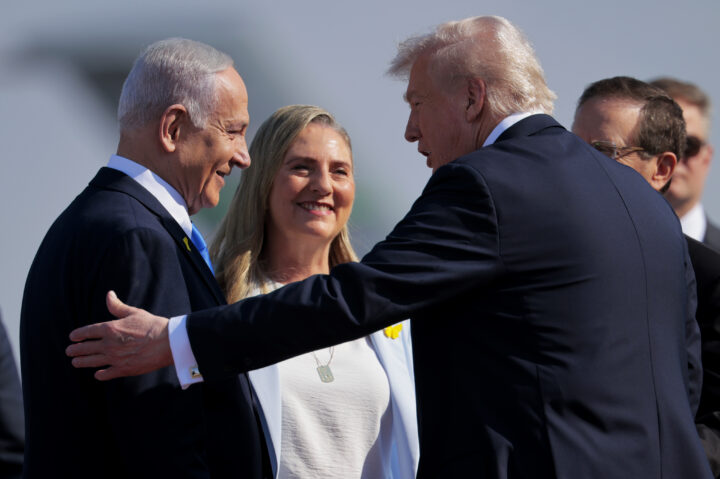
(Photo by Chip Somodevilla/Getty Images)
U.S. President Donald Trump (2R) is welcomed by Israeli Prime Minister Benjamin Netanyahu (L) at Ben Gurion International Airport on October 13, 2025 in Tel Aviv, Israel.
President Donald Trump gave a victory speech in the Knesset as the final 20 living hostages returned to Israel from Gaza on Monday, in accordance with the first phase of his plan to end the war.
Israeli television stations showed a live screen, with Air Force One landing at Ben Gurion Airport on one side, and IDF vehicles carrying freed hostages Eitan Mor, Gali and Ziv Berman, Matan Angrest, Omri Miran, Guy Gilboa-Dalal and Alon Ohel to their families on the other.
As Trump arrived at the Knesset, the Red Cross collected the other 13 living hostages: Elkana Bohbot, Rom Braslavski, Nimrod Cohen, Ariel Cunio, David Cunio, Evyatar David, Maxim Herkin, Eitan Horn, Segev Kalfon, Bar Kupershtein, Yosef-Chaim Ohana, Avinatan Or and Matan Zangauker.
Trump was given a hero’s welcome in the Knesset, where he was met with an honor guard and current and former lawmakers gave him a lengthy standing ovation.
“The hostages are back – it feels so good to say it!” Trump said.
In a speech that was over an hour long, the president declared that “today, the guns are calm, the sirens are still, and the sun rises on a Holy Land that is finally in peace, that will hopefully live — God-willing — in peace for all eternity.”
Trump said this marks “the historic dawn of a new Middle East,” and “an age of harmony for Israel and all the nations in the region.”
The president touted his success as a peacemaker, but added: “We’re not going to go into war, but if we do, we will win that war … I think Bibi [Netanyahu], as you mentioned, before, peace through strength, that’s what it’s all about.”
“Hamas will be disarmed and Israel’s security will no longer be threatened in any way, shape or form,” he vowed. “Israel, with our help, has won all they can, has won by force of arms. Now it’s time to transform that win … into peace and prosperity for the whole region. Time to enjoy the fruits of your labor.”
Trump said that “as we celebrate today, let us remember how this nightmare of depravity all began,” describing the Oct. 7, 2023 attacks. “Nobody could believe what they were witnessing. The USA grieved alongside you. … The people of America join you in those two everlasting vows: Never forget and never again.”
Trump expressed his appreciation for Israeli Prime Minister Benjamin Netanyahu, whom he called “a man of exceptional courage and patriotism.”
“He is not the easiest guy to deal with, but that’s what makes him great,” Trump added.
Trump said that Netanyahu had “the courage to say, ‘That’s it, we won, and we’re going to rebuild and make Israel stronger and greater than it has ever been before.’”
The Palestinians, Trump added, need to “concentrate on building their people up instead of trying to tear Israel down.”
“Israel, America and all the nations of the Middle East will soon be safer, greater and more prosperous than ever before,” Trump said, concluding his speech. “I love Israel. I’m with you all the way. You will be bigger, stronger and more loving than ever before. God bless you, God bless the United States of America, and God bless the Middle East.”
“You, President Donald J. Trump,” Knesset Speaker Amir Ohana said, “are a colossus who will be enshrined in the pantheon of history. The people of Israel will remember you. We are a nation that remembers … The world needs more Trumps.”
Netanyahu said that “this a momentous day, a day of great joy as the remaining hostages come home … At the beginning of the war, I promised to bring all the hostages home. Today, with the indispensable help … of President Trump and his team and with the incredible sacrifice and courage of the soldiers of Israel, we are fulfilling that promise.”
Trump and Netanyahu met with former hostages, the families of hostages, IDF soldiers wounded in action and victims of the Oct. 7 attacks at the Knesset.
Trump is expected to head to the Egyptian resort town of Sharm al-Sheikh later Monday, for a ceremony marking the end of the war in Gaza. Trump secured Netanyahu’s invitation while at the Knesset, calling Egyptian President Abdel Fatah al-Sisi before his speech, but Netanyahu declined, citing the Simchat Torah holiday.
Other expected attendees at the ceremony include Palestinian Authority President Mahmoud Abbas, French President Emmanuel Macron, U.N. Secretary-General António Guterres and the leaders of nearly three dozen countries.
Despite the celebrations on Monday and suggestions that the war was over, Hamas has been attempting to reestablish itself in the parts of Gaza from which the IDF withdrew, executing and battling its Palestinian opponents.
Israeli Defense Minister Israel Katz said that the IDF will continue to work to disarm Hamas and destroy its tunnels along with an international team overseen by the U.S.
Trump’s plan to end the war also includes replacing Hamas with a transitional government made up of Palestinians under the supervision of a “Peace Board” that he will lead and is expected to include former British Prime Minister Tony Blair, as well as deradicalization of the population of Gaza.
Hamas is expected to transfer four of the 28 bodies of hostages that remain in Gaza later Monday, according to the Hostages Families Forum, which described the low number as a “blatant breach of the agreement by Hamas.” Hamas has said it has been unable to locate all of them.
Close to 2,000 Palestinian prisoners were expected to be released later Monday, including 250 terrorists, many of whom were serving life sentences, and 1,700 arrested after the Oct. 7, 2023 attacks on Israel.
Among those being released are Hilmi Abdul Karim, who bombed a bus in Jerusalem, killing 11, Mouad Badr Abdallah Da’is, who murdered mother of six Dafna Meir, and others.
Kushner, Witkoff join Israeli Cabinet meeting
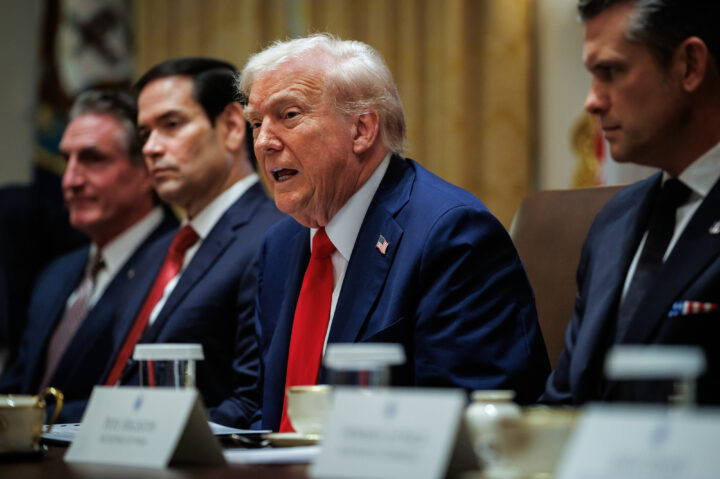
Samuel Corum/Sipa/Bloomberg via Getty Images
President Donald Trump during a Cabinet meeting at the White House in Washington on Oct. 9, 2025.
Good Thursday afternoon.
This P.M. briefing is reserved for our premium subscribers like you — offering a forward-focused read on what we’re tracking now and what’s coming next.
I’m Danielle Cohen-Kanik, U.S. editor at Jewish Insider and curator, along with assists from my colleagues, of the Daily Overtime briefing. Please don’t hesitate to share your thoughts and feedback by replying to this email.
📡On Our Radar
Notable developments and interesting tidbits we’re tracking
President Donald Trump heaped praise on the leaders of Qatar, Egypt, Saudi Arabia, Turkey and Indonesia at a Cabinet meeting at the White House today, lauding them as key parties responsible for getting Israel and Hamas to agree to the first phase of his peace plan for the region, Jewish Insider’s Emily Jacobs reports.
Trump also confirmed in his remarks that his team is organizing a Mideast trip for him to commemorate the deal, which would include stops in Egypt and Israel, where he’s been invited to address the Knesset.
The president said he is planning to depart from Washington on Sunday and hopes to time his trip to be there when the remaining hostages are released, which he said will happen on Monday or Tuesday. That’s later than some reports which speculated they could be returned to Israel as soon as this weekend…
Israeli and Hamas negotiators signed the final draft of phase one of the deal in Egypt today, and the Israeli Cabinet is now meeting to vote to approve it.
Former Mideast envoy Jared Kushner and current envoy Steve Witkoff joined the Cabinet meeting in Jerusalem, coming off of negotiations in Egypt and having already met with Israeli President Isaac Herzog and Prime Minister Benjamin Netanyahu.
The deal is expected to be approved, despite statements from National Security Minister Itamar Ben-Gvir and Finance Minister Bezalel Smotrich that their parties will oppose it. The meeting, as well as an earlier Security Cabinet briefing, were delayed after Ben-Gvir demanded to retain a veto on the release of specific Palestinian prisoners in the exchange, according to Israeli media…
Preparations are underway for Trump’s brief visit, with the Knesset lit up today in red, white and blue and the King David Hotel reportedly getting ready to boot out guests staying in the luxury lodgings for Sukkot to accommodate the president and his entourage…
Anti-Israel Democratic lawmakers offered tepid support for the deal throughout the day, while reiterating their strident criticisms of Israel, JI’s Marc Rod reports.
Sen. Bernie Sanders (I-VT) didn’t explicitly praise the deal but said he hopes it will lead to the end of a “horrific war.” He made no mention of the Israeli hostages set to be released, but asserted one-tenth of the Gazan population was killed or injured during the war. Read more reactions from lawmakers here…
Joining the pack, New York City Democratic mayoral nominee Zohran Mamdani told a local radio station today that he hopes the deal is “lasting” and “brings peace” but that it shouldn’t erase “Hamas’ horrific war crime on Oct. 7 … and the Israeli government’s horrific war crimes since then”…
The Atlantic Council’s Ahmed Fouad Alkhatib, who grew up in Gaza, writes in The Free Press about the “self-styled peace activists” in the West denouncing the peace deal as a “colonial attempt to continue the genocide” who have “little understanding or interest in how dealmaking works.”
“One of the first steps to freeing Palestinians from the horrors of war is to free them from the ‘Free Palestine Movement’ in the diaspora and Western world. The unholy alliance between the far left, far right, and Islamist hooligans who normalize Hamas’s narrative is harmful first and foremost to the Palestinian people,” Alkhatib argues…
In her first week as editor-in-chief of CBS News, The Free Press founder Bari Weiss reportedly told staff today that former secretaries of state Hillary Clinton, Antony Blinken and Mike Pompeo have agreed to appear on a Middle East roundtable on the network…
The New York Times profiles Jewish stand-up comedian Mordechi Rosenfeld, known as Modi, who has a “personal mantra that guides his comedy: ‘Moshiach energy’ … For Mr. Rosenfeld, the slogan reflects a Messianic idea inspired by the last leader of the Chabad-Lubavitch Orthodox movement, Rabbi Menachem Mendel Schneerson. Mr. Rosenfeld interprets it as a mandate to pour positive energy into the world to help bring the Messiah”…
⏩ Tomorrow’s Agenda, Today
An early look at tomorrow’s storylines and schedule to keep you a step ahead
Keep an eye on Jewish Insider tomorrow morning for reporting on the Senate’s agreement, which had been stalled for weeks, to move toward passage of the 2026 National Defense Authorization Act today.
Tomorrow, NOTUS will host a virtual event on “Mapping the New Global Order” with former Secretary of Defense Chuck Hagel and Reps. Don Bacon (R-NE) and Jason Crow (D-CO).
Over the weekend, we’ll be keeping an eye on President Donald Trump’s travels to the region and engagement with Israeli officials, as well as developments in the hostage-release process.
In observance of Shemini Atzeret and Simchat Torah, we’ll be back in your inbox with the Daily Overtime on Thursday. Chag Sameach and Shabbat Shalom!
Stories You May Have Missed
TWO YEARS
How Oct. 7 changed the world — two years later

Five reflections on how Oct. 7 reshaped politics, diplomacy, advocacy, higher ed, and Jewish life
FILM IN FOCUS
‘A story about family’: Noam Tibon, director Barry Avrich reflect on ‘The Road Between Us’ premiere

Tibon told JI that the documentary’s eventual debut, despite significant roadblocks, was ‘a victory for the movie and a victory for the truth of what happened on Oct. 7’
The president said hostages will be released Monday or Tuesday, confirmed his team working on a weekend trip to Egypt and Israel
Samuel Corum/Sipa/Bloomberg via Getty Images
President Donald Trump during a Cabinet meeting at the White House in Washington on Oct. 9, 2025.
President Donald Trump heaped praise on the leaders of Qatar, Egypt, Saudi Arabia, Turkey and Indonesia on Thursday, lauding them and members of his administration as key parties responsible for getting Israel and Hamas to agree to the first phase of his peace plan for the region.
“I want to express my tremendous gratitude to the leaders of Qatar, Egypt and Turkey for helping us reach this incredible day and for being there. They were there with us all the way. And of course, as you know, Saudi Arabia and Jordan and so many,” Trump said during a Cabinet meeting at the White House. “I will tell you, [Turkish] President [Recep Tayyip] Erdoğan was personally involved in dealing with Hamas and some of the others. He’s been great. They’ve all been really amazing. Indonesia has been amazing. Indonesia has been fantastic.”
“The whole world has come together for this, people that didn’t get along, people that didn’t like each other, neighboring countries that, frankly, didn’t like each other,” he continued.
The president confirmed in his remarks on Thursday that his team was working on organizing a Mideast trip for him to commemorate the deal, which would include stops in Egypt and Israel, where he has been invited to address the Knesset.
He said he plans to depart from Washington on Sunday and is considering the timing of the release of the hostages in his plans. “They should be released on Monday or Tuesday. … That’ll be a day of joy. I’m gonna try and make a trip over,” Trump said. “We’re planning on leaving sometime Sunday,” he added later.
Regarding the U.S. officials involved in the deal, Trump credited Vice President JD Vance; White House Chief of Staff Susie Wiles; Secretary of State Marco Rubio; Secretary of Defense Pete Hegseth; Middle East envoy Steve Witkoff; Jared Kushner, the president’s son-in-law and former advisor who spearheaded the Abraham Accords in the first Trump administration; and CIA Director John Ratcliffe with helping bring the agreement across the finish line.
“All Americans should be proud of the role that our country has played in bringing this terrible conflict to an end,” Trump said.
Israeli and Hamas negotiators signed off on the first phase of the deal in Egypt earlier in the day, which would see the release of all the remaining hostages in exchange for the release of Palestinian security prisoners.
In brief remarks to reporters during the meeting, Rubio similarly attributed the administration’s success to its engagement with Arab and Muslim-majority nations.
“What really took a turn about a month ago, less than a couple weeks ago, is when we were at the United Nations, and [Trump] convened an historic meeting, not simply of Arab countries, but Muslim-majority countries from around the world … Indonesia was there, Pakistan was there, and created this coalition behind this plan. Then on that following Monday, you met with the prime minister of Israel here, and that plan was presented. And then, of course, our great negotiating team followed up on it in the interim,” Rubio said.
Asked about the potential for political turmoil in Israeli Prime Minister Benjamin Netanyahu’s governing coalition by far-right parties who said today they would oppose the deal in a Cabinet vote, Trump replied that the issue was not a concern and predicted that such an agreement could help Netanyahu.
“Bibi may go a little bit out of whack. Look, that’s politics. … I think he’s very popular right now. He’s much more popular today than he was five days ago, I can tell you that. Right now, maybe people shouldn’t run against him, five days ago it might not have been a bad idea,” Trump said. “This has been a very good thing. I don’t think he did it [agreed to a deal] for that reason [of political survival]. But I think just looking as an analyst would look at this … I think Bibi should be very popular right now.”
Trump said that, beyond bringing an end to the war in Gaza, the new agreement was “really [about achieving] peace in the Middle East.” He then described the war as a “big retribution” in response to Hamas’ Oct. 7, 2023, attacks on the Jewish state.
“Remember, Oct. 7 was terrible, but also, from the Hamas standpoint, they probably lost 70,000 people. That’s big retribution. That’s big retribution. But at some point that whole thing has to stop, and we’re going to see to it,” he said.
Looking forward, Trump was noncommittal about how future phases of his 20-point peace plan would be implemented or upheld, instead noting that Gaza would be rebuilt, the Abraham Accords would expand to include more countries and the hostages would be returned. He also declined to take a stance on supporting or opposing a two-state solution.
“Gaza is going to be slowly redone. You have tremendous wealth in that part of the world by certain countries, and just a small part of that, what they make will do wonders for Gaza,” the president explained. “I think you’re going to see some tremendous countries stepping up and putting up a lot of money and taking care of things. There’s this tremendous spirit like I haven’t seen.”
“The first thing we’re doing is getting our hostages back. That’s what people wanted more than anything else. They wanted these hostages back that have lived in hell like nobody has ever even dreamt possible. And after that, we’ll see,” he later added when asked about ensuring all sides adhere to the deal. “But they’ve agreed to things, and I think it’s going to move along pretty well.”
Sen. Bernie Sanders didn’t mention the Israeli hostages in a comment expressing hope the war in Gaza would soon end
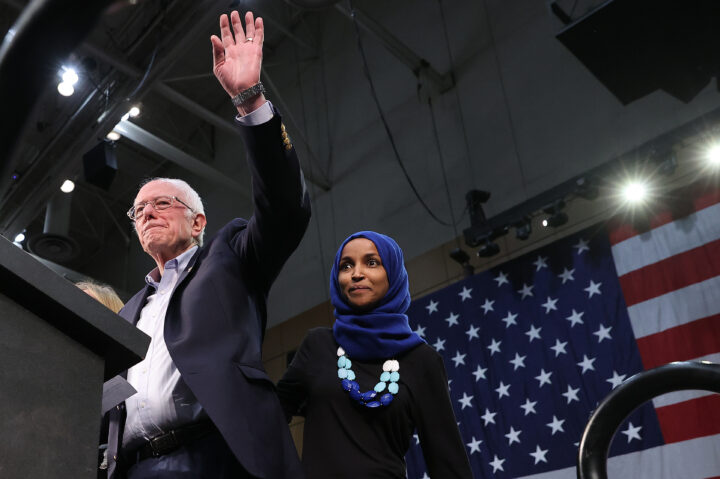
Chip Somodevilla/Getty Images
Rep. Ilhan Omar (D-MN) (R) introduces Democratic presidential candidate Sen. Bernie Sanders (I-VT) during a campaign rally at the Roy Wilkins Auditorium March 2, 2020.
Democratic lawmakers who have been stridently critical of Israel and its operations in Gaza offered tepid support for the ceasefire and hostage-release deal, the first phase of which was signed on Thursday, while reiterating their criticisms of Israel and the U.S.’ support for the Jewish state. Few offered any words of support for the Israeli hostages who have been held by Hamas for over two years.
Sen. Bernie Sanders (I-VT), who has led a series of efforts to block arms transfers to Israel, didn’t explicitly praise the deal negotiated by President Donald Trump, but said he hopes the deal would lead to the end of a “horrific war.” He made no mention of the Israeli hostages set to be released, but asserted one-tenth of the Gazan population was killed or injured during the war.
“As of today something like 10% of the Palestinian people in Gaza have been killed or wounded, mostly women, children and the elderly. The United States has put tens of billions of dollars into an effort which has led to mass destruction,” Sanders told Jewish Insider. “So I hope — and I’m sure everybody else does — that this horrific war can end as soon as possible.”
Rep. Ilhan Omar (D-MN) said on X that the ceasefire is a “hopeful step” but quickly pivoted to expressing unvarnished opposition to Israel. She also made no mention of the Israeli hostages expected to be freed from their Hamas captors.
“For the sake of humanity, let’s hope this will be a lasting and permanent ceasefire,” Omar said. “While this is a hopeful step, we must demand accountability for every war crime committed during this genocide and continue to call for an end to the occupation.”
Rep. Delia Ramirez (D-IL), the lead sponsor of legislation that aims to place strict conditions on critical arms sales to Israel, said on X she plans to continue to pursue that legislation.
“Immediately after October 7, I called for a ceasefire and for a path that honors our shared humanity. It is unfortunate that it took this long. However, I am hopeful that today’s ceasefire agreement will bring the hostages and prisoners home and end the bombing and starvation of the Palestinian people,” Ramirez said. “We must save Palestinian lives and pursue an end to U.S. complicity in Israel’s war crimes, atrocities, and genocide. I will continue to work to Block the Bombs, as we pursue a future of self-determination for the Palestinian people and a just and lasting peace for all residents of the region.”
Rep. Joaquin Castro (D-TX), tamping down on enthusiasm for the deal, reposted an X post suggesting that Israel may violate the deal.
“There is certainly some hope that the Gaza deal will hold but it’s important to remember that the last ceasefire agreement collapsed in March before ever reaching phase 2 when Israel reimposed a blockade on Gaza and bombings on the strip resumed,” the post, from an NBC News correspondent, reads.
Other prominent critics, particularly on the far-left, have remained unusually mum about the deal.
Squad members Reps. Rashida Tlaib (D-MI) and Alexandria Ocasio-Cortez (D-NY), Rep. Summer Lee (D-PA) and Progressive Caucus Chair Rep. Greg Casar (D-TX) did not respond to requests for comment and did not comment publicly.
Some other lawmakers who have been vocally critical of Israel’s operations in Gaza offered more fulsome praise for the deal.
Sen. Chris Van Hollen (D-MD) said in a statement that the deal is “the first hopeful moment in a long time,” noting both the release of hostages and the surge of aid into Gaza. He credited U.S. pressure on Israel, however, rather than the reported increased pressure from Qatar, Turkey and Egypt on Hamas, for the breakthrough.
“Pressure from the U.S. and others has always been necessary to reach this moment — something that could have been achieved much earlier and prevented the staggering loss of civilian life, starvation, and devastation in Gaza,” Van Hollen said. “U.S. leadership will be essential to enforce this plan and convert this moment into real progress toward lasting peace — which can only be achieved by sidelining the extremists on all sides and committing to security, dignity, human rights, and justice for all.”
Rep. Ro Khanna (D-CA), who led an effort calling for the U.S. to unilaterally recognize a Palestinian state, also praised the deal and led with the return of the Israeli hostages in his comments.
“It’s obviously very welcome news. Finally, the hostages are going to come home. The bombing hopefully is going to stop. Israel is going to withdraw,” Khanna said on Fox Business. “Everything I have read seems that this is a welcome development. And I’m really glad that after two years of a war, this seems to be finally coming to a resolution.”
“Now, we need to work for 2 states & ensure the bombing does not resume later in the year,” he added on X.
Rep. Ayanna Pressley (D-MA) told JI, “For the sake of humanity, I pray this holds. It is so far past time to end this genocide, free the hostages, and surge food, water, and baby formula to starving families in Gaza.”
Sen. Elizabeth Warren (D-MA) declined to comment, saying she had not reviewed the deal.
All of the hostages are expected to be released as soon as this weekend

President Donald Trump delivers remarks at the Israeli American Council National Summit at the Washington Hilton on September 19, 2024 in Washington, DC.(Photo by Kevin Dietsch/Getty Images)
President Donald Trump announced Wednesday evening that Israel and Hamas had agreed to “the first Phase of our Peace Plan” that he outlined last week.
“This means that ALL of the Hostages will be released very soon, and Israel will withdraw their Troops to an agreed upon line as the first steps toward a Strong, Durable, and Everlasting Peace,” Trump wrote on Truth Social.
Axios reported that all the hostages will be released 72 hours after the Israeli cabinet approves the deal, likely by Monday. Israel is expected to release 250 Palestinians serving life sentences in Israeli prisons and 1,700 Palestinian prisoners detained since Oct. 7 in exchange.
Israeli Prime Minister Benjamin Netanyahu said that the announcement was a “great day for Israel” and that he would convene the government tomorrow “to approve the agreement and bring all our beloved hostages home.”
“I thank the heroic soldiers of the IDF and the entire security apparatus, whose bravery and sacrifice brought us to this day. I thank, from the bottom of my heart, President Trump and his team for their mobilization for the sacred task of releasing our hostages,” Netanyahu said. “God willing, we will continue together in order to achieve all our aims and expand the peace with our neighbours.”
The Israeli government said that Trump and Netanyahu had spoken and had a “very emotional and warm conversation” and “the Prime Minister thanked President Trump for all his efforts and for his global leadership, and President Trump congratulated the Prime Minister for his determined leadership and the actions he led.”
Netanyahu invited Trump — who has not yet visited Israel in his second term in office — to address the Knesset. Axios reported that Trump is planning to visit Israel “in the coming days.”
Further negotiations will be necessary to continue into further phases of the deal, which Trump had originally presented as an all-or-nothing ultimatum to Hamas.
Lawmakers on both sides of the aisle and Jewish groups celebrated the announcement, even as many warned that continued vigilance is necessary to ensure Hamas abides by the terms of the deal.
Rep. Brian Mast (R-FL), the chairman of the House Foreign Affairs Committee, said that Trump “just did what career diplomats never could — he brought the world closer than it’s ever been to peace in Gaza. This deal only works if Hamas follows through. We don’t trust terrorists, we trust results.”
Sen. Jacky Rosen (D-NV) said that the deal is a “victory” for the hostage families and “step toward healing for Israelis, Palestinians, people throughout the Middle East, and for the world.”
“I am grateful for the efforts that have brought us here, and urge the Trump Administration to continue its leadership in these negotiations,” Rosen continued. “We must continue to ensure Israel’s security, surge humanitarian aid to ease the suffering of innocent Palestinians in Gaza, and pursue steps toward a lasting peace that finally brings this conflict to an end.”
In a statement, AIPAC said that the deal is “an extraordinary moment for America, Israel and the world” that had been brought about by “the enduring partnership” between the U.S. and Israel. It described the deal as a “just conclusion to the terrible war Hamas started” which “creates tremendous opportunity to forge a better future” for the region.
“AIPAC applauds President Trump and his negotiating team for this tremendous achievement and for working together with Israel to broker this peace plan. We deeply appreciate the moral clarity and steadfast support from the overwhelming majority of Congress, Republicans and Democrats alike, who stood with the Jewish state throughout this war and ensured Israel had the resources it needed to achieve its objectives against Hamas,” the statement said.
“Now, America and the world must be vigilant to ensure that Hamas adheres to the terms and implementation of the peace plan.”
The American Jewish Committee, which has worked extensively with the hostage families, said, “Hope is finally within reach.”
“We welcome President Trump’s announcement of a deal to free the hostages and begin to end the war. As we await the details, we look forward to the day we can finally say every hostage is home,” the statement continued. “We are grateful to the President and his Administration for their leadership in helping bring about this pivotal moment.”
Sen. Joni Ernst (R-IA), in celebrating the deal, dubbed Trump “the peace president.”
“This historic deal not only brings the hope of prosperity to a region that has been ravaged by Iran-backed terror but establishes steps towards lasting peace,” Ernst continued. “Today there is a new dawn that could not have happened without the leadership of President Donald J. Trump, who united our partners and allies against our common enemy: Iran. Finally, the hostages who have endured a living nightmare will be reunited with their loved ones, and the bodies of Americans Itay Chen and Omer Neutra can be laid to rest in dignity.”
Rep. Lisa McClain (R-MI), the chair of the House Republican Conference, also credited Trump for the deal.
“This is what happens when we have strong leadership. Funny how peace only seems possible when President Trump’s in charge,” she said. “The Israel-Hamas ceasefire didn’t happen by accident — it happened because of his strong leadership that puts America — and peace — first. Grateful the hostages are finally coming home and peace in the Middle East is on the horizon.”
Rep. Ritchie Torres (D-NY) said, “We should all be rooting for the success of an agreement that secures the release of the hostages and ends the war. Who could possibly be against that?”
Rep. Mike Lawler (R-NY), the chairman of the House Foreign Affairs Committee’s Subcommittee on the Middle East and North Africa, said that the “news is a welcome breakthrough and a testament to the strength of America’s unwavering partnership with Israel and our Arab partners.”
“Now, with Hamas reportedly accepting the ceasefire deal and releasing all remaining hostages, we have a historic opportunity to end the bloodshed and begin rebuilding a secure, peaceful future for Israel,” Lawler continued.
“Thank you to President Trump for leading this effort and working tirelessly to establish peace and bring the hostages home. The United States, Israel, and our regional partners will hold Hamas accountable, and there will be no tolerance for backsliding or deception.”
Commerce Secretary Howard Lutnick and his wife, Allison, supported the creation of the sukkah through their family foundation
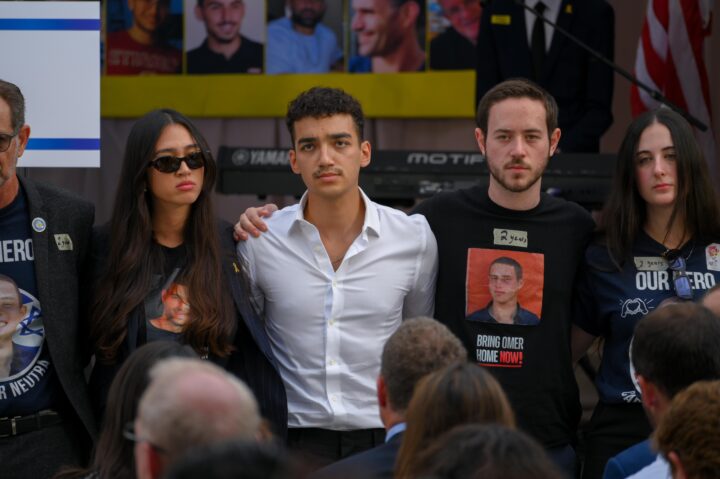
Liri Agami
Former hostages Noa Argamani (left) and Edan Alexander (center) stand with Daniel Neutra, brother of hostage Omer Neutra, and other hostage family members at a memorial event at the Kennedy Center in Washington, D.C., on Oct. 7, 2025.
Oct. 7 bloomed warm and sunny in Washington this year as dozens of Jewish community leaders and bipartisan political officials gathered somberly at a pavilion at the Kennedy Center to mark two years since the Hamas terror attacks in Israel.
A large sukkah, deemed the “Sukkah of Hope,” had a simple message displayed: “Two years in captivity. We can bring them home,” with photos of the 48 people, living and dead, still held captive by Hamas in Gaza. Several former hostages and the family members of those still in Gaza walked up to the stage inside the sukkah, one after the other, all with variations on the same message: Thank you, President Trump, they said. Bring our loved ones home.
“President Trump, we are thankful for what you’ve done, for your determination, for the time and energy you’ve given to this cause,” said Liran Berman, whose twin brothers, Gali and Ziv, remain in Gaza.
“We are really grateful and hopeful. I’m glad that this man, Donald Trump, is behind us,” said Iair Horn, who in February returned to Israel after 498 days in Hamas captivity. His younger brother, Eitan, is still being held in Gaza.
Their appeal to the president’s dealmaking prowess came after the Hostages and Missing Families Forum nominated Trump for a Nobel Peace Prize, an honor he has long coveted. The president sent a letter to the former hostages and the hostage families early Tuesday thanking them for the nomination and expressing his commitment “to returning all the hostages home, and ensuring the total destruction of Hamas so these horrific acts may never be repeated.”
The Sukkah of Hope was supposed to be constructed on the Ellipse, outside the White House. But the government shutdown meant that could not happen. Still, its move to the Kennedy Center did not keep high-level government officials from visiting.
Before the memorial service, several Cabinet secretaries had breakfast with the former hostages and hostage family members. In attendance were Secretary of State Marco Rubio, Commerce Secretary Howard Lutnick, Interior Secretary Doug Burgum, Director of National Intelligence Tulsi Gabbard, Environmental Protection Agency Administrator Lee Zeldin and Treasury Secretary Scott Bessent.
Ronen Neutra, whose son Omer was killed on Oct. 7 and whose body is being held hostage by Hamas, said the Cabinet members sounded optimistic about the possibility of a deal.
“We are hearing from the Cabinet members their optimism that we might be getting closer to a deal,” Neutra said. “But I think what is more important for us, or as important, is to hear the commitment that [we] have been hearing from President Trump, that this has to happen, and this is on his top priority list, and I think it trickles down.”
Lutnick and his wife, Allison, supported the creation of the sukkah through their family foundation.
“Donald Trump is the driving force of peace in this world,” Lutnick said at the memorial event. “The United States of America is together with the hostages and the hostage families. We are part of you, we are with you and we will help get them home.”
In the crowd at the event were Noa Argamani, Edan Alexander, Keith Siegel, Arbel Yehoud, Doron Steinbrecher and Ilana Gritzewsky, all of whom survived Hamas captivity. Alexander, a dual U.S.-Israeli citizen, and the Neutra family met with Trump at the White House on Tuesday afternoon.
At the memorial, several outlined the torture they face and they fears they harbor for loved ones who remain in Gaza.
“There are no words in any language to describe what I went through,” said Yehoud, whose partner, Ariel Cunio, 28, remains in Gaza. “Even as I stand here before you, I’m not really there. A massive part of me is still there, trapped in that darkness, and I will remain there until my Ariel and everyone comes home.”
Sharabi’s new book, Hostage, tells the story of his kidnapping and 491 days in Gaza
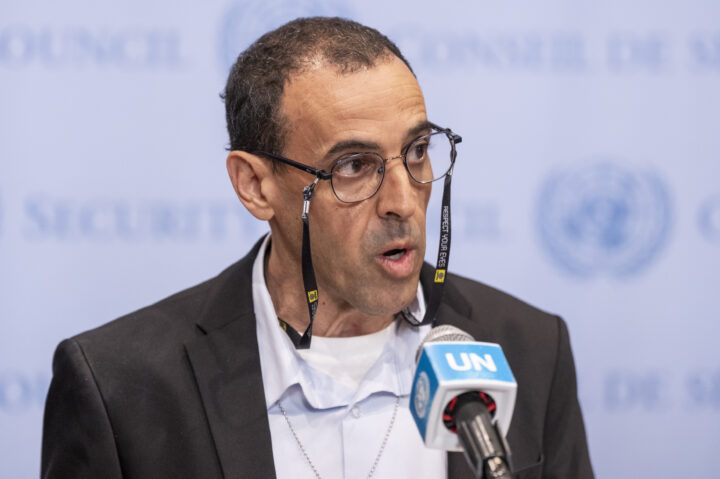
Lev Radin/Pacific Press/LightRocket via Getty Images
Eli Sharabi speaks to the press ahead of Security Council meeting at U.N. Headquarters.
Freed hostage Eli Sharabi’s new book, Hostage, ends with him visiting the graves of his wife, Lianne, and his daughters, Noiya and Yahel, for the first time after being released from nearly a year and a half of captivity in Gaza, during which he had hoped they were still alive following the Hamas attack on their home in Kibbutz Be’eri on Oct. 7, 2023.
“This here is rock bottom. I’ve seen it. I’ve touched it,” Sharabi writes. “Now, life.”
The memoir tells a horrific story of 491 days of violence, deprivation and starvation.
That final sentence of Sharabi’s memoir — “Now, life” — could sum up his post-captivity self. In an interview with Jewish Insider last month, Sharabi said he was determined to reassert his agency, take action on hostage advocacy and move forward in his life.
Sharabi seemed cheerful speaking about his recovery. He was still slimmer than his pre-captivity self, but no longer as gaunt as he was emerging from the tunnels in Gaza in which Hamas starved him, giving him only a stale pita to eat each day, at most.
“I’m getting stronger every day,” Sharabi said. “I make sure to exercise and have weekly therapy sessions and make sure to take care of myself. I am strong and positive and facing forward.”
Sharabi’s days are filled with meetings around Israel and the world advocating for the remaining hostages to be freed.
“From the moment I got out of Sheba [Medical Center], 10 days after being freed, it has been non-stop action,” he said. “I have a lot of trips abroad, meeting with government officials — presidents, prime ministers, members of parliament, foreign ministers — and a lot of lectures in Israel and around the world, to a lot of Jewish communities. … It’s non-stop, morning to night.”
In his book, he recounts reassuring hostages Alon Ohel, who is still in Gaza, and Eliya Cohen and Or Levy, who have since been released, that he was sure their families were protesting and advocating for their release.
“It was important for Eliya and me to tell Or and Alon, who were more pessimistic about our chances, to get out and thought ‘maybe they forgot us,’” Sharabi recalled. “Eliya and I were very positive and said we had no doubt our families and good friends are not resting for a moment and doing all they could to free us.”
Sharabi said that when his captors would tell him about protests in the streets of Israel, they would say the demonstrations were against Israeli Prime Minister Benjamin Netanyahu, but he and his fellow hostages saw it as “the nation going out to fight for us. It gave us hope.”
When Sharabi was released, he saw that the scale of the hostage advocacy movement was beyond what he had imagined.
“When I got out and understood that it was masses of people in Israel, it excited me,” he said. “I met members of Jewish communities in New York, Chicago, Miami, London, Mexico. I meet Israelis and Jews all around the world and understand what they did all this time. It is very touching. I didn’t expect it at all. I expected my friends and family. I didn’t think that people would have posters of me at their holiday table. It’s heartwarming.”
At home in Israel, however, there have been sharp political divisions about the looming deal to release the hostages in exchange for ending the war in Gaza. Some far-right ministers in Netanyahu’s government oppose President Donald Trump’s plan, which calls to free all 48 remaining hostages — 20 of whom are thought to be alive — within three days, because they call to prioritize defeating Hamas.
“In Israel, everything is political,” Sharabi lamented. “It’s terrible. All of our elected officials, with no exception, are partners in this terrible thing. I think all the people of Israel are sick of everything being political. I think most people in Israel hate this.”
The hostages, Sharabi said, “are not about right and not about left.” His brother, Yossi, was also taken captive and was killed while in Hamas captivity, which the IDF found may have been caused by an IDF airstrike.
Sharabi had an almost paternal relationship with Ohel when Hamas held them captive together in the tunnels under Gaza, and he expressed relief to have seen Ohel in a new hostage video released by the terror group last month.
“He’s amazing,” Sharabi said. “If you told me a week after I met him that he would survive six or seven months alone, after I left him, I would have doubted it. I left him after a very positive process during which he strengthened himself and learned how to survive, that you can’t be nice all the time and can’t be naive. He developed resilience and isn’t shaken by every change and every fear.”
Sharabi emphasized that, while in captivity, it is crucial to “understand that not everything is in our control, but we have the ability to choose how we respond.”
“I’m optimistic that soon we will see [Ohel] united with his family, and soon after, I will reunite with him. I am looking forward to it,” he said.
Sharabi describes his captors in detail in the book. Some were always cruel, while others snuck the hostages extra scraps of food. Some were true extremists, while others appeared to be in Hamas for the money.
“There are no innocent people in Gaza,” he said, “not civilians and certainly not the people in Hamas. In the 52 days that I was aboveground, not in tunnels but with a family in a house, they made sure people outside would not hear or see me, because they thought people would come in and kill me.”
“I recognize that even within Hamas, after spending 24/7 with them for many months and having different conversations with them, I understand who is ideological and who stumbled into it because Hamas controls the financial faucets in Gaza,” Sharabi added. “Does that make them innocent? Of course not. The moment they got the order, I was shackled around my legs. If they were told to shoot me, they would have shot me. … Some did it for money, not ideology, but they starved me, humiliated me and beat me. It doesn’t make them innocent.”
Sharabi also called on the Western world to recognize that Hamas is part of a broader ideology that threatens them, as well.
“I recently got back from 10 days in Australia,” he recalled. “We flew to Canberra to meet the deputy prime minister and foreign minister, both of whom are, at the very least, not pro-Israel. It was important for me to tell them two things.”
“First, disagreements with Israeli policy are fine. I, too, as a citizen, don’t always agree with Israeli policy. That’s what’s good about a democracy… We can say our opinions and disagree. But at the same time, even if they don’t think like Israelis and don’t have to care about me as an Israeli, they are part of the Commonwealth, and my wife and daughters were British and murdered in their homes with their British passports in their hands — the Hamas terrorists knew.”
Sharabi said his captors said to him time after time that “after Israelis and Jews, they will get to France, Britain, America and Spain. The whole world will be Islam.”
Second, Sharabi said he speaks out against antisemitism in his meetings with leaders.
“It cannot be that in 2025, Australian Jews are afraid to go out into the streets. It’s 2025, not 1940. That is [the leaders’] responsibility. They are not speaking out clearly enough against antisemitism. I’m not a politician or a diplomat, so I can say that each one of them is responsible. … Every Jew today is affected by the hate crimes in the world, and that is the responsibility of the government and elected officials,” he said.
Sharabi said his constant activity, including writing his memoir, “has a therapeutic side to it, to deal with [the experience] and not leave it all inside.”
“I don’t like to compare it to the Holocaust, but a lot of survivors didn’t talk, not even to their children,” he noted. “My psychologists, from the beginning, said … they never saw such a huge trauma. It’s not just the captivity, but also the huge loss of my wife, daughters and brother. It’s important to talk. It helps me a lot.”
As to why he doesn’t like to make comparisons between Oct. 7 and the Holocaust, when some Israelis have done so, Sharabi said that during the Holocaust, Jews were “a stateless people, a homeless people, with no government to take care of them.”
“There is a lot of anger in Israel in part because there is a country, there is an address that was supposed to take care of us and our security, and it failed,” he added. “It’s not like the Holocaust, so I don’t like the comparison. There were horrors there that we didn’t see here, like the gas chambers; instead there is a murderous terrorist organization.”
At the same time, Sharabi noted that in the months since his release in February, he has not been exposed to a lot of the details and footage of the Oct. 7 attacks, in which his wife and daughters were among the 132 Israelis murdered in his hometown, Kibbutz Be’eri: “I am being protected like a safe. I haven’t turned on the TV; I don’t watch my own interviews.”
“I have trouble grasping it,” he added.
Even without exposure to the horrors of Oct. 7, speaking and writing about his captivity means going back to the darkest moments of his life, repeatedly.
“I am connected to the pain. I recognize it; I have words for it. Not a day goes by that I don’t cry over it. I hear music on the radio in the car that reminds me of the girls,” he said. “But I also remember them with a lot of smiles, and when I cry, it’s about longing for them, not sadness. I am emotional about the good, when I remember my wife and my girls and their smiles.”
“It’s good for me to talk all the time. It’s important to me. I’m freeing it from my system, instead of leaving it inside,” he added.
Five reflections on how Oct. 7 reshaped politics, diplomacy, advocacy, higher ed, and Jewish life

RE’EIM, ISRAEL — Visitors pay tribute at the site of the Nova music festival massacre.
Israeli PM Netanyahu: ‘We are on the verge of a very great achievement. ... It is not yet final; we are working on it diligently’
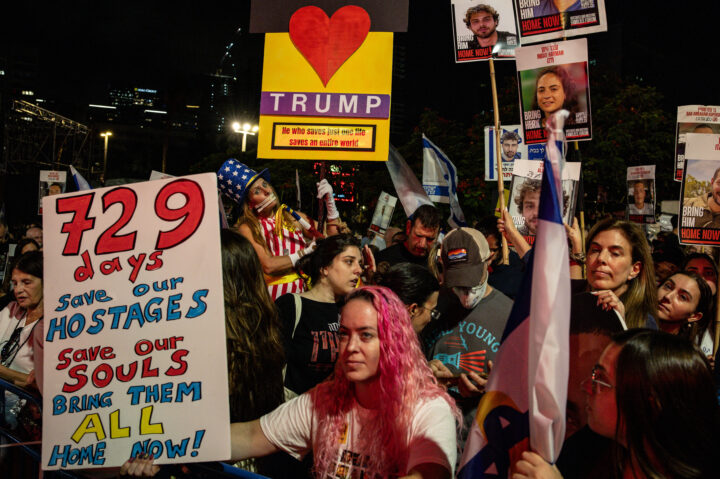
Chris McGrath/Getty Images
People chant slogans and hold placards in support of hostages still held by Hamas during a solidarity protest, calling for an end to the war and the release of all remaining Israeli hostages on October 4, 2025, in Tel Aviv, Israel.
Israeli Prime Minister Benjamin Netanyahu, hostage families and others in Israel expressed cautious optimism over the weekend, after Hamas agreed to enter talks to free the 48 remaining hostages in exchange for a partial Israeli withdrawal from Gaza.
An Israeli team consisting of Strategic Minister Ron Dermer, diplomatic advisor Ophir Falk, Coordinator for the Hostages and Missing Gal Hirsch and representatives of the Mossad and Shin Bet are expected to head to Cairo on Monday for proximity talks to negotiate the implementation of President Donald Trump’s 20-step plan to end the war. Trump’s special envoy, Steve Witkoff, and Jared Kushner, who has been involved in the talks, will represent the U.S.
Netanyahu said in a video statement Saturday night that Israel and the U.S. intend to “limit this negotiation to a few days” and that it would be about “technical details” of the Trump plan.
“We will not tolerate any more delay tactics, time-wasting or evasion on the part of Hamas,” he said.
As Trump noted on Truth Social, the ceasefire would immediately take effect once it is agreed to by Hamas. The terror group would have to release the remaining 48 hostages – 20 of whom are thought to be alive – in exchange for Israel’s freeing of over 1,700 Palestinian prisoners, hundreds of whom are serving life sentences on terrorism charges, and the rest arrested in Gaza in the last two years. Then, Israel would withdraw to an initial line, as part of a gradual withdrawal toward a buffer zone along Gaza’s perimeter.
The details likely to be negotiated include the precise line to which Israel will withdraw initially and, at the end of the process, which countries will make up the International Stabilization Force meant to be the “long-term internal security solution” to keep Gaza demilitarized and prevent the resurgence of terrorism, according to the Trump plan, and who will be part of the transitional technocratic committee meant to govern Gaza. Former U.K. Prime Minister Tony Blair and Apollo Global Management CEO Marc Rowan are expected to be involved in the Peace Board led by Trump that will oversee the transitional government.
Netanyahu vowed that “Hamas will be disarmed and the Strip demilitarized. This will happen either via a diplomatic route, according to the Trump plan, or via a military route by us.”
The talks come after Hamas released a statement early Saturday in which it embraced parts of the Trump plan — exchanging Israeli hostages for Palestinian prisoners, an influx of aid and encouraging Palestinians to remain in Gaza — but rejected the concessions the plan would entail, including the demilitarization and deradicalization of Gaza. Hamas said it would punt that decision to “a collective national position … to be discussed within a comprehensive Palestinian national framework, in which Hamas will be included.”
Despite Hamas accepting only a fraction of his plan, Trump wrote on Truth Social that he believes the terrorist group is “ready for a lasting PEACE” and called on Israel to “immediately stop the bombing of Gaza so that we can get the hostages out safely and quickly.”
IDF Chief of Staff Eyal Zamir then “instructed to advance readiness for the implementation of the first phase of the Trump plan for the release of the hostages,” according to an IDF statement early Saturday morning. At the same time, Zamir said, “all troops must maintain high alertness and vigilance, in addition to reinforcing the need for a rapid response to neutralize any threat.”
In his video statement, Netanyahu presented Trump’s plan as being coordinated with Jerusalem. “As a result of the intense military pressure we applied and the diplomatic pressure, Hamas was pressured into agreeing to the plan we presented,” Netanyahu said.
The prime minister added that “we are on the verge of a very great achievement. … It is not yet final; we are working on it diligently, and I hope, with G-d’s help, that in the coming days, during the Sukkot holiday, I will be able to inform you about the return of all our hostages, both living and deceased, in one phase, while the IDF remains deep within the Strip and in the controlling areas within it.”
Tel Aviv’s Hostage Square was filled with demonstrators on Saturday night, calling for the deal to be implemented.
Liran Berman, brother of hostages Ziv and Gali Berman, said that “with hope comes fear. Will the deal be signed? When will I see my brothers again? We are suspended between hope and dread. We have lived through Hamas’s lies before. We cannot let another deal collapse. Not again. President Trump, we stand with you. Do not stop. It is now or never.”
Former hostage Gadi Moses said, “I know the road is still long and riddled with obstacles, but today I can say that for the first time since my release from captivity, I have heard declarations that may give us some hope. This is the time to cease fire and focus on returning all the hostages and ending the war.”
Also Saturday, Netanyahu held meetings and discussions with the leaders of right-wing parties in his governing coalition, National Security Minister Itamar Ben-Gvir and Finance Minister Bezalel Smotrich, both of whom have called to annex and settle the Gaza Strip.
Ben-Gvir said that “we will be happy like everyone to see all the hostages returning to us,” but “if Hamas continues to exist after all the hostages are freed, Otzma Yehudit [Ben-Gvir’s party] will not be part of the government. We will not be part of a national defeat that will turn into a ticking time bomb until the next massacre.”
Smotrich did not threaten to leave the coalition, but he said that Netanyahu made a “severe mistake” by acquiescing to Trump’s call to stop the attack on Gaza City rather than holding “negotiations under fire.”
“It’s a recipe for Hamas to waste time and wear down Israel’s stance,” he posted on X.
Opposition leader Yair Lapid has said his party will vote to prop up the government if parties within the coalition attempt to bring it down to stop a hostage and ceasefire deal.
On Saturday afternoon, Lapid said: “When Shabbat ends and you hear Smotrich and Ben-Gvir’s threats, remember they have nothing to threaten with. We won’t let them sabotage the deal. A clear majority of the Knesset and a clear majority of the nation support the Trump plan.”
President Trump, reacting to the statement, said he believes Hamas is ‘ready for a lasting PEACE’ despite the group’s clear differences with the White House proposal
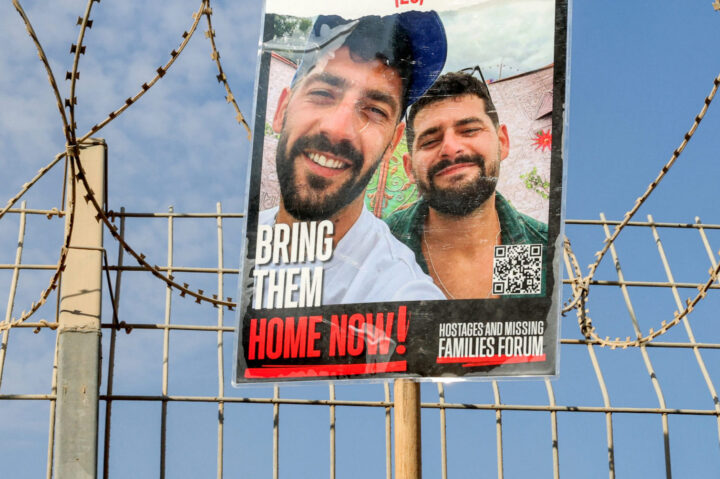
JACK GUEZ/AFP via Getty Images
A sign identifying Israeli hostages Gali and Ziv Berman is raised by the barbed-wire fence during a demonstration by the families of the hostages taken captive in the Gaza Strip
Hamas said in a statement on Friday night that it was ready to enter final negotiations over the Trump-authored peace plan and that it was willing to release all the hostages remaining in Gaza.
The Palestinian terror group said it would release the living hostages and the bodies it has held hostage since the Oct. 7 attacks nearly two years ago. Twenty of the 48 hostages are believed to still be alive.
Hamas added it is willing to hand over administration of the Gaza Strip to a “Palestinian body composed of independents.” But the terror group also insisted — contradicting the terms of the Trump proposal — that Hamas will maintain a role in discussions over the future of Gaza through a “comprehensive Palestinian national framework.”
The deal is not yet final, and in its response to the Trump plan, Hamas said that the group is ready to enter negotiations to discuss the remaining details.
In response, Trump said in a post on Truth Social that he believes Hamas wants to make a deal, and called on Israel to “immediately stop the bombing of Gaza.”
“Based on the Statement just issued by Hamas, I believe they are ready for a lasting PEACE,” Trump wrote. “Israel must immediately stop the bombing of Gaza, so that we can get the Hostages out safely and quickly! Right now, it’s far too dangerous to do that. We are already in discussions on details to be worked out.”
A spokesperson for the Israeli embassy declined to comment.
This story was updated at 5:32 p.m.
The guarantee, which regards attacks on Qatar as direct threats to the U.S., is unprecedented between the U.S. and an Arab country
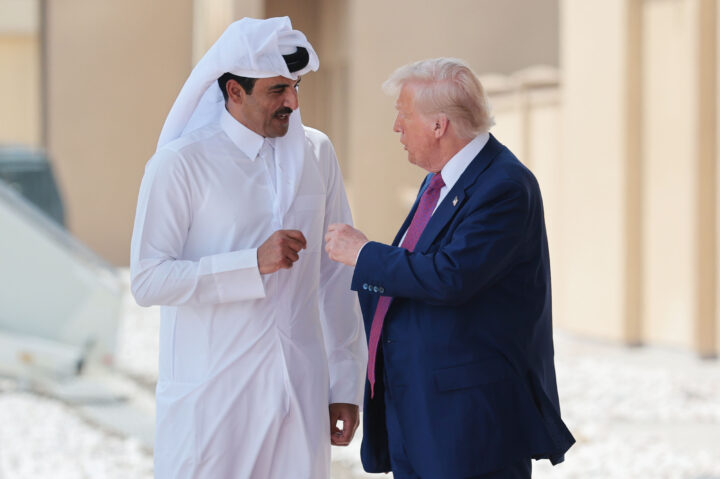
Win McNamee/Getty Images
President Donald Trump speaks with Emir of Qatar Tamim bin Hamad al Thani as he departs the Al Udeid Air Base for Abu Dhabi on May 15, 2025, in Doha, Qatar.
President Donald Trump signed an executive order on Monday pledging to guarantee Qatar’s “security and territorial integrity” against “external attack.” The security guarantee, similar to NATO’s Article 5 mutual defense clause, is unprecedented for the U.S. with an Arab country.
Signed just weeks after Israel’s attempted strike on Hamas leaders in Doha, the EO says the move comes “in light of the continuing threats to the State of Qatar posed by foreign aggression” and promises that the U.S. “shall regard any armed attack” on Qatari territory, sovereignty or critical infrastructure as a “threat to the peace and security of the United States.”
Qatar also recently faced an attack from Iran, when Tehran launched missiles at the U.S.’ Al Udeied Air Base during the Israel-Iran war in June.
The order was signed on Sept. 29, the day that Israeli Prime Minister Benjamin Netanyahu met with Trump in the White House and called Qatari Prime Minister Sheikh Sheikh Mohammed bin Abdulrahman al-Thani to apologize for the strike, though it was only publicized after Netanyahu’s departure.
The order pledges that, should Qatar face any of the described threats, “the United States shall take all lawful and appropriate measures — including diplomatic, economic, and, if necessary, military — to defend the interests of the United States and of the State of Qatar.”
The U.S. does not have a similar security guarantee with Israel. Saudi Arabia has sought one from Washington as well, primarily through normalizing relations with Israel.
Plus, right-wing influencers defame the ADL
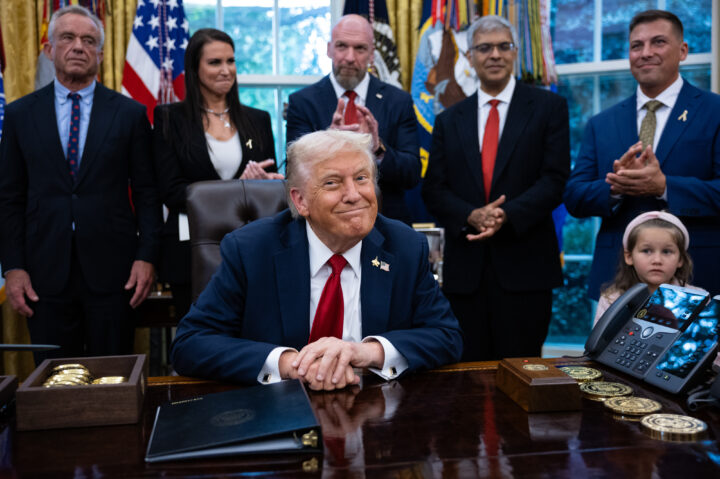
Francis Chung/Politico/Bloomberg via Getty Images
President Donal Trump, center, during an executive order signing in the Oval Office of the White House on Tuesday, Sept. 30, 2025.
Good Tuesday afternoon.
This P.M. briefing is reserved for our premium subscribers like you — offering a forward-focused read on what we’re tracking now and what’s coming next.
I’m Danielle Cohen-Kanik, U.S. editor at Jewish Insider and curator, along with assists from my colleagues, of the Daily Overtime briefing. Please don’t hesitate to share your thoughts and feedback by replying to this email.
📡On Our Radar
Notable developments and interesting tidbits we’re tracking
The clock continues to tick on whether Hamas will accept President Donald Trump’s 20-point plan to end the war in Gaza, presented with Israeli Prime Minister Benjamin Netanyahu at the White House yesterday.
The plan itself says in Point No. 4 that “within 72 hours of Israel publicly accepting this agreement, all hostages, alive and deceased, will be returned.”
Trump affirmed that timeline, telling reporters this morning that he would give Hamas “three or four days” to agree to the ceasefire and said later during remarks to military leaders in Quantico, Va., “We have one signature that we need, and that signature will pay in hell if they don’t sign”…
Officials from Egypt, Qatar and Turkey are urging Hamas to agree, despite being angered by several changes to the plan negotiated by Netanyahu, particularly on the conditions and timeline for the IDF’s withdrawal from Gaza, before it was presented to the public yesterday, Axios reports…
U.S. Ambassador to Israel Mike Huckabee postponed a rare trip to Egypt, originally planned for Sunday, to mid-October. Huckabee said the purpose of his visit, requested by Egyptian officials, is to “build dialogue, trust and understanding,” without providing further details on the agenda or the reason for the delay…
The Israeli Foreign Ministry today claimed that the Sumud Flotilla currently making its way to Gaza, including anti-Israel activist Greta Thunberg and around 500 others, was organized and funded indirectly by Hamas through the Palestinian Conference for Palestinians Abroad, an organization led and endorsed by Hamas affiliates.
The flotilla and the Israeli Navy are expected to make contact as the ships approach Gaza tomorrow. Italy and Spain dispatched their own navies to accompany the flotilla, though those ships will turn back before reaching Israeli waters.
Italian Prime Minister Giorgia Meloni called in a statement today for the flotilla to cease its operation for risk of “blowing up” the “fragile balance” created by Trump’s peace proposal. In the U.S., meanwhile, Rep. Rashida Tlaib (D-MI) and 18 other House progressives wrote to Secretary of State Marco Rubio demanding that the U.S. protect the flotilla…
Elon Musk and several right-wing influencers misrepresented the Anti-Defamation League’s classification of the antisemitic Christian Identity movement as an extremist group, circulating a partial, out-of-context screenshot on social media purporting that the civil rights organization was disparaging the Christian religion at large, Jewish Insider’s Emily Jacobs and Marc Rod report.
Musk said the ADL “hates Christians” and called it a “hate group,” while Rep. Anna Paulina Luna (R-FL) said the group is “intentionally creating a targeted hate campaign against Christians.” In reality, the Christian Identity movement, which the ADL lists on its website as an extremist group, “is a virulently antisemitic and loosely organized movement that has nothing to do with mainstream Christianity,” ADL CEO Jonathan Greenblatt wrote on X…
Trump told reporters this afternoon that his administration is close to reaching a deal with Harvard after a monthslong deadlock and legal battle that will see the university pay around $500 million to open and operate trade schools. “They’re going to be teaching people how to do AI and lots of other things,” Trump said at an executive order signing.
The potential deal comes after the Department of Health and Human Services said yesterday that it was initiating the process of “debarment” against Harvard, which would cut the school off from future federal research funding, a large blow to its financial standing.
Harvard had sent a scathing letter to the administration on Sept. 19 accusing it of relying on “inaccurate and incomplete facts” in determining that the school had violated civil rights laws, The New York Times reports. The letter also said the administration failed to meet legal requirements to prove discrimination and relied on findings from a fraction of a percentage of the student body…
Meanwhile, a federal judge ruled today that the Trump administration’s moves to arrest and deport international students for actions at anti-Israel protests were illegal, saying that the Department of Homeland Security and State Department aimed to “tamp down pro-Palestinian student protests and terrorize” students.
A DHS official testified during the trial that the department relied heavily on the advocacy work of the pro-Israel group Canary Mission, creating reports on between 100-200 student protesters based of the group’s profiles of people involved in anti-Israel activity on campus…
In another legal loss, the administration was forced to restore almost all of the 500 National Institutes of Health grants it had suspended from the University of California, Los Angeles after a federal ruling last week…
Another campus drawing attention: The University of Maryland’s Student Government Association is set to consider a resolution at the start of Yom Kippur on Wednesday evening, calling on the university and its charitable foundation to implement a boycott of companies and academic institutions with ties to “Israel’s regime of apartheid and occupation,” JI’s Haley Cohen reports…
⏩ Tomorrow’s Agenda, Today
An early look at tomorrow’s storylines and schedule to keep you a step ahead
Keep an eye on Jewish Insider tomorrow morning for reporting on the rise of DSA-aligned candidates in key congressional and mayoral contests.
On Sunday, Democratic Jewish Outreach of Pennsylvania, a Jewish Democratic PAC, will present its annual Defender of Democracy award to Illinois Gov. JB Pritzker at an event with special guest Pennsylvania Gov. Josh Shapiro.
Also on Sunday, the Museum of Jewish Heritage – A Living Memorial to the Holocaust in New York will open its exhibit honoring the 2018 Tree of Life Synagogue shooting in Pittsburgh.
In observance of Yom Kippur, we’ll be back in your inbox with the Daily Overtime on Monday. G’mar chatima tova and Shabbat shalom!
Stories You May Have Missed
HILL REACTIONS
Senators react to Trump’s Gaza plan with cautious optimism
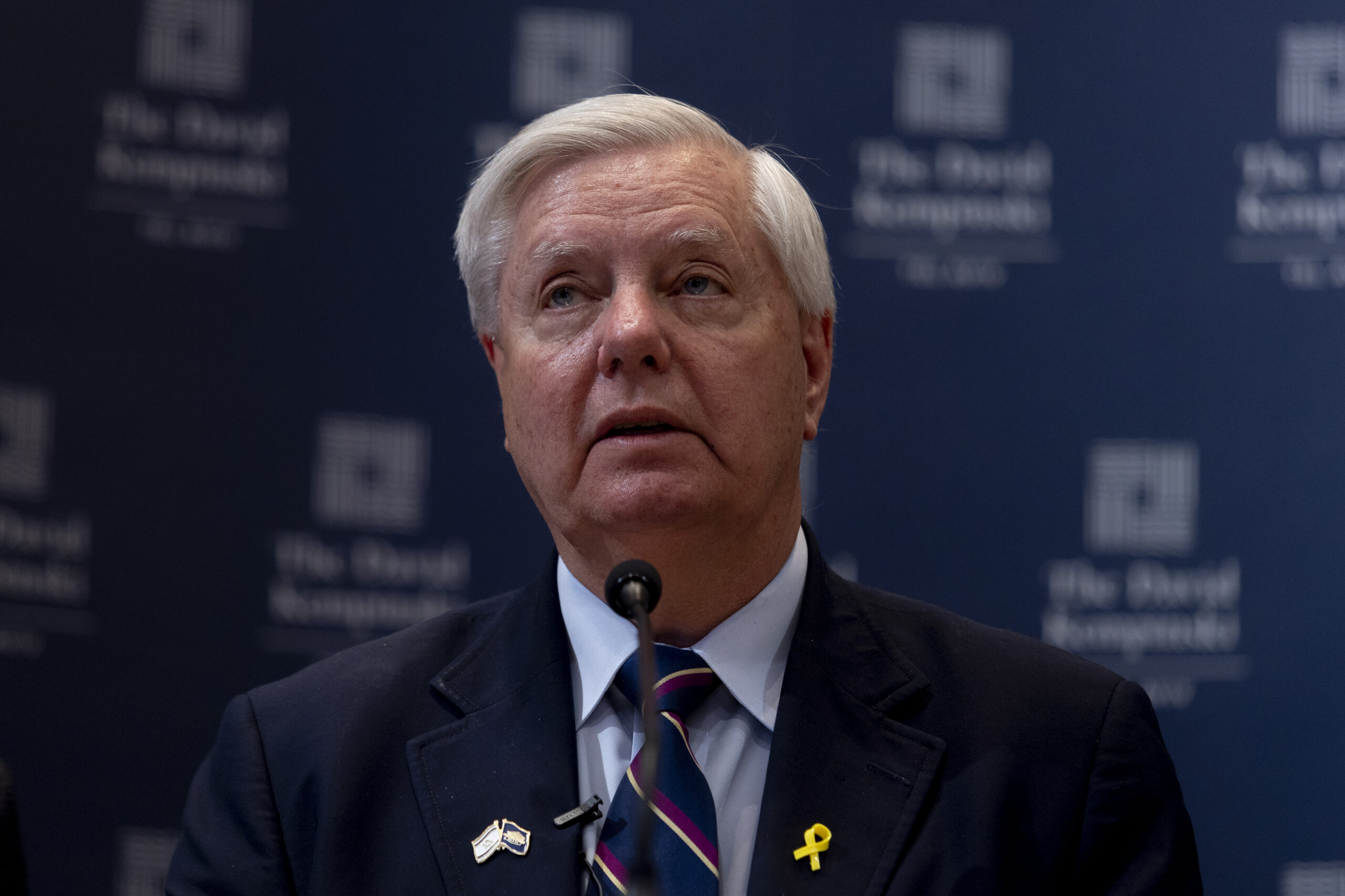
Sen. Lindsey Graham sounded skeptical that Hamas would accept the deal: ‘Distrust and verify with these guys’
CONFERENCE CONTROVERSY
Khanna distances himself from pro-terror speakers at anti-Israel conference and defends ‘free speech’

At ArabCon, several panelists laughed at the notion of condemning Hamas’ Oct. 7 attacks and defended the terrorist group as ‘Palestinian resistance’
Plus, Khanna distances himself from terror sympathizers
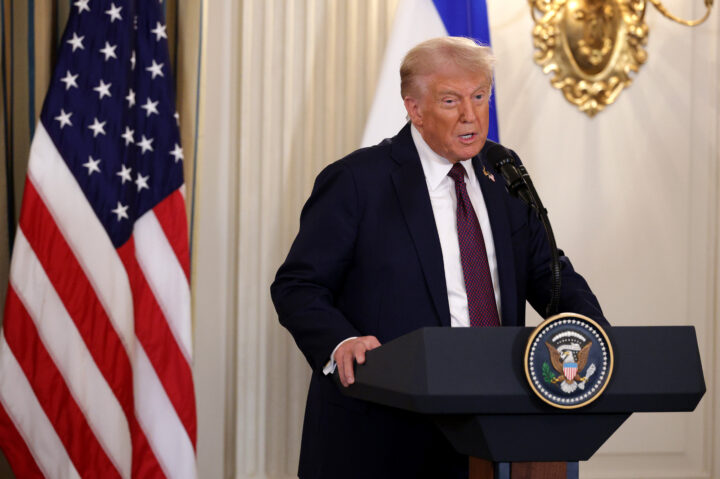
Alex Wong/Getty Images
U.S. President Donald Trump delivers remarks at the White House on September 29, 2025 in Washington, DC.
Good Tuesday morning.
In today’s Daily Kickoff, we report on President Donald Trump’s 20-point proposal to end the Israel-Hamas war, and report on a new Department of Justice lawsuit targeting demonstrators who protested outside of a New Jersey synagogue. We have the scoop on the reintroduction of the bipartisan Pray Safe Act, and report on Rep. Ro Khanna’s effort to distance himself from other speakers at the recent ArabCon conference who promoted terrorism from the stage. Also in today’s Daily Kickoff: Jay Schottenstein, Al Tylis and Sarah Adler Hartman.
Today’s Daily Kickoff was curated by Jewish Insider Executive Editor Melissa Weiss and Israel editor Tamara Zieve, with assists from Danielle Cohen-Kanik and Marc Rod. Have a tip? Email us here.
What We’re Watching
- Defense Secretary Pete Hegseth is convening senior military officials stationed around the world today in Virginia to speak about military standards and the “warrior ethos,” amid concerns from the military’s top brass, including Gen. Dan Caine, chairman of the Joint Chiefs of Staff, over the Pentagon’s priorities. President Donald Trump is slated to attend the summit, being held at Quantico.
- A federal shutdown appears increasingly likely to take effect overnight as Congress faces today’s deadline to pass a spending bill, and as talks last night between Trump and senior congressional leadership failed to yield a breakthrough that would keep the government open.
- The Atlantic Council is holding a conversation with Palestinian-American researcher and activist Ahmed Fouad Alkhatib about efforts to stabilize and rebuild Gaza in a postwar scenario.
- This evening, Democratic Majority for Israel will host a virtual briefing with Rep. Greg Landsman (D-OH) on the implications of yesterday’s White House meeting, the status of the Gaza war, political developments in Jerusalem and Landsman’s reflections on his recent trip to Israel.
What You Should Know
A QUICK WORD WITH JI’S LAHAV HARKOV
With Israeli Prime Minister Benjamin Netanyahu accepting President Donald Trump’s 20-point plan to end the war in Gaza at the White House on Monday, the ball is now in Hamas’ court. Read more here from JI’s Gabby Deutch on Trump and Netanyahu’s press conference.
Whether Hamas would agree to release the hostages first, before Israel makes any concessions other than stopping the fighting, remains to be seen. There is also newfound pressure on Qatar, a chief patron of Hamas, to convince the terror group to accept the deal.
The late elder Israeli statesman Abba Eban famously said, “The Arabs never miss an opportunity to miss an opportunity.” In readily accepting Trump’s plan, Netanyahu is counting on Hamas to do just that.
That’s not to say that Netanyahu opposes the plan. His calculus may be that he will be able to execute the parts he supports, while the aspects he finds less favorable are unlikely to materialize anyway — largely, he believes, due to the Palestinians’ own intransigence.
As Netanyahu noted in the press conference, the plan meets all of Israel’s war aims: Bringing back the hostages, dismantling Hamas — most of which Israel already did in the war — and making sure it no longer poses a threat to Israel, through demilitarization and deradicalization. Other elements of the plan that Israel has long said would be part of the “day after” for Gaza are a technocratic government with help from international partners, and the IDF retaining a buffer zone inside Gaza’s perimeter. Netanyahu also reportedly secured 11th-hour edits to the plan regarding the IDF’s withdrawal and Hamas’ disarmament prior to the press conference.
But the details are tricky.
For example, Point 17 of the plan: “In the event Hamas delays or rejects this proposal, the above, including the scaled-up aid operation, will proceed in the terror-free areas handed over from the IDF to the [International Stabilization Force].”
In other words, if Hamas rejects the plan, humanitarian aid “without interference” — likely including dual-use items that could be exploited by terrorist organizations — would still be immediately and significantly scaled up and managed by the United Nations and Red Crescent, among others. Once an international force is put together, the IDF would still be expected to retreat from areas in which it has defeated Hamas. And a transitional, technocratic government overseen by Trump and former British Prime Minister Tony Blair’s “Board of Peace” would be put into place.
HILL REACTIONS
Senators react to Trump’s Gaza plan with cautious optimism
Senators reacted with cautious optimism — and a degree of skepticism — to President Donald Trump’s announcement on Monday of a sweeping deal that would end the war in Gaza, see the release of the remaining hostages and facilitate reconstruction of the Gaza Strip, Jewish Insider’s Marc Rod and Emily Jacobs report.
Close eye: Sen. Lindsey Graham (R-SC) warned that the execution of the deal would require close monitoring of Hamas’ compliance and that long-term peace in the region will likely require eliminating Iran’s other proxies, in addition to Hamas. “I hope Hamas agrees — we’ll get the hostages home. Distrust and verify with these guys,” Graham said. “A lot of loopholes if you don’t watch it, but I hope we can land this deal.”
Read the full story here with additional comments from Sens. John Cornyn (R-TX), Rick Scott (R-FL), Kevin Cramer (R-ND), Ted Budd (R-NC), Jim Risch (R-ID), John Kennedy (R-LA), Chris Coons (D-DE), Richard Blumenthal (D-CT), Peter Welch (D-VT) and Jeanne Shaheen (D-NH).
Communal reaction: Jewish groups are rallying behind Trump’s peace plan, with organizations from AIPAC to J Street voicing initial support for the proposal, eJewishPhilanthropy’s Judah Ari Gross reports.
OLIVE BRANCH
During Trump meeting, Netanyahu apologized to Qatari leader for Doha strike
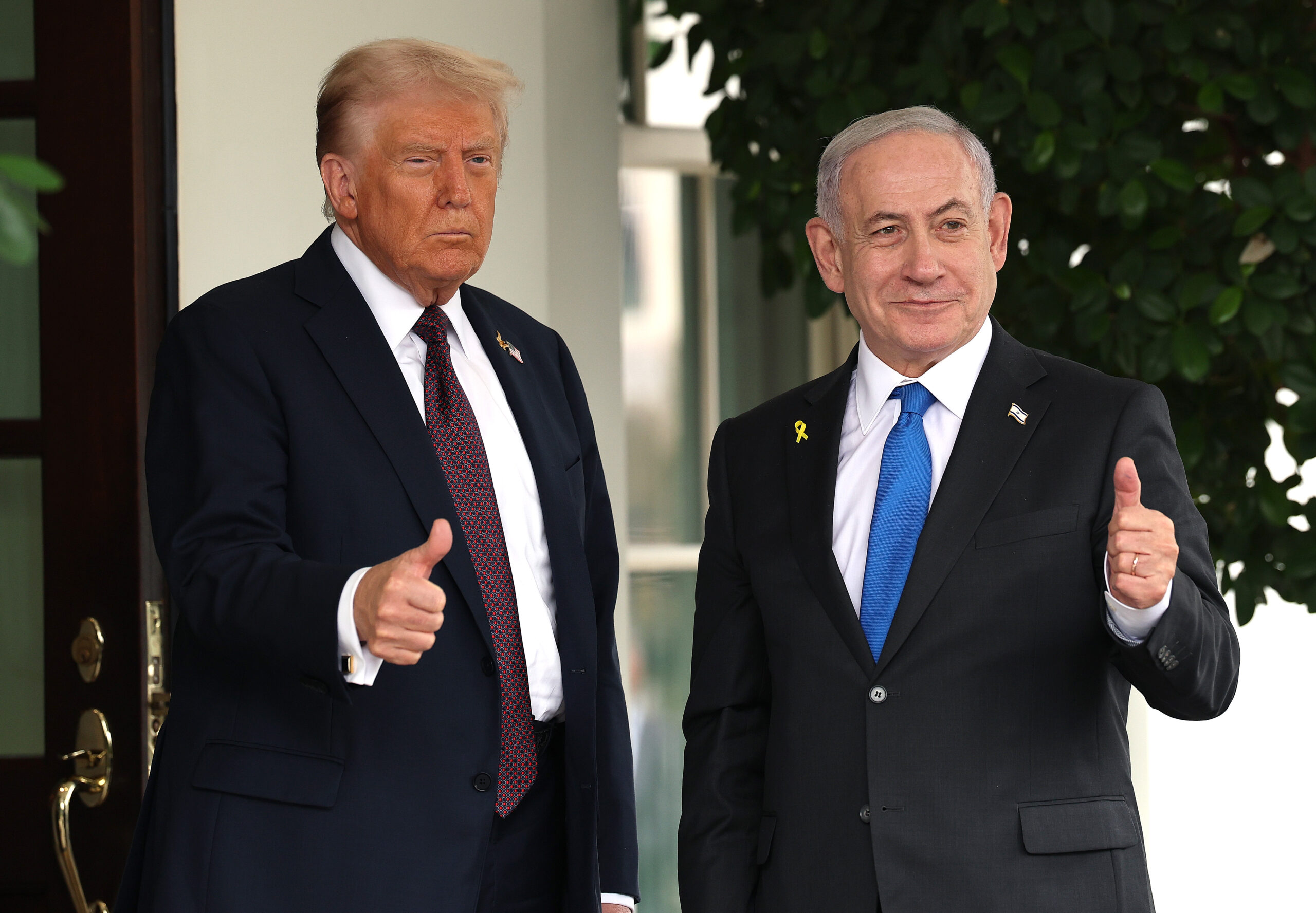
During a meeting between Israeli Prime Minister Benjamin Netanyahu and President Donald Trump at the White House on Monday, Netanyahu apologized to Qatar’s prime minister, Sheikh Mohammed bin Abdulrahman al-Thani, for killing a Qatari serviceman in an attempted strike on Hamas leadership in Doha and promised not to violate Qatari sovereignty again, Jewish Insider’s Marc Rod reports. News of the apology has been met with frustration and scorn from Netanyahu’s political allies and opponents in Israel.
Notable quotable: According to remarks released by the Israeli government, Netanyahu told Al Thani, “I want you to know that Israel regrets that one of your citizens was killed in our strike. I want to assure you that Israel was targeting Hamas, not Qataris. I also want to assure you that Israel has no plan to violate your sovereignty again in the future, and I have made that commitment to the president.” Netanyahu also acknowledged Qatar’s “grievances against Israel” as well as Israel’s own issues with Qatar “from support for the Muslim Brotherhood to how Israel is portrayed on Al Jazeera to support for anti-Israel sentiment on college campuses.”
CONFERENCE CONTROVERSY
Khanna distances himself from pro-terror speakers at anti-Israel conference and defends ‘free speech’

Rep. Ro Khanna (D-CA) distanced himself from some speakers and attendees at the ArabCon conference that he attended in Dearborn, Mich., while defending their First Amendment right to free speech, Jewish Insider’s Marc Rod reports. At the conference, held last week, several panelists laughed at the notion of condemning the Oct. 7, 2023, Hamas attacks, defended Hamas as “Palestinian resistance” and said the group should not be condemned and defended convicted terrorists and terrorist financiers, according to excerpts of the event shared online.
Responding: During his own separate panel at the event, Khanna dismissed the notion that there were any “pro-terror radical[s]” speaking at the event or attending the conference, referencing criticism he faced prior to the event. “I don’t agree with everyone who spoke at the conference, but I do believe in free speech. You can’t just be for free speech when it’s convenient. I’ve unequivocally condemned the Oct. 7 attacks and called for the release of the hostages,” Khanna said in a statement to JI on Monday, when pressed about whether he considered the comments of other speakers and attendees to constitute pro-terror radicalism.
HARBORING HATE
Study: Antisemitism ‘thriving in plain sight’ on X

Antisemitism is “thriving in plain sight” on Elon Musk’s social media platform X (formerly Twitter), according to a new study by the Center for Countering Digital Hate and the Jewish Council for Public Affairs, Jewish Insider’s Danielle Cohen-Kanik reports.
Breakdown: The study, first shared with CNN, conducted an analysis of over 679,000 antisemitic posts made over a year on the site and found that, despite the platform’s own anti-hate policies and commitment to reduce visibility of hateful content, X “not only tolerates” antisemitic conduct “but allows users to monetize it, giving antisemitic influencers both reach and revenue.” With the assistance of ChatGPT, the study categorized the posts into Jewish control or power conspiracies, Jewish satanic conspiracies and Holocaust denial, with control or power conspiracies accounting for the plurality (44%) of the total likes and views. All posts included were viewed 193 million times in total.
DOJ SUIT
Justice Department sues individuals involved in demonstration at N.J. synagogue

The Department of Justice filed a civil suit on Monday against several protesters and anti-Israel groups for their involvement in a demonstration last November at a West Orange, N.J., synagogue, Congregation Ohr Torah, Jewish Insider‘s Marc Rod reports.
The details: The DOJ complaint alleges that the Party for Socialism and Liberation-New Jersey, American Muslims for Palestine-New Jersey and six individuals engaged in physical assaults and antisemitic and threatening chants, as well as defied police orders. The suit was brought under the Freedom of Access to Clinic Entrances (FACE) Act, traditionally used against those who block access to abortion clinics, but which also includes provisions barring the use of force, threats, intimidation or physical obstruction to interfere with the right to worship.
EXCLUSIVE
Senate, House lawmakers to reintroduce Pray Safe Act
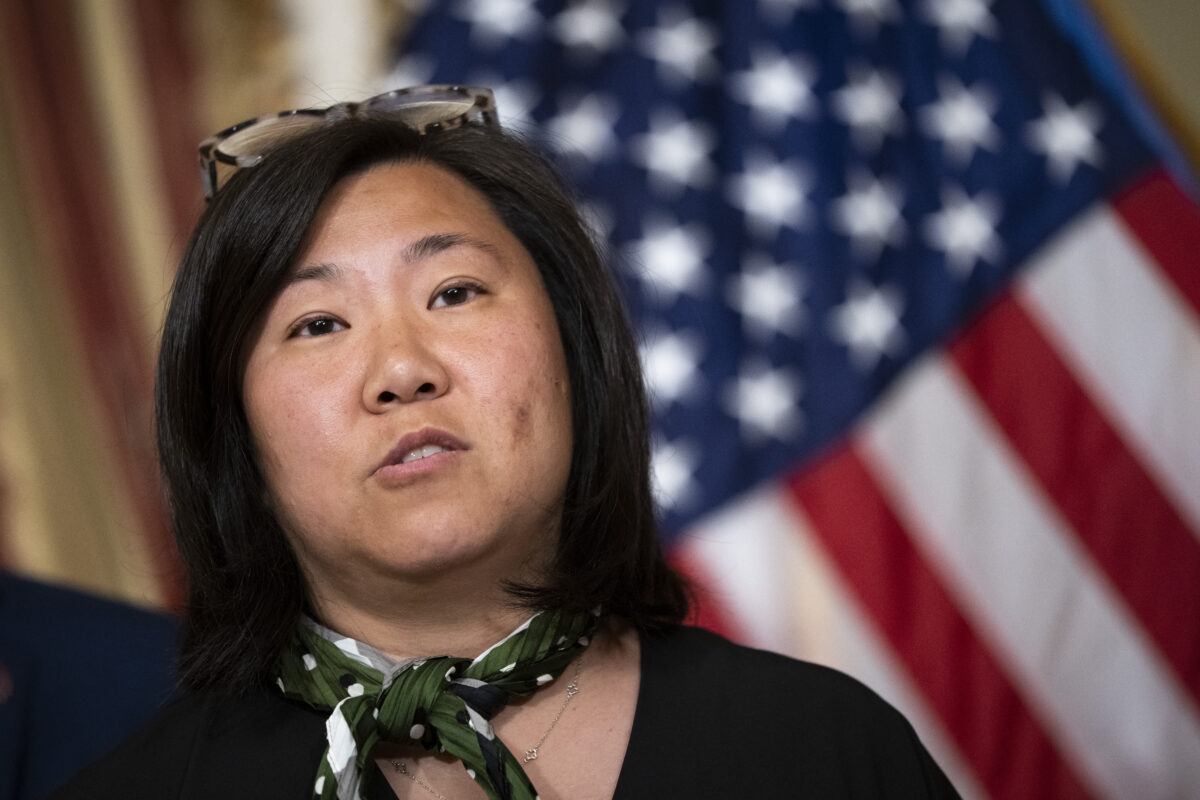
Senate and House lawmakers on Tuesday are expected to reintroduce the Pray Safe Act, a long-gestating bill that would create a federal database and clearinghouse for security best practices, training materials and grant opportunities for religious nonprofits, Jewish Insider’s Marc Rod reports.
The latest: The legislation is being led by Sens. Maggie Hassan (D-NH) and Ron Johnson (R-WI) and Reps. Grace Meng (D-NY) and Maria Elvira Salazar (R-FL) and comes after a series of high-profile attacks at religious institutions, including mass shootings at a Catholic church in Minneapolis and a Mormon church in Michigan.
Worthy Reads
Jean Mutation: The Wall Street Journal’s Suzanne Kapner interviews American Eagle CEO Jay Schottenstein about the company’s marketing success, months after its viral Sydney Sweeney “great jeans” ad campaign. “Schottenstein uses a Yiddish word to describe his long-held goal for American Eagle: ‘to put a pair of jeans on every tuchis in the United States.’ The 71-year-old has an uncanny ability to discern what young shoppers want. … While visiting Israel with his granddaughters in 2017, he noticed they were going wild for flow ring bracelets that looked like slinkies. He tracked down the manufacturer and sold them in American Eagle stores, generating nearly $1 million in sales. Schottenstein has honed his instincts over decades in a retail business founded by his grandfather, Ephraim, a Lithuanian immigrant, who opened a department store in Columbus, Ohio, in 1917.” [WSJ]
Door Opening to Peace?: The Washington Post’s David Ignatius weighs in on President Donald Trump’s 20-point plan to end the Israel-Hamas war. “The ‘New Gaza’ proclaimed by Trump would ease the agony of Palestinian civilians ravaged by the war while marking an end to the suffering Israel has endured since the brutal Hamas terrorist attack of Oct. 7, 2023. Gaza’s buildings are mostly shattered ruins, and the ground is soaked in blood. Palestinian civilians live in hunger and fear, as do Israeli hostages. It’s time for the fighting to end. Trump often overstates the significance of his actions, but not here. His ‘Board of Peace’ to oversee political transition in Gaza is a potential game changer. … The door to something different seemed to open slightly Monday. On this, Trump deserves the credit he craves. We can only hope and pray that he and his new coalition of Arab and Israeli allies will keep pushing.” [WashPost]
Word on the Street
The Pentagon is pushing missile suppliers to increase production rates amid concerns regarding low U.S. stockpile levels and in preparation for a potential future conflict with China…
Michael Friedman, who previously served as special assistant to the president for presidential personnel, was appointed chief of staff to Treasury Secretary Scott Bessent…
House Education Committee Chairman Tim Walberg (R-MI) and Rep. Elise Stefanik (R-NY) wrote to Harvard‘s president requesting information about whether the school is taking promised steps to address antisemitism on campus. The letter accuses the school of obstructing a law enforcement investigation into an antisemitic attack and supporting those involved, failing to follow through on its commitment to implement the International Holocaust Remembrance Alliance’s working definition of antisemitism and slow-walking a decision on whether to end its partnership with Birzeit University…
The Office for Civil Rights in the Department of Health and Human Services sent a letter to Harvard beginning a process that could render the school ineligible for future federal grants…
A new New York Times/Siena poll found that 51% of Americans oppose sending U.S. military aid to Israel; a 36% plurality said they sympathize more with the Palestinians, 35% said they sympathize more with the Israelis and 31% said “both equally” or they didn’t know…
Staff and allies of former New York Gov. Andrew Cuomo told Politico that more money has begun flowing into his mayoral campaign and allied super PACs since Mayor Eric Adams suspended his campaign, giving Cuomo an outside chance to consolidate voters who oppose front-runner Zohran Mamdani with just over a month to go in the race…
A circuit court in Virginia found that American Muslims for Palestine to be in civil contempt of court for failing to comply with a request from the commonwealth’s attorney general, Jason Miyares, regarding the group’s potential violations of Virginia’s charitable solicitation laws…
Apollo announced yesterday the launch of Apollo Sports Capital, to be helmed by Al Tylis with the goal of investing in sports franchises, media and events…
New York Gov. Kathy Hochul announced a competition to design a memorial for Supreme Court Justice Ruth Bader Ginsburg, which will be situated in Brooklyn Bridge Park…
Maurice Shnaider, the uncle of slain Israeli hostage Shiri Bibas, filed a complaint against Iran at the International Criminal Court, accusing the Islamic Republic of complicity in crimes against humanity, war crimes and genocide and demanding the issuance of arrest warrants for Iranian Supreme Leader Ayatollah Ali Khamenei and Islamic Revolutionary Guard Corps head Esmail Qaani…
Former Israeli MK Michal Cotler-Wunsh, resigned as Israel’s special envoy to combat antisemitism, a voluntary position, citing what she said was the government’s failure to take the issue seriously…
The U.S. deported approximately 100 Iranian migrants back to Iran, in a deal made between Washington and Tehran amid a broader illegal immigration crackdown by the Trump administration…
Sarah Adler Hartman was named the next CEO of the Texas Tribune; read JI’s 2021 profile of Hartman here…
Pic of the Day
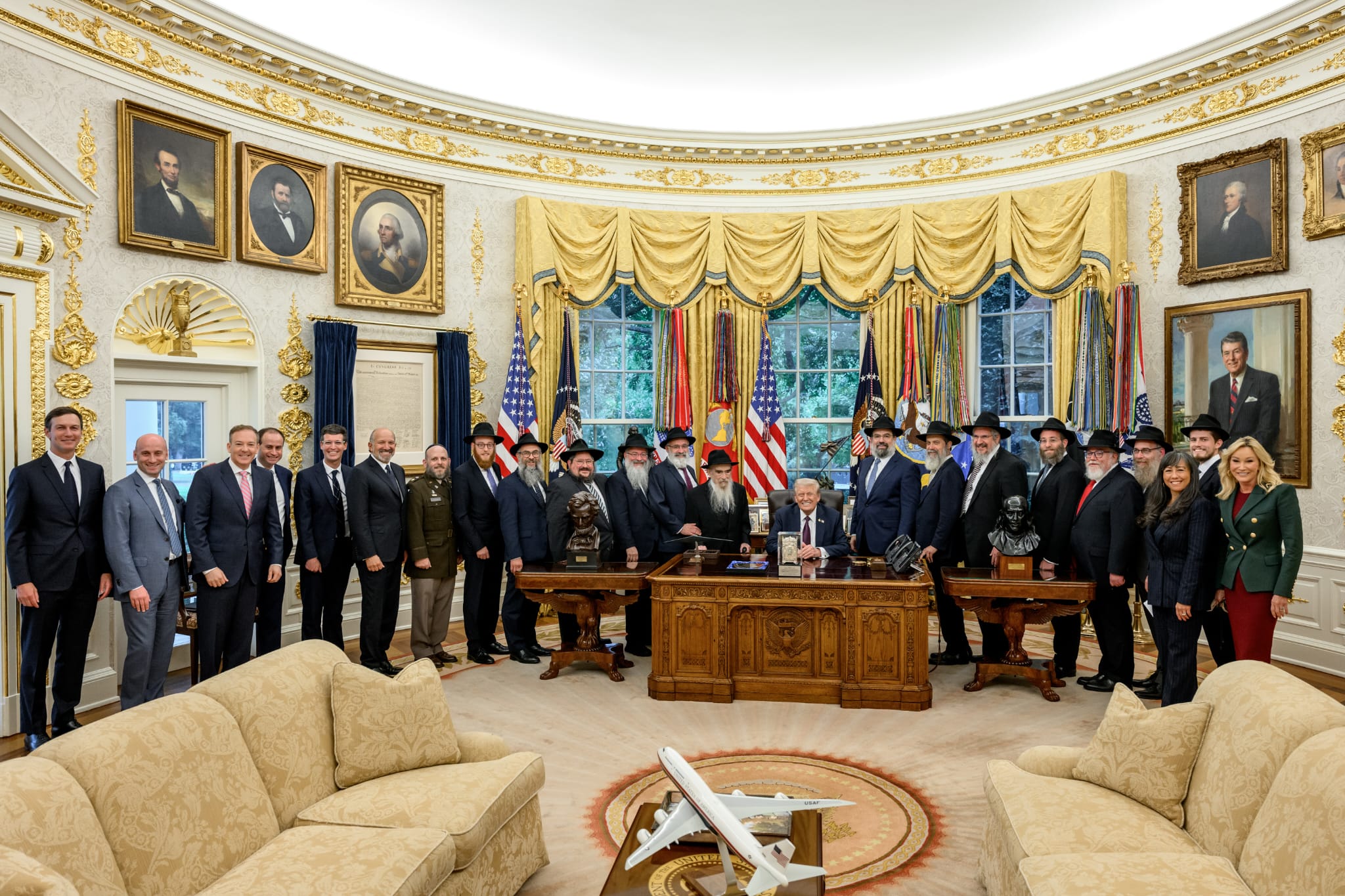
A delegation from Chabad-Lubavitch met on Monday with President Donald Trump, Jared Kushner, White House Deputy Chief of Staff Stephen Miller, EPA Administrator Lee Zeldin, Staff Secretary Will Scharf, Liaison to the Jewish Community Martin Marks, Commerce Secretary Howard Lutnick, Chief of Staff Susie Wiles and Paula White. The meeting was a belated celebration of Education and Learning Day USA, which honors the Lubavitcher Rebbe, Rabbi Menachem Mendel Schneerson.
Birthdays
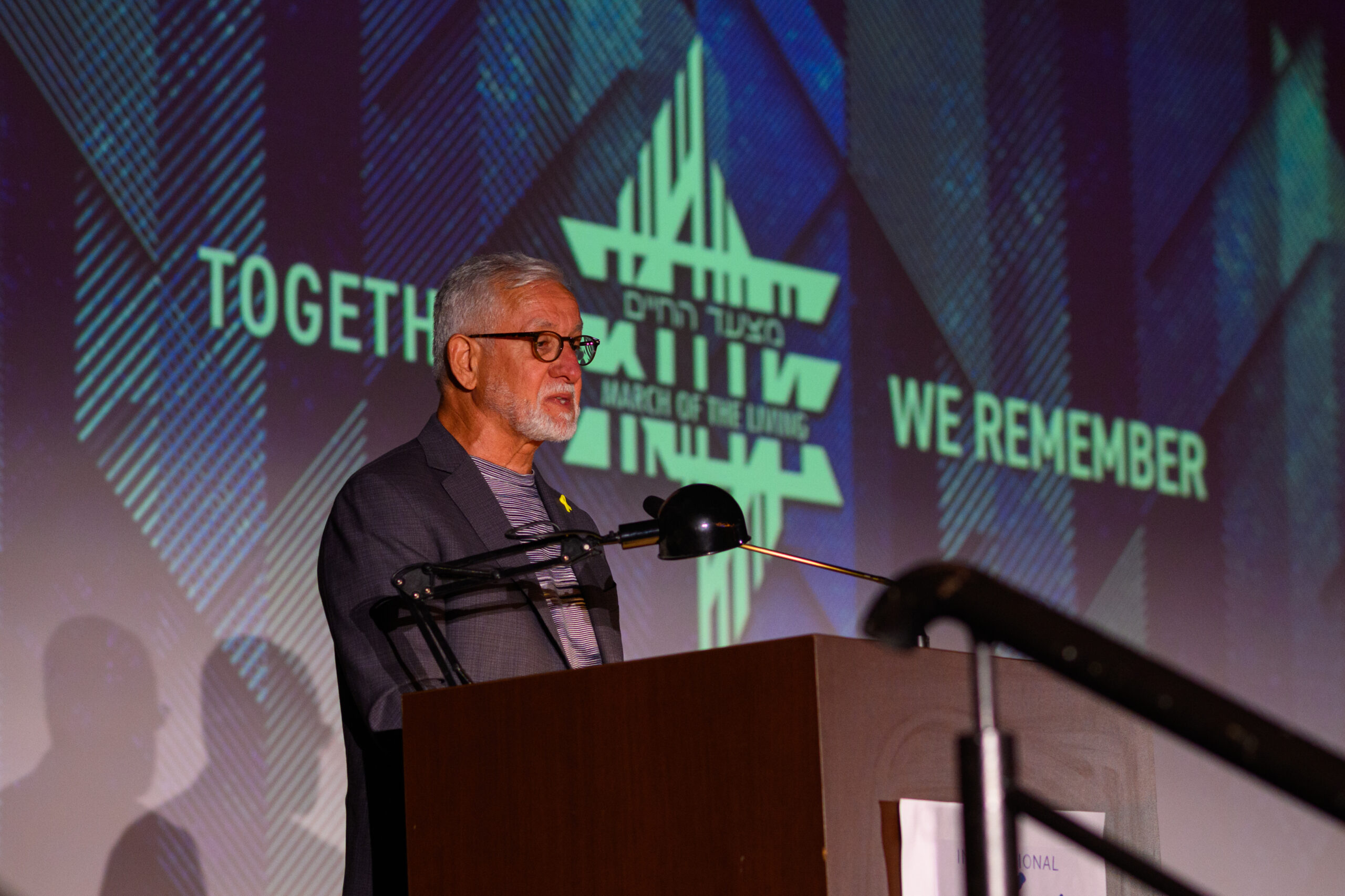
Founder and president of the Menomadin Group and president of the Menomadin Foundation, Haim Taib turns 65…
Former prime minister of Israel, Ehud Olmert turns 80… IT developer and business analyst, Sanford Kadish… Past president of The Washington Institute for Near East Policy, she is on the board of The Tikvah Fund, Rochelle A “Shelly” Kassen… Chairman and CEO of AMC Entertainment, he is a co-owner of the Philadelphia 76ers, Adam Maximilian Aron turns 71… Actress and activist, she completed her second term as president of the SAG-AFTRA trade union a few weeks ago, Fran Drescher turns 68… Professor of mathematical logic at Oxford, Ehud Hrushovski turns 66… Journalist for Haaretz, Allison Kaplan Sommer… Professor of healthcare economics at MIT and an architect of Romneycare and Obamacare, Jonathan Gruber turns 60… Leora Lily Ihilevich Usman… Lisa K. Robbins… Israel’s U.N. ambassador until 2024, now global president of Magen David Adom, Gilad Menashe Erdan turns 55… Former SVP of digital product management at The Advertising Council, now a consultant to nonprofits, Anastasia Goodstein… European affairs editor for The Washington Post, David Herszenhorn… CEO of Via Trading Corporation, Jacques Stambouli… President and CEO of Hadar Institute in Manhattan, Rabbi Eliezer “Elie” Kaunfer… Founder and partner at Artemis Strategies, a boutique consultancy, Hildy Kuryk turns 48… Host of NPR’s “All Things Considered,” Ari Michael Shapiro turns 47… Member of the Kentucky House of Representatives since 2023, Daniel Grossberg turns 47… Screenwriter, director, producer and actor, Jonathan Peter Kasdan turns 46… Founder of the Jerusalem-based Interfaith Center for Sustainable Development, Yonatan Neril turns 45… Computer scientist and entrepreneur, he is a co-founder and president of Palantir Technologies, Stephen Cohen turns 43… Chief news editor at Business Insider, Steven Russolillo… Mixed martial artist who competed in the lightweight division in the Ultimate Fighting Championship, Natan Levy turns 34…
Whether Hamas would agree to release the hostages first, before Israel makes any concessions other than stopping the fighting, remains to be seen
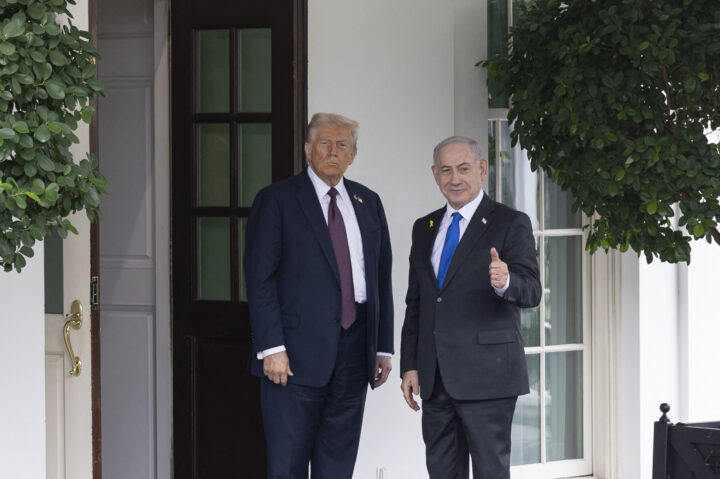
MEHMET ESER/Middle East Images/AFP via Getty Images
President Donald Trump welcomes Israeli Prime Minister Benjamin Netanyahu upon his arrival at the White House West Wing in Washington, DC, on September 29, 2025.
With Israeli Prime Minister Benjamin Netanyahu accepting President Donald Trump’s 20-point plan to end the war in Gaza at the White House on Monday, the ball is now in Hamas’ court.
Whether Hamas would agree to release the hostages first, before Israel makes any concessions other than stopping the fighting, remains to be seen. There is also newfound pressure on Qatar, a chief patron of Hamas, to convince the terror group to accept the deal.
The late Israeli elder statesman Abba Eban famously said, “The Arabs never miss an opportunity to miss an opportunity.” In readily accepting Trump’s plan, Netanyahu is counting on Hamas to do just that.
That’s not to say that Netanyahu opposes the plan. His calculus may be that he will be able to execute the parts he supports, while the aspects he finds less favorable are unlikely to materialize anyway — largely, he believes, due to the Palestinians’ own intransigence.
As Netanyahu noted in the press conference, the plan meets all of Israel’s war aims: Bringing back the hostages, dismantling Hamas — most of which Israel already did in the war — and making sure it no longer poses a threat to Israel, through demilitarization and deradicalization. Other elements of the plan that Israel has long said would be part of the “day after” for Gaza are a technocratic government with help from international partners, and the IDF retaining a buffer zone inside Gaza’s perimeter. Netanyahu also reportedly secured 11th-hour edits to the plan regarding the IDF’s withdrawal and Hamas’ disarmament prior to the press conference.
But the details are tricky.
For example, point 17 of the plan: “In the event Hamas delays or rejects this proposal, the above, including the scaled-up aid operation, will proceed in the terror-free areas handed over from the IDF to the [International Stabilization Force].”
In other words, if Hamas rejects the plan, humanitarian aid “without interference” — likely including dual use items that could be exploited by terrorist organizations — would still be immediately and significantly scaled up and managed by the United Nations and Red Crescent, among others. Once an international force is put together, the IDF would still be expected to retreat from areas in which it has defeated Hamas. And a transitional, technocratic government overseen by Trump and former British Prime Minister Tony Blair’s “Board of Peace” would be put into place.
All of that is meant to happen even if the hostages are not freed and Hamas refuses to lay down its arms.
Yet, Trump said that if Hamas rejects the plan: “You know, Bibi, you have the full backing to do what you have to do.” And Netanyahu made clear what that means to him — continuing the war: “Israel will finish the job by itself. This can be done the easy way or it can be done the hard way, but it will be done. We didn’t fight this horrible fight, sacrifice the finest of our young men, to have Hamas stay in Gaza.”
Arab countries that would potentially take part in the “Board of Peace” and the International Stabilization Fund have said repeatedly that they would not participate in administering Gaza until the war ended, which makes it unclear if, as the plan says, all of that will really happen if Hamas rejects the deal and the war continues.
Then there’s the part of the plan that is most controversial in Netanyahu’s political base: the potential involvement of the Palestinian Authority in governing Gaza, and the creation of a pathway to Palestinian statehood.
“Gaza will have a peaceful administration that is run neither by Hamas nor the Palestinian Authority,” Netanyahu said in the press conference.
Yet the text of the plan says that the Gaza transitional government will only stay in place “until such time as the Palestinian Authority has completed its reform program, as outlined in various proposals, including President Trump’s peace plan in 2020 and the Saudi-French proposal, and can securely and effectively take back control of Gaza.”
The 2020 proposal includes things such as “a constitution … that provides for freedom of press, free and fair elections, respect for human rights for its citizens” and more, as well as “transparent, independent, and credit-worthy financial institutions” and ending incitement.
Netanyahu said on Fox News’ “Sunday Briefing” that “if all of that is turned on its head, there’s a tremendous transformation … Good luck. Some people believe it happens. I don’t think it’s going to happen.”
The plan also says that the “credible pathway to Palestinian self-determination and statehood” would only happen “when the PA reform program is faithfully carried out.” Netanyahu appears to be calculating that Ramallah is unlikely to meet those conditions.
That being said, Netanyahu did sign a document that says unequivocally “we recognize [statehood] as the aspiration of the Palestinian people,” which is disturbing to some on the Israeli right, who argue that even acquiescence in principle is a problem.
While there is significant opposition to the plan from the right flank of Netanyahu’s governing coalition, it has been neutralized for now, in that most of the plan will not go to any kind of vote in the Cabinet. Any attempts to bring the government down over it would have to wait three weeks for the Knesset to come back from its recess, and even then they are likely to fail, with some of the opposition offering Netanyahu a “safety net.”
But as Netanyahu heads back to Israel having said “yes,” plenty of doubts remain as to whether this plan will actually be enacted. First, whether Hamas agrees, and then, new questions and challenges every step of the way.
Sen. Lindsey Graham sounded skeptical that Hamas would accept the deal: ‘Distrust and verify with these guys’

Amir Levy/Getty Images
Senator Lindsey Graham (R-SC) speaks at a press conference on US-Israel relations on February 17, 2025 at the Kempinski Hotel in Tel Aviv, Israel.
Senators reacted with cautious optimism — and a degree of skepticism — to President Donald Trump’s announcement on Monday of a sweeping deal that would end the war in Gaza, see the release of the remaining hostages and facilitate reconstruction of the Gaza Strip.
Sen. Lindsey Graham (R-SC) warned that the execution of the deal would require close monitoring of Hamas’ compliance and that long-term peace in the region will likely require eliminating Iran’s other proxies, in addition to Hamas.
“I hope Hamas agrees — we’ll get the hostages home. Distrust and verify with these guys,” Graham said. “A lot of loopholes if you don’t watch it, but I hope we can land this deal.”
“When you talk about normalizing the Mideast, I’m all for that. But after Oct. 7, we have to learn one thing: As long as radical Islamic terrorist groups exist, you can’t have a normal Mideast,” Graham continued. “I hope we can land this deal and bring the hostages home and start a new chapter in Gaza and the West Bank, but I will never support normalization until Hezbollah is dealt with. You cannot say the Mideast is a normal place as long as Hezbollah is a threat the way it is today.”
He said that he’s concerned that Hezbollah would replicate Hamas’ Oct. 7 attack if Israel and Saudi Arabia again begin to move toward normalization again before the Lebanese terror group is eliminated.
“If we do the Hamas deal, we should insist that the region deal with Hezbollah and take them both down, then eventually the Houthis,” he continued. “My takeaway of Oct. 7 is if you don’t have these radical groups in a box, you can never really achieve peace.”
Sen. John Cornyn (R-TX) said that there are “some details to be filled in, but I think by and large this seems like a very encouraging development.”
Sen. Rick Scott (R-FL) was hesitant to offer an assessment of the deal before Hamas had agreed to the terms.
“It’s the deal that hasn’t happened yet. It’d be nice. I mean, I guess it would be great if we get the hostages back and we get a ceasefire and we get to rebuild Gaza. That all sounds really good. I’m glad that Trump cares about this. It seems optimistic,” he told JI.
Sen. Kevin Cramer (R-ND) expressed some hesitation about engaging with the Qataris and taking a deal, but suggested Trump was ready to bring the conflict to a close.
“It’s bold. It’s gutsy on the president’s part. I just will believe it when I see it. I’m just so skeptical of one side in this, getting Qatar in there and involved,” Cramer told JI. “Clearly we’re playing along a little. I don’t know. I just don’t know. I think the timing for Trump is sort of like, ‘Okay, now’s the time [for a ceasefire]. We’ve done the dance long enough.’”
Sen. Ted Budd (R-NC) said he’s reviewing the plan, adding that the elimination of Hamas is a necessity.
“You can’t have Hamas promising the destruction of Israel,” he continued. “As long as there’s no threat, I see an opportunity here, but you can’t make a deal with somebody that wants to exterminate you.”
Senate Foreign Relations Committee chair Jim Risch (R-ID) praised the plan on X. “President Trump again shows his commitment to peace with his plan to bring all the hostages home, end the war in Gaza and transition to a future that allows the Palestinian people to prosper without Hamas’ terror schemes,” Risch said. “Anyone who wants a better future for the Palestinian people should join this pursuit of peace.”
Sen. John Kennedy (R-LA) told Jewish Insider he’s “glad they look like they’re moving toward peace.”
“I don’t think Israel is worried any longer about being popular. I think Israel was worried about its survival, and I respect that. And they’re going to do whatever it takes,” Kennedy continued. “Now, will Hamas accept it? I don’t know. I really don’t know. I hope they do. But if they don’t, I think Israel needs to continue to do what it’s been doing and wipe Hamas off the face of the earth.”
Democrats expressed hope that the deal would bring the war to a close.
Sen. Chris Coons (D-DE) told JI, “I’m encouraged the president’s engaging directly and saying this war must end. Humanitarian relief needs to go in, hostages need to come out, there needs to be a plan going forward for Gaza,” but said he hadn’t seen the details of Trump’s announcement.
Sen. Richard Blumenthal (D-CT) said that he was not familiar with the specifics of the plan. “If there’s a ceasefire and return of the hostages and humanitarian relief, bravo,” Blumenthal said.
Sen. Peter Welch (D-VT), one of the most vocal critics of Israel’s Gaza operations in the Senate, told JI he hadn’t reviewed the plan but “my main concern [is to] start getting food and medicine in. That has to happen immediately.”
Sen. Jeanne Shaheen (D-NH), the ranking member of the Foreign Relations Committee, said in a statement. “I call on Hamas to accept, and Israel to faithfully implement, the proposal laid out by the United States.”
Prior to the meeting, leading Senate Democrats had urged Trump to press Israeli Prime Minister Benjamin Netanyahu to accept a hostage deal that ends the war, as well as to pressure Netanyahu to rule out annexation of the West Bank.
Plus, new study suggests X is safe harbor for antisemitism
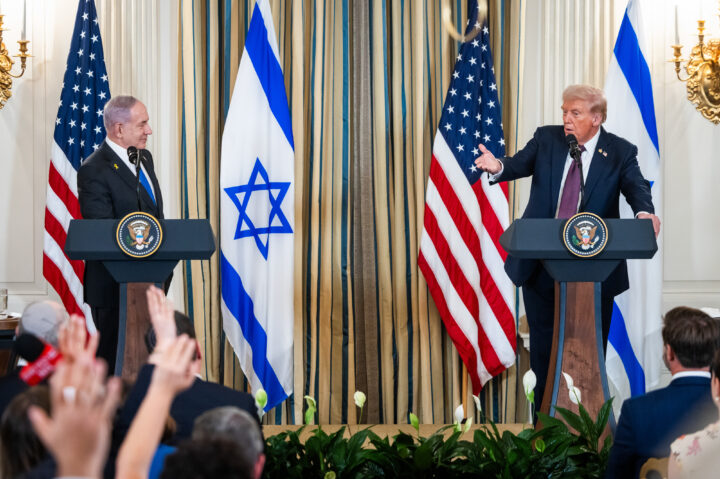
Jim Lo Scalzo/EPA/Bloomberg via Getty Images
President Donald Trump, right, and Benjamin Netanyahu, Israel's prime minister, during a news conference in the State Dining Room of the White House in Washington, DC, US, on Monday, Sept. 29, 2025.
Good Monday afternoon.
This P.M. briefing is reserved for our premium subscribers like you — offering a forward-focused read on what we’re tracking now and what’s coming next.
I’m Danielle Cohen-Kanik, U.S. editor at Jewish Insider and curator, along with assists from my colleagues, of the Daily Overtime briefing. Please don’t hesitate to share your thoughts and feedback by replying to this email.
📡On Our Radar
Notable developments and interesting tidbits we’re tracking
In a press conference this afternoon at the White House, President Donald Trump and Israeli Prime Minister Benjamin Netanyahu announced that Israel had agreed to sign onto the White House’s 20-point peace plan to end the war in Gaza.
The plan, which has not yet been agreed to by Hamas, would see the release of all of the remaining hostages in Gaza in exchange for an immediate end to the war and the release of 2,250 Palestinians in Israeli jails, including 250 serving life sentences. Hamas would be removed from power in Gaza with its members offered amnesty if they “commit to peaceful co-existence and to decommission their weapons.”
Netanyahu and Trump weren’t in lockstep on the future of Gaza, though. The Israeli PM said in his remarks that “Gaza will have a peaceful civilian administration that is run neither by Hamas nor by the Palestinian Authority,” while the White House’s plan says that the PA will control Gaza once the body has reformed (a process that could take years).
Even if Hamas rejects the plan, humanitarian aid operations will continue to be scaled up, and terror-free areas of Gaza will be handed over from the IDF to an international stabilization force. But Trump said that Israel will have the “full backing” of the U.S. to resume fighting in Gaza if Hamas does not accept.
“If Hamas rejects the deal — which is always possible, they’re the only one left. Everyone else has accepted it. But I have a feeling that we’re going to have a positive answer. But if not, as you know, Bibi, you’d have our full backing,” said Trump. Read JI’s coverage of the press conference here…
During their meeting beforehand in the Oval Office, Netanyahu and Trump held a phone call with Qatar’s prime minister, Sheikh Mohammed bin Abdulrahman al-Thani, where Netanyahu apologized for killing a Qatari serviceman in an attempted strike on Hamas leadership in Doha and promised not to violate Qatari sovereignty again.
The conversation came after Trump has repeatedly expressed his dissatisfaction with Israel’s decision to strike a major non-NATO U.S. ally without providing sufficient notice to the White House.
The apology was met with frustration and scorn from Netanyahu’s right-wing political allies and left-wing opponents in Israel. Finance Minister Bezalel Smotrich compared the apology to U.K. Prime Minister Neville Chamberlain’s appeasement of Adolf Hitler during World War II. Netanyahu’s “groveling apology to a state that supports and funds terror is a disgrace,” Smotrich said on X…
A New York Times/Siena College poll released today found dramatic declines in American support for Israel, with slightly more American voters saying they sympathize more with Palestinians (35%) than with Israelis (34%) for the first time since the Times started asking the question in 1998, though there remains a large segment of the population that is unsure or that sympathizes with both equally (31%).
Around 60% of voters said that Israel should end the war in Gaza “in order to protect against civilian casualties” even if the remaining hostages are not released and even if Hamas is not fully eliminated. Among Democrats, that figure is an overwhelming 81%.
The majority of the shifting sentiment against Israel comes from Democrats: 59% also think that Israel is intentionally killing Gazan civilians. Within the party, the biggest shift is coming from white, college-educated, older voters. In a similar poll two years ago, Democrats ages 45 and older “sympathized with Israel over Palestinians 2-to-1. That is now reversed, with 42% saying they sympathize more with Palestinians, compared with 17% who feel more sympathetic toward Israel”…
Among Israel’s detractors, New York City Democratic mayoral nominee Zohran Mamdani declined to denounce Hamas on Friday, when asked if he agreed with Netanyahu’s remarks at the U.N. General Assembly that Hamas is a terrorist group that needs to be destroyed.
“I’m not going to echo the words of Benjamin Netanyahu,” Mamdani said. “I can, however, share my own words and say them right here, which is that my politics is built on a universality. I can think of no better illustration of that than from the words of the hostage families themselves: Everyone for everyone.”
“What has been so infuriating to me and so many New Yorkers, frankly, is Benjamin Netanyahu’s use of the hostages as a justification to continue a war that has only continued to endanger the lives of those very hostages, as well as of so many Palestinians,” Mamdani said…
A new study by the Center for Countering Digital Hate and the Jewish Council for Public Affairs found that antisemitism is “thriving” on the social media platform X in an analysis of over 679,000 posts. The study found that X took action on only 36 out of the 300 most-viewed posts espousing antisemitic conspiracy theories and only four of them received community notes, which X owner Elon Musk has touted as the antidote to harmful content instead of increased moderation…
⏩ Tomorrow’s Agenda, Today
An early look at tomorrow’s storylines and schedule to keep you a step ahead
Keep an eye on Jewish Insider tomorrow morning for the latest reporting and analysis of the White House’s Gaza peace plan and a breakdown of the anti-Israel candidates running for all four open Chicago-area House seats in hotly contested Democratic primaries.
Tomorrow evening, Democratic Majority for Israel will host a virtual briefing with Rep. Greg Landsman (D-OH) and Jacob Magid, The Times of Israel‘s U.S. bureau chief, on the implications of today’s White House meeting, the status of the war, political developments in Jerusalem and Landsman’s reflections from his recent trip to Israel.
Stories You May Have Missed
BOWING OUT
Eric Adams’ campaign suspension may come too late to block Mamdani’s path to victory
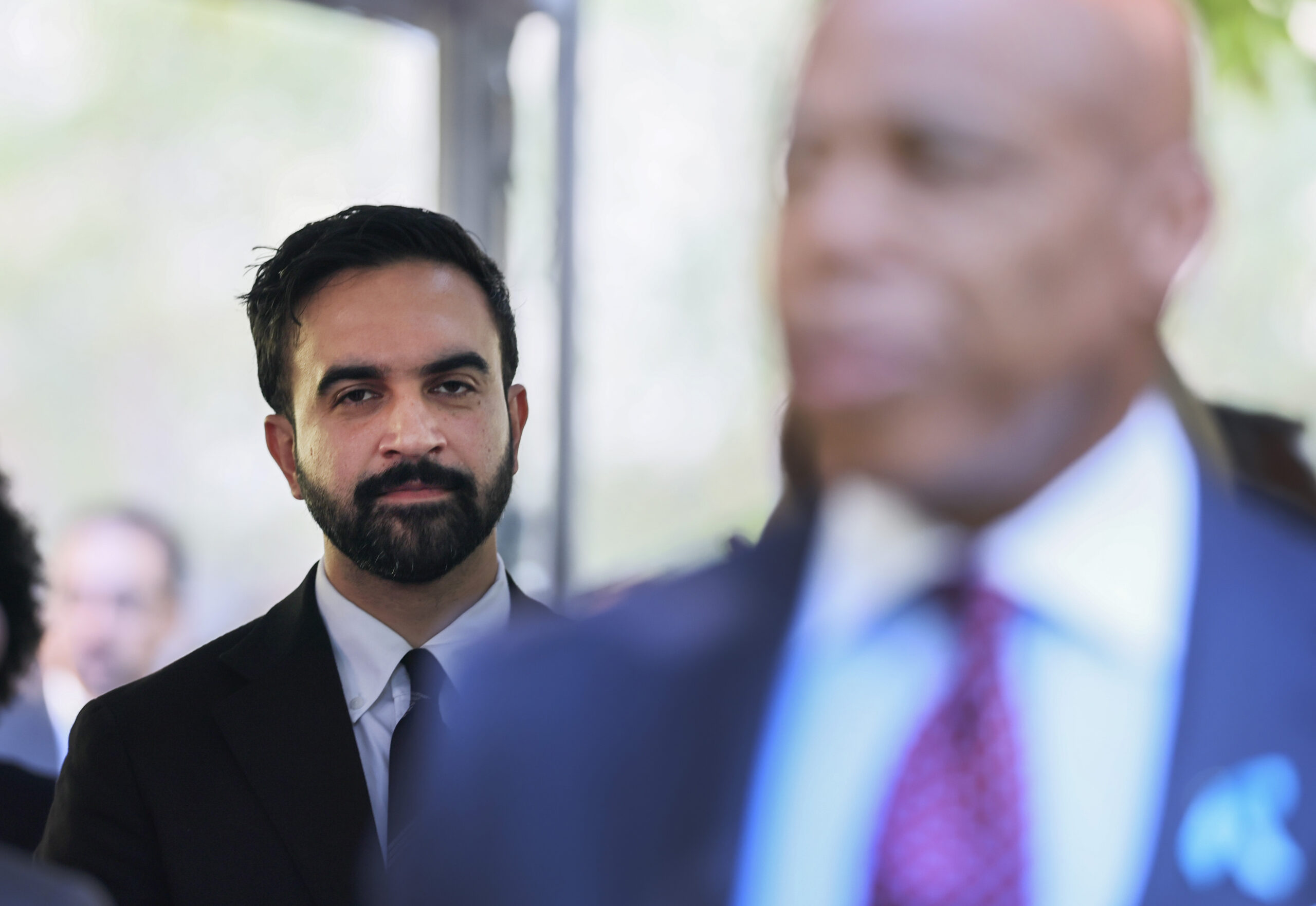
Individuals involved in the race told JI impediments remain to consolidating support behind Andrew Cuomo
INFLUENCER INSIGHTS
TikTok sale could be ‘consequential’ for Israel, Jews, Netanyahu tells influencers
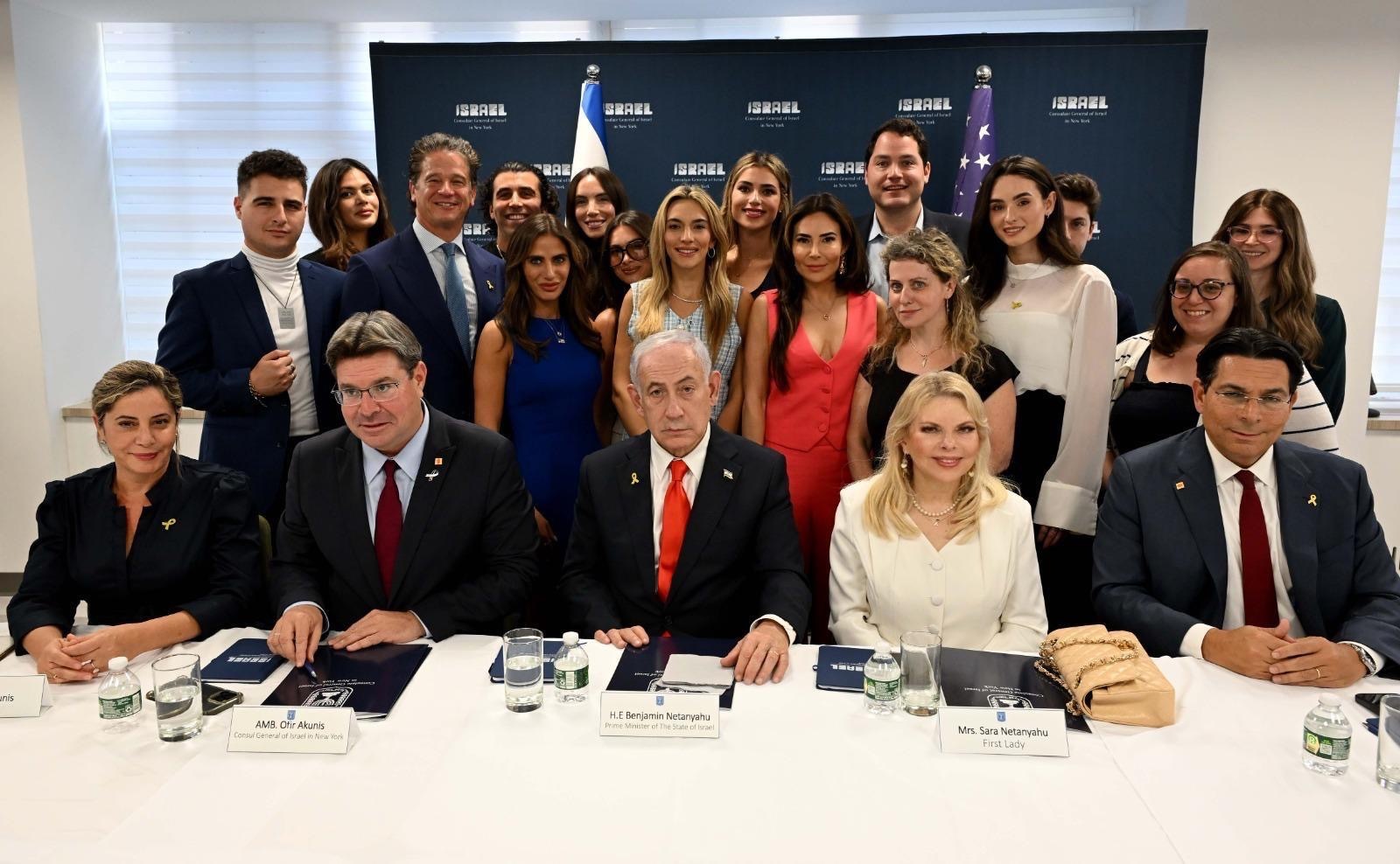
‘We have to fight the fight’ on social media, shore up support on American right, Netanyahu says
But even as the Israeli prime minister embraced the deal, he indicated some disagreements with the specifics of the agreement
Jim Lo Scalzo/EPA/Bloomberg via Getty Images
President Donald Trump, right, and Benjamin Netanyahu, Israel's prime minister, during a news conference in the State Dining Room of the White House in Washington, DC, US, on Monday, Sept. 29, 2025.
President Donald Trump and Israeli Prime Minister Benjamin Netanyahu announced on Monday that Israel had agreed to sign onto the White House’s 20-point peace plan to end the war in Gaza, with Trump calling the development “one of the great days ever in civilization.”
Both leaders described the deal, which would release all of the remaining Israeli hostages in exchange for an immediate end of the war, as the starting point for greater regional integration, a goal that Trump described as “eternal peace in the Middle East.”
Senior Trump administration officials first introduced the plan last week in a meeting with Arab and Muslim leaders in New York, and Trump said he had buy-in from the Qataris, who have been a go-between in negotiations with Israel and Hamas, and that he had discussed the matter with the leaders of the United Arab Emirates and Saudi Arabia.
But the deal is not yet final: Hamas has not yet agreed to it, though Trump expressed hope that the terror group will do so. Trump said he would allow Netanyahu to continue the war with his “full backing” if Hamas does not agree to it.
“This can be done the easy way, or it can be done the hard way. But it has to be done,” Netanyahu said at the press conference. “All these goals must be achieved because we didn’t fight this horrible fight, sacrifice the finest of our young men, for Hamas to stay in Gaza.”
The plan would require the release of all the hostages still held by Hamas back to Israel within 72 hours, and an immediate end to the war, according to a copy of the plan published by the White House. In exchange, Israel would release 250 Palestinians serving life sentences in Israeli jails, along with nearly 2,000 Gazans detained since the Oct. 7 attacks in 2023.
The first principle of the plan is that Gaza would be deradicalized, with Hamas out of power and transitional mechanisms in place to take over governance of the beleaguered territory. Amnesty would be offered to Hamas members “who commit to peaceful co-existence and to decommission their weapons” once the hostages are returned. Hamas members who wish to leave would have safe passage to do so, although the plan does not explicitly state that they will be required to leave. The plan would also surge aid to Gaza through the United Nations and other international mechanisms as soon as the hostages are released.
An international transitional body, with Trump as chair and former U.K. Prime Minister Tony Blair heavily involved, would oversee the redevelopment of Gaza until the Palestinian Authority has been reformed and is able to take over leadership of the Gaza Strip. The U.S. and other Arab and international partners would develop a temporary stabilization force to deploy in Gaza, and Trump would oversee the creation of an economic development plan to facilitate investments in the seaside territory.
“I believe that today we are taking a critical step towards both ending the war in Gaza and setting the stage for dramatically advancing peace in the Middle East, and I think beyond the Middle East, with very important Muslim countries,” Netanyahu said. “We’re giving everybody a chance to have this done peacefully, something that will achieve all our war objectives without any further bloodshed.”
Several Muslim leaders announced their support for the deal, including the prime minister of Pakistan and the Emirati foreign minister.
As Trump and Netanyahu stood side by side, each heaping praise upon the other, they were not entirely on the same page about all aspects of the deal — in particular the role of the Palestinian Authority in the future governance of Gaza, which Netanyahu has all but written off, despite that goal listed as an objective in the White House’s plan.
“Gaza will have a peaceful civilian administration that is run neither by Hamas nor by the Palestinian Authority,” Netanyahu said, a contrast to the plan’s language that the PA — once it is reformed, an objective that could take years — will control Gaza.
The White House deal also recognizes “Palestinian self-determination and statehood” as “the aspiration of the Palestinian people.” Netanyahu, however, has said repeatedly that a Palestinian state is out of the question.
Trump did not refer to the plan’s language about Palestinian statehood in his remarks, instead offering leeway to Netanyahu. “Prime Minister Netanyahu is very clear about his opposition to a Palestinian state,” Trump said. “Several countries have foolishly recognized the Palestinian state.”
The leaders’ comments followed a three-hour meeting between Trump and Netanyahu. During the meeting, Trump orchestrated a phone call between Netanyahu and the Qatari emir, which Trump said afterward was a “a heart-to-heart conversation” in which Netanyahu apologized for Israel’s attack on Doha last month that targeted Hamas leaders and killed a Qatari security guard. The three nations agreed to launch a “formal trilateral mechanism” to “enhance mutual security, correct misperceptions and avoid future misgivings.”
The full text of the plan says that even if Hamas rejects the plan, the scaled-up humanitarian aid operation will continue, and terror-free areas will be handed over from the Israel Defense Forces to the international stabilization force. But Trump said that Israel will have the “full backing” of the U.S. to resume fighting in Gaza if Hamas does not accept the plan.
“If Hamas rejects the deal — which is always possible, they’re the only one left. Everyone else has accepted it. But I have a feeling that we’re going to have a positive answer. But if not, as you know, Bibi, you’d have our full backing,” said Trump.
White House readout: ‘Prime Minister Netanyahu expressed his deep regret that Israel’s missile strike against Hamas targets in Qatar unintentionally killed a Qatari serviceman’
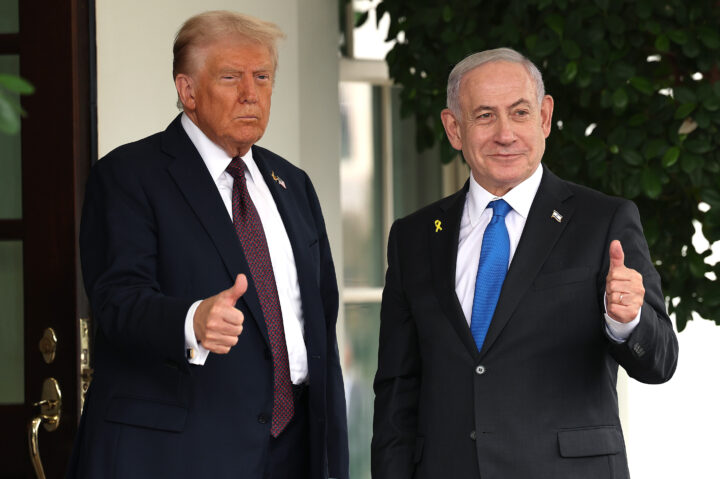
Win McNamee/Getty Images
President Donald Trump (L) greets Israeli Prime Minister Benjamin Netanyahu as he arrives at the White House on September 29, 2025 in Washington, DC.
During a meeting between Israeli Prime Minister Benjamin Netanyahu and President Donald Trump at the White House on Monday, Netanyahu apologized to Qatar’s prime minister, Sheikh Mohammed bin Abdulrahman al-Thani, for killing a Qatari serviceman in an attempted strike on Hamas leadership in Doha and promised not to violate Qatari sovereignty again.
The strike, which reportedly failed to eliminate any members of Hamas’ top political leadership, caused a public rift between the U.S. and Israel. The Trump administration attempted to warn Qatar about the strike before it happened and Trump said he promised Qatar that such attacks would not be repeated in the future.
According to a readout from the White House, “Prime Minister Netanyahu expressed his deep regret that Israel’s missile strike against Hamas targets in Qatar unintentionally killed a Qatari serviceman” and that “in targeting Hamas leadership during hostage negotiations, Israel violated Qatari sovereignty and affirmed that Israel will not conduct such an attack again in the future.”
According to remarks released by the Israeli government, Netanyahu told Al Thani, “I want you to know that Israel regrets that one of your citizens was killed in our strike. I want to assure you that Israel was targeting Hamas, not Qataris. I also want to assure you that Israel has no plan to violate your sovereignty again in the future, and I have made that commitment to the president.”
Netanyahu also acknowledged Qatar’s “grievances against Israel” as well as Israel’s own issues with Qatar “from support for the Muslim Brotherhood to how Israel is portrayed on Al Jazeera to support for anti-Israel sentiment on college campuses.”
Trump, during the call, “expressed his desire to put Israeli-Qatar relations on a positive track after years of mutual grievances and miscommunications,” and the three leaders agreed to establish a trilateral mechanism “to enhance coordination, improve communication, resolve mutual grievances, and strengthen collective efforts to prevent threats,” per the White House release.
According to his remarks, Netanyahu said that the mechanism is intended to “address both our countries outstanding grievances.”
Netanyahu and Al Thani “underscored their shared commitment to working together constructively and clearing away misperceptions, while building on the longstanding ties both have with the United States,” according to the White House readout.
The three leaders discussed efforts to end the war in Gaza as well as “the need for greater understanding between their countries.”
Al Thani “emphasiz[ed] Qatar’s readiness to continue contributing meaningfully to regional security and stability.”
Israel and Qatar do not have formal relations and public high-level diplomatic engagements between their leaders are rare.
From the Israeli side, news of the apology has been met with frustration and scorn from Netanyahu’s political allies and opponents.
Finance Minister Bezalel Smotrich compared the apology to U.K. Prime Minister Neville Chamberlain’s appeasement of Adolf Hitler during WWII. Netanyahu’s “groveling apology to a state that supports and funds terror is a disgrace,” Smotrich said on X.
National Security Minister Itamar Ben-Gvir expressed continued support for the Qatar strike, calling it “important, just, and supremely moral.”
Orit Strock, a member of the Israeli Cabinet, asked, “Did the Emir of Qatar apologize to PM Netanyahu for Oct. 7?”
Yair Golan, chairman of opposition party The Democrats, called the apology “a humiliation” and said that, “In order to beat Hamas, we need to replace Bibi and Qatar.”
Israeli political analyst and author Amit Segal said, “The Qatari scum have not condemned the October 7 massacre to this day. Even if there is a diplomatic need for this, it is repulsive and disgusting.”
Haaretz reporter Amir Tibon and others expressed anger that Netanyahu had apologized to the Qataris before he apologized to Israeli victims of Oct. 7.
Nadav Pollack, a lecturer at Israel’s Reichman University, said that the apology and promise show that Qatar holds stronger influence in the White House than Israel.
Foundation for Defense of Democracies CEO Mark Dubowitz downplayed the significance of the apology.
“Apology or not, Qatar is on notice that Israel will eliminate Hamas terrorists where and when it chooses,” Dubowitz told Jewish Insider. “The overarching message is more important: Get your Muslim Brotherhood cousins to agree to a deal, and release the hostages, or next time we won’t miss.”
Rich Goldberg, a senior advisor at FDD and a former Trump administration official, responded similarly.
“If that’s the worst thing Israel has to do to save face while Qatar acquiesces to U.S. pressure to secure the release of all hostages, let it be the last insult endured,” Goldberg told JI. “There is a cold dark place in hell awaiting all Hamas sponsors, and I expect the Mossad will help them find that place at the right time in the future.”
Both Dubowitz and Goldberg have publicly maintained that the U.S. was likely aware of and approved of the Israeli strikes in Qatar, in spite of Trump’s own public condemnations and denials.
Former U.S. Ambassador to Israel Dan Shapiro, a senior fellow at the Atlantic Council and former top Pentagon official in the Biden administration, told JI that the apology “was a useful diplomatic maneuver, likely pre-scripted, to ensure Qatar would do its part to deliver a yes from Hamas on release of all hostages and disarmament. Trump pressuring Netanyahu was necessary, but no less needed was his pressure on Qatar. The apology gave him that leverage.”
Michael Makovsky, the CEO of the Jewish Institute for National Security of America said that “Based on what we know, it’s understandable that Netanyahu felt compelled to apologize to the Qatari PM. Pres Trump asked him to do it, and Trump has collaborated with Israel in the 12-Day War, and backed Israel on Gaza.”
“But it’s unfortunate, because Israel doesn’t owe Qatar an apology—Qatar owes Israel an apology for supporting Hamas for so many years, by hosting its leaders, funding its operations, offering verbal support, etc.,” Makovsky continued. “Qatar should also apologize for spreading anti-Israel (and anti-American) hate on its al-Jazeera news organization. The bigger question is why Pres. Trump is so favorable to Qatar.”
Dana Stroul, the research director for the Washington Institute for Near East Policy and Shapiro’s predecessor at the Defense Department in the Biden administration, said that the statement echoes past engagements.
“It’s almost reverting to traditional US diplomacy of facilitating rapprochement between long-standing US partners,” Stroul said. “Recall then-President Obama brokering a phone call and an Israeli apology to Turkey in 2013 for its role in a 2010 Gaza flotilla incident. It also is a critical step in coalescing Arab support for providing meaningful support and resources to post war Gaza.”
She added that the administration “definitely believes it needs Qatar on its side.”
“When you read all of the various statements from the Trump administration about the peace and de-escalation agreements they are brokering, Qatar is very frequently thanked in these statements for its mediation role,” she explained.
If Hamas does not agree to the plan, it would still call for Israel to withdraw from parts of Gaza where Hamas is out of power and for an international stabilization force to take over

SAUL LOEB/AFP via Getty Images
President Donald Trump shakes hands with Israeli Prime Minister Benjamin Netanyahu during a meeting in the Oval Office of the White House in Washington, DC, on April 7, 2025.
As Israeli Prime Minister Benjamin Netanyahu heads into his meeting with President Donald Trump today, the key question is what kind of Gaza ceasefire plan he will agree to — and how Hamas will respond.
“We have a real chance for GREATNESS IN THE MIDDLE EAST,” Trump posted on Truth Social on Sunday, ahead of his meeting with Netanyahu. “ALL ARE ON BOARD FOR SOMETHING SPECIAL, FIRST TIME EVER. WE WILL GET IT DONE!!! President DJT.”
Netanyahu was more circumspect. “I hope we can make it a go because we want to free our hostages,” he told Fox News on Sunday.
“He won’t say no to Trump,” a source in the prime minister’s delegation said. But what Netanyahu has been saying is something like, “yes, but.”
While Trump clearly would like to make a big announcement at the end of Netanyahu’s White House meeting, having repeatedly said in public that the war will soon end, he has left out the specifics.
A version of the plan that Trump shared with Arab leaders has leaked, but the administration has not made it public or talked much about specific goals beyond ending the war and freeing the hostages. Trump’s Middle East Envoy Steve Witkoff and Jared Kushner, who held Witkoff’s role in the first Trump administration, met with Netanyahu twice in New York and again in Washington, quietly working out the details.
Among the elements of the plan Trump shared with a group of Arab countries at the U.N. General Assembly last week, are that the war would end and Hamas would release the 48 remaining hostages, 20 of whom are thought to be alive, within 48 hours of the ceasefire taking effect. In exchange, Israel would release over 1,000 Palestinian prisoners, including hundreds serving life sentences for serious acts of terror. Israel would not occupy or annex Gaza, and would gradually withdraw from territory.
If Hamas does not agree to the plan, it would still call for Israel to withdraw from parts of Gaza where Hamas is out of power and for an international stabilization force to take over.
Gaza would be deradicalized and demilitarized, and redeveloped, with a surge of aid entering the area. At first, Gaza would be administered by Palestinian technocrats supervised by a U.S.-backed international body with Arab and European countries taking part. This administration is meant to continue until reforms are completed in the Palestinian Authority.
Ultimately, the plan states, it may create the conditions for a pathway to Palestinian statehood, and the U.S. would facilitate a dialogue between Israel and the Palestinians.
The plan also marks a major shift in Trump administration policy. While the president said in February that all residents should leave Gaza, which would then be turned into a “Riviera,” it now says that Gazans would be encouraged to stay and build their future.
The plan contradicts Israel’s conditions to end the war in a number of ways, including that Israel retain a military presence along Gaza’s periphery, security control of Gaza and be allowed to strike anytime it sees terror rearing its head again.
Netanyahu also made clear in his speech to the UNGA on Friday that a Palestinian state is not acceptable to Israel, saying that “giving the Palestinians a state one mile from Jerusalem after Oct. 7 is like giving Al-Qaida a state one mile from New York City after Sept. 11. This is sheer madness. It’s insane, and we won’t do it.” He said in the interview on Fox News on Sunday that he was skeptical the PA could undergo such a “tremendous transformation.”
At home, Netanyahu faces pressure in both directions. Coalition partners like National Security Minister Itamar Ben-Gvir, who said Netanyahu has “no mandate to end the war without defeating Hamas,” and Finance Minister Bezalel Smotrich who publicly stated his red lines on Monday, including full Israeli security control of Gaza, a permanent IDF presence along Gaza’s perimeter and no Qatari or PA involvement. Others on the right say that the plan gives too much to the Palestinians without demanding enough in return. A delegation of West Bank mayors flew to the U.S. over the weekend to try to talk Netanyahu into insisting on annexation.
Yet, at the same time, some in Likud have been quietly urging Netanyahu to accept the broader strokes of the plan — the return of the hostages and demilitarization of Gaza – to bring about the end of the war. Foreign Minister Gideon Sa’ar said he trusts Netanyahu “to represent Israel’s interests as needed in talks with President Trump.”
While Netanyahu may be facing pressure from Trump to return to Israel with a ceasefire plan to enact, the quiet diplomacy — at least by Trump administration standards — indicates that they may give him some time and space to decide.
Yet there is another deadline ahead. Between all of the sports, culture, arms and other boycotts, there is a far more consequential threat emerging: the potential suspension of free trade between Israel and the EU, its largest trading partner, until at least 2027, which could send Israel’s economy into a tailspin.
The European Commission is set to vote on the matter on Oct. 20, and it requires a qualified majority to pass. Germany, Italy, the Czech Republic and Hungary are on Israel’s side, but whether that will be enough remains to be seen. A ceasefire agreement could put a stop to Brussels’ initiative.
And lest we forget, there’s the likelihood that Hamas will reject the plan. While there are elements of it that could go forward without Hamas’ acquiescence, for Israel freeing the hostages is a necessary condition for the reconstruction of Gaza.
Less than one-quarter of House Democrats signed the letter, even as several European allies recognized a Palestinian state at the U.N.
Chip Somodevilla/Getty Images
Rep. Ro Khanna (D-CA) leaves the U.S. Capitol on March 13, 2024 in Washington.
Forty-seven progressive House Democrats, led by Rep. Ro Khanna (D-CA), signed onto a letter to President Donald Trump and Secretary of State Marco Rubio calling for the U.S. to recognize a Palestinian state on the heels of similar decisions by European allies last week.
“It has long been acknowledged by much of the international community and previous U.S. administrations of both major political parties that a Palestinian state recognized as a full and equal member of the community of nations is necessary to fulfill the legitimate national rights of the Palestinian people and ensure the state of Israel’s survival as the democratic homeland of the Jewish people,” the letter, which was first reported on by Jewish Insider, reads.
The lawmakers argue that because the current Israeli government opposes a two-state solution — a position currently shared by much of Israeli society — and is “actively undermin[ing]” the prospects of an independent Palestinian state, “meaningful action is necessary to join the majority of the world in codifying Palestinian statehood and to unlock the potential for a broader regional peace and security arrangement.”
Trump vowed last week week that he would not allow Israel to annex the West Bank.
The letter also claims that recognizing Palestinian statehood would make reform of the Palestinian Authority “far more achievable and sustainable.”
Signatories to the letter include Reps. Becca Balint (D-VT), Donald Beyer (D-VA), André Carson (D-IN), Greg Casar (D-TX), Joaquin Castro (D-TX), Judy Chu (D-CA), Danny Davis (D-IL), Madeleine Dean (D-PA), Diana DeGette (D-CO), Chris Deluzio (D-PA), Mark DeSaulnier (D-CA), Maxine Dexter (D-OR), Lloyd Doggett (D-TX), Veronica Escobar (D-TX), Dwight Evans (D-PA), Bill Foster (D-MA), Maxwell Frost (D-FL), John Garamendi (D-CA), Chuy García (D-IL), Sylvia Garcia (D-TX), Robert Garcia (D-CA), Al Green (D-TX), Val Hoyle (D-OR), Jared Huffman (D-CA), Jonathan Jackson (D-IL), Sara Jacobs (D-CA), Pramila Jayapal (D-WA), Hank Johnson (D-GA), Marcy Kaptur (D-OH), Zoe Lofgren (D-CA), Stephen Lynch (D-MA), Betty McCollum (D-MN), James McGovern (D-CA), Chellie Pingree (D-ME), Mark Pocan (D-WI), Mike Quigley (D-IL), Emily Randall (D-WA), Mary Gay Scanlon (D-PA), Jan Schakowsky (D-IL), Bennie Thompson (D-MS), Mike Thompson (D-CA), Jill Tokuda (D-HI), Paul Tonko (D-NY), Nydia Velázquez (D-NY), Maxine Waters (D-CA) and Bonnie Watson Coleman (D-NJ).
Dexter and Garcia were both beneficiaries of significant outside spending from AIPAC’s United Democracy Project super PAC in their primary races, running against farther-left anti-Israel opponents.
Balint and Schakowsky are both Jewish. Davis, Evans and Schakowsky are retiring from Congress at the end of their current terms.
Many of the furthest-left lawmakers in the House, including some of the Jewish state’s most outspoken critics, did not sign onto Khanna’s letter, nor did some of the more moderate Democrats backing a concurrent effort to place strict restrictions on U.S. aid to Israel.
The letter is backed by groups including American Muslims for Palestine, DAWN, Emgage Action, Indivisible, J Street, MoveOn, MPower, Muslim Public Affairs Council, New Jewish Narrative and the Quincy Institute.
There is a notable split on this issue within the Democratic caucus: Khanna’s letter follows a letter from 30 moderate pro-Israel Democrats condemning unilateral recognition of a Palestinian state as “performative” and saying that doing so risks “emboldening Hamas, entrenching division, and undermining the very legitimacy and peace such recognition purports to advance.”
Plus, what the TikTok sale means for online hate speech
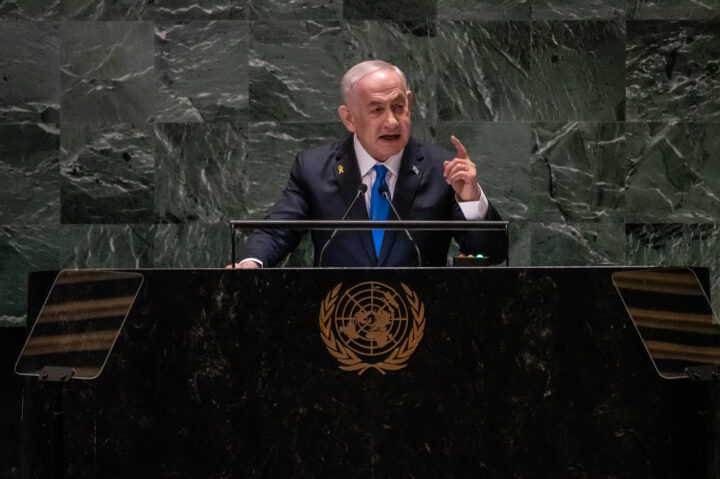
Stephanie Keith/Getty Images
Israeli Prime Minister Benjamin Netanyahu speaks during the United Nations General Assembly (UNGA) at the United Nations headquarters on September 27, 2024 in New York City.
Good Friday morning.
In today’s Daily Kickoff, we cover President Donald Trump’s meeting with Turkish President Recep Tayyip Erdogan yesterday as well as his pledge not to allow Israel to annex the West Bank, and preview Israeli Prime Minister Benjamin Netanyahu’s speech at the UNGA today. We explore how the U.S. investors set to take over the majority of TikTok could impact the issue of antisemitism on the platform and report on Zohran Mamdani’s Rosh Hashanah visit to a Brooklyn synagogue well-known for its anti-Zionist activism. We also report on Rob Malley’s remarks yesterday about the closure of the classified information investigation into his actions as the Biden administration’s Iran envoy. Also in today’s Daily Kickoff: May Mailman, Tony Blair and Jason Greenblatt.
Today’s Daily Kickoff was curated by Jewish Insider Executive Editor Melissa Weiss and Israel Editor Tamara Zieve, with assists from Gabby Deutch, Marc Rod and Danielle Cohen-Kanik. Have a tip? Email us here.
For less-distracted reading over the weekend, browse this week’s edition of The Weekly Print, a curated print-friendly PDF featuring a selection of recent Jewish Insider and eJewishPhilanthropy stories, including: Post-Paramount sale, Shari Redstone is ‘full speed ahead’ on addressing antisemitism; Shomer Collective launch Shiva Circle initiative to offer ‘life jacket for grievers’; Concern mounts in Jerusalem as Qatar, Egypt set to take key roles in UNESCO. Print the latest edition here.
What We’re Watching
- Israeli Prime Minister Benjamin Netanyahu will address the U.N. General Assembly at 9 a.m. ET. Netanyahu met with U.S. special envoy Steve Witkoff and Jared Kushner yesterday in New York.
- The U.N. Security Council is set to vote later today on a Russia– and China-led resolution delaying the implementation of snapback sanctions on Iran.
- The traveling Nova exhibition opens today in Boston.
- In London, center-left officials, including Illinois Gov. JB Pritzker, former Transportation Secretary Pete Buttigieg, U.K. Prime Minister Keir Starmer and Australian Prime Minister Anthony Albanese are gathering for the Global Progress Action Summit.
What You Should Know
A QUICK WORD WITH JI’S LAHAV HARKOV
Israeli Prime Minister Benjamin Netanyahu will have much to respond to when he stands in front of the United Nations General Assembly’s green marble wall today: a cascade of Palestinian state recognitions by Western countries, a flotilla of activists, influencers and parliamentarians — protected by Spanish and Italian naval ships — and accusations of genocide leveled from the UNGA stage.
On the tarmac at Ben Gurion Airport on Wednesday, Netanyahu vowed to “tell our truth — citizens of Israel, the truth of IDF soldiers, of our state.”
“I will condemn those leaders who, instead of condemning the murderers, rapists and burners of children, want to give them a state in the heart of Israel. This will not happen,” Netanyahu said ahead of his departure from Israel.
Netanyahu also plans on attacking what he perceives as the moral bankruptcy of countries he sees as rewarding the perpetrators of the Oct. 7 attack and casting Israel as a villain. His arrival in New York was accompanied by an advertising campaign launched by his office on billboards and trucks driving around Turtle Bay and Times Square with the message “Remember October 7.” The signs also feature a QR code that leads to a site depicting the atrocities of that day.
“The goal of the campaign is to remind world leaders and the public about the atrocities perpetrated by Hamas and the unbelievable brutality of the terrorist organization that continues to hold 48 hostages in captivity in Gaza,” Netanyahu’s office said.
Ahead of the speech, Wing of Zion — Israel’s version of Air Force One — took a route that is hundreds of kilometers longer than usual, apparently to avoid the airspace of countries that might act on the International Criminal Court’s warrant for Netanyahu’s arrest. Wing of Zion flew from Israel over the Mediterranean to Greek and Italian airspace, and then continued crossing over the Mediterranean until it reached the Atlantic Ocean.
The route was longer than the one he took to the U.S. in July, which overpassed France. A French diplomatic source said that Jerusalem asked Paris for authorization to fly over its airspace, which it provided, but the plane took another route anyway.
PLATFORM PIVOT
TikTok’s U.S. takeover: Will it curb antisemitic content?

A new set of American power players appears set to take over ownership of TikTok’s U.S. business, a move pushed by Congress due to national security concerns over TikTok parent company ByteDance’s ties to the Chinese government and broader societal concerns with extremist, divisive and harmful content often funneled to users through the app’s powerful algorithm. That algorithm is now expected to be licensed by the American software company Oracle, which would also manage the app’s security. With new ownership comes one key question about the transfer of TikTok from Chinese to American control, Jewish Insider’s Gabby Deutch reports: Will American owners, with no ties to the Chinese Community Party, be more responsive to concerns about the proliferation of antisemitism, hate and extremism on the platform?
Wait and see: Anti-hate experts at the Anti-Defamation League and the U.K.’s Institute for Strategic Dialogue cautioned that it’s too soon to know, and that new ownership does not necessarily mean a major change in policy — or that a change would necessarily be in the direction of more content moderation. After all, TikTok’s algorithm, which feeds users personalized content it expects them to like via the app’s For You Page, is the source of the company’s success, because the more that users enjoy the content being recommended to them, the more time they spend on the app.
HOLDING THE LINE
Trump pledges he will not allow Israel to annex West Bank
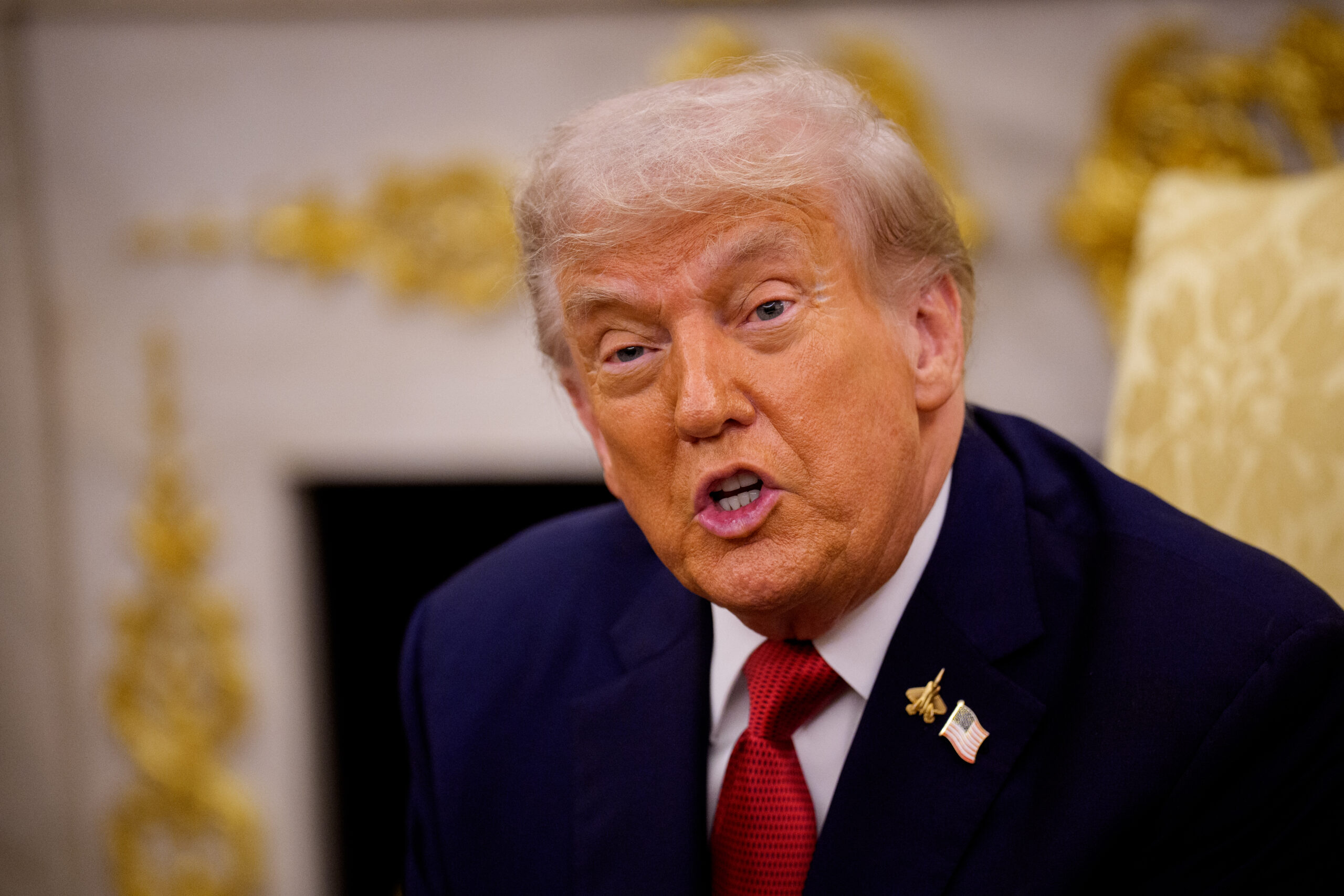
President Donald Trump pledged on Thursday that he will not allow Israel to annex the West Bank, the first time Trump has addressed the matter in his second term. Asked about reports that he told Arab leaders this week he would not permit Israel to make the move, Trump confirmed to reporters in the Oval Office that he opposes annexation, Jewish Insider’s Gabby Deutch and Danielle Cohen-Kanik report.
What he said: “I will not allow Israel to annex the West Bank, nope, I will not allow it. It’s not gonna happen,” he said, hours after a meeting with Turkish President Recep Tayyip Erdogan. Asked if he spoke with Israeli Prime Minister Benjamin Netanyahu about the issue, Trump said, “Yeah, but I’m not going to allow it. Whether I spoke to him or not — I did — but I’m not allowing Israel to annex the West Bank. There’s been enough, it’s time to stop now.”
In agreement: Jason Greenblatt, a key architect of the Abraham Accords, joined Trump in coming out against the Israeli government’s reported plans to annex portions of the West Bank, saying on Thursday evening that it was the wrong time to do so, eJewishPhilanthropy’s Nira Dayanim reports for Jewish Insider.
TALKING TURKEY
Alongside Erdogan, Trump suggests he’ll permit Turkey to buy F-35 fighter jets
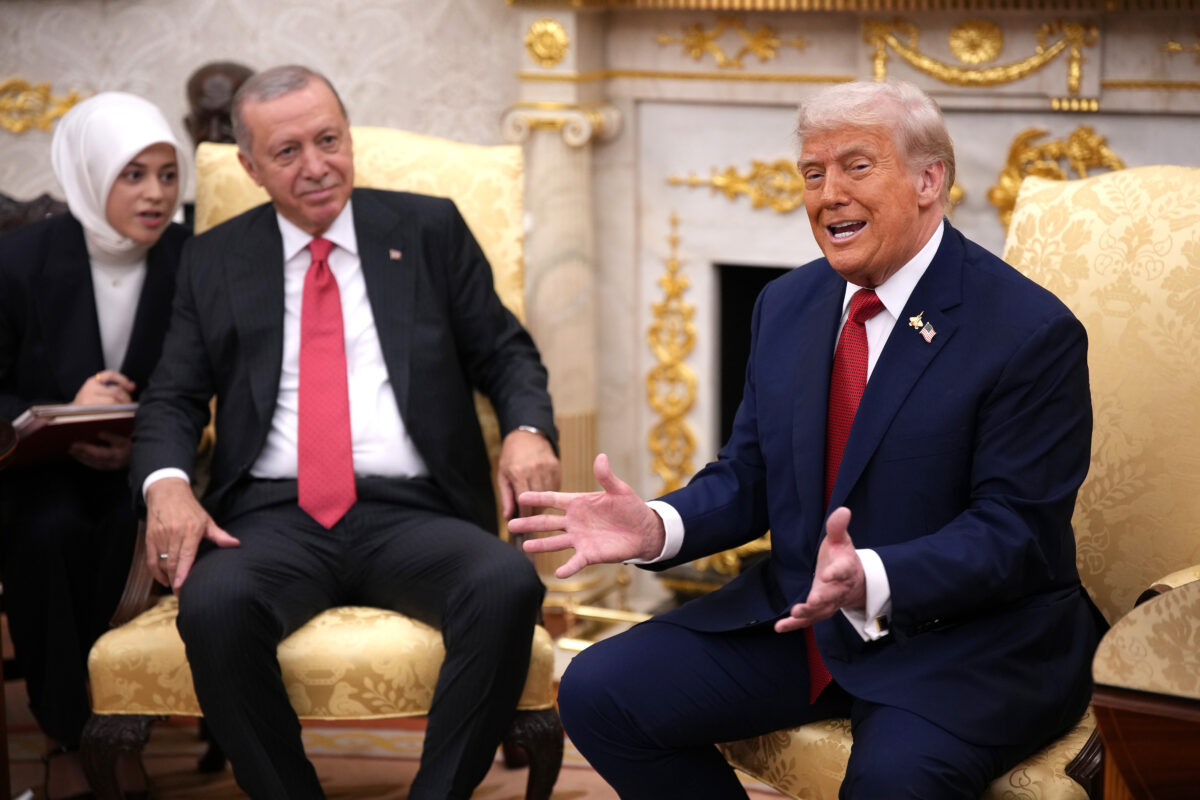
President Donald Trump suggested on Thursday that he was likely to permit Turkey to purchase F-35 fighter jets as soon as “the end of the day,” ending a nearly eight-year blockade on Ankara’s acquiring the state-of-the-art fighter jet as a result of its 2017 purchase of a Russian S-400 missile system, Jewish Insider’s Emily Jacobs reports.
Give-and-take: Speaking to reporters from the Oval Office alongside Turkish President Recep Tayyip Erdogan ahead of a meeting between the two and their respective teams, Trump said without mentioning the F-35s or the less-advanced F-16 jets by name that he expected the Turkish leader would “be successful with buying the things” he would “like to buy.” Speaking at the outset of his meeting with Erdogan, Trump said, “He needs certain things, and we need certain things, and we’re going to come to a conclusion. You’ll know by the end of the day.”
Damascus dealings: Stability in Syria could help ease tensions between Israel and Turkey — two countries with competing interests in the region — and the U.S. has a key role to play in shaping the security agreements needed to get there, experts from the Middle East Institute said Thursday during a panel titled “Can Turkey and Israel Find Common Ground in Syria?” Jewish Insider’s Haley Cohen reports.
VENUE CHOICE
On Rosh Hashanah, Mamdani visits synagogue known for anti-Zionist activism
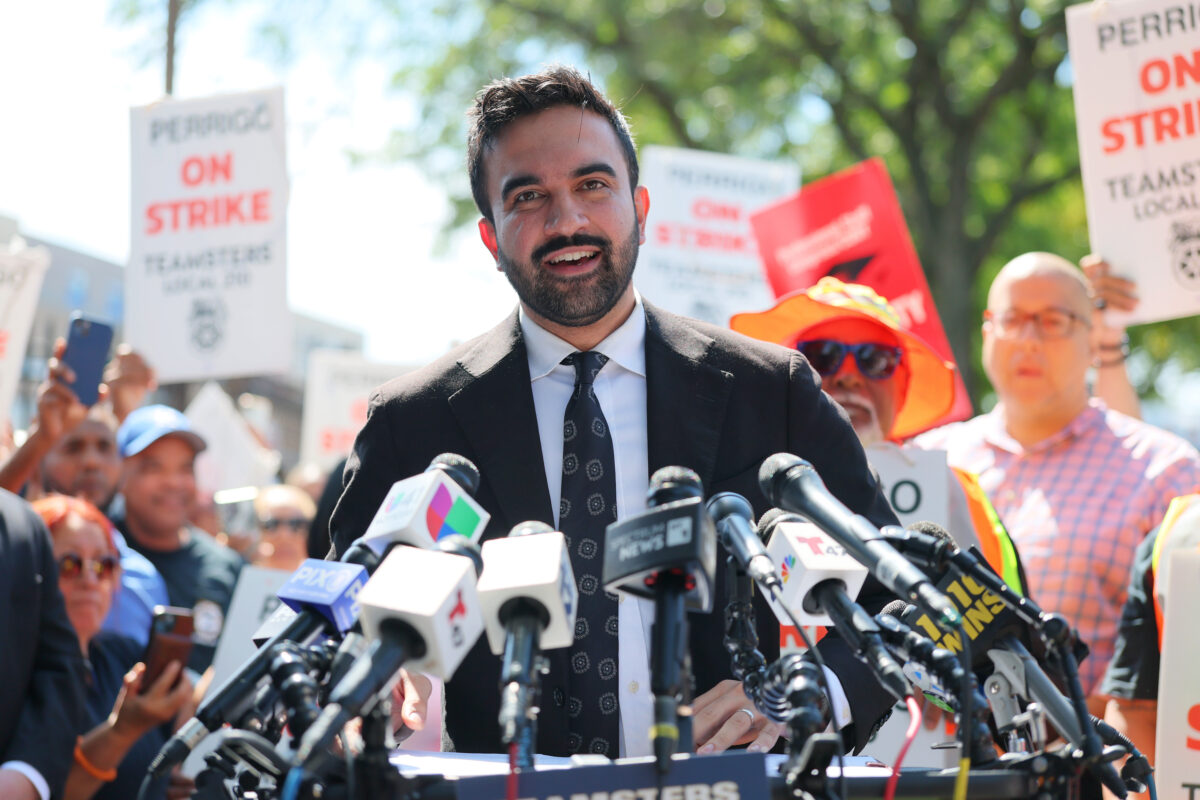
Zohran Mamdani, the Democratic nominee for mayor of New York City, attended his first Rosh Hashanah service on Monday night at a Brooklyn synagogue well-known for its anti-Zionist activism. The visit to Kolot Chayeinu, a nondenominational synagogue in Park Slope that has drawn controversy over its anti-Zionist orientation, comes as Mamdani is seeking to engage in increased outreach to Jewish voters ahead of the November election, Jewish Insider’s Matthew Kassel reports.
Polarizing position: But the venue choice also underscores his polarizing position in the broader Jewish community — where many Jewish leaders have continued to raise alarms over his anti-Israel policies and refusal to condemn calls to “globalize the intifada,” among other issues. Mamdani, an outspoken critic of Israel who has identified as anti-Zionist, was warmly received at the Monday service, where he sat in the front row in a mask and a yarmulke beside Brad Lander, the city comptroller who is a member of Kolot Chayeinu. Lander, a close ally of Mamdani, recently described the congregation, which was one of the first to call for an early ceasefire in October 2023, as a meeting point for anti-Zionist Jews and progressive Zionists like himself. The synagogue, which maintains an “open tent” policy on Israel and Palestine, has faced criticism for promoting anti-Israel views in its Hebrew school curriculum in the aftermath of Hamas’ Oct. 7, 2023, attacks.
CASE CLOSED
Ex-Iran envoy Rob Malley says classified information investigation has been closed

Rob Malley, the Biden administration’s Iran envoy, revealed Thursday that the investigation into his alleged mishandling of classified information, which prompted the suspension of his security clearance and his suspension from his post, was closed earlier this year, Jewish Insider’s Marc Rod reports.
Going deeper: Malley claimed that he was never aware and had never been told what classified information he was being accused of mishandling, but said that the Justice Department had closed the investigation around two years after it had begun. Discussing Iran talks under the Biden administration, a Carnegie senior fellow, Malley suggested that President Joe Biden was never as interested in or committed to reaching a nuclear deal as President Barack Obama had been, and was unwilling to expend the political capital needed on Capitol Hill or with Israel to make a deal happen.
BEHIND THE HEADLINES
Trump higher ed policy architect May Mailman explains antisemitism settlements
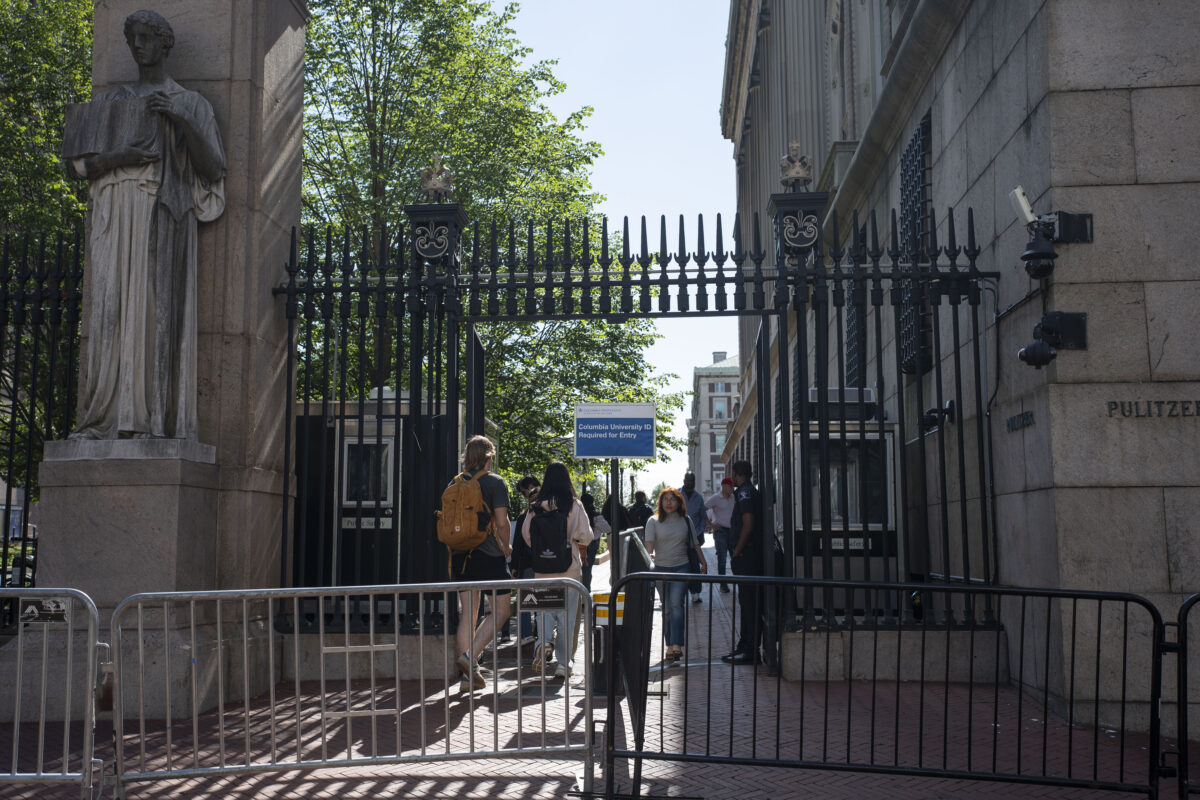
The Trump administration’s settlements with Ivy League universities, negotiated in response to alleged violations of federal civil rights law, are meant primarily as an attention-grabbing measure — a way to get more people to pay attention to President Donald Trump’s aggressive approach to tackling discrimination in higher education, according to an architect of those settlements, Jewish Insider’s Gabby Deutch reports.
Podcast playback: “When you see numbers like that, then you pay attention, and you look, and then you’re able to learn a little bit more, something maybe you wouldn’t normally learn,” May Mailman, a conservative attorney who until last month served as a senior White House strategist, told The New York Times’ Ross Douthat on an episode of his “Interesting Times” podcast that was released on Thursday. “A settlement on its own without a fine might not be taken as seriously by the public or by other universities as when there is a fine,” said Mailman. “These are small dollar figures compared to the amounts that they are getting every year from the federal government and from their donors — but I think it provides a seriousness and a focus on these in ways that promises only wouldn’t.”
Worthy Reads
Eye on Gaza Aid: In The Washington Post, Ken Isaacs, the vice president of programs and government relations at Samaritan’s Purse, reflects on his recent visit to Gaza and observation of the Gaza Humanitarian Foundation’s work. “I arrived in Gaza a skeptic of GHF but left an advocate. Simply put, the common portrayal of this organization radically distorts reality. I observed GHF’s relief operations firsthand. What I saw was not a textbook distribution — because no textbook exists for a war zone such as Gaza, where terrorist combatants hide among civilians. Instead, I saw GHF using unconventional means to successfully deliver food to civilians on a staggering scale under nearly impossible circumstances. It wasn’t perfect, but it was good. … What is needed: less ideology and more courage; less bureaucratic sclerosis and more moral clarity. Don’t let the pursuit of humanitarian perfection become the enemy of the practical good.” [WashPost]
Bibi Facing the Lions: Bloomberg’s Ethan Bronner gives historical context for Israeli Prime Minister Benjamin Netanyahu’s address to the U.N. General Assembly taking place this morning. “For the past decade, as Israel also became richer and more powerful, the Palestinian issue seemed almost to disappear for many. Palestinians were divided and despondent, and Arab powers increased their links to Israeli defense and high-tech industries, paying lip service to Palestinian sovereignty. … For many around the world, [Oct. 7] was proof that the Palestinian issue won’t be buried, that the oppressed will eventually burst with rage. They expected Israel to retaliate but then for it to negotiate a joint future. Israelis saw things differently. The assault, involving the killing and kidnapping of children and the abuse of women, combined with a pile-on from militias in Lebanon, Syria, Iraq and Yemen, which included the use of ballistic missiles and was backed by billions of dollars from Iran, drove for them a stake into the heart of a Palestinian state where, they feared, radicalism could flourish and produce another Oct. 7.” [Bloomberg]
A Friend in Jakarta: In The Wall Street Journal, Haisam Hassanein reflects on Indonesian President Prabowo Subianto’s address to the U.N. General Assembly, in which he said that a solution to the Israeli-Palestinian conflict must recognize and address Israel’s security concerns. “Why now? Mr. Subianto is a former general with pragmatic instincts. He knows that in a world fractured by Russia’s war in Ukraine, Middle East upheaval and U.S.-China rivalry, stability demands fresh thinking. He also knows Indonesia can’t become a global leader while clinging to outdated slogans. … Critics in Jakarta and elsewhere will accuse him of betraying the Palestinian cause. In truth, his statement reflects a hard reality: Palestinians won’t win independence by denying Israelis’ right to security, just as Israelis can’t win peace by ignoring Palestinian aspirations. Progress requires mutual legitimacy. Mr. Subianto’s speech was a rare reminder of that balance.” [WSJ]
Word on the Street
Defense Secretary Pete Hegseth is summoning hundreds of generals and military officials stationed around the world to Virginia next week…
El0n Musk’s xAI inked an agreement with the General Services Administration to provide federal agencies with access to the artificial intelligence chatbot…
A group of 30 House Democrats urged Secretary of State Marco Rubio to leverage a joint statement from the Arab League this summer, which called for Hamas’ disarmament and removal of power, the release of hostages and a path toward a two-state solution, as a potential diplomatic breakthrough for the region, Jewish Insider’s Marc Rod reports. The lawmakers also condemned the unilateral recognition of a Palestinian state recently undertaken by several close U.S. allies…
Former U.K. Prime Minister Tony Blair, who met in Washington last month with President Donald Trump, special envoy Steve Witkoff and Jared Kushner, is reportedly seeking a role in Trump’s postwar plan for Gaza…
The Justice Department is pressing federal prosecutors to investigate George Soros’ Open Society Foundations…
In The Wall Street Journal, Tikvah Fund President and CEO Eric Cohen explains how the organization will use its recent grant from the National Endowment for the Humanities, the largest in the endowment’s history, to counter antisemitism…
New England Patriots owner Robert Kraft will sell 8% of the football team, which he purchased for $172 million in 1994, to Sixth Street Partners and Dean Metropoulos, in a deal that values the franchise at $9 billion…
Microsoft ended the access given to the IDF’s Unit 8200 to its Azure cloud platform, alleging the IDF violated the company’s terms of service by storing surveillance information in the cloud; the termination comes after protests at Microsoft’s headquarters, including a sit-in in the office of President Brad Smith…
A California man was sentenced to nearly 20 years in prison for a series of firebombings and arson attacks in the Bay Area that he said were inspired by Hamas’ Oct. 7, 2023, terror attacks…
Gene Simmons, Lisa Edelstein and Mayim Bialik were among the more than 1,200 artists and media industry names who signed onto a letter opposing a recent call by other Hollywood boldfaced names to boycott Israeli film institutions…
The UEFA Europa League is slated to vote next week on banning Israel’s national soccer team…
The European Broadcasting Union will hold a vote in November on expelling Israel from the Eurovision Song Contest…
Israeli authorities arrested a dual U.S.-Israeli citizen who previously lived in Morocco on charges of spying for Iran after he was approached by operatives from Tehran earlier this year…
Newly obtained satellite photos indicate that Iran likely carried out an undeclared missile test last week…
New York Times puzzle creator Mel Taub died at 97…
Pic of the Day
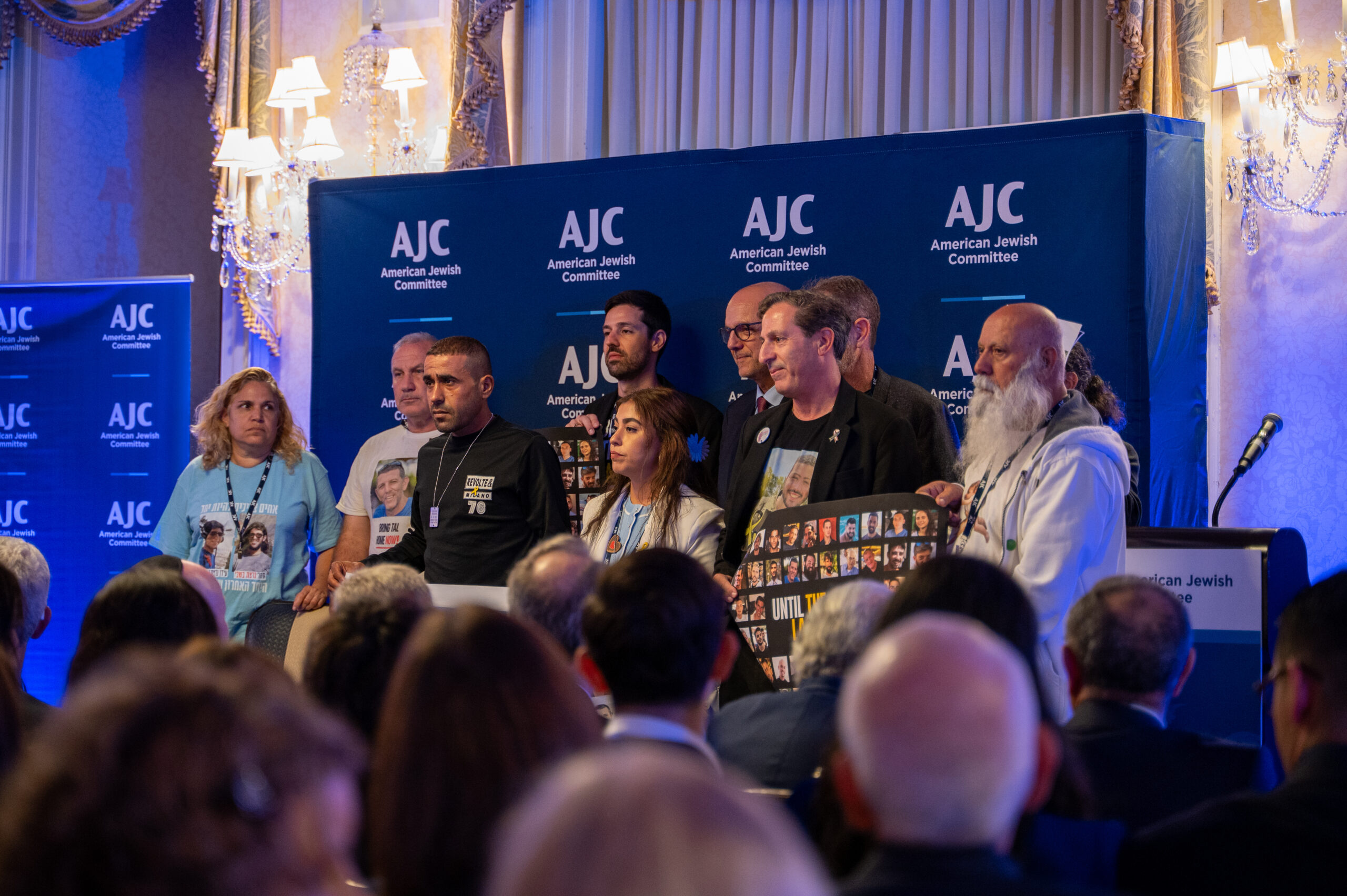
Hostage family members attended the American Jewish Committee’s annual Global Jewish Diplomacy Reception at Manhattan’s Harmonie Club last night on the sidelines of the United Nations General Assembly, some of whom offered staunch criticism of the Israeli government’s handling of the war in Gaza, eJewishPhilanthropy’s Nira Dayanim reports for Jewish Insider.
Birthdays
Hockey reporter for Sportsnet and as an insider for the NHL Network, Elliotte Friedman turns 55 on Saturday…
FRIDAY: Stage, film and television actor, he is best known as “The Most Interesting Man in the World” appearing in Dos Equis beer commercials, Jonathan Goldsmith turns 87… CEO of Israel Longhorn Project, dedicated to bringing Texas longhorn cattle to Israel, Robin Rosenblatt turns 77… Five Towns (N.Y.) resident, Barry Mandel… Former chairman and CEO of the French engineering conglomerate Alstom, he is the son of Holocaust survivors, Patrick Kron turns 72… Senior political advisor to President Bill Clinton during his second term and co-author of a New York Times best-seller on the future of politics in the U.S., Doug Sosnik turns 69… Chairman of Huntington National Bank and chairman of Jewish Federations of North America, Gary H. Torgow turns 69… Teaneck-resident with a Jersey City dental practice, Paul Lustiger, DDS… Historian, senior fellow at the Brookings Institution and a member of the Council on Foreign Relations, Robert Kagan turns 67… Chief of staff for U.S. Sen. Dave McCormick (R-PA), Mark Isakowitz turns 59… Professional poker player with four World Series of Poker bracelets, his lifetime winnings exceed $13.9 million, Josh Arieh turns 51… Men’s basketball head coach at the University of Nevada Las Vegas starting this year, he was the 2017 ACC Coach of the Year, Josh Pastner turns 48… CEO of the Metropolitan Council on Jewish Poverty, David G. Greenfield turns 47… Former communications director for New York Gov. David Paterson, Sen. Chuck Schumer (D-NY) and Rep. Jane Harman (D-CA), she now heads a NYC based PR firm, Risa Beth Heller turns 46… Television host and producer, in 2020 he came in second on “Dancing with the Stars,” Yaniv “Nev” Schulman turns 41… NYC-based senior editor of global digital video programming at Bloomberg LP, Henry Seltzer… Associate director of policy and government affairs at AIPAC, Joshua Nason… Joanna Weiss DiMarco turns 35… Senior director of development at Tamid Group, Alec Deer… Director of strategic initiatives at the National Black Empowerment Council, Marvel Joseph…
SATURDAY: Co-founder of The Home Depot and owner of the NFL’s Atlanta Falcons, Arthur M. Blank turns 83… Of counsel, business litigator at the Jaszczuk law firm, Stephen J. Landes turns 80… Board member of the Milken Family Foundation, Ellen Sandler… Chairman of the Victoria Beckham fashion brand, Ralph Toledano turns 74… Longtime Washington correspondent, he is the author of books on Israel’s defense, intelligence and diplomatic services, Dan Raviv turns 71… President of the Federal Reserve Bank of Richmond until 2017, he was a recent chair of the Richmond Jewish Foundation, Jeffrey M. Lacker turns 70… President of public relations firm BGR (Barbour, Griffith & Rogers), Jeffrey H. Birnbaum turns 69… Member of the Minnesota House of Representatives from 2003 until earlier this year, he is married to a Minneapolis rabbi, Marcia A. Zimmerman, Frank Hornstein turns 66… Comedian and author, he used to be a frequent guest on both Letterman and Conan O’Brien, Marc Maron turns 62… Chief rabbi of France since 2014, Rabbi Haïm Korsia turns 62… Member of the U.S. House of Representatives since 2005, she was chairperson of the DNC until 2016, Rep. Debbie Wasserman Schultz (D-FL) turns 59… Literary and film publicist based in Israel, she is also the publisher of Intelligentsia Books, Judy Tashbook Safern… President and CEO of the Jewish Federation of Greater Philadelphia, Michael Balaban turns 59… President of NBC News Editorial, Rebecca Blumenstein turns 59… Rabbi and kabbalist, Yoshiyahu Yosef Pinto turns 52… Israel’s special envoy for innovation, Fleur Hassan-Nahoum turns 52… Author of four books on North Africa and the Middle East and president of The Center for Peace Communications, Joseph Braude… Musician, actress, writer, director and comedian, Carrie Rachel Brownstein turns 51… State Treasurer of Ohio from 2011 until 2019, Josh Mandel turns 48… Architect, entrepreneur and author, Marc Kushner turns 48… Member of the Virginia House of Delegates from the D.C. suburbs, Daniel Isaac Helmer turns 44… SVP and rabbi-in-residence at the Jewish Council for Public Affairs, Rori Picker Neiss… Advisory manager for cyber and strategic risk at Deloitte, she was previously a Hebrew teacher and coordinator of Jewish programs at Zeta Beta Tau, Alexa Wertman Brown… Actor best known for his role as Geoff Schwartz in 161 episodes of ABC’s “The Goldbergs,” Sam Lerner turns 33…
SUNDAY: International Emmy Award-winning Scottish television producer, Sir Jeremy Israel Isaacs turns 93… Former governor of Vermont (the first Jewish woman elected to govern any state), she was also the U.S. ambassador to Switzerland, Madeleine May Kunin turns 92… Physician and theoretical biologist, he was a 1987 MacArthur genius fellow, Stuart Kauffman turns 86… Former president of Warner Home Video, Warren Lieberfarb turns 82… French businessman who, with his brother, own the controlling interest in the House of Chanel and several famous vineyards, Alain Wertheimer turns 77… Real estate agent in New York’s Hudson Valley, Jerry Weiss… Teaneck, N.J.-based real estate attorney, Gary E. Miller… Physician and U.S. senator (R-LA), Bill Cassidy turns 68… Pediatrician and author of the book Winning A Debate with An Israel Hater about the fight against BDS, Dr. Michael Harris… Best-selling author of more than 25 books, he is also a magazine journalist, Ben Greenman turns 56… President and CEO of the JCC Association of North America, Barak Hermann… Area director for San Diego and Orange counties for AIPAC, Elliott Nahmias… Winner of four Olympic gold medals in swimming for the USA (2000 and 2004), Leonid “Lenny” Krayzelburg turns 50… News editor and correspondent at Voice of America, Michael Lipin… Israeli Ironman triathlete, Nina Pekerman turns 48… SVP at the Katz Watson Group, Lauren France… Director of field marketing for the Anti-Defamation League, Samantha Collidge… Regional director for the Orthodox Union’s Teach Coalition, Hadassa Levenson Korn… VP of operations at Tel Aviv-based iAngels, Ayelet Cohen… 2023 graduate of Yale Law School and author of a coming-of-age novel set in the Modern Orthodox community, David Hopen turns 32… Former NFL, XFL and CFL wide receiver and kick returner, Daniel Braverman turns 32…
Greenblatt spoke at AJC’s Global Jewish Diplomacy Reception, where former Amb. Shapiro also decried Palestinian statehood recognition as a ‘mistake’

U.S. Mission to the U.N.
Jason Greenblatt, Special Representative for International Negotiations Delivers Remarks at a UN Security Council Briefing on the Middle East
Jason Greenblatt, a key architect of the Abraham Accords, joined President Donald Trump in coming out against the Israeli government’s reported plans to annex portions of the West Bank, saying on Thursday evening that it was the wrong time to do so.
“I think Israel has so many challenges right now, militarily, [with the] hostages. There’s enormous things going on. The world is turned against Israel. I don’t agree with those that are pushing Bibi. I don’t know if it’s Bibi himself, but I hope that Bibi could figure out a way to get out of that political space that he’s in. And I think President Trump is making the right call,” Greenblatt said, using Israeli Prime Minister Benjamin Netanyahu’s nickname.
Greenblatt made his remarks during an onstage interview with Jason Isaacson, the American Jewish Committee’s chief policy and political affairs officer, at the AJC’s annual Global Jewish Diplomacy Reception at Manhattan’s Harmonie Club on the sidelines of the United Nations General Assembly, which is being held this week. Shortly before the reception, Trump told reporters that he was firmly against Israeli annexation of the West Bank.
Greenblatt preceded his opposition to annexation by noting his right-wing bona fides.
“My answer is coming from somebody who’s on the right politically, both in Israel and here. In fact, some of my Palestinian friends would say that sometimes I was Bibi’s mouthpiece,” he said.
“But I agree with President Trump and what he said earlier today … I don’t think this is the time. I don’t think it’s the place. And I was part of the team that wrote the paperwork that would have allowed Israel to … apply Israeli sovereignty,” Greenblatt said, using the term the Israeli government prefers to refer to annexation. “I don’t think this is the time to do it.”
In addition to Greenblatt, speakers at the reception included Daniel Shapiro, former U.S. Ambassador to Israel under President Barack Obama, and Serge Berdugo, president of the council of Jewish communities of Morocco, who received AJC’s Akiba Award during the event. At least ten hostage family members were also present, some of whom offered staunch criticism of the Israeli government’s handling of the war in Gaza.
Responding to the growing number of Western countries recognizing Palestinian statehood, Shapiro called these moves an ineffectual “mistake.”
“It’s a purely rhetorical step that changes nothing and probably does little, if anything, to advance the stated goal of some sort of resolution of the Israeli-Palestinian conflict. And in many ways it may actually set it back in part because of the way it appears to — and certainly many Israelis understand it to, and I’m sorry to say, many Arabs understand it to — reward Hamas,” Shapiro said.
He also described the development, in part, as a response by world leaders to Israel’s refusal to develop a “day after” plan in Gaza.
“What is that vision of the day after? Not only when does it start, but what does it look like afterwards? And is it something that Arab states and European states can buy into and get behind,” Shapiro said. “That could have been a way of satisfying some of the domestic pressures, but it wasn’t really available. And so I think some of the leaders turned to this ill-advised move instead.”
Speaking on behalf of hostage families, Ruby Chen, father of slain American Israeli hostage Itay Chen, whose remains are still being held captive by Hamas in Gaza, thanked the AJC for their advocacy on behalf of the hostage families and criticized the Israeli government for the ongoing hostage crisis.
“I think I’m still in shock that … it wasn’t obvious that it should have been the number one objective of the government of Israel. But it’s unfortunate that there were other objectives, such as the disbanding of Hamas and making sure that Oct. 7 does not happen again, which are all legitimate,” said Chen.
Chen continued, “We call on President Trump to bring all the parties together and put on the table a deal that is acceptable by everybody, and we pray to God that… those of you who are meeting with [Netanyahu]… are able to send a message saying we hope that he shares the same conviction that President Trump has shown, as well as President Biden and the previous administration to bring all these hostages home.”
As the hostage family members gathered for a photograph following Chen’s speech, the father of Israeli hostage Nimrod Cohen, Yehuda Cohen, stepped up to the microphone and delivered a fiery impromptu speech criticizing Netanyahu.
“After two years, Netanyahu is prolonging an unneeded war. If you really want to help us as a Jewish organization, please help us advocating the push on Netanyahu, making Netanyahu, forcing Netanyahu to end the war and get a hostage deal,” he said.
Cohen, who came out in support of the countries recognizing Palestinian statehood — breaking ranks with the Hostages and Missing Families Forum and nearly all of Israel’s political leaders, which described it as a reward for Hamas — defended his position as a form of leverage over the prime minister.
“We are using the Europeans — their declaration of the Palestinian state, their sanctions of Netanyahu’s government … We have no choice. We are at war with Netanyahu. So if you really want to help us, that’s forcing Netanyahu to end the war and get a hostage deal, this is the real help,” said Cohen.
Plus, Mamdani rings in new year at anti-Zionist synagogue
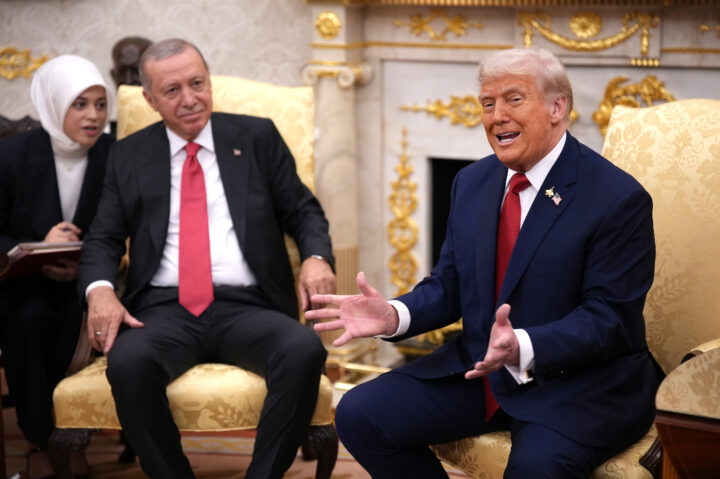
President Donald Trump (R) delivers remarks during a meeting with President of Turkey Recep Tayyip Erdogan in the Oval Office at the White House on September 25, 2025 in Washington, DC (Photo by Andrew Harnik/Getty Images)
Good Thursday afternoon.
This P.M. briefing is reserved for our premium subscribers like you — offering a forward-focused read on what we’re tracking now and what’s coming next.
I’m Danielle Cohen-Kanik, U.S. editor at Jewish Insider and curator, along with assists from my colleagues, of the Daily Overtime briefing. Please don’t hesitate to share your thoughts and feedback by replying to this email.
📡On Our Radar
Notable developments and interesting tidbits we’re tracking
Asked about reports that he had told Arab leaders this week he will not allow Israel to annex the West Bank, President Donald Trump confirmed to reporters in the Oval Office this afternoon, “I will not allow Israel to annex the West Bank, nope, I will not allow it. It’s not gonna happen.”
Pressed if he spoke with Israeli Prime Minister Benjamin Netanyahu about the issue, Trump said, “Yeah, but I’m not going to allow it. Whether I spoke to him or not — I did — but I’m not allowing Israel to annex the West Bank. There’s been enough, it’s time to stop now”…
The comments came shortly after Trump met with Turkish President Recep Tayyip Erdogan at the White House today, where Trump suggested that he may permit Ankara to purchase F-35 fighter jets, which it has been prohibited from doing since it acquired a Russian S-400 missile defense system in 2017.
Trump said without mentioning the F-35s or the less-advanced F-16 jets by name that he expected Erdogan would “be successful with buying the things” he would “like to buy.” “He needs certain things, and we need certain things, and we’re going to come to a conclusion. You’ll know by the end of the day,” Trump said.
The prospect of the sale has sparked concern from lawmakers: Bipartisan groups have urged the administration on several occasions not to change policy on the issue, including in a new letter today…
Elsewhere in the White House, one of the architects of the Trump administration’s negotiations with universities said that the large financial sums being extracted in the settlements are meant to bring attention to the administration’s aggressive approach to tackling discrimination in higher education, rather than punish the schools financially.
May Mailman, a conservative attorney who until last month served as a senior White House strategist, told The New York Times that “These are small dollar figures compared to the amounts that they are getting every year from the federal government and from their donors — but I think it provides a seriousness and a focus on these in ways that promises only wouldn’t.”
“When you see numbers like that, then you pay attention, and you look, and then you’re able to learn a little bit more, something maybe you wouldn’t normally learn,” Mailman said…
Getting in the holiday spirit, New York City Democratic mayoral nominee Zohran Mamdani joined Rosh Hashanah services on Monday night at Kolot Chayeinu, a Brooklyn synagogue known for its anti-Zionist activism, where the rabbi spoke extensively about Israel carrying out a “genocide” in Gaza.
The congregation, one of the first to call for a ceasefire just weeks after the Oct. 7 attacks, faced criticism last year for promoting anti-Israel views in its Hebrew school curriculum. One of its rabbis, a member of Jewish Voice for Peace’s Rabbinical Council, was kicked out of a White House event for disrupting former First Lady Jill Biden to call for an arms embargo on Israel.
Two of Mamdani’s challengers also spent time in NYC synagogues over the holiday: Former New York Gov. Andrew Cuomo joined the Park East Synagogue for its services and Mayor Eric Adams spoke to the Sephardic Lebanese Congregation.
Mamdani also plans to join Rep. Jerry Nadler (D-NY) for Yom Kippur services next week, where Nadler said some of the congregants will be “frankly very upset to see” Mamdani. It remains unclear which synagogue they will attend; the B’nai Jeshurun synagogue on the Upper West Side, which Nadler frequents, told Jewish Insider that Mamdani “will not be joining services with our community”…
Also in New York, Palestinian Authority President Mahmoud Abbas addressed the U.N. General Assembly by video today after the Trump administration revoked his visa to attend in person. He called Israel’s actions in Gaza “war crimes” and said the PA would be willing to govern the enclave, which he said is an integral part of a future Palestinian state…
Elon Musk’s xAI announced today it has reached a deal with the Trump administration to allow federal agencies to use its AI chatbot Grok, just months after the bot went rogue on X proclaiming itself to be “MechaHitler” and espousing extreme antisemitic rhetoric…
Over 1,200 celebrities including Mayim Bialik, Debra Messing, Sharon Osbourne, Howie Mandel, Haim Saban, Gene Simmons and Liev Schreiber have signed on to an open letter urging over 4,000 of their Hollywood colleagues to reconsider their signatures on a recent pledge to boycott Israeli film institutions. “We cannot stay silent when a story is turned into a weapon, when lies are dressed up as justice, and when artists are misled into amplifying antisemitic propaganda,” the letter reads…
⏩ Tomorrow’s Agenda, Today
An early look at tomorrow’s storylines and schedule to keep you a step ahead
Keep an eye on Jewish Insider for reporting on Microsoft’s decision to restrict the IDF’s use of its software after repeated protests by its employees and on what the sale of TikTok’s U.S. business may mean for the platform’s algorithm, which has been accused of promoting antisemitic and anti-Israel content.
This evening, UCLA Chancellor Julio Frenk will speak on Jews United for Democracy & Justice’s “America at a Crossroads” series about President Donald Trump’s approach to higher education. Read JI’s interview with Frenk here.
Israeli Prime Minister Benjamin Netanyahu will be the first world leader to speak at the U.N. General Assembly tomorrow morning, after many of the week’s speeches by world leaders included condemnations of Israel and recognition of a Palestinian state. On Monday, Netanyahu will meet with Trump at the White House.
Also tomorrow, the Nova Music Festival Exhibition opens in Boston.
We’ll be back in your inbox with the Daily Overtime on Monday. Shabbat shalom!
Stories You May Have Missed
Q&A
Post-Paramount sale, Shari Redstone is ‘full speed ahead’ on addressing antisemitism
The media mogul told JI she’s excited to show the world a different view of Israel through the Sipur production company, which she joined as chair
EYE ON UNESCO
Concern mounts in Jerusalem as Qatar, Egypt set to take key roles in UNESCO
‘It’s bad for Israel and bad for America,’ an Israeli diplomat told JI this week
The comments, made after meeting with Turkish President Erdogan, are the first time Trump addressed the issue in his second term
Andrew Harnik/Getty Images
President Donald Trump in the Oval Office at the White House on September 25, 2025 in Washington, DC.
President Donald Trump pledged on Thursday that he will not allow Israel to annex the West Bank, the first time Trump has addressed the matter in his second term.
Asked about reports that he told Arab leaders this week he would not permit Israel to make the move, Trump confirmed to reporters in the Oval Office that he opposes annexation. “I will not allow Israel to annex the West Bank, nope, I will not allow it. It’s not gonna happen,” he said, hours after a meeting with Turkish President Recep Tayyip Erdogan.
Asked if he spoke with Israeli Prime Minister Benjamin Netanyahu about the issue, Trump said, “Yeah, but I’m not going to allow it. Whether I spoke to him or not — I did — but I’m not allowing Israel to annex the West Bank. There’s been enough, it’s time to stop now.”
Netanyahu will address the United Nations General Assembly in New York on Friday, and he and Trump will meet in the Oval Office on Monday, for their fourth White House meeting of the year.
In his own General Assembly address earlier this week, Trump pledged his support for Israel and sharply criticized several European nations who had unilaterally recognized a Palestinian state. He did not mention annexation or include any criticism of Israel in his remarks.
Netanyahu has pledged to respond to those moves next week, with annexation of the West Bank viewed as one possible action he could pursue, under pressure from right-wing elements of his governing coalition.
Trump: ‘He needs certain things, and we need certain things, and we’re going to come to a conclusion’
President Donald Trump (R) delivers remarks during a meeting with President of Turkey Recep Tayyip Erdogan in the Oval Office at the White House on September 25, 2025 in Washington, DC (Photo by Andrew Harnik/Getty Images)
President Donald Trump suggested on Thursday that he was likely to permit Turkey to purchase F-35 fighter jets as soon as “the end of the day,” ending a nearly eight year blockade on Ankara’s acquiring the top-of-the-line fighter jet as a result of its 2017 purchase of a Russian S-400 missile system.
Speaking to reporters from the Oval Office alongside Turkish President Recep Tayyip Erdogan ahead of a meeting between the two and their respective teams, Trump said without mentioning the F-35’s or the less-advanced F-16 jets by name that he expected the Turkish leader would “be successful with buying the things” he would “like to buy.”
“He needs certain things, and we need certain things, and we’re going to come to a conclusion. You’ll know by the end of the day,” Trump said at the outset of his meeting with Erdogan.
The White House declined to comment on what the president was referring to or if an announcement regarding resumed F-35 sales to Ankara was imminent.
Erdogan has focused his visit to the White House, his first such trip in six years, around securing U.S. sanctions relief and approval for new arms deals, including the F-35 jets and other fighter and Boeing aircraft. Trump implemented the sanctions during his first term after Turkey purchased a Russian air defense system that U.S. officials warned could be used by the Russians to harness data on the F-35’s capabilities and compromise the aircraft.
The sanctions, pursued through the Countering American Adversaries Through Sanctions Act, are still in place due to Turkey’s refusal to replace the Russian system. The Biden administration approved the sale of F-16 jets to Turkey in early 2023 on the condition of Ankara allowing Sweden to join NATO.
The prospect of Trump changing course on the sale has sparked bipartisan concern from some lawmakers. While some see such a sale as a way to incentivize better behavior from Ankara, others have warned that the embrace could have the opposite effect.
A bipartisan coalition of House lawmakers wrote a letter to Secretary of State Marco Rubio and Defense Secretary Pete Hegseth on Thursday urging the Trump administration against approving a deal for F-16s or F-35s.
It was signed by Reps. Chris Pappas (D-NH), Gus Bilirakis (R-FL), Dina Titus (D-NV), Nicole Malliotakis (R-NY), Brad Sherman (D-CA), Frank Pallone Jr. (D-NJ), Don Bacon (R-NE), Jim Costa (D-CA), Josh Gottheimer (D-NJ), Stephen Lynch (D-MA), Dan Goldman (D-NY), Brian Fitzpatrick (R-PA), Brad Schneider (D-IL), Tom Suozzi (D-NY), Wesley Bell (D-MO), Ted Lieu (D-CA), Mike Lawler (R-NY), Rob Menendez (D-NJ), Greg Landsman (D-OH) and Gabe Amo (D-RI). The American Jewish Committee, CUFI Action Fund and FDD Action were among the organizations that endorsed the letter.
“The security risks of Turkey’s acquisition and continued possession of the Russian S-400 system are well known. The S-400 poses a direct threat to U.S. military aircraft, including both the F-16 and F-35, by enabling Russian intelligence to gain insight into sensitive U.S. military technology if operated alongside these platforms,” the lawmakers wrote.
“Congress has consistently upheld bipartisan restrictions on Turkey’s access to the F-35. Any move to reverse this policy without first securing the statutorily required certification would be a clear violation of U.S. law, undermine Congressional authority, and signal to others that U.S. law and strategic principles can be disregarded,” they added.
Mailman: ‘When you see numbers like that, then you pay attention, and you look, and then you’re able to learn a little bit more, something maybe you wouldn’t normally learn’
Mostafa Bassim/Anadolu via Getty Images
Students enter campus on the first day of the fall semester at Columbia University in New York City, United States on September 2, 2025.
The Trump administration’s settlements with Ivy League universities, negotiated in response to alleged violations of federal civil rights law, are meant primarily as an attention-grabbing measure — a way to get more people to pay attention to President Donald Trump’s aggressive approach to tackling discrimination in higher education, according to an architect of those settlements.
“When you see numbers like that, then you pay attention, and you look, and then you’re able to learn a little bit more, something maybe you wouldn’t normally learn,” May Mailman, a conservative attorney who until last month served as a senior White House strategist, told The New York Times’ Ross Douthat on an episode of his “Interesting Times” podcast that was released on Thursday.
The Trump administration has so far secured a $221 million payment from Columbia and a $50 million commitment from Brown. A deal with Harvard has been under negotiation for months, but no agreement has yet been reached.
These deals have included commitments from the universities on antisemitism policy, race-based hiring and admissions standards and diversity, equity and inclusion programs. What remains unclear is how they will be enforced. But Mailman told Douthat that the optics alone mark a significant achievement for the Trump administration.
“A settlement on its own without a fine might not be taken as seriously by the public or by other universities as when there is a fine,” said Mailman. “These are small dollar figures compared to the amounts that they are getting every year from the federal government and from their donors — but I think it provides a seriousness and a focus on these in ways that promises only wouldn’t.”
The deals have not included a recognition of fault on the part of the universities. But, Mailman added, they convey to the public “a sense of acknowledgment of wrongdoing, not a legal sense but sort of a moral sense of, ‘We’ve taken all this money, and we did it in ways that were not merit based, or they weren’t safe for our students, and so we’re paying a small amount of it back.’”
Douthat engaged Mailman in a conversation about what he called the “very blurry zone of critiques of the policies of the state of Israel and critiques of Zionism,” and suggested that the Trump administration had been “micromanaging” academic departments by asking them to discipline “radical critics of Israel.” Mailman seemed to acknowledge that some of those efforts appear to some as an infringement on free speech.
“I acknowledge that there are some letters that were sent by the antisemitism task force, in some way, that either incorporated the IHRA definition or otherwise were perceived to have been speech codes,” Mailman said, referring to the International Holocaust Remembrance Alliance’s working definition of antisemitism, which some on the left and right have argued marks a threat to free speech.
Still, she added that the deal at Columbia did not create a “speech code.” (Columbia did announce its adoption of the IHRA definition this summer, but that was not formally articulated in its deal with the federal government.)
“The Columbia deal — and I think everyone would acknowledge that Columbia had a major antisemitism problem — but the Columbia deal in no way creates any speech code, whether it be on Israel or anything else,” said Mailman. “It does not — it specifically says that this is not intended to create any First Amendment conflict or otherwise govern speech on Columbia’s campus.”
During a meeting with Arab and Muslim leaders, Trump reportedly promised that he would not allow Netanyahu to annex the West Bank
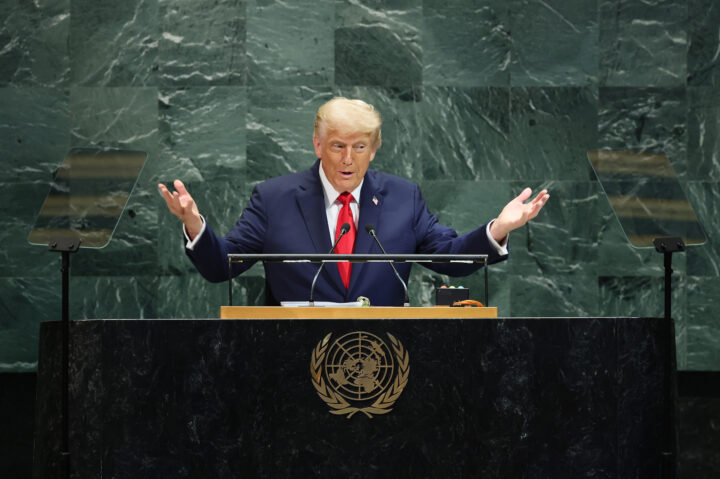
Michael M. Santiago/Getty Images
U.S. President Donald Trump speaks during the United Nations General Assembly (UNGA) at the United Nations headquarters on September 23, 2025 in New York City.
By calling the United Nations “useless” and saying many countries were “going to hell” by pursuing liberal governance, President Donald Trump was his usual provocative, impolitic self in his Tuesday speech at the United Nations General Assembly. Where other nations and the U.N. itself have promoted a vision of greater global cooperation in an interconnected world, Trump doubled down on a call for national sovereignty and closed borders. Where nearly all U.N. member states have pledged to make tackling climate change a priority, Trump took issue with the very concept of sustainable energy.
“Immigration and the high cost of so-called green renewable energy is destroying a large part of the free world and a large part of our planet,” Trump said at the close of his address. “Countries that cherish freedom are fading fast because of their policies on these two subjects.”
But it was Trump’s continued support of Israel, even in the face of growing hostility from European countries and other Western allies to the Jewish state, that may have stood out the most. Trump, in his General Assembly speech, blasted the European nations that this week formally recognized a Palestinian state.
“Now, as if to encourage continued conflict, some of this body is seeking to unilaterally recognize a Palestinian state,” he said. “This would be a reward for these horrible atrocities, including October 7th, even while they [Hamas] refuse to release the hostages or accept a ceasefire.”
The U.S. also joined Israel in boycotting the two-state solution conference on Monday, which was hosted by France and Saudi Arabia, and was joined by several major nations, including the United Kingdom, Australia and Canada.
But even while Trump used his nearly hourlong address to place himself firmly on Israel’s side in its nearly two-year-long war with Hamas, reports indicate that he is privately advocating for restraint. . During a meeting Tuesday with Arab and Muslim leaders where U.S. special envoy Steve Witkoff proposed a 21-point plan to end the war in Gaza, Trump promised the world leaders in attendance that he would not allow Israeli Prime Minister Benjamin Netanyahu to annex the West Bank, Politico and The Times of Israel reported.
Trump also touted the Abraham Accords in his keynote speech, which he described as a “very big thing.” The landmark 2020 agreement that normalized ties between Israel and the United Arab Emirates and several other Arab nations was predicated on Netanyahu not annexing the West Bank — and Saudi Arabia warned this week that annexation would be a “red line” to its own improved relations with Israel.
That warning comes as Trump eyes an expansion of the Accords, with Saudi Arabia widely considered the next target for a White House set on furthering its dealmaking prowess in the Middle East.
Netanyahu and Trump will hold their fourth Oval Office meeting of the year next week, offering the two leaders a chance to present a unified front on defeating Hamas — or, depending on what happens in New York this week, an opening for Trump to make the case against annexation, a demand that he and other administration figures have so far refrained from uttering in public.
His confirmation vote, by a 47-43 vote, comes days before the start of the U.N. General Assembly
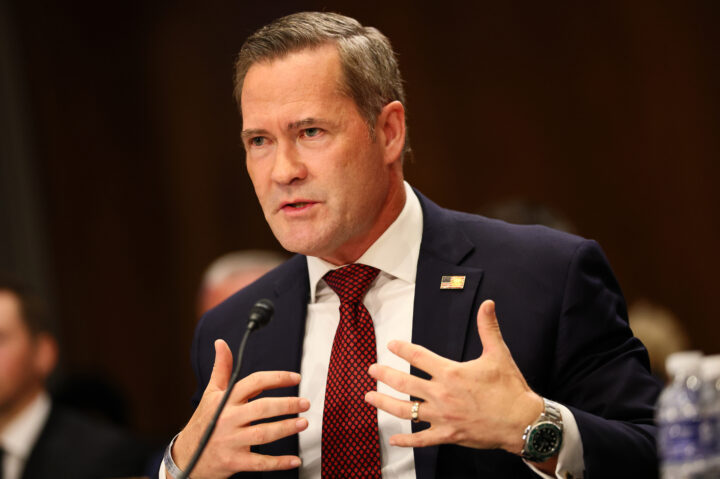
Michael M. Santiago/Getty Images
Former National Security Advisor Mike Waltz testifies during his confirmation hearing before the Senate Committee on Foreign Relations in the Dirksen Senate Office Building on July 15, 2025 in Washington, DC.
The Senate confirmed former National Security Advisor Mike Waltz on Friday to be U.S. ambassador to the United Nations, capping off a monthslong confirmation process that was marred by delays just days before the start of the U.N. General Assembly next week.
Waltz, a former congressman from Florida and a Green Beret, was confirmed by a 47-43 vote in the Senate on Friday afternoon, with three Democrats and one Republican crossing party lines. Sens. Jeanne Shaheen (D-NH), the ranking Democrat on the Senate Foreign Relations Committee, John Fetterman (D-PA) and Mark Kelly (D-AZ) voted in favor of Waltz’s nomination, while Sen. Rand Paul (R-KY) was the only Republican to oppose.
Waltz’s journey to his current role began when President Donald Trump removed him from his post as White House national security advisor in late April and selected him to replace Rep. Elise Stefanik (R-NY) as his pick for U.N. ambassador. The White House pulled Stefanik’s nomination in late March, more than two months after the Senate Foreign Relations Committee had advanced her nomination, amid concerns that her absence in the House could hurt Republicans’ ability to govern with their slim majority.
The former national security advisor was facing heavy scrutiny at the time over the Signal chat incident in which Waltz inadvertently added Atlantic Editor-in-Chief Jeffrey Goldberg to a group chat of top national security officials discussing imminent strikes on the Houthis on the non-secure messaging app. Prior to the “Signalgate” incident, Waltz had already been viewed as a vulnerable target for ideological rivals and personal foes in the administration because of his hawkish approach on foreign policy.
While Trump initially stood by Waltz, he eventually relented and in early May announced his intention to move the former congressman to the U.N. post. Waltz had already faced a setback after Trump fired six National Security Council officials whose views were aligned with Waltz. Their ouster was driven by an intervention by far-right activist Laura Loomer.
Waltz, a staunch supporter of Israel and an outspoken critic of Iran, faced delays of his own during his Senate confirmation process this summer, with Paul siding with all Democrats on the Foreign Relations Committee to block his nomination from advancing to the full Senate over concerns with Waltz’s national security and foreign policy positions.
Shaheen eventually broke the stalemate in July, voting for Waltz because of his public and private support for continued U.S. global engagement than other figures in the administration, as well as potential alternatives Trump could nominate.
Multiple outlets reported at the time that Shaheen, who is retiring next year, conditioned her support for Waltz on the Trump administration committing to providing $75 million in aid to Haiti and Nigeria, which had just been approved. Sen. Jim Risch (R-ID), the chairman of the committee, told Jewish Insider that the aid package was not directly tied to Shaheen’s support for Waltz.
During his confirmation hearing that month, Waltz said he would serve as a blockade to “anti-Israel resolutions” in the U.N. General Assembly and vowed to push for the dismantlement of the United Nations Relief and Works Agency over some of its employees’ involvement in the Oct. 7, 2023, Hamas attacks. He also said he supported U.S. sanctions against Francesca Albanese, the U.N. special rapporteur for Israel and the Palestinian territories, amid widespread accusations she has espoused antisemitic rhetoric in her commentary on Israel.
Waltz will take over for Dorothy Shea, the career diplomat who filled the role in an acting capacity as chargé d’affaires during the nine-month vacancy. His first full week on the job will coincide with the General Assembly, bringing world leaders together in New York City for high-level discussions on issues ranging from Russia’s war in Ukraine to European countries’ push for Palestinian statehood.
Plus, NY Dem party chair rejects Mamdani
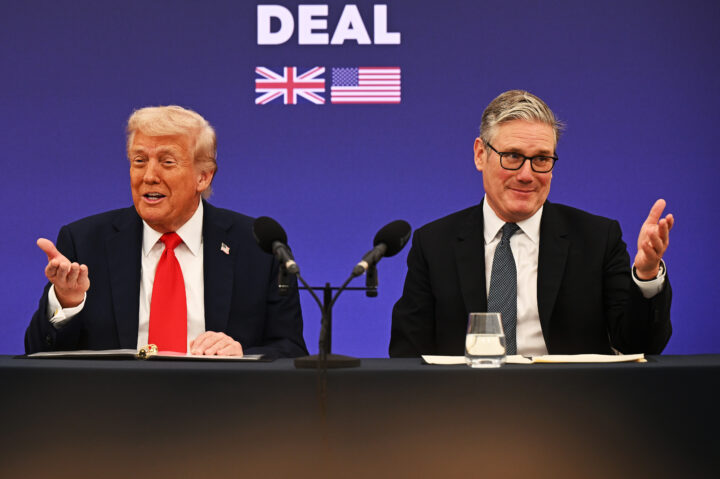
Leon Neal/Getty Images
President Donald Trump and U.K. Prime Minister Keir Starmer hold a press conference at Chequers at the conclusion of a state visit on September 18, 2025 in Aylesbury, England.
Good Thursday afternoon.
This P.M. briefing is reserved for our premium subscribers like you — offering a forward-focused read on what we’re tracking now and what’s coming next.
I’m Danielle Cohen-Kanik, U.S. editor at Jewish Insider and curator, along with assists from my colleagues, of the Daily Overtime briefing. Please don’t hesitate to share your thoughts and feedback by replying to this email.
📡On Our Radar
Notable developments and interesting tidbits we’re tracking
President Donald Trump said at a press conference with British Prime Minister Keir Starmer today that the recognition of a Palestinian state, which the U.K. plans to do this weekend, is “one of [the] few disagreements” between the two leaders.
“We want [the war] to end. We have to have the hostages back immediately. That’s what the people of Israel want, they want them back. And we want the fighting to stop,” the president continued.
Asked why he couldn’t recognize a Palestinian state next to Trump at the press conference — the British PM delayed the announcement of recognition until after Trump departs — Starmer said, “Let me be really clear about Hamas. They’re a terrorist organization who can have no part in any future government in Palestine.” Trump patted Starmer on the back and said, “That’s good”…
One of Starmer’s predecessors, former British Prime Minister Tony Blair, was authorized by Trump to develop a plan for postwar Gaza; a draft of that plan, obtained by The Times of Israel, would create a Gaza International Transitional Authority and guarantee Gazans the right to return to properties they vacate voluntarily in the enclave…
Syrian Foreign Minister Asaad al-Shaibani was on Capitol Hill today lobbying lawmakers to repeal the Caesar Syria Civilian Protection Act, the remaining congressionally mandated sanctions on Syria. The move has bipartisan support in both chambers.
Shaibani, fresh off a visit to London where he met with Israeli Strategic Affairs Minister Ron Dermer and U.S. envoy Tom Barrack to discuss Israel-Syria security arrangements, met with Sen. Lindsey Graham (R-SC), Sen. Jim Risch (R-ID), Rep. Joe Wilson (R-SC), Rep. Abe Hamadeh (R-AZ) and Treasury Department officials, among others, and is scheduled to meet with Secretary of State Marco Rubio tomorrow. It’s the first visit of a Syrian foreign minister to Washington in more than 25 years…
Syrian President Ahmad al-Sharaa told reporters yesterday that Syria and Israel could reach such a security agreement “within days”…
French President Emmanuel Macron told Israel’s Channel 12 that, despite European attempts at negotiating with Iran over its nuclear program, U.N. Security Council snapback sanctions will be implemented at the end of the month, likely on Sept. 27…
i24 News reports it has obtained recent audio of Macron speaking to former French parliament member Meyer Habib where Macron is heard saying, “I will not recognize a Palestinian state without the release of the hostages,” contrary to his reported plan to do so next week…
Two Israelis were killed today at the Allenby Crossing between Jordan and the West Bank by an assailant driving a truck of humanitarian aid destined for the Gaza Strip…
Reps. Josh Gottheimer (D-NJ) and Mike Lawler (R-NY) called on the House today to advance the long-stalled Antisemitism Awareness Act in response to New York City Democratic mayoral nominee Zohran Mamdani’s stated plans to revoke the city’s use of the International Holocaust Remembrance Alliance’s working definition of antisemitism.
The lawmakers, in a joint statement, called Mamdani’s effort “shameful, dangerous, and completely disgusting”…
Jay Jacobs, the chair of the New York Democratic Party, said in a statement today that he will not be endorsing Mamdani because he “strongly disagree[s] with [Mamdani’s] views on the State of Israel, along with certain key policy positions,” including the Queens assemblyman’s affiliation with the Democratic Socialists of America…
New York Gov. Kathy Hochul, meanwhile, facing backlash to her own endorsement of Mamdani, is still trying to “please the hyper-engaged hard-left, protect vulnerable House members and still win reelection with a statewide electorate that is far more moderate than in New York City,” per Politico.
“Behind closed doors, Hochul has pledged to anxious private sector leaders that she will use her power to act as a check on Mamdani’s agenda — much of which relies on state approval”…
Former President Barack Obama said that the firing of Karen Attiah — the anti-Israel Washington Post columnist who justified the Oct. 7 attacks and was let go from the Post earlier this week over social media posts on Charlie Kirk’s killing — is “precisely the kind of government coercion that the First Amendment was designed to prevent”…
The board of directors of Turning Point USA, the organization Kirk founded, unanimously named Erika Kirk, his widow, as its new CEO and board chair…
⏩ Tomorrow’s Agenda, Today
An early look at tomorrow’s storylines and schedule to keep you a step ahead
Keep an eye on Jewish Insider tomorrow morning for a look at how three Biden administration officials’ views have diverged over Israel since leaving the White House.
The Atlantic Festival continues in New York City through Saturday.
Also in New York, an event on “Breaking the Chain: Global Action Against Hostage-Taking” will take place tomorrow and feature the first public remarks from former Israeli hostage Na’ama Levy. Also speaking are a Yazidi survivor of ISIS captivity; Danny Danon, Israel’s ambassador to the U.N.; Dorothy Shea, acting U.S. representative to the U.N.; and Ibrahim Olabi, Syria’s ambassador to the U.N.; among others.
Chabad at Vanderbilt University will honor Vanderbilt Chancellor Daniel Diermeier with Chabad’s Lamplighter award tomorrow. Read JI’s interview with Diermeier and Washington University in St. Louis Chancellor Andrew Martin here.
On Saturday, the Milken Center for Advancing the American Dream is opening with its flagship exhibition, the “American Dream Experience,” in Washington.
On Sunday, Charlie Kirk’s memorial will be held at the State Farm Stadium in Arizona, where speakers will include President Donald Trump, Vice President JD Vance, White House Chief of Staff Susie Wiles, Secretary of State Marco Rubio, Secretary of Defense Pete Hegseth, Director of National Intelligence Tulsi Gabbard and far-right podcast host Tucker Carlson, who has advanced conspiracy theories in the aftermath of Kirk’s murder claiming the conservative activist was being pressured by Israel.
The high-level meetings of the U.N. General Assembly are set to begin next week, with several countries expected to announce their recognition of a Palestinian state.
We’ll be back in your inbox with the Daily Overtime on Monday. Shabbat shalom!
Stories You May Have Missed
BITING THE BULLET
New York Jewish leaders reckon with a potential Mamdani win
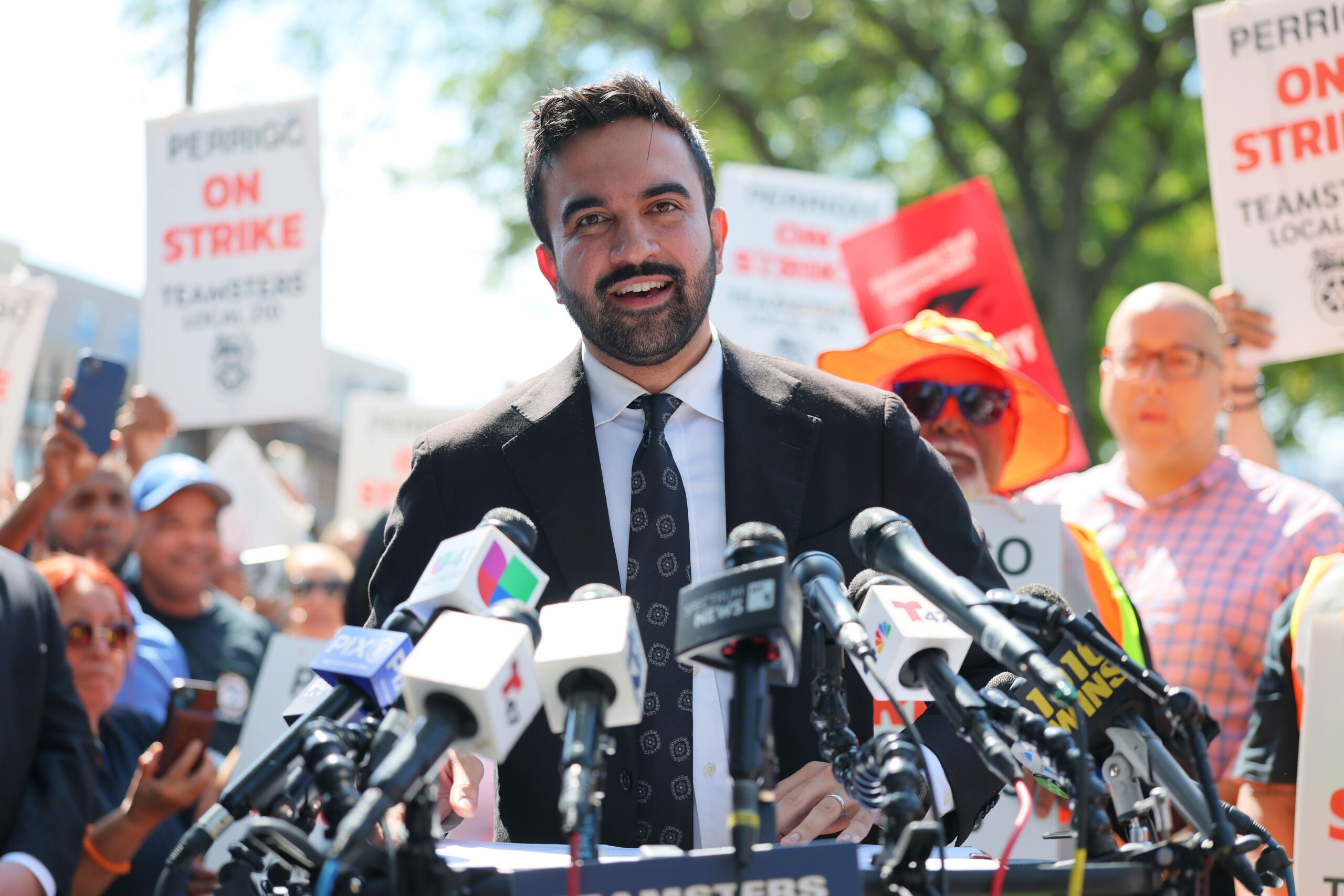
Several leaders in the community told JI they continue to have concerns about his record, while others are quietly engaging
EXPLAINING SNAPBACK
What to expect from snapback sanctions on Iran
If sanctions return, the Iran nuclear deal ‘is dead, we’re sitting shiva, it is over. That is an unpredictable reality for the regime, for its economy and its financial stability,’ Rich Goldberg said
Even after the Israeli strike, Qatar is trying to keep up its Islamist and American ties
AMER HILABI/AFP via Getty Images
Qatar's Prime Minister and Foreign Minister Sheikh Mohammed bin Abdulrahman bin Jassim Al-Thani attends the 163rd GCC Ministerial Council meeting with Egypt in Mecca on March 6, 2025.
In the aftermath of Israel’s strike aimed at Hamas leaders in Qatar, questions have emerged about how much the U.S. knew, the extent of President Donald Trump’s frustration with Israel’s actions, and what it means for the U.S.-Israel relationship.
But another important question is whether the strike marks a turning point for Qatar — and whether the Gulf nation may now be considering a shift in its own role and behavior.
The fact that the Trump administration has not dwelled on the attack — even sending Secretary of State Marco Rubio to Israel for a warm visit days after the strike — may give Doha pause. While Press Secretary Karoline Leavitt said the strike “did not advance Israel or America’s goals,” in the next breath, she said that “eliminating Hamas, who have profited off the misery of those living in Gaza, is a worthy goal.” That goes against the Qataris’ preferred narrative, that the U.S. wants it to host terrorists because they’re the only conduit to Hamas, the Taliban and others.
With that in mind, Qatar could reconsider the business of harboring terrorists, because it has become too risky. Though the UAE was not in the terror-supporting business and has long opposed the Muslim Brotherhood, it didn’t prevent people like Hamas terrorist Mahmoud al-Mabhouh from visiting the UAE until the Mossad killed him in Dubai in 2010. The Emiratis publicly railed against Israel and the then-quiet relations between the countries were set back, but the UAE cracked down and banned such individuals associated with terror groups from entering their country.
However, Qatar does not seem to be taking recent events as a signal to change. Doha roundly condemned Israel, threatened to stop mediating hostage talks and convened an Arab summit to condemn Israel further. Senior Hamas official Ghazi Hamad appeared on Al Jazeera yesterday, with the chyron stating that he was in Doha, and the wife of senior Hamas official Khalil al-Haya was spotted visiting the grave of her son, killed in the strike, with Qatari security. On Tuesday, the Qatari Defense Minister hosted his Taliban counterpart.
And while Qatar could respond to the strike by turning away from America, it does not seem to have done that, either. Doha publicly denied reports that they were reconsidering its relationship with Washington. After its initial statement, Qatar said it would continue mediating Gaza hostage and ceasefire talks, and shifted to blaming Israeli Prime Minister Benjamin Netanyahu, rather than Israel, broadly. Doha softened its language in Arabic to describe the hostages, moving from “prisoners” to “captives,” according to Ariel Admoni, a Qatar expert at the Jerusalem Institute for Strategy and Security (JISS).
Admoni said that Doha’s “two-faced strategy has survived. … They are trying to keep up their Islamist and American ties. They can do both, and it pays for them.”
While the U.S. did not stop the Israeli strike, “no one is suggesting that Qatar expel Hamas,” Admoni noted. “Qatar is getting the legitimacy to continue hosting Hamas. It doesn’t look like Qatari public gestures to Hamas anger America.”
Rubio publicly praised Doha and asked it to continue playing a role in mediating between Hamas and Israel, and other administration figures have continued calling Qatar a great ally.
For the Doha strike to truly represent a crossroads for Qatar, at which it will have to choose between continuing to harbor terrorists or deepening its economic ties with the West, real pressure must be applied. Barring that, and with the Trump administration seemingly eager to stay in Doha’s good graces, Qatar has little incentive to change.
Asked on the Misgav Institute for National Security and Zionist Strategy’s “Mideast Horizons” podcast this week why the U.S. doesn’t put more pressure on Qatar, Richard Goldberg, the Foundation for Defense of Democracies’ senior advisor and a former Trump administration official, said that “despite bad actions, [Qatar] host[s] a major artery of the U.S. military in Al-Udeid Air Base … You could say, why do we have one of the most important bases right across the Persian Gulf from Iran and within missile range? Maybe we shouldn’t have critical assets right there … But the Pentagon doesn’t think that way. This is just how they do business and it would be too hard to think about something else — and [they say Qatar] are great partners for hosting us.”
Calling Qatar “a gas station with a television station,” Goldberg, who was the Trump administration’s National Energy Dominance Council’s senior counselor, noted that Qatari dominance in the natural gas market is also a factor in which there is “interdependence, but also a competition.” The fact that the U.S. is “a competitor with the Qataris [is] a dynamic that has not been explored enough by the Trump administration. The president wants to make America energy dominant,” he added.
Goldberg also noted that some members of the administration — who he did not name but include Attorney General Pam Bondi, FBI Director Kash Patel and Middle East envoy Steve Witkoff — worked with Qatar before working for the Trump administration: “I don’t even think that they agree with the Qataris hosting Hamas or sponsoring Hamas, and I think they would probably, at some point, indict the Hamas people … but when you’re in the private sector and this isn’t your No. 1 thing,” you’re willing to take their money. South Carolina, home of hawkish Sen. Lindsey Graham (R-SC), is “hugely economically reliant on Qatar. … There’s a reason they picked South Carolina” for investments.
These are all part of Qatar’s “very sophisticated” moves, he said, to build an “influence network … and how they become insulated,” even as they continue to host Hamas.
Plus, Iron Beam laser system ready for action

Paul Sancya/Pool/Getty Images
Sen. Elissa Slotkin (D-MI) rehearses the Democratic response to President Donald Trump's address to a joint session of Congress.
Good Wednesday afternoon.
This P.M. briefing is reserved for our premium subscribers like you — offering a forward-focused read on what we’re tracking now and what’s coming next.
I’m Danielle Cohen-Kanik, U.S. editor at Jewish Insider and curator, along with assists from my colleagues, of the Daily Overtime briefing. Please don’t hesitate to share your thoughts and feedback by replying to this email.
📡On Our Radar
Notable developments and interesting tidbits we’re tracking
In a moment of Democratic soul-searching, Sen. Elissa Slotkin (D-MI) said in remarks at a security briefing hosted by Jewish groups on Capitol Hill today that she’s grown concerned with left-wing animus towards the Jewish community.
“We’re used to the right-wing side. What is new and what I think has so many in the Jewish community on our heels is that new left-wing antisemitism and how to approach it. How do we counteract it? How do we protect against it? How do we educate?” she said.
“And certainly, we’re watching, on many college campuses, a lot of young people who actually maybe didn’t grow up with the Jewish community at all, get to campus and maybe repeat what they’re hearing, sometimes not even understanding or knowing. I would just say that one of our responsibilities as Jewish leaders and Jewish activists is to try and really parse through how to deal with antisemitism on the left, since antisemitism on the right isn’t good, but it’s more of a well-known threat,” Slotkin continued…
On the other side of the aisle, House Speaker Mike Johnson (R-LA) told a group of pro-Israel leaders in a private meeting today that he’s attempting to push back on the isolationist wing of the GOP in the House and in his candidate recruiting efforts, but that the party is likely bound for a major debate on the issue after President Donald Trump leaves office, attendees told Jewish Insider’s Marc Rod…
Sen. Bernie Sanders (I-VT) and Rep. Becca Balint (D-VT) separately accused Israel of committing genocide in Gaza today, the first Jewish lawmakers to do so…
British Prime Minister Keir Starmer delayed his announcement to recognize a Palestinian state until this weekend, after Trump has departed from his state visit to London…
On the campus beat, Education Secretary Linda McMahon said this morning at the Federalist Society and the Defense of Freedom Institute’s annual Education Law & Policy Conference that the Trump administration is hopeful in reaching a settlement with Harvard and seeing changes in its approach to antisemitism implemented on the elite campus without a protracted legal battle.
“Harvard has already started to put in place some of the things we wanted them to do. They reassessed their Middle East policies. They actually fired a couple of their professors. They are looking at having safe measures on campus, and so without even admitting any guilt in any way, they have started to change their policies, and that is the ultimate goal of our investigation, of making sure that things are proper on campus,” McMahon said.
A federal court recently ruled in favor of Harvard in its First Amendment lawsuit against the Trump administration; McMahon said they intend to appeal…
Engaged in its own negotiations with the Trump administration over hundreds of millions of dollars in frozen federal funding, regents of the University of California met today in San Francisco; this month, UC Berkeley notified 160 people connected to allegations of antisemitism that it had given their information to the federal government as part of the investigation into the school, sparking community uproar at the meeting…
The New York Times spotlights the upcoming governors’ races in New Jersey and Virginia, considered predictive for the 2026 midterms. Yesterday, the Democratic National Committee announced it was doubling its support of Rep. Mikie Sherrill (D-NJ) in the Garden State to a total of $3 million, the most it’s ever contributed to a New Jersey gubernatorial election, in a sign of tightening polls in the Democratic state…
Meanwhile in New York, The Gothamist reports on growing tensions between Democratic New York City mayoral nominee Zohran Mamdani and City Comptroller Brad Lander, just months after they cross-endorsed each other in the primary race.
Lander is reportedly insinuating behind closed doors that he’ll be appointed first deputy mayor, the mayor’s right hand, should Mamdani win the election, while Mamdani is said to have told him to back off and insists no personnel decisions have been made…
Billionaire pro-Israel philanthropist Ronald Lauder injected $750,000 to the Fix the City PAC, which is backing former New York Gov. Andrew Cuomo in his bid to defeat Mamdani as an independent, despite Cuomo’s recent turn away from his full-throated support of Israel…
The Israeli Ministry of Defense announced today that it has completed the development of the Iron Beam laser missile interception system, which will be operational by the end of the year. Each laser interception costs less than $5, while Iron Dome interceptions cost around $40,000-$50,000 each…
The Senate Foreign Relations Committee voted to advance several nominees out of committee for consideration of the full Senate, including Sergio Gor for ambassador to India, Mike Waltz for U.S. ambassador to the U.N., Michel Issa for ambassador to Lebanon and Richard Buchan for ambassador to Morocco…
Top EU diplomat Kaja Kallas announced plans today for the EU to impose tariffs on Israel and sanction Israeli National Security Minister Itamar Ben-Gvir and Finance Minister Bezalel Smotrich, following on European Commission President Ursula von der Leyen’s call last week for the EU to suspend free trade measures with Israel.
The tariffs on Israeli imports, which currently receive preferential access to the EU under existing free trade initiatives, would require a majority of EU countries’ support, while the sanctions would have to be unanimous, neither of which currently has the requisite support from European capitals to pass. While Kallas’ proposals are more limited than some European leaders have called for, the move is another sign of the increasing demand for action against Israel in Brussels…
⏩ Tomorrow’s Agenda, Today
An early look at tomorrow’s storylines and schedule to keep you a step ahead
Keep an eye on Jewish Insider tomorrow morning for a rundown of what to expect from the reimposition of U.N. Security Council snapback sanctions on Iran.
Tomorrow morning, the Senate Committee on Health, Education, Labor and Pensions will hold a hearing on the state of K-12 education.
The Atlantic Festival begins in New York City tomorrow, opening with a session including former Vice President Mike Pence and former National Security Advisor H.R. McMaster.
In the evening, the Israeli Embassy will host its Rosh Hashanah reception in Washington.
United Hatzalah will hold its 2025 Los Angeles gala with honorary guest Gal Gadot. Israeli Eurovision performer Yuval Raphael will receive United Hatzalah’s Hero Award and American venture capitalist Shaun Maguire, fresh off a visit to Israel, will receive its Am Israel award.
Stories You May Have Missed
KARP’S CALL
Palantir’s Alex Karp says Jews need to ‘leave their comfort zone’ to defend community

The Palantir CEO was honored at the American Friends of Lubavitch (Chabad) annual Lamplighter Awards in Washington, D.C.
scoop
Fifty Senate Republicans call on European foreign ministers to hold firm on snapback, enforce Iran sanctions

‘The regime has abused diplomatic processes for years to avoid penalties. Sanctions relief should only be negotiated after snapback is fully implemented,’ the lawmakers wrote
Plus, Shari Redstone's new Israeli venture
SAUL LOEB/AFP via Getty Images
President Donald Trump shakes hands with Israeli Prime Minister Benjamin Netanyahu during a meeting in the Oval Office of the White House in Washington, DC, on April 7, 2025.
Good Tuesday afternoon.
This P.M. briefing is reserved for our premium subscribers like you — offering a forward-focused read on what we’re tracking now and what’s coming next.
I’m Danielle Cohen-Kanik, U.S. editor at Jewish Insider and curator, along with assists from my colleagues, of the Daily Overtime briefing. Please don’t hesitate to share your thoughts and feedback by replying to this email.
📡On Our Radar
Notable developments and interesting tidbits we’re tracking
Israeli Prime Minister Benjamin Netanyahu announced today that President Donald Trump invited him to the White House on Sept. 29, after the prime minister’s Sept. 26 speech at the U.N. General Assembly in New York. This will be Netanyahu’s fourth visit to the White House during Trump’s second term…
At the same press conference, Netanyahu attempted to walk back comments he made yesterday about Israel needing to look towards a self-sufficient, or “autarkic,” economy after the Israeli market reacted negatively, saying that it was a “misunderstanding.”
Netanyahu pointed out the performance of the Israeli stock market and the shekel, unemployment numbers and foreign investment into the country as signs of economic strength, and said he had specifically been speaking about the Israeli defense industry, which has been impacted by western European arms embargoes…
As the IDF begins its takeover of Gaza City, Lt. Gen. Eyal Zamir, the IDF’s chief of staff, responded to concerns about the safety of the remaining hostages, many of whom are thought to be held in the city, in a statement on the operation, saying, “I want to emphasize: the return of our hostages is a war aim and a national and moral commitment.”
Noa Argamani, a former hostage whose boyfriend, Avinatan Or, remains held in Gaza after they were kidnapped together on Oct. 7 from the Nova Music Festival, said on X, “I cannot breathe watching the fighting inside Gaza City. As a former hostage, I know exactly what these moments feel like. The booming blasts, the gunfire, the walls shaking, the helplessness and despair that take over. The emotions come rushing back all at once, and it is unbearable. Right now, I fear deeply for Avinatan’s life”…
In a view from the U.S., former U.S. Ambassador to Israel Dan Shapiro said that as of May 2024, concessions that the U.S. would make to Saudi Arabia in exchange for Saudi-Israel normalization were “all but finished,” having continued to be negotiated even during the Israel-Hamas war, but that the deal cannot be finalized until the war ends.
Speaking at a briefing hosted by the Democratic Majority for Israel, he characterized Netanyahu’s “autarky” comments as the opposite of the goal of the Abraham Accords and regional integration.
Shapiro also called Hamas leaders in Doha “legitimate targets” and said it’s “appropriate” for Israel to eliminate them, but that the “who and the how and the where matters” and the Israeli strike in Doha has “backfired” for Israel.
Rep. Josh Gottheimer (D-NJ), who spoke after Shapiro, encouraged Israel to let Western press into Gaza to see that the issue with humanitarian aid is the U.N.’s failure to distribute it, rather than a lack of it. Shapiro said the humanitarian situation is “not nearly as dire” now as a few months ago but that international reporting hasn’t reflected that…
On the domestic front, Pennsylvania Gov. Josh Shapiro said in an address at the Eradicate Hate Global Summit today in Pittsburgh that “we need to create more opportunities for peaceful and respectful dialogue, respecting each other’s fundamental rights as Americans.”
He invoked the Priestly Blessing, sent to him by a chaplain of a local fire department after his residence was attacked by an arsonist last Passover, which he said he recites to his children every night. “Those are words of healing, words of hopefulness to me. They are also words that again remind us of our shared humanity.”
After his address, Shapiro, who is seen as a Democratic contender for the 2028 presidential election, answered questions from reporters about Israel’s campaign in Gaza City, saying, “I’ve been very outspoken about the fact that these children in Gaza need to be fed, that the violence needs to end, the hostages need to come home, and this war needs to be over.”
“I’ve also been very clear that I think Benjamin Netanyahu is taking Israel down a very dark and dangerous path, isolating Israel in the world even more than they were before, which I think threatens Israel’s security,” Shapiro continued, following on comments he made last month calling Netanyahu’s claim that there is no starvation in Gaza “quite abhorrent”…
Meanwhile in New York, Carl Heastie, the Democratic speaker of the New York State Assembly, is expected to endorse New York City Democratic mayoral nominee Zohran Mamdani this week, The New York Times reports, one of several state leaders in the party who have thus far resisted doing so. Rep. Yvette Clarke (D-NY), chair of the Congressional Black Caucus, is reportedly also set to do so on Monday…
Rep. Elise Stefanik (R-NY) introduced a bill that would “prohibit state and local law enforcement from arresting foreign nationals within the United States” solely based on warrants from the International Criminal Court, as Mamdani has threatened to do to Netanyahu…
After selling Paramount to Skydance Media, Shari Redstone has taken on a new venture: The media mogul was named chair of the Israeli production company Sipur, which she called a “hands-on investment” to build a “global production powerhouse”…
⏩ Tomorrow’s Agenda, Today
An early look at tomorrow’s storylines and schedule to keep you a step ahead
Keep an eye on Jewish Insider tomorrow morning for an analysis of a new poll of Gen Z conservatives’ views on Israel and antisemitism.
This evening, Sens. John Fetterman (D-PA) and Dave McCormick (R-PA) will join Fox News’ “Special Report” to discuss political civility.
Tomorrow morning, the House Foreign Affairs Committee will hold a markup of bills aimed at reorganizing and reforming the State Department. Read JI’s breakdown of the legislation here.
The Senate Foreign Relations Committee will vote to advance a series of nominees out of committee — including Michel Issa to be ambassador to Lebanon; Richard Buchan to be ambassador to Morocco; Ben Black to lead the U.S. International Development Finance Corporation; and a second vote on the nomination of Mike Waltz, the former national security advisor, to be U.S. ambassador to the U.N., in order to prevent a procedural challenge from Democrats.
Also on the Hill, the U.S. Helsinki Commission will hold a briefing on “conspiracy theories, antisemitism and democratic decline.”
The annual Defense of Freedom-Federalist Society Education, Law & Policy Conference begins in D.C. tomorrow, including featured speakers Secretary of Education Linda McMahon and Brandeis Center Chairman Ken Marcus.
Stories You May Have Missed
FIELD FRACTURES
Jewish social workers warn of growing antisemitism in the field: ‘Counter to everything that we learn in social work school’

A new report details the ‘exclusion, isolation and public targeting’ that Jewish social workers have faced — particularly since Oct. 7
WATER UNDER THE BRIDGE
Rubio looking to move past criticism of Israel after Qatar strike
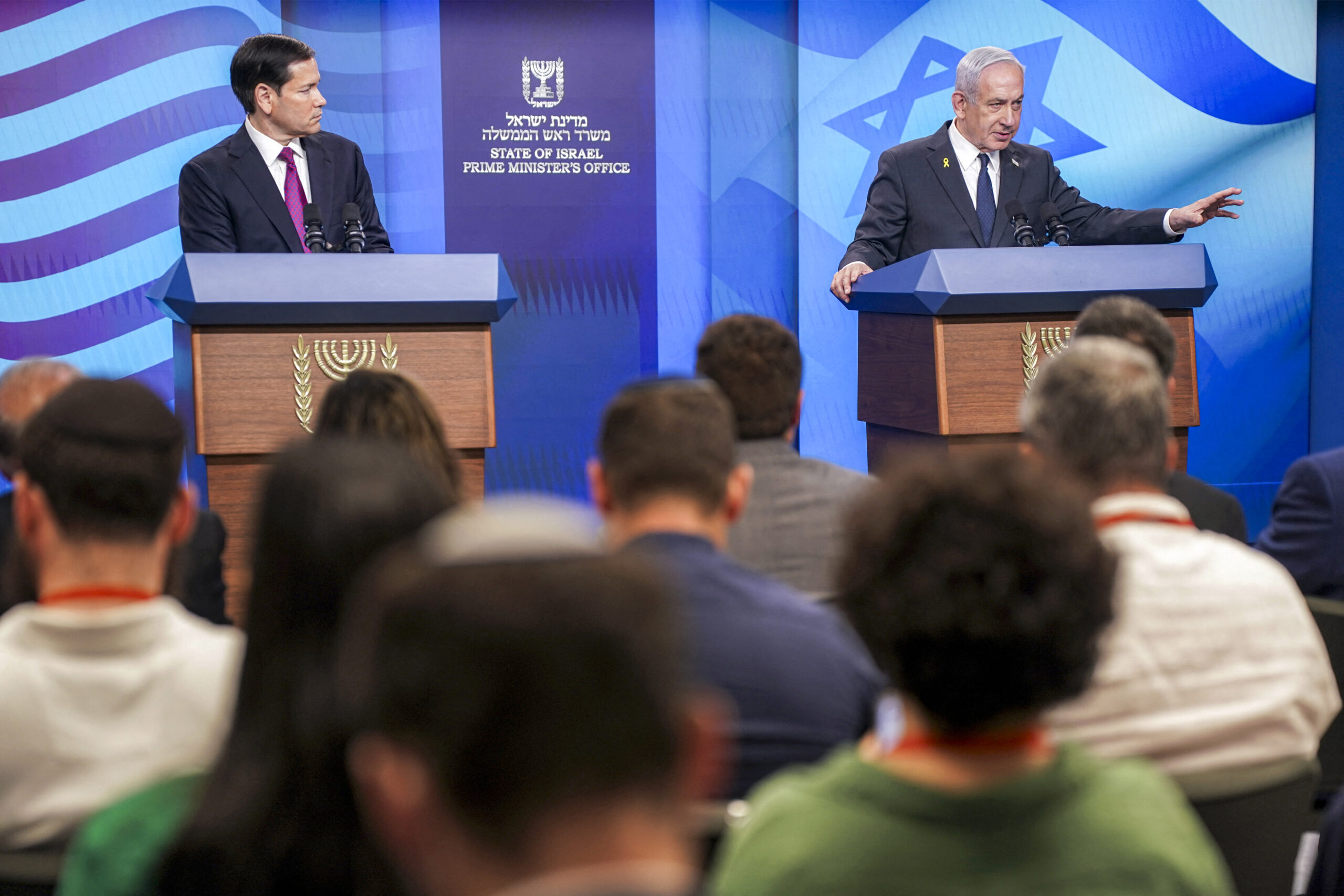
At a press conference with Israeli PM Netanyahu, Rubio said an agreement with Hamas to end war ‘probably won’t happen’ because ‘savage terrorists don’t often agree to disarm’
Speaking at the Eradicate Hate Global Summit on rising political violence, Shapiro called for ‘peaceful and respectful dialogue’
BRENDAN SMIALOWSKI/AFP via Getty Images
Pennsylvania Governor Josh Shapiro speaks before Democratic presidential candidate Kamala Harris in Philadelphia, Pennsylvania, August 6, 2024.
Amid an alarming rise in political violence, Pennsylvania Gov. Josh Shapiro said Tuesday that the way to combat extremism and division is by bringing people together and restoring their faith in the government — a civic-minded strategy that included some thinly veiled swipes at President Donald Trump and the hardline rhetoric he has adopted since conservative activist Charlie Kirk was killed in Utah last week.
Shapiro and his family survived an April arson attack that damaged the governor’s residence in Harrisburg while they slept, hours after hosting a Passover Seder there. The alleged arsonist acted to protest Shapiro’s stance toward the Palestinians, according to a police search warrant.
“I believe we have a responsibility to be clear and unequivocal in calling out all forms of political violence, making clear it is all wrong,” Shapiro said in a keynote address at the Eradicate Hate Global Summit, a Pittsburgh conference created in the aftermath of the 2018 mass shooting at the Tree of Life synagogue. “Unfortunately some, from the dark corners of the internet all the way to the Oval Office, want to cherry pick which instances of political violence they want to condemn.”
Shapiro called for dialogue and a rejection of the demands for revenge that have permeated social media since Kirk’s murder last week. The speech did not name Trump, although Shapiro called for Trump to act with “moral clarity” in a post on X on Monday.
Widely rumored to be considering a 2028 presidential run, the speech offered Shapiro a chance to deliver a wide-ranging speech to a national audience.
“We need to create more opportunities for peaceful and respectful dialogue, respecting each other’s fundamental rights as Americans,” said Shapiro. “Prosecuting constitutionally protected speech will only further erode our freedoms, deepen the mistrust. That is un-American.” Attorney General Pam Bondi said on Monday that the U.S. would be “targeting” hate speech, which she said was different from free speech — a statement she attempted to walk back a day later after facing bipartisan pushback.
There is a better way, Shapiro added: “That better way is the Pennsylvania way.”
“Those who stoke division will want to have us believe words are important, but we also need action,” said Shapiro. “We need to make sure people are safe here in Pennsylvania and all across America, safe to exercise their fundamental rights and freedoms, whether they’re debating on a college campus, praying at a synagogue or church or spending time at home with loved ones.”
Americans should do more to address hate online, and to teach people to better distinguish “fact from fiction” on the internet, argued Shapiro. But more than that, he said, they need to see and trust that the government actually can make their lives better.
“There’s a deeper issue at the root of this dangerous rise of political violence. Too many people don’t believe that our institutions and the people in them can solve problems anymore. They feel alone, ignored, shut out by a government that isn’t working for them,” said Shapiro. “It leads to a belief among some that the only way they can address their problems is through violence.”
The ways to prove otherwise, Shapiro said, are simple — helping people get driver’s licenses quickly, giving kids free breakfast at school and “building a government that works for Pennsylvanians and gets stuff done.”
Shapiro leaned on Jewish teachings in his speech, referring as he often does to how his faith underpins his public service.
During a speech at the Eradicate Hate Global Summit in Pittsburgh, Pennsylvania Gov. @JoshShapiroPA shared the story of an 82-year-old Christian chaplain of a local fire department, who gave Shapiro and his family a letter signed by each member of their department after an April… pic.twitter.com/jqTD9U7S3U
— Jewish Insider (@J_Insider) September 16, 2025
“My faith has taught me that no one is required to complete the task, but neither are we free to refrain from it. It means that each of us has a responsibility to get off the sidelines, get in the game and do our part,” Shapiro said.
After the attack on the governor’s mansion, Pennsylvanians “were united in speaking and acting with moral clarity, making clear that hatred and violence has no place here in Pennsylvania,” said Shapiro.
He shared the story of the 82-year-old Christian chaplain of a local fire department, who gave Shapiro and his family a letter signed by each member of their department. On the back, the chaplain had written by hand what he said was the most important blessing in his life, from the Book of Numbers.
May the Lord bless you and keep you. May the Lord make His face shine upon you and be gracious to you. May the Lord turn His face toward you and give you peace.
“I wept when I read that prayer that he wrote,” said Shapiro, who recalls then telling the chaplain that he recites that prayer — known as the Priestly Blessing in Judaism — to his children each night. He then proceeded to do so in Hebrew, and offered his own benediction about the power the prayer holds for a nation reeling from violence.
Yivarechecha Adonai v’yishmerecha. Ya’er Adonai panav eilecha v’chuneka. Yisa Adonai panav eilecha v’yasem l’cha shalom.
“Those are words of healing, words of hopefulness to me,” said Shapiro. “They are also words that again remind us of our shared humanity.”
Plus, anti-Israel WaPo columnist fired over Charlie Kirk commentary
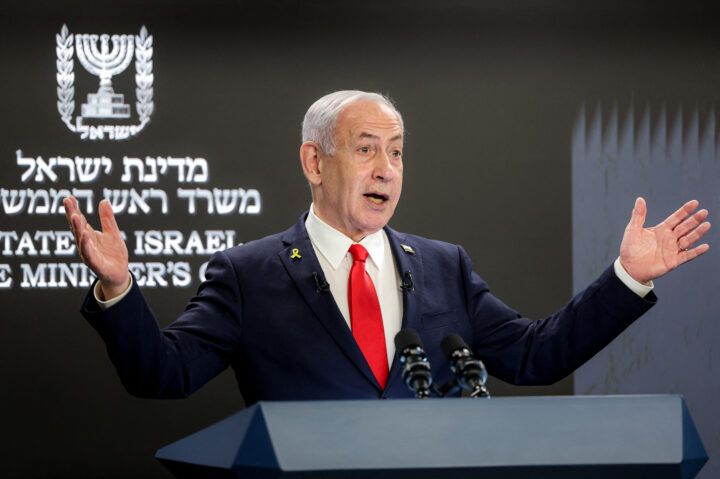
ABIR SULTAN/POOL/AFP via Getty Images
Israel's Prime Minister Benjamin Netanyahu gives a press conference at the Prime minister's office in Jerusalem on August 10, 2025.
Good Monday afternoon.
This P.M. briefing is reserved for our premium subscribers like you — offering a forward-focused read on what we’re tracking now and what’s coming next.
I’m Danielle Cohen-Kanik, U.S. editor at Jewish Insider and curator, along with assists from my colleagues, of the Daily Overtime briefing. Please don’t hesitate to share your thoughts and feedback by replying to this email.
📡On Our Radar
Notable developments and interesting tidbits we’re tracking
Israeli Prime Minister Benjamin Netanyahu predicted that Israel will have to become increasingly self-reliant as countries call for embargoes and sanctions against the Jewish state. Speaking at a Finance Ministry conference in Jerusalem today, Netanyahu said, “We will increasingly need to adapt to an economy with autarkic characteristics.”
“I am a believer in the free market, but we may find ourselves in a situation where our arms industries are blocked. We will need to develop arms industries here — not only research and development, but also the ability to produce what we need,” the Israeli PM said…
Secretary of State Marco Rubio met with Israeli President Isaac Herzog in Jerusalem today, where they gave remarks on the occasion of the fifth anniversary of the Abraham Accords. “Imagine, despite the difficulties the region has confronted over the last few years, how much more difficult it would have been had the Abraham Accords not been in place,” Rubio said…
Elsewhere in the region, after an emergency summit of Arab states convened in Qatar to discuss last week’s Israeli strike in Doha, the leaders of the Gulf Cooperation Council countries today directed the GCC defense ministers to hold an “urgent meeting” to “assess the defense situation of the Council states.”
The countries also issued a communique calling on states to “review diplomatic and economic relations” and “initiate legal proceedings” against Israel…
At the International Atomic Energy Agency’s annual conference happening now in Vienna, Iran is circulating a resolution to censure the U.S. and Israel over their strikes on Iran’s nuclear facilities in June. Iran was unexpectedly elected by other Middle Eastern countries to serve as vice president of the gathering.
Mohammad Eslami, the head of the Atomic Energy Organization of Iran, said in an interview that “if [participating countries] want to obey the law of the jungle and the rule of coercion and force” by blocking the motion, “it’ll end in chaos”…
Stateside, Rep. Tom Suozzi (D-NY) announced he will not be endorsing Democratic nominee Zohran Mamdani for New York City mayor, on the heels of New York Gov. Kathy Hochul’s announcement that she’s supporting the candidate.
Suozzi, who represents a swing district on Long Island, said that, “While I share [Mamdani’s] concern about the issue of affordability, I fundamentally disagree with his proposed solutions. Like the voters I represent, I believe socialism has consistently failed to deliver real, sustainable progress.”
On Hochul, Suozzi said that he did not discuss his decision with her and is “not in a position to give the Governor political advice considering the fact that when I ran against her she beat me soundly”…
In another high-profile New York race, Micah Lasher, a state assemblyman and former aide to Rep. Jerry Nadler (D-NY), officially launched his campaign for his former mentor’s congressional seat today, joining a Democratic primary that’s likely to become crowded in the heavily Jewish Manhattan district. Nadler is expected to offer Lasher his support, a key endorsement in the race…
The New York Times investigates a series of trade and business dealings over the UAE’s access to AI chips that appear to be connected with cryptocurrency windfalls for the Witkoff and Trump families.
When David Feith, then senior director for technology on the National Security Council, attempted to change AI chip policy, which would have inhibited that access, he was fired by President Donald Trump, after a conversation with his influential advisor Laura Loomer…
The fallout from Charlie Kirk’s killing continues: Semafor’s Editor-in-Chief Ben Smith writes about Kirk’s legacy on Israel within the GOP and how both the isolationist and pro-Israel camps of the party are now claiming him as their own.
“A bereft White House official told me that Kirk functioned as something like a Republican chairman and Rush Limbaugh ‘rolled into one.’ Clips of his speeches and debates are everywhere, but movement-building is a subtler thing, and Kirk’s public statements, friends said, often reflected attempts at intraparty diplomacy,” Smith wrote…
Karen Attiah, an opinion columnist at The Washington Post who regularly espoused anti-Israel views, was fired from the paper over her posts on social media about Kirk’s death, including mischaracterizing some of his positions and positing that her “journalistic and moral values” prevented her from “engaging in excessive, false mourning” for Kirk.
Attiah, the Post’s founding Global Opinions editor, retweeted social media messages justifying the Oct. 7 Hamas attacks on Israel as they were taking place and wrote a piece on Oct. 13, less than a week after the attacks, headlined, “We cannot stand by and watch Israel commit atrocities”…
Also in the media, Jewish influencer Hen Mazzig reacts to Jewish actress Hannah Einbinder’s pro-Palestinian commentary at the Emmys last night in The Hollywood Reporter: “Hannah should know there is no such thing as a ‘good Jew’ who can launder antisemitism. The ‘good Jews’ trope — the ones who sign boycott pledges or reassure progressives that this isn’t about hatred — are always used as cover. They are never enough. And at the end of the day, the people demanding ‘good Jews’ don’t actually believe there is anything good about being Jewish”…
After the Vuelta a Espana bike race in Madrid was called off during its finale on Sunday due to anti-Israel protests on the route, Spanish Prime Minister Pedro Sánchez called today for Israel to be banned from sports events due to its military campaign in Gaza, despite the team being protested, Israel-Premier Tech, not being an official Israeli team.
The international union of cyclists voiced its disapproval of Sánchez’s stance, saying in a statement that it “strongly condemns the exploitation of sport for political purposes in general, and especially coming from a government”…
Lynn Forester de Rothschild is exploring a sale of a minority stake in the parent company of The Economist magazine, according to Bloomberg, which would mark the publication’s first ownership shake-up in over a decade…
⏩ Tomorrow’s Agenda, Today
An early look at tomorrow’s storylines and schedule to keep you a step ahead
Keep an eye on Jewish Insider tomorrow morning for an interview with Yaakov Katz, former editor-in-chief of The Jerusalem Post, on his new book about Oct. 7 and an interview with Rep. Zach Nunn (R-IA), a rising national security voice on Capitol Hill.
Pennsylvania Gov. Josh Shapiro will deliver a major address on political violence at the Eradicate Hate Global Summit in Pittsburgh tomorrow, nearly a week after the fatal shooting of Charlie Kirk and several months after the firebombing of Shapiro’s residence over Passover.
Also speaking at the summit will be KIND Snacks founder and former CEO Daniel Lubetzky alongside Lonnie Ali, founder of the Muhammad Ali Center with her eponymous late husband.
The Senate Judiciary Committee will hold a hearing tomorrow morning on oversight of the FBI with FBI Director Kash Patel.
Democratic Majority for Israel will host a live briefing tomorrow with Rep. Josh Gottheimer (D-NJ) and former U.S. Ambassador to Israel Dan Shapiro on Gottheimer’s recent trip to Israel, next steps for the Abraham Accords and the latest in the Israel-Hamas war.
The Center for a New American Security will hold a live fireside chat tomorrow with Adam Boehler, the U.S. special envoy for hostage response.
Alan Dershowitz, a former Harvard Law School professor and prominent defense attorney and Israel advocate, will speak tomorrow at the JFK Jr. forum at Harvard at the first “Middle East Dialogues” event of the academic year, hosted by professor Tarek Masoud, who invites polarizing speakers to debate the Israeli-Palestinian conflict.
In the evening, American Friends of Lubavitch (Chabad) will host its Lamplighter Awards at D.C.’s Union Station. This year’s honoree is Palantir CEO Alex Karp, and House Minority Leader Hakeem Jeffries (D-NY) will receive a leadership award.
Magen David Adom will host its 2025 New York City Gala in Manhattan, where political commentator Meghan McCain will receive its Champion of Israel Award.
Stories You May Have Missed
INTERVIEW TACTICS
Isaac Chotiner, The New Yorker’s interrogator out to trip up Israel supporters

Chotiner recently devoted six consecutive Q&A interviews with guests about Israel, many of them contentious and combative
HAWKEYE STATE RACE
Ashley Hinson emerges as odds-on favorite to succeed Ernst in the Senate
The former TV news anchor boasts a consistently conservative, pro-Israel voting record, and has a history of winning tough races
The former TV news anchor boasts a consistently conservative, pro-Israel voting record, and has a history of winning tough races
Scott Olson/Getty Images
U.S. Rep. Ashley Hinson speaks to guests during her Ashley's BBQ Bash fundraiser on August 23, 2025 in Cedar Rapids, Iowa. The event was the fifth annual, which she holds to support Iowa Republican causes and candidates.
Rep. Ashley Hinson (R-IA) has emerged as the front-runner in the contest to replace retiring Sen. Joni Ernst (R-IA), with national Republicans swiftly coalescing around her bid for the GOP nomination as they look to avoid a messy primary battle.
Hinson, a politically tested lawmaker who has long been viewed as a potential successor to Ernst, launched her Senate campaign within hours of Ernst’s announcement last Tuesday that she would not seek a third term.
Hinson, in her candidate announcement, said that she would be President Donald Trump’s “strongest ally” in the Senate and would work to “deliver the America First agenda.” She also praised Ernst for her military service and time in public office, saying that, “Our country and state are better off because of Joni’s selfless service.”
Hinson, a prolific fundraiser who entered the race with a $2.8 million war chest, began racking up endorsements shortly after her campaign launch. Trump endorsed Hinson on Friday, as did Senate Majority Leader John Thune (R-SD) and Sen. Tim Scott (R-SC), chairman of the National Republican Senatorial Committee, Senate Republicans’ campaign arm.
Trump described Hinson as “a wonderful person” whom he knows “well,” and praised her devotion to her family before touting her commitment to “our incredible Iowa workers.”
“She is working hard to Create Jobs, Cut Taxes, Promote Products and Services MADE IN AMERICA by our incredible Iowa Workers, Support our Great Farmers and American Agriculture, Champion Innovation, Continue to Help Secure our now very Secure Southern Border, Stop Migrant Crime, Murderers, and other Criminals from illegally entering our Country, Strengthen our Military/Veterans, and Defend our always under siege Second Amendment,” Trump wrote of Hinson on his Truth Social platform.
“From a foreign policy perspective, or even culturally with respect to antisemitism and all that sort of thing, I don’t think that you’re going to see a lot of difference between Joni Ernst, who’s been a strong supporter of Israel and who I think has been a really effective leader on the national stage, and Ashley,” David Kochel, a veteran GOP campaign operative, told JI.
Ernst and Hinson are close professionally and personally; in addition to being friends, the two have long been aligned on foreign and domestic policy and worked together on scores of bicameral legislative efforts.
Both lawmakers have been repeatedly endorsed by AIPAC and the Republican Jewish Coalition, though neither organizations have officially gotten behind Hinson’s Senate bid yet. While Ernst hasn’t endorsed in the race either, Hinson is the candidate she is most aligned with ideologically.
“From a foreign policy perspective, or even culturally with respect to antisemitism and all that sort of thing, I don’t think that you’re going to see a lot of difference between Joni Ernst, who’s been a strong supporter of Israel and who I think has been a really effective leader on the national stage, and Ashley,” David Kochel, a veteran GOP campaign operative, told Jewish Insider.
“On issues of concern to Jewish Americans, Ashley Hinson has been an absolute stalwart,” Sam Markstein, who serves as national political director for the RJC, told JI.
Markstein described Hinson as “an incredibly strong voice in Israel’s defense,” citing her “calling Hamas’ terror attack ‘evil,’ and affirming Israel’s right to defend itself immediately” after the Oct. 7, 2023, attacks on Israel as examples. He also noted that she has “consistently voted for vital military aid to Israel and Iron Dome defense systems,” and pointed to her cosponsoring legislation “to pressure the Biden administration to deliver critical aid that they were holding up as the Jewish state was fighting a seven-front war.”
“She has stood strongly against the Iranian regime by supporting measures to reinstitute maximum pressure and reimpose crippling sanctions. Ashley Hinson also has a very strong record on combating antisemitism. Notably, unlike some on the neo-isolationist far right, when Ashley Hinson says, ‘America First,’ for her, and for the RJC, that means standing strongly with our allies, like Israel, peace through strength, using decisive military action when necessary and rejecting forever wars,” Markstein said.
The swift action on Hinson’s part in launching her campaign and locking down major endorsements has propelled her campaign to front-runner status in the race, and a smooth primary contest could benefit what are already strong general election chances for Republicans in the Hawkeye State.
“Ashley’s been pretty good on the Trump record,” Kochel said. “I think things are going to consolidate pretty quickly around her.”
“She is definitely going to be the leading candidate in the Republican primary, and she’s going to be a very tough candidate in the general election as well,” he told JI.
Thus far in the primary, Hinson is facing Jim Carlin, a Republican former state senator who initially entered the contest to challenge Ernst from the right after winning 27% of the vote against Sen. Chuck Grassley (R-IA) in a 2022 primary, and Joshua Smith, a former libertarian and podcast host who is a sharp critic of the U.S.-Israel relationship.
Smith has espoused virulently anti-Israel beliefs on social media, posting in March of this year on X that Israel is a “fake state of anti Jesus heathens who are fine with killing children” and claiming in a post last May that Jewish people suffer from a “Jewish victim complex.”
Hinson began her career in local television as a broadcast journalist in Cedar Rapids, Iowa, and went on to win two Midwest regional Emmy Awards and become a health reporting fellow for the Radio Television Digital News Association. She entered politics in 2016, when she won a competitive seat in the Iowa state House of Representatives representing the purple Cedar Rapids area by a two-to-one margin.
Hinson was elected to the House in 2020 after defeating former Rep. Abby Finkenauer, a Democrat who flipped Iowa’s 1st Congressional District blue in 2018, by more than two points.
The other rumored candidate looking at the race is U.S. Ambassador to NATO Matt Whitaker, Trump’s former acting attorney general during his first term who lost to Ernst in the GOP primary for her Senate seat in 2014. But with Trump and leading Republicans rallying behind Hinson, the prospects of Whitaker running has dimmed.
The Democratic side of the aisle has a crowded field of candidates competing for the party’s nomination, including state Rep. Josh Turek, state Sen. Zach Wahls and Jackie Norris, chairwoman of the Des Moines Public Schools board.
“Whoever wins the Republican nomination for U.S. Senate in Iowa will have a very, very strong chance of succeeding Joni Ernst,” Sam Markstein, who serves as national political director for the RJC, told JI. “Regarding Ashley Hinson specifically, ask yourself what the telltale signs of a well-run operation are, and you’ll see she is clearly checking all of the boxes: the speed and efficiency of her campaign launch, announcing support from President Trump, as well as House and Senate leadership.”
Democrats have expressed an interest in contesting the open Senate seat in Iowa, a now reliably Republican state that was a battleground before Trump’s political ascendance.
The party has some renewed confidence in their political standing in the state, after Democrats flipped a state Senate seat in a special election last month. The state currently has one state elected official that’s a Democrat: State Auditor Rob Sand.
Whether national Democrats will allocate resources to the Hawkeye State remains to be determined, but winning statewide as a Democrat in deep red Iowa will be a difficult challenge. Democrats haven’t won a Senate race in Iowa since 2008, when former Sen. Tom Harkin handily won a fifth term, prompting Republicans to dismiss the notion that this race will be competitive.
“Whoever wins the Republican nomination for U.S. Senate in Iowa will have a very, very strong chance of succeeding Joni Ernst,” Markstein told JI.
“Regarding Ashley Hinson specifically, ask yourself what the telltale signs of a well-run operation are, and you’ll see she is clearly checking all of the boxes: the speed and efficiency of her campaign launch, announcing support from President Trump, as well as House and Senate leadership. This, and more, illustrates that she’s focused, organized, and has an excellent team around her, all of which is needed to win,” he continued.
The NRSC sent a memo to donors last week expressing confidence that Democrats would face an uphill slog in Iowa, and touted Hinson as a “formidable contender” who “would be exceedingly difficult for any Democrat to challenge.”
A source familiar with how the NRSC is viewing the contest told JI that, “Democrats are trying really hard to say that Iowa is in play and that it is a competitive race. That’s just not electorally where we view it.”
“It’s also just not ultimately what the field on their side signals. They have a very messy, competitive primary right now. It does not appear that [Senate Minority Leader Chuck] Schumer is going to be able to clear the field. That is obviously a direct contrast to what we’re seeing so far on our side,” the source said, noting the growing support for Hinson on the GOP side of the aisle.
Kochel noted that, “Iowa historically was a swing state. [Former President Barack] Obama won it twice and Trump’s won it three times, but certainly the registration advantage that Republicans have has been growing. As the electorate has changed in the last 10 years, more non-college [educated], white, working-class voters are becoming more and more Republican. We’ve got a lot of those in Iowa.”
“Demographically, Iowa is kind of getting away from the Democrats a little bit,” he continued, predicting, “We’ll see this race settle into a pretty familiar framework.”
Plus, Paramount Skydance looks to merge with Warner Bros
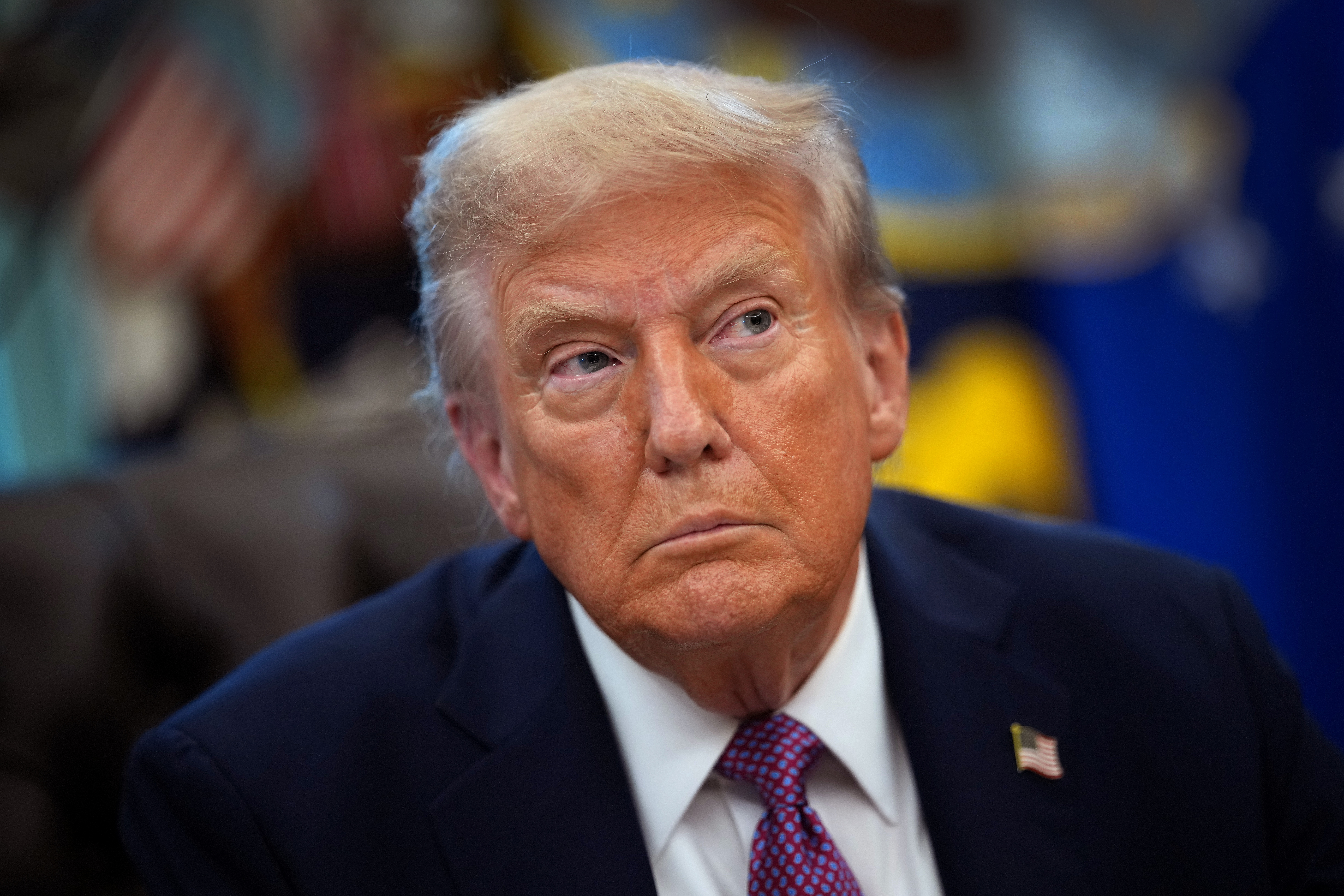
Kevin Dietsch/Getty Images
U.S. President Donald Trump speaks to members of the media as he signs executive orders during a press availability in the Oval Office of the White House on September 05, 2025 in Washington, DC.
Good Thursday afternoon.
This P.M. briefing is reserved for our premium subscribers like you — offering a forward-focused read on what we’re tracking now and what’s coming next.
I’m Danielle Cohen-Kanik, U.S. editor at Jewish Insider and curator, along with assists from my colleagues, of the Daily Overtime briefing. Please don’t hesitate to share your thoughts and feedback by replying to this email.
📡On Our Radar
Notable developments and interesting tidbits we’re tracking
Lawmakers, candidates and officials from across the political spectrum continued to reel in the aftermath of the killing of conservative activist Charlie Kirk in Utah yesterday, with many changing their planned appearances.
Vice President JD Vance went to pay his respects to the Kirk family in Salt Lake City instead of attending a 9/11 memorial ceremony at Ground Zero in New York. Kirk’s casket will be flown back to his home state of Arizona on Air Force 2 along with his family and friends.
In addition, President Donald Trump moved a Pentagon 9/11 memorial event to a more secure location, as his team was especially shaken by Kirk’s death; Texas Democratic Senate candidate James Talarico devoted his campaign kickoff speech in San Antonio last night to memorializing Kirk; right-wing media personality Ben Shapiro, a close friend of Kirk, canceled an event tonight at the Ronald Reagan Presidential Foundation in California; Rep. Alexandria Ocasio-Cortez (D-NY) announced she is postponing a rally in North Carolina this weekend out of respect for Kirk and security concerns; and more…
The fallout continues from Israel’s strike against Hamas leaders in Doha this week, with Democratic Majority for Israel accusing Trump in a new scathing statement of betraying Israel by coming out publicly against the strike and potentially foiling its effectiveness by tipping off Qatar (though U.S. and Qatari officials have said that the warning call from Middle East envoy Steve Witkoff came as the strike was already underway).
The statement puts the group at odds with many Democratic lawmakers, who have come out against the strike.
“After years of criticizing Democrats — despite our party’s 75-year history of supporting Israel — President Donald Trump yesterday broke with our vital ally in an unprecedented manner,” DMFI CEO Brian Romick said. “The White House must answer whether their pre-warning of the attack in any way compromised Israel’s ability to eliminate Hamas’ terrorist leadership”…
Doubling down in its displeasure, the Trump administration joined a unanimous U.N. Security Council statement today that condemns the strike, though it does not mention Israel nor Hamas.
“Council members underscored the importance of de-escalation and expressed their solidarity with Qatar. They underlined their support for the sovereignty and territorial integrity of Qatar, in line with the principles of the UN Charter. Council members recalled their support for the vital role that Qatar continues to play in mediation efforts in the region,” the statement read…
Qatari Prime Minister Sheikh Mohammed bin Abdulrahman Al Thani will travel to Washington tomorrow to discuss the incident, Israeli media reports, meeting with senior Trump administration officials and potentially the president himself, and Qatar will host an emergency summit beginning Sunday with Arab states.
Al Thani said in an interview that, prior to the strike, a meeting had been scheduled for Friday between himself, Egyptian and Turkish intelligence officials and Witkoff, but Israel’s attack “destroyed the mediation efforts” for a ceasefire with Hamas and “extinguished the last glimmer of hope”…
Back in Israel, Prime Minister Benjamin Netanyahu authorized a plan to build the long-disputed E1 settlement project, which would make a contiguous Palestinian state nearly impossible, at a signing ceremony today at the Ma’ale Adumim settlement, where the new units will be added.
“We said a Palestinian state will not be established — and indeed, a Palestinian state will not be established,” Netanyahu said at the event…
The New York Times’ Jerusalem bureau announced that David Halbfinger is returning to Israel to serve as the paper’s bureau chief, and Isabel Kershner was named senior correspondent.
The newly merged Paramount Skydance is now preparing a bid to purchase Warner Bros. Discovery, The Wall Street Journal reports, including its cable networks and movie studio. The bid is backed by the Ellison family — Paramount owner David Ellison is the son of billionaire Oracle co-founder Larry Ellison…
⏩ Tomorrow’s Agenda, Today
An early look at tomorrow’s storylines and schedule to keep you a step ahead
Keep an eye on Jewish Insider tomorrow morning for reporting on the belated passage of a K-12 antisemitism bill in the California Legislature that pitted Jewish Democrats and their allies against teachers’ unions in the state.
The Capital Jewish Museum in Washington will host a gala Sunday evening honoring Esther Safran Foer, the former executive director of D.C.’s Sixth & I Synagogue, and David Rubenstein, chairman of the Carlyle Group.
Secretary of State Marco Rubio is expected to land in Israel early next week, with a planned appearance at the opening of the Pilgrimage Road at the City of David archaeological site on Monday. (Read JI’s coverage of the Pilgrimage Road excavation here).
A bipartisan delegation of 250 U.S. state legislators will also land in Israel for a trip next week.
The Climate Solutions Prize Tour, in partnership with the Jewish Climate Trust, will begin in Israel on Sunday, after several days in the UAE.
We’ll be back in your inbox with the Daily Overtime on Monday. Shabbat shalom!
Stories You May Have Missed
IN MEMORIAM
Charlie Kirk remembered as a bulwark against antisemitism on the right
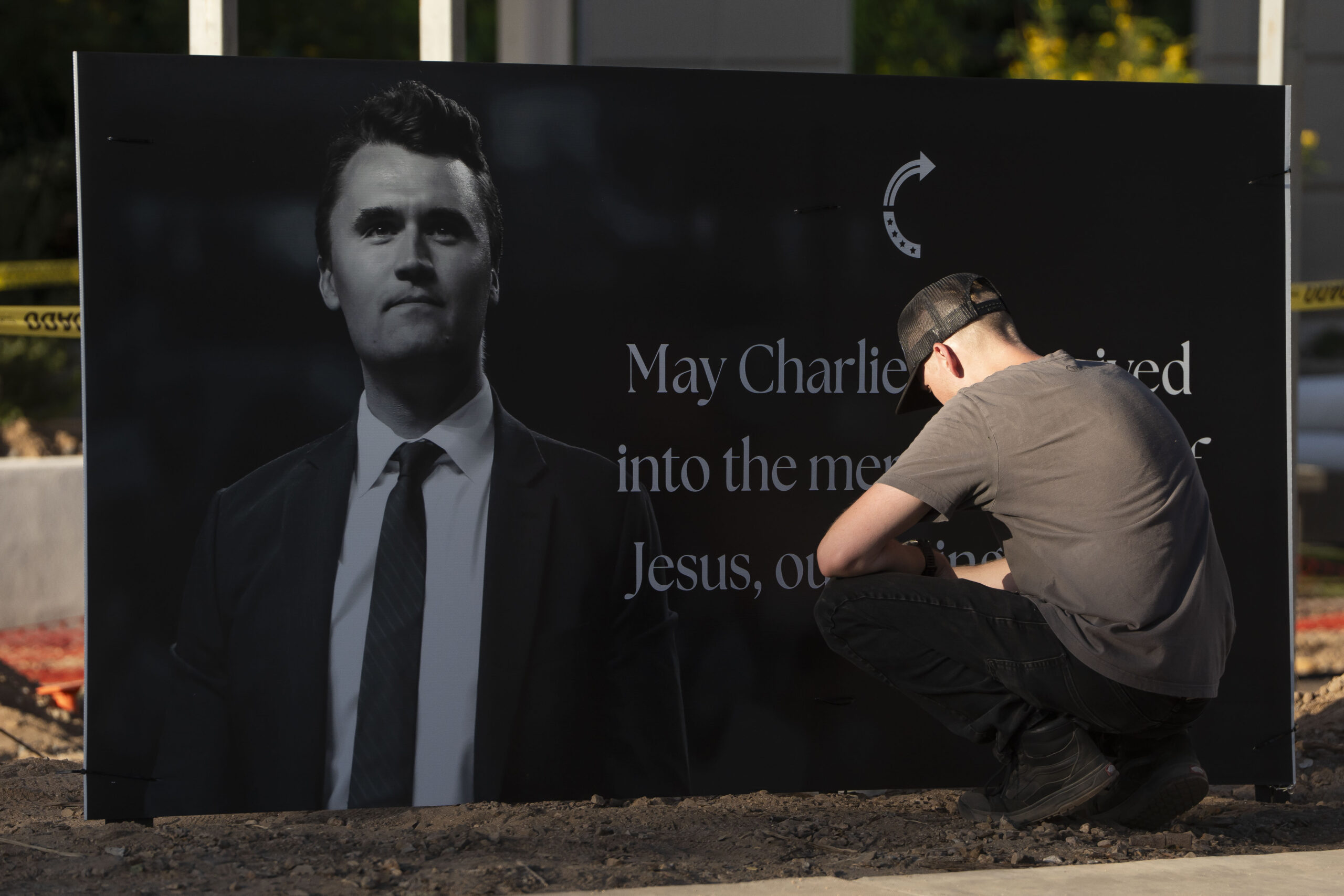
Josh Hammer told JI: ‘He was really holding back some really nasty stuff in some very young, far-right online circles. … Part of me kind of worries, frankly, about what that energy does from here in his absence’
DEFIANT DEFENSE
Amb. Leiter defends Doha strike, amid Trump criticism
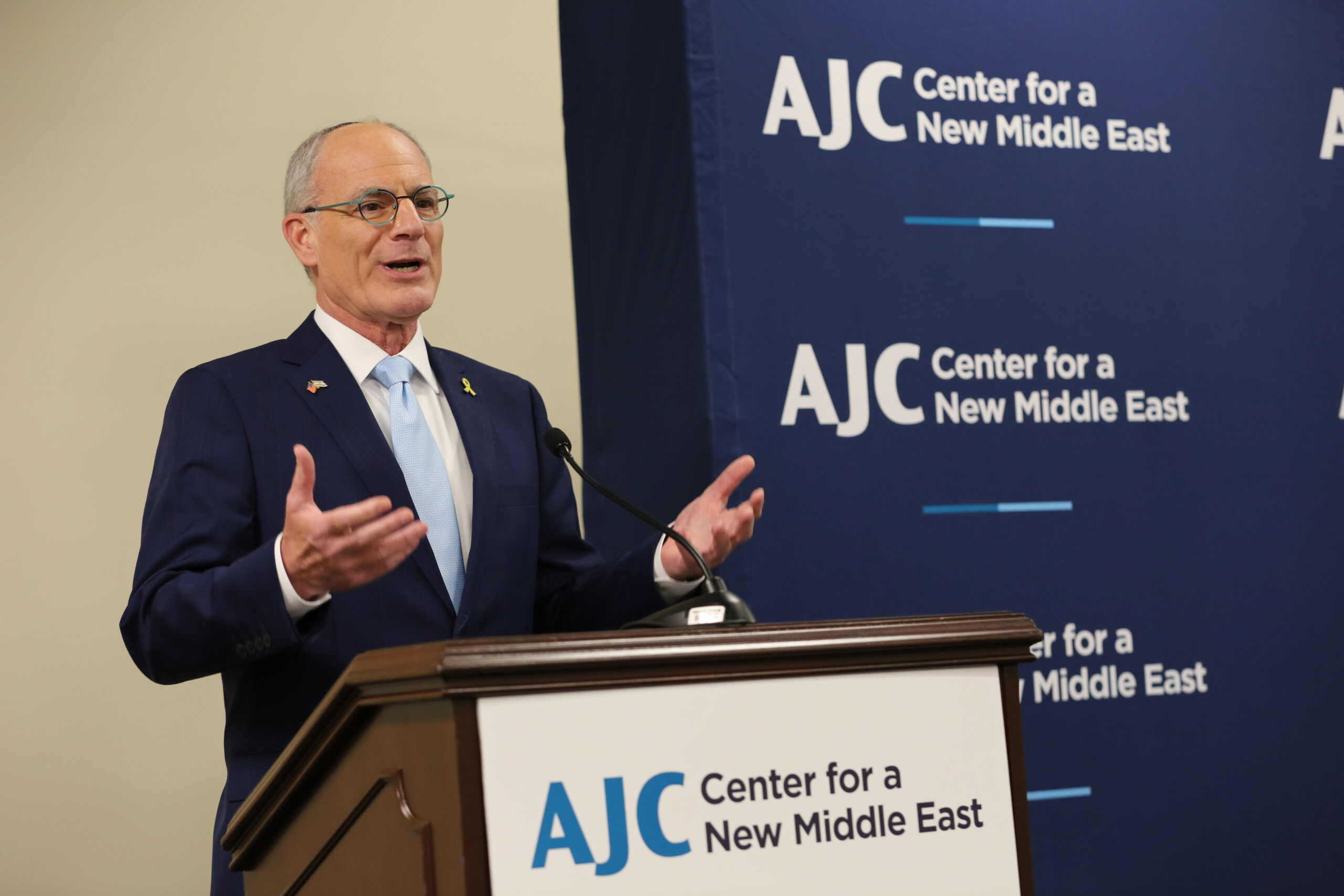
Leiter compared Israel’s campaign against Hamas to the U.S. pursuing the perpetrators of 9/11
Plus, Netanyahu links 9/11 to 10/7

George Frey/Getty Images
Law enforcement responds to the scene where political activist Charlie Kirk was shot during an event at Utah Valley University on September 10, 2025 in Orem, Utah.
Good Wednesday afternoon.
This P.M. briefing is reserved for our premium subscribers like you — offering a forward-focused read on what we’re tracking now and what’s coming next.
I’m Danielle Cohen-Kanik, U.S. editor at Jewish Insider and curator, along with assists from my colleagues, of the Daily Overtime briefing. Please don’t hesitate to share your thoughts and feedback by replying to this email.
📡On Our Radar
Notable developments and interesting tidbits we’re tracking
Conservative activist Charlie Kirk died this afternoon after being shot in the neck while speaking at an event at Utah Valley University.
President Donald Trump posted on Truth Social, “The Great, and even Legendary, Charlie Kirk, is dead. No one understood or had the Heart of the Youth in the United States of America better than Charlie. He was loved and admired by ALL, especially me, and now, he is no longer with us.”
Kirk, 31, was a highly influential right-wing leader, co-founding Turning Point USA, one of the most prominent conservative youth organizations in the U.S. The Republican Jewish Coalition said in a statement, “Charlie has been a shining light in these troubled times for the American Jewish community, and we are deeply saddened at his passing. All people of good will must condemn this horrific murder and demand justice for Charlie.”
Law enforcement officials told CNN that there is no suspect in custody. Prior to news of Kirk’s death, the shooting was condemned by lawmakers and activists across the political spectrum…
Ahead of the 24th anniversary of the 9/11 attacks tomorrow, Israeli Prime Minister Benjamin Netanyahu said in a statement today that Israel “also [has] a Sept. 11,” comparing it to the Oct. 7, 2023 Hamas attacks, and drawing parallels between Israel’s strike yesterday targeting senior Hamas officials in Doha, Qatar, to the U.S. killing Osama bin Laden in Pakistan.
Netanyahu highlighted the U.S. resolution at the U.N. Security Council, passed two weeks after 9/11, that said “governments cannot give harbor to terrorists,” accusing Qatar of providing “terrorist chieftains” with “sumptuous villas” and safe haven.
“And I say to Qatar and all nations who harbor terrorists, you either expel them or you bring them to justice. Because if you don’t, we will,” Netanyahu concluded.
The Israeli PM’s remarks seem to contradict the White House, after Trump made clear yesterday that he’s “very unhappy with every aspect” of the strike and White House Press Secretary Karoline Leavitt said the president had assured Qatari leaders “that such a thing will not happen again on their soil”…
Netanyahu’s opposition was busy on Capitol Hill, meanwhile, with Israeli Opposition Leader Yair Lapid spotted walking into House Minority Leader Hakeem Jeffries’ (D-NY) office — Lapid declined to tell reporters what they discussed — and MK Benny Gantz meeting with Sen. John Fetterman (D-PA), the two of whom covered “the importance of leaving no stone unturned in eliminating terrorist Hamas; in Gaza or abroad.” Lapid and Gantz are both attending the MEAD Summit in Washington this week…
Nearby at the White House, Trump met with a delegation of former hostages, including Ohad and Raz Ben Ami, and hostage families, including Ilay and Yeela David, siblings of Evyatar David…
Another former hostage, Elizabeth Tsurkov, the Israeli-Russian academic held captive by an Iranian-backed militant group in Iraq since 2023 and released to the U.S. Embassy in Baghdad yesterday, has landed in Israel, the Prime Minister’s Office and Mossad announced…
On the campaign trail, Maine Democratic Gov. Janet Mills is reportedly interviewing staff for a potential bid against Sen. Susan Collins (R-ME), Punchbowl News reports. Mills would be a strong contender in the race, likely overshadowing Democratic candidate and oyster farmer Graham Platner, who has made his anti-Israel stance a focus of his bid thus far…
European Commission President Ursula von der Leyen said the body would propose suspending EU free trade measures with Israel, in an annual state of the union speech to the European Parliament today. The move is unlikely to be put into effect as it would need broad support from EU countries, which remain divided on the issue, but it’s a concerning step from the EU, which is Israel’s largest trading partner…
In an excerpt from former Vice President Kamala Harris’ forthcoming book, 107 Days, released in The Atlantic, Harris remarks on those in the Biden administration who were worried her visibility as VP would negatively impact President Joe Biden’s standing.
She writes about her appearance in Selma, Ala., in March 2024 where “I gave a strong speech on the humanitarian crisis in Gaza. … It was a speech that had been vetted and approved by the White House and the National Security Council. It went viral, and the West Wing was displeased. I was castigated for, apparently, delivering it too well”…
Oracle co-founder Larry Ellison surpassed Elon Musk as the world’s richest person today after the software giant reported higher quarterly earnings than expected, largely due to significant AI contracts…
Also getting in on the AI rush is Jared Kushner, whose AI firm Brain Co., co-founded with Israeli angel investor Elad Gil and former Mexican Foreign Minister Luis Videgaray, came out of stealth today with an announcement that it raised $30 million in its first funding round…
⏩ Tomorrow’s Agenda, Today
An early look at tomorrow’s storylines and schedule to keep you a step ahead
Keep an eye on Jewish Insider tomorrow morning for news on a surprising congressional endorsement of Democratic nominee Zohran Mamdani.
On the Hill, the Senate Foreign Relations Committee will hold a nomination hearing tomorrow for several diplomats including Sergio Gor, former head of the Presidential Personnel Office, to be ambassador to India. Read JI’s coverage of Gor’s departure from the White House here.
In Jerusalem, the Jewish National Fund and U.S. Embassy will be hosting a 9/11 Memorial Ceremony.
Stories You May Have Missed
SOMEBR DAY
‘We won’t normalize it’: Friends of Ziv and Gali Berman mark twins’ 28th birthday in Hamas captivity
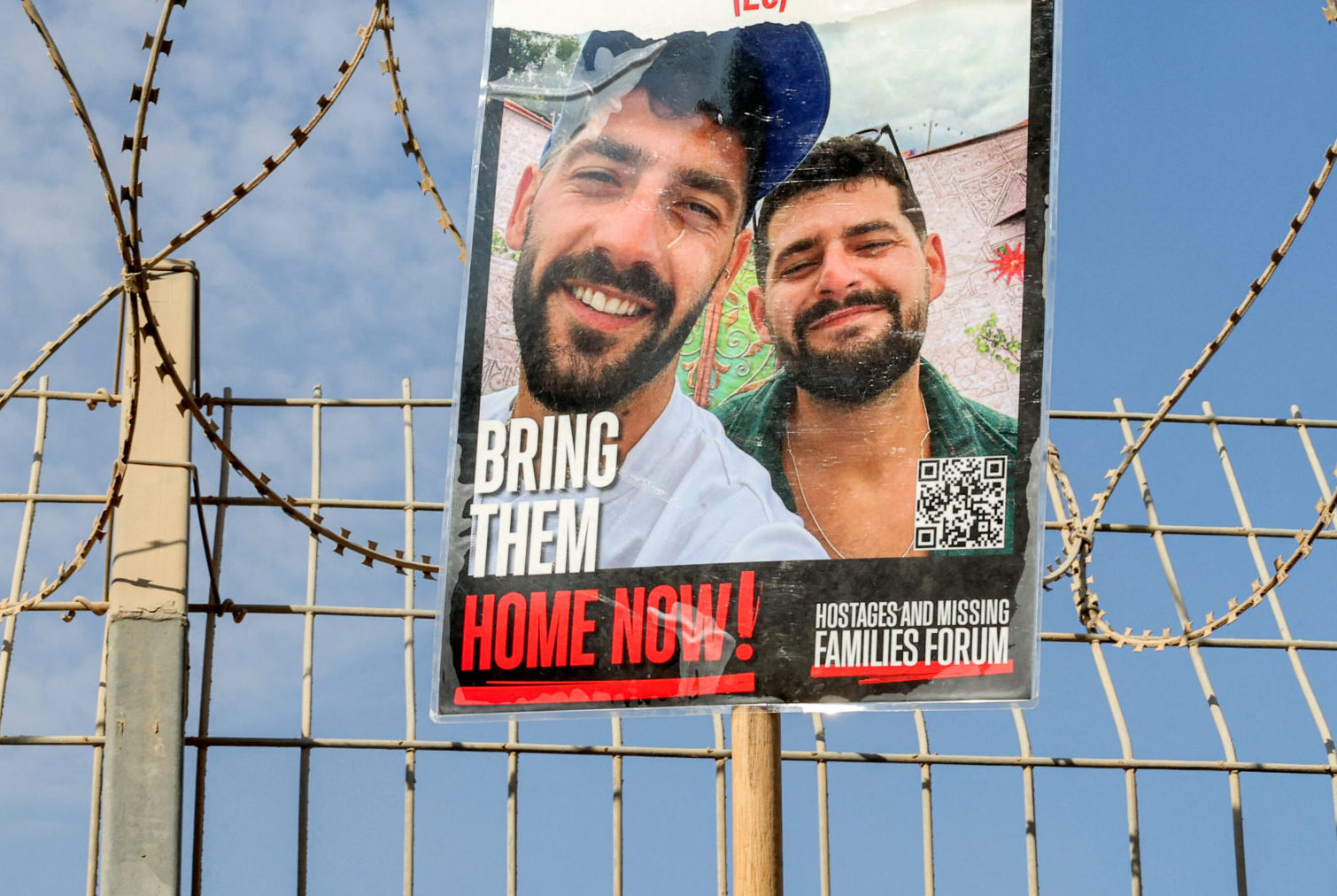
As the Israeli twins spend their second birthday in captivity in Gaza, their close-knit circle from Kibbutz Kfar Aza continues a grassroots campaign to keep their story alive — and push for their release
TALARICO TALK
Texas Democratic Senate recruit James Talarico takes critical view of Israel

The newly minted candidate casts himself as a moderate, but called out his party for not criticizing Israel more in the 2024 election
President Donald Trump doubled down Tuesday evening on his criticism of the Israeli strike while Senate Republicans remain strongly supportive of the attack
Kevin Dietsch/Getty Images
U.S. President Donald Trump speaks to members of the media as he signs executive orders during a press availability in the Oval Office of the White House on September 05, 2025 in Washington, DC.
The Israeli strike targeting Hamas leaders in Qatar is dividing the White House, which strongly criticized Israel for attacking Qatari territory, and Senate Republicans, who have been overwhelmingly supportive of the Israeli action.
President Donald Trump told reporters on Tuesday evening he was “not thrilled about the way that went down” and “very unhappy with every aspect,” his first direct public comments on the Israeli strike, after White House Press Secretary Karoline Leavitt made comments to the same effect earlier in the day.
Sen. Lindsey Graham (R-SC), asked about the White House statement on the attack, told Jewish Insider, “I understand we have troops there, but my focus is Israel. Hamas has had every chance. … Lay down your weapons, release the hostages — you live. If you don’t — it keeps going.”
Sen. Markwayne Mullin (R-OK) told JI, “Israel has made this very clear, and the same as we’ve made it very clear, we’re going to go after terrorist organizations, no matter where you’re at. We have a good relationship with the Qataris. They didn’t target the Qataris. They were targeting Hamas, and they had the right to do that.”
Asked about the administration’s comments, he said, “I understand where they’re at. My opinion is the Qataris knew good and well that they were there and they were doing nothing about it.”
He said that he does not know the full context of the strike at this point, but that if Israel had asked Qatar to take action against the Hamas leaders sheltering inside the country and Qatar had refused, “then I don’t blame Israel for doing that. Now if they didn’t have a conversation beforehand, maybe it is a different story.”
When asked about the White House’s statement, which described the Israeli strike as “unfortunate,” Sen. Rick Scott (R-FL) responded, “I think it’s unfortunate that Qatar kept the Hamas leaders in their country, that was the unfortunate part.”
He said that he was surprised that the strike didn’t come sooner.
“Why did it take them so long? As soon as Oct. 7 happened, I met with the Qatari ambassador and I said, ‘Why are you hosting these people?’ He said, ‘Well, Obama asked.’ I said, ‘He gave you a bad job. Stop doing it,’” Scott continued. “I’m glad [Israel] did it. I’m impressed with what [Israeli Prime Minister Benjamin] Netanyahu’s done, the political leaders, the military leaders, the IDF, whether destroying Hamas, or Hezbollah or Iran — you have to really admire what they’re doing.”
Sen. Roger Marshall (R-KS), the most outspoken supporter of Qatar among Senate Republicans, stood alone in offering a full-throated criticism of the Israeli strike and fully backing Trump’s position.
“I fully agree with President [Trump]. At the request of the U.S. and Israel, Qatar is mediating a peace agreement. The Israeli attack on allied soil, where approximately 10,000 American troops are stationed, is highly ill-advised,” Marshall said on X. “Grateful that [Secretary of State Marco Rubio] is finalizing a Defense Coordination Agreement with Qatar to prevent Israel from repeating this action.”
The Israeli-Russian Princeton researcher was kidnapped in Baghdad in 2023 by Kataib Hezbollah, an Iranian-backed terrorist group

Eric Tucker/AP Photo
In this Sept., 2018 selfie image provided by Emma Tsurkov, right, she and Elizabeth Tsurkov are shown in Santa Clara Valley, Calif.
President Donald Trump announced Tuesday that Elizabeth Tsurkov, an Israeli-Russian researcher at Princeton University, was released by an Iranian-backed terrorist group in Iraq to the U.S. Embassy in Baghdad.
Tsurkov was kidnapped in Baghdad in 2023 while working on her doctoral thesis by Kataib Hezbollah, an Iranian-backed terrorist group separate from Lebanese Hezbollah.
“I am pleased to report that Elizabeth Tsurkov, a Princeton Student, whose sister is an American Citizen, was just released by Kata’ib Hezbollah (MILITANT Hezbollah), and is now safely in the American Embassy in Iraq after being tortured for many months,” Trump said on Truth Social. “I will always fight for JUSTICE, and never give up. HAMAS, RELEASE THE HOSTAGES, NOW!”
Tsurkov’s sister Emma, who has been a vocal advocate for her freedom, thanked the Trump administration in an X post, noting that her sister had been in captivity for more than 900 days.
“We are so thankful to President Trump and his Special Envoy, Adam Boehler. If Adam had not made my sister’s return his personal mission, I do not know where we would be,” Tsurkov said. “We also want to thank Josh Harris and his team at the US Embassy in Baghdad for the support they provided to our sister and the team at the nonprofit Global Reach who advocated relentlessly for my sister’s safe return.”
Princeton University President Christopher L. Eisgruber also celebrated her release.
“The release of Princeton graduate student Elizabeth Tsurkov brings relief and joy to the University community, and we celebrate that she will be reunited with her family. We thank President Trump for securing Elizabeth’s release,” Eisgruber said. “We are also grateful to those who worked tirelessly to bring an end to her terrible ordeal, including her family, friends and advocates.”
Multiple groups of U.S. lawmakers had appealed to administration officials to work to secure Tsurkov’s release. Kataib Hezbollah, the group that kidnapped Tsurkov, holds an official role in the Iraqi government.
Tsurkov’s captors released a video in 2023 in which Tsurkov claimed to be an Israeli and American spy, which Emma Tsurkov said was clearly made under duress.
Sen. Andy Kim (D-NJ), who helped lead efforts earlier this year to advocate for Tsurkov’s release, told Jewish Insider he spoke on Tuesday evening with Emma Tsurkov while she was on a videoconference with her sister, a conversation he said was “very emotional.”
The Tsurkov family, Kim said, has been through “so much” and “I can’t even imagine what it’s been like for Elizabeth.”
“My immediate thoughts [are] just making sure she’s getting the care she needs. I’ve done a lot in the past … when I was at the State Department on hostages and the kind of care they need coming out of it,” he said. “So it’s going to be a long road ahead.”
He said that he wishes Emma “all the best with the recovery” and offered the family any help he can provide to ensure she receives the care she needs. He said he hopes to see both sisters in the United States in the future.
He added that Emma Tsurkov’s “strength as a sister, just being there, just holding that hope for Elizabeth … it’s amazing, it’s inspiring.”
Kim said he had not yet been briefed by the administration on Tsurkov’s release, including the terms by which the administration was able to secure Tsurkov’s freedom.
Sen. Jacky Rosen (D-NV), who joined a push with Kim for Tsurkov’s freedom, said in a statement, “I’m relieved to hear the news that Elizabeth Tsurkov has finally been released after being held hostage by extremists in Iraq for over two years. I’ve been proud to advocate for her release and applaud all the efforts that made this possible. My thoughts are with Elizabeth and the Tsurkov family as they reunite, and I wish them peace and healing.”
Rep. Jamie Raskin (D-MD), who led an appeal from House members for Tsurkov’s release, told JI, “I am overjoyed for Elizabeth Tsurkov’s family and loved ones on this happy occasion. I have long pushed for Elizabeth’s safe return and I’m sending her my prayers and solidarity as she returns home to recover from a 903-day-long nightmare.”
Sen. Cory Booker (D-NJ) said on X, “I am deeply grateful that Elizabeth Tsurkov has been released and will finally be reunited with her family and loved ones. Thankful for all who partnered in advocating for her release and for all who tirelessly worked to ensure her safe return.”
Plus, Elizabeth Tsurkov released from captivity
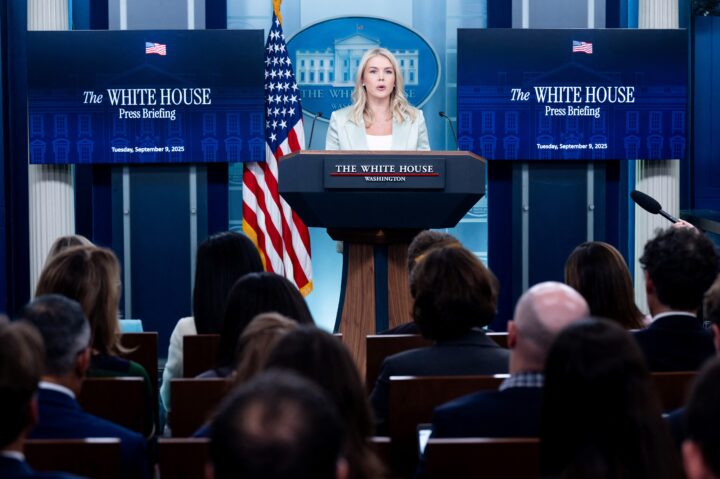
SAUL LOEB/AFP via Getty Images
White House Press Secretary Karoline Leavitt speaks during a press briefing in the Brady Briefing Room of the White House in Washington, DC, on September 9, 2025.
Good Tuesday afternoon.
This P.M. briefing is reserved for our premium subscribers like you — offering a forward-focused read on what we’re tracking now and what’s coming next.
I’m Danielle Cohen-Kanik, U.S. editor at Jewish Insider and curator, along with assists from my colleagues, of the Daily Overtime briefing. Please don’t hesitate to share your thoughts and feedback by replying to this email.
📡On Our Radar
Notable developments and interesting tidbits we’re tracking
President Donald Trump was unhappy with Israel’s surprise strike this morning on Hamas leaders in Doha, Qatar, White House Press Secretary Karoline Leavitt conveyed in a statement on behalf of the president today.
Leavitt said Trump was made aware of the strike by the U.S. military, without specifying whether Israel had alerted it or if the operation was detected independently, and “immediately directed” Middle East envoy Steve Witkoff to notify Doha about the impending attack.
(The Qatari Ministry of Foreign Affairs said reports that Qatar was informed in advance are “baseless” and the “call from a U.S. official came during the sound of explosions caused by the Israeli attack.”)
“Unilaterally bombing inside Qatar, a sovereign nation and close ally of the United States that is working very hard and bravely taking risks with us to broker peace, does not advance Israel or America’s goals,” Leavitt said. “The president views Qatar as a strong ally and friend of the United States and feels very badly about the location of this attack.”
The White House spokeswoman said Trump had spoken with Qatari leaders and assured them “that such a thing will not happen again on their soil” and conveyed his displeasure about the location of the strike to Israeli Prime Minister Benjamin Netanyahu…
The president’s reaction puts him at odds with many senior Senate Republicans, who told Jewish Insider’s Marc Rod that they view the attack as justified and unsurprising. Sen. Roger Wicker (R-MS), chair of the Senate Armed Services Committee, said, “I think Hamas has got to be destroyed, and there’s no sense in doing half measures.”
Sen. Lindsey Graham (R-SC) posted on X, “To those who planned and cheered on the October 7 attack against Israel, the United States’ greatest ally in the region: This is your fate.”
Senate Democrats, meanwhile, described the strike as “aggressive,” “provocative” and “unfortunate,” saying it jeopardized ceasefire negotiations and was an insult to Qatar, a longtime U.S. ally.
Sen. Jack Reed (D-RI), the ranking member of the Senate Armed Services Committee, called the move “extremely disruptive, provocative and dangerous” and a “great strategic mistake.” (Read comments from more lawmakers here).
The only Democrats to publicly break with the partisan line were Sen. Richard Blumenthal (D-CT), who told JI that “anything done to destroy Hamas’ leadership or its terrorist capability or military capacity is a step in the right direction,” and Sen. John Fetterman (D-PA)…
Also condemning the strike are several world leaders, including French President Emmanuel Macron who called it “unacceptable, whatever the reason,” and U.K. Prime Minister Keir Starmer, who said it “violate[s] Qatar’s sovereignty and risk[s] further escalation”…
Hamas released a statement claiming Israel failed to assassinate its top leadership in the strike but killed five of its members, including the son of the group’s chief negotiator…
In another hostage crisis, Elizabeth Tsurkov, a Russian-Israeli academic from Princeton University, has been released from captivity of the Kata’ib Hezbollah Iraqi militant group, Trump announced on Truth Social this afternoon.
Tsurkov was kidnapped while doing research in Baghdad in March 2023 and was “tortured for many months,” Trump said.
Tsurkov’s sister, Emma, said on X that their family is “so thankful to President Trump and his Special Envoy, Adam Boehler. If Adam had not made my sister’s return his personal mission, I do not know where we would be”…
Meanwhile, the IDF ordered the first full-scale evacuation of Gaza City in preparation for Israel’s impending takeover, after several days of issuing limited evacuations before targeted strikes and demolitions of buildings in the area. Leaflets dropped by the IDF in the city instructed residents to follow a coastal road to designated humanitarian zones in the south of the enclave…
In Jerusalem, Netanyahu appeared at a belated U.S. Embassy Fourth of July celebration at the Museum of Tolerance where he said in remarks that he convened the heads of Israel’s security organizations earlier today to authorize “a surgical precision strike” on Hamas leaders in Doha after the terror group took responsibility for the death of four IDF soldiers in Gaza and six civilians at a bus stop in Jerusalem yesterday.
“These are the same terrorist chiefs who planned, launched and celebrated the horrific massacres of Oct. 7 … They were meeting in exactly the same place where they celebrated this savagery almost two years ago. At the beginning of the war, I promised that Israel would reach those who perpetrated this horror. And today, Israel and I have kept that promise,” Netanyahu continued.
The event was later briefly interrupted by a missile fired by the Houthis, with rocket sirens causing guests to move temporarily into bomb shelters.
The celebration continued with a musical performance, including U.S. Ambassador to Israel Mike Huckabee on guitar and philanthropist and major Republican donor Paul Singer playing the keyboard, as captured by JI’s Lahav Harkov…
Hedge fund billionaire Bill Ackman is also in Jerusalem this week, meeting with Israeli President Isaac Herzog today and reportedly attending Jefferies TechTrek, Israel’s largest institutional investor technology conference.
Also attending Jefferies are Singer, DreamWorks CEO Jeffrey Katzenberg, venture capitalist Shaun Maguire, hedge fund manager Daniel Loeb and former U.S. Ambassador to Israel Tom Nides…
The MEAD Summit in Washington is lacking some punch this year with no Saudi representation, as opposed to years past, Israeli journalist Yaakov Katz said during an on-record panel with Sen. Jim Risch (R-ID) at the convening…
Down south, Texas state Rep. James Talarico, seen as an up-and-coming leader in Texas politics, jumped into the Democratic primary to run against Sen. John Cornyn (R-TX) today. Talarico will face a competitive race against former Rep. Colin Allred (D-TX), also a former NFL player. Cornyn faces his own high-stakes primary against Texas Attorney General Ken Paxton.
Talarico, 36, is pitching himself for Senate as a Washington outsider coming to shake up the system. When asked by HuffPost today if Israel’s war in Gaza constitutes a genocide, Talarico answered, “I worry that some of these debates happening within elite political circles tend to be a distraction from the immediate goal, which is stopping the human suffering in Gaza. And so getting into discussions about particular legal terms, or, you know, history from, you know, a century ago, to me, feel like more like playing politics than actually trying to get something done”…
⏩ Tomorrow’s Agenda, Today
An early look at tomorrow’s storylines and schedule to keep you a step ahead
Keep an eye on Jewish Insider tomorrow morning for an interview with friends of twins Gali and Ziv Berman who are turning 28 tomorrow, the second birthday they’ve marked in Hamas captivity.
“The Road Between Us: The Ultimate Rescue,” a documentary about retired Israeli general Noam Tibon’s historic rescue of his family from Kibbutz Nahal Oz on Oct. 7, is scheduled to premiere at the Toronto International Film Festival tomorrow, after the festival initially canceled the screening due to the film’s usage of Hamas footage from the attacks, saying the terror organization had not approved it for use.
The House Committee on Education and Workforce’s Subcommittee on Early Childhood, Elementary and Secondary Education will hold a hearing tomorrow morning titled “From Playground to Classroom: The Spread of Antisemitism in K-12 Schools.”
Also on the Hill, the American Jewish Committee will host an event marking the fifth anniversary of the Abraham Accords including remarks from Israeli Ambassador to the U.S. Yechiel Leiter and co-chairs of the House and Senate Abraham Accords caucuses: Sens. James Lankford (R-OK), Joni Ernst (R-IA) and Jacky Rosen (D-NV) and Reps. Sheila Cherfilus-McCormick (D-FL), Brad Schneider (D-IL), Debbie Wasserman Schultz (D-FL), Mike Lawler (R-NY) and Craig Goldman (R-TX).
Around Washington, Sen. Ed Markey (D-MA) will give remarks at the National Press Club at a Brandeis University event on “Reimagining Liberal Arts Education: A National Conversation on Real-World Readiness,” and Sen. Ted Cruz (R-TX) will speak at the Heritage Foundation on “the Muslim Brotherhood Threat, National Security, and America’s Global Leadership.”
In Pittsburgh, Talya Lubit will be sentenced on charges of conspiracy and defacing and damaging a religious building for vandalizing the Chabad of Squirrel Hill and the Jewish Federation of Pittsburgh in July 2024.
Abroad, Israeli President Isaac Herzog is heading to London on a trip his office said was organized to deliver speeches at Jewish organizations’ conferences and to “show solidarity with the Jewish community, which is under severe attack and facing a wave of antisemitism.” His office did not say if he would meet with Prime Minister Keir Starmer or other officials; though Starmer hosted Palestinian Authority President Mahmoud Abbas yesterday.
Stories You May Have Missed
BOOK SHELF
In new book, former Obama speechwriter calls on Jews to stand proud for their values
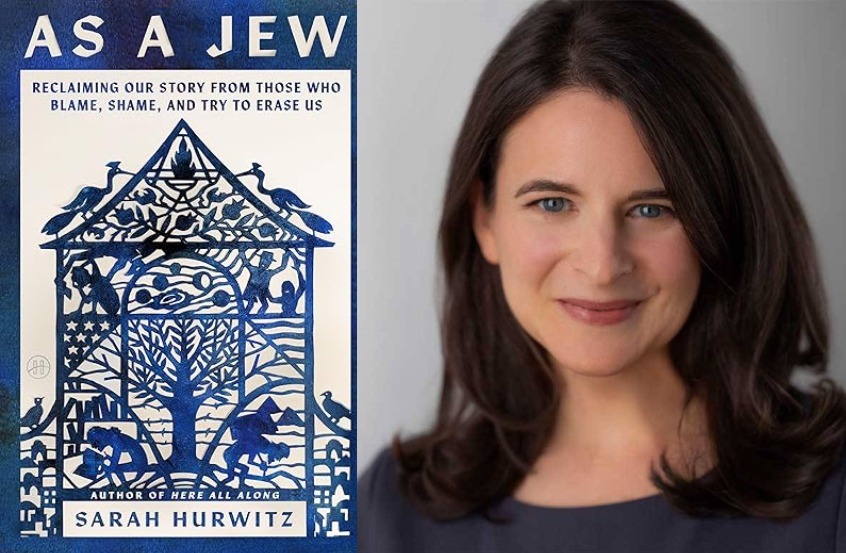
Sarah Hurwitz said she hopes her second book, As a Jew, resonates with progressive Jews who have distanced themselves from Zionism
ONLINE FOOTPRINT
Newly appointed GM head of global philanthropy has long record of anti-Israel hostility

Sirene Abou-Chakra claimed that pro-Hamas protests during Netanyahu’s D.C. visit were part of a pro-Israel op
White House Press Secretary Karoline Leavitt: ‘Unilaterally bombing inside Qatar … does not advance Israel or America’s goals’
SAUL LOEB/AFP via Getty Images
White House Press Secretary Karoline Leavitt speaks during a press briefing in the Brady Briefing Room of the White House in Washington, DC, on September 9, 2025.
In a prepared statement on behalf of President Donald Trump, White House Press Secretary Karoline Leavitt on Tuesday criticized the Israeli strike on Hamas leaders in Qatar and expressed regret that it had taken place in Doha, adding that the U.S. had warned Qatar about the strike when the U.S. itself became aware.
She said Trump had also vowed to Qatari leaders that such an attack would not be repeated in Qatari territory.
“This morning, the Trump administration was notified by the United States military … as Israel was attacking Hamas, which very unfortunately was located in a section of Doha, the capital of Qatar,” Leavitt said. “Unilaterally bombing inside Qatar, a sovereign nation and close ally of the United States that is working very hard and bravely taking risks with us to broker peace, does not advance Israel or America’s goals.”
Pressed repeatedly on whether Israel had notified the U.S. about the attack, as some reports indicated, or whether the U.S. military had detected it independently, Leavitt did not specify, repeating only that the U.S. military had notified the White House.
She said that Trump “immediately directed” Middle East envoy Steve Witkoff to notify Qatar about the upcoming attack when the administration learned about it.
“The president views Qatar as a strong ally and friend of the United States and feels very badly about the location of this attack,” Leavitt continued.
She did add, however, that the administration views eliminating Hamas as “a worthy goal.”
Asked whether Trump would impose “consequences” on Israeli Prime Minister Benjamin Netanyahu for the strike or provide a “directive … to Netanyahu in terms of what’s allowed in the future,” Leavitt said that “that’s a decision only the president can make.”
Leavitt said that Trump had spoken to Qatari Emir Tamim bin Hamad Al Thani, Prime Minister Mohammed bin Abdulrahman Al Thani and Netanyahu after the attack.
She said the president “assured [the Qatari leaders] that such a thing will not happen again on their soil” and thanked Qatar for “their support and friendship to our country.”
She said that both Trump and Netanyahu agreed that they want to make peace quickly and said Trump “believes this unfortunate incident could serve as an opportunity for peace,” and that Trump had conveyed his displeasure about the location of the strike to Netanyahu.
“He expects all of our friends and allies in the region — that includes both Qatar and Israel — to seek peace as well, and he wants to see that happen, and he’s working with all of our allies in the region to get that done,” Leavitt said.
Leavitt denied that Trump’s post on social media over the weekend offering a “last warning” to Hamas to accept a ceasefire deal was a reference to the impending Israeli attack.
The White House’s expressed concern about the location of the attack puts the administration at odds with many senior members of Trump’s own party in the Senate, who were quick to express support for the Israeli attack, and aligns more closely with top Senate Democrats who have been more critical of the attack and where it took place.
Asked about the White House’s opposition to the strike, multiple Senate Republicans who had earlier in the day expressed support for the Israeli attack declined to comment.
Meanwhile, Sen. Chris Coons (D-DE) said, “I will actually agree with President Trump that it doesn’t advance our interests in terms of advancing negotiations for the release of hostages or the ceasefire that is urgently needed in Gaza.”
“I have not gotten any briefing on the details of how it was approved, whether or not the Trump administration was aware and supported it, but in the middle of a hostage negotiation that is urgently needed to free the hostages, to end the fighting, to deliver humanitarian relief and to address Hamas — to take a strike in Doha against Hamas leaders, I think puts at risk any peace process,” Coons said. He added that he wants to be briefed on further details.
The IDF said it targeted Hamas’ senior leadership amid explosions in Doha

Screenshot/X
Israel strikes Hamas leadership in Doha, Qatar on Sept. 9, 2025.
Israel conducted a strike against senior Hamas leaders, the IDF said on Tuesday, following reports of explosions in Doha, Qatar.
The operation, whose Hebrew name translates to “Judgment Day,” reportedly targeted Khalil al-Hayya, Hamas’ chief negotiator in hostage and ceasefire talks, and longtime senior Hamas official Khalid Mashaal, as well as Hamas officials Zaher Jabarin and Nizar Awadallah, though reports conflict as to the success of the strike.
Israeli Prime Minister Benjamin Netanyahu and Defense Minister Israel Katz said in a joint statement that the Israeli defense establishment unanimously supported the strike.
“The action is totally justified in light of the fact that Hamas leadership initiated and organized the Oct. 7 massacre and did not stop launching murderous actions against Israel and its citizens since then, including taking responsibility for the murder of our civilians in the terrorist attack in Jerusalem yesterday,” they stated.
President Donald Trump was informed of the strike in advance and supported it, Israel’s Channel 12 reported. Netanyahu’s office said that “today’s action against the top terrorist chieftains of Hamas was a wholly independent Israeli operation. Israel initiated it, Israel conducted it, and Israel takes full responsibility.”
“The IDF and [Israel Security Agency (Shin Bet)] conducted a precise strike targeting the senior leadership of the Hamas terrorist organization,” the IDF Spokesperson’s Office stated. “For years, these members of the Hamas leadership have led the terrorist organization’s operations, are directly responsible for the brutal October 7th massacre, and have been orchestrating and managing the war against the State of Israel.”
The IDF said that it used precision munitions and intelligence to reduce harm to civilians.
Hamas leadership is based in the Al-Qatar neighborhood of Doha, where the explosions took place, according to videos posted on social media.
Qatar said it “strongly condemns” the strike in a statement posted to X by Majed Al-Ansari, spokesman for the Qatari Ministry of Foreign Affairs, which described the operation as “a cowardly Israeli attack that targeted residential buildings housing several members of the Political Bureau of Hamas in the Qatari capital, Doha.”
“This criminal assault constitutes a blatant violation of all international laws and norms, and poses a serious threat to the security and safety of Qataris and residents in Qatar,” he added, and said that Qatar “will not tolerate this reckless Israeli behavior and the ongoing disruption of regional security, nor any act that targets its security and sovereignty.”
The strike took place days after the Trump administration sent a Gaza ceasefire and hostage deal proposal via intermediaries, which Israel accepted and a senior Hamas official based in Istanbul rejected.
Earlier Tuesday, Netanyahu left a hearing in his ongoing corruption trial early due to “an exceptional security matter,” Israeli public broadcaster Kan reported.
In 1997, Israel attempted to assassinate Mashaal, the head of Hamas’ political bureau at the time, in Jordan, but gave Amman the antidote for the poison after then-King Hussein threatened to cancel the peace treaty between the countries.
Plus, Gillibrand cautions Dems over anti-Israel rhetoric
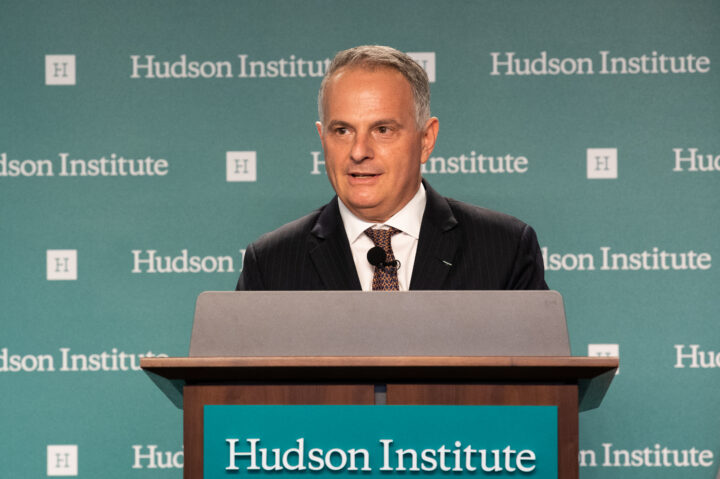
Michael Brochstein/SOPA Images/LightRocket via Getty Images
Kenneth Weinstein, President and Chief Executive Officer of Hudson Institute, speaking at the Hudson Institute in Washington, DC.
Good Monday afternoon.
This P.M. briefing is reserved for our premium subscribers like you — offering a forward-focused read on what we’re tracking now and what’s coming next.
I’m Danielle Cohen-Kanik, U.S. editor at Jewish Insider and curator, along with assists from my colleagues, of the Daily Overtime briefing. Please don’t hesitate to share your thoughts and feedback by replying to this email.
📡On Our Radar
Notable developments and interesting tidbits we’re tracking
We’re watching developments in ceasefire and hostage-release negotiations after President Donald Trump called for Hamas to accept the latest U.S.-sponsored deal over the weekend, which would see all the hostages, living and dead, released on the first day of the ceasefire.
Middle East envoy Steve Witkoff and former Trump Mideast advisor Jared Kushner met with Israeli Minister for Strategic Affairs Ron Dermer in Miami today to discuss developments in Gaza, Axios’ Barak Ravid reports.
Hamas had claimed it was ready to “immediately sit at the negotiating table” in response to Trump’s statement, but sources for the terror group told a Saudi newspaper today that a complete hostage release would not be possible immediately, claiming a ceasefire would have to go into effect first to reach all the bodies…
In other national security news, The New York Times spotlights the race between defense firms to develop technologies for a future “Golden Dome” missile-defense system.
“Companies chosen for Golden Dome are likely to become the new cornerstones of U.S. defense, military officials involved in the project said,” and firms including Palantir and Anduril as well as innovative startups have been in discussions with the Trump administration, the Times reports.
Mark Montgomery, senior director of the Center for Cyber and Technology Innovation at the Foundation for Defense of Democracies, said, “There are more than 100 companies out there with a sensor, satellite or other devices they want to sell to Golden Dome. This is the Wild West, and this is a massive opportunity for whoever is selected”…
Diplomatic tensions are rising between Israel and Spain after Spanish Prime Minister Pedro Sanchez announced today that his country would be formalizing an existing de facto arms embargo against Israel and banning anyone who has participated in “genocide” in Gaza from entering Spain as well as ships carrying fuel for the IDF from Spanish ports.
“This is not self-defense, it’s not even an attack — it’s the extermination of a defenseless people,” Sanchez said of Israel’s war in Gaza.
In response, Israeli Foreign Minister Gideon Sa’ar announced that Israel had banned two anti-Israel Spanish ministers from entering the country; Spain then summoned its ambassador in Tel Aviv, all shortly after a young Spanish immigrant to Israel was killed in this morning’s terror attack on a bus stop in Jerusalem…
The U.K. has come to a different conclusion about Israel’s actions in Gaza, according to a letter sent last week by former Foreign Secretary David Lammy before he was replaced in a reshuffling of Prime Minister Keir Starmer’s Cabinet.
Lammy wrote to the chair of the U.K.’s international development committee that the Foreign Office had found in an assessment that Israel was not committing a genocide as it was missing “intent” to do so. It’s the first time the U.K. has said so explicitly, previously holding that the matter of genocide was up to international courts to determine, just weeks before the country is expected to recognize a Palestinian state…
Former Hudson Institute CEO and President Kenneth Weinstein will serve as CBS News’ ombudsman, a new role that oversees editorial concerns from employees and viewers, Paramount announced Monday. Alongside reports that Paramount is expected to purchase Bari Weiss’ Free Press and bring her into an editorial role at CBS, the moves mark a new era for the network that has been accused of systemic anti-Israel bias…
Embracing their anti-Israel bona fides, hundreds of actors, filmmakers and film industry workers recently signed a pledge to boycott Israel, which says it was inspired by filmmakers who refused to screen their films in apartheid South Africa.
The signatories, including Hollywood stars such as Alyssa Milano, Mark Ruffalo, Anna Shaffer, Ayo Edebiri, Cynthia Nixon, Hannah Einbinder and Ilana Glazer, promised “not to screen films, appear at or otherwise work with Israeli film institutions — including festivals, cinemas, broadcasters and production companies — that are implicated in genocide and apartheid against the Palestinian people”…
Sen. Kirsten Gillibrand (D-NY) said in comments to Jewish leaders in New York City today that some of her fellow Democratic lawmakers are inadvertently fueling antisemitism through the rhetoric and slogans they use, Jewish Insider’s Marc Rod reports.
“When they say words like ‘river to the sea,’ whey they say words like ‘globalize the intifada,’ it means end Israel. It means destroy Jews,” Gillibrand said. Intifada, she continued, is “not a social movement. It’s terrorism, it’s destruction, it’s death.”
The New York senator had previously offered strong condemnation of NYC Democratic mayoral nominee Zohran Mamdani for his refusal to condemn the “globalize the intifada” slogan and has not endorsed his bid for mayor…
Mamdani’s opponent, New York City Mayor Eric Adams, meanwhile, officially dropped the ballot line “EndAntiSemitism,” running only on the “Safe & Affordable” line, after the New York City Board of Elections said he couldn’t run on both. Adams’ campaign spokesperson said he intends to pursue legal options over the issue…
Graham Platner, an anti-Israel Democratic Senate candidate in Maine, wrote in a high school op-ed shortly after 9/11, during the Second Intifada in Israel, that the media provides an “incomplete story” of terrorist acts and writes “incomplete coverage” of the Israeli-Palestinian conflict “where a sometimes-oppressive Israeli state can be, and often is, portrayed as a victim.”
Platner and his co-authors argued in the article in a local Maine outlet, unearthed by the Free Beacon, that ending terrorist acts would be “best achieved by understanding the circumstances under which they were committed”…
⏩ Tomorrow’s Agenda, Today
An early look at tomorrow’s storylines and schedule to keep you a step ahead
Keep an eye on Jewish Insider tomorrow morning for an interview with former Obama speechwriter Sarah Hurwitz, whose new book As A Jew: Reclaiming Our Story From Those Who Blame, Shame, and Try to Erase Us, comes out Tuesday.
It’s a busy week in Washington, where the 2025 MEAD Summit will kick off tomorrow. The high-profile but elusive gathering will bring together top American and U.S. security officials, diplomats, lawmakers, philanthropists, CEOs and journalists. If you’re attending, make sure to say hello to JI’s Josh Kraushaar and Gabby Deutch!
The Iran Conference, hosted by the National Union for Democracy in Iran, will also begin in Washington tomorrow for analysts, policymakers and activists to discuss Iran policy, just two months after U.S. and Israeli strikes decimated Tehran’s nuclear and military infrastructure.
On the Hill, the House Education and Workforce Committee’s Subcommittee on Health, Employment, Labor and Pensions will hold a hearing on “unmasking union antisemitism.”
Virginia’s 11th Congressional District is holding its special election tomorrow to fill the seat of the late Rep. Gerry Connolly (D-VA). James Walkinshaw, Connolly’s longtime former aide, is the heavy favorite to win. Read JI’s interview with Walkinshaw here.
Looking to New York City, The MirYam Institute will hold an international security benefit briefing tomorrow featuring former Israeli Prime Minister Naftali Bennett; nearby, the Soufan Center will begin its Global Summit on Terrorism and Political Violence, meant to honor the memory of 9/11 victims and address emerging global threats.
The Florida Holocaust Museum is reopening tomorrow with a ribbon-cutting ceremony after an extensive period of renovation.
Abroad, the U.S. Embassy in Jerusalem will host its belated July 4 party tomorrow, and the Hili Forum will convene its last day in Abu Dhabi, United Arab Emirates, covering trade, tech and governance. DSEI U.K., a large defense trade show, is starting up in London, where protests are expected against the dozens of Israeli firms that are participating.
Stories You May Have Missed
CANDIDATE CRITIQUE
Lawler challenger Peter Chatzky says Israel violating U.S. arms sales laws
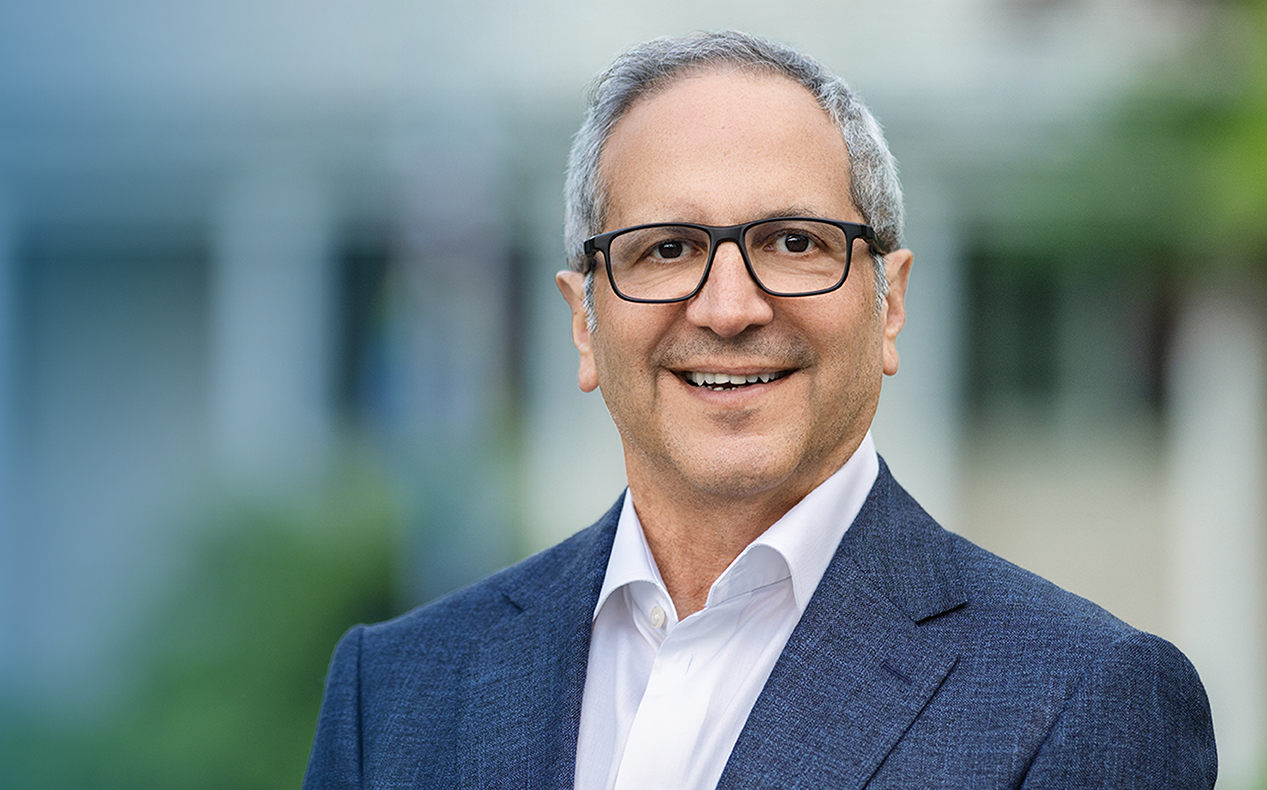
The Democratic candidate also said he does not believe that far-left NYC mayoral candidate Zohran Mamdani is ‘taking actions I would claim to be antisemitic’
ACROSS THE POND
U.K. Cabinet shake-up not likely to change British position on Israel, experts say
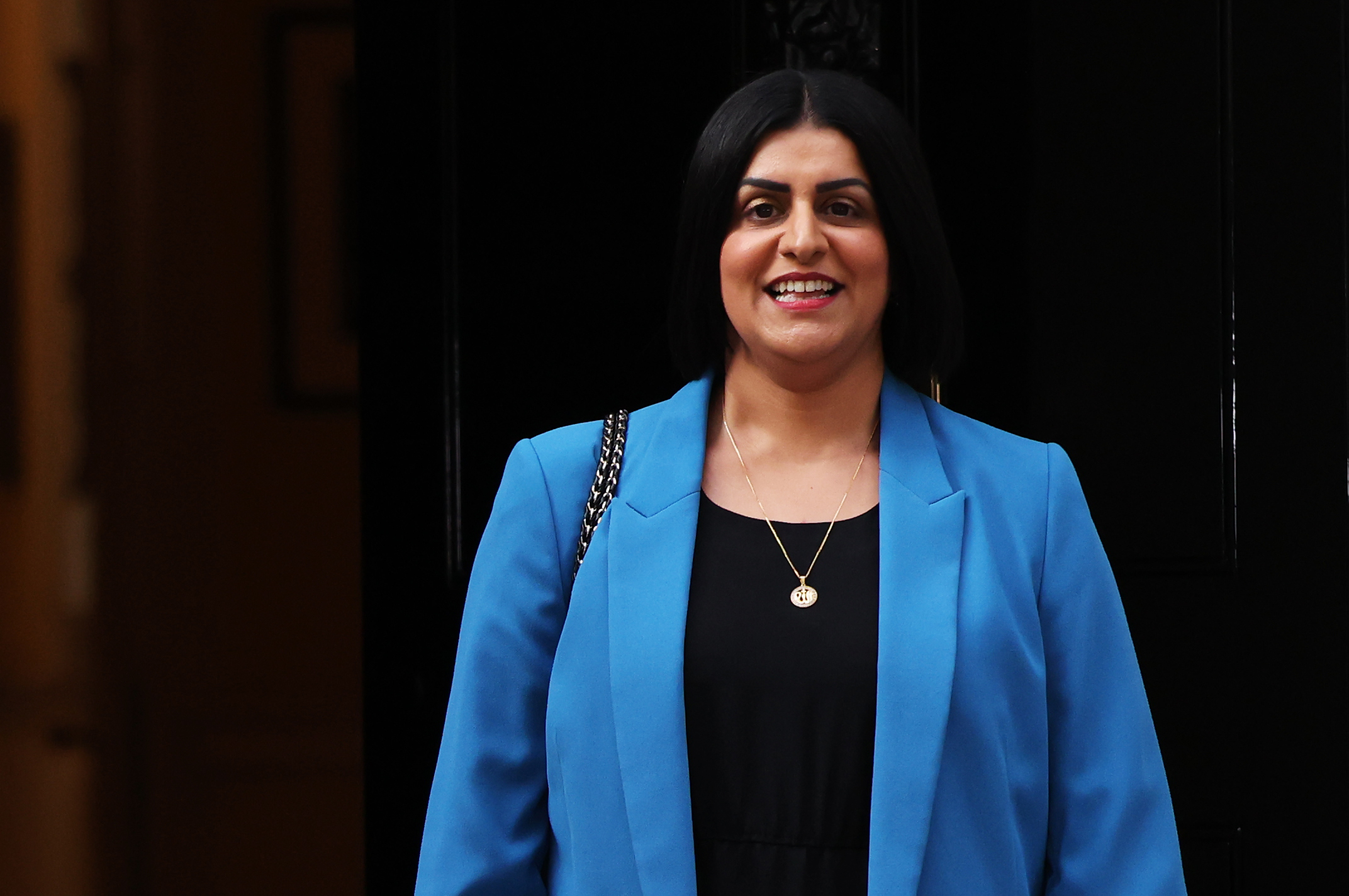
On Sunday, British Jews marched to protest against rising antisemitism in the country
Plus, United resumes Washington, Chicago routes to TLV
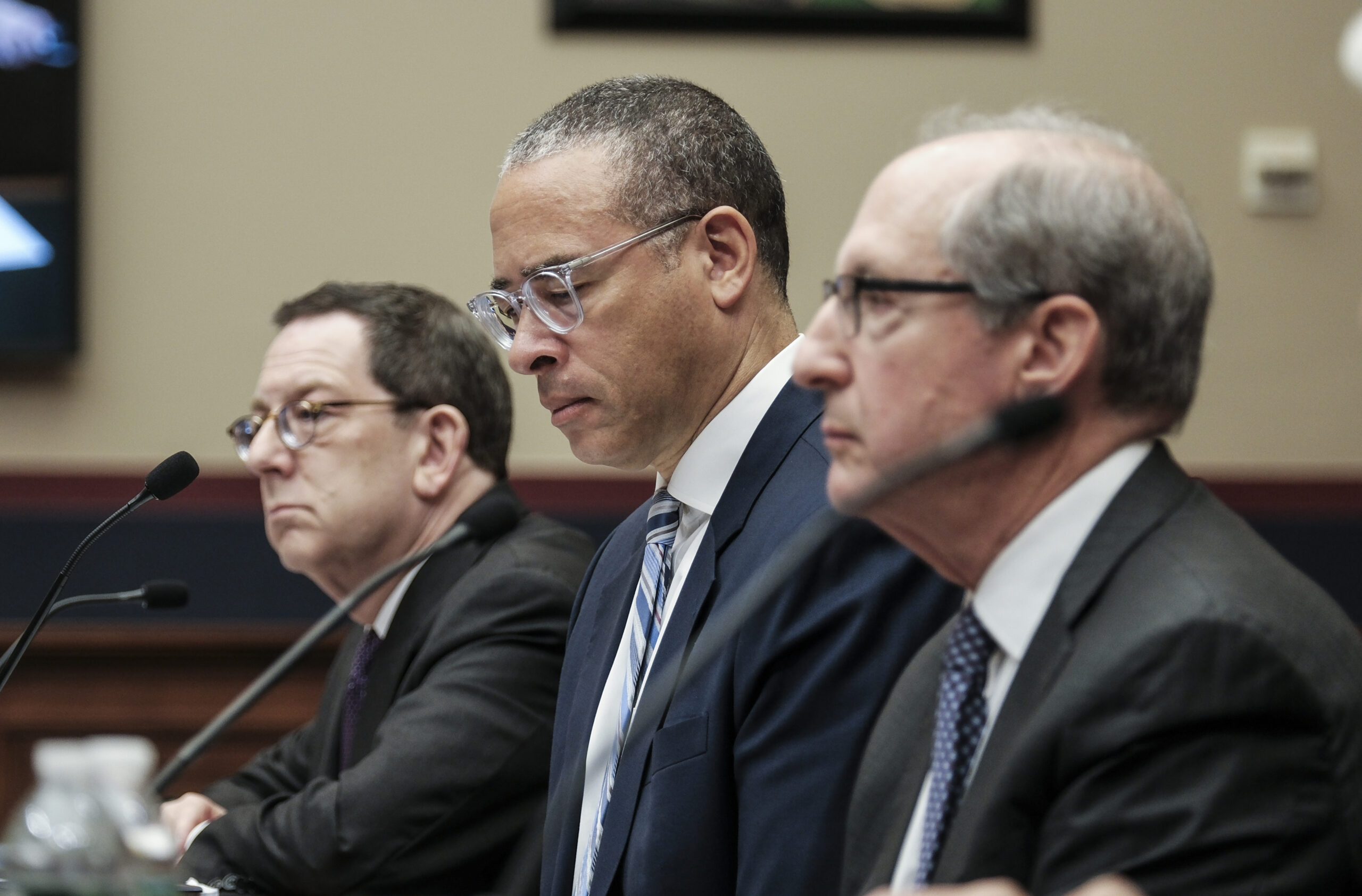
Michael A. McCoy/Getty Images
(L-R) Mr. Michael Schill, President, Northwestern University, Dr. Jonathan Holloway, President, Rutgers University and Mr. Frederick Lawrence testify at a hearing called "Calling for Accountability: Stopping Antisemitic College Chaos" before the House Committee on Education and the Workforce on Capitol Hill on May 23, 2024, in Washington, D.C.
Good Thursday afternoon.
This P.M. briefing is reserved for our premium subscribers like you — offering a forward-focused read on what we’re tracking now and what’s coming next.
I’m Danielle Cohen-Kanik, U.S. editor at Jewish Insider and curator, along with assists from my colleagues, of the Daily Overtime briefing. Please don’t hesitate to share your thoughts and feedback by replying to this email.
📡On Our Radar
Notable developments and interesting tidbits we’re tracking
Kicking off the new school year, embattled Northwestern University President Michael Schill announced today he is stepping down as president, remaining in an interim role until his successor is chosen.
Schill’s tenure coincided with a period of antisemitic turmoil on the Chicago-area campus and he was accused of handling the issue poorly, leading some lawmakers to call for his resignation.
A brief recap of Schill’s troubled tenure: He acceded to several demands of an anti-Israel encampment on campus in the spring of 2024, drawing condemnation from Jewish leaders and leading several Jewish members of Northwestern’s antisemitism advisory committee to step down. He then defended the move in a heated House Education and Workforce Committee hearing as being in the interest of Jewish students and was recalled by the committee this spring due to his alleged failure to live up to his own commitments from the previous hearing.
Committee Chairman Tim Walberg (R-MI) said in a statement today that “President Schill will leave behind a legacy of not only failing to deter antisemitism on campus but worsening it. … Northwestern’s next president must take prompt and effective action to protect Jewish students.”
In his resignation announcement, Schill said that “from the very beginning of my tenure, Northwestern faced serious and often painful challenges. … I was always guided by enduring values of our University: protecting students, fostering academic excellence, and defending faculty, academic freedom, due process and the integrity of the institution”…
Columbia University, meanwhile, hired Jonathon Kahn as its senior associate dean of community and culture, a new position created to “build and lead initiatives that cultivate curiosity, civic purpose and meaningful dialogue” and “reimagine what a liberal arts and sciences education can be in the next century,” Jewish Insider’s Haley Cohen reports.
Kahn signed a 2021 letter supporting the Palestinian “indigenous resistance movement” and rejecting “the fiction of a ‘two-sided conflict,’” accusing Israel of carrying out “settler colonialism, apartheid, and ethnic cleansing”…
Secretary of State Marco Rubio called an Israeli proposal by far-right Finance Minister Bezalel Smotrich to annex parts of the West Bank “wholly predictable” in response to European countries’ planned recognition of a Palestinian state.
Rubio said, “We told all these countries. We said, if you guys do this recognition stuff — it’s all fake, it’s not even real — if you do it, you’re going to create big problems. There’s going to be a response from Israel … and it may even trigger these sorts of actions that you’ve seen, or at least these attempts at these actions. So we’re watching it closely.”
Rubio, who was asked about the issue today at a press conference in Quito, Ecuador, continued, “What you’re seeing with the West Bank and the annexation, that’s not a final thing. That’s something that’s being discussed among some elements of Israeli politics. I’m not going to opine on that today.”
“And by the way, let me tell you something. The minute, the day that the French announced their [intent to recognize a Palestinian state], Hamas walked away from the negotiating table. … We also warned that that would happen, and it did. Sometimes, these guys don’t listen,” Rubio said.
The issue of West Bank annexation was due to be discussed in a high-level meeting convened by Israeli Prime Minister Benjamin Netanyahu today but was reportedly removed from the agenda after the UAE warned such a move would be a “red line” for regional normalization…
Israeli officials told The Wall Street Journal that Mossad Director David Barnea and Foreign Minister Gideon Sa’ar have joined IDF Chief of Staff Eyal Zamir in expressing hesitation to Netanyahu over the IDF’s plan to expand its offensive into Gaza City. They have also argued in favor of reaching a partial hostage-release deal with Hamas as an alternative to the comprehensive deal Israel is currently seeking…
A viral accusation that the IDF killed an 8-year-old Palestinian boy at a Gaza Humanitarian Foundation aid site in May was proven false when the boy was found to be alive and safely extracted from the Gaza Strip. The claim had been made by Anthony Aguilar, a former GHF contractor and Green Beret, who repeated the story on far-right and far-left media outlets.
Johnnie Moore, head of the GHF, said in a statement today, “When this lie was brazenly, cravenly shared from the press to the halls of Congress, our team set out to find this little boy — whatever it took.” He attributed the success to “veterans who never stopped working to find him and bring him to safety in the most complex environment imaginable”…
A report by the U.N.’s International Atomic Energy Agency, obtained by the Associated Press, found that, as of one day before Israel’s strikes on Iran’s nuclear facilities began, Iran had escalated its nuclear enrichment and increased its stockpile of near weapons-grade enriched uranium to where it could soon produce at least one atomic bomb…
On the Hill, Sen. Tom Cotton (R-AR) asked the FBI to investigate the Palestinian Youth Movement as a “threat to U.S. national security” after one of its leader, Aisha Nizar, called for Palestinian activists to “disrupt” the supply chain for F-35 fighter jets at the recent People’s Conference for Palestine in Michigan…
Rep. Buddy Carter (R-GA), who is running for Senate in Georgia, filed a resolution today to censure Rep. Rashida Tlaib (D-MI) for “promoting and cheering on terrorism and antisemitism” at the same conference…
Semafor’s David Weigel reports from this year’s National Conservatism conference, which is winding down in Washington today and featured a host of high-level right-wing personalities from Trump administration officials to lawmakers and influencers.
Conference speakers and attendees were jubilant over what they view as conservative successes in President Donald Trump’s second term, but there was one “possible future sore point that conference organizer Yoram Hazony acknowledged openly: Israel.”
“Hazony was upset by the ‘depth of the slander of Jews as a people’ that he saw in corners of the online right. The Israel critics in their fold could make the nationalist ‘revolution consume itself,’ he added, and risk everything,” Weigel wrote…
In long anticipated news, United Airlines announced today it’s restarting direct flights to Tel Aviv from Chicago O’Hare and Washington Dulles in early November…
⏩ Tomorrow’s Agenda, Today
An early look at tomorrow’s storylines and schedule to keep you a step ahead
Keep an eye on Jewish Insider tomorrow morning for reporting on a new cross-faith initiative to address antisemitism led by Robert Kraft’s Foundation to Combat Antisemitism.
This weekend, Sen. Bernie Sanders (I-VT) will be campaigning with New York City Democratic mayoral nominee Zohran Mamdani in the next installment of Sanders’ Fighting Oligarchy tour, after an appearance in Maine last weekend with anti-Israel Democratic Senate candidate Graham Platner.
We’ll be back in your inbox with the Daily Overtime on Monday. Shabbat shalom!
Stories You May Have Missed
ENVOY INTERVIEW
Amb. Leiter: Nature of U.S.-Israel aid may change in coming years
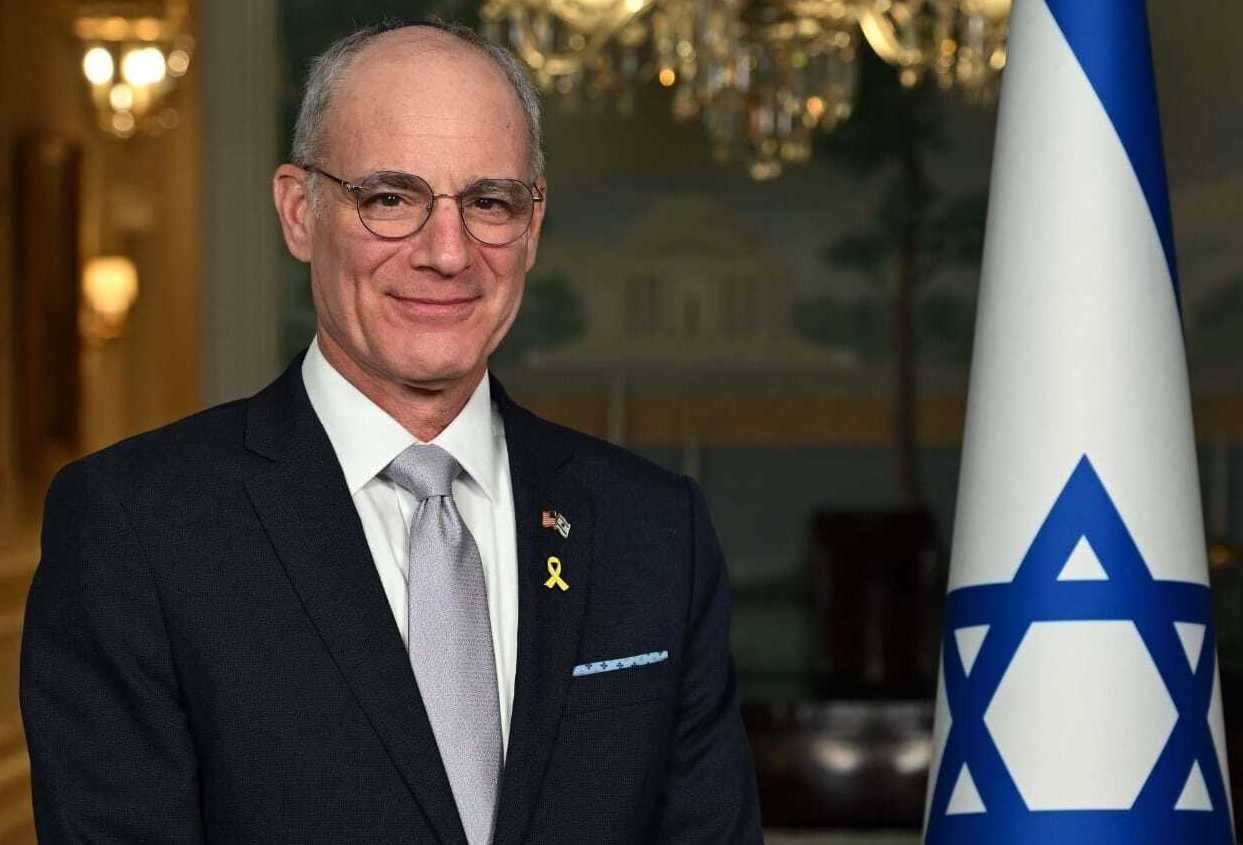
‘It’s a very partisan atmosphere in Washington right now. Strong support for Israel in the [Trump] administration almost drives the Democratic opposition into opposing very close support for Israel,’ the ambassador said
EYE ON ANKARA
Lawmakers take aim at Turkey in 2026 defense bill

House lawmakers introduce series of amendments seeking to place further restrictions on U.S. aid on Ankara over its support for Hamas and hostility toward Israel
Plus, former Sen. Sununu considers a New Hampshire comeback
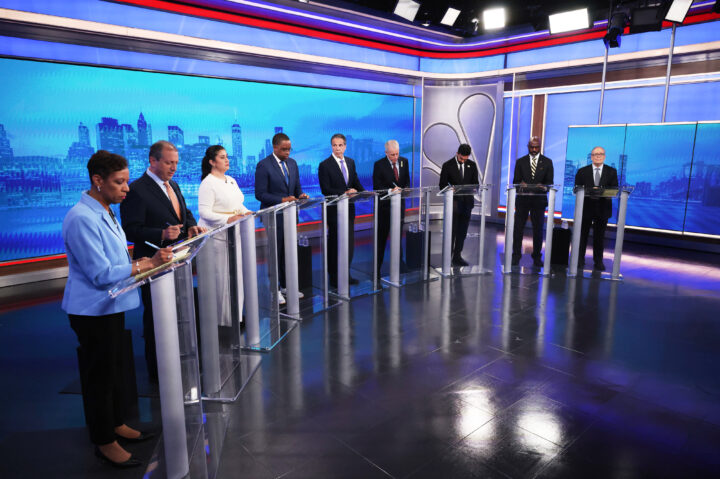
Yuki Iwamura/AP Photo/Bloomberg via Getty Images
Adrienne Adams, New York City mayoral candidate, from left, Brad Lander, New York City mayoral candidate, Jessica Ramos, New York City mayoral candidate, Zellnor Myrie, New York City mayoral candidate, Andrew Cuomo, New York City mayoral candidate, Whitney Tilson, New York City mayoral candidate, Zohran Mamdani, New York City mayoral candidate, Michael Blake, New York City mayoral candidate, and Scott Stringer, New York City mayoral candidate, during a mayoral Democratic primary debate in New York, US, on Wednesday, June 4, 2025.
Good Wednesday afternoon.
This P.M. briefing is reserved for our premium subscribers like you — offering a forward-focused read on what we’re tracking now and what’s coming next.
I’m Danielle Cohen-Kanik, U.S. editor at Jewish Insider and curator, along with assists from my colleagues, of the Daily Overtime briefing. Please don’t hesitate to share your thoughts and feedback by replying to this email.
📡On Our Radar
Notable developments and interesting tidbits we’re tracking
Advisors to President Donald Trump have discussed giving New York City Mayor Eric Adams and Republican mayoral candidate Curtis Sliwa positions in the president’s administration, sources tell The New York Times, in order to consolidate New York City voters behind former Gov. Andrew Cuomo, running as an independent, as a bid to block far-left Democratic mayoral nominee Zohran Mamdani’s path to Gracie Mansion.
Adams has already been offered a position at the U.S. Department of Housing and Urban Development, Politico reports.
Cuomo told a group of donors last month that he anticipated Trump would get involved in the race and help bolster his prospects…
Turning internationally, Trump appeared to support Israel’s desire for a comprehensive deal to end the war in Gaza, as he posted this morning on Truth Social, “Tell Hamas to IMMEDIATELY give back all 20 Hostages (Not 2 or 5 or 7!), and things will change rapidly. IT WILL END!”
The figure of 20 hostages likely refers to the hostages thought to still be alive; there are a total of 50 hostages being held in Gaza…
U.S. Ambassador to Israel Mike Huckabee held a closed-door briefing for members of the House Foreign Affairs Committee this morning on issues including the hostages and developments in the West Bank, lawmakers told Jewish Insider.
“Given the insistence on the part of the French and other Europeans to recognize a Palestinian state, I thought it was important for my colleagues to have a greater understanding of what we’re actually talking about with respect to Judea and Samaria, or the West Bank, and how it is actually governed post-Oslo,” Rep. Mike Lawler (R-NY), who organized the briefing, said.
Asked whether the group had discussed a potential declaration of Israeli sovereignty in that area, Lawler responded, “No, we had a broad discussion on the entirety of the situation there”…
On the campaign trail, former Sen. John Sununu (R-NH) is considering a bid for Senate to replace retiring Sen. Jeanne Shaheen (D-NH), telling a local outlet he will make a decision by the end of the month.
Sununu would be a formidable candidate in the race, given his name recognition and family connections. (His brother, Chris, served as the state’s popular governor from 2017-2025, and his dad was both the state’s former governor and former President George H.W. Bush’s chief of staff.)
But in a year that’s shaping up to be favorable for Democrats, Sununu would face a challenging race against Rep. Chris Pappas (D-NH), the expected Democratic nominee with a history of winning tough races in a swing district. Pappas launched his candidacy in April shortly after Shaheen announced her retirement…
In academic news, a federal judge ruled today that the Trump administration broke the law in freezing billions of dollars of Harvard’s research funding.
The government had argued that Harvard was no longer deserving of the funds due to antisemitism on campus, but Judge Allison Burroughs wrote, “We must fight against antisemitism, but we equally need to protect our rights, including our right to free speech, and neither goal should nor needs to be sacrificed on the altar of the other … Harvard is currently, even if belatedly, taking steps it needs to take to combat antisemitism and seems willing to do even more if need be.”
The ruling strengthens Harvard’s position in settlement talks with the administration, which were expected to result in a $500 million fine for the university…
After the International Association of Genocide Scholars adopted a resolution accusing Israel of committing genocide, pro-Israel activists made a mockery of the organization by registering to become members online, highlighting that anyone could join the respected academic and professional organization by paying a nominal fee, not necessarily by having recognized expertise.
IAGS took down its member profiles on its website and shut down its X account after the issue was made public…
Yair Rosenberg chronicles the rise of Hitler apologists among far-right media personalities, including Tucker Carlson and Candace Owens, in The Atlantic, highlighting several guests on Carlson’s podcast who have sought to recast Hitler’s actions as misunderstood.
“Carlson and his fellow travelers on the far right correctly identify the Second World War as a pivot point in America’s understanding of itself and its attitude toward its Jewish citizens. The country learned hard lessons from the Nazi Holocaust about the catastrophic consequences of conspiratorial prejudice. Today, a growing constituency on the right wants the nation to unlearn them,” Rosenberg writes…
In a move exciting political junkies and congressional watchers around the nation, C-SPAN announced it will be coming to YouTube TV and Hulu this fall…
⏩ Tomorrow’s Agenda, Today
An early look at tomorrow’s storylines and schedule to keep you a step ahead
Keep an eye on Jewish Insider tomorrow morning for an interview with Israeli Ambassador to the U.S. Yechiel Leiter on the future of U.S. aid to Israel and reporting on a leading Democratic candidate for Senate in Iowa’s support for conditions on Israel’s fight against terror.
Tomorrow, Israeli President Isaac Herzog is set to meet with Pope Leo XIV at the Vatican (after a brief diplomatic kerfuffle over who initiated the meeting) to discuss the hostages and the war in Gaza. Herzog was meant to meet with the pope’s predecessor, Pope Francis, before his death.
Stories You May Have Missed
SUCCESSION IN MANHATTAN
Nadler’s handpicked successor drawing scrutiny over Mamdani endorsement
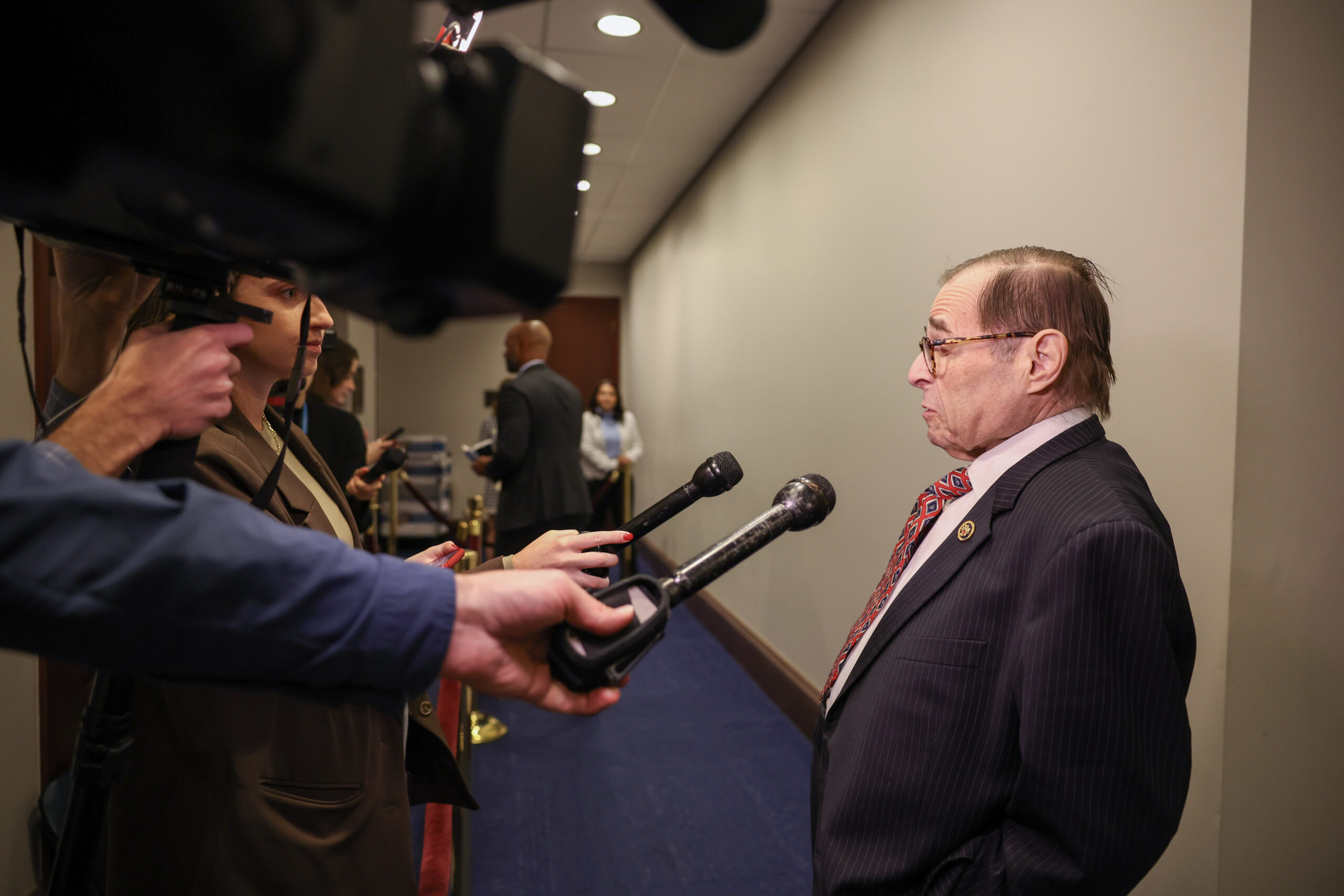
Like the retiring congressman, New York Assemblyman Micah Lasher endorsed the anti-Israel mayoral nominee
MILITARY MUSCLE
China uses WWII memory to project power in military parade and international diplomacy
The parade was an example of how Beijing has used WWII not only to encourage nationalism, but to project power internationally, from Jerusalem to Taipei and beyond
The parade was an example of how Beijing has used WWII not only to encourage nationalism, but to project power internationally, from Jerusalem to Taipei and beyond
Alexander KAZAKOV / POOL / AFP) (Photo by ALEXANDER KAZAKOV/POOL/AFP via Getty Images
Russia's President Vladimir Putin walks with China's President Xi Jinping and North Korea's leader Kim Jong Un before a military parade marking the 80th anniversary of victory over Japan and the end of World War II, in Beijing's Tiananmen Square on September 3, 2025.
China showcased its growing aggressiveness on the world stage in a major military parade on Wednesday, showing off missiles and fighter jets to mark the 80th anniversary of Japan’s surrender in World War II with Russian President Vladimir Putin and North Korea’s Kim Jong Un in attendance.
The parade was an example of how Beijing has used WWII not only to encourage nationalism, but to project power internationally, from Jerusalem to Taipei and beyond.
President Donald Trump pushed back against the spectacle in Beijing, writing on Truth Social that Chinese leader Xi Jinping ought to “mention the massive amount of support and ‘blood’ that the United States of America gave to China in order to help it secure its FREEDOM from a very unfriendly foreign invader. Many Americans died in China’s quest for Victory and Glory. I hope that they are rightfully Honored and Remembered for their Bravery and Sacrifice! …Please give my warmest regards to Vladimir Putin, and Kim Jong Un as you conspire against The United States of America.”
The parade came shortly after China hosted a summit with Putin, Indian Prime Minister Narendra Modi and other Eurasian leaders, deepening ties among major powers not aligned with the West. The attendees issued a communique last week strongly condemning “the military aggression launched by Israel and the United States against Iran” in June.
China has also used World War II and Holocaust terminology in recent weeks as it continues its hostility against Israel, calling Israel’s war a “genocide,” even as the Chinese Embassy in Israel held an event highlighting Beijing’s positioning with the Allies in World War II.
The recent statements reflect a broader double game China has played in its relations toward Israel, consistently showing hostility to Israel on the international stage since the Oct. 7, 2023 Hamas-led attacks, while within Israel, the Chinese ambassador has pursued a friendlier posture.
Last month, Beijing, in a statement from the Chinese Communist Party’s Information Office, accused the U.S. of “serving as an accomplice to the genocide in Gaza.” The statement, Tuvia Gering, a fellow at the Atlantic Council and the Institute for National Security Studies at Tel Aviv University, said, marked the first time an official Chinese document accused Israel of genocide.
Gering told Jewish Insider that “you see the word [genocide] being used more and more by Chinese academics, and they are the ones who help formulate China’s Middle East policy … In recent months, I have been seeing it used much more frequently, as well as other accusations against Israel and Jewish people.”
“From the beginning of the war, there have been comparisons between the Jewish state and Japanese imperialists,” Gering said. “From the Chinese perspective, [Japan] did some of the most terrible things, like what the Nazis did to us. That vile, inhumane violence is ingrained in every child in China’s psyche from a young age.”
The Chinese consul-general in Osaka, Japan, has published posts on X over the course of the Gaza war comparing Israel to Nazis and “a demon … that will even devour a baby,” and saying “we must get rid of it once and for all.” Beijing has not apologized for the diplomat’s statements.
That being said, Gering posited that the use of the word “genocide” was unlikely to reflect a policy shift by Beijing “because of the sensitivity to how the word is being used against China” in relation to its Uyghur minority.

The genocide accusation came in response to the State Department’s report on human rights practices in China in 2024, which opened by stating that “Genocide and crimes against humanity occurred … in China against predominantly Muslim Uyghurs.”
As such, Gering said the use of “genocide” in an official document is primarily meant to target the U.S.
Similarly, Carice Witte, founder of SIGNAL Group, a think tank focused on China-Israel relations, told JI that the statement is an example of Beijing “using Israel as a tool.”
To China, she said, “the Middle East and Israel are much more about great power competition than the local issues.”
“Israel is a very small country that is no longer of great interest to China, and its positions on Israel are not about Israel as much as they are about China’s global interests,” Witte said. “By saying the U.S. supports genocide in Gaza, that is not about Israel, but about the U.S. and the global south. Because so many countries hate Israel, [China] believes that if they criticize Israel, more countries will support them.”
A source involved in China-Israel relations who spoke on condition of anonymity told JI they heard a Chinese diplomat say that “they use the Palestinians to make trouble for the U.S. the way the U.S. uses Taiwan to make trouble for them.”
Ten days after Beijing accused Israel of genocide, the Chinese Embassy in Israel held a ceremony marking 80 years since the end of World War II in the Pacific arena, and honoring “Jakob Rosenfeld, a Jewish doctor whose heroic contribution to the Chinese people’s fight against fascism is a lasting symbol of international solidarity,” the invitation read.
Gering also noted that China has made diplomatic use of the fact that over 20,000 Jews escaped the Holocaust to Shanghai, including, famously, the entire Mir Yeshiva from Lithuania. They fled to an enclave in Japanese-occupied Shanghai that did not require a visa for entry, until 1941, when Japan forced the Jewish refugees into a ghetto and banned Jewish immigration to the city. The only Chinese diplomat known to have played a role in helping Jewish refugees was a representative of the Republic of China, which the Chinese Communist Party that currently rules China later defeated in a civil war.
Like many other countries, including China’s ally Russia, which also holds WWII victory parades, Beijing “employs selective historical memory,” Gering said. “There is a very obvious, explicit utilization of memory … Undermining or silencing the voices of victims of the Holocaust and refugees in Shanghai … When you listen to Chinese ambassadors, you think that there was a unique civilizational benevolence by the Chinese people, who opened their arms when the rest of the world rejected Jews … It’s a complete distortion of the story of the Jewish refugees who lived in squalid conditions.”
Israel generally does not push back against that narrative for “political expedience,” Gering said, explaining that “it is good for soft power to say we share their sentiment of anti-fascism.”
Witte said that China’s politicization of World War II and the Holocaust reflects a broader “two-pronged path. On the one hand, China has a big-picture policy and the Beijing stage is for the track that is harsh on Israel. Local policy, where the embassy is the stage, is the pro-Israel track.”
“Obviously, Beijing is exponentially louder, more recognized and more heard than the embassy,” she added.
Gering pointed out that Chinese Ambassador to Israel Xiao Junzheng, who arrived at his post in December, “emphasizes friendship between Jews and Chinese people, while Chinese propaganda says Israel is committing genocide and compares Jews to Nazis.”
Xiao “has been given a mandate to act like nothing [bad] happened,” Gering added. “He even wrote an article saying not to let the war define the relationship. Even though … [the CCP] legal advisor said the Hamas attack [on Oct. 7, 2023] was A-OK, don’t split hairs, let’s talk about Chinese cars and how many Jews we saved. They’re kind of forgetting about Jews living today.”
**
Gering also expressed concerns about Beijing’s recent use of Nazi terminology to describe the government in Taiwan.
The CCP newspaper, People’s Daily, published an article that compared Taiwan’s President William Lai and the ruling Democratic Progressive Party to the Nazis. The article also described civil society groups seeking to educate Taiwanese citizens to be prepared for possible missile attacks from China and to recognize Chinese propaganda in the media as “Nazi-like.”
The article “even feigns concern for their democracy, which is ironic in a CCP mouthpiece,” Gering said.
Gering expressed concern that the language is similar to that used by Russia in the years before its invasion of Ukraine.
“The denazification card is what Putin’s Kremlin used as a pretext for its invasion and its ongoing war in Ukraine,” Gering noted. “This prompts us to ask if this is a precursor to a People’s Liberation Army [Chinese military] denazification campaign in Taiwan.”
Still, Gering said, Taiwanese politics are very divisive, and opposition politicians have also called the current government Nazis, leading to condemnation by Israeli and German diplomats in Taipei. “That gave a hechsher [kosher certification] for the CCP to use this kind of pernicious rhetoric, as well,” he said.
“In the more immediate term, it’s probably just a tactical way for the CCP to sow division and weaken the Taiwanese leadership and democratic institutions,” he added.
Plus, Platner doubles down on anti-Israel fixation

Mostafa Alkharouf/Anadolu via Getty Images
A general view of Jerusalem on June 13, 2025.
Good Tuesday afternoon.
This P.M. briefing is reserved for our premium subscribers like you — offering a forward-focused read on what we’re tracking now and what’s coming next.
I’m Danielle Cohen-Kanik, U.S. editor at Jewish Insider and curator, along with assists from my colleagues, of the Daily Overtime briefing. Please don’t hesitate to share your thoughts and feedback by replying to this email.
📡On Our Radar
Notable developments and interesting tidbits we’re tracking
Maine Democratic Senate candidate Graham Platner is unusually focused on anti-Israel attacks in his bid to unseat Sen. Susan Collins (R-ME), Jewish Insider‘s Marc Rod reports. Every one of Platner’s active ads on Facebook and Instagram, as well as many of his written advertisements, include a repudiation of AIPAC and around half accuse Israel of genocide…
In another Senate race to keep an eye on, Rep. Ashley Hinson (R-IA) hinted she’ll be running to replace Sen. Joni Ernst (R-IA), who this afternoon officially announced her retirement from the Senate at the end of her current term. Hinson said she would be President Donald Trump’s “strongest ally in the Senate” and “will have an announcement soon”…
Meanwhile in Foggy Bottom, a State Department cable sent to U.S. embassies on Aug. 18 indicated the department has suspended approvals for almost all Palestinians seeking to enter the U.S. on visitor visas, The New York Times reports, shortly before the department revoked visas for Palestinian Authority officials ahead of the U.N. General Assembly meeting in New York this month. The suspension could prevent Palestinians from entering the country for medical treatment, attendance at American universities, business travel and more…
French President Emmanuel Macron and Saudi Crown Prince Mohammed bin Salman announced today that they will co-chair another conference on the two-state solution on Sept. 22 on the sidelines of the UNGA, where several European countries are expected to announce their recognition of a Palestinian state.
Macron called the U.S.’ decision to revoke the visas of PA officials “unacceptable” and said it must be reversed.
Palestinian Vice President Hussein al-Sheikh sent a letter to Secretary of State Marco Rubio similarly asking him to reconsider the revocation of PA President Mahmoud Abbas’ visa to attend the UNGA, arguing it was made on “false pretenses,” according to Axios…
U.S. Ambassador to Israel Mike Huckabee recently told Israeli officials the Trump administration is concerned about the security implications of a potential economic collapse of the Palestinian Authority in the West Bank. “If the Palestinian economy completely collapses, it will not be a victory for anyone. … Desperate people do desperate things,” Huckabee told Israel’s Channel 12…
Rubio is expected to visit Israel the week of Sept. 14 where he will reportedly attend the Sept. 15 inauguration ceremony for the “Pilgrimage Road” at the City of David archeological site, a recently discovered path that led to the Temple Mount during the Second Temple Period. (Read JI’s coverage of the Pilgrimage Road excavation here)…
Also making the long flight, several high-profile venture capitalists, including Palantir co-founders Peter Thiel and Joe Lonsdale as well as Elad Gil and Keith Rabois, were in Israel this past weekend where they attended the wedding of VC investor Zach Frenkel. Some of the attendees reportedly met with Israeli Prime Minister Benjamin Netanyahu while in town…
Michael Velchik, the Department of Justice’s lawyer defending the Trump administration in its battle against Harvard in federal court, called Hitler’s Mein Kampf his favorite book and wrote a paper from the dictator’s perspective during his time as a Harvard undergraduate, which “so unnerved the instructor that he was asked to redo the assignment,” The Boston Globe reports. Velchik said in court in July that Harvard no longer deserved federal funding based on its “wanton” and “deliberate indifference to antisemitism”…
Robert Satloff, executive director of The Washington Institute for Near East Policy, called the International Association of Genocide Scholars’ declaration that Israel is committing genocide in Gaza “one of the most egregious examples of the dereliction of scholarly responsibility in recent history.”
The IAGS resolution, approved by less than a third of its members over the weekend, “reflects not one iota of original or independent research,” Satloff wrote, instead relying on findings from the U.N., Special Rapporteur Francesca Albanese and anti-Israel human rights organizations…
⏩ Tomorrow’s Agenda, Today
An early look at tomorrow’s storylines and schedule to keep you a step ahead
Keep an eye on Jewish Insider tomorrow morning for reporting on China’s shifting rhetoric on Israel amid its aggressive posturing on the international stage, as well as an interview with Rep. George Latimer (D-NY) about his recent trip to Israel with a delegation of freshman Democratic members.
We’re tracking the many potential candidates who may join the race to succeed Rep. Jerry Nadler (D-NY), after he announced his retirement last night.
Though Nadler is expected to support his former aide, state Assemblyman Micah Lasher, as his successor, politicos speculate other contenders for the Manhattan district could include high-profile New Yorkers from Rep. Dan Goldman (D-NY), who represents a neighboring district, to Lina Khan, the former commissioner of the Federal Trade Commission.
Liam Elkind, a 26-year-old Jewish nonprofit leader who launched his bid in July to unseat Nadler in a generational challenge, is also still in the race. Stay tuned to JI for coverage as the field develops.
Tonight, the House Appropriations Committee‘s Labor, Health and Human Services, Education and Related Programs Subcommittee will vote on a funding bill for the Department of Education that includes sweeping new provisions restricting federal funding for universities that fail to address antisemitism but also cuts funding for the Office for Civil Rights.
Also tonight, the Senate will begin the process of finalizing the 2026 National Defense Authorization Act, which may include votes on several amendments relating to Middle East defense programs in the coming days.
Tomorrow, the House Foreign Affairs Committee is holding a members-only virtual briefing with Huckabee focused on the West Bank.
Stories You May Have Missed
MOU MINEFIELD
Negotiations for next U.S.-Israel aid deal faces uphill battle with changing political tides

The next U.S.-Israel memorandum of understanding will need to be secured in a political environment much more hostile to Israel than 10 years ago
WISDOM CARRIED FORWARD
New Humash features Rabbi Sacks’ posthumously published translations
English translation, commentary by former U.K. chief rabbi seeks to ‘make Torah relevant to us today’
Plus, pro-Israel lawmakers criticize Israel on Syria strikes

Anna Moneymaker/Getty Images
Sen. Lindsey Graham (R-SC) in the Senate Judiciary Committee on January 30, 2025 in Washington, D.C.
Good Thursday afternoon.
This P.M. briefing is reserved for our premium subscribers like you — offering a forward-focused read on what we’re tracking now and what’s coming next.
I’m Danielle Cohen-Kanik, U.S. editor at Jewish Insider and curator, along with assists from my colleagues, of the Daily Overtime briefing. Please don’t hesitate to share your thoughts and feedback by replying to this email.
📡On Our Radar
Notable developments and interesting tidbits we’re tracking
A bipartisan group of pro-Israel lawmakers — Sens. Jeanne Shaheen (D-NH) and Joni Ernst (R-IA) and Rep. Joe Wilson (R-SC) — released a statement today criticizing Israeli strikes in Syria overnight.
The lawmakers, who recently returned from Syria, said that the message they heard during their visit “was clear: Syria needs a chance to succeed and move past the violence and strife that consumed the country for over 14 years. Last night’s destabilizing strikes on Syria by Israel make that goal more difficult to achieve.”
“The Syrians are prepared to move forward with Israel to advance peace. It is unclear how long the door to this opportunity will remain open. We call on Israel to seize the moment and immediately cease hostilities,” the group said.
The statement is one of the most public signs yet of friction between even staunch supporters of Israel in Congress and the Israeli government over its approach to the new Syrian government, which has included repeated rounds of strikes on Syrian targets even amid diplomatic engagements. Many U.S. lawmakers, meanwhile, are urging a more optimistic approach.
Syrian state media reported that the strikes also included a ground raid by the IDF near Damascus, which would be the first reported instance of an Israeli ground incursion so far into the country’s territory since the fall of the Assad regime. Syrian forces had reportedly recently uncovered surveillance equipment at a military base in the area…
The IDF also carried out strikes today on Houthi military targets in Sanaa, Yemen, after several Houthi missile and drone attacks on Israel in recent days. Israeli media reported that the strikes, one of which targeted a gathering of top Houthi leaders, may have eliminated the terror group’s minister of defense and chief of staff…
Back in Washington, Israeli Minister of Strategic Affairs Ron Dermer reportedly participated in President Donald Trump’s roundtable on Gaza at the White House yesterday, according to Axios, as he made a last-minute visit to the capital.
A source told the outlet that former British Prime Minister Tony Blair and former Trump Mideast advisor Jared Kushner got the green light from the president to develop a post-war plan for Gaza, though few details were hashed out at the meeting.
Dermer reportedly stressed that Israel doesn’t want to occupy Gaza in the long term and wants to see alternative options for parties that could govern Gaza that are not Hamas. “Dermer’s message was: As long as our conditions are met, we will be flexible about everything else,” the source told Axios…
France, Germany and the U.K. sent a letter to members of the U.N. Security Council this morning announcing they are triggering snapback sanctions on Iran, as anticipated after recent diplomatic talks to roll back the Iranian nuclear program yielded little progress.
The move triggers a 30-day timeline before the sanctions go into effect, during which the European countries said they are open to continuing negotiations with Iran.
Secretary of State Marco Rubio said the U.S. will work with the UNSC to “successfully complete” the reinstatement of sanctions. “At the same time,” he said, “the United States remains available for direct engagement with Iran … Snapback does not contradict our earnest readiness for diplomacy, it only enhances it.”
Iran has threatened previously to withdraw from the Nuclear Non-Proliferation Treaty if snapback sanctions were imposed, which could have wide-ranging consequences, including a potential regional nuclear arms race…
The UNSC was also busy today with a vote to extend the mandate of UNIFIL, the U.N.’s forces in southern Lebanon, whose mission was due to expire on Sunday. The body voted unanimously to extend the mandate one final time until Dec. 31, 2026, when UNIFIL will have one year to withdraw from Lebanon completely.
Dorothy Shea, acting U.S. representative to the U.N., said in a statement supporting the vote, “The United States notes that the first ‘I’ in UNIFIL stands for ‘Interim.’ The time has come for UNIFIL’s mission to end. This is the last time we will support an extension of UNIFIL”…
Sen. Lindsey Graham (R-SC) threatened Norway and its officials with retaliatory tariffs and visa restrictions in response to the decision by Norges Bank Investment Management — the Norwegian sovereign wealth fund — to sell its stake in the American machinery company Caterpillar in response to the Israeli military’s use of its products against Palestinians.
“To those who run Norway’s sovereign wealth fund: if you cannot do business with Caterpillar because Israel uses their products, maybe it’s time you’re made aware that doing business or visiting America is a privilege, not a right,” Graham said on X…
Back in Israel, Prime Minister Benjamin Netanyahu and World Food Program Executive Director Cindy McCain shared a joint statement after meeting in Jerusalem today, where they agreed that “every effort must be made to ensure that humanitarian aid reaches the most vulnerable people where they are, and that humanitarian aid is provided exclusively to civilians”…
Meanwhile, the Boulder chapter of the group “Run for Their Lives,” which hosts weekly marches to advocate for the release of the hostages held in Gaza, announced it will no longer publicly advertise its walking route, after participants faced continued threats and harassment in the wake of a firebombing attack on one gathering several months ago.
In recent weeks, protesters have stalked and shouted slurs at participants, such as “genocidal c**t,” “racist” and “Nazi,” and have threatened organizers’ children, according to the Colorado Jewish Community Relations Council…
No industry is safe: The Wall Street Journal reports on the tech worker “revolt” over Gaza and how companies are responding, including moderating internal message boards by deleting content and closing discussion threads.
Anti-Israel activists have recently escalated their protests against Microsoft, setting up an encampment at the company’s Redmond, Wash., headquarters, occupying President Brad Smith’s office and rowing kayaks up to the waterfront homes of top executives (Microsoft has asked the FBI for help in tracking and combating these activities)…
⏩ Tomorrow’s Agenda, Today
An early look at tomorrow’s storylines and schedule to keep you a step ahead
Keep an eye on Jewish Insider for reporting on the obstacles Israel and the U.S. may face in negotiating a new memorandum of understanding as the current MOU nears its expiration in 2028.
On Monday, Sen. Bernie Sanders (I-VT) will host a campaign event with Graham Platner, the anti-Israel Democrat challenging Sen. Susan Collins (R-ME), as Collins has been facing increasing antagonism from crowds at home.
We’ll be back in your inbox with the Daily Kickoff and the Daily Overtime on Tuesday. Shabbat shalom and happy Labor Day weekend!
Stories You May Have Missed
SULLIVAN SAYS
Jake Sullivan says he now supports withholding weapons from Israel
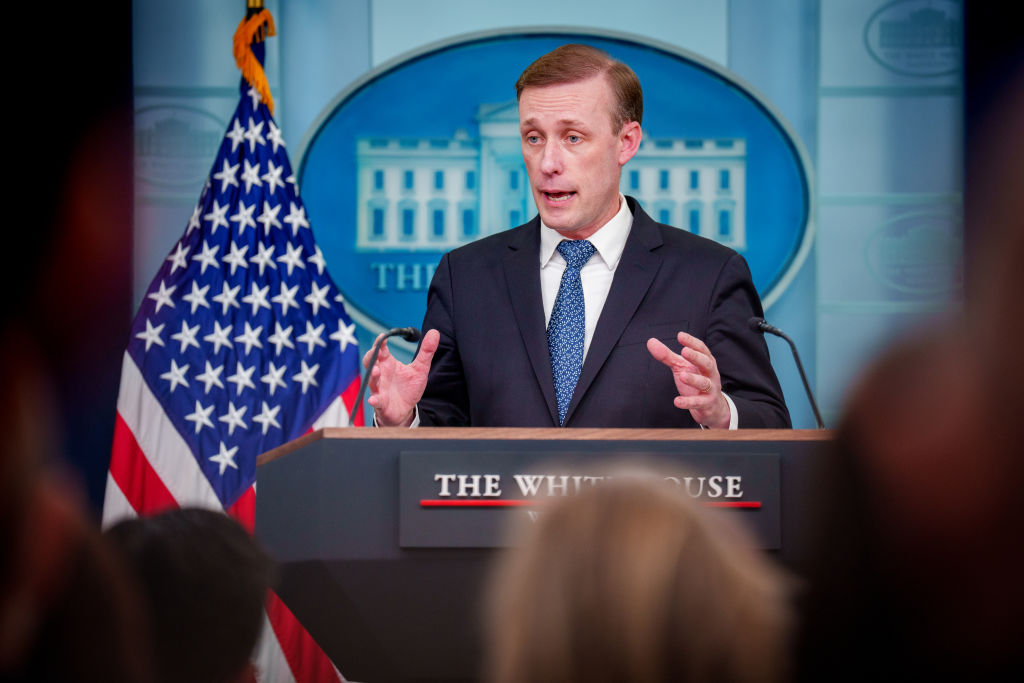
In an interview with ‘The Bulwark,’ the former national security advisor argued that the argument in favor of restricting military aid is ‘much stronger’ than it was a year ago
BELL CURVE
Contentious Wesley Bell town hall portends a potential primary challenge
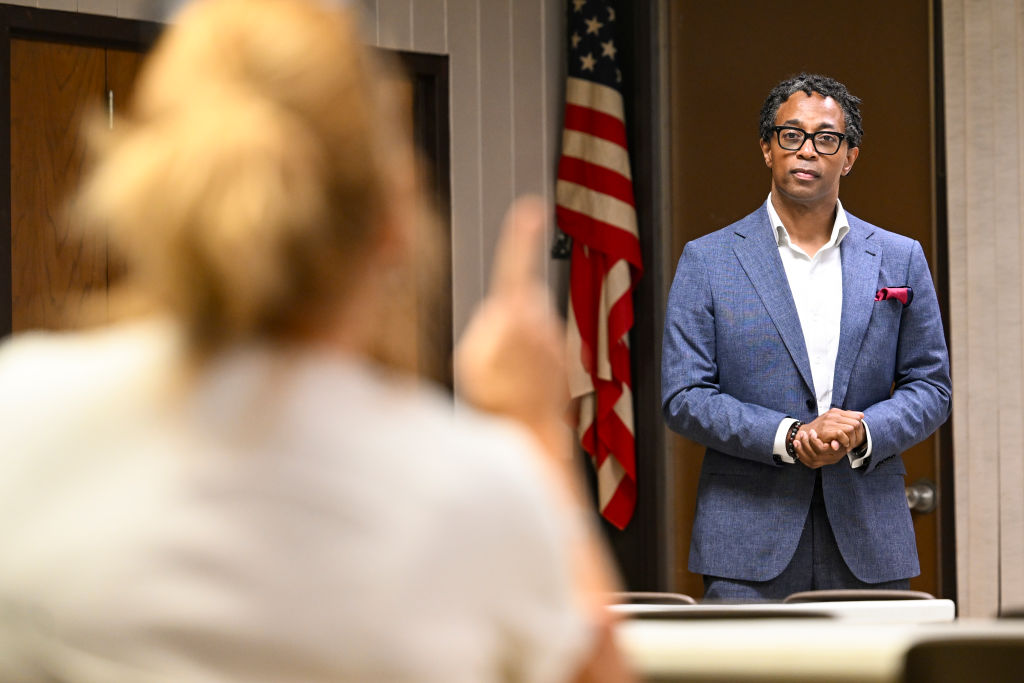
Former Rep. Cori Bush or a political ally could attempt to unseat the first-term congressman
Gor’s isolationist litmus test made it more challenging for mainstream conservatives to serve in the Trump administration
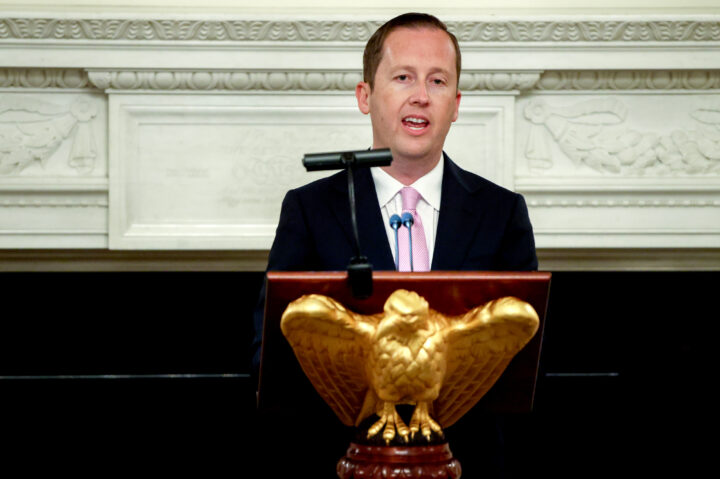
Samuel Corum/Bloomberg via Getty Images
Sergio Gor, director of the White House presidential personnel office, during a Kennedy Center Board dinner in the State Dining Room of the White House in Washington on May 19, 2025.
Sergio Gor’s expected departure from a key role in the White House, where he has vetted thousands of candidates for political jobs as the influential leader of the Presidential Personnel Office, is raising some questions about how his litmus tests and isolationist views will compare to his newly announced replacement, particularly with regard to national security hires.
Gor, 38, was nominated by President Donald Trump last week to be U.S. ambassador to India. If confirmed by the Senate, Gor, who was also tapped as special envoy for South and Central Asian affairs, will leave behind a powerful post at which he built a reputation as an ideological gatekeeper.
Throughout his time in the White House, Gor has drawn attention for his unyielding focus on loyalty to Trump and — more singularly — a fierce commitment to elevating national security and foreign policy hires who share his skepticism of American engagement abroad.
His successor, Dan Scavino, as the White House confirmed this week, is likewise a longtime Trump confidant who now serves as White House deputy chief of staff. But unlike Gor — whose background suggests an interest in imposing ideological litmus tests on job applicants — Scavino, 49, “has no ideology other than Trump,” according to a former top administration official.
Even as Gor has won plaudits from a range of high-ranking officials in the administration, the former official, who spoke anonymously to address a sensitive subject, suggested his approach to the White House role has been driven by his foreign policy worldview as well as his allegiance to the president, a tension that is unlikely to be replicated by Scavino.
“Sergio brought his own world with him to the job, not just Trump’s,” the former official told Jewish Insider on Wednesday. “Loyal to Trump, yes — loyal to a Paul-Tucker-Koch world ideology, I think yes as well,” he added, referring to Gor’s former boss Sen. Rand Paul (R-KY), podcast host Tucker Carlson and the activist network linked with Charles Koch, a leading conservative donor who has opposed Trump.
By contrast, Scavino, a former Trump golf club manager who has previously run the president’s prolific and unfiltered social media, seems to have few, if any, competing interests at stake. “There’s a reason Dan has a seat in the Situation Room when the toughest decisions are made,” the former Trump official elaborated. “Sergio never did. This should be a positive development for vetting and placement.”
It remains to be seen which positions Scavino will still need to help staff when he fully assumes Gor’s duties — especially with “over 95%” of departments and agencies now “filled,” according to a statement from Trump last week, which could not be verified.
“There is much still to be done, and Dan’s leadership will ensure the highest quality, most dedicated workforce ever,” Karoline Leavitt, the White House press secretary, said in a statement, calling Scavino “one of Trump’s most trusted and longest serving advisors.”
In his tenure, Gor, a former top aide to Paul, the libertarian Republican from Kentucky, has helped weaken the National Security Council and worked to install Pentagon officials who have pressed for a reduced U.S. military presence in the Middle East — fueling concerns among pro-Israel leaders who have questioned if such views were aligned with Trump’s approach.
The personnel chief, whose efforts highlighted an intra-party battle between warring traditional and MAGA Republican factions that has recently grown less fractious as the administration has taken shape, also promoted officials affiliated with the libertarian Koch network, in spite of a directive from Trump upon his reelection to avoid “people who worked with, or are endorsed by” the Charles Koch or his political advocacy group.
More recently, Gor has prominently clashed with some top Trump allies, including Elon Musk and Michael Anton, the State Department’s director of policy planning who served as a technical lead amid failed nuclear negotiations with Iran. Anton, who is now expected to leave the administration soon, has reportedly grown frustrated with Gor’s rejections of his proposed hires, among other sources of tension first detailed by Politico on Wednesday.
“He has the power to can people and for them not to get through,” one Trump official who has interacted with Gor and was not authorized to comment on the record said of his current role.
Meanwhile, Gor has advanced some officials widely criticized for espousing racist and antisemitic views, including Darren Beattie, who was fired in Trump’s first term for speaking at a white nationalist event and is now a top official in the State Department.
Beattie’s promotion, along with others who have drawn scrutiny for extreme views, underscores how Gor has been “clearing people who are unclearable,” said a former senior Republican Hill aide, who was granted anonymity in order to speak freely. “Sergio is obviously fine with that,” he said of Beattie’s past comments.
Trump, who in a social media post announcing his nomination last week called Gor’s time in the White House “essential” to upholding the administration’s agenda, said the personnel director would remain in his current role until his confirmation in the Senate, which has not yet scheduled a hearing.
A White House spokesperson confirmed to JI on Wednesday that Gor will stay in his post pending Senate approval for the ambassadorial role, which comes amid growing tensions between the United States and India, a major ally, over Trump’s tariff threats.
As Gor now prepares to leave the White House for a more public role, Danielle Pletka, a senior fellow at the American Enterprise Institute, suggested his approach to hiring ultimately demonstrated how he struggled to evolve with the administration on key issues.
“I think that the Trump administration has settled into a routine, and I think that people who are very ideologically rigid are finding less and less space for themselves,” Pletka told JI. “The president is not an isolationist, and those who are are discovering quickly that he does not appreciate being told how his staff have a stronger America first agenda than he does.”
Plus, Minneapolis shooting echoes Tree of Life

Nicholas Kamm/Getty Images
Ron Dermer speaks at the American Israel Public Affairs Committee (AIPAC) policy conference in Washington, DC.

