



























































U.S., Israel worked for months on Iran strikes with ‘unprecedented cooperation,’ IDF chief of staff says
Netanyahu: Attacks were Israeli Air Force’s largest flyover in history
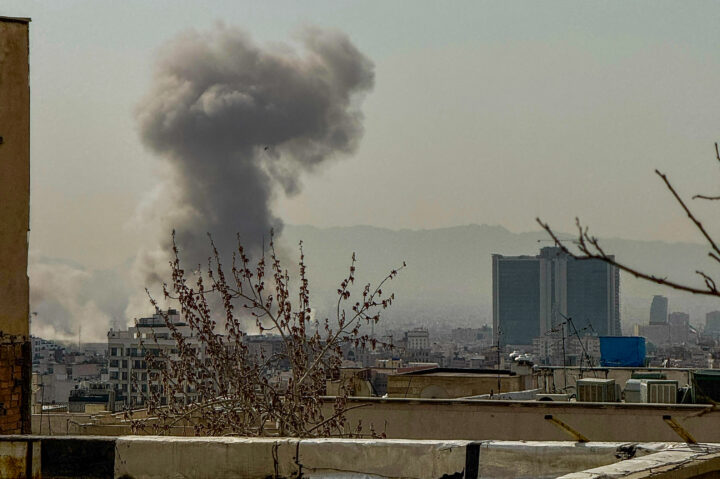
Mahsa / Middle East Images / AFP via Getty Images
A plume of smoke rises over Tehran after a reported explosion on February 28, 2026.


 Add JewishInsider on Google
The U.S. and Israeli militaries planned attacks on Iran for months, marking “unprecedented cooperation,” Lt.-Gen. Eyal Zamir, the IDF’s chief of staff, said on Saturday, hours after the launch of what Israel has called Operation Roaring Lion and the U.S. has called Operation Epic Fury.
“In recent months, under the direction of the political leadership, I have led — in coordination with my counterparts, the chairman of the Joint Chiefs of Staff and the commander of CENTCOM — a deep and comprehensive joint operational planning process. This reflects unprecedented cooperation between the IDF and the United States military,” Zamir said.
An IDF official speaking on condition of anonymity said that the two militaries “worked for thousands of hours” to increase its target bank “by hundreds of percent.”
The plan centered on “an intelligence effort … to identify an operational opportunity at the moment when senior regime officials would convene,” the official said. The IDF struck three such gatherings simultaneously and killed “several senior figures.”
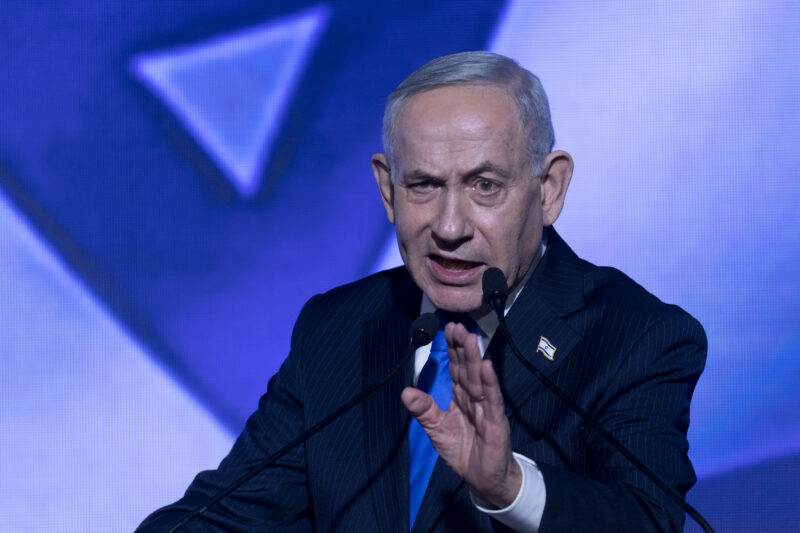
Israeli Prime Minister Benjamin Netanyahu confirmed in a video statement that one of those targets was Ayatollah Ali Khamenei, Iran’s supreme leader, saying that the IDF likely killed him.
“Today, in a surprise attack, we destroyed Iranian Supreme Leader Ali Khamenei’s compound in the heart of Tehran,” he said. “For three and a half decades, this tyrant sent terror throughout the world, immiserated his nation and worked all the time on his plan to destroy Israel.”
“That plan is gone and there are many signs that the tyrant is gone,” Netanyahu said. President Donald Trump later confirmed the news.
Netanyahu said that Israel plans to hit “1,000 terror sites” in the coming days.
Directing his remarks at the people of Iran, Netanyahu said, “Soon your moment will come in which you must go out on the streets … Help has arrived and now the time has come for you to unite for a historic mission … to bring down the regime and ensure your future.”
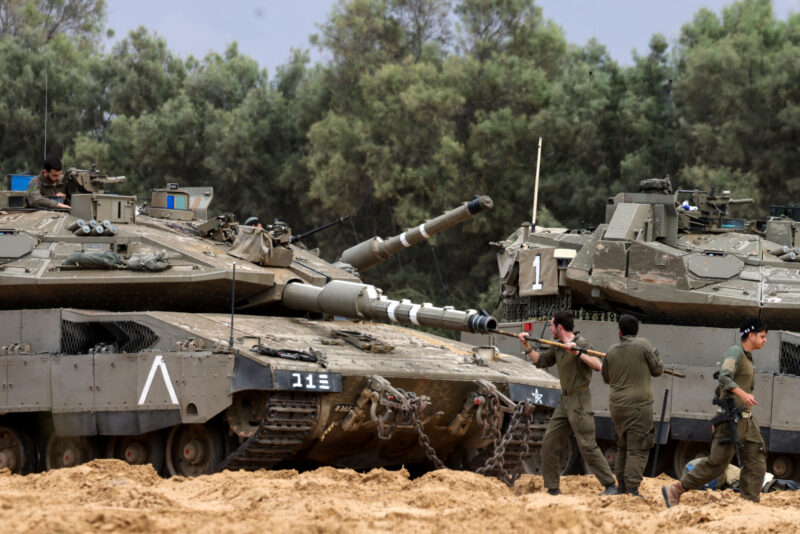
The strikes on Iran’s missile array and air-defense systems by 200 fighter jets were the Israeli Air Force’s largest-ever flyover, the IDF Spokesperson’s office said.
The IAF fighter jets struck 500 targets throughout western and central Iran, such as one in Tabriz, which was used for Iran’s surface-to-surface missiles. Another strike targeted an advanced SA-65 aerial-defense system near Kermanshah in western Iran, the IDF said.
The IDF sent warnings via social media to Iranian civilians living near weapons production and military infrastructure facilities: “Dear citizens, for your safety and well-being, we urge you to immediately evacuate these areas and remain outside of them until further notice. Your presence in these locations puts your lives at risk.”
Iran launched missiles and attack drones at Israeli population centers throughout the day, including ones that include cluster munitions, the IDF said.
“Cluster weapons are designed to disperse over a large area and maximize the chances of a harmful strike. Iran goes to great lengths in trying to maximize harm to Israeli civilians,” Nadav Shoshani, the IDF international media spokesperson, stated.
Zamir said that Operation Roaring Lion is “a significant, decisive, and unprecedented operation, to dismantle the capabilities of the Iranian terrorist regime — capabilities that constitute an ongoing existential threat to the security of the State of Israel. This is an operation to secure our existence and our future here, in the land of our forefathers, for generations to come.”
Since last year’s Operation Rising Lion, as the IDF called the 12-day war with Iran, “the radical Iranian terrorist regime has not abandoned its vision or its hostile intentions to advance its plan to destroy Israel. It has continued to promote its nuclear project, restore and accelerate ballistic missile production, and destabilize the region through the funding and arming of terrorist proxies,” Zamir said.
The IDF chief of staff also tied the operation to the holiday of Purim, which begins on Monday night, and celebrates the Jews of the Persian empire overcoming an attempted genocide.
“The Book of Esther teaches us that responsibility for our destiny rests first and foremost in our own hands — in courage, initiative, unity and the willingness to fight for our right to live here in freedom and in peace,” Zamir said. “Soldiers and commanders of the IDF… carry with you the vision of our forefathers.”
Shoshani wrote in a blog post that the timing of the operation was due to “a dangerous acceleration in [Iran’s] capabilities,” including long-range missile production and continued proxy funding.
“Israel reached a point where the threat was no longer ‘developing,’” Shoshani wrote. “The threat was direct and imminent.”
The objective of the strike, Shoshani said, was to “fundamentally reduce and degrade Iranian terrorist regime capabilities, eliminating long-term existential threats to the state of Israel.”
The IDF also called up 70,000 reservists to serve on Israel’s borders, the West Bank and Gaza to stop any infiltration attempts, as well as search and rescue forces prepared to go to the site of any Iranian missile strikes.
Israelis throughout the country spent the day going in and out of safe rooms and bomb shelters at the sound of air raid sirens, which blared more frequently in Israel’s densely populated center, reflecting the area Iran targeted.
IDF Home Front Commander Maj.-Gen. Shay Kleper said that “past experiences prove that the public’s strict following of protocol has saved many lives. The grit and responsibility of everyone is a key element in countering the threat.”
Israeli Foreign Minister Gideon Sa’ar spoke about Israel’s decision to strike Iran and the operation’s objectives with 17 of his counterparts, in phone calls to Argentina, Austria, Germany, India, Italy, Hungary, the Czech Republic, Latvia, the European Union, France, Canada, Australia, Ecuador, Greece, Ethiopia, Singapore and North Macedonia.
More Stories

SHOW OF SOLIDARITY
Jewish leaders offer support to Hindus amid rising threats to faith communities

analysis
Democrats hope to ride a historic Senate wave, but face several speed bumps

IN THEIR MEMORY
Administration officials join bereaved families for Oct. 7 commemoration event
HILLTOP FORECAST
Democratic foreign policy veterans preview party’s shifts on Middle East policy

EDIT WARS
Wikipedia failed to address coordinated anti-Israel campaign, new ADL study finds

SACRAMENTO SHOWDOWN
Rep. Doris Matsui continues to highlight Hasan Piker links to far-left opponent Mai Vang
Please log in if you already have a subscription, or subscribe to access the latest updates.
 Continue with Google
 Continue with Apple