



























‘Buffer zone’ bill to protect houses of worship sets up NYC clash
City Council legislation to shield synagogues and other religious institutions pits Jewish groups against progressive activists — and sets up a potential fight with the Mamdani administration
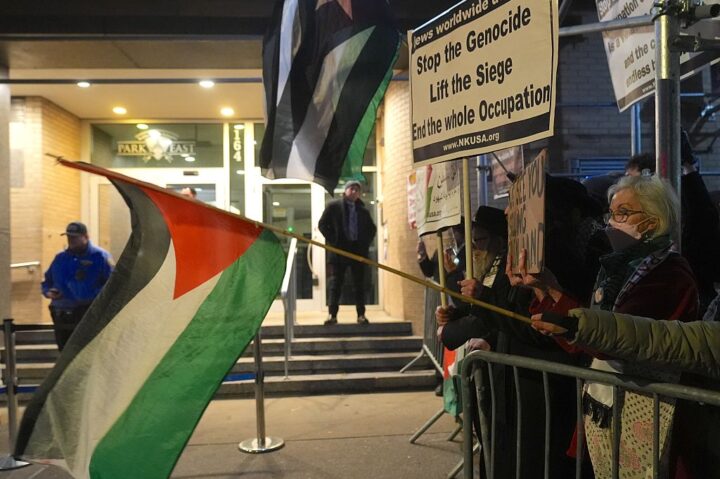
Selçuk Acar/Anadolu via Getty Images
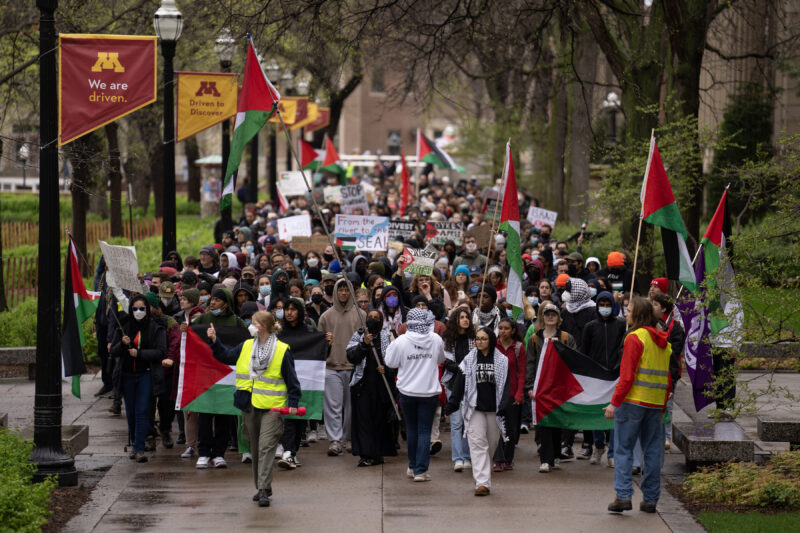
Anti-Israel demonstrators gather at 'No Settlers on Stolen Land' protest against a Nefesh b'Nefesh event at the Park East Synagogue in Manhattan in November 2025.


 Add JewishInsider on Google
A bill introduced in the New York City Council in response to pro-Hamas demonstrations outside New York synagogues has sparked a battle between mainstream Jewish advocacy organizations and protest groups and their allies — and leaves New York City Mayor Zohran Mamdani and the NYPD in an awkward spot.
At the center of the agenda to counter antisemitism that Council Speaker Julie Menin unveiled in January was her proposal directing the NYPD to establish a plan for “security perimeters,” demarcated with police barriers or tape, up to 100 feet from entrances and exits at religious facilities to prevent protesters from obstructing or harassing people attempting to enter or exit.
In response to feedback from the police department, the speaker’s office stripped out any specific reference to distance, and a new draft of the bill simply compels Commissioner Jessica Tisch to propose her own plan for “buffer zones” of sizes she deems appropriate “to address and contain the risk of injury, intimidation, and interference, while preserving and protecting protest rights.” Like the previous bill, the zones in the updated legislation could extend from both doorways and driveways.
The measure faces its first hearing in the council on Wednesday, but it has already accentuated and even deepened the split between long-standing Jewish institutions and the activist forces that elevated Mamdani to power last fall.
“Access to religious institutions must be protected so that people can enter their houses of worship without fear of harassment or intimidation,” said Eric S. Goldstein, CEO of the UJA-Federation of New York, which has sought to organize Jewish communal support for the bill. “Speaker Menin’s proposal advances that goal through a carefully designed framework that appropriately balances First Amendment rights with safety and prevention,” Goldstein said.
By contrast, a bevy of far-left groups — Jews For Racial & Economic Justice, the American Council for Judaism, Jewish Voice for Peace-New York City and IfNotNow NYC — several of which have ties to the mayor, collectively denounced Menin’s legislation earlier this month.
“The right to protest in this country is sacrosanct and must be protected,” the organizations said in a joint statement, arguing that the synagogues at the center of recent demonstrations had hosted “non-religious political events” — namely, for groups encouraging and facilitating immigration to Israel — that made them legitimate targets. “We urge our city leaders to take seriously that a free and open democracy is essential towards ensuring the safety of all New Yorkers, including Jewish communities.”
The Menin bill is distinct from Gov. Kathy Hochul’s push for 25-foot buffer zones around houses of worship, which would subject violators to criminal penalties, or from calls for similar actions on the national level. A corollary piece of City Council legislation, introduced by Councilmember Eric Dinowitz, would establish similar perimeters around educational institutions.
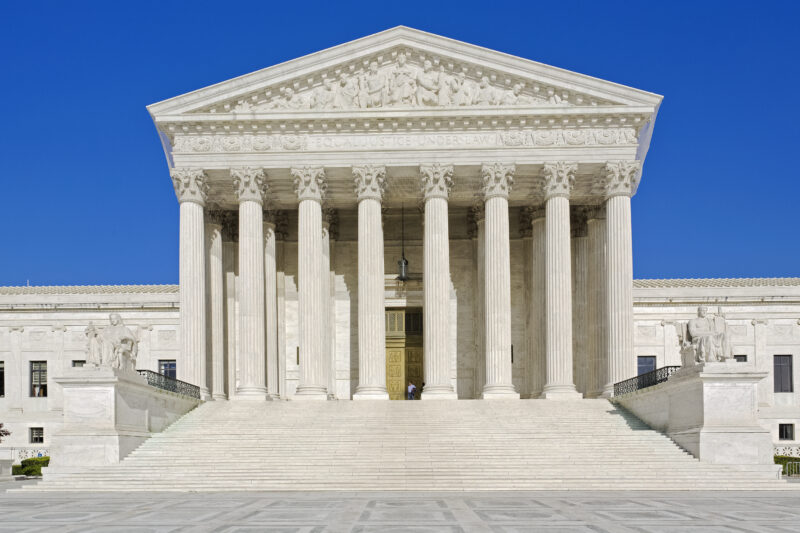
Alyza Lewin, president of U.S. affairs for the Combat Antisemitism Movement, noted that the Supreme Court had upheld electioneering laws barring campaign activity within 100 feet of polling places.
“It really shouldn’t be so controversial,” Lewin told JI. “They determined that setting up a 100-foot zone around the polling place did not impermissibly interfere with the speech rights of those campaigning. You have a similar situation here. And here you’re talking about a constitutionally protected right to the free exercise of religion.”
The speaker’s office acknowledged it had looked to the high court precedent Lewin cited while crafting the legislation. But Menin’s team stressed to Jewish Insider that the bill would not prohibit protesting within the buffer zones.
Menin’s office maintained that the legislation would compel the police department to have an official, public protocol for ensuring access and egress at places of worship during demonstrations.
“It does not limit protest activity,” said Menin spokesperson Henry Robins. “The bill directs the NYPD to develop and publish a plan to ensure individuals can safely enter and exit these institutions without harassment or obstruction, while fully respecting First Amendment rights.”
Mamdani has declined to express his opinions on the proposal from Menin, a Manhattan Democrat and the first-ever Jewish council speaker, frequently seen as representing moderate elements of the party that opposed his election. He has instead alluded to vague “concerns” with the proposal from Tisch, a scion of one of the city’s most prominent Jewish families and a holdover from his predecessor’s administration.
However, multiple sources asserted that concerns from the NYPD were not constitutional but logistical.
Moreover, former Mayor Eric Adams signed an executive order in December that directed the NYPD to consider instituting zones limiting protest from 15 to 60 feet from the doorways of religious facilities. Moshe Davis, who headed the Mayor’s Office to Combat Antisemitism under Adams, said his team developed this directive in concert with the NYPD and the city Law Department, which have not changed under the new administration.
Mamdani repealed Adams’ order, along with others the outgoing mayor signed just before his term ended, his first day in office — but then signed an identical decree into effect. His office did not respond to requests for comment from JI.
Menin’s bill currently has 20 co-sponsors, six short of the majority needed for passage. However, 34 of the 51 members of the council would need to back the bill to override a mayoral veto.
Speaking to Jake Tapper on CNN Monday night, Mamdani said he would reserve comment until his administration had conducted a legal review.
More Stories
BREAKING POINT
For some Jewish Democrats, Michigan’s debate was the ‘final straw’ for El-Sayed
TISCH TENSIONS
Mamdani stands by NYPD’s Tisch as his allies demand her removal
MAINE EVENT
Maine Senate candidate Troy Jackson says Congress should cut off funding for Iran war
SPENDING SCRAPPED
GOP leadership super PAC cancels spending plans against Rep. Landsman
PEACH STATE PUNCHES
Rep. Mike Collins ducks question about white nationalist influencer son-in-law at Senate debate
HISTORY LESSON
Brett McGurk’s fact check of former Harris advisor Phil Gordon on hostage negotiations
Please log in if you already have a subscription, or subscribe to access the latest updates.
 Continue with Google
 Continue with Apple