


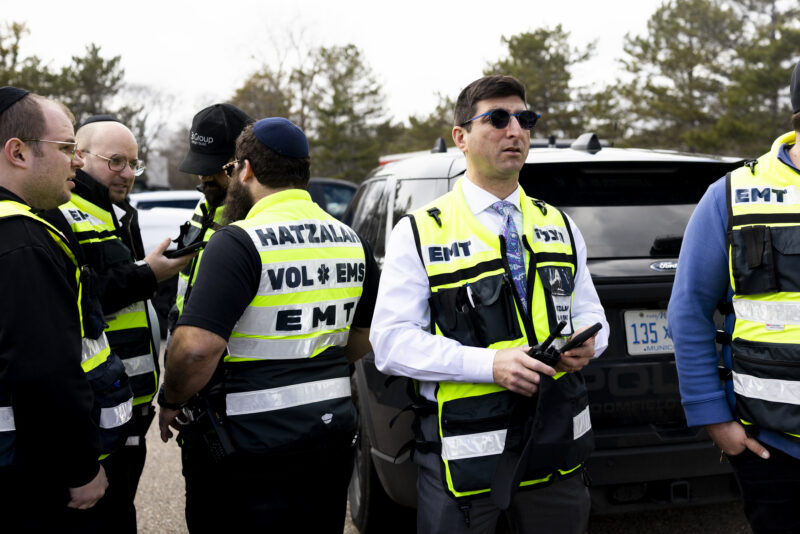






























The meeting was one of Noem’s highest-level sit-downs with Jewish leaders since taking office
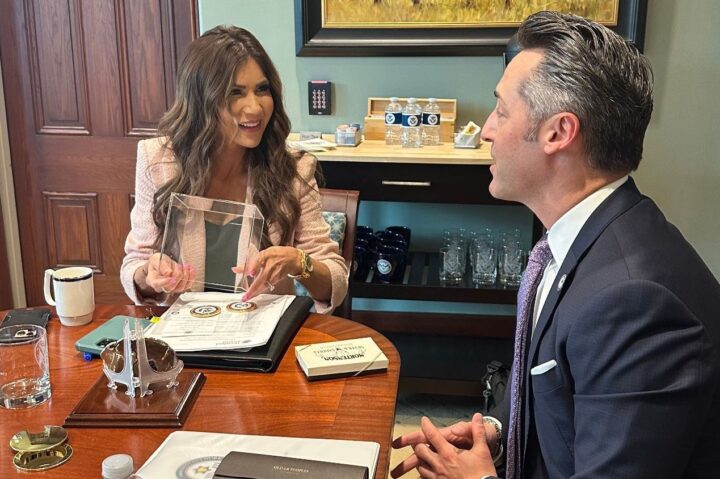
Courtesy Secure Community Network
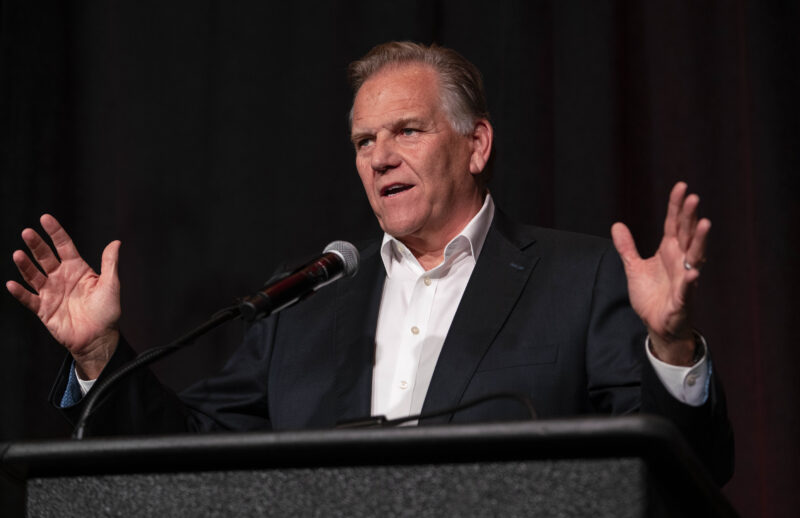
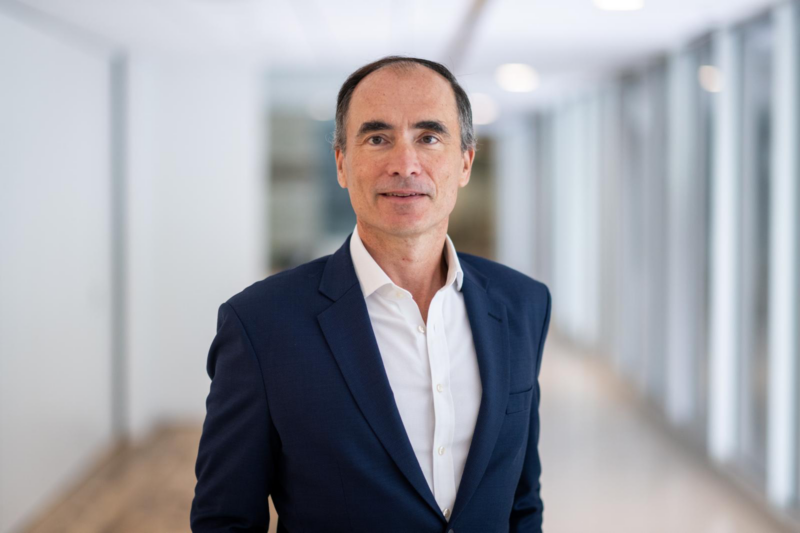
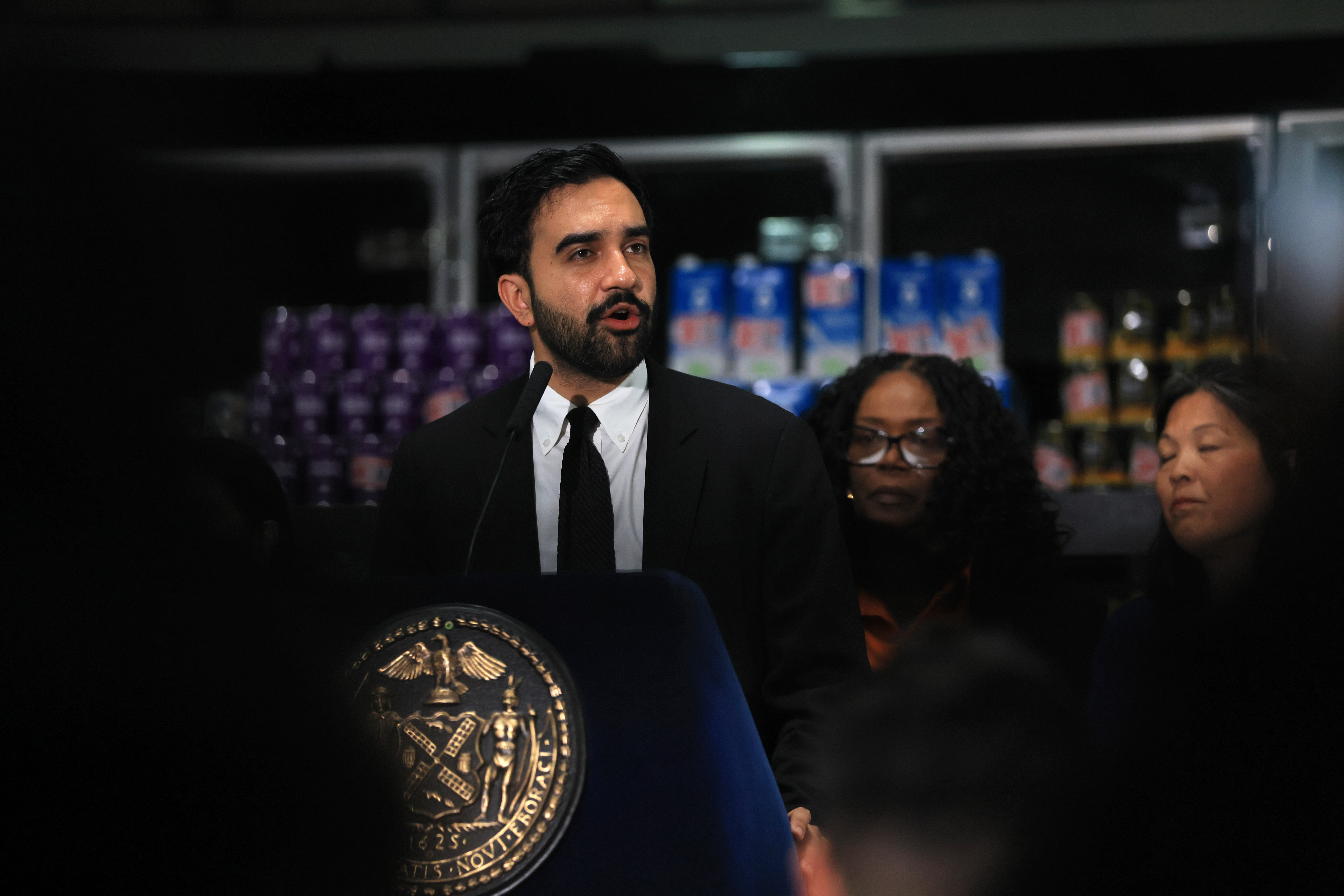
Michael Masters, the CEO of the Secure Community Network, meets with Secretary of Homeland Security Kristi Noem, July 2025.


 Add JewishInsider on Google
Michael Masters, the CEO of the Secure Community Network, sat down last week with Secretary of Homeland Security Kristi Noem amid a push from Jewish community groups for additional security resources to address rising levels of antisemitism.
The meeting was among the most high-level sit-downs between Noem and Jewish communal leaders since she took office.
“The secretary is very, very clear in her understanding and commitment to addressing the threat environment, particularly as it pertains to the faith-based community and the Jewish community and deeply understands the issues and concerns facing the community … and the scope of the department in being able to do that,” Masters told Jewish Insider in an interview on Wednesday.
SCN supported Noem during her confirmation process, and Masters said that she “evidenced a clear understanding and appreciation for the importance of this issue,” and called their sit-down “an encouraging sign.”
He also praised the work she’d done in her prior role, as governor of South Dakota, to protect the state’s Jewish community and understand its needs.
Masters said he and Noem discussed the threats facing the Jewish and other faith-based communities and the ways that SCN has worked with DHS in the past.
“So many of these threats are crossing over different faith based communities and historically, the department has been a convener and coordinator and supporter of efforts of the faith-based community to come together to address those as a whole,” Masters said. “And she firmly embraces that, I think, as a public official and as a person.”
The Department of Homeland Security did not respond to a request for comment.
Masters said that leaders across the federal government, including at the FBI, DHS, Department of Justice and the White House, understand that, “you cannot disassociate the safety and security of the Jewish community from the safety and security of the broader faith-based community, or from the domestic, homeland and national security of the United States.”
One priority for Masters in the meeting, he said, was pushing for the release of the application for 2025 Nonprofit Security Grant Program Funding, which opened on Monday.
“That was the focal point, and has been the focal point for many of our conversations,” Masters said, adding that he was “very encouraged” to see the applications open following his meeting and a push from various other Jewish community stakeholders and lawmakers.
“There’s going to be a bunch of follow-up related to the condensed time frame,” he continued, “and then the remainder of the supplemental. We will be able to turn our attention to that once we get through the current push of getting people’s applications in for this year’s awards.”
Organizations applied last year for a tranche of more than $100 million in NSGP funds provided through last year’s national security supplemental funding bill that has yet to be awarded or released.
Another issue Masters said he’d spoken about with Noem was the plan to cut the majority of the DHS’s Intelligence and Analysis (I&A) division’s staff; Masters wrote to Noem directly earlier this month to offer recommended reforms and overhauls for that office.
“We have worked with I&A since its creation,” Masters said. “There are significant efficiencies to be found [but] I&A is the only statutorily authorized entity that has a responsibility and a mission set related to state, local, tribal and territorial law enforcement and private nonprofit sector partners. It needs to do a much better job of servicing those stakeholders and there are dedicated men and women in I&A who have worked to do that.”
He said that Noem has already been working toward some of the same goals he outlined, including sending DHS agents out of headquarters in Washington and into the field to work on critical issues on the ground.
“Many of us who served in law enforcement and the associations that are currently dealing with I&A — and certainly SCN — we support this effort, but it will be a work in progress for some time,” he said, explaining that the office’s mission and mandate has shifted between and during various administrations.
“All of us are committed, from law enforcement and those of us who deal in the security space, to working to support the effort to make sure that I&A can be as effective as it can be, that it is fit for its mission, it’s sized for its mission and that it’s structured in a way that allows it to be effective,” Masters continued.
Masters, along with Anti-Defamation League CEO Jonathan Greenblatt, Jewish Council for Public Affairs CEO Amy Spitalnick and national law enforcement leaders, also attended a private roundtable with members of the House Homeland Security Committee’s Counterterrorism and Intelligence Subcommittee last week.
“For the fourth consecutive year, antisemitic violence and acts of terror have risen in all 50 states. This is not a localized issue—it’s a national crisis,” Rep. August Pfluger (R-TX) said in a statement. “Last week’s roundtable provided an important opportunity to hear directly from law enforcement officials and Jewish community leaders about this alarming surge.”
He said the participants made clear the need for “stronger interagency coordination, enhanced intelligence sharing, targeted training, and robust enforcement.”
He vowed to work with colleagues to take action and address antisemitism.
“Silence in the face of antisemitism is complicity. Hatred and bigotry have no place in America, and every person deserves to live without fear,” he said.
Masters said that the Jewish and law enforcement leaders were “all aligned in the importance of addressing the threat environment facing the Jewish community, in the importance of addressing hate crimes broadly, and in the necessity of strong, consistent, predictable funding for law enforcement.”
He said they’d discussed issues including I&A and the need for strong collaboration and communication to address threats to the Jewish community and the country as a whole.
“I deeply appreciated the opportunity to meet with the committee on the rise in antisemitic violence and the concrete steps necessary to protect our communities,” Spitalnick told JI, adding that she had advocated for NSGP funding to be released.
“There is still significant work to be done to ensure this critical security program is properly funded and the dollars are moved quickly to protect our communities,” she continued. “We also made clear that the crisis of antisemitism and broader extremism requires a whole-of-government and whole-of-society solution — aimed at building resiliency to hate and violence in the first place. Yet too many programs — such as hate crime prevention grants — have been frozen, cut or insufficiently funded at levels that do not match the dire need.”
ADL CEO Jonathan Greenblatt: ‘I'd like to see the extremes marginalized so the vast majority of members of Congress on both sides can get the stuff done that needs to happen’

Marc Rod
Lawmakers gather on the Capitol steps on June 10, 2025 for a vigil for Yaron Lischinsky and Sarah Milgrim, Israeli Embassy staffers who were killed in an anti-Israel attack.
It’s been two months since the Capital Jewish Museum shooting in Washington and the Boulder, Colo. firebombing attack.
The two attacks prompted unified condemnation from lawmakers and calls from the Jewish community for Capitol Hill to take aggressive action against the escalating antisemitism crisis in the United States. But as Congress heads into its August break, that initial momentum has produced little concrete action.
The House and Senate have passed resolutions condemning the attacks, but key legislation related to antisemitism remains stalled, even as lawmakers individually and in groups continue to press for action.
There are still no clear prospects for passage of the Antisemitism Awareness Act, a key element of congressional efforts to address antisemitism, after a contentious Senate committee meeting in April in which Democrats, joined by Republicans including Sen. Rand Paul (R-KY), voted to add amendments that most Republicans supporting the bill view as nonstarters. House leaders have made no public moves to advance the legislation.
And despite calls from Jewish groups for significant increases in nonprofit security funding to as much as $1 billion next year and a push from a bipartisan coalition of lawmakers for $500 million, the funding levels under consideration in the House are so far little different from those discussed in prior years.
One Republican senator working on the Antisemitism Awareness Act told Jewish Insider they have not seen much movement among colleagues who have continued concerns about the legislation, in conversations with those colleagues and the White House.
The senator said they are frustrated by unresolved disputes about the International Holocaust Remembrance Alliance’s working definition of antisemitism on the Republican side of the aisle, noting as well that there are steps the administration can take independently.
Jonathan Greenblatt, the CEO of the Anti-Defamation League, said at a press conference last week that “there needs to be, for sure” more focus from Congress on tackling antisemitism. A key part of that, he said, will be sidelining extreme voices.
“I think too often extremes on both ends kind of warp the conversation and insist that the definition of antisemitism somehow needs to include things like the false charge of ‘the Jews murdered Jesus,’ or the claim that anti-Zionism is never antisemitism,” Greenblatt said, alluding to the objections from both sides of the aisle to the Antisemitism Awareness Act.
“All the Jews didn’t murder Jesus, and anti-Zionism is antisemitism. I think I’d like to see the extremes marginalized so the vast majority of members of Congress on both sides can get the stuff done that needs to happen once and for all,” he continued.
Several sources familiar with the situation said that the bill is “stuck,” for the moment. Senate Republicans could attempt to bring the bill to the floor and utilize procedural means to eliminate the poison-pill amendments added to the bill in the Senate Health, Education Labor and Pensions Committee, but that would require Democratic support and could rehash the same ugly debates seen in the HELP committee.
It could also be added to a must-pass legislative package — but that same plan failed last year.
A source who has advocated for the legislation said that the recently passed budget reconciliation package sapped attention for antisemitism legislation in recent months, but argued that passing the Antisemitism Awareness Act is critical because there are no realistic alternative proposals for tackling antisemitism on Congress’s agenda at this point.
The Senate has also been focused on confirming presidential appointees.
The source said that advocates for the bill need to find strategies to work around the obstacles to the legislation, “and that has not been easy,” but insisted that they and others are not giving up on the bill.
“There just hasn’t been a lot of legislation [moving] in general,” Nathan Diament, the executive director of public policy for the Orthodox Union, said — arguing that the slow progress is not unique to the Antisemitism Awareness Act or antisemitism generally.
Sen. Jacky Rosen’s (D-NV) office told JI that she is continuing to advocate for the Antisemitism Awareness Act, and is also looking at potential other legislation that could move forward on antisemitism. Rosen, the co-chair of the Senate antisemitism task force, is the lead Democratic sponsor of the Antisemitism Awareness Act.
Senate Republicans had vowed, coming into the majority, to pass the bill.
“Republican control of the Senate means that this institution will no longer turn a blind eye to the growing threat of antisemitism in our country or the numerous threats that our ally Israel faces on all sides,” Senate Majority Leader John Thune (R-SD) told JI after Republicans won the Senate majority. “We will empower committees to advance legislation addressing antisemitism and protecting students on campuses, and we will increase oversight into Iran’s malign actions.”
On the House side, Rep. Mike Lawler (R-NY) told JI last week that “we’re working on” the Antisemitism Awareness Act. Pressed on whether Congress is moving strongly enough to respond to antisemitic violence, Lawler said, “It continues to be a strong focus of mine and many of my colleagues, and we’re working through the legislation.”
House Speaker Mike Johnson (R-LA) did not respond to a request for comment.
Observers believe the House, which passed the bill last year only for it to fail to move forward in the Senate, is waiting on the Senate to move first this year and prove that it can pass the bill.
Another source argued that, given the action the administration has taken to address antisemitism on college campuses, the Antisemitism Awareness Act is “less necessary” in the near term.
On NSGP funding, the House Appropriations Committee approved a bill that would allocate $335 million for the program in 2026 — the same funding level that the House backed for the program in 2025, though final funding levels ultimately fell short of that mark.
The Senate Appropriations Committee, meanwhile, has yet to finalize its homeland security funding bill. Sen. Chris Murphy (D-CT), the ranking member of the subcommittee responsible for such funding, told JI last week that lawmakers are “still negotiating” it.
Congress will have just a month to finalize government funding or pass a stopgap bill when it returns from August recess.
A Republican senator working on the issue said they’ve been focusing on ensuring that outstanding NSGP funding for this year is disbursed from the administration before turning to the appropriations process for next year.
“First things first on it, let’s get the grant money out so people can actually create a more secure environment where they’re physically located,” the senator said. The administration opened applications for the 2025 grant program on Monday, but some supplemental funding remains to be allocated.
Diament said that Congress is in the “fourth or fifth inning out of nine” on government funding, and that the process will likely play out mostly in September or October. He also argued that, given the “tight fiscal environment,” particularly for homeland security funding, the fact that advocates were able to secure a $30 million increase in NSGP funding from the initial proposed level of $305 million, on a bipartisan basis in the House Appropriations Committee is very “valuable in the process going forward.”
In “the later innings of the process, it laid very good groundwork” for further bipartisan movement to increase funding as the process proceeds, Diament continued. “We made sure to work it on a bipartisan basis and we’re moving in the right direction.”
“Given everything else on the legislative calendar and where we are on the legislative calendar, I don’t feel like we’re behind,” he continued.
Rep. Don Bacon (R-NE), a co-chair of the House antisemitism task force, asked about congressional action on antisemitism last week, said that “there’s a place for legislation” but argued that other steps are also needed to make antisemitism unacceptable in public discourse.
“In the end, Americans have to speak out on this,” Bacon said at a press conference on legislation aiming to tackle support for terrorism on social media. “We have to make it like it’s embarrassing to be standing on that side saying those things. So we got to speak up. And you can’t legislate that.”
Several Democrats said last week that more needs to be done legislatively to tackle antisemitism.
“We’ve had an unlimited amount of hearings, and the speaker has now come out with a security plan [for members] for the summer, and a lot of that, obviously, is tied to the amount of hate and threats that we are getting, but we still haven’t passed the Antisemitism Awareness Act,” Rep. Jared Moskowitz (D-FL) said. “No, we’re not doing enough to combat antisemitism and other forms right now of hate and demagoguery that’s going on.”
“The language and the culture, it’s just completely toxic,” Moskowitz continued, adding that Congress is “also not doing enough on the security grants. … They gave ICE $140 billion. We’re trying to get more money for security when the community is in grave danger, and these threats are out of control, at all-time levels.”
Sen. Richard Blumenthal (D-CT) said that “there can never be too much focus on antisemitism, and I see, frankly, too little right now, in light of events that are unfolding around the country.”
“I wish there were more focus on bias and bigotry of all forms, because it is growing, and so is violent extremism and the confluence of the two make for a very dangerous recipe for potential disaster,” Blumenthal continued.
Rep. Brad Schneider (D-IL), a co-chair of the House Jewish Caucus, said that “it’s not business as usual” on antisemitism, and that lawmakers are “working on it and we’re trying to take constructive steps.”
But he added that “we have to do more. We’re seeing antisemitism rising all across the country, being normalized in ways that should never be normalized” on both sides of the political spectrum.
Schneider said that “it is critical that everybody, Democrats, Republicans, House, Senate, stand together, stand united against anti semitism and not what about ism in here, we need to stand against hate. But antisemitism is rising at a rate that should give everyone concern.”
He primarily blamed Republicans for the lack of progress on legislation like the Antisemitism Awareness Act.
Jewish Insider’s congressional correspondent Emily Jacobs contributed reporting.
But his initial reticence in speaking out against anti-Israel Democratic leaders in his state could become a vulnerability in the red-state contest

Allison Joyce/Getty Images
Former North Carolina Governor Roy Cooper
Former North Carolina Gov. Roy Cooper’s decision to seek the Democratic nomination for North Carolina’s open Senate seat has equipped the party with a moderate standard-bearer with a strong relationship with the state’s Jewish community.
But his handling of anti-Israel activism within the North Carolina Democratic party is expected to become an issue in the Senate race, one that Republicans are already seeking to exploit.
Cooper served two terms as North Carolina governor, winning close contests even in elections when President Donald Trump carried the state. He previously served four terms as the state’s attorney general, where he compiled a tough-on-crime record that allowed him enough bipartisan support to win in a red-leaning state. In his nearly four decades in state politics, Cooper has never lost a race, notching a 16-0 record.
In recent years, Cooper has been forced to address issues of antisemitism among political leaders in the state — one against a Republican rival, and one involving activists within his own political party.
Cooper said he decided to pass up consideration for the role of Vice President Kamala Harris’ running mate because he didn’t want former Lt. Gov. Mark Robinson, a Republican with a history of posting racist and antisemitic content online, to temporarily assume the governor’s responsibilities. (North Carolina’s constitution states that the lieutenant governor, who is elected separately from the governor, assumes power in an acting capacity when the governor leaves the state.)
Cooper told Politico last July that Robinson, who has quoted Adolf Hitler, downplayed the Holocaust in social media posts and referred to himself as a “black Nazi” in an online porn forum, had previously claimed he was the acting governor while Cooper was traveling to Japan on official business.
“I was on a recruiting trip to Japan,” Cooper said, referencing a trip in October of 2023. “He did claim he was acting governor. He did a big proclamation and press conference while I was gone. It was something about support for the state of Israel. It was obviously to make up for all of his antisemitic comments that he’d made, his denial of the Holocaust that he’d made over the years.”
But when confronted with anti-Israel extremism within his own state party, Cooper has been more cautious.
The former governor did not initially weigh in on the resolution passed by the North Carolina Democratic Party last month calling for an arms embargo on Israel, as well as on the other anti-Israel measures adopted by the state party. An advisor to Cooper told CNN at the time that the former governor “generally does not opine on party resolutions.”
Reached for comment on the state party measures by Jewish Insider on Monday, Cooper said in a statement that he opposes the resolutions.
“I don’t agree with the party resolution, and Israel is an important ally. Israel needs to take seriously the job of getting humanitarian aid into Gaza right now. The hostages must be returned and I continue to pray for a swift end to this war and a meaningful peace in the region,” Cooper told JI.
Former Rep. Wiley Nickel (D-NC), who was considering running for the Senate before Cooper announced his candidacy, had condemned the resolution as an “extreme” measure that amounted to a “death sentence for thousands.”
North Carolina Gov. Josh Stein, a Democrat and the state’s first Jewish governor, similarly expressed disapproval with the resolutions to JI on Monday.
“I disagree with the party’s anti-Israel resolutions and believe that our state party should focus on issues we’re facing here in North Carolina like the high cost of living, harmful cuts to people’s health care, and rising levels of antisemitism, Islamophobia, and other forms of hate. What’s happening in Gaza is devastating. Israel must allow in food and humanitarian supplies; Hamas must free the hostages; and they must work to achieve a just and lasting peace,” Stein told JI.
The National Republican Senatorial Committee, Senate Republicans’ campaign arm, have repeatedly hammered Cooper over his initial silence on the matter.
“Cooper’s silence exposes his true character as a radical, pro-Hamas leftist and sends a clear message to Jewish North Carolinians that he’s with the extremists in his party and not them,” Nick Puglia, NRSC’s regional press secretary, said in a statement at the time of the vote.
Cooper offered his thoughts on Israel’s war with Hamas during an interview with the Technician, North Carolina State University’s news site, last March that has since been scrubbed from their website but is available through online archival services, stating that he believes, “This war is devastating. We’re seeing innocent civilians killed.”
“What you have is a terrorist organization, Hamas, that runs Gaza, who invaded Israel and committed atrocities, still holds hundreds of people hostage. At the same time, in Israel’s attempts to defend itself and to rid itself from Hamas, you’re seeing devastating consequences to civilians, women and children,” Cooper told the outlet. “I know that the president is working very hard toward a ceasefire, toward providing aid to Gaza, and that there’s so much hard work going on behind the scenes and now even more publicly, to make sure that the hostages are released, and to make sure that peace is brought to this area of the world.”
“There needs to be a two-state solution here. We need the Arab countries to come together. But I do know that this Biden administration will work hard toward peace. You’re not going to see that from Donald Trump, who talks about how much he admires dictators across the world. That’s not going to be the solution to this,” he continued.
Pointing to the anti-Israel protests taking place on campuses last spring, Cooper added that, “It’s wonderful to live in a democracy when people’s voices can be heard and they’re unafraid to protest. In many countries, that’s not the case.”
In his tenure as governor, Cooper made North Carolina the 37th state in the nation to adopt the International Holocaust Remembrance Alliance’s working definition of antisemitism. Cooper signed the SHALOM Act, which adopted the IHRA language as the state’s official definition of antisemitism, last July after it passed the state House and Senate in bipartisan fashion.
“Defining antisemitism is important to stopping it, and this new law helps do that as antisemitic incidents are on the rise. While we protect the right to free speech, this legislation helps to make our state a more welcoming, inclusive and safe place for everyone,” Cooper said in a statement on the bill.
In the month after the Oct. 7, 2023 attacks on Israel, he co-signed a letter with 10 fellow Democratic governors to congressional leaders urging more funding for the Federal Emergency Management Agency’s Nonprofit Security Grant Program, amid an uptick in “threats in the Jewish and Muslim communities,” according to a press release from his office.
“Many houses of worship in North Carolina rely on the Nonprofit Security Grant Program to protect their congregations, and I encourage Congress to pass more funding for this vital program during this time of increased threats. The right to worship freely and without fear is fundamental to our country, and we are doing everything we can to protect that here in North Carolina,” Cooper said in a statement on the letter.
One Jewish political leader: ‘No one thinks it’s going to be good for the Jewish community to be hostile and to be in constant war with the next mayor’
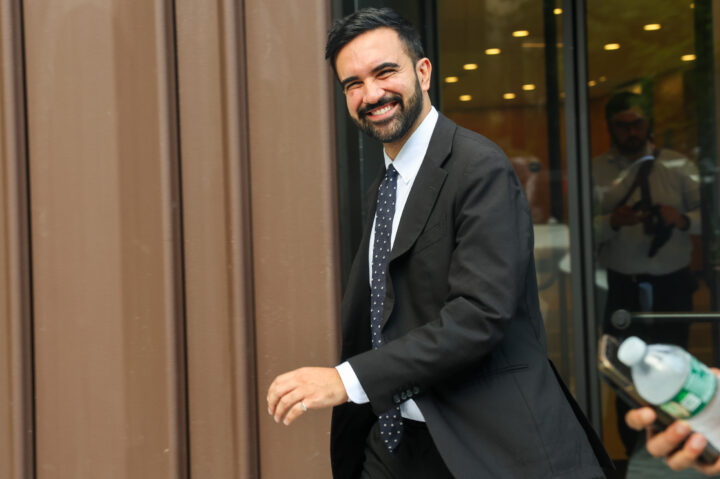
Spencer Platt/Getty Images
Democratic socialist candidate Zohran Mamdani, who won the Democratic primary for mayor of New York City, attends an endorsement event from the union DC 37 on July 15, 2025, in New York City.
In recent weeks, a creeping sense of frustration has settled in among many Jewish leaders in New York City as they have reckoned with the dawning reality that no one is stepping up to organize opposition to Zohran Mamdani, the Democratic nominee for mayor. Without a well-funded outside effort, Mamdani faces few obstacles in the general election despite numerous political vulnerabilities.
The complacency comes even as top Democratic leaders in New York have so far declined to endorse Mamdani, whose antagonistic views on Israel and democratic socialist affiliation have engendered criticism. But with a divided field of warring and baggage-laden candidates, Jewish leaders have privately voiced disappointment at the current state of the race.
“Big-money people are talking every week about how we have to do something, but I haven’t seen a real plan,” said one Jewish community leader who spoke on condition of anonymity to discuss private conversations. “People are just grasping,” he added. “There’s a sense of frustration out there and fear of a letdown.”
“You can’t beat somebody with nobody,” another Jewish leader said in assessing Mamdani’s rivals, including incumbent Mayor Eric Adams, former New York Gov. Andrew Cuomo and Curtis Sliwa, the GOP nominee — all of whom have so far resisted pleas to suspend their campaigns in order to avoid splitting the vote.
While some independent expenditure committees are preparing to spend heavily in the race to target Mamdani, an assemblyman from Queens whose far-left policies have provoked anxiety among Jewish New Yorkers, moderate voters and business leaders, the Jewish leader expressed skepticism that such efforts would ultimately “make a difference” as long as the election remains crowded with multiple opponents.
In the Hasidic enclave of Williamsburg, “the rank and file and donors are concerned” about Mamdani, said a source familiar with the situation. “But at the leadership level, people are mostly thinking that it’s a foregone conclusion” that Mamdani will prevail in November. “There’s not much to do and we have to start adapting and have to try to make amends with him and work with him.”
Jim Walden, an attorney, is also running as an independent alongside Adams and Cuomo, who in recent days have exchanged criticism as Mamdani, leading most polls with a plurality of the vote, stayed away from the headlines while celebrating his recent marriage in his birthplace of Uganda.
In the Hasidic enclave of Williamsburg, “the rank and file and donors are concerned” about Mamdani, said a source familiar with the situation. “But at the leadership level, people are mostly thinking that it’s a foregone conclusion” that Mamdani will prevail in November. “There’s not much to do and we have to start adapting and have to try to make amends with him and work with him.”
“No one thinks it’s going to be good for the Jewish community to be hostile and to be in constant war with the next mayor,” the source said on Monday. “For the community’s sake, we have to move on.”
As the anti-Mamdani coalition has struggled to coalesce more than a month after his shocking primary upset, the organized Jewish community is now largely taking a “wait-and-see” approach to the upcoming election, several Jewish activists told Jewish Insider on Monday.
David Greenfield, who leads the Jewish anti-poverty group Met Council and has been a fierce critic of Mamdani, said that many Jewish leaders are “watching closely to determine if he’ll moderate his socialist positions now that he has secured the Democratic nomination.”
“Zohran has floated possibly keeping NYPD Commissioner Jessica Tisch and that has caught the attention of several community leaders,” Greenfield told JI. “Currently, the race is quiet, partly due to Zohran himself being on vacation this month, but we expect it will significantly heat up again after Labor Day.”
A Jewish political activist who was not authorized to speak on the record echoed that assessment, even as he noted that some Jewish community leaders have been seeking to register new voters and working on “community structuring” in advance of the general election.
Still, he speculated that “if the race stays as is, then there will be a quiet shift to have conversations with Mamdani.”
For now, most mainstream Jewish groups remain hesitant to meet privately with Mamdani, according to a Jewish activist familiar with the matter, but the Democratic nominee has stepped up his outreach to Jewish voters and elected officials — while slightly softening his widely criticized defense of the slogan “globalize the intifada,” a phrase that many Jews interpret as a call to antisemitic violence. Mamdani has refused to personally condemn the slogan, but recently said he now discourages its use, marking a reversal from his primary comments as he seeks to grow his coalition.
“We’re planning to get started in August with messaging,” Jeff Leb, a political consultant who is leading a new super PAC called “New Yorkers for a Better Future Mayor 2025,” said on Monday. “I don’t think that people are sleeping on Zohran,” he said of the race. “I just think they’re making sure they have the resources they have to be active. Right now it’s a little bit early.”
Despite his evolution on the phrase, Mamdani remains a staunch opponent of Israel, backing the Boycott, Divestment and Sanctions movement he has indicated he could implement if elected. He has also suggested he would not visit Israel as mayor — defying a long-standing precedent in a place that is home to the largest Jewish population of any city in the world.
There are, to be sure, a range of anti-Mamdani initiatives underway in the Jewish community and beyond — some of which are expected to pick up in the coming weeks as summer begins to wind down after a period of relative inactivity, people involved in the efforts told JI.
Jeff Leb, a political consultant who is leading a new super PAC called “New Yorkers for a Better Future Mayor 2025” that plans to raise at least $20 million to hit Mamdani, told JI the group has in recent weeks held Zoom calls with more than 500 people and secured commitments as it readies attacks “to educate the public on Zohran’s priorities.”
“We’re planning to get started in August with messaging,” Leb said on Monday, noting that the super PAC is currently “candidate-agnostic” and will get behind Adams or Cuomo later in the race when polling indicates who is most favored. “I don’t think that people are sleeping on Zohran,” he said of the race. “I just think they’re making sure they have the resources they have to be active. Right now it’s a little bit early.”
Meanwhile, Eric Levine, a top GOP fundraiser in New York and a board member of the Republican Jewish coalition, is now organizing a fundraiser for Adams on Aug. 13, featuring former New York Gov. David Paterson and several donors from the legal and financial communities, according to an invite he has circulated within his network in recent days.
The Flatbush Jewish Community Coalition, which endorsed Cuomo in the primary but has not made a decision in the general election, recently launched a voter registration drive to boost Jewish turnout in November, Josh Mehlman, the group’s chairman, said on Monday.
The organization is expecting to register “tens of thousands of new voters,” Mehlman confirmed in a statement to JI. “With the political turbulence and antisemitism that unfortunately surrounds us, it is more clear than ever that the importance of every resident registering to vote for the upcoming and future elections will shape the quality of life and security of our communities,” he explained. “Our renewed efforts reflect that urgency.”
“No one wants to be fighting with the guy,” one Jewish leader said of Mamdani, acknowledging his rhetoric on Israel had evolved but not far enough to satisfy his most ardent skeptics. “No one wants to be in this position. But at the same time, I would put the onus on him. He’s the one who’s going to need to make changes.”
Sara Forman, the executive director of the New York Solidarity Network, a local pro-Israel group whose super PAC endorsed Cuomo in the primary, said the organization is now “keeping a close eye on everything that’s happening” in the race “and on its impact on the Jewish community,” while cautioning against “premature” conclusions at this stage of the election.
“Whether the field of candidates is able to coalesce in some way and what that looks like in September is very different from the end of July,” she told JI on Monday.
Privately, many Jewish leaders have fretted about the seemingly disaggregated and inchoate efforts to oppose Mamdani at a pivotal point in the race — as the current field continues to remain unsettled with limited time until the election.
“No one wants to be fighting with the guy,” one Jewish leader said of Mamdani, acknowledging his rhetoric on Israel had evolved but not far enough to satisfy his most ardent skeptics. “No one wants to be in this position. But at the same time, I would put the onus on him. He’s the one who’s going to need to make changes.”
The social media app hired Erica Mindel, a former Jewish communal professional, to lead the company’s hate speech policy, with a focus on antisemitic content

Photo Illustration by Mateusz Slodkowski/SOPA Images/LightRocket via Getty Images
In this photo illustration a TikTok logo is seen displayed on a smartphone.
TikTok recently hired a new hate speech manager with long-standing ties to the Jewish community, the company confirmed to Jewish Insider, as the social media platform faces growing pressure to confront a sharp rise in antisemitic content.
The streaming platform enlisted Erica Mindel, a former State Department contractor who worked for Ambassador Deborah Lipstadt, the Biden administration’s special envoy to monitor and combat antisemitism, to join TikTok’s global public policy and government affairs team.
The hire comes as TikTok has drawn accusations that it has failed to address a spike in antisemitic and anti-Israel content in the wake of Hamas’ Oct. 7, 2023, terror attacks and amid the ensuing war in Gaza.
In her newly created role, Mindel will “develop and drive the company’s positions on hate speech,” seek to “influence legislative and regulatory frameworks” and “analyze hate speech trends,” with a particular focus on “antisemitic content,” among other duties cited in an official job description shared by TikTok.
Mindel, who previously served as an assistant director of program development at the American Jewish Committee, according to her LinkedIn profile, had briefly worked for the special envoy’s office in the second Trump administration before she was hired by TikTok, the company told JI.
Mindel declined to comment on her new position, which was first reported by The Washington Free Beacon.
The role was initiated after a “high-level convening” the Anti-Defamation League “helped organize last year,” said Dan Granot, the ADL’s national director of antisemitism policy, who in a statement to JI on Sunday said the position was raised as “a key recommendation for all social media platforms” during the meeting.
“In a moment when too many social media platforms are scaling back efforts to fight hate, ADL welcomes TikTok’s establishment of a role focused specifically on hate speech and antisemitism,” Granot added, praising Mindel as a “trusted partner who understands the issue and the stakes, and someone we’ve worked with closely in the fight against online hate.”
TikTok, a popular video app owned by ByteDance, the Chinese technology company, has been facing a looming U.S. ban that President Donald Trump has continued to delay in a series of executive orders. In the interim, the app has worked to address criticism over its handling of antisemitic content — which had become a public relations crisis in the aftermath of the Oct. 7 attacks.
The platform has drawn widespread accusations that it has enabled a surge of misinformation and hateful messaging targeting Jews. The actor Sacha Baron Cohen — who was among a group of Jewish celebrities and content creators that met privately with TikTok in 2023 — said the app was “creating the biggest antisemitic movement since the Nazis.”
The Jewish Federations of North America, meanwhile, last year called TikTok “the most popular social media platform driving antisemitism and anti-Israel sentiments,” arguing the company “has helped fuel a horrific spike in antisemitism” in the aftermath of Oct. 7.
While research has indicated that some TikTok users who amplify antisemitic rhetoric have been able to sidestep the company’s moderation policies, other findings suggest messaging that is contrary to the Chinese government’s positions — such as posts supporting Israel after Oct. 7 — is generally suppressed on the platform.
The U.S. ban, which passed in Congress last year amid national security concerns over the Chinese-owned app and would require the streaming company to find a new buyer or shut down, even fueled its own antisemitic conspiracy theory on TikTok alleging Jews were behind the ban and had outsized control of American politics.
TikTok says it has worked on efforts that have “strengthened policies against hate speech and hateful behavior” amid the war in Gaza, according to a statement issued on the one-year anniversary of Hamas’ attacks.
In materials shared with JI by TikTok, the company said it has implemented “some of the strictest rules against hate, including antisemitism,” citing, among other things, its decision to “name antisemitism as a hateful ideology” in community guidelines, its “zero tolerance policy for antisemitic conspiracy theories and narratives” and efforts to “block searches” for “blood libel,” ‘holohoax” and other terms used on the app.
Despite such efforts, TikTok has continued to face scrutiny. Last month, a bipartisan group of 41 lawmakers wrote to the CEOs of TikTok, Meta and X pressing them to take action “regarding disturbing and inflammatory content circulating” on their platforms “in support of violence and terrorism” following a recent series of antisemitic attacks in Washington and Boulder.
Last week, Reps. Josh Gottheimer (D-NJ) and Don Bacon (R-NE), alongside ADL CEO Jonathan Greenblatt, announced the reintroduction of the STOP HATE Act, which seeks to crack down on antisemitism spreading on social media platforms such as TikTok.
Still, Granot, the ADL’s national policy director, said that the group looks “forward to continued collaboration” with TikTok as the streaming app works with its newly hired hate speech manager.
“While the impact of this role will ultimately be measured by what it delivers,” Granot told JI, “its creation is a promising sign of TikTok’s willingness to take these challenges seriously.”
Jewish Insider’s U.S. editor Danielle Cohen-Kanik contributed reporting.
A series of contradictory and confusing measures paint a picture of an organization struggling to stake out a position on the controversial issues that have divided its members
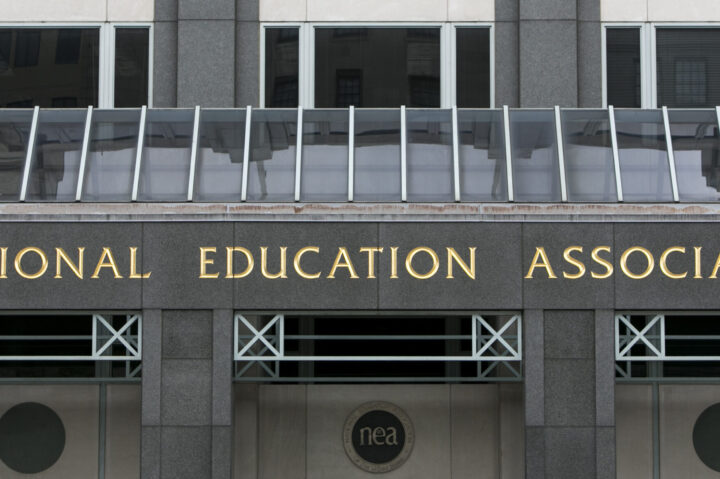
Kristoffer Tripplaar/Sipa via AP Images
A logo sign outside of the headquarters of the National Education Association (NEA) labor union in Washington, D.C. on July 11, 2015.
With a unanimous vote last week rejecting a measure that would’ve cut ties with the Anti-Defamation League, the board of directors of the National Education Association extended an olive branch to frustrated Jewish educators and parents who are concerned about creeping antisemitism within the union’s ranks.
ADL CEO Jonathan Greenblatt told Jewish Insider earlier this week that he was “pleased” to see the NEA reject the anti-ADL measure. But, he added, the union still has a “long way to go” toward making clear that it respects the Jewish community.
Greenblatt’s lingering concern is a sign that the NEA — the largest teachers’ union in the country, with more than 3 million members — has not entirely placated Jewish communal stakeholders. In fact, additional questions have continued to emerge in light of an NEA document that encourages teaching the “Nakba” and that erases antisemitism from the history of the Holocaust.
The Washington Free Beacon reported this week on the NEA’s 2025 handbook, a 434-page report outlining the organization’s “visionary goals” and “strategic objectives.” Among the items included in the dense document are dozens of measures that passed at last year’s “representative assembly,” a convening of the organization’s top leaders from around the country — the same group that, this year, voted to censure the ADL. Several of them have raised eyebrows in the Jewish community.
For instance, the NEA pledged to “celebrate” International Holocaust Remembrance Day with educational materials on the union’s website that “recognize the more than 12 million victims of the Holocaust from different faiths, ethnicities, races, political beliefs, genders, and gender identification, abilities/disabilities, and other targeted characteristics” — with no mention of antisemitism or the Jewish victims of the Nazis. (Another item said that in January, to mark the remembrance day, the NEA’s website will feature a graphic that says “Stand up Against Antisemitism” around a Jewish star.)
One measure said the NEA will use digital communications “to educate members about the difference between anti-Zionism and antisemitism.” Another section promised to “educate members and the general public about the history of the Palestinian Nakba,” or catastrophe, the word Palestinians use to describe the founding of the State of Israel and affiliated displacement of Palestinians.
These contradictory and confusing measures paint a picture of an organization struggling to stake out a position on the controversial issues that have divided its members.
One measure pledges to adopt an antisemitism education plan; meanwhile, another measure seeks to “defend educators’ and students’ academic freedom and free speech in defense of Palestine at K-12 schools, colleges and universities.” It is not clear how any of these goals will be achieved — or what position the NEA will take if the objectives ever come into conflict with each other.
The NEA and its statewide affiliates have faced scrutiny in the two years since the Oct. 7, 2023, Hamas attacks over the politicization of education about Israel and Gaza in classrooms. A report last year found that Massachusetts educators were introducing anti-Israel material into schools. In California, the statewide NEA affiliate began a lobbying push this month against a bipartisan antisemitism bill.
Reversing the anti-ADL measure looked like a step forward for the NEA, but it also came with a step backward. An ADL spokesperson said the “problems identified” in the NEA handbook “underscore how much work it has to do to earn the trust of the Jewish community, Jewish educators and families.”
Some of the measures in the handbook are considered offensive by some Jewish community leaders, but other measures are explicitly focused on countering antisemitism and earned the blessing of Jewish communal leaders. While the contradictory language regarding Jewish issues can create whiplash, it might also open an avenue for dialogue with the union.
An NEA spokesperson declined to comment on any specific measures.
“This document is not a handbook for use in the classroom, but a compilation of the more than 100 resolutions adopted by NEA last year,” NEA President Becky Pringle told JI in a statement. “The NEA has opposed antisemitism throughout its history and is deeply committed to ensuring the safety and inclusion of Jewish educators and students. The NEA regularly shares resources and supports educator workshops on Holocaust education, antisemitism, and ways to promote understanding of Jewish culture, heritage and history.”
The senator asked several pro-Israel organizations to refrain from involvement in races where he endorsed candidates without Jewish communal support

Kevin Dietsch/Getty Images
Sen. Mark Kelly (D-AZ) talks to campaign volunteers on Election Day on November 08, 2022 in Tucson, Arizona.
Sen. Mark Kelly (D-AZ) is facing new scrutiny from some Jewish community leaders in Arizona who are frustrated by his endorsements boosting the activist left in a series of recent House primaries in which he has withheld support for pro-Israel candidates and has even worked to actively oppose their campaigns behind the scenes, according to people familiar with the matter.
Kelly’s engagement has strained what had been seen as a positive relationship with the pro-Israel community in Arizona, according to multiple local Jewish leaders who have voiced disappointment with his approach. Meanwhile, his recent interventions have raised questions about the political motivations of the Democratic senator in a key battleground state who has long been associated with his party’s moderate, centrist wing.
The most recent source of tension with Jewish and pro-Israel leaders stems from Kelly’s endorsement of Adelita Grijalva in a Tucson House primary this month to succeed her late father, former Rep. Raul Grijalva (D-AZ), a longtime critic of Israel who died in March.
While the younger Grijalva, a former Pima County supervisor, has a limited record of commentary on Israel and Middle East policy, her affiliation with a range of far-left leaders, including Rep. Ilhan Omar (D-MN) and Alexandria Ocasio-Cortez (D-NY), has raised concerns among mainstream Jewish activists who favored one of her primary opponents, Daniel Hernandez, a former state lawmaker and pro-Israel progressive.
Grijalva, who struggled to articulate her positions on key issues such as conditioning aid to Israel — suggesting during the race, for instance, that U.S. involvement in the ongoing conflict “has not been helpful at all” — handily won the primary and is all but assured a seat in the deeply Democratic district.
“Senator Kelly supports Adelita because she’s ready to fight for his home district in Congress, and clearly the district agrees,” a spokesperson for Kelly said in a statement to Jewish Insider on Thursday. “He respects that some folks may have a difference of opinion, and values the strong relationships he has in the Arizona Jewish community.”
Still, the pro-Israel community in Arizona was troubled that Kelly had bolstered her campaign, owing in part to their differences in tone on Middle East policy. Among other issues, Grijalva called for a ceasefire just 10 days after Hamas’ Oct. 7, 2023, terror attacks, whereas Kelly expressed continued support for Israel in the aftermath of the incursion and faced protesters outside his Phoenix office who demanded he back an end to the war. While serving as a county supervisor, Grijalva had also reluctantly voted for a resolution condemning Hamas, voicing frustration that she “couldn’t talk about peace and humanitarian aid” for Gaza.
One Jewish activist in Tucson, who like others spoke on condition of anonymity to avoid reprisals, called Kelly’s endorsement “a slap in the face” to the pro-Israel community in Arizona. “He tries to make himself seem like a very moderate, pro-Israel guy — especially when he’s fundraising,” the local activist claimed. “There’s a lot of mistrust in the community right now.”
From an even more personal standpoint, the senator and his wife, former Rep. Gabby Giffords (D-AZ) — who also endorsed Grijalva — have long been close with Hernandez and his family. In 2011, Hernandez, who was then a 20-year-old intern for Giffords, had been credited with helping to save her life immediately after she was shot in the head by a gunman during a political event in the Tucson area.
Despite such history, Kelly privately urged a leading pro-Israel group, Democratic Majority for Israel, to stay out of the primary, according to people familiar with the matter who spoke with JI this week. The organization’s political arm, DMFI PAC, ultimately endorsed Hernandez a month before the election, but it did not invest financial resources in the race, where polling indicated he was unlikely to prevail. He came in third place with just 14% of the vote.
“If you know the story, your mouth was wide open,” one Jewish community leader in Arizona remarked on Kelly’s decision to oppose Hernandez. “It could easily have been ‘I can’t help you but I’m not going to hurt you.’ But it wasn’t — it was like a stab in the heart.”
In a statement to JI on Wednesday, a spokesperson for DMFI PAC — which has backed Kelly in both of his previous Senate races — said the group “makes its own decisions on endorsements and spending,” adding, “No one else does.”
Hernandez did not respond to a message seeking comment.
Thomas J. Volgy, a former mayor of Tucson and a professor of political science at the University of Arizona, pushed back against accusations that Kelly is now emboldening the party’s far left. He said that Kelly is “not a single-issue politician” and had likely endorsed Grijalva based on “his understanding that she was the most qualified candidate in the field” — and “because she is consistent with his position on a range of issues, including on Israel but also across the spectrum.”
In a more closely contested Phoenix House race last cycle, Kelly had also engaged in private outreach to AIPAC, asking the pro-Israel lobbying group to keep away from the open-seat race in which he endorsed Raquel Terán, a left-leaning former state lawmaker and party chair, according to people with knowledge of the situation.
Like Grijalva, Terán, a prominent progressive activist who drew support from Squad-aligned House members, refused to publicly clarify her views on key Middle East policy questions during the race, fueling concerns among Jewish leaders who had backed Yassamin Ansari, a former vice mayor of Phoenix endorsed by DMFI’s political arm. Terán had also drawn criticism from Jewish community members over her decision to oppose an antisemitism reporting bill that had been widely approved by the Arizona state Legislature while she was in office.
In his outreach to AIPAC, whose super PAC has engaged in several recent primaries, Kelly sought to allay reservations with Terán’s continued lack of clarity on Middle East policy issues, offering assurances that if she were elected, he would help to personally oversee her House votes related to Israel, according to people familiar with the situation.
A spokesperson for AIPAC, which chose not to get involved in the race last year, declined to comment.
Ansari, the first Iranian-American to hold public office in Arizona who had explicitly opposed placing conditions on aid to Israel, won the primary by just 39 votes after a closely watched recount, buoyed in part by nearly $300,000 in outside spending from DMFI PAC.
Jason Morris, a pro-Israel activist and attorney in suburban Phoenix who supported Ansari and was informed of Kelly’s conversation with AIPAC during the race, said he found the senator’s endorsement of Terán “baffling,” and he voiced skepticism about the senator’s apparent proposal to serve as a counsel on Middle East issues in Congress.
Morris acknowledged that he assesses candidates “from a much more narrow perspective than the senator,” a former NASA astronaut and Navy pilot who is perhaps best known for his advocacy on gun control. But he said that Kelly’s efforts have left an impression that the senator is largely unconcerned about rising hostility toward Israel within the party, arguing that his endorsements are, inadvertently or not, “fueling the left and the most progressive Israel haters in the Capitol.”
Jewish and pro-Israel activists in Arizona have been puzzled over Kelly’s moves, with some speculating that he is seeking to appease the left even as he continues to be identified as a moderate Democrat. “He’s watched the party shift to the left in Arizona,” one pro-Israel leader told JI, arguing that Kelly has helped “create a permission structure” in the state for establishment Democrats to support candidates who are not seen as dependable allies on Israel. “I think he thinks he can have his cake and eat it too.”
“He wants to make sure that he’s got cred with the lefties,” another Jewish community leader said of Kelly, who saw his national profile rise last year as he was cited among a handful of candidates under consideration to be former Vice President Kamala Harris’ running mate. “In the Jewish community in Arizona, there’s a growing anxiety of, is this what’s to come?”
Kelly, who has visited Israel at least twice since the Oct. 7 Hamas attacks, has maintained his support for Israel in the Senate, even as he has been a critic of Israel’s military actions in Gaza and its handling of the unfolding humanitarian crisis in the enclave.
Last year, he raised the prospect of conditioning aid to Israel if the country did not “do better” to prevent civilian deaths in Gaza, though he later clarified that he was not yet ready to support such measures.
More recently, he has registered concerns with President Donald Trump’s decision to strike Iran’s nuclear facilities without congressional approval. In April, Kelly, who serves on the Senate Armed Services Committee, was among just three Democrats who broke with his party to confirm Elbridge Colby as under secretary of defense for policy — despite the nominee’s public skepticism of support for Ukraine and comments on containing a nuclear Iran that had provoked anxiety in the pro-Israel community.
But while some pro-Israel leaders in Arizona have interpreted such activity as a sign that Kelly is now beginning to gradually move away from reflexively backing Israel, Morris, the Phoenix-based attorney, said he is more concerned about what he called the senator’s “indifference” to the pro-Israel community as it raises objections to his recent endorsements in key House races.
“Ultimately,” Morris told JI in a recent interview, “you have to conclude that this is about what’s best for the senator — and not necessarily what’s best for the pro-Israel community.”
Greenblatt told JI: ‘We've got a long way to go to make sure that the ADL and our community is respected for who we are’

Jemal Countess/Getty Images for Anti-Defamation League
Jonathan Greenblatt speaks onstage during the 2024 ADL “In Concert Against Hate” at the Kennedy Center Concert Hall on November 18, 2024 in Washington, DC.
Days after the National Education Association walked back a decision by its members to cut ties with the Anti-Defamation League, ADL CEO Jonathan Greenblatt praised the move but cautioned that the union still has a “long way to go” toward making clear that it respects the Jewish community, he said in an interview on Monday.
“I am glad that they recognize what’s wrong about calling out the most consequential organization fighting antisemitism at a time of rising antisemitism,” Greenblatt told Jewish Insider. “Yet at the same time, there are elements of even the statement that lead me to believe that we’re still in this fight. We’ve got a long way to go to make sure that the ADL and our community is respected for who we are.”
While the board of directors of the NEA — the largest teachers union in the country — condemned antisemitism in the statement released last week, the board also stated that the organization’s rejection of the anti-ADL measure was “in no way an endorsement of the ADL’s full body of work.”
Further, the NEA called on the ADL “to support the free speech and association rights of all students and educators.”
“We strongly condemn abhorrent and unacceptable attacks on our members who dedicate their lives to helping their students thrive,” the NEA’s board of directors continued. “Our commitment to freedom of speech fully extends to freedom of protest and dissent whether in the public square or on college campuses.”
That rhetoric surprised Greenblatt, who said he was “pleased” to see the NEA shoot down the anti-ADL measure but concerned and confused about the inclusion of language that he viewed as a swipe at the ADL.
“The idea that the ADL — which, of course, all of our work is predicated on protecting the First Amendment — that we are ‘not supporting the free speech of all students and educators?’ Give me a break. Find the evidence to even support this assertion,” Greenblatt said. “We don’t have a problem with freedom of assembly. We have a problem with those people who use that speech to slander Jews or other minorities. We have a problem with those who use the right to associate to attack Jews and other marginalized communities.”
The NEA and the ADL have never had a formal partnership, Greenblatt confirmed. The ADL would be “amenable” to working more formally with the NEA, but he said their relationship was “not quite that far along.”
A Jewish activist told JI, ‘I’m concerned by Fateh’s endorsement, but I’m more concerned about the movement that produced the endorsement for him’
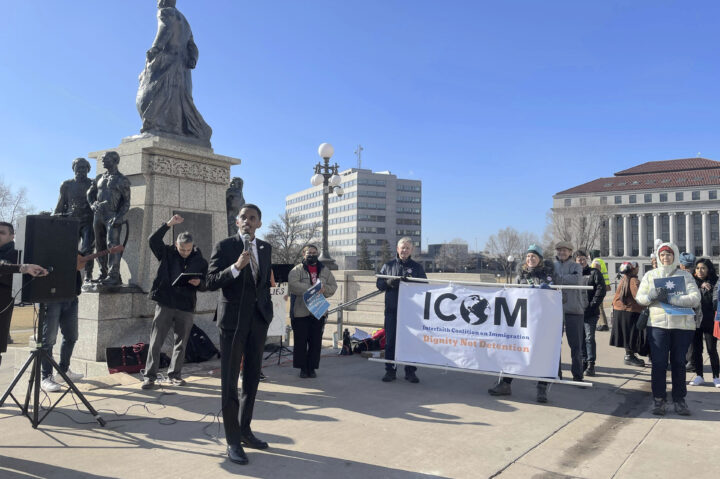
Trisha Ahmed/AP Photo
Minnesota Sen. Omar Fateh, of Minneapolis, speaks in front of the state capitol building in St. Paul, Minn., on Monday, Feb. 12, 2024.
Jewish community activists in Minneapolis are voicing concerns about the rise of state Sen. Omar Fateh, a far-left lawmaker who, in a surprise upset, narrowly clinched the state Democratic Party endorsement on Saturday against incumbent Mayor Jacob Frey.
Fateh, a 35-year-old democratic socialist, has rarely commented on Israel or rising antisemitism during his time in the state Senate, even as he called for a ceasefire in the war between Israel and Hamas just 10 days after the Oct. 7, 2023, terror attacks.
But his close alliances with anti-Israel voices such as the Twin Cities arm of the Democratic Socialists of America — which backs efforts to boycott and divest from Israel — have raised questions over his approach to key issues and his potential outreach to the organized Jewish community as he vies for the mayorship.
In its mayoral endorsement questionnaire, the DSA asked candidates to pledge “to refrain from any and all affiliation with the Israeli government or Zionist lobby groups” — citing AIPAC, J Street and even the nonpartisan Jewish Community Relations Council.
Fateh’s campaign did not respond to a request for comment about whether he signed the pledge, but its existence is “alarming,” said Ethan Roberts, the deputy director of the Jewish Community Relations Council of Minnesota and the Dakotas.
“It’s instructive that Fateh sought and received the DSA endorsement,” Roberts told Jewish Insider in an interview on Monday. “There’s obviously a clear contrast between Mayor Frey, who’s a Democrat — and Sen. Fateh, who’s a DSA-er.”
Still, Roberts echoed other community activists in warning against drawing parallels between Fateh’s victory and Zohran Mamdani’s recent upset in New York City’s mayoral primary, noting that the party’s endorsement is not necessarily reflective of broader voter sentiment in Minneapolis — even as it comes with organizational muscle that could help to boost his insurgent campaign.
Fateh, a Muslim of Somali descent, celebrated his endorsement from the state party over the weekend as “a message that Minneapolis residents are done with broken promises, vetoes and politics as usual,” he wrote on social media.
For his part, Frey, a Jewish Democrat seeking what would be his third and final term as mayor, is appealing the vote, alleging that several ballots had gone uncounted during the state party convention. His campaign filed a formal challenge with the state party on Monday.
“Everyone who endured this multi-hour convention process deserved to have their voices heard,” Sam Schulenberg, the mayor’s campaign manager, said in a statement on Monday, while pointing to what he dismissed as a “highly flawed process that clearly missed or did not count a large percentage of the votes cast.”
Frey, the second Jewish mayor to represent Minneapolis, has been outspoken against rising antisemitism in recent years, and has butted heads with the City Council over anti-Israel resolutions he has dismissed as one-sided.
If the endorsement of Fateh holds, it will “create a lot of headwinds” for Jewish party activists, Manny Houle, a pro-Israel party strategist in Minneapolis, told JI, anticipating a challenging relationship with Fateh and his allies on the left.
“We always have an open hand, but if somebody bites it we don’t keep our hand extended — and we expect that to be the same here,” Houle said. “He’s surrounded by a lot of people who have made their positions clear.”
Houle also pointed to emerging concerns about a DSA-backed resolution that abruptly passed near the end of the convention on Saturday — opposing any city investment or contracts with what it called “entities complicit in the occupation and genocide in Gaza.”
Houle said he was working with some groups that are preparing challenges to the resolution, saying that it could cause “long-term issues” for the Jewish community — particularly in “how it is pigeonholed around the conflict” in the Middle East. “There’s no nuance in this conversation anymore,” he told JI.
One Jewish party activist, who spoke on condition of anonymity to address a sensitive topic, said that the resolution was “emblematic” of his reservations around Fateh’s bid.
“I’m concerned about what this means for Jewish safety in Minneapolis,” he told JI. “I’m concerned about what his relationship will be with local Jewish organizations, if he’s elected.”
Yiscah Bracha, a Jewish activist involved in local Democratic politics, also expressed concerns about the trajectory of the race as Frey now finds himself playing defense.
“I’m concerned by Fateh’s endorsement,” she said, “but I’m more concerned about the movement that produced the endorsement for him.”
The 78-year-old congressman, who co-chairs the Jewish Caucus in the House, has been working to build support for Mamdani in the Jewish community
Michael M. Santiago/Getty Images
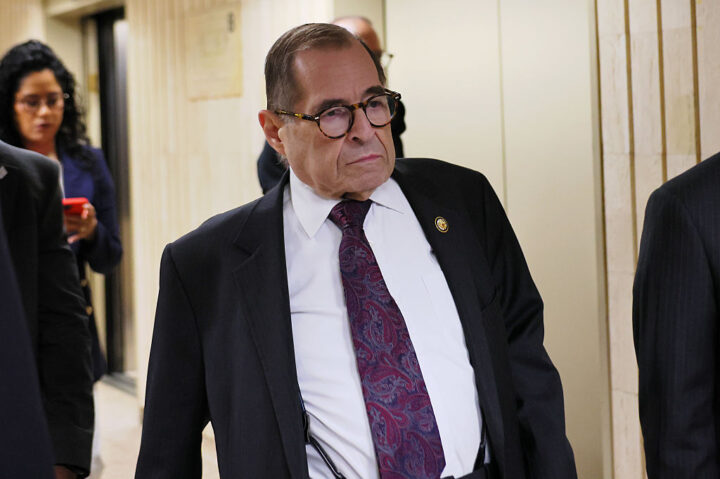
Rep. Jerrold Nadler (D-NY) arrives to view proceedings in immigration court at the Jacob K. Javitz Federal Building on June 18, 2025 in New York City.
Rep. Jerry Nadler (D-NY) is facing backlash from some Jewish community leaders over his efforts to boost Zohran Mamdani, the Democratic nominee for mayor of New York City whose criticism of Israel and refusal to condemn calls to “globalize the intifada” have stoked accusations of antisemitism.
Nadler, the dean of New York City’s congressional delegation and co-chair of the House Jewish Caucus, endorsed Mamdani shortly after his stunning upset over former New York Gov. Andrew Cuomo in last month’s primary, and he has been working behind the scenes to build support for the nominee within the Jewish community, sources told Jewish Insider.
The 78-year-old congressman organized a meeting on Monday between Mamdani and state and local Jewish elected officials, some of whom chose not to join because of Mamdani’s hostility toward Israel, according to one person familiar with the matter.
Nadler’s advocacy has fueled frustration and anger among some local Jewish community activists and elected officials who oppose Mamdani and feel that the congressman is misguided in his support for the democratic socialist Queens assemblyman whose stances on Israel he has long rejected. Others suggested that Nadler chose to endorse Mamdani simply to ward off a primary challenge from his left as he plans to seek reelection next year — amid speculation he could soon retire from the House.
Nadler’s support for Mamdani stands in sharp contrast to the lack of endorsements for the Democratic mayoral nominee from some of the state’s leading New York Democratic officials, including Senate Minority Leader Chuck Schumer (D-NY), House Minority Leader Hakeem Jeffries (D-NY), Gov. Kathy Hochul and Sen. Kirsten Gillibrand (D-NY).
Kalman Yeger, an Orthodox assemblyman from Brooklyn who has called Mamdani “one of the most vile antisemites in public office,” said of Nadler that “many people are disappointed that someone who considers himself a pro-Israel Democrat and fighter against antisemitism would endorse the assemblyman just a day after the primary, without addressing any of the multitude of his troubling positions.”
“I have no idea why the congressman felt the need to make his endorsement, but it’s certainly fair to question his judgment and commitment to standing up for the safety of Jewish New Yorkers,” Yeger, a former city councilman who shared representation with Nadler of the Hasidic enclave of Borough Park in Brooklyn, told JI on Monday.
Nadler, for his part, has said he has spoken to Mamdani “about his commitment to fighting antisemitism,” but the congressman has remained relatively quiet with regard to their differences on Israel. While Mamdani has long backed the Boycott, Divestment and Sanctions movement against Israel, for instance, Nadler has characterized BDS as a form of “pernicious antisemitism” and touted his “opposition to efforts legitimize and expand” the movement “within New York’s higher education institutions.”
Mamdani, 33, has also repeatedly declined invitations to speak out against the phrase “globalize the intifada,” which critics view as a call to antisemitic violence.
Nadler’s congressional colleagues in New York who have so far refrained from backing Mamdani — including Schumer and Jeffries — have indicated that Mamdani’s continued refusal to condemn the slogan remains a key sticking point in their evaluation of the nominee as he seeks to shore up Democratic support.
Mamdani, who is facing a crowded general election field including Cuomo and Mayor Eric Adams, both running as independents, has rejected accusations of antisemitism, while pledging to protect the safety of Jewish New Yorkers amid a rise in anti-Jewish hate crimes.
A spokesperson for Nadler said the congressman has “reiterated” to Mamdani that he is “a strong Zionist and that he believes in a democratic Jewish state,” which the nominee has declined to support.
“We are working with him to inform him about concerns within the Jewish community,” the spokesperson told JI, noting that the meeting with Jewish leaders on Monday was a part of such outreach and that the nominee “is listening.”
Mamdani’s team did not respond to a request for comment about the meeting with Jewish officials brokered by Nadler.
Some Jewish community activists expressed anger that Nadler has helped validate Mamdani among Jewish voters without first having sought public reassurances other Democratic leaders seem to be awaiting.
“There’s definitely a frustration that Jerry just endorsed him for free, so to speak,” said one Jewish leader who asked to remain anonymous to speak candidly, claiming that Nadler had “thrown the Jewish community under the bus” to protect his seat in Congress.
Jeff Leb, a political consultant involved in Jewish causes who is helping to organize a newly created anti-Mamdani independent expenditure committee, said Nadler had “sold out” the Jewish community in backing the nominee, adding that the congressman is “clinging to his seat.”
“He is very, very nervous about having a progressive opponent backed by Zohran if he makes the bad decision to run again,” Leb told JI on Monday.
Nadler’s team insisted that he is not concerned about a challenge, even as the congressman’s district — which covers Manhattan’s Upper East and West Sides — voted overwhelmingly in favor of Mamdani and Brad Lander, the Jewish comptroller who cross-endorsed with the nominee during the primary.
'You should write about what you know, and if there’s anything we know, it’s Jewish summer camp,' producer Shai Korman told JI

K180 Studios
Sarah Podemski stars as Camp Daveed's director Mara.
As summer heats up, Jewish adults looking for an escape from the fraught state of world Jewry may find themselves reflecting on a seemingly simpler time — getting competitive over color war or gaga ball and singing Debbie Friedman songs around a campfire at Jewish sleepaway camp.
That sense of nostalgia for one’s Jewish summer camp years is doled out liberally in “The Floaters,” a new film that centers on the fictional Camp Daveed and a group of outsider teens called the floaters.
“The Floaters” tells the story of Nomi (Jackie Tohn), who is freshly ousted from her rock band and reluctantly takes a job from her best friend Mara (Sarah Podemski), who is now camp director at their childhood Jewish summer camp. Nomi is charged with producing the camp play with the group of “Breakfast Club”-inspired campers.
The comedy was filmed at Camp Tel Yehudah in Barryville, N.Y. — where the film’s three sibling producers grew up, and where their parents met. “You should write about what you know, and if there’s anything we know, it’s Jewish summer camp,” Shai Korman, who produced the film alongside his sisters, Lily and Becky, told Jewish Insider. The movie was directed by Rachel Israel and written by Brent Hoff, Andra Gordon and Amelia Brain.
Korman told JI that “The Floaters” — which began production about a month before the Oct. 7, 2023, terrorist attacks in Israel — was not created to counter rising antisemitism. Rather, Korman said, “our goal was expanding and deepening the definition of how Jews are represented on screen.”
“We try to push the movie beyond lox and bagels,” he said, noting that the sibling trio specifically aimed to “put on screen Jewish women that exemplified the Jewish women that raised us, that were leaders and mentors.” Camp Daveed is run by women, from camp director Mara to the camp’s rabbi, Rabbi Rachel.
Several iconic films, such as “Wet Hot American Summer” and “Meatballs,” were also inspired by Jewish camps. But in “The Floaters,” “we talk about the rules of kashrut,” Korman said. “You see Orthodox and secular kids all together, reflecting the world we grew up in.”
Korman said an important aspect of that representation was casting all of the Jewish roles with Jewish actors — which includes Persian, Latino and Asian Jews.
“Making these kind of stories does help combat negative stereotypes about Jews,” Korman told JI. “But we came from it more from the joyful affirmative we want to expand.”
Like most summer camps itself, the movie is apolitical. Still, it doesn’t shy away from briefly talking about the Israeli-Palestinian conflict and other debates within the Jewish community. In one scene, campers make maps of Israel out of ice cream. “That’s the kind of thing that used to happen at camp when we were there,” Korman reflected. A counselor responds that one of the maps holds the solution to the Israeli-Palestinian conflict.
In another scene, Rabbi Rachel pushes for discussions about “the hard stuff,” including Israel and “all the ways the Torah has excluded or offended you.” The idea is rejected by the camp director, who says she would get angry calls from parents if those seminars took place.
“If people go away from this movie thinking it’s some kind of political statement, they might want to take a moment of reflection, because what we’re doing is showing an authentic experience,” Korman said. “The movie is not about Israel, but Israel is part of the fabric of the story and the environment because that’s what Jewish summer camp is like.”
“The Floaters” premiered in June for a mostly non-Jewish audience at the Bentonville Film Festival in Arkansas. While the film has specific details that “only camp kids would know,” Korman said — for example, the chaos that ensues after dairy spoons are switched with meat ones in the camp’s kosher kitchen — “for people who aren’t Jewish,” he continued, “it will make them excited to either learn more or feel like they’re in on it. We believe the more specific you get, the more universal you can be.”
Currently only available for private screenings, the film’s West Coast premiere is slated for Aug. 3 at the closing night of the San Francisco Jewish Film Festival.
Columbia’s Hillel director said that the university is on track for a large incoming class of Jewish freshmen next year

CHARLY TRIBALLEAU/AFP via Getty Images
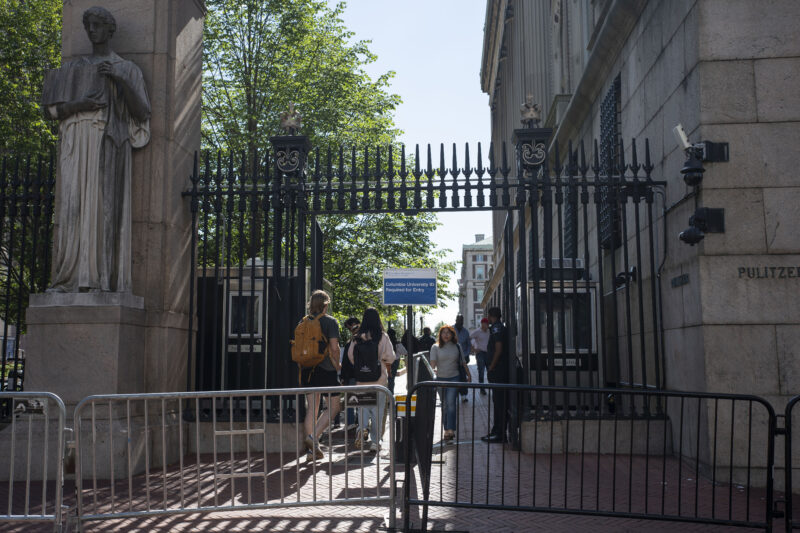
Students are seen on the campus of Columbia University on April 14, 2025, in New York City.
Earlier this year at a symposium in New York City, Jewish scholars gathered to analyze the recent surge of antisemitism on college campuses and debate whether Jewish students still belong at the country’s elite bastions of higher education.
“I certainly don’t think that we should abandon great citadels of learning or be chased out of them, although to be there takes fortitude that I don’t think should be asked of every student,” Rabbi David Wolpe, a former visiting scholar at Harvard University Divinity School, said during the event’s opening address. “So I’m going to give a selective answer: it depends who.”
Over the next two months, college freshmen will embark on new chapters at universities around the country. Many Jewish students have found appeal in other top schools, such as Vanderbilt in Nashville, Tenn., and Washington University in St. Louis, where administrators were quick to enforce university rules amid rising antisemitism in the aftermath of the Oct. 7, 2023, terrorist attacks, and therefore avoided much of the chaos that played out on other campuses.
But some Jewish students are still seeking admission to the country’s most prestigious schools.
Who are these students making the choice to display the fortitude that Wolpe referenced by attending Columbia and Harvard —- two Ivy League campuses that have been beset by nearly two years of controversy over anti-Israel encampments and classroom disruptions, physical assaults of Jewish students and battles with the federal government, including potential loss of accreditation — over an alleged failure to address antisemitism?
Leah Kreisler, a recent graduate of Winston Churchill High School in Potomac, Md., decided in ninth grade that she wanted to attend Columbia. Kreisler plans to enroll in Columbia’s dual-degree program with the Jewish Theological Seminary and will begin next year, following a gap year in Israel.
Recent events have only reinforced Kreisler’s dream of attending the storied institution. “Columbia has always had a politically charged environment and I honestly think that fits a part of who I am,” she told Jewish Insider. “I like having those kinds of discussions and engaging with people I disagree with. That spirit drew me to the school.”
She’s also hopeful that by the time she arrives at Columbia for the 2026-27 school year, “things will get figured out.” The university is in talks with the federal government to restore the institution’s federal funding, which was slashed in March due to the antisemitic demonstrations that have roiled the campus since Oct. 7.
Still, Kreisler admitted she’s “a little bit scared” to face antisemitism, which she hasn’t directly encountered in her tight-knit D.C. suburb with a sizable Jewish community. “There will probably be people in the streets doing antisemitic things,” she said, noting that she often gets “weird looks from Jewish members of the community” when she shares her plans to attend Columbia.
Laura Hosid runs a private business in Potomac guiding high school students through the college admissions process. She works with many students like Kreisler who are “often willing to overlook [antisemitism] at schools like Harvard and Columbia, if they can get in,” Hosid, who is Jewish, told JI.
“At slightly less selective schools, though, it’s more of a factor,” she said. “Students are willing to look away if there’s too much anti-Israel stuff.”
“Jewish life at Columbia is Dickens-esque: the best of times and the worst of times,” said a Jewish Columbia alum who requested to remain anonymous. “There are real challenges, but at the same time, you can go to Columbia Hillel, the Kraft Center for Jewish Life, and access the most interesting people in the world. Bob Kraft shows up for events,” he said, referencing the billionaire owner of the New England Patriots for whom the center is named.
“I’m certainly not discouraging students if they are interested in schools like Columbia and Harvard,” Hosid continued. “I’m just making sure that they are well aware of what’s going on there and how it compares to what the climate is like at other schools.”
A Jewish Columbia alum who requested to remain anonymous told JI that he still sees his alma mater as “an amazing New York City school with an incredible alumni network.” So he was supportive when his daughter, an incoming Columbia freshman, committed to the university.
“Jewish life at Columbia is Dickens-esque: the best of times and the worst of times,” he said. “There are real challenges, but at the same time, you can go to Columbia Hillel, the Kraft Center for Jewish Life, and access the most interesting people in the world. Bob Kraft shows up for events,” he said, referencing the billionaire owner of the New England Patriots for whom the center is named.
In 1967, Columbia’s student body was 40% Jewish, according to a Jewish Telegraphic Agency report at the time. But even as Jewish enrollment at Columbia has declined since then, it still has one of the highest percentages of Jewish undergraduates in the Ivy League, at an estimated 22%. “The numbers for this year’s incoming class are quite strong,” Brian Cohen, executive director of Columbia Hillel, told JI.
Cohen said that the center’s “top priority is to make sure that every Jewish student feels seen and supported and part of a vibrant Jewish community from the moment they arrive at Columbia University.”
“Everything we hear anecdotally is that the number of applications of Jewishly involved students to Harvard were stable — if not increased — from last year to this year,” said Rabbi Jason Rubenstein, the director of Harvard Hillel.
That’s been Hillel’s goal for years — even before antisemitism reached record highs on campus. But Cohen noted that for the past two academic years, “everything is ramped up.”
“We want to make sure that when we meet students and families face-to-face they already have some idea of who we are and the relationship isn’t starting from square one,” he said, outlining two priorities. “One is that students understand that they are entering into this thriving, diverse Jewish community on campus. [The second is] that, should any problems arise during their time at Columbia, they have trusted resources to go to that are easily accessible and can help support them in navigating the various university processes.”
Rabbi Jason Rubenstein, the director of Harvard Hillel, is similarly spending the summer preparing for a new class of Jewish students. He’s hearing less concern around antisemitism from incoming students and their parents compared to last year. “I think that’s a combination of all of us adjusting our baselines and knowing what we’re getting into, and that last year was calmer on campus than the year before.”
Like Columbia, Harvard has had billions of dollars in federal grants and contracts frozen by the Trump administration. The university filed suit against the government in April, claiming that the cuts violate the First Amendment. A 300-page antisemitism report released by the university in April described “severe problems” that Harvard’s Jewish students have faced in the classroom, on social media and through campus protests.
“Everything we hear anecdotally is that the number of applications of Jewishly involved students to Harvard were stable — if not increased — from last year to this year,” Rubenstein said. Ramaz, a Modern Orthodox Jewish day school in Manhattan, for instance, admitted five students to Harvard the past admissions cycle, with four planning to attend. “That’s the highest in living memory,” Rubenstein said.
One of the Ramaz graduates starting at Harvard this fall is Stella Hiltzik, who grew up hearing “incredible stories” from her mother’s time on the Boston campus. “But it wasn’t until I visited Harvard last year that I decided that was the place I wanted to be,” Hiltzik, whose major is undecided, told JI. She was drawn to Harvard “even despite all of the crazy things happening on campus” after seeing “how supportive, warm and comforting Jewish life on campus is — especially the Chabad. It feels like a sense of home,” Hiltzik said.
“Despite everything going on, when I say I’m going to Harvard, most people are proud of me and supportive,” Hiltzik continued. “But there are some people who ask me, ‘What are you thinking?’ For me, it’s honestly a cool conversation to have, because I get to tell them how I’m excited to be a Jewish voice on campus during these hard times.”
“Despite everything that has happened at Columbia,” Leah Kreisler, a recent graduate of Winston Churchill High School in Potomac, Md., said, “I don’t think that the solution to antisemitism is to remove ourselves from these institutions. That’s been my mentality throughout the college [application] process.”
“Jewish students are not being dissuaded,” Rubenstein said. “Which is a great thing because some people are chanting ‘Zionists are not welcome here’ and the one thing they most want is Jewish students to not come here.”
Students like Hiltzik and Kreisler offer a quiet rebuke to the billionaire alums of the Ivies who have begun to withhold their considerable donations. One Israeli venture capitalist went as far as to try to lure Jewish students attending Ivy League schools to transfer to universities in Israel.
“Despite everything that has happened at Columbia,” Kreisler said, “I don’t think that the solution to antisemitism is to remove ourselves from these institutions. That’s been my mentality throughout the college [application] process.”
“People shouldn’t be afraid to go to any of these schools,” echoed Hiltzik. “At the end of the day, you’re going to get a good education and you’re going to show everyone how cool it is to be a proud Jew. I feel, in a sense, that this is my version of fighting for my people.”
The congressman once again declined to endorse Zohran Mamdani in the NYC mayoral race but said he is ‘likely to win’

Tom Williams/CQ-Roll Call, Inc via Getty Images
Rep. Ritchie Torres (D-NY) is seen in the U.S. Capitol on Friday, June 28, 2024.
Rep. Ritchie Torres (D-NY) said Wednesday that he’s unlikely to mount a primary challenge against New York Gov. Kathy Hochul, after months of circling a potential run for that office.
“I’m unlikely to run for governor. The assault that we’ve seen on the social safety in the Bronx is so unprecedented, so overwhelming that I’m going to keep my focus on Washington, D.C.,” Torres, a favorite of the Jewish community, said on MSNBC’s “Morning Joe.” “So, my heart lies in Washington, D.C. I feel like now, more than ever, we have to fight the catastrophe that is the Trump presidency.”
Hochul’s lieutenant governor, Antonio Delgado, already declared his candidacy against the governor.
Torres also once again declined to endorse Zohran Mamdani, the Democratic nominee for New York City mayor, but said Mamdani is “likely to win.”
“There’s a difference between praising the man in his policies and praising the manner in which he ran his campaign. I mean, when it comes to how he ran his campaign, he’s genuinely a singular figure,” Torres said. “We do have an obligation to learn from his race. And I suspect he won not because he ran on divisive issues like ‘globalize the intifada’ or ‘defund the police.’ He ran on affordability.”
Torres said he spoke to Mamdani on Sunday and that they have “profound differences of opinion, and I’m not going to downplay those differences, but I’m committed to a working relationship with him. I’m committed to continuing dialogue.” He said that the mayor and the city’s congressional delegation have a “mutually necessary relationship, so we will coexist.”
Two Dallas therapists filed suit against their former employer for discrimination and retaliation, alleging they were terminated for speaking out against a policy barring discussion of religious opinions

BSIP/UIG Via Getty Images
Models
One November afternoon last year, Jackie Junger and Jacqueline Katz, both therapists at a private practice in Dallas, sat down with their colleagues for their weekly team meeting. This one-hour gathering was a lifeline for the therapists, where they could discuss challenges their clients were facing and receive advice from their fellow practitioners.
When a non-Jewish therapist asked for help better understanding a Jewish client who was “experiencing trauma with everything going on,” Junger and Katz — both Jewish — were eager to offer insight about the surge in antisemitism in the United States, in the hopes of helping their colleague better serve her client. But before Junger, 29, and Katz, 61, could speak, their supervisor, Dr. Dina Hijazi, shut down the conversation.
“I don’t think that’s a good idea, because you’ll get a one-sided response,” Hijazi told the therapists, according to legal filings.
The next day, Hijazi emailed the team and asked them to avoid discussing the “Palestine Israel topic” because she has “great pain” around the issue. But no one had mentioned the events in the Middle East at that meeting. Junger and Katz each responded to Hijazi’s note: Why, they wondered, would it be considered “one-sided” for Jewish therapists to speak about their understanding of antisemitism and Jewish trauma?
Over the next five days, Junger and Katz would see their lives upended after they chose to raise concerns about antisemitism and double standards against Jewish practitioners and clients.
That’s the key allegation at the heart of a federal lawsuit that Junger and Katz filed last month against D2 Counseling and its co-owners, Hijazi and Rev. Daniel Gowan. The two Jewish therapists claim they were discriminated against for objecting to their supervisors’ handling of antisemitism — and that, ultimately, they faced unlawful retaliation when they were fired days later. On the Monday before Thanksgiving, both received identical voicemails letting them know they had been terminated, saying they were no longer a “good fit” for D2. (An attorney representing Hijazi and Gowan declined to respond to detailed questions, citing the ongoing legal proceedings. The account in this article is based on an interview with Katz and Junger, allegations in their lawsuit and information shared by their lawyer.)
The incident was jarring for both Katz and Junger, they told Jewish Insider this week. But the biggest travesty, they said, is not that they lost their jobs: It’s that Jewish clients at their old practice should no longer expect to receive the highest level of care — because of their religion.
“This Jewish client — I don’t know who it is, obviously, I just know that it’s a Jewish client who is genuinely seeking support for something that they’re having trouble with in their life. It’s real trauma. I think most Jews can appreciate that it’s really traumatic, what’s happening,” Junger told JI. “And they’re not allowed to get competent health care. They have no clue.”
*****
This case is only a single incident experienced by just two of the nation’s more than 100,000 licensed therapists. But it comes amid what Jewish mental health professionals in the United States have described as an increasingly hostile professional environment, where denunciations of Israel are expected and outright antisemitism is no longer a taboo, particularly after the Oct. 7, 2023, terror attacks in Israel.
Earlier this year, the state of Illinois formally reprimanded a social worker who had created a blacklist publicly naming “Zionist” therapists. (The clinicians included on the list said it was just a pretext for targeting Jews.)
In May, Rep. Ritchie Torres (D-NY) warned of a “persistent and pernicious pattern of antisemitism” at the American Psychological Association, the preeminent professional organization for psychologists in the U.S.
Empathy is supposed to be the central tenet of the mental health field, but compassion and understanding are not always extended to Jewish therapists — or worse, their clients.
“Our role is really to facilitate the discussion, to honor their feelings, and to create a safe space — to create a space that [clients] can communicate what they’re experiencing internally, without any sort of feeling that, ‘I’m going to be shut down or marginalized or not taken seriously,’” Katz explained.
It was clear to Junger and Katz soon after the Oct. 7 attacks that team conversations about what was happening in the Middle East would be different from other issues they’d been discussing for years.
“We talk about current events a lot because these things affect our clients,” said Katz. The D2 team had talked about the war in Ukraine soon after it started; abortion access following the Supreme Court’s overturning of Roe v. Wade in 2022; and gun control after a mass shooting at a Texas mall in 2023.
A therapist helping a client work through issues with their sexuality might seek advice from a gay co-worker. Past meetings also included discussions of Mormonism and Islam, according to the complaint filed by Katz and Junger. Hijazi led a conversation about how to help clients who were having an emotional reaction to President Donald Trump’s reelection shortly after it occurred, according to the lawsuit.
“It’s very common to seek peer consultation, supervision from someone who has expertise, whether it’s lived experience or clinical experience,” Junger told JI. “If someone, let’s say, had cancer, and I had a client who’s going through cancer, I might reach out and say, ‘Hey, what would be helpful for me to know?’”
Three days after the Oct. 7 attacks, when the D2 team gathered as they do each Tuesday, Hijazi and Gowan did not address the recent terror attacks.
“We were all very shocked that we weren’t going to address the elephant in the room, as it were, and it quickly fell apart because one of my coworkers brought it up. ‘Aren’t we going to talk about what happened? We’re all very upset and suffering here,’” said Katz. “And it was shut down.”
Lesson learned, according to Katz and Junger: Don’t bring up Israel or Gaza again. It wasn’t an overt order, but the palpable discomfort from Hijazi and Gowan kept a lid on future conversations.
Still, Hijazi’s strong reaction to the conversation about antisemitism a year later, in November 2024, surprised Junger and Katz. No one had mentioned Israel or Gaza. But Hijazi followed up with an email requesting that the “Palestine Israel topic” not be discussed.
“I have great pain around this as I know some of you do as well,” Hijazi wrote in the email, which was shared with JI. “In order for me to work and be present with my clients I have asked that this be kept out of the noon meeting.” (What Hijazi did not share is that her family is Palestinian — a fact her daughter discussed in an online blog post viewed by JI, but one Hijazi didn’t mention to colleagues.)
Katz and Junger did not see how a question about the trauma of a Jewish patient in Texas could be extrapolated to extend to the Israeli-Palestinian conflict, nor did they understand why Hijazi chose to shut down future discussions of Jewish trauma. Separately, they each responded with lengthy emails, screenshots of which were included in the lawsuit.
“I believe every single one of us has Jewish clients, and the more we understand, the better we can service our clients,” Junger wrote in her email.
Katz took issue with Hijazi letting her own emotions guide the discussion, a therapist no-no.
“As a managing partner in this practice I think it was essential for you to be able to manage the inquiry without adopting the victim role and personalizing it to your pain,” Katz wrote in another email. “I understand that you were protecting yourself by leaving the room, however the impact was that some of us felt shut down and unheard.”
The matter only escalated from there, playing out like most modern office dramas: over email, leaving a lengthy digital record.
Hijazi banned the expression of “political or religious opinions” in the group meetings, under the rationale of “safety in the workplace.” “Emotional safety for the group,” she wrote, “will always come before personal agendas.”
But Katz and Junger were still unsure what was political about their earlier meeting and decided to press the point about their concern for Jewish clients. “I think your failure to see that this was not a political conversation is a huge blind spot for you,” wrote Katz. Gowan responded by telling her she was “way over the line,” a sentiment Hijazi echoed.
Over that weekend, on Sunday night, Junger chimed in, too. “I would love some clarification, as I am feeling lots of confusion,” she wrote. “Would wanting more clarity on a Black client experiencing racism violate that policy as well? How about talking about a client who is part of the LGBTQ community and experiencing trauma and discrimination? Are we allowed to talk about their lived experience? Or does this rule only apply to Jewish clients?”
That was Junger’s final message to her bosses about the matter. Katz chimed in after, saying she had the same questions.
A day later, they were both fired.
“It was just outrageous behavior on their part, I think, and so punishing, really. You open your mouth here, and this is what happens to you,” said Katz. “If we weren’t Jewish, [the other therapist] wouldn’t have asked us for supervision. If we weren’t Jewish, we wouldn’t have spoken up. If we weren’t Jewish, we wouldn’t have been let go.”
Their contract required D2 to give them 30 days to finish seeing clients. But they were forced to move to a different office, and asked to pay tens of thousands of dollars stemming from a part of the contract with buyout options and a non-compete clause. (They have refused to pay.)
“I knew antisemitism was on the rise, but to have it so blatant in my face in this way was really shocking. It was honestly a little scary,” said Junger.
*****
Winning an employment discrimination suit is not an easy task. But the lawyers at the Lawfare Project and Winston & Strawn representing Katz and Junger are confident that they have a strong case.
“It’s very rare to see a case like this, a discrimination retaliation case like this, where the employer’s actions are so brazen,” said Jaclyn Clark, the Lawfare Project attorney who brought the case. “I strongly suspect that the employer in this instance just thought that they could get away with it … So from my standpoint, beyond just shining a light on the issue of antisemitism in the mental health field, the politicization of Jewish trauma and all of those things, is also to put these smaller employers on warning.”
Orly Lobel, an employment law expert at the University of San Diego who looked over the complaint, described it as “a strong case, since it is all documented with email exchanges and there is no pretextual reason for the termination,” she told JI.
Junger and Katz’s attorneys allege that they faced discrimination as members of a racial minority, leaning on a 1987 Supreme Court ruling as precedent. L. Camille Hébert, a professor at The Ohio State University’s law school, said the race-based argument could be a tougher bar to clear than if the therapists made an argument about religious discrimination. But she noted that the facts laid out in the complaint paint a picture of discrimination.
“If the facts are as alleged, that all subjects were allowed to be addressed in the meetings other than antisemitism, then there might be a cognizable claim of discrimination based on religion. The defense of ‘workplace safety’ seems not to be a particularly strong one,” Hébert said after reviewing the complaint.
*****
Jewish therapists aren’t the only ones worried about antisemitism in the field. People seeking mental health care are, too, and Junger and Katz say they are right to be concerned.
After she was fired by D2, Junger created a list of Jewish therapists in the Dallas area to share with the people in the Jewish community who come to her asking for a referral. Since Oct. 7, she has seen more people seeking out a therapist who understands Jewish issues — and she understands why.
“Maybe a while ago I would have been like, ‘No, it’s a therapist job to [listen]. They’re not political. It’s OK,’” said Junger. “Now I’m like, ‘I get that.’ It makes sense to want to have safety and know that you have a real safe space to be able to process things that are directly impacting us.”
Plus, Bibi plans a Beltway blitz

Jemal Countess/Getty Images for Fair Share America
Sen. Chris Murphy (D-CT) speaks at the U.S. Capitol on April 10, 2025 in Washington, DC.
Good Tuesday morning.
In today’s Daily Kickoff, we look at Sen. Chris Murphy’s leftward shift on Israel, and spotlight Rep. Raja Krishnamoorthi’s congressional votes and relations with Illinois’ Jewish community as he mounts a bid for Senate. We cover Israeli Prime Minister Benjamin Netanyahu’s upcoming trip to Washington, and report on a new lawsuit alleging the Nysmith School in Northern Virginia discriminated against Jewish students. Also in today’s Daily Kickoff: Doron Spielman, Karen Diamond and Susan Rice.
What We’re Watching
- Secretary of State Marco Rubio is meeting in Washington today with his counterparts from Japan, China and Australia.
- The Carnegie Endowment for International Peace’s Aaron David Miller is hosting a web event this morning with former CIA Director David Petraeus and analyst Karim Sadjadpour focused on Israel, Iran and the U.S.
- Former U.S. Ambassador to Israel Dan Shapiro is speaking this morning at a Center for International & Strategic Studies event on ties between North Korea and Iran.
- The Christians United For Israel summit continues today in Washington. Virginia Attorney General Jason Miyares, the Brandeis Center’s Ken Marcus and Israel Ambassador to the U.N. Danny Danon are slated to speak today.
- The Aspen Ideas Festival in Colorado wraps up today.
- New York City is slated to release the first round of ranked-choice voting results from last week’s primaries
What You Should Know
A QUICK WORD WITH JI’S JOSH KRAUSHAAR
The political developments over the last week couldn’t send a more dispiriting message about the viability of the political center — in both parties.
Last Tuesday, a self-proclaimed democratic socialist, Zohran Mamdani, who campaigned on a far-left agenda on issues ranging from the economy, crime and antisemitism, emerged as the Democratic standard-bearer for mayor of New York City.
Over the weekend, Sen. Thom Tillis (R-NC), one of the most pragmatic Republicans in the upper chamber, announced he wouldn’t be running for reelection after signaling he’d be one of two GOP votes against President Donald Trump’s “big, beautiful” budget reconciliation bill. His decision to retire came after Trump, in a Truth Social post, threatened to support a primary challenger.
Tillis, notably, was the deciding Republican vote scuttling the nomination of interim D.C. U.S. Attorney Ed Martin for, among other issues, his associations with a Nazi sympathizer.
And on Monday, Rep. Don Bacon (R-NE), one of only three House Republicans who represents a district that former Vice President Kamala Harris won in 2024, formally announced his retirement, making it all the more likely a more-partisan Democratic lawmaker will succeed him in the seat.
These are just the latest developments that underscore that moderation, pragmatism and bipartisanship are becoming endangered principles in a polarized political environment that rewards extremism and hot takes over thoughtful policymaking.
SOLIDARITY SNUB
Connecticut’s Jewish community wonders: What happened to Chris Murphy?

Two days after the Oct. 7, 2023, Hamas terror attacks, Sen. Chris Murphy (D-CT) spoke emotionally at the “Rally for Israel” in West Hartford, Conn. “This is a moment where we are going to have to stand as a nation with greater force, with greater purpose than ever, to make sure that Israel has what it needs,” Murphy said. But members of Connecticut’s Jewish community say Murphy strayed from that promise just weeks later. In late November 2023, Murphy said on CNN that he was open to placing conditions on U.S. aid to Israel, a position that astounded many of the people who had stood with him in West Hartford not long before. Since then, he has emerged as a vocal critic of Israel’s handling of the war in Gaza, and more than 18 months after the attack, the Connecticut Jewish community’s frustration with him has only grown, Jewish Insider’s Gabby Deutch reports.
Veering off: Murphy voted twice in support of resolutions put forward by Sen. Bernie Sanders (I-VT) that would block certain arms sales to Israel. Following Israel’s strikes on Iranian nuclear facilities, Murphy slammed Israeli Prime Minister Benjamin Netanyahu for sending the Middle East into a “new, deadly conflict.” His shift to the party’s left flank on Israel comes as Murphy positions himself as a leading voice in the Democratic Party in opposition to President Donald Trump’s policies and builds a stronger public profile for himself. He’s a regular on cable news shows and recently created a new political action committee to encourage protests against Trump, with plans to spend $2 million in the 2026 midterms, sparking rumors that he could mount a presidential bid in 2028. It’s not just Murphy’s foreign policy views that are concerning his Jewish constituents. Recently, the senator has emerged as one of the most prominent boosters of presumptive New York City Democratic mayoral nominee Zohran Mamdani, even as some of his Democratic colleagues have raised concerns about Mamdani’s refusal to condemn the phrase “globalize the intifada.”
Communal concerns: Rabbi Tuvia Brander, the spiritual leader of Young Israel of West Hartford, told JI that Murphy’s praise of Mamdani is “so beyond the pale of what is just in the basic interests of many of his constituents.”
PRAIRIE STATE OF PLAY
Rep. Raja Krishnamoorthi hopes to win the Jewish vote in Illinois Senate contest

As he competes for Illinois’ open Senate seat, Rep. Raja Krishnamoorthi (D-IL) is hoping that the state’s sizable Jewish community, concentrated in the Chicago area, will help him chart a path to victory in the Democratic primary, Jewish Insider’s Marc Rod reports.
Making his pitch: “I do think that [Jewish voters] have a desire for a strong U.S.-Israel relationship,” Krishnamoorthi said, “and I don’t think there’s anybody else with the track record in this race that I possess, showing strong support for that relationship, but also knowing why that relationship needs to continue to be strong on a bipartisan basis, and we need to take this out of politics.” Krishnamoorthi spoke to JI about his approach to antisemitism, Iran and the U.S.-Israel relationship.
WAR OF WORDS
Responding to Mamdani, Senate Democrats say ‘globalize the intifada’ slogan must be condemned

Several Senate Democrats told Jewish Insider’s Emily Jacobs and Marc Rod on Monday that calls to “globalize the intifada” are unacceptable and must be condemned, amid concerns from Jewish leaders and organizations over presumptive New York City Democratic mayoral nominee Zohran Mamdani’s defense of the slogan.
Mamdani musings: Senate Minority Leader Chuck Schumer (D-NY), who has thus far not endorsed Mamdani, told JI he plans to meet with Mamdani in a few weeks, when asked about Mamdani’s refusal to condemn the slogan. “Sen. Schumer condemns the phrase ‘Globalize the Intifada’ and believes it should not be used because it has such dangerous implications. As Senator Schumer said after the death of Karen Diamond, the attack in Boulder continues to serve as a grave reminder of the deadly consequences of the rise in antisemitism,” a spokesperson for Schumer told JI. “I don’t know what [Mamdani’s] position is on it, but I certainly think that the call to spread the intifada is the kind of incitement that can lead to extremist violence,” Sen. Richard Blumenthal (D-CT) told JI.
Read the full story here with additional comments from Sens. Jacky Rosen (D-NV), John Fetterman (D-PA) and Kirsten Gillibrand (D-NY) and Rep. Ritchie Torres (D-NY).
TRIP TALK
Netanyahu heading to D.C. next week to ‘take advantage of the victory’ in Iran

Israeli Prime Minister Benjamin Netanyahu’s White House visit next week is a chance to “take advantage of the victory” in Iran, he said at the start of a Cabinet meeting on Tuesday,Jewish Insider’s Lahav Harkov reports.
On the agenda: The trip to Washington “comes as a continuation of the great victory we achieved in Operation Rising Lion,” Netanyahu said, referring to Israel’s 12-day operation against Iran’s nuclear and ballistic missile program, which the U.S. joined. “Taking advantage of the victory is no less important than achieving the victory.” An Israeli official told JI on Tuesday that “everything” is on the agenda, including U.S.-Israel cooperation to stop Iran from rebuilding its nuclear program, next steps in Gaza and the possibility of establishing diplomatic relations with Syria and other Arab and Muslim countries.
Meanwhile at Aspen: Susan Rice, who served as national security advisor during the Obama administration’s inking of the nuclear deal with Iran, sharply criticized Trump’s decision to strike Tehran’s nuclear program while defending the 2015 agreement during a panel discussion at the Aspen Institute’s Ideas Festival on Monday,Jewish Insider’s Jake Schlanger reports. Rice joins a chorus of former Obama and Biden administration officials who have criticized Trump’s decision to strike Iran’s nuclear facilities, despite many experts concluding the damage to the program was significant.
Worth noting: The New York Times’ David Brooks, writing in a piece headlined “I Detest Netanyahu, but on Some Things He’s Actually Right,” adds context to consider when evaluating the strikes. “We may know in time what the bombings accomplished. In the meantime, we do know that Israel and the United States have the will and capacity to attack Iran anytime and anyplace. We do know that if Iran reconstitutes its nuclear program, Israel and America have the capacity to deliver a much more devastating and regime-threatening blow. We also know that Iran and its proxies have made some insanely self-destructive miscalculations since Oct. 7, 2023, and they must know that, too. These are ominous omens for the theocrats in Tehran.”
HOSTILE ENVIRONMENT
Brandeis Center files complaint alleging antisemitism at Virginia private school

The parents of an 11-year-old Jewish student at a private school in Northern Virginia say their daughter faced months of antisemitic harassment that went unaddressed by school officials, who also cancelled an annual event featuring a Holocaust survivor due to concerns that the event might exacerbate tensions related to the Israel-Hamas war. Days after the parents addressed the campus environment with school leadership, all three of their children were expelled, according to a complaint filed on Tuesday with the Office for Civil Rights in the Virginia Attorney General’s Office, Jewish Insider’s Haley Cohen has learned.
The allegations: According to the complaint, Kenneth Nysmith, headmaster and owner of The Nysmith School for the Gifted in Herndon, Va., canceled the event with the Holocaust survivor and expressed concern that it might inflame tensions within the school community in light of Israel’s ongoing war against Hamas in Gaza. The complaint, filed by the Louis D. Brandeis Center for Human Rights under Law and Washington-based firm Dillon PLLC, alleges several antisemitic incidents that the parents of the 11-year-old Jewish student say she faced in the months leading up to the cancellation of the Holocaust survivor event. The complaint recounts that in October 2024, their daughter’s history teacher asked students to work together on an art project to create a large drawing featuring the attributes of “strong historical leaders.” The students collaborated on a large artistic rendering of a strong leader, featuring Adolf Hitler’s face.
Elsewhere: The Brandeis Center, working with the Anti-Defamation League and Mayer Brown, filed a brief on Monday with the Department of Education’s Office for Civil Rights, alleging that officials in a Massachusetts school district did not adequately protect Jewish students from antisemitic harassment and discrimination.
BOOK REVIEW
‘When the Stones Speak’: Doron Spielman connects Jewish history to present-day Israel
After Israel waged war against an Iranian regime that has vowed to destroy the Jewish state and diaspora Jews face a heightened atmosphere of antisemitism stemming from the Israel-Gaza war, a new book aims to equip Israel supporters with “a foundation” to refute claims that Jews do not have ancient roots in the land of Israel. When the Stones Speak: The Remarkable Discovery of the City of David and What Israel’s Enemies Don’t Want You to Know, written by former IDF spokesperson Doron Spielman, does so by recounting discoveries made in Israel’s largest excavation site, the City of David, where Spielman has worked closely with archaeologists for two decades to uncover and promote the site’s historical significance. The book, Spielman suggested in an interview with Jewish Insider’s Haley Cohen, is aimed at what he calls “the middle group of people” — “logical, reasonable people” who don’t know whether they’re pro-Israel or anti-Israel.
Lay of the land: “When they understand that ‘when the stones speak,’ they tell the story of the truth of the Jewish people’s connection to the land,” that could help sway the conversation on college campuses. This middle group will come to understand, he said, that “at the very least [the Israeli-Palestinian conflict] is a fight between two people who think they’re indigenous, and at the very best they understand the Jews are people who have only one land, they’ve been there for 3,800 years and therefore they have a right to defend it.”
New York state of mind: Spielman hopes the book’s impact will also reach supporters of New York City mayoral candidate Zohran Mamdani, the presumptive winner of the Democratic primary last week amid his refusal to condemn the phrase “globalize the intifada” and denial that Israel has a right to exist as a Jewish state. “He’s denying the Jewish people their right to live as a nation in the one place they ever called home,” Spielman told JI. “When the Stones Speak cuts through the lies with facts on the ground — literally.”
Worthy Reads
Knockout Blow, But Not the End: The Times of Israel’s David Horovitz reflects on the 12-day war between Israel and Iran. “There is, however, absolutely no room or reason for hubris. Israel allowed itself to slip into existential peril, and the astounding success of the 12-day war is a temporary accomplishment. Iran is not going anywhere. And so long as the ayatollahs retain power, they can be relied upon to recommit to their efforts to wipe out Israel. … Along with delight and profound relief at the achievements of the war, the military and security top brass are resolved not to underestimate the regime and its single-minded determination to destroy Israel. This was a knockout blow in a life-or-death fight. But it is not the end of the existential struggle.” [TOI]
Not Science Fiction: In The Free Press, Matti Friedman considers the impact of Iran’s ballistic missile attack on the Weizmann Institute of Science. “When [neurobiologist Oren Schuldiner] heard that his lab was hit, he said, he had trouble grasping what this meant, and kept texting colleagues to ask what could be salvaged — there were two microscopes in the lab, for example, each worth nearly $1 million, and thousands of fruit fly specimens that he uses to map neural changes that may one day help us better understand diseases like schizophrenia and autism. Finally, a colleague who’d lost her own lab sent him a link to the Wikipedia page detailing the five stages of grief. ‘I understood that I was in denial,’ he said. Only when he made it back did he understand that the lab wasn’t damaged — it was gone, along with most of his work of the past 17 years.” [FreePress]
Lula’s Lurch:The Economist spotlights Brazilian President Luiz Inácio Lula da Silva, whose declining domestic popularity has coincided with his country’s deepening ties with Iran, Russia and China. “On June 22nd, hours after the United States struck Iranian nuclear sites with huge bunker-buster bombs, Brazil’s foreign ministry put out a statement. It said that Brazil’s government ‘strongly condemns’ the American attack, and that the strikes were a ‘violation of Iran’s sovereignty and international law.’ This strength of language put Brazil at odds with all other Western democracies, which either supported the strikes or merely expressed concern. Brazil’s friendliness with Iran is set to continue on July 6th and 7th when the BRICS, a group of 11 emerging-market economies including Brazil, China, Russia and South Africa, holds its annual summit in Rio de Janeiro. Iran, which became a member of the BRICS in 2024, is expected to send a delegation. The club is currently chaired by Brazil’s president, Luiz Inácio Lula da Silva, known as Lula. Originally, being a member had offered Brazil a platform from which to exert global influence. Now it makes Brazil look increasingly hostile to the West.” [TheEconomist]
Word on the Street
President Donald Trump signed an executive order lifting the majority of sanctions imposed on Syria over the last 50 years; the executive order includes steps to lift the Foreign Terrorist Organization status of the Hayat Tahrir al-Sham group that Syrian President Ahmed al-Sharaa previously led, as well as a review of Damascus’ role as a state sponsor of terror…
An Iran-linked hacking group that had previously accessed email accounts associated with Trump’s 2024 campaign threatened to release a new tranche of emails sent from Trump aides…
Satellite images obtained by CNN over the weekend indicate “ongoing activity at and near the ventilation shafts and holes caused by last week’s airstrikes” on Iran’s Fordow nuclear facility…
The Department of Health and Human Services’ Office for Civil Rights issued a 57-page report accusing Harvard of having acted with “deliberate indifference” toward antisemitism and anti-Israel discrimination on the Cambridge campus…
Elon Musk said he planned to support Rep. Thomas Massie (R-KY), who is facing an effort by the White House to recruit a primary challenger over Massie’s refusal to back the administration’s budget reconciliation bill; Musk was prompted by a social media post from former Rep. Justin Amash (R-MI) calling on the X owner to back Massie, but is already facing pushback from some in the Kentucky Jewish community…
Former Rep. Colin Allred (D-TX), who fell short in his bid to unseat Sen. Tex Cruz (R-TX) last year, announced his entry into Texas’ Senate race; Allred is seeking to challenge Sen. John Cornyn (R-TX), who is already facing a tough primary battle…
Karen Diamond, one of the more than two dozen people injured in last month’s antisemitic firebombing attack targeting a Boulder, Colo., march in support of the remaining Israeli hostages, died from her injuries, Jewish Insider’s Gabby Deutch reports…
Unilever cut off financial support for the charitable arm of its Ben & Jerry’s subsidiary, alleging that the ice cream company foundation’s trustees “have continued to resist basic oversight” and refused to provide audit documents…
A British court rejected a legal challenge by the Palestinian NGO Al-Haq that sought to stop the government’s exports to Israel of components of F-35 fighter jets; the court determined it lacked jurisdiction over the U.K.’s defense sector…
British musical group Bob Vylan is facing a criminal investigation over chants the duo led at the weekend Glastonbury music festival calling for “death to the IDF”; U.K. Prime Minister Keir Starmer also denounced the chants, which resulted in the State Department’s canceling of group members’ visas ahead of a planned U.S. tour…
An Australian court ordered a Sydney imam to remove from the internet past speeches that the court said were “fundamentally racist and antisemitic”; the cleric was also instructed to refrain from making similar speeches in the future…
The newly created Kinetica VC fund, founded by Yoav Knoll, Aaron Applbaum, Yitz Applbaum and Frederic Landau, is raising $150 million for investments focused on Israel’s tech industry; the firm has also recruited former U.S. Navy Secretary Kenneth Braithwaite, Joe Lonsdale and former Sen. Norm Coleman (R-MN) to join its advisory board…
Former Israeli hostages Liri Elbag, Karina Ariev, Naama Levy, Danielle Gilboa and Agam Berger visited the set of “Fauda” as the series films its fifth season…
Pic of the Day

Auburn men’s basketball coach Bruce Pearl spoke on Monday at the Christians United For Israel conference in Washington.
Birthdays

Television, film and theater actor, including early career roles in Yiddish theater, Michael Burstein turns 80…
Applied mathematician, statistician and physicist, professor emeritus at both MIT and Harvard, Herman Chernoff turns 102… Former U.S. assistant aecretary of education and research professor at NYU, Diane Silvers Ravitch turns 87… Nobel laureate in economics for 1997 and co-creator of the Black-Scholes model for valuing options and other derivatives, Myron Scholes turns 84… Noted British art dealer and founder of an eponymous London art gallery, Victoria Marion Miro turns 80… Born in a DP camp to her Holocaust survivor parents, she was the first Jewish woman to serve on the Canadian Supreme Court, Rosalie Silberman Abella turns 79… Israeli-Russian businessman, with holdings in energy and international real estate development, Shalva Chigirinsky turns 76… Partner in the Encino, Calif.-based law firm of Nolan Heimann, Douglas E. Mirell… Hall of Fame player and coach in the Women’s National Basketball Association and now an NBA broadcaster, Nancy Lieberman turns 67… Attorney and longtime Democratic activist in Pittsburgh, he is a regional chair of the ADL, Steven D. Irwin turns 66… Contributing editor at The Forward and CEO of the A-Mark Foundation, Rob Eshman… President emeritus of the Orthodox Union and a retired partner at Ropes & Gray, Mark (Moishe) Bane… Undersecretary of state for political affairs during most of the Biden administration, Victoria Jane Nuland (family name was Nudelman) turns 64… Journalist, filmmaker and educator, he is the co-founder of Aish[dot]com, Shraga Simmons turns 64… Professor of Jewish thought at Hebrew University, Benjamin Brown turns 59… Member of the Virginia House of Delegates since 2014, Marcus Bertram Simon turns 55… U.S. senator (R-IA), Joni Ernst turns 55… Screenwriter, producer and film director known for romantic comedy films, Marc Silverstein turns 54… Los Angeles resident, Adam B. Siegel… NASA astronaut, on her 2019 trip to the International Space Station she took novelty socks with Stars of David and menorahs, Jessica Meir turns 48… Co-founder of Edgeline Films, Elyse Steinberg… Hasidic musician mixing elements of dancehall, reggae, hip-hop and R&B, known by his stage name DeScribe, Shneur Hasofer turns 43… Rising senior and president of the school of business and finance at Ocean Township High School in Oakhurst, N.J., Samuel Peretz Fields…
The Democratic senator — and Joe Lieberman successor — has grown increasingly antagonistic toward Israel and now says he welcomes out-of-the mainstream voices into the Democratic party
Jemal Countess/Getty Images for Fair Share America
Sen. Chris Murphy (D-CT) speaks at the U.S. Capitol on April 10, 2025 in Washington, DC.
When Sen. Chris Murphy (D-CT) walked up to the microphone at the “Rally for Israel” in West Hartford, Conn., two days after the Oct. 7, 2023, Hamas terror attacks, sporting a well-worn UConn baseball hat and a quarter-zip sweatshirt, the first thing he did was apologize for his attire. He was in the middle of his annual walk across the entire state of Connecticut, sporting the same sneakers he has worn each year since 2016.
He said he almost canceled the remainder of the walk after the attacks in Israel.
“But then I thought to myself, what better way to spend my week than traveling from one end of the state to the next to explain to the people of this state why it is so important for this state, the people of this state, to stand up and speak with one voice that we stand in support of Israel?” Murphy asked, receiving loud applause from the crowd gathered outside West Hartford City Hall. The Hartford metro area boasts the largest Jewish community in the state.
Murphy spoke emotionally about the “unspeakable” videos and images that were emerging from Israel. “This is a moment where we are going to have to stand as a nation with greater force, with greater purpose than ever, to make sure that Israel has what it needs,” Murphy said.
But members of Connecticut’s Jewish community say Murphy strayed from that promise just weeks after Hamas launched the deadliest terror attack in Israel’s history. In late November 2023, Murphy said on CNN that he was open to placing conditions on U.S. aid to Israel, a position that astounded many of the people who had stood with him in West Hartford not long before. Since then, he has emerged as a vocal critic of Israel’s handling of the war in Gaza.
“Unlike the unwavering support for Israel shown by President [Joe] Biden and the Democratic leadership in the Senate, your tune has changed in recent weeks,” Rabbi Tuvia Brander, the spiritual leader of Young Israel of West Hartford, wrote in an open letter responding to Murphy, published in the Jewish Link, a local Jewish news outlet. “As a voter and your constituent, I hope you will do better; Israel deserves better, America deserves better, we deserve better!”
Now, more than 18 months after the attack and Murphy’s pledge to stand by Israel, the Connecticut Jewish community’s frustration with Murphy has only grown.
The Connecticut senator voted twice in support of resolutions put forward by Sen. Bernie Sanders (I-VT) that would block certain arms sales to Israel. Following Israel’s strikes on Iranian nuclear facilities, Murphy slammed Israeli Prime Minister Benjamin Netanyahu for sending the Middle East into a “new, deadly conflict,” arguing that the U.S. has “no obligation to follow Israel into a war we did not ask for and will make us less safe.”
His shift to the party’s left flank on Israel comes as Murphy positions himself as a leading voice in the Democratic Party in opposition to President Donald Trump’s policies and builds a stronger public profile for himself. He’s a regular on cable news shows and recently created a new political action committee to encourage protests against Trump, with plans to spend $2 million in the 2026 midterms, sparking rumors that he could mount a presidential bid in 2028.
It’s not just Murphy’s foreign policy views that are concerning his Jewish constituents. Recently, the senator has emerged as one of the most prominent boosters of presumptive New York City Democratic mayoral nominee Zohran Mamdani, even as some of his Democratic colleagues have raised concerns about Mamdani’s refusal to condemn the phrase “globalize the intifada.”
Murphy went on national television on Sunday and announced he was endorsing Mamdani, while saying it might be necessary to include outside-the-mainstream views within the Democratic Party.
“He was authentic, right? I mean, yes, he’s got some views that are a little bit out of the conventional mainstream. But you know what? The traditional political pundits have no idea what’s actually mainstream in this country … And so Democrats should learn from his victory,” Murphy said on “Meet the Press.”
Brander told Jewish Insider that Murphy’s praise of Mamdani is “so beyond the pale of what is just in the basic interests of many of his constituents.”
“He really seems to be trying to position himself within the progressive wing of the Democratic Party,” said Leslie Loew, an emeritus professor at the University of Connecticut’s cell biology department. “He’s been saying things and doing things that people who are supportive of Israel and are sympathetic to Israel’s plight are kind of disturbed at.”
Murphy, a member of the Senate Foreign Relations Committee, views foreign policy as a key issue of national concern, and one where he has decided to be outspoken. His official website touts his efforts to chart a “forward-thinking foreign policy vision” for the United States, describing himself as an “outspoken proponent of diplomacy, international human rights and the need for clear-eyed American leadership abroad.”
Some in the Jewish community — including many who have supported him in the past, particularly around gun control, the issue that first brought him national attention — are left watching all of this warily. (Murphy became a vocal advocate for gun violence prevention after the Sandy Hook Elementary School shooting in 2012, when he represented Newtown in the House of Representatives.)
“He really seems to be trying to position himself within the progressive wing of the Democratic Party,” said Leslie Loew, an emeritus professor at the University of Connecticut’s cell biology department. “He’s been saying things and doing things that people who are supportive of Israel and are sympathetic to Israel’s plight are kind of disturbed at.”
Loew, a Democrat, voted for Murphy in his first two Senate elections. But last year, when Murphy was on the ballot, Loew opted not to vote in the Senate race.
Murphy defeated Republican challenger Matthew Corey by nearly 20 points. He does not face any serious political opposition in solidly blue Connecticut.
“There’s really no challenging him in terms of state politics. He can have his Senate seat as long as he wants it,” said Scott McLean, a political science professor at Connecticut’s Quinnipiac University, who also called Murphy “one of the most visible voices challenging the [Trump] administration on a whole variety of issues.”
One of those issues is Iran, and, more broadly, Trump’s foreign policy in the Middle East. Murphy had also taken aim at Trump for bombing three nuclear sites in Iran, saying that Trump was “goaded into these strikes by the perpetual cheerleaders of war in the Middle East,” and called the actions “illegal” while warning that “countless Americans” could die as a result.
Last week, a senior foreign policy advisor in Murphy’s office met virtually with Loew and Ari Schaffer, who founded an Israel advocacy group called Greater Hartford for Israel, over concerns about Murphy’s approach to Iran. Loew and Schaffer have been organizing weekly pro-Israel marches in West Hartford since Oct. 7.
Murphy’s staffer “insisted that he is fully supportive of Israel,” Loew said after last week’s meeting. “I actually believe her. I think that in his mind, he believes in Israel’s right to exist, but he doesn’t project that when he criticizes Israel. He criticizes Israel at every opportunity, and obviously very unfairly in many cases.”
Murphy told JI in a statement Monday that he “will always be a strong friend of the Israeli people and support Israel’s right to defend itself, especially after the horrors of October 7th but also against the threats posed by Iran and its proxies.”
In April, on the morning of the Senate vote on the Sanders-sponsored resolutions on cutting arms sales to Israel, Murphy spoke with a group of leaders from Jewish federations throughout Connecticut, according to a person with knowledge of the meeting. He listened to their arguments, but he was still one of 15 Democratic senators to vote in favor of the resolutions.
Stephen Davis, a Harvard Law School professor who lives in Connecticut, defended Murphy, despite his distance from the Jewish communal establishment. “Senator Murphy is as pro-Israel as they come. But that doesn’t mean backing everything the current Israeli government does,” said Davis, the chair of J Street’s Connecticut chapter.
Murphy told JI in a statement Monday that he “will always be a strong friend of the Israeli people and support Israel’s right to defend itself, especially after the horrors of October 7th but also against the threats posed by Iran and its proxies.”
He argues that the change is not his attitude toward Israel, but Israel’s actions in Gaza and the shifting geopolitical reality in the Middle East. “I have consistently supported sending Israel the military aid it needs to decimate Hamas’ military capabilities and eliminate Hamas leadership,” said Murphy, adding that he believes “those aims have been achieved, and the government should prioritize a cease-fire deal that brings home all of the hostages.”
“Sen. Chris Murphy has been a critical voice in the fight against antisemitism and extremism. At a time when Jewish communities face historic threats, he has renewed his commitment to strengthening and growing the Nonprofit Security Grant Program,” said Stacey Sobel, the Anti-Defamation League’s Connecticut director, adding that the ADL will continue “working through any differences to advance our shared goals.”
“My vote on the recent JRDs reflects my serious frustration with how Prime Minister Netanyahu has prosecuted this war, which has led to the deaths of more than 50,000 Palestinians and pushed Gaza to the brink of famine,” Murphy said, referring to the Sanders-authored resolutions.
Despite mounting frustration over Murphy’s approach to Israel, Jewish leaders have found common cause with the senator on their requests to increase federal funding for vital security aid for nonprofits. Murphy, a member of the Senate Appropriations Committee, plays an important role on that issue, and has advocated for additional funding for the Nonprofit Security Grant Program.
“Sen. Chris Murphy has been a critical voice in the fight against antisemitism and extremism. At a time when Jewish communities face historic threats, he has renewed his commitment to strengthening and growing the Nonprofit Security Grant Program,” said Stacey Sobel, the Anti-Defamation League’s Connecticut director, adding that the ADL will continue “working through any differences to advance our shared goals.”
Still, despite the areas of collaboration, some of Murphy’s Jewish constituents view his approach to Israel as a betrayal — and a cause for concern as he ascends within the Democratic Party.
“A lot of people are worried what it means for the future of the Jewish community and the safety of the Jewish community, for our relationship with the State of Israel, if he’s the kind of person who’s going to be the standard bearer for the Democratic Party going forward,” Schaffer, who is a registered Republican, said.
The pro-Israel marches that Schaffer has organized since Oct. 7 have drawn several Connecticut lawmakers, including Sen. Richard Blumenthal (D-CT) and Rep. John Larson (D-CT). Despite regular invitations, Murphy has yet to attend one of the weekly pro-Israel events.
Rep. Robin Kelly (D-IL) and Lt. Gov. Juliana Stratton are also competing to succeed retiring Sen. Dick Durbin

Alex Wong/Getty Images
Rep. Raja Krishnamoorthi (D-IL) speaks next to the famous tank man photo during a news conference in front of the U.S. Capitol to commemorate the 36th anniversary of the Tiananmen Square protests and massacre on June 4, 2025 in Washington, DC.
As he competes for Illinois’ open Senate seat, Rep. Raja Krishnamoorthi (D-IL) is hoping that the state’s sizable Jewish community, concentrated in the Chicago area, will help him chart a path to victory in the Democratic primary.
Analysts see the Jewish vote as potentially up for grabs in the election to succeed retiring Sen. Dick Durbin (D-IL), which pits Krishnamoorthi against Rep. Robin Kelly (D-IL) and Lt. Gov. Juliana Stratton. Krishnamoorthi, a suburban Chicago lawmaker seen as more moderate than his challengers in the race, says he’s best positioned to claim that lane.
“I think Jewish Americans are just like everyone else, first of all, and they care about the full range of issues that all voters care about,” Krishnamoorthi said, when asked by Jewish Insider in a recent interview why the Jewish community should back him.
“However, I do think that they have a desire for a strong U.S.-Israel relationship,” Krishnamoorthi continued, “and I don’t think there’s anybody else with the track record in this race that I possess, showing strong support for that relationship, but also knowing why that relationship needs to continue to be strong on a bipartisan basis, and we need to take this out of politics.”
On a series of key votes on Middle East and antisemitism issues since the Oct. 7, 2023, Hamas-led attacks in Israel, Krishnamoorthi has sometimes voted against legislation supported by Jewish and pro-Israel groups, but his record on those issues has been stronger than Kelly’s. On several occasions when the two have voted differently, Krishnamoorthi has sided with positions supported by leading Jewish and pro-Israel groups.
Krishnamoorthi was endorsed by AIPAC in his 2024 reelection race; Kelly was not.
The Illinois Senate hopeful took a mildly critical position, however, on the U.S. strikes against Iran’s nuclear program. “Iran cannot have a nuclear weapon. Cannot,” Krishnamoorthi said, while adding that the President Donald Trump “cannot take unilateral military action in Iran without congressional approval,” calling for a diplomatic solution to the conflict.
Several days later, Krishnamoorthi said in a letter to the president that conflicting reports about the strikes’ effectiveness “are deeply alarming and require further evaluation from the intelligence community,” and condemned the administration for reported plans to limit intelligence-sharing with Congress.
The Illinois congressman said in a CNBC interview the morning following Israel’s initial strikes on Iran that he “can understand why the Israelis would take action, especially when Iran is so intransigent at the bargaining table,” noting the International Atomic Energy Agency’s findings of Iranian malfeasance.
Krishnamoorthi went on to say that he is “100% in favor of a strong U.S.-Israel relationship” but also is “hoping we can de-escalate a little bit for a second, maybe give Iran a chance to come back to the negotiating table and make sure that we protect our U.S. troops and interests in the region.” He said he believed it was not too late for an agreement.
He characterized Iran as desperate for sanctions relief, adding that “there has to be a verifiable way that we know that their nuclear program is dismantled,” and that a deal should also address Iran’s other malign activities, such as its support for the Houthis.
Krishnamoorthi spoke to JI days after an antisemitic extremist attacked a hostage awareness march in Boulder, Colo., and after he joined 74 other Democrats — less than half of the caucus — in voting for a Republican-led resolution that condemned the attack while also praising Immigration and Customs Enforcement. Kelly voted against that resolution.
“I think there’s been a rise in antisemitism in this country … and I don’t think we have done enough to stem the rise. And I wanted to send a very clear message that this is intolerable,” Krishnamoorthi said, of his vote. “I also think that people need to understand that antisemitism is kind of the canary in the coal mine for a host of other ills that accompany it. If we don’t stamp this out with one voice, it’s not going to go away.”
Asked about the fact that the Boulder attacker, the Capital Jewish Museum shooter and the arsonist who attacked Pennsylvania Gov. Josh Shapiro’s home all cited the war in Gaza as the motivation for their actions, Krishnamoorthi said that leaders need to be mindful of the role their rhetoric can play in driving a nationwide surge of political violence.
“I think that what you say is important because it could potentially ignite violence. Politically violent rhetoric can then lead to violence,” Krishnamoorthi said. “We should, as politicians, as elected officials, be very careful with what we say about the conflict, any conflict — that goes for what’s happening in Gaza, but it really goes for what happens anywhere.”
He cited the phrase, “from the river to the sea” as one slogan that “to a lot of people … is code for potentially taking violent acts against a certain people.”
To address the antisemitism crisis in the United States, Krishnamoorthi said that Congress needs to move beyond nonbinding resolutions to binding legislation. He noted that he was a lead sponsor of the 2023 Hate Crimes Commission Act, which was supported by some Jewish groups, that would study the rise of hate crimes and issues of underreporting and provide recommendations on how to prevent hate crimes.
Krishnamoorthi voted in favor of the Antisemitism Awareness Act, which Kelly opposed. He opposed some resolutions the House has voted on regarding antisemitism since Oct. 7, 2023, voting “present” on a resolution describing anti-Zionism as antisemitic, and against a resolution calling for college presidents to resign after their testimony before the House Committee on Education and the Workforce.
On the former, he said he’d heard from Jewish and other constituents “that there’s a difference between being against Zionism and being against Jewish people” and that he didn’t “want to necessarily broaden the definition so much that people could not somehow be critical of the policies of Israel, and if they were, would be called antisemitic, because it turns out that a lot of Jewish Americans told me that they fell in that category.”
On the latter, he said that he thought the college presidents’ testimony was “terrible” and “unacceptable” but felt that government intrusion into private universities or other organizations’ hiring decisions “opens a Pandora’s box of potentially really bad outcomes.”
Looking at the ongoing war in Gaza, Krishnamoorthi said that the immediate goal should be to reach a ceasefire and hostage-release deal as soon as possible, and to work in the long term toward a two-state solution. He said that a Palestinian state must be peaceful and cannot be led by Hamas.
“The good news is there’s a lot of other neighbors that are willing to help fund this type of situation, if we would just like keep our eyes on the prize,” he said, “because ultimately, what we want to see is the Abraham Accords fully blossom into full recognition of Israel by her neighbors, including Saudi Arabia and all the Gulf states and the Palestinian state being funded by them, and then real trade and other commercial ties binding the region.”
He said he’s been particularly impressed by Jordan’s King Abdullah II in annual meetings between the Jordanian monarch and the House Intelligence Committee.
“When you have people like that — he’s literally putting his life on the line every day for this vision — then I have hope,” Krishnamoorthi said. “But getting there is obviously a huge challenge. But we have to kind of seize this moment.”
On the Intelligence Committee, Krishnamoorthi said he sees on a daily basis the value of the U.S.-Israel relationship, which provides “remarkable intelligence sharing” and innovative defense technologies that help protect U.S. personnel and interests.
He voted in favor of supplemental U.S. aid to Israel last year, and said he would not support legislation like that pushed by Sen. Bernie Sanders (I-VT) and other Senate progressives that seeks to block various arms transfers to Israel. He noted that all U.S. arms sales are already subject to conditions, that placing additional “onerous conditions” on aid to Israel to defend itself would not be consistent with U.S. interests.
Rabbi Barry Axler, a Chicago-area supporter of Krishnamoorthi who is co-chairing a fundraiser for the Jewish and pro-Israel community, told JI that Krishnamoorthi is a longtime friend of the Jewish community and hopes it will stand behind him.
“Of the three candidates running here, he’s the strongest by far for Israel, and I’m getting behind him as best as I can,” Axler said. “One is Robin Kelly, who … has not been the best friend of our community, of Israel. The other one is the lieutenant governor, Stratton, and she’s got no background at all with us.”
“Even if the other two had more or less strong records on Israel, Raja’s been there before and we just can’t abandon him,” Axler continued.
He said that Krishnamoorthi has told him that his family has strong ties to the Jewish community, having sent his children to a local Jewish Community Center preschool.
“He said, ‘Every Friday they used to come home and sing ‘Shabbat Shalom’ — but I put my foot down when they wanted to build a sukkah,’” Axler recounted.
Adams would have to win over most New York City Republicans while remaining competitive with Democrats and winning over independents who weren’t eligible to participate in the Democratic primary

Yuki Iwamura-Pool/Getty Images
Democratic mayoral candidate Zohran Mamdani
Mainstream political and business leaders in New York City, including the organized Jewish community, will soon need to decide whether to coalesce against far-left presumed Democratic mayoral nominee Zohran Mamdani — by rallying behind the candidacy of scandal-plagued Mayor Eric Adams despite his significant political baggage.
Adams, who is running as an independent in the race, appears to be the only alternative candidate capable of putting together a campaign rallying anti-socialists across the city to stop Mamdani. It won’t be easy, given Adams’ own low approval ratings and record of alleged corruption, but the makings of an anti-Mamdani coalition are there — at least on paper.
For Adams to win plurality support in a general election, it would require most Republicans to put partisanship aside and vote for Adams to stop the socialist, and hold onto most of the Black, Jewish voters and moderate Democratic voters who voted in large numbers for former New York Gov. Andrew Cuomo in the primary. Adams benefits from the name recognition of incumbency, and the potential to receive support from outside centrist groups spending on his behalf.
Keeping a bipartisan coalition of that nature will be challenging, especially given the mayor’s own unpopular record. It would require a number of lucky breaks, from Cuomo opting not to run in the general election (he appears to be staying on the ballot without an active campaign) to Republicans effectively nudging their voters to back Adams when there’s a Republican already on the ballot. But if the campaign is less about Adams and more about stopping left-wing radicalism on crime, the economy and antisemitism, it’s not implausible to see a campaign coalescing around a “block socialism, vote Adams” type of message.
Here’s the political math: Adams would have to win over most New York City Republicans — President Donald Trump won 30% of the citywide vote in 2024 — while remaining competitive with Democrats and winning over independents who weren’t eligible to participate in the Democratic primary.
An Emerson College poll conducted amid Mamdani’s surge in late May offers some empirical evidence that such a coalition has an outside shot at victory in a general election, with a broader, more-moderate electorate. The survey found that with Mamdani as the Democratic nominee, he leads with 35%, Republican Curtis Sliwa finishes with 16%, Adams holds 15% and independent Jim Walden tallied 6%.
Put together the Sliwa, Walden and Adams votes, and you’ve got yourself a competitive race.
There’s already a lot of rumbling that Trump administration officials, eager to see Sliwa off the ballot, are looking at offering him a job in the administration to help nudge GOP voters into the Adams column to stop Mamdani. But Sliwa has given every indication so far that he’s not dropping out, which would force Republican leaders to more subtly nudge GOP partisans towards Adams.
The big red flag for anti-Mamdani moderates? Adams’ favorability rating in the same poll was a dismal 19%, with 69% viewing him unfavorably. That said, given the changed nature of the contest, the perception of Adams could change amid the shifting strategic environment. He’s already running a more energetic campaign than Cuomo did in the primary. (And it’s a safer bet to hope Adams’ numbers improve as an anti-Mamdani vehicle than betting on a total outsider with minimal name ID to play that role, as a few business leaders have suggested.)
There is some precedent for mainstream forces working to block a far-left or far-right candidate after an unexpected primary outcome. One of the most recent examples is socialist India Walton’s out-of-nowhere upset against Buffalo Mayor Byron Brown in a 2021 Democratic primary. Many analysts attributed her victory to a left-wing surge; it turned out to be a mirage of a low-turnout election before a broader array of voters really had a chance to scrutinize her record and background. Brown easily won the general election — as a write-in candidate.
There’s also former Sen. Joe Lieberman winning as an independent in 2006 after losing the Democratic primary, with Republicans signaling to their voters to back the senator over the also-ran GOP nominee on the ballot. And there’s the 1991 Louisiana governor’s election where scandal-plagued Democratic Gov. Edwin Edwards beat David Duke, whom Republican voters knowingly nominated. Edwards’ slogan? “Vote for the Crook. It’s Important.”
To be sure, any anti-Mamdani effort will be something of a long shot. Mamdani is now winning support from elected New York Democratic leaders all too willing to accommodate his radical record, and he generated strong turnout in the primary that underscores his natural charisma and strength as a politician. He’s got more starpower than many of the other aforementioned extreme nominees.
But if Jewish leaders believe Mamdani would pose a serious threat to Jewish life and safety in the city if elected, you’d expect they would make every effort to stop his candidacy — especially since there’s a chance, albeit a small one, that his momentum could be stunted as his record draws closer attention.
Adams, in launching his campaign Thursday, said the race is between ‘a candidate with a blue collar’ and one with a ‘silver spoon’
Michael M. Santiago/Getty Images
New York City Mayor Eric Adams speaks during a press conference at City Hall on June 26, 2025 in New York City.
Days after New York state Assemblyman Zohran Mamdani’s stunning upset in the Democratic primary for mayor of New York City, an emerging effort to block his path to Gracie Mansion is now beginning to materialize among a coalition of Jewish community leaders, business executives and Republican donors who have expressed alarm about his far-left policies and strident opposition to Israel.
While still in its nascent stage, the anti-Mamdani coalition is coalescing behind Eric Adams, the embattled mayor who skipped the primary to run as an independent and launched his reelection bid on Thursday. The mayor, who a day before in an appearance on “Fox & Friends” had called Mamdani a “snake-oil salesman,” is gearing up for a public brawl with the 33-year-old assemblyman and democratic socialist aiming to unseat him.
“This election is a choice between a candidate with a blue collar and one with a silver spoon,” Adams said in his campaign announcement on the steps of City Hall, depicting Mamdani, the son of a Columbia University professor and a filmmaker, as privileged.
Political strategists say Mamdani, who upset former New York Gov. Andrew Cuomo in the Democratic primary and would enter the general election as the presumptive front-runner, is a formidable nominee, particularly as the scandal-tarred mayor confronts dismal favorability numbers owing largely to the federal corruption charges he avoided while forging an unpopular alliance with the Trump administration.
But some opponents of Mamdani view Adams as the most effective vehicle to stop the presumptive Democratic nominee from winning in November, and are readying for a fight. Among other possible efforts now in the works is a “big push” to create an independent expenditure committee backed by real estate executives and other donors to boost Adams’ campaign, according to one consultant familiar with the matter.
“That’s definitely going to happen,” the consultant told Jewish Insider on Thursday, speaking on the condition of anonymity to discuss ongoing private deliberations. “People aren’t going to be taking this easy and just dealing with Mamdani,” he explained, noting the pro-Israel donor community could join the outside spending effort. “I’m sure some people are, but the people who have a lot to lose aren’t.”
Eric Levine, a top Republican fundraiser in New York City, endorsed Adams on Wednesday and said in an interview that he believes it is a “feasible” goal to reelect the mayor, provided that Cuomo stays out of the race and Curtis Sliwa, the GOP nominee, ends his campaign in order to avoid splintering the vote.
While Cuomo has yet to confirm if he will run on an independent ballot line, Sliwa has rejected growing calls for him to step aside. Jim Walden, a lawyer, is also running as an independent in what has become an unusually crowded race.
Levine, a board member of the Republican Jewish Coalition, said that he had received overwhelmingly positive responses since announcing his support for Adams in an email sent to 2,000 people — including from Democrats who backed Cuomo in the primary. “I’ve gotten feedback from a lot of people that this is a five-alarm fire and they’re going to line up behind Adams,” Levine told JI on Thursday, adding that he was “seriously considering” organizing a fundraiser for Adams and is hopeful Republican leaders would attend.
One strategist suggested that Adams could face backlash for campaigning with Republicans in the heavily Democratic city, especially as he has drawn scrutiny over his ties to the Trump administration. But the mayor will likely need to win support from a significant portion of GOP voters if he has any hope of building a viable coalition that has included Black and Orthodox Jewish residents whom Mamdani, with a long record of anti-Israel activism, has struggled to win over.
“Eric Adams has been a friend since his first days in office,” Leon Goldenberg, an executive board member of the Flatbush Jewish Community Coalition, said in a social media post. “Fighting antisemitism and standing with the Jewish community is in his DNA. The stakes are very high.”
The Jewish community, which overwhelmingly backed Cuomo in the primary, is expected to throw its support behind Adams, promising to deliver key voting blocs in November. Adams, who announced his reelection campaign alongside Orthodox leaders on Thursday, has long-standing ties to the community and during the primary engaged in a covert pressure campaign to try to influence the endorsement deliberations as Cuomo won backing from major Hasidic sects.
Leon Goldenberg, an executive board member of the Flatbush Jewish Community Coalition, said on Thursday he was supporting Adams’ campaign, the first endorsement from an Orthodox leader in what is anticipated to be many more heading into the fall.
“Eric Adams has been a friend since his first days in office,” Goldenberg, who has expressed concerns about Mamdani’s rise, said in a social media post. “Fighting antisemitism and standing with the Jewish community is in his DNA. The stakes are very high.”
Shabbos Kestenbaum, an Orthodox activist close to the Trump administration, has backed Adams and is also now seeking to rally support for his bid while urging Sliwa to drop out of the race. He said he was not yet at liberty to divulge specific names, but told JI he had been in communication with “Wall Street executives” as well as “young student activists” and a range of religious leaders about working to reelect Adams.
“There has really been a profound resurgence of a diverse coalition who truly, truly are terrified of Mamdani’s socialist dystopian future for New York City,” Kestenbaum said.
Still, no major financial commitments appear to have been made yet, even as Adams reportedly met with business leaders this week to discuss the race. “People haven’t made decisions,” said a person who has met with donors about the election. “Those types of decisions can’t be made in two or three hours.”
“A lot of people are talking about Eric. I just don’t see it in terms of being a contender,” George Arzt, a veteran political consultant, told JI. “Mamdani is very articulate. He is very likable. He’s got to prove himself to the real estate community and to the Jewish community.”
Jay Martin, executive vice president of the New York Apartment Association, said his organization “isn’t making any decisions for a little while,” but he added that his peers in the industry would likely be rallying behind the mayor. “I think they are going to see what they can do with Adams at the moment,” he told JI.
Mamdani, who has won some support from Democratic leaders since Tuesday’s primary, has dismissed the gestating efforts to corral support for Adams, saying that they will prove ineffective as his movement continues to gain traction. “What we have shown in this primary is our ability to overcome the same billionaires who may fund Eric Adams’s re-election campaign,” he told The New York Times, “and ultimately we’re able to do so because of the power of New Yorkers across the five boroughs.”
George Arzt, a veteran political consultant, said he was doubtful Adams would be able to win re-election as mayor, even as he acknowledged that there are “a lot of people” in the real estate industry and the Jewish community who are “very worried” about Mamdani, who has proposed rent freezes while defending calls to “globalize the intifada,” among other things.
“A lot of people are talking about Eric. I just don’t see it in terms of being a contender,” Arzt told JI. “Mamdani is very articulate. He is very likable. He’s got to prove himself to the real estate community and to the Jewish community.”
Jerry Skurnik, a senior consultant for Engage Voters U.S., a political consulting firm, said that “it will be very hard to defeat Mamdani in November,” noting that after the ranked-choice voting count is finalized, “he’ll have received over 500,000 votes.”
“That’s a pretty good start to a majority as he’ll have opportunity to then add votes from Democrats who didn’t vote in the primary and Democratic-leaning independents,” Skurnik added, before including a caveat. “On the other hand, I didn’t think Mamdani had a chance to win the primary until recently, so I don’t rule out anything.”
The administration has warned that the U.S. and Israeli attacks on Iran could prompt further attempts to harm the Jewish community domestically

SAUL LOEB/AFP
Former Florida Attorney General Pam Bondi testifies before a Senate Judiciary Committee hearing on her nomination to be U.S. Attorney General, on Capitol Hill in Washington, DC, on January 15, 2025.
Attorney General Pam Bondi said on Wednesday that the Department of Justice was keeping a close eye on potential homeland threats to the Jewish community that may be motivated by the American and Israeli military strikes on Iran.
Bondi’s comments followed recent administration warnings about potential Iran-linked “sleeper cells” in the country or radicalization of individuals domestically by Shia or Iranian propaganda.
Bondi, asked by Sen. Jerry Moran (R-KS) about potential threats to the Jewish community, highlighted the Capital Jewish Museum attack, the firebombing of activists at a hostage-awareness march in Boulder, Colo., and the arson attack on Pennsylvania Gov. Josh Shapiro’s home as a series of connected incidents.
“We are all over these cases, working hand in hand with the FBI, with Homeland Security, all of our agencies are working so well together to try to combat this throughout our country,” Bondi said. “Without getting into detail in this setting, Iran, of course, is a threat. They have been a threat, and they always will be a threat to our country. And we are working hand in hand with all of our agencies to protect Americans and to keep us safe. We have a 24/7 command center at the FBI set up for situations just like you described, senator.”
Bondi again addressed “sleeper cell” concerns later in the hearing, adding that the administration had arrested 1,500 undocumented Iranian immigrants in the country, saying she would want to discuss the issue further in a classified setting.
“Have they invaded our country? Absolutely,” Bondi said.
She also identified Jerusalem Cafe, a coffee shop in Oakland, Calif., that expelled a customer for wearing a Star of David hat and which has menu items honoring terrorists, as part of a trend connected to the antisemitic attacks.
“My Civil Rights division is all over that,” Bondi said. “My Civil Rights division is going after them with full force.”
Sen. Lindsey Graham (R-SC) urged Bondi to “reconsider” pulling security details from former U.S. officials such as former Secretary of State Mike Pompeo, whom Iran has targeted for assassination.
Sen. Gary Peters (D-MI) asked Bondi about officials who have been reassigned from counterterrorism and cybersecurity to immigration-related cases, raising concerns that the terrorism cases were being sapped of resources.
She said the DOJ team is attentive to national security threats, arguing that national security “is going hand in hand with the people who have come into our country through our borders.” Bondi added that the DOJ is also focused on foreign cybersecurity threats.
Most polls show Cuomo ahead, but a new Emerson College poll released Monday showed Mamdani in the lead for the first time, sending shockwaves to many in the New York City Jewish community — and beyond

Screenshot
New York mayoral candidate and state Assemblyman Zohran Mamdani speaks at a candidate forum hosted by UJA AND JCRC-NY on May 22, 2025.
It’s not an overstatement to suggest that the future direction of the Democratic Party could well be decided tonight in New York City, where a far-left, anti-Israel assemblyman from Queens, Zohran Mamdani, has a shot to win the Democratic nomination against presumed favorite, former New York Gov. Andrew Cuomo.
Most public and internal campaign polls show Cuomo ahead, but a new Emerson College poll released Monday showed Mamdani in the lead for the first time, sending shockwaves through the New York City Jewish community — and beyond.
The notion that a candidate who pointedly declined to condemn “globalize the intifada” rhetoric in the city with the largest Jewish population in the world could be running competitively would have been unthinkable not long ago.
For a party desperately seeking to moderate in the aftermath of brutal defeats in 2024, the prospect of having a socialist mayor for the next four years in the largest city in the country would be an undeniable setback, threatening to reverberate beyond Gotham’s borders.
Mamdani’s rise has particularly fueled anxiety among Jewish leaders — as his hostile views toward Israel have hardly dented his standing in the race. Even if he doesn’t win the nomination, Jewish Democrats uncomfortable with his anti-Israel rhetoric and alleged insensitivity to rising antisemitism fear his surging campaign could end up causing them to rethink their long-standing affiliation with the Democratic Party
One prominent New York-based Democratic strategist told JI he expected some Jews to relocate to Florida or Texas if Mamdani becomes mayor.
But don’t expect a clear answer this evening: The primary result is unlikely to be confirmed for at least a week thanks to the city’s relatively new ranked-choice voting system. And regardless of the outcome, both Mamdani and Cuomo could also run in the general election on separate ballot lines, a possibility neither candidate has ruled out and one that portends a high-stakes race to November.
In addition to the mayoral contest, we’ll also be keeping an eye on a few down-ballot primaries for City Council, including former Rep. Anthony Weiner’s comeback campaign for an open-seat in Manhattan and a pair of Brooklyn races where anti-Israel incumbents are facing challengers.
One Democratic strategist predicted that if Mamdani wins, some Jewish residents will move out of the state
Yuki Iwamura-Pool/Getty Images
Democratic mayoral candidate Zohran Mamdani
As the closely watched Democratic primary for mayor of New York City wraps up today, many Jewish and pro-Israel activists are now confronting a mounting sense of alarm that Zohran Mamdani, a far-left assemblyman from Queens, could win the nomination, propelling a fierce critic of Israel to the general election — and, potentially, Gracie Mansion.
In a city home to the largest Jewish community outside of Israel, Mamdani’s rise has fueled anxiety among Jewish leaders — particularly as his hostile positions toward Israel have hardly dented his standing in a competitive race that has narrowed to a two-person matchup.
Even if Mamdani does not win, Jewish Democrats uncomfortable with his strident criticism of Israel and alleged insensitivity to rising antisemitism fear that his surging campaign could end up alienating Jewish voters who have long called the party home.
“The Jewish community is going to face a real shock if Mamdani gets the nomination,” Mitchell Moss, an urban policy professor at New York University who is backing Cuomo, said in an interview with Jewish Insider on Monday. “A lot of people have come to realize that anti-Israel sentiment has metastasized into antisemitism.”
The Tik Tok-savvy Mamdani, a 33-year-old democratic socialist, has largely polled in second place behind his chief rival, former New York Gov. Andrew Cuomo, though a poll released by Emerson College on Monday showed Mamdani narrowly prevailing.
Cuomo’s campaign, for its part, has dismissed the survey as an outlier and cited other polls showing him with a more robust lead in the crowded race to unseat Mayor Eric Adams, who is seeking reelection as an independent. Fix the City, a pro-Cuomo super PAC that has slammed Mamdani’s approach to Israel in several attack ads, also released a new poll Monday that found Cuomo with a comfortable, 24-point lead over Mamdani in the final round of voting.
While support for Israel had once been viewed as a prerequisite for any winning campaign in New York City, Mamdani’s bid has tested that proposition. He has suggested he is uninterested in visiting Israel if elected, breaking with long-standing precedent, and has declined to acknowledge Israel’s right to exist as a Jewish state.
The two-term state lawmaker, who has endorsed boycotts targeting Israel, has said he would divest from Israel as mayor and promised to arrest Israeli Prime Minister Benjamin Netanyahu for alleged war crimes if he were to enter the city. Perhaps most controversially, Mamdani has drawn scrutiny for defending calls to “globalize the intifada” — a slogan that critics interpret as stoking violence against Jews.
Despite backlash, Mamdani doubled down on that defense during a radio interview on Monday, saying the phrase “has a variety of meanings to a variety of people.”
Many Jewish and pro-Israel activists in New York City have found his response alarming. “No matter what the outcome tomorrow, the fact that Zohran has been able to capture the attention of so many people who are really blind to his antisemitic tendencies really says something about the state of our electorate right now,” Sara Forman, who leads a pro-Israel super PAC that has urged voters to rank Cuomo first and to exclude Mamdani entirely, told JI.
Mamdani’s “foreign policy stances are isolating Jews and freezing us out from our political home base in the Democratic Party,” Forman said in an interview on Monday. “If the Democratic Party doesn’t wake up and start speaking to its core constituencies of Blacks, Jews and Latinos, we’re going to find our party rebuilt in someone else’s image.”
Hank Sheinkopf, a veteran Democratic strategist, predicted a Mamdani victory could end up pushing “more Jews nationally into the Republican column” and said Orthodox Jews might choose to relocate to South Florida and New Jersey. “Whether he wins or loses,” Sheinkopf said, the contours of the race have sent a concerning message that he characterized as “Jews don’t matter.”
Mamdani has rejected accusations of antisemitism, saying his opponents have weaponized such charges to score “political points.” He has said he is sensitive to rising antisemitism across New York City and has vowed to increase funding to counter hate crimes by 800%.
Early voting tallies have suggested that Mamdani has galvanized his base of younger supporters who are enlivened by his calls to “freeze the rent” and to deliver free buses as he has emphasized a message of affordability.
Cuomo, meanwhile, is depending on strong turnout from Black, Latino and Orthodox Jewish voters who have long been part of his core coalition. The former governor has locked up major endorsements from a range of key Orthodox leaders in Williamsburg and Borough Park, a Hasidic enclave in Brooklyn where he spent time on Sunday rallying a community that could deliver thousands of votes in a close election.
One Satmar leader in Williamsburg told JI that he is expecting solid turnout from New York City’s largest Hasidic voting bloc, predicting up to 8,000 votes for Cuomo, who has worked to mend relationships with Orthodox leaders that soured over his crackdown on religious gatherings during the COVID-19 pandemic.
The Cuomo campaign believes polls are missing the Orthodox vote, which could make the difference in a close election, according to an advisor who said that turnout from the community has been encouraging. “But what else are they missing is the question,” the advisor told JI on Monday, speaking anonymously to address the race.
Still, some Orthodox leaders remain on edge as Mamdani has continued to defy the odds over the course of the campaign. “He has really excited his base,” said one Orthodox leader in Brooklyn. “I am very fearful that he could actually make it, especially on ranked choice.”
Cuomo, who has won endorsements from Rep. Jim Clyburn (D-SC) and former President Bill Clinton in recent days, has also struggled to overcome his own vulnerabilities in the race, including accusations of sexual misconduct that forced his resignation from office in 2021. He denies the allegations and said he regrets stepping down.
In the final days of the election, the former governor — who has called antisemitism “the most important issue” and touted his staunch support for Israel — has insisted that his decades of government experience make him better suited to handle threats from Iran after the U.S. bombing of its nuclear sites over the weekend.
“Who do you want in charge in that situation?” he said of possible Iranian retaliation for the attacks. “Who’s handled situations like Hurricane Sandy and COVID and terrorist threats? This is not a job for on-the-job training.”
As for the bombing itself, Cuomo backed the effort to eliminate Iran’s nuclear capabilities, but he took issue with President Donald Trump’s decision to do so unilaterally without first consulting Congress — underscoring another key difference with Mamdani on Middle East policy.
Mamdani criticized the attack on Iran as “the result of a political establishment that would rather spend trillions of dollars on weapons than lift millions out of poverty, launch endless wars while silencing calls for peace, and fearmonger about outsiders while billionaires hollow out our democracy from within.”
The other candidates in the crowded primary, including Brad Lander, the city comptroller, and Adrienne Adams, the City Council speaker, have struggled to gain traction, polling has indicated.
Regardless of the primary result, which is unlikely to be confirmed for several days because of the ranked-choice system, both Mamdani and Cuomo could run in the general election on separate ballot lines, a possibility neither candidate has ruled out.
“This is a prelude to November,” said Moss, the urban policy professor, envisioning a high-stakes general election. “If Mamdani wins in New York,” he warned, “you can say goodbye to the Democratic Party for a long time.”
‘I think I can play that role. I'm willing to do it. Certainly happy to share the spotlight with the other three [Jewish Republicans] if they wish to do it, but, but this is deeply personal to me,’ Fine told JI

Kayla Bartkowski/Getty Images
Rep. Randy Fine (R-FL) holds a seal of the House that he bought 30 years ago after he is sworn in by U.S. Speaker of the House Rep. Mike Johnson (R-LA) at the U.S. Capitol on April 02, 2025 in Washington, DC.
Rep. Randy Fine (R-FL) believes that he was sent to Congress, at least in part, to take a leading role in fighting for the Jewish community against antisemitism.
Fine, during a lengthy interview with Jewish Insider in his congressional office earlier this month, said he sees himself as having a mostly unique ability among House members to help tackle the rise of antisemitism nationwide, as one of only four Jewish Republicans in the lower chamber.
“I think I can play that role. I’m willing to do it. Certainly happy to share the spotlight with the other three [Jewish Republicans] if they wish to do it, but, but this is deeply personal to me,” the Republican firebrand said. “This affects my children and so I understand it better than others.”
He has recently taken to wearing a kippah on the Hill at the request of one of his sons, as a symbol for those in the Jewish community for those who do not feel safe doing the same.
“I believe that God puts us where he wants us to be,” Fine said, describing his quick rise from the Florida House to the state Senate — where he served for only a few months — and then to an unexpected vacancy in Congress. “This must be why. This is what He wants me to do. … I think this is one of the reasons that I am here, to solve this problem, much like we did in Florida.”
He said that he is in Congress to fight for his district, but that he believes can also be a fighter for the entire Jewish community and “everyone who believes in the idea of Judeo-Christian values.”
Fine sees the war in Gaza and the global rise of antisemitism as a civilizational battle against extremist groups — both Hamas and anti-Israel forces in the United States — that want to see a global Islamic caliphate and are “spiritual cousins” of the Nazi regime. His often-hardline rhetoric on these issues has frequently sparked controversy.
He argued that it “remains to be seen” if the House Republican caucus and leadership are serious about the issue, saying that there has been a “great willingness to pass strongly worded letters, but I didn’t come here to do strongly worded letters.”
Asked about Trump administration officials with a history of antisemitic rhetoric such as Pentagon press secretary Kingsley Wilson and Office of Special Counsel nominee Paul Ingrassia, Fine demurred, saying he wasn’t familiar with the officials or their backgrounds and would want to examine them further before speaking about them.
At another point in the interview, Fine said that President Donald Trump and members of his team know that he’s not “afraid to call [antisemitism and anti-Israel attitudes] out on our side.”
“I’ve been very critical publicly of Thomas Massie, who I think is an embarrassment to the Republican Party,” Fine volunteered, referring to the libertarian-minded House member from Kentucky. “The guy makes me sick that I have to be in the same room with him at times.”
Massie did not respond to a request for comment.
He also said that, while he hasn’t had a chance to meet many of the Jewish Democrats in Congress yet, he’s willing to “work with anyone who wants to solve this problem, but I think that it helps to have someone in the majority to take the lead.”
He named Rep. Jared Moskowitz (D-FL), a former colleague in the Statehouse and his neighbor in the House offices, as a likely Democratic partner on future efforts. He said he’d also spoken on occasion with Rep. Dan Goldman (D-NY), whose office is across the hall from Fine’s. Goldman also co-chairs the House antisemitism task force.
”The fight against antisemitism is a moral one that must cross party lines and transcend political divisions,” Goldman told JI. “I am eager to work with Congressman Fine and anyone else committed to the fight against bigotry and hate towards the Jewish community and anyone else.”
Fine argued that Florida, his home state, has developed a successful strategy for dealing with antisemitism and antisemitic violence, a trend for which he believes he holds significant responsibility, pointing to multiple pieces of legislation he passed while in the Statehouse.
Antisemitic incidents in Florida dropped 24% in 2024, but were still up 277% from 2020, according to Anti-Defamation League statistics.
“This can all be done. We largely solved this problem in Florida,” Fine said in a prior interview with JI. “If you are willing to fight, if you do not let Muslim terrorists scare you, you can win. … We do not have these same problems in Florida and it is because I fought for this for eight and a half years. This is fixable, but not if we continue to be afraid to face evil and not be afraid to call it evil.”
“All the antisemites discover free speech when it comes to the Jews. You can’t call a black student the N word and go, ‘Free speech,’” Fine said. “We said, ‘You’ve got to treat antisemitism the same way. You don’t get to discriminate in how you deal with discrimination.’ We’ve identified certain behaviors, not speech, but certain behaviors that antisemites used to target Jews. We made them illegal, and we put in huge penalties for doing them. They stopped.”
He offered as one example legislation allowing people to run over demonstrators blocking roads — ”blocking roads is a form of terrorism,” Fine said — which he said had stopped that issue in Florida.
As another example, he said that antisemitism is treated “the exact same way as racism” on college campuses in Florida. He argued that free speech has been used as a cover for antisemitic activity that would be unequivocally condemned if it targeted another minority group.
“All the antisemites discover free speech when it comes to the Jews. You can’t call a black student the N word and go, ‘Free speech,’” Fine said. “We said, ‘You’ve got to treat antisemitism the same way. You don’t get to discriminate in how you deal with discrimination.’ We’ve identified certain behaviors, not speech, but certain behaviors that antisemites used to target Jews. We made them illegal, and we put in huge penalties for doing them. They stopped.”
He added that rhetoric like “globalize the intifada” constitutes a call for violence and should be an imprisonable offense.
Fine also noted that he passed legislation to provide dedicated security funding for Jewish day schools in Florida, the first state to do so.
The newly-elected congressman told JI, in the sit-down in his congressional office, that he’s entering Congress in a different position than he did in the Florida House in 2016, when antisemitism was not an issue he expected to work on.
That changed six months into his term, when a spate of bomb threats targeted Jewish day schools in Florida. He said the Orthodox Union approached him at that time to ask him to lead the security legislation for Jewish day schools. He said he was initially reluctant to do so, given that his district contained no Jewish day schools, but was told that “you’re the only one who can.”
“It was incredibly hard to get the funding,” Fine said. “I learned from that, ‘If I don’t do this, no one else will.’ And the difference in coming to Congress is I knew walking in the door that this would be part of what I came here to do.”
His work in Florida earned him the nickname “the Hebrew Hammer,” from a friend in the Florida legislature, Sen. Joe Gruters. That nickname now adorns a plaque gifted to him by the Orthodox Union’s Teach Coalition that hangs on his congressional office’s wall — next to shofar — as well as a mezuzah on his office door.
Fine said he was initially reluctant to accept the nickname, but it caught on anyway.
Looking toward the Middle East, the Florida congressman has attracted controversy for his calls for an aggressive bombing campaign in Gaza to force Hamas into an unconditional surrender. (Contrary to some reports, Fine has denied that he wants to see the territory nuked.)
He has also argued that “Palestinians in Gaza are on a level of evil that we saw in Japan and we saw in Germany back in World War II.”
Fine’s comments about Palestinians and Muslims — he argues that support for peace and coexistence is more “radical” and unusual in the Muslim community than extremist ideologies — have elicited repeated accusations of Islamophobia.
Asked about the administration’s push for a negotiated cease-fire with Hamas, Fine described Trump as a dealmaker who believes that any deal is possible “and I hope that he’s right.” He said he believes Trump is also focused on returning the hostages.
Fine said some interim deals with Hamas may be possible along the way, but he does not anticipate that Hamas will agree to a final and full surrender “unless the pain is sufficiently great to do that.”
Beyond the war, he said that there must be a “deprogramming” effort in Gaza, similar to that undertaken in post-World War II Germany, to counter the antisemitic hate and violence inculcated in the Palestinian population. It’s a process that he said may take a long time.
“One of the biggest problems we have in the world is there is evil in this world and people refuse to acknowledge it,” Fine said, pointing to audio that circulated following the Oct. 7, 2023, Hamas-led terrorist attacks on Israel of a Palestinian mother and her son crying with joy as the son exclaimed that he had murdered Jews in the attack. “These are not like us. This is not someone that you can sit down and break bread with and just talk it out. This is someone who must be defeated,” Fine said.
Though Fine argues that extremist antisemitic sentiments are mainstream among Muslims, he said that there are countries like the United Arab Emirates that are safe for Jews, and he’d like to see a similar change among Palestinians.
He said he doesn’t have the answers at this point on which country our countries can organize and lead the deprogramming effort — in an “ideal world, it might be a UAE or a Saudi Arabia,” but they may not “want the headache.”
“It might be Israel. There are 2 million Muslims who live in Israel,” Fine said. “I don’t think Israel wants the job, but that may be the only solution. I don’t know, but what you can’t do is you can’t have terrorists run the show. That much I know.”
“What I think we need to be doing is taking out Iran’s nuclear capabilities and hope that in the process of that, the Iranian people, who are a great people, will rise up and make Persia great again,” Fine said on CNN.
Asked about the future of the West Bank — which Fine refers to as Judea and Samaria — Fine said that he would prefer that Israelis and Palestinians be able to live in peace, but he is not sure that is a possibility, suggesting that the Palestinians “may have to go to the Palestinian country and live there,” referring to Jordan, which has a large Palestinian population.
“Right now, they live in the Jewish country, so I think the best outcome is they say, ‘Hey, we want to be happy, collaborative, constructive members of Israeli society,’” Fine said. “That’s what I hope happens. I don’t think there’s any reason why everyone shouldn’t be able to get along … But I think you have something broken in that society.”
Fine, who spoke to JI prior to the start of Israel’s military campaign in Iran, has repeatedly praised Israel’s strikes, backing President Donald Trump’s approach to the conflict.
“What I think we need to be doing is taking out Iran’s nuclear capabilities and hope that in the process of that, the Iranian people, who are a great people, will rise up and make Persia great again,” Fine said on CNN.
“The overwhelming majority of Republicans stand with Israel and support what I’m supporting, which is supplying Israel with the material they need to beat this genocidal Iranian regime,” Fine added.
He has criticized individuals like Tucker Carlson who have called for the U.S. to abandon Israel, characterizing opposition to the operation as fueled by “Qatar-funded troll farms.”
“The bombings will continue until morale improves,” Fine has also said, repeatedly invoking one of his catch-phrases: “bombs away.”
Prior to the strikes, Fine said he was skeptical of Iran’s willingness to abandon its pursuit of a nuclear weapon through talks, but said he was going to trust Trump to try to reach a deal, describing a deal as preferable to a war. He emphasized that Iran cannot, under any circumstances, be allowed to have a nuclear weapon.
And he said he would not support a deal with Iran that does not address its support for terrorism — which Secretary of State Marco Rubio has said was not part of the talks — arguing that funding from sanctions relief is fungible and Iran can divert it toward malign activities.
But he also said that he did not want to “judge until I see the end product,” saying he has “a lot of confidence in the president. He has been Israel’s greatest champion, American Jews’ greatest champion. And I don’t think he’s going to sell us out.”
He noted as well that he is close to Trump and members of the administration and that Trump knew he would be coming to Congress as a Jewish member and a champion for Israel.
The freshman congressman expressed deep criticisms of Qatar, saying he was “convinced” that opposition to him in his congressional special election race, totaling around $10 million in support of his opponent’s campaign, was “largely funded by Qatar.” He suggested that out-of-state volunteers for his opponent he met on the campaign trail had been paid to come to the district.
Democrats, energized by opposition to Trump, mobilized for the race, bringing it closer than most anticipated it would be.
Asked how his views of Qatar color his opinion of the Gulf state’s offer of a Boeing 747 to the administration for use as Air Force One and Trump’s dealmaking with the Qatari government, Fine said, “I think the president, to try to resolve issues, believes sometimes in offering big carrots. He’s a big guy, big carrot, big stick. I think he’s trying to embrace them into our way of thinking. Maybe it will work.”
He said that giving the jet to the United States, purported to be worth around $400 million, will, at minimum, deprive the country of $400 million it could otherwise provide to Hamas, “but I do have real reservations about Qatar. I think there’s a lot of bad that comes out of there, and it’s a concern that I have.”
He said that the kingdom must stop its donations of millions of dollars to U.S. universities and the U.S. should dig into the Muslim Brotherhood and Qatar’s relationship with it. He suggested that Qatar’s army of lobbyists in Washington might attempt to block impending efforts to designate that organization as a Foreign Terrorist Organization.
“I don’t back down from a fight … I’m not here focused on what’s next or [an] election. I’m here to do the right thing,” Fine said. “I don’t engage in political calculations to do what I do. I think Qatar is a problem, and I think we’re gonna have to deal with it.”
Ye, who most recently was a staffer for Rep. Dan Goldman, is backed by a pro-Israel super PAC as well as a group with ties to the real estate industry

Michael M. Santiago/Getty Images
Council Member Alexa Aviles speaks during a press conference outside of City Hall on April 10, 2025 in New York City.
In recent years, Jewish and pro-Israel activists in New York City have been successful in defending favored incumbents while boosting candidates in open-seat local races. But they have struggled to go on the offensive against far-left Israel critics on the City Council aligned with the Democratic Socialists of America, which has gained prominence in some districts.
Now, however, some Jewish community activists and pro-Israel strategists are expressing optimism that a competitive City Council election in southern Brooklyn could be their best pick-up opportunity in next week’s citywide primaries, delivering a possible upset that has so far proved elusive at the local level.
In one of the city’s most hotly contested local races, Alexa Avilés, a two-term councilmember backed by the DSA, is facing a formidable challenge from Ling Ye, a moderate former congressional staffer making her first bid for elective office with a focus largely on public safety.
The race is playing out in a redrawn district that now includes more moderate constituents in Dyker Heights who are likely less receptive to reelecting a socialist, strategists say, fueling hopes among allies of Ye eager to pick off an incumbent whose hostility to Israel while in office has rankled Jewish leaders.
Ye, who immigrated to the United States from China in her early teens, is also depending on the sizable population of Chinese American voters who live in the ethnically diverse district — which covers such progressive pockets as Red Hook, winds down through a heavily Latino section of Sunset Park and terminates around Bensonhurst and Dyker Heights in southwestern Brooklyn.
“She is hyper focused on the issues impacting the community she grew up in and served through her many roles in government,” Haley Scott, a spokesperson for Ye, told JI. “She’s fighting to make south Brooklyn safer and more affordable, and to make sure every community in this district is being heard and represented in City Hall.”
One political consultant supportive of Ye said that he had seen recent polling showing Avilés with an eight-point lead over her opponent, but cautioned the district is difficult to accurately survey because the electorate is so diverse and voters speak several different languages.
“There are a bunch of voting pockets, between the Asian population and working-class moderate white voters, that could break toward Ye,” the consultant, who spoke on condition of anonymity to address the race, told Jewish Insider this week.
Haley Scott, a spokesperson for Ye, also projected confidence ahead of Tuesday’s primary, saying the first-time candidate “is running a campaign to win” and built “overwhelming grassroots support and an aggressive turnout operation to make sure everyone who can vote exercises that right.”
“She is hyper focused on the issues impacting the community she grew up in and served through her many roles in government,” Scott told JI. “She’s fighting to make south Brooklyn safer and more affordable, and to make sure every community in this district is being heard and represented in City Hall.”
Ye, who most recently was a staffer for Rep. Dan Goldman (D-NY), is backed by a pro-Israel super PAC as well as a group with ties to the real estate industry that has invested in attack ads targeting Avilés over past calls to defund the police, among other issues.
Like some other candidates who have previously endorsed such efforts — which have more recently become a political liability — Avilés has softened her rhetoric on public safety issues as she faces scrutiny over her positions while seeking reelection to a third term in the changed district.
As recently as last August, for instance, Avilés had explicitly advocated for “defunding the NYPD” in a platform section on her campaign site, according to archived screenshots on the Wayback Machine. But her current platform features no such language, and even acknowledges that a “police presence” coupled with public services like “better street lighting” have helped constituents “feel safe” in their communities.
Rather than calling for a wholesale divestment from law enforcement, Avilés’ platform now pushes for increased police accountability while arguing that officers are unfit to respond to mental health calls, among other things.
Her campaign did not return a request for comment from JI on Thursday.
The Puerto Rican-born councilwoman, who chairs the Committee on Immigration, has otherwise been emphasizing constituent services, citing her efforts to protect residents from federal agents conducting what she has called “unlawful” raids and arrests as President Donald Trump’s immigration crackdown targets New York City.
For her part, Ye has countered that Avilés’ tenure has been more defined by what she characterizes as performative gestures such as voting against the city budget, while suggesting that her vociferous support for defunding the police has damaged relations with law enforcement at the expense of the community’s immediate needs. Ye has called for “strengthening relationships between local police precincts and the neighborhoods they serve” amid local concerns over violent crime, among other policies that she casts as practical solutions better aligned with the district.
Ye, who has drawn donations from Jewish and pro-Israel donors, is supportive of Israel but has stressed that the City Council is not an appropriate venue for litigating foreign policy and has sought to focus on local issues throughout the race, according to her campaign. The district is home to just a small number of Jewish voters, according to experts, even as it includes some parts of Borough Park, a Hasidic enclave.
“New York’s AIPAC is spending big against me,” Avilés said during her speech on Saturday before a packed audience at Terminal 5, referring to Solidarity PAC, a local pro-Israel advocacy group supporting Ye that has no formal ties to the Washington-based federal lobbying organization. “Because I’ve stood up over and over to demand a ceasefire in Gaza,” she added defiantly to cheers from the crowd. “We want to end the genocide and we want a free Palestine!”
Still, Israel’s ongoing wars have fueled tension in the district. Pro-Palestinian activists have heckled Ye on the campaign trail, according to video seen by JI, accusing her of supporting “genocide” and taking “blood money” from Israel, a false claim that echoes antisemitic tropes about Jewish control of American politics. Ye has also faced xenophobic rhetoric amid the race, as one of her public campaign posters was defaced with graffiti labeling her a “Zionist” as well an affiliate of the “CCP,” or the Chinese Communist Party, a photo recently shared with JI shows.
Even as Avilés has somewhat tempered her rhetoric on law enforcement, she has continued to speak out stridently in opposition to Israel, most recently at a campaign rally in Manhattan for Zohran Mamdani, a far-left state assemblyman from Queens polling in second place in the Democratic mayoral primary on Tuesday.
“New York’s AIPAC is spending big against me,” Avilés said during her speech on Saturday before a packed audience at Terminal 5, referring to Solidarity PAC, a local pro-Israel advocacy group supporting Ye that has no formal ties to the Washington-based federal lobbying organization. “Because I’ve stood up over and over to demand a ceasefire in Gaza,” she added defiantly to cheers from the crowd. “We want to end the genocide and we want a free Palestine!”
In keeping with the DSA, which drew widespread backlash for promoting a Manhattan rally at which attendees were seen celebrating Hamas shortly after the Oct. 7, 2023, attacks, Avilés backs the Boycott, Divestment and Sanctions moment targeting Israel and has faced scrutiny for being among a handful of City Council members who abstained from voting in favor of a City Council resolution to establish an annual “End Jewish Hatred Day.”
Sara Forman, who leads Solidarity PAC, criticized Avilés in a statement to JI as “a DSA ideologue” who during her time in office has “sidelined” key issues such as affordable housing “in favor of empty promises, an obsession with foreign policy and political posturing.”
Solidarity PAC, Forman said, “proudly supports Ling Ye, who has called Brooklyn’s 38th District home since immigrating to the United States at 14, as someone who understands the real and pressing needs of the community.”
As she seeks to fend off her primary challenger, Aviles’ allies have raised some concerns about the race, even as she has won a range of high-profile endorsements from such progressive leaders as Rep. Alexandria Ocasio-Cortez (D-NY) and the Working Families Party. In a recent Zoom discussion about the “Israel lobby,” Yuh-Line Niou, a former far-left state assemblywoman who lost a tight congressional contest in 2022, warned that Avilés is running in “a very tough race” and urged viewers to support her campaign.
“There are people who are Asian voters who will literally see an Asian name on the ballot and be willing to vote for them,” suggested Niou, who is Taiwanese American.
Despite some unease among supporters of Avilés, the race has largely flown under the radar and has been overshadowed by a separate City Council race in Brooklyn where Shahana Hanif, the DSA-aligned incumbent, has drawn backlash from Jewish voters over her strident criticism of Israel.
“It’s going to be the closest of the DSA races,” said one Jewish leader, speaking anonymously to discuss the primary. “But Alexa still wins,” he predicted, while speculating that Mamdani’s “coattails” in the district “will help.”
In her primary, Hanif is defending her seat against Maya Kornberg, a pro-Israel Jewish Democrat also backed by Solidarity PAC who, like Ye, has accused her opponent of failing to provide solid constituent services while advocating for policies like defunding the police that have not helped the district.
But while the race has drawn national attention as well as spending from outside groups backing both candidates, some strategists and Jewish leaders who are eager to see Kornberg win expressed skepticism she will ultimately unseat Hanif — owing largely to the ideological makeup of the district that includes deeply progressive Park Slope.
Some Jewish community activists are also cautious about Ye’s race further south. “It’s going to be the closest of the DSA races,” said one Jewish leader, speaking anonymously to discuss the primary. “But Alexa still wins,” he predicted, while speculating that Mamdani’s “coattails” in the district “will help.”
Still, others following the race are holding out hope that Avilés’ new district lines will favor a moderate Democrat like Ye, who has argued the community “doesn’t need another professional protester” in City Hall.
“There’s a really good chance for a pick-up here,” said another Jewish community activist who has tracked the race.
Faced with widespread antisemitism in the gay rights movement, 'We're not going to let them take Pride away from us,' says one Jewish activist

Kent Nishimura/Getty Images
People march along the National Mall towards the U.S. Capitol as part of the WorldPride International Rally and March on Washington for Freedom at the Lincoln Memorial on June 08, 2025 in Washington, DC.
In early June, Rabbi Eleanor Steinman wrote to members of Temple Beth Shalom, the Reform congregation she leads in Austin, Texas, sharing the synagogue’s plans to celebrate Pride Month with several events in June.
Steinman also revealed that, for the first time in more than two decades, her congregation would not be marching in the Austin Pride parade, which event organizers say draws 200,000 people each August, because of concerns about antisemitism.
“The Austin Pride organization took an antisemitic stance in the midst of the Pride Parade and Festival last year,” wrote Steinman, who is gay.
Ahead of last year’s Pride parade, slides were leaked from a presentation in which Austin Pride organizers said hate speech against Jews wasn’t welcome, including “symbols, images or flags used by terrorist and hate groups.” An accompanying image showed people holding a “Globalize the Intifada” sign, a Hamas flag and a “From the river to the sea, Palestine will be free” banner. It was part of an education campaign for queer activists as anti-Israel sentiment exploded in the queer community after the Oct. 7, 2023, Hamas attacks and the ensuing war in Gaza, as it did in many other progressive spaces.
But the effort to educate about antisemitism backfired. Anti-Israel activists pressured Austin Pride to disavow that message. Austin Pride not only backtracked on barring those slogans; it issued a statement pledging to support the Boycott, Divestment and Sanctions movement and stating that the organization does not work with the Anti-Defamation League. In the months that followed, Jewish leaders and LGBTQ activists pushed Austin Pride’s leadership to consider changing this stance, but they did not.
“Despite attempts to meet with Austin Pride since then, a coalition of Jewish leaders were unable to create an environment where we felt we would be both safe and respected as Jewish LGBTQ+ and allies,” Steinman wrote in the email.
It was a remarkable statement, tinged with bitter irony: The synagogue first started marching in Pride so that LGBTQ congregants would feel that they could bring their full selves to the Jewish community. Now some of those same congregants feel that they need to suppress their Jewishness in order to fully belong in the queer community.
“It’s putting people back in the closet,” Steinman told Jewish Insider in a recent interview. “It makes me so angry and so sad that Jewish queer people are having to choose between those two identities, almost in a hierarchy — Which one am I more? — and decide how they want to live their truth.” (Micah Andress, president of Austin Pride, said in a statement that he was “saddened that members of the Jewish community may have been misled about our intentions,” and said “misinformation” was circulating. “Everyone is welcome at Austin Pride. Hate speech, of any kind, is not,” said Andress.)
Temple Beth Shalom was joined by two other synagogues, the local ADL branch and the leadership of Shalom Austin — the umbrella organization encompassing Austin’s Jewish federation, JCC and Jewish Family Service — in pulling out of Austin Pride and announcing a suite of Jewish Pride events instead, including a “Jewish queer joy and resilience” happy hour and two different Pride Shabbat services.
“There aren’t really very many queer spaces in this city that allow queer Jews to exist without being interrogated about Israel, Zionism, the war, things like that,” said Emily Bourgeois, director of public affairs at Shalom Austin. “We decided that this was a good moment for us and our community, knowing just how isolated the LGBT Jewish community specifically is, to really uplift and celebrate queer Jews.”
Austin is not the only place where Jewish members of the LGBTQ community are opting out of large Pride events because of fears of antisemitism and worries that they will face exclusion and ostracization. Similar monthlong Jewish Pride festivities are also taking place in San Diego and Raleigh, N.C., where organizers of the citywide Pride festivals have taken stances that Jewish leaders say put LGBTQ Jews at risk. In New York and San Francisco, grassroots “Shalom Dykes” parties are being planned as alternatives to the cities’ Dyke Marches, where anti-Zionist sentiment is de rigueur.
“We’re not going to let them take Pride away from us. We’re going to create a really inclusive Jewish Pride,” said Rabbi Denise Eger, interim executive director at A Wider Bridge, which builds ties between LGBTQ communities in the U.S. and Israel.
Even amid rising antisemitism, Jews in many places have and will participate in large Pride celebrations. At WorldPride in Washington early this month, a large Jewish contingent marched together.
“We encouraged people to show up to the parade, especially wearing Jewish pride and not being afraid of showing the world that we are LGBTQ Jews,” said Josh Maxey, executive director of Bet Mishpachah, an LGBTQ synagogue in Washington. “We have every right to be in the Pride march, just as anyone else.”
But in other communities where Pride organizers have aligned their organizations with anti-Israel movements or failed to offer support to concerned Jewish community members, the counterprogramming is a way for queer Jews and allies to express support for the LGBTQ community without having to hide their Jewish identity.
“We’re not going to let them take Pride away from us. We’re going to create a really inclusive Jewish Pride,” said Rabbi Denise Eger, interim executive director at A Wider Bridge, which builds ties between LGBTQ communities in the U.S. and Israel. (Eger is married to Steinman, the Austin rabbi.)
Even if the events are meant to be joyful, they will be enjoyed with a hint of discomfort. After years of fighting for inclusion, many LGBTQ Jews worry that excluding Jews is becoming accepted in queer spaces, particularly if those Jews are believed to be Zionists.
Seth Krosner, a trauma surgeon in San Diego, has seen enormous progress in Jewish spaces when it comes to LGBTQ inclusion. That makes it even harder for him to watch anti-Jewish sentiment become more common in LGBTQ spaces.
“I’m in my early 60s, and it wasn’t always that you could easily have a husband and be a surgeon, or have a husband — well, if you’re a man — and be president of a Conservative synagogue,” Krosner told JI. He lives near the city’s Pride Parade route, and for years he has hosted his rabbi overnight on Shabbat to enable the rabbi to walk to the parade.
San Diego Pride has stood by its decision to feature R&B singer Kehlani as its headliner, despite facing pushback from the Jewish community over the singer’s lengthy history of violent rhetoric targeting Israel and Zionists. Five synagogues, along with the San Diego JCC and the San Diego Jewish Federation, formally pulled out of San Diego Pride as a result. They will be collaborating on a weekend-long Jewish Pride event the same weekend in July. San Diego Mayor Todd Gloria also pulled out of the event over Kehlani’s role in it.
“I’m still happy to be a gay man with a wonderful husband. I’m proud to be a Jew, and I insist on being both. I’m not going to be forced to choose. But I can’t go to the parade in all good faith,” Krosner said. A spokesperson for San Diego Pride said the event is “an inclusive space that centers on and celebrates diverse queer identities, voices and joy [and] remains committed to ensuring a welcoming and, above all, safe Pride experience for the entire community.”
“While we respect those from our local Jewish community who have made the decision not to participate in San Diego Pride’s programming this year, we hope everyone will gather during Pride as a sign of solidarity for our queer community,” the spokesperson said.
“We have been aware for some time of antisemitism within the LGBTQ community,” Rabbi Lucy Dinner, Temple Beth Or’s senior rabbi, told JI. “This promotion of antisemitism by the OUT! Raleigh event leaders is a profound escalation of that expression, so much so that a local police officer advises that our safety may be at risk if Jews participate.”
Jewish communities are already on high alert, following the killing of two Israeli Embassy staffers outside a Jewish museum in Washington last month and the firebombing of a Boulder, Colo., protest for the Israeli hostages in Gaza soon after. A statement by the San Diego Jewish organizations referenced those incidents. “Kehlani’s hateful messages, including calls to ‘eradicate Zionism’ and for an ‘Intifada Revolution’ are not only dehumanizing, but history has shown that when they are normalized and platformed, they can lead to real-world violence against Jews,” they wrote.
Sometimes, community leaders must take into account security needs and make difficult calls about when it’s better to be safe than sorry.
Temple Beth Or, a Reform congregation in Raleigh, announced in an email to community members last week that the synagogue would not be formally participating in the OUT! Raleigh pride festival after a conversation with a police officer about security concerns. That decision followed the recent uptick in antisemitic violence, but it also came after OUT! Raleigh released a sharply anti-Zionist statement last year adopting BDS and pledging to “unequivocally stand with the Palestinian people” and demand an “end to Israeli occupation of native Palestinian land and the unjust apartheid system.” (JI did not receive a response to an inquiry sent to OUT! Raleigh.)
“We have been aware for some time of antisemitism within the LGBTQ community,” Rabbi Lucy Dinner, Temple Beth Or’s senior rabbi, told JI. “This promotion of antisemitism by the OUT! Raleigh event leaders is a profound escalation of that expression, so much so that a local police officer advises that our safety may be at risk if Jews participate.” (A Raleigh Police Department spokesperson disputed that the detective in question told the synagogue to pull out of the Pride event. “I want to affirm that RPD fully supports the right of all individuals to come to Raleigh and peacefully exercise their First Amendment rights,” Chief Public Information Officer Lt. David Davis told JI.)
In 2025, the exclusion of Jews is rarely so cut-and-dry as someone saying “Jews not welcome here,” particularly on the political left. But the New York City Dyke March, an event focused on queer women that draws between 15,000 and 30,000 people to Manhattan every June, came close: It said this year that Zionists aren’t welcome, even as polls show that an overwhelming majority of American Jews feel a connection to Israel.
“We oppose the nationalist political ideology of Zionism,” Dyke March organizers affirmed in a statement of values adopted this year, over objections from some Jewish activists. One of the activists, Jodi Kreines, was voted off the planning committee as a result. She was not removed for being a Zionist — Kreines never told her fellow committee members if she is or is not a Zionist — but rather for simply voicing that Zionists should be allowed at the Dyke March.
“Recent public statements attributed to you, expressing support for Zionist inclusion and collaboration, are in direct conflict with our mission and have caused deep concern in our community,” a group of committee members wrote in an email to Kreines that was viewed by JI. “We’d like to ask you to step down from the committee.” When she did not respond to their email, they voted to remove her.
“What crazy bizarro world is this, where calling for inclusion is a reason to be ousted from an organizing group, from a progressive space?” Kreines told JI on Monday.
This year, many queer Jewish women and nonbinary people will attend a “Shalom Dykes” party instead of the New York Dyke March. Nate Shalev, who organized the first “Shalom Dykes” event in 2024, is excited that it is happening again. But Shalev, who uses they/them pronouns, struggles with feeling they don’t belong in larger activist communities at a time when they want to protest against anti-LGBTQ policies being promoted by conservative politicians.
“If we set that precedent this year, that we’re siloing Jews to their own spaces, that’s going to continue, and are we ever going to be able to return?” Sarah Haley, a labor organizer in San Francisco asked. “I do think this type of hatred has gone very mainstream. I don’t think it’s fringe anymore. I think it’s pretty popular to be anti-Zionist, to say ‘Zionist scum’ and things like that. To not recognize this as a slur, I think, has become mainstream. If that’s where we are this year, next year, where will we be in five years? Will it be just no Jews allowed, period?”
“I want to be out there protesting and building coalitions around the values and issues that I care about, and I don’t feel like I’m able to do that,” Shalev said. “I don’t know how much we align anymore. Knowing that folks would possibly want to push me out if we had a conversation about it, and my Israeli wife wouldn’t be able to attend these.”
Sarah Haley, a labor organizer in San Francisco, faced harassment and name-calling from other San Francisco Dyke March volunteers when she argued in a planning meeting that Zionists should be allowed to attend the event.
“In some ways, it feels like we’re backsliding into a time period when Jews were only able to exist in their own spaces, only in their own businesses and their own groups,” Haley told JI. She does not plan to attend the march this year, but worries about what that means for queer Jews in the future.
“If we set that precedent this year, that we’re siloing Jews to their own spaces, that’s going to continue, and are we ever going to be able to return?” Haley asked. “I do think this type of hatred has gone very mainstream. I don’t think it’s fringe anymore. I think it’s pretty popular to be anti-Zionist, to say ‘Zionist scum’ and things like that. To not recognize this as a slur, I think, has become mainstream. If that’s where we are this year, next year, where will we be in five years? Will it be just no Jews allowed, period?”
For the many queer Jews who do choose to participate in larger Pride gatherings this summer, doing so is often a celebration of their identity — mixed, increasingly, with a quiet apprehension about antisemitism. Idit Klein, president and CEO of Keshet, an organization that fights for LGBTQ inclusion in the Jewish community, marched in WorldPride in Washington this month.
“It really was a day of queer Jewish joy, with these flashes of vulnerability, and looking around, and anxiety about what might happen, and then profound relief and gratitude,” Klein told JI. “I’m really kind of amazed by this: There wasn’t a flicker of negativity.”
As the WorldPride parade marched down 14th Street the first weekend in June, several announcers situated throughout the parade route shouted out the name of each contingent that marched past.
“Happy Pride, queer Jews of Washington, D.C.!” the announcers said.
Except one of them didn’t see the group’s banner, and chimed in with a different name, deduced from the sight of an Israeli flag.
“Happy Pride, LGBTQ people from Israel!” the announcer stated.
The Jewish marchers paused and held their breath, hoping the reaction from spectators wouldn’t be too harsh.
“All of us froze for a moment and wondered, what is going to happen now?” Klein recalled. Would this be one of those bad stories?
Then everyone cheered, just like they did for all the other floats and groups. And they kept on marching.
“To have an experience of a parade, and all the more so in Washington, D.C., given the murders that just happened there, that really just felt embracing and celebratory — that felt quite extraordinary,” said Klein.
IRGC head, nuclear scientists killed in initial campaign

Israeli Air Force on X
Israeli Air Force jets take off during Operation Rising Lion on June 13, 2025.
Good Friday morning.
In today’s Daily Kickoff, we report on Israel’s preemptive attack on Iranian nuclear targets and Tehran’s retaliatory drone attack, and look at how Jewish communities and world leaders are responding. We also look at why Rep. Josh Gottheimer struggled to turn out Jewish voters in the New Jersey gubernatorial primary, and talk to Aaron Magid, the author of a new book about King Abdullah II of Jordan. Also in today’s Daily Kickoff: Sen. Dave McCormick, Daniel Hernandez and David Zaslav.
What We’re Watching
- Our team, reporting from Israel, New York, Washington and Paris, is working around-the-clock to provide updates following Israel’s preemptive strike on Iranian nuclear facilities and Iran’s retaliatory drone strikes. More below.
- Across Israel, events and gatherings — including Tel Aviv’s Pride parade — were canceled. Israel’s chief rabbis instructed against congregating at synagogues for Shabbat prayers. The country remains on high alert, with Home Front Command having issued guidelines canceling school and non-essential work across the country. A directive to stay near protected areas ended at 10:45 a.m. local time.
- Middle East envoy Steve Witkoff is still planning to travel to Oman this weekend for nuclear talks between the U.S. and Iran that are slated to take place on Sunday.
- In Washington, the Nova music festival exhibition is slated to open this weekend. At a special opening event this evening, Steve Witkoff, former hostages Noa Argamani and Omer Shem-Tov, and Nova survivor Ofir Amir are slated to speak. Organizers have not yet said how or if the opening events will be affected by the Israeli strike and Iranian retaliation.
- On Saturday, President Donald Trump’s military parade is scheduled to take place in Washington. Anti-Trump protesters have also announced a series of demonstrations across the country on Saturday.
What You Should Know
A QUICK WORD WITH MELISSA WEISS
Friday the 13th has long been an auspicious day.
But Friday the 13th will now be known as something different in Israel — the day the country mounted a massive campaign against Iranian military leadership and nuclear facilities.
It’s too soon to know the extent of the damage from the ongoing strikes, the first wave of which was carried out by approximately 200 Israeli Air Force aircraft and targeted more than 100 sites around the Islamic Republic — including senior Islamic Revolutionary Guard Corps officials. Israel’s attack against Iran last year knocked out hundreds of military installations and destroyed much of Tehran’s air-defense systems; last night’s attack may have dealt it a death knell.
Reports out of Tehran are inconsistent and difficult to confirm — owing in part to Iran’s desire to minimize embarrassment following the first strikes of Operation Rising Lion — but the IDF and Iran both confirmed that the Natanz enrichment facility was targeted and damaged in the operation. Elsewhere, IRGC Commander Hossein Salami, Iranian military chief Mohammad Bagheri and other senior officials, as well as nuclear scientists, were killed.
President Donald Trump said early this morning that he “gave Iran chance after chance” to reach a nuclear agreement. He warned of “already planned attacks” that will be “even more brutal” and called on Tehran to make a deal “before there is nothing left.”
Today’s Daily Kickoff looks at how Israel, Washington and the American Jewish community are responding to the major Israeli offensive, and we will continue to report throughout the weekend on developments across the region. Sign up for Jewish Insider’s email and WhatsApp news alerts for around-the-clock reporting in the coming days. And read on for our coverage of the overnight operation, Iran’s retaliatory drone attack and how the situation is being viewed around the world.
ISRAEL ATTACKS IRAN
Israel carries out preemptive strikes on Iranian nuclear facilities, without U.S. involvement

Israeli leaders said they carried out a series of preemptive strikes on Iranian nuclear facilities and key personnel overnight, declaring a national state of emergency as it prepares for anticipated Iranian retaliation. U.S. officials took steps to distance themselves from the Israeli strikes, emphasizing that Washington was not involved, Jewish Insider’s Marc Rod reports.
First stage: The Israeli Embassy in Washington issued a statement that Israel had launched a “preemptive, precise, combined offensive to strike Iran’s nuclear program,” and that Israeli jets had been involved in the “first stage” targeting “dozens of military targets, including nuclear targets in different areas of Iran.” The statement continued, “Today, Iran is closer than ever to obtaining a nuclear weapon. Weapons of mass destruction in the hands of the Iranian regime are an existential threat to the state of Israel and to the wider world. The State of Israel has no choice but to fulfill the obligation to act in defense of its citizens and will continue to do so everywhere it is required to do so, as we have done in the past.”
Trump’s take: President Donald Trump told Fox News anchor Bret Baier on Thursday evening that the United States would defend Israel if Iran retaliated following Israel’s strikes on Iranian nuclear and military targets. Earlier today, he posted on TruthSocial that the U.S. “makes the best and most lethal military equipment anywhere in the world BY FAR, and that Israel has a lot of it.”
TEHRAN RETALIATION
Iranian drone strikes intercepted before reaching Israel after strikes on nuclear, military targets

Over 100 drones launched by Iran and its proxies at Israel were intercepted on Friday morning, as Israelis continued bracing for further retaliation after the IDF launched Operation Rising Lion, reportedly destroying Iran’s main enrichment site in Natanz and killing Iran’s top three military officers. “Iran launched over 100 drones at Israel and we are working to intercept them,” the IDF spokesperson, Effie Defrin, said, hours after Israel struck Iranian nuclear sites and eliminated senior military figures, including Islamic Revolutionary Guard Corps Commander Hossein Salami, Jewish Insider’s Lahav Harkov reports.
Successfully thwarted: Three hours later, Israeli media reported that all of the drones had been shot down and the IDF Home Front Command lifted its directive for Israelis to stay near their safe rooms and shelters. Iranian Supreme Leader Ali Khamenei warned on X prior to the drone strike that Israel “should anticipate a severe punishment … With this crime, the Zionist regime has prepared itself for a bitter painful fate, which it will definitely see.” Some of the projectiles were launched from Iraq, and the IDF prepared for possible launches from Lebanon and Yemen, where the Houthis have shot missiles provided by Iran at Israel every few days in recent months. Jordan reported intercepting some Iranian UAVs over its territory, saying that it will not allow Iran to violate its airspace.
ISRAEL’S HILL ALLIES
Senior Republican senators, pro-Israel Dems express support for Israel’s strike against Iran

Many of the highest-ranking Senate Republicans, along with leading pro-Israel Democrats, expressed support for Israel’s preemptive strikes on Iran, but a number of skeptical lawmakers — mostly Democrats — expressed concern that the strikes could set off a broader war in the region, Jewish Insider’s Marc Rod reports.
Strong support: Sen. Tom Cotton (R-AR), the chairman of the Senate Intelligence Committee said, minutes after reports of the operation began, “Proud to stand with Israel.” Sen. Lindsey Graham (R-SC) soon followed, saying, “Game on. Pray for Israel.” Cotton later added that “We back Israel to the hilt, all the way,” adding that if “the ayatollahs harm a single American, that will be the end of the ayatollahs.” House Speaker Mike Johnson (R-LA), said “Israel IS right—and has a right—to defend itself!”
And criticism: A number of congressional Democrats — and one notable isolationist House Republican — are expressing concern that the strikes will spark a broader war in the region and several described the strikes as designed to sabotage U.S. nuclear negotiations with Tehran. Sen. Jack Reed (D-RI), the top Democrat on the Senate Armed Services Committee, condemned the strikes as a “reckless escalation that risks igniting regional violence” and called on the Trump administration to push for “diplomatic de-escalation before this crisis spirals further out of control.” Rep. Warren Davidson (R-OH), a Republican aligned with the isolationist wing of the party, also appeared to decry the strikes. “I’m sad to say but some members of Congress and US Senators seem giddy about the prospects of a bigger war,” Davidson said, appending an emoji of a bandaged, frowning face.
Read the full story here with additional comments from Senate Majority Leader John Thune (R-SD), House Minority Leader Hakeem Jeffries (D-NY), House Majority Leader Steve Scalise (R-LA), Sens. Rick Scott (R-FL), Jim Risch (R-ID), John Cornyn (R-TX), Ted Cruz (R-TX), John Fetterman (D-PA), Andy Kim (D-NJ), Chris Murphy (D-CT), Elizabeth Warren (D-MA) and Reps. Mike Lawler (R-NY), Elise Stefanik (R-NY), Debbie Wasserman Schultz (D-FL), Ritchie Torres (D-NY), Greg Landsman (D-OH), Josh Gottheimer (D-NJ), Rick Crawford (R-AR) and Greg Casar (D-TX).
COMMUNAL REAX
Jewish groups warn of potential Iran-backed attacks on Diaspora Jewry, express solidarity after Israeli preemptive strike against Tehran

After Israel launched a preemptive strike on Iran’s nuclear program and military top brass last night, Jewish groups in the United States and around the world expressed solidarity with Israel and called for heightened awareness within Diaspora Jewish communities amid fears of Iran-backed attacks. With the community already on edge following recent attacks in Washington and Boulder, Colo., Jewish security groups are warning that Iran’s Islamic Revolutionary Guard Corps, which has a history of supporting and facilitating attacks on Diaspora Jewish communities, may again attempt such an assault, eJewishPhilanthropy’s Nira Dayanim reports.
Safety concerns: The Community Security Service and Secure Community Network both called for Jewish communities to ramp up their security measures, even as they were not yet aware of specific threats. The New York Police Department also said that it was “deploying additional resources” to Jewish and Israeli sites throughout New York City. “Our safety can be impacted not only by domestic extremism like we saw in DC and Boulder, but by global events thousands of miles away,” Richard Priem, CEO of CSS, said in an email. “The situation is dynamic and can change at any time. Jews in America cannot afford to be complacent.”
Read the full story here and sign up for eJewishPhilanthropy’s Your Daily Phil newsletter here.
EYE ON AMMAN
Why we should be paying more attention to Jordan, according to new King Abdullah biography

American fascination with the Middle East and its colorful leaders — dictators and military generals and royals and Israeli premiers — dates back decades, from Saddam Hussein to Iran’s ayatollahs to Saudi Arabia’s Crown Prince Mohammed bin Salman. One ruler has survived more or less unscathed over more than a quarter century, avoiding flashy headlines about power struggles or coups, all while keeping a tight grip on power and maintaining close, bipartisan ties with Washington. That’s Jordan’s King Abdullah II, who has ruled the country since 1999. In The Most American King, a new biography of King Abdullah, author Aaron Magid argues that the Jordanian king’s staying power is what makes him interesting — that the relative stability he has overseen demands attention in a region so often beset by chaos elsewhere, Jewish Insider’s Gabby Deutch reports.
Aid allocated: Jordan receives roughly $1.45 billion a year from the U.S., making it one of the largest beneficiaries of American foreign assistance dollars. That’s despite King Abdullah’s public criticism of Israel, America’s strongest ally in the Middle East — and even harsher language from his wife, Queen Rania, who is of Palestinian descent. “I think he does understand that having some sort of relationship with Israel is in his benefit and his national security interest,” Magid told JI in an interview this week.
FALLING SHORT
Gottheimer’s bet on Jewish vote didn’t pay off

With his path to victory narrowing in the closing stretch of New Jersey’s gubernatorial primary, Rep. Josh Gottheimer (D-NJ) had placed his hopes for a come-from-behind win on the state’s sizable Jewish community, a politically active voting bloc he saw as a crucial part of his coalition in a crowded race with overlapping constituencies and likely low turnout. The moderate Jewish Democrat worked to court Jewish voters by touting his pro-Israel record and commitment to fighting antisemitism. In the end, however, the veteran congressman came in fourth place in Tuesday’s Democratic primary, losing to a fellow House member, Rep. Mikie Sherrill (D-NJ), by 22 points, even as she had claimed only a third of the vote in the six-way race, Jewish Insider’s Marc Rod and Matthew Kassel report.
A look at Lakewood: Gottheimer’s poor overall performance across the state came in spite of relatively strong turnout in Lakewood, where he won more than 5,000 votes from the Orthodox community, including several unaffiliated backers, according to Shlomo Schorr, director of legislative affairs for Agudath Israel of America’s New Jersey office. With nearly 3,000 registered Democrats in the Orthodox community in Lakewood, Gottheimer’s Vaad endorsement helped him secure those votes and to claim additional support from unaffiliated residents, though hardly as many as his allies had hoped to attract: Lakewood has more than 20,000 unaffiliated Orthodox voters — suggesting that only a small fraction of them had declared as Democrats in order to vote in the primary. Even if he had sought to mobilize those Orthodox voters earlier in the primary, Gottheimer still would have come up short. “None of that would have made a difference,” Schorr told JI, given the outcome on Tuesday. “We just don’t have the kind of numbers to flip such a lopsided race, obviously.”
Worthy Reads
Taking It to Tehran: In The Times of Israel, Israeli Opposition Leader Yair Lapid, who previously served as prime minister, explains the motives behind Israel’s decision to strike Iran. “What does victory look like? An Iran without a nuclear capability. An Iran deterred from further escalation. An Iran that understands it cannot spread terrorism in the region without paying a price. The opening hours of this operation have shown what Israel is capable of, the strength and sophistication of our armed forces and the depth of our intelligence. Those who stand behind Iran’s nuclear program and its terrorist infrastructure can’t run and they can’t hide.” [TOI]
Waking to a New Middle East: The Free Press’ Matti Friedman reflects on “turning point” in the Middle East following Israel’s preemptive strike on Iranian nuclear targets. “After waking up my children, hustling them blearily into the safe room, and checking my phone, I saw that the siren indicated not that we were being attacked — but that we were attacking. The army’s Home Front Command warned us to stay close to shelter. After a decade and a half of news reports that Israel was about to attack the Iranian nuclear program, after years of Iranian obfuscation, Israeli indecisiveness, and American fecklessness, the Israeli air force was actually striking in Natanz and Tehran. Among the pilots, I assume, are a few people I know.” [FreePress]
Breaking Rank: The Atlantic’s Annie Lowrey describes the shortcomings of the ranked-choice voting system in the “annoyingly chaotic” New York City mayoral primary. “Seeing a no-name upstart attempt to upset a brand-name heavyweight is thrilling. But the system has warped the political calculus of the mayoral campaign. Candidates who might have dropped out are staying in. Candidates who might be attacking one another on their platforms or records are instead considering cross-endorsing. Voters used to choosing one contender are plotting out how to rank their choices. Moreover, they are doing so in a closed primary held in the June of an odd year, meaning most city residents will not show up at the polls anyway. If this is democracy, it’s a funny form of it.” [TheAtlantic]
Word on the Street
President Donald Trump will attend Sen. Dave McCormick’s (R-PA) Pennsylvania Energy and Innovation Summit, slated for July 15 at Carnegie Mellon University; White House AI czar David Sacks, OpenAI’s Sam Altman and Meta’s Mark Zuckerberg are slated to attend…
Reps. Nancy Mace (R-SC), Troy Nehls (R-TX) and Lauren Boebert (R-CO) introduced legislation banning any individuals living in the West Bank or holding a Palestinian Authority passport from receiving refugee status, and dictating that any such individuals currently holding refugee status should be deported…
Reps. August Pfluger (R-TX), Michael McCaul (R-TX) and Derek Schmidt (R-KS) introduced a bill that would ban anyone who “endorses or espouses terrorist activities” committed by terrorist groups including Hamas, Hezbollah or Palestinian Islamic Jihad from entering the U.S.…
Arizona congressional candidate Daniel Hernandez said that a staffer’s car was hit by gunfire outside of his campaign headquarters, which is also Hernandez’s family residence…
New York Assemblymember Zohran Mamdani, mounting a bid for mayor of New York City, said he “would not pursue” efforts to continue the U.S.-Israel Economic Council begun under New York City Mayor Eric Adams…
A Maryland man armed with a pocketknife was arrested outside the Charles E. Smith Jewish Day School in Rockville, following a scuffle with the school’s security; the man, identified as Joseph Amr Khairy Abdalla, had been observed circling the school parking lot and refused to exit the car or identify himself to officials…
The Wall Street Journal looks at the decisions by Warner Bros. Discovery CEO David Zaslav that led to the impending split of the company, staff dissatisfaction and debt incurred by the company…
The Hamas-run Gaza police force claimed to have killed 12 members of a local militia that Israel had recently acknowledged arming…
Sander Gerber‘s Hudson Bay Capital Management is set to open an Abu Dhabi, United Arab Emirates, office by the end of the year; the company already has a 10-person office in Dubai…
Pic of the Day

Israeli Air Force jets take off on Friday during Operation Rising Lion.
Birthdays

Chief political correspondent for CNN, born Dana Ruth Schwartz, Dana Bash, left, and co-anchor of a CNN global news show, Bianna Golodryga, both celebrate birthdays on Sunday…
FRIDAY: Existential psychiatrist, he is a professor emeritus of psychiatry at Stanford University, Irvin David Yalom turns 94… Professor emeritus at UCLA, he played an influential role in the development of the ARPANET, the precursor to the Internet, Leonard Kleinrock turns 91… London-born, now living in Gstaad, Switzerland, founder of Graff Diamonds, Laurence Graff turns 87… Former official in the Johnson, Nixon, Clinton and Obama administrations, Morton Halperin turns 87… Chairman and CEO of Oppenheimer & Co., then Chancellor of Brown University and now CEO of Source of Hope Foundation, Stephen Robert turns 85… Member of Congress (D-NY) since 1992 and ranking member of the House Judiciary Committee, Jerrold Lewis “Jerry” Nadler turns 78… Retired Justice of the Supreme Court of Israel, he was previously attorney general of Israel, Elyakim Rubinstein turns 78… Assistant professor of ophthalmology at the Johns Hopkins University School of Medicine and director of retina surgery at Franklin Square Hospital, Michael J. Elman, MD… National political correspondent for National Public Radio and a contributor at the Fox News Channel, Mara Liasson turns 70… Chief Jewish education officer of the Jewish Federation of Broward County, Fla., Rabbi Arnie Samlan turns 70… Co-founder and general partner of Andreessen Horowitz, Benjamin Abraham “Ben” Horowitz turns 59… Founder and CEO of Overtime, Daniel Porter turns 59… Yoga instructor, Jenny Eisen Verdery… Founder and CEO of Peninsula Group, Micah Lakin Avni turns 56… Family court judge of the City of New York, serving in Brooklyn, Judge Erik S. Pitchal turns 53… White House and foreign affairs correspondent at Politico, Eli Stokols… Founder and CEO of NYC-based JDS Development Group, Michael Stern turns 46… Chief external affairs officer at BSE Global, Marissa Shorenstein… Actor, the son of Steven Spielberg and Amy Irving, Max Samuel Spielberg turns 40… Actress, known professionally as Kat Dennings, she starred in the CBS sitcom “Two Broke Girls,” Katherine Litwack turns 39… Fashion blogger and creator of Something Navy apparel stores, Arielle Noa Nachmani Charnas turns 38… Contributor at Real Clear Investigations, Benjamin H. Weingarten… Retired NFL football player after four seasons, he is the COO at Jones Soda, Gabe Carimi turns 37… Policy advocate at Protect Democracy, Ariela Rosenberg… Speed skater who represented the USA at the Winter Olympics in 2014, 2018 and 2022, Emery Lehman turns 29…
SATURDAY: Retired Soviet nuclear scientist, now writing from Skokie, Ill., on Jewish intellectual spirituality, Vladimir Minkov, Ph.D. turns 92… Retired U.S. district judge for the District of Maryland, Marvin Joseph Garbis turns 89… Former vice chair of the board of the Jewish Federation of Los Angeles, Dr. Beryl A. Geber… 45th and 47th president of the United States, Donald J. Trump turns 79… Former French diplomat and advisor to former French Presidents Chirac and Sarkozy, Jean-David Levitte turns 79… Television sportscaster and journalist, Len Berman turns 78… Writer, critic, philosopher and magazine editor, Leon Wieseltier turns 73… Chairman and chief investment officer of Duquesne Family Office, Stanley Druckenmiller turns 72… Businessman and philanthropist, he was knighted by Queen Elizabeth II in 2017 for services to philanthropy, Sir Leonard “Len” Blavatnik turns 68… Political activist, Pamela Geller turns 67… Co-founder of Virunga Mountain Spirits, a distillery in Rwanda, William Benjamin (“Bill”) Wasserman… President of Blue Diamond HR LLC, Michelle “Shel” Grossman… President of Williams College in Williamstown, Mass., Maud S. Mandel turns 58… Senior advisor to Tollbit, Campbell Brown… Singer-songwriter with ten studio albums, Joshua Radin turns 51… Co-founder of Kelp, now a part of Signal AI where he is an SVP, Daniel M. Gaynor… Australian fashion model, author, philanthropist and businesswoman, Kathryn Eisman turns 44… NYC-based businessman, Pavel Khodorkovsky turns 40… Deputy assistant secretary at HUD and then senior advisor at OMB in the Trump 45 administration, Paige Esterkin Bronitsky… Director of public affairs at San Francisco’s District Attorney’s office, Lilly Rapson… Actor, Daryl Sabara… and his fraternal twin brother, also an actor, Evan Sabara, both turn 33… Digital manager at the Republican National Committee, Julia Cohen… Associate attorney at Manning & Kass, Ellrod, Ramirez, Trester, Jacob Ellenhorn… Vienna-based European editor for Moment Magazine, Liam Hoare…
SUNDAY: Iranian-born British billionaire, he was knighted in 1989 and made a life peer in 2004, Baron David Alliance turns 93… Former president of the Jewish Community Foundation of Greater Phoenix, Stuart C. Turgel… Former president of the National Rifle Association, Sandra S. (Sandy) Froman turns 76… Ethicist and professor at the University of Chicago Divinity School, Laurie Zoloth turns 75… Internationally recognized authority on Yiddish folk and theater music, Zalmen Mlotek turns 74… Entrepreneur, currently living in Estonia, VP of the Eurasian Jewish Congress, he rebuilt a synagogue and a community center in Estonia, Alexander Bronstein turns 71… President and CEO of the PR firm Edelman, founded by his father Daniel Edelman in 1952, Richard Winston Edelman turns 71… Chicago-based political commentator, Art Friedson turns 71… Chief Rabbi of Poland, Rabbi Michael Schudrich turns 70… Israeli Druze politician who served as a member of the Knesset for Likud, Fateen Mulla turns 65… Novelist, screenwriter, teacher and freelance journalist, Jill Eisenstadt turns 62… First woman certified by the NFLPA as a player agent, she is now general counsel for USA Lacrosse, Ellen Marsha Zavian turns 62… Director at Citrin Cooperman Advisors, Reuben Rutman… Los Angeles-based attorney, Daniel Brett Lacesa… Regional director of the ADL based in Los Angeles, Jeffrey I. Abrams… Pulitzer Prize-winning reporter, now deputy managing editor at The New York Times, Clifford J. Levy turns 58… Retired news anchor for Israel Public Broadcasting, wife of Israeli Foreign Minister Gideon Sa’ar, Geula Even-Saar turns 53… Former head speechwriter for Michelle Obama and author of a 2019 book Here All Along and an upcoming book As a Jew, Sarah Hurwitz… Ethiopian-born Israeli marathon runner, he represented Israel at the 2012 Summer Olympics, Zohar Zimro turns 48… Political staffer, Adam Jentleson turns 44… Co-founder of Evergreen Strategy Group and former director of speechwriting for Hillary Clinton, Daniel Baum Schwerin… Director of corporate communications and public affairs at Google, Rebecca Michelle Ginsberg Rutkoff… Chief advancement officer at Birthright Israel Foundation, Jaclyn “Jackie” Saxe Soleimani… Senior recruiter at The Carlyle Group, Victoria Edelman Klapper… Correspondent with the “PBS NewsHour” and “PBS News Weekend,” Ali S. Weinberg Rogin… Associate at Blackstone, Elli Sweet… Jimmy Ritter… Joel Winton… A former member of Pennsylvania Gov. Josh Shapiro’s administration and Democratic nominee for Sheriff of Bucks County, Pa., Danny Ceisler turns 33…
Turnout in heavily Jewish communities didn’t meet the congressman’s expectations in the N.J. governor’s race

GETTY IMAGES
Rep. Josh Gottheimer, D-N.J., leaves the U.S. Capitol after the House passed the One Big Beautiful Bill Act on Thursday, May 22, 2025.
With his path to victory narrowing in the closing stretch of New Jersey’s gubernatorial primary, Rep. Josh Gottheimer (D-NJ) had placed his hopes for a come-from-behind win on the state’s sizable Jewish community, a politically active voting bloc he saw as a crucial part of his coalition in a crowded race with overlapping constituencies and likely low turnout.
The moderate Jewish Democrat worked to court Jewish voters by touting his pro-Israel record and commitment to fighting antisemitism. Weeks before the election, he received a promising endorsement from the Lakewood Vaad, a coalition of influential Orthodox rabbis. The group, which represents the state’s largest Orthodox bloc, has not traditionally taken sides in primaries but urged Democratic as well as unaffiliated voters to back Gottheimer, promising to deliver thousands of voters he and his allies saw as one of their best chances to make the difference in a close race.
In the end, however, the veteran congressman came in fourth place in Tuesday’s Democratic primary, losing to a fellow House member, Rep. Mikie Sherrill (D-NJ), by 22 points, even as she had claimed only a third of the vote in the six-way race.
Gottheimer’s poor overall performance across the state came in spite of relatively strong turnout in Lakewood, where he won more than 5,000 votes from the Orthodox community, including several unaffiliated backers, according to Shlomo Schorr, director of legislative affairs for Agudath Israel of America’s New Jersey office.
With nearly 3,000 registered Democrats in the Orthodox community in Lakewood, Gottheimer’s Vaad endorsement helped him secure those votes and to claim additional support from unaffiliated residents, though hardly as many as his allies had hoped to attract: Lakewood has more than 20,000 unaffiliated Orthodox voters — suggesting that only a small fraction of them had declared as Democrats in order to vote in the primary.
Even if he had sought to mobilize those Orthodox voters earlier in the primary, Gottheimer still would have come up short. “None of that would have made a difference,” Schorr told Jewish Insider, given the outcome on Tuesday. “We just don’t have the kind of numbers to flip such a lopsided race, obviously.”
“Had Gottheimer been competitive with Sherrill in the rest of the state, his advantage among the Orthodox community could well have put him over the top,” Dan Cassino, a political scientist and pollster at Fairleigh Dickinson University, said. “Orthodox voters are a reliable source of votes, and Gottheimer put a lot of effort into securing their support. In a game of inches, that could have been decisive, but this race wound up not being a game of inches.”
Micah Rasmussen, director of Rider University’s Rebovich Institute for New Jersey Politics, said that “Gottheimer was resourceful and smart to reach out to the religious communities of New Jersey — and it did bear fruit for him.”
“But fundamentally, he needed a lot more than those handful of communities could deliver for him,” Rasmussen told JI.
Dan Cassino, a political scientist and pollster at Fairleigh Dickinson University, agreed. “Had Gottheimer been competitive with Sherrill in the rest of the state, his advantage among the Orthodox community could well have put him over the top,” he said. “Orthodox voters are a reliable source of votes, and Gottheimer put a lot of effort into securing their support. In a game of inches, that could have been decisive, but this race wound up not being a game of inches.”
In Lakewood, a deeply conservative community where Republicans vastly outweigh Democrats, Gottheimer had always been severely limited in his ability to claim a decisive share of the electorate, particularly in a race he lost by more than 175,000 votes. By contrast, Jack Ciattarelli, the Republican nominee backed by President Donald Trump, won Lakewood with more than 9,500 votes. In 2021, he came unexpectedly close to unseating outgoing Gov. Phil Murphy, a Democrat, with strong support from the community, even as the Vaad had endorsed the incumbent last cycle.
“Considering he lost by 175,000 votes, there’s not much more he could have done,” a New Jersey political strategist and Jewish community activist said of Gottheimer, adding that the election results showed that the Lakewood Vaad is more capable of turning out significant votes than it was in the past — for second-time Republican nominee Ciatarelli.
Lakewood helped deliver Ocean County for Ciattarelli, the strategist said, even as the county GOP chair endorsed one of Ciattarelli’s opponents. “That would have been a great day, just good news all around. But the Gottheimer thing kind of leaves people with a bad taste in their mouth.”
Meanwhile, a widely touted nonpartisan effort to register Jewish voters for the Democratic primary succeeded in persuading only a small minority of Lakewood voters to change their party affiliation, said Schorr, who pegged the number at some 250 voters. “It’s very difficult to get people, especially Orthodox Jews, to become registered Democrats,” Schorr told JI. “They’ll vote, maybe, in the election — but to change their affiliation from Republican to Democrat, that you’re not going to get them to do.”
The results raise questions about what basis had existed for the promises and expectations of that re-registration and turnout effort, according to the strategist, who noted the Lakewood votes simply never were up for grabs. “There aren’t a lot of Democratic votes in Lakewood, in the Orthodox community, to be had,” the strategist explained, while adding that Ciattarelli has worked hard to make connections and appeal to those voters.
A local Democratic strategist argued that the disappointing results of the Orthodox turnout effort need to prompt a re-assessment of the strategy.
Even as Gottheimer won his home county of Bergen in northern Jersey, he underperformed in Orthodox communities there and elsewhere in the state, such as Edison and Cherry Hill, said Schorr. “I think they could have done better just from the initial numbers I’ve seen,” he told JI. “The Lakewood area delivered, but other places did not.”
“For Josh, it was a challenge,” a Jewish leader said of Gottheimer. “It wasn’t enough for Josh, but at the end of the day, a pro-Israel and well-known friend of the Jewish community was still elected in part because of the Jewish vote in the state,” the Jewish leader said of Sherrill.
Notwithstanding his strong record on Israel and antisemitism, across the wider Jewish community, Gottheimer also faced competition from a range of primary rivals including Sherill, former state Senate President Stephen Sweeney and Jersey City Mayor Steve Fulop, each of whom has, to varying degrees, built relationships with Jewish leaders during their tenures.
The results indicated that Sherrill overperformed and Gottheimer did not see a strong turnout surge, said a Jewish leader in the state who believes that many Jewish community members are now disillusioned with the results. Still, the Jewish leader expects Sherilll will maintain a positive relationship with the Jewish community going forward.
“For Josh, it was a challenge,” another Jewish leader said of Gottheimer, who sought to draw relatively minor contrasts with Sherrill on Jewish issues during the race, as she has called for increased federal action against antisemitism and demonstrated a largely pro-Israel record while in Congress. “It wasn’t enough for Josh, but at the end of the day, a pro-Israel and well-known friend of the Jewish community was still elected in part because of the Jewish vote in the state,” the Jewish leader said of Sherrill.
Looking toward November, a Jewish leader said that moderate Democratic voters could be up for grabs for Ciatarelli, as many Jewish voters have been feeling disenchanted with the direction of the Democratic Party.
He is also likely to draw strong support from the Orthodox community, where in Lakewood alone there are around 30,000 registered Republicans.
Plus, will the Knesset dissolve today?

Tom Williams/CQ-Roll Call, Inc via Getty Images
Speaker of the House Mike Johnson (R-LA)
Good Wednesday morning.
In today’s Daily Kickoff, we report on CENTCOM head Gen. Erik Kurilla’s comments that the Trump administration has been presented with a military option to eliminate Iran’s nuclear program, and spotlight Wayne Wall, who is now leading Middle East policy at the National Security Council. We cover last night’s Capitol Hill vigil for the Israeli Embassy staffers killed in a terror attack at the Capital Jewish Museum last month, and report on the Treasury Department’s levying of sanctions on charities and individuals with ties to Hamas and the People’s Front for the Liberation of Palestine. Also in today’s Daily Kickoff: Argentine President Javier Milei, Michael Bloomberg and Ben Black.
What We’re Watching
- The House Homeland Security Committee’s Subcommittee on Counterterrorism and Intelligence will hold a hearing this morning probing the rising influence of anti-Israel extremist groups as a threat to U.S. national security. Representatives from the Anti-Defamation League, Secure Community Network, American Jewish Committee and Heritage Foundation are slated to testify. Read more here.
- Defense Secretary Pete Hegseth will testify this morning before the Senate Appropriations Committee on the Pentagon’s FY 2026 budget, the second of three hearings for Hegseth this week.
- The House Ways and Means Committee is holding a hearing this morning with Treasury Secretary Scott Bessent. In the afternoon, Bessent will appear before the Senate Appropriations Committee to discuss the Trump administration’s FY 2026 budget for the Treasury Department.
- The Auschwitz Jewish Center Foundation is celebrating its 25th anniversary gala dinner tonight in New York City, where the organization will honor CNN commentator Van Jones.
- Elsewhere in New York, United Hatzalah is holding its annual gala. Middle East envoy Steve Witkoff is slated to address the gathering, which is chaired by Dr. Miriam Adelson.
- In Israel, a preliminary vote will be held today on a motion to dissolve the Knesset. More on this below.
- Also in Jerusalem, Argentine President Javier Milei will be awarded the Genesis Prize at the Knesset this evening.
What You Should Know
A QUICK WORD WITH JOSH KRAUSHAAR
Rep. Mikie Sherrill (D-NJ) comfortably prevailed in New Jersey’s Democratic gubernatorial primary last night, translating strong fundraising and backing from numerous party leaders into a double-digit margin of victory in the six-candidate field. With most of the ballots tallied, Sherrill won just over one-third of the Democratic vote.
Sherrill, a pragmatic suburban lawmaker and military veteran, will face Republican former state Rep. Jack Ciattarelli in the November general election. Boosted by President Donald Trump’s endorsement, Ciattarelli easily won the GOP nomination.
Sherrill continues the trend of moderate-minded candidates prevailing in recent Democratic primary fights. Three of her Democratic opponents ran to the congressman’s left, with left-wing Newark Mayor Ras Baraka even getting arrested at a federal immigration facility. That activist messaging didn’t end up winning him much traction in the race.
Baraka’s anti-Israel record and past praise of Louis Farrakhan concerned Jewish leaders, but he ultimately finished well behind Sherrill, in second place with 20% of the vote.
Rep. Josh Gottheimer (D-NJ) ran to the center in the race, spent heavily and worked hard to win over the significant Jewish vote in the state, landing key endorsements from several Orthodox groups. But aside from handily winning his home county of Bergen, he struggled to make inroads in other parts of New Jersey, tallying 12% of the vote. (In Ocean County, where the congressman picked up a key endorsement of the Lakewood Vaad, he lagged in third place.)
TEHRAN TACTICS
CENTCOM head: U.S. administration has been presented plans to attack Iran’s nuclear program

Gen. Michael “Erik” Kurilla, the top U.S. military commander in the Middle East, said Tuesday under questioning from the House Armed Services Committee that he had provided “a wide range of options” to Secretary of Defense Pete Hegseth and President Donald Trump for carrying out U.S. military strikes on Iran’s nuclear program if negotiations with Tehran fail to achieve the dismantlement of its nuclear program, Jewish Insider’s Marc Rod reports.
Houthi headache: Asked about the U.S. ceasefire with the Houthis, Kurilla and another Pentagon official said that the U.S. bombing campaign had achieved the goal Trump had set out of restoring freedom of navigation for U.S. ships through the Red Sea. While the ceasefire made no provisions to halt Houthi attacks on Israel, which have continued, Kurilla insisted that the U.S. is continuing to defend Israel through the operation of an American THAAD missile defense system in Israel and other efforts to intercept Houthi missiles and drones. He acknowledged that normal commercial traffic through the region has not yet resumed, but said that it would be a “lagging indicator” that would increase over time.
Scoop: Sen. Lindsey Graham (R-SC) is set to introduce a resolution affirming that the only acceptable outcome of U.S. nuclear talks with Iran would be the total dismantlement of its enrichment program. Graham says he hopes to introduce the legislation on Thursday, Jewish Insider’s Emily Jacobs has learned.
going nuclear
DNI Tulsi Gabbard draws friendly fire from Republicans for video warning of nuclear war

With a cryptic video that Director of National Intelligence Tulsi Gabbard posted on X on Tuesday morning, the Democratic-congresswoman-turned-America-First-advocate reignited simmering concerns about the unorthodox intelligence chief among both her longtime detractors and some Republicans who voted to confirm her earlier this year, Jewish Insider’s Gabby Deutch and Emily Jacobs report. In the social media video, Gabbard describes a recent visit to Hiroshima, Japan, where she learned about the toll of the atomic bomb dropped on the city by American troops in 1945, which spurred a Japanese surrender and the end of World War II. She warned that the world faces another “nuclear holocaust” unless people “reject this path to nuclear war.”
Backlash: “She obviously needs to change her meds,” Sen. John Kennedy (R-LA) told JI of Gabbard. Kennedy, like all Republicans except Sen. Mitch McConnell (R-KY), voted to confirm Gabbard in February. “I only saw a post that she did, which I thought was a very strange one since many people believe that, unfortunate though it was, the nuclear bomb that was dropped in World War II at Hiroshima actually saved a lot of lives, a lot of American lives,” Sen. Susan Collins (R-ME) told JI of Gabbard’s video.
Defense: Alexa Henning, Gabbard’s deputy chief of staff, declined to say whether Gabbard was referring in the video to a specific nation or to specific people. “Acknowledging the past is critical to inform the future. President Trump has repeatedly stated in the past that he recognizes the immeasurable suffering, and annihilation can be caused by nuclear war, which is why he has been unequivocal that we all need to do everything possible to work towards peace,” Henning said in a statement. “DNI Gabbard supports President Trump’s clearly stated objectives of bringing about lasting peace and stability and preventing war.”
Read the full story here with additional comments from Sens. John Cornyn (R-TX), Lindsey Graham (R-SC) and Markwayne Mullin (R-OK).
WAYNE’S WORLD
Little-known figure now leading Middle East policy at the National Security Council

Wayne Wall, an under-the-radar former military and intelligence official, is now the National Security Council’s senior director for the Middle East, a source familiar with the situation told Jewish Insider’s Marc Rod.
New face: Wall’s public record and online presence is minimal — a LinkedIn page matching his background appears to have recently been deleted, and his X account has no active posts. Searches indicate that he was, until earlier this year, active on the platform but has since deleted all of his posts and replies. Several conservative and pro-Israel leaders outside of government and on the Hill contacted about Wall said they were not familiar with him until rumors began to circulate about his appointment to the NSC, which was not announced publicly. The NSC has not responded to requests for comment about his appointment.
Rayburn roadblocks: Joel Rayburn, the Trump administration’s nominee to be assistant secretary of state for Near Eastern affairs, faces a difficult path to confirmation, with no Democrats on the Senate Foreign Relations Committee expected to support him, leaving the vote to move him to full Senate consideration deadlocked, Jewish Insider’s Marc Rod reports.
REMEMBRANCE AND VIGILANCE
Mike Johnson: anti-Israel movement ‘puts a bounty on the heads’ of Jewish Americans

House Speaker Mike Johnson (R-LA) sharply denounced the anti-Israel movement on Tuesday, describing it as making common cause with terrorists and putting “a bounty on the heads of peace-loving Jewish Americans,” Jewish Insider’s Marc Rod reports.
Notable quotable: “‘Free Palestine’ is the chant of a violent movement that has found common cause with Hamas,” Johnson said. “It’s a movement that has lost hold of the difference between right and wrong, between good and evil, between light and darkness … They proclaim that violence is righteous, that rape is justice and that murder is liberation. They have created a culture of lies that puts a bounty on the heads of peace-loving Jewish Americans.”
Bonus: Punchbowl News reports this morning that Johnson is slated to travel to Israel, arriving on June 22. Johnson will reportedly meet with Israeli Prime Minister Benjamin Netanyahu and address the Knesset in a rare Sunday session.
COALITION CRISIS
Knesset set to vote on toppling Netanyahu government

The Knesset is set to hold a preliminary vote today to trigger an early election — and crucial partners in Israeli Prime Minister Benjamin Netanyahu’s coalition are threatening to support it. For the past week, Haredi parties have said they would vote in favor of legislation that would dissolve the Knesset and schedule an election for this fall. The parties, Shas and United Torah Judaism, are threatening to jump ship because the coalition has not passed a law to continue the long-standing exemption for full-time yeshiva students from IDF conscription, Jewish Insider’s Lahav Harkov reports.
Scrambling for a solution: Without Shas and UTJ, Netanyahu’s coalition would be left with 50 members, far short of the 61-seat majority he needs to keep his government afloat. As such, Netanyahu and his allies have been frantically trying to negotiate a compromise that will keep the Haredi parties in the fold. Past laws exempting young Haredi men from military service have expired and a new one has not been passed, leading the High Court of Justice to order the government last year to actively conscript them.
Meanwhile: The IDF plans to send 54,000 draft notices in July to Haredim, who will be given conscription dates spread over the next year, the head of the IDF Personnel Directorate’s Planning and Personnel Management Division, Brig.-Gen. Shay Tayeb, told a Knesset committee this morning. The IDF plans to stop allowing institutions to report that their students will not be enlisting and instead have individuals be responsible for their own response, which Tayeb said is meant to streamline enforcement against those who avoid the draft. In addition, the military plans to scale up its enforcement efforts, including greater cooperation with the civilian police to arrest draft-dodgers throughout the country as opposed to mostly at Ben Gurion Airport, currently the major site of enforcement.
terror tag
Treasury Department imposes sanctions on charities, individuals with Hamas connections
The Treasury Department imposed sanctions on Tuesday on several individuals and charities that the U.S. alleges are connected to the terrorist groups Hamas and the Popular Front for the Liberation of Palestine, Jewish Insider’s Haley Cohen reports.
Treasury statement: “Today’s action underscores the importance of safeguarding the charitable sector from abuse by terrorists like Hamas and the PFLP, who continue to leverage sham charities as fronts for funding their terrorist and military operations,” Michael Faulkender, the department’s deputy secretary, said in a statement. “Treasury will continue to use all available tools to prevent Hamas, the PFLP, and other terrorist actors from exploiting the humanitarian situation in Gaza to fund their violent activities at the expense of their own people.” The sanctions will target “five individuals and five sham charities located abroad that are prominent financial supporters of Hamas’s Military Wing and its terrorist activities,” the Treasury Department said, as well as a separate fraudulent charity linked to the PFLP.
Worthy Reads
Name the Oct. 7 Terrorists: In The Washington Post, Patrick Desbois, a Catholic priest whose Yahad-In Unum organization investigates mass killings, calls for the names of the perpetrators of the Oct. 7, 2023, Hamas terror attack to be made public. “Every terrorist who has imprisoned, assaulted or killed a hostage has a name. An address. A job. A family. A life story that should be made public. Each murder, rape and kidnapping on or since Oct. 7 was a terrorist act, but it was also a crime. And while terrorists should be neutralized, crimes should be investigated. Otherwise, deniers will flourish because, without a criminal, there is no crime.” [WashPost]
Iran Deal Déjà Vu: The New York Times’ David Sanger and Farnaz Fassihi look at the similarities between the Obama administration negotiations with Iran that led to the 2015 Joint Comprehensive Plan of Action and President Donald Trump’s efforts to reach a nuclear agreement with Tehran. “To Mr. Trump and his special envoy, Steve Witkoff, the negotiations with Iran are a new experience, and Iran’s insistence that it will never surrender its ability to enrich uranium on its soil threatens to scuttle an agreement that the president only a few weeks ago confidently predicted was within reach. But it is almost exactly the same vexing dilemma that President Barack Obama faced a decade ago. Reluctantly, Mr. Obama and his aides concluded that the only pathway to an accord was allowing Iran to continue producing small amounts of nuclear fuel, keeping its nuclear centrifuges spinning and its scientists working.” [NYTimes]
Word on the Street
President Donald Trump said that Iran has been acting “much more aggressive” in recent days, ahead of the next round of nuclear talks, slated to begin on Thursday…
Iranian Defense Minister Aziz Nasirzadeh threatened that Tehran could strike American bases in the region if nuclear talks fail and a military conflict with the U.S. arises…
U.S. Ambassador to Israel Mike Huckabee told Bloomberg there is “no room for” a Palestinian state, “unless there are some significant things that happen that change the culture,” suggesting that such a scenario was unlikely to happen “in our lifetime”; Huckabee also suggested that a Palestinian state could be created elsewhere in the Arab world, rather than in the West Bank…
The House Appropriations Committee‘s proposal for 2026 Defense funding suggests providing a total of $122.5 million for U.S.-Israel cooperative development programs, in addition to the regular $500 million for joint missile defense programs…
Ben Black, President Donald Trump’s nominee to lead the U.S. International Development Finance Corporation, had his confirmation hearing before the Senate Foreign Relations Committee on Tuesday, Jewish Insider’s Emily Jacobs reports…
Former New York City Mayor Michael Bloomberg endorsed former New York Gov. Andrew Cuomo ahead of the city’s upcoming Democratic mayoral primary; Bloomberg praised Cuomo’s for having “governed as a pragmatist, focused on solving problems rather than engaging in ideological or partisan warfare”…
The majority Satmar faction in Brooklyn, which represents the largest Hasidic voting bloc in New York City, is backing Cuomo for mayor, lending what is likely to be a major boost to his campaign in the final days of the increasingly competitive Democratic primary, Jewish Insider’s Matthew Kassel reports…
Arizona Gov. Katie Hobbs vetoed legislation that would have prohibited educators in the state from, among other things, teaching or promoting antisemitism and advocating for antisemitic points of view…
A recently unsealed criminal complaint against a Pakistani national revealed that the man, who had been residing in Canada, had planned to carry out a “coordinated assault” on Jewish targets in New York City; Muhammad Shahzeb Khan was apprehended in September 2024, weeks before he planned to carry out an attack on the anniversary of the Oct. 7, 2023, Hamas terror attack…
Protests against Immigration and Customs Enforcement deportations that have engulfed San Francisco’s streets this week took an antisemitic turn on Monday night when a local Jewish-owned civic engagement hub and community space had its windows smashed and walls defaced with slurs including “Die Zio,” “The Only Good Settler is a Dead One,” “Death 2 Israel is a Promise” and “Intifada,” Jewish Insider’s Haley Cohen reports…
Leaders of the Executive Council of Australian Jewry are suing a Muslim cleric in Sydney, Australia, alleging he used dehumanizing language in his sermons that “denigrate[d] all Jewish people”…
Australia, Canada, New Zealand, Norway and the U.K. jointly announced sanctions on Israeli Finance Minister Bezalel Smotrich and National Security Minister Itamar Ben-Gvir, saying the two members of Israel’s ruling coalition had repeatedly “incit[ed] violence against Palestinians”…
The Wall Street Journal looks at the Gaza Humanitarian Foundation’s operations amid mounting distribution, logistical and leadership challeges…
Andreessen Horowitz is looking to recruit veterans of elite IDF units for its a16z speedrun accelerator program…
Calcalist reports on the draft agreement between the Jewish National Fund and Gary Barnett’s Extell Israel that would exchange JNF’s rights to some of its land in Jerusalem for some of Barnett’s high-profile properties in the city, and the larger debate over housing and urban renewal in the Israeli capital…
Argentina’s Supreme Court upheld former President Cristina Fernández de Kirchner’s six-year prison sentence and lifetime ban on holding political office; Kirchner is facing additional legal issues, including allegations that she conspired with Iran to hide its ties to the 1994 bombing of the AMIA Jewish community center in Buenos Aires…
Pic of the Day

Israeli President Isaac Herzog (right) met with Argentine President Javier Milei on Tuesday in Jerusalem. Herzog presented Milei with a replica of a silver amulet that was discovered in the upper Hinnom Valley that contained a fragment of the Jewish “Priestly Blessing” prayer.
Birthdays

Columbus, Ohio-based retail mogul, chairman of American Eagle Outfitters, Value City Department Stores, DSW and others, sponsor of ArtScroll’s translation of the Babylonian Talmud, Jay Schottenstein turns 71…
Heir to the British supermarket chain Sainsbury’s, minister in two British governments under prime ministers Major and Thatcher, Sir Timothy Alan Davan Sainsbury turns 93… Executive director of NYC-based government watchdog Citizens Union, she was elected as NYC’s public advocate in 2001 and reelected in 2005, Elisabeth A. “Betsy” Gotbaum turns 87… Chief spokesperson for AIPAC since 2012, Marshall Wittmann turns 72… Member of the Knesset for the Agudat Yisrael faction of the United Torah Judaism party, Meir Porush turns 70… Hedge fund manager and owner of MLB’s New York Mets, Steven A. Cohen turns 69… Past president and national board member of AIPAC, he is a senior advisor to Illinois Gov. JB Pritzker, Lee “Rosy” Rosenberg… Former director of the Israeli Shin Bet, Yuval Diskin turns 69… Member of the Knesset for the Shas party, now serving as minister of labor, Yoav Ben-Tzur turns 67… New Windsor, N.Y., attorney, Barry Wolf Friedman… Political and social justice activist, she served as Illinois state representative and as human rights commissioner, Lauren Beth Gash turns 65… Opinion columnist for The Washington Post until earlier this year, now writing on Substack, Jennifer Rubin turns 63… Partner in the D.C. office of worldwide consulting firm, Brunswick Group, Michael J. Schoenfeld… President of J Street, Jeremy Ben-Ami turns 63… Deputy director of the CIA in the Biden administration, he held the same role in the last two years of the Obama administration, David S. Cohen turns 62… Deputy assistant secretary in the Office for Civil Rights at the U.S. Department of Education during the Biden administration, Matt Nosanchuk… Professor of Jewish thought at the University of Haifa, Josef Hillel “J.H.” Chajes turns 60… Founder of Shabbat[dot]com, he also serves as the national educational director for Olami Worldwide, Rabbi Benzion Zvi Klatzko… Dean of TheYeshiva[dot]net, Rabbi Yosef Yitzchak (YY) Jacobson turns 53… Commissioner of the Food and Drug Administration from 2017 until 2019, now a senior fellow at the American Enterprise Institute, Dr. Scott Gottlieb turns 53… Budget director at the City Council of the District of Columbia, Jennifer Budoff… Israeli businesswoman and philanthropist, she participated in two seasons of the Israeli reality show “Me’usharot,” Nicol Raidman turns 39… Director of communications and programming at Academic Engagement Network, Raeefa Shams… Actor, performance artist and filmmaker, Shia LaBeouf turns 39… Retired figure skater who competed for Israel in the team event at the 2018 Winter Olympics, Aimee Buchanan turns 32… Olympic medalist in canoe slalom in London, Rio, Tokyo and Paris, Jessica Esther “Jess” Fox turns 31… Israeli attorney and CEO of Dualis Social Venture Fund, Dana Naor…
Their statement, calling for progress on the Antisemitism Awareness Act and increased security grant funding, comes ahead of two antisemitism votes in the House

Kevin Carter/Getty Images
The U.S. Capitol Building is seen at sunset on May 31, 2025 in Washington, DC.
A group of eight Jewish House Democrats called for action to advance the Antisemitism Awareness Act and increase Nonprofit Security Grant Program funding, in advance of votes on the House floor on a pair of resolutions condemning recent antisemitic attacks.
The statement highlights the recent string of antisemitic violence across the country and argues, “The Jewish community needs real action, not just resolutions.”
The lawmakers said that, “While the House will vote on two non-binding resolutions this week condemning the antisemitic attacks in Washington D.C., and Boulder, Colorado, the Jewish community is reeling, and we need Congressional leaders to come together and support real policy change.”
The statement was signed by Reps. Brad Sherman (D-CA), Josh Gottheimer (D-NJ), Jared Moskowitz (D-FL), Kim Schrier (D-WA), Debbie Wasserman Schultz (D-FL), Greg Landsman (D-OH), Brad Schneider (D-IL) and Lois Frankel (D-FL).
“In just the last two weeks, our country has witnessed two back-to-back antisemitic terror attacks that have left two dead and 15 seriously wounded,” the lawmakers said. “These events are an escalation of ongoing antisemitic violence that has become more and more common since Hamas’s October 7th massacre.”
The statement calls on Senate Majority Leader John Thune (R-SD) to bring a clean, unamended version of the Antisemitism Awareness Act to the Senate floor and for House Speaker Mike Johnson (R-LA) to bring the bill up for a vote in the House.
“Codifying the International Holocaust Remembrance Alliance (IHRA) definition of antisemitism is long overdue, and is more urgent now than ever as we see one violent anti-Zionist terror attack after another,” the statement reads. “You cannot fight antisemitism if you are unwilling to define it.”
It also calls for President Donald Trump and members of the Appropriations Committees to provide “long-requested levels of $500 million” for the NSGP, arguing, “it will help [Jewish institutions] put in place additional security measures like security cameras, locked doors, security guards, and more that could thwart terror attacks like the one that transpired at the Capital Jewish Museum.”
The statement outlines a series of violent antisemitic incidents in the past year and a half, including the Capital Jewish Museum murders and the Boulder, Colo., attack, as well as the attempted arson of Pennsylvania Gov. Josh Shapiro’s home during Passover; the death of Paul Kessler, who was killed in November 2023 in Los Angeles by an anti-Israel demonstrator who hit him on the head; and the stabbing of a Jewish barber in Yonkers, N.Y. in August 2024, which the lawmakers say “underlie the need for urgent, serious action.”
The statement’s neutral tone on the two antisemitism resolutions reflects the fact that many House Democrats are condemning one of the resolutions, led by Republicans, which focuses heavily on immigration issues. Controversial language describing “Free Palestine” as an antisemitic slogan was pulled from the resolution ahead of the vote.
House Minority Leader Hakeem Jeffries (D-NY) said Monday that the resolution is a “desperate attempt to distract,” an “embarassment” and a “joke.”
The statement was also endorsed by Democratic Majority for Israel.
Plus, the surprise hotspot in NYC's West Village

LUDOVIC MARIN/AFP via Getty Images
French President Emmanuel Macron (R) shakes hands with Palestinian President Mahmud Abbas during a meeting on the sidelines of the 79th Session of the United Nations General Assembly in New York on September 25, 2024.
Good Monday morning.
In today’s Daily Kickoff, we report on the House Appropriations Committee’s suggested 2026 funding for the Nonprofit Security Grant Program, amid a warning from federal agencies of an “elevated threat” facing the Jewish community. We look at the state of relations between Israel and France as Paris moves toward unilaterally recognizing a Palestinian state, and report on UCSF’s firing of a medical school professor accused of antisemitism. Also in today’s Daily Kickoff: Vice President JD Vance, Sen. John Hickenlooper and Rep. Brad Sherman.
What We’re Watching
- The House of Representatives is set to vote this evening on two resolutions condemning antisemitism and the terrorist attack on a hostage march in Boulder, Colo. One resolution from Republicans, focused on Boulder, highlights immigration issues and denounces the slogan “Free Palestine,” while the other, which is bipartisan, links Sunday’s Colorado attack to a series of other recent violent antisemitic attacks. The first of the two is already attracting criticism from Democrats.
- The House Appropriations Committee’s Homeland Security subcommittee will hold a vote on its 2026 funding bill today. More below.
- New York City Mayor Eric Adams is holding a roundtable for Jewish media this morning.
- The Jewish Federations of North America is leading an LGBTQ+ Pride mission to Israel this week.
What You Should Know
A QUICK WORD WITH MELISSA WEISS
The image of Greta Thunberg eyeing a turkey sandwich as she is taken into Israeli custody has been picked up across pro-Israel social media. And on the other side of the ideological spectrum, supporters of Thunberg, who is vegan, decried the “hostage-taking” of the Swedish climate activist and other participants on the boat that had been headed to Gaza before its interception overnight by Israel’s navy.
But the stunt — after all, the small vessel carrying Thunberg and the other activists could carry only a minimal amount of aid — has briefly taken global attention away from the legitimate efforts to distribute aid in Gaza, amid mounting distribution challenges following the launch of the Gaza Humanitarian Foundation last month.
Distribution through the GHF was briefly paused last week following a series of incidents in and around distribution sites, including the shooting of some Gazans as they neared sites as instructed, and the rush on other facilities by crowds of Gazans. Additionally, the GHF said it was forced to close its distribution sites on Saturday due to threats from Hamas.
ON ALERT
FBI, Jewish security experts warn of uptick in antisemitic threats

The American Jewish community is facing an “elevated threat” following a surge of violent antisemitic attacks across the country in recent weeks, the FBI and Department of Homeland Security warned last week. In a joint statement, the FBI and DHS called for increased vigilance among Jewish communities, noting the possibility of copycat attacks after a shooting in Washington in which two Israeli Embassy employees were killed and an attack in Boulder, Colo., in which 15 people were injured in a firebombing targeting advocates calling for the release of hostages in Gaza, Jewish Insider’s Haley Cohen reports.
Words of warning: “The ongoing Israel-HAMAS conflict may motivate other violent extremists and hate crime perpetrators with similar grievances to conduct violence against Jewish and Israeli communities and their supporters. Foreign terrorist organizations also may try to exploit narratives related to the conflict to inspire attacks in the United States,” the agencies warned. Jewish organizations that track threats to the community are similarly concerned about online rhetoric following the attacks. The Anti-Defamation League highlighted that, one day after the incident in Boulder, videos allegedly recorded by the assailant shortly before the assault began circulated on a Telegram channel called Taufan al-Ummah, which translates to “Flood of the Ummah,” a reference to the Al-Aqsa Flood, Hamas’ name for its October 7 terror attack on Israel. The circulated posts celebrated the actions of the terror suspect, Mohamed Sabry Soliman.
MONEY MATTERS
House Appropriations Committee proposes $305 million for nonprofit security grants

The House Appropriations Committee’s draft 2026 Homeland Security funding bill includes $305 million for the Nonprofit Security Grant Program, a marginal increase that would restore the program to its 2023 funding levels,Jewish Insider’s Marc Rod reports.
Yes, but: Lawmakers and Jewish advocacy groups called that funding level insufficient at the time, well before antisemitism skyrocketed following the Oct. 7, 2023, Hamas attacks on Israel and the recent series of terrorist attacks targeting Jews in the United States. At the time, the funding fell well short of meeting demand, which has increased significantly since then.
PARIS POSITION
Macron’s Palestinian state push comes as report recommends step to appease Muslims

Israel and France have been on a diplomatic collision course in recent weeks, with French President Emmanuel Macron set to lay out steps toward the recognition of a Palestinian state at a French- and Saudi- sponsored conference promoting a two-state solution being held at the United Nations headquarters in New York next week. The move comes as the French government released a report calling on Paris to recognize a Palestinian state and recalibrate its policies towards Israel to “appease” France’s growing Muslim population, Jewish Insider’s Lahav Harkov reports.
Gov’t report: Amid the sparring between Israel and France, the French Interior Ministry released a report titled “Muslim Brothers and Political Islam in France,” calling the Muslim Brotherhood an “imminent threat” to French national security. The Islamist group is funded by foreign powers, has over 100,000 members in France and runs or influences countless mosques, schools and other organizations. The report also describes the Muslim Brotherhood’s dissemination of antisemitic texts and propaganda. Among the report’s recommendations is “the recognition by France of a Palestinian State alongside Israel” to “appease the frustrations” of French Muslims who perceive Paris as “supporting Jewish Israelis against Muslim Palestinians.”
Condemnation: Rep. Brad Sherman (D-CA), in a blistering statement, accused the U.N.’s special rapporteur for the Palestinian territories, Francesca Albanese, of antisemitism and said that her activity has undermined the United Nations and eroded U.S. support for the U.N. and foreign aid in general and will contribute to deaths around the world. The statement came in response to a letter from Albanese to Israel Bonds, accusing it of involvement in crimes against humanity, war crimes and genocide, Jewish Insider’s Marc Rod reports.
PODCAST PLAYBACK
Vance parries anti-Israel attacks from podcaster Theo Von, rejects genocide charge

Vice President JD Vance defended Israel against an accusation of genocide from podcaster Theo Von on Saturday, but said “this whole debate” around the Israel-Hamas war “has caused us to lose our humanity,” Jewish Insider’s Danielle Cohen reports.
What he said: Speaking on the comedian’s podcast, Vance called the images coming out of Gaza “very heartbreaking” and said the administration is trying to “solve two problems here.” The first, he said, is that “you’ve got innocent people, innocent Palestinians and innocent Israeli hostages, by the way, who are like caught up in this terrible violence that’s happening as we speak. OK? And we’re trying to get as much aid and as much support into people as humanly possible.” The second, Vance said, is that “Israel’s attacked by this terrible terrorist organization … So I think what we’re trying to do in the Trump administration with that situation is to get to a peaceful resolution.”
Bipartisan push: A new bipartisan letter sent Friday by 16 House lawmakers to Secretary of State Marco Rubio and Middle East envoy Steve Witkoff argues that any nuclear deal with Iran must permanently dismantle its capacity to enrich uranium, Jewish Insider’s Marc Rod reports. The letter highlights that an insistence on full dismantlement of Iran’s enrichment capabilities is not only a Republican position, and that President Donald Trump will not be able to count on unified Democratic support for a deal that falls short of that benchmark.
DOCTOR DISMISSED
UCSF fires medical school professor accused of antisemitism

A University of California, San Francisco medical school professor whom Jewish colleagues allege has routinely posted antisemitic content on social media during the Gaza war has been fired by the university, more than a year after concerns about her behavior first surfaced, Jewish Insider’s Gabby Deutch reports.
Background: Dr. Rupa Marya worked at UCSF for 23 years, beginning as a resident before becoming a professor of internal medicine and a regular lecturer on social justice topics. With an active social media presence, Marya began posting about Israel’s war against Hamas soon after the Oct. 7, 2023, terror attacks. Her posts included attacks targeting Jewish and Israeli colleagues and students. In a federal lawsuit filed against UCSF this week, Marya alleged that the university violated her constitutional free speech protections by firing her in a retaliatory fashion over posts published on her personal account, which Marya claimed the university willfully misconstrued. She asserted that “neither her views nor her posts are antisemitic.”
URBAN SPIRITUALITY
Shabbat, style and soul at Chabad in the West Village

It’s Friday evening in Manhattan’s fashionable West Village. A couple dozen of New York’s elite — business executives, a television producer, a fashion designer, a journalist and a few politicos — pack a charming brownstone, a spot that’s been frequented by a range of influential people, from former U.S. Ambassador to Israel Tom Nides to reality TV personality Andy Cohen. This isn’t dinner in one of the neighborhood’s Michelin-starred restaurants — although some weeks the waitlist here can be just as long. It’s Shabbat at Chabad West Village. There are more than 3,000 Chabad Houses around the world aimed at Jewish outreach. But in the West Village — one of Manhattan’s most unlikely neighborhoods for the spread of Torah — synagogue-goers, a diverse group of mostly secular Jews, say something unique is happening at this Chabad in particular, Jewish Insider’s Haley Cohen reports.
Building a community: “When we moved here, we did not know one person,” Rabbi Berel Gurevitch, who launched Chabad West Village six years ago with his wife, Chana, told JI. “Now our list consists of around 5,000 Jewish people,” said Gurevitch, who is in his early 30s. The Gurevitches decamped from the comfort of Crown Heights, Brooklyn, where they both grew up, for the West Village. The synagogue initially ran out of a small apartment on Grove Street — with New Yorker staff writer Calvin Trillin, who still attends frequently — as its landlord. Now in a townhouse on Charles Street, where such real estate can run into the tens of millions of dollars, the center, which is also the personal home of the Gurevitches and their three children, has become synonymous with several innovative programs: letting attendees be “Rabbi for a Day”; a “TGIF” program where participants learn how to host Friday night dinners with their friends; explanatory “Shabbat Matinée” services for people who would otherwise be at brunch and are giving prayer a chance; and a speaker series called “Hineni: Here I Am,” which has featured Trillin, Nides, social psychologist Jonathan Haidt and comedian Alex Edelman.
Worthy Reads
The Case for Israel: The Atlantic’s Yair Rosenberg posits that recent antisemitic attacks targeting Jews over their support for Israel underscores the country’s founding purpose as a safe haven for Jews. “Although these assailants all attacked American Jews, they clearly perceived themselves as Zionism’s avengers. In reality, however, they have joined a long line of Zionism’s inadvertent advocates. As in Herzl’s time, the perpetrators of anti-Jewish acts do more than nearly anyone else to turn Jews who were once indifferent or even hostile to Israel’s fate into reluctant appreciators of its necessity. … Simply put, Israel exists as it does today because of the repeated choices made by societies to reject their Jews. Had these societies made different choices, Jews would still live in them, and Israel likely would not exist — certainly not in its present form.” [TheAtlantic]
Foreign Exchange Fee: In The New York Times, Princeton professor David Bell considers the benefits and pitfalls of maintaining current levels of foreign-student enrollment in American universities. “If we think of universities principally as generators of knowledge, expanding international enrollments clearly makes sense. By increasing the pool of applicants, it raises the quality of student bodies, thereby improving the level of intellectual exchange and facilitating better research and more significant discoveries. … A graduate of an elite private school in Greece or India may well have more in common with a graduate of Exeter or Horace Mann than with a working-class American from rural Alabama. Do we need to turn university economics departments into mini-Davoses in which future officials of the International Monetary Fund from different countries reinforce one another’s opinions about global trade?” [NYTimes]
Word on the Street
he State Department informed Congress that it no longer plans to eliminate the Office of the U.S. Security Coordinator, a Jerusalem-based office that works with both Israel and the Palestinian Authority; the office will now be consolidated into the U.S. Embassy in Jerusalem…
Sens. Michael Bennet (D-CO) and John Hickenlooper (D-CO) introduced a resolution condemning the antisemitic terrorist attack in Boulder, Colo., and calling for “continued vigilance and Federal resources to counter rising antisemitism, investigate hate crimes, and support targeted communities”…
Hickenlooper was among the hundreds of marchers who attended Sunday’s hostage walk in Boulder, the first to be held following the attack…
Sens. Roger Marshall (R-KS) and Jerry Moran (R-KS) introduced a resolution honoring Sarah Milgrim, an Israeli Embassy employee and Kansan killed in the Capital Jewish Museum shooting…
A bipartisan resolution calling for the release of the remaining hostages held in Gaza advanced through the Senate Foreign Relations Committee on Thursday…
In audio leaked from a Democratic National Committee officers meeting that took place in mid-May, DNC Chair Ken Martin said he was not sure he wanted to continue in his position, amid a push to oust DNC Vice Chairs David Hogg and Malcolm Kenyatta; the move by Hogg’s super PAC to back primary challengers to incumbents spurred internal concerns over Hogg’s continued leadership role at the DNC…
New York City Mayor Eric Adams signed an executive order adopting the International Holocaust Remembrance Alliance’s working definition of antisemitism…
The Bobov sect, a major Hasidic voting bloc in the Borough Park section of Brooklyn, is endorsing former New York Gov. Andrew Cuomo for mayor of New York City, a representative for the community confirmed to Jewish Insider’s Matthew Kassel on Friday…
The mayor of San Diego and a number of the city’s Jewish organizations pulled out of the upcoming San Diego Pride over the selection of Kehlani, who has faced backlash for recent comments about Israel, as the celebration’s headline act; one of the singer’s recent music videos opens with the text, “long live the intifada”…
A Pride music festival in San Francisco announced that Kehlani, who was slated to headline the event, had departed the lineup…
The New York Times spotlights the firing of a tenured Muhlenberg College professor over anti-Zionist social media posts, amid a broader crackdown on universities alleged to have mishandled campus antisemitism after the Oct. 7, 2023, Hamas terror attack…
Two U.S. Army veterans were found with a cache of stolen weapons and Nazi and white supremacist paraphernalia after they were arrested in connection with the assault of another soldier while attempting to steal additional combat equipment from a Washington state base…
Three Serbian nationals were charged with vandalizing Jewish sites in Paris, including the city’s Holocaust memorial, last weekend…
Iran claimed to have seized an “important treasury” of documents regarding an Israeli nuclear program, but did not provide evidence of the discovery…
Israel recovered the body of Thai hostage Nattapong Pinta in Gaza; Pinta was believed to have been killed in the early months of the war, after he was taken hostage from Kibbutz Nir Oz, where he was working…
The IDF found the body of Hamas leader Mohammed Sinwar, weeks after he was believed to have been killed in an airstrike while hiding in a tunnel under the European Hospital…
The Australian government canceled the visa of Israeli American activist Hillel Fuld, citing the Department of Home Affairs’ concerns over the risk officials suggest Fuld, who had been slated to speak at Magen David Adom fundraising events in Sydney and Melbourne, poses to “the health, safety or good order” of Australians…
Israeli journalist Barak Ravid is departing Walla News and will join Israel’s Channel 12 as the network’s Washington correspondent; Ravid will continue to report for Axios and appear on CNN as an analyst…
The Jewish Telegraph Agency’s Ben Sales is joining The Times of Israel as news editor…
Pic of the Day

United Arab Emirates President Sheikh Mohammed Bin Zayed hosted fellow UAE rulers and faith leaders last Friday on the occasion of Eid Al Adha, the Islamic festival that concludes its four-day celebration today. Among the faith leaders that greeted the UAE president was Rabbi Levi Duchman, the head of Chabad of the United Arab Emirates.
Birthdays

Former executive director of the Jewish Federation of Greater Dallas, Walter Julius Levy turns 103…
Journalist for 30 years at CBS who then became the founding director of Harvard’s Shorenstein Center, then a fellow at GWU, Marvin Kalb turns 95… Retired Israeli diplomat who served as ambassador to Italy and France and world chairman of Keren Hayesod – United Israel Appeal, Aviezer “Avi” Pazner turns 88… Author of 12 books, activist, and founding editor of Ms. Magazine, Letty Cottin Pogrebin turns 86… British businessman, co-founder with his brother Maurice of advertising agency Saatchi & Saatchi, Charles Saatchi turns 82… Diplomat and Shakespeare historian, Kenneth Adelman turns 79… Founder and chairman of Commonwealth Financial Network and chairman of Southworth Development, Joseph Deitch turns 75… Professional mediator and advice columnist, Wendy J. Belzberg… Israel’s former minister of defense and deputy prime minister, Benny Gantz turns 66… Canadian journalist, author, documentary film producer and television personality, Steven Hillel Paikin turns 65… Producer, director, playwright and screenwriter, Aaron Benjamin Sorkin turns 64… Former lead singer of the Israeli pop rock band Mashina, Yuval Banay turns 63… CEO of Jewish Women’s International, Meredith Jacobs… Managing director at Major, Lindsey & Africa, Craig Appelbaum… EVP of Jewish Funders Network, Rabbi Rebecca Sirbu… Screenwriter, director and producer, Hayden Schlossberg turns 47… Founder and CEO of Delve LLC, previously a Bush 43 White House Jewish liaison, Jeff Berkowitz… Co-founder of Swish Beverages, David Oliver Cohen turns 45… Jerusalem born Academy Award-winning actress, producer and director, Natalie Portman turns 44… Online producer, writer and director, Rafi Fine turns 42… Multimedia artist, Anna Marie Tendler turns 40… Composer and lyricist, in 2024 he became the 20th person to complete the EGOT, an acronym for the Emmy, Grammy, Oscar and Tony Awards, Benj Pasek turns 40… Israeli tech entrepreneur, he is the founder and chairman of Israel Tech Challenge, Raphael Ouzan turns 38… Director of the Yale Journalism Initiative, her book, A Flower Traveled In My Blood, is being published next month, Haley Cohen Gilliland… Deputy assistant secretary for strategic communications at the U.S. Department of Homeland Security during the Biden administration, Jeff Solnet… Ice hockey player for the NHL’s Edmonton Oilers and best-selling author of children’s books, Zachary Martin Hyman turns 33… Founder and CEO of The Fine Companies, Daniel Fine… Emilia Levy…
From secular to sacred, the trendy Chabad location draws young professionals, business executives and politicos together in community

Courtesy
Chana Gurevitch and Rabbi Berel Gurevitch, former U.S. Ambassador to Israel Tom Nides and television producer and congregation member Neil Goldman at Chabad West Village.
It’s Friday evening in Manhattan’s fashionable West Village. A couple dozen of New York’s elite — business executives, a television producer, a fashion designer, a journalist and a few politicos — pack a charming brownstone, a spot that’s been frequented by a range of influential people, from former U.S. Ambassador to Israel Tom Nides to reality TV personality Andy Cohen. Wine flows around a long candlelit table. A three-course meal and deep discussion follow late into the night.
This isn’t dinner in one of the neighborhood’s Michelin-starred restaurants — although some weeks the waitlist here can be just as long. It’s Shabbat at Chabad West Village.
There are more than 3,000 Chabad Houses around the world aimed at Jewish outreach, inspired by the teachings of the Lubavitcher Rebbe Menachem Mendel Schneerson. New York City alone is home to some 40 Chabad centers. Each Chabad caters to the characteristics of the community it serves.
But in the West Village — one of Manhattan’s most unlikely neighborhoods for the spread of Torah — synagogue-goers, a diverse group of mostly secular Jews, say something unique is happening at this Chabad in particular. The growing, vibrant community is a stark contrast with the shul just across the street, the Charles Street Synagogue that sits defunct.
“When we moved here, we did not know one person,” Rabbi Berel Gurevitch, who launched Chabad West Village six years ago with his wife, Chana, told Jewish Insider. “Now our list consists of around 5,000 Jewish people,” said Gurevitch, who is in his early 30s but declines to disclose his exact age so as not to inhibit older members from connecting.
The Gurevitches decamped from the comfort of Crown Heights, Brooklyn, where they both grew up, for the West Village, a neighborhood known for its trendy arts and nightlife scene. The synagogue initially ran out of a small apartment on Grove Street — with New Yorker staff writer Calvin Trillin, who still attends frequently — as its landlord.
Now in a townhouse on Charles Street, where such real estate can run into the tens of millions of dollars, the center, which is also the personal home of the Gurevitches and their three children, has become synonymous with several innovative programs: letting attendees be “Rabbi for a Day”; a “TGIF” program where participants learn how to host Friday night dinners with their friends; explanatory “Shabbat Matinée” services for people who would otherwise be at brunch and are giving prayer a chance; and a speaker series called “Hineni: Here I Am,” which has featured Trillin, Nides, social psychologist Jonathan Haidt and comedian Alex Edelman.
“[Rabbi Gurevitch’s] energy and drive was infectious instantaneously,” Marc Calcano, the West Village Chabad’s security director, told JI. “You can easily tell how everyone in the congregation lives based on this energy. It’s not just the synagogue where you go to worship, but it’s where you meet great people and there’s incredible conversation. After services no one ever wants to leave. This place is incredibly special. The lingering continues for hours.”
Unlike some Chabad centers, which cater specifically to young professionals, families or senior citizens, the West Village Chabad has drawn a diverse crowd that spans different age groups and income levels. The community has recently celebrated several simchas and full-circle moments, where children and their parents pray together.
“It started for my kids. [The rabbi] brought in a real beehive to teach about [honey for] Rosh Hashanah and I just thought ‘what an amazing thing to encounter in the middle of the West Village,’” said Steeven Mallet, 42, who stumbled upon the Chabad four years ago while walking his dog and has sent his children to its preschool since. “Then we started going for Shabbos and events.”
“My wife is Conservative, I’m Orthodox and there’s just a crowd of everyone,” said Mallet, who was born and raised in France and works in finance. “It’s a very tolerant community.”
Marc Calcano, the West Village Chabad’s security director, was hired in the aftermath of the Oct. 7, 2023, terrorist attacks on Israel — as antisemitism skyrocketed around the U.S. and Jewish institutions remained on high alert. “[Rabbi Gurevitch’s] energy and drive was infectious instantaneously,” Calcano, a former NYPD officer, reflected. “You can easily tell how everyone in the congregation lives based on this energy. It’s not just the synagogue where you go to worship, but it’s where you meet great people and there’s incredible conversation. After services no one ever wants to leave. This place is incredibly special. The lingering continues for hours,” he told JI.
In January, Calcano celebrated the bar mitzvah of his son, Carter, at the synagogue. Calcano — who is not Jewish but whose children have a Jewish mother — never expected that Carter, who has Down syndrome, would be able to lead a bar mitzvah service. But with the help of Gurevitch, he did it. “Every minute that I spend thinking about it is an emotional minute for me,” Calcano said.
In April, a Grammy-nominated musician and a Trump White House staffer, who got married in 2022 after meeting at Chabad West Village, celebrated their second child’s bris at the synagogue.
Among the qualities that set the synagogue apart is its fast-growing demographic of singles and young professionals — at a time when polls from recent years show that synagogue attendance is declining for the majority of American Jewish young adults — especially those unmarried and without children. According to Gurevitch, every young professional event he’s held since Oct. 7 has sold out. Last month, the center hosted its first wine tasting Shabbat dinner geared towards those in their 20s and 30s.
“I was extremely lonely when I first moved to New York,” Scarlett Tucker, a 30-year-old CPA who lives in the neighborhood, told JI. Tucker, who met her best friend after first attending a Shabbat dinner at the center in 2022, describes her Jewish upbringing in California as “eating lobster at the Passover Seder.”
“I feel very close to Chana [Gurevitch] and I don’t have any family here so it’s been a warm place,” Tucker said. “For a long time, I didn’t really understand being Jewish.”
“I have not gotten more religious at all, I’ve just gotten more comfortable with it,” she continued. “The one thing that has changed for me, most significantly, is that it’s now very important to me that I marry someone Jewish.”
“They have created, and allowed me to help build with them, a vibrant Jewish base for me and so many others in downtown New York City, where Jews from all walks of life can find an entry point into our tradition,” Neil Goldman, segment producer at the Late Show with Stephen Colbert, told JI. “They have established a beautiful Jewish community where none existed, have brought so many Jews in touch with their Jewish heritage for the first time, and are fulfilling the Lubavitcher Rebbe’s call to make our world a brighter, more spiritual place.”
Ezra Feig, the 33-year-old founder of Nice Jewish Runners, a running club started in the aftermath of Oct. 7, told JI that his attendance at Chabad West Village for the past three years has felt “unique” due to “how they have managed to attract so many amazing people which has created a feeling where everyone is welcome and feels included.”
Feig reflected that as he was going through El Al security on the way to Israel for Passover, he was asked what community he belonged to. When he said “Chabad West Village,” the security agent responded, “Oh I’ve heard what a great community that is. I’m going to come check it out.”
Neil Goldman, segment producer at the Late Show with Stephen Colbert, told JI that he was drawn to Chabad West Village five years ago by the Gurevitches’ “soulfulness, their elegance, and of course their food.”
“They have created, and allowed me to help build with them, a vibrant Jewish base for me and so many others in downtown New York City, where Jews from all walks of life can find an entry point into our tradition,” said Goldman, who is 39. “They have established a beautiful Jewish community where none existed, have brought so many Jews in touch with their Jewish heritage for the first time, and are fulfilling the Lubavitcher Rebbe’s call to make our world a brighter, more spiritual place.”
Jonathan Harounoff, Israel’s international spokesperson to the United Nations, described a similar setting where “regulars are highly impressive and the food is incredible.”
“What makes the place even more appealing, though, is its total lack of pretension,” Harounoff, 29, told JI.
While congregants echo that the people — and food — are what make the synagogue special, the 5,000- square-foot, multistory West Village townhome is distinctive in itself — and holds a metaphor, according to Gurevitch.
Etched into the walls of the sanctuary is a line from the Book of Genesis, “Behold, God was in this place and I didn’t know it.”
“Our dreams are big,” Gurevitch said. “On a fundamental level, I would like to see a thriving Jewish community here. Until every Jewish person in this area has that connection and access, our job isn’t finished and we’re far from there. We’ve only scratched the surface.”
“I like people to have their own interpretations of it,” Gurevitch told JI. “But I think the most obvious one is that this Chabad, like an expression of life itself, is a place where you can find God in the most unexpected way. You’re walking down the street in the West Village and suddenly you walk inside and there’s 140 people praying. Wake up and realize that God is in here, you don’t have to travel the world or climb mountains or turn your life upside down to find God. I think this Chabad physically and spiritually represents that.”
Amid hosting events and meals for a variety of movers and shakers, Chana stressed the importance of “striking a balance.”
“We hold on to that homey, warm, intimate feeling even though there are thousands of members and very well-attended events,” she said.
The Gurevitches’ vision for Jewish life in the West Village is only just beginning. “Our dreams are big,” the rabbi said. “On a fundamental level, I would like to see a thriving Jewish community here. Until every Jewish person in this area has that connection and access, our job isn’t finished and we’re far from there. We’ve only scratched the surface.”
“Five, 10 years from now,” he continued, “I would love to walk down the street on Shabbat and see kippahs, people walking with their tallits, moms pushing strollers, Jewish people living publicly and proudly and us being able to provide the support base and epicenter for all of them.”
Plus, Risch's pessimism on Iran deal

John Lamparski/Getty Images for Concordia Summit
Morgan Ortagus speaks onstage during 2024 Concordia Annual Summit at Sheraton New York Times Square on September 25, 2024 in New York City.
Good Thursday morning.
In today’s Daily Kickoff, we report on the departure of deputy Middle East envoy Morgan Ortagus from her role reporting to Middle East envoy Steve Witkoff, and cover Sen. Jim Risch’s pessimism toward a potential new nuclear deal with Iran. We also report on the Trump administration’s tapping of Defense Priorities alum Justin Overbaugh for a senior Pentagon role, and scoop a major Jewish communal endorsement for former New York Gov. Andrew Cuomo ahead of New York City’s upcoming Democratic mayoral primary. Also in today’s Daily Kickoff: Jason Isaacman, Rep. Elise Stefanik and Judith Weinstein-Haggai and Gad Haggai.
What We’re Watching
- German Chancellor Friedrich Merz is meeting with President Donald Trump today at the White House.
- Reps. Debbie Wasserman Schultz (D-FL) and Randy Fine (R-FL) are speaking at a Sephardic Heritage International DC event this evening on Capitol Hill commemorating the anniversary of the Farhud pogrom that took place in Iraq in 1941.
What You Should Know
A QUICK WORD WITH ji’s MATThEW KASSEL
With just under three weeks until New York City’s mayoral primary on June 24, former Gov. Andrew Cuomo is slowly but surely securing commitments from a range of key leaders in the Orthodox Jewish community, a large and politically influential voting base whose widespread support is seen as crucial to his pathway to the Democratic nomination.
In the coming days, Cuomo is expected to garner endorsements from several prominent Orthodox leaders in Brooklyn and Queens, including major Hasidic sects in Borough Park and Williamsburg that can traditionally turn out thousands of votes, according to people familiar with the situation who spoke on condition of anonymity to address private plans.
But as most top Orthodox leaders have not historically taken sides until relatively late in the primary season, some Jewish community activists are voicing anxiety about their continued delay in publicly backing Cuomo — as he increasingly faces competition to his far left from Zohran Mamdani, a Queens state assemblyman whose fierce opposition to Israel has drawn mounting accusations of fueling antisemitism.
“Now that the race has been essentially a two-man race for the past few months, what are they waiting for?” one Jewish leader, granted anonymity to speak candidly, told Jewish Insider. “Are they considering Mamdani?”
ORTAGUS OUT
Deputy Special Envoy Morgan Ortagus to leave post under Witkoff

Morgan Ortagus, a key member of Middle East envoy Steve Witkoff’s team, is departing his office, Jewish Insider’s Gabby Deutch and Emily Jacobs have learned. Ortagus, the deputy special envoy, has been removed from her portfolio in the special envoy’s office, two sources familiar with the matter confirmed to JI. Ortagus had been overseeing the Trump administration’s Lebanon policy and had wanted to take over the Syria file, but was unsuccessful in doing so.
Context: Ortagus’ departure comes less than two weeks after Witkoff and Secretary of State Marco Rubio oversaw a widespread purge of officials at the NSC, including those overseeing the Middle East and Israel and Iran portfolios. This followed Trump’s decision to pull former National Security Advisor Mike Waltz, another Iran hawk in the administration, from his role and instead nominate him to be his ambassador to the United Nations.
DEFENSE DYNAMICS
Another Koch-funded think tank affiliate on track for top Defense job

Justin Overbaugh is on track to be the latest affiliate of the Koch-backed Defense Priorities think tank to be placed in a top post at the Defense Department, approaching confirmation as the deputy under secretary of defense for intelligence and security, Jewish Insider’s Marc Rod reports.
About the nominee: Overbaugh lacks the extensive public record of other Defense Priorities alumni in the administration — who have called for the U.S. to curtail its role in the Middle East — and his nomination has attracted little public attention or controversy. “I believe that we do not have the resources to cover all threats simultaneously, therefore we must be deliberate and discerning about the capabilities we pursue to defend our Nation and deter, or if necessary, defeat, our adversaries,” Overbaugh said in written testimony to the Senate Armed Services Committee.
Nomination reservations: Multiple Senate Republicans on the Senate Judiciary Committee said Wednesday that they plan to scrutinize President Donald Trump’s nomination of Paul Ingrassia, a far-right figure picked last week to lead the Office of Special Counsel, charged with fighting corruption and fighting federal whistleblowers, Jewish Insider’s Marc Rod and Emily Jacobs report.
Risch’s reservations
Sen. Risch: ‘I’m not particularly optimistic’ about a deal with Iran

Sen. Jim Risch (R-ID), the top Republican on the Senate Foreign Relations Committee, said on Wednesday in remarks at the Hudson Institute that he is “not particularly optimistic” that a deal with Iran that stops it from enriching uranium can be reached, Jewish Insider’s Marc Rod reports.
Israeli threat: Risch added that if Iran does not agree to a deal, “Israel is going to do something about that.” “I’ve sat across the table from [Israeli Prime Minister Benjamin] Netanyahu, I don’t know how many times, and he has looked me in the eye and said, ‘Iran will not have a nuclear weapon,’” the top Senate Republican said. “And you know what? I believe him, and I think that’s a case for the United States to be in the exact same position.”
ACCREDIATION ESCALATION
Trump admin warns Columbia University at risk of losing accreditation

The Trump administration’s battle with higher education escalated on Wednesday with the announcement that Columbia University is at risk of losing accreditation for violation of the Title VI of the Civil Rights Act of 1964, Jewish Insider’s Haley Cohen reports.
What is said: The U.S. Department of Education’s Office for Civil Rights and the Department of Health and Human Services’ Office for Civil Rights “determined that Columbia University acted with deliberate indifference towards the harassment of Jewish students, thereby violating Title VI,” the Education Department said in a statement, noting that the Ivy League institution “no longer appears to meet the Commission’s [sic] accreditation standards.”
SCOOP
Influential Queens Orthodox coalition backs Cuomo for mayor

An influential coalition of Orthodox Jewish leaders in Far Rockaway, Queens, is endorsing former Gov. Andrew Cuomo for mayor of New York City, Jewish Insider’s Matthew Kassel has learned, the first official demonstration of support from a major Orthodox group in the race. In a lengthy statement first shared with JI on Wednesday night, leaders of the Far Rockaway Jewish Alliance wrote that the “Jewish community in New York — particularly the frum community — faces a political crisis of historic proportions,” and urged voters to move past their lingering resentment over Cuomo’s COVID policies, which community members recall as discriminatory.
Now and then: “We still feel the pain of the unfair red zones imposed by Cuomo in 2020, which targeted our communities and restricted our way of life with heavy-handed measures,” the leaders acknowledged. “That wound lingers, a reminder of how quickly our freedoms can be curtailed. Yet, despite this pain, we must look forward and consider our future as Jews in New York City, where new threats loom larger than past grievances.”
Elsewhere in Gotham: Rep. Alexandria Ocasio-Cortez (D-NY) endorsed New York Assemblyman Zohran Mamdani in the city’s Democratic mayoral primary.
COALITION CHAOS
Haredi leaders threaten to bring down Israeli government as effort to revive draft exemptions stalls

Israeli Prime Minister Benjamin Netanyahu’s governing coalition was thrown into disarray on Wednesday night after the spiritual leaders of Haredi factions threatened to bring about an early election if penalties for yeshiva students avoiding military service are not canceled, Jewish Insider’s Lahav Harkov reports.
From bad to worse: The leading rabbis of Agudat Yisrael, the Hasidic party of United Torah Judaism, told party leader Yitzchak Goldknopf on Tuesday to move forward with a vote next week on a bill to dissolve the Knesset, prompting an election, because Netanyahu did not keep a promise to pass a bill exempting young Haredi men from military service by Shavuot, a holiday that was observed on Monday in Israel. On Wednesday morning, the other part of United Torah Judaism, Degel Hatorah, received a similar directive from the senior rabbis of the “Litvak” non-Hasidic Haredi community, Dov Lando and New York native Moshe Hillel Hirsch. Still, Netanyahu’s 68-seat coalition would retain a narrow majority in the Knesset even if he lost those Haredi parties’ seven seats. The political threat became more acute on Wednesday evening, when Sephardic Haredi party Shas, which has 11 seats in the Knesset, supported UTJ’s move to call an election. Israeli media reported that Shas’ spiritual leader Rabbi Yitzhak Yosef told the party’s lead negotiator, former minister Ariel Atias, to tell Netanyahu that he will not have a government if agreements are not reached with the Haredi parties.
Worthy Reads
Full-Court Press: In the Baltimore Sun, former Maryland Gov. Larry Hogan calls for “moral clarity” in the face of rising antisemitism in the U.S. “When innocent people are attacked for their faith or identity, neutrality is not courage. It is cowardice. People are hungry for real leadership. Not performative outrage. Not partisan talking points. Real leadership, rooted in principle and courage. That is what communities expect from their elected officials, civic organizations, media institutions and universities. They want to know that when a synagogue is firebombed or a Jewish student is harassed, someone will speak up. When extremists target a faith community, there should not be silence or spin. There must be action.” [BaltSun]
Choppy Waters: The Wall Street Journal’s Stephen Kalin and Shelby Holliday look at how the maritime warfare perpetuated by the Iran-backed Houthis in Yemen has reshaped the U.S. response to threats in the region. “Officials are now dissecting how a scrappy adversary was able to test the world’s most capable surface fleet. The Houthis proved to be a surprisingly difficult foe, engaging the Navy in its fiercest battles since World War II despite fighting from primitive quarters and caves in one of the world’s poorest countries. The Houthis benefited from the proliferation of cheap missile and drone technology from Iran. They fired antiship ballistic missiles, the first-ever combat use of the Cold War-era weapon, and they innovated how they deployed their weaponry. The latest technologies have transformed maritime warfare, much the way they have rewritten the script for land wars in Ukraine — forcing militaries to adapt in real time.” [WSJ]
The Show Must Go On: The Washington Post’s Marc Fisher reflects on his recent visit to a new LGBTQ exhibition at the Capital Jewish Museum, which opened on the same day the museum reopened following an attack the week prior in which two Israeli Embassy officials were killed. “Jewish museums chronicle the centuries-long tension among Jews between insisting on belonging to the culture where they live and accepting the outsider status foisted upon them by dominant forces in their society. … The exhibit confronts contradictions, which are at the heart of Judaism. People like the shooter cannot bear such nuance; to them, it somehow makes sense to take out one’s wrath toward Israel against a Jewish American institution — one that barely mentions Israel. The museum, like all good encounters with history, cherishes clashes between past and present, but the shooter can only see the binary: us and them.” [WashPost]
Word on the Street
President Donald Trump announced last night that citizens of 12 countries will be barred entry to the United States, while citizens of seven other countries will face restrictions. The planned executive order was scooped yesterday by Jewish Insider’s Gabby Deutch…
Jason Isaacman, an ally of Elon Musk who had been the Trump administration’s pick to head NASA until his nomination was pulled last month, reportedly told associates that he believes that Musk’s departure from the White House gave the administration an opportunity to rescind the nomination; White House officials said the nod was pulled over Isaacman’s past donations to Democrats, which Isaacman disputed, saying the White House was aware of the donations…
Former White House Press Secretary Karine Jean-Pierre will release a book later this year about her time in the Biden administration and departure from the Democratic Party…
Rep. Elise Stefanik (R-NY) launched the Save New York PAC to boost GOP candidates running in local races across the state…
Reps. Pramila Jayapal (D-WA), Jamie Raskin (D-MD), Bill Keating (D-MA), Valerie Foushee (D-NC) and Becca Balint (D-VT) are leading more than 90 Democrats on a resolution calling on the administration to “urgently use all diplomatic tools” to increase humanitarian aid into Gaza, as well as release the hostages and end the war in Gaza; Sen. Peter Welch (D-VT) is leading similar legislation in the Senate with the support of nearly all Democrats…
A group of lawmakers from more than 30 countries came together on Wednesday to discuss ways that the Abraham Accords can be leveraged to address energy security issues in the Middle East, the Caspian Sea Basin and the Eastern Mediterranean, Jewish Insider’s Marc Rod has learned…
Reps. August Pfluger (R-TX) and Randy Fine (R-FL) introduced a resolution condemning the antisemitic attack on a hostage awareness march in Boulder, Colo., and calling for congressional action “to secure the border and deport migrants who overstay their visas”…
The U.S. vetoed a U.N. Security Council resolution that called for a ceasefire in the Israel-Hamas war without conditioning a ceasefire on the release of the remaining hostages; the other 14 members of the council voted in favor…
The IDF found and returned the bodies of U.S.-Israeli citizens Judith Weinstein-Haggai and Gad Haggai, who were killed in the Oct. 7, 2023, Hamas-led attacks, Jewish Insider’s Lahav Harkov reports…
The Wall Street Journal interviews victims and witnesses of the terror attack on marchers at a Boulder, Colo., walk on Sunday to call attention to the plight of the hostages in Gaza…
A federal judge issued an order barring the deportation of the wife and children of the Egyptian national accused of attacking the Boulder hostage march…
Germany’s Federal Research and Information Point for Antisemitism said that antisemitic incidents in the country had nearly doubled between 2023 and 2024, finding 8,627 incidents of violence, vandalism and threats targeting Jews last year…
The Gaza Humanitarian Foundation suspended operations for a second day, as both the foundation and Israeli officials address safety concerns tied to a series of deadly incidents near distribution sites in recent days…
Israeli officials said the country exported a record $14.8 billion in weapons in 2024, an increase of $1.8 billion from the year prior…
Stu Sandler is joining the office of Sen. Rick Scott (R-FL) as chief of staff; Sandler was previously the deputy director of the Republican Jewish Coalition…
Aaron Bandler is joining the Jewish News Syndicate as U.S. national reporter, based out of Los Angeles…
Pic of the Day
Colorado Gov. Jared Polis spoke on Wednesday at a vigil held at the site of the weekend terror attack targeting a hostage-awareness march in Boulder, Colo., in which 15 people, including a Holocaust survivor, were injured.
Birthdays

Actor, voice actor, comedian, writer and producer, Nicholas Kroll turns 47…
Lithuanian-born Holocaust survivor, co-founder of the Virginia Holocaust Museum in Richmond, Va., known for his ever-present cowboy hat, Jay M. Ipson turns 90… Training director and broker associate of the Santa Monica, Berkshire Hathaway Home Services branch, Saul Bubis… Owner of the NFL’s New England Patriots, Robert Kraft turns 84… The first woman to serve as international president of the United Synagogue of Conservative Judaism, Judy Yudof turns 81… Senior project manager in the AI field, Dan Yurman… Israeli politician, diplomat and businessperson, he served as consul general of Israel in Philadelphia from 1988 to 1992, Israel Peleg turns 76… VP of new business development at Maresco & Partners, Linda Greenfield… Author of 11 personal finance books, financial advisor, motivational speaker and television host, Susan Lynn “Suze” Orman turns 74… Staff member at Burbank Temple Emanu El, Audrey Freedman-Habush… Portrait photographer and visual anthropologist, she is the author of The Jews of Wyoming: Fringe of the Diaspora, Penny Diane Wolin turns 72… Former commissioner on the U.S. International Trade Commission, now a consultant, Dean A. Pinkert turns 69… Best-selling instrumental musician, the saxophonist “Kenny G,” Kenneth Bruce Gorelick turns 69… Columnist for the New York Post, Andrea Peyser turns 66… Senior associate general counsel at Compass real estate, Sam Kraemer… EVP and managing director at DC’s Burson Cohn & Wolfe (BCW), Michael Heimowitz… Member of the Ontario Provincial Parliament for eight years until 2022, Gila Deborah Martow turns 64… VP of government affairs at Invenergy, Mark S. Weprin turns 64… First-ever Jewish speaker of the Virginia House of Delegates, she served from 2020 until 2022, Eileen R. Filler-Corn turns 61… Manager of the Jeff Astor Legacy Fund, Beth Astor Freeman… Member of Congress (D-PA-6), her father is a Jewish Holocaust survivor from Poland, Christina Jampoler Houlahan turns 58… Member of the British House of Commons for 15 years, now a member of the House of Lords, Baron Ed Vaizey turns 57… Entrepreneur, venture capitalist and author, he holds more than 100 granted and pending patents, Nova Spivack turns 56… Professor of Israel studies at UCLA, Dov Morris Waxman turns 51… Film and television actress, she has a recurring role in the Fox series “The Cleaning Lady,” Liza Rebecca Weil turns 48… Co-founder of BlueLabs and director of analytics for the campaigns of both Hillary Clinton in 2016 and Barack Obama in 2012, his father and grandfather were both rabbis, Elan Alter Kriegel… Research fellow at the Heritage Foundation, he was previously a member of the New Hampshire state Legislature, Jason Bedrick turns 42… Humorist, novelist and screenwriter, Simon Rich turns 41… Partner relationship manager at Voyant, Arielle Levy Marschark… Account director on the corporate PR team at M Booth, Maya Bronstein… Clara Moskowitz… Susan Stein…
The Boulder firebombing is the latest in a wave of attacks putting Jewish communities on edge.

ELI IMADALI/AFP via Getty Images
An Israeli flag is fixed to a street sign as police stand by off Pearl Street on the scene of an attack on demonstrators calling for the release of Israeli hostages held in Gaza, in Boulder, Colorado, on June 1, 2025.
The holiday of Shavuot is one of prayer and celebration, marked by all-night learning, indulging in cheesecake and communal events.
But across the U.S., this Shavuot was marked with a fear and unease that has become abnormally normal in recent months, following the Passover arson at the home of Gov. Josh Shapiro and the murders of two Israeli Embassy employees outside the Capital Jewish Museum last month, and deepened further by the horrific attack in Boulder, Colo., on Sunday in which an Egyptian national threw homemade Molotov cocktails at marchers calling for the release of the remaining 58 hostages being held in Gaza. Twelve people, including a Holocaust survivor, were injured.
The reverberations from the attack are already being felt in Washington, where legislators are reviving a bill to designate the Muslim Brotherhood as a terrorist organization.
Two days before the attack, JI reported on the Trump administration’s full FY 2026 budget request for Congress — which did not recommend an increase in funding to the Nonprofit Security Grant Program, instead holding it at its current level of $274.5 million. Fewer than half of the requests — which are submitted by organizations at elevated risk of being targeted in a terrorist attack — were fulfilled in 2024.
The attack in Boulder is likely to garner additional calls from the Jewish community for increased funding for the program. In the wake of last month’s deadly attack at the Capital Jewish Museum, a coalition of leading Jewish groups called for the federal government to increase NSGP spending to $1 billion. “The rising level of anti-Jewish incitement, which inevitably leads to violent acts … requires governmental action commensurate with the level of danger,” the organizations said.
In the wake of Sunday’s attack, many legislators condemned the attacks, most denouncing the antisemitic nature of the firebombing. But three Squad members — Reps. Rashida Tlaib (D-MI), Ilhan Omar (D-MN) and Summer Lee (D-PA) — condemned the attacks without mentioning Israel or antisemitism. President Donald Trump, in his response, did not mention Israel or antisemitism either, choosing instead to rail against former President Joe “Biden’s ridiculous Open Border Policy, which has hurt our Country so badly.”
The identities of the victims of the attack and the perpetrators’ declared motivations are political inconveniences to legislators and activists on both sides of the political spectrum — and their decision to erase both perhaps reverberates the loudest.
Other lawmakers focused their comments on the shooter’s immigration status. Mohamed Sabry Soliman had come to the U.S. in 2022 and received a work visa, which expired earlier this year. That the attack was perpetrated by an individual who had been approved for a visa by the Biden administration and remained illegally under the Trump administration is expected to produce more calls for stricter immigration policies. Last night, Homeland Security Secretary Kristi Noem said that Soliman’s wife and five children had been apprehended by immigration officials and faced potential deportation.
But while politicians debate the best approaches — from designating terror groups to calling for immigration crackdowns — Jewish communities remain on edge, feeling unsafe and unheard.
Perhaps nothing underscores Jewish communal concerns at this moment better than an op-ed published in The New York Times on Tuesday by National Council for Jewish Women CEO Sheila Katz.
“When antisemitism emerges within progressive spaces, cloaked in the language of justice, too often it is met with silence and discomfort, creating echo chambers where dangerous ideas are amplified rather than confronted,” Katz wrote. In response to sounding the alarm about antisemitism in left-wing circles, she said, “we have been gaslit, ignored and told that our fear is overblown, our outrage unjustified. Among many groups that have fought to secure and reclaim civil rights, voting rights and reproductive rights, we have seen antisemitism dismissed as not bad enough to matter, our grief met with cynicism, our safety treated as optional.”
Some Americans waking up to their morning news on Tuesday saw “Jews Are Afraid Right Now” as the Times headline accompanying Katz’s piece. But for the first several hours it was posted, the op-ed had a different headline: “American Jews Are Paying for the War in Gaza” — an approach to both the Israel-Hamas war and antisemitism in America that plays into the dual-loyalty tropes that American Jews have fought long before the Oct. 7 attacks.
The Times quietly changed the op-ed’s headline to the milquetoast “Jews Are Afraid Right Now” — which, while correct, missed Katz’s core point: “At rallies and on campuses, in coalition rooms and online spaces, slogans sometimes directly drawn from Hamas’s terrorist manifesto have been chanted and painted on placards, and shouted from stages and in the streets. ‘Globalize the intifada.’ ‘By any means necessary.’ ‘From the river to the sea.’ ‘Zionists out.’ These are not simply words; they can be interpreted as calls for violence.”
The Boulder attacker told investigators he wanted “to kill all Zionist people” — not dissimilar from comments made by the Capital Jewish Museum shooter, who declared, “I did it for Palestine, I did it for Gaza,” after gunning down Yaron Lischinsky and Sarah Milgrim. The arsonist who set the Pennsylvania governor’s mansion on fire said he committed the crime because of what Shapiro, one of the most prominent Jewish politicians in the country, “wants to do to the Palestinian people.”
From academia to activism to journalism, there is a reticence in left-wing circles to acknowledge that inciting language around the Israel-Hamas war can have a dangerous impact.
A year and a half ago, Ivy League administrators were pressed on whether “From the river to the sea” was a genocidal chant. The response, given by the since-ousted presidents of Harvard and the University of Pennsylvania, was that “it depends on the context.”
In this case, the context is the firebombing of elderly Jews calling for the release of hostages in Gaza. Last month, the context was the gunning down of a young couple outside a Jewish organization’s event focused on humanitarian aid in Gaza. In April, the context was the arson of the residence of a Jewish governor on the first night of Passover.
The recent attacks in Harrisburg, Washington and now Boulder are not surprising. They are what happens when ideology-driven activism trumps ethical journalism, when antisemitism becomes a political football and when the boundaries between free speech and calls for violence blur — creating a dangerous and deadly reality for American Jews.
The New Jersey Democratic congressman is counting on winning a significant share of the state’s 600,000 Jewish voters in next month’s primary
GETTY IMAGES
Rep. Josh Gottheimer, D-N.J., leaves the U.S. Capitol after the House passed the One Big Beautiful Bill Act on Thursday, May 22, 2025.
As Rep. Josh Gottheimer (D-NJ) works to come from behind in the closing weeks of the New Jersey Democratic gubernatorial primary, the veteran congressman is counting on support from the state’s sizable Jewish community to launch him to victory in the June 10 election.
“It’s a key part, a critical part of the coalition,” Gottheimer told Jewish Insider on Monday. “These off-year primaries are — despite what we’re all working to do — it’s always a lower turnout in the off years. And I’d say the Jewish community is very engaged, and I think they play a really important role in the election.”
He argued that he has an extensive record both in office and before his time in Congress fighting antisemitism and supporting the U.S.-Israel relationship, and has forged deep bonds with the Jewish community, particularly at a time when it has been subjected to increased antisemitism.
“I think that [the Jewish] community around the state recognizes that,” Gottheimer said. “I think I’ve made a very strong case of why I’d be an excellent governor for the Jewish community, and for all communities.”
Gottheimer recently picked up the endorsement of the Lakewood Vaad, an influential group of rabbis in one of the state’s largest Orthodox Jewish communities, which urged both Democrats and unaffiliated voters to vote for Gottheimer in the Democratic primary. The endorsement came comparatively early for the Vaad, which in the past has endorsed candidates as late as on Election Day.
As of last week, Lakewood had more than 20,000 unaffiliated Orthodox Jewish voters, in addition to nearly 3,000 Orthodox voters registered as Democrats, according to Shlomo Schorr, the director of legislative affairs for Agudath Israel of America’s New Jersey office. In surrounding communities in Ocean County where the Vaad’s sphere of influence extends, there are 3,500 Orthodox Democrats and 2,250 unaffiliated Orthodox voters, Schorr said.
“It’s a three-part punch: it’s Lakewood coming out early, it’s Lakewood saying to the Democrats they should vote for Josh and it’s them saying [to] the unaffiliated who have the ability to show up that day and declare as a Democrat that they should as well show up for Josh,” a Gottheimer-backing New Jersey strategist said.
Even as Gottheimer has lagged behind other opponents, such as Rep. Mikie Sherrill (D-NJ), the establishment favorite in the race, in the limited public polling available, one Gottheimer advisor suggested that current polling could be missing the preferences of the Orthodox community.
“Orthodox communities such as the Vaad are generally missed as a part of traditional polls because the community is not inclined to participate in traditional opinion polling,” the advisor told JI. “If you wanted to look for a hidden vote that wouldn’t be counted, there’d certainly be evidence that that is one.”
The New Jersey strategist predicted that the Lakewood endorsement would produce a “domino” effect: as the largest Jewish community in the state, Lakewood turning out for Gottheimer could drive turnout among other New Jersey Jewish communities, signaling “that Josh has a viable path to victory and to win.” Some other Jewish community leaders, including a Jersey Shore-based Sephardic Orthodox group, have also endorsed Gottheimer.
If those communities turn out in force for Gottheimer, it could total between 30,000 and 50,000 votes, the strategist said, which “is enough to — 100% — win that election.” They continued, “Josh’s path to victory is Bergen County turning out and the Jewish community turning out.”
Gottheimer also emphasized to JI that he’s been speaking to Jewish communities throughout the state for months, and has won endorsements from mayors and other local officials in areas with large Jewish communities statewide, both Orthodox and non-Orthodox.
“We have very big support — I’ve spent a lot of time — because I think the Jewish community wants somebody who’s going to stand up and fight antisemitism and hate, who’s going to make sure we teach children in K-12 about the Holocaust, about what happened on Oct. 7 [2023], actual facts, and who’s going to be a nationwide leader on these issues,” Gottheimer said.
“A lot of Jewish voters feel abandoned, and they want someone who’s going to be a champion of them and of the community,” Gottheimer said.
Schorr said the Vaad is anticipating that it can convince not only Democrats but an even more significant number of unaffiliated voters in Lakewood and beyond to pull the lever for Gottheimer in a race that is expected to be fought on the margins.
Along with its endorsement, the Vaad is spending heavily on ads and get-out-the-vote efforts to help raise awareness around the primary, for which early voting begins next Tuesday and ends on Sunday.
Schorr, who clarified that he was not involved in the endorsement discussions and that his own group is not taking sides in the race, acknowledged that the Vaad’s endorsement could “heavily tilt” the election. But he said the late push may face some logistical hurdles with just weeks remaining until the primary.
“There’s not that much time,” he told JI on Tuesday. “Their struggle will be to get people to turn out for the Democratic candidate.”
Livingston, N.J. Mayor Ed Meinhardt, a former synagogue president who has endorsed Gottheimer, said he expects the Jewish community in his town and surrounding areas — including two large Orthodox congregations — to support Gottheimer, adding that Gottheimer’s “path to victory very much goes through the Jewish population of western Essex” County.
Sherrill represents Livingston and other areas of Essex, and local observers expect her to carry a significant share of the Jewish vote in her congressional district.
“I think what Congressman Gottheimer is doing is taking the vote away from Congresswoman Sherrill,” Meinhardt said. “I believe what Congressman Gottheimer is doing is actually splitting the vote and taking the vote away from her and putting it back into his camp … That’s why he’s spent so much time in this area.”
Another local source familiar with the race said that “given the way the numbers are looking, having the Jewish community come out and vote would appear to be a boon for [Gottheimer], and if the Jewish community doesn’t come out and vote for him, it’s going to hurt.”
The source said that the Jewish community in New Jersey — totaling more than 600,000, making it the largest non-Christian religious community in the state — could be enough to swing the race if Jewish voters show up in force and if Gottheimer is able to turn out and unify Jewish voters statewide, outside of his existing Bergen County constituency.
“There’s 120,000 people in Lakewood, so let’s say they could deliver 40,000 votes, give or take, maybe less … but there’s enough there that if the entire community came out and voted for one candidate, there’s a good chance that candidate’s going to win,” the source said.
David Bercovitch, the co-founder of a new political advocacy group called Safeguard Jewish South Jersey, which has endorsed Gottheimer, said the congressman “has garnered the support of so many in the Jewish community because he embodies the values of everyday New Jerseyans.”
“He is a strong advocate on the issues of concern for the Jewish community, as his track record in Congress shows,” Bercovitch told JI. “I believe many will be surprised by the results on June 10 in large part because of his tremendous advocacy for the Jewish community.”
In the GOP primary, the Vaad also endorsed Jack Ciattarelli, a former state assemblyman who won Lakewood in his previous bid for governor in 2021, even as Gov. Phil Murphy, a term-limited Democrat, had notched the coalition’s backing at the time.
Noem said her department has ‘seen the value in the program’ and is ‘willing to discuss’ its funding with senators

Chip Somodevilla/Getty Images
Rep. Andy Kim (D-NJ) speaks on stage during the third day of the Democratic National Convention at the United Center on August 21, 2024 in Chicago, Illinois.
Sen. Andy Kim (D-NJ) pressed Homeland Security Secretary Kristi Noem for clarification on her department’s plans regarding the Nonprofit Security Grant Program — the funding of which is a key priority for the Jewish community — as the Trump administration considers cuts to the Federal Emergency Management Agency, which manages the program.
Kim and Noem engaged on the issue while the latter was testifying before the Senate Homeland Security and Governmental Affairs Committee on Tuesday. Kim, the top Democrat on the HSGAC subcommittee that oversees FEMA, urged Noem to ensure NSGP funding is not reduced or eliminated outright as part of President Donald Trump’s push to abolish FEMA, citing the program’s success in securing New Jersey synagogues amid rising antisemitism.
“I think that there’s very strong bipartisanship here in Congress, especially the Senate, to protect the Nonprofit Security Grant Program. It is literally the best tool that people in New Jersey are telling me is needed to be able to counter antisemitism. I can’t tell you the number of synagogues and temples that are lined up to try to get this type of funding. In fact, you know, given the rise of antisemitism that we have in our country right now, we should be surging resources, not cutting,” Kim said.
Noem replied that, “We definitely have seen the value in the program and are willing to discuss this with” senators interested in protecting NSGP funds.
“I want to engage with you on this further because when we’re hearing this language about abolishing FEMA. One of the elements that people have raised the most concerns about is what does that mean for the Nonprofit Security Grant Program. I really do urge you to work with me and this committee to have a declarative stance on that so people, especially those concerned about antisemitism, can have clarity on what comes next,” Kim then said.
FEMA began reimbursing NSGP recipients earlier this month following a more than two-month funding freeze at the agency, which caused an extended pause on the review of applications and the reimbursement of nonprofits already approved. The Trump administration faced public and private pressure to resume that funding during that time from a bipartisan chorus of lawmakers and Jewish communal leaders.
Brandon Johnson’s move, one in a pattern that has alienated Jewish constituents, is drawing fierce backlash from the city’s only Jewish alderman

Kevin Dietsch/Getty Images
Mayor of Chicago Brandon Johnson delivers remarks at the stage unveiling ahead of the Democratic National Convention (DNC) at the United Center on August 15, 2024 in Chicago.
Chicago Mayor Brandon Johnson is facing sharp criticism from the city’s only Jewish alderman over his decision to appoint a local activist who was caught on video tearing down posters of Israeli hostages to a prominent city commission.
Ishan Daya, the co-director of a think tank called the Institute for Public Good, was named to Johnson’s new Chicago Fiscal Sustainability Working Group, which will make recommendations to the mayor for a long-term financial plan for the city. The group’s other members include prominent Chicagoans working at institutions including Google, United Way, Microsoft and Chicago Urban League.
Daya lost his job as CEO of the food and beverage company Crafty in November 2023, just weeks after the Oct. 7 Hamas attacks, when a video filmed in New York showed him ripping down posters of Israelis who had been kidnapped by the Palestinian terror group. “F*** you and burn in hell,” a woman accompanying him said to the people filming the act.
“I am appalled by Mayor Brandon Johnson’s decision to appoint Ishan Daya to the city’s newly formed budget working group,” Alderman Debra Silverstein said in a statement on Friday. “Appointing him to a leadership position in Chicago is a deliberate slap in the face to the Jewish community and to all those praying for the release of the [58] hostages still held in Gaza.”
In a statement posted after the incident went viral, Daya acknowledged “the impact of my actions” but claimed the hostage poster had contained “disinformation” with “claims about Palestinians that were racist and vitriolic.” Daya later removed the statement from his personal website.
Daya told Jewish Insider on Friday that he is “truly sorry” for causing pain with “some members of our Jewish community.”
“While I took issue with language on the poster that I felt was racist and dehumanizing toward Palestinians, I see that the act itself was hurtful to families longing for their loved ones’ return and I genuinely apologize,” said Daya. “I’ve spent my career working across lines of difference, and anyone who has worked with me can attest to my deep opposition to antisemitism, hate, and bigotry in all its forms.”
Johnson’s appointment of Daya “is not an isolated mistake,” said Silverstein. “It is part of a deeply troubling pattern where Mayor Johnson repeatedly elevates individuals hostile to the Jewish community.”
In October, Chicago Board of Education President Mitchell Johnson (no relation) stepped down after Jewish Insider uncovered a lengthy history of antisemitic posts on his Facebook page. Mayor Johnson first stood by him, until pressure mounted and Illinois Gov. JB Pritzker also called for him to resign.
“The mayor seems determined to surround himself with people who peddle hate and division. His repeated disregard for the Jewish community is both painful and unacceptable. We deserve better,” said Silverstein.
A spokesperson for Johnson did not respond to a request for comment on Friday.
This story was updated on Friday evening to include comments from Ishan Daya.
‘We are working with the administration and giving them credit where due and we are offering our thoughtful criticism also, when necessary,’ Deutch told Jewish Insider

Celal Gunes/Anadolu via Getty Images
Ted Deutch, CEO of the American Jewish Committee, testifies about 'The Crisis on Campus: Antisemitism, Radical Faculty, and the Failure of University Leadership" during a US House Committee on Ways and Means hearing on Capitol Hill in Washington, DC, on June 13, 2024.
The Trump administration’s moves to cut billions in federal funding from colleges and universities and detain and deport foreign students have sparked fierce debate in the Jewish community in recent months, and opened fault lines among some who see the actions as necessary to fight antisemitism and others who argue that they’re an overreach.
The American Jewish Committee is trying to take a more nuanced approach, the organization’s CEO Ted Deutch told Jewish Insider in an interview at AJC’s Washington office this week ahead of the group’s annual Global Forum conference, which starts this weekend.
Deutch emphasized that AJC is a “fiercely nonpartisan organization,” which means it must sometimes “hold competing thoughts” so that it can “speak with clarity about what we believe is in the best interests of the Jewish community” and represent “the vast middle of the Jewish community.”
He called that approach not only proper, but necessary.
“There are campuses [where] so many of the challenges should have been addressed by universities, and weren’t. We’ve been clear that it’s really important that the administration, that the president, is making this a priority,” Deutch said. “At the same time, as we’ve said, due process matters and obviously our democratic principles matter as well, we have to be able to both express appreciation and, when necessary, express concern.”
He said that AJC does not and has never taken an all-or-nothing approach to any administration — being either fully supportive or fully opposed to all actions it takes — and that it is continuing to hold fast to that principle: “We are working with the administration and giving them credit where due and we are offering our thoughtful criticism also, when necessary.”
Deutch cited examples from both the Reagan and Obama administrations that he said demonstrated this principle.
“We’re not willing to give up on the idea that, in advocating for the Jewish community, we can continue to leave partisanship out of it, focus on the concerns and needs of the Jewish community and work with an administration as closely as we can to help them succeed in ways that are beneficial to the entirety of the Jewish community,” he said.
In both the revocation of federal funding from universities and the deportation of alleged anti-Israel agitators, Deutch said that due process must be “front and center.”
On federal funding, Deutch noted that there are provisions in federal law that allow for the revocation of funding and said that the prior administration also expressed willingness to slash funding, but that such moves have not actually occurred for decades.
“It’s really important that the funding cuts be done in a way that will have the most impact in addressing the challenges of antisemitism and that other issues not be conflated,” he said.
He added that funding cuts should be used as a tool to ensure that schools make necessary changes to protect Jewish students, such as changes to their protest and student conduct policies, and that funds should be cut in the context of negotiations with universities if they fail to take action.
“When the hammer is dropped before those conversations take place, then people go to their corners,” Deutch said. “What we are advocating for is for every university to do everything that it can to help keep Jewish students safe … It’s how we get them to do it, and making sure that when they make a commitment to act, that they follow through on it — from our perspective, that’s always the focus.”
He also warned that funding cuts motivated by antisemitism could have significant effects in other ways, and potentially take away from discussions about antisemitism.
“When the hammer [of funding cuts] is dropped in a way which winds up cutting life-saving cancer research, that’s when we have concern, which we’ve expressed,” Deutch said.
“When you announce unilaterally that you’re cutting all of the funding, including funding that can help find cures and treatments for disease and funding that has contributed to the global preeminence of American universities in scientific research, then, unfortunately, that becomes the conversation, instead of the necessary conversation that the administration rightfully wants to have about the university’s need to adequately protect Jewish students and all students.”
Deutch also noted that some in the Jewish community are worried that cuts to life-saving research may ultimately produce backlash against the Jewish community.
“It is a concern that can absolutely be ameliorated. This is exactly how we are trying to address this,” Deutch said. “AJC is not jumping in and declaring that we’re on one side or another.”
On the deportations issue, Deutch said, “If [foreign students’] behavior is illegal and they have due process, then they should be deported. But it’s not either-or. All of this matters as we’re tackling these really serious challenges.” He emphasized the need to protect First Amendment free speech rights.
“It’s not, ‘the administration should be as committed as it is to fighting antisemitism’ or ‘should also be committed to ensuring due process and adherence to the Constitution,’” Deutch said. “Both of those things can and have to happen together, and that’s why we’ve been working so hard to make sure that they are.”
The administration has repeatedly made clear that it is not alleging criminal conduct in high-profile deportation cases, instead citing authorities allowing deportations of those deemed to be damaging to U.S. foreign policy interests.
Pressed on that subject, Deutch emphasized that “due process [and] constitutional protections matter here,” and that every individual should have a fair hearing in court.
At the same time, he said that the rhetoric used by some of those facing deportation has been “horrific” and that universities themselves should have stepped in, but did not, “which is why we’re now at this point where the administration has stepped in, rightfully so.”
Deutch and AJC have previously called for additional funding and resources for the Department of Education’s Office for Civil Rights, which the Trump administration has instead slashed. Deutch said that the Trump administration seems to be pursuing a strategy of “fewer cases” being investigated nationwide while “going after universities for bigger remedies.”
AJC is also closely watching the Trump administration’s nuclear talks with Iran. Both AJC and Deutch, who was a Democratic member of Congress at the time, opposed the original 2015 Joint Comprehensive Plan of Action, and Deutch voted against it in the House.
Deutch said that he doesn’t want to make assumptions about what a new Iran deal might entail based on the varying public comments from members of the administration, but said that “the world must agree” on a basic premise Trump has expressed, that “Iran cannot have a nuclear weapon.”
As the negotiations between the U.S. and Iran continue, Deutch said AJC wants to make sure that there is a proper understanding of the current status of Iran’s nuclear program, which Deutch described as geared toward producing a nuclear weapon.
He added that the nuclear talks cannot be divorced from Iran’s support for terrorist proxies that continue to threaten the Jewish community worldwide.
“We’ve all said 1,000 times, but it just feels like it always needs repeating, [and] I know the administration understands this: When a country says that their goal is the destruction of another country … we have to take them at their word in the way that we approach this,” Deutch said. “That’s the message that we’re giving to those who are working on this issue.”
Rep. Elise Stefanik is floating a run for governor, joining Rep. Mike Lawler, who has also been seen as planning to run for the state’s top job

DOMINIC GWINN via Getty Images
New York Republican Rep. Elise Stefanik during the 2024 Conservative Political Action Conference the Gaylord National Convention Center in Fort Washington, Maryland, Friday, Feb. 23, 2024.
The New York Republican gubernatorial primary could pit two lawmakers popular in the Jewish community — Reps. Elise Stefanik (R-NY) and Mike Lawler (R-NY) — against each other.
Lawler has long been seen as a likely GOP candidate, but Stefanik’s potential entry comes as more of a surprise, weeks after President Donald Trump asked her to withdraw her nomination to be U.S. ambassador to the United Nations.
Both lawmakers have been stalwart advocates on issues of concern within the Jewish community. Stefanik has been an outspoken supporter of Israel and aggressively questioned college presidents about antisemitism during House Education and Workforce Committee hearings in 2023.
Lawler leads the House Foreign Affairs Committee’s Middle East subcommittee and has also been among the House’s most vocal supporters of Israel and opponents of antisemitism, passing multiple bipartisan bills on the issues. He represents one of the nation’s most Jewish districts in the New York City suburbs, which is also a swing seat.
Stefanik appeared to lean into the speculation — first raised in an NBC News article on Wednesday and confirmed by other outlets — with a campaign press release attacking New York Gov. Kathy Hochul and highlighting a poll showing a majority of New Yorkers do not want Hochul to seek reelection.
“This latest bombshell polling proves what every New Yorker already knows: that we must FIRE Kathy Hochul in 2026 to SAVE NEW YORK. Hochul is the Worst Governor in America and it’s not even close,” Stefanik said in the release. “This polling shows that we can WIN & SAVE NEW YORK.”
A campaign spokesperson did not respond to a request for comment about the possibility of a primary against Lawler. Lawler did not rule out the possibility of a primary against Stefanik, but also praised her.
“Elise Stefanik has been a powerful leader in the House, where she maintains a strong and important role in leading our conference. We both agree that Kathy Hochul is the worst Governor in America, bar none,” Lawler said in a statement to Jewish Insider. “In 2026, New Yorkers have a chance to elect a strong, competent leader to move the state in a better direction. In the coming months the process will play out to ensure that Republicans have the strongest candidate possible.”
Given her long record in Congress, fundraising prowess and close ties to President Donald Trump as a former cabinet nominee and vocal defender of him in GOP leadership, Stefanik would likely have the edge in the GOP primary.
Amid the speculation, Trump posted on Truth Social, “Congresswoman Elise Stefanik is GREAT!!!” suggesting she’d be well-positioned to receive his endorsement.
But Lawler’s more moderate profile and willingness to reach across the aisle and distance himself from Trump at times could prove an asset in the general election, with swing voters and persuadable Democrats wary of voting for an ardent Trump supporter.
He has twice proven his electoral mettle by winning a district that both former President Joe Biden and former Vice President Kamala Harris carried in their presidential campaigns.
Congressional Republicans would be happy to see Lawler remain in Congress; his departure would make winning his seat more difficult, while Stefanik’s upstate district is more favorable to Republicans. But Stefanik is also a member of House Republican leadership.
On the other side of the aisle, Rep. Ritchie Torres (D-NY), another favorite of the Jewish community, has openly mused about a gubernatorial run against Hochul in the Democratic primary.
‘I stand alone in the sense that I've been an advocate for the Jewish community and Israel with no support financially or politically from that community,’ Fulop said comparing himself to Gottheimer and Sherrill

Kyle Mazza / SOPA Images/Sipa USA via AP Images
Jersey City Mayor Steve Fulop during a press conference in Jersey City.
Facing scrutiny and increasing criticism from some in the New Jersey Jewish community, Jersey City Mayor Steve Fulop is suggesting that his top opponents in the state’s Democratic gubernatorial primary aren’t reliable allies against antisemitism and in support of Israel — and is also taking aim at the state’s current governor, accusing him of failing to adequately address the issue.
“When people try to portray me as anything other than a person that understands and supports the Jewish community here, it’s like a laughable accusation, considering my family’s background and my personal trajectory and personal backgrounds,” Fulop told Jewish Insider. “I stand alone in the sense that I’ve been an advocate for the Jewish community and Israel with no support financially or politically from that community. I do it solely because I believe that what I say is on the right side of the issues. That’s not the same place that the congressional candidates are.”
Fulop is facing growing skepticism and frustration over his rejection of legislation to codify the International Holocaust Remembrance Alliance’s working definition of antisemitism and his ties to prominent anti-Israel figures in the state, among other concerns.
Reps. Josh Gottheimer (D-NJ) and Mikie Sherrill (D-NJ) are both running in the race to succeed Gov. Phil Murphy, a Democrat.
“This attack reeks of desperation from a candidate who has failed to gain any traction after more than two years running for governor. But far worse, it politicizes efforts to fight antisemitism and support our ally, Israel,” Sherrill spokesperson Sean Higgins said. “The mayor often misses the mark as he fabricates attacks in an attempt to benefit his political self-interest; this one is particularly craven.”
Gottheimer’s campaign declined to comment.
Gottheimer, who is Jewish, has been among the most active and outspoken lawmakers on antisemitism and Israel, including when it put him at odds with former President Joe Biden. Sherrill has often backed key pro-Israel legislation and other efforts to combat antisemitism.
Though he does not support the IHRA legislation, arguing that it chills criticism of Israel and will actually exacerbate antisemitism, Fulop told Jewish Insider last week he does see room for the state to act in other ways.
He said the state could expand antisemitism and hate education — which he said should start at early ages — and more forcefully enforce the law at institutions of higher education.
“I don’t think Phil Murphy has done a particularly great job around that,” Fulop said.
Fulop asserted that Murphy should have intervened sooner in response to campus antisemitism in New Jersey, saying that the governor had allowed the issue to “fester” and should have had “no tolerance for that sort of stuff.”
Fulop added that Murphy should have been “more assertive” against antisemitism at Rutgers, adding that the state school system should not have made a deal with and concessions to student demonstrators to break up an anti-Israel encampment.
“The reality of the situation is that you had a lot of Jewish students there that felt that they were at risk with physical harm, and no student should feel that way when they attend a university,” Fulop said. “Getting to a place where you are negotiating with a group of students that ultimately made other students feel uncomfortable, I don’t think it’s a productive course of conversation. I don’t think it’s the right approach.”
Murphy did not respond to a request for comment.
Fulop said it would be “hard to argue that these were peaceful protests,” especially at Columbia University in neighboring New York City.
Fulop also highlighted his father’s service in the Golani Brigade during the Six-Day War, his Jewish upbringing and the Tanach quotes in his inauguration speech.
He said he’s supportive of the work of the New Jersey-Israel Commission, and said he’d work to highlight and grow that work, finding new partnership and investment opportunities. He said he’d worked in a similar way in Jersey City, on a smaller scale.
He said he sees opportunities to further connect technology companies and educational institutions in New Jersey and Israel.
The former New York governor has emerged as a stalwart supporter of Israel and outspoken critic of antisemitism as he prepares his campaign

Cindy Ord/Getty Images for Tribeca Festival
Former Governor of New York Andrew Cuomo attends the Tribeca Festival Welcome Lunch during the 2021 Tribeca Festival at Pier 76 on June 09, 2021 in New York City.
Former New York Gov. Andrew Cuomo is building support in the Jewish community as he prepares to launch a widely anticipated campaign for New York City mayor in the coming days, even as he continues to face lingering resentment among some Orthodox leaders over restrictions he implemented during the COVID-19 pandemic that were seen as discriminatory.
In interviews with Jewish Insider on Monday, a range of Jewish leaders in New York said that they were now throwing their support behind Cuomo, a moderate Democrat, praising the former governor as a longtime ally of the Jewish community whose outspoken support for Israel amid a recent surge of antisemitic activity distinguishes him from the rest of the current primary field.
“Gov. Cuomo has a long and strong relationship with the Jewish community going back decades,” said Elliot Gibber, a Jewish communal activist and business leader who serves on the boards of Yeshiva University as well as Teach Coalition, an Orthodox educational advocacy group.
Noting that Cuomo “led the nation” in signing the first state-level executive order to target the Boycott, Divestment and Sanctions movement against Israel, Gibber argued that a growing level of unrest around anti-Israel protests, including a demonstration that turned violent in a heavily Orthodox neighborhood of Brooklyn last week, only further “underscores the need for effective leadership in this moment.”
“I think Andrew Cuomo is the true centrist” in the race, said Marc Schneier, the founding rabbi of the Hampton Synagogue, which recently invited the former governor to speak about Israel and antisemitism. “There’s a crying need for that kind of orientation and for that kind of leadership today.”
Judy Kaufthal, a longtime Jewish community leader and pro-Israel activist in New York, likewise voiced appreciation for Cuomo’s commitment to defending Israel, a prominent focus of his public messaging as he has plotted a comeback campaign after resigning the governorship in 2021 amid allegations of sexual misconduct that he has denied.
The former governor “has always been a loyal and staunch supporter of Israel,” Kaufthal told JI, citing his frequent presence at the annual Celebrate Israel Parade in New York City, “rain or shine.”
Marc Schneier, the founding rabbi of the Hampton Synagogue, an influential Modern Orthodox shul on the East End of Long Island that has frequently hosted major political candidates from both parties, called Cuomo “a dear personal friend” and said that his “dogged stubbornness” and “take-no-prisoners attitude” are “what New York City needs.”
“I think Andrew Cuomo is the true centrist” in the race, said Schneier, whose synagogue recently invited the former governor to speak about Israel and antisemitism. “There’s a crying need for that kind of orientation and for that kind of leadership today.”
While Cuomo has not yet revealed his plans for the June primary, Schneier said his “understanding is” that the former governor intends to launch his campaign “this weekend” — consistent with other sources who have pointed to an early March announcement date.
The preemptive enthusiasm for Cuomo comes as Jewish leaders have expressed dissatisfaction with the existing crop of left-wing challengers to Mayor Eric Adams, who has faced mounting calls to resign amid new accusations — which he denies — that his legal team negotiated with the Justice Department to dismiss federal corruption charges in exchange for enforcing the Trump administration’s immigration agenda.
Rep. Ritchie Torres (D-NY), who represents the South Bronx, endorsed Cuomo, saying he “has the competence to govern the city” and “has the courage to stand up to extremist politics — both from the far left and far right.”
The top Democratic primary candidates include Brad Lander, the city comptroller; Scott Stringer, the former comptroller; Zohran Mamdani, a state assemblyman; and state Sens. Jessica Ramos and Zellnor Myrie.
Over the past week or so, Cuomo has also accepted a growing number of preemptive endorsements from Democratic leaders and organizations in New York, including Carl McCall, the former state comptroller, and Rep. Ritchie Torres (D-NY), who represents the South Bronx.
In his endorsement on Monday, Torres, a pro-Israel stalwart who is himself now mulling a campaign for governor, argued that Cuomo “has the competence to govern the city” and “has the courage to stand up to extremist politics — both from the far left and far right.”
Torres singled out Mamdani, whose fierce criticism of Israel has raised concerns among Jewish leaders in New York, as motivating his decision to weigh in on the race at this early stage, citing Mamdani’s close ties to the Democratic Socialists of America.
As Cuomo gains momentum among Jewish and pro-Israel leaders who view him as a credible moderate challenger, the candidate-in-waiting has been seeking to mend relationships in the Orthodox community that deteriorated during his crackdown on religious gatherings at the height of the COVID pandemic, said people familiar with his outreach.
Many Orthodox voters still bitterly recall Cuomo’s pandemic policies and believe that his restrictions unfairly targeted the community, Leon Goldenberg, a prominent Orthodox business leader in Brooklyn, told JI on Monday, noting that the former governor “has a big problem in the Orthodox community” as he readies his campaign.
“He called us out in COVID and never apologized and never will because it’s not him,” Goldenberg said. “Even if we endorse him, people aren’t going to vote for him without an apology. He wants to ignore it — but it won’t be ignored.”
Rich Azzopardi, a spokesperson for Cuomo, said the former governor, “just as his father before him, has been a staunch ally and lifetime supporter of New York’s Jewish community and of Israel — not just in words, but with actions. He is proud to have passed the most robust security funding program for religious institutions in the nation, signed a first of its kind anti-BDS order, strengthened hate crime laws and forcefully stood against antisemitism at home, on our college campuses, and abroad.”
Goldenberg, who sits on the board of the Flatbush Jewish Community Coalition, said the organization had not yet made a decision about an endorsement in the mayoral race — and is waiting to see whether the field develops before delivering its final verdict.
Despite such hesitation, another Orthodox leader in Brooklyn, who asked to remain anonymous to speak freely, said that holdouts within the community may ultimately fall in line behind Cuomo — as polls show he holds an edge in the race and is likely to occupy the centrist lane.
“There’s a lot of anger in the community,” said the Orthodox leader. “But he has the longest record of involvement with the Jewish community and has been out front on Israel. It’s all relative.”
In a statement to JI on Monday, Rich Azzopardi, a spokesperson for Cuomo, said the former governor, “just as his father before him, has been a staunch ally and lifetime supporter of New York’s Jewish community and of Israel — not just in words, but with actions.”
“He is proud to have passed the most robust security funding program for religious institutions in the nation, signed a first of its kind anti-BDS order, strengthened hate crime laws and forcefully stood against antisemitism at home, on our college campuses, and abroad,” Azzopardi said.
Jason Herman, the lead rabbi of the Hudson Yards Synagogue, a Modern Orthodox shul in Manhattan, said he was not making an endorsement in the race but still shared a positive review of Cuomo — calling him “a friend and ally of the Jewish community and the State of Israel.”
The former governor “was very vocal in speaking out against antisemitism and worked to ensure that synagogues and Jewish institutions received needed security funding,” he told JI, while citing his efforts “to expand the availability of kosher food provided in state institutions and agencies,” which was “less spoken about.”
Abe Foxman, the former longtime national director of the Anti-Defamation League who is based in New York, also said he was not “at this point” taking sides in the mayoral race. “But I know and have worked with Gov. Cuomo during the years I was at the ADL,” he said on Monday, noting that “he was always available to the Jewish community,” reached out “during moments of crisis” and “made many quick solidarity trips to Israel” with New York Jewish leaders.
“If he runs,” Foxman told JI, “I believe he will have broad support from the Jewish community.”
The DETERRENT Act passed the House Education and Workforce Committee on a party line vote

Bill Clark/CQ-Roll Call, Inc via Getty Images
Chairman Tim Walberg, R-Mich., attends the House Education and Workforce Committee hearing on "The State of American Education" in the Ryaburn House Office Building on Wednesday, February 5, 2025.
The House Education and Workforce Committee voted on party lines on Wednesday to advance legislation that would tighten requirements for colleges and universities to report and disclose foreign donations.
Such donations have become a concern for the Jewish community since Oct. 7, 2023, amid worries that funding from states hostile to Israel — including Iran and Qatar — is fueling antisemitism and anti-Israel sentiment on college campuses. The bill passed the House 246-170 last year, with 31 Democrats supporting it. The Senate did not take it up at the time.
The bill, the DETERRENT Act, is sponsored by Reps. Michael Baumgartner (R-WA) and Tim Walberg (R-MI). It requires schools to report any foreign donations above $50,000, down from $250,000 under current law, and requires them to disclose donations of any size from countries of concern, including Iran and Saudi Arabia.
It also requires schools to obtain a waiver to enter into contracts with countries of concern, mandates that schools disclose foreign contracts with and gifts to faculty and researchers and requires private colleges to file annual endowment investment reports.
It imposes new penalties for failing to properly disclose foreign donations, including substantial fines based on the amount of federal funding that schools receive.
Democrats argued during the committee meeting that the legislation would not achieve its intended effect and would be needlessly burdensome on schools and their faculty and staff. They also criticized the Trump administration’s moves to cut research grants to institutes of higher education and plans to eliminate the Department of Education.
The bill bypassed the committee in the previous Congress, and none of the Democrats on the committee voted for it on the House floor.
The Orthodox Union endorsed the DETERRENT Act.
“For too long, hostile governments have funneled billions of dollars into American universities to spread anti-American and antisemitic propaganda,” Nathan Diament, the executive director of public policy for the Orthodox Union, said in a statement. “Much of this money is hidden from public scrutiny. We urge Congress to act swiftly to pass this bill, and put an end to foreign-backed antisemitism in higher education.”
As chief of staff for freshman Rep. Michelle Steel, Arie Dana makes history on Capitol Hill

Hilary Eldridge/Jewish Insider
Arie Dana
When Arie Dana walked up to a Capitol Hill coffee shop on a recent spring morning, I called him over to my table. “How’d you know it was me?” he asked. “Because I look like the Jewish guy?”
In a fitted blue suit, a navy sweater and light brown oxfords, Dana looked the part of a young, ambitious congressional staffer. He wore round tortoiseshell glasses; his combed-back graying hair appeared perfectly in place.
What gave Dana away as “the Jewish guy” — even more than the yarmulke on the back of his head — was his beard. In some places it extended more than a foot, the dark brown hair interspersed with gray. Dana has an identical twin brother, but “I’m the only bearded one of the family,” he told me, smiling. During our conversation, a young man with unkempt curly hair walked by and shouted “Nice beard, dude!” Dana thanked him.
Nine days after his December 2020 wedding to a woman he met at the University of Southern California Chabad house on Rosh Hashanah, Dana moved to Washington D.C. to serve as the chief of staff for newly elected freshman Rep. Michelle Steel (R-CA), for whom he has worked since graduating college more than a decade ago.
***
Dana’s journey to this moment began during his freshman year at USC. “I was a College Republican, and one of my fellow College Republican friends was Michelle [Steel]’s daughter,” Dana said.
After graduating, he took an internship with a California state assemblyman, until he received a call from his College Republicans friend. “Michelle’s daughter said to me, ‘Hey, I think my mom is looking for a communications director, are you interested in applying?’” Dana had previously volunteered on her 2006 campaign for the State Board of Equalization, the only elected tax commission in the country. He took the job.
Last November, Steel, then a member of the Orange County Board of Supervisors, beat incumbent first-term Democrat Harley Rouda (D-CA) to become one of the first three Korean-born members of Congress. (Young Kim (R-CA) also represents parts of Orange County, while Marilyn Strickland (D-WA) represents the area around Tacoma, Wash.)
“I was actually in Crown Heights” — the Brooklyn neighborhood home to the global headquarters of the Chabad-Lubavitch movement — “doing some pre-wedding shopping with my fiancée, and I got an email: ‘Arie, book your flight to D.C. for orientation,’” he recounted. He got on a plane to Washington, and “by the end of the orientation, she asked me to be her chief of staff,” Dana recalled.
“Arie has been a dedicated member of my team for more than 10 years in three different elected positions,” Steel told JI. “Arie is the one who introduced me to Orange County’s Jewish community, and I’m grateful for his leadership, which is needed here in Washington.”

Dana is far from the first Orthodox Jew to work on the Hill. There was Peter Deutsch, a former member of Congress who now lives in Israel, and of course Sen. Joe Lieberman (I-CT), who went on to serve as Al Gore’s running mate on the 2000 Democratic ticket. Before Jack Lew served as Treasury secretary under Barack Obama, he was a staffer for House Speaker Tip O’Neill.
But according to Rabbi Levi Shemtov, executive vice president of American Friends of Lubavitch (Chabad) and Washington’s most prominent Chabad rabbi, “there has never before been a chief of staff to a member — which is the most senior position you get — who was Hasidic in appearance and in observance.” Put more bluntly: “You’ve had many people who were shomer Shabbas, but they were not as outwardly recognizable as observant as Arie Dana,” Shemtov explained. “This speaks volumes about what it is possible to achieve in America without compromising religious principles.”
***
When Dana was a freshman at USC, he met Rabbi Dov Wagner, the school’s Chabad rabbi. “We always do, on Sukkot, a sukkah in the middle of campus, and offer students the opportunity to make a blessing over the lulav and etrog,” Wagner told JI. “He stopped by the sukkah at that time and made a little connection.” Dana would not reconnect with Wagner in a serious way until after he graduated.
Raised by Mexican parents in the Brentwood neighborhood of Los Angeles, Dana did not grow up Orthodox. “In Mexico, some of the different Jewish denominations that you see in [the U.S.] don’t really exist,” he explained. “There’s less religious and there’s more religious, but it’s a very traditional environment.”
Dana had his bar mitzvah at a Reform congregation. “We were the first people, I think, who put on tefillin, ever, in this temple for our bar mitzvah, and it was something that I kept up doing,” Dana said. In college, “I was looking for ways to be more religiously involved. But I also had my parents at home, and we had Shabbat dinner every Friday night,” which did not leave much time for him to get involved with Jewish groups on campus.
Both Dana and his twin brother started at USC as architecture majors, though Arie later changed his major to religion. (His brother and his sister-in-law, who is also an architect, are now working on an expansion for the USC Chabad house.)
Dana’s family was not politically active when he was growing up. He was a teenager on Sept. 11, 2001, “which was a very transformative thing to happen your freshman year of high school,” Dana noted. He started reading up on the Middle East, terrorism and foreign affairs, before expanding into other topics.
“I started reading a lot of libertarian thinkers and philosophers and got into the idea of the free market [as] a great way to help individuals from all backgrounds earn their own success,” Dana explained. “Freedom — in that sense of letting people on their own choose how they want to create their own communities without external force — made me really interested in the political world.”
Apparently, it’s a value espoused by Steel as well: Years later, when she was elected to Congress, she joined the “Freedom Force,” a group of Republican members formed to counter Alexandria Ocasio-Cortez’s progressive “Squad.”
But first, at the State Board of Equalization, Dana received an education in big government. There’s “this big state agency,” Dana explained, that, in his view, could get in the way of “allow[ing] people to have the most freedom possible to live their lives the way they want to.”
At the same time, he was also receiving a new religious education. “I had this great idea that I was going to be an Orthodox Sephardic Jew,” Dana said. But there was no Sephardic community near where he was living, so he began learning again with Rabbi Wagner from USC. They had reconnected when Dana came to Chabad alumni events with a woman he was dating at the time.
“He had this incredible journey of really engaging in his Judaism very seriously and making it an important part of his life,” said Wagner, the USC rabbi. Dana and Wagner would study the teachings of the Lubavitcher Rebbe, Menachem Mendel Schneerson, together. “Learning those things drew me into starting to study chassidus more. And then over time, I was just like, ‘Oh, I think I think this is where I’m supposed to be,” he noted.
He began to observe Shabbat and keep kosher, which is when people close to him noticed his new observance. “With friends, it was a little bit harder than it was at work,” Dana recounted. “The standard thing is to go out to dinner, or [hang out on] Friday nights, and you can’t do any of those things anymore.”
At work, “it started out with me just turning off my phone on Friday evenings. I didn’t really say so much about it,” he recalled. “Then [Steel] asked me, ‘Hey, why do you wait and not answer your phone until Saturday night?’” [I responded] ‘Oh, because I’m starting to keep the Sabbath.’”
Last winter, Dana and Steel “already had a general understanding of many years,” he said. So when Orange County officials had to have an emergency press conference about the coronavirus, Steel knew not to call Dana. “It ended up being a Saturday morning press conference in Orange County, where they ended up announcing that there was going to be a state of emergency,” Dana explained. “I found out about it Saturday night. I was like, okay, it’s gonna be a busy week,” he said.
It ended up being not just a busy week but a busy year, as the virus spread and Steel’s campaign for Congress heated up. “It was a lot of work in those days. I was leaving barely enough time to get home, and I would just rush home and change quickly and go to synagogue — or not go to synagogue; I stayed at home because everything closed, which in a way makes it easier,” he said.
“Arie has been a dedicated member of my team for more than 10 years in three different elected positions,” Steel told JI. “Arie is the one who introduced me to Orange County’s Jewish community, and I’m grateful for his leadership, which is needed here in Washington.”
One silver lining of the pandemic was the Rosh Hashanah dinner where Dana met his soon-to-be wife. “Even during COVID,” said Wagner, “the right people come together.” Dana had been spending a lot of time with Wagner, with most other Jewish organizations not holding events. On Rosh Hashanah, his future wife Chana “just showed up at our door, looking for a place” to celebrate the holiday, Wagner recalled. “Of the very few guests there, two of them met and, thankfully, hit it off.”
They got married in December, and nine days later moved across the country to the first place Dana had ever lived outside of Los Angeles. About a week later, rioters stormed the Capitol.
Dana and his team were in Steel’s office, trying to get the congresswoman out of the Capitol complex — she had tested positive for the coronavirus that morning and did not want to infect her staffers. “We had doctor’s orders, of course, to get her out of the Capitol as fast as we could so that she could go isolate,” Dana said. But when he called the sergeant-at-arms’ office to ask for the best way out, the response was: “There is no safe way out at this time.” So Dana and the other staffers stayed in one wing of the office while Steel isolated in her personal office, keeping the door closed for the next 10 hours that they were trapped together. Her case ended up being mild, and no one else in the office got sick.
Insurrection aside, Dana has also missed the celebrations and events that typically mark the beginning of a new congressional session. He had to a hire an entirely new team, looking for people who “have experience on what the Hill is like” and understand things like ”what the schedule for a day is like, what do the votes mean, the procedural rules.” Back in Orange County, “there aren’t 2 a.m. votes on Friday night,” Dana explained. “Official business was a lot more regimented and scheduled.” Amid all the new things to learn, he at least knew that his boss understood why he could not be present during those rare Friday night votes.
The new job brings new policy areas for Dana to learn about, but “we’re trying to be focused on local issues anway,” he said. “The foreign policy side is probably the biggest single change,” he added, but “with the congresswoman being very involved in the Asian-American community,” she already had some experience in foreign affairs. Since coming to Washington, Steel has joined with other Asian American members of Congress to call out violence against the Asian American Pacific Islander community, including after the mass shooting at a series of Asian-owned massage parlors in Atlanta this week. “What happened in Atlanta last night was senseless and tragic, and unfortunately only adds to a long list of recent violent crimes against our Asian American and Pacific Islander community,” Steel said in a statement, before testifying yesterday at a congressional hearing on anti-Asian American discrimination.
According to Dana, Steel also sees collaboration with Israel as a priority. “Water issues are something that’s a huge deal in California, and we have hi-tech and biomedical innovation,” said Dana. “She’s talked a lot about trying to find priorities of places to work together with Israel and the United States to advance that type of innovative spirit and find solutions to those types of issues.”
Dana is excited to explore Washington’s Jewish community more as the weather improves and the pandemic subsides. “I’m really eager to see what the Jewish community is like,” Dana said. Capitol Hill is not known for having a large Orthodox community, but “we’ve had a very warm welcome from the community that there is.” On a typical Saturday, Dana normally walks across town to Chabad in Dupont Circle.
The lack of kosher restaurants in the District is also an adjustment, with the presence of just a single kosher meat restaurant, CharBar. But in some ways, that reminds Dana of home: “Orange County also had only one kosher restaurant.”

White House
Matt Nosanchuk
The Democratic National Committee has tapped Matt Nosanchuk, a former Obama White House liaison, as the party’s point person for the Jewish community.
Filling in a void: The DNC hasn’t had a permanent Jewish outreach representative since the departure of Aaron Weinberg, who served as director of Jewish engagement during the 2016 election cycle.
Stepping up: “This is hands down the most important election of our lifetime. With so much on the line, I am honored to have the opportunity to join the DNC team working under Chair Tom Perez’s leadership to defeat Donald Trump and ensure Democratic victories at every level,” Nosenchuk told Jewish Insider. “American Jews vote Democratic by wide margins because on issue after issue, our values align with those of the Democratic Party. That is truer than ever this election year.”
Known in the community: Nosanchuk, who served as Jewish liaison for the majority of President Barack Obama’s second term, brings extensive experience in dealing with a diverse Jewish community — particularly during the debate over the Iran nuclear deal in 2015 — to the party as the Democratic primary shifts into high gear. Among the White House liaison’s responsibilities is organizing the annual White House Hanukkah party. As a result of Nosanchuk’s efforts to double the number of invited guests, the White House now hosts two separate parties.

Governor's office
Governor Andrew M. Cuomo launches the “No Hate in Our State” campaign on Thursday.
New York Governor Andrew Cuomo apologized on Thursday to New York’s Jewish community for having to endure the pain of antisemitic violence under his watch. Cuomo issued the apology as he introduced a package of legislative measures to combat antisemitism in the upcoming April 1 budget. The governor spoke to Jewish Insider’s Jacob Kornbluh at a press conference following a meeting with Jewish leaders in midtown Manhattan.
Details: The package includes a first-in-the-nation domestic terrorism law, $25 million for religious nonprofit organizations vulnerable to hate crimes, an increase of $2 million to support the state police’s hate crimes task force, and a statewide education curriculum on diversity and tolerance for students. The Cuomo administration also launched a new website and an online petition to express support for the initiatives to combat antisemitism and hate.
We can do better: Following a roundtable with leaders of major Jewish organizations, Cuomo said, “This issue has caused me great personal pain, and my family personal pain, and families all across this nation should be embarrassed by this. I know I speak for every good New Yorker who disassociates themselves from these acts of cowardice and vengeance and hate. We’re sorry and I apologize to the Jewish community of this state that they had to go through this.”
Talk is cheap, action matters: Cuomo told JI that while authorities can punish hate crimes, treat them as domestic terrorism and implement security measures to help prevent such attacks, ultimately “you can’t legislate stopping hate.” But he emphasized that introducing such measures would reassure the Jewish community that the state is taking the issue seriously and it will not be tolerated. “It is not just what you say, it is what you do,” Cuomo said, “What does the state do after you have 22 acts of antisemitism? What does this nation do? I can tell you what New York does — we act. We pass the nation’s first legislative agenda that says loudly and clearly that we won’t tolerate this.”

Former NBA player and coach Paul Westphal — decked out in a souvenir Masada hat — talked to Tablet’s Unorthodox podcast about his visits to Israel and his ties to the Jewish community. Westphal won the 1974 NBA championship with the Boston Celtics, and led the Phoenix Suns to the finals in 1993 as a coach.
Long relationship with Jewish community: Westphal said he grew up playing basketball every day for five years at the Phoenix Jewish Community Center. He’s visited Israel three times, and during his tenure as coach of the Sacramento Kings, the team drafted Omri Casspi, who became the NBA’s first Israeli player.
Christianity and Judaism: Westphal, who is Christian, spoke about the important role faith has played in his life. “I think that faith is the foundation of everything,” he said. “It’s so fantastic to be speaking to a group of Jewish people because I’m a Christian because of the Jews,” he added, referencing Jesus’ Jewish background.
Jews in the NBA: Westphal opened the interview by talking about some of the NBA’s legendary Jewish stars. “A little bit before my time, the Jews ruled the NBA,” he quipped. “[Red Auerbach] gave me the greatest advice I ever had. He said, ‘Dress British and think Yiddish.’”
On antisemitism: The basketball star spoke extensively with the three Tablet podcast hosts about modern antisemitism and anti-Zionism. “The same mentality [that existed in Nazi Germany] exists in the world today and you can see it,” he said. “My question is: When there are people who are sworn to exterminating you… why do a great number of Jewish people support causes, politics that are lined up with those people?”
Mayor blames rise in antisemitic attacks on right-wing antisemitism

Michael Appleton/Mayoral Photography Office
Mayor Bill de Blasio, Police Commissioner Dermot Shea and Executive Director of the Office for the Prevention of Hate Crimes Deborah Lauter meet with Jewish community leaders in Williamsburg to discuss the City's response to the attack in Jersey City, on Thursday, December 12, 2019.
New York City Mayor Bill de Blasio pledged on Thursday to increase efforts to root out hate speech and antisemitism in the aftermath of a terror attack at a Jersey City, N.J., kosher supermarket on Tuesday, the deadliest targeted attack against members of the tri-state Jewish community in history.
Calling it out and acting: “This is a moment to be really, profoundly concerned but history is not a teacher only of the negative, history teaches us something else. Which is these horrible trends, these horrible gathering storms can be stopped if people stand up and refuse to accept the reality,” de Blasio said during a press conference with Orthodox Jewish community leaders in the Williamsburg neighborhood of Brooklyn. “We need to be in the vanguard of stopping this hatred, turning the tide. And that is what we will do.”
High alert: De Blasio and Police Commissioner Dermot Shea told JI they were committed to increasing police presence around synagogues and Jewish establishments for as long as necessary. “Until this investigation is absolutely concluded, we are going to be in a state of high alert,” de Blasio told Jewish Insider. “and we’re going to assess the broader backdrop with this new unit focused on racially and ethnically motivated extremism of what kind of threats may be emerging over the horizon. This presence will be ongoing as we make that assessment.”
Shifting blame: The mayor maintained that the growing threat of antisemitism comes from the political right. “Where has the worst antisemitic attacks — before two days ago — happened in the United States of America in recent memory? Pittsburgh, Poway, and other parts of the country. And who were the perpetrators? White supremacists. We know this,” de Blasio explained to JI. “If folks on the right want to play this game with people’s lives, I would say you should be concerned about that. The historic danger to the Jewish people has come from right-wing extremists. That is a fact that is proven so deeply. I will debate anyone, anywhere on that one. De Blasio blamed the rise of violent antisemitic attacks on “a tragic global phenomenon” that has orginiated in Europe with the rise of political movements who are a “direct descendant of Nazism.”
De Blasio also pushed back against criticism that antisemitism has been rising under his watch, attributing it to the dramatic rise of hate speech on the right. “Why is there so much hate speech in America? Why is it different today that it was 4-5 years ago? I think you can fill in the blank. You can love [President Donald Trump], that is your choice, but you can’t miss the fact that the dialogue changed with the election in 2016.” He further insisted that there is an “extraordinary difference” between the rise of antisemitic incidents in New York City and the attacks in Jersey City, Poway and Pittsburgh. “And I will tell you just very clearly, we are going to go at all of it. I don’t care who the perpetrators are.”
De Blasio on the White House’s executive order to combat antisemitism on campus: “I have, honestly, mixed feelings about it. I have not read the exact proper document, but I have mixed feelings. Anything that confronts antisemitism, I support. But I worry, at the same time — as an American — about the balance we always strike in terms of freedom of speech and freedom of expression, particularly on college campuses. So this one leads me to real questions about whether that balance has been struck properly. Someone who disagrees with the Israeli government on a given policy, I don’t consider that antisemitic. If someone bears hatred in their heart towards the Jewish people, that’s antisemitism. So we have to understand where that line is.”
Deborah Lauter: Fear in the city’s Jewish community ‘is probably at its peak that I've ever seen in the United States’

Photo credit: Jimmy Baikovicius
Deborah Lauter, executive director of the newly created New York City Office for the Prevention of Hate Crimes, told Jewish Insider that the city’s Jewish community is living in fear, and she is working on a “multipronged approach” to tackle the problem.
Lauter, who previously served as the national civil rights director at the Anti-Defamation League, was appointed by Mayor Bill de Blasio earlier this month following a renewed push by New York City Councilmembers Chaim Deutsch (D-Brooklyn), Mark Levine (D-Manhattan) and Donovan Richards (D-Queens) to take immediate action after a rash of antisemitic attacks across New York City.
“I’ve been overwhelmed by the outpouring of positive comments that the announcement has generated,” Lauter told JI. “I am very excited about this opportunity.”
While the mayor didn’t meet with Lauter before or in the days after he announced her appointment, Lauter told JI that she has since met with de Blasio and the two had “a very good discussion” about her responsibilities. “He was very thoughtful about it and he reiterated that this is a priority for him.”
While the Office does not yet have a physical workspace, Lauter is expected to supervise a team of at least six employees and oversee a budget of $1.7 million for the 2020 fiscal year. In the meantime, she is meeting with various city agencies to establish an interagency committee that would coordinate efforts and introduce initiatives to combat hate crimes.
Lauter is also hoping to work with organizations representing the Jewish, Muslim, immigrant and other minority communities to help promote their programs and do outreach. “My philosophy is that there’s not one way to fight hate and hate crimes. You have to do it through a multipronged approach. So having these kinds of community relations, education programs and working with law enforcement are going to be key,” she explained.

NYPD officers keep watch as rabbis gather for a group photo at the Chabad-Lubavitch World Headquarters in November 2018.
The most recent NYPD statistics show a 63 percent increase in antisemitic incidents — from 93 to 152 — compared to the same period last year. And while most of the reported acts are vandalism, members of the Orthodox Jewish community in Brooklyn are worried about their safety amid a surge in violent antisemitic attacks.
“I’m very concerned about the level of fear that is in those communities,” said Lauter, “and I want them to feel reassured that the city is there for them to make sure they feel safe. I hope the message has been conveyed to them that by establishing this office, the mayor is making it clear that all New Yorkers need to feel safe within their communities and that he’s particularly concerned about the antisemitic numbers on the upswing.”
De Blasio and NYPD Commissioner James O’Neill met with leaders of the Jewish community on Wednesday for an annual pre-High Holidays briefing at One Police Plaza. At the meeting, the mayor and police chief stressed that the city is ready with additional measures for the protection of the community during this period.
According to Lauter, “This wave of antisemitism and level of fear within the community is probably at its peak that I’ve ever seen in the United States.”
Asked how she would measure success in her new role, Lauter said that in the short term it will be hard to assess how effective the new measures are.
“If we do a really good job at educating all these different groups, the numbers of hate crimes, actually, might go up because the number of reported hate crimes will go up,” she said. “I would love to see the numbers overall come down. I’d like the communities that are feeling the most vulnerable right now to feel assured that we’re working on it. I would love there to be no hate. I mean, I’d love for this office not to have to exist, but we know that’s not reality. But we do believe there are things you can do to mitigate it.”
Lauter does not have a limit to the time she is committed to her new task. “I’ve been doing this for almost 30 years,” she said. “I’m honored to have been appointed to this job. I’m an optimist, and I’ve seen along the way that you can make a difference.”
Please log in if you already have a subscription, or subscribe to access the latest updates.
 Continue with Google
 Continue with Apple