










































































NEA’s rejection of anti-ADL measure calms tensions — but concerns linger over mixed messaging on antisemitism
A series of contradictory and confusing measures paint a picture of an organization struggling to stake out a position on the controversial issues that have divided its members
Kristoffer Tripplaar/Sipa via AP Images
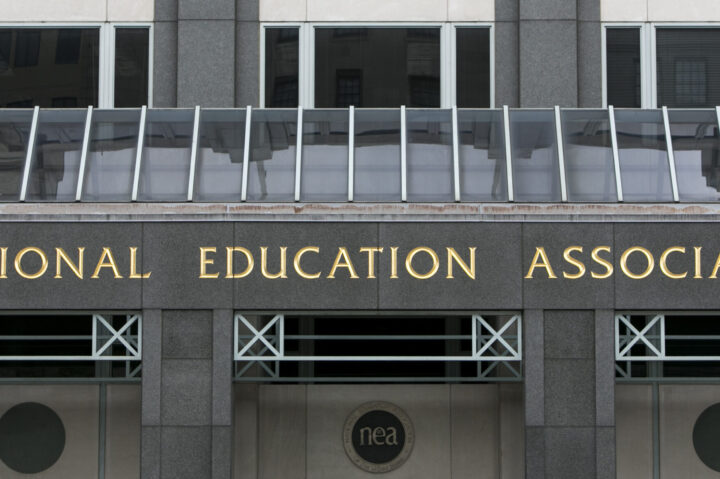
A logo sign outside of the headquarters of the National Education Association (NEA) labor union in Washington, D.C. on July 11, 2015.


 Add JewishInsider on Google
With a unanimous vote last week rejecting a measure that would’ve cut ties with the Anti-Defamation League, the board of directors of the National Education Association extended an olive branch to frustrated Jewish educators and parents who are concerned about creeping antisemitism within the union’s ranks.
ADL CEO Jonathan Greenblatt told Jewish Insider earlier this week that he was “pleased” to see the NEA reject the anti-ADL measure. But, he added, the union still has a “long way to go” toward making clear that it respects the Jewish community.
Greenblatt’s lingering concern is a sign that the NEA — the largest teachers’ union in the country, with more than 3 million members — has not entirely placated Jewish communal stakeholders. In fact, additional questions have continued to emerge in light of an NEA document that encourages teaching the “Nakba” and that erases antisemitism from the history of the Holocaust.
The Washington Free Beacon reported this week on the NEA’s 2025 handbook, a 434-page report outlining the organization’s “visionary goals” and “strategic objectives.” Among the items included in the dense document are dozens of measures that passed at last year’s “representative assembly,” a convening of the organization’s top leaders from around the country — the same group that, this year, voted to censure the ADL. Several of them have raised eyebrows in the Jewish community.
For instance, the NEA pledged to “celebrate” International Holocaust Remembrance Day with educational materials on the union’s website that “recognize the more than 12 million victims of the Holocaust from different faiths, ethnicities, races, political beliefs, genders, and gender identification, abilities/disabilities, and other targeted characteristics” — with no mention of antisemitism or the Jewish victims of the Nazis. (Another item said that in January, to mark the remembrance day, the NEA’s website will feature a graphic that says “Stand up Against Antisemitism” around a Jewish star.)
One measure said the NEA will use digital communications “to educate members about the difference between anti-Zionism and antisemitism.” Another section promised to “educate members and the general public about the history of the Palestinian Nakba,” or catastrophe, the word Palestinians use to describe the founding of the State of Israel and affiliated displacement of Palestinians.
These contradictory and confusing measures paint a picture of an organization struggling to stake out a position on the controversial issues that have divided its members.
One measure pledges to adopt an antisemitism education plan; meanwhile, another measure seeks to “defend educators’ and students’ academic freedom and free speech in defense of Palestine at K-12 schools, colleges and universities.” It is not clear how any of these goals will be achieved — or what position the NEA will take if the objectives ever come into conflict with each other.
The NEA and its statewide affiliates have faced scrutiny in the two years since the Oct. 7, 2023, Hamas attacks over the politicization of education about Israel and Gaza in classrooms. A report last year found that Massachusetts educators were introducing anti-Israel material into schools. In California, the statewide NEA affiliate began a lobbying push this month against a bipartisan antisemitism bill.
Reversing the anti-ADL measure looked like a step forward for the NEA, but it also came with a step backward. An ADL spokesperson said the “problems identified” in the NEA handbook “underscore how much work it has to do to earn the trust of the Jewish community, Jewish educators and families.”
Some of the measures in the handbook are considered offensive by some Jewish community leaders, but other measures are explicitly focused on countering antisemitism and earned the blessing of Jewish communal leaders. While the contradictory language regarding Jewish issues can create whiplash, it might also open an avenue for dialogue with the union.
An NEA spokesperson declined to comment on any specific measures.
“This document is not a handbook for use in the classroom, but a compilation of the more than 100 resolutions adopted by NEA last year,” NEA President Becky Pringle told JI in a statement. “The NEA has opposed antisemitism throughout its history and is deeply committed to ensuring the safety and inclusion of Jewish educators and students. The NEA regularly shares resources and supports educator workshops on Holocaust education, antisemitism, and ways to promote understanding of Jewish culture, heritage and history.”
More Stories
CANDIDATE CALCULATIONS
Vulnerable Republican candidates urge end to Iran war

MEMORIAL EVENT
State Department plans memorial for American victims of Oct. 7 attack
SANCTIONS PUSH
Coons, Senate Democrats introduce sanctions bill aiming to block E1 settlement construction

TAKING AIM
Netanyahu targets Mamdani, Macron and foreign critics in UNGA address

WAKE-UP CALL
Cruz warns Christian leaders are ‘asleep’ on antisemitism among youth

Schmear campaign
Politico picks Yom Kippur to attack Huckabee’s observant Jewish aide
Please log in if you already have a subscription, or subscribe to access the latest updates.
 Continue with Google
 Continue with Apple