












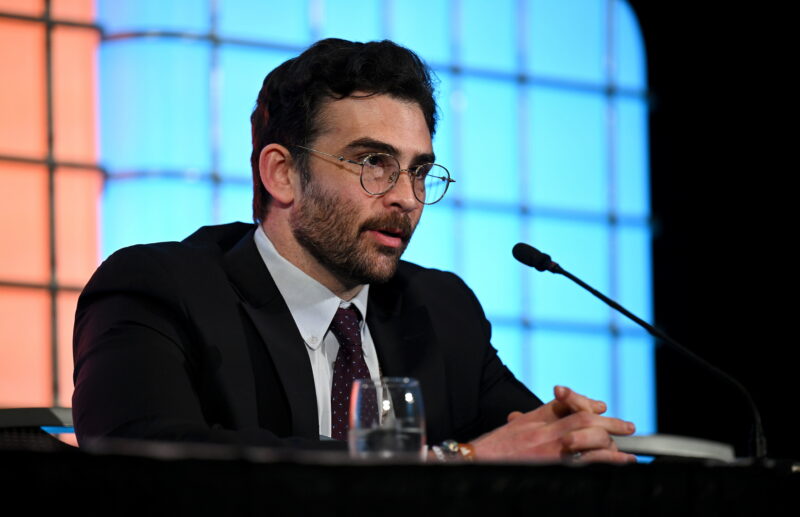




















Plus, Hasan Piker calls Hamas 'orphan children'

Jacquelyn Martin - Pool/Getty Images
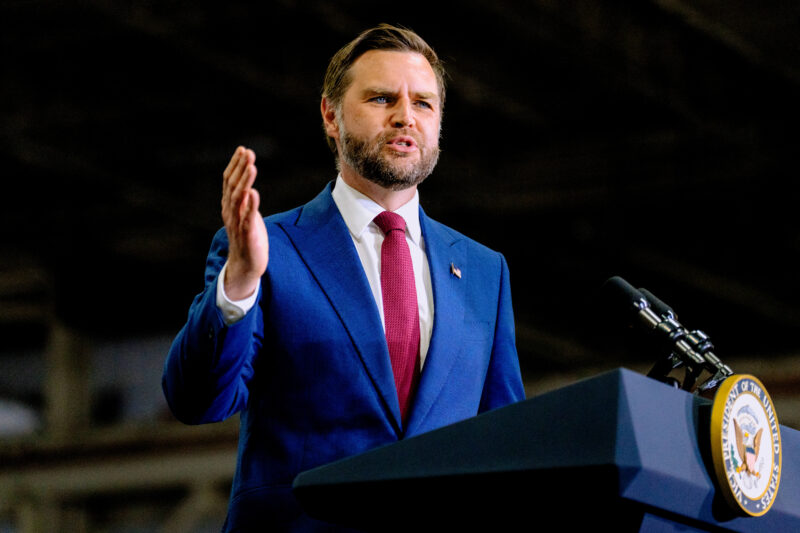
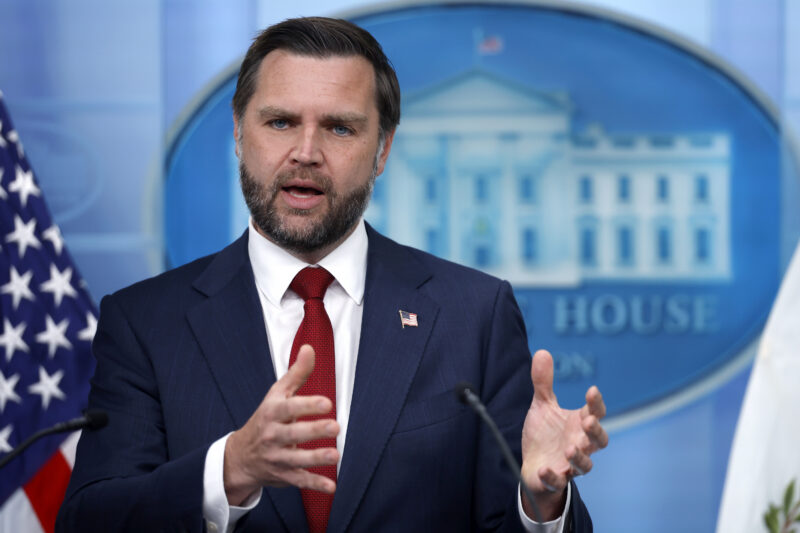
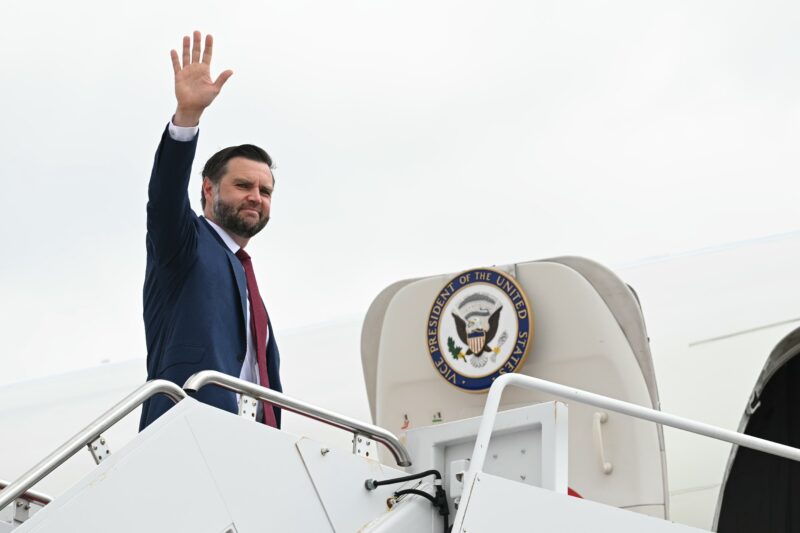
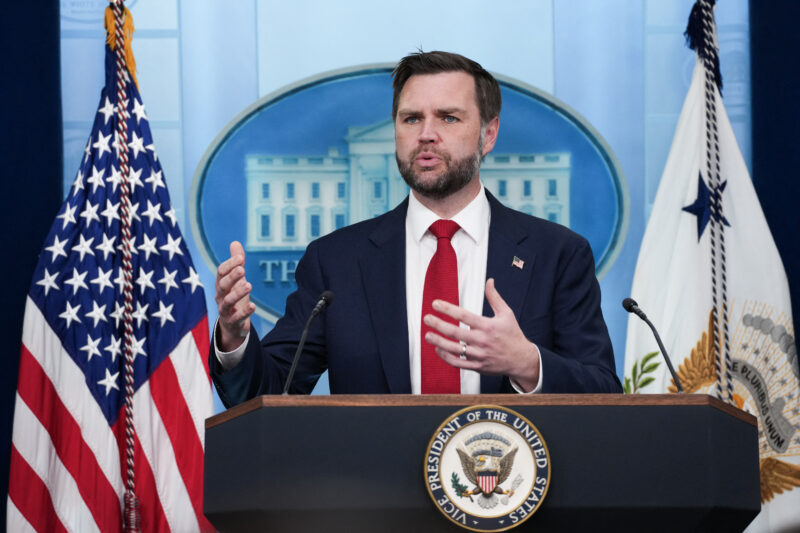
Vice President JD Vance arrives for talks with Iranian officials on April 11, 2026 in Islamabad, Pakistan.


 Add JewishInsider on Google
This P.M. edition is reserved for our premium subscribers — offering a forward-focused read on what we’re tracking now and what’s coming next. Please don’t hesitate to share your thoughts and feedback by replying to this email.
📡On Our Radar
Notable developments and interesting tidbits we’re tracking
The U.S. blockade of the Strait of Hormuz began this morning, with more than 15 American warships involved in the operation intended to pressure Iran into concessions after this weekend’s failed negotiations.
President Donald Trump said hours later that the U.S. was “called this morning by the right people, the appropriate people, and they want to work a deal.” Mediators including Pakistan, Egypt and Turkey are also reportedly attempting to revive talks between the parties…
One reported sticking point in the negotiations is a U.S. request that Iran agree not to enrich uranium for 20 years. The 2015 Iran nuclear deal was highly criticized for its sunset clauses, which lifted limits on activity including uranium enrichment after 15 years.
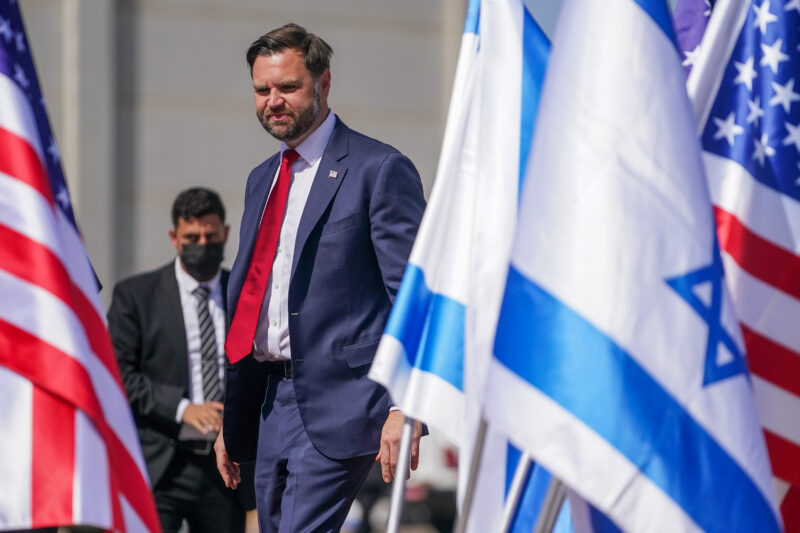
Israeli Prime Minister Benjamin Netanyahu invoked a similar timeframe at a Cabinet meeting today, saying he spoke with Vice President JD Vance yesterday who told him that the U.S. aims to ensure “there is no more enrichment in the coming years, and that could be in decades, no enrichment within Iran.”
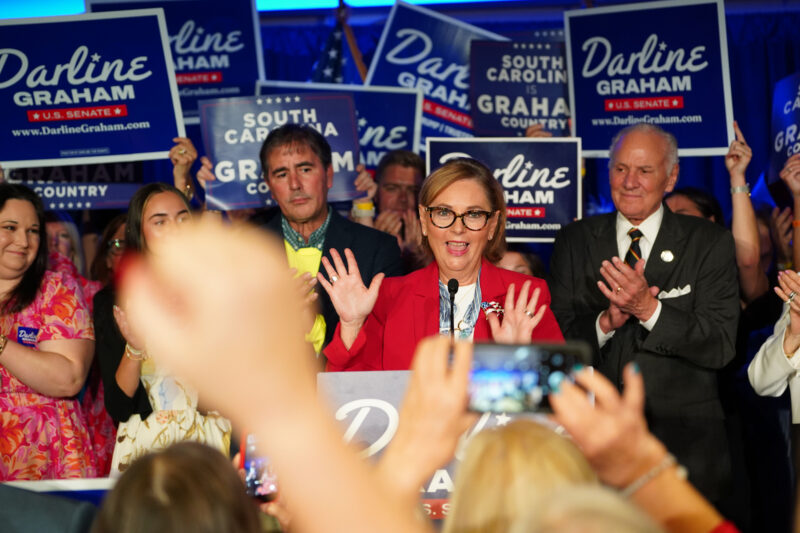
Sen. Lindsey Graham (R-SC) took issue with the timeline: “If this reporting is accurate, the idea that we would agree to a moratorium on enrichment rather than a ban on enrichment would be a mistake in my view. Would we agree to a moratorium for al Qaeda to enrich? No,” he wrote on X. “No enrichment means no enrichment”.…
Six additional Senate Democrats plan to file new war powers resolutions this week to halt the war in Iran, a move that would allow Democrats to continue forcing votes on the war for the foreseeable future, Jewish Insider’s Marc Rod reports.
Previously, a different group of six Democrats introduced similar resolutions, and Democrats have called up two of them thus far, with plans to call up a third this week. The latest group of lawmakers spans from staunch progressives and critics of Israel to generally more pro-Israel members, including Sens. Jeff Merkley (D-OR), Kirsten Gillibrand (D-NY), Chris Van Hollen (D-MD), Mark Kelly (D-AZ), Raphael Warnock (D-GA) and Andy Kim (D-NJ)…
Citing an “increasingly sour national environment for Republicans,” the Cook Political Report shifted its ratings for four key Senate races in Democrats’ favor: The North Carolina and Georgia races now lean Democratic, the Ohio race is a toss-up and the Nebraska race is likely Republican, rather than solidly. Democrats would need to flip four seats to take back the chamber…
In another heated Senate race where Democrats hope to pick up a seat, former Rep. Mary Peltola (D-AK) raised nearly $9 million in the first quarter of 2026, four times the amount her opponent, Sen. Dan Sullivan (R-AK), pulled in. The GOP super PAC Senate Leadership Fund has pledged to spend $15 million in the race, as polls show Peltola with a slight lead…
In an appearance on the “Pod Save America” podcast released yesterday, antisemitic streamer Hasan Piker said he “stands by” his statement made in January that “Hamas is a thousand times better than a fascist settler-colonial apartheid state,” referring to Israel.
“I would vote for Hamas over Israel every single time,” he said on the podcast, claiming Hamas is “entirely comprised … of orphan children that have had their parents killed by an apartheid state that has been dominating the lives of Palestinians for 80 years at this point. … Hamas’ tactics, which I oppose at times, or its like internal governance issues are secondary to this conversation”…
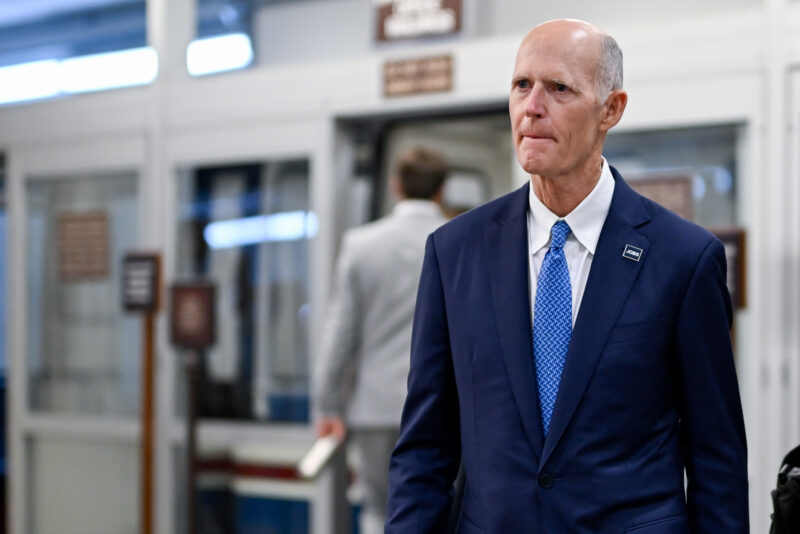
Sen. Rick Scott (R-FL) called for the federal government to “immediately” pull funding from Yale University over Yale Political Union’s decision to host Piker, who previously suggested that the senator should be killed. Piker is scheduled to speak on campus tomorrow for a debate titled “Resolved: End the American Empire.”
For Scott, Piker’s incendiary language is personal: the streamer was briefly suspended from Twitch last year after urging his followers to “kill Rick Scott.” “An elite private university that hosts an antisemite who says a Senator should be killed, capitalists should be killed, and the U.S. deserved 9/11, shouldn’t get ONE CENT from taxpayers,” Scott wrote on X on Friday…
J Street is seeking to “set the record straight” after the group backed the growing calls among far-left lawmakers to end U.S. support for Israel’s missile-defense systems, including Iron Dome, despite its own criteria for its endorsees stating otherwise.
In a new FAQ, the group called Iron Dome “a critically important defense system” which it “supports and consistently lobbies for.” After the end of the Memorandum of Understanding between the U.S. and Israel, which runs through Fiscal Year 2028, however, “financial subsidies to Israel should be rapidly and responsibly phased out. … Israel should pay for these systems”…
More Jews were killed in antisemitic incidents outside of Israel in 2025 than any year in the past three decades, according to a report from Tel Aviv University. Twenty Jews were killed last year in attacks in countries including Australia, the U.S. and the U.K., while the previous record was set in 1994 with the AMIA bombing, which killed 85 people in Buenos Aires, Argentina…
⏩ Tomorrow’s Agenda, Today
An early look at tomorrow’s storylines and schedule to keep you a step ahead
Keep an eye out in Jewish Insider for a look at a new poll assessing the partisan divide emerging among American Jews over pro-Israel political engagement.
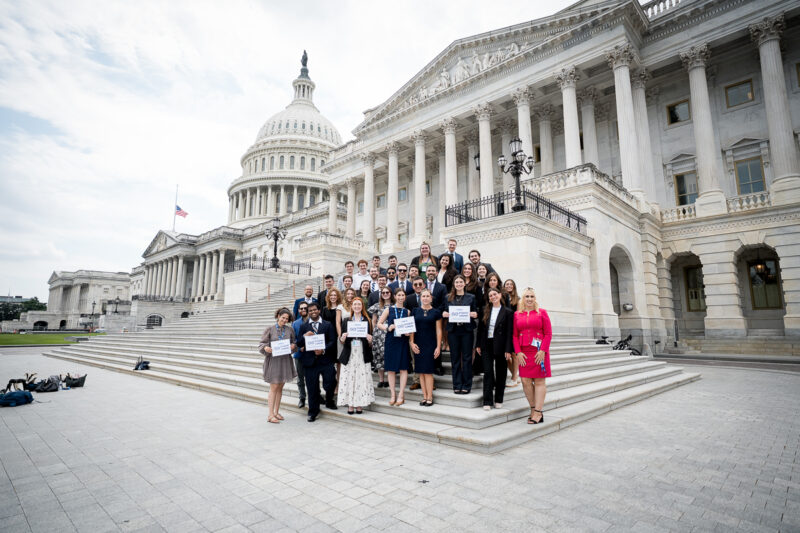
The U.S. Holocaust Memorial Museum will host a Yom HaShoah remembrance event at the Capitol, with a keynote address delivered by Commerce Secretary Howard Lutnick. Other speakers include several Holocaust survivors as well as House Speaker Mike Johnson (R-LA), House Minority Leader Hakeem Jeffries (D-NY), Sen. Kirsten Gillibrand (D-NY) and Reps. Joe Wilson (R-SC) and Lois Frankel (D-FL).
Amid the International Monetary Fund and World Bank Group’s spring meetings being held in Washington this week, Jacob Helberg, under secretary of state for economic affairs, will speak at an event with the Atlantic Council about U.S. economic leadership in the Middle East, including utilization of the India-Middle East-Europe Corridor, which has been floated as an alternative trade route to the volatile Strait of Hormuz.
Stories You May Have Missed
THE VIEW FROM ISRAEL
Israelis uncertain if Iran war made them safer after ceasefire brings combat to an inconclusive halt

After the ceasefire went into effect, there was a pervading feeling in Israel that the war with Iran was not complete, and the return to routine life may be short-lived
COMFORT FOOD

A traveling program called ‘Soul and Roll’ by singer Hananel Edri and Foodish CEO Merav Oren tells the Jewish story through an immersive culinary and musical experience
Plus, Joe Kent amplifies Iranian propaganda
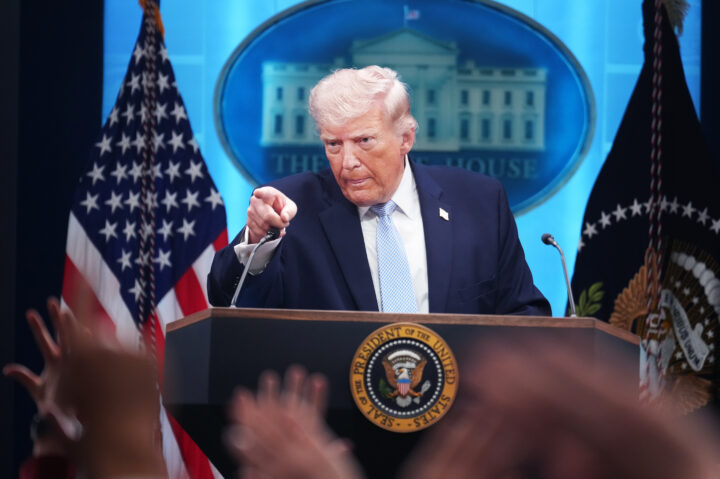
Tom Williams/CQ-Roll Call, Inc via Getty Images
President Donald Trump conducts a news conference in the White House briefing room about the war in Iran on Monday, April 6, 2026.
This P.M. edition is reserved for our premium subscribers — offering a forward-focused read on what we’re tracking now and what’s coming next. Please don’t hesitate to share your thoughts and feedback by replying to this email.
📡On Our Radar
Notable developments and interesting tidbits we’re tracking
Amid reports that Iran has rejected the U.S.’ ceasefire framework, President Donald Trump told reporters Tehran has made its own “significant” proposal, though it is “not good enough.”
Asked if he may push the deadline again for Iran to reopen the Strait of Hormuz or face increased U.S. military action — as he has already done three times — Trump said, “Highly unlikely. They’ve had plenty of time.”
Trump also claimed the U.S. had “sent guns, lot of guns” into Iran. “They were supposed to go to the people so they could fight back against these thugs. You know what happened? The people that they sent them to kept them, because they said, ‘What a beautiful gun. I think I’ll keep it,’” he said…
At a press conference this afternoon, Defense Secretary Pete Hegseth said today would mark “the largest volume of strikes since Day 1” of the Iran war, with more to come tomorrow.
Trump doubled down on his threats, warning that all of Iran “can be taken out in one night, and that night might be tomorrow night.” If Tehran does not acquiesce by his 8 p.m. ET deadline tomorrow, Trump said, “they’re going to have no bridges. They’re going to have no power plants. Stone ages.”
The president also floated the possibility of charging U.S. tolls to ships transiting the Strait of Hormuz once it is reopened and potentially seizing Iran’s oil. Trump and defense officials further detailed the harrowing rescue of a fighter jet pilot, who reportedly treated his own wounds while scaling mountainous terrain to evade capture after being downed over Iran…
Israeli Prime Minister Benjamin Netanyahu said he spoke yesterday with Trump, who thanked him for Israel’s assistance in rescuing the pilot…
Joe Kent, the former director of the National Counterterrorism Center who resigned over his opposition to the Iran war, shared a post on social media on Saturday spreading false claims from Iranian state-linked media and Drop Site News that the U.S. was attempting to kill the servicemember whose fighter jet was shot down over Iran prior to him being rescued, Jewish Insider’s Matthew Shea reports.
The initial statement from Drop Site, a far-left news outlet sympathetic to Hamas and totalitarian regimes, cited a report by Tasnim News, which is linked to the Islamic Revolutionary Guard Corps, claiming that the U.S. had “lost hope” of recovering the airman and was instead “attempting to kill him”…
Rep. Pat Fallon (R-TX), who previously served in the Air Force, predicted that the U.S. will deploy ground troops into Iran: “I just don’t see any other way,” he said on Fox News. “I personally think it’s going to be boots — at least special ops, American special operators — on the ground, with allies in the region and air cover,” he said…
The U.S.-led Board of Peace is pressing Hamas to finalize a Gaza demilitarization agreement by the end of the week, The New York Times reports, which would require the terror group to give up its weapons and maps of its tunnel network in the enclave. Negotiators from both sides are expected to meet in Cairo, Egypt, tomorrow…
Democratic Michigan state Sen. Mallory McMorrow announced she raised more than $3 million in the first quarter of 2026 in her bid for U.S. Senate. “There was not a dime of corporate PAC donations, not a dime of AIPAC donations,” she said in a video. The pro-Israel group was the only organization she named.
While McMorrow’s opponents have not yet publicized their latest fundraising figures, her haul surpassed those of last quarter, when Rep. Haley Stevens (D-MI) led the pack with $2.1 million raised in the final quarter of 2025…
The Senate Leadership Fund, the Senate GOP’s top super PAC, revealed its $350 million plan to retain control of the upper chamber, focusing on defending incumbents in Ohio, North Carolina, Maine, Iowa and Alaska and seeking to flip seats in Michigan, Georgia and New Hampshire.
The funds will largely be used for ad campaigns, with the most money being spent to defend Sen. Jon Husted (R-OH), who must win his first Senate election for the remainder of his term against the likely Democratic nominee, former Sen. Sherrod Brown (D-OH)…
Ukrainian President Volodymyr Zelensky received a grand welcome upon touching down in Damascus yesterday for his first meeting with Syrian President Ahmad al-Sharaa. The two leaders “explored avenues for strengthening economic cooperation and the exchange of expertise,” al-Sharaa said…
Sovereign wealth funds from Saudi Arabia, Qatar and the UAE have signed equity commitments to the tune of $24 billion to back Paramount’s acquisition of Warner Bros. Discovery, The Wall Street Journal reports…
⏩ Tomorrow’s Agenda, Today
An early look at tomorrow’s storylines and schedule to keep you a step ahead
Keep an eye out in Jewish Insider for a preview of tomorrow’s special election runoff in Georgia’s 14th Congressional District, where Republican military veteran and Israel supporter Clay Fuller is expected to win the ruby-red seat of former Rep. Marjorie Taylor Greene (R-GA).
Defense Secretary Pete Hegseth and Gen. Dan Caine, chairman of the Joint Chiefs of Staff, will hold another press briefing on the Iran war tomorrow morning.
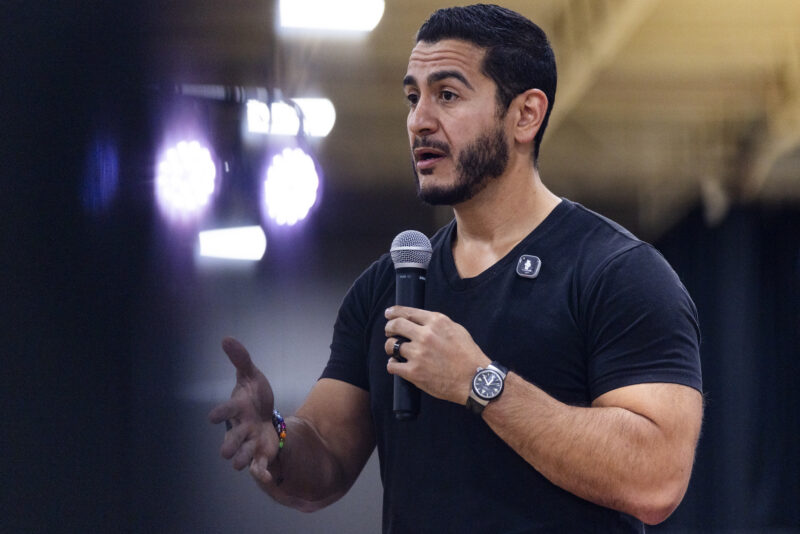
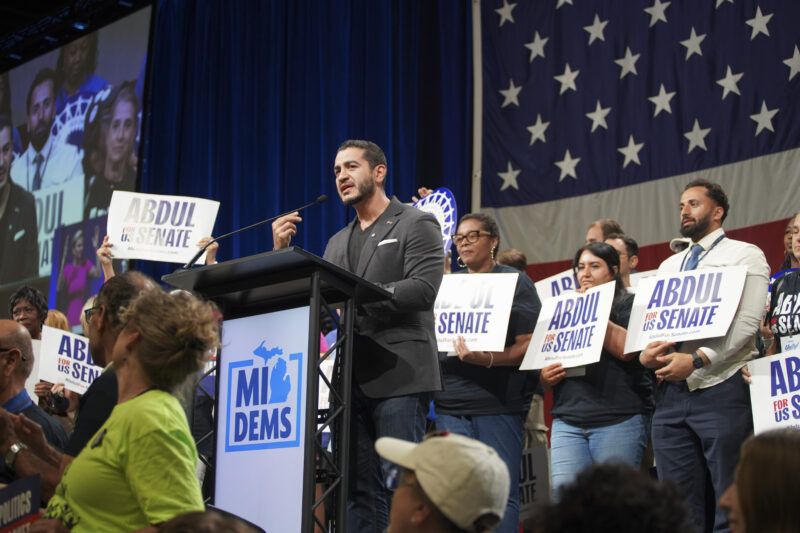
Michigan Senate candidate Abdul El-Sayed will host rallies tomorrow at Michigan State University and the University of Michigan with guests including Rep. Summer Lee (D-PA) and antisemitic streamer Hasan Piker, a move which has drawn condemnation from some Democrats and sparked a broader debate about the mainstreaming of Piker within the party.
The Democratic National Committee will begin its five-day meeting in New Orleans tomorrow, where its resolutions committee will consider several resolutions condemning AIPAC and Israel, including calls for conditions on or a suspension of U.S. military aid to the Jewish state.
NATO Secretary-General Mark Rutte will meet with Trump and administration officials in Washington on Wednesday, as the president continues to slam the organization for its refusal to engage in the Iran war.
In observance of Passover, we’ll be back in your inbox with the Daily Overtime on Monday, April 13. Chag Pesach Sameach!
Stories You May Have Missed
ALTERED LIVES

The foiled attack at the Michigan synagogue is being called a miracle — but those who were inside now face the lasting impact of trauma and a search for safety
O CANADA

After a series of targeted attacks in Toronto and beyond, Jewish leaders are raising the alarms on Canada’s failure to properly protect its Jews amid ‘systemic’ antisemitism
Plus, judge rules against UPenn in antisemitism investigation

Haidar Mohammed Ali/Anadolu via Getty Images
Mourners carry the coffin of Kata'ib Hezbollah member on March 2, 2026 amid Kata'ib Hezbollah flags.
This P.M. edition is reserved for our premium subscribers — offering a forward-focused read on what we’re tracking now and what’s coming next. Please don’t hesitate to share your thoughts and feedback by replying to this email.
📡On Our Radar
Notable developments and interesting tidbits we’re tracking
President Donald Trump lashed out at European countries this morning for their posture during the war in Iran: He wrote on Truth Social that France is prohibiting planes with military supplies destined for Israel from flying over its territory, calling Paris “VERY UNHELPFUL … The U.S.A. will REMEMBER!”
Trump also named the U.K. among the countries “which refused to get involved in the decapitation of Iran” and are now struggling to acquire fuel due to the effective closure of the Strait of Hormuz. “[G]o to the Strait, and just TAKE IT. You’ll have to start learning how to fight for yourself, the U.S.A. won’t be there to help you anymore, just like you weren’t there for us,” the president warned…
Trump told the New York Post about reports that he’s willing to end the war without reopening the Strait of Hormuz: “I don’t think about it, to be honest. My sole function was to make sure that they don’t have a nuclear weapon. They’re not going to have a nuclear weapon. When we leave the strait will automatically open.”
He similarly said to CBS News about removing Iran’s enriched uranium, “I don’t even think about it. I just know that, you know, that’s so deeply buried it’s gonna be very hard for anybody. … It’s pretty safe. But, you know, we’ll make a determination”…
During a press briefing this morning, Defense Secretary Pete Hegseth revealed that he took a secret trip to the Middle East in recent days to meet with U.S. servicemembers, including Air Force intelligence analysts, Army troops and pilots.
CENTCOM also confirmed that Adm. Brad Cooper visited Israel earlier this week where he met with Defense Minister Israel Katz and Lt. Gen. Eyal Zamir, the IDF’s chief of staff…
Israel is ending all arms purchases from France and “replacing it with domestic Israeli procurement or purchases from allied countries,” the Israeli Ministry of Defense said today, adding that there will be “no new professional engagement with the French military” in the latest rift in the deteriorating relationship between Jerusalem and Paris…
A week after Lebanon declared Iran’s ambassador to Beirut persona non grata and expelled him from the country, the ambassador has still refused to leave the embassy compound, and Iran has stated that the embassy remains open…
China and Pakistan, which has been the intermediary for indirect negotiations between the U.S. and Iran, put forward a ceasefire proposal that would see the immediate cessation of hostilities, the safeguarding of nonmilitary targets and the restoration of transit through global shipping lanes…
American journalist Shelly Kittleson was kidnapped in Baghdad, Iraq, today, according to the Iraqi interior ministry, reportedly by Kataib Hezbollah, the same group that held researcher Elizabeth Tsurkov for over 900 days. Kittleson is a freelance journalist primarily based in Europe who has written for outlets including Al-Monitor and Foreign Policy.
Dylan Johnson, assistant secretary of state for global public affairs, said in a statement that the State Department “is aware of the reported kidnapping” and had “previously fulfilled our duty to warn this individual of threats against them.” Johnson said an “individual with ties” to Kataib Hezbollah “has been taken into custody” in connection with the kidnapping and that the department will coordinate with the FBI to secure Kittleson’s release…
New York City Mayor Zohran Mamdani attended a dinner for Eid last week where he spoke with antisemitic streamer Hasan Piker, a conversation that Piker called “very productive” on a recent Twitch stream.
“No, he did not disavow me,” Piker said in response to a listener’s question. “‘Did you tell him to tune out the bad faith haters?’ I did,” Piker continued. Mamdani appeared on Piker’s Twitch for an interview during the mayoral campaign but has not met with him publicly since…
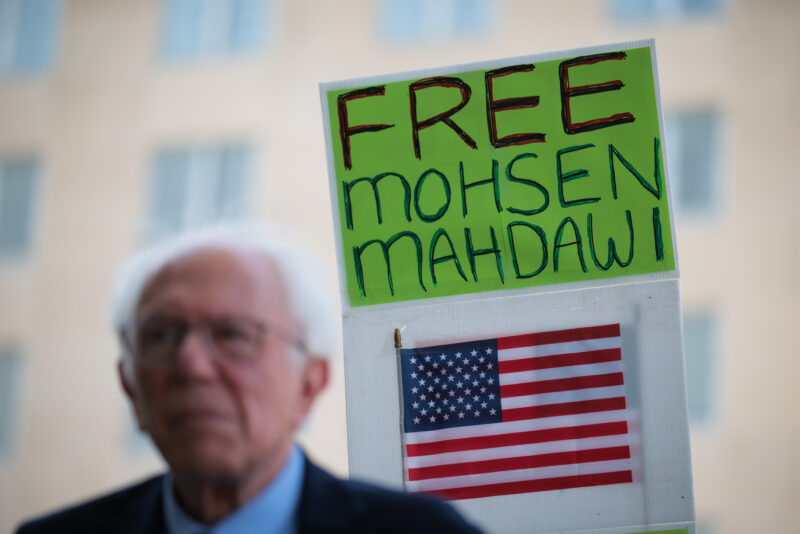
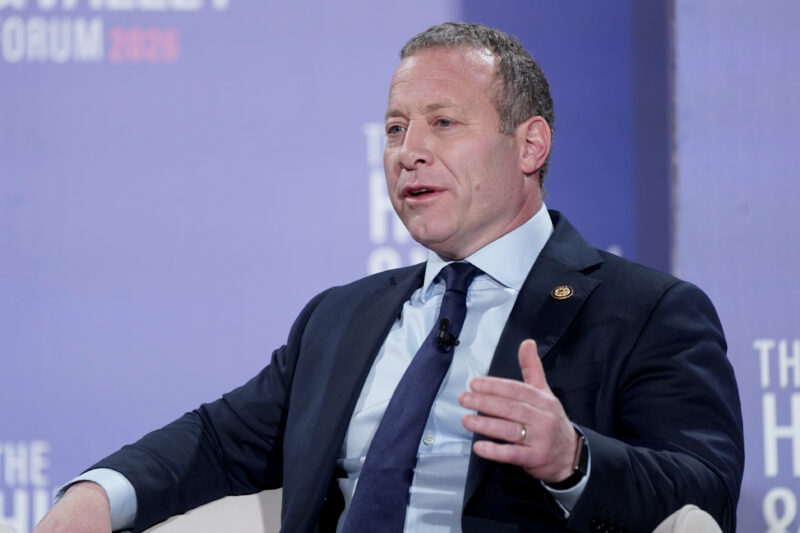
“Nope,” Rep. Josh Gottheimer (D-NJ) said in response to a video of Sen. Bernie Sanders (I-VT) claiming that, “in many respects,” Piker “is doing a very good job.” “Hasan Piker is a proud antisemite … His voice should have no place in our political discourse and all elected officials should condemn his rhetoric,” Gottheimer wrote…
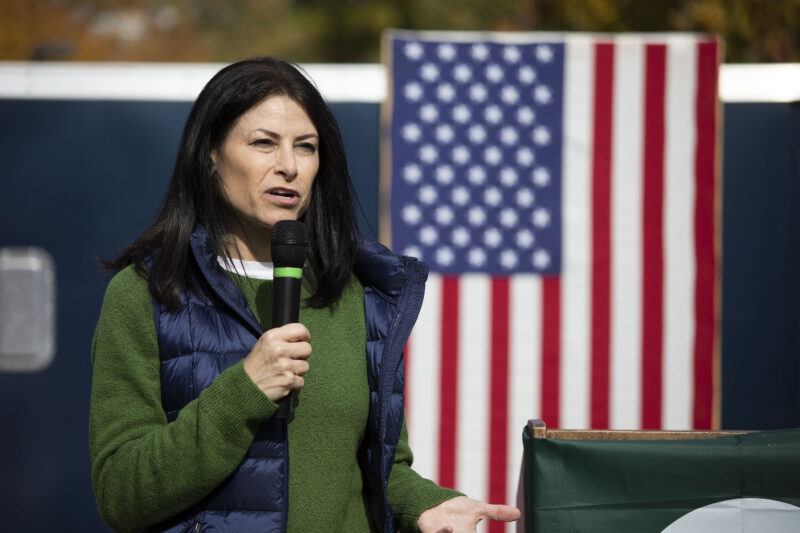
Michigan Attorney General Dana Nessel, a Jewish Democrat, shared an image of a sign which read, “A Jewish data center has no home here,” displayed outside a town hall she held yesterday urging caution around the approval of data centers. “If you think antisemitism isn’t a problem in Michigan, think again,” Nessel wrote…
A new poll commissioned by former Maine state Sen. Troy Jackson, now a Democratic candidate for governor, found oyster farmer Graham Platner — whom Jackson is backing — nearly 40 points ahead of Gov. Janet Mills in the state’s Senate race (66-28%) among likely Democratic primary voters. The survey was conducted after Mills had started running ads against Platner based on his past controversial statements, a sign that her line of attack may not be persuading voters…
And another poll commissioned by the Senate Majority PAC, a Democratic group, found Texas Attorney General Ken Paxton leading in the heated Republican primary runoff for Senate against incumbent Sen. John Cornyn (R-TX), 47-42%…
A federal judge ruled that the University of Pennsylvania must comply with a subpoena from the Trump administration that seeks information about Jewish university affiliates, which the university had said resembled nefarious efforts by governments over history to gather lists of Jews…
⏩ Tomorrow’s Agenda, Today
An early look at tomorrow’s storylines and schedule to keep you a step ahead
Keep an eye out in Jewish Insider for a report from West Bloomfield, Mich., where JI’s Gabby Deutch sat down with community members still reeling from the attack on Temple Israel earlier this month.
Democrat Analilia Mejia and Republican Joe Hathaway will participate in a debate tomorrow evening ahead of the April 16 special election in New Jersey’s 11th Congressional District, after Mejia eked out a surprise victory in last month’s primary. While this race will decide who serves out the rest of Gov. Mikie Sherrill’s House term, the progressive Mejia is also running essentially unopposed by other Democrats for the full term.
In observance of Passover, we’ll be back in your inbox with the Daily Overtime on Monday, April 6. Chag Pesach Sameach!
Stories You May Have Missed
COMMUNITY TIGHTROPE
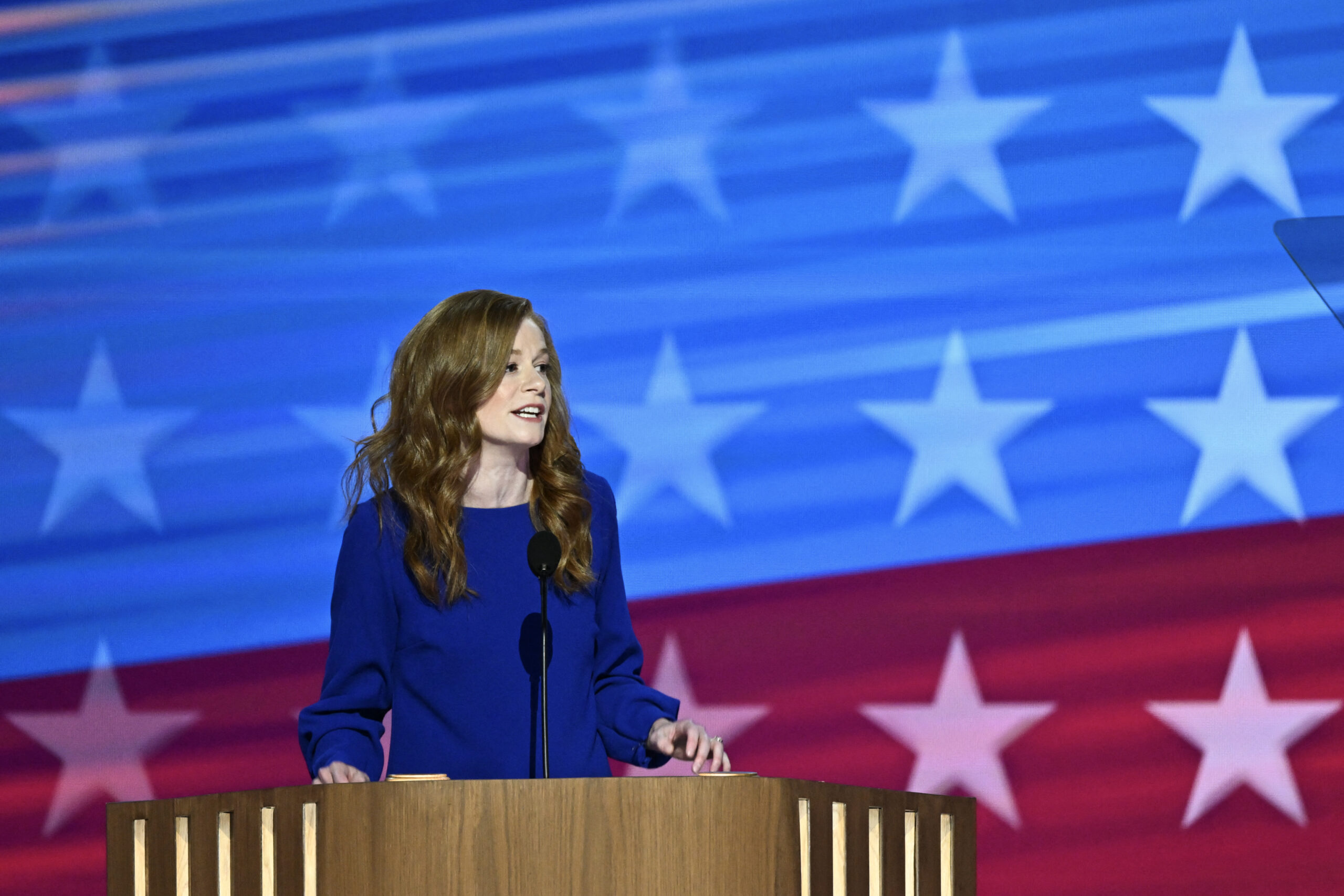
In an interview with JI, the state senator described herself as someone who supports the U.S.-Israel relationship, but not unconditionally
DECISION TIME

As the president touts progress in talks with Tehran while escalating military pressure, analysts say the administration is keeping its options open — but will need to make a move soon
Plus, one AI rabbi down but more pop up

Emily Elconin/Getty Images
Caution tape near the front entrance of Temple Israel a day after an active shooter incident on March 13, 2026 in West Bloomfield, Michigan.
This P.M. edition is reserved for our premium subscribers — offering a forward-focused read on what we’re tracking now and what’s coming next. Please don’t hesitate to share your thoughts and feedback by replying to this email.
📡On Our Radar
Notable developments and interesting tidbits we’re tracking
President Donald Trump doubled down on threats to escalate the war in Iran while simultaneously heralding the success of ongoing negotiations: He claimed on Truth Social this morning that the U.S. is in “serious discussions” with a “new” and “more reasonable” Iranian regime and that “great progress has been made.”
“But,” he added, “if for any reason a deal is not shortly reached, which it probably will be, and if the Hormuz Strait is not immediately ‘Open for Business,’ we will conclude our lovely ‘stay’ in Iran by blowing up and completely obliterating all of their Electric Generating Plants, Oil Wells and Kharg Island (and possibly all desalinization plants!)”…
Trump confirmed to the New York Post that the U.S. is engaging with Iranian parliament speaker Mohammad Bagher Ghalibaf and assessing whether he’s a reliable partner: “We’re gonna find out. I’ll let you know that in about a week.” He also said the U.S. believes new Supreme Leader Mojtaba Khamenei is “probably” alive “but in extraordinarily bad shape” after he was injured in an airstrike…
Treasury Secretary Scott Bessent claimed in a Fox News interview that the U.S. is “going to retake control of the straits and there will be freedom of navigation, whether it is through U.S. escorts or a multinational escort”…
A series of surveys released today reveal how Jews and Israelis are perceiving the war in Iran: A poll conducted by the Mellman Group found 55% of American Jews oppose the war while 32% are in favor. Another poll of American Jews, solicited by J Street, found 60% of respondents opposed and 40% in support.
In Israel, meanwhile, a poll released by the Israel Democracy Institute found that the war is losing some support among Israelis, Jewish Insider’s Lahav Harkov reports. In the first week of the war, 93% of Jewish Israelis supported continuing it, while in the latest poll — conducted nearly a month into the war — 78% support it. Nearly three times as many Israeli Jews (12%) now oppose the war as did at the beginning of March (4%)…
The FBI announced findings that the attack on Temple Israel in suburban Detroit earlier this month was “a Hezbollah-inspired act of terrorism purposely targeting the Jewish community and the largest Jewish temple in Michigan.” The brother of the assailant was a Hezbollah commander who had been killed in Lebanon by the IDF the week before the attack…
Michigan Democratic Senate candidate Abdul El-Sayed told campaign staff that he did not want to take any public position on the killing of former Iranian Supreme Leader Ayatollah Ali Khamenei at the beginning of the war because “there are a lot of people in Dearborn who are sad,” according to meeting audio obtained by The Washington Free Beacon.
If asked by reporters, El-Sayed said his strategy would be to “go straight to pedophilia, frankly. I’ll just be like, ‘Pedophile president decides that he doesn’t like the front page news, so he decides to take us into another war’”…
Allies of New York City Mayor Zohran Mamdani told Politico that the mayor’s dismissal of criticisms of his wife, Rama Duwaji, for her past extreme rhetoric and social media posts — calling her “a private person” — doesn’t comport with Duwaji’s very public profile.
“‘She is the first lady of New York City. She has a police detail and a government staff,’ said one of the elected officials, who believes Duwaji should explain herself publicly. ‘She would need to do an interview, better explain herself, and have her do some visits and meetings with key constituencies, like Jewish museums’”…
An AI-generated Instagram account, which featured a fake Orthodox rabbi spreading antisemitic conspiracies to its more than 1.4 million followers, was taken offline over the weekend following major backlash from Jewish groups and one Democratic lawmaker — yet several similar, hate-peddling accounts have emerged with little to no public action from Meta, JI’s Haley Cohen reports.
Several new Rabbi Goldman accounts started posting similar videos within the past two weeks — two of which already have followings of 18,500 and 10,000. Both remain active on Instagram and their bios state, “only Backup account for @rabbigoldman” and “old account got banned”…
The Knesset passed a controversial law today allowing courts to impose the death penalty on convicted terrorists found guilty of murder, JI’s Lahav Harkov reports.
The law, championed by National Security Minister Itamar Ben-Gvir, applies in military courts to non-Israeli residents of the West Bank — meaning, in the vast majority of cases, Palestinians. In civilian courts, the law permits applying the death penalty to those who “intentionally cause the death of a person with the aim of denying the existence of the State of Israel” — language which would also likely exclude Jewish assailants. Critics say it will likely be struck down by the High Court…
The Times of Israel breaks down the legislative maneuver used in Knesset by the coalition that caused opposition members to accidentally vote in favor of allocating 800 million shekels (~$250 million USD) to Haredi schools as they passed the state budget this morning…
In an interview on Israel’s Channel 12, Ukrainian President Volodymyr Zelensky said he has barely spoken to Israeli Prime Minister Benjamin Netanyahu since their last meeting at the United Nations General Assembly in September 2023…
⏩ Tomorrow’s Agenda, Today
An early look at tomorrow’s storylines and schedule to keep you a step ahead
Keep an eye out in Jewish Insider for a look at the resolution coming under consideration by the Democratic National Committee that explicitly criticizes AIPAC’s political spending.
The House and Senate left for recess until mid-April, after failing to come to an agreement to fund the Department of Homeland Security, which has now reached its longest-ever shutdown. Calls have already begun from at least one Republican senator to bring Congress back into session sooner, but prospects for an early return are currently unclear.
Sen. Cory Booker (D-NJ) will speak at Temple Emanu-El in New York City tomorrow about his new book, Stand, on the one-year anniversary of his delivery of the longest-ever speech on the Senate floor.
Stories You May Have Missed
SEAT SHAKE-UP
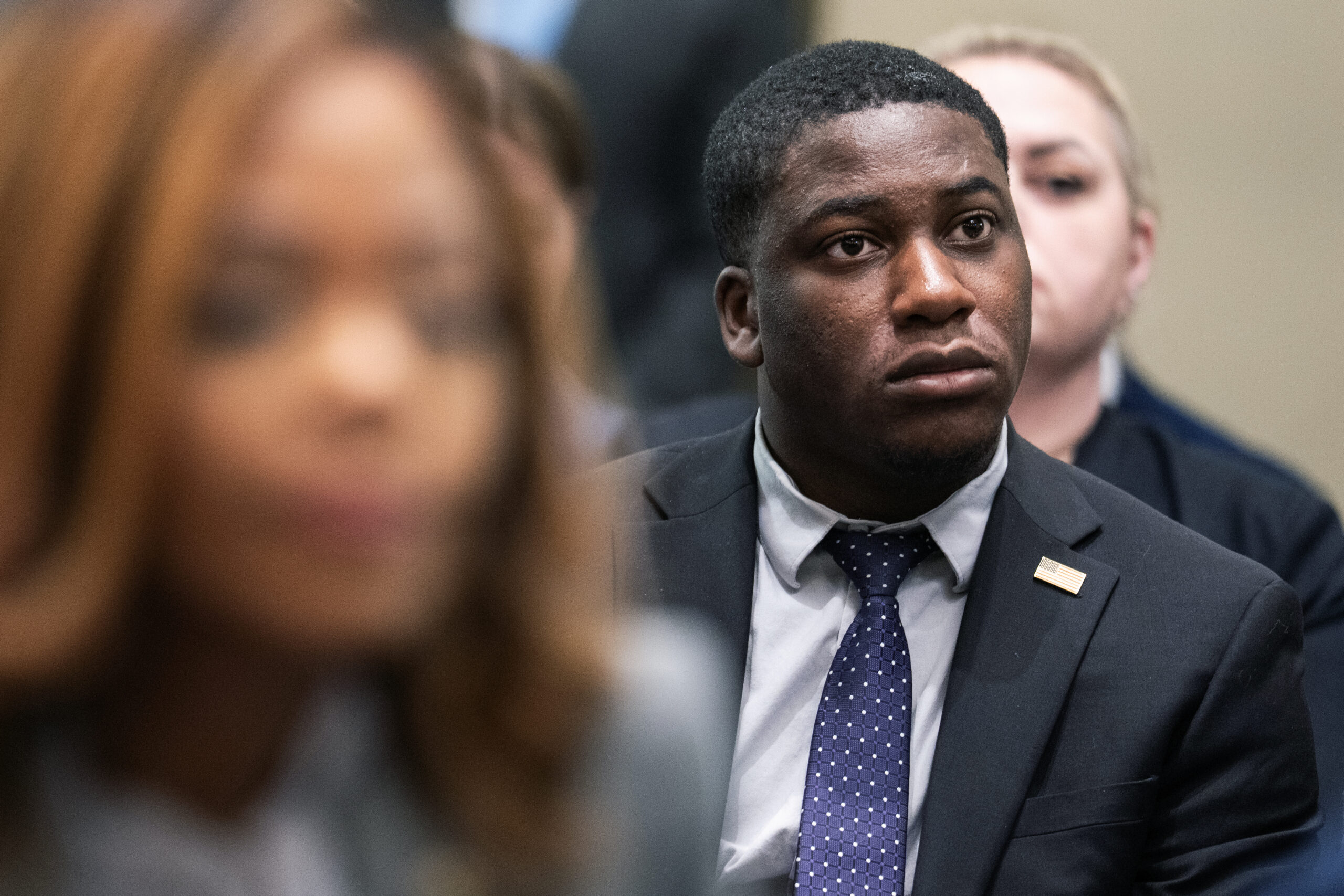
The lawmaker, who may soon be expelled from the chamber, is already in a heated primary race with Elijah Manley, a young far-left candidate endorsed by TrackAIPAC
PHONE A FRIEND

The sister, niece and brother-in-law of Maoist magnate Neville ‘Roy’ Singham have gained influence in New York’s ascendant socialist movement
Plus, fake AI rabbis peddle antisemitism
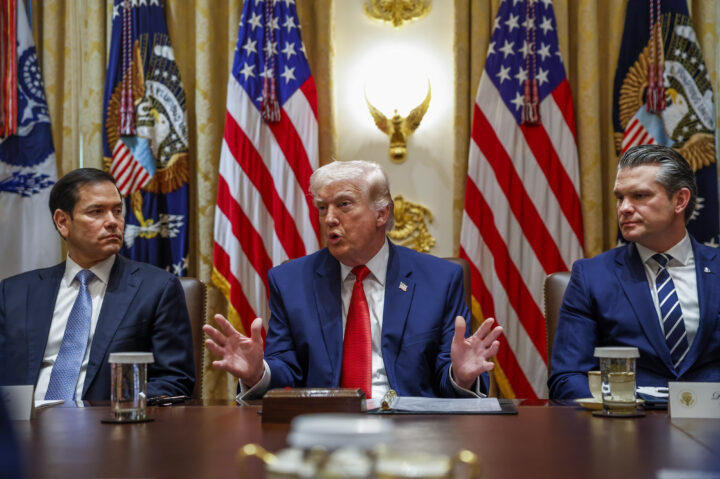
Will Oliver/EPA/Bloomberg via Getty Images
Secretary of State Marco Rubio, President Donald Trump and Defense Secretary Pete Hegseth during a Cabinet meeting at the White House in Washington, DC, US, on Thursday, March 26, 2026.
This P.M. edition is reserved for our premium subscribers — offering a forward-focused read on what we’re tracking now and what’s coming next. Please don’t hesitate to share your thoughts and feedback by replying to this email.
📡On Our Radar
Notable developments and interesting tidbits we’re tracking
President Donald Trump announced this afternoon that he’s extending his original five-day delay on strikes on Iran’s energy sector, which was set to expire tomorrow, by another 10 days. “As per Iranian Government request … I am pausing the period of Energy Plant destruction by 10 Days to Monday, April 6, 2026, at 8 P.M., Eastern Time,” he wrote on Truth Social, adding that negotiations continue and are “going very well”…
At a Cabinet meeting earlier today, Trump revealed that the “present” Iran had provided the U.S. earlier this week was allowing eight Pakistani-flagged oil tankers to pass safely through the Strait of Hormuz, which he said proved the U.S. was speaking with the “right people” in Iran with the authority to make such decisions.
Special Envoy Steve Witkoff, meanwhile, confirmed reports that the U.S. had presented Iran with a “15-point action list” as a starting offer in peace talks between the two countries, and that Pakistan is acting as mediator…
Speaking at the FII Priority summit in Miami, Jared Kushner said that, during his negotiations with Iran prior to the war, “We basically saw that there was no seriousness, and that they were trying to play different games to just get beyond President Trump in order to preserve their capabilities and pathway to get to a nuclear weapon in a way that would have been very, very hard to be stopped in the future”…
CENTCOM applauded an Israeli strike that killed Alireza Tangsiri, the commander of the IRGC Navy, and warned all IRGC Navy members to “immediately abandon their post and return home.” Tangsiri had been named a Specially Designated Global Terrorist by the U.S. in 2019 and was leading Iran’s efforts to shutter the Strait of Hormuz…
Even as U.S.-Iran negotiations continue, the U.S. is considering diverting weapons for Ukraine to the Middle East, The Washington Post reports, including air-defense interceptor missiles.
Ukraine has proved a stalwart ally to the Gulf as it comes under attack from Iran — around 200 Ukrainian military personnel have been deployed around the Middle East to help defend against Iranian drones and President Volodymyr Zelensky arrived in Saudi Arabia today for a surprise visit…
Resources are also being redirected to Gaza — the Trump administration has reportedly pulled $1.25 billion from international peacekeeping and disaster assistance programs for the Board of Peace’s operations, for which Trump had pledged $10 billion in U.S. funding…
An AI-generated Instagram account portraying an Orthodox-looking rabbi is pushing antisemitic conspiracy theories to its more than 1.4 million followers, and it’s not the only one, according to a study published Wednesday by Combat Antisemitism Movement.
Jewish Insider’s Haley Cohen reports: Researchers identified 12 AI-generated “rabbis” with a combined following of 2.1 million Instagram users, all of which promote classic antisemitic stereotypes. The “Rabbi Goldman” account features many of these, including one video in which the “rabbi,” wearing a tuxedo and seemingly seated in a luxury airplane, claims that Jews utilize empty private jets to evade taxes…
A new Emerson College poll of the Maine Senate race found oyster farmer Graham Platner with a nearly 30 point lead over Gov. Janet Mills (55-28%) in the Democratic primary. Both Platner and Mills lead Sen. Susan Collins (R-ME) in the general election matchup, 48-41% and 46-43%, respectively…
California Gov. Gavin Newsom again reaffirmed his support for Israel in an interview with The Bulwark, likening his love for the country but strong disapproval of its current government with how he feels about the U.S…
Democrat Analilia Mejia and Republican Joe Hathaway will participate on April 1 in what is likely to be the only debate of the New Jersey 11th Congressional District’s special election, after the far-left Mejia won the Democratic nomination in a hotly contested primary last month. The New Jersey Globe, which is hosting the debate, acknowledged it had chosen to do so on the first night of Passover, in a district with a sizable Jewish population…
The College Republicans chapter at the University of Florida is suing the school, after a photo of one of its members doing what appeared to be a Nazi salute led to the chapter’s ban from campus.
The chapter argues that the ban violated its First Amendment rights as the member “expressed a viewpoint off-campus that was alleged by some to be anti-Semitic,” and claims it was deactivated in part because it recently hosted James Fishback, a candidate for Florida governor who has expressed antisemitic and anti-Israel views…
⏩ Tomorrow’s Agenda, Today
An early look at tomorrow’s storylines and schedule to keep you a step ahead
Keep an eye out in Jewish Insider for comments from Michigan state Sen. Mallory McMorrow on Israel and antisemitism as she seeks the Democratic nomination for U.S. Senate against Rep. Haley Stevens (D-MI) and Abdul El-Sayed.
President Donald Trump will provide closing remarks at the FII Priority summit in Miami tomorrow afternoon.
Texas Attorney General Ken Paxton will headline CPAC’s Ronald Reagan Dinner. His primary opponent, Sen. John Cornyn (R-TX), will not be making an appearance, despite the confab taking place in his home state and calls from its leadership for him to attend.
Secretary of State Marco Rubio is traveling to France to attend a meeting of G7 foreign ministers where he is expected to press allies on the Iran war — he told reporters as he departed today, echoing a line from Trump, that the countries involved “get far more of their fuel from” the Strait of Hormuz “than we do.”
Stories You May Have Missed
TROUBLE IN THE NEIGHBORHOOD

Frustrated UAE leaders are questioning the ‘impotence’ of countries like Egypt — and warn that silence on Iranian aggression will push the Gulf closer to U.S., Israel
MICHIGAN MOMENT
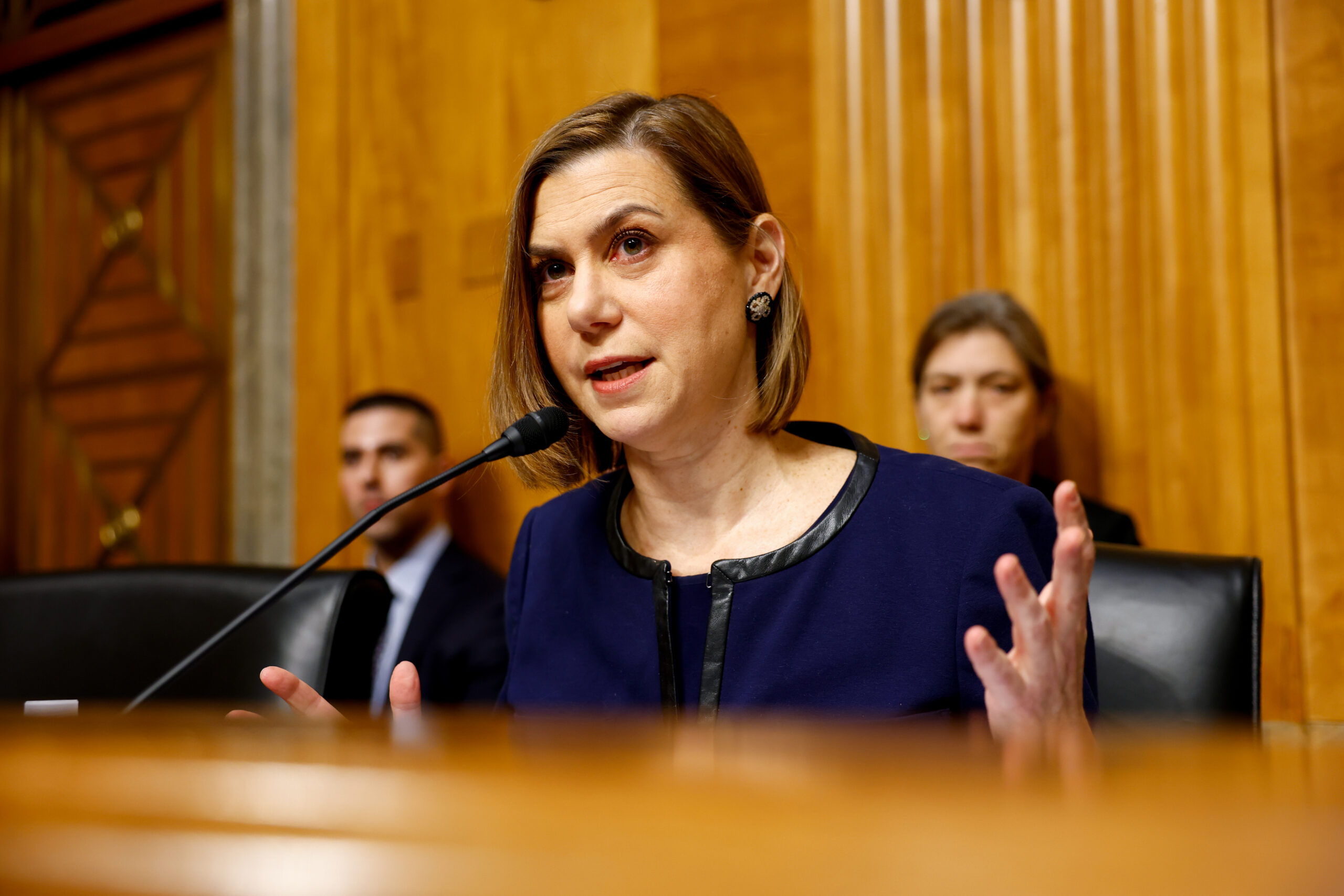
Stevens said that by associating with Piker, El-Sayed is ‘choosing to campaign with someone who has a history of antisemitic rhetoric’
Plus, is Stevens losing steam in Michigan Senate race?
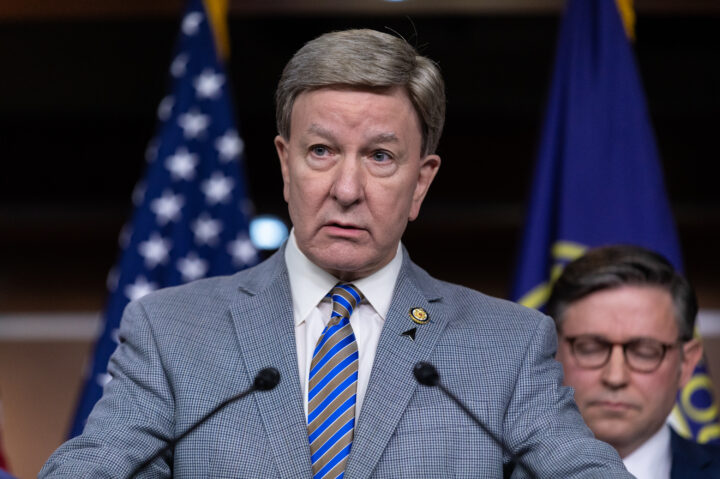
Anna Rose Layden/Getty Images
House Armed Services Committee Chairman Mike Rogers (R-AL) speaks to the press at the U.S. Capitol on October 17, 2025 in Washington, DC.
This P.M. edition is reserved for our premium subscribers — offering a forward-focused read on what we’re tracking now and what’s coming next. Please don’t hesitate to share your thoughts and feedback by replying to this email.
📡On Our Radar
Notable developments and interesting tidbits we’re tracking
White House Press Secretary Karoline Leavitt downplayed reports that Iran has rejected President Donald Trump’s ceasefire proposal, saying in a press briefing today that “talks continue” and “are productive.” She further confirmed, while cautioning against speculation, that there are “elements of truth” to the 15-point plan that has been reported.
About potential face-to-face negotiations, which International Atomic Energy Agency head Rafael Grossi said could take place in Pakistan as soon as this weekend, Leavitt said she “would not get ahead of our skis on reporting about any talks this weekend until you hear directly from us”…
Emerging from a classified House Armed Services Committee briefing on Iran, Chairman Mike Rogers (R-AL) expressed frustration that the administration isn’t forthcoming enough about its war plans. “We want to know more about what’s going on, what the options are and why they’re being considered, and we’re just not getting enough answers on those questions,” Rogers told reporters.
And Senate Armed Services Committee Chairman Roger Wicker (R-MS), asked about his House colleague’s comments, said, “Let me put it this way: I can see why he might have said that.” It’s the latest sign of cracks in the GOP nearly a month into the war effort…
For the first time since the start of the war, the UAE — which has faced the brunt of Iran’s attacks — reported zero Iranian ballistic missile attacks today, raising questions about the Islamic Republic’s potentially dwindling supplies.
Yousef Al Otaiba, the Emirati ambassador to the U.S., called for a “conclusive outcome” to the war, as opposed to a “simple cease-fire.” Writing in The Wall Street Journal, he argued that “building a fence around the problem and wishing it goes away isn’t the answer. It would simply defer the next crisis”…
European authorities are investigating whether a new group that has claimed responsibility for several recent terror attacks on Jewish institutions across Europe, the Islamic Movement of the Righteous Companions, is a front for Iran, which has likely recruited people online to carry out the attacks on its behalf…
The Journal profiles Iranian parliament speaker Mohammad-Bagher Ghalibaf as he emerges as a potential leader and negotiating partner for the U.S., with one expert calling him a “wannabe strongman” who simultaneously has “the necessary credentials to deliver a potential deal with the Trump administration”…
An internal poll from the campaign of Michigan state Sen. Mallory McMorrow shows her leading the pack in the Democratic primary for U.S. Senate, followed by the far-left Abdul El-Sayed with Rep. Haley Stevens (D-MI) trailing in third place, a sign her campaign is struggling to build momentum. A fifth of potential primary voters still identified themselves as undecided.
Stevens’ campaign then released its own internal poll that showed her in first place, followed closely by El-Sayed with McMorrow in third, though the survey was conducted in mid-February…
As the Trump administration sues Harvard — again — over alleged civil rights violations and failure to address campus antisemitism, Rabbi Hirschy Zarchi, president of Harvard Chabad, told The Harvard Crimson that the school is in fact “taking the issue” of antisemitism “very seriously.”
“While there is much more to be done, the only plausible characterization of Harvard’s current leadership is as principled and effective in confronting and removing the intolerance which had taken root on campus over more than a decade,” added Jason Rubenstein, executive director of Harvard Hillel…
Asked at a recent event at Harvard’s Kennedy School whether the Biden administration could have done more to save lives in the war in Gaza, former Secretary of State Tony Blinken said, “Could we, should we have done things differently such that the suffering that people endured, the loss of the children you just listed and so many others could have been averted? The short answer is: Maybe yes.”
Blinken also called on people not to be “binary” in their thinking about the Middle East, Jewish Insider’s Gabby Deutch reports. With the Gaza war, he said, “Where did we start? We started with Oct. 7. We started with the most horrific massacre of Jews since the Holocaust. It’s very easy to say, ‘Oh, yeah, that’s a given.’ Except it wasn’t a given for Israelis and Israeli society”…
⏩ Tomorrow’s Agenda, Today
An early look at tomorrow’s storylines and schedule to keep you a step ahead
Keep an eye out in Jewish Insider for a look at the growing divide in the Democratic Party over engagement with antisemitic streamer Hasan Piker — and the questions it raises about the meaning of progressivism in the current political landscape.
The Atlantic Council and U.S.-Syria Business Council will host a symposium on Syria’s energy sector with keynote remarks from U.S. Special Envoy to Syria Tom Barrack. Also speaking are several oil executives and Jacob McGee, the State Department’s deputy assistant secretary for Israeli-Palestinian affairs.
The FII Priority Summit continues in Miami; among other sessions tomorrow, Jared Kushner will speak on U.S.-Gulf investment and Zach Witkoff, co-founder of World Liberty Financial and son of Special Envoy Steve Witkoff, will discuss crypto.
CPAC, which President Donald Trump is seemingly not attending for the first time in a decade, continues in Dallas. GOP candidates who are in attendance include Brandon Herrera, the far-right influencer running in Texas’ 23rd District; Michael Whatley, the front-runner in North Carolina’s open Senate race; Rep. Mike Collins (R-GA), running in a competitive primary to challenge Sen. Jon Ossoff (D-GA); Rep. Kevin Hern (R-OK), seeking the Senate seat vacated by new Homeland Security Secretary Markwayne Mullin; and Nate Morris, running to succeed retiring Sen. Mitch McConnell (R-KY).
The House Ethics Committee will hold a rare public hearing on Rep. Sheila Cherfilus-McCormick’s (D-FL) alleged ethics violations, including her laundering of funds from a FEMA-backed contract for her family business into her congressional campaign.
Stories You May Have Missed
STRAIT TALK
Some disagree on who should claim ultimate responsibility for the strait — the U.S. or other countries in the region
GUARDING THE GATES
Schneider called Piker ‘an unapologetic antisemite’ and warned ‘Democrats risk losing our credibility to condemn those on the right who traffic in bigotry’ if they continue to embrace him
Plus, media misdirection over AIPAC money

Shauna Clinton/Sportsfile for Web Summit Qatar via Getty Images
Hasan Piker during day two of Web Summit Qatar 2026 at the Doha Exhibition and Convention Center in Doha, Qatar.
This P.M. edition is reserved for our premium subscribers — offering a forward-focused read on what we’re tracking now and what’s coming next. Please don’t hesitate to share your thoughts and feedback by replying to this email.
📡On Our Radar
Notable developments and interesting tidbits we’re tracking
Rumblings of a potential peace summit between Washington and Tehran have begun — sources told Axios that the U.S. and several mediating countries are waiting for Iran to respond to a proposal for peace talks this Thursday, while President Donald Trump reposted a message from Pakistan offering to “be the host to facilitate meaningful and conclusive talks”…
Trump told reporters in the Oval Office this afternoon that “we’re dealing with the right people” in Iran because they “gave us a present, and the present arrived today. It was a very big present worth a tremendous amount of money,” but would only tease that it was “oil and gas related.” Asked if he is negotiating over who will control the Strait of Hormuz, Trump said, “No … we’ll have control of anything we want”…
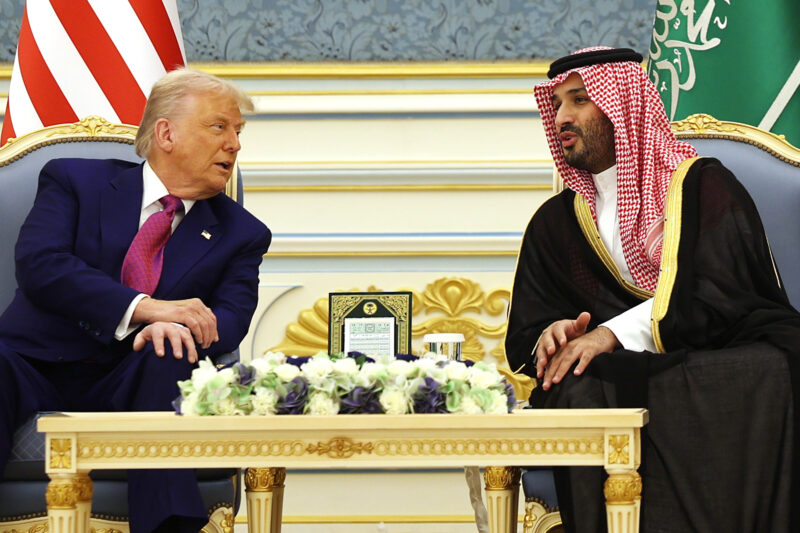
Saudi Crown Prince Mohammed bin Salman has encouraged Trump to continue the campaign against Iran and push towards toppling the regime, The New York Times reports, believing that Iran’s threat to the Gulf will only be removed through the transition of its government and not if the war results in a failed state. MBS has reportedly argued in favor of striking Iran’s energy infrastructure and putting U.S. troops on the ground…
The Pentagon is expected to announce the deployment of about 3,000 soldiers from the military’s 82nd Airborne Division to participate in the campaign against Iran, The Wall Street Journal reports, a move that opens the possibilities for boots on the ground, as the division is trained to parachute into hostile territory…
Israeli Defense Minister Israel Katz said today that the IDF will now maintain control over a security zone south of the Litani River in Lebanon and prevent the return of Lebanese residents who have been evacuated from the area “until the security of northern [Israeli] residents is assured”…
Lebanese Minister of Foreign Affairs Youssef Raggi declared Iran’s ambassador to Beirut persona non grata and expelled him from the country, as Iranian proxy Hezbollah continues to fire on Israel against the Lebanese government’s orders.
Shortly after, an Iranian ballistic missile was launched towards Beirut for the first time — it was reportedly intercepted by a “foreign naval vessel,” presumably the U.S., though fragments struck Lebanese towns…
Secretary of State Marco Rubio is being dispatched to France later this week to discuss the Iran war, among other issues, with the U.S.’ G7 allies, including Britain, Canada, France, Germany, Italy and Japan, countries that have all declined to participate in the war effort…
Majed al-Ansari, spokesperson for the Qatari foreign ministry, said today that Qatar is not involved in mediating any U.S.-Iran negotiations, a shift for the country that has traditionally played the part of go-between. Al-Ansari said there has been no communication between Doha and Tehran since a phone call early in the conflict when Qatar made clear its anger with Iranian strikes on its territory…
Politico reports that several 2028 Democratic presidential hopefuls said they wouldn’t or haven’t taken money from AIPAC, including Sen. Cory Booker (D-NJ), California Gov. Gavin Newsom, Sen. Ruben Gallego (D-AZ), Kentucky Gov. Andy Beshear, Illinois Gov. JB Pritzker, Pennsylvania Gov. Josh Shapiro, Sen. Elissa Slotkin (D-MI) and former Chicago Mayor Rahm Emanuel.
But while framing the statements as rejections of AIPAC and Israel, the outlet buried or declined to mention Booker’s rebuke of the Democratic Party’s singling out of the pro-Israel group, several respondents’ inability to accept funds from AIPAC since it only participates in congressional elections and Newsom’s own about-face on Israel, where in the same publication he walked back critical comments he’s made and said he’s “proud to support the state.”
AIPAC said in response that it has “never given to a presidential campaign” and that “singling out and excluding millions of pro-Israel Democrats” who are AIPAC members “is wrong and undemocratic”…
Michael Sacks — a prominent Democratic donor and supporter of former President Barack Obama who chaired the 2024 Democratic National Convention host committee — denounced Democratic criticism of AIPAC as a “thinly disguised effort to make support for Israel politically toxic in the Democratic Party, to chase Jews and their allies out of our big tent coalition.”
Sacks wrote in the Chicago Tribune, “Real leadership recognizes that we can hold complicated views about the Israeli government and still refuse to make Jewish identity and pro-Israel sentiment a political disqualifier in our party. We can defend the big tent when it is inconvenient, not just when it is easy”…
Jonathan Cowan, president of the moderate Democratic think tank Third Way, condemned far-left Michigan Senate candidate Abdul El-Sayed for his upcoming rallies with antisemitic streamer Hasan Piker, Jewish Insider’s Danielle Cohen-Kanik reports.
“It is morally repugnant and strategically self-defeating for Democrats like Abdul El-Sayed and Members of Congress like Summer Lee to cozy up to antisemitic extremists like Hasan Piker,” Cowan said in a statement. “Anyone eager to campaign with Hasan Piker is, at best, comfortable overlooking his antisemitic and anti-American extremism and, at worst, endorsing it”…
El-Sayed stood by his controversial statement about the shooting attack at Temple Israel in suburban Detroit earlier this month, in which he condemned the attack but blamed Israel’s military campaign in Lebanon for the perpetrator’s actions (the attacker’s brother was a Hezbollah commander).
The statement “was a risk,” El-Sayed said on an internal campaign call, per Punchbowl News, “but leadership is being willing to say the thing if you believe it to be true that nobody else is going to say”…
⏩ Tomorrow’s Agenda, Today
An early look at tomorrow’s storylines and schedule to keep you a step ahead
Keep an eye out in Jewish Insider for coverage of another war powers resolution expected to receive a vote this evening in the Senate.
President Donald Trump will give the keynote speech at the National Republican Congressional Committee’s annual President’s Dinner in Washington.
The House Homeland Security Committee will hold a hearing assessing the impact of the Department of Homeland Security shutdown, as lawmakers make progress on negotiations to fund the agency.
D.C. councilmember and mayoral candidate Janeese Lewis George will rally alongside other members of the Democratic Socialists of America including Squad-member Rep. Rashida Tlaib (D-MI), days after Lewis George held a private meeting with Jewish leaders to apologize for saying in a DSA questionnaire she would boycott events “promoting Zionism” and avoid the “Zionist lobby.”
Scholar of Jewish literature Ruth Wisse will deliver the annual Jefferson Lecture in the Humanities, the highest honor the federal government gives for intellectual achievement in the humanities, at the Kennedy Center in Washington.
The FII PRIORITY Summit, a high-profile investment and policy conference, will kick off in Miami, with speakers over the rest of the week including Trump; Donald Trump Jr.; Jared Kushner; White House Special Envoy Steve Witkoff; Dina Powell McCormick, president of Meta; Saudi Ambassador to the U.S. Princess Reema Bandar Al Saud; former Treasury Secretary Steve Mnuchin; Massad Boulos, senior White House advisor on the Middle East; and many more.
The Conservative Political Action Conference, known as CPAC, also begins tomorrow in Dallas.
The Jewish Book Council will hold the 75th National Jewish Book Awards Gala, hosted by entertainer Jonah Platt, at Temple Emanu-El in New York City.
Stories You May Have Missed
SECOND ACT

PAIN TO POWER

In the wake of Oct. 7, some in the Jewish community turned to faith, philanthropy or federal advocacy. Others set their sights closer to home, organizing to shape school boards and influence city councils
Plus, GOP losing hope in unseating Ossoff
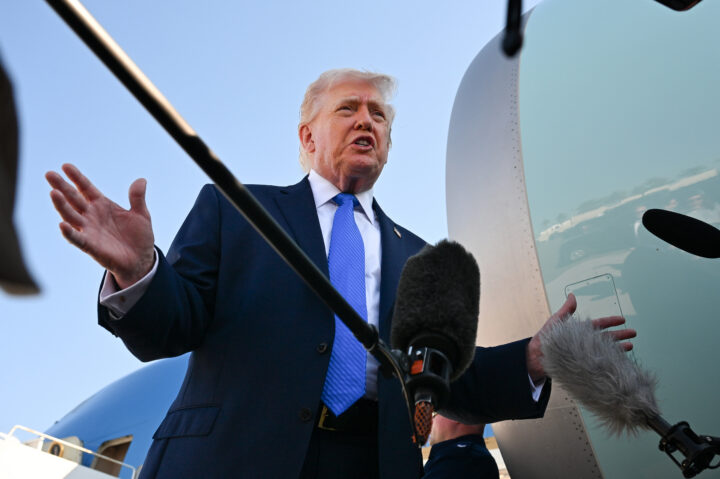
Roberto Schmidt/Getty Images
President Donald Trump speaks to reporters before boarding Air Force One at Palm Beach International Airport on March 23, 2026 in West Palm Beach, Florida.
This P.M. edition is reserved for our premium subscribers — offering a forward-focused read on what we’re tracking now and what’s coming next. Please don’t hesitate to share your thoughts and feedback by replying to this email.
📡On Our Radar
Notable developments and interesting tidbits we’re tracking
President Donald Trump revealed today that White House Special Envoy Steve Witkoff and advisor Jared Kushner have been negotiating with Iran amid the ongoing war, Jewish Insider’s Emily Jacobs reports, which played a role in Trump’s decision to delay by five days potential strikes on Iranian energy infrastructure.
“We have had very strong talks,” Trump told reporters. “Mr. Witkoff and Mr. Kushner had them. They went, I would say, perfectly. If they carry through with that, it’ll end that problem.” But the president kept the option of continued military action open: “If it goes well, we’re going to end up with settling this. Otherwise, we’ll just keep bombing our little hearts out,” he said.
At an event in Tennessee this afternoon, Trump added, “My whole life has been a negotiation, but with Iran we’ve been negotiating for a long time, and this time they mean business” and claimed the U.S. has taken out 90% of Iran’s missile launchers…
Israeli Prime Minister Benjamin Netanyahu said in a video statement that he spoke with Trump today about the negotiations, which the president believes could result in “an agreement that will safeguard our vital interests.”
“At the same time,” Netanyahu said, Israel is continuing to strike targets in Iran and Lebanon; the IDF announced it had struck several “regime headquarters” in Tehran and CENTCOM also said it continues “to aggressively strike Iranian military targets with precision munitions”…
Senate Minority Leader Chuck Schumer (D-NY) declined to directly address whether the degradation of Iran’s military infrastructure should be viewed as a positive outcome, JI’s Matthew Shea reports, instead emphasizing the war’s potential economic and geopolitical consequences.
Asked on MS NOW’s “Morning Joe” if the degradation is a “good thing,” Schumer said it’s a “premature question. What is going to happen in the next several months? Is it worth it? Will the world economy collapse? … If you ask the American people, if you have the choice of degrading the military structure in Iran, but having gasoline be $6 a gallon and our economy falling into a deep recession where millions lose their job, what do you think?”…
The New York Times reports on the apparent failure of a plan by the Mossad to foment internal Iranian rebellion that could lead to the overthrow of the regime amid the ongoing war, as American and Israeli intelligence indicates the regime is weakened but intact…
UAE Foreign Minister Abdullah bin Zayed said Abu Dhabi will “never be blackmailed by terrorists,” in response to a post from French diplomat Gérard Araud who called the UAE’s further embrace of the U.S. amid bombardment from Iran “strange”…
The Associated Press examines Israel’s use of Iran’s network of surveillance cameras to carry out intelligence operations including the assassination of former Supreme Leader Ayatollah Ali Khamenei…
Asked if former intelligence official Joe Kent was leaking classified information, as he is reportedly under investigation by the FBI for doing, Trump said “that’s possible,” and largely derided Kent for his failed congressional campaigns and for remarrying “quickly” after his first wife was killed in 2019 while serving in Syria.
“I felt badly for him, so I told my people, ‘Reach out to him, give him a job at the White House.’ This is the thanks I get,” Trump told reporters. He also dismissed Kent’s opposition to the Iran war as an effort “to get publicity”…
Heritage Foundation President Kevin Roberts said that internal MAGA divisions over the Iran war, like those espoused by Kent, are “good” for the movement. “As it relates to tensions in the movement or disagreements about national security, actually, it’s good that those exist,” he told The Hill. But, Roberts said, he believes Trump “has executed [the war] perfectly, including not involving untrustworthy European, quote, unquote allies in the conversation”…
Politico looks at the decision of pro-Israel groups including AIPAC and the Republican Jewish Coalition not to spend money against Texas congressional candidate Brandon Herrera as they did during his first run for Congress, despite Herrera’s history of extreme views and antisemitic rhetoric. Trump endorsed Herrera last week after Rep. Tony Gonzales (R-TX) withdrew from the race…
New filings from the Federal Election Commission show that two super PACs rumored to be established by pro-Israel groups during the Illinois Democratic primaries were primarily funded by United Democracy Project, the AIPAC-affiliated super PAC, which spent more than $5.3 million through Elect Chicago Women and Affordable Chicago Now.
Among the other major donors who backed the two groups was prominent Democratic philanthropist Michael Sacks, who had lamented the rising “Jew hate” among candidates who refused to take money from donors affiliated with AIPAC earlier in the election…
Republicans are quietly losing hope in their ability to defeat Sen. Jon Ossoff (D-GA), a seat which the GOP had named as one of its main targets to flip, The Washington Post reports. “This guy’s no slouch,” Rep. Buddy Carter (R-GA), running in the GOP primary, told a crowd of Republican voters, calling Ossoff “articulate” and “handsome.”
Jewish leaders in Georgia told JI last year that Ossoff was making amends with their community after he had voted to block some aid to Israel, though the Jewish lawmaker is now drawing fresh controversy by adopting Rep. Ro Khanna’s (D-CA) rhetoric about the “Epstein class,” which some have identified as antisemitic…
⏩ Tomorrow’s Agenda, Today
An early look at tomorrow’s storylines and schedule to keep you a step ahead
Keep an eye out in Jewish Insider for a look at how the aftermath of the Oct. 7 attacks has sparked a wave of grassroots Jewish political activism across the U.S., as community members organize locally — from city councils to school boards — to respond to rising antisemitism and shape down-ballot races.
The Hill & Valley Forum, a summit focused on connecting government and the tech and innovation industries, will hold its annual gathering in Washington tomorrow with opening remarks by its co-founder, Jacob Helberg, now under secretary of state for economic affairs. Ahead of the summit, Helberg announced today that the U.S. will contribute $250 million alongside a consortium of countries involved in the Pax Silica initiative to invest in energy projects and critical minerals.
Also speaking tomorrow are Sens. Mike Rounds (R-SD), Chris Coons (D-DE), Todd Young (R-IN), Maria Cantwell (D-WA), Jim Banks (R-IN), Rick Scott (R-FL) and Mark Warner (D-VA); House Speaker Mike Johnson (R-LA); Reps. Josh Gottheimer (D-NJ) and John Moolenaar (R-MI); OpenAI COO Brad Lightcap; JPMorgan Chase CEO Jamie Dimon; NASA Administrator Jared Isaacman; Palantir CTO Shyam Sankar; Michael Duffey, under secretary of defense for acquisition and sustainment; and Ben Black, CEO of the U.S. International Development Finance Corporation.
Stories You May Have Missed
PERSIAN COVERAGE PUSH
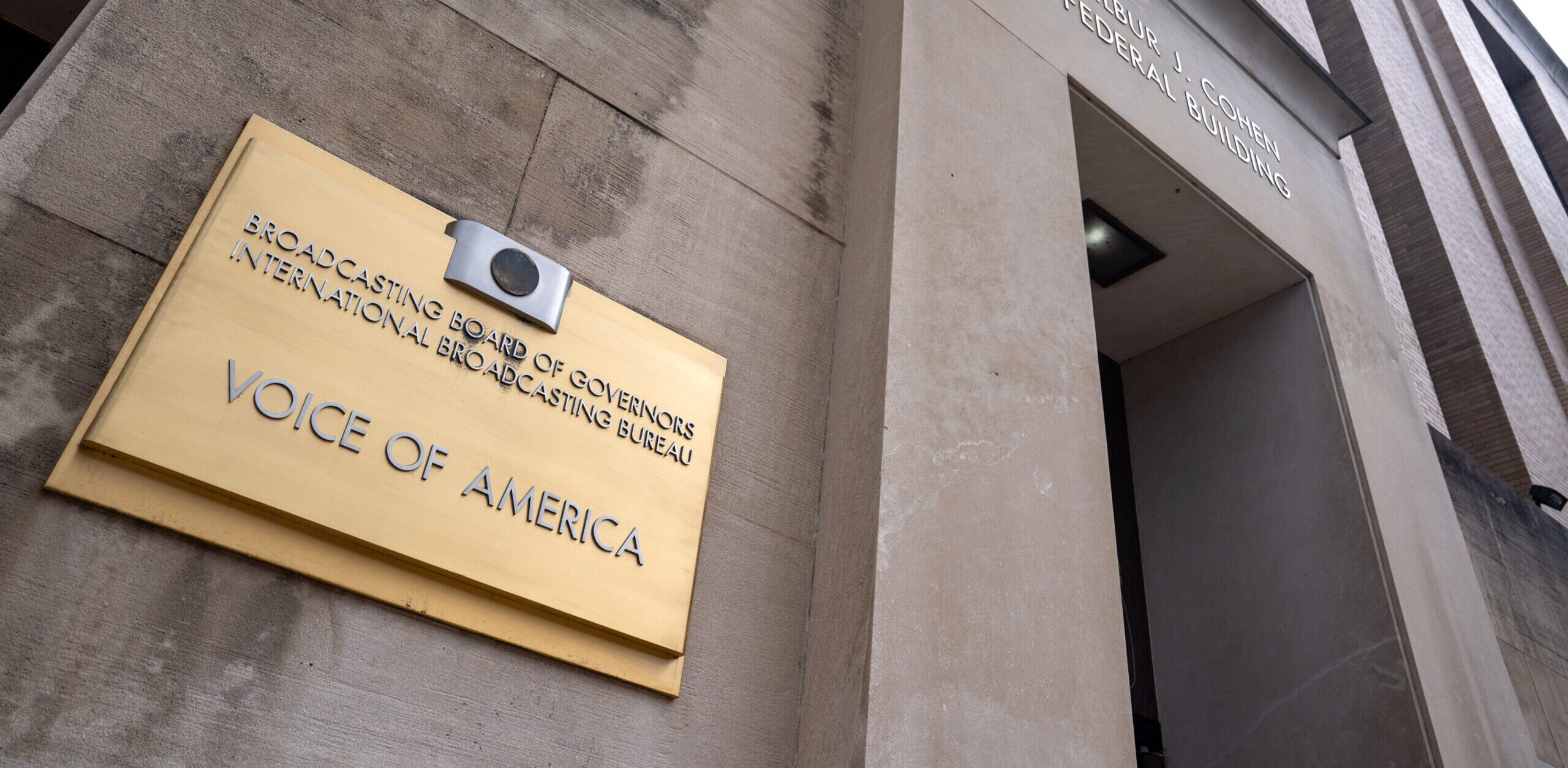
The international broadcaster, along with Radio Free Europe, has struggled to deploy its Persian-language services to provide coverage amid an internet blackout in Iran
IVY LEAGUE INQUIRY

The report’s author argued Harvard has been ‘ambivalent’ about its decreasing Jewish population, while other Jewish leaders cast doubt on its findings
Plus, Temple Israel seeks to 'tell its story'

Andrew Harnik/Getty Images
Tulsi Gabbard is sworn in as Director of National Intelligence in the Oval Office at the White House on February 12, 2025 in Washington, DC.
This P.M. edition is reserved for our premium subscribers — offering a forward-focused read on what we’re tracking now and what’s coming next. Please don’t hesitate to share your thoughts and feedback by replying to this email.
📡On Our Radar
Notable developments and interesting tidbits we’re tracking
Director of National Intelligence Tulsi Gabbard distanced herself — to a degree — from two of her isolationist-minded aides, Joe Kent and Dan Caldwell, who have taken a hostile stance to the U.S.’ Middle East policy, Jewish Insider’s Marc Rod reports.
Gabbard affirmed, after being pressed at a House Intelligence Committee hearing today, that the conspiratorial views about Israel espoused by Kent in his resignation letter earlier this week did concern her, and said about Caldwell that he would have no influence over intelligence reports at her agency.
Gabbard, who has previously been a vocal critic of military engagement with Iran, further acknowledged that her current position requires her to “check” her personal views “at the door”…
Reports of a potential $200 billion emergency funding request from the Pentagon for the war in Iran are drawing firm Democratic opposition and hedged responses from Republicans on the Hill: House Speaker Mike Johnson (R-LA) said he’ll “look at” the request “but obviously it’s a dangerous time in the world and we have to adequately fund defense,” while Sen. Lindsey Graham (R-SC) said he’d “hate to be the senator that denied the request if it made sense.” Rep. Pat Ryan (D-NY) responded with a simple “No,” while Sen. Richard Blumenthal (D-CT) called it a “nonstarter”…
The Senate is set to hold another round of votes on blocking U.S. arms transfers to Israel, after Sen. Bernie Sanders (I-VT) filed three new joint resolutions of disapproval against $658.8 million in sales of over 20,000 bombs to Israel, JI’s Marc Rod reports.
A majority of the Democratic caucus — 27 lawmakers — voted to block at least one arms sale in July of last year, a significant jump in support from previous similar efforts; Israel’s standing in the party has largely declined since then amid Democratic criticism of the war with Iran…
During a meeting with Japanese Prime Minister Sanae Takaichi at the White House today, President Donald Trump reiterated that he had told Israeli Prime Minister Benjamin Netanyahu not to attack Iranian oil facilities, after an Israeli strike on the South Pars gas field yesterday: “I told them, don’t do that. We didn’t discuss. … It’s coordinated, but on occasion, he’ll do something.”
Trump also put pressure on Takaichi to help secure the Strait of Hormuz, while European leaders released a joint statement “express[ing] our readiness to contribute to appropriate efforts to ensure safe passage through the Strait,” after repeatedly declining to get involved. A team of British military planners is now consulting with CENTCOM on options to assist short of military action, The New York Times reports…
Asked if he will deploy more U.S. troops in the region, Trump told reporters he’s “not putting troops anywhere. If I were, I certainly wouldn’t tell you — but I’m not putting troops”…
Secretary of Defense Pete Hegseth compared Iran to Hamas in a briefing today, saying that, “just like Hamas and their tunnels,” Iran has “poured any aid, any economic development … into tunnels and rockets”…
A group of congressional Democrats is urging the State Department to restart chartered evacuation flights out of Israel and take additional steps to help U.S. citizens who wish to leave the country amid the ongoing war with Iran, JI’s Marc Rod reports.
The lawmakers described the State Department’s current partnership with El Al, which launched on March 13 with a limited number of special evacuation flights for U.S. citizens, as insufficient. The Israeli airline has currently suspended registration for the flights, and government-imposed security restrictions are limiting passenger capacity on each flight and reducing airport operations…
Treasury Secretary Scott Bessent said that the U.S. may lift sanctions on Iranian oil already at sea in order to blunt rising gas prices. “In essence, we will be using the Iranian barrels against the Iranians to keep the price down for the next 10 or 14 days as we continue this campaign,” he explained on Fox News…
Saudi Foreign Minister Prince Faisal bin Farhan warned the kingdom is reaching a breaking point after continued Iranian attacks, saying “what little trust” Riyadh had with Tehran has “completely been shattered.”
On a potential Saudi military response, Prince Faisal said, “Do they have a day, two, a week? I’m not going to telegraph that.” It’s a notable shift for Riyadh, which had been pivoting away from its traditional allies and towards Iran and other Islamist countries prior to the war…
Illinois Gov. JB Pritzker condemned AIPAC after a primary cycle in which the pro-Israel group spent millions backing — and opposing — candidates across the state, calling it “an organization that was supporting Donald Trump and people who follow Donald Trump.”
Pritzker, a Jewish Democrat who was once an AIPAC donor himself, said it “really is not an organization that I think today I would want any part of.” He further echoed far-left sentiments that Israel dragged the U.S. into conflict with Iran, claiming Trump “simply follow[ed] Netanyahu into that war”…
Rep. Jared Moskowitz (D-FL) details his experience with a would-be assailant, a man described by authorities as a “ticking time bomb,” who was arrested near his home last year after police discovered an arsenal of weapons and a handwritten list of targets that included Jewish sites and Moskowitz.
“Besides the police presence outside his house, Moskowitz himself will not appear in parades and says he won’t speak at outdoor staged events. ‘It’s not worth it. I’d rather lose my election,’” the lawmaker told Roll Call…
Temple Israel in suburban Detroit released photos of the devastation to the building caused by an attacker last week, noting that it had “chosen thus far not to make [the photos] public” but are doing so now “to take back control of our narrative” after several were leaked to the media.
“We share these images because our community deserves to see our building through eyes of love, not through the lens of spectacle. This is our sacred space, and we will be the ones to tell its story,” the synagogue wrote…
The University of California, Berkeley reached a settlement in its lawsuit with the federal government, agreeing to pay $1 million and make changes to its discrimination policy following accusations that the university had failed to properly address campus antisemitism.
Among the policy changes, the school will clarify that the word “Zionist” cannot be used as a proxy for Jew or Israeli. The claims in the lawsuit predate the recent campus unrest over Israel’s war in Gaza, stemming from an incident in 2022 when student groups adopted policies saying they would not host Zionist speakers…
⏩ Tomorrow’s Agenda, Today
An early look at tomorrow’s storylines and schedule to keep you a step ahead
Keep an eye out in Jewish Insider for a look at the struggles facing international broadcasters Voice of America and Radio Free Europe in reaching Iranian citizens during the ongoing war due to budget cuts and roadblocks from the U.S. Agency for Global Media.
The House Appropriations Committee will hold a field hearing at the U.S. Mission to the U.N. in New York City on “accountability and reform” at the U.N.
We’ll be back in your inbox with the Daily Overtime on Monday. Shabbat Shalom!
Stories You May Have Missed
DEADLINE LOOMING
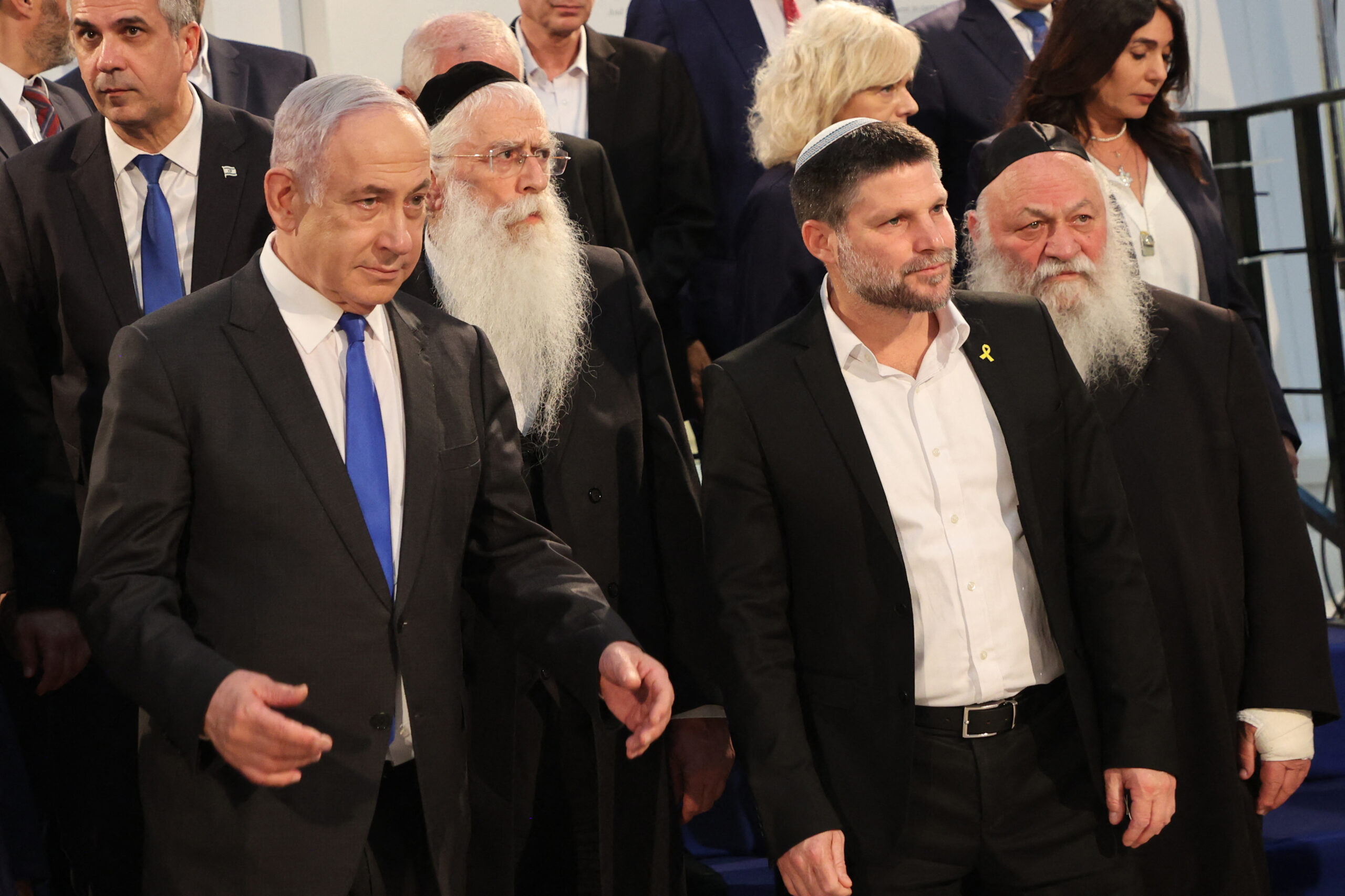
The prime minister’s governing coalition is struggling to stay intact to pass 2026 budget amid shifting political priorities
QUARREL ON THE QUAD

Anti-Israel activists are singling out regent Jordan Acker, hoping to unseat him with attorney Amir Makled, who represented a member of the school’s encampment
Plus, JD Vance says he likes Joe Kent
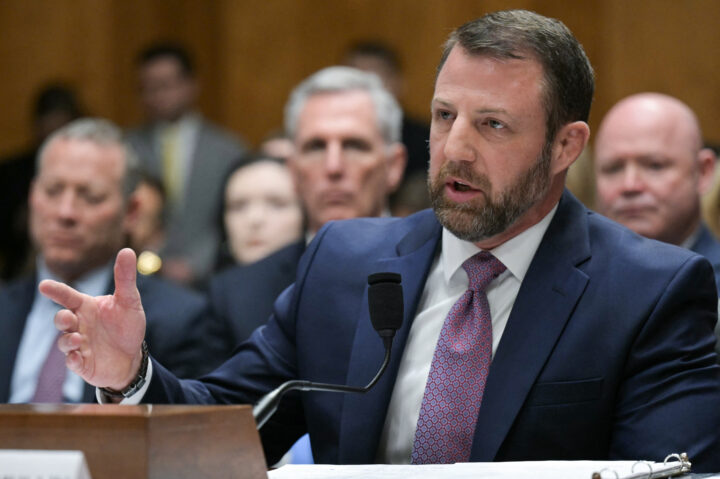
Oliver Contreras/AFP via Getty Images
DHS Secretary Markwayne Mullin testifies during a Senate Committee on Homeland Security and Governmental Affairs confirmation hearing on Capitol Hill in Washington, DC
This P.M. edition is reserved for our premium subscribers — offering a forward-focused read on what we’re tracking now and what’s coming next. Please don’t hesitate to share your thoughts and feedback by replying to this email.
📡On Our Radar
Notable developments and interesting tidbits we’re tracking
Director of National Intelligence Tulsi Gabbard said during a Senate Intelligence Committee hearing today that the Iranian regime “appears to be intact but largely degraded,” Jewish Insider’s Marc Rod reports, as the U.S. and Israel continue to target Iranian leaders and assets. If it survives the war, she said, the regime would “seek to begin a yearslong effort to rebuild its military, missiles and UAV forces.”
Gabbard, a longtime opponent of war with Iran, repeatedly declined to say whether the intelligence community had assessed Iran to be an imminent threat to the United States, after her former deputy, Joe Kent, alleged in his resignation letter yesterday that no such threat existed. CIA Director John Ratcliffe, however, was clear in his view that “Iran has been a constant threat to the United States for an extended period of time, and posed an immediate threat at this time”…
Regarding Kent’s resignation over his opposition to the war in Iran and claims that Israel coerced the U.S. into the war, White House Press Secretary Karoline Leavitt said Kent “was not someone who was involved in … the president’s intelligence briefings over the last several months. Have not seen him here at the White House for quite some time.”
She said President Donald Trump finds it “disappointing” that Kent would “resign with a letter filled with falsehoods, accusing the president of the United States [of] being controlled by a foreign country. That’s both insulting and laughable.”
Vice President JD Vance told reporters, “I know Joe Kent a little bit. I like Joe Kent … It’s fine to disagree, but once the president makes a decision, it’s up to everybody who serves in his administration to make it as successful as possible. That’s how I do my job”…
In his nomination hearing to be secretary of homeland security, Sen. Markwayne Mullin (R-OK) said he will aim to “streamline the process” for grants, including the Nonprofit Security Grant Program, JI’s Matthew Shea reports, vowing to work to “cut out the redundancies.”
“The amount of paperwork once you’re approved to get the funding flowing, and then the paperwork that’s followed up on is way too encompassing,” Mullin said. “Taking years to get reimbursed is not acceptable. Taking months to get reimbursed is not acceptable.” His hearing was otherwise colored by personal hostility with Homeland Security Committee Chair Sen. Rand Paul (R-KY), which could complicate Mullin’s path to nomination…
The Israeli Air Force reportedly struck the South Pars gas field in Iran, the largest in the world; Qatar, which owns half of the field, called it a “dangerous and irresponsible step.” The U.S. reportedly had knowledge of the operation, despite the Trump administration asking Israel earlier this month not to strike energy facilities…
Trump issued a veiled threat to American allies who have declined to assist in securing the Strait of Hormuz, musing on Truth Social, “I wonder what would happen if we ‘finished off’ what’s left of the Iranian Terror State, and let the Countries that use it, we don’t, be responsible for the so called ‘Strait?’ That would get some of our non-responsive ‘Allies’ in gear, and fast!!!”…
Michael Blake, the Democrat challenging Rep. Ritchie Torres (D-NY) whose campaign has focused extensively on criticism of Israel and AIPAC, expressed strong support for Kent’s resignation letter and his baseless claim of Israel’s role in initiating the war. “An absolutely breathtaking, courageous and bold resignation letter stating that Iran posed NO IMMINENT THREAT to us and Trump made this decision due to the Israeli government and its American Lobby,” Blake wrote on X…
Maine Senate candidate Graham Platner released an ad in response to one from his opponent, Gov. Janet Mills, highlighting social media comments he had made about sexual assault. “If I saw these ads, I’d have questions,” Platner says in the spot. “Maine, I’m asking you not to judge me for the worst thing I said on the internet on my worst day 14 years ago, but who I am today.”
Mills replied with another ad featuring an interview clip of Platner in which he said about his posts, “I made a lot of comments that I’m not, like, ashamed of. It’s not as though I have this ream of comments in which I look back and I’m like, oh my god, I was a terrible person back then”…
During an economic-focused visit to Detroit today, Vance remarked about the recent shooting attack at nearby Temple Israel, “When something happens to any member of our American family, and this particular incident happened to Jewish members of our American family, it is something that all of us have to stand up and say, it’s disgusting, it’s unacceptable”…
Also in response to the Temple Israel attack, Montgomery County, Md., a heavily Jewish suburb of Washington, announced it will provide $500,000 in supplemental funding for its Nonprofit Security Grant Program for current recipients over the next 90 days. It’s one of the few localities that provides its own funding in addition to the federal program…
⏩ Tomorrow’s Agenda, Today
An early look at tomorrow’s storylines and schedule to keep you a step ahead
Keep an eye out in Jewish Insider for a look at the far-left candidates running against establishment Democrats in Colorado.
The Senate will vote on another war powers resolution this evening aiming to stop the U.S. operation in Iran. The resolution, sponsored by Sen. Cory Booker (D-NJ), is expected to fail largely along party lines, as the previous one did earlier this month.
Administration intelligence officials including DNI Tulsi Gabbard and CIA Director John Ratcliffe will appear before the House Intelligence Committee tomorrow for its rescheduled worldwide threats hearing.
The Senate’s Homeland Security & Governmental Affairs Committee is set to hold a vote on Sen. Markwayne Mullin’s (R-OK) nomination to be secretary of homeland security, though Sen. Rand Paul (R-KY) threatened to cancel it over personal animosity and outstanding questions about a 2016 overseas trip that Mullin claims was classified. If a vote is held, Mullin will need the support of at least one Democrat on the committee in order to advance without Paul’s support, which Sen. John Fetterman (D-PA) has previously pledged to provide.
After his appearance this evening on far-right commentator Tucker Carlson’s podcast, Joe Kent will be interviewed tomorrow by Candace Owens, who similarly deals in antisemitic conspiracy theories, at the Catholic Prayer for America gala in Washington. Also appearing at the gala is Carrie Prejean Boller, the former beauty pageant queen who was removed from the White House’s Religious Liberty Commission after berating Jewish hearing witnesses over antisemitism.
Stories You May Have Missed
LONE STAR LIABILITY

Bexar County sheriff’s deputy Johnny Garcia is facing off against Maureen Galindo, who has made antisemitic conspiracy theories a key feature in her campaign
HORSESHOE POLITICS
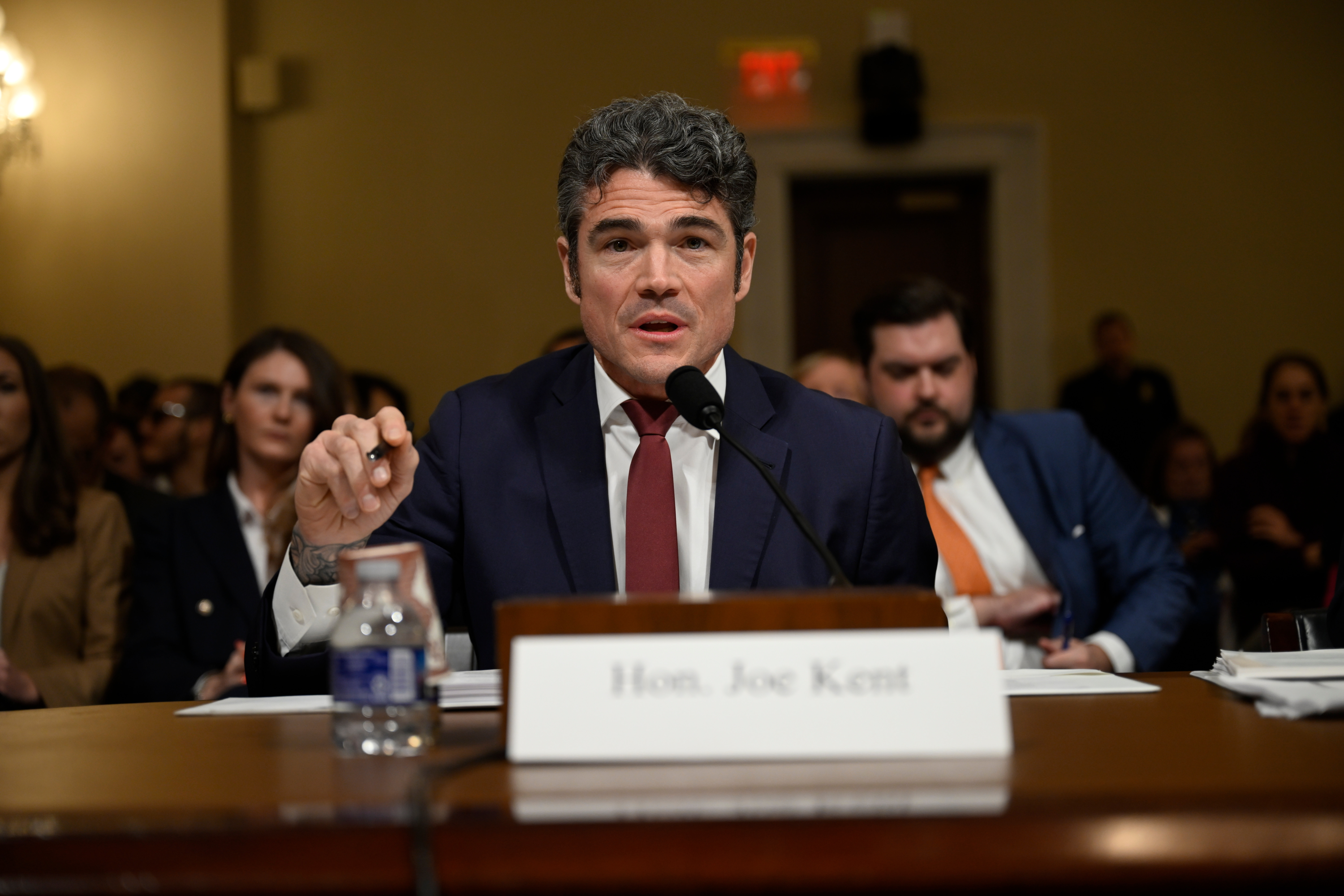
Democrats previously slammed Kent as an untrustworthy extremist in opposing his nomination. Now, amid his anti-Israel accusations, some argue he has a point
Plus, airlines push back direct flights to TLV

TIMOTHY A. CLARY / AFP via Getty Images
New York City Mayor Zohran Mamdani (2L), New York City Police Commissioner Jessica Tisch (2R) and Cardinal Timothy Dolan (R) participate in annual St. Patrick's Day Parade in New York on March 17, 2026.
This P.M. edition is reserved for our premium subscribers — offering a forward-focused read on what we’re tracking now and what’s coming next. Please don’t hesitate to share your thoughts and feedback by replying to this email.
📡On Our Radar
Notable developments and interesting tidbits we’re tracking
Joe Kent, director of the National Counterterrorism Center, resigned from his role today over opposition to the war in Iran, baselessly alleging that Israel had coerced the United States into what he characterized as a misguided military conflict, Jewish Insider’s Matthew Kassel reports.
In a letter to President Donald Trump, Kent, a former Green Beret who had reported to Director of National Intelligence Tulsi Gabbard, wrote that he “cannot in good conscience support the ongoing war in Iran,” claiming that the Islamic Republic “posed no imminent threat to our nation, and it is clear that we started this war due to pressure from Israel and its powerful American lobby.”
Kent, a hard-right former congressional candidate with isolationist foreign policy leanings, has previously promoted conspiracy theories, echoed pro-Russia messaging and associated with white supremacists and neo-Nazis, among other controversies. He’s now expected to appear on the podcast of his ally and friend Tucker Carlson…
After being largely rejected by foreign leaders on his repeated calls to assist in the war with Iran, Trump claimed in a post on Truth Social that, “Because of the fact that we have had such Military Success, we no longer ‘need,’ or desire, the NATO Countries’ assistance — WE NEVER DID! … WE DO NOT NEED THE HELP OF ANYONE!”
Asked about the timeline of the war by reporters in the Oval Office this afternoon, Trump said, “We’re not ready to leave yet, but we will be leaving in the … very near future”…
Reports indicate Iran’s security forces, despite being badly battered by the U.S. and Israel, are conducting renewed crackdowns on the Iranian public and potential dissenters. At least 500 people have been arrested since the start of the war, and new security checkpoints are being deployed for regime oversight…
Major U.S. airlines have extended their suspensions of direct flights to Tel Aviv as the war continues, JI’s Haley Cohen reports, with both United and Delta airlines not offering any direct flights until June.
The first direct flight on United Airlines between Newark Liberty International Airport and Ben Gurion Airport is available on June 16, while the first direct New York to Tel Aviv flight on Delta Airlines is available June 1. United’s direct flights from Israel to Chicago O’Hare and Washington Dulles International Airport are also suspended…
U.S. Special Envoy to Syria Tom Barrack denied reports that the U.S. is encouraging Syria to deploy forces into eastern Lebanon to help disarm Hezbollah, as the IDF begins to carry out ground incursions in the south of the country…
Israeli Prime Minister Benjamin Netanyahu continues to post “proof of life” videos on social media amid internet conspiracy theories that he has been killed and replaced by a look-alike…
Trump’s decision to withhold his endorsement in the Texas Senate GOP runoff all but guarantees that Sen. John Cornyn (R-TX) and Texas Attorney General Ken Paxton will both appear on the May 26 runoff ballot, as neither have dropped out of the race ahead of this evening’s deadline…
Maine Gov. Janet Mills released her first attack ad against her Democratic primary rival in the race for U.S. Senate, oyster farmer Graham Platner, highlighting social media comments he made about sexual assault that have marred his campaign. In the ad, several women read disparaging comments made by Platner on Reddit over a decade ago relating to rape, and a picture of Platner’s Nazi tattoo — which he has since had covered — is displayed under a magnifying glass. “The closer you look, the worse it gets,” the ad’s narrator says…
The Wall Street Journal spotlights the gamble being made by Illinois Gov. JB Pritzker as he expends political capital (and actual capital) backing his lieutenant governor, Juliana Stratton, in the state’s Democratic primary for U.S. Senate taking place today. Pritzker’s involvement has drawn the ire of the Congressional Black Caucus, which is backing Rep. Robin Kelly (D-IL), even though both Stratton and Kelly are Black. The race is seen as a test of Pritzker’s political clout in his home state…
New York City Mayor Zohran Mamdani took the occasion of St. Patrick’s Day and the presence of former Irish President Mary Robinson in New York to accuse Israel of committing genocide and to praise Robinson’s controversial tenure as the United Nations’ high commissioner for human rights, JI’s Will Bredderman reports.
“I think also of how she stood steadfast alongside the people of Palestine,” the mayor said in listing Robinson’s accomplishments. “I say this as over the past few years as we’ve witnessed a genocide unfold before our eyes, there has been deafening silence from so many. For those who have long cared about universal human rights and the extension of them to Palestinians, silence, however, is nothing new. For Palestinians are so often left to weep alone. Yet former President Robinson has never been silent”…
⏩ Tomorrow’s Agenda, Today
An early look at tomorrow’s storylines and schedule to keep you a step ahead
Keep an eye out in Jewish Insider for a rundown of the results of Illinois’ Democratic primaries, where polls close at 8 p.m. ET.
Director of National Intelligence Tulsi Gabbard is expected to face questions over the departure of her deputy, Joe Kent, at the Senate Intelligence Committee’s hearing on worldwide threats, where she will testify alongside other intelligence agency heads. Gabbard said today after Kent’s resignation that, as commander-in-chief, Trump “concluded that … Iran posed an imminent threat and he took action based on that conclusion,” but did not say whether she agrees herself in that assessment, something she is likely to be pressed on tomorrow.
The Senate Foreign Relations Committee will receive a classified briefing on the war in Iran from State Department intelligence officials.
The Senate Homeland Security & Governmental Affairs Committee will hold a nomination hearing for Sen. Markwayne Mullin (R-OK) to be secretary of homeland security after Trump’s ouster of Secretary Kristi Noem.
The U.S. Commission on International Religious Freedom will hold a hearing on rising antisemitism abroad.
Stories You May Have Missed
DOMESTIC FRONT

Eighteen-year legal fight over the Iran-tied Alavi Foundation ends with a new group with similar leadership taking over its assets — and NYC skyscraper
NAMING NAMES
The ADL’s annual summit comes amid high-profile antisemitic attacks during the Iran war
And Europe to Trump: Iran is 'not our war'
Peter W. Stevenson/The Washington Post via Getty Images
Pennsylvania Gov. Josh Shapiro sits for an interview at the Pennsylvania State Capitol on June 11, 2025.
This P.M. edition is reserved for our premium subscribers — offering a forward-focused read on what we’re tracking now and what’s coming next. Please don’t hesitate to share your thoughts and feedback by replying to this email.
📡On Our Radar
Notable developments and interesting tidbits we’re tracking
European countries are largely rebuffing President Donald Trump’s calls to join the war with Iran and help secure the largely impassable Strait of Hormuz. German Defense Minister Boris Pistorius said today, “This is not our war; we did not start it,” while the French foreign ministry said, “Posture has not changed: defensive it is.” Poland, the U.K. and Italy similarly made clear they would not be participating in an offensive capacity…
On potential negotiations with Iran, Trump told reporters, “We don’t even know their leaders. We have people wanting to negotiate. We have no idea who they are.” He said new Supreme Leader Mojtaba Khamenei is “badly disfigured” and noted it’s “unusual” he hasn’t recently been seen in public.
Khamenei narrowly survived an airstrike on his compound on Feb. 28 as he briefly stepped outside, according to leaked audio obtained by The Telegraph, which reportedly contains remarks by an official in the office of deceased Ayatollah Ali Khamenei to senior clerics…
IDF spokesperson Lt. Col. Nadav Shoshani denied reports that Israel is running low on missile interceptors, saying there is no “urgent problem” and that the military re-equips its supplies “in real time”…
Debris and missile fragments from Iranian attacks fell in the Old City of Jerusalem near several sensitive sites including the Western Wall Plaza and feet away from the Church of the Holy Sepulchre…
Twenty-three Democratic members of the House Foreign Affairs Committee wrote to Trump requesting a public hearing with Special Envoy Steve Witkoff and Jared Kushner to understand their role in “lead[ing] diplomatic engagement with Iran”…
Representatives of the U.S.-led Board of Peace met with Hamas officials over the weekend in Cairo, Egypt, Reuters reports, in an effort to keep ceasefire negotiations on track even as the war with Iran proceeds. Aryeh Lightstone, an aide to Witkoff, reportedly represented the U.S. delegation, with more meetings expected this week…
Times of Israel reporter Emanuel Fabian chronicles his experience receiving death threats from users of the prediction market platform Polymarket over his reporting on a recent Iranian missile strike in the city of Beit Shemesh…
Trump announced that Susie Wiles, his White House chief of staff, has been diagnosed with early stage breast cancer and will receive treatment while remaining in her post…
Pennsylvania Gov. Josh Shapiro, a potential 2028 presidential contender, tested out his measured, pro-Israel messaging in a series of recent podcast interviews, Jewish Insider’s Gabby Deutch reports. In his appearances on “Pod Save America” and “Higher Learning,” Shapiro made the case that, as the starting point for any public political conversation about Israel, the fact of Israel’s right to exist as a Jewish state must be respected.
“I think what is dangerous here … is for those who think Israel doesn’t have a right to exist in [the] conversation. That to me is a recipe for permanent war,” Shapiro told “Higher Learning” host Van Lathan. He also pushed back on California Gov. Gavin Newsom, his potential 2028 opponent, for saying Israel could be described as an apartheid state…
Rep. Mike Lawler’s (R-NY) reelection campaign is employing a community activist, Darrell Davis, who has criticized Democratic politicians, including Rep. George Latimer (D-NY) and a county executive, for taking money from pro-Israel groups and traveling to Israel, Politico reports.
Davis accused Latimer of being on the receiving end of a “Jewish organized spending spree” and taking “about $30 million to buy a congressional seat, to represent the interests of Israel,” which he called “a horrific threat to democracy.” About Westchester County Executive Ken Jenkins’ trip to Israel, Davis wrote, “Why are they in Israel?? What more proof do people need that black Dems don’t give a sh*t about you. They are up for sale”…
The day before her primary election in Illinois’ 9th Congressional District, far-left social media influencer Kat Abughazaleh removed language from her campaign website claiming “There is no acceptable scenario that leaves Hamas in charge of the Gaza Strip,” after she had faced criticism from the Hamas-friendly outlet Drop Site News over its inclusion. Her site says that the earlier language on the page “did not accurately reflect Kat’s views or the values of this campaign”…
And the closing drama in the Illinois Senate Democratic primary is Lt. Gov. Juliana Stratton’s claim that she received a deathbed endorsement from civil rights leader Rev. Jesse Jackson, which the Jackson family said today he had never finalized. The late reverend’s support is seen as meaningful in the race, which includes multiple prominent Black candidates, as well as Rep. Raja Krishnamoorthi (D-IL)…
The Atlantic spotlights one of the main obstacles facing Maine Gov. Janet Mills in her Democratic primary for U.S. Senate against oyster farmer Graham Platner: her age. Mills, 78, “does not have a dicey Reddit history or a recently covered-over Nazi tattoo” but is still trailing in the polls, even as Platner continues to be plagued by scandals. “One likely factor: If she is elected, Mills would be the oldest freshman senator in history”…
⏩ Tomorrow’s Agenda, Today
An early look at tomorrow’s storylines and schedule to keep you a step ahead
Keep an eye out in Jewish Insider for a look at the tense runoff in the Democratic primary for Texas’ 35th Congressional District, where a fringe conspiracy theorist eked out a narrow victory over a sheriff’s deputy backed by the pro-Israel establishment.
All eyes will be on the Prairie State tomorrow, as several high-profile Democratic primaries will be decided across Illinois. Read JI’s coverage of the races to watch.
On the Hill, the House Intelligence Committee will hold its annual hearing on worldwide threats, with testimony from Director of National Intelligence Tulsi Gabbard, CIA Director John Ratcliffe, FBI Director Kash Patel, NSA Acting Director William Hartman and DIA Director James Adams.
The House Foreign Affairs Committee will hold a hearing on reforming U.S. defense sales.
Stories You May Have Missed
BREAKING POINT
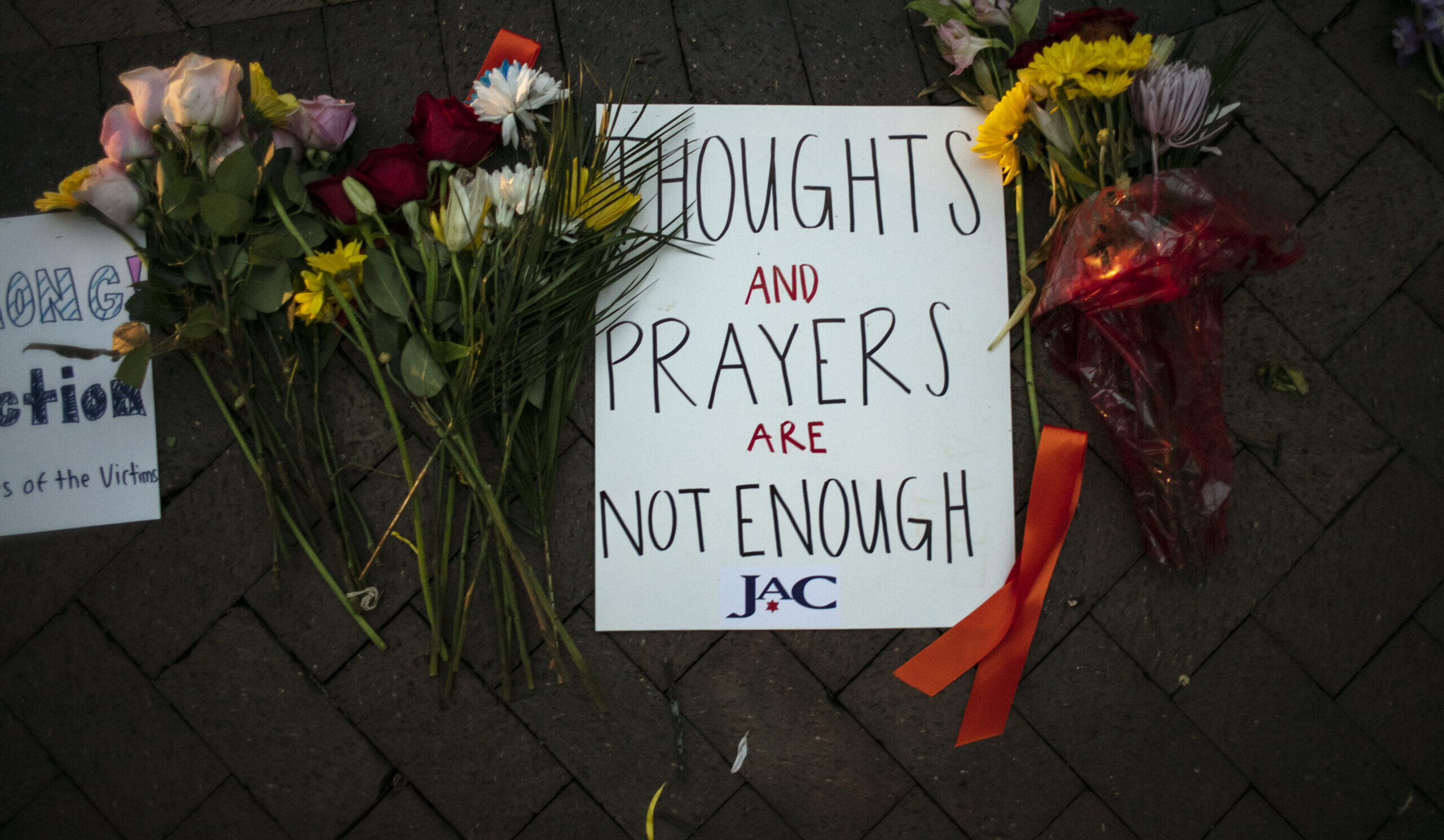
Democrats began calling out those who traffic in antisemitic rhetoric when they offered platitudes after an attack on a Michigan synagogue
UNDER PRESSURE
Tech entrepreneur Ethan Agarwal: ‘He thinks being racist against Jewish people is going to help him win the American left. I don’t care if he’s right. I just think it’s unethical and immoral’
Plus, Ro Khanna defends Hasan Piker amid Mich. attack

Emily Elconin/Getty Images
Law enforcement respond near Temple Israel following reports of an active shooter on March 12, 2026 in West Bloomfield, Mich.
This P.M. edition is reserved for our premium subscribers — offering a forward-focused read on what we’re tracking now and what’s coming next. Please don’t hesitate to share your thoughts and feedback by replying to this email.
📡On Our Radar
Notable developments and interesting tidbits we’re tracking
A suspect was killed during an active shooter and car ramming incident at Temple Israel in the heavily Jewish Detroit suburb of West Bloomfield Township, Mich., this afternoon, Jewish Insider’s Haley Cohen reports.
Armed synagogue security engaged the suspect with gunfire, and a security guard who was knocked unconscious is expected to recover. A preschool that was in session at the time of the incident was evacuated safely. Authorities are continuing to investigate the suspect’s identity and motive.
“Everyone is safe. All 140 students in our Susan and Harold Loss Early Childhood Center, our amazing staff, our courageous teachers, and our heroic security personnel are all accounted for and safe,” the synagogue wrote on social media. “This note is coming to you before we know anything about our future programming or services, or any investigation. We wanted you to know we are safe, and we love you all”…
Mojtaba Khamenei, Iran’s new supreme leader, issued his first public statement today that indicates he’s as hard-line as his late father: Khamenei demanded the U.S. shut all its military bases in the Gulf immediately and said he’ll continue to target the Strait of Hormuz in order to “pressure the enemy.” His statement was read on state media indirectly by a presenter, as reports indicate the 56-year-old was injured in an Israeli strike and he has not been seen in public since.
President Donald Trump did not seem dissuaded — he posted on Truth Social, “when oil prices go up” the U.S. makes “a lot of money,” but “of far greater importance to me, as President, is stopping an evil Empire, Iran, from having Nuclear Weapons”…
Following a Republican convening this week focused on combating right-wing antisemitism, the center-left think tank Third Way urged fellow Democrats to follow the lead of Sen. Ted Cruz (R-TX) in calling out antisemitism within their own party.
“We certainly believe that Cruz was right and our side has a real antisemitism problem too that too many Democrats are failing to face squarely,” Matt Bennett, the group’s executive vice president for public affairs, told JI’s Gabby Deutch.
Similar comments from Third Way staff sparked a public clash with Rep. Ro Khanna (D-CA), who defended controversial left-wing figures including antisemitic streamer Hasan Piker and said the true issue lies with the “neocons” in the party…
Less than a week until primary election day in Illinois’ 9th Congressional District, outside spending in the race is approaching $9 million, the majority of which is aimed at boosting state Sen. Laura Fine, a pro-Israel Democrat. Nearly half of all outside spending has come from the Elect Chicago Women super PAC, widely rumored to be connected to pro-Israel groups.
Another PAC rumored to be connected to AIPAC, Chicago Progressive Partnership, has spent over $1 million attacking anti-Israel social media influencer Kat Abughazaleh, including a new ad that spotlights her support from James “Fergie” Cox Chambers Jr., a communist political activist and scion of the billionaire Cox family often involved in radical-left causes…
A new poll commissioned by the far-left advocacy group Justice Democrats finds Rep. Steve Cohen (D-TN) in a competitive race for his seat — he’s now neck-and-neck with his primary opponent, state Rep. Justin Pearson. Pearson, a progressive legislator, gained public attention for being expelled from the Statehouse in 2023 for participating in a gun control protest on the floor…
Former New York City Mayor Michael Bloomberg endorsed Assemblyman Micah Lasher, his former staffer, in the hotly contested primary race for New York’s 12th Congressional District today, calling him “a key part of our team in City Hall.” Bloomberg plans to spend “millions of dollars” on a super PAC and ad campaign to boost Lasher, The New York Times reports, a notable effort by the popular former mayor to elevate Lasher among the pack…
Trump has delayed endorsing Sen. John Cornyn (R-TX) in the Texas Senate runoff against Attorney General Ken Paxton, which Trump implied last week he would do imminently, instead using the potential endorsement to pressure Senate Republicans to change filibuster rules and pass his voter-ID bill. Paxton raised the stakes by saying he might drop out if the bill passes, a move that forced Cornyn to shift his stance on the filibuster…
The Boston Globe looks at Rep. Seth Moulton’s (D-MA) efforts to get on the Democratic primary ballot in his race against Sen. Ed Markey (D-MA), which will require him to receive support from 15% of delegates at the state Democratic Party’s upcoming convention. Moulton is attempting to recruit unregistered voters to become delegates in order to boost his chances, which observers are split on…
Politico uncovers the past political stances and writings of Morris Katz, the Democratic operative and anti-Israel whisperer now behind several high-profile progressive campaigns, when he lauded former New York Gov. Andrew Cuomo and derided progressive icon Sen. Bernie Sanders (I-VT)…
Shortly after the organization elevated a new political director who is closely tied to neo-Nazi Nick Fuentes, College Republicans of America’s chapter at Georgetown University came under investigation by the school for a social media post in which it claimed “Muslims have no place in American society”…
The Wall Street Journal spotlights Adm. Brad Cooper, commander of CENTCOM, as he “stay[s] out of the politics of the war” in Iran “and remains focused on waging it”…
The Treasury Department issued sanctions against four “sham charity” groups in Turkey and Indonesia that it said are funneling money and resources to Hamas’ military wing, JI’s Marc Rod reports…
⏩ Tomorrow’s Agenda, Today
An early look at tomorrow’s storylines and schedule to keep you a step ahead
Keep an eye out in Jewish Insider for reaction to today’s attack on Michigan’s Temple Israel from Jewish leaders and leading lawmakers.
The South by Southwest festival will hold its annual #openShabbat experience for Jews in tech, film and music tomorrow in Austin, Texas.
A Saturday fundraiser for Rep. Zach Nunn (R-IA) with an appearance by Defense Secretary Pete Hegseth in Nunn’s home district in Iowa has been canceled; the event, called “Top Nunn” in reference to the “Top Gun” movies, had drawn scrutiny after several soldiers who had been stationed in Nunn’s district were killed in the course of the war with Iran.
The Jewish Funders Network international conference starts Sunday in San Diego.
HaZamir: The International Jewish Teen Choir performs at Lincoln Center in New York City on Sunday evening.
The Zionist Organization of America will host its Florida Superstar Gala Sunday evening, where it will honor Pastor John Hagee, founder of Christians United for Israel; Justice Department official Leo Terrell; and Rep. Randy Fine (R-FL), among others.
We’ll be back in your inbox with the Daily Overtime on Monday. Shabbat Shalom!
Stories You May Have Missed
POLITICAL TIGHTROPE
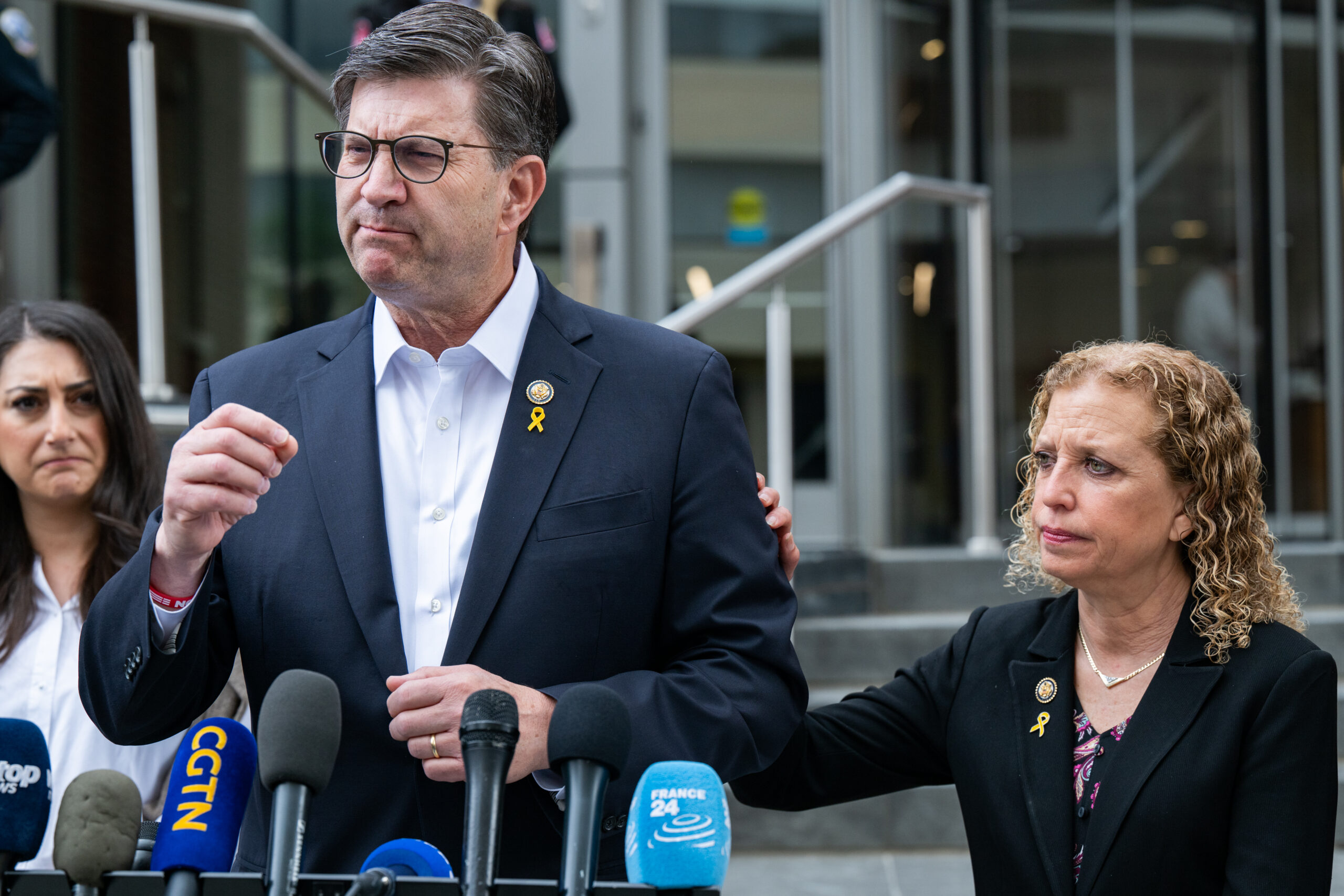
Rep. Debbie Wasserman Schultz said she would likely have voted to authorize force against Iran if the administration had approached Congress properly before launching the war
FEELING THE HEAT
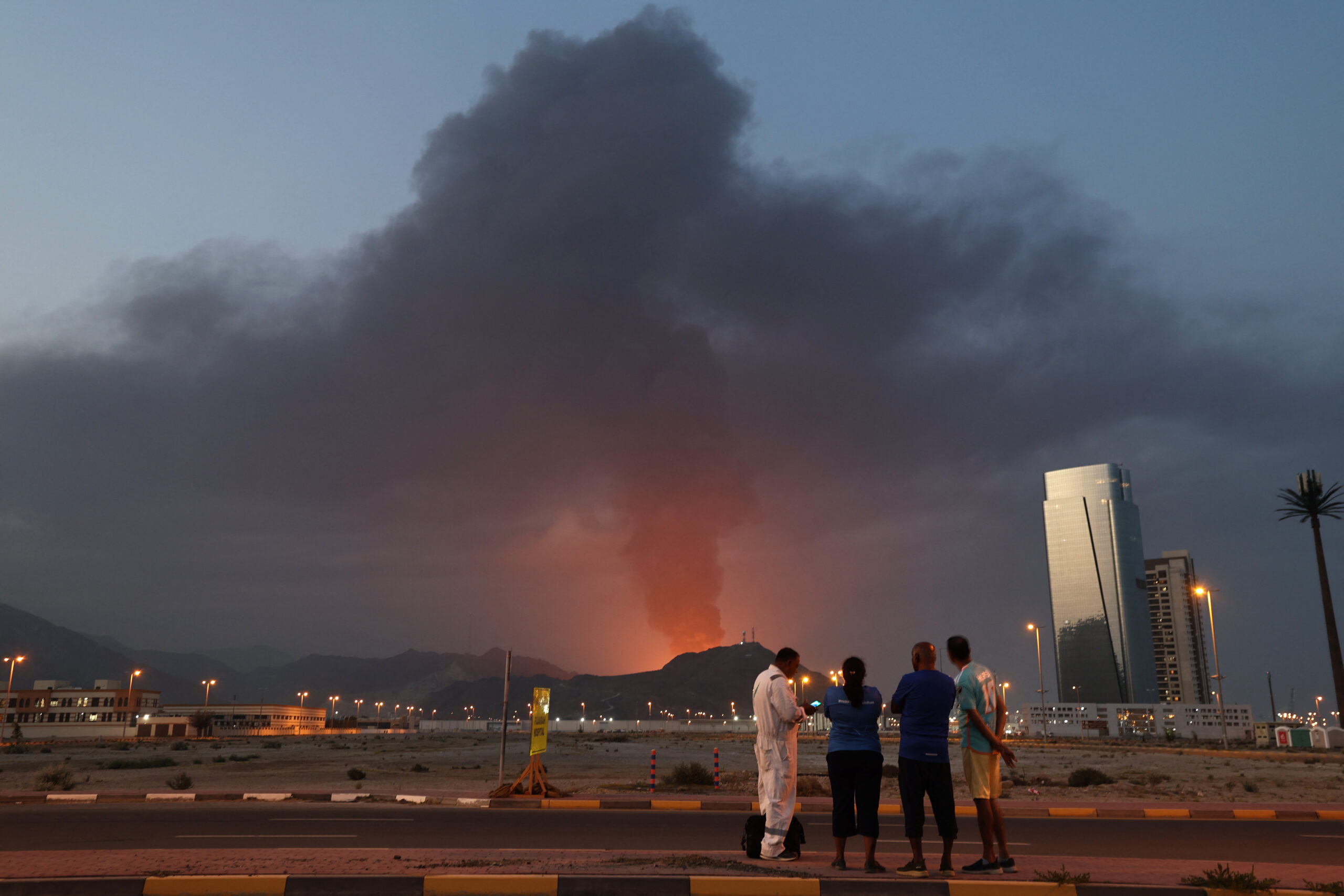
Republican senators argued to JI that the war will ultimately be to the Gulf’s benefit, even if they’re feeling the pain now
Plus, Israel considers building Somaliland base
Cheriss May/NurPhoto via Getty Images
Ben Rhodes, then-deputy national security advisor to President Barack Obama, participates in an interview with press at the White House in on Wednesday, December 14, 2016.
This P.M. edition is reserved for our premium subscribers — offering a forward-focused read on what we’re tracking now and what’s coming next. Please don’t hesitate to share your thoughts and feedback by replying to this email.
📡On Our Radar
Notable developments and interesting tidbits we’re tracking
The Strait of Hormuz continues to be a key site of conflict in the U.S. and Israeli war against Iran — a spokesperson for the Iranian Armed Forces said in a video statement that the regime “will never allow even a single liter of oil to pass through the Strait of Hormuz for the benefit of America, the Zionists or their partners,” shortly after several ships were struck by missiles while passing through or near the strait…
The International Energy Agency announced its member countries will release 400 million barrels of oil from their emergency reserves in order to blunt the impacts of the war, the largest emergency release in history…
President Donald Trump told Axios that the war will end “soon” because there’s “practically nothing left to target” in Iran. U.S. and Israeli officials are reportedly preparing for at least two more weeks of hostilities…
Jewish Insider’s Matthew Shea speaks to experts and former Trump administration officials about Qatar’s potentially changing calculus on hosting Iranian-backed Hamas leaders as Tehran continues to attack the Gulf state…
A preliminary U.S. military investigation has found the deadly strike on a school in Iran was caused by the U.S. as it was targeting a nearby Iranian base, sources told The New York Times…
The FBI recently warned California police departments that Iran may launch a drone attack in the state, ABC News reports. As of last month, “Iran allegedly aspired to conduct a surprise attack using unmanned aerial vehicles from an unidentified vessel off the coast of the United State Homeland, specifically against unspecified targets in California, in the event that the U.S. conducted strikes against Iran,” the bureau’s alert read…
Israel is considering building a base in Somaliland, which it recently recognized as an independent country, in order to combat the threat of the Houthis, which are based in Yemen just across the Gulf of Aden…
Iran will not participate in the 2026 World Cup after the U.S. “assassinated our leader,” Iran’s sports minister told state media, shortly after Trump said he would still “welcome” the team’s participation. Iran’s national men’s soccer team was set to compete in June in Los Angeles and Seattle; several athletes from the country’s women’s team recently defected to Australia after playing in a match there…
Spain permanently withdrew its ambassador to Israel, as the countries’ already tense relations worsen over Madrid’s opposition to the war in Iran…
House Republican leadership discussed ways to incorporate an expected emergency supplemental for the U.S. military into the budget reconciliation process, Politico reports, rather than attempting to rally support from Senate Democrats for the 60-vote threshold that would otherwise be required in the Senate on a stand-alone vote. The move would also sidestep a vote that could be politically challenging for some House Republicans…
Former Obama administration official Ben Rhodes, a leading Israel critic on the left, said on an episode of his “Pod Save the World” podcast that Democrats who vote in favor of funding for the war with Iran “should be primaried. I don’t want you in the Democratic Party.”
Rhodes and co-host Tommy Vietor referenced the four Democrats who voted against a war powers resolution in the House as ripe for primary challenges. Left unsaid: Three of the four — Reps. Greg Landsman (D-OH), Henry Cuellar (D-TX) and Jared Golden (D-ME) — represent GOP-leaning seats that would likely flip with a more progressive Democratic candidate…
In a sign of the political gulfs between the Israeli and American left, Yair Zivan, who is an advisor to Israeli Opposition Leader Yair Lapid, pushed back on Sen. Bernie Sanders (I-VT) after the senator criticized Israeli operations in Lebanon.
“Senator, I work for the Leader of the Opposition in Israel and I’m writing this from a bomb shelter with my children. Israel is under attack by fanatical terrorists who want to murder us. It never ceases to amaze that your humanity never seems to extend to Israeli lives,” Zivan wrote on X…
Pennsylvania Gov. Josh Shapiro said he called New York City Mayor Zohran Mamdani to “check in on him and his wife to make sure they’re doing okay” after the attempted terror attack outside Mamdani’s official residence over the weekend. “As someone who’s had to deal with political violence, I know it can take a toll,” Shapiro said. The governor previously spoke with Mamdani after his win in November to express concerns over his rhetoric about Israel…
⏩ Tomorrow’s Agenda, Today
An early look at tomorrow’s storylines and schedule to keep you a step ahead
Keep an eye out in Jewish Insider for a look at the far-right ties of the new political director of College Republicans of America.
The Senate Health, Education, Labor and Pensions Committee will hold a hearing on foreign influence in American higher education, including testimony from the Foundation for Defense of Democracies’ Craig Singleton.
The annual weeklong South by Southwest festival kicks off tomorrow in Austin, Texas. Appearing at the summit, whose 300,000 attendees include many film and media professionals, is anti-Israel protest leader Mahmoud Khalil, who will speak about “the system that tried to silence him, and the personal and political stakes of resistance.”
Stories You May Have Missed
PRIMARY PRESSURE

The pro-Israel Democratic group warns that nominating far-left candidates will cost the party winnable seats against GOP incumbents
DEMOCRATIC DIVIDE

The Pennsylvania senator told JI about the U.S. military operation’s successes: ‘Why can’t a single Democrat agree that this is a good thing for the world and the region?’
Plus, CNN walks back coverage downplaying NYC terror attempt

JULIEN DE ROSA / AFP via Getty Images
A person points at a page on the Marinetraffic website that shows commercial boats traffic on the edge of the Strait of Hormuz near the Iranian coast, in Paris on March 4, 2026.
This P.M. edition is reserved for our premium subscribers — offering a forward-focused read on what we’re tracking now and what’s coming next. Please don’t hesitate to share your thoughts and feedback by replying to this email.
📡On Our Radar
Notable developments and interesting tidbits we’re tracking
President Donald Trump denied reports that U.S. intelligence has found Iran is taking steps to deploy mines in the Strait of Hormuz, but said if it has been done, “we want them removed, IMMEDIATELY!” If not, he warned, “the Military consequences to Iran will be at a level never seen before,” and if they are removed, “it will be a giant step in the right direction.”
Shortly after, Trump confirmed the U.S. has “hit, and completely destroyed, 10 inactive mine laying boats and/or ships.”
Aramco, the world’s top oil exporter out of Saudi Arabia, warned oil markets will face “catastrophic consequences” if the strait continues to be impacted by the war. “While we have faced disruptions in the past, this one by far is the biggest crisis the region’s oil and gas industry has faced,” CEO Amin Nasser told reporters…
The White House asked Israel not to target any more Iranian energy facilities, Axios reports, citing harm to Iranian civilians, the hope to cooperate with the Iranian oil industry after the war and potential for Tehran to retaliate against Gulf states…
Around 140 U.S. servicemembers have been injured in the course of the campaign against Iran, Defense Department spokesperson Sean Parnell said today, the majority of whom have already returned to service…
After receiving a classified briefing in the Senate Armed Services Committee, Sen. Richard Blumenthal (D-CT) told reporters, “I emerged from this briefing as dissatisfied and angry, frankly, as I have from any past briefing in my 15 years in the Senate. … We seem to be on a path toward deploying American troops on the ground in Iran.”
Blumenthal continued, “There is also, as disturbingly as anything else, the specter of active Russian aid to Iran … with intelligence and perhaps with other means, and China also may be assisting”…
The U.S. ordered the departure of its diplomats and their families from southern Turkey after two attempted Iranian missile strikes in the area; it’s the first mandated departure of U.S. officials outside of the Gulf and Lebanon since the start of the war…
Israeli Prime Minister Benjamin Netanyahu issued a statement to the “people of Iran” hinting at a coming opportunity for a popular uprising. He wrote on X, “We are waging a historic war for liberty. This is a once in a lifetime opportunity for you to remove the Ayatollah regime and gain your freedom. … In the coming days we will create the conditions for you to grasp your destiny. … When the time is right, and that time is fast approaching, we will pass the torch to you”…
CNN significantly changed a story and removed a social media post today that downplayed the attempted terror attack outside Gracie Mansion, New York City Mayor Zohran Mamdani’s official residence, over the weekend, initially writing that the suspects traveled from Pennsylvania for “what could’ve been a normal day” during the city’s “abnormally warm weather.”
CNN later deleted its post on X and added an editor’s note to its story, saying that the language “failed to reflect the gravity of the incident thereby breaching the editorial standards we require for all our reporting”…
The NYPD evacuated Carl Schurz Park near the mayor’s mansion today after a suspicious device was found in the vicinity; it was determined to be “non-threatening”…
Secure Community Network said there was no known threat to the Jewish community following an active shooter incident Tuesday afternoon near the Agudath Israel of Baltimore synagogue, during which a Baltimore Police officer and a suspect were shot in what appeared to be a domestic incident…
A week ahead of Illinois’ primary election, a new poll conducted by an outside group backing Rep. Raja Krishnamoorthi (D-IL) shows the congressman with a double-digit lead in the race for Senate, up 11 points over his next closest competitor, Lt. Gov. Juliana Stratton. Over 87,000 early votes have already been cast in the race, 40,000 votes more than had been cast at the same point in early voting during the 2022 primaries…
Morris Katz, the Democratic strategist who has shaped the campaigns of progressive politicians hostile to Israel including Mamdani and Maine Senate candidate Graham Platner, is now behind the campaign of another populist Democrat: Allison Ziogas, a first-time candidate attempting to unseat Rep. Nicole Malliotakis (R-NY). Trump won 61% of the vote in Malliotakis’ Staten Island–based district in 2024, making it difficult for any Democrat to prevail…
The Anti-Defamation League released its 2026 Campus Antisemitism Report Card, which showed a “clear upward trend” in universities taking steps to address antisemitism, the organization said. Almost two dozen schools received A grades.
UCLA Chancellor Julio Frenk celebrated his university’s improvement from a D to a B, but said in a statement, “a grade is a waypoint, not a destination. … While we have made clear progress in addressing antisemitism, we have more to do in our shared goal of eradicating it in its entirety”…
⏩ Tomorrow’s Agenda, Today
An early look at tomorrow’s storylines and schedule to keep you a step ahead
Keep an eye out in Jewish Insider for a look at a late flurry of spending against far-left social media influencer Kat Abughazaleh in Illinois’ 9th Congressional District, as pro-Israel groups indicate concern that the virulently anti-Israel Democrat could win the seat.
President Donald Trump will host an event in Hebron, Ky., tomorrow, with Republican congressional candidate Ed Gallrein in attendance. Gallrein is challenging Rep. Thomas Massie (R-KY) with Trump’s endorsement — Massie will not be attending the event, which is taking place in his district.
Fox News’ Bret Baier will speak in conversation with journalist Gary Rosenblatt at Temple Emanu-El’s Streicker Center in New York City.
Stories You May Have Missed
SCOOP

Local DSA chair Justin Yuan wrote on social media, ‘Love Hamas. Simple as’
BLUEGRASS BATTLE
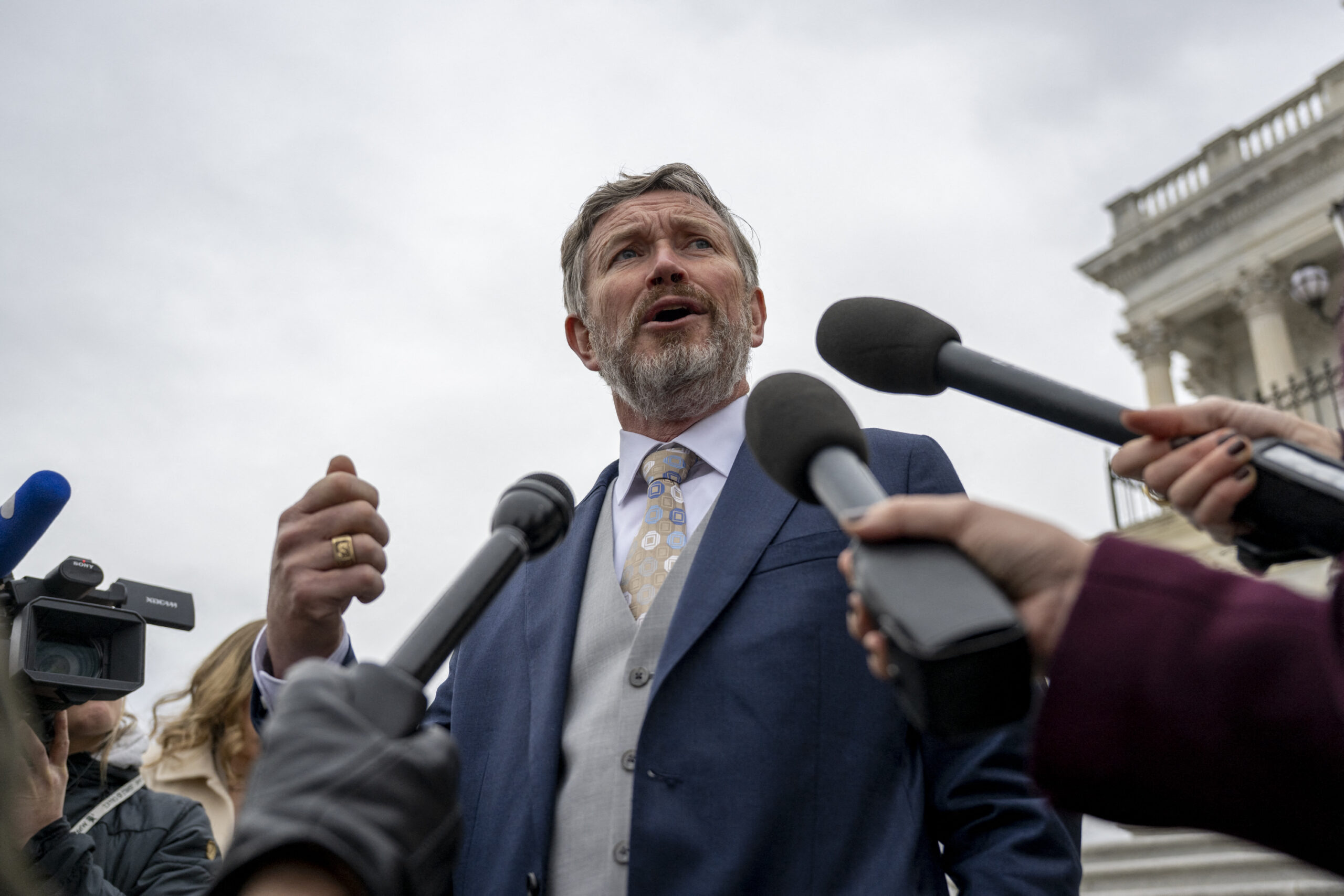
President Trump is set to rally with Massie’s opponent this week
Plus, Trump says Iran operation 'very complete'

Sean Gallup/Getty Images
Sen. Lindsey Graham (R-SC) speaks at the 62nd Munich Security Conference on February 13, 2026 in Munich, Germany.
This P.M. edition is reserved for our premium subscribers — offering a forward-focused read on what we’re tracking now and what’s coming next. Please don’t hesitate to share your thoughts and feedback by replying to this email.
📡On Our Radar
Notable developments and interesting tidbits we’re tracking
President Donald Trump praised Australian Prime Minister Anthony Albanese for assisting the members of Iran’s women’s soccer team, who are in Australia competing in the Women’s Asian Cup, amid fears for their persecution should they be forced to return home.
The president had called for Albanese to grant the athletes political asylum, saying they would “most likely be killed” if they were repatriated to Iran, and later commended him for “doing a very good job having to do with this rather delicate situation,” with five athletes “already taken care of, and the rest are on their way”…
Trump disputed reports that the U.S. is preparing to deploy ground troops to secure nuclear material at the Isfahan enrichment site in Iran, telling the New York Post, “We haven’t made any decision on that. We’re nowhere near it.” He also told CBS News that “the war is very complete, pretty much,” and the U.S. is “very far” ahead of his initial four-to-five-week timeline…
Trump has communicated to aides that he would support the assassination of Mojtaba Khamenei, Iran’s new supreme leader, if Khamenei does not acquiesce to U.S. demands, including ending Iran’s nuclear program, U.S. officials told The Wall Street Journal…
The Lebanese government has requested direct negotiations with Israel, sending the message through U.S. Ambassador to Turkey Tom Barrack, Axios reports. Washington and Jerusalem were reportedly skeptical about the idea, with Beirut thus far failing to disarm or rein in Hezbollah activities as the terror group continues to launch missiles into Israel…
NATO missile defense systems intercepted another Iranian missile heading for Turkey, a spokesperson announced today, the second time Iran has attempted to strike the NATO country’s territory…
Sen. Lindsey Graham (R-SC) threatened to impose “consequences” on Saudi Arabia for its unwillingness to join the U.S. campaign against Iran, as the U.S. evacuates its embassy in Riyadh and the kingdom continues to endure Iranian attacks, which have so far resulted in the deaths of two civilians and one U.S. servicemember. “Question — why should America do a defense agreement with a country like the Kingdom of Saudi Arabia that is unwilling to join a fight of mutual interest?” Graham wrote on X…
Talks to advance Trump’s 20-point peace plan in Gaza, including the issue of Hamas’ disarmament, have been at a standstill during the campaign against Iran, Reuters reports, as Gulf countries that pledged funds to help rebuild the enclave have come under fire and flight disruptions have prevented mediators from traveling…
The criminal complaint filed in the Southern District of New York today against the two Pennsylvania men who allegedly hurled improvised explosive devices toward a protest against New York City Mayor Zohran Mamdani on Saturday stated that both men explicitly identified ISIS as their inspiration, Jewish Insider’s Will Bredderman reports.
“This isn’t a religion that just stands when people talk about the blessed name of the Prophet [Muhammad],” Emir Balat, 18, told police, according to the charging documents. He also said he had hoped to pull off something “even bigger” than the 2013 Boston Marathon bombing, which he noted had caused “only three deaths”…
The White House moved today to designate the Sudanese Muslim Brotherhood as a Specially Designated Global Terrorist entity and announced plans to impose a Foreign Terrorist Organization designation on March 16, JI’s Matthew Shea reports, in the Trump administration’s latest crackdown against Muslim Brotherhood affiliates…
A new poll from the campaign of Rushern Baker, former executive of Maryland’s Prince George’s County, found him leading the crowded Democratic field seeking to succeed retiring Rep. Steny Hoyer (D-MD). Though a plurality of likely primary voters (28%) said they’re still undecided, Baker polled at 22% compared to former U.S. Capitol Police officer Harry Dunn’s 15% and Hoyer-endorsed state Del. Adrian Boafo’s 3%…
Rep. Kevin Kiley of California officially switched his party affiliation from Republican to independent — he had filed for reelection as an independent, but said today he would leave the party for the rest of his term as well. The move narrows the GOP majority even further, 217-214, but Kiley said he’ll continue to caucus with Republicans, blunting the impact…
Politico looks at the flurry of independent candidates seeking to unseat congressional Republicans in GOP-leaning districts, clashing with local Democratic establishments in the process…
⏩ Tomorrow’s Agenda, Today
An early look at tomorrow’s storylines and schedule to keep you a step ahead
Keep an eye out in Jewish Insider — we’ll have a profile of Dario Amodei, the Jewish CEO of Anthropic, which sued the Pentagon today over its decision to label the AI company a “supply chain risk.”
The Senate Armed Services Committee is expected to receive a classified briefing on the status of the U.S. and Israeli campaign against Iran.
The Republican Jewish Coalition and conservative magazine National Review will hold a daylong symposium on antisemitism, with remarks from Sens. Jim Banks (R-IN), Tom Cotton (R-AR) and Ted Cruz (R-TX); Noah Pollak, senior advisor at the Department of Education; Kenneth Marcus, founder of the Louis D. Brandeis Center for Human Rights Under Law; Rabbi Yehuda Kaploun, the State Department’s antisemitism envoy; Leo Terrell, senior counsel to the assistant attorney general for civil rights; and Texas Lt. Gov. Dan Patrick.
Georgia’s 14th Congressional District will hold its special election to fill the seat vacated by Rep. Marjorie Taylor Greene (R-GA), with more than a dozen candidates on the all-party ballot. The district leans strongly Republican but the GOP field is split among nine candidates, raising the possibility that the Democratic front-runner — retired Army Brig. Gen. Shawn Harris — could slip into the April runoff.
Stories You May Have Missed
SCOOP

NYC First Lady Rama Duwaji showed support for far-left orgs applauding Hamas rampage
POWER PLAYER

Ad maker Morris Katz has been instrumental in elevating Israel antagonists into office as part of a move to reshape the Democratic Party
Plus, Kristi Noem gets the boot
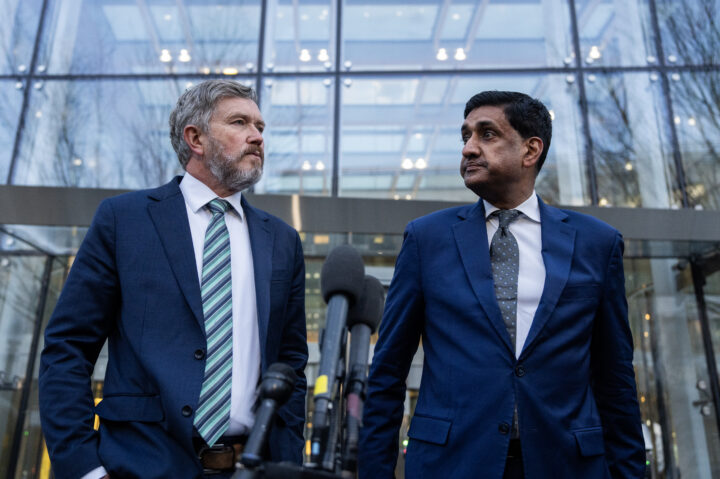
Tom Williams/CQ-Roll Call, Inc via Getty Images
Reps. Thomas Massie, (R-KY), left, and Ro Khanna, (D-CA), conduct a news conference outside a Department of Justice office in NoMa on Monday, February 9, 2026.
Good Thursday afternoon,
This P.M. edition is reserved for our premium subscribers — offering a forward-focused read on what we’re tracking now and what’s coming next.
It’s me again — Danielle Cohen-Kanik, U.S. editor at Jewish Insider and curator, along with assists from my colleagues, of the Daily Overtime. Please don’t hesitate to share your thoughts and feedback by replying to this email.
📡On Our Radar
Notable developments and interesting tidbits we’re tracking
President Donald Trump announced he’s replacing Kristi Noem as homeland security secretary with Sen. Markwayne Mullin (R-OK), after Noem had rankled the president and some Republican members of Congress with her oversight of widespread turmoil at the agency, among other issues. Mullin still needs to be confirmed by the Senate to assume the post.
Mullin, if confirmed, would take the helm of DHS amid its continued partial shutdown, and as it has repeatedly come under fire for its handling of issues related to antisemitism from lawmakers and Jewish community groups. Noem, meanwhile, will become special envoy to a new security initiative for the Western Hemisphere being launched by Trump this weekend…
House Speaker Mike Johnson (R-LA) and other GOP leadership called on Rep. Tony Gonzales (R-TX) to drop out of his reelection race, after the lawmaker admitted yesterday to having an affair with a staffer who later committed suicide. Gonzales is headed to a May runoff with his primary opponent, social media influencer Brandon Herrera; if Gonzales does step aside, Herrera, who has a history of antisemitic posts about the Holocaust, is all but guaranteed the GOP nomination in a solidly Republican district…
Trump said he “[has] to be involved in the appointment” of the next Iranian leader, in an interview with Axios, “like with Delcy [Rodriguez] in Venezuela.” He called Mojtaba Khamenei, son of the late Supreme Leader Ayatollah Ali Khamenei who has emerged as his father’s likely successor, “unacceptable.” The president’s comments seem to widen the administration’s stated war aims, which have thus far focused on eliminating Iran’s naval, air and nuclear assets.
Trump also insisted in the interview that Israeli President Isaac Herzog issue a pardon for Prime Minister Benjamin Netanyahu “today,” as he wants Netanyahu “to focus on the war and not on the f**king court case. I want the only pressure on Bibi to be the fighting against Iran”…
Some Democratic lawmakers — including Sens. Jack Reed (D-RI), Gary Peters (D-MI), Tim Kaine (D-VA) and Elissa Slotkin (D-MI) — told Politico they won’t “rule out” voting in favor of an emergency supplemental funding request to shore up the military should one come from the administration amid the campaign against Iran, despite widespread Democratic condemnation of the White House’s failure to consult Congress beforehand…
A vote on a war powers resolution to stop the military campaign in Iran failed in the House this afternoon 219-212, with two Republicans — Reps. Thomas Massie (R-KY) and Warren Davison (R-OH) — crossing the aisle in support and four Democrats — Reps. Greg Landsman (D-OH), Henry Cuellar (D-TX), Jared Golden (D-ME) and Juan Vargas (D-CA) — breaking with their party to oppose it.
Reps. Josh Gottheimer (D-NJ) and Jared Moskowitz (D-FL) both changed their positions and voted in favor of the resolution, weeks after Moskowitz told Jewish Insider — before the campaign began — that its sponsors “should just rename [the resolution] the Ayatollah Protection Act because that’s what it does.” Asked by JI about the shift in his stance today, Moskowitz answered, “I didn’t flip at all. Circumstances have changed since my first statement”…
Antisemitic podcaster Tucker Carlson’s latest extreme rhetoric took aim at the Chabad Lubavitch movement, with sweeping conspiratorial language accusing the Hasidic sect of seeking to start a “religious war” amid the U.S. and Israeli strikes on Iran, JI’s Gabby Deutch reports.
Carlson argued in an episode of his show that dropped last night that Jews see the war against Iran as an opportunity to feud with Islam and to target Christians. Carlson’s remarks prompted outrage among Chabad’s backers, who pointed out that Chabad emissaries have for decades played a crucial role in connecting American Jews to their faith and to each other…
In a conversation with ABC News, Trump said this afternoon that Tucker “has lost his way. I knew that a long time ago, and he’s not MAGA. MAGA is saving our country. … Tucker is really not smart enough to understand that”…
In a discussion with the New York Post, Trump railed against European countries which have continued to oppose the campaign against Iran, calling Spain “a loser” and the U.K. “very disappointing.” Canadian Prime Minister Mark Carney, meanwhile, said today that the Iran war is a “failure” of the international order, but would not “categorically rule out” Canada’s participation…
Iran’s indiscriminate attacks are bringing allies together worldwide: Ukrainian President Volodymyr Zelensky said he’s deploying specialists to assist the U.S. after Washington requested “specific support in protection” against Iranian Shahed drones, which Ukraine has been battling for several years as Russia has regularly deployed them, and the European Union and Gulf Cooperation Council held a joint meeting to discuss Iran’s “unjustifiable, unprovoked, and unlawful attacks”…
The New York Times profiles Lt.-Gen. Eyal Zamir, the IDF’s chief of staff, as he helps lead Israel’s efforts in the campaign against Iran…
⏩ Tomorrow’s Agenda, Today
An early look at tomorrow’s storylines and schedule to keep you a step ahead
Keep an eye out in Jewish Insider for a look at Jack Cocchiarella, the progressive Gen Z podcaster who has made a name for himself hosting high-profile Democratic candidates — including California Gov. Gavin Newsom in New Hampshire tonight — and who has recently taken a turn towards bashing Israel.
Team Israel will play its first games of the 2026 World Baseball Classic on Saturday against Venezuela and on Sunday against Nicaragua.
Also Sunday, AJ Edelman, the Israeli Olympic bobsled team pilot, will speak in conversation with Neil Goldman at Chabad of West Village in New York.
Birthright Israel’s Excelerate26 summit is also taking place in New York this weekend, with keynote speeches on Sunday from Robert Kraft, owner of the New England Patriots; Anne Neuberger, former deputy national security advisor during the Biden administration; and Sheryl Sandberg, former COO of Meta.
We’ll be back in your inbox with the Daily Overtime on Monday. Shabbat Shalom!
Stories You May Have Missed
MILITARY UPDATE

Tehran also attacked Azerbaijan for the first time, launching drones that injured two at Nakhchivan International Airport
ABOUT-FACE

The Arizona senator’s outspoken commentary has repeatedly placed blame for the military operation on Israel, leading one Jewish Democrat to pull her support
Plus, Qatar rebuffs Iranian diplomacy

Kayla Bartkowski/Getty Images
Sen. John Cornyn (R-TX) speaks with press in the Hart Senate Office Building on April 07, 2025 in Washington, DC.
Good Wednesday afternoon,
This P.M. edition is reserved for our premium subscribers — offering a forward-focused read on what we’re tracking now and what’s coming next.
It’s me again — Danielle Cohen-Kanik, U.S. editor at Jewish Insider and curator, along with assists from my colleagues, of the Daily Overtime. Please don’t hesitate to share your thoughts and feedback by replying to this email.
📡On Our Radar
Notable developments and interesting tidbits we’re tracking
On the fifth day of the joint U.S.-Israeli military campaign against Iran, Secretary of Defense Pete Hegseth announced the accomplishment of several key objectives, Jewish Insider’s Matthew Shea reports, including that “the leader of the unit” responsible for the assassination attempt on President Donald Trump in November 2024 “has been hunted down and killed.”
Hegseth also revealed that an American submarine sank an Iranian warship by torpedo, the first time such a thing has been accomplished since World War II. Responding to concerns over whether the U.S. will be able to maintain enough munitions throughout the conflict, Hegseth dismissed “stories and speculation,” instead asserting: “Iran cannot outlast us”…
Iranian Foreign Minister Abbas Araghchi called Qatar’s foreign minister, Sheikh Mohammed bin Abdulrahman Al Thani, to insist that Iranian drones and missiles attacking Qatar are really directed at U.S. assets and “not intended to target the Gulf state.”
Al Thani “categorically rejected” that claim, according to Qatar’s foreign ministry, “citing the civilian and residential areas inside the country struck by the attacks.” He told Araghchi that Iran’s actions do not “indicate any genuine desire for de-escalation or resolution” and are trying to drag Qatar into a war “that is not theirs”…
Israeli Prime Minister Benjamin Netanyahu called the White House Monday to ask about intelligence that indicated the U.S. might be communicating with Iran, Axios reports, which administration officials told him was false. A New York Times report found that Iran’s Ministry of Intelligence had indirectly sent a message to the CIA attempting to start negotiations to end hostilities…
NATO air defense systems shot down an Iranian missile that was flying through Iraq and Syria on its way toward Turkey, the Turkish defense ministry said this morning. It’s the first attack by Iran on a NATO country’s territory. The U.K. and France, also NATO countries, are sending additional planes and warships to the region after Iran targeted a British base in Cyprus…
White House Press Secretary Karoline Leavitt, asked about reports of the U.S. arming Kurdish militias to assist in regime change in Iran, told reporters that Trump has spoken to Kurdish leaders in recent days about the U.S. military base in northern Iraq, but “any report suggesting that the president has agreed to any such plan” about arming the Kurds “is completely false and should not be written”…
Leavitt also said that the U.S. is now coordinating with Spain on the military operation in Iran, after Trump threatened yesterday to cut off all trade with Madrid over its refusal to let the U.S. use military bases on its soil and its lack of defense spending. Spain categorically denied that it is cooperating with the U.S. or has changed its position at all…
Secretary of State Marco Rubio held phone calls with Turkish Foreign Minister Hakan Fidan, Cypriot Foreign Minister Constantinos Kombos and Italian Foreign Minister Antonio Tajani about the campaign against Iran. Turkey and Cyprus have both faced attacks by Iranian projectiles, while Italy summoned its Iranian ambassador to protest the attack on Cyprus…
Trump indicated he’s close to offering his endorsement to Sen. John Cornyn (R-TX), who beat expectations by finishing ahead of right-wing Texas Attorney General Ken Paxton in yesterday’s primary. While both Republicans are headed to a May runoff, a Trump endorsement would make Cornyn the clear favorite to win the Republican nomination — and alleviate a lot of GOP anxiety over the possibility that a scandal-plagued Paxton could lose to state Rep. James Talarico, the newly minted Democratic nominee…
In North Carolina, Rep. Valerie Foushee (D-NC) holds a narrow lead over her far-left opponent, Durham County Commissioner Nida Allam, who has indicated she will seek a recount. Foushee said in a statement that she would “welcome the opportunity” for a recount and is “confident that the Democratic voters of North Carolina will have nominated me to serve a third term”…
Hegseth will headline a fundraiser next week for Rep. Zach Nunn (R-IA), after four servicemembers who were previously stationed in his district were killed by an Iranian drone in Kuwait on Sunday. Nunn, who has been a staunch ally of Israel in the House, is facing a competitive reelection race as Democrats target his seat in their attempt to take back the chamber…
⏩ Tomorrow’s Agenda, Today
An early look at tomorrow’s storylines and schedule to keep you a step ahead
Keep an eye out in Jewish Insider for a breakdown of the Senate’s consideration of the Iranian war powers resolution, led by Sens. Tim Kaine (D-VA) and Rand Paul (R-KY), which is currently on track to fail on a procedural vote.
The House Foreign Affairs Committee will hold a hearing on “advancing national security through diplomacy” with Sarah Rogers, the under secretary of state for public diplomacy.
The Muslim World League will host an interfaith iftar gathering on Capitol Hill.
Stories You May Have Missed
IN THE CROSSHAIRS

Also Wednesday, an Israeli F-35I fighter jet shot down an Iranian YAK-130 fighter jet over Tehran, marking the first time an F-35 jet shot down a manned fighter aircraft, IDF says
PUSHING BACK
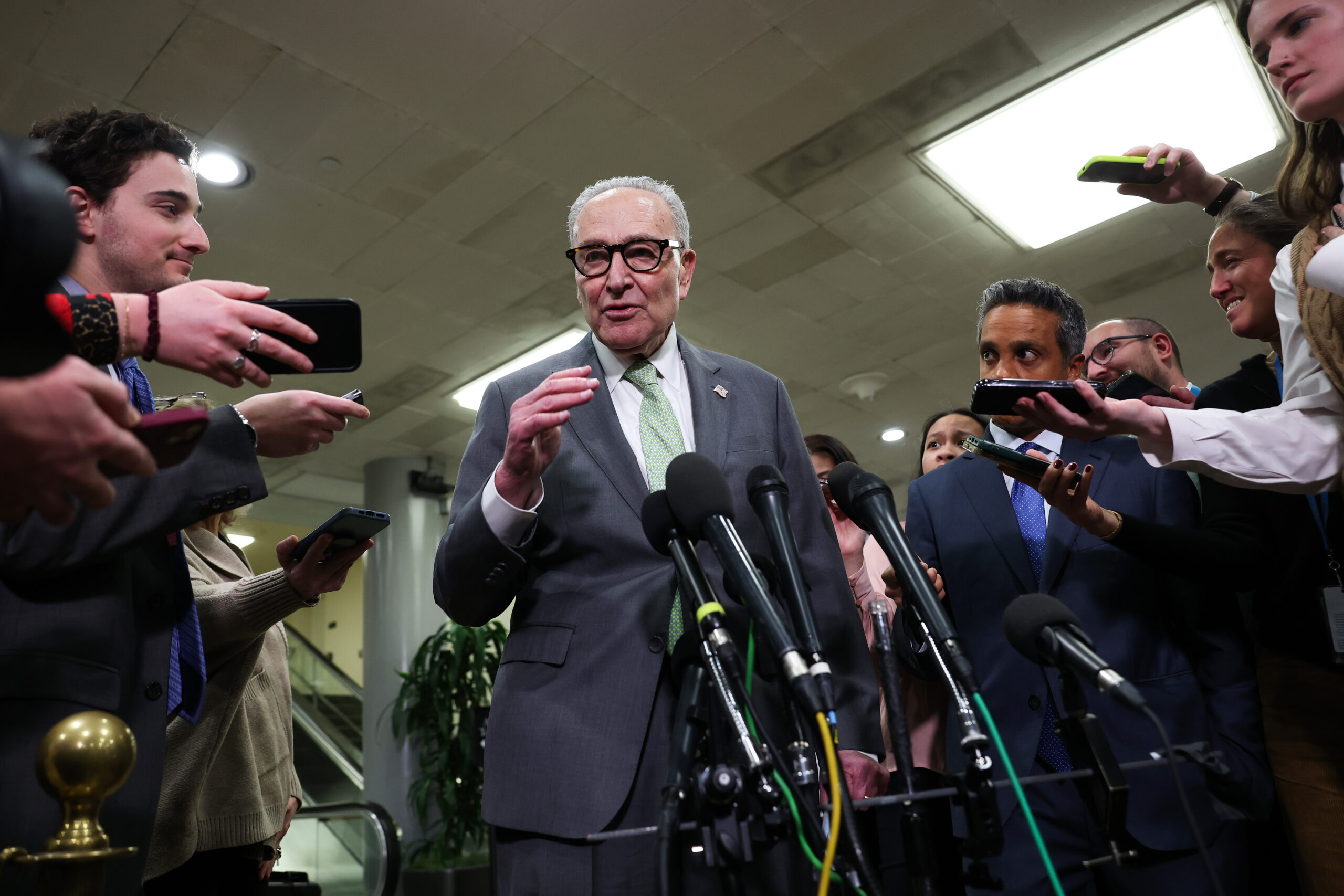
Republicans and some Democrats insisted Trump made the decision, while other Democrats said that the timing of the onset of hostilities was impacted by Israel’s plans
Plus, Alex Soros boosts antisemitic conspiracy theorist
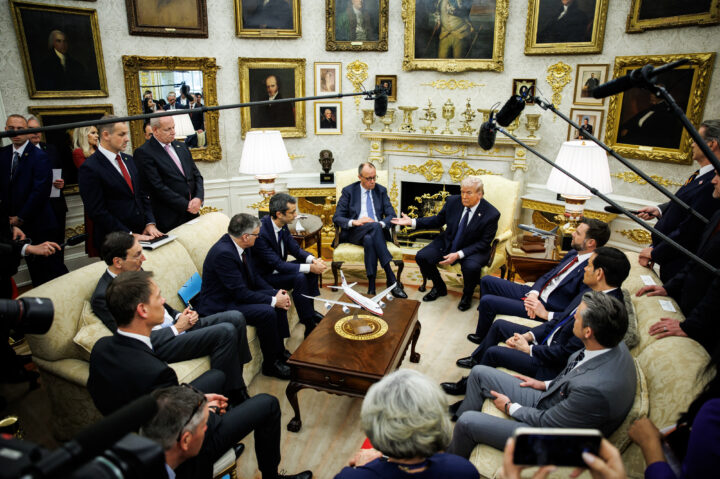
Samuel Corum/Sipa/Bloomberg via Getty Images
Friedrich Merz, Germany's chancellor, center left, and US President Donald Trump during a meeting in the Oval Office of the White House in Washington, DC, US, on Tuesday, March 3, 2026.
Good Tuesday afternoon,
This P.M. edition is reserved for our premium subscribers — offering a forward-focused read on what we’re tracking now and what’s coming next.
It’s me again — Danielle Cohen-Kanik, U.S. editor at Jewish Insider and curator, along with assists from my colleagues, of the Daily Overtime. Please don’t hesitate to share your thoughts and feedback by replying to this email.
📡On Our Radar
Notable developments and interesting tidbits we’re tracking
The Trump administration emphatically denied reports, based on partial comments made by Secretary of State Marco Rubio yesterday, that Israel forced the U.S. to launch the operation against Iran.
“If anything, I might’ve forced Israel’s hand,” President Donald Trump told reporters while meeting with German Chancellor Friedrich Merz in the Oval Office today. “You see, we were having negotiations with these lunatics, and it was my opinion that they [Iran] were going to attack first.”
Defense Secretary Pete Hegseth boosted the president’s comments, saying, “This is 100% correct,” while Rubio insisted his original remarks were misrepresented…
Trump continues to share optimistic assessments of the war’s progress: he told Politico that Iran is running out of missile launchers while claiming the U.S. has “a virtually unlimited supply” of weapons, saying, “wars can be fought ‘forever,’ and very successfully, using just these supplies”…
The Israeli Air Force struck a building where senior clerics had gathered to elect Iran’s next supreme leader, Israeli Ambassador to the U.S. Yechiel Leiter told CNN, “and there’s a very good chance that the electors won’t be readily available for any further meetings”…
Trump is open to backing militias in Iran who will work to mount regime change, U.S. officials told The Wall Street Journal, after he held phone calls with Kurdish leaders who maintain armed groups along the Iran-Iraq border.
Trump has wavered in recent comments on his vision for the future of Iran, saying today that “somebody from within” might be the best option to lead, rather than individuals like exiled former crown prince, Reza Pahlavi. At the same time, Trump told reporters, “Most of the people we had in mind are dead. And now we have another group, they may be dead also. Pretty soon we’re not gonna know anybody”…
Trump ordered the U.S. Development Finance Corporation to provide political risk insurance for all maritime trade traveling through the Gulf, as oil traffic has essentially halted and energy prices have soared. The U.S. Navy will also, if necessary, begin physically escorting tankers through the Strait of Hormuz, Trump said…
Ukrainian President Volodymyr Zelensky offered his country’s assistance to the UAE, as the Gulf country has been targeted by over 1,000 Iranian drones and missiles since the operation began Saturday. Ukraine has become particularly skilled in combating Iranian Shahed drones, something the UAE has little experience with, as Russia has regularly used them in its attacks on Ukraine…
The U.S. Embassy in Saudi Arabia was struck with two Iranian drones, with no casualties reported; the embassy was closed, along with U.S. embassies in Kuwait and Beirut. The State Department ordered the mandatory departure of all non-emergency personnel in several countries and has begun “actively securing military aircraft and charter flights for American citizens who wish to leave” the region…
The International Atomic Energy Agency confirmed that Iran’s underground Natanz nuclear enrichment plant was struck in the course of hostilities in recent days. Trump has claimed the site was rendered inoperable during the U.S.’ June 2025 strikes…
Alex Soros, one of the progressive movement’s most influential donors, boosted a social media post today about U.S. casualties in the war with Iran from Max Blumenthal, a prominent anti-Israel conspiracy theorist, Jewish Insider‘s Matthew Kassel reports.
Soros also praised Spain for its refusal to allow the U.S. to use joint bases on its soil, calling Madrid the “leader of the free world” and reprimanding other European countries for not doing the same…
After issuing a statement solely attacking the U.S. and Israel over the campaign against Iran — which provoked backlash from members of the Iranian dissident and diaspora communities — New York City Mayor Zohran Mamdani acknowledged the “systematic repression” of the Iranian people by the regime, while declining to criticize the late Supreme Leader Ayatollah Ali Khamenei, JI’s Will Bredderman reports.
Even as he acknowledged Tehran’s bloody suppression of protesters, Mamdani did not directly answer a reporter’s question at a press conference today about whether the Middle Eastern nation was better off without the radical cleric who ruled for nearly 37 years…
Amazon Web Services operations are “significantly impaired” after three of its data centers in the Middle East were struck by Iranian drones — two directly hit in the UAE and one sustaining damage in Bahrain. The strikes “caused structural damage, disrupted power delivery to our infrastructure, and in some cases required fire suppression activities that resulted in additional water damage,” AWS said…
⏩ Tomorrow’s Agenda, Today
An early look at tomorrow’s storylines and schedule to keep you a step ahead
Keep an eye out in Jewish Insider for a look at the results of today’s high-stakes primary elections in North Carolina and Texas and their implications for pro-Israel voters.
The Heritage Foundation will hold an event to launch its 2026 “Index of U.S. Military Strength” with remarks from Sen. Jim Banks (R-IN) and Reps. August Pfluger (R-TX), Pat Harrigan (R-TX) and Matt Van Epps (R-TN).
The U.S. Commission on International Religious Freedom will release its annual report tomorrow on Capitol Hill.
Stories You May Have Missed
SQUARING OFF
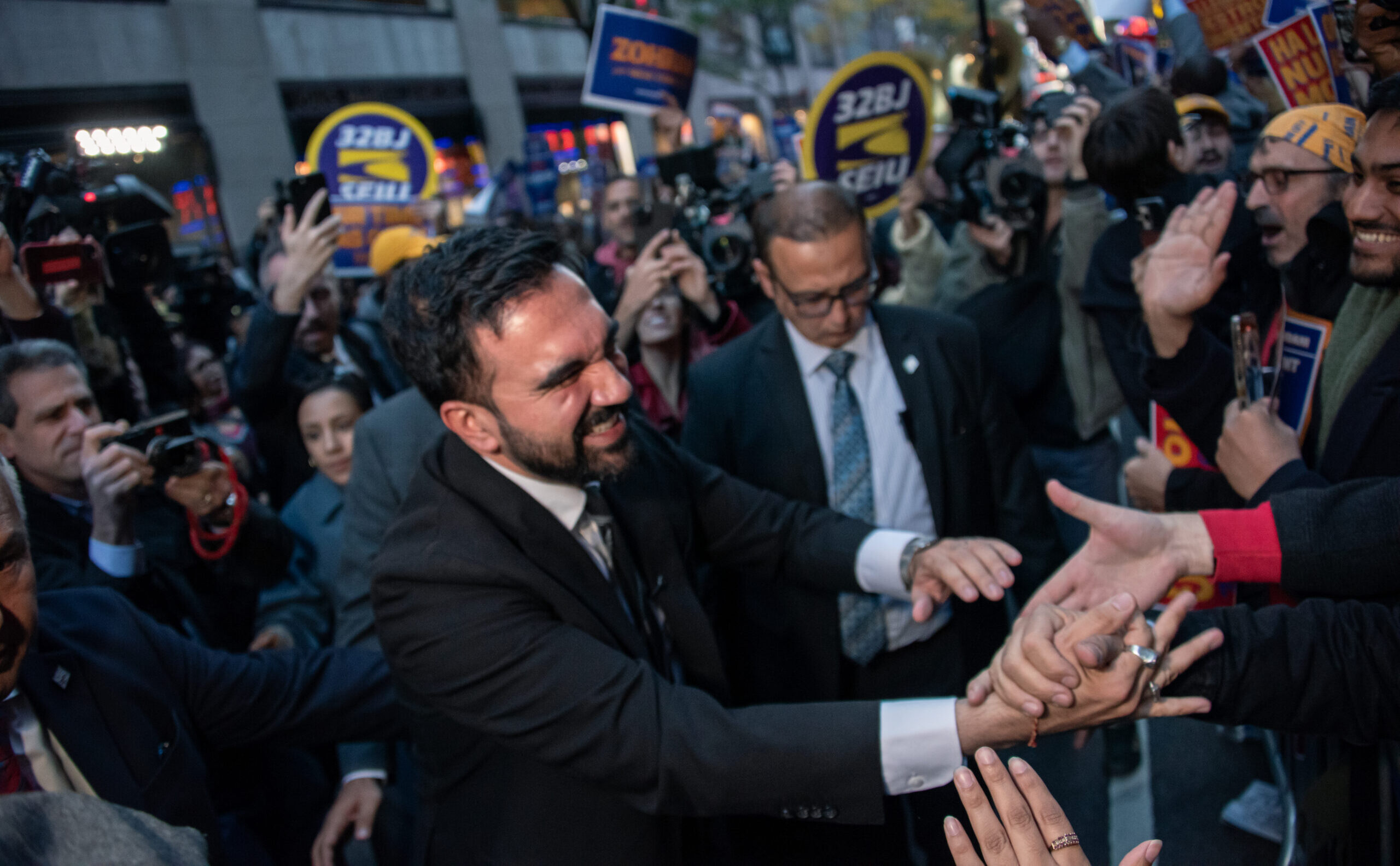
A trio of Mamdani backers united with tech and real estate investors to boost anti-Israel candidates
PARTY PERSPECTIVE

Speaking at J Street’s national summit, Sen. Tim Kaine also said ‘virtually all’ Democratic senators now seek the group’s endorsement
Plus, Tehran takes aim at global energy
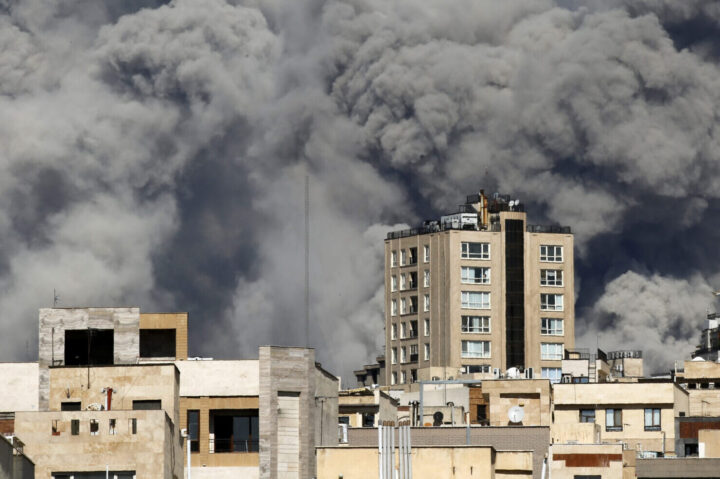
Fatemeh Bahrami/Anadolu via Getty Images
Smoke rises from the area after it was targeted in attacks as a series of explosions are heard in Tehran, Iran on March 01, 2026.
Good Monday afternoon,
This P.M. edition is reserved for our premium subscribers — offering a forward-focused read on what we’re tracking now and what’s coming next.
It’s me again — Danielle Cohen-Kanik, U.S. editor at Jewish Insider and curator, along with assists from my colleagues, of the Daily Overtime. Please don’t hesitate to share your thoughts and feedback by replying to this email.
📡On Our Radar
Notable developments and interesting tidbits we’re tracking
President Donald Trump and senior U.S. defense officials laid out an open-ended timeline for the ongoing bombing campaign against Iran in several press briefings and interviews today, Jewish Insider’s Matthew Shea and Emily Jacobs report.
Trump and Defense Secretary Pete Hegseth both declined to rule out a U.S. ground invasion of Iran, while Joint Chiefs Chairman Gen. Dan Caine announced more American troops are en route to the region. “Every president says, ‘There will be no boots on the ground.’ I don’t say it. I say ‘probably don’t need them,’ [or] ‘if they were necessary,’” Trump told the New York Post.
The president repeatedly said the operation is “ahead of schedule,” but added that the U.S. military is prepared to continue the campaign beyond his initial four-to-five-week timeline. Trump also told CNN that the “big wave” of strikes on Iran “hasn’t even happened. The big one is coming soon”…
On the American public’s perception of the strikes, Trump said, “I think that the polling is very good, but I don’t care about polling. I have to do the right thing. This should have been done a long time ago.” A new CNN poll found that 41% of Americans support the strikes against Iran, while 59% disapprove…
After Hezbollah jumped into the conflict by launching strikes on Israel overnight, prompting Israeli fire on Hezbollah targets in Lebanon in return, Lebanese Prime Minister Nawaf Salam banned the terror group’s “military activities,” restricting it “to the political sphere.”
Salam said the group’s actions are now “illegal” and called on the Lebanese Armed Forces to “prevent any attacks originating from Lebanese territory,” a long-awaited show of resolve from Beirut. The LAF has struggled to disarm Hezbollah forces since the signing of a ceasefire agreement with Israel in November 2024…
On a ground invasion of Lebanon, IDF spokesperson Brig. Gen. Effie Defrin said, similarly to the U.S. position on Iran, “all options are on the table”…
U.S. casualties in the course of the operation increased today to six servicemembers…
Qatar’s Ministry of Defense condemned attacks by Iran on a power plant and an oil facility in the country, further indicating Tehran is setting its sights on civilian and energy infrastructure. The targeted energy plant, Ras Laffan, is responsible for around a fifth of all global natural gas production — Qatar halted production after the strike which, along with decreased passage through the vital Strait of Hormuz, sent oil prices soaring…
Iran continues to sustain heavy losses: The U.S. said it has sunk all 11 of Iran’s warships in the Gulf of Oman while Qatar shot down two Iranian SU-24 tactical bombers, which were developed by Russia; the UAE also intercepted around 150 Iranian drones and 15 missiles today in addition to hundreds over the weekend…
U.K. Prime Minister Keir Starmer reiterated in an address to parliament today that Britain will not be joining the strikes on Iran but will allow the U.S. to use its bases for “defensive actions,” noting that Iran has already struck a military base in Bahrain that houses around 300 British troops. “France and Germany are also prepared to enable U.S. action to destroy Iran’s capability to fire missiles and drones from the source,” Starmer added.
Trump said he was “very disappointed” with Starmer in an interview with The Telegraph, saying the prime minister “took far too long” in deciding to allow U.S. forces to utilize its bases…
NATO Secretary-General Mark Rutte praised the campaign, calling it “really important … because it is taking out, degrading the capacity of Iran to get its hands on nuclear capability, the ballistic missile capability.” But, he said, “there are absolutely no plans whatsoever for NATO to get dragged into this”…
GOP lawmakers are pushing Democrats to agree to a funding deal for the still-shuttered Department of Homeland Security, as hostilities with Iran raise concerns about domestic terror threats…
The war is also making its way into some of the most heated primary races unfolding across the country: In North Carolina’s 4th Congressional District, anti-Israel activist Nida Allam, who is challenging Rep. Valerie Foushee (D-NC), put out a new campaign ad just before tomorrow’s primary slamming “Trump and Netanyahu’s reckless war.”
Allam accused the administration of using “our taxpayer dollars to bomb a school in Iran, killing over 100 elementary school children,” even though there has been no proof that the U.S. was responsible for the strike…
Some pro-Israel Democratic candidates in Illinois also took harsh stances against the Iran operation: state Sen. Laura Fine, running in Illinois’ 9th Congressional District, called for Trump’s impeachment, while Cook County Commissioner Donna Miller, running in the 2nd District, and Chicago Treasurer Melissa Conyears-Ervin, running in the 7th District, called the strikes “reckless” and “immoral,” respectively…
⏩ Tomorrow’s Agenda, Today
An early look at tomorrow’s storylines and schedule to keep you a step ahead
Keep an eye out in Jewish Insider for a rundown of the high-profile primaries on the ballot tomorrow in North Carolina and Texas.
German Chancellor Friedrich Merz will meet with President Donald Trump at the White House for a conversation that was set to focus on negotiations between Russia and Ukraine but will likely be overshadowed by the ongoing operation against Iran. Germany joined the U.K. and France over the weekend in offering a supportive but cautious stance on the hostilities.
It will be a busy day on the Hill, where administration officials including Secretary of State Marco Rubio, Defense Secretary Pete Hegseth, CIA Director John Ratcliffe and Joint Chiefs Chairman Gen. Dan Caine will hold all-member briefings on Iran for the House and Senate. Rubio is briefing the Gang of Eight again this afternoon, and national security committees in both chambers were briefed over the weekend.
Elbridge Colby, the under secretary of defense for policy, will brief the Senate Armed Services Committee on the Pentagon’s National Defense Strategy; Colby has previously drawn bipartisan ire from the committee over a lack of consultation by his team and alleged rogue decision-making on a range of issues by his office.
The Senate Judiciary Committee will hold a hearing on oversight of the Department of Homeland Security with testimony from Homeland Security Secretary Kristi Noem.
The Capitol Jewish Forum will host its annual Capitol Hill Purim celebration, attended by a number of Jewish lawmakers.
Stories You May Have Missed
WEIGHING IN

The resolutions are unlikely to pass; if they do, they will need two-thirds support to override an inevitable presidential veto
CLOSING RANKS

UAE and Saudi leaders spoke by phone; the GCC affirmed its ‘right to respond’
Plus, Mamdani makes surprise WH visit

Umman Foreign Ministry/Handout/Anadolu via Getty Images
Special Envoy Steve Witkoff (C) advisor Jared Kushner (L) meet with Omani Foreign Minister Badr bin Hamad Al Busaidi (R), who is mediating between the parties in the third round of Iran-U.S. negotiations held in Geneva, Switzerland, on February 26, 2026.
Good Thursday afternoon!
This P.M. edition is reserved for our premium subscribers — offering a forward-focused read on what we’re tracking now and what’s coming next.
It’s me again — Danielle Cohen-Kanik, U.S. editor at Jewish Insider and curator, along with assists from my colleagues, of the Daily Overtime. Please don’t hesitate to share your thoughts and feedback by replying to this email.
📡On Our Radar
Notable developments and interesting tidbits we’re tracking
U.S.-Iran negotiations wrapped up for the day in Geneva without a decisive result: Omani Foreign Minister Badr Albusaidi said the sides had made “significant progress” while Iranian Foreign Minister Abbas Araghchi told state media they negotiated “very seriously,” but no agreement was reached.
Araghchi said technical experts will meet on Monday in Vienna at the International Atomic Energy Agency and fourth round negotiations will take place later next week, after consultations in both capitals…
Secretary of State Marco Rubio told reporters yesterday that Iran “poses a very grave threat to the United States” and is trying to reconstitute its nuclear program. “After their nuclear program was obliterated, they were told not to try to restart it, and here they are. You can see them always trying to rebuild elements of it. They’re not enriching right now, but they’re trying to get to the point where they ultimately can.”
Beyond the nuclear issue, Rubio said, Iran also has “conventional weapons that are solely designed to attack America and attack Americans. … These things have to be addressed.” While the current talks are focused solely on Tehran’s nuclear program, “it’s also important to remember that Iran refuses to talk about ballistic missiles to us or to anyone, and that’s a big problem”…
House Democratic leaders said in a joint statement today that they plan to force a vote “as soon as Congress reconvenes next week” on a resolution blocking military action against Iran without congressional authorization, Jewish Insider’s Marc Rod reports. Three Democrats have already indicated they will oppose the resolution, with other defections likely to follow…
U.S. forces raided a ship last month and seized cargo heading from China to Iran, officials told The Wall Street Journal, part of a broader effort to head off Iran’s covert arms purchases after the 12-day war last June. The cargo was reportedly intended for Iranian companies that procure weapons for the regime’s missile program…
The Journal interviews fighter pilots involved in the U.S. bombing campaign against the Houthis last spring, as military assets are once again amassing in the Middle East for a potential operation against Iran…
Maine Senate candidate Graham Platner amplified a social media post today from a far-right conspiracy theorist well-known for viciously antisemitic commentary — before quickly deleting the statement, JI’s Matthew Kassel reports. In a comment on X, Platner approvingly boosted a remark opposing war with Iran from Stew Peters, who has said Judaism is “satanic” and a “death cult,” promoted blood libels and called for a “final solution” to mass-deport American Jews…
The issue is particularly sensitive for Platner, who earlier in his campaign faced scrutiny over a Nazi tattoo on his chest, which he has since had covered. He was pressed today on a YouTube call-in show about his knowledge of the tattoo’s symbolism because of his self-identification as a WWII history enthusiast.
“I was well aware that they [Nazis] used a similar-looking thing,” Platner said. “You have to admit it’s not a ‘similar-looking thing,’ it’s the same thing. … Anyone who’s remotely a WWII buff knows what that is,” the caller replied. Platner answered, “I’m not going to apologize for something that I didn’t know about or do”…
New York City Mayor Zohran Mamdani made an unannounced visit to the White House to meet with President Donald Trump today. Among other issues, the two discussed housing and immigration activities…
The family of Francesca Albanese, the U.N. special rapporteur for Israel and the Palestinian territories, sued Trump and other administration officials yesterday in district court, alleging that the sanctions imposed on Albanese by the U.S. violate her First, Fourth and Fifth Amendment rights…
Israeli President Isaac Herzog and Foreign Minister Gideon Sa’ar attended an iftar meal to break the Ramadan fast hosted by UAE Ambassador to Israel Mohamed Al Khaja in Tel Aviv, where Herzog said that the “members of the Abraham Accords should be treated in an upgraded manner as they pursue the noble cause of peace.”
“And this I say especially,” Herzog continued, “when there are nations who are spreading hate, spreading blasphemy against nations who seek peace — against the Emiratis, against the Israelis,” ostensibly referring to Saudi Arabia…
As Indian Prime Minister Narendra Modi wrapped up his trip to Israel today, the two countries signed 16 memorandums of understanding to expand cooperation in fields including agriculture and AI. Modi also met with the cast of “Fauda”…
⏩ Tomorrow’s Agenda, Today
An early look at tomorrow’s storylines and schedule to keep you a step ahead
Keep an eye out in Jewish Insider for a profile of Sam Bregman, the Jewish cowboy-hat wearing former district attorney running for governor of New Mexico.
ADL’s Desert Region will hold its annual conference at Arizona State University, with speakers including ADL CEO Jonathan Greenblatt, Arizona Gov. Katie Hobbs, Phoenix Mayor Kate Gallego and state Rep. Alma Hernandez.
J Street’s annual conference will kick off Saturday in Washington. Speakers will include former Israeli Prime Minister Ehud Olmert, Sens. Chris Van Hollen (D-MD), Brian Schatz (D-HI), Adam Schiff (D-CA), Tim Kaine (D-VA) and Chris Murphy (D-CT) and Reps. Nancy Pelosi (D-CA), Sara Jacobs (D-CA), Sean Casten (D-IL) and Madeleine Dean (D-PA). J Street’s PAC will hold an event with Roy Cooper, the former governor of North Carolina now running for Senate, and phone banking sessions for Evanston, Ill., Mayor Daniel Biss, running for the House.
We’ll be back in your inbox with the Daily Overtime on Monday. Shabbat Shalom!
Stories You May Have Missed
EDUCATION CONSTERNATION
The suit highlights several complaints from Jewish parents and children statewide, in school districts including Berkeley, Los Angeles, Santa Clara, San Francisco, Campbell Union, Fremont, Etiwanda and Oakland
PRAIRIE STATE DEBATE

The far-left influencer, running competitively in a Chicago-area district with a sizable Jewish constituency, debated primary rivals Laura Fine and Daniel Biss on Wednesday
Plus, Witkoff calls for indefinite Iran nuclear deal

Mario Tama/Getty Images
An attendee wears a jacket at an Iowa caucus watch party organized by Metro D.C. Democratic Socialists of America, on February 3, 2020 in Washington, DC.
Good Wednesday afternoon!
This P.M. edition is reserved for our premium subscribers — offering a forward-focused read on what we’re tracking now and what’s coming next.
It’s me again — Danielle Cohen-Kanik, U.S. editor at Jewish Insider and curator, along with assists from my colleagues, of the Daily Overtime. Please don’t hesitate to share your thoughts and feedback by replying to this email.
📡On Our Radar
Notable developments and interesting tidbits we’re tracking
Ahead of the third round of U.S.-Iran negotiations taking place in Geneva tomorrow, Vice President JD Vance told Fox News that President Donald Trump “has a number of other tools at his disposal” besides diplomacy to ensure “the craziest and worst regime in the world” does not obtain nuclear weapons, following on the president’s remarks during last night’s State of the Union calling Iran “the world’s No. 1 sponsor of terror”…
In response to Trump’s comments, where he also said Iran was developing advanced ballistic missiles and had killed 32,000 protesters, Iranian Foreign Ministry spokesperson Esmail Baghaei tied Trump to the “law of propaganda coined by Nazi [chief propagandist] Joseph Goebbels.”
“This is now systematically used by the U.S. administration and the war profiteers encircling it, particularly the genocidal Israeli regime … Whatever they’re alleging in regards to Iran’s nuclear program, Iran’s ballistic missiles, and the number of casualties during January’s unrest is simply the repetition of ‘big lies,’” Baghaei wrote on X…
White House Special Envoy Steve Witkoff, who is leading Iran negotiations alongside Jared Kushner, reportedly told AIPAC members at the group’s summit in Washington yesterday that any deal reached with Iran should not have a “sunset clause,” as the 2015 Joint Comprehensive Plan of Action was criticized for.
“We start with the Iranians with the premise that there is no sunset provision. Whether we get a deal or not, our premise is: you have to behave for the rest of your lives,” Witkoff told the group, according to Axios. He said talks are currently focused only on the nuclear issue, but if they are successful, the administration would look to hold additional talks on Tehran’s missile program and support for terror proxies…
Satellite photos analyzed by the Associated Press appear to show U.S. ships that typically dock in Bahrain as part of the U.S. Navy’s 5th Fleet have moved out to sea. The 5th Fleet similarly scattered its ships during the U.S. strikes in Iran last June…
Dutch airline KLM announced a suspension of flights between its hub in Amsterdam and Israel’s Ben Gurion Airport starting March 1 until further notice, saying in a statement that it is currently “not commercially or operationally feasible for KLM to operate flights to Tel Aviv.” It’s the first airline to pause flights amid the current unrest with Iran…
On the campaign trail, Washington, D.C., mayoral candidate Janeese Lewis George vowed to reject the “Zionist lobby” in a questionnaire seeking the endorsement of the Metro D.C. chapter of the Democratic Socialists of America, Jewish Insider’s Gabby Deutch reports, a category that the DSA said includes AIPAC, Democratic Majority for Israel, Christians United for Israel and J Street.
Referencing her appearance at an event with the Jewish Community Relations Council of Greater Washington in December, Lewis George assured the DSA she “disagree[s] with the JCRC on a number of issues,” including its opposition to describing Israel’s actions in Gaza as a genocide and its “definition of antisemitism that criminalizes dissent, and their attacks on activists.”
Ron Halber, CEO of the JCRC, told JI, “As far as I’m concerned, [the DSA’s questionnaire] is an antisemitic manifesto. They are making the price of their endorsement the social exclusion of Jews”…
Illinois state Sen. Laura Fine, a Democrat running for an open Illinois House seat, unapologetically championed her backing for Israel in a position paper obtained by JI’s Marc Rod, amid attacks from anti-Israel activists and groups over her support for the Jewish state and backing from pro-Israel supporters.
Fine described Israel in the paper as “more than just a strategic ally, it is a beacon of democracy in one of the world’s most volatile regions,” as she and some of her primary opponents, including Evanston Mayor Daniel Biss and far-left activist Kat Abughazaleh, are set to participate in a televised debate tonight…
The U.S.-led Board of Peace released a video today laying out its vision for Gaza. The board’s goal by Year 3 is to fully rebuild the southern Gazan city of Rafah and have Gaza “connected to the world through an Abrahamic gateway, linking it with Egypt, Israel, Jordan, Saudi Arabia, the UAE and extending to India and Europe.” By the board’s 10th year, it said, Gaza will be “self-governed,” without specifying who will oversee the enclave and how Hamas will be removed from power…
Knesset Speaker Amir Ohana awarded Indian Prime Minister Narendra Modi the newly established Medal of the Knesset, the highest honor of the body, after Modi’s address there today. His remarks were warmly received by members of Knesset and Israeli Prime Minister Benjamin Netanyahu, who was also in the chamber…
Following Israel’s recognition of Somaliland’s independence in December, Jerusalem accepted the appointment of Mohamed Hagi as the first Somaliland ambassador to the Jewish state (and its first fully accredited ambassador anywhere in the world). Hagi “was a member of the inner circle of officials who promoted the establishment of relations between Israel and Somaliland,” the Israeli Foreign Ministry said, and vowed that a reciprocal Israeli ambassador “will soon be appointed”…
Former Harvard President Larry Summers will remain on leave from his teaching position at the Ivy League school for the duration of the academic year, at which point he will retire, Harvard announced today, after files released by the Department of Justice showed Summers maintained a relationship with sex trafficker Jeffrey Epstein after the financier had been convicted of prostitution involving a minor…
⏩ Tomorrow’s Agenda, Today
An early look at tomorrow’s storylines and schedule to keep you a step ahead
Keep an eye out in Jewish Insider for a preview of Fox Nation’s new docudrama on King David, offering a dramatic reenactment of the biblical coming-of-age story of the Jewish leader.
White House Special Envoy Steve Witkoff and Jared Kushner will hold discussions with Iranian Foreign Minister Abbas Araghchi in Geneva, mediated by Omani Foreign Minister Badr Albusaidi.
California Jewish groups including the JCRC Bay Area, the Jewish Federation of Los Angeles and Jewish California, which rebranded today from its previous name of JPAC, are hosting a forum for candidates running for governor, as Gov. Gavin Newsom reaches his term limit. Participating candidates include former presidential contender Tom Steyer, Rep. Eric Swalwell (D-CA), San Jose Mayor Matt Mahan and former Los Angeles Mayor Antonio Villaraigosa, all of whom are Democrats, as well as Republican commentator Steve Hilton.
Stories You May Have Missed
PUSHING BACK
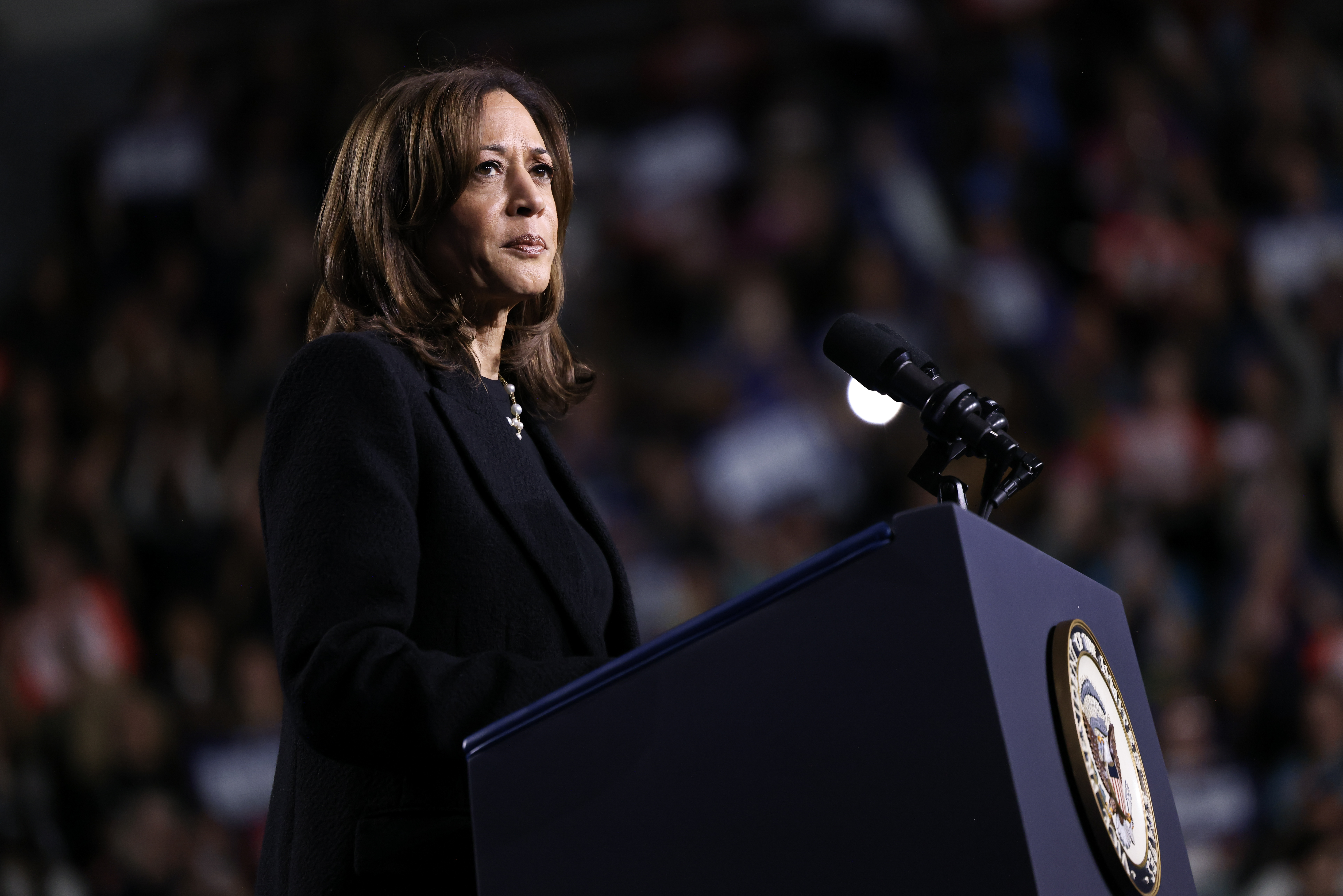
Rep. Jared Moskowitz, representing a swing district: ‘The idea that the vice president lost every swing state because she wasn’t more extreme on this issue is laughable’
CAPPELLO’S CAMPAIGN
The Air Force veteran, who served for six years at the U.S. Embassy in Israel, said Israel should continue to make efforts toward peace
Plus, Trump says Iran won't rule out nuclear weapons
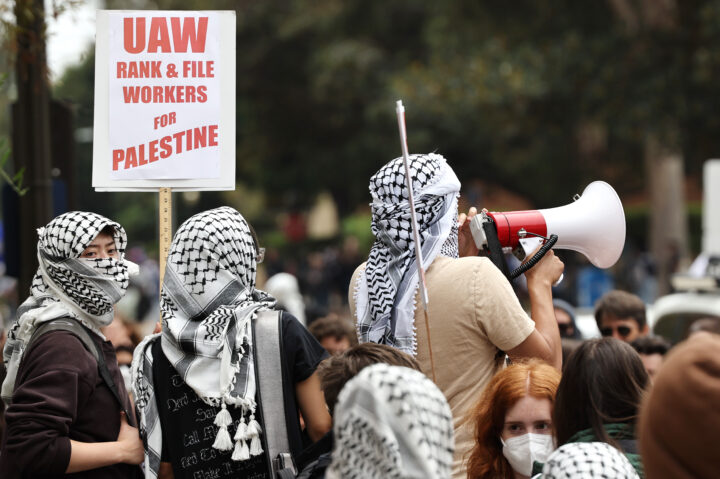
Mario Tama/Getty Images
Protestors gather after police cleared a new encampment on the UCLA campus on May 23, 2024 in Los Angeles, California.
Good Tuesday afternoon!
This P.M. edition is reserved for our premium subscribers — offering a forward-focused read on what we’re tracking now and what’s coming next.
It’s me again — Danielle Cohen-Kanik, U.S. editor at Jewish Insider and curator, along with assists from my colleagues, of the Daily Overtime. Please don’t hesitate to share your thoughts and feedback by replying to this email.
📡On Our Radar
Notable developments and interesting tidbits we’re tracking
Previewing his State of the Union address tonight, where it remains to be seen if he will make any announcements on Iran, President Donald Trump told reporters, “Iran wants to make a deal more than I do, but they just won’t say the sacred phrase: ‘We won’t build nuclear weapons,’” signaling that the two sides are still at an impasse ahead of the third round of negotiations scheduled for Thursday…
Secretary of State Marco Rubio briefed the congressional Gang of Eight, the bipartisan set of leaders advised on classified matters by the executive branch, this afternoon to provide an update on Iran, with CIA Director John Ratcliffe reportedly joining the discussion. The White House did not brief the group before striking Iran last June, drawing ire from Democrats…
Ahead of the meeting, Senate Minority Leader Chuck Schumer (D-NY) told C-SPAN about potential Iran strikes, “Closed-door briefings are fine, but the administration has to make its case to the American people on something as important as this”…
Around a dozen U.S. F-22 stealth fighter jets departed from the U.K. today to be deployed at an Israeli Air Force base in the south of the country, as over 150 aircraft are being moved to the region. Military experts told The Washington Post that the “assets being assembled are indicative of a multiday campaign without a ground invasion”…
The Coast Guard is investigating a swastika drawn at its primary recruit training center in New Jersey, where Coast Guard commandant Adm. Kevin Lunday quickly flew to address recruits and staff about the incident. Lunday recently came under fire from Congress, and had his confirmation delayed, over a change in Coast Guard policy that downgraded the swastika from a prohibited hate symbol to “potentially divisive,” which was eventually walked back.
Regarding the recent incident, Lunday said in a statement to The Washington Post, “Anyone who adheres to or advances hate or extremist ideology — get out. Leave. You don’t belong in the United States Coast Guard and we reject you”…
Rep. Brad Sherman (D-CA) is pushing for legislation to require an affirmative congressional vote prior to the U.S. reaching any nuclear deal with Saudi Arabia, Jewish Insider’s Marc Rod reports, following a notification from the administration to Congress indicating that it is moving toward a deal that could allow Riyadh to enrich uranium for civilian purposes.
The notification procedures, which do not include specific terms of a potential deal, suggest that Saudi Arabia will not be required to agree to more intrusive International Atomic Energy Agency inspections or “gold standard” safeguards — which would require Saudi Arabia to agree not to enrich or reprocess nuclear material — used for the U.S. nuclear cooperation agreement with the United Arab Emirates…
The Justice Department sued the University of California today under Title VII of the Civil Rights Act, which prohibits employment discrimination, alleging that the UCLA campus created a “hostile work environment against Jewish and Israeli faculty and staff.”
During campus anti-Israel protests in 2024, the DOJ said, “the University allowed antisemitic harassment to continue unabated for days” and “has ignored, and continues to ignore, gross and repeated violations” of time, place and manner restrictions on student protest. The department further claimed Jewish and Israeli faculty at the school have been physically threatened, ostracized, harassed, forced to take leave and assaulted…
The New York Times details efforts by New York’s business community and Democratic establishment to organize and promote the moderate wing of the party in response to New York City Mayor Zohran Mamdani’s rise to power. Some of the individuals involved, including former Gov. Andrew Cuomo allies Phil Singer and Steven Cohen, are considering forming PACs, watchdog groups, lobbying campaigns and more…
New York’s Working Families Party endorsed Brooklyn Borough President Antonio Reynoso to replace retiring Rep. Nydia Velázquez (D-NY) yesterday over Mamdani’s objections. The mayor has been backing Assemblymember Claire Valdez, who, like Mamdani, is a member of the Democratic Socialists of America and a vocal critic of Israel, and he had lobbied the WFP to endorse her or to stay out of the race. WFP’s director, Jasmine Gripper, told the Times, “At the end of the day, Zohran is an individual who gets to weigh in as an individual”…
A new poll from the University of New Hampshire found oyster farmer Graham Platner with a commanding lead among likely Senate Democratic primary voters, outdistancing Gov. Janet Mills by 34 points, with the primary less than four months away. In a general election matchup with incumbent Sen. Susan Collins (R-ME), Platner leads Collins by 11 points, while Mills and Collins are neck-and-neck…
Khalid Turaani, executive director of the Ohio branch of the Council on American-Islamic Relations (CAIR), testified at the Ohio Senate Judiciary Committee last week against a bill to codify the International Holocaust Remembrance Alliance’s working definition of antisemitism, where he claimed that Israel operates the world’s largest human skin bank and harvests the skin from deceased Palestinians. “And if I call them Nazis,” Turaani continued, “your law is going to punish me.”
The Anti-Defamation League’s Ohio River Valley office condemned Turaani’s speech, saying that the “antisemitic organ harvesting myth plays on the blood libel trope, which has spurred the torture, murder, and expulsion of Jews for centuries”…
The U.S. Embassy in Israel announced that, as part of the government’s “efforts to reach all Americans,” the embassy will be providing consular services for one day only at several locations across Israel and the West Bank, including Ramallah and the Jewish settlement of Efrat…
⏩ Tomorrow’s Agenda, Today
An early look at tomorrow’s storylines and schedule to keep you a step ahead
Keep an eye out in Jewish Insider for the highlights from President Donald Trump’s State of the Union address, taking place at 9 p.m. ET tonight, as all eyes are on possible U.S. military action against Iran.
Indian Prime Minister Narendra Modi arrives in Israel tomorrow, where he will be greeted by Prime Minister Benjamin Netanyahu before addressing the Knesset. In the evening, the two leaders will have dinner at Jerusalem’s King David Hotel. Read JI’s interview on Modi’s visit with Israeli Ambassador to India Reuven Azar.
The New York City Council will hold its first hearing on Council Speaker Julie Menin’s bill aiming to create “buffer zones” around houses of worship to protect from disruptive protests. The bill’s language was updated last night to remove the original 100-foot figure, which had reportedly emerged as a point of concern for the NYPD.
Congressional candidates from Illinois’ 9th District, where pro-Israel spending is boosting state Sen. Laura Fine and attacking Evanston Mayor Daniel Biss, will hold a debate on local news.
Stories You May Have Missed
SHIFTING STANCE

The progressive activist ran as a pro-Israel candidate in a neighboring swing district, but is now walking back her support as she runs to succeed Rep. Bonnie Watson Coleman
PRAIRIE STATE OF PLAY
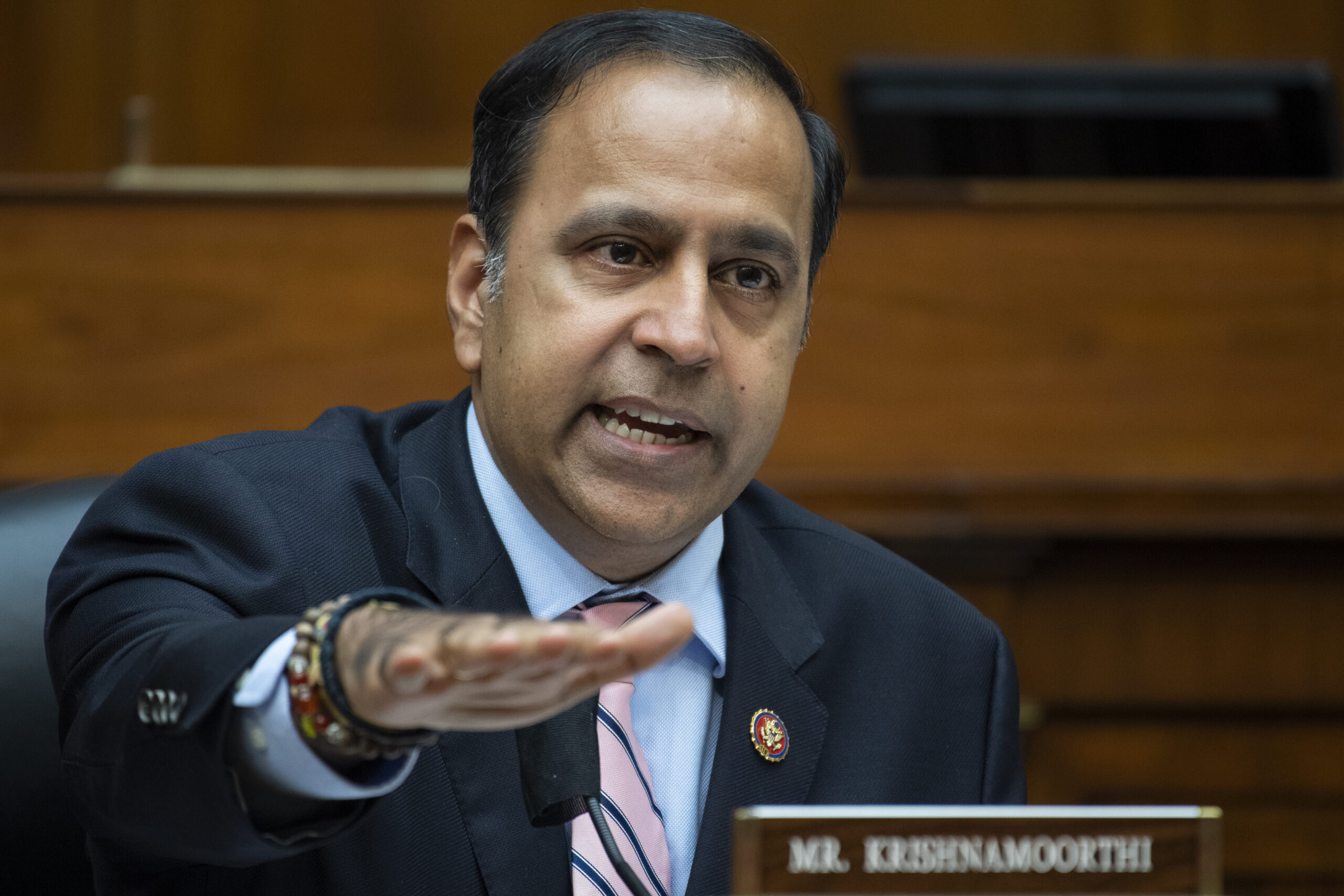
Lt. Gov. Juliana Stratton seems to be running to the congressman’s left on Israel, even as Rep. Robin Kelly is the most outspoken critic of Israel in the race
Plus, major Dem donor calls out 'Jew hate' in party
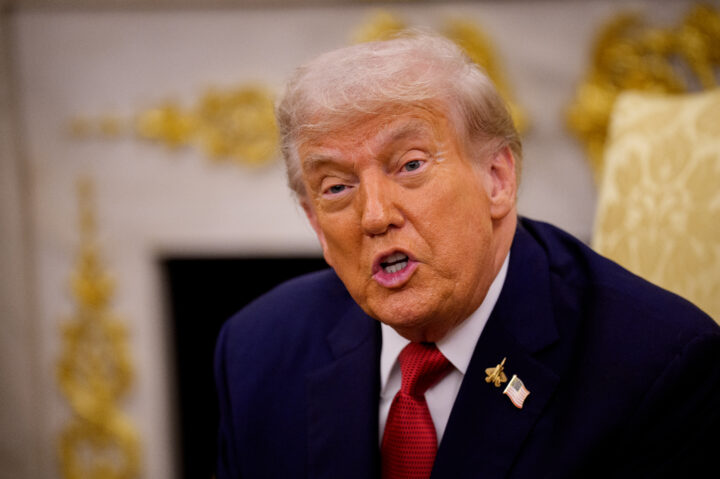
Andrew Harnik/Getty Images
President Donald Trump in the Oval Office at the White House on September 25, 2025 in Washington, DC.
Good Monday afternoon!
This P.M. edition is reserved for our premium subscribers — offering a forward-focused read on what we’re tracking now and what’s coming next.
It’s me again — Danielle Cohen-Kanik, U.S. editor at Jewish Insider and curator, along with assists from my colleagues, of the Daily Overtime. Please don’t hesitate to share your thoughts and feedback by replying to this email.
📡On Our Radar
Notable developments and interesting tidbits we’re tracking
As rumors abound about the possibility and timing of U.S. strikes on Iran, the State Department ordered the evacuation of non-essential personnel and their families from the U.S. Embassy in Beirut. “Based on our latest review, we determined it prudent to reduce our footprint,” a State official told Fox News…
Nearby, amid the buildup of U.S. military assets in the region, American refueling and cargo planes were spotted at Ben Gurion Airport…
President Donald Trump denied reports that Pentagon officials, namely Joint Chiefs of Staff Chairman Gen. Dan Caine, are raising concerns about striking Iran, writing on Truth Social this afternoon, “General Caine, like all of us, would like not to see War but, if a decision is made on going against Iran at a Military level, it is his opinion that it will be something easily won.”
“He has not spoken of not doing Iran, or even the fake limited strikes that I have been reading about, he only knows one thing, how to WIN and, if he is told to do so, he will be leading the pack,” Trump said of Caine, while alluding to the potential breadth of military action against Iran…
Secretary of State Marco Rubio pushed back his visit to Israel, originally scheduled for this weekend, to March 2, The Jerusalem Post reports, days after the next round of U.S.-Iran negotiations in Geneva on Thursday…
Sen. Chris Coons (D-DE), a leader on foreign policy among Democrats in Congress, told Jewish Insider’s Emily Jacobs that he heard “pretty stark early warning signs of some challenges where core allies do not share our priorities” on a potential Iran strike during his recent trip t0 Europe, which included stops at the Munich Security Conference, along with meetings in Ukraine and Moldova with top European diplomats.
Coons laid out what he hopes to see from the president: “A) Consult Congress. B) Make a case to the American people about why this is in our national security interest. C) Clarify what on earth he’s planning with this Board of Peace … And D) If he’s going to work with close allies to ramp up pressure to try and achieve something at the negotiating table, he should work with close allies”…
Anthony Driver Jr., a union organizer and candidate in Illinois’ 7th Congressional District, doubled down on his recent repudiation of AIPAC, despite previously having little public record on Israel policy issues. Following a press conference last week where Driver, who is running against AIPAC-backed Chicago Treasurer Melissa Conyears-Ervin, denounced the pro-Israel group, he returned donations from major Democratic Party donor Michael Sacks over the finance executive’s ties to AIPAC.
Sacks, who was a major backer of former President Barack Obama and former Chicago Mayor Rahm Emanuel, said in his reply, “It is truly sad there is so much anti Israel sentiment and outright Jew hate that Anthony found himself in this position. I can only hope that the electorate rejects hate in all forms”…
As more details emerge about Rep. Tony Gonzales’ (R-TX) alleged affair with a staffer who later committed suicide, a poll commissioned by the campaign of Brandon Herrera, Gonzales’ opponent, shows the congressman trailing Herrera by a whopping 24 points among likely GOP primary voters. The story, which entered the news cycle right as early voting kicked off, could catapult Herrera, a social media influencer with a history of antisemitism, to the Republican nomination and on to Congress…
Investigators at the cryptocurrency giant Binance found last year that about $1.7 billion had been sent from two accounts to Iranian entities with links to terror groups, The New York Times reports, even after Binance pleaded guilty to violating anti-money laundering laws in 2023 and vowed to prevent sanctioned actors from accessing its platform. Trump pardoned Binance founder Changpeng Zhao, who was jailed for his role in the saga, in October 2025…
The Atlanta Jewish Film Festival backtracked in its defense of a juror selected for a judging panel who had posted antisemitic and anti-Israel content online, whom it had stood behind even after the Israeli Consulate in Atlanta announced it was withdrawing its funding and support of the event over the pick.
The festival changed its tune yesterday, saying it is “first and foremost, a Jewish institution” and has “a responsibility, particularly at this fraught time, to stand firmly against antisemitism and to affirm the Jewish people’s right to self-determination.” It said it would review its “organizational processes and policies, including those related to antisemitism, BDS, and cultural boycotts”…
The French Foreign Ministry has moved to block U.S. Ambassador to France Charles Kushner’s access to government officials after he declined to appear for a summons by Foreign Minister Jean-Noël Barrot today, which was issued after the U.S. Embassy reposted comments by Trump about a far-right French activist who was killed in a clash with far-left protesters. It was Kushner’s second summons, after his first last year when he accused the French government of not adequately combating antisemitism…
⏩ Tomorrow’s Agenda, Today
An early look at tomorrow’s storylines and schedule to keep you a step ahead
Keep an eye out in Jewish Insider for a look at Sue Altman’s shifting views on Israel as the formerly pro-Israel congressional candidate is now running in New Jersey’s more heavily Democratic 12th Congressional District.
We’ll be watching for mention of President Donald Trump’s thinking on Iran as he delivers the annual State of the Union address tomorrow night. Virginia Gov. Abigail Spanberger will deliver the Democratic response.
The House Foreign Affairs Committee will hold a hearing on “advancing national security through commercial diplomacy” with Jacob Helberg, under secretary of state for economic affairs, who recently told JI that he hopes the Pax Silica initiative, which he leads, “will pave the way for peace and economic integration” in the Middle East.
Australia’s royal commission on antisemitism, formed after the Hanukkah terror attack at Sydney’s Bondi Beach, will hold its first public hearing, though no testimony or evidence will be heard.
Stories You May Have Missed
OVERTON WINDOW
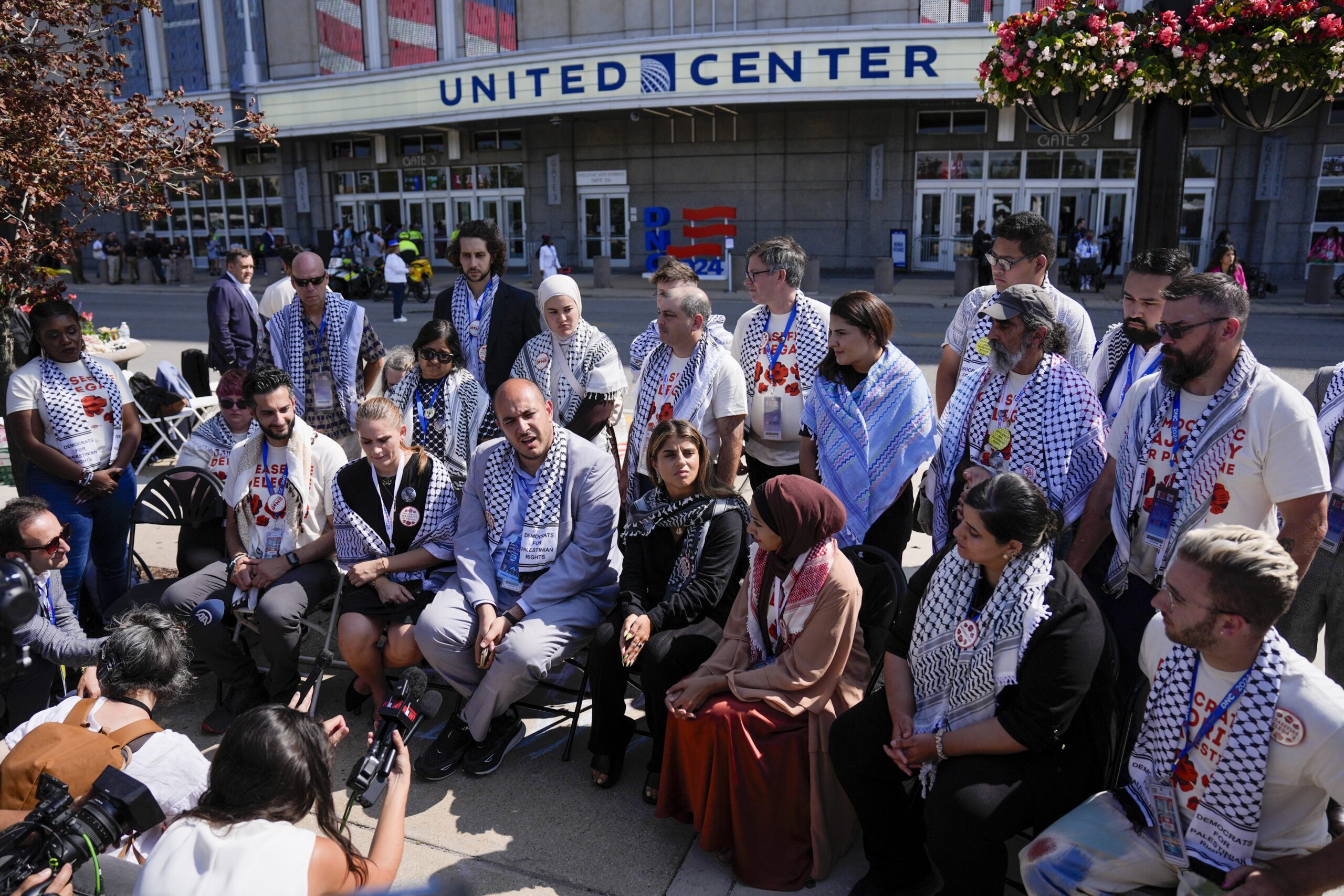
Former Democratic Rep. Kathy Manning: ‘There is no doubt that we are living through very difficult times for American Jews’
BIG TENT SHABBAT
The dinner was hosted by Rabbi Yehuda Kaploun, the U.S. antisemitism special envoy
Plus, Trump's kind words for Qatari PM
Alex Wong/Getty Images
A visitor holds an AIPAC folder in an elevator in Rayburn House Office Building on March 12, 2024 on Capitol Hill in Washington, DC.
Good Thursday afternoon!
This P.M. edition is reserved for our premium subscribers — offering a forward-focused read on what we’re tracking now and what’s coming next.
It’s me again — Danielle Cohen-Kanik, U.S. editor at Jewish Insider and curator, along with assists from my colleagues, of the Daily Overtime. Please don’t hesitate to share your thoughts and feedback by replying to this email.
📡On Our Radar
Notable developments and interesting tidbits we’re tracking
President Donald Trump used the occasion of the first meeting of the Board of Peace in Washington today to announce significant monetary and troop commitments from the U.S. and other countries to stabilize Gaza, as well as lay out a timeline for military action against Iran, Jewish Insider’s Matthew Shea reports.
The pledges included $10 billion from the U.S. and $7 billion from several Middle Eastern countries for Gaza’s reconstruction, as well as commitments to provide troops and police to the U.S.-led International Stabilization Force. (The Guardian reports the White House is currently exploring plans to build a 5,000-person military base to house the ISF in southern Gaza.)
On Iran negotiations, Trump said in his remarks, “Now we may have to take it a step further or we may not. Maybe we are going to make a deal [with Iran]. You are going to be finding out over the next probably 10 days.”
He later told reporters on Air Force One, “Ten, 15 days, pretty much maximum.” Remember: Last June, Trump said he would decide whether to take action against Iran within two weeks, and carried out strikes on Iranian nuclear facilities two days later…
U.K. Prime Minister Keir Starmer has reportedly not given approval to Washington to use the joint U.S.-U.K. base on Diego Garcia island for a strike on Iran, as Trump said yesterday he is considering. London is concerned that a U.S. strike from the shared base, which the U.K. must grant permission to use, could implicate it in violating international law…
Trump also offered praise for Qatar’s prime minister, Sheikh Mohammed bin Abdulrahman Al Thani, during his Board of Peace remarks, despite widespread criticism of Doha’s backing of Hamas and platforming of anti-Israel actors.
“His excellency, Prime Minister Al Thani of Qatar, just a great and highly respected man,” Trump said. “I always say he needs a public relations agency because you do so much good, and they have you down as evil, and you’re not evil. You help us so much and you’re such a good ally”…
Meanwhile, Hamas is entrenching itself further in Gaza, repositioning its loyalists in government and paying salaries across the enclave, according to Reuters. Hamas has said it is willing to hand power over to the Palestinian technocratic committee established by the U.S. and led by former Palestinian Authority official Ali Shaath, but as one Palestinian source told the outlet, “Shaath may have the key to the car, and he may even be allowed to drive, but it is a Hamas car”…
Former Rep. Tom Malinowski (D-NJ), who recently lost the Democratic primary for New Jersey’s 11th Congressional District, called AIPAC’s attacks against him in the race “bizarre in several ways,” writing in an op-ed today that he has “no problem identifying as a Zionist” and calling on Democratic leaders to collectively “refuse [AIPAC’s] support, instead of letting it pick off candidates one by one”…
Rep. Jan Schakowsky (D-IL) withdrew her endorsement of Cook County Commissioner Donna Miller, the front-runner in Illinois’ 2nd District Democratic primary, over Miller’s backing by groups that are reported to be affiliated with AIPAC, though the pro-Israel group hasn’t endorsed her and neither AIPAC nor its super PAC are publicly spending any money in the district.
“Illinois deserves leaders who put voters first, not AIPAC or out-of-state Trump donors,” Schakowsky told the Chicago Sun-Times. “I cannot support any candidate running for Congress who is funded by these outside interests”…
Ahead of a hearing next week on New York City Council Speaker Julie Menin’s proposed 100-foot ban on protests around houses of worship, Mayor Zohran Mamdani said today that he had the NYPD review the legality of the measure, “and I can tell you, my police commissioner has expressed concerns about that proposal”…
Three officials appointed by Mamdani to administration posts are co-founders of a group that blamed Israel for the Oct. 7 Hamas attacks two days after they took place, the Washington Free Beacon reports.
The group, the Muslim Democratic Club of New York (MDCNY), was founded by Faiza Ali, now commissioner of the Mayor’s Office of Immigrant Affairs; Aliya Latif, now executive director of the mayor’s Office of Faith-Based Partnerships; Ali Najmi, tapped as chair of the mayor’s Advisory Committee on the Judiciary; and anti-Israel activist Linda Sarsour.
On Oct. 9, 2023, the MDCNY posted on X, “Many NYers are feeling pain, fear, and anger after the horrific events in the Holy Land this weekend. Especially as the Israeli apartheid regime have forced millions of Palestinians in Gaza to live under occupation for decades and an open air prison since 2007.” The group went on to condemn “elected officials offering support for Israeli occupation’s rampant violence as it openly declares & enacts its intent to engage in mass violence and genocide against Palestinians,” well before Israel’s ground invasion of Gaza had begun…
The Forward profiles Los Angeles City Councilmember Nithya Raman as she runs for mayor with a unique ideology: Raman is a member of the Democratic Socialists of America, but has also been vocally supportive of Israel. She called DSA’s statement blaming Israel for the Oct. 7 attacks “unacceptably devoid of sympathy” and rejects the BDS movement, but was also condemned by the local Jewish community for introducing a ceasefire resolution in June 2023…
⏩ Tomorrow’s Agenda, Today
An early look at tomorrow’s storylines and schedule to keep you a step ahead
Keep an eye out in Jewish Insider for a preview of the AIPAC Congressional Summit, which is kicking off Sunday amid the group’s increasing involvement in midterm election races.
President Donald Trump is expected to meet with governors at the White House tomorrow, though the meeting will no longer be held under the auspices of the National Governors Association, as is done annually, after the White House declined to invite Democratic Govs. Jared Polis of Colorado and Wes Moore of Maryland to a black-tie dinner on Saturday.
We’ll be back in your inbox with the Daily Overtime on Monday. Shabbat Shalom!
Stories You May Have Missed
FULOP’S FIGHT
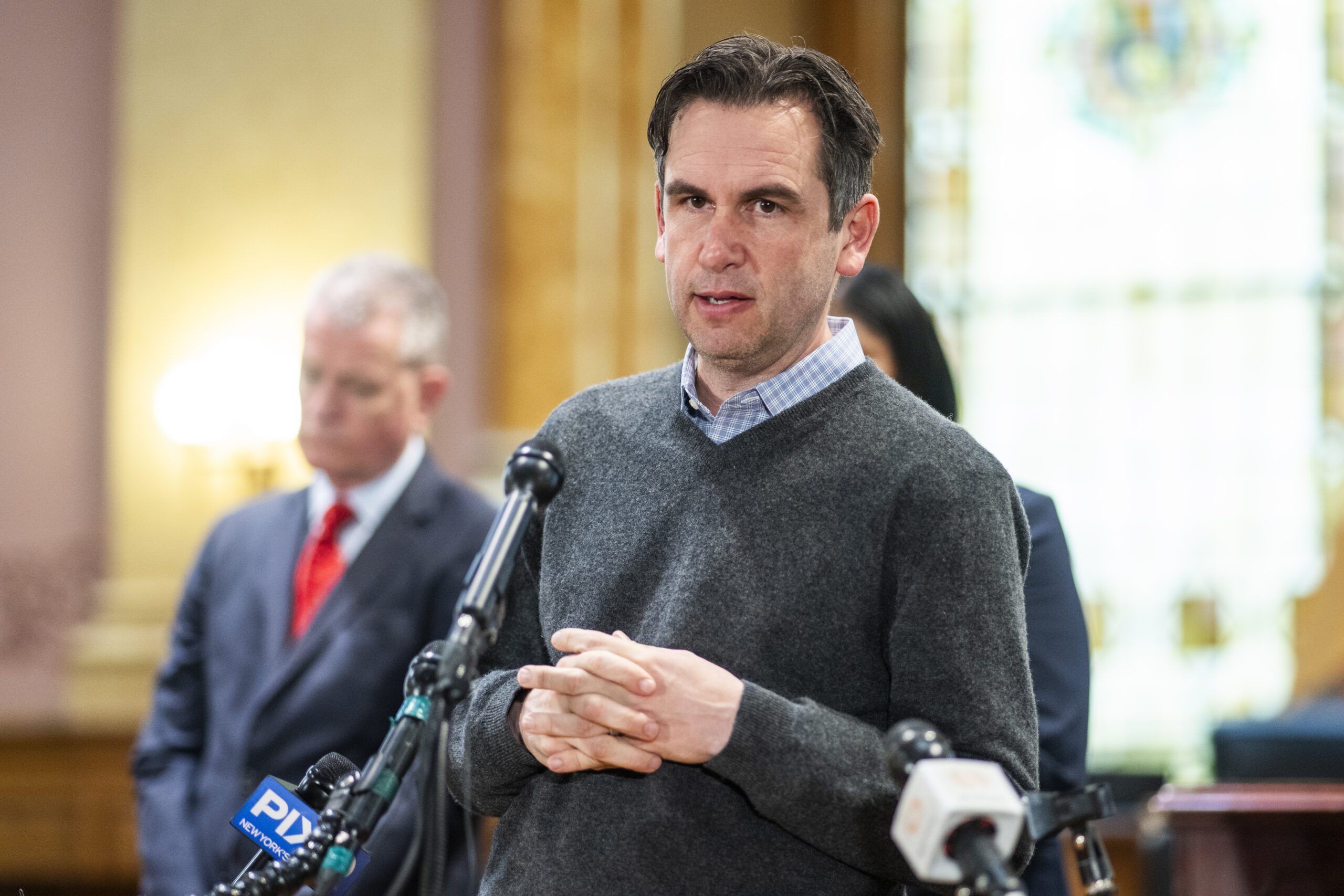
As the new head of NYC’s leading business advocacy group, Fulop said he’s preparing for ‘this experiment of what it means to be an executive in a DSA world’
TEXAS TROUBLE

An unfolding scandal involving Rep. Tony Gonzales could cost him his seat at the hands of a far-right social media influencer
Plus, Sen. Graham reports MBZ is alive and well

Mass Communication Specialist 3rd Class Amber Smalley/U.S. Navy via Getty Images
Flight deck of the Nimitz-class aircraft carrier USS Abraham Lincoln (CVN 72) May 10, 2019 in the Red Sea.
Good Wednesday afternoon!
This P.M. edition is reserved for our premium subscribers — offering a forward-focused read on what we’re tracking now and what’s coming next.
It’s me again — Danielle Cohen-Kanik, U.S. editor at Jewish Insider and curator, along with assists from my colleagues, of the Daily Overtime. Please don’t hesitate to share your thoughts and feedback by replying to this email.
📡On Our Radar
Notable developments and interesting tidbits we’re tracking
President Donald Trump warned U.K. Prime Minister Keir Starmer not to relinquish control over Diego Garcia — an island in the Indian Ocean that hosts a joint U.S.-U.K. base, as the U.K. plans to transfer sovereignty of the larger island chain to Mauritius, while maintaining a 99-year lease on the base — because it may act as the launching pad for a U.S. strike on Iran.
“Should Iran decide not to make a Deal, it may be necessary for the United States to use Diego Garcia, and the Airfield located in Fairford, in order to eradicate a potential attack by a highly unstable and dangerous Regime — An attack that would potentially be made on the United Kingdom, as well as other friendly countries,” Trump wrote on Truth Social…
Iran is also signaling its readiness for military conflict, The Wall Street Journal reports, including deploying Islamic Revolutionary Guard Corps naval units to the Strait of Hormuz, launching cruise missiles along the coast, conducting a military exercise with a Russian warship near the USS Abraham Lincoln, testing air defense systems, hardening nuclear sites and cracking down once more on dissidents…
Israel, meanwhile, is preparing for its civilian infrastructure to be “a central arena” in a potential U.S.-Iran conflict, Jewish Insider’s Lahav Harkov reports, as Home Front Command chief Maj.-Gen. Shay Klapper told the Knesset Foreign Affairs and Defense Committee today. Committee Chairman Boaz Bismuth said, “There is not one [Israeli] who doesn’t ask himself several times a day when there will be a campaign against Iran. The entire population and home front are preparing”…
Sen. Lindsey Graham (R-SC) dispelled rumors, seemingly spread by Saudi media, that UAE President Sheikh Mohamed bin Zayed was ill or even dying after meeting with him in Abu Dhabi today: “Not only is he alive, but he is also well and as sharp as I’ve ever seen him. To those powers that feel the need to attack MbZ and the UAE for doing the right thing — you do so at your own peril,” Graham said on X.
He also called MBZ’s decision to join the Abraham Accords and “to try to integrate the region with the whole world … one of the most consequential decisions any Middle Eastern leader has made.” Graham is now headed to Saudi Arabia where he will meet with Crown Prince Mohammed bin Salman, whom he recently told publicly to “knock it off” regarding the kingdom’s destabilizing activities in the region…
Democratic Texas state Rep. James Talarico raised $2.5 million in donations for his Senate campaign in the 24 hours after his interview on Stephen Colbert’s late-night show was reportedly quashed by CBS, Politico reports, as early voting in Texas kicked off yesterday ahead of the March 3 primary.
CBS denied it had banned the interview, saying Colbert’s show “was provided legal guidance that the broadcast could trigger the FCC equal-time rule for two other candidates, including Rep. Jasmine Crockett, and presented options for how the equal time for other candidates could be fulfilled,” which Colbert derided as a statement “written by — and I’m guessing for — lawyers”…
On the GOP side of the Texas Senate ballot, Attorney General Ken Paxton looks like the front-runner in his hotly contested primary against incumbent Sen. John Cornyn (R-TX) and Rep. Wesley Hunt (R-TX), despite the GOP establishment spending more than $60 million in attack ads against Paxton, Punchbowl News reports. (And the infighting goes further: Hunt said yesterday he filed criminal charges against a senior member of Cornyn’s campaign team for allegedly doxxing a member of his family.)
Trump told reporters last night that he still hadn’t decided which of the GOP candidates, if any, to endorse, saying, “I like all three of them actually. Those are the toughest races. They’ve all supported me. They’re all good. You’re supposed to pick one, so we’ll see what happens. But I support all three”…
Democratic Virginia state Del. Dan Helmer, a key architect of the state’s current redistricting effort, plans to enter the race for the 7th Congressional District that will be created if state voters approve a constitutional amendment to allow redistricting to proceed.
Helmer, who is Jewish and the son of an Israeli immigrant, ran for the state’s 10th District in 2024 on a staunchly pro-Israel platform, telling JI at the time that calls for conditions on U.S. aid to Israel are “incredibly frustrating.” He became the target of late-stage ad campaigns, which their backers insisted to JI were unrelated to his support for Israel, and ultimately came in second in the Democratic primary…
Humain, Saudi Arabia’s state-sponsored AI company, invested $3 billion in Elon Musk’s xAI, the company announced today. The investment came just before Musk combined xAI with his SpaceX aerospace company, giving the Saudi firm a significant stake in the major U.S. government contractor…
⏩ Tomorrow’s Agenda, Today
An early look at tomorrow’s storylines and schedule to keep you a step ahead
Keep an eye out in Jewish Insider for a look at how the emerging scandal involving Rep. Tony Gonzales (R-TX) — whom the San Antonio Express News confirmed yesterday was engaged in an extramarital affair with a staffer who committed suicide — could catapult an anti-Israel Republican, who has posted videos featuring Nazi imagery, to Congress.
Our focus tomorrow will be the first meeting of the Board of Peace, which will bring several heads of state and senior ministers, including Israeli Foreign Minister Gideon Sa’ar, to Washington. Read JI’s preview of the meeting.
Jewish Federations of North America CEO Eric Fingerhut will deliver what JFNA is calling the first “State of the Jewish Union Address,” ahead of the president’s State of the Union next week, from the organization’s Washington headquarters.
The U.S. Commission on Civil Rights will hold a daylong hearing on antisemitism on college campuses, featuring legal experts, former administration officials, students and Jewish communal leaders, which include Amy Spitalnick, CEO of the Jewish Council for Public Affairs; Kenneth Marcus, founder and CEO of the Louis D. Brandeis Center; Erin Beiner, J Street U director; and Kevin Rachlin, Washington director of The Nexus Project.
Stories You May Have Missed
MONIKER MEANING

Follow the language to its most extreme end, and what emerges is undiluted antisemitism
ROCK AND A HARD PLACE
Rep. Valerie Foushee was backed by AIPAC, but has since turned against supporting Israel. Her Democratic opponent is a virulently anti-Israel activist
Plus, Belgium's mohel madness
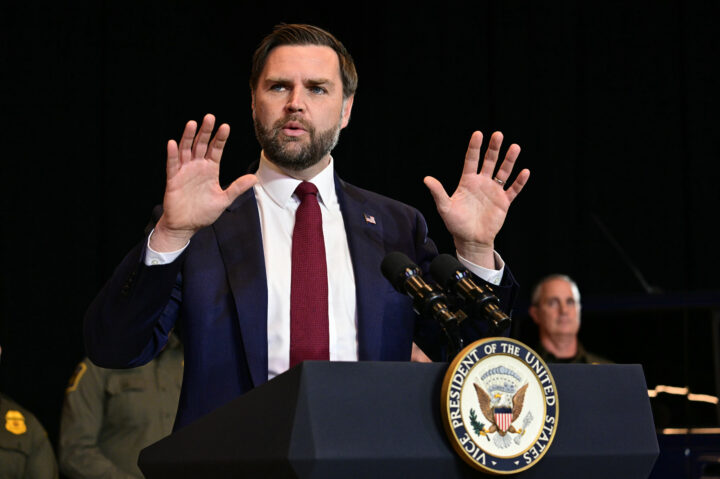
Jim Watson - Pool/Getty Images
U.S. Vice President JD Vance gives remarks following a roundtable discussion with local leaders and community members amid a surge of federal immigration authorities in the area, at Royalston Square on January 22, 2026 in Minneapolis, Minnesota.
Good Tuesday afternoon!
This P.M. edition is reserved for our premium subscribers — offering a forward-focused read on what we’re tracking now and what’s coming next.
It’s me again — Danielle Cohen-Kanik, U.S. editor at Jewish Insider and curator, along with assists from my colleagues, of the Daily Overtime. Please don’t hesitate to share your thoughts and feedback by replying to this email.
📡On Our Radar
Notable developments and interesting tidbits we’re tracking
As the second round of U.S.-Iran negotiations wrapped up in Geneva this morning, Iranian Foreign Minister Abbas Araghchi told state media that the parties reached a “general understanding on a set of guiding principles” and will “begin working on the text of a potential agreement.”
A U.S. official sounded a more reserved note, telling Axios the talks “made progress” but “there are still a lot of details to discuss.” Iranian officials are expected to present proposals in the next two weeks “to address some of the open gaps in our positions,” the official said.
Vice President JD Vance said on Fox News this afternoon that “the United States has certain red lines. Our primary interest here is we don’t want Iran to get a nuclear weapon. We don’t want nuclear proliferation.”
On today’s negotiations, Vance explained, “in some ways it went well — they agreed to meet afterwards — but in some ways it was very clear that the president has set some red lines that the Iranians are not yet willing to actually acknowledge and work through.”
Ayatollah Ali Khamenei, Iran’s supreme leader, demonstrated that unwillingness, posting on X as talks were underway that if the U.S. insists on prohibiting Iran from enriching uranium “there is no room for negotiation.” As the U.S. sends more military assets to the region, he also threatened to “send that [U.S.] warship to the bottom of the sea”…
New York City Mayor Zohran Mamdani tapped Faiza Ali as commissioner of the Mayor’s Office of Immigrant Affairs today, elevating the longtime activist with ties to the Council on American-Islamic Relations and anti-Israel activist Linda Sarsour. Ali previously served as the community affairs director for CAIR’s New York chapter, and she and Sarsour have co-led Muslim advocacy efforts, including being arrested together in 2017…
Several Chicago-era endorsees of the Congressional Progressive Caucus PAC — Evanston Mayor Daniel Biss, union organizer Anthony Driver Jr., state Sen. Robert Peters and activist Junaid Ahmed — held a joint press conference today slamming AIPAC as a “pro-Trump, right-wing aligned organization” that “is rooted and based in lobbying for this right-wing Israeli government.”
Driver, a candidate in the 7th District who was just endorsed by the CPC PAC today and has not previously spoken at length about his position on Israel, said, “AIPAC is not your friend. … They are in the business of buying elections”…
U.S. Ambassador to Belgium Bill White was summoned to a meeting with Belgian Foreign Minister Maxime Prévot today after White accused the country in a series of heated social media posts of a “RIDICULOUS AND ANTI SEMITIC ‘PROSECUTION’” of three mohels who are being charged with practicing medicine without a license.
Prévot said White’s posts “and interference in judicial matters violate basic diplomatic norms” and denied accusations of antisemitism, while Ambassador Yehuda Kaploun, the State Department’s antisemitism envoy, concurred with White…
Sen. Mark Kelly (D-AZ) told BBC “Newsnight” yesterday that he will “seriously consider” a presidential run in 2028 “because we’re in some seriously challenging times.” The former astronaut, who has recently been the target of the White House’s ire over a video in which he and fellow veterans urged servicemembers to refuse illegal orders, touted his military experience and engineering certifications as part of his pitch…
Texas state Rep. James Talarico, running in a competitive primary for U.S. Senate against Rep. Jasmine Crockett (D-TX), shared an interview he conducted with late-night host Stephen Colbert that CBS declined to run.
Colbert said in his show’s opening remarks last night that the clip would not be broadcast because “we were told in no uncertain terms by our network’s lawyers, who called us directly, that we could not have [Talarico] on the broadcast,” claiming the network was threatened by the Federal Communications Commission…
Eric Trump has invested in Israeli drone maker Xtend as part of a $1.5 billion deal in which the company, which already has a multimillion-dollar contract with the Pentagon, is merging with a Florida construction firm. Xtend was also selected this month by the Department of Defense as one of 25 companies participating in its “Drone Dominance Program”…
Tricia McLaughlin, Homeland Security Secretary Kristi Noem’s spokesperson, is leaving her post next week, Politico reports, after becoming one of the most vocal defenders of the Trump administration’s deportation efforts…
Warner Bros. Discovery announced today it will restart talks with Paramount after initially rejecting the company’s hostile takeover bid in favor of its current agreement with Netflix. Paramount has since increased its nearly $78 billion all-cash offer, including paying the $2.8 billion termination fee Warner will owe Netflix if their deal falls through…
⏩ Tomorrow’s Agenda, Today
An early look at tomorrow’s storylines and schedule to keep you a step ahead
Keep an eye out in Jewish Insider for an interview with Steven Fulop, the former Jersey City mayor who is making a priority of countering antisemitism in his new role as the head of New York City’s business advocacy group.
The International Federation of Social Workers will hold a vote on a contentious effort to expel the Israeli Union of Social Workers, after some European members complained that Israeli social workers had served in combat roles during Israel’s war against Hamas in Gaza — a move that the U.S.-based National Association of Social Workers unexpectedly said today it resoundingly opposes.
U.S. Ambassador to Israel Mike Huckabee will sit down with Tucker Carlson in Jerusalem for an episode of the commentator’s podcast, as the two have been at loggerheads over Carlson’s repeated criticisms of Israel.
The Kigali Forum, a conference bringing together policy leaders and think tanks from the United States, Africa and Israel to discuss “the new Middle East,” will take place in Kigali, Rwanda.
The trial of the man accused of killing Paul Kessler, a Jewish man who was beaten and died during rival pro- and anti-Israel protests in the Los Angeles area in November 2023, is set to begin in Ventura County Superior Court.
Stories You May Have Missed
ENVOY ISSUES
Barrack, the U.S. ambassador to Turkey, plays an outsized role in setting foreign policy in the region, lawmakers and experts say
SENATOR SAYS

The senator addressed Saudi and Emirati leadership directly about escalating tensions in the region in his remarks at the Munich Security Conference
Plus, Trump sets monthlong timeline for Iran deal
DOMINIC GWINN/Middle East Images/AFP via Getty Images
Jeremy Carl speaks at the National Conservatism Conference in Washington D.C., Sept. 3, 2025.
Good Thursday afternoon!
This P.M. edition is reserved for our premium subscribers — offering a forward-focused read on what we’re tracking now and what’s coming next.
It’s me again — Danielle Cohen-Kanik, U.S. editor at Jewish Insider and curator, along with assists from my colleagues, of the Daily Overtime. Please don’t hesitate to share your thoughts and feedback by replying to this email.
📡On Our Radar
Notable developments and interesting tidbits we’re tracking
Israeli Prime Minister Benjamin Netanyahu again voiced skepticism about the U.S.’ ability to reach an agreement with Iran as he departed Joint Base Andrews today, reports Jewish Insider’s Lahav Harkov, who is traveling with the prime minister’s delegation.
A day after his White House meeting with President Donald Trump, Netanyahu told reporters, “The president thinks the Iranians understand who they’re dealing with. He thinks the conditions he is setting, combined with their understanding that they made a mistake last time not reaching a deal, could bring them to agree to conditions that will allow a good deal to be reached.”
The prime minister’s view was more reserved: “I do not hide my general skepticism about the possibility of any deal with Iran.” Netanyahu said he told Trump that if a deal is indeed reached, “it must include the components that are important to us, the State of Israel, and, I think, the entire international community: not just the nuclear matter, but also ballistic missiles and Iranian proxies in the region.”
The Prime Minister’s Office also said Netanyahu will not be returning to Washington next week as scheduled, in order to speak at an AIPAC conference, and will instead appear virtually…
At a press conference this afternoon, Trump said the timeline for a potential deal with Iran is “over the next month … should happen quickly.” Asked why Netanyahu wants him to stop negotiating, Trump said, “He didn’t say that, we didn’t discuss that. I’ll talk to [Iran] as long as I like.” Trump additionally said Israeli President Isaac Herzog “should be ashamed of himself” and called him “disgraceful” for not issuing a pardon to Netanyahu…
The Trump administration smuggled around 6,000 Starlink terminals, used to establish internet connection, to activists in Iran during the regime’s violent suppression of nationwide protests, which included internet blackouts, U.S. officials told The Wall Street Journal…
New York City Mayor Zohran Mamdani and his team refused to condemn antisemitic and pro-Hamas social media posts from the co-founder of the group ‘Hot Girls for Zohran’ when pressed by JI’s Will Bredderman and other reporters today.
Speaking from City Hall, Mamdani would only stress that Gilani’s organization operated independently of his official election effort: “This was an individual leading an outside group and was never paid for by our campaign,” said Mamdani. “If New Yorkers want to know my views then they can hear it directly from me.
But when JI pressed the mayor directly whether he condemned the content of Gilani’s posts, he refused to respond and left the room, similar to how he fled questions on the matter from Politico on Wednesday…
Rep. Elise Stefanik (R-NY) urged the Trump administration today to investigate reports that a clique of radical staffers at the New York City Department of Health and Mental Hygiene had launched an anti-Israel “working group” inside the agency, JI’s Will Bredderman reports.
In a letter addressed to Health and Human Services Secretary Robert F. Kennedy Jr., Stefanik decried reports that employees had met during work hours at the city bureaucracy’s Queens headquarters. She raised the possibility that the department’s federal funding might have gone toward a prohibited political purpose — or that the gathering may have violated civil rights protections by creating a discriminatory environment for Jewish New Yorkers…
The nomination of Jeremy Carl, tapped to be the assistant secretary of state for international organizations, appears bound to fail after Sen. John Curtis (R-UT) announced his opposition to Carl’s confirmation following his contentious hearing in the Senate Foreign Relations Committee this morning, JI’s Marc Rod reports.
Curtis and a series of Democrats questioned Carl over past antisemitic, anti-Israel and otherwise inflammatory comments that the nominee had made online and in a series of podcast appearances, including his assertion that the U.S. spends too much time and energy on Israel “often to the detriment of our own national interest” and that “the Jews love to see themselves as oppressed”…
CENTCOM announced today it had completed a “deliberate and conditions-based” withdrawal of U.S. forces from al-Tanf Garrison in Syria, handing control of the site on the country’s border with Iraq and Jordan to forces aligned with the Syrian government. The U.S. has had a presence at the base since 2016 as part of its fight against ISIS; over 7,000 ISIS detainees are also being transitioned out of Syria into Iraq, while the U.S. troops were relocated to Jordan…
Germany joined the growing calls today for U.N. Special Rapporteur Francesca Albanese to resign, after France did the same yesterday, over her recent speech at the Al Jazeera Forum where she called Israel humanity’s “common enemy.” German Foreign Minister Johann Wadephul wrote on X, “I respect the system of independent rapporteurs of the UN. However, Ms. Albanese has already repeatedly failed in the past. I condemn her recent statements about Israel. She is untenable in her position”…
Israeli authorities arrested several people, and indicted one army reservist and one civilian, for allegedly using classified information to place bets on the popular prediction market Polymarket around the timing of Israel’s war with Iran last June, the Shin Bet announced today. The bets all correctly predicted the timeline of the strikes, raking in more than $150,000, Israeli media reported…
⏩ Tomorrow’s Agenda, Today
An early look at tomorrow’s storylines and schedule to keep you a step ahead
Keep an eye out in Jewish Insider for reporting on the race to succeed Rep. Bonnie Watson Coleman (D-NJ) in New Jersey’s 12th Congressional District, where the congresswoman is coming out forcefully against the lone Jewish candidate in the race — for being too supportive of Netanyahu.
The Munich Security Conference kicks off tomorrow, with Secretary of State Marco Rubio leading the U.S. delegation and speaking from the main stage on Saturday. Dozens of members of Congress were also expected to attend — official travel was canceled due to the impending shutdown of the Department of Homeland Security tomorrow, but members still may attend on their own. One member making a foray into foreign policy is Rep. Alexandria Ocasio-Cortez (D-NY), who will be speaking on two panels at the high-level summit. Other Democrats in attendance will be California Gov. Gavin Newsom, Michigan Gov. Gretchen Whitmer and Boston Mayor Michelle Wu.
In observance of President’s Day, we’ll be back in your inbox with the Daily Overtime on Tuesday. Shabbat Shalom!
Stories You May Have Missed
DOUBLING DOWN
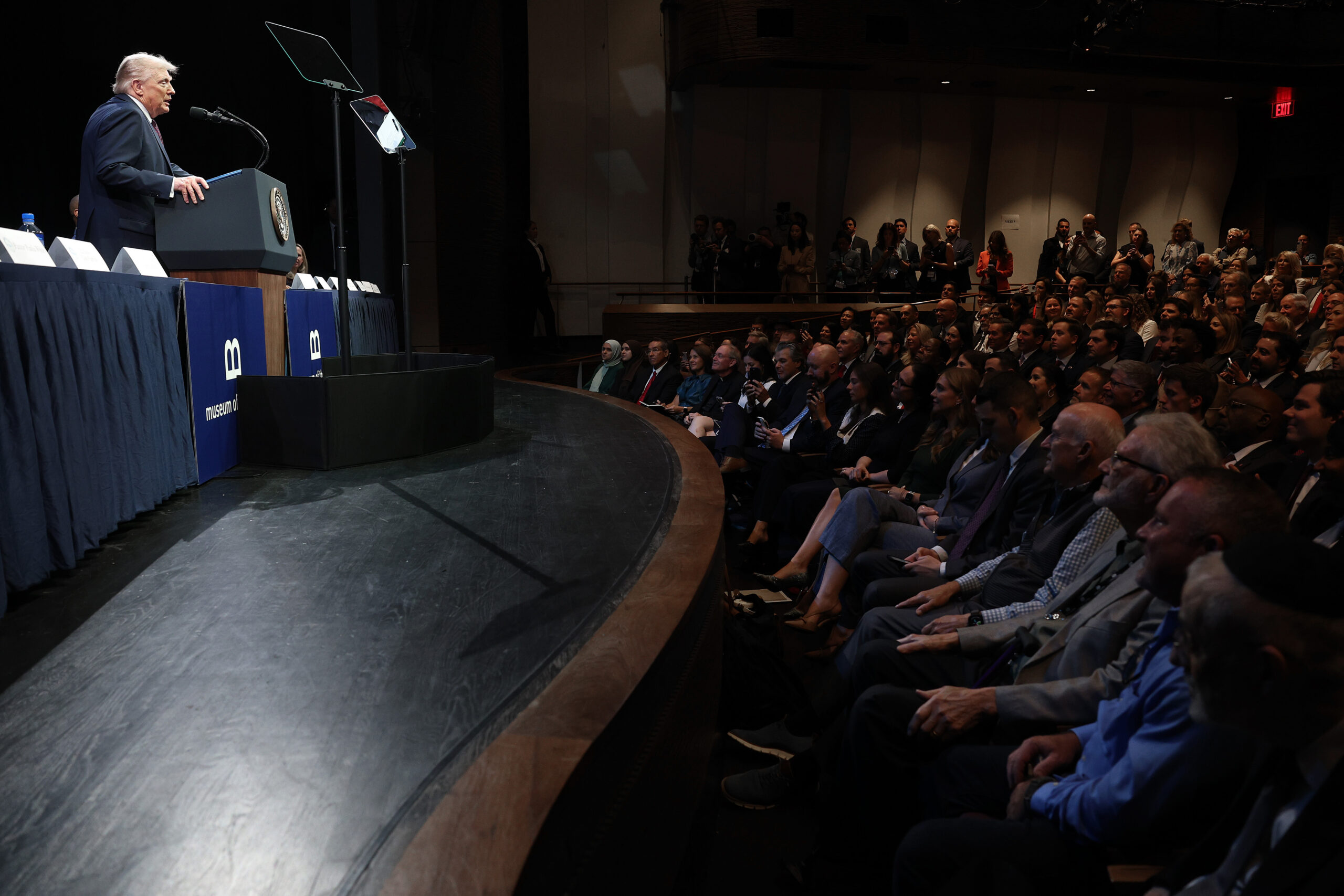
Activist Sameerah Munshi was appointed by the White House to the commission’s advisory board; the two women have jointly posted antisemitic content online
DOHA DEALINGS

Budd says Qatar should hand over Khaled Mashaal because he has the ‘blood of Americans on his hands’
Plus, France calls for resignation of U.N.'s Albanese
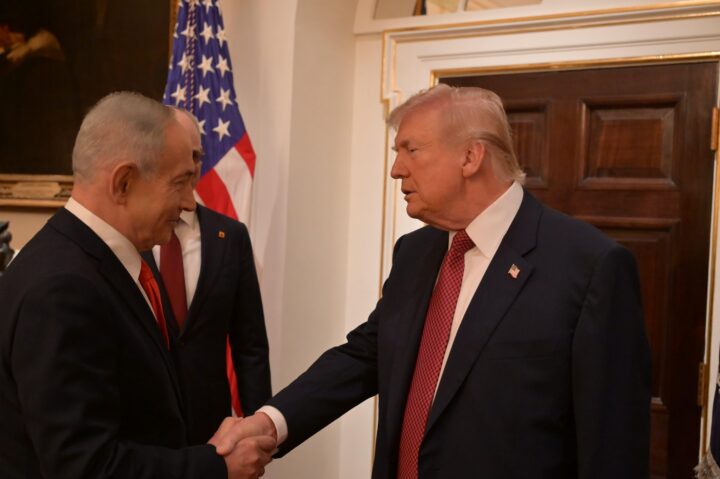
GPO
President Donald Trump greets Israeli Prime Minister Benjamin Netanyahu at the White House on Feb. 11, 2026.
Good Wednesday afternoon!
This P.M. edition is reserved for our premium subscribers — offering a forward-focused read on what we’re tracking now and what’s coming next.
It’s me again — Danielle Cohen-Kanik, U.S. editor at Jewish Insider and curator, along with assists from my colleagues, of the Daily Overtime. Please don’t hesitate to share your thoughts and feedback by replying to this email.
📡On Our Radar
Notable developments and interesting tidbits we’re tracking
The U.S. will continue pursuing diplomacy with Iran, President Donald Trump said following his White House meeting with Israeli Prime Minister Benjamin Netanyahu earlier today, Jewish Insider’s Lahav Harkov reports.
“There was nothing definitive reached” in the meeting “other than I insisted that negotiations with Iran continue, to see whether or not a deal can be consummated,” Trump wrote on Truth Social. “If it can, I let the Prime Minister know that will be a preference.”
If negotiations do not lead to a deal, the president added, “we will just have to see what the outcome will be. Last time, Iran decided they were better off not making a deal, and they were hit with [Operation] Midnight Hammer. That did not work out well for them. Hopefully, this time, they will be more reasonable and responsible.”
Netanyahu’s office said about the meeting, “The prime minister stood up for the State of Israel’s security needs in the context of the negotiations, and the two agreed to continue to coordinate closely”…
Even as Trump insists diplomacy will continue, the Pentagon has told a second aircraft carrier strike group to prepare for deployment to the Middle East, The Wall Street Journal reports, to join the USS Abraham Lincoln along with dozens of U.S. aircraft and other warships…
Meanwhile, a bipartisan group of 23 senators, spanning the political and ideological spectrums, introduced a resolution today condemning the Iranian government for its crackdown on protesters and attempts to cut off internet access across the country, JI’s Marc Rod reports.
“Iranian civilians’ unprecedented nationwide protests and bravery, confronted with the regime’s unprecedented widespread extrajudicial killing of thousands and disruption of all electronic communication, have profoundly destabilized the country and constitute changed conditions in Iran,” the resolution reads, highlighting that the regime’s suppression and killing of protesters continues…
The Trump administration expects to be able to announce several billion dollars in donations for Gaza reconstruction at the Board of Peace’s inaugural meeting in Washington next week, The Times of Israel reports, even as it is still working on a proposal to disarm Hamas. That plan so far reportedly envisions Hamas relinquishing its heavy weapons and destroying manufacturing sites, without fully addressing lighter arms…
Conservative activist Carrie Prejean Boller was removed from the White House’s Religious Liberty Commission today, JI’s Gabby Deutch reports, two days after the commission held its first public hearing on antisemitism, which turned contentious when Prejean Boller pressed Jewish witnesses about whether they would consider her antisemitic for not being a Zionist and for believing Jews killed Jesus.
“No member of the Commission has the right to hijack a hearing for their own personal and political agenda on any issue,” Texas Lt. Gov. Dan Patrick, who chairs the commission, wrote in a post on X. “This is clearly, without question, what happened Monday in our hearing on antisemitism in America. This was my decision”…
France is calling for the resignation of U.N. Special Rapporteur Francesca Albanese, French Foreign Minister Jean-Noël Barrot announced today, after Albanese called Israel humanity’s “common enemy” in a speech at the Al Jazeera Forum in Qatar over the weekend.
“France unreservedly condemns the outrageous and reprehensible remarks made by Francesca Albanese, which are directed not at the Israeli government, whose policies may be criticized, but at Israel as a people and as a nation, which is absolutely unacceptable,” Barrot said in remarks to lawmakers. Her latest comments add “to a long list of scandalous positions,” including “justifying” the Oct. 7 attacks and “comparing Israel to the Third Reich,” he said…
Senate Minority Leader Chuck Schumer (D-NY) and Sen. Adam Schiff (D-CA) introduced legislation seeking oversight into the hundreds of millions of dollars in Venezuelan oil proceeds that the U.S. has acquired, some of which officials have said is being held in an account in Qatar…
New York City’s only Ethiopian-Israeli restaurant is closing its doors to diners, Jewish Telegraphic Agency reports, and turning only to private events over rising anti-Israel harassment, which the owner, Beejhy Barhany, said escalated after the restaurant became kosher in February 2024…
The Department of Homeland Security hired a social media manager who had raised red flags at his previous position at the Department of Labor posting messaging that echoed white nationalist sentiments on official social media accounts, The New York Times reports.
Those posts “used evocative imagery, some reminiscent of the 1920s and 1930s, with phrases like ‘Restore American Greatness’ and ‘the globalist status quo is OVER.’ … Colleagues warned superiors that the department’s accounts could be seen as promoting white-supremacist rhetoric, Nazi imagery and QAnon conspiracy theories”…
⏩ Tomorrow’s Agenda, Today
An early look at tomorrow’s storylines and schedule to keep you a step ahead
Keep an eye out in Jewish Insider for an interview with Jason Friedman, a longtime Chicago Jewish federation leader making a bid for Illinois’ open 7th Congressional District.
The Senate Foreign Relations Committee will hold a nomination hearing for conservative commentator Jeremy Carl to serve as assistant secretary of state for international organizations. Schumer denounced Carl and his nomination on the Senate floor this week, “citing Carl’s long history of racist, white supremacist, and antisemitic views.”
Sinai Temple in Los Angeles will host a summit tomorrow on faith and sports, ahead of NBA All-Star weekend taking place in the city. The convening will feature several NBA athletes, coaches and faith and civic leaders.
Stories You May Have Missed
BASEBALL DIARIES

The team is anchored by its pitching ace Dean Kremer of the Orioles, while Harrison Bader and Spencer Horwitz are among its best known hitters
SYRIA SPOTLIGHT
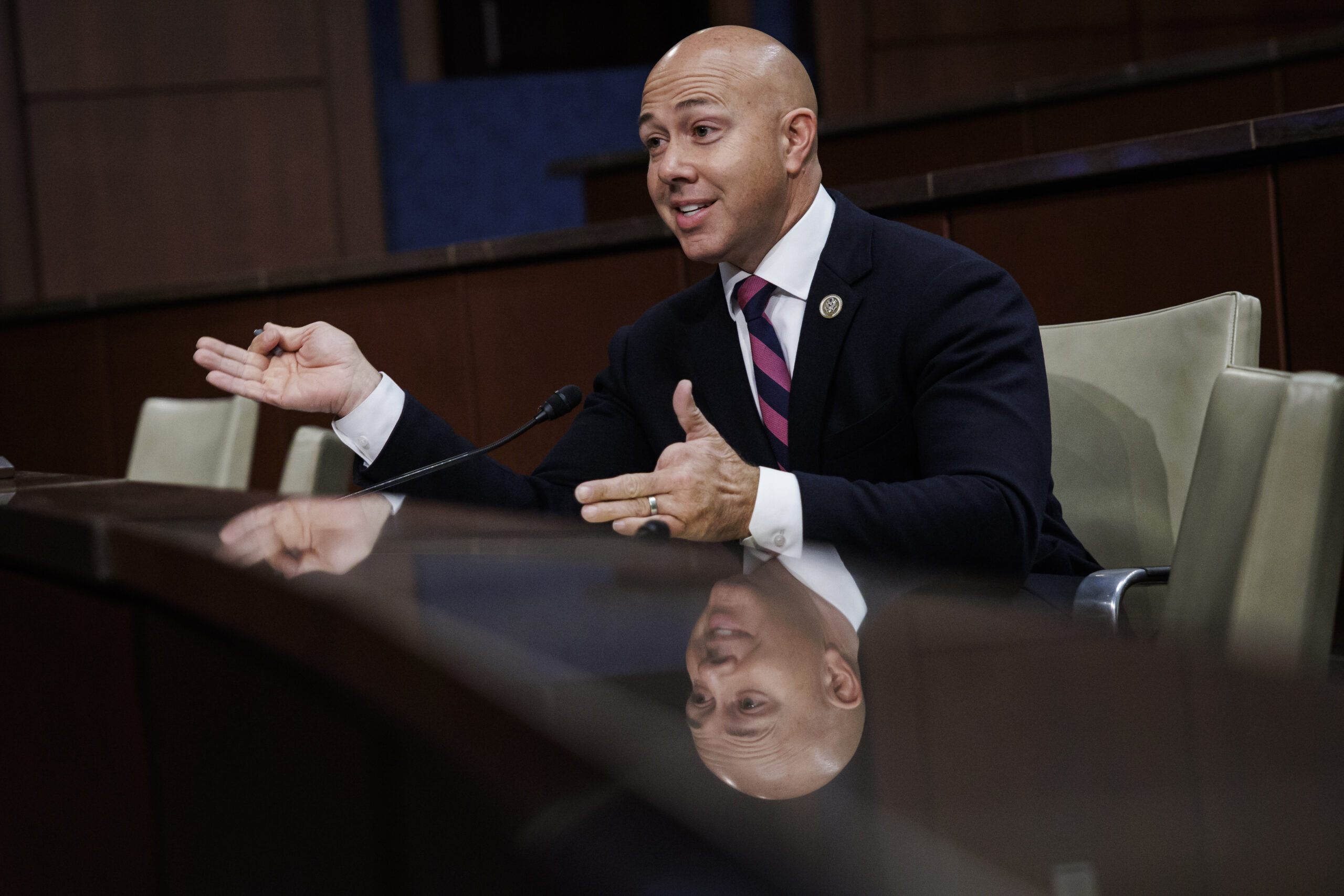
Speaking at a House Foreign Affairs Committee hearing, Republican and Democratic lawmakers highlighted ongoing abuses by the Syrian government
Plus, N.C. Dems condemn antisemitism from Muslim caucus chair
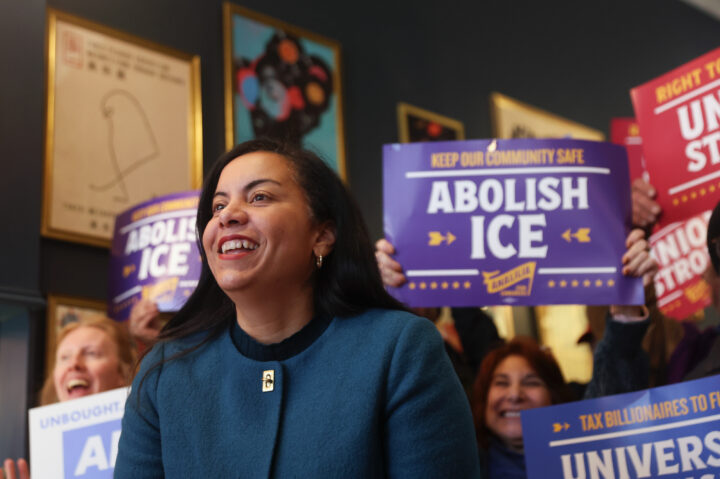
Heather Khalifa/Bloomberg via Getty Images
Analilia Mejia, Democratic House candidate for New Jersey, speaks to supporters and members of the media at Paper Plane Coffee Co. in Montclair, N.J., on Jan. 29, 2026.
Good Tuesday afternoon!
This P.M. edition is reserved for our premium subscribers — offering a forward-focused read on what we’re tracking now and what’s coming next.
It’s me again — Danielle Cohen-Kanik, U.S. editor at Jewish Insider and curator, along with assists from my colleagues, of the Daily Overtime. Please don’t hesitate to share your thoughts and feedback by replying to this email.
📡On Our Radar
Notable developments and interesting tidbits we’re tracking
President Donald Trump is considering sending a second aircraft carrier group to the Middle East as a contingency if negotiations with Iran fail, he told Axios today. “Either we will make a deal or we will have to do something very tough like last time,” the president said, adding, “We have an armada that is heading there and another one might be going.”
Still, Trump expressed optimism that Tehran “wants to make a deal very badly” and said the negotiations are “very different” since he authorized strikes last June on Iran’s nuclear facilities. He also said he doesn’t think Israeli Prime Minister Benjamin Netanyahu, who is en route to Washington for his Wednesday meeting with Trump, is nervous about the negotiations, stating Netanyahu “also wants a deal. He wants a good deal”…
Trump also reiterated his opposition to West Bank annexation, days after Israel’s Security Cabinet voted to expand Israeli authorities in the area. “I am against annexation. We have enough things to think about now. We don’t need to be dealing with the West Bank,” he told Axios. While Trump’s meeting with Netanyahu tomorrow will ostensibly focus on Iran, the latest Israeli moves could drive a wedge between the two leaders…
On the campaign trail, former Rep. Tom Malinowski (D-NJ) conceded the race for New Jersey’s 11th Congressional District to far-left activist Analilia Mejia today, after outstanding ballots broke decisively in her favor over the weekend.
In his statement, Malinowski, the presumed favorite who was the target of over $2 million of ads by the AIPAC-linked United Democracy Project super PAC, claimed that “the outcome of this race cannot be understood without also taking into account the massive flood of dark money that AIPAC spent on dishonest ads” attacking him. He warned, “If AIPAC backs a candidate — openly or surreptitiously — in the June NJ-11 Congressional primary, I will oppose that candidate and urge my supporters to do so as well.”
Mejia was congratulated by New Jersey Democratic leaders including Sens. Andy Kim and Cory Booker and Gov. Mikie Sherrill, though it remains to be seen if she will retain their support in the June primary when she must run for the Democratic nomination again if she hopes to retain the office for a full term…
Sen. Susan Collins (R-ME) officially launched her reelection campaign today for her seat which Democrats likely need to flip if they hope to take back the chamber. Collins, who has been targeted by Trump due to her occasional votes across the aisle, will likely face either Maine Gov. Janet Mills or oyster farmer Graham Platner in the general, after they battle it out in a hotly contested primary…
New York Lt. Gov. Antonio Delgado dropped his primary challenge to Gov. Kathy Hochul today, whom he had hoped to beat out in her reelection race from the left. The move comes after several progressive leaders, including New York City Mayor Zohran Mamdani, endorsed Hochul, which Delgado alluded to in his statement: “After much consideration, I’ve concluded that there simply is no viable path forward. And though my campaign has come to an end, I fully intend to do all I can in our effort to build a more humane, affordable, and equitable state that serves all New Yorkers”…
The Washington Free Beacon details several Mamdani administration staffers with a history of comments defaming Israel, including one who called Israel a “modern-day Nazi Germany” and one who called people ripping down posters of Israeli hostages “heroes”…
North Carolina Gov. Josh Stein, a Democrat, condemned rhetoric from the leader of the state Democratic Party’s Muslim Caucus, Elyas Mohammed, in a statement shared exclusively with JI’s Matthew Kassel. Mohammed recently described Zionists as “modern day Nazis” and as a “threat to humanity,” among other incendiary social media posts.
“Antisemitic comments and conspiracy theories have no place anywhere, including in the North Carolina Democratic Party,” the governor said, after the leaders of several prominent Jewish groups in the state sent a joint letter urging Democratic officials and lawmakers to publicly denounce Mohammed’s statements…
Columbia University is considering expanding and refocusing how its Middle Eastern studies department teaches about Israel, JI’s Haley Cohen reports. The provost’s regional review committee announced a set of recommendations this week for the department, including a stronger partnership with the school’s Institute for Israel and Jewish Studies, marking a pivot in a field and at a school that have come under immense scrutiny from the federal government and Jewish leaders following the Oct. 7, 2023, Hamas attacks…
Shaare Tefila, a Conservative congregation in Olney, Md., in the Washington suburbs, was defaced with antisemitic graffiti today, JI’s Haley Cohen reports. A swastika, the word “genocide” and the phrase “AZAB,” an acronym standing for “All Zionists Are Bastards,” were spray-painted on street signs and banners outside the synagogue.
Ron Halber, CEO of the Jewish Community Relations Council of Greater Washington, called the act “outrageous. While it is fortunate that no one was physically hurt, it is yet another sad reminder that antisemitic incidents have become common occurrences throughout our region,” he said…
Harmeet Dhillon, the assistant attorney general for civil rights, said the Justice Department intends to pursue and ultimately shut down groups that have engaged in disruptive protests at synagogues and other antisemitic activities, as well as those supporting those groups, JI’s Marc Rod reports.
Speaking today at a conference on antisemitism organized by The George Washington University Program on Extremism, Dhillon said her division’s work includes pursuing those funding, training and supporting groups such as American Muslims for Palestine and the Party for Socialism and Liberation, which she said are engaging in “acts of domestic terrorism”…
⏩ Tomorrow’s Agenda, Today
An early look at tomorrow’s storylines and schedule to keep you a step ahead
Keep an eye out in Jewish Insider for a preview of Israeli Prime Minister Benjamin Netanyahu’s bilateral meeting with President Donald Trump tomorrow at the White House, as the Israeli PM seeks to provide input on U.S. negotiations with Iran.
The House Appropriations Committee will hold a hearing on the potential impacts of a Department of Homeland Security shutdown, which looks likely as lawmakers struggle to reach a deal before its funding runs out on Friday.
The House Judiciary Committee will hold a hearing on oversight of the Department of Justice with Attorney General Pam Bondi.
American Jewish Committee CEO Ted Deutch will speak at New York City’s Temple Emanu-El on the organization’s annual State of Antisemitism in America survey, released today.
Stories You May Have Missed
POSTWAR PROBLEMS
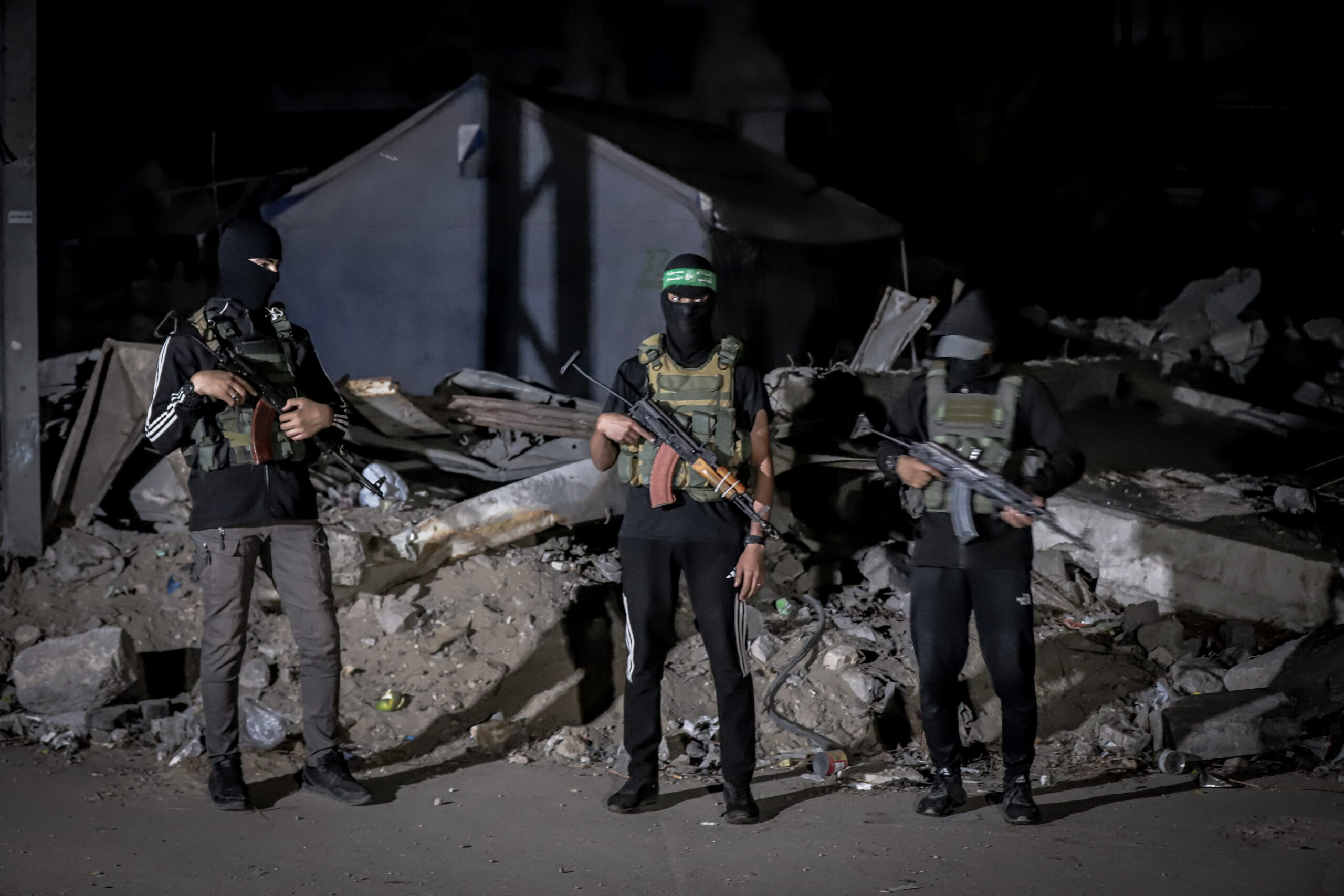
The options for demilitarization ‘strike me as not feasible from a military point of view and certainly not practical from a political point of view,’ says the Carnegie Endowment’s Aaron David Miller
POST-TRAUMA ACTIVISM

The couple, once held captive by Hamas, channel their trauma into humanitarian work, volunteering in Kenya’s Kakuma refugee settlement with IsraAid and amplifying the stories of those suffering in silence
Plus, Massie challenger gets strong GOP backing

Julie Menin, speaker of the New York City Council and Zohran Mamdani, mayor of New York, arrive for an announcement in the Brooklyn borough of New York, US, on Monday, Jan. 12, 2026 (Photographer: John Lamparski/Bloomberg via Getty Images)
Good Thursday afternoon!
This P.M. edition is reserved for our premium subscribers — offering a forward-focused read on what we’re tracking now and what’s coming next.
It’s me again — Danielle Cohen-Kanik, U.S. editor at Jewish Insider and curator, along with assists from my colleagues, of the Daily Overtime. Please don’t hesitate to share your thoughts and feedback by replying to this email.
📡On Our Radar
Notable developments and interesting tidbits we’re tracking
Sen. Bill Cassidy (R-LA), the chairman of the Senate Health, Education, Labor and Pensions Committee, wrote to New York Mayor Zohran Mamdani today voicing “serious concerns” about Mamdani’s “rescission of executive orders related to antisemitism and boycotts of Israel.”
Cassidy said the New York City Department of Education’s $2.2 billion in federal funding could be rescinded “contingent on compliance with federal civil rights laws and applicable executive orders designed to protect students”…
New York City councilmembers on both sides of the aisle denounced a new working group established by employees of the city’s Department of Health on “global oppression,” Jewish Insider’s Will Bredderman reports, which a presenter at its first meeting on Tuesday acknowledged was “really developed in response to the ongoing genocide in Palestine.”
City Council Speaker Julie Menin called for a probe into the working group at DOH, which operates under Mamdani’s administration, telling the New York Post, “Our health care officials should be fighting infectious diseases and addressing skyrocketing health care costs instead of spending public time debating geopolitics”…
Moshe Davis, the former executive director of the Mayor’s Office to Combat Antisemitism in New York City, told The Free Press upon being ousted from the role by Mamdani, “I don’t think the priority of the administration has been to combat antisemitism.”
Davis, who was a political appointee of former Mayor Eric Adams, said a Mamdani staffer told him they were “looking to go in a different direction” in replacing him with Phylisa Wisdom, a progressive Jewish activist. “Look, I’m a loud, proud Jewish person with a kippah on my head, a proud Zionist. This administration maybe felt that was too much for them,” Davis said. He noted that his requests to meet with the mayor and the memos he produced on rising antisemitism in the city had gone ignored…
Mamdani officially endorsed New York Gov. Kathy Hochul in an anticipated move, boosting her reelection prospects while also dealing a blow to her lieutenant governor, Antonio Delgado, who is running to oust Hochul from her left…
Rep. Andy Barr (R-KY) and businessman Nate Morris, two of the leading Republican candidates for Kentucky’s Senate seat, today endorsed Ed Gallrein, the GOP challenger to Rep. Thomas Massie (R-KY), one of the leading Republican critics of Israel in Congress, JI’s Marc Rod reports.
“Ed will never side with AOC or the radical-left against President Trump. He is exactly the kind of conservative warrior we need in Congress, and I’m proud to endorse him,” Barr said in a statement, referencing Massie’s pattern of breaking with various elements of Trump’s agenda, which has included voting against support for Israel.
The endorsements came amid an ongoing series of attacks by Trump on Massie, which included calling Massie a “moron” in remarks at the National Prayer Breakfast this morning, as well as attacks on Truth Social this week targeting Massie’s wife…
Daniel Flesch, a senior policy analyst at the Heritage Foundation who led the drafting of the organization’s Project Esther report on combating left-wing antisemitism, has parted ways with the conservative think tank, according to Heritage’s website.
Flesch had raised the alarm on right-wing antisemitism after Heritage President Kevin Roberts released a video defending Tucker Carlson for hosting neo-Nazi Nick Fuentes on his podcast, telling the Young Jewish Conservatives in December that, “Now, in some ways, the call is coming from inside the house.” Flesch had also been Heritage’s point person for the National Task Force to Combat Antisemitism, a coalition of conservative groups that disaffiliated from the think tank after the incident…
White House Press Secretary Karoline Leavitt confirmed today that Special Envoy Steve Witkoff and Jared Kushner will be traveling to Oman for negotiations with Iran tomorrow, saying at a press conference this afternoon that the president is “standing by for an update from them.”
“The president has obviously been quite clear in his demands of the Iranian regime — zero nuclear capability is something he’s been very explicit about and he wants to see if a deal can be struck. And while these negotiations are taking place, I would remind the Iranian regime that the president has many options at his disposal aside from diplomacy as the commander-in-chief of the most powerful military in the history of the world,” Leavitt added…
Israeli Prime Minister Benjamin Netanyahu told lawmakers at a closed-door meeting of the Knesset Foreign Affairs and Defense Committee that U.S.-Israel coordination is “as high and as close as possible” ahead of the nuclear talks tomorrow, Israeli media reports, but that he still doesn’t know if President Donald Trump will choose to take military action…
Middle East countries that were originally meant to participate in the talks, including Saudi Arabia, Qatar, Egypt, Oman, the UAE and Pakistan, drafted a potential agreement for the U.S. and Iran, including a nonaggression pact, diplomats told The Times of Israel…
Iran’s Islamic Revolutionary Guard Corps seized two foreign oil tankers in the Persian Gulf today, Iranian state media reported, days after attempting to stop and board a U.S.-flagged oil tanker. Reports did not provide the country of origin of the tankers seized today…
Sen. Lindsey Graham (R-SC) expressed frustration with the Lebanese government’s stance toward Hezbollah amid struggling disarmament efforts, describing on X a meeting he’d had with Gen. Rodolphe Haykal, the commander of the Lebanese Armed Forces. “I asked him point blank if he believes Hezbollah is a terrorist organization. He said, ‘No, not in the context of Lebanon.’ With that, I ended the meeting.”
“They have been designated as a foreign terrorist organization by both Republican and Democrat administrations since 1997 — for good reason. As long as this attitude exists from the Lebanese Armed Forces, I don’t think we have a reliable partner in them,” Graham continued. The U.S. has provided over $3 billion to shore up the LAF in the last 20 years, including $230 million approved by the Trump administration as recently as October…
⏩ Tomorrow’s Agenda, Today
An early look at tomorrow’s storylines and schedule to keep you a step ahead
Keep an eye out in Jewish Insider for whether AIPAC’s active role in the New Jersey 11th Congressional District Democratic primary — opposing former Rep. Tom Malinowski (D-NJ) — paid off. Polls in the district close at 8 p.m.
We’ll be watching for readouts from the meeting between White House Special Envoy Steve Witkoff, advisor Jared Kushner and Iranian Foreign Minister Abbas Araghchi in Oman at 10 a.m. local time tomorrow, including whether issues beyond Tehran’s nuclear program are discussed.
We’ll be back in your inbox with the Daily Overtime on Monday. Shabbat Shalom!
Stories You May Have Missed
AI AMBITION
The Israeli-American CFO first fueled Eli Lilly’s success, and is now turning her attention to the tech sector
SURVEY SAYS
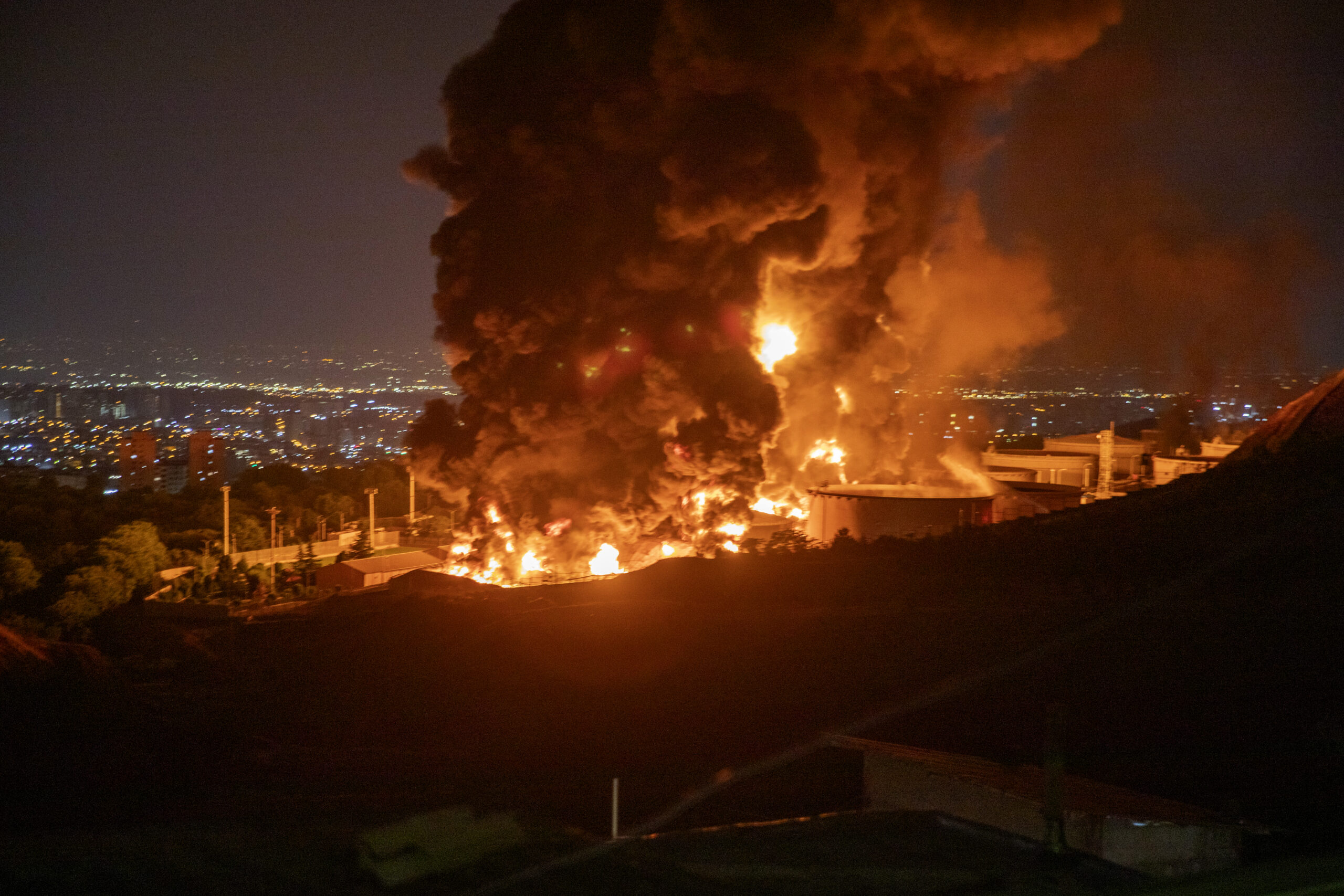
Right-wing Israelis support a strike even if Iran does not attack, while other political camps prefer to wait and see if Iran strikes Israel first, IDI poll finds
Plus, Israel continues to cast doubt over Iran talks
Angelina Katsanis-Pool/Getty Images
Democratic mayoral nominee Zohran Mamdani speaks during a mayoral debate at Rockefeller Center on October 16, 2025 in New York City.
Good Wednesday afternoon!
This P.M. edition is reserved for our premium subscribers — offering a forward-focused read on what we’re tracking now and what’s coming next.
It’s me again — Danielle Cohen-Kanik, U.S. editor at Jewish Insider and curator, along with assists from my colleagues, of the Daily Overtime. Please don’t hesitate to share your thoughts and feedback by replying to this email.
📡On Our Radar
Notable developments and interesting tidbits we’re tracking
U.S. officials reportedly backtracked on their rejection of Iranian demands to change the format and venue of nuclear negotiations, set for Friday, after several Middle East leaders intervened to keep the U.S. from walking away, according to Axios. “They asked us to keep the meeting and listen to what the Iranians have to say. We have told the Arabs that we will do the meeting if they insist. But we are very skeptical,” one U.S. official told the outlet.
Iranian Foreign Minister Abbas Araghchi confirmed on X that “nuclear talks … are scheduled to be held in Muscat” at 10 a.m. on Friday, indicating the U.S. agreed to move the venue from Turkey to Oman…
But Secretary of State Marco Rubio reiterated today that the Trump administration is seeking a comprehensive deal with Iran to address more than just its pursuit of nuclear weapons — including its ballistic missiles program, support for terror proxies and internal repression as well. Iran has traditionally been resistant to discussing anything beyond its nuclear program.
Asked if Iranian Supreme Leader Ayatollah Ali Khamenei should be worried right now, President Donald Trump told NBC News today, “I would say he should be very worried, yeah, he should be.” Trump said he was interested in negotiations again as he understood Iranian officials were considering restarting their nuclear program, “and if they do, we’re going to send” B-2 bombers “right back to do their job again,” referencing the U.S.’ June strikes…
Israeli officials have voiced skepticism over the prudence of negotiating with Iran at all, Jewish Insider’s Lahav Harkov reports. After Israeli Prime Minister Benjamin Netanyahu told White House Special Envoy Steve Witkoff yesterday that Iran’s “promises cannot be trusted,” Energy Minister Eli Cohen told Israeli radio, “Our message to the U.S. is that negotiations with Iran are a waste of time”…
Sam Brownback, the former U.S. ambassador at large for international religious freedom and a former GOP senator from Kansas, warned at a House Foreign Affairs Committee hearing today that, unless Syrian minority groups are allowed to maintain their own security forces, they face a likely genocide by government-aligned forces, JI’s Marc Rod reports.
“The new administration in Syria is purging religious minorities, threatening and killing them,” Brownback said. “These groups must be allowed to maintain their own security forces, or I guarantee you today, a genocide will happen in Syria like happened in Iraq to the Yazidis and Christians.”
The Trump administration has remained largely supportive of the al-Sharaa government, and critics have accused the White House of essentially abandoning the U.S.’ longtime Kurdish allies to the Syrian government onslaught…
First Lady Melania Trump welcomed freed Israeli hostages Aviva and Keith Siegel to the White House today, JI’s Gabby Deutch reports, one year after Aviva met the first lady for the first time and pleaded for help in securing her husband’s release.
“Aviva is a warrior. She’s a warrior. She was fighting very hard for Keith, and I know he suffered a lot,” Trump said at the meeting. “I’m happy to see you healthy at home with your children, with your grandchildren, with your family, and I know you’re giving back your time, your energy, to other people”…
New York City Mayor Zohran Mamdani tapped Phylisa Wisdom, the executive director of the progressive group New York Jewish Agenda, to lead the Mayor’s Office to Combat Antisemitism, the Forward reports.
Wisdom told JI last month that tackling the “scourge of antisemitism” in the city will require a comprehensive strategy,” noting that the office she will now lead “can play a key role, coordinating between long-standing offices and agencies tasked with combating hate, and input from the diversity of New York’s Jewish community.”
The appointment of the left-wing activist indicates Mamdani’s administration isn’t looking to placate the mainstream Jewish community. Wisdom, while well-known in the New York Jewish community, has traditionally opposed the International Holocaust Remembrance Alliance’s working definition of antisemitism and at times vocally opposed Israel’s war in Gaza after the Oct. 7 attacks…
Meanwhile, New York Gov. Kathy Hochul selected former New York City Council Speaker Adrienne Adams as her running mate in her reelection race this year — a pick that provoked both applause and consternation among leaders of the state’s Jewish community, JI’s Will Bredderman reports.
Adams was the first council speaker not to lead a delegation to Israel — although she denied that she was boycotting the country, she raised concerns in 2024 when her office drafted an ultimately abandoned resolution urging a ceasefire between Israel and Hamas that one Jewish community leader described to JI as “one-sided” and “inflammatory”…
A pair of well-financed groups, whose origin is currently unknown, is set to begin running ads boosting moderate pro-Israel candidates in a series of open House seats in Chicago, each of whom is facing off against vocal anti-Israel opponents, JI’s Marc Rod reports.
The ads — being run by newly formed super PACs Elect Chicago Women and Affordable Chicago Now — boost state Sen. Laura Fine, running in the 9th Congressional District, former Rep. Melissa Bean (D-IL), running in the 8th District and Cook County Commissioner Donna Miller, running in the 2nd District.
The ad buys for the two groups add up to millions of dollars across the three races. Given that the groups were just launched, FEC filing policies will not require them to disclose their donors until close to Election Day. But the ads, which do not focus on Israel policy, are widely rumored to be connected to United Democracy Project, the AIPAC-affiliated super PAC…
PEN America, an organization promoting free expression for artists and journalists, said today it would retract its Jan. 29 statement expressing concern about the abrupt cancellation of Israeli comedian Guy Hochman’s shows in New York and Los Angeles. The organization, which alleged Hochman “has been accused by advocacy organizations of incitement to genocide in Gaza,” said it would “remain committed to open and respectful dialogue about the divisions that arise in the course of defending free expression”…
The Washington Post announced mass layoffs of one-third of its staff today, including closing its sports section, reducing its local coverage and letting go all of its Middle East correspondents. The outlet has faced repeated criticism for major factual errors and alleged institutional and reporter bias related to its coverage of Israel and the war in Gaza…
⏩ Tomorrow’s Agenda, Today
An early look at tomorrow’s storylines and schedule to keep you a step ahead
Keep an eye out in Jewish Insider for a profile of Alphabet’s Israeli-American chief financial officer, Anat Ashkenazi, who got her start at Israel’s Bank Hapoalim more than two decades ago.
It’s primary day in New Jersey’s 11th Congressional District, as candidates vie for the Democratic nomination to fill Gov. Mikie Sherrill’s House seat. The race has attracted attention for the more than $2 million the AIPAC-linked super PAC United Democracy Project has spent targeting former Rep. Tom Malinowski (D-NJ), who is attempting to beat out others including Lt. Gov. Tahesha Way, far-left activist Analilia Mejia and Essex County Commissioner Brendan Gill.
The Hudson Institute will host Rabbi Yehuda Kaploun, the special envoy to monitor and combat antisemitism, for a conversation on the Trump administration’s strategy in confronting the rise of antisemitism.
Stories You May Have Missed
UNDER SCRUTINY

‘Just because someone is a hateful antisemitic looney-tune doesn’t mean they can’t win office,’ one Jewish community activist said of Shelly Arnoldi
SCHOOL OF THOUGHT

Ben Shuldiner, who is Jewish, is bringing his progressive politics to a school district facing a spike in antisemitism
Plus, Fine lands key endorsement, polling bump in key IL-9 primary

Tajh Payne/US Navy via Getty Images
U.S. Navy's Gerald R. Ford Carrier Strike Group on Nov. 13, 2025.
Good Tuesday afternoon!
This P.M. edition is reserved for our premium subscribers — offering a forward-focused read on what we’re tracking now and what’s coming next.
It’s me again — Danielle Cohen-Kanik, U.S. editor at Jewish Insider and curator, along with assists from my colleagues, of the Daily Overtime. Please don’t hesitate to share your thoughts and feedback by replying to this email.
📡On Our Radar
Notable developments and interesting tidbits we’re tracking
Despite negotiations between the U.S. and Iran set for Friday, Tehran is still behaving belligerently — the U.S. military shot down an Iranian drone today as it was flying toward the USS Abraham Lincoln aircraft carrier in the Arabian Sea, and Iranian gunboats attempted to stop and board a U.S. oil tanker in the Strait of Hormuz.
Iranian officials are also pushing to alter the talks dramatically, including changing the venue from Turkey to Oman, disinviting the foreign ministers of several Middle Eastern countries who were set to participate and limiting discussions only to the nuclear issue and not Tehran’s other malign activities, Axios reports.
Amid these developments, White House Press Secretary Karoline Leavitt said the talks “are still scheduled as of right now, but of course the president has always a range of options on the table and that includes the use of military force. The Iranians know that better than anyone”…
President Donald Trump does have plenty of firepower at his disposal should talks with Iran not pan out — The Washington Post lays out which military assets are in the region, as the U.S. recently deployed “dozens of aircraft to bases operating near Iran and assembled about 12 warships in or near the Middle East”…
White House Special Envoy Steve Witkoff, before heading to the talks, wherever they may be held, met with Israeli Prime Minister Benjamin Netanyahu in Jerusalem today. The prime minister “clarified his position that Iran has proven time and again that its promises cannot be relied upon,” according to a readout, signaling lingering skepticism in Israel that the U.S. will extract any meaningful concessions from Tehran…
Netanyahu also made clear Israel’s expectations for postwar Gaza as the U.S. presses ahead with Phase 2 of the ceasefire deal: that Hamas disarm and the enclave be demilitarized, that Israel be allowed to fulfill its “war objectives prior to the reconstruction of the Strip” and that the Palestinian Authority “not be part of the administration of the Gaza Strip in any way.” The latter demand comes after the technocratic committee set up by the U.S. to oversee reconstruction changed its logo to replicate a PA symbol…
The House of Representatives passed a spending bill to end the partial government shutdown, which Trump signed this afternoon. While the package includes several provisions providing funding to Israel and for joint U.S.-Israel cooperative programs, it only funds the Department of Homeland Security through next week, setting up another battle as the parties spar over funding for Immigration and Customs Enforcement…
State Sen. Laura Fine secured the endorsement of the Chicago Tribune editorial board in the competitive race for Illinois’ 9th Congressional District, over her competitors Daniel Biss, the mayor of Evanston, and social media influencer Kat Abughazaleh.
While Fine’s opponents have been outspoken about their criticisms of Israel on the campaign trail, the editorial board noted Fine said she “had left the progressive caucus in Springfield after she was made to feel uncomfortable for her belief in Israel’s right to defend itself or even to exist,” which it called a “principled position for a principled Democrat.”
Fine’s fundraising figures for the final quarter of 2025 showed she pulled in a whopping $1.2 million, and a new internal poll for Fine’s campaign shows her tied with Biss in first place, holding the momentum in the crowded primary…
New Jersey’s 7th Congressional District’s Democratic primary gained another prominent candidate today: Sue Altman, the state director for Sen. Andy Kim (D-NJ) and the 2024 Democratic nominee for the neighboring 12th District, jumped into the race to succeed retiring Rep. Bonnie Watson Coleman (D-NJ).
Altman has been a member of the progressive left as the former state director for the New Jersey Working Families Party, but took pro-Israel stances during her prior congressional run. Attempting to gain traction in the 7th, though, where the progressive Watson Coleman has said her endorsement will hinge on a candidate’s stance on Israel, Altman said she is now “reevaluating” her position…
Michael Blake, the former New York state assemblyman now mounting a primary challenge to Rep. Ritchie Torres (D-NY), was endorsed today by the longtime mayor of Newark, N.J., Ras Baraka, further solidifying Blake’s departure from his pro-Israel past.
Baraka’s support for violent rhetoric by the controversial Nation of Islam leader Louis Farrakhan and his condemnation of Israel’s war in Gaza are among several positions that have alarmed Jewish leaders in the state; Baraka’s support boosts Blake as he attempts to establish himself as the candidate hostile to Israel in his race, even as he once engaged extensively with AIPAC…
The two Human Rights Watch employees who comprised the organization’s “Israel and Palestine” team both resigned after HRW leadership postponed the publication of their report calling Israel’s refusal to recognize Palestinians’ “right of return” a “crime against humanity,” Jewish Currents reports.
Among other concerns, the organization’s chief advocacy officer had voiced hesitation that the findings were overbroad and “will be misread by many, our detractors first and foremost, as a call to demographically extinguish the Jewishness of the Israeli state”…
⏩ Tomorrow’s Agenda, Today
An early look at tomorrow’s storylines and schedule to keep you a step ahead
Keep an eye out in Jewish Insider for a profile of Seattle Public Schools’ new Jewish superintendent, as the district grapples with rising antisemitism in the aftermath of the Oct. 7 attacks.
First Lady Melania Trump will host former hostages Keith and Aviva Siegel for a private discussion at the White House.
Israeli Foreign Minister Gideon Sa’ar is also in Washington today and tomorrow to attend Secretary of State Marco Rubio’s inaugural Critical Minerals Ministerial, with over 50 countries participating to “strengthen and diversify critical minerals supply chains.”
The House Foreign Affairs Committee will hold a hearing on “defending religious freedom around the world.” Among those testifying is Sam Brownback, the former ambassador-at-large for international religious freedom; the ambassador role is currently empty after former Rep. Mark Walker (R-NC), who was tapped by Trump last April for the position, failed to be confirmed (he now holds a similar advisory role at the State Department, which did not require Senate confirmation).
Also taking place on the Hill, the Muslim World League will host a gathering highlighting “faith, leadership, and global coexistence.” Among those speaking are Ambassador Yehuda Kaploun, the special envoy to monitor and combat antisemitism; Sheikh Mohammed Al-Issa, a prominent Saudi scholar and former justice minister; Imam Talib Shareef, the president of The Nation’s Mosque; and members of Congress.
In the evening, the University of Nebraska–Lincoln’s student government will vote on a Boycott, Divestment and Sanctions resolution.
Stories You May Have Missed
TEHRAN TALK

U.S.-Iran negotiations scheduled are ‘likely a diplomatic box-checking exercise and smokescreen,’ FDD’s Andrea Stricker said, while JINSA’s Jonathan Ruhe said U.S. military action is ‘unlikely for the moment’
DEM DIVIDE
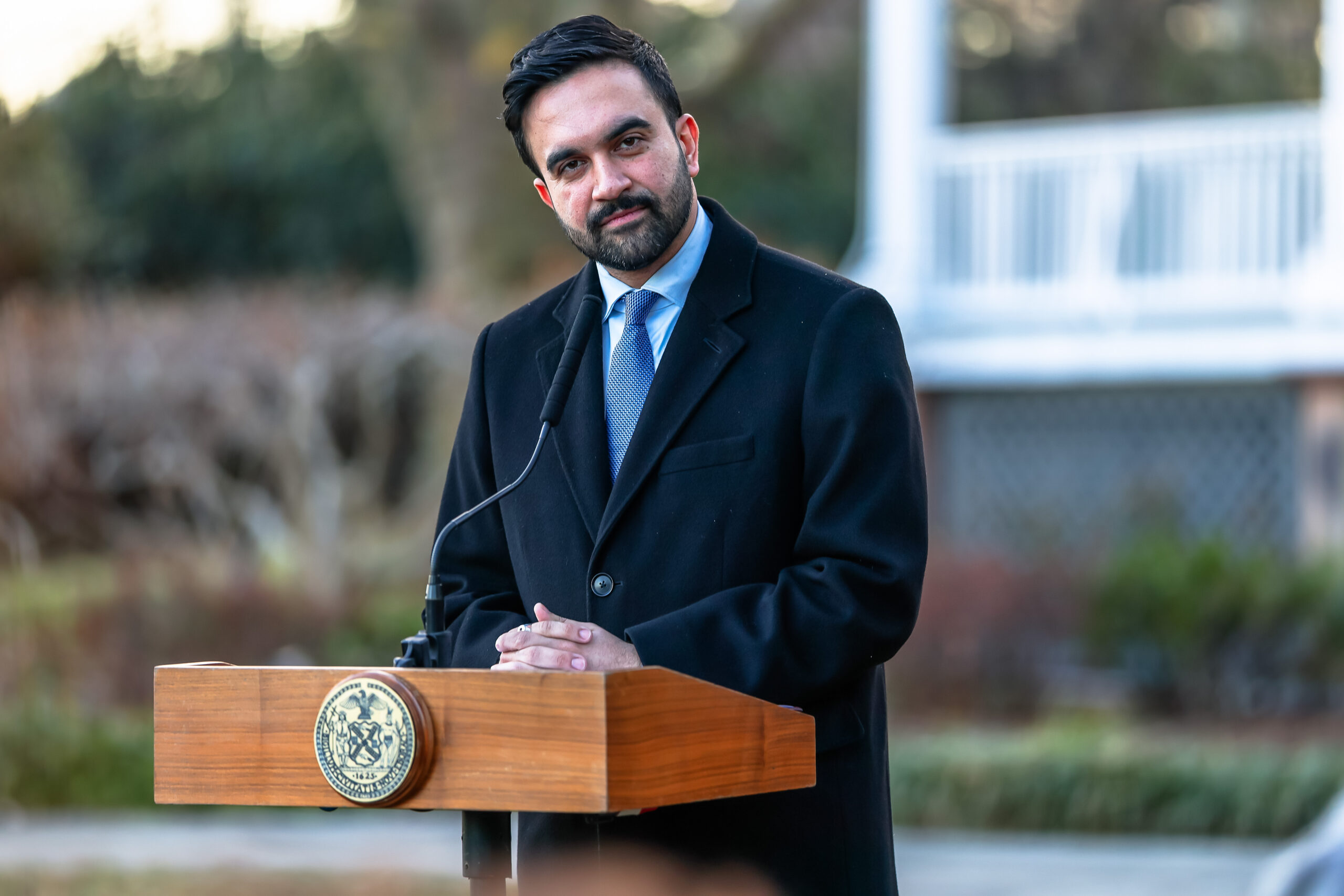
The fight to succeed Rep. Nydia Velazquez pits Mamdani and the DSA faithful against the congresswoman and her protege
Plus, White House press corps welcomes Hamas-friendly outlet
YAR/Middle East Images/AFP via Getty Images
Pedestrians walk past a mural bearing anti-American symbols on the outer wall of the former U.S. Embassy, now called the "U.S. Den of Espionage Museum," in Tehran, Iran, on October 26, 2025.
Good Monday afternoon!
This P.M. edition is reserved for our premium subscribers — offering a forward-focused read on what we’re tracking now and what’s coming next.
It’s me again — Danielle Cohen-Kanik, U.S. editor at Jewish Insider and curator, along with assists from my colleagues, of the Daily Overtime. Please don’t hesitate to share your thoughts and feedback by replying to this email.
📡On Our Radar
Notable developments and interesting tidbits we’re tracking
After weeks of rising tensions, the U.S. and Iran are back on the diplomatic track: White House Special Envoy Steve Witkoff is expected to meet with Iranian Foreign Minister Abbas Araghchi in Istanbul, Turkey, on Friday, Axios reports, possibly alongside Jared Kushner and the foreign ministers of several countries including Turkey, Qatar, Egypt, Oman, the UAE, Saudi Arabia and Pakistan.
What exactly will be up for discussion in the first meeting between the U.S. and Iran since the 12-day war last June is unclear — Iranian officials have said only nuclear activity is on the table, while the U.S. has traditionally maintained support for a comprehensive deal covering nuclear, missile and terror activity…
Before the dialogue in Turkey, Witkoff is slated to stop in Israel tomorrow to consult with Prime Minister Benjamin Netanyahu and Lt. Gen. Eyal Zamir, the IDF chief of staff, and hold meetings in the UAE and Qatar…
The parties are still covering all their bases: The U.S. and Israeli navies conducted a joint “routine maritime exercise” in the Red Sea today, after CENTCOM warned Iran’s Islamic Revolutionary Guard Corps on Friday to “avoid escalatory behavior at sea”…
Back in Washington, the White House tapped Drop Site News, a publication founded in 2024 to offer reporting explicitly hostile to Israel over the war in Gaza and the U.S. response to it, for the press corps’ new media seat on Sunday, Jewish Insider’s Gabby Deutch reports.
Drop Site has credulously interviewed several Hamas leaders, vigorously denied claims that Hamas terrorists raped anyone during the Oct. 7 attacks in Israel and supported the Iranian regime during the anti-government protests last month. Its inclusion among the outlets in Sunday’s press rotation (when no press briefing was held, so its reporter did not get the opportunity to ask a question) was a marked contrast to the mostly right-wing outlets that are usually selected…
And on the campaign trail, Sen. Tina Smith (D-MN) came out today in support of Minnesota Lt. Gov. Peggy Flanagan in the closely fought Democratic primary to replace her, joining fellow progressives Sens. Bernie Sanders (I-VT) and Elizabeth Warren (D-MA) in supporting Flanagan over the more moderate Rep. Angie Craig (D-MN). The endorsement comes days after fundraising reports for the final quarter of 2025 showed Craig raised double what Flanagan brought in ($2 million and $1 million, respectively)…
In New York City, Comptroller Mark Levine endorsed Rep. Dan Goldman (D-NY) in his primary against former Comptroller Brad Lander. Lander, challenging Goldman from the left on issues including his support for Israel, is endorsed by Mayor Zohran Mamdani, further highlighting divisions between Levine and the mayor as the two have sparred over issues including city investment in Israel bonds…
Jacobin profiles Diana Moreno, the democratic socialist running to fill Mamdani’s Queens seat in the state Assembly on a platform highlighting her progressive credentials as an organizer and immigrant.
“Moreno, wearing a keffiyeh, is featured in Mamdani’s launch video, pushing a stroller carrying her newborn son, saying ‘I want to raise my kid in New York.’ ‘I got pregnant one month after the genocide in Gaza started. My relationship to motherhood cannot be divorced from witnessing the world dehumanize children in Palestine,’” she said…
In New York’s 7th Congressional District, Councilmember Julie Won filed paperwork today to join the competitive race to replace retiring Rep. Nydia Velázquez (D-NY). All three candidates for the highly progressive district — which include Assemblymember Claire Valdez, who has the backing of Mamdani and the DSA, and Brooklyn Borough President Antonio Reynoso, who has been endorsed by Velázquez — have made comments critical of Israel.
On the one-year anniversary of the Oct. 7 attacks, Won expressed hope for a ceasefire and return of the hostages, mourning the 1,200 people “brutally killed” by Hamas in Israel and the “over 40,000 brutally killed in Palestine,” a figure Israel disputed at the time.
When a campaign last summer opposing a neighborhood development plan in her district invoked antisemitic rhetoric, Won denounced the move while maintaining her support for the “free Palestine” movement, saying in a statement, “It’s extremely alarming to me that someone would go so low to co-opt a movement of free Palestine for their own purpose — to incite anger and potentially violence … It’s shameful to compare Long Island City to Gaza — where people are literally losing their lives, land and starving to death — to this rezoning and blaming it on a local Jewish landlord who isn’t even part of the rezoning”…
Former Rep. Colin Allred (D-TX), who switched his candidacy from running for the open Texas Senate seat to its 33rd Congressional District, endorsed Rep. Jasmine Crockett (D-TX) for the Senate over his former primary rival, state Sen. James Talarico. Allred alleged that Talarico had called him a “mediocre Black man” and took aim at Talarico’s platform as a devout Christian: “You are not saving religion for the Democratic Party or the left,” Allred said…
⏩ Tomorrow’s Agenda, Today
An early look at tomorrow’s storylines and schedule to keep you a step ahead
Keep an eye out in Jewish Insider for the view from Washington on the continued possibility of U.S. strikes on Iran, even as diplomatic efforts unfold.
We’ll be watching for indications out of White House Special Envoy Steve Witkoff’s meetings in Israel on where the parties stand on engaging with Tehran.
It will be a busy day on the Hill, amid ongoing efforts to end the partial government shutdown: The House Foreign Affairs Committee will hold a hearing on U.S. policy towards Lebanon and “obstacles to dismantling Hezbollah’s grip on power” with testimony from several Washington Institute experts; the Senate Judiciary Committee will hold a hearing on the Nazis’ use of Swiss banks; the Helsinki Commission will hold a hearing on Russia’s influence in post-Assad Syria; and the Senate Foreign Relations Committee will hold a hearing on terrorism in North Africa.
The Jewish Community Relations Council of Greater Washington will host its Maryland advocacy day with Gov. Wes Moore as keynote speaker.
The World Governments Summit will kick off in Dubai, United Arab Emirates, with speakers including former Secretary of State Mike Pompeo, Lebanese Prime Minister Nawaf Salam, Spanish President Pedro Sánchez, Israeli philanthropist and Mobileye CEO Amnon Shashua and several other world leaders.
Stories You May Have Missed
DIPLOMATIC SPAT
Pretoria angered after Israel offers parched region water management aid; Jerusalem declares South African diplomat serving Palestinians persona non grata
RHOADES’ RUN
Crystal Rhoades, the clerk of the District Court in Douglas County, is running on an unapologetically pro-Israel platform
Plus, car ramming suspect charged with multiple hate crimes

John Lamparski/Bloomberg via Getty Images
Julie Menin, speaker of the New York City Council, and Mayor Zohran Mamdani on Jan. 12, 2026.
Good Thursday afternoon!
This P.M. edition is reserved for our premium subscribers — offering a forward-focused read on what we’re tracking now and what’s coming next.
It’s me again — Danielle Cohen-Kanik, U.S. editor at Jewish Insider and curator, along with assists from my colleagues, of the Daily Overtime. Please don’t hesitate to share your thoughts and feedback by replying to this email.
📡On Our Radar
Notable developments and interesting tidbits we’re tracking
After a car repeatedly drove into Chabad Lubavitch world headquarters in Brooklyn last night, New York City Council Speaker Julie Menin announced today she is creating a council task force to combat antisemitism, even as Mayor Zohran Mamdani has said he plans to retain the mayor’s Office to Combat Antisemitism (and told local news today he’s “in the final stages” of hiring someone to lead it). The council task force’s co-chair is Councilwoman Inna Vernikov, an outspoken critic of Mamdani…
The suspect arrested in the car ramming has been charged with attempted assault, reckless endangerment, criminal mischief and aggravated harassment, all enhanced as hate crimes, the NYPD announced this afternoon…
And in the wake of several protests that have disrupted New York Jewish communities in recent months, Menin also introduced a bill that would ban protests within 100 feet of a house of worship — more stringent than Gov. Kathy Hochul’s proposal of a 25-foot ban.
“The First Amendment right to peacefully protest is sacrosanct. What’s not sacrosanct is inciting violence, intimidation and harassment,” Menin told The New York Times, though some experts cast doubt on the constitutionality of the measure…
Rep. Tim Walberg (R-MI), the chair of the House Committee on Education & Workforce, sent a letter to Evanston, Ill., Mayor Daniel Biss — who is running for Congress to replace retiring Rep. Jan Schakowsky (D-IL) — requesting a briefing on Biss’ role in the 2024 anti-Israel encampment at Northwestern University.
Walberg alleged that Biss had failed “to protect Jewish students” at Northwestern “by refusing to give the university the police support it desperately needed to clear its violent and antisemitic encampment,” which resulted in a failure to arrest protesters who had harassed Jewish students. Biss has also drawn condemnation for allegedly walking back his pro-Israel positions once he was denied the support of AIPAC in his congressional campaign…
Rep. Haley Stevens (D-MI) raised $2.1 million for her Senate campaign in the final quarter of 2025, she announced today, bringing her total raised to $6.8 million. But a new Emerson College poll of the race to replace Sen. Gary Peters (D-MI) shows that haul may not be making an impact among primary voters just yet — Stevens polled at 17% to state Sen. Mallory McMorrow’s 22%, with 38% still undecided.
In a general election matchup against presumptive GOP nominee former Rep. Mike Rogers (R-MI), both McMorrow and Stevens poll ahead of Rogers, 46-43% and 47-42% respectively, with 15% undecided. In all cases, physician Abdul El-Sayed, a progressive Democrat who has made his hostility to Israel a central component of his campaign, polls behind his opponents…
The Democratic primary in New York’s 17th Congressional District got a little less crowded today: Former FBI agent John Sullivan, who served as the top bureau intelligence official in Israel from 2017-2020, dropped out of the race to challenge Rep. Mike Lawler (R-NY).
“While my congressional campaign is coming to an end, my dedication to our community is not,” Sullivan wrote, telling supporters to “stay tuned.” He did not endorse any of the remaining Democratic candidates, which include front-runner Beth Davidson, a Rockland County legislator, and national security veteran Cait Conley…
The U.S. Navy dispatched an additional warship, the USS Delbert D. Black, to the Middle East in the past two days amid heightened tensions with Iran, Reuters reports, bringing the total number of destroyers in the region to six, in addition to an aircraft carrier…
The European Union voted unanimously to designate Iran’s Islamic Revolutionary Guard Corps as a terrorist organization today, Jewish Insider’s Matthew Shea reports, in a move anticipated after several countries including Italy and France rescinded their long-held objections to the move.
“Repression cannot go unanswered,” Kaja Kallas, the EU’s high representative for foreign affairs and security policy, wrote on X following the decision. “Any regime that kills thousands of its own people is working toward its own demise”…
Sens. Lindsey Graham (R-SC) and Richard Blumenthal (D-CT) introduced the “Save the Kurds Act” in response to the Syrian government’s campaign against the Kurdish-led and U.S.-backed Syrian Democratic Forces. The legislation would impose sanctions on “Syrian government officials and financial institutions, and any foreign individual who engages in any transaction, including military or financial support, with the Syrian government,” according to a press release.
The bill would also redesignate as a terror organization Hayat Tahrir al-Sham (HTS), the al-Qaida offshoot that Syrian President Ahmad al-Sharaa led before ousting dictator Bashar al-Assad. The Trump administration removed HTS’ terror designation and U.S. sanctions on Syria after al-Sharaa assumed the presidency…
A draft resolution from the Board of Peace dictating the powers of the bodies overseeing postwar Gaza seems to relegate the Gaza Executive Board — whose inclusion of Turkey and Qatar had concerned Israel — to an advisory role for another committee largely made up of White House advisors, The Times of Israel reports. The resolution, which also increases the Trump administration’s role in managing that body, still must be signed by the president…
A man was tried in federal court today for attempting to assassinate former President Joe Biden over anti-Israel animus, traveling to Georgia with a firearm in June 2024 to sneak into a presidential debate hosted by CNN so he could reach Biden, according to the Justice Department.
The man’s manifesto was addressed to “all the Palestinian journalists … and in remembrance of the ones who lost their lives along the way” and said, “It’s time we overthrow these bastards and threaten to pull a f**king D-Day on Tel Aviv,” concluding with “Free Palestine”…
A bipartisan delegation of lawmakers organized by the AIPAC-affiliated American Israel Education Foundation met with Israeli Prime Minister Benjamin Netanyahu in Jerusalem today, including Reps. Ryan Zinke (R-MT), Jen Kiggans (R-VA), Jake Ellzey (R-TX), Mike Bost (R-IL) and Don Davis (D-NC)…
⏩ Tomorrow’s Agenda, Today
An early look at tomorrow’s storylines and schedule to keep you a step ahead
Keep an eye out in Jewish Insider for a look at the legacy of constitutional lawyer and Jewish activist Nat Lewin, who turns 90 this weekend.
Several Jewish and pro-Israel organizations were invited to a meeting with Saudi Defense Minister Khalid bin Salman, who is in Washington meeting with Trump administration officials, tomorrow afternoon, JI’s Danielle Cohen-Kanik has learned, amid a sharp rise in antisemitic and anti-Israel rhetoric from the kingdom. It’s not clear which organizations will be attending, though the Foundation for Defense of Democracies confirmed it will sit down with KBS separately in the morning.
We’ll be back in your inbox with the Daily Overtime on Monday. Shabbat Shalom!
Stories You May Have Missed
PASTOR’S POLEMIC
Singer told JI that his alignment with Rev. Frederick D. Haynes III delivered an anti-Israel polemic from the pulpit on Oct. 8, 2023, the day after Hamas’ attack on Israel
COMEBACK BID

The former congresswoman told JI, ‘Anything that needs to be done to stop Iran from acquiring a nuclear weapon needs to be done’
Plus, Biden officials don't hold back on criticism of Bibi
Mass Communication Specialist 3rd Class Amber Smalley/U.S. Navy via Getty Images
Flight deck of the Nimitz-class aircraft carrier USS Abraham Lincoln (CVN 72) May 10, 2019 in the Red Sea.
Good Wednesday afternoon!
This P.M. edition is reserved for our premium subscribers — offering a forward-focused read on what we’re tracking now and what’s coming next.
It’s me again — Danielle Cohen-Kanik, U.S. editor at Jewish Insider and curator, along with assists from my colleagues, of the Daily Overtime. Please don’t hesitate to share your thoughts and feedback by replying to this email.
📡On Our Radar
Notable developments and interesting tidbits we’re tracking
President Donald Trump indicated he’s losing patience with Iran: He posted a stark warning on Truth Social this morning that a “massive Armada is heading to Iran” and “it is ready, willing, and able to rapidly fulfill its mission, with speed and violence, if necessary.”
Trump encouraged Tehran to come back to the negotiating table where he demanded it have “no nuclear weapons” — a position that differs from Israel’s, which has said Iran must not be allowed to enrich uranium at all — but made no mention of the protesters Trump had pledged to protect…
Despite Trump’s threat, Secretary of State Marco Rubio told lawmakers at a Senate Foreign Relations Committee hearing today that the “armada” of military assets being moved to the Middle East is primarily defensive, Jewish Insider’s Marc Rod reports.
Rubio noted that 30,000-40,000 U.S. troops in the region are “within the reach of an array of thousands of Iranian” drones and missiles. “We have to have enough force and power in the region, just on a baseline, to defend against that possibility,” he explained.
In addition, “the president always reserves the preemptive defensive option — in essence, if we have indications that, in fact, they’re going to attack our troops in the region,” Rubio continued, as well as security agreements to defend allies such as Israel “that require us to have a force posture in the region.”
Rubio admitted the U.S. has little clarity on who would govern Iran if the regime collapses: “I don’t think anyone can give you a simple answer as to what happens next in Iran if the supreme leader and the regime were to fall, other than the hope that there would be some ability to have somebody within their systems you could work towards a similar transition” as the U.S. has supported in Venezuela…
Rubio was also questioned by senators about the Board of Peace: He clarified that “the primary and sole focus of that board right now is to administer Phase 2 and Phase 3 of the plan in Gaza,” despite broad language in the body’s charter, and acknowledged that some European allies have declined to join over their concern that the board is competing with the U.N. “This is not a replacement for the U.N. But the U.N. has served very little purpose in the case of Gaza,” Rubio said…
As their own response to Iran’s violent suppression of protests, several European countries changed their position to support the EU designating the Islamic Revolutionary Guard Corps as a terror organization, a move they have historically opposed over fears of irreparably severing ties with Tehran.
Ahead of a Thursday meeting of EU foreign ministers in Brussels — where the bloc was already expected to approve additional sanctions on Iran — Italy, Germany and earlier today France announced they would support the designation, teeing up its approval, which must be unanimous, at tomorrow’s meeting…
The State Department found that the Palestinian Authority paid more than $200 million to terrorists and their families in 2025, the Washington Free Beacon reports, despite the PA claiming it had ended its “pay-to-slay” program last February.
The PA merely “transferred responsibility” for the payments to a new body “under the guise of social welfare,” a report provided to Congress laid out, with evidence from post offices, social media and Telegram “indicating clearly that the compensation in support of terrorism has continued”…
Biden administration officials jumped to the defense of the former president’s Israel policy after Israeli Prime Minister Benjamin Netanyahu alleged in a press conference yesterday that some IDF soldiers had been killed in Gaza due to a U.S. arms embargo that caused Israel to run out of ammunition during the Biden presidency.
Brett McGurk, Biden’s senior Middle East advisor, told Axios that Netanyahu’s comments were “categorically false” and that Biden’s “commitment to Israel’s security to include U.S. military assistance was unwavering”; diplomat Amos Hochstein slammed Netanyahu as “ungrateful to a president that literally saved Israel at its most vulnerable moment”; and former State Department antisemitism envoy Deborah Lipstadt said that to ignore Biden’s support for Israel “is to ignore history”…
Syrian President Ahmad al-Sharaa visited Moscow today where he and Russian President Vladimir Putin discussed Russia’s continued military presence in the country, Syrian state media reported. Despite its historic backing of longtime Syrian leader Bashar al-Assad, Moscow did not oppose al-Sharaa’s ouster of the dictator, though Russia has sheltered Assad and his family since they fled Damascus.
Russia has begun pulling out from its position in northeast Syria in an area still controlled by the Kurdish-led Syrian Democratic Forces, as Damascus mounts a campaign to oust them, though Moscow reportedly hopes to keep its naval and air bases on the Syrian coast…
⏩ Tomorrow’s Agenda, Today
An early look at tomorrow’s storylines and schedule to keep you a step ahead
Keep an eye out in Jewish Insider for an interview with former Rep. Elaine Luria (D-VA), as she seeks to reclaim her former seat and shore up support for Israel among her Democratic colleagues.
Pennsylvania Gov. Josh Shapiro will speak at Washington’s Sixth & I synagogue in conversation with Sen. Raphael Warnock (D-GA) about the governor’s new memoir, Where We Keep the Light.
The Hudson Institute will host a conversation with Jacob Helberg, the under secretary of state for economic affairs, as he returns from a trip around the Middle East where he brought Qatar and the United Arab Emirates into the Pax Silica initiative and signed a joint AI strategic framework in Israel.
Stories You May Have Missed
FLORIDA FIGHT
Singer told JI that his alignment with the GOP has been shaped by his Jewish faith
FOLLOW THE MONEY

The group behind the pro-Hamas chants in Queens has a nationwide network and links to pro-terror organizations and individuals
Plus, Emory faculty revolt in defense of Iran official's daughter

MONEY SHARMA/AFP via Getty Images
Saudi Arabia's Crown Prince and Prime Minister Mohammed bin Salman (C) inspects a guard of honor during a ceremonial reception at the President House a day after the G20 summit in New Delhi on September 11, 2023.
Good Tuesday afternoon!
This P.M. edition is reserved for our premium subscribers — offering a forward-focused read on what we’re tracking now and what’s coming next.
It’s me again — Danielle Cohen-Kanik, U.S. editor at Jewish Insider and curator, along with assists from my colleagues, of the Daily Overtime. Please don’t hesitate to share your thoughts and feedback by replying to this email.
📡On Our Radar
Notable developments and interesting tidbits we’re tracking
Saudi Arabia’s shift away from its traditional alliances and towards Islamism is evoking more backlash: Asked about Riyadh’s growing rapprochement with Qatar and Turkey, Israeli Prime Minister Benjamin Netanyahu said at a press conference this afternoon that he’s following the developments and that Israel “expect[s] from anybody who wants normalization or peace with us that they not participate in efforts steered by forces or ideologies that want the opposite of peace”…
Netanyahu’s comments came shortly after Saudi Crown Prince Mohammed bin Salman held a phone call with Iranian President Masoud Pezeshkian, where MBS conveyed that “the Kingdom considers any threat or tension against Iran unacceptable”…
That’s not stopping the U.S. from hinting at the continued possibility of strikes on Iran: U.S. Central Command announced it will be conducting a “multi-day readiness exercise” in order to “demonstrate the ability to deploy, disperse, and sustain combat airpower” across its area of responsibility, which includes Iran…
And Sen. Lindsey Graham (R-SC) slammed Riyadh for other nefarious actions in the region, Jewish Insider’s Emily Jacobs reports, including its “attack” on the UAE and silence regarding the Syrian government’s campaign against the Kurds, demanding the kingdom use its influence to “keep the region from falling further into chaos.”
“Please understand that I am smart enough to know that Saudi Arabia has influence on the Syrian government, and I expect them to use it,” Graham said, adding that he is “trying to work with the administration and regional partners to prevent a bloodbath in Syria against our Kurdish allies”…
(President Donald Trump, meanwhile, had a markedly different take on Syria: He told reporters today that he had a “great conversation” with the “highly respected president of Syria” and that “all of the things having to do with Syria and that area are working out very, very well, so we’re very happy about it”…)
The U.S. Embassy in Riyadh also held its first-ever International Holocaust Remembrance Day event, writing that “Today’s modest but meaningful commemoration reflects a universal duty: protecting our shared humanity across cultures, faiths, and nations”…
With Graham eyeing Damascus and Riyadh, Sen. Ted Cruz (R-TX) took aim elsewhere, calling for the U.S. to arm protesters in Iran “NOW.” “For the Iranian people to overthrow the Ayatollah — a tyrant who routinely chants ‘death to America’ — would make America much, much safer,” he said…
Authorities in Azerbaijan arrested three people allegedly preparing an attack on the Israeli Embassy in Baku today; the men were affiliated with ISIS-K, the Afghani branch of the terror group…
The Board of Peace is attempting to formalize its processes and responsibilities, according to a draft resolution from the board obtained by The New York Times, which bestows expansive powers to its chairman — Trump — including naming the commander of the International Stabilization Force, which still has yet to be established.
The document also names White House Chief of Staff Susie Wiles and attorney Martin Edelman as members of the board, the first time they have been identified as such…
After a doctor who is the daughter of a senior Iranian government official departed from Emory University’s medical school, the professor who serves as head of Emory’s faculty leadership council criticized the school for letting her go, JI’s Haley Cohen has learned.
Noelle McAfee, a professor in Emory’s philosophy department, sent a scathing email to the university expressing concern that the school’s dismissal of Fatemeh Ardeshir-Larijani, the daughter of the secretary of Iran’s Supreme Council for National Security, was a politically motivated firing.
“It’s extremely disappointing to see that our leadership here at Emory are consistently caving to political pressure and never taking the side of faculty,” McAfee wrote, quoting an anonymous faculty member, expressing concern that Ardeshir-Larijani, whose father is responsible for the Islamic Republic’s national security, didn’t receive due process…
In the Garden State, Mussab Ali, the former Jersey City Board of Education president and champion of anti-Israel college encampments, officially launched his primary challenge to Rep. Rob Menendez (D-NJ) today, hitting Menendez on day one for supporting Israel and being endorsed by AIPAC.
“Democrats need to step up and become the party where we abandon corporate PACs, we won’t take money from groups like AIPAC, and we need to be accountable to everyday people,” Ali told the New Jersey Globe. He also enters the race with the endorsement of former Rep. Jamaal Bowman (D-NY), who was unseated in part due to his sharp criticisms of Israel…
Marking International Holocaust Remembrance Day, Chicago’s City Council voted unanimously to adopt the International Holocaust Remembrance Alliance’s working definition of antisemitism into its municipal code…
⏩ Tomorrow’s Agenda, Today
An early look at tomorrow’s storylines and schedule to keep you a step ahead
Keep an eye out in Jewish Insider for an interview with Republican Boca Raton Mayor Scott Singer, who’s hoping for a conservative shift among Jewish voters in South Florida to help him unseat Rep. Jared Moskowitz (D-FL).
“October 7: In Their Own Words,” a play drawn directly from testimonies of survivors of the Oct. 7, 2023, Hamas terror attacks, will premiere at the Kennedy Center. Read JI’s interview with the show’s playwrights here.
Secretary of State Marco Rubio will be on the Hill, testifying at a Senate Foreign Relations Committee hearing on U.S. policy towards Venezuela in the aftermath of the ouster of former President Nicolás Maduro.
Stories You May Have Missed
PROBLEMATIC POST

Kelly Neumann is serving as the fundraising co-chair for gubernatorial candidate Jocelyn Benson and Senate candidate Mallory McMorrow and has fundraised for several other Michigan Democrats
SABRA SLAM

The Portland Trail Blazers forward has emerged as one of Israel’s all-time top athletes
Plus, Kanye West claims he's 'not a Nazi' in full-page WSJ apology

Mostafa Alkharouf/Anadolu via Getty Images
Vehicle, carrying the body of the last Israeli hostage remaining in Gaza Ran Gvili, arrives the Abu Kabir Forensic Institute prior to the funeral ceremony in Tel Aviv, Israel on January 26, 2026.
Good Monday afternoon!
This P.M. edition is reserved for our premium subscribers — offering a forward-focused read on what we’re tracking now and what’s coming next.
It’s me again — Danielle Cohen-Kanik, U.S. editor at Jewish Insider and curator, along with assists from my colleagues, of the Daily Overtime. Please don’t hesitate to share your thoughts and feedback by replying to this email.
📡On Our Radar
Notable developments and interesting tidbits we’re tracking
The IDF announced this morning it had identified the remains of the final deceased hostage, Ran Gvili, in Gaza and is returning them to Israel for burial, Jewish Insider’s Matthew Shea reports, marking the end of the hostage crisis that had gripped Israel and world Jewry for nearly 850 days in the aftermath of the Oct. 7, 2023, Hamas attacks.
Beyond the hostages taken on Oct. 7, Gvili’s return means that no Israelis — living or deceased — are being held by terror groups in Gaza for the first time since 2014.
While the IDF uncovered Gvili’s body in a Muslim cemetery where Hamas had buried it, President Donald Trump told Axios that the terror group “worked very hard to get the body back. They were working with Israel on it. You can imagine how hard it was.”
“Now we have to disarm Hamas like they promised,” Trump continued, as the parties move into Phase 2 of his peace deal. For its part, Israel announced it will reopen the Rafah crossing between Egypt and Gaza in a “limited” capacity later this week.
Remarking on Gvili’s return, White House Press Secretary Karoline Leavitt added at a press conference this afternoon that “more than 20 new, additional countries have also signed up to join the newly established Board of Peace,” without naming the additions…
The New York Times lays out the latest developments in U.S.-Iran tensions, as American military assets reach the region and Iranian officials, as well as Iranian proxy terror groups, intensify their threats against the U.S. and Israel.
Joe Kent, the director of the U.S. National Counterterrorism Center, has warned Iraqi officials that if Iranian-backed militias in Iraq were to strike U.S. troops, the U.S. would retaliate, according to the Times…
Trump told Axios that the situation in regards to Iran is “in flux” but that the U.S. has “a big armada next to Iran. Bigger than Venezuela.” Still, the president left the possibility of diplomacy with Tehran open: “They want to make a deal. I know so. They called on numerous occasions. They want to talk”…
Despite the ongoing tensions, the Trump administration deported about a dozen Iranians back to Tehran yesterday, CNN reports. It’s the third such deportation flight to Iran during Trump’s second term, and the first since the regime began its violent crackdown on protesters…
Elsewhere in the region, Israeli and Lebanese officials were hosted by the U.S. Embassy in Jordan over the weekend to discuss “steps needed for a more peaceful and prosperous region,” according to the U.S. Embassy in Beirut…
Several leading Jewish and pro-Israel advocacy groups are expressing concerns about the impact of the recent rise in antisemitic and Islamist messaging out of Saudi Arabia, JI’s Matthew Kassel reports, as the Gulf kingdom’s rhetoric is increasingly raising questions about its standing as a reliable U.S. ally in the region.
Among other groups, the Anti-Defamation League said in a sharply worded social media statement last week that it was “alarmed by the increasing frequency and volume of prominent Saudi voices — analysts, journalists and preachers — using openly antisemitic dog whistles and aggressively pushing anti-Abraham Accords rhetoric, often while peddling conspiracy theories about ‘Zionist plots’”…
Turning to the U.S., progressive operative Waleed Shahid announced today that he will assume the newly created role of deputy communications director of economic justice in New York City Mayor Zohran Mamdani’s office, JI’s Will Bredderman, joining us to cover New York City Hall, reports.
Shahid, the former spokesperson for Justice Democrats, was also a leader in the 2024 Uncommitted movement, which sought to deny support to former President Joe Biden and Vice President Kamala Harris over the Biden administration’s support for Israel following the Oct. 7 attacks, and served as an advisor to former Rep. Jamaal Bowman (D-NY)…
After the fatal shooting of a man by ICE officers in Minneapolis this weekend, Gov. Tim Walz compared immigration enforcement activities in Minnesota to Anne Frank’s persecution by the Nazis, drawing condemnation from the U.S. Holocaust Memorial Museum. “Many of us grew up reading that story of Anne Frank. Someone’s going to write that children’s story about Minnesota,” Walz said at a press conference yesterday.
Without referencing Walz or ICE, the USHMM responded in a statement today: “Anne Frank was targeted and murdered solely because she was Jewish. Leaders making false equivalencies to her experience for political purposes is never acceptable. Despite tensions in Minneapolis, exploiting the Holocaust is deeply offensive, especially as antisemitism surges”…
Israeli comedian Guy Hochman, whose New York City show was canceled last week amid protests by pro-Hamas groups, spoke to The Hollywood Reporter about becoming an “international flashpoint” after his subsequent show in Beverly Hills, Calif., was also canceled and his visa to perform in Canada was revoked.
“I’m not a politician. I’m a comedian. A very Zionist comedian. But it’s terrible to see it happening. But I am not giving up and I’m not giving in. I will not give them the pleasure. But I am getting a lot of threats on my life. I know there’s a big difference between us, but I don’t want to be the Israeli Charlie Kirk,” Hochman said…
Rapper Kanye West took out a full-page ad in today’s print edition of The Wall Street Journal apologizing for his erratic, and often antisemitic, behavior in recent years, claiming his actions stemmed from a brain injury sustained years ago that amplified his bipolar disorder.
“In that fractured state, I gravitated toward the most destructive symbol I could find, the swastika, and even sold T-shirts bearing it,” West wrote in the ad. “I regret and am deeply mortified by my actions in that state and am committed to accountability, treatment, and meaningful change. It does not excuse what I did though. I am not a Nazi or an antisemite. I love Jewish people”…
The Washington Post reportedly informed its staff on a Zoom call today that up to half of employees will be laid off, with the biggest cuts to its foreign and sports desks…
⏩ Tomorrow’s Agenda, Today
An early look at tomorrow’s storylines and schedule to keep you a step ahead
Keep an eye out in Jewish Insider for a profile of Deni Avdija, the Israeli NBA star making his triumphant return to Washington tomorrow as his current team, the Portland Trail Blazers, takes on his former team, the Wizards, during their Jewish Heritage Night game.
Pennsylvania Gov. Josh Shapiro’s new memoir, Where We Keep the Light, is out tomorrow. We’ll be taking a look at how Shapiro discusses Israel and Judaism in its pages, as the swing-state governor potentially seeks the Democratic presidential nomination in 2028.
Marking International Holocaust Remembrance Day, representatives of the U.S. and Israel will speak at the United Nations, and the Trump-Kennedy Center in Washington will host “Enduring Music: Compositions from the Holocaust,” a concert of music composed in ghettos and death camps.
Israeli Diaspora Affairs Minister Amichai Chikli’s International Conference on Combating Antisemitism will continue with remarks from Albanian Prime Minister Edi Rama (who addressed the Knesset today), former Australian Prime Minister Scott Morrison, former New York City Mayor Eric Adams, U.S. Ambassador to Israel Mike Huckabee and more.
In Berlin, Israeli Economy Minister Nir Barkat will deliver remarks at the WELT Economic Summit, the annual European business and political confab organized by media conglomerate Axel Springer.
Stories You May Have Missed
HER WAY

Way is touting her support for stalled legislation that would codify the IHRA definition of antisemitism into law
FACING SCRUTINY

Gruenbaum started working with Steve Witkoff and Jared Kushner on Middle East diplomacy after the ceasefire between Israel and Hamas took effect in October
Plus, Cornyn targets 'radical Islam' in heated TX-SEN primary

Mandel NGAN / AFP via Getty Images
Jared Kushner speaks at the "Board of Peace" meeting during the World Economic Forum (WEF) annual meeting in Davos on January 22, 2026.
Good Thursday afternoon!
This P.M. edition is reserved for our premium subscribers — offering a forward-focused read on what we’re tracking now and what’s coming next.
It’s me again — Danielle Cohen-Kanik, U.S. editor at Jewish Insider and curator, along with assists from my colleagues, of the Daily Overtime. Please don’t hesitate to share your thoughts and feedback by replying to this email.
📡On Our Radar
Notable developments and interesting tidbits we’re tracking
Before officials departed from Davos, Switzerland, today, the Trump administration undertook a big task: laying out its complete vision for the demilitarization and reconstruction of Gaza, Jewish Insider’s Lahav Harkov reports.
Jared Kushner, speaking after President Donald Trump’s remarks at his founding ceremony for the Board of Peace, presented the administration’s “demilitarization principles” meant to be implemented in the next 100 days, including the destruction of “heavy weapons, tunnels, military infrastructure, weapons production facilities and munitions.”
The ultimate vision sees a completely overhauled Gaza including a port and a tourism zone along the Mediterranean coast, as well as large residential areas and industrial complexes, while retaining the IDF security perimeter.
But “this deal only happened because … we all worked together to make this happen,” Kushner said, urging countries, including Israel, to put aside their differences to bring the plan to fruition. “I see people criticizing Israel, or Israel criticizing Turkey and Qatar. Just calm down and work together for 30 days”…
Meanwhile, several of the highest-profile attendees of the Board of Peace ceremony hustled to a private lunch, JI’s Gabby Deutch reports, including Saudi Ambassador to the U.S. Princess Reema Bandar Al Saud and Israeli President Isaac Herzog, who both spoke hopefully about the future of the Abraham Accords.
Also in the room: Bahraini Crown Prince Salman bin Hamad Al Khalifa, Commerce Secretary Howard Lutnick, Treasury Secretary Scott Bessent, Bank of America CEO Brian Moynihan, JPMorgan Chase CEO Jamie Dimon, Dell Technologies CEO Michael Dell and more…
The Wall Street Journal lays out the concerns of the Board of Peace holdouts — including China, Russia, France and Britain, who are wary of joining a body where they don’t hold a permanent veto and that seeks to replace the one where they do, at the U.N. Security Council. There’s also the issue of its broad mandate: EU foreign policy chief Kaja Kallas said today that European leaders could work with the board “if we narrow it down to Gaza like it was meant to be”…
The U.S. is weighing a complete withdrawal of its troops from Syria, the Journal also reports, shortly after Syrian President Ahmad al-Sharaa’s forces carried out a campaign against the Kurdish-led and U.S.-backed Syrian Democratic Forces, ultimately ordering it to disband.
The U.S. has around 1,000 troops in the country, many of whom are co-located with the SDF, where they carry out missions against ISIS (SDF forces were in charge of guarding ISIS prisoners until last weekend). Recent events have led the U.S. to question the viability of its mission in Syria, American officials told the Journal…
Elsewhere in the region, the commander of Iran’s Islamic Revolutionary Guard Corps issued a stark warning to the U.S. and Israel, even as Trump said this morning that he’s open to diplomatic dialogue with Tehran.
The IRGC and Iran “have their finger on the trigger, more prepared than ever, ready to carry out the orders and measures of” Supreme Leader Ayatollah Ali Khamenei, “a leader dearer than their own lives,” Mohammad Pakpour said, as Iran issued its first official death toll of the protests, putting the number killed at 3,117…
Stateside, California state Sen. Scott Wiener, who is running for retiring Rep. Nancy Pelosi’s (D-CA) seat, announced today that he is stepping down from his role as one of the co-chairs of the California Legislative Jewish Caucus, JI’s Gabby Deutch reports, capping off nearly two weeks of controversy and frustration among Jewish leaders in the state after the San Francisco Democrat declared Israel’s actions in Gaza to be a genocide.
Wiener said in a statement, which was obtained by JI, that the decision was prompted in part by the fallout of his genocide comments. “My campaign is accelerating, and my recent statements on Israel and Gaza have led to significant controversy in the Jewish community. The time to transition has arrived,” Wiener said. He will remain in the role until Feb. 15.
In an interview with Politico this week, Wiener said he’s heard from unhappy Jewish voters and leaders in the days after his comments, but asked them to remember his record. “If you’re mad at me, if you feel betrayed, I respect and honor that. But just also remember how many times I’ve gone to the mat for this community, and the bullets I’ve taken for this community,” Wiener said…
In a new ad released today, Sen. John Cornyn (R-TX), facing a serious primary challenge from his right, calls “radical Islam” a “bloodthirsty ideology” that has influenced recent terror attacks targeting Jews, JI’s Matthew Kassel reports.
“It fueled the unspeakable crimes on Oct. 7,” Cornyn says in the 30-second ad, called “Evil Face,” before citing the mass shooting last month during a Hanukkah gathering in Australia that was allegedly motivated by ISIS. “It showed its evil face again at Bondi Beach.”
The ad comes as Cornyn’s opponent, Texas Attorney General Ken Paxton, has also made combating “radical Islamist terrorist groups” a priority, as he engages in a lawsuit with the Council on American-Islamic Relations…
Pennsylvania Gov. Josh Shapiro further clarified the questions he was asked by Vice President Kamala Harris’ presidential campaign as he was vetted to be her running mate, in an interview airing this weekend on “CBS Sunday Morning.” “They actually asked if I was an agent [of the Israeli government] and if I had ever spoken to an undercover agent of the Israeli government,” he said, to which he pointed out that he wouldn’t necessarily be aware if he had spoken to someone undercover.
“I think it went beyond just checking a box on a questionnaire,” Shapiro said of his perception of the questioning. “I can tell you that it landed on me in an offensive way. I have dedicated my entire adult life to serving this country. … For someone to question my loyalty, particularly as someone who is as open about his faith as he is, was offensive to me”…
The Department of Homeland Security said Columbia University graduate student and protest leader Mahmoud Khalil could be deported to Algeria, JI’s Haley Cohen reports, shortly after a federal appeals court ruled Khalil could be rearrested.
Tricia McLaughlin, DHS assistant secretary for public affairs, said on NewsNation yesterday, “it looks like he’ll go to Algeria. That’s what the thought is right now. It’s a reminder for those who are in this country on a visa or on a green card. You are a guest in this country — act like it. It is a privilege, not a right, to be in this country to live or to study.”
New York City Mayor Zohran Mamdani said in a statement that Khalil “is a New Yorker. He should remain in New York City.” He called the “attack” on Khalil “part of a larger attack on the freedom of speech that is especially pronounced when it comes to the use of that speech to stand up for Palestinian human rights. I will make that clear to everyone. He deserves to be in the city just like any other New Yorker”…
Australia’s main opposition coalition, composed of the Liberal and National parties, split yesterday — during the country’s day of mourning for the Hanukkah Bondi Beach massacre — over a disagreement about the government’s proposed hate speech laws, which were introduced as a response to the attack. The Liberal party voted with the government to adopt the reforms, which increase penalties for hate speech and ban groups who promote it, while the Nationals were opposed, citing concerns around free speech…
⏩ Tomorrow’s Agenda, Today
An early look at tomorrow’s storylines and schedule to keep you a step ahead
Keep an eye out in Jewish Insider for a rundown of the state of the race in Illinois’ 8th Congressional District, where former Rep. Melissa Bean (D-IL) is fending off far-left Israel detractors.
Over the weekend, the Trump administration’s focus will shift back from Gaza to Russia and Ukraine, as the countries hold trilateral talks in Abu Dhabi, UAE, tomorrow and Saturday. White House Special Envoy Steve Witkoff and advisor Jared Kushner headed from the Board of Peace ceremony to Moscow earlier today.
Diplomats and Jewish leaders will head to Jerusalem for the 2nd annual International Conference on Combating Antisemitism, hosted by Israeli Diaspora Affairs Minister Amichai Chikli, which kicks off Monday evening. Last year’s inaugural conference was mired in controversy over the inclusion of far-right European politicians, causing several leading Jewish figures to cancel their appearances (many of whom similarly do not appear on this year’s agenda).
We’ll be back in your inbox with the Daily Overtime on Monday. Shabbat Shalom!
Stories You May Have Missed
COGNETTI’S CAMPAIGN
The Scranton mayor is championing her support for Israel as she challenges GOP Rep. Rob Bresnahan
FACING SCRUTINY
Moran, a former longtime congressman now lobbying for Qatar, has an extensive record of using antisemitic tropes and hostility to Israel
Plus, Pritzker defends Harris amid Shapiro antisemitism allegations

Harun Ozalp/Anadolu via Getty Images
President Donald Trump delivers a speech during the World Economic Forum Annual Meeting in Davos, Switzerland, on January 21, 2026.
Good Wednesday afternoon!
This P.M. edition is reserved for our premium subscribers — offering a forward-focused read on what we’re tracking now and what’s coming next.
It’s me again — Danielle Cohen-Kanik, U.S. editor at Jewish Insider and curator, along with assists from my colleagues, of the Daily Overtime. Please don’t hesitate to share your thoughts and feedback by replying to this email.
📡On Our Radar
Notable developments and interesting tidbits we’re tracking
President Donald Trump took center stage at the World Economic Forum in Davos, Switzerland, this morning, and while headlines were dominated by his proclamations of the U.S.’ intent to acquire Greenland (and subsequent announcement that he and the NATO secretary general are coming to an agreement on the issue), Trump also issued a stark warning to Hamas in his remarks, Jewish Insider’s Matthew Shea reports.
“Hamas has agreed to give up their weapons,” Trump told a packed room of attendees. “If they don’t do it, they’ll be blown away very quickly.”
The president has made similar statements since the adoption of the ceasefire in October, though he laid out a more concrete timeline for his expectation of disarmament: “They’ve got to do it, and we’re going to know over the next two or three days, certainly over the next two or three weeks, whether or not they’re going to do it,” said Trump…
Ahead of the signing ceremony for the Board of Peace that Trump is hosting in Davos tomorrow, the foreign ministers of Saudi Arabia, Turkey, Egypt, Jordan, Indonesia, Pakistan, Qatar and the UAE issued a joint statement accepting his invitation to join.
White House Special Envoy Steve Witkoff told Bloomberg News “20 or 25 leaders have already said yes” to attend the signing ceremony, despite other world leaders already having departed from Switzerland. “Everyone wants to be a part of this,” he said…
On the sidelines of the confab, Trump spoke with CNBC about U.S. relations with Iran amid heightened tensions and American military assets moving into the Gulf. “We hope there’s not going to be further [military] action, but they’re shooting people indiscriminately in the streets,” Trump said of the Iranian regime.
Asked by host Joe Kernen, “Should we stay tuned in Iran?” Trump was noncommittal: “I guess — I mean, look, it’s a rough place,” he said. But he added that if Iran continues to try to acquire nuclear capabilities, strikes like those the U.S. and Israel carried out in June are “going to happen again.”
Witkoff similarly told Bloomberg, “Iran needs to change its ways, they need to do that. And if they do, if they indicate they’re willing to do that, I think we can diplomatically settle this.” Asked if he has the sense that Iran wants to take the diplomatic path, Witkoff said, “We don’t have that sense yet”…
The Treasury Department issued sanctions today against six “Gaza-based organizations that claim to provide medical care to Palestinian civilians but in fact support the military wing of Hamas, the Izz al-Din al-Qassam Brigades,” the department said. “The fraudulent nature of these organizations, which use deception to raise funds from international donors, demonstrates Hamas’s perfidy and deprives innocent civilians of the medical care they need.”
The department also designated the Popular Conference for Palestinians Abroad as a terror group, a move that lawmakers have pushed, for “not only work[ing] with, and in support of, Hamas — it operates at Hamas’s behest.” The group, which claims to be a Palestinian advocacy organization, was designated as such by Israel in 2021 and was alleged to have organized recent anti-Israel flotillas…
Meanwhile in the Big Apple, divisions between New York City Mayor Zohran Mamdani and Comptroller Mark Levine over their positions on Israel surfaced, as Mamdani pushed back on Levine’s recent statements that he remains committed to resuming the city’s investment in Israel Bonds.
“I’ve made clear my position, which is that I don’t think that we should purchase Israel Bonds. We don’t purchase bonds for any other sovereign nation’s debt. The comptroller has also made his position clear, and I continue to stand by mine,” Mamdani said at a press conference today…
While he is distancing himself from Levine, Mamdani is presenting a united front with NYPD Commissioner Jessica Tisch, The New York Times writes, as the two navigate their differences on policing, Israel and other issues…
Mamdani also said today that he was “sickened” by antisemitic vandalism found in Borough Park, which saw many swastikas painted around the predominantly Orthodox Jewish neighborhood. “I stand shoulder to shoulder with the Jewish New Yorkers who were targeted. My administration is working closely with the NYPD’s Hate Crimes Task Force as well as our Parks Department, and those responsible will be investigated and held accountable,” he said in a statement…
Not 24 hours earlier, a Manhattan comedy club canceled Israeli comedian Guy Hochman’s show last night after pro-Hamas groups protested outside of the venue, JI’s Haley Cohen reports. “The owner of the place was afraid and canceled the show,” Hochman told JI, referring to Broadway Comedy Club, located near Times Square. “So, I did an alternative show for my audience outside freezing to death”…
Some of the candidates competing for retiring Rep. Jerry Nadler’s (D-NY) seat in New York’s 12th Congressional District provided insight into their positions on Israel in a candidate questionnaire to receive the endorsement of the Working Families Party, Politico reports.
Kennedy heir Jack Schlossberg and state Assemblymembers Alex Bores and Micah Lasher all said they would not support a resolution sponsored by Rep. Rashida Tlaib (D-MI) calling Israel’s actions in Gaza a genocide; Bores and Lasher said they would not support the “Block the Bombs Act” placing sweeping restrictions on U.S. aid to Israel, while Schlossberg said he’s unsure; and Schlossberg said he would support a bill brought several years ago that sought to prohibit U.S. aid to Israel from being used for a variety of military operations, while Bores said he would not and Lasher was unsure…
After Pennsylvania Gov. Josh Shapiro alleged that Vice President Kamala Harris’ team asked if he had ever been an Israeli agent as he was being considered to be her running mate, Illinois Gov. JB Pritzker, another potential 2028 Democratic presidential contender, told reporters yesterday that he didn’t think the questions during the vetting process were inappropriate. “The questions are tough. I think you’ve got to be tough during the process,” he said.
“I mean, what’s appropriate and inappropriate in the context of getting, as one pundit calls it, ‘an MRI for your soul,’ when you’re out there in the national political arena?” Pritzker, who was also vetted by the Harris team, asked. His comments are at odds with moderate Democrats on Capitol Hill, who told JI that Shapiro’s account was “totally insane,” “problematic” and “incredibly disturbing”…
⏩ Tomorrow’s Agenda, Today
An early look at tomorrow’s storylines and schedule to keep you a step ahead
Keep an eye out in Jewish Insider for an interview with Paige Cognetti, the Democratic mayor of Scranton, Pa., seeking to flip a northeast Pennsylvania swing seat by emphasizing her pro-Israel bona fides.
President Donald Trump will hold the signing ceremony for his Board of Peace with several world leaders in Davos, Switzerland, tomorrow morning local time (around 4:30 a.m. ET).
Australia will hold a national day of mourning to honor the victims of the terror attack that took place at a Hanukkah celebration in Sydney last month, Prime Minister Anthony Albanese announced.
The Sundance Film Festival kicks off in Park City and Salt Lake City, Utah: For the cinephiles keeping track, on the docket this year is a Hebrew coming-of-age film set in the ‘80s titled “Tell Me Everything,” a documentary about three doctors providing humanitarian care in Gaza, a panel by the Jewish Institute for Television & Cinema on combating antisemitism through film and more.
Stories You May Have Missed
‘A NEW NORMAL’

‘There’s going to be a new normal,’ the progressive Israel advocacy group told JI, as it endorses candidates who call Israel’s actions in Gaza a genocide
MILAN 2026

‘It’s like the actual talented version of ‘Cool Runnings,’’ Israel bobsled team pilot AJ Edelman tells JI
Plus, Lawler calls on NY-17 opponents to denounce antisemitic ad
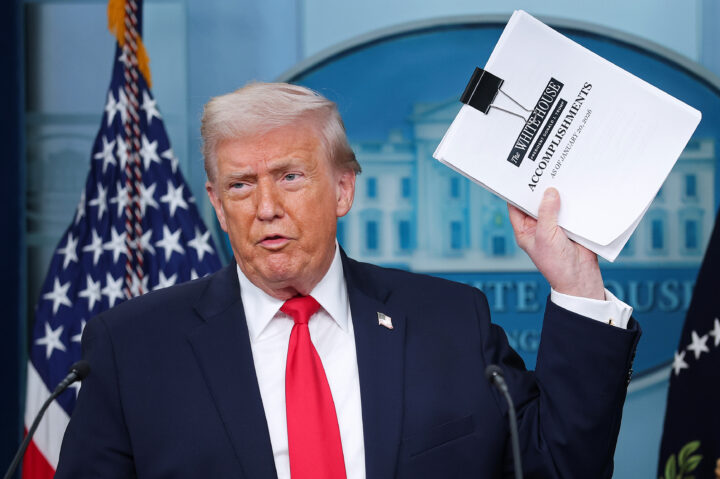
Kevin Dietsch/Getty Images
President Donald Trump gives a press briefing at the White House on January 20, 2026 in Washington, DC.
Good Tuesday afternoon!
This P.M. edition is reserved for our premium subscribers — offering a forward-focused read on what we’re tracking now and what’s coming next.
It’s me again — Danielle Cohen-Kanik, U.S. editor at Jewish Insider and curator, along with assists from my colleagues, of the Daily Overtime. Please don’t hesitate to share your thoughts and feedback by replying to this email.
📡On Our Radar
Notable developments and interesting tidbits we’re tracking
President Donald Trump continues to promote his Board of Peace ahead of its launch at the World Economic Forum later this week: In its charter sent to leaders around the world, the president laid out a vision for the body, which has grown into a U.N.-like institution that would mediate global conflicts and would require countries to pay $1 billion to secure a permanent seat, The Wall Street Journal reports.
Asked at a press conference this afternoon if he intends for the body to replace the U.N., Trump said it “might.” “Wish the United Nations could do more, wish we didn’t need a Board of Peace,” he said.
More than 10 countries have reportedly signed on to join the board, whose charter does not mention Gaza, including the UAE and Hungary. But its expanded mandate has made other countries wary: When told France does not intend to accept the invitation to join, Trump threatened to put a 200% tariff on French wines and Champagnes…
At the WEF in Davos, Switzerland, Treasury Secretary Scott Bessent credited the U.S.’ “maximum pressure” sanctions on Iran for the protest movement that wracked the country in recent weeks. “It’s worked because in December, their economy collapsed. … They are not able to get imports, and this is why the people took to the streets. … This is economic statecraft, no shots fired, and things are moving in a very positive way here,” Bessent said…
Asked about the remaining potential for U.S. military action in Iran over its violent crackdown on the protests, Trump said at this afternoon’s press conference, “I can’t tell you what’s going to happen in the future” and once again praised the regime for not proceeding with its plans to hang 837 protesters. “We’re just going to have to see what happens,” Trump said…
Israeli authorities began demolishing the compound that previously housed the U.N. Relief and Works Agency in Jerusalem, a year after Israel passed a law banning UNRWA from operating in the country over the involvement of its employees in terror activities, including the Oct. 7 attacks.
The Israeli Foreign Ministry denied U.N. claims that the compound has diplomatic immunity, saying in a statement, “Even prior to the passage of legislation in January 2025, UNRWA had already ceased its operations at this site and no longer had any UN personnel or UN activity there. The compound does not enjoy any immunity and the seizure of this compound by Israeli authorities was carried out in accordance with both Israeli and international law”…
Several European countries have not sent their representatives back to the U.S.-led Civil-Military Coordination Center in southern Israel after the holidays, Reuters reports, as the countries, including Germany, France and Britain, consider the value of engaging with the body that diplomats called “directionless” and a “disaster”…
In campaign news, Rep. Mike Lawler (R-NY) condemned as antisemitic an ad running in New York’s suburban 17th Congressional District that targets him for his support for Israel and for receiving backing from pro-Israel donors, Jewish Insider’s Marc Rod reports.
“This ad is a disgrace,” Lawler said in a statement. “This kind of politics has no place in the Hudson Valley. I am calling on every candidate running in NY-17 to publicly and unequivocally denounce this ad immediately. Silence is an endorsement.”
The ad, paid for by the anti-Israel Institute for Middle East Understanding, states in part, “Israelis enjoy universal healthcare, while Americans go bankrupt from medical bills. Lawler’s reward? Giant campaign donations from AIPAC and the pro-Netanyahu lobby.” The 17th District, one of Democrats’ top targets in November, has a sizable Jewish population and many pro-Israel swing voters, which have been key to Lawler’s past victories…
The Senate Leadership Fund, a super PAC with ties to Senate GOP leadership and one of the largest independent spenders in Senate races, announced an initial investment of $42 million to back Sen. Susan Collins (R-ME) in Maine. It’s the super PAC’s largest spend ever in the state, which will be rolled out in August, as Collins enters a general election likely facing either Gov. Janet Mills or oyster farmer Graham Platner…
Rep. Julia Letlow (R-LA) launched her bid to challenge Sen. Bill Cassidy (R-LA) this morning, days after Trump endorsed her on social media. Cassidy, who already has several primary challengers, drew the ire of the president when he voted to convict during his 2021 impeachment proceedings, though Cassidy had told other senators privately that he believed Trump would stay out of the race…
The University of Pennsylvania, which is being sued by the Trump administration over its alleged failure to comply with subpoenas related to an investigation into antisemitism at the Ivy League school, is fighting back against the administration’s request for records about Jewish employees, calling it “disconcerting” and an “extraordinary and unconstitutional demand.”
The Equal Employment Opportunity Commission had reportedly sought information about university employees who submitted complaints about antisemitic discrimination and those who were members of Jewish campus groups; Penn said in its filing that the EEOC is “entirely disregarding the frightening and well-documented history of governmental entities that undertook efforts to identify and assemble information regarding persons of Jewish ancestry”…
⏩ Tomorrow’s Agenda, Today
An early look at tomorrow’s storylines and schedule to keep you a step ahead
Keep an eye out in Jewish Insider for a deep dive into J Street’s embrace of Democrats seeking to create distance between the U.S. and Israel.
The World Economic Forum continues in Davos, where President Donald Trump will give an address at 8:30 a.m. ET. Also appearing onstage tomorrow are Palestinian Authority Prime Minister Mohammad Mustafa; Egyptian President Abdel Fattah El-Sisi; governors Gretchen Whitmer of Michigan, Andy Beshear of Kentucky and Kevin Sitt of Oklahoma; Saudi Foreign Affairs Minister Prince Faisal bin Farhan Al Saud; Rafael Grossi, director-general of the International Atomic Energy Agency; Nvidia CEO Jensen Huang; JPMorgan Chase CEO Jamie Dimon; and David Sacks, the White House AI and crypto czar.
Mark your calendars: AIPAC will host its Congressional Summit from Feb. 22-24, with a potential appearance by Israeli Prime Minister Benjamin Netanyahu, a Jewish communal source confirmed to JI.
Stories You May Have Missed
RESILIENCE OVER RUINS
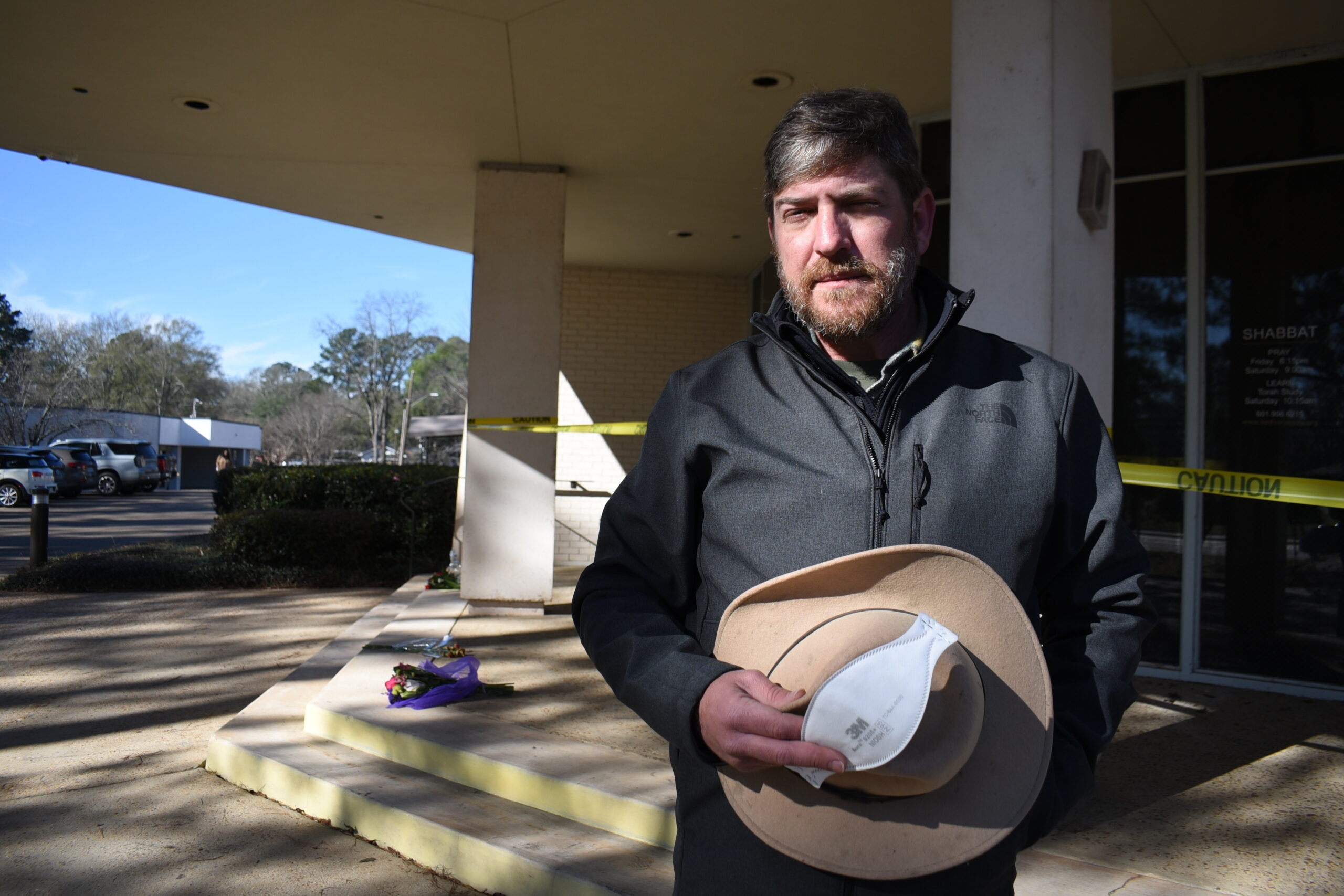
Beth Israel Congregation in Jackson has received support from churches and Jews all over the country, and has seen a revival of interest in membership
DOCTOR’S ORDERS
Acton, the expected Democratic nominee, was the state’s public health director during COVID, a legacy she hopes won’t get in the way of her affordability message
NCTC Director Joe Kent also warned terror orgs including ISIS and Al-Qaida may be taking inspiration from Oct. 7
Anna Moneymaker/Getty Images
Operations Director of the National Security Branch at the Federal Bureau of Investigation (FBI) Michael Glasheen (R) testifies alongside Secretary of Homeland Security Kristi Noem during a House Committee on Homeland Security hearing in the Cannon House Office Building on December 11, 2025 in Washington, DC.
Iran is still plotting assassination attempts against officials from the first Trump administration involved in the killing of Quds Force head Gen. Qassem Soleimani, a senior FBI official cautioned on Thursday.
The warning came from FBI operations director Michael Glasheen, who testified before the House Homeland Security Committee during a hearing on “Worldwide Threats to the Homeland.” Glasheen was appearing before the panel on behalf of FBI Director Kash Patel, who was unable to attend Thursday’s hearing.
“Iran continues to plot attacks against former government officials in retaliation for the January 2020 death Islamic Revolutionary Guard Corps, or IRGC, Commander Qassem Soleimani,” Glasheen said. “They also have continued to provide support to their proxies and terrorist organizations throughout the world, such as Lebanese Hezbollah.”
The Justice Department charged several individuals last November in a thwarted murder-for-hire plot orchestrated by Iran against Trump ahead of the presidential election. U.S. authorities have also accused Iran of plotting assassination attempts against former Secretary of State Mike Pompeo and former National Security Advisor John Bolton for their involvement in the 2020 strike that killed Soleimani.
Homeland Security Secretary Kristi Noem and National Counterterrorism Center Director Joe Kent appeared alongside Glasheen at Thursday’s hearing, during which Kent warned of ISIS, Al-Qaida and other terrorist organizations taking inspiration from Hamas’ Oct. 7, 2023, attacks on Israel.
“Honestly, the attacks of Oct. 7, the decentralized and just barbaric nature of that, is the new terrorist playbook,” Kent said. “They’re not looking necessarily for a spectacular attack like we had on 9/11, but targets of opportunity, like we tragically saw with the terrorist attack in Washington, D.C., these smaller cells or even individual operatives taking action. That’s what has us very concerned, combined with just the sheer volume of threats.”
Kent was responding to a question from Rep. August Pfluger (R-TX), who asked what tactics and techniques were being used by terrorist organizations that the U.S. should be on guard for from individuals in the U.S. illegally with ties to those groups.
The NCTC director also revealed that the agency has identified over 2,000 Afghans and 16,000 other individuals with ties to terrorist organizations, including ISIS and Al-Qaida, who entered the U.S. illegally during the Biden administration. The Trump administration began reassessing all visas from 19 Muslim majority countries in response to the fatal shooting of two National Guard troops in Washington earlier this month, allegedly perpetrated by an Afghan national.
“Right now, we’re in the triage phase. We’ve already identified 18,000 individuals who have ties to known, suspected terrorists and terrorist organizations, so we’re starting with them, working with DHS and the FBI to locate and deport them,” Kent told Rep. Brad Knott (R-NC). “But, as you pointed out, it is a much bigger problem. We’ve had 2-2.7 million folks from Muslim countries, Muslim regions, that have come into the country under Biden with minimum to no vetting.”
“Any of those individuals who were vetted, such as the terrorist in D.C., they were vetted under a war zone standard to see if they could serve as a soldier or as a guard or a cook or something like that, to see if they pose a threat to us tactically in Afghanistan or Iraq, but not to be our neighbors,” he continued. “Two completely different systems of vetting. The Biden administration used the tactical vetting as a ruse to get millions of people into the country.”
Kent then warned that individuals already in the U.S. cannot be vetted after being granted asylum, and argued that all illegal entrants or visa holders who received expedited approval must be deported for national security purposes.
“What I would like to emphasize to this committee and to the American people is that we simply cannot go back and retroactively vet these millions of folks who came in under Joe Biden. We have to locate them, and we have to deport them as soon as we possibly can,” Kent said. “Those who want to reapply, they can have the opportunity to reapply. In terms of what we need, we just need the longitude to do our jobs.”
Recent FDD reports found that Iranian oil exports have remained near peak levels in spite of U.S. sanctions, which the think tank attributed to a failure of enforcement

Florence Lo-Pool/Getty Images
Chinese President Xi Jinping speaks at the opening ceremony of the China-CELAC Forum ministerial meeting at The Great Hall of People on May 13, 2025 in Beijing, China.
A new bipartisan and bicameral bill is pushing for greater accountability and transparency on China’s violations of U.S. oil sanctions on Iran.
China is the largest importer of Iranian oil, in spite of the sweeping U.S. sanctions regime targeting the Iranian oil and gas industry, as well as newer sanctions that target importers of that oil, which have been recently applied to some firms in China.
Recent reports by the Foundation for Defense of Democracies have found that Iran oil exports, primarily to China, have remained near their peak level in spite of U.S. sanctions, which FDD has attributed to a “failure of U.S. sanctions enforcement.”
The new bill, led by Sens. Richard Blumenthal (D-CT) and Lindsey Graham (R-SC) and Reps. Raja Krishnamoorthi (D-IL) and Ben Cline (R-VA), requires the administration, within a year of the bill’s passage, to determine whether the People’s Republic of China is conducting sanctionable activities with regard to Iran.
In advance of that determination, the bill requires the administration to report to Congress within 180 days on China’s purchases of Iranian oil, including how China is using shell companies and other methods to dodge sanctions, as well as on Chinese efforts to sell or transfer chemical precursors to Iran to support its ballistic missile program.
Recent reports have found that Iran has been importing materials from China to rebuild its ballistic missile program, an effort that has prompted concern on Capitol Hill.
“China’s growing purchases of Iranian oil and its support for Iran’s ballistic missile program are not just violations of U.S. sanctions—they are direct threats to regional stability and to our allies,” Krishnamoorthi said in a statement, adding that the legislation “gives Congress the intelligence and transparency needed to expose how the PRC enables Iran’s most dangerous activities.”
“By bringing these transactions into the light, we strengthen our ability to enforce sanctions and hold malign actors accountable,” Krishnamoorthi continued.
Krishnamoorthi is mounting a bid for the U.S. Senate in his home state.
“China’s continued purchases of Iranian oil and its role in enabling Iran’s missile program to pose a direct threat to U.S. national security and to the stability of our allies in the Middle East,” Cline said. He called the legislation and the reporting it requires “a necessary step toward exposing how the PRC uses shell companies, transshipment schemes, and other avenues to evade sanctions.”
“This report will give Congress and the Treasury Department the insight needed to strengthen enforcement, close loopholes, and ensure that hostile regimes, and those who bankroll them, are held accountable,” Cline continued.
Blumenthal said that China’s purchases of oil are “providing significant financial support for Iran’s terrorist activities in the Middle East and beyond.”
“Transparency is the first step towards accountability, which is why our bill would require a full report on China’s oil and ballistic missile-related transactions with Iran. This information will support robust sanctions enforcement and provide a path forward for additional legislative action,” Blumenthal said.
Graham called the bill “the first step in fully understanding how China and other nations prop up the Ayatollah’s war machine.”
From Washington, the London-based Persian-language network is expanding its footprint — connecting Iranians inside the country with global policymakers and challenging Tehran through independent, anti-regime reporting

Wikimedia Commons/ Persian Dutch Network
IRAN INTERNATIONAL - Persian-language TV in London, 2019
Walk into any think tank in Washington and you’re likely to bump into more than a few so-called “Iran watchers”: researchers whose job is to try to interpret the actions of the often-opaque Iranian regime and help policymakers figure out how to approach the Islamic Republic.
Given the adversarial relationship between Washington and Tehran, making sense of the two nations’ policy choices toward each other is big business. But according to some Iranians, something is missing.
“Most of the people who are working on Iran, they have never been to Iran. Americans, I mean. That brings with itself certain limitations,” said Mehdi Parpanchi, who was born in Iran but now lives in Washington. The U.S. does not have a diplomatic presence in Iran, and vice versa. “In my opinion, the image of Iran is not being seen properly from outside the country.”
Parpanchi is the director of U.S. news at Iran International, one of the biggest independent Persian-language news outlets in the world. Based in London, Iran International broadcasts inside of Iran via satellite — much to the chagrin of Iranian officials, who have called the network a terrorist organization. It also reaches Iranians expats and dissidents around the world. While the network mainly operates with the goal of offering independent news from an anti-regime perspective to the global Iranian diaspora, Iran International also serves as a crucial source to Iran watchers of all stripes, including those who have never set foot in the country.
“There is always a decade of delay between the reality inside Iran and how it is being seen from the West, especially from the U.S.,” Parpanchi, who moved to Washington in 2020 to launch a U.S. headquarters for Iran International, told Jewish Insider last month.
A new show from Iran International, filmed in Washington and broadcast around the world, aims to at least partly remedy that problem. “Iran International Insight,” which launched in June, pledges to put Iran International viewers who live in Iran in conversation with the political figures and diplomats across the world whose policy choices will affect their lives.
“The concept was that there’s a tremendous opportunity for policymakers and experts in D.C., but especially policymakers, to be engaging with and taking questions from the Iranian people directly,” said Aaron Lobel, a co-producer of the new show and the founder and president of America Abroad Media, an international media organization.
The growth of Iran International’s programming in Washington comes after the Trump administration slashed funding for the U.S. Agency for Global Media, which supports independent outlets such as Voice of America, Radio Free Europe/Radio Liberty (RFERL) and Middle East Broadcasting Networks that air pro-democracy content around the world. Parpanchi previously spent two years at RFERL, which has a Persian-language branch.
Iran International is not expressly trying to fill that niche, and the new program was in the works starting in 2024, before Trump even came to office. Regardless, the new program arrives at a time that America has pulled back from cultural diplomacy.
“This is in the best traditions of the United States. It advances American values and it advances American interests,” said Lobel. “The more credible media organizations outside Iran that are trying to reach the Iranian people with information and to give them some sense of hope as well — the more the better.”
So far, three interviews — hourlong conversations between one or two guests and an Iran International anchor — have been filmed, all in front of a live audience, including many Iranians who live and work in Washington. Iran International’s producers and journalists solicit questions from the network’s viewers in Iran. The interviews take place in English, but they are dubbed in Persian before being aired.
“I’ve met with groups of Iranian diaspora, who have family in Iran and who are activists with them. But I don’t think I received online questions like that,” Israeli Ambassador to the U.S. Yechiel Leiter, who was the first guest, told JI. “That was the primary agenda, to speak to the people.”
Leiter’s interview with Iran International was a journalistic gold mine for the network: scheduled in advance, it happened to come at a particularly timely moment, hours after President Donald Trump announced a cease-fire between Israel and Iran at the end of the countries’ 12-day war in June. Leiter touted Israel’s military victories in its campaign to destroy Iran’s nuclear capabilities. Yet many Iranians wondered why Israel would attack Iran, but ultimately not seek to remove the ayatollah from power. (Hundreds of questions were submitted.)

“One of the themes that came out that was so striking was, of course, many Iranians wanted Israel to continue the campaign, and they were, I think it’s fair to say, you could hear in that show, disappointed that Israel stopped the war. Or to put it differently, they were upset that the Israeli government had, in their view, raised their expectations of ‘regime change’ and then failed to deliver,” said Lobel.
Leiter offered unusually candid responses to those questions, going beyond the diplomatic language that would’ve gotten the job done even if leaving viewers unsatisfied.
“I appreciated the opportunity to explain why we weren’t going to go further and actually topple the regime by force,” Leiter explained. “I understand them. Remember when the chancellor of Germany said that Israel is doing the ‘dirty work’ for the world? I guess that the people wanted us to do the work completely for the world. But we can’t do that. And it was important for me to be able to explain that.”
Two other programs were recorded this fall. One featured Elliott Abrams, who served as Iran envoy in Trump’s first term, and Dennis Ross, a fellow at The Washington Institute for Near East Policy who previously held several high-level jobs at the State Department in Democratic and Republican administrations. Another featured former CIA official Norman Roule and Mark Dubowitz, CEO of the Foundation for Defense of Democracies. Iran International’s main Instagram account has 16 million followers, and video clips from the Roule-Dubowitz event got about 1 million views each.
Those four experts have different ideological backgrounds, but each falls closer to the hawkish end of the spectrum on Iran. So does Sen. Tom Cotton (R-AR), who was scheduled to appear in an interview in September before the congressional schedule led Cotton to cancel. (Parpanchi said they hope to reschedule.)
Parpanchi said Iran International aims to include a broad range of perspectives from Washington, noting that the program is only just beginning.
“It’s not only hawkish. There are other people who have different views about Iran, and we will reflect them all,” Parpanchi said. Iran International plans to ramp up to a more regular filming schedule in 2026.
The pro-Iran think tank is sponsoring a panel featuring the former Iranian foreign minister
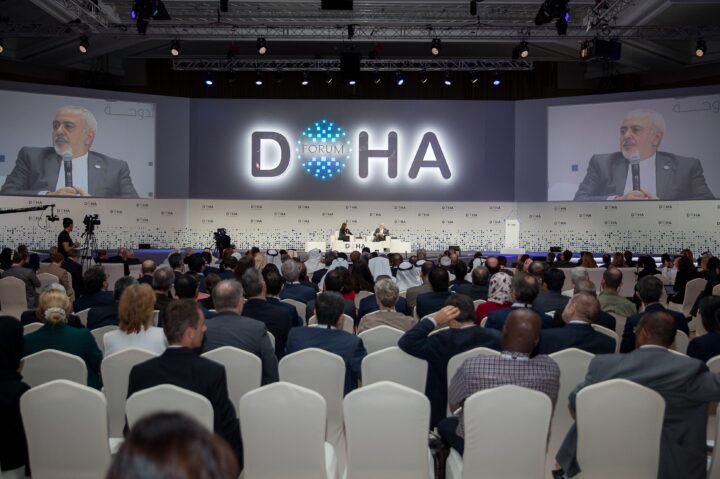
AFP via Getty Images
Iranian Foreign Minister Mohammad Javad Zarif speaks during a session of the Doha Forum in the Qatari capital on December 15, 2018.
The Quincy Institute for Responsible Statecraft, an anti-Israel think tank in Washington that has pushed sympathetic positions on Iran, is sponsoring a panel discussion at the Doha Forum in the Qatari capital on Saturday — further underscoring how the two-day conference is including a range of extreme voices amid more centrist and mainstream figures.
The panel, billed as “Iran and the Changing Regional Security Environment,” will prominently feature former Iranian Foreign Minister Mohammad Javad Zarif, who has used antisemitic rhetoric and was called the “propaganda arm” of the Iranian regime by officials in the first Trump administration, in a talk with Trita Parsi, executive vice president of Quincy and the founder of the National Iranian American Council, a pro-Iran lobbying group.
Parsi, a fierce detractor of Israel, has previously faced accusations of operating as an undisclosed foreign agent for the Islamic Republic, which he has denied.
“On June 13, 2025, Israel initiated a war against Iran that lasted twelve days and that also brought the U.S. into direct confrontation with Iran for the first time,” reads a blurb describing the discussion. “This unprecedented event shattered the regional balance and compelled nations to rethink their security strategies. This session will examine the current state of regional affairs, assess its impact on diplomatic and security alignments, and explore potential pathways toward de-escalation and stability.”
The seemingly neutral tone of the summary is belied by omissions such as Iran’s sponsorship of regional terror proxies like Hamas and Hezbollah, among other rhetorical elisions that more broadly highlight Qatar’s own carefully managed approach to diplomatic engagement — which critics have cast as a two-faced effort to play both sides of opposing parties.
To that end, the oil-rich Gulf state, a major U.S. ally that has drawn scrutiny for hosting Hamas leaders and for its ties to the Muslim Brotherhood, has attracted a wide assortment of speakers and partners to its annual forum in Doha, touted as a “global platform for dialogue” relating to “critical challenges facing our world.”
Its stated theme this year, according to a press release, is “Justice in Action: Beyond Promises to Progress.”
“As a convener of diverse voices, Doha Forum stands as a leading platform to explore how diplomacy, development, and humanitarian action can intersect to deliver measurable, inclusive progress,” Mubarak Ajlan Al-Kuwari, the event’s executive director, said in an announcement on Thursday.
In addition to Iran-friendly groups and figures like Parsi and the International Crisis Group, formerly led by Rob Malley — the controversial Iran envoy in the Biden administration — the summit is elevating figures who have embraced hostile views on Israel or promoted antisemic tropes. Most notably, Tucker Carlson, who has invited several antisemites to join his podcast for friendly or credulous interviews, will sit for a conversation on Sunday with Qatar’s prime minister, Sheikh Mohammed bin Abdulrahman Al Thani.
At the same time, the Gulf confab, which extends through the weekend, is also featuring a variety of establishment-oriented participants, obscuring the extremism and fringe positions of other guests set to receive equal or even more prominent billing at the event.
Alongside Carlson, the forum, co-sponsored by CNN, the Atlantic Council and other mainstream institutions, includes a more traditional roster of speakers such as former Secretary of State Hillary Clinton, philanthropist Bill Gates and several world leaders.
The survey also found solid support for the U.S.-Israel alliance, even as the level of backing has slightly declined
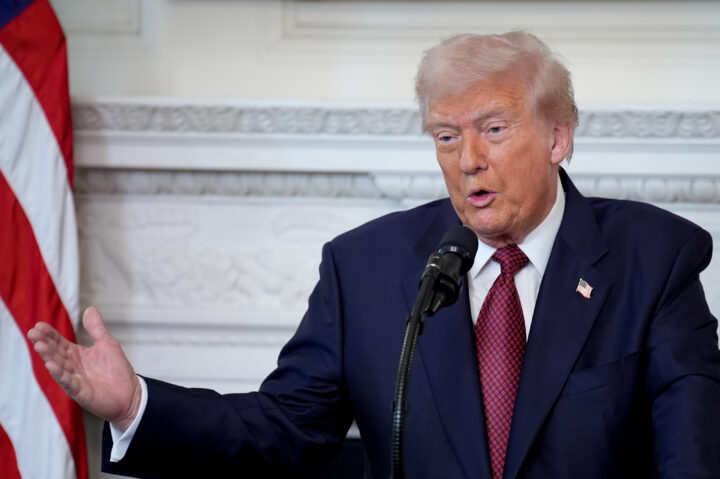
Yuri Gripas/Abaca/Bloomberg via Getty Images
US President Donald Trump during a breakfast with Senate Republicans in the State Dining Room of the White House in Washington, DC, US, on Wednesday, Nov. 5, 2025.
President Donald Trump’s decision to strike Iran’s nuclear facilities in June, dealing a significant blow to the Islamic Republic’s weapons program, is viewed favorably by 60% of Americans, according to a newly released survey commissioned by the Ronald Reagan Institute.
The decision to bomb Iran’s nuclear program was one of the most popular policies the Pentagon has made in Trump’s second term, according to the survey. Of the 10 policies tested, only two (using force against drug traffickers in Latin America and issuing gender-neutral standards for combat roles) had a higher net approval rating.
Despite the widespread support for the airstrikes, there is a partisan divide in support. Republicans overwhelmingly supported the military action, while 39% of Democrats did so.
The survey also painted a mixed picture about the state of U.S.-Israel relations, finding that two-thirds of Americans consider Israel to be an ally, including 57% of Democrats. The share of respondents calling Israel an ally is down six points from the institute’s survey last year. When it comes to sending weapons to Israel, half of respondents were supportive — with a 68% supermajority of Republicans, but just 35% of Democrats.
If Hamas refuses to demilitarize Gaza, however, 54% of Americans would favor further Israeli military action, including 42% of Democratic voters.
“Overall, the American people know who is the ally and who the adversary is in the Middle East,” Roger Zakheim, the director of the Ronald Reagan Presidential Foundation & Institute, told Jewish Insider. “Even after the impact of Israel’s lengthy war against Hamas in Gaza, you still have close to a supermajority [in the U.S.] viewing Israel as a strong ally, which is reassuring for Jerusalem.”
The findings are part of a wide-ranging examination of American public opinion on national security issues, indicating a consistent American preference to maintain engagement in the world. Nearly two-thirds (64%) of respondents said the “it is better for the United States to be more engaged” in international affairs, with just 33% disagreeing.
Notably, support for the U.S. sending weapons to Ukraine as it defends itself from Russian attacks wins widespread support, with 64% in favor — a nine-point jump from last year’s survey. Ukraine is also viewed as an ally by three-fourths of respondents. Only 17% said they thought Russia was an ally, while 79% viewed the country as an enemy.
When asked which country poses the greatest threat to the U.S., China held a sizable lead, with nearly half of respondents naming Beijing, while 26% ranked Russia at the top. Only 3% said Iran posed the greatest threat.
The poll of 2,507 adults was conducted jointly by Beacon Research, a Democratic firm, and Shaw & Company Research, a Republican firm, between Oct. 23-Nov. 3. The two polling firms also conduct Fox News’ polling.
It was released in the run-up to this year’s Reagan Defense Forum, which is being held this Friday and Saturday at the Ronald Reagan Presidential Library in Simi Valley, Calif.
Rafael Chairman Yuval Steinitz: Israel entering a ‘laser revolution’ in its missile defense

John Keeble/Getty Images
A Rafael Iron Beam -M (250) and Iron Beam (450) High Energy Laser Weapon System (HELWS) are displayed during the Security Equipment International (DSEI) at London Excel on September 10, 2025 in London, England.
Israel’s Iron Beam system, which intercepts missiles with lasers, will be delivered to the IDF for initial operational use at the end of the month, Brig.-Gen. (res.) Daniel Gold, head of the Israeli Ministry of Defense Research and Development Directorate, said at the International DefenseTech Summit at Tel Aviv University on Monday.
“With development complete and a comprehensive testing program that has validated the system’s capabilities, we are prepared to deliver initial operational capability to the IDF on Dec. 30, 2025. Simultaneously, we are already advancing the next-generation systems,” Gold said.
According to Gold, “the Iron Beam laser system is expected to fundamentally change the rules of engagement on the battlefield.”
Former Israeli Finance Minister Yuval Steinitz, chairman of Rafael Advanced Defense Systems, which developed and produced the Iron Beam system, told the Misgav Mideast Horizons Podcast in an episode to be released Wednesday that the new missile defense system represents a “laser revolution.” (Jewish Insider’s Lahav Harkov co-hosts the podcast.)
“For the first time in human history, we are able to shoot down missiles, rockets, even artillery shells, mortar shells, cruise missiles, airplanes as well — not with projectiles, not with missiles or artillery shells, but with light,” Steinitz said.
According to Steinitz, American, Chinese, British, German and Russian companies have tried to develop effective laser weapons for decades.
“We managed to do it and we already intercepted [projectiles] in tests,” he said, noting that Lite Beam, a smaller version of the Iron Beam system, was successfully used in October 2024 to intercept roughly 50 UAVs shot at Israel by Hezbollah from Lebanon.
“This is revolutionary, and I am confident that this is just the beginning,” he added.
Iron Beam will initially be used to shoot down short and long-range missiles from Lebanon and Gaza, and the combined use of Iron Beam and the Iron Dome and David’s Sling missile defense systems, also produced by Rafael, will bring Israel close to 100% interception, Steinitz said.
He does not expect Iron Beam to fully replace Iron Dome nor David’s Sling in the coming years, because factors such as poor weather conditions and very large barrages could make the laser systems less effective.
The use of the laser system will also drastically lower the costs of missile defense, Steinitz said, because each use of the Iron Beam system costs around $3, as opposed to about $50,000 per Iron Dome interceptor. As such, it will cost less for Israel to intercept a rocket than it costs for its enemies to produce them, at $5,000-10,000.
In addition, Steinitz said that the Iron Beam system works faster than the Iron Dome.
“Once the [rocket] is rising over Gaza, interception will start immediately, because the laser can reach the incoming rocket at the speed of light,” he said. “With the Iron Dome, it’s two missiles flying, one from Gaza and one from Tel Aviv to meet each other midway.”
Shooting down rockets over Gaza will also mitigate the need for Israelis to run to shelters and safe rooms due to falling missile and interceptor fragments.
“We won’t sound the alarm in Tel Aviv, because we should be able to see [an interception] immediately if we succeed to intercept, and if we fail to intercept, we will have another opportunity, and then we shall put on the alarm,” Steinitz explained.
Steinitz also said that in the coming years, Rafael is likely to develop laser-based systems to intercept longer range missiles, such as those shot at Israel by the Houthis from Yemen and by Iran in the last two years.
The developments come on the heels of a $25 billion deal between Iran and Russia
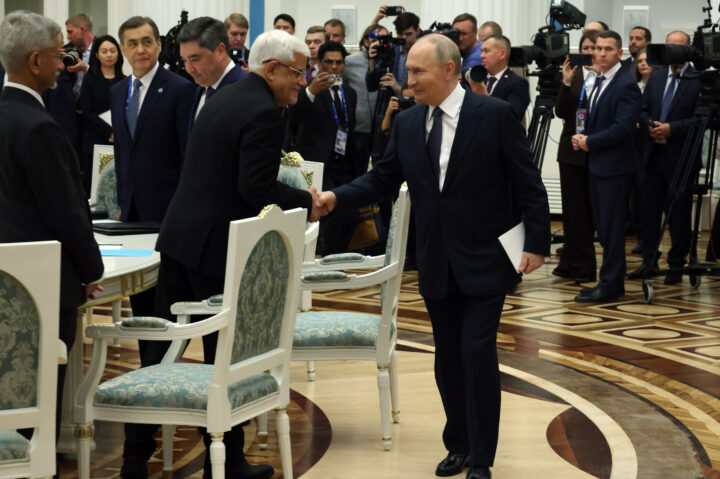
Getty Images
Russian President Vladimir Putin (R) shakes hands with First Vice President of Iran Mohammad Reza Aref (C) during the meeting with prime ministers of Shanghai Cooperation Organization (SCO) countries at the Kremlin, on November 18, 2025 in Moscow, Russia.
A series of recent events and revelations has raised concerns that Iran could be working to reconstitute its nuclear weapons program damaged during the 12-day war with Israel and the U.S., and that Russia could be playing a role in aiding the effort.
Iran withdrew last week from an agreement with the International Atomic Energy Agency to allow the watchdog to inspect its nuclear sites, just after the U.N. agency’s board of governors passed a resolution calling on Iran to provide more complete information about its nuclear sites and remaining stock of enriched uranium. The resolution came as the IAEA’s chief, Rafael Grossi, said that there were indications of activity at some Iranian nuclear sites.
Also last week, the Financial Times reported that Iranian scientists and nuclear experts visited Russian military research institutes a second time last year. The trip was organized by a front group for Iran’s Organization of Defensive Innovation and Research, which is behind the Islamic Republic’s nuclear weapons research. The extent of cooperation between the countries, however, is still unknown.
Those developments come on the heels of a $25 billion deal between Russia and Iran, finalized in September, for the former to build nuclear power plants for the latter.
Jonathan Ruhe, fellow for American strategy at the Jewish Institute for National Security of America, told Jewish Insider that the FT’s reporting fits with Western intelligence findings from before the Israeli and American strikes on Iranian nuclear sites that the Islamic Republic was trying to reduce the time it would take to turn its enriched uranium into a bomb.
“These activities focused on simulating a nuclear explosion, without actually detonating a test device. Israel’s growing urgency about Iran’s progress contributed to its decision to launch the 12-day war when it did,” he said.
Arkady Mil-Man, head of the Russia program at the Institute for National Security Studies at Tel Aviv University, told JI that there is “no doubt Iran is trying to rehabilitate its capabilities – nuclear and missile – and Russia is its strategic partner.”
Earlier this month, after Israeli Prime Minister Benjamin Netanyahu spoke with Russia President Vladimir Putin, a Kremlin readout of the phone call said they discussed “the state of affairs surrounding Iran’s nuclear program.”
Cooperation between Iran and Russia should be of great concern to Israel, Mil-Man said, and expressed hope that Netanyahu said as much to Putin. “It’s an existential threat. Russia is cooperating with Israel’s No. 1 enemy,” Mil-Man said.
Andrea Stricker, deputy director of the nonproliferation and biodefense program at the Foundation for Defense of Democracies, told JI that “Russia has traditionally limited its assistance on Iran’s nuclear weapons program to applications that have plausible civilian uses, but which can also assist a nuclear weapons program.”
However, she added that “with Tehran’s help during the Ukraine war, it is possible that the Russians are willing to aid in ways that directly help on weaponizing or constructing nuclear devices.”
JINSA’s Ruhe said the Russian visits “suggest an openness to aiding Iran’s weaponization,” and also suggested that Putin’s position may have shifted due to Iran’s support for Russia in the Ukraine war. In addition, he said that in Putin’s view, “the more he could help Iran pull America’s focus away from Europe, perhaps all the better.”
The Financial Times report did not include specific enough information to know whether the meeting would help Iran with nuclear testing, but Stricker said that media exposure “will help deter Moscow from contemplating more aggressive help for the Tehran regime’s efforts to rebuild or reconstitute the program.”
Sophie Kobzantsev, a research fellow at the Misgav Institute for National Security and Zionist Strategy, told JI that the partnership between Iran and Russia has its limits. (Lahav Harkov is a senior fellow at the Misgav Institute.)
“Russia always played a double game with Iran,” she said. “They gave them technology, weapons, air defense systems. In the nuclear area, they helped, but Russia was always part of the international organizations that inspected Iran’s nuclear program.”
“Russia wants Iran to be in a situation that it can control. … Putin understands nuclear deterrence, but he does not want things to get out of control. He doesn’t want the regime or the economy to collapse. He needs Iran to be stable enough to be managed,” she added.
Russia’s general approach to Iran’s nuclear program, Ruhe said, “has been to enrich Moscow and give it leverage, without moving Iran closer to a bomb.”
As such, Russia played a role in building Iran’s reactor in Bushehr, worked on nuclear energy and research with Iran and now seeks to build nuclear power plants.
Iran is increasingly isolated due to the snapback of U.N. sanctions earlier this year, and Putin has indicated that he will try to leverage that isolation, with Russia calling the sanctions invalid, Ruhe said.
Iran doesn’t have many choices other than Russia to help it on the nuclear front, but Russia is motivated by seeking a greater foothold in the Middle East, Kobzantsev explained.
“Russia lost on two major fronts. They were mostly kicked out of Syria, and Iran and Hezbollah [were weakened],” she explained. “The American foothold in the Middle East can be seen everywhere; the Gaza plan, strengthening Iran’s rivals in the Gulf. Russia is mostly absent from the region.”
Washington also recently took steps to strengthen its ties in Central Asia, what was once a major Russian sphere of influence, including negotiating peace between Azerbaijan and Armenia, and recent trade agreements with Kazakhstan.
“Iran sits on both of those points, and a significant foothold there would be important for Russia to rebuild its influence in the Middle East and create a counter to the U.S.,” Kobzantsev said.
Among the 306 American plaintiffs are the families of Israeli Americans Hersh Goldberg-Polin and Itay Chen

Singapore Press via AP Images
Binance founder and CEO Zhao Changpeng on July 12, 2021.
A new federal lawsuit filed on behalf of families of victims of Hamas’ Oct. 7, 2023, attacks accuses the crypto giant Binance of knowingly facilitating the transfer of hundreds of millions of dollars to U.S.-designated foreign terror organizations on an “industrial scale,” helping contribute to the deadly incursion in Israel that killed around 1,200 people and took more than 250 hostages.
According to the complaint, Binance, the world’s largest cryptocurrency exchange, “deliberately” failed “to monitor inbound funds” to such terror groups as Hamas, Hezbollah, Palestinian Islamic Jihad and the Islamic Revolutionary Guard Corps, ensuring “that terrorists and other criminals could deposit and shuffle enormous sums on the exchange with impunity.”
“Moreover, when specific customers were designated or particular accounts were subject to seizure orders, Binance allowed those customers and accounts to shift the assets into other Binance accounts, thus negating the effect of any ‘blocking’ or ‘seizing’ of the account,” the complaint states.
Such a policy “demonstrates Binance’s deliberate and conscious effort to enable users to operate on the Binance platform and clearly helps facilitate financial crime on an industrial scale,” the filing adds.
Among the 306 American plaintiffs are the families of Hersh Goldberg-Polin, an Israeli-American hostage murdered by Hamas in Gaza; Itay Chen, an Israeli-American IDF soldier whose body was returned to Israel this month; Eyal Waldman, an Israeli philanthropist whose U.S.-born daughter, Danielle, was killed at the Nova music festival during the Oct. 7 attacks; and Yechiel Leiter, the Israeli ambassador to the U.S.
“The lawsuit details how Binance knowingly facilitated the transfer of hundreds of millions of dollars between 2021 and 2023 that helped enable the terrorist organizations responsible for the Oct. 7 attacks,” Gary Osen, an attorney representing the plaintiffs who specializes in civil terror cases, said in a statement to Jewish Insider. “One of our goals is to cast a public spotlight on specific ways in which the Binance platform has been used by Iran, Hezbollah and Hamas to finance terrorism.”
The 284-page complaint, filed Monday in U.S. District Court for the District of North Dakota under the Anti-Terrorism Act, targets Binance as well as its founder and former CEO, Changpeng Zhao, and Guangying Chen, a close associate of Zhao whom the lawsuit identifies as the crypto exchange’s “de facto chief financial officer.”
Zhao and Chen could not be reached for comment regarding the lawsuit.
A Binance spokesperson said the company “cannot comment on any ongoing litigation.”
“However, as a global crypto exchange, we comply fully with internationally recognized sanctions laws, consistent with other financial institutions. For context, the heads of the U.S.Treasury’s FinCEN and OFAC have confirmed that cryptocurrency is not widely used by Hamas terrorists,” the spokesperson told JI in a statement, referring to the Financial Crimes Enforcement Network and Office of Foreign Assets Control. “Most importantly, we hope for lasting peace in the region.”
The company’s “conduct was far more serious and pervasive than what the U.S. government disclosed during its 2023 criminal enforcement actions,” the complaint says, claiming that Binance “knowingly sent and received the equivalent of more than $1 billion to and from accounts and wallets controlled by the FTOs responsible for the Oct. 7 attacks.”
That figure, the filing states, vastly outnumbers a previous amount of more than $2,000 in known transactions for Hamas disclosed by the federal government in 2023.
In November 2023, Zhao pleaded guilty to money laundering charges and agreed to step down from his executive role. He served four months in federal prison and was pardoned last month by President Donald Trump. Binance itself also pleaded guilty to federal charges and paid over $4 billion in fines.
Last May, Binance participated in a $2 billion business deal with World Liberty Financial, a new crypto company founded by the families of Trump and Steve Witkoff, the president’s special envoy.
“To this day,” the complaint states, “there is no indication that Binance has meaningfully altered its core business model.”
Citing a complex forensic money laundering analysis, the lawsuit identifies a wide range of Binance accounts with alleged terror links and spanning multiple locales, including Venezuela, Gaza, Lebanon and even North Dakota, where an account connected to Hamas was accessed several times from a small city outside Fargo.
The suit refers to Gaza money exchanges, a gold smuggling operation in South America with ties to Hezbollah and a purported Venezuelan livestock entrepreneur allegedly moving millions of dollars for known terror organizations in the Middle East, among other illicit transactions.
“Every tunnel, every missile, every bullet, every attack is paid for by someone,” Izhar Shay, a plaintiff whose son Yaron died defending Kibbutz Kerem Shalom in Israel on Oct. 7, said in a statement shared with JI. “Companies like Binance cannot keep profiting if they enable terrorists to operate in the shadows. This case is about making sure that those who enabled Hamas’ evil are held to account.”
The U.S. announced sanctions on a network of companies and shipping facilitators involved in Iran’s oil export business

ATTA KENARE/AFP/Getty Images
Oil tanker SC Hong Kong is seen off the port of Bandar Abbas, southern Iran, on July 2, 2012.
The Treasury Department implemented new sanctions on Thursday targeting what the agency described as a “network of front companies and shipping facilitators that bankroll the Iranian armed forces by selling crude oil” — a critical revenue stream for the regime.
The latest round of sanctions, one of several announced in recent months, also targets six vessels in Iran’s “shadow fleet” of tankers used to transport oil to international markets, joining a list of more than 170 such vessels which have been sanctioned this year.
The Treasury is also adding sanctions on a subsidiary of Mahan Air, an Iranian airline used by the Islamic Revolutionary Guard Corps to help supply proxies and allies across the region.
“Today’s action continues Treasury’s campaign to cut off funding for the Iranian regime’s development of nuclear weapons and support of terrorist proxies,” Treasury Secretary Scott Bessent said in a statement. “Disrupting the Iranian regime’s revenue is critical to helping curb its nuclear ambitions.”
In its announcement, the Treasury Department said that Iran’s oil exports are a crucial source of funding for the Iranian regime, particularly as the Islamic Republic seeks to rebuild after its war with Israel.
“Following its defeat in the 12-Day War with Israel, Iran’s military has increasingly come to rely on the sale of Iranian crude oil to supplement its annual budget and finance the rebuilding of its depleted forces,” the statement reads.
The companies targeted under the sanctions are tied to Sepehr Energy Jahan Nama Pars Company, an arm of the Iranian military responsible for oil sales and exports. The companies being targeted operated variously out of the UAE, Panama, Greece, India and Liberia.
The ships in question are flagged in Palau, Panama and Gambia.
According to the Treasury’s announcement, Mahan subsidiary Yazd International Airways Company was used by the IRGC to transport Quds Force officers to Lebanon to support Hezbollah attacks on Israel and to ship weapons to the Assad regime in Syria.
The sanctions also seek to crack down on Mahan’s procurement of Western aircraft and identify several such aircraft as blocked property.
Bessent also attended a meeting at the White House on Thursday with recently freed hostages.
“We heard their firsthand accounts of the atrocities experienced on that day and over the past two years,” Bessent said on X. “Thanks to President Trump’s historic actions and bold leadership, all of the hostages have been freed, and we are closer than ever to a lasting peace in the Middle East. At @USTreasury, we are committed to safeguarding Americans and our allies from terror, wherever it presents.”
The Senate Democrats said the Iranian moves were indicative of Iran’s broader continued malign activity
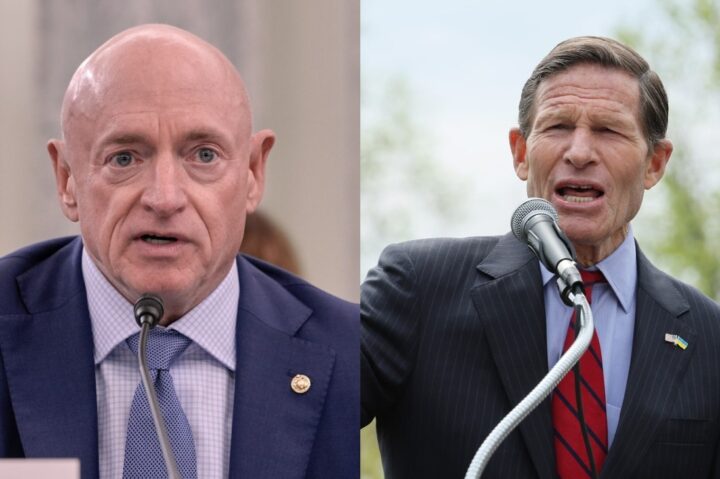
Mariam Zuhaib/AP Photo//Jemal Countess/Getty Images for Fair Share America
Sens. Mark Kelly (D-AZ) and Richard Blumenthal (D-CT)
Two Democratic senators expressed concern on Tuesday about the Islamic Revolutionary Guard Corps’ seizure of an commercial oil tanker in the Strait of Hormuz, a critical international shipping route.
The IRGC took credit on Friday for the seizure of the Talara, a Marshall Islands-flagged tanker, for what state media described as alleged cargo violations. The tanker, which began its journey in the United Arab Emirates, was carrying petrochemicals through the Strait of Hormuz to Singapore when it was diverted by the IRGC into Iranian territorial waters.
“It’s like the 1980s all over again,” Sen. Mark Kelly (D-AZ), a former fighter pilot, said. “The first time I was there was 1989, in the Strait of Hormuz, with the Iranians doing that same old shit, where they would harass shipping. A couple times, I felt like we were on the edge of getting in the conflict.”
“This was 40 years ago. It’s the same playbook with them, over and over and over again, harassing shipping, our planes, our naval vessels,” Kelly continued. “So what’s the solution? Hopefully, I think the solution is: The Iranian people get fed up with this at some point and just force out the ayatollah and his lackeys around there, because it has destroyed their economy.”
Asked if the development should impact the U.S. posture toward Iran, Kelly said it was too soon to determine that.
“We’ve got to stand on the side of the rule of law. The oil that comes through that Strait is critical to our economy, and we can’t let this become a major problem, but it’s one tanker,” Kelly said.
Sen. Richard Blumenthal (D-CT) said that the U.S. needs to remain vigilant against Iran’s other malign activities in spite of the setbacks to its nuclear program.
“Iran is Iran. They are the toxic element in the Middle East. We have no reason for complacency. Just because we set them back in their nuclear program, they remain a malevolent force, and the seizure of that tanker is just one indication of that,” Blumenthal said.
Asked if this latest development should be viewed as escalatory given that Tehran targeted commercial shipping, the Connecticut senator replied: “I’m troubled by the lack of an aggressive reaction to it. Maybe it’s just, with the press of everything else that’s going on.”
The former Israeli defense minister outlined his vision for confronting Iran, deepening ties with Greece and Cyprus and rebuilding Gaza under long-term security oversight

Tasos Katopodis/Getty Images
Benny Gantz, a member of Israel’s war cabinet, talks to the media after a meeting with Senate Minority Leader Mitch McConnell (R-KY) at the U.S. Capitol on March 04, 2024, in Washington, D.C.
Former Israeli Defense Minister Benny Gantz discussed a wide range of security challenges facing Israel on Monday, outlining his long-term vision for confronting Iran, expanding regional defense cooperation and managing Gaza’s postwar recovery.
Speaking at a web event hosted by the Foundation for Defense of Democracies, the Knesset member and Blue and White party leader, who served as a minister in Israel’s war cabinet until June 2024, called Iran a “global challenge and threat to the State of Israel” and proposed a five-point plan to ensure Iran’s abandonment of its nuclear ambitions by 2028.
“Why 2028? It’s an assumption, hopefully not the wrong one,” Gantz added.
Gantz called Iran’s nuclear program “not a private issue.”
“If America or the international community can come up with an excellent” nuclear agreement with Tehran with “no strategic blinking, fine with me,” Gantz said. “Free inspection, anytime, anywhere, zero warning, zero tolerance for any obstacles that we find, then fine,” he added, referring to Iran permitting inspectors to enter the country and its nuclear facilities, an issue that has held up negotiations in the past.
On Turkey, Gantz said Israel and its allies should encourage Ankara to “reassess” its geopolitical alignment.
“Turkey needs the West. It’s connected to NATO, its economy is highly connected to what’s happening in Europe,” he said. “I think we should try to influence Turkey to reassess where it wants to be, rebalance where it wants to be between the West and the extremism of the Muslim Brotherhood.”
Gantz added that Israel should help form a multilateral partnership to strengthen cooperation across the eastern Mediterranean — one that could also engage Turkey constructively.
“Once again, I’m not trying to confront Turkey necessarily,” Gantz said. “I’m moving it from another perspective, with common interest by Greece, Cyprus, ourselves, maybe even Italy, or even other countries in Europe that may want to become part of this consortium … I think the Turks will have much more to benefit from cooperating rather than confronting.”
Gantz also highlighted the importance of working with NATO partners to motivate Turkey to promote stability in Syria. Since the fall of the Assad regime in late 2024, Israel and Turkey have often clashed over competing objectives in Syria.
The Jewish state sees Turkish influence in Syria as a potential security threat and has sought to use military incursions as a way of establishing a demilitarized zone on the border. Turkey has sought to support the new political project in Syria, pursuing deeper political, economic and military cooperation with Damascus.
In April, Israel carried out strikes on multiple cities in Syria, including more than a dozen near a strategic airbase in Hama, where Turkey has reportedly aimed to expand its military footprint. That same month, the two countries held talks to avoid clashes in Syria, reportedly reaching an agreement.
“It’s very important to reconstruct Syria and understand the Turkish involvement,” Gantz said. “We should take advantage of Turkey being part of NATO and the Western world to motivate Turkey to enhance Syria with the access of moderate countries, and not necessarily back to the Iranians.”
Gantz also addressed the security situation in Gaza, where Israel still controls 58% of the territory, marked by a yellow “initial withdrawal line,” something that experts told Jewish Insider earlier could become a permanent marker and serves a security purpose.
Gantz said he opposes Israeli settlements in the enclave, but supports maintaining a security zone under Israeli control. Gantz proposed that a U.S.-led civil administration should oversee the territory’s reconstruction over the next decade.
“It’s going to be a very chaotic decade right now, when we will have to be strong on defense,” Gantz said. “I think it will take a decade for [Gazans] to be able to rebuild something they can live with and we can live beside.”
As they denounce the UAE’s alleged backing of Sudan’s Rapid Support Forces, far-left lawmakers have passed over the Muslim Brotherhood affiliations and foreign backing of the rival Sudanese Armed Forces

Tariq Mohamed/Xinhua via Getty Images
Abdel Fattah Al-Burhan in the vehicle, chairman of Sudan's Transitional Sovereign Council and commander of the Sudanese Armed Forces SAF, departs from the Presidential Palace in Khartoum, Sudan, on March 26, 2025.
In recent days, a chorus of left-wing lawmakers in Congress have ramped up their ire towards the United Arab Emirates, accusing the Gulf country of helping fuel the yearslong civil war in Sudan by reportedly backing the Rapid Support Forces (RSF), the non-Islamist Arab force fighting the Muslim Brotherhood-aligned Sudanese Armed Forces (SAF).
The UAE has long denied allegations of involvement in the war. The Wall Street Journal reported this week that, according to sources, recent assessments by the Defense Intelligence Agency and the State Department’s intelligence bureau purport to show the UAE sending Chinese drones to the RSF.
On the other side, Iran, Russia, Egypt and Turkey have provided support to the SAF, according to conflict monitors and reporting by Bloomberg and The Washington Post.
The war in Sudan has wrought havoc upon the eastern African nation, with both warring factions committing crimes against humanity. The conflict has killed as many as 150,000 people and has displaced around 12 million.
Over the more than two-year long conflict, both militias have been accused of widespread sexual assault, mass killings of civilians, torture and deliberate attacks on civilian infrastructure. On Monday, the RSF captured the city of El Fasher after an 18-month blockade which saw the group effectively devastate the city, with reports of mass killings, sexual violence and the destruction of hospitals and displacement camps.
The U.S. government, under former President Joe Biden, determined the RSF was committing genocide and found both the RSF and SAF guilty of committing war crimes.
Meanwhile, the Muslim Brotherhood’s growing influence with the Sudanese Armed Forces has alarmed experts, who warn that the SAF’s deepening ties to Islamist networks threaten regional stability and could pose a risk far beyond the eastern African nation.
“The Muslim Brotherhood has had a strong presence in Sudan since the 1940s and that presence has evolved over the years,” Norman Roule, a former senior U.S. intelligence official, told Jewish Insider. “It’s important to note that this presence is also why Iran is such a strong supporter of the Burhan [head of SAF] government.”
Liam Karr, an analyst at the American Enterprise Institute, who has condemned actions on both sides of the conflict, says the ties date back to former Islamist dictator Omar al-Bashir, who ruled Sudan for several decades before the SAF overthrew him in 2019.
“The SAF is working with several Islamist brigades that consist of former Bashir-era army, police and intelligence personnel,” Karr told JI. “This includes the al Baraa Ibn Malik Brigade, which is widely associated with the Sudanese Muslim Brotherhood and Bashir and has an estimated 20,000 fighters.”
In recent months, the SAF has received explosive attack drones from Iran’s Revolutionary Guard Corps to aid in the conflict, while Egypt, one of their key backers, arrested a key Islamist militia leader aligned with the group — signaling that even staunch regional supporters of the group are “growing wary of its Islamist factions,” according to Foundation for Defense of Democracies Research Fellow Hussain Adbul-Hussain.
Roule said Iran has a vested interest in providing the SAF with weaponry in order to reestablish a presence in the region and revitalize their “broken proxies,” following Israel’s degrading of its military capabilities and of its proxy Hezbollah, as well as the fall of the Assad regime in Syria.
“This is of extreme importance to the U.S. and its partners in the region, because if the Quds Force [IRGC] is able to establish a presence it lost in Syria, it would be able to reestablish training camps it operated a decade ago for Hamas smugglers, routes for weapons that it could send back into Gaza and revitalize Lebanese Hezbollah, as well as provide a transshipment location of weapons to the Houthis,” said Roule. “The Muslim Brotherhood presence in Khartoum is of serious concern for the United States and deserves much greater attention. It is a significant threat to the United States, Israel and the region.”
Anti-Israel lawmakers, including some of the Jewish state’s most vocal critics in the House, have sounded the alarm on the RSF, but have notably glossed over the SAF and its increasingly Islamist alignment.
“Sudan is facing the world’s worst humanitarian crisis and a genocide,” said Rep. Ilhan Omar (D-MN) in a post on social media on Tuesday. “The UAE and other arms dealers to the RSF and RSF-aligned militias must be held accountable.”
Rep. Rashida Tlaib (D-MI) echoed the same sentiment, saying she is “horrified” by the RSF’s “mass killings of civilians.”
“We must do everything in our power to stop this genocide, including cutting off all weapons sales to the United Arab Emirates who are arming and funding this ethnic cleansing,” said Tlaib on social media on Wednesday.
Rep. Joaquin Castro (D-TX) followed suit and similarly directed his criticism at the Emirates.
“I am incredibly concerned about the deepening humanitarian crisis in Sudan, and the atrocities committed by the Rapid Support Forces,” Castro wrote on social media on Wednesday. “The United States must put pressure on the RSF and those who back it — including the United Arab Emirates — to end these atrocities.”
A number of far-left activists online have also singled out the RSF and its reported Emirati ties for condemnation.
Kenneth Roth, a virulent critic of Israel and former head of Human Rights Watch, posted on Tuesday, “British arms sold to the United Arab Emirates are being found in Sudan, where the UAE is arming the paramilitary Rapid Support Forces as they commit genocide.”
“Both the Biden and Trump administrations refused to hold the UAE accountable as it armed Sudan’s RSF, despite massacre after massacre, atrocity after atrocity,” wrote New York Times columnist Nicholas Kristof, adding, “Members of Congress are showing more responsibility and initiative.”
House Democrats, led by Reps. Gregory Meeks and Sara Jacobs, released a statement in April marking the two year anniversary of the conflict. “External actors like the UAE must immediately stop fueling the conflict by arming the warring parties,” the statement said notably only listing the UAE and omitting any mention of Turkey, Iran, Russia, and other countries who have sent arms to factions in Sudan.
A bi-partisan group of senators, including Ranking Member Jeanne Shaheen (D-N.H.) of the Senate Foreign Relations committee, released a statement on Thursday breaking in tone from the other lawmakers – condemning both sides and making mention of all nations reportedly backing the war.
“Both the RSF and the Sudanese Armed Forces (SAF) have committed atrocities against civilians and pursued a zero-sum war at any cost,” the lawmakers said in a statement. “Foreign backers of the RSF and SAF-including the United Arab Emirates (UAE), Russia, Iran, China and governments in the immediate region-have fueled and profited from the conflict and legitimized the monsters destroying Sudan,” the senators continued.
Secular forces in Sudan have called for the country’s Islamist movement to be classified as a terrorist group, according to Hussain. Sudan’s Civil Democratic Alliance of Revolutionary Forces (Sumud) has stated that the “Islamist movement sees no pathway for ending the fighting other than the complete submission of the Sudanese people to its terrorist regime, an arrangement that has never achieved peace.”
Karr says the Trump administration and the SAF’s own partners have put “heavy pressure” on the group to “distance itself politically from the Islamist groups.” Karr also believes pressure should be applied to the RSF.
In his second term, President Donald Trump voiced support for designating the Muslim Brotherhood as a terrorist organization. Various members of congress have introduced legislation that would require the secretary of state to use this designation, though Congress has yet to move forward with the legislation.
Lawmakers on both sides of the aisle said the U.S. must take further action to prevent Iran from rebuilding its military capabilities, including the enforcement of sanctions

Wisam Hashlamoun/Anadolu via Getty Images
Streaks of light from Iranian ballistic missiles are seen in the night sky above Hebron, West Bank, as Iran resumes its retaliatory strikes against Israel.
Iran’s recent moves to rebuild its ballistic missile program, with materials imported from China in circumvention of international sanctions, are prompting concerns on Capitol Hill, with multiple lawmakers saying that the efforts should be met with a strong response from the United States.
President Donald Trump met with Chinese President Xi Jinping on Thursday, during which he agreed to cut U.S. tariffs on Beijing in exchange for a series of steps by China, including pausing export controls on rare earths and agreeing to a sale of TikTok. Trump also halted the implementation of a measure that would have banned Chinese firms that are partly owned by sanctioned companies from obtaining U.S. technologies.
No measures relating to China and Chinese firms’ continued evasion of Iran sanctions — either in supplying materials to Iran or receiving a majority of Iran’s oil exports — were announced by either side.
Lawmakers on both sides of the aisle said they had not seen the CNN reporting, which cited European intelligence that Iran was importing components of ballistic missile fuel from China, on the issue, but expressed concerns.
Sen. Rick Scott (R-FL) said he’s “not surprised” by the news because “we all have to understand that Russia, Iran, China, North Korea — they’re all working together to demolish our way of life.”
He said that he expects that the U.S. and Israel are going to have to take further military action against Iran in the future.
“We’re going to have to demolish the nuclear weapons capability. Until there’s a new leadership in Iran, the same thing is going to happen,” Scott told Jewish Insider. “They’re going to have a bad economy, the people are not going to have any opportunity and every so often, we’re going to have to have to demolish their ability to make nuclear weapons. So elections matter, and I’m glad President Trump is the president so this happens.”
Asked about whether there are ways the U.S. can pressure China to abide by the sanctions, Scott said, “I think we have leverage, but it doesn’t really matter what they agree to because they don’t do it. They lie about everything. I’m very hopeful that President Trump, the trade deal that he’s on, that it works. If you look at history, they never comply with anything.”
Sen. Pete Ricketts (R-NE) also said the report “does not shock me.”
“Communist China is intent on replacing the United States, and they will fund our adversaries, like they’ve been doing with Russia and Iran, to be able to cause us trouble,” Ricketts said. “How should we be responding? We should be responding very harshly to both Iran and Communist China to get them to stop.”
Sen. James Lankford (R-OK) said that China assisting Iran in rebuilding its missile program “would be a serious problem” and that he hopes Trump and his team raised the issue in trade talks.
“Rearming a nuclear-ambitious Iran or providing money and materials to a Russia that is murdering their neighbors is not a way to be able to be a nation that’s actually going to be a world leader,” Lankford said. “If China wants to be a world leader, they need to be able to encourage good behavior for other countries as well.”
Rep. Mike Lawler (R-NY), who has led a series of bills aiming to sanction Chinese entities for their support of Iran, called for the enforcement of existing and new sanctions.
“If reports are true that China is supplying materials to help Iran rebuild its ballistic missile program, it’s an alarming development that threatens U.S. and global security,” Lawler said. “I encourage the administration to act immediately to enforce existing sanctions and impose new ones on any parties involved. History has shown appeasement has only emboldened Iran.”
Sen. John Cornyn (R-TX) said it would be a “bad idea” for Iran and China to try to rebuild Iran’s missile program.
Sen. Mark Kelly (D-AZ) said that he “would not be surprised” to see Iran trying to rebuild its ballistic missile capacity.
“China’s a bad actor on a lot of fronts, including with the Iranians, so I’m not shocked by that either,” Kelly continued.
Sen. Richard Blumenthal (D-CT) said that there’s “no reason to think that we have held or quenched [Iran’s] ambition to be a nuclear power.”
“We need to be vigilant and vigorous in countering that threat. I never thought that [Operation] Midnight Hammer ‘obliterated’ Iran’s nuclear capability, because they still have the scientists with the know-how to reconstruct and somewhere under the rubble, there is still equipment,” Blumenthal said, referring to U.S. strikes on Iran’s nuclear facilities in June. “So I am not surprised that they are continuing to take steps toward restoring their nuclear capacity, and we need to consider what action is appropriate in response.”
The bipartisan Senate International Narcotics Control Caucus convened the hearing to explore the expansion of Hezbollah’s influence in Latin America

AP Photo/Jesus Vargas
Venezuela's President Nicolas Maduro points at a map of the Americas during a news conference in Caracas, Venezuela, Sept 15, 2025.
The first congressional hearing on Hezbollah’s malign activities in the Western hemisphere in a decade took place this week, highlighting Venezuela’s embrace of Iran as a geopolitical partner and the Maduro regime’s efforts to transform the country into a regional hub for narcoterrorism.
The bipartisan Senate International Narcotics Control Caucus convened the hearing, titled “Global Gangsters: Hezbollah’s Latin American Drug Trafficking Operations,” on Tuesday, to explore how Hezbollah’s influence in the region had expanded and determine the most effective ways for the U.S. to respond. Witnesses included Amb. Nathan Sales, who served as the State Department’s counterterrorism coordinator in the first Trump administration; Marshall Billingslea, the special envoy for arms control and a former Treasury official during President Donald Trump’s first term; Matthew Levitt, the director of the Reinhard Program on Counterterrorism and Intelligence at The Washington Institute for Near East Policy; and Robert Clifford, a former FBI official who worked in the counterterrorism space.
Senators and counterterrorism experts warned that Venezuela had established itself as the narcoterrorism epicenter of Latin America, and predicted that Hezbollah would deepen financial ties with Venezuelan leader Nicolás Maduro as a result. Senators on both sides of the aisle and hearing witnesses urged a hawkish approach to quell Venezuela’s behavior.
“We have long known that Hezbollah is one of Iran’s tools to destabilize and terrorize the Middle East. Until 2023, about 70% of Hezbollah’s finances came from Iran. Hezbollah held up its side of the transaction,” Sen. Sheldon Whitehouse (D-RI), the top Democrat in the caucus, said. “Over the last two years, both Iran and Hezbollah have suffered significant setbacks. Iran is now looking more inward and Hezbollah is cash starved. If we target Hezbollah’s financing, we can deny them the opportunity to rebuild.”
“Where will Hezbollah look for money? Hezbollah has operated in Latin America for almost 50 years, cultivating ties with drug traffickers and developing illicit finance and trade networks. Modern drug cartels and terrorist groups run more like Fortune 500 conglomerates than street gangs,” he continued. “If we want to be serious about fighting the drug traffickers behind American deaths, we must strike their financial networks.”
Sen. Bernie Moreno (R-OH), the newest member of the caucus, asked witnesses for their take on the U.S. potentially declaring Venezuela as a state sponsor of terrorism, to which Billingslea and Sales both responded that the South American country’s behavior met the legal standard.
“Maduro should know his days are numbered,” Moreno, who was born in Colombia, said.
Sales also suggested that more Latin American countries should “designate Hezbollah in its entirety as a terrorist organization. Not just its so-called military wing, all of it.”
“During the first Trump administration, five Latin American countries did exactly that. Argentina, Colombia, Guatemala, Honduras and Paraguay,” Sales said. “According to a recent RAND study, the Latin American countries that sanctioned Hezbollah during the first [Trump] term have generally seen a drop in activity by the terror group. By contrast, Hezbollah has been more active in the countries in the region that haven’t designated it.”
Levitt noted that narcotics trafficking had become a key source of income for Hezbollah as Iran’s other financing wells dried up.
“Hezbollah has a long history of turning to its diaspora networks when it’s facing financial stress. Iran is still believed to provide Hezbollah with about the same amount of money today that it did before the Oct. 7 attacks, but that is not enough money to do what it needs to do today. And Iran is having a much harder time getting that money to Hezbollah in a timely manner,” Levitt explained.
“When Hezbollah is under stress, they traditionally reach out to their illicit financial networks around the world. We can expect that they will do the same today,” he continued. “If you need big money real fast, you turn to illicit activities and especially to narcotics trafficking. Hezbollah has demonstrated its ability to play an important and lucrative, niche role in laundering the proceeds of narcotics trafficking for a wide array of cartels.”
Five reflections on how Oct. 7 reshaped politics, diplomacy, advocacy, higher ed, and Jewish life

RE’EIM, ISRAEL — Visitors pay tribute at the site of the Nova music festival massacre.
To mark the second anniversary of the Oct. 7 attacks in Israel, the Jewish Insider team asked leading thinkers and practitioners to reflect on how that day has changed the world. Here, we look at how Oct. 7 changed the U.S.-Israel relationship

Adobe Stock
two flags: American and Israeli waving in the blue sky
The Ohio Democrat said that withholding aid from Israel would 'undermine' the country 'in a way that is really significant'
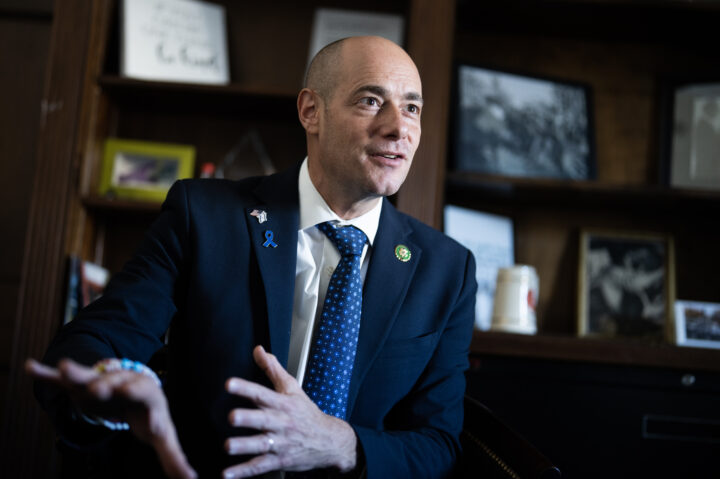
Tom Williams/CQ-Roll Call, Inc via Getty Images
Rep. Greg Landsman (D-OH) is interviewed by CQ-Roll Call, Inc via Getty Images in his Longworth Building office on Friday, November 3, 2023.
Rep. Greg Landsman (D-OH), in a webinar with Democratic Majority for Israel on Tuesday, emphasized that colleagues who push to block aid to Israel or recognize a Palestinian state risk emboldening Hamas, Hezbollah and Iran when they are on their back foot.
Landsman also laid out what he sees as preconditions for rebuilding Democratic support for the Jewish state.
“Saying, ‘We’re going to withhold aid, we’re going to unilaterally call for a Palestinian state’ — which exists where? Is that all of Israel? What are you talking about? — that suggests to Hamas, ‘Maybe we should keep fighting,’” Landsman said. “I don’t think that’s their intent. I think that it’s entirely appropriate to be critical of the government and decisions … without abandoning our ally.”
“Witholding aid does undermine our ally in a way that is really significant,” Landsman continued.
He said he’s trying to push colleagues in that direction. He added later that he believes that the war in Gaza is a “just war,” even if “it needs to come to an end.”
Asked about the longer-term path toward rebuilding Democratic support for Israel, Landsman said that an end to the war and new leadership in Israel would likely be critical steps in that direction.
“Once we get on the other side of this and we have a government that’s really actively pursuing peace, then the path for a lot of these folks who have felt alienated, to come back. I think is pretty clear,” Landsman said.
He added that peace must also come alongside continued efforts to beat back threats. “You do have to take out these terror armies, and you have to marginalize and completely sideline Iran as a threat, which is going to require constant work.”
He said he was encouraged to see the deal put forward by the Trump administration on Monday, arguing that the war “needs to end for a whole host of reasons,” including freeing the hostages and surging aid into Gaza.
“Israel’s standing in the international community has been diminished, which is a key strategy for Hamas. And this is one of the reasons why I think Netanyahu has got to figure out a way to end this war, because Hamas is succeeding at delegitimizing Israel in a way that is really harmful, way more so than anything it could do militarily,” Landsman said. “I think you’ve got to take that off the table, and that means ending the war.”
Landsman also said that “there’s still limited pressure on Hamas to end this war” and called on the Trump administration to employ “maximum leverage, maximum pressure” on the group, including by detaining Hamas leaders in Qatar.
He added that surging aid is “the right thing to do, it’s the Jewish thing to do and it’s also just strategically what has to happen if Israel is going to maintain its standing in the world and continue to get support.”
He said that positive steps are being taken but added that there are “serious issues with UNRWA that the U.N. and the international community have not gotten serious about.”
He also emphasized the need for an Arab-nation compact to bring the war to an end and deradicalize and rebuild Gaza with a new government that seeks peace with Israel.
“Get all 22 of them involved in a very formal and committed, long-term, sustainable way,” Landsman said. “I think that helps achieve the goals that we collectively have for ending this war and getting Gaza to a place where Hamas is gone, the strip is deradicalized and we’re in a position to help them rebuild with a new governing authority that wants peace with the state of Israel.”
Landsman suggested that such an effort could also unlock Arab-Israeli peace.
“An Israel that’s seeking peace is quite popular. I think that’s what [Saudi Crown Prince Mohammed bin Salman] would support. Once this war is over and there is a pathway to peace because these terror armies have been defeated … I think these folks do come back and say, ‘Okay, let’s be part of something,’” Landsman continued.
He said that the Trump administration needs a larger team, working full-time, on pursuing Middle East peace in the longer term. “You’ve got to get ironclad commitments from all of these countries. It’s got to be formal. They’ve got to come together in a formal, sustainable way.”
Without continuous White House pressure and attention, he warned that any peace that is reached is likely to crumble.
Sen. Lindsey Graham sounded skeptical that Hamas would accept the deal: ‘Distrust and verify with these guys’

Amir Levy/Getty Images
Senator Lindsey Graham (R-SC) speaks at a press conference on US-Israel relations on February 17, 2025 at the Kempinski Hotel in Tel Aviv, Israel.
Senators reacted with cautious optimism — and a degree of skepticism — to President Donald Trump’s announcement on Monday of a sweeping deal that would end the war in Gaza, see the release of the remaining hostages and facilitate reconstruction of the Gaza Strip.
Sen. Lindsey Graham (R-SC) warned that the execution of the deal would require close monitoring of Hamas’ compliance and that long-term peace in the region will likely require eliminating Iran’s other proxies, in addition to Hamas.
“I hope Hamas agrees — we’ll get the hostages home. Distrust and verify with these guys,” Graham said. “A lot of loopholes if you don’t watch it, but I hope we can land this deal.”
“When you talk about normalizing the Mideast, I’m all for that. But after Oct. 7, we have to learn one thing: As long as radical Islamic terrorist groups exist, you can’t have a normal Mideast,” Graham continued. “I hope we can land this deal and bring the hostages home and start a new chapter in Gaza and the West Bank, but I will never support normalization until Hezbollah is dealt with. You cannot say the Mideast is a normal place as long as Hezbollah is a threat the way it is today.”
He said that he’s concerned that Hezbollah would replicate Hamas’ Oct. 7 attack if Israel and Saudi Arabia again begin to move toward normalization again before the Lebanese terror group is eliminated.
“If we do the Hamas deal, we should insist that the region deal with Hezbollah and take them both down, then eventually the Houthis,” he continued. “My takeaway of Oct. 7 is if you don’t have these radical groups in a box, you can never really achieve peace.”
Sen. John Cornyn (R-TX) said that there are “some details to be filled in, but I think by and large this seems like a very encouraging development.”
Sen. Rick Scott (R-FL) was hesitant to offer an assessment of the deal before Hamas had agreed to the terms.
“It’s the deal that hasn’t happened yet. It’d be nice. I mean, I guess it would be great if we get the hostages back and we get a ceasefire and we get to rebuild Gaza. That all sounds really good. I’m glad that Trump cares about this. It seems optimistic,” he told JI.
Sen. Kevin Cramer (R-ND) expressed some hesitation about engaging with the Qataris and taking a deal, but suggested Trump was ready to bring the conflict to a close.
“It’s bold. It’s gutsy on the president’s part. I just will believe it when I see it. I’m just so skeptical of one side in this, getting Qatar in there and involved,” Cramer told JI. “Clearly we’re playing along a little. I don’t know. I just don’t know. I think the timing for Trump is sort of like, ‘Okay, now’s the time [for a ceasefire]. We’ve done the dance long enough.’”
Sen. Ted Budd (R-NC) said he’s reviewing the plan, adding that the elimination of Hamas is a necessity.
“You can’t have Hamas promising the destruction of Israel,” he continued. “As long as there’s no threat, I see an opportunity here, but you can’t make a deal with somebody that wants to exterminate you.”
Senate Foreign Relations Committee chair Jim Risch (R-ID) praised the plan on X. “President Trump again shows his commitment to peace with his plan to bring all the hostages home, end the war in Gaza and transition to a future that allows the Palestinian people to prosper without Hamas’ terror schemes,” Risch said. “Anyone who wants a better future for the Palestinian people should join this pursuit of peace.”
Sen. John Kennedy (R-LA) told Jewish Insider he’s “glad they look like they’re moving toward peace.”
“I don’t think Israel is worried any longer about being popular. I think Israel was worried about its survival, and I respect that. And they’re going to do whatever it takes,” Kennedy continued. “Now, will Hamas accept it? I don’t know. I really don’t know. I hope they do. But if they don’t, I think Israel needs to continue to do what it’s been doing and wipe Hamas off the face of the earth.”
Democrats expressed hope that the deal would bring the war to a close.
Sen. Chris Coons (D-DE) told JI, “I’m encouraged the president’s engaging directly and saying this war must end. Humanitarian relief needs to go in, hostages need to come out, there needs to be a plan going forward for Gaza,” but said he hadn’t seen the details of Trump’s announcement.
Sen. Richard Blumenthal (D-CT) said that he was not familiar with the specifics of the plan. “If there’s a ceasefire and return of the hostages and humanitarian relief, bravo,” Blumenthal said.
Sen. Peter Welch (D-VT), one of the most vocal critics of Israel’s Gaza operations in the Senate, told JI he hadn’t reviewed the plan but “my main concern [is to] start getting food and medicine in. That has to happen immediately.”
Sen. Jeanne Shaheen (D-NH), the ranking member of the Foreign Relations Committee, said in a statement. “I call on Hamas to accept, and Israel to faithfully implement, the proposal laid out by the United States.”
Prior to the meeting, leading Senate Democrats had urged Trump to press Israeli Prime Minister Benjamin Netanyahu to accept a hostage deal that ends the war, as well as to pressure Netanyahu to rule out annexation of the West Bank.
The Israeli PM said the country’s ‘support quickly evaporated when Israel did what any self-respecting nation would do in the wake of such a savage attack: We fought back’
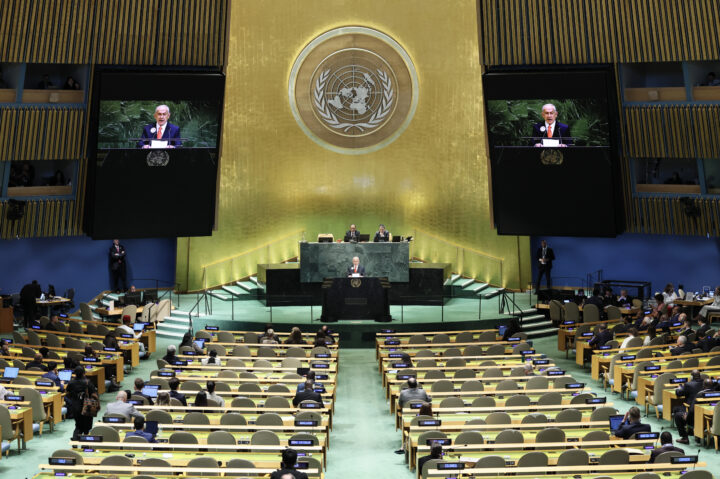
Michael M. Santiago/Getty Images
Israeli Prime Minister Benjamin Netanyahu addresses world leaders during the United Nations General Assembly (UNGA) at the United Nations headquarters on September 26, 2025 in New York City.
In Israeli Prime Minister Benjamin Netanyahu’s address to the United Nations General Assembly on Friday morning, he painted a picture of a nation abandoned by its allies, who he said had caved to “radical Islamist constituencies and antisemitic mobs” — a message underscored by the backdrop of a mostly empty General Assembly room, following the walkout of dozens of diplomats at the start of his speech.
Netanyahu began with a victory lap, hailing Israel’s military successes against Hezbollah, Iran and even Hamas over the past year. But much of the speech was defensive in nature, relying on rhetoric he has invoked frequently over the last two years. He articulated the reasons why Israel is still fighting Hamas, despite the fact that Israel “crushed the bulk of Hamas’ terror machine.” And he attacked the U.N. and the countries that he said had shown up for Israel in the days after the Oct. 7 attack but that have since changed course.
“In the days immediately following Oct. 7, many of them supported Israel. But that support quickly evaporated when Israel did what any self-respecting nation would do in the wake of such a savage attack: We fought back,” he said.
He defended Israel’s handling of the war in Gaza as moral and appropriate, saying the nation faces “the false of charge of genocide.”
“The truth has been turned on its head. Hamas is a genocidal terrorist organization whose charter calls for the murder of all Jews on the planet. This genocidal organization is given a pass while Israel, which does everything it can to get civilians out of harm’s way, Israel is put in the dark. What a joke,” said Netanyahu.
Known for his theatrics in his annual U.N. address, Netanyahu wore a large button with a QR code that linked to a website featuring gruesome videos of Hamas’ attack on southern Israel two years ago. He also told the crowd that he had directed the IDF to set up loudspeakers to broadcast his speech out loud on the Gaza border, a measure he said was meant as an attempt to reach Israeli hostages still held in Gaza — and that the remarks were being carried live on the cell phones of Gazans, to convince Hamas to “lay down your arms.”
Netanyahu repeatedly invoked the Sept. 11 terror attacks and the global war on terror as proof of the depravity Israel is fighting in Gaza.
“Giving the Palestinians a state one mile from Jerusalem after Oct. 7 is like giving Al-Qaida a state one mile from New York City after Sept. 11. This is sheer madness. It’s insane, and we won’t do it,” said Netanyahu. The Israeli prime minister has doubled down in his pledge to never allow the creation a Palestinian state after France, the United Kingdom, Australia and Canada unilaterally recognized a Palestinian state this week.
He slammed those nations, saying their move “reward[s] the worst antisemites on earth.” They chose to recognize a Palestinian state, Netanyahu said angrily, even though “nearly 90% of Palestinians supported the attack on Oct. 7 … just the way they celebrated another horror, 9/11.”
Netanyahu offered little to those who want to see Israel present a plan for the end of the war and for the governance of Gaza without Hamas, though he said Israeli “victory” would open opportunities for peace in the region.
“Victory over Hamas will make peace possible with nations throughout the Arab and Muslim world. Our victory would lead to a dramatic extension and expansion of the historic Abraham Accords, which President Trump brokered between Arab leaders and myself five years ago,” said Netanyahu. He did not address whether he would move to annex parts of the West Bank, which Saudi Arabia — Israel’s top target for normalization — said earlier this week would be a “red line,” and that President Donald Trump said yesterday he will not allow.
He closed with a prayer for a speedy victory, even if Israel has to achieve it alone.
“The rise of Israel did not mean that the attempts to destroy us would end. It meant that we could fight back against those attempts, and that is exactly what Israel has done since Oct. 7,” said Netanyahu. “Two years later, the resolve of Israel and the strength of Israel burn brighter than ever. With God’s help, that strength and that resolve will lead us to a speedy victory into a brilliant future of prosperity and peace.”
In appearance at think tank, Malley also said President Biden was less committed to a nuclear deal than President Obama

BRENDAN SMIALOWSKI/AFP via Getty Images
Robert Malley, Biden administration special envoy for Iran, waits to testify about the JCPOA (Joint Comprehensive Plan of Action) during a hearing of the Senate Foreign Relations on Capitol Hill May 25, 2022, in Washington, D.C.
Rob Malley, the Biden administration’s Iran envoy, revealed Thursday that the investigation into his alleged mishandling of classified information, which prompted the suspension of his security clearance and his suspension from his post, was closed earlier this year.
“I didn’t know what they were looking at. The claim was that I mishandled classified information. I don’t know what they were referring to. They never told me what they were referring to. I still don’t know what they’re referring to. I may never know what they were referring to or looking at,” Malley said on a Carnegie Endowment for International Peace webinar on Thursday. “I do know that after roughly two years of the situation, the Justice Department notified my lawyers that they had closed the investigation.”
Malley was first suspended around April or May of 2023, which would likely place the end of the investigation — based on the two-year timeline Malley laid out — during the Trump administration.
A State Department inspector general’s report last year found that Malley’s suspension had been mishandled: State Department officials allowed him to temporarily remain in his role as Iran envoy and failed to broadly disclose the fact that he had been suspended, even to his direct supervisor or other top officials.
Congressional Republicans have sought for years to obtain additional information about the investigation, but were consistently refused by State and Justice Department officials. They have alleged Malley transferred classified information to a personal device, which was hacked by a hostile actor.
Discussing Iran talks under the Biden administration with moderator Aaron David Miller, a Carnegie senior fellow, Malley suggested that President Joe Biden was never as interested in or committed to reaching a nuclear deal as President Barack Obama had been, and was unwilling to expend the political capital needed on Capitol Hill or with Israel to make a deal happen.
“When I started off with the Biden administration, I thought President Biden was eager to get back into the deal. That was a misperception on my part. And we took our healthy time to express our interest to the Iranians. And we started off by saying that we wanted a longer, stronger deal,” Malley said. “I think at some point the Biden administration, the team, concluded this is not working, and so we went back to a pure revival of the deal. But by then, perhaps the Iranians had different ideas in mind.”
He said that both Biden and Iranian Supreme Leader Ayatollah Ali Khameinei had been unenthusiastic about reaching a deal and overestimated the other side’s interest in it.
Malley criticized the Biden administration for keeping the Trump administration’s maximum pressure sanctions in place to try to bring Iran to the table after campaigning against those sanctions.
“For President Obama, this was a priority. It was one of his top foreign policy, perhaps even top priority writ large,” Malley said. “I think President Biden never felt that it was that important. He never was in love with the deal. And I think he was not prepared to overcome for a long time the political obstacles that he was facing and the regional obstacles — Israeli opposition in particular.”
He argued that if the Biden administration had been able to “rip the band-aid” and seal a deal early on in Biden’s term, it could have mitigated, if not fully avoided, the political backlash in the midterms and the 2024 election, though he said that he was unsure if the Iranians would have agreed to a deal, given their fear that a future U.S. administration would have again withdrawn.
Malley added that there had been a “real chance” to reach a deal in August 2022, but said that “at that point was clearly [the Iranians’] responsibility” to agree.
He also said that the core premise of the 2015 Joint Comprehensive Plan of Action — that Iran’s nuclear program and sanctions relief could be decoupled from Iran’s other malign activities in the region — may have been faulty, given both American and Iranian political considerations.
Asked by Miller if he would have resigned from the Biden administration over its handling of the war in Gaza, had he still been in his position, Malley said he “very much would like to think that I would have resigned.”
He called the U.S.’ handling of the war “a blemish, a scar that we’re not going to be able to overcome, far worse than Iraq, in my view, because this is a case where we enabled, participated in, fueled, what an increasing number of organizations are calling a genocide.”
In an interview with JI, Ambassador Gilad Cohen discusses his push to persuade Japan not to recognize a Palestinian state at the UNGA
Courtesy Gilad Cohen
Israeli Ambassador to Japan Gilad Cohen
TOKYO — As Japan decided against recognizing a Palestinian state at the United Nations General Assembly on Friday, Israeli Ambassador to Japan Gilad Cohen told Jewish Insider in a wide-ranging interview in Tokyo that he is appreciative of Japan, “an important factor of the international community.”
On Friday evening, Japanese Foreign Minister Takeshi Iwaya called his Israeli counterpart, Gideon Sa’ar, to update him that after weeks of deliberation, Japan decided it will not recognize a Palestinian state at the UNGA.
“Sa’ar appreciated [the] decision and briefed [Iwaya] about Israel’s actions against Hamas chiefs in Qatar and IDF operations in Gaza,” Cohen told JI. “I join my foreign minister in appreciating Japan, a member of the G7, and an important factor of the international community, and for the deep friendship of our nations.”
“A recognition of a Palestinian state would be a reward to Hamas after the Oct. 7 terrorist attacks, would not contribute to peace and would not build on the trust of Israelis in the future,” he said. In recent weeks, Cohen relayed that message to Japanese ministers as the country weighed recognizing a Palestinian state as several governments, including those in Britain, France, Australia and Canada, have announced plans to do at the UNGA.
“This recognition is null and void because when you acknowledge a state there have to be conditions — what are the boundaries? Do you have effective control of the population? Nothing about that works with the Palestinians,” Cohen told JI. “Are they going to dismantle Hamas? Are they going to continue paying salaries for families of suicide bombers? Are they going to continue to have pacts with Iran against Israel? Is there going to be a repetition of Oct. 7 because they have a state? We are the Jewish people, we always have to be concerned and worried.”
For Cohen, who assumed office as ambassador of Israel to Japan in October 2021 following a stint as deputy director general for Asia and Pacific division in the Israel Ministry of Foreign Affairs, Japan’s consideration of recognizing a Palestinian state has been one of only a few disagreements he’s held with local politicians since arriving in Tokyo. In the immediate aftermath of the Oct. 7 attacks, “the Japanese government stood by Israel, called for an immediate and unconditional release of our hostages and said publicly that Hamas should be dismantled,” Cohen said.
“I thank the Japanese for acknowledging that Hamas is a terrorist organization and for saying that Iran is the number one destabilizer of the region. I want to thank the Japanese government for standing on the right side of history.”
When war broke out between Israel and Hamas soon after the Oct. 7, 2023, Hamas attacks on Israel, Japan, as a member of the U.N. Security Council, “was trying to influence the release of the hostages and not to [attack] Israel. They were not mediating, but there were messages Japan was trying to deliver for both sides in order to bring our hostages back,” Cohen recalled.
Looking ahead to the postwar period, Cohen suggested that Japan will contribute to rebuilding the Palestinian economy. “We will welcome any kind of investment in the Palestinian economy to revive it,” he said. “Economy is a major part of the vision of Palestinians living side by side with Israelis in peace and security.”
While tourism from Japan to Israel has seen a decline amid the war, Cohen said that joint business ventures between the two countries have increased over the past two years, as Israeli tech companies engage with Japan’s industrial giants and venture capital networks.
“Investments from Japanese companies in Israel were much higher in 2024 than 2023, including in AI and technology,” he said. “There is a saying that Israel can do things from zero to one and Japanese can take them from one to 10. Israeli innovation and startups can be combined with Japanese wisdom, experience and production ability that Israel doesn’t have.”
When it comes to creating cars, for example, an area that Japan is a global leader in, “Israel should focus on the brain of the car, systems that prevent accidents such as Waze and Mobileye,” said Cohen. “The synergy that we can learn from Japan — and we can share our experience with them — I see a lot of potential in economic relations. Japanese companies are looking at Israeli startups with great interest. In the last two and a half years, there have been direct flights from Israel to Japan, which is important because businessmen and investors do not have time to waste. This is an engine for connecting the people of Israel and Japan.”
Israel is among the handful of countries that Japan has a free trade deal with, an agreement signed by Cohen in March 2023. It allows 200 Israelis to come to Japan annually on a visa for one year of work, study and travel. At the same time, 200 Japanese citizens can come to Israel for one year to do the same.
Cohen sees himself not only as an ambassador of Israel “but also as representing the Jewish people in Japan,” he said, describing a small but vibrant community. Tokyo is home to two Chabad houses and a Jewish community center, which runs a pluralistic synagogue. The cities of Kyoto and Kobe also each have a Chabad. All five centers primarily cater to tourists.
It can be a challenge to navigate Holocaust education and antisemitism awareness in a country with limited historical exposure to those issues, Cohen said, recommending that all Japanese visit the Holocaust Education Center in Fukuyama City, near Hiroshima.
“The Japanese government comes to commemorate our Holocaust memorial days,” Cohen told JI. “They give thanks to [Chiune] Sugihara,” he said, referring to the Japanese diplomat who, while posted in Lithuania, saved thousands of Jews during the Holocaust. “We are participating in ceremonies to commemorate him. In Japan, he became a hero.”
“I see a lot of potential in the future when things calm down in the region,” continued Cohen. “I would like to have future agreements signed with Japan to boost the economy on both sides. I have many things on my agenda, but this will be after Rosh Hashanah.”
If sanctions return, the Iran nuclear deal ‘is dead, we’re sitting shiva, it is over. That is an unpredictable reality for the regime, for its economy and its financial stability,’ Rich Goldberg said
Screenshot
Foundation for Defense of Democracies senior advisor Richard Goldberg on the Misgav Institute for National Security and Zionist Strategy’s Mideast Horizons podcast, Sept. 2025
The Sept. 27 deadline to snap back United Nations sanctions on Iran’s nuclear and other weapons programs is rapidly approaching.
The E3 — as France, Germany and the U.K. are known — announced last month that they planned to trigger the snapback sanctions mechanism, meaning the likely return of all U.N. sanctions that had been “sunsetted” per the 2015 Iran nuclear deal.
In an interview with Jewish Insider’s Lahav Harkov on an episode of the Misgav Institute for National Security and Zionist Strategy’s Mideast Horizons podcast, Foundation for Defense of Democracies senior advisor Richard Goldberg explained the snapback procedure and how the sanctions are expected to damage Iran’s economy.
Goldberg recently finished a stint as the Trump administration’s National Energy Dominance Council’s senior counselor and was the director for countering Iranian weapons of mass destruction in the first Trump administration.
“The Iran nuclear deal, in 2015, set out all kinds of parameters for the years to come,” Goldberg said. “In 2020, the conventional arms embargo on Iran went away. That was scheduled to happen as one of these sunsets under the deal. That was a [U.N.] Security Council restriction previously on Iran. … The missile embargo goes away.”
Another part of the Iran deal set to sunset was the snapback mechanism itself, which expires at the end of this month.
Snapback “was part of the marketing sell to Congress and the American people by [former Secretary of State] John Kerry and [former President] Barack Obama at the time, saying that if Iran violates the deal at any time, we can just bring back all the sanctions from the U.N.,” Goldberg recounted.
The snapback procedure outlined in the Joint Comprehensive Plan of Action, the formal name for the Iran deal, states that after snapback is invoked, other U.N. Security Council members have 10 days to propose a resolution opposing the return of the sanctions. The council would then have to affirmatively vote not to enact snapback, with the permanent members retaining veto power, Goldberg explained.
Ten days after the E3 triggered the snapback sanctions process, no country had submitted such a resolution, requiring the current president of the UNSC, South Korea, to do so instead, and hold a vote within the 30-day period from the snapback announcement. The vote has not been scheduled yet, and in all likelihood, the U.S., France or the U.K. will veto the resolution, such that snapback will take effect.
“The process does appear to be unfolding by the book,” Goldberg said.
“The onus is on the Iranians or the Russians or the Chinese to try to overcome a U.S. or European veto,” Goldberg said. “We have all the cards.”
If the resolution to cancel snapback does not pass, then the JCPOA “sort of self-destructs,” he said. That means the return of the U.N. missile embargo and conventional arms embargo on Tehran, and Iran will no longer be permitted to enrich any uranium.
“Then, it’s on the secretariat, the U.N. staff, the secretary-general … to actually do the things that need to happen to roll back to the previous sanctions regime,” Goldberg said. “And that will be the next test to see if the Russians or Chinese exert some kind of pressure. … I expect it will occur at this point.”
Goldberg said it is important not to stop the snapback process, even if Iran suddenly agrees to cooperate.
“You don’t stop the snapback, which goes away in just a few weeks,” he said. “You cannot trigger this again after October; it’s done. Iran just wins all these strategic gains forever. … You have to complete the snapback because you don’t get another chance at it.”
The impact of snapback would be significant on several fronts.
“On a strategic level, they will no longer have any claim of legitimacy to transfer weapons to Russia,” Goldberg said. “Technically, the Russians today will tell you that it is fully legal under the Security Council, which is true. … That will be done after the snapback is completed.”
It also sends a message to any other countries who may want to help Iran rebuild its nuclear program or its missile activities that “you are in violation of a Security Council resolution and [the U.S. and Europe] are going to hold you accountable.”
In addition, Goldberg said the sanctions will hurt the regime economically.
“I think that’s one of the reasons why they fought this so hard,” he said.
Throughout the years, as the E3 spoke out against Iran’s violations of the JCPOA, the deal was still in place, Goldberg said, and even as the Iranian economy tanked, the sunsetting of sanctions gave the markets hope that they had not yet reached bottom.
“You have seen the Rial go back into freefall since snapback was triggered. That means there’s instability again. There’s uncertainty again. Once snapback happens and all the international resolutions come back, there is no hope of the JCPOA coming back. …The patient is dead, we’re sitting shiva, it is over. I think that is an unpredictable reality for the regime, for its economy and its financial stability,” he said.
At the same time, the U.N. sanctions are not financial; they are on weapons programs and trade in components, but not on individuals or banks.
Goldberg argued that Iran “value[s] the veneer of legitimacy” from being part of the Nuclear Non-Proliferation Treaty and what the sunsetting of U.N. sanctions permitted — such as selling drones that Russia used in its war against Ukraine.
“It’s a bizarre thing in regimes like Iran, even Russia, China, though they flout international law, conduct illicit activity, make a mockery of the international institutions which we founded and still care about,” he said, “they actually try to use them to create their own sense and source of legitimacy, so a Security Council resolution that has their back … is really valuable to them because it forces the Europeans to contort themselves.”
“They yearn for that legitimacy to insulate themselves from further pressure from good actors,” he added.
Last week, Iran was elected vice-chair of the International Atomic Energy Agency’s annual conference, while refusing to allow the agency to inspect its nuclear sites.
“Only in the United Nations can such a thing occur,” Goldberg said, calling it “a wild, wild thing.”
Iran is supposed to allow basic inspections of its nuclear facilities as a member of the Non-Proliferation Treaty. Under the framework of the JCPOA, they agreed to adopt “additional protocols,” including snap inspections and videotaping of their nuclear facilities. Iran stopped respecting those commitments years ago.
Still, the IAEA was able to release quarterly reports on Iran’s enriched uranium stockpiles, something that Goldberg said is “not going to happen for the foreseeable future, because all those stockpiles and the materials and the facilities are either heavily degraded or destroyed” by the June strikes by Israel and the U.S.
The world, however, “should be worried long-term about reconstitution efforts,” he said.
The question remains how the world will know if Iran tries to reconstitute its nuclear program, given the lack of oversight.
“We will have to rely on Western intelligence between Israel, the U.S., partners and allies, and whatever else the IAEA can glean on its own from visits and tours that the Iranians allow … We should obviously be pushing them to accept inspections, robust verification and dismantlement of anything that is left over. … The nuclear-capable missile program still has infrastructure and could be threatening … and maybe foreign actors come in to help them as well,” Goldberg said.
Plus, Patel probes far-left protest funding

Good Wednesday morning.
In today’s Daily Kickoff, we interview Sen. Steve Daines about his weekend visit to Israel and have the scoop on a letter signed by 50 Senate Republicans urging the foreign ministers of the U.K., France and Germany to hold firm in triggering snapback sanctions on Iran. We report on FBI Director Kash Patel’s comments that federal investigators are probing the funding sources of left-wing protest movements and highlight a call by House Republicans on the White House to probe far-left billionaire Neville Roy Singham’s ties to China. We also cover a press conference held yesterday by Israeli Prime Minister Benjamin Netanyahu to clarify his previous comments that the Jewish state will need to be like “super-Sparta” and adapt to “autarkic characteristics.” Also in today’s Daily Kickoff: Gov. Josh Shapiro, Rep. Josh Gottheimer and Alex Karp.
Today’s Daily Kickoff was curated by Jewish Insider Israel Editor Tamara Zieve and U.S. Editor Danielle Cohen-Kanik, with an assist from Marc Rod. Have a tip? Email us here.
What We’re Watching
- President Donald Trump and First Lady Melania Trump are spending the day in England for a royal visit, where they will be welcomed by King Charles III and Queen Camilla at Windsor Castle.
- This morning, the House Foreign Affairs Committee will hold a markup of bills aimed at reorganizing and reforming the State Department. Read JI’s breakdown of the legislation here.
- The Senate Foreign Relations Committee will vote to advance a series of nominees out of committee, including Michel Issa to be ambassador to Lebanon; Richard Buchan to be ambassador to Morocco; Ben Black to lead the U.S. International Development Finance Corporation; and a second vote on the nomination of Mike Waltz, the former national security advisor, to be U.S. ambassador to the U.N., in order to prevent a procedural challenge from Democrats.
- Also on the Hill, the U.S. Helsinki Commission will hold a briefing on “conspiracy theories, antisemitism and democratic decline.”
- The annual Defense of Freedom-Federalist Society Education, Law & Policy Conference examining the most pressing legal and policy issues in education kicks off today in Washington. Featured speakers include Secretary of Education Linda McMahon and Brandeis Center Chairman Kenneth Marcus. One of the panels will focus on discussing the federal government’s efforts to combat antisemitism.
What You Should Know
A QUICK WORD WITH JI’S JOSH KRAUSHAAR
A new poll of young conservatives between the ages of 18-34 commissioned by the Washington Free Beacon shows that Gen Z Republicans are decidedly more supportive of Israel than their liberal counterparts, but that there is a notable faction of those who take a more critical view towards the Jewish state.
The Echelon Insights poll also found that anti-Israel and antisemitic podcasters like Nick Fuentes, Tucker Carlson and Candace Owens are viewed favorably by this right-wing cohort — even among many of the respondents who say they support Israel and recognize antisemitism is a problem.
Carlson’s favorability rating among these Gen Z conservatives, for instance, is 50%, with only 11% viewing him unfavorably. Owens has a similarly strong 49/14% favorability rating. The Holocaust-denying podcaster Darryl Cooper isn’t nearly as well-known, but is viewed positively by those who listen to him, holding a 26/8% favorability rating.
At the same time, pro-Israel podcasters like Ben Shapiro are also viewed very favorably; Shapiro’s favorability rating with this cohort is 50/16%. Fox News host Mark Levin isn’t quite as well-known, but holds a stellar 29/7% favorability rating. Asked about “Jews” generally, half of respondents hold a favorable view with only 12% holding an unfavorable opinion.
The encouraging news? A number of these podcast listeners are tuning in to these transgressive shows featuring conspiracy theories, anti-Israel views and some antisemitism, but many are not being persuaded by them. For all their vitriolic attacks against the Jewish state, 54% of Carlson’s viewers and 58% of Owens’ audience have a favorable view towards Israel.
But the gloomier finding is that a notable minority on the right holds bigoted views towards Jews and is critical of Israel. Between 20-25% of these Gen Z conservatives consistently express anti-Israel or antisemitic views — while support for Israel is not nearly as widespread as it is among older conservatives. While 40% of respondents said they side with Israel in its current conflict, about one-fifth (22%) said they side with the Palestinians. About the same percentage of Gen Z conservatives said they agree that “Israel is a colonizer built on the suffering of others.”
KARP’S CALL

Palantir CEO Alex Karp called for the Jewish community to step outside its “comfort zone” and look for new strategies to defend itself amid rising antisemitism, during a speech on Tuesday at the American Friends of Lubavitch (Chabad) annual Lamplighter Awards in Washington. Karp, who was honored at the Chabad gala, also framed the battle against antisemitism as part of a broader fight for Western civilization and societies, Jewish Insider’s Marc Rod reports.
What he said: “Lessons that we’ve learned at Palantir … might be valuable for defending the West, in this particular case a particular tribe of people that are equally associated with the West, the Jewish people,” Karp said. “Palantir is a metaphor for working when there’s no playbook, and currently there is no playbook because institutions that have historically effectively defended people who’ve been discriminated against, especially Jewish people, are kind of not working.” Karp continued, “If we’re going to have a meaningful chance of fighting, everybody’s going to have to leave their comfort zone a couple times a year. It’s our job and my job to remind people [of] that, especially younger people here.”
trip talk
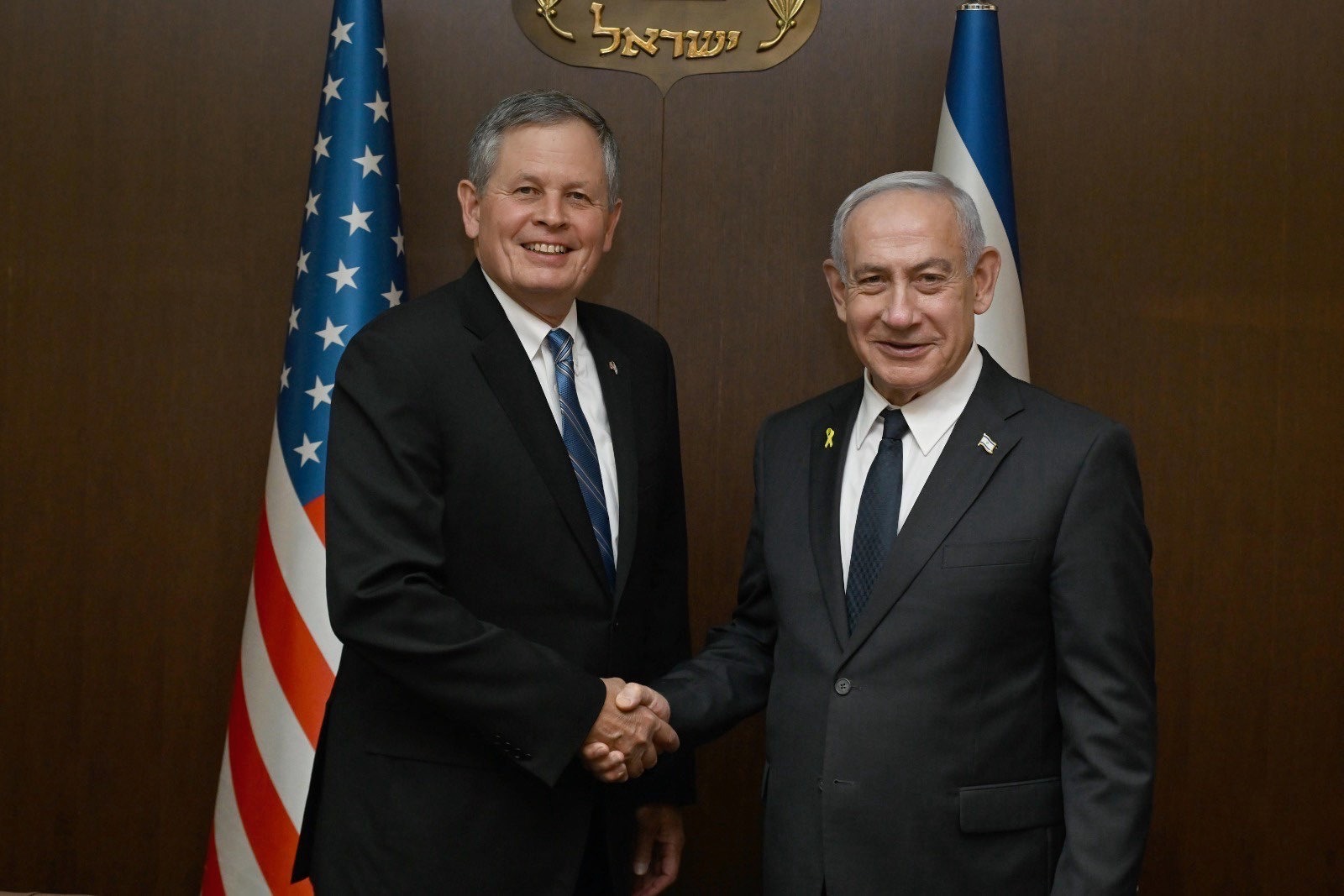
Sen. Steve Daines (R-MT) said he left Israel from a weekend visit with a renewed belief in the U.S.-Israel relationship and the necessity of fully eradicating Hamas, as the IDF begins expanded operations in Gaza City, Jewish Insider’s Marc Rod reports.
Doubling down: “It just reinforced my position of the importance that the United States stands with Israel, and in supporting Israel in their mission to eradicate Hamas in Gaza,” Daines said in an interview with JI this week, reflecting on a meeting with Israeli Prime Minister Benjamin Netanyahu. “There will never be true peace in Gaza and peace with Israel until Hamas is eradicated.” He said that it’s also crucial for innocent Palestinians that Israel be successful in its mission to defeat Hamas. Daines said that he didn’t discuss the postwar vision for Gaza with Netanyahu, “but clearly the important first step will be eradicating Hamas.”
SCOOP

Fifty Senate Republicans wrote to the foreign ministers of the U.K., France and Germany on Tuesday urging them to hold firm in triggering snapback sanctions on Iran and requesting their cooperation in sanctions enforcement, Jewish Insider’s Marc Rod reports.
Notable quotable: “While we back diplomatic efforts to restore Iran’s compliance with its International Atomic Energy Agency (IAEA) commitments, the international community should not allow hollow gestures and cynical threats from Tehran to stop the snapback process,” the lawmakers wrote. “The regime has abused diplomatic processes for years to avoid penalties. Sanctions relief should only be negotiated after snapback is fully implemented.”
COMMENT CLEAN-UP
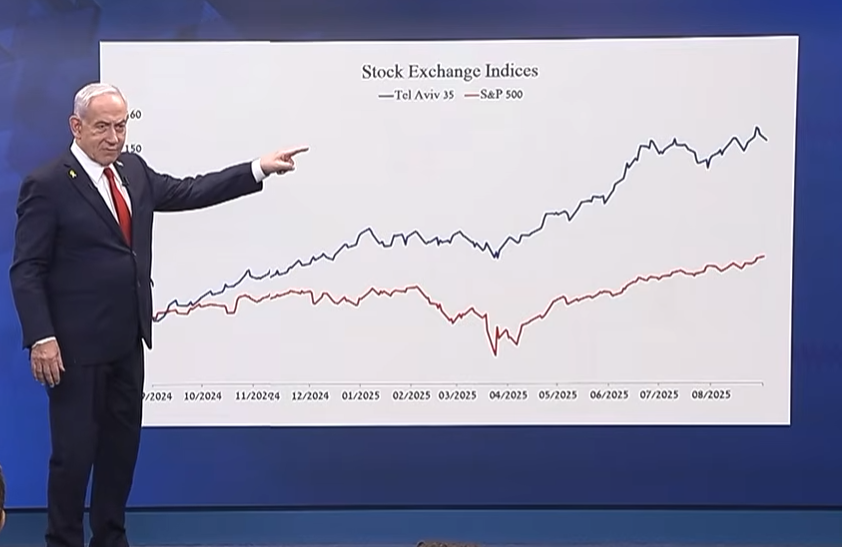
Israeli Prime Minister Benjamin Netanyahu clarified his remarks that Israel’s economy may “need to adapt to … autarkic characteristics” on Tuesday, after a dip in the Tel Aviv Stock Exchange and after business and industry leaders came out against Netanyahu’s remarks, saying that “an autarkic economy will be a disaster for Israel,” and “this vision … will make it hard for us to survive in a developing globalized world,” Jewish Insider’s Lahav Harkov reports.
Damage control: A day later, Netanyahu called a press conference amid widespread concern in Israel, clarifying that his comments were specific to the Israeli defense industry. In the defense industry, he said “there are limitations that are not economic, but political.” He stated, “If there’s one lesson from this war, it is that we want to be in a situation where we are not limited. We want to defend ourselves by ourselves and with our own weapons. We are going to produce an independent arms industry that is very strong that can withstand any political constraints.”
WH invite: In the press conference, Netanyahu also said he had spoken on the phone with President Donald Trump several times since Israel’s strike aimed at Hamas leaders in Qatar last week, including one in which the president invited him to the White House. Netanyahu said he will be meeting with Trump in Washington on Sept. 29.
PROTEST PROBE
FBI Director Kash Patel said on Tuesday that federal investigators were looking into the funding sources for left-wing groups behind organized protest movements that have resulted in rioting on city streets and civil rights violations on college campuses. Patel made the comments while appearing before the Senate Judiciary Committee for a marathon oversight hearing, where he faced dozens of questions from Democrats and Republicans about the assassination of conservative influencer Charlie Kirk last week, Jewish Insider’s Emily Jacobs reports.
Follow the money: Sen. Ted Cruz (R-TX) urged Patel to investigate the financing of far-left groups that the Texas senator said may have influenced the suspected shooter and supported protests in recent years that saw instances of rioting or other illegal activity. “As I’ve always said, Senator, money doesn’t lie. We’ve been following the money, and that’s what we’re doing, issuing a lawful process to organizations involved with criminal activity because the money has got to come from somewhere,” Patel told Cruz.
Money matters: The House Oversight Committee asked the Trump administration on Monday to investigate if far-left billionaire Neville Roy Singham’s bankrolling of “extremist organizations fueling division and civil unrest across the United States” would qualify him for federal sanctions or make him eligible for criminal or legal penalties.
SHAPIRO’S SERMON

Amid an alarming rise in political violence, Pennsylvania Gov. Josh Shapiro said Tuesday that the way to combat extremism and division is by bringing people together and restoring their faith in the government — a civic-minded strategy that included some thinly veiled swipes at President Donald Trump and the hard-line rhetoric he has adopted since conservative activist Charlie Kirk was killed in Utah last week, Jewish Insider’s Gabby Deutch reports.
What he said: “I believe we have a responsibility to be clear and unequivocal in calling out all forms of political violence, making clear it is all wrong,” Shapiro, a Democrat, said in a keynote address at the Eradicate Hate Global Summit, a Pittsburgh conference created in the aftermath of the 2018 mass shooting at the Tree of Life synagogue. “Unfortunately some, from the dark corners of the internet all the way to the Oval Office, want to cherry pick which instances of political violence they want to condemn.” Shapiro leaned on Jewish teachings in his speech, referring as he often does to how his faith underpins his public service.
Worthy Reads
Out in Left Field: Former Obama administration official Ken Baer writes in the Washington Post about how DSA-affiliated New York City mayoral nominee Zohran Mamdani is an affront to Democratic Party principles. “It is “spineless politics” to do precisely what [Sen. Chris] Van Hollen, [Gov. Kathy] Hochul and other Democrats have done — and that more Democrats presumably will do in coming days — by casting aside the party’s time-honored liberal principles to back Mamdani. Addressing the affordability crisis is noble. But who’s against affordability? What matters is not just a party’s policy ends, but also its means and its rationale for pursuing them. In the months since President Donald Trump’s victory, Democrats have made no progress in articulating what they are for — and why … At best, this failure presents Democrats as inauthentic as they explain and backpedal when confronted with extreme beliefs from the party’s left but offer nothing in replacement. At worst, it allows the left — within and outside the party — to define the party” [WashPost]
Good Cop, Bad Cop: In The Free Press, Michael Doran, senior fellow and director of the Center for Peace and Security in the Middle East at the Hudson Institute, weighs in on what he describes as President Donald Trump and Israeli Prime Minister Benjamin Netanyahu’s “good cop-bad cop” routine. “Israel’s ability to go on offense places it in a rare category among U.S. allies. Most lack the will or capacity to wage war independently. Critics like Tucker Carlson depict Israel’s independence as a liability, dragging America into fights that don’t serve its interests. Trump sees the reverse: Unilateral Israeli military operations spare American forces and serve U.S. strategic goals. In just two years, Israel has blunted Iran’s nuclear ambitions, hammered Hezbollah, neutered Hamas, and weakened the Houthis—achievements many Americans view as enhancing their own security.” [FreePress]
History Lesson: In The Atlantic, Arash Azizi revisits the history of Zionism amid growing use of the term as a slur. “One summer in Brooklyn, a controversy broke out in my dog-park group chat. Dedicated to the upkeep of the park and welfare of our canines, our chat had never indulged in politics before. But someone was now complaining that a dog-insurance company was ‘Zionist,’ and a passionate debate ensued … To criticize someone for supporting, say, the Israeli government or its war in Gaza is one thing. But this charge is broader and vaguer, uttered sometimes in circumstances with no reference to Israel, and in many cases as little more than an anti-Semitic dog whistle. I’m probably the only Middle Eastern member of that park group chat. I’m also a historian by training. I jumped in to say that I didn’t think Zionist should be used as a term of derision. Zionism is a nationalist movement, I insisted, and like other nationalist movements, it has a story rooted in the 19th century—one that is neither all good nor all bad. To call someone a Zionist as an insult is as strange as attacking someone for being a Ghanaian or Chinese nationalist. I’m not sure how many people I convinced. But to me the history of Zionism bears revisiting as a reminder of its impetus and early diversity.” [Atlantic]
Word on the Street
Israeli and U.S. officials continue to lament the failure of the Israeli strike in Doha, Qatar, both substantively and diplomatically, with one Israeli official telling Axiosthat “none of the top Hamas leaders were killed” and an American official saying they’d advised Israel to take steps to rectify its relationship with the Trump administration…
Rep. Josh Gottheimer (D-NJ) wrote to Kathy Goldenberg, the president of the New Jersey State Board of Education, on Monday urging the state to reject calls from the New Jersey chapter of the Council on American-Islamic Relations for the state’s education boards to cut ties with the Anti-Defamation League, Jewish Insider’s Marc Rod reports…
Advocates with the Anti-Defamation League are set to lobby lawmakers this week on a series of actions related to antisemitism, including a push to jump-start the stalled Antisemitism Awareness Act, Jewish Insider’s Marc Rod reports…
A new plaintiff was added to a lawsuit brought by the Louis D. Brandeis Center for Human Rights under Law against the Massachusetts Institute of Technology. The complaint alleges that a Jewish graduate student was cornered in a campus parking lot by masked individuals calling for death to Israel and Zionists and faced a “campaign of hostility” inside his lab, and the university took no action when it was reported. The original complaint focused on a tenured linguistics professor who publicly harassed an Israeli postdoctoral researcher at the school…
Jerry Greenfield, co-founder of Ben & Jerry’s, has quit the ice cream company, saying that the business has been “silenced” by parent company Unilever on social issues; Unilever and Ben & Jerry’s have clashed in recent years over issues related to the Israeli-Palestinian conflict…
Israel presented Syria with a new security agreement several weeks ago, Axios reports, and Syria is now preparing a counterproposal. Israeli Strategic Affairs Minister Ron Dermer, Syrian Foreign Minister Asaad al-Shaibani and U.S. envoy Tom Barrack are set to meet in London on Wednesday to discuss the proposal…
Israeli strikes in Gaza City have reportedly cut off internet and telephone services in the city…
Iran executed Babal Shahbazi, whom it accused of spying for Israel, Iranian state media reported today…
The U.S. and China are finalizing a deal to transfer 80% of ownership of TikTok’s U.S. business to an investor consortium including Oracle, Silver Lake and Andreessen Horowitz. The new U.S. app will still utilize ByteDance’s algorithm, and Oracle will handle its user data in Texas…
Carl Heastie, the Democratic speaker of the New York State Assembly, is expected to endorse New York City Democratic mayoral nominee Zohran Mamdani this week, The New York Times reports, one of several state leaders in the party who have thus far resisted doing so, while Jay Jacobs, chair of the New York Democratic Party, told several people he does not plan to endorse Mamdani. Rep. Yvette Clarke (D-NY), chair of the Congressional Black Caucus, is reportedly set to endorse him on Monday…
Rep. Elise Stefanik (R-NY) introduced a bill that would “prohibit state and local law enforcement from arresting foreign nationals within the United States” solely based on warrants from the International Criminal Court, as Mamdani has threatened to do to Israeli Prime Minister Benjamin Netanyahu…
Sens. John Fetterman (D-PA) and Dave McCormick (R-PA) appeared on Fox News’ “Special Report” with Bret Baier on Tuesday evening for a discussion on improving political civility, where the duo condemned the use of political rhetoric equating one’s political opponents to Nazis or Adolf Hitler. “When you see dangerous rhetoric like fascist and Nazism and authoritarianism, and the end of democracy, that’s a permission, that takes us down a path where the inevitable next step is violence, and that’s what we see,” McCormick said…
The Democratic PR firm SKDK terminated its contract with the Israeli government, which was meant to run until March 2026. Originally contracted to raise the profile of the Bibas family tragedy, a spokesperson for the firm declined to tell Politico why the deal was cut short…
Gordon Gee, who served as president of five universities, is joining Brownstein as a strategic consulting adviser for the firm’s higher education task force…
Israeli Transportation Minister Miri Regev cleared Uber for entry into Israel’s taxi market, a significant move for the country, which has a strong taxi drivers union…
Ecuadorian President Daniel Noboa signed an executive order on Tuesday designating the Islamic Revolutionary Guard Corps, Hamas and Hezbollah as terrorist organizations…
The Wall Street Journal reviews Yaakov Katz and Amir Bohbot’s new book, While Israel Slept: How Hamas Surprised the Most Powerful Military in the Middle East, calling it “an agonizing litany of might-have-beens” and saying “Katz and Bohbot could have titled their book ‘While Israel Was Busy Doing Other Things.’” Read JI’s Lahav Harkov’s interview with Katz here…
Speaking at The Jerusalem Post Diplomatic Conference yesterday, U.S. Ambassador to Israel Mike Huckabee called out European countries for pushing for a unilateral recognition of a Palestinian state, charging that “it destroyed the negotiations for the hostages.” …
Political commentator, author and former host of “The View,” Meghan McCain accepted the Champion of Israel Award yesterday at the American Friends of Magen David Adom Gala at Cipriani Wall Street in New York City…
The Air Force said it has started upgrading the luxury jet donated by Qatar for use as Air Force One…
The New York Times reports on growing turmoil at Manhattan’s iconic Pierre Hotel, where Commerce Secretary Howard Lutnick, the building’s largest shareholder, now faces backlash from residents over a proposed $2 billion sale involving foreign investors that could force them out…
The Wall Street Journal spotlights the transformation of Manhattan’s 666 Fifth Avenue, once a high-profile real estate debacle under Jared Kushner’s ownership, now rebounding under Brookfield’s leadership with major renovations and new tenants…
TikTok recently removed at least two antisemitic items from TikTok Shop, a spokesperson told Axios, in a sign of the platform’s recent attempts to address antisemitism…
A new Broadway play, “Giant,” will explore the life of children’s author Roald Dahl and his controversial moments around antisemitism and Israel, in particular, including incendiary comments about the First Lebanon War and the Holocaust…
Pic of the Day
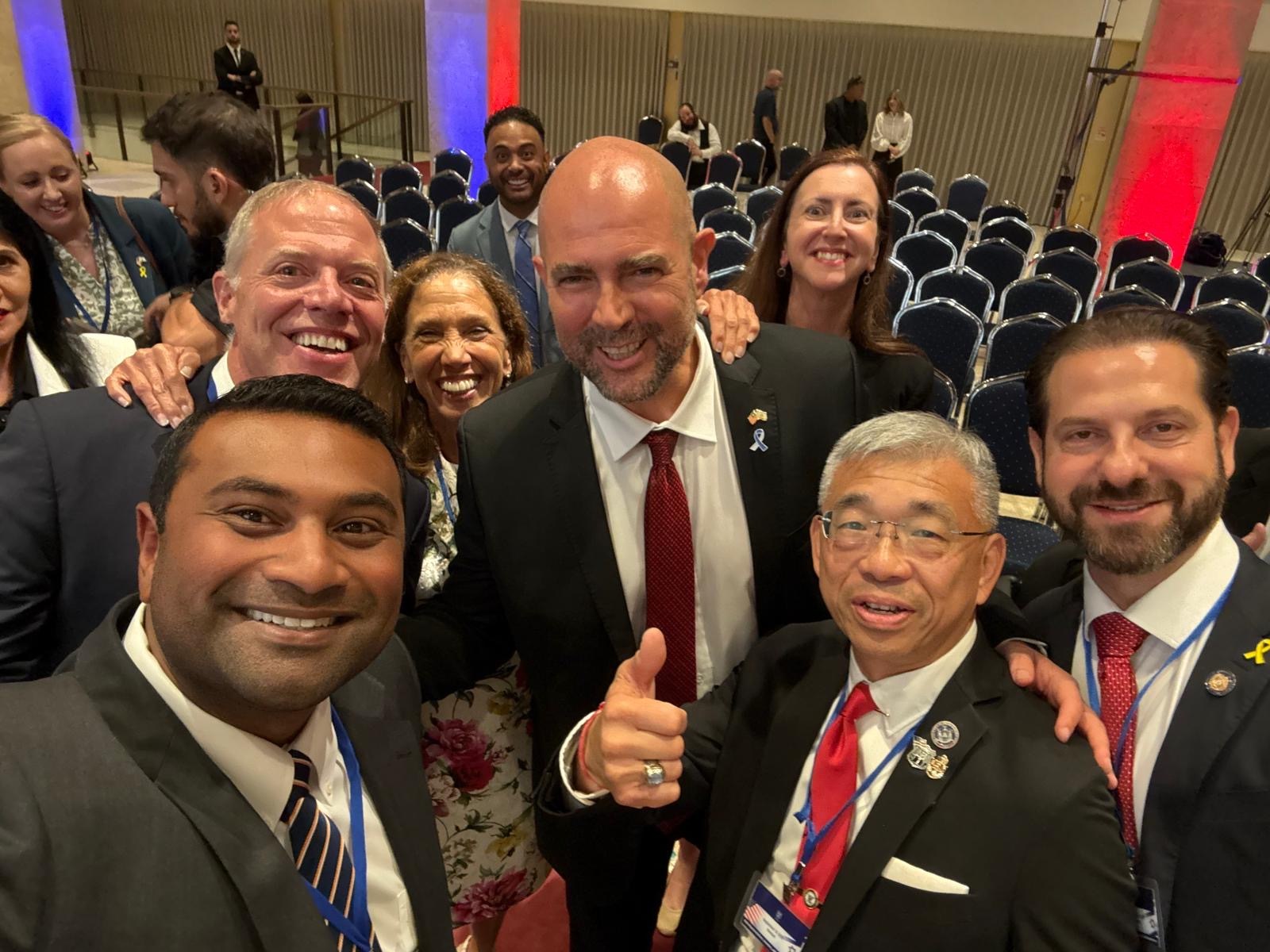
A delegation of New York State legislators met with Knesset Speaker Amir Ohana (center) in Jerusalem on Monday. From left: Assemblyman AJ Beephan, Minority Leader Will Barclay, Assemblywoman Amy Paulin, Assemblywoman Nily Rozic, Assemblyman Lester Chang and Assemblyman Daniel Norber.
Birthdays

Comedian, writer and actress, she was a frequent guest of Johnny Carson on the “Tonight Show,” Rita Rudner turns 72…
Fashion designer, known worldwide for his leading-edge corporate uniforms, Stan M. Herman turns 97… U.S. senator (R-IA) since 1981, Chuck Grassley turns 92… Investment banker who once served as a NYC deputy mayor, Peter J. Solomon turns 87… Newbery Honor-winning author of many young adult books, Gail Carson Levine turns 78… Author of 11 books, Joshua Muravchik turns 78… Former president of the National Technical Institute for the Deaf and then president of Gallaudet University, T. Alan Hurwitz turns 78… Rochester attorney, he has held positions at the UJA-Federation of New York and the Rochester Jewish Federation, Frank Hagelberg… Retired judge on the U.S. District Court for the Northern District of California, Jeremy Don Fogel turns 76… Professional tennis player who achieved a world ranking of No. 5 in 1980, Harold Solomon turns 73… Author, comic book writer and editor, best known as group editor of the Spider-Man books at Marvel Comics, Daniel Fingeroth turns 72… Israeli businessman with real estate holdings in Israel and NYC, Mody Kidon turns 71… Author and graphic designer, Ellen Kahan Zager… Former member of the Knesset for the Yesh Atid party, Rina Frenkel turns 69… Rabbi of the New North London Synagogue with over 3,700 members, Jonathan Wittenberg turns 68… Former consultant at Quick Hits News, Elliott S. Feigenbaum… Journalist, best-selling author including two books on the Obama presidency and Emmy Award-winning executive producer, Richard Wolffe turns 57… Director of the Centers for Disease Control and Prevention (CDC) for the last 18 months of the Biden administration, Mandy Krauthamer Cohen turns 47… Former regional communications director and spokesperson for President Obama, now a partner at Seven Letter, Adam Abrams… Member of the Los Angeles Unified School District’s Board of Education, Nick Melvoin turns 40… Former Obama White House speechwriter who has since written a best-selling comedic memoir, David Litt turns 39… Principal product manager for CathWorks, Adina Shatz… National health-care reporter The Washington Post covering the FDA, Rachel Roubein… Associate at Strand Partners in London, Natalie Edelstein Jarvis… Founder of the Israel Summit at Harvard and board member of the IDF Widows and Orphans Organization, Max August…
‘The regime has abused diplomatic processes for years to avoid penalties. Sanctions relief should only be negotiated after snapback is fully implemented,’ the lawmakers wrote

Al Drago-Pool/Getty Images
Ranking member of the Senate Foreign Relations Committee U.S. Sen. Jim Risch (R-ID) speaks during a Senate Foreign Relations Committee hearing on April 26, 2022 in Washington, DC.
Fifty Senate Republicans wrote to the foreign ministers of the U.K., France and Germany on Tuesday urging them to hold firm in triggering snapback sanctions on Iran and requesting their cooperation in sanctions enforcement.
“While we back diplomatic efforts to restore Iran’s compliance with its International Atomic Energy Agency (IAEA) commitments, the international community should not allow hollow gestures and cynical threats from Tehran to stop the snapback process,” the lawmakers wrote in a letter obtained by Jewish Insider. “The regime has abused diplomatic processes for years to avoid penalties. Sanctions relief should only be negotiated after snapback is fully implemented.”
They said that full, verifiable dismantlement of Iran’s nuclear program, restoration of International Atomic Energy Agency inspections and the end of Iran’s support for terrorist proxies and its ballistic missile program should be the “minimum” bar for sanctions relief.
The lawmakers, led by Senate Foreign Relations Committee Chairman Jim Risch (R-ID), said they want to work with the European allies to ensure all United Nations member states and private actors comply with the U.N. sanctions.
“We understand your governments’ hope that diplomacy would eventually succeed in ending Iran’s nuclear program, but after a decade of the regime’s intransigence, its repeated deceptions, and its open support for Putin’s war against Ukraine, we will count on your governments to lead the charge and advance a passionate enforcement of sanctions against Iran — whether at the European Union, in your respective capitals, or in foreign capitals,” the letter continues.
Every Senate Republican — except for Sens. Mike Lee (R-UT), Rand Paul (R-KY) and Tommy Tuberville (R-AL) — signed the letter.
The 50 signatories called on the European governments to work with the U.S. in joint efforts to prevent Iranian “proliferation and acquisition of military, missile, and nuclear goods, technologies, and components” and to “fully shutter Iran’s banking sector abroad,” including all bank branches in Europe.
“Closing off the regime’s financial pathways will curb the regime’s aggression. More pressure is necessary to ultimately bring Iran back to meaningful and serious diplomatic engagement on the full spectrum of its malign activities,” the lawmakers continued.
They also said they are “deeply concerned” about Iran’s oil sales to China and smuggling operations, and said they “appreciate the cooperation your governments have already shown in curbing these sales.”
The lawmakers thanked the E3 allies for triggering the snapback sanctions and their “leadership at this pivotal moment.”
An individual familiar with the situation told JI that Tuberville’s office was not provided with a deadline for signing on to the letter. The individual added that Tuberville has confidence in the Trump administration’s leadership on foreign policy.
Lee and Paul did not respond to requests for comment.
The Israeli-Russian Princeton researcher was kidnapped in Baghdad in 2023 by Kataib Hezbollah, an Iranian-backed terrorist group

Eric Tucker/AP Photo
In this Sept., 2018 selfie image provided by Emma Tsurkov, right, she and Elizabeth Tsurkov are shown in Santa Clara Valley, Calif.
President Donald Trump announced Tuesday that Elizabeth Tsurkov, an Israeli-Russian researcher at Princeton University, was released by an Iranian-backed terrorist group in Iraq to the U.S. Embassy in Baghdad.
Tsurkov was kidnapped in Baghdad in 2023 while working on her doctoral thesis by Kataib Hezbollah, an Iranian-backed terrorist group separate from Lebanese Hezbollah.
“I am pleased to report that Elizabeth Tsurkov, a Princeton Student, whose sister is an American Citizen, was just released by Kata’ib Hezbollah (MILITANT Hezbollah), and is now safely in the American Embassy in Iraq after being tortured for many months,” Trump said on Truth Social. “I will always fight for JUSTICE, and never give up. HAMAS, RELEASE THE HOSTAGES, NOW!”
Tsurkov’s sister Emma, who has been a vocal advocate for her freedom, thanked the Trump administration in an X post, noting that her sister had been in captivity for more than 900 days.
“We are so thankful to President Trump and his Special Envoy, Adam Boehler. If Adam had not made my sister’s return his personal mission, I do not know where we would be,” Tsurkov said. “We also want to thank Josh Harris and his team at the US Embassy in Baghdad for the support they provided to our sister and the team at the nonprofit Global Reach who advocated relentlessly for my sister’s safe return.”
Princeton University President Christopher L. Eisgruber also celebrated her release.
“The release of Princeton graduate student Elizabeth Tsurkov brings relief and joy to the University community, and we celebrate that she will be reunited with her family. We thank President Trump for securing Elizabeth’s release,” Eisgruber said. “We are also grateful to those who worked tirelessly to bring an end to her terrible ordeal, including her family, friends and advocates.”
Multiple groups of U.S. lawmakers had appealed to administration officials to work to secure Tsurkov’s release. Kataib Hezbollah, the group that kidnapped Tsurkov, holds an official role in the Iraqi government.
Tsurkov’s captors released a video in 2023 in which Tsurkov claimed to be an Israeli and American spy, which Emma Tsurkov said was clearly made under duress.
Sen. Andy Kim (D-NJ), who helped lead efforts earlier this year to advocate for Tsurkov’s release, told Jewish Insider he spoke on Tuesday evening with Emma Tsurkov while she was on a videoconference with her sister, a conversation he said was “very emotional.”
The Tsurkov family, Kim said, has been through “so much” and “I can’t even imagine what it’s been like for Elizabeth.”
“My immediate thoughts [are] just making sure she’s getting the care she needs. I’ve done a lot in the past … when I was at the State Department on hostages and the kind of care they need coming out of it,” he said. “So it’s going to be a long road ahead.”
He said that he wishes Emma “all the best with the recovery” and offered the family any help he can provide to ensure she receives the care she needs. He said he hopes to see both sisters in the United States in the future.
He added that Emma Tsurkov’s “strength as a sister, just being there, just holding that hope for Elizabeth … it’s amazing, it’s inspiring.”
Kim said he had not yet been briefed by the administration on Tsurkov’s release, including the terms by which the administration was able to secure Tsurkov’s freedom.
Sen. Jacky Rosen (D-NV), who joined a push with Kim for Tsurkov’s freedom, said in a statement, “I’m relieved to hear the news that Elizabeth Tsurkov has finally been released after being held hostage by extremists in Iraq for over two years. I’ve been proud to advocate for her release and applaud all the efforts that made this possible. My thoughts are with Elizabeth and the Tsurkov family as they reunite, and I wish them peace and healing.”
Rep. Jamie Raskin (D-MD), who led an appeal from House members for Tsurkov’s release, told JI, “I am overjoyed for Elizabeth Tsurkov’s family and loved ones on this happy occasion. I have long pushed for Elizabeth’s safe return and I’m sending her my prayers and solidarity as she returns home to recover from a 903-day-long nightmare.”
Sen. Cory Booker (D-NJ) said on X, “I am deeply grateful that Elizabeth Tsurkov has been released and will finally be reunited with her family and loved ones. Thankful for all who partnered in advocating for her release and for all who tirelessly worked to ensure her safe return.”
Plus, Gillibrand cautions Dems over anti-Israel rhetoric
Michael Brochstein/SOPA Images/LightRocket via Getty Images
Kenneth Weinstein, President and Chief Executive Officer of Hudson Institute, speaking at the Hudson Institute in Washington, DC.
Good Monday afternoon.
This P.M. briefing is reserved for our premium subscribers like you — offering a forward-focused read on what we’re tracking now and what’s coming next.
I’m Danielle Cohen-Kanik, U.S. editor at Jewish Insider and curator, along with assists from my colleagues, of the Daily Overtime briefing. Please don’t hesitate to share your thoughts and feedback by replying to this email.
📡On Our Radar
Notable developments and interesting tidbits we’re tracking
We’re watching developments in ceasefire and hostage-release negotiations after President Donald Trump called for Hamas to accept the latest U.S.-sponsored deal over the weekend, which would see all the hostages, living and dead, released on the first day of the ceasefire.
Middle East envoy Steve Witkoff and former Trump Mideast advisor Jared Kushner met with Israeli Minister for Strategic Affairs Ron Dermer in Miami today to discuss developments in Gaza, Axios’ Barak Ravid reports.
Hamas had claimed it was ready to “immediately sit at the negotiating table” in response to Trump’s statement, but sources for the terror group told a Saudi newspaper today that a complete hostage release would not be possible immediately, claiming a ceasefire would have to go into effect first to reach all the bodies…
In other national security news, The New York Times spotlights the race between defense firms to develop technologies for a future “Golden Dome” missile-defense system.
“Companies chosen for Golden Dome are likely to become the new cornerstones of U.S. defense, military officials involved in the project said,” and firms including Palantir and Anduril as well as innovative startups have been in discussions with the Trump administration, the Times reports.
Mark Montgomery, senior director of the Center for Cyber and Technology Innovation at the Foundation for Defense of Democracies, said, “There are more than 100 companies out there with a sensor, satellite or other devices they want to sell to Golden Dome. This is the Wild West, and this is a massive opportunity for whoever is selected”…
Diplomatic tensions are rising between Israel and Spain after Spanish Prime Minister Pedro Sanchez announced today that his country would be formalizing an existing de facto arms embargo against Israel and banning anyone who has participated in “genocide” in Gaza from entering Spain as well as ships carrying fuel for the IDF from Spanish ports.
“This is not self-defense, it’s not even an attack — it’s the extermination of a defenseless people,” Sanchez said of Israel’s war in Gaza.
In response, Israeli Foreign Minister Gideon Sa’ar announced that Israel had banned two anti-Israel Spanish ministers from entering the country; Spain then summoned its ambassador in Tel Aviv, all shortly after a young Spanish immigrant to Israel was killed in this morning’s terror attack on a bus stop in Jerusalem…
The U.K. has come to a different conclusion about Israel’s actions in Gaza, according to a letter sent last week by former Foreign Secretary David Lammy before he was replaced in a reshuffling of Prime Minister Keir Starmer’s Cabinet.
Lammy wrote to the chair of the U.K.’s international development committee that the Foreign Office had found in an assessment that Israel was not committing a genocide as it was missing “intent” to do so. It’s the first time the U.K. has said so explicitly, previously holding that the matter of genocide was up to international courts to determine, just weeks before the country is expected to recognize a Palestinian state…
Former Hudson Institute CEO and President Kenneth Weinstein will serve as CBS News’ ombudsman, a new role that oversees editorial concerns from employees and viewers, Paramount announced Monday. Alongside reports that Paramount is expected to purchase Bari Weiss’ Free Press and bring her into an editorial role at CBS, the moves mark a new era for the network that has been accused of systemic anti-Israel bias…
Embracing their anti-Israel bona fides, hundreds of actors, filmmakers and film industry workers recently signed a pledge to boycott Israel, which says it was inspired by filmmakers who refused to screen their films in apartheid South Africa.
The signatories, including Hollywood stars such as Alyssa Milano, Mark Ruffalo, Anna Shaffer, Ayo Edebiri, Cynthia Nixon, Hannah Einbinder and Ilana Glazer, promised “not to screen films, appear at or otherwise work with Israeli film institutions — including festivals, cinemas, broadcasters and production companies — that are implicated in genocide and apartheid against the Palestinian people”…
Sen. Kirsten Gillibrand (D-NY) said in comments to Jewish leaders in New York City today that some of her fellow Democratic lawmakers are inadvertently fueling antisemitism through the rhetoric and slogans they use, Jewish Insider’s Marc Rod reports.
“When they say words like ‘river to the sea,’ whey they say words like ‘globalize the intifada,’ it means end Israel. It means destroy Jews,” Gillibrand said. Intifada, she continued, is “not a social movement. It’s terrorism, it’s destruction, it’s death.”
The New York senator had previously offered strong condemnation of NYC Democratic mayoral nominee Zohran Mamdani for his refusal to condemn the “globalize the intifada” slogan and has not endorsed his bid for mayor…
Mamdani’s opponent, New York City Mayor Eric Adams, meanwhile, officially dropped the ballot line “EndAntiSemitism,” running only on the “Safe & Affordable” line, after the New York City Board of Elections said he couldn’t run on both. Adams’ campaign spokesperson said he intends to pursue legal options over the issue…
Graham Platner, an anti-Israel Democratic Senate candidate in Maine, wrote in a high school op-ed shortly after 9/11, during the Second Intifada in Israel, that the media provides an “incomplete story” of terrorist acts and writes “incomplete coverage” of the Israeli-Palestinian conflict “where a sometimes-oppressive Israeli state can be, and often is, portrayed as a victim.”
Platner and his co-authors argued in the article in a local Maine outlet, unearthed by the Free Beacon, that ending terrorist acts would be “best achieved by understanding the circumstances under which they were committed”…
⏩ Tomorrow’s Agenda, Today
An early look at tomorrow’s storylines and schedule to keep you a step ahead
Keep an eye on Jewish Insider tomorrow morning for an interview with former Obama speechwriter Sarah Hurwitz, whose new book As A Jew: Reclaiming Our Story From Those Who Blame, Shame, and Try to Erase Us, comes out Tuesday.
It’s a busy week in Washington, where the 2025 MEAD Summit will kick off tomorrow. The high-profile but elusive gathering will bring together top American and U.S. security officials, diplomats, lawmakers, philanthropists, CEOs and journalists. If you’re attending, make sure to say hello to JI’s Josh Kraushaar and Gabby Deutch!
The Iran Conference, hosted by the National Union for Democracy in Iran, will also begin in Washington tomorrow for analysts, policymakers and activists to discuss Iran policy, just two months after U.S. and Israeli strikes decimated Tehran’s nuclear and military infrastructure.
On the Hill, the House Education and Workforce Committee’s Subcommittee on Health, Employment, Labor and Pensions will hold a hearing on “unmasking union antisemitism.”
Virginia’s 11th Congressional District is holding its special election tomorrow to fill the seat of the late Rep. Gerry Connolly (D-VA). James Walkinshaw, Connolly’s longtime former aide, is the heavy favorite to win. Read JI’s interview with Walkinshaw here.
Looking to New York City, The MirYam Institute will hold an international security benefit briefing tomorrow featuring former Israeli Prime Minister Naftali Bennett; nearby, the Soufan Center will begin its Global Summit on Terrorism and Political Violence, meant to honor the memory of 9/11 victims and address emerging global threats.
The Florida Holocaust Museum is reopening tomorrow with a ribbon-cutting ceremony after an extensive period of renovation.
Abroad, the U.S. Embassy in Jerusalem will host its belated July 4 party tomorrow, and the Hili Forum will convene its last day in Abu Dhabi, United Arab Emirates, covering trade, tech and governance. DSEI U.K., a large defense trade show, is starting up in London, where protests are expected against the dozens of Israeli firms that are participating.
Stories You May Have Missed
CANDIDATE CRITIQUE
The Democratic candidate also said he does not believe that far-left NYC mayoral candidate Zohran Mamdani is ‘taking actions I would claim to be antisemitic’
ACROSS THE POND
On Sunday, British Jews marched to protest against rising antisemitism in the country
Plus, United resumes Washington, Chicago routes to TLV
Michael A. McCoy/Getty Images
(L-R) Mr. Michael Schill, President, Northwestern University, Dr. Jonathan Holloway, President, Rutgers University and Mr. Frederick Lawrence testify at a hearing called "Calling for Accountability: Stopping Antisemitic College Chaos" before the House Committee on Education and the Workforce on Capitol Hill on May 23, 2024, in Washington, D.C.
Good Thursday afternoon.
This P.M. briefing is reserved for our premium subscribers like you — offering a forward-focused read on what we’re tracking now and what’s coming next.
I’m Danielle Cohen-Kanik, U.S. editor at Jewish Insider and curator, along with assists from my colleagues, of the Daily Overtime briefing. Please don’t hesitate to share your thoughts and feedback by replying to this email.
📡On Our Radar
Notable developments and interesting tidbits we’re tracking
Kicking off the new school year, embattled Northwestern University President Michael Schill announced today he is stepping down as president, remaining in an interim role until his successor is chosen.
Schill’s tenure coincided with a period of antisemitic turmoil on the Chicago-area campus and he was accused of handling the issue poorly, leading some lawmakers to call for his resignation.
A brief recap of Schill’s troubled tenure: He acceded to several demands of an anti-Israel encampment on campus in the spring of 2024, drawing condemnation from Jewish leaders and leading several Jewish members of Northwestern’s antisemitism advisory committee to step down. He then defended the move in a heated House Education and Workforce Committee hearing as being in the interest of Jewish students and was recalled by the committee this spring due to his alleged failure to live up to his own commitments from the previous hearing.
Committee Chairman Tim Walberg (R-MI) said in a statement today that “President Schill will leave behind a legacy of not only failing to deter antisemitism on campus but worsening it. … Northwestern’s next president must take prompt and effective action to protect Jewish students.”
In his resignation announcement, Schill said that “from the very beginning of my tenure, Northwestern faced serious and often painful challenges. … I was always guided by enduring values of our University: protecting students, fostering academic excellence, and defending faculty, academic freedom, due process and the integrity of the institution”…
Columbia University, meanwhile, hired Jonathon Kahn as its senior associate dean of community and culture, a new position created to “build and lead initiatives that cultivate curiosity, civic purpose and meaningful dialogue” and “reimagine what a liberal arts and sciences education can be in the next century,” Jewish Insider’s Haley Cohen reports.
Kahn signed a 2021 letter supporting the Palestinian “indigenous resistance movement” and rejecting “the fiction of a ‘two-sided conflict,’” accusing Israel of carrying out “settler colonialism, apartheid, and ethnic cleansing”…
Secretary of State Marco Rubio called an Israeli proposal by far-right Finance Minister Bezalel Smotrich to annex parts of the West Bank “wholly predictable” in response to European countries’ planned recognition of a Palestinian state.
Rubio said, “We told all these countries. We said, if you guys do this recognition stuff — it’s all fake, it’s not even real — if you do it, you’re going to create big problems. There’s going to be a response from Israel … and it may even trigger these sorts of actions that you’ve seen, or at least these attempts at these actions. So we’re watching it closely.”
Rubio, who was asked about the issue today at a press conference in Quito, Ecuador, continued, “What you’re seeing with the West Bank and the annexation, that’s not a final thing. That’s something that’s being discussed among some elements of Israeli politics. I’m not going to opine on that today.”
“And by the way, let me tell you something. The minute, the day that the French announced their [intent to recognize a Palestinian state], Hamas walked away from the negotiating table. … We also warned that that would happen, and it did. Sometimes, these guys don’t listen,” Rubio said.
The issue of West Bank annexation was due to be discussed in a high-level meeting convened by Israeli Prime Minister Benjamin Netanyahu today but was reportedly removed from the agenda after the UAE warned such a move would be a “red line” for regional normalization…
Israeli officials told The Wall Street Journal that Mossad Director David Barnea and Foreign Minister Gideon Sa’ar have joined IDF Chief of Staff Eyal Zamir in expressing hesitation to Netanyahu over the IDF’s plan to expand its offensive into Gaza City. They have also argued in favor of reaching a partial hostage-release deal with Hamas as an alternative to the comprehensive deal Israel is currently seeking…
A viral accusation that the IDF killed an 8-year-old Palestinian boy at a Gaza Humanitarian Foundation aid site in May was proven false when the boy was found to be alive and safely extracted from the Gaza Strip. The claim had been made by Anthony Aguilar, a former GHF contractor and Green Beret, who repeated the story on far-right and far-left media outlets.
Johnnie Moore, head of the GHF, said in a statement today, “When this lie was brazenly, cravenly shared from the press to the halls of Congress, our team set out to find this little boy — whatever it took.” He attributed the success to “veterans who never stopped working to find him and bring him to safety in the most complex environment imaginable”…
A report by the U.N.’s International Atomic Energy Agency, obtained by the Associated Press, found that, as of one day before Israel’s strikes on Iran’s nuclear facilities began, Iran had escalated its nuclear enrichment and increased its stockpile of near weapons-grade enriched uranium to where it could soon produce at least one atomic bomb…
On the Hill, Sen. Tom Cotton (R-AR) asked the FBI to investigate the Palestinian Youth Movement as a “threat to U.S. national security” after one of its leader, Aisha Nizar, called for Palestinian activists to “disrupt” the supply chain for F-35 fighter jets at the recent People’s Conference for Palestine in Michigan…
Rep. Buddy Carter (R-GA), who is running for Senate in Georgia, filed a resolution today to censure Rep. Rashida Tlaib (D-MI) for “promoting and cheering on terrorism and antisemitism” at the same conference…
Semafor’s David Weigel reports from this year’s National Conservatism conference, which is winding down in Washington today and featured a host of high-level right-wing personalities from Trump administration officials to lawmakers and influencers.
Conference speakers and attendees were jubilant over what they view as conservative successes in President Donald Trump’s second term, but there was one “possible future sore point that conference organizer Yoram Hazony acknowledged openly: Israel.”
“Hazony was upset by the ‘depth of the slander of Jews as a people’ that he saw in corners of the online right. The Israel critics in their fold could make the nationalist ‘revolution consume itself,’ he added, and risk everything,” Weigel wrote…
In long anticipated news, United Airlines announced today it’s restarting direct flights to Tel Aviv from Chicago O’Hare and Washington Dulles in early November…
⏩ Tomorrow’s Agenda, Today
An early look at tomorrow’s storylines and schedule to keep you a step ahead
Keep an eye on Jewish Insider tomorrow morning for reporting on a new cross-faith initiative to address antisemitism led by Robert Kraft’s Foundation to Combat Antisemitism.
This weekend, Sen. Bernie Sanders (I-VT) will be campaigning with New York City Democratic mayoral nominee Zohran Mamdani in the next installment of Sanders’ Fighting Oligarchy tour, after an appearance in Maine last weekend with anti-Israel Democratic Senate candidate Graham Platner.
We’ll be back in your inbox with the Daily Overtime on Monday. Shabbat shalom!
Stories You May Have Missed
ENVOY INTERVIEW
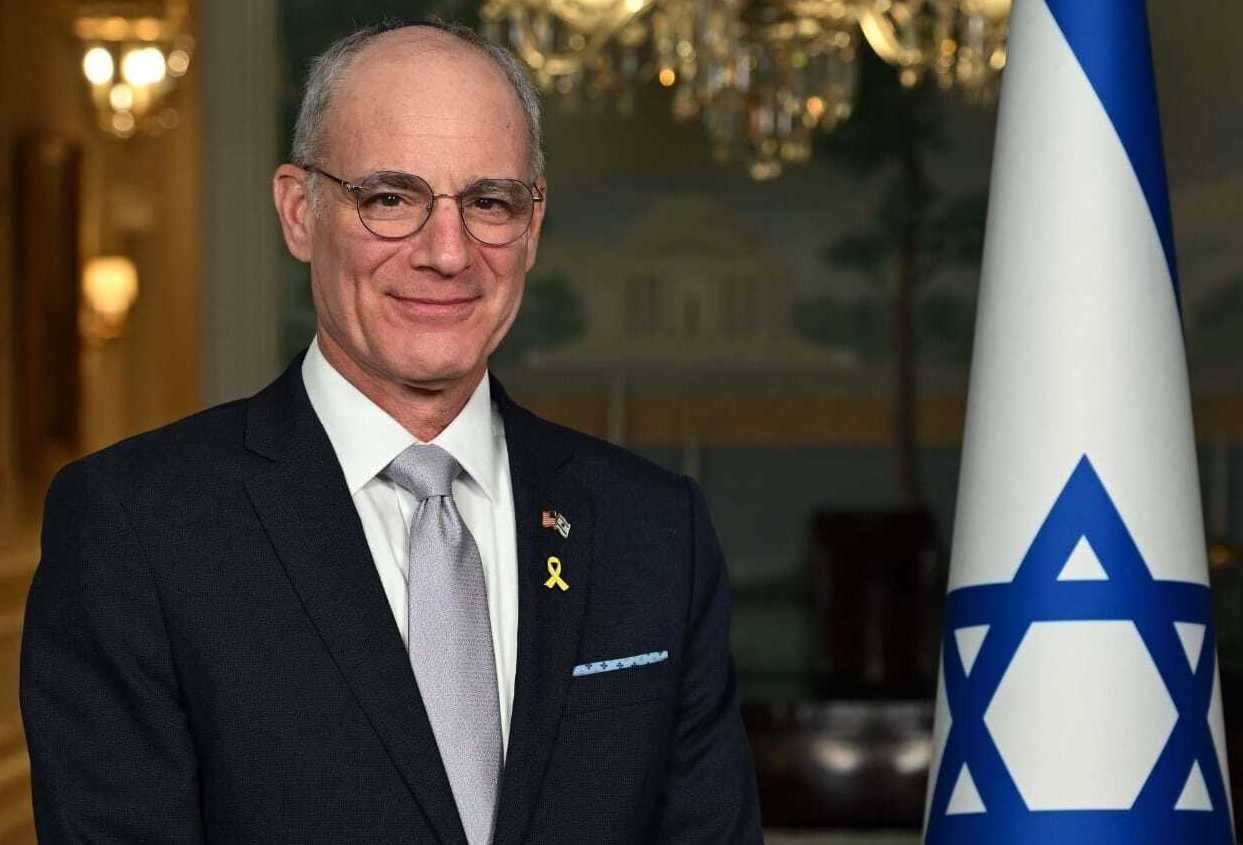
‘It’s a very partisan atmosphere in Washington right now. Strong support for Israel in the [Trump] administration almost drives the Democratic opposition into opposing very close support for Israel,’ the ambassador said
EYE ON ANKARA

House lawmakers introduce series of amendments seeking to place further restrictions on U.S. aid on Ankara over its support for Hamas and hostility toward Israel
Plus, former Sen. Sununu considers a New Hampshire comeback

Yuki Iwamura/AP Photo/Bloomberg via Getty Images
Adrienne Adams, New York City mayoral candidate, from left, Brad Lander, New York City mayoral candidate, Jessica Ramos, New York City mayoral candidate, Zellnor Myrie, New York City mayoral candidate, Andrew Cuomo, New York City mayoral candidate, Whitney Tilson, New York City mayoral candidate, Zohran Mamdani, New York City mayoral candidate, Michael Blake, New York City mayoral candidate, and Scott Stringer, New York City mayoral candidate, during a mayoral Democratic primary debate in New York, US, on Wednesday, June 4, 2025.
Good Wednesday afternoon.
This P.M. briefing is reserved for our premium subscribers like you — offering a forward-focused read on what we’re tracking now and what’s coming next.
I’m Danielle Cohen-Kanik, U.S. editor at Jewish Insider and curator, along with assists from my colleagues, of the Daily Overtime briefing. Please don’t hesitate to share your thoughts and feedback by replying to this email.
📡On Our Radar
Notable developments and interesting tidbits we’re tracking
Advisors to President Donald Trump have discussed giving New York City Mayor Eric Adams and Republican mayoral candidate Curtis Sliwa positions in the president’s administration, sources tell The New York Times, in order to consolidate New York City voters behind former Gov. Andrew Cuomo, running as an independent, as a bid to block far-left Democratic mayoral nominee Zohran Mamdani’s path to Gracie Mansion.
Adams has already been offered a position at the U.S. Department of Housing and Urban Development, Politico reports.
Cuomo told a group of donors last month that he anticipated Trump would get involved in the race and help bolster his prospects…
Turning internationally, Trump appeared to support Israel’s desire for a comprehensive deal to end the war in Gaza, as he posted this morning on Truth Social, “Tell Hamas to IMMEDIATELY give back all 20 Hostages (Not 2 or 5 or 7!), and things will change rapidly. IT WILL END!”
The figure of 20 hostages likely refers to the hostages thought to still be alive; there are a total of 50 hostages being held in Gaza…
U.S. Ambassador to Israel Mike Huckabee held a closed-door briefing for members of the House Foreign Affairs Committee this morning on issues including the hostages and developments in the West Bank, lawmakers told Jewish Insider.
“Given the insistence on the part of the French and other Europeans to recognize a Palestinian state, I thought it was important for my colleagues to have a greater understanding of what we’re actually talking about with respect to Judea and Samaria, or the West Bank, and how it is actually governed post-Oslo,” Rep. Mike Lawler (R-NY), who organized the briefing, said.
Asked whether the group had discussed a potential declaration of Israeli sovereignty in that area, Lawler responded, “No, we had a broad discussion on the entirety of the situation there”…
On the campaign trail, former Sen. John Sununu (R-NH) is considering a bid for Senate to replace retiring Sen. Jeanne Shaheen (D-NH), telling a local outlet he will make a decision by the end of the month.
Sununu would be a formidable candidate in the race, given his name recognition and family connections. (His brother, Chris, served as the state’s popular governor from 2017-2025, and his dad was both the state’s former governor and former President George H.W. Bush’s chief of staff.)
But in a year that’s shaping up to be favorable for Democrats, Sununu would face a challenging race against Rep. Chris Pappas (D-NH), the expected Democratic nominee with a history of winning tough races in a swing district. Pappas launched his candidacy in April shortly after Shaheen announced her retirement…
In academic news, a federal judge ruled today that the Trump administration broke the law in freezing billions of dollars of Harvard’s research funding.
The government had argued that Harvard was no longer deserving of the funds due to antisemitism on campus, but Judge Allison Burroughs wrote, “We must fight against antisemitism, but we equally need to protect our rights, including our right to free speech, and neither goal should nor needs to be sacrificed on the altar of the other … Harvard is currently, even if belatedly, taking steps it needs to take to combat antisemitism and seems willing to do even more if need be.”
The ruling strengthens Harvard’s position in settlement talks with the administration, which were expected to result in a $500 million fine for the university…
After the International Association of Genocide Scholars adopted a resolution accusing Israel of committing genocide, pro-Israel activists made a mockery of the organization by registering to become members online, highlighting that anyone could join the respected academic and professional organization by paying a nominal fee, not necessarily by having recognized expertise.
IAGS took down its member profiles on its website and shut down its X account after the issue was made public…
Yair Rosenberg chronicles the rise of Hitler apologists among far-right media personalities, including Tucker Carlson and Candace Owens, in The Atlantic, highlighting several guests on Carlson’s podcast who have sought to recast Hitler’s actions as misunderstood.
“Carlson and his fellow travelers on the far right correctly identify the Second World War as a pivot point in America’s understanding of itself and its attitude toward its Jewish citizens. The country learned hard lessons from the Nazi Holocaust about the catastrophic consequences of conspiratorial prejudice. Today, a growing constituency on the right wants the nation to unlearn them,” Rosenberg writes…
In a move exciting political junkies and congressional watchers around the nation, C-SPAN announced it will be coming to YouTube TV and Hulu this fall…
⏩ Tomorrow’s Agenda, Today
An early look at tomorrow’s storylines and schedule to keep you a step ahead
Keep an eye on Jewish Insider tomorrow morning for an interview with Israeli Ambassador to the U.S. Yechiel Leiter on the future of U.S. aid to Israel and reporting on a leading Democratic candidate for Senate in Iowa’s support for conditions on Israel’s fight against terror.
Tomorrow, Israeli President Isaac Herzog is set to meet with Pope Leo XIV at the Vatican (after a brief diplomatic kerfuffle over who initiated the meeting) to discuss the hostages and the war in Gaza. Herzog was meant to meet with the pope’s predecessor, Pope Francis, before his death.
Stories You May Have Missed
SUCCESSION IN MANHATTAN
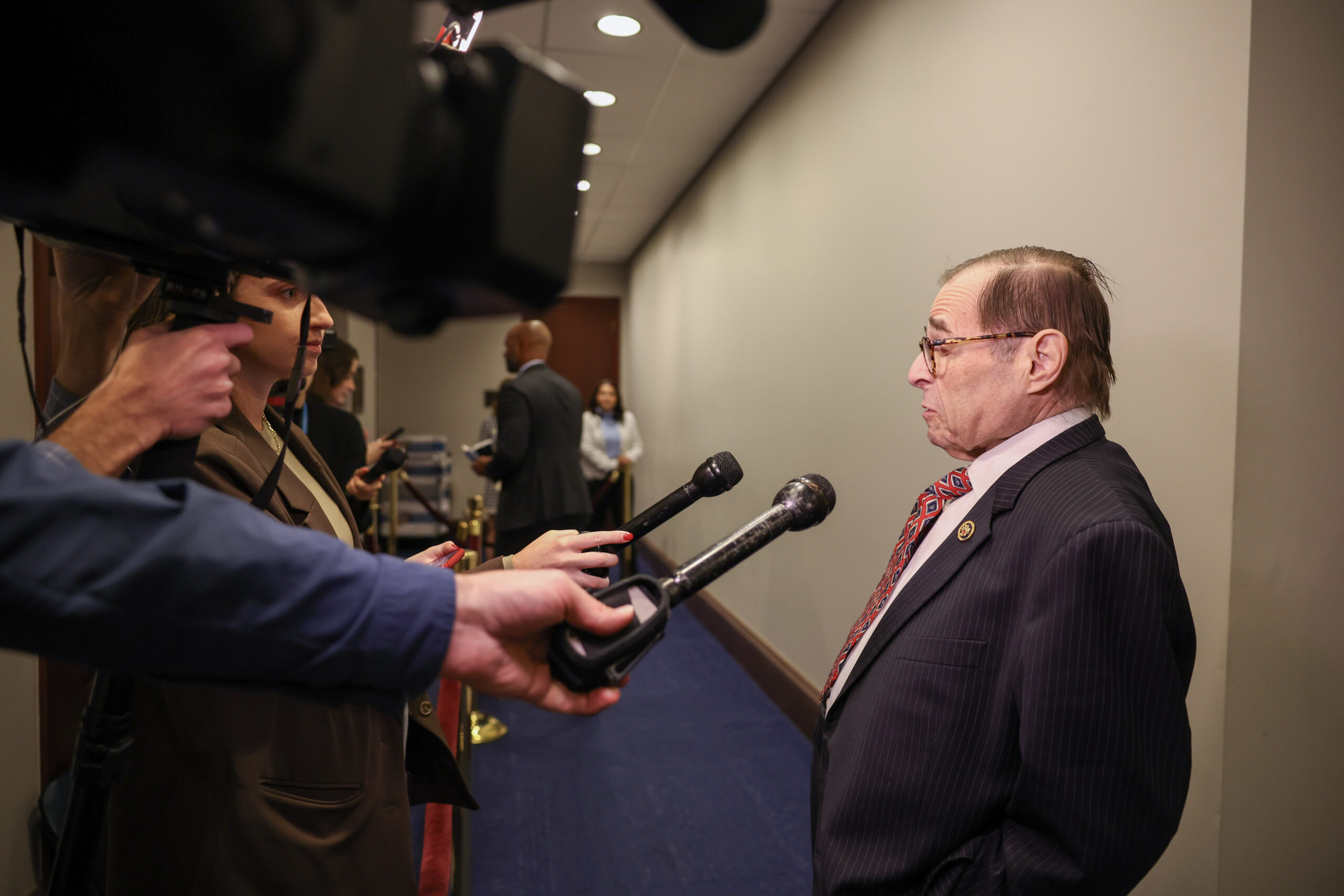
Like the retiring congressman, New York Assemblyman Micah Lasher endorsed the anti-Israel mayoral nominee
MILITARY MUSCLE
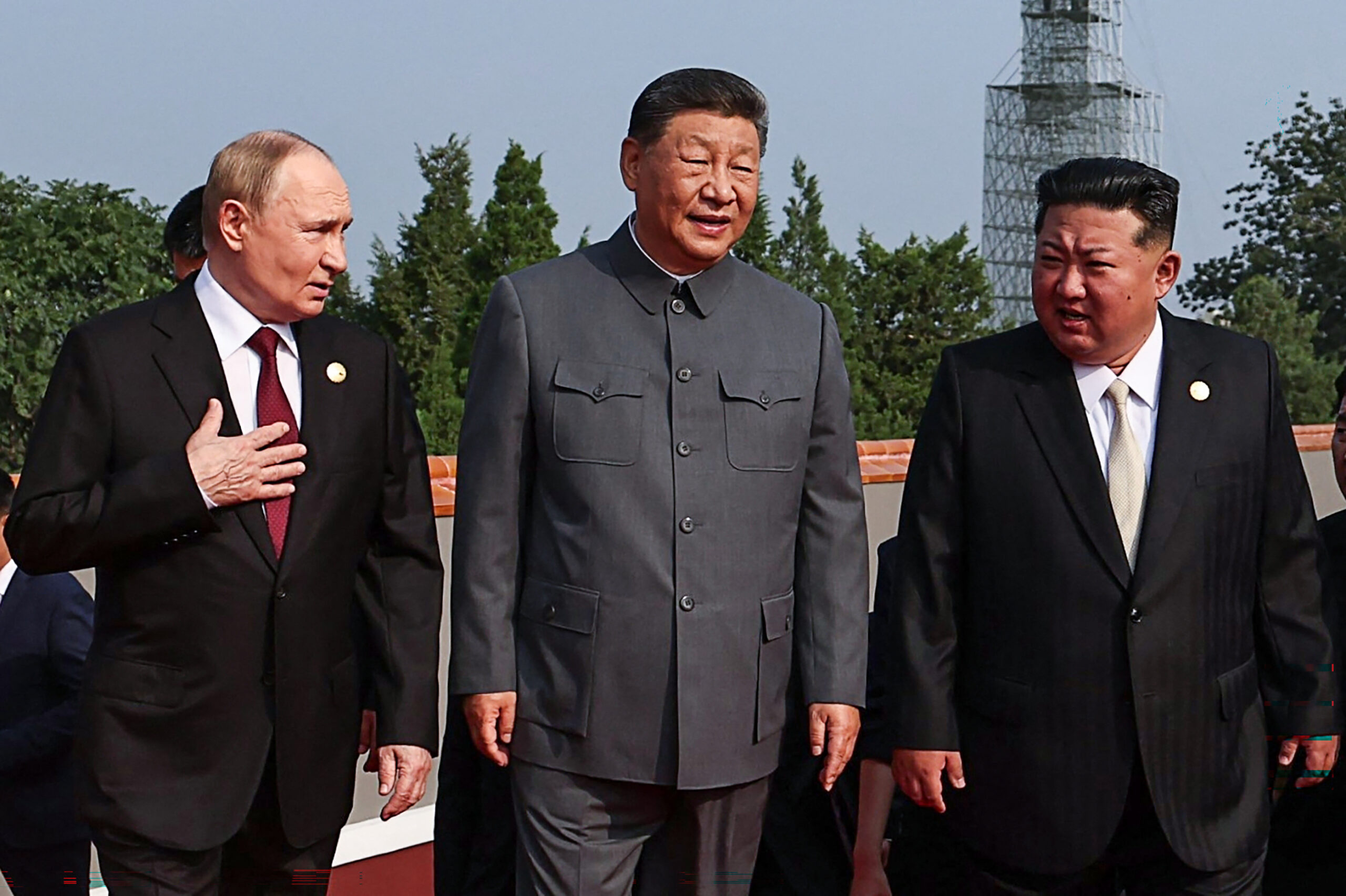
The parade was an example of how Beijing has used WWII not only to encourage nationalism, but to project power internationally, from Jerusalem to Taipei and beyond
Please log in if you already have a subscription, or subscribe to access the latest updates.
 Continue with Google
 Continue with Apple