









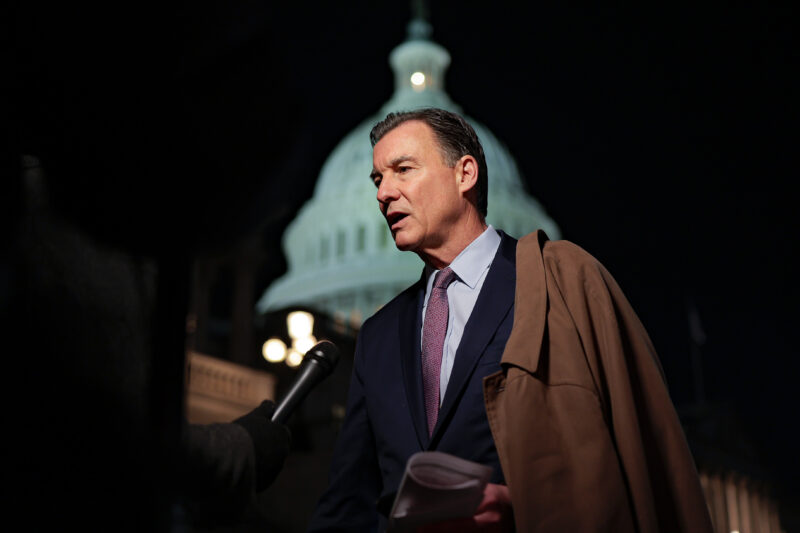


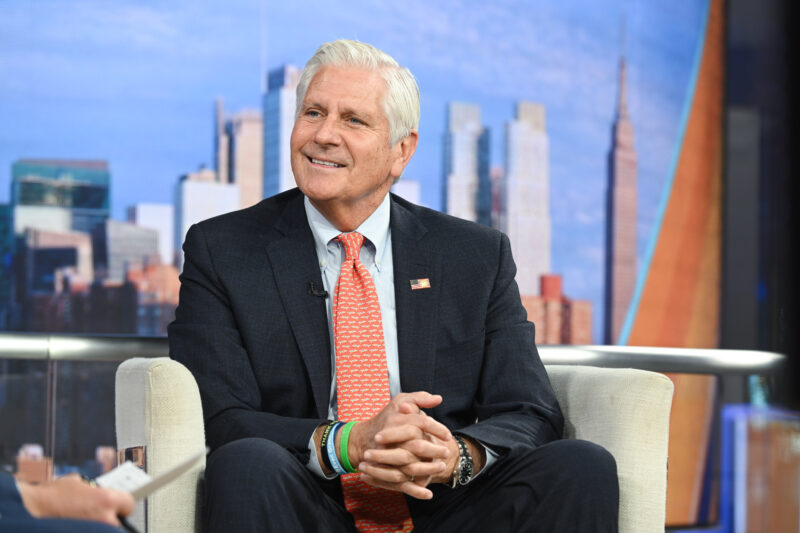

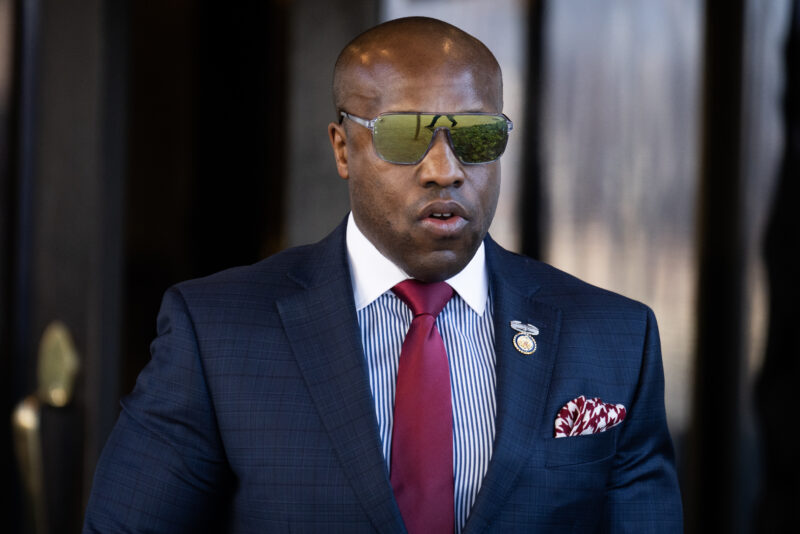
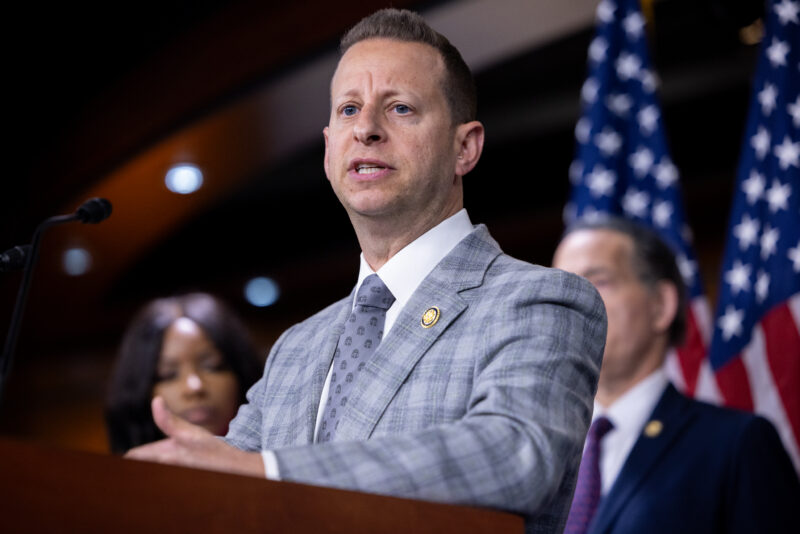






























The lawmakers also said they do not have serious concerns about antisemitism on the political right

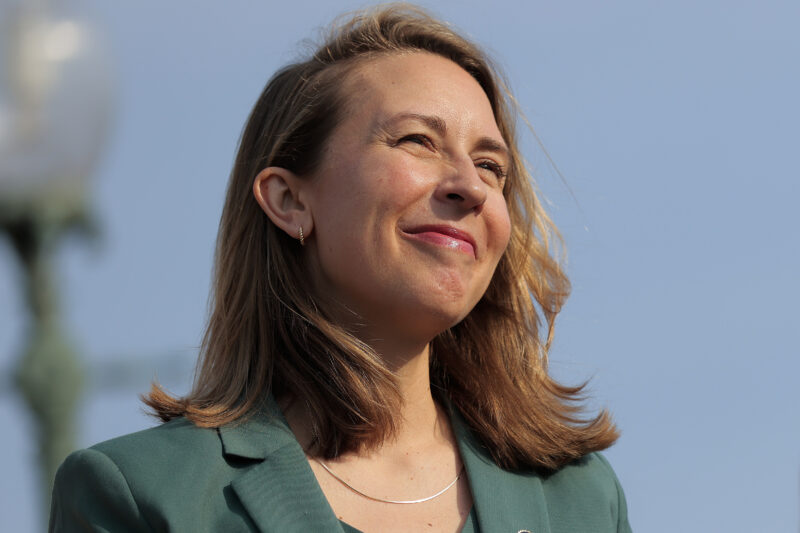
Tom Williams/CQ-Roll Call, Inc via Getty Images
Rep. David Kustoff (R-TN) leaves a meeting of the House Republican Conference in the U.S. Capitol on June 4, 2025.


 Add JewishInsider on Google
LAS VEGAS — Jewish House Republicans said during the Republican Jewish Coalition’s leadership summit in Las Vegas earlier this month that there’s little appetite among Republicans to end U.S. aid to Israel as the two sides look toward the end of the current memorandum of understanding on military aid.
They also said they do not have serious concerns about antisemitism on the right, and argued that it did not stand any real chance of encroaching into the GOP.
Rep. David Kustoff (R-TN) argued to Jewish Insider that the near-unanimous GOP vote this summer against an amendment to cut off U.S. aid to Israel showed that most Republicans want U.S. aid to continue, when asked about the next MOU and the prospect of winding down aid.
“I think the message is that the majority of the members of the House want to see the aid continue, want to see this alliance continue, but elections have consequences, and we don’t know what the makeup of the next House is going to be on the Republican side and on the Democrat side,” he said.
Kustoff said that the vote to cut off aid on the Democratic side, including House Minority Whip Katherine Clark’s (D-MA), shows “where the Democrat[ic] Party is going,” even as he praised select members like retiring Rep. Steny Hoyer (D-MD) for continuing to stand up for the U.S.-Israel relationship.
“I do feel confident that if the Republicans maintain the majority of the House, that this strong relationship continues and exists,” Kustoff said.
Rep. Craig Goldman (R-TX) emphasized that Israel and the United States are facing threats not only from Iran and its nuclear program but also from the terrorist groups that Iran has spent decades funding.
“I certainly will fight tooth and nail as long as I’m a member of U.S. Congress to continue aid to Israel,” Goldman told JI. “It’s too important for not only our national security but world security. Our strongest ally in the Middle East, we can’t let fall in bad hands.”
Rep. Randy Fine (R-FL) also argued to JI that continuing aid is in the interests of the U.S., explaining, “I think it’s in Israel’s best interest to stop taking the aid. I don’t know that it’s in America’s best interest.”
At least some Republicans on Capitol Hill have argued, echoing Israeli Prime Minister Benjamin Netanyahu, that U.S. aid to Israel should be wound down and ended in the coming years, though the idea does not seem to have purchase among others like Kustoff, Goldman and Fine.
Kustoff also told JI that the administration needs to “continue to make the argument” to Congress and the American public about the next steps in the Iran war in order to secure the necessary funding from Congress to continue the war effort.
“It’s so important for the administration to talk about what these next steps look like, and again, for the members of Congress who are going to be voting on these important appropriations, we need to know what these next several weeks look like in terms of planning and implementation,” Kustoff said.
Kustoff said that antisemitism is “far more” of a problem on the left than the right, pointing to recent primary results, but acknowledged that misinformation on social media targeting the Jewish community is impacting younger Americans regardless of political affiliation.
“There is no easy answer. Part of it is that people like me on our side, and people on the Democrat[ic] side, have to stand up and denounce and call out the misinformation, the out-and-out lies that are out there on social media,” Kustoff said. “We know that the misinformation emanates from the enemies of Israel and the enemies of the United States, to permeate discontent primarily among our younger population.”
He argued that the Republican Party can block antisemites from gaining ground in the GOP, as they have in the Democratic Party, by remaining firm on its “principles,” standing unequivocally in support of Israel and focusing on recruiting candidates who align with the party’s values and ideals.
Lee Zeldin, the administrator of the Environmental Protection Agency and a former House Republican, also argued during a press appearance at the RJC conference that antisemitism on the right is less serious of a problem than on the left.
Democrats, he emphasized, are campaigning alongside the likes of streamer Hasan Piker, framing some candidates as functionally answering to Piker and his views.
“Where do you see congressional Republicans on the ballot this November campaigning with a [neo-Nazi] Nick Fuentes? It’s just it doesn’t happen. You know there’s no defense of him on the trail, and there’s a reason for that,” Zeldin said, arguing that Fuentes is not actually a conservative at all.
The Democratic Party leadership, he continued, is “being led by those extreme elements.” Zeldin said he witnessed the evolution of the Democratic Party firsthand with the rise of the Squad during his time on Capitol Hill. He also argued that the right-wing equivalent of a Squad member would never make it to a GOP nomination or be elected to federal office.
“When you see antisemitism, it should be singularly identified and crushed in any form, and antisemitism has no place in this country. I’ll say it unequivocally. I’ll say it forcefully and passionately every single time,” he said, when asked by JI how to prevent such a trend from repeating itself among Republicans.
“It’s to be identified, confronted and crushed,” he continued. “How do you eliminate it? It’s not by elevating it, embracing it, empowering it. You can’t be silent towards it. You can’t allow it to spread and gain a foothold. Wherever you see it, you have to identify it, and you have to crush it.”
Goldman voiced fears about the rise of the Democratic Socialists of America on the left.
“Organizations like the Democratic Socialists of America scare me as not only just an American but as a Jewish American,” Goldman said. “I have tremendous fears of what’s building on the left.”
He noted that the other Goldman on Capitol Hill, Rep. Dan Goldman (D-NY), had been defeated by a further left candidate despite being a reliably progressive vote.
“That’s very, very scary,” he said. “That member, that person’s going to be a member of the U.S. Congress next year. So I think it’s a big moment to wake up. … This isn’t just normal Democrats running and winning. These are socialists.”
He said he’s not concerned about antisemites gaining similar purchase within the GOP.
DMFI President Brian Romick: ‘Our hope is that this pause will be temporary and that, through a candid conversation about the path forward, we can resume our endorsement’
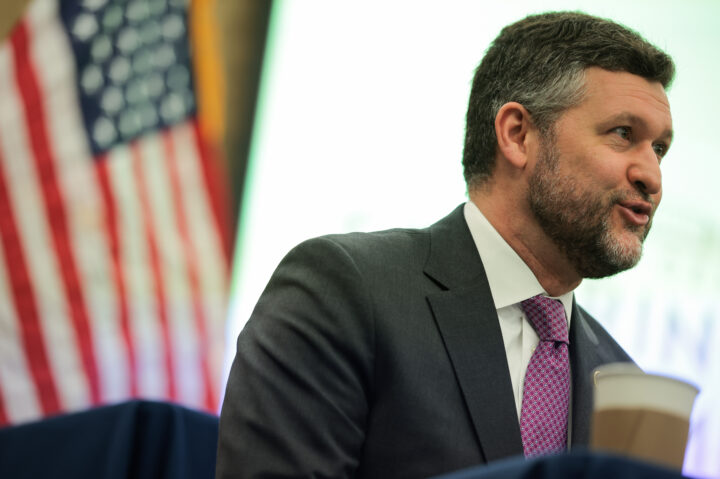
Kayla Bartkowski/Getty Images
Rep. Pat Ryan (D-NY) speaks during a Democratic Steering and Policy Committee hearing in the U.S. Capitol on April 10, 2025 in Washington, DC
DMFI PAC, Democratic Majority for Israel’s political arm, is pausing its endorsements of nine Democratic House members who voted this month to end all U.S. aid to Israel, underscoring the depth of its frustration even as the group also seeks to preserve relationships with lawmakers it had championed.
In a new letter that the group intends to circulate among the lawmakers, Brian Romick, the president of DMFI PAC, expressed his disappointment with their votes in favor of the amendment introduced by Rep. Thomas Massie (R-KY), which did not pass, and said their endorsements would be temporarily suspended with a goal of engaging in a constructive dialogue on the issue.
“Because of that vote, we are pausing our endorsement and taking your name off the list of supported lawmakers on the DMFI PAC website,” Romick said in the letter, the full text of which was shared exclusively with Jewish Insider on Sunday. “At the same time,” he added, “our hope is that this pause will be temporary and that, through a candid conversation about the path forward, we can resume our endorsement.”
The Democrats include Reps. Laura Friedman (D-CA), Josh Harder (D-CA), Chrissy Houlahan (D-PA), Glenn Ivey (D-MD), Kevin Mullin (D-CA), Richard Neal (D-MA), Joe Neguse (D-CO), Brittany Pettersen (D-CO) and Pat Ryan (D-NY).
DMFI PAC has previously backed other pro-Israel Democrats who also voted against funding to Israel, notably including Rep. Jake Auchincloss (D-MA). But the nine members now receiving letters were the only incumbents it had endorsed this cycle who approved the amendment, according to a spokesperson.
DMFI PAC’s diplomatic approach highlights the politically sensitive terrain that pro-Israel groups find themselves navigating after the controversial vote. The amendment drew backing from a total of 103 House Democrats, nearly half the caucus, many of whom were seen as supporters of Israel and said they approved the measure to register opposition to Israeli Prime Minister Benjamin Netanyahu as well as the Iran war.
The group’s decision comes after AIPAC retaliated against 18 of its Democratic endorsees who voted for the amendment by removing fundraising links from its online political portal or cutting language that had thanked some members for their support of Israel.
In an interview with JI on Sunday, Romick said the group’s intention with the letter is “to give people a path back to the pro-Israel movement” rather than permanently ending its longstanding relationships over a measure that it had strongly urged Democrats to vote against.
“Obviously it was a rough vote and it’s been a rough moment,” Romick acknowledged. “But the pro-Israel movement right now needs to be making friends, and I think being able to say ‘I support Israel’s security, I support Palestinians’ national aspirations over the long term, even if it’s not something today’ — I think that’s a reasonable position” and “we want to try to help Democrats land there and continue to support Israel’s security.”
He believes “members are looking for a path back to being in the pro-Israel movement,” he said, citing his recent conversations with House lawmakers. “I don’t think we should be pushing away friends right now.”
It remains to be seen whether all of the former DMFI PAC endorsees will be receptive to preserving “strong relationships and open channels of communication,” as described in the letter from Romick.
A spokesperson for Ryan, for example, said after the vote that he no longer wanted DMFI PAC’s support. The moderate New York lawmaker also promised to return his campaign donations from AIPAC, whose backing he likewise rejected in a social media post.
An AIPAC spokesperson told JI last week that its “members nationwide saw Rep. Ryan reject their participation in the political process,” and said the group is now “helping his donors receive a refund.”
Rep. Brad Schneider (D-IL), a pro-Israel stalwart who voted against the amendment, told JI he was encouraged by DMFI’s outreach to the lawmakers whose endorsements have been paused. “I think it’s the right decision,” he told JI.
“I know that if we’re going to improve the prospects for positive outcomes in the Middle East,” he added, “we need to find common ground with people across a lot of different ideas and ideologies, bring people together and move forward in a single direction, and that’s what I hope we can do.”
Plus, Auchincloss on axing Israel aid

Win McNamee/Getty Images
President Donald Trump speaks during bilateral meeting at the Bestepe Presidential Compound, following his arrival to attend the annual NATO Summit on July 7, 2026 in Ankara, Turkey.
Good Friday morning.
In today’s Daily Kickoff, we talk to Rep. Jake Auchincloss about his vote in support of cutting U.S. aid to Israel, and report on yesterday’s attack in Manhattan in which a Jewish man was stabbed by an individual reportedly yelling “Allahu Akbar.” We cover President Donald Trump’s 11th-hour decision to link the just-signed civilian nuclear cooperation agreement with Saudi Arabia to Riyadh’s joining of the Abraham Accords, and report on the Trump administration’s withdrawal of its subpoena requesting information on Jewish staff at the University of Pennsylvania. Also in today’s Daily Kickoff: Alma Hernandez, Daryl Messinger, Tevi Troy and Dara Horn.
We have also launched a new on-demand Live Briefing that you can access throughout the day via our new app (on Apple and Android) and on our website.
Today’s Daily Kickoff was curated by JI Executive Editor Melissa Weiss and Israel Editor Tamara Zieve, with an assist from Danielle Cohen-Kanik. Have a tip? Email us here.
For less-distracted reading over the weekend, browse this week’s edition of The Weekly Print, a curated print-friendly PDF featuring a selection of recent Jewish Insider and eJewishPhilanthropy stories, including: Ed Miliband’s appointment as U.K. foreign secretary indicates tougher British policy toward Israel to come; Washington state’s Jewish Democrats fight for a place in a party they no longer recognize; and Bernie Sanders’ 2020 Jewish liaison says his old boss is promoting antisemitism. Print the latest edition here.
What We’re Watching
- We’ll be keeping a close eye over the weekend on the situation in the Middle East amid continued U.S. strikes on Iran and Iranian attacks across the region. President Donald Trump said last night that the U.S. would use frozen Iranian assets to pay for the damage caused to vessels transiting through the Strait of Hormuz that have come under attack by Iranian forces.
- The 125 members of the International Criminal Court are expected to vote today by secret ballot on whether to remove the body’s chief prosecutor, Karim Khan, over sexual misconduct allegations made against him by a former ICC subordinate. To oust Khan, 63 members — an absolute majority — will have to vote in favor. Khan had taken a leave of absence in May 2025 and was formally suspended by the court last month.
- The rescheduled White House Correspondents’ Dinner — postponed after the annual April event was interrupted by a gunman at the Washington Hilton — will be held tonight at the Waldorf Astoria (formerly the Trump International Hotel). Trump is expected to attend.
- In Maine tomorrow, Democratic delegates will gather in Bangor to formally select a candidate to challenge Sen. Susan Collins (R-ME) in November. Former state Sen. Troy Jackson is expected to handily win the nomination, which comes after former Senate candidate Graham Platner dropped his bid earlier this month.
What You Should Know
A QUICK WORD WITH JI’S GABBY DEUTCH AND JOSH KRAUSHAAR
President Donald Trump’s capture of the Republican Party did not happen at once, and was memorably met with resistance from some lawmakers who would later become his allies.
Many Republicans, during the rise of Trump, cast mostly party-line votes alongside the president and rarely spoke out publicly when they disagreed. But there were notable times when prominent party leaders used their political capital to stand up for their principles on key issues, such as then-Senate Majority Leader Mitch McConnell’s (R-KY) outspoken advocacy for Ukraine funding or Sen. Susan Collins’ (R-ME) decisive vote against repealing Obamacare.
There may be a similar political calculus at play for some typically pro-Israel Democrats, who are facing immense political pressure from loud activists in their party base to turn against the Jewish state. Nearly half of the House Democratic caucus voted to cut off aid to Israel last week, a record number that included 18 lawmakers who had previously been endorsed by AIPAC and were seen as strong allies of the U.S.-Israel relationship.
AIPAC cut off fundraising to their reelection campaigns after the vote, and how these lawmakers will position themselves on Israel policy going forward is now uncertain.
Not all of the Democrats who supported the amendment have adopted an anti-Israel worldview. Some said that they still support Israel, but wanted to make a statement, via a bill that was certain to fail, that they disagree with many recent actions of the Israeli government.
It’s also possible that some of them — especially those in districts where they face a credible primary threat from the left — took the vote to attempt to placate anti-Israel activists without making any real change in policy, like the Republicans who would offer an olive branch to their right-wing base by voting contrary to their longstanding beliefs.
DEM DEBATE

Of the 103 House Democrats who voted to cut off the $3.3 billion in U.S. aid to Israel last week, few came as more of a surprise than Rep. Jake Auchincloss (D-MA), a Jewish Democrat who has generally been a reliable pro-Israel vote in the House. Auchincloss, in an interview with Jewish Insider’s Marc Rod this week, said that he approached the vote as a protest of the war with Iran, and argued that the vote wasn’t anti-Israel.
War worries: “This president, in conjunction with Prime Minister [Benjamin] Netanyahu, has launched an illegal, catastrophic war that nine out of 10 Israelis think has led to Iranian gains, and that even fewer of my constituents support,” Auchincloss said. “And foreign military financing is a form of appropriations for a war I believe to be illegal and unwise.”
NEW YORK ATTACK

A Jewish man was stabbed on Thursday afternoon on Manhattan’s Upper West Side, along with one other victim, in what was potentially a hate crime, Jewish Insider’s Will Bredderman and Haley Cohen report. Jewish groups had warned a day earlier that a video released by New York City Mayor Zohran Mamdani on Tuesday night railing against Israeli Prime Minister Benjamin Netanyahu, in which he accused Israel of a litany of war crimes, put Jewish New Yorkers at risk.
Details: The NYPD press office told JI that police responded at 1:31 p.m. to a 911 call near West 84th Street and Central Park West and found a 57-year-old man conscious and alert with a stab wound to the back before attacking a second victim, who was not believed to be Jewish, two blocks away. NYPD Commissioner Jessica Tisch wrote on X, “Detectives are continuing to work the case and determine motive, but according to victim and witness statements, [the suspect] yelled ‘Allahu Akbar’ during both attacks.”
Bonus: The New York Times reports that Mamdani had already consulted with attorneys over Netanyahu’s potential arrest — who determined that Mamdani lacked the authority to order the Israeli leader’s arrest — prior to the mayor’s public comments that he was in “active conversation” over the legality of such a move.
U-TURN

The Trump administration withdrew its controversial subpoena requesting that the University of Pennsylvania provide lists of Jewish university affiliates and their personal contact information, according to a Thursday court filing, Jewish Insider’s Haley Cohen reports.
University statement: “With the support of many members of the community who have stood with Penn throughout, the University has been able to protect its employees’ rights and none of the subpoenaed personal contact information was disclosed,” a university spokesperson told JI. The Equal Employment Opportunity Commission had requested, as part of its investigation into antisemitism at Penn, lists of Jewish-related organizations on campus, their membership rosters and contact information for the employees involved, among other information.
TUCSON TUSSLE
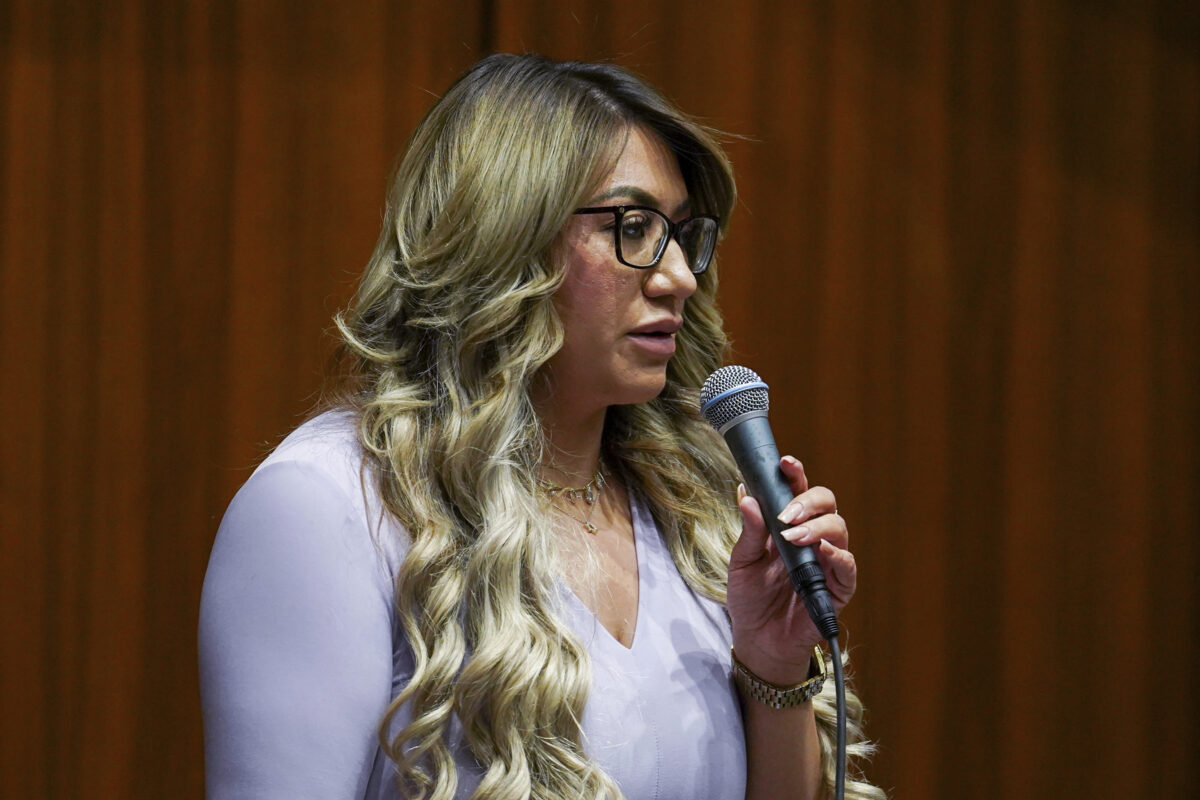
Alma Hernandez, a Jewish Democratic legislator in Arizona who is known as an outspoken supporter of Israel, claimed victory on Wednesday in a bitterly contested primary for an open state Senate seat in Tucson, hailing the win as a repudiation of the far left, Jewish Insider’s Matthew Kassel reports. With all votes counted in Arizona’s 20th Legislative District, Hernandez pulled in 54% of the vote share, defeating Perez by 8 points, according to unofficial results on the secretary of state’s website.
Victory message: “The voters in my district rejected antisemitism and rejected the DSA’s agenda, and clearly rejected what the mayor, the congresswoman and the county attorney wanted,” Hernandez, a term-limited House member, said in a statement to JI, referring to the Democratic Socialists of America. “We proved that elections are won by knocking on doors and talking to voters, not by social media or online outrage and your friends’ endorsements.”
Endorsement diaries: Connie Chan, a progressive member of the San Francisco board of supervisors running to succeed retiring Rep. Nancy Pelosi (D-CA), claimed an endorsement on Tuesday from Track AIPAC, a virulently anti-Israel group that has faced accusations of spreading antisemitism.
COOPERATION CLAIMS
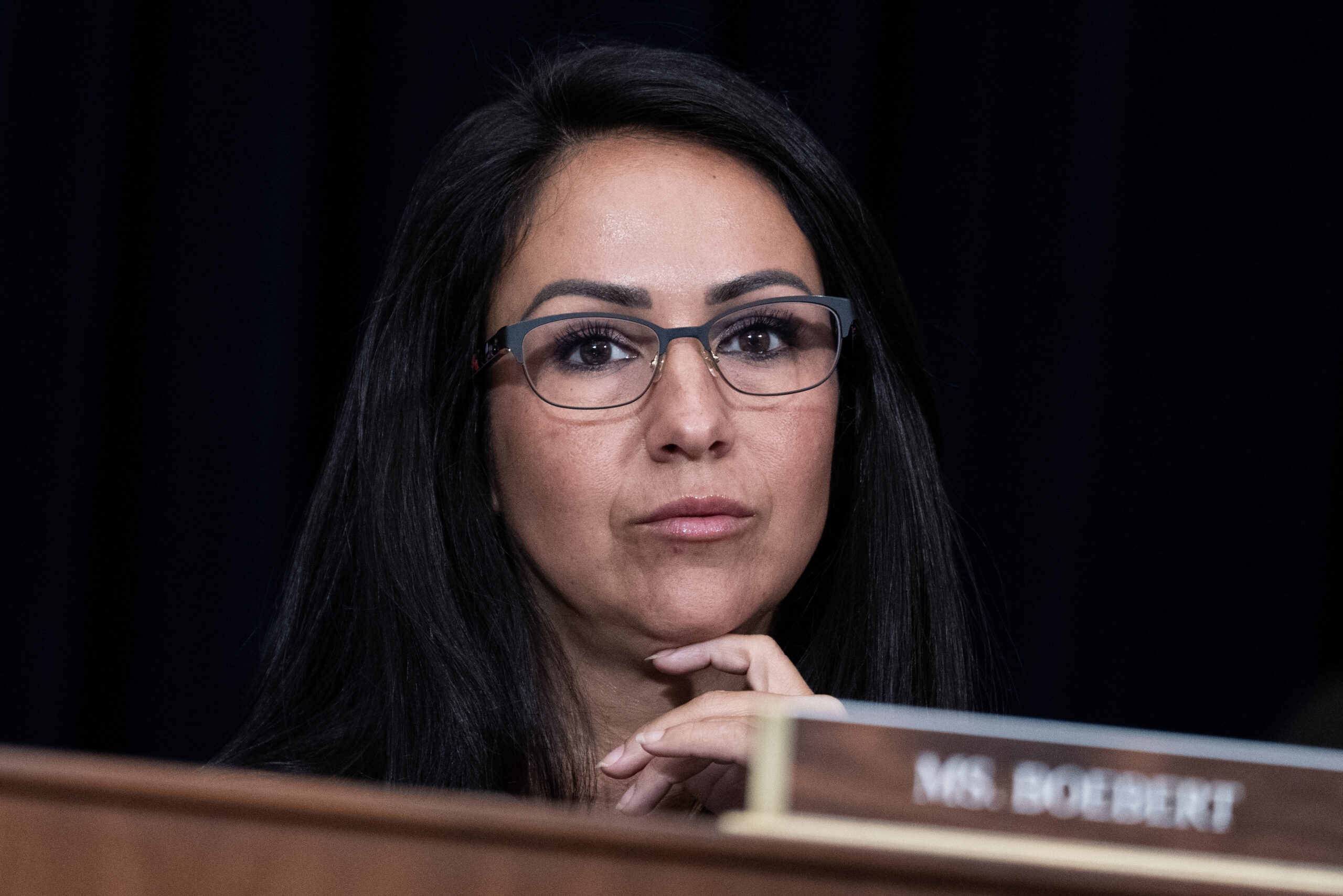
Rep. Lauren Boebert (R-CO) claimed this week that Secretary of Defense Pete Hegseth and the White House want to see a provision on U.S.-Israel defense technology cooperation stripped out of the 2027 National Defense Authorization Act. Neither the Pentagon nor the White House responded to requests for comment from Jewish Insider’s Marc Rod on whether such claims were accurate.
What she said: “Today, I was in a critical national security meeting with Secretary Hegseth where I helped secure his commitment that Section 219 would be stripped from the NDAA in conference. Protecting America’s intellectual property for future generations is non-negotiable,” Boebert said on X on Wednesday.
Trade tensions: Rep. Mike Lawler (R-NY), the top Republican on the House Foreign Affairs Committee’s Middle East subcommittee, insisted at a Wednesday hearing that Israel could not be excluded from the India-Middle East-Europe Corridor, and called out U.S. Ambassador to Turkey Tom Barrack for apparent efforts to advance an alternative trade corridor through Syria.
11th-hour addition

The new civilian nuclear cooperation agreement already signed between the U.S. and Saudi Arabia is now contingent on Riyadh joining the Abraham Accords, President Donald Trump announced on Thursday morning. The president’s Truth Social post — in which he said the deal is “totally subject” to Saudi Arabia normalizing relations with Israel, a provision not previously disclosed by the administration — was quickly affirmed by the White House, Jewish Insider’s Danielle Cohen-Kanik reports.
Confirmed condition: “Yes, this deal with Saudi Arabia, the energy deal, is contingent on this condition as far as the president is concerned,” White House Press Secretary Karoline Leavitt said during a press briefing on Thursday. “So we’ll continue to talk with our Saudi counterparts to get the deal finalized, and hopefully see them joining the Abraham Accords very soon.”
View from the Hill: Congressional Democrats are lining up in opposition to the Trump administration’s reported nuclear agreement with Saudi Arabia that could allow Riyadh to enrich uranium for civilian purposes, while Republicans are mostly supportive of the effort, JI’s Marc Rod and Christina Sher report.
Worthy Reads
Language Lesson: In The Wall Street Journal, Adam Louis Klein examines the parallels between those who accuse Israel of genocide in Gaza and the language employed by the Hutus as they conducted a genocide in Rwanda. “As in Rwanda, anticolonialism and genocide inversion have converged. Israel is imagined not only as a state accused of genocide, but as a people whose identity as foreign settlers makes genocide their destiny. … Whether directed against the Tutsis in Rwanda or against Israelis — now cast as genocidal colonizers by a cohort of anti-Zionist academics and nonprofit advocacy groups — portraying a people as foreign usurpers and inherent perpetrators isn’t neutral. It is a well-recognized prelude to violence.” [WSJ]
VP’s Vitriol: The Wall Street Journal‘s Kimberley Strassel reflects on the criticism she faced from both Vice President JD Vance’s office and his supporters following a column she wrote citing legislators in Washington discussing Vance’s absence from Capitol Hill. “One answer is simply that Mr. Vance is a sensitive bunny. If he wants to be president, he’ll need to get over that. But the other answer is that Mr. Vance knows his ‘national conservative’ ambitions for the GOP aren’t landing. Republicans are increasingly up in arms over a Vance agenda that sounds like Bernie Sanders. Hence his Vance team’s need to invalidate anyone who disagrees as a ‘RINO’ or a ‘tool’ of special interests or an ‘elite’ — the better to allow them to define what counts as a ‘real’ Republican.” [WSJ]
Going Nuclear: In his Substack, “It’s Noon in Israel,” Israeli journalist Amit Segal considers President Donald Trump’s decision to agree to a deal that would allow Saudi Arabia to have a civilian nuclear program. “Trump is a compartmental thinker. It has served Israel before — the Abraham Accords worked precisely because he declined to treat the Palestinian question as the gate through which everything else must pass. It has also cost Israel. In May 2025, he asked Syrian President Ahmed al-Sharaa to normalize relations with Jerusalem in exchange for sanctions relief, then lifted the sanctions anyway, squandering the leverage and ending the Israeli-Syrian talks that were ongoing.” [ItsNooninIsrael]
A larger selection of Worthy Reads is available in our Live Briefing.
Word on the Street
The Treasury Department announced sanctions on a U.K.-based Muslim Brotherhood official as well as several organizations based in Gaza, Indonesia and Turkey that provided financial support for Hamas…
The Defense Department lowered the number of U.S. service member fatalities during the war with Iran from 18 to 14, with officials telling The New York Times that the four soldiers killed last week were removed from the list because those troops were killed during the ceasefire with Tehran…
The House passed a second Iran war powers resolution on Thursday following the resumption of hostilities between the U.S. and Iran, with a handful of Republicans who have argued that continued operations violate the War Powers Act again siding with Democrats on the measure, JI’s Marc Rod reports…
The State Department summoned Malaysia’s ambassador in Washington over the decision by Kuala Lumpur to deport a dual Israeli American citizen traveling to the Southeast Asian nation for a digital nomad program; the meeting came after a group of House Democrats called on Secretary of State Marco Rubio to push back on Malaysia’s efforts to deport Israelis…
U.S. representatives to the United Nations slammed Francesca Albanese, the U.N. special rapporteur on the Palestinian territories who has faced repeated accusations of antisemitism, and said at a hearing on Wednesday that the next U.N. secretary-general will be faced with a choice of whether to turn the page on the institution’s antisemitic and anti-Israel bias, JI’s Marc Rod reports…
Reps. Chris Smith (R-NJ), Darrell Issa (R-CA), Mike Lawler (R-NY), Tom Kean Jr. (R-NJ), Andy Barr (R-KY), Gus Bilirakis (R-FL), Young Kim (R-CA), Maria Salazar (R-FL), Joe Wilson (R-SC) and Randy Fine (R-FL) reintroduced a bill to permanently prevent any U.S. contributions to the U.N. Relief and Works Agency…
Sen. Richard Blumenthal (D-CT) and 14 other Senate Democrats introduced a resolution demanding that the Senate’s legal counsel bring a lawsuit against the Trump administration, alleging that the gift of a Qatari 747 jet to serve as Air Force One constitutes an illegal foreign emolument banned by the constitution…
Senate Majority Leader John Thune (R-SD) named presidential historian Tevi Troy and author Dara Horn to a commission established to study the possible transfer of the Weitzman National Museum of American Jewish History to the Smithsonian Institution…
In The Wall Street Journal, former U.S. Ambassador to Japan Rahm Emanuel, who is mulling a 2028 presidential bid, warns of the damage that the rise of Democratic Socialists of America-affiliated candidates are doing to Democratic efforts to flip the House and Senate in November…
The Republican Jewish Coalition announced its endorsement of Sen. Darline Graham (R-SC) in the state’s upcoming special election to replace her brother, Sen. Lindsey Graham (R-SC), who died earlier this month, on the November ballot…
Sen. Tina Smith (D-MN) said she will back far-left Michigan Senate candidate Abdul El-Sayed in the state’s Democratic primary…
U.S. Ambassador to France Charles Kushner — who is currently residing in Paris — told the New York Post that he doesn’t want to “live in a city with a blatantly antisemitic mayor and his antisemitic wife” — in a reference to New York City Mayor Zohran Mamdani and First Lady Rama Duwaji — and planned to relocate his primary residence from New York City to Florida, while maintaining his Manhattan apartment…
The Louis D. Brandeis Center for Human Rights Under Law and the Anti-Defamation League reached a settlement with Reed College, in which the school agreed to adopt a range of measures, including an updated discrimination policy detailing how anti-Zionist conduct can constitute unlawful discrimination…
Hillel International is withdrawing an amicus brief it filed in support of Harvard University in the school’s legal fight against the Trump administration; a spokesperson for the group said the brief, which praised Harvard’s efforts to combat antisemitism as the university works to keep roughly $2.7 billion in federal funding that had previously been frozen by the government, was “filed without having gone through our internal review process”…
eJewishPhilanthropy’s Judah Ari Gross interviews Daryl Messinger, who last month was tapped as chair of the Israel Policy Forum, about shifting sentiment on Israel and efforts to advance the two-state solution…
The World Climbing Association blocked a motion to suspend Israel from the international climbing body following pushback from the climbing federations in the U.S., Australia, and Cyprus…
A Sydney man who wore a shirt with a swastika outside a hearing in which survivors of the Bondi Beach Hanukkah attack testified before Australia’s royal commission investigating antisemitism was fined $1,500, with a judge ruling that the man was “frustrated with the horrific events [in the Middle East] as he perceives them”…
A U.K. government spokesperson said the country was “ready 24/7 to defend itself” following threats from Tehran to target British military bases that London is allowing the U.S. to use for defensive attacks against Iran…
Satellite images obtained by The Wall Street Journal indicate that Iran is quickly rebuilding infrastructure damaged by the U.S. and Israel earlier this year…
Zehava Shaul, the mother of slain Israeli Staff Sgt. Oren Shaul, whose body was held by Hamas for more than a decade after he was killed in 2014, died at 71…
Wine of the Week

JI wine columnist Yitz Applbaum reviews the Alavida Malbec 2025:
Except for a small ownership stake in the Stuttgart Kickers, soccer never held much claim on me. Argentina changed that. Israel’s great friend and ally reignited my passion for the game this summer, and I watched nearly every match the team played, cheering as though they wore blue and white, which, come to think of it, they do. The final did not end the way I had hoped. But this year Tisha B’Av ended on a Thursday night, and with Shabbat around the corner, wine returned to my table early. The choice made itself: a great bottle from Argentina, to honor a friendship and to raise a glass to a team that fell just short, yet made a whole nation, and one distant admirer, proud.
The Alavida Malbec 2025 is equal to the moment. The opening is not a sip but a full meal: blueberries and raspberries pour across the palate and refuse to leave. The mid-palate mellows just enough to let you catch your breath. Then the finish arrives, deep, thunderous, and altogether alive. It will keep you up all night, and you will not mind at all. The wine will hold gracefully for several years yet. Pair it with a whole trout grilled over open flame, its skin crackling and bronzed, its flesh sweet and smoky with lemon and char, and let the evening unfold slowly.
Pic of the Day

Israelis gathered on Thursday at the Western Wall in Jerusalem on Tisha B’Av, the day that commemorates the destruction of the First and Second Temples and is marked by fasting and reading from the Book of Lamentations.
Birthdays
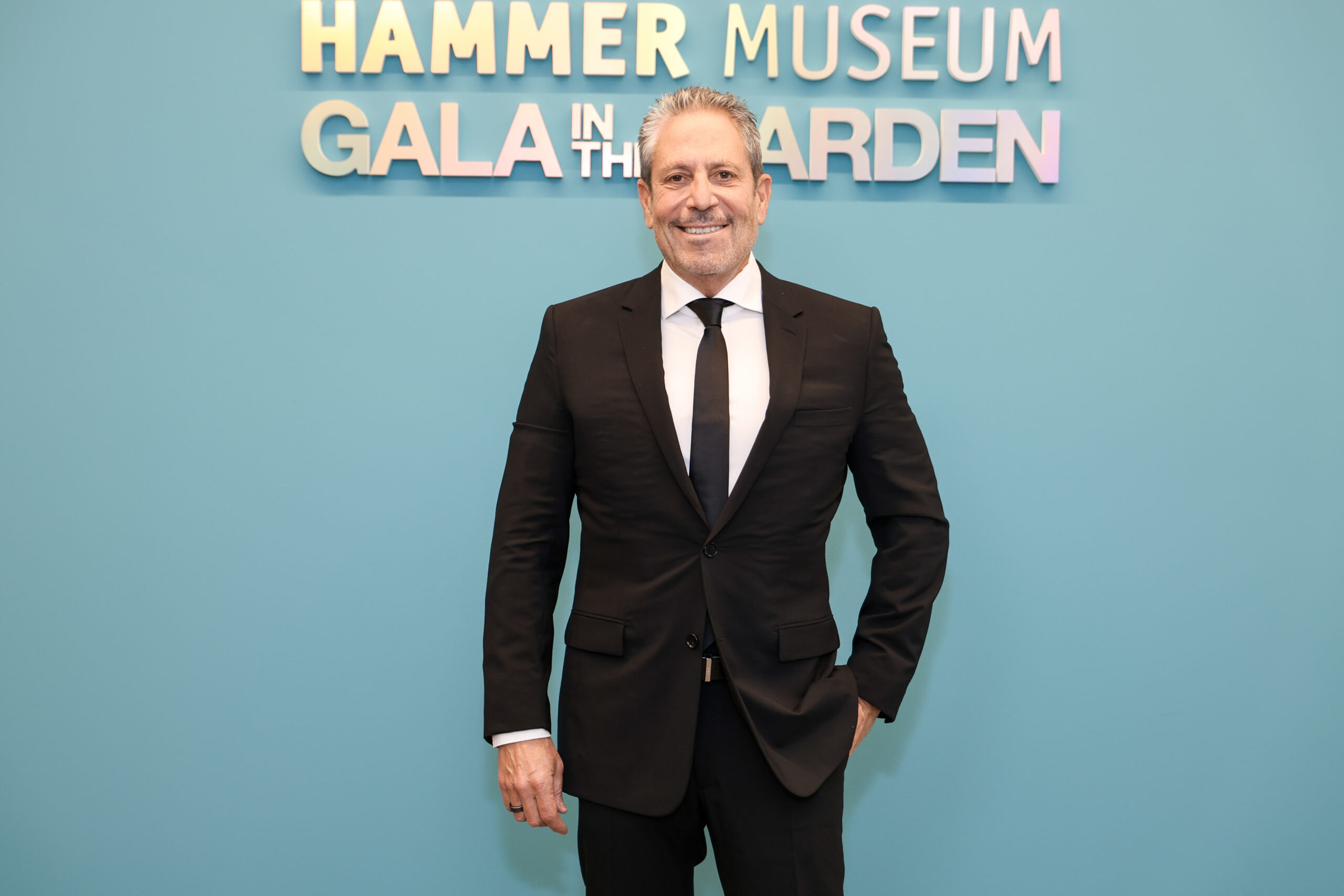
Screenwriter, director and producer, best known for creating “Beverly Hills, 90210” and “Sex and the City,” Darren Star turns 65 on Saturday…
FRIDAY: Former U.S. ambassador to Romania, now senior counsel at Covington and Burling, Alfred H. Moses turns 97… Pulitzer Prize-winning investigative reporter who worked for ABC News and CBS’ “60 Minutes,” Lowell Bergman turns 81… Israeli physician, author and playwright, he is the younger brother of PM Benjamin Netanyahu, Iddo Netanyahu turns 74… Political consultant known for his role in both of President Obama’s presidential campaigns, Joel Benenson turns 74… Retired Los Angeles-based business and real estate attorney, Michael Jeffrey Bordy… Radio anchor and reporter on both CBS nationally and NYC’s WCBS, Michael Sugerman… Member of Congress (D-FL) until 2022, he previously served as the governor of Florida, Charlie Crist turns 70… Russian businessman, one of the largest real estate investors in Russia, he is a member of the Board of Patrons of The Conference of European Rabbis, Boris Mints turns 68… Judge of the U.S. Court of Appeals for the Third Circuit, Judge Patty Shwartz turns 65… Presidential historian, professor at McGill and senior fellow in Zionist thought at the Jewish People Policy Institute, Gil Troy turns 65… Director of donor development for AIPAC, he is a retired NFL player who played for the Packers and the Cowboys where he won in Super Bowl XXVII, Alan “Shlomo” Veingrad turns 63… Founder of the Migdal Oz seminary for women in Gush Etzion, she is a granddaughter of Rabbi Joseph B. Soloveitchik, Esti Rosenberg turns 61… Film director and producer, Douglas Eric Liman turns 61… Partner in Frost Brown Todd and author of The Liberal Case for Israel, he was the first-ever Jewish statewide elected official in Kentucky (state treasurer), Jonathan Miller turns 59… Author, he wrote roughly 600 stories for the “My Ride” column on exotic cars for The Wall Street Journal, A.J. Baime turns 55… Mayor of Asheville, N.C., she was elected in 2013, 2017 and 2022, Esther E. Manheimer turns 55… Actor, writer, podcaster and comedian, Jamie Denbo turns 53… President of Access Computer Technology in West Bloomfield, Mich., he is a rabbi, entrepreneur and social media expert, Jason Miller turns 50… Member of Congress (D-MI) and a founding member of “The Squad,” Rashida Harbi Tlaib turns 50… President and CEO of the Jewish Federation of Greater Los Angeles, Rabbi Noah Zvi Farkas… EVP and CFO of Morgan Stanley, Sharon Yeshaya turns 47… Actor, screenwriter and director, she is married to Seth Rogen, Lauren Miller Rogen turns 44… Former member of the board of directors of the Jewish Federation of Greater Rochester, Aviva M. Futerman Schochat… Co-founder and partner at Orfin Ventures, an incubator and deep-tech venture fund, Adam Finkel… Public relations manager at The Avon Company, Sarah Citrenbaum… Actor, best known for her role as Nomi Segal on the Freeform comedy drama “Grown-ish,” Emily Taryn Arlook turns 36… 2020 graduate of Yale Law School, he is the CEO and founder of Learned Hand, building AI tools for judges, Shlomo Klapper…
SATURDAY: Warsaw Ghetto Uprising participant and Holocaust survivor, she is the subject of the 2021 documentary “I am Here,” Ella Blumenthal turns 105… Former publisher and editor-in-chief of Jewish Lights Publishing, he is an economist and religious scholar best known for his interfaith work, Stuart M. Matlins turns 86… Cinematographer, whose work includes “The Rocky Horror Picture Show” and “The Empire Strikes Back,” Peter Suschitzky turns 85… Member of the New York City Council from 2014 to 2021, Alan N. Maisel turns 80… Born in Casablanca, nightclub owner, entrepreneur and film producer, he produced “The Woman in Red” and “Weekend at Bernie’s,” Victor Drai turns 79… Former IDF brigadier general (he was part of Operation Entebbe in 1976), then a member of Knesset, Efraim “Effi” Eitam turns 74… Voiceover artist, he is also the writer, producer, director and narrator of a documentary about the restoration of a NYC synagogue, Peter Grossman… Chairman of Vibrant Capital Partners and chair emeritus of the Weitzman National Museum of American Jewish History in Philadelphia, Philip Darivoff… Pulitzer Prize winning author and journalist, she is a staff writer at The Atlantic, Anne Applebaum turns 62… Retired MLB pitcher from a small Jewish community in the Dominican Republic, he maintains a kosher home, José Bautista turns 62… Israeli journalist, former news anchor and author of a non-fiction book and a novel, Oshrat Kotler turns 61… Former CEO of Friends of the Israel Defense Forces, Rabbi Steven Weil… Born in Baku, Azerbaijan, he is a NYC-based criminal defense attorney in many high-profile cases, especially involving Russian-born defendants, Arkady L. Bukh turns 54… Head coach of the men’s basketball team at Kent State University since 2011, Rob Senderoff turns 53… Radio personality on Baltimore’s WBAL and 98 Rock, Josh Spiegel turns 51… Senior communications lead at the National Association for Healthcare Quality, Erin Seidler… Experimental electronic music producer, composer and singer, known professionally as Oneohtrix Point Never, Daniel Lopatin turns 44… Film and television actor, Michael Welch turns 39… Pitcher for Team Israel at the 2020 Olympics and at the 2023 World Baseball Classic, he is also a real estate broker at CBRE, Joseph “Joey” Samuel Wagman turns 35…
SUNDAY: Former mayor of Las Vegas for 12 years, where he was succeeded by his wife, Oscar Goodman turns 87… Former administrator at the University of Illinois and the University of Houston, chancellor of the California State University system and CEO of the J. Paul Getty Trust, Barry Munitz turns 85… Journalist and author or co-author of nearly two dozen books, both of her parents were killed in Auschwitz, Paulette Cooper turns 84… Author, podcaster, columnist and rabbi, Shammai Engelmayer turns 81… Member of the Florida House of Representatives from 2012 to 2020, Richard Stark turns 74… Chief medical officer at F|42, Alan H. Spiro, MD, MBA… Film and television director, she is best known for her work on the Showtime drama series “Homeland,” Lesli Linka Glatter turns 73… Sports columnist, author, television and radio personality, he works for ESPN’s Charlotte-based SEC Network, Paul Finebaum turns 71… Venture capitalist, until his wife died in 2024 he was a brother-in-law of Sen. Mitch McConnell, James W. Breyer turns 65… Actor, comedian and producer, Jeremy Samuel Piven turns 61… Former correspondent at ABC News for 23 years, now a founder at Ten Percent Media, Daniel B. “Dan” Harris turns 55… Physician and attorney, he is the founder and chairman of the D.C.-based consulting firm Stonington Global, Nicholas Muzin turns 51… Secretary of homeland security, Markwayne Mullin turns 49… Actor best known for her role in the Spider-Man trilogy, Mageina Tovah Begtrup turns 47… Partner of the D.C. office of ColdSpark, Nachama Soloveichik… Senior Reporter at CNN’s Jerusalem bureau, Tal Shalev… Israeli born classical music composer, Gilad Hochman turns 44… Israeli born R&B singer and songwriter, Hila Bronstein turns 43… Communications manager at Cetera Financial Group, Lauren Garfield-Herrin… Actor and filmmaker, Hallie Meyers-Shyer turns 39… Member of the comedy group “The Try Guys,” Zachary Andrew “Zach” Kornfeld turns 36… Associate policy director for complex care at United Healthcare , Drew Gerber… NFL running back who retired in 2024, despite his last name he is not an MOT, Tarik Cohen turns 31… Pitcher on the Israeli Women’s National Softball Team, now a curriculum designer at Great Hearts Academies, Tamara “T” Statman Schoen turns 29… President at B&B Digital Media, Tomer Barazani…
‘I represent a pro-Israel, anti-Netanyahu district and this is a pro-Israel, anti-Netanyahu vote,’ Rep. Jake Auchincloss told JI
Bill Clark/CQ-Roll Call, Inc via Getty Images
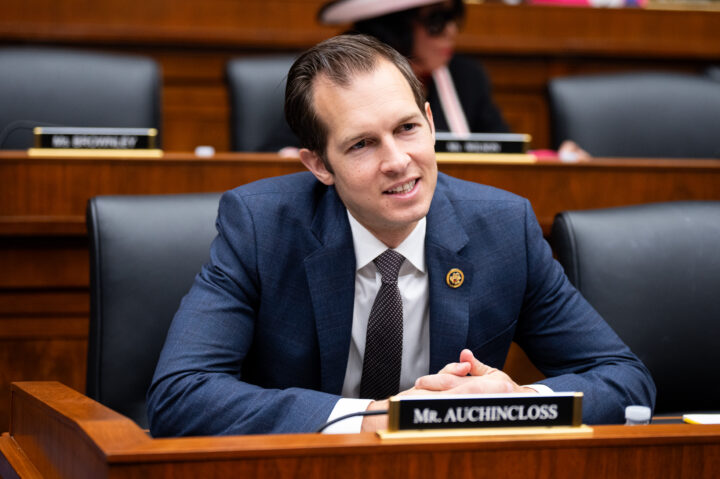
Rep. Jake Auchincloss (D-MA) participates in the House Transportation Committee hearing on Thursday, June 27, 2024.
Of the 103 House Democrats who voted to cut off the $3.3 billion in U.S. aid to Israel last week, few came as more of a surprise than Rep. Jake Auchincloss (D-MA), a Jewish Democrat who has generally been a reliable pro-Israel vote in the House.
Auchincloss, in an interview with Jewish Insider this week, said that he approached the vote as a protest of the war with Iran, and argued that the vote wasn’t anti-Israel.
“This president, in conjunction with Prime Minister Netanyahu, has launched an illegal, catastrophic war that nine out of 10 Israelis think has led to Iranian gains, and that even fewer of my constituents support,” Auchincloss said. “And foreign military financing is a form of appropriations for a war I believe to be illegal and unwise.”
He also pointed to comments by Israeli Prime Minister Benjamin Netanyahu calling for the U.S. to phase out aid to Israel over the next 10 years, arguing that Democrats can’t be expected to take a position on aid “to the right of Netanyahu” — though the Israeli prime minister hasn’t called for an immediate halt to aid.
“That grant of foreign military financing is a privilege that Congress grants annually to both our head of government and to counterparty heads of government,” Auchincloss said. “Every year, Congress has the right — Congress has the responsibility — to determine whether that privilege is warranted. Given Trump and Netanyahu’s decision-making about this debacle with Iran, I do not think it is warranted.”
He said he would evaluate his position on future FMF to Israel on a year-by-year basis depending on whether he believes such aid is deserved. “That’s not only my right as a member of Congress, that’s my responsibility — particularly when 18 Americans have died overseas.”
But he said that he continues to support the U.S-Israel relationship and said the U.S. should continue to work to preserve Israel’s qualitative military edge (QME), and suggested he would not, at this point, support a cutoff of support for Israeli missile-defense systems or an embargo on Israel buying U.S. systems with its own funds.
He said he also believes in continued U.S. support for the Abraham Accords and other efforts to bring Israel and the region closer together, including through the India-Middle East-Europe Corridor (IMEC).
Some observers have seen Auchincloss’ vote as a concession to left-wing Democrats in his suburban Massachusetts district, in light of the party’s shifting stance on Israel and primary challenges to other pro-Israel Democrats. The district includes a substantial Jewish population.
Auchincloss himself won his first primary in 2020 with 22% of the vote, scoring a narrow victory over a divided field that included several candidates to his left. Some on the left still see him as vulnerable to a one-on-one challenge in a future race — or as a potential candidate for higher office in deep-blue Massachusetts.
“I represent a pro-Israel, anti-Netanyahu district and this is a pro-Israel, anti-Netanyahu vote,” Auchincloss asserted, arguing that he’s “confident … a majority of my Jewish constituents would agree with me.”
“I hear why people see this vote through the lens of primaries and the national Democratic scene,” Auchincloss said. “I represent about 100,000 Jewish constituents. They are super smart and engaged on this issue. If I try to take political votes or symbolic votes or too-clever-by-half 4D-chess votes, it doesn’t hang together. I have to be able to defend the internal logic of each and every vote to this community, and I am confident that I can say to this community on this vote: This is a rejection of Trump and Netanyahu’s decision-making to take away the credit card.”
Asked whether the U.S.-Israel relationship can be sustained and repaired while Netanyahu continues to lead Israel — as some prominent U.S. figures have suggested that Netanyahu being ousted in the upcoming Israeli elections is necessary to continued bilateral relations — Auchincloss said that the relationship should be bigger than any one leader.
“The U.S.-Israel alliance is deeper than personalities,” he said. “Certainly, you know, Congress and our decisions about appropriations and policy need to be calibrated to the individuals who are going to be executing that policy, right? But the U.S.-Israel alliance is based on shared interests, on common values, and a long history.”
He suggested he was unconcerned by AIPAC’s decision to halt fundraising for him following the vote, explaining that his votes aren’t shaped by endorsements or contributions and that he’s taken votes both supported and opposed by AIPAC over the course of his career.
Though he diverged from House Minority Leader Hakeem Jeffries (D-NY) on the Israel aid vote, Auchincloss praised the Democratic leader’s approach to the issue and called it a model for how the party as a whole should approach Israel policy going forward.
“Hakeem is pointing the way with a steady hand, which is to say, ‘We’re a party that supports qualitative military edge for Israel, which is surrounded by terrorists and the world’s largest state sponsor of terrorism, and has a right to defend itself against those terrorists and needs QME to be able to do that, but we’re not a party that yields congressional oversight to Trump and Netanyahu as Republicans have,”’ Auchincloss said.
Asked about the possibility of conditions on further U.S. aid to Israel, Auchincloss said that the next U.S.-Israel memorandum of understanding should be crafted around supporting Israel’s QME, expanding and supporting normalization and, critically, provisions that can garner support from both chambers of Congress and both parties.
Even as he sided with progressives in the party on the Israel aid vote, Auchincloss has also found himself vocally at odds with the left over his criticisms of former Maine Senate candidate Graham Platner.
Auchincloss long opposed Platner and faced strong backlash from the party in late May for saying that Platner’s tattoo and comments about it were “disqualifying” and saying he would support another candidate in the primary if he were a Maine voter.
“Character should matter in politics,” Auchincloss told JI. “Ten years ago, Republicans decided that it doesn’t. They’ve become a cult of personality, and Platner demonstrates to Democrats the hazards of agreeing that character doesn’t matter.”
“And I think it’s a problem for the Democratic Party to wrestle with [the fact] that it would have been more politically damaging for him to have a Star of David tattoo than to have a Totenkopf tattoo,” Auchincloss continued, an apparent reference to comments from a Platner supporter on the campaign trail earlier this year.
Auchincloss also said he remains concerned about surging antisemitism globally, and continues to be involved in other efforts to combat antisemitism and anti-Israel sentiment, including as one of a handful of Democrats who signed a letter earlier this week condemning plans by Malaysia to round up and expel Israeli citizens.
He said he’s been in discussions with Jewish community groups about the role of social media in promulgating antisemitism and is working on legislation to combat it, while also arguing that it will require a “multifaceted approach.”
“Antisemitism tends to mushroom in failed societies, and social media has become a failed society as one big online toxic brew. And politics is downstream of media and information and culture,” Auchincloss said.
He said that even as political leadership is necessary to call out and reject antisemitic candidates, leaders also need to look “upstream to media and culture and information,” particularly on antisemitism.
Auchincloss is making his own efforts to steer the direction of the Democratic Party, including as the chair of Majority Democrats, a new campaign group backing moderate and liberal Democratic lawmakers and candidates around the country.
In his view, Auchincloss said that he sees himself and the group as occupying a third corner of the party, separate from the left and the establishment. “There is the opportunity for a faction that will redefine the center of American politics and be disruptive of the establishment without being socialist,” Auchincloss said.
He said he believes his faction and the party as a whole should be focused on “the new American dream” — a robust primary and secondary education, the ability to own a home by age 30 and retire by 65 — as “partners to help you achieve that economic security.” Auchincloss said the party should also be aggressive about confronting corruption across the political spectrum and should not yield “faith, family and the flag” to conservatives.
“I don’t think Americans are going to vote for Democrats to lead this country if they don’t think Democrats like this country,” Auchincloss said. “And so we have to be the party of patriotism — not of blood and soil nationalism, but of true constitutional patriotism. And then, finally, we need a cross-ideological governing platform that is willing, even self-consciously celebratory, of dragging and dropping good ideas from across factions of American life.”
He also said that Democrats should be strongly supportive of public safety, including cracking down on petty crime, and support a national wealth tax.
Auchincloss pointed to Sen. Jon Ossoff (D-GA), increasingly seen as a potential 2028 presidential candidate, as someone who he believes is a strong leader for the party, particularly on anticorruption issues.
He said that he sees an anti-establishment mood across the party — which he said will look different in deep-blue and purple seats, while emphasizing that Democratic Socialists of America members have won “about 1%” of Democratic Party primaries.” He said he believes that the extremism problem is much more severe on the GOP side, asserting that 2020 election deniers have won more than half of GOP primaries to date.
“American politics is horseshoeing, but it’s not horseshoeing symmetrically,” Auchincloss alleged.
Asked whether he’s comfortable being in the same political coalition as those DSA members, Auchincloss said that he’s “not a bouncer” and doesn’t have the capability to police who’s winning Democratic primaries.
“What I’m concerned about is less about being a bouncer at the door and more about do we have music at this party that people want to come and dance to? Like, are we filling the room? Because enrollments for Democratic Party are going down,” Auchincloss said.
He said that, as with Platner, character matters, but that Democrats also shouldn’t be fixated on a “checklist at the door” for who can and can’t be part of the party, and should instead concentrate on a “governing vision” that will attract voters.
The Pennsylvania senator told JI his ‘views aren't controversial, or they shouldn't be. What should be controversial is the trash that's coming out from many Democrats and out of J Street’
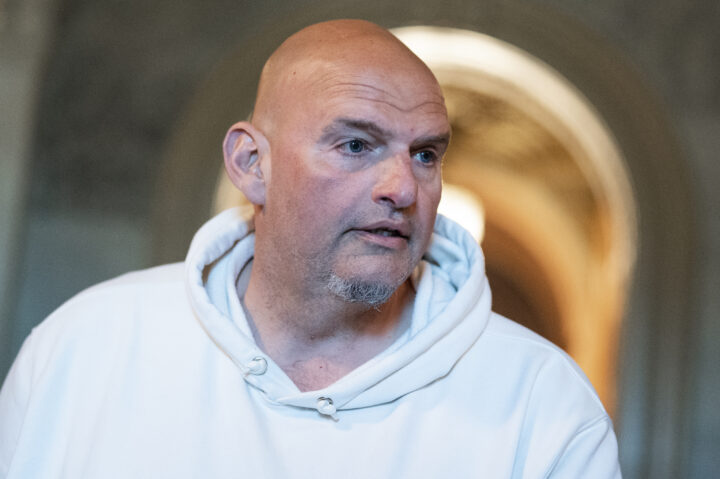
Tom Williams/CQ-Roll Call, Inc via Getty Images
Sen. John Fetterman (D-PA) is seen after the Senate luncheons in the U.S. Capitol on Tuesday, April 14, 2026.
Sen. John Fetterman (D-PA) said on Monday that the votes by more than 100 House Democrats last week in favor of an effort to end all U.S. aid to Israel indicates the party is “flirting with” making opposition to Israel the official party stance, something he said would lead him to leave the caucus.
Fetterman, who has dismissed discussions about him leaving the party in recent years despite his increasing isolation from Democratic colleagues on Capitol Hill, said in a series of media appearances last week that he would leave the Democratic Party if it called for opposing offensive or defensive aid to Israel or ending the U.S.-Israel relationship in its official platform.
“It’s very clear, if the Democratic Party becomes the official anti-Israel party, then that forces me to rethink my membership in that party,” Fetterman told Jewish Insider in an interview on Monday. “Candidates run on the platform, on whatever the platform is, any one member of it effectively agrees with it. If they put that in the platform that we will never vote for aid for Israel, or we describe Israel as a genocidal or apartheid state, then yes, you have to rethink it.”
The Pennsylvania senator said that the move by nearly half of the House Democratic caucus to vote for Rep. Thomas Massie (R-KY)’s measure indicates the party is “flirting with” the idea of shifting its platform.
“It’s absurd. The Democratic Party are increasingly voting not to support the only Democratic state in the entire region,” Fetterman told JI. “I’m saying, effectively, you are flirting with it. You are increasingly making it more official. Inculcate it into our platform, then that’s a fundamental betrayal of the Democratic Party’s core morality.”
“I’ve been warning — I have been. Maybe two years ago I said I’ll be the last man standing if it’s what’s necessary,” he continued. “In July of ‘24, [Israeli Prime Minister Benjamin] Netanyahu had a joint address [to Congress]. I was the only Democrat that would engage him, shake his hand, get a photo with him, support the decision when every other Democrat was pushing for a ceasefire [in Gaza]. I mean, the Democratic Party was entirely wrong with that approach, and imagine what the security situation would be if Israel was pushed into a ceasefire.”
Fetterman referenced an Axios article published earlier Monday that credited the letter House Minority Leader Hakeem Jeffries (D-NY) sent to all House Democrats urging them to oppose the amendment with keeping 30 to 40 additional lawmakers from voting for the measure.
“It could have been 150 Democrats to vote against that,” Fetterman said. “I mean, that’s the direction the party’s going. … My views aren’t controversial, or they shouldn’t be. What should be controversial is the trash that’s coming out from many Democrats and out of J Street.”
The Pennsylvania senator took pointed aim at J Street, referring to the progressive Israel advocacy organization as “the embodiment of the suicidal empathy against the Jewish state of Israel” and criticizing the group for associating with Hasan Piker, the far-left streamer who has a record of antisemitic remarks.
“Nothing embodies suicidal empathy like J Street,” Fetterman said. “I wouldn’t describe them as cancer, but it’s vile the views that they are adopting, and they are becoming the useful idiots for the Hamas and Iranian propaganda machine. Are they gonna invite Hasan Piker to be on their board?”
“J Street is the group that said and gave political cover for Democrats so they don’t have to vote for Iron Dome [funding]. That’s a fact,” he continued. “They were trying to provide political cover for Democrats to say, ‘Well, J Street said it, so that seems pretty reasonable.’”
Fetterman had previously brushed off reports that efforts to recruit him to the GOP would be successful, writing in a Washington Post op-ed in May that he would “be a terrible Republican who still votes overwhelmingly with Democrats.”
Questions about Fetterman’s future political plans began circulating again earlier this month, however, when he and Sen. Dave McCormick (R-PA) launched Common Ground PA, a joint fundraising committee combining two of each senator’s PACs and allowing them to fundraise together.
Fetterman warned last week that he could become a deciding swing vote in the next Congress if the Democratic Party wins control of the Senate in November, which Democrats need to flip four seats to accomplish.
“If we flip those four seats, then I would be 51,” Fetterman said Wednesday at The Hill Nation Summit. “Watch what I do.”
The pro-Israel advocacy group now allows its supporters to donate to 178 Republicans and 72 Democrats running for Congress

Alex Wong/Getty Images
A visitor holds an AIPAC folder in an elevator in Rayburn House Office Building on March 12, 2024 on Capitol Hill in Washington, DC.
Days after 104 members of Congress voted in favor of a measure that sought to end U.S. aid to Israel, AIPAC will no longer allow donations through its political action committee to 18 lawmakers it endorsed who voted in favor of the legislation.
The group did not announce the change. But the endorsement page on AIPAC’s political giving portal — where supporters can donate to candidates who have been endorsed by AIPAC — removed the option for individuals to route money to those lawmakers.
AIPAC now allows its supporters to donate to 72 Democratic candidates in the House and Senate, compared to 178 Republican candidates — meaning 71% of the candidates the group is now actively supporting are Republicans, and just 29% are Democrats.
Rep. Thomas Massie (R-KY), an anti-Israel Republican who was defeated this year in a GOP primary, introduced the amendment to a State Department funding bill knowing it would fail, which it did: 314 members voted against it.
He was the only Republican to support it, along with 103 Democrats. Ten Democrats voted present on the amendment, which would have eliminated the $3.3 billion in annual foreign military financing provided by the U.S. to Israel, according to the terms of the 2016 memorandum of understanding between the two countries.
The 18 AIPAC endorsees who voted in favor of the measure were Reps. Gabe Amo (D-RI), Jake Auchincloss (D-MA), Julia Brownley (D-CA), Katherine Clark (D-MA), Laura Friedman (D-CA), Maggie Goodlander (D-NH), Josh Harder (D-CA), Steven Horsford (D-NV), Glenn Ivey (D-MD), Julie Johnson (D-TX), Bill Keating (D-MA), Seth Magaziner (D-RI), Richard Neal (D-MA), Joe Neguse (D-CO), Nancy Pelosi (D-CA), Brittany Pettersen (D-CO), Pat Ryan (D-NY) and Adam Smith (D-WA).
On its website, AIPAC delineates retiring lawmakers, who are no longer raising money, with a brief explanation thanking them for their “ongoing support for the U.S.-Israel relationship.” On the profiles of retiring Reps. Brownley, Pelosi and Johnson, AIPAC removed the line expressing thanks.
Three AIPAC-endorsed lawmakers — Reps. Shontel Brown (D-OH), Sarah Elfreth (D-MD) and Chris Pappas (D-NH) — voted “present” on the measure. AIPAC is still supporting them.
The group did not formally rescind its endorsement of any lawmakers after the vote, according to an AIPAC source, even though they are no longer going to receive financial support from the organization.
An AIPAC spokesperson declined to comment.
Plus, Lindsey's legislative legacy
Kayla Bartkowski/Getty Images
Rep. Pat Ryan (D-NY) speaks during a Democratic Steering and Policy Committee hearing in the U.S. Capitol on April 10, 2025 in Washington, DC
Good Friday morning.
In today’s Daily Kickoff, we cover Rep. Adam Smith’s comments that he was pressured to vote to end U.S. aid to Israel by violent, far-left activists, and report on Rep. Pat Ryan’s offer to return donations from individuals who oppose his vote against Israel aid. We do a deep dive into how anti-Israel candidates raised and spent money ahead of their primaries, and look at how Sen. Lindsey Graham’s sudden death has left the South Carolina Republican’s legislative priorities in limbo. Also in today’s Daily Kickoff: Ted Deutch, Hakeem Jeffries and Marco Rubio.
We have also launched a new on-demand Live Briefing that you can access throughout the day via our new app (on Apple and Android) and on our website.
Today’s Daily Kickoff was curated by JI Executive Editor Melissa Weiss and Israel Editor Tamara Zieve, with assists from Danielle Cohen-Kanik and Marc Rod. Have a tip? Email us here.
For less-distracted reading over the weekend, browse this week’s edition of The Weekly Print, a curated print-friendly PDF featuring a selection of recent Jewish Insider and eJewishPhilanthropy stories, including: Tributes pour in after death of Lindsey Graham, Israel’s staunch defender in the Senate; Vance alleges Israeli influence campaigns ‘manipulating’ American opinion on Iran war; In Georgia’s Senate race, tough choices ahead for the state’s Jewish community. Print the latest edition here.
What We’re Watching
- The Aspen Security Forum concludes this afternoon. This morning, Sens. Bill Cassidy (R-LA) and John Cornyn (R-TX) will join former NSA Director Timothy Haugh for a panel on American leadership in an era of advancing technologies.
- The Knesset voted this morning to dissolve itself, sending the body into recess until after the Oct. 27 election.
- We’ll be watching the situation in the Middle East as the U.S. continues to expand its campaign against Iran. Tehran for the first time on Friday acknowledged that the U.S. had struck the Islamic Republic’s energy infrastructure, with the country’s energy ministry calling for residents of the southern provinces to conserve electricity as the area is “currently experiencing extreme heat and attacks on power infrastructure.”
- Meanwhile, Chevron is expected to sign deals today that would see the company invest in two Iraqi oil fields and join a broader consortium looking to build a pipeline to connect Iraq to the Syrian coast as it looks for alternatives to the Strait of Hormuz.
What You Should Know
A QUICK WORD WITH JI’S JOSH KRAUSHAAR
The second-quarter congressional fundraising reports, which were posted on Wednesday, paint a picture of far-left, anti-Israel candidates drawing financial fuel from a growing small-dollar donor network of like-minded individuals.
Nearly all of the Democratic Socialists of America-aligned or virulently anti-Israel candidates were among the Democrats’ leading fundraisers, including lawmakers (like Reps. Rashida Tlaib [D-MI] and Ilhan Omar [D-MN]) who are not facing particularly competitive races.
The highlights: Abdul El-Sayed raised $4.6 million between April and June in the Michigan Senate primary, more than double the $2.1 million that Rep. Haley Stevens (D-MI) brought in. Disgraced former Maine Senate candidate Graham Platner took in a whopping $9.1 million before dropping out amid allegations of rape, outpacing Sen. Susan Collins’ (R-ME) $5.7 million haul.
On the House side, the DSA duo who won New York City congressional nominations last month — doctoral student Darializa Avila Chevalier and state Assemblywoman Claire Valdez — nearly hit the million-dollar mark in fundraising.
Avila Chevalier raised $952,000 in the run-up to her primary against Rep. Adriano Espaillat (D-NY), coming close to matching the Congressional Hispanic Caucus chairman’s fundraising. Meanwhile, Valdez brought in $942,000 for the quarter, significantly more than the party-backed progressive favorite Antonio Reynoso, the Brooklyn borough president.
The list goes on: Adam Hamawy’s past ties to Islamist radicals didn’t prevent him from winning the nomination in New Jersey’s 12th District, and certainly didn’t stunt his fundraising. Hamawy raised $987,000 in the second quarter, a staggering sum for a low-profile open-seat race. That’s well more than double the total of his nearest fundraising rival.
Melat Kiros, the 29-year-old DSA-backed insurgent who ousted Rep. Diana DeGette (D-CO), also outraised the longtime lawmaker in the homestretch of the campaign. Kiros brought in $712,000 between April and June, while DeGette only raised $694,000.
What does this say about the state of our politics?
PRESSURE COOKER
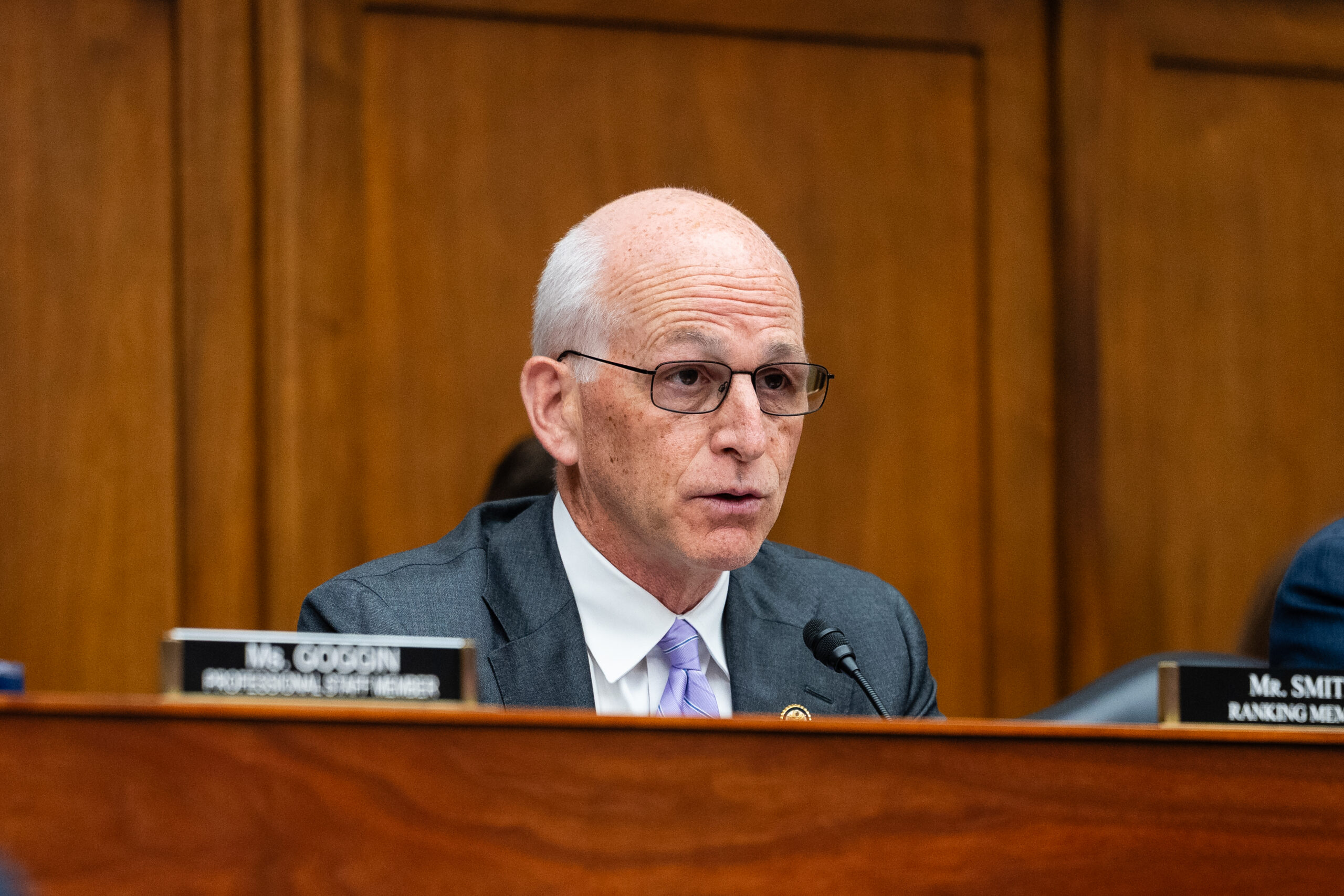
Rep. Adam Smith (D-WA), the top Democrat on the House Armed Services Committee, indicated he voted to cut off military aid to Israel in part because of sustained personal threats against his family and his staff, part of what he described as a violent and relentless campaign of intimidation by far-left anti-Israel activists, Jewish Insider’s Matthew Shea reports.
U-turn: Smith voted on Wednesday to support an amendment introduced by Rep. Thomas Massie (R-KY) to strip $3.3 billion in U.S. aid to Israel from the 2027 State Department appropriations bill — a major reversal by the hawkish Democrat after he previously told JI he planned to oppose the measure. In a statement explaining his vote in favor, the high-ranking defense lawmaker said it was a “very close vote.” He said that despite voting to cut off U.S. aid, he was “deeply concerned” about the tactics used by far left activists to pressure him to support such a measure.
Letter of the law: Several House Republicans sent a letter on Thursday to the Department of Justice calling for an investigation into whether New York City Mayor Zohran Mamdani and his international affairs commissioner, Ana María Archila, violated the Logan Act by scheduling a meeting with the Iranian ambassador to the United Nations.
RETURN POLICY

Rep. Pat Ryan (D-NY) said on Thursday that he no longer wants AIPAC’s endorsement and would be “returning the funds” the group’s PAC had sent his campaign, following his vote on Wednesday, along with 102 other Democrats, to cut off all aid to Israel. The Hudson Valley Democrat also said he would refund individual donors who had previously supported his campaign if they made the request, Jewish Insider’s Matthew Kassel reports.
No thanks: “I expect groups like AIPAC will not support me in my future elections and frankly, I don’t want their support,” he wrote in a social media post explaining his vote, saying he would no longer back $3.3 billion in annual military aid to Israel. In a separate post, Ryan confirmed he did not want AIPAC’s endorsement and would be “returning the funds” sent to his campaign. A spokesperson for Ryan clarified that he was returning AIPAC’s “PAC funds.” Ryan added, “I am grateful for any individual donor who has supported my campaign. My position is clear and if an individual requests a refund, I will happily provide it.”
Changing course: House Minority Leader Hakeem Jeffries (D-NY) said on Thursday that should Democrats regain control of the House in the upcoming midterm elections, the party will adopt a “broadly inclusive” but fundamentally new approach to policy on Israel, JI’s Matthew Shea reports.
HEARD AT ASPEN

Akif Çağatay Kılıç, a top foreign policy and security advisor to Turkish President Recep Tayyip Erdoğan, downplayed the threat posed to the region by Iran’s nuclear program, while also repeatedly sidestepping questions about the status of Turkey’s Russian S-400 missile-defense system and efforts to acquire F-35 fighter jets, Jewish Insider’s Marc Rod reports from the Aspen Security Forum.
Nothing to see here: “I don’t perceive that we have a nuclear threat to the level that is being talked about, but we are closely monitoring it, and we’re talking to our Iranian colleagues and friends on how they perceive to be working on their nuclear program — civil nuclear program,” Kılıç said.
Alternative view: Jordanian Deputy Prime Minister Ayman Safadi repeatedly emphasized on Wednesday that any deal with Iran should be comprehensive and ensure an end to Iran’s support for proxy groups and confront its efforts to destabilize the region.
TED TALK
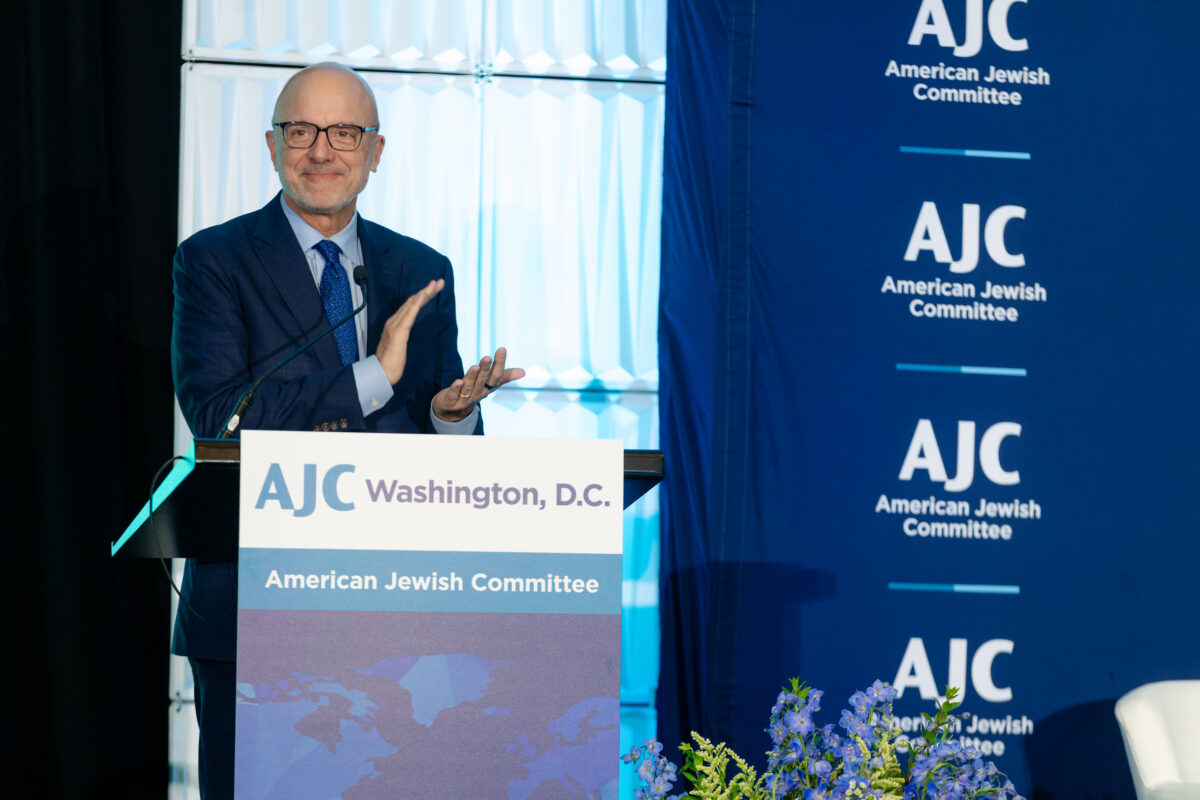
American Jewish Committee CEO Ted Deutch, who served as a Democratic member of Congress from 2010-2022, expressed frustration and disappointment with the decision of half of his former caucus to vote this week for an amendment to cut off U.S. military aid to Israel. The issue, Deutch told Jewish Insider’s Marc Rod in an interview Thursday on the sidelines of the Aspen Security Forum, is too important and too sensitive for what some supporters characterized as a show vote on an amendment, led by Rep. Thomas Massie (R-KY), that even many of its supporters saw as deeply flawed.
What he said: Deutch said that he was “glad to see” that many of his colleagues acknowledged that the amendment was “bad policy” and “indirectly acknowledg[ed] that it would damage American interests.” Deutch added, “And yet [they] turned around to vote for it anyway. That was just a really disappointing reflection of the moment.”
Also at Aspen: Sen. Chris Murphy (D-CT) argued on a panel that the war with Iran had irreparably damaged the U.S.’ reputation and capacity in the Middle East, and that Gulf states would now need to take the lead and negotiate with Iran over the region’s future. On a separate panel, Herro Mustafa Garg, a former U.S. ambassador to Egypt, said the rift between Saudi Arabia and the United Arab Emirates hurts U.S. interests in the region and Washington should work to bring the countries and other Gulf Cooperation Council states back together.
UNFINISHED BUSINESS
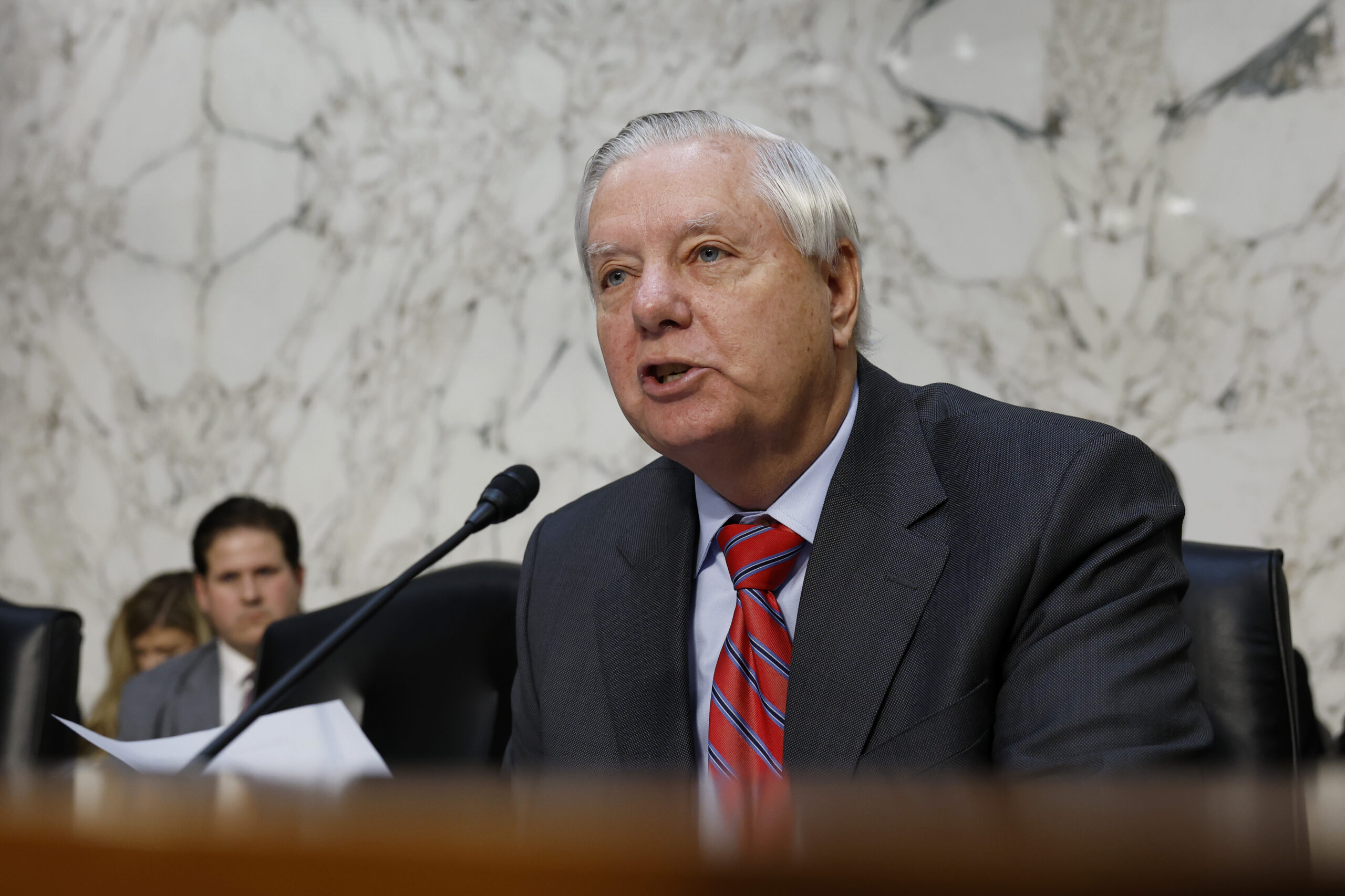
Sen. Lindsey Graham’s (R-SC) sudden death last weekend is complicating an already difficult dynamic between Senate Republicans and President Donald Trump, as legislators try to muster enough support in the caucus to pass the president’s key legislative priorities, Jewish Insider’s Emily Jacobs reports.
The gap left by Graham: Graham’s committee chairmanships, vast donor network and his close relationship with Trump and Secretary of State Marco Rubio made him a critical leader in Washington whose presence helped move forward multiple bipartisan efforts, especially on foreign policy. He became one of the most geopolitically connected members of Congress, with world leaders and captains of industry on speed dial. “It’s impossible to fill that void, No. 1, so I’ll just take that off the table,” Sen. Tim Scott (R-SC), the chairman of the National Republican Senatorial Committee, told JI at a press conference on Wednesday at NRSC headquarters on Capitol Hill.
analysis

The latest fundraising filing period highlighted the diverse donor bases backing some of the most outspoken critics of Israel and capitalism, with candidates raking in hundreds of thousands from executives and entrepreneurs in tech, medicine and finance. Jewish Insider’s Will Bredderman looked into how ascendant anti-Israel candidates raised and spent money just before and after their primaries.
Doctors’ notes: Darializa Avila Chevalier, the radical grad student who defeated Rep. Adriano Espaillat (D-NY), reported nearly $350,000 in donations in the last three weeks of June. Among the many medical professionals to cut checks to Avila Chevalier was Dr. Mohammed Hadi, a Long Island-based physician charged in 2015 with conspiring to defraud Medicare and distribute oxycodone. Hadi ultimately pleaded guilty in 2024 to misdemeanor theft of government funds.
Read the full round-up here of how some of the most prominent figures got that windfall — and what they did with it.
Worthy Reads
Take This Sabbath Day: In The Wall Street Journal, David Bashevkin reflects on the benefits of unplugging during Shabbat. “The modern world desperately needs a weekly rhythm of rest. But if unplugging promises greater focus, stronger families and richer communities, why has it proved so difficult? The answer isn’t simply that we’re addicted to our phones. It’s that unplugging isn’t enough. A Sabbath isn’t merely the absence of technology. It is the presence of something richer. … The world doesn’t need more reminders to turn off its phones. We’re already receiving plenty of those. What we need is a culture capable of making that unplugging last. In racing toward the future, we are searching for something the ancient world never stopped handing down.” [WSJ]
Echoes of Weimar: In The Free Press, Rod Dreher, who is working on a book about the parallels between Weimar Germany and the present, looks at Vice President JD Vance’s embrace of antisemitic elements of the GOP and recent comments suggesting an Israeli role in scuttling talks with Iran. “As in Weimar Germany and the early years of Nazi rule, Jews were the canary in the cultural, political, and religious coal mine. They still are. Von Papen conservatism, in which respectable right-wing leaders seek to hold on to power by accommodating themselves to extremists, is a dangerous game, and a losing one. Of course criticism of Israel should not be taboo in American political discourse, but that is not what stab-in-the-back scapegoating of the Jewish state and its supporters for decisions made by the commander in chief amounts to.” [FreePress]
Does He Have Any Trump Cards?: Tablet’s Lee Smith considers President Donald Trump’s options vis-a-vis Iran amid stalled talks with Tehran. “The Trump team spent down prestige by negotiating with a side determined to humiliate it, while it stiff-armed domestic allies on whom it depends for political support. And that support could come in especially handy now as the administration returns to a war that is likely to become increasingly unpopular as long as the president fails to devise a strategy to win it. Perhaps even more consequentially, the vice president, ever keen to highlight how U.S. interests diverge from Israel’s, beat up on a partner it is likely to need if it decides to win the war.” [Tablet]
A larger selection of Worthy Reads is available in our Live Briefing.
Word on the Street
Secretary of State Marco Rubio hosted representatives from 67 countries at the State Department on Thursday for a conference focused on far-left political terrorism…
Axios reports that President Donald Trump was angered by comments Israeli Prime Minister Benjamin Netanyahu made to Fox News ahead of the NATO summit in Ankara earlier this month, in which the Israeli leader criticized the U.S.’ potential sale of F-35 fighter jets to Turkey; the flare-up came amid a weekslong push by Netanyahu for a White House meeting with the president, which has yet to materialize…
Sen. John Fetterman (D-PA) said that while he has “no plans” to leave the Democratic Party, he would do so “if our party ever becomes — and just makes it official — the anti-Israel party,” adding that the issue would be one of “moral clarity”…
CNN reports that the son-in-law of Rep. Mike Collins (R-GA), who faces Sen. Jon Ossoff (D-GA) in November, is a social media influencer who has used his platform to promote antisemitic conspiracy theories, Nazi imagery and the white nationalist group Patriot Front on social media; David Alan Scheer II, who is married to Collins’ daughter Summer, also shared an antisemitic infographic that he attributed to his wife…
Shanghai-based financier Neville Roy Singham is facing a federal criminal investigation into whether he illegally funnelled funds through the far-left nonprofit groups he supports; the probe comes nearly a year after GOP lawmakers on Capitol Hill called for the Trump administration to investigate Singham’s bankrolling of “extremist organizations fueling division and civil unrest”…
The interim vice chancellor of Australian National University apologized to Jewish students and faculty for the school’s environment during the 2024 anti-Israel encampment on the campus, referring to a risk assessment commissioned by the school that in July 2024 found that Jewish members of the ANU community had faced a “high risk of psychosocial harm” associated with the demonstrations…
Hilton will terminate two of its contracts in Frankfurt, Germany, after the Treasury Department sanctioned the owner of the properties, calling him a “key financier” for Iranian Supreme Leader Mojtaba Khamenei…
The Jewish News spotlights “Nabatele,” an inflatable synagogue hovering above the Venice Lagoon that its creator, Jewish Ukrainian artist and architect Anna Kamyshan, said is modeled on the wooden shtetl synagogues of Europe but is airborne to evoke the centuries when Jews had no nation of their own in which to build…
Israel Foreign Minister Gideon Sa’ar’s office said that Colombia plans to open an embassy in Jerusalem, following the victory of President-elect Abelardo de la Espriella, a right-wing lawyer who beat left-wing Sen. Iván Cepeda in last month’s election…
The Marcus Foundation is making a three-year, $27 million investment in Hillel International in a bid to bolster professional and student leaders on college campuses, eJewishPhilanthropy’s Jay Deitcher reports…
Wine of the Week
JI wine columnist Yitz Applbaum reviews the 2023 Terra Gratia Red:
After three days sampling single-malt casks with Tod Bradbury, head of rare and collectible whiskies at Diageo, the London-based beverage distributor, I was certain my palate would refuse to fall in love with any wine worth writing about this week. Boy, was I wrong. I brought a small group up to Marciano Estate in St. Helena, Calif., where the vineyards sit among the oaks in the quiet northern stretch of Napa Valley. We tasted through a spectacular flight of big reds, and weary as it was, my tongue found its favorite: the 2023 Terra Gratia.
The wine is predominantly cabernet sauvignon, but the 10% cabernet franc is what makes it sing. It opens with soft, supple tannins and moves quickly into a lively dance of pear and plum, closing with one of my favorite finishes: strawberry sorbet. The name means “land of gratitude,” and it fits. Pair it with melt-away miso black cod, its sweet-savory glaze a lovely echo of the wine’s fruit. It drinks beautifully now and will age gracefully for 20 years.
Pic of the Day

U.S., Israeli and Central and Eastern Europe leadership attended their second annual regional strategic dialogue this week, which wrapped up on Wednesday in Belgrade, Serbia. The event, hosted by the Serbian-American Friendship Congress and the National Assembly of the Republic of Serbia, featured speakers including AIPAC President Emeritus Lee Rosenberg, Serbian Assembly Speaker Ana Brnabić, Start-up Nation co-author Saul Singer and Startup Nation Central founder Wendy Singer.
Birthdays

Hotelier and real estate developer, the creator of the boutique hotel concept, he was the co-founder of NYC’s Studio 54 in 1977, Ian Schrager turns 80 on Sunday…
FRIDAY: Chef and two-time James Beard Foundation Award winner, now a consultant to the restaurant and food industries, Joyce Goldstein turns 91… Retired executive director of the North American Association of Synagogue Executives, Harry Hauser turns 83… Professor emeritus at Tel Aviv U, he served as a member of Knesset, minister of foreign affairs and ambassador to Spain, Shlomo Ben-Ami turns 83… Emmy Award-winning play-by-play announcer on radio for the Los Angeles Dodgers, Charley Steiner turns 77… Co-editor of the classic The Big Book of Jewish Humor, Rabbi Moshe Waldoks turns 77… Civil rights and criminal defense attorney, he is the co-founder with Barry Scheck of the Innocence Project, Peter J. Neufeld turns 76… Former chairman of the Board of the Jewish Federation of Greater Hartford, he is now a lecturer at UConn law school, Robert K. Yass… Rabbi emeritus at Reform Congregation Keneseth Israel in Elkins Park, Pa., Lance Jonathan Sussman, Ph.D. turns 72… Managing GP and co-founder of Pitango Venture Capital, he serves as chairman of The Peres Center for Peace & Innovation, Nechemia “Chemi” J. Peres turns 68… CEO of Samson Energy Company, co-founder of Granite Properties and chair of the Charles and Lynn Schusterman Family Philanthropies, Stacy Helen Schusterman… Business development team lead at Quorum, Steven Lebowitz… Television and film director, Joshua Seftel turns 58… Actor best known for playing Sharona in the television series “Monk,” Elizabeth Natalie “Bitty” Schram turns 58… Rabbi of the Young Israel of Woodmere (Nassau County, N.Y.), Rabbi Shalom Axelrod turns 57… Founder and CEO of Zeta Global, David A. Steinberg turns 57… Stand-up comedian, he was a finalist on the NBC reality-talent show “Last Comic Standing” in two seasons, Gary Gulman turns 56… Treasurer of Australia until 2022, now chairman of the Australian arm of Goldman Sachs, Joshua Anthony “Josh” Frydenberg turns 55… Blogger, journalist and science fiction author, Cory Efram Doctorow turns 55… Chief impact officer at the Jewish Federation of Northern New Jersey, Naomi Knopf… President and CEO of Mashber Strategies, developing campaigns to fight antisemitism and respond to different types of hate, Matthew E. Berger… Public television host, Shannan Butler Adler… Former member of the Knesset for the Yesh Atid party, Boaz Toporovsky turns 46… Emmy Award-winning actor, comedian, podcaster and writer, Brett Goldstein turns 46… News director at Jewish Currents, previously at Barron’s and the Forward, Josh Nathan-Kazis… Senior account manager at Red Banyan, Jared Sorhaindo… Growth strategy and operations lead and executive director at JPMorgan Chase, Melanie Ettleson… Para table tennis player, he won medals at the 2020 (gold) and 2024 (bronze) Summer Paralympics, Ian Seidenfeld turns 25… Daughter of Jared and Ivanka, Arabella Rose Kushner turns 15…
SATURDAY: Israeli nuclear physicist and professor emeritus at Tel Aviv University, Jonas Alster turns 93… Theoretical chemist, 1981 Nobel laureate in chemistry, he has also published plays and poetry, born Roald Safran, Roald Hoffmann turns 89… President of the Jewish Genealogical Society of the Conejo Valley and Ventura County, Calif., Jan Meisels Allen… Former three-term mayor of Edmonton, Alberta, Stephen Mandel turns 81… Former prime minister of Peru, Yehude Simon Munaro turns 79… Longtime executive director of the MLB Players Association and then the NHL Players Association, Donald Fehr turns 78… Beverly Hills resident, Felisa Bluwal Pivko… Finance, real estate and nursing home executive, Leonard Grunstein turns 74… Antisemitism scholar and one of the authors of the IHRA working definition of antisemitism, he is the COO of the World Jewish Restitution Organization, Mark Weitzman… Former Israeli Police spokesman, he is now a senior national radio broadcaster in Israel and an international talk-show host, Elihu Ben-Onn turns 72… Seattle-area consultant, Elihu Rubin… Former finance chairman of the RNC, Elliott B. Broidy turns 69… Former minister for congressional affairs at the Israeli Embassy in Washington, he was previously the Israeli ambassador to Belarus, Martin Peled-Flax turns 68… Partner at Clifford Chance, Philip Wagman… CEO and co-founder at Let’s Bench, a publisher of customized keepsake prayer books and benchers, Yitz Woolf… Associate professor of cybersecurity law at the U.S. Naval Academy and formerly an attorney at Covington & Burling, Jeffrey Michael Kosseff turns 48… Deputy director of the White House National Economic Council until 2022, now a professor at NYU law school, David Kamin… Wellness specialist at the Central Conference of American Rabbis, Rabbi Joui Hessel… Co-CEO of the Executive Council of Australian Jewry, Alexander Ryvchin turns 43… Reporter for “NBC Nightly News” and “Today,” Gadi Schwartz turns 43… Editorial director for culture and lifestyle at 70 Faces Media, Molly Tolsky… Freelance graphic designer, Lauren Friedlander… CEO of Moving Traditions, Shuli Karkowsky… Senior spokesperson at the U.S. Treasury until 2023, now the head of U.S. public affairs at Coinbase, Julia Krieger… Deputy editor for crypto at SoFi, Philip Rosenstein… Foil fencer who competed for the U.S. at the 2020 and 2024 Summer Olympic Games, she won a team gold medal at the 2024 games, Jacqueline Dubrovich turns 32… Freelance Jewish education consultant for BBYO, Yosef Tarshish… Istanbul resident, Izi Doenyas… Ted Rosenberg…
SUNDAY: Retired Israeli airline pilot, he successfully thwarted an in-flight hijacking by Leila Khaled in 1970, Uri Bar-Lev turns 95… Interactive designer, author and artist, in 1986 he married Caroline Kennedy, daughter of the late JFK, Edwin Arthur “Ed” Schlossberg turns 81… Retired professor at Erasmus University Rotterdam and Leiden University, he served in the Dutch Senate and then as the minister of foreign affairs of the Netherlands, Uriel “Uri” Rosenthal turns 81… Co-founder of Limmud FSU, she co-founded UJA-Federation of New York’s Women’s Executive Circle, Sandra F. Cahn… Jewish communal activist in Connecticut, Linda Meyer Russ… Sportswriter for The Athletic and author of three books on baseball, Jayson Stark turns 75… Former CEO of Starbucks Coffee Company, he owned the NBA’s Seattle SuperSonics from 2001 to 2006, Howard Schultz turns 73… Retired judicial assistant at the Montgomery County (Pa.) Court of Common Pleas, Deenie Silow… Rabbi of Congregation Beth Abraham in Bergenfield, N.J., and rosh yeshiva at Yeshiva University in NYC, Rabbi Yaakov Neuburger turns 71… Former chairman and CEO of Sears Holdings (owner of retailers Sears and Kmart), Edward Scott “Eddie” Lampert turns 64… Israel’s ambassador to Canada until 2023, Ronen Pinchas Hoffman turns 63… Pulitzer Prize-winning NY Times reporter until 2017 and author of The Nazis Next Door: How America Became a Safe Haven for Hitler’s Men, Eric Lichtblau turns 61… Israeli actor, model and film producer, Yael Abecassis turns 59… Spokesperson to the Arab media in the Israel Prime Minister’s Office, Ofir Gendelman turns 55… Member of Congress (D-IL-8), Raja Krishnamoorthi turns 53… Co-chairman and CEO of CheckAlt, an independent provider of treasury and lockbox solutions, Shai Stern… Senior writer and NBA Insider for ESPN, Ramona Leor Shelburne turns 47… Former soccer star at the University of Virginia, now working in the healthcare industry, Chad Prince turns 47… Former deputy mayor of the city of Haifa, now a real estate developer, Shai Abuhatsira turns 46… Ultra-marathon runner, he performs as a mentalist and magician, Oz Pearlman turns 44… Associate partner at McKinsey & Company, Alexis Blair Wolfer… CEO of Clever Bee Academy in Hewlett, N.Y., Ezra David Beren… Israel editor at Jewish Insider, Tamara Zieve turns 41… Director of operations at Tide Realty Capital, Yanky Schorr… White House bureau chief at The Washington Post, Isaac Arnsdorf… Venue coordinator at JW3 London, a UK-based charity engaged in Jewish arts, culture and community, Caroline Mendelsohn Lawrence… First-ever Orthodox Jewish player selected in the MLB Draft, picked No. 77 overall in 2021, now on the minor league injured list, Jacob Steinmetz turns 23… Former EVP and CEO of the Ronald S. Lauder Foundation, Dr. George Ban… Zach Houghton…
Over a dozen Democrats recently supported by AIPAC swung to support the amendment by far-right GOP Rep. Massie in a move that would have been unimaginable not long ago

Photo by Kevin Carter/Getty Images
The sun sets behind the U.S. Capitol Building on July 8, 2026 in Washington, D.C.
More than 100 House Democrats — just under half of the party’s caucus — voted to cut off all U.S. aid to Israel on Wednesday, marking another flashpoint in the party’s growing disillusionment with the Jewish state. It’s a result that would have been almost unimaginable even a year ago.
The fact that the number of anti-Israel votes included several longtime pro-Israel Democrats who had previously been endorsed by AIPAC — like Reps. Jake Auchincloss (D-MA), Glenn Ivey (D-MD), Maggie Goodlander (D-NH) and Pat Ryan (D-NY) — is a sign that even some members in the mainstream wing of the party are running scared of a potential primary threat from the left.
Combined with the Senate vote earlier this year in which 40 Democrats voted for a measure led by Sen. Bernie Sanders (I-VT) to block shipments of some weapons to the Jewish state, the message is clear: Israel can no longer count on reliable support from the Democratic Party.
And voting for the equivalent of a wrecking ball to the U.S.-Israel relationship — an amendment that even vocal critics of Israel described as flawed and a calculated political stunt by Republicans — is no longer a nonstarter for congressional Democrats. With a more carefully crafted amendment presented by a member without Rep. Thomas Massie’s (R-KY) baggage, the margin in support could have been greater.
Despite the significance of the Democratic defections on Israel, it’s also notable that nearly all of the Democrats in swing districts or running in closely watched battleground Senate races stood by their support of Israel and voted against the amendment.
Only two of the 16 House Democrats facing the most competitive races — districts the Cook Political Report rates as “Lean Democratic,” “Toss Up” or favoring Republicans — voted for the Massie amendment.
Those lawmakers were Reps. Derek Tran (D-CA) and Gabe Vasquez (D-NM). Rep. Don Davis (D-NC) was absent, but would have opposed the amendment.
Expand that out to include “Likely Democratic” districts, and only two of those 10 lawmakers voted for the amendment: Goodlander and Rep. Steven Horsford (D-NV). Rep. Janelle Bynum (D-OR) voted present.
And nearly all of the Democratic candidates facing challenges from their left over their support for Israel stood their ground, even those running in deep-blue districts. That list includes Reps. Haley Stevens (D-MI) and Angie Craig (D-MN), who are both running for the Senate and facing fierce challenges from anti-Israel challengers. It also includes Reps. Wesley Bell (D-MO), Shri Thanedar (D-MI) and Debbie Wasserman Schultz (D-FL), who have faced strong pushback from their opponents over their pro-Israel stances, but held firm on the issue.
The results mark a significant setback for AIPAC, which is struggling to maintain influence within the Democratic Party as support for Israel becomes a more partisan issue. More than a dozen of its endorsed candidates voted against its most central policy priority, including lawmakers like Ivey who won their House seats with significant AIPAC backing and had been seen as close to the group. A handful of others voted present.
Ryan, a onetime moderate who has drifted toward the left, also publicly went on the attack against AIPAC, engaging with the anti-Israel account TrackAIPAC, which has faced accusations of antisemitism, to declare that he no longer wants AIPAC’s support and plans to return donations from the group.
“We are deeply appreciative of the 314 Republicans and Democrats who voted to reject Thomas Massie’s latest anti-Israel effort and are disappointed by the 103 Democrats who voted with Massie to weaken America and our ally Israel,” AIPAC said in a statement.
AIPAC also warned that it and its members aren’t backing down and “will be actively engaged throughout this election cycle, and future election cycles, to support members of Congress of both parties who support a strong U.S.-Israel alliance and oppose those who don’t.”
It’s important to keep in mind that lawmakers’ stated rationale for supporting the amendment varies: some do seek to cut off any U.S. support for Israel and sever the relationship as we know it; some seek changes to how the relationship functions; and others sought to send a signal of their frustration with the current Israeli government and its prosecution of the war in Gaza with a largely symbolic vote they knew would not pass.
By the same token, many Democrats who voted against the amendment made clear that their votes were in part a reflection of their concerns with Massie’s approach, rather than a full-throated endorsement of the U.S.-Israel relationship as it currently exists. That was the position held by Minority Leader Hakeem Jeffries (D-NY), whose opposition to the amendment belied his overall concerns about the U.S.-Israel relationship.
Many Democrats called for changes in the relationship going forward, with Jeffries and other party leaders indicating they want direct military aid to end at the expiration of the current memorandum of understanding.
Observers also noted that the Congressional Black Caucus, which has traditionally held strong relationships with the Jewish community and pro-Israel world, was closely divided on the vote. Many of the caucus’ older or longer-tenured members voted to preserve aid to Israel, while newer and younger members for the most part voted against it.
The vote also underscored just how much of a role extreme voices have played within both parties in undermining relationships with allies under military threat. The right-wing grassroots hostility to Ukraine led to a number of party leaders — including a few Senate hawks — to vote against a 2024 funding bill for aid to Ukraine and Israel.
But even as there has been a strain of GOP opposition to Ukraine assistance, the Democrats’ turn against Israel has been more widespread. The fact that relatively few of the Democratic lawmakers who voted against the amendment offered a clear-throated defense of U.S. aid to Israel is a sign of just how politically toxic Israel has become within the party.
“This vote should serve as a wake-up call [to Israel] that significant work is needed to repair its relationship with Democrats — not only to preserve bipartisan support in the United States, but also to protect Israel’s long-term security and prosperity,” Democratic Majority For Israel CEO Brian Romick said in a statement.
Even as the amendment was overwhelmingly rejected, the vote underscores the anti-Israel mood within the Democratic Party is growing

Kevin Carter/Getty Images
U.S. Capitol building on July 12, 2026 in Washington, DC.
The House voted 314-104 on Wednesday to reject an amendment to the 2027 State Department appropriations bill that would have cut all $3.3 billion in annual U.S. aid to Israel. However, 103 Democrats, a near-majority of the caucus, voted in favor of the measure, with 98 others voting no and 10 voting present.
The record number of Democrats voting in favor of cutting off U.S. aid to Israel highlights the extent to which Democratic support for the Jewish state has eroded, and comes months after a vote in which 40 Senate Democrats backed blocking some weapons sales to Israel.
Rep. Thomas Massie (R-KY) introduced the amendment last month to eliminate the $3.3 billion in annual foreign military financing provided by the U.S. to Israel as laid out in the 2016 memorandum of understanding between the two countries. The Kentucky lawmaker, who was defeated in his GOP primary this year, was the only Republican member to support the amendment.
Some Democratic officials — on both sides of the issue — described Massie’s amendment as poorly drafted and overly broad, warning that it would also impact non-military aid as well as U.S. Embassy operations in Israel. Democratic leadership ultimately did not whip members for or against the vote.
House Minority Leader Hakeem Jeffries (D-NY) said in a letter on Tuesday that he planned to oppose the amendment and efforts to strip all U.S. aid to Israel, despite also noting that the relationship between the two countries requires “urgent change.”
House Democratic Caucus Chairman Rep. Pete Aguilar (D-CA) also voted no on the amendment. Aguilar told Jewish Insider last month that support for Israel’s right to exist in safety and security should continue to be a policy position of the Democratic Party, but cautioned that support for Israeli government policies would not be unconditional.
Meanwhile, House Minority Whip Rep. Katherine Clark (D-MA), in announcing she would vote yes, noted that the measure was “overly broad” and “not an attempt to have a serious and necessary debate about offensive military aid to Israel.” Despite her criticisms, she said her vote was a signal that the relationship needs to change.
Former House Speaker Nancy Pelosi (D-CA), once a reliable supporter of Israel, supported the Massie amendment, but called it an “unfortunate choice.”
“The United States must be a force for security and stability. The American people are rightly demanding an end to a perpetual cycle of war, and the Netanyahu government cannot maintain its current course,” Pelosi said. “Therefore, while this amendment is ill-conceived, I vote yes for the message that it sends.”
Rep. Alexandria Ocasio-Cortez (D-NY), a critic of Israel who is a potential Democratic candidate for president in 2028, called the vote a “very important moment.”
“A majority of Democrats voted in favor of this Massie amendment. To me what this says is that the majority of the Democratic party is most in touch with the American electorate writ large … and the Republicans are not,” Cortez said. “This has been an issue where both parties have been resistant to change.”
Ocasio-Cortez said lawmakers who voted against the amendment are “stuck in the past.”
Rep. Greg Casar (D-TX), who chairs the Congressional Progressive Caucus, said in a statement on Tuesday that he would support the amendment because the “American people are crying out for an end to U.S. tax dollars subsidizing Israel’s military.” Casar and the CPC whipped Democrats to support the amendment.
“At a time when millions are struggling to make ends meet, we are sending billions of dollars to a military that has killed tens of thousands of civilians in Gaza, the West Bank, and Lebanon,” Casar wrote. “I am aware House Democratic leadership has a different position on this amendment … I respect their leadership.”
Rep. Steny Hoyer (D-MD), the former No. 2 House Democrat and a staunch supporter of Israel, opposed the amendment and argued it would “dangerously undermine America’s national security,” limit the U.S.’ ability to counter terrorist organizations and make it harder to leverage the U.S. relationship with Israel toward peace.
“I understand the frustration many members feel with some of the policies and actions of the current Israeli government — as well as their concerns about its commitment to the peace process and a two-state solution,” Hoyer said. “However, this amendment would embolden the enemies of peace, those who seek the complete elimination of Israel, and those looking for an excuse to murder Jews. It is a vote to weaken our ability to engage in the region, and it is a vote against American security, against American interests, and against Americans’ safety.”
Rep. Brad Schneider (D-IL), who voted no, lambasted the amendment as having no legislative impact or role in helping the prospects for Middle East peace.
“This cynical Republican amendment was put forward to stoke division and divide people here in the United States, not end the conflict between Israelis and Palestinians or provide a path forward,” Schneider said. “I will seek to understand how such a flawed legislative proposal — one that would hurt Israelis and Palestinians, as well as America’s standing in the world — generated support.”
He said that supporters of Israel must work to “rebuild a bipartisan consensus” in support of Israel as well as Palestinian self-determination.
Rep. Eugene Vindman (D-VA), who ultimately voted against the amendment, said that under Israeli Prime Minister Benjamin Netanyahu, “Israel has lost its way,” suggesting that Netanyahu had undermined Israeli security and damaged the U.S.-Israel alliance.
“Yet, as a Jewish refugee who fled oppression in the Soviet Union, I have long believed that Israel is a refuge for many families like mine,” Vindman said. “These convictions made this one of the most difficult votes I’ve cast because Israel needs to change course. However, I could not support an amendment as poorly written as this one that would eliminate key funding provisions that support Palestinian security forces, humanitarian aid, and defensive systems to protect innocent civilians.”
Key Democratic committee leaders, including the ranking members of the Appropriations, Foreign Affairs and Intelligence committees, all voted against the amendment, while Rep. Adam Smith (D-WA), the ranking member on the Armed Services Committee, voted in favor.
Several pro-Israel House Democrats who are facing contentious primary challenges in which Israel has become a key issue — including Reps. Wesley Bell (D-MO), Shri Thanedar (D-MI) and Ed Case (D-HI) — voted against the amendment.
Reps. Haley Stevens (D-MI) and Angie Craig (D-MN) also voted against the amendment, while Rep. Chris Pappas (D-NH) voted present. All three are running for the Senate.
But Rep. Seth Moulton (D-MA), who is running against Sen. Ed Markey (D-MA) in Massachusetts and has tried to tack to the progressive Markey’s left, said in a statement released prior to the vote that he would support the amendment, writing, “We simply cannot continue to condone Netanyahu’s actions that are against our moral conscience and our own national security interests by perpetuating the status quo.”
Other lawmakers who have generally been reliable supporters of Israel — including Reps. Jake Auchincloss (D-MA), Glenn Ivey (D-MD), Pat Ryan (D-NY), Laura Friedman (D-CA) and Brittany Pettersen (D-CO) — voted for the amendment.
“I just voted to block sending $3.3 billion of our taxpayer dollars to Netanyahu’s government. It’s wrong on every level,” Ryan said. “I expect groups like AIPAC will not support me in my future elections and frankly, I don’t want their support. Hardline stances that refuse to stand up to a corrupt and increasingly dangerous Netanyahu regime have no place in our politics.”
Auchincloss said that his vote to cut funding to Israel was designed to send a message to both President Donald Trump and Netanyahu.
“With their disastrous war against Iran, their empowerment of settler violence in the West Bank, and their strategic incoherence against Islamist terrorism, both President Trump and Prime Minister Netanyahu have sacrificed [Congress’] trust,” Auchincloss said.
He said that the amendment is “not the ideal mechanism of action,” and raised concerns about Massie’s use of antisemitic tropes in his reelection campaign.
“I have weighed these problems against the central thrust of the amendment: there must be consequences for Trump and Netanyahu,” Auchincloss continued. “Those consequences should not impair the State of Israel’s right to defend itself against the atrocities of the terrorist regimes that threaten it. Israel and the United States have common interests, shared values, and a long history. Israel and the United States are allies.”
He also said that upcoming Israeli elections, the next memorandum of understanding with Israel and the long-term impacts of the Iran war offer “an opportunity to renew the U.S.-Israel alliance on shared principles and a bipartisan basis going into the 2027 appropriations process.”
Groups including AIPAC, J Street, the Jewish Democratic Council of America, Democratic Majority for Israel and the American Jewish Committee all opposed the amendment, though J Street said the result sent a “strong message” that Democrats agree that the party should pursue a “fundamentally different American approach to the U.S.-Israel relationship and the region.”
Over a dozen Democrats previously endorsed by AIPAC, including Auchincloss, Clark, Friedman, Pelosi, Pettersen, Ryan, Smith and Reps. Gabe Amo (D-RI), Maggie Goodlander (D-NH), Julia Brownley (D-CA), Josh Harder (D-CA), Steven Horsford (D-NV), Julie Johnson (D-TX), Bill Keating (D-MA), Seth Magaziner (D-RI), Richard Neal (D-MA) and Joe Neguse (D-CO), voted for the amendment.
Plus, Vance alleges Israeli influence campaign to extend Iran war
Photo by Kevin Carter/Getty Images
The sun sets behind the U.S. Capitol Building on July 8, 2026 in Washington, D.C.
Good Wednesday afternoon.
This P.M. briefing is reserved for our premium subscribers like you — offering a forward-focused read on what we’re tracking now and what’s coming next.
Today’s Daily Overtime was curated by JI U.S. Editor Danielle Cohen-Kanik.
📡On Our Radar
Notable developments and interesting tidbits we’re tracking
More than 100 House Democrats, about half of the caucus, voted in favorof Rep. Thomas Massie’s (R-KY) amendment to strip all U.S. aid to Israel out of the State Department appropriations bill this afternoon, including several leaders of the caucus such as Rep. Katherine Clark (D-MA), the No. 2 House Democrat, and former House Speaker Nancy Pelosi (D-CA).
While the amendment was overwhelmingly defeated, 314-104, the large segment of Democrats supporting the measure indicates a growing shift away from the party’s historic support for Israel…
Vice President JD Vance, in an episode of “The Joe Rogan Experience” released today, stated repeatedly that Israeli actors are engaged in a “very discreet, very well-funded” influence campaign to extend the war in Iran: “There are some people within their system we know beyond a shadow of a doubt who are manipulating and trying to change American public opinion to keep the war going on indefinitely. Again, not towards any objective, but just indefinitely,” he alleged.
Vance also said that the late disgraced financier Jeffrey Epstein “clearly had connections to the highest levels of Israeli intelligence” and to “elements of the Israeli deep state that were left of center”…
The U.S., Israel and Lebanon, wrapping up talks in Rome this week, agreed on the structure and guidelines for implementing the two pilot zones the parties agreed to create in southern Lebanon, a State Department official said today, without specifying a timeline for the IDF’s withdrawal. The parties will now engage in expanded technical talks to implement the trilateral agreement reached in the last round of negotiations…
CENTCOM began another round of strikes against Iran this afternoon; coming after strikes earlier in the day, the pace of the operations appears to be gaining momentum. President Donald Trump is reportedly considering expanding U.S. military efforts to include more airstrikes, utilizing ground forces and targeting nuclear sites again, according to The Wall Street Journal…
Three senior U.S. officials connected to the Board of Peace, the Trump-led body created to resolve the conflict in Gaza, have been meeting with congressional offices this week to request $200 million for the International Stabilization Force, two people with knowledge of the meetings told Jewish Insider’s Gabby Deutch. The meetings mark the first time that Board of Peace representatives have approached Congress with a funding request…
Ahead of today’s deadline, candidates have begun releasing their fundraising reports for the second quarter. In Georgia, where some in the Jewish community have felt torn between two less-than-ideal options in Sen. Jon Ossoff (D-GA) and his opponent, Rep. Mike Collins (R-GA), Ossoff holds a commanding fundraising advantage: The senator reported raising$20 million this quarter with $42 million in the bank, while Collins raised $2.1 million, leaving him with $2.2 million in cash on hand…
Meanwhile, Michigan Senate candidate Abdul El-Sayed released his 2025 tax returns, which he is not legally obligated to do but was pressured to do by his opponent in the Democratic primary, Rep. Haley Stevens (D-MI). El-Sayed’s reported total income was over $680,000, nearly $300,000 of which was unspecified as to its source…
The anti-Israel American Priorities super PAC made an initial investment of $375,000 to boost El-Sayed in the race; El-Sayed has repeatedly railed against super PAC involvement in politics — particularly that of AIPAC’s United Democracy Project, which is spending heavily in favor of Stevens…
Rep. Hilary Scholten (D-MI), speaking to Semafor about electability concerns in the Democratic Party, criticized progressives who “prop up other candidates who have said really problematic things.” The moderate congresswoman added that El-Sayed, who has been criticized for comments about Stevens seen as misogynistic, “has a problematic record with women”…
A new Quinnipiac poll of Pennsylvania voters found Gov. Josh Shapiro leading his Republican opponent in his reelection race by 13 points, 53-40%, with a 56% overall approval rating. Sen. John Fetterman (D-PA) had a 77% approval rating among Republicans, but only 19% among voters in his own party. Nearly half (49%) of voters said the Democratic Party has moved too far to the left, while 42% said the Republican Party has moved too far to the right…
Former White House senior official Brett McGurk is releasing a book, Brink: Inside the Race to Free the October 7 Hostages, on his role leading U.S. efforts under former President Joe Biden to secure the release of hostages held by Hamas after the Oct. 7, 2023, attacks, due out on Oct. 6 to coincide with the third anniversary of the attacks…
The New York Times examines the role that Hollywood superagent Ari Emanuel could play in the potential presidential run of his brother, former Chicago Mayor Rahm Emanuel, as politicians increasingly seek access to media as part of their campaigns; among those close to Ari Emanuel are the UFC’s Dana White, commentator Joe Rogan, pundit Stephen A. Smith as well as Elon Musk…
⏩ Tomorrow’s Agenda, Today
An early look at tomorrow’s storylines and schedule to keep you a step ahead
Keep an eye on Jewish Insider for a look at what this afternoon’s vote on Massie‘s amendment to cut all U.S. aid to Israel means for the future of Israel policy in the Democratic Party.
At least eight Democratic candidates vying to replace former nominee Graham Platner on the ballotfor U.S. Senate in Maine will take the debate stage tomorrow evening in their first chance to pitch themselves to voters, ahead of the state Democratic Party’s nominating convention later this month.
President Donald Trump will give an address to the nation in the evening, which he has said will largely focus on American election security.
The American Federation of Teachers’ annual convention will kick off in Washington. The second largest teachers’ union in the U.S., the AFT has previously featured anti-Israel resolutions at its gatherings.
The Aspen Security Forum continues with several panels on the Middle East, including speakers such as Akif Çağatay Kılıç, top advisor to Turkish President Recep Tayyip Erdoğan; Ayman Safadi, Jordan’s foreign minister; Sen. Chris Murphy (D-CT); Ted Deutch, CEO of the American Jewish Committee; Dan Shapiro, former U.S. Ambassador to Israel; Rahm Emanuel; Anne Neuberger, former deputy national security advisor; and Salam Fayyad, former prime minister of the Palestinian Authority.
Stories You May Have Missed
SPACE MAN

Harvard professor Avi Loeb believes his research, which propelled him to the White House, could usher in a ‘new messianic era’
LITMUS TEST
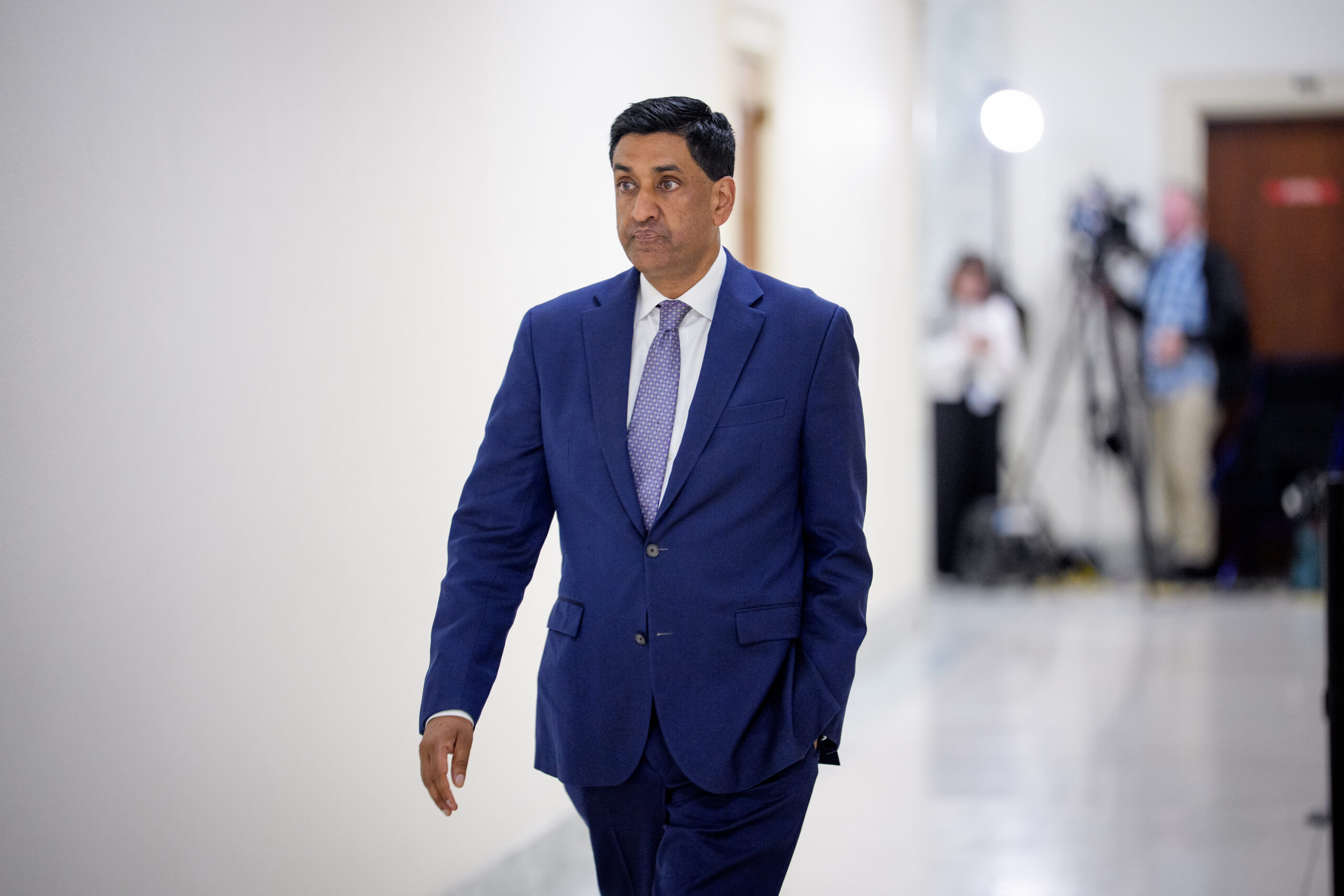
The congressman angered Drop Site co-founder Jeremy Scahill by refusing to condone the attacks; Scahill accused Khanna of promoting a ‘double standard’
Clark called the amendment a Republican stunt and ‘overly broad,’ but said she’ll support it anyway because the U.S. ‘must change course’
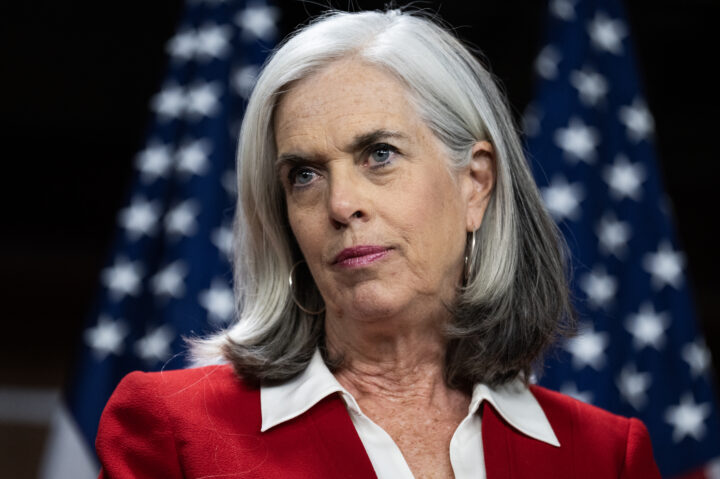
Tom Williams/CQ-Roll Call, Inc via Getty Images
House Minority Whip Katherine Clark (D-MA) conducts a news conference in the Capitol Visitor Center on Wednesday, July 23, 2025.
Rep. Katherine Clark (D-MA), the No. 2 House Democrat, said she plans to vote for an amendment by Rep. Thomas Massie (R-KY) to cut off U.S. aid to Israel next year — breaking with other members of Democratic leadership on the issue.
House Minority Leader Hakeem Jeffries (D-NY) said Tuesday that he plans to vote against the amendment but said Democratic leadership will not be whipping the vote, set for Wednesday afternoon. Rep. Pete Aguilar (D-CA), the No. 3 House Democrat, is also opposing the amendment.
Clark, in a statement, called the amendment “overly broad” and “not an attempt to have a serious and necessary debate about offensive military aid to Israel” and a Republican stunt. But she said that she’ll support it anyway as a signal that the U.S.-Israel relationship needs to change.
“I will be voting yes, not because I agree with the entirety of the amendment, or the GOP’s cynical motivations for its consideration, but because I believe we must change course,” Clark said, accusing Israel of failing to comply with “U.S. law, interests, and values” and arguing that the U.S. should not provide a “blank check.”
Clark called for a “new and sustainable path for true security in the Middle East,” including increased aid to Gaza, a halt to settlement construction in the West Bank, an end to settler violence and the Palestinian right to self determination.
She also said that Israel has a “right to exist as a sovereign, secure, and democratic Jewish state” and to “defend their people and their territory.” She said the U.S. should “continue to have a strong strategic alliance with Israel and support its defense,” as well as continue to support missile-defense systems, which fall outside the scope of the Massie amendment. She also called for fighting “the scourge of antisemitism whenever and wherever it appears.”
Rep. Greg Casar (D-TX), chair of the Congressional Progressive Caucus, also said on Tuesday that he would vote in favor of the amendment and is encouraging other Democratic lawmakers to do the same.
“At its best, the Progressive Caucus’ role is to be an independent voice and lead on important issues of peace and human rights,” Casar said in a letter to colleagues. The Democratic Party needs a new approach to Israel and Palestine. When Democrats retake the majority in November, I hope the Progressive Caucus can help lead our Party towards a position that secures safety, dignity, and self determination for Palestinian and Israeli civilians alike.”
He emphasized that the portion of non-military funding being blocked is small, and that “the American people are crying out for an end to US tax dollars subsidizing Israel’s military.”
Aguilar said on Tuesday that he plans to oppose the Massie amendment but echoed Jeffries in saying, “I strongly believe that we need a change in posture in the region,” and calling the upcoming end of the current U.S.-Israel memorandum of understanding “an opportunity to review what our relationship looks like.”
“We need an Israel that believes in free and fair elections. We need to ensure that they have a right to defend themselves, but we also need to do everything we can to have a Palestinian state,” Aguilar said.
He accused the Israeli government under Prime Minister Benjamin Netanyahu of having “done everything they can to isolate Israel, and we need to ensure that we are building new friends in the region, not having fewer.”
The House minority leader stopped short of backing a total aid cutoff while suggesting direct military aid should end when the current MOU expires

(Photo by Drew Angerer/Getty Images)
House Minority Leader Hakeem Jeffries (D-NY) speaks during the March for Israel on the National Mall November 14, 2023 in Washington, DC.
House Minority Leader Hakeem Jeffries (D-NY) said in a “Dear Colleague” letter on Tuesday that he opposes an effort to strip all U.S. aid to Israel out of the 2027 State Department appropriations bill, but also argued for “urgent change” to the U.S.-Israel relationship, including changes to U.S. aid going forward.
Addressing the amendment led by Rep. Thomas Massie (R-KY), Jeffries cited concerns raised by Reps. Rosa DeLauro (D-CT) and Greg Meeks (D-NY), respectively the ranking members of the Appropriations and Foreign Affairs Committees, as well as J Street, calling the amendment “overly broad” and suggesting that it would impact nonmilitary aid and U.S. Embassy operations.
Jeffries also argued that the amendment would “restrict our country’s ability to confront Hamas, Hezbollah and other terrorist organizations in the region who are sworn enemies of both the United States and Israel.”
The New York Democrat accused Republicans of advancing the amendment “for nakedly partisan reasons,” but said that Democratic leadership would not whip members on the issue and that “there are good faith reasons” for lawmakers to vote either way.
He went on to argue that an “urgent change” is needed in the U.S. relationship with the “far-right Netanyahu government” and Middle East policy in general, calling for a “major reset” based on support for Israel’s right to exist as a Jewish and democratic state and strong support for a Palestinian state. He added that a “meaningful change in direction is needed” on U.S. aid to Israel at the conclusion of the current memorandum of understanding in 2028.
“Israel has an advanced economy and is capable of paying for its own sophisticated weapons, as the Prime Minister recently acknowledged,” Jeffries said, suggesting he supports an end to direct military aid at the end of the current MOU — a shorter timeline than has been advocated for by Israeli Prime Minister Benjamin Netanyahu. “Accordingly, any future security arrangement between our two countries should be structured consistently with defense agreements that exist with our other Western allies and strictly adhere to our human rights laws and values.”
He also said that the next MOU should continue to protect Israel’s qualitative military edge and advance “mutually beneficial joint technology, innovation, research and further development of defensive programs” — something that some in his party have sought to end.
Jeffries lambasted Netanyahu, accusing him of damaging Israel’s reputation and standing in the U.S. and around the world, harming normalization efforts and undermining peace efforts. He called for sanctions and criminal liability for Israelis involved in violent activity in the West Bank.
Rep. Meeks called an amendment put forth by Rep. Massie a ‘got-me vote,’ while members of the Progressive Caucus are preparing to vote in favor

Tom Williams/CQ-Roll Call, Inc via Getty Images
Rep. Gregory Meeks (D-NY)
The top House Democrats on the Foreign Affairs and Armed Services committees said Monday that they will oppose efforts led by Rep. Thomas Massie (R-KY) to cut the $3.3 billion in U.S. aid to Israel expected under the memorandum of understanding if and when they come to a vote on the House floor.
The effort is splitting the Democratic Caucus, and reportedly driving significant angst among rank-and-file Democrats in closed-door caucus meetings.
Rep. Greg Meeks (D-NY), the top Democrat on the Foreign Affairs Committee, told Jewish Insider he plans to oppose the effort to strip the aid out of the 2027 State Department Appropriations bill, calling it a “got-me vote the Republicans are trying to play with.”
Meeks said there are “so many unanswered questions” about the implications and effects of the amendment. “I know there is still danger [in Israel]. I don’t want Israel to be without what they need,” Meeks said. He also noted that many of the weapons that would be purchased with the funding would not be built for years to come.
He said that the amendment leaves significant room for interpretation by the State Department.
“There’s just too many factors to say … ‘We’re taking away $3.3 billion,’” Meeks said, noting the U.S. provides military aid to other countries like Egypt and Jordan. “I don’t think that it would be the wise thing … not good policy.”
But Meeks also highlighted his criticisms of Israeli tactics during the war in Gaza, including the use of heavy bombs to destroy buildings and the deaths of innocent civilians, “so we need to make sure that we are talking about and moving forward in those things.”
Rep. Adam Smith (D-WA), the ranking Democrat on the House Armed Services Committee, also told JI he plans to oppose the amendment to cut the $3.3 billion.
“I’m against that,” Smith said of the attempt to cut the $3.3 billion. “I don’t think it has support because it cuts off humanitarian aid, military aid — all aid for Israel. So I don’t think there’s support for it, but we’ll see.”
Comments by Meeks and Smith closely echo warnings from Democrats on the House Appropriations Committee about the amendment — a sign that House Democratic leaders are coalescing around opposition to the amendment even as discussions in the caucus continue.
Meeks said he also planned to oppose a separate amendment that would strip a provision on U.S.-Israel cooperation from the 2027 National Defense Authorization Act, another bill that is also expected to be considered this week. Massie is also leading that effort. Unlike Meeks, Smith has said he plans to support efforts to take the cooperation provision out of the NDAA, after previously opposing them.
But the House Rules Committee rejected that amendment to the NDAA, and it will not receive a vote on the House floor, sidestepping a vote that had the potential to divide House Democrats but potentially raising the salience of the vote of the $3.3 billion in aid as Democrats’ only opportunity to vote on the U.S.-Israel relationship.
Rep. Rosa DeLauro (D-CT), the ranking member of the House Appropriations Committee, declined to disclose her position on the amendment to cut the $3.3 billion in aid.
“We’re talking about it,” DeLauro said. “I’m looking at what the Massie amendment is and where … we can try to move forward — what it means and what it doesn’t mean.”
Rep. Greg Casar (D-TX), the chair of the House Progressive Caucus, said he plans to support the amendment, regardless of the potential unintended consequences.
“I am aware that the amendment as written may cut off both military weapons (~$3.3 billion) and some diplomatic funding (~$50 million). While I would prefer to vote on an amendment that stripped just military funding, I think opposing the billions in military funding is what’s most important here,” Casar said.
Casar continued, “The Israeli government committed war crimes in Gaza and helped drag America into war with Iran. Americans should not be financing more weapons for [Israeli Prime Minister Benjamin] Netanyahu.”
Netanyahu offered a highly atypical letter of support for the resolution, following a meeting with the Indiana congressman last week
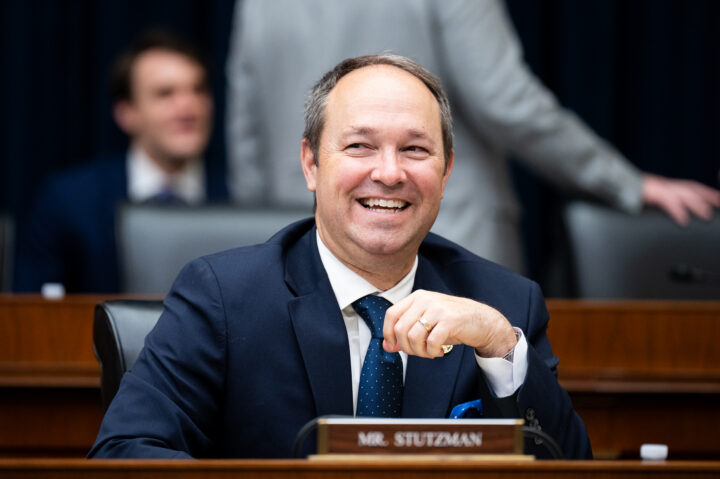
Bill Clark/CQ-Roll Call, Inc via Getty Images
Rep. Marlin Stutzman (R-IN) at a House Financial Services Committee on May 7, 2025.
Rep. Marlin Stutzman (R-IN) introduced a resolution on Wednesday endorsing and praising Israeli Prime Minister Benjamin Netanyahu’s call to wind down U.S. aid to Israel over the next decade, the latest twist in the rapidly evolving U.S. conversation over the future of the U.S.-Israel relationship and U.S. aid to Israel.
Few Republicans, at this point, have publicly endorsed Netanyahu’s effort, which comes amid talks between the U.S. and Israel over the next memorandum of understanding on military aid. Top U.S. officials have confirmed in recent days that ending U.S. aid to Israel is part of those discussions. Future American aid is largely expected to pivot toward a model based on trade, partnership and joint development.
Stutzman said he had discussed the resolution and the effort with Netanyahu and other Cabinet ministers during a visit to Israel alongside Rep. Abe Hamadeh (R-AZ) last week, and that the Israeli officials were strongly supportive.
“We thought this was a good opportunity to get a sense of Congress, and of course support not only Israel, but support the administration, and as they move ahead in the next negotiations of MOU, and I’m excited about it. I think it’s a big step for both countries,” Stutzman told Jewish Insider during an interview in his Capitol Hill office on Wednesday.
He said he would not have moved ahead with the resolution if he did not find that he and Netanyahu were on the same page in their goals, and said he would walk it back if President Donald Trump offered a strong counterargument. Netanyahu himself offered a letter of support for the resolution, which Stutzman publicized alongside the resolution.
Netanyahu said in the letter to Stutzman that he was “glad to receive your proposed Congressional resolution endorsing my plan to shift the framework for US-Israel defense cooperation from aid to partnership” and that the “time has now arrived for us to move from aid recipient to partner.”
Such public letters from Netanyahu directly endorsing U.S. legislation are highly atypical, even for legislation supportive of Israel. The resolution “commends Prime Minister Benjamin Netanyahu for his bold proposal.”
Stutzman said he had discussed the resolution with the White House, House Speaker Mike Johnson (R-LA) and House Majority Leader Steve Scalise (R-LA), though none of them have given their backing to the resolution yet.
The congressman called it an expression of support from the House for “the efforts of both our countries to take this step in our maturing relationship.” He said that winding down aid is a “mature step” that acknowledges Israel’s role as a regional power and its growing economy. And he said it would communicate to the administration the support from Congress for winding down U.S. aid as part of the MOU talks.
Some pro-Israel voices in the U.S. have griped about the way Netanyahu has approached the wind-down of U.S. aid to Israel, with his comments being decontextualized and weaponized by critics of Israel in the United States to suggest Netanyahu himself supports a severing of the U.S.-Israel relationship or an immediate end to all U.S. aid.
“I’m sure people will try to weaponize it, and they’ll try to create conspiracy theories out of it, but you know what, I was in the room, there was nothing but discussion about our relationship and our partnership,” Stutzman said, when asked about such concerns. “I’m sure there will be some out there that try to use it as fuel for something. They already are, and it’s laughable, because you know it’s more out of a spirit of hatred for Israel than realizing that it’s in the best interest of both countries.”
He argued that the resolution should attract widespread support from budget hawks — for saving U.S. taxpayer money — and from pro-Israel colleagues for giving Israel the opportunity to “stand on their own two feet and be a standing partner beside us and not look like they’re dependent on us.”
Stutzman also said that the resolution, and ending U.S. aid, would remove an argument made by antisemites that the U.S.-Israel relationship is coercive or exploitative, though he acknowledged that it would not solve the problem of antisemitism.
“I hear too many young people especially say that, ‘Israel controls the United States,’ or ‘the United States controls Israel,’” Stutzman said. “No, we just have such common values, and it’s a very natural relationship.”
In addition to the provisions on U.S. aid, the resolution “condemns antisemitism in all its forms, including physical attacks on Jewish individuals and institutions, the harassment of Jewish Americans, the spread of antisemitic propaganda, and the delegitimization of Israel’s right to exist.”
Stutzman said he wants to see the next MOU with Israel — after the current one expires in 2028 — move the U.S.-Israel relationship toward partnership between American and Israeli companies, which he said would be beneficial for the U.S., Israel and other Middle Eastern countries.
The resolution “strongly supports” a new MOU “to replace traditional military assistance with a framework of joint defense codevelopment, coproduction, and mutual investment that will strengthen both nations’ defense industries and military readiness.”
He said the U.S. should also be exploring a Middle Eastern analogue to NATO, including Israel and Gulf states, to include an Article V-style defense guarantee from the United States to protect its various partners in the Middle East. He argued that the war in Iran, during which Tehran has struck various U.S. Gulf allies, has “helped show the world who the real problem was, and that’s Iran and the IRGC.”
Stutzman predicted that Trump will be able to bring regional partners, which are increasingly splitting into camps — Israel and the UAE on one side, and other Gulf and Arab states like Saudi Arabia and Qatar on the other — back together after the war in Iran ends, by touting his ability to defang the Iranian regime, and pointing to the threat it poses to all of them.
He said he believes reports that Saudi Crown Prince Mohammed Bin Salman would be willing to normalize relations with Israel if not for objections from his father, King Salman. Saudi Arabia has publicly rejected the idea of normalization prior to progress toward a two-state solution.
Stutzman’s resolution praises Netanyahu and Israel for their cooperation with the U.S. in military operations against Iran.
Asked about the resolution, Rep. Randy Fine (R-FL), one of the most vocal pro-Israel Republicans in the House, said he’s “not a huge fan of resolutions,” which are nonbinding, and that he “struggle[s] with this issue,” calling it a “win for Israel” to wean off of U.S. aid but a “terible decision for America” because “American benefits much, much more from that $3.8 billion than it costs us.”
He said that ending U.S. aid will not stop antisemitism.
“The unfortunate thing is people believe this will stop the antisemitism. It’s not driven by the aid to Israel, they’ll come up with something else,” he said. “I support getting rid of it, just because I like to call BS on all the antisemites, but you’re not going to see me running around to pass a resolution, which doesn’t mean all that much.”
He said that he hasn’t reviewed Stutzman’s resolution yet so he couldn’t commit to how he might vote on it, but said he would consider it. “But I’d rather we actually do things that would solve the problem than just talk about solving the problem.”
Netanyahu’s letter has already been weaponized by anti-Israel forces on the left and right, who are linking it to a provision of the 2027 National Defense Authorization Act set for a markup in the House Armed Services Committee on Thursday, which aims to enhance U.S.-Israel technological cooperation and sharing.
Those relatively routine measures, which enjoy bipartisan support and further existing programs, are being undertaken independent of the current MOU, and would not impact the level of U.S. foreign military financing being provided to Israel next year or in the future — though they do model the sort of joint development and co-production which are likely to be the focus of the next MOU.
Former Rep. Marjorie Taylor Greene (R-GA) posted a highlighted version of the letter pointing to sections where Netanyahu referenced “my plan” for the future of U.S. aid, suggesting that it was referring to the NDAA provision.
The anti-Israel group A New Policy posted the same highlighted graphic. Neither acknowledged the fact that Netanyahu’s letter referenced a different piece of legislation, instead declaring that he was discussing the NDAA language.
In an interview on CNBC, the Israeli premier said ending U.S. aid to Israel will ‘take away the myth that Israel is depleting America's coffers’

Ilia YEFIMOVICH / POOL / AFP via Getty Images
Israeli Prime Minister Benjamin Netanyahu speaks during a ceremony commemorating Israel's Remembrance Day on Mount Herzl in Jerusalem on April 21, 2026.
Israeli Prime Minister Benjamin Netanyahu said on Wednesday that he wants to start the process of winding down U.S. aid to Israel in the final two years of the Trump administration, as both countries work on a new memorandum of understanding.
Netanyahu made the comments in an interview with CNBC’s Sara Eisen after being asked about his political future and when Israel would be ready for new leadership. The prime minister responded by noting that while the Israeli people could decide at “any time” to remove him from power, he is currently focused on achieving four objectives: “finish[ing] the security envelope that we have to make vis-à-vis Iran and its proxies”; securing more investments globally to expand Israel’s AI and tech sectors; normalizing relations with several countries in the Middle East; and ending Israel’s reliance on U.S. aid.
“The other thing I want to do is move away, in America, from aid to partnership. We’re now working on a memorandum of understanding, which will bring down the aid,” Netanyahu said. “I want it to start now, I want it to start in the last two years of the Trump administration and I want it to keep going down, coming to zero, because I think we’ve come of age.”
The current MOU, which provides Israel with $3.8 billion in U.S. military aid annually, runs through FY 2028. Netanyahu did not clarify whether he would like to see aid begin to wind down through changes to the current agreement, or whether he is focused on ongoing negotiations for the next one.
“Israel has a robust economy, and I want us to go from aid to a partnership where we both invest equal amounts and both share equally in the fruits of our innovators and technologies,” he continued. “I think that’s very, very important. It will also take away the myth that Israel is depleting America’s coffers.”
Netanyahu has said on multiple occasions since January that he hopes to wean Israel off of U.S. aid, initially suggesting in January that Israel would work to end U.S. aid within the next ten years. He pitched the aid drawdown to President Donald Trump in late December, an idea the president was initially bewildered by and not supportive of.
Netanyahu also downplayed reports that Trump told him he is “f***ing crazy” in a phone call on Monday about Israel’s military escalation in Lebanon and rejected the notion that his relationship with the president had shifted, noting that the two speak as frequently as “every two days.”
Still, he did not deny that the conversation occurred as reported.
“Sometimes we have, as in the best of families, you have these tactical disagreements. We always find a way to work them out and we do so as great friends,” Netanyahu said. “We can disagree in the morning, and by the afternoon we have common action.”
The ambassador’s comments were seemingly the first confirmation from a U.S. official that such plans are in the works
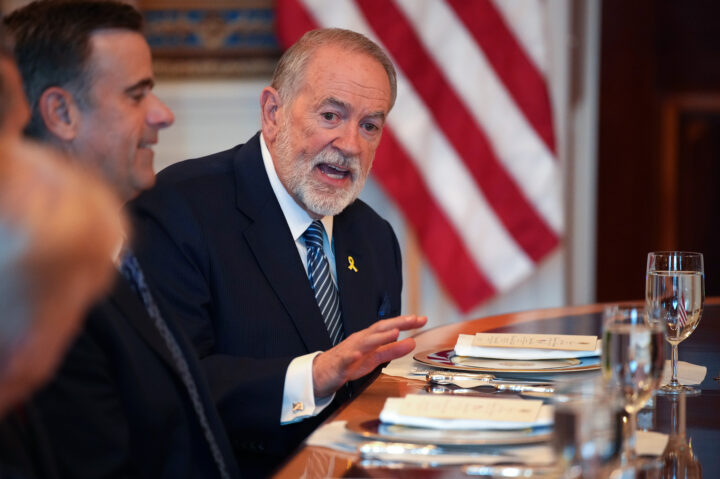
Andrew Harnik/Getty Images
U.S. Ambassador to Israel Mike Huckabee delivers remarks as President Donald Trump hosts Israeli Prime Minister Benjamin Netanyahu for a dinner in the Blue Room of the White House on July 7, 2025, in Washington, DC.
U.S. Ambassador to Israel Mike Huckabee said on X that the next U.S. memorandum of understanding with Israel will end U.S. aid to Israel in favor of prioritizing trade.
“Israel receives $3.8 billion but spends far more than that buying US military goods. US also receives intel, tech innovations so that ROI is many times more,” Huckabee said on his personal account on X, responding to former National Counterterrorism Center Director Joe Kent, who had argued in an interview that U.S. aid to Israel does not confer benefits to America. “New MOU w/ Israel ends aid & will be based on trade.”
Analysts have widely predicted that the next MOU, after the current one ends in 2028, will prioritize partnership programs jointly funded by both sides — which constitute a portion of current U.S. assistance to Israel — rather than direct financial aid, but the comments by Huckabee appear to be the first confirmation from a U.S. official that such plans are in the works.
Huckabee’s comments did not make clear whether the next agreement would phase out aid gradually or immediately.
The comments also come following repeated declarations by Israeli Prime Minister Benjamin Netanyahu that he wants to end U.S. financial assistance to Israel in the next decade, and on a backdrop of growing skepticism of U.S. aid to Israel on both sides of the aisle.
Prominent pro-Israel Republicans have endorsed Netanyahu’s effort to wind down U.S. aid.
But some critics of current U.S. aid are not likely to be satisfied by a shift to a cooperative model, or any system in which the U.S. continues to supply funding that benefits Israel’s defense.
In an interview with Jewish Insider, Emanuel outlines his views amid changing winds in a Democratic Party increasingly antagonistic to the pro-Israel perspective that had long been central to his identity
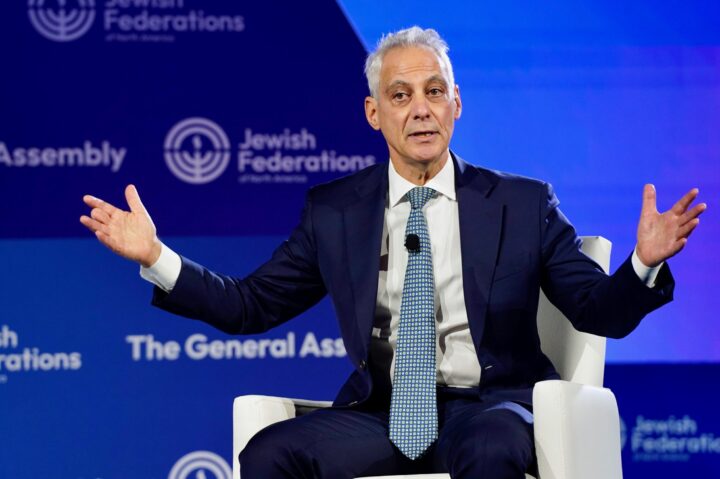
Jewish Federations of North America
Rahm Emanuel speaks at the Jewish Federations of North America's 2025 General Assembly opening plenary on Nov. 16, 2025.
Last November, Rahm Emanuel, the tough-talking Democratic operative and prospective presidential candidate, took the stage of the Jewish Federations of North America’s annual conference in Washington to deliver a blunt word of warning about Israel’s declining reputation in the United States and around the globe.
“I don’t mean to be the party pooper, but look, this is not going to be helpful if we’re not going to be honest with each other,” he said on an opening panel, urging the crowd to reckon with a marked downturn in support for the Jewish state over its war in Gaza, particularly among younger voters. “Israel is extremely unpopular.”
Emanuel, a veteran Jewish politician and party official who had recently concluded a tour as U.S. ambassador to Japan in the Biden administration, acknowledged his message might not ingratiate him to the thousands of Jewish communal leaders in the audience who were no doubt deeply familiar with the issue he was highlighting.
“This may be the last time I’m asked to speak to you. I get it,” he said with a hint of indifference. “But we have to be honest about the task we have” for those “who believe that there is something special” to the U.S.-Israel relationship. “We have our work cut out, and it’s not here to get applause,” he told the crowd.
In hindsight, Emanuel’s frankly worded comments marked something of a turning point in his approach to Israel and the Jewish community, foreshadowing more recent remarks in which he has voiced harsh criticism of the country’s military tactics in the wake of Hamas’ Oct. 7 terror attacks and championed new policy proposals against American military aid to Israel.
Yet even as he builds a profile as a potential candidate willing to tell the Democratic Party hard truths and challenge orthodoxy on a range of issues from trans rights to child social media bans to age limits for politicians, Emanuel, 66, was reticent in exploring his views on Israel in more depth during an interview with Jewish Insider, which he had resisted for nearly a month.
“What I said couldn’t have been clearer,” he told JI last Thursday, referring to his recent comments on “Real Time With Bill Maher” calling for an end to U.S. military aid to Israel that raised eyebrows in the Jewish community. “There will no longer be U.S. taxpayer subsidies for the purchase of U.S. military equipment. Israel will be like every other ally. They can buy what they want, and they have to live within the restrictions.”
“You can decide to slice it, dice it, but that’s what it is,” he said.
While U.S. military funding to Israel has increasingly faced pushback in the Democratic Party, particularly on the far left, Emanuel’s argument that Israel no longer needs the sort of special treatment that he helped promote in the Obama White House has been striking to watch precisely because he has long been a staunch defender of the Jewish state and its founding ideals.
Emanuel, whose middle name is Israel and who speaks fluent Hebrew, holds a uniquely personal connection to the Jewish state. His late father, an Israeli immigrant born in Jerusalem, served in the Irgun, the Zionist paramilitary force that fought for Israeli independence. As a child, he spent summers in Israel and later volunteered as a civilian assistant to the Israel Defense Forces during the Gulf War. His son celebrated his bar mitzvah in Israel.

Emanuel, a moderate former congressman and mayor of Chicago, pointed out in the interview that Israeli Prime Minister Benjamin Netanyahu had himself proposed winding down U.S. military aid over the next 10 years, saying in January that the country had “come of age” and “developed incredible capacity” to continue on its own.
Emanuel, however, said that he would instead suspend the assistance “immediately,” characterizing his position as “part of an overall policy” tied to Israel’s strategically secure position in the region as well as its political isolation on the world stage — both of which he argued have never been greater than now.
“If you or anybody thinks you’re going to continue the American taxpayers paying for this, good luck passing that in the U.S. Congress. You’re asking a president of the United States to spend X amount of political capital to do something that even Israel’s own prime minister acknowledged isn’t going to happen,” he said, referring to continued U.S. military aid.
The Jewish state “has made a decision to only lean on its defense and not lean on its diplomatic front,” he told JI, adding that Netanyahu had chosen to “walk away” from pursuing a two-state solution, support for which has declined in Israel since the Oct. 7 attacks and ensuing war in Gaza.
In his view, the U.S. should continue to stand with Israel only if its efforts in the region help contribute to peace. “Every risk you will take, the State of Israel takes, for peace, then America will stand by you,” he said. “We understand there’s risks. We have stood by Israel through thick and thin.”
“But,” he said, “when one friend in that relationship abandoned something that’s contrary to our interests and contrary, in my view, also to Israel’s interests,” it is reasonable, he suggested, to rethink that alliance.
“There will no longer be U.S. taxpayer subsidies for the purchase of U.S. military equipment. Israel will be like every other ally. They can buy what they want, and they have to live within the restrictions,” Emanuel said of his vision of the future of military aid to Israel.
His comments indicate that he is now embracing a fundamental reassessment of the U.S.-Israel alliance, abandoning even the pretense of tough love that once characterized his approach, among other moderate voices in the Democratic Party.
For example, Pennsylvania Gov. Josh Shapiro, a centrist Jewish Democrat who is also weighing a presidential campaign in 2028, recently reiterated his support for continued U.S. aid to Israel but said that it should be seen as “leverage” to exert pressure over the country’s use of American-made weapons.
“Rahm’s move tells you a lot about the politics of the Democratic Party on Israel now. And that is a sign of how Israel’s image has changed in the country,” said Dennis Ross, a former U.S. diplomat and Middle East negotiator who overlapped with Emanuel in the Obama administration.
Despite his strong attachment to Israel, Emanuel is reckoning with a changing party no longer broadly sympathetic to the pro-Israel perspective that had long been central to his political identity, even as he has tussled with Israeli leadership during his time as a public figure.
Last Friday, for example, Emanuel signaled he would back Graham Platner, the far-left Senate candidate in Maine now poised to become the Democratic nominee, even as the Marine veteran has called to block U.S. military aid to Israel while facing controversy over a Nazi tattoo he recently covered up.
“Whether it’s people chanting ‘Jews will not replace us’” in Charlottesville, “or somebody bombing Gov. Shapiro’s home, or somebody painting Nazi insignia on my fence, or the candidate saying ‘I did not know that was a Nazi’” insignia on his chest, “we’re going to have to confront this,” Emanuel told JI the day before announcing his support for Platner, while touting his record of fighting antisemitism.
“I’ve dealt with it when I ran for Congress,” he said on the phone from Chicago, noting that he was outside an Anne Frank exhibition opening in his home city. “And I’ve also been upfront when I think a decision is going to lead to the strategic and diplomatic isolation of, not only the State of Israel, but, more importantly, the Jewish people.”
Still, Emanuel seemed reluctant and even somewhat frustrated to answer further questions seeking clarity on the implications of his new approach to Israel and how he arrived at his position. He refused to confirm explicitly, for example, if he would back defensive aid for Israel’s Iron Dome missile defense system, which has recently emerged as a subject of intense debate in some corners of the Democratic Party.
It is a significant contrast with where Emanuel stood during his time as Obama’s chief of staff. In the White House from 2009-2010, Emanuel was one of Obama’s top consiglieres on policies relating to Israel. He was involved in initial funding to boost Israel’s Iron Dome system, an effort that culminated in a 10-year memorandum of understanding between the two countries that provides $3.8 billion in annual aid through 2028, which the White House touted, at the time, as “the largest single pledge of military assistance in U.S. history.”
In 2009, Emanuel shared more reassuring words in his address to the JFNA’s annual gathering, praising Netanyahu while citing his own familial ties to Israel as well as what he had called the “privileged point of view” from understanding the Jewish state’s “value as a homeland.”
“Those who have questioned” whether the Obama administration’s opposition to Israeli settlement building in the West Bank and outreach to the Arab world “implies diminished support for Israel, that is not the intent,” he said, filling in for his boss. “It is not the case and it never will be. The truth is the opposite. Only through dialogue will Israel achieve the peace it seeks.”

Emanuel now takes a more jaundiced view of Israeli diplomacy, fueling his calls for an end to U.S. aid. “Under Prime Minister Netanyahu, in the last three years, you’ve lost Europe, you’ve lost the American public, and you picked up Somaliland,” he scoffed to JI, referring to Israel’s decision to formally recognize the secessionist region in the Horn of Africa last year. “As my grandmother would say, ‘Such a deal.’ That is your only diplomatic achievement.”
Julie Fishman Rayman, senior vice president of policy and political affairs at the American Jewish Committee, called Emanuel’s views “disappointing and worrying,” arguing that U.S. security assistance to Israel “is not just vital to deterring further attacks and ensuring the survival of the state of Israel, but is integrally tied to safeguarding American interests in the region.”
Emanuel argued that his position on U.S. aid is a logical extension of sentiments he had conveyed in 2009 while in the Obama administration, when he repeatedly clashed with Netanyahu over settlement expansion in the West Bank, which the White House cautioned would jeopardize prospects for achieving a two-state solution.
“I went straight to the prime minister to his face and said, ‘What you’re doing is going to lead to the great isolation of Israel,’” Emanuel recalled, noting, as he often does, that Netanyahu called him a “self-hating Jew,” underscoring the highly personal tenor of their long-testy relationship. “Look, I have a longstanding relationship,” he explained. “I’m honest about it.”
But even as he argues that Israel is today “a different country from a sense of wealth and capacity,” he has strained to harmonize the motives now animating his current approach. He has dismissed speculation over the sincerity of his stance and whether it is rooted in a good-faith view of Israel’s economic standing or if it is instead a more cynical political calculation tailored to a rising anti-Israel faction in the Democratic Party.
Though in contrast with high-profile voices on the far left, Emanuel has shied away from charged rhetoric about genocide in Gaza, saying it is a legal question, as well accusations that Israel had tricked President Donald Trump into war with Iran, which he says ignores U.S. agency in the conflict. He has said it is a “mistake” to restrict arms sales to Israel, suggesting that he is not aligned with related resolutions that were introduced by Sen. Bernie Sanders (I-VT) last month and notably drew backing from most Senate Democrats.
Emanuel’s allies said in recent interviews that they were not surprised with his approach, saying that he has been building to this moment for some time. “Do I agree with him? Not necessarily,” former Rep. Steve Israel (D-NY), who served with Emanuel in Congress, told JI. “But this is not a breakthrough position. He’s expressed those concerns for years.”
David Axelrod, a former chief strategist to Obama, likewise agreed in a text message to JI that “Rahm’s basic concerns about where Bibi is leading are not new,” using Netanyahu’s nickname. “Rahm, like a lot of us, has always believed a two-state solution was the only road to peace and Bibi has been deeply, irretrievably opposed and actively hostile to the notion.”
“You ask these questions like somehow I’ve changed. The prime minister used to articulate a two-state solution. He was for it. He’s the one that’s changed,” Emanuel said of Israeli Prime Minister Benjamin Netanyahu.
One prominent Jewish Democrat, who asked to remain anonymous to discuss a charged issue, called Emanuel’s stance a practical response that “takes the wind out of the sails of the far left and the far right,” which have politicized funding for Israel. “As long as we’re giving aid to Israel, Americans will feel like they have a say in Israeli policy and how that investment is managed.”
But if that is Emanuel’s aim, he has not made it clear. In conversation with JI, he was hesitant to clarify his own positions when pressed. Asked if he would back Iron Dome funding, he said he had been “part of the financing” for a “joint project” that he called “key for Israel’s security” when it was first developed with the United States.
He declined to elaborate further about such aid. “U.S. taxpayers should not be in the position of subsidizing a country,” he reiterated. “You know my history with the Iron Dome,” he said. “I’m done. I’ve answered it.”
Though some allies of Emanuel are willing to indulge his views more favorably than other 2028 prospects with thinner resumes related to Middle East policy, a range of Jewish and pro-Israel organizations are now pushing back on his recent turn against U.S. military aid.
“It’s in America’s interests to keep our word and help a democratic partner shield innocent civilians from missiles,” Deryn Sousa, a spokesperson for AIPAC, told JI, referring to the Iron Dome. “Reneging on the Obama administration’s signed agreement with our closest ally in the Middle East would send a devastating message to our allies, empower our enemies and do nothing to advance peace.”
Brian Romick, president of Democratic Majority for Israel, said that “Israel’s situation is not comparable to our other close allies.”
“Unlike Japan, South Korea and Germany, Israel does not have permanent U.S. troops on the ground,” he told JI recently. “It’s also surrounded by enemies who actively want to wipe it off the face of the earth. U.S. security assistance reflects that reality and the significant strategic benefits the aid provides.”
Michael Makovsky, president and CEO of the Jewish Institute for National Security of America, told JI in a recent interview that he disagreed with Emanuel, even as he acknowledged the sentiment as a “legitimate view.” Still, he added that it is “in the U.S. interest” to continue providing military aid to Israel, “which anyway all goes to buying U.S. weaponry.”
Even some pro-Israel Democrats sympathetic to Emanuel and his perspective said his comments on military aid raise more questions than they answer. One influential Jewish Democrat who has long been acquainted with Emanuel, speaking on the condition of anonymity to address a sensitive topic, expressed concerns that ending aid to Israel could stoke further calls from the far left to condition military funding or block future weapons sales outright.
For his part, Emanuel avoided commenting on the question of Israel’s qualitative military edge, which the U.S. is legally obligated to ensure but allies say could suffer without military aid. “I feel like we’re taking the same question from 50 angles,” Emanuel told JI. “I want Israel to fight for peace the way it’s proven that it’s fought in the last three years. That’s what’s missing,” he said last week.
“You ask these questions like somehow I’ve changed,” Emanuel said earlier in the call. “The prime minister used to articulate a two-state solution. He was for it. He’s the one that’s changed.”
In a hearing on the 2027 State Department funding bill, Democrats pushed unsuccessfully to condition the use of U.S. funded-weapons by Israel
(Heather Diehl/Getty Images)
Rep. Rosa DeLauro (D-CT) questions Interior Secretary Doug Burgum during a House Appropriations Committee hearing at the Rayburn House Office Building on April 20, 2026 in Washington, DC.
During a meeting on the 2027 funding bill for the Department of State, several Democrats on the House Appropriations Committee pushed, ultimately unsuccessfully, for the committee to adopt new conditions on the $3.3 billion in U.S. military aid allocated for Israel annually in the bill.
Rep. Mike Quigley (D-IL) introduced an amendment which would have prevented the use of U.S. funded-weapons to expand settlements or damage or destroy “homes, schools, farms, orchards or other civilian property” in the West Bank or Gaza, but ultimately withdrew it. Israel has routinely targeted Hamas operatives hiding in a range of civilian locations throughout Gaza.
Though he withdrew the amendment before requesting a vote, several progressive Democrats spoke in favor of it, most notably Rep. Rosa DeLauro (D-CT), who is set to be the chair of the Appropriations Committee should Democrats retake the House in November.
The amendment “would require the United States to live up to our obligations under international law,” DeLauro argued, condemning settlement expansion as “annexation of the West Bank … happening before our very eyes.”
Destructions of Palestinian homes in the West Bank “are part of a strategy to destroy the possibility of a two-state solution,” she continued.
“This amendment would recognize the United States’ obligation under international law, which is at a minimum to cease support for Israel’s illegal settlement policies,” she said. “But there are impacts at home as well. The more the U.S. ignores lawless actions, turns a blind eye to the violations of Palestinian territory and sovereignty, the more that our credibility and influence erodes on the global stage.”
Rep. Lois Frankel (D-FL), the ranking member of the subcommittee responsible for State Department funding, did not offer a definitive stance on the bill, but indicated her opposition, praising Quigley repeatedly for withdrawing it.
“This has obviously become a contentious situation. I myself am a strong supporter of the security of Israel, of the people who live there, and also decency to innocent people who live nearby,” Frankel said. “I respect your offering [the amendment] and willingness to withdraw.”
Rep. Mario Diaz-Balart (R-FL), the subcommittee chair, emphasized Hamas’ use of human shields in Gaza and placement of terror infrastructure under schools, hospitals and United Nations facilities, and noted that U.S. aid to Israel is already subject to global human rights conditions.
“These other conditions, additional conditions, are totally unnecessary. I think they’re totally inappropriate to one of our closest allies that is under serious threat right now,” he continued.
Quigley introduced a second amendment allocating at least $400 million for rebuilding civilian infrastructure in Gaza, which failed by a vote of 32-25.
The explanatory report accompanying the committee’s draft 2027 funding bill for the State Department, also released this week, includes multiple passages that offer veiled and overt criticism of U.S. allies for failing to assist in the U.S. operations against Iran, a gripe shared by President Donald Trump.
One section “strongly encourages longstanding allies and partners to work with the United States to help secure freedom of navigation within critical sea lanes, including the Strait of Hormuz,” and another “condemns the decision by the Government of Spain” to deny the U.S. use of its bases and airspace for operations against Iran.
The full bill includes various new provisions aimed at securing accountability for United Nations Relief and Works Agency staff’s involvement in the Oct. 7, 2023, attacks on Israel, and ties to Hamas. The explanatory report accompanying the bill expands upon such efforts.
It condemns the United Nations for providing “ongoing protection” to former U.N. staff involved in the Oct. 7 attacks, and highlights that the State Department inspector general has sought information from organizations operating in Gaza about their staffing and relationships with Hamas, but such requests have at times been ignored.
It requires that funding to any entity be suspended if the entity fails to comply within 90 days with a request for information from a U.S. inspector general. It emphasizes that the “committee expects” that anyone employed by a U.S.-funded group who is a member of a terrorist organization, or any group that knowingly employed such individuals, “shall be referred expeditiously for the appropriate criminal and administrative remedies.”
And it urges the administration to use U.S. influence and power at the U.N. to push other countries to defund UNRWA, and to identify other aid mechanisms.
It instructs the administration to assess whether international organizations’ anti-Israel bias arises from specific actions by member states or “systemic behavior” within the organizations, and to assess “institutional practices” that might undermine neutrality toward Israel, such as hiring individuals known to be prejudiced against Israel or accepting information provided by Hamas while rejecting information provided by Israel.
It also calls for an assessment of the U.N.’s progress in implementing efforts to combat antisemitism and recommendations on how such efforts can improve.
The report raises concerns about Turkey’s relationship with Hamas, demanding a briefing to Congress on such ties. And it blocks U.S. funding to South Africa until the South African government stops cooperating with U.S. adversaries, additionally condemning the country for its anti-Israel advocacy on the international stage.
The bill proposes a marginal increase in funding for the office of the State Department’s special envoy to monitor and combat antisemitism, from $2.6 million in 2026 up to $2.75 million. It again urges the State Department to increase full-time staffing within the office.
The explanatory report offers support for the State Department’s Global Guidelines for Countering Antisemitism, and urges the department to expand efforts to promote those guidelines globally.
It further expresses concern about rising antisemitism in Latin America, particularly by elected officials, and calls on the State Department to engage with regional leaders to combat it.
The bill allocates $37.5 million for the Nita Lowey Middle East Partnership for Peace Act designed to promote Israeli-Palestinian people-to-people ties, level with 2026; allocates $55 million for the Near East Regional Democracy program, which promotes civil society and democracy in Iran, as well as directing the administration to consult with Congress on expanding internet access in Iran; keeps consistent funding at $3 million for U.S.-Israel development partnerships in third countries; holds funding for Israeli-Arab scientific partnerships level at $7 million; and offers a substantial increase in funding for the Middle East Partnership Initiative from $20 million to $50 million.
It also allocates $4 million in U.S. military aid for Bahrain.
The report condemns the U.N. General Assembly for passing, in a previous year, a resolution upgrading the Palestinians’ status at the U.N.
The report urges the further expansion of the Abraham Accords, calling the “urgent need” for further normalization “more apparent than ever” following Oct. 7. It calls for additional “dedicated resources” to implement U.S.-driven normalization efforts. It instructs the Department of State to “ensure resources are available” to implement and expand on normalization agreements, and to consult with Congress on these efforts.
The report instructs the administration to report to Congress every 90 days on progress in implementing the 20-point peace plan for Gaza — an effort that has been hampered by Hamas’ refusal to disarm — as well as to brief Congress on the Board of Peace.
It asks the administration to provide information to lawmakers on the Boycott, Divestment and Sanctions campaign targeting Israel, including companies, international organizations, countries, sovereign investment funds and other entities promoting or engaging in BDS, and steps that the administration is taking to “discourage or end” such policies.
It further directs the administration to “expand vetting policies and practices” to ensure no U.S. aid is provided to entities that engage in the Boycott, Divestment and Sanctions movement, glorify violence or support efforts to target Israel or the U.S. at the International Criminal Court or the International Court of Justice.
The report further instructs the State Department to report to Congress on the effectiveness of Iran sanctions and current Iranian revenue streams — as well as to allocate an additional $2 million to enforce and implement Iran sanctions; report on efforts to end the Palestinian Authority’s prisoner payments program; report on the status of religious and ethnic minorities in Syria; report on the Iranian and Iranian proxy presence in Latin America; and report on the production and distribution of the narcotic Captagon by Hezbollah and other adversaries.
It also urges the administration to “prioritize partnerships” with educational institutions that support U.S.-Israel engagement, and instructs it to make funds available to support humanitarian needs in Israel stemming from Iranian and Iran-backed attacks and to provide funding to historical preservation projects in Israel such as the City of David.
In an interview with JI, Shapiro said he ‘[hasn’t] really thought about’ whether he would appear on Hasan Piker’s stream but that he hasn’t been invited
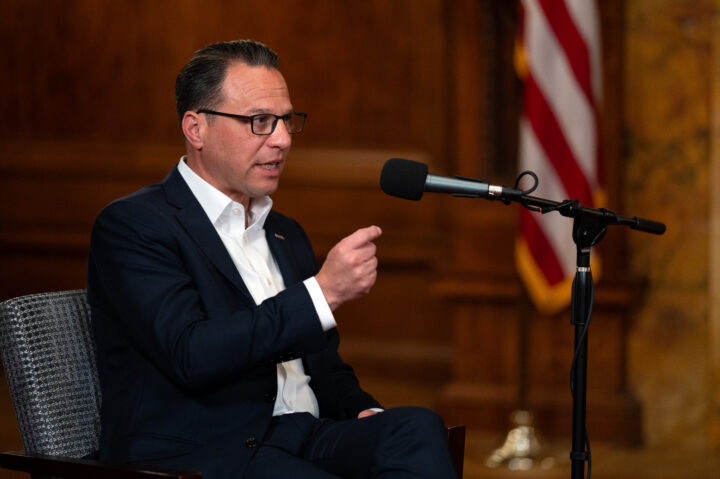
Peter W. Stevenson/The Washington Post via Getty Images
Pennsylvania Gov. Josh Shapiro sits for an interview at the Pennsylvania State Capitol on June 11, 2025.
PITTSBURGH — On the eve of the NFL Draft on Wednesday, Pittsburgh, the host city, was in full spectacle mode. Israel, 6,000 miles away, was abuzz for a very different reason: the country was celebrating Yom HaAtzmaut, marking 78 years of independence.
As he jumped between draft events, Pennsylvania Gov. Josh Shapiro shared his thoughts about both.
“I think we’re here to celebrate an iconic event in sports and sports in general. Sports has the power to bring people together, and we need more of that in our society,” Shapiro told Jewish Insider in an interview following a “unity dinner” in Pittsburgh that brought together 100 Black and Jewish students from local universities.
At the event — organized by New England Patriots owner Robert Kraft’s Blue Square Alliance Against Hate, in partnership with Hillel International, the United Negro College Fund, the NFL and the Pittsburgh Steelers — Shapiro appeared on a panel with Kraft and retired Steelers quarterback Charlie Batch. NFL Commissioner Roger Goodell stopped by to introduce the event.
“The fact that the commissioner and Robert decided to dedicate a portion of draft week to finding ways to come together to a unity dinner, I felt that it was not just something I should do, but a responsibility of mine,” said Shapiro.
Asked about Yom HaAtzmaut, Israel’s independence day, Shapiro expressed affection for Israel. He also called for America to do more to rein in its government.
“I’ve always been really clear that I have a love for Israel, even while I have real concern about the leadership of Israel,” said Shapiro.
A growing number of progressive lawmakers have in recent weeks called for an end to U.S. aid to Israel, including funding for Israel’s Iron Dome missile-defense system, a position adopted by the progressive Israel advocacy group J Street. Shapiro declined to endorse that position.
“In the case of Israel, you have a country that is constantly being attacked with missiles and other weapons that put civilians at risk, and America is invested in providing assistance like Iron Dome to protect innocent civilians from those terrorist attacks,” said Shapiro. “I think that is in America’s national security interest.”
But he did argue that the U.S. should use its position as a major financial backer of Israel to exert leverage over the country’s use of American-made weapons. Shapiro said Washington has not done a good enough job of that.
“I would say that our last two presidents, President [Joe] Biden and now President [Donald] Trump, have failed to use the leverage of an American president to force Israel’s hands to use that military aid in ways that comport with our American values, to limit the loss of innocent lives as the key factor there,” said Shapiro. “I think what we need to examine is the rubber stamp that Donald Trump has been to the Netanyahu government.”
Shapiro noted that more than 100 countries receive some form of military assistance from the U.S., a figure that includes nations who may not receive funding but who instead partner with the U.S. military for training or purchase U.S. weaponry.
“In any one of those 100 countries comes leverage for an American president to exercise to ensure that the military assistance we provide to that country is being used in accordance with our values, our American values,” said Shapiro. “What we need is an American president who’s going to use the leverage that we have when we provide that kind of assistance to Israel or any one of the other 90-plus countries.”
In recent months, as Shapiro eyes a 2028 presidential bid, he has appeared on several popular podcasts, including “Pod Save America,” “Higher Learning” from digital media company The Ringer and the “All-In Podcast.” As one of the most vocally Jewish politicians in the country, Shapiro is almost always asked about his views on Israel.
“Every day I do, of course, get asked about Israel and the Middle East, and I think it’s important to just speak truthfully about how I feel,” said Shapiro. “I think it’s important to be true to who you are, to not put your finger in the wind and just sort of follow which way it’s blowing.”
One show he has not appeared on? The Twitch stream hosted by Hasan Piker, a far-left commentator with a history of antisemitic and anti-American views who has hosted conversations with several progressive lawmakers. California Gov. Gavin Newsom, another potential 2028 contender, has said he would sit for an interview with Piker.
Piker has generated a great deal of controversy among Democrats in recent weeks after he appeared at two campaign rallies with Michigan Democratic Senate candidate Abdul El-Sayed this month. Those events prompted sharp criticism from several Michigan Democrats, including Sen. Elissa Slotkin (D-MI) and El-Sayed’s primary opponents, Rep. Haley Stevens (D-MI) and state Sen. Mallory McMorrow.
Shapiro opted not to weigh in. Asked if he would appear on Piker’s stream, he demurred.
“I haven’t been invited,” said Shapiro. “I haven’t really thought about it.”
A growing number of progressive candidates are now racing to disavow all military support for Israel, including for defensive systems such as the Iron Dome

JALAA MAREY/AFP via Getty Images
A picture taken on August 5, 2021, shows an Iron Dome defense system battery, designed to intercept and destroy incoming short-range rockets and artillery shells, in the Hula Valley in northern Israel near the border with Lebanon.
As U.S. discourse about Israel has become increasingly polarized and the left has grown increasingly hostile to the Jewish state, support for Israel’s missile-defense systems that protect the lives of millions of civilians remained a popular bipartisan priority.
Even among many progressives who were otherwise critical of Israel, U.S. aid for systems such as Iron Dome remained a rare exception, with most praising the system as an important protection measure for Israelis and Palestinians alike.
Emblematic of that fact: Just four House Democrats and two Republicans voted last year in favor of cutting $500 million in cooperative missile-defense funding that the U.S. provides to Israel annually.
But in the wake of the wars in Gaza, Iran and Lebanon, that consensus appears to be shifting quickly on the left. A growing number of progressive candidates — along with J Street, the left-wing Israel advocacy group — are now racing to disavow all military support for Israel, including for defensive systems such as the Iron Dome.
Rep. Alexandria Ocasio-Cortez (D-NY), one of the most prominent progressive standard-bearers, has been a trendsetter on the issue. She said earlier this month that she would not support any funding for Israeli missile defense going forward, after previously vociferously defending her vote against last year’s amendment cutting missile defense as a clear and easy choice.
Her reversal on the issue came amid criticism and pressure from Democratic Socialists of America members over that vote, as the far-left group debated whether to endorse her once more in her upcoming reelection bid.
Ocasio-Cortez argued that Israel is fully financially capable of funding Iron Dome and other defensive systems itself — pointing in part to Israeli Prime Minister Benjamin Netanyahu’s comments earlier this year that he wants to wind down U.S. aid to Israel, which have proven to be a thorn in the side of some pro-Israel advocates.
She was quickly followed by another prominent progressive Democrat, Rep. Ro Khanna (D-CA), who also harbors presidential ambitions, and other left-wing candidates. Another abrupt about-face on the issue came from former New York City Comptroller Brad Lander, who came out in support of Iron Dome funding during his 2025 mayoral campaign, but is now opposing it as he runs to the left of Rep. Dan Goldman (D-NY) in a congressional primary.
Michael Blake, the far-left challenger to Rep. Ritchie Torres (D-NY), also said he would continue to support Iron Dome funding just months ago, but has now flip-flopped to oppose it. Meanwhile, Torres doubled down on his support for Iron Dome funding in a post on social media over the weekend, saying, “I will never join that bandwagon—no matter how politically expedient it may become. Even the world’s most committed pacifist should have no objection to Iron Dome. It is purely defensive. It does not attack anyone. It simply intercepts projectiles that would otherwise strike homes, hospitals, schools, and synagogues. Its sole purpose is to prevent mass murder.”
Strikingly, J Street, which frames itself as a pro-Israel group, is echoing the same rhetoric used by far-left lawmakers like Ocasio-Cortez. “What progressives are saying is not radical, and in fact, Benjamin Netanyahu and Lindsey Graham are arguing the same thing. Israel is capable of paying for its own military equipment, including supplies for its missile defense systems,” a J Street spokesperson told JI.
That stance is at odds with J Street PAC’s own endorsement criteria for candidates, as displayed on its website as of Friday afternoon. J Street President Jeremy Ben Ami said in a Sunday Substack post that he wants to see U.S. direct aid and subsidies to Israel ended “responsibl[y] yet rapid[ly]” upon the conclusion of the current U.S.-Israel Memorandum of Understanding, but that the U.S. should continue to sell and co-develop defensive systems to Israel, subject to Israeli compliance with U.S. arms sales law.
Systems like Iron Dome are also co-produced by the U.S. and Israel, and similar arrangements would likely continue even if direct U.S. financial aid to Israel was ended in the short term.
And as the consensus among the left shifts, some anti-Israel Democratic candidates are pushing the envelope even further. Saikat Chakrabarti, a far-left candidate running for retiring Rep. Nancy Pelosi’s (D-CA) San Francisco House seat, said Thursday that “ending funding isn’t enough — we need sanctions.” Chakrabarti previously served as Ocasio-Cortez’s chief of staff.
There are signs that some more moderate lawmakers are also feeling the pressure from the left amid the declining support for Israel within the Democratic party: Sen. Ruben Gallego (D-AZ), who last year rejected efforts to block U.S. arms sales to Israel, said last week he’ll now oppose offensive aid while saying he views missile-defense support differently — a similar position to the one that progressives like Ocasio-Cortez and Lander held just months ago.
Brad Lander calls for ending all U.S. aid to Israel, flip-flopping on previous support for Iron Dome
Lander joins a small number of progressive House lawmakers, including Rep. Alexandria Ocasio-Cortez, in calling to cut off defensive aid

Adam Gray/Getty Images
Former New York City Comptroller Brad Lander outside of 26 Federal Plaza on October 21, 2025 in New York City.
Former New York City Comptroller Brad Lander, who is challenging Rep. Dan Goldman (D-NY) in a bitterly contested June primary, called for ending all U.S. aid to Israel during an interview published Friday, reversing his prior support for funding to bolster Israel’s Iron Dome missile-defense system.
Lander, a Jewish Democrat who identifies as a progressive Zionist, told The New York Editorial Board, a Substack of New York City journalists focused on local campaigns, that he “would not vote for any more aid [to Israel] at this moment,” when asked about his position on Iron Dome, saying he believed Israel was not following international law in the wake of its war in Gaza that he has called a genocide.
“I think we need to follow the Leahy Law and condition all of our foreign policy aid on human rights and international law compliance,” Lander said in the April 9 interview, referring to U.S. laws banning security assistance to foreign military units that engage in “gross” human rights violations. “At the moment, Israel is very far from complying with human rights and international law.”
Lander joins a handful of leading progressive lawmakers who have also recently vowed to reject further funding for Iron Dome and other defensive systems used by Israel, including Reps. Alexandria Ocasio-Cortez (D-NY) and Ro Khanna (D-CA). New York City Mayor Zohran Mamdani, one of Lander’s top allies in his race to unseat Goldman, confirmed last week that he holds the same position regarding aid to Israel.
Lander had declined to comment when asked by Jewish Insider this week to share his position on defensive funding to Israel, raising questions about where he would land on an issue that is emerging as a sort of electoral litmus test among the far-left activists he is courting in his campaign to represent a heavily Jewish district covering Lower Manhattan and parts of Brooklyn.
Goldman, a pro-Israel Jewish Democrat, affirmed his support for continued Iron Dome funding in a statement to JI earlier this week, saying the system “provides critical protection to millions of civilians and saves hundreds of innocent lives every day.”
Lander had endorsed Iron Dome funding during his unsuccessful mayoral campaign last year, even as he had otherwise backed broad conditions on offensive aid. In February, he came out in support of a House bill seeking to impose sweeping new restrictions on offensive arms sales to Israel.
In a statement to The Forward on Friday, Lander called Iron Dome “critical to ensuring the safety of civilians in Israel” and said that “Israel should have access to purchase it with their own funds.”
But he added that the United States “should not provide taxpayer-funded financial aid for it at this time.”
“I genuinely hope that changes in the future, speedily and in our day, as part of a deal that protects the human rights and safety of all civilians in the region,” he told The Forward.
Gallego missed Senate votes in July to block arms shipments to Israel, but a spokesperson said he would have voted against the Bernie Sanders-led resolutions

Tom Williams/CQ-Roll Call, Inc via Getty Images
Then-Rep. Ruben Gallego (D-AZ) in Rayburn Building on Capitol Hill on June 9, 2022.
Sen. Ruben Gallego (D-AZ) said on Sunday he now opposes U.S. aid for offensive weaponry for Israel but continued to defend U.S. support for defensive systems like Iron Dome.
The new stance from Gallego, who positioned himself as a pro-Israel moderate during his 2024 Senate campaign, highlights the changing currents within the Democratic Party. Gallego also acknowledged in an interview with NBC News that he’s considering a 2028 presidential run.
Gallego said that he would not support providing Israel with funding for offensive weapons due to disagreements with the country’s military operations in Iran and Lebanon. Gallego, a military veteran, has been among the Senate’s most strident opponents of the war in Iran.
But he said he would continue to support aid for missile-defense systems.
“Like any other ally in this in this world, I can’t imagine stopping defensive weapons going to any of our friends, because in that situation, if they’re raining down bombs, you’re hitting people that are, especially in Israel, they’re Arabs, Christians, Jews, people that are pro-war, against war. It’s indiscriminatory,” Gallego said. “I know that’s not a popular thing. I’m sure everyone wants to be on the other side, but I’ve seen civilians get hurt in war by both sides, and it’s not, it’s not something you want to be responsible for.”
Gallego missed Senate votes last July on resolutions by Sen. Bernie Sanders (I-VT) to block certain arms shipments to Israel, but a spokesperson said he would have voted against those resolutions — allowing the arms transfers to proceed.
Sanders has introduced a new set of similar resolutions, which are expected to come up for a vote when the Senate returns from its Passover and Easter recess. It’s unclear whether Gallego’s stance will extend to blocking Israeli purchases of U.S. weapons, in addition to U.S. aid.
Gallego’s new stance nonetheless positions him in a more moderate lane than other prospective Democratic presidential candidates including Reps. Alexandria Ocasio-Cortez (D-NY) and Ro Khanna (D-CA), who said last week they would oppose funding for Iron Dome and other missile defense systems, arguing that Israel should be responsible for paying for them itself.
The former NC governor: He ‘generally does not believe we should withhold aid from a critical ally like Israel when they have to defend themselves against countries like Iran’

Allison Joyce/Getty Images
Former North Carolina Governor Roy Cooper
North Carolina Democratic Senate candidate Roy Cooper, the state’s former governor, rejected efforts to withhold U.S. aid to Israel, days after the Senate voted on legislation to block certain U.S. arms sales to Israel, his campaign told Jewish Insider.
“The Governor believes it’s urgent for the United States to use other means of pressure on the Israeli government to step up now and find ways to get food to people who desperately need it and return the hostages,” a Cooper campaign aide said. “He would consider the specific text of any bills that came before the Senate, but generally does not believe we should withhold aid from a critical ally like Israel when they have to defend themselves against countries like Iran.”
Cooper, a moderate Democrat, has taken other steps in recent days to distance himself from anti-Israel elements of the Democratic Party, including rejecting a series of anti-Israel resolutions passed by state Democratic Party leadership. But it wasn’t until he entered the Senate race that he weighed in against the anti-Israel turn of the North Carolina Democratic party.
The Senate’s Israel votes are proving to be a sensitive issue among Democratic Senate candidates across the country — and is emerging as a dividing line between the party’s moderates and progressives.
Twenty-seven Senate Democrats voted for one Bernie Sanders-led measure, up from the 15 that voted for a similar proposal in April

Chip Somodevilla/Getty Images
Sen. Bernie Sanders (I-VT) speaks in the Eisenhower Executive Office Building on April 03, 2024 in Washington.
Twenty-seven Senate Democrats, a majority of the caucus, voted Wednesday night for at least one of two resolutions to block shipments of U.S. aid to Israel.
The votes are a signal of the depth of Democratic outrage with the humanitarian situation in Gaza and the breadth of the anti-Israel shift within the party. Previous efforts, also led by Sen. Bernie Sanders (I-VT), to advance such resolutions, picked up 19 and 15 votes, in November 2024 and April 2025, respectively.
Twenty-seven Democrats voted for the first of the two resolutions, which addressed automatic weapons that supporters said were destined for police units controlled by Israeli National Security Minister Itamar Ben-Gvir, a far-right official in Israeli Prime Minister Benjamin Netanyahu’s government.
They included Sanders and Sens. Tim Kaine (D-VA), Jeff Merkley (D-OR), Jack Reed (D-RI), Chris Van Hollen (D-MD), Peter Welch (D-VT), Dick Durbin (D-IL), Ed Markey (D-MA), Angus King (I-ME), Raphael Warnock (D-GA), Jeanne Shaheen (D-NH), Patty Murray (D-WA), Brian Schatz (D-HI), Elizabeth Warren (D-MA), Lisa Blunt Rochester (D-DE), Tammy Baldwin (D-WI), Amy Klobuchar (D-MN), Martin Heinrich (D-NM), Andy Kim (D-NJ), Chris Murphy (D-CT), Tina Smith (D-MN), Mazie Hirono (D-HI), Tammy Duckworth (D-IL), Angela Alsobrooks (D-MD), Sheldon Whitehouse (D-RI), Jon Ossoff (D-GA) and Ben Ray Lujan (D-NM).
Reed — the ranking member of the Senate Armed Services Committee, Murray — the ranking member of the Appropriations Committee, Blunt Rochester, Baldwin, Klobuchar, Duckworth, Alsobrooks and Whitehouse have not supported past efforts to cut off aid to Israel.
Ossoff, Warnock, Shaheen and King voted for some or all of the first round of resolutions Sanders introduced to block arms for Israel in November, but opposed a second round in April.
Twenty-four Democrats voted for the second resolution on Wednesday, regarding bombs and bomb guidance kits. Reed, Whitehouse and Ossoff flipped on the second vote, opposing freezing that tranche of aid.
Sens. Ruben Gallego (D-AZ), Mark Kelly (D-AZ) and Elissa Slotkin (D-MI) — who on Tuesday said she would consider cutting off offensive weapons for Israel — were not present for either vote. Both Kelly and Gallego were present for votes earlier in the day on Wednesday. Slotkin spent part of the day taping an interview on Stephen Colbert’s late night television show.
A Kelly spokesperson said he missed the votes due to a “previously planned visit to Cape Canaveral to support his friend and former Astronaut classmate Mike Fincke as he launches into space. Senator Kelly has been pushing the Israeli government and the Trump administration to get desperately needed food into Gaza to prevent the starvation of innocent Palestinians. He also has been consistent about supporting Israel in their self defense.”
Kelly’s office said that he would have voted against both resolutions.
A source familiar with the situation said Gallego, who is a new father, was absent because of family duties, and that the last-minute notice for the votes made scheduling difficult. The source said Gallego would have voted against the resolutions.
Ossoff said in a statement that he voted for the first resolution because he “do[es] not believe the United States Senate should acquiesce without objection to the extreme mass deprivation of civilians in Gaza, including the intolerable starvation of children, that have resulted from the policies of Prime Minister Benjamin Netanyahu’s government. Furthermore, these weapons would likely have been allocated to police forces under the control of Itamar Ben-Gvir.”
He said he voted against the second resolution because, “[d]espite my opposition to Prime Minister Netanyahu’s conduct of the war in Gaza, I believe the United States must continue to support the Israeli people, who face the persistent threat of rocket and missile attack and have been subjected to intense aerial bombardment from Iran, Lebanon, and Yemen. Israel’s capacity to strike those who would launch missiles and rockets at Israeli civilians depends upon the deterrence provided by the Israeli Air Force.”
Up for reelection in 2026, Ossoff faced significant backlash for his previous votes against U.S. aid to Israel, but had been working to repair relations with the Jewish community — though that’s been a rocky process.
Alsobrooks, whose views on Israel policy came under close scrutiny from Maryland’s sizable Jewish community during the 2024 election cycle, characterized this as a history-defining moment.
“There are moments in history where our silence will not only be remembered — it will be judged,” she said. “I joined the voices of so many who feel the moral imperative to demand change. To witness the inhumanity of starving children and say nothing is not just a dereliction of duty but of conscience.”
She said that she remains “committed to the U.S.-Israel relationship and my belief that the people of Israel have a right to defend themselves.”
Duckworth had previously rejected the idea of voting for resolutions to cut off U.S. aid to Israel, arguing that the legislation was “symbolic,” would not produce a resolution to the conflict and would disincentivize Hamas and Hezbollah from agreeing to ceasefires, as well as endanger U.S. forces in the region.
On this vote, Duckworth said in a statement that the Israeli government has ignored pressure from her to take steps to improve the humanitarian situation in Gaza, and that her votes were intended to reflect “deep frustration” with the Israeli government and “send a message” to the Trump administration.
“Israel’s unacceptable choice to restrict humanitarian and food aid from entering Gaza — for months — is now causing innocent civilians, including young children, to starve to death. Ending this famine is not only a moral imperative, it is also in the best interests of both Israel’s and our own country’s long-term national security,” Duckworth said. “While I have always supported Israel’s right to defend itself and protect the Israeli people, these dire circumstances must end.”
Murray said she voted for the resolutions to “send a message” that the Israeli government cannot continue its current strategy.
“This legislative tool is not perfect, but frankly it is time to say enough to the suffering of innocent young children and families,” Murray said. “Israel has a right to defend itself and Hamas is a brutal terrorist organization that should be eliminated, but the level of suffering and loss of life we are seeing in Gaza must come to an end.”
She put the onus on the American and Israeli governments to secure a diplomatic solution to the conflict and accused Netanyahu of dragging the war out to remain in power.
Blunt Rochester said in a statement that “until Israel significantly shifts its military posture to end the dire humanitarian crisis in Gaza and the West Bank, I cannot in good conscience support further military aid and arms sales to Israel.”
She cited a range of concerns including the “seemingly deliberate bombing of civilian infrastructure, the alleged killing of Gazan civilians seeking food aid, the man-made famine among the Palestinian people, the increased presence of illegal settlers and violence in the West Bank, the killing of an American citizen without an impartial investigation, and the continued refusal to responsibly work toward a two-state solution.”
Warnock said that the Israeli government is committing a “moral atrocity that cannot abide the conscience of those who believe in human dignity, freedom and human thriving” and that “the Netanyahu administration must change course.”
Esther Panitch, a Jewish Georgia state legislator, responded by condemning Warnock for failing to mention Hamas’ role in the situation and the United Nations’ failure to distribute aid inside Gaza, adding “it’s becoming increasingly untenable to be a pro-Israel Democrat when the U.S. Senate empowers Hamas.”
Shaheen, the ranking member of the Senate Foreign Relations Committee, said that Israel “has not conducted its military operations in Gaza with the necessary care required by international humanitarian law” or allowed sufficient humanitarian aid into Gaza. “I will also continue to support Israel’s right to defend itself, but I cannot in good conscience vote in support of weapons until the human anguish in Gaza comes to an end,” Shaheen continued.
Senate Minority Leader Chuck Schumer (D-NY) reiterated his opposition to the Sanders efforts, saying in a statement, “I have long held that security assistance to Israel is not about any one government but about our support for the Israeli people. For that reason, I voted no on the resolutions of disapproval on aid to Israel.”
One pro-Israel Democratic strategist lamented the state of discourse about Israel policy within the Democratic Party.
“There is a humanitarian crisis in Gaza, and Netanyahu’s strategy has failed. Yet the alacrity — and even glee — one saw among Democratic officials and commentators to believe and amplify every smear against the Jewish state has been bracing,” the strategist told JI. “When you give no agency to Hamas, Qatar, or the U.N. and reflexively set up Bibi as the devil, there is a word for it — and Jews have seen this movie many times before.”
All Republicans present voted against the resolutions.
Sen. Jim Risch (R-ID), the chairman of the Senate Foreign Relations Committee, called the resolutions “misguided” and said that the conflict and the situation in Gaza is “the fault of Hamas.”
“These are not good people, and it is in the interest of America and the world to see this terrorist group destroyed,” Risch said. “And I couldn’t agree more with my colleagues who want an end to this war. We all want to see an end to this war, an immediate ceasefire, and for the hunger crisis in Gaza to end. But the solution to all of this isn’t to deprive Israel of the weapons it needs. The solution is in the hands of Hamas” if the terror group surrenders and gives up its arms.
Jewish Insider’s congressional correspondent Emily Jacobs contributed reporting.
After voting with Bernie Sanders to block aid to Israel, Ossoff is reaching out to Georgia’s Jewish community — with some success

Julia Beverly/Getty Images
Sen. Jon Ossoff (D-GA) appears onstage at a campaign rally for Democratic presidential candidate, U.S. Vice President Kamala Harris at the Georgia State Convocation Center on July 30, 2024 in Atlanta, Georgia.
Jewish leaders in Georgia say that Sen. Jon Ossoff’s (D-GA) reversal in early April on efforts to block U.S. aid to Israel marks an important step toward repairing relations with the Jewish community, but several said that he’ll need to do more and show he’ll remain on that track going forward to regain their trust.
Ossoff’s votes last November in favor of resolutions led by Sen. Bernie Sanders (I-VT) attempting to block arms sales to Israel shocked and frustrated Jewish Democrats in Georgia, who could help tip what might be a razor-thin margin of victory in Ossoff’s 2026 reelection campaign. The November votes prompted condemnation from a coalition of 50 Jewish organizations in Georgia and led a group of Democratic donors to offer to support Republican Gov. Brian Kemp if he runs for the seat.
Norman Radow, a major Democratic donor in Georgia, told Jewish Insider that Ossoff’s April votes against anti-Israel resolutions again brought by Sanders, are “helpful. I think we want that to continue.” But he noted that Ossoff had not apologized for his previous votes and comments. He said he appreciated Ossoff’s latest votes and comments, but said he wanted to see them become part of a consistent pattern, rather than a momentary shift.
“My fear is that that’s the real Jon, and that our political pressure and his running for reelection has temporarily moved him towards our position,” Radow continued. “I’m hoping that he recognizes the importance of the U.S.-Israel relationship, and that he will not only support us, but he’ll become a champion for the U.S.-Israel relationship and the Jewish community. That’s my hope.”
David Lubin, a former Democratic state Senate candidate, said that Ossoff’s latest votes were “exactly what we wanted to see happen.” He noted that Ossoff had also recently attended a play at a local Jewish day school, describing his attendance as an additional sign that Ossoff understands the frustration within the Jewish community and realizes that he has work to do.
“The healing process — I think it will take more for a lot of people,” Lubin continued. “I think it’s hard for people to explain why he voted that way, which makes it difficult for Democrats when you’re talking to people that are on the fence on who to vote for … The healing part is going to be tough, I think, for people that put Israel as one of their top priorities.”
Aaron Goldman, another Democratic Georgia donor, said that Ossoff had heard and responded to the widespread outcry from the Jewish community following the November votes and deserved thanks for his pivot. Goldman added that he wanted to see it followed by similar votes and actions, and called on Ossoff to remain communicative with and available to the Jewish community ahead of consequential votes on Israel, as well as to be more vocal in support of the U.S.-Israel relationship.
“Our door is open. We are here to work with him collaboratively, to support the U.S.-Israel relationship, which has historically been a strong Democratic value,” Goldman said.
Dov Wilker, the regional director of the American Jewish Committee in Atlanta, which was a lead signatory to the organizational letter, told JI, “We’re pleased with the direction of the senator’s votes and hope that his continued engagement with the Jewish community on behalf of the hostages, in support of Israel will continue.”
Cheryl Dorchinsky, the founder of Atlanta Israel Coalition, a grassroots pro-Israel nonprofit that signed the letter from local pro-Israel groups, told JI that she was “thrilled [Ossoff] changed his stance” which was “truly a sign that he was listening.” Dorchinsky declined to say whether she had supported Ossoff previously and said she does not associate with either political party.
“I think he has more to do,” Dorchinsky continued. “Now it’s about seeing how he votes and how he acts from that point moving forward. I applaud him for changing his stance … [but] it’s like if you kick someone, the pain doesn’t just go away. You wait, you heal, and you hope for the best.”
Dov Wilker, the regional director of the American Jewish Committee in Atlanta, which was a lead signatory to the organizational letter, told JI, “We’re pleased with the direction of the senator’s votes and hope that his continued engagement with the Jewish community on behalf of the hostages, in support of Israel will continue.”
Others in the community believe that Ossoff has addressed their concerns.
Lori Kagan Schwarz, a former board co-chair and current trustee of the Jewish Federation of Greater Atlanta, said she was “hugely disappointed and upset” by Ossoff’s votes in November. But she said his public advocacy against the similar resolutions in April had helped address her concerns, along with direct engagement with his staff. She said she believes that Ossoff was “surprised” by the level of outcry from Democratic Jews following the November votes.
Kagan Schwarz said that many Jewish Georgians she knows “were so upset by his vote in November, and even before he voted against the most recent resolution, they were encouraged by his outreach, by his words and actions.”
She added that supporters of Israel should and will continue to advocate to Ossoff, as they do with all elected leaders. “I’m not concerned at all, but I’m vigilant in terms of my advocacy and my deep concern for Israel.”
Both Goldman and Radow emphasized that it was not only Ossoff’s votes but also his floor speech in favor of the Sanders resolutions, in which Ossoff said Israel’s conduct of the war in Gaza had been “gratuitously brutal” and that it had shown “reckless disregard for the innocent,” that they and others had found particularly objectionable.
“Last November, Senator Ossoff was wrong to vote with Bernie Sanders to jeopardize Israel’s security as it fights a seven-front war against Iran and Iran-backed terrorists,” AIPAC spokesperson Marshall Wittmann said. “His recent vote was a notable step to rectify his previous mistake.”
Ossoff said following the April votes that he felt the new resolutions “would have been damaging” and that all focus should be on restoring a ceasefire and freeing the remaining hostages.
AIPAC was one of the lead signatories on the Jewish organizational letter. AIPAC spokesperson Marshall Wittmann told JI that the April vote had been a step to correct Ossoff’s past moves.
“Last November, Senator Ossoff was wrong to vote with Bernie Sanders to jeopardize Israel’s security as it fights a seven-front war against Iran and Iran-backed terrorists,” Wittmann said. “His recent vote was a notable step to rectify his previous mistake.”
There are some members of the Jewish community who supported Ossoff’s initial votes.
“Many of us in the Jewish community feel like it’s reasonable to want to see an end to the killing of innocent people and of course a return of the hostages,” Jodi Greenwald, a Jewish Ossoff supporter, told JI. “Jon Ossoff has supported Israel in so many ways and so many votes, and I think he’s just going with a reasonable approach to minimize the damage of loss of innocent life. I personally was not upset by that. I certainly did not interpret it as an abandonment of his support for Israel.”
Greenwald told JI that she felt the letter from 50 Jewish organizations criticizing Ossoff misrepresented the level of support for those views among the members of those institutions.
Lubin, the former state Senate candidate, said that for some in the community, frustrations with Ossoff were not limited to the Sanders votes, but rather reflected a broader sense that he was not standing with members of the Jewish community, even at a time of rampant antisemitism. Lubin said he’s concerned that Ossoff’s November votes were reflective of a larger and deeper pattern than just a few votes. Other previous Ossoff supporters echoed that view.
Kagan Schwarz disagreed that there has been a broader pattern of concern with Ossoff. “It never occurred to me that he was not hugely a proponent against antisemitism.”
She added that supporters of Israel “have to be a little accepting of people expressing concern about Israel’s leadership, especially right now.” She argued that such criticisms don’t mean that someone is not a supporter of Israel. “I love Israel and want to do everything I can to protect and preserve her. But it doesn’t mean that I love Israel’s government.
Radow said that Ossoff, after the November votes, avoided his and other longtime, major Jewish supporters’ outreach for months, until a February New York Times article highlighted Jewish donors interested in supporting a Kemp campaign.
Ossoff subsequently sat down with a group of around 50 Jewish leaders from Georgia, including Radow, at an AIPAC conference in Washington in February, where the Jewish leaders confronted him about his past votes and urged him to commit to supporting a series of three priority legislative initiatives.
Radow said that Ossoff, at the meeting, was not willing to commit to any of the three, including voting against further Sanders resolutions; however, Ossoff did so days after the meeting. He said Ossoff had tried to avoid discussing his past remarks and votes and told the leaders that they would have to agree to disagree, but the Jewish leaders pushed back.
“Jon is not out of the woodshed but he did come and meet with 50 of us. He spent an hour. He did meet with me privately for 45 minutes. He has voted for us on three important pieces of legislation since then,” Norman Radow, a major Democratic donor in Georgia, said. “I hope that that relationship can continue to build and we can reestablish trust.”
“What surprised me was, he’s coming to that audience, he was not prepared then to say he’d participate [in] or support any of the three,” Radow said. “It took him days, and all these issues were out there. He’d been contacted in advance. All this legislation was on his desk, and he hadn’t prepared for it.”
Radow also met privately with Ossoff following the AIPAC sit-down, where he said they had an “honest” and “forthright” discussion and “made progress.”
“Jon is not out of the woodshed but he did come and meet with 50 of us. He spent an hour. He did meet with me privately for 45 minutes. He has voted for us on three important pieces of legislation since then,” Radow said. “I hope that that relationship can continue to build and we can reestablish trust.”
Ossoff’s deputy chief of staff met separately with at least two groups of Jewish Democratic female leaders in Georgia, including Kagan Schwarz, in late March. The meetings were organized in collaboration with members of the Jewish Democratic Women’s Salon.
Kagan Schwarz said that Ossoff’s staffer told the group that Ossoff had heard the feedback from the Jewish community and wanted to keep an open conversation with community members. She said that the Ossoff staffer was open to discussing all of their concerns and explaining Ossoff’s November votes and why his positions had shifted since then.
She added that Ossoff’s staffer also highlighted other actions he’d taken in support of Jewish community priorities, like numerous meetings with hostage families and working with law enforcement to ensure adequate security for the Jewish community following Oct. 7 — reassuring actions Kagan Schwarz said Ossoff’s office should have better publicized.
Lubin said that, to rebuild bridges with those hurt by his past actions, Ossoff will need to continue to be present in the Jewish community, reach out to Jewish leaders and “make it clear that he is supporting Israel” and that he fully grasps the significance of the fight that Israel is facing. “It seems like there’s some disconnect with him, in regards to that,” Lubin said.
Going forward, Dorchinsky called on Ossoff to be more active in fighting antisemitism.
“Stand up for us. We are part of this community,” Dorchinsky said. “It’s not just impacting us, it impacts everyone … Our representatives are responsible for protecting their communities, regardless of religion.”
Radow, who signed the letter to Kemp encouraging him to run against Ossoff, said that he hasn’t yet made a decision on who he’ll support in 2026.
“It would be imprudent of me to say I would support Jon, not support Jon, until, A, I see how Jon continues to act in the next 18 months and, two, who the Republicans put up,” Radow said. “If it’s Marjorie Taylor Greene, I think the decision is clear.”
Goldman, who also signed onto the letter expressing support for Kemp, said that letter “reflected the frustration and the disappointment” in the community.
But Goldman noted that Kemp appears unlikely to run and that Ossoff “has shown his willingness to listen and deliberate and make a vote more reflective of not only his Jewish constituencies, but Georgia voters as a whole, and where they are on Israel … A continuation in that trend, as we’ve discussed, would be very comforting to Jewish Democrats in general.”
Lubin said he can’t yet speak firmly to how he will vote in 2026, given the many unknowns between now and the election, though he’s currently inclined to vote for Ossoff.
“There is concern to see that if we get closer, and other things do come up and he wavers too much, I think a lot of people will be looking at who to vote for,” Lubin said. “I can’t tell you where I’m going to vote in a couple of years from now.”
Lubin added that Ossoff’s April votes and outreach to the Jewish community will help some Democrats who were previously on the fence feel better about voting for him. He agreed that if Rep. Marjorie Taylor Greene (R-GA) becomes the Republican nominee, many otherwise undecided Democratic Jews will likely line up behind Ossoff.
“I think that folks who are abandoning support for a Georgia senator based on just one vote about one element of support to Israel and willing to throw everything else good that he does and supports and is for away in our representation in the Senate — I think that’s not in the interests of our lives as Georgians,” Jodi Greenwald, a Jewish Ossoff supporter, said. “He’s been a friend to the people of Georgia regardless of their faith.”
If the GOP nominee is someone like Rep. Buddy Carter (D-GA), a supporter of the Jewish community, or Insurance Commissioner John King, viewed as a moderate, that could raise a trickier dilemma for voters than an Ossoff-Greene race, one individual familiar with the situation noted. Jewish Democratic voters may also be faced with questions of how and whether to vote tactically in the primaries — to vote in next year’s Democratic gubernatorial primary or the GOP Senate primary.
Kagan Schwarz, an Ossoff supporter, said that Israel is one of her top issues, but she wants to see the candidates she supports be strong “on all my key issues, not just one,” and described Ossoff as the clear choice. She said she was “very disappointed” by the letter from Jewish donors to Kemp and would not have signed it — though she said she does not “begrudge” the signatories and said it “might have been a wake-up call” for Ossoff.
“I think that folks who are abandoning support for a Georgia senator based on just one vote about one element of support to Israel and willing to throw everything else good that he does and supports and is for away in our representation in the Senate — I think that’s not in the interests of our lives as Georgians,” Greenwald said. “He’s been a friend to the people of Georgia regardless of their faith.”
Democrats at J Street are pushed on conditioning U.S. aid to Israel

Michael Stokes/Flickr
Bernie Sanders attends a rally at Hahnemann Hospital in Philadelphia on July 15, 2019.
At the annual J Street conference in Washington, Democratic presidential hopefuls were questioned on whether they would condition U.S. aid to Israel on the Jewish state not annexing any part of the West Bank.
In a presidential forum hosted by former Obama administration officials Ben Rhodes and Tommy Vietor, candidates were pressed to express their willingness to take a tougher stance on the U.S.-Israel relationship.
Vermont Senator Bernie Sanders (I-VT) took the hardest line of any of the attending candidates, telling Rhodes and Vietor that Israel will have to “fundamentally change” its relationship with Gaza if it wants continued military aid. Sanders has long been supportive of conditioning U.S. aid to Israel and using it as leverage to change the behavior of Prime Minister Benjamin Netanyahu’s government, which he has repeatedly described as “racist.”
South Bend Mayor Pete Buttigieg told attendees that he would support conditioning U.S aid as a means to discourage Israel from attempting to annex parts of the West Bank. The Democratic hopeful, who visited Israel last year, said the United States needs to “have mechanisms to do this to make sure U.S. taxpayer support for Israel doesn’t turn into U.S. taxpayer support for a move like annexation.” He also argued that “U.S. policy should not be promoting settlement construction because it is incompatible or at best detrimental to what we need to see happen” in the region. Buttigieg added, “you can be committed to the U.S.-Israel alliance without that entailing support for any individual choice of a right-wing government over there.”
Former Secretary of Housing and Urban Development Julian Castro struck a more cautious note. Castro, who served in the cabinet from 2014-2017, would not take the idea of conditioning aid “off the table” but argued that the United States already has a “carrot-and-stick approach.” Castro expressed the hope that “we’re going to have a new [Israeli] government to work with our ally to ensure that there is not unilateral annexation and that we pursue a two-state solution.”
Colorado Senator Michael Bennet echoed Castro’s caution. “I would not rule out” conditioning American aid to Israel, said the two-term senator. However, he was hesitant to embrace it, worried that “if we pick one instrument like that in this town, it very quickly is going to become a partisan litmus test.” The Colorado Democrat also made clear that while he didn’t believe Israel should be building settlements and that the United States should be doing “everything we can to limit settlements,” Bennet also warned that the current Israeli government “basically has a permission slip from [the] Trump administration to do whatever they want.”
Speaking on Sunday, Minnesota Senator Amy Klobuchar (D-MN) dodged the question. “It is not a good idea to negotiate these things right now,” said the Minnesota Democrat. She disagreed with Netanyahu’s September announcement that he would begin to annex settlements on the West Bank if re-elected, calling it “wrong.”
Other candidates submitted videos instead of attending the forum. In her video, Senator Elizabeth Warren (D-MA) said, “If Israel’s government continues with steps to formally annex the West Bank, the U.S. should make clear that none of our aid should be used to support annexation.” In contrast, former Vice President Joe Biden said in a video that Israel should stop “settlement activity which takes us further from peace” and warned about support for the Jewish state becoming “a political football.”
Former Congressman Beto O’Rourke, businessman Andrew Yang and author Marianne Williamson also submitted videos to the liberal group, which advocates a dovish Middle East policy.
Please log in if you already have a subscription, or subscribe to access the latest updates.
 Continue with Google
 Continue with Apple