





































Josh Shapiro tests measured, pro-Israel message in progressive podcast tour
In preparing for a potential 2028 presidential run, the Pennsylvania governor said the Democratic Party must first agree that Israel has a right to exist as a Jewish state
Peter W. Stevenson/The Washington Post via Getty Images
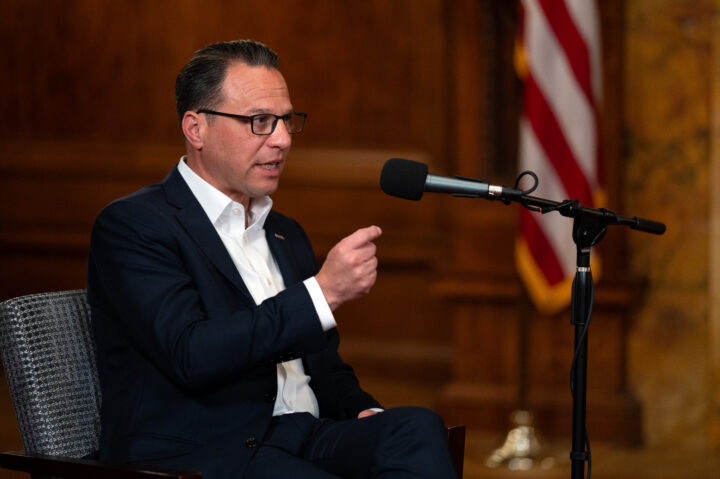
Pennsylvania Gov. Josh Shapiro sits for an interview at the Pennsylvania State Capitol on June 11, 2025.


 Add JewishInsider on Google
As Pennsylvania Gov. Josh Shapiro eyes a 2028 presidential run, he is using a series of big-name podcast interviews to refine and test out his messaging on Israel — and taking aim at California Gov. Gavin Newsom, a potential rival, in the process.
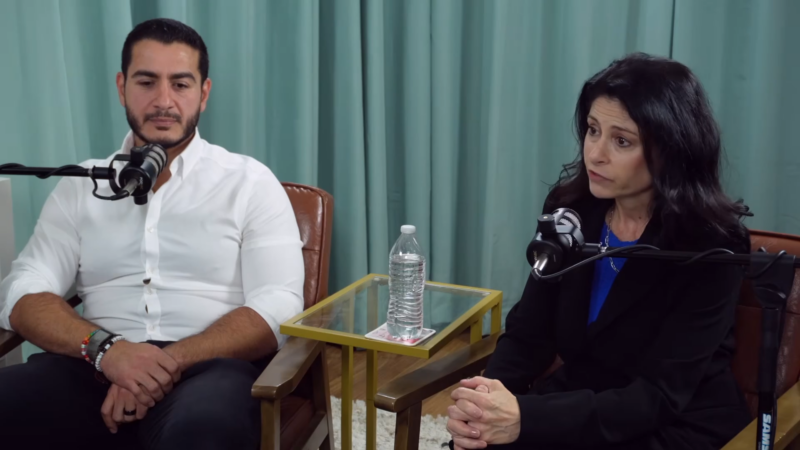
In interviews with the “Pod Save America” and “Higher Learning” podcasts that dropped in recent days, Shapiro put himself in the line of fire from interviewers with more left-wing views on the Israeli-Palestinian conflict than he holds. In response, he made the case that, as the starting point for any public political conversation about Israel, the fact of Israel’s right to exist as a Jewish state must be respected.
“I think what is dangerous here, and I’m not accusing you of this by any stretch, is for those who think Israel doesn’t have a right to exist in [the] conversation. That to me is a recipe for permanent war,” Shapiro told “Higher Learning” host Van Lathan, who said a national conversation about Israel is needed. (“Higher Learning” is part of a podcast network from the digital media company The Ringer.)
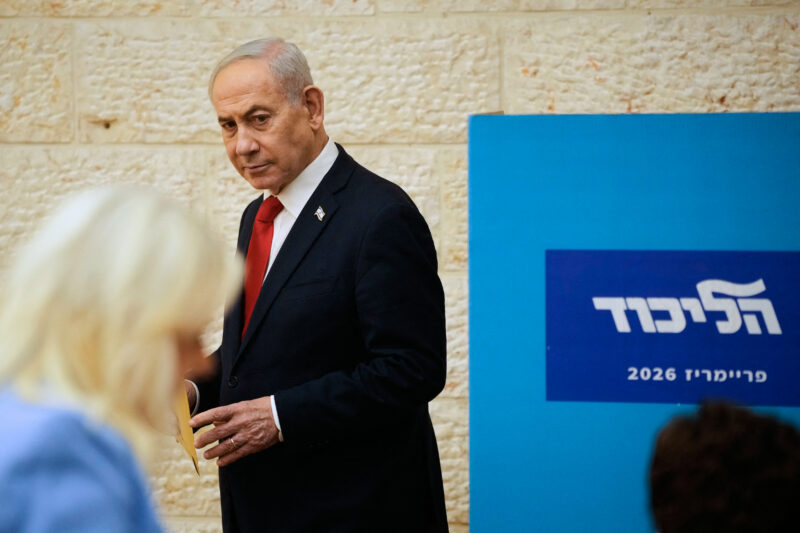
The point of the discussion seemed to be to demonstrate a kind of modeling — that Shapiro, a Jewish Democrat who has long been both a supporter of Israel and a critic of Israeli Prime Minister Benjamin Netanyahu, can show Democrats how to have a difficult yet transparent and empathetic conversation amid deep disagreements over Israel’s actions in Gaza.
Shapiro is making clear that if he runs for president, he does not intend to sidestep the party’s most fraught foreign policy debate. He intends to shape it.
In the “Higher Learning” interview, Shapiro laid out his views on Israel while taking flack from Lathan, who called Israel “one of the worst human rights violators” and said he is worried that in describing Israel as an “apartheid state,” people will think he is saying he hates Jews.
“I fundamentally disagree with your viewpoint, but I don’t think you’re an antisemite. I think that you are learning and struggling and grappling with issues that are really, really tough, and you formed an opinion, one that I disagree with, that you seemingly hold very honestly,” said Shapiro. “I don’t think that you’ve got hate in your heart toward someone because they’re Jewish. I think you’ve got different views, say, than I do about Israel or about the Middle East.”
Shapiro drilled down into the conversation he said often plays out about Israel, and drew a red line that he believes should not be crossed.
“Usually the conversation starts around the idea of does Israel have the right to exist, right? And exist as a Jewish state,” he said. “Peace to me are two nations, Israel and a Palestinian country, living side by side in peace with full recognition for one another, an acknowledgment that both have a right to exist and an acknowledgment that the goal of each country is not to wipe out the other … I think if one doesn’t recognize Israel’s right to exist, then you’re — not you, then one is in effect for really just permanent war, because you’re effectively saying Israel’s got to go, and Israel’s not going anywhere.”
Shapiro’s podcast tour came amid a similar media blitz for Newsom. Both governors recently published memoirs outlining their political origin story, a move widely seen as a first step for politicians with national ambitions.
At an event earlier this month, Newsom said that Israel could “appropriately” be described as an apartheid state.
In response to a question about Newsom’s comment from “Pod Save America” co-host Jon Lovett, Shapiro castigated the California governor — without invoking his name — for using inflammatory language.
“If we really want peace, and I believe you want that, then we’ve also got to be acknowledging that language matters here, that words matter. And that we’ve got to use words that are actually rooted in reality and are able to bring the temperature down to create a space for that peace,” Shapiro told Lovett.
“I just think we’ve got to be really thoughtful and careful and not just look for buzzwords and not just sort of follow what’s going to get maybe some likes on Twitter,” Shapiro added. “But we’ve got to be thoughtful about a debate that is really, really hard to have, and we’ve got to have it.”
On “Higher Learning,” he more directly took on the apartheid allegation.
“You use the word ‘apartheid.’ Take a look in Israel. Someone who would identify as Muslim, someone who would identify as a Palestinian Christian. They live in a society with all of the same rights and legal responsibilities as Israelis,” said Shapiro. “They get elected to the Knesset, which is their parliament. They pay taxes. They can serve in the military. They are citizens in the world in a way that a true apartheid state would not allow for.”
Public opinion polling has shown declining support for Israel among Democrats. As Shapiro’s national profile has grown, he has not shied away from his Jewish background or his support for Israel, both of which he discussed at length in his memoir, Where We Keep the Light.
The interviews with two major progressive podcasts suggest that Shapiro wants to proactively share his views on the Middle East with potential future voters — and that he does not view his position as something to hide from a Democratic base that may be less amenable to those views than in the past.
In both interviews, he outlined his staunch opposition to the policies of Netanyahu and President Donald Trump on Israel. He criticized Israel’s actions in the West Bank and the violence by some Israeli settlers targeting Palestinians. He also sought to make clear that although he is a supporter of Israel, his main goal is advancing America’s interests in the region.
“I don’t think that if you are critical of Benjamin Netanyahu, you’re an antisemite. By the way, I’m critical of Benjamin Netanyahu. And I have been for years and years and years, even predating Oct. 7. I think his approach has made Israel less safe. I think it’s undermined U.S. national security interests, which is my primary concern,” Shapiro said on “Higher Learning.”
On “Pod Save America,” Shapiro called for the Trump administration to investigate the death of Nasrallah Abu Siyam, a Palestinian-American teenager from Philadelphia who was killed in the West Bank last month, reportedly by Israeli settlers, and he said Netanyahu must take the threat of settler violence more seriously. But when Lovett asked what to do about these challenges beyond “calling for [Trump and Netanyahu] to become different people,” Shapiro responded with an argument about democracy.
“These are the leaders that each country has chosen. I’m not going to speak to what the people in Israel chose. They’ll have an election. They’ll figure that out,” he said. “Here in the United States of America, we need to have more of a check on this administration.”
More Stories
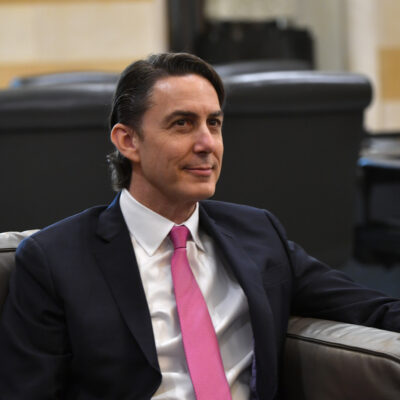
CROSSING THE AISLE
Biden envoy Amos Hochstein defends Trump admin’s nuclear deal with Saudi Arabia
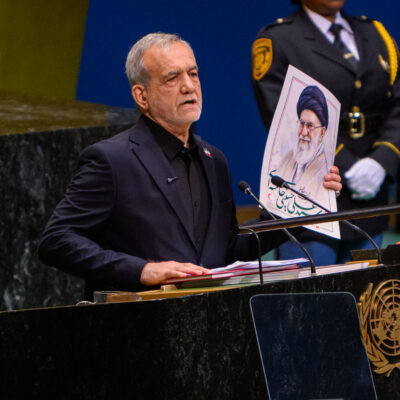
ALTERNATE REALITY
Pezeshkian denies Iran seeks nuclear weapons at UNGA

Daily Overtime
Amb. Leiter’s son seriously wounded in terror attack
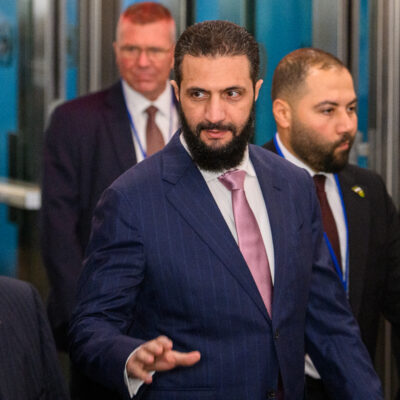
DAMASCUS DIARIES
Syrian president blames Israel for diplomatic difficulties, rejects Trump push to send forces into Lebanon

MONEY MATTERS
Treasury moves to terminate tax-exempt status for some universities, private schools
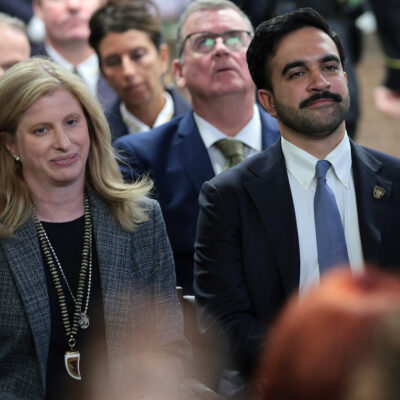
ON ALERT
NYPD braced for ‘multiple protests every day’ around U.N. summit
Please log in if you already have a subscription, or subscribe to access the latest updates.
 Continue with Google
 Continue with Apple