
























































J Street backs far-left calls to end U.S. missile-defense aid to Israel
‘Israel is capable of paying for its own military equipment, including supplies for its missile defense systems,’ a spokesperson said, a position which is at odds with J Street PAC’s own stated endorsement criteria

Michael Brochstein/Sipa via AP Images
J Street President Jeremy Ben-Ami speak at the 2022 J Street National Conference held at the Omni Shoreham Hotel in Washington, D.C.


 Add JewishInsider on Google
J Street, the progressive Israel advocacy organization which describes itself as a “pro-Israel, pro-peace” group, offered backing for the growing calls among far-left lawmakers to end U.S. support for Israel’s missile-defense systems, such as Iron Dome, which until recently had been largely spared even by strident critics of the Jewish state.
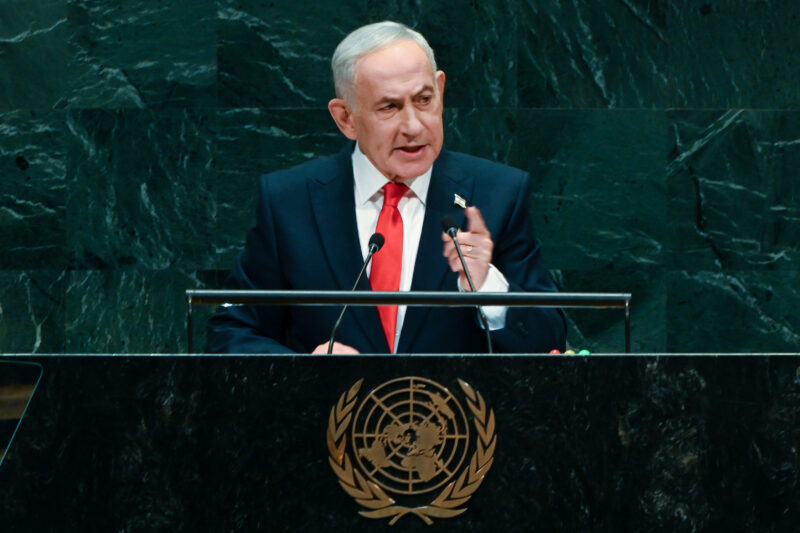
“What progressives are saying is not radical, and in fact, [Israeli Prime Minister] Benjamin Netanyahu and [Sen.] Lindsey Graham (R-SC) are arguing the same thing. Israel is capable of paying for its own military equipment, including supplies for its missile defense systems,” a J Street spokesperson told Jewish Insider.
Notably, that stance is at odds with J Street PAC’s own top endorsement criteria on its website as of Friday afternoon. The site states that J Street PAC requires endorsees to support “US security assistance to Israel that adheres to US law,” specifically citing support for Iron Dome.
“The United States plays an indispensable role in ensuring Israel’s future as a secure, democratic homeland for the Jewish people. J Street PAC only supports candidates who affirm this responsibility and who commit to supporting US security assistance to Israel as outlined in the 10-year Memorandum of Understanding (MOU) negotiated by President Obama — including sustained support for vital systems like Iron Dome,” the J Street website says.
The group, however, is currently supporting candidates who back policies like the Block the Bombs Act that run counter to the MOU.
In its statement, the group was referring to comments by the Israeli prime minister in which he did not call for an immediate end for U.S. aid to Israel, but said that he believed Israel would no longer need to rely on U.S. aid in a decade.
Though Graham initially responded to Netanyahu’s calls by suggesting he would immediately work to wind down U.S. aid, the South Carolina senator softened that position after a meeting with Netanyahu.
Calls to cut off missile defense aid to Israel have been growing in recent weeks from prominent far-left lawmakers like Reps. Alexandria Ocasio-Cortez (D-NY) and Ro Khanna (D-CA), joined recently by Brad Lander, a Jewish challenger to Rep. Dan Goldman (D-NY).
J Street’s backing of that stance could give cover to a host of rank-and-file Democrats to take a similar position.
Systems like Iron Dome are also co-produced by the U.S. and Israel, and similar arrangements would likely continue even if direct U.S. financial aid to Israel were ended in the short term.
In a Substack post on Sunday, J Street President Jeremy Ben Ami said that the U.S. should continue to cooperatively develop defensive technologies and to sell such systems to Israel, subject to Israel’s compliance with U.S. arms sales law, but that it should no longer provide any financial aid or subsidies to Israel for military systems.
“The United States should continue to supply what Israel needs for the defense of its people from Iranian, Hezbollah, Hamas and Houthi missiles – but the time is coming for Israel to pay for what it needs, as other prosperous countries do,” Ben Ami wrote.
He also reiterated J Street’s support for new legislation conditioning U.S. arms sales to Israel and for upcoming legislation to block specific arms sales.
“The exact timetable for phasing out taxpayer subsidies should be worked out carefully. The United States should honor existing commitments, including those in the 2016 memorandum of understanding, through their conclusion in the next two years,” Ben Ami said. “But after that, a responsible yet rapid phase-out is needed – a step that would move the U.S. and Israel toward a more mature, balanced, and ultimately more resilient partnership – one grounded not only in shared interests, but in shared standards and accountability.”
More Stories
CATCHING HEAT
Pro-Israel Democrats blast Mamdani for Oct. 7 anniversary statement

Back to the Future
Israeli election déjà vu
Daily Overtime
Trump rules out pre-midterm Iran strikes

chesapeake challenge
Maryland GOP gubernatorial nominee Dan Cox says he disagrees with son’s antisemitic posts

Doha’s Darling
Murphy, Qatar’s ‘reliable ally’ in the Senate, huddles with emir and chief Qatari negotiator in Doha
exclusive
Second local Jewish Democratic official endorses Republican Lawler, citing Israel and antisemitism
Please log in if you already have a subscription, or subscribe to access the latest updates.
 Continue with Google
 Continue with Apple