

















































Ted Deutch criticizes ex-colleagues’ votes on ‘meaningless,’ ‘ridiculous’ Massie amendment
The AJC CEO told JI on the sidelines of the Aspen Security Forum that he was ‘glad to see’ that many of his colleagues acknowledged that the amendment to cut military aid to Israel was ‘bad policy’
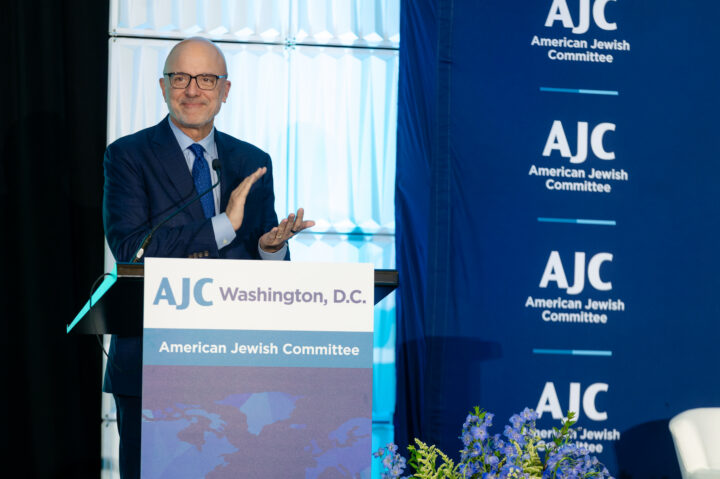
Aryeh Schwartz/AJC
Ted Deutch


 Add JewishInsider on Google
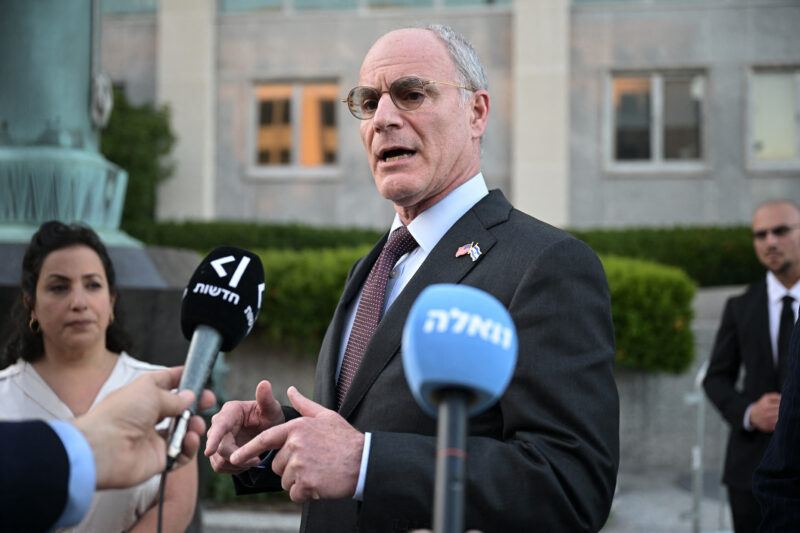
ASPEN, Colo. — American Jewish Committee CEO Ted Deutch, who served as a Democratic member of Congress from 2010-2022, expressed frustration and disappointment with the decision of half of his former caucus to vote this week for an amendment to cut off U.S. military aid to Israel.
The issue, Deutch argued, is too important and too sensitive for what some supporters characterized as a show vote on an amendment, led by Rep. Thomas Massie (R-KY), that even many of its supporters saw as deeply flawed.
Deutch told Jewish Insider in an interview Thursday on the sidelines of the Aspen Security Forum that he was “glad to see” that many of his colleagues acknowledged that the amendment was “bad policy” and “indirectly acknowledg[ed] that it would damage American interests.”
“And yet [they] turned around to vote for it anyway. That was just a really disappointing reflection of the moment,” Deutch said.
He said that members of Congress have a “responsibility” to “lead” and to “stake out positions that help advance good policy,” not only to follow trends and pressure.
“If the reason that people voted for the Massie amendment was because they see the way some of these primaries have gone — the worst part is the refusal to stand up against what we’ve seen happening,” he said, asserting that the Massie amendment and the arguments over Israel policy that have pervaded this year’s Democratic primaries don’t advance American interests or true conversations about peace for Palestinians and Israelis.
He said that members appeared to feel obligated to vote for the amendment to signal support for an “absolutist” wing of the party that, Deutch said, wants to exclude anyone who supports Israel’s existence.
“I understand that … members of Congress make decisions, they want to make a statement with a vote. But the future of the Middle East, our support for Israel, our interest in advancing the prospects for peace between Israel and Palestinians, is far too important to fall prey to a meaningless and, I would argue, ridiculous show vote,” Deutch told JI.
He took aim at candidates who have made opposition to Israel a centerpiece of their campaigns, arguing that they’re not interested in real solutions but instead in “demonizing Israel” and “undermining the very existence of Israel.” Walking away from the U.S.-Israel relationship or advocating against Israel’s existence will not advance peace, he reiterated.
Those opposing Israel’s existence are not only hurting the Jewish community but also risk “undermining pluralism in America and the ability to actually have a functioning democratic society.”
But he also drew distinctions among those who supported the Massie amendment. Some, he said, are anti-Israel and want to push supporters of Israel out of the political mainstream. Others, he said, decided to “vote for terrible policy because they thought that maybe that would help them politically.”
He said that supporters of Israel need to find opportunities for “the majority of those people” who supported the amendment to understand that, even if they are frustrated with the Israeli government, taking an “absolutist approach” is not necessary or productive.
Deutch said that AJC and other supporters of Israel can’t write off the Democratic Party or the lawmakers who voted for the Massie amendment.
“We’re doubling down on the work that we do on the Hill and the conversations that we have on helping people understand … the future of the region, especially when the Iran war ends,” Deutch said. “When the war ends, the opportunities to help our elected officials take another look at the region and how to achieve regional peace and the critical role that Israel plays in that — that’s one of the things that we’re doing now.”
Deutch said during a panel discussion on Israel and U.S.-Israel relations that it’s also important to emphasize that Israel does not bear sole responsibility for the situation in the Middle East and that other actors bear agency and responsibility for the current state of affairs.
“This is not Israel’s burden to fix all of the problems in the Middle East on their own,” Deutch said. “There are responsibilities for the Palestinians, certainly disarming Hamas, the responsibility for the Arab countries, responsibility for the U.S.”
He told JI that discussions over Israel policy can’t be divorced from talking about antisemitism and the rising demonization of Israel and the Jewish community. Members who voted for the Massie amendment “have a really important role to play in fighting antisemitism, and we’re working doubly hard to make sure they understand what the connection is here, and how the anti-Zionism and hatred of Israel leads to real-world violence.”
On the panel, he likewise warned that characterizations of people who support Israel or AIPAC as “monster[s]” — invoking comments by New York City Mayor Zohran Mamdani — could lead to real-world violence.
Regardless of his frustration over Democratic support for the Massie amendment, Deutch told JI he still wants to work with members who are serious about issues of Middle East peace and representing the Jewish community.
Deutch also said that there are many politicians outside of Washington with whom he has engaged who don’t want to be “defined by a group” of what he described as “DSA extremists” that “sets these absolutist positions that are contrary to the way that they view the world, and it’s important to know that that those leaders exist, and we’re doing as much as we can to help lift up their voices.”
In statements about the vote, even Democratic leaders who opposed the Massie amendment said that they believed that major changes to the U.S.-Israel relationship would be necessary going forward.
Asked what a responsible and reasonable approach to the future of the relationship should look like, Deutch said that it should start with “mutual respect” for each other and recognition of “the importance of the other” — things he said were lacking in the debate around the amendment.
“With that respect comes the ability to have frank discussions about what the future looks like and how to achieve it” on a range of subjects, Deutch said.
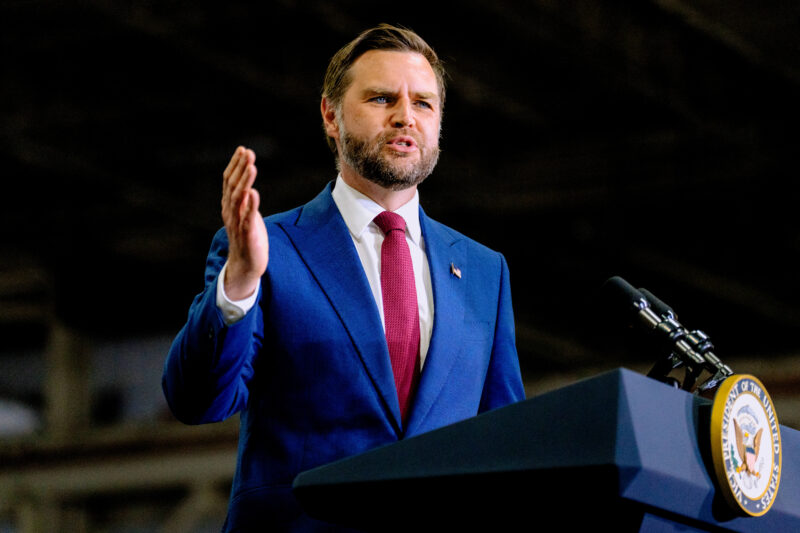
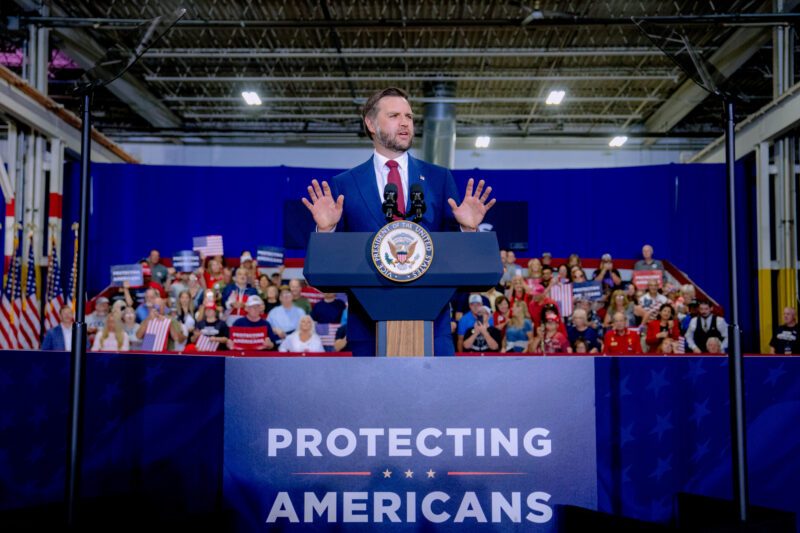
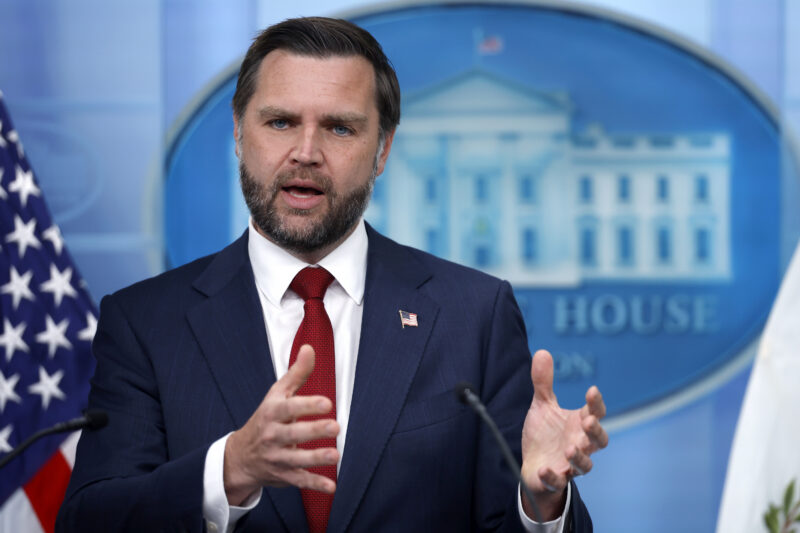
On the panel and in his conversation with JI, Deutch also criticized Vice President JD Vance’s comments earlier this week about Israel on Joe Rogan’s podcast.
While he praised Vance for pushing back against the “most extreme” conspiracy theories Rogan presented, he said he wished the vice president would have made a case for why the U.S.-Israel relationship is in the U.S.’ interests, instead of only saying that he acts in the U.S.’ best interests.
“When you put it the way that he did, it suggests that somehow it’s not the case [that the U.S.-Israel relationship serves the U.S.]. It plays into the memes of and the conspiracy theories of Israel and the Jews pulling strings,” Deutch said.
“I respect very much the vice president is working to do what he believes is in the best interest of America, and I want him to understand that for me, that that means engaging in these conversations about the future of Israel and the Middle East, without suggesting that somehow doing that work and standing up for Israel’s right to defend itself and pushing back against Iranian aggression is somehow contrary to the responsibilities that he has,” Deutch continued.
He didn’t impute ill-intent to the vice president, but said Vance’s comments could be weaponized by others who will interpret them to mean that supporting Israel is bad for the United States.
Throughout the panel, Deutch emphasized that discussion about the U.S.-Israel relationship must recognize that Israel and the U.S.-Israel relationship, and the state of affairs in the Middle East transcend and are much larger than Israeli Prime Minister Benjamin Netanyahu and his individual decisions.
“There’s much more at stake in the relationship between the United States and Israel than any one prime minister,” Deutch said.
Asked by JI about comments by a fellow panelist, former U.S. Ambassador to Israel Dan Shapiro, that the U.S.-Israel relationship would be difficult to repair on both sides of the aisle if Netanyahu remains in power after the upcoming Israeli elections, Deutch rejected that line of thinking.
“We have to reject this idea that somehow, whatever any individual may want to happen in the Israeli election, that there is only one outcome that can ensure the continued viability of the U.S.-Israel relationship,” Deutch said. “I reject that completely out of hand, and I think those of us who are committed to the relationship have to make sure that in the policy debates that are happening, that it doesn’t become a dominant narrative. There’s too much at risk.”
More Stories
Daily Overtime
Dana Nessel’s ‘kapo’ concerns

on the hill
Shaheen holding up $2.8 billion arms sale to Israel

APA Fray
Federal panel recommends suspending American Psychological Association’s accreditation authority

Daily Overtime
Amb. Leiter’s son seriously wounded in terror attack

RIYADH'S RECKONING
Saudi Arabia’s Houthi crisis is partly of its own making, analysts say
REGIME RECKONING
El-Sayed avoids acknowledging Iranian protester deaths, condemns Iran war instead
Please log in if you already have a subscription, or subscribe to access the latest updates.
 Continue with Google
 Continue with Apple