
































House Appropriations Committee debates measure to condition U.S. aid to Israel
In a hearing on the 2027 State Department funding bill, Democrats pushed unsuccessfully to condition the use of U.S. funded-weapons by Israel
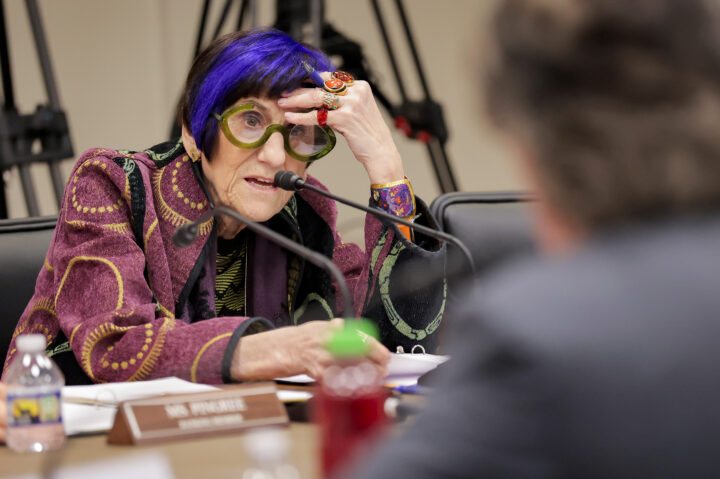
(Heather Diehl/Getty Images)
Rep. Rosa DeLauro (D-CT) questions Interior Secretary Doug Burgum during a House Appropriations Committee hearing at the Rayburn House Office Building on April 20, 2026 in Washington, DC.


 Add JewishInsider on Google
During a meeting on the 2027 funding bill for the Department of State, several Democrats on the House Appropriations Committee pushed, ultimately unsuccessfully, for the committee to adopt new conditions on the $3.3 billion in U.S. military aid allocated for Israel annually in the bill.
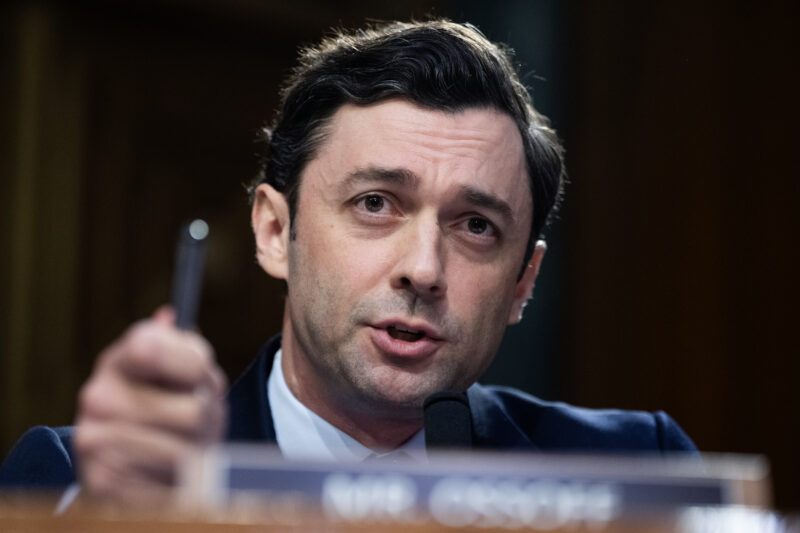
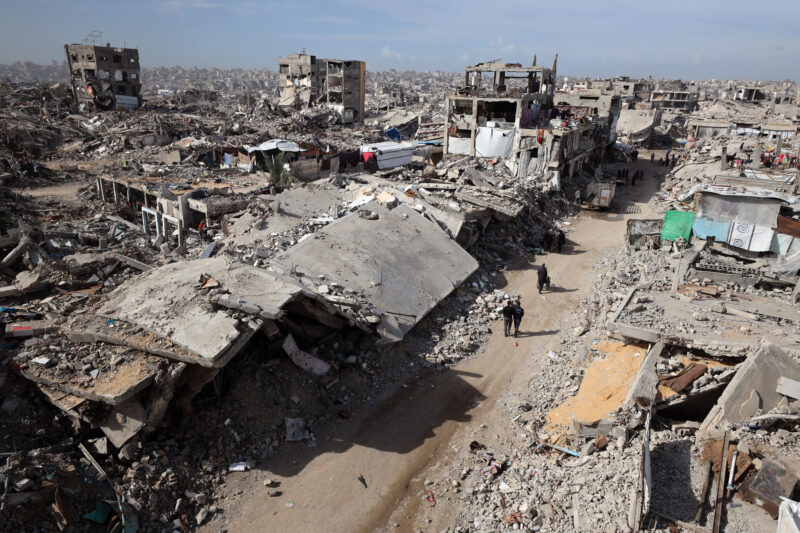
Rep. Mike Quigley (D-IL) introduced an amendment which would have prevented the use of U.S. funded-weapons to expand settlements or damage or destroy “homes, schools, farms, orchards or other civilian property” in the West Bank or Gaza, but ultimately withdrew it. Israel has routinely targeted Hamas operatives hiding in a range of civilian locations throughout Gaza.
Though he withdrew the amendment before requesting a vote, several progressive Democrats spoke in favor of it, most notably Rep. Rosa DeLauro (D-CT), who is set to be the chair of the Appropriations Committee should Democrats retake the House in November.
The amendment “would require the United States to live up to our obligations under international law,” DeLauro argued, condemning settlement expansion as “annexation of the West Bank … happening before our very eyes.”
Destructions of Palestinian homes in the West Bank “are part of a strategy to destroy the possibility of a two-state solution,” she continued.
“This amendment would recognize the United States’ obligation under international law, which is at a minimum to cease support for Israel’s illegal settlement policies,” she said. “But there are impacts at home as well. The more the U.S. ignores lawless actions, turns a blind eye to the violations of Palestinian territory and sovereignty, the more that our credibility and influence erodes on the global stage.”
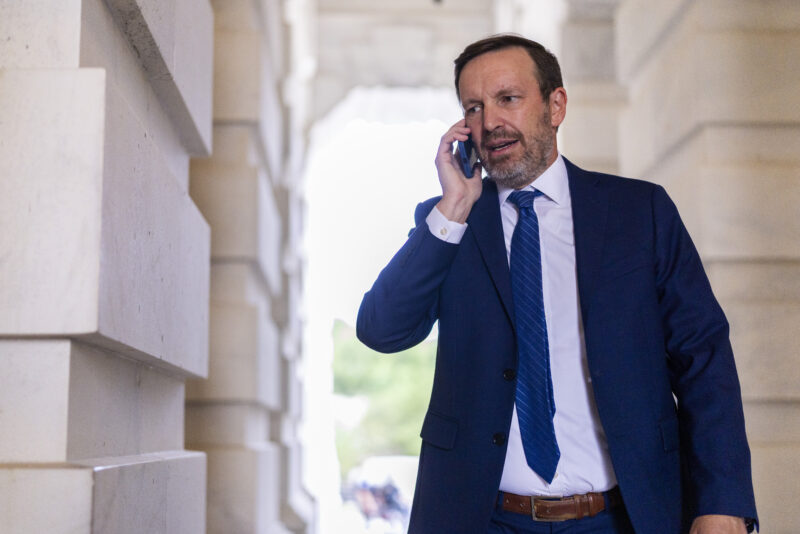
Rep. Lois Frankel (D-FL), the ranking member of the subcommittee responsible for State Department funding, did not offer a definitive stance on the bill, but indicated her opposition, praising Quigley repeatedly for withdrawing it.
“This has obviously become a contentious situation. I myself am a strong supporter of the security of Israel, of the people who live there, and also decency to innocent people who live nearby,” Frankel said. “I respect your offering [the amendment] and willingness to withdraw.”
Rep. Mario Diaz-Balart (R-FL), the subcommittee chair, emphasized Hamas’ use of human shields in Gaza and placement of terror infrastructure under schools, hospitals and United Nations facilities, and noted that U.S. aid to Israel is already subject to global human rights conditions.
“These other conditions, additional conditions, are totally unnecessary. I think they’re totally inappropriate to one of our closest allies that is under serious threat right now,” he continued.
Quigley introduced a second amendment allocating at least $400 million for rebuilding civilian infrastructure in Gaza, which failed by a vote of 32-25.
The explanatory report accompanying the committee’s draft 2027 funding bill for the State Department, also released this week, includes multiple passages that offer veiled and overt criticism of U.S. allies for failing to assist in the U.S. operations against Iran, a gripe shared by President Donald Trump.
One section “strongly encourages longstanding allies and partners to work with the United States to help secure freedom of navigation within critical sea lanes, including the Strait of Hormuz,” and another “condemns the decision by the Government of Spain” to deny the U.S. use of its bases and airspace for operations against Iran.
The full bill includes various new provisions aimed at securing accountability for United Nations Relief and Works Agency staff’s involvement in the Oct. 7, 2023, attacks on Israel, and ties to Hamas. The explanatory report accompanying the bill expands upon such efforts.
It condemns the United Nations for providing “ongoing protection” to former U.N. staff involved in the Oct. 7 attacks, and highlights that the State Department inspector general has sought information from organizations operating in Gaza about their staffing and relationships with Hamas, but such requests have at times been ignored.
It requires that funding to any entity be suspended if the entity fails to comply within 90 days with a request for information from a U.S. inspector general. It emphasizes that the “committee expects” that anyone employed by a U.S.-funded group who is a member of a terrorist organization, or any group that knowingly employed such individuals, “shall be referred expeditiously for the appropriate criminal and administrative remedies.”
And it urges the administration to use U.S. influence and power at the U.N. to push other countries to defund UNRWA, and to identify other aid mechanisms.
It instructs the administration to assess whether international organizations’ anti-Israel bias arises from specific actions by member states or “systemic behavior” within the organizations, and to assess “institutional practices” that might undermine neutrality toward Israel, such as hiring individuals known to be prejudiced against Israel or accepting information provided by Hamas while rejecting information provided by Israel.
It also calls for an assessment of the U.N.’s progress in implementing efforts to combat antisemitism and recommendations on how such efforts can improve.
The report raises concerns about Turkey’s relationship with Hamas, demanding a briefing to Congress on such ties. And it blocks U.S. funding to South Africa until the South African government stops cooperating with U.S. adversaries, additionally condemning the country for its anti-Israel advocacy on the international stage.
The bill proposes a marginal increase in funding for the office of the State Department’s special envoy to monitor and combat antisemitism, from $2.6 million in 2026 up to $2.75 million. It again urges the State Department to increase full-time staffing within the office.
The explanatory report offers support for the State Department’s Global Guidelines for Countering Antisemitism, and urges the department to expand efforts to promote those guidelines globally.
It further expresses concern about rising antisemitism in Latin America, particularly by elected officials, and calls on the State Department to engage with regional leaders to combat it.
The bill allocates $37.5 million for the Nita Lowey Middle East Partnership for Peace Act designed to promote Israeli-Palestinian people-to-people ties, level with 2026; allocates $55 million for the Near East Regional Democracy program, which promotes civil society and democracy in Iran, as well as directing the administration to consult with Congress on expanding internet access in Iran; keeps consistent funding at $3 million for U.S.-Israel development partnerships in third countries; holds funding for Israeli-Arab scientific partnerships level at $7 million; and offers a substantial increase in funding for the Middle East Partnership Initiative from $20 million to $50 million.
It also allocates $4 million in U.S. military aid for Bahrain.
The report condemns the U.N. General Assembly for passing, in a previous year, a resolution upgrading the Palestinians’ status at the U.N.
The report urges the further expansion of the Abraham Accords, calling the “urgent need” for further normalization “more apparent than ever” following Oct. 7. It calls for additional “dedicated resources” to implement U.S.-driven normalization efforts. It instructs the Department of State to “ensure resources are available” to implement and expand on normalization agreements, and to consult with Congress on these efforts.
The report instructs the administration to report to Congress every 90 days on progress in implementing the 20-point peace plan for Gaza — an effort that has been hampered by Hamas’ refusal to disarm — as well as to brief Congress on the Board of Peace.
It asks the administration to provide information to lawmakers on the Boycott, Divestment and Sanctions campaign targeting Israel, including companies, international organizations, countries, sovereign investment funds and other entities promoting or engaging in BDS, and steps that the administration is taking to “discourage or end” such policies.
It further directs the administration to “expand vetting policies and practices” to ensure no U.S. aid is provided to entities that engage in the Boycott, Divestment and Sanctions movement, glorify violence or support efforts to target Israel or the U.S. at the International Criminal Court or the International Court of Justice.
The report further instructs the State Department to report to Congress on the effectiveness of Iran sanctions and current Iranian revenue streams — as well as to allocate an additional $2 million to enforce and implement Iran sanctions; report on efforts to end the Palestinian Authority’s prisoner payments program; report on the status of religious and ethnic minorities in Syria; report on the Iranian and Iranian proxy presence in Latin America; and report on the production and distribution of the narcotic Captagon by Hezbollah and other adversaries.
It also urges the administration to “prioritize partnerships” with educational institutions that support U.S.-Israel engagement, and instructs it to make funds available to support humanitarian needs in Israel stemming from Iranian and Iran-backed attacks and to provide funding to historical preservation projects in Israel such as the City of David.
More Stories
NUCLEAR NEWS
Senate expected to vote on Saudi nuclear deal before end of year

IN THEIR MEMORY
Administration officials join bereaved families for Oct. 7 commemoration event

SPEAKING OUT
Jewish groups call for apology after educators asked to condemn Israel to attend Italy trip

EXCLUSIVE
JDCA launches streaming and digital ads supporting Cait Conley, attacking Lawler
analysis
Is Israel’s anti-Netanyahu bloc fracturing?
WAR WORRIES
Could another war with Iran be the October surprise of the Israeli election?
Please log in if you already have a subscription, or subscribe to access the latest updates.
 Continue with Google
 Continue with Apple