













































Stutzman introduces resolution backing Netanyahu’s call to wind down U.S. aid
Netanyahu offered a highly atypical letter of support for the resolution, following a meeting with the Indiana congressman last week
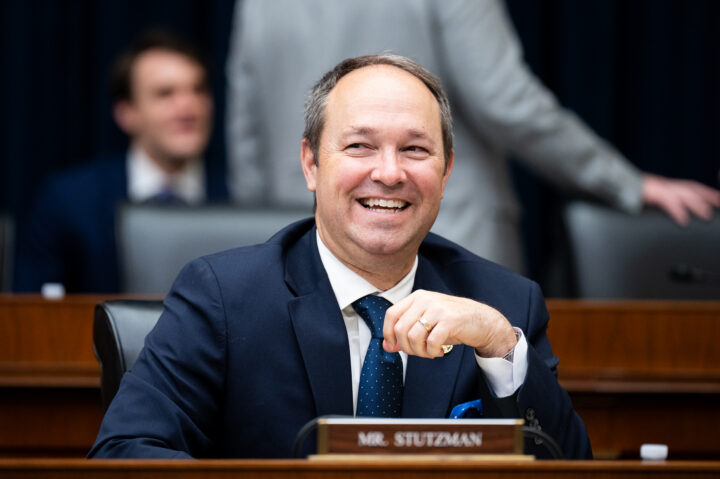
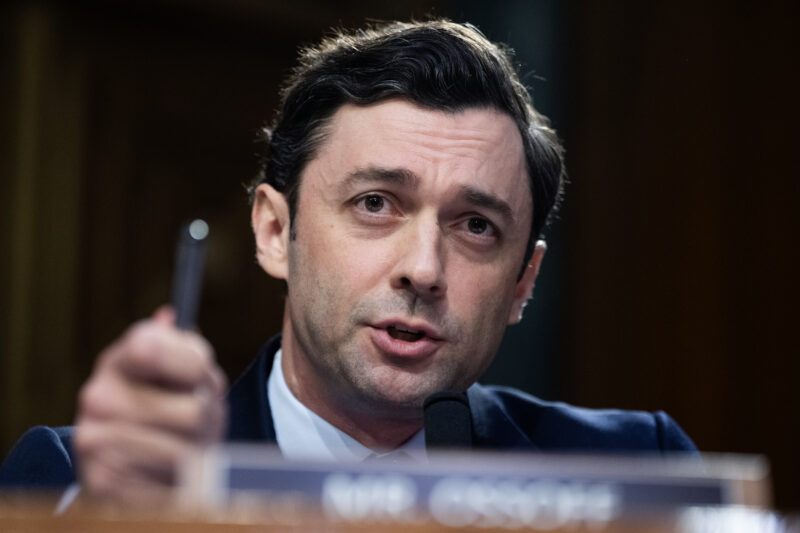
Bill Clark/CQ-Roll Call, Inc via Getty Images
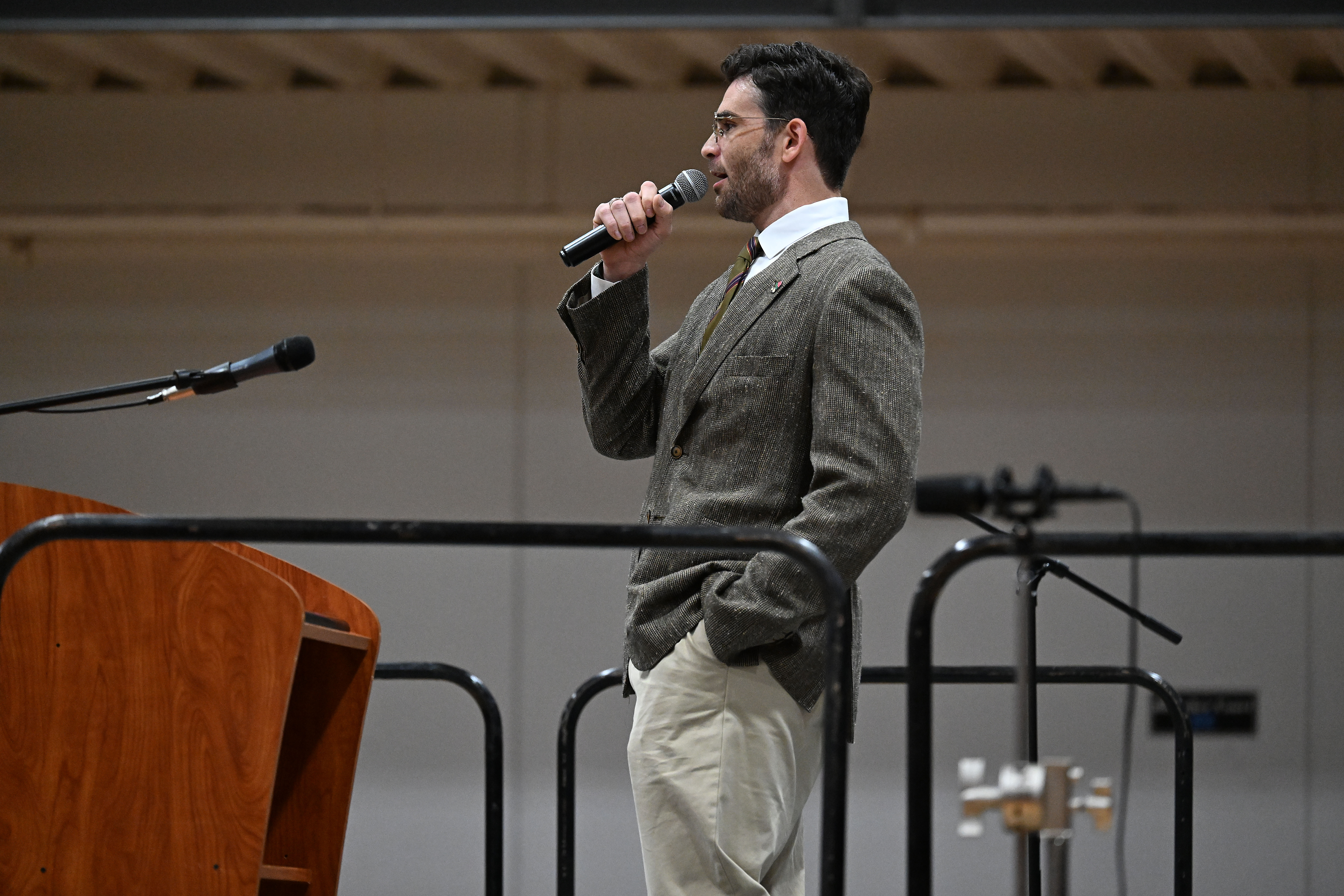
Rep. Marlin Stutzman (R-IN) at a House Financial Services Committee on May 7, 2025.


 Add JewishInsider on Google
Rep. Marlin Stutzman (R-IN) introduced a resolution on Wednesday endorsing and praising Israeli Prime Minister Benjamin Netanyahu’s call to wind down U.S. aid to Israel over the next decade, the latest twist in the rapidly evolving U.S. conversation over the future of the U.S.-Israel relationship and U.S. aid to Israel.
Few Republicans, at this point, have publicly endorsed Netanyahu’s effort, which comes amid talks between the U.S. and Israel over the next memorandum of understanding on military aid. Top U.S. officials have confirmed in recent days that ending U.S. aid to Israel is part of those discussions. Future American aid is largely expected to pivot toward a model based on trade, partnership and joint development.
Stutzman said he had discussed the resolution and the effort with Netanyahu and other Cabinet ministers during a visit to Israel alongside Rep. Abe Hamadeh (R-AZ) last week, and that the Israeli officials were strongly supportive.
“We thought this was a good opportunity to get a sense of Congress, and of course support not only Israel, but support the administration, and as they move ahead in the next negotiations of MOU, and I’m excited about it. I think it’s a big step for both countries,” Stutzman told Jewish Insider during an interview in his Capitol Hill office on Wednesday.
He said he would not have moved ahead with the resolution if he did not find that he and Netanyahu were on the same page in their goals, and said he would walk it back if President Donald Trump offered a strong counterargument. Netanyahu himself offered a letter of support for the resolution, which Stutzman publicized alongside the resolution.
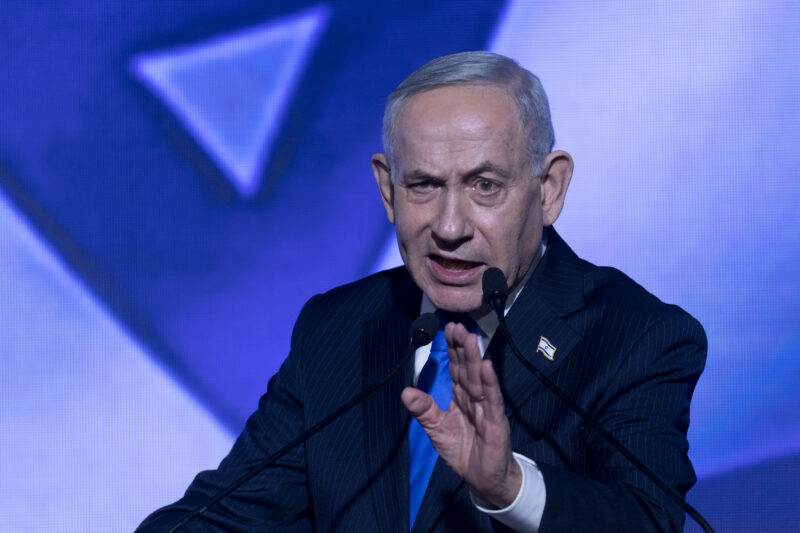
Netanyahu said in the letter to Stutzman that he was “glad to receive your proposed Congressional resolution endorsing my plan to shift the framework for US-Israel defense cooperation from aid to partnership” and that the “time has now arrived for us to move from aid recipient to partner.”
Such public letters from Netanyahu directly endorsing U.S. legislation are highly atypical, even for legislation supportive of Israel. The resolution “commends Prime Minister Benjamin Netanyahu for his bold proposal.”
Stutzman said he had discussed the resolution with the White House, House Speaker Mike Johnson (R-LA) and House Majority Leader Steve Scalise (R-LA), though none of them have given their backing to the resolution yet.
The congressman called it an expression of support from the House for “the efforts of both our countries to take this step in our maturing relationship.” He said that winding down aid is a “mature step” that acknowledges Israel’s role as a regional power and its growing economy. And he said it would communicate to the administration the support from Congress for winding down U.S. aid as part of the MOU talks.
Some pro-Israel voices in the U.S. have griped about the way Netanyahu has approached the wind-down of U.S. aid to Israel, with his comments being decontextualized and weaponized by critics of Israel in the United States to suggest Netanyahu himself supports a severing of the U.S.-Israel relationship or an immediate end to all U.S. aid.
“I’m sure people will try to weaponize it, and they’ll try to create conspiracy theories out of it, but you know what, I was in the room, there was nothing but discussion about our relationship and our partnership,” Stutzman said, when asked about such concerns. “I’m sure there will be some out there that try to use it as fuel for something. They already are, and it’s laughable, because you know it’s more out of a spirit of hatred for Israel than realizing that it’s in the best interest of both countries.”
He argued that the resolution should attract widespread support from budget hawks — for saving U.S. taxpayer money — and from pro-Israel colleagues for giving Israel the opportunity to “stand on their own two feet and be a standing partner beside us and not look like they’re dependent on us.”
Stutzman also said that the resolution, and ending U.S. aid, would remove an argument made by antisemites that the U.S.-Israel relationship is coercive or exploitative, though he acknowledged that it would not solve the problem of antisemitism.
“I hear too many young people especially say that, ‘Israel controls the United States,’ or ‘the United States controls Israel,’” Stutzman said. “No, we just have such common values, and it’s a very natural relationship.”
In addition to the provisions on U.S. aid, the resolution “condemns antisemitism in all its forms, including physical attacks on Jewish individuals and institutions, the harassment of Jewish Americans, the spread of antisemitic propaganda, and the delegitimization of Israel’s right to exist.”
Stutzman said he wants to see the next MOU with Israel — after the current one expires in 2028 — move the U.S.-Israel relationship toward partnership between American and Israeli companies, which he said would be beneficial for the U.S., Israel and other Middle Eastern countries.
The resolution “strongly supports” a new MOU “to replace traditional military assistance with a framework of joint defense codevelopment, coproduction, and mutual investment that will strengthen both nations’ defense industries and military readiness.”
He said the U.S. should also be exploring a Middle Eastern analogue to NATO, including Israel and Gulf states, to include an Article V-style defense guarantee from the United States to protect its various partners in the Middle East. He argued that the war in Iran, during which Tehran has struck various U.S. Gulf allies, has “helped show the world who the real problem was, and that’s Iran and the IRGC.”
Stutzman predicted that Trump will be able to bring regional partners, which are increasingly splitting into camps — Israel and the UAE on one side, and other Gulf and Arab states like Saudi Arabia and Qatar on the other — back together after the war in Iran ends, by touting his ability to defang the Iranian regime, and pointing to the threat it poses to all of them.
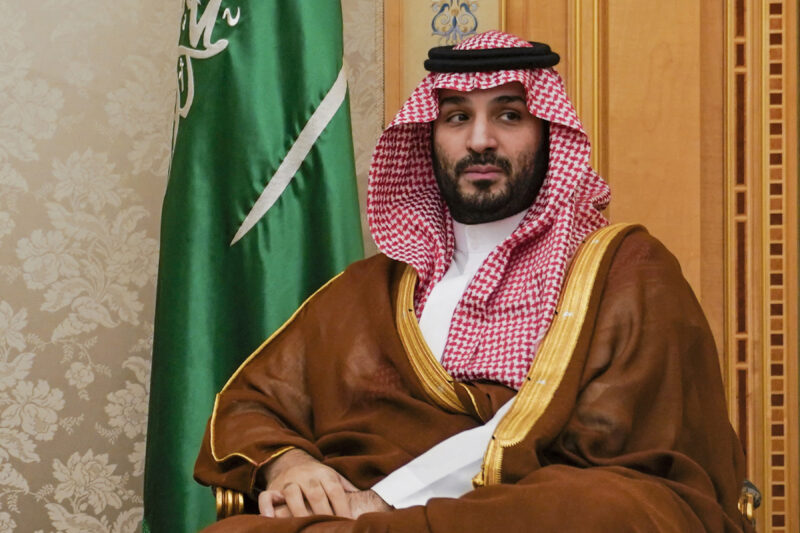
He said he believes reports that Saudi Crown Prince Mohammed Bin Salman would be willing to normalize relations with Israel if not for objections from his father, King Salman. Saudi Arabia has publicly rejected the idea of normalization prior to progress toward a two-state solution.
Stutzman’s resolution praises Netanyahu and Israel for their cooperation with the U.S. in military operations against Iran.
Asked about the resolution, Rep. Randy Fine (R-FL), one of the most vocal pro-Israel Republicans in the House, said he’s “not a huge fan of resolutions,” which are nonbinding, and that he “struggle[s] with this issue,” calling it a “win for Israel” to wean off of U.S. aid but a “terible decision for America” because “American benefits much, much more from that $3.8 billion than it costs us.”
He said that ending U.S. aid will not stop antisemitism.
“The unfortunate thing is people believe this will stop the antisemitism. It’s not driven by the aid to Israel, they’ll come up with something else,” he said. “I support getting rid of it, just because I like to call BS on all the antisemites, but you’re not going to see me running around to pass a resolution, which doesn’t mean all that much.”
He said that he hasn’t reviewed Stutzman’s resolution yet so he couldn’t commit to how he might vote on it, but said he would consider it. “But I’d rather we actually do things that would solve the problem than just talk about solving the problem.”
Netanyahu’s letter has already been weaponized by anti-Israel forces on the left and right, who are linking it to a provision of the 2027 National Defense Authorization Act set for a markup in the House Armed Services Committee on Thursday, which aims to enhance U.S.-Israel technological cooperation and sharing.
Those relatively routine measures, which enjoy bipartisan support and further existing programs, are being undertaken independent of the current MOU, and would not impact the level of U.S. foreign military financing being provided to Israel next year or in the future — though they do model the sort of joint development and co-production which are likely to be the focus of the next MOU.
Former Rep. Marjorie Taylor Greene (R-GA) posted a highlighted version of the letter pointing to sections where Netanyahu referenced “my plan” for the future of U.S. aid, suggesting that it was referring to the NDAA provision.
The anti-Israel group A New Policy posted the same highlighted graphic. Neither acknowledged the fact that Netanyahu’s letter referenced a different piece of legislation, instead declaring that he was discussing the NDAA language.
More Stories
EMPIRE STATE EDUCATION
Hochul will opt New York into education tax credit that will help fund Jewish education

PACKED PEWS
Scholten, Gottheimer and Bret Stephens join Dan Senor before packed Michigan crowd

TOEING THE LINE
Menin, Levine call for ‘focus’ on Oct. 7 victims — but don’t condemn Mamdani
TISCH TENSIONS
Mamdani stands by NYPD’s Tisch as his allies demand her removal

DRAWING A LINE
British PM rules out partnership with Greens over ‘Zionism is racism’ motion

EVENT RESCHEDULED
State Department to hold Oct. 7 commemoration event on Wednesday
Please log in if you already have a subscription, or subscribe to access the latest updates.
 Continue with Google
 Continue with Apple