































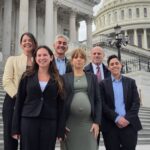


Medea Benjamin celebrated the likely future congressman; her group has become notorious on Capitol Hill for disrupting congressional hearings and shouting at members of Congress
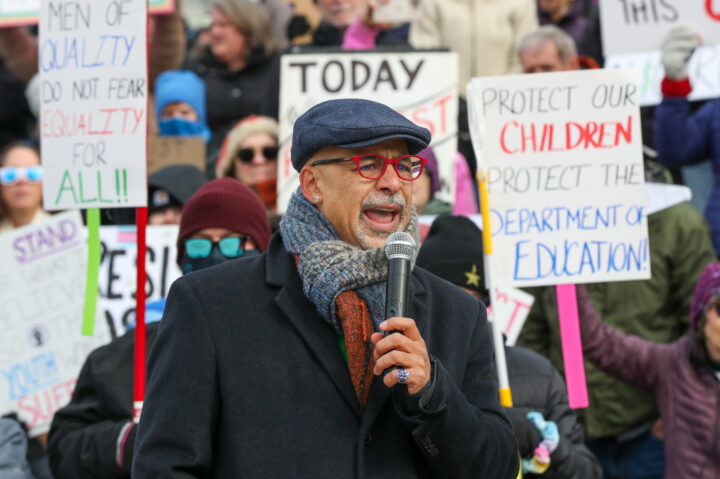
Paul Weaver/SOPA Images/LightRocket via Getty Images
Pennsylvania state Rep. Chris Rabb speaks during a protest outside of the Pennsylvania Capitol.


 Add JewishInsider on Google
Pennsylvania state Rep. Chris Rabb, expected to be the next member of Congress representing Philadelphia, posed for a photo on Thursday with Medea Benjamin, a leader of the anti-American and pro-Iran group Code Pink.
“It’s going to be so great having @ChrisRabb in Congress!!!,” Benjamin said alongside the photo shared on X.
Benjamin and her group have become notorious on Capitol Hill for disrupting congressional hearings and shouting at members of Congress in the halls, generally recording the incidents on video, over their support for Israel.
Benjamin and other CodePink members have also met with and defended leaders of the Iranian regime and Hamas.
Another founder of the group is married to Neville Roy Singham, a wealthy pro-China financier believed to be supporting the group, leading to accusations that Code Pink may be acting as an unregistered agent of China and other U.S. adversaries.
Nearly half of likely Pennsylvania voters surveyed in the NYT/Siena poll called Shapiro's Israel stance 'about right,' while only 14% said he is too supportive
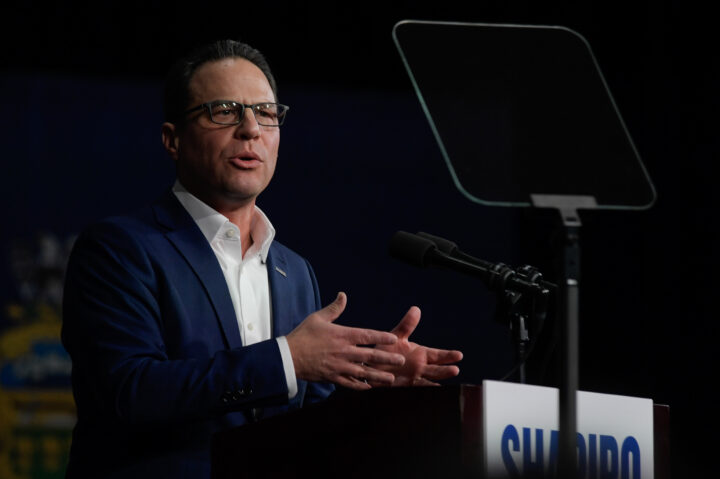
Matthew Hatcher/Getty Images
Pennsylvania Gov. Josh Shapiro speaks at a rally on January 8, 2026 in Philadelphia, Pennsylvania.
A new poll found that nearly half of voters in Pennsylvania view Gov. Josh Shapiro, a Jewish Democrat mulling a presidential bid in 2028, as “about right on support of Israel,” even as he has faced skepticism from the far left over his positions on the Jewish state.
The New York Times/Philadelphia Inquirer/Siena University poll, released Tuesday, showed that 47% of voters approve of Shapiro’s stances on Israel, with 14% saying he is “too supportive” and 19% feeling he is “not supportive enough.”
Forty percent of respondents under 30 said Shapiro is too supportive of Israel, underscoring a generational divide on the issue. 59% of Democrats still believe he is “about right” in his approach, according to the poll; 39% of Republicans said the same, while another 40% said he is not supportive enough.
The survey results indicate that Shapiro, a popular centrist who led his Republican gubernatorial rival, Stacy Garrity, by 16 points in the poll, could be well positioned as he mulls a presidential campaign.
Even as the Democratic Party has recently become more hostile toward Israel, Shapiro has continued to voice support for upholding ties to the key U.S. ally, while remaining outspoken against Prime Minister Benjamin Netanyahu and his right-wing governing coalition.
With a growing number of Democratic lawmakers calling for an end to U.S. aid to Israel, Shapiro has reiterated his commitment to such assistance, while otherwise arguing it should be used to exert leverage over the country’s use of American-made weapons.
More broadly, the poll showed that while half of likely voters in Pennsylvania, a key battleground state, believe the Democratic Party is too far to the left, 29% said they felt the same about Shapiro. The poll surveyed 760 likely voters in Pennsylvania and was conducted Aug. 17-21.
The poll stands in contrast to findings concerning voter sentiment toward Israel in a survey released Monday by the far-left IMEU Policy Project that was conducted by YouGov. That poll found broad Democratic support for sanctioning Israel and cutting off U.S. weapons sales among primary voters in the six states recently chosen to lead off the 2028 Democratic presidential nominating contest — South Carolina, Nevada, New Hampshire, New Mexico, Michigan and Virginia.
The Times/Siena poll also showed Pennsylvania voters largely back Sen. John Fetterman’s (D-PA) outspoken defense of Israel, with 41% saying he is “about right,” 29% saying he is “too supportive” and 7% saying he is “not supportive enough,” though 51% of Democrats surveyed believe he is “too supportive.”
The survey found that Fetterman is viewed far more favorably among Republican voters than Democrats as he has continued to publicly spar with members of his own party as he accuses them of moving too far to the left. While his criticism has stoked speculation over whether he will formally cross the aisle, he has denied that he intends to switch parties.
The potential presidential contender distanced himself from congressional candidate Darializa Avila Chevalier and said they don’t share similar values
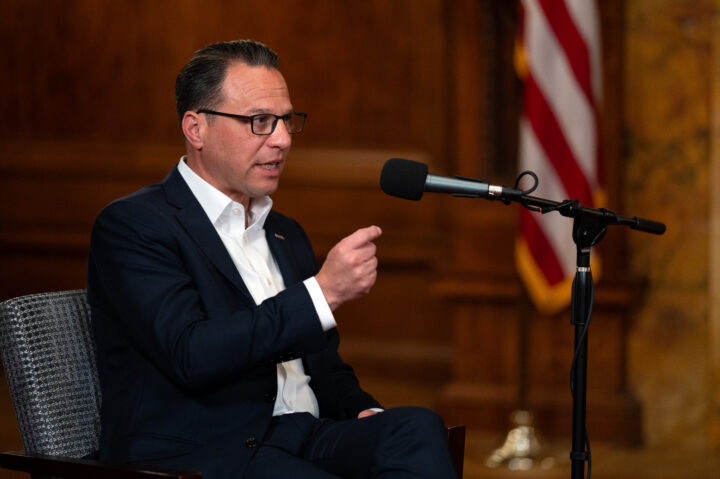
Peter W. Stevenson/The Washington Post via Getty Images
Pennsylvania Gov. Josh Shapiro sits for an interview at the Pennsylvania State Capitol on June 11, 2025.
Pennsylvania Gov. Josh Shapiro, a potential 2028 Democratic presidential contender, predicted Democrats will soon face a “battle” over the rising influence of socialists in the party and distanced himself from such far-left candidates.
In an interview with CNN’s Dana Bash that aired Sunday, Shapiro cited “profound differences” with Darializa Avila Chevalier, a socialist New York City congressional candidate who won her primary last month against incumbent Rep. Adriano Espaillat (D-NY) and was endorsed by New York City Mayor Zohran Mamdani. Avila Chevalier has a history of incendiary online rhetoric, including railing against Democratic leaders and praising communism, and defended attending an anti-Israel rally the day after the Oct. 7 Hamas attacks.
“She’s not someone who seemingly I would agree with on many things or that we share similar values. She ran on the Democratic ticket, I guess, as a socialist,” said Shapiro.
Asked what Avila Chevalier’s victory says about the Democratic Party, Shapiro predicted his party will soon have a “battle” before it emerges stronger and unified.
“I think what our party has to go through that will be very healthy and something we have not really done since the 1992 election cycle is to have a battle over what we believe in, to have a battle over the ideas that we are going to hold on to and campaign on and then deliver on as a way to make people’s lives better,” he told Bash during the interview, which was held at the Pennsylvania Statehouse and Liberty Bell during the weekend of America’s 250th birthday celebrations.
“And I expect our party over the course of this next year or so to go through a battle about what we believe in, and then come out unified in a way that we can take the fight to the other side and really deliver for the American people.”
Asked by Bash whether he thinks being Jewish “will hurt either you or another person who might run … given the climate right now,” Shapiro did not address rising antisemitism but said the public “wants you to be who you are, be authentic.”
“Let them know what motivates you to serve and why you do this work. My faith teaches me that no one’s required to complete the task, but neither are we free to refrain from it, very similar to what Ben Franklin preached about citizen participation in our commonwealth, in our country, in perfecting our union,” Shapiro said.
“I think that that is uniquely American, this idea that we all have a responsibility to get off the sidelines, get in the game, and do our part. That’s what my faith teaches me. That’s how my family raised me. That is who I am, and I’m not going to apologize for it,” he said.
Shapiro, to CNN: ‘There are 46 majority Muslim nations, 23 of which have Islam as their official religion’
Peter W. Stevenson/The Washington Post via Getty Images
Pennsylvania Gov. Josh Shapiro sits for an interview at the Pennsylvania State Capitol on June 11, 2025.
Pennsylvania Gov. Josh Shapiro defended Israel’s standing as a Jewish state, telling CNN in an interview that the country faces a level of scrutiny and attack over its religious character not applied to the Muslim states throughout the region.
“For those who do not want there to be a Jewish state, oftentimes they will predicate their views on this notion that being grounded in a religion and being a democracy can’t coexist. I think it’s important to point out the hypocrisy of that view,” Shapiro said in an interview with CNN that aired on Monday. “When there are 46 majority Muslim nations, 23 of which have Islam as their official religion, either because of statute or their constitution, and only one has Judaism as their official religion, and yet we’re focused just on the Jewish state.”
Unlike countries that constitutionally declare an official religion, Israel has no official religion by law — though its 2018 Basic Law designates it as the nation-state of the Jewish people, and religious institutions play a significant role in civic life. Israel formally recognizes multiple religious communities, including Jewish, Muslim, Christian and Druze populations, and grants each its own religious courts for matters of personal status such as marriage and divorce.
The Democratic governor also said that he feels it’s important to stick to his convictions on the issue, rather than following trends or pressure.
“I think it is particularly important at this time to be open and vocal and honest about your views, and not put your finger in the wind and just cater to whoever is expressing their views the loudest,” Shapiro continued.
The comments come as attacks on Israel’s status as a Jewish state have become increasingly prevalent, particularly from the far left, including by at least one Democratic senate candidate.
‘I have never and would never support any such heinous conspiracy theories,’ Rabb pushed back in a statement to JI

U.S. House of Representatives
Reps. Josh Gottheimer (D-NJ) and Jared Moskowitz (D-FL)
Reps. Jared Moskowitz (D-FL) and Josh Gottheimer (D-NJ) expressed concerns about Chris Rabb’s Democratic congressional primary victory in Philadelphia this week, which is likely to send the Pennsylvania state legislator to Washington next year in a deep-blue district.
They expressed particular concern about a post shared on Rabb’s Instagram account that described the Bondi Beach Hanukkah terror attack in Sydney as a false flag operation, which Rabb’s campaign has attributed to an unnamed former staffer and disavowed.
In a new statement to Jewish Insider, Rabb pushed back, emphasizing his connections to the Jewish community and explaining that the post was shared by a former contractor with whom the campaign had cut ties, without his approval.
Moskowitz noted that mass shootings are a particularly personal topic for him given that he graduated from Marjory Stoneman Douglas High School, the site of one of the largest school shootings in U.S. history.
“I had a shooting at my high school, 14 kids were killed, three adults. [Former Rep.] Marjorie Taylor Greene called that a false flag event. To see someone on my side of the aisle see a mass shooting and call it a false flag is obviously tremendously disappointing,” Moskowitz told JI on Thursday.
He said that such rhetoric also feeds into a cycle of escalation that leads to comments like those from antisemitic Texas Democratic congressional candidate Maureen Galindo, who called for imprisoning and castrating Zionists.
“How did we get here?” Moskowitz asked. “It’s because of statements like [Rabb] said, and statements that many other people say, and the stuff that goes online. It’s the constant escalatory behavior.”
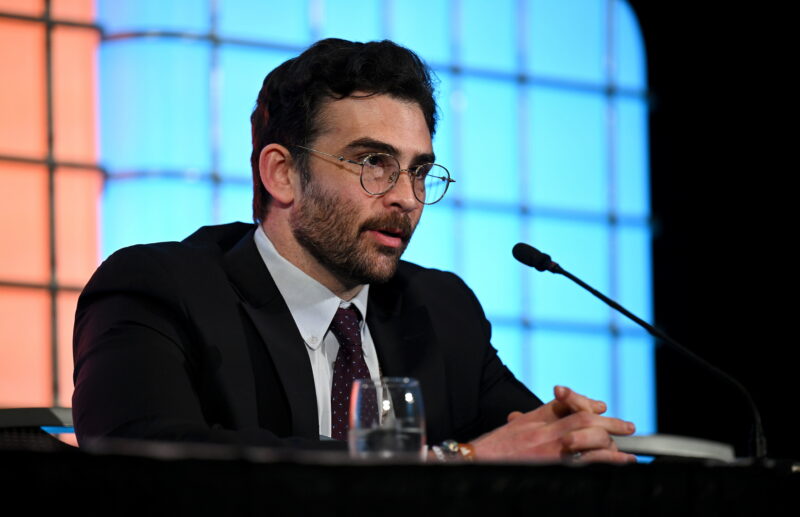
Gottheimer said he was “deeply concerned about the things [Rabb] has said and shared” as well as “who he campaigned with,” naming Hasan Piker, the far-left streamer who has repeatedly espoused antisemitic sentiments and support for terrorism in particular.
“Whether that was some sort of campaign gimmick or his deeply felt beliefs — we’ll see,” Gottheimer said.
Rabb pushed back hard in a lengthy statement to JI, again denying any knowledge of the Bondi Beach post.
“The Bondi Beach Instagram story was reposted to my account without my knowledge or consent by a vendor with whom my campaign has severed ties. Accusations to the contrary are extraordinarily troubling because they misrepresent my deep and enduring commitment to combatting antisemitism and standing with the Jewish community here in Philadelphia and around the world. There is no place for such destructive and shameful hate,” Rabb said. “I have never and would never support any such heinous conspiracy theories.”
Rabb also emphasized longtime connections to the Jewish community — growing up in a Black and Jewish neighborhood and working with Jewish communities during his time in office to fight white Christian nationalism and bigotry, and noted the longtime alliance between the Black and Jewish communities to fight racism.
“These accusations ignore my life-long connection to the Jewish community amid multi-generationial ties to Jewish friends and neighbors borne of shared struggle and resistance to systems of harm,” Rabb continued. “I am proud that Philadelphia’s Jewish community was at the heart of my campaign – including many volunteers and staff, all the way up to our campaign manager. In Congress, I will do everything in my power to prevent violence against Jewish folks — or any other people — because I firmly believe in protecting and supporting the safety and equality of all.”
Rep. Jamie Raskin (D-MD), who endorsed Rabb, defended him.
“I was concerned about [the Bondi Beach post], but they said it was someone on the staff and he disowned it immediately. He disavowed it,” Raskin said. “I spent some time with him, and he’s a very smart and thoughtful and decent guy.”
On a call with concerned Pennsylvania parents, the GOP senator said he’d raise the issue at the federal level and look into the state Education Department’s definition of antisemitism

Israel on Campus Coalition/X
Rep. Dave McCormick (R-PA) speaks at the ICC National Leadership Summit in Washington on July 29, 2025.
A group of Jewish parents from across Pennsylvania arrived at a virtual meeting with Sen. Dave McCormick (R-PA) with a plea: take note of antisemitism happening not just on college campuses but also in K-12 schools, and do something about it.
The Tuesday evening conversation, organized by the North American Values Institute, brought together four parents who, since Hamas’ Oct. 7, 2023, attacks on Israel and the ensuing war in Gaza, have devoted their attention to antisemitism in their kids’ public schools.
“They’re just looking for help,” Steve Rosenberg, NAVI’s Philadelphia regional director, told McCormick in the call, attended by Jewish Insider. “They need life preservers. They’re writing emails, they’re sending texts, they’re doing everything they can, and they are getting very little, if any, response from their local politicians, from their state level people.”
McCormick discussed his bona fides in combating campus antisemitism, pointing out that he was one of the first political figures to call for University of Pennsylvania President Liz Magill to resign after her testimony on Capitol Hill in December 2023. But, he told the parents, he was eager to learn about the challenges that their children faced in Pennsylvania’s K-12 schools.
“When I heard about this issue, that many parents were feeling various indications of antisemitism in the public schools in and around Philadelphia, it certainly caught my attention,” said McCormick. “I wanted to tell you [that] I’d like to be a strong voice in trying to combat this, and I wanted every opportunity to hear from parents about what they’re experiencing.”
The 45-minute meeting over Zoom did not come after any particular antisemitic incident. The parents all had created local branches of the Jewish Families Association, a network of grassroots hyperlocal advocacy groups that formed after Oct. 7. They wanted to express to McCormick what they saw over the last three years — that antisemitic rhetoric, and language targeting Israel and Zionists, had become commonplace at their local schools. They felt teachers and administrators often were not prepared to handle the issues.
“What’s been most concerning to me is not just the incidents themselves, but how increasingly normalized and socially acceptable antisemitic behavior has become, and how often the faculty and admin generally are not equipped to recognize the antisemitism, understand how it manifests today or respond to it effectively,” said Caren Lowrey, who works in drug education and prevention and is running as a Republican for a statehouse seat.
Ed Kovler, a parent and activist from Upper Dublin, outside of Philadelphia, asked McCormick for advice on codifying antisemitism policies and educational materials so that school board members and superintendents have resources available, even after leadership transitions. Kovler pointed out that he disagrees with the definition of antisemitism used in the state Department of Education’s glossary of equity, inclusion and belonging terms, which says that opposing Zionism is not, “on the face of it, antisemitic.” McCormick promised to look into it.
“I obviously am not a state official, but as a federal official, I’ll make an inquiry to the Department of Education and the governor and say this definition seems inconsistent with what we all would accept is antisemitism, and can you make the necessary judgment,” said McCormick. “That’ll be a takeaway from this call.”
Mark Isakowitz, McCormick’s chief of staff, urged the parents to document every instance of antisemitism that they see.
“There are things we can do as policymakers, but please double down on cataloging the examples,” Isakowitz said. “I know there’s been a ton about Philadelphia, and I’ve seen it all, but we need more of that, because there are people who are still gaslighting the whole issue.”
McCormick told the parents that he would not stay silent.
“I think part of the problem we’re seeing is people who aren’t antisemitic in public life are tolerating antisemitism,” said McCormick. “It’s not that they’re antisemitic themselves. It’s just that they haven’t shown the courage and the moral clarity to fight it.”
Plus, Emirates to fly JFK–TLV?
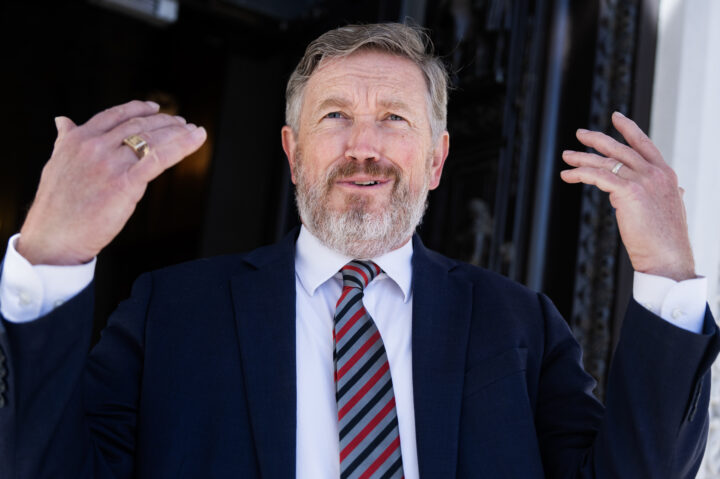
Tom Williams/CQ-Roll Call, Inc via Getty Images
Rep. Thomas Massie, R-Ky., leaves the U.S. Capitol after the last votes of the week on Friday, May 15, 2026.
Good Tuesday morning.
In today’s Daily Kickoff, we preview key congressional primary races taking place today in Kentucky and Pennsylvania, and report on a proposal by Israel’s Transportation Ministry for Emirates to begin nonstop flights between Israel and New York City. We report on a recent podcast appearance by Michigan Senate candidate Mallory McMorrow in which the Democrat attempted to position herself as an objective observer of the Israeli-Palestinian conflict, and cover Washington mayoral candidate Janeese Lewis George’s recent campaigning with a councilmember who accused Jews of controlling the weather. Also in today’s Daily Kickoff: Rahm Emanuel, Mung Chiang and Amnon Shashua.
Today’s Daily Kickoff was curated by JI Executive Editor Melissa Weiss and Israel Editor Tamara Zieve, with assists from Danielle Cohen-Kanik and Marc Rod. Have a tip? Email us here.
What We’re Watching
- It’s primary day in Kentucky and Pennsylvania. More below on the races we’re watching.
- The Senate is slated to vote today on a war powers resolution, the eighth attempt by Senate Democrats to move forward on efforts to constrain the Trump administration’s military activities targeting Iran.
- The effort comes a day after President Donald Trump called off what he said was a strike on Iran planned for today. The president said the decision came at the request of Saudi Arabia, Qatar and the United Arab Emirates, which encouraged the administration to allow peace talks to continue. Read more here.
- The Senate Appropriations Committee is holding a series of budget hearings today, including one this morning for the Justice Department’s budget for 2027.
- CENTCOM head Adm. Brad Cooper is set to testify this morning before the House Armed Services Committee about security challenges in the Middle East.
- Elsewhere on the Hill, the Jewish Federations of North America will hold a press conference this afternoon to call for increased security funding, days after House Minority Leader Hakeem Jeffries (D-NY) called for $1 billion to be allocated for the Nonprofit Security Grant Program — $700 million more than Congress allocated in last month’s Homeland Security funding bill.
- The Center for American Progress is hosting its annual IDEAS Conference in Washington. Speakers include Senate Minority Leader Chuck Schumer (D-NY), Jeffries; Democratic Govs. Wes Moore, Gavin Newsom, Abigail Spanberger and Mikie Sherril; and former U.S. Ambassador to the U.N. Linda Thomas-Greenfield in addition to a number of Democratic legislators.
- The Middle East Forum’s three-day policy conference kicks off today in Washington. Keynote speakers include senior White House official Seb Gorka, Israeli Ambassador to the U.S. Yechiel Leiter and Morgan Ortagus, a former deputy U.S. special envoy to the Middle East.
- The Nationals will host Jewish Community Day as the baseball team takes on the New York Mets at Nats Park.
- In New York, the Stephen Wise Free Synagogue is holding its spring benefit, where the congregation will honor Proskauer Rose’s Ira Bogner and former State Department antisemitism envoy Deborah Lipstadt.
What You Should Know
A QUICK WORD WITH JI’S JOSH KRAUSHAAR
Today’s primaries in Kentucky and Pennsylvania may well serve as an early test over which party is more effectively dealing with its own antisemitism problems.
Rep. Thomas Massie (R-KY), one of the few remaining anti-Israel Republicans in Congress, has been spewing antisemitic tropes in the closing days of the campaign, portraying Congress as Israel-occupied territory and caricaturing wealthy Jewish donors as the fuel behind his opponent’s support, as he tries to fend off a serious challenge from Ed Gallrein, who is endorsed by President Donald Trump.
Meanwhile in Philadelphia, state Rep. Chris Rabb — who shared a post on his Instagram account promoting a conspiracy theory that the Bondi Beach terror attack in Sydney in which 14 Jews were killed was a false-flag operation perpetuating Israeli interests — holds the late momentum in an open Democratic congressional primary to succeed retiring Rep. Dwight Evans (D-PA). (Rabb’s campaign blamed a former campaign staffer for the offending post.)
A parade of progressive stars, from Reps. Alexandria Ocasio-Cortez (D-NY) to Jamie Raskin (D-MD), have traveled to Philadelphia to campaign with the Democratic Socialists of America-backed Rabb. Antisemitic streamer Hasan Piker likewise rallied with Rabb and held a fundraiser with him where attendees chanted: “Free Palestine!”
Sen. Cory Booker (D-NJ), representing the more mainstream wing of the Democratic Party, held a rally on Monday to boost one of Rabb’s leading challengers, state Sen. Sharif Street.
Gallrein and Rabb both appear to hold latemomentum in their respective races. If the two end up winning, the conventional wisdom — and corresponding coverage — will rightly conclude that a Massie defeat came as a result of Trump’s outspoken opposition to the congressman and that a Rabb victory will be the result of progressives’ ascendance within the Democratic Party.
But that will only tell part of the story. If Republicans end up ousting a lawmaker trafficking in some of the ugliest bigotry, while Democrats anoint a future lawmaker pushing extremist antisemitic conspiracy theories, it’s a sign of the direction both parties are headed.
LAST STAND
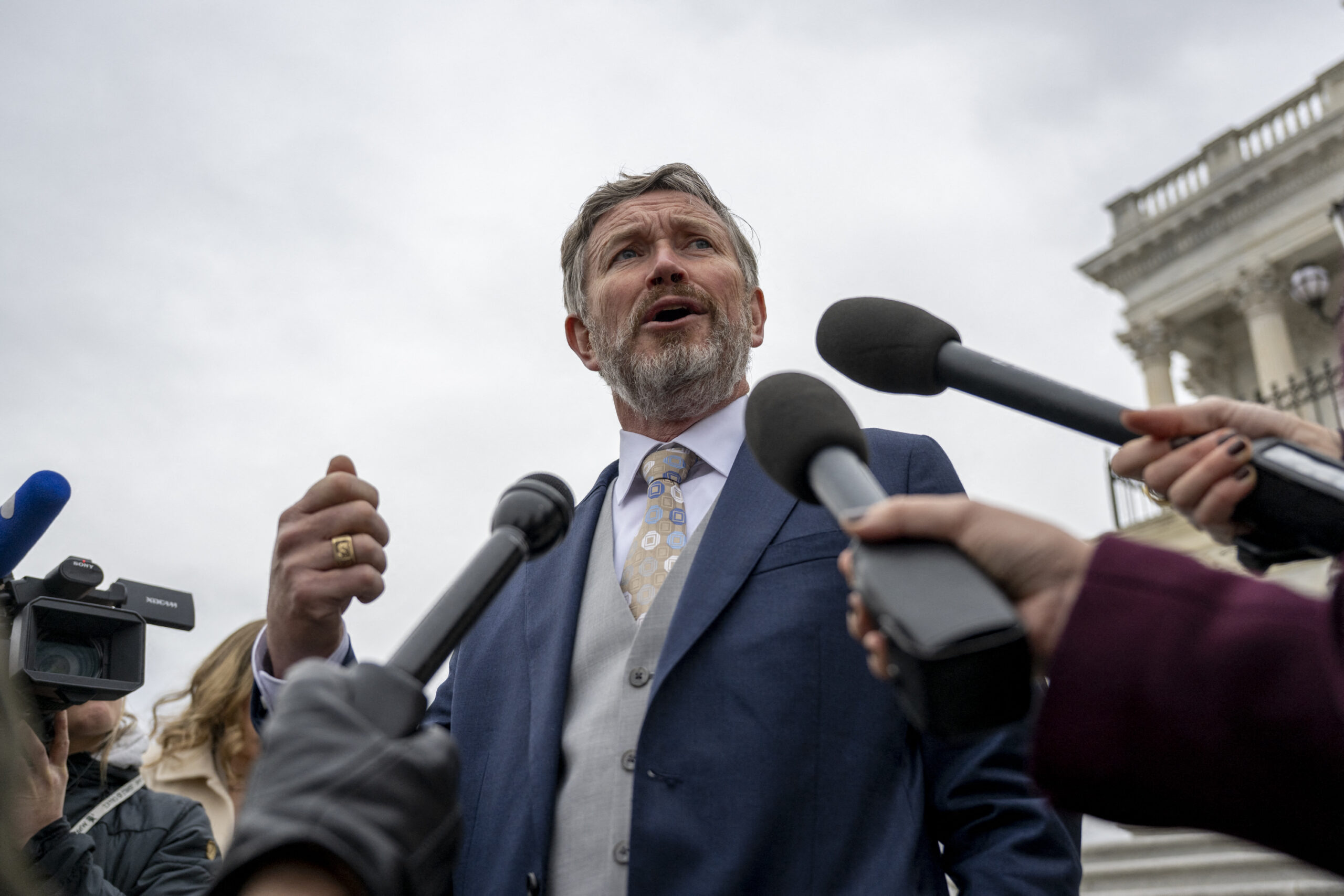
In the closing days of his House reelection campaign against Trump-endorsed Navy veteran Ed Gallrein, Rep. Thomas Massie (R-KY) has focused his ire on pro-Israel and Jewish advocacy groups, claiming that his opponent is a “puppet” of such interests. The race is set to conclude with Tuesday’s primary, Jewish Insider’s Marc Rod reports.
What he’s saying: At a rally on Saturday, the anti-Israel congressman joked that Gallrein’s phone number had a Tel Aviv area code, part of a narrative by Massie that Gallrein is working on behalf of Israeli interests. The congressman also asserted that Gallrein is a “puppet” of the Republican Jewish Coalition and that “they are running his race.” Massie also reportedly hosted at least two antisemitic social media figures at his home for an event over the weekend. On Friday, Massie called his primary, which has become the most expensive intraparty congressional contest in U.S. history, “a referendum on whether Israel gets to buy seats in Congress.”
PROBLEMATIC PLATFORMING

Marty O’Donnell, a Republican candidate in Nevada’s 3rd Congressional District recently endorsed by President Donald Trump, hosted a well-known Nazi supporter on his podcast last year, months after filing to run for Congress, Jewish Insider’s Marc Rod reports.
Background: In August 2025, O’Donnell hosted Charles Cornish-Dale, a popular far-right influencer better known by his online pseudonym “Raw Egg Nationalist,” on his podcast for a friendly discussion. Repeatedly, over the course of multiple years, Cornish-Dale has shared antisemitic and pro-Nazi content on his Raw Egg Nationalist X account. Though, in the introduction to the interview, O’Donnell acknowledged that Cornish-Dale had been accused of a variety of offensive views, a spokesperson for O’Donnell’s campaign said that Cornish-Dale was booked on the show by O’Donnell’s production team and he was unaware of his history.
MICHIGAN MIDDLE GROUND
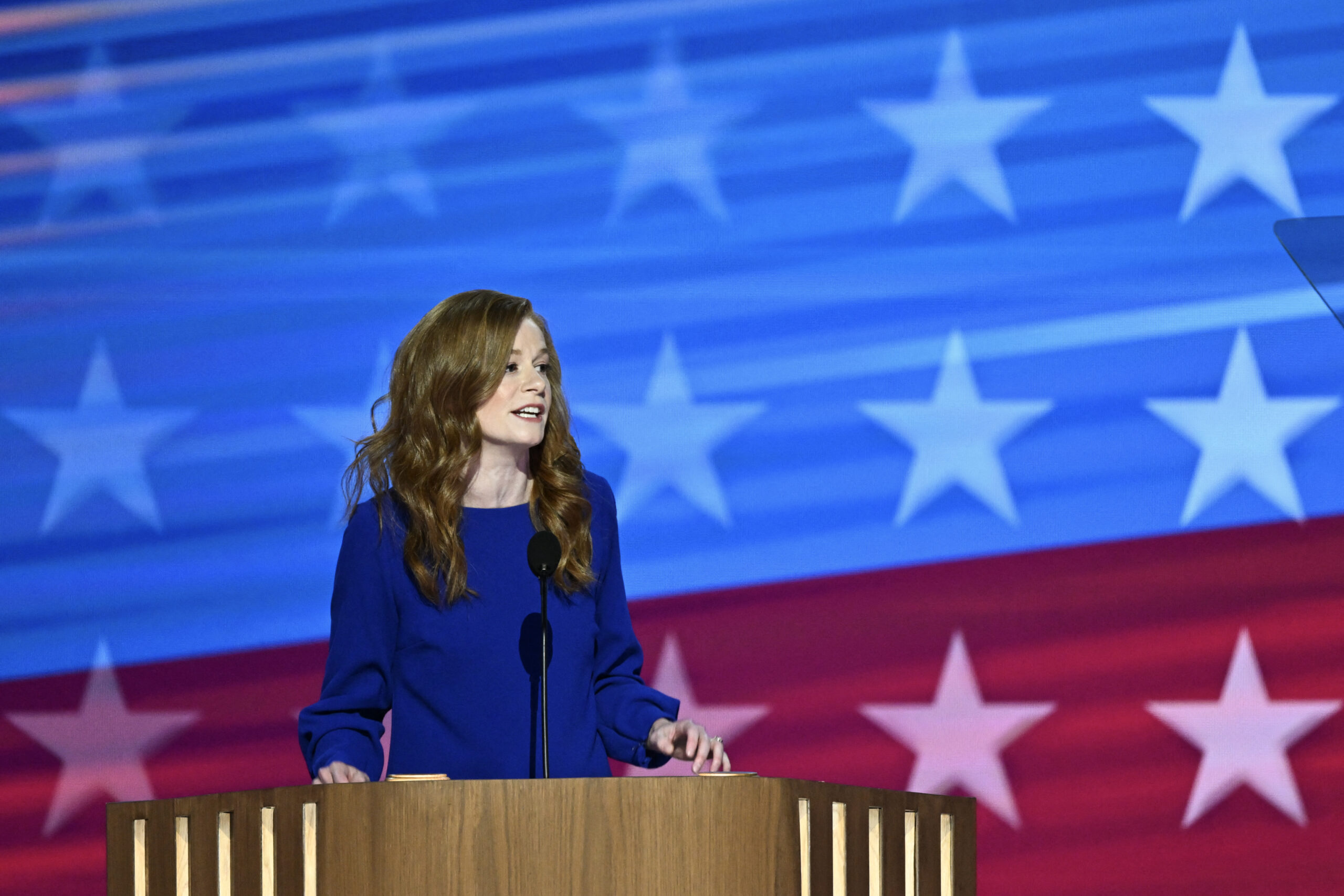
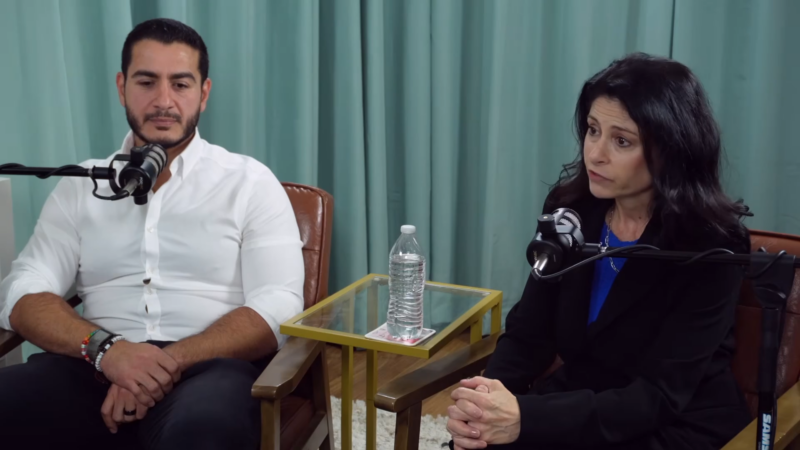
In the tight Michigan Senate race, state Sen. Mallory McMorrow has tried to present herself as a middle-of-the-road Democrat, ideologically situated between Abdul El-Sayed, an anti-Israel progressive, and Rep. Haley Stevens (D-MI), who has been endorsed by AIPAC. In a recent interview with leftist podcasters Matt Bernstein and Emma Vigeland, McMorrow continued to position herself as an objective observer of the Israeli-Palestinian conflict, Jewish Insider’s Gabby Deutch reports.
Eye on Iron Dome: Bernstein, the host of the queer political podcast “A Bit Fruity,” questioned McMorrow about why she supports Israel’s access to the life-saving Iron Dome missile-defense system, arguing that it empowers Israel to attack Palestinians without risk of harm to its own population. “I don’t think anybody should live in fear of being bombed or killed. I would look at: How do we support defensive systems for Palestinians? How would we support defensive systems for Lebanese?” McMorrow said. When Vigeland sarcastically asked if the Palestinians should get their own Iron Dome, McMorrow said maybe.
TEL AVIV TALK

Rahm Emanuel, the former Chicago mayor and prospective presidential candidate, is slated to discuss the future of U.S.-Israel relations at Tel Aviv University on July 8, according to an announcement on Monday from the school, Jewish Insider’s Matthew Kassel reports. Emanuel, who has long held a close connection to the Jewish state, has recently drawn headlines over his calls to immediately end U.S. military aid to Israel.
Candid conversation: “I’ve been having frank and honest conversations about Israel’s future throughout my public life,” Emanuel, who most recently served as U.S. ambassador to Japan in the Biden administration, said in a statement about the discussion, billed as “An Honest Conversation: The U.S.-Israel Relationship — Where It Stands Today and The Road Ahead.”
TEAMING UP
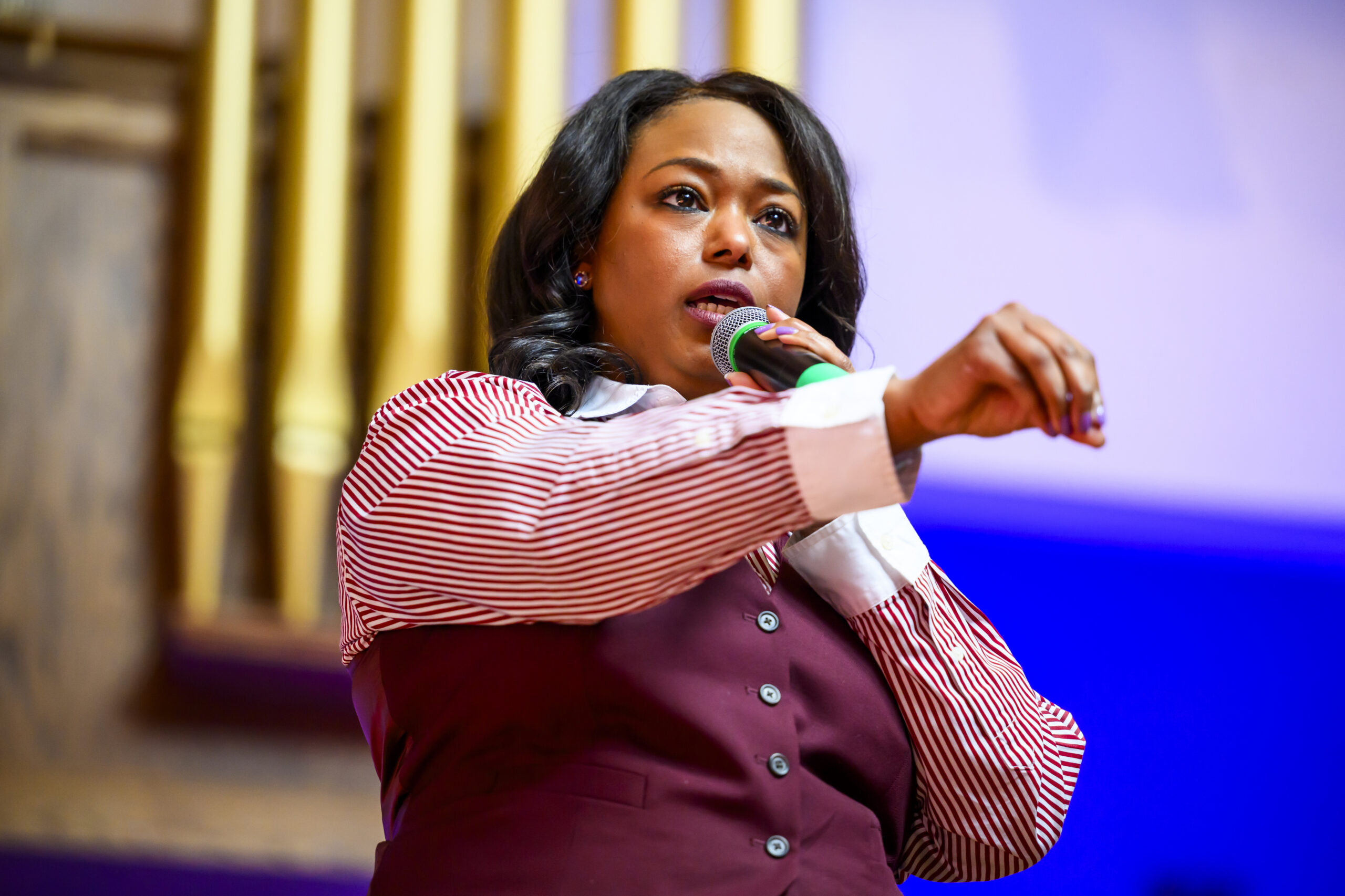
Trayon White, a member of the Washington, D.C., Council with a history of promoting antisemitic conspiracy theories, was expelled from the body last year as he faced federal bribery charges before being voted back in months later. Now, weeks before a heavily contested mayoral election in Washington, White is hitting the campaign trail with Councilmember Janeese Lewis George, a leading Democratic mayoral candidate who voted with the rest of her colleagues on the Council to expel White, Jewish Insider’s Gabby Deutch reports.
Words by White: “We don’t agree on everything, but we agree on most things,” White said at a weekend event with Lewis George, video of which was shared on social media. He encouraged his supporters to vote for her in the Democratic primary on June 16, which will all but decide the election in the heavily blue city.
On the trail: The three leading Democratic candidates in the race for executive of Montgomery County, Md., pledged to address the rise of antisemitism within the local school system, while some noted their disappointment that the school board has yet to adopt a Jewish group’s recommendations for doing so, JI’s Haley Cohen reports.
FILLING THE VOID

The Israeli Transportation Ministry has put forward a proposal for the Emirates airline to operate direct flights from Tel Aviv to New York and Bangkok, according to Israel’s Channel 12. A delegation of senior ministry officials met last week with Emirati counterparts and representatives of the airline in an effort to advance the idea, Jewish Insider’s Tamara Zieve reports.
Promoting the plan: In a since-deleted post on X, Israeli Ambassador to the United Arab Emirates Yossi Shelley welcomed the delegation to Abu Dhabi. Shelley’s post said the group was visiting to “further promote and expand the cooperation between our two nations in the field of transportation.” The proposal includes granting the Dubai-based airline seventh freedom rights, which would allow it to fly between two countries without making a stop in the UAE.
Worthy Reads
Buffer Zone Bitterness: In The Washington Post, Rabbi Binyamin Krauss, the principal of Bronx Jewish day school SAR, criticized the decision by New York City Mayor Zohran Mamdani to veto legislation that would have established buffer zones around schools. “As the head of a Jewish school in the Bronx, I’ve had to make difficult decisions to create a more secure environment in and around my school as the menace of antisemitism has surged in New York and across the country in recent years. We have been forced to divert educational resources and increase our security budget to safeguard students and staff as a precaution when the threat of violence against Jews has become common in the city.” [WashPost]
Good Taste Comes to Tech: The Wall Street Journal spotlights Sam Lessin’s VC firm Slow Ventures and its “etiquette classes” — hours-long gatherings teaching the “finer points of hosting, fundraising, wine pairing” to tech founders. “Sam Lessin, a dry-humored founding partner at Slow Ventures and a former vice president of product at Facebook, noted that AI has made coding ‘super commoditized.’ In the vast majority of cases, he said, instilling trust in customers is now more important than being able to show off technical genius. He added that, in the AI era, if you’re entering a meeting saying ‘Hey, I need access to your critical data,’ you need to win people over with a respectful demeanor and a low heart-rate.” [WSJ]
Con Job: In Tablet, Highline Capital founder Jacob Doft does a deep dive into an elaborate scheme he found himself a part of after being drawn into what he believed to be a cutting-edge Israeli startup. “And that, more or less, is how I entered a two-year relationship with a fraudulent AI company, a fake fighter pilot, a brilliant professor who was being conned by her own CEO, and a chatbot that was doing most of the work. It is, on balance, the strangest thing that has happened to me. And I spent 30 years on Wall Street, where strange things happen before lunch.” [Tablet]
Word on the Street
Former House Speaker Nancy Pelosi (D-CA), who is retiring at the end of the year, endorsed San Francisco Supervisor Connie Chan as her successor in the Bay Area congressional district…
Reps. Claudia Tenney (R-NY), Brad Sherman (D-CA) and Mike Lawler (R-NY) led a bipartisan group of lawmakers in urging the U.K. to designate the Islamic Revolutionary Guard Corps as a terrorist group…
Axios reports on the “explosion” of “direct, explicit and shockingly casual” antisemitism that “has become a part of day-to-day life for Jewish politicians in the run-up to the midterms…
Two of New York City’s leading mainstream Jewish organizations skipped a pre-Shavuot gathering at Gracie Mansion on Monday evening — with one directly pointing to a controversial video Mayor Zohran Mamdani posted to his official social media channels on Friday as the reason for refusing to participate, JI’s Will Bredderman reports…
Northwestern University’s Jewish community is celebrating the appointment of Mung Chiang as the school’s new president, optimistic that the supportive environment he fostered for Jewish students during his tenure as president of Purdue University will help combat the antisemitism seen at Northwestern in recent years, JI’s Haley Cohen reports…
Harvard is petitioning a federal judge to drop the Justice Department’s lawsuit against the school, arguing that the details of the complaint are out of date and don’t take into consideration steps the school has made in addressing antisemitism on campus…
The Jewish Federation of Greater Washington is leading an effort to establish and promote Scholarship Granting Organizations in the capital region in an effort to maximize the benefits of a new federal tax-credit initiative, eJewishPhilanthropy’s Jay Deitcher reports…
Puck reports that CBS executives are reportedly discussing the possibility of shifting Bari Weiss’ management of the network’s major programs as the company mulls a takeover of CNN that “would give her less control over the linear product,” adjusting “her focus to the news division’s digital growth while maintaining broad editorial influence across all the company’s platforms”…
A California man is facing federal hate crime charges for allegedly assaulting a Jewish man outside a real estate event in the Los Angeles neighborhood of Pico-Robertson in 2024; the alleged assailant, who later boasted in a text message to a friend that he “whooped 2 zios,” faces a statutory maximum sentence of 10 years in prison…
Police in London are investigating as a hate crime an attack on a Jewish man overnight in the heavily Jewish suburb of Golders Green…
The Guardian does a deep dive into Iranian efforts to recruit proxies, some of whom have no loyalties or ties to the Islamic Republic, to attack Jewish and Israeli targets around the world, following the arrest last week of an Iran-backed Iraqi militia leader tied to more than a dozen plots around the world…
Australia’s public broadcasters said they won’t use the International Holocaust Remembrance Alliance’s working definition of antisemitism in their coverage, and will instead use their own internal guidance to maintain editorial independence…
Pakistan has deployed some 8,000 troops, as well as fighter jets, drones and an air-defense system, to Saudi Arabia, seven months after signing a mutual defense agreement with Riyadh…
Israeli forces boarded boats participating in the latest Global Sumud Flotilla to Gaza that were traveling in international waters off the coast of Cyprus; Israeli Prime Minister Benjamin Netanyahu said that the troops were “effectively neutralizing a malicious plan designed to break the isolation we have imposed on Hamas terrorists in Gaza”.…
San Francisco-based software startup Decart, which was founded by Israelis Dean Leitersdorf, Orian Leitersdorf and Moshe Shalev and produces software that helps AI companies switch more easily between chips, is raising $300 million in a funding round led by Radical Ventures, with additional backing from Nvidia and Disney CEO Michael Eisner…
Amnon Shashua’s AI21 laid off approximately 60% of its employees as it refocuses the company on AI agent optimization technology associated with its Maestro platform; the move comes after the collapse of acquisition talks with AI cloud platform Nebius…
Hamas named Mohammed Ouda, who served as the group’s head of military intelligence during the Oct. 7, 2023, attacks, as the new head of its military division, days after Israel killed Izz ad-Din al-Haddad in a targeted strike in Gaza on Friday…
Stacey Bosworth is joining the Forward as vice president of development…
Yael Shamouilian is joining the Anti-Defamation League as director of media relations…
Ofer Bronchtein, who served as a senior advisor to French President Emmanuel Macron on Israeli-Palestinian issues, died at 69…
Director Joe Sedelmaier, the brains behind Wendy’s famous “Where’s the beef?” ad, died at 92…
Pic of the Day

Birthdays
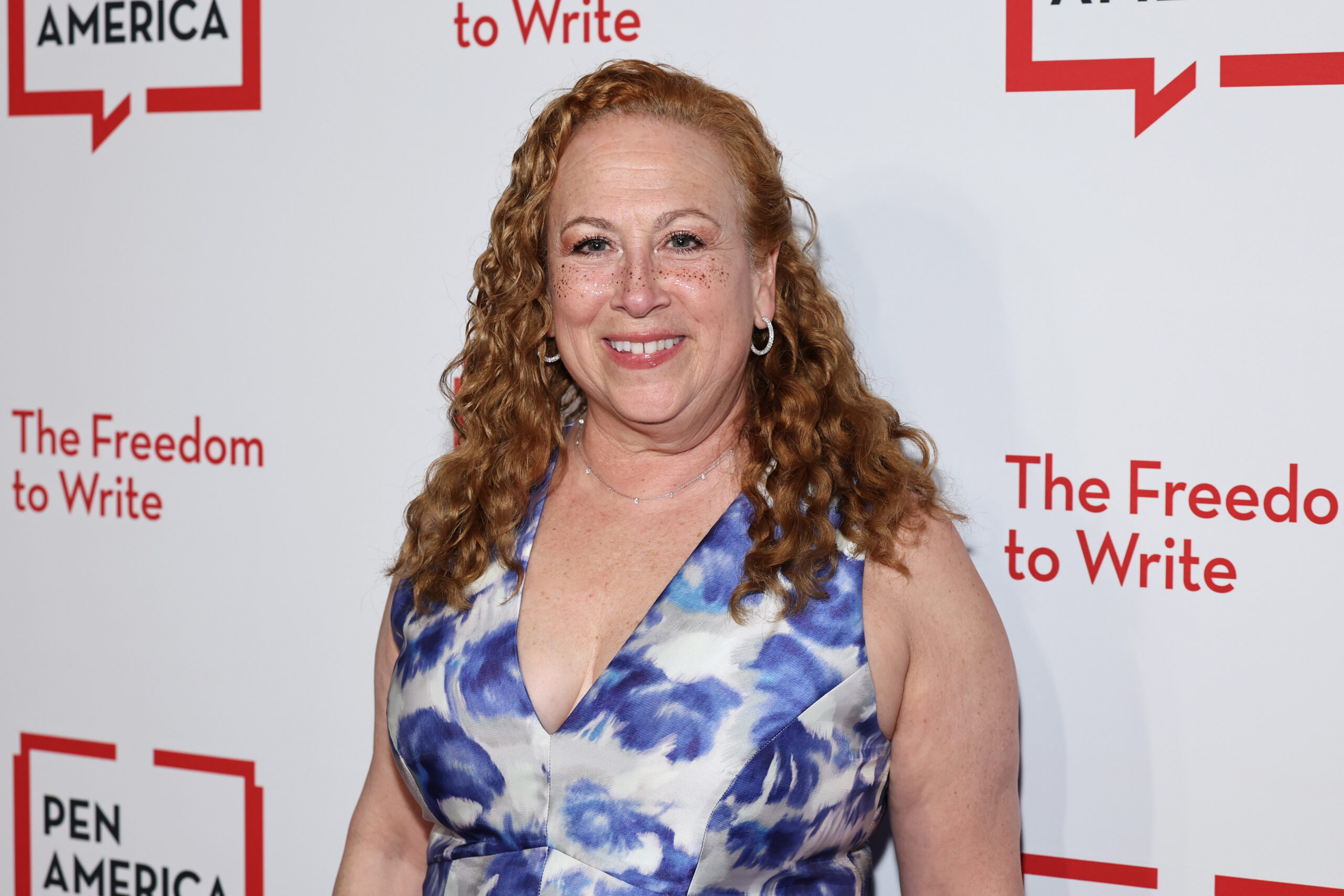
Author of 28 novels, four of which have been adapted into Lifetime Original Movies, Jodi Picoult turns 60…
Retired senior counsel in the D.C. office of Blank Rome, Harvey Sherzer turns 82… Retired chief judge of the New York Court of Appeals, now of counsel in the NYC office of Latham & Watkins, Jonathan Lippman turns 81… Clinical psychologist, author, teacher, public speaker and ordained rabbi, Dennis G. Shulman turns 76… Former member of the California state Senate, she was also a member of the California Legislative Jewish Caucus, Hannah-Beth Jackson turns 76… Israeli novelist and former journalist, Edna Shemesh turns 73… Nurse and former member of the Wisconsin State Assembly (2009-2015), Sandra “Sandy” Pasch turns 72… Retired chief of the general staff of the IDF, now leader of the Yashar party, Gadi Eizenkot turns 66… Chabad-Lubavitch rabbi, born in Milan, now chief rabbi of Russia, Rabbi Berel Lazar turns 62… Journalist, teacher and playwright, now editor-in-chief of Streetsblog NYC, Gersh Kuntzman turns 61… Born in Moscow, he is a professor of mathematics at the University of Chicago, Alex Eskin turns 61… Business manager and spokesperson for NBA Hall of Famer Michael Jordan, Estee Portnoy turns 59… Former CEO of Bend the Arc, a Jewish partnership for justice, Stosh Cotler turns 58… Israeli-born chef, owner of multiple NYC restaurants, she is a cookbook author and comedian, Einat Admony turns 55… Israeli actor and fashion designer, Dorit Bar Or turns 51… Canadian food writer and cookbook author, she is a judge on Bravo’s “Top Chef,” Gail Simmons turns 50… Member of the Knesset for the Likud party since 2019, Ofir Katz turns 46… Nonprofit manager and consultant, Alex Shapero… Pitcher for Team Israel at the 2017 World Baseball Classic and is now pitching coach for the UC Davis Aggies, Zachary “Zack” James Thornton turns 38… Activist, advocacy educator, engagement strategist and TED speaker, Natalie Warne… Ice hockey free agent, Brendan Leipsic turns 32…
If Republicans end up ousting a lawmaker trafficking in some of the ugliest bigotry, while Democrats anoint a future lawmaker pushing extremist antisemitic conspiracy theories, it’s a sign of the direction both parties are headed

Jeffrey Dean/Bloomberg via Getty Images
Representative Thomas Massie, a Republican from Kentucky, speaks during a campaign event ahead of a primary election at Veterans Memorial Park in Vanceburg, Kentucky, US, on Monday, May 18, 2026.
Today’s primaries in Kentucky and Pennsylvania may well serve as an early test over which party is more effectively dealing with its own antisemitism problems.
Rep. Thomas Massie (R-KY), one of the few remaining anti-Israel Republicans in Congress, has been spewing antisemitic tropes in the closing days of the campaign, portraying Congress as Israel-occupied territory and caricaturing wealthy Jewish donors as the fuel behind his opponent’s support, as he tries to fend off a serious challenge from Ed Gallrein, who is endorsed by President Donald Trump.
Meanwhile in Philadelphia, state Rep. Chris Rabb — who shared a post on his Instagram account promoting a conspiracy theory that the Bondi Beach terror attack in Sydney in which 14 Jews were killed was a false-flag operation perpetuating Israeli interests — holds the late momentum in an open Democratic congressional primary to succeed retiring Rep. Dwight Evans (D-PA). (Rabb’s campaign blamed a former campaign staffer for the offending post.)
A parade of progressive stars, from Reps. Alexandria Ocasio-Cortez (D-NY) to Jamie Raskin (D-MD), have traveled to Philadelphia to campaign with the Democratic Socialists of America-backed Rabb. Antisemitic streamer Hasan Piker likewise rallied with Rabb and held a fundraiser with him where attendees chanted: “Free Palestine!”
Sen. Cory Booker (D-NJ), representing the more mainstream wing of the Democratic Party, held a rally on Monday to boost one of Rabb’s leading challengers, state Sen. Sharif Street.
Gallrein and Rabb both appear to hold late momentum in their respective races. If the two end up winning, the conventional wisdom — and corresponding coverage — will rightly conclude that a Massie defeat came as a result of Trump’s outspoken opposition to the congressman and that a Rabb victory will be the result of progressives’ ascendance within the Democratic Party.
But that will only tell part of the story. If Republicans end up ousting a lawmaker trafficking in some of the ugliest bigotry, while Democrats anoint a future lawmaker pushing extremist antisemitic conspiracy theories, it’s a sign of the direction both parties are headed.
It’s well-documented that antisemitism is rising on both the left and the right, especially among younger Americans. As many experts have noted, it takes leaders calling out anti-Jewish hate from within their own party to combat it most effectively.
To be sure, Trump’s fury towards Massie has little to do with the congressman’s antisemitism. It’s mainly a result of the congressman voting against several of the president’s legislative priorities, while pushing legislation to require the Department of Justice to release files on Jeffrey Epstein.
But at least he’s giving the party cover to confront its own extremism. The comparative silence over Rabb from Democratic leaders speaks volumes over how hard that is to do.
Booker’s appearance could help Street mobilize the district’s base of Black voters, but analysts still view him as underdog to far-left challenger Chris Rabb
Getty Images/Sharif Street campaign page
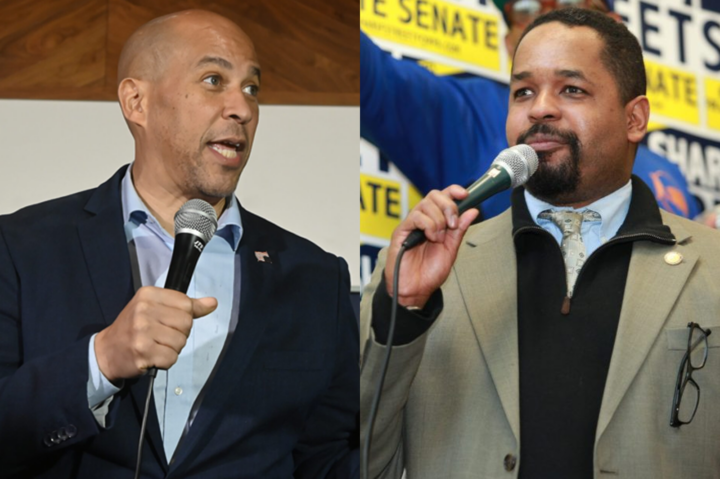
Sen. Cory Booker (D-NJ) and Pennsylvania state Sen. Sharif Street
Sen. Cory Booker (D-NJ) is set to attend a rally with Pennsylvania state Sen. Sharif Street on Monday, a last-minute boost for Street’s campaign ahead of his Tuesday congressional primary in Philadelphia where his challenger, far-left state Sen. Chris Rabb, is favored to win.
Local analysts say that the appearance by Booker — a well-known face to local voters across the Delaware River from his home state — should help Street’s campaign, but were skeptical that it would be enough to help him beat Rabb.
One local Democratic strategist said that they don’t expect Street to win, but he remains a viable candidate, with support from many local Democrats including Philadelphia Mayor Cherelle Parker.
Booker, the strategist said, is known locally because of the shared media market, and could provide a boost with older Black voters, though the strategist said that bringing in Booker is “not some coup like a robocall from Obama.”
The strategist said that winning over Black voters will be pivotal to a Street victory, but was skeptical of Booker’s appeal among the younger Black population.
Larry Ceisler, a public affairs executive in the district, said he was doubtful of the extent to which Booker’s appearance would move the needle, though he also acknowledged that Booker is a well-known moderate locally.
Booker’s appearance could send a signal to some moderate voters who had been backing physician Ala Stanford — until recently seen as the leading candidate in the race, prior to a series of high profile stumbles — to switch their allegiance to Street, Ceisler added.
Rabb is facing off against state Sen. Sharif Street, a former state Democratic Party chair, and Ala Stanford, a physician and activist
Paul Weaver/SOPA Images/LightRocket via Getty Images
Pennsylvania state Rep. Chris Rabb speaks during a protest outside of the Pennsylvania Capitol.
Ahead of Tuesday’s primary in Pennsylvania’s 3rd Congressional District in the heart of Philadelphia, Chris Rabb seems to be surging, local political analysts said, in spite of recent controversies surrounding the far-left state lawmaker.
Rabb is facing off against state Sen. Sharif Street, a former state Democratic Party chair, and Ala Stanford, a physician and activist. Rabb has most recently come under scrutiny for sharing an Instagram post blaming “Zionists” for the massacre at a Hanukkah celebration at Sydney’s Bondi Beach, a post Rabb’s campaign claimed came from an unidentified former staffer.
Rabb closed last quarter as the top fundraiser in the race, bringing in nearly double what either of his rivals raised. 314 Action, a Democratic pro-science group that was a major outside backer of Stanford, pulled its ads off television last week following polling showing her support had “declined precipitously in recent weeks,” the Philadelphia Inquirer reported.
A previous 314 Action poll last month had found Stanford, seen as the favorite for much of the race, with a strong lead. But she and her campaign have suffered a series of high-profile and largely self-inflicted stumbles in recent weeks — including recent scrutiny of her finances, a fumbled interview about immigration enforcement and her withdrawal from a televised debate.
“A month ago, it looked like Dr. Stanford was surging, from someone who had never run for office to being a first time candidate and winning a congressional seat,” J.J. Balaban, a Pennsylvania Democratic strategist, told Jewish Insider. “And then you’ve seen, kind of remarkably, a series of self-inflicted errors that some think have made it a lot less likely that she’s going to win.”
Balaban said that Rabb has benefited from the fact that both Stanford and Street have “seemed to accumulate a significant amount of baggage.”
“I think Rabb has been able to take advantage of opposition that … was surprisingly weak, and present himself as new and different and a break from the local Democratic machine which had largely coalesced around Sharif Street,” Balaban said.
He said Rabb had also been “very fortunate that he has, for the most part, escaped serious scrutiny because it was thought that Dr. Stanford was on a path to win,” allowing him to gain steam and seize the opening when her campaign struggled. Rabb has not faced significant attacks in the race, according to Balaban — including over the Bondi Beach controversy.
“He’s probably peaking at the right time,” Balaban said.
Larry Ceisler, a public affairs executive who lives in the district, said that the state of the race is hard to judge, but agreed that with national backing from a host of prominent left-wing leaders and the progressive lane to himself, Rabb seems to have the momentum in the lead-up to Tuesday’s election. Ceisler is a former Rabb supporter, and said he had donated to both Street and Stanford in this race.
Street has the strongest organizational support from local Democratic officials and union groups, but has at times had strained relations with other members of the Pennsylvania Democratic Party, making it unlikely, in Ceisler’s view, that other Democratic leaders in the state will intervene in the race on his behalf.
Balaban noted that Street has faced a significant amount of criticism for working with Republicans in the 2021 redistricting cycle on a map that would have given Street a strong chance to win a seat, while potentially hurting other Democrats. That episode set him at odds with Rep. Brendan Boyle (D-PA), who represents a neighboring district.
Balaban said that Street’s time as state Democratic Party chair is also not well-regarded.
Reflecting Rabb’s increasing chances of victory, Gov. Josh Shapiro quietly urged a local trade union backing Street not to run negative ads against Stanford, for fear of elevating Rabb, according to an Axios report.
Rabb and Shapiro have long clashed at the state level over immigration and other issues, and Rabb has also made anti-Israel activism a centerpiece of his campaign and faced accusations of antisemitism.
Both Ceisler and Balaban were skeptical of the extent of Shapiro’s involvement or that it would have any significant impact on the race, and did not expect Shapiro to get involved publicly.
Rabb’s campaign has focused heavily on his opposition to Israel and AIPAC in its messaging. In addition to the Bondi Beach post, Rabb also rallied with far-left streamer Hasan Piker, who has come under fire from a range of Democrats for antisemitism and support for terrorism.
Rep. Alexandria Ocasio-Cortez (D-NY) is set to visit Philadelphia on Friday for a rally with Rabb.
Rabb and outside backers asserted, with shaky evidence, that AIPAC was funding 314 Action’s pro-Stanford independent expenditure effort. But AIPAC on Tuesday took the rare step of openly denying any involvement in the primary.
“Millions of Americans want to help tough, principled Democrats defeat extremist candidates. Despite conspiracy theories, not every dollar spent in that effort comes via AIPAC,” the group said on X.
314 Action, which critics have claimed is operating as an AIPAC cutout, also publicly denied taking any funding from AIPAC.
“[Rabb] spent his entire campaign running on a lie — and voters should not believe a word he says. We have not taken a dime from AIPAC in two years. Period,” 314 Action Executive Director Erik Polyak said on X.
Ceisler, who is Jewish, called the focus on Israel and AIPAC in the race upsetting and distressing, and said rhetoric has at times “crossed the line into antisemitism and dual loyalties.”
“This is a relatively poor district, lower-middle income district on the whole, and the fact that Israel and AIPAC is talked about so much in this race, when, if you probably did a poll, it might not hit the first 15-20 issues, is really disconcerting to me, and and I think that there’s been just a lot of untruths that have been that have been thrown around,” he told JI.
Balaban said that the environment has made it “easier for a loudly anti-Israel candidate like Chris Rabb to get traction,” but said that it was “surprising and disappointing that more attention wasn’t given to his very ugly accusation that the Bondi Beach massacre was a false flag operation.”
Justice David Wecht: 'Acquiescence to Jew-hatred is now disturbingly common among activists, leaders and even many elected officials in the Democratic Party. I can no longer abide this'
Ben Hasty/MediaNews Group/Reading Eagle via Getty Images
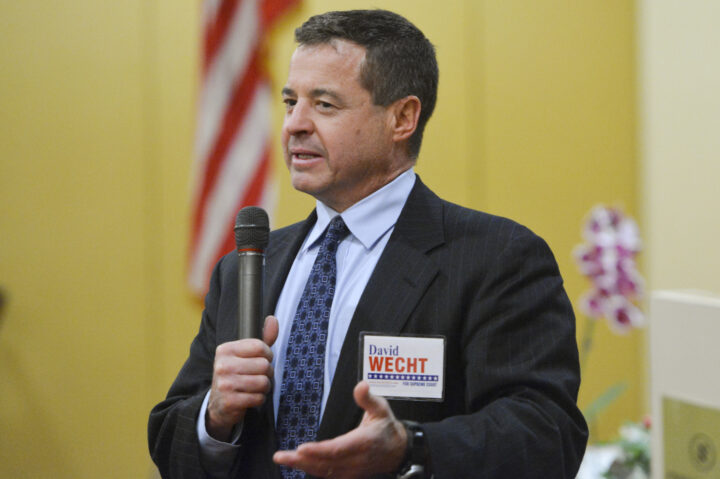
Judicial candidate David Wecht
Pennsylvania Supreme Court Justice David Wecht announced Monday he has left the Democratic party, citing “anti-Jewish” actions and “acquiescence to Jew-hatred” within the party, including from elected officials.
“Acquiescence to Jew-hatred is now disturbingly common among activists, leaders and even many elected officials in the Democratic Party. I can no longer abide this,” wrote Wecht, who was elected as a Democrat in 2015. He added that he is no longer affiliated with any political party.
A former vice-chair of the Pennsylvania Democratic Party, Wecht wrote that he and his wife were married at Pittsburgh’s Tree of Life Congregation, the site of the 2018 synagogue shooting. “That terror came from the right,” he wrote. “Jew-hatred has always festered on the fringe of that sector.”
But, Wecht continued, “in the quarter century that has passed” since his leadership position, “the Democratic Party has changed.”
“Nazi tattoos, jihadist chants, intimidation and attacks at synagogues, and other hateful anti-Jewish invective and actions are minimized, ignored, and even coddled,” he wrote.
Chris Rabb, the DSA-endorsed House candidate in a Philadelphia congressional race, blamed the Sydney Hanukkah attack on ‘Zionists’
Paul Weaver/SOPA Images/LightRocket via Getty Images
Pennsylvania state Rep. Chris Rabb speaks during a protest outside of the Pennsylvania Capitol.
Pennsylvania state Rep. Chris Rabb — a Democrat seeking the Philadelphia House seat of retiring Rep. Dwight Evans (D-PA) — shared an Instagram post blaming the massacre of Jewish Australians at a Hanukkah celebration at Sydney’s Bondi Beach on “Zionists,” the Philadelphia Inquirer reported.
In the aftermath of the attack, in which 14 were killed and 40 injured, Rabb’s account shared disinformation insinuating the slaughter was a false flag perpetrated by Israeli interests.
“We all know the gunmen were likely Zionists themselves,” read the post, which used an emoji in the place of the word “gun.”
Shortly after the attack, the alleged assailants were identified as a father and son whom authorities linked to an offshoot of the Islamic State. Rabb’s post further lamented that Ahmed al-Ahmed, a Muslim Syrian immigrant who intervened, had not received broader acknowledgment for his “hero” role of disarming one of the attackers.
A Rabb campaign spokesperson asserted to the Inquirer that the candidate not only did not share the post himself, but that he had “no knowledge” of it, and blamed a former staffer for posting it. The campaign declined to share the staffer’s name and the details of their dismissal with Jewish Insider, but stated that “Rabb has and does condemn [the post] in the strongest terms.”
Rabb is locked in a tight race with state Sen. Sharif Street and Dr. Ala Stanford. In recent weeks, Rabb was endorsed by Sen. Chris Van Hollen (D-MD) and Reps. Jamie Raskin (D-MD), Alexandria Ocasio-Cortez (D-NY) and Maxwell Frost (D-FL), and received the backing of the Congressional Progressive Caucus. He’s also gotten the backing of far-left streamer Hasan Piker and the Democratic Socialists of America.
All living Pa. governors decry decision not to fund security upgrades to Shapiro’s home after attack
Republican state Treasurer Stacy Garrity, Shapiro’s gubernatorial opponent, said the state would not pay for the security upgrades to Shapiro’s private residence

Kyle Mazza/Anadolu via Getty Images
Pennsylvania Governor Josh Shapiro speaks during a press conference outside of the Governor's Mansion after an arsonist sets fire to the Governor's Residence in a targeted attack in Harrisburg, Pennsylvania, United States on April 13, 2025.
All five of Pennsylvania’s living former governors, both Republicans and Democrats, released a statement on Monday calling on state officials to prioritize the safety and security of Gov. Josh Shapiro.
The bipartisan letter comes days after Pennsylvania Treasurer Stacy Garrity — Shapiro’s leading Republican opponent in this year’s gubernatorial race — said the state would not pay for security upgrades at Shapiro’s private home.
“Combatting political violence and keeping our elected officials safe should always be nonpartisan and a priority,” Democratic former Govs. Tom Wolf and Ed Rendell wrote in a statement with GOP former Govs. Tom Corbett, Mark Schweiker and Tom Ridge.
The security upgrades were already made to Shapiro’s privately-owned family home in Abington, outside of Philadelphia, following the arson attack on the state-owned governor’s mansion in Harrisburg last year. State Police said such upgrades were necessary because Shapiro and his family lived in their private home while repairs were undertaken at the governor’s mansion after the fire.
Shapiro and prosecutors have said that the attack, which occurred on the first night of Passover, was antisemitic in nature, citing the perpetrator’s targeting of Shapiro over his stance on Israel’s war against Hamas in Gaza.
The former governors did not specifically mention Garrity, though they did refer directly to the “unspeakable attack” that occurred at the governor’s residence while he and his family were asleep.
“For us, the attack on Pennsylvania’s First Family was particularly upsetting,” the governors wrote. “In the aftermath of that attack we ask the state’s current leaders and legislators to make the safety and security of the governor and his family a priority.”
Garrity told reporters last Thursday that the state’s procurement rules don’t allow public funds to be used to pay for construction work on property that is not state-owned, SpotlightPA reported.
Garrity insisted she was not motivated by politics, saying she calls “balls and strikes here at Treasury.”
A spokesperson for Shapiro said last week that Garrity’s announcement was “a completely unprecedented and shameful political action without legal basis.”
State Rep. Chris Rabb is backed by Sen. Chris Van Hollen and Reps. Jamie Raskin, Ilhan Omar, Ro Khanna and Pramila Jayapal; he’s running against state Sen. Sharif Street
Paul Weaver/SOPA Images/LightRocket via Getty Images
Pennsylvania state Rep. Chris Rabb speaks during a protest outside of the Pennsylvania Capitol.
Anti-Israel Pennsylvania state Rep. Chris Rabb has collected a series of high-profile congressional endorsements in recent days, as he seeks the Democratic nomination in Pennsylvania’s 3rd Congressional District against state Sen. Sharif Street and Ala Stanford.
Street is a pro-Israel Muslim Democrat and fixture of state Democratic politics, including serving as the former state party chair and Stanford is a doctor and organizer supported by the retiring incumbent, Rep. Dwight Evans (D-PA).
Rabb has been endorsed in recent days by Sen. Chris Van Hollen (D-MD) and Reps. Jamie Raskin (D-MD), Ilhan Omar (D-MN), Ro Khanna (D-CA), Pramila Jayapal (D-WA) and Jared Huffman (D-CA), as well as the Philadelphia Inquirer and the Congressional Progressive Caucus. Far-left streamer Hasan Piker has also praised Rabb on his show.
Rabb has made his criticism of Israel and pro-Israel groups a central part of his House campaign, including accusing Israel of committing genocide. Street, while critical of the Israeli government, has been largely supportive of the Jewish state and has sought to promote ties between the Jewish and Muslim communities.
Rabb also raised significantly more than either of his competitors in the first quarter of 2026, though Street still held a $100,000 advantage in total fundraising and narrowly led Rabb in cash-on-hand. Stanford had nearly twice as much as Rabb in the bank at the end of March.
‘We should never, ever be bullied, as maybe President Trump was, by any other world leader,’ the Pennsylvania governor said on the ‘All-In Podcast’
Peter W. Stevenson/The Washington Post via Getty Images
Pennsylvania Gov. Josh Shapiro sits for an interview at the Pennsylvania State Capitol on June 11, 2025.
Pennsylvania Gov. Josh Shapiro accused President Donald Trump of being “bullied” into starting a war with Iran, suggesting in an interview with the “All-In Podcast” that Israel had pressured the U.S. into joining a military campaign against the Islamic Republic.
“America should never be led around by any other nation. It should always be about America’s interests, our national security interests, the interests of expanding freedom and opportunity for the American people,” said Shapiro, who was responding to a question from tech investor Jason Calacanis about whether the U.S. followed Israel into an unnecessary war. “We should never, ever be bullied, as maybe President Trump was, by any other world leader.”
In the interview, Shapiro continued a line of criticism that he has used regularly against Trump’s handling of the war in Iran: that the president doesn’t know what he’s doing and has failed to offer a sufficient explanation to the American public.
“This was a war of choice. The president never defined the objectives. It is clear he doesn’t know how the hell to get out of this,” Shapiro said.
Shapiro’s allegation that Israeli Prime Minister Benjamin Netanyahu had led the U.S. into war with Iran was a rhetorical escalation for the pro-Israel Democrat. While he reasserted the same pro-Israel, anti-Netanyahu argument that he has been making for years now, Shapiro also made clear that it is America’s goals — and not Israel’s — that he cares about.
“I don’t view this issue as a Jewish American,” Shapiro said. “I view this issue as an American, and I view this issue in a way of trying to understand what is the best thing for America, which to me is having peace and stability in the Middle East.”
Even as Shapiro went after Trump for his handling of the war, he offered a word of praise about a different Republican, Sen. Ted Cruz (R-TX), and his approach to antisemitism within his own party.
“I think on the issue of antisemitism, we have got to be in a place where we universally condemn it. And I think what you’re seeing from some folks on the right and some folks on the left is they’ll only call it out if it’s said by a political opponent or someone they disagree with,” said Shapiro. “I frankly respect people on the right like Ted Cruz, who have pulled it out within the Republican Party. I’ve tried to call it out when it rears its ugly head in my party.”
The “All-In Podcast” is hosted by four Silicon Valley investors, including David Sacks, co-chair of Trump’s Council of Advisors on Science and Technology.
Plus, Caldwell returns from the cold
Bilal Hussein/AP
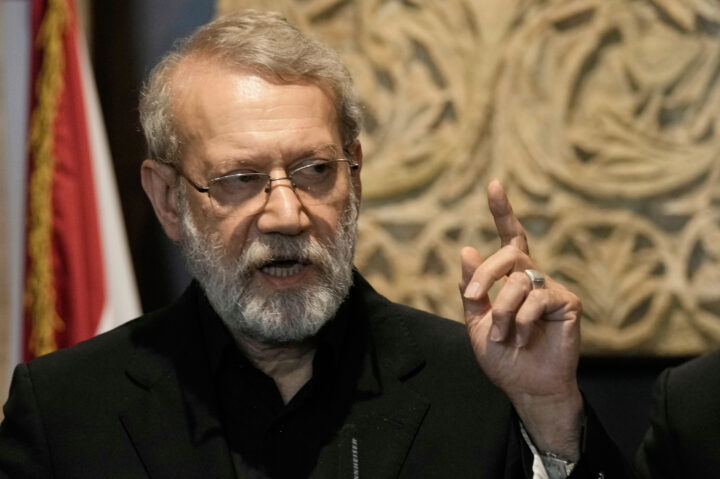
Iranian Secretary of Supreme National Security Council Ali Larijani, speaks during a press conference after his meeting with the Lebanese parliament speaker Nabih Berri, in Beirut, Lebanon, Aug. 13, 2025.
👋 Good Tuesday morning!
In today’s Daily Kickoff, we report on the breaking news that Ali Larijani, the head of Iran’s National Security Council, was killed in an overnight Israeli strike, and cover the IDF’s plans for a limited ground operation in Lebanon. We look at how Pennsylvania Gov. Josh Shapiro is navigating conversations about Israel in recent podcast interviews, and report on a settlement between the Justice Department and the Iran-linked Alavi Foundation that will allow a successor to the New York-based group to continue to recoup control of its assets. Also in today’s Daily Kickoff: Kamran Hekmati, Emmanuel Navon and Jon Hornstein.
Today’s Daily Kickoff was curated by JI Executive Editor Melissa Weiss, with assists from Danielle Cohen-Kanik and Marc Rod. Have a tip? Email us here.
What We’re Watching
- Israeli Defense Minister Israel Katz confirmed this morning that Israel had killed Ali Larijani, the head of Iran’s National Security Council, in overnight strikes. Larijani had been designated in January by since-assassinated Iranian Supreme Leader Ayatollah Ali Khamenei to ensure the regime’s survival. Also killed in the overnight strikes was Basij paramilitary force commander Gholamreza Soleimani. Read more here.
- In Washington, White House Special Envoy Steve Witkoff is slated to brief a small bipartisan group of senators on the status of the Iran war in a meeting organized by Sen. Joni Ernst (R-IA), the chair of the Senate Armed Services Subcommittee on Emerging Threats and Capabilities.
- The meeting comes after a report that Witkoff and Iranian Foreign Minister Abbas Araghchi had engaged in direct communication in recent days. On Monday night, Araghchi denied the back channel, saying that their last communication took place prior to the onset of the war late last month.
- On Capitol Hill, the House Foreign Affairs Committee is holding a hearing on reforming U.S. defense sales with officials from the State and Defense Departments as well as the Defense Security Cooperation Agency.
- In the wake of last week’s attack on Temple Israel in West Bloomfield Township, Mich., a delegation of Jewish officials from the Detroit area, including Jewish Federations of North America Chair (and Michigan native) Gary Torgow, Jewish Federation of Detroit CEO Steve Ingber, Temple Israel Rabbi Jennifer Lader and Gary Sikorski, the Detroit federation’s security director, will be meeting with legislators.
- It’s primary day in Illinois. We’ll be closely watching the results of a handful of high-profile Democratic congressional primaries in the Chicagoland area that will offer an early test of pro-Israel groups’ clout.
- The Jewish Funders Network convening wraps up today in San Diego.
- The Anti-Defamation League’s Never is Now conference also concludes today. At this morning’s plenary, New England Patriots owner Bob Kraft will be awarded with the group’s Changemaker Award. The Carlyle Group’s David Rubenstein and author and former NFL player Emmanuel Acho are also slated to speak. At this afternoon’s closing session, Scott Galloway, Dan Senor, Pamela Nadell and Nancy and Bob Milgrim, the parents of slain Israeli Embassy staffer Sarah Milgrim, will speak. More below.
What You Should Know
A QUICK WORD WITH JI’S LAHAV HARKOV
Israel has a long history of conflict and military operations in Lebanon, and the IDF is now preparing for a broader ground incursion against Hezbollah.
After Hezbollah joined Hamas in attacking Israel a day after the Oct. 7, 2023, attacks, Israel launched a ground invasion into southern Lebanon and airstrikes against Hezbollah targets throughout the country, most famously killing the terrorist organization’s then-leader Hassan Nasrallah, and conducting its exploding pager operation in the fall of 2024.
But a few months after taking out the group’s entire leadership, leaving in place an uncharismatic and apparently flailing Naim Qassem in charge, Israel, at the behest of the Biden administration, reached a ceasefire with Lebanon in November 2024.
According to that ceasefire, the Lebanese government and military were meant to disarm Hezbollah and ensure it stays out of the area south of the Litani River, some 17 miles north of the border with Israel. Late last year, Israel started to voice concerns that Beirut was not keeping its commitments and that Hezbollah was regrouping.
Now, Israelis are experiencing deja vu: Once again, Hezbollah joined an attack on Israel a day later — this time, from its main patron, Iran — and has frequently launched rockets and missiles at Israel’s north. Israel started out with airstrikes in response, then, over a week later, began limited ground incursions into southern Lebanon.
The Lebanese government said a million residents — 20% of the country’s population — have been evacuated; the IDF has acknowledged about half that number. Israelis have not been evacuated from Israel’s north — the 2023-2024 policy was unpopular and many residents have not returned — but they are living under constant attack.
ON PRINCIPLE
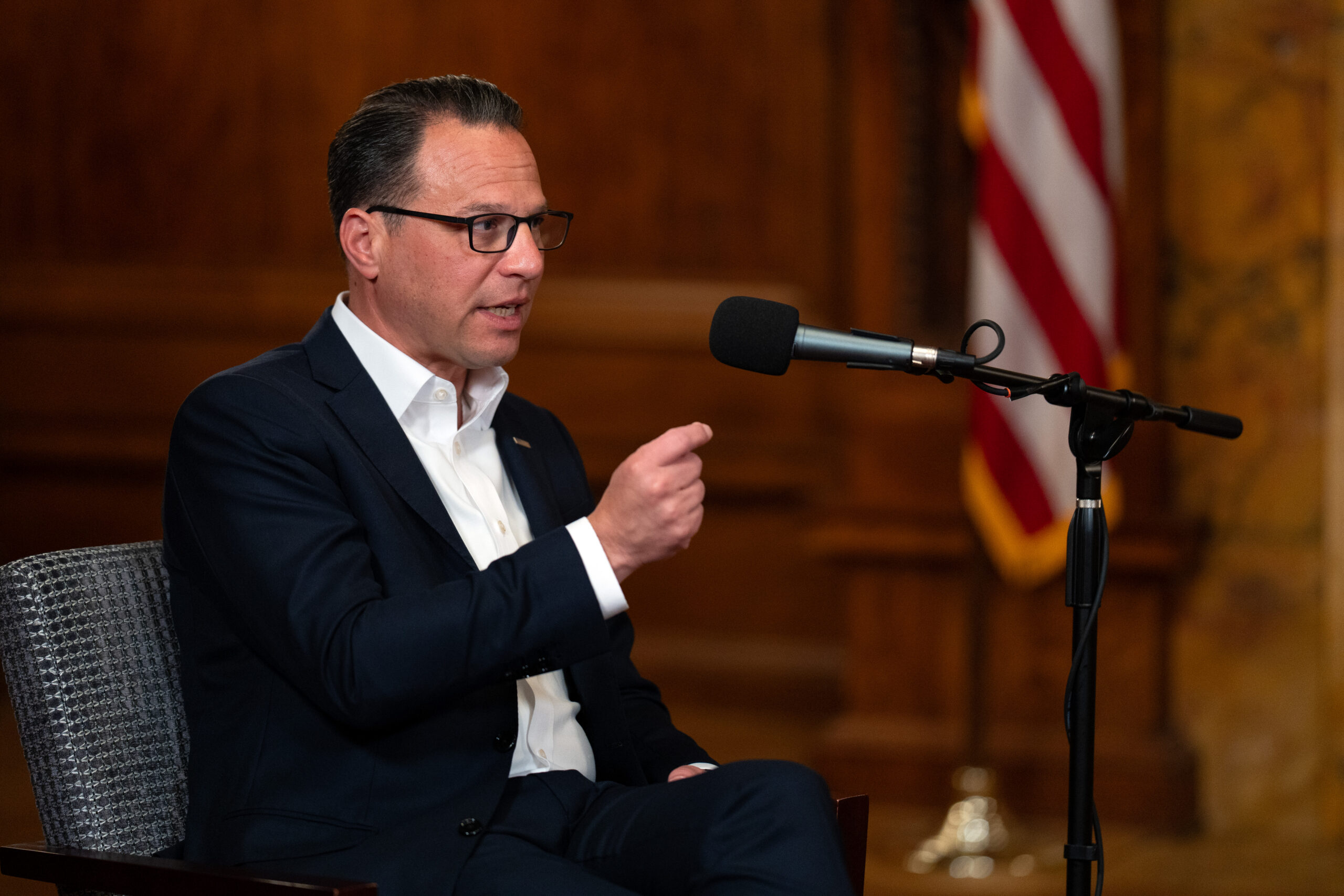
As Pennsylvania Gov. Josh Shapiro eyes a 2028 presidential run, he is using a series of big-name podcast interviews to refine and test out his messaging on Israel — and taking aim at California Gov. Gavin Newsom, a potential rival, in the process. In interviews with the “Pod Save America” and “Higher Learning” podcasts that dropped in recent days, Shapiro put himself in the line of fire from interviewers with more left-wing views on the Israeli-Palestinian conflict than he holds. In response, he made the case that, as the starting point for any public political conversation about Israel, the fact of Israel’s right to exist as a Jewish state must be respected, Jewish Insider’s Gabby Deutch reports.
Podcast playback: “I think what is dangerous here, and I’m not accusing you of this by any stretch, is for those who think Israel doesn’t have a right to exist in [the] conversation. That to me is a recipe for permanent war,” Shapiro told “Higher Learning” host Van Lathan, who said a national conversation about Israel is needed. At an event earlier this month, Newsom said that Israel could “appropriately” be described as an apartheid state. In response to a question about Newsom’s comment from “Pod Save America” co-host Jon Lovett, Shapiro castigated the California governor — without invoking his name — for using inflammatory language. “If we really want peace, and I believe you want that, then we’ve also got to be acknowledging that language matters here, that words matter.”
NAMING NAMES
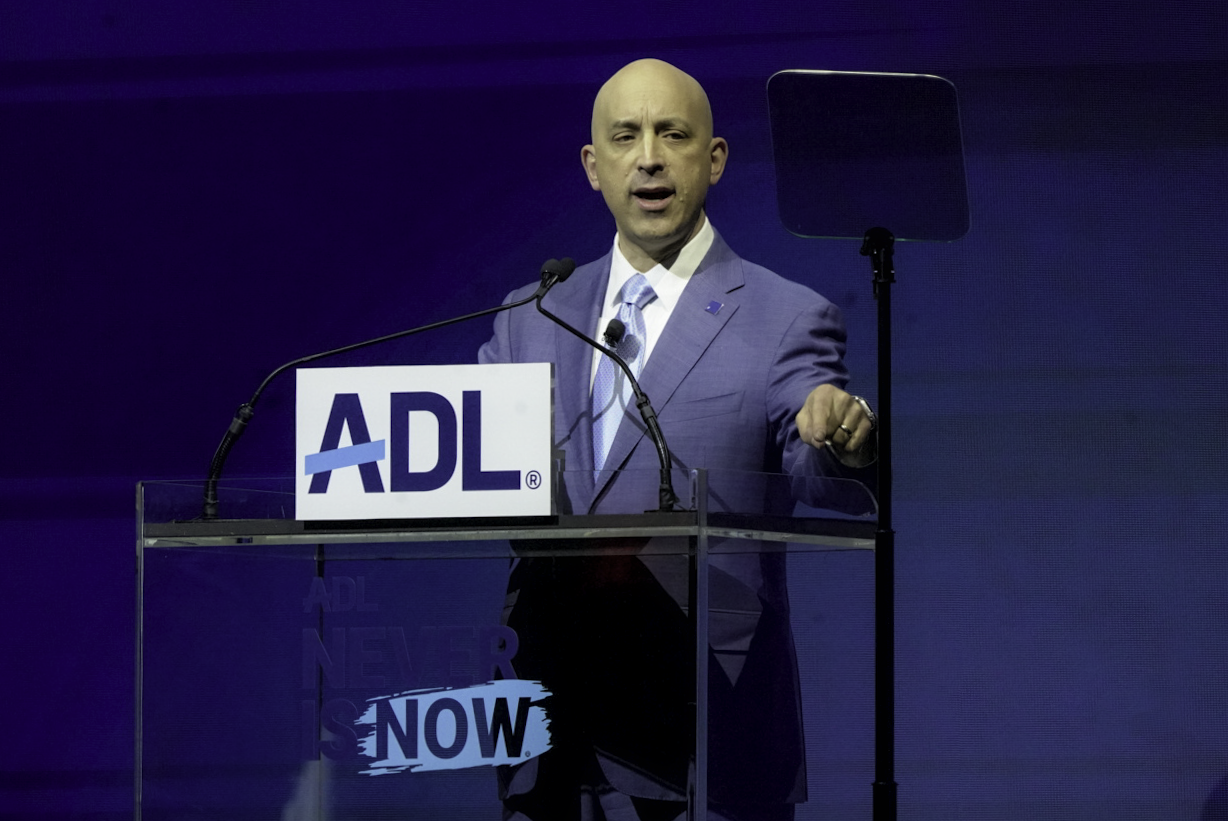
Jonathan Greenblatt, CEO of the Anti-Defamation League, called out two Democratic lawmakers from the main stage of the organization’s Never is Now conference in Manhattan on Monday, accusing them of perpetuating antisemitism, Jewish Insider’s Haley Cohen reports.
What he said: “For the senior senator from Maryland — a state with one of the largest, most active and most observant Jewish populations in the country — he blamed AIPAC, which he slandered as ‘un-American,’” Greenblatt said during his State of Hate address, referring to Sen. Chris Van Hollen’s (D-MD) address at the J Street convention where he attacked the pro-Israel advocacy group earlier this month. “Then, there is the U.S. congressman who stated that he stands against the ‘neoconservatives’ who led the U.S. into the current war [with Iran] and instead is ‘proud to stand’ with Hasan Piker, one of the most outspoken, virulent antisemitic influencers in the world … who the congressman described as one of the representatives of the ‘new moral order,’” continued Greenblatt, a reference to Rep. Ro Khanna (D-CA).
CALDWELL’S CALLBACK

Dan Caldwell, a vocal GOP critic of the administration’s Middle East strategy from the isolationist wing of the party, has been hired for a job at the Office of the Director of National Intelligence under DNI Tulsi Gabbard, Jewish Insider’s Marc Rod reports. Caldwell, once a top advisor and ally to Secretary of Defense Pete Hegseth, was dismissed last spring, accused of leaking to the press, and publicly criticized by Hegseth. Caldwell blamed his firing on opposition from the “foreign policy establishment.”
Big picture: Caldwell’s hiring comes as isolationist wing of the party has established an apparent power base inside ODNI under officials including Gabbard, National Counterterrorism Center Director Joe Kent and Deputy Director of National Intelligence for Mission Integration Will Ruger, who like Caldwell worked for the isolationist Koch-backed Defense Priorities think tank before joining the Trump administration.
COMMUNAL PRIORITY

Following an attack last Thursday on Temple Israel and its early learning facility in West Bloomfield Township, Mich., the Jewish Federations of North America is making a renewed push for expanded security funding and resources to protect the Jewish community, Jewish Insider’s Marc Rod reports.
What they said: In a letter sent to every member of Congress on Friday, JFNA Chair Gary Torgow and President Eric Fingerhut highlighted the significant degree of security support that Temple Israel received from its own membership, from the Jewish Federation of Metropolitan Detroit and JFNA. “We are grateful that philanthropic funding and security planning played a decisive role in ensuring no harm came to any of the children or staff at Temple Israel,” the letter reads. “However, safeguarding communities at risk of violence is not the responsibility of philanthropic organizations. Rather, it is the government’s responsibility to protect its citizens in their places of worship and communal gathering.”
DOMESTIC FRONT
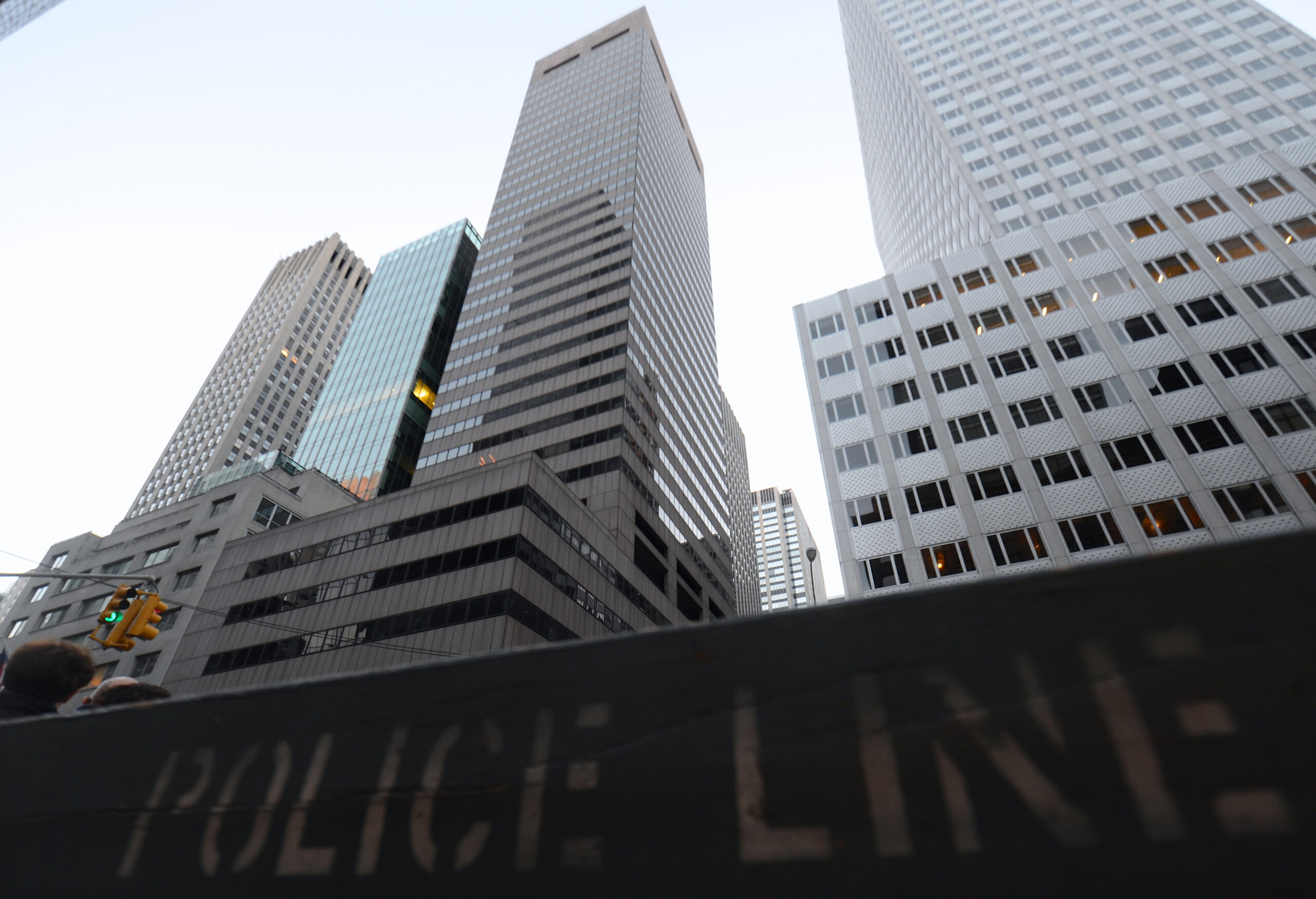
As tensions intensified between the U.S. and Iran amid the regime’s violent repression of protesters in January, and as Tehran vowed itself “prepared for war,” a long-running battle with the Islamic Republic’s forces in Manhattan came to an end. The final stages of the conflict between the Justice Department and the New York-based Alavi Foundation, which since 2008 has faced allegations of acting under Iranian direction, took place in secrecy — with scores of legal documents sealed and even vaulted away, Jewish Insider’s Will Bredderman reports.
Settlement: But materials filed on Jan. 12 with the New York State Charities Bureau revealed its ultimate outcome: a settlement that will provide compensation for numerous American and Israeli victims of Tehran-backed terror, but also enable a successor organization to recoup control of the foundation’s vast assets, including its 36-story crown jewel skyscraper on Fifth Avenue. The final deal — which a filing this month shows came together confidentially in the last days of the Biden administration, and has just begun to go into effect — will officially dismantle the Alavi Foundation and strip it of hundreds of millions of dollars.
CHARGES FILED
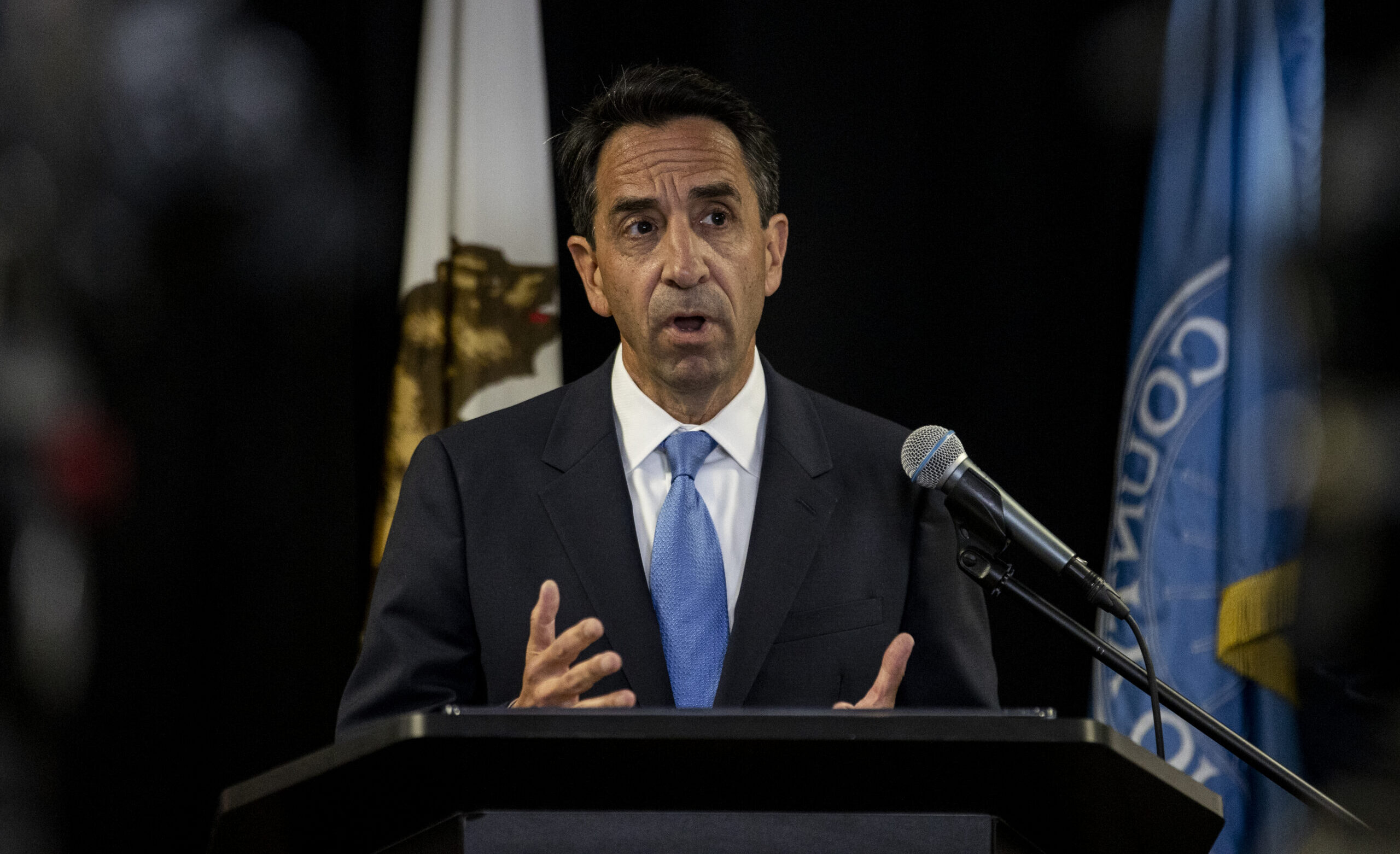
Three men accused of assaulting two Israeli American men outside a restaurant in a Silicon Valley shopping mall last week were arrested on Monday, the Santa Clara County District Attorney’s Office announced. The alleged assailants were charged with both misdemeanor and felony offenses, but they were not charged with hate crime-related offenses, Jewish Insider’s Gabby Deutch reports.
Details: On Sunday, March 8, videos show the two men being assaulted in the middle of the day as other diners and shoppers looked on. The victims, Lior Zeevi, 47, and Daniel Levy, 48, told J., The Jewish News of Northern California that the attack began after they were overheard speaking Hebrew, and that one of the assailants yelled “f***ing Jew.” According to a police report, a witness heard one of the perpetrators shout “Don’t f*** with Iran” as he ran away. The charges filed “do not reflect allegations of a hate crime at this time. However, this remains an active investigation,” according to a statement from the Santa Clara DA. A spokesperson for the DA’s office declined to comment when asked why hate crimes charges were not filed.
Worthy Reads
Threat Assessment: In Al Jazeera, Qatar-based author and academic Muhanad Seloom posits that the U.S. and Israel’s military strategy in Iran is working. “When you look at what has actually happened to Iran’s principal instruments of power – its ballistic missile arsenal, its nuclear infrastructure, its air defences, its navy and its proxy command architecture – the picture is not one of US failure. It is one of systematic, phased degradation of a threat that previous administrations allowed to grow for four decades. …. What the critics described as an expanding regional war is better understood as the death spasm of a proxy architecture whose authorising centre has been shattered.” [AlJazeera]
Lasting Legacy: In The Wall Street Journal, Walter Russell Mead suggests that the outcome of the Iran war will cement President Donald Trump’s legacy. “For the president, the question is whether he pulls back or dives deeper in. The answer will define his place in history. If the U.S. pulls back from the new Gulf war without reopening the Strait of Hormuz and achieving goals like securing Iran’s nuclear materials, the consequences for Mr. Trump’s power and prestige, at home and abroad, will be profound. ‘Trump always chickens out’ won’t merely be an insult his enemies hurl at him. It will be carved on his tombstone.” [WSJ]
Off Message: In The Argument, Jerusalem Demsas observes the outsized role the homogenous “messenger class” — whom she describes as “the tech industry, academics, nonprofit leaders, influencers, and those who work in politics” — plays in modern society. “But if our mediating institutions are all staffed by people drawn from the same narrow demographic band, then the picture they produce will be skewed in ways nobody intends and few notice. This isn’t about whether the messenger class is full of bad people — it’s largely not — it’s about whether it’s even possible to know when you’re acting as a mirror to society, or a spotlight on what you personally happen to care about.” [TheArgument]
Explaining Away Hate: On Substack, Jewish Democratic Council of America CEO Halie Soifer raises concerns about efforts to rationalize attacks on Jewish targets, citing Jewish institutional support for Israel. “If we go down the road of allowing blame of Israel to serve as excuses for antisemitic violence, then we are saying that some forms of violence and hate, in some political contexts or conflicts, are more justified or understandable than others. Is violence targeting Americans, either abroad or at home, acceptable because the U.S. military is engaged in war in Iran? Is targeting Russian Americans because of the war in Ukraine acceptable? Of course not, and we’re all more vulnerable to such violence if we try to explain away antisemitic violence related to Israel.” [Substack]
Word on the Street
Senior members of President Donald Trump‘s Board of Peace, including administration official Aryeh Lightstone, reportedly met with Hamas officials in Cairo over the weekend, with further meetings expected to take place this week…
Secretary of State Marco Rubio reportedly recently sent a cable encouraging American diplomats to work with local Israeli embassies on messaging efforts to encourage foreign governments to collaborate with the U.S. in its war against Iran, ABC News reported on Monday…
The State Department officially designated Kamran Hekmati, an Iranian American Jewish man who was arrested while visiting Iran last year and sentenced to two years in prison for having attended his son’s bar mitzvah in Israel more than a decade ago, as “wrongfully detained”…
The United Arab Emirates briefly closed its airspace overnight amid drone attacks from Iran, including one that ignited a fire at the airport in Dubai, while a tanker anchored off the coast of the Gulf nation, near the Strait of Hormuz, suffered minor damage after being hit by a projectile…
Online betting site Polymarket said it had banned a number of users who had harassed and threatened Times of Israel reporter Emanuel Fabian in an effort to get him to change his reporting on Iranian ballistic missile strikes…
Iran is in talks with FIFA about moving its World Cup matches, which had been slated to be played in the U.S., to Mexico…
U.S. Border Patrol head Greg Bovino will retire in the coming weeks, amid an internal investigation over Bovino’s alleged disparagement of the Jewish faith of federal prosecutor Daniel Rosen…
Immigration officials released from custody Leqaa Kordani, a Palestinian woman who had been detained for more than a year for overstaying her visa after being arrested during an anti-Israel protest at Columbia University, where she was not a student…
The House of Representatives passed a bill extending the decade-old Holocaust Expropriated Art Recovery Act, which will make it easier for the descendants of Holocaust survivors and victims whose art was looted by the Nazis to recover the works; the legislation passed the Senate in December and will head to the president’s desk…
A Maryland man was sentenced to more than three years in federal prison for sending threatening letters and postcards to more than two dozen Jewish institutions around the country from March 2024-June 2025…
The New York Times looks at efforts by Turning Point USA, whose founder, Charlie Kirk, was killed at a campus event in September, to expand to high schools…
Former Apollo Global Management CEO Leon Black is selling his Beverly Hills property, which he purchased a decade ago from Tom Cruise, for $47 million…
A Sydney, Australia-based soccer team apologized for editing a speech to remove a reference to the Jewish community during a ceremony honoring the victims of the Hanukkah terror attack at the city’s Bondi Beach; the apology from the Sydney Swans came after the league was referred to Canberra’s antisemitism commission over the script switch…
Former Rolling Stone Editor-in-Chief Noah Shachtman is joining The New York Times’ opinion section as a contributing writer…
Former ELNET-Israel CEO Emmanuel Navon was tapped as Israel’s next ambassador to Japan…
Pic of the Day
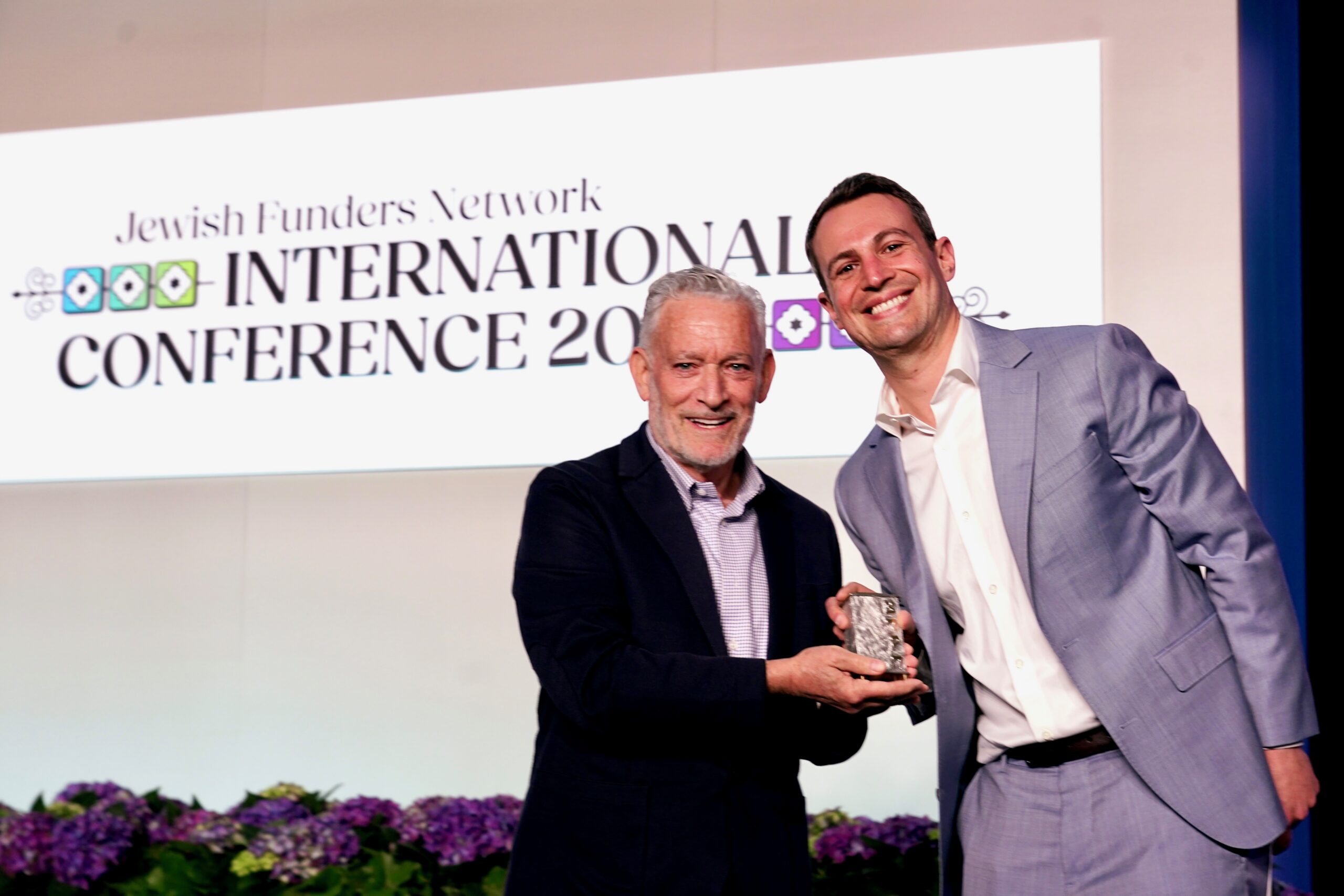
The Harry and Jeanette Weinberg Foundation’s Jon Hornstein (right, with Jewish Funders Network board member Jeffrey Schoenfeld) was awarded the J.J. Greenberg Memorial Award on Monday during JFN’s annual conference in San Diego. Read more here from eJewishPhilanthropy’s Jay Deitcher.
Birthdays
Television writer and producer, he co-created the Netflix animated series “Big Mouth,” Andrew Goldberg turns 48…
Washington columnist for The Dallas Morning News, Carl Philipp Leubsdorf turns 88… Retail and real estate executive, CEO of Wilherst Developers and trustee of publicly traded Ramco-Gershenson Properties Trust, Mark K. Rosenfeld… Oral and maxillofacial surgeon in Fort Wayne, Ind., Michael Iczkovitz… Susan Schwartz Sklarin… DOJ official for 20 years, he has also served as a defense attorney, author of a NYT bestseller about his time working on the Mueller Investigation, Andrew Weissmann turns 68… Founder, president and CEO of Laurel Strategies, Alan H. H. Fleischmann turns 61… Director of legislative affairs at B’nai B’rith International since 2003, Rabbi Eric A. Fusfield… Member of the San Francisco Board of Supervisors, she served on the board of the San Francisco JCRC, Myrna Elizabeth Melgar turns 58… Lead field/floor/sideline reporter for CBS Sports football and basketball broadcasts, Tracy Wolfson turns 51… CEO and president at Las Vegas-based Gold Coast Promotions, assisting nonprofits in fundraising, Richard Metzler… Hasidic singer, entertainer and composer, Lipa Schmeltzer turns 48… Actor, music producer and stand-up comedian, best known as Gustavo Rocque on the Nickelodeon television series “Big Time Rush,” Stephen Kramer Glickman turns 48… Musician and digital strategy executive, Rick Sorkin turns 47… Judge on the U.S. Court of Appeals for the 11th Circuit since 2019, Judge Robert Joshua Luck turns 47… Digital reporter and producer for ABC News including “World News Tonight With David Muir,” Emily Claire Friedman Cohen… Associate professor at GW University in the School of Media and Public Affairs, Ethan Porter turns 41… Senior grants officer at the Open Society Foundations, Jackie Fishman… Senior director and general manager at Uber Eats, Annaliese Rosenthal… Los Angeles-based tech journalist and founder of the TechSesh blog, Jessica Elizabeth Naziri… Associate VP of business development at ContinuServe, Zachary Silver… Director of e-commerce strategy at TAGeX Brands, Zach Sherman…
In preparing for a potential 2028 presidential run, the Pennsylvania governor said the Democratic Party must first agree that Israel has a right to exist as a Jewish state
Peter W. Stevenson/The Washington Post via Getty Images
Pennsylvania Gov. Josh Shapiro sits for an interview at the Pennsylvania State Capitol on June 11, 2025.
As Pennsylvania Gov. Josh Shapiro eyes a 2028 presidential run, he is using a series of big-name podcast interviews to refine and test out his messaging on Israel — and taking aim at California Gov. Gavin Newsom, a potential rival, in the process.
In interviews with the “Pod Save America” and “Higher Learning” podcasts that dropped in recent days, Shapiro put himself in the line of fire from interviewers with more left-wing views on the Israeli-Palestinian conflict than he holds. In response, he made the case that, as the starting point for any public political conversation about Israel, the fact of Israel’s right to exist as a Jewish state must be respected.
“I think what is dangerous here, and I’m not accusing you of this by any stretch, is for those who think Israel doesn’t have a right to exist in [the] conversation. That to me is a recipe for permanent war,” Shapiro told “Higher Learning” host Van Lathan, who said a national conversation about Israel is needed. (“Higher Learning” is part of a podcast network from the digital media company The Ringer.)
The point of the discussion seemed to be to demonstrate a kind of modeling — that Shapiro, a Jewish Democrat who has long been both a supporter of Israel and a critic of Israeli Prime Minister Benjamin Netanyahu, can show Democrats how to have a difficult yet transparent and empathetic conversation amid deep disagreements over Israel’s actions in Gaza.
Shapiro is making clear that if he runs for president, he does not intend to sidestep the party’s most fraught foreign policy debate. He intends to shape it.
In the “Higher Learning” interview, Shapiro laid out his views on Israel while taking flack from Lathan, who called Israel “one of the worst human rights violators” and said he is worried that in describing Israel as an “apartheid state,” people will think he is saying he hates Jews.
“I fundamentally disagree with your viewpoint, but I don’t think you’re an antisemite. I think that you are learning and struggling and grappling with issues that are really, really tough, and you formed an opinion, one that I disagree with, that you seemingly hold very honestly,” said Shapiro. “I don’t think that you’ve got hate in your heart toward someone because they’re Jewish. I think you’ve got different views, say, than I do about Israel or about the Middle East.”
Shapiro drilled down into the conversation he said often plays out about Israel, and drew a red line that he believes should not be crossed.
“Usually the conversation starts around the idea of does Israel have the right to exist, right? And exist as a Jewish state,” he said. “Peace to me are two nations, Israel and a Palestinian country, living side by side in peace with full recognition for one another, an acknowledgment that both have a right to exist and an acknowledgment that the goal of each country is not to wipe out the other … I think if one doesn’t recognize Israel’s right to exist, then you’re — not you, then one is in effect for really just permanent war, because you’re effectively saying Israel’s got to go, and Israel’s not going anywhere.”
Shapiro’s podcast tour came amid a similar media blitz for Newsom. Both governors recently published memoirs outlining their political origin story, a move widely seen as a first step for politicians with national ambitions.
At an event earlier this month, Newsom said that Israel could “appropriately” be described as an apartheid state.
In response to a question about Newsom’s comment from “Pod Save America” co-host Jon Lovett, Shapiro castigated the California governor — without invoking his name — for using inflammatory language.
“If we really want peace, and I believe you want that, then we’ve also got to be acknowledging that language matters here, that words matter. And that we’ve got to use words that are actually rooted in reality and are able to bring the temperature down to create a space for that peace,” Shapiro told Lovett.
“I just think we’ve got to be really thoughtful and careful and not just look for buzzwords and not just sort of follow what’s going to get maybe some likes on Twitter,” Shapiro added. “But we’ve got to be thoughtful about a debate that is really, really hard to have, and we’ve got to have it.”
On “Higher Learning,” he more directly took on the apartheid allegation.
“You use the word ‘apartheid.’ Take a look in Israel. Someone who would identify as Muslim, someone who would identify as a Palestinian Christian. They live in a society with all of the same rights and legal responsibilities as Israelis,” said Shapiro. “They get elected to the Knesset, which is their parliament. They pay taxes. They can serve in the military. They are citizens in the world in a way that a true apartheid state would not allow for.”
Public opinion polling has shown declining support for Israel among Democrats. As Shapiro’s national profile has grown, he has not shied away from his Jewish background or his support for Israel, both of which he discussed at length in his memoir, Where We Keep the Light.
The interviews with two major progressive podcasts suggest that Shapiro wants to proactively share his views on the Middle East with potential future voters — and that he does not view his position as something to hide from a Democratic base that may be less amenable to those views than in the past.
In both interviews, he outlined his staunch opposition to the policies of Netanyahu and President Donald Trump on Israel. He criticized Israel’s actions in the West Bank and the violence by some Israeli settlers targeting Palestinians. He also sought to make clear that although he is a supporter of Israel, his main goal is advancing America’s interests in the region.
“I don’t think that if you are critical of Benjamin Netanyahu, you’re an antisemite. By the way, I’m critical of Benjamin Netanyahu. And I have been for years and years and years, even predating Oct. 7. I think his approach has made Israel less safe. I think it’s undermined U.S. national security interests, which is my primary concern,” Shapiro said on “Higher Learning.”
On “Pod Save America,” Shapiro called for the Trump administration to investigate the death of Nasrallah Abu Siyam, a Palestinian-American teenager from Philadelphia who was killed in the West Bank last month, reportedly by Israeli settlers, and he said Netanyahu must take the threat of settler violence more seriously. But when Lovett asked what to do about these challenges beyond “calling for [Trump and Netanyahu] to become different people,” Shapiro responded with an argument about democracy.
“These are the leaders that each country has chosen. I’m not going to speak to what the people in Israel chose. They’ll have an election. They’ll figure that out,” he said. “Here in the United States of America, we need to have more of a check on this administration.”
The outlet initially described the suspects’ actions as derailing ‘what could’ve been a normal day enjoying the city’

Thomas Fuller/NurPhoto via Getty Images
The CNN logo appears on a smartphone screen in the Apple app store in this photo illustration in Ontario, Canada, on February 26, 2026.
CNN significantly changed a story and removed a social media post on Tuesday that downplayed an attempted terrorist attack over the weekend outside of Manhattan’s Gracie Mansion, initially writing that the suspects traveled from Pennsylvania for “what could’ve been a normal day” during the city’s “abnormally warm weather.”
The two individuals, who claimed inspiration from ISIS, allegedly threw improvised explosive devices at an anti-Muslim protest organized by white nationalist Jake Lang outside New York City Mayor Zohran Mamdani’s residence on Saturday. Neither bomb ultimately detonated.
A CNN article about the attack, as well as a post by the outlet on X that shared identical language, initially described Emir Balat, 18, and Ibrahim Kayumi, 19, as “two Pennsylvania teenagers” who “crossed into New York City Saturday morning for what could’ve been a normal day enjoying the city during abnormally warm weather.”
“But in less than an hour, their lives would drastically change as the pair would be arrested for throwing homemade bombs during an anti-Muslim protest outside of Mayor Zohran Mamdani’s home,” according to the story, which was written by Taylor Romine, Gloria Pazmino and Holly Yan.
CNN later deleted the X post and added an editor’s note to its story, saying that the language “failed to reflect the gravity of the incident thereby breaching the editorial standards we require for all our reporting. It has therefore been deleted.”
The network updated the article multiple times since its initial social media post. Earlier on Tuesday morning it read, “Two Pennsylvania men on Saturday followed the route taken by thousands as they crossed the George Washington Bridge into New York City. But less than an hour later, their trajectory took a dark turn as they were arrested for throwing homemade bombs during an anti-Muslim protest outside of Mayor Zohran Mamdani’s home.”
The current version of the story states, “Investigators are digging deeper into the backgrounds of two terror suspects accused of tossing makeshift bombs at a protest outside the New York City mayor’s home in what authorities describe as an ISIS-inspired attack over the weekend.”
A CNN spokesperson told Jewish Insider that the outlet did not have comment beyond the editor’s note and statement issued on Tuesday.
State Sen. Sharif Street supports continued U.S. aid to Israel but calls Israeli PM Netanyahu a war criminal
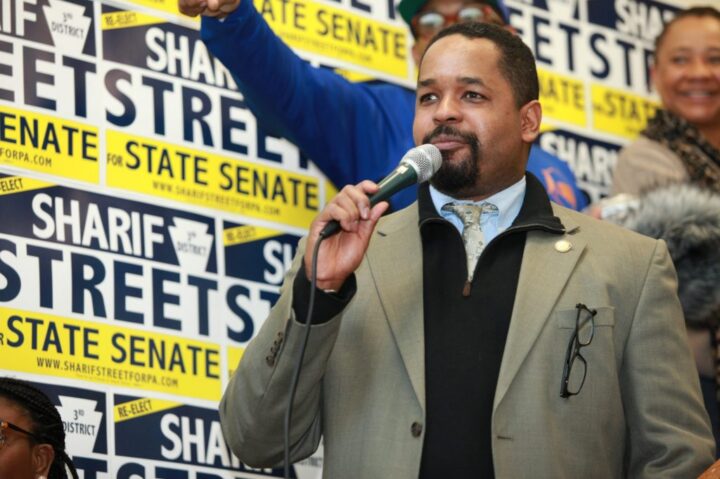
Sharif Street campaign page
Pennsylvania state Sen. Sharif Street
Sharif Street is walking a unique political path.
The Pennsylvania state senator running for a House seat in the heart of deep-blue Philadelphia is Black and Muslim, and has staked out positions largely supportive of Israel.
He traveled to Israel with the American Jewish Committee in 2017 “to gain some understanding” of the complexities facing Israelis and Palestinians.
He has indicated that he would not support conditions on U.S. aid to Israel, saying that the two allies need an “open dialogue,” yet he refers to Israeli Prime Minister Benjamin Netanyahu as a war criminal.
Street’s nuances on Israel — he backs a strong U.S.-Israel relationship, while also urging a compassionate approach to the Palestinians — offer a sharp contrast with his most prominent rival in the Democratic primary for Pennsylvania’s 3rd Congressional District, who is a strident antagonist of Israel.
Street’s friends and allies in the Jewish community insist his stances aren’t a matter of political convenience or calibrated to win him a congressional seat, but rather are borne of years of study on the issue, personal conviction and decades-long ties to members of the Jewish community.
The nuances Street evinces on Israel extend to his reading of the Muslim community, too. While political analyses over the past two years have seen the Jewish and Muslim communities as generally at odds over the war in Gaza — including the three current Muslim members of Congress who regularly stake out anti-Israel stances — Street argued in an interview with Jewish Insider that doesn’t tell the full story of his community.
“The Muslim community is much more diverse than I think the American press tends to think,” Street told JI in a recent interview. “I’m an African American. We have had, historically, pretty good relationships with the Jewish community. … There are over 2 billion Muslims in the world, a third of the world population. And American Muslims are from South Asia, they’re from Europe, they’re from Africa, they are from the Middle East.”
“I think the perspective of the press is always just Middle Eastern Muslims who come to this country with a very long, recent history of … concerns about Israel in the Middle East. That’s not all Muslims,” he said.
Muslims from other parts of the world “have various perspectives and their issues are diverse.” And he said the African American Muslim community of which he is a part “does not have [that] kind of entrenched negative history.”
Many African American Muslims, he said, are converts, and grew up in Christian communities, with different perspectives on Israel and the Jewish community. Of the nearly 500,000 Muslims in the Philadelphia area, 80% are African American, according to Street.
“Every time they want to talk about Muslim-Jewish relations, they just focus on a very small sector — probably less than 10% of the Muslim community, which happen to be Arab American,” Street said. “And their perspective is important, but it doesn’t represent all Muslims.”
Speaking to JI, Street cast himself as a supporter of the U.S.-Israel relationship, while also urging a compassionate approach to the Palestinians and a concerted effort to aid in the reconstruction of Gaza.
“Israel is one of the United States’ most important allies in the world and certainly in the region, and we need to make sure that we keep that relationship strong,” Street said. “We also need to understand that we have to rebuild Gaza for Palestinians.”
He argued that a failure to properly rebuild Gaza and provide it with the necessary resources will only fuel radicalization and help Hamas and other extremist groups grow. “That makes both Palestinians and Israelis less safe,” he said.
He said the U.S. should invest in rebuilding and use its influence to bring along Israel and a multinational coalition, including Arab states, to assist the reconstruction and ensure the security of Gaza and the region, which would improve trust and the chances of success.
“By investing in those communities, we increase the safety and security for Israelis and Palestinians,” he reiterated. “At the same time, we have to recognize their immediate challenges, and the United States has to continue to make sure Israel can deal with the immediate challenges, while we increase the long term safety and security for both Israeli and Palestinians as well.”
He also indicated that he wouldn’t support conditions on U.S. aid to Israel, saying that the two allies need an “open dialogue.” He said that the U.S. should “encourage peace and prosperity in the region,” something best done through a “partnership” rather than by “dictating to Israel.”
He emphasized that all sides suffered in the war, and said he believes both Israelis and Palestinians want change.
Street takes a more critical stance toward Netanyahu.
He was quoted by the Philadelphia Inquirer as saying, “Guess what? Benjamin Netanyahu is not the only leader of a major country in the world that’s committed war crimes, because Donald Trump has done the same thing. But none of us would talk about getting rid of the United States of America as a country.” He said at a recent candidate forum that Netanyahu should be prosecuted for war crimes.
Asked about the comments quoted by the Inquirer, he told JI that it is “possible” that Netanyahu was responsible for war crimes “and I certainly think that that needs to be investigated.” He highlighted that many Israelis are also concerned with and dissatisfied with Netanyahu’s leadership throughout the war, and want to see him out of office.
“Ultimately — and I think the Israeli people will do the right thing — but I think that the Israeli courts have to have a chance to really hear that and oversee those issues, and that’s not likely to happen while we’re still in an armed conflict,” he said.
About his trip with AJC to Israel alongside other Muslim leaders in 2017, Street said, “So often we oversimplify what’s going on in the Middle East,” Street said. “I don’t think Americans fully understand the depth and complexity of the issues. So I wanted to gain some understanding.”
David Hyman, a longtime attorney in Philadelphia who was an ally of Street’s father, former Philadelphia Mayor John Street, watched him grow up since he was a teenager. He said he remembers having a conversation with Street along similar lines following that trip.
“He said that what he really came away with on the trip [was] that slogans and simple answers are not what will help matters,” Hyman recounted.
Kevin Greenberg, an attorney who said he’s been friends with Street for 30 years, said he’s seen Street’s views on the Middle East grow and evolve over time, and the two had — prior to Street’s AJC trip — discussed visiting Israel together.
“I’ve seen a lot of politicians decide to be pro-Israel, pro-Jewish for contributions, and I’ve seen a lot of people be anti-Israel, pro-BDS … because you think there are votes there. That just doesn’t enter into his calculus on this issue,” Greenberg said. “It’s a core belief of who Sharif is. And he stands for the little guy in any situation.”
Hyman, a board member of AJC’s Philadelphia chapter, offered similar praise.
“He’ll speak about his support for Israel in a setting, in a context where there’s no political upside,” Hyman said. “For me, that’s the litmus test, because there’s so little political courage these days to say anything other than what’s politically expedient. He’s very upfront.”
Hyman said that, while Street may disagree with some of the Israeli government’s decisions, “in terms of standing behind the basic tenets of Zionism and the right for Israel to exist and defend itself, he distinguishes himself at a time where [other supporters are] peeling off.”
And he emphasized that Street will be accessible to groups across the Jewish community, who already have existing relationships with him. “When issues come up, it’ll be natural for us to talk to him and take his temperature.”
Robin Schatz, the director of government relations for the Jewish Federation of Greater Philadelphia, also said that Street has “always been a friend” well before his run for Congress, and that he has always been accessible to her and the Jewish community.
At the beginning of their friendship decades ago, Greenberg said Street did not know much about the Middle East but wanted to learn more, growing up in a household more focused on the needs of Philadelphia residents. “Sharif has evolved from a curious, but unknowing person, to somebody who has a deep understanding, and respect for Jews qua Jews.”
Greenberg also said that Street has always maintained a diverse group of friends, and that both his social and professional circles have included many Jewish people, and that he was a prominent participant in both of Greenberg’s daughters’ bat mitzvahs.
Hyman noted that Street worked for a time at a historically Jewish law firm, and said that he has been active in a local AJC initiative bringing together Jews and Muslims.
Street condemned those in the United States who have turned their grievances over the war in Gaza into violent action against Jewish Americans.
“I think one of the things that happens is silent complicity. When people don’t speak out against the antisemitism that exists, that fuels it,” Street said. “We also can’t allow people who are having concerns to then turn into calling for violence in the U.S. … I will use my voice, as I have done as a state senator, as a congressperson to speak out against this and use the platform to do it.”
He additionally emphasized the importance of hate crimes legislation and pointed to his support for legislation in Pennsylvania to provide funding to protect houses of worship, which he noted helps Jewish, Muslim and other communities. He said he would support similar efforts at the federal level.
Schatz said that having a devout Muslim lawmaker like Street with strong ties to the Jewish community in Congress could be good for the Jewish community, especially given tensions that have appeared between the two communities.
“I think it’s good for the Jewish community to hear that somebody from a different faith group, especially from Islam, where people have been somewhat leery because of terrorism and Israel, to see that we do have true allies,” she said. “He’s consistently there for the [Jewish] community.”
Street’s friends and allies praised him for consistently being among the first leaders to speak out against antisemitic incidents, with more than one highlighting that he was the first elected official to condemn a recent pro-Hamas rally in Philadelphia’s Rittenhouse Square last month.
“In 2024, when some of the far left were making antisemitic attacks on Josh Shapiro, when he was up to be nominated for vice president, Sharif basically went on a virtual tour of Black Muslims all over the country, saying, do not do that,” Greenberg recounted. “Josh is a perfectly good candidate. He doesn’t hate us. He’s great with us. He’s a great leader for us, and do not let people attack him because he’s Jewish. You don’t like him? You don’t like him. Say that.”
Street, at the time, was the chair of the Pennsylvania Democratic Party. Greenberg said that Shapiro had backed another candidate for the post, but said Street maintained no ill will towards him and was insistent that attacks on Shapiro for his religion were unacceptable.
Speaking to JI before the U.S. went to war with Iran, Street said that Iran shouldn’t be allowed to obtain nuclear weapons, and that the U.S. needs to work with all of its allies and partners to prevent that from happening, “but ultimately we want to [get there] in a way that avoids war, if possible.”
After the war began, in a statement shared on Facebook, Street condemned the Iranian regime and Ayatollah Ali Khamenei, who was killed in an Israeli strike, but said that the “chaotic situation in Iran is perilous for the Iranian people and the world” and that Trump lacks the capacity to “successfully manage this situation.”
He also emphasized that the Constitution gives Congress the authority to declare war, not the president. “I am calling on Congress to immediately return to vote on a more narrowly tailored measure that will allow the US to defend its interests while exercising its oversight over this President to stop him from unilaterally starting wars all over the world,” Street said.
He told JI was similarly concerned that the administration failed to brief Congress, particularly Democrats, about the strikes it carried out on Iran last summer. He said he couldn’t judge whether those strikes were the right decision because of the administration’s failure to explain and provide intelligence about them to Congress or the public.
“Democrats and Republicans have worked in a bipartisan way under Democratic and Republican administrations to deal with the threat of Iran,” Street said. “President Obama was very strong on this issue. I would be strong on this issue, but the president can’t act unilaterally without congressional oversight. That’s the problem. It shouldn’t be partisan. … The leaders in Congress have to have the right intelligence to make those decisions.”
Street’s main competitor in the primary race is far-left state Rep. Chris Rabb. A Rabb win would likely cause significant concern among the district’s sizable Jewish community, given his record of anti-Israel activism and accusations of genocide against Israel.
At a recent candidate forum, several major candidates offered criticism of Israel and AIPAC. “F— AIPAC. They are a racist organization and I will not meet with them,” Rabb said, accusing the group of “destroying candidates’ lives.” At another forum, Rabb said he would vote to block further U.S. aid to Israel, while other candidates avoided weighing in specifically on the legislation.
Another candidate, Ala Stanford, a physician and activist, said that she supports a two-state solution but that the U.S. should not support wars “that harm and kill children and families.” State Rep. Morgan Cephas indicated she would meet with AIPAC but suggested she disagrees with the group’s positions. David Oxman, a physician, called Netanyahu the worst Jewish leader in millennia and accused AIPAC of conflating criticism of Israel with antisemitism.
Schatz, the Federation official, said that Cephas is also “very good with the community,” Stanford is “learning about the community” and would likely be an ally and Oxman is Jewish himself. Rabb, she said, has been at odds with the Jewish community..
Street led the field in fundraising as of the end of 2025, with $701,000 raised and $527,000 on hand. He was followed by Oxman who has raised $498,000 and had $357,000 on hand; Stanford, who has raised $467,000 and had $392,000 on hand; and Rabb, who has raised $384,000 and had $99,000 on hand.
A Street campaign poll conducted by Lake Research Partners in mid-November found Street in the lead with 22%, followed by Rabb at 17%, Stanford at 11%, Cephas at 7% and Oxman at 2%, with 36% of voters undecided.
Street, a former chair of the state Democratic Party and the son of a former Philadelphia mayor, is seen as the establishment favorite, with an endorsement from former Gov. Ed Rendell, as well as endorsements from numerous labor unions and local elected officials.
Rep. Dwight Evans (D-PA), the retiring incumbent, endorsed Stanford.
The Pennsylvania governor kept his Jewish identity front and center when addressing the opening ceremony of BBYO’s International Convention
Matthew Hatcher/Getty Images
Pennsylvania Gov. Josh Shapiro speaks at a rally on January 8, 2026 in Philadelphia, Pennsylvania.
As Pennsylvania Gov. Josh Shapiro walked onstage Thursday night at the opening ceremony for BBYO’s International Convention, the annual global gathering of the world’s largest Jewish youth group, he was beaming — a result, perhaps, of being introduced by his niece, or his excitement at welcoming 3,400 Jewish teens to Philadelphia.
“It is so good to see you,” Shapiro said to the crowd, before delivering an upbeat speech urging the teens in attendance to be proud of their Judaism and to strive to live out Jewish values as they defend American democracy 250 years after the signing of the Declaration of Independence, “right down the street,” Shapiro noted.
“What we’ve seen over the last 250 years is ordinary Americans rising up, demanding more, seeking justice, and people like you ushering in change. And now the reason why I’m so proud to be here with all of you tonight is that the theme of this BBYO conference is ‘We the future,’” said Shapiro. “250 years later, I wanted to come here tonight and look you in the eye and say, You are the future and you have the power to shape it.”
Shapiro, who grew up in a suburb of Philadelphia and attended the same Jewish day schools as many of the locals in the room, earned applause and cheers throughout his remarks.
“I know we’re facing some challenges out there, and this is a moment, I want you to know, where I lean on my faith, and I am proud of my faith, just like all of you,” Shapiro said. “I need you right now to harness the teaching of our ancestors that show that we’re a people that can overcome adversity. I want you to harness the power in this room and in your hands and find your activism.”
Throughout his career in politics, Shapiro has publicly and frequently invoked religious themes in his speeches. Often, though, he uses generic phrases like “my faith teaches” when mentioning a quote from the Hebrew Bible. At the BBYO conference, though, he kept his Jewish identity front and center.
“I want you to wear your Stars of David with pride. That will give strength to others,” said Shapiro. “I want you to confront the bullies that you find in your communities, but I want you to confront them with a sympathetic heart and an effort to understand and change minds because understand those bullies, they are coming at that from a sense of weakness and ignorance, and you are the ones who can bring strength and light.”
Shapiro’s message to the teens was not political. He did not tell them to get involved in any particular cause — only to find something they care about.
“I want you to go home and organize in your communities, because hear me on this: Tikkun olam knows no religious boundaries. It is our responsibility to repair the world, to do this work, and I for one am optimistic it will get done because of all of you. Your presence here tonight, well, it unlocks two extraordinary forces in humanity: hope and optimism,” said Shapiro. “I know this is a moment sometimes that can feel dark. Understand you are not victims. You are the ones with the power to make a change in your community.”
Carol Obando-Derstine told JI she supports continued aid to Israel and rejected characterizations of the war in Gaza as a genocide
Carol Obando-Derstine/Facebook
Carol Obando-Derstine
As she competes in a crowded Democratic primary for Pennsylvania’s 7th District, Carol Obando-Derstine is hoping support from the former Democratic incumbent, her Latina immigrant background, her experience in politics and activism and her expertise in energy will help her stand out in the competitive field of Democrats vying to unseat Rep. Ryan Mackenzie (R-PA) in the upcoming midterms.
Asked by Jewish Insider about her path to victory in the Democratic primary — facing opponents with, variously, stronger fundraising numbers and backing from popular Gov. Josh Shapiro — Obando-Derstine emphasized that she was endorsed by Rep. Susan Wild (D-PA), who held the seat from 2018-2025.
She said she also understands firsthand the difficulties that voters in the district are facing, as well as the “strength of our community.” She said has a record in getting results for the district through her work with community organizations, while working for former Sen. Bob Casey (D-PA) as an advisor on Latino affairs and her background in the energy industry.
Though she didn’t speak at length about the Israeli-Palestinian conflict, Obando-Derstine is taking a positive approach to the U.S.-Israel relationship on the campaign trail, telling JI, “America has a special relationship with Israel … and I will ensure that we continue to have [that] … there’s a deep connection between our two countries that spans generations.”
She said she supports continued aid to Israel and rejected characterizations of the war in Gaza as a genocide. She also called for the U.S. to continue to pursue a two-state solution.
Obando-Derstine also said that it’s “essential for [Iran] not to have access to a nuclear weapon, for our safety as well as Israel” and that she approves of any necessary methods, including military strikes or sanctions, to stop Iran from obtaining nuclear weapons, adding that “diplomacy is always the first approach that we should have.”
At home, Obando-Derstine said she’s very concerned by the rise in antisemitism, alongside rising hate against Latinos and immigrants, and said that “there is no place for that type of hate in America.”
She praised the approach taken by the Biden administration, including its national task force to combat antisemitism, and said that Congress must work to protect people from being attacked for their religion or the color of their skin.
“I know what that’s like to be targeted because I’m Latina and we have that, we have a firm and very clear responsibility to protect all Americans,” she continued.
Obando-Derstine noted she’s the only woman, the only Latina candidate and the only bilingual and bicultural candidate in the race, and has made outreach in Spanish a component of her campaign since its launch — in a district, the 7th, in the Lehigh Valley, that’s about one-fifth Latino.
She also highlighted her experience as an energy expert, at a time when voters are struggling with utility costs and are grappling with the rapid spread of data centers.
Obando-Derstine is backed by EMILY’s List, the Congressional Hispanic Caucus’ PAC and 314 PAC, which supports candidates with STEM backgrounds. Obando-Derstine and fellow primary candidate Bob Brooks are both designated by J Street PAC as “primary approved” candidates.
“I decided to run for Congress because I had had enough of watching working families struggle while politicians like Ryan Mackenzie voted to cut health care, food assistance and raise prices, all the while giving trillions in tax cuts to billionaires,” Obando-Derstine said. “And I’m also an immigrant, and I see blatant attacks on immigrants and Latinos in particular, and I just couldn’t stay on the sidelines.”
Like many candidates nationwide, she said her top priority is improving affordability and expanding health-care access. She said she’s also focused on supporting the workforce and small businesses, promoting clean energy and fighting back against the “reckless agenda that’s coming out of Washington … the prioritization of billionaires over working families, the targeting of law-abiding folks by ICE and health-care cuts.”
In 'Where We Keep the Light,' the swing-state Democrat provides the most intimate look yet at the centrality of Judaism to his understanding of the world
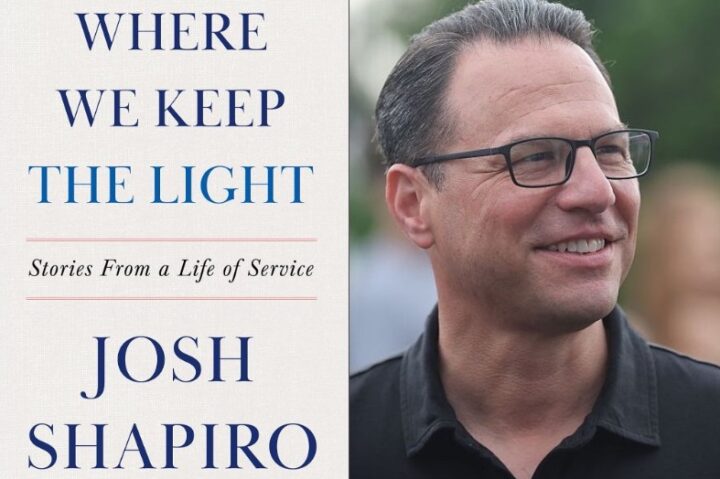
Amazon/Andrew Mordzynski/Icon Sportswire via Getty Images
Book cover/Pennsylvania Gov. Josh Shapiro
Each time Pennsylvania Gov. Josh Shapiro gets on a plane to visit different communities as he begins his reelection campaign, he’ll silently recite Judaism’s foundational prayer, the Shema, before takeoff, according to his new memoir.
Shapiro has always kept his Jewish faith at the center of his public identity. But in Where We Keep the Light, which comes out today, the swing-state Democrat provides the most intimate look yet at the centrality of Judaism to his understanding of the world. Widely expected to be eyeing a bid for the White House in 2028, Shapiro makes clear in his new book that he will not back away from his Jewish identity as his national profile grows.
“My faith has never been something I thought about doing a whole lot. Not because it’s not important. The opposite, really. It’s elemental,” Shapiro writes. “It’s why I sometimes sound a little vague when I get asked about my religion in interviews or when I try to put it into words. Kind of like when you get asked to explain how you fall asleep or blink. You just know to do it. It’s part of you, without thinking. All essence and instinct.”
The book begins with the story of the arson attack on the governor’s residence in Harrisburg last year, hours after Shapiro hosted a Passover Seder there. It’s clear that the incident, in which the assailant said that he targeted the governor because of what Shapiro “did to the Palestinians,” impacted him deeply.
“No one will deter me or my family or any Pennsylvanian from celebrating their faith openly and proudly,” Shapiro writes.
The next night, his family began their Seder by reciting Birkat Hagomel, which he described as “a prayer expressing gratitude for surviving a dangerous situation.” Shapiro again sought comfort in those days in the Shema, and its straightforward declaration of faith in God.
Along with his deep identification with Judaism, Shapiro doesn’t shy away from his support for Israel in his memoir.
The Democratic Party has become more critical of Israel in recent years, and it is easy to imagine Shapiro deciding that the politically savvy move would be to talk less about his connection to the Jewish state.
Instead, Shapiro appears to have decided that the right move — a result, surely, of both political and moral calculations — is to reveal exactly what role Judaism and Israel have played in shaping him.
Early excerpts of the book revealed that Shapiro was asked by members of Vice President Kamala Harris’ team, during the vetting process as she chose her running mate in 2024, whether he had ever acted as a foreign agent for Israel. He was also asked by Harris why he had taken such a strong position criticizing anti-Israel encampments at the University of Pennsylvania that year, and whether he would apologize for doing so. He took offense at both questions, wondering whether a double standard was at play.
He describes his first experience with advocacy, as part of the movement to free Soviet Jewry in the 1980s. He writes evocatively of a semester spent in Israel as a teenager with his Jewish day school, detailing the transformative moment he visited the Western Wall for the first time.
“My faith in that moment was around me. I was touching it. I was breathing it. My faith was alive and its roots grew deeper under me,” Shapiro writes. “The semester in Israel flew by. I loved every minute of it.” Years later, he returned to Jerusalem with his then-girlfriend Lori to propose.
Many scenes in Shapiro’s book also play out around the Shabbat table. There was the Shabbat dinner in 2017, early in Shapiro’s first month as Pennsylvania attorney general, that was interrupted by news of President Donald Trump’s ban on travel from several Muslim-majority nations. There was the Shabbat dinner in 2024 when he and Lori discussed the meeting he would have with Harris, two days later, about whether Shapiro wanted to be her running mate. The family’s Shabbat dinner table was also pictured in his first TV ad during the 2022 general election for governor.
Shapiro said he drew this lesson of embracing his Jewish faith from his experience as attorney general working with law enforcement and the Jewish community after the 2018 Tree of Life shooting. In the years after, particularly as he ran for governor, he began to have more people express to him their fear of antisemitism and of being Jewish. The answer, Shapiro writes, is not to hide.
“There have been times when I have struggled to figure out what my responsibility is as a person so public about my faith, at a time when it is more tenuous than ever to be Jewish in America,” Shapiro writes. “In these moments, I look to the Tree of Life community as my guidepost for what it means to live our faith out loud, without fear or question.”
Whether Shapiro continues to focus more closely on his Jewish faith and the rise of antisemitism, as he does in the book — as opposed to a more universal appreciation of religion’s positive role in society — is an open question. Shapiro likes to talk in stump speeches about his “faith,” with the word “Jewish” often conspicuously absent. In his election night victory speech in 2022, he quoted the Jewish book Pirkei Avot, or “Ethics of Our Fathers.” He talked about “scripture,” and how “my family and my faith call me to service.” He did not mention Judaism.
With his new book, Shapiro appears to be betting that standing up for his values and beliefs — even if the short-term politics might not be in favor of campaigning as a proud Jewish candidate who remains supportive of Israel — will be rewarded over the long haul by voters looking for someone who is authentic to his true self, standing by a time-tested set of clear moral principles.
The Scranton mayor is championing her support for Israel as she challenges GOP Rep. Rob Bresnahan
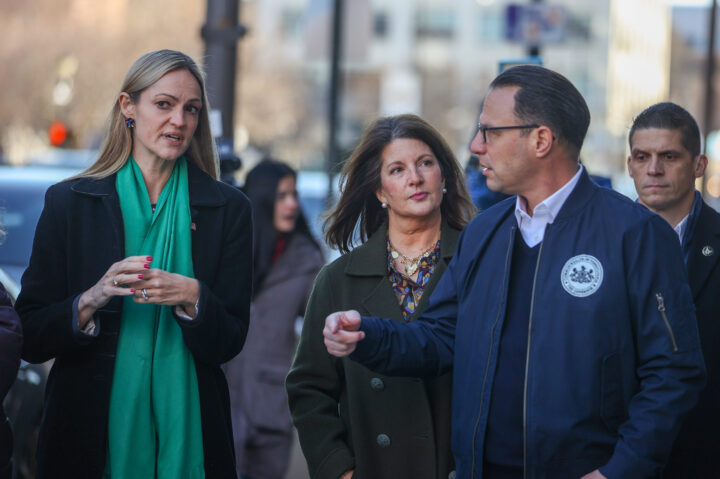
Jason Ardan/The Citizens' Voice via Getty Images
From left: Scranton Mayor Paige Cognetti, Scranton Tomorrow CEO Leslie Collins, and Pa. Gov. Josh Shapiro chat while walking through dowtown Scranton on Friday, December 13, 2024.
Paige Cognetti, the Democratic mayor of Scranton, Pa., is staking out a pro-Israel platform as she seeks to unseat freshman Rep. Rob Bresnahan (R-PA) in a northeast Pennsylvania swing district, emphasizing her support for continued military aid to the Jewish state in the wake of its war against Hamas in Gaza.
In a recent interview with Jewish Insider, Cognetti, who is favored to win the Democratic nomination in Pennsylvania’s 8th Congressional District, said “the Israel question,” as she called it, is “very simple” for her.
“I vehemently support Israel’s right to defend itself,” she explained, “and would take extremely seriously Congress’ role in ensuring they have the military aid that they need to defend themselves in a really dangerous neighborhood.”
To underscore her point, Cognetti, who was sworn into her third term as Scranton’s mayor earlier this month, touted a local munitions plant that she said continues to produce “the shells that we use for our own defense, but also that we ship to our allies, like Ukraine and Israel.”
“We’re very proud of that,” she said. “It’s really important to us in northeastern Pennsylvania that we defend ourselves, defend our military personnel at home and abroad. We’re very, very specific and deliberate about how we celebrate our veterans, and we feel the same way about supporting our allies.”
Even as some Democratic candidates have turned away from embracing such positions amid growing chilliness toward Israel within the party, Cognetti, for her part, said she did not feel compelled to join their ranks. “I understand that there has been a lot of rhetoric in the last couple of years — and a lot of folks that feel one way or the other,” she observed.
“But there has never been a question, to me, about what the U.S.’ role in supporting Israel should be,” she said, adding that she “will continue to support Israel as a member of Congress.”
In addition to calling for reauthorization of the current 10-year memorandum of understanding between Israel and the United States that is set to expire in 2028, Cognetti also stressed her support for ensuring humanitarian aid “gets to the people who need it” and backed a “diplomatic, two-state solution” to the conflict, which she acknowledged would be a “complicated and hard-fought” effort.
In her primary campaign to challenge Bresnahan, a first-term incumbent endorsed by AIPAC, Cognetti, 45, is seen by Democratic Party officials as well-positioned to win back the seat held by former Rep. Matt Cartwright (D-PA), who fell last cycle after six consecutive terms in one of two upsets in the state that helped Republicans maintain their increasingly narrow House majority.
Now, the Democratic Congressional Campaign Committee is eyeing the district as one of four possible pickup opportunities in the state, while targeting Bresnahan, 35, as “the poster-child of Washington corruption” due to scrutiny over his multiple stock trades as a congressman, despite a campaign vow to ban the practice among elected officials.
Speaking with JI last week, Cognetti reiterated those accusations, saying Bresnahan was “clearly profiting off of his votes,” and boasting of her own record “delivering results and putting an end to the corrupt machine politics that we’re far too familiar with here in northeastern Pennsylvania.”
Bresnahan’s campaign, for its part, has dismissed Cognetti as a “far-left extremist” who is in favor of open borders and defunding the police. But he may struggle to land those hits as Cognetti casts herself in a moderate light, particularly on sensitive issues relating to Israel and rising antisemitism on the left and right.
Cognetti, who launched her bid last September, has since raised more than $1.1 million, garnering over $640,000 in donations last quarter, her campaign recently announced. Cognetti is widely expected to prevail in the May primary, where she is facing Francis McHale, a retired state official. She has also reportedly claimed support from Pennsylvania Gov. Josh Shapiro, a moderate pro-Israel Democrat.
Larry Ceisler, a public affairs executive based in Pennsylvania who is supporting Cognetti’s House bid, called the mayor a “top-tier candidate” with a “great profile” for the swing district. “At one time, I thought Matt Cartwright was a unique candidate to hold that seat, but Paige has really come on over the last several months,” he told JI, noting that she “will have the resources she needs to win.”
“The fact is Matt Cartwright lost because he was hampered at the top of the ticket,” Ceisler added. “Paige will have the opposite as Josh Shapiro has proven to have coattails and Paige is positioned to take advantage of them.”
Cognetti, the first woman mayor of Scranton, was elected in 2019 when she ran as an independent and defeated a crowded field in what was then viewed as a rebuke of the local Democratic machine.
During her tenure, Cognetti has spoken up in support of Israel after Hamas’ Oct. 7, 2023, terror attacks and sought to raise awareness about the rise of antisemitism on both sides of the aisle. “There is some really, really dangerous rhetoric, and we need to call that out,” she said, characterizing anti-Jewish prejudice as antithetical to “core American values.”
“Of course, here in Pennsylvania, we have a fresh and really horrific example of antisemitism with the arson attack on Gov. Shapiro’s home and his family just last year,” she told JI. If elected, she added, she hopes to be “part of a coalition that raises the issue of antisemitism and passes any legislation necessary to make sure” the subject “remains in the forefront of people’s minds.”
Cognetti, who has never visited Israel, said she had signed up for a trip that was canceled in the wake of the Oct. 7 attacks but is “looking forward to getting there at some point.”
As she mounts her campaign, Cognetti said she is building “a broad coalition across the district” and describes forming “solid relationships” with Jewish community leaders as well as productive talks with “different groups that are focused on Israel.”
Democratic Majority for Israel’s political arm, which has not announced an endorsement in the race, “has had positive conversations with” Cognetti and is “keeping a close eye” on the primary, a source familiar with the matter told JI.
Despite internal divisions over Israel now roiling the Democratic Party, Cognetti argued that “some people have let themselves kind of get away from that simple answer, which is, Israel is surrounded by people who do not believe they should exist.”
“The United States,” she vowed, “has been and will continue to be its most staunch ally.”
Rep. Jared Moskowitz told JI that Kamala Harris’ team asking Shapiro if he’d ever been an agent for Israel, as Shapiro alleges, is ‘totally insane. I don’t know how else to describe insanity’
Andrew Mordzynski/Icon Sportswire via Getty Images
Pennsylvania Gov. Josh Shapiro looks on during the NASCAR Cup Series at The Great American Getaway 400 on June 22, 2025, at Pocono Raceway.
Several moderate House Democrats said they were concerned and frustrated by Pennsylvania Gov. Josh Shapiro’s account, which emerged over the weekend, of being questioned by Vice President Kamala Harris’ presidential campaign, as part of his vetting as her potential running mate, about whether he had ever been an agent of Israel.
Some progressives have defended the questioning by pointing to a subsequent report that the campaign had asked Minnesota Gov. Tim Walz, the eventual vice presidential nominee, about whether he had served as an agent for China, where he once lived.
But Shapiro, who volunteered on a kibbutz and briefly on an Israeli army base while in high school, also said that the campaign had pressured him to walk back condemnations of antisemitism on college campuses, and emphasized that he took offense to the scope and persistence of the questioning he faced about Israel.
“Totally insane,” Rep. Jared Moskowitz (D-FL) told Jewish Insider. “I don’t know how else to describe insanity. Literally insane.”
Rep. Greg Landsman (D-OH) said the questioning was “concerning” and that he was “glad Josh had the courage to say what happened.”
“Hopefully people will appreciate that you shouldn’t do that. … It’s a longstanding antisemitic trope that we’re all agents of the Israeli government, that we’re all working for this global Jewish cabal. And so that’s problematic,” Landsman, who is Jewish, continued. “Antisemitism is complicated. There’s a lot of pieces to it. They all get very dangerous for us. I do think that people should be open to say, if Jews say it’s antisemitic — even if some say it’s not — let’s just assume it is and be done and not do it.”
Rep. Debbie Wasserman Schultz (D-FL) called the revelations “incredibly disturbing,” while saying she didn’t believe Harris would have approved the line of questioning.
“The process that allowed for those kinds of questions to be asked is disturbing to me. I’ve known Josh Shapiro for a really long time, and I understand how he felt and would have felt the same way,” Wasserman Schultz, a former chair of the Democratic National committee, told JI. “It’s a little bewildering that that would be the kind of question line that they would take, given that Vice President Harris’ husband is Jewish. From what I know and experienced of both she and he, separately and together, that doesn’t seem like a line of questioning that she would have approved of. Hopefully it was a rogue question, rather than something that was sanctioned.”
Rep. Brad Schneider (D-IL) praised Shapiro personally and said he took issue with the questions he faced in the vetting process.
“I’ll give you my reaction to Josh Shapiro: This is someone who knows who he is, he’s confident in his identity and proud of where he comes from and strong in what he believes. I think he gave the right answers, and I think it was wrong that those questions were even raised.”
Rep. Tom Suozzi (D-NY) said that the questioning of Shapiro was not appropriate, calling it “very disturbing” and “unfair.”
Rep. Josh Gottheimer (D-NJ) said in a statement over the weekend that Shapiro’s account was “nothing short of outrageous, and, if true, demand[s] an immediate explanation from the Harris campaign.
“That kind of insinuation and targeting is antisemitism, plain and simple. No one should be judged or discriminated against because of their faith. We must do better,” Gottheimer continued.
Rep. James Walkinshaw (D-VA) said on CNN over the weekend, “If that question was asked of Governor Shapiro, it should have been asked to every other candidate who was vetted.”
Others largely withheld criticism of the Harris campaign.
Rep. Jerry Nadler (D-NY), a co-chair of the Congressional Jewish Caucus, said that it sounded like other potential nominees had also been asked about foreign ties, but described the line of questioning as “bizarre.”
Rep. Brad Sherman (D-CA) withheld judgment when asked about Shapiro’s revelations, telling JI, “It’s obviously very interesting. I don’t know whether the person asking the vetting questions really reflected Kamala Harris’ personal opinions at all, so I’ve got to read more about it.”
Rep. Madeliene Dean (D-PA) said she didn’t want to comment on the situation without having read Shapiro’s book coming out next week, in which he describes the encounter, or having been present for the conversations in question, but said that she has known Shapiro for a long time and praised him as a man of “[faith], family and a belief in the American system.”
Crosswell, a former Republican who also served as a federal prosecutor, is touting his pro-Israel bona fides as he fights for the Democratic nomination against Rep. Ryan Mackenzie
Marc Levy/AP
Ryan Crosswell, former federal prosecutor who quit the Department of Justice in protest, speaks at a campaign event for his run for Congress, Dec. 4, 2025, in Allentown, Pa.
Former federal prosecutor and Marine veteran Ryan Crosswell is hoping his military and professional background — as well as his past registration as a Republican — will provide a road map to winning the Democratic nomination and ultimately flipping a critical swing district in Pennsylvania.
The 7th Congressional District centered around Allentown and Easton and rated by the Cook Political Report as a toss-up is held by Rep. Ryan Mackenzie (R-PA), who himself flipped the seat in 2024. It was previously held by former Rep. Susan Wild (D-PA).
Crosswell, in an interview with Jewish Insider, characterized himself as a lifelong public servant and patriot, both as a Marine and as a federal prosecutor, who “always put my country first, even when it came at personal costs, as when I resigned from the Department of Justice because I felt I was being asked to do something that was inconsistent with my oath.”
Crosswell left the DOJ last February in protest of the Trump administration’s decision to drop corruption charges against former New York City Mayor Eric Adams.
He’s running for Congress because “this administration is dangerous,” and he wants to fight for affordability and safety for his constituents. He said his experience as an anti-corruption prosecutor makes him “uniquely suited to rebuild some of the guardrails that have been torn down.” He said that restoring those guardrails, including the public corruption section at the DOJ, is critical to having a “functioning democracy.”
Though he’s running in the Democratic primary, Crosswell was a registered Republican until after the 2024 election. But he said he’s voted consistently for Democratic presidential candidates since 2016.
“[We’re] at a point right now, there is one party that’s clearly on the right side of history, and one party is clearly on the wrong side of history,” Crosswell said.
Crosswell argued that he’s the best-placed candidate to flip Republican voters in November: He said a key takeaway from last year’s New Jersey and Virginia gubernatorial elections is that Democratic veterans are attractive candidates. He added that his background as a former Republican will help him connect with independent and GOP voters to “explain that the Republican Party is not what it once was.”
He also said that his experience as a veteran and federal prosecutor addressing a series of sensitive and high-profile issues makes him best prepared to address a range of subjects as a member of Congress in what he predicted “will be the most challenged Congress in American history.”
Croswell said that he’s “uncomfortable with cutting off aid” to Israel, as some in the Democratic Party are advocating for, “because Israel is surrounded by historical enemies and I don’t want to put the Israeli people in danger by cutting off aid.”
Crosswell is facing off against a series of other more liberal candidates in the primary, most notably Bob Brooks, the leader of the firefighters’ union who was endorsed by Gov. Josh Shapiro last month. Though Crosswell led among Democrats in fundraising as of the end of September, Shapiro’s endorsement and a fundraiser the popular governor held for Brooks last month are expected to help Brooks close the gap.
Crosswell described Israel as “an important ally to the United States” and the “only true democracy in the Middle East.” He visited Israel and the West Bank shortly before the Oct. 7, 2023, Hamas terror attacks. He said that he was “just so impressed by the Israeli people, their innovation and technology,” and their resilience in the face of both inhospitable environmental conditions and the enmity of surrounding nations.”
He said that he’s “uncomfortable with cutting off aid” to Israel, as some in the Democratic Party are advocating for, “because Israel is surrounded by historical enemies and I don’t want to put the Israeli people in danger by cutting off aid.”
He added that “no country is ever entitled to unconditional military aid from the United States under any circumstances, but I’m not willing to cut off aid now.”
Crosswell emphasized the need for the ceasefire in Gaza to continue, adding that those responsible for the Oct. 7 attack should be held accountable “through surgical special forces operations with a ceasefire in place.”
Asked about the U.S. strikes on Iran last summer, Crosswell said he’s “uncomfortable with direct military engagement in Iran at this time,” while adding that Israel must make its own decisions about “what the Israelis believe is necessary in their own interest.” Crosswell spoke to JI prior to the wave of public protests in Iran, which have led the Trump administration to contemplate renewed U.S. attacks.
“I would prefer to avoid U.S. engagement until it’s absolutely necessary,” he continued.
He said that, from his conversations in Israel and the West Bank during his visit, he believes both sides want peace, and emphasized the importance of continuing to pursue a two-state solution.
“It’s been frustratingly hard getting there, but it is the only solution and we can’t give up on it,” Crosswell said. “We need to demonstrate that we are advocates for peace, and that we’re advocating for both sides. We need to demonstrate that through our actions, that we’re committed to this, that we’re willing to have both sides at the table and to work through this, and we need to engage the other Arab nations.”
“I was a Justice Department prosecutor, and we have laws on the books to prosecute those who engage in hate crimes, and we should do that,” Crosswell said. “But I think also members of Congress — we need to be outspoken voices, and we need to speak out against it. And so I’d be in favor of any law that or any efforts to expand education on Jewish history, on the Holocaust, antisemitism, certainly any measures that can be taken to ensure the security of Jewish institutions and synagogues.”
He said that the U.S. should not, however, preempt direct negotiations between Israel and the Palestinians and recognize a Palestinian state. And he said that removing Hamas from leadership in Gaza is also a critical step to facilitate peace.
At home, Crosswell called the rise in domestic antisemitism “sickening” and said that it was “heartbreaking” to see armed guards outside a synagogue that he visited recently for an event.
“I was a Justice Department prosecutor, and we have laws on the books to prosecute those who engage in hate crimes, and we should do that,” Crosswell said. “But I think also members of Congress — we need to be outspoken voices, and we need to speak out against it. And so I’d be in favor of any law that or any efforts to expand education on Jewish history, on the Holocaust, antisemitism, certainly any measures that can be taken to ensure the security of Jewish institutions and synagogues.”
He added that, “more than anything else, it’s just being voices of moral clarity against hate against anybody, and in particular now, the antisemitic rhetoric and behavior that in some cases we’re seeing from both sides.”
Harvie: ‘Israel obviously, like any country, has the right to defend itself, and so certainly, as an ally of Israel, we should be willing to help them and make sure that they can protect themselves’
Rachel Wisniewski/Bloomberg via Getty Images
Bob Harvie, commissioner of Bucks County, sits for a photograph in Doylestown, Pennsylvania, U.S., on Tuesday, Sept. 22, 2020.
In suburban Philadelphia, in one of the most hotly contested swing districts in the country, Democratic congressional candidate Bob Harvie is pitching a message of affordability. But not because of a certain big-city mayor 90 minutes north on I-95.
The former high school history teacher and vice chair of the Bucks County Board of Commissioners who is hoping to unseat Rep. Brian Fitzpatrick (R-PA) is not trying to mimic the campaign tactics of New York City Mayor Zohran Mamdani, the democratic socialist who ran a populist campaign pledging to make the city affordable again.
Instead, he said he’s looking for inspiration from two moderate Democratic governors elected last year: New Jersey’s Mikie Sherrill and Virginia’s Abigail Spanberger.
“There have been others who have been talking about affordability. It’s not a Democratic hoax, as the president has said it is. It has a real impact on people, and we’re seeing it here at the county,” Harvie told Jewish Insider in an interview last week.
Harvie, 54, is not the only Democrat vying to take on Fitzpatrick, but he has racked up several endorsements from leading Pennsylvania officials, including Lt. Gov. Austin Davis, Reps. Madeleine Dean (D-PA) and Chris Deluzio (D-PA) and the chairs of the Democratic Party in Bucks County and neighboring Montgomery County. Gov. Josh Shapiro has quietly thrown his support behind Harvie, Axios reported last month, though a Shapiro spokesperson declined to comment. An October poll commissioned by Harvie’s campaign showed him and Fitzpatrick running neck-and-neck in a two-way matchup.
If he wins the primary, Harvie faces an uphill battle against Fitzpatrick, a moderate who has held onto the 1st Congressional District seat through several tough elections — including in 2020, when he was one of just nine House Republicans to win a district that President Joe Biden carried. Fitzpatrick won reelection in 2024 by more than 10 points, even as Vice President Kamala Harris narrowly prevailed in the district.
Speaking to JI, Harvie described hearing from voters at town halls that the American dream now feels out of reach, and he described Fitzpatrick and Trump as part of the problem. But Harvie was clear that he does not think the path to victory in this swing district lies in trashing Trump.
“Certainly this campaign is not going to just be about how terrible Donald Trump is. There are people who still follow him, support him. I don’t think we’re going to be real successful in terms of getting them to switch their votes, I think, unless we’re focusing on issues,” Harvie explained.
“I will admit that I’m a lifelong Democrat, and my party has lost its way over the past several decades,” Harvie added. “I think many people who used to be solid Democrats turned to Trump because they just felt that the Democratic Party wasn’t there for them, didn’t care about them, and so we have to get back to focusing on those issues, because that’s really what matters.”
While Harvie may be leaning in on the affordability message that Mamdani popularized last year, he is taking a more traditional approach to foreign policy and to the U.S.-Israel relationship than the mayor. Harvie, who taught high school history for two decades, attributes the recent rise in antisemitism to a lack of education about Judaism and Israel.
“I think what we’re seeing among younger people is just a lack of understanding about the history of Jewish people, especially in the 20th century, the history of Israel,” said Harvie. “I don’t know if there’s been another country in the history of this planet that has had to fight harder in the first 80 years of its existence just to exist. I think fighting antisemitism means you stand up against it every time you see it.”
Harvie’s experience with foreign policy is mostly limited to the classroom. He regularly brought American veterans to talk to his students, and he also invited Holocaust survivors to speak. In 2023, after the Oct. 7 Hamas attacks on Israel, he joined two other county commissioners in releasing a statement saying that they “stand in solidarity with the people of Israel.” The county administration building’s interior was lit up in blue and white.
“We haven’t had a whole lot of consistent friends in the Middle East who we can trust, except for Israel. That’s quite blunt. And Israel, obviously, like any country, has the right to defend itself, and so certainly, as an ally of Israel, we should be willing to help them and make sure that they can protect themselves,” Harvie said.
At a town hall last week, Harvie was asked by an audience member whether he would accept donations from the American Israel Public Affairs Committee, at a time when many progressive candidates are saying they won’t accept an endorsement from the pro-Israel lobby. Harvie responded by saying he hadn’t yet spoken to anyone from AIPAC.
A spokesperson for Harvie said on Tuesday that he will accept donations from any source, without specifically addressing AIPAC.
“Bob welcomes support for his campaign and he will always stand with the Bucks and Montgomery County Jewish communities, speak out against rising antisemitism and support the Jewish state of Israel and her right to defend herself,” campaign manager Dan McCormick told JI on Tuesday.
AIPAC has supported Fitzpatrick in the past and plans to do so in 2026. “Congressman Brian Fitzpatrick is a strong champion of the U.S.-Israel partnership, and we are proud to support him in this race,” an AIPAC spokesperson told JI.
J Street has not yet made a decision about whether to get involved in the race, but they have opposed Fitzpatrick in the past, a J Street source said.
Following the Oct. 7 attacks and ensuing war in Gaza, more congressional Democrats than ever have signed onto legislation that would place conditions on American military aid to Israel. Harvie does not plan to join them.
“Israel is an ally of ours who we trust. I don’t see a reason for conditions,” Harvie said. “When I think back to Franklin Roosevelt talking about helping Europe in World War II, and the garden hose story, that if your neighbor’s house is on fire and he comes over to borrow a garden hose, you don’t ask questions about, ‘Well, am I going to get this back in one piece?’ and ‘How are you going to use it?’ You give him the garden hose.”
Harvie’s speech is peppered with historical references like this, a folksy nod to his time in the classroom. And like his days as an educator, he said his biggest accomplishment in local government — starting as a member of the Falls Township Planning Commission more than two decades ago — is responding to individuals and their needs.
“I’d like to believe that I’ve made each of the governments I’ve worked in, at the local township level and the county level, more responsive to the needs of the people, trying to be more proactive, other than just reactive,” Harvie said. “I know there’s clearly people in this country who feel afraid to be who they are, and someone’s got to stand up to do something.”
Union leader Bob Brooks has emerged as a front-runner thanks to support from the governor, along with an endorsement from Sen. Bernie Sanders
Bob Brooks campaign website
Bob Brooks
With backing from an unusual coalition of prominent moderate and progressive leaders, firefighter union leader Bob Brooks has emerged as a front-runner in the Democratic primary for Pennsylvania’s 7th Congressional District, a critical swing district that Democrats are aggressively contesting for next year’s midterms.
Brooks has landed the support of Pennsylvania Gov. Josh Shapiro, a prospective 2028 presidential candidate and leading moderate, alongside Sen. Bernie Sanders (I-VT) and Rep. Ro Khanna (D-CA), who are among the most vocal progressive lawmakers on Capitol Hill.
Shapiro reportedly helped recruit Brooks to run, and will be holding a major fundraiser for him in Philadelphia on Thursday.
“Throughout his career, Bob has worked hard for the men and women of organized labor – standing up for higher wages, better healthcare, and safer working conditions,” Shapiro said in his endorsement.
Brooks said he’d gotten to know Shapiro through the governor’s work with firefighters and “seen his commitment to improving life for regular people up close, especially through his leadership in expanding PTSI coverage for first responders.” He said Shapiro’s “knack for bringing people together is why he’s so deeply trusted in our state.”
Christopher Borick, a political science professor at Muhlenberg College, said that Shapiro’s endorsement would be “monumental” in the race, given his popularity in the state, and particularly among Democrats.
“Usually endorsements I give a bit of a shrug for because it doesn’t get you a lot of bang for your buck,” Borick said. “In this case, I think it most likely will — it’ll attract more support, it’ll attract other funding sources and in a crowded field … it’s a very valuable get for Brooks.”
Borick said that Brooks’ background — a union firefighter with an “interesting personal narrative” — likely attracted Shapiro, who also had a relationship with Brooks from his work with the firefighters’ union.
Sanders has described Brooks as a working-class political outsider, saying he “has the guts to stand up to corporate greed & a corrupt political system. He will fight to protect Social Security and Medicare, defend workers’ rights and build a government that represents all of us — not just the billionaire class.”
Khanna said that Brooks is a “working-class [champion]” who has “dedicated his career to serving his community as a firefighter” and “will put working families over special interests and fight to lower costs.”
Democrats are looking to win back the Lehigh Valley-based House seat, which had been represented by former Rep. Susan Wild (D-PA) from 2018 to 2024. Rep. Ryan Mackenzie (R-PA) defeated Wild by one point in 2024, and is considered one of the most vulnerable House Republicans in 2026.
In a sign of the swing district’s political significance, Vice President JD Vance campaigned alongside Mackenzie in Lehigh County on Tuesday, making the case for the Trump administration’s economic policies.
Borick said that Brooks’ background brings elements that appeal to various elements of the Democratic coalition, noting Brooks’ time as a leader in organized labor with a history on workers’ rights issues, while his “personal narrative fits if you’re trying to win over white working-class voters that might be more moderate or socially conservative.”
Larry Ceisler, a Philadelphia public affairs executive, said that Shapiro’s endorsement and the upcoming fundraiser should put Brooks in the lead. “When the governor, who’s going to lead the ticket, weighs in in a primary, I think that’s game and match,” Ceisler said.
Nevertheless, Brooks could face credible competition.
Borick said that, in a very divided primary, another Democrat could find a lane if they have a strong base of support or a compelling narrative or identity that makes them stand apart. None of the other candidates, he noted, appear well-poised to launch a challenge from the left.
One leading Democratic challenger, however, may run to Brooks’ right in the primary. Ryan Crosswell, a former Republican federal prosecutor who left the Trump administration and joined the Democratic Party when the Justice Department dropped charges against outgoing New York City Mayor Eric Adams, is leading the pack by a wide margin in fundraising and is leaning heavily on his law enforcement background and an anti-corruption message.
Both Ceisler and Borick predicted that Shapiro’s support should help Brooks close the fundraising gap.
Wild, meanwhile, has endorsed a third candidate, engineer Carol Obando-Derstine.
Brooks hasn’t spoken out extensively on his foreign policy views.
On the second anniversary of Hamas’ Oct. 7, 2023, attacks, Brooks posted on X highlighting the attack and the ongoing hostage crisis.
“I’m thinking of those who were killed and those still waiting to come home. We must end this war and suffering in Gaza, bring the hostages home, and work toward peace,” Brooks said.
The foreign policy plank of Brooks’ campaign website focuses primarily on criticizing President Donald Trump’s approach to Ukraine and China, but also accuses Trump of “risk[ing] war with Iran.”
After the terror attack on Sunday at a Hanukkah celebration in Sydney, Australia, Brooks said on X, “Awful news out of Sydney this morning. We’ve got to call out antisemitism wherever and whenever we see it. I’m thinking of the Jewish community in Sydney and around the world.”
The book, titled 'Where We Keep the Light,' will discuss Shapiro’s family and faith, and details the arson attack at the governor’s residence last Passover
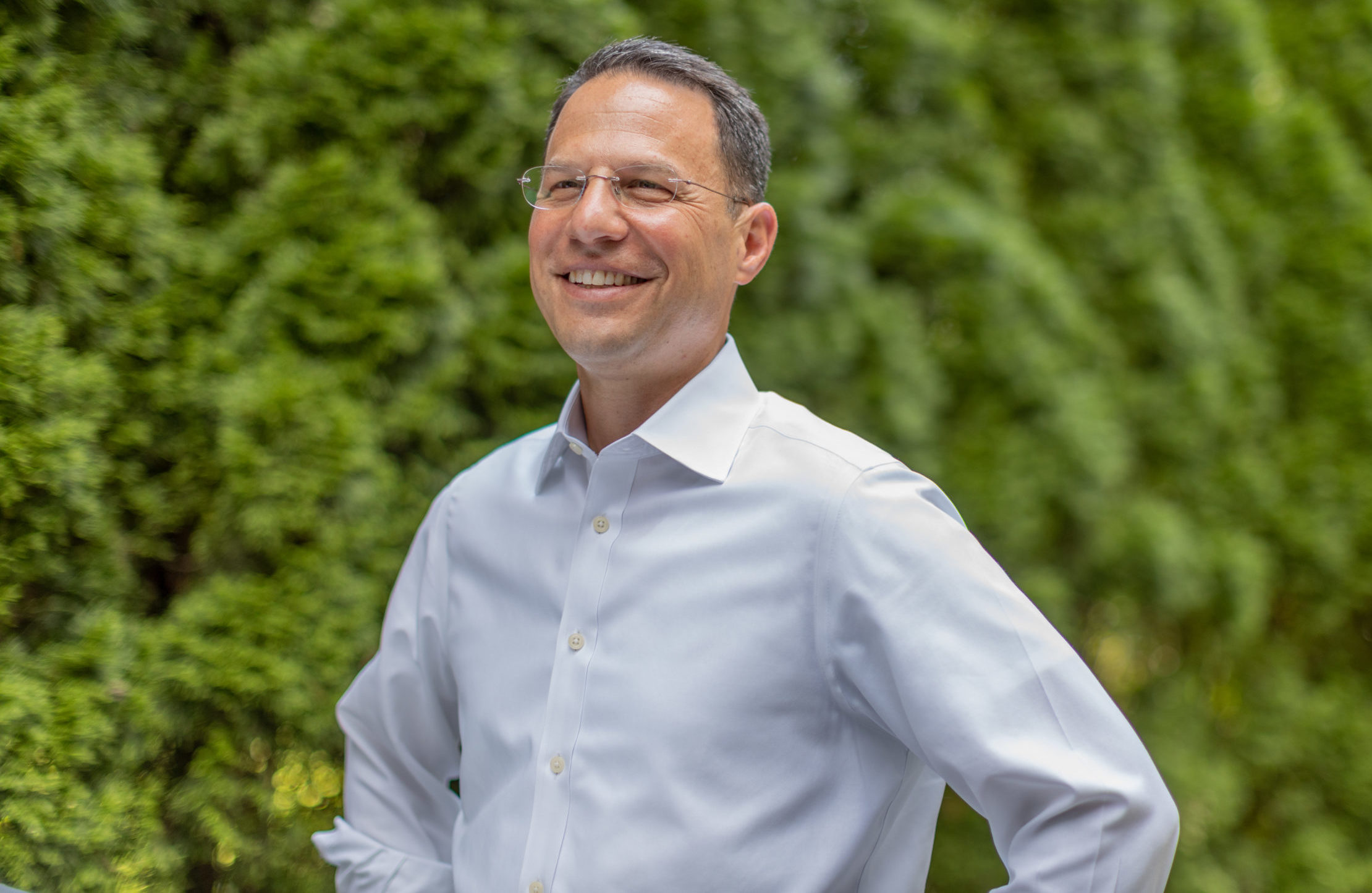
Courtesy
Pennsylvania Gov. Josh Shapiro, widely viewed as a likely 2028 Democratic presidential contender, plans to publish a memoir early next year.
The book, called Where We Keep the Light, is being marketed by publisher HarperCollins as an important story from “a leading voice in the Democratic Party.” For politicians with national ambitions, writing a memoir is generally seen as a stepping stone toward greater name recognition and future campaigns.
In the book, Shapiro will discuss his family and his faith, and remind “us of the faith that guides so many and that there is more that unites us as Americans than divides us.” He will write about his path toward public service and his rise through the ranks of Pennsylvania politics.
A HarperCollins press release said the book goes into detail on the arson attack at the governor’s residence during Passover in April and the period in 2024 when Vice President Kamala Harris was considering naming him her running mate, a topic about which Shapiro has shared very little publicly.
The book will be published on Jan. 27, 2026.
The suspect, Cody Balmer, pled guilty Tuesday on charges of attempted first-degree murder, aggravated assault and aggravated arson
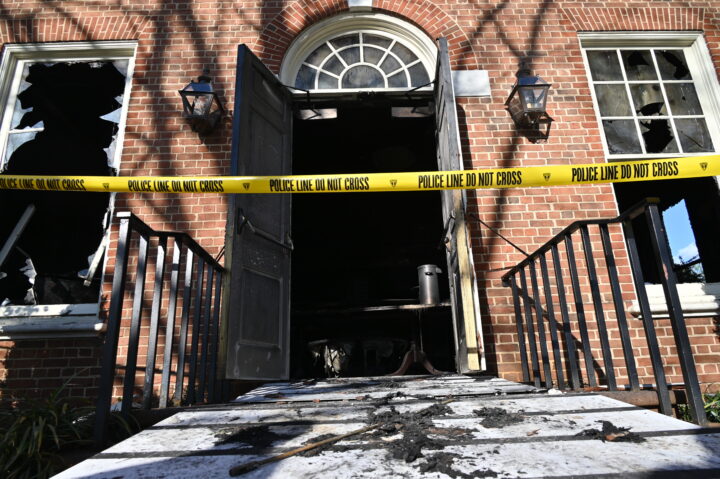
Kyle Mazza/Anadolu via Getty Images
Police line cordon is seen at Pennsylvania Governor's Mansion after a suspected arson attack caused significant damage in Harrisburg, Pennsylvania, United States on April 13, 2025.
Hours after the man accused of an arson attack on the Pennsylvania governor’s mansion in April pled guilty to the attempted murder of Gov. Josh Shapiro, the governor appeared to publicly acknowledge for the first time that the attacker targeted him for his faith.
Cody Balmer was sentenced to 25 to 50 years in prison for the attack, which took place hours after Shapiro and his family hosted a Passover Seder at the governor’s residence in Harrisburg. Balmer said after his arrest that he was motivated by the war in Gaza, and that he wanted Shapiro to know that Balmer “will not take part in his plans for what he wants to do to the Palestinian people.” Shapiro has avoided calling the attack a hate crime.
In a CNN interview on Tuesday, Shapiro was asked by anchor Jake Tapper if he believed he was “targeted just because you’re Jewish.”
“Look, obviously, as governor of Pennsylvania I don’t have foreign policy in my job description. But clearly, the district attorney thought that this was a material fact,” Shapiro said. “Clearly this was a motivating factor.”
Balmer did not face hate crime charges in the case.
“Whatever is motivating this political violence in this country, it needs to stop. Whether it’s targeting me because of my faith, whether it’s targeting someone else because of their ideology, it is not OK,” Shapiro told Tapper. “I think we need all leaders to speak and act with moral clarity, to call it out, to condemn it, and to try and take down the temperature so we don’t end up in situations like this where public officials are targeted because of their faith or their feelings or their ideology.”
A new video released by prosecutors this week shows Balmer walking through the governor’s residence and attempting to kick down doors to the area where Shapiro and his family slept. He is seen throwing Molotov cocktails into a room filled with round tables where the seder had taken place hours before.
Speaking at the Eradicate Hate Global Summit on rising political violence, Shapiro called for ‘peaceful and respectful dialogue’
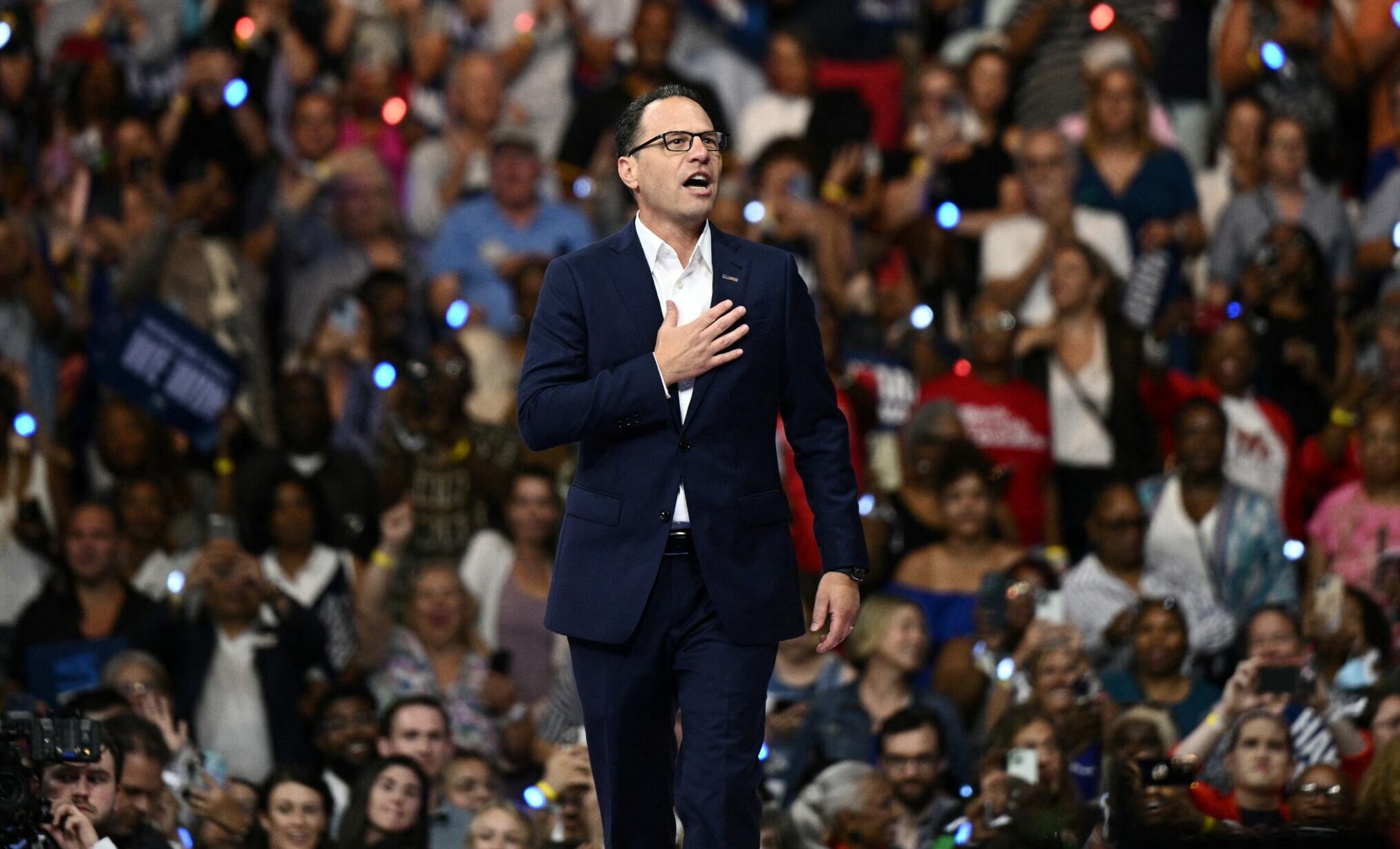
BRENDAN SMIALOWSKI/AFP via Getty Images
Pennsylvania Governor Josh Shapiro speaks before Democratic presidential candidate Kamala Harris in Philadelphia, Pennsylvania, August 6, 2024.
Amid an alarming rise in political violence, Pennsylvania Gov. Josh Shapiro said Tuesday that the way to combat extremism and division is by bringing people together and restoring their faith in the government — a civic-minded strategy that included some thinly veiled swipes at President Donald Trump and the hardline rhetoric he has adopted since conservative activist Charlie Kirk was killed in Utah last week.
Shapiro and his family survived an April arson attack that damaged the governor’s residence in Harrisburg while they slept, hours after hosting a Passover Seder there. The alleged arsonist acted to protest Shapiro’s stance toward the Palestinians, according to a police search warrant.
“I believe we have a responsibility to be clear and unequivocal in calling out all forms of political violence, making clear it is all wrong,” Shapiro said in a keynote address at the Eradicate Hate Global Summit, a Pittsburgh conference created in the aftermath of the 2018 mass shooting at the Tree of Life synagogue. “Unfortunately some, from the dark corners of the internet all the way to the Oval Office, want to cherry pick which instances of political violence they want to condemn.”
Shapiro called for dialogue and a rejection of the demands for revenge that have permeated social media since Kirk’s murder last week. The speech did not name Trump, although Shapiro called for Trump to act with “moral clarity” in a post on X on Monday.
Widely rumored to be considering a 2028 presidential run, the speech offered Shapiro a chance to deliver a wide-ranging speech to a national audience.
“We need to create more opportunities for peaceful and respectful dialogue, respecting each other’s fundamental rights as Americans,” said Shapiro. “Prosecuting constitutionally protected speech will only further erode our freedoms, deepen the mistrust. That is un-American.” Attorney General Pam Bondi said on Monday that the U.S. would be “targeting” hate speech, which she said was different from free speech — a statement she attempted to walk back a day later after facing bipartisan pushback.
There is a better way, Shapiro added: “That better way is the Pennsylvania way.”
“Those who stoke division will want to have us believe words are important, but we also need action,” said Shapiro. “We need to make sure people are safe here in Pennsylvania and all across America, safe to exercise their fundamental rights and freedoms, whether they’re debating on a college campus, praying at a synagogue or church or spending time at home with loved ones.”
Americans should do more to address hate online, and to teach people to better distinguish “fact from fiction” on the internet, argued Shapiro. But more than that, he said, they need to see and trust that the government actually can make their lives better.
“There’s a deeper issue at the root of this dangerous rise of political violence. Too many people don’t believe that our institutions and the people in them can solve problems anymore. They feel alone, ignored, shut out by a government that isn’t working for them,” said Shapiro. “It leads to a belief among some that the only way they can address their problems is through violence.”
The ways to prove otherwise, Shapiro said, are simple — helping people get driver’s licenses quickly, giving kids free breakfast at school and “building a government that works for Pennsylvanians and gets stuff done.”
Shapiro leaned on Jewish teachings in his speech, referring as he often does to how his faith underpins his public service.
During a speech at the Eradicate Hate Global Summit in Pittsburgh, Pennsylvania Gov. @JoshShapiroPA shared the story of an 82-year-old Christian chaplain of a local fire department, who gave Shapiro and his family a letter signed by each member of their department after an April… pic.twitter.com/jqTD9U7S3U
— Jewish Insider (@J_Insider) September 16, 2025
“My faith has taught me that no one is required to complete the task, but neither are we free to refrain from it. It means that each of us has a responsibility to get off the sidelines, get in the game and do our part,” Shapiro said.
After the attack on the governor’s mansion, Pennsylvanians “were united in speaking and acting with moral clarity, making clear that hatred and violence has no place here in Pennsylvania,” said Shapiro.
He shared the story of the 82-year-old Christian chaplain of a local fire department, who gave Shapiro and his family a letter signed by each member of their department. On the back, the chaplain had written by hand what he said was the most important blessing in his life, from the Book of Numbers.
May the Lord bless you and keep you. May the Lord make His face shine upon you and be gracious to you. May the Lord turn His face toward you and give you peace.
“I wept when I read that prayer that he wrote,” said Shapiro, who recalls then telling the chaplain that he recites that prayer — known as the Priestly Blessing in Judaism — to his children each night. He then proceeded to do so in Hebrew, and offered his own benediction about the power the prayer holds for a nation reeling from violence.
Yivarechecha Adonai v’yishmerecha. Ya’er Adonai panav eilecha v’chuneka. Yisa Adonai panav eilecha v’yasem l’cha shalom.
“Those are words of healing, words of hopefulness to me,” said Shapiro. “They are also words that again remind us of our shared humanity.”
State Rep. Chris Rabb’s extreme views are alarming Jewish leaders and voters in a Philadelphia-based district with a sizable Jewish constituency
Paul Weaver/SOPA Images/LightRocket via Getty Images
Pennsylvania state Rep. Chris Rabb speaks during a protest outside of the Pennsylvania Capitol.
The wide-open primary race for the most Democratic district in the country is highlighting stark divisions in Israel policy among the leading candidates.
The candidates for Pennsylvania’s 3rd Congressional District — which includes western Philadelphia, Center City and parts of north Philadelphia — include a host of prominent local officials, as well as some outsider candidates, including state Sen. Sharif Street, who recently resigned as state Democratic Party chair, progressive state Rep. Chris Rabb, state Rep. Morgan Cephas and physician Dr. David Oxman.
Dr. Ala Stanford, a local surgeon and activist who gained prominence during the COVID-19 pandemic, is also seen as a likely candidate, and former City Councilman Derek Green may also join the race.
A Rabb victory would be cause for significant concern for pro-Israel voters in the district — which includes some heavily Jewish areas of Philadelphia — and national pro-Israel groups. The state senator has an extensive history, particularly since Oct. 7, of anti-Israel activism, and has accused Israel of genocide.
He posted on social media in Sept. 2024 in support of a Philadelphia teacher who was suspended following a complaint from Jewish parents about threatening social media posts directed toward them.
“I’m here in solidarity with the educators and students who have shown the discernment to understand that discomfort is not the same as danger, animus or even harm. Quite the contrary, without discomfort, we cannot truly learn, grow or heal,” Rabb said on Instagram. “I do not believe that being critical of any political ideology — be it neo-liberalism or Zionism — is being against an entire people or ethnic group. … We must not allow students and educators to be attacked for discussing critical global issues or other international struggles … And there should be no instance when a mere reference to any sovereign nation is reflexively viewed as a proxy for hate or bias.”
Rabb was the only elected official to attend a recent anti-Israel “People’s Tribunal” hosted by a range of far-left groups, which aimed to present a case that U.S. officials including Sen. John Fetterman (D-PA) are guilty of complicity with genocide and war crimes by Israel.
Rabb described the event as a generational moment that would reverberate far into the future.
He called on his state to divest from and cease any investments in Israel until the end of the war in Gaza, and said that advancing a proposed anti-Boycott, Divestment and Sanctions bill would “cause a s*** show of epic proportions that no Democrat wants to see — especially in an election year where the policy choices we make are being scrutinized by a highly skeptical, but vigilant and well organized subset of the electorate.”
Rabb also spoke at a February 2024 protest led by anti-Israel group Jewish Voice for Peace at which he indicated support for protests blocking traffic and opposed arrests of demonstrators at the Pennsylvania Statehouse, comparing anti-Israel protests to the Civil Rights Movement. “This is a radical expression of one’s First Amendment rights,” he said.
He visited and praised anti-Israel encampments at multiple colleges in Pennsylvania and indicated support for BDS efforts targeting the colleges, participated in events with the local Council on American-Islamic Relations chapter and spoke out against detentions and attempted deportations of student activists.
He also condemned school leaders out-of-state, in Maryland, for suspending teachers for anti-Israel, antisemitic or pro-Palestinian comments, one of whom he said was a personal friend.
“I’m irate about how these pro-#censorship folx have maliciously targeted these teachers,” Rabb said. “Being pro-#Palestine is neither a crime, nor anti-Jewish.”
Rabb on Oct. 18, 2023, 11 days after the Hamas attacks, called for a ceasefire as well as the release of “the more than 200 civilian hostages taken back into Gaza and Palestinian political prisoners.”
“I grieve the loss of lives in Israel and Palestine. I condemn Hamas’s brutal attack on October 7th … I also grieve the thousands of Palestinians in Gaza, including hundreds of children, who have been killed by Israeli bombs since then. It is never acceptable to cause the deaths of civilians. All human life is sacred,” Rabb said. “I join my colleagues in Congress who have called for immediate de-escalation, ceasefire, adherence to International Humanitarian Law and humanitarian aid to Palestine commensurate with the devastation wrought upon Gaza.”
Rabb was one of several Democratic state lawmakers who signed onto a Nov. 21, 2023, letter to Pennsylvania’s congressional delegation which delivered a similar message. The chief of staff for the state senator who led that letter had reposted several X posts on Oct. 7 indicating support for the Hamas attacks on Israel.
Street, who is Muslim, has long-standing ties to members of the state’s Jewish community and has spoken out in support of Israel’s right to exist and against antisemitism. He traveled to Israel in 2017 on a trip for Muslim legislators organized by the American Jewish Committee’s Project Interchange, a source familiar with the campaign told Jewish Insider.
“As a Black man and a Muslim, I’ve spent my entire political career fighting for the inherent worth and dignity of every person. That’s why I have stood strong against the growing tide of anti-Semitism in this country,” Street said in a statement to JI. “In Congress, I will work hard for peace in the Middle East based on mutual trust and grounded in Israel’s right to exist and the right of the Palestinian people to live without fear.”
In a November 2023 statement responding to the Hamas attack and ensuing war in Gaza, Street emphasized the right of both Israelis and Palestinians to peace and freedom, and mourned civilian deaths on both sides, while emphasizing the importance of U.S. support for Israel.
“We must affirm the right of Israel to exist. We must affirm the right of the Jewish people to have a sovereign state and we must also affirm the right of the Palestinian people to live in a place where their children are safe and their families are secure,” Street said. “A place where their hospitals and schools are not compromised by Hamas commingling military facilities with hospitals and schools.”
He said that the U.S. “must not abandon its calling to protect the children of the Holocaust” and “must remember why the modern state of Israel was created in the aftermath of World War II. We must remain vigilant in our support of Israel and its right to defend itself.”
Street added that “does not disavow us from having an obligation to the Palestinian people as well,” and ensuring that “food flows plentifully into the land of Palestinian people,” that hospitals and schools are rebuilt and that both Israeli and Palestinian children can live in peace.
He went on to condemn hate crimes in the United States targeting both the Palestinian and Jewish communities, as well as Christians.
Street also offered his condemnation and condolences following the shooting earlier this year of two Israeli Embassy staffers outside the Capital Jewish Museum in Washington.
“As the highest-ranking Muslim elected official in Pennsylvania, I am heartbroken by the senseless act of violence that took the lives of two Israeli embassy staff in Washington, D.C.,” Street said. “I extend my deepest condolences to the families of Yaron Lischinsky and Sarah Milgrim, and to all who are grieving this horrific tragedy. No one should fear for their lives simply because of who they are or where they work.”
“I unequivocally condemn this shooting—and all acts of gun violence, antisemitism, and hatred. We must all stand against violence, wherever it occurs and whoever it targets,” Street continued. “I support the right of Israel to exist in peace and security, just as I support the rights of Palestinians to live with dignity and freedom. A just and lasting peace in the region will never be built on bloodshed. We must do better—here at home and abroad.”
As the Pennsylvania Democratic chair, Street spoke out against the Uncommitted movement that urged voters to oppose President Joe Biden in the 2024 presidential primary over his position on the war in Gaza. “As a Muslim American, I know that President Biden has my back and will fight for our community,” Street said. He also emphasized the need for Democrats to appeal to both Jewish and Muslim voters.
Street did not vote last year on an anti-Boycott, Divestment and Sanctions bill when it passed either the Pennsylvania Senate Appropriations Committee or the full Senate.
Cephas does not appear to have much of a public record of speaking out about the conflict in the Middle East, though in the days after the Oct. 7, 2023, Hamas attack on Israel, she was an advocate for increased state-level funding for nonprofit security funding.
Larry Ceisler, a public affairs executive in Philadelphia, told JI that the race is likely to be highly competitive — a rare opportunity for a Philadelphia elected official to potentially secure a long tenure in higher office.
He described the race as essentially a toss-up and said he could see a scenario for each of Street, Cephas and Rabb to win. Ceisler said that the race could break down, to some extent, along geographic lines.
Street, Ceisler said, has strong name recognition as the son of a former Philadelphia mayor, and represents north Philadelphia. Cephas represents west Philadelphia, and Rabb represents northwest Philadelphia, an area that is very politically active, leans left and usually has high voter turnout in primaries.
Ceisler predicted Rabb will present himself as the furthest-left candidate in the field and noted that he previously beat a candidate backed by the local party apparatus, while Street is likely to lean on more traditional support bases including local party and ward leaders and some organized labor groups.
He said Cephas’ youth, gender and leadership in the Statehouse could also make her an attractive candidate for some voters. And he said that Stanford enjoys high name recognition and goodwill from the COVID-19 era, though she is untested and unscrutinized as a political candidate.
Ceisler noted that he is a Rabb constituent and former supporter who wrote to Rabb to express his disappointment early in the Israel-Hamas war about his post-Oct. 7 positions, saying he felt Rabb was “uninformed” and had accepted false and misleading information, though he said that Rabb should not be “vilified.”
CORRECTION: An earlier version of this story misidentified the name of public affairs executive Larry Ceisler.

Tom Brenner For The Washington Post via Getty Images
Metropolitan Police Department and Federal Bureau of Investigation officers stand guard at a perimeter near the Capital Jewish Museum on May 22, 2025 in Washington.
Good Tuesday afternoon.
This P.M. briefing is reserved for our premium subscribers like you — offering a forward-focused read on what we’re tracking now and what’s coming next.
I’m Danielle Cohen-Kanik, U.S. editor at Jewish Insider. I’ll be curating the Daily Overtime for you, along with assists from my colleagues. Please don’t hesitate to share your thoughts and feedback by replying to this email.
📡On Our Radar
Notable developments and interesting tidbits we’re tracking
Pennsylvania Gov. Josh Shapiro spoke out on the humanitarian crisis in Gaza today, telling a local news channel, “The fact that kids are starving in Gaza is not OK. It is not OK. And I think everyone has a moral responsibility to figure out how to feed these kids. It is true that Hamas intercepts aid. It is true that the aid distribution network is not as sophisticated as it needs to be, but given that, I think our nation, the United States of America, has a moral responsibility to flood the zone with aid. … It is awful, what is happening in Gaza.”
The Democratic governor called Israeli Prime Minister Benjamin Netanyahu’s claim that there is no starvation in Gaza “quite abhorrent,” and said Netanyahu’s language and support of “occupying” Gaza is “not only reckless … but what it does is it further isolates Israel in the world, and that’s a dangerous place for Israel to be.” It’s a sign of the rhetorical tightrope even pro-Israel Democrats are walking, as the party’s voters turn more critical towards the Jewish state…
Sen. Elissa Slotkin (D-MI), another moderate-minded Jewish Democrat, who recently said she supported resolutions led by Sen. Bernie Sanders (I-VT) last week to block some arms sales to Israel, told Semafor that Israel’s moves to airlift increased aid into Gaza are “a start, but you can’t possibly get the volume of food in there that you need via an airlift.”
However, asked if she would support recognition of a Palestinian state, Slotkin said, “I just don’t believe that we should be recognizing a new state in the middle of an active hot war”…
After sources in the Prime Minister’s Office briefed reporters yesterday that IDF Chief of Staff Eyal Zamir can step down if he doesn’t agree with Netanyahu’s move to expand the war in Gaza, the PMO released a statement that “the IDF is prepared to enact any decision made by the Security Cabinet.” The statement came after a three-hour meeting of senior security officials in which Zamir presented “possibilities to continue the campaign in Gaza.” Netanyahu plans to convene the full Security Cabinet on Thursday, according to Israel’s Channel 12 news…
House Speaker Mike Johnson’s (R-LA) trip to Israel continues, including a meeting last night in Shiloh — the second West Bank settlement Johnson has visited since his arrival — with Netanyahu and his wife, Sara, as well as U.S. Ambassador to Israel Mike Huckabee and his wife, Janet. Johnson’s delegation also met with Ditza Or, mother of hostage Avinatan Or…
The FBI released its 2024 Hate Crime Report this morning, which found that nearly 70% (1,938 incidents) of all religiously motivated hate crimes in the U.S. last year were committed against Jews, including terrorist threats, assault, vandalism, harassment, burglary, false bomb threats and swatting. It’s the highest number of anti-Jewish hate crimes ever recorded by the bureau since it began collecting data in 1991…
Sen. Tom Cotton (R-AR) sent a letter to the IRS yesterday asking the agency to investigate the Council on American-Islamic Relations’ status as a 501(c)(3) nonprofit organization based on “substantial evidence” that “confirms CAIR has deep ties to terrorist organizations”…
U.S. Ambassador to France Charles Kushner met yesterday with Saudi Ambassador to France Fahd bin Mayouf Al-Ruwaili. Kushner said the two discussed “the ways that our two countries can each contribute to peace and stability in the Middle East,” just one week after Saudi Arabia and France co-chaired a U.N. conference on the two-state solution which the U.S. and Israel boycotted…
The Department of Homeland Security, which oversees the Federal Emergency Management Agency, quietly removed a requirement for grant applicants to certify they will not engage in a commercial boycott of Israel in order to be eligible for funding. The requirement had been included in notices published by FEMA on Friday for a tranche of at least $1.9 billion in natural disaster preparedness grants…
⏩ Tomorrow’s Agenda, Today
An early look at tomorrow’s storylines and schedule to keep you a step ahead
Keep an eye on Jewish Insider this week for reporting on Rep. Maxwell Frost’s (D-FL) anti-Israel turn since coming into office as the first Gen-Z lawmaker, the University of Maryland’s decision to settle a lawsuit with CAIR for a six-figure sum and the Democratic Navy veteran, Rebecca Bennett, looking to unseat Rep. Tom Kean Jr. (R-NJ) in New Jersey’s 7th Congressional District.
Tomorrow, the New Jersey Jewish Business Alliance will host its 11th annual Legislative and Business Luncheon featuring gubernatorial candidates Rep. Mikie Sherrill (D-NJ) and former Republican state Rep. Jack Ciattarelli. The two will face off in the Garden State’s November general election, with recent polling showing Sherrill with a comfortable lead.
Stories You May Have Missed
POLICY RECKONING

A lack of a ‘day-after plan’ and an unwillingness to address threats before they grew left Sharon’s 2005 promises unfulfilled. What has Israel learned since then?
DISTRICT DYNAMICS
Walkinshaw said the U.S.-Israel relationship ‘has immense strategic importance to the United States, and I want to see a strong U.S. Israel relationship with bipartisan support’
The Pennsylvania governor called Netanyahu’s comments that there is no starvation in Gaza ‘quite abhorrent’
Brian Kaiser/Bloomberg via Getty Images
Pennsylvania Gov. Josh Shapiro during a panel discussion at the inaugural Pennsylvania Energy and Innovation Summit at Carnegie Mellon University in Pittsburgh, Pennsylvania, US, on Tuesday, July 15, 2025.
Pennsylvania Gov. Josh Shapiro called the humanitarian crisis in Gaza “awful” and said the U.S. has a “moral responsibility” to “flood the zone with aid.”
Speaking to the central Pennsylvania Fox34 news channel on Tuesday, Shapiro said, “The fact that kids are starving in Gaza is not OK. It is not OK. And I think everyone has a moral responsibility to figure out how to feed these kids. It is true that Hamas intercepts aid. It is true that the aid distribution network is not as sophisticated as it needs to be, but given that, I think our nation, the United States of America, has a moral responsibility to flood the zone with aid.”
“It is awful, what is happening in Gaza,” the Democratic governor continued.
He also called Israeli Prime Minister Benjamin Netanyahu’s claim that there is no starvation in Gaza “quite abhorrent.”
“He is wrong. He is wrong,” Shapiro said.
“I believe that also, as a result of that type of language, as a result of standing with Donald Trump with plans to occupy Gaza, or, as President Trump said, drive all the Palestinians out and create — his words, not mine — a Riviera of the Middle East, or however the president said it, I think that is not only reckless language, but what it does is it further isolates Israel in the world, and that’s a dangerous place for Israel to be,” Shapiro added.
Shapiro has faced criticism from the left flank of the Democratic Party for his support of Israel in the past, particularly when he was being considered as a potential vice president to join Kamala Harris’ ticket in the 2024 presidential election.
The alleged perpetrator of the arson attack on Shapiro’s residence in Harrisburg, Pa., on the first night of Passover in April said he was motivated by the governor’s stance toward the Palestinians.
The Pennsylvania governor told JI: ‘When supporters of yours say things that are blatantly antisemitic, you can't leave room for that to just sit there’

Andrew Harnik/Getty Images
Pennsylvania Gov. Josh Shapiro greets the crowd before the start of a campaign rally at Temple University on August 6, 2024 in Philadelphia, Pennsylvania.
LEWISTOWN, Pa. — Inside a coffee shop in this small town of 8,500 people, hundreds of miles from the bustle of Manhattan, Pennsylvania Gov. Josh Shapiro made his first public comments about Zohran Mamdani, criticizing the New York City Democratic mayoral candidate for not taking a stronger stand against “extremists” who have made “blatantly antisemitic” comments.
“He seemed to run a campaign that excited New Yorkers. He also seemed to run a campaign where he left open far too much space for extremists to either use his words or for him to not condemn the words of extremists that said some blatantly antisemitic things,” Shapiro told Jewish Insider in an interview on Wednesday.
Shapiro’s comments come as Mamdani, who defeated former New York Gov. Andrew Cuomo in the Democratic primary last month, continues to face backlash for declining to condemn the phrase “globalize the intifada.” (Mamdani told business leaders last week that he would “discourage” use of the slogan.)
National Democratic figures have struggled to figure out how to respond to Mamdani’s come-from-behind victory and to assess what the election of a self-proclaimed democratic socialist as the Democratic nominee for mayor of the largest city in the country means for the future of the party.
Neither Senate Minority Leader Chuck Schumer (D-NY) nor House Minority Leader Hakeem Jeffries (D-NY) have endorsed Mamdani, while some progressive leaders — such as Sens. Chris Murphy (D-CT) and Bernie Sanders (I-VT) — have embraced him. Sen. Elissa Slotkin (D-MI), another swing-state Democrat, said on Wednesday that Mamdani’s victory is a “message” that “cost of living and the economy is the driving issue for the average person.”
Democratic National Committee Chair Ken Martin, when asked about Mamdani’s handling of the “globalize the intifada” slogan, said earlier this month that he did not agree with everything Mamdani has said, but that the Democrats are a “big tent” party. Martin later clarified that he found the “intifada” phrase “reckless and dangerous.”
Widely viewed as a possible 2028 presidential candidate, Shapiro has steered clear of weighing in on a number of divisive national issues, preferring instead to focus on Pennsylvania, where he maintains a 61% approval rating. But on Wednesday, he offered a sharp message to Mamdani.
“I’ll say this about Mamdani or any other leader,” Shapiro said. “If you want to lead New York, you want to lead Pennsylvania, you want to lead the United States of America, you’re a leader. I don’t care if you’re a Republican or Democratic leader or a democratic socialist leader. You have to speak and act with moral clarity, and when supporters of yours say things that are blatantly antisemitic, you can’t leave room for that to just sit there. You’ve got to condemn that.”
At a moment of declining support for Israel within the Democratic Party, the Jewish governor told JI that he stands by his pro-Israel bona fides.
“I think one of the things that always strengthened Israel was the fact that the relationship America had with Israel was not even bipartisan, but somewhat nonpartisan. Figuring out ways to build bridges between the parties, between people of different walks of life, to support Israel, I think is important,” he noted. “I think just in general, across the board, I want to see more support for Israel, for a Jewish state. That doesn’t mean that one can’t be critical of Israeli policy.”
There is more that politicians on both sides of the aisle need to do to maintain support for Israel and the U.S.-Israel relationship, Shapiro said, though he added that “the majority of that work is going to happen in Washington.” He declined to specifically address Democrats’ views on Israel or polling that showed a massive drop in Democratic support for Israel since 2023.
“I don’t do foreign policy in Pennsylvania in my role as governor, but I do think it is important to repair that relationship,” Shapiro said. “I am concerned that support for Israel in the United States broadly is down compared to what it was a decade ago.”
It isn’t only American leaders who need to work to strengthen ties between Israel and the U.S., Shapiro said. He placed some of the blame on Israeli Prime Minister Benjamin Netanyahu.
“I think if you care about the future safety and security of Israel, and you’re the leader of Israel as Netanyahu is at present time, you’ve got to find ways to build bridges to people in both parties, to leaders in both parties,” said Shapiro, who has long been a critic of Netanyahu’s leadership. But he asserted that opposition to Netanyahu as prime minister should not be equated with opposition to the existence of a Jewish state.
“There are policies of the Netanyahu government that I don’t support. I’ve been very vocal about that. But there’s a difference between not supporting the policies of whoever’s in charge at a particular time, and the underlying notion of a Jewish state of Israel,” said Shapiro. “I do think it is important to strengthen people’s understanding of Israel and the relationship America should have with Israel and to strengthen that bond.”
Shapiro, one of the most prominent Jewish politicians in the country, has been on the receiving end of antisemitic smears over his support for Israel. In April, the governor’s mansion in Harrisburg was set ablaze in an arson attack just hours after Shapiro and his family had hosted a Passover Seder.
Police said the alleged perpetrator was motivated by anti-Israel animus, but Shapiro has repeatedly declined to characterize the incident as antisemitic in nature, saying that doing so would be “unhelpful” to prosecutors who have not brought hate crime charges.
Shapiro told JI the arson attack left a profound impact on him, both personally and religiously. It brought him closer, he said, to “my faith and my spirituality.”
“It made me believe even more, not just in my God, but in the power of prayer,” said Shapiro. “It’s given me a deeper, spiritual connection of my faith and a deeper connection to people of other faiths.”
The gathering also included the state’s two leading Democrats, Gov. Josh Shapiro and Sen. John Fetterman, and President Donald Trump

Jeff Swensen/Getty Images
President Donald Trump (C) arrives to speak to guests and investors at the inaugural Pennsylvania Energy and Innovation Summit at Carnegie Mellon University on July 15, 2025 in Pittsburgh, Pennsylvania.
PITTSBURGH — Pennsylvania’s top lawmakers put up a united front on Tuesday to emphasize to the hundreds of tech and energy investors at Sen. Dave McCormick’s (R-PA) inaugural innovation summit the benefits of working with states that embrace bipartisanship and the national security imperatives of investing domestically.
The Pennsylvania Energy and Innovation Summit brought top tech and energy executives to Carnegie Mellon University’s campus, home to one of the world’s most advanced AI programs. Tuesday’s gathering also included the state’s two leading Democrats, Gov. Josh Shapiro and Sen. John Fetterman (D-PA), and President Donald Trump, all of whom praised the conference as a strategic way to promote U.S. investment to the scores of foreign and American leaders in attendance.
Amazon Web Services’ $20 billion investment last month in three computing and AI campuses in the Keystone State was “an indicator of all that we can be when we harness the new things that we have going for us, and when we have government and the private sector working together, not at odds, and when we pull in our educational institutions … in a way that really helps move Pennsylvania forward,” Shapiro said during a panel discussion with McCormick and AWS CEO Matt Garman.
While McCormick and Shapiro acknowledged their political differences, they said they agreed that their state should be on the forefront of the technological innovation and investment happening in the United States. They also said they share the view that a unified team of statewide leaders is more appealing to outside investors and businesses than an assortment that’s at odds with each other.
“I look at this moment as a business guy, and so I say one of two things: If I’m a business guy, what do I want?” McCormick asked. “I want to come to a place that has all those ingredients and has uniform political leadership. … If you’re a CEO and you want to invest a bunch of money and you come in and sit down, you meet the governor and he’s talking bad about me and saying that I’m full of it, and vice versa, that makes you not want to invest, right? So we need to be aligned at all levels.”
“The governor and I are of different parties, we have plenty of differences, but on this, we agree. Sen. Fetterman was at our dinner last night. On this, we agree that we need to be at the crossroads of the energy revolution, the AI revolution. To have a leadership position, we need to show a unified front at the local level, at the state level, at the national level. That’s the only way to win,” McCormick continued.
The conversation, which took place as hundreds of AI and energy firms courted investors at tables around the Jared L. Cohon University Center on Carnegie Mellon’s campus, followed panel discussions from senior tech and finance executives about winning the race for AI and energy domination domestically and the benefits of investing in the Keystone State.
Shapiro and McCormick separately said that they view Pennsylvania as a purple state that requires bipartisan cooperation to push any legislation across the finish line.
“As a candidate, I promised I would get things done, and in Pennsylvania, you can’t get things done unless you’re able to work with people who you disagree with on certain things and find areas of common agreement,” McCormick said. “We can agree that we’ve got to have great jobs in Pennsylvania, we’ve got to take advantage of our energy resources, like there is so much to agree on. So I think this is a particularly special moment for Pennsylvania.”
Shapiro noted that his first two years as governor took place under a Republican state Senate, forcing him to reach across the aisle and find common ground on areas such as economic and education policy, before noting that he still takes issue with major GOP policy priorities such as Trump’s budget reconciliation bill.
“The last two years, I was the only governor in the entire country with a divided legislature. Senate led by Republicans, a House led by Democrats. This year, I think there’s one or two other governors with the same. For me to get any bill to my desk requires votes from the Republican Party and the Democratic Party. And I think if you enter every discussion focusing on your differences, you’ll never get anything done,” Shapiro said.
“We’re honest about differing on the bill that was just passed, the reconciliation bill that was just passed last week,” he added of his disagreements with McCormick. “But we also understand how critically important it is to grow our economy in Pennsylvania, this unique moment that we are in.”
Fetterman, who returned to Washington on Tuesday for Senate business, told Jewish Insider in a statement that he was fully supportive of the summit and the unity push by McCormick and Shapiro.
“Party aside, we’re all in – on Pennsylvania’s best interests,” Fetterman told JI, adding that he sent his “congratulations to Sen. McCormick for putting this tremendous event together for Pennsylvania’s future.”
McCormick later highlighted in his discussion with Shapiro and Garman the need for Pennsylvania and the U.S. to keep up with the rest of the world in economic development.
“If you travel around the world, if you go to the Middle East, if you go to other places, the pace of change is extraordinary. And it’s gonna require a level of urgency that I don’t think most people in this room have probably had in the past about this moment, particularly in Pennsylvania. And so that urgency, we need to grab the moment,” the senator said.
In response, Shapiro pointed out that one of McCormick’s top takeaways from his recent visit to the Middle East was the potential for U.S. investments from new partners.
“The senator, and I think Dina [Powell McCormick] as well, went to the Middle East a month or two ago, and we talked right when he came back. One of the things you were most jazzed up about, I thought, were the investments that folks in the Middle East shared with you that they wanted to make in America and how you were pitching Pennsylvania as part of that,” Shapiro said.
“This is a global race for both energy dominance and AI dominance. We need home-grown Pennsylvanians to be doing this work, and we need investment from all across the country and all across the globe. We do not want China to beat us in this AI race. This is one of the most important national security questions we have, and so if the senator and others can bring investment from around the globe to right here in Pennsylvania,” he continued.
During the president’s roundtable discussion with McCormick, leading executives and several members of his Cabinet, Trump touted the $5.1 trillion in domestic investments he claimed to have secured on his last visit to the Middle East while cheering the $90 billion in committed U.S. projects announced at the summit.
“Today’s commitments are ensuring that the future is going to be designed, built and made right here in Pittsburgh and I have to say right here in the United States of America,” Trump said.
Interior Secretary Doug Burgum described the president’s “vision of energy dominance” as the “foundation of this golden age for America.”
“You identified that there were a couple of threats to our country. One was Iran having a nuclear weapon. The other was losing the AI arms race to China. You took care of one of those a few weeks ago. You’re helping to take care of the other one here,” Burgum said of Trump’s agenda, prompting a smile from the president.
McCormick then noted that Trump’s attendance at the summit helped boost interest from industry leaders and investors alike. “I really believe, Mr. President, based on you being here, we’re going to look back on this day and say that this was a real, seminal moment in the history of our Commonwealth and maybe in the history of our country,” he told the president.
Trump then remarked that while McCormick had initially only asked him to make a brief appearance at the gathering, he decided to stay for longer once he saw the industry leaders on the high-profile guest list.
“When I saw the people gathered, I said, ‘I’m not leaving. I want to learn something.’ And I have learned something. This is the smartest group of talent, probably, that you’ve ever had in terms of energy and even finance, [that you’ve] ever had in one room,” Trump remarked to the crowd.
Herzog expressed solidarity with Shapiro after the attack, which took place hours after the governor hosted a Passover Seder

Kyle Mazza/Anadolu via Getty Images
Police line cordon is seen at Pennsylvania Governor's Mansion after a suspected arson attack caused significant damage in Harrisburg, Pennsylvania, United States on April 13, 2025.
Israeli President Isaac Herzog called Pennsylvania Gov. Josh Shapiro on Sunday, a week after an arsonist motivated by anti-Israel animus set the governor’s mansion on fire.
Herzog expressed solidarity with Shapiro after the attack, which took place hours after the governor hosted a Passover Seder.
Shapiro told Herzog he greatly appreciated the call, a spokesperson for the president told Jewish Insider.
The man who set fire to the governor’s mansion last weekend said in a 911 call that he “will not take part in [Shapiro’s] plans for what he wants to do to the Palestinian people.”
While Shapiro quoted the Jewish priestly blessing following the attack, he stopped short of attributing the attack to antisemitism in an interview on Friday with ABC News and rebuffed a call by Sen. Chuck Schumer (D-NY) to have Attorney General Pam Bondi investigate the attack as a hate crime.
Herzog was the first Israeli official to call Shapiro after the attack.
Ofir Akunis, the Israeli consul general in New York, sent a letter to Shapiro last week, saying that he was “deeply shocked and saddened to learn of the arson attack.”
“This appalling act of violence, carried out during one of the most meaningful nights of the Jewish calendar, could have resulted in a far greater tragedy,” Akunis added. “We commend law enforcement for their swift and effective response, and we stand in full solidarity with you and your family.”
In an interview with ABC News, the Pennsylvania governor pivoted away from questions about the antisemitic motivations of the perpetrator
Kyle Mazza/Anadolu via Getty Images
Pennsylvania Governor Josh Shapiro speaks during a press conference outside of the Governor's Mansion after an arsonist sets fire to the Governor's Residence in a targeted attack in Harrisburg, Pennsylvania, United States on April 13, 2025.
Pennsylvania Gov. Josh Shapiro is holding firm in his choice not to label the arson attack that targeted the governor’s mansion on Passover as antisemitic or a hate crime, saying in a Friday interview on ABC News’ “Good Morning America” that he will leave that question to the prosecutors.
“I think that’s a question for the prosecutors to determine. They’re going to determine motive,” Shapiro said. “I recognize when you’re in these positions of power, there are people out there that want to do you harm, but I try not to be captive to the fear, and I try not to worry or think about why people want to do that harm.”
ABC News anchor George Stephanopoulos pressed Shapiro on the question, noting that Senate Minority Leader Chuck Schumer (D-NY) called on the Department of Justice to investigate the attack as a hate crime. Shapiro stood by his statement made on Thursday that Schumer’s letter was not “helpful.”
Stephanopoulos followed up with an opportunity for Shapiro to address antisemitism by connecting the attack on the governor’s mansion to the 2018 Tree of Life shooting.
Shapiro’s job, Stephanopoulos argued, “is to combat the kind of conditions we’re seeing to create the opportunity for situations like this. Pennsylvania is no stranger to this,” he said. “We saw the attack in the Tree of Life synagogue in Pittsburgh in 2018. How do you combat this kind of hate?”
Shapiro pivoted away from the comparison. “By speaking and acting with moral clarity,” Shapiro responded.
Rather than mentioning antisemitism in his response, Shapiro instead spoke about political violence. He talked about the assassination attempt on President Donald Trump in Butler, Pa., last summer and mentioned the arrest of Luigi Mangione, the man charged with murdering the CEO of UnitedHealthcare, in Altoona, Pa.
“I think it’s also important when you’re not dealing with a traumatic event, in Butler, in Altoona or here in Harrisburg, to be leading every day in a way that brings people together and doesn’t just continually divide us,” said Shapiro.
Growing up immersed in conversations about the weekly Torah portion over Shabbat lunch and spending his summers at Camp Ramah in the Poconos shaped the Pennsylvania budget secretary’s approach to public service

Pennsylvania’s Budget Secretary Uri Monson
Only in a family where nearly everyone is a rabbi does becoming a Cabinet secretary in one of the largest states in the nation make you a black sheep.
That’s the joke that Uri Monson, Pennsylvania’s budget secretary, likes to make when describing his career as a public servant in the context of his family — a brother, father, grandfather and great-grandfather who were rabbis; a stepmother who was a lifelong Jewish nonprofit professional; and a mother who was a renowned Jewish academic and university administrator.
But coming out of that kind of lineage (his great-grandfather was the first person to certify Coca-Cola as kosher!), choosing a career in public service was Monson’s act of “pseudo-rebellion,” he said in an interview with Jewish Insider earlier this month. He didn’t stray that far from his Jewish values, though — during his first internship, at city hall in Philadelphia, he helped draft the mayor’s speech for Israeli Independence Day.
“I grew up a mile from Independence Hall. I’ve always been an American government junkie, and fascinated by and love[d] government and its ability to really help,” said Monson, 56. “I felt, even at 18, that I could make it better, that it had to be able to be done better, and that started me on that path to public service.”
Even if Monson didn’t follow his family members into the Jewish professional world, growing up immersed in deep conversations about the weekly Torah portion over Shabbat lunch and spending his summers at Camp Ramah in the Poconos shaped his approach to public service just as much as his wonky fascination with fiscal policy and his master’s degree in public administration.
“What we’ve seen all along is that that Jewish perspective has shaped his commitment to what government can do and the way that society should work,” said Rabbi Chaim Galfand, the head rabbi at Perelman Jewish Day School in Philadelphia and a close friend of Monson’s.
Monson attended the joint program at List College at the Jewish Theological Seminary, where he earned a bachelor’s degree from Columbia University and another, in midrash, from JTS. The intellectual curiosity and creativity that comes from his expertise in interpreting the Torah — Monson calls himself a “midrash parsha junkie” — colors the way he approaches everything from budgetary policy to his weekly Settlers of Catan board games with Galfand each Shabbat.
The biblical stories about Joseph are his favorite; Joseph’s “rise in the political world,” from slave to advisor to the Egyptian pharaoh, is particularly resonant for Monson. But he doesn’t think there is only one way to engage with these stories, and that’s a lesson that guides his approach to public policy, too.
“When you make that jump to learning that the Talmud is not a book of law, but that it’s a book of how to think about law, it’s a major change. It’s a major jump in thought,” Monson said. “To realize that you had people disagreeing over really complex issues of Jewish law — that’s how they lived their lives, and what they actually record [in the Talmud] is the discussion and the back-and-forth and the debate. They were able to do it while living civilly together.”
Monson started his career in Washington as a policy advisor at the Department of Education during the Clinton administration. He has friends from that era who have lost their jobs as the Trump administration slashes the federal workforce. Monson does not reflexively believe all public employees have a right to keep their jobs; his former boss, President Bill Clinton, also stressed efficiency and shrunk the federal workforce by hundreds of thousands of people. But he does think those workers should be respected.
“There are few of us who have a mantra, and I share this with the governor, that [we] cannot stand the phrase, ‘That’s the way we’ve always done it.’ There are always opportunities for change,” he said, referring to Gov. Josh Shapiro. “The biggest difference for me between what I was a part of and what the current administration is doing is that that change was all about employee empowerment.” Shapiro has made a play for laid-off federal workers, encouraging them to apply to fill vacancies in Pennsylvania.
Monson’s time in Washington got him started on his path to Harrisburg — both because it was his first full-time gig in the government, and also because it was in this era that he reconnected with Shapiro, who was working on Capitol Hill at the time.
“Like most expatriate Eagles fans, we would find each other to watch games, that kind of thing,” said Monson. But their relationship goes back decades: Shapiro and Monson’s younger brother, Ami, were in the same grade at Akiba Hebrew Academy, a pluralistic Jewish day school in the Philadelphia suburbs. (CNN anchor Jake Tapper was another classmate.) Shapiro’s parents and Monson’s were active in the Soviet Jewry movement of the 1970s and 1980s.
“Uri and I both lean on our family and our faith as motivation to serve the good people of Pennsylvania,” Shapiro told JI in a statement last week. “We are both driven by the same Jewish principle of tikkun olam, and from the passage from the Talmud that teaches us that no one is required to complete the task, but neither are we free to refrain from it.”
Shapiro’s first video ad in his 2022 gubernatorial campaign showed him, his wife and their children celebrating Shabbat. Monson, who observes Shabbat and does not work or travel from sundown Friday until Saturday night, receives weekly “Shabbat shalom” emails from Shapiro.
“When he offered me the job, I said, ‘I’m not going to be in Harrisburg on Fridays in the winter’” — when Shabbat begins in the late afternoon — “and he said he understood,” Monson recalled. Over the years, his colleagues have gotten used to Monson’s Shabbat observance, sending emails on Saturdays with the subject line “read me first” to try to capture his attention after Shabbat ends.
“Once in a while they’re like, ‘Maybe I want to be Jewish too,’ because they need a break,” Monson said, laughing.
Monson returned to Philadelphia in the late 1990s for the first in a series of increasingly powerful jobs dealing with municipal and school district budgets. In 2012, when Shapiro was chair of the Montgomery County Board of Commissioners, he tapped Monson to serve as chief financial officer of the commonwealth’s third most populous county. Monson then spent seven years as chief financial officer of the School District of Philadelphia, which has a budget of $4.6 billion, helping shepherd the district through the tumult of the COVID-19 pandemic. He joined Shapiro in Harrisburg in early 2023.
“Uri had a very calming presence of being able to lead with certainty in very uncertain times,” said Larisa Shambaugh, the former chief talent officer in the Philadelphia school district, where she worked closely with Monson. She saw him take a forward-looking approach to budgeting, thinking not just about cost but about how to advance the interests of the school district.
“What was truly a joy about working with Uri is that he wasn’t a CFO that was focused only on finances and only on the bottom line,” Shambaugh explained. “When we would be thinking about proposing a new initiative or a new policy or a new staffing structure, the first question wasn’t, How much would this cost and can we afford it? It was, Why is this best for students?”
Shambaugh also benefitted from another skill Monson brought with him to his next job: his baking skills. He baked lemon squares for a meeting with new school board members. When he found out Shambaugh loved challah, he baked her one. In his new job, he’s baked cranberry walnut muffins twice — once to relax before a budget hearing and once to get rid of flour before Passover — and brought hamantaschen to the capital during Purim. (“We’ve all been on the receiving end of his largesse,” said Galfand.)
Monson has spent the spring testifying at Statehouse hearings about Shapiro’s $51.5 billion budget proposal. This is the forum where he allows his Torah discussion skills to shine: keeping his cool under sometimes hostile questions from Republicans, and disarming them by actually being willing to engage. (When he sat down at this year’s budget hearings, he wore a custom kippah showing the commonwealth of Pennsylvania, made by an artist his wife found on Etsy.)
“I will never claim to have a monopoly on good ideas, and I think that’s something I certainly learned from around the table and from growing up among the rabbis,” said Monson. “I want to learn from everybody, because you can learn from everybody, and be open to the discussion.”
Pennsylvania Auditor General Eugene DePasquale and Rep. Scott Perry are in a close race to represent the state’s 10th congressional district

Courtesy
The Harrisburg, Penn., Jewish community was shook in early August when the Kesher Israel synagogue was vandalized with a pair of swastikas painted on its entryway.
Following the incident, community members and local officials came together to offer their support. Among those who offered their help to the synagogue were Pennsylvania Auditor General Eugene DePasquale and Rep. Scott Perry (R-PA), who are in the midst of a tight congressional race in the state’s 10th district, which includes Harrisburg.
DePasquale told Jewish Insider that he was angered by the incident, describing his reaction as a “surprise on one hand, but on the other hand not completely shocked.”
“This stuff tragically happens. And sometimes it happens in your own backyard,” DePasquale, who is not Jewish but grew up in a Jewish neighborhood in Pittsburgh, said. “We have to do our best to root it out.”
Kesher Israel’s Rabbi Elisha Friedman said that both DePasquale and Perry expressed outrage after the incident.
“That’s exactly the kinds of people that you do want to make sure that they’re very concerned about it and you want them speaking out against it, but on a practical level it was being handled by other government agencies,” he said.
Perry did not respond to JI’s request for comment.
***
DePasquale’s congressional run comes after a long career in state-level elected office. He first ran for the state legislature in 2006 on a platform of governmental reform, alternative energy and education reform — DePasquale and Perry entered the Pennsylvania House of Representatives the same year, and both concluded their terms in 2013.
DePasquale emphasized that he has pushed for government accountability throughout his career — he said he was the first legislator to post his expenses online, and, as auditor general, helped clear a backlog of untested rape kits and improved child protection services.
DePasquale is running on a moderate platform against Perry, a member of the conservative Freedom Caucus. The House Freedom Fund PAC has contributed nearly $200,000 to Perry’s campaign.
“My style of leadership [is] needed at [the] Capitol. Being tough and fair on both parties,” DePasquale said. “Certainly I’m a proud Democrat, but… I’ve looked out for what is right, not necessarily just what’s right for the Democratic Party. And I thought our nation could use some of that right now.”
He drew a stark contrast between himself and Perry, who he described as “an ideologue that is more focused on representing an extreme ideology as opposed to representing the district.”
Many of the issues on which DePasquale is campaigning are personal to him. His family was never able to obtain health insurance for his younger brother while he struggled with — and ultimately died of — muscular dystrophy.
“At least through all [the Affordable Care Act’s] strengths and weaknesses, that type of situation will not happen for a family member again,” he said. “[Perry] actually voted to take away those protections for people with pre-existing conditions. This fight on healthcare is personal for me.”
The devastation of his brother’s death was compounded by other family tragedies. DePasquale’s father, a Vietnam War veteran, became addicted to painkillers prescribed for gunshot wounds he suffered during the war. To finance his addiction, he sold drugs, eventually landing in prison.
“He actually had to come to my brother’s funeral in shackles,” DePasquale said. “So criminal justice reform, treating drug addiction — these are also high priorities for me.”
***
DePasquale visited Israel on a trip with the Philadelphia Jewish Coalition in 2019, while he was in the state legislature. In Israel, the group met with members of the Knesset, military and security officials, small business owners and environmental leaders, among others, in Tel Aviv and Jerusalem. The group also visited areas bordering Gaza and the West Bank.
DePasquale described the trip as “life changing” and “eye opening.”
“I don’t think you can truly appreciate Israel’s challenges until you’re there and you see how close everything is,” he said.
DePasquale added that he also took time away from the group to visit local spots. “Just talking to average everyday folks, whether they were Palestinian or Jewish or whomever else may have been there… the people there desire peace. And they’re exhausted by this and they want it to change,” he said.
DePasquale supports a two-state solution, and believes the United States has a major role to play in brokering such a deal. “The United States needs to make clear not only are we a friend of Israel, but we’ve got to be a fair negotiator among both sides to reestablish credibility,” he said, “so that we can get these sides to the table and try to negotiate.”
DePasquale expressed concern that the U.S.’s credibility as a negotiator has been undermined in recent years by “unilateral actions” that go “well beyond political parties.”
“Our friendship and alliance with Israel is non-negotiable,” he continued. “That doesn’t mean we can’t sit at the table and try to make sure that everyone is negotiating fairly.”

DePasquale said he works in all aspects of his life — both with his family and in his position as Auditor General — to consistently push back against hate and extremism of all kinds, including antisemitism.
As a member of Congress, he said he would continue these efforts by reiterating his support for Israel and speaking out against those who express antisemitism.
Perry voted in favor of last year’s House resolution condemning antisemitism, but also criticized it at the time, saying it had been watered down.
Members of the local Jewish community praised DePasquale’s stance on Middle East issues, and said he’s been very open to discussing these issues, as well as other topics, with members of the Jewish community.
“I came away being very impressed with his views and his knowledge of the Middle East and Israel issues,” said Arthur Hoffman — a Harrisburg, Pa., attorney who organized a fundraiser for DePasquale. “He’s willingly spoken and been open to anyone approaching him with concerns.”
Both Hoffman and Harvey Freedenberg, another Harrisburg attorney backing DePasquale, praised him as a centrist and as more representative of the district than Perry.
“He is somebody who is very much committed to representing all the people of the district, as opposed to the incumbent, who I think has a very narrow ideology… [that] I think is really out of step with a growing number of people in the district,” Freedenberg told JI.
Democratic Jewish Outreach Pennsylvania, a local PAC, also endorsed DePasquale during the primary. “We know he cares deeply about the Jewish community,” Jill Zipin, the PAC’s chair, told JI. “From our view, DePasquale is a man of integrity, he is a man of character, and he is a man who cares about the constituents of [the 10th district.]”
Eric Morrison, a longtime Perry supporter, praised DePasquale’s work as auditor general, but will be supporting Perry again this cycle.
“I’ve known [DePasquale] for a while as well… I hold him in high esteem,” Morrison told JI. “My concern is when you go to Washington, in the House or Senate, you tend to fall into the majority leader, speaker of the house platform regardless.”
Morrison praised Perry’s stance on Israel issues and said Perry has a “fantastic” relationship with the local Jewish community.
“He is very much involved in listening to AIPAC and we have meetings with him, he always avails himself, he wants to listen, he wants to learn,” he said. “He’s a tremendous advocate and ally for issues pertaining to Israel.”
Elliott Weinstein, a member of AIPAC’s national council, likewise described Perry as strong on Israel issues.
“He’s a friend of all of the things that we support,” Weinstein told JI. “He understands the issues that we bring forward to him.”
***
Recent polling indicates a tight race heading toward election day in the 10th district, which the Cook Political Report rates as a tossup.
A late August and early September York Dispatch poll of 1,100 voters showed Perry leading DePasquale 44.7% to 38.4%, but 10% of voters said they were undecided. But a poll of 500 voters by GBAO Strategies found the two in a statistical tie, with DePasquale at 50% and Perry at 46%, with a margin of error of 4.4 points.
Monetarily, the candidates are fairly evenly matched — Perry had banked $1.9 million and DePasquale had raised $1.6 million by the end of the June. Both had approximately $990,000 in the bank as of the end of June.
But DePasquale is optimistic.
“We’ve been on the air for three and a half weeks and his first ad went on the air as a negative ad, and we’ve been positive,” he said. “So that lets me know that they know they’re in trouble.”
Please log in if you already have a subscription, or subscribe to access the latest updates.
 Continue with Google
 Continue with Apple