









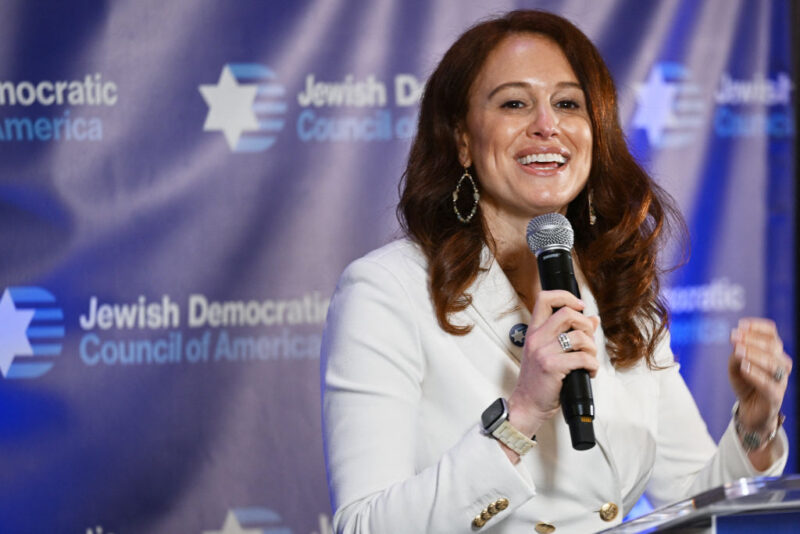
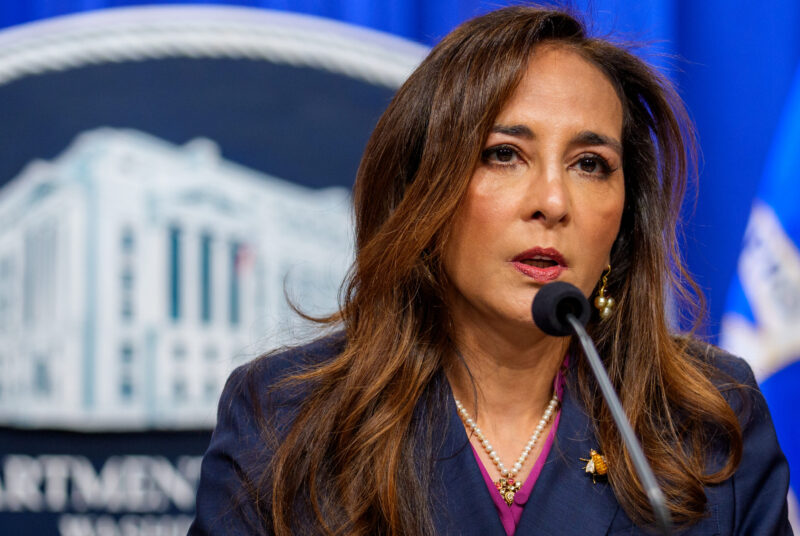




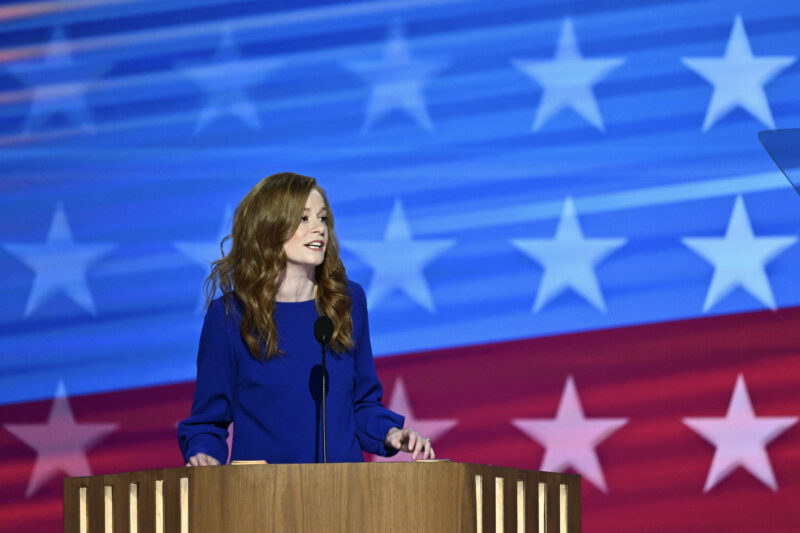
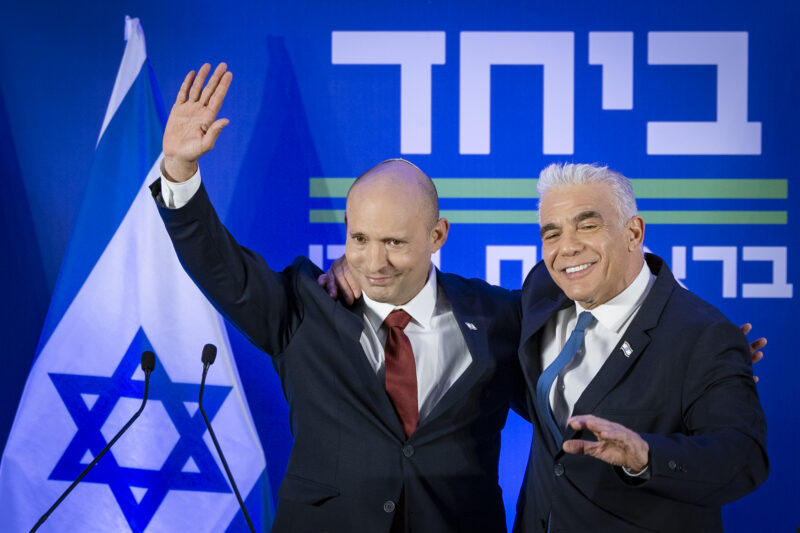









































Plus, Cuomo comeback vs. Mamdani momentum
IDF
IDF Home Front Command forces operate at the impact site in Beersheva, June 24th, 2025


 Add JewishInsider on Google
Good Tuesday morning.
In today’s Daily Kickoff, we report on Iran’s violation of a ceasefire with Israel hours after it went into effect, and speak to GOP lawmakers about their perspectives on the ceasefire. We interview experts about the state of Iran’s nuclear program following Israeli and American strikes against its facilities and cover efforts by House and Senate Democrats to bring forward votes on war powers resolutions that aim to constrain the administration from taking any further military action against Iran. We also report on how Jewish and pro-Israel activists are responding to the ascent of Zohran Mamdani in the Democratic primary for mayor of New York City. Also in today’s Daily Kickoff: Ambassador Yechiel Leiter, Rep. Carlos Gimenez and Yotam Polizer.
What We’re Watching
- All eyes are on the New York City Democratic mayoral primary to see if former New York Gov. Andrew Cuomo will prevail over Assemblymember Zohran Mamdani, though because of ranked-choice voting, complete results may not be known for several days. Downballot, we’re keeping an eye on the city comptroller’s race, which pits Manhattan Borough President Mark Levine against City Councilmember Justin Brannan. More below.
- President Donald Trump is heading to The Hague, Netherlands, today for the NATO summit, where the war with Iran is likely to be a top agenda item for discussion.
- Prior to his departure, and just before the Daily Kickoff was published, Trump told reporters, Israel and Iran “don’t know what the F*** they’re doing,” and said, “I’m not happy with Israel.” he also wrote on Truth Social, “ISRAEL. DO NOT DROP THOSE BOMBS. IF YOU DO IT IS A MAJOR VIOLATION. BRING YOUR PILOTS HOME, NOW!”
- Israel’s Ambassador to the U.S. Yechiel Leiter is speaking today at a televised town hall hosted by Iran International and American Abroad Media.
- In Washington this morning, the House Appropriations Committee is holding a markup on the Homeland Security bill for 2026. We’ll be keeping an eye on how much is allocated for the Nonprofit Security Grant Program.
- Later today, CIA Director John Ratcliffe and Director of National Intelligence Tulsi Gabbard are slated to hold classified briefings with House and Senate lawmakers on the Israel-Iran war.
- At 2 p.m. ET, the House Judiciary Committee is holding a hearing on “America’s Battle Against Antisemitic Terror.”
- Tonight at the Capitol, the Embassy of Spain and Rep. Carlos Gimenez (R-FL) are hosting the World Jewish Congress and the American Sephardi Federation for an event on “The Golden Age of the Jews of Al-Andalus.”
What You Should Know
A QUICK WORD WITH JI’S matthew kassel
It’s not an overstatement to suggest that the future direction of the Democratic Party could well be decided tonight in New York City, where a far-left, anti-Israel assemblyman from Queens, Zohran Mamdani, has a shot to win the Democratic nomination against presumed favorite, former New York Gov. Andrew Cuomo.
Most public and internal campaign polls show Cuomo ahead, but a new Emerson College poll released Monday showed Mamdani in the lead for the first time, sending shockwaves through the New York City Jewish community — and beyond.
The notion that a candidate who pointedly declined to condemn “globalize the intifada” rhetoric in the city with the largest Jewish population in the world could be running competitively would have been unthinkable not long ago.
For a party desperately seeking to moderate in the aftermath of brutal defeats in 2024, the prospect of having a socialist mayor for the next four years in the largest city in the country would be an undeniable setback, threatening to reverberate beyond Gotham’s borders.
Mamdani’s rise has particularly fueled anxiety among Jewish leaders — as his hostile views toward Israel have hardly dented his standing in the race. Even if he doesn’t win the nomination, Jewish Democrats uncomfortable with his anti-Israel rhetoric and alleged insensitivity to rising antisemitism fear his surging campaign could end up causing them to rethink their long-standing affiliation with the Democratic Party.
One prominent New York-based Democratic strategist told JI he expected some Jews to relocate to Florida or Texas if Mamdani becomes mayor.
ISRAEL-IRAN WAR, DAY 12
Iran violates ceasefire with Israel within hours
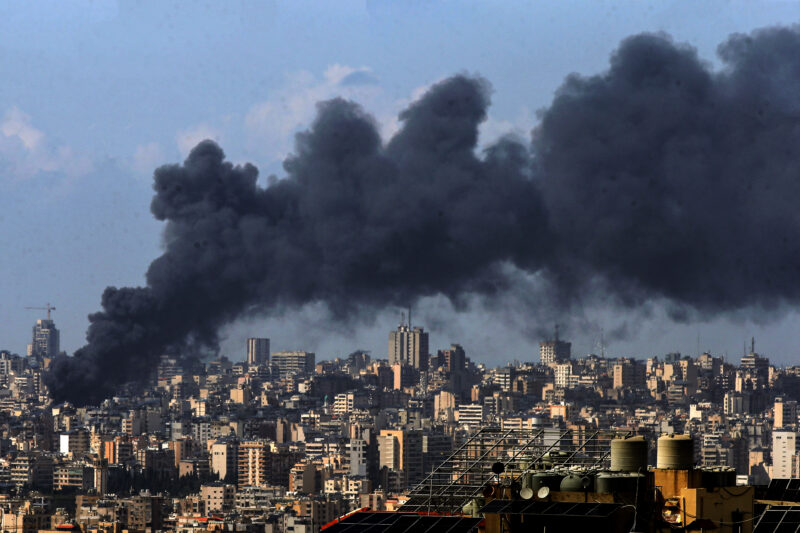
Iran violated a ceasefire with Israel hours after it began on Tuesday, with Israel vowing “powerful strikes” in response, Jewish Insider’s Lahav Harkov reports. The IDF intercepted two missiles from Iran at about 10:30 a.m. No injuries were reported. Despite residents of northern Israel reporting interceptions, Iran denied firing the missiles.
Retaliation order: Israeli Defense Minister Israel Katz said he “instructed the IDF to respond forcefully to the violation of the ceasefire by Iran with powerful strikes against regime targets in the heart of Tehran.” Lt.-Gen. Eyal Zamir, the IDF chief of staff, said that “in light of the severe violation of the ceasefire carried out by the Iranian regime, we will respond with force.” A senior Israeli diplomatic source said that “Iran violated the ceasefire — and it will pay.” In the hours before the ceasefire was meant to go into effect at 7 a.m., Iran launched 20 missiles in a series of barrages at Israel, killing four in a direct hit on a building in Beersheba.
Outfoxed: When Fox News anchor Bret Baier scored a primetime interview with Vice President JD Vance for Monday evening, he likely hoped that Vance would have news to share with him. Instead, Baier was the one to break the news to Vance that President Donald Trump had brokered a ceasefire deal between Israel and Iran, which Trump announced in a post on Truth Social moments before Vance went on air, Jewish Insider’s Gabby Deutch reports.
republican response
GOP lawmakers: Trump ceasefire a sign of ‘peace through strength’

Republicans publicly lauded President Donald Trump’s ceasefire between Israel and Iran as an example of his “peace through strength” approach to foreign policy, Jewish Insider’s Emily Jacobs and Marc Rod report. “This is a war that could have gone on for years, and destroyed the entire Middle East, but it didn’t, and never will,” the president wrote on his Truth Social platform, alluding to criticism that he was dragging the U.S. into another prolonged Middle East conflict. House Speaker Mike Johnson (R-LA) told reporters on Monday evening that the news of a ceasefire was “incredible,” saying, “This is what peace through strength looks like.”
Victory lap: Sen. John Kennedy (R-LA) told JI that he’s “very much pleased” by the news. Pressed on whether he’s concerned that the deal could give Iran breathing room to rebuild its nuclear program, Kennedy said, “There’s this rule when you practice law, when you’ve won for the judge, you shut up. OK? You don’t keep talking. It’s a ceasefire. We won. We ought to take our victory.” Sen. Josh Hawley (R-MO) said he viewed the ceasefire as a “very good development.” He told reporters, “I think the question now is how do we get to a place where we can get to a deterrence posture, a containment posture for Iran for the long haul, that will keep them in their box, keep Iran in their box, but will also allow us, the United States, to draw down our troop and military presence in the region.”
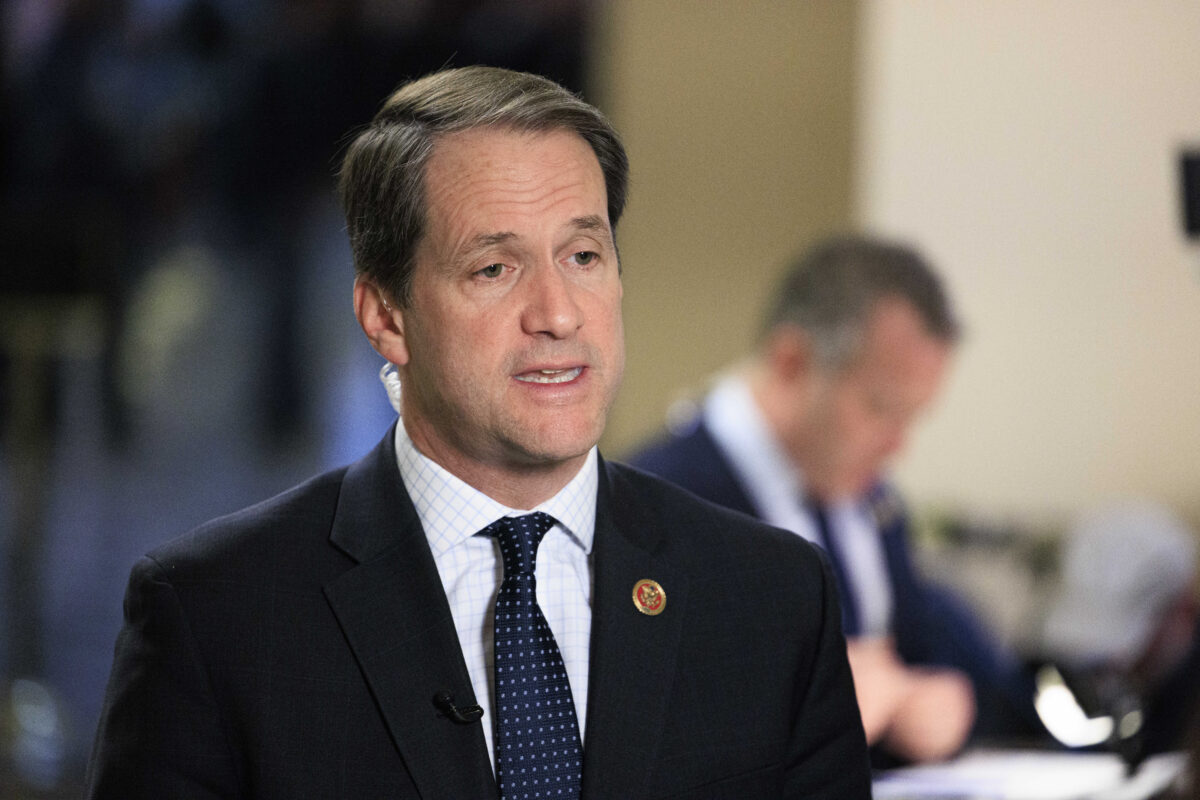
Still wary: Some national security-focused House Democrats highlighted the risks of Trump’s actions if they did not successfully eliminate Iran’s nuclear program. “If you take this shot, you have to land it, and it’s a very hard shot to land,” Rep. Pat Ryan (D-NY) told JI, arguing that the situation highlighted the need for Congress to assert a role in war-making authorities. Rep. Jim Himes (D-CT), the ranking member of the House Intelligence Committee, emphasized that the success of the strikes is very uncertain at this point, and that he would be “most worried about an Iran that goes silent right now.” He said, “If Iran goes silent right now, what are they doing? Are they actually developing something?”
Read the full story here with additional comments from Sens. Eric Schmitt (R-MO), Mike Rounds (R-SD), Jim Banks (R-IN), Bernie Moreno (R-OH), Katie Britt (R-AL), James Lankford (R-OK), Roger Wicker (R-MS), John Fetterman (D-PA), Ted Cruz (R-TX) and Reps. Elise Stefanik (R-NY), Steny Hoyer (D-MD), Brad Schneider (D-IL), Jerry Nadler (D-NY) and the Washington Institute for Near East Policy’s Dana Stroul.
Earlier Monday: Iran launched several missiles at a U.S. base in Qatar, Jewish Insider’s Jake Schlanger reports.
WEAPON QUESTION
Will Iran’s nuclear program survive the U.S. and Israeli strikes?

According to President Donald Trump, Iran’s nuclear program is finito. “Obliteration is an accurate term!” Trump wrote in a Truth Social post on Sunday. “Monumental damage was done to all nuclear sites in Iran.” He said on Monday that the three sites hit by U.S. strikes on Sunday morning “were totally destroyed, and everyone knows it.” White House Press Secretary Karoline Leavitt told reporters on Monday that the U.S. “took out” Iran’s nuclear program over the weekend. Nuclear experts aren’t as confident. What, exactly, remains of Iran’s nuclear program — which, just weeks ago, Israeli officials said was on the precipice of being able to produce a nuclear weapon — remains an open question, Jewish Insider’s Gabby Deutch reports.
Uncertainty lingers: Experts agree that the combination of Israel’s strikes that began a week and a half ago, aided by the U.S. military’s intervention on Sunday, has done significant damage to Iran’s nuclear capabilities. But uncertainty lingers about the status of the enriched uranium that had been housed at Fordow, the major Iranian nuclear facility hidden under a mountain that the U.S. struck with bunker-buster bombs this weekend. Reports suggest Tehran may have removed the nuclear materials from Fordow and hidden them elsewhere in Iran. “I think that we can assume that damage was done, but it’s going to take a long time, and we may never know entirely the extent of the damage,” said Tressa Guenov, a senior fellow at the Atlantic Council who dealt with international security affairs at the Pentagon in the Biden administration. Iran’s claim that it moved the uranium “could be real, or it could be a strategy to keep things ambiguous,” she added.
DEM DRIVE
Democratic efforts to block Trump war powers to continue despite Iran ceasefire
House and Senate Democrats are pushing ahead with efforts to bring forward votes this week in the House and Senate on resolutions that aim to constrain the administration from taking any further military action against Iran in spite of the surprise ceasefire between the U.S. and Israel and Iran, Jewish Insider’s Marc Rod reports. Though Reps. Thomas Massie (R-KY) and Ro Khanna (D-CA) said they’re pulling back on efforts to pass a bipartisan war powers resolution, a group of top House Democrats introduced an alternative measure, which aims to address concerns that Massie’s resolution would have blocked U.S. support for Israel’s defense.
Democrats’ positioning: Democratic staffers told JI that Democrats have largely unified publicly against the administration’s strikes on Iran — even some who support them privately — due to a perception that the move was a political weak point for Trump, concerns about being recorded as backing the strikes if they prompted another protracted regional war and a deep level of distrust with the Trump administration and its failure to present Congress with information about the strikes.
SCOOP
Georgetown University ‘appalled’ by department chair’s call for Iran to strike U.S. base

Georgetown University’s administration said it was “appalled” after a prominent faculty member called for Iran to conduct a “symbolic strike” on a U.S. military base in a social media post on Sunday. “We are reviewing this matter to see if further action is warranted,” a spokesperson for the university told Jewish Insider’s Haley Cohen on Monday, noting that the administration is “appalled” by the since-deleted tweet by Jonathan Brown, a tenured professor and chair of the university’s Department of Arabic and Islamic Studies and Alwaleed bin Talal Chair of Islamic Civilization in the School of Foreign Service, who has a history of spreading anti-Israel vitriol.
What he wrote: On Sunday, one day after the U.S. struck three Iranian nuclear facilities, Brown tweeted: “I’m not an expert, but I assume Iran could still get a bomb easily. I hope Iran does some symbolic strike on a base, then everyone stops.”
And then: Brown, who is the son-in-law of convicted terror supporter Sami Al-Arian and has gone on several X tirades since the Oct. 7, 2023, terrorist attacks slamming Israel, deleted his tweet on Monday. “I deleted my previous tweet because a lot of people were interpreting it as a call for violence,” Brown wrote. “That’s not what I intended. I have two immediate family members in the US military who’ve served abroad and wouldn’t want any harm to befall American soldiers… or anyone!”
Off base: As Iran targeted Al Udeid Air Base in Qatar in retaliation for the U.S. airstrikes against the Iranian nuclear program, Tucker Carlson claimed on his podcast that the air base, “that they [Qatar] don’t need at all,” exists to protect Israel and Qatar is hosting it “to be nice,” Jewish Insider’s Jake Schlanger reports.
MAMDANI MOMENTUM
Mamdani’s ascent in NYC mayoral primary alarms Jewish voters

As the closely watched Democratic primary for mayor of New York City wraps up today, many Jewish and pro-Israel activists are now confronting a mounting sense of alarm that Zohran Mamdani, a far-left assemblyman from Queens, could win the nomination, propelling a fierce critic of Israel to the general election — and, potentially, Gracie Mansion. In a city home to the largest Jewish community outside of Israel, Mamdani’s rise has fueled anxiety among Jewish leaders — particularly as his hostile positions toward Israel have hardly dented his standing in a competitive race that has narrowed to a two-person matchup. Even if Mamdani does not win, Jewish Democrats uncomfortable with his strident criticism of Israel and alleged insensitivity to rising antisemitism fear that his surging campaign could end up alienating Jewish voters who have long called the party home, Jewish Insider’s Matthew Kassel reports.
If he wins: “The Jewish community is going to face a real shock if Mamdani gets the nomination,” Mitchell Moss, an urban policy professor at New York University who is backing Cuomo, said in an interview with JI on Monday. “A lot of people have come to realize that anti-Israel sentiment has metastasized into antisemitism.” Hank Sheinkopf, a veteran Democratic strategist, predicted a Mamdani victory could end up pushing “more Jews nationally into the Republican column” and said Orthodox Jews might choose to relocate to South Florida and New Jersey. “Whether he wins or loses,” Sheinkopf said, the contours of the race have sent a concerning message that he characterized as “Jews don’t matter.”
Worthy Reads
The Donald Doctrine: In The Atlantic, Editor-in-Chief Jeffrey Goldberg considers President Donald Trump’s legacy in the Middle East. “Until the arrival of Donald Trump, no American president believed that the Iranian threat should be ended — to borrow from the language of the campus anti-Israel movement — by any means necessary. Trump may yet be remembered as a hypocrite who promised a clean American exit from the Middle East but found his presidency — like those of Jimmy Carter and Ronald Reagan before him — hopelessly trapped in Iranian quicksand… But he could also be remembered as the president who averted a second Holocaust.” [TheAtlantic]
The Fall of Tehran?: In The Free Press, Eli Lake considers the implications of regime change in Iran. “This kind of talk has gone out of favor in Washington in recent years. The fall of dictatorships in Libya and Iraq led to confessional sectarian war. The fall of Hosni Mubarak in Egypt led briefly to a Muslim Brotherhood government in Cairo before a military coup. But in Iran, a country that has experienced democratic uprisings five times since 2017, it now seems like a real possibility. … At the heart of the present uncertainty is a paradox. On the one hand, the Iranian regime is wobbling. On the other, the organic Iranian opposition has been targeted with ruthless lethality by security services that have proven efficient in targeting dissidents. Since 2009 and the Green Movement against the stolen presidential election that year, internal opposition leaders have been killed, exiled, or jailed.” [FreePress]
Falling on Deaf Ears: Commentary’s Seth Mandel looks at the support for tyrannical regimes by some Western progressives, even as dissidents from those regimes advocate otherwise. “Iranian actress and activist Nazanin Boniadi has issued a heartfelt plea to the Western protest class that I fear will fall on deaf ears. Just as the Palestinians who have made it out of Gaza and can speak freely tried, in vain, to convince the anti-Zionist demonstrators to not lionize Hamas, so are Iranian democracy activists learning about the Western fascination and identification with tyrannical regimes. … If the Iranians are ever freed from the occupying force in Tehran, it will be against the wishes of the Western activist class, which is fully invested in the status quo of tyranny anywhere it can be found. And they will almost certainly not be dissuaded by those who actually have to live under those regimes.” [Commentary]
Word on the Street
The New York Times examines how Iranian officials have reacted to the strikes against their nuclear and military facilities, from insisting on normalcy to projecting false strength to cautioning restraint…
The Wall Street Journal looks at Russia’s reluctance to acquiesce to Iranian requests for assistance in its strikes against Israel and the U.S.…
A new Reuters/Ipsos poll conducted after the U.S. struck Iranian nuclear facilities — but before Iran attacked U.S. bases and President Donald Trump announced a ceasefire — found that only 36% of respondents (13% of Democrats and 69% of Republicans) said they supported the strikes, while 45% opposed them…
Retired NASA astronaut Terry Virts, a Democrat, announced his campaign to run against Sen. John Cornyn (R-TX) on Monday with a video calling out Trump’s “chaos” as well as a lack of leadership in the Democratic Party and its failure to learn from the 2024 election…
The British government announced plans to sanction the anti-Israel activist group Palestine Action following incidents in which members of the group broke into a British air base and damaged military planes and vandalized one of Trump’s golf courses in Scotland…
The 21 members of the House Jewish Caucus — all Democrats — pressed Secretary of Defense Pete Hegseth in a letter sent on Tuesday expressing concerns about Kingsley Wilson, the recently promoted Pentagon press secretary with a history of antisemitic and otherwise controversial comments, Jewish Insider’s Marc Rod scoops…
Top Senate leaders introduced a bipartisan resolution on Monday condemning the recent antisemitic attacks in Washington and Boulder, Colo., Jewish Insider’s Marc Rod reports…
Democrat Jeff Grazyel, a former Morris Township mayor, announced plans to run for Rep. Mikie Sherrill‘s (D-NJ) congressional seat if she wins the New Jersey governor’s race. Grazyel is extensively involved in his local Jewish community, including as a member of the local Jewish Community Relations Council and Jewish federation and his synagogue board…
Former Second Gentleman Doug Emhoff is joining the University of Southern California’s Gould School of Law as a distinguished visiting professor…
A New Jersey Assembly committee voted to table a proposed bill that would have adopted the International Holocaust Remembrance Alliance’s working definition of antisemitism…
eJewishPhilanthropy’s Jay Deitcher interviews Yotam Polizer, the CEO of IsraAid, on the organization’s pivot from providing humanitarian aid abroad to focusing domestically on Israelis in need in the aftermath of Oct. 7 and the Iranian missile attacks…
The New York Times interviews former talk show host Maury Povich, who launched a podcast earlier this year after hosting more than 30 seasons of his eponymous show…
The New York Times reviews the new documentary “Marlee Matlin: Not Alone Anymore,” about the actress’ rise to stardom and representation of the deaf community in Hollywood…
Cosmochemist Edward Anders, who as a child survived the Holocaust and in his retirement wrote a book about the Jews from his Latvian town who did not, died at 98…
Pic of the Day
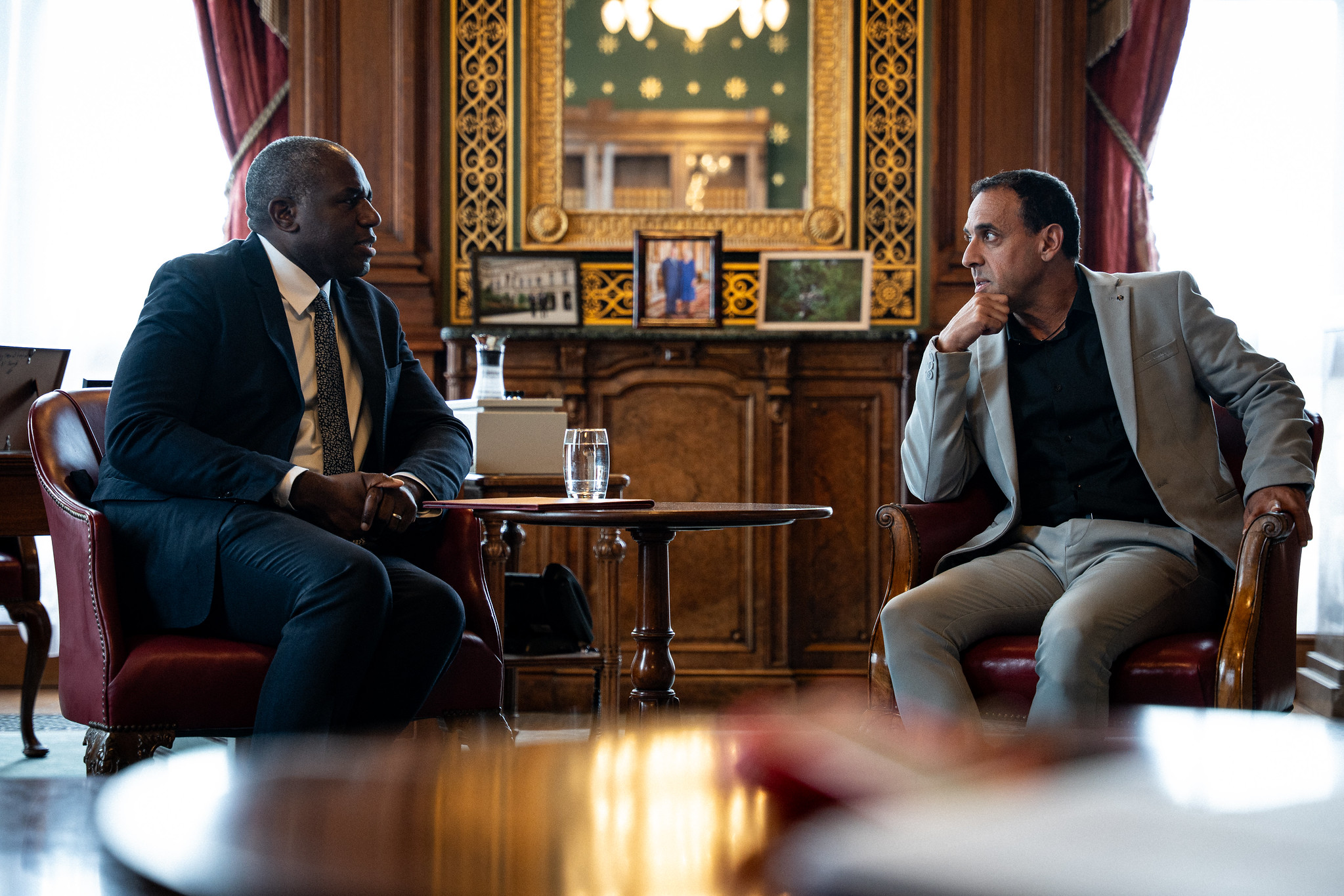
U.K. Foreign Minister David Lammy (left) met with former Israeli hostage Eli Sharabi in London on Monday. Sharabi’s wife and two daughters, who were murdered by Hamas terrorists on Oct. 7, were British nationals.
Birthdays

Film director, screenwriter, producer, editor and cinematographer, Todd Strauss-Schulson turns 45…
Ruth Weinstein… Activist investor, he is a co-founder of Trian Fund Management, Nelson Peltz turns 83… Professor emeritus in the College of Business at San Francisco State University, Sam S. Gill turns 83… Former chairman and CEO of New York Life Insurance Company, Seymour “Sy” Sternberg turns 82… Professor of Jewish philosophy at American Jewish University and founding dean of its rabbinical program, Rabbi Elliot N. Dorff turns 82… Founder of Yeshivat Chovevei Torah and Yeshivat Maharat, Rabbi Avraham Haim Yosef (Avi) Weiss turns 81… Former secretary of labor in the Clinton administration, he is an author and professor at UC Berkeley, Robert Reich turns 79… Former member of Knesset and former chief of staff of the IDF, Moshe “Bogie” Ya’alon turns 75… Early childhood specialist at Columbus City Schools and Columbus School for Girls in Columbus, Ohio, Carol Glassman… EVP at Edelman until earlier this year, he is the author of a book on the Saatchi & Saatchi ad firm, Kevin Goldman… Circuit judge of the U.S. Court of Appeals for the 9th Circuit, Sandra Segal Ikuta turns 71… President and CEO of public relations firm Steinreich Communications, Stanley Steinreich… U.S. district judge for the Southern District of Florida, Beth Francine Bloom turns 63… President of Mexico, Claudia Sheinbaum turns 63… Former principal of Mount Scopus Memorial College in Melbourne, Australia, Rabbi James Kennard turns 61… The first on-air talent of the NFL Network when it debuted in 2003, he has become the face of the network ever since, Rich Eisen turns 56… Israeli businesswoman and owner of the soccer team, Hapoel Beer Sheva, Alona Barkat turns 56… Author and columnist, he is the managing editor at Shtetl, Shulem Deen turns 51… Singer and songwriter known professionally as Ariel Pink, Ariel Marcus Rosenberg turns 47… Director of domestic policy studies at the American Enterprise Institute, Matthew Continetti turns 44… Digital marketing manager at Guardian Pharmacy Services, Brett Rosner… VP of Houston-based RIDA Development, Steven C. Mitzner… 2015 contestant on “Jeopardy!” who earned $413,612 by winning 13 consecutive episodes, Matthew Barnett “Matt” Jackson turns 33… Actress and singer, Elizabeth Greer “Beanie” Feldstein turns 32… Director of legislative fiscal affairs at the Rockland County (N.Y.) legislature, Moshe Gruber… College basketball player for the Harvard Crimson until 2022, then a graduate transfer player at NYU until 2024, Spencer Freedman turns 27… Lois Charles…
Israel vows to ‘respond with force’; four people killed in wave of Iranian missile launches
IDF
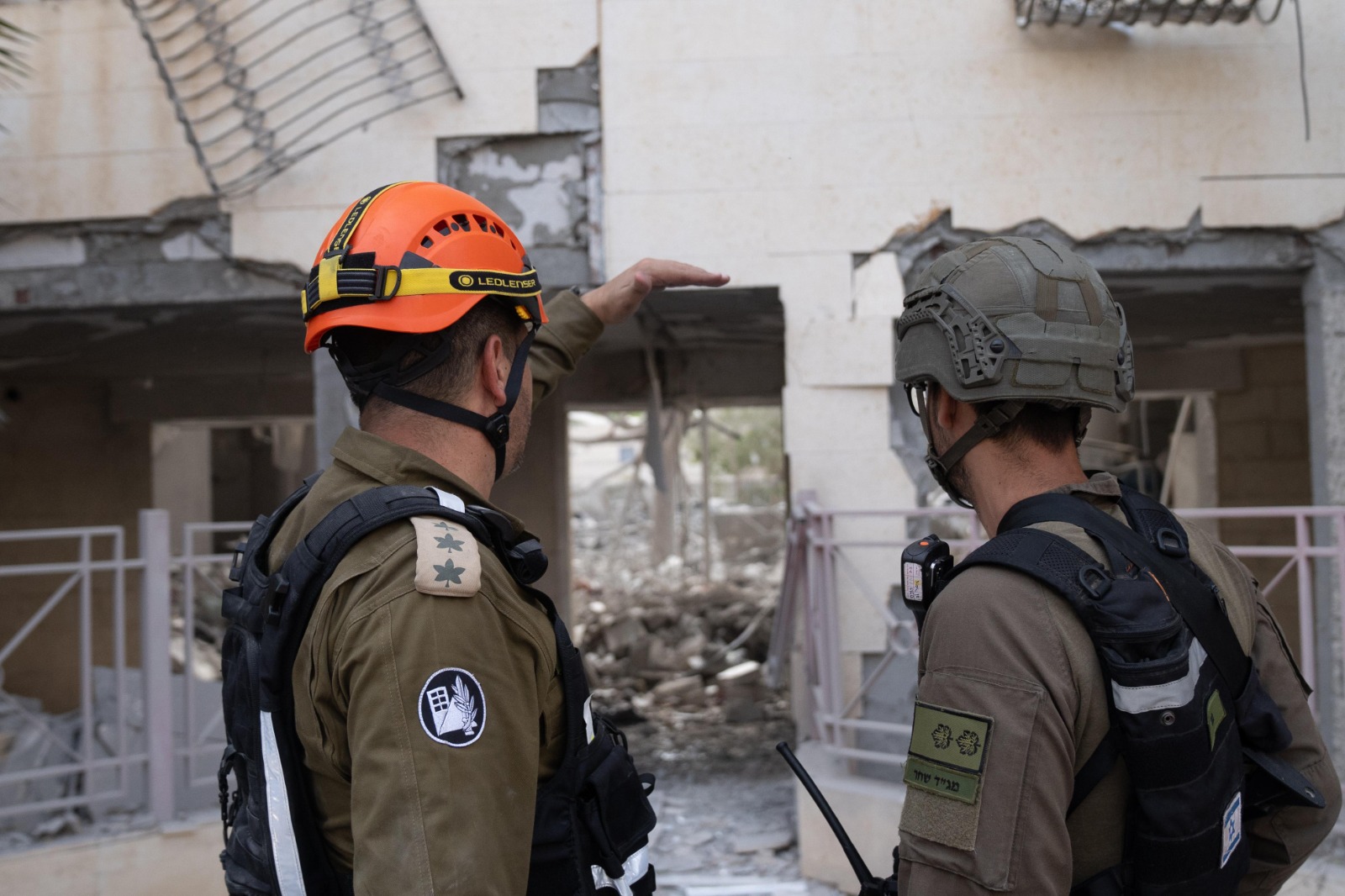
IDF Home Front Command forces operate at the impact site in Beersheva, June 24th, 2025
Iran violated a ceasefire with Israel hours after it began on Tuesday, with Israel vowing “powerful strikes” in response.
The IDF intercepted two missiles from Iran at about 10:30 a.m. No injuries were reported. Despite residents of northern Israel reporting interceptions, Iran denied firing the missiles.
Israeli Defense Minister Israel Katz said he “instructed the IDF to respond forcefully to the violation of the ceasefire by Iran with powerful strikes against regime targets in the heart of Tehran.” IDF Chief of Staff Lt.-Gen. Eyal Zamir said that “in light of the severe violation of the ceasefire carried out by the Iranian regime, we will respond with force.” A senior Israeli diplomatic source said that “Iran violated the ceasefire — and it will pay.”
In the hours before the ceasefire was meant to go into effect at 7 a.m., Iran launched 20 missiles in a series of barrages at Israel, killing four in a direct hit on a building in Beersheba.
Ahead of the deadly strike, Iranian Foreign Minister Abbas Araghchi sent mixed messages, first posting on X that “there is NO ‘agreement’ on any ceasefire … However, provided that the Israeli regime stops its illegal aggression against the Iranian people no later than 4 am Tehran time, we have no intention to continue our response afterwards.” Less than 20 minutes later, Araghchi implied on X that a ceasefire had gone into effect: “The military operations of our powerful Armed Forces to punish Israel for its aggression continued until the very last minute, at 4am.”
The Islamic Republic has repeatedly struck Beersheba since the war began 12 days ago, damaging buildings in the Soroka Medical Center, Microsoft offices and residences in the southern Israel city. The regime said it was aiming at an IDF research center in the city’s HiTech Park.
President Donald Trump announced a “Complete and Total CEASEFIRE” on Truth Social on Monday evening, saying that each “side will remain PEACEFUL and RESPECTFUL … This is a War that could have gone on for years, and destroyed the entire Middle East, but it didn’t, and never will!”
According to the president, Iran was supposed to have stopped firing at Israel at 7 a.m. local time, and Israel would stop 12 hours later.
At about 8 a.m. Israel time, Trump added: “THE CEASEFIRE IS NOW IN EFFECT. PLEASE DO NOT VIOLATE IT!”
Netanyahu and Trump spoke about the ceasefire overnight, while an American team that included Vice President JD Vance talked to Tehran, Reuters reported. Israel’s condition for the ceasefire was that Iran stop launching attacks, which they reportedly agreed to at the time. Qatar also took part in the negotiations.
The Israeli government released a statement on Tuesday morning that Prime Minister Benjamin Netanyahu reported to the Security Cabinet that “Israel has achieved all of the objectives of Operation Rising Lion, and much more. Israel has removed a double existential threat — on both the nuclear issue and regarding ballistic missiles. The IDF also achieved complete air superiority in the skies over Tehran, struck a severe blow to the military leadership and destroyed dozens of Iran’s main regime targets.”
“In Operation Rising Lion, the State of Israel made great historic achievements and placed itself in the first rank of the world’s major powers,” the government stated. “This is a great success for the people of Israel and its fighters, who removed two existential threats to our country, and ensured the eternity of Israel.”
Israel also “thank[ed] President Trump and the U.S. for their defensive support and for their participation in removing the Iranian nuclear threat.”
The ceasefire was reached “in full coordination with President Trump,” the statement reads, but “Israel will respond forcefully to any violation of the ceasefire.”
IDF Spokesperson Brig.-Gen. Effie Defrin also said in a briefing on Tuesday morning that “the IDF has fully met all the objectives defined in Operation Rising Lion.”
“The Chief of the General Staff instructed the IDF to maintain a high level of alert and readiness to deliver a powerful response to any violation of the ceasefire,” he added.
In addition, Israel’s Home Front Command maintained its restrictions on Israelis, including the continued closure of schools and non-essential businesses.
The Israeli government statement also said that the IDF killed hundreds of militants from the Basij, “the terrorist regime’s instrument of repression,” and killed a senior nuclear scientist, named Mohammad Reza Sadighi, according to Iranian reports.
Defrin said that on Monday night and early Tuesday, the Israeli Air Force “struck dozens of military targets in Tehran … deploying more than one hundred munitions.” The targets included the headquarters of SPND, where weapons systems and nuclear technology were developed, as well as military manufacturing infrastructure. The IAF also eliminated eight missile launchers that were ready to fire at Israel.
Experts agree that Iran’s nuclear program was significantly derailed, but uncertainty remains about the status of the country’s enriched uranium

DigitalGlobe via Getty Images
This is a satellite image of the Fordow facility in Iran.
According to President Donald Trump, Iran’s nuclear program is finito.
“Obliteration is an accurate term!” Trump wrote in a Truth Social post on Sunday. “Monumental damage was done to all nuclear sites in Iran.” He said on Monday that the three sites hit by U.S. strikes on Sunday morning “were totally destroyed, and everyone knows it.” White House Press Secretary Karoline Leavitt told reporters on Monday that the U.S. “took out” Iran’s nuclear program over the weekend.
Nuclear experts aren’t as confident. What, exactly, remains of Iran’s nuclear program — which, just weeks ago, Israeli officials said was on the precipice of being able to produce a nuclear weapon — remains an open question. (A White House spokesperson did not respond to a request for comment.)
Experts agree that the combination of Israel’s strikes that began a week and a half ago, aided by the U.S. military’s intervention on Sunday, has done significant damage to Iran’s nuclear capabilities. But uncertainty lingers about the status of the enriched uranium that had been housed at Fordow, the major Iranian nuclear facility hidden under a mountain that the U.S. struck with bunker-buster bombs this weekend.
Reports suggest Tehran may have removed the nuclear materials from Fordow and hidden them elsewhere in Iran.
“I think that we can assume that damage was done, but it’s going to take a long time, and we may never know entirely the extent of the damage,” said Tressa Guenov, a senior fellow at the Atlantic Council who dealt with international security affairs at the Pentagon in the Biden administration. Iran’s claim that it moved the uranium “could be real, or it could be a strategy to keep things ambiguous,” she added.
David Albright, a former United Nations weapons inspector, told The Free Press that “any highly enriched uranium at Fordow was likely gone before the attack.”
Even with the possibility that the enriched uranium was moved from Fordow, experts agreed that Iran’s nuclear program has been left reeling by the Israeli and American military actions.
“Israelis believe that they dealt together with the U.S. … a really serious blow to the Iranian nuclear program, took it back by, some say, two years,” Michael Herzog, who until January was Israel’s ambassador to the U.S., said on Monday. But, he cautioned, it’s “premature to make that assessment.” Elliott Abrams, a longtime Republican foreign policy advisor who served as Trump’s special representative for Iran in Trump’s first term, said Iran is “now years away” from being able to make a nuclear weapon.
And the extent of the damage goes beyond just the nuclear program.
“Iran is losing its nuclear weapons option, and we have applied military force to ensure that,” said Dennis Ross, a former State Department official who worked in both Republican and Democratic administrations. “You have a military that has been decapitated. You have a Revolutionary Guard that has been decapitated. You have people in both those leaderships that have been basically together for the last 30 years. They’re not so easy to replace. You have a leadership that doesn’t know who it can trust. You have a leadership that is completely in hiding.”
Even if Iran’s nuclear weapons program was set back several years, that is not the same thing as obliterating its ability to create a nuclear weapon, as Trump claimed. Vice President JD Vance repeated that statement several times in a Monday night interview on Fox News, where he discussed the newly announced ceasefire deal between Israel and Iran and asserted that Iran’s nuclear program was “obliterated.”
But fully dismantling Iran’s nuclear weapons program might not even be a realistic goal.
“We know that no military operation on its own will completely eliminate the Iranian nuclear program,” Dana Stroul, a fellow at the Washington Institute for Near East Policy who oversaw Middle East policy at the Pentagon in the Biden administration, said earlier Monday.
During the war, Israeli officials hinted that they want to see regime change in Iran. Yet by announcing the ceasefire on Monday night, the Trump administration underscored that the goal of its military operation was to set back Iran’s nuclear program, and not target Iran’s leadership.
“Absent a revolution in Iran that brings in a friendlier regime, where you could verify the moth-balling of [nuclear] sites and this dismantlement of the program, I don’t think you could ever say for certain that the program is over,” Steven Cook, a senior fellow at the Council on Foreign Relations, told Jewish Insider on Monday.
Trump said in a Truth Social post on Monday evening that, once the fighting ceases, “the War will be considered, ENDED,” and that both sides “will remain PEACEFUL and RESPECTFUL.” He did not share whether either side had to abide by any particular demands, or whether the agreement would mark a return to the negotiating table.
One Democratic strategist predicted that if Mamdani wins, some Jewish residents will move out of the state
Yuki Iwamura-Pool/Getty Images
Democratic mayoral candidate Zohran Mamdani
As the closely watched Democratic primary for mayor of New York City wraps up today, many Jewish and pro-Israel activists are now confronting a mounting sense of alarm that Zohran Mamdani, a far-left assemblyman from Queens, could win the nomination, propelling a fierce critic of Israel to the general election — and, potentially, Gracie Mansion.
In a city home to the largest Jewish community outside of Israel, Mamdani’s rise has fueled anxiety among Jewish leaders — particularly as his hostile positions toward Israel have hardly dented his standing in a competitive race that has narrowed to a two-person matchup.
Even if Mamdani does not win, Jewish Democrats uncomfortable with his strident criticism of Israel and alleged insensitivity to rising antisemitism fear that his surging campaign could end up alienating Jewish voters who have long called the party home.
“The Jewish community is going to face a real shock if Mamdani gets the nomination,” Mitchell Moss, an urban policy professor at New York University who is backing Cuomo, said in an interview with Jewish Insider on Monday. “A lot of people have come to realize that anti-Israel sentiment has metastasized into antisemitism.”
The Tik Tok-savvy Mamdani, a 33-year-old democratic socialist, has largely polled in second place behind his chief rival, former New York Gov. Andrew Cuomo, though a poll released by Emerson College on Monday showed Mamdani narrowly prevailing.
Cuomo’s campaign, for its part, has dismissed the survey as an outlier and cited other polls showing him with a more robust lead in the crowded race to unseat Mayor Eric Adams, who is seeking reelection as an independent. Fix the City, a pro-Cuomo super PAC that has slammed Mamdani’s approach to Israel in several attack ads, also released a new poll Monday that found Cuomo with a comfortable, 24-point lead over Mamdani in the final round of voting.
While support for Israel had once been viewed as a prerequisite for any winning campaign in New York City, Mamdani’s bid has tested that proposition. He has suggested he is uninterested in visiting Israel if elected, breaking with long-standing precedent, and has declined to acknowledge Israel’s right to exist as a Jewish state.
The two-term state lawmaker, who has endorsed boycotts targeting Israel, has said he would divest from Israel as mayor and promised to arrest Israeli Prime Minister Benjamin Netanyahu for alleged war crimes if he were to enter the city. Perhaps most controversially, Mamdani has drawn scrutiny for defending calls to “globalize the intifada” — a slogan that critics interpret as stoking violence against Jews.
Despite backlash, Mamdani doubled down on that defense during a radio interview on Monday, saying the phrase “has a variety of meanings to a variety of people.”
Many Jewish and pro-Israel activists in New York City have found his response alarming. “No matter what the outcome tomorrow, the fact that Zohran has been able to capture the attention of so many people who are really blind to his antisemitic tendencies really says something about the state of our electorate right now,” Sara Forman, who leads a pro-Israel super PAC that has urged voters to rank Cuomo first and to exclude Mamdani entirely, told JI.
Mamdani’s “foreign policy stances are isolating Jews and freezing us out from our political home base in the Democratic Party,” Forman said in an interview on Monday. “If the Democratic Party doesn’t wake up and start speaking to its core constituencies of Blacks, Jews and Latinos, we’re going to find our party rebuilt in someone else’s image.”
Hank Sheinkopf, a veteran Democratic strategist, predicted a Mamdani victory could end up pushing “more Jews nationally into the Republican column” and said Orthodox Jews might choose to relocate to South Florida and New Jersey. “Whether he wins or loses,” Sheinkopf said, the contours of the race have sent a concerning message that he characterized as “Jews don’t matter.”
Mamdani has rejected accusations of antisemitism, saying his opponents have weaponized such charges to score “political points.” He has said he is sensitive to rising antisemitism across New York City and has vowed to increase funding to counter hate crimes by 800%.
Early voting tallies have suggested that Mamdani has galvanized his base of younger supporters who are enlivened by his calls to “freeze the rent” and to deliver free buses as he has emphasized a message of affordability.
Cuomo, meanwhile, is depending on strong turnout from Black, Latino and Orthodox Jewish voters who have long been part of his core coalition. The former governor has locked up major endorsements from a range of key Orthodox leaders in Williamsburg and Borough Park, a Hasidic enclave in Brooklyn where he spent time on Sunday rallying a community that could deliver thousands of votes in a close election.
One Satmar leader in Williamsburg told JI that he is expecting solid turnout from New York City’s largest Hasidic voting bloc, predicting up to 8,000 votes for Cuomo, who has worked to mend relationships with Orthodox leaders that soured over his crackdown on religious gatherings during the COVID-19 pandemic.
The Cuomo campaign believes polls are missing the Orthodox vote, which could make the difference in a close election, according to an advisor who said that turnout from the community has been encouraging. “But what else are they missing is the question,” the advisor told JI on Monday, speaking anonymously to address the race.
Still, some Orthodox leaders remain on edge as Mamdani has continued to defy the odds over the course of the campaign. “He has really excited his base,” said one Orthodox leader in Brooklyn. “I am very fearful that he could actually make it, especially on ranked choice.”
Cuomo, who has won endorsements from Rep. Jim Clyburn (D-SC) and former President Bill Clinton in recent days, has also struggled to overcome his own vulnerabilities in the race, including accusations of sexual misconduct that forced his resignation from office in 2021. He denies the allegations and said he regrets stepping down.
In the final days of the election, the former governor — who has called antisemitism “the most important issue” and touted his staunch support for Israel — has insisted that his decades of government experience make him better suited to handle threats from Iran after the U.S. bombing of its nuclear sites over the weekend.
“Who do you want in charge in that situation?” he said of possible Iranian retaliation for the attacks. “Who’s handled situations like Hurricane Sandy and COVID and terrorist threats? This is not a job for on-the-job training.”
As for the bombing itself, Cuomo backed the effort to eliminate Iran’s nuclear capabilities, but he took issue with President Donald Trump’s decision to do so unilaterally without first consulting Congress — underscoring another key difference with Mamdani on Middle East policy.
Mamdani criticized the attack on Iran as “the result of a political establishment that would rather spend trillions of dollars on weapons than lift millions out of poverty, launch endless wars while silencing calls for peace, and fearmonger about outsiders while billionaires hollow out our democracy from within.”
The other candidates in the crowded primary, including Brad Lander, the city comptroller, and Adrienne Adams, the City Council speaker, have struggled to gain traction, polling has indicated.
Regardless of the primary result, which is unlikely to be confirmed for several days because of the ranked-choice system, both Mamdani and Cuomo could run in the general election on separate ballot lines, a possibility neither candidate has ruled out.
“This is a prelude to November,” said Moss, the urban policy professor, envisioning a high-stakes general election. “If Mamdani wins in New York,” he warned, “you can say goodbye to the Democratic Party for a long time.”
News of the ceasefire united all factions in the Republican party behind Trump; even some Democrats welcomed the diplomatic development

Tom Williams/CQ-Roll Call, Inc via Getty Images
Speaker of the House Mike Johnson (R-LA)
Republicans are publicly lauding President Donald Trump’s ceasefire between Israel and Iran as an example of his “peace through strength” approach to foreign policy.
Trump announced that Israel and Iran had agreed to a “complete and total ceasefire” that will bring an end to the war. “This is a war that could have gone on for years, and destroyed the entire Middle East, but it didn’t, and never will,” the president wrote on his Truth Social platform, alluding to criticism that he was dragging the U.S. into another prolonged Middle East conflict.
House Speaker Mike Johnson (R-LA) told reporters on Monday evening that the news of a ceasefire was “incredible,” saying, “This is what peace through strength looks like.”
“This is what real leadership yields, and we’re certainly grateful for the decisive leadership of President Trump,” Johnson said, adding that he would expect “that Iran will bring an end to their nuclear enrichment program and that there will be a lasting peace in the Middle East.”
Sen. John Kennedy (R-LA) told Jewish Insider that he’s “very much pleased” by the news.
Pressed on whether he’s concerned that the deal could give Iran breathing room to rebuild its nuclear program, Kennedy said, “There’s this rule when you practice law, when you’ve won for the judge, you shut up. OK? You don’t keep talking. It’s a ceasefire. We won. We ought to take our victory.”
Sen. Josh Hawley (R-MO) said he viewed the ceasefire as a “very good development.”
“I think the question now is how do we get to a place where we can get to a deterrence posture, a containment posture for Iran for the long haul, that will keep them in their box, keep Iran in their box, but will also allow us, the United States, to draw down our troop and military presence in the region,” Hawley told reporters.
Asked about his initial concerns about the potential consequences of an offensive strike on Iran’s nuclear program, Hawley replied, “If he can get a ceasefire out of it, listen, I support the president and want him to succeed, so this is good progress.”
Sen. Eric Schmitt (R-MO) praised the president for having the discipline to execute the mission of degrading Iran’s nuclear program without pulling the U.S. into a broader war.
“There are a lot of voices out there, here in permanent Washington, that wanted more engagement [in the conflict]. And President Trump, I think he had that restraint and that instinct to do what needed to be done to bring about peace,” Schmitt said during a Fox News appearance.
Sen. Mike Rounds (R-SD) wrote on X that the president “accomplished peace through strength” with the announcement of a deal. “If this ceasefire is upheld by both Iran and Israel, it will bring a successful conclusion to this 12 Day War and a major victory for President Trump. This demonstrates how critical it is to have a state of the art and well-funded military, as well as a President who recognizes the art of the deal,” Rounds wrote.
Sen. Jim Banks (R-IN) wrote in a lengthy thread on X that, “President Trump has long understood that the American people never supported ‘forever wars’ with unclear goals and no clear metrics for success. But at the same time, President Trump understands that when it comes to setting a red line, he will actually follow through and enforce it, sending a clear message that our enemies in Beijing and elsewhere should heed.”
Sen. Bernie Moreno (R-OH) praised Trump for carrying out this weekend’s operation without embroiling the U.S. in a deeper conflict.
“President Trump has always been clear: the era of Forever Wars abroad is over. He was able to DECIMATE the Iranian nuclear program without boots on the ground, any dead Americans or a new regime change war. He’s 100% right that it’s time to push for peace,” Moreno posted on X.
Sen. Katie Britt (R-AL) described the deal as “historic” and hailed Trump as “The President of Peace!”
“President Trump’s restoring peace through strength. It’s good for America and for the world. Let’s continue to pray for the president, our service members and for a lasting peace,” Sen. James Lankford (R-OK) wrote on X.
“Our great nation and the world is a better and safer place because of President Trump’s bold leadership. … He took decisive action to eliminate Iran’s nuclear program to bring peace,” Rep. Elise Stefanik (R-NY), a member of House leadership, said in a statement. “President Trump told our allies and adversaries we would always put America First and achieve peace through strength.”
Rep. Steny Hoyer (D-MD), one of the few congressional Democrats who supported the strikes, suggested that the ceasefire puts to rest fears that many had expressed about a protracted war in the Middle East.
“Now there’s a ceasefire … so the fear of an un-ending war apparently is not there, in part I think because Iran thinks we’re serious,” Hoyer continued. “I’ve always hoped that we were prepared to follow up on our rhetoric that [a nuclear Iran] was an unacceptable alternative, which I think Trump has done.”
Rep. Brad Schneider (D-IL), a co-chair of the House Jewish Caucus, said on X that he hoped “this announced ceasefire truly brings an end to the war. A diplomatic path to reversing Iran’s nuclear ambitions, and permanently dismantling Iran’s nuclear development programs is preferable to war.”
Rep. Jerry Nadler (D-NY), the other Jewish Caucus co-chair, said he welcomed “the news of a ceasefire between Israel and Iran. The violence has cost too many innocent lives and inflicted too much destruction on innocent civilians” and that he hoped the deal would put the region on a path to a durable peace.
Other national security-focused House Democrats highlighted the risks of Trump’s actions if they did not successfully eliminate Iran’s nuclear program.
“If you take this shot, you have to land it, and it’s a very hard shot to land,” Rep. Pat Ryan (D-NY) told JI when news of the ceasefire emerged, arguing that the situation highlighted the need for Congress to assert a role in war-making authorities.
“Taking the shot and not landing it is incredibly dangerous and risky because now the risk to break out — there’s no reason for them to hold back, whereas before we at least had some sense that there was an effective deterrent,” Ryan continued. “They have every reason to race to break out now.”
Rep. Jim Himes (D-CT), the ranking member of the House Intelligence Committee, emphasized that the success of the strikes is very uncertain at this point, and that he would be “most worried about an Iran that goes silent right now.”
“If Iran goes silent right now, what are they doing? Are they actually developing something?
Dana Stroul, the research director for the Washington Institute for Near East Policy and a former deputy assistant secretary of defense for the Middle East, told JI that declaring a ceasefire before the full impact of U.S. strikes over the weekend had been determined could be risky.
“The major risk of declaring the ceasefire now without verifying the damage to Iranian capabilities is that it leaves intact enough of the program or the stockpile of enriched uranium — secure within Iran — providing the regime a path to rebuild at some point in the future,” Stroul said.
“After staking U.S. credibility on eliminating Iran’s nuclear program, hopefully President Trump can explain to the international community and Israel that a ceasefire at this time opens the door to urgent diplomacy that ends Iran’s threats and sets the region on a more stable trajectory,” Stroul continued. “What we don’t know right now is what kind of regime we face on the other side of Israeli and American military strikes. Is the regime ready to make the necessary concessions?”
Trump’s announcement of a deal came hours after Iran’s missile attack on U.S. bases in Qatar and Iraq. Despite their later praise for the ceasefire, the Iranian attack initially prompted some Republicans to call for an aggressive American response, while others in the party argued that they should be viewed as a sign of Tehran’s willingness to avoid escalating the conflict.
Sen. Roger Wicker (R-MS), the chairman of the Senate Armed Services Committee, said he was of the view that the attack was a sign of the regime’s understanding of its weaknesses.
“My view, based on totally open source news, is that this was a face-saving move on the part of the Iranian regime. They felt they had to retaliate as a matter of honor, but they wanted to make sure the response was not escalatory,” Wicker told JI.
Sen. John Fetterman (D-PA) said he saw Iran’s response as an admission from the regime that it lacks the military capacity to be able to escalate the conflict. The Pennsylvania senator noted that he has been saying since last year that “Iran can’t fight for s***” while dismissing claims that the regime had the capacity to create broader, long-term conflict against the West.
“If you can’t defend your own airspace, you don’t have anything left. … Israeli air supremacy is everything, but they [Iran] can’t defend their own airspace. They can’t defend anything, and so they definitely can’t project s***,” Fetterman told JI in an interview on Monday.
“Right now, it’s not an escalation. … I don’t see it like that. I think it was a different shade of a white flag. I’m not surprised by this. In fact, I honestly expected they would do something. You know, they have to do some things for their domestic audience,” he continued.
Sen. Ted Cruz (R-TX) argued that the attack served as evidence of the regime’s weakened state following the U.S. and Israel’s military operations.
“This weekend, President Trump took decisive action to fully disable the regime’s main nuclear facilities. The regime is weak, flailing, and lashing out dangerously. If harm comes to an American as a result of their continued violence, I have full confidence that President Trump will again respond decisively,” Cruz said in a statement.
The vice president said the U.S. would welcome direct dialogue with Iran ‘about how we move this thing forward’

(Photo by Andrew Spear/Getty Images)
Vice President JD Vance, shown here at a Fox News town hall with Bret Baier and Martha MacCallum in November 2022, appeared with Baier on Monday night.
When Fox News anchor Bret Baier scored a primetime interview with Vice President J.D. Vance for Monday evening, he likely hoped that Vance would have news to share with him. Instead, Baier was the one to break the news to Vance that President Donald Trump had brokered a ceasefire deal between Israel and Iran, which Trump announced in a post on Truth Social moments before Vance went on air.
“That’s good news that the president was able to get that across the finish line,” Vance told Baier, noting that he was aware those conversations were happening as he left the White House to head to the Fox News studio.
“I knew that he was working the phones as I was on the way over here, so I knew exactly what we were going to do,” Vance said on “Special Report,” after acknowledging that the statement Trump posted on Truth Social was different from a draft that Vance had viewed hours earlier.
“And look, I love that about this presidency and this administration, because he’s always working. He doesn’t say, you know, ‘The vice president’s going to do an interview, so I’m going to stop doing anything.’ He says, you know, ‘We’re going to do the American people’s business.’”
Trump said on Monday night that Israel and Iran had agreed to bring what he called the “12 day war” to an end, with the promise that both sides “will remain PEACEFUL and RESPECTFUL.” He did not say if there would be any binding promises on either side.
Before Iran fired missiles at an American military base in Qatar on Monday, Iran telegraphed to the U.S. that it planned to attack in a symbolic measure. That message was delivered through an intermediary, but Vance said the U.S. would welcome direct dialogue with Iran “about how we move this thing forward.”
Vance has advocated for a more restrained approach to U.S. intervention abroad, including with respect to Iran. But on Fox News, he telegraphed his support for Trump’s actions, which he said “obliterated the Iranian nuclear program.”
“The president has been very clear, and I’ve always agreed with the president, that Iran can’t have a nuclear weapon,” said Vance. “You try to run the diplomatic process as much as you possibly can. When the president decided that wasn’t going to work, he took the action that he had to take. Now we’re in a new phase. That action was successful.”
Vance deflected when asked if he knew where all of Iran’s highly enriched uranium was located, amid reports that the Iranians had removed a large quantity of uranium enriched to 60% from the underground Fordow site ahead of the U.S. strikes on the compound this weekend.
“I think that’s actually not the question before us. The question before us is, Can Iran enrich the uranium to a weapons-grade level, and can they convert that fuel to a nuclear weapon?” Vance responded. “We know that they cannot build a nuclear weapon.”
He reiterated that the U.S. “destroyed” their “ability to enrich uranium,” calling it a “mission success” in Trump’s goal to stop Iran from building a nuclear weapon. Vance warned that the U.S. military stands in the way of Iran following through on its goal of building a nuclear weapon.
“If Iran is desperate to build a nuclear weapon in the future, then they’re going to have to deal with a very, very powerful American military,” said Vance.
Vance said that the U.S. military’s mission is not regime change, and that Trump’s Sunday post expressing support for regime change was a message to the Iranian people to make a choice about it, which is “between the Iranian people and the regime.”
“What the president is saying very clearly, Bret, is, if the Iranian people want to do something about their own leadership, that’s up to the Iranian people. What the American national security interest is here is very simple: It’s to destroy the nuclear program. That’s what we’ve done, and now that the 12-day war appears to be effectively over, we have an opportunity, I think, to restart a real peace process,” said Vance.
In the aftermath of Trump’s decision to order strikes against Iran’s nuclear sites over the weekend, the views of the institutional Jewish community and many rank-and-file Democrats couldn’t have been more divergent

Andrew Harnik/Getty Images
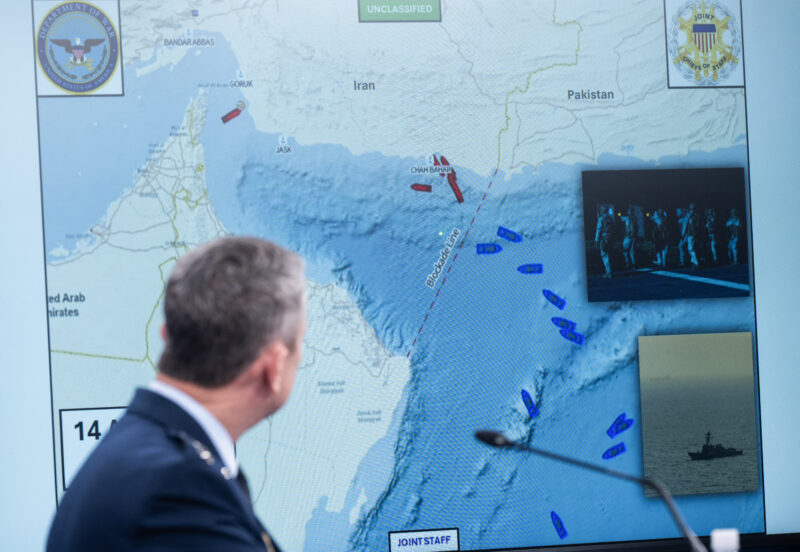
Chairman of the Joint Chiefs of Staff Air Force Gen. Dan Caine discusses the mission details of a strike on Iran during a news conference at the Pentagon on June 22, 2025 in Arlington, Virginia.
In my years of covering politics, it’s pretty rare for mainstream Jewish organizations to be wildly out of step with the predominant views of the Democratic Party. But in the aftermath of President Donald Trump’s decision to order bunker-busting strikes against Iran’s nuclear sites over the weekend, the views of the institutional Jewish community and many rank-and-file Democrats couldn’t have been more divergent.
Consider: The American Jewish Committee’s CEO Ted Deutch, a former Democratic congressman, praised Trump’s decision and called it “an historic moment for the United States, Israel and the world.” Anti-Defamation League CEO Jonathan Greenblatt thanked Trump for “holding true to the commitment that the United States will not stand by and watch the world’s leading state sponsor of terrorism and antisemitism develop nuclear weapons.”
Even the more-partisan Democratic pro-Israel group DMFI, which normally can be counted on to criticize the president, rejected its own party’s predominant view that further congressional approval should have been received before the strikes. “Iran was unwilling to give up its nuclear program through diplomatic negotiations across three different administrations, so the United States was left with no choice but to take decisive military action,” DMFI CEO Brian Romick said.
By contrast, it was tough to find many Democratic lawmakers — even among the many who are typical allies of Israel — to offer praise of the strikes severely degrading Iran’s nuclear program.
Senate Minority Leader Chuck Schumer (D-NY), who earlier this month recorded a video taunting Trump for “folding” against Iran, criticized the president for carrying out the strikes without congressional authority. Sen. Jacky Rosen (D-NV), one of the strongest pro-Israel stalwarts in the Democratic Party, likewise withheld support for striking Iran’s nuclear facilities while also reiterating her view that Iran should never be able to obtain a nuclear weapon. Like Schumer, she called on more congressional involvement.
Rep. Haley Stevens (D-MI), another strong pro-Israel ally running as the moderate Democrat in a Michigan Senate primary, sounded wary about the U.S. decision to take out Iran’s nuclear facilities. “The last thing our country needs is to be involved in another foreign war,” she said, echoing rhetoric from more progressive voices in the party.
To be sure, there have been a handful of Democrats sounding like the pro-Israel lawmakers that once dominated the party. Just look at the comments from Rep. Josh Gottheimer (D-NJ), Ritchie Torres (D-NY), Sen. John Fetterman (D-PA), Rep. Jared Moskowitz (D-FL), Rep. Greg Landsman (D-OH), Rep. Debbie Wasserman Schultz (D-FL), Rep. Tom Suozzi (D-NY) and former House Majority Leader Steny Hoyer (D-MD), all of whom described the all-too-urgent threat that a nuclear Iran posed to Israel and the world.
As one pro-Israel Democrat put it to JI: There were notably more Democrats putting out statements cheering anti-Israel activist Mahmoud Khalil being released from immigration detention than those expressing solidarity with Israel in its time of great need.
The debate over dealing with Iran’s nuclear ambitions has been a fraught one within the Democratic Party, ever since former President Barack Obama cut a nuclear deal with Iran in 2015 that many pro-Israel leaders found too accommodating towards the Islamic Republic. There were very messy internal divisions in the party back then as well.
But with public support for Israel among Democratic voters waning, according to recent polling, it looks like it’s getting harder for even sympathetic Democrats to vocally support the position, as Landsman did, that preventing Iran from getting a nuclear weapon is a step towards peace. It’s possible to quibble with the administration’s lack of legislative outreach while also acknowledging the positive end result.
On national security, this is becoming a moment of truth for the Democratic Party at large, which is trying to moderate its record to win back power in Washington, but still is beholden to its activist base. The fact that Zohran Mamdani, a radical anti-Israel candidate defending the slogan “globalize the intifada” is running as competitively as he is in tomorrow’s New York City Democratic mayoral primary, is a sign of where the party could be headed without more mainstream leaders speaking out.
The strike on the prison was one of several by Israeli fighter jets, targeting “bodies of government oppression in the heart of Tehran,” Israeli Defense Minister Israel Katz said

JALAA MAREY/AFP via Getty Images
Israeli Air Force AH-64 Apache attack helicopters fly over Israel's northern city of Haifa on June 19, 2025.
Israel on Monday bombed the gates of Iran’s notorious Evin Prison, where the regime holds and tortures dissidents, and conducted follow-up strikes near the Fordow nuclear facility a day after it was bombed by the U.S.
Evin has been a symbol of the regime’s oppression for decades. The Tehran prison is where the regime has incarcerated activists, protesters, journalists, dual nationals and others, and used torture methods including beatings, solitary confinement and sexual abuse. Iran expert Ben Sabti told Jewish Insider last week that Iranians have called on Israel to strike prisons so that dissident leaders held inside could escape and push for the toppling of the regime.
The strike on the prison was one of several by Israeli fighter jets, targeting “bodies of government oppression in the heart of Tehran,” Israeli Defense Minister Israel Katz said on Monday morning. The military struck the headquarters of the Basij, the regime’s internal enforcement arm, which has been instrumental in enforcing Islamic law and suppressing protest; the Islamic Revolutionary Guard Corps’ internal security command center; the Alborz Corps, responsible for security and regime stability in the Tehran district; and a clock in the city’s Palestine Square counting down to Israel’s destruction by 2040.
“These command centers have significant military effect and additionally they impact the regime’s ability to impose control. Striking these military targets harms the Iranian regime’s military capabilities,” the IDF Spokesperson’s Office stated.
Israel also conducted follow-up strikes on the access routes to the Fordow nuclear facility on Monday, the IDF confirmed. The strikes came a day after the U.S. struck the complex, which is under a mountain, with bunker-buster bombs.
The full extent of the damage done to the site, as well as facilities in Natanz and Isfahan, remained unclear after the strike by U.S. bombers early Sunday morning.
President Donald Trump said on Sunday that the U.S. did “monumental” damage to Iran’s nuclear facilities – “Obliteration is an accurate term!” he wrote on his Truth Social site — amid reports that the sites had been severely damaged but not destroyed.
Former Mossad chief Yossi Cohen told Israel’s Channel 12 News on Sunday that “to the best of my knowledge,” the U.S. strikes “succeeded in fully stopping the Iranian nuclear project, certainly at this point.”
International Atomic Energy Agency Secretary-General Rafael Grossi said that the bombing likely caused “very significant damage” to Fordow but that “no one — including the IAEA — is in a position to have fully assessed the underground damage.”
An Israeli government source told JI that the full extent of the damage was still being assessed as of Monday morning, but that Natanz and most of Iran’s estimated 400 kg of highly enriched uranium held at Isfahan were destroyed, and little of the uranium was moved to other locations before the strike.
Israeli Prime Minister Benjamin Netanyahu said on Sunday that Israel was very close to reaching the main goal of its operation in Iran: rolling back the nuclear and ballistic missile threats to Israel.
“When we reach our goals in Iran, the war will end,” he said in a press conference on Sunday. “We will not be dragged into a war of attrition.”
An Israeli official told Ynet that “if Khamenei stops shooting and says he wants to end the event, we will accept it … We want to end the event soon, this week, but whether it happens depends on Khamenei. If he shoots nonstop, we will have to respond.”
The IDF told JI on Monday that about 50% of Iran’s missile launchers have been destroyed.
Yossi Mansharov, an Iran expert at the Misgav Institute for National Security and Zionist Strategy, explained that it’s more important “to focus on the launchers that Iran retains, because without launchers, the missiles are useless.”
“This is a historic achievement for Israel, which will require Iran to check its defenses after the war,” Mansharov added. “The regime was caught unprepared for a war when it comes to defense and that has been very costly, as you can see from Israel’s extraordinary achievements.”
Still, Mansharov added, “Israel will also have to do an extensive examination to understand how it can improve its interceptions of deadly missiles.” (The writer is a senior fellow at the Misgav Institute.)
Iran hit an electrical facility in southern Israel with a ballistic missile on Monday morning. The Israel Electric Corporation said a “strategic infrastructure facility” was damaged near the city of Ashdod, causing power outages.
The Islamic Republic launched some seven missiles on Monday morning, in four separate barrages, sending Israelis across the country into bomb shelters for over half an hour. Iran also shot one missile into Israel overnight, which was intercepted. No injuries were reported.
As of Monday, Iran had shot about 500 missiles and 1,000 drones at Israel since the start of Operation Rising Lion this month, according to the Israeli government.
The IDF continued its strikes on Iran overnight and on Monday morning, including on missile launchers in Kermanshah and Tehran, fighter jets and six military airports in western, eastern and central Iran, and the Parchin military base, where experiments related to nuclear weapons have been conducted.
IDF Spokesperson Brig.-Gen. Effie Defrin said in a press briefing on Monday that the Israeli strikes are conducted “with an emphasis on the [Islamic] Revolutionary Guard Corps command centers and all elements of the threat to Israel … Every base from which we identify [missile] launches is attacked and damaged.”
Iranian media reported that the Islamic Republic shot down an Israeli drone.
Trump spoke out in favor of changing the regime in Iran, even as senior officials in Washington and Israel have said that is not one of the goals of the operation.
“It’s not politically correct to use the term, ‘Regime Change,’ but if the current Iranian Regime is unable to MAKE IRAN GREAT AGAIN, why wouldn’t there be a Regime change???MIGA!!!” Trump wrote on Truth Social.
Netanyahu would not rule out killing Iranian Supreme Leader Ali Khamenei when asked about it last week, and Defense Minister Israel Katz said Khamenei should remember “the fate of the dictator of the neighboring country,” Saddam Hussein.
Iran continued to threaten revenge on the U.S. for its recent strikes. A spokesperson for the Iranian military’s Khatam al-Anbiya Central Headquarters warned in a video in English that “Mr. Trump, the gambler, you may start this war, but we will be the ones to end it … The fighters of Islam will respond to the crime with powerful and targeted attacks that will lead to unexpected consequences.”
Reps. Schneider, Bacon, Panetta and Nunn traveled to Saudi Arabia, the United Arab Emirates and Bahrain last week

Faris Hadziq/SOPA Images/LightRocket via Getty Images
Saudi Arabia's Foreign Minister Prince Faisal bin Farhan al-Saud seen during the 2nd ASEAN GCC Summit at Kuala Lumpur.
Three House members who traveled to the Middle East last week told Jewish Insider on Friday that Arab leaders expressed to them concern about a potential broadening of the conflict between Israel and Iran, even as they acknowledged the threat posed by Iran and its nuclear program.
The trip, sponsored by the Atlantic Council’s N7 Initiative and the Jeffrey M. Talpins Foundation, took Reps. Brad Schneider (D-IL), Don Bacon (R-NE), Jimmy Panetta (D-CA) and Zach Nunn (R-IA) to Saudi Arabia, the United Arab Emirates and Bahrain immediately following Israel’s initial attacks on Iran. A stop in Israel was initially planned, but ultimately became infeasible due to the evolving war between Israel and Iran.
The initial goal of the trip was to discuss the Abraham Accords and their potential expansion.
The lawmakers said that the Arab leaders they met with were concerned that the war between Iran and Israel would expand and escalate, and their countries would be caught in the crossfire — particularly the UAE and Bahrain, given the presence of American bases in their countries. The conversations took place before the U.S. struck Iranian nuclear facilities on Saturday night.
“We heard quite a bit about their concerns with respect to a nuclear-armed Iran that would be an existential threat to every one of those countries,” Schneider said, “but also a desire to deescalate what’s happening because they rightly see [that] every day the war goes on is another day for an unintended consequence or an inadvertent escalation that could directly involve any of the Gulf countries.”
Schneider noted that the countries, particularly Saudi Arabia, have publicly condemned Israel’s attacks, but he said that in private conversations, the lawmakers heard a more nuanced message and stronger opposition to Iran’s nuclear program.
“While they’re not going to celebrate what Israel is doing, certainly they are not going to cry over Israel’s success in handling Iran’s nuclear program,” he said.
Panetta said that the Arab leaders also clearly understood why Israel had taken the action that it had.
“The leadership of the countries we met with, they understand how disruptive, how much of a destabilizing force, the regime of Iran is to the region of the Middle East,” Panetta said, adding that the pushback they heard against the conflict was not as strong as he anticipated.
Bacon also said that the Emirati and Bahraini leaders were clear about the threat of a nuclear-armed Iran, but preferred a diplomatic solution to the problem.
Bacon said the Saudis “held their cards much more tightly.”
“They were much more worried about Israel initiating this and they focused more on Gaza than anything else,” Bacon said. “In the end, if you pushed them, they would acknowledge Iran cannot have a nuclear weapon, but their public face was much more critical of Israel than the other countries.”
Panetta said Saudi leaders did not discuss whether they’d be willing to use their own forces to intercept attacks from Iran on Israel, as they did during Iran’s April 2024 attack on Israel.
Privately, Bacon said, Arab leaders were in “awe of what Israel’s been able to do” in its operations inside Iran and knew “that only Israel could pull something off like this.” Bacon said he also sensed relief from those countries that Israel was addressing the threat from Iran.
The lawmakers indicated that the normalization process between Saudi Arabia and Israel had been dealt setbacks by and since the Oct. 7, 2023, Hamas attacks on Israel. They said that the Saudis are demanding concrete progress toward a two-state solution before moving forward on normalization.
Schneider said that the Saudi deputy foreign minister indicated that “there has to be an irreversible path to a Palestinian state. It doesn’t have a timeline, it’s not saying a state tomorrow. I think there was recognition that that pathway and progress towards it must not be seen as a reward for Hamas and its actions on Oct. 7 and otherwise.”
“There needs to be hope and a pathway for the Palestinians for the Saudis to move forward,” Schneider continued.
Panetta noted that he had met with Saudi Crown Prince Mohammed bin Salman on Oct. 6, 2023, and left with “great hope” for normalization, but that two subsequent meetings with Saudi leadership made clear that, “the Palestinian issue is definitely something that needs to be addressed prior to normalization.”
Bacon said he challenged Saudi leaders on the issue of who in the Palestinian Authority would be willing to live and coexist peacefully with Israel as the leaders of a Palestinian state, “and I didn’t hear a good answer back.”
Schneider said that there was “no love for Hamas in any of our conversations,” and that Arab leaders recognized the issues within the PA and the need for a true partner for peace with Israel.
Panetta argued that, if the Saudis want to see a two-state solution develop, “it’s incumbent upon them to be involved in these types of discussions. And what that entails is obviously something that’s going to continue to develop during the hopefully diplomatic negotiations that we must continue to have.”
Bacon added that his impression was that if Iran were “defeated significantly” by Israel, it would increase the opportunities in the longer term for the expansion of the Abraham Accords.
In spite of the regional tensions the war in Gaza has produced, the lawmakers said that Emirati and Bahraini leaders highlighted the benefits they have experienced from the Abraham Accords as they relate to Gaza, including regular access and communication to the senior levels of the Israeli government and, in the case of the UAE, easier access to provide aid to Gaza.
Bacon added that the leaders of those countries expressed “no weakening” of their commitments to the agreements, and instead focused on the benefits.
Schneider said that the Arab leaders are eager to pursue an economically prosperous future, and are focused on ensuring that Iran and other malign actors cannot disrupt that.
Bacon said that the group had hoped to continue on to Israel, the final stop on their original itinerary, by driving in from Jordan, but that plan was blocked by House Ethics Committee staff, who are responsible for oversight of privately sponsored congressional travel.
Panetta also noted that the State Department and Department of Defense did not support the prospect of the lawmakers traveling to Israel in the midst of the conflict.
Schneider said that there was “never any hesitation” from the group’s members about going forward with the trip, which left a day after Israel launched its attacks, before the scope and nature of Iran’s retaliation was clear.
“Over the course of the days, it became clear that Israel was vastly overperforming expectations and Iran was vastly underperforming expectations and so the dynamic changed every day, but what I can say is, we spent our last two days in UAE — life was normal,” Schneider said.
Critics and Iranian dissidents accuse NIAC of being tied to the Iranian regime

Spencer Platt/Getty Images
Palestinian activist Mahmoud Khalil, who was released from ICE detention, speaks during a rally on the steps of the Cathedral of St. John the Divine in Manhattan on June 22, 2025 in New York City.
One day after former Columbia University graduate student Mahmoud Khalil was released from the immigration detention center where he had been held for three months, the anti-Israel activist appeared at a rally in New York City organized by a group accused of ties to the Iranian regime protesting the U.S.’ weekend airstrikes on Iran’s nuclear facilities.
“Mahmoud Khalil is a freedom fighter … who refuses to remain silent while watching a genocide in Palestine,” Khalil told a cheering crowd on Sunday, where he led anti-Israel chants including, “From the River to the Sea, Palestine Will be Free,” at the People’s Forum protest, a demonstration organized by the National Iranian-American Council to protest the U.S. military strikes on three Iranian nuclear sites.
Iranian dissidents and critics of NIAC, a U.S.-based Iranian-American advocacy group that calls for diplomacy with the Iranian regime and was critical of the Biden administration’s approach to Israel and the Middle East, accuse the group of being tied to the regime.
Khalil, who grew up in Syria but is of Palestinian descent and living in the U.S. on a green card, led last year’s anti-Israel campus protests at Columbia against the war in Gaza and subsequent negotiations with university administrators. He was detained in March and released on Saturday after U.S. District Judge Michael Farbiarz said it would be “highly, highly unusual” for the government to continue detaining a legal U.S. resident who was unlikely to flee and hadn’t been accused of any violence.
Khalil’s release was met with support from some left-wing lawmakers.
Rep. Alexandria Ocasio-Cortez (D-NY), who met Khalil at New Jersey’s Newark-Liberty International Airport a day after he was freed from a federal immigration facility in Louisiana, said that his detention by the Trump administration violated the First Amendment and was “an affront to every American.”
“He has been accused, baselessly, of horrific allegations simply because the Trump administration and our overall establishment disagrees with his political speech,” Ocasio-Cortez added.
Rep. Jerry Nadler (D-NY) wrote on X that he welcomed the decision to release Khalil. “As I have said before, his prolonged detention — without charges — is a chilling, McCarthyesque action in response to the exercise of First Amendment rights to free speech and raises serious constitutional concerns,” Nadler said.
‘Israel's not going to live this way anymore. They're not going to be subject to missile attacks every day and every night, living in bunkers,’ the South Carolina senator said

Photo by Kevin Dietsch/Getty Images
Sen. Lindsey Graham (R-SC) speaks during a news conference at the U.S. Capitol on July 30, 2021 in Washington, DC.
Sen. Lindsey Graham (R-SC) on Sunday dismissed claims that President Donald Trump’s decision to help Israel take out Iran’s nuclear program would lead to a wider war requiring U.S. troops.
Graham made the comments after being asked about the military implications of the strikes during an appearance on NBC’s “Meet the Press.” The South Carolina senator told anchor Kristen Welker that while he does not see U.S. servicemembers being sent to Iran, he believed Israel would target the regime itself.
“I don’t think I’ll see boots on the ground in our future, but I do see Israel not stopping. Israel’s not going to live this way anymore. They’re not going to be subject to missile attacks every day and every night, living in bunkers. They’re going to go after the heart of this regime. They’re going to take it down, one of two ways, make it change or replace it,” Graham said.
Asked to respond to critics who have argued that engaging militarily against Iran would lead to another conflict similar to the war in Iraq, Graham praised Trump’s decision to authorize the Iranian operation.
“It was necessary. It was bold. It was brilliant. Hats off to the president. In May of 2022, Iran had 95 pounds of highly enriched uranium to make a handful of bombs. By May of 2025, they had 900 pounds. Sixty percent enriched uranium has no commercial purpose. They have one peaceful reactor, actually, in Iran. They haven’t used one gram of their enrichment program to run that reactor. They get their fuel from Russia for civilian purposes. They had 900 pounds of highly enriched uranium to make more than a dozen bombs,” Graham said.
“This was the right call at the right time. It stopped their program from advancing even further. Iran with a nuclear weapon is an existential threat to the Sstate of Israel. The country is in the hands of religious Nazis. They want to kill all the Jews. And they’re coming after us. And they were set back. And to Steve Bannon and all those people, Iran is different. Nuclear weapons in the hands of the Ayatollah is a nightmare for the world,” he added.
Graham revealed that Israeli Prime Minister Benjamin Netanyahu said in a phone call with him earlier Sunday morning that the Iranian attack on Soroka Hospital in Beersheba last week marked a turning point in the conflict.
“If I were Israel, I would have done it a long time ago. They’ve been held back, in many ways. What would be the right response, if America had a ballistic missile fired into our country and killed our citizens? We would wipe the offender off the map,” Graham said.
“After the hospital attack – and they were so lucky not to lose a lot of people – Israel made a decision. This regime is going to change in one of two ways: they’re going to change their behavior, which I doubt, the regime itself, or the people are going to replace the regime. They have less capability today than they did yesterday, but they’re still religious Nazis,” he added.
Iran unlikely to escalate attacks against the U.S. after strike on nuclear sites, but the war with Israel will continue, experts say

Morteza Nikoubazl/NurPhoto via Getty Images
Iranian worshippers burn the flags of the U.S. and Israel during an anti-Israeli rally to condemn Israeli attacks on Iran, after Tehran's Friday prayers in Tehran, Iran, on June 20, 2025.
Iran is unlikely to initiate attacks against the U.S. after the American strike on Islamic Republic nuclear sites, but it will continue to launch missiles at Israel, experts told Jewish Insider on Sunday.
Hours after the U.S. bombed nuclear facilities in Fordow, Natanz and Isfahan in Iran, Raz Zimmt, director of the Iran program at the Institute for National Security Studies at Tel Aviv University, told JI that he doesn’t “identify a great desire — to say the least — of the Iranians to escalate with the U.S. … If they have a sharp reaction, it could drag in the Americans, who said that the matter is finished for them after they strike Iran. The U.S. has capabilities that could threaten the survival of the regime.”
Zimmt said it was likely that the Iranians would have a “symbolic reaction,” possibly targeting a U.S. military base in the region but with advance warning, similar to their response to the killing of Quds Force commander Qassem Soleimani in 2020.
“We shouldn’t underestimate Iran’s capabilities — their missiles are a big concern — but those who think we’re on the verge of World War III and that all the American bases will burn need to understand that the central goal of the Iranian regime is to survive, so I don’t think they’ll do that in the foreseeable future,” Zimmt added.
However, he said, hours after Iran shot 25 missiles at Israel on Sunday morning, causing damage in central Israel and Haifa, “Israel is another story. I think [Iran will] continue what they’re doing in Israel.”
Oded Ailam, a former senior official in Israel’s defense establishment and a researcher at the Jerusalem Center for Security and Foreign Affairs, told JI that Iran may choose not to escalate with the U.S. and instead “take out their anger on Israel with an increase in ballistic missiles,” but he said an Iranian attack on U.S. military targets in the region was still possible.
“The Iranians probably have not decided yet. It can go either way,” he said.
Iranian Foreign Minister Abbas Araghchi posted on X that “we were in negotiations with the U.S. when Israel decided to blow up that diplomacy. This week, we held talks with the E3/EU when the U.S. decided to blow up that diplomacy. What conclusion would you draw?”
Ailam said that while, in the short term, Iran was unlikely to return to the negotiating table “as a matter of national pride, it would look like a total defeat,” they would probably reenter talks farther down the line.
“I don’t know when it will happen, but I think the Iranians will very cautiously try to reach out to the Americans to negotiate and say they want to try to salvage some uranium enrichment for civilian needs,” he said.
Zimmt, however, said it was “clear that they won’t go back to negotiations.”
“The more significant thing in the weeks and days ahead is what they do in the nuclear arena,” he said. “Do they announce that they’re quitting the [Non-Proliferation Treaty]? In the end, I think their decision is connected to the question to which we don’t have an answer: what capabilities they still have.”
The lesson that Iran likely learned from the past week and a half, Zimmt posited, is that “being on the verge of having a nuclear weapon is not enough. They need to have a nuclear weapon. I’m not sure they can do it, though.”
“If, theoretically, they can use a few hundred centrifuges that remain and a few hundred kilos of uranium and try to break out [to weapons-grade enrichment] in a hidden place, they may consider it. I doubt they’ll do it now, when Israeli planes are flying over their heads, but I assume they would wait some time and reconsider their nuclear strategy,” Zimmt explained.
Initial satellite photos published by the Associated Press showed damage to the entrances of the nuclear facility in Fordow, which is under a mountain, as well as damage to the mountain itself. David Albright, president and founder of the Institute for Science and International Security, wrote on X that the photos appear to show that the bombs were dropped on a ventilation shaft into Fordow’s underground halls.
Ailam said that “the damage is very extensive.” According to his analysis, the attacks “neutralized” Iran’s ability to use its 400-kg stockpile of uranium enriched to 60% purity and turn it into weapons-grade (90% enriched) uranium.
“They don’t have the capability because they don’t have the centrifuges anymore,” he said. “It’s not terminal; if we want to ensure the nuclear weapons program is totally destroyed, we need to strike the 400 kg or reach an agreement in which it is removed from Iran, but this has significantly damaged the Iranians’ ability to rapidly reach military-grade enrichment.”
U.S. intelligence agencies said that the stockpile, held at the Isfahan facility, was harmed, but Israel has not yet released a similar assessment, Ailam said.
However, Zimmt said that it is harder to know the extent of the damage to the nuclear program without more extensive satellite photos of the nuclear sites.
“The Iranians are trying to present a picture that it was not significantly damaged, but there really is not much to rely on yet other than IDF reports,” he said.
IDF Spokesperson Effie Defrin said on Sunday that the Israeli army “has more targets. We are prepared for the campaign to continue and must prepare for any developments.”
Ailam said that Israel “did not entirely meet [its] goals. It was mostly Israel, but with the help of the U.S., we partially removed the immediate threat from the nuclear program and the massive ballistic system and [Iran’s] ability to manufacture 300 ballistic missiles a day. That was an existential threat to Israel.”
“But we are not at the point where we can say we removed all the threats and finished the whole bank of targets. It’s a huge country,” he added.
Zimmt said that the U.S. strike on Fordow was “the cherry on top” of Israel’s war against Iran, and that it’s time to wind down.
“Of course we can continue. We can always try to further degrade the nuclear program, but … as long as the goal was, foremost, to severely damage the nuclear program, the goal was — if not already achieved — it’s very close … I think the time has come to think of how to end this, even if it’s unilateral. If they attack, we can react, but we need to aim to finish in the coming days,” Zimmt said.
As for talk about regime change, Zimmt said it would be “impossible” through airstrikes.
Ailam said that every major attack on Iran creates “cracks in the regime’s wall and stability, and reveals this regime to be an empty vessel.” However, he said that there are not powerful enough forces within Iran that have risen up against the regime yet. “When it will happen is hard to say, but the more [the regime] suffers blows, the closer it gets.”
The Israeli prime minister, in video address: ‘History will record that President Trump acted to deny the world's most dangerous regime, the world's most dangerous weapons’

JACQUELYN MARTIN/POOL/AFP via Getty Images
Israeli Prime Minister Benjamin Netanyahu gives statements to the media inside The Kirya, which houses the Israeli Defence Ministry, after their meeting in Tel Aviv on October 12, 2023.
Israeli Prime Minister Benjamin Netanyahu praised President Donald Trump for his “bold decision” to strike three Iranian nuclear facilities located deep underground on Saturday.
Netanyahu made the comments in a video address posted shortly after Trump announced the completion of the operation targeting Fordow, Natanz and Esfahan, three nuclear sites that are deeply entrenched underground.
“Your bold decision to target Iran’s nuclear facilities with the awesome and righteous might of the United States will change history. In Operation Rising Lion, Israel has done truly amazing things, but in tonight’s action against Iran’s nuclear facilities, America has been truly unsurpassed. It has done what no other country on Earth could do. History will record that President Trump acted to deny the world’s most dangerous regime, the world’s most dangerous weapons,” Netanyahu said.
The Israeli prime minister argued that Trump’s “leadership today has created a pivot of history that can help lead the Middle East and beyond to a future of prosperity and peace.”
“President Trump and I often say ‘peace through strength.’ First comes strength, then comes peace. And tonight, President Trump and the United States acted with a lot of strength. President Trump, I thank you, the people of Israel thank you, the forces of civilization thank you,” Netanyahu added.
Trump’s decision to carry out the strikes came just over a week after Israel began its military operation to destroy Iran’s nuclear program and before the end of the two-week period that the Trump administration had provided for a decision on potential strikes. The decision also came as analysts and lawmakers on Capitol Hill warned that Israel lacked the capacity to destroy deeply entrenched nuclear facilities and would need the U.S. to get involved.
The president said on Saturday that the U.S. dropped six bunker-busting bombs on Fordow and launched a total of 30 Tomahawk cruise missiles from U.S. submarines at Natanz and Esfahan. He said that all three facilities were destroyed completely.
The ability to try to authenticate a statistic by attributing it to an official government source, while knowing that the source is unreliable, can serve as the basis for an inaccurate narrative with wide-ranging effects
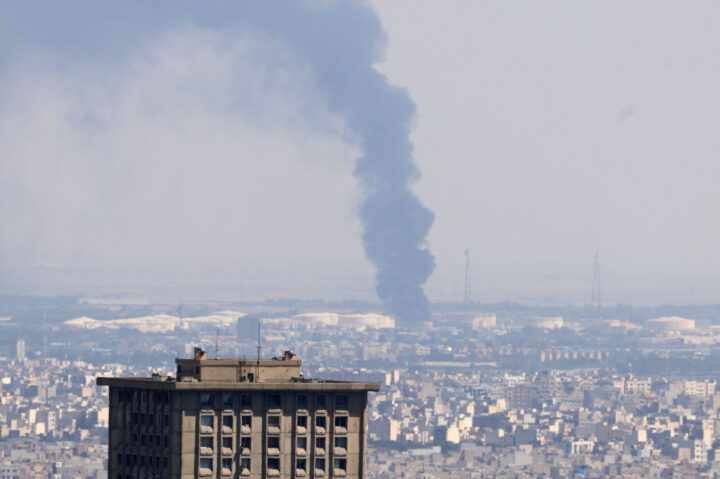
ATTA KENARE/AFP via Getty Images
Smoke billows in the distance from an oil refinery following an Israeli strike on the Iranian capital Tehran on June 17, 2025.
On Thursday, NBC News reported a claim from Iran’s Ministry of Health that “over 2,500 injured people were treated in public and university hospitals, with 1,600 discharged and about 500 still hospitalized.” Earlier this week, CBS News reported 224 Iranians were dead from Israeli airstrikes, also attributed to Iran’s Ministry of Health.
There is no free press in Iran, and journalists have been arrested and imprisoned simply for practicing journalism in the Islamic Republic. There is no real way to verify the Iranian Health Ministry’s numbers, and so many journalists report them, unscrupulously.
In a fast-paced, constantly evolving news environment, accuracy is paramount. The ability to try to authenticate a statistic by attributing it to an official government source, while knowing that the source is unreliable, can serve as the basis for an inaccurate narrative with wide-ranging effects.
Take, for example, the Al-Alhi Hospital incident in October 2023, when the most widely read Western media outlets reported on an Israeli strike on a Gaza hospital, later confirmed to have been a misfired Palestinian Islamic Jihad rocket. In the aftermath of the hospital incident — which many outlets, including The New York Times, had to walk back — Jordanian King Abdullah II canceled an in-person summit with President Joe Biden in Amman, potentially altering the course of the conflict.
“Israel strikes Iranian state TV, warns people to evacuate Tehran after accusing Iran of targeting civilians,” was a CBS News headline on Monday evening. Hours prior, an Iranian ballistic missile salvo targeted dozens of locations across the country — with one missile landing in the heart of a residential area of Tel Aviv.
Further missing in reports of fatalities in the region is the identity of those killed. Take, for example, an Israeli attack in December on the port of Hodeidah and Sana’a airport in Yemen, both utilized by the Houthis. “At least four people were killed and 21 others injured in the attack,” according to the New York Times report on the strike, filed by journalists in Israel and the United Arab Emirates who cited Yemeni state-run media and the country’s Ministry of Health.
Why were those people at a Houthi port known for serving as a point of transfer for Iranian weapons? Were those who were killed Houthi officials? Were they engaged in activity that posed an active and immediate threat to Israelis? The reader will never know anything beyond that the numbers provided by the Houthi-run Health Ministry in Yemen “could not be independently verified.”
It’s a regular occurrence in Israel-related reporting, where reports on West Bank clashes fail to mention when those killed are members of Hamas, Palestinian Islamic Jihad or one of the many armed militant groups operating in the territory.
More than 20 months after Hamas terrorists tore through southern Israel, raping, burning and killing people and destroying obstacles in their way, foreign reporters in the region continue to use casualty figures from the terror group’s Gaza Ministry of Health, noting only that the group doesn’t distinguish between civilians and combatants.
Concerns over the reliance on the Hamas-run Gaza Health Ministry were so severe that American legislators passed — on a bipartisan basis — an amendment to last year’s State, Foreign Operations and Related Programs Appropriations bill barring the State Department from using the health ministry’s statistics. Read our report here.
An ABC News report from earlier this week on violence near humanitarian aid distribution sites in Gaza leads with the headline “More than 30 killed at controversial foundation’s aid distribution sites in Gaza: Health officials,” giving an air of legitimacy to the claim — even though a reader would have to move down to the story before learning that those health officials came from the “Hamas-run Gaza Ministry of Health.” And nowhere in the story does ABC News note that the Gaza Health Ministry doesn’t distinguish between civilians and combatants.
The inclination to publish talking points and statistics from terror groups and regimes incentivizes a playbook for malign actors — from Iran to the Houthis and Hamas — to provide misleading casualty figures for the media to carry that lack the intricacies and nuances necessary in such reporting.
And in this new media reality, misinformation and malign actors — already benefiting from sympathetic media organizations — thrive.
IDF spokesman says Israel thwarted an Iranian plan for a larger missile attack on the largest city in southern Israel

IDF
The site of an Iranian ballistic missile strike in Beersheba, Israel, June 20th, 2025.
An Iranian missile struck Beersheba, the largest city in southern Israel, for the second consecutive day on Friday, hours after President Donald Trump said he would decide in the next two weeks whether to join Israel in striking the Islamic Republic.
The IDF unsuccessfully attempted to intercept the surface-to-surface missile from Iran, which injured seven and left a crater at the blast site and damage to buildings in the area of Beersheba’s HiTech Park.
One of the sites reportedly damaged was Microsoft’s office in Beersheba, which the Islamic Revolutionary Guard Corps claimed worked in “close collaboration with the Israeli military” and was “part of the system supporting aggression, not merely a civilian entity.”
Beersheba Mayor Rubik Danilovich said, “There is extensive damage, but people acted according to Home Front Command instructions” — to enter safe rooms and shelters — “and saved themselves. Our challenge is to collect the residents and find them solutions. We prepared for this.”
Some of the residents wounded by the blast were evacuated to Soroka Medical Center, the hospital in the city where an entire wing was destroyed by a missile a day prior. That wing was older and, unlike other areas of the hospital complex, not reinforced to protect from attacks.
Hours before the strike on Beersheba, the IDF shot down an Iranian drone near the Dead Sea.
But in most parts of the country, Israelis had their first quiet night in a week, with no sirens interrupting the sleep of residents of central or northern Israel.
White House Press Secretary Karoline Leavitt said on Thursday that President Trump would take up to two weeks to decide if the U.S. will join Israel’s operation against Iran. Key components of Iran’s nuclear program are in a facility in Fordow built under a mountain, and experts said Israel does not have the capability to destroy it from the air, while the U.S. has Massive Ordinance Penetrators and B-2 heavy stealth bombers, which are thought to be have the capacity to destroy it.
“I have a message directly from the president, and I quote, ‘Based on the fact that there’s a substantial chance of negotiations that may or may not take place with Iran in the near future, I will make my decision whether or not to go within the next two weeks,'” she said at a White House briefing.
“He’s been very clear,” Leavitt stated. “Iran went for 60 days when he gave them that 60-day warning without coming to the table. On day 61, Israel took action against Iran. And as I just told you from the president directly, he will make a decision within two weeks.”
Israel struck the Lavizan area of Tehran late Thursday night. Earlier this week, opposition news outlet Iran International reported that Iranian Supreme Leader Ali Khamenei was underground with his family in Lavizan.
In the early hours of Friday morning, the IDF struck Rasht, a town near the Caspian Sea in northern Iran, and the location of a technological park. The IDF sent residents an evacuation notice before the strike, saying that it plans to “attack military infrastructure” in the area.
Over 60 IAF aircraft attacked dozens of targets in Iran overnight, including “an essential component for nuclear weapons,” IDF Spokesperson Effie Defrin said in his daily briefing on Friday.
Defrin said that Iran had planned a larger attack on Beersheba on Friday morning but Israel thwarted that plan, destroying three primed launchers. “Prior to launch, we detected the deployment of three launchers that were ready to fire, as seen on the screen, and we neutralized them,” Defrin said.
Israeli aircraft struck production sites for missiles and missile components, as well as radar installations and a weapons research and development center in Tehran, the IDF Spokesperson’s office said.
Asked about reports that the IDF is running low on interceptors, Defrin explained that the more missile launchers Israel strikes in Iran, the fewer interceptors it will need in Israel.
The International Atomic Energy Agency reported on Thursday that Israel caused severe damage to Iran’s heavy water reactor in Khondab, used for research. IAEA Director Rafael Grossi said he did not expect any radiological consequences.
In its reports on the Iranian ballistic missile strike on a home in Tamra, northern Israel, CNN described the city as Palestinian

JOHN WESSELS/AFP via Getty Images
The mother of one of the victims of an Iranian missile attack which destroyed a three-storey building in the northern Arab-Israeli city of Tamra, is comforted during a funeral in the northern Arab-Israeli city of Tamra, on June 17, 2025.
After an Iranian ballistic missile struck a home in the northern Israeli city of Tamra, killing a woman, her two daughters and her sister-in-law, news outlets faced an additional challenge beyond the sober responsibility of covering a tragic loss: choosing what language to use to describe these women and their ethnic identity.
Tamra is an Arab town, with a history dating back hundreds of years. When Israeli President Isaac Herzog visited on Wednesday, he talked about the “shared society of Jews and Arabs” in Israel that “believe in our common life together,” and described the victims as “Muslim women.” Most news reports — in major international outlets including the Associated Press, Reuters, The New York Times and The Wall Street Journal — referred to Tamra as either an “Arab-Israeli city” or an “Arab town in Israel.”
CNN, however, chose a different word for Tamra, a city that is firmly inside Israel’s original 1948 borders: Palestinian.
“Iranian strikes expose bomb shelter shortage for Palestinian towns inside Israel,” read one headline from this week. The accompanying article described Tamra’s residents as “Palestinian citizens of Israel.” Another story called Tamra a “Palestinian-Israeli town.”
The descriptor is sure to confuse some readers. If advocates for a two-state solution talk about separate Israeli and Palestinian states, how can there be a Palestinian town within Israel?
The use of the word is not a statement about the town being under Palestinian sovereignty or the jurisdiction of a Palestinian governing authority. The word is used to describe the national identity of the people who live there, similar to describing Americans of Chinese ancestry as Chinese Americans — only much more complicated, because of the recent politics of the war in Gaza and nearly eight decades of the ongoing Israeli-Palestinian conflict.
Anwar Mhajne, a political science professor at Stonehill College in Massachusetts, who grew up in the Arab city of Umm al-Fahm in Israel, told Jewish Insider that using the term “Palestinian” to describe her identity and the place where she grew up can serve as an educational opportunity for people from outside the region who don’t know the history of her community, which dates back several hundred years.
“If I’m talking to outsiders who don’t understand the history of the region, I would say, ‘It’s a historically Palestinian town inside of Israel,’” Mhajne said. “Then I have to tell them the whole story of how that happened. The reason why I do this is because I have people ask me, ‘Wait, you’re not Jewish, so how are you in Israel?’”
CNN’s use of the word “Palestinian” to describe the Arab-Israeli residents of Tamra reflects a broader linguistic shift that has been happening over the years among Israel’s Arab citizens, who account for about 20% of Israel’s population. A spokesperson for CNN did not respond to a question about whether the language reflected a change to the network’s style guide, but the recent language appears to be a shift for the news network, which even earlier this year used the term “Arab Israelis” in its reporting.
“There’s a growing trend going on in the past, I want to say 10, maybe 20, years, of people who are saying, ‘We are going to reclaim our identity as Palestinians, and we’re not going to be ashamed to call ourselves Palestinians,’” said Yasmeen Abu Fraiha, a fellow at the Harvard Kennedy School who is completing a fellowship at Harvard Medical School. She counts herself among that trend: She didn’t use the term “Palestinian citizen of Israel” to describe herself until her late 20s, after she studied at Hebrew University in Jerusalem.
Abu Fraiha grew up in a Jewish city in Israel and she trained at Israeli institutions. She was working at Soroka Hospital in Beersheba — the hospital that was hit by an Iranian missile on Thursday — during the Oct. 7, 2023, Hamas attacks, when she helped treat hundreds of people injured that day. She likes the term “Palestinian citizen of Israel” because it encompasses two parts of her identity that are both important, although she is not a stickler about the language; she previously served as health policy director at the Task Force for Health Promotion and Equity in the Arab Society at the Israeli Ministry of Health, an official government entity.
“First, yes, I’m Israeli. I was born and raised there. Hebrew is my first language. I love the Israeli culture,” Abu Fraiha explained. “I’m fully Israeli. And then at the same time, my history, my narrative, my national connection, is to the Palestinian people.”
Mhajne, too, identifies with the Israeli part of her identity. It’s the passport she holds. She is the product of an Israeli education, and earned her bachelor’s degree at Ben-Gurion University of the Negev. But that is not the full story of who she is.
“I do hold both close, dearly, and I think they’re very important to hold onto. Historically, culturally, in a lot of ways, we are Palestinian, and we share that story. It’s our ancestors’ stories. These towns and us, we’ve been there for a long time, even before Israel was a state.”
Among Israel’s Jewish population, the language has not caught on widely, although it has growing cachet among Israeli Jews on the political left. Israel’s government formally uses the term “Arab-Israeli” to describe this part of the population, and that is the language generally used in English, too.
Shayna Weiss, senior associate director of the Schusterman Center for Israel Studies at Brandeis, said the rhetorical matter can be “quite confusing” for her undergraduate students, so she usually discusses it at the beginning of each course she teaches about Israeli society.
“I generally use the term ‘Israeli Palestinian’ ‘Palestinian citizens of Israel,’ but there are also instances where some people have said they see themselves as Israeli Arab, like certain pop stars, that sort of thing. And if I know that’s what they think about themselves, that’s the term I try and use,” Weiss told JI.
The death of the women and girls in Tamra has brought to the surface a rhetorical debate that has been bubbling up for years. Ultimately, Mhajne argued, what matters is not the words used to describe them — but that they were human beings.
“It bugs me, honestly, sometimes when people fight over ‘Arab’ and ‘Palestinian,’” she said. “They’re someone’s wife and daughters.”
Ye, who most recently was a staffer for Rep. Dan Goldman, is backed by a pro-Israel super PAC as well as a group with ties to the real estate industry

Michael M. Santiago/Getty Images
Council Member Alexa Aviles speaks during a press conference outside of City Hall on April 10, 2025 in New York City.
In recent years, Jewish and pro-Israel activists in New York City have been successful in defending favored incumbents while boosting candidates in open-seat local races. But they have struggled to go on the offensive against far-left Israel critics on the City Council aligned with the Democratic Socialists of America, which has gained prominence in some districts.
Now, however, some Jewish community activists and pro-Israel strategists are expressing optimism that a competitive City Council election in southern Brooklyn could be their best pick-up opportunity in next week’s citywide primaries, delivering a possible upset that has so far proved elusive at the local level.
In one of the city’s most hotly contested local races, Alexa Avilés, a two-term councilmember backed by the DSA, is facing a formidable challenge from Ling Ye, a moderate former congressional staffer making her first bid for elective office with a focus largely on public safety.
The race is playing out in a redrawn district that now includes more moderate constituents in Dyker Heights who are likely less receptive to reelecting a socialist, strategists say, fueling hopes among allies of Ye eager to pick off an incumbent whose hostility to Israel while in office has rankled Jewish leaders.
Ye, who immigrated to the United States from China in her early teens, is also depending on the sizable population of Chinese American voters who live in the ethnically diverse district — which covers such progressive pockets as Red Hook, winds down through a heavily Latino section of Sunset Park and terminates around Bensonhurst and Dyker Heights in southwestern Brooklyn.
“She is hyper focused on the issues impacting the community she grew up in and served through her many roles in government,” Haley Scott, a spokesperson for Ye, told JI. “She’s fighting to make south Brooklyn safer and more affordable, and to make sure every community in this district is being heard and represented in City Hall.”
One political consultant supportive of Ye said that he had seen recent polling showing Avilés with an eight-point lead over her opponent, but cautioned the district is difficult to accurately survey because the electorate is so diverse and voters speak several different languages.
“There are a bunch of voting pockets, between the Asian population and working-class moderate white voters, that could break toward Ye,” the consultant, who spoke on condition of anonymity to address the race, told Jewish Insider this week.
Haley Scott, a spokesperson for Ye, also projected confidence ahead of Tuesday’s primary, saying the first-time candidate “is running a campaign to win” and built “overwhelming grassroots support and an aggressive turnout operation to make sure everyone who can vote exercises that right.”
“She is hyper focused on the issues impacting the community she grew up in and served through her many roles in government,” Scott told JI. “She’s fighting to make south Brooklyn safer and more affordable, and to make sure every community in this district is being heard and represented in City Hall.”
Ye, who most recently was a staffer for Rep. Dan Goldman (D-NY), is backed by a pro-Israel super PAC as well as a group with ties to the real estate industry that has invested in attack ads targeting Avilés over past calls to defund the police, among other issues.
Like some other candidates who have previously endorsed such efforts — which have more recently become a political liability — Avilés has softened her rhetoric on public safety issues as she faces scrutiny over her positions while seeking reelection to a third term in the changed district.
As recently as last August, for instance, Avilés had explicitly advocated for “defunding the NYPD” in a platform section on her campaign site, according to archived screenshots on the Wayback Machine. But her current platform features no such language, and even acknowledges that a “police presence” coupled with public services like “better street lighting” have helped constituents “feel safe” in their communities.
Rather than calling for a wholesale divestment from law enforcement, Avilés’ platform now pushes for increased police accountability while arguing that officers are unfit to respond to mental health calls, among other things.
Her campaign did not return a request for comment from JI on Thursday.
The Puerto Rican-born councilwoman, who chairs the Committee on Immigration, has otherwise been emphasizing constituent services, citing her efforts to protect residents from federal agents conducting what she has called “unlawful” raids and arrests as President Donald Trump’s immigration crackdown targets New York City.
For her part, Ye has countered that Avilés’ tenure has been more defined by what she characterizes as performative gestures such as voting against the city budget, while suggesting that her vociferous support for defunding the police has damaged relations with law enforcement at the expense of the community’s immediate needs. Ye has called for “strengthening relationships between local police precincts and the neighborhoods they serve” amid local concerns over violent crime, among other policies that she casts as practical solutions better aligned with the district.
Ye, who has drawn donations from Jewish and pro-Israel donors, is supportive of Israel but has stressed that the City Council is not an appropriate venue for litigating foreign policy and has sought to focus on local issues throughout the race, according to her campaign. The district is home to just a small number of Jewish voters, according to experts, even as it includes some parts of Borough Park, a Hasidic enclave.
“New York’s AIPAC is spending big against me,” Avilés said during her speech on Saturday before a packed audience at Terminal 5, referring to Solidarity PAC, a local pro-Israel advocacy group supporting Ye that has no formal ties to the Washington-based federal lobbying organization. “Because I’ve stood up over and over to demand a ceasefire in Gaza,” she added defiantly to cheers from the crowd. “We want to end the genocide and we want a free Palestine!”
Still, Israel’s ongoing wars have fueled tension in the district. Pro-Palestinian activists have heckled Ye on the campaign trail, according to video seen by JI, accusing her of supporting “genocide” and taking “blood money” from Israel, a false claim that echoes antisemitic tropes about Jewish control of American politics. Ye has also faced xenophobic rhetoric amid the race, as one of her public campaign posters was defaced with graffiti labeling her a “Zionist” as well an affiliate of the “CCP,” or the Chinese Communist Party, a photo recently shared with JI shows.
Even as Avilés has somewhat tempered her rhetoric on law enforcement, she has continued to speak out stridently in opposition to Israel, most recently at a campaign rally in Manhattan for Zohran Mamdani, a far-left state assemblyman from Queens polling in second place in the Democratic mayoral primary on Tuesday.
“New York’s AIPAC is spending big against me,” Avilés said during her speech on Saturday before a packed audience at Terminal 5, referring to Solidarity PAC, a local pro-Israel advocacy group supporting Ye that has no formal ties to the Washington-based federal lobbying organization. “Because I’ve stood up over and over to demand a ceasefire in Gaza,” she added defiantly to cheers from the crowd. “We want to end the genocide and we want a free Palestine!”
In keeping with the DSA, which drew widespread backlash for promoting a Manhattan rally at which attendees were seen celebrating Hamas shortly after the Oct. 7, 2023, attacks, Avilés backs the Boycott, Divestment and Sanctions moment targeting Israel and has faced scrutiny for being among a handful of City Council members who abstained from voting in favor of a City Council resolution to establish an annual “End Jewish Hatred Day.”
Sara Forman, who leads Solidarity PAC, criticized Avilés in a statement to JI as “a DSA ideologue” who during her time in office has “sidelined” key issues such as affordable housing “in favor of empty promises, an obsession with foreign policy and political posturing.”
Solidarity PAC, Forman said, “proudly supports Ling Ye, who has called Brooklyn’s 38th District home since immigrating to the United States at 14, as someone who understands the real and pressing needs of the community.”
As she seeks to fend off her primary challenger, Aviles’ allies have raised some concerns about the race, even as she has won a range of high-profile endorsements from such progressive leaders as Rep. Alexandria Ocasio-Cortez (D-NY) and the Working Families Party. In a recent Zoom discussion about the “Israel lobby,” Yuh-Line Niou, a former far-left state assemblywoman who lost a tight congressional contest in 2022, warned that Avilés is running in “a very tough race” and urged viewers to support her campaign.
“There are people who are Asian voters who will literally see an Asian name on the ballot and be willing to vote for them,” suggested Niou, who is Taiwanese American.
Despite some unease among supporters of Avilés, the race has largely flown under the radar and has been overshadowed by a separate City Council race in Brooklyn where Shahana Hanif, the DSA-aligned incumbent, has drawn backlash from Jewish voters over her strident criticism of Israel.
“It’s going to be the closest of the DSA races,” said one Jewish leader, speaking anonymously to discuss the primary. “But Alexa still wins,” he predicted, while speculating that Mamdani’s “coattails” in the district “will help.”
In her primary, Hanif is defending her seat against Maya Kornberg, a pro-Israel Jewish Democrat also backed by Solidarity PAC who, like Ye, has accused her opponent of failing to provide solid constituent services while advocating for policies like defunding the police that have not helped the district.
But while the race has drawn national attention as well as spending from outside groups backing both candidates, some strategists and Jewish leaders who are eager to see Kornberg win expressed skepticism she will ultimately unseat Hanif — owing largely to the ideological makeup of the district that includes deeply progressive Park Slope.
Some Jewish community activists are also cautious about Ye’s race further south. “It’s going to be the closest of the DSA races,” said one Jewish leader, speaking anonymously to discuss the primary. “But Alexa still wins,” he predicted, while speculating that Mamdani’s “coattails” in the district “will help.”
Still, others following the race are holding out hope that Avilés’ new district lines will favor a moderate Democrat like Ye, who has argued the community “doesn’t need another professional protester” in City Hall.
“There’s a really good chance for a pick-up here,” said another Jewish community activist who has tracked the race.
Plus, overnight Iranian strikes hit Israeli hospital
DigitalGlobe via Getty Images
This is a satellite image of the Fordow facility in Iran.
Good Thursday morning.
In today’s Daily Kickoff, we report on the early morning Iranian strikes that hit Israel’s Soroka Medical Center in Beersheba, Tel Aviv’s Diamond District and the city of Holon, and cover President Donald Trump’s comments on potential U.S. military involvement against Iran’s nuclear program. We cover Sen. Ted Cruz’s recent interview with Tucker Carlson and report on former New York Gov. Andrew Cuomo’s pushback against Assemblymember Zohran Mamdani’s defense of the “globalize the intifada” slogan. Also in today’s Daily Kickoff: Alex Wong, Morgan Ortagus and Haim.
What We’re Watching
- President Donald Trump will hold an intelligence briefing in the Situation Room this morning. The meeting comes days after the president reportedly approved a plan to attack Iran. Trump has so far held off on issuing the final order to move forward on the attack plan, in order to give Tehran the opportunity to abandon its nuclear program diplomatically.
- We’re also keeping an eye on U.S. military movements in the region, signaling U.S. military preparation for possible strikes on Iran — including whether those movements will include planes capable of carrying the bunker-buster bombs believed necessary to strike Iran’s underground nuclear facility at Fordow.
What You Should Know
A QUICK WORD WITH JI’S Lahav harkov
Israelis woke to sirens this morning — a routine occurrence over the past week — but were shocked to learn that Beersheba’s Soroka Medical Center, one of the country’s major hospitals, had been among the sites hit in the most recent barrage of ballistic missiles from Iran. In addition to Soroka, there were direct hits in the Tel Aviv area that wounded 89, including three seriously.
The missile struck the hospital’s old surgical building, severely damaging it and causing what a Soroka spokesperson described as “extensive damage in various areas” of the hospital complex. The surgical building had been recently evacuated in light of the war, and patients and staff had been moved to areas with reinforced walls. Injuries from the strike were light, hospital representatives said.
Soroka is the largest hospital in the Negev, such that the strike left a large swath of Israel without a functioning major medical center. Other hospitals in the area, including Barzilai Medical Center in Ashkelon and Assuta Medical Center in Ashdod, prepared to take in patients from buildings that were damaged. Magen David Adom provided four intensive care buses, able to transport a total of 23 ICU patients and 50 lightly injured casualties.
Early Thursday, the IDF struck an inactive nuclear reactor near Arak in Iran after sending warnings to civilians in the area. The IDF Spokesperson’s Office said the strike included “the structure of the reactor’s core seal, which is a key component in plutonium production.” The IDF also gave details of strikes on the active nuclear site in Natanz, which “contained components and specialized equipment used to advance nuclear weapons development and projects designed to accelerate the regime’s nuclear program.”
In addition, 40 IAF fighter jets struck dozens of military targets in Tehran and other parts of the country, including factories manufacturing ballistic missile and air-defense components, as well as air-defense batteries, surface-to-surface missile storage sites, radar systems and other targets.
close to the vest
Trump on U.S. striking Iran: ‘I may do it, I may not do it’

There is a chance the U.S. will join Israel in striking Iran’s nuclear facilities, President Donald Trump told reporters on Wednesday, adding that “nobody knows” yet what he will decide, Jewish Insider’s Gabby Deutch reports.
What he said: “I may do it. I may not do it. I mean, nobody knows what I’m going to do,” Trump said in his first public comments about Iran after an hour-long Situation Room briefing on Tuesday. He said he told Israeli Prime Minister Benjamin Netanyahu to “keep going.” Trump added, “So far he’s doing a good job.” He acknowledged that some of his supporters “are a little bit unhappy” about his posture toward Iran, but added that there are “some people that are very happy.” Trump further threw his support behind Israel’s actions: “All I’m doing is saying you can’t have a nuclear weapon. I’m trying to do it nicely, and then on Day 61, I said, let’s go,” he said.
Disowned: “My supporters don’t want to see Iran have a nuclear weapon. … Very simple: If they think it’s OK for Iran to have a nuclear weapon, then they should oppose me,” Trump said in response to a question in the Oval Office later in the day about the foreign policy debates between hawks and isolationists in the GOP base, Jewish Insider’s Marc Rod reports. “The problem is they get themselves into a thing: They don’t want them to have nuclear, but then they say, ‘Well, we don’t want to fight.’ Well, you’re going to have to make a choice because it’s possible that you’re going to have to fight for them not to have nuclear.”
FRIENDS IN HIGH PLACES
Hegseth defends Kingsley Wilson amid questioning about antisemitic record

Secretary of Defense Pete Hegseth offered a strident defense of Kingsley Wilson, the recently promoted Pentagon press secretary with a history of espousing antisemitic conspiracy theories, under questioning at a Senate Armed Services Committee hearing on Wednesday, Jewish Insider’s Marc Rod reports.
No hesitation: “I’ve worked directly with her, she does a fantastic job, and any suggestion that I or her or others are party to antisemitism is a mischaracterization attempting to win political points,” Hegseth said in a heated exchange with Sen. Jacky Rosen (D-NV), who co-chairs the Senate antisemitism task force. “Senator, you’re attempting to win political points on the backs of mischaracterizing the statements of a member of my department and I’m not going to stand for that,” Hegseth continued. Rosen shot back that his answer made clear Hegseth was not serious about fighting antisemitism.
TC VS TC
The key moments from the testy Tucker Carlson-Ted Cruz showdown

Sen. Ted Cruz’s (R-TX) interview on Tucker Carlson’s podcast published on Wednesday devolved into a shouting match at times between the two GOP heavyweights, with insults and charges of ignorance and antisemitism dominating the two-hour conversation between one of the Republican Party’s biggest pro-Israel champions and one of the most vocal critics of the U.S.-Israel relationship, Jewish Insider’s Emily Jacobs reports.
Increasingly tense: The interview was relatively civil for the first hour, but began to devolve when Carlson and Cruz started debating the benefits of the U.S. relationship with Israel and the merits of Israel and the United States allegedly spying on one another. Carlson pressed Cruz to say that allies spying on one another was wrong, which Cruz responded to by asking why Carlson and others had an “obsession with Israel” while ignoring similar behavior from other allies. Carlson rejected that he was “obsessed with Israel.”
TRANSITION
Morgan Ortagus joins U.S. mission to the U.N. after NSC shake-up

Morgan Ortagus, who joined the Trump administration as Steve Witkoff’s deputy Middle East special envoy, has now moved to a position at the U.S. mission to the United Nations, Jewish Insider’s Gabby Deutch reports. A State Department directory lists Ortagus as a senior policy advisor at the mission to the U.N., according to a screenshot obtained by JI.
Background: Ortagus left Witkoff’s office after a widespread purge of Israel and Iran officials at the National Security Council. Ortagus is close with Mike Waltz, President Donald Trump’s former national security advisor who is now his pick to serve as ambassador to the UN.
SEEKING STRATEGY
Top Senate Democrats caution Trump against potential U.S. Iran strikes

Asserting that President Donald Trump “owes Congress and the American people a strategy for U.S. engagement” in the Middle East, top Senate Democrats cautioned in a statement on Wednesday afternoon against potential U.S. strikes on Iran and argued that the president would need congressional authorization to conduct such an operation, Jewish Insider’s Marc Rod reports.
Why it matters: The signatories to the statement include Senate Minority Leader Chuck Schumer (D-NY) and Sens. Chris Coons (D-DE), Patty Murray (D-WA), Jack Reed (D-RI) and Mark Warner (D-VA), the top Democrats on several key Senate committees and subcommittees. The statement suggests that a direct U.S. military intervention in Iran would see little support among Senate Democrats. “We are deeply concerned about a lack of preparation, strategy, and clearly defined objectives, and the enormous risk to Americans and civilians in the region,” the senators said.
Elsewhere on the Hill: Meanwhile, a group of 10 House Republicans led by Reps. Dan Crenshaw (R-TX) and Ann Wagner (R-MO) wrote to Trump on Wednesday with a very different message: “We fully support future efforts to eliminate Iran’s nuclear program and, if necessary, take decisive action to protect American lives and interests, as is within your powers as Commander-in-Chief.” They also reiterated that no deal with Iran can allow Iran to continue enriching uranium. “Above all, we are in full support of the red line you have set with Iran to prevent them from regaining their power and influence in the region via proxy groups or a nuclear weapon.”
COSTLY COMMENT
Cuomo denounces Mamdani for defending calls to ‘globalize the intifada’

Former New York Gov. Andrew Cuomo spoke out against Zohran Mamdani, his top rival in New York City’s Democratic mayoral primary on Tuesday, for defending calls to “globalize the intifada” in a widely criticized podcast appearance this week, Jewish Insider’s Matthew Kassel reports.
Cuomo’s criticism: “Yesterday when Zohran Mamdani was asked a direct question about what he thought of the phrase ‘globalize the intifada,’ he dismissed it as ‘language that is subject to interpretation,’” Cuomo said in a social media post on Wednesday. “That is not only wrong — it is dangerous. At a time when we are seeing antisemitism on the rise and in fact witnessing once again violence against Jews resulting in their deaths in Washington, D.C., or their burning in Denver (sic) — we know all too well that words matter. They fuel hate. They fuel murder.”
Worthy Reads
Endgame in Iran: The New York Times’ Bret Stephens suggests how the Trump administration could use military and diplomatic means to achieve an end to the war that eliminates the nuclear threat from Iran and stabilizes the region. “Here, then, is what Trump should do: First, drop bunker busters on Fordo and other hardened nuclear sites to ensure that Iran has no fast route to a bomb. That would need to be followed up by dropping a diplomatic bunker buster on Tehran — the proverbial offer Iran can’t refuse. … The regime would have to agree to two things: First, permanent, verifiable, comprehensive and immediate denuclearization, including a system of intrusive inspections and an end to its enrichment programs. Second, an end to its financial and military support for Hezbollah, Hamas and other foreign proxies.” [NYTimes]
‘America First’ in Iran: In Semafor, former Middle East envoy Jason Greenblatt explains President Donald Trump’s approach to Iran. “Meanwhile, Trump is showing Iran its options before it hits the point of no return. If Tehran pursued a new approach — surrendering its nuclear program, dismantling its missile arsenal and proxies, and allowing genuine freedom for its people — it could chart a different course. The likelihood of this is exceedingly low. Trump making the stakes clear is exactly on brand. He doesn’t waste time with niceties or euphemisms. He says things like, ‘We know exactly where the so-called “Supreme Leader” is hiding…But we don’t want missiles shot at civilians, or American soldiers’ and threatening to kill the Ayatollah if he makes a false move. His direct communication style is worth a thousand clever diplomatic maneuvers.” [Semafor]
Iran’s Opposition in Fear: The Atlantic’s Arash Azizi talks to regime opponents in Iran about how they view the military confrontation between Israel and Iran. “Most of the activists I spoke with — about a dozen — blamed the war largely on Supreme Leader Ali Khamenei and evinced no political support for his regime. Nor were they supportive of Iran’s attacks on Israel, which have already killed at least 23 Israeli civilians, injured hundreds more, and sent thousands of people to bomb shelters every night. But they in no way welcomed the Israeli strikes on their country. They worried about their own safety — and also about societal collapse and the destruction of Iran’s infrastructure.” [TheAtlantic]
Proxies on the Sidelines: The Wall Street Journal’s Sudarsan Raghavan, Summer Said and Saleh al-Batati report on the reluctance of Iran’s regional proxies to join Tehran in attacking Israel. “The bruising wars have left Iran’s allies wary of taking on Israel, which has demonstrated vastly superior military and intelligence capabilities. Some are now focused on their own interests and have a lot to lose from an expanding war, such as Iraq’s militia members who are now making fortunes in the oil sector. Others, like Hezbollah, are trying to rebuild and nursing grievances over the lack of support from Tehran during the group’s war with Israel, according to Arab diplomats who speak to the group regularly.” [WSJ]
Word on the Street
The Washington Post looks at President Donald Trump’s inner circle advising him on Israel-Iran policy; Vice President JD Vance, Chairman of the Joint Chiefs of Staff Gen. Dan Caine, Secretary of State Marco Rubio and CIA Director John Ratcliffe are among “a small group of lower-key but more experienced aides” who the president is leaning on over Defense Secretary Pete Hegseth and Director of National Intelligence Tulsi Gabbard…
Politico reports on the leading role CENTCOM head Gen. Erik Kurilla has taken in overseeing Pentagon policy vis-a-vis the Israel-Iran war since it began last week…
The Conference of Presidents of Major American Jewish Organizations called on Wednesday for the international community to prevent Iran from acquiring nuclear weapons, eJewishPhilanthropy’s Nira Dayanim reports…
Sens. Dave McCormick (R-PA) and John Fetterman (D-PA) introduced a Senate version of a resolution condemning rising antisemitic violence that passed the House nearly unanimously earlier this month. The Senate resolution has close to 40 co-sponsors…
The Senate Foreign Relations Committee declined to call up Joel Rayburn’s nomination to be deputy secretary of state for Near Eastern affairs for a vote today, further dimming the prospects of Rayburn being confirmed to the State Department post, Jewish Insider’s Marc Rod reports…
Bipartisan groups of House and Senate members have introduced legislation to repeal the Caesar Syria Civilian Protection Act, sanctions legislation passed in 2019 targeting the former Syrian government led by Bashar al-Assad, a step that proponents say will help remove obstacles to reconstruction and stabilization efforts in post-Assad Syria, Jewish Insider’s Marc Rod reports…
The New York Times profiles Katie Miller, the wife of Deputy White House Chief of Staff Stephen Miller and former spokesperson for the Department of Government Efficiency who has continued to work for Elon Musk following his departure from the Trump administration…
Alex Wong, who served as deputy national security advisor until last month, is joining the President’s Intelligence Advisory Board…
Virginia state Sen. Ghazala Hashmi, who has raised concerns among members of the state’s Jewish community for her efforts to lobby against antisemitism legislation, won the state’s Democratic gubernatorial primary, defeating former Richmond Mayor Levar Stoney…
Federal prosecutors can move forward with hate crimes charges against an Egyptian national accused of firebombing attendees at a hostage-awareness rally in Boulder, Colo., following a judge’s ruling on Wednesday…
Applicants for student visas will have to put their social media profiles on publicly viewable settings as part of what a senior State Department official called “enhanced social media vetting” amid a broader crackdown on foreign students by the Trump administration…
The Wall Street Journal reviews “I Quit,” the first new album by Haim in five years…
Photography critic Vicki Goldberg died at 88…
Pic of the Day

Charles Kushner was sworn in as U.S. ambassador to France on Wednesday at the White House. In attendance were Jared Kushner and Ivanka Trump, in addition to other relatives.
Birthdays

Singer known as Skye, Daniel Skye turns 25…
Attorney, investment banker, film producer and former deputy mayor of NYC, Kenneth Lipper turns 84… Rabbi emeritus of Anshe Emeth Memorial Temple in New Brunswick, N.J., Rabbi Bennett F. Miller… Historian of the Jews in Muslim lands in the modern era, he won the Israel Prize this year for Jewish history, Yaron Tsur turns 77… Retired territory sales manager for GlaxoSmithKline, Harry E. Wenkert… Retired president and CEO of The Jewish Federation of Greater Los Angeles, last month he was appointed as the interim president of American Jewish University, Jay Sanderson turns 68… Inna N. Zalevsky… Overland Park, Kan., resident, Kathi Shaivitz Rosenberg… Former director of communications for Kings Bay Y, Adrienne M. Knoll… Member of the European Jewish Parliament for Latvia, Valery Engel, Ph.D. turns 64… Physician specializing in reproductive endocrinology and infertility, Jessica Rosenberg Brown, MD… Co-founder of Centerview Partners, Blair Effron turns 63… Singer-songwriter, actress and television personality, Paula Abdul turns 63… Former member of Knesset for the Zionist Union party, Ayelet Nahmias-Verbin turns 55… Co-founder of nine venture-backed companies in the telecom, high-tech, pharmaceuticals, energy, water, and biotechnology industries, Andrew T. Perlman turns 50… Human rights activist and advocate for women and minorities in Iran, Marjan Keypour Greenblatt… Director of the export control department in Israel’s Ministry of Foreign Affairs, Eitan Weiss… Director of affinities and major giving at the Minneapolis Jewish Federation, Tslil Shtulsaft… Founder of JSwipe dating app, David Austin Yarus… Rhythmic gymnast from Israel who competed in the 2008, 2012 and 2016 Olympics, Neta Rivkin turns 34… VP at Jewish Federations of North America, Anna Langer… COO at Lightning Inspiration, Alex Jakubowski… Organization director at Senate Leadership Fund & One Nation, Cydney Couch…
Israel strikes offline nuclear reactor in Arak

JOHN WESSELS/AFP via Getty Images
Smoke billows from Soroka Hospital in Beersheba in southern Israel following an Iranian missile attack, on June 19, 2025.
Iranian ballistic missiles struck Soroka Hospital in Beersheba in southern Israel and sites in the Tel Aviv area on Thursday morning, wounding 89, including three seriously.
A missile struck the hospital’s old surgical building, severely damaging it and causing what a Soroka spokesperson described as “extensive damage in various areas” of the hospital complex. The surgical building had been recently evacuated in light of the war, and patients and staff had been moved to areas with reinforced walls. Injuries from the strike were light, hospital representatives said.
Soroka is the largest hospital in the Negev, such that the strike left a large swath of Israel without a functioning major medical center. Other hospitals in the area, including Barzilai Medical Center in Ashkelon and Assuta Medical Center in Ashdod, prepared to take in patients from buildings that were damaged. Magen David Adom provided four intensive care buses, able to transport a total of 23 ICU patients and 50 lightly injured casualties.
Israeli Foreign Minister Gideon Sa’ar wrote that “The Iranian regime fired a ballistic missile at a hospital. The Iranian Regime deliberately targets civilians. The Iranian regime is committing war crimes. The Iranian regime has no red lines.”
Prime Minister Benjamin Netanyahu posted on X that “Iran’s terrorist dictators shot missiles at Soroka Hospital in Beersheba and the civilian population in the center of the country. We will make the dictators in Tehran pay the full price.”
Israeli Defense Minister Israel Katz said in a statement that the price would be to destabilize the Islamic Republic’s regime.
“The prime minister and I instructed the IDF to increase the force of the attacks against strategic targets in Iran and against governmental targets in Tehran to remove the threats to the State of Israel and undermine the Ayatollahs’ regime,” he stated.
Iranian news agency IRNA claimed that the target of the strike was an IDF intelligence outpost in Beersheba’s HiTech Park, which is over a mile away from the hospital. A television channel tied to the Islamic Revolutionary Guard Corps said that the missile was aimed at a “military hospital” in response to strikes on “civilian hospitals” in Gaza.
In the same 30-missile barrage, Iranian missiles struck a school in Holon. No children were present, because schools have been closed across Israel since Friday, but three elderly residents of adjacent buildings were wounded in serious condition, in addition to 62 others with minor to moderate injuries.
Another missile struck near the Ramat Gan Diamond Exchange, abutting Tel Aviv, causing minor injuries to 21 people and damage to 20 buildings in the neighborhood, which includes some of Israel’s tallest buildings.
Shrapnel struck Sheba Medical Center, Israel’s biggest hospital, also in Ramat Gan.
Overnight, the IDF intercepted several drones launched by Iran at Israel towards central and northern Israel.
Jordanian authorities reported that an Iranian drone fell in a shopping center north of Amman, damaging a car and a bus station. Syrian media reported that an Iranian drone was shot down over the country.
The IDF struck an inactive nuclear reactor near Arak in Iran early Thursday after sending warnings to civilians in the area. The IDF Spokesperson’s Office said the strike included “the structure of the reactor’s core seal, which is a key component in plutonium production.”
“The strike targeted the component intended for plutonium production, in order to prevent the reactor from being restored and used for nuclear weapons development,” the IDF Spokesperson’s Office said.
The IDF also gave details of strikes on the active nuclear site in Natanz, which “contained components and specialized equipment used to advance nuclear weapons development and projects designed to accelerate the regime’s nuclear program.”
In addition, 40 IAF fighter jets struck dozens of military targets in Tehran and other parts of the country, including factories manufacturing ballistic missile and air-defense components, as well as air-defense batteries, surface-to-surface missile storage sites, radar systems and other targets.
IDF Chief of Staff Lt.-Gen. Eyal Zamir sent a letter of encouragement to IDF soldiers and commanders on Thursday, saying that they are “writing a new chapter in history for the State of Israel and the entire Middle East.”
”Thanks to a decisive and impressive surprise opening strike, we have achieved tremendous goals: We eliminated the regime’s command echelons, delivered a deep blow to the capabilities used for the Iranian nuclear program, identified and struck missile launchers, and we are continuing and increasing the strength of our operations as necessary,” Zamir wrote.
Iranian news reported that the country’s military shot down a second Israeli Hermes Drome. The IDF confirmed that Iran downed the first UAV a day earlier.
Israel’s Home Front Command loosened restrictions on Israelis on Wednesdays, allowing people to return to workplaces with safe rooms and for up to 30 people to attend synagogue at a time. Schools and kindergartens remained closed.
A poll published by the Israel Democracy Institute found that 70% of Israelis support the campaign launched against Iran last week, while 10% support the campaign but think the timing is wrong and 13.5% oppose it. Among Israeli Jews, 82% support the strikes, whereas only 11% of Israeli Arabs do, according to the poll. Jewish Israelis across the political spectrum support the operation: 57% of those who self-identify as left-wing, 75% of centrists and 90% on the right.
Though in past polls, most Jewish Israelis did not think Israel should strike Iran without help from the U.S., this week 69% thought it was the right decision. In addition, 68% of Jewish Israelis thought that Netanyahu’s motivation behind launching the operation against Iran was security-related, while 68% of Arab Israelis thought it was political.
The poll was conducted this Sunday-Tuesday among 594 Israelis, with a 3.61% margin of error.
The Texas senator's appearance on Carlson's podcast went from civil to contentious as the two sparred over Israel, Iran, AIPAC

Screenshot
Sen. Ted Cruz on Tucker Carlson's podcast in an episode aired June 18, 2025.
Sen. Ted Cruz’s (R-TX) interview on Tucker Carlson’s podcast published on Wednesday devolved into a shouting match at times between the two GOP heavyweights, with insults and charges of ignorance and antisemitism dominating the two-hour conversation between one of the Republican Party’s biggest pro-Israel champions and one of the most vocal critics of the U.S.-Israel relationship.
The interview was relatively civil for the first hour, but began to devolve when Carlson and Cruz started debating the benefits of the U.S. relationship with Israel and the merits of Israel and the United States allegedly spying on one another.
Carlson pressed Cruz to say that allies spying on one another was wrong, which Cruz responded to by asking why Carlson and others had an “obsession with Israel” while ignoring similar behavior from other allies. Carlson rejected that he was “obsessed with Israel” before noting that he has never taken money from AIPAC, which he referred to as “the Israel lobby.”
The conversation started to become more animated as the two could not find common ground on the role and purpose of AIPAC, with Carlson insisting that the organization, which is made up of U.S. citizens advocating for the U.S.-Israel relationship, needed to be registered under the Foreign Agents Registration Act — an argument sometimes used as an antisemitic dog whistle accusing Jewish supporters of Israel of dual loyalty — and Cruz vehemently disagreeing.
The interview grew more tense after Cruz accused Carlson of having an “obsession with Israel” and asked why he was so focused on asking, “What about the Jews? What about the Jews?” without being critical of other foreign governments.
“Oh, I’m an antisemite now?” Carlson replied wryly.
“You’re asking, ‘Why are the Jews controlling our foreign policy?” Cruz told Carlson after the latter said he had accused him of antisemitism in a “sleazy feline way.”
Cruz told Carlson to give him “another reason why the obsession is Israel,” to which Carlson responded: “I am in no sense obsessed with Israel. We are on the brink of war with Iran, and so these are valid questions.”
“You asked me why I’m obsessed with Israel three minutes after telling me that when you first ran for Congress, you elucidated one of your main goals, which is to defend Israel. I’m the one who’s obsessed with Israel,” Carlson said, adding, “Shame on you for conflating” Jews and Israel.
“Israel and Jews have nothing to do with each other?” Cruz asked after Carlson claimed there was not a correlation.
Carlson said he was “totally opposed” to Iran’s desire to kill all Jews and Americans, which Cruz replied to by saying: “Except you don’t want to do anything about it.”
The two then sparred over Carlson’s focus on Israel’s influence on U.S. foreign policy, with Cruz claiming Carlson was placing too much emphasis on the Jewish state while ignoring the malign influence of other governments.
“I don’t even like talking about Israel. I never do because it’s not worth being called antisemites from AIPAC recipients,” Carlson said. “But now we are on the verge of joining a war and I just want to be clear about why we’re doing this.”
Carlson stated that anyone who criticized Israel’s actions were “instantly called an antisemite for asking questions” and said Israel was “the only government that no one will ever criticize.” Cruz said he rejected that assertion, pointing to statements from Rep. Rashida Tlaib (D-MI), a progressive House lawmaker and frequent critic of Israeli Prime Minister Benjamin Netanyahu. Carlson scoffed at Cruz’s Tlaib reference, explaining that he was referring to the consequences for “Republicans that I would vote for, including you.”
Regarding Iran, the two sparred over the regime’s apparent efforts to assassinate Trump, which Carlson denied had occurred.
“I voted for Donald Trump. I campaigned for Donald Trump. He’s our president, and we’re on the cusp of a war. So if there’s evidence that Iran paid a hitman to kill Donald Trump and is currently doing that, where is that? What are you even talking about? I’ve never heard that before. Where’s the evidence? Who are these people? Why haven’t they been arrested? Why are we not at war with Iran?” Carlson asked.
The Justice Department, in November 2024, did, in fact, indict multiple individuals in connection to the assassination plot, arresting two individuals involved in the scheme in the United States and issuing a warrant for a third, described as an Islamic Revolutionary Guard Corps asset.
The plot had been extensively reported upon, both at the time and in the months since. Cruz criticized Carlson for his suspicions about the plot.
The former Fox host asked Cruz shortly after to explain why he’d be proud to say that he came to Washington with the goal of being the most pro-Israel member of Congress, to which Cruz responded by citing his Christian faith, after which the two sparred about Christian scripture.
The senator subsequently argued that he does not solely cite his faith as his reason for supporting Israel in his professional capacity, telling Carlson that he had championed the Jewish state because of his belief that Israel is our best ally in the Middle East.
“I think the most acute national security threat facing America right now is the threat of a nuclear Iran. I think China is the biggest long-term threat, but acute in the near term is a nuclear Iran. And I think Israel is doing a massive favor to America right now by trying to take out Iran’s nuclear capacity,” he continued, later adding, “You want to ask: how does supporting Israel benefit us? Right now, this tiny little country the size of the state of New Jersey is fighting our enemies for us and taking out their top military leadership and trying to take out their nuclear capacity. That makes America much safer.”
Returning to the subject of Cruz’s faith, the Texas senator said that his support for Israel was also rooted in his Christian faith, citing the biblical phrase: “Those who bless Israel will be blessed and those who curse Israel will be cursed.”
Carlson mocked the fact that Cruz’s faith informed his pro-Israel views, and asked specifically the biblical citation. After Cruz acknowledged he didn’t know the exact verse, the podcast host then incorrectly answered his own question, mistakenly saying it was in Genesis. (The verse is from Numbers 24:9.)
The interview again devolved into chaos after Cruz acknowledged that upon sharp questioning that he did not know the exact population size of Iran, prompting both men to question what the other knew, if anything, about the country. Carlson accused Cruz of being dismissive of the consequences of the military actions he was calling for, while Cruz accused Carlson of adopting the foreign policy platform of progressive Democrats.
The first 60 minutes of the interview, which was released on Wednesday, was largely civil with Carlson asking Cruz to explain his support for Israel’s operation to destroy Iran’s nuclear program and regime change in Tehran.
The Texas senator argued that his recent comments in favor of toppling Iran’s supreme leader, Ayatollah Ali Khamenei, were not an endorsement of a U.S. military invasion of Iran but rather of the idea of a democratic Iran.
The two initially agreed that it would be better for the U.S. without an Iranian regime that aspires to destroy Western civilization and that they were frustrated by the interventionist versus isolationist binary that has increasingly characterized Republican foreign policy.
“For a long time, people have perceived two different poles of Republican foreign policy. There have been interventionists, and those have been people like John McCain and Lindsey Graham George W. Bush, and there have been isolationists, and the most prominent of those have been Ron Paul and Rand Paul and there are others. People perceive those are the two choices, you’ve got to be one of the other. I’ve always thought both were wrong. I don’t agree with either one,” Cruz said.
“For whatever it’s worth, I agree with you. I don’t know who set up that binary, but there are lots of choices, actually,” Carlson responded. Carlson is seen by many, however, as one of the leading figures of the isolationist wing.
The two men described themselves as non-interventionist hawks, with each saying they believed in the principle that the “central touchpoint for U.S. foreign policy and for any question of military intervention should be the vital national security interests of the United States” before disagreeing on whether the situation in Middle East qualified as such.
Jewish Insider’s senior congressional correspondent Marc Rod contributed to this report.
The president said Iran has reached out to resume negotiations: ‘Why didn't you negotiate with me two weeks ago? You could have done fine. You would have had a country’

BRENDAN SMIALOWSKI/AFP via Getty Images
President Donald Trump speaks to the press on the South Lawn of the White House in Washington, DC on June 18, 2025.
There is a chance the U.S. will join Israel in striking Iran’s nuclear facilities, President Donald Trump told reporters on Wednesday, adding that “nobody knows” yet what he will decide.
“I may do it. I may not do it. I mean, nobody knows what I’m going to do,” Trump said in his first public comments about Iran after an hour-long Situation Room briefing on Tuesday.
He said he told Israeli Prime Minister Benjamin Netanyahu to “keep going.”
“So far he’s doing a good job,” Trump added.
He acknowledged that some of his supporters “are a little bit unhappy” about his posture toward Iran, but added that there are “some people that are very happy.” Trump further threw his support behind Israel’s actions: “All I’m doing is saying you can’t have a nuclear weapon. I’m trying to do it nicely, and then on day 61, I said, let’s go,” he said.
The president said that Iran has contacted the White House to talk about resuming negotiations. But Trump suggested the time for negotiations may have passed.
“Iran’s got a lot of trouble, and they want to negotiate. And I said, ‘Why didn’t you negotiate with me before all this death and destruction?’” Trump said. “Why didn’t you negotiate with me two weeks ago? You could have done fine. You would have had a country.”
Trump used the word “we” to describe the destruction of Iran’s air defense systems, without elaborating on the role the U.S. has played in assisting Israel. “We’ve totally captured the air,” Trump said Wednesday, following a post on Truth Social on Tuesday with similar language.
In another Tuesday Truth Social post, Trump called for “UNCONDITIONAL SURRENDER.” He explained to the reporters, “That means I’ve had it. OK? I’ve had it. I give up. No more. Then we go blow up all the nuclear stuff that’s all over the place there,” said Trump.
He offered stridently critical comments about the Islamic Republic.
“For 40 years they’ve been saying, ‘Death to America, death to Israel,’ death to anybody else that they didn’t like. They were bullies,” Trump said of the Iranian regime. “They were schoolyard bullies, and now they’re not bullies anymore, but we’ll see what happens. Look, nothing’s finished until it’s finished.”
Trump warned again that Tehran cannot be permitted to obtain a nuclear weapon — and intimated that Iran poses a direct threat to the United States.
“Is there anybody here that said it would be OK to have to have a hostile — very zealous, really — but to have a hostile country have a nuclear weapon that could destroy 25 miles, but much more than that, could destroy other nations, just by the breeze blowing the dust?” Trump asked. “That dust blows to other nations and they get decimated. This is just not a threat you can have. And we’ve been threatened by Iran for many years.”
At the end of the press conference, a reporter asked Trump for a message for Iranian Supreme Leader Ayatollah Ali Khamenei.
“Good luck,” Trump said. When asked when his patience will run out, Trump responded simply: “It’s already run out.”
Plus, a way for Israel to compete with checkbook diplomacy

Tasos Katopodis/Getty Images
U.S. President Donald Trump stops and talks to the media before he boards Marine One on the South Lawn at the White House on June 15, 2025 in Washington, DC.
Good Wednesday morning.
In today’s Daily Kickoff, we continue to report on the latest developments in the war between Israel and Iran, including President Donald Trump’s call for “UNCONDITIONAL SURRENDER” and the potential for U.S. involvement in strikes targeting the Fordow nuclear facility. We also highlight stories of stranded Israelis attempting to enter the country and stranded tourists attempting to exit it, and report on NYC mayor candidate Zohran Mamdani’s defense of the phrase “globalize the intifada.” Also in today’s Daily Kickoff, Sen. Josh Hawley, German Chancellor Friedrich Merz and David Zaslav.
What We’re Watching
- Defense Secretary Pete Hegseth and Chairman of the Joint Chiefs of Staff Gen. Dan Caine are testifying before the Senate Armed Services Committee this morning on the Pentagon’s 2026 fiscal year budget.
- Sen. Ted Cruz (R-TX) will appear in a new interview with Tucker Carlson, slated to be released later today. Clips released ahead of the full interview show clashes between the Texas Republican and conservative commentator, whose policy positions on Iran and Israel are increasingly at odds with the Trump administration.
- The Museum of Jewish Heritage in New York is holding a memorial event tonight for Dr. Ruth Westheimer.
What You Should Know
A QUICK WORD WITH JI’S MELISSA WEISS
While the last two months have been an exercise in diplomacy for Trump administration officials, who have crisscrossed the Middle East and Europe in an attempt to negotiate with Iran over its nuclear program, the last 24 hours have seen a sharp pivot from President Donald Trump to a more hard-line approach to Tehran.
“UNCONDITIONAL SURRENDER,” the president posted on his Truth Social site on Tuesday afternoon, understood to be a message to Iran after more than five days of Israeli attacks meant to degrade Tehran’s military and nuclear infrastructure. Iranian reprisals that have paralyzed Israel, but resulted in damage that has fallen far short of Supreme Leader Ayatollah Ali Khamenei’s threats. (Khamenei responded on Wednesday that “the Iranian nation will not surrender.”)
Trump’s latest comments underscore his shift away from the isolationist elements of the GOP that have dominated his administration since a purge of more traditional foreign policy-minded Republicans, including former National Security Advisor Mike Waltz. As The New York Times’ Ross Douthat wrote on Tuesday, Trump’s isolationist supporters “imagined that personnel was policy, that the realists and would-be restrainers in Trump’s orbit would have a decisive influence. That was clearly a mistake, and the lesson here is that Trump decides and no one else.”
On Capitol Hill, while Republicans appear publicly split on the level of involvement that the U.S. should have in the conflict — from working with Israel to destroy the Fordow nuclear facility to forcing Iran’s hand in diplomatic talks — JI’s conversations with legislators indicate a different approach behind the scenes. One senior Republican senator who requested anonymity to discuss internal conference dynamics estimated that nearly the entire GOP conference is privately united on the issue of the U.S. supporting Israel in bombing the Fordow facility if Israel needs such support. Read more from JI’s Emily Jacobs and Marc Rod here.
“I think the president has struck the right position,” Sen. Josh Hawley (R-MO) told JI, “which is supportive of Israel’s right of self-defense, which is what this really is, and supporting them publicly while they defend themselves. I think that’s the right position to stick on.” Read more of Hawley’s comments here.
ISRAEL-IRAN WAR, DAY 6
Over 50 Israeli warplanes strike in Tehran area overnight

Israel struck a centrifuge production site in Tehran early Wednesday, after successfully intercepting more than two dozen missiles launched by Iran toward Israel in the preceding hours. Over 50 Israeli Air Force jets flew to Iran, where they struck a facility in which centrifuges were manufactured to expand and accelerate uranium enrichment for Iran’s nuclear weapons program, the IDF Spokesperson’s Office said, Jewish Insider’s Lahav Harkov reports. “The Iranian regime is enriching uranium for the purpose of developing nuclear weapons. Nuclear power for civilian use does not require enrichment at these levels,” the IDF said.
Military update: The IDF also said it struck several weapons manufacturing facilities, including one used “to produce raw materials and components for the assembly of surface-to-surface missiles, which the Iranian regime has fired and continues to fire toward the State of Israel.” Another facility that the IDF struck manufactured components for anti-aircraft missiles. Effie Defrin, the chief military spokesman, said on Wednesday that the IDF “attacked five Iranian combat helicopters that tried to harm our aircraft.” Defrin added, “There is Iranian resistance, but we control the air [over Iran] and will continue to control it. We are deepening our damage to surface missiles and acting in every place from which the Iranians shoot missiles at Israel.”
FORDOW FACTOR
Israeli national security advisor: Iran operation will not end without strike on Fordow nuclear facility

Iran’s underground Fordow nuclear site is a key target in the current operation against the Islamic Republic, Israel’s national security advisor, Tzachi Hanegbi, said on Tuesday. “This operation will not conclude without a strike on the Fordow nuclear facility,” Hanegbi told Israel’s Channel 12 News. The Fordow facility is home to thousands of centrifuges, crucial to Iran’s weapons-grade uranium enrichment program, and is located 295 feet underground beneath a mountain. Israel is thought to have neither the munitions nor the aircraft to destroy it from the air, while the U.S. does, Jewish Insider’s Lahav Harkov reports.
American angle: Washington, however, has yet to make clear if it will take part in the offensive on Iran, though it has shot down Iranian missiles headed for Israel in the last few days. Hanegbi said that he does not believe the Trump administration has made a decision on the matter yet. Hanegbi denied that Israeli Prime Minister Benjamin Netanyahu had asked the U.S. to join Israel in bombing Iranian nuclear sites: “We didn’t ask and we won’t ask. We will leave it to the Americans to make such dramatic decisions about their own security. We think only they can decide.”
Decisive decision: A decision by Trump on whether or not to join Israel’s strikes against Iran could make the difference between the full destruction of the Islamic Republic’s nuclear program and a more drawn-out war with a less conclusive end, Danny Citrinowicz, a senior researcher in the Iran and the Shi’ite Axis Program at the Institute for National Security Studies at Tel Aviv University, told JI’s Lahav Harkov on Tuesday.
Word of warning: Sen. James Lankford (R-OK) cautioned on Tuesday that bombing Iran’s underground Fordow nuclear facility would leave significant enriched uranium buried underground. “I’m a little confused on all the conversation about dropping a bunker buster on a mountain that’s filled with enriched uranium, and how that solves the problem. If you’re going to try to get enriched uranium out of the country, dropping a big bunker buster on it may disable the centrifuges in [Fordow], but you still have 900 pounds of enriched uranium sitting there,” Lankford told JI’s Marc Rod.
UNIQUE OFFERING
Is this the way Israel can compete with checkbook diplomacy?

Midway through June, the Middle East looks very different than it did when President Donald Trump traveled to the region just last month. Trump was feted by Gulf monarchs, as Saudi Arabia, Qatar and the United Arab Emirates sought to make their mark on a business-savvy president by touting hundreds of billions of dollars in investments and trade deals. Now, with Israeli strikes on Iran entering their sixth day, the best way to get Trump’s attention in the region — at least for the moment — is no longer financial prowess. It is firepower, according to at least one observer, Jewish Insider’s Gabby Deutch reports.
Expert view: “I think what you saw over the last few days is Israel’s alternative model to checkbook diplomacy,” author and podcast host Dan Senor said in a Saturday episode of “The Prof G Pod,” hosted by NYU professor Scott Galloway. “Israel has its own way of competing, because what Israel is demonstrating is, ‘Yeah, we’re not going to be the country that personally has sheikhs and emirs who can write checks for billions and trillions of dollars into the American economy,’” Senor said. “‘But we are the most capable ally in the world, and you, the United States, are going to get more out of this relationship than you give.’”
REVERSE EXODUS
Let my people leave — by land or by sea

Until flights out of Israel begin, Americans stuck there are passing along any information they can find — in WhatsApp threads, Facebook groups and private messages — to get themselves and their loved ones home. The details are hard to verify. The costs range from expensive to astronomical, Jewish Insider’s Gabby Deutch reports.
Moment of truth: When Home Front Command alerts woke Sam Heller at 3 a.m. on Friday, informing the nation that Israel had launched a preemptive attack on Iran’s nuclear facilities, he quickly booked the first flight out to Paris from Ben Gurion Airport. “I went straight to the airport, and they locked the doors to Ben Gurion, and they stopped letting people in,” Heller told JI on Tuesday, safely back home in Cleveland. “They’re like, ‘We’re closing our airspace indefinitely. Your flight’s been canceled. All flights are canceled. You can’t get out.’”
At all costs: One graphic shared widely on WhatsApp advertises an emergency evacuation flight from Israel to New York, promising a Wednesday afternoon departure to Eilat and a bus transfer to Sharm el-Sheikh, Egypt, followed by a charter flight to Milan, Italy, and then a connection to JFK Airport in New York — “lavish meals included” and “security escorted” — for $2,200 a person. According to the travel company’s website, though, it was already sold out by the time the graphic circulated. Another message advertised a chartered flight from Aqaba, Jordan — near Eilat — to Paris, for $3,000 a person. Abraham Tours, a travel company best known for its hostels in Tel Aviv and Jerusalem, advertised a cross-border transfer to Amman, Jordan, for $438.
Pressure push: A bipartisan group of 45 House members led by Reps. Josh Gottheimer (D-NJ) and Wesley Bell (D-MO) wrote to President Donald Trump and Secretary of State Marco Rubio on Tuesday urging officials to act promptly to facilitate evacuations of American citizens from Israel, or at least provide them with additional information on efforts to allow for such evacuations, Jewish Insider’s Marc Rod reports.
GILDED CAGE
How a Mediterranean vacation destination for Israelis turned into a displaced persons hub

An American couple who were en route to Israel to celebrate their wedding but had their flight diverted. Two Israeli single mothers on holiday looking for a quick refresh, now stranded. A group of injured Israel Defense Forces soldiers on a healing retreat. These are some of the nearly 2,500 Jewish people that Rabbi Arie Zeev Raskin, the chief rabbi of Cyprus, and his wife, Shaindel, unexpectedly found themselves hosting for Shabbat last Friday after at least 32 flights from the United States and Europe were diverted to the island in the Mediterranean amid Israel’s preemptive military campaign against Iran, which was launched early Friday morning, Jewish Insider’s Haley Cohen reports.
Old Faithful: Shabbat at Chabad “was amazing, a crazy experience,” said Tzvi Berg, a Jerusalem resident who was flying home from a wedding in New York on Thursday night when — just moments away from landing in Tel Aviv — his flight was rerouted to Larnaca, a port city in Cyprus. But as Shabbat ended — with Israeli airspace still shuttered as Iranian missiles continued to strike in Tel Aviv and elsewhere — “the challenge began again,” Raskin said. And those in need are knocking on Chabad’s door looking for food and accommodations, as many Jews do in moments of crisis around the world.
CHANT CONTROVERSY
Zohran Mamdani says ‘globalize the intifada’ is expression of Palestinian rights
Zohran Mamdani, a leading candidate in next Tuesday’s New York City mayoral primary, refused to condemn calls to “globalize the intifada” during a new podcast interview with The Bulwark released on Tuesday, arguing the phrase is an expression of Palestinian rights. In an exchange about antisemitic rhetoric on the left, Mamdani was asked by podcast host Tim Miller to share his thoughts on the phrase, which has been invoked at anti-Israel demonstrations and criticized as an anti-Jewish call to violence, Jewish Insider’s Matthew Kassel reports.
What he said: “To me, ultimately, what I hear in so many is a desperate desire for equality and equal rights in standing up for Palestinian human rights,” said Mamdani, a far-left assemblyman from Queens who has long been an outspoken critic of Israel. “And I think what’s difficult also is that the very word has been used by the Holocaust Museum when translating the Warsaw Ghetto Uprising into Arabic, because it’s a word that means struggle,” he said, apparently referring to the U.S. Holocaust Memorial Museum in Washington. He added that, “as a Muslim man who grew up post-9/11, I’m all too familiar in the way in which Arabic words can be twisted, can be distorted, can be used to justify any kind of meaning.”
Surveys say: Two new polls — from the Marist Institute for Public Opinion and the Manhattan Institute — show former New York Gov. Andrew Cuomo leading New York state Assemblymember Zohran Mamdani in next week’s Democratic mayoral primary in New York City. The Marist poll has Cuomo ultimately prevailing over Mamdani in the seventh round of ranked-choice voting, 55-45, while the Manhattan Institute poll has Cuomo beating Mamdani 56-44 in 10 rounds.
Worthy Reads
From Hands-Off to Hands-On: The New York Times looks at how President Donald Trump’s approach to the Israel-Iran war shifted as the war has unfolded. “When he woke on Friday morning, his favorite TV channel, Fox News, was broadcasting wall-to-wall imagery of what it was portraying as Israel’s military genius. And Mr. Trump could not resist claiming some credit for himself. In phone calls with reporters, Mr. Trump began hinting that he had played a bigger behind-the-scenes role in the war than people realized. Privately, he told some confidants that he was now leaning toward a more serious escalation: going along with Israel’s earlier request that the United States deliver powerful bunker-busting bombs to destroy Iran’s nuclear facility at Fordo[w].” [NYTimes]
Axis of Illiberality: In The Washington Post, Michal Cotler-Wunsh, Israel’s special envoy for combating antisemitism and a former member of Knesset, considers the role of China, Russia and North Korea alongside Iran in advancing antisemitism around the world. “While ‘intersectionality’ once was intended to advance the foundational principles of life and liberty, it can now be applied to a contemporary target: authoritarian and illiberal regimes’ efforts to tear apart those very foundations. The declared intention is destroying liberal democracies. … There are many ties that bind Russia, China, North Korea and Iran. Oil, arms and food bring them together; stoking global antisemitism is a useful tool in a divide-and-conquer strategy. These regimes pursue their agendas in ways that may outwardly vary, but they share a common goal: the West’s downfall. They all recognize that the liberal principles of democracies and the international rules-based order can be exploited to sow fear, despair and distrust.” [WashPost]
Word on the Street
President Donald Trump, traveling back to Washington from the G7 in Canada, dismissed a public assessment by Director of National Intelligence Tulsi Gabbard made earlier this year that Iran was not actively pursuing a nuclear weapon, Jewish Insider’s Marc Rod reports; Politico looks at the “widening gap” between Trump and Gabbard as the two clash on Middle East policy issues…
A new bipartisan resolution introduced by Reps. Claudia Tenney (R-NY) and Brad Sherman (D-CA) and 14 co-sponsors on Tuesday praises Israel’s strikes on Iranian nuclear and military facilities and condemns Iran’s retaliatory missile attacks on Israeli civilian targets, Jewish Insider’s Marc Rod reports…
An Army general who served as the Levant and Egypt branch chief at the Joint Chiefs of Staff’s J5 planning directorate was removed from the joint staff amid an investigation into his social media posts, which included a reference to Israeli Prime Minister Benjamin “Netanyahu and his Judeo-supremacist cronies” and allegations that American pro-Israel activists are prioritizing “support for Israel over our actual foreign interests”…
Tablet interviews the Institute for Science and International Security’s David Albright, a former International Atomic Energy Agency inspector, about the state of the Iranian nuclear program and Israeli capabilities to target the Fordow facility without U.S. assistance…
Former Rep. Tom Malinowski (D-NJ) said he would consider a bid for the House seat held by Rep. Mikie Sherrill (D-NJ) if Sherrill prevails in the November gubernatorial election…
Colorado’s two Democratic senators, Michael Bennet and John Hickenlooper, wrote to Senate leaders on Tuesday calling for funding for the Nonprofit Security Grant Program to be increased to as much as $500 million following the antisemitic attack on a hostage awareness march in Boulder, Colo., Jewish Insider’s Marc Rod reports; they also urged lawmakers to ensure that the funding can be used to “pay permanent security guards and other critical personnel”…
Oracle announced a new program, Oracle Defense Ecosystem, to help smaller vendors sell technology to the Pentagon, including artificial intelligence; participating vendors will be able to utilize Oracle’s office space and expertise with the Defense Department’s procurement system, as well as receive a discount for Palantir’s cloud and AI services…
Warner Bros. Discovery is cutting CEO David Zaslav’s pay when the company divides in two next year, though it will provide him with extra stock options that will pay out if the company hits share-price targets, in order to better tie pay to performance…
A Bay Area man is facing federal hate crimes charges for his participation in what the San Francisco District Attorney’s Office called an “antisemitic group beating” of two people, one of whom was Jewish; a physical confrontation escalated after members of the group reportedly shouted “free Palestine” and “f–k the Jews”…
A Maryland man was charged with allegedly sending numerous threats to Jewish organizations in Pennsylvania over a period of more than a year, from April 2024 to May 2025…
The Birmingham City Council became the first in the U.K. to recognize the Jewish identity of residents when collecting demographic data…
German Chancellor Friedrich Merz said that Israel was doing the “dirty work” of striking Iran “for all of us”…
A new poll from the Council for a Secure America found overwhelming support (79%) among the Israeli public for Israel’s strikes on Iran’s nuclear facilities…
The Wall Street Journal speaks with Israeli entrepreneurs about how the war between Israel and Iran is impacting Israeli startups — destroying homes and offices, calling up reservists, canceling conferences, halting business travel and affecting productivity…
The U.S. withdrew troops from two bases in northeastern Syria, amid concerns from U.S.-backed Syrian Kurdish forces in the region that the vacuum could provide an opening for extremist groups…
Turkey is ramping up its production of medium- and long-range missiles amid the escalation between Israel and Iran…
Pic of the Day

Israeli Prime Minister Benjamin Netanyahu (right) met on Tuesday with Yair Lapid, the opposition leader, the first time the two have met for a security briefing in more than a month.
Birthdays

Music mogul, Scott Samuel “Scooter” Braun turns 44…
Chicago-based attorney, he is the only ordained rabbi to have served as an alderman on the Chicago City Council, Solomon Gutstein turns 91… Former Washington Post editor and reporter, Fred Barbash turns 80… Retired IT management advisor at Next Stage, Steven Shlomo Nezer… Croatian entrepreneur, he was previously the minister of economy, labour and entrepreneurship in the Croatian government, Davor Stern turns 78… Rabbi at Or Hamidbar in Palm Springs, Calif., he previously led congregations in Israel and Stockholm, Rabbi David James Lazar turns 68… Rebecca Diamond… Best-selling author and journalist, she was editor-in-chief of USA Today, Joanne Lipman turns 64… Retired professor of English at Southwestern University in Georgetown, Texas, Helene Meyers… Executive of the William Pears Group, a large UK real estate firm founded by his father and grandfather, Sir Trevor Steven Pears (family name was Schleicher) turns 61… Vice chairman and president of global client services at BDT & MSD Partners, she recently joined the board of Meta/Facebook, Dina Powell McCormick… White House senior aide during the Trump 45 administration, he is a principal of Cordish Companies, Reed Saunders Cordish turns 51… Film director and screenwriter, Jonathan A. Levine turns 49… Actor, comedian, satirist and writer, known professionally as Ben Gleib, Ben Nathan Gleiberman turns 47… Television producer and writer, Jeremy Bronson turns 45… Baseball pitcher for Team Israel at the 2020 Summer Olympics, he is now the director of pitching development for the Pittsburgh Pirates, Jeremy Bleich turns 38… Of counsel at Gibson, Dunn & Crutcher, Esther Lifshitz… Israeli musician, producer, singer, songwriter and multi-instrumentalist, known by his stage name Dennis Lloyd, Nir Tibor turns 32… Investor at Silver Point Capital, Jacob E. Best… Rachel Hazan…
IAF strikes centrifuge and weapons production sites after 25 Iranian missiles intercepted with no casualties in Israel

KHOSHIRAN/Middle East Images/AFP via Getty Images
Smoke rises from locations targeted in Tehran amid the third day of Israel's waves of strikes against Iran, on Sunday, June 15, 2025.
Israel struck a centrifuge production site in Tehran early Wednesday, after successfully intercepting more than two dozen missiles launched by Iran toward Israel in the preceding hours.
Over 50 Israeli Air Force jets flew to Iran, where they struck a facility in which centrifuges were manufactured to expand and accelerate uranium enrichment for Iran’s nuclear weapons program, the IDF Spokesperson’s Office said.
”The Iranian regime is enriching uranium for the purpose of developing nuclear weapons. Nuclear power for civilian use does not require enrichment at these levels,” the IDF said.
The IDF also said it struck several weapons manufacturing facilities, including one used “to produce raw materials and components for the assembly of surface-to-surface missiles, which the Iranian regime has fired and continues to fire toward the State of Israel.” Another facility that the IDF struck manufactured components for anti-aircraft missiles.
IDF Spokesperson Effie Defrin said on Wednesday that the IDF “attacked five Iranian combat helicopters that tried to harm our aircraft.”
“There is Iranian resistance, but we control the air [over Iran] and will continue to control it. We are deepening our damage to surface missiles and acting in every place from which the Iranians shoot missiles at Israel,” Defrin added.
Defrin said on Tuesday evening that, as a result of Israel’s air superiority in western Iran and the Tehran area, the Islamic Republic’s military efforts “have been pushed back into central Iran. They are now focusing their efforts on conducting missile fire from the area of Isfahan.”
Defense Minister Israel Katz said that “a tornado is passing over Tehran. Symbols of the regime are exploding and collapsing, from the broadcast authority and soon other targets, and masses of residents are fleeing. This is how dictatorships collapse.”
Most of the projectiles fired from Iran toward northern and central Israel overnight were intercepted, and no injuries or fatalities were reported.
In addition, Iran launched over 10 drones at the Galilee and the Golan on Wednesday morning, all of which the IDF intercepted.
The Wall Street Journal reported on Wednesday that Israel is running low on Arrow interceptors used to shoot down long-range ballistic missiles from Iran. Israel also uses the David’s Sling system against Iranian missiles. The Arrow is manufactured by Israel Aerospace Industries. The U.S. has augmented Israel’s air defenses with its THAAD system, but is concerned about its own stock of interceptors. The IDF told the Journal that “it is prepared and ready to handle any scenario.”
Iranian Supreme Leader Ayatollah Ali Khamenei wrote on X that Iran “must give a strong response to the terrorist Zionist regime. We will show the Zionists no mercy.” On his Persian X account, Khamenei evoked Khaybar, the site of a massacre of Jews by Muslims in the 7th century, along with an image of a man with a sword entering a burning castle.
Iran’s Islamic Revolutionary Guard Corps claimed that it shot Fatah-1 hypersonic missiles at Israel, which move faster than the speed of sound and cannot be detected by missile defense systems. However, there is no evidence on the ground in Israel of that being the case.
Iranian state media reported on Wednesday the interception of an Israeli drone near Isfahan, with footage of an aircraft that looks like an IAF Hermes 900. The IDF declined to comment.
Israeli Foreign Minister Gideon Sa’ar wrote a letter updating the U.N. Security Council on Israel’s Operation Rising Lion against Iran. The operation is “aimed to neutralize the existential and imminent threat from Iran’s nuclear weapon and ballistic missile programs” and “specifically targets military facilities and critical components of Iran’s nuclear weapons program, as well as key individuals involved in Iran’s efforts to achieve nuclear weapons.”
Sa’ar noted the Islamic Republic’s “public threats to eliminate the State of Israel, in stark violation of the UN charter, and its continued attempts to achieve the means to accomplish this by rapidly developing military nuclear capabilities, as well as its ballistic missile program.” He pointed out that the International Atomic Energy Agency censured Iran in a recent Board of Governors decision for its non-compliance with the Non-Proliferation Treaty.
Sa’ar’s letter came after two missives from Iran to the UNSC about Israel’s strikes on the country.
Also Wednesday, the first Israeli rescue flights arrived from Cyprus, meant to help some of the over 100,000 Israelis stuck abroad while Israel’s airspace is closed. Israel Airports Authority said that 2,800 Israelis were expected to return on Wednesday. Israeli airlines El Al, Arkia, Israir and Air Haifa will be making further emergency flights to repatriate Israelis.
China’s foreign ministry said that it was telling citizens to leave Israel and Iran, and Russia’s ambassador to Israel, Anatoly Viktorov, said that the families of Russian diplomats left Israel via Egypt on Tuesday.
Iran has launched about 400 ballistic missiles and hundreds of drones at Israel, hitting 40 impact sites since the beginning of the operation on Friday, according to the Israeli Government Press Office. There have been 24 fatalities and over 804 injured, eight of whom are in serious condition. About 3,800 people have been evacuated from their homes and 18,766 damage claims were submitted to the Israel Tax Authority.
Author Dan Senor offers a new frame of thinking in light of Gulf state investment deals

BRYAN BEDDER/GETTY IMAGES FOR ANTI-DEFAMATION LEAGUE
Call Me Back podcast host Dan Senor moderates a session with WashU Chancellor Andrew D. Martin and University of Michigan President Santa Ono at the ADL Never is Now event at Javits Center on March 03, 2025 in New York City.
Midway through June, the Middle East looks very different than it did when President Donald Trump traveled to the region just last month.
Trump was feted by Gulf monarchs, as Saudi Arabia, Qatar and the United Arab Emirates sought to make their mark on a business-savvy president by touting hundreds of billions of dollars in investments and trade deals.
Israel was an afterthought on the trip; Trump didn’t even visit. Iran nuclear talks were happening, but nonproliferation and geopolitics were secondary discussion topics to Trump’s checkbook diplomacy.
Israeli tech leaders at the time acknowledged that Israel cannot compete with the oil-rich Gulf states when it comes to investment dollars, and instead urged Israel to consider unique ways for the two countries to collaborate.
Now, with Israeli strikes on Iran entering their sixth day, the best way to get Trump’s attention in the region — at least for the moment — is no longer financial prowess. It’s firepower.
“I think what you saw over the last few days is Israel’s alternative model to checkbook diplomacy,” author and podcast host Dan Senor said in a Saturday episode of “The Prof G Pod,” hosted by NYU professor Scott Galloway.
“Israel has its own way of competing, because what Israel is demonstrating is, ‘Yeah, we’re not going to be the country that personally has sheikhs and emirs who can write checks for billions and trillions of dollars into the American economy,’” Senor said. “‘But we are the most capable ally in the world, and you, the United States, are going to get more out of this relationship than you give.’”
Trump amped up his rhetoric against Iran on Tuesday, a clear escalation after his more restrained posture in the early days of Israel’s strikes on the Islamic Republic.
“We now have complete and total control of the skies over Iran,” he wrote in a post on TruthSocial, blurring the lines between Israel and the U.S. “Our patience is wearing thin,” he wrote in another. “We know exactly where the so-called “Supreme Leader” is hiding. He is an easy target, but is safe there – We are not going to take him out (kill!), at least not for now.” Trump rounded out his posting spree with a straightforward message: “UNCONDITIONAL SURRENDER!”
Rabbi Arie Zeev Raskin, chief rabbi of Cyprus, said the Israelis stranded on the island amid Israel’s war with Iran are making ‘lemonade out of lemons’

Courtesy Chabad of Cyprus
Israelis stranded in Cyprus amid Israel's war with Iran gather at Chabad.
An American couple who were en route to Israel to celebrate their wedding but had their flight diverted. Two Israeli single mothers on holiday looking for a quick refresh, now stranded. A group of injured Israel Defense Forces soldiers on a healing retreat.
These are some of the nearly 2,500 Jewish people that Rabbi Arie Zeev Raskin, the chief rabbi of Cyprus, and his wife, Shaindel, unexpectedly found themselves hosting for Shabbat last Friday after at least 32 flights from the United States and Europe were diverted to the island in the Mediterranean amid Israel’s preemptive military campaign against Iran, which was launched early Friday morning.
“Everybody in the community gave a hand with cooking and preparing,” Raskin, who has run the local Chabad center in the port city of Larnaca since 2003, told Jewish Insider.
Shabbat at Chabad “was amazing, a crazy experience,” said Tzvi Berg, a Jerusalem resident who was flying home from a wedding in New York on Thursday night when — just moments away from landing in Tel Aviv — his flight was rerouted to Larnaca.
“When the pilot made the announcement, everyone went online and saw Israel was attacking Iran and instead of being upset, everybody was clapping,” Berg said.
But as Shabbat ended — with Israeli airspace still shuttered as Iranian missiles continued to strike in Tel Aviv and elsewhere — “the challenge began again,” Raskin said. Hotels on the island are overwhelmed. Tourists have exhausted their vacation funds. People with chronic illness can’t access medications.
And they are knocking on Chabad’s door looking for food and accommodations, as many Jews do in moments of crisis around the world.
“We have a few challenges at the moment,” Raskin said.
“People have started to lose patience. Parents want to get back to their kids,” said Berg, who on Tuesday traveled some 30 miles to the island’s other Chabad, located in the resort town of Ayia Napa, where he barbecued for the injured IDF soldiers.
The couple whose wedding is scheduled for Thursday remains hopeful they can still get to Israel via boat.
One of the single mothers who came to Cyprus on vacation has two children with special needs in southern Israel facing constant missile fire. “There’s a lot of tears and crying that she can’t get back to her kids,” Raskin said.
Still, Raskin said that most of those stranded are making “lemonade out of lemons” during their time on the picturesque island — which is a popular tourist destination for Israelis due to its proximity.
“The majority of the people here trust in God, so you see happy faces,” Raskin said. “They’re saying, ‘OK, we’re here on holiday, we have a place to stay and food, we’re happy.’”
Cypriot police said on Sunday that security measures would be increased for Israeli tourists following concerns that Iran or its proxies could attempt to target them abroad.
Israel’s Transportation Ministry announced on Monday it would launch Operation Safe Return to bring close to 150,000 Israelis stuck abroad back home. According to the Israeli airline El Al, 60,000 Israelis registered for rescue flights to return them to Israel within the first 90 minutes of the registration site going live on Monday.
Israeli carriers El Al, Arkia and Israir announced on Tuesday that they received permission from the Israeli government to organize repatriation flights to bring back Israelis stranded abroad. The first two flights from Larnaca, Cyprus, landed at Ben Gurion Airport on Wednesday morning.
“People are doing crazy stuff to get back,” Berg said, adding that while he looks forward to reuniting with his wife and children, who have been hunkered down in Jerusalem, the people in Cyprus “have been very hospitable and accommodating. They love Israelis.”
“I was here [on holiday] in the summer once, but this is a different experience,” said Berg.
Some Israelis, including Aliyah and Integration Minister Ofir Sofer, who was stuck in Azerbaijan, which borders Iran, were able to return home over the weekend by flying to Greece and then to Cyprus, from which they took a boat to Israel. Others, including civilians, have charted private flights from Larnaca to Israel through Sharm el-Sheikh, Egypt.
But Raskin advises displaced Israelis who are safe in Europe to “stay where you are if you have good accommodations.”
“Don’t rush to Cyprus because it won’t get you to Israel any faster.”
A bipartisan group of House members described the State Department’s response to Americans stuck in Israel as inadequate thus far

Tom Williams/CQ-Roll Call, Inc via Getty Images
Rep. Josh Gottheimer, D-N.J., leaves the U.S. Capitol after the House passed the One Big Beautiful Bill Act on Thursday, May 22, 2025.
A bipartisan group of 45 House members wrote to President Donald Trump and Secretary of State Marco Rubio on Tuesday urging officials to act promptly to facilitate evacuations of American citizens from Israel, or at least provide them with additional information on efforts to allow for such evacuations.
They argued that communication from the administration to this point has been inadequate, leaving Americans without clear information or a path to leave Israel. They asked the administration to provide information to them by Wednesday that they can convey to their constituents.
“Americans in Israel are depending on our government for guidance and a pathway to safety,” the letter, obtained by Jewish Insider, reads. “All available options including evacuations by land routes and sea must be explored. At a minimum, American citizens in Israel deserve updates on the efforts underway to ensure their safe departure.”
The lawmakers criticized the State Department for failing to provide any additional information beyond directing them to enroll in the State Department’s travel registration and information program.
“We trust that you will honor our responsibility to protect the American people, no matter where they are in the world,” the lawmakers wrote.
The letter was led by Reps. Josh Gottheimer (D-NJ) and Wesley Bell (D-MO). The majority of the signatories were Democrats but two Republicans — Reps. Don Bacon (R-NE) and Nicole Malliotakis (R-NY) — also signed on.
The U.S. embassy’s offices in both Jerusalem and Tel Aviv are set to be closed through at least Friday, the State Department announced.
Tourists stranded in Israel are taking extreme measures to exit the country, navigating a labyrinth of WhatsApp scams, exorbitant prices and sold out tugboats

GIL COHEN-MAGEN/AFP via Getty Images
The empty departures hall at Ben Gurion Airport near Tel Aviv on June 13, 2025 after Israel closed its air space to takeoff and landing.
Last Thursday, Sam Heller went to sleep at a Tel Aviv hotel, thinking that any potential military action between Israel and Iran wouldn’t start until after his flight back to the U.S., scheduled for Saturday night.
He was wrong.
When Home Front Command alerts woke Heller at 3 a.m. on Friday, informing the nation that Israel had launched a preemptive attack on Iran’s nuclear facilities, he quickly booked the first flight out to Paris from Ben Gurion Airport.
“I went straight to the airport, and they locked the doors to Ben-Gurion, and they stopped letting people in,” Heller told Jewish Insider on Tuesday, safely back home in Cleveland. “They’re like, ‘We’re closing our airspace indefinitely. Your flight’s been canceled. All flights are canceled. You can’t get out.’”
Like some 38,000 other foreign visitors stranded in Israel after the country’s preemptive strikes on Iran prompted days of Iranian ballistic missile attacks on Israel, Heller began to try to think of creative ways to leave the country. First he called an Israeli shipping company and asked if he could travel as a stowaway on a cargo ship heading to Cyprus. They told him yes, at a cost of 87,000 Euros for 12 people. He said no.
Then Heller, who was visiting Israel as the last leg of a monthlong trip after graduating from the University of Michigan in May, called a sailing company from which he had rented a boat two years ago. They told him the only boat suitable for travel to Cyprus was out of commission. Another no. Next, a phone call to a company that offers helicopter tours of Israel, thinking helicopters might not be included in the ban on flying. Nope.
Finally, he tracked down a company that offers private security details in the Middle East. There, he identified a circuitous route out of Israel that took him 36 hours: departing Israel through the Taba border crossing to Egypt, being driven three-and-a-half hours to Sharm el-Sheikh and taking a flight from the Sinai resort town to Istanbul. He left Israel Saturday night after Shabbat and landed in Cleveland at 11 p.m. the next day. That’s a relatively fast trip compared to others who have made it out.
In the days since the Iran-Israel war started, a cottage industry has emerged to help ferry people from Israel to other destinations around the globe.
Israeli airspace was closed for five days and the U.S. Embassy said it was unable to assist Americans seeking to evacuate. After the Oct. 7, 2023, attacks, several State Department-led charter flights brought Americans to Athens — but charter flights were not an option following Israel’s attack on Iran and the ensuing war between the two countries. A State Department spokesperson declined to comment on Tuesday.
El Al canceled all flights out of the country through at least June 23, and foreign carriers pulled out of Israel for longer. Israeli carriers El Al, Arkia and Israir announced on Tuesday that they received permission from the Israeli government to organize repatriation flights to bring back Israelis stranded abroad. The first two flights from Larnaca, Cyprus, landed at Ben Gurion Airport on Wednesday morning.
The Israeli Tourism Ministry launched an effort on Tuesday to facilitate the departure of tourists from the country, distributing a digital registration form for departure flights from the country.
But until those flights begin, in WhatsApp threads, Facebook groups and private messages, Americans stuck in Israel are passing along any information they can find to try to help get themselves and their loved ones home. The details are hard to verify. The costs range from expensive to astronomical.
One graphic shared widely on WhatsApp advertises an emergency evacuation flight from Israel to New York, promising a Wednesday afternoon departure to Eilat and a bus transfer to Sharm el-Sheikh, followed by a charter flight to Milan and then a connection to JFK — “lavish meals included” and “security escorted” — for $2,200 a person. According to the travel company’s website, though, it was already sold out by the time the graphic circulated. Another message advertised a chartered flight from Aqaba, Jordan — near Eilat — to Paris, for $3,000 a person. Abraham Tours, a travel company best known for its hostels in Tel Aviv and Jerusalem, advertised a cross-border transfer to Amman for $438.
Adir Fischer is the vice president of marketing at Magnus Safety, a global search-and-rescue company based in Israel that is arranging boats to take people between Haifa and Larnaca, Cyprus. He can fit about 25 people on a tugboat for a 17-hour journey, costing between 1,000 and 2,000 Euros a person.
“If you have three kids and a husband, it’s around 7,000 Euros a trip. Not everyone has it liquid, and it’s prepaid,” Fischer told JI on Tuesday. That’s before adding in the cost of flights from Cyprus back to the U.S. Still, he has turned away over 100 people because there isn’t enough room on the boats.
One American woman who lives in Israel plans to depart on Wednesday on a small boat privately arranged by her husband’s company. They will be traveling with their six-month-old baby and two friends, at a cost of $15,000 for the five people.
“Either I’m brave, crazy or an idiot. I’m not quite sure yet. But we really want to get out,” she said, requesting anonymity to speak about sensitive travel details.
Early Sunday morning, Shira Raviv Schwartz woke up to a red alert. She was in Israel visiting her cousin, a trip she takes most summers. Soon after, her apartment building in Tel Aviv shook violently. In the morning, Schwartz saw that the next block had sustained a direct hit from an Iranian ballistic missile. She decided she needed to leave with her husband, their young adult son and her 84-year-old father-in-law.
“I can’t take another night anxious in the safe room,” Schwartz said from Amman, where the family awaits a flight to Cairo, then another to Athens and finally a flight home to Chicago.
Large tour groups have been luckier than individuals or families, who have to sort through the options themselves. Birthright Israel arranged for a private luxury cruise ship to bring 1,500 American young adults to Cyprus, where they boarded four planes back to the U.S. chartered by Florida Gov. Ron DeSantis.
Jonathan Schanzer, who was leading a delegation hosted by his think tank, the Foundation for Defense of Democracies, worked with the organization’s staff to get the group to Amman via the Allenby Bridge, the only border crossing between the West Bank and Jordan. (This is not an option for Israelis, who are not permitted to pass there.) He considered whether driving to Allenby amid the threat of incoming Iranian missiles was too dangerous but decided to risk it.
“Every security specialist warned me that the time in the war away from a shelter was the dangerous period, and I understood that,” Schanzer told JI. “But we were running out of programming for our participants and they were all sleep-deprived, as was I, from the incessant sirens every night. They didn’t sign up for this.”
Jerusalem travel agent Mark Feldman said the key is not to tell clients what to do, but to give them options.
“Let him or her make the choice. I would never want to be responsible for somebody taking a 24-hour boat to Cyprus, throwing up the whole way, and emailing me saying it was the worst time of their life,” Feldman, the CEO of Ziontours, told JI.
His business is at capacity simply trying to get existing clients into and out of Israel. His advice to those without a connection to a travel agent is to stick to trusted sources and avoid the “incredible amount of rumor-mongering.” Mostly, he is advising people to be patient, particularly those who do not have the appetite for a dayslong odyssey through multiple countries.
But those who are waiting until the airspace reopens are not going to have an easy time leaving, Feldman warned.
“Hard as it is just calming people down and relaxing them, the problem will come when the airport is open, and the thousands of people that are stuck here won’t have flights to get out,” said Feldman. If the airspace opens on June 23, the flights departing that day will be the ones that were initially scheduled for June 23 — meaning anyone with a June 23 ticket will have a confirmed seat. Everyone who has been stuck in Israel for days will be competing with each other for the empty seats.
“Many people assume, ‘Because I was bumped, I get first priority,’” said Feldman. “You don’t.”
Hawley himself has previously advocated for a more restrained approach to U.S. foreign engagement and aligns with the national conservative movement
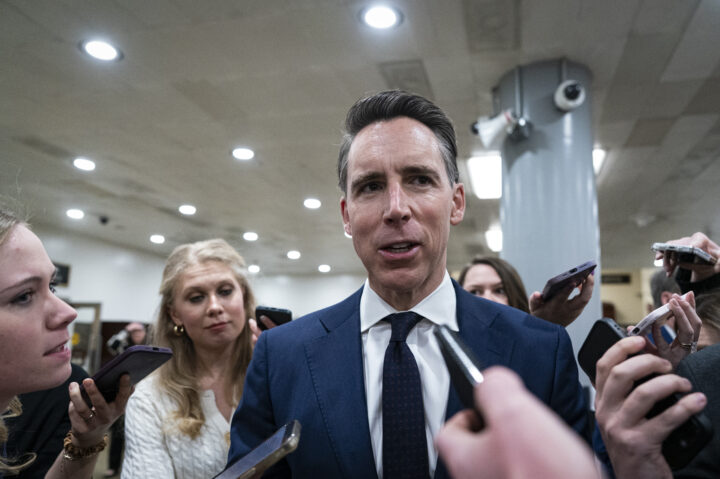
Al Drago/Getty Images
Sen. Josh Hawley (R-MO) speaks to reporters prior to the Senate Republicans weekly policy luncheon, in the US Capitol on March 25, 2025 in Washington, DC.
Sen. Josh Hawley (R-MO) says he doesn’t share the concerns of some in the isolationist wing of the Republican Party that U.S. engagement in Israel’s military operation to destroy Iran’s nuclear program would lead to a global war or another prolonged conflict in the Middle East, citing his confidence in President Donald Trump’s ability to avoid either outcome.
The Missouri senator told Jewish Insider, following a conversation with Trump on Tuesday morning, that he trusted the president to navigate the situation without dragging the U.S. into a broader war, an issue that has caused growing consternation among commentator Tucker Carlson and other neo-isolationists in the GOP. Hawley has previously advocated for a more restrained approach to U.S. foreign engagement and aligns with the national conservative movement.
“I just don’t think that. I think Donald Trump is the least likely person to let that happen,” Hawley said when asked what he’d say to those who argue Trump’s actions will embroil the U.S. in a war. “I think he’s pretty careful, and I think he’s got a pretty good sense of our security interests, obviously our allies. So I feel pretty good with him in charge.”
Hawley made similar comments in a separate conversation with JI on Monday, saying at the time, “I think the president has a pretty clear assessment of what is good, what is in America’s interests. He’s been really clear on this, America’s interest and the world’s interest is to not have Iran have a nuclear weapon.”
“There’s all kinds of paths to that, and that’s what the president is saying about negotiating. Iran ought to come and do this peacefully and give up their nuclear program. You can get there that way, but at the end of the day, we’re going to get to the point where they don’t have a nuclear weapon and they don’t have a nuclear program,” Hawley explained.
“If they keep going down this path, good luck,” he added.
Hawley also praised Trump’s approach to addressing the conflict and the threat posed by a nuclear Iran while cautioning against engaging in conjecture about what the Israelis were asking of the Trump administration.
“I think the president has struck the right position, which is supportive of Israel’s right of self-defense, which is what this really is, and supporting them publicly while they defend themselves. I think that’s the right position to stick on. I know what the speculation is in the press about what Israel may want to do or not do next, but let’s see what they actually ask us for,” he told JI on Monday.
Following his Tuesday conversation with Trump, Hawley reiterated his support for the president’s response since Israel first struck Iran last week. “He’s handled this situation very deftly. I think his message has been pretty clear, which is that Iran is not going to get a nuke. So they can either surrender their nuclear program peaceably, and he’s willing to [have] the United States facilitate that, or the Israelis are going to blow their program to smithereens. Right now they’re choosing the smithereens route. Doesn’t seem very wise to me,” he said.
Speaking to reporters later Tuesday, Hawley said he wouldn’t support Sen. Tim Kaine’s (D-VA) war powers resolution blocking the U.S. from taking military action in support of Israel’s operation against the Iranian regime, citing his opposition to the legislation broadly.
“I tend to think the War Powers Act is unconstitutional, and I don’t think the president needs preclearance to do one-off military strikes. That doesn’t mean that they’re necessarily a good idea, but I don’t think he needs preclearance from Congress. I don’t know quite how that would function,” Hawley said.
Israel has not asked U.S. to join offensive against Iran’s nuclear facilities, Hanegbi says

Knesset
National Security Advisor Tzachi Hanegbi and Chairman of the Knesset Foreign Affairs and Defense Committee Yuli Edelstein on November 13, 2023.
Iran’s underground Fordow nuclear site is a key target in the current operation against the Islamic Republic, Israel’s national security advisor, Tzachi Hanegbi, said on Tuesday.
“This operation will not conclude without a strike on the Fordow nuclear facility,” Hanegbi told Israel’s Channel 12 News.
The Fordow facility is home to thousands of centrifuges, crucial to Iran’s weapons-grade uranium enrichment program, and is located 295 feet underground beneath a mountain. Israel is thought to have neither the munitions nor the aircraft to destroy it from the air, while the U.S. does.
Washington, however, has yet to make clear if it will take part in the offensive on Iran, though it has shot down Iranian missiles headed for Israel in the last few days. Hanegbi said that he does not believe the Trump administration has made a decision on the matter yet.
Hanegbi denied that Israeli Prime Minister Benjamin Netanyahu had asked the U.S. to join Israel in bombing Iranian nuclear sites: “We didn’t ask and we won’t ask. We will leave it to the Americans to make such dramatic decisions about their own security. We think only they can decide.”
“We are very careful and the prime minister is very careful not to ask for anything the Americans do not think is in their interest,” he said.
When the IDF presented its plan to the Israeli Security Cabinet a year ago, Hanegbi said, it was for the operation against Iran to be carried out by Israel alone. He called the plan “totally blue and white.”
However, Israel did ask the U.S. for help with its defense, because it has the THAAD (Terminal High Altitude Area Defense) system, he said.
Hanegbi said that the U.S. is not only committed to protecting Israeli lives, but to the hundreds of thousands of American citizens living in Israel.
As to reports that President Donald Trump rejected an Israeli plan to kill Iranian Supreme Leader Ali Khamenei, Hanegbi said they are “fake from the land of fake.”
“We don’t ask for permission from the U.S., and the U.S. doesn’t expect us to share [our plans] with them,” Hanegbi said.
Regime change is not Israel’s goal, the national security advisor said.
“I think every sane person, not only in Israel, would be happy to see this loathsome, murderous, cruel regime fall and be replaced by peace-loving people. Can we set that as a goal for ourselves? No,” Hanegbi said.
While Hanegbi acknowledged that “the best way to remove the nuclear threat is for there to be a regime that does not want a nuclear weapon,” he said “that is not something we can attain kinetically right now.”
In addition, Hanegbi said the mullahs’ regime could fall as a result of “the process in which Iran lost its grip on the Shiite axis that was crazed in wanting to harm Israel,” but added that “it is not reasonable to think it will happen in the coming days.”
Hanegbi also expressed doubts that Iran would negotiate its surrender soon and said Israel did not receive any messages that Iran wants to hold talks to end the war.
“The Iranians are a proud people,” he said. “I don’t think they will wave the white flag at the beginning of the campaign.”
As such, he added, “we will continue with our plan. It will take time. We have many varied targets.”
Hanegbi said that Iranian gas fields and its energy sector “do not have immunity,” and that Israel struck an oil refinery used by the military within the last day.
Iran has “a strategic goal to strike our energy facilities,” he said. “They want to cause chaos in Israel. When they hit refineries in Haifa, they know what they’re doing.”
The resolution, with 16 co-sponsors, marks a bipartisan show of support for the Israeli operations as members of the far left and far right oppose Israel’s operation

SAN/Middle East Images/AFP via Getty Images
Smoke rises from a location allegedly targeted in Israel's wave of strikes on Tehran, Iran, on early morning of June 13, 2025.
A new bipartisan resolution introduced by Reps. Claudia Tenney (R-NY) and Brad Sherman (D-CA) and 14 co-sponsors on Tuesday praises Israel’s strikes on Iranian nuclear and military facilities and condemns Iran’s retaliatory missile attacks on Israeli civilian targets.
The resolution marks a bipartisan show of support for the Israeli operation even as elements of the far left and far right are warning that the Israeli strikes risk dragging the U.S. into a regional or global war and run counter to American interests.
The resolution states that the House “stands with Israel as it takes targeted military actions to dismantle Iran’s nuclear enrichment capabilities and defend itself against the existential threat of a nuclear-armed Iran,” “recognizes that Israel’s preemptive and proportional strikes against Iran’s nuclear sites advance the United States’ vital national security interest in a nuclear free Iran” and “reaffirms Israel’s right to self-defense.”
The legislation further states that the House “stands ready to assist Israel with emergency resupply and other security, diplomatic, and intelligence support.”
It asserts that the war came “after exhausting all diplomatic avenues,” and describes the Israeli operation as “intelligence-driven preemptive strikes to prevent Iran from acquiring nuclear weapons and such capability explicitly designed to achieve the destruction of Israel and the United States,” which, the resolution states, has “achieved national security objectives without risking American lives.”
The resolution also condemns Iran’s “indiscriminate attacks against civilians in Israel” and its repression of its own citizens, and calls on Tehran to give up its pursuit of nuclear weapons and dismantle its nuclear program and urges other countries to support that goal.
The legislation accuses Iran of having “repeatedly rejected good-faith diplomatic efforts by the United and others to address its nuclear program” and of not negotiating “in good faith.”
The resolution is co-sponsored by Reps. Don Bacon (R-NE), Jeff Van Drew (R-NJ), Josh Gottheimer (D-NJ), Elise Stefanik (R-NY), Brian Fitzpatrick (R-PA), Maria Elvira Salazar (R-FL), Shri Thanedar (D-MI),Roger Aderholt (R-AL), Mike Lawler (R-NY), Juan Ciscomani (R-AZ), Chris Smith (R-NJ), Scott Fitzgerald (R-WI), Randy Feenstra (R-IA) and Tom Barrett (R-MI), and supported by FDD Action, the Jewish Institute for National Security of America and the American Jewish Committee.
The resolution highlights that Iran had been increasing its enrichment activity, stockpiling enough highly enriched uranium for six nuclear weapons and blocking international inspections, among other steps that have brought it closer to a nuclear bomb.
It notes that the International Atomic Energy Agency recently censured Iran for violating its nuclear Non-Proliferation Treaty commitments, and that Iran responded by further increasing its enrichment activities.
“This bipartisan resolution reaffirms the United States’ unwavering support for Israel’s right to self-defense and for its bold, courageous efforts to dismantle Iran’s nuclear program once and for all,” Tenney said in a statement. “The U.S.-Israel partnership remains unshakable, and this resolution sends a clear and unified message: we will work together to ensure the Iranian regime is never able to obtain a nuclear weapon.”
Sherman, in a statement, argued that Iran’s activities had made Israel’s strikes necessary.
“The Islamic Republic of Iran has made clear time and time again its intent to ‘annihilate’ Israel and attack the United States and has funded direct military attacks on Israel and the United States for decades It’s regrettable that Iran’s decades of violation of the Nuclear Non-Proliferation Treaty (NPT) which it signed has led us to a point where this is necessary,” Sherman said. “The only thing more dangerous than this war is an Ayatollah with access to nuclear weapons. Israel could not wait until Iran had a stockpile of nuclear weapons ready to be launched.”
Danny Citrinowicz of INSS at Tel Aviv University told JI, ‘Either the Americans help Israel, or we need to pull a rabbit out of our hats’
ATTA KENARE/AFP via Getty Images
Smoke billows in the distance from an oil refinery following an Israeli strike on the Iranian capital Tehran on June 17, 2025.
A decision by President Donald Trump whether or not to join Israel’s strikes against Iran could make the difference between the full destruction of the Islamic Republic’s nuclear program and a more drawn-out war with a less conclusive end, Danny Citrinowicz, a senior researcher in the Iran and the Shi’ite Axis Program at the Institute for National Security Studies at Tel Aviv University, told Jewish Insider on Tuesday.
Citrinowicz, the former head of the Iran branch in the Research and Analysis Division (RAD) in Israeli defense intelligence, spoke with JI from Australia, where he is one of more than 100,000 Israelis stranded abroad as the country’s airspace remains closed.
He argued that Israel’s strikes on Iran have gone beyond the war aims authorized by its Security Cabinet — to weaken Iran’s nuclear and ballistic missile programs — and indicate a push toward destroying Iran’s nuclear weapons program and forcing regime change. However, he warned, Israel would be unlikely to achieve either without help from the U.S.
The interview has been edited for length and clarity.
Jewish Insider: How would you describe where things stand on Day Five of the war between Israel and Iran?
Danny Citrinowicz: Trump is the variable. He is signaling that the Americans are in one minute, and then the White House says they don’t want to get involved the next. It’s clear that [Israel is] not only aiming at weakening the nuclear and missile programs. I think [Israeli Prime Minister Benjamin] Netanyahu’s plans, as he said on Iran International yesterday [that Israel will help “free” Iran], are much wider … There is a genuine attempt by Netanyahu to convince Trump to bring down the regime and change the entire Middle East.
JI: What progress has Israel made toward reaching its stated war aims?
DC: We maximized our achievements when it comes to the nuclear program. We struck the [nuclear] scientists. [The nuclear enrichment site] Natanz is an extraordinary achievement; it collapsed.
We had significant achievements against the missile program. It’s not clear if there have been fewer missile launches [from Iran] because of our strikes or because they are trying to be economical with their missiles. It’s significant that we took out a third of their missile launchers.
The strike on the [Iranian state] TV station is very strange because it is not connected to either war aim.
My view is that Netanyahu wants to keep going and for there to be a historic event, but he needs the Americans. The Americans are the variable. If they enter, things will be totally different. If not, Israel will continue doing what it has been doing.
JI: How is the Iranian regime responding to the latest developments?
DC: The Iranians have a very difficult dilemma. Decision-making is difficult because they lost so many senior officers. The assassination [of Iran’s Chief of War Gen. Staff Ali Shadmani] last night was very serious for them.
For Iran’s leaders, giving up on the nuclear program is giving up on the revolution. But if they continue fighting, they may also lose the revolution. They have a different view of the situation than we do, which ensures that they will continue fighting for the foreseeable future.
That’s why the important variable is whether Trump will decide to attack [the underground nuclear facility] in Fordow. If he says no, then the war will continue as it has been, with varying momentum as the Iranians try to challenge Israel.
I don’t see this ending soon if the Americans don’t enter [the war]. If they don’t, we will be in this for several weeks, at least…
There is an obstacle for Israel in Fordow [that it does not have the requisite bombs or bomber planes to destroy the facility under a mountain]. We could be planning something, but for now, I’m not optimistic.
JI: If the U.S. does not attack Fordow, what targets remain for Israel to attain its stated war goals?
DC: I don’t think we can achieve more than we already did … We are destroying missiles and launchers. We killed senior officials. There isn’t something left to achieve [in] the war aims that stands out. It’s just deepening the achievement.
My concern is that we’re going beyond that.
JI: Do you mean regime change as well?
DC: I think we’re aiming for it, but Israelis cannot do it alone. With the Americans, maybe. Replacing a regime through military means is hard, and you don’t always end up with something better. There’s a better chance with the Americans. I’ll be very surprised if it happens with Israel alone.
JI: Do you think Israel could send ground troops to demolish Fordow?
DC: Some have written about it, because they understand that attacking it from the air will be very hard. Either the Americans will help from the air, or something will happen that we don’t know about.
JI: What if Fordow isn’t destroyed?
DC: If this ends with Fordow intact, it’s a loss, because they can still enrich to 90%. We knew this from the beginning, and it’s still true. Either the Americans help Israel, or we need to pull a rabbit out of our hats.
It’s not clear to me that we went into this campaign with Trump and Netanyahu fooling everyone, or if things are as they appear. If nothing is being hidden, then Israel struck Iran’s nuclear program knowing it cannot destroy it … They took a bet.
This is either part of a grand plan, or it’s an unfolding event.
JI: Are negotiations for Iran to stop uranium enrichment still an option?
DC: The Iranians really want to stop the war with talks, but they will have to give up on a part of the revolution. They will come out very weak … If Iran accepts, it will not be the same Iran. If they don’t, the war will continue.
Still, [U.S. Middle East envoy Steve] Witkoff planned to talk to [Iranian Foreign Minister Abbas] Araghchi, so it’s possible. It depends on Iran. If Iran says “we give up, take Fordow, we no longer intend to develop a nuclear weapon,” Trump can say he’s a peacetime president and “no more bloodshed.” But I don’t see it happening.
JI: If Israel has to continue going at it alone, how long do you think this can continue?
DC: I think it’s a contest of patience between Israel and Iran … I think that we can hold on for a few weeks. Israel’s goal in these weeks is to bring the U.S. into the campaign, and Iran’s goal is for the U.S. not to enter.
It’s not a simple situation for Israelis, economically, militarily or societally … Israelis are also worn out. It takes hours to fly to Natanz — it’s not like Gaza, it costs a lot of money. The airport is closed. People aren’t going to work. And of course there’s the loss of life.
JI: And how is the Iranian regime faring in the contest of patience?
DC: For them, it depends on one thing. The reach of their military is measured only in their ability to launch missiles at Israel. They have relied on this for their entire existence. That’s the whole story.
There is concern in the regime about pressures from Iranian society, but I don’t see a serious challenge to the regime right now. There have not been any demonstrations. That could change.
JI: How do you view the fact that Iran’s proxies like Hezbollah haven’t joined in the fight and the Houthis haven’t escalated?
DC: One of the reasons that Israel went to war now is because it knew that Hezbollah would not join or its capabilities would be very limited. It was not just because of the nuclear and missile programs. It was the collapse of the axis that created a strategic opportunity Netanyahu didn’t want to give up.
JI: The timing was not, as Trump and Netanyahu have said, because Iran was very close to getting a bomb? Israeli officials have said Iran began the weaponization process.
DC: U.S. intelligence says otherwise. I don’t know why Trump is saying it…
There were significant developments [in the nuclear program], but there was an unprecedented strategic opportunity.
‘I think they were very close to having it,’ Trump said amid growing speculation of U.S. involvement in Israel’s operations against Iran

Andrew Harnik/Getty Images
Director of National Intelligence Tulsi Gabbard shakes hands with U.S. President Donald Trump in the Oval Office at the White House on February 12, 2025 in Washington, DC.
Amid growing speculation that the U.S. will become directly involved in Israel’s military campaign against Iran, President Donald Trump dismissed a public assessment by his Director of National Intelligence Tulsi Gabbard earlier this year that Iran was not actively pursuing a nuclear weapon.
“I don’t care what she said, I think they were very close to having it,” Trump told reporters on Air Force One en route home from the G7 Summit in Canada, which he left early to address the situation in the Middle East.
U.S. and Israeli leaders have emphasized in recent days that Iran was quickly increasing its stockpiles of highly enriched uranium in recent months, which would have allowed it to move quickly to a bomb. Some have also disputed Gabbard’s assessment, which was consistent with past assessments by Republican and Democratic administrations in recent years.
Israeli Prime Minister Benjamin Netanyahu said over the weekend, “The intel[ligence] we got and we shared with the United States was absolutely clear, that they were working on a secret plan to weaponize the uranium. They were marching very quickly. They would achieve a test device and possibly an initial device within months, and certainly less than a year.”
Sen. Tom Cotton (R-AR), the chair of the Senate Intelligence Committee said Iran was “very close to having enough pure weapons-grade uranium for several weapons” and that there were “signs” it was “once again exploring” weaponization.
Gabbard denied any dispute between herself and Trump and appeared to stick by her previous assessment, telling reporters, “What President Trump is saying is the same thing I said in my annual threat assessment in March to Congress.”
Trump also said he is “not looking for a ceasefire” between Israel and Iran, adding “we’re looking for better than a ceasefire.” He said he’s instead looking for “a real end … a complete give-up.”
Asked if he’s still interested in negotiating with Iran, Trump responded, “I don’t know. I’ve been negotiating. I told them to do the deal, they should have done the deal. Their cities have been blown to pieces and they’ve lost a lot of people. They should have done the deal. … I’m not too much in a mood to negotiate now.”
Trump said he “may” attempt to send Vice President JD Vance and Middle East envoy Steve Witkoff to negotiate with Iran, but that will depend on “what happens when I get back” to Washington. Trump arrived in Washington early Tuesday morning.
But he also said he hopes that Iran’s nuclear program is “going to be wiped out long before” the U.S. would have to get involved in the campaign.
Asked about his call Monday night for the population of Tehran to evacuate, Trump denied any imminent threat adding, “I want people to be safe. That’s always possible. A thing like that could happen.”
He added later, “there’s a lot of bad things happening there. I think it’s safer for them to evacuate.”
The president said that U.S. troops in the region are well-protected, and that the U.S. would retaliate forcefully if Iran attacked U.S. troops.
Plus, the political extremes horseshoe against Israel ͏ ͏ ͏ ͏ ͏ ͏

Chip Somodevilla/Getty Images
President Donald Trump waves as he boards Air Force One after leaving the G7 Leaders' Summit early on June 16, 2025 in Calgary, Alberta.
Good Tuesday morning.
In today’s Daily Kickoff, we report on the latest developments in the war between Israel and Iran, and cover President Donald Trump’s early departure from the G7 in Canada and comments about potential talks with Tehran. We also report on Trump’s rebuke of “kooky” Tucker Carlson over the commentator’s opposition to U.S. support of Israeli strikes, and look at how Jewish LGBTQ community leaders are approaching Pride celebrations that ostracize Jewish and pro-Israel individuals. Also in today’s Daily Kickoff: Scott Jennings, Jason Isaacs and Jeff Rubin.
What We’re Watching
- We’re continuing to monitor the ongoing situation in Israel and Iran, following another barrage of ballistic missiles fired at Israel by Iran this morning. More below.
- President Donald Trump is back in Washington today, after his early departure from the G7 in Alberta, Canada, where he will meet with senior advisors this morning in the Situation Room to weigh the level of U.S. involvement in the Israel-Iran conflict. Secretary of State Marco Rubio, Vice President JD Vance and Chairman of the Joint Chiefs of Staff Gen. Dan Caine are among those who will be meeting with the president.
- Reps. Thomas Massie (R-KY) and Ro Khanna (D-CA) are expected to put forward a war powers resolution today in the House that would force the administration to seek congressional approval ahead of any U.S. attack on Iran. Yesterday, Sen. Tim Kaine (D-VA) introduced a war powers resolution in the Senate. More below.
- Director of National Intelligence Tulsi Gabbard and CIA Director John Ratcliffe are slated to testify this morning before a Senate Appropriations subcommittee on the administration’s FY2026 budget request for the intelligence community.
- House Speaker Mike Johnson’s (R-LA) trip to Israel this week, in which Johnson was slated to address the Knesset, has been postponed due to the conflict between Israel and Iran. Read more here.
What You Should Know
A QUICK WORD WITH JI’S MARC ROD
We’ve written a lot about the so-called horseshoe theory of U.S. politics and foreign policy — the point at which the far left and the far right coalesce into agreement — but the Israeli campaign against Iranian military and nuclear targets is providing a particularly stark example of that convergence. The two factions find themselves openly and publicly aligned in opposition to any form of U.S. intervention in Israel’s campaign and against Israel’s operations in general.
An X post by Rep. Marjorie Taylor Greene (R-GA) on Sunday provided a distillation of that dynamic. Greene claimed that a regional war or global war, which would likely overwhelm the Middle East, BRICS and NATO, is inevitable and that countries would be “required to take a side.” She continued, “I don’t want to see Israel bombed or Iran bombed or Gaza bombed. … And we do NOT want to be involved or required to pay for ANY OF IT!!!”
Among those who supported Greene’s post were CodePink activist Medea Benjamin, who praised Greene’s “incredibly strong anti-war position!” and Drop Site News co-founder Ryan Grim, who called the Georgia Republican “presently the most sensible member of Congress.” Doug Stafford, the chief strategist for Sen. Rand Paul (R-KY), shared Benjamin’s post — and has repeatedly shared and praised both her and Code Pink in the wake of the Israeli operation. Read more here.
It’s not just Greene and Stafford. A host of prominent figures on the right, such as Rep. Thomas Massie (R-KY), Tucker Carlson, Steve Bannon, former Rep. Matt Gaetz (R-FL) and former Pentagon senior advisor Dan Caldwell are touting narratives about the conflict that would not be out of place at a far-left anti-Israel rally.
ISRAEL-IRAN WAR DAY 5
Israel kills Iranian military chief of staff as attacks from Tehran slow down

Israel killed Iran’s new top military commander and confidante of Iranian Supreme Leader Ayatollah Ali Khamenei days after eliminating his predecessor, the IDF Spokesperson’s Office announced on Tuesday, after a night in which missile launches from Iran towards Israel slowed down significantly. The Israeli Air Force struck a command center in Tehran, killing Ali Shadmani, Iran’s chief of war general staff, who had authority over the Islamic Revolutionary Guard Corps and the Iranian military. Shadmani, whom the IDF Spokesperson’s Office called “one of the closest figures to Supreme Leader Ali Khamenei,” was on the job for four days after Israel killed his predecessor, Alam Ali Rashid, early Friday, Jewish Insider’s Lahav Harkov reports.
Lower volume: Monday night and the early hours of Tuesday morning were the quietest since the beginning of the war with Iran on Friday. The IAF intercepted 30 projectiles launched from Iran toward Israel, with sirens mostly in northern and central Israel and no reports of injuries or damage to property. On Tuesday morning, Iran launched additional missiles at Israel, triggering sirens in the center of the country, including Jerusalem and the West Bank. The IDF said it intercepted most of the projectiles. Magen David Adom reported 14 injuries at eight impact sites, including a bus depot in Herzliya where the blast created a 13-foot-wide hole in the ground.
Top target: Israeli Prime Minister Benjamin Netanyahu did not rule out the possibility of targeting Iran’s supreme leader, Ayatollah Ali Khamenei, in an interview with ABC News on Monday, amid widespread speculation in Israel and beyond that the strikes on the Islamic Republic could pose an existential challenge to the regime.
DIPLOMACY DIARIES
Trump departs G7 early, denies ‘peace talks’ with Iran

President Donald Trump denied on Tuesday that he was attempting to facilitate “peace talks” with Iran as he returned to Washington after prematurely leaving a meeting of G7 leaders in Canada to monitor the ongoing war between Israel and Iran, Jewish Insider’s Danielle Cohen reports.
Word of warning: While still aboard Air Force One, the president told reporters that he wanted “a real end” to Iran’s nuclear program and he would be monitoring developments between Israel and Iran from the White House Situation Room. He suggested that Israel was unlikely to slow its strikes on Iranian targets in the coming days, saying that, “You’re going to find out over the next two days. You’re going to find out. Nobody’s slowed up so far.” But the president stopped short of addressing whether the U.S. would join Israel’s strikes, saying he hopes the Iranian nuclear weapons program “is wiped out long before that.”
French folly: French President Emmanuel Macron suggested to reporters on Monday that Trump had departed the G7 earlier to negotiate a ceasefire between Israel and Iran, saying that “the U.S. assured they will find a ceasefire and, since they can pressure Israel, things may change.” Trump slammed Macron and denied his claims, posting on Truth Social, “Publicity seeking President Emmanuel Macron, of France, mistakenly said that I left the G7 Summit, in Canada, to go back to D.C. to work on a ‘cease fire’ between Israel and Iran. Wrong! He has no idea why I am now on my way to Washington, but it certainly has nothing to do with a Cease Fire.” Trump said he had departed for something “much bigger than that.”
United front: The leaders of the G7 issued a joint statement on Sunday affirming “that Israel has a right to defend itself,” their “support for the security of Israel” and that “Iran is the principal source of regional instability and terror.” They further “urge[d] that the resolution of the Iranian crisis leads to a broader de-escalation of hostilities in the Middle East, including a ceasefire in Gaza.”
TRUMP CHECKS TUCKER
Trump rebukes ‘kooky Tucker Carlson’ on Iran

President Donald Trump rebuked Tucker Carlson at several points on Monday over Carlson’s comments opposing Trump’s support for Israeli strikes on Iran, Jewish Insider’s Marc Rod reports.
New nickname: Asked Monday at the G7 Summit in Canada about Carlson’s comments accusing Trump of being “complicit” in the war, Trump quipped, “I don’t know what Tucker Carlson is saying. Let him go get a television network and say it so that people listen.” Trump later posted on his Truth Social platform, “Somebody please explain to kooky Tucker Carlson that, ‘Iran CAN NOT HAVE A NUCLEAR WEAPON!’”
ALLIES AND ARMS
U.S. should help Israel destroy Fordow, some Senate Republicans say
Some Senate Republicans argued Monday that the U.S. should join Israel’s strikes on Iran to help it destroy deeply entrenched nuclear sites such as the Fordow facility, contending that Israel lacks the capacity to do so on its own. Others, though, argued that Israel may have alternative plans to attack Fordow, while still others suggested that the U.S. should hold back and focus on diplomacy unless U.S. personnel are attacked directly, Jewish Insider’s Marc Rod and Emily Jacobs report.
Unique needs: Assessments have long held that bunker-busting bombs and larger bombers, neither of which Israel has, are needed to eliminate Fordow, though some analysts have speculated in recent days that Israel has been developing alternative strategies to strike that site. “We have to. I think we have to help. I am going to be encouraging the president [to support Israel] because the greatest tragedy in the world would be if we left the Iranian regime in place with a nuclear easy startup. I’d hate to see Israel spending all those resources of people and dollars on getting the job 90% done,” Sen. Kevin Cramer (R-ND) told JI.
Read the full story here with additional comments from Sens. Lindsey Graham (R-SC), Mike Rounds (R-SD) and Pete Ricketts (R-NE).
War powers activated: Sen. Tim Kaine (D-VA) introduced a war powers resolution on Monday that aims to block the U.S. from taking military action against Iran in support of Israel’s ongoing operation against the regime, JI’s Marc Rod reports.
STRANDED BUT NOT ALONE
CNN’s Scott Jennings flew to Israel for the first time to understand Oct. 7 — and then war with Iran broke out

CNN contributor Scott Jennings traveled to Israel last week to bear witness to the atrocities Hamas committed during the Oct. 7, 2023, terrorist attacks. But in the wake of Israel launching its military operation to take out Iran’s nuclear facilities and prevent the regime from acquiring a nuclear weapon, Jennings is witnessing more than he expected to on his first trip to the Jewish state, Jewish Insider’s Haley Cohen reports.
And then some: “Not only did I get to fulfill my mission of understanding deeply the horrors of Oct. 7, but being here watching the war unfold against Iran, I feel like I am here at the beginning of the war to defend Western civilization,” Jennings, who is traveling with the AIPAC-affiliated American Israel Education Foundation, told JI from his hotel in Tiberias on Friday. “I think this has to end with a complete annihilation of Iran’s ability to make a nuclear weapon,” he said, calling on the U.S. to do “whatever we have to do to achieve that in concert with our special partner, Israel.”
PRIDE AND PREJUDICE
Proud, but pushed out: Why LGBTQ Jews are creating Pride spaces of their own

In early June, Rabbi Eleanor Steinman wrote to members of Temple Beth Shalom, the Reform congregation she leads in Austin, Texas, sharing the synagogue’s plans to celebrate Pride Month with several events in June. Steinman also revealed that, for the first time in more than two decades, her congregation would not be marching in the Austin Pride parade, which event organizers say draws 200,000 people each August, because of concerns about antisemitism. “The Austin Pride organization took an antisemitic stance in the midst of the Pride Parade and Festival last year,” wrote Steinman, who is gay. Ahead of last year’s Pride parade, slides were leaked from a presentation in which Austin Pride organizers said hate speech against Jews wasn’t welcome, including “symbols, images or flags used by terrorist and hate groups.” It was part of an education campaign for queer activists as anti-Israel sentiment exploded in the queer community after the Oct. 7, 2023, Hamas attacks and the ensuing war in Gaza, as it did in many other progressive spaces, Jewish Insider’s Gabby Deutch reports.
Backfiring and backtracking: But the effort to educate about antisemitism backfired. Anti-Israel activists pressured Austin Pride to disavow that message. Austin Pride not only backtracked on barring those slogans; it issued a statement pledging to support the Boycott, Divestment and Sanctions movement and stating that the organization does not work with the Anti-Defamation League. In the months that followed, Jewish leaders and LGBTQ activists pushed Austin Pride’s leadership to consider changing this stance, to no avail. “Despite attempts to meet with Austin Pride since then, a coalition of Jewish leaders were unable to create an environment where we felt we would be both safe and respected as Jewish LGBTQ+ and allies,” Steinman wrote in the email. It was a remarkable statement, tinged with bitter irony: The synagogue first started marching in Pride so that LGBTQ congregants would feel that they could bring their full selves to the Jewish community. Now some of those same congregants feel that they need to suppress their Jewishness in order to fully belong in the queer community.
Worthy Reads
Bibi Turns the Tables: The Wall Street Journal’s Walter Russell Mead considers how Israeli Prime Minister Benjamin Netanyahu has pivoted from a series of domestic and diplomatic crises to mounting one of the most significant military operations in Israeli history. “A coalition in revolt, prosecutors on his heels, powerful rivals looking to unseat him, chilly relations with Mr. Trump, growing opposition from Europe, skeptical military and intelligence chiefs and a hostile press — few leaders anywhere have faced this kind of pressure. By week’s end, Bibi had flipped the script. A series of military blows exposed the weakness of Iran’s sulphurously belligerent regime and demonstrated Israel’s military and intelligence supremacy in the Middle East. The government crisis subsided. Mr. Trump praised Israel’s audacious attack. As in the months after Oct. 7, 2023, a determined prime minister harnessed the Israeli military machine to orchestrate a dazzling series of victories that stunned the world even if they did not win it over.” [WSJ]
More Than Bombs: The Washington Post’s David Ignatius looks at potential avenues to regime change in Iran. “You’ll get no argument from me that it’s long past time for political change in Tehran. The clerical regime has been shedding the blood of Israelis, Americans, Saudis and anyone else who opposed its dictates since the 1979 Islamic revolution. The question is how change will come. What’s the road toward a dynamic country that’s worthy of Iran’s creative, cultured people? Here’s one obvious fact: Israel can’t bomb its way to this new Iran. A campaign of bombing of the kind Tehran is experiencing makes people hunker down, turn inward and often fight harder. Strategic bombing didn’t break the will of the British, German or Japanese people during World War II. It hasn’t yet destroyed Hamas in Gaza, either, for that matter.” [WashPost]
Hate’s Not on the Menu: In the San Francisco Chronicle, Manny Yekutiel condemned the recent vandalism of his eponymous Mission District cafe, which was graffitied with anti-Israel graffiti during recent anti-ICE protests. “A disturbing pattern is emerging — one that even here in San Francisco is endangering the core values this city is meant to uphold: tolerance, inclusion, civic engagement and common humanity. The act of hate at Manny’s is part of a larger danger facing the progressive movement and the country. We are living in a moment where real and painful disagreements are being used as an excuse to turn people against one another. Instead of standing together to fight injustice, some are choosing to let hate and bigotry divide us. We cannot allow that. If we lose the ability to sit across from people we disagree with and have hard conversations, we lose the very foundation of this movement.” [SFChronicle]
Word on the Street
Amos Hochstein, a former special envoy in the Biden administration, told CNBC that only the U.S. could dismantle the Fordow nuclear facility in Iran…
The Senate modified provisions of the Educational Choice for Children Act, a tax credit program for scholarships that could help families afford religious schools, in its version of the budget reconciliation bill; the Senate version of the bill decreases the total annual tax credit from $5 billion to $4 billion, but eliminated a sunset provision that had been in the House version of the bill, making the program permanent. The Senate version also modifies portions of religious liberty protections included in the House bill…
Senate Majority Whip John Barrasso (R-WY) told Jewish Insider he hasn’t had any discussions about calling a floor vote to discharge Joel Rayburn‘s nomination from the Senate Foreign Relations Committee, in which it appears Rayburn lacks the votes to advance…
The Florida Legislature earmarked $10 million in funds allotted for Jewish school security, $1 million above the amount recommended by Gov. Ron DeSantis earlier this year…
Chalkbeat interviews historian Natalia Mehlman Petrzela, who was tapped by the New York City Department of Education to develop a Jewish American history curriculum…
In an interview with Vulture, “White Lotus” actor Jason Isaacs, who is Jewish, reflected on his relationship with Mel Gibson, saying his “The Patriot” co-star, whose antisemitic rant following a 2006 DUI arrest went viral, has “done some things that are unconscionable and unforgivable”…
The New York Times looks at the legacy of Leonard Lauder, who died last week, on the beauty industry; Lauder was known for coining the concept of the “lipstick index”…
The Wing co-founder Audrey Gelman, who opened a home goods and tchotchkes store in Brooklyn in 2022, is pivoting to hospitality, opening a hotel in New York’s Hudson Valley…
The displays of several Israeli defense firms at the Paris Air Show were covered up during the annual gathering; French officials said the companies, including Elbit and Rafael, had disregarded an agreement not to display offensive weapons, while Israel’s Defense Ministry accused France of trying to tamp down competition…
The Wall Street Journal reports that Saudi Arabia, Qatar and Oman have appealed to the U.S. to pressure Israel to halt its strikes on Iran…
The Associated Press looks at how the escalation between Israel and Iran has affected flights and travelers across the region, stranding many far from home…
The Maccabiah Games, which had been slated to take place next month in Israel, are being postponed to 2026 due to the war between Israel and Iran, eJewishPhilanthropy’s Jay Deitcher reports…
Jeff Rubin announced his upcoming retirement from The Washington Institute for Near East Policy, where he served as communications director since 2011…
Pic of the Day

Ambassador Jim Jeffrey (center) poses with Antoun Sehnaoui (left) and Daniel Glaser, the co-founders of the U.S.-Israel Opera Initiative, at the organization’s launch on Sunday at the Kennedy Center in Washington. The program featured the premiere screening of the opera “Theodor,” about the life of Theodor Herzl. The performance was dedicated to Yaron Lischinsky and Sarah Milgrim, two Israeli Embassy staffers who were killed in a terror attack at the Capital Jewish Museum last month.
Birthdays

Comedian, actor, director, writer and producer, Michael Showalter turns 55…
Diplomat and attorney, undersecretary of state for International Security Affairs in the Carter administration, longtime U.N. special representative, Matthew Nimetz turns 86… Winner of the 2001 Nobel Prize in economics, professor at Georgetown and UC Berkeley, he is married to former Treasury Secretary Janet Yellin, George Akerlof turns 85… One of the world’s best-selling singer-songwriters over the course of seven decades, born Barry Alan Pincus, Barry Manilow turns 82… Former member of the Knesset for the Zionist Union party, Eitan Broshi turns 75… Chairman of the Federal Trade Commission during the Obama administration, Jonathan David (“Jon”) Leibowitz turns 67… Deputy administrator of the Federal Highway Administration during the first two years of the Biden administration, Stephanie Pollack turns 65… President of the San Francisco Board of Supervisors until earlier this year, Aaron Dan Peskin turns 61… Singer and composer, a pioneer of the Turkish and Arab music genres in Israel, Ofer Yoel Levy turns 61… Fashion designer, daughter of Reva Schapira, Tory Burch turns 59… Active in interfaith peace initiatives between Judaism and Islam and in encounters for Jews with Eastern religions, Rabbi Yakov Meir Nagen (born Genack) turns 58… Founder and chairman of Shavei Israel, Michael Freund turns 57… British historian, columnist and musician, Dominic Green, Ph.D. turns 55… International human rights attorney who serves as managing director of the law firm Perseus Strategies, Jared Matthew Genser turns 53… Screenwriter, television producer, director and voice actor, Matthew Ian Senreich turns 51… Advocacy, philanthropic and political counsel at Chicago-based Beyond Advisers, David Elliot Horwich… SVP for the economic program at Third Way think tank, Gabe Horwitz… Chief philanthropy officer of the Jewish Community Foundation and Jewish Federation of Broward County, Keith Mark Goldmann… VP of government affairs for the Conservation Lands Foundation, David Eric Feinman… Former rabbi of the Elmora Hills Minyan in Union County, N.J., now an LCSW therapist in private practice, Rabbi Michael Bleicher… NYC-based senior editor for The Hollywood Reporter, Alexander Weprin… Professional surfer and musician, his family owns Banzai Bagels on the Hawaiian island of Oahu, Makua Rothman turns 41… Founder and executive director of the Zioness Movement, Amanda Berman… Director of national outreach for the East at the New Israel Fund, Alexander Willick… Award-winning college football and basketball analyst for NBC Sports and SiriusXM, Nicole Auerbach… Member of the U.S. Ski Team’s alpine program, he competed for the USA in both the 2014 (Sochi) and 2018 (PyeongChang) Winter Olympics, Jared Goldberg turns 34… Senior art director at Business Insider, Rebecca Zisser… Shortstop for Team Israel at the 2020 Olympics, Scott Burcham turns 32… Actress best known for her roles in the CBS series “Fam” and the Netflix series “Grand Army,” Odessa Zion Segall Adlon turns 25… D.C.-based freelance foreign media consultant, she is also a real estate agent, Mounira Al Hmoud…
Iran launched less than a dozen missiles at Israel in the quietest night since start of the war

Amir Levy/Getty Images
People look at a crater in the ground after a missile strike on June 17, 2025 in Herzliya, Israel.
Israel killed Iran’s new top military commander and confidante of Iranian Supreme Leader Ayatollah Ali Khamenei days after eliminating his predecessor, the IDF Spokesperson’s Office announced on Tuesday, after a night in which missile launches from Iran towards Israel slowed down significantly.
The Israeli Air Force struck a command center in Tehran, killing Ali Shadmany, Iran’s chief of war general staff, who had authority over the Islamic Revolutionary Guard Corps and the Iranian military.
Shadmany, whom the IDF Spokesperson’s Office called “one of the closest figures to Supreme Leader Ali Khamenei,” was on the job for four days after Israel killed his predecessor, Alam Ali Rashid, early Friday.
“In his various roles, Shadmany played a direct and central role in shaping Iranian offensive operations targeting the State of Israel,” the IDF stated. “His elimination is the latest in a series of targeted strikes against Iran’s top military leadership, dealing another significant blow to the command structure of Iran’s armed forces.”
Israeli Foreign Minister Gideon Sa’ar said in the Knesset on Tuesday that he “would recommend to whoever the job [of chief of war general staff] is offered to consider it well, and whoever responds positively should be very careful.”
Also Tuesday, the IAF struck dozens of military targets in western Iran, maintaining its control over the airspace and destroying surface-to-surface missile storage and launch sites, as well as UAV storage sites.
Israel struck the building from which Iranian state news channel IRINN was broadcasting on Monday. The explosion interrupted a news broadcast and rubble could be seen falling on screen. The IDF sent warnings to the civilian population in the area before the strike.
Israeli Defense Minister Israel Katz said that “the propaganda and incitement broadcast authority of the Iranian regime was attacked by the IDF after the broad evacuation of the residents of the area. We will strike the Iranian dictator everywhere.”
Monday night and the early hours of Tuesday morning were the quietest since the beginning of the war with Iran on Friday. The IAF intercepted 30 projectiles launched from Iran toward Israel, with sirens mostly in northern and central Israel and no reports of injuries or damage to property.
On Tuesday morning, Iran launched additional missiles at Israel, triggering sirens in the center of the country, including Jerusalem and the West Bank. The IDF said it intercepted most of the projectiles. Magen David Adom reported 14 injuries at eight impact sites, including a bus depot in Herzliya where the blast created a four-meter-wide hole in the ground.
The USS Nimitz, the U.S. Navy’s oldest aircraft carrier, headed from East Asia to the Middle East on Monday, according to the U.S. Naval Institute.
Though Trump said he did not leave in order to pursue a ceasefire between Israel and Iran, the U.S. is reportedly still seeking a meeting with the Iranians to reach a nuclear deal
Chip Somodevilla/Getty Images
President Donald Trump waves as he boards Air Force One after leaving the G7 Leaders' Summit early on June 16, 2025 in Calgary, Alberta.
President Donald Trump denied on Tuesday that he was attempting to facilitate “peace talks” with Iran as he returned to Washington to monitor the ongoing war between Israel and Iran.
Upon landing in the U.S. early Tuesday morning after prematurely leaving a meeting of G7 leaders in Canada — a move that White House Press Secretary Karoline Leavitt attributed to “what’s going on in the Middle East,” — Trump posted on Truth Social that he had “not reached out to Iran for ‘Peace Talks’ in any way, shape, or form. This is just more HIGHLY FABRICATED, FAKE NEWS! If they want to talk, they know how to reach me. They should have taken the deal that was on the table – Would have saved a lot of lives!!!”
On Sunday, however, Trump had written on Truth Social that “Iran and Israel should make a deal, and will make a deal” and “we will have PEACE, soon, between Israel and Iran! Many calls and meetings now taking place.”
While still aboard Air Force One, the president told reporters that he wanted “a real end” to Iran’s nuclear program and he would be monitoring developments between Israel and Iran from the White House Situation Room.
He suggested that Israel was unlikely to slow its strikes on Iranian targets in the coming days, saying that, “You’re going to find out over the next two days. You’re going to find out. Nobody’s slowed up so far.”
But the president stopped short of addressing whether the U.S. would join Israel’s strikes, saying he hopes the Iranian nuclear weapons program “is wiped out long before that.”
French President Emmanuel Macron suggested to reporters on Monday that Trump had departed the G7 earlier to negotiate a ceasefire between Israel and Iran, saying that “the U.S. assured they will find a ceasefire and, since they can pressure Israel, things may change.”
Trump slammed Macron and denied his claims, posting on Truth Social, “Publicity seeking President Emmanuel Macron, of France, mistakenly said that I left the G7 Summit, in Canada, to go back to D.C. to work on a ‘cease fire’ between Israel and Iran. Wrong! He has no idea why I am now on my way to Washington, but it certainly has nothing to do with a Cease Fire.” Trump said he had departed for something “much bigger than that.”
While at the G7, Trump took an aggravated tone with Iran’s failure to come to an agreement, writing on Truth Social that “Iran should have signed the ‘deal’ I told them to sign. What a shame, and waste of human life. Simply stated, IRAN CAN NOT HAVE A NUCLEAR WEAPON. I said it over and over again! Everyone should immediately evacuate Tehran!”
Israel had issued a warning earlier that day to residents of Tehran to evacuate ahead of impending strikes on military infrastructure in the capital city. Israeli media reported that the U.S. had joined Israel in attacking Iran, which was denied by White House spokesperson Alex Pfeiffer. “American forces are maintaining their defensive posture, and that has not changed. We will defend American interests,” he said. Trump later told reporters that his call to evacuate was because he wants “people to be safe.”
On Monday night, Axios reported that Middle East envoy Steve Witkoff is seeking a meeting with Iranian Foreign Minister Abbas Araghchi to reach a nuclear deal and end the military action between Israel and Iran. Trump reportedly said at the G7 that the U.S. and Iran “are talking on the phone, but it is better to talk in person.”
A senior U.S. official told Axios that Trump sees Israel’s assumed reliance on the U.S.’ bunker-buster bombs to effectively target Iran’s nuclear facilities as a point of leverage to force Iran into a deal, lest the U.S. supply Israel the assistance it is seeking.
Meanwhile, the Iranian Foreign Ministry said in a statement that the country’s parliament is preparing a bill to potentially pull Iran out of the nuclear Non-Proliferation Treaty. The U.N.’s nuclear agency had recently ruled that Iran was violating its obligations under the treaty — which allows a country to utilize civilian nuclear power in exchange for a guarantee it will not pursue nuclear weaponization — for the first time in almost 20 years.
The comments come amid increasing speculation that the U.S. could get directly involved in the Israeli campaign
DigitalGlobe via Getty Images
This is a satellite image of the Fordow facility in Iran.
Some Senate Republicans argued Monday that the U.S. should join Israel’s strikes on Iran to help it destroy deeply entrenched nuclear sites such as the Fordow facility, contending that Israel lacks the capacity to do so on its own. Others, though, argued that Israel may have alternative plans to attack Fordow, while still others suggested that the U.S. should hold back and focus on diplomacy unless U.S. personnel are attacked directly.
The comments come amid increasing speculation that the U.S. could become involved in the Israeli campaign, following comments by President Donald Trump on Truth Social that “Everyone should immediately evacuate Tehran!” The Israeli government issued evacuation warnings for parts of the city earlier in the day. Trump also announced he would be leaving the G7 Summit in Canada early, though he wrote on Truth Social that the reason he was departing “certainly has nothing to do with a Cease Fire” between Israel and Iran and is “much bigger than that.”
Assessments have long held that bunker-busting bombs and larger bombers, neither of which Israel has, are needed to eliminate Fordow, though some analysts have speculated in recent days that Israel has been developing alternative strategies to strike that site.
“We have to. I think we have to help. I am going to be encouraging the president [to support Israel] because the greatest tragedy in the world would be if we left the Iranian regime in place with a nuclear easy startup. I’d hate to see Israel spending all those resources of people and dollars on getting the job 90% done,” Sen. Kevin Cramer (R-ND) told Jewish Insider.
“I just think it would be silly to not help. I mean, here we are at this point and then to just [not let Israel finish the job] because they didn’t have the bombs that we have or the airplanes that carry them. That action alone could probably take the regime out. Now, you could try to just force the regime off some other way, but I wouldn’t leave either one of those things, the regime or the nuclear program, undone,” Cramer continued.
Sen. Lindsey Graham (R-SC) told JI that how the U.S. approaches Israel and Iran “is the most important decision the president will make. For the future of the Mideast and the security of Israel and our country, I think we go all in.”
A Senate Republican who requested anonymity to speak candidly about the situation said that Israel is not capable of destroying Fordow and similar facilities without U.S. assistance, and said they and colleagues are working with the administration on ensuring that it is provided.
“Israel can’t finish the job without us, not completely. We’ll give them the bombs but we need to help as well,” one senior Senate Republican told JI of the necessity of U.S. military support for Israel’s operation to take out Iran’s nuclear capabilities.
The senator cited the need for bunker-buster bombs to impact facilities that are deep underground. Only the U.S. possesses both the bombs and the planes that are capable of carrying the 30,000-pound explosives. “We’re working on the president,” the senator told JI.
White House spokesperson Alex Pfeiffer on Monday denied an Israeli report that the U.S. was already conducting strikes inside Iran, saying, “American forces are maintaining their defensive posture, and that has not changed. We will defend American interests.”
Sen. Mike Rounds (R-SD) told JI he would leave the decision on intervening up to the president, but suggested Israel may have alternative plans to address Iran’s most hardened facilities.
“We will stand with Israel,” Rounds said. “Israel has done a marvelous job of preplanning their approach. They knew full well that we were not interested in participating or getting involved in this at this stage of the game, so my suspicion is they have their own plans on how to address [Fordow].”
“Iran cannot have a nuclear weapon, it’s just simply gotten to that point. Israel is taking charge and I suspect they have a plan to finish the job,” he reiterated.
Asked about his takeaways from a Senate Intelligence Committee briefing on the issue earlier in the day, Rounds said it had “reaffirmed that Israel clearly had excellent plans and this is not a happenstance. This is a well-planned-out maneuver that had to be accomplished because, as I think most people realize, Iran was getting closer and closer to having enough equipment, supplies and so forth to actually create, in the very near future, a bomb, if they so desired to.”
“You can only go along with that so long before you realize you’re going to have to act, and this was the opportunity that they had,” Rounds added.
Sen. Pete Ricketts (R-NE) said the U.S. should get involved directly if Iran attacks any U.S. personnel but said the U.S. should otherwise remain focused on pressing Iran back to the negotiating table.
“I applaud the president for trying to get to a negotiated agreement and perhaps Iran will come to the realization that that is their only way out of this, and that’s what we should be pursuing at this point,” Ricketts told JI.
Jennings, stuck indefinitely in Israel until airspace reopens, said Americans ‘need to understand what’s going on here is nothing short of the fight for Western civilization’

Courtesy
Scott Jennings visits the Nova Music Festival site during an AIEF trip to Israel in June 2025.
CNN contributor Scott Jennings traveled to Israel last week to bear witness to the atrocities Hamas committed during the Oct. 7, 2023, terrorist attacks. But in the wake of Israel launching its military operation to take out Iran’s nuclear facilities and prevent the regime from acquiring a nuclear weapon, Jennings is witnessing more than he expected to on his first trip to the Jewish state.
“Not only did I get to fulfill my mission of understanding deeply the horrors of Oct. 7, but being here watching the war unfold against Iran, I feel like I am here at the beginning of the war to defend Western civilization,” Jennings, who is traveling with the AIPAC-affiliated American Israel Education Foundation, told Jewish Insider from his hotel in Tiberias on Friday. “I think this has to end with a complete annihilation of Iran’s ability to make a nuclear weapon,” he said, calling on the U.S. to do “whatever we have to do to achieve that in concert with our special partner, Israel.”
“I had gotten up at about 3 a.m. [Friday morning] to do a CNN appearance on the politics of the day. That’s when our phones went off with the emergency alert,” Jennings recalled. “I went out on the hotel balcony and for the next couple of hours watched the sky and saw lots of jets flying over. It was really the front end of the war watching the Israeli Air Force heading off towards bombing Iran.”
Slated to head back to the U.S. on Saturday but now stuck in Israel while the country’s airspace remains closed, Jennings is making the most of his extended trip. On Sunday, he met with U.S. Ambassador to Israel Mike Huckabee.
Earlier in the week, the group visited Tel Aviv, Jerusalem and Kibbutz Nir Oz, a community where approximately one-quarter of the 400 residents were killed or taken hostage by Hamas on Oct. 7, as well as the site of the Nova Music Festival massacre, where 378 people were killed. They also met with the mother of Alon Ohel, who was kidnapped from the festival and remains held captive in Gaza.
Jennings, who served as special assistant to the president and deputy director of political affairs in the George W. Bush administration, said that his message to Americans amid Israel’s war with Iran is the “need to understand what’s going on here is nothing short of the fight for Western civilization.”
“Israel is the one fighting it and they’re fighting it in their own backyard,” he told JI. “But these people who hate Israel also chant ‘death to America.’ To allow Iran to continue to develop terror proxies and nuclear weapons, it’s just not a possibility for the West. Israel’s taking care of that and we should be fully supportive of that.”
Jennings expressed “continuing rolling disappointment” with Senate Democrats, who have voiced divided responses on Israel’s strikes on Iran.
“This idea that everything must be turned into some sort of anti-[President Donald] Trump narrative is ridiculous,” the conservative commentator said. “I’ve been thoroughly unimpressed. There are a few Democrats who stepped forward and said the right thing,” he continued, mentioning Sen. John Fetterman (D-PA), who on Friday criticized his Democratic colleagues in Congress who have spoken out against Israel’s attack on Iran, calling it “astonishing” to see members of his party treat Israel’s actions as escalatory.
“Looking at this situation — literally looking at it, watching missiles fly over my head,” Jennings continued, “we should be thankful that Israel is willing to take bold, decisive steps to defeat the enemy of the West. We should also be thankful that President Trump participated in this.”
“President Trump has clearly said his policy is that Iran cannot get a nuclear weapon,” Jennings said. “I think President Trump has played this smart so far and if it all ends with a neutered Iran thanks to Israel and the U.S. working together, that’s a great outcome,” he said.
Trump has continued to reject assertions that the U.S. is involved in Israel’s strikes on Iran. “We’re not involved in it. It’s possible we could get involved. But we are not at this moment involved,” the president said on Sunday.
By Monday afternoon, Iran had fired around 350 missiles and several drones at Israel, killing 24 Israelis and injuring almost 600 others.
But amid the chaos and fear, Jennings said he’s observed that Israelis are overwhelmingly united — even across the political spectrum.
“Talking to people, you get a sense of resolve,” he told JI. “They have differences of opinion on certain things but everybody seems to agree — you can’t live with Hamas next door. Everybody seems to agree that Iran is the head of the octopus here. From north to south, what you get a feeling for is this incredible resolve and clarity of purpose when it comes to defeating the enemies of Israel. This is not happening in a faraway land. What happened to them happened in their homes, in their [kibbutzim], at a music festival. It’s up close and personal. You get a feeling that they’re still living with that trauma.”
“You get a real feeling for the camaraderie and sense of purpose,” Jennings said, calling the trip “a real eye-opening experience.”
“I wasn’t sure what to expect,” he continued. “I get the feeling everyone is resolved to endure whatever sacrifices they have to in order to put an end to this existential threat once and for all.”
The Islamic Republic’s leadership is significantly weakened domestically by Israeli strikes, but experts differ on whether regime change is likely

Avi Ohayon/GPO
Israeli Prime Minister Benjamin Netanyahu manages Operation Rising Lion.
Israeli Prime Minister Benjamin Netanyahu did not rule out the possibility of targeting Iran’s supreme leader, Ayatollah Ali Khamenei, in an interview with ABC News on Monday, amid widespread speculation in Israel and beyond that the strikes on the Islamic Republic could pose an existential challenge to the regime.
Netanyahu said Israel was “doing what we need to do,” when asked if Khamenei would be targeted in the strikes.
Regarding reports that President Donald Trump vetoed plans for Israel to kill the ayatollah because it may lead to an escalation, Netanyahu said, “It’s not going to escalate the conflict, it’s going to end the conflict. We’ve had half a century of conflict spread by this regime that terrorizes everyone in the Middle East.”
Netanyahu said that the fall of the Iranian regime “could be a result, because this regime is weak, and suddenly understands how weak it is… We could see tremendous changes in Iran.”
Israel did not name overthrowing the ayatollah’s regime as one of the goals of its operation against Iran as authorized by Israel’s security cabinet, but Israeli airwaves have been full of enthusiasm for the prospect. An Israeli defense source told Jewish Insider earlier this week that regime change was not included in the war aims because it would not have “international legitimacy” to do so, but that Jerusalem would favor such an occurrence.
The nightly airstrikes on Iran since last Friday have degraded the regime by taking out some of its leading figures, including Islamic Revolutionary Guard Corps Commander Hossein Salami and the IRGC’s intelligence chief and his deputy.
“Every day [Israel is] bringing down the regime a little more,” Ben Sabti, an Iran expert at the Institute for National Security Studies at Tel Aviv University, told JI on Monday. “It’s like we are pushing them closer to the edge every day. It’s a big country, so it takes time.”
Sabti argued that “even if Israel isn’t aiming to bring down the regime, it is on the way to doing so, because it is hurting the basis on which it stands — the Islamic Revolutionary Guard Corps.”
He said that Israel’s targeting of key military and intelligence figures is “like killing nuclear scientists; the facilities are still there but there isn’t anyone to run it. The same is true with the government as more and more senior people fall.”
Khamenei handpicked the leading figures in the IRGC, and they also control Iran’s “resistance economy,” its circumvention of sanctions, as well as its oppression of the Iranian people, including enforced modesty, Sabti said.
”When you strike the IRGC, everything is shaken up,” he added. “It’s not like in a democratic state where, if a general is killed, they can still function.”
Israel struck the complex hosting Iranian state news channel IRINN on Monday, and the explosion could be heard live on the air. The IDF said that the building was “a communication center that was being used for military purposes by the Iranian Armed Forces … under the guise of civilian activity, covering up the military use of the center’s infrastructure and assets” and that the IDF sent advance warnings to the civilian population in the area. Israeli Defense Minister Israel Katz said that “the propaganda and incitement broadcast authority of the Iranian regime was attacked by the IDF after the broad evacuation of the residents of the area. We will strike the Iranian dictator everywhere.”
Sabti said that he saw many Iranians post on social media that they hoped that Israel would target the broadcast authority, and accused the regime of staging videos to make it seem like there are more civilian casualties in Iran.
“The public isn’t buying the propaganda,” he said.
In addition, Sabti noted, many senior Iranian officials, including Khamenei, have not been seen in public since the war began, which is being viewed as a sign of weakness.
Meir Javedanfar, a lecturer on Iranian politics at Reichman University, said that Israeli strikes have put “unprecedented pressure on the regime … People are fleeing Tehran; they are pulling their money out of the banks as much as they can. They are doing what Iranians do in crises, which is filling cars with petrol, and there’s not enough petrol. It’s difficult to see how the government can continue governing this way, because the pressures are tremendous.”
Sabti and Javedanfar both cited people fleeing Tehran in the largest numbers since the 1980-1988 Iran-Iraq War as an indication that the people of Iran do not support the regime.
”In the 1980s,” Sabti recounted, “I saw with my own eyes when we were attacked by missiles and planes, people made human chains around government buildings, to defend them. The Iraqis came and attacked anyway; we [Israelis] are more humane.”
Now, Sabti said, people are not showing that kind of support and “there is a disconnect between the people and the regime … The minorities are against the regime, women are against the regime, the general public is against the regime.”
That being said, Sabti estimated that the number of people hanging signs against the regime or shouting “death to Khamenei” is very small, and “there is not enough energy yet in the public for the regime to fall.”
Iranians, Javedanfar said, “don’t see this as a war they’re involved in. It’s not their responsibility. It’s between Khamenei and Israel. They are not going to do regime change for Israel. What they’re considering is that this is a regime invested more in Hamas and Hezbollah than in the domestic electricity production capability. Even before this crisis, there were electricity cuts.”
One thing that could encourage the fall of the Iranian regime, Sabti suggested, would be for Trump to say he wants that outcome.
“If Trump would talk about regime change, it would really happen. It would bring down the government,” Sabti, who grew up in Iran, predicted. “America is America, there is no one else like them.”
Javedanfar, however, said that the threat of regime change “is meant to get Khamenei to compromise on a nuclear agreement with Trump.”
The most important strategic goal, Javedanfar said, is for Iran to enter an agreement to end its uranium enrichment, which would mostly eliminate its nuclear program, and to make Iran reconsider and change its policies of aggression against Israel, directly and through proxies.
“There’s a proverb in Persian,” Javedanfar said: “‘You threaten someone with death so they will settle for a fever.’ You threaten the other side with something far worse to get them to agree to what you want. I think this is the strategy. Israel cannot overthrow the regime but it is using the threat to create conditions which could potentially make the regime believe that it could be overthrown, and that’s good enough for Israel.”
Javedanfar was skeptical about the possibility of regime change in the short term, because “to overthrow a regime, you need an alternative. Who’s going to take over?”
Sabti and Javedanfar both said that Prince Reza Pahlavi, the son of the deposed shah of Iran, who lives in the U.S. and has been giving interviews to the international media in recent days, does not appear to be leading an effort on the ground in Iran.
“It’s difficult to know how popular he is,” Javedanfar said. “There are enough reasons to say he’s a suitable alternative and reasons to say he isn’t, because he doesn’t have the capacity or the people.”
Pahlavi is “trying,” Sabti said, but would need outside help to take a leadership position, such as through outreach to the U.S. or Israel to back him, which Sabti thought would be very effective.
“The son of the king needs more energy. He is very beloved in Iran, I see a lot of posts about him, but that’s good for the Internet. How will he organize people? How will he organize demonstrations? How will he come back? The public is saying ‘come back,’ but he needs an organization. He would need to take things up a level,” Sabti said.
Another alternative to the current regime may be a dissident in an Iranian prison, Sabti said, noting that there have been many social media posts calling for Israel to target prisons so that people can escape.
Sabti pointed to a group of 14 political activists in prison since 2019 for writing a letter calling on Khamenei to resign and for the Islamic Republic to be replaced by a democratic, secular state.
”If they get out, there could be a massive change,” he said.
Sabti also speculated that an IRGC general may lead a coup “to save Iran, but more to save himself … Someone who is within the system, just like in the Soviet Union.”
‘We look forward to rescheduling the address in the near future and send our prayers to the people of Israel and the Middle East,’ the House speaker said
Tom Williams/CQ-Roll Call, Inc via Getty Images
Speaker of the House Mike Johnson (R-LA)
House Speaker Mike Johnson (R-LA) announced on Monday that he’s postponing plans to visit Israel and speak to the Knesset on Sunday in light of the ongoing conflict between Israel and Iran, which has thus far frozen all civilian air traffic in and out of Israel and prohibited public gatherings in the country.
“Due to the complex situation currently unfolding in Iran and Israel, Speaker [of the Knesset Amir] Ohana and I have made the decision to postpone the special session of the Knesset,” Johnson said in a statement. “We look forward to rescheduling the address in the near future and send our prayers to the people of Israel and the Middle East.”
The trip would have been Johnson’s first visit to the Middle East since he was elected speaker, shortly following the Oct. 7, 2023, Hamas attacks on Israel.
A separate congressional delegation is set to visit the Middle East this week and stop in Israel, although it’s not clear whether that will be feasible. Members could still attempt to transit into Israel via land crossings from Jordan or Egypt, as some did immediately following Oct. 7.
The war is likely to disrupt upcoming travel to Israel for various members — the House is currently set for a weeklong recess, and the Senate will be out of town for the latter half of the week. Members of both chambers are also in recess during the first week of July, for Independence Day.
The Virginia senator can force a vote on the legislation, which would bar U.S. military action against Iran unless directly authorized by Congress

Drew Angerer/Getty Images
Sen. Tim Kaine (D-VA) speaks to reporters on his way to a classified all-Senate briefing
Sen. Tim Kaine (D-VA) introduced a war powers resolution on Monday that aims to block the U.S. from taking military action against Iran in support of Israel’s ongoing operation against the regime.
The resolution would bar military action against Iran unless directly authorized by a congressional vote, or in order to defend the United States from an “imminent attack.”
The legislation comes as Israeli leaders are reportedly pushing the United States to support Israel’s military operations, particularly to target the deeply entrenched nuclear site at Fordow that Israel is believed to lack the capabilities to destroy on its own.
War powers resolutions are privileged under congressional procedures, meaning that Kaine can force a vote on the legislation. Kaine told Jewish Insider on Monday that the resolution could be called up, at earliest, late next week, depending on other timing issues.
Rep. Thomas Massie (R-KY) announced that he plans to introduce a similar war powers resolution in the House.
“The question of whether United States forces should be engaged in hostilities against Iran should be answered following a full briefing to Congress and the American public of the issues at stake, a public debate in Congress, and a congressional vote as contemplated by the Constitution,” the resolution reads.
Kaine warned in a statement that the Israeli-Iranian conflict “could quickly pull the United States into another endless conflict.”
“It is not in our national security interest to get into a war with Iran unless that war is absolutely necessary to defend the United States,” Kaine said. “The American people have no interest in sending servicemembers to fight another forever war in the Middle East. This resolution will ensure that if we decide to place our nation’s men and women in uniform into harm’s way, we will have a debate and vote on it in Congress.”
President Donald Trump has indicated that the U.S. does not intend to get directly involved in the conflict.
Lawmakers, led by Kaine, pursued similar efforts during Trump’s first administration following the killing of Quds Force leader Gen. Qassem Soleimani. That legislation passed Congress in 2020 with the support of then-Sen. Lamar Alexander (R-TN), as well as Sens. Todd Young (R-IN), Mike Lee (R-UT), Lisa Murkowski (R-AK), Susan Collins (R-ME), Rand Paul (R-KY), Bill Cassidy (R-LA) and Jerry Moran (R-KS), but was vetoed by Trump.
Sens. Bernie Sanders (I-VT), Peter Welch (D-VT), Elizabeth Warren (D-MA), Jeff Merkley (D-OR) Chris Van Hollen (D-MD), Ed Markey (D-MA), Tammy Baldwin (D-WI) and Tina Smith (D-MN) introduced a separate bill on Monday to block funding for any use of force against Iran except if authorized by Congress or in self-defense.
The post, which opposed Israeli strikes in Iran, was boosted by Code Pink and a strategist for Sen. Rand Paul (R-KY)
Kayla Bartkowski/Getty Images
Rep. Marjorie Taylor Greene (R-GA) speaks at the U.S. Capitol on May 07, 2025 in Washington, DC.
A tweet by Rep. Marjorie Taylor Greene (R-GA) opposing U.S. support for Israel’s ongoing campaign against Iran is bringing into sharp relief the convergence between the far left and far right in opposition to the Israeli operation.
Greene, posting on X on Sunday, lambasted “fake” America First leaders, arguing “the list of fakes are becoming quite long and exposed themselves quickly. Anyone slobbering for the U.S. to become fully involved in the Israel/Iran war is not America First/MAGA. Wishing for murder of innocent people is disgusting.”
She went on to claim that a regional war or global war, which would likely overwhelm the Middle East, BRICS and NATO, is inevitable and that “countries are required to take a side.”
“I don’t want to see Israel bombed or Iran bombed or Gaza bombed,” Greene said. “And we do NOT want to be involved or required to pay for ANY OF IT!!!”
The Georgia Republican went on to deny that Iran was close to attaining a nuclear weapon and suggested that Iran’s pursuit of nuclear weapons was not particularly significant because “more countries than is public have some sort of nuclear capabilities.”
Greene also repeatedly denied that she was antisemitic.
That post has won plaudits from prominent far-left figures, including Code Pink activist Medea Benjamin and Drop Site News co-founder Ryan Grim.
“You don’t have to agree with [Greene] on everything to applaud her incredibly strong anti-war position!” Benjamin wrote. “Yes, we are sick and tired of foreign wars. All of them. And yes, we don’t want to be forced to pay for them.”
Benjamin’s post was reshared by Doug Stafford, the chief strategist for Sen. Rand Paul (R-KY), who has repeatedly re-shared and praised Benjamin and Code Pink in the wake of the Israeli operation.
Grim also re-shared Greene’s post, calling her “presently the most sensible member of Congress.”
David Friedman, the former U.S. ambassador to Israel, responded to Greene that her comments were not antisemitic, but “just stupid.”
“We all want peace and we all love our country. What we don’t want is a radical, America-hating Islamist dictator getting a nuke that will be within range of the USA within a few years (if not less). If you don’t think that risk is real, get better intel,” Friedman said.
Plus, Persian Jews on what’s happening in Iran
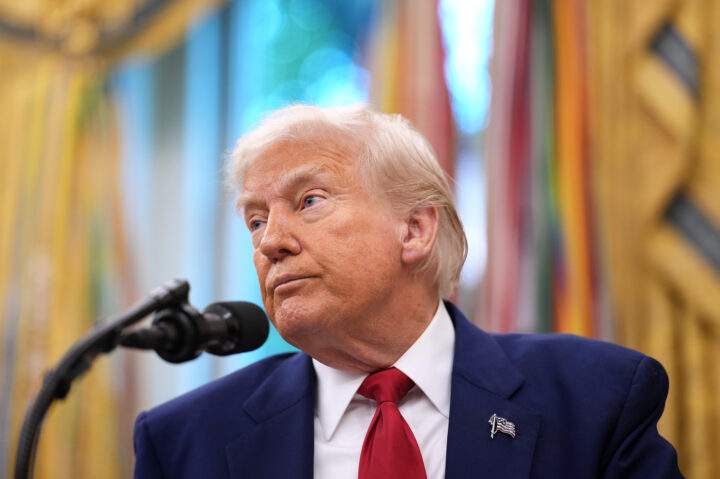
Andrew Harnik/Getty Images
U.S. President Donald Trump speaks during a swearing in ceremony for interim U.S. Attorney for Washington, D.C. Jeanine Pirro in the Oval Office of the White House on May 28, 2025 in Washington, DC.
Good Monday morning.
In today’s Daily Kickoff, we report on the latest developments in Israel’s war with Iran and cover reactions on the Hill to Israel’s preemptive strikes on the Islamic Republic’s nuclear facilities. We talk to foreign policy experts about how the military action might impact diplomacy efforts, and interview Persian Jews in the U.S. about their response to the war. Also in today’s Daily Kickoff: Anne Wojcicki, Leonard Lauder and Tracy-Ann Oberman
What We’re Watching
- We’re continuing to follow and report on the ongoing military conflict between Israel and Iran. Sign up for email alerts and WhatsApp updates to stay up to date with the latest news.
- A bipartisan group of lawmakers led by Rep. Brad Schneider (D-IL) is in the Middle East this week for an Abraham Accords-focused trip that is slated to include stops in Saudi Arabia, Bahrain, the United Arab Emirates and Israel. Read more here.
- President Donald Trump is in Alberta, Canada, today, where he will meet with world leaders at a G7 summit. We expect the president to address questions about potential U.S. involvement in the Israel-Iran conflict.
- A France-led conference on Palestinian statehood and the two-state solution, slated to take place this week, was postponed following Israel’s strikes on Iran late last week. Read more here.
What You Should Know
A QUICK WORD WITH ji’s MELISSA WEISS
Israeli Prime Minister Benjamin Netanyahu has staked everything — his legacy, his global standing, his relationships with world powers — on defending Israel against the threat of a nuclear-armed Iran.
The topic has dominated nearly every major address the prime minister has given, from U.N. General Assembly speeches to addresses to Congress, for the last 15 years. And over the last four days, Israel has been forced to put into action a plan that was years in the making — one that could profoundly reshape the Middle East in the days and months to come.
The writer Douglas Murray forecasted exactly this situation 13 years ago, speaking at the Cambridge Union: “When Israel is pushed to the situation it will be pushed to of having to believe [Iran] mean[s] it, and when every bit of jiggery pokery behind the scenes runs out, and when the U.N. and distinguished figures have run out of time, and Iran is about to produce its first bomb,” Murray said at the time, “Israel will strike.”
Israel’s Friday morning strikes came as the Trump administration’s announced 60-day deadline for negotiations expired, and following intelligence reports indicating that Iran was weeks away from nuclear capabilities — as Murray predicted.
What has ensued is the deadliest and most destructive direct conflict between Israel and Iran in history.
war with iran
Eight Israelis killed overnight in five Iranian missile strikes

Eight Israelis were killed by Iranian missile strikes in five locations that occurred Sunday night and early Monday morning. In the central Israeli city of Petach Tikva, five people were killed in a residential building, and in adjacent Bnei Brak, an 80-year-old man was found dead at the site of a missile strike. Two of the people killed in Petach Tikva were inside their safe room, which was directly hit by a missile. Petach Tikva Mayor Rami Grinberg said that the residence was struck by a ballistic missile carrying hundreds of kilograms of explosives, Jewish Insider’s Lahav Harkov reports.
Additional hits: Tel Aviv sustained two direct missile strikes, one of which lightly damaged the U.S. Embassy Branch Office. U.S. Ambassador to Israel Mike Huckabee clarified that “the minor damage to the property were from the shock waves … from the nearby blast … No injuries, thank God!” Among the residents evacuated from buildings in Tel Aviv was a 6-day-old baby, whose mother was found alive minutes later. In Haifa, three people were found dead under the rubble of a burning building where a missile hit, and about 300 people were evacuated. The Israel Electric Corporation said that the strike damaged its power grid, and that “teams are working on the ground to neutralize safety hazards, in particular the risk of electrocution ” Maritime risk assessment company Ambrey reported a fire at the Haifa Port.
TUCKER’S TIRADE
Tucker Carlson splits from Trump, advocates ‘dropping Israel’

Talk show host Tucker Carlson broke with President Donald Trump on Iran on Friday, writing in a scathing commentary in his daily newsletter that the United States should “drop Israel” and “let them fight their own wars.” Carlson wrote of Israel’s preemptive strike on Iran’s nuclear facilities, “If Israel wants to wage this war, it has every right to do so. It is a sovereign country, and it can do as it pleases. But not with America’s backing.” Trump, for his part, has endorsed Israel’s attacks, which he called “very successful,” and underscored in an interview with Fox News on Thursday night that the U.S. would defend Israel if Iran retaliates. He also warned that the situation “will only get worse” if Iran does not agree to a nuclear deal “before there is nothing left,” Jewish Insider’s Matthew Kassel reports.
Tucker talk: In recent days, Carlson has argued that fears of Iran obtaining a nuclear weapon in the near future are unfounded and said that a war with the Islamic Republic would not only result in “thousands” of American casualties in the Middle East but “amount to a profound betrayal of” Trump’s base and effectively “end his presidency.” Carlson reiterated that claim in his newsletter, accusing Trump of “being complicit in the act of war” through “years of funding and sending weapons to Israel.”
Trump hits back: Trump defended his “America First” worldview as in line with his support for Israel’s strikes, telling The Atlantic in regards to his critics: “Well, considering that I’m the one that developed ‘America First,’ and considering that the term wasn’t used until I came along, I think I’m the one that decides that. For those people who say they want peace — you can’t have peace if Iran has a nuclear weapon.”
Envoy response: U.S. Ambassador to Israel Mike Huckabee noted on X that “700,000 AMERICANS live in Israel. That is equivalent to a full House District. More Americans here than in any other country except Mexico! Iran isn’t just attacking Israel but your fellow Americans who live here.”
hope prevails
Persian Jews in the U.S. watch Israeli strikes on Iran and dare to hope

As grainy videos of Israel’s strikes on Iran spread in WhatsApp groups and Telegram channels used by the Iranian diaspora, Persian Jews in the U.S. are viewing this moment with a mix of trepidation and excitement — the first time in decades, some say, that the Iranian regime truly appears vulnerable. That has prompted cautious optimism about a future in which Iranians might live free from the oppression of the Ayatollah, several activists in the Persian Jewish community told Jewish Insider’s Gabby Deutch on Friday, and where they might be able to bring their children to visit their native land. But the escalation has also brought fear about what comes next, and that even an Israeli military success might not effect change on the ground for Iranians.
Mixed emotions: Sharon Nazarian, a philanthropist and Jewish communal leader in Los Angeles who left Tehran with her family in 1978, said she has felt “two striking, opposing feelings” since Israel’s attacks began. “One of utter hope and the possibility that maybe one day we can go back to our country of birth to bring our children,” Nazarian said. “We are [also] very fearful that this regime, although it’s at its weakest point it’s been since 1979, it will survive, and it will, yet again, find a mechanism both to manipulate and to force its way into maintaining the stranglehold it has on the Iranian people and the country of Iran.”
ON THE HILL
Successful Israeli strikes on Iran elicit divided response from Senate Democrats

Israel’s strikes on Iranian military and nuclear targets are prompting fractured responses from Senate Democrats, with a few offering full support for Israel and others forcefully condemning the strikes, while some have sought to carve out a path somewhere in the middle, Jewish Insider’s Marc Rod reports.
What they’re saying: “The Iranian regime and its proxies have been very public about their commitment to the destruction of Israel and Jewish communities around the world. We should take them at their word,” Sen. Jacky Rosen (D-NV) said. “Israel acted in self-defense against an attack from Iran, and the U.S. must continue to stand with Israel, as it has for decades, at this dangerous moment.” Sen. Jeanne Shaheen (D-NH), the ranking member of the Senate Foreign Relations Committee, said that the strikes are “an escalation that is deeply concerning and will inevitably invite counterattacks.” She added that they endanger nuclear talks and U.S. servicemembers. Read the full story here with additional comments from Chris Murphy (D-CT), Mark Warner (D-VA) and Chris Coons (D-DE).
Schumer’s support: Senate Minority Leader Chuck Schumer (D-NY) stood strongly behind Israel in his first public comments on its strikes on Iran and its nuclear program on Friday afternoon — a response that was notably more forceful in its support for Israel than those of many prominent members of the Senate Democratic Caucus, JI’s Marc Rod reports.
Straight talk: Sen. John Fetterman (D-PA) criticized his Democratic colleagues in Congress who have spoken out against Israel’s attack on Iran, telling JI’s Emily Jacobs it was “astonishing” to see members of his party treat Israel’s actions as escalatory.
Republican voice: Sen. Lindsey Graham (R-SC) told JI’s Emily Jacobs that he’s urging U.S. support for Israel’s campaign to destroy Iran’s nuclear program as a means of “substantially undoing the damage caused by the disastrous Afghanistan withdrawal” during the Biden administration.
Pressure push: A bipartisan group of nine House members wrote to the Trump administration on Friday emphasizing — as the administration continues to push for a nuclear deal — that U.S. negotiators must not allow Iran to maintain any nuclear enrichment capacity if a deal is reached, JI’s Marc Rod reports.
OUT IN LEFT FIELD
Tim Walz: Maybe China can negotiate a Middle East peace deal

Minnesota Gov. Tim Walz, criticizing Israel’s strikes on Iran and the Trump administration’s global posture, suggested on Friday that China might be better positioned than the United States to broker peace in the Middle East, Jewish Insider’s Marc Rod reports.
China First: “Who is the voice in the world that can negotiate some type of agreement in this, who holds the moral authority? Who holds the ability to do that? Because we are not seen as a neutral actor, and maybe we never were, I don’t want to tell anybody that … but I think there was at least an attempt to be somewhat of an arbitrator in this,” Walz said at a Center for American Progress event. “Consistently, over and over again, we’re going to have to face the reality, it might be the Chinese and that goes against everything [the Trump administration] say they’re trying to do in terms of the balance of power.”
BARUCH DAYAN EMET
Leonard Lauder, who supercharged his family’s cosmetics firm and became an arts patron, dies at 92

Leonard Lauder, arts patron and billionaire heir of Estée Lauder Companies, died on Saturday at 92. Remembered as an innovative thinker and a connoisseur of the arts, Lauder was born in 1933 to Joseph Lauter and Josephine Esther Mentzer, the founders of the Estée Lauder Companies cosmetic firm, eJewishPhilanthropy’s Nira Dayanim reports.
A giant in philanthropy: The descendant of Jewish immigrants to New York, the first-born Lauder grew up alongside the budding business. He earned his bachelor’s degree from University of Pennsylvania and served in the U.S. Navy before eventually joining Estée Lauder Companies in 1958. Alongside his parents, he helped scale the company from making under $1 million in sales annually to a multibillion-dollar prestige brand. Lauder went on to become a giant in American philanthropy — gifting over $2 billion throughout his lifetime — particularly focused on science, education and the arts. As an influential art collector and patron, in 2013, Lauder famously gifted over $1 billion in Cubist paintings to the Metropolitan Museum of Art — one of the most significant gifts in the museum’s history, according to The New York Times. In 2008, Lauder, a longtime chairman and chairman emeritus of the Whitney Museum of American Art, donated $131 million to support the museum’s endowment.
Read the full story here and sign up for eJewshPhilanthropy’s Your Daily Phil newsletter here.
Worthy Reads
What’s at Stake In Iran: In Politico, Axel Springer CEO Mathias Döpfner pens an op-ed titled “Iran’s Target Isn’t Just Israel. It’s Us,” in which he warns that Iran, alongside China and Russia, has global ambitions that extend beyond its war with Israel. “It is therefore surprising that Israel is not being celebrated worldwide for its historic, extremely precise and necessary strike against Iranian nuclear weapons facilities and for the targeted killing of leading terrorists, but that the public response is dominated by anti-Israel propaganda. The intelligence and precision of Israel’s actions are not admired but are instead used here and there to perpetuate blatantly antisemitic stereotypes. This attitude is characterized not only by racist undertones, but also by a strange self-forgetfulness.” [Politico]
Oldest Hate, Renewed: The New York Times editorial board warns against the country’s “worst surge of anti-Jewish hate in many decades,” citing agitators on both the left and right that have stoked tensions. “Americans should be able to recognize the nuanced nature of many political debates while also recognizing that antisemitism has become an urgent problem. It is a different problem — and in many ways, a narrower one — than racism. Antisemitism has not produced shocking gaps in income, wealth and life expectancy in today’s America. Yet the new antisemitism has left Jewish Americans at a greater risk of being victimized by a hate crime than any other group. Many Jews live with fears that they never expected to experience in this country.” [NYTimes]
Iran on the Ropes: In The Wall Street Journal, former National Security Advisor John Bolton considers how Israel, the U.S. and Arab allies could potentially deal a death knell to the Iranian regime. “Despite outward appearances of solid authoritarianism, the regime in Tehran faces widening discontent. The opposition extends across Iran, in the smaller cities and countryside, far beyond Tehran, where the few Western journalists congregate. Iran’s economy has been parlous for decades, and Israeli strikes on oil refineries may weaken it further. Citizen protests in 2018-19 provoked heightened nationwide repression. International antiproliferation and antiterrorism sanctions caused part of the distress, but the fundamental lesson is plain: Never trust your economy to medieval religious fanatics.” [WSJ]
The Rising Lion Inside Iran: In The Free Press, Masih Alinejad reacts to Israel’s military campaign against Iran, which has conducted numerous attempts in recent years to kill or kidnap the Iranian dissident and writer. “Now, the world faces a choice. It can focus solely on missiles and maps, treating this as another geopolitical chess move. Or it can recognize the human story unfolding beneath the surface, the story of a nation rising from the shadow of its captors. The story of a rising lion. Israel’s strike may have taken out top military figures. But the real victory is still ahead: the day the Islamic Republic falls under the weight of its own crimes and the strength of the people it has tried so hard to suffocate and silence.” [FreePress]
What else we’re reading: “Israel Had the Courage to Do What Needed to Be Done” by The New York Times’ Bret Stephens… “Israel’s Nuclear Good Deed Against Iran” by The Wall Street Journal editorial board… “Bombs Rain Down — and a Divided Israel Unites Behind the War” by The Free Press’ Matti Friedman… “We’re witnessing a historic test of two assumptions about Israel” by Natan Sharansky in The Washington Post… “Zionism Has Been Vindicated” by Commentary’s John Podhoretz…
Word on the Street
Israeli Prime Minister Benjamin Netanyahu gave his first interview since Israel began its operation in Iran on Fox News’ “Special Report” with Bret Baier on Sunday. He confirmed Iran had actively tried to assassinate President Donald Trump, calling Trump Iran’s “enemy No. 1,” and said Israel had shared intelligence with the U.S. that Iran was working to weaponize its enriched uranium: “They would achieve a test device and possibly an initial device within months, and certainly less than a year. That was the intel we shared with the United States”…
U.S. officials told Reutersthat Trump vetoed an Israeli plan to kill Iranian Supreme Leader Ayatollah Ali Khamenei; Israeli National Security Advisor Tzachi Hanegbi denied the reports outright, calling it “fake news of the highest order”…
Israel’s leadership is concerned that international pressure may force the IDF to stop striking Iran before its mission is complete, an Israeli security source told Jewish Insider’s Lahav Harkov on Sunday…
Jewish Insider spoke to Jason Brodsky, the policy director for United Against Nuclear Iran; Daniel Shapiro, a deputy assistant secretary of defense in the Biden administration, U.S. ambassador to Israel in the Obama administration and senior fellow at the Atlantic Council; and former Kamala Harris Middle East advisors Phil Gordon and Ilan Goldenberg about their views on Israel’s military strikes against Iran…
International Atomic Energy Agency head Rafael Grossi said on Monday that no additional damage had been done to the Natanz or Fordow nuclear enrichment sites in Iran since Israel’s initial strikes on Friday…
Police in Minnesota arrested the man alleged to have shot two state lawmakers last week, killing one of them as well as her husband…
The Christian Science Monitor interviews Illinois Gov. JB Pritzker, formerly the chair of the board of trustees of the Illinois Holocaust Museum, about rising antisemitism and his personal connection to Judaism as he emerges as one of the most vocal public figures opposing the Trump administration…
The U.S. Agency for Global Media instructed employees of Voice of America’s Persian-language service, who had been placed on administrative leave amid the Trump administration’s degradation of the agency, to return to their positions to provide programming to counter Iranian state-run media…
Pennsylvania state Rep. Malcolm Kenyatta was reelected as a Democratic National Committee vice chair after the DNC revoked the results of an earlier election in which Kenyatta and activist David Hogg had been elected; Hogg, who opted not to run again, had riled DNC officials with his super PAC’s plans to back challengers to sitting Democrats, prompting calls for a new election based on concerns over the demographics of the newly elected leadership…
New York City Mayor Eric Adams c0-hosted a livestream with Sneako, a far-right internet personality who has a history of making offensive and antisemitic comments; last spring, the livestreamer said “Down with the yahud [Jews]” and had previously appeared on livestreams with white nationalist Nick Fuentes and Ye…
Police in Brookline, Mass., are investigating after a brick painted with “Free Palestine” was thrown through the window of a kosher grocery store in the city…
Anne Wojcicki’s nonprofit TTAM Research Institute won a bid to purchase 23andMe, which Wojcicki had co-founded and led until earlier this year, when the company filed for Chapter 11 bankruptcy and Wojcicki tendered her resignation…
The Wall Street Journal spotlights Simon Property Group CEO David Simon, the country’s largest mall operator, who is continuing to work as he battles pancreatic cancer…
Former Hillary Clinton political aide Huma Abedin and Alex Soros were married at Soros’ Water Mill, N.Y., estate on Saturday…
Two French teenagers convicted of raping a Jewish girl in 2024 were sentenced to seven and nine years in prison; a third teenager, who was 12 at the time of the assault, was sentenced to five years in foster care due to his age…
Israeli officials confirmed that the IDF had recovered the body of hostage Aviv Atzili from Khan Younis, Gaza, last week; Atzili, a resident of Kibbutz Nir Oz, was killed battling terrorists who had overrun the kibbutz and his body taken to Gaza…
The Wall Street Journal looks at how the Mossad smuggled drone parts into Iran for use in its preemptive attack on Iranian military and nuclear sites last week…
Elon Musk said he activated his Starlink internet service in Iran after the government cut off civilian internet access across the country…
A former senior Syrian general told U.S. investigators in Beirut that American journalist Austin Tice, who disappeared in Syria in 2012, was dead, and provided a possible location of Tice’s body…
Saudi Arabia executed a journalist who had been convicted of treason for his alleged running of a social media account that accused members of the Saudi royal family of corruption…
“Eastenders” actress Tracy-Ann Oberman was awarded an MBE for her services to Holocaust education and combating antisemitism in the U.K….
Stage and film actor Harris Yulin, who was often cast in villain roles, died at 87… Marthe Cohn, a Jewish nurse who worked with the French resistance as a spy in Germany, died at 105… Video artist Dara Birnbaum died at 78… Sculptor Joel Shapiro, best known for his life-size stick figures, died at 83… Civil rights litigator Alex Polikoff, who won a landmark Supreme Court housing desegregation case and spent decades advocating to have the ruling enforced, died at 98…
Pic of the Day

Israeli President Isaac Herzog and First Lady Michal Herzog visited the site of an Iranian missile attack in Petach Tikvah earlier today.
Addressing the media, Herzog said, “What I’ve seen upstairs in the destroyed apartment is evil, pure evil in and of itself. It’s evil aimed at innocent civilians all over Israel. But I have news to for the Iranian regime. You think you’re going to tire us or fatigue us, you’re absolutely wrong. We’re a very strong, resilient nation with very strong capabilities in all fields. I think you’re feeling it out there in Iran, and I think the Iranian people are fed up, and they want change. And so, of course, do the entire region, we deserve change.”
Birthdays

Pitcher for Team Israel in the 2023 World Baseball Classic, he is now in the St. Louis Cardinals organization, Zachary D. “Zack” Weiss turns 33…
Professor of theoretical physics at Stanford University, Leonard Susskind turns 85… Brigadier-general (ret.) in the IDF, then a member of Knesset, then chairman of Ha’aguda Lema’an Hachayal, a nonprofit IDF veterans group, Avigdor Kahalani turns 81… Former dean of Yeshiva College, U.S. ambassador to Egypt for President Bill Clinton, and U.S. ambassador to Israel for President George W. Bush, Daniel C. Kurtzer turns 76… Professor at Nanjing University and China’s leading professor of Jewish studies, Xu Xin turns 76… Rickey Wolosky Palkovitz turns 76… Investigative reporter who worked for Newsweek, NBC News and then Yahoo News, Michael Isikoff turns 73… UC Berkeley professor and WSJ columnist, Alison Gopnik turns 70… Professor of Jewish studies at the University of Freiburg (Germany), Gabrielle Oberhänsli-Widmer turns 68… Distinguished fellow in Jewish studies at Dartmouth College, in three weeks he will start as a tenured professor at Harvard Divinity School, Shaul Magid turns 67… Southern California resident, Roberta Trachten-Zeve… Senior project executive at Kansas-based Stuart & Associates Commercial Flooring, Matthew Rafael Elyachar… Pulitzer Prize-winning business reporter and bestselling author, he is a past president of Washington Hebrew Congregation, David A. Vise turns 65… Former chair of the Broward County, Fla., JCRC, he is the co-founder of The Alliance of Blacks & Jews, Keith Wasserstrom… Actor, screenwriter, producer and director, Daniel Zelman turns 58… Senior correspondent for military and intelligence affairs for Yedioth Ahronoth and contributor to the NYTimes, Ronen Bergman turns 53… Judge of the U.S. Court of Appeals for the 1st Circuit, Julie Rikelman turns 53… CEO and founder of NYC-based Marathon Strategies, Philip Keith (“Phil”) Singer… Israeli photographer, digital artist and artificial intelligence researcher, Dina Bova turns 48… Geographer and writer, Joshua Jelly-Schapiro turns 46… Singer and songwriter, Benjamin Lev Kweller turns 44… Comedian, actor and YouTuber with almost 100 million views, Adam Ray turns 43… Portfolio manager on the Jewish life and Israel grantmaking team at One8 Foundation, Alyssa Bogdanow Arens… Head video producer at Ocean One Media, Perry Chencin… Catcher on Israel’s National Baseball Team at the 2020 Tokyo Olympics, now a business transformation consultant for EY, Tal Erel turns 29… Israeli artistic gymnast who won a gold medal at the 2020 Tokyo Olympics and a silver medal at the 2024 Paris Olympics, Artem Dolgopyat turns 28…
Israeli Prime Minister Benjamin Netanyahu has staked everything — his legacy, his global standing, his relationships with world powers — on defending Israel against the threat of a nuclear-armed Iran

Wisam Hashlamoun/Anadolu via Getty Images
Streaks of light from Iranian ballistic missiles are seen in the night sky above Hebron, West Bank, as Iran resumes its retaliatory strikes against Israel.
Israeli Prime Minister Benjamin Netanyahu has staked everything — his legacy, his global standing, his relationships with world powers — on defending Israel against the threat of a nuclear-armed Iran.
The topic has dominated nearly every major address the prime minister has given, from U.N. General Assembly speeches to addresses to Congress, for the last 15 years. And over the last four days, Israel has been forced to put into action a plan that was years in the making — one that could profoundly reshape the Middle East in the days and months to come.
As Israeli journalist Amit Segal notes, “And so Netanyahu’s life mission became dismantling Iran’s nuclear ambitions. Over the years, in meetings with U.S. presidents, the incumbent president would raise the Palestinian issue, while Netanyahu would focus on the Iranian threat. Menachem Begin destroyed Iraq’s nuclear reactor in 1981, Ehud Olmert did the same to Syria’s reactor in 2007, and Netanyahu vowed to do likewise with Iran.”
The writer Douglas Murray forecasted exactly this situation 13 years ago, speaking at the Cambridge Union: “When Israel is pushed to the situation it will be pushed to of having to believe [Iran] mean[s] it, and when every bit of jiggery pokery behind the scenes runs out, and when the U.N. and distinguished figures have run out of time, and Iran is about to produce its first bomb,” Murray said at the time, “Israel will strike.”
Israel’s Friday morning strikes came as the Trump administration’s announced 60-day deadline for negotiations expired, and following intelligence reports indicating that Iran was weeks away from nuclear capabilities — as Murray predicted.
What has ensued is the deadliest and most destructive direct conflict between Israel and Iran in history. At least 24 Israelis have been confirmed killed since Friday night in strikes around the country.
For the last three nights, Israelis around the country have stumbled into safe rooms and public shelters as Iran bombarded the country with ballistic missiles.
And while the barrages, meant to overwhelm Israel’s defensive systems, have inflicted damage across the country, the vast majority of the roughly 350 missiles fired from Iran and Yemen over the last 72 hours have been intercepted by Israel’s missile-defense systems.
With Iran believed to still have nearly 2,000 ballistic missiles in its arsenal, the ongoing air raid sirens and attacks around the country could continue for weeks, stranding the more than 150,000 Israelis currently abroad as Israeli airspace remains closed. Israel’s Channel 12 reported today that repatriation flights may begin in the coming days, allowing stranded Israelis to return home.
In the last 72 hours, more than a decade of warnings have crystallized into reality, a culmination of years of diplomatic efforts, proxy battles and intelligence operations. What happens in the ensuing days and weeks will not only determine the strategic balance of the region — it has the potential to reset the global order.
The U.S. Embassy branch office in Tel Aviv sustained minor damage, but no personnel were injured; Israel struck more nuclear sites and hit the Quds Force for the first time
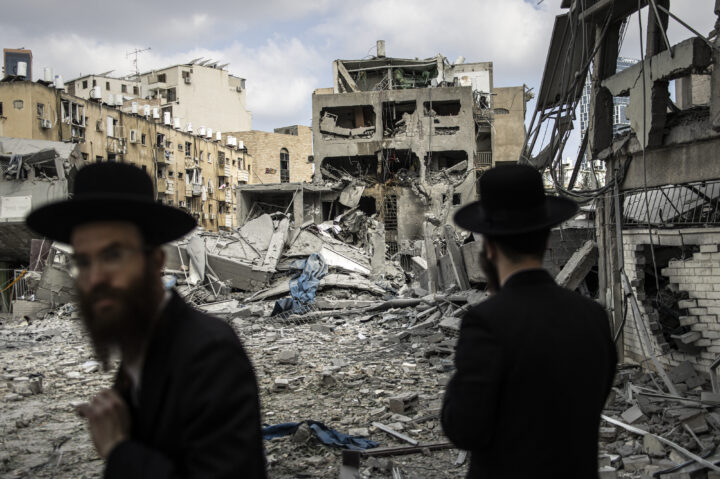
JOHN WESSELS/AFP via Getty Images
Ultra-Orthodox Jewish men inspect the damage at the site of an Iranian missile strike in Bnei Brak, east of Tel Aviv, on June 16, 2025.
Eight Israelis were killed by Iranian missile strikes in five locations that occurred Sunday night and early Monday morning.
In the central Israeli city of Petach Tikva, five people were killed in a residential building, and in adjacent Bnei Brak, an 80-year-old man was found dead at the site of a missile strike.
Two of the people killed in Petach Tikva were inside their safe room, which was directly hit by a missile. Israel’s Home Front Command explained that safe rooms are built to protect from shrapnel, shards and shock waves, but not a direct hit, which is a rare occurrence. The Home Front Command emphasized that everyone else in the building who was in a safe room was not even injured. Petach Tikva Mayor Rami Grinberg said that the residence was struck by a ballistic missile carrying hundreds of kilograms of explosives.
Tel Aviv sustained two direct missile strikes, one of which lightly damaged the U.S. Embassy Branch Office. U.S. Ambassador to Israel Mike Huckabee clarified that “the minor damage to the property were from the shock waves … from the nearby blast … No injuries, thank God!”
Among the residents evacuated from buildings in Tel Aviv was a six-day-old baby, whose mother was found minutes later.
In Haifa, three people were found dead under the rubble of a burning building where a missile hit, and about 300 people were evacuated. The Israel Electric Corporation said that the strike damaged its power grid, and that “teams are working on the ground to neutralize safety hazards, in particular the risk of electrocution.” Maritime risk assessment company Ambrey reported a fire at the Haifa Port.
Israel continued to intercept Iranian and Houthi drones heading to Israel’s north on Monday morning.
About 50 Israeli fighter jets and aircraft struck some 100 military targets in Isfahan in central Iran overnight, the IDF Spokesperson’s Office said on Monday.
Among those targets were missile storage sites, surface-to-surface missile launchers and command centers. Israel has destroyed over 120 missile launchers since the beginning of the operation, about a third of Iran’s total launchers. In one strike overnight, the IAF identified an attempt to launch missiles towards Israel in real time and destroyed the cell and missiles.
The IDF confirmed on Monday that it killed the head of Islamic Revolutionary Guard Corps intelligence Mohammad Kazemi and his deputy, Hassan Mohaqiq, on Sunday.
The IDF also struck a command center of the Quds Force, part of the IRGC, for the first time, according to the IDF spokesperson. The Quds Force “planned acts of terror against Israel through the Iranian regime’s proxies in the Middle East.”
Israel also reportedly struck near nuclear sites in Fordow. The Wall Street Journal reported that parts of the underground nuclear enrichment site in Natanz collapsed as a result of Israeli strikes.
The IAF struck Mashhad, in eastern Iran, on Sunday afternoon, destroying an Iranian refueling aircraft. Mashhad, some 2300 km (1429 mi) away from Israel, is the farthest Israeli fighter jets have flown in Iran, and, according to some experts, the farthest in any Israeli operation, ever.
The Israeli Navy used a new air defense system called Thunder Shield and LRAD long-range interceptors on Sa’ar 6 ships to intercept eight Iranian drones overnight. The seaborne systems, which have intercepted some 25 projectiles since the beginning of Operation Rising Lion on Thursday night, are able to intercept UAVs, cruise missiles, sea-to-land missiles and more.
Also Monday, the death toll rose to eight from an Iranian strike on Bat Yam, a city south of Tel Aviv. The total number of Israeli fatalities since the beginning of the operation rose to 24 with almost 600 injured. Iran has shot around 350 missiles at Israel.
The Iranian Health Ministry claimed on Sunday that 224 people had been killed since Israel’s operation began Friday with another 1,277 people hospitalized.
‘This is the first time since 1979 that a world power has stepped up to give [the Iranian people] a chance’

SASAN/Middle East Images/AFP via Getty Images
Iranian people gather in the heights of north of Tehran, Iran, to watch a view of the exchanges of strikes between Israel and Iran on June 14, 2025.
As grainy videos of Israel’s strikes on Iran spread in WhatsApp groups and Telegram channels used by the Iranian diaspora, Persian Jews in the U.S. are viewing this moment with a mix of trepidation and excitement — the first time in decades, some say, that the Iranian regime truly appears vulnerable.
That has prompted cautious optimism about a future in which Iranians might live free from the oppression of the Ayatollah, several activists in the Persian Jewish community told Jewish Insider on Friday, and where they might be able to bring their children to visit their native land. But the escalation has also brought fear about what comes next, and that even an Israeli military success might not effect change on the ground for Iranians.
Sharon Nazarian, a philanthropist and Jewish communal leader in Los Angeles who left Tehran with her family in 1978, said she has felt “two striking, opposing feelings” since Israel’s attacks began.
“One of utter hope and the possibility that maybe one day we can go back to our country of birth to bring our children,” Nazarian said. “We are [also] very fearful that this regime, although it’s at its weakest point it’s been since 1979, it will survive, and it will, yet again, find a mechanism both to manipulate and to force its way into maintaining the stranglehold it has on the Iranian people and the country of Iran.”
Sam Yebri, a Los Angeles attorney who left Iran with his parents as a toddler, described feeling “an inevitability to today’s events, and a hope that it’ll bring a better future for the people of Iran as well as the people of Israel.”
As foreign policy experts assess how President Donald Trump and other world leaders will respond to the strikes, and question what impact they will have on Middle East geopolitics, many Persian Jews feel a flicker of hope for the Iranian people.
Arielle Mokhtarzadeh was born and raised in Los Angeles, but her parents were both born in Iran. She expressed hope that the attacks might herald a change in the Islamic Republic.
“The Iranian people will be responsible for carrying forward a new future for Iran. But they know, and we know, that they cannot do it alone. This is the first time since 1979 that a world power has stepped up to give them a chance,” Mokhtarzadeh said. “I could not be more proud that it is Israel — as an Iranian, as an American and as a Jew.”
In a statement on Friday, the leaders of the small Jewish community that remains in Iran condemned “the rape and inhumanity that the Zionist regime has brought upon the our beloved homeland,” according to a translation provided by Nazarian, who pointed out that the leader of the community was appointed by the Iranian government.
“That is, by definition, what a captured Jewish community acts like they have no choice. This is their survival mechanism, and so they’ve put out statements condemning Israel,” Nazarian explained.
Others in the Persian Jewish community in the U.S. felt a touch of schadenfreude at the developments.
“For all the wounds the regime has inflicted, it deserves this eve of bloodletting. May it stop quickly to make way for the arrival of the long-awaited season of woman, life, freedom,” Roya Hakakian, an Iranian-born author, wrote in The Free Press on Thursday.
Matthew Nouriel, community engagement director at JIMENA, an organization that advocates for Jews from Middle Eastern countries, posted a video on Instagram from Tel Aviv responding to the strikes.
“I do want to say that I’m praying for the safety and freedom of the people in Iran, and I sincerely hope that every single strike against that bloodthirsty regime of filthy thugs disguised as clerics strikes the fear of God into each and every one of their satanic, black hearts,” said Nouriel, who had traveled to Tel Aviv to attend Tel Aviv Pride, which was canceled in light of the attacks.
‘If we’re paying a maximal price, we should get maximal achievements,’ an Israeli security source told JI

GPO
Israeli Prime Minister Benjamin Netanyahu and Defense Minister Israel Katz direct Operation Rising Lion.
Israel’s leadership is concerned that international pressure may force the IDF to stop striking Iran before its mission is complete, an Israeli security source told Jewish Insider on Sunday.
The source spoke a day after President Donald Trump wrote in a Truth Social post that “this war in Israel-Iran should end,” and continued to express hope that a deal could be reached between Washington and Tehran, even as the next round of negotiations between the U.S. and Iran over Tehran’s nuclear program was postponed.
The president’s remarks came two days after Israel began targeting Iranian nuclear and military sites and Tehran retaliated by striking sites across Israel, including residential areas.
“We want the U.S. to understand our point of view,” the source said. “The goal is for Iran not to have capabilities that endanger the State of Israel and its existence.”
“If we’re paying a maximal price” — 13 fatalities, 380 injured in 22 missile impact sites as of Sunday morning — “we should get maximal achievements. That is the approach,” the source added, saying that Iran’s nuclear program should be destroyed and not “wounded.”
The official aim of Operation Rising Lions, authorized by Israel’s Security Cabinet on Thursday night, is to damage Iran’s nuclear and ballistic missile programs.
The goal did not include toppling the Iranian mullahs’ regime, in part because Israel would be unlikely to have “international legitimacy” to do so, the Israeli source said. In addition, the cabinet did not say its goal was the total elimination of Iran’s nuclear program, because it wanted to set attainable goals.
Israel targeted military and nuclear sites in Iran as Tehran’s weekend strikes in Israel killed at least 13

JALAA MAREY/AFP via Getty Images
Israeli air defence systems intercept Iranian missiles over the Israeli city of Tel Aviv early on June 15, 2025. Air raid sirens and booms rang out in Jerusalem and Tel Aviv early on June 15, AFP journalists said, as Israel and Iran exchanged fire for a third day.
The next round of scheduled nuclear talks between the U.S. and Iran will not take place on Sunday, Omanian Foreign Minister Badr Albusaidi announced on Saturday evening, as Israel and Iran continue to trade strikes.
Albusaidi said that the talks, intended to be the sixth round of negotiations, “will not now take place. But diplomacy and dialogue remain the only pathway to lasting peace.”
A senior U.S. administration official told The New York Times, “While there will be no meeting Sunday, we remain committed to talks and hope the Iranians will come to the table soon.” President Donald Trump had exerted additional pressure, writing on Truth Social on Friday that “Iran must make a deal, before there is nothing left, and save what was once known as the Iranian Empire … JUST DO IT, BEFORE IT IS TOO LATE.”
In a Truth Social post on Saturday afternoon, Trump said that “we can easily get a deal done between Iran and Israel, and end this bloody conflict,” noting that the “U.S. had nothing to do with the attack on Iran, tonight” but that if the U.S. was “attacked in any way, shape or form by Iran, the full strength and might of the U.S. Armed Forces will come down” on Tehran “at levels never seen before.”
Iranian President Masoud Pezeshkain reportedly said on a call with French President Emmanuel Macron on Saturday that Iran will not “accept irrational demands under pressure” or “sit at the negotiating table while the Zionist regime continues its attacks.”
The talks’ cancellation comes following Israel’s preemptive attack early Friday morning on Iranian nuclear and military targets, and Iran’s retaliatory strikes against Israel.
The IDF said Saturday night it had completed “an extensive series of strikes” on targets including the Iranian Ministry of Defense and its nuclear research and development headquarters. Iranian state media reported strikes on several oil facilities, including the South Pars field shared between Iran and Qatar, the largest natural gas field in the world.
Iran fired around 70 ballistic missiles and several drones at Israel on Saturday night and early Sunday morning, sending Israelis across the country into bomb shelters. Direct impacts were reported in the northern Arab city of Tamra — killing four civilians — and the central cities of Bat Yam, where at least six civilians were killed and 200 wounded, and Rehovot, where at least 40 were wounded and laboratories at The Weizmann Institute of Science were reportedly damaged. The Bazan oil refinery in Haifa was also damaged in the attack, though its refining activities continue, its operating company reported on Sunday.
Saturday night’s strikes bring the death toll in Israel from the Iranian attacks to at least 13 with 380 people injured.
Harris national security adviser Phil Gordon: ‘I would have found it too risky to initiate military force with all that that could unleash’

JIM WATSON/AFP via Getty Images
Vice President Kamala Harris speaks with Phil Gordon during a meeting with Caribbean leaders in Los Angeles, California, June 9, 2022.
Among the more surprising cheerleaders for President Donald Trump’s diplomacy with Iran were several progressive foreign policy analysts who had advised former President Barack Obama and former Vice President Kamala Harris.
Now, many of those same voices — including Phil Gordon, Harris’ national security advisor who would likely have stayed in the role if she had been elected president last year — are expressing skepticism about Israel’s preemptive strikes on Iranian military and nuclear sites, and urging Trump to pressure Israeli Prime Minister Benjamin Netanyahu to cool it.
“I would have found it too risky to initiate military force with all that that could unleash,” Gordon told Jewish Insider on Friday. His approach would have been “to try to get an enduring, diplomatically-negotiated nuclear arrangement that prevented Iran from being able to get a nuclear weapon.”
If he were advising Harris, or another Democratic president, Gordon would’ve wanted “to try to get that accomplished without having used this military action,” he said.
Gordon also argued that Trump was manipulated into supporting Israel’s strikes by Netanyahu, even as Trump celebrated Israel’s killing of Iranian hardliners, noting that several of Trump’s senior advisors have urged restraint rather than intervention.
“His supporters did not put him in place to get involved in the conflict in the Middle East,” Gordon said. “A lot of his advisors … served in Iraq or are against U.S. military interventions in the Middle East. We know where Vance is in terms of intervention. The Tucker Carlson view, Don Jr. I think Trump really wanted to avoid military conflict and negotiate a deal and be the guy who got a better deal than Obama.”
Ilan Goldenberg, who served as an Iran advisor at the Pentagon in the Obama administration and who advised Harris on Middle East issues during her 2024 campaign, told JI that Trump should try to encourage parties in the region to tone it down.
“I think the appropriate position for the United States to be in now is the role of de-escalator,” said Goldenberg, now the senior vice president and chief policy officer at J Street. “The better option, the less risky option that had more good outcomes, was the diplomatic option. Unfortunately, it’s not the way it went. So now we have to see.”
J Street released a statement on Friday calling for an end to the “cycle of retaliation and escalation,” and for a return to diplomacy between the U.S. and Iran.
Both Gordon and Goldenberg questioned Israel’s end game in the strikes, which killed several senior Iranian military leaders and destroyed an above-ground uranium enrichment site at Natanz.
“It definitely has set back the timetable for Iran’s nuclear capacity, but it hasn’t eliminated it, and we also don’t know what happens in terms of retaliation. We’d like to think and hope that Iran has been deterred and won’t respond in a way that we can’t handle,” Gordon said. “So far, so good, but we’re only on the first day, so there were real risks of doing it this way. And that’s why I would have sought, if at all possible, to do it a different way.”
Goldenberg, who said the most important next step in stopping the violence is for the U.S. to help Israel defend against Iran’s retaliation, said he is unsure whether the Israeli success will turn into a long-term victory.
“The Israelis are incredibly good operationally, but they have challenges sometimes translating that into a strategic kind of sustainable victory, as opposed to just continuing to fight,” said Goldenberg. “What’s the end state here? What are you trying to do? Or is the objective to just be in constant conflict?”
Still, even as they said a return to diplomacy is the best way to move forward, both Gordon and Goldenberg acknowledged that Israel’s Friday attack on Iran had so far gone well for Israel.
“It is a remarkable display of Israeli military and intelligence capabilities,” said Gordon.
“I think in the immediate [term], it had a lot of success. Very impressive operationally,” Goldenberg noted.
Trump said in Truth Social posts on Friday that Iran could have a “second chance” at a deal, and that they should return to the negotiating table “before there is nothing left.”
Goldenberg agrees — and he thinks Israel needs to hear from Trump that they can’t attack Iran forever.
“Make clear to the Iranians that there’s still a deal on the table. We’re willing to negotiate,” Goldenberg said. “And at the same time, make clear to the Israelis, there are limits to this. We can’t see this get out of control.”
'If Iran rejects diplomacy, the only logical answer is to help Israel finish the job. If we don't do that, it will be another example of Afghanistan where we blink,' the South Carolina Republican told JI

Amir Levy/Getty Images
Senator Lindsey Graham (R-SC) speaks at a press conference on US-Israel relations on February 17, 2025 at the Kempinski Hotel in Tel Aviv, Israel.
Sen. Lindsey Graham (R-SC) said on Friday that he’s urging U.S. support for Israel’s campaign to destroy Iran’s nuclear program as a means of “substantially undoing the damage caused by the disastrous Afghanistan withdrawal” during the Biden administration.
The South Carolina senator told Jewish Insider that he views Israel’s military operation in Iran as an opportunity to improve the reputation of the U.S. in the region by helping the Jewish state eliminate the threat of a nuclear Tehran if diplomatic efforts to address the issue fail.
Graham argued that the standing of the U.S. in the Mideast was significantly degraded by the 2021 withdrawal from Afghanistan, which was ordered under President Donald Trump during his first administration and implemented under then-President Joe Biden.
“If Iran rejects diplomacy, the only logical answer is to help Israel finish the job. If we don’t do that, it will be another example of Afghanistan where we blink. We can’t afford that anymore. If we do help Israel, who has been amazingly successful thus far, then I think it reverses the damage that Afghanistan caused for America. We’ve got a chance not only to take a bad guy off the table in terms of their nuclear ambitions, but reset the position of America in the world. I would take that opportunity if I were President Trump,” Graham said.
“The benefit to us as a nation is that Iran is a threat not only to Israel but to us. It would have the benefit of substantially undoing the damage caused by the disastrous Afghanistan withdrawal. We would be seen as a stronger, more reliable ally and it would help us to get good outcomes in other conflicts throughout the world,” he continued.
Graham expressed appreciation for Trump’s efforts to try “to get Iran back to the negotiating table to end their nuclear program through diplomacy” while cautioning that he believes “it’s important for the United States to go all in with Israel in finishing the job regarding Iran’s nuclear program” if “that effort fails.”
“We have capability Israel doesn’t just in terms of air assets, and I think it is in our national security interest to provide Israel what they need and to assist them in finishing the job. That doesn’t require boots on the ground, but it will require military assets,” the GOP senator said.
“If you believe in America as a force for good and you believe that we should deal with threats before they get out of hand, then the answer is to go all in. What would be provocative and irresponsible is to allow this program to continue. We’re trying to use diplomacy to end it, but that only works if we have a willing partner. I cannot stress how important it is to deny Iran a nuclear capability. If they get a weapon, they will use it. And if they get a weapon, the Arabs will want one of their own and you’ll have a new arms race in the Mideast,” he added of the risks of a nuclear-armed Iran.
Asked about left- and right-wing critics of Israel’s actions who have accused the Jewish state of hurting the diplomatic efforts, Graham compared them to “the heirs of Neville Chamberlain.”
“That’s what they said about Hitler, that being provocative would make Hitler more lethal. They were wrong then, they’re wrong now,” he said.
‘It was just astonishing to see colleagues criticizing these things,’ Fetterman told JI

Lev Radin/Pacific Press/LightRocket via Getty Images
Senator John Fetterman speaks during the grand opening of The Altneu synagogue.
Sen. John Fetterman (D-PA) criticized his Democratic colleagues in Congress who have spoken out against Israel’s attack on Iran, calling it “astonishing” to see members of his party treat Israel’s actions as escalatory.
Fetterman spoke to Jewish Insider on Friday for an interview in the wake of Israel launching its military operation to take out Iran’s nuclear facilities and prevent the regime from acquiring a nuclear weapon.
The Pennsylvania senator said he could not fathom how some Democrats on Capitol Hill could accuse the Jewish state of launching the strikes to upend the Trump administration’s nuclear negotiations with Tehran.
Fetterman didn’t mention any of his Democratic colleagues by name, but many have been critical of the Iranian strikes. Sen. Chris Murphy (D-CT), for instance, went on MSNBC’s “Morning Joe” Friday morning and said that Israel’s strike on Iran was “pretty transparent that this was an effort to submarine, to undermine our diplomacy.”
“It was just astonishing to see colleagues criticizing these things. It’s like, do you think you can negotiate with that regime? Do you think you want to run that scenario and allow them to acquire 1,000 pounds of weapons grade uranium? I can’t understand, I can’t even begin to understand that,” Fetterman told JI.
“I can’t imagine why they would say that. Remember, Iran tries to acquire nuclear weapons. Iran has created and spent billions of dollars to build those destructive proxies like Hamas or Hezbollah or the Houthis. Why can’t we talk about that? Why can’t we talk about the absolute imperative to keep Iran accountable for what they’ve done? That’s exactly part of what Israel did last night, as well,” he continued.
The Pennsylvania Democrat praised the opening salvos of the operation as “absolutely spectacular,” citing the “precision in targeting people.”
”They eliminated the generals and those scientists in their beds at their building, and they didn’t take out the whole building. It was just their specific apartments. I mean, that is truly remarkable. … It’s like Beepers 2.0, the kind of things they’ve done. Like I said, I am constantly blown away by the sophistication and their lethality,” Fetterman said, referring to the Israeli pager operation that took out senior Hezbollah leaders.
“I think I might have been the only one openly calling for that [striking the nuclear facilities now]. I’m never going to negotiate with that regime. You can never trust them, and the only thing they’re going to respond to, that they respect, are exactly the kind of things that [Israel] did last night. … Any potential path for an enduring peace in the Middle East, these are the kind of steps that do that,” he added.
Fetterman disputed the narrative that the U.S. supporting Israel in targeting Iran’s nuclear facilities could increase the prospect of a regional war. “If Iran is going to take their big, big swing, they would have done that by now. Just imagine how exposed they are, even how [exposed] they were earlier this year after what Israel had done taking out Hezbollah,” he told JI.
“Hezbollah ain’t talking tough anymore. They’re not talking about any kinds of actions, they’re just whimpering, and that’s my point. Iran can’t fight for s**t. … They just shot their big shot, a couple junkie rockets, and it’s like, that’s what you’ve got?” Fetterman asked.
Kamala Harris’ 2024 running mate said he was ‘deeply concerned’ by Israel’s strikes on Iran

Chip Somodevilla/Getty Images
Minnesota Gov. Tim Walz, speaks during a debate at the CBS Broadcast Center on October 1, 2024 in New York City. This is expected to be the only vice presidential debate of the 2024 general election. (Photo by Chip Somodevilla/Getty Images)
Minnesota Gov. Tim Walz, criticizing Israel’s strikes on Iran and the Trump administration’s global posture, suggested that China might be better positioned than the United States to broker peace in the Middle East.
The 2024 Democratic vice presidential nominee was a favorite of Israel critics on the left during the vice presidential selection process and praised anti-Israel protesters during the campaign. He is seen as a potential 2028 Democratic presidential candidate.
“I truly worry now. I’m sure there’s some great strategic thinkers in the Trump administration that have now said, how is this going to — a tweet from the President today said, ‘I told them, I told them, they should have done something and here we are,’” Walz said at a Center for American Progress event, to chuckles from the audience. “Yeah, here we are with the Middle East back on fire in a way that has now expanded.
He said he is “deeply concerned” about the Israeli strikes on Iran.
“Iran has to retaliate in their mind, I’m sure,” Walz continued. “And now, who is the voice in the world that can negotiate some type of agreement in this, who holds the moral authority? Who holds the ability to do that? Because we are not seen as a neutral actor, and maybe we never were, I don’t want to tell anybody that … but I think there was at least an attempt to be somewhat of an arbitrator in this.”
“Consistently, over and over again, we’re going to have to face the reality, it might be the Chinese,” Walz said, “and that goes against everything [the Trump administration] say they’re trying to do in terms of the balance of power.”
.@GovTimWalz on Israel's preemptive strikes: "Iran has to retaliate in their mind I'm sure and now, who is the voice in the world that can negotiate some kind type agreement in this? Who holds the moral authority…we are not seen as a natural actor…it might be the Chinese…" pic.twitter.com/pi4tpnc4lD
— CSPAN (@cspan) June 13, 2025
Walz also described the humanitarian situation in Gaza as “intolerable.”
“It became a central focus in the campaign — and I would say rightfully so,” Walz said. “Human rights issues, how we’re going to try and attempt to get a two state solution where we can allow folks to live peacefully and coexist and have their own self control, or self determination.”
The French president cites travel issues for cancellation as he defends Israel’s strikes on Iran

Photo by CHRISTOPHE ENA/POOL/AFP via Getty Images
French President Emmanuel Macron (L) meets with Palestinian President Mahmoud Abbas on October 24, 2023 in the West Bank city of Ramallah. Macron's visit comes more than two weeks after Hamas militants stormed into Israel from the Gaza Strip and killed at least 1,400 people and amid Israel's retaliatory strikes.
French President Emmanuel Macron announced on Friday that his upcoming United Nations conference with Saudi Arabia promoting international recognition of a Palestinian state has been postponed following Israel’s attack on Iran.
Speaking to reporters from Paris, Macron said that the conference would need to be rescheduled for logistical purposes, citing the inability of Palestinian Authority officials to travel to U.N. headquarters in New York next week to participate.
The Trump administration was opposed to the conference, titled “The High Level International Conference for the Peaceful Settlement of the Question of Palestine and the Implementation of the Two-State Solution,” and urged U.N. member states against participating. Pro-Israel Republicans on Capitol Hill also criticized the gathering, which was scheduled to take place June 17-20, as a distraction from U.S. efforts to secure peace in the region.
Despite his campaign for Palestinian statehood recognition, Macron was quick to defend Israel’s strikes on Iran, releasing a statement early Friday criticizing Tehran for its nuclear program and supporting Israel’s right to self-defense. At his press conference later Friday, he argued that Iran was heavily responsible for the current unrest in the Middle East by building its nuclear program against the requests of the West and other actors in the region.
Still, he urged restraint in both the press conference and his statement.
“France has repeatedly condemned Iran’s ongoing nuclear program and has taken all appropriate diplomatic measures in response. In this context, France reaffirms Israel’s right to defend itself and ensure its security. To avoid jeopardizing the stability of the entire region, I call on all parties to exercise maximum restraint and to de-escalate,” Macron’s statement read.
“Peace and security for all in the region must remain our guiding principle,” the statement continued.
A U.N. spokesperson did not immediately respond to Jewish Insider’s request for comment on the conference.
‘I have long said that Israel has a right to defend itself and that Iran cannot have a nuclear weapon.’ Schumer added

Senate Majority Leader Chuck Schumer speaks during 'March For Israel' at the National Mall on November 14, 2023 in Washington, DC. (Photo credit: Noam Galai/Getty Images)
Senate Minority Leader Chuck Schumer (D-NY) stood strongly behind Israel in his first public comments on its strikes on Iran and its nuclear program on Friday afternoon — a response that was notably more forceful in its support for Israel than those of many prominent members of the Senate Democratic Caucus.
“The United States’ commitment to Israel’s security and defense must be ironclad as they prepare for Iran’s response,” Schumer said in a statement first shared with Jewish Insider. “The Iranian regime’s stated policy has long been to destroy Israel and Jewish communities around the world. I have long said that Israel has a right to defend itself and that Iran cannot have a nuclear weapon. Ensuring they never obtain one must remain a top national security priority.”
Schumer, who has recently been critical of President Donald Trump’s negotiations with Iran, said “the preferred path to preventing a nuclear-armed Iran and for supporting security and stability in the region has always been a strong, unrelenting diplomatic effort backed by meaningful leverage, and every effort must be made to move toward the path of a diplomatic solution.”
Schumer noted that Iran was just censured by the International Atomic Energy Agency “for systematically deceiving the world about its nuclear program,” that it is “the world’s leading state sponsor of terrorism” and it “has sought to expand its influence in the Middle East, exporting terror and violence across the region.”
He said he is “praying for the safety of American citizens and servicemembers in the region and for enduring stability and security in the region.”
'I think the timing just becomes all that much more important,' Rep. Brad Schneider (D-IL), who is leading the trip, told JI

Alex Brandon/AP Photo
Israeli Prime Minister Benjamin Netanyahu, United Arab Emirates Foreign Minister Abdullah bin Zayed al-Nahyan and Bahrain Foreign Minister Khalid bin Ahmed Al Khalifa, stand on the Blue Room Balcony during the Abraham Accords signing ceremony on the South Lawn of the White House, Tuesday, Sept. 15, 2020, in Washington.
A bipartisan group of lawmakers is departing today for Saudi Arabia, the first leg of an Abraham Accords-themed congressional delegation that also plans to visit Bahrain, the United Arab Emirates and Israel and meet with leaders in each country. Rep. Brad Schneider (D-IL), who is leading the delegation, told Jewish Insider that the trip will take place even as Israeli strikes against Iran continue.
“I think the timing just becomes all that much more important,” Schneider said in an interview on Friday. “Last night, Iran took a significant hit to its nuclear program and its military. So I think and hope maybe it opens up possibilities. We’ll find out.”
Other members attending the trip, which is hosted by the Atlantic Council’s N7 Initiative, include Reps. Don Bacon (R-NE), Jimmy Panetta (D-CA) and Zach Nunn (R-IA).
“During these times of instability in the region, support for the Accords is necessary to enhance Israel’s security and stability, as well as a way to counter threats posed by Iran,” Bacon said in a statement.
It has been nearly five years since Israel normalized ties with the UAE, Bahrain and Morocco in the Abraham Accords, which were widely viewed not just as a diplomatic accord but also a counterweight to Iran’s influence in the region.
“The Arab countries around Israel remain committed to this idea of a better future, a pathway to peace, and I believe the Abraham Accords are that path,” said Schneider. “The purpose of the trip, before the strikes against Iran, was to talk about that. That doesn’t change.”
The talk show host accused the president of ‘being complicit in the act of war’ in his newsletter
(Photo by Chip Somodevilla/Getty Images)
Tucker Carlson speaks at his Live Tour at the Desert Diamond Arena on October 31, 2024 in Phoenix, Arizona.
Talk show host Tucker Carlson broke with President Donald Trump on Iran on Friday, writing in a scathing commentary in his daily newsletter that the United States should “drop Israel” and “let them fight their own wars.”
“If Israel wants to wage this war, it has every right to do so. It is a sovereign country, and it can do as it pleases,” Carlson wrote of Israel’s preemptive strike on Iran’s nuclear facilities. “But not with America’s backing.”
Trump, for his part, has endorsed Israel’s attacks, which he called “very successful,” and underscored in an interview with Fox News on Thursday night that the U.S. would defend Israel if Iran retaliates. He also warned that the situation “will only get worse” if Iran does not agree to a nuclear deal “before there is nothing left.”
In recent days, Carlson has argued that fears of Iran obtaining a nuclear weapon in the near future are unfounded and said that a war with the Islamic Republic would not only result in “thousands” of American casualties in the Middle East but “amount to a profound betrayal of” Trump’s base and effectively “end his presidency.”
Carlson reiterated that claim in his newsletter, accusing Trump of “being complicit in the act of war” through “years of funding and sending weapons to Israel.”
Direct U.S. involvement in a war with Iran, he said, “would be a middle finger in the faces of the millions of voters who cast their ballots in hopes of creating a government that would finally put the United States first.”
“What happens next will define Donald Trump’s presidency,” he concluded.
United Against Nuclear Iran’s Jason Brodsky: ‘President Trump is telegraphing that Iran can ‘have the regime or they can have the nuclear program. They can’t have both’

Anadolu via Getty Images
A red "flag of revenge" is seen raised atop the dome of the Jamkaran Mosque in Qom, Iran, on June 13, 2025, following Israeli attacks on multiple Iranian cities.
Jason Brodsky, the policy director for United Against Nuclear Iran, told Jewish Insider on Friday morning that he sees Israel’s strikes on Iranian nuclear and military targets as an effort at coercive diplomacy — in full coordination with the Trump administration — attempting to force Iran into a more restrictive nuclear deal amid its recalcitrance in talks with the U.S.
This interview has been edited for length and clarity.
Jewish Insider: What … are your headlines from the last 12 or so hours?
Jason Brodsky: First is that this is the art of the deal. President [Donald] Trump is building leverage and is trying to sharpen the Iranian regime’s choices, that they [can] have the regime or they can have the nuclear program. They can’t have both, and that is what he’s trying to telegraph to them. He’s also trying to telegraph to them that a deadline means a deadline.
He gave them 60 days to agree to a deal. They didn’t do it, and so now there are consequences for that. That’s the other part.
The third part is what was totally outrageous in how the Iranians miscalculated and overplayed their hand, was that … the U.S. [according to recent media reports] made a compromise offer to Iran’s regime where they would have allowed a limited uranium enrichment for 3% until a regional nuclear consortium could be set up, which would then revert to zero enrichment.
The Iranians rejected that too, after the U.S. demonstrated flexibility and compromise. So the Iranians badly miscalculated, and they misread this president, and they thought that he could be manipulated, but he has proven to the world that you know when he means business.
JI: So you see this as being fully coordinated and fully in line with the U.S.? … The initial [statement] from [Secretary of State Marco] Rubio … [was] much less forceful [in support of Israel’s operation] than some of these more recent [comments] from Trump 12 hours later.
JB: I think you saw some of those initial statements because you had ongoing operations. There were ongoing operations today … With respect to Secretary Rubio, President Trump’s statements are the ones that matter. He’s the decision-maker.
The U.S. is also trying, of course, to protect Americans, and wants to avoid retaliation against Americans, but President Trump is leaning into Israel’s strikes in a way that shows that there was tight coordination here. Israel would have never mounted such a very significant, sophisticated operation and widespread operation without U.S. approval and the green light from the United States.
JI: Looking at what hasn’t happened yet: So far, Israel has not targeted some of these more deeply entrenched nuclear sites. From some things I’ve seen, they’ve not necessarily targeted the actual stockpiles of uranium. They haven’t targeted the supreme leader. Why do you think that is?
JB: I think that that could come later on. This is a multiday operation, and it’s going to depend on the Iranian reaction. There’s a report that the Iranians are withdrawing from the nuclear talks. If that’s true, that is increasing the chances that the U.S. will get directly involved, and if the U.S. gets directly involved, then they’re going to go after [the] Fordow [enrichment site buried deep underground] and the hardened targets as well.
JI: The conventional wisdom has been that Israel cannot strike those on their own. Would that still be your assessment?
To destroy [sites] like Fordow, the U.S. would have to be involved. I think Israel’s showing that it could do a grave amount of damage to the regime on its own. But I think to get to some of those hardened targets, the U.S. is going to have to be involved.
JI: What do you think we’re going to see over the next 24-48 hours?
JB: I think you’re going to see more operations to force the Iranian regime to make a choice, as I said before. That is the game plan. That’s the goal here. It’s to degrade the nuclear and military leadership of the Islamic Republic and military assets of the Islamic Republic, to neutralize their ability to retaliate, that’s key.
Israel is disrupting the command and control of the Iranian military. They are degrading assets and causing confusion and paranoia and disorientation, and that is going to slow down any kind of Iranian response. … I think it’s important for all of your readers to be alert to the risk that Iran will try to supercharge a campaign of terrorism abroad targeting Israeli interests and Jewish community interests as well. And I think the Jewish community around the world needs to be alert to that.
JI: If the goal here is to force Iran into some sort of deal, still, what do you think that that deal would or should look like at this point? To your point, the U.S. had offered concessions [in prior rounds of talks].
JB: The U.S. could potential[ly] get a better deal today than yesterday. I think it should be the total dismantlement of the Iranian nuclear program. Total dismantlement. That means zero uranium enrichment, limitations on its ballistic missile program and getting rid of its weaponization program. That’s what should be on the table. And also, the president should be aiming for Iran to cut its support for terror proxies as well. So those are, those are key elements that I think the Trump administration should be pushing for.
Senate Minority Leader Chuck Schumer is the only one of the top four congressional leaders not to react so far

Andrew Harnik/Getty Images
(L-R) Senate Democratic leadership, Sens. Brian Schatz (D-HI), Bernie Sanders (I-VT), Elizabeth Warren (D-MA), Amy Klobuchar (D-MN), Senate Majority Leader Chuck Schumer (D-NY), Senate Majority Whip Richard Durbin (D-IL), Tammy Baldwin (D-WI), Cory Booker (D-NJ), Mark Warner (D-VA), Catherine Cortez Masto (D-NV), and Chris Murphy (D-CT), pose for a group photo in the U.S. Capitol on December 3, 2024 in Washington, DC.
Israel’s strikes on Iranian military and nuclear targets are prompting fractured responses from Senate Democrats, with a few offering full support for Israel and others forcefully condemning the strikes, while some have sought to carve out a path somewhere in the middle.
Sen. Jacky Rosen (D-NV), one of the most vocal pro-Israel Democrats in the Senate, offered her first comments on the strike Friday morning, saying that Iran cannot be allowed to have a nuclear weapon, and is “closer than ever” to developing one, as reflected in the International Atomic Energy Agency’s recent report that Iran had violated its nonproliferation commitments.
“The Iranian regime and its proxies have been very public about their commitment to the destruction of Israel and Jewish communities around the world. We should take them at their word,” Rosen said. “Israel acted in self-defense against an attack from Iran, and the U.S. must continue to stand with Israel, as it has for decades, at this dangerous moment.”
She also emphasized the need to protect U.S. troops in the region.
Sen. John Fetterman (D-PA), long a proponent of strikes on Iran, was the first Senate Democrat to offer support for the operation.
On the other side of the spectrum, progressives have been loudly denouncing the strikes.
Sen. Jeanne Shaheen (D-NH), the ranking member of the Senate Foreign Relations Committee, said that the strikes are “an escalation that is deeply concerning and will inevitably invite counterattacks.”
She added that they endanger nuclear talks and U.S. servicemembers.
“I agree with President Trump’s instinct to distance the U.S. from Israel’s actions, but Iran and its proxies are unlikely to differentiate the U.S. from Israel. This is not the time to tie our hands by reducing our diplomatic presence and resourcing as the State Department and OMB [Office of Management and Budget] plan to do,” Shaheen said. “This is a dangerous moment for the region and world. The Trump Administration must quickly move to de-escalate the situation.”
Other progressive Senate Democrats have tried to accuse Israel of undermining President Trump’s wishes, even though Trump himself has publicly expressed support for the attacks in statements and media interviews into Friday morning.
“This strike by Iran is clearly a stick in the eye for the American president because in addition to striking nuclear facilities and at least one of their top research scientists, reportedly Israel also killed the chief negotiator who was negotiating with the United States of America and so it’s pretty transparent that this was an effort to submarine, to undermine our diplomacy,” Sen. Chis Murphy (D-CT) said on Friday morning on “Morning Joe.” “Now, it looks as if diplomacy has no chance.”
A handful of other Democrats have sought some path between those two poles, acknowledging Israel’s right to defend itself while pushing for deescalation and averting a concerted regional war.
Sen. Mark Warner (D-VA), the vice chair of the Senate Intelligence Committee, emphasized the need to “avoid steps that will cause further escalation across the region,” while also stating, “Iran has threatened the safety of Israel and the region and Israel has an undeniable right to defend itself and its citizens.”
He said that his “foremost concern” is protecting U.S. personnel in the Middle East.
Sen. Chris Coons (D-DE) said that the details, justification and consequences of the operation are unknown, while emphasizing that the U.S. had made clear that Israel acted alone and the administration continues to pursue peace.
“I have long believed that the world cannot tolerate a nuclear-armed Iran and that Iran and its proxies pose a serious threat to American interests. I am deeply concerned by the IAEA Board of Governors’ determination earlier today that Iran has failed to comply with the Nuclear Non-Proliferation Treaty and Iran’s defiant subsequent declaration of a new underground enrichment facility,” Coons said. “Even so, tonight’s actions have the potential to lead to dangerous escalation and a full-scale regional war. I am following developments closely tonight and am urging restraint.”
“Everyone’s goal must now be the prevention of a full-blown regional war,” Coons continued. “The Trump administration and our regional partners must work together to reduce the risks of escalation and work towards a path forward that provides safety and stability for the entire region.”
As of Friday morning, Senate Minority Leader Chuck Schumer (D-NY), the top Senate Democrat, was the only one of the top four congressional leaders who had yet to speak out about the attacks.
Schumer attended the Friday morning funeral of former Rep. Charlie Rangel (D-NY) where he delivered a eulogy, and was expected to receive a briefing on the strikes afterward, according to a source familiar with his plans. Schumer was expected to issue a statement after the briefing.
IRGC head, nuclear scientists killed in initial campaign

Israeli Air Force on X
Israeli Air Force jets take off during Operation Rising Lion on June 13, 2025.
Good Friday morning.
In today’s Daily Kickoff, we report on Israel’s preemptive attack on Iranian nuclear targets and Tehran’s retaliatory drone attack, and look at how Jewish communities and world leaders are responding. We also look at why Rep. Josh Gottheimer struggled to turn out Jewish voters in the New Jersey gubernatorial primary, and talk to Aaron Magid, the author of a new book about King Abdullah II of Jordan. Also in today’s Daily Kickoff: Sen. Dave McCormick, Daniel Hernandez and David Zaslav.
What We’re Watching
- Our team, reporting from Israel, New York, Washington and Paris, is working around-the-clock to provide updates following Israel’s preemptive strike on Iranian nuclear facilities and Iran’s retaliatory drone strikes. More below.
- Across Israel, events and gatherings — including Tel Aviv’s Pride parade — were canceled. Israel’s chief rabbis instructed against congregating at synagogues for Shabbat prayers. The country remains on high alert, with Home Front Command having issued guidelines canceling school and non-essential work across the country. A directive to stay near protected areas ended at 10:45 a.m. local time.
- Middle East envoy Steve Witkoff is still planning to travel to Oman this weekend for nuclear talks between the U.S. and Iran that are slated to take place on Sunday.
- In Washington, the Nova music festival exhibition is slated to open this weekend. At a special opening event this evening, Steve Witkoff, former hostages Noa Argamani and Omer Shem-Tov, and Nova survivor Ofir Amir are slated to speak. Organizers have not yet said how or if the opening events will be affected by the Israeli strike and Iranian retaliation.
- On Saturday, President Donald Trump’s military parade is scheduled to take place in Washington. Anti-Trump protesters have also announced a series of demonstrations across the country on Saturday.
What You Should Know
A QUICK WORD WITH MELISSA WEISS
Friday the 13th has long been an auspicious day.
But Friday the 13th will now be known as something different in Israel — the day the country mounted a massive campaign against Iranian military leadership and nuclear facilities.
It’s too soon to know the extent of the damage from the ongoing strikes, the first wave of which was carried out by approximately 200 Israeli Air Force aircraft and targeted more than 100 sites around the Islamic Republic — including senior Islamic Revolutionary Guard Corps officials. Israel’s attack against Iran last year knocked out hundreds of military installations and destroyed much of Tehran’s air-defense systems; last night’s attack may have dealt it a death knell.
Reports out of Tehran are inconsistent and difficult to confirm — owing in part to Iran’s desire to minimize embarrassment following the first strikes of Operation Rising Lion — but the IDF and Iran both confirmed that the Natanz enrichment facility was targeted and damaged in the operation. Elsewhere, IRGC Commander Hossein Salami, Iranian military chief Mohammad Bagheri and other senior officials, as well as nuclear scientists, were killed.
President Donald Trump said early this morning that he “gave Iran chance after chance” to reach a nuclear agreement. He warned of “already planned attacks” that will be “even more brutal” and called on Tehran to make a deal “before there is nothing left.”
Today’s Daily Kickoff looks at how Israel, Washington and the American Jewish community are responding to the major Israeli offensive, and we will continue to report throughout the weekend on developments across the region. Sign up for Jewish Insider’s email and WhatsApp news alerts for around-the-clock reporting in the coming days. And read on for our coverage of the overnight operation, Iran’s retaliatory drone attack and how the situation is being viewed around the world.
ISRAEL ATTACKS IRAN
Israel carries out preemptive strikes on Iranian nuclear facilities, without U.S. involvement

Israeli leaders said they carried out a series of preemptive strikes on Iranian nuclear facilities and key personnel overnight, declaring a national state of emergency as it prepares for anticipated Iranian retaliation. U.S. officials took steps to distance themselves from the Israeli strikes, emphasizing that Washington was not involved, Jewish Insider’s Marc Rod reports.
First stage: The Israeli Embassy in Washington issued a statement that Israel had launched a “preemptive, precise, combined offensive to strike Iran’s nuclear program,” and that Israeli jets had been involved in the “first stage” targeting “dozens of military targets, including nuclear targets in different areas of Iran.” The statement continued, “Today, Iran is closer than ever to obtaining a nuclear weapon. Weapons of mass destruction in the hands of the Iranian regime are an existential threat to the state of Israel and to the wider world. The State of Israel has no choice but to fulfill the obligation to act in defense of its citizens and will continue to do so everywhere it is required to do so, as we have done in the past.”
Trump’s take: President Donald Trump told Fox News anchor Bret Baier on Thursday evening that the United States would defend Israel if Iran retaliated following Israel’s strikes on Iranian nuclear and military targets. Earlier today, he posted on TruthSocial that the U.S. “makes the best and most lethal military equipment anywhere in the world BY FAR, and that Israel has a lot of it.”
TEHRAN RETALIATION
Iranian drone strikes intercepted before reaching Israel after strikes on nuclear, military targets

Over 100 drones launched by Iran and its proxies at Israel were intercepted on Friday morning, as Israelis continued bracing for further retaliation after the IDF launched Operation Rising Lion, reportedly destroying Iran’s main enrichment site in Natanz and killing Iran’s top three military officers. “Iran launched over 100 drones at Israel and we are working to intercept them,” the IDF spokesperson, Effie Defrin, said, hours after Israel struck Iranian nuclear sites and eliminated senior military figures, including Islamic Revolutionary Guard Corps Commander Hossein Salami, Jewish Insider’s Lahav Harkov reports.
Successfully thwarted: Three hours later, Israeli media reported that all of the drones had been shot down and the IDF Home Front Command lifted its directive for Israelis to stay near their safe rooms and shelters. Iranian Supreme Leader Ali Khamenei warned on X prior to the drone strike that Israel “should anticipate a severe punishment … With this crime, the Zionist regime has prepared itself for a bitter painful fate, which it will definitely see.” Some of the projectiles were launched from Iraq, and the IDF prepared for possible launches from Lebanon and Yemen, where the Houthis have shot missiles provided by Iran at Israel every few days in recent months. Jordan reported intercepting some Iranian UAVs over its territory, saying that it will not allow Iran to violate its airspace.
ISRAEL’S HILL ALLIES
Senior Republican senators, pro-Israel Dems express support for Israel’s strike against Iran

Many of the highest-ranking Senate Republicans, along with leading pro-Israel Democrats, expressed support for Israel’s preemptive strikes on Iran, but a number of skeptical lawmakers — mostly Democrats — expressed concern that the strikes could set off a broader war in the region, Jewish Insider’s Marc Rod reports.
Strong support: Sen. Tom Cotton (R-AR), the chairman of the Senate Intelligence Committee said, minutes after reports of the operation began, “Proud to stand with Israel.” Sen. Lindsey Graham (R-SC) soon followed, saying, “Game on. Pray for Israel.” Cotton later added that “We back Israel to the hilt, all the way,” adding that if “the ayatollahs harm a single American, that will be the end of the ayatollahs.” House Speaker Mike Johnson (R-LA), said “Israel IS right—and has a right—to defend itself!”
And criticism: A number of congressional Democrats — and one notable isolationist House Republican — are expressing concern that the strikes will spark a broader war in the region and several described the strikes as designed to sabotage U.S. nuclear negotiations with Tehran. Sen. Jack Reed (D-RI), the top Democrat on the Senate Armed Services Committee, condemned the strikes as a “reckless escalation that risks igniting regional violence” and called on the Trump administration to push for “diplomatic de-escalation before this crisis spirals further out of control.” Rep. Warren Davidson (R-OH), a Republican aligned with the isolationist wing of the party, also appeared to decry the strikes. “I’m sad to say but some members of Congress and US Senators seem giddy about the prospects of a bigger war,” Davidson said, appending an emoji of a bandaged, frowning face.
Read the full story here with additional comments from Senate Majority Leader John Thune (R-SD), House Minority Leader Hakeem Jeffries (D-NY), House Majority Leader Steve Scalise (R-LA), Sens. Rick Scott (R-FL), Jim Risch (R-ID), John Cornyn (R-TX), Ted Cruz (R-TX), John Fetterman (D-PA), Andy Kim (D-NJ), Chris Murphy (D-CT), Elizabeth Warren (D-MA) and Reps. Mike Lawler (R-NY), Elise Stefanik (R-NY), Debbie Wasserman Schultz (D-FL), Ritchie Torres (D-NY), Greg Landsman (D-OH), Josh Gottheimer (D-NJ), Rick Crawford (R-AR) and Greg Casar (D-TX).
COMMUNAL REAX
Jewish groups warn of potential Iran-backed attacks on Diaspora Jewry, express solidarity after Israeli preemptive strike against Tehran

After Israel launched a preemptive strike on Iran’s nuclear program and military top brass last night, Jewish groups in the United States and around the world expressed solidarity with Israel and called for heightened awareness within Diaspora Jewish communities amid fears of Iran-backed attacks. With the community already on edge following recent attacks in Washington and Boulder, Colo., Jewish security groups are warning that Iran’s Islamic Revolutionary Guard Corps, which has a history of supporting and facilitating attacks on Diaspora Jewish communities, may again attempt such an assault, eJewishPhilanthropy’s Nira Dayanim reports.
Safety concerns: The Community Security Service and Secure Community Network both called for Jewish communities to ramp up their security measures, even as they were not yet aware of specific threats. The New York Police Department also said that it was “deploying additional resources” to Jewish and Israeli sites throughout New York City. “Our safety can be impacted not only by domestic extremism like we saw in DC and Boulder, but by global events thousands of miles away,” Richard Priem, CEO of CSS, said in an email. “The situation is dynamic and can change at any time. Jews in America cannot afford to be complacent.”
Read the full story here and sign up for eJewishPhilanthropy’s Your Daily Phil newsletter here.

