




















Tom Suozzi introduces federal buffer zone bill protecting synagogues, religious institutions
The bill would create criminal and civil penalties for individuals who attempt to intimidate or obstruct access to houses of worship within a 100-foot zone
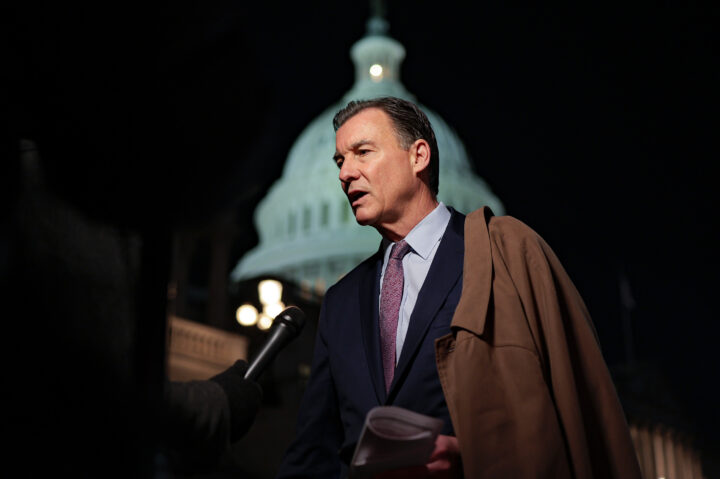
Heather Diehl/Getty Images
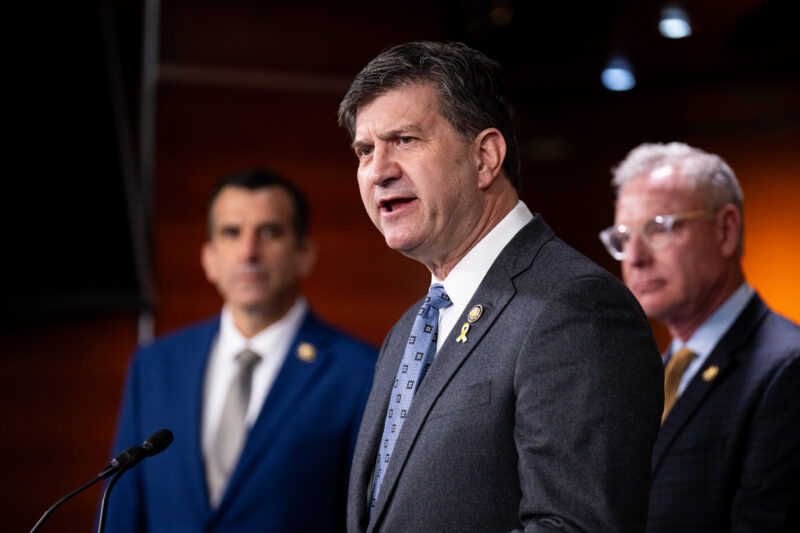
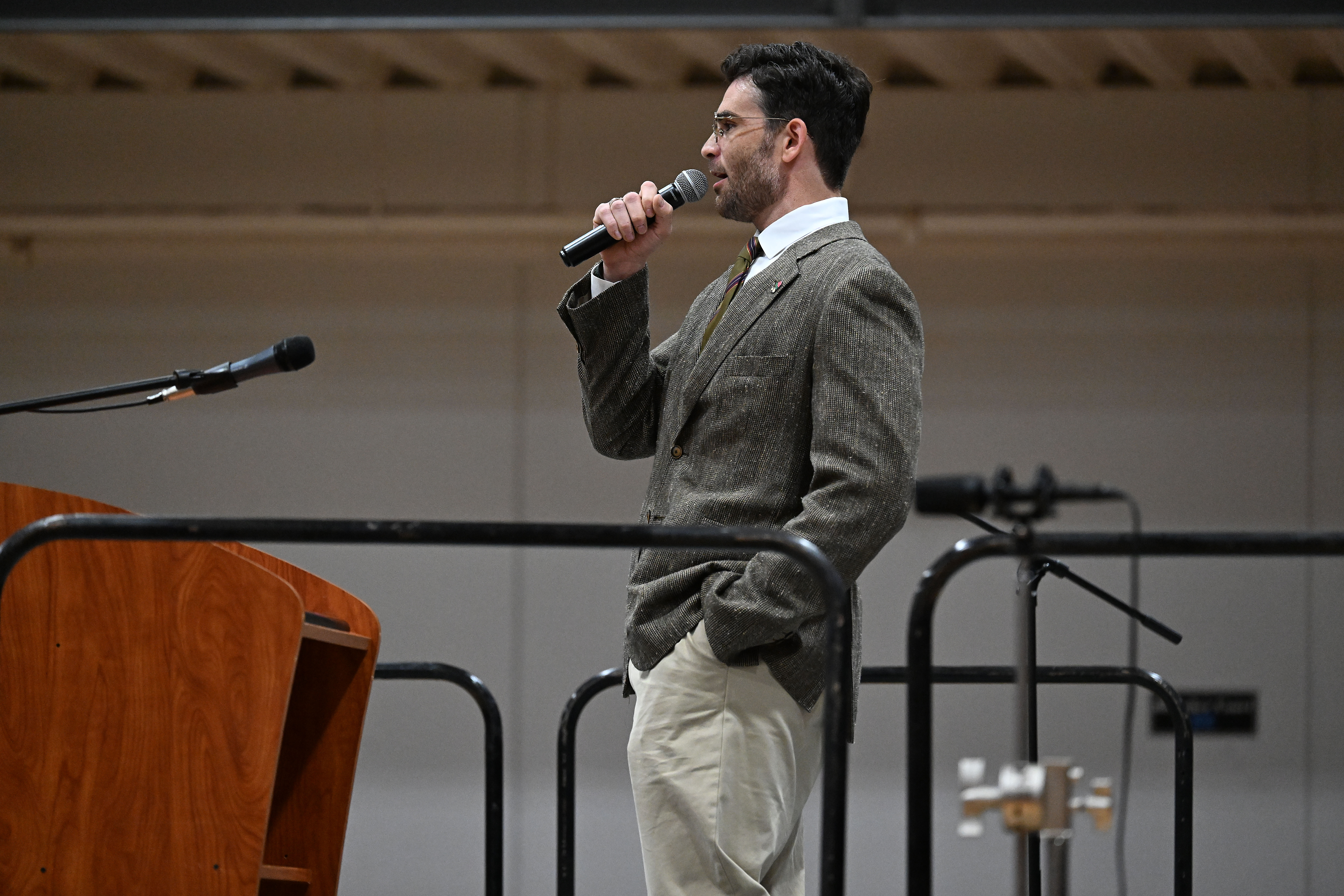
Rep. Tom Suozzi (D-NY) speaks with members of the media outside the U.S. Capitol on December 17, 2025 in Washington, DC.


 Add JewishInsider on Google
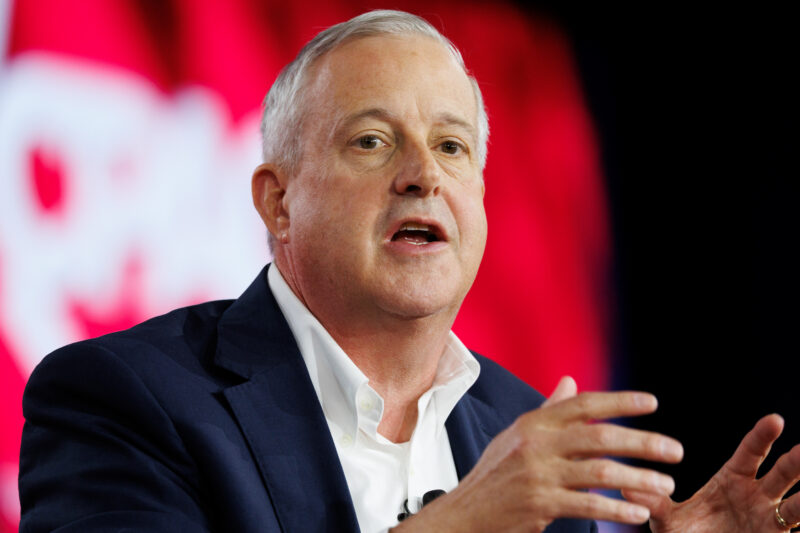
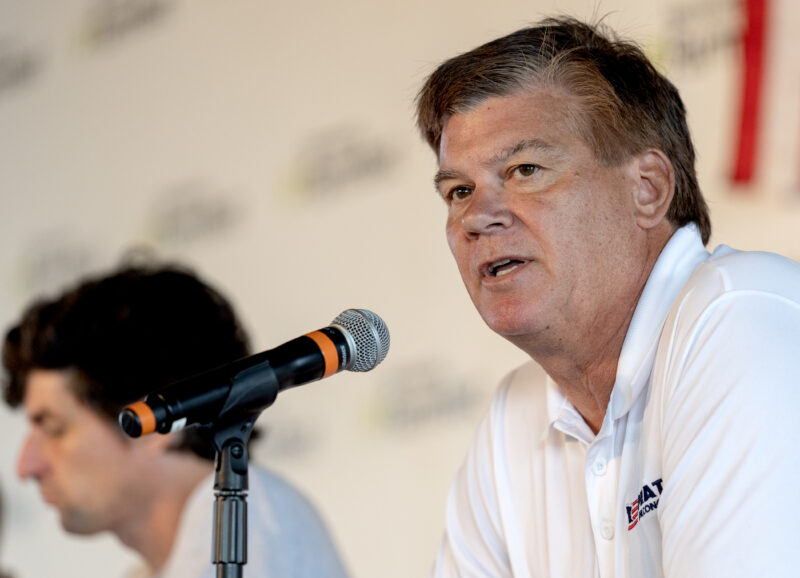
Rep. Tom Suozzi (D-NY), joined by Rep. Max Miller (R-OH), introduced the SACRED Act this week, a new bill aimed at protecting attendees at religious institutions from harassment and threats by demonstrators — a phenomenon seen repeatedly outside synagogues that has spurred “buffer zone” legislation in New York and elsewhere.
The bill, which applies within 100 feet of a religious institution, would create criminal and civil penalties for individuals who attempt to intimidate or obstruct someone in a manner that causes reasonable fear for physical safety to prevent them from entering or exiting a place of worship. It also applies — within that 100-foot zone — to individuals who intentionally approach within eight feet of a person seeking to exercise their freedom to worship, for the purpose of intimidating or harassing them.
The bill builds on the existing FACE Act, invoked by the Trump administration in recent lawsuits, which bans the use of force, threats or physical obstruction to prevent an individual from exercising their religious freedom at a place of worship.
Unlike some legislation at the local and state level, the bill would not ban all protests within the 100-foot buffer zone, specifically permitting peaceful picketing and other non-disruptive demonstrations.
First offenders would be subject to fines or up to one year in prison, with repeat offenders subject to greater fines and up to three years in prison. The bill would also create a civil right of action for both victims of harassment as well as the Department of Justice and state attorneys general.
Suozzi told Jewish Insider the bill was prompted by constituents from various religious communities who have expressed concern about “aggressive action” against them at their places of worship.
The spate of incidents outside synagogues has been “very disturbing,” Suozzi said, adding that he’s been hearing an unprecedented amount of fear and concern from Jewish friends and supporters since the Oct. 7, 2023, Hamas attacks — ”[they] have said things to me that I never heard before, things like ‘We don’t know what to do? What would we do if they came for us?’ People are genuinely scared, and we see this hateful behavior not just [against] Jews but against other religious minorities as well.”
He described the bill as a delicate, and carefully crafted, balance designed to uphold First Amendment rights to both freedom of speech and freedom of religion.
“This is a very, very sensitive topic that involves First Amendment rights and also people’s concern about their safety and their not only their right to free speech, but also their right to worship,” Suozzi said. He added that he had consulted with a constitutional scholar, Erwin Chemerinsky, dean of Berkeley Law School, in drafting the bill, who said it is compliant with the First Amendment.
“If you’re doing a peaceful protest and you’re leafleting or something like that — we don’t have a problem with that. It’s with these people that are going up to people and yelling at them and saying meanspirited, awful things with an intent to try to physically stop them from entering into their religious institution [that are the issue],” Suozzi continued, adding that even offensive but peaceful speech like opposing a religion or Zionism would be permitted.
“It would be [banned] if you came up close to people and you start yelling in their faces and saying, ‘you’re a Zionist pig,’ or something like that — trying to intimidate them,” he explained.
Miller said in a statement, “Every American deserves to practice their faith free from fear, intimidation, or harassment.”
“The SACRED Act ensures that people can access their place of worship safely and without obstruction, while still preserving First Amendment protections for peaceful expression,” he continued. “This commonsense legislation draws a clear line: intimidation and threats have no place in our communities.”
Suozzi emphasized that the bill is different from other recent state- and local-level buffer zone legislation, and he took pains to avoid modeling the bill after a Massachusetts law that was struck down in court which had banned all protests within a 35-foot zone. The eight-foot “floating buffer zone” was based on a Colorado law that was upheld by the Supreme Court, he said.
And, he said, “we’re only focused on people’s conduct, not their speech.”
In New York City, a slice of which falls within Suozzi’s district, the City Council recently passed buffer zone legislation for educational and religious facilities, but Mayor Zohran Mamdani is reportedly considering a veto. He has until the end of the week to do so, or the legislation will become law by default.
Suozzi said he sees much of the harassment at synagogues as linked to social media, which rewards extremism, and deliberate efforts by adversaries like Iran, China, Russia and North Korea to enhance division in the country.
“So we have to take new actions to try and address that. And this is a way to say, ‘You can disagree. You can protest. You can disagree completely with what I think — even though I think that you’re wrong, you’re completely allowed to do that, but you’re not allowed to come close to a person and try and scare them and try and prevent them from feeling safe to go practice their religion,’” Suozzi said.
Suozzi is set to be joined by Anti-Defamation League CEO Jonathan Greenblatt for a press conference on the bill at the Holocaust Memorial and Tolerance Center of Nassau County on Friday morning.
“No one should have to face harassment or intimidation as they are trying to pray in peace at a place of religious worship,” Greenblatt said in a statement. “This important and much-needed legislation reflects both the urgency of this moment and the fundamental principle that every person should be able to practice their faith freely and safely.”
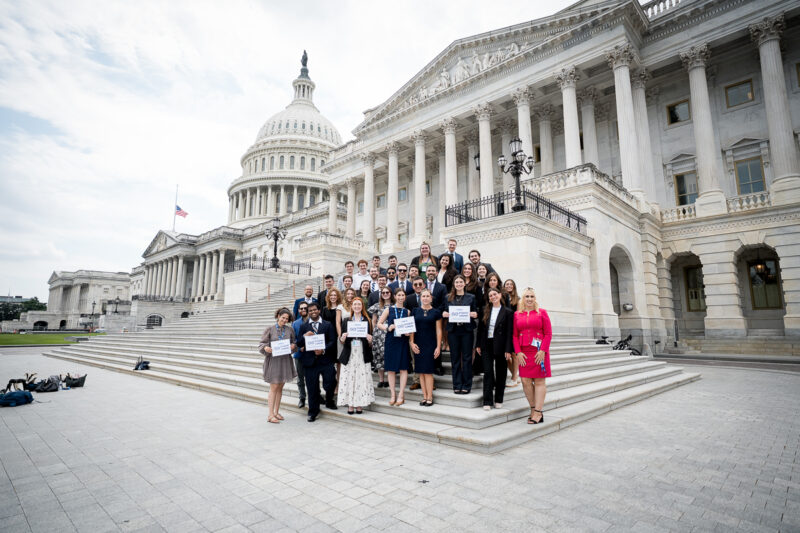
Leaders from several communities impacted by antisemitic violence lobbied in favor of the bill on Capitol Hill earlier this week.
It’s also being backed by the American Jewish Committee, Orthodox Union, Hadassah, Hindu American Foundation, Islamic Society of North America, Jewish Federations of North America, UJA-Federation of New York, the Holocaust Memorial and Tolerance Center and Agudath Israel of America.
In a statement, AJC CEO Ted Deutch emphasized that the group’s recent national survey found that more than a quarter of American Jews said that an institution with which they are affiliated has been targeted in the last five years, and more than half have changed their behavior out of fear of antisemitism.
“At a time of rising threats against Jewish institutions, we applaud Representatives Suozzi and Miller for introducing the bipartisan SACRED Act to ensure safe access to houses of worship,” Deutch continued.
“Houses of worship are sacred spaces and visitors gathering there to pray or attend communal events should be free from harassment. The SACRED Act helps protect communities by creating a buffer zone around places of religious worship and individuals and imposes penalties for violations of this law,” Rabbi A.D. Motzen, the national director of government affairs for Agudath Israel, said in a statement.
“Unfortunately, recent incidents in front of synagogues around the country highlight the need for additional protections,” Motzen continued.
Eric Fingerhut, the CEO of the Jewish Federations of North America, said, “Every American deserves to practice their faith free from intimidation, harassment, or fear at the doors of their place of worship. With incidents targeting synagogues and other houses of worship continuing to rise, we need this federal legislation to protect our fundamental right to religious freedom.”
“Intimidating and harassing people exercising their right to worship is unacceptable — anytime, anywhere,” said Carol Ann Schwartz, national president of Hadassah. “Hadassah has heard from Jewish women who are afraid to display symbols of their faith and who constantly watch their synagogue doors for attackers. The antisemitism these women face reflects the erosion of public safety at every place of worship, and we must act to keep sacred spaces safe.”
More Stories

Hard cover, soft launch
Assouline puts Tel Aviv on the coffee table at last

AID CONVERSATION
GOP Reps. Kustoff, Goldman say Republicans want to see U.S. aid to Israel continue
CAMPUS CAUCUS
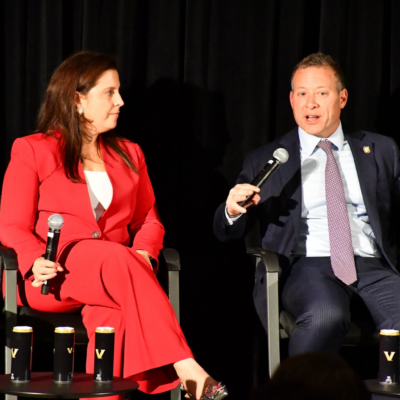
Gottheimer, Stefanik launch caucus to combat antisemitism on college campuses
BEYOND WORDS
A rabbi answered the call at Ground Zero. Two decades later, it cost him his voice
Settlement Showdown
U.K. Foreign Secretary Ed Miliband announces sanctions against Israeli settlements

BEAN SET MATCH
Miznon’s green beans are the surprise ace of the U.S. Open
Please log in if you already have a subscription, or subscribe to access the latest updates.
 Continue with Google
 Continue with Apple