






























Former Secretary of State Mike Pompeo won’t rule out 2028 run
Trump’s former top diplomat sat down with JI to discuss the U.S. war in Iran, backsliding support for Israel among young Americans, and how he’s looking at the midterms

Siavosh Hosseini/SOPA Images/LightRocket via Getty Images
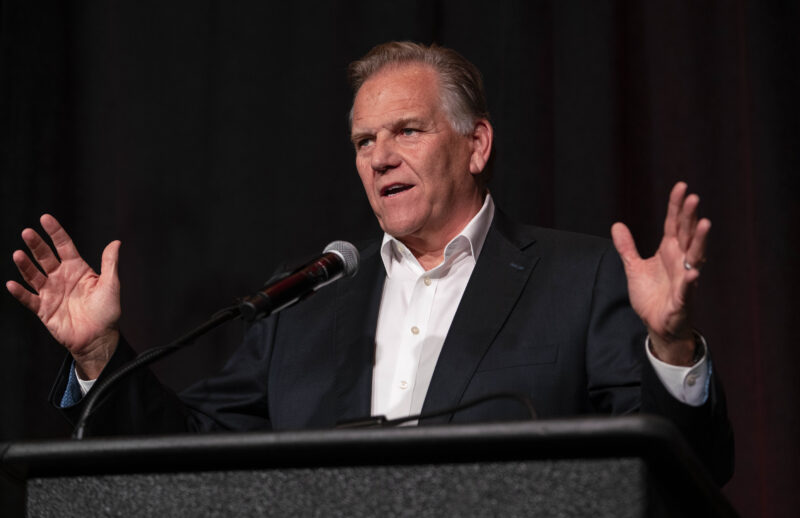
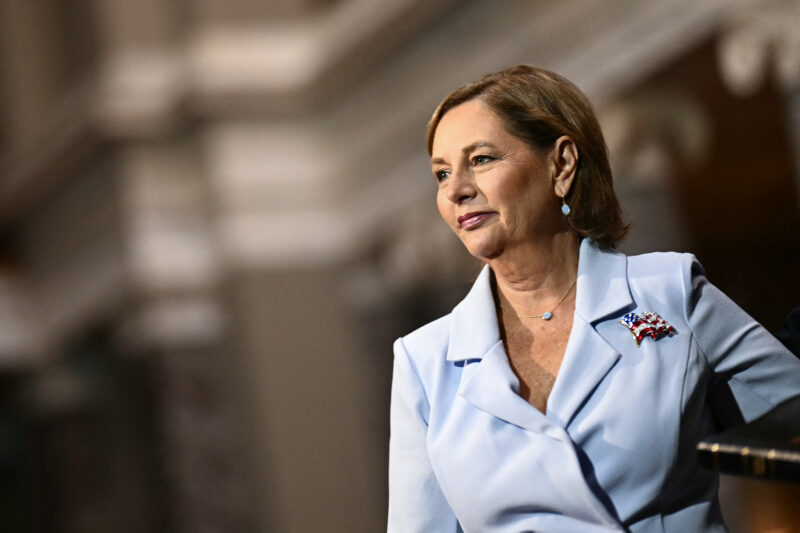
Former Secretary of State Mike Pompeo speaking at a conference titled "Iran: Organized Resistance, Key to Overthrow" held at the National Council of Resistance of Iran (NCRI) headquarters in January 2025.


 Add JewishInsider on Google
Former Secretary of State Mike Pompeo is keeping the door open to a possible 2028 presidential run, saying “only the good Lord knows” what comes next as he continues to reestablish himself in the private sector and policy world after serving in the first Trump administration.
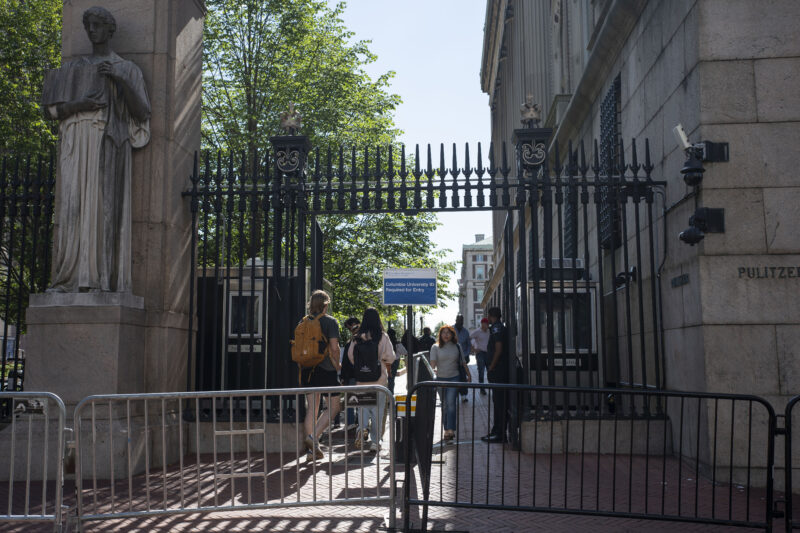
In a wide-ranging interview with Jewish Insider, Pompeo emphasized that there will be a “donnybrook” of competing visions for both parties in the next election cycle, and urged candidates to focus on “important issues” rather than online theatrics. He also praised Columbia University, where he now teaches at the School of International and Public Affairs, for “beg[inning] to get back the correct leadership … in a way where more voices can be heard.”
The conversation came one day after Pompeo made a brief visit to the State Department for a private ceremony unveiling his official portrait. The gathering included an appearance by Secretary of State Marco Rubio, who delivered remarks to the crowd on his predecessor’s tenure as the chief U.S. diplomat.
This interview has been condensed and edited for clarity.
Jewish Insider: What’s your message to the current Iranian leadership if you were traveling to Islamabad, Pakistan, on behalf of President Trump to negotiate an end to the war in Iran?
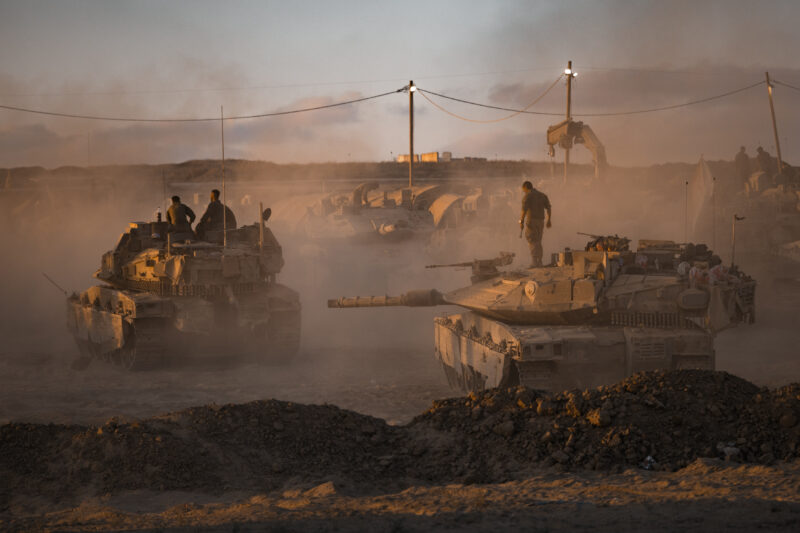
Mike Pompeo: My message would be that you’ve lost. You’ve lost the people of your country, who no longer want you to lead. You’ve lost the capacity to project terror around the world. You’re about to lose any capability to use nuclear weapons to continue to blackmail the world. The Strait [of Hormuz] is going to be reopened. You’re going to miss payroll in just a few weeks, because you’re not going to be able to ship product and receive currency that is usable in foreign exchange, and people will stop doing their jobs.
You miss payroll enough times and all of a sudden, Hezbollah decides it’s not as great a fighting force, or the Shia militias, or the knuckleheads in Yemen, the Houthis. They’ve all become hooked on Iranian money.
There is a solution that is different to that. It’ll mean you’re not in power. It will mean that you lose. It will mean that you personally lose power, but the other alternative is that you will be killed.
JI: Do you think that the president made the right decision by reentering negotiations with the Iranians when he did, or do you think there are targets he should have hit beforehand, for military or diplomatic leverage?
Pompeo: I think the blockade is sufficient to merit another try. Look, I’m deeply skeptical. I’m not sure there is a decision maker in Iran today. I think there are multiple fractured decision making processes and lots of confusion.
I don’t know that he needed to go after additional targets. The denial of their capacity to move product through the strait is a very significant impact on them, but I do think it’s the case if, in fact, the Iranian regime cannot coherently present a resolution that will look and feel to them like surrender … — because they’re going to give up the entirety of their nuclear program, they’re going to have to stop funding their proxy forces, their ballistic missile program is gone, their industrial base will have to be shut down and redirected towards commercial activity, not terror; that will feel like surrender to them — then I think the president will have to begin to go back at some of those industrial targets that continue to pose risk to Israeli and American servicemembers that are in the region, and more broadly, to commercial activity that needs to move through the region as well.
JI: We’re seeing a lot of reporting about various terms that the Trump administration has purportedly offered Iran in these talks, specifically when it comes to the enrichment of uranium. There have been reports suggesting the U.S. proposed a 20-year moratorium on Iran’s enrichment program, while others allege a 10-year pause is being discussed. What do you make of these reported offers and, more broadly speaking, what would a good deal look like to you?
Pompeo: Color me cynical, but having lived as a secretary of state for two and a half years, when I see that reporting — and I don’t have first hand knowledge — I suspect that is someone playing games.
I put no credit in anything that I read in The New York Times or The Washington Post, only in the sense that they don’t know or they heard from a single individual that wasn’t actually representing the holistic view of the U.S. government. I spend no time thinking about those. I do spend a lot of time thinking about what “good” looks like. Good is infinity.
I’m also practical as someone who was a practitioner. I get it. You don’t ever get forever, but you don’t put external constraints on duration when it comes to something as serious as a regime that is in power with the capacity to inflict enormous harm on the world, with a conventional force that is serious and a nuclear capability that is real.
There’s two things. One, you can’t pay them. That’s what President Obama, then President Biden tried to do, send pallets of cash to buy your way out of this solution. The regime is not for sale. Second, I think it’s also the case that you can’t falsely give them hope that says, ‘You’re going to be able to return to status quo in five years, 10 years, 20 years from now. I think it’s the case that we’ve reached the moment where now this is a durational change in the nature of the regime.
Maybe some of the names will be the same, maybe the good spirit will move them and they will become a normal nation again. These are the things we hope and pray for as Jews and Christians, but we also do it with the knowledge that it is unlikely, and that means we have to change the leaders that are actually directing activities inside of the country.
JI: Do you think NATO has handled this moment and responded to President Trump deciding to take action in Iran well? The president is vocally frustrated with them and thinks they’ve been a thorn in the administration’s side.
Pompeo: We all know that you figure out exactly who’s with you in times of stress. This is true in our personal lives. It’s true in our professional lives. It’s certainly true in sovereign interactions.
Putting aside NATO for the moment, the way some of the European nations have behaved is absolutely abhorrent. I get that they weren’t brought in at the beginning and how that makes it complicated and it creates hurt feelings, but this isn’t about feelings. This is about national sovereignty and the safety of their own citizens.
Whether it was Spain or another nation that wouldn’t do so much as to be quiet and allow our aircraft to fly through their space, for someone who has been a staunch defender of NATO, because I believe deeply it has been important to the United States of America and to global security, to watch a leader of a country cozy up to China while the United States is doing its level best to save the very security for his own citizens is deeply indecent.
I hope there will come to be an understanding that America is indeed the good guy in this all throughout Europe and many nations in Europe, that’s why I hesitate to broad brush NATO. Many nations in Europe have actually been great and have done their best with the tools that they have available. Others have chosen a path that is very different from that. I think that will be something that takes a long time to rebuild — the trust with those countries — and they’ll have to demonstrate that they are worthy of partnership with Israel or the United States or the West.
JI: Are you still facing death threats from Iran or has your standing with Tehran changed as a result of the war?
Pompeo: As far as I know, they have not lifted the fatwa on me, so yes. We still do our level best to have adequate security to keep me from being killed by the Iranians, who have repeatedly said that they would like to see me go away.
JI: How would you grade Israel as an ally, both historically and in the last few years in the post-Oct. 7, 2023, landscape?
Pompeo: First, the United States and Israel have sovereignty, they’re independent of each other, and a different set of priorities and a different set of understandings on particular matters, very full stop. Second, they are the most fundamentally important ally and a great partner and enormous friends and important to the United States in so many deep ways.
As a Christian, this matters to me, but more importantly as a security matter, I had no better partner than the Israeli intelligence services when I was CIA director and Prime Minister Netanyahu and the foreign policy and security team inside of Israel when I was secretary of state. They did so many things to help America, often when it was difficult and much more in our interest than theirs.
That doesn’t mean we’re not going to have knock down, drag out fights over certain things. I’m sure that’s going to be true. We’ll have different target priorities, and that’s normal. It would be odd if you didn’t find that, but boy, I don’t know that the United States has ever had a closer military and security relationship than today between the United States and Israel, and I think the Iranians found that out the hard way.
They saw us flying together. They saw us intelligence sharing together. They saw the hard work that is the logistical tail that sits behind all of this. It doesn’t get much glory, but you’ve got to move a lot of ammo, a lot of fuel, a lot of people, a lot of stuff. We did that alongside Israel, and it would have been very difficult for either of us to have achieved what’s been achieved today without the other.
JI: With that in mind, we’re seeing a real shift in attitude, especially with young people, both in the Democratic and Republican parties on supporting Israel. What’s your reaction to this and what do you think was the catalyst for this change? Do you attribute it to negative feelings about the war on terror in the 2000s? What role do you think antisemitic figures in the podcast space play?
Pompeo: The causation is so difficult to identify. I think probably each of those has some element of impact and shaping. Israel has always been a flashpoint because of the conflict between Israel and the terrorists, but it’s been framed as a Palestinian-Israeli conflict, with Israel pitched to most of the world as the bad guy in that. My judgment is nothing could be further from the truth.
Israel has simply wanted to live as a sovereign, independent nation. It’s made many offers. The Palestinian Authority rejected them for decades. I think that has worn on a certain piece of the intelligentsia, the American left and some pockets on the right for sure. Some of it’s rooted in antisemitism, almost certainly. Some of it’s rooted in that it’s popular. It’s cool on a campus because the faculty is all talking about the genocidal horrors inflicted by Israel, which, I mean, it’s just patently false. I think each of those things contribute to it.
My prayer and my hope is, and I think this will prove to be true, that in the end, decent people who are part of Western civilization can identify evil from good, and will see the difference between the two. They may not like a particular strike that the United States takes somewhere where innocent civilians are killed — it’s true, as collateral [damage], it happens — but they will be able to see the difference between genocidal intent, that is driven by the Iranian regime around the world, and a desire for peace, which is driven by nations like the United States and Israel.
That means those of us who see it that way have a duty to try and articulate it, to explain it, to be relentless in articulating why that’s true, not to call people names, not to mock them, but rather to make the arguments, to use reason to convince them of reality and of the truth about what’s really taking place there. I pray one day that the bad guys will lay down their weapons, because the moment they do, the reality will be before us all. There will be peace.
JI: Staying on politics, there’s a lot of trepidation from Republicans on Capitol Hill about how the November midterms are going to play out. Do you share that concern?
Pompeo: Having served in Congress, having been elected four times, I’m always mindful that this conversation isn’t that important. What’s really important is that you work your tail off, and you, the candidates, have the first responsibility, and the rest of us try our best to help them.
It is the case, I think, that there’s a lot of energy in the progressive movement on the left today. I think that energy is there that sometimes has been more on our side. When I got elected in 2010, we had 74 brand new Republicans in districts we hadn’t won in years and years, so there was more energy. I think the next six months require us to go build that energy. If we build that energy, I think we’ll do better than the mean.
These midterms are always tough for the party that’s in control. No reason to think that historical change will take place, but if you work hard and tell a story properly, which is that these conservative ideas will deliver better outcomes for America, then we’ll do better than I think some of the fearmongers are predicting.
JI: Do you worry about the situation in the Middle East hurting Republicans in November?
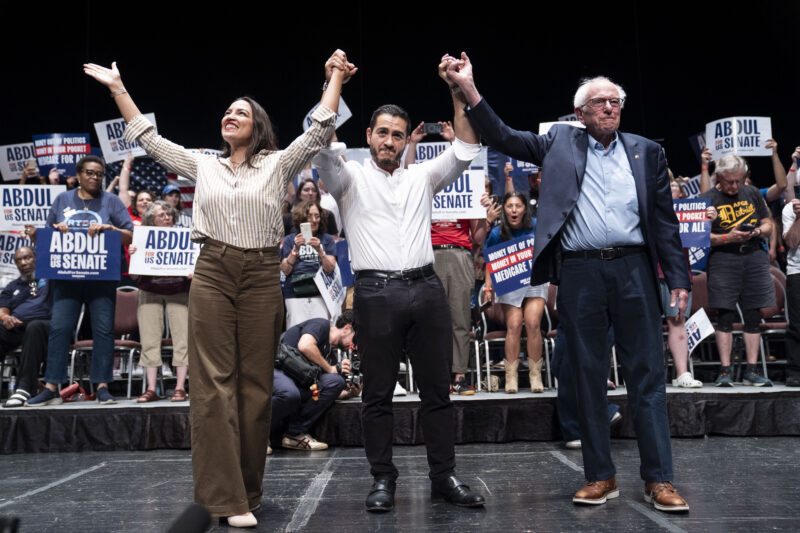
Pompeo: You’ve seen that already. You’ve seen Sen. [Chris] Murphy (D-CT) do this. You’ve seen Sen. [Bernie] Sanders (I-VT) do this. They’re already trying to say: ‘This was a war of choice. President Trump failed. This is a disaster. Look how expensive gasoline is.’ So yes, this will be part of the political conversation, but that just means you have to go and articulate the why of this.
I know how people are struggling, and I feel bad when I see gas prices high for everybody too, especially the least amongst us, but I’d remind them we just have lived in this false state for so long where we thought we could just ignore this problem when it had to be solved. If the price of that, of solving that and keeping Americans for decades to come from Iran with a nuclear weapon, then to pay a little bit more at the gas pump for a little while is an acceptable cost, in my view.
I think most Americans actually get that, and they just need to understand the why and the how. When explained, I think they’ll come to the same conclusion I do, that this was a noble and important decision that President Trump made, and that it is, in the long run, better for them and their children and their grandchildren. We [Republicans] shouldn’t play politics with it either, because this is about national security, but we should articulate the rationale for why this is the best outcome for every American, Democrat and Republican alike.
JI: How are you looking at the 2028 Republican presidential bench? Do you see yourself being a part of that race?
Pompeo: It’s gonna be a donnybrook on both sides. I think there will be lots of candidates who present themselves, and I love that. As for what comes for the Pompeo family next, only the good Lord knows. We’ll see. I have a brand new grandson, I’m loving life, but we’ll see.
But I will say something that I do think is really important about the 2028 election. I hope it’s fought over important issues in a rational way. I hope the progressives show up and make their best arguments to the American people, and that the center-left and center-right do the same, and the MAGA folks and the right wing, just everybody don’t do memes, don’t tell fibs, don’t think, ‘Gosh, I was really good. I owned a lib on X.’ That might bring a sugar high, but what it doesn’t do is really deliver for the American people. I hope the campaign will turn out to be about things that really matter and be discussed in a serious way, and if so, I always have confidence the American people will get it right.
JI: What are the next steps for you in your career?
Pompeo: I’m back in the business world. It’s what I did for most of my life, before I ran for Congress. I’m involved with a private equity firm. I’m helping a couple other businesses as a board member, back in the capitalist mode, and that’s great because there’s lots of risk but lots of joy. … I’m keeping my hand in the policy space too. I teach at Columbia University and at Liberty University, two very different institutions, and I love them both, each in their own way. Then I’m trying to help some candidates be successful in these midterm elections as well.
JI: We’ve covered Columbia closely at JI since Oct. 7, and it’s notable for them to have a voice like yours join their faculty. On that front, what’s your take on the lack of campus protests or encampments against the Iranian regime? We’re not seeing the same type of protests we saw against Israel taking place against Iran.
Pompeo: It’s a great question. It got out of control because of failed leadership. The institution’s leaders failed those students. They didn’t keep the students safe. They didn’t set the correct boundaries.
We all want to protect First Amendment freedoms. That’s what college is about. Knock yourself out. You can say crazy stuff, but you can’t threaten and you can’t put other students at risk, and you can’t blockade classrooms so the students can’t enter. That’s just functionally terrible leadership.
I think what you’re seeing is some of these institutions have begun to get back the correct leadership, and I think they’ve actually done it in a way where more voices can be heard.
I was at another liberal campus a few weeks back, and some of the conservative students were still saying to me that they felt like it was still difficult to speak up in class, and that the faculty was, they didn’t use the word oppressive, but they felt the faculty was difficult. I hope that veil will be lifted, and I hope those students and all students that have different views will all feel comfortable saying, ‘Here’s what I think, and here’s why I think that.’ Then somebody will challenge them and say, ‘Well, have you thought about X or Y,’ or ‘I see it differently.’ That’s what these institutions are all about. It’s what Columbia was when it was at its finest. That’s what Harvard and Dartmouth and Liberty all should aspire to.
More Stories
Trust, but verify
Rabbis hope ‘open, honest dialogue’ with Mamdani brings belated change in Israel rhetoric

Daily Kickoff
D.C.’s kosher conundrum
Daily Overtime
Trump returns Tehran’s invoice
DEMOCRATIC DIVIDE
Fetterman unloads on El-Sayed, predicts he could lose Michigan Senate seat for Democrats
SCOOP
N.J. Dem nominee Rebecca Bennett will not endorse Hamawy, campaign says
REGIONAL RIFT
Key Gulf states skip Amman summit on Jerusalem as Arab bloc omits Jewish ties to the city
Please log in if you already have a subscription, or subscribe to access the latest updates.
 Continue with Google
 Continue with Apple