







































Instagram fails to remove nearly all reported extremist content after Meta moderation rollback, ADL study finds
Of 150 reported accounts and 103 reported posts linked to white supremacist networks, designated Foreign Terrorist Organizations and vendors selling Nazi merchandise, Instagram removed only 11 accounts and 8 posts
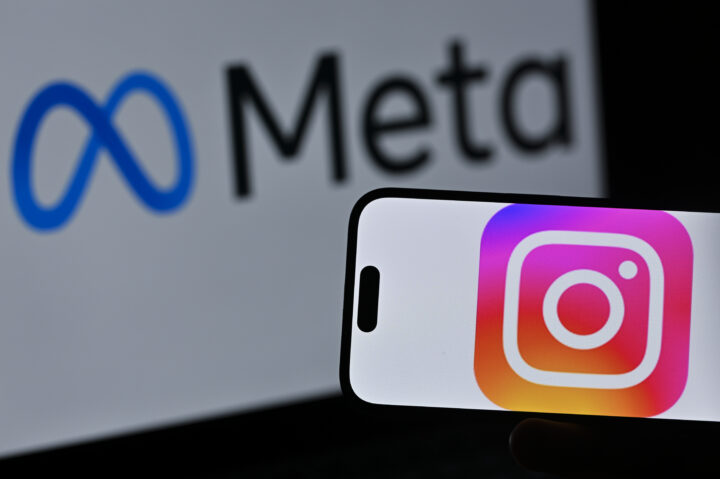
Ismail Kaplan/Anadolu via Getty Images
Instagram logo displayed on a mobile phone screen in front of a computer screen displaying Meta logo in Ankara, Turkiye, on April 10, 2026.


 Add JewishInsider on Google
A new report reveals that Instagram failed to remove 93% of reported extremist and hateful content, tying the trend directly to Meta’s efforts to roll back content moderation last year. The changes lifted some speech restrictions, allowing incendiary content to remain on the platform, fueling what the Anti-Defamation League report calls a surge of antisemitism.
The ADL report, “How Meta’s Content Moderation Changes Risk Turning Instagram into a Hub for Hate,” released on Wednesday, identified 105 accounts affiliated with white supremacist Nick Fuentes’ “groyper” network, with more than 1.4 million combined followers. Those accounts frequently posted antisemitic conspiracy theories, Holocaust denial and pro-Hitler content.
The report highlights that in May 2025, shortly after the rollback, Fuentes noted that his content continues to spread on Instagram despite him personally having been banned since 2021, writing on Telegram that Instagram “relaxed its content moderation” and had “stopped taking my clips down.”
Oren Segal, ADL’s senior vice president for counter-extremism and intelligence, said that the proliferation of antisemitism on Instagram is a direct outcome of the changes in policy at Meta, its parent company.The rollback included ending the platform’s third-party fact-checking program and replacing it with a system modeled after the community notes feature on Elon Musk’s X.
At the time, some Jewish leaders expressed concern that the move would “open the floodgates to content” that could target Jewish communities and individuals, and called the decision a “step back” in the fight against rising antisemitism.
Meta had said the relaxed guidelines aim to “allow more speech by lifting restrictions on some topics that are part of mainstream discourse.” Meta, also the owner of Facebook and WhatsApp, simultaneously said that it planned to crack down on “high severity violations,” such as pro-terrorism content. Meta CEO Mark Zuckerberg cited the results of the 2024 U.S. presidential election as the underlying decision to move to a “community note” model, calling it a “cultural tipping point towards, once again, prioritizing speech.” Zuckerberg said that third-party moderators were “too politically biased” and it was “time to get back to our roots around free expression.”
“When a platform used by 80 percent of American adults under 30 allows pro-Hitler content to rack up millions of views, Holocaust denial to spread unchecked and terrorist organizations to fundraise openly, we’re not talking about a policy disagreement,” said Segal. “We’re talking about a public safety crisis. Mark Zuckerberg acknowledged Meta would ‘catch less bad stuff’ after the rollback. Our research proves he was right, and the consequences are deeply concerning.”
Furthermore, the study found more than 340,000 followers across accounts directly or indirectly linked to U.S.-designated Foreign Terrorist Organizations, including the Popular Front for the Liberation of Palestine. It also identified more than 3.2 million views on content from a single extremist merchandise vendor selling apparel with Nazi symbols including Sonnenrads, Totenkopfs and SS bolts.
The ADL Center on Extremism researchers conducted testing between January and February 2026, by reporting 253 pieces of violative content through Instagram’s standard user reporting system. Of 150 reported accounts and 103 reported posts linked to white supremacist networks, designated Foreign Terrorist Organizations and vendors selling Nazi merchandise, Instagram removed 11 accounts and 8 posts. In 20 cases, Instagram explicitly stated it lacked the bandwidth to review the reports, according to the ADL.
According to Meta’s Community Standards, the company does not allow “organizations or individuals that proclaim a violent mission or are engaged in violence to have a presence on our platforms.” The company asserts that it removes any glorification or support of designated Foreign Terrorist Organizations, Specially Designated Global Terrorists, and any groups that organize or advocate for violence against civilians, including Taliban, ISIS and Al-Qaida.
Despite this official policy, ADL researchers found many active accounts that praise these groups, identifying at least 23 accounts that spread Islamic State and Al-Qaida propaganda. The accounts often post an image or video that glorifies organizations that meet Meta’s terrorism definition with caption text that is unrelated to the subject matter — like a synopsis of the movie “Home Alone” or gardening advice — potentially in an effort to evade detection.
A spokesperson for Meta told Jewish Insider after the report was released that “over two-thirds of the accounts and posts flagged by the ADL were removed prior to the publication of this report, while some did not violate our policies.” ADL told JI its figures were based on a two-week window from submitting a report to getting a response from the platform.
The 14-page report was released shortly before an upcoming Meta shareholder vote, scheduled for the end of May.
Last month, an AI-generated Instagram account called “Rabbi Goldman,” which featured a fake Orthodox rabbi spreading antisemitic conspiracies to its more than 1.4 million followers, was taken offline following major backlash from Jewish groups and one Democratic lawmaker — yet several similar, hate-peddling accounts have emerged with little to no public action from Meta.
This report was updated on April 15 to include a statement from Meta.
More Stories
SCOOP
Sen. Rick Scott urges Trump to pave pathway for Canadian Jews to emigrate to U.S.
analysis
Pappas wins New Hampshire Senate nomination over anti-Israel Dem activist

Democracy Deficit
New report warns civics education crisis is fueling antisemitism, eroding support for Israel

Daily Overtime
Miznon’s U.S. Open upset

Daily Overtime
Vance’s Jewish voter problem
CAMPUS CAUCUS
Gottheimer, Stefanik launch caucus to combat antisemitism on college campuses
Please log in if you already have a subscription, or subscribe to access the latest updates.
 Continue with Google
 Continue with Apple