














































Together but still short: Bennett and Lapid’s merger leaves the opposition shy of a majority, polls find
Judging by polls published by six Hebrew-language media outlets after the merger on Sunday, not much has changed since the announcement that Bennett and Lapid were joining forces
Chaim Goldberg/Flash90
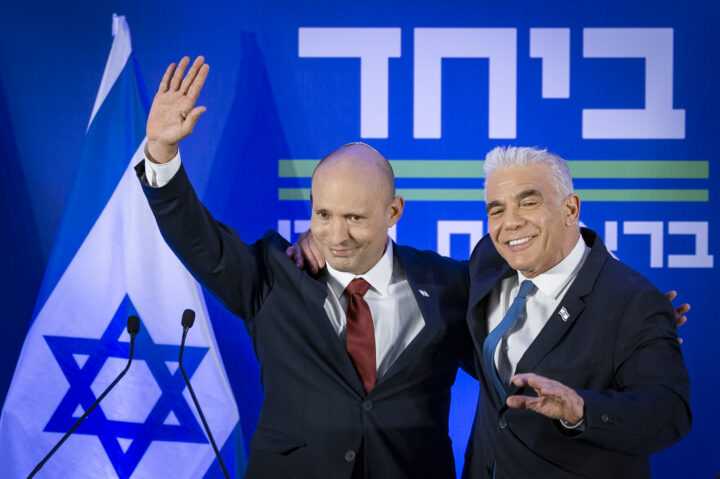
Opposition Leader and Head of the Yesh Atid party Yair Lapid and former Prime Minister Naftali Bennett speak during a press conference announcing a joint list named “Together” ahead of upcoming elections, to be led by Bennett, in Herzliya, central Israel, April 26, 2026.


 Add JewishInsider on Google
The near-consensus among Israeli political pundits is that the merger of the parties led by former Prime Ministers Naftali Bennett and Yair Lapid is a huge moment in the campaign ahead of the next Knesset election, scheduled for Oct. 27.
However, judging by polls published by six major Hebrew-language media outlets after the merger on Sunday, not much has changed since the announcement that Bennett and Lapid were joining forces.
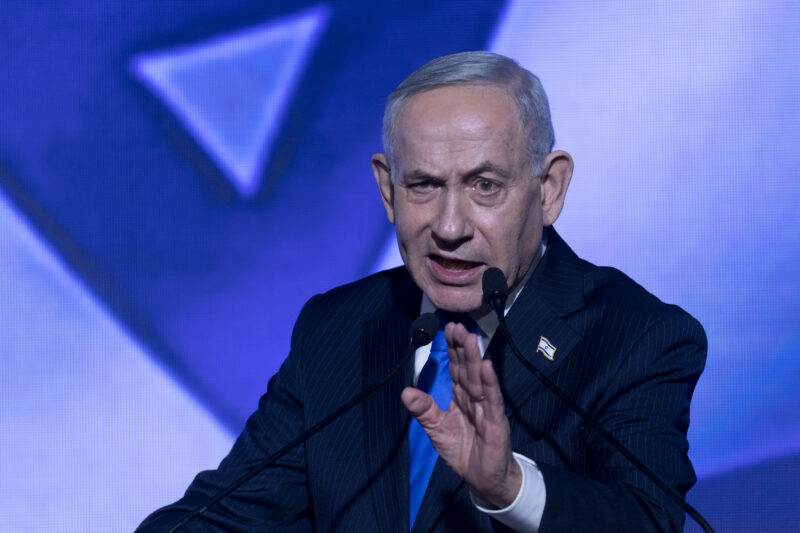
The newly formed “Together” opposition party polled around 24 seats — nearly the same number of seats as the two parties combined before the merger. Israeli Prime Minister Benjamin Netanyahu’s Likud party is, according to the average of the latest polls, still the largest party at 29.
According to the latest polling, it would be difficult for either side to build a governing coalition. The opposition Zionist parties did not get a 61-seat majority in any of the six polls. The most favorable poll for the opposition showed the anti-Netanyahu Zionist parties at 60 seats in the 120-seat Knesset, while the current coalition received over 61 seats in two polls (from those commissioned by Channel 14 and I24NEWS, which are more sympathetic to Netanyahu than the other media outlets).
To be sure, polls taken within 24 hours of an event are not the most reliable, and much can change in the six months until the election.
The key question after the Bennett and Lapid merger is whether they are fighting other opposition candidates for dominance within their bloc – in which case, Bennett has likely solidified his status as Netanyahu’s main competition for the premiership – or to broaden the bloc’s appeal to win a majority in the Knesset.
Netanyahu famously said in 2018 and many times since, in reference to shifts in the opposition: “I don’t intervene in how the left divides up its votes.” That quip, made when Bennett was still in the pro-Netanyahu camp, is now reflective of Bennett’s weakness.
So far, the polling has shown that Bennett, who was solidly on the right for the first eight years of his political career, will struggle to peel off voters from the right-wing pro-Netanyahu bloc into his camp.
In his last election campaign in 2021, Bennett ran primarily on right-wing messages but ended up leading a coalition of mostly center and left parties, together with an Arab party in the government, something many right-wing voters, as well as two Knesset members who jumped ship, viewed as a betrayal.
Add to that the fact that Lapid is to Bennett’s left — something both acknowledged several times in their Sunday night press conference, referring to their “differences” – likely referring to Bennett’s support for settlements and opposition to a two-state solution, which Lapid supports. Both candidates emphasized their shared views on domestic policy in response.
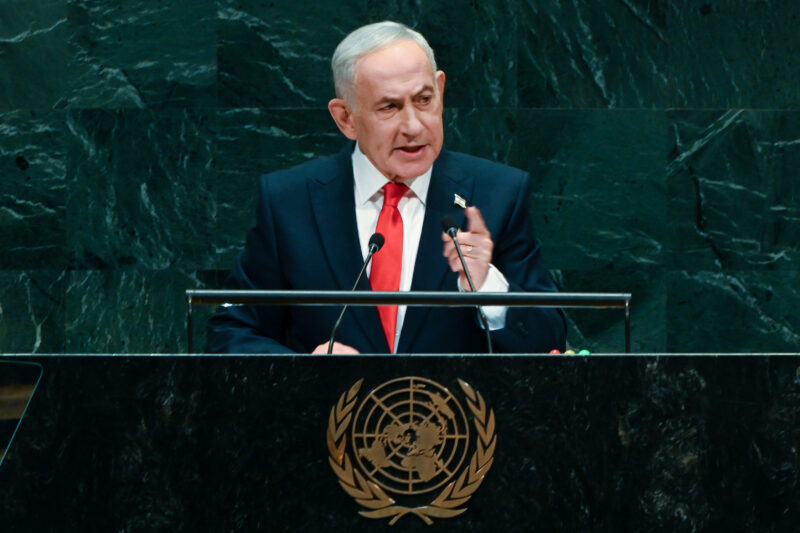
Netanyahu has kept mostly quiet about the Bennett-Lapid merger, but his one response shows that he will try to widen the wedge between Bennett and the right.
Netanyahu’s social media accounts posted an image from 2021 showing Lapid and Bennett sitting with Mansour Abbas, head of Ra’am, the Islamist party in their governing coalition. Ominous music plays in the background, and the words “they already did it once; they will do it again” are splashed across the picture.
The Ra’am factor will also likely be key after the election. The Zionist opposition parties have said mixed things about whether they would be willing to have an Arab non-Zionist party in their coalition in a post-Oct. 7 Israel. Revelations about the Ra’am party’s financial and historic ties to Hamas will also likely come up in the campaign.
As of now, the Knesset’s three Arab parties have said they will run in a single Joint List this year, as they did in 2015-2021, increasing Arab voter turnout and their representation in the Knesset. Ra’am is the only one of the parties that has to date been willing to sit in a coalition, and unlike Abbas, the other party leaders, Ayman Odeh and Ahmed Tibi, do not accept Israel as a Jewish state.
Because of those realities, Bennett and Lapid’s Together party will likely have to make a concerted – and perhaps quixotic – effort to win over right-leaning voters if it wants to increase its bloc and unseat Netanyahu. That task will be easier said than done.
More Stories

HATE MAIL
Son of GOP challenger to Gov. Wes Moore called Jews ‘pedophiles’ and ‘Satan worshipping scum’

Gaza Grift?
Department of Justice operation targets Hamas network of fake charities
OBAMA BOOST
Obama to campaign with Abdul El-Sayed at rally with Michigan Dems

BILL TABLED
Senate Judiciary Committee cancels planned markup of buffer zone bill

Daylight Between Them
Trump, Cotton feud over daylight saving time legislation
TAKING AIM
House Democrats introduce sanctions bill targeting settlement expansion
Please log in if you already have a subscription, or subscribe to access the latest updates.
 Continue with Google
 Continue with Apple