












































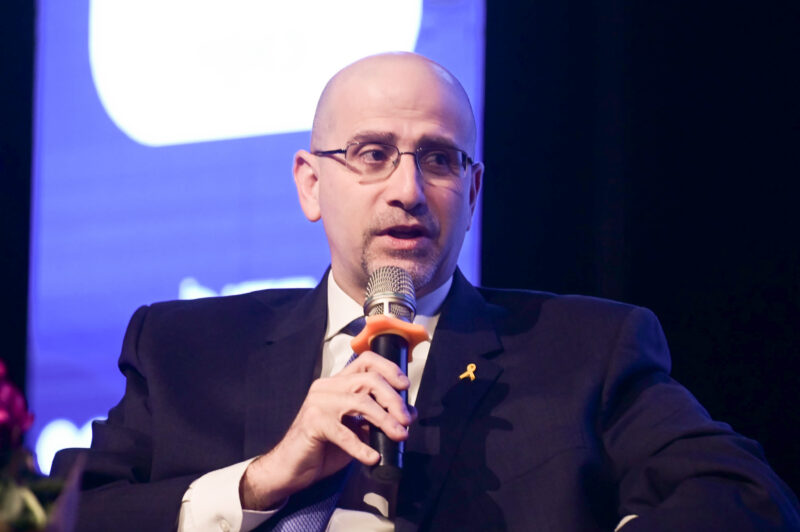















The change opens the second leg of the Triple Crown to Orthodox Baltimore for the first time in the race’s history, and locals are betting kosher stands follow

AI-generated illustration


 Add JewishInsider on Google
For more than 150 years, Baltimore’s Orthodox Jews have walked to synagogue on Preakness Saturday and listened to the roar of the crowd from less than a mile away, never able to join it.
That changes in 2027, when the second jewel in horse racing’s Triple Crown — following the Kentucky Derby and preceding the Belmont Stakes — moves from Saturday to Sunday, finally opening Pimlico’s gates to the local Shabbat-observant community for the first time since the race started in 1873.
Maryland Gov. Wes Moore and the Maryland Jockey Club announced earlier this month that the 152nd Preakness will run Sunday, May 23, 2027 — eight days later than its usual third Saturday in May date.
The move wasn’t made for the Orthodox Jewish community’s benefit — but rather to give horses more time to rest following the Kentucky Derby. Still, locals say Baltimore’s observant community could have factored into the decision, as the city has one of the largest Orthodox populations in the country.
“Growing up, I would walk to synagogue every Shabbat of Preakness and I’d be able to hear the crowd roaring. I always felt like I was missing out,” Alex Friedman, a member of the Baltimore City Democratic State Central Committee, told Jewish Insider. “The Preakness is a central identity of Baltimore and of Maryland. When people think of our city and our state, they think of the Preakness. Baltimore doesn’t have that many nationally recognized symbols — it’s Fort McHenry and Pimlico.”
“As a proud Baltimorian who has never had the chance to go to Preakness — which is right by my house — I’m very excited about the opportunity. I know a lot of people are excited. My dad’s lived in the neighborhood for 60 years and never been able to go,” said Friedman.
Baltimore City Councilman Yitzy Schleifer told JI that he spoke with Moore’s team as plans to change the date of the race were being developed.
“[We spoke] about the importance of this decision and that it be inclusive of the large Orthodox Jewish community,” he said.
“Now Preakness is being rebuilt, reimagined and strengthened for generations to come. And now, for the first time, Orthodox Jewish Baltimoreans will be able to fully share in Preakness Day,” said Schleifer.
Many Orthodox Jews avoid horse betting because traditional Jewish law discourages gambling. However, Friedman noted that the community could benefit from track betting. A portion of that money helps local neighborhoods, meaning people who bet and lose are still helping the community, he said.
For some observant Jews involved in racing, the overlap between Shabbat and the Triple Crown isn’t new territory. Ahmed Zayat, the Orthodox owner of 2015 Triple Crown winner American Pharoah, famously slept in RVs near Pimlico and Belmont Park and walked to the tracks on Shabbat rather than drive.
The news marks a significant shift for observant Jews outside of Charm City too, said David Warschawski, a Baltimore-based marketing executive whose eponymous agency represents sports-related organizations and brands.
“This is a phenomenal moment in the Jewish sporting world,” Warschawski told JI. “There’s so much history of Jews and the horse racing history and now to allow all segments of the Jewish community to be able to attend one of the premier races, I don’t think this is just a positive for the greater Baltimore Jewish community but for any sports and horse racing enthusiasts who [are observant Jews]. Now you have a destination event they can go to — that they can take your kids to — that before wasn’t even a thought.”
“Moving it to Sunday makes sense from a sports standpoint,” continued Warschawski. “But then from a Jewish standpoint, it’s fantastic. Look at how many Jews love to go to [Baltimore] Ravens games. The majority of football games are on Sunday and that has been a winning formula to getting all ethnicities and religions to attend. So this makes all the sense in the world to me as someone who is involved in sports business.”
Eli Schlossberg, a historian of the local Baltimore observant community, similarly has childhood memories of walking on Preakness Shabbat and standing by the fences in the backstretch as the horses came around toward the finish line.
“Not that I was into horses, but it was something we did,” he recalled. “We did it as shtick. From my home it was about a 25-minute walk. But very few religious people were involved in horses here.”
In the 1960s, a few Orthodox-owned businesses operated in the Park Heights neighborhood around Pimlico, Schlossberg noted. Today, Baltimore’s Jewish center is in Pikesville, about a 30-minute walk from the Preakness track.
“Will frum people go on Sunday? Who knows,” he said. “Maybe it will be something the younger generation will like to do.”
Friedman predicts observant Jews will turn out at Pimlico — and that the track may follow Oriole Park at Camden Yards and M&T Bank Stadium in adding kosher food stands.
“We’ve never had the opportunity before, but there could be a demand now,” he said.
Band spent 30 years in health policy before turning full-time to Judaica; now, the Library of Congress houses five of her books

Christina Sher
Debra Band
POTOMAC, Md. — Debra Band’s art studio sits at the back of her Maryland home, a room crowded with kosher parchment, jars of 23.75-karat gold leaf, the parrot she recently fostered and the unfinished pages of three books she’s working on simultaneously. It is, by her coy admission, a mess. “It’s chaos,” she said humbly, “that’s what makes it so great.”
Earlier this year, the Library of Congress acquired five of Band’s illuminated biblical manuscripts, which carry her visual interpretations of Shir HaShirim, Tehillim, Sefer Shoftim, and more. The books now sit in the permanent collection of the Library’s Africa and Middle East Division.
Twenty-five years ago, when Band first brought her Song of Songs book to the library to show its then-head of the Hebraica section, she watched him lay all 65 pages out on a long table and pull out a jeweler’s loupe. She assumed he was hunting for errors in her calligraphy, and started speaking quickly, over-explaining the iconography.
In an interview with Jewish Insider, Band recalled him cutting her off and saying: “Don’t worry, if anyone in the country reads this book when it comes out, it will be me. Right now, I just need to look for the honeybees.”
The bees are Band’s signature; her Hebrew name is Devorah — honeybee. As a private joke with herself, she tucks a small painted bee into nearly every manuscript page she makes.
Her other influences are more concrete. In one of her pieces, Band used a pattern she believes decorated Solomon’s Temple in her work, and imagery drawn from the ruins of Persepolis for her project on Esther. “There’s actually very little left from Susa other than the footprints,” she said of the more-famous setting of the Esther story.
Band has a history degree from Concordia University and a master’s in political science from MIT. She spent her 20s and 30s in health policy work and early Health Maintenance Organization management.
The pivot to art happened almost by accident, and by embarrassment. Pregnant with her first son, Band used adhesive Hebrew press-on lettering and Letraset, a pre-desktop-publishing staple, to make his birth announcement herself rather than hire a calligrapher.
She was, she says, “mightily ashamed” of the result, despite having read and written Hebrew before she could do either in English. While pregnant with her second son, she enrolled in Hebrew calligraphy classes at a Jewish learning center in Berkeley. Within a few months, she had her first commissions. Her early work was shown at the Jewish museum there.

Judaism, in Band’s view, never built the kind of widely recognized visual vocabulary that other traditions have.
“The church has always had illuminated manuscripts since the early medieval years,” she told Washington Jewish Week in 2023. “They had a very sophisticated visual vocabulary that was necessary because very few Christians until the modern era were literate. Jews were literate to a much higher degree, so there wasn’t the same need for visual imagery.”
The result, in a lot of surviving Jewish manuscripts, was imagery that stayed at the level of “either narrative or just sheer decoration,” rather than developing into a fuller symbolic language.
Illuminated ketubot flourished for centuries in Sephardic communities, but no example survives from the medieval Ashkenazi world most American Jews descend from. The practice only returned in the late 1960s. Band sees other attempts since then as partial at best: “David Moss has done a little bit along those lines,” she said, “but not a systematic vocabulary.”
Band’s source material is midrash, which she describes as “incredibly visual — lots and lots of imagery.”
“So what I started doing was going into midrash to pull out imagery that could be used to illustrate not only historical but also abstract stuff,” she told JI, calling the process a “teaching impulse” aimed at bringing “certain kinds of rabbinic thought into public view.”
Band also makes custom ketubot, for which she and the client “have a talk about the couple’s lives and interests, and from that first discussion I take away ideas that I work together into a sketch.”

She prefers clients arrive open-minded. “I actually ask people to come into the process with as few preconceived notions about what they’re going to end up with as possible,” she said. “Forget about the ketubah, forget about weddings, and just talk to me about themselves, about their relationship.”
For Mitch Rales, founder of the Glenstone museum in Potomac, Md., she designed a ketubah “very much of the earth of the place” — wood-grain patterns and small pieces of the same marble quarried for the Washington Monument. “That’s when I can really stretch out,” she said, “and we do something really imaginative that is great fun.”
A commission for Randy Schoenberg, the attorney in the Klimt restitution case portrayed in “Woman in Gold” and grandson of composer Arnold Schoenberg, drew inspiration from his grandfather’s music. “My job in this ketubah was going to be to convert Schoenberg’s twelve-tone scale into color,” she said. “And it came out great.”
She prefers a long runway on these projects. “I like to have about six months before the wedding to work,” she told JI, “I really work very hard to have the ketubah to people at least a month before the wedding — this should not be one of those last-minute details.”
Band traces the impulse behind all this less to a single moment than to her upbringing. Both her parents were children of rabbis, and after settling in Chattanooga, Tenn., they worked hard, she says, “to give us a very strong sense of Jewish identity and learning and life.”
As a child, she was the one who carried a box of matzah into her overwhelmingly non-Jewish classroom before every Passover to explain the holiday to her classmates. “This has been my thing since I was a kid,” she shared.
“Each group should learn enough about the other to be demystified,” she said.
Plus, how Ritchie Torres outplayed the far left

Evan Vucci
President Donald Trump shakes hands with Turkish President Recep Tayyip Erdoğan after a news conference in the East Room of the White House, Wednesday, Nov. 13, 2019, in Washington.
Good Thursday morning.
In today’s Daily Kickoff, we talk to moderate and establishment Democrats who are raising alarms over the surge of socialists in Tuesday’s New York City congressional primaries and report on how Rep. Ritchie Torres (D-NY) dodged the DSA wave in the city. We cover last night’s Senate vote to block a Democratic-led war powers resolution seeking to end military operations against Iran and report on the shouting match between President Donald Trump and Sen. Bill Cassidy (R-LA) that preceded it. We also report on the Trump administration’s consideration of Turkey’s eligibility to receive F-35 fighter jets. Also in today’s Daily Kickoff: Rep. Dan Goldman, Sen. Adam Schiff and Rep. Judy Chu.
Today’s Daily Kickoff was curated by JI Israel Editor Tamara Zieve and U.S. Editor Danielle Cohen-Kanik, with an assist from Marc Rod. Have a tip? Email us here.
What We’re Watching
- Jewish and Israeli aid and rescue organizations are preparing to send teams to Venezuela after the poverty-stricken South American country was hit by massive back-to-back earthquakes on Wednesday night, representatives of the groups told eJewishPhilanthropy’s Judah Ari Gross. At least 164 people have been pronounced dead so far, and the number is expected to rise considerably as search efforts get underway, with some projections putting the death toll into the tens of thousands. Read more here.
- Under Secretary of State for Economic Affairs Jacob Helberg is hosting the State Department’s two-day Pax Silica Summit at the U.S. Institute of Peace. Attendees include representatives from the signatory countries to the strategic initiative — which include Israel, Qatar, the UAE, India, Germany and the U.K., among others — and senior business executives.
- On the Hill, acting Pentagon Comptroller Jules W. Hurst III will appear before the Senate Armed Services Committee for his confirmation hearing to be permanently appointed to the role — Hurst is likely to face questions about the Trump administration’s $88 billion supplemental funding request, largely to cover the cost of the Iran war, sent to Congress on Wednesday.
- The House Committee on Education and Workforce will mark up the No Antisemitism in Education Act, and Homeland Security Secretary Markwayne Mullin is slated to testify at an oversight hearing in the House Appropriations Committee.
- The Alliance for Responsible Citizenship‘s third annual conference wraps up in London today. Speakers at the summit, which focused on the future of Western civilization at the 250th anniversary of the United States, included House Speaker Mike Johnson; Energy Secretary Chris Wright; former Virginia Gov. Glenn Youngkin; Under Secretary of State for Public Diplomacy Sarah Rogers; and Axel Springer CEO Mathias Döpfner.
- The Texas Democratic State Convention begins today: The three-day event will feature remarks from Sens. Cory Booker (D-NJ) and Bernie Sanders (I-VT), Texas U.S. Senate candidate James Talarico, Illinois Gov. JB Pritzker and Democratic National Committee Chair Ken Martin. Activists are set to consider close to 20 resolutions critical of Israel.
- The annual Aspen Ideas Festival, which brings together leading figures from politics, business, media and academia, kicks off in Colorado with an opening session featuring Aspen Institute leaders and journalists Fareed Zakaria and David Brooks.
What You Should Know
A QUICK WORD WITH JI’S JOSH KRAUSHAAR
There’s little doubt that socialism is on the march within the Democratic Party after the latest primaries, with extreme candidates who would have been dismissed as nonviable prevailing in numerous congressional primaries and mayoral contests from coast to coast.
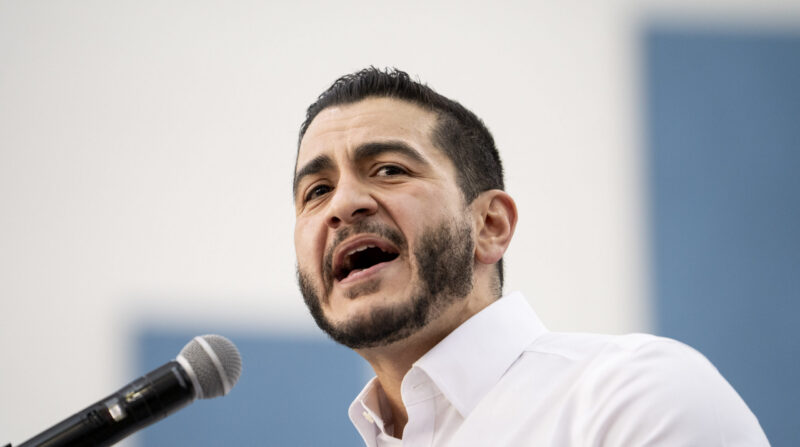
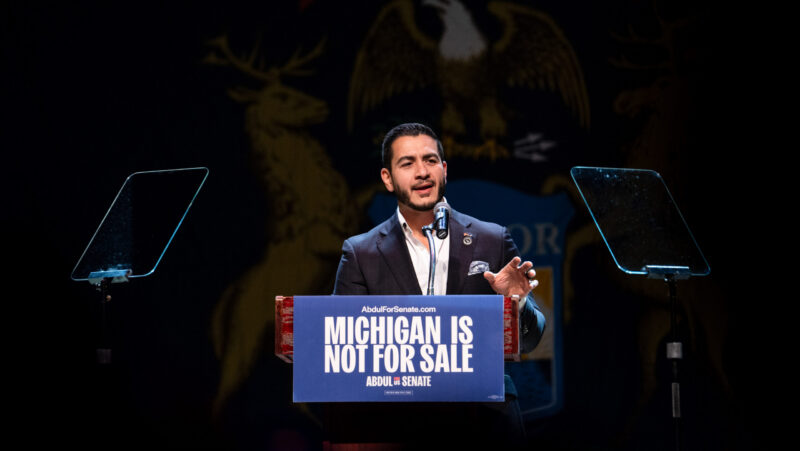
Factor in the political resilience of far-left Maine Senate nominee Graham Platner despite numerous scandals and the momentum of anti-Israel Senate candidate Abdul El-Sayed in a contested Michigan primary despite facing well-funded opposition, and there’s the potential of radicals toppling mainstream candidates well outside the deep-blue confines of major urban centers.
Ultimately, that’s a major question looming for the Democratic Party’s future — and the health of our democracy. Is the rise of socialism primarily a product of urban angst and college-age naivete, or does it have staying power beyond the most-progressive precincts in the country? Can left-wing candidates prevail in swing districts, far away from the urban progressive centers that make up its base? Or will they end up being more of a noisy but powerless faction in Congress?
Either way, socialist candidates have gone from a curiosity that rarely won any congressional seats to riding a Democratic Socialists of America-organized grassroots wave that now has to be reckoned with. You could count the number of Squad members on one hand when Rep. Alexandria Ocasio Cortez (D-NY) and her like-minded allies were first elected in 2018 and 2020. Now their representation is poised to double from its previous peak — and AOC now counts as downright pragmatic, compared to several of her soon-to-be-colleagues.
SOCIALIST SWEEP
Some moderate Dems raise alarms over NYC results, while others dismiss them as localized phenomenon
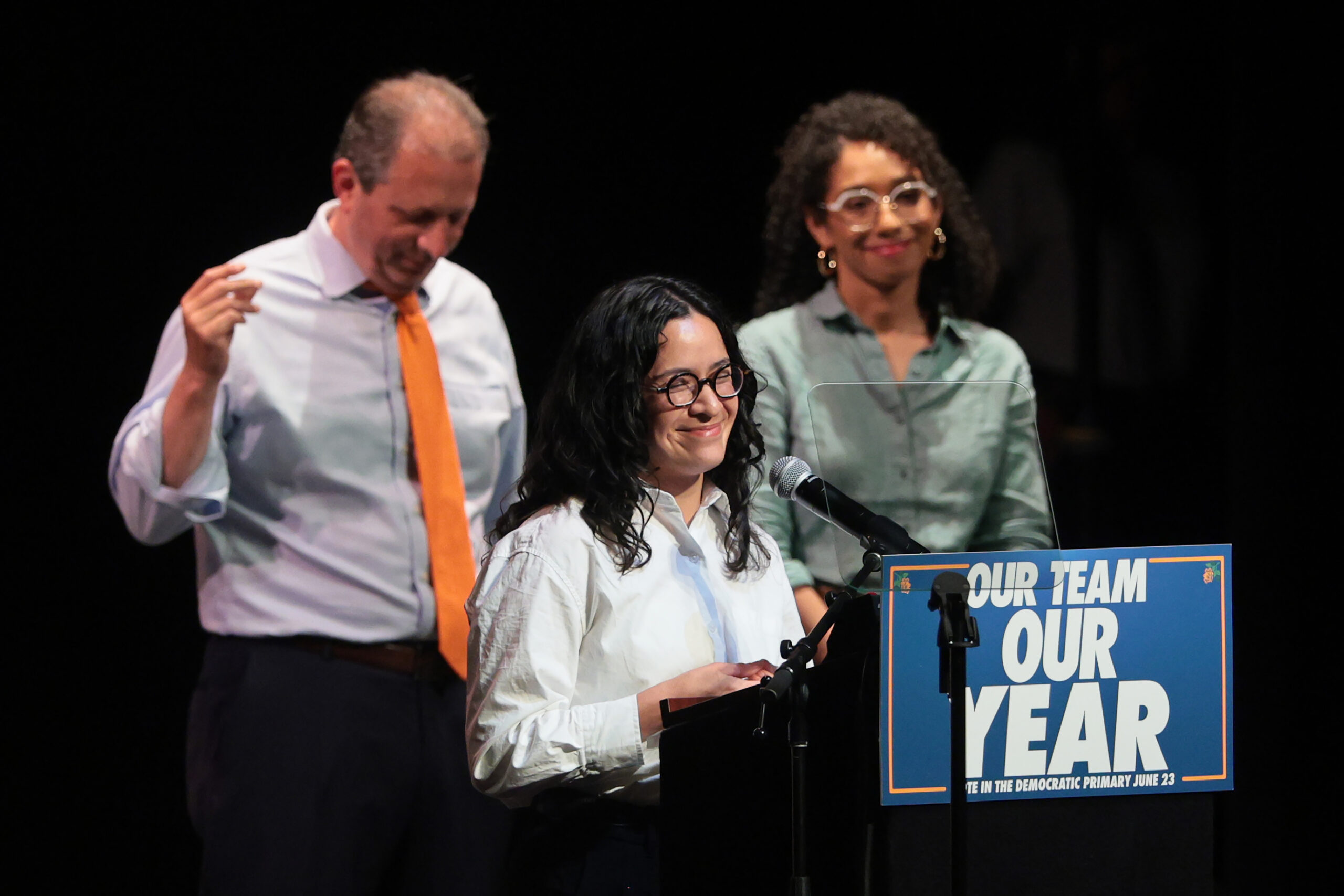
Some moderate and establishment Democrats are raising alarms over the surge of democratic socialists in New York City congressional primaries on Tuesday — which took down two Democratic incumbents. But others are dismissing the phenomenon as one localized to New York City and not applicable to the party at large, Jewish Insider’s Marc Rod, Matthew Shea and Christina Sher report.
Wider view: Rep. Greg Meeks (D-NY), a longtime Democratic leader from Queens, lamented Tuesday’s results, particularly Rep. Adriano Espaillat’s (D-NY) loss. Meeks told reporters that the party as a whole is not a socialist party, and that socialist ideas are very much out of step with the country overall. “That’s not where America is, that only happens in certain parts — like New York City now, apparently — deep, deep, deep blue,” Meeks said. If the entire party follows the same path, “that means that all the other seats that are not [deep blue], we can never win, which means we will never be in the majority, and we [will] never get anything done.”
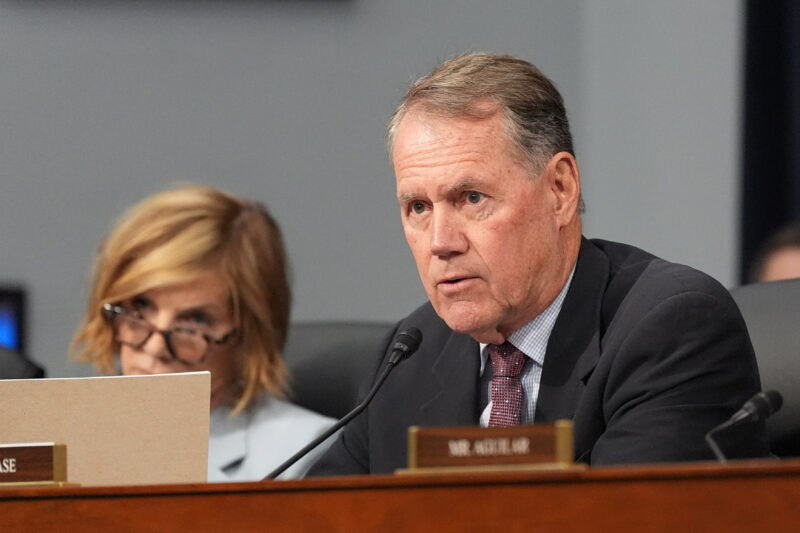
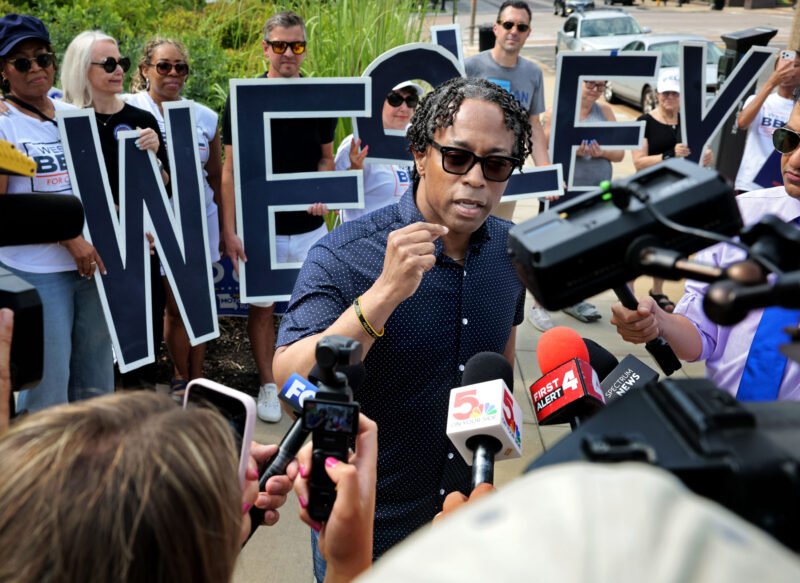
Read the full story here with additional comments from Senate Minority Leader Chuck Schumer (D-NY), Reps. Tom Suozzi (D-NY), Josh Gottheimer (D-NJ), Wesley Bell (D-MO), Jared Moskowitz (D-FL), Pete Aguilar (D-CA), Jamie Raskin (D-MD) and Ro Khanna (D-CA) and Sens. John Fetterman (D-PA), Ruben Gallego (D-AZ), Gary Peters (D-MI), Raphael Warnock (D-GA), Dick Durbin (D-IL), Tim Kaine (D-VA) and Bernie Sanders (I-VT).
Eye on Washington: Having conquered New York City with a stunning primary night sweep on Tuesday, Mayor Zohran Mamdani is wasting no time in moving on Capitol Hill. In an uncharacteristically long question-and-answer session at an unrelated announcement on Wednesday, the mayor announced he would sit down later in the day with House Minority Leader Hakeem Jeffries (D-NY), JI’s Will Bredderman reports.
TORRES TACTICS
How Ritchie Torres dodged the DSA wave in New York City

Rep. Ritchie Torres (D-NY) has long been a target of the far left in New York City, largely because of his outspoken support for Israel and his Jewish constituents. But Torres emerged with a commanding victory over a far-left challenger in Tuesday’s Democratic primaries, even as pro-Israel Reps. Dan Goldman (D-NY) and Adriano Espaillat (D-NY) were defeated by democratic socialist-aligned challengers, Jewish Insider’s Marc Rod reports.
Standout factors: Observers attribute Torres’ landslide win against former New York Assemblymember Michael Blake to a variety of factors, including the different demographics of his district — which includes the heavily Jewish neighborhood of Riverdale, as well as some of the poorest neighborhoods in the city — his strength as a member of Congress and as a campaigner and Blake’s own weaknesses as a candidate. Torres is popular in the district, has prioritized constituent services, has been a longtime presence in the district — as a city councilman from 2014 to 2020 before his time in the House — and maintains a strong reputation locally, Torres campaign spokesperson Benny Stanislawski said.
Concession speech: Goldman, a pro-Israel Jewish Democrat who was unseated in a bitter primary on Tuesday, warned in his concession speech that antisemitism “will ultimately be the undoing of our democracy if we all don’t lean in and speak out,” JI’s Matthew Kassel reports.
ON THE HILL
Senate blocks effort to advance war powers resolution in reversal after heated GOP meeting with Trump
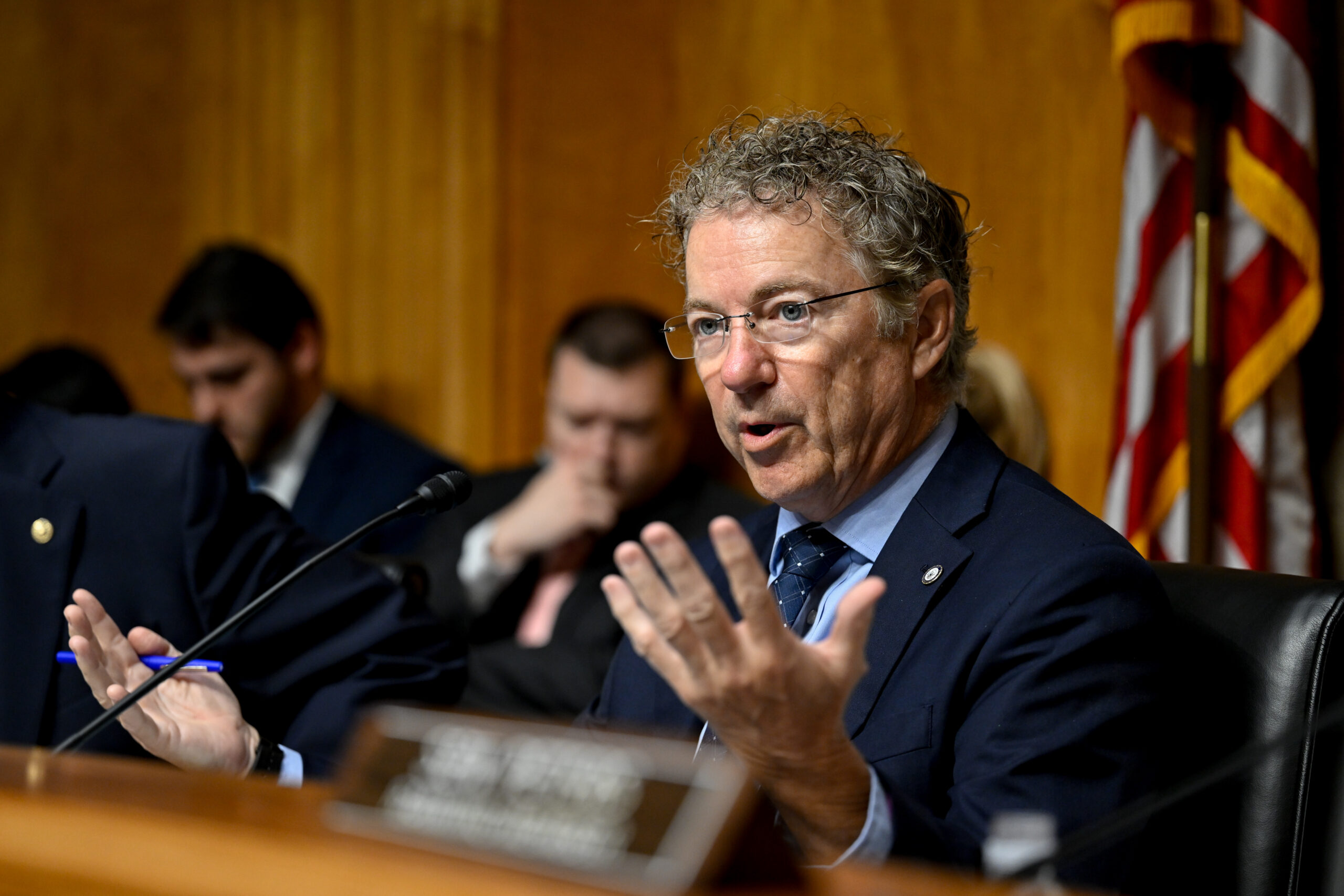
The Senate voted on Wednesday night to block a Democratic-led war powers resolution seeking to end military operations against Iran, after a heated meeting between President Donald Trump and Senate Republicans where he berated a handful of lawmakers over their votes in favor of a successful war powers resolution the previous day, Jewish Insider’s Marc Rod and Emily Jacobs report.
How it happened: Sens. Bill Cassidy (R-LA) and Rand Paul (R-KY), supporters of previous war powers efforts, changed their votes on the resolution on Wednesday, which had previously passed a procedural hurdle — Cassidy now voting no and Paul voting present. Sens. Susan Collins (R-ME) and Lisa Murkowski (R-AK) again voted yes, while Sen. John Fetterman (D-PA) voted no. The final vote was 50-47. Cassidy, who engaged in a shouting match with Trump in the meeting over his recent war powers votes, told reporters after the meeting that he would not change his vote until he had been briefed on the war. Hours later, Cassidy received a private briefing on the war from Vice President JD Vance and White House Special Envoy Steve Witkoff.
Supplemental request: The Trump administration on Wednesday formally sent an $87.6 billion supplemental funding request to replenish stockpiles and otherwise cover the costs of the war with Iran to Congress, JI’s Emily Jacobs and Marc Rod report.
SHOWN THE DOOR
Acting DNI Pulte forces out top Gabbard deputy Will Ruger

Acting Director of National Intelligence Bill Pulte forced out Will Ruger, the deputy director for mission integration, from the agency as part of a series of cuts said to be targeting the “deep state,” according to CBS News. Ruger previously held senior positions at groups tied to the libertarian Koch network, and had been affiliated with the isolationist Defense Priorities think tank, Jewish Insider’s Marc Rod reports.
Background: Ruger had been a vocal opponent, prior to his government service, of both the maximum pressure sanctions campaign against Iran and potential U.S. military operations against the regime. He was also a defender of the 2015 Iran nuclear deal. Ruger’s role included overseeing the president’s daily intelligence briefing.
ANKARA OPPORTUNITY
Vance: Admin is reviewing Turkey’s eligibility to receive F-35 fighter jets

Vice President JD Vance said on Wednesday that the administration is “confirming” Turkey has fulfilled its obligations under U.S. law in order to receive advanced F-35 fighter jets, which Ankara has long sought but has been barred from purchasing since 2020 after it acquired the S-400 air-defense system from Russia, Jewish Insider’s Danielle Cohen-Kanik and Christina Sher report.
Legal requirement: U.S. law requires the secretaries of state and defense to certify to Congress in writing, prior to any F-35 transfer, that Turkey no longer possesses the S-400 system and has provided credible assurances it will not acquire similar Russian air-defense systems. Latest reports indicate the S-400 system is inactive but still intact in Turkey, which would not fulfill the obligations required under law to lift the sanctions.
Strait security: Lawmakers and Middle East analysts are expressing support for Washington’s reported agreement to help Oman strengthen its maritime intelligence and monitoring of transit through the Strait of Hormuz, saying the move could help secure free access to the critical waterway and deter Iranian influence, JI’s Matthew Shea reports.
SCHOOL CONTROVERSY
Massachusetts principal under fire for apologizing to Arab students for Holocaust lesson

A Massachusetts middle school principal is receiving criticism from Jewish groups for apologizing to Arab students who he claimed “felt unseen” during a Holocaust education lesson, Jewish Insider’s Haley Cohen reports.
Back and forth: In a message sent to seventh graders via a school portal, a screenshot of which was obtained by JI, Diamond Middle School Principal Johnny Cole said the lesson at the Lexington, Mass., school was aimed at teaching the students to recognize hate and to speak out against it, something he called “an important goal.” Cole then apologized after he said some students’ families had expressed that the lesson left them feeling “unseen.” Cole wrote, “Some of you felt like your own history, your identity, or your community was left out or erased. Some of you left that session feeling less safe, not more. We have heard this from families, and we believe you.”
Worthy Reads
Radical Shift: Reason’s senior editor Robby Soave examines Democratic congressional candidate Darializa Avila Chevalier’s record as she is set to become what he calls Congress’ “first campus radical.” “In 2019, when I published my first book, Panic Attack: Young Radicals in the Age of Trump, I predicted that the era’s campus protesters would not shed their radicalism when they graduated college and moved out into the so-called real world — rather, they would force the world to conform to their quixotic expectations. This would be particularly felt in the areas of American life most susceptible to their influence: education, media, entertainment, and eventually, politics. Now that day has finally arrived. Welcome, congresswoman.” [Reason]
The Socratic AI Method: The Economist examines the rise in philosophers being hired by AI firms. “Some of the lessons that philosophy can offer AI researchers are ancient. The Socratic method — as described by Plato, an ancient Greek philosopher — uses feigned ignorance and sequential questioning to clarify meanings, spot contradictions and reveal ramifications. Many current AI systems tend towards sycophancy. Models trained in the Socratic method, says Jörg Noller, an expert on philosophy and AI at Ludwig Maximilian University of Munich, are less keen on people-pleasing and more willing to pursue the truth.” [Economist]
House Majority Math: Joel Wanger, DMFI PAC’s chief political officer, breaks down the results from Tuesday night’s primary elections. “Here’s the thing about House Majority math, and it’s something I’ve said before: it isn’t won in New York City or San Francisco. It’s won in places like San Diego and South Texas — and that’s exactly where pro-Israel Democrats had some of their best nights this cycle, nominating strong general-election candidates in competitive seats. … The pattern I’ve tracked all cycle keeps repeating: pro-Israel Democrats win decisively when they take primary challenges seriously and early, build broad coalitions rather than narrow ones, and talk about the kitchen-table issues — affordability, economic anxiety — that are actually driving voters right now. Where that didn’t happen, races were close. Where it did, they weren’t.” [Substack]
No Socialist Takeover: The Atlantic’s Adam Serwer argues that the Democratic Party is not being taken over by democratic socialists as a unified national force, but rather is becoming more ideologically diverse and locally shaped. “The modern Democratic Party, by virtue of its class and ethnic diversity, has always been ideologically heterodox. An approach that works for a Zohran Mamdani or a Janeese Lewis George will not necessarily work for a James Talarico in Texas or a Mary Peltola in Alaska. Many people outside of the democratic socialists’ cities and districts will focus on whether the candidates’ stances on Israel and Palestinian rights reflect a shift within the party (and they do) and the fact that they differ from more centrist Democrats (also correct). But whether they succeed as leaders and politicians will depend on much more local concerns — matters such as jobs, public safety, and affordability.” [Atlantic]
Word on the Street
Israeli and Lebanese officials have reportedly denied a claim by a State Department official, cited by Reuters, who said that Israel had withdrawn from some of the southern Lebanese territory it has held during its war against Hezbollah…
Saudi Arabia is planning to host reconciliation talks between Gulf countries and Iran, a diplomat with knowledge of the arrangements told Agence France Presse. The summit, aimed at mending ties between Gulf nations, Iran and possibly other regional neighbors in the aftermath of the war, will be independent of ongoing U.S.-Iran talks, the diplomat said…
Secretary of State Marco Rubio met with UAE President Sheikh Mohamed bin Zayed in Abu Dhabi on Wednesday; pictured sitting next to the secretary of state in a working lunch with MBZ was Michael Boulos, Trump’s son-in-law, whose father serves as a senior advisor to the president on the Middle East…
Bahraini National Security Advisor Sheikh Nasser bin Hamad Al Khalifa met separately with Sens. Jacky Rosen (D-NV), Lindsey Graham(R-SC) and Brian Schatz (D-HI) and Rep. Brian Mast(R-FL) during a visit to Washington…
FBI Director Kash Patel hosted Qatari Interior Minister Sheikh Khalifa bin Hamad Al Thani in Washington…
CENTCOM announced that the U.S. killed senior ISIS leader Ali Husayn al-‘Ulaywi in an airstrike in northwest Syria last Friday…
Sen. Adam Schiff (D-CA) and Rep. Judy Chu (D-CA) introduced a resolution to award a Congressional Gold Medal to Americans and relief organizations involved in saving Jewish Holocaust refugees…
An intelligence report obtained by journalists from the Israeli public broadcaster Kan details how Qatar became a central channel of economic and military strength for Iran, helping it to circumvent sanctions after the 2018 cancellation of the Joint Comprehensive Plan of Action and also after the Oct. 7, 2023, Hamas attacks on Israel…
A Kuwaiti air-defense officer shared a firsthand account of the opening moments of Iran’s missile and drone attacks on the Gulf country, describing at a conference in London the frantic five minutes as ballistic missiles filled the sky and the air-defense network scrambled to respond…
Vice President JD Vance and his allies are embracing his role as the public face of President Donald Trump’s Iran deal, Semafor reports, arguing that backing an end to the conflict distinguishes him from the GOP’s neoconservative wing and strengthens his standing with the MAGA base ahead of a potential 2028 presidential run…
The New York Times traces a generational and ideological shift on the American right toward viewing Iran as a pragmatic country the U.S. can learn to live with — a pivot led by Trump but driven by other factors that include younger Republicans’ war fatigue and waning support for Israel…
New Lines Magazine spotlights the unrest surrounding a resort project in Albania’s Vjosa-Narta protected area by Jared Kushner and Ivanka Trump that has sparked unprecedented mass protests in the country; the demonstrations have evolved from an environmental campaign to a broad expression of frustration with long-serving Prime Minister Edi Rama…
Ari Emanuel, TKO CEO and Mari Group founder, is in advanced talks to buy theater group ATG for $6 billion…
Morris Dancyger, a child survivor of Auschwitz who built a successful pharmacy and real estate career and co-founded the first modern art gallery in Calgary, Canada, died at 86…
Pic of the Day

Haredi demonstrators blocked major highways in Israel on Wednesday, causing massive traffic disruptions, in a nationwide protest against the imprisonment of yeshiva students who fail to comply with military draft orders.
Birthdays

Free agent center fielder, formerly in the San Francisco Giants organization, he was the 10th overall pick in the 2019 MLB draft, Hunter David Bishop turns 28…
Music publicist in the 1970s and 1980s for Prince, Billy Joel and Styx, later an author on human behavior, Howard Bloom turns 83… Founder and CEO of Bel Air Partners, a financial advisory firm for automotive retailers, Sheldon J. Sandler turns 82… Real estate developer in Brooklyn, Manhattan, Las Vegas and Miami and founder of The Continuum Company, Ian Bruce Eichner turns 81… Florida resident, Joseph C. Goldberg… Southern California-based mentor, coach and consultant for business executives through Vistage International, Gary Brennglass… Associate justice of the Supreme Court of the United States, Justice Sonia Sotomayor turns 72… Former member of the Knesset for the Meretz party, Michal Rozin turns 57… Founder and CEO of The Agency, a high-end real estate brokerage, Mauricio Umansky turns 56… Managing director of A-Street, an investment fund focused on seeding and scaling innovative K-12 student learning, Mora Segal… Senior media and PR specialist at Hadassah, Helen Chernikoff… Israeli philosopher, writer and publicist, he teaches at Yeshivat Har Etzion and Midreshet Lindenbaum, Rabbi Chaim Navon turns 53… Founder and director of The Biblical Museum of Natural History in Beit Shemesh, Israel, popularly known as the “Zoo Rabbi,” Natan Slifkin turns 51… Former fashion model and television presenter, Michele Merkin turns 51… Deputy director of government relations at Bread for the World, Zachary Silberman… President of Gratz College in Melrose Park, Pa., Zev Eleff turns 41… One-half of the husband-and-wife duo known for their YouTube channel h3h3Productions with more than 1.3 billion views, Ethan Edward Klein turns 41… Organizational change management specialist at CACI International, Isaac Snyder… VP of strategy at Saint Paul Commodities and co-founder of Veriflux, Daniel “Dani” Charles turns 39… Family Medicine Residency Faculty at Jefferson Einstein Hospital in Philadelphia, Pa., Avital Mintz-Morgenthau, MD… Senior reporter and writer covering the White House for CNN, Betsy Klein…
Plus, Israeli alarm over Iran’s role in Lebanon

Congressional candidate Claire Valdez, Congressional candidate Brad Lander, Mayor Zohran Mamdani, and Congressional candidate Darializa Avila Chevalier raise their hands during a Get Out the Vote (GOTV) rally at King's Theater on June 18, 2026 in New York City (Photo by Michael M. Santiago/Getty Images)
Good Wednesday morning.
In today’s Daily Kickoff, we cover the results of yesterday’s primary elections in New York City and Maryland, and report on criticism by prospective 2028 Democratic presidential contenders of the U.S.-Iran memorandum of understanding. We also highlight Israeli Ambassador to the U.S. Yechiel Leiter’s statement of concern over the U.S.-Iran agreement to establish a “deconfliction cell” to end military operations in Lebanon and over Tehran’s role in that, and examine the contrasting messaging Vice President JD Vance and Secretary of State Marco Rubio have offered around Iran’s involvement in the conflict between Hezbollah and Israel. Also in today’s Daily Kickoff: Robert Kraft, Gene Simmons and Sir Liam Fox.
Today’s Daily Kickoff was curated by JI Israel Editor Tamara Zieve and U.S. Editor Danielle Cohen-Kanik, with an assist from Marc Rod. Have a tip? Email us here.
What We’re Watching
- Far-left, anti-Israel congressional candidates backed by New York City Mayor Zohran Mamdani swept a trifecta of contested primaries Tuesday night. But pro-Israel stalwart Rep. Ritchie Torres (D-NY) won renomination in a landslide with 72% of the vote, and state Assemblyman Micah Lasher, an ally of Israel who holds close relations with the Jewish community, won the Democratic nomination to succeed Rep. Jerry Nadler (D-NY). (Read more below.)
- Outside of the deep-blue city, Democrats turned to pro-Israel moderates in key races. State Del. Adrian Boafo, who was the recipient of millions of dollars of supportive ads from AIPAC’s super PAC, easily prevailed in the Democratic primary to succeed retiring Rep. Steny Hoyer (D-MD). (Read more below.) Military veteran Cait Conley, meanwhile, won comfortably in a crowded Democratic primary, and will face Rep. Mike Lawler (R-NY) in a swing suburban New York City seat. And in Utah, former Rep. Ben McAdams (D-UT) easily defeated a challenger who campaigned on his anti-Israel bona fides.
- Rep. April McClain Delaney (D-MD) held off a well-funded challenge from former Rep. David Trone. Trone spent over $25 million of his own money on the race, but only won about 37% of the primary vote. And in Montgomery County, Md., progressive Councilmember Will Jawando is currently leading the more moderate Councilmember Andrew Friedson 41-33%in the Democratic primary for county executive with 70% of votes counted.
- President Donald Trump is expected to attend a GOP Senate luncheon as he remains at odds with his party over several legislative efforts. Later, he’ll hold a rally on the National Mall to kick off his 16-day Great American State Fair to celebrate the country’s 250th anniversary.
- Defense Secretary Pete Hegseth is slated to brief House Republicans as the Pentagon gears up for a contentious fight over an expected $80 billion supplemental funding request to replenish stockpiles and otherwise pay for the war in Iran, according to several reports. Read more here.
- The House Appropriations Committee is set to mark up the 2027 defense spending bill.
- Sen. Jacky Rosen (D-NV) will speak in conversation with Jewish Council for Public Affairs CEO Amy Spitalnick as well as leaders from other religious groups, including the Union for Reform Judaism and Orthodox Union, about the Jewish American Security Act.
- Conservative commentator Ben Shapiro’s media site, The Daily Wire, is co-hosting alongside ad agency LSKR a day of programming at the Cannes Lions International Festival of Creativity in the south of France, marking the company’s debut at the advertising industry’s premier annual gathering.
What You Should Know
A QUICK WORD WITH JI’S WILL BREDDERMAN
It’s New York City Mayor Zohran Mamdani’s party now — even if not everybody in the Big Apple feels invited.
The mayor’s candidates for Congress jumped out to early leads Tuesday night, with former City Comptroller Brad Lander comfortably defeating Rep. Dan Goldman (D-NY), a stalwart opponent of President Donald Trump who nonetheless lost support from his party’s base over his lukewarm support for the new mayor and longstanding pro-Israel record. Lander won 66% of the vote to Goldman’s 34%, with 90% of the vote counted as of Wednesday morning.
The shocks to the party establishment continued throughout the night, as Democratic Socialists of America-endorsed state Assemblywoman Claire Valdez jumped to a commanding advantage over party favorite, Brooklyn Borough President Antonio Reynoso. Valdez easily defeated Reynoso, 56%-36%, with 92% of the vote counted.
And the capstone on the night for Mamdani’s anti-Israel congressional trifecta came when networks announced the ouster of Rep. Adriano Espaillat (D-NY), the chairman of the Congressional Hispanic Caucus, against radical doctoral student and Columbia encampment leader Darializa Avila Chevalier, whose inflammatory X feed — and attendance at an anti-Israel rally the day after the Oct. 7 Hamas attacks — did little to derail her candidacy. In a much tighter race, Avila Chevalier beat the incumbent, 49%-46%, with 88% of the vote counted.
Signs of the ascendance of the far left within overwhelmingly Democratic big cities have been visible for months. Mamdani’s astounding mayoral victory in 2025 mobilized a slew of like-minded candidates to run for office — in New York City and beyond. In Philadelphia, DSA-endorsed candidate Chris Rabb won a Philadelphia-based congressional seat last month. Last week, DSA-backed Janeese Lewis George romped to victory in the race for mayor in the nation’s capital, and is on track to become the city’s next top executive.
ESTABLISHMENT WIN
Micah Lasher, experienced lawmaker with close ties to Jewish community, wins race to replace Nadler
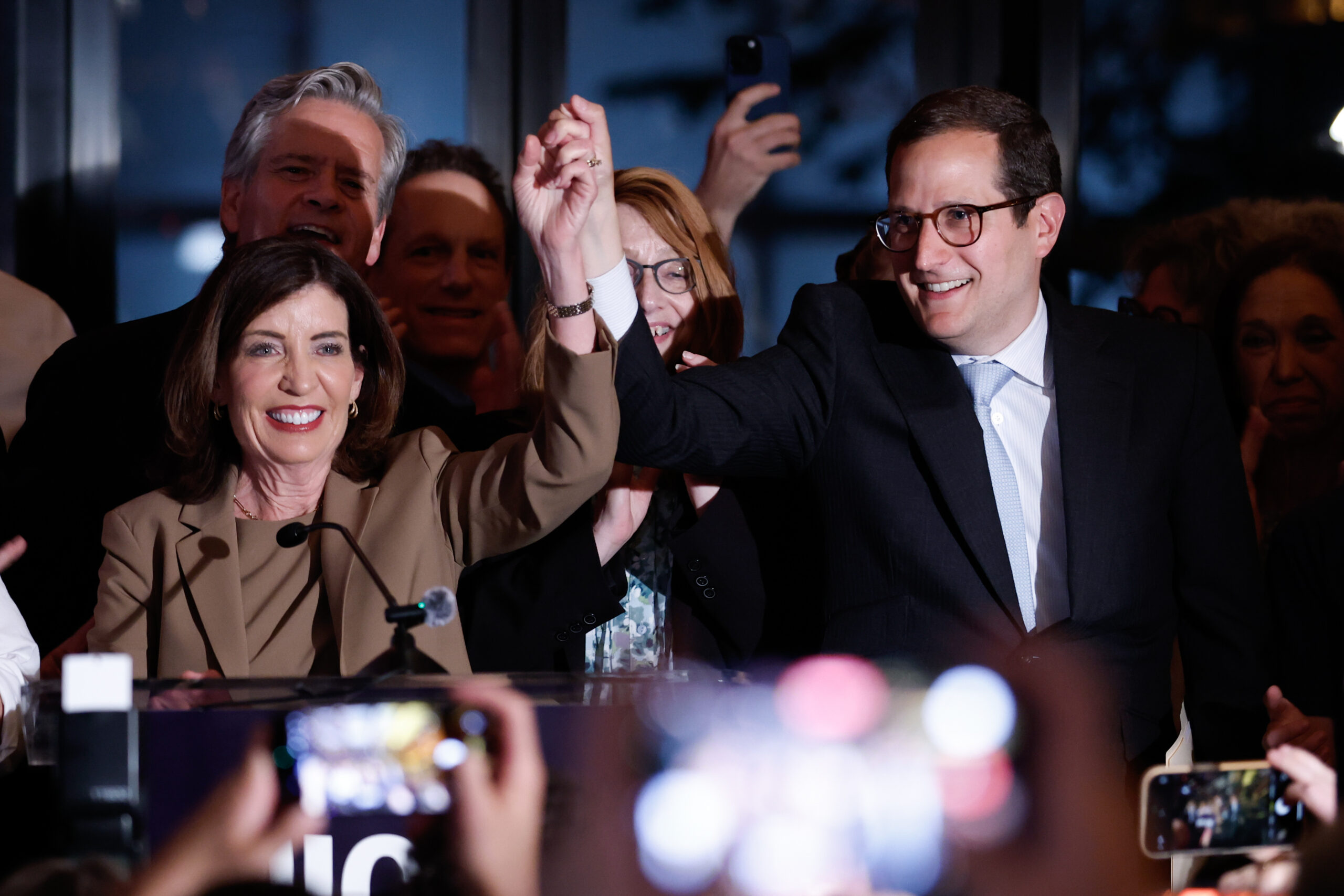
New York state Assemblymember Micah Lasher, a Jewish Democrat, claimed victory on Tuesday night in a hard-fought primary for a coveted House seat in the heart of Manhattan, according to the Associated Press. Lasher had won 39% with most of the vote tallied by the time his race had been called. He prevailed over a fellow assemblymember, Alex Bores, who pulled in 35%, as well as Jack Schlossberg, the Kennedy scion, who came in third with just 10% — followed by Nina Schwalbe and George Conway, both in single digits, Jewish Insider’s Matthew Kassel reports.
Background: Lasher, 44, a longtime member of the Democratic establishment in New York, pitched himself as the most experienced candidate in the race, leaning into his identification as a policy wonk. He was backed by the district’s retiring congressman, Rep. Jerry Nadler (D-NY), as well as Gov. Kathy Hochul. He also drew a significant share of outside support from former New York City Mayor Michael Bloomberg, who spent $10 million to help boost Lasher’s campaign.
MARYLAND MANDATE
Boafo wins crowded Maryland primary in victory for Hoyer and pro-Israel allies
Maryland state Del. Adrian Boafo prevailed on Tuesday in the crowded Democratic primary to replace retiring Rep. Steny Hoyer (D-MD), who endorsed him, marking a legacy-burnishing victory for the veteran congressman and his pro-Israel allies, Jewish Insider’s Matthew Kassel reports.
Strong lead: The Associated Press called the race after Boafo had secured 32% of the vote with about one-half of ballots counted Tuesday night. His nearest competitor, businesswoman Quincy Bareebe, lagged well behind with 19%. Boafo’s win came after a forceful push by Hoyer, pro-Israel groups and establishment Democrats to help elevate the congressman’s hand-picked former campaign manager in a race that featured two dozen candidates vying to represent Maryland’s 5th Congressional District.
2028 WATCH
Prospective 2028 Democrats rally against Trump’s Iran agreement
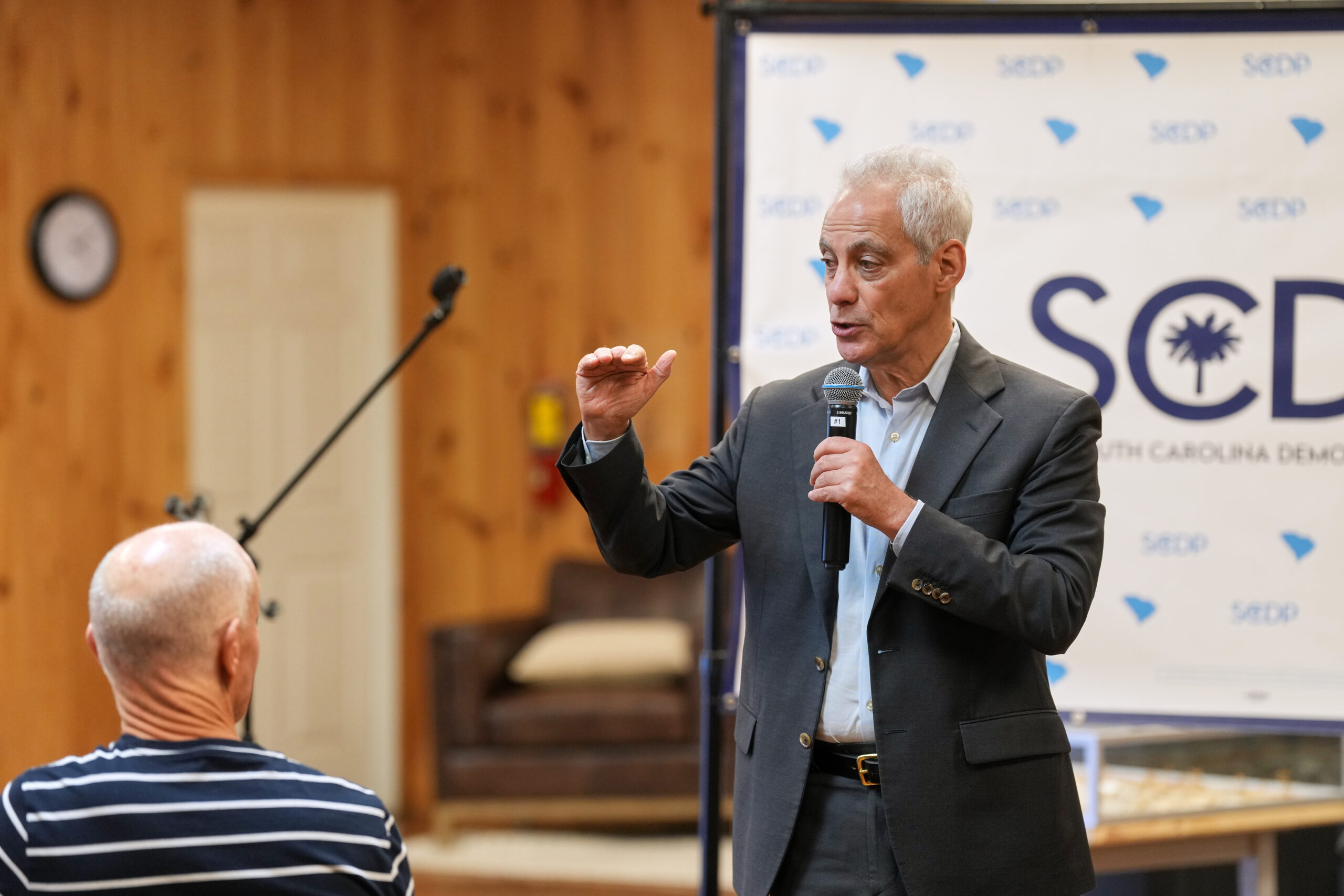
Among the Democrats mulling a presidential run in 2028, there was a unified reaction in February when President Donald Trump decided to attack Iran: opposition to a war they viewed as reckless and unconstitutional. As those Democrats respond to the U.S.-Iran memorandum of understanding that Trump announced last week, another consensus is emerging, holding that the deal is just another example of Trump’s ineffectual leadership — yet another instance, these Democrats argue, of Trump getting taken advantage of and undermining the American people, Jewish Insider’s Gabby Deutch reports.
Taking jabs: “They’re negotiating a deal that, truthfully, every single detail we continue to hear just looks like the Iranians continue to do better than us. I think they should have been the one to write The Art of the Deal, not Donald Trump,” Maryland Gov. Wes Moore said in a TV interview on Tuesday. Rahm Emanuel, the former U.S. ambassador to Japan, member of Congress and chief of staff to President Barack Obama, offered a similar quip at a recent Financial Times event after describing the deal as “the memorandum of misunderstanding.” Emanuel said, “While the president thinks he wrote a book called The Art of the Deal, they’re going to teach him a lesson, which is the Persian lesson: the art of the negotiation. And he just got schooled, unbelievably.”
Deal defense: Breaking with many Senate Republicans who have expressed skepticism about various elements of the Trump administration’s memorandum of understanding with Iran, House Speaker Mike Johnson (R-LA) defended the deal on Tuesday, JI’s Marc Rod reports.
DAYLIGHT EMERGING
Israeli Ambassador Leiter expresses concern over Iran-U.S. deconfliction mechanism
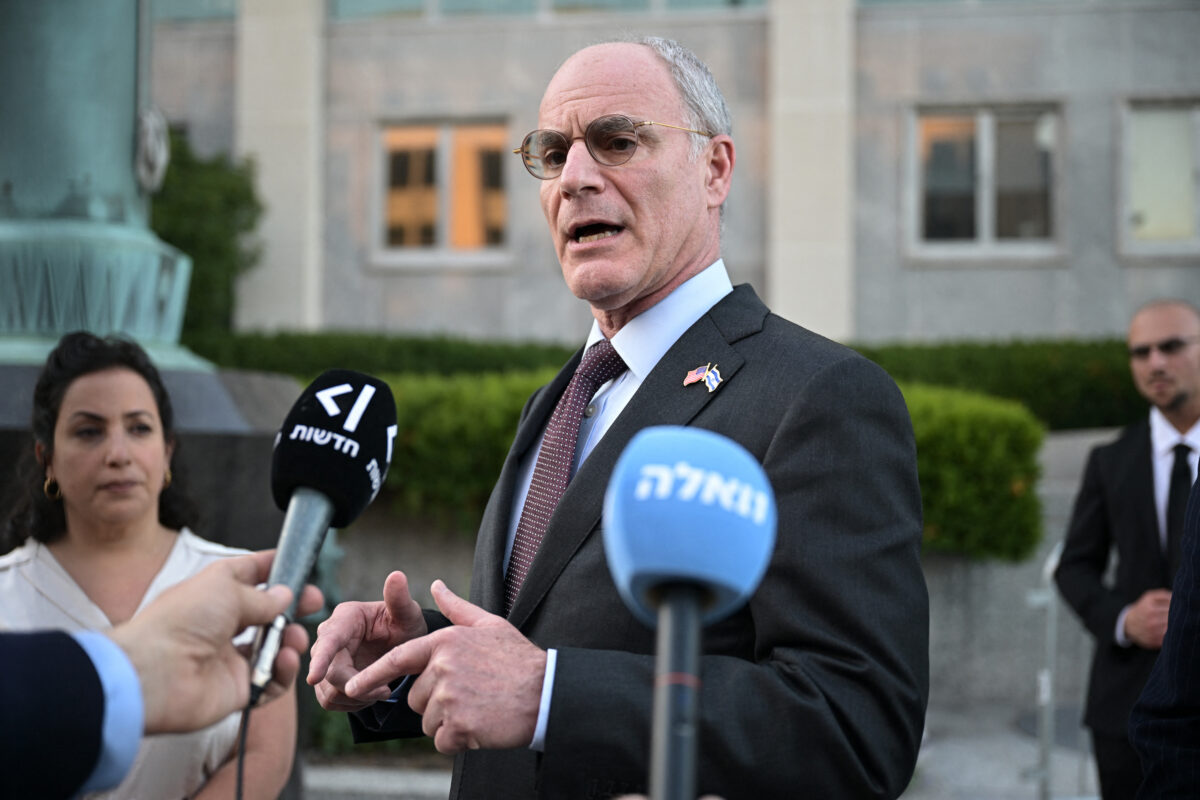
Israeli Ambassador to the U.S. Yechiel Leiter criticized the Trump administration on Tuesday for agreeing to establish a “deconfliction cell” to end military operations in Lebanon without Israel’s involvement as part of the ongoing peace talks with Iran, the first public statement from Jerusalem denouncing the move, Jewish Insider’s Emily Jacobs reports.
Ambassador’s alarm: Leiter released a pair of statements in English and Hebrew at the start of the fifth round of multi-day diplomatic talks at the U.S. State Department between Israel and Lebanon, in which he warned that both parties were “heading towards a train wreck.” The ambassador said that while the Israelis “support President Trump’s vision of ensuring that Iran no longer has nuclear capabilities, ballistic missiles or the ability to funnel money to its proxies to threaten its neighbors and maintain its regional hegemony,” he worried “that the concept of ‘deconfliction’ is misplaced.”
Fault lines: Vice President JD Vance and Secretary of State Marco Rubio have offered different messaging around the issue of Lebanon and Hezbollah being subsumed into discussions with Tehran, JI’s Danielle Cohen-Kanik reports. Vance said on Monday that the U.S. will be counting on Iran to “rein in” its proxy Hezbollah. Rubio, meanwhile, arriving in the United Arab Emirates on Tuesday, said Iran’s sponsorship of Hezbollah “will be discussed as part of our conversation with the Iranians, but … the future of Lebanon belongs to the Lebanese people, through their sovereign, elected government, and that’s who we’re going to be working with.”
BLINKEN WEIGHS IN
Tony Blinken praises Ro Khanna’s view of the Iran war
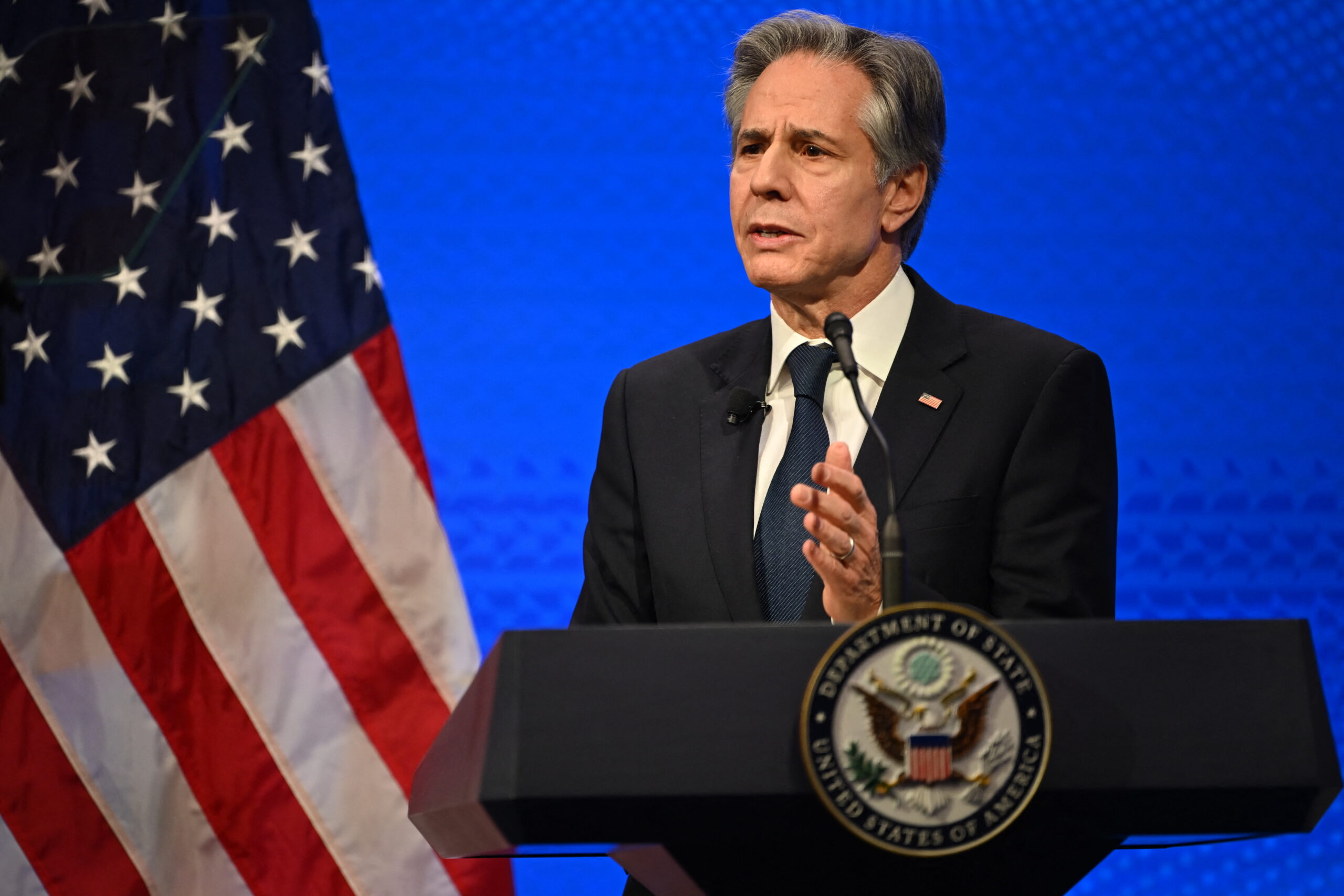
Former Secretary of State Tony Blinken offered support for Rep. Ro Khanna’s (D-CA) stance on the Iran war and the U.S. deal with Iran in a post on X on Tuesday. Blinken praised the “wise words from my friend [Khanna],” reposting a Fox News op-ed by the congressman making the case that “stopping the Iran war is good. But Trump’s deal is worse than the JCPOA,” Jewish Insider’s Marc Rod reports.
Zoom out: He’s the second prominent former Biden administration official to draw closer to Khanna in the lead-up to the 2028 presidential primary, joining former White House Chief of Staff Ron Klain, who has reportedly been advising Khanna behind the scenes as he prepares for a presidential run. The comments also come as some progressive presidential contenders call for the Democratic Party to purge its ranks of foreign policy advisors who served in the Biden administration, given its general support for Israel.
CONGRESSIONAL REBUKE
Senate approves House-passed Iran war powers resolution in largely symbolic move

The Senate voted on Tuesday to pass a House-passed war powers resolution directing the administration to withdraw U.S. forces from Iran, Jewish Insider’s Marc Rod reports. The resolution passed by a 50-48 vote, with Republican Sens. Rand Paul (R-KY), Lisa Murkowski (R-AK), Susan Collins (R-ME) and Bill Cassidy (R-LA) again voting in favor and Sen. John Fetterman (D-PA) voting against it. Ultimately, GOP absences enabled the resolution to go forward.
State of play: But the resolution, now passed by both chambers, came in the form of a concurrent resolution, which is not submitted to the president and, based on past court precedent, is not seen as carrying the force of law. Rep. Greg Meeks (D-NY), the ranking member of the House Foreign Affairs Committee and lead Democratic sponsor of the war powers resolution, insisted in a statement, “Regardless of what President Trump says, this measure is binding under the War Powers Resolution, and I will explore all legal avenues to ensure the Executive complies with the will of Congress.”
Worthy Reads
Thin Air: Navy and Army National Guard veteran Brynn Tannehill argues in The Atlantic that the U.S. and Israel’s strategy toward Iran was flawed from the outset because it ignored historical lessons and relied primarily on airpower to force either regime change or surrender. “The U.S. plan for attacking Iran was doomed from the start because it relied on airpower without the benefit of external factors that would have made an air campaign successful. There was no credible threat of mass ground invasion to overthrow the Iranian regime. It was either internal revolution or nothing. The U.S. was also unwilling to inflict the sort of mass casualties and suffering that might have caused Iran to decide that capitulation was less damaging than continued resistance.” [TheAtlantic]
The Burgeoning Question about Burnham: The Jewish Chronicle’s Angela Epstein considers whether Labor MP Andy Burnham’s potential premiership in Britain will be “good for the Jews.” “Look to how recently, when asked for his views on the baseless allegations of genocide in Gaza, Burnham declined to take a clear position. Arguing he was too far removed from the situation to make such a judgement. Why not state plainly that no court has upheld the genocide claim [against Israel]? … So the rap sheet is troubling. Factor in the wider perception of Burnham as a weathervane politician, with an impressive number of U-turns under his belt, and there is justifiable cause for concern for British Jewry.” [JewishChronicle]
The Witkoff-Kushner Show: Journalist and editor Tina Brown, in her Substack “Fresh Hell,” reviews New York Times journalists Maggie Haberman and Jonathan Swan’s new book about the first year of President Donald Trump’s second administration. “Surprising to me in these pages is how well the odd couple of global diplomacy, the ever-sunny real estate deal man Steve Witkoff and Trump’s effete-looking son-in-law Jared Kushner, come across. After bringing home the Abraham Accords in the first term and wrangling Bibi and Hamas to a Gaza ceasefire in the second, it’s time to acknowledge that Kushner is a skilled, pragmatic closer and the garrulous Witkoff, dispatched round the world to end three wars at once, never stops trying.” [Substack]
Word on the Street
International Atomic Energy Agency head Rafael Grossi said on Wednesday that inspectors would visit Iranian nuclear enrichment sites, after conflicting remarks on the matter by U.S. and Iranian officials. The parties’ agreement “says explicitly that the nuclear activities that are going to be carried out with the regards to the nuclear material facilities will be supervised by the IAEA — in all letters,” Grossi told reporters.…
Iranian Foreign Minister Abbas Araghchi spoke on the phone with senior Hamas official Basem Naim about the “latest developments” in the region, according to Iranian TV…
Victoria Coates, a vice president of the Heritage Foundation, met with Israeli Prime Minister Benjamin Netanyahu in Jerusalem, she said in an X post on Wednesday, noting that they discussed “Lebanon, Europe, the future of Western Civilization, and, of course, Iran”…
A U.S. fighter jet pilot who was shot down over Iran and rescued in April told intelligence officials he witnessed Iranian drones flying in a single swarm formation, CNN reports, which would mark a significant advancement in Tehran’s drone technology…
The Washington Post examines how President Donald Trump’s decision to go to war with Iran has impacted his popularity in the United Arab Emirates…
Robert Kraft’s Blue Square Alliance Against Hate announced the formation of its inaugural advisory board, including former Secretary of State Condoleezza Rice, Bank of America CEO Brian Moynihan, Dentons CEO Kate Barton, Salesforce CEO Marc Benioff and Warner Bros. CEO David Zaslav, Jewish Insider’s Haley Cohen reports exclusively…
The House Rules Committee yesterday teed up amendment votes on the 2027 State Department funding bill on cutting $3.3 billion in military aid to Israel, cutting U.S. aid to Jordan, blocking funding for the United Nations and blocking funding for the Middle East Partnership for Peace initiative. The amendments are expected to come up for votes later this week…
Sen. Susan Collins (R-ME) reiterated her criticism of Maine Democratic Senate candidate Graham Platner and accused him and his supporters of antisemitism at an Orthodox Union event on Tuesday, JI’s Marc Rod reports. “Our support for Israel remains as strong as ever,” Collins said, to a standing ovation. “We must all stand with Israel. In my case, I learned that lesson at an early age”…
New York City’s First Lady Rama Duwaji posted an Instagram story Tuesday flashing an “I Voted” sticker and encouraging her followers to support the two congressional candidates endorsed by both her husband and the Democratic Socialists of America: Assemblymember Claire Valdez and doctoral student Darializa Avila Chevalier. The post excluded Former New York City Comptroller Brad Lander, who alone among Mayor Zohran Mamdani’s candidates identifies as a Zionist, JI’s Will Bredderman reports…
A manifesto allegedly left by the gunman behind Monday’s rampage in Côte-des-Neiges, a heavily Jewish neighborhood in Montreal, repeatedly targeted Jews and Zionists, specifically identifying “influential Zionists” among his intended victims, according to a copy of the document published by Rebel News, JI’s Haley Cohen reports…
Jewish Democrats in Texas are gearing up for the state party’s convention, which starts Thursday, as delegates are set to consider nearly 20 resolutions condemning Israel…
Israeli officials are exploring listing Israel Aerospace Industries and defense manufacturer Rafael on U.S. stock exchanges rather than in Israel, where they may face more burdensome disclosure requirements, according to Bloomberg. The Israeli government is reportedly looking to sell up to a 30% stake in the companies, which manufacture the Arrow and Iron Dome missile-defense systems…
Around 50 career and political appointee intelligence officials have been removed from their roles at the Office of the Director of National Intelligence since Bill Pulte assumed the role of acting DNI last week, CBS reports, including six employees who were fired and 45 who were sent back to other agencies…
Top Senate Democrats sent a letter to Republican committee chairs on Tuesday calling for hearings into a $500 million deal that sold nearly half of World Liberty Financial — a crypto company founded by members of the Trump and Witkoff families — to a group led by Sheikh Tahnoon bin Zayed al Nahyan, the UAE’s national security advisor, The Wall Street Journal reports…
Gen. Chris Donahue, the highly regarded commanding general of United States Army Europe and Africa who was seen as a rising star in the U.S. defense establishment, is expected to announce he is stepping down from his role in the coming days, adding to a growing list of senior military leaders who have departed or been pushed out during Defense Secretary Pete Hegseth’s tenure…
Netanyahu on Wednesday completed his testimony, after 98 hearings over the past year and a half, in his ongoing corruption trial…
Israeli-born KISS co-founder and bassist Gene Simmons tells The Wall Street Journal about the impact his mother, who was a Holocaust survivor, had on his worldview…
Breaker Media reports that New York Times columnist Bret Stephens was briefly mistaken by security for an intruder as he arrived at Times Publisher A.G. Sulzberger’s annual Catskills BBQ wearing a fedora, which is usually worn by Breaker Media’s reporter when he stakes out media gatherings…
The Wall Street Journal reports on how Larry Ellison quietly donated $45 million to a pro-Trump political nonprofit in 2024 — one of the largest single injections of capital that cycle — and how his private friendship with Trump has since paid dividends for both his tech company Oracle and his son David‘s growing media empire…
The New York Times spotlights the annual Great Nosh picnic that took place on Governors Island on Sunday, calling it “a kind of New York-centric Coachella for Jewish food and culture”…
“SportsCenter” anchor Linda Cohn, who presented more episodes of the ESPN show than anyone else in its history, is set to retire at the end of the month…
Longtime New Yorker staff writer Mark Singer, who specialized in profiles, died on Friday at 75…
Pic of the Day
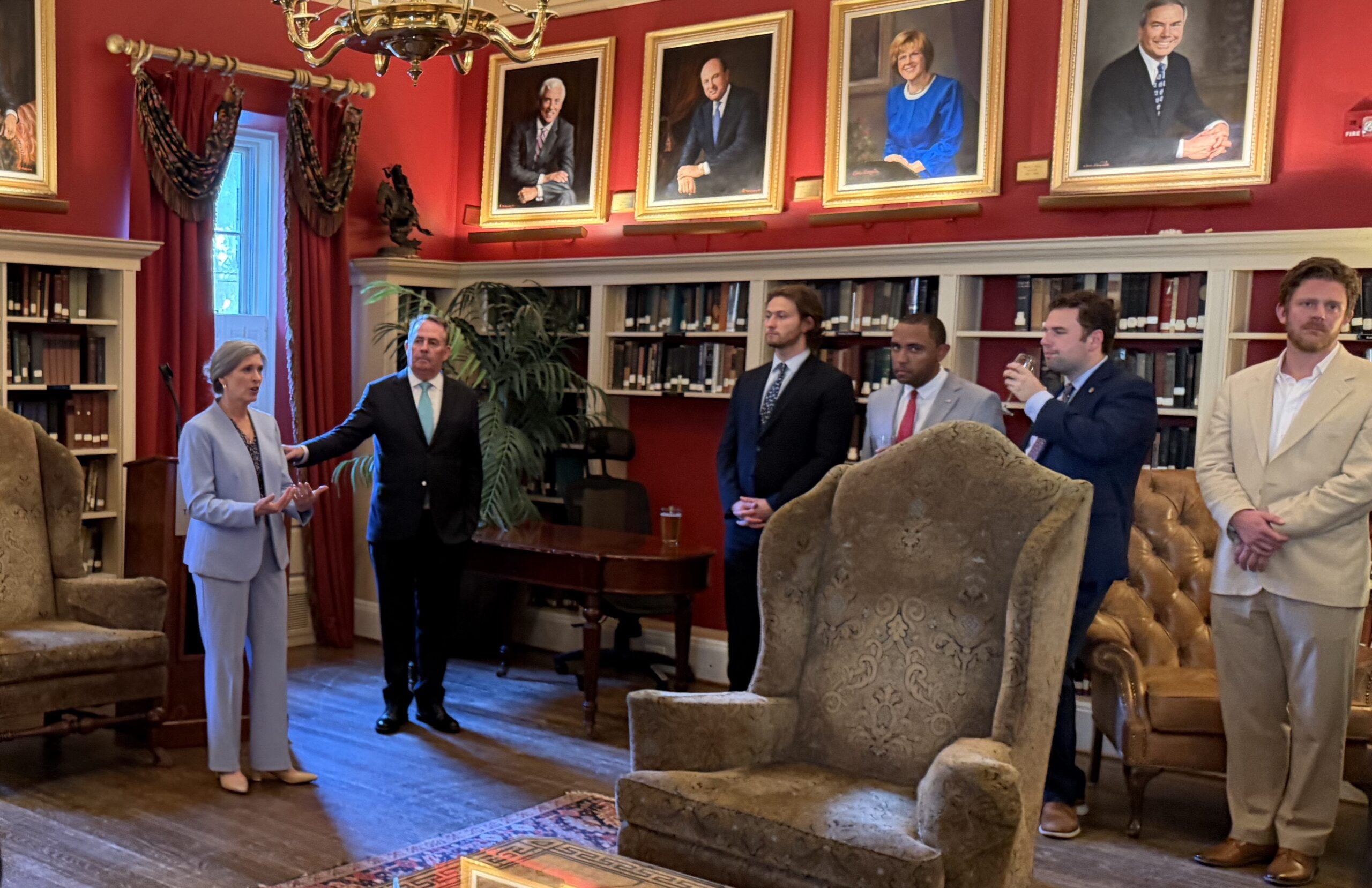
Sen. Joni Ernst (R-IA), (left), and Reps. Brad Schneider (D-IL) and Eric Burlison (R-MO) spoke at a launch event on Tuesday for the Abraham Accords Prosperity Group in Washington hosted by Sir Liam Fox (second from left), a former British minister. The group aims to promote investment and collaboration across the Abraham Accords countries.
Birthdays

Actor and singer, Elizabeth Greer “Beanie” Feldstein turns 33…
Activist investor, he is a co-founder of Trian Partners, Nelson Peltz turns 84… Professor emeritus in the Lam Family College of Business at San Francisco State University, Sam S. Gill turns 84… Former chairman and CEO of New York Life Insurance Company, Seymour “Sy” Sternberg turns 83… Professor of philosophy at American Jewish University and founding dean of its rabbinical program, Rabbi Elliot N. Dorff turns 83… Founder of Yeshivat Chovevei Torah, he is also the founder of Yeshivat Maharat for Orthodox women, Rabbi Avraham Haim Yosef (Avi) Weiss turns 82… Former secretary of labor in the Clinton administration, he is an author and professor emeritus at UC Berkeley, his newest book came out in 2025, Robert Reich turns 80… Former member of Knesset and former chief of staff of the IDF, Moshe “Bogie” Ya’alon turns 76… Early childhood specialist at Columbus City Schools and Columbus School for Girls in Columbus, Ohio, Carol Glassman… Former EVP at Edelman, he is the author of a book on the Saatchi & Saatchi ad firm, Kevin Goldman… President and CEO of public relations firm Steinreich Communications, Stanley Steinreich… U.S. district judge for the Southern District of Florida, Beth Francine Bloom turns 64… Principal from 2007 to 2023 of Mount Scopus Memorial College located in Melbourne, Australia, Rabbi James Kennard turns 62… The first on-air talent of the NFL Network when it debuted in 2003, he has become the face of the network, which merged with ESPN in 2025, Rich Eisen turns 57… Israeli businesswoman and owner of the soccer team, Hapoel Beer Sheva, her brother-in-law is Israel’s minister of economy, Nir Barkat, Alona Barkat turns 57… Author and columnist, he is the managing editor at Shtetl, Shulem Deen turns 52… Singer and songwriter known professionally as Ariel Pink, Ariel Marcus Rosenberg turns 48… Film director, screenwriter, producer, editor and cinematographer, Todd Strauss-Schulson turns 46… Director of domestic policy studies at the American Enterprise Institute, he is the son-in-law of political analyst and commentator Bill Kristol, Matthew Continetti turns 45… Digital marketing manager at Guardian Pharmacy Services, Brett Rosner… VP of Houston-based RIDA Development, a multi-national real estate development company, Steven C. Mitzner… A 2015 contestant on “Jeopardy!” who earned $413,612 by winning 13 consecutive episodes, he is a son of United States District Court Senior Judge Amy Berman Jackson, Matthew Barnett “Matt” Jackson turns 34… Director of legislative fiscal affairs at the Rockland County (N.Y.) legislature, Moshe Gruber… College basketball player for the Harvard Crimson until 2022, then a graduate transfer player at NYU until 2024, Spencer Freedman turns 28… Lois Charles…
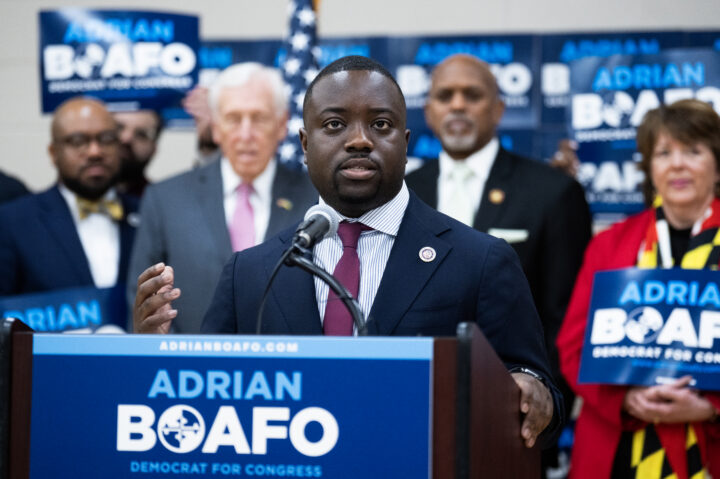
State Del. Adrian Boafo was backed by retiring Rep. Steny Hoyer and other state leaders and received more than $5.7 million in support from AIPAC’s super PAC
Tom Williams/CQ-Roll Call, Inc via Getty Images
Del. Adrian Boafo, Democratic candidate for Maryland's Fifth Congressional District, speaks during a press conference to kick off a series of meet-the-voter events, at Kenhill Center in Bowie, Md., on Monday, March 2, 2026.
Maryland state Del. Adrian Boafo prevailed on Tuesday in the crowded Democratic primary to replace retiring Rep. Steny Hoyer (D-MD), who endorsed him, marking a legacy-burnishing victory for the veteran congressman and his pro-Israel allies.
The Associated Press called the race after Boafo had secured 32% of the vote with about one-half of ballots counted Tuesday night. His nearest competitor, businesswoman Quincy Bareebe, lagged well behind with 19% of the vote.
Boafo’s win came after a forceful push by Hoyer, pro-Israel groups and establishment Democrats to help elevate the congressman’s hand-picked former campaign manager in a race that featured two dozen candidates vying to represent Maryland’s 5th Congressional District.
AIPAC’s super PAC, United Democracy Project, was the biggest spender in the race, investing more than $5.7 million on ads boosting Boafo, including one featuring Hoyer in a direct-to-camera appeal in the closing stretch of the primary. Boafo was also backed by Gov. Wes Moore and Sen. Angela Alsobrooks (D-MD), among others.
UDP’s involvement was a risk for the group, as well as a test of its influence, as it has faced scrutiny from Democrats over its engagement in recent primaries. But the super PAC’s support for Boafo demonstrated that it could still play a significant role in Democratic races, even as its brand has become toxic to a growing number of Democrats.
The group’s spending drew criticism in Maryland, most notably from Sen. Chris Van Hollen (D-MD), who accused AIPAC and crypto-aligned interests in the race of “trying to buy” the seat. But Van Hollen did not make an endorsement in the race as the left failed to unite behind one candidate.
In the final days of the race, three other Democratic contenders — Capitol Police officer Harry Dunn, former Prince George’s County Executive Rushern Baker and Bareebe — teamed up to decry the flood of outside spending that shaped the race. Barebee came in second on Tuesday, while Dunn came in third.
Their pushback was not enough to thwart Hoyer’s choice for the nomination in a moderate district that has been amenable to the congressman’s close ties to AIPAC. Boafo, 32, was also endorsed by Democratic Majority for Israel’s super PAC, which is led by Brian Romick, a former senior aide to Hoyer, who is retiring after 45 years in the House.
In a statement to social media, AIPAC said that Boafo’s victory had “made clear his vision to carry forward the strong pro-Israel legacy of Rep. Steny Hoyer, one of Congress’s most steadfast champions of the U.S.-Israel relationship.”
“United Democracy Project was proud to support Boafo and help ensure this seat remains represented by pro-Israel leadership,” AIPAC added.
In throwing his support behind Adrian Boafo, Hoyer is using his connections to party leaders and ties with pro-Israel groups to boost his hand-picked choice to the nomination for a safely blue seat
Nathan Posner/Anadolu via Getty Images
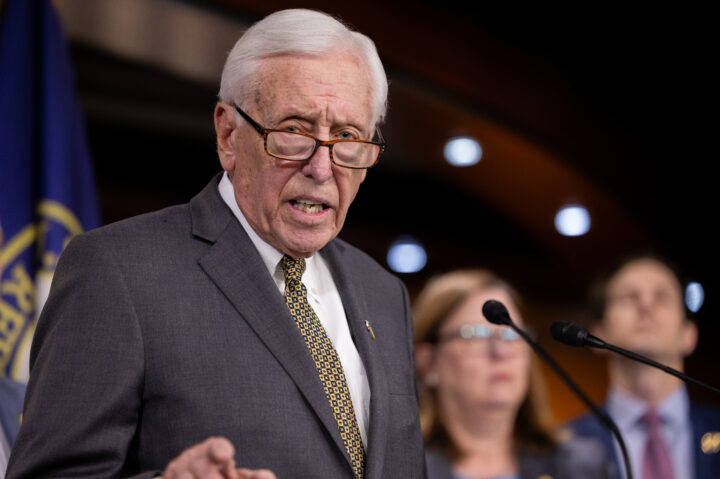
Congressman Steny Hoyer (D-MD) speaks at a press conference in Washington, DC on February 24, 2025.
As Rep. Steny Hoyer (D-MD) prepares to step down at the end of his current term, the former Democratic House majority leader is staking his pro-Israel legacy on a little-known candidate who he hopes will uphold his long-standing commitment to maintaining a close relationship with the Jewish state.
In throwing his support behind Adrian Boafo, a 32-year-old Maryland state delegate who is among nearly two dozen Democratic candidates running in Maryland’s 5th Congressional District primary on Tuesday, Hoyer, 87, is using his connections to establishment party leaders and ties with pro-Israel groups to boost his hand-picked choice to the nomination for a safely blue seat.
United Democracy Project, AIPAC’s super PAC, has emerged as the biggest spender in the race, investing more than $5.7 million as part of an aggressive effort to promote Boafo launched by Hoyer and his allies.
The well-funded foray is a useful illustration of the degree to which planning and organization helped put Boafo in contention for the seat Hoyer has held for 45 years, in contrast with recent primaries where UDP and other pro-Israel advocacy groups have been relatively cautious with their engagement while being outflanked by the far left.
A UDP source, granted anonymity to speak candidly about the race, said polling showed Boafo was not in the lead when Hoyer endorsed him in January. “It’s a super close race that could go either way,” the source told Jewish Insider on Monday, stressing a high level of undecided primary voters. “Many candidates are in contention.”
One Jewish Democrat in Maryland told JI that Hoyer “put a heavy finger on the scale” in the race, calling in “chits” with influential Democratic officials who gave endorsements to Boafo, such as Gov. Wes Moore and Sen. Angela Alsobrooks (D-MD) — both of whom are featured in UDP’s ad blitz that began late last month.
Boafo also gained support from Democratic Majority for Israel’s super PAC led by Brian Romick, a former longtime senior aide to Hoyer. The group backed him on its first slate of non-incumbent endorsements not long after Hoyer had expressed his preference in the race. Boafo is a former campaign manager for Hoyer.
In New York City’s closely watched primaries on Tuesday, meanwhile, UDP and DMFI PAC have largely been absent from key races where far-left challengers are threatening to unseat pro-Israel incumbents. Polling has indicated that Rep. Dan Goldman (D-NY) is facing long odds against Brad Lander, a former city comptroller, while Rep. Adriano Espaillat (D-NY) hopes to fend off Darializa Avila Chevalier, a democratic socialist insurgent with a long record of anti-Israel activism.
Both Lander and Avila Chevalier have been buoyed by endorsements from New York City Mayor Zohran Mamdani — who is using his own early political capital on a risky gambit to help lift a slate of candidates that has angered the Democratic establishment.
Mamdani has also joined forces with the Democratic Socialists of America’s New York City chapter, which is flexing its local organizational muscle to help Avila Chevalier and Claire Valdez, a state assemblymember who is facing off against Brooklyn Borough President Antonio Reynoso, a progressive backed by retiring Rep. Nydia Velazquez (D-NY).
Even as far-left super PACs like American Priorities, a new group created to counter AIPAC’s spending in Democratic primaries, have been surging money into New York City, UDP has remained on the sidelines — with the exception of money it recently funneled to a pro-Espaillat super PAC disclosed in campaign filings late last week. Still, the pro-Israel group has not been directly engaged in New York City, despite its historic support for Goldman and Espaillat.
UDP has reason for caution, as AIPAC’s brand has become toxic among a growing number of Democrats who have vowed to reject its support and view it as a noxious presence in contested primaries.
Pro-Israel activists speculated UDP chose to stay out of a crowded House contest in New Jersey this month featuring some credible moderate candidates because it had earlier bungled its involvement in another race in the state with an aggressive spending strategy that inadvertently helped elevate a far-left Israel critic to a seat in the House.
In the June primary, some Jewish leaders in New Jersey questioned if UDP’s lack of involvement had helped the nominee, Adam Hamawy, avoid credible opposition — even as he faced scrutiny over his past ties to a radical Muslim cleric convicted of terrorism.
Now, however, UDP is embracing a more proactive approach in Maryland as it seeks to push Boafo past the finish line on Tuesday, in a maneuver suggesting that it is comfortable courting a moderate voter base that Hoyer has represented as a staunch supporter of Israel as well as a close AIPAC ally.
While UDP has faced backlash from the left, the response has been largely reactive. In recent weeks, for instance, the group has drawn criticism from Sen. Chris Van Hollen (D-MD), a vocal detractor of Israel, who has accused AIPAC and crypto-linked interests in the race of “trying to buy” the seat, which extends southward from the eastern Washington suburbs of Prince George’s County. Van Hollen has not made an endorsement in the race.
Meanwhile, three Democratic primary candidates, including Capitol Police officer Harry Dunn, former Prince George’s County Executive Rushern Baker and businesswoman Quincy Bareebe, teamed up to decry the flood of outside spending that is shaping the race.
“Special interests don’t spend money out of civic goodwill,” Baker said last week. “They spend the kind of money that we see because they expect someone to work for them.”
Dunn, who faced opposition from UDP in a separate race last cycle, has claimed Boafo is “benefiting from the MAGA donors who fund AIPAC.”
In an unusual move, UDP released an ad last week seeking to counter the negative attention in which Hoyer himself spoke in a direct-to-camera appeal.
“You’ve probably seen the attacks on Adrian Boafo,” Hoyer said. “Let’s get something straight. Adrian is a man of deep integrity. He has the courage to stand up to any special interest. I trust him. You can, too.”
For his part, Boafo pledges on his campaign site to “strengthen the U.S.-Israel alliance and ensure” it “has the security assistance it needs to defend itself,” but has distanced himself from UDP, saying in response to Van Hollen’s remarks “that big money has no place in politics.”
His comments illustrate how even as AIPAC seeks to build new relationships amid declining support from Democratic members, its preferred candidates are — at least publicly — keeping the group at arm’s length.
If Boafo prevails in Tuesday’s primary, though, his victory could also help AIPAC to reset the narrative, while providing the group with a potential blueprint for engagement in future races as it seeks to fend off the anti-Israel left.
While all three of the leading candidates have denounced Jewish hate, progressive Will Jawando has taken a more hostile stance towards Israel, leading his opponents Andrew Friedson and Evan Glass to jockey for the more moderate vote
Kayla Bartkowski/Getty Images
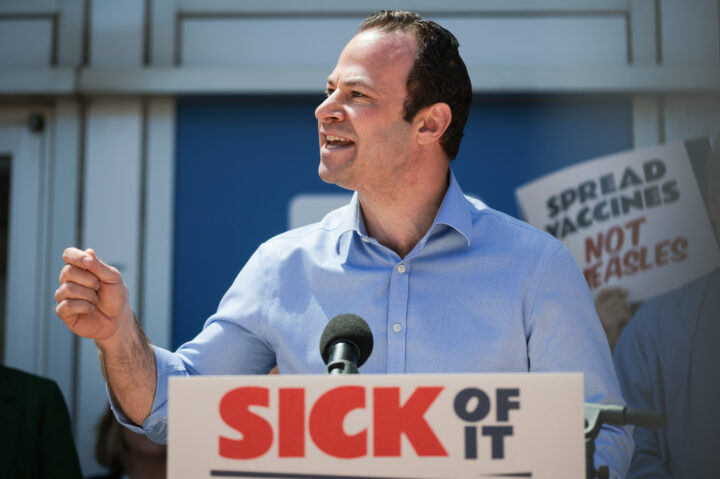
Montgomery County Council Member Andrew Friedson speaks during Sen. Angela Alsobrooks (D-MD) "Sick Of It" rally against the Trump administration's health care policies on May 10, 2025 in Bethesda, Maryland.
Ahead of Tuesday’s primary election for executive of Montgomery County, Md., progressives have largely broken for Montgomery County Councilmember Will Jawando, leaving the more moderate Councilmembers Andrew Friedson and Evan Glass to jockey for the remaining undecided voters.
In a tight three-way race, the vote of the Jewish community — which is, according to a source familiar with the race, expected to account for more than one-fifth of primary turnout in the county with Maryland’s largest Jewish population — could be especially critical. Jewish leaders have raised the alarm on antisemitism in the deep-blue county — which saw the highest rate of incidents in the state in 2025 — and the particular issue of antisemitism in the area’s public schools.
Ron Halber, CEO of the Jewish Community Relations Council of Greater Washington, told Jewish Insider that Jawando, Glass and Friedson “have all denounced antisemitism during their eight-year terms in the council” and said he hopes that other community leaders “awake from their slumber” to speak out against hate without needing to be prompted by the Jewish community.
“As County Executive, I will work with our Jewish leaders and faith leaders and leaders of all our communities to ensure that we protect our diversity,” Glass told JI, while Friedson said being executive would give him “a greater bully pulpit,” in addressing antisemitism in schools.
Earlier this month, the advocacy group EndJewHatred sent a letter to school district officials, including Jawando, who is chairman of the county council’s education and culture committee. The group called for the district to adopt the International Holocaust Remembrance Alliance’s working definition of antisemitism and to adopt lesson plans to address current trends in antisemitism.
In a forum hosted by the JCRC last month, all three candidates pledged to address the rise of antisemitism within the local K-12 school system if elected as executive.
All of the front-runners voted in favor of the IHRA definition when it was adopted unanimously by the council in 2022, after months of community protests, two postponements and a council session disrupted by audience protest.
But “people who are running in this race were not helpful in that effort,” Friedson told JI. A Jewish communal activist said that “Will has stood up against antisemitism, but even if you review the way he spoke before the IHRA vote definition was taken, he was conflicted.” Jawando had said he thought the council “missed an opportunity here to find common ground.”
Rabbi Adam Raskin of Congregation Har Shalom in Potomac, Md., just outside of Washington, was in the council chamber the night the IHRA resolution passed, part of a cohort of Jewish leaders convened by the JCRC to help shepherd it through. “He encountered a tremendous amount of resistance,” Raskin said of Friedson.
Friedson himself said he had “experienced quite a bit of antisemitism as part of that conversation,” telling JI that “there was a screaming crowd in the council chambers as we were taking this up, and it was heartbreaking to me.” Jewish day school students were in attendance when “other members of the community were screaming.”
“We need to ensure the safety of our Jewish residents, and we also need to ensure that everyone has the right to peacefully protest,” Glass said of the IHRA unrest.
During his time in office, Friedson has championed the county’s Nonprofit Security Grant Program, a relatively rare local initiative designed to supplement the federal program, which has been criticized for failing to meet the needs of faith-based institutions. Jewish groups have been among the top beneficiaries of the Montgomery County program, which saw nearly $1.2 million has been awarded across 90 institutions in Fiscal Year 2026.
“Colleagues did not agree with me at first, including the colleagues who are running in this race,” Friedson told JI, “and I regrouped and was able to work together with Asian American leaders” on the initiative.
Glass, the first openly gay Jewish person elected to the county council, frequently leads with his Jewish identity on the campaign trail. His signature initiative on these issues is the Anti-Hate Task Force, a body he convened as council president that consists of a variety of identity-based cohorts, including one Jewish-specific. A source familiar with Glass’ campaign said he joined a synagogue after announcing his run for county executive.
Friedson and his family, meanwhile, are “three-generation members” of Har Shalom, according to Raskin. He has previously served on the boards of Jewish Council for Public Affairs and Hillel Maryland. “Andrew is motivated first and foremost by a sense of justice that was forged by his Jewish identity,” Raskin told JI, “both growing up in this synagogue and growing up with Jewish teachings and values.”
One Jewish activist who’s reached out to all three regarding collaboration on issues of antisemitism shared that Glass’ staff has been fairly responsive, especially in comparison to Jawando’s team.
While the candidates have all spoken out against antisemitism, they hold diverging views on Israel. Jawando is supported by several anti-Israel organizations, including the Council on American–Islamic Relations, the Working Families Party and Our Revolution, as well as the Montgomery County Educators Association union, which Jewish leaders have condemned for its hostility towards Israel. The Jews United for Justice Campaign Fund also endorsed Jawando, after JUFJ fought to strip Israel-related language from the IHRA resolution.
Jawando did not respond to JI’s request for comment on the race.
In vetting candidates, “several organizations in their questionnaires specifically ask about foreign policy in Israel,” Friedson told JI. “They ask about support for Israel. They ask about all kinds of different things that are completely unrelated to the roles of county executive and county council,” he continued.
In September, Jawando made a statement against funding the Maryland Israel Development Center, an organization promoting bilateral trade and economic development. In emails with Saqib Ali, a former Maryland delegate-turned-activist in favor of the Boycott, Divestment and Sanctions movement, Jawando’s chief of staff wrote: “Will has committed to vote against any future funding for this organization.”
Jawando later clarified his position, saying, “We should never use Montgomery County tax dollars to support the development or production of offensive weapons,” declaring intent to look into how MIDC funds are used.
Around the same time, Jawando joined then-County Executive Marc Elrich on an economic development trip to China, subsidized by the Montgomery County Economic Development Corporation.
MIDC received roughly $47,206 from Montgomery County in Fiscal Year 2026, out of the county’s nearly $8 billion budget.
Glass has been deliberate about drawing a boundary between local governance and foreign policy pressures that have seeped into the race. “I do not support all the actions that [Israeli Prime Minister] Benjamin Netanyahu has taken, and that’s okay,” he told JI. “I’m running to be county executive, not secretary of state.”
The three young men were aboard a training flight when the single-engine plane crashed on Saturday night just outside Washington, D.C.

ZAKA
ZAKA responds to a plane crash that killed three Israelis in Maryland.
Three men killed in a small plane crash in Bowie, Md., on Saturday night have been identified as Israeli citizens.
Yoav Bomrind, 26, David Rabinovitz, 19, and Elad Neidik, 20, boarded a single-engine Piper Cherokee plane in Ocean City, N.J., and were headed to the Montgomery County Airpark in Gaithersburg, just outside of Washington, D.C. The plane, which was reportedly operated by a Montgomery County-based flight school, crashed shortly before midnight in a heavily wooded area, just feet from a residential neighborhood in Bowie, The Baltimore Banner reported.
Maryland State Police confirmed the men were aboard a training flight. The cause of the crash remains under investigation by the National Transportation Safety Board and Federal Aviation Administration.
Bomrind was adopted from Ukraine at the age of one and raised in Zichron Yaakov, Israel. His father said he had traveled to the U.S. to pursue his dream of becoming a pilot. “He was a beautiful, smart young man and the best son parents could ask for,” his father told Israeli media, adding that Bomrind was a volunteer with Israel Police.
Hours before he was killed, Bomrind reportedly posted a story on Instagram about his friend, Sgt. First Class Nir Ben Ari, who had fallen in battle in Lebanon, writing “Unbelievable, we grew up together” with a broken heart emoji.
“Israel’s Consul in Washington and the Department for Israelis Abroad at the Foreign Ministry are accompanying the families during this difficult time, maintaining continuous contact with them, and assisting with coordination and communication with the local authorities,” Israel’s Foreign Ministry said in a statement.
Representatives of ZAKA, a Jewish volunteer recovery organization, are also helping with arrangements to bring the victims to burial.
“From the moment we received notification of this tragedy, our volunteers mobilized to provide assistance and support,” said Yanky Landau, ZAKA North America commander. “Our volunteers worked tirelessly to ensure that the victims were treated with the utmost dignity and that their families received the support they needed during an unimaginable moment of loss. These situations are never easy, but the responsibility we carry is clear — to honor the deceased and stand beside families when they need us most.”
According to ZAKA, Bomrind and Rabinovitz, who is from Haifa, will be buried in Israel, while Neidik will be buried in Toronto.
Adrian Boafo, the recipient of AIPAC’s support, said he agrees with the senator ‘that big money has no place in politics’ and that he would work with Van Hollen in Congress to ‘end Citizens United once and for all’

Celal Gunes/Anadolu via Getty Images
Sen. Chris Van Hollen (D-MD) speaks during a rally around the National Mall in Washington, D.C., on September 19, 2025.
Sen. Chris Van Hollen (D-MD) on Thursday called out recent AIPAC and crypto-linked spending in the crowded Democratic House primary in Maryland to replace retiring Rep. Steny Hoyer (D-MD), accusing “outside groups” of “trying to buy this congressional seat.”
“I think voters need to be aware that these outside groups do not have the voters’ interests at heart,” he said during a press conference.
His comments came days after AIPAC’s super PAC, United Democracy Project, invested more than $1 million in a television ad buy to boost Adrian Boafo, a Maryland state delegate endorsed by Hoyer as well as other prominent Democrats in the state.
In a statement to Jewish Insider, Patrick Dorton, a spokesperson for UDP, shot back at the senator, an outspoken critic of Israel who in March called AIPAC anti-American in an address to the progressive Israel advocacy group J Street. “Once again, Chris Van Hollen is deliberately misrepresenting our views and discriminating against millions of pro-Israel Democrats who are members of AIPAC,” Dorton said.
Van Hollen, who is seen as a possible presidential contender in 2028, has not issued an endorsement in the June 23 primary to represent Maryland’s 5th Congressional District — making him a high-profile holdout among state leaders who have thrown their support behind Boafo, including Gov. Wes Moore and Sen. Angela Alsobrooks (D-MD).
Dorton called Boafo, viewed as a favorite to win the nomination, “a strong and principled Democratic fighter,” and said UDP is “proud to stand with leaders like Gov. Wes Moore, Sen. Angela Alsobrooks and Congressman Steny Hoyer to help get him elected.”
Boafo, for his part, said he agreed with Van Hollen “that big money has no place in politics” and vowed to “work with him in Congress to end Citizens United once and for all,” referring to the Supreme Court decision that struck down limits on independent political spending by corporations.
“My campaign has been laser focused on the issues of affordability, health care and standing up to this president who has destroyed our economy, including our federal workforce,” Boafo said in a statement to JI shared by a campaign spokesperson, adding that his “coalition is focused on delivering results to the people of Maryland’s 5th District.”
The packed primary also includes Rushern Baker, a former Prince George’s County executive; state Sen. Arthur Ellis; Quincy Bareebe, who challenged Hoyer in 2024; and Harry Dunn, the former Capitol police officer who ran for a separate House seat in Maryland last cycle and drew outside attacks from UDP that are fueling his renewed criticism of its engagement in his current race.
In a recent statement denouncing the group, Dunn accused Boafo of “benefiting from the MAGA donors who fund AIPAC.”
Boafo, 32, is also backed by Democratic Majority for Israel’s super PAC — which is led by Brian Romick, a former chief of staff to Hoyer.
“We support Adrian Boafo and believe he’s the best candidate for the district,” Romick said in a statement to JI. “We hope Sen. Van Hollen will vocally and specifically oppose all super PAC spending, and not just the spending he disagrees with.”
In his remarks on Thursday, Van Hollen suggested candidates who accept AIPAC’s financial backing are not aligned with prevailing Democratic sentiment on Middle East policy.
“I don’t think it’s any secret that voters do not support unconditional votes in support of the conduct of the government of Israel,” he said, while adding, “For a long time AIPAC has had a pretty free hand.”
Plus, AIPAC boosts Boafo
DREW ANGERER/AFP via Getty Images
Dr. Adam Hamawy speaks during an AFP interview after meetings on Capitol Hill, in Washington DC, on June 14, 2024.
Good Wednesday morning.
In today’s Daily Kickoff, we break down the results of yesterday’s primaries, and report on AIPAC’s backing of Adrian Boafo as the Maryland Democrat and party favorite runs to succeed Rep. Steny Hoyer. We talk to Senate Republicans about their skepticism over the White House’s decision to name Bill Pulte as acting intelligence chief, and report on the decision by leading Senate Democrats to back Graham Platner as the Maine Senate candidate faces new controversy. Also in today’s Daily Kickoff: Makan Delrahim, Harmeet Dhillon and David Baerwald.
Today’s Daily Kickoff was curated by JI Executive Editor Melissa Weiss and Israel Editor Tamara Zieve, with assists from Danielle Cohen-Kanik, Matt Shea and Marc Rod. Have a tip? Email us here.
What We’re Watching
- We’re keeping an eye on primary night returns in California, where most races have yet to be called. Those include the race for Los Angeles mayor, where Mayor Karen Bass has already advanced to the November election and will face either reality star Spencer Pratt or Los Angeles City Councilmember Nithya Raman, and the governor’s race, where Republican Steve Hilton and Democrat Xavier Becerra lead Tom Steyer, with some three million ballots yet to be counted. More below.
- Israeli Prime Minister Benjamin Netanyahu is slated to appear on CNBC at 10 a.m. ET for an interview with the network’s Sara Eisen.
- Secretary of State Marco Rubio will testify before the House Foreign Affairs and Senate Appropriations Committees today, while the House Homeland Security Committee will hear from DHS Secretary Markwayne Mullin.OpenAI CEO Sam Altman is on Capitol Hill today, amid a push from progressives to regulate AI.
- Elsewhere in Washington, Ambassador Yehuda Kaploun, the State Department’s antisemitism envoy, will hold a memorial event with the Argentine Embassy at the U.S. Institute of Peace ahead of the 32nd anniversary next month of the bombing at the AMIA Jewish community center in Buenos Aires.
- The Jewish Democratic Council of America is hosting a forum for candidates in the NY-12 Democratic primary tonight at Manhattan’s Streicker Center.
- Iran continued overnight to escalate its attacks on Kuwait, which said this morning that an Iranian drone struck its airport, causing multiple injuries and suspending flights into and out of the Gulf nation. The passenger terminal at the airport, which reopened on Monday after closing due to the war with Iran, was struck in the attack, which a senior Kuwaiti defense official said involved “a number of hostile drones.” Hours earlier, the U.S. struck an Iranian facility in retaliation for attacks by Iran on both Kuwait and Bahrain that failed to hit their targets.
What You Should Know
A QUICK WORD WITH JI’S JOSH KRAUSHAAR
Democrats nominated a mix of pro-Israel moderates and anti-Israel ideologues in Tuesday’s primaries across the country, but the biggest red flag for the party is the emergence of a New Jersey nominee with past terror ties prevailing in a closely watched congressional contest.
Plastic surgeon Adam Hamawy prevailed with 28% of the vote in a crowded Democratic primary field in the race to succeed retiring Rep. Bonnie Watson Coleman (D-NJ).
Hamawy was a former associate of Omar Abdel Rahman, also known as the Blind Sheikh, who was convicted of inspiring the terrorists who engineered the 1993 World Trade Center bombing. Hamawy later served as a defense witness during Abdel Rahman’s 1995 trial, and volunteered around the same time in Bosnia with a group later shuttered as a front for al-Qaida.
Hamawy, with the support of left-wing groups, some progressive lawmakers and the anti-Israel American Priorities super PAC, defeated his opponents with regional bases but limited support outside their local communities. No pro-Israel groups or other moderate-minded outside PACs decided to spend money on anti-Hamawy attack ads, allowing him to consolidate enough backing from his base to prevail with a relatively small plurality.
Despite his baggage, Hamawy is expected to win election to Congress in November, given the central New Jersey district’s heavily Democratic electorate.
In more favorable news for pro-Israel moderate voters, Democrats nominated former Navy pilot Rebecca Bennett, who flew missions over the Straits of Hormuz, to run against Rep. Tom Kean Jr. (R-NJ) in a major battleground district.
“I just feel very strongly that Israel has a right to defend itself and has a right to exist, and that the United States needs to be able to support Israel, and it shouldn’t be partisan,” Bennett told Jewish Insider last August. “I think we should be supporting Israel as an ally, regardless of political party.” She also told JI she supports continuing U.S. aid to Israel without restrictions or conditions.
Kean, who has represented the 7th Congressional District since 2022, has been missing from Congress for the last several months with an undisclosed illness. His uncertain personal circumstances have made Democrats bullish about their prospects in the swing district, which Kean only won by five points in 2024.
PAC PLAY
AIPAC betting big on pro-Israel Democrat and party favorite in Maryland
In one of its largest independent expenditures of the campaign cycle, the super PAC affiliated with AIPAC spent nearly $1.2 million this weekend to help boost Adrian Boafo, a Maryland state delegate running in a packed Democratic primary to succeed longtime Rep. Steny Hoyer (D-MD), Jewish Insider’s Matthew Kassel reports.
What this means: While the super PAC, United Democracy Project, has invested heavily in several House primaries this year, its latest salvo is particularly notable because AIPAC has frequently avoided engaging openly in contested races as a growing number of Democratic candidates have disavowed accepting funds from the pro-Israel group. In Maryland’s 5th Congressional District, which spans southward from the eastern Washington suburbs of Prince George’s County, UDP’s aggressive play suggests that it is comfortable openly courting a more moderate constituency that Hoyer has represented as a prominent supporter of Israel and close AIPAC ally.
UNCONVENTIONAL PICK
Senate Republicans skeptical of Bill Pulte as intelligence chief

Senate Republicans on Tuesday expressed skepticism about President Donald Trump’s decision to name Bill Pulte, a lawyer and Trump ally who has been working on housing policy issues and has no known intelligence or national security background, as acting director of national intelligence, Jewish Insider’s Marc Rod reports.
Throwing cold water: “I don’t see any evidence of qualifications for that job, but as you know the Senate doesn’t have a role to play in acting [appointments],” Sen. John Cornyn (R-TX) said. Cornyn would be a crucial swing vote on the Senate Intelligence Committee if Pulte is nominated for the permanent role, and was recently defeated in his primary by a Trump-backed challenger. “He doesn’t seem very qualified,” Sen. Bill Cassidy (R-LA), also recently defeated by a Trump-backed primary challenger, agreed.
Bonus: The Wall Street Journal does a deep dive into Pulte’s effort to be named acting DNI, reporting that in conversation with Trump, “Pulte made the case that he would be an unyielding advocate for the president’s foreign policy agenda and he signaled support for the war in Iran.”
PLATNER POSITIONS
Senate Dems wary after latest Platner revelations, but stick by him

Senate Democrats sounded wary of Maine Senate candidate Graham Platner after the latest revelations that he had engaged in sexual conversations with numerous women while married, but most aren’t yet calling for him to leave the race, or throwing their support behind Gov. Janet Mills, who still remains on the primary ballot even after suspending her campaign, Jewish Insider’s Marc Rod reports.
Schumer sidestep: Senate Minority Leader Chuck Schumer (D-NY), who recruited Mills to run for the seat to challenge Sen. Susan Collins (R-ME) but got behind Platner after Mills dropped out, met with Platner in Washington on Tuesday and repeatedly offered a terse response when asked about Platner at a press conference, offering neither effusive support for nor criticism of the presumptive Democratic nominee. “I met with Graham Platner today. We’re going to beat Susan Collins and take back the Senate,” Schumer said.
Big break: House Minority Leader Hakeem Jeffries (D-NY) declined to fully back Rep. Debbie Wasserman Schultz (D-FL) on Tuesday, when asked at a press conference about her run in Florida’s 20th Congressional District, which has historically been represented by a Black lawmaker. Given that she is a member of House leadership, a longtime Democratic congresswoman and an incumbent, it’s highly unusual for Jeffries not to offer his full support to Wasserman Schultz, as he traditionally has done for incumbents of all stripes and affiliations.
ROCKY RESPONSE
Most Colorado electeds remain silent on SJP praising last year’s antisemitic firebombing

Colorado’s elected officials remained largely silent after the CU Boulder Students for Justice in Palestine chapter posted a statement supporting the perpetrator of a deadly antisemitic firebombing on the attack’s one-year anniversary, Jewish Insider’s Haley Cohen reports. “Today, Boulder Students for Justice in Palestine publishes this statement in support of Mohamed’s decisive act of resistance against a genocidal global order,” Boulder SJP — which is an unsanctioned campus group — wrote Monday in a since-deleted Instagram post. “We stand with him.”
Muted response: Only Rep. Gabe Evans directly condemned the statement, telling JI it was “utterly deplorable.” Reps. Jason Crow (D-CO) and Jeff Crank (R-CO) both condemned the attack in statements to JI on Tuesday, but neither addressed the SJP statement directly. Other members of Colorado’s congressional delegation, including Democrats Diana DeGette, Brittany Pettersen and Joe Neguse and Republicans Jeff Hurd and Lauren Boebert, did not respond to requests for comments from JI. Neguse represents the area where the attack occurred.
IRAN TALK
Rubio: Iran sanctions relief only for nuclear concessions, not for reopening Hormuz
Secretary of State Marco Rubio said in testimony to the Senate Foreign Relations Committee on Tuesday that the U.S. is not offering Iran any sanctions relief in exchange for reopening the Strait of Hormuz, and that sanctions relief would only be on the table if the Islamic Republic made concessions related to its nuclear program, Jewish Insider’s Marc Rod reports.
Step by step: The secretary of state described the diplomatic talks as two-phased: The current phase is focused on getting Iran to agree to reopen the strait and to commit to enter further negotiations on disposing its highly enriched uranium and on “severe and long-term limitations and/or cancelation of enrichment.” In exchange, the U.S. would lift its blockade of Iranian ports. The second phase would entail technical discussions on Iran’s nuclear program and fissile material, in exchange for potential U.S. sanctions relief, and could take months to work through, and would be conditions-based.
MOU-ving forward: In separate testimony in the House Appropriations Committee, Rubio confirmed that, as part of negotiations over the next U.S.-Israel memorandum of understanding covering military aid, the U.S. and Israel have been discussing an Israeli proposal to wind down U.S. military aid to Israel.
ROUTING OUT HATE
DOJ’s Harmeet Dhillon condemns antisemitism as ‘devastating and antithetical to our values’
Assistant Attorney General for Civil Rights Harmeet Dhillon said on Tuesday that the Trump administration will continue its legal battles against Harvard University and UCLA, accusing both institutions of continuing to neglect the civil rights of Jewish students and faculty, Jewish Insider’s Emily Jacobs reports.
What she said: Dhillon made the comments while appearing at the American Jewish Committee’s Global Forum in Washington, where she condemned what she described as “egregious examples of antisemitism that have transpired here at home on American soil” since Hamas’ Oct. 7, 2023, attacks on Israel as “devastating and antithetical to our values as a nation.” The assistant attorney general highlighted the department’s most recent lawsuit against Harvard in March, saying that the Ivy League university had been “tolerating race and national origin discrimination against both Jewish and Israeli students.”
View from abroad: Rep. Josh Gottheimer (D-NJ) revealed on Tuesday that senior Emirati leaders expressed concern to him about rising antisemitism in the United States during his trip to the United Arab Emirates last week.
Worthy Reads
The Politics of Virtue and Vice: The New York Times’ Ross Douthat considers the impact of the “amoral center” on the upcoming midterms, where candidates such as Maine Democrat Graham Platner and Texas Republican Ken Paxton have already found success in spite of moral shortcomings. “In this environment, the upright moralist becomes an inherently untrustworthy figure — not because he might be secretly a hypocrite but because he might be entirely sincere, and in his sincerity end up imposing a stringent morality that’s alien to your own. Whereas the sinner, the disreputable character, seems more reassuring because his vices double as a promise that he won’t be too fanatical.” [NYTimes]
Pulse on Pulte: The Atlantic’s Shane Harris considers President Donald Trump’s motivations in naming Bill Pulte as acting director of national intelligence. “The president has shown no sign that he wants a DNI who can coordinate the work of 18 intelligence agencies and harness the power of a multibillion-dollar global-espionage network to provide senior government leaders the best up-to-the-minute information about threats to U.S. national security. No, what Trump has made very clear is that he wants a DNI who will selectively declassify government documents that help fuel conspiracy theories, use the authorities of the state to enact political retribution against his enemies, and try to persuade Americans that Venezuela and maybe the Democratic Party are rigging elections by fiddling with voting machines.” [TheAtlantic]
Time Lapse: The Free Press’ Aaron MacLean explains the stalled negotiations between the U.S. and Iran, which have now gone on for longer than the active conflict between the countries. “Perhaps the president’s apparently urgent need to keep negotiations going has to do with his need to keep the financial markets calm … The first (and, in retrospect, defining) example of this trend was Trump’s original ceasefire announcement on April 7, when he claimed that the Iranian side had agreed to open the Strait of Hormuz in return for the pausing of hostilities. But Iran did not open the strait, and the president allowed the ceasefire to proceed anyway. On numerous occasions since, Trump has threatened military action if the Iranians don’t open the strait or otherwise comply with his demands regarding their nuclear program. But for nearly two months full of threats like this, he has not followed through at all.” [FreePress]
Infantino’s Impact: The New Yorker‘s Sam Knight looks at the extent to which FIFA head Gianni Infantino has influenced the trajectory of the league. “The governments that Infantino has worked most closely with as FIFA president have been Putin’s, the Emir of Qatar’s, the Trump Administration, and the Kingdom of Saudi Arabia. On the one hand, it is a self-selecting group. FIFA has to deal with rulers who have the wealth, and the disposition, to put on the largest events. ‘A lot of the sucking up is exactly as a multinational corporation will do,’ a former FIFA committee member told me. ‘It’s the behavior of Coca-Cola, of Siemens, of Mercedes.’ In 2024, Aramco, the Saudi state-owned oil company, became an official FIFA sponsor. On the other hand, Infantino’s fascination with autocracy seems to be more than just a matter of the people whom he does business with. In 2021, he and his family lived in Qatar, which hosted the following year’s World Cup.” [NewYorker]
Word on the Street
President Donald Trump announced on his Truth Social site that the White House Correspondents’ Dinner, which in April ended in a failed assassination attempt, would be rescheduled for July 24 at Washington’s Waldorf Astoria; Trump added that he planned to attend the rescheduled event at the hotel, which he used to own…
Elias Irizarry, a convicted Jan. 6 Capitol rioter, was tapped by the Trump administration for a role in the irregular warfare and counterterrorism section of the Pentagon’s Special Operations and Low Intensity Conflict office…
The White House sent a fresh slate of diplomatic nominations to the Senate for approval, with few nominations to fill critical vacancies across the Middle East and North Africa, even as the Iran conflict has increased the need for coordination and dialogue in the region, Jewish Insider’s Matthew Shea reports…
The Wall Street Journal looks at Trump and Israeli Prime Minister Benjamin Netanyahu’s divergent opinions over how to wind down the war with Iran, with the White House preferring diplomacy and Israel pushing for intensified military action against Iran and its regional proxies…
Trump confirmed an Axios report that he had called Netanyahu “f***ing crazy” during a phone call earlier this week, telling the New York Post he was “a little bit perturbed at [Netanyahu’s] constantly fighting with Lebanon,” but insisted the two have “worked very well together” and that he liked the prime minister “a lot,” calling himself a “wartime president” and Netanyahu a “wartime prime minister”…
The United Arab Emirates’ Abu Dhabi National Oil Company is planning to build a multi-fuel pipeline that will allow gasoline, diesel and jet fuel to bypass the Strait of Hormuz…
In a rare moment of bipartisanship at a Senate Appropriations Committee hearing on Tuesday, Sen. Chris Murphy (D-CT) and Homeland Security Secretary Markwayne Mullin agreed to work together to get delayed Nonprofit Security Grant Program FY 2025 grants “out the door as quickly as possible”; Murphy called the issue an area of “deep agreement,” with both pledging to get the number of funded applications “as high as we can”…
The leadership of the Congressional Progressive Caucus, whose members constitute nearly 45% of House Democrats, is encouraging members to vote for a war powers resolution led by Rep. Rashida Tlaib (D-MI) that aims to prevent any U.S. cooperation with or assistance for the Israeli operations in Lebanon, JI’s Marc Rod reports…
In an address at the gala of liberal organizing group T’ruah in New York City on Tuesday night, which was bookended by standing ovations, Mayor Zohran Mamdani repeatedly shouted out his candidate for Congress in the audience, former city Comptroller Brad Lander, and touted his proposal to pump an additional $26 million in city funds into his Office to Prevent Hate Crimes…
Jewish leaders and elected officials in New York are condemning the participation of Israeli Finance Minister Bezalel Smotrich and other far-right Israeli officials in Sunday’s Israel on Fifth parade, saying they did not have advance notice regarding the country’s delegation to the parade; Mark Treyger, the head of the Jewish Community Relations Council of New York, which organized the parade, told The New York Times that “there was a complete lack of transparency” with regards to the Israeli delegation, and that the Israeli consulate in New York refused to provide names of delegation members to the JCRC ahead of the parade…
Makan Delrahim, the chief legal officer of Paramount, told the Los Angeles Times that “some of these people” who oppose Paramount’s effort to acquire Warner Bros. Discover “are trying to inflict harm on this transaction, really because of their own antisemitic views”…
Longtime “60 Minutes” reporter Scott Pelley was fired by CBS after clashing with network executives, as well as the show’s new executive producer, Nick Bilton, at a staff meeting earlier this week…
A federal judge issued a temporary order blocking NOTUS from rebranding as The Star, following a lawsuit filed last week by Washington Star Publisher Dovid Efune after Efune acquired the outlet, which last published four decades ago, and relaunched it as a Substack…
The New York Times reviews The Fire Agent, David Baerwald’s semi-fictional account of his grandfather’s years as a spy for the U.S.…
U.K. Green Party leader Zack Polanski signed onto a petition calling on the government to investigate British-Israeli citizens who served in the IDF…
Israir said that a flight set to land in Ljubljana, Slovenia, was forced to reroute to Croatia mid-flight after being denied landing permissions by Slovenian authorities in a move the airline said was politically motivated…
The family of a British couple who was arrested last year in Iran and sentenced to 10 years in prison after being convicted of espionage said that the two had lost an appeal to overturn their convictions…
Indonesia and Qatar are deepening defense ties, with plans to sign a defense cooperation agreement in the near future; earlier this week, Qatari Defense Minister Sheikh Saud bin Abdulrahman Al Thani met with his Indonesia counterpart in Jakarta…
Career foreign service officer and diplomat Donald Bruce Cofman, who served as spokesman for the U.S. Embassy in Israel from 1987 to 1991 and remained in his posting through the duration of the Gulf War, died at 87…
Pic of the Day

Israeli Foreign Minister Gideon Sa’ar met in Fiji with Prime Minister Sitiveni Rabuka on Tuesday during a trip to open Israel’s embassy in the Pacific island nation.
Birthdays

Chairperson and co-founder of the Schwab Foundation for Social Entrepreneurship, Hilde Schwab, pictured with Sir Elton John, turns 80…
Longtime San Fernando Valley, Calif., resident, Richard J. Munitz turns 88… Attorney, author and 2024 candidate for Congress, she was awarded both a Ph.D. in political science and a J.D. from Yale, Jan Schneider turns 79… Tel Aviv-based attorney who served as an overseas representative to the French parliament, Daphna Poznanski-Benhamou turns 76… Former first lady of the United States, Jill Biden turns 75… Retired director for legislative strategy, policy and government affairs at AIPAC, Ester Kurz… Professor at the Hebrew University of Jerusalem, he heads its program in Judezmo (or Ladino) studies, David Monson Bunis turns 74… President of the Federal Reserve Bank of Boston from 2007 to 2021, Eric S. Rosengren turns 69… Chief cantor of Vienna’s Israelitische Kultusgemeinde since 1992, Shmuel Barzilai turns 69… Rabbi emeritus of the Wilshire Boulevard Temple in Los Angeles, Steve Leder turns 66… Racquetball player, he won two World Championships and 10 Canadian Championships, now an advertising account executive in Winnipeg, Sherman Greenfeld turns 64… Former White House national security communications advisor in the Biden administration, now serving as director of the University of Chicago Institute of Politics, John F. Kirby turns 63… Founding member of the rock band Phish, Michael Eliot Gordon turns 61… Member of the British Parliament for the Conservative Party from 2001 to 2024, Jonathan Djanogly turns 61… CEO of Azrieli Group, one of the largest real estate development firms in Israel, she serves on the boards of both the Weizmann Institute and Tel Aviv University, Danna Azrieli Hakim turns 59… U.S. district judge for the Southern District of New York, Judge Ronnie Abrams turns 58… CEO of Ridgeback Communications, Andrew Samuel Weinstein… Executive director of the Jewish Federation of the Greater San Gabriel and Pomona Valleys (Calif.), Jason Moss… Actor and model best known for her role as Nicole Walker on the daytime soap opera “Days of Our Lives,” Arianne Zucker turns 52… Los Angeles-based PR consultant at Winning Progressive, Eric M. Schmeltzer… Major gifts officer at the San Francisco-Marin Food Bank, Lauren Becker… Senior director of experiential marketing at the International Rescue Committee, Sophie Oreck… Chief of staff and special advisor to the president of the Baltimore Ravens, Adam Neuman turns 36… Chief political officer at Israel on Campus Coalition, Brandon Beigler… D.C.-based reporter at The Wall Street Journal covering immigration policy, Michelle Hackman… Gold Glove-winning center fielder for the San Francisco Giants, Harrison Bader turns 32…
State Del. Adrian Boafo is Steny Hoyer’s favored candidate, and is getting support from Democratic leaders across the state
Tom Williams/CQ-Roll Call, Inc via Getty Images
Del. Adrian Boafo, Democratic candidate for Maryland's Fifth Congressional District, speaks during a press conference to kick off a series of meet-the-voter events, at Kenhill Center in Bowie, Md., on Monday, March 2, 2026.
In one of its largest independent expenditures of the campaign cycle, the super PAC affiliated with AIPAC spent nearly $1.2 million this weekend to help boost Adrian Boafo, a Maryland state delegate running in a packed Democratic primary to succeed longtime Rep. Steny Hoyer (D-MD).
While the super PAC, United Democracy Project, has invested heavily in several House primaries this year, its latest salvo is particularly notable because AIPAC has frequently avoided engaging openly in contested races — instead using several cutouts — as a growing number of Democratic candidates have disavowed accepting funds from the pro-Israel group.
In Maryland’s 5th Congressional District, which spans southward from the eastern Washington suburbs of Prince George’s County, UDP’s aggressive play suggests that it is comfortable openly courting a more moderate constituency that Hoyer has represented as a prominent supporter of Israel and close AIPAC ally.
The primary, where Boafo is well-poised to prevail later this month thanks to his institutional support from prominent state party leaders, could deliver a major victory for AIPAC after its negative publicity over a series of recent Democratic contests in which its involvement or potential engagement was a lightning rod for progressive voters.
UDP began spending in the race in mid-May with a modest direct mail investment of $50,000 to bolster Boafo, who has consolidated endorsements from the state’s Democratic leadership. In addition to Hoyer, for whom Boafo served as a campaign manager, the 32-year-old claims backing from Gov. Wes Moore as well as Sen. Angela Alsobrooks (D-MD), among other establishment officials.
The super PAC significantly added to its investment over the weekend with a new television ad buy exceeding $1 million. The ads cite Boafo’s legislative efforts to counter federal immigration and customs agents while promoting support from Hoyer, Moore and Alsobrooks.
“We’re proud to be working alongside Gov. Wes Moore, Sen. Angela Alsobrook and Congressman Steny Hoyer to help elect Adrian Boafo,” Patrick Dorton, a spokesperson for UDP, said in a briefly worded statement to Jewish Insider on Tuesday.
AIPAC, whose affiliated political action committee has not officially backed Boafo, declined to comment on the June 23 primary election.
Prior to Maryland, UDP had most recently devoted its considerable resources to unseating Rep. Thomas Massie (R-KY), an anti-Israel Republican who lost to a Trump-backed primary challenger in Kentucky last month. UDP and affiliated shell PACs ended up winning two of the four congressional races in Illinois they engaged in, helping nominate former Rep. Melissa Bean (D-IL) and Cook County Commissioner Donna Miller but falling short in a high-profile and expensive contest to succeed retiring Rep. Jan Schakowsky (D-IL).
Earlier this year, UDP faced Democratic blowback for opposing a moderate former congressman running in New Jersey who entertained conditioning U.S. aid for Israel — in a failed foray that inadvertently elevated a far-left candidate holding far more antagonistic views on Israel.
With nearly $95 million on hand heading into May, according to the latest federal campaign filings, UDP has a massive war chest at its disposal, but the group has been reticent about discussing how it plans to use its reserves in the remaining months of the campaign season.
While Boafo has drawn scrutiny from some rivals who have questioned his support from UDP, most experts who spoke with JI said they did not believe those investments alone would prompt major voter backlash of the sort that has driven other primaries in Illinois and New Jersey, where AIPAC found itself on the defensive.
“In contrast to some other races,” UDP’s spending “won’t be as much of a tension except from the other candidates who are going to blast it,” Susan Turnbull, a Jewish Democratic leader in Maryland, told JI in an interview. “I wouldn’t be surprised,” she added, “if AIPAC feels that it could be out front in the district because Steny always was.”
Still, she suggested that Boafo’s ties to the tech industry as a former lobbyist for Oracle, owned by the billionaire Republican donor Larry Ellison, and support from crypto-linked spending could stoke suspicion if voters draw a connection to AIPAC’s outside investment. “It could be a problem,” she predicted.
Turnbull said, however, that AIPAC likely did not need to engage in the multi-candidate race, given what Boafo’s supporters interpret as his favorable position just under three weeks before the election. There is no public polling available on the primary.
A prominent Jewish leader in Maryland, who was granted anonymity to speak candidly, likewise said that AIPAC’s “money likely isn’t needed to put Boafo in first place” in what is expected to be a “low-turnout election,” citing Hoyer’s ability to call in “well-earned chits” with high-profile Democrats who followed his lead in backing the retiring congressman’s preferred candidate. “I don’t know of bad candidates who could win the seat now.”
“AIPAC would be better off spending money to back good candidates in races where bad candidates could win,” the Jewish leader told JI this week, referring to Michigan’s Senate race as well as a House primary in New York City where a pro-Israel Democrat is facing a formidable challenger from the left.
In other races, though, where candidates backed by AIPAC are running, the group is viewed negatively by Democrats, raising questions about whether it would hurt their prospects if it engaged openly or even with a shell PAC. UDP is not expected to spend in support of Reps. Dan Goldman (D-NY) and Adriano Espaillat (D-NY), two Democrats endorsed by AIPAC who are facing anti-Israel challengers in progressive districts.
Boafo, for his part, has been more openly supportive of Israel, vowing on his campaign site to “strengthen the U.S.–Israel alliance and ensure” the country “has the security assistance it needs to defend itself.”
A spokesperson for Boafo’s campaign did not return a request for comment regarding UDP’s support for his bid. He is also endorsed by Democratic Majority for Israel, whose CEO, Brian Romick, is a former chief of staff to Hoyer.
More than 20 candidates are now running in the Democratic primary, including Rushern Baker, a former Prince George’s County executive; state Sen. Arthur Ellis; Quincy Bareebe, who challenged Hoyer in 2024; and Harry Dunn, the former Capitol police officer who ran for a separate House seat in Maryland last cycle and drew outside attacks from UDP that are now inflecting his criticism of Boafo’s support.
Echoing his past complaints about UDP’s spending, Dunn, who also maintains his support for Israel on his campaign site, denounced the group in a recent statement that accuses Boafo of “benefiting from the MAGA donors who fund AIPAC.”
In a possible reflection of voter sentiment in the district, however, Dunn said in an interview with JI on Tuesday that he did not mean to single out AIPAC for its involvement in the race.
“This isn’t just about AIPAC,” he explained. “I feel the same way about Coca-Cola or Walmart,” he said. “This is about special interests” influencing elections.
“I just wanted to make that clear,” he added, because “AIPAC gets a bad rap sometimes.”
Moore, to Politico: ‘I think that the state of Israel has a right to exist, but I also think that so do the Palestinian people’

Kevin Dietsch/Getty Images
Maryland Gov. Wes Moore participates in a discussion on bipartisanship at the National Press Club on September 04, 2025 in Washington, DC.
Maryland Gov. Wes Moore slammed Israeli Prime Minister Benjamin Netanyahu in a recent interview with Politico, arguing that the Israeli premier has committed war crimes and that his actions make American Jews less safe.
Moore, a Democrat with close ties to Maryland’s Jewish community, reiterated his support for Israel’s existence. But he strongly criticized Netanyahu’s leadership.
“I think that the State of Israel has a right to exist, but I also think that so do the Palestinian people,” Moore said, when asked if he considers himself a Zionist. “From what we’ve seen from Bibi Netanyahu, I just do not know, and nor believe, that he is putting the same measure of focus on Palestinian lives as he does on Israeli lives.”
Moore declined to say whether he believes Israel’s actions in Gaza amount to a genocide, saying instead that the matter will be left to international courts to decide.
“I think that it’s going to have to be international tribunals [that] figure that out, but I do think this,” Moore said. “I know as a military person that you cannot use food as a negotiating tool. That is a war crime, and I think Bibi Netanyahu has committed war crimes.”
When asked whether Netanyahu should be in prison, Moore dodged the question.
“Look at it this way. First of all, he’s actually under investigation and indictment already right now,” said Moore. “But also if you look at what’s happened in Lebanon, even just since the start of the Iran war, he’s annexed and taken over 10% of Lebanon. That, again, is a war crime. I just don’t know how we can continue tolerating these types of actions by Bibi Netanyahu.”
Further, Moore continued, Netanyahu’s actions put Jews in Israel and America at risk, and complicate efforts to combat antisemitism.
“He’s not making Jewish people safe. He’s not making Israelis safe. He’s not making Jewish people in this country safe. We’re dealing with such a rise in antisemitism, Islamophobia, anti-Black. We’re dealing with such a rise of hate,” Moore said. He referenced a recent incident of antisemitic graffiti at an elementary school in Olney, Md., outside of Washington.
“This is real, and we have to be able to deal with this rising level of hate,” said Moore. “But the challenge that I have is I don’t know if Bibi Netanyahu actually believes that there should be Palestinian safety or Palestinian peace.”
The three leading Democratic candidates agreed that the county can do better dealing with anti-Jewish hate

Robb Hill for The Washington Post via Getty Images
Will Jawando, of the Montgomery County Council, speaks at the dedication of the Phil Alperson Way on February 25, 2022.
The three leading Democratic candidates in the race for executive of Montgomery County, Md., pledged to address the rise of antisemitism within the local school system, while some noted their disappointment that the school board has yet to adopt a Jewish group’s recommendations for doing so.
As the June 23 primary approaches, the Jewish Community Relations Council of Greater Washington hosted a forum on Monday in which the group’s CEO, Ron Halber, asked Councilmembers Andrew Friedson, Evan Glass and Will Jawando how each would address rising antisemitism in Montgomery County’s K-12 schools if elected as executive.
Earlier this month, the JCRC called out the uniquely high rate of antisemitic incidents in the school district and called on the district to incorporate specific antisemitism training. Montgomery County, which is just outside of Washington, D.C., is home to more than 35 active synagogues and has the largest Jewish population in the state.
“I am disappointed that MCPS has not accepted that [training]. I will continue to urge them to do so,” said Jawando, the most progressive Democrat in the race. “There is some Holocaust and antisemitism education happening but we need to start it earlier, in middle school.”
Jawando said as county executive, he would create a Jewish community advisory board and dedicated Jewish liaison to work with schools.
Friedson called for “much better coordination between the school system, county government, JCRC and ADL to ensure better communication and coordination, and ultimately the training to avoid incidents.”
“That’s been offered” to MCPS, continued Friedson. “It has not been fully accepted, which continues to be a major frustration for all of us.”
Glass acknowledged that for years, “most of the antisemitism” in the area has come from schools. “The county executive has to use the bully pulpit to call out hate whenever they see it, wherever it is and for whomever it is pointed at.”
“I will continue to make sure that MCPS does better, either in their appointed leadership and also in their elected leadership.”
The question came at a fraught time for the district — located just outside of Washington, D.C. — as a new report from the Anti-Defamation League showed that Maryland ranked ninth in total antisemitic incidents nationwide in 2025, two-thirds of which occurred in Montgomery County. Among the top ten states with total incidents, Maryland ranked first in the percentage of incidents occurring at K-12 schools, at 34%.
Jawando, who has positioned himself as the most progressive of the candidates, has been critical of the Maryland Israel Development Center, which promotes relations between Maryland and Israeli businesses. “We should never use Montgomery County tax dollars to support the development or production of offensive weapons, whether that’s bombs or munitions or anything else. For me, that’s a nonstarter and I will always oppose it. That’s one reason my office is looking into exactly how MIDC funds are used,” he told the Montgomery Perspective last year.
Friedson, who has positioned himself as the most moderate among the Democratic candidates, has campaigned on a pro-business platform focused on job growth as the county faces slower economic expansion than some of its D.C. metro neighboring counties.
Both Friedson and Glass are Jewish and have longstanding ties to the county’s Jewish community.
Outside of the public school system, Montgomery County has experienced a surge in antisemitic vandalism targeting Jewish institutions.
All three candidates running to replace term-limited County Executive Marc Elrich also said they would retain the local Nonprofit Security Grant Program, one of the few outside of the federal program, in the county budget. Halber and other Jewish leaders have called for increasing NSGP funding in Montgomery County.
‘Too many Jewish students and educators at too many MCPS schools continue to face too many threats,’ said COO Guila Franklin Siegel
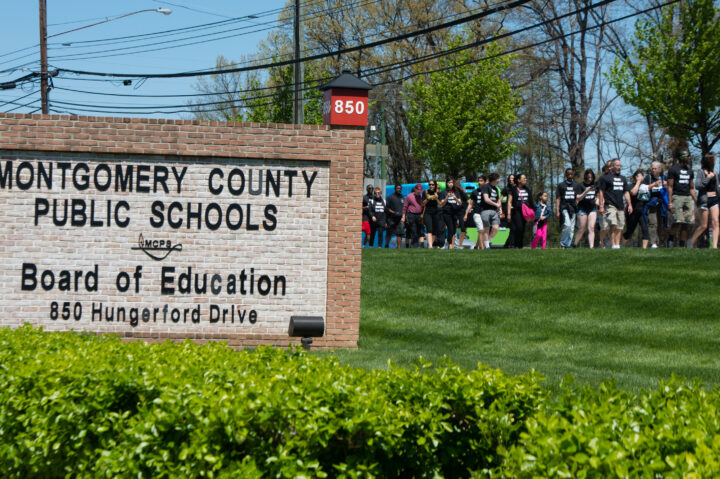
Sarah L. Voisin/The Washington Post via Getty Images
Montgomery County Public Schools building on April 27, 2014.
The leading Jewish advocacy group representing the Washington, D.C., area is raising the alarm on a uniquely high rate of antisemitic incidents in Maryland’s Montgomery County public school system.
Guila Franklin Siegel, chief operating officer at the Jewish Community Relations Council of Greater Washington, said Tuesday that the JCRC is receiving “significantly higher” reports of antisemitism out of MCPS, located just outside of Washington, than others in the region.
Montgomery County’s public school system is the largest school district in the state and hosts a sizable Jewish student population.
The statement comes amid a new report from the Anti-Defamation League showing that Maryland ranked ninth in total antisemitic incidents nationwide in 2025, two-thirds of which occurred in Montgomery County. Among the top ten states with total incidents, Maryland ranked first in the percentage of incidents occurring at K-12 schools, at 34%.
“While the details vary, these incidents reveal a harsh truth: too many Jewish students and educators at too many MCPS schools continue to face too many threats,” said Franklin Siegel, whose statement came the day after JCRC leadership met with MCPS Superintendent Thomas Taylor and his senior management team.
Incidents in recent months include anti-Jewish and anti-Israel graffiti on school walls, most recently at Greenwood Elementary School last weekend; inflammatory anti-Israel messaging at Olney Elementary School’s recent cultural night; “Heil Hitler” gestures and speech occurring at middle school events; and, according to JCRC, “physical threats and harassment directed toward Jewish students at multiple schools.”
Franklin Siegel said MCPS and JCRC leadership discussed “progress on the steps MCPS needs to take to protect Jewish students, educators, and staff.”
“Our messages were simple: MCPS must establish a zero-tolerance policy on antisemitism and other forms of hatred and bias; train and empower administrators and teachers to correctly identify and respond to antisemitism; and rigorously enforce disciplinary codes, making it clear that anyone who engages in antisemitic or other hateful behavior will face meaningful consequences,” Franklin Siegel said.
MCPS said it “will be in compliance with recently adopted state law requiring anti-bias training for school educators and staff” starting in August, according to Franklin Siegel.
The school district also committed “to improv[ing] school participation rates in JCRC’s gold-standard Student to Student and Holocaust speakers’ programs” and to “drafting specific guidelines for culture and international nights. The district must ensure these events are safe and educational for all students and families, not political battlefields,” she added.
But Franklin Siegel called on the school district to go further in protecting Jewish students.
“MCPS should follow the lead of other schools in our area by incorporating specific antisemitism training as well,” she said. “More lessons about Jewish history beyond antisemitism and the Holocaust should be included in its curricula. And given that bias incidents are so often connected to the proliferation of hate speech online, MCPS also needs to discipline students who harass and bully Jewish students on social media accounts, even when those accounts are not formally affiliated with schools. The district has that authority, and principals must enforce it.”
MCPS, which serves over 156,000 students, did not respond to a request for comment from Jewish Insider.
Anne Arundel County Executive Steuart Pittman is facing criticism from the newly created Annapolis Jewish federation

Maryland State Capital building in Annapolis, Maryland.
A Maryland Jewish group is “not taking no for an answer” after the Anne Arundel County executive repeatedly declined to include funding for security grants requested by Jewish institutions in his proposed budget.
Amid rising antisemitism in the state, the newly formed Jewish Federation of Annapolis & the Chesapeake wrote to Anne Arundel County Executive Steuart Pittman last month requesting similar security grants as neighboring counties have received for hate crime protection.
Pittman, whose second and final term ends in December, denied the request. In a county-wide email on April 24, he wrote, “I want to share some of my thinking on the tough decisions, on saying, ‘No, not this year.’”
“I’ll start with a proposal to create a county-funded and administered grant program to pay for security at organizations vulnerable to hate crimes,” Pittman wrote. “It came primarily from the four synagogues in Anne Arundel County, but has attracted support from others. I took the proposal seriously. Antisemitism is a national epidemic, as is hate against African Americans, Muslims, immigrants, and the LGBTQ+ community. All of these groups have enhanced security measures in the last year and a half.”
Still, he said his office would not be including a provision to fund a county-administered program that helps pay for security for vulnerable minority communities in the county in its final budget proposal for the next fiscal year.
“We’re not taking no for an answer from the county council,” Jennifer Laszlo Mizrahi, co-founder of the Jewish Federation of Annapolis & the Chesapeake, told Jewish Insider. “The county executive has now told us no three times. He told us in person, in an email that he sent to the entire county and now [on Friday] in a budget that he released publicly to the whole county.”
Laszlo Mizrahi said the federation, which was formed last year, has started conducting meetings with the five candidates running to replace the term-limited Pittman, and although the group cannot endorse a candidate, it plans to publish a voter’s guide to be distributed around local Jewish institutions.
While Anne Arundel County, which is home to Annapolis, the state’s capital, provides no Jewish security funding, the county — which has a fairly small Jewish population compared to other Maryland counties — receives federal and state security grants, which Laszlo Mizrahi called “extremely oversubscribed.”
“What makes us different from most small communities is that state capitals attract protesters who are angry and there have been a lot of people who are angry at Israel and come to our hometown,” she continued.
In Maryland, 356 antisemitic incidents were reported in 2024, according to the Anti-Defamation League, the sixth highest number reported in the country. This included 195 incidents of harassment, 154 incidents of vandalism and seven cases of assault.
In his email, Pittman pointed to surrounding counties — heavily Jewish Montgomery County, which has a $1.7 million safety grant program, and Howard County and Prince George’s County — having “much smaller programs in previous budgets.”
“None, in my view, come close to meeting the needs, and while some have said that even a small program sends a signal that we care, I believe that a small grant program that rejects most applicants leaves too many feeling rejected,” he wrote.
“I met with advocates for a safety grant program on March 19, with our Police Department and Hate Crimes Prevention Program present. I told them that there would be no grant program in our upcoming budget proposal, but that I wanted to hear more about the need, their security programs, and where the gaps exist. Police held a follow-up meeting with the group to go into more detail,” continued Pittman.
“A future county executive may see things differently, but I believe that the focus of our county work to protect synagogues and other vulnerable institutions should remain with our Police Department and Hate Crimes Prevention Program.”
“Our federation is brand new and we have a long way to go to play catch up,” Laszlo Mizrahi told JI. “One thing we have learned is that if you aren’t at the table, you are on the menu. When a county can find $400,000 in funding for more pickleball lighting, but can’t find security dollars, we know we need to work in partnership for a better future.”
“I believe we are going to achieve this because it is common sense,” she continued. “People understand the threat. We have a fabulous partnership with the police but when you call 911 it still takes time for them to come. When the crisis is a life or death matter of seconds, you need to have a guard on the premises. That’s where the gap is in terms of funding, particularly for the [preschools].
Pittman’s office did not respond to a request for comment from JI.
Moore said it’s his ‘governing philosophy’ to ‘unapologetically confront and condemn antisemitism’ at a Yom HaShoah remembrance event
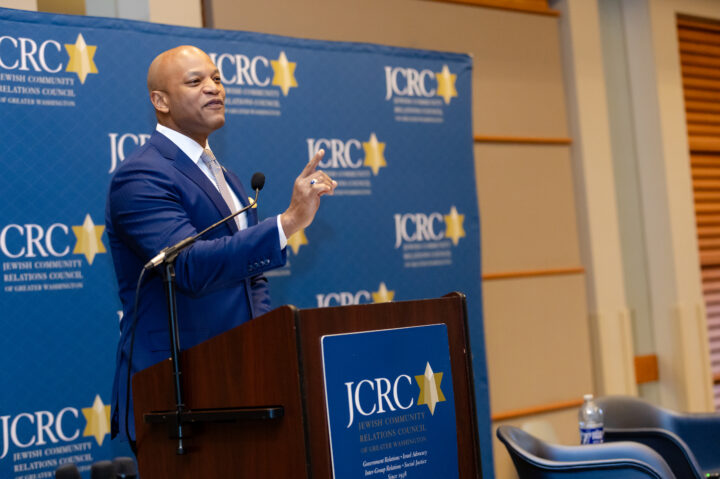
Jewish Community Relations Council of Greater Washington
Maryland Gov. Wes Moore speaks at the Jewish Community Relations Council of Greater Washington's annual Maryland "Lox & Legislators" breakfast on Dec. 3, 2025.
Maryland Gov. Wes Moore pledged that his administration “will always support Maryland’s Jewish community” in recorded remarks for an event Monday evening marking Yom HaShoah, Israel’s Holocaust memorial day, at Beth Tfiloh Congregation in Pikesville, Md., a heavily Jewish suburb of Baltimore.
The Maryland governor, a potential Democratic presidential contender, said that it is his and his state’s “governing philosophy” to “unapologetically confront and condemn antisemitism and persecution wherever it arises,” to provide no refuge to hate, denial and conspiracy theories, to ensure that everyone feels safe to worship and to “realize the full promise of tikkun olam.”
“These are difficult times, but we’ll get through them together,” Moore said.
Moore emphasized the “responsibility” of those living today to commemorate the 6 million Jews who died in the Holocaust “because time does not carry memory forward on its own — people do.”
“We must work together to protect our history and condemn those who would try to deny it, and we can work together to be part of a change that we hope to see in the world, especially right here in Maryland, in this moment,” Moore continued.
He said that it’s important to continue to elevate the voices of Holocaust survivors while they are still living, and that it will be the “moral responsibility of our generation and our children’s generation to never forget.”
Signs outside the Conservative congregation in Olney, Md., were spray-painted with a swastika and an antisemitic slur

Courtesy of Shaare Tefila
Congregation Shaare Tefila in Olney, Md. was defaced with antisemitic graffiti on Feb. 10, 2026.
A synagogue in Montgomery County, Md., a suburb of Washington, was defaced with antisemitic graffiti on Tuesday.
A swastika, the word “genocide” and the phrase “AZAB,” an acronym standing for “All Zionists Are Bastards,” were spray-painted on street signs and banners outside of Shaare Tefila, a Conservative congregation in Olney. The graffiti covered large signs outside of the synagogue that read “Hate Has No Home Here” in several languages below a heart shaped American flag and another that read “We Support Israel.”
Ron Halber, CEO of the Jewish Community Relations Council of Greater Washington, called the act “outrageous.”
“While it is fortunate that no one was physically hurt, it is yet another sad reminder that antisemitic incidents have become common occurrences throughout our region,” said Halber. He added that local officials and police officers responded “immediately.”
Halber called for increased Nonprofit Security Grant Program funding to applicants in Maryland and specifically to Montgomery County, which has the largest Jewish population in the state.
“This funding has quickly become an absolute necessity for our community. Policymakers must sustain and build on these investments for our safety,” he said. “Let this incident serve as another reminder: antisemitism always fails. Our Jewish community will never be intimidated into silence, and we will forever be proud to support Israel.”

Avi Ohayon/GPO
Israeli Prime Minister Benjamin Netanyahu meets with Senate leadership in Washington on Thursday, February 6, 2025.
Last week, Maryland Gov. Wes Moore stood before a crowded room of Jewish attendees just outside the nation’s capital, and proclaimed: “Today, I want to be loud and clear, that Maryland stands with the Israeli people and we support their right to exist in the region with the same sense of safety and security that we all want,” Moore told attendees at the Jewish Community Relations Council of Greater Washington’s annual “Lox and Legislators” event.
The nuance in Moore’s statement was telling — an expression of support not for Israel specifically, but for the Israeli people. It’s a clear distinction — and a potential shift in messaging for mainstream Democrats seeking to put daylight between themselves and the Israeli government, while not, as they see it, throwing Israelis under the bus.
But it’s also the kind of language reserved for rogue and oppressive regimes. Few politicians mention “the South African people” when speaking about disagreements with Pretoria. Same with “the people of Brazil” or “the people of Poland” when disagreements between Washington and those countries arise.
Separating governments from their populaces is commonplace when talking about countries committing grave human rights violations. In their co-sponsorship of legislation introduced last week backing internet freedom in Iran, Sens. Jacky Rosen (D-NV) and Dave McCormick (R-PA), both referred to “the people of Iran.” Last month, Rep. Young Kim (R-CA) introduced legislation supporting “The North Korean people” who “face torture, imprisonment, starvation, and forced labor every single day.”
But Israel, a key U.S. ally, is a parliamentary democracy that holds regular (some would argue too regular) elections. And Moore, a savvy politician with potential White House ambitions, can read the political tea leaves within his party.
A Gallup survey released over the summer found that a majority of Americans — 52% — viewed Israeli Prime Minister Benjamin Netanyahu unfavorably, while just 29% had a positive view of Israel’s longest-serving leader. The July poll reflected Netanyahu’s highest unfavorable numbers in nearly three decades.
But perhaps most telling was that Netanyahu, in the Gallup poll, was viewed favorably by just 9% of Democrats — likely due to the convergence of a number of factors, among them Israel’s prosecution of the war in Gaza and Netanyahu’s close ties with the Trump administration.
To be sure, some of Netanyahu’s current standing with Democrats is a result of his own actions. Ron Dermer, the former strategic affairs minister who served as the Israeli ambassador to Washington during the time the Obama administration was negotiating the Joint Comprehensive Plan of Action, is widely credited with developing Jerusalem’s strategy to focus on building ties with Republicans and evangelicals at the expense of attempting to bolster bipartisan support for the Jewish state.
Similarly, a Pew poll conducted in October found that while 56% of Americans have a favorable view of the Israeli people, 35% of Americans have a favorable view of the Israeli government.
As Democrats look to take back at least one chamber of Congress next year, they are paying close attention to the polls — and hewing campaign messages accordingly. While it may be politically advantageous for Moore and other Democrats with national ambitions to separate the Israeli government from its populace, it could set a dangerous precedent — one that uses semantics to warp reality and drive a deeper wedge between the American public and Israel.
Meanwhile, Van Hollen slams JCRC head as Netanyahu 'apologist'

Flickr/JCRC of Greater Washington
👋 Good Thursday morning!
In today’s Daily Kickoff, we report on Gov. Wes Moore’s specification that he stands with ‘the Israeli people’ at a gathering of members of Maryland’s Jewish community, and cover Sen. Chris Van Hollen’s allegation that Ron Halber, the head of the JCRC of Greater Washington, is an “apologist” for the Israeli government. We report on Rep. Maxine Dexter’s apology over recent remarks comparing the Israel-Hamas war to the Holocaust, and spotlight an initiative by New York’s Success Academy to bring students to Auschwitz. Also in today’s Daily Kickoff: Stephen Ross, Elad Gil and Maj. Gen. Roman Gofman.
Today’s Daily Kickoff was curated by Jewish Insider Executive Editor Melissa Weiss and Israel Editor Tamara Zieve with assists from Danielle Cohen-Kanik and Marc Rod. Have a tip? Email us here.
What We’re Watching
- UJA-Federation of New York, along with the Anti-Defamation League, the American Jewish Committee, the Jewish Community Relations Council-NY and the Conference of Presidents of Major American Jewish Organizations, is hosting a solidarity rally this evening at Manhattan’s Park East Synagogue, following an anti-Israel demonstration outside the synagogue last month.
- The two-day Milken Middle East and Africa Summit kicks off today in Abu Dhabi, United Arab Emirates. U.S. Ambassador to Turkey Tom Barrack and U.S. Ambassador to NATO Matthew Whitaker are among those scheduled to speak.
- White House Special Envoy Steve Witkoff and Jared Kushner are set to brief Ukrainian officials in Miami today, following their trip earlier this week to Russia, where they met with President Vladimir Putin, who rejected a U.S. peace proposal to end the war with Ukraine.
- Senate Minority Leader Chuck Schumer (D-NY) will meet today with the parents of slain Israeli American hostages Omer Neutra and Itay Chen.
- European Broadcasting Union members are meeting today to discuss potential changes to the Eurovision Song Contest’s voting system, following an uproar last year after Israeli entrant Yuval Raphael came in second place in the popular vote. The meeting comes amid threats by the broadcasters from Slovenia, Ireland, Spain and the Netherlands, which have threatened to boycott the May event if Israel is permitted to participate.
What You Should Know
A QUICK WORD WITH JI’S Josh Kraushaar
If there’s a lesson for Democrats from the GOP’s nine-point victory in the Tennessee special election on Tuesday night, it’s that the type of left-wing politics that can play in the city is a political turnoff for persuadable suburban voters. Nominating a telegenic candidate with ideologically radical views — à la Zohran Mamdani — might not matter to many urban Gen Z voters, but it does matter everywhere else.
In the big picture, Republican Matt Van Epps’ single-digit margin of victory in a district that President Donald Trump carried by 22 points is a sign of a strong Democratic environment heading into the midterms. Democrats should feel confident about their chances of winning back control of the House, even with increased gerrymandering. But look a little more closely at the results, and there are signs of an urban-suburban divide in the district, indicating that Democrat Aftyn Behn’s outspoken progressivism cost her badly in the affluent, conservative-minded suburb of Williamson County.
Take a look at the stark urban-suburban divide by the numbers: Behn won by 56 points in the city of Nashville, outperforming Kamala Harris’ margin in the country by a whopping 20 points. But in the Nashville suburbs, Behn barely outperformed Harris, losing Williamson County by 23 points (while Harris lost the county by 30 in 2024).
Behn was tagged as the “AOC of Tennessee” by Republicans, and she didn’t shy away from that comparison during the campaign, even inviting Rep. Alexandria Ocasio-Cortez (D-NY) to participate at a virtual rally for the Democratic candidate. Her anti-police rhetoric, antipathy towards her home city of Nashville, along with her record of hostility against Israel all underscored she was on the far left wing of her party.
Just as New York City Mayor-elect Zohran Mamdani’s anti-Israel and far-left views were toxic enough that suburban New York City Democratic lawmakers — like Reps. Tom Suozzi and Laura Gillen — spoke out against his mayoral campaign, Behn’s suburban struggles underscore that swing-district Democrats who adopt the agenda of their party’s far-left activists will face consequences at the ballot box.
At the same time, Behn’s appreciable gains in Nashville and small inroads in the heavily Republican working-class rural counties of the district indicate that the Democratic message of affordability is outranking other more-ideological issues for voters facing challenges paying their bills. With fears of rising prices amid a volatile economy, Republicans risk losing a little support from their working-class base that could prove costly in the 2026 midterms — and beyond.
All told, the results should be encouraging for Democrats, even as their overly exuberant expectations led them to invite polarizing figures like Harris and AOC to boost turnout, despite the district’s strong conservative bent. But a more moderate nominee would likely have improved the party’s standing in the suburbs, and taken better advantage of the favorable overall political environment for the opposition party. It’s another reminder that moderation is the winning formula for the party to win back power in the future.
HEATED EXCHANGE
Van Hollen attacks Maryland Jewish community liaison Ron Halber as Netanyahu
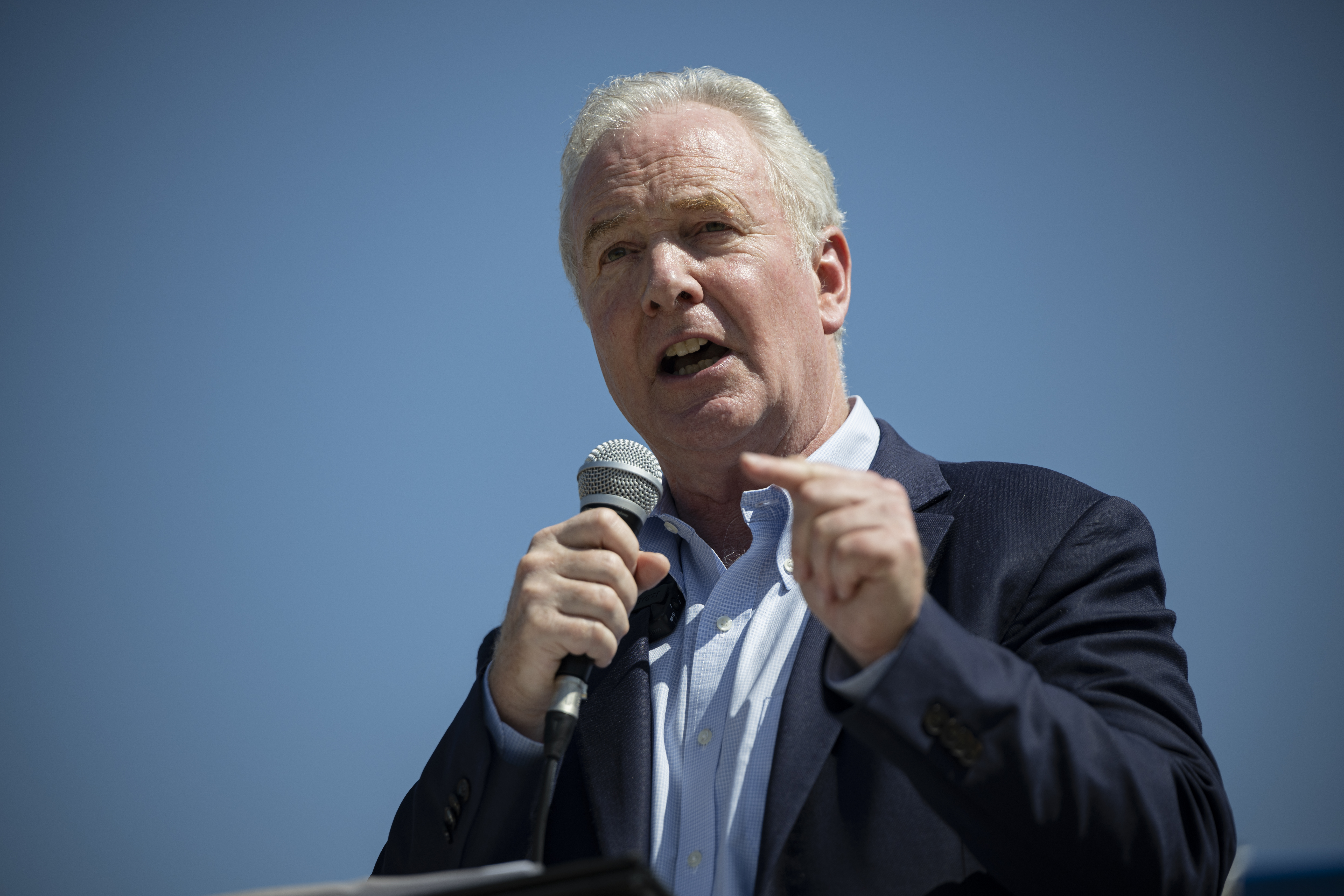
A spokesperson for Sen. Chris Van Hollen (D-MD) attacked Jewish Community Relations Council of Greater Washington CEO Ron Halber by name, accusing the Jewish liaison of being an “apologist for the Netanyahu government” in response to Halber’s own criticisms of the Maryland senator to reporters earlier Wednesday, Jewish Insider’s Marc Rod reports. The exchange marks an unusual and dramatic breach between a leading representative of the D.C.-area Jewish community and a senator who Halber said had once been an ally on a range of issues.
Back and forth: “He’s become the leading senator agitating against Israel in the United States Senate,” Halber told reporters. “On the issue of Israel, I would say the overwhelming majority of the Jewish community feels betrayed by the senator.” The Van Hollen spokesperson responded in part, “Instead of representing the diversity of views that, in the Senator’s experience, are held by the Jewish community of Maryland, Ron Halber has become an apologist for the Netanyahu government.”
HAND IN HAND
Gov. Wes Moore: ‘Maryland stands with the Israeli people’ and the Jewish community
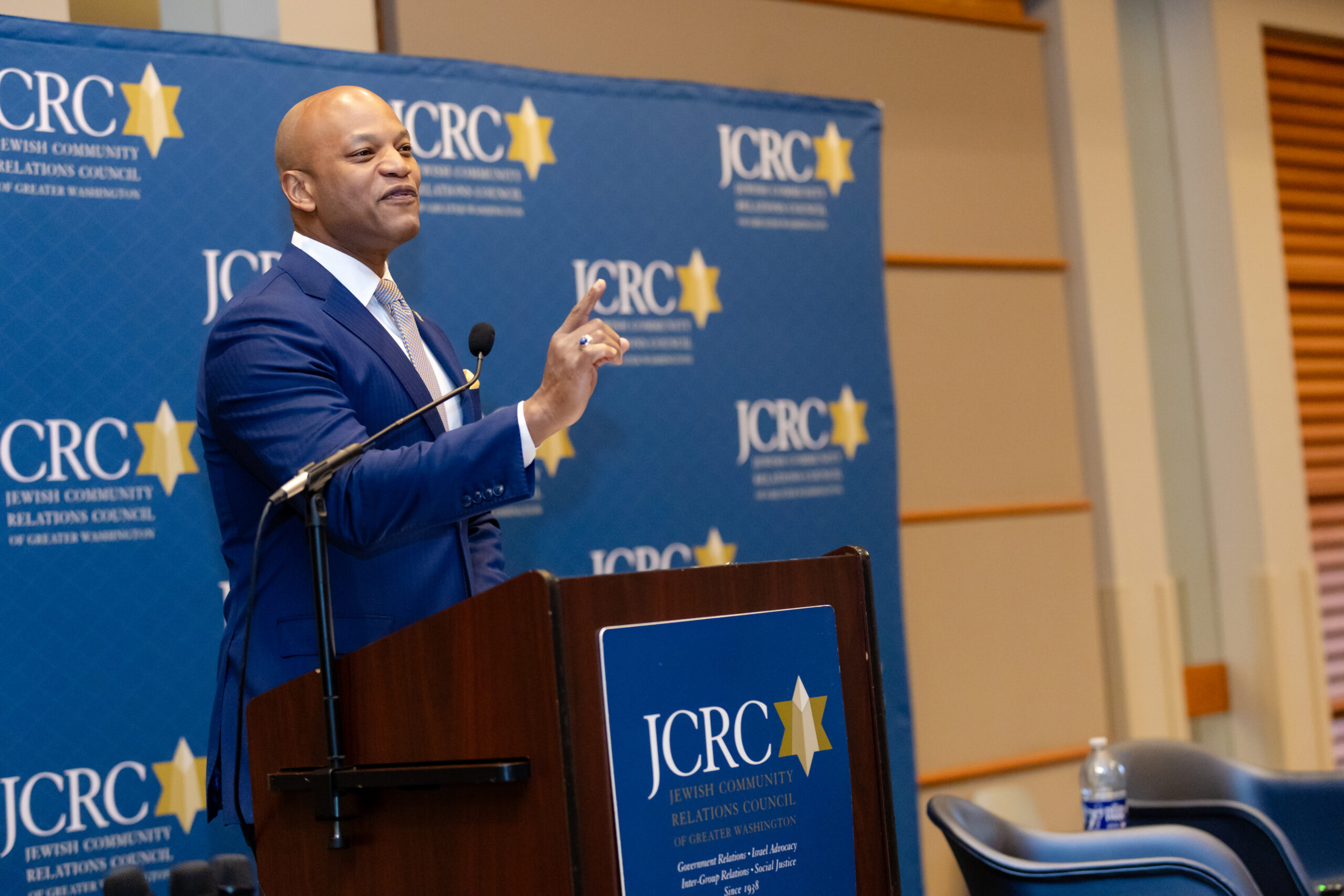
Speaking to the Jewish Community Relations Council of Greater Washington’s annual Maryland legislative breakfast on Wednesday, Maryland Gov. Wes Moore, touted as a prospective presidential candidate, offered support for Israel and for members of the Jewish community facing antisemitism, Jewish Insider’s Marc Rod reports.
Notable quotable: “Today, I want to be loud and clear, that Maryland stands with the Israeli people and we support their right to exist in the region with the same sense of safety and security that we all want,” Moore said, echoing remarks he made at a memorial days after the Oct. 7, 2023, Hamas attacks on Israel, which had been his most recent address to the JCRC. The Democratic governor said that lasting peace between Israelis and the Palestinians requires “humane leadership” for the Palestinians — which cannot include Hamas — as well as by Israel, the United States and any other countries involved in the future of Gaza.
MEA CULPA
Democratic congresswoman apologizes for speech comparing Gaza war to the Holocaust
Rep. Maxine Dexter (D-OR), in a letter to Portland’s Jewish community, apologized for a recent House floor speech in which she appeared to compare the war in Gaza to the Holocaust while explaining her support for a resolution describing the war as a genocide, Jewish Insider’s Marc Rod reports.
What she said: “I am deeply sorry that my recent statement on the U.S. House floor gave the impression that I was equating the Holocaust with the evolving events in Gaza,” Dexter said. “In the aftermath of Hamas’ atrocious attack on October 7th and in the face of rising antisemitism that is pervasive in every corner of the world, I am genuinely sorry to have been the cause of further pain.” In a meeting with local Jewish officials, Dexter apologized for the speech but said she would not withdraw her support for the resolution accusing Israel of genocide.
NOMINEE NEWS
Senate Foreign Relations Committee backs Kaploun’s nomination as antisemitism envoy
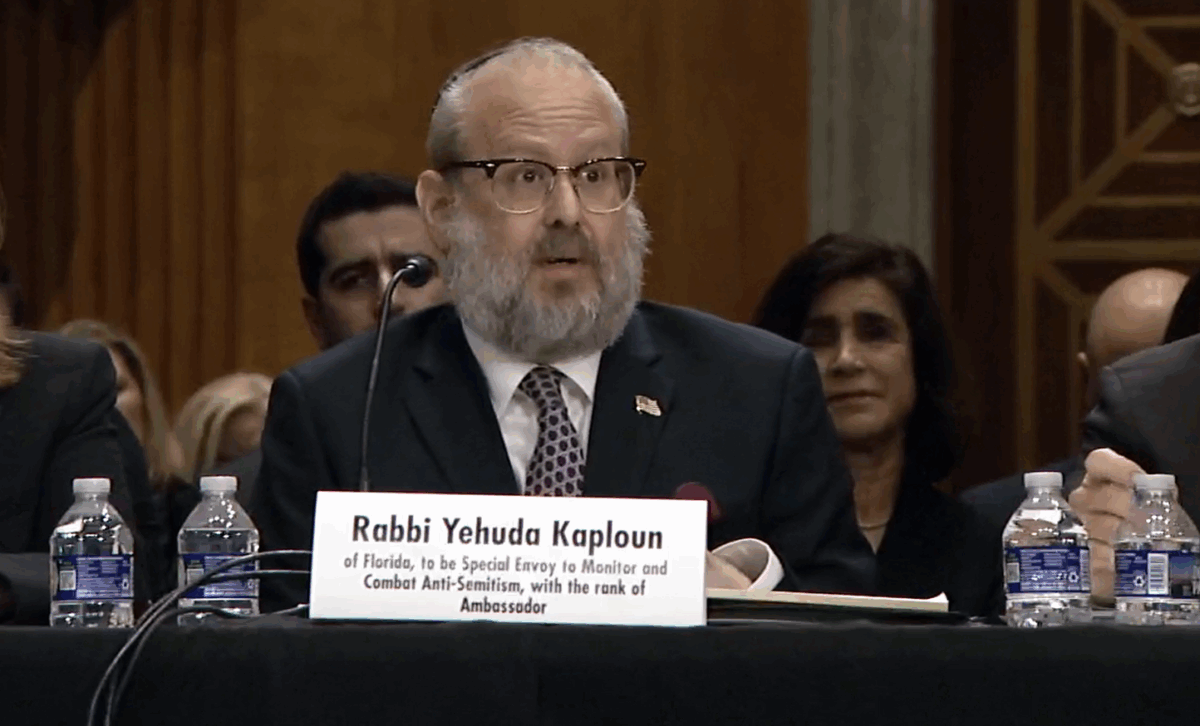
The Senate Foreign Relations Committee voted on Wednesday to advance Rabbi Yehuda Kaploun’s nomination to be the Trump administration’s antisemitism envoy, clearing the way for a full Senate vote on his confirmation. All 12 Republicans on the committee voted in favor, while eight of the 10 Democrats on the panel were opposed. The two Democrats who voted to support Kaploun were the committee’s ranking Democrat, Sen. Jeanne Shaheen (D-NH), and Sen. Jacky Rosen (D-NV), a close ally of the Jewish community, Jewish Insider’s Emily Jacobs reports.
Reading the signals: The 14-8 vote, which came two weeks after Kaploun’s confirmation hearing, offers a preview of how senators on both sides of the aisle could land on his nomination when it comes before the full Senate. Sen. Rand Paul’s (R-KY) decision to vote to advance Kaploun’s nomination, given his record of bucking the president’s choice of Cabinet nominees and legislative matters, suggests Republicans are likely to be unified in supporting Kaploun on the floor. Shaheen and Rosen’s support for Kaploun’s nomination indicates that he could secure a handful of Democratic votes as well.
Elsewhere on the Hill: The House Foreign Affairs Committee voted on a bipartisan basis on Wednesday to advance a bill designating the entire Muslim Brotherhood globally as a terrorist organization, weeks after the Trump administration took action to target certain branches of the group, JI’s Marc Rod reports.
SURVEY SAYS
New Reagan Institute polling finds widespread approval for Trump’s strikes against Iran

President Donald Trump’s decision to strike Iran’s nuclear facilities in June, dealing a significant blow to the Islamic Republic’s weapons program, is viewed favorably by 60% of Americans, according to a newly released survey commissioned by the Ronald Reagan Institute, Jewish Insider’s Josh Kraushaar reports.
Policy popularity: The decision to bomb Iran’s nuclear program was one of the most popular policy decisions the Pentagon has made in Trump’s second term, according to the survey. Of the 10 policies tested, only two (using force against drug traffickers in Latin America and issuing gender-neutral standards for combat roles) had a higher net approval rating. Despite the widespread support for the airstrikes, there is a partisan divide in support. Republicans overwhelmingly supported the military action, while 39% of Democrats did so.
HISTORY IMMERSION
Amid rising antisemitism, Success Academy takes charter school students to Auschwitz

Standing inside a gas chamber, Natalie Francisco felt history — the darkest kind — come alive in a way no classroom lesson on the Holocaust could have. Francisco, an 11th grader at Success Academy High School of the Liberal Arts–Harlem, told Jewish Insider’s Haley Cohen that “witnessing Auschwitz-Birkenau, literally being inside a gas chamber, brought the horror of it all to me in a way that reading or studying history could not.” Fransciso was one of eight high school students who took part in the school’s inaugural six-day trip to Poland last month, which included visits to Auschwitz-Birkenau, the site of the Plaszów Concentration Camp in Krakow and the Warsaw Ghetto.
Trip mission: Success Academy, a network of New York City charter schools primarily serving low-income families, designed the new program as a way to give students “a direct personal connection and opportunity to understand this singular event in history,” Eva Moskowitz, the organization’s CEO and founder, told JI. “Even if there weren’t recent, horrific incidents of antisemitism, I would still want our students to understand [the Holocaust],” she said, adding that the trip was several years in the making, with logistics including obtaining passports for students, many of whom have never traveled outside of the U.S.
Worthy Reads
No Direction Home: In The Wall Street Journal, longtime Democratic political operative Jennifer Bayer Michaels reflects on the party’s shift away from the mainstream and embrace of antisemitic elements. “The Democratic Party has allowed and lately encouraged the normalization of rhetoric that dehumanizes Jews and distorts history. … Democratic leaders must speak clearly: Terrorism is terrorism, Jewish lives matter, moral consistency matters. They must rebuild trust not with performative gestures but with action that shows the extreme is not where the heart of the party is. I may feel politically alone in this moment, but I am not alone. Countless Jews and Americans want this party to succeed yet feel unspoken for and unrepresented. We require something simple: a Democratic Party that remembers its own values and has the courage to live by them in earnest. Only after my community’s safety is secure, and the party recognizes it not as a favor but as a fundamental principle, will I consider coming home.” [WSJ]
Lost Opportunity: The Washington Post’s David Ignatius argues that the U.S., Israel and moderate Arab states are fumbling an opportunity to reshape the Middle East in the wake of Israeli and American military successes and the collapse of rogue regimes. “‘Everything is stuck,’ a senior Israeli defense official told me this week. Because diplomats have failed to capitalize on the disarray of Iran and its allies, ‘all the fronts in the Middle East are still open,’ he warned. Most of Gaza’s population is still controlled by Hamas, Lebanon hasn’t fully regained its sovereignty from Hezbollah and Iran is rebuilding its battered military. … Trump’s problem is that he’s juggling so many diplomatic balls at once that some of them will inevitably tumble to the ground. That’s what happened after his Gaza peace deal. He promised far more than he has so far delivered.” [WashPost]
Word on the Street
Israeli Prime Minister Benjamin Netanyahu said on Wednesday he would visit New York City despite Mayor-elect Zohran Mamdani’s threat to have him arrested on war crimes charges if he does so, Jewish Insider’s Lahav Harkov reports…
The U.S. is deploying to the Middle East a fleet of low-cost, domestically manufactured drones designed like Iran’s Shahed-136 “kamikaze” aircraft as part of Defense Secretary Pete Hegseth’s strategy of “drone dominance”; SpektreWorks, the Arizona-based company producing the drones, designed them by reverse-engineering the Shahed-126…
New York State Assemblyman Micah Lasher, a candidate for Rep. Jerry Nadler’s (D-NY) congressional seat, and state Sen. Sam Sutton introduced legislation that would ban protests within 25 feet of places of worship, following an incident last month in which dozens of anti-Israel demonstrators protested outside an event at the Park East Synagogue…
The LAPD arrested two individuals following an incident at the Wilshire Boulevard Temple in which anti-Israel protesters demonstrating outside an event aimed at bridge-building with the city’s Korean community disrupted the event and vandalized property inside the temple; Mayor Karen Bass called the incident “abhorrent” and said it “has no place in Los Angeles”…
Community Security Service announced it will join the Joint Threat Intelligence Partnership, a national threat monitoring and assessment network launched in September by the Anti-Defamation League and Community Security Initiative of New York…
Real estate developer Stephen Ross is partnering with Archer Aviation to build a flying taxi network in South Florida…
A man suspected of attacking two Jewish students at DePaul University in 2024 pleaded guilty to two misdemeanor charges of battery; hate crimes charges against the assailant were dropped…
Jewish “Dancing With the Stars” pro Alan Bersten led castmates in a Hanukkah routine during the series’ first-ever holiday special; the group, following a routine that included steps mimicking spinning dreidels and other Hanukkah imagery, danced to Matisyahu’s “Miracle”…
A new trove of photographs taken from the Syrian military is providing evidence of approximately 10,000 people who were killed and tortured by the Assad regime…
The U.S. brokered the first direct talks in decades between Israeli and Lebanese officials in an effort to deescalate tensions between Jerusalem and Beirut…
Maj. Gen. Roman Gofman was selected as the new head of Israel’s Mossad, succeeding David Barnea when Barnea’s term ends in June 2026…
NPR spotlights Palestinian writer Bassem Khandaqji, who was serving three life sentences for directing a 2004 terror attack in Tel Aviv that killed three Israelis and was freed in accordance with the October ceasefire agreement between Israel and Hamas, as his book A Mask the Color of the Sky gains accolades and awards…
Thai officials confirmed that the remains of Thai national Sudthisak Rinthalak, who was killed on Oct. 7, 2023, were transferred on Wednesday to Israel; the body of one Israeli, Ran Gvili, remains in Gaza…
A new report from NGO Monitor details Hamas’ efforts to infiltrate local and international aid groups operating in Gaza…
Israeli cloud data startup Eon raised $300 million in a Series D funding round led by Elad Gil’s Gil Capital…
The Financial Times looks at efforts by the Taliban, which resumed control of Afghanistan in 2021, to rehabilitate its image and rebuild relations with former allies…
The Iranian rial reached a new record low on Wednesday…
Artist Mel Leipzig, whose focus on ordinary residents of New Jersey earned him the nickname the “Chekhov of Trenton,” died at 90…
Pic of the Day

Toys for Hospitalized Children hosted a pre-Hanukkah celebration this week for young cancer patients undergoing treatment in New York City and their families at Manhattan’s Moise Safra Center.
“The goal is just that the kids and their families should have a lot of fun. It’s sick children, their siblings. Some of them, the kids are healthy, but the parents are sick, and the parents came here for treatment,” Rabbi JJ Hecht, the nonprofit’s president, told eJewishPhilanthropy’s Nira Dayanim. “We’re just here to make them happy, make them have a good time.”
Birthdays
Actor best known for playing Stuart Bloom in 108 episodes of the CBS sitcom “The Big Bang Theory,” Kevin Sussman turns 55…
Pulitzer Prize-winning biographer, author of six books and winner of the 1980 National Book Award, A. Scott Berg turns 76… Television director and producer, Dan Attias turns 74… Register of copyrights and director of the U.S. Copyright Office, her firing earlier this year by President Donald Trump is pending at the U.S. Supreme Court, Shira Perlmutter turns 69… Digital creator, Tony Sarif turns 67… Dermatologist in the Philadelphia area, Merle M. Bari Shulkin, MD… Founder and lead guide of the Adventure Judaism program based in Boulder, Colo., she is the author of 13 books, Jamie Korngold… Fashion director and chief fashion critic of The New York Times since 2014, Vanessa Victoria Friedman turns 58… Publisher and founder of FlashReport on California politics and principal of the Fleischman Consulting Group, Jon Fleischman… Co-founder and co-managing member of Manhattan-based hedge fund Knighthead Capital Management, Ara D. Cohen… Screenwriter and producer, he co-created ABC’s “Once Upon a Time,” Adam Horowitz turns 54… National security advisor of the UAE, Sheikh Tahnoun bin Zayed Al Nahyan turns 54… Principal at Proxima Media and founder of Relativity Media, Ryan Kavanaugh (family name was Konitz) turns 51… Member of the U.S. House of Representatives (D-OH) since 2023, Gregory John Landsman turns 49… Childhood chess prodigy, martial arts competitor and author, the film “Searching for Bobby Fischer” is based on his early life, Joshua Waitzkin turns 49… Born in Ramat Gan, Israel, now living in New Jersey, Grammy Award-winning violinist, Miri Ben-Ari turns 47… Israeli composer of stage works, orchestral works, ensemble works and classical music, Amir Shpilman turns 45… Comedian and former host of the ChangeUp baseball program for DAZN, one of his viral videos was “10 Hours of Walking in NYC as a Jew,” Scott Rogowsky turns 41… Co-chief of the civil rights and human trafficking unit at the U.S. Attorney’s office in Manhattan, Sam Adelsberg… Former senior campaign director at The Hub Project, Sarah Baron… First-round pick in the 2016 National Hockey League draft, he is a center for the NHL’s Florida Panthers, Luke Kunin turns 28… Israeli fashion model, as a 14-year old she became the lead model for Dior, she served in the IDF from 2019-2021, Sofia Mechetner turns 25…
The Maryland Democrat, rumored as a potential presidential candidate, said he wants Maryland to be a ‘shining example’ where ‘hate will absolutely find no oxygen’
Jewish Community Relations Council of Greater Washington
Maryland Gov. Wes Moore speaks at the Jewish Community Relations Council of Greater Washington's annual Maryland "Lox & Legislators" breakfast on Dec. 3, 2025.
Speaking to the Jewish Community Relations Council of Greater Washington’s annual Maryland legislative breakfast on Wednesday, Maryland Gov. Wes Moore, touted as a prospective presidential candidate, offered support for Israel and for members of the Jewish community facing antisemitism.
“Today, I want to be loud and clear, that Maryland stands with the Israeli people and we support their right to exist in the region with the same sense of safety and security that we all want,” Moore said, echoing remarks he made at a memorial days after the Oct. 7, 2023, Hamas attacks on Israel, which had been his most recent address to the JCRC.
Pointing to his background as a veteran and a Rhodes scholar who studied the rise of Islamism in the Western Hemisphere, Moore emphasized that he understands clearly the threat of groups like Hamas and Hezbollah, and that Hamas “has not been and will never be a faithful partner in any peace process.”
He said that lasting peace requires “humane leadership” for the Palestinians, as well as by Israel, the United States and any other countries involved in the future of Gaza.
“The safety and the peace and security of all people has got to be something that we not just believe in, but we advocate for,” Moore said. “A very clear understanding that the safety of Palestinians is also the safety of Israelis, and the safety of Israelis is the safety of Palestinians.”
“The message that I had on Oct. 13, 2023, has not changed, because I understand that it’s rooted in an internal sense of who I am,” Moore added, explaining that his “foundation comes from faith and with that, an understanding of our commitment to humanity.”
Moore emphasized that many of his ancestors have been ministers, and also recounted the story of how his great-grandfather and his family, who lived in South Carolina, were forced to leave the United States for Jamaica when they faced threats because his great-grandfather preached a message of equality.
He said that his patriotic foundation comes from his grandfather, who witnessed that rejection from the United States, but later returned to the U.S. anyway. “It birthed an unbelievable love that he held on to [for] the remainder of his life.”
Moore also expressed a strong commitment to ensuring the safety of the Jewish community in Maryland, saying that he wants to see Maryland be a “shining example” where “hate will absolutely find no oxygen.”
He announced that, in his 2027 budget request to the state legislature, he would be maintaining support for $10 million in funding for Maryland’s Protecting Against Hate Crimes Grant Program, which offers funding for nonprofits and religious organizations.
The program, with Moore’s support, was doubled in the 2026 budget from $5 million in the 2026 budget.
“We are going to make sure that people know that not only do we believe in being a loving community, but that we also believe in consequences for those who don’t,” Moore said. “Because as Dr. [Martin Luther] King said, ‘Laws don’t change the heart, but laws do protect it from the heartless.’ For those in our society that choose to foment hate … I want to be very clear, in the state of Maryland, you will find accountability, and in the state of Maryland, you will find consequences.”
He also made reference to the partnership between Black and Jewish leaders in the Civil Rights Movement, who he said were pursuing that same goal, to ensure that everyone can feel safe and have their voice and vote counted.
“We are going to ensure that every single Marylander, including our Jewish Marylanders, that they know that they are coming up in a state that’s loving and supportive … and knows that people should be able to relish in support of their God without knowing that it’s something that is going to cause them to be a target,” Moore said.
Moore said he’d been inspired by a meeting with Sigal Manzuri, who lost two daughters in the Nova Music Festival massacre on Oct. 7. He said he met Manzuri alongside Pennsylvania Gov. Josh Shapiro, and has kept in touch with her since.
“She said to me, as we were praying together, ‘Keep searching for love, because in love there is light,’” Moore said. “I think about her words oftentimes because we’ve seen dark times before, in this state and in this country.”
He connected Manzuri’s words to the need to recognize the dark parts in Maryland and U.S. history, while also recognizing that American democracy is “still the greatest experiment in world history. … Nobody here can argue that our history has been neat, that our history has not had hills and valleys, but it’s always been a history that has been worth fighting for, and it’s always been a history where we fought together.”
Moore also generally praised the attendees — leaders in the Jewish community in various capacities — for choosing to “lean in” in “dark, challenging, difficult times.”
“I’m grateful to walk hand in hand with you today, tomorrow and always to make sure that in this moment we fulfill our promise, tikkun olam,” Moore concluded, using the Hebrew phrase for repairing the world.
Moore and his speech were met with an enthusiastic reception from the crowd.
Several members of Maryland’s congressional delegation also addressed the breakfast meeting.
Notably, Sen. Angela Alsobrooks (D-MD) — who reneged on her pledge as a candidate to support U.S. aid to Israel when she voted earlier this year to suspend some weapons sales to the Jewish state — and Rep. Jamie Raskin (D-MD) — who has supported various measures against Israel, including a bill that critics have described as an effective arms embargo for key systems — received warm welcomes and standing ovations from the JCRC crowd.
Alsobrooks made only a brief mention of Israel during her remarks — praising the ceasefire agreement between Israel and Hamas — focusing otherwise on her efforts to combat antisemitism and other broader policy goals and initiatives.
“I know that I am not alone in welcoming the ceasefire in Gaza, urging, still, the return of the final two hostages,” Alsobrooks said, in comments that were made hours before the body of Thai hostage Sudthisak Rinthalak was identified. “It is my profound prayer as we go into 2026 that a permanent end to the war will be there, and that the beginning of healing that leads to a durable peace and the security that Israelis deserve. Peace and security and self-determination for our Palestinians, brothers and sisters as well. This is a fight that must continue every single day.”
She said that the wounds of Oct. 7 have not yet healed, and have continued to fester in part through the surging antisemitism seen across the country.
Alsobrooks said it is “our profound duty to speak up in this moment against rising antisemitism, at a time when we are seeing the vitriol and the violence against our Jewish brothers and sisters rising in a way that we have never, ever seen before.”
Raskin, speaking about security grants for Jewish institutions, said, “We’ve seen a sequence of racist and antisemitic hate crimes around the country that constitute a direct threat to people’s safety and security in their homes, in synagogues, in churches, at nursery schools and so on. … That’s a tremendously valuable investment of money.”
Reps. Glenn Ivey (D-MD) and April McClain Delaney (D-MD) also spoke on a panel alongside Raskin, also offering support for the security grant program.
Despite having publicly spoken out against Raskin for sponsoring legislation that would severely restrict U.S. aid to Israel and expressed concerns about Alsobrooks’ votes to halt certain arms sales to Israel, JCRC CEO Ron Halber said he believes both remain friends and supporters of Israel.
“Jamie Raskin, I believe, is a friend of the Jewish community and I believe he is a supporter of Israel,” Halber insisted to reporters at the close of the breakfast. “We haven’t been happy with some of his votes, but he does it in a thoughtful style. … He is a progressive Zionist who’s disappointed with the Israeli government, but he’s not disappointed with the entire State of Israel.”
He said he’d had an hourlong conversation with Alsobrooks after her votes on the aid measures, and said, “I think that that vote did not represent a shift in her commitment to Israel’s strategic qualitative edge and support for Israel militarily.”
“I consider Angela Alsobrooks a friend of the Jewish people and a friend of the state of Israel,” he added later.
He pointed blame for her and other Democrats’ votes to block arms shipments toward rhetoric online accusing Israel of genocide and deliberate starvation of Palestinians, adding, “those combined created an enormous groundswell that senators who normally wouldn’t have voted that way, voted that way.”
That stands in stark contrast to Halber’s description of Sen. Chris Van Hollen (D-MD) as the most problematic anti-Israel leader in the Senate and who has left the “overwhelming majority” of the Maryland Jewish community feeling “betrayed.”
Halber, at a JCRC breakfast, had lamented the Maryland senator’s worsening relationship with his Jewish constituents
Celal Gunes/Anadolu via Getty Images
Sen. Chris Van Hollen (D-MD) speaks during a rally around the National Mall in Washington, D.C., on September 19, 2025.
A spokesperson for Sen. Chris Van Hollen (D-MD) attacked Jewish Community Relations Council of Greater Washington CEO Ron Halber by name, accusing the Jewish leader of being an “apologist for the Netanyahu government” in response to Halber’s own criticisms of the Maryland senator to reporters earlier Wednesday.
In his role, Halber works to build bridges between the Jewish community in the Washington area and local elected officials. The comments reflect a remarkable breach between a leading representative of the D.C.-area Jewish community and a senator whom Halber said had once been an ally on a range of issues.
“Sen. Van Hollen, I think, has dramatically lost his way with support for Israel. He’s become the leading senator agitating against Israel in the United States Senate,” Halber told reporters at a JCRC breakfast event in Washington’s Maryland suburbs. “His social media is filled with a lack of empathy for Jewish suffering. It’s filled with a lack of empathy for Israel’s strategic position. It’s almost like [he] cannot wait for the next opportunity to jump down Israel’s throat.”
Halber said that the situation with Van Hollen is a “shame” because Van Hollen and the JCRC have worked together on a range of issues in the past, including funding for Jewish institutions and various domestic policy issues.
Maryland Gov. Wes Moore, Sen. Angela Alsobrooks (D-MD) and Reps. Jamie Raskin (D-MD), Glenn Ivey (D-MD) and April McClain Delaney (D-MD) were all in attendance at the breakfast, along with numerous local officials.
“I’m very upset about it, and so are many people in this room, because that’s not the Sen. Van Hollen that so many people in this room worked hard to get elected,” Halber continued. “On the issue of Israel, I would say the overwhelming majority of the Jewish community feels betrayed by the senator.”
The Van Hollen spokesperson fired back, accusing Halber of running cover for the Israeli government and failing to represent the range of viewpoints in Maryland’s Jewish community.
“Senator Van Hollen is committed to a values-based foreign policy that holds our friends and our adversaries to the same standards. That’s why he continues to support the people of Israel, but the actions of the Netanyahu Government have increasingly not aligned with our values,” the spokesperson said in a statement.
“The Senator often speaks with Marylanders who hold varying perspectives here and has met on many occasions with families of hostages and victims of the heinous Hamas attacks of October 7th. Instead of representing the diversity of views that, in the Senator’s experience, are held by the Jewish community of Maryland, Ron Halber has become an apologist for the Netanyahu government.”
Halber said he’d had a two-hour meeting with Van Hollen a year ago, asking the senator to moderate his rhetoric by showing a greater level of “empathy” and “understanding” of the situation Israel and its people are facing — recommendations Halber said the senator had failed to implement, making Halber “angrier.”
“I think it’s very easy to stand with Israel when you’re crying over Jewish victims, but it’s harder to stand up with Israel when she’s doing the right thing,” Halber continued. “And I think the senator has shown a lack of strategic understanding of Israel’s dilemma. And I’m not saying he’s got to be Israel’s cheerleader, but it would be nice if he had more balance in his remarks.”
He said that many people have delivered a similar message to Van Hollen, asking him to offer greater acknowledgement of Israel’s struggles, but have instead received a “consistent, one-sided narrative.”
“The hard thing is to show up when your friends need you, and right now, we’ve needed him, and he hasn’t been there,” Halber concluded.
Responding to the Van Hollen spokesperson’s accusation that Halber’s views are unrepresentative of the Jewish community, the JCRC head emphasized that more than 60 elected officials joined the breakfast event, with similar participation expected at upcoming Virginia and D.C.-focused breakfasts, and that a diverse array of Jewish organizations — religiously and politically — participate in the JCRC and the gatherings.
“Our job is to articulate a representation that represents the broad swath and mainstream of the Jewish community, which I believe we successfully do, and I’m proud of our record,” Halber said. “[JCRC member organizations] all know that JCRC represents the community with dignity and with the greatest broadest consensus and inclusivity as possible. … I’m very proud of the ability of the JCRC to bring such a diverse Jewish community under one tent where they all feel comfortable and represented.”
At the JCRC breakfast, Halber won plaudits from Moore, Maryland’s Democratic governor, who praised him as a dependable sounding board and advisor on difficult issues.
“When you’re debating, when you’re trying to understand the moment, when you’re trying to remember how we need to respond, when we are watching walls collapse among us, and who can help you get that clarity, even when I have to call him [Halber] at 11 o’clock at night,” Moore said. “By the end of the conversation, I’m lifted up.”
Moore joined with Utah Gov. Spencer Cox to speak about reaching across party lines and the need to end divisive rhetoric
Kevin Dietsch/Getty Images
Maryland Gov. Wes Moore participates in a discussion on bipartisanship at the National Press Club on September 04, 2025 in Washington, DC.
When Gov. Wes Moore of Maryland took the stage on Sunday evening at the Capital Jewish Museum’s gala in Washington, he won over the crowd instantly with his opening line: “Shalom, friends.”
But as he continued his speech, Moore used the occasion — an introduction of the philanthropist David Rubenstein, one of the dinner’s honorees — to decry rising antisemitism in the United States and, in particular, the murder of Israeli Embassy staffers Sarah Milgrim and Yaron Lischinsky outside the museum in May.
“We received, once again, a very unneeded reminder of the fact that this nation still has wounds. That the level of antisemitism that we see in our society is not just intolerable, it’s heartbreaking,” said Moore. “I’m a person of deep faith, and while I might not have shared faith with them, Yaron was my brother and Sarah was my sister.”
“I know that in their name and in their lives, we are committed in the state of Maryland to making sure that Maryland can be a true safe haven for everybody to know that they should always and will always feel comfortable in their own neighborhoods, comfortable in their own environments, comfortable in their own skin, comfortable in their homes of worship, and comfortable in the thing that gives them peace and joy,” said Moore.
“In the state of Maryland,” Moore continued, “we will make sure that hate will never find oxygen.”
Moore, a popular Democrat who has been floated as a potential Democratic presidential contender, said on Meet the Press last week that he plans to seek reelection in 2026 and serve his full term — effectively ruling out a 2028 White House run.
The book imparts the lesson of teaching children there are consequences for taking things that don’t belong to them
Sarah L. Voisin/The Washington Post via Getty Images
Montgomery County Public Schools building on April 27, 2014.
A book that centers on Palestinian identity is drawing controversy from some Jewish parents in the Montgomery County, Md., public school system after it was assigned to first grade students as required classroom reading, Jewish Insider has learned.
The book,“Tunjur! Tunjur! Tunjur! A Palestinian Folktale,” written by Margaret Read MacDonald, aims to convey a message to children that there are consequences for taking things that don’t belong to them. It tells the story of a woman who “prayed to Allah” for a child and received a pot as her child. The pot, too young to know right from wrong, had a tendency to steal honey from the marketplace and jewels from the king — until she got caught. As punishment, she was filled with muck. “I hope you’ve learned your lesson,” the pot’s mother tells her. “You cannot take things that do not belong to you.”
While the book does not mention Israel, local Jewish leaders and parents voiced concern that the required book’s subtext sends an anti-Israel message to elementary schoolers and that the reference to “Allah” does not belong in a public school setting.
A syllabus notes that students can receive supplemental reading materials if “any instructional material conflicts with your family’s sincerely held religious beliefs.”
The book’s lesson that “‘you cannot take things that do not belong to you’ echoes activist rhetoric that falsely casts Israel as an oppressor and the Jewish people as imperialist rather than indigenous,” Dana Stangel-Plowe, chief program officer at the North American Values Institute, a nonprofit that monitors antisemitism in K-12 schools, told JI.
“It reinforces a false narrative that erases the historic Jewish connection to Israel. It sends a troubling message to Jewish families during a time of rising antisemitism,” Stangel-Plowe told JI.
Not all Jewish communal leaders agreed that the book was problematic. Guila Franklin Siegel, chief operating officer of the Jewish Community Relations Council of Greater Washington, argued that Jewish families should embrace the book.
“If the only complaint about this book is that it’s sharing a Palestinian folktale that teaches children not to take things that don’t belong to them, I can’t see what the problem with the book is,” Franklin Siegel told JI. “It will be a shame if Jewish people wind up objecting to books only because they have protagonists who happen to be Palestinian.”
“There may well be books and materials that do misinform students about the Israeli-Palestinian conflict, and we always monitor that work,” said Franklin Siegel. “If we turn this into a back and forth where parents are requesting opt-outs for any material that they don’t see eye-to-eye with, we’ll wind up in a situation where we’re seeing a significant number of students whose parents are requesting opt-outs for things like Holocaust speakers.”
Meanwhile, Margery Smelkinson, a parent of four MCPS students, told JI that she would have preferred the district find a children’s book that teaches not to steal “without causing controversy.”
“The real problem is that MCPS chose a book that even requires an opt-out form — why not just pick another book?”
Smelkinson called on the school district to prioritize helping students get up to speed in reading, math and science instead of “creating more barriers to learning.”
“I’m concerned and curious if my child was introduced to [similar rhetoric] last year,” Diana Tung, the parent of an MCPS second grader and kindergartener, told JI. “I assume in a public school setting there’s going to be pretty diverse spiritual beliefs [but] the context of the tale itself [concerns me]. The themes should be taught using a different folktale, I’m pretty confident there are plenty.”
“Books and materials approved to be available for use in classrooms, beyond being in alignment with curriculum standards, are selected to be representative of our very diverse community,” Christopher Cram, a spokesperson for the suburban Washington school system, which is the 15th-largest school district in the country and educates a significant number of Jewish students, told JI. “Students and families expect to be able to see themselves in the materials we use.”
The school system has faced several antisemitic incidents since Hamas’ Oct. 7, 2023, terrorist attacks, leading to the school board president, Karla Silvestre, being subpoenaed to testify at a congressional hearing in May 2024. Weeks after the hearing, at least six MCPS school buildings — including three elementary schools — were vandalized with antisemitic graffiti.
The assignment of the Palestinian folktale as required reading comes two months after the Supreme Court ruled in Mahmoud v. Taylor that MCPS must allow parents to opt their children out of lessons and books that feature LGBTQ+ themes if the material conflicts with their religious beliefs.
SJP filed the First Amendment suit when UMD revoked its permit for an anti-Israel protest on the Oct. 7 anniversary

Loop Images/Universal Images Group via Getty Images
The McKeldin Library at the University of Maryland
The University of Maryland, College Park and Maryland’s attorney general have asked the state to approve their joint request to settle a First Amendment lawsuit brought by the school’s Students for Justice in Palestine chapter.
The request to settle the case, which was not previously publicly available information, was revealed in a memo detailing the agenda for an impending meeting of the Maryland Board of Public Works, which oversees matters impacting the state university system. The university’s settlement, according to the agenda posted to BPW’s website ahead of a Wednesday board meeting, would provide $100,000 to defendants through the CAIR Legal Defense Fund, an arm of the Council on American-Islamic Relations.
“The University of Maryland College Park and the Office of the Attorney General recommend paying $100,000 to settle all claims, including attorneys’ fees, as in the best interest of the State,” the memo reads.
The University of Maryland declined to comment to Jewish Insider about its request to settle and Maryland Attorney General Anthony Brown did not respond to JI’s request for comment.
On behalf of UMD SJP, CAIR and Palestine Legal filed a lawsuit against the university’s College Park campus last September alleging a violation of the students’ free speech after UMD President Darryll Pines announced that the school had canceled an SJP-sponsored anti-Israel rally slated for the first anniversary of the Oct. 7 terrorist attacks.
UMD initially granted SJP a permit last August to hold the Oct. 7 demonstration on the campus’ central McKeldin Mall, prompting swift backlash and calls from campus groups including Hillel and the Jewish Student Union — and from former Maryland Gov. Larry Hogan, who was running for the Senate at the time — for the school to reverse course.
After the university canceled the protest, SJP filed a lawsuit stating that its First Amendment rights had been violated and a federal judge wrote in an opinion that the group “has demonstrated a substantial likelihood that it will prevail [in its lawsuit] on the merits of its freedom of speech claim.” The university then backtracked a second time and ultimately allowed the demonstration to take place, but the lawsuit moved forward.
Pines said at the time that the initial decision to cancel the event — and all events scheduled for Oct. 7, other than university sponsored ones — was made following a “safety assessment,” which, he added, did not identify any threats to the campus.
Einav Tsach, a rising senior studying journalism and business, told JI that amid turmoil around the SJP demonstration, Jewish students still “came together as a strong, vibrant Jewish campus community to mark the one-year anniversary of the horrors perpetrated by Hamas.”
As the second anniversary of the Oct. 7 attacks approaches this fall, Tsach, the former leader of Mishelanu, an on-campus Israeli-American cultural association, said that Jewish UMD students “remain focused on marking this solemn day in the most meaningful way possible.”
Other than the controversy around last year’s demonstration, UMD, which has one of the largest Jewish student populations in the country — nearly 20% of the College Park undergraduate student body of more than 30,000 is Jewish — has largely avoided egregious incidents of antisemitism that have occurred on other college campuses.
Many Maryland Jewish leaders are wary of speaking out against the Maryland Democrat’s votes to block arms sales to Israel
Kayla Bartkowski/Getty Images
U.S. Sen. Angela Alsobrooks (D-MD) speaks during her "Sick Of It" rally against the Trump administration's health care policies in front of the National Institutes of Health (NIH) on May 10, 2025 in Bethesda, Maryland.
Maryland Jewish leaders are expressing disappointment over Sen. Angela Alsobrooks’ (D-MD) decision to support both of Sen. Bernie Sanders’ (I-VT) resolutions blocking U.S. arms sales to Israel despite vowing to oppose such efforts when she campaigned for the Senate last year.
Alsobrooks and 26 of her Democratic colleagues voted on Wednesday evening to block U.S. shipments of automatic weapons that Sanders and others claimed were destined for police units controlled by Israeli National Security Minister Itamar Ben-Gvir, a far-right official in Israeli Prime Minister Benjamin Netanyahu’s government. She also joined 23 Democrats in supporting a second resolution relating to U.S. bombs and bomb guidance kits.
In a statement on her decision, the Maryland senator said she was joining the “voices of so many who feel the moral imperative to demand change. To witness the inhumanity of starving children and say nothing is not just a dereliction of duty but of conscience.”
“Netanyahu and his government must immediately change course. I remain committed to the U.S.-Israel relationship and my belief that the people of Israel have a right to defend themselves. In this moment, we must all do everything in our power as a global community to get desperately needed aid to the people of Gaza,” Alsobrooks said.
The votes marked a change in position for Alsobrooks, who campaigned last year in the general election contest for her seat on the promise to not support cutting off aid to Israel and subsequently told Jewish leaders after winning the race that she planned to maintain that vow. It was also a shift from her votes against Sanders’ prior resolutions blocking aid this past spring.
During the contested Democratic primary, however, she pledged to vote against future arms sales to Israel if the IDF invaded Rafah (an operation that later happened) and agreed with the Biden administration’s threat to withhold offensive weaponry.
In the general election, she moderated her position, and distanced herself from Sen. Chris Van Hollen’s (D-MD) antagonistic record toward the Jewish state, which has alienated much of Maryland’s Jewish community.
Now, many Jewish leaders in Maryland fear she’s aligning herself more closely with Van Hollen on Israel and Middle East policy.
A spokesperson for Alsobrooks told JI in a statement that, “As the Senator made explicit in her statement following the vote, she remains firmly committed to the U.S.-Israel relationship and her support for the security of the Israeli people. This vote was in direct response to the worsening humanitarian crisis in the region and her desire to see the delivery of desperately-needed aid. She will continue to support the people of Israel as well as the people of Gaza while remaining laser focused on eradicating the threat of Hamas and the return of the hostages.”
Ron Halber, the CEO of the Jewish Community Relations Council of Greater Washington, said that the JCRC planned to request a meeting with Alsobrooks to “try and figure out what her thoughts were on this matter and express our concern” about her votes on Wednesday.
Halber predicted that Alsobrooks was “probably swayed by the humanitarian disaster that has unfolded” in Gaza, pointing out her comments during the campaign and her votes against the April resolutions. He also noted that Alsobrooks was “speaking publicly at JCRC forums and speaking as recently as our legislative breakfast in December of last year” about her support for continued aid to Israel.
That record, he argued, was as relevant as Wednesday’s votes.
“Sen. Alsobrooks made it clear during her campaign that she would be a supporter of Israel, and I do not believe that this one vote takes her out of the pro-Israel camp,” Halber told Jewish Insider. “To me, one vote does not constitute a pattern. One vote does not constitute a dramatic shift in her support for Israel, but it’s certainly something we want to speak to her about and let her know that we are troubled by.”
“The concern is that for the Jewish community, Israel’s ability to defend itself is a holy grail, and that includes the ability to defend itself both defensively and offensively,” he continued.
Jennifer Laszlo Mizrahi, a Jewish philanthropist and Democratic activist in Maryland, said she sympathized with arguments from Democrats and others about the humanitarian situation in Gaza while defending Alsobrooks’ pivot from her prior position on Israel aid.
“There has been an evolution of facts between the campaign and now, and the situation with the suffering of innocent children in Gaza is highly problematic,” Mizrahi told JI.
Mizrahi dismissed the notion that Alsobrooks’s vote constituted a broken campaign promise, noting that several other Democratic senators had made similar statements to her and her team during the 2024 cycle that had since come out in support of blocking aid, including Sen. Elissa Slotkin (D-MI).
“Politicians evolve when facts evolve, particularly when they’re bright people. Angela Alsobrooks is an incredibly bright person, of course, and she cares a lot. What I would like to know is her motivation for the vote,” she explained.
Despite this, Mizrahi said she hoped to see Alsobrooks return to supporting Israel aid and to “see her step up more significantly about hate crimes and about antisemitism, because we’re seeing quite a lot of it.”
“I hope that Sen. Alsobrooks will change her vote and will change her tone back to her earlier tone once the ship has righted in terms of the humanitarian situation for innocent people in Gaza,” Mizrahi said, later adding that she wanted to know “whether she feels that if things get better, that she will change her mind again, and that she will enthusiastically support weapons sales to the only democratic ally that America has in the Middle East,” Mizrahi said.
“I’m not going to hold this one vote [against her] until I know more about what her motivation was and what she’s hoping to achieve,” she added.
Bobby Zirkin, a Jewish former Maryland state senator who led an effort to urge Democrats to support former Maryland Gov. Larry Hogan, a Republican, over Alsobrooks in their 2024 Senate contest, said that uncertainties over Alsobrooks’s commitment to Israel was a motivating factor behind his decision to back Hogan.
“There was a reason that I stepped out during the campaign for Gov. Hogan. … My concern was always that she would follow the craziest, most fringe [parts of the] left-wing, which has become Chris Van Hollen in our party,” Zirkin said of Alsobrooks. “She made promises to many people in the Jewish community during the campaign and she has absolutely broken them.”
“You’ve gotta give the Alsobrooks campaign people credit for changing the subject and misrepresenting what she was going to do and all the rest. And by credit, I mean that they hoodwinked people,” he continued. “She pulled the wool over the eyes of a lot of people, and now we’re living with that.”
“From Judea, Stop the BDS Movement” reads the wine description from Rep David Trone’s company

Rep. David Trone (D-MD), the co-founder of Total Wine & More, has a long and noteworthy record when it comes to philanthropy.
He is believed to be one of the only sitting members of Congress who is an AIPAC “minyan” donor, which requires a minimum annual gift of $100,000 and is the highest membership level in the pro-Israel group. Trone has also donated millions to the American Civil Liberties Union, establishing the Trone Center for Justice and Equality.
But in recent years, Trone, who represents Maryland’s 6th congressional district, has had to choose between the two groups because of his vehement opposition to the Boycott, Divestment and Sanctions movement. While AIPAC supports legislation that bars companies from participating in boycotts targeting Israel, the ACLU opposes such efforts on free speech grounds.
Trone, who voted last year in favor of a House resolution condemning BDS, disagrees with the ACLU. “We’re categorically opposed to BDS,” said the 64-year-old freshman congressman, who is a staunch supporter of the Jewish state and regards the movement as antisemitic. “A company shouldn’t be coerced into boycotting Israel.”
For Trone, such statements are hardly theoretical. Total Wine, which operates more than 200 stores across 24 states, is the largest retailer of Israeli wine in the U.S., according to the congressman, and its website makes clear that it opposes BDS as much as Trone does personally. “From Judea, Stop the BDS Movement,” reads a description below some wines that are produced in the West Bank.
The company has “worked hard to have one of the best selections in the country of Israeli wines,” Trone said, praising the wineries in the Golan, a region he characterized as an up-and-coming wine destination akin to Austria’s Wachau Valley. “And not just kosher, but Israeli wines themselves, some of which are kosher.” Despite his enthusiasm for Israeli wine, Trone was reluctant to name a favorite. “That’s just fraught with problems,” the freshman congressman said diplomatically after a brief pause.
Trone has long supported Jewish causes — at least since he married his wife, June Trone, who is Jewish and insisted their four children be raised in the religion. The family attends two synagogues in Maryland: Temple Beth Ami, which is Reform, and B’nai Israel Congregation, a Conservative synagogue June attends regularly.
“I told him, I want to raise my family Jewish, so if that was something that he wasn’t interested in, we shouldn’t pursue this,” June recalled to JI in a rare interview, adding that there was never any discussion about her husband converting. “He said that was fine with him, and of course he’s been extremely supportive of my being Jewish, and the kids.”

Ralph Grunewald, the executive director of the Jewish Federation of Howard County, who worked as Trone’s liaison to the Jewish community during his last campaign, described the congressman, who was raised Lutheran, as an “honorary Jew.”
“I’ve told him that many times,” said Grunewald, who took Trone on his second trip to Israel in February 2018 and solicited the congressman’s donation to AIPAC. “He just gets it in his kishkes.”
Trone said he was intimately attuned to the recent uptick in antisemitic violence in the United States. He lived in Pittsburgh for 15 years, and his oldest daughter, Michelle, received her Hebrew name at the Tree of Life Congregation, the site of a 2018 shooting that killed 11 people.
“We need to be there to support Israel, and that’s something that we are happy to do both in our personal capacity and in our official capacity,” said Trone, who serves as vice chair of the Middle East, North Africa and International Terrorism subcommittee.
Andrew Friedson, a Montgomery County councilmember who sits on Trone’s Jewish community advisory group, backed up that assertion. “David has been a very strong advocate for the U.S.-Israel relationship,” he said.
Robert Stillman, a Maryland doctor who sits on the local board of the American Jewish Committee, agreed. “He’s co-sponsored every piece of legislation in Congress since he’s been there, that I’m aware of, regarding the safety and security of the U.S.-Israel relationship,” Stillman said. “He hasn’t just been a vote,” Stillman added. “He’s been a collector of votes, an influencer.”
Trone is safely ensconced in Washington after handily winning his primary on June 2 — and he is in good shape to defend his seat come November. But his path to Congress was by no means seamless.

A failed run for Congress four years ago cost him more than $13 million of his own money, according to Federal Election Commission filings. Last cycle, he poured approximately $18 million more into his successful campaign to represent Maryland’s 6th district, which includes the state’s northwestern portion. Trone is enlivened by his congressional service, he said, despite a tumultuous first term that has included a global pandemic as well as mass protests against police brutality.
“I created a great, wonderful company, but I found I couldn’t move the needle enough to help those that don’t have a voice,” said Trone.
During his time in Congress, Trone has been focused on addressing mental health issues as well as opioid addiction. In May, the congressman — whose nephew died of a fentanyl overdose four years ago — was appointed by House Speaker Nancy Pelosi (D-CA) to a commission that will address the opioid crisis in the U.S.
“It’s really an opportunity to create legislation that’s going to save tens and tens of thousands of lives in addiction,” he said, “so I’m excited about that.”
Trone — who is aware that he is fortunate to have self-funded both of his campaigns — also wants to help out other aspiring candidates during a year in which the Democrats are hoping to flip the Senate while maintaining their hold on the House.

Not that political donations are anything new for the wine mogul. But Trone said there was an added urgency to his mission as the coronavirus crisis has upended traditional campaigning.
“It’s very hard for them, in today’s environment, to hold fundraisers and really get the money that it takes to run a campaign,” he told JI. “So if we’re able to step up because we’ve been fortunate financially, and help them out, that’s certainly, I think, the right thing to do.”
Trone is dispersing his money among more than 40 candidates, according to his wife, who is also making donations. Those candidates include Senate hopefuls Theresa Greenfield in Iowa, Sara Gideon in Maine, Mark Kelly in Arizona and John Hickenlooper in Colorado — all of whom are running in battleground states.
“They’re the ones who will have the tougher elections,” she told JI.
In late April, Trone gave his most sizable personal donation in 2020 — nearly $250,000 — to the Democratic Congressional Campaign Committee.
“He wants to now give back,” said Grunewald, comparing the congressman to other wealthy politicians of generations past such as former Sens. Frank Lautenberg (D-NJ) and Howard Metzenbaum (D-OH), who moved into public service later in life.
It is clear that Trone is hoping for a long tenure in politics as he tackles the issues that mean the most to him, while working to assist Democratic congressional and senatorial candidates in their effort to make it to Washington — which he knows, from personal experience, can be a difficult task.
“It’s crucial to be there to help,” he said.
This story has been updated for clarity.
Please log in if you already have a subscription, or subscribe to access the latest updates.
 Continue with Google
 Continue with Apple