













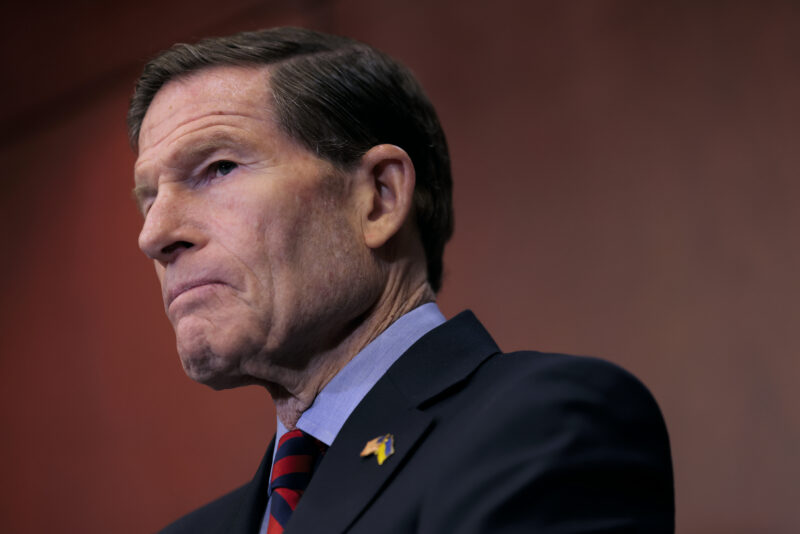




































The Senate hearing highlighted the tension between Colby’s preference for foreign policy restraint and the Trump administration’s military strikes in Iran
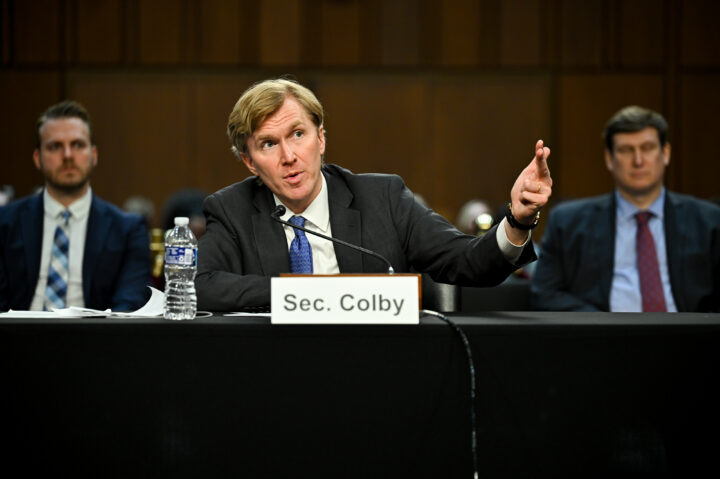
Graeme Sloan/Bloomberg via Getty Images
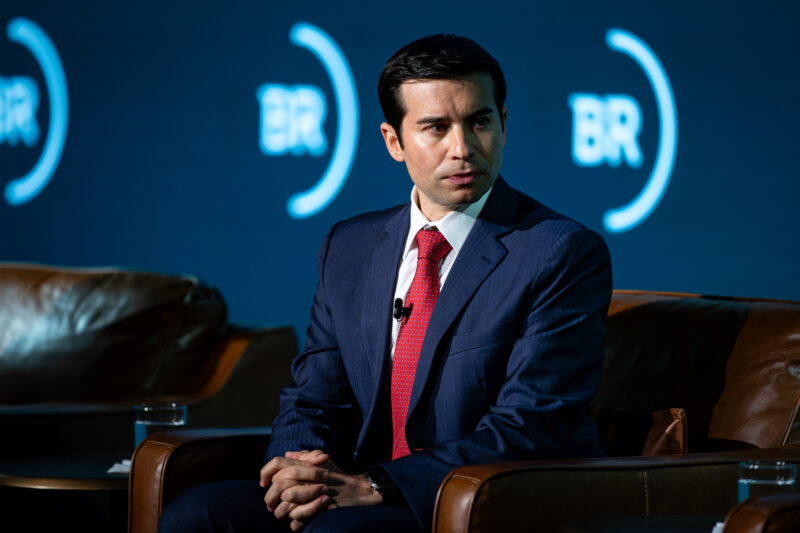
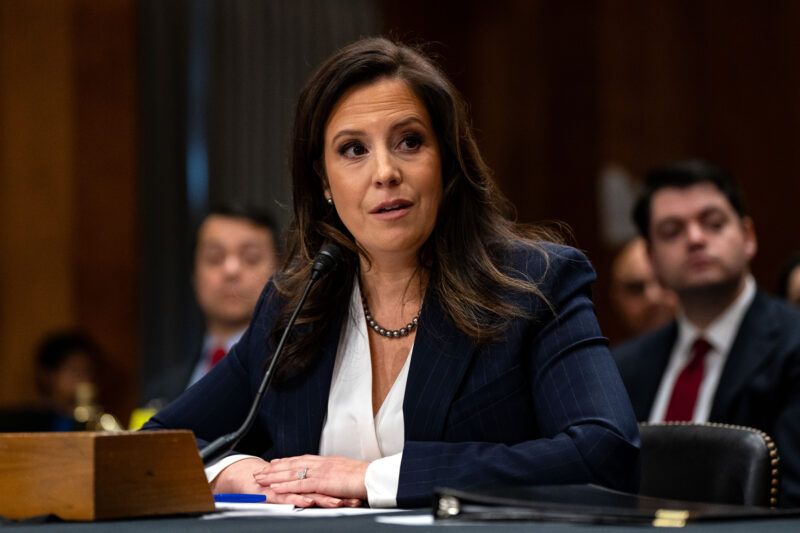
Elbridge Colby, under secretary of defense for policy, during a Senate Armed Services Committee hearing in Washington, DC, US, on Tuesday, March 3, 2026.


 Add JewishInsider on Google
At a Senate Armed Services Committee hearing on Tuesday, a parade of Democratic senators pressed Under Secretary of Defense for Policy Elbridge Colby about the U.S.’ strategy and goals in the war with Iran, criticizing the campaign and its execution without congressional authorization.
Democrats also spotlighted what they said are contradictions between the war effort, the U.S. National Defense Strategy issued just weeks ago and Colby’s own past vociferous opposition to war with Iran. Lawmakers on both sides of the aisle raised concerns about the controversial defense strategy, which sets a high bar for foreign policy intervention, more broadly.
Colby told lawmakers that the U.S. aim in the war is to eliminate Iran’s missile capabilities and naval fleet, echoing the justification provided by Secretary of State Marco Rubio to lawmakers and reporters yesterday — though President Donald Trump’s publicly stated goals for the operation have shifted..
Colby also reiterated that the U.S. is not seeking regime change in Iran, and that operations focused on eliminating top Iranian officials. including the late Ayatollah Ali Khamenei, have been undertaken by Israel — consistent with the division of labor in the operation outlined by other officials as well.
“[Trump] has urged the Iranian people to take this unprecedented opportunity to supplant or overthrow this oppressive Islamic Republic,” Colby said. “But the military campaign, as detailed, that he has directed is focused on the power projection capabilities — and at the end of this campaign, yes, primarily relying on airspace and maritime forces that will have substantially set back a threat.”
Colby insisted that Trump will not “have the yips” and prematurely end the campaign, but will also “learn the lessons of the last 25 years and not make the same mistakes.” He also said that the campaign is in its “earliest stages” but “the results … have been favorable.”
Sen. Angus King (I-ME) warned that the administration is potentially putting the Iranian people in significant danger by urging them to rise up without the arms or necessary support to protect them from renewed regime massacres.
The National Defense Strategy issued by the administration in early December offered little on the Middle East, mentioning Iran just three times and highlighting largely economic interests in the region. Colby’s testimony was nominally focused on the strategy.
Sen. Roger Wicker (R-MS), the chair of the Armed Services Committee, highlighted that the strategy “says little about vital interests in the Middle East. This seems out of step with repeated military actions to deal with the ongoing threat of Iran.”
Democrats went further.
“The NDS is a flawed proposal, and it is now, in many respects, already obsolete,” Sen. Jack Reed (D-RI), the ranking member of the committee, said. “In taking these offensive military actions, President Trump has unilaterally started a conflict that is rapidly spreading throughout the Middle East.”
Colby argued there’s no contradiction between the strategy and the administration’s current actions.
“If you look at the strategy, it details specifically, not only the threat posed by Iran, ensuring that the president has the options to act against Iran,” Colby said, emphasizing that it highlights options for air and naval forces to act against Iran.
He added, “Our Israeli allies are really leaning in, and we see that from our Gulf partners right now, we see that from other partners in Europe,” though he stopped short of saying U.S. allies are taking “primary responsibility” for countering Iran as outlined in the strategy.
Sen. Mark Kelly (D-AZ) argued that the fact that the National Defense Strategy issued just weeks ago made no mention of the threat of Iran’s ballistic missile program belies the administration’s claims now that the growth of that program was a key factor necessitating U.S. strikes.
Colby, seen as a prominent voice of foreign policy restraint in the administration, had also previously vigorously argued against strikes on Iran, including saying that an Iranian nuclear weapon might be preferable to a war launched to eliminate Iran’s nuclear program.
On Tuesday, he offered support for the administration’s actions, both in last year’s strikes on Iranian nuclear facilities and the war that began last weekend.
“Operation Midnight Hammer did have a clear objective — that was something that distinguished it, often from the kinds of perspectives that I was writing about 15 years ago in a private capacity,” Colby said.
Democrats on the committee also continued to raise concerns about comments by Rubio and House Speaker Mike Johnson (R-LA) yesterday that the timing of the U.S. strike was driven by Israel’s determination to strike Iran, to which Iran would have responded by striking U.S. forces.
“I find it very disturbing that we’re committing this nation to war based upon a decision by — even though a staunch ally, and I’m a supporter of Israel, but I don’t think anybody should drive our decision to go to war but interests of the United States,” King said.
Rubio, Trump and other administration officials have subsequently argued that Israel did not force the U.S. to act, that the U.S. was responsible for its own decisions and that the operation was inevitable in the near future.
“The very rapid buildup and reconstitution of Iran’s ballistic missile, cruise missile and one-way attack drones” motivated the attack, Colby said. “There was a perception that this threat has been manifest. As the president said, they’ve been killing Americans for 47 years, and this is something where we can see [where] this is going and they’re going to be able to have … this kind of missile shield.”
He also said that “one of the goals” of the operation was to protect Israel, and that the operation also serves the U.S.’ own interests.
Colby also argued that U.S. operations in Venezuela and Iran have helped to disrupt the global axis of U.S. adversaries, as well as lessen the risk of a worst-case-scenario in which the U.S. faced simultaneous offensives by multiple adversaries including an attack on Taiwan by China and an offensive by Iran in the Middle East, which would stretch American resources thin.
Beyond questions about the war in Iran, Colby also faced off concerns from both sides of the aisle about the National Defense Strategy more broadly, which faced bipartisan criticism for downplaying or ignoring U.S. interests, allies and threats in Europe, the Middle East and the Indopacific, in order to focus on the Western Hemisphere.
“The strategy document fails to acknowledge the global nature of the threat posed by the axis of aggressors working together,” Wicker said, adding that the document ignores the threat from Russia, offers no clear plan for the Western Hemisphere and signals “equivocation” on Taiwan.
“The lack of any significant statement on these developments raises the question: are we ignoring the existential dangers that China, Russia and North Korea pose to our way of life?” Wicker said. “There’s much to like in this strategy, particularly its priorities and emphasis, but I still believe we have much work to do.”
Reed argued that the strategy is “littered with partisan commentary,” suggests U.S. deference to China, offers a clear “abdication of clear national security interests” by overlooking the threat from Russia and takes a harder line toward European partners than toward Beijing.
Colby, in his opening statement, argued that the strategy prioritizes an approach of “flexible realism” that focuses on the “interests of regular Americans,” and recognizes the U.S.’ inability to “do everything, everywhere, all the time.” He said that it charts a middle course between isolationism and interventionism.
“On one hand, isolationism that pretends that we can retreat from the world and a favorable stability will emerge. And on the other hand, an unfair use of military force for overly expansive ends that would drain the American people’s will and resources is unnecessary and over-ambitious conflict,” Colby said. “This strategy rather prudently adopts a middle course that will actually put us on a far firmer, more successful and thus more lasting course than either of these extreme alternatives.”
He said that the U.S. has no need to dominate the Indopacific, but only “prevent that vast and dynamic region from being dominated so that we can trade and interact with it on fair and reasonable terms for everyday Americans,” leading to a strategy of deterring China “through strength, not confrontation.”
Colby denied press reports that he had obstructed the transfers of weapons to Ukraine, claims which earned him bipartisan criticism on Capitol Hill. He claimed to have been directly involved in ensuring that such transfers occurred.
The backtracking was sufficient for Sens. Jacky Rosen and Tammy Duckworth to announce they would release their holds on the Coast Guard commandant’s confirmation proceedings
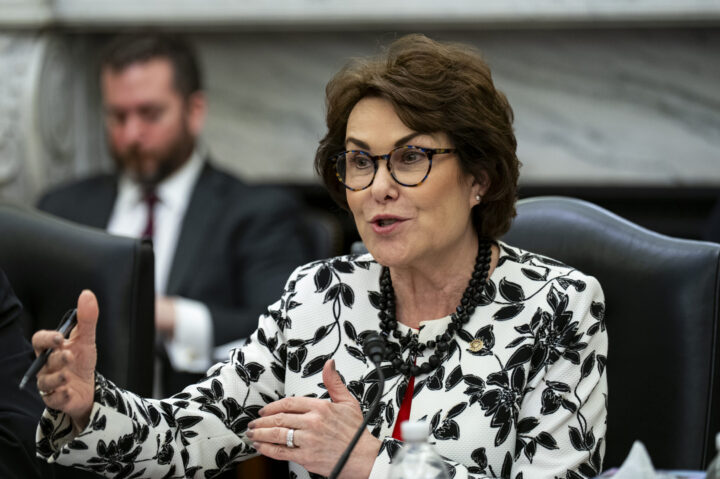
Al Drago/Getty Images
Sen. Jacky Rosen (D-NV), ranking member of the Senate Armed Services Subcomittee on Cybersecurity, speaks during a hearing on Artificial Intelligence cyber capabilities, on Capitol Hill on March 25, 2025 in Washington, DC.
After pressure from Capitol Hill — including a blockade by Democratic senators of the confirmation of the Coast Guard commandant — the Coast Guard struck from its disciplinary policies language describing swastikas and nooses as “potentially divisive,” rather than as explicitly banned hate symbols.
The Washington Post initially reported that the language around displays of such symbols would be changed last month, prompting bipartisan outrage from Capitol Hill. Though Department of Homeland Security officials denied the changes, acting Coast Guard commandant Adm. Kevin Lunday issued new guidance to clarify that such displays were still banned hate symbols and repeatedly reassured lawmakers as such.
Yet, this week, the Post reported that the “potentially divisive” language had gone into effect anyway, prompting another wave of confusion and outrage from Capitol Hill, with some lawmakers accusing Lunday of misleading them. Sens. Jacky Rosen (D-NV) and Tammy Duckworth (D-IL) said they would block Lunday’s confirmation in response to the latest change, and some Republicans expressed frustration at the continued flip-flopping and sought answers from DHS.
Secretary of Homeland Security Kristi Noem denied any wrongdoing and attacked critics, but said Thursday on X, “The pages of superseded and outdated policy will be completely removed from the record so no press outlet, entity or elected official may misrepresent the Coast Guard to politicize their policies and lie about their position on divisive and hate symbols.”
Noem’s description of the “superceded and outdated policy” appears to refer to the “potentially divisive” language, but the language of policy now on the books remains unclear.
The Post reported that the Guard had indeed deleted the language downgrading swastikas and nooses from hate symbols to “potentially divisive,” and that the Coast Guard manual now includes a black bar covering the relevant portion of its table of contents and a reference to a separate civil rights manual.
Noem claimed that new Coast Guard policies, in addition to the Coast Guard’s existing civil rights manual, “strengthens our ability to report, investigate, and prosecute those who violate longstanding policy,” and that the updated policy and order issued by Lunday last month “double[d] down on that language and further clarif[ied] the display of divisive and hate symbols and flags prohibited as a violation of Coast Guard policy and the Uniform Code of Military Justice.”
Lawmakers on both sides of the aisle had raised concerns that the updated policy issued by Lunday weakened investigative and accountability procedures for displays of swastikas as compared to the previous policy.
Noem dismissed critics as promulgating a “demonstrably false story.”
The secretary’s announcement came after Rosen and Duckworth placed holds on Lunday’s confirmation, which was expected to be finalized this week, over the policy. Noem demanded an end to these delays and Lunday’s prompt confirmation.
The latest developments were sufficient reassurance for the two Democrats to announce they would be lifting their holds.
But Rosen said she’ll be placing a hold on another DHS nominee in a bid for accountability going forward.
“While I continue to have reservations about the process by which this happened and the confusion created by leadership at the Department of Homeland Security, I am pleased to see that the policy now directly refers to stronger language against swastikas and nooses,” Rosen said in a statement. “For this reason, I will be lifting my hold on Acting Commandant Kevin Lunday. I appreciate his lifetime of service to our country and look forward to working with him to continue to strengthen anti-harassment policy at the Coast Guard.”
To ensure the “ongoing implementation of the policy,” Rosen said she’d place a hold on Sean Plankey, nominated to lead the Cybersecurity and Infrastructure Security Agency, who is currently overseeing the Coast Guard in a role at DHS.
“I will keep that hold in place until we see that this new policy works to protect our men and women in uniform from racist and antisemitic harassment,” Rosen said.
She also said that some at the Coast Guard and DHS have been “evasive, misleading, and elusive” about the policies being put in place since the scandal first began, and that there was “absolutely no valid reason” to alter existing policy in the first place.
She also highlighted that even after the Coast Guard initially agreed last month to drop the “potentially divisive” language, the new policy included changes that “would’ve weakened the Coast Guard’s standards and potentially allowed swastikas and nooses to be displayed.”
Duckworth said, “Swastikas and nooses are divisive symbols of hate. No gray area. No debate. Admiral Lunday told me he agreed with this statement — so it made absolutely no sense that the Coast Guard policy ever said otherwise. With this policy reversed, I will lift my hold.”
Halber, at a JCRC breakfast, had lamented the Maryland senator’s worsening relationship with his Jewish constituents
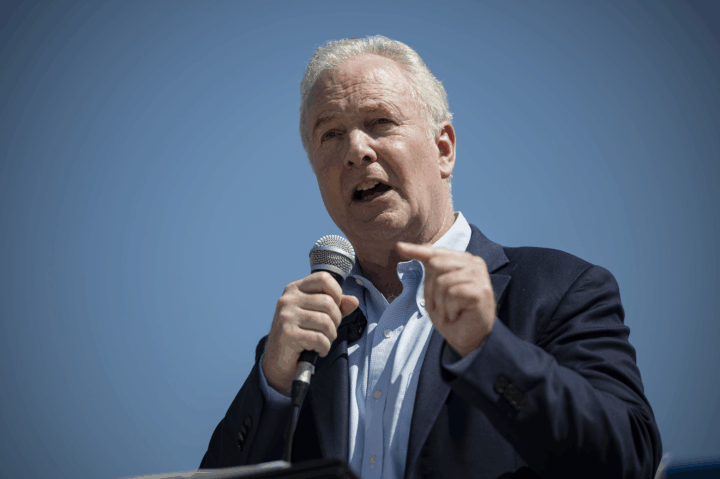
Celal Gunes/Anadolu via Getty Images
Sen. Chris Van Hollen (D-MD) speaks during a rally around the National Mall in Washington, D.C., on September 19, 2025.
A spokesperson for Sen. Chris Van Hollen (D-MD) attacked Jewish Community Relations Council of Greater Washington CEO Ron Halber by name, accusing the Jewish leader of being an “apologist for the Netanyahu government” in response to Halber’s own criticisms of the Maryland senator to reporters earlier Wednesday.
In his role, Halber works to build bridges between the Jewish community in the Washington area and local elected officials. The comments reflect a remarkable breach between a leading representative of the D.C.-area Jewish community and a senator whom Halber said had once been an ally on a range of issues.
“Sen. Van Hollen, I think, has dramatically lost his way with support for Israel. He’s become the leading senator agitating against Israel in the United States Senate,” Halber told reporters at a JCRC breakfast event in Washington’s Maryland suburbs. “His social media is filled with a lack of empathy for Jewish suffering. It’s filled with a lack of empathy for Israel’s strategic position. It’s almost like [he] cannot wait for the next opportunity to jump down Israel’s throat.”
Halber said that the situation with Van Hollen is a “shame” because Van Hollen and the JCRC have worked together on a range of issues in the past, including funding for Jewish institutions and various domestic policy issues.
Maryland Gov. Wes Moore, Sen. Angela Alsobrooks (D-MD) and Reps. Jamie Raskin (D-MD), Glenn Ivey (D-MD) and April McClain Delaney (D-MD) were all in attendance at the breakfast, along with numerous local officials.
“I’m very upset about it, and so are many people in this room, because that’s not the Sen. Van Hollen that so many people in this room worked hard to get elected,” Halber continued. “On the issue of Israel, I would say the overwhelming majority of the Jewish community feels betrayed by the senator.”
The Van Hollen spokesperson fired back, accusing Halber of running cover for the Israeli government and failing to represent the range of viewpoints in Maryland’s Jewish community.
“Senator Van Hollen is committed to a values-based foreign policy that holds our friends and our adversaries to the same standards. That’s why he continues to support the people of Israel, but the actions of the Netanyahu Government have increasingly not aligned with our values,” the spokesperson said in a statement.
“The Senator often speaks with Marylanders who hold varying perspectives here and has met on many occasions with families of hostages and victims of the heinous Hamas attacks of October 7th. Instead of representing the diversity of views that, in the Senator’s experience, are held by the Jewish community of Maryland, Ron Halber has become an apologist for the Netanyahu government.”
Halber said he’d had a two-hour meeting with Van Hollen a year ago, asking the senator to moderate his rhetoric by showing a greater level of “empathy” and “understanding” of the situation Israel and its people are facing — recommendations Halber said the senator had failed to implement, making Halber “angrier.”
“I think it’s very easy to stand with Israel when you’re crying over Jewish victims, but it’s harder to stand up with Israel when she’s doing the right thing,” Halber continued. “And I think the senator has shown a lack of strategic understanding of Israel’s dilemma. And I’m not saying he’s got to be Israel’s cheerleader, but it would be nice if he had more balance in his remarks.”
He said that many people have delivered a similar message to Van Hollen, asking him to offer greater acknowledgement of Israel’s struggles, but have instead received a “consistent, one-sided narrative.”
“The hard thing is to show up when your friends need you, and right now, we’ve needed him, and he hasn’t been there,” Halber concluded.
Responding to the Van Hollen spokesperson’s accusation that Halber’s views are unrepresentative of the Jewish community, the JCRC head emphasized that more than 60 elected officials joined the breakfast event, with similar participation expected at upcoming Virginia and D.C.-focused breakfasts, and that a diverse array of Jewish organizations — religiously and politically — participate in the JCRC and the gatherings.
“Our job is to articulate a representation that represents the broad swath and mainstream of the Jewish community, which I believe we successfully do, and I’m proud of our record,” Halber said. “[JCRC member organizations] all know that JCRC represents the community with dignity and with the greatest broadest consensus and inclusivity as possible. … I’m very proud of the ability of the JCRC to bring such a diverse Jewish community under one tent where they all feel comfortable and represented.”
At the JCRC breakfast, Halber won plaudits from Moore, Maryland’s Democratic governor, who praised him as a dependable sounding board and advisor on difficult issues.
“When you’re debating, when you’re trying to understand the moment, when you’re trying to remember how we need to respond, when we are watching walls collapse among us, and who can help you get that clarity, even when I have to call him [Halber] at 11 o’clock at night,” Moore said. “By the end of the conversation, I’m lifted up.”
The Senate Democrats said the Iranian moves were indicative of Iran’s broader continued malign activity
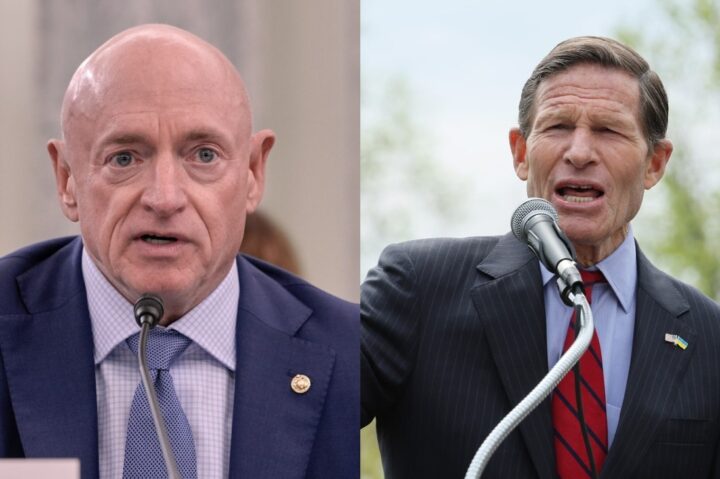
Mariam Zuhaib/AP Photo//Jemal Countess/Getty Images for Fair Share America
Sens. Mark Kelly (D-AZ) and Richard Blumenthal (D-CT)
Two Democratic senators expressed concern on Tuesday about the Islamic Revolutionary Guard Corps’ seizure of an commercial oil tanker in the Strait of Hormuz, a critical international shipping route.
The IRGC took credit on Friday for the seizure of the Talara, a Marshall Islands-flagged tanker, for what state media described as alleged cargo violations. The tanker, which began its journey in the United Arab Emirates, was carrying petrochemicals through the Strait of Hormuz to Singapore when it was diverted by the IRGC into Iranian territorial waters.
“It’s like the 1980s all over again,” Sen. Mark Kelly (D-AZ), a former fighter pilot, said. “The first time I was there was 1989, in the Strait of Hormuz, with the Iranians doing that same old shit, where they would harass shipping. A couple times, I felt like we were on the edge of getting in the conflict.”
“This was 40 years ago. It’s the same playbook with them, over and over and over again, harassing shipping, our planes, our naval vessels,” Kelly continued. “So what’s the solution? Hopefully, I think the solution is: The Iranian people get fed up with this at some point and just force out the ayatollah and his lackeys around there, because it has destroyed their economy.”
Asked if the development should impact the U.S. posture toward Iran, Kelly said it was too soon to determine that.
“We’ve got to stand on the side of the rule of law. The oil that comes through that Strait is critical to our economy, and we can’t let this become a major problem, but it’s one tanker,” Kelly said.
Sen. Richard Blumenthal (D-CT) said that the U.S. needs to remain vigilant against Iran’s other malign activities in spite of the setbacks to its nuclear program.
“Iran is Iran. They are the toxic element in the Middle East. We have no reason for complacency. Just because we set them back in their nuclear program, they remain a malevolent force, and the seizure of that tanker is just one indication of that,” Blumenthal said.
Asked if this latest development should be viewed as escalatory given that Tehran targeted commercial shipping, the Connecticut senator replied: “I’m troubled by the lack of an aggressive reaction to it. Maybe it’s just, with the press of everything else that’s going on.”
Plus, Dermer departs

Michael M. Santiago/Getty Images
Council Member Alexa Aviles speaks during a press conference outside of City Hall on April 10, 2025 in New York City.
Good Wednesday morning!
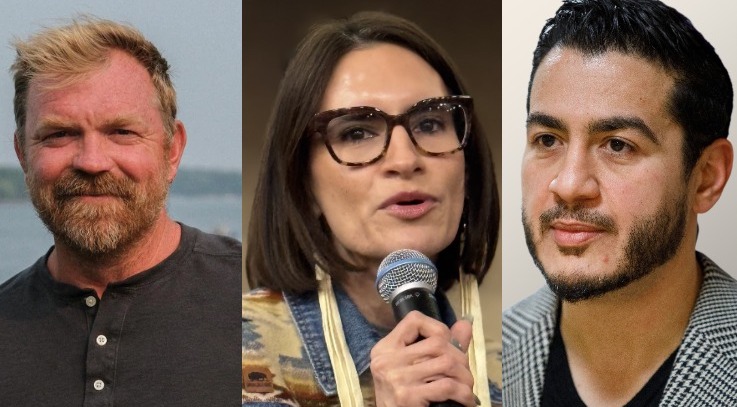
In today’s Daily Kickoff, we report on the far-left challengers gearing up to compete against Democratic incumbents in New York City and cover Michigan Democratic Senate candidate Abdul El-Sayed’s evasive answer to whether he supports Israel’s right to exist as a Jewish state. We report on the reaction of Jewish groups to former state Assemblyman Michael Blake, who is running in the Democratic primary against Rep. Ritchie Torres, for featuring a clip of an antisemitic influencer in his campaign launch video. We also cover the announcement by former Rep. Elaine Luria (D-VA) that she will run to reclaim the congressional seat she lost in 2022, and report on Israeli Minister of Strategic Affairs Ron Dermer’s resignation. Also in today’s Daily Kickoff: Shulem Lemmer, Gal Gadot, and Bill and Hillary Clinton.
Today’s Daily Kickoff was curated by Jewish Insider Israel Editor Tamara Zieve and U.S. Editor Danielle Cohen-Kanik, with an assist from Marc Rod. Have a tip? Email us here.
What We’re Watching
- The International Conference of Chabad-Lubavitch Emissaries begins today in New York City, bringing together 6,200 rabbis from 111 countries.
- Former First Lady Michelle Obama will appear at Washington’s Sixth & I Synagogue this evening to discuss her forthcoming book, The Look.
- Finance industry executives — including Blackstone CEO Stephen Schwarzman, JPMorgan Chase CEO Jamie Dimon, Apollo Global Management CEO Marc Rowan and Nasdaq CEO Adena Friedman — were invited to dinner at the White House with President Donald Trump this evening.
What You Should Know
A QUICK WORD WITH JI’S Josh Kraushaar
Beware the law of unintended consequences: President Donald Trump’s zeal to aggressively redraw maps in GOP-friendly states is looking like it will bring less of a political advantage to Republicans than originally expected.
Indeed, if the overall political environment remains in the Democrats’ favor — which would be consistent with the historical precedent of the opposition party gaining seats in the first midterm election of a new president — the House is likely to flip back to the Democrats’ control in 2027.
Here’s the lowdown: California’s referendum on redistricting, which passed overwhelmingly on Election Day, will allow Democrats to gain as many as five seats with a new, more-partisan map — with three Republican-held seats (of GOP Reps. Doug LaMalfa, Kevin Kiley and Ken Calvert) all but guaranteed to flip.
That should offset the expected GOP gains in Texas, which started the whole redistricting gamesmanship off with a partisan redraw that guarantees Republicans to pick up at least three Democratic-held seats, with the hope that Republicans can win two additional seats that became more favorable to them.
But there’s a catch with the Texas map. Two of the redrawn districts — the seats of Democratic Reps. Vicente Gonzalez and Henry Cuellar — are in predominantly Hispanic areas along the U.S.-Mexico border that swung dramatically to Trump in 2024, but had a long tradition of voting Democratic before then. If Democrats rebound with Hispanic voters — as happened in New Jersey and Virginia on Election Day — and the national environment remains rough for Republicans, it’s not hard to see the two Democratic incumbents hanging on.
Adding another wrinkle to the GOP’s redistricting plans: A Utah judge rejected the preferred map drawn by Republican state lawmakers, and selected a new map that would guarantee a Democratic district in Salt Lake City. That would automatically flip one seat to the Democrats, given that the state’s current delegation is made up of four Republicans, all in solidly Republican districts.
NEXT STEPS
After Mamdani win, socialists look to challenge Democratic incumbents in NYC

The organized left scored a major victory last week when Zohran Mamdani was elected mayor of New York City, elevating to executive office a politician who became one of the nation’s most prominent democratic socialists during the campaign. Now, as the movement seeks to ride momentum from Mamdani’s win and grow its influence at the federal level, some emerging challengers are setting their sights on a handful of pro-Israel New York Democrats in the House — posing what is likely to be the first key test of its political credibility in the upcoming midterm elections, Jewish Insider’s Matthew Kassel reports.
Challenges ahead: While next year’s primaries are still more than six months away, some early signs indicate that the far left is already facing obstacles in its efforts to target established incumbents like Reps. Dan Goldman and Ritchie Torres, raising questions about its organizational discipline and messaging ability, not to mention alignment with Mamdani — who is now walking a delicate path in seeking buy-in from state leadership to deliver on his ambitious affordability agenda. Jake Dilemani, a Democratic consultant in New York, said “there is and should be euphoria among the left” after Mamdani’s victory, “but that does not necessarily translate into toppling relatively popular incumbents. One swallow does not make a summer,” he told JI on Tuesday.
EVASIVE MANEUVER
Michigan Senate candidate Abdul El-Sayed sidesteps question on Israel’s right to exist
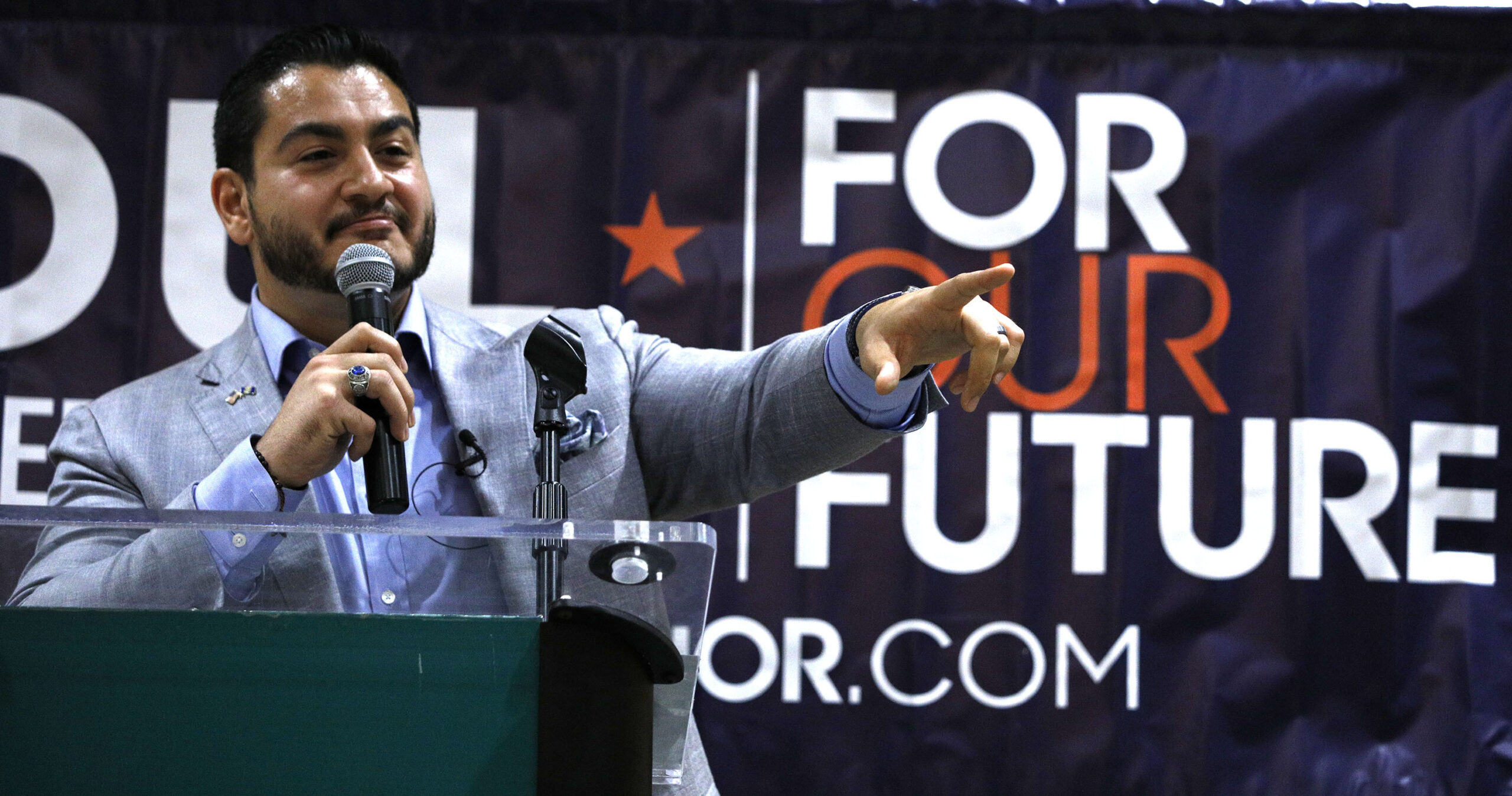
Michigan Democratic Senate candidate Abdul El-Sayed sidestepped a question about Israel’s right to exist during an interview with the anti-Israel media outlet Zeteo last week. Zeteo founder Mehdi Hasan asked El-Sayed how he would respond if and when he faces questions on the campaign trail about whether he supports Israel’s right to exist as a Jewish state, Jewish Insider’s Marc Rod reports.
What he said — and what he didn’t: El-Sayed initially responded by calling the question hypocritical and again dodged when pressed. He said that most U.S. presidents have expressed support for a two-state solution, and “Israel exists. Palestine doesn’t. And so I always wonder why nobody asks me why Palestine doesn’t have a right to exist.” El-Sayed accused the U.S. of supporting “the very people in Israel who want to foreclose on the possibility of Palestine existing. And so to me, frankly, it is about our principles and how we apply them evenly. If you believe in a two-state solution, then what are you doing to make it possible?” he continued.
EXCLUSIVE
Jewish groups blast Torres challenger for featuring antisemitic activist in campaign launch
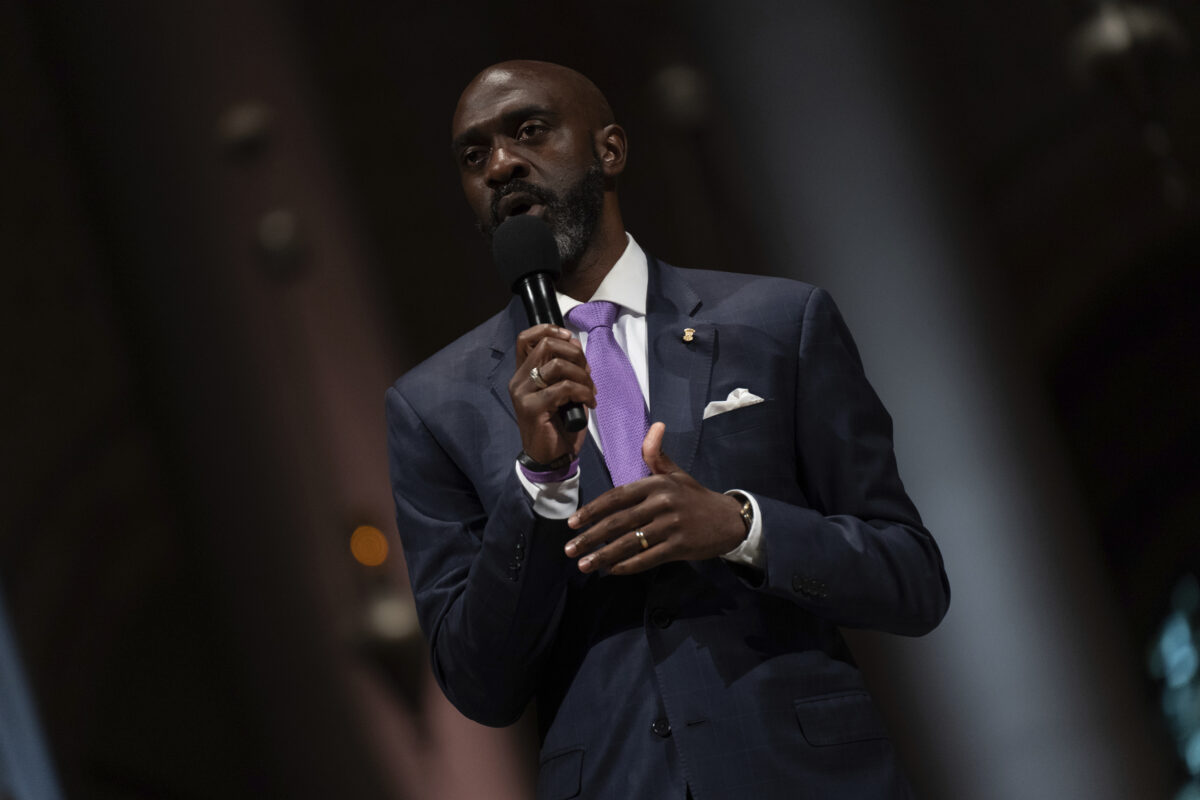
Major New York Jewish groups criticized former Assemblyman Michael Blake, who is running in the Democratic primary against Rep. Ritchie Torres (D-NY), for featuring a clip of an influencer who supported the shooting of two Israeli Embassy employees at the Capital Jewish Museum in Washington in his campaign launch video, Jewish Insider’s Marc Rod reports.
Pushback: “Hurling a bus load of antisemitic tropes and platforming bigots who cheer antisemitic violence in a launch video is not the pro-humanity flex one thinks it is,” the Jewish Community Relations Council of New York said in a statement. The Anti-Defamation League of New York and New Jersey said that “we can all agree that Michael Blake’s platforming of anti-Zionist influencer Guy Christensen should be roundly condemned.”
comeback campaign
Pro-Israel Democrat Elaine Luria announces bid to reclaim House seat

Former Rep. Elaine Luria (D-VA), who was an outspoken voice in support of Israel and against antisemitism during her time in the House, announced a bid on Wednesday to reclaim the congressional seat she lost in 2022, Jewish Insider’s Marc Rod reports.
Looking back: Luria, who is Jewish, was a leading moderate voice in the House in support of Israel and against antisemitism, at times criticizing members of her own party and breaking with the Biden administration on its Israel policy. She was one of the few House Democrats who consistently opposed efforts by the Biden administration to rejoin the Iran nuclear deal and Luria organized and led a group of pro-Israel House Democrats to speak on the House floor in 2021 in support of Israel and its military operations, responding to a competing effort by far-left Democrats in opposition. She also repeatedly called out antisemitism from Democratic colleagues.
STEPPING DOWN
Ron Dermer, Netanyahu’s right-hand man, resigns from Israeli government

Israel’s influential minister of strategic affairs, Ron Dermer, resigned from his post on Tuesday, three years after assuming the role, Jewish Insider’s Tamara Zieve reports. “This government will be defined both by the attack on October 7th and by the prosecution of the two-year, seven-front, war that followed,” Dermer, widely regarded as Prime Minister Benjamin Netanyahu’s closest advisor, wrote in his resignation letter.
Staying around: Dermer has led Israel’s ceasefire and hostage-release negotiations since February. He is expected to stay on as Netanyahu’s envoy to continue handling the future of the Gaza portfolio, political sources recently told JI. U.S.-born and a former Israeli ambassador to Washington, Dermer has long played a central role in managing Israel’s relationship with the U.S. “What the future holds for me, I do not know. But I do know this: No matter what I do, I will continue to do my part to help secure the future of the Jewish people,” Dermer said.
history lessons
Clintons tie Trump’s Gaza peace plan to Oslo Accords in Rabin memorial discussion

Former Secretary of State Hillary Clinton said on Monday that President Donald Trump’s peace plan for Gaza could be a “new moment of hope and possibility.” But it will only be successful if there is “a level of organization” applied to the implementation, a lesson that can be drawn from the Oslo process, she said, during a panel hosted by Columbia University’s Institute of Global Politics, Jewish Insider’s Haley Cohen reports.
What she said: “One thing that can be learned from the Oslo process and applied to the situation now with the peace plan is that there was a process,” Clinton said. The event commemorated the 30th anniversary of the assassination of Israeli Prime Minister Yitzhak Rabin, who was murdered by a right-wing extremist, soon after signing the Oslo II Accords peace agreements with then-Palestinian Authority President Yasser Arafat in 1995 — two years after the signing of the Oslo I Accords. “You have to have a level of organization, it can’t just have few people at the top — whether it be a president or special envoy, as necessary as they are, you have to have teams of people who can be working with their counterparts,” continued Clinton, who is a professor of international and public affairs at Columbia.
What he said: In 40-minute remarks, former President Bill Clinton, who mediated the Oslo Accords signing — which he hosted at the White House — spoke about his close personal and professional relationship with Rabin, calling the assassination one of the worst days of his life. “We have to begin again, where the trust level is low,” Clinton said of achieving Israeli-Palestinian peace. “People in power might not be in favor of giving up on anything now.”
Worthy Reads
Hate on the Right, Then and Now: The New York Times’ Bret Stephens draws comparisons between today’s rising trend of antisemitism within the GOP to past iterations of antisemitic ideology on the right. “The MAGA movement is not antisemitic. But many of its core convictions are antisemitic-adjacent — that is, they have a habit of leading in an anti-Jewish direction. Opposition to free trade, or to a welcoming immigration policy, or to international law that crimps national sovereignty, are legitimate, if often wrongheaded, political positions. But they have a way of melding with hoary stereotypes about ‘the International Jew; working across borders against the interests of so-called real Americans.” [NYTimes]
After Mamdani, Healing Divisions: Rabbi Elliot Cosgrove, senior rabbi at Park Avenue Synagogue on the Upper East Side of Manhattan, reflects in the Forward about how the New York City Jewish community must unite in the aftermath of Mayor-elect Zohran Mamdani’s victory. “For me, personally, the fact that about a third of New York City’s Jewish voters checked the box for Mamdani is totally bewildering. I am not unaware of the bigger political trends, the shortcomings of the other candidates, or the systemic challenges our city faces; I understand why Mamdani won. But for me, his anti-Zionist rhetoric and his intent to shut down research and economic partnerships between Israel and New York — to name but a few of his promises that would negatively impact our community — not only disqualified him from receiving my vote, but were a meaningful enough concern that I chose to publicly urge Jews and their allies to vote against him as well. And yet, it would seem that what was self-evident to me was not so self-evident to a sizeable percentage of my kinfolk. … We need to learn to walk together again. If, as I have repeatedly claimed, ahavat yisrael — love of the Jewish people — is my North Star, then it is a principle I must uphold even and especially when it is uncomfortable to do so. It is a love that must extend to Jews whose views I neither share nor understand.” [Forward]
Takeover on the Quad: John Ellis, professor emeritus of German literature at the University of California, Santa Cruz, argues in The Wall Street Journal for placing universities in a “receivership” to address the dominance of left-wing ideology in higher education. “The discrepancy between what we fund the campuses for and what they are doing is enormous. Promotion of knowledge and understanding has given way to inculcation of a poisonous fringe ideology. Students are encouraged to despise their society and kept ignorant of anything that might make them think otherwise. … The only viable solution is to place schools in ‘receivership,’ a well-established procedure to reform ailing college departments. A new chairman is imposed on a department with a free hand to make whatever appointments he thinks necessary to restore the department to health. By action of lawmakers or trustees, a new president can be imposed on a campus with a mandate to return the school to its proper mission by appointing subordinate administrators, especially deans, committed to reform.” [WSJ]
Investing in the Jewish Future: In Sapir, Jordan Chandler Hirsch argues that the Jewish people should establish a sovereign wealth fund to secure long-term communal and national resilience. “A wealth fund would allow the Jewish community to invite allies and skeptics alike into mutually beneficial investments. It could help key players solve their problems and achieve their goals, thereby securing support for ours. Skeptics who distrust our institutionalism might respect our show of independence. Anti-establishment forces might welcome Jewish capital that strengthens their projects. Most important, a wealth fund could transform both our psychology and our posture — from supplicants seeking protection into partners offering opportunity. Despite its corporate veneer, a wealth fund would not merely reproduce institutionalism. If shtadlanut sought seats at the institutional table, a wealth fund would build its own table and invite others in.” [SAPIR]
Word on the Street
President Donald Trump sent a letter to Israeli President Isaac Herzog calling on him to “fully pardon” Israeli Prime Minister Benjamin Netanyahu, describing the corruption case against him as “a political, unjustified prosecution.” Herzog’s office put out a statement saying that while he “holds President Trump in the highest regard … anyone seeking a Presidential pardon must submit a formal request in accordance with the established procedures”…
Following a joint meeting in Paris, French President Emmanuel Macron and Palestinian Authority President Mahmoud Abbas announced the creation of a joint committee “for the consolidation of the state of Palestine,” which will work towards drafting a “constitution” for such a state…
Iran has smuggled advanced armaments to terror groups in the West Bank over several months, the Washington Free Beacon reports, including rockets, explosive drones, anti-tank missiles and rocket-propelled grenades, hoping to use it as another launch pad in addition to Gaza to attack Israel…
Sens. Jim Risch (R-ID), Jeanne Shaheen (D-NH), Richard Blumenthal (D-CT), Jacky Rosen (D-NV) and Chris Van Hollen (D-MD) met with Syrian President Ahmad al-Sharaa at the Capitol on Tuesday. A person familiar with the situation told Jewish Insider that Van Hollen had “reiterated his support for the lifting of the Caesar sanctions while also stressing his long-held position that the U.S. must ensure that the Government of Syria complies with the six conditions included in the amendment he and Senator Graham added to the NDAA”…
Rep. Tom Suozzi (D-NY) urged the State Department to take action to ensure the release of Kamran Hekmati, an Iranian-American dual citizen and Suozzi constituent imprisoned in Iran. “This is about more than one man. It’s about defending the basic rights of American citizens abroad and standing up to regimes that traffic in hostage diplomacy,” Suozzi said…
Rep. Gabe Amo (D-RI) led 125 House Democrats in a letter to Secretary of State Marco Rubio seeking “clarity on your plan to ensure desperately needed humanitarian aid reaches Palestinian civilians in Gaza” and urging that aid be distributed through “reputable international institutions”…
Saudi Arabia is set to host a U.S.-Saudi investment summit at the Kennedy Center in Washington next Wednesday, a day after Crown Prince Mohammed bin Salman‘s visit to the White House…
Rep. Ilhan Omar (D-MN) met with Malcolm Jallow, an anti-Israel left-wing member of the Swedish parliament who has espoused antisemitic views and has associations with pro-Hamas individuals…
The New York Times speaks to Iranians deported back to Iran by the Trump administration in the first U.S.-chartered deportation flight to the country in September…
The New York Times profiles Jack Schlossberg, grandson of President John F. Kennedy, who is preparing to run for Congress in New York’s 12th Congressional District…
After receiving backlash for canceling planned shows in Israel as a result of pressure by the BDS movement, British comedian John Cleese said he was only postponing the shows “following advice about safety.” The “Monty Python” actor, who has a history of anti-Israel commentary on social media, claimed he is “hugely fond of Israeli audiences”…
Argentine President Javier Milei met with Rabbi David Yosef, the Sephardic chief rabbi of Israel; Isaac Sacca, the Sephardic chief rabbi of Argentina; and Eyal Sela, the Israeli ambassador to Argentina…
Israeli authorities arrested four suspects after dozens of settlers launched an arson attack in the Palestinian villages of Bei Lid and Deir Sharaf in the West Bank….
Israeli actress Gal Gadot won Israel’s Genesis Prize, sometimes called the “Jewish Nobel,” for her outspoken support of Israel in Hollywood since the Oct. 7, 2023, terror attacks. Gadot said she will donate the $1 million award to organizations “that will help Israel heal”…
Israeli pop star Noa Kirel and soccer player Daniel Peretz tied the knot on Tuesday in an A-lister affair in Jaffa: spotted at the nuptials were Israeli celebrities Eden Daniel Gabay, Idan Raichel, Eran Zahavi, Reef Neeman, Ron Bitton, Ron Aluf and Mor Hamami…
Comcast CEO Brian Roberts recently toured a site in Saudi Arabia for a possible Universal theme park location, raising speculation that he might bring in Saudi funds for a potential Comcast bid to acquire Warner Bros. Discovery…
Wonderful, an Israeli AI startup, has secured $100 million in a Series A funding round led by Index Ventures, with backing from Insight Partners, IVP, Bessemer and Vine Ventures…
Song of the Day

Shulem Lemmer shared on social media “The March Medley” he performed together in June with the Israel Symphony Orchestra Rishon LeZion, featuring Gur’s “Shir Hamaalos” and Modzitz’s “Ein Kitzvah,” at the 2025 MDA Chassidut B’Class concert in the Caesarea amphitheater.
Birthdays
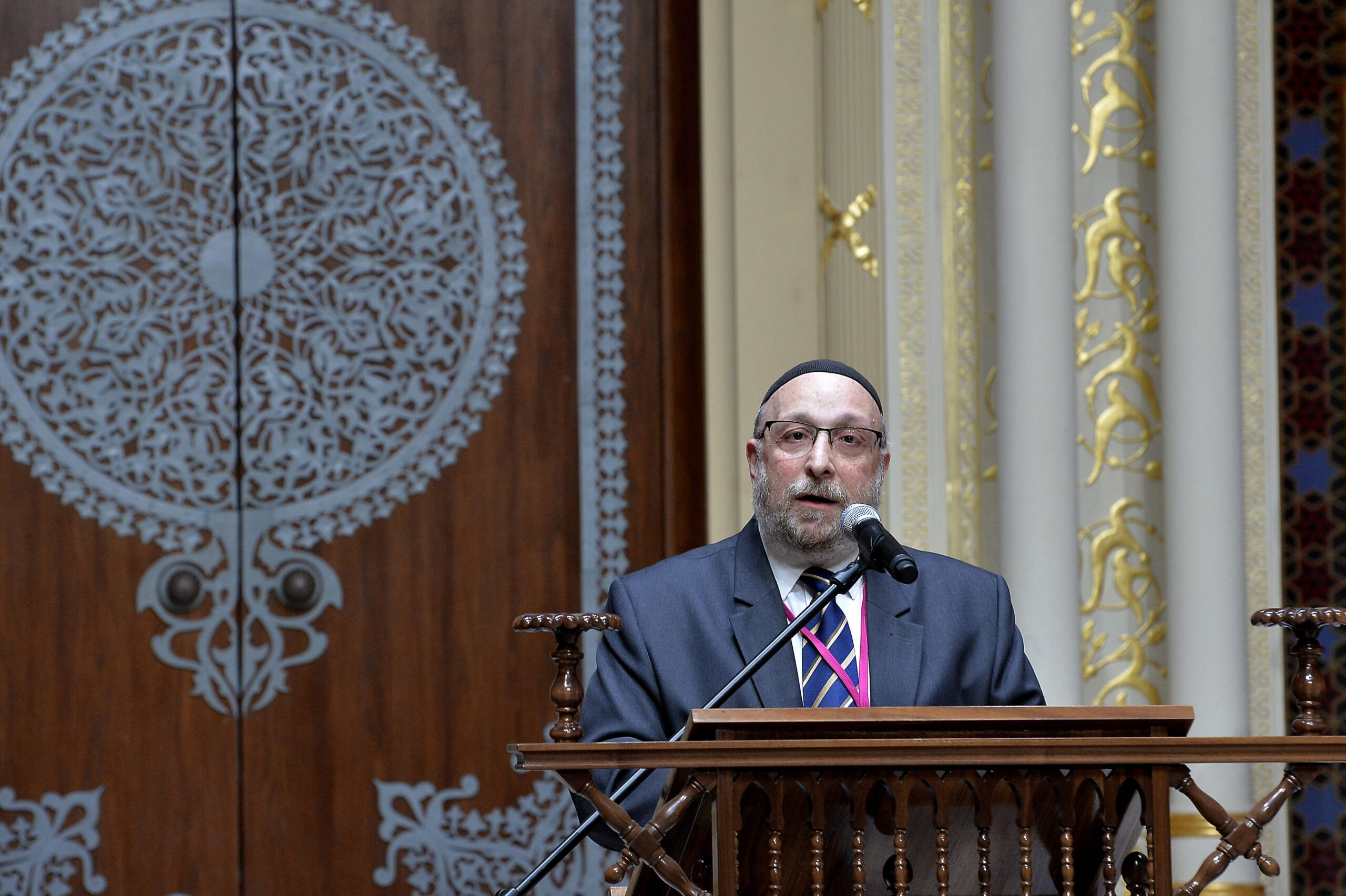
Rabbi of the Dohány Street Synagogue in Budapest, Hungary, Róbert Frölich turns 60…
Co-founder and dean of the Talmudical Yeshiva of Philadelphia, Rabbi Shmuel Kamenetsky turns 101… Professor emerita of history at Columbia University and expert on Japan, Carol Gluck turns 84… Author and senior fellow at USC’s Annenberg School, Morley Winograd turns 83… Accountant and former PwC partner in Phoenix, Steven M. Scheiner, CPA… Former New York state senator, he is a descendant of Rabbi Shmuel Salant, the former Ashkenazic chief rabbi of Jerusalem, Stephen M. Saland turns 82… Sportscaster for “Thursday Night Football” on Prime Video, after more than 50 years at NBC and ABC, Al Michaels turns 81… U.S. senator (D-RI), Jack Reed turns 76… Attorney in Brooklyn, Bernard C. Wachsman… Member of the New York state Assembly since 2006, her district includes Manhattan’s Upper West Side, Linda B. Rosenthal turns 68… Author of young-adult fiction and winner of the 2015 National Book Award for Challenger Deep, Neal Shusterman turns 63… Author, journalist and former political advisor to Al Gore and Bill Clinton, Naomi Rebekah Wolf turns 63… University of Chicago professor, he won the 2019 Nobel Prize in Economics, Michael Kremer turns 61… Mayor of Oakland, Calif., until 2023, Elizabeth Beckman “Libby” Schaaf turns 60… Partner in the Chicago office of Kirkland & Ellis, Sanford E. “Sandy” Perl turns 60… White House chief of staff for the last two years of the Biden administration, Jeffrey Zients turns 59… British journalist and political correspondent for BBC News, Joanne “Jo” Coburn turns 58… Hasidic lecturer with many thousands of followers, Rabbi Avraham Elimelech Biderman turns 58… SVP and general manager of MLB’s Minnesota Twins from 2016 until 2024, Thad Levine turns 54… Member of the Knesset until 2019 for the Yisrael Beiteinu party, Robert Ilatov turns 54… Restaurant critic and food writer for the Boston Globe, Devra First turns 53… Israeli fashion model and actress, Nina Brosh turns 50… Former member of the Knesset for the United Torah Judaism party, Eliyahu Hasid turns 49… Campus support director at Hillel International, Aviva Zucker Snyder… Actress best known for her roles on “The Young and the Restless” and “The Bold and the Beautiful,” Kelly Kruger turns 44… Co-founder of Purple Acorn, Dave Weinberg… Assistant professor of Jewish studies at Oberlin College, Matthew D. Berkman turns 41… Director of strategic talent initiatives at the Michigan Economic Development Corporation, Spencer F. Lucker… New Jersey-based primary care physician known as Doctor Mike, he is an internet celebrity on YouTube and Instagram, Mikhail Varshavski turns 36… Activist in the fight against antisemitism throughout the U.S., Adela Cojab turns 29… Catcher in the Washington Nationals organization, Cameron J. Stubbs turns 29…
In a recent conversation at a fundraising event, the Maine Senate candidate claimed the Israeli government funded Hamas and also revealed he is related to Israeli author and analyst Seth Frantzman
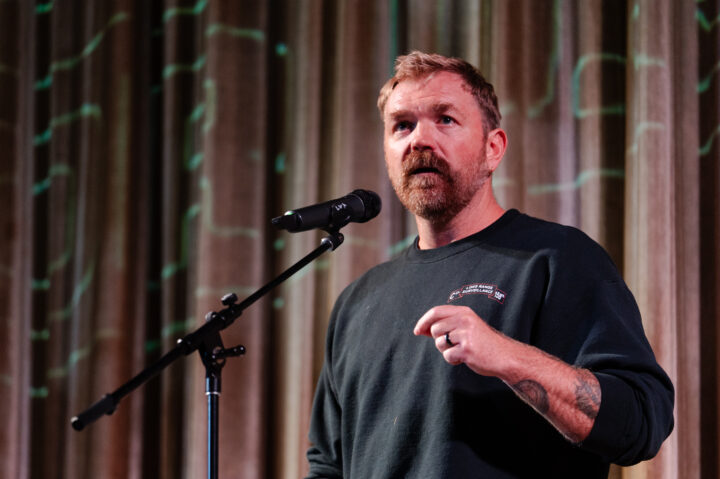
Sophie Park/Getty Images
U.S. senatorial candidate from Maine Graham Platner speaks at a town hall at the Leavitt Theater on October 22, 2025 in Ogunquit, Maine.
Like many progressives now running for Congress, Graham Platner, a Democratic Senate candidate in Maine, has made opposition to Israel a central part of his messaging.
He frequently accuses Israel of genocide in Gaza, advocates for blocking U.S. aid to Israel and is an outspoken critic of AIPAC. During a campaign event last month, Platner, a 41-year-old former Marine who runs an oyster farm, also said he believes that Israel is a terrorist state.
But more so than many candidates, the political newcomer seems particularly invested in engaging on Middle East policy, even if his views have drawn scrutiny, according to audio of a recent private discussion in which he debated about Israel with some attendees at a fundraising event in Maine for nearly 20 minutes.
Speaking at the August fundraiser, Platner defended his stances on Israel and shared previously undisclosed details about his personal ties to the region, according to the audio, recently shared with Jewish Insider.
Despite his hostile criticism of Israel, Platner said he believed that the country “has the same right to exist that every nation has to exist,” though he did not confirm whether he recognizes Israel’s right to exist as a Jewish state.
While he said he agreed that Hamas is a terrorist organization, Platner claimed that Netanyahu had “publicly stated that” Israel was “funding Hamas to make sure that there was going to be no non-radical leadership within Gaza in order to keep a Palestinian state from happening.”
While members of Netanyahu’s coalition have made this argument — Finance Minister Bezalel Smotrich referred to the terrorist organization as “an asset” as it serves as an obstacle to Palestinian statehood — the prime minister has never personally made such a claim. New York Times reporting from shortly after the Oct. 7 attacks alleged that the Israeli prime minister had allowed the Qatari government to send money into the Gaza Strip for several years in order to “maintain peace in Gaza.” Netanyahu called allegations that he was empowering Hamas “ridiculous.”
“It is difficult for me to lay the onus of everything only at the feet of the Palestinians,” he explained, “and not include the Netanyahu government.”
Platner also quibbled with an attendee who said that 1,200 Israeli civilians had been killed during the attacks, noting that a percentage of those who had died on Oct. 7 were soldiers in the Israeli military.
“It wasn’t 1,200 civilians. It was 600 military members,” Platner countered, using a number that far exceeded the approximately 300 soldiers who were killed in the attacks.
“Who were taken sleeping, unarmed, out of their beds, I’ve met families,” the attendee responded, likely referring to the tatzpitaniot, unarmed female observer soldiers, and others, who were famously killed and kidnapped in their pajamas.
“When you are wearing a uniform and carrying a gun in the service of a cause, it is difficult for me to feel that you can be called a civilian,” said Platner, who fought in Iraq and Afghanistan. “There is a one-way street on this,” he continued, “that I find to be disingenuous.”
The private comments suggest that Platner is not merely paying lip service to such issues on the trail, as he runs in a competitive primary against Maine Gov. Janet Mills for the Democratic nomination to unseat Sen. Susan Collins (R-ME).
Platner’s campaign did not respond to a request for comment.
Platner’s views on Israel and Gaza have received limited attention in recent weeks as his campaign has weathered controversy over his past incendiary Reddit posts and faced questions over when he first became aware that a skull tattoo on his chest he had for nearly 20 years resembled a Nazi symbol known as a Totenkopf.
Platner, who covered the tattoo this month, has insisted he did not know what the skull signified until recently, though reporting from JI and CNN has contradicted that claim.
He has also argued that members of his family are Jewish and never objected to the skull tattoo when he took his shirt off around them. “Eighteen years,” he told The Atlantic recently. “It’s never come up.”
In the conversation about Israel at the fundraiser, which took place before controversy ensnared his campaign, Platner noted his stepbrother is Seth Frantzman, an Israeli author, journalist and security analyst who has long worked for The Jerusalem Post and lives in Jerusalem, saying they are “very close,” according to the audio.
Frantzman, who has previously written admiringly about Platner without mention of their familial ties, did not respond to an email seeking comment.
Platner also said that he had “multiple friends in B’Tselem,” the left-wing Israeli human rights group that has described Israel as an apartheid regime and accused Israel of committing genocide in Gaza — as he argued that Israel is not fully a democracy.
He cited his friends from B’Tselem “who have showed me videos, who have introduced me to former soldiers, who have introduced me to Palestinians, who have laid out a very clear and, frankly, well-sourced case that Palestinians living within the borders of the occupied territories do not live in a democracy, that they do not have equal rights, that they do not have equal access to areas.”
He said that, “as an American taxpayer,” he was uncomfortable with sending continued U.S. aid to support Israel’s military.
But even as he has been deployed to the Middle East, Platner confirmed that he had never visited Israel.
Gov. Janet Mills is facing anti-Israel oyster farmer Graham Platner, who called himself a ‘communist’ in 2021
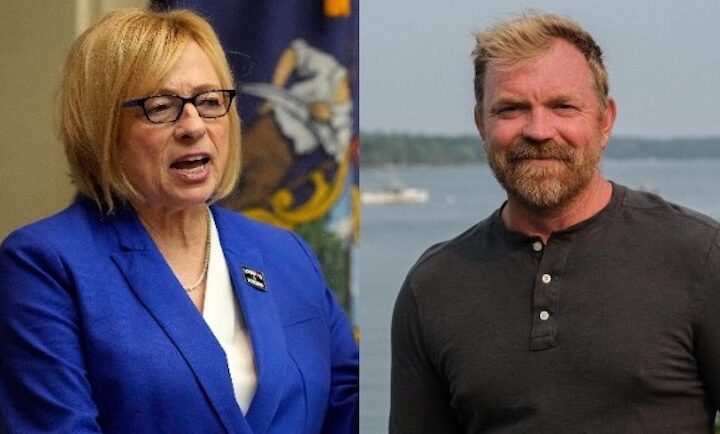
Robert F. Bukaty/AP/Graham Platner campaign
Gov. Janet Mills and Graham Platner
The Democratic Senate primary in Maine is shaping up to be among the most significant proxy battles over Israel in the upcoming midterm elections, pitting the state’s moderate two-term governor against a left-wing populist upstart who has vocally embraced an anti-Israel platform.
Gov. Janet Mills, who announced her campaign to unseat Sen. Susan Collins (R-ME) on Tuesday and is backed by Senate Democratic leadership, is set to face a well-funded challenge from Graham Platner, a veteran and oyster farmer who boasts high-profile support from Sen. Bernie Sanders (I-VT).
In contrast with Mills, who has criticized anti-Israel divestment efforts in her state and warned against a “deeply troubling” rise in antisemitic incidents after Hamas’ Oct. 7, 2023, attacks, Platner has promoted more hostile views on Israel and its alliance with the United States.
Since entering the race in August, Platner has accused Israel of genocide in Gaza and endorsed measures to block U.S. arms sales to Israel. His campaign did not respond to a request for comment regarding the recently brokered ceasefire and hostage-release deal between Israel and Hamas.
Platner has also been an outspoken critic of the pro-Israel advocacy group AIPAC, whose affiliated political arm is supporting Collins, one of the most vulnerable Republicans now seeking reelection — in a state President Donald Trump lost by seven points in 2024.
“We are focused on helping to re-elect Senator Collins, who has long been a leader and champion of strengthening the partnership between the U.S. and Israel,” Marshall Wittmann, a spokesperson for AIPAC, told Jewish Insider on Thursday.
Wittmann did not address whether AIPAC has plans to get involved in the primary. Collins, a five-term senator, has defended her relationship with AIPAC, which has faced growing criticism from Democratic candidates in recent months as intraparty tensions over Israel have intensified.
It remains to be seen if the Maine Senate race will draw outside spending from other pro-Israel groups including Democratic Majority for Israel, which has engaged in a number of recent primaries. The group did not respond to requests for comment from JI.
The primary also includes Jordan Wood, a former congressional aide whose campaign says that he has raised $3 million since April. Dan Kleban, a brewery owner in Maine, dropped out of the race on Tuesday and endorsed Mills, who was aggressively recruited by Senate Minority Leader Chuck Schumer (D-NY).
Mills’ campaign said this week that she had raised $1 million in the 24 hours after she announced her bid. Platner’s team reported a $4 million haul since entering the race over the summer, with prominent contributors ranging from Ron Klain, a former chief of staff to President Joe Biden, to the billionaire donors Donald Sussman and Chris Hughes, according to campaign filings.
While Platner, 41, has drawn scrutiny over his views on Israel — which he has made a central component of his campaign messaging and national fundraising appeals — the political newcomer has more recently weathered controversy surrounding past comments in which he identified as a “communist,” called “all” police “bastards” and said rural Americans are racist and stupid, among other incendiary statements.
Platner has said that such views, unearthed in a CNN investigation published on Thursday, do not reflect his current thinking. Still, the deleted posts underscore how a previously untested candidate is likely to navigate additional vulnerabilities in a race that Democrats view as one of their top priorities as they seek to win back the Senate majority next year.
Following Mills’ launch this week, Larry Sabato’s Crystal Ball, a top elections forecaster, said that it had changed its ranking of the Maine Senate race from “leans Republican” to “toss-up” — a rating also echoed by The Cook Political Report.
Mills — who, at 77, would be the oldest freshman senator in history if elected — has won praise from Sen. Kirsten Gillibrand (D-NY), the chair of the Democratic Senatorial Campaign Committee. The two-term governor also formed a joint fundraising committee with the Senate Democrats’ campaign arm earlier this week, according to a new campaign disclosure.
Mills’ campaign team features veterans of her 2022 bid for governor, a person familiar with the matter told JI on Thursday, including Eric Adelstein of the communications consultancy AL Media and Jefrey Pollock of the polling firm Global Strategy Group — which has conducted a number of surveys on Israel and the Jewish vote.
Chelsea Brossard, a Democratic strategist who recently advised Rep. Josh Gottheimer (D-NJ) in his bid for governor of New Jersey, is also joining Mills’ team as campaign manager, according to the source, who asked to remain anonymous to discuss undisclosed details.
Mills’ campaign did not respond to requests for comment from JI on Thursday. Pollock declined to comment.
The Pennsylvania senator suggested tariffs, visa sanctions and restricting Norway’s market access should be ‘on the table’

Israel on Campus Coalition/X
Rep. Dave McCormick (R-PA) speaks at the ICC National Leadership Summit in Washington on July 29, 2025.
Sen. Dave McCormick (R-PA) wrote to top trade officials in the Trump administration urging them to take action to respond to the decision by the Norges Bank Investment Fund, Norway’s sovereign wealth fund, to divest from U.S. equipment firm Caterpillar because of the Israeli military’s use of its products in the West Bank and Gaza.
“As the Trump Administration continues to take bold action to rebalance global trade, I urge you to also address the disturbing politicization of sovereign wealth fund investment decisions against American companies,” McCormick said in a letter, sent Thursday, to Commerce Secretary Howard Lutnick and U.S. Trade Representative Jamieson Greer.
He called on the administration to take Norges’ moves against American companies into account in ongoing trade negotiations with Norway, calling the effort a “form of economic warfare directed by a foreign government against the U.S. economy.”
He said that “all options should be on the table to address this issue,” including tariffs, “restrictions on Norges’ access to U.S. financial markets, and visa sanctions” on those involved in moves against American companies.
McCormick served from 2020-2022 as CEO of Bridgewater Associates, which manages portions of Norges’ portfolio. Bridgewater CIO Greg Jensen addressed Norges’ 2024 investment conference.
Sen. Lindsey Graham (R-SC) called publicly for similar retaliatory action last week.
McCormick said he’d confronted Norway’s prime minister about the Caterpillar decision during a visit to the country last month, and said the prime minister had told him the decision “merely followed Norges’ ethical guidelines and was not political.”
“I respectfully disagree. While I recognize the value of Norges’ investments of nearly $1 trillion of U.S. assets, I have significant concerns that these decisions are entirely political and are driven by an agenda that has consistently targeted American companies and is explicitly anti-Israel,” McCormick continued.
McCormick emphasized that Caterpillar is a frequent target of the Boycott, Divestment and Sanctions movement targeting Israel, and noted that Norges has also previously divested from U.S. fossil fuel and defense companies — in some cases including companies that Norway itself purchases weapons systems from.
The Pennsylvania senator called on the administration to “look more broadly at instances of sovereign wealth funds adopting restrictive, unfair trade policies against U.S. companies as a result of political pressure” in other cases as well.
McCormick separately wrote to Norway’s ambassador to the United States, stating that he “remain[s] extremely concerned” by Norges’ moves against American companies, adding that he “brought this issue up directly with Prime Minister [Jonas Gahr] Støre and was unsatisfied with his response.”
The Commerce Department did not respond to a request for comment on whether it plans to address Norges’ divestment from Caterpillar.
Richard Goldberg, a senior advisor at the Foundation for Defense of Democracies and former Trump administration official, said that Norges’ decisions have a significant impact on global investment trends.
“Norges is such a large player … It moves capital markets with its decisions,” Goldberg explained. “It causes other sovereign wealth funds, pension funds to follow. It causes institutional investors to follow. It really does set trends in investment and an inversion of capital can have impacts.”
He said that Norges’ investment decisions in relation to Israel are a major political issue in Norway’s upcoming elections, and some of the left-wing parties who could become part of the next governing coalition are demanding divestment from a “laundry list” of other American companies over their relations to Israel.
Goldberg also argued that the “danger of weaponized sovereign wealth funds” both in terms of BDS efforts and other anti-American moves is an ongoing and growing issue, and that the administration should insist that sovereign wealth funds be covered in U.S. trade deals with foreign countries.
“This is a long standing attack on U.S. interests, attack on American energy companies, an attack on American defense companies and now an attack on any company that does business with the State of Israel — all of this to the detriment of our national economic security, all of it politicized by the Norwegians by a state-run, state-controlled entity” Goldberg said.
If the U.S. fails to respond, he continued, “we’re literally allowing supposed democratic allies for whom we provide a blanket of freedom the ability to conduct economic warfare against America and American interests.”
Josh Turek, a state representative, is running for the seat of retiring GOP Sen. Joni Ernst
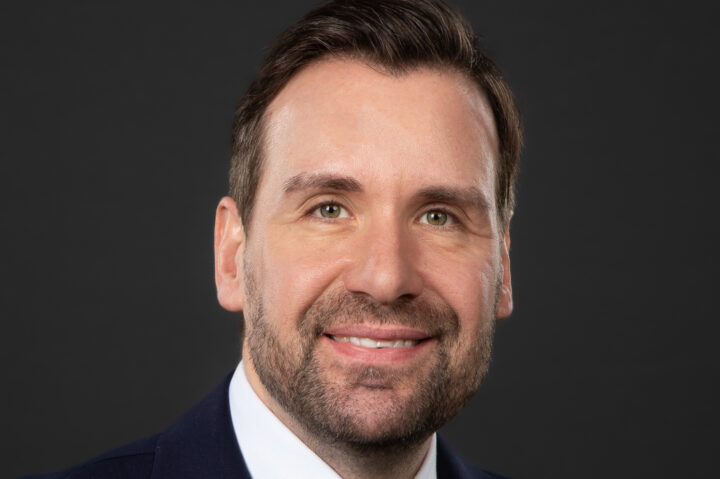
Iowa Legislature
Iowa state Rep. Josh Turek
Iowa state Rep. Josh Turek, a leading Democratic Senate candidate in the state, supported an amendment in the Iowa Statehouse earlier this year that called for conditions on U.S. support for Israel’s ability to eliminate terrorist groups.
The amendment, which failed to pass, would have struck language in a pro-Israel resolution supporting Israel’s “sovereignty and right to pursue, without interference or condemnation, the elimination of any terrorist group until all such groups are permanently neutralized and Israelis can live in peace.”
It would have instead inserted language that stated that the Iowa House supports Israeli sovereignty and its right to take action to eliminate terrorist threats but added: “However, this support is conditioned upon the State of Israel’s adherence to international humanitarian law and protection of innocent civilian lives. The House of Representatives affirms its commitment to human rights and condemns acts by any party that constitute war crimes, crimes against humanity or indiscriminate attacks against civilian populations.”
Turek ultimately voted in favor of final passage of the resolution, which expresses support for Israel, condemns antisemitism and expresses solidarity with the victims of the Oct. 7, 2023, Hamas attacks, without the amendment. He also voted for another amendment, which also failed, which condemned President Donald Trump for pardoning antisemitic extremists involved in the Jan. 6, 2021, attack on the U.S. Capitol.
Turek’s campaign declined to comment on his votes, or on his position on efforts to suspend U.S. arms sales and transfers to Israel.
Though the GOP is favored to win the Iowa Senate seat, Sen. Joni Ernst’s (R-IA) decision not to run for reelection could improve Democrats’ chances of flipping the seat next November.
Other declared Democratic candidates include Des Moines School Board Chair Jackie Norris, Knoxville Chamber of Commerce Director Nathan Sage, state Sen. Zach Wahls and former state Rep. Bob Krause. State Rep. J.D. Scholten dropped out of the race and endorsed Turek. The Intercept reported that the Democratic Senatorial Campaign Committee recruited and is effectively backing Turek.
‘We all see Lebanon is at a point of change. We're here to tell you that we're buying into that change,’ Graham said, citing the country’s ‘religious diversity’

Houssam Shbaro/Anadolu via Getty Images
Sen. Lindsey Graham (R) speaks during a press conference alongside Sen. Jeanne Shaheen and Rep. Joe Wilson in Beirut, Lebanon on August 26, 2025.
Sen. Lindsey Graham (R-SC) championed a U.S. defense agreement with Lebanon during a bipartisan congressional delegation to Beirut on Tuesday, saying it would be the “biggest change in the history of Lebanon.”
Speaking at a press conference alongside Sen. Jeanne Shaheen (D-NH) and Rep. Joe Wilson (R-SC), Graham asked, “How many nations have a defense agreement with the United States? Very few. … The number of nations that America is willing to go to war for is very few. Why do I mention Lebanon being in that group? You have one thing going for you that is very valuable to me: religious diversity.”
“Christianity is under siege in the Mideast. Christians are being slaughtered and run out of all over, all over the region, except here. And so what I am going to tell my colleagues is, ‘Why don’t we invest in defending religious diversity in the Mideast? Why don’t we have a relationship with Lebanon where we would actually defend what you’re doing?’” he continued.
“I think it’s in America’s interest to defend religious diversity, whether you’re Druze or Alawite or a Christian or whatever. The idea that America may one day have a defense agreement with Lebanon changes Lebanon unlike any single thing I could think of,” Graham said.
During their visit, the delegation, joined by U.S. Ambassador to Turkey Tom Barrack, diplomat Morgan Ortagus and U.S. Ambassador to Lebanon Lisa Johnson, met with Lebanese President Joseph Aoun, Prime Minister Nawaf Salam, Parliament Speaker Nabih Berri and head of the Lebanese Armed Forces Gen. Rodolph Haykal.
During the press conference, the lawmakers conveyed their encouragement over the progress that Lebanon has made in military, financial and democratic reforms and their hope that the government would be able to execute the changes fully.
“We all see Lebanon is at a point of change. We’re here to tell you that we’re buying into that change, that we support what you’re trying to do. That if you do make an effort to disarm Hezbollah, we’ll be there trying to help. We’ll try to help your military, we’ll try to help your economy. We think that’s the right thing for you to do, and it benefits the entire region,” Graham said.
“If you’re able to pull this off, Saudi Arabia will look at you differently. If you’re able to pull it off, Israel will look at you differently. If you’re able to pull this off, there’ll be a groundswell of support in Washington to help your economy and to help your military,” he continued.
“Congress is looking at Lebanon differently because you’re behaving differently. If you continue to go down this road, I think you have a wonderful opportunity to secure your nation, economically, militarily, like anything I’ve seen since I’ve been coming to the region with [the late Sen.] John McCain (R-AZ). It all depends on what happens with the Hezbollah file and the Palestinian file.”
Wilson compared recent changes in Lebanon and in Syria with the fall of dictator Bashar al-Assad to the fall of the Berlin Wall in 1989. “There’s such an opportunity for stability, security, for economic prosperity, for everyone,” he said.
Graham also emphasized the potential for improved relations between Israel and Lebanon if Hezbollah was contained. “If I were the Israeli prime minister, I would be looking at Lebanon differently after Hezbollah was disarmed by the Lebanese people,” he said.
Pressed by reporters on what steps Israel is taking to disarm Hezbollah and de-escalate conflict, Graham answered, “Why do you need Israel to tell you to disarm Hezbollah? That’s not Israel’s decision. That’s yours. Whether [the IDF] withdraw[s from southern Lebanon] or not, it depends on what you do. So don’t tell me anymore, ‘We’re not going to disarm Hezbollah until Israel does something.’ If that’s the model, you’re going to fail.”
“The reason you disarm Hezbollah is because it’s best for you. This country is going backward, not forward, if you don’t follow through with disarming the Palestinians and Hezbollah and making the Lebanese army the central repository of arms for the nation. If you don’t do that, you’re going nowhere,” the South Carolina senator said.
Israeli Prime Minister Benjamin Netanyahu said in a statement yesterday that he “acknowledges the significant step taken by the Lebanese Government” and that “in light of this important development, Israel stands ready to support Lebanon in its efforts to disarm Hezbollah and to work together towards a more secure and stable future for both nations.”
Netanyahu pledged that if the Lebanese Armed Forces “take the necessary steps to implement the disarmament of Hezbollah, Israel will engage in reciprocal measures.”
Shaheen and Graham, both of whom serve on the Senate Appropriations Committee, also spoke about their support for supplying U.S. funding for the LAF and Lebanon’s financial recovery.
Shaheen called the steps Lebanon’s government has pledged to make in military and banking reforms “critical” and said the lawmakers will “continue to press for support, through legislation and through the appropriations process, support for the avenue that Lebanon has chosen for your future.”
Vermont’s democratic socialist senator is on a campaign swing as part of his ‘Fighting Oligarchy’ tour

Scott Olson/Getty Images
Sen. Bernie Sanders (I-VT) speaks to guests during the first stop on his "Fighting Oligarchy" tour, Midwest swing, at the RiverCenter on August 22, 2025 in Davenport, Iowa.
Sen. Bernie Sanders (I-VT) is slated to appear with Graham Platner, a Democrat running to unseat Sen. Susan Collins (R-ME), at a rally in Portland, Maine, on Labor Day, as the progressive leader from Vermont steps up his efforts to boost left-wing candidates who have been outspoken in their criticism of Israel and its ongoing war in Gaza.
Platner, a first-time candidate and Marine veteran who launched his campaign last week, has accused Israel of committing genocide in Gaza and backed Sanders’ recent resolutions to block arms sales to Israel. Platner’s rhetoric has faced criticism from Collins, a moderate Republican seeking her sixth term.
Sanders, who announced the rally on Monday, has not officially endorsed Platner, a 40-year-old oyster farmer whose past social media activity indicates he is a longtime admirer of Vermont’s democratic socialist senator.
The Portland event on Sept. 1, the next stop on Sanders’ nationwide “Fighting Oligarchy” tour, follows a rally in Michigan on Saturday at which the senator sought to boost Abdul El-Sayed, a staunch critic of Israel who is vying to replace retiring Sen. Gary Peters (D-MI) in a crowded primary next year.
In remarks over the weekend, Sanders, an early backer of El-Sayed’s campaign for the Democratic nomination, highlighted his efforts to restrict U.S. military aid to Israel and spoke out against the humanitarian crisis in Gaza, claiming that Washington is “way out of touch with where the American people are” on what he called “clearly a moral issue.”
“We are paying for the starvation of children in Gaza,” Sanders said to the crowd gathered at the Miller Auditorium at Western Michigan University in Kalamazoo.
El-Sayed, for his part, echoed those remarks, saying that party leadership “is still pulling its punch on the fact that we are subsidizing a genocide in Gaza.”
“Maybe we should be using our taxpayer dollars, I don’t know, to build schools for our kids, rather than sending blank checks to foreign militaries who drop bombs on other kids,” El-Sayed said in his speech last weekend.
El-Sayed, a former health director in Michigan, is facing progressive state Sen. Mallory McMorrow and Rep. Haley Stevens (D-MI), a leading pro-Israel voice in the House who is favored by party leaders.
Many Maryland Jewish leaders are wary of speaking out against the Maryland Democrat’s votes to block arms sales to Israel
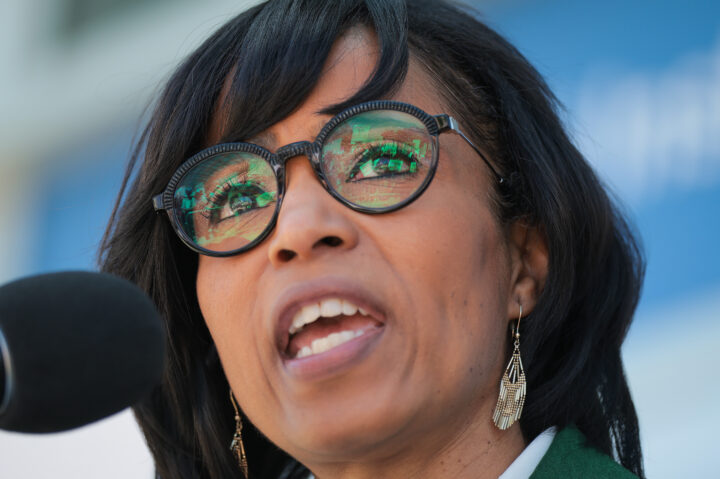
Kayla Bartkowski/Getty Images
U.S. Sen. Angela Alsobrooks (D-MD) speaks during her "Sick Of It" rally against the Trump administration's health care policies in front of the National Institutes of Health (NIH) on May 10, 2025 in Bethesda, Maryland.
Maryland Jewish leaders are expressing disappointment over Sen. Angela Alsobrooks’ (D-MD) decision to support both of Sen. Bernie Sanders’ (I-VT) resolutions blocking U.S. arms sales to Israel despite vowing to oppose such efforts when she campaigned for the Senate last year.
Alsobrooks and 26 of her Democratic colleagues voted on Wednesday evening to block U.S. shipments of automatic weapons that Sanders and others claimed were destined for police units controlled by Israeli National Security Minister Itamar Ben-Gvir, a far-right official in Israeli Prime Minister Benjamin Netanyahu’s government. She also joined 23 Democrats in supporting a second resolution relating to U.S. bombs and bomb guidance kits.
In a statement on her decision, the Maryland senator said she was joining the “voices of so many who feel the moral imperative to demand change. To witness the inhumanity of starving children and say nothing is not just a dereliction of duty but of conscience.”
“Netanyahu and his government must immediately change course. I remain committed to the U.S.-Israel relationship and my belief that the people of Israel have a right to defend themselves. In this moment, we must all do everything in our power as a global community to get desperately needed aid to the people of Gaza,” Alsobrooks said.
The votes marked a change in position for Alsobrooks, who campaigned last year in the general election contest for her seat on the promise to not support cutting off aid to Israel and subsequently told Jewish leaders after winning the race that she planned to maintain that vow. It was also a shift from her votes against Sanders’ prior resolutions blocking aid this past spring.
During the contested Democratic primary, however, she pledged to vote against future arms sales to Israel if the IDF invaded Rafah (an operation that later happened) and agreed with the Biden administration’s threat to withhold offensive weaponry.
In the general election, she moderated her position, and distanced herself from Sen. Chris Van Hollen’s (D-MD) antagonistic record toward the Jewish state, which has alienated much of Maryland’s Jewish community.
Now, many Jewish leaders in Maryland fear she’s aligning herself more closely with Van Hollen on Israel and Middle East policy.
A spokesperson for Alsobrooks told JI in a statement that, “As the Senator made explicit in her statement following the vote, she remains firmly committed to the U.S.-Israel relationship and her support for the security of the Israeli people. This vote was in direct response to the worsening humanitarian crisis in the region and her desire to see the delivery of desperately-needed aid. She will continue to support the people of Israel as well as the people of Gaza while remaining laser focused on eradicating the threat of Hamas and the return of the hostages.”
Ron Halber, the CEO of the Jewish Community Relations Council of Greater Washington, said that the JCRC planned to request a meeting with Alsobrooks to “try and figure out what her thoughts were on this matter and express our concern” about her votes on Wednesday.
Halber predicted that Alsobrooks was “probably swayed by the humanitarian disaster that has unfolded” in Gaza, pointing out her comments during the campaign and her votes against the April resolutions. He also noted that Alsobrooks was “speaking publicly at JCRC forums and speaking as recently as our legislative breakfast in December of last year” about her support for continued aid to Israel.
That record, he argued, was as relevant as Wednesday’s votes.
“Sen. Alsobrooks made it clear during her campaign that she would be a supporter of Israel, and I do not believe that this one vote takes her out of the pro-Israel camp,” Halber told Jewish Insider. “To me, one vote does not constitute a pattern. One vote does not constitute a dramatic shift in her support for Israel, but it’s certainly something we want to speak to her about and let her know that we are troubled by.”
“The concern is that for the Jewish community, Israel’s ability to defend itself is a holy grail, and that includes the ability to defend itself both defensively and offensively,” he continued.
Jennifer Laszlo Mizrahi, a Jewish philanthropist and Democratic activist in Maryland, said she sympathized with arguments from Democrats and others about the humanitarian situation in Gaza while defending Alsobrooks’ pivot from her prior position on Israel aid.
“There has been an evolution of facts between the campaign and now, and the situation with the suffering of innocent children in Gaza is highly problematic,” Mizrahi told JI.
Mizrahi dismissed the notion that Alsobrooks’s vote constituted a broken campaign promise, noting that several other Democratic senators had made similar statements to her and her team during the 2024 cycle that had since come out in support of blocking aid, including Sen. Elissa Slotkin (D-MI).
“Politicians evolve when facts evolve, particularly when they’re bright people. Angela Alsobrooks is an incredibly bright person, of course, and she cares a lot. What I would like to know is her motivation for the vote,” she explained.
Despite this, Mizrahi said she hoped to see Alsobrooks return to supporting Israel aid and to “see her step up more significantly about hate crimes and about antisemitism, because we’re seeing quite a lot of it.”
“I hope that Sen. Alsobrooks will change her vote and will change her tone back to her earlier tone once the ship has righted in terms of the humanitarian situation for innocent people in Gaza,” Mizrahi said, later adding that she wanted to know “whether she feels that if things get better, that she will change her mind again, and that she will enthusiastically support weapons sales to the only democratic ally that America has in the Middle East,” Mizrahi said.
“I’m not going to hold this one vote [against her] until I know more about what her motivation was and what she’s hoping to achieve,” she added.
Bobby Zirkin, a Jewish former Maryland state senator who led an effort to urge Democrats to support former Maryland Gov. Larry Hogan, a Republican, over Alsobrooks in their 2024 Senate contest, said that uncertainties over Alsobrooks’s commitment to Israel was a motivating factor behind his decision to back Hogan.
“There was a reason that I stepped out during the campaign for Gov. Hogan. … My concern was always that she would follow the craziest, most fringe [parts of the] left-wing, which has become Chris Van Hollen in our party,” Zirkin said of Alsobrooks. “She made promises to many people in the Jewish community during the campaign and she has absolutely broken them.”
“You’ve gotta give the Alsobrooks campaign people credit for changing the subject and misrepresenting what she was going to do and all the rest. And by credit, I mean that they hoodwinked people,” he continued. “She pulled the wool over the eyes of a lot of people, and now we’re living with that.”
The former NC governor: He ‘generally does not believe we should withhold aid from a critical ally like Israel when they have to defend themselves against countries like Iran’

Allison Joyce/Getty Images
Former North Carolina Governor Roy Cooper
North Carolina Democratic Senate candidate Roy Cooper, the state’s former governor, rejected efforts to withhold U.S. aid to Israel, days after the Senate voted on legislation to block certain U.S. arms sales to Israel, his campaign told Jewish Insider.
“The Governor believes it’s urgent for the United States to use other means of pressure on the Israeli government to step up now and find ways to get food to people who desperately need it and return the hostages,” a Cooper campaign aide said. “He would consider the specific text of any bills that came before the Senate, but generally does not believe we should withhold aid from a critical ally like Israel when they have to defend themselves against countries like Iran.”
Cooper, a moderate Democrat, has taken other steps in recent days to distance himself from anti-Israel elements of the Democratic Party, including rejecting a series of anti-Israel resolutions passed by state Democratic Party leadership. But it wasn’t until he entered the Senate race that he weighed in against the anti-Israel turn of the North Carolina Democratic party.
The Senate’s Israel votes are proving to be a sensitive issue among Democratic Senate candidates across the country — and is emerging as a dividing line between the party’s moderates and progressives.
Rep. Raja Krishnamoorthi and Lt. Gov. Juliana Stratton opposed the Sanders-led resolutions, but Rep. Robin Kelly (D-IL) said she would have voted for them
Tom Williams/CQ Roll Call/Bloomberg via Getty Images
Representative Raja Krishnamoorthi, a Democrat from Illinois
A divide is emerging in the Democratic Senate primary in Illinois over resolutions the Senate voted on earlier this week to block certain arms sales to Israel.
Lt. Gov. Juliana Stratton’s campaign and Rep. Raja Krishnamoorthi told Jewish Insider on Friday that they wouldn’t have supported the resolutions led by Sen. Bernie Sanders (I-VT), even as they condemned the humanitarian crisis in Gaza.
But Rep. Robin Kelly (D-IL) announced earlier in the day that she would have voted for the resolutions if she’d been in the Senate.
The split could help shape the potentially crucial Jewish community vote in the upcoming Senate primary.
“As a mother, it’s heartwrenching to see images of children forced to go without food. Israel and the United States need to take every possible step to end the humanitarian crisis and ensure aid is immediately and widely made available,” Stratton said in a statement to JI. “I continue to pray for a ceasefire that ends the suffering in Gaza, for the return of the hostages still held by Hamas to their families in Israel, and for lasting peace in the region.”
Stratton’s campaign elaborated that the lieutenant governor believes, “[w]e should all be speaking with a clear voice that the Netanyahu administration must be doing more to get food and aid to the citizens of Gaza right away, but Juliana believes that cutting off U.S. military aid to Israel could risk standing in the way of the ultimate goals of a true ceasefire and sustained peace.”
The campaign also said that Stratton believes in Israel’s “right to defend itself as one of the United States’ closest allies and the only democracy in the Middle East.”
The campaign said Stratton “strongly disagrees” with how the Israeli government led by Prime Minister Benjamin Netanyahu has executed the war in Gaza, but she “has been vocal in her support of Israel in the wake of the horrific terrorist attacks by Hamas on October 7th.”
Krishnamoorthi — who, in an interview with JI earlier this year, said he did not support efforts to cut off or condition U.S. aid to Israel — said Friday that the Sanders resolutions would not have solved the humanitarian crisis.
“We need an immediate ceasefire brokered by the U.S. and regional partners and that is swiftly accepted by Hamas, along with the release of the remaining hostages and the emergency provision of humanitarian aid,” Krishnamoorthi said in a statement to JI. “The U.S. must use all of its diplomatic influence to make that happen as quickly as possible. Ultimately, the only path to a lasting peace is a two-state solution. The first step and my focus today is ending the current humanitarian disaster and getting food in as quickly as possible. Wednesday’s resolutions did not right that wrong.”
He said that he has “long been a steadfast supporter of our nation’s alliance with Israel” and that it “had every right to defend itself,” but said that “[w]hat we see going on today in Gaza is a moral catastrophe.”
“As Americans, we can never sit by and allow widespread starvation and disease among a civilian population that includes the elderly, the disabled, women, and children,” Krishnamoorthi continued.
He highlighted that he wrote to Secretary of State Marco Rubio and Special Envoy Steve Witkoff on Friday, urging them to surge aid into the strip and to ensure accountability that it reaches its intended recipients.
He said in the letter that, despite acknowledging the starvation in Gaza, the administration has not done enough to remedy the situation. Krishnamoorthi also urged others in the region, including Hamas, to cooperate in the proper delivery of aid.
Kelly, meanwhile, said in a statement Friday that she would have voted for the resolutions.
“Israelis and Palestinians must work to secure a path forward where both peoples can live in peace, safety and security,” Kelly said in a statement. “I have supported Israel, but in this moment, I cannot in good conscience defend starving young children and prolonging the suffering of innocent families. Now is the time for moral leadership in the U.S. Senate.”
Both Sens. Dick Durbin (D-IL) — who is retiring — and Tammy Duckworth (D-IL) supported the resolutions.
Durbin has supported every similar effort Sanders has made since November to block various arms sales to Israel, but Duckworth had voted against them in the past and, in fact, argued forcefully against them in a letter to constituents.
The votes on Sanders’ proposal to cut Israel aid are also proving to be a dividing line in Michigan’s Senate primary: Rep. Haley Stevens (D-MI) announced Friday that she would have opposed them, while state Sen. Mallory McMorrow said she supported them.
‘Every time a vote like this comes around, there is a break in trust and that becomes harder to restore,’ an Atlanta-area rabbi said, though the senator maintains some supporters
Jemal Countess/Getty Images for Breakthrough T1D)
Sen. Jon Ossoff (D-GA) questions witnesses during a hearing held to examine a future without Type 1 Diabetes with a focus on accelerating breakthroughs and creating hope at the Dirksen Senate Office Building on July 09, 2025 in Washington, DC.
Sen. Jon Ossoff’s (D-GA) vote Wednesday night, with a majority of Senate Democrats, in favor of a resolution to block a shipment of automatic weapons to Israel is fueling renewed frustration with the senator within the Georgia Jewish community, setting back efforts by the senator to repair ties with Jewish voters who objected to similar votes last December.
Ossoff’s relationship with Georgia’s sizable Jewish community could be a critical deciding factor in his reelection campaign next November — with a tight margin of victory expected in the swing state, significant changes in Jewish voting patterns could help decide the election.
The Georgia senator alienated many in the Jewish community by voting in December for two of three resolutions to block aid shipments to Israel. In subsequent months — after a group of Jewish donors expressed support for Republican Georgia Gov. Brian Kemp as a potential challenger — Ossoff reached out to Jewish community leaders and groups to work to repair ties, with some success.
Many leaders said at the time that he was making progress but had more work to do to fully regain their trust. Those efforts hit a stumbling block in June after Ossoff — whose second child had just been born — took nearly a week to comment on the war between Israel and Iran.
Ossoff said, of his votes on Wednesday, that he had voted for the resolution to block the automatic weapons to send a message to the Israeli government objecting to the humanitarian crisis in Gaza, as well as due to concerns that the weapons would be provided to police controlled by Israel’s national security minister, Itamar Ben-Gvir, a controversial figure even in pro-Israel circles.
He said he voted against a second resolution blocking a sale of bombs and bomb guidance kits, because those weapons are necessary to strike targets throughout the region attempting to launch missiles and rockets at Israeli civilians. Ossoff had similarly opposed a resolution on bombs and guidance kits in November, while voting for two other resolutions to block other weapons transfers.
Norman Radow, a major Democratic donor in Georgia who spoke to Ossoff on Wednesday evening after the votes, told Jewish Insider, “I’m disappointed with him and he knows it. And I think he knows that a vast majority of the Jewish community feels the same way.”
Radow said that Ossoff’s justifications for his vote on the assault rifles resolution didn’t hold water for him and his logic was “sophomoric.” The Democratic donor said he’d argued to the senator that Ossoff had overstated the extent of violence in the West Bank and of starvation in Gaza.
And he said he told the senator that non-binding efforts condemning Hamas and its backers are ineffectual, as compared to the real impacts that cutting off military supplies to Israel would have.
He indicated he appreciated the senator’s call.
“I’m disappointed in his behavior, but I can’t say it’s a surprise. We’ve seen this before,” Cheryl Dorchinsky, the founder of the grassroots Atlanta Israel Coalition, said. “It’s insane to me that anyone would think that voting against weapons to Israel during a war is a good idea, regardless of who’s in power.”
She said she feels adrift from both political parties. “When people that I see going into politics as having hopefully an interest in doing the right thing fail us as a people, it just kind of breaks my heart,” Dorchinsky said. She argued that Israel should not be a partisan issue, and blamed “bad actors” trying to turn it into one.
“While I wish [Ossoff] would have voted against both of [the resolutions], I’m very pleased he voted against [the one on bombs and bomb guidance kits],” Dov Wilker, who serves as the regional director of the American Jewish Committee in Atlanta, said. Wilker also said he was “disappointed” that the state’s other senator, Sen. Raphael Warnock (D-GA), had voted for both of the resolutions.
Another Jewish Democratic donor in Georgia said, “The yes vote with Sanders, who only wants to destroy the U.S.-Israel relationship, is concerning [and] emboldens the terrorists to continue to reject the ceasefire that was agreed to by Israel. It’s exactly what Hamas wants.”
Rabbi Joshua Heller of Atlanta’s Congregation B’nai Torah told JI that, while he does not endorse candidates, he’s heard in conversations that “a lot of folks who had previously been strong supporters of [Ossoff’s] in the Jewish community are not happy about the stands that he has taken.”
Heller said that, in conversations with him about such positions, Ossoff and his staff have highlighted actions he has taken in support of Israel, “and that is true, but every time a vote like this comes around, there is a break in trust and that becomes harder to restore.”
He said that in conversations with Democratic Jewish voters, many onetime Ossoff supporters are “having second thoughts, at this point,” and that there is a real “challenge in his relationship with a lot of folks in the Jewish community right now.”
“No Jewish community is monolithic, but I definitely see a lot of folks in the community who are troubled by this,” Heller said.
Ossoff still maintains supporters in the Jewish community who back his stance on this week’s resolutions.
Beth Sugarman, a prominent J Street member in Georgia, told JI, “The Jewish community has diversity of opinions, but the people I know think Jon Ossoff is thoughtful and represents us well and his statement and split vote was a good reflection of where the community is. The senator’s statement and split vote was thoughtful and exactly what the community believes.”
J Street supported both of the resolutions to block aid.
Cary Levow, a supporter of pro-Israel causes and candidates, said, “I support Senator Ossoff and know of other Jewish Georgians who understand that Jon’s approach to the Gaza humanitarian issue is genuine.”
“Senator Ossoff has voted for over $20 billion in aid to Israel, has family living in Israel and has spent a significant amount of time in the country,” Levow continued. “I think Jon has represented the Jewish community well and I have zero concern about a senator who is critical of how [Israeli Prime Minister Benjamin Netanyahu] Bibi is waging this war.”
Larry Auerbach, a Georgia lawyer and Ossoff supporter, said, “Senator Ossoff has done what the vast majority of Georgia’s Jewish community has asked him to do to represent us well by standing up for protecting the Israeli people’s security and saying that the extremists in the Netanyahu administration can’t continue like this.”
National Republicans see Ossoff’s positions as an opening to peel off Jewish voters in the upcoming senatorial election. The National Republican Senatorial Committee, which has seized on Ossoff’s November votes to block aid to Israel, again slammed him on Wednesday.
“Jon Ossoff is a radical leftist who time and again refuses to stand with Georgia’s Jewish community,” NRSC spokesperson Nick Puglia said in a statement. “He’d rather please the pro-Hamas extremists in his party than stand with Israel and Jewish Georgians. In 2026, voters will send him packing.”
Radow, the Democratic donor, argued that Ossoff’s votes were “bad politics,” though he said he’s not sure any of the current or prospective Republican candidates can beat Ossoff.
“He’s kowtowing to Bernie Sanders — that does not win elections in Georgia,” Radow said. “The only thing that Jon’s got going for him right now is the Republican field of candidates is pretty weak. … I want him to win, and he’s not winning my vote right now, and he’s not going to win a lot of people’s votes supporting Bernie resolutions.”
He said that whether he ultimately supports Ossoff next year will depend in part on which Republican ultimately ends up as the nominee against him.
“It’s certainly going to be an interesting race, and my vote is still up for grabs,” Radow said. “I’m not going to be a knee-jerk Democrat on this issue.”
He urged Ossoff, going forward, not to show public daylight with Israel, “stop playing secretary of state” and keep disputes with the Israeli officials behind closed doors. And he called on the senator to consult with Jewish community members before critical votes like this one, rather than reaching out afterward to explain his votes.
Dorchinsky said that she would “never say never to anything,” when asked if Ossoff could win her support at this point, and that she’ll “be paying attention” and make her final decision when she’s in the voting booth next year.
“He has a responsibility to represent us all, and if he actually started to, I would be thrilled. As of right now, I’m clearly not,” Dorchinsky said.
A Jewish leader in Georgia agreed that a key deciding question for wary Jewish voters will be who the Republican Party nominates to run against Ossoff in 2025.
The leader told JI he thinks that Ossoff’s vote for the assault rifles resolution could help him “thread the needle” more easily than other resolutions and represented a more “considerate” approach, given the Ben-Gvir connection. “I think the majority of American Jews are not fans of Ben-Gvir,” the Jewish leader said.
“I think that if he is consistent with his messaging around the specific nature of why he voted against the assault rifles, I think it’ll help people that are more on the fence with him, but want to vote for him — versus those that are just against him,” the leader said.
But, the leader continued, “that doesn’t mean everyone’s going to buy it,” and noted that many members of the community are unhappy with the vote.
They said the vote is particularly “not going to help” Ossoff among Jewish community members upset by his delay in commenting on the Iran war, “but those that were able to give him some grace that he finally said something — this will help them.”
Heller was more skeptical that Ossoff’s vote-splitting approach would satisfy anyone, saying he thinks the strategy won’t help Ossoff with supporters of Israel who don’t believe in stopping weapons shipments nor with opponents of Israel who believe in cutting off all aid to Israel.
Michigan Senate candidate Mallory McMorrow also voiced support for cutting off offensive weapons to Israel

Paul Sancya/Pool/Getty Images
Sen. Elissa Slotkin (D-MI) rehearses the Democratic response to President Donald Trump's address to a joint session of Congress.
Sen. Elissa Slotkin (D-MI) said Thursday that she supported two resolutions led by Sen. Bernie Sanders (I-VT) to cut off shipments of assault rifles and bombs and bomb guidance kits to Israel, in a pivot from her previous stances.
Slotkin missed the votes on the resolutions which occurred Wednesday, having spent part of the day taping an episode of “The Late Show with Steven Colbert.” Slotkin’s support brings the total number of Democrats supporting the two resolutions to 28 and 25, respectively. Michigan state Sen. Mallory McMorrow, a potential future colleague of Slotkin in Michigan’s Senate delegation, also voiced support Wednesday for cutting off offensive weapons to Israel.
“I have struggled with this Joint Resolution of Disapproval more than any previous votes in the nearly two years since Hamas initiated the attacks of October 7,” Slotkin said in a statement. “Had I made it back for the vote yesterday, I would have voted yes to block offensive weapons to Israel based on my concerns over lack of food and medicine getting to civilians in Gaza.”
She said she remains a “strong supporter of the Jewish State of Israel … But despite the fact that Hamas began this bloody round of conflict — and refuses to release the hostages — the images of emaciated children are hard to turn away from. As are the calls from Michiganders who have friends and family trying to survive in Gaza.”
The senator called the resolution votes “a bad way to do foreign policy” and said that it’s the role of the executive branch to set foreign policy and negotiate with other countries, but that the Israeli government believes “there are no limits to what they can do while still receiving U.S. support. And so, I believe a message has to be sent.”
She said her support for future similar resolutions would be determined “on a case-by-case basis,” pending changes to the humanitarian situation. She said she “continue[s] to support the U.S.-Israel security relationship” and defensive weapons sales including missile defense systems.
“While the leaders of Hamas deserve what they’re getting in response to October 7, and Israel — like any other country in the world — has the right to defend itself, that doesn’t include letting children go hungry,” Slotkin continued in the statement. “That is despite Hamas’ sick refusal to relent, prevent further destruction, negotiate in good faith and release the hostages.”
She also argued that Israeli Prime Minister Benjamin Netanyahu’s actions endanger Israel because they “threaten the longstanding bipartisan consensus that have helped keep Israel safe since its inception,” describing her position as one based on “deep concern and conviction for Israel’s long-term security” and the threats Israel has faced since the day it was founded.
McMorrow, a Democratic Senate candidate running for the seat of retiring Sen. Gary Peters (D-MI), said on the campaign trail on Wednesday that she supports stopping offensive weapons transfers to Israel.
“The United States has to stop providing Netanyahu with offensive weapons that do nothing but continue to extend this war,” she said.
McMorrow said that the humanitarian crisis in Gaza is “indefensible” and that “we cannot let [Netanyahu] tell us that what we are seeing with our own eyes is not what is actually happening.”
She also demanded that Hamas release all of the hostages and disarm and that the parties must reach a permanent ceasefire.
“It feels like we’ve lost the humanity in this issue and what is true is that Palestinians deserve security and peace. Israelis deserve security and peace,” McMorrow said. “And the United States, as the most powerful nation in the world, has to do everything in our power and our influence to make it all happen.”
The other Democratic candidates in the race, Rep. Haley Stevens (D-MI), a longtime vocal supporter of Israel, and Abdul El-Sayed, an Israel critic, haven’t responded to requests for comment on the prospect of blocking offensive weapons sales to Israel.
The two other Senate Democrats who missed Wednesday’s votes, Mark Kelly (D-AZ) and Ruben Gallego (D-AZ), both said they would have voted against both resolutions.
Slotkin, in an appearance on an anti-Israel podcast: ‘I was the first Jew elected to the Senate that was not endorsed by any Jewish group — AIPAC, J Street’
Paul Sancya/Pool/Getty Images
Sen. Elissa Slotkin (D-MI) rehearses the Democratic response to President Donald Trump's address to a joint session of Congress.
Sen. Elissa Slotkin (D-MI) indicated in an interview on the “Breaking Points” podcast on Tuesday that she’s open to considering cutting off offensive weapons sales to Israel — comments that came a day before the Senate is set to vote on blocking two arms sales to Israel — as well as distanced herself from “Jewish group[s]” like AIPAC and J Street.
At the same time, while offering criticisms of Israel and its operations in Gaza, Slotkin refused to embrace and pushed back on some of the more heated anti-Israel rhetoric offered by the podcast’s hosts. The podcast, which brings together a progressive and a libertarian host, generally takes an isolationist view toward U.S. foreign policy and is opposed to the close U.S.-Israel relationship.
Asked about cutting off offensive aid, Slokin said, “That certainly, to me, would be a place to look, but I’m not going to cut off a blanket next sale on a defensive weapon that comes through, no.”
One of the hosts, the progressive Krystal Ball, pressed Slotkin over the distinction between offensive and defensive systems, arguing that the U.S. does not provide defensive weapons systems to Russia or Iran — malign global actors and longstanding adversaries.
Slotkin responded by noting her support for the U.S.-Israel relationship in the long term, and argued allies should be treated differently than adversaries even in times of disagreement between the two countries.
“Sometimes we have big breaks with allies, right? Sometimes we have difficult moments with allies. Sometimes it goes the wrong way with allies. But an allied relationship is a long-term relationship,” Slotkin told the duo.
“I think about this from the mirror image way because I do not support the things that Donald Trump is doing, right? But I’m an American. So, do I want other countries to look at America and be like, ‘We can’t stand Donald Trump so we’re going to end the long-standing relationship we have with the American people. We’re going to cut off any support we give them on information sharing or intelligence sharing,’” she continued.
Slotkin also distanced herself from “Jewish group[s],” mentioning that she’d declined to seek endorsements from AIPAC and J Street specifically.
Asked if AIPAC should be forced to register as a foreign lobbying organization, Slotkin said she did not have an answer beyond that she knew “plenty of people who think they should” but would “have to look at the definition.”
Accusations from both political fringes that AIPAC — whose members are American citizens — constitutes a foreign influence operation, have often invoked antisemitic dual loyalty tropes.
After being accused of providing a “cop-out answer,” Slotkin replied by saying that she had stopped accepting money from the group over disagreements about policy and overall strategy in 2021, after having support from AIPAC members when she first ran for Congress in 2018. The group did not officially endorse or fundraise for candidates until the 2022 election cycle.
“You’ve got to get your facts straight. I have not been endorsed by AIPAC. I have not, I’m sorry. I was the first Jew elected to the Senate that was not endorsed by any Jewish group — AIPAC, J Street. In 2018, when I first ran [I was endorsed by] people who were [AIPAC] members, yes, but I’ve not been endorsed since then,” Slotkin said. “And I’ve just got to be honest, like I think that this is where facts really matter. I’ve had very, very difficult conversations with my colleagues in that organization and made a choice back in 2021.”
“2021, so that was the first time I was up for reelection. So I understand that there’s a sort of like, again, cornered position, but to me like I call balls and strikes as someone who served in the Middle East,” she added.
Slotkin was endorsed by one Jewish group, the Jewish Democratic Council of America, which maintains a pro-Israel stance, in 2024.
Slotkin, pressed by Ball on the humanitarian situation in Gaza, said she had signed onto a letter accusing Israel of pursuing a “policy of starvation,” adding that, as an “occupying power,” it has a responsibility to ensure food is supplied to Gaza. But she stopped short of endorsing Ball’s framing of Israel’s actions as a “crime against humanity.”
She also did not embrace Ball’s claims that Israel is pursuing “ethnic cleansing” in Gaza, while criticizing plans from the Israeli government for relocating people within or out of Gaza as illegal.
“I’ve been clear about that,” Slotkin said. “So I would ask for a little bit of an open mind.”
Ball responded by accusing Slotkin of failing to take meaningful action on the issue and criticizing her for voting for aid to Israel, for the Antisemitism Awareness Act, for legislation describing anti-Zionism as antisemitic and for sanctioning the International Criminal Court.
Ball told the Michigan senator that her progressive positions on domestic issues like health care and housing policy were irrelevant to her if she was “still supporting a genocide in Gaza.”
“I’m speaking for myself, but I know there are millions of other people who feel the same, that you have to at least cross this sort of moral threshold,” Ball said.
While Ball framed the conflict in the Middle East as a central issue in the New York City mayoral race, Slotkin, looking to her own senatorial race in 2024, argued that its political significance has been overplayed.
“This issue is motivating people in a very visceral and personal way. But it’s not the only issue that my voters in Michigan care about,” she said. “The online world is extremely, extremely focused on this, but that doesn’t always represent the majority.”
She said it’s the top issue in some areas, but outside of the Detroit area, “it’s not in the top 40.”
Slotkin also said she was proud that she had won a majority of both Jewish voters and the three cities with the largest Muslim populations in Michigan during her Senate campaign, which she attributed to “calling balls and strikes” and leaning on her background in Middle East policy.
The Michigan senator also appeared to argue that the pace of anti-Israel protests has dropped off significantly since the end of the Biden administration
“I just think it’s interesting that there were a ton of protests when Democrats were in charge” against the war in Gaza, adding that it’s “fair to say, just to be honest, that … the number of protests that go on now, versus before,” though she was cut off by the show’s hosts.
She generally declined to weigh in on the results of the New York City mayoral race, saying primarily that she believes the results reflect concerns about the cost of living and the need for a new generation of leadership.
“I can have plenty of disagreements with what I’ve heard Mr. [Zohran] Mamdani propose, and I do,” she said. “I am here because we lived the American dream through capitalism. A lot of free stuff to me is not the answer. … But I can have those disagreements. I would be thrilled to have that conversation with him or anyone else.”
Asked about her condemnation of Rep. Rashida Tlaib (D-MI) for using the phrase “from the river to the sea,” and if she would also condemn Rep. Randy Fine (R-FL) for his comments saying Gazans should “starve away,” Slotkin said she did not know who Fine was but had no reservations denouncing such remarks.
“I have no problem condemning Randy Fine, who I don’t know. I don’t, I’m sorry. I don’t know who that person is. I have no problem condemning someone who talks like that,” she told the hosts.
Slotkin was also asked if she believed that financier and convicted pedophile Jeffrey Epstein “had any connections to U.S. or Israeli intelligence agencies.” Slotkin, a former CIA analyst, said she would be “very surprised” if that was the case.
This is the third such effort Sen. Bernie Sanders has initiated since November 2024

Win McNamee/Getty Images
Sen. Bernie Sanders (I-VT)
Sen. Bernie Sanders (I-VT) introduced a joint resolution of disapproval on Monday to block an arms transfer to Israel, setting up another Senate floor battle on Wednesday over U.S. aid to Israel — the third since November of last year.
The resolution comes as criticism of Israel has reached new heights among Senate Democrats over the humanitarian situation in Gaza, a state of affairs that could generate increased support for Sanders’ latest effort.
A Sanders spokesperson said that the resolution would block the sale of $1 million worth of assault rifles to “to the police force overseen by extremist minister Itamar Ben-Gvir, who has long advocated for the forcible expulsion of Palestinians from the region, has been convicted by an Israeli court of racist incitement and supporting the Kahanist terror organization, and has been distributing weapons to violent settlers in the West Bank.”
“At a time when Israeli soldiers are shooting civilians trying to get food aid on a near-daily basis, the United States should not be providing more weapons to Israeli security forces,” the Sanders spokesperson said.
Sanders is forcing a vote on Wednesday on this new resolution as well as one relating to bombs and bomb guidance kits for Israel that he introduced months ago but had not previously called up for a vote.
The spokesperson did not say whether Sanders will force a vote on the resolution, but if he does, it would likely not happen until September, with the Senate expected to depart for its August recess at the end of the week.
“American taxpayer dollars are being used to starve children, bomb civilians and support the cruelty of Netanyahu and his criminal ministers. … The White House and Congress must immediately act to end this war using the full scope of American influence,” Sanders said in a statement last week. “No more military aid to the Netanyahu government. History will condemn those who fail to act in the face of this horror.”
The Vermont senator accused Israel of “using mass starvation to engineer the ethnic cleansing of Gaza” and described the Israeli- and American-backed Gaza Humanitarian Foundation’s aid distribution sites as “death traps for Palestinian civilians, with near-daily massacres.”
In November, the first time Sanders forced votes on aid to Israel, 19 Senate Democrats voted for at least one of three resolutions that came up for consideration. In April, 15 voted for a pair of similar measures.
At least one lawmaker, Sen. Angus King (I-ME), who voted for the first set of resolutions but against the second, would likely flip back to support a new effort to block aid.
“I am through supporting the actions of the current Israeli government and will advocate—and vote — for an end to any United States support whatsoever until there is a demonstrable change in the direction of Israeli policy,” King said in a statement earlier this week. “My litmus test will be simple: no aid of any kind as long as there are starving children in Gaza due to the action or inaction of the Israeli government.”
Connecting Ben-Gvir, a highly controversial figure, to the arms sales could also make some Senate Democrats who’ve opposed other Sanders-led efforts — like those to block the sale of bomb guidance kits — more open to supporting this one.
‘If the current status quo is the same a year from now and it actually leads towards further negotiation — success,’ Warner told JI

Francis Chung/POLITICO via AP Images
Sen. Mark Warner (D-VA) ascends on an escalator on his way to a vote at the U.S. Capitol on June 17, 2025.
Sen. Mark Warner (D-VA) told Jewish Insider on Friday that he’s inclined to view the Trump administration’s strikes last month on Iran’s nuclear facilities as a “success,” if negotiations with Tehran resume and barring substantial future retaliation from Iran.
His comments largely echo sentiments shared earlier in the day by Sen. Chris Coons (D-DE) at the Aspen Security Forum, suggesting an increasing willingness by moderate, national security-minded Democrats to publicly acknowledge positive outcomes of the strikes, even if they maintain other concerns about the process that produced them.
“I will acknowledge the successfulness of the Israeli attacks and how back-foot the regime was. The fact that they didn’t launch the thousands of missiles,” Warner told JI on the sidelines of the forum. “I was concerned about an attack that didn’t bring Congress along. And I do think there was a huge process foul when the Gang of Eight wasn’t notified and the Republicans [were]. Trump[’s first administration] never did that — but I have never contested the success.”
Warner, the vice chair of the Senate Intelligence Committee, said he’s been pleased that there has not been ongoing asymmetric retaliation against the U.S. by Iran, such as cyber, sleeper cell or Iraqi militia attacks.
“If the current status quo is the same a year from now and it actually leads towards further negotiation — success.”
Warner, Coons and other top Democrats had cautioned the administration against unilateral action against Iran without congressional approval just days before the attack.
“Let’s make no doubt that the Iranian regime [are] bad guys, and that is why I’ve been such a consistent supporter of Israel,” Warner told JI.
“Iran’s, at least so far, been shown to be more of a paper tiger,” Warner said. “If we could just get to the resolution in Gaza, there really could be a fresh start.”
The senator said that his ongoing concern is how President Donald Trump has responded to the attacks, declaring that Iran’s nuclear program had been completely obliterated.
“The president, within two hours of the strike, set an arbitrary, almost impossible standard to meet, in terms of ‘total obliteration,’” Warner said. “To get the enriched uranium you’re going to need troops on the ground. And there are more than three sites — the vast majority [of the activity] was [at] those three, but there was some bad stuff happening elsewhere.”
He said the intelligence community had also been pressured to “contort itself to meet” the assessment Trump put forward.
In the immediate aftermath of the strikes, Warner and other Democrats expressed frustration that the Trump administration took days to brief Congress about them. Warner said he’s received “some additional clarity” in the weeks since the strikes about their effects. But he said that without physically sending operatives into the facilities, it’s difficult to know for sure the impacts of the strikes.
“Other nations have made assessments that were more in the multiple months” of delay to Iran’s nuclear program, “but I’m not even sure that’s the right metric,” Warner said. “It was a success. So the question is, what’s next? That, I don’t have visibility on.”
Going forward, Warner emphasized the need for negotiations to bring International Atomic Energy Agency inspectors back into Iran, adding that he wants to look further into the source of the delays in resuming talks.
Warner said he’s also seeking information on the timeline on which Iran would be able to build a less sophisticated nuclear device that could be delivered in a truck, rather than via a ballistic missile.
Though he noted that U.S. intelligence had not assessed that Iran was actively constructing a nuclear weapon, he said he had heard reports about an Israeli assessment that offered a different view and that he is looking further into it.
Asked about the fluid situation in Syria, in which Israel went, in the span of just a week, from floating normalization with the new Syrian government to bombing key government facilities in response to attacks on the Druze population, Warner indicated he’s still gathering information.
He said that Israel is “appropriately … very protective of its Druze population,” adding that he does not know at this point whether the Syrian government forces attacking the Druze population are doing so at the orders of that government.
He said he’s hopeful that Israel and other parties involved will not miss an opportunity to find a peaceful resolution that could defuse a major longtime threat to Israel’s north.
Warner said he also wants to see Trump use his “enormous influence in Israel” to “[force] Bibi’s government into a return of the hostages, a ceasefire,” saying that would open up opportunities for transformational change in the region, including Saudi-Israeli normalization.
Warner said that while he’s been critical of Israeli Prime Minister Benjamin Netanyahu, Israel and the IDF deserve credit for their surprise accomplishments in taking down Iran’s proxy network and in their strikes against Iran itself.
“The [Jewish community’s] concern is real and understandable,” Warner said. He said that he has been struck by the “level of anger, animosity, vile things said” in anti-Israel protests that have targeted him — “and I’m not Jewish. And I can only imagine.”
“Iran’s, at least so far, been shown to be more of a paper tiger,” Warner said. “If we could just get to the resolution in Gaza, there really could be a fresh start.”
Asked how concerned he is about the possibility of homeland attacks against the Jewish community carried out by or in the name of Iran, Warner said that U.S. intelligence monitors potential threats fairly comprehensively, but indicated that he’s most worried about radicalized lone-wolf attacks, like those in Washington and Boulder, Colo.
“The [Jewish community’s] concern is real and understandable,” Warner said. He said that he has been struck by the “level of anger, animosity, vile things said” in anti-Israel protests that have targeted him — “and I’m not Jewish. And I can only imagine.”
Warner expressed frustration at the way that the Palestinian cause has crowded out other global issues on college campuses. He said that it “would be healthy” if young people “have the chance to get exposed to other things in the world,” offering as examples the conflict in Sudan — which he said has been more deadly than Gaza and Ukraine combined — and the military junta in Myanmar.
On the subject of the Houthis, who have ramped up attacks against commercial shipping and Israel in recent weeks, Warner called the group a “tough nut to crack,” noting that a protracted Saudi and Emirati campaign against the Iran-backed terrorist group in Yemen had failed to put the issue to bed. But he said that the U.S. can’t rule out further military action against the group.
“I hope that those plans would be kept classified and not shared … on a device that’s not secure,” he quipped, referencing the Signalgate scandal, which he said had prompted concern from the Israeli government.
******
Last week’s Aspen summit, which typically prioritizes bipartisan and nonpartisan discussion and solution-making, became particularly politicized after nearly all Trump administration speakers canceled their participation, followed by a handful of foreign and private sector leaders and former government officials disappearing from the week’s agenda.
The issue was a frequent topic of discussion both on the main stage and across the Aspen Meadows campus last week, seen by many as a sign of the ways that intense partisanship has infiltrated U.S. foreign policy, once seen as a less antagonistic space.
Warner’s own panel featured himself and Coons, but not a Republican senator, as has been tradition.
Nevertheless, Warner said that bipartisanship on foreign policy issues still lives in the Senate, noting that the Intelligence Committee had passed an Intelligence Authorization Act recently in a nearly unanimous vote.
Looking ahead, he said the “easiest place to rebuild that consensus is around China,” which he described as an unprecedented competitor. He said there has been a long and difficult journey across multiple administrations to refocus on China, but he said there has been bipartisan success in pushing back against China.
He also argued that the Trump administration’s transactional and short-sighted approach to foreign policy goes against a longtime bipartisan tradition of viewing U.S. international relationships as an effort in “mutual trust-building.”
He said that his Republican colleagues privately disagree with many of Trump’s more outlandish foreign policy efforts — like annexing Canada. “At some point, there’s got to be a break,” he responded, when pressed on the fact that some Republicans defend Trump’s policies publicly despite those private disagreements.
Warner told JI that the bill the Intelligence Committee recently passed would cut the size of the Office of the Director of National Intelligence. But, despite offering biting criticisms of DNI Tulsi Gabbard, Warner said that the reform efforts are not a reflection of or specifically prompted by concerns about her conduct in the role.
“I’m very comfortable with the idea of bringing the mission closer to what it was originally, but also making sure that people who are at the ODNI get returned to their original home agency and don’t get [fired],” Warner said.
Clarifying comments that he made on the panel about close U.S. intelligence partners in the Five Eyes group curtailing their intelligence sharing with the United States, Warner said he was not aware of specific instances in which that had happened, but said that U.S. partners are concerned about the state of the U.S. intelligence community.
“The challenge about intelligence sharing is [that] this is all based on trust,” Warner said.
Plus, Bibi plans a Beltway blitz

Jemal Countess/Getty Images for Fair Share America
Sen. Chris Murphy (D-CT) speaks at the U.S. Capitol on April 10, 2025 in Washington, DC.
Good Tuesday morning.
In today’s Daily Kickoff, we look at Sen. Chris Murphy’s leftward shift on Israel, and spotlight Rep. Raja Krishnamoorthi’s congressional votes and relations with Illinois’ Jewish community as he mounts a bid for Senate. We cover Israeli Prime Minister Benjamin Netanyahu’s upcoming trip to Washington, and report on a new lawsuit alleging the Nysmith School in Northern Virginia discriminated against Jewish students. Also in today’s Daily Kickoff: Doron Spielman, Karen Diamond and Susan Rice.
What We’re Watching
- Secretary of State Marco Rubio is meeting in Washington today with his counterparts from Japan, China and Australia.
- The Carnegie Endowment for International Peace’s Aaron David Miller is hosting a web event this morning with former CIA Director David Petraeus and analyst Karim Sadjadpour focused on Israel, Iran and the U.S.
- Former U.S. Ambassador to Israel Dan Shapiro is speaking this morning at a Center for International & Strategic Studies event on ties between North Korea and Iran.
- The Christians United For Israel summit continues today in Washington. Virginia Attorney General Jason Miyares, the Brandeis Center’s Ken Marcus and Israel Ambassador to the U.N. Danny Danon are slated to speak today.
- The Aspen Ideas Festival in Colorado wraps up today.
- New York City is slated to release the first round of ranked-choice voting results from last week’s primaries
What You Should Know
A QUICK WORD WITH JI’S JOSH KRAUSHAAR
The political developments over the last week couldn’t send a more dispiriting message about the viability of the political center — in both parties.
Last Tuesday, a self-proclaimed democratic socialist, Zohran Mamdani, who campaigned on a far-left agenda on issues ranging from the economy, crime and antisemitism, emerged as the Democratic standard-bearer for mayor of New York City.
Over the weekend, Sen. Thom Tillis (R-NC), one of the most pragmatic Republicans in the upper chamber, announced he wouldn’t be running for reelection after signaling he’d be one of two GOP votes against President Donald Trump’s “big, beautiful” budget reconciliation bill. His decision to retire came after Trump, in a Truth Social post, threatened to support a primary challenger.
Tillis, notably, was the deciding Republican vote scuttling the nomination of interim D.C. U.S. Attorney Ed Martin for, among other issues, his associations with a Nazi sympathizer.
And on Monday, Rep. Don Bacon (R-NE), one of only three House Republicans who represents a district that former Vice President Kamala Harris won in 2024, formally announced his retirement, making it all the more likely a more-partisan Democratic lawmaker will succeed him in the seat.
These are just the latest developments that underscore that moderation, pragmatism and bipartisanship are becoming endangered principles in a polarized political environment that rewards extremism and hot takes over thoughtful policymaking.
SOLIDARITY SNUB
Connecticut’s Jewish community wonders: What happened to Chris Murphy?

Two days after the Oct. 7, 2023, Hamas terror attacks, Sen. Chris Murphy (D-CT) spoke emotionally at the “Rally for Israel” in West Hartford, Conn. “This is a moment where we are going to have to stand as a nation with greater force, with greater purpose than ever, to make sure that Israel has what it needs,” Murphy said. But members of Connecticut’s Jewish community say Murphy strayed from that promise just weeks later. In late November 2023, Murphy said on CNN that he was open to placing conditions on U.S. aid to Israel, a position that astounded many of the people who had stood with him in West Hartford not long before. Since then, he has emerged as a vocal critic of Israel’s handling of the war in Gaza, and more than 18 months after the attack, the Connecticut Jewish community’s frustration with him has only grown, Jewish Insider’s Gabby Deutch reports.
Veering off: Murphy voted twice in support of resolutions put forward by Sen. Bernie Sanders (I-VT) that would block certain arms sales to Israel. Following Israel’s strikes on Iranian nuclear facilities, Murphy slammed Israeli Prime Minister Benjamin Netanyahu for sending the Middle East into a “new, deadly conflict.” His shift to the party’s left flank on Israel comes as Murphy positions himself as a leading voice in the Democratic Party in opposition to President Donald Trump’s policies and builds a stronger public profile for himself. He’s a regular on cable news shows and recently created a new political action committee to encourage protests against Trump, with plans to spend $2 million in the 2026 midterms, sparking rumors that he could mount a presidential bid in 2028. It’s not just Murphy’s foreign policy views that are concerning his Jewish constituents. Recently, the senator has emerged as one of the most prominent boosters of presumptive New York City Democratic mayoral nominee Zohran Mamdani, even as some of his Democratic colleagues have raised concerns about Mamdani’s refusal to condemn the phrase “globalize the intifada.”
Communal concerns: Rabbi Tuvia Brander, the spiritual leader of Young Israel of West Hartford, told JI that Murphy’s praise of Mamdani is “so beyond the pale of what is just in the basic interests of many of his constituents.”
PRAIRIE STATE OF PLAY
Rep. Raja Krishnamoorthi hopes to win the Jewish vote in Illinois Senate contest

As he competes for Illinois’ open Senate seat, Rep. Raja Krishnamoorthi (D-IL) is hoping that the state’s sizable Jewish community, concentrated in the Chicago area, will help him chart a path to victory in the Democratic primary, Jewish Insider’s Marc Rod reports.
Making his pitch: “I do think that [Jewish voters] have a desire for a strong U.S.-Israel relationship,” Krishnamoorthi said, “and I don’t think there’s anybody else with the track record in this race that I possess, showing strong support for that relationship, but also knowing why that relationship needs to continue to be strong on a bipartisan basis, and we need to take this out of politics.” Krishnamoorthi spoke to JI about his approach to antisemitism, Iran and the U.S.-Israel relationship.
WAR OF WORDS
Responding to Mamdani, Senate Democrats say ‘globalize the intifada’ slogan must be condemned

Several Senate Democrats told Jewish Insider’s Emily Jacobs and Marc Rod on Monday that calls to “globalize the intifada” are unacceptable and must be condemned, amid concerns from Jewish leaders and organizations over presumptive New York City Democratic mayoral nominee Zohran Mamdani’s defense of the slogan.
Mamdani musings: Senate Minority Leader Chuck Schumer (D-NY), who has thus far not endorsed Mamdani, told JI he plans to meet with Mamdani in a few weeks, when asked about Mamdani’s refusal to condemn the slogan. “Sen. Schumer condemns the phrase ‘Globalize the Intifada’ and believes it should not be used because it has such dangerous implications. As Senator Schumer said after the death of Karen Diamond, the attack in Boulder continues to serve as a grave reminder of the deadly consequences of the rise in antisemitism,” a spokesperson for Schumer told JI. “I don’t know what [Mamdani’s] position is on it, but I certainly think that the call to spread the intifada is the kind of incitement that can lead to extremist violence,” Sen. Richard Blumenthal (D-CT) told JI.
Read the full story here with additional comments from Sens. Jacky Rosen (D-NV), John Fetterman (D-PA) and Kirsten Gillibrand (D-NY) and Rep. Ritchie Torres (D-NY).
TRIP TALK
Netanyahu heading to D.C. next week to ‘take advantage of the victory’ in Iran

Israeli Prime Minister Benjamin Netanyahu’s White House visit next week is a chance to “take advantage of the victory” in Iran, he said at the start of a Cabinet meeting on Tuesday,Jewish Insider’s Lahav Harkov reports.
On the agenda: The trip to Washington “comes as a continuation of the great victory we achieved in Operation Rising Lion,” Netanyahu said, referring to Israel’s 12-day operation against Iran’s nuclear and ballistic missile program, which the U.S. joined. “Taking advantage of the victory is no less important than achieving the victory.” An Israeli official told JI on Tuesday that “everything” is on the agenda, including U.S.-Israel cooperation to stop Iran from rebuilding its nuclear program, next steps in Gaza and the possibility of establishing diplomatic relations with Syria and other Arab and Muslim countries.
Meanwhile at Aspen: Susan Rice, who served as national security advisor during the Obama administration’s inking of the nuclear deal with Iran, sharply criticized Trump’s decision to strike Tehran’s nuclear program while defending the 2015 agreement during a panel discussion at the Aspen Institute’s Ideas Festival on Monday,Jewish Insider’s Jake Schlanger reports. Rice joins a chorus of former Obama and Biden administration officials who have criticized Trump’s decision to strike Iran’s nuclear facilities, despite many experts concluding the damage to the program was significant.
Worth noting: The New York Times’ David Brooks, writing in a piece headlined “I Detest Netanyahu, but on Some Things He’s Actually Right,” adds context to consider when evaluating the strikes. “We may know in time what the bombings accomplished. In the meantime, we do know that Israel and the United States have the will and capacity to attack Iran anytime and anyplace. We do know that if Iran reconstitutes its nuclear program, Israel and America have the capacity to deliver a much more devastating and regime-threatening blow. We also know that Iran and its proxies have made some insanely self-destructive miscalculations since Oct. 7, 2023, and they must know that, too. These are ominous omens for the theocrats in Tehran.”
HOSTILE ENVIRONMENT
Brandeis Center files complaint alleging antisemitism at Virginia private school

The parents of an 11-year-old Jewish student at a private school in Northern Virginia say their daughter faced months of antisemitic harassment that went unaddressed by school officials, who also cancelled an annual event featuring a Holocaust survivor due to concerns that the event might exacerbate tensions related to the Israel-Hamas war. Days after the parents addressed the campus environment with school leadership, all three of their children were expelled, according to a complaint filed on Tuesday with the Office for Civil Rights in the Virginia Attorney General’s Office, Jewish Insider’s Haley Cohen has learned.
The allegations: According to the complaint, Kenneth Nysmith, headmaster and owner of The Nysmith School for the Gifted in Herndon, Va., canceled the event with the Holocaust survivor and expressed concern that it might inflame tensions within the school community in light of Israel’s ongoing war against Hamas in Gaza. The complaint, filed by the Louis D. Brandeis Center for Human Rights under Law and Washington-based firm Dillon PLLC, alleges several antisemitic incidents that the parents of the 11-year-old Jewish student say she faced in the months leading up to the cancellation of the Holocaust survivor event. The complaint recounts that in October 2024, their daughter’s history teacher asked students to work together on an art project to create a large drawing featuring the attributes of “strong historical leaders.” The students collaborated on a large artistic rendering of a strong leader, featuring Adolf Hitler’s face.
Elsewhere: The Brandeis Center, working with the Anti-Defamation League and Mayer Brown, filed a brief on Monday with the Department of Education’s Office for Civil Rights, alleging that officials in a Massachusetts school district did not adequately protect Jewish students from antisemitic harassment and discrimination.
BOOK REVIEW
‘When the Stones Speak’: Doron Spielman connects Jewish history to present-day Israel
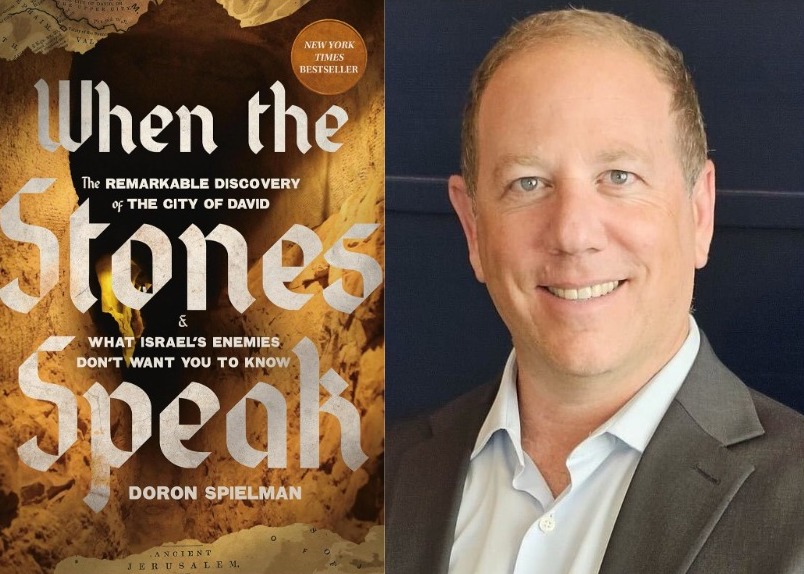
After Israel waged war against an Iranian regime that has vowed to destroy the Jewish state and diaspora Jews face a heightened atmosphere of antisemitism stemming from the Israel-Gaza war, a new book aims to equip Israel supporters with “a foundation” to refute claims that Jews do not have ancient roots in the land of Israel. When the Stones Speak: The Remarkable Discovery of the City of David and What Israel’s Enemies Don’t Want You to Know, written by former IDF spokesperson Doron Spielman, does so by recounting discoveries made in Israel’s largest excavation site, the City of David, where Spielman has worked closely with archaeologists for two decades to uncover and promote the site’s historical significance. The book, Spielman suggested in an interview with Jewish Insider’s Haley Cohen, is aimed at what he calls “the middle group of people” — “logical, reasonable people” who don’t know whether they’re pro-Israel or anti-Israel.
Lay of the land: “When they understand that ‘when the stones speak,’ they tell the story of the truth of the Jewish people’s connection to the land,” that could help sway the conversation on college campuses. This middle group will come to understand, he said, that “at the very least [the Israeli-Palestinian conflict] is a fight between two people who think they’re indigenous, and at the very best they understand the Jews are people who have only one land, they’ve been there for 3,800 years and therefore they have a right to defend it.”
New York state of mind: Spielman hopes the book’s impact will also reach supporters of New York City mayoral candidate Zohran Mamdani, the presumptive winner of the Democratic primary last week amid his refusal to condemn the phrase “globalize the intifada” and denial that Israel has a right to exist as a Jewish state. “He’s denying the Jewish people their right to live as a nation in the one place they ever called home,” Spielman told JI. “When the Stones Speak cuts through the lies with facts on the ground — literally.”
Worthy Reads
Knockout Blow, But Not the End: The Times of Israel’s David Horovitz reflects on the 12-day war between Israel and Iran. “There is, however, absolutely no room or reason for hubris. Israel allowed itself to slip into existential peril, and the astounding success of the 12-day war is a temporary accomplishment. Iran is not going anywhere. And so long as the ayatollahs retain power, they can be relied upon to recommit to their efforts to wipe out Israel. … Along with delight and profound relief at the achievements of the war, the military and security top brass are resolved not to underestimate the regime and its single-minded determination to destroy Israel. This was a knockout blow in a life-or-death fight. But it is not the end of the existential struggle.” [TOI]
Not Science Fiction: In The Free Press, Matti Friedman considers the impact of Iran’s ballistic missile attack on the Weizmann Institute of Science. “When [neurobiologist Oren Schuldiner] heard that his lab was hit, he said, he had trouble grasping what this meant, and kept texting colleagues to ask what could be salvaged — there were two microscopes in the lab, for example, each worth nearly $1 million, and thousands of fruit fly specimens that he uses to map neural changes that may one day help us better understand diseases like schizophrenia and autism. Finally, a colleague who’d lost her own lab sent him a link to the Wikipedia page detailing the five stages of grief. ‘I understood that I was in denial,’ he said. Only when he made it back did he understand that the lab wasn’t damaged — it was gone, along with most of his work of the past 17 years.” [FreePress]
Lula’s Lurch:The Economist spotlights Brazilian President Luiz Inácio Lula da Silva, whose declining domestic popularity has coincided with his country’s deepening ties with Iran, Russia and China. “On June 22nd, hours after the United States struck Iranian nuclear sites with huge bunker-buster bombs, Brazil’s foreign ministry put out a statement. It said that Brazil’s government ‘strongly condemns’ the American attack, and that the strikes were a ‘violation of Iran’s sovereignty and international law.’ This strength of language put Brazil at odds with all other Western democracies, which either supported the strikes or merely expressed concern. Brazil’s friendliness with Iran is set to continue on July 6th and 7th when the BRICS, a group of 11 emerging-market economies including Brazil, China, Russia and South Africa, holds its annual summit in Rio de Janeiro. Iran, which became a member of the BRICS in 2024, is expected to send a delegation. The club is currently chaired by Brazil’s president, Luiz Inácio Lula da Silva, known as Lula. Originally, being a member had offered Brazil a platform from which to exert global influence. Now it makes Brazil look increasingly hostile to the West.” [TheEconomist]
Word on the Street
President Donald Trump signed an executive order lifting the majority of sanctions imposed on Syria over the last 50 years; the executive order includes steps to lift the Foreign Terrorist Organization status of the Hayat Tahrir al-Sham group that Syrian President Ahmed al-Sharaa previously led, as well as a review of Damascus’ role as a state sponsor of terror…
An Iran-linked hacking group that had previously accessed email accounts associated with Trump’s 2024 campaign threatened to release a new tranche of emails sent from Trump aides…
Satellite images obtained by CNN over the weekend indicate “ongoing activity at and near the ventilation shafts and holes caused by last week’s airstrikes” on Iran’s Fordow nuclear facility…
The Department of Health and Human Services’ Office for Civil Rights issued a 57-page report accusing Harvard of having acted with “deliberate indifference” toward antisemitism and anti-Israel discrimination on the Cambridge campus…
Elon Musk said he planned to support Rep. Thomas Massie (R-KY), who is facing an effort by the White House to recruit a primary challenger over Massie’s refusal to back the administration’s budget reconciliation bill; Musk was prompted by a social media post from former Rep. Justin Amash (R-MI) calling on the X owner to back Massie, but is already facing pushback from some in the Kentucky Jewish community…
Former Rep. Colin Allred (D-TX), who fell short in his bid to unseat Sen. Tex Cruz (R-TX) last year, announced his entry into Texas’ Senate race; Allred is seeking to challenge Sen. John Cornyn (R-TX), who is already facing a tough primary battle…
Karen Diamond, one of the more than two dozen people injured in last month’s antisemitic firebombing attack targeting a Boulder, Colo., march in support of the remaining Israeli hostages, died from her injuries, Jewish Insider’s Gabby Deutch reports…
Unilever cut off financial support for the charitable arm of its Ben & Jerry’s subsidiary, alleging that the ice cream company foundation’s trustees “have continued to resist basic oversight” and refused to provide audit documents…
A British court rejected a legal challenge by the Palestinian NGO Al-Haq that sought to stop the government’s exports to Israel of components of F-35 fighter jets; the court determined it lacked jurisdiction over the U.K.’s defense sector…
British musical group Bob Vylan is facing a criminal investigation over chants the duo led at the weekend Glastonbury music festival calling for “death to the IDF”; U.K. Prime Minister Keir Starmer also denounced the chants, which resulted in the State Department’s canceling of group members’ visas ahead of a planned U.S. tour…
An Australian court ordered a Sydney imam to remove from the internet past speeches that the court said were “fundamentally racist and antisemitic”; the cleric was also instructed to refrain from making similar speeches in the future…
The newly created Kinetica VC fund, founded by Yoav Knoll, Aaron Applbaum, Yitz Applbaum and Frederic Landau, is raising $150 million for investments focused on Israel’s tech industry; the firm has also recruited former U.S. Navy Secretary Kenneth Braithwaite, Joe Lonsdale and former Sen. Norm Coleman (R-MN) to join its advisory board…
Former Israeli hostages Liri Elbag, Karina Ariev, Naama Levy, Danielle Gilboa and Agam Berger visited the set of “Fauda” as the series films its fifth season…
Pic of the Day

Auburn men’s basketball coach Bruce Pearl spoke on Monday at the Christians United For Israel conference in Washington.
Birthdays

Television, film and theater actor, including early career roles in Yiddish theater, Michael Burstein turns 80…
Applied mathematician, statistician and physicist, professor emeritus at both MIT and Harvard, Herman Chernoff turns 102… Former U.S. assistant aecretary of education and research professor at NYU, Diane Silvers Ravitch turns 87… Nobel laureate in economics for 1997 and co-creator of the Black-Scholes model for valuing options and other derivatives, Myron Scholes turns 84… Noted British art dealer and founder of an eponymous London art gallery, Victoria Marion Miro turns 80… Born in a DP camp to her Holocaust survivor parents, she was the first Jewish woman to serve on the Canadian Supreme Court, Rosalie Silberman Abella turns 79… Israeli-Russian businessman, with holdings in energy and international real estate development, Shalva Chigirinsky turns 76… Partner in the Encino, Calif.-based law firm of Nolan Heimann, Douglas E. Mirell… Hall of Fame player and coach in the Women’s National Basketball Association and now an NBA broadcaster, Nancy Lieberman turns 67… Attorney and longtime Democratic activist in Pittsburgh, he is a regional chair of the ADL, Steven D. Irwin turns 66… Contributing editor at The Forward and CEO of the A-Mark Foundation, Rob Eshman… President emeritus of the Orthodox Union and a retired partner at Ropes & Gray, Mark (Moishe) Bane… Undersecretary of state for political affairs during most of the Biden administration, Victoria Jane Nuland (family name was Nudelman) turns 64… Journalist, filmmaker and educator, he is the co-founder of Aish[dot]com, Shraga Simmons turns 64… Professor of Jewish thought at Hebrew University, Benjamin Brown turns 59… Member of the Virginia House of Delegates since 2014, Marcus Bertram Simon turns 55… U.S. senator (R-IA), Joni Ernst turns 55… Screenwriter, producer and film director known for romantic comedy films, Marc Silverstein turns 54… Los Angeles resident, Adam B. Siegel… NASA astronaut, on her 2019 trip to the International Space Station she took novelty socks with Stars of David and menorahs, Jessica Meir turns 48… Co-founder of Edgeline Films, Elyse Steinberg… Hasidic musician mixing elements of dancehall, reggae, hip-hop and R&B, known by his stage name DeScribe, Shneur Hasofer turns 43… Rising senior and president of the school of business and finance at Ocean Township High School in Oakhurst, N.J., Samuel Peretz Fields…
The Democratic senator — and Joe Lieberman successor — has grown increasingly antagonistic toward Israel and now says he welcomes out-of-the mainstream voices into the Democratic party
Jemal Countess/Getty Images for Fair Share America
Sen. Chris Murphy (D-CT) speaks at the U.S. Capitol on April 10, 2025 in Washington, DC.
When Sen. Chris Murphy (D-CT) walked up to the microphone at the “Rally for Israel” in West Hartford, Conn., two days after the Oct. 7, 2023, Hamas terror attacks, sporting a well-worn UConn baseball hat and a quarter-zip sweatshirt, the first thing he did was apologize for his attire. He was in the middle of his annual walk across the entire state of Connecticut, sporting the same sneakers he has worn each year since 2016.
He said he almost canceled the remainder of the walk after the attacks in Israel.
“But then I thought to myself, what better way to spend my week than traveling from one end of the state to the next to explain to the people of this state why it is so important for this state, the people of this state, to stand up and speak with one voice that we stand in support of Israel?” Murphy asked, receiving loud applause from the crowd gathered outside West Hartford City Hall. The Hartford metro area boasts the largest Jewish community in the state.
Murphy spoke emotionally about the “unspeakable” videos and images that were emerging from Israel. “This is a moment where we are going to have to stand as a nation with greater force, with greater purpose than ever, to make sure that Israel has what it needs,” Murphy said.
But members of Connecticut’s Jewish community say Murphy strayed from that promise just weeks after Hamas launched the deadliest terror attack in Israel’s history. In late November 2023, Murphy said on CNN that he was open to placing conditions on U.S. aid to Israel, a position that astounded many of the people who had stood with him in West Hartford not long before. Since then, he has emerged as a vocal critic of Israel’s handling of the war in Gaza.
“Unlike the unwavering support for Israel shown by President [Joe] Biden and the Democratic leadership in the Senate, your tune has changed in recent weeks,” Rabbi Tuvia Brander, the spiritual leader of Young Israel of West Hartford, wrote in an open letter responding to Murphy, published in the Jewish Link, a local Jewish news outlet. “As a voter and your constituent, I hope you will do better; Israel deserves better, America deserves better, we deserve better!”
Now, more than 18 months after the attack and Murphy’s pledge to stand by Israel, the Connecticut Jewish community’s frustration with Murphy has only grown.
The Connecticut senator voted twice in support of resolutions put forward by Sen. Bernie Sanders (I-VT) that would block certain arms sales to Israel. Following Israel’s strikes on Iranian nuclear facilities, Murphy slammed Israeli Prime Minister Benjamin Netanyahu for sending the Middle East into a “new, deadly conflict,” arguing that the U.S. has “no obligation to follow Israel into a war we did not ask for and will make us less safe.”
His shift to the party’s left flank on Israel comes as Murphy positions himself as a leading voice in the Democratic Party in opposition to President Donald Trump’s policies and builds a stronger public profile for himself. He’s a regular on cable news shows and recently created a new political action committee to encourage protests against Trump, with plans to spend $2 million in the 2026 midterms, sparking rumors that he could mount a presidential bid in 2028.
It’s not just Murphy’s foreign policy views that are concerning his Jewish constituents. Recently, the senator has emerged as one of the most prominent boosters of presumptive New York City Democratic mayoral nominee Zohran Mamdani, even as some of his Democratic colleagues have raised concerns about Mamdani’s refusal to condemn the phrase “globalize the intifada.”
Murphy went on national television on Sunday and announced he was endorsing Mamdani, while saying it might be necessary to include outside-the-mainstream views within the Democratic Party.
“He was authentic, right? I mean, yes, he’s got some views that are a little bit out of the conventional mainstream. But you know what? The traditional political pundits have no idea what’s actually mainstream in this country … And so Democrats should learn from his victory,” Murphy said on “Meet the Press.”
Brander told Jewish Insider that Murphy’s praise of Mamdani is “so beyond the pale of what is just in the basic interests of many of his constituents.”
“He really seems to be trying to position himself within the progressive wing of the Democratic Party,” said Leslie Loew, an emeritus professor at the University of Connecticut’s cell biology department. “He’s been saying things and doing things that people who are supportive of Israel and are sympathetic to Israel’s plight are kind of disturbed at.”
Murphy, a member of the Senate Foreign Relations Committee, views foreign policy as a key issue of national concern, and one where he has decided to be outspoken. His official website touts his efforts to chart a “forward-thinking foreign policy vision” for the United States, describing himself as an “outspoken proponent of diplomacy, international human rights and the need for clear-eyed American leadership abroad.”
Some in the Jewish community — including many who have supported him in the past, particularly around gun control, the issue that first brought him national attention — are left watching all of this warily. (Murphy became a vocal advocate for gun violence prevention after the Sandy Hook Elementary School shooting in 2012, when he represented Newtown in the House of Representatives.)
“He really seems to be trying to position himself within the progressive wing of the Democratic Party,” said Leslie Loew, an emeritus professor at the University of Connecticut’s cell biology department. “He’s been saying things and doing things that people who are supportive of Israel and are sympathetic to Israel’s plight are kind of disturbed at.”
Loew, a Democrat, voted for Murphy in his first two Senate elections. But last year, when Murphy was on the ballot, Loew opted not to vote in the Senate race.
Murphy defeated Republican challenger Matthew Corey by nearly 20 points. He does not face any serious political opposition in solidly blue Connecticut.
“There’s really no challenging him in terms of state politics. He can have his Senate seat as long as he wants it,” said Scott McLean, a political science professor at Connecticut’s Quinnipiac University, who also called Murphy “one of the most visible voices challenging the [Trump] administration on a whole variety of issues.”
One of those issues is Iran, and, more broadly, Trump’s foreign policy in the Middle East. Murphy had also taken aim at Trump for bombing three nuclear sites in Iran, saying that Trump was “goaded into these strikes by the perpetual cheerleaders of war in the Middle East,” and called the actions “illegal” while warning that “countless Americans” could die as a result.
Last week, a senior foreign policy advisor in Murphy’s office met virtually with Loew and Ari Schaffer, who founded an Israel advocacy group called Greater Hartford for Israel, over concerns about Murphy’s approach to Iran. Loew and Schaffer have been organizing weekly pro-Israel marches in West Hartford since Oct. 7.
Murphy’s staffer “insisted that he is fully supportive of Israel,” Loew said after last week’s meeting. “I actually believe her. I think that in his mind, he believes in Israel’s right to exist, but he doesn’t project that when he criticizes Israel. He criticizes Israel at every opportunity, and obviously very unfairly in many cases.”
Murphy told JI in a statement Monday that he “will always be a strong friend of the Israeli people and support Israel’s right to defend itself, especially after the horrors of October 7th but also against the threats posed by Iran and its proxies.”
In April, on the morning of the Senate vote on the Sanders-sponsored resolutions on cutting arms sales to Israel, Murphy spoke with a group of leaders from Jewish federations throughout Connecticut, according to a person with knowledge of the meeting. He listened to their arguments, but he was still one of 15 Democratic senators to vote in favor of the resolutions.
Stephen Davis, a Harvard Law School professor who lives in Connecticut, defended Murphy, despite his distance from the Jewish communal establishment. “Senator Murphy is as pro-Israel as they come. But that doesn’t mean backing everything the current Israeli government does,” said Davis, the chair of J Street’s Connecticut chapter.
Murphy told JI in a statement Monday that he “will always be a strong friend of the Israeli people and support Israel’s right to defend itself, especially after the horrors of October 7th but also against the threats posed by Iran and its proxies.”
He argues that the change is not his attitude toward Israel, but Israel’s actions in Gaza and the shifting geopolitical reality in the Middle East. “I have consistently supported sending Israel the military aid it needs to decimate Hamas’ military capabilities and eliminate Hamas leadership,” said Murphy, adding that he believes “those aims have been achieved, and the government should prioritize a cease-fire deal that brings home all of the hostages.”
“Sen. Chris Murphy has been a critical voice in the fight against antisemitism and extremism. At a time when Jewish communities face historic threats, he has renewed his commitment to strengthening and growing the Nonprofit Security Grant Program,” said Stacey Sobel, the Anti-Defamation League’s Connecticut director, adding that the ADL will continue “working through any differences to advance our shared goals.”
“My vote on the recent JRDs reflects my serious frustration with how Prime Minister Netanyahu has prosecuted this war, which has led to the deaths of more than 50,000 Palestinians and pushed Gaza to the brink of famine,” Murphy said, referring to the Sanders-authored resolutions.
Despite mounting frustration over Murphy’s approach to Israel, Jewish leaders have found common cause with the senator on their requests to increase federal funding for vital security aid for nonprofits. Murphy, a member of the Senate Appropriations Committee, plays an important role on that issue, and has advocated for additional funding for the Nonprofit Security Grant Program.
“Sen. Chris Murphy has been a critical voice in the fight against antisemitism and extremism. At a time when Jewish communities face historic threats, he has renewed his commitment to strengthening and growing the Nonprofit Security Grant Program,” said Stacey Sobel, the Anti-Defamation League’s Connecticut director, adding that the ADL will continue “working through any differences to advance our shared goals.”
Still, despite the areas of collaboration, some of Murphy’s Jewish constituents view his approach to Israel as a betrayal — and a cause for concern as he ascends within the Democratic Party.
“A lot of people are worried what it means for the future of the Jewish community and the safety of the Jewish community, for our relationship with the State of Israel, if he’s the kind of person who’s going to be the standard bearer for the Democratic Party going forward,” Schaffer, who is a registered Republican, said.
The pro-Israel marches that Schaffer has organized since Oct. 7 have drawn several Connecticut lawmakers, including Sen. Richard Blumenthal (D-CT) and Rep. John Larson (D-CT). Despite regular invitations, Murphy has yet to attend one of the weekly pro-Israel events.
The pragmatic North Carolina senator was the second moderate Hill Republican this weekend to announce retirement plans amid growing polarization

Kent Nishimura/Getty Images
Sen. Thom TIllis (R-NC) speaks with reporters as he arrives for a vote at the U.S. Capitol on July 31, 2024 in Washington, DC.
Sen. Thom Tillis’ (R-NC) sudden announcement on Sunday that he won’t seek reelection is kicking off one of the most competitive Senate contests of the 2026 cycle, and underscoring the precarious standing for moderate-minded lawmakers on Capitol Hill.
Tillis, 64, who was first elected to the Senate in 2014, was already expected to face electoral headwinds from both directions in his bid for a third term. His pragmatic instincts angered right-winger Republicans back home while his willingness to ultimately support Trump’s agenda didn’t win him any goodwill with Democrats.
Tillis is the second congressional Republican with a record of winning tough races to retire over the weekend, joining Rep. Don Bacon (R-NE), who decided to leave Washington amid growing partisanship and polarization. Sen. John Cornyn (R-TX), another accomplished legislator who occasionally has antagonized his right flank, is also facing a difficult primary campaign against a right-wing opponent, Texas Attorney General Ken Paxton.
North Carolina is one of the Democrats’ strongest opportunities to flip a GOP-held Senate seat next year, and party leaders are hoping former Gov. Roy Cooper decides to run for the open seat. The Cook Political Report said on Sunday it had moved the race from Lean Republican to the “Toss Up” category.
“Cooper — who would likely clear the Democratic field if he runs — faces the prospect of a much easier open seat contest, while Republicans could have to sort out a messy primary field to succeed Tillis that is sure to produce a nominee further to the right than the outgoing GOP senator,” the Cook Political Report’s Jessica Taylot wrote.
At least four Republicans have already confirmed they are considering entering the North Carolina Senate race, including Lara Trump, the president’s daughter-in-law and a North Carolina native; Rep. Pat Harrigan (R-NC), a freshman who was elected to succeed former GOP Rep. Patrick McHenry last year; Rep. Tim Moore (R-NC), who previously served as speaker of the North Carolina House of Representatives; and Rep. Greg Murphy (R-NC), a former urologist elected to the House in 2019.
A source close to Lara Trump, who is married to the president’s son Eric, told NBC News on Monday afternoon that she is “strongly considering jumping in the race.” Asked what the odds were that Trump would get in the race, the source replied: “I’d put it as high as one could be considering it. …The race will be over before it begins.”
Lara Trump, 42, has expressed interest in joining the Senate as far back as 2021, when former Sen. Richard Burr (R-NC) retired after becoming the subject of an insider trading probe, an investigation that ultimately ended without him facing criminal charges. She also discussed the possibility of filling the Senate vacancy in Florida left by Secretary of State Marco Rubio earlier this year, though that seat ultimately went to Sen. Ashley Moody (R-FL), the state’s attorney general.
Among the other GOP names being floated in the race to replace Tillis are Rep. Richard Hudson (R-NC), who chairs the National Republican Congressional Committee, and Republican National Committee Chairman Michael Whatley, who chaired the North Carolina GOP for five years prior to assuming his current role.
In a statement responding to the news of Tillis’ announcement, Sen. Tim Scott (R-SC), chairman of the National Republican Senatorial Committee, Senate Republicans’ campaign arm, made no mention of the outgoing senator, instead restating the party’s intention to keep the seat in GOP hands.
“President Trump has won North Carolina three times, and the state’s been represented by two Republican senators for over a decade. That streak will continue in 2026 when North Carolinians elect a conservative leader committed to advancing an agenda of opportunity, prosperity, and security,” Scott said in a statement.
On the Democratic side, former Rep. Wiley Nickel (D-NC) has already launched his campaign, though major donors and national Democrats alike are urging Cooper to enter the race. The former two-term governor has told allies he expects to make a decision this summer.
“Thom Tillis’ decision not to run for reelection is another blow to Republicans’ chances as they face a midterm backlash that puts their majority at risk. Even Tillis admits the GOP plan to slash Medicaid and spike costs for families is toxic – and in 2026, Democrats will flip North Carolina’s Senate seat,” Democratic Senatorial Campaign Committee spokesperson Maeve Coyle said.
Tillis’ decision to bow out of politics also has implications for the current Congress. The North Carolina senator suggested in his retirement announcement that he intends to vote his conscience when he has policy disagreements with the president, setting him up as a key swing vote during the remainder of his tenure.
“I look forward to solely focusing on producing meaningful results without the distraction of raising money or campaigning for another election. I look forward to having the pure freedom to call the balls and strikes as I see fit and representing the great people of North Carolina to the best of my ability,” Tillis said.
Republicans still maintain a 53-47 majority in the Senate, and are still strongly favored to maintain their majority in the upper chamber after next year’s midterms. Democrats need to flip four seats next year to win back the majority.
Sen. Susan Collins (R-ME) is expected to be another top Democratic target, but Democrats don’t have a lot of other obvious pickup opportunities aside from North Carolina and Maine. Party leaders may target Texas, especially if Cornyn loses his primary, and are expected to challenge Sen. Joni Ernst (R-IA) in the now-reliably Republican state. Ohio and Florida’s Senate seats, both held by appointed Republicans, may also become competitive if Democrats recruit strong challengers.
Hawley himself has previously advocated for a more restrained approach to U.S. foreign engagement and aligns with the national conservative movement
Al Drago/Getty Images
Sen. Josh Hawley (R-MO) speaks to reporters prior to the Senate Republicans weekly policy luncheon, in the US Capitol on March 25, 2025 in Washington, DC.
Sen. Josh Hawley (R-MO) says he doesn’t share the concerns of some in the isolationist wing of the Republican Party that U.S. engagement in Israel’s military operation to destroy Iran’s nuclear program would lead to a global war or another prolonged conflict in the Middle East, citing his confidence in President Donald Trump’s ability to avoid either outcome.
The Missouri senator told Jewish Insider, following a conversation with Trump on Tuesday morning, that he trusted the president to navigate the situation without dragging the U.S. into a broader war, an issue that has caused growing consternation among commentator Tucker Carlson and other neo-isolationists in the GOP. Hawley has previously advocated for a more restrained approach to U.S. foreign engagement and aligns with the national conservative movement.
“I just don’t think that. I think Donald Trump is the least likely person to let that happen,” Hawley said when asked what he’d say to those who argue Trump’s actions will embroil the U.S. in a war. “I think he’s pretty careful, and I think he’s got a pretty good sense of our security interests, obviously our allies. So I feel pretty good with him in charge.”
Hawley made similar comments in a separate conversation with JI on Monday, saying at the time, “I think the president has a pretty clear assessment of what is good, what is in America’s interests. He’s been really clear on this, America’s interest and the world’s interest is to not have Iran have a nuclear weapon.”
“There’s all kinds of paths to that, and that’s what the president is saying about negotiating. Iran ought to come and do this peacefully and give up their nuclear program. You can get there that way, but at the end of the day, we’re going to get to the point where they don’t have a nuclear weapon and they don’t have a nuclear program,” Hawley explained.
“If they keep going down this path, good luck,” he added.
Hawley also praised Trump’s approach to addressing the conflict and the threat posed by a nuclear Iran while cautioning against engaging in conjecture about what the Israelis were asking of the Trump administration.
“I think the president has struck the right position, which is supportive of Israel’s right of self-defense, which is what this really is, and supporting them publicly while they defend themselves. I think that’s the right position to stick on. I know what the speculation is in the press about what Israel may want to do or not do next, but let’s see what they actually ask us for,” he told JI on Monday.
Following his Tuesday conversation with Trump, Hawley reiterated his support for the president’s response since Israel first struck Iran last week. “He’s handled this situation very deftly. I think his message has been pretty clear, which is that Iran is not going to get a nuke. So they can either surrender their nuclear program peaceably, and he’s willing to [have] the United States facilitate that, or the Israelis are going to blow their program to smithereens. Right now they’re choosing the smithereens route. Doesn’t seem very wise to me,” he said.
Speaking to reporters later Tuesday, Hawley said he wouldn’t support Sen. Tim Kaine’s (D-VA) war powers resolution blocking the U.S. from taking military action in support of Israel’s operation against the Iranian regime, citing his opposition to the legislation broadly.
“I tend to think the War Powers Act is unconstitutional, and I don’t think the president needs preclearance to do one-off military strikes. That doesn’t mean that they’re necessarily a good idea, but I don’t think he needs preclearance from Congress. I don’t know quite how that would function,” Hawley said.
The Oklahoma senator also argued that regime change in Iran would be an ideal outcome

Andrew Harnik/Getty Images
Sen. James Lankford (R-OK) speaks during a news conference on Capitol Hill on May 1, 2024 in Washington, DC.
Sen. James Lankford (R-OK) cautioned on Tuesday that bombing Iran’s underground Fordow nuclear facility would leave significant enriched uranium buried underground.
“I’m a little confused on all the conversation about dropping a bunker buster on a mountain that’s filled with enriched uranium, and how that solves the problem. If you’re going to try to get enriched uranium out of the country, dropping a big bunker buster on it may disable the centrifuges in [Fordow], but you still have 900 pounds of enriched uranium sitting there,” Lankford told Jewish Insider. “And so to me, the most strategic thing we can do is find a way to get that enriched uranium out of there and also take out their capacity to do any more enrichment.”
He added that such an operation could be “[with Iran’s] consent [through a deal] or kinetic [military operations], one or the other.” Most experts believe that Israel lacks the ability to destroy the Fordow facility without U.S. assistance.
“They can’t have that level of enriched uranium sitting there in those centrifuges, all spinning, but just burying that uranium inside the mountain, I think, doesn’t solve the problem either,” Lankford continued.
Andrea Stricker, the deputy director of the nonproliferation and biodefense program at the Foundation for Defense of Democracies, said that the risk from nuclear materials remaining at Fordow after an Israeli or American strike would be minimal.
“If the Israelis target Fordow they would likely render it, for all practical purposes, inaccessible. The highly enriched uranium stocks could survive but would be very difficult for the Iranians to reach,” Stricker told JI. “The United States using the 30,000-pound massive ordnance penetrators would effectively destroy the material or entomb it inside. “
She added that there is “little concern about a major radiological incident in either case. Any radiation and chemical hazard would be minimal and localized to the facility, requiring people to wear protective gear.”
She compared the possibility to the Israeli strikes on above-ground facilities at Natanz, where the International Atomic Energy Agency reported no significant concerns about radiological contamination outside the site.
Asked about whether the U.S. should be pushing for regime change in Iran, Lankford said that “the best thing that could happen is regime change there,” but did not endorse the idea of using U.S. forces to achieve that goal. President Donald Trump suggested on Tuesday that the U.S. could kill Iran’s supreme leader, Ayatollah, Ali Khamenei.
“This is a regime that chants, over and over, ‘Death to America. Death to Jews.’ And they’ve actively worked towards assassinating President Trump, assassinating former members of our cabinet, working for the undermining of the United States government, attacking our warships through the Houthis off the coast of Yemen,” the Oklahoma Republican said. “We need to see regime change there because I’m not sure things get better for the Iranian people, or for the region, until there’s new leadership with a very different vision.”
He said that while the nuclear threat is the most pressing issue, it’s hard to see how the situation will improve, how the Iranian government can ever be trusted or how the Iranian people could have better lives under the Islamic Republic regime.
Lankford said that, under war powers limitations, the U.S. military may not be able to get involved until it is attacked directly or until the administration can provide evidence that Iran is planning a direct attack on the United States or U.S. personnel, as it did for the 2020 killing of Quds Force Gen. Qassem Soleimani.
The Oklahoma senator said in a CNN interview that the U.S. should not “rush into a war” but added that “when we are attacked, when we are threatened, we can’t just sit back and pretend that’s not going to happen.”
“If 9/11 taught us anything, when people chant ‘Death to America’ thousands of miles away, that does have consequences, they can carry that out,” Lankford continued
He noted on CNN that there are also 700,000 Americans in Israel, and that what happens in the region will impact them. Lankford also said Iran is “dancing on a threshold there seeing how close they can get to attacking Americans without our response.”
Speaking to reporters on Capitol Hill, Lankford expressed support for the continued provision of U.S. aid to Israel to defend itself and carry on its military operations, and criticized colleagues who he said had not argued that additional congressional authorization was needed in order to provide U.S. support for Ukraine but are now taking a different approach to Israel.
“There seems to be a double standard among some of my colleagues that they strongly defend the rights of Ukraine to defend themselves, but hesitate on Israel,” Lankford said.
They also urged lawmakers to ensure that the funding can be used to pay security guards and other security personnel

Michael Ciaglo/Getty Images
Sen. John Hickenlooper (D-CO) (C) introduces Sen. Michael Bennett (D-CO) (L) at Camp Hale on October 12, 2022 in Red Cliff, Colorado.
Colorado’s two Democratic senators, Michael Bennet and John Hickenlooper, wrote to Senate leaders on Tuesday calling for funding for the Nonprofit Security Grant Program to be increased to as much as $500 million following the antisemitic attack on a hostage awareness march in Boulder, Colo.
They also urged lawmakers to ensure that the funding can be used to “pay permanent security guards and other critical personnel.”
“In the wake of these incidents and the broader increase in religiously motivated hate crimes, we urge you to do more to protect our Jewish communities by increasing funding for the Nonprofit Security Grant Program,” the lawmakers wrote. “We also urge you to direct the Department of Homeland Security (DHS) and the Federal Emergency Management Agency (FEMA) to expand eligible NSGP expenditures so that synagogues, Jewish community centers, and other religious institutions can use the program to hire and retain personnel to better prevent antisemitic and other hate crimes.”
They emphasized that antisemitism in the United States has risen to record levels since the Oct. 7, 2023, Hamas attack on Israel, and that funding for the program has fallen significantly short.
“Following the recent antisemitic attacks in Boulder and Washington, D.C., it is obvious that Congress must allocate more funds for the NGSP, potentially up to $500 million, as many Republican Senators continue to request,” the two Colorado senators wrote. “Jewish Americans, like all Americans, deserve to visit their places of worship, schools, and community freely and without fear.”
‘It was just astonishing to see colleagues criticizing these things,’ Fetterman told JI

Lev Radin/Pacific Press/LightRocket via Getty Images
Senator John Fetterman speaks during the grand opening of The Altneu synagogue.
Sen. John Fetterman (D-PA) criticized his Democratic colleagues in Congress who have spoken out against Israel’s attack on Iran, calling it “astonishing” to see members of his party treat Israel’s actions as escalatory.
Fetterman spoke to Jewish Insider on Friday for an interview in the wake of Israel launching its military operation to take out Iran’s nuclear facilities and prevent the regime from acquiring a nuclear weapon.
The Pennsylvania senator said he could not fathom how some Democrats on Capitol Hill could accuse the Jewish state of launching the strikes to upend the Trump administration’s nuclear negotiations with Tehran.
Fetterman didn’t mention any of his Democratic colleagues by name, but many have been critical of the Iranian strikes. Sen. Chris Murphy (D-CT), for instance, went on MSNBC’s “Morning Joe” Friday morning and said that Israel’s strike on Iran was “pretty transparent that this was an effort to submarine, to undermine our diplomacy.”
“It was just astonishing to see colleagues criticizing these things. It’s like, do you think you can negotiate with that regime? Do you think you want to run that scenario and allow them to acquire 1,000 pounds of weapons grade uranium? I can’t understand, I can’t even begin to understand that,” Fetterman told JI.
“I can’t imagine why they would say that. Remember, Iran tries to acquire nuclear weapons. Iran has created and spent billions of dollars to build those destructive proxies like Hamas or Hezbollah or the Houthis. Why can’t we talk about that? Why can’t we talk about the absolute imperative to keep Iran accountable for what they’ve done? That’s exactly part of what Israel did last night, as well,” he continued.
The Pennsylvania Democrat praised the opening salvos of the operation as “absolutely spectacular,” citing the “precision in targeting people.”
”They eliminated the generals and those scientists in their beds at their building, and they didn’t take out the whole building. It was just their specific apartments. I mean, that is truly remarkable. … It’s like Beepers 2.0, the kind of things they’ve done. Like I said, I am constantly blown away by the sophistication and their lethality,” Fetterman said, referring to the Israeli pager operation that took out senior Hezbollah leaders.
“I think I might have been the only one openly calling for that [striking the nuclear facilities now]. I’m never going to negotiate with that regime. You can never trust them, and the only thing they’re going to respond to, that they respect, are exactly the kind of things that [Israel] did last night. … Any potential path for an enduring peace in the Middle East, these are the kind of steps that do that,” he added.
Fetterman disputed the narrative that the U.S. supporting Israel in targeting Iran’s nuclear facilities could increase the prospect of a regional war. “If Iran is going to take their big, big swing, they would have done that by now. Just imagine how exposed they are, even how [exposed] they were earlier this year after what Israel had done taking out Hezbollah,” he told JI.
“Hezbollah ain’t talking tough anymore. They’re not talking about any kinds of actions, they’re just whimpering, and that’s my point. Iran can’t fight for s**t. … They just shot their big shot, a couple junkie rockets, and it’s like, that’s what you’ve got?” Fetterman asked.
McCormick said his trip to Israel is a ‘show of solidarity’ during a ‘very tough time’ after killing of embassy staff

Maayan Toaff/GPO
Sen. Dave McCormick (R-PA) and his wife Dina Powell McCormick meet with Israeli Prime Minister Benjamin Netanyahu in Jerusalem on May 26, 2025.
With the Middle East in flux from Gaza to Lebanon, Syria and Iran, any week in the last 600 days would have been a busy one in Jerusalem. Still, Sen. Dave McCormick (R-PA) arrived in Israel on Monday at a particularly significant moment, with nuclear talks with Iran reaching a critical juncture and the U.S. and Israel moving forward with a plan to distribute humanitarian aid in Gaza.
Israel is one stop in McCormick’s first trip abroad after becoming chairman of the Senate Foreign Relations Subcommittee on Near East, South Asia, Central Asia, and Counterterrorism earlier this year.
“There are so many issues that will be coming before the Senate … so it felt like it was appropriate to come and get the truth on the ground,” McCormick said in an interview with Jewish Insider in Jerusalem on Tuesday. “We wanted to come to Israel as a show of solidarity. It’s a very tough time now, in the aftermath of [Israeli Embassy staffers] Yaron [Lischinsky] and Sarah [Milgrim] killed in Washington, and all the polarization and the challenges with Gaza and Iran.”
In between a visit to the Western Wall and minutes before his meeting with the Gaza Humanitarian Foundation, the group implementing the American-Israeli Gaza aid plan, which has come under fire from international aid groups on the ground, McCormick spoke with JI about the significant issues on his agenda. Tech investor Liran Tancman, one of the Israelis involved in arranging the aid distribution program, took part in the meeting with McCormick and GHF as well.
The GHF began distributing aid on Monday, though it had to pause at one point on Tuesday, reportedly due to overcrowding. Additionally, Hamas members reportedly threatened Gazans who cooperated with the American-led effort.
“I certainly recognize … how complex a problem this is,” McCormick said. “On one hand, you want to give the humanitarian assistance that is needed to make sure innocents are able to have the support they need. But it’s also a tool that’s been hijacked by Hamas as a source of revenue, as a source of leverage and control. So, how do you balance?”
The senator noted positively that hundreds of trucks had already entered Gaza, and expressed hope that the GHF could distribute aid to families in need.
McCormick also pointed out that “this whole thing could end overnight if [Hamas] release[s] the hostages.”
His message for countries such as the U.K., France and others that have threatened action against Israel if it does not allow the U.N. to distribute aid is “to actually look at the complexity of the problem and the good faith efforts that are being taken to address it. I think that will hopefully be confidence-building for them.”

McCormick was also in Israel at a time in which the Trump administration appears increasingly concerned that Israeli Prime Minister Benjamin Netanyahu is not on board with the White House’s efforts to reach a diplomatic deal with the Islamic Republic over its nuclear program. Israel is reportedly preparing contingency plans to strike Iran.
Tensions between Washington and Jerusalem led Homeland Security Secretary Kristi Noem to tell Fox News on Monday that she was dispatched to Israel to tell Netanyahu to allow negotiations to run their course.
The day after meeting with Netanyahu, McCormick said, “Nobody shared any battle plans with me. Obviously, the administration is in close contact with the Israeli government … I think, ultimately, the defining point is Iran can’t have a nuclear program and can’t be on the path to having a nuclear program. That’s a defining goal.”
“I think there is an opportunity because I think Iran is at a weak moment due in part to incredible actions that Israel has taken against the terrorist proxies supported by Iran,” he added. “The political pressure on Iran is at an all-time high, and the capability of the Iranians is at an all-time low. So you’ve got a moment of opportunity, and I’m hoping that forces will come together to make the most of it.”
McCormick argued that Trump and Netanyahu’s remarks on Iran’s nuclear program are consistent with one another.
“I go to what President Trump said, which is full dismantlement of the nuclear program and no enrichment, those are his two red lines, and I listen to what Netanyahu said yesterday, which is, ‘I don’t trust them, but we need full dismantlement of the nuclear program and no enrichment,’” he said.
McCormick noted that former Israeli Prime Minister Yair Lapid, Israel’s opposition leader, said the same thing as Netanyahu about Iran in their meeting.
“If the deal would come together in line with what President Trump has said, that would be something that would be welcome,” McCormick added. “It would be a huge step forward for the region and a huge step forward for the world.”
Asked if Republicans in the Senate would accept a deal that fell short of those lines, McCormick first said that while he is not privy to the details of the current negotiations with Iran, “I don’t necessarily believe any of what I read [in the media]. I’ll believe it when I hear the president … I’m not going to talk about something that doesn’t exist yet.”
The senator pointed to a letter signed by nearly all Senate Republicans urging the president to reject any deal that does not include the full dismantlement of Iran’s nuclear program.
“I’ve been with the president when he’s talked about this, and I’ve heard him talk about dismantling [the Iranian nuclear program] … That’s the position that I think he’s taken and that I would take,” he stated.
When one negotiates with Iran, McCormick said, the first consideration must be to “take Iran at its word when it says it wants to destroy Israel and the United States,” and the second is that “there’s a history of untrustworthiness.”
“If you start with those two premises, then you have to get an outcome where the likelihood of a reconstitution of a nuclear Iran program is not something that is in the cards,” he said.
Secretary of State Marco Rubio told Congress last week that the current negotiations with Iran are only about its nuclear program and not its terror proxies or ballistic missile program, though related sanctions remain in place.
However, McCormick said, “that doesn’t mean U.S. policy is only going to deal with [the nuclear program], and my basic view is Iran has been a bad actor and any … reducing sanctions should also require the complete termination of any support for terrorist proxies.”
Asked if that doesn’t contradict an offer to lift sanctions in exchange for a nuclear-only deal, McCormick said, “I don’t know what the deal is, but any treaty would ultimately come before the Senate and those are the kinds of questions I’ve asked.”
McCormick expressed confidence that the Trump administration would not try to circumvent the Senate, saying that “for any agreement to last, it needs to come through the Senate.”
The senator rejected the framing that there are two dueling foreign policy camps in the Trump administration, the more traditional Republicans and the “restrainers,” saying that Trump has been “very consistent” and that he has “a realpolitik view of supporting American interests.”
“I’ve seen lots of administrations … There are always conflicting views. That’s how good policies are made. You have a policy process where people get to argue and the president gets to decide,” he said.
Trump, McCormick said, has “made it very clear that the Israelis are our closest ally in the Middle East. There is no one that’s done more to support Israel … He’s been very clear on his stance on antisemitism. So listen, these are complex problems … but I think the administration stance has been a very clear one, and the president keeps coming back to peace through strength, which I think is one of the defining pieces of this foreign policy.”
As for the relationship between the U.S. and Qatar, which hosts Hamas leaders in its capital and represents Hamas’ interests in hostage and ceasefire negotiations with Israel, McCormick said: “From a realpolitik perspective, Qatar is an important part of bringing together the possibilities of a peace deal, but I think any funding that’s supporting terrorist organizations or any historical support should be an important consideration in the relationship.”
The senator posited that “our relationship with Qatar is moving in the right direction, but ultimately it depends on changing behavior where it’s not supporting groups that aren’t in line with U.S. objectives or allies of the United States.”
When it comes to concerns that Qatar is spending large sums of money to try to gain favor and influence the U.S., McCormick drew a distinction between the $400 million plane Qatar is planning to gift Trump to be used as Air Force One and then donated to his library, and Qatar’s large contributions to American universities.
McCormick has “concerns about the plane from a security perspective and an intel perspective. Obviously, we want to make sure that … there’s no national security risk associated with it.”
However, he called the donation of the plane “a sort of transaction between the U.S. government in many countries that happens in all sorts of different forms … It’ll go through whatever ethics review.”
McCormick said that funding for universities, however, is a major concern, not only from Qatar but from China, “particularly if there are motivations tied to it.”
“No one has been a stronger voice on antisemitism on campus than me,” he said. “Any foreign money that can be tied to supporting groups that are leading this antisemitism, I’m very opposed to. I think President Trump cracking down on these universities for their antisemitism, looking at the sources of funding, making federal funding contingent on dealing with antisemitism and making sure universities are doing their role is necessary.”
The conservative senator told a group of pro-Israel advocates that they should address the issue of Iranian nuclear dismantlement in meetings with Trump administration officials

Gabby Deutch
Sen. Ted Cruz (R-TX) speaks at a NORPAC advocacy event in Washington on May 20, 2025.
Sen. Ted Cruz (R-TX) said on Tuesday that he is concerned about the views of some of the officials in the White House shaping President Donald Trump’s Iran policy, marking the most critical comments yet from the hawkish senator about Trump’s approach to Iran.
He urged members of NORPAC, a pro-Israel advocacy organization, to raise the issue in their meetings with anyone in the Trump administration.
“We need clarity with the Trump administration, and as NORPAC talks to the administration, I would say, I worry there are voices in the administration that are not eager to hold up the president’s red line of dismantlement,” Cruz said at NORPAC’s annual Washington lobbying mission, referring to mixed messaging from some U.S. officials on the acceptable contours of a potential new nuclear agreement with Iran.
Cruz, a staunch opponent of the 2015 Iran nuclear deal negotiated by the Obama administration, has not formally come out against Trump’s negotiations with Iran, although he said in his remarks that he has “more than a little skepticism” that “this threat can be dealt with diplomatically.”
But in recent weeks, Cruz has challenged one talking point on the negotiations made by officials including Vice President JD Vance, Middle East envoy Steve Witkoff and Secretary of State Marco Rubio — that Iran should be allowed to maintain a civil nuclear program.
“There are some in the Senate who say, Well, Iran can have civilian peaceful nuclear power. Baloney. I see no reason for Iran to have anything nuclear whatsoever,” Cruz said Tuesday, echoing comments he has made in the past. “The only way to stop Iran from getting a nuclear weapon is to eliminate the centrifuges.”
Trump himself has offered mixed messages on how his administration is approaching the issue of nuclear enrichment. He said in early May that the goal of the Iran talks is “total dismantlement.” Days later, Trump said he had not yet decided whether Iran should be allowed to continue enriching uranium.
Witkoff has also walked back his earlier comments, saying last Sunday that “any deal between the United States and Iran must include an agreement not to enrich uranium.”
Please log in if you already have a subscription, or subscribe to access the latest updates.
 Continue with Google
 Continue with Apple