




































House Dems, Jewish groups welcome $300 million in NSGP funding but call for more
The funding marks an increase over 2025 levels but is far short of the $1 billion advocates have sought

David Dee Delgado/Getty Images
A Department of Homeland Security officer stands guard at 26 Federal plaza as protestors gather to demand the release of Mahmoud Khalil at Foley Square on March 10, 2025 in New York City.


 Add JewishInsider on Google
House Democrats and Jewish groups welcomed the passage of $300 million for the Nonprofit Security Grant Program (NSGP) on Thursday, while warning that funding for the program remains insufficient to fully protect the Jewish community and places of worship amid a surge in antisemitism.
The appropriation was passed through a bill funding most of the Department of Homeland Security, approved in the House on Thursday after receiving approval in the Senate. The move ends the monthslong shutdown of agencies including the Coast Guard, Transportation Security Administration and the Federal Emergency Management Agency, which operates NSGP.
While lawmakers welcomed the fact that funding marks an increase from the $274.5 million provided in fiscal year 2025, they cautioned that the $300 million still falls short of the need within the Jewish community, given the threat level. The grants are used to harden institutions, including synagogues and day schools, against physical attacks.
Rep. Debbie Wasserman Schultz (D-FL) told Jewish Insider that $300 million is “nowhere near enough.”
“It is just unacceptable that we are going in the wrong direction,” Wasserman Schultz said. “$300 million is backwards. We need a billion dollars with the explosive growth in antisemitism and antisemitic attacks.”
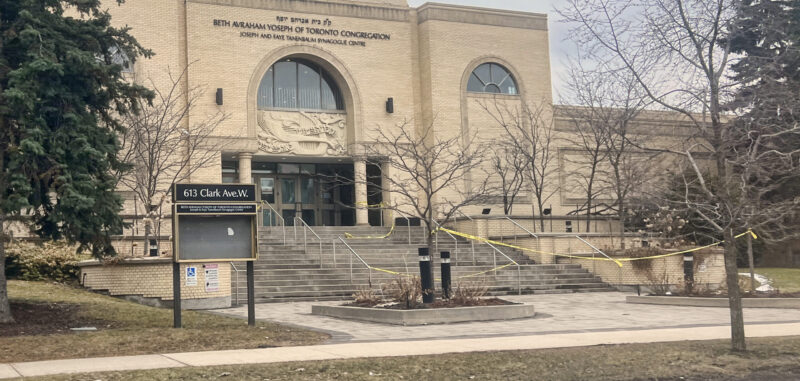
Jewish communal groups as well as a bipartisan group of 150 House members called for an increase in funding for the program of up to $1 billion following several attacks including the car-ramming and shooting attack on Temple Israel in West Bloomfield, Mich., in March.
“We need to make sure that every person who attends not just a Jewish institution, but any religious or community organization — that no one should have to fear being attacked in a public space like that,” Wasserman Schultz added. “We need to make sure that the funding is adequate to keep people safe.”
The Florida lawmaker noted that she hopes Congress can unlock more funding for the program, saying that there is an “appropriations process that is ongoing, so hopefully we’ll be able to.”
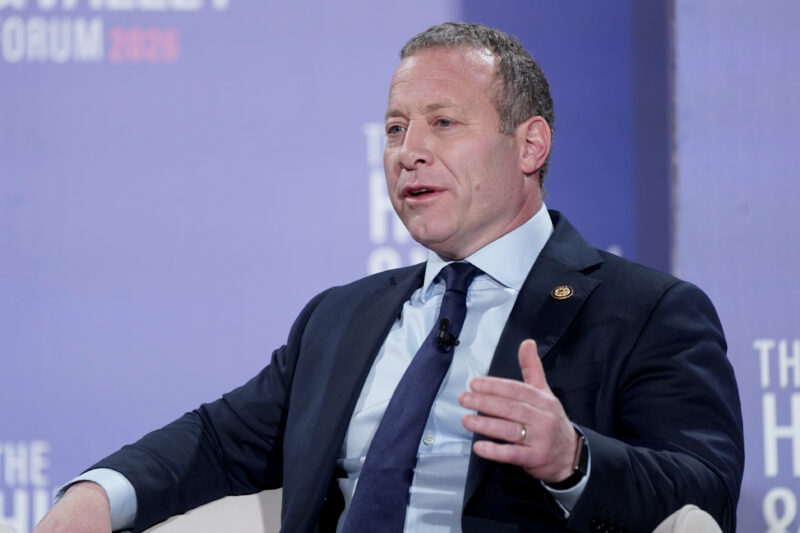
Rep. Josh Gottheimer (D-NJ) told JI that the development is “good news,” adding that “hopefully we [Congress] will get these resources out the door as quickly as possible to protect our religious institutions.”
“It’s better than nothing, right?” Gottheimer said. “It’s good news to get these resources out the door, and we certainly need to get them out the door, and so this is an important step.”
Still, Gottheimer said the amount is not enough. He stated that he plans to “push for a lot more for next year” and that he has “already taken action, written letters and laid down clear markers that we need a lot more.”
“I think we need more because right now we’re running less than 50% fulfilled in terms of [grant] requests,” Gottheimer said. “So, obviously it’s not enough, especially with the threats out there. When you look at antisemitism and the surge in the rates, we obviously need to get a lot more help for our religious institutions so we can ensure religious freedom and protect our synagogues.”
Gottheimer also expressed frustration with what he described as former DHS Secretary Kristi Noem “holding up the resources.” However, he said he hoped that the department’s newly installed secretary, former Oklahoma Sen. Markwayne Mullin, would mark an improvement.
“She [Noem] had put a review on all of the resources, so a lot of the money didn’t get out the door because they were looking at all the procedures and so the money was being held up,” Gottheimer said. “I’m optimistic that our new secretary, and I spoke to him, will get these resources out the door.”
Rep. George Latimer (D-NY) said he was unsure whether the newly allocated amount was the “right number,” but stated that he believed it could have a “positive effect.”
“The synagogues and the Jewish day schools in my district and around me are really concerned about the rise of antisemitism,” Latimer said. “I’m not Jewish myself, but I can see that there’s a pointed effort to try and make people feel afraid in doing things that we believe everybody should be able to do.”
“I suppose you could always use more [funding],” Latimer added. “But if it’s going to go to the right purpose and it’s done without extra strings attached, as you never know how this administration will operate — but I would certainly say that Jewish communities should have this extra support and protection.”
Jewish communal organizations similarly applauded the funding, but urged for more down the line.
“This increase over last year’s funding level is an important and very welcome step,” Nathan Diament, executive director of the Orthodox Union Advocacy Center, said in a statement. “While sadly even more funding is needed for Jewish community security, this increased level of funding will surely help. We will continue working with members of Congress and our allies to fund NSGP at even higher levels in 2027 to meet demand.”
Lauren Wolman, senior director of government relations and strategy at the Anti-Defamation League, called the funding “an important step in protecting vulnerable communities amid evolving threats.”
“NSGP is a proven, lifesaving program, but demand continues to far outpace resources. As antisemitic threats reach record highs, funding must keep pace. Turning our attention to FY27, we urge Congress to fund NSGP at $1 billion,” Wolman continued. “Now that DHS has reopened, we urge the Administration to ensure FY25 funds are disbursed promptly and [open applications for 2026 grants] in a timely manner.”
The Jewish Federations of North America also welcomed the move, saying in a statement that the funding will “restore critical operations at a moment when threats facing Jewish communities and other vulnerable populations remain alarmingly high.” It also encouraged the administration to release funds allocated for 2025 and open applications for 2026, and indicated that the organization would “fight for $1 billion for FY2027.”
More Stories

IN THEIR MEMORY
Administration officials join bereaved families for Oct. 7 commemoration event

TWO JEWS, THREE OPINIONS
Jewish podcast ‘Chosen People Problems’ finds new home with Ark Media

CONTROVERSIAL COCKTAIL
Busboys and Poets CEO Andy Shallal adds ‘Free Palestine’ drink to menu, alienating Jewish patrons
UNSETTLED POLICY
Trump WH sends mixed signals over response to European sanctions against Israeli settlements

PROBLEMATIC POST
Paxton senior advisor endorsed antisemitic slur on social media
DAYLIGHT DEBATE
Brett McGurk pushes back on former Biden WH colleagues who called for greater pressure on Israel
Please log in if you already have a subscription, or subscribe to access the latest updates.
 Continue with Google
 Continue with Apple