










































Republicans claimed Trump’s comments that he ‘will not allow’ annexation only applied to territory not currently controlled by Israel
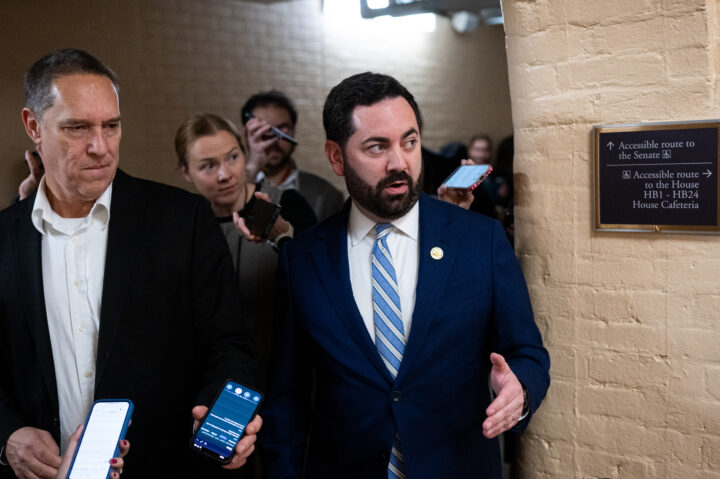
Bill Clark/CQ-Roll Call, Inc via Getty Images
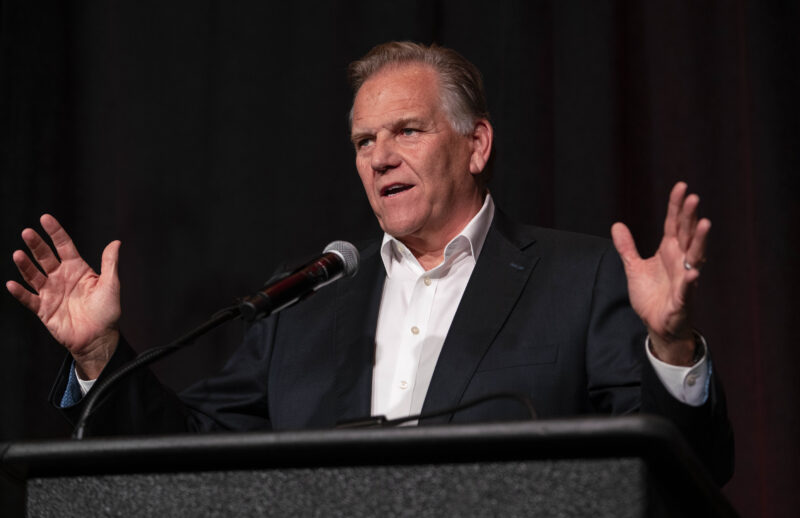
Rep. Mike Lawler (R-NY) speaks to reporters as he leaves the House Republican Conference meeting in the U.S. Capitol on December 10, 2025.


 Add JewishInsider on Google
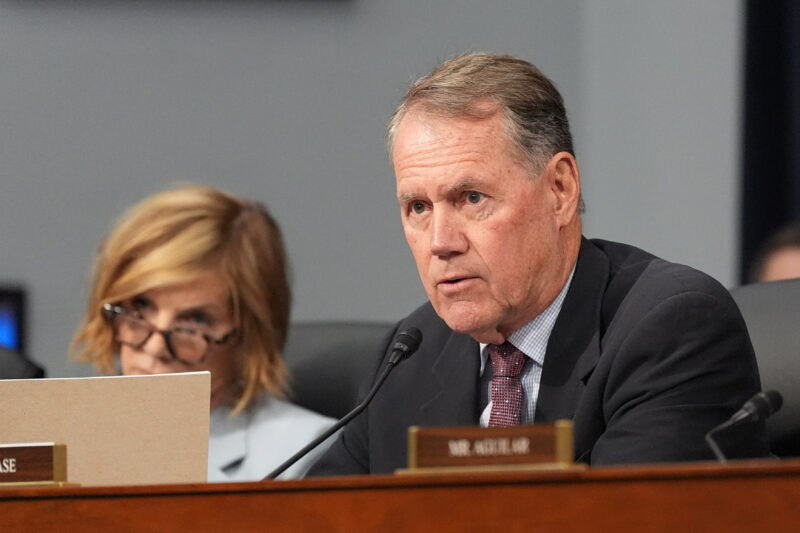
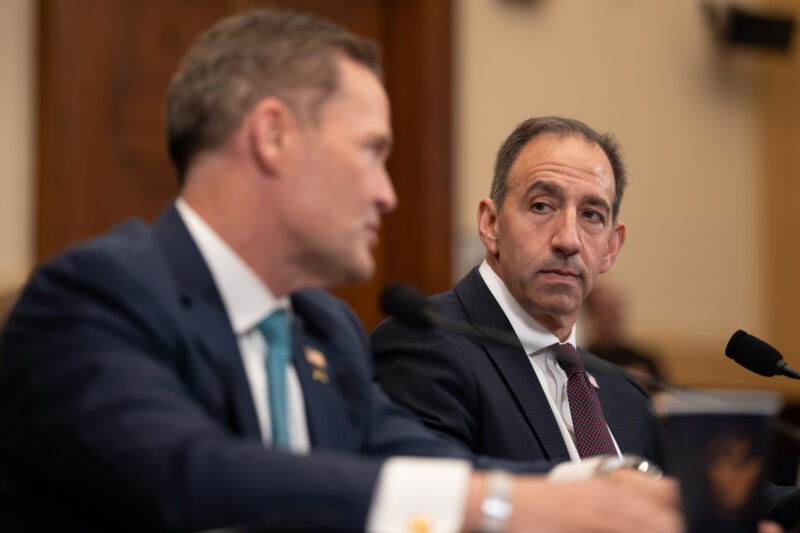
Members of the House Foreign Affairs Committee and expert witnesses on Wednesday debated the meaning and significance of President Donald Trump’s edict in September that he “will not allow Israel to annex the West Bank,” which came amid a reported effort earlier this year by the Israeli government to assert sovereignty over all or part of the territory.
The at-times contentious hearing focused on “Understanding Judea and Samaria: historical, strategic and political dynamics in U.S.-Israel Relations,” referring to the biblical term for the West Bank preferred by members of the Israeli government and also used by Republicans on the Foreign Affairs Committee.
Rep. Mike Lawler (R-NY), the chairman of the Foreign Affairs subcommittee on the Middle East, which hosted the hearing, asserted that Trump was only expressing his opposition to the annexation of territory not currently controlled by Israel.
“When the president is talking about annexing, again, I think it’s important to actually look at the map,” Lawler said. “Sixty percent of the West Bank is under Israeli control.”
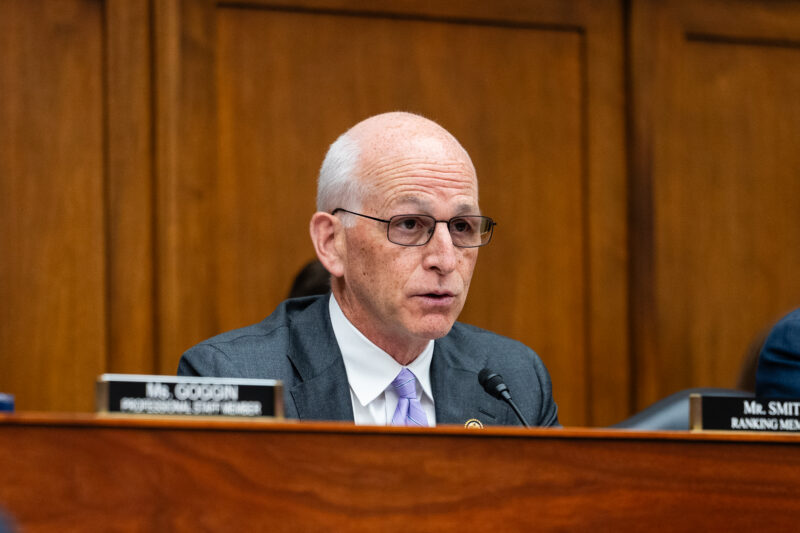
Lawler’s comments came in response to a remark from ranking member Rep. Brad Sherman (D-CA) highlighting Trump’s position on the issue.
“While some have argued that you don’t need to annex the West Bank because it’s already part of Israel, clearly that’s not what President Trump had in mind,” Sherman argued.
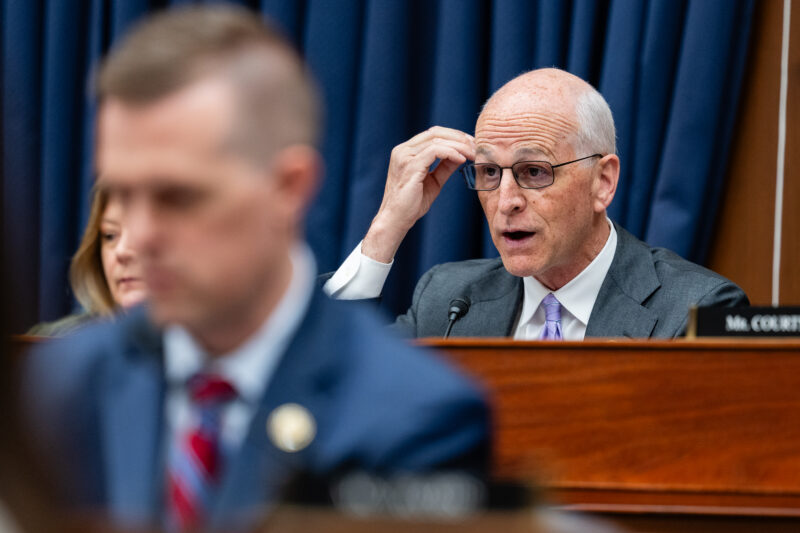
The back-and-forth set off a spat between the two members, with Sherman shouting a demand to be given additional time to respond to Lawler, and Lawler rebuking him in hushed tones as the hearing continued.
Lawler previously organized a private briefing for committee members with U.S. Ambassador to Israel Mike Huckabee on a similar subject.
Rep. Brad Schneider (D-IL) pressed GOP witnesses over their apparent disagreements with Trump on the issue. Like Lawler, they made the case that Trump’s position had been misrepresented.
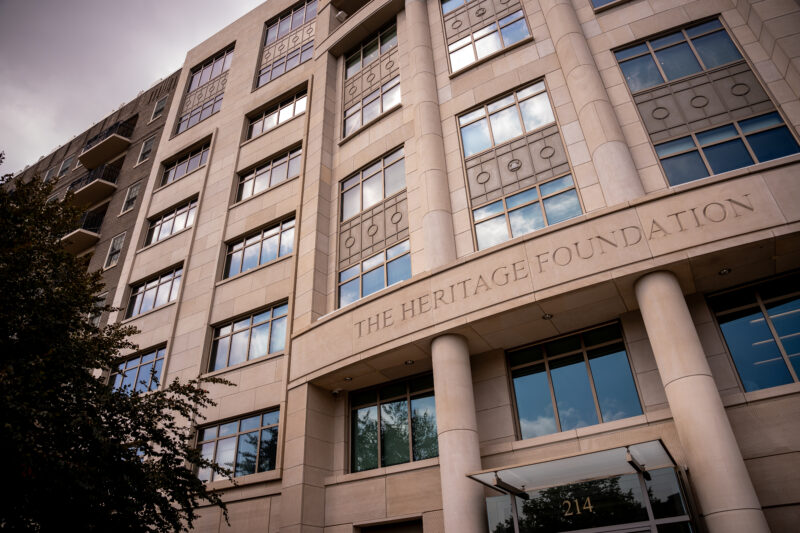
Eugene Kontorovich, a senior research fellow at the Heritage Foundation, argued that Trump’s position and the situation have not been “accurately characterized.”
“There have been proposals to extend Israeli civil law to those areas where Jewish communities are, in other words, to incorporate under Israeli law, parts of Judea and Samaria,” Kontorovich said. “President Trump’s plan is consistent with his 2020 vision for peace, where Israel would, in fact, expand Israeli civil jurisdiction specifically to those areas, and it seems his comments were simply a reaffirmation of that, that’s how I understand it.”
Schneider responded: “I think his comments were clear: ‘There will not be annexation,’ was I believe exactly what he said,” to which Kontorovich interjected, “of the West Bank.”
The Vision for Peace plan that Kontorovich referenced would also have created a Palestinian state. Plans announced by Israeli Prime Minister Benjamin Netanyahu at the time to annex Israeli settlements immediately upon the release of that plan were rejected and blocked by Trump in 2020.
Multiple Democrats along with Democratic witness Jon Alterman, the Brzezinski chair in global security and geostrategy at the Center for Strategic and International Studies, raised comparisons between the political and governance situation in the West Bank and eastern Ukraine — noting that ethnically Russian Ukrainians had a voice and vote in the Ukrainian government prior to the Russian invasion, and that they are now disenfranchised under Russian occupation.
Alterman said that allowing annexation would also weaken the U.S.’ argument against Russia’s attempted annexation of parts of Ukraine.
Democratic lawmakers and Alterman also warned that full annexation would create a politically untenable position for Palestinians in the West Bank, where they are disenfranchised under Israeli control or expelled — a situation that could prompt further international outrage — or have voting rights and would have sufficient voting share to fundamentally change the nature of Israel. Alterman added that the status quo breeds Palestinian resentment and opposition from the global community.
“If we’re honest with ourselves, we need to recognize that not only are there competing claims here, but there are competing legitimate claims, and that’s if we just consider what’s clear from the historical record. When we bring in faith values and interests which aren’t universal, the issue becomes even more complicated,” Alterman said. He urged lawmakers to seek solutions that preserve space for peace between the Israelis and Palestinians.
Rep. Darrell Issa (R-CA) floated the question of whether the U.S. should, instead of a full separation of Israel and a Palestinian state under a two-state solution and in light of the Palestinian Authority’s dysfunction, be “looking for a solution that is not a conventional state, one that has levels of autonomy, levels of governance, but … the borders would inherently be porous, the question of militarization would be dealt with in some ways as though it is one nation and in other ways clearly with a recognition of the facts on the ground.”
Alterman said that would inevitably involve certain compromises to Israel’s own sovereignty and decision making with “some sort of outside [entity].”
Kontorovich argued that such a proposal would make a “lot of sense,” comparing it to the situation in American Samoa, whose residents are not U.S. citizens and do not have a vote in federal elections. Issa responded that American Samoans do “stand among us and have a say.”
Mort Klein, the president of the Zionist Organization of America, repeatedly emphasized that the PA continues to pay the families of terrorists who conduct attacks against Israel and indoctrinates Palestinian children with anti-Israel and antisemitic ideologies, and that Palestinian Arab opposition more broadly is responsible for the lack of peace in the region. Some Republicans echoed the same point.
Klein said that the PA’s actions “make peace virtually impossible until they have a dramatic reformation and transformation of their actions and their regime,” also noting the escalating security threats in the West Bank.
He focused in his opening remarks on the historical Jewish ties to the region and asserted that Palestinian Arabs have no such claims. “If Israel does not control the Jewish heartland in Judea and Samaria, peace will be impossible. Again, Judea and Samaria are Jewish Israeli land, it’s Jewish land, legally, religiously, biblically, politically and morally,” Klein said.
Sherman argued in his opening statement that modern borders should be based on the modern state of affairs, rather than historical Jewish territories — noting that Tel Aviv had not been Jewish territory for most of the Kingdom of Judea’s history, and that defining international borders based on the “maximum you ever controlled in history” would be a ridiculous exercise.
At the end of the hearing, a group of Code Pink activists confronted Yossi Dagan and Yisrael Ganz, the heads of two Israeli regional settlement councils, surrounding and screaming at them. Capitol Police demanded the activists leave the hearing room.
Ganz said in a statement, “We will do everything to apply sovereignty to Judea and Samaria.” Dagan added, “The hearing is a milestone in the cancellation of the lie of the ‘occupation.'”
The comments, made after meeting with Turkish President Erdogan, are the first time Trump addressed the issue in his second term
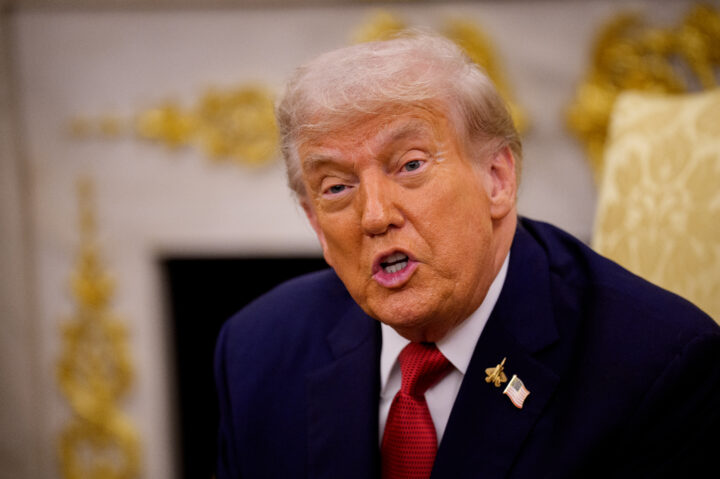
Andrew Harnik/Getty Images
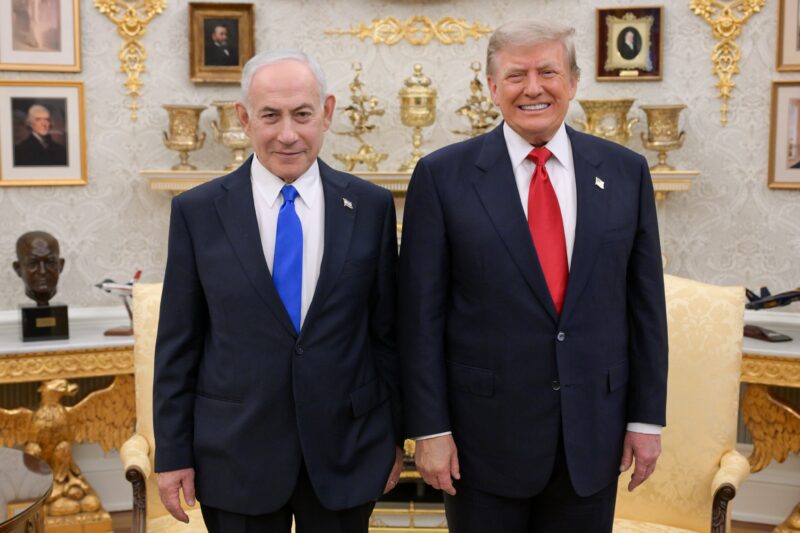
President Donald Trump in the Oval Office at the White House on September 25, 2025 in Washington, DC.
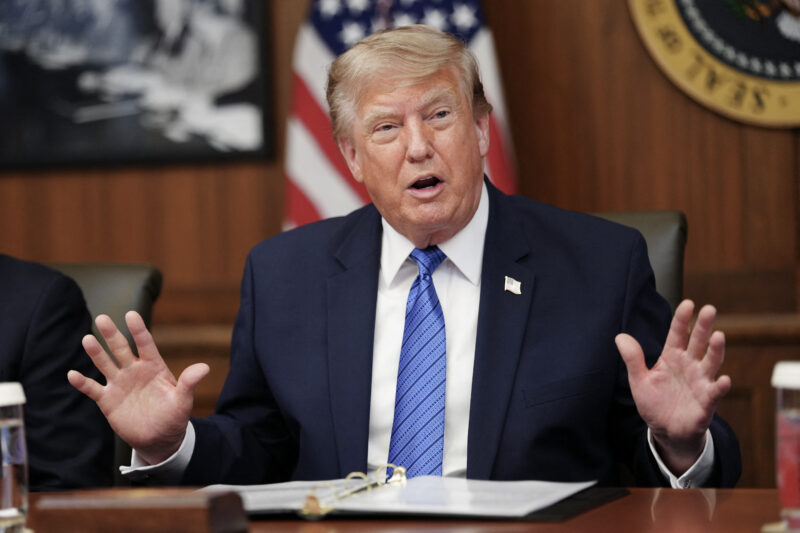
President Donald Trump pledged on Thursday that he will not allow Israel to annex the West Bank, the first time Trump has addressed the matter in his second term.
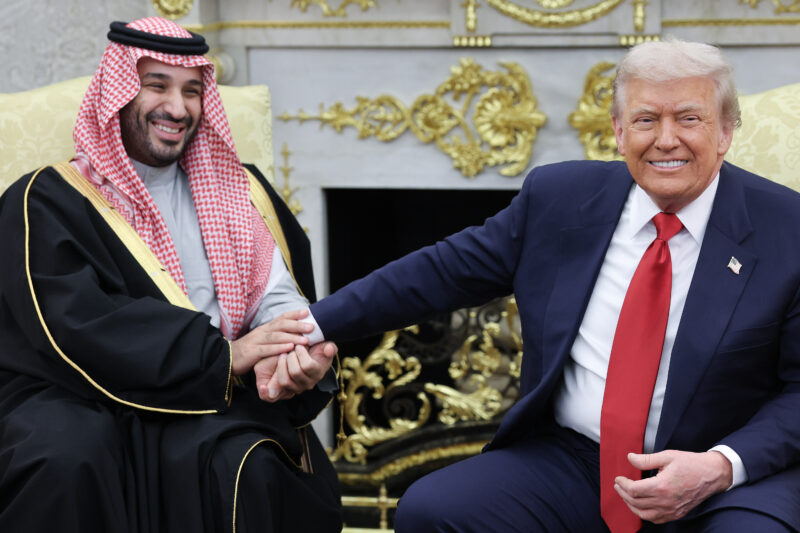
Asked about reports that he told Arab leaders this week he would not permit Israel to make the move, Trump confirmed to reporters in the Oval Office that he opposes annexation. “I will not allow Israel to annex the West Bank, nope, I will not allow it. It’s not gonna happen,” he said, hours after a meeting with Turkish President Recep Tayyip Erdogan.
Asked if he spoke with Israeli Prime Minister Benjamin Netanyahu about the issue, Trump said, “Yeah, but I’m not going to allow it. Whether I spoke to him or not — I did — but I’m not allowing Israel to annex the West Bank. There’s been enough, it’s time to stop now.”
Netanyahu will address the United Nations General Assembly in New York on Friday, and he and Trump will meet in the Oval Office on Monday, for their fourth White House meeting of the year.
In his own General Assembly address earlier this week, Trump pledged his support for Israel and sharply criticized several European nations who had unilaterally recognized a Palestinian state. He did not mention annexation or include any criticism of Israel in his remarks.
Netanyahu has pledged to respond to those moves next week, with annexation of the West Bank viewed as one possible action he could pursue, under pressure from right-wing elements of his governing coalition.
A letter led by Reps. Brad Schneider and Jamie Raskin says such a move would ‘not only violate international law but undermine decades of bipartisan U.S. policy and threaten the progress of the Abraham Accords’
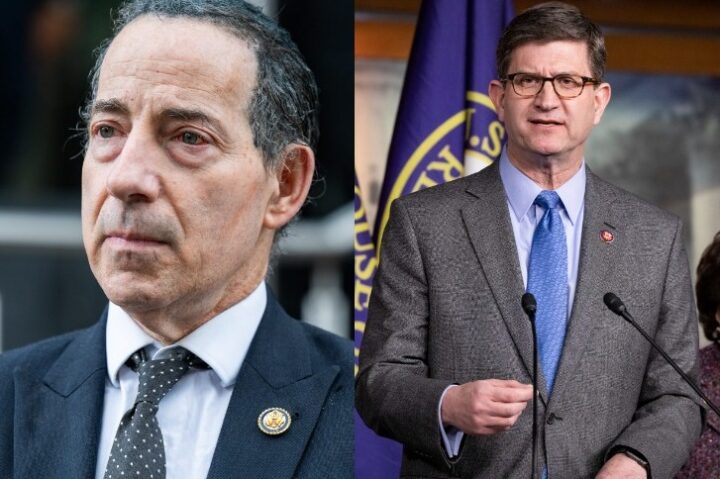
Annabelle Gordon/Bloomberg via Getty Images/Samuel Corum/Getty Images
Reps. Jamie Raskin (D-MD) and Brad Schneider (D-IL)
Most House Democrats, including all of the current and former top Democratic leaders, signed on to a letter on Thursday to Israeli leaders warning them against unilaterally annexing territory in the West Bank or Gaza.
At a time when Democrats are increasingly divided over the U.S.-Israel relationship and its direction, the letter highlights a strong degree of unanimity within the party against annexation, among both Democrats who largely remain supportive of Israel and those who have become more critical over the war in Gaza. President Donald Trump reportedly told Arab leaders on Tuesday that he would pressure Israel against annexation.
“As long-standing supporters of the U.S.-Israel relationship, Israel’s security, and Israel’s future, we are deeply opposed to proposals for unilateral annexation of territory in the West Bank,” the 178 lawmakers, led by Reps. Brad Schneider (D-IL) and Jamie Raskin (D-MD), said. “Such a move would not only violate international law but undermine decades of bipartisan U.S. policy and threaten the progress of the Abraham Accords, which offer Israel and its neighbors the opportunity to build a more secure, cooperative, and prosperous regional future. Unilateral annexation of the West Bank would plunge the region, already reeling from tens of thousands of deaths in the horrific Gaza war, into further chaos and violence.”
The letter is addressed to Israeli Prime Minister Benjamin Netanyahu, Defense Minister Israel Katz and Foreign Minister Gideon Sa’ar. Included among the signatories are House Minority Leader Hakeem Jeffries (D-NY), Minority Whip Katherine Clark (D-MA) and Democratic Caucus Chair Pete Aguilar (D-CA), as well as former House Speaker Nancy Pelosi (D-CA), former Majority Leader Steny Hoyer (D-MD) and former Democratic Whip Jim Clyburn (D-SC).
The signatories highlighted that leaders from the United Arab Emirates have expressed that West Bank annexation would be a red line for them that would endanger regional normalization and integration with Israel.
“Moves toward annexation would undermine Israel’s progress on normalization, prevent international cooperation to rebuild Gaza after this devastating war, risk instability in Jordan, and even further strain ties with key European partners,” the letter continues.
They added that annexation of territory in Gaza, as discussed by some Israeli ministers, “would not only violate international law but exacerbate humanitarian and diplomatic challenges at a moment when broad international support for Israel is at risk.”
The lawmakers stated that they are “convinced that unilateral steps by either side,” including Israeli annexation of territory in the West Bank or Gaza, would be an impediment to direct negotiations between Israel and the Palestinians toward a two-state solution and make a “just, sustainable peace” harder to attain.
“We respectfully urge your government to refrain from steps toward unilateral annexation and to recommit to a negotiated outcome consistent with U.S. policy and the regional vision embodied in the Abraham Accords,” the letter concludes. “That path best safeguards Israel’s security and democratic ideals, advances regional cooperation against shared threats, and offers Israelis and Palestinians the possibility of living side by side in peace and dignity, freed from perpetual attacks on civilians and the threat of war.”
Schneider, a co-chair of the Congressional Jewish Caucus, has been a leader in the moderate pro-Israel wing of the party, though he has expressed concerns about the humanitarian situation in Gaza and previously warned individually against annexation. The progressive Raskin is a co-sponsor of legislation that would severely restrict many critical arms transfers to Israel.
Signatories to the letter similarly span the spectrum from consistent supporters of Israel to vocal critics.
Other signatories include Senate candidates Reps. Angie Craig (D-MN), Robin Kelly (D-IL), Raja Krishnamoorthi (D-IL) and Chris Pappas (D-NH); No. 4 House Democrat Rep. Ted Lieu (D-CA); Jewish Caucus co-chair Rep. Jerry Nadler (D-NY); and Reps. Greg Meeks (D-NY), Adam Smith (D-WA) and Rosa DeLauro, the ranking members of the Foreign Affairs, Armed Services and Appropriations Committees, respectively.
Some of Israel’s most vocal far-left critics, as well as some of its most ardent centrist defenders, did not sign onto the letter.
Some congressional Republicans, meanwhile, have shown signs of increasing openness to recognizing Israeli sovereignty over the West Bank.
Cohen told JI that he’s considering getting into politics but it’s ‘definitely not the time’ with Netanyahu still dominating the scene
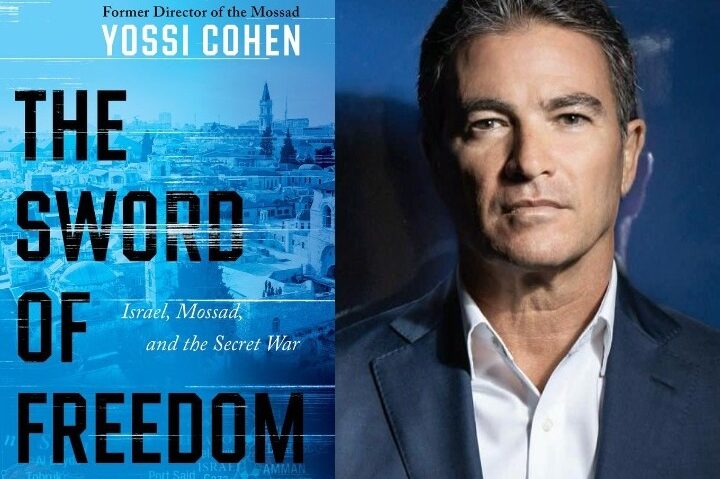
Rami Zarnegar
Book cover/Yossi Cohen
Like any former Mossad chief, Yossi Cohen has long been a relatively elusive figure in Israeli public life. So his recent embrace of the spotlight has left Israeli politicos wondering whether he will run for prime minister in the next election.
While the name “Yossi Cohen” is so generic in Israel that one may think it’s an alias akin to “John Smith,” it is, in fact, the real name of the intelligence officer who was nicknamed “Callan” for his favorite British spy show, and “the model” for his dapper style and perfectly-gelled coif. He first received public attention as deputy Mossad chief known only as “Y,” and emerged from the shadows with his real name and face in 2013 when Israeli Prime Minister Benjamin Netanyahu appointed him national security advisor. Cohen was appointed head of the Mossad two years later, a job he retained for six years.
Cohen received attention for commanding ambitious Mossad operations, such as smuggling Iran’s nuclear archive to Israel, and for Netanyahu reportedly naming him as one of his possible heirs, but he rarely gave interviews — until now.
Cohen has been on a Hebrew media blitz ahead of Tuesday’s release of his new book, The Sword of Freedom: Israel, Mossad and the Secret War, in Hebrew and English.
The book is a mix of memoir, in which he discusses becoming the first kippah-wearing graduate of the Mossad cadets’ course and his undercover missions, recruiting spies within Hezbollah and the Iranian nuclear program, as well as his rise to head the organization and lead major operations. It also includes commentary on recent events, including the failures of the defense establishment — and less so of politicians, in his description — on Oct. 7, 2023, the ongoing war and hostage negotiations. Cohen laments that things would have gone better if his advice in past years had been heeded.
It reads, in many ways, like the kind of book a politician would publish before a big run, to let potential voters get to know him — albeit with the much more exciting elements of spycraft.
Yet, in an interview with Jewish Insider last week at his office in a Tel Aviv high-rise, where Cohen’s day job is representing the Japanese investment holding company SoftBank in Israel, he dismissed the idea that his book was the first step in a political campaign.
“That was not the reason for me to write the book,” he said. “I started writing the book something like three years ago, much earlier. I decided to [publish the book] now, because I believe that now is the time … Since I started the book we had the judicial reform, the seventh of October, a war against Hezbollah and the Iranian events. Each of those chapters had to be updated.”
Still, Cohen added, “I can’t say that one day it will not serve my political goals if I will decide to go into politics.”
Thus far, Cohen has kept politics as an “if.” In the past, it was a “no,” he said, but now, he’s thinking about it.
“I am not entering any politics right now,” he clarified. “I stay uninvolved in this kind of politics because nothing is happening. The entire Israeli political system is a little bit stuck. I’m not assessing that any kind of election will happen before the end of next year, November 2026 as planned,” when the next Israeli elections are scheduled to occur.
Cohen said he does not have a team ready for a political campaign, and that all he is doing currently is promoting his book.
The former Mossad chief said that “I was always a Likudnik,” identifying with ideas of the party’s ideological forebear Ze’ev Jabotinsky, but “all options are open” as to whether he would join an existing party or start his own.
He would not join Likud in its current iteration unless it is “reshaped,” he said, in an apparent reference to the vocal populism from within the party’s ranks in the Knesset.
“I don’t want to criticize people personally … but it’s a different party today. It’s not the party that I grew up on. It’s so totally different.”
As to whether he would wait for Netanyahu to leave the political scene, Cohen said, “Definitely this is not the time. …Currently, I am staying in business, 100%.”
Cohen and Netanyahu have not spoken in over a year and a half, when several months into the war the former intelligence chief warned the prime minister that senior defense figures may try to manipulate investigations into the failure of Oct. 7 to exonerate themselves.
Despite the long disconnect, Cohen said that there is no rupture between them, because they had an excellent working relationship, but they were not personal friends. He noted that before the war they had not spoken for a long time; Netanyahu offered him the role of defense minister in late 2022, but Cohen could not legally take it because of a required cooling-off period between serving as a senior defense officer and entering politics.
Cohen has somewhat shielded Netanyahu from blame for the failures surrounding the Oct. 7 attacks, referring in his book to the security establishment’s failure and asserting that “there is no one else to blame.”
He clarified in his interview with JI that “the political leadership always has responsibility” for events such as Oct. 7 and called for a state commission of inquiry to be established, something that Netanyahu has sought to avoid.
“We must make sure to investigate what has to be investigated,” Cohen said. “The intelligence level was poor. It was either not gathered properly or not interpreted properly, but the result was super poor. We didn’t give the State of Israel any alerts about a major attack. … We didn’t have any workable defense lines operating correctly at our borders.”
“There’s the Shin Bet and IDF intelligence who have to know these things, and since they didn’t, and they didn’t push back the enemy when it entered the State of Israel or counter the enemy before it entered Israel, that’s a failure. You don’t need an investigation to know that. Then, of course, I think that the government was responsible for everything that happened under its auspices,” he said.
Soon after Oct. 7, Netanyahu tasked Cohen with trying to find a way to get Palestinian civilians out of Gaza so Israel would be able to fight Hamas with fewer civilian casualties.
“The Mossad and I were trying to convince [Egypt] to let the Palestinians leave, even for a short time, only the civilians … without anything, no cellular, no electronics, no armaments, no physical threats, to the Egyptian side,” he recalled. “Take them into the Sinai Peninsula for six months, one year at a time, a million or a million and a half people. …That was the plan. It didn’t work because [Egyptian President Abdelfatah] Sisi and his consultants said it will cause a kind of revolution in Egypt because of the hatred of Hamas…and their [affiliation] with the Muslim Brotherhood.”
Nearly two years later, Cohen says “it’s hard to explain why … the world does not really embrace any Gazan immigrants. Indonesia, Malaysia, Qatar even, or Egypt and Libya — a long list of Muslim countries — could say ‘I would take 50,000,’ ‘I would take 100,000,’ ‘Come live with us.’ No one said that, not even Muslim countries. Even if … they would all be sent back home.”
Cohen said the story demonstrates the lengths to which Israel went to protect Gazan civilians from the war.
“Israel does not mean to harm civilians,” he said. “We do not starve them, we do not fight a war against any of the civilians. We keep the international war laws very tightly. But now they’re in [Gaza] and we can’t do much. We try to help them, but it’s a war zone. What I was trying to do is send them away from a war zone.”
As to how the war in Gaza should end, “the best case scenario should be connected to a hostage deal. If there is a hostage deal today, Israel should take it,” he said, days before Israel attempted to strike Hamas leaders in Qatar, which has mediated the hostage and ceasefire talks.
While Cohen said he is not privy to the details of the talks, he said “if there is a deal that gets some of our hostages home and for this we have to pay a price of pausing our military action as we did in the past, I will be very much in favor.”
At the same time, he said “the State of Israel cannot afford to not complete the defeat of Hamas.”
Cohen said he did not have an answer as to who should administer Gaza after the war. He dismissed the control some Gazan families have of small areas, saying “it’s two and a half people … Someone has to take care of them, to supply them with … social services, health services.
He was, however, certain that the Palestinian Authority should not be involved, because it is not capable of managing Gaza. “We tried that,” he said, referring to Hamas deposing the PA in Gaza in 2006. He also noted that Israel has been protecting PA President Mahmoud Abbas: “We’re fighting for him and with him against Hamas in his territories.”
Cohen wrote in the book about his involvement in another element of the war in the past two years: the pager attack in which Israel detonated hundreds of beepers belonging to Hezbollah terrorist operatives in Lebanon.
“It started 25 or so years ago, when I was the head of a division in the Mossad,” he recounted. “We understood … there is something new that we can do, and that is selling to our enemies tampered, manipulated equipment. That is the family of the pagers and walkie-talkies.”
One of the early operations in that vein was the sale of a special calibrated table sold to Iran for use in its nuclear program, which later exploded, but the pager operation was the largest in magnitude. Other tampered equipment was used for surveillance or for tracking locations.
“These are things we learned to do 20 years ago,” he said. “Building up this kind of relationship with the buyers is something very hard to do because they check you … they go into everything, so you have to be real. The concept was invented, and now you see the results.”
Cohen said that the IDF and Mossad “did a beautiful job” in the 12-day war against Iran in June: “We prepared a lot of capabilities inside Iran to allow for that and it was operated correctly during the war.”
Israel must always be prepared for the next round against Iran, he added.
“We’re not sure that Iran will not go back and try to enrich uranium again,” he said. “They claim that they can rebuild their sites …They [the West] said the destruction was huge, and I believe the Western side on that. Nevertheless, if they [rebuild] and there is a threat coming from that direction, the only thing that I can suggest my government and the administration [do] is to attack it.”
Cohen frequently lamented in his book that the Israeli defense establishment is insufficiently aggressive and overly cautious.
The former Mossad chief said he felt that his “responsibility was to counter our enemies brutally. If I see terrorism, I have to counter it. If I see Iranian nuclear sites, I have to counter them. If I see someone anywhere, anyhow trying to plan something against the State of Israel, I have to counter it. And I did not always feel that this was the methodology being practiced in other bodies.”
By not nipping growing threats in the bud, Cohen argued, Israel allowed them to grow to a magnitude that it became too hesitant to act against.
The war in Iran, however, was an example of a positive change, Cohen said.
“I think that [Eyal] Zamir as [IDF] chief of staff is doing an amazing job,” he said. “He’s much more aggressive. He’s telling the government … ‘Yeah, there will be some missiles coming back to our side, but we can deal with it.’”
“Now, on the Iranian side, they know we can do it and we may do it again,” Cohen added.
Cohen has been deeply involved in Israel’s unofficial relations with Arab states, and said he is still optimistic that Saudi Crown Prince Mohammed bin Salman will seek normalization with Israel, but only after the war ends.
“They cannot make a peace treaty with a country at war. It doesn’t work in the Muslim world. … He would be very cautious entering these kinds of negotiations right now, because people are saying about Israelis, ‘Look what they do to our brothers in Palestine.’ But the minute the whole war will be over, I expect that he will sign an agreement with us,” Cohen said.
As to the Saudi demand for concrete steps towards Palestinian statehood in exchange for establishing diplomatic relations with Israel, Cohen said “a Palestinian state is something that is not realistic anymore,” again citing the PA’s inability to govern Gaza.
At the same time, Cohen opposed Israeli annexation of parts or all of the West Bank and said he finds it unlikely that the government will do it.
“Countries that have an agreement with us don’t want that to happen because it kills the idea of any future Palestinian negotiations and they can’t live with that,” he said.
Cohen posited that Israel will not annex parts of the West Bank because it “closes the door” on an eventual arrangement with the Palestinians.
“The reality is that since 1967, we haven’t annexed anything in the West Bank, right?” he said. “And why is that? … Because we want to leave a door open for negotiations with the Palestinians. That is why any government, even the right of [Menachem] Begin and Netanyahu, have not annexed anything in the West Bank.”
Cohen predicted that will continue to be the case for decades.
“I’m not sure how long it will take to create something better with the Palestinians that we see today, that will transform them into a friendly country and territory. They’re a deadly enemy, this is what we have, even in the West Bank. And on the other hand, this is territory that we cannot confiscate.”
“I think the status quo should be kept,” he added.
Early in the book, Cohen expressed his appreciation for Russian President Vladimir Putin, calling him “a deeply strategic thinker and natural leader,” and in the interview last week, he stuck with that position, despite the ongoing war in Ukraine and Russia’s turn away from Israel and alliance with its enemies in recent years.
Cohen said that “many things that the State of Israel has done with Putin are unknown to the public. When I stated that, I based it on things that we have done with the Russian administration for many years, and Syria is an example,” referring to the deconfliction mechanism between Jerusalem and Moscow when the Russian Army was in Syria to prop up then-President Bashar al-Assad.
“The only mediators [between Israel and Syria] were the Russians, and what we saw happening was that the Iranian Revolutionary Guards and Hezbollah terrorists were coming down to our borders,” Cohen recalled. “We didn’t want that, and we couldn’t speak to Hezbollah or to the IRGC. So the only one that was taking part in these negotiations was Putin, who eventually pushed [Iran-backed troops] back 40 kilometers. … We needed him to be on our side, and he was.”
Cohen also spoke of Russia finding and returning the body of IDF soldier Zachary Baumel, which had been missing in Syria since 1982.
“The operation that [Putin] conducted inside Syria … was amazing. I was there in the Russian Ministry of Defense in a ceremony where we got the body of an Israeli soldier to be brought back to a Jewish grave… I was in Moscow and Jerusalem on the same day. We had a ceremony late in the afternoon to bury him. I was involved in looking for his body my whole life, and here Russia did it for us. … That’s a big thing,” Cohen said.
Cohen also mentioned the criticism of Israel soon after Russia’s invasion of Ukraine. “Israel cannot fight all wars. [The Biden administration] said we have to support Ukraine with more weapons. Come on. If you want to support Ukraine with more weapons, you’re welcome to do that. I mean, Israel has other interests in the region, like with Russia. [Israel is] a small country at the end of the day … and very vulnerable.”
When confronted with the idea that American audiences may not appreciate his praise of Putin, Cohen said “you don’t have to agree with everything Russia does, and they will conduct their own policies if you agree to it or not.”
Israel needs to “negotiate, engage with leaders on the other side, to make sure that good things happen,” Cohen said. “This is what I cherish, the way President [Donald] Trump conducts things with Russia, because disengagement with them will not make the war [in Ukraine] end just because you wish for it to end. … You have to know how to conduct your international relationships, and somehow you have to conduct them with your enemies … that are not in line with your values.”
Asked why he first wrote his book, together with a team, in English and then had it translated into Hebrew, Cohen said that the American audience is important to him because “America is the only friend we have” in Israel.
The book, he said, “is not only about me, it’s about the world and international relationships, and I thought America is the right place to [publish] that first.”
In addition, Cohen said he wanted to communicate to the Jewish communities in the U.S. and other countries “to tell them what the State of Israel is and how important the relationship with Jewish communities is to me. They are very dear to me. … I know there is a lot of work that’s missing recently with the Jewish communities in the U.S. and I want to be a positive player.”
The new regional dynamics have shifted how Israel sees its role in a volatile arena

Nikos Oikonomou/Anadolu via Getty Images
Lana Nusseibeh, Assistant Minister for Political Affairs in the Ministry of Foreign Affairs of UAE, and Ambassador and Permanent Representative of the UAE to the UN, New York (C) attends the hearings on the advisory proceedings of the International Court of Justice (ICJ) on the legal consequences of Israel's practices in the Palestinian territories in The Hague, Netherlands on February 21, 2024.
Flashback to 2020: As Israel mulls annexation of the West Bank, a prominent Emirati official communicates to an Israeli outlet that such a move could have disastrous consequences for Israel’s positioning in the region.
“Annexation,” UAE Ambassador to the U.S. Yousef Al Otaiba wrote in a Yediot Ahronoth op-ed in June 2020, “will certainly and immediately upend Israeli aspirations for improved security, economic and cultural ties with the Arab world and with UAE.”
Al Otaiba’s op-ed was part of the groundwork laid for the Abraham Accords, announced less than two months later and signed in September 2020. With the normalization agreement in place, Israel’s annexation plans were shelved as it deepened its relations with the UAE and Bahrain, the original signatories to the landmark deal.
Five years later, senior Emirati diplomat Lana Nusseibeh, who previously served as Abu Dhabi’s envoy to the United Nations, is issuing a similar warning.
“Annexation would be a red line for my government, and that means there can be no lasting peace. It would foreclose the idea of regional integration and be the death knell of the two-state solution,” Nusseibeh told The Times of Israel earlier this week.
The five years between Al Otaiba’s op-ed and Nusseibeh’s comments have seen seismic shifts in the region: the Israel-Hamas war and the degradation of Iran’s nuclear capabilities and its regional proxy network, particularly with the collapse of the Assad regime in Syria. Israel has shown itself to be the dominant military player in the region, even as it finds itself on the receiving end of widespread criticism across the Middle East and beyond over its war against Hamas in Gaza.
But they have also seen the rise of the Israeli far right as a more significant player in the country’s politics. The ascensions of Finance Minister Bezalel Smotrich and National Security Minister Itamar Ben-Gvir have paved the way for a renewed Israeli effort to annex broad swaths of the West Bank, five years after plans to do so were derailed by peace efforts.
Smotrich, speaking at a press conference on Wednesday, announced plans to annex 82% of the West Bank and approvals of settlement expansion that are explicitly meant to thwart the creation of a Palestinian state. The issue is the focus of high-level talks in Jerusalem that are a response to a renewed global push — led by France and Saudi Arabia — for Palestinian statehood recognition.
While Nusseibeh’s warning could be intended to hold Israel back from making significant territorial claims, it’s unclear if her words will have the same impact. The new regional dynamics have shifted how Israel sees its role in a volatile arena, and Israel’s isolation on the global stage has deepened the us-against-the-world sentiment felt across Israeli society.
Israel’s annexation plans could also impact potential normalization with Saudi Arabia, with which Jerusalem was close to forging ties before Hamas’ Oct. 7, 2023, attacks. Discussions of a massive Saudi-U.S.-Israel “megadeal” that would normalize ties between Jerusalem and Riyadh have been tabled for months and appear unlikely to restart. Saudi Arabia has not weighed in on Smotrich’s most recent plans, but has expressed that normalization will not be considered while the war in Gaza rages on.
What could happen is something approaching a compromise, in which Israel makes some territorial claims — whether that’s in the Jordan Valley or in the E1 corridor — that fall short of Smotrich’s plan to annex the vast majority of the territory.
The UAE’s carrot-and-stick approach was effective in 2020. But in a new political landscape, it’s unclear if it will be as successful a second time.
A lack of a ‘day-after plan’ and an unwillingness to address threats before they grew left Sharon’s 2005 promises unfulfilled. What has Israel learned since then?

AP Photo/Emilio Morenatti
A bulldozer breaks through the main gate as troops force their way into the Jewish settlement of Netzer Hazani, in the Gush Katif bloc of settlements, in the southern Gaza Strip, Thursday Aug. 18, 2005.
Twenty years ago this month, Israel dismantled 21 settlements in the Gaza Strip, forcing 8,000 Israelis to evacuate and demolishing their homes, in what was known as the disengagement. That process was met with mass protests on the streets and the splintering of the Likud party, whose leader, then-Prime Minister Ariel Sharon, initiated and oversaw the disengagement.
While Sharon did not promise peace as a result of the disengagement, the plan was presented as a move to make Israel more secure, while fewer soldiers would have to die protecting a small number of residents in the Gaza Strip. The prime minister and his supporters said that if even one rocket was shot from Gaza after the pull-out, Israel would respond militarily. They also promised that the disengagement would ensure that “this whole package called the Palestinian state, with all that it entails, [would be] removed indefinitely from our agenda … all with a presidential blessing and the ratification of both houses of Congress,” as Sharon’s senior advisor, Dov “Dubi” Weisglass, put it at the time.
Two decades later, Israel is fighting its longest war in Gaza, after the Oct. 7, 2023, massacres and attacks perpetrated by the Hamas terrorist organization that has controlled Gaza since 2006. In the interim years, Hamas and other Palestinian terrorist groups in Gaza shot hundreds and sometimes thousands of rockets at Israeli population centers each year, prompting five major Israeli military operations in Gaza.
As to Weisglass’ 2004 promise that international pressure to reach a two-state solution would be put in “formaldehyde,” Sharon’s political protege and the Israeli prime minister immediately following him, Ehud Olmert, offered the Palestinians a state in 2008. Last week, 11 countries announced their intention to recognize a Palestinian state.
Key figures from that period told Jewish Insider that the Israeli government’s failure to formulate a day-after plan for Gaza — a criticism that has been leveled at Jerusalem in the current war — is in part to blame for the unfulfilled promises of the disengagement.
Gilad Erdan, a former senior Israeli cabinet minister and ambassador to the U.S., was a freshman Likud lawmaker when the disengagement was announced, and became a leading figure in the party’s rebellion against Sharon, which then-Finance Minister Benjamin Netanyahu — who voted in favor of the disengagement plan in early key votes — joined at a later stage.
Erdan noted to JI that Sharon not only claimed the disengagement would improve Israel’s security, he said that “if Israel doesn’t take this step, there will be other diplomatic plans [that the world will] try to force on Israel, and this step will free us of pressure from the international community. It’s clear that it didn’t reduce pressure, it increased it.”
“What happened then, and is still the case now, is that Israel didn’t have an alternative plan on the table, whether for the coming few years or the short term,” Erdan said. “This is something to consider as a lesson of the disengagement.”
“I think a Palestinian state is now off of the agenda for many years … Something we can consider a lesson of the disengagement is that we should say no withdrawals, no unilateralism, no to a Palestinian state. I think those lessons were learned over the years at a great cost in blood,” said Gilad Erdan, who was a freshman Likud lawmaker when the disengagement was announced, and became a leading figure in the party’s rebellion against Sharon.
Israel now has “an opportunity to present a plan … that puts Israel’s security and our right to the land at the forefront, but we are not presenting any diplomatic plan for the world to discuss. Even if the international community doesn’t accept it — so what? What looks crazy today could look different in 20 years. It’s not like we’ll have peace with the Palestinians in five minutes,” the former ambassador stated.
Erdan said that the aftermath of the disengagement underscored for Israelis the danger of a potential Palestinian state.
“I think a Palestinian state is now off of the agenda for many years … Something we can consider a lesson of the disengagement is that we should say no withdrawals, no unilateralism, no to a Palestinian state. I think those lessons were learned over the years at a great cost in blood,” he said.
Elliott Abrams, who was deputy national security advisor to the George W. Bush administration at the time of the disengagement, told JI that Sharon did have a larger overarching idea behind the move, but subsequent prime ministers did not follow through with it.
“Sharon said at the time that Israel needs to establish its borders, and I think he would have done something … with the West Bank. Whatever the future of Israel is, it doesn’t include Gaza, which has no use economically and no significance religiously,” was the logic, Abrams said.
“Establish a border, build a wall, and maybe something will change in 100 years, but for now, try to have a border for Israel,” Abrams said. “It was a larger plan and then Sharon had his stroke” in December 2005, followed by another in January 2006 that left him in a vegetative state until his death in 2014.
“Sharon refused for domestic reasons to work with the Palestinian Authority at all on Gaza, because it would make it look like a reward,” following the years-long wave of Palestinian terrorism called the Second Intifada, Abrams recalled.
“Sharon wasn’t going to have anything to do with [the PA]; he was just going to leave Gaza,” Abrams said. “It’s a question whether it would have been possible to avoid a Hamas takeover in June 2006, followed by the complete collapse of the PA [in Gaza]. It’s a question worth asking. It is a fact that there was zero coordination.”
Though Palestinian leader Yasser Arafat died after Sharon announced the disengagement, the Israeli prime minister did not reconsider his plan in light of the election of new leader Mahmoud Abbas — who remains PA president 20 years later.
Abrams argued that international pressure was not a major contributing factor to the disengagement, noting that the plan was entirely Sharon’s and not something Bush sought for him to do.
Still, Abrams said that “international pressure to make concessions to the Palestinians is Israel’s predicament. That is simply a fact … I don’t think this is a problem that has a solution. I think it’s a condition.”
“Israelis have to decide when they’re going to say ‘drop dead,’ when they’re going to say politely ‘no, we can’t do that,’ when to take half measures and when they’re going to agree,” he added. “Those questions have not changed much. They get worse for a while sometimes, and then better and then worse again, depending on how successful Arab propaganda campaigns are and how unsuccessful Israel’s campaigns are. It also depends on how strong the support is from the U.S. in resisting the other pressure.”
Erdan similarly said that “Sharon sent Dubi Weisglass to convince [Bush], one of the most supportive presidents ever, to support the disengagement. Bush didn’t want to support it at first … there wasn’t such significant international pressure.”
Rather, Erdan, who was Sharon’s political advisor a decade before the disengagement, said the debate was more of a domestic Israeli one, after Sharon “changed 180 degrees from all of the ideas he had presented to us about security and ideology, Judea and Samaria,” the Biblical term for the West Bank.
The disengagement came after “Israel was under pressure from terrorism,” Erdan said.
“The disengagement was a terrible, historic mistake that inspired the Oct. 7 massacre,” Erdan argued. “It not only gave [Hamas] the opportunity to dig tunnels and arm itself, it gave them the motivation, the desire and the belief that they could do it. That the strong Israel, led by the decorated General Ariel Sharon, retreated unilaterally when facing terrorism strengthened the extremists in Palestinian society and led to the loss of deterrence we experienced two years ago.”
Erdan also argued that the disengagement did not reduce Israeli deaths, saying that the number of Israeli soldiers and civilians killed in attacks emanating from Gaza in 1967-2005, when Israel controlled the territory, was smaller than in the ensuing years 18 years before the latest war.
Abrams pointed out that Sharon and Olmert did not fulfill their promise of striking back if any attacks came from Gaza.
“The problem began very quickly,” Abrams recalled, “because Sharon in the first few months, and then after he had a stroke it was Olmert, never enforced their own statements about Gaza.”
Two Qassam rockets were shot from Gaza into Israel while the disengagement was still taking place, and another 33 during the remainder of that year. From 2005 to 2006, the number of rocket and mortar attacks from Gaza on Israel rose 42% to 1,777. Hamas also began building tunnels into Israel at that time.
Abrams recalled that when Sharon initiated the disengagement and presented it to Bush and then the public, Sharon argued that “if Israel got out of Gaza, there would be no excuse for any attack from Gaza on Israel, and if there were attacks, they would be met with the strongest, most forceful military reaction. It never happened.”
“Don’t let your enemies get into a position where they can do you great harm. That was learned, and that explains the attacks on Hezbollah and Iran. That is the right lesson. That is the lesson Israel did not seem to learn when it got out of Gaza,” said Elliott Abrams, who was deputy national security advisor to the George W. Bush administration at the time of the disengagement.
Israel at the time, he said, “had an opportunity to respond very strongly to Hamas right away, and it would have had considerable American and international support … It was an opportunity that was missed … by Sharon, Olmert and later [since 2009, Israeli Prime Minister Benjamin] Netanyahu. It was a continuing problem.”
Abrams said that after the Oct. 7 attacks, Israel learned at least one lesson it had failed to internalize after the disengagement: “Don’t let your enemies get into a position where they can do you great harm. That was learned, and that explains the attacks on Hezbollah and Iran. That is the right lesson. That is the lesson Israel did not seem to learn when it got out of Gaza.”
“Israel is a democracy and the whole Jewish people debate about everything nonstop,” Erdan said, but “the lessons of the disengagement are growing over the years. It didn’t happen overnight.”
“In the early years after the disengagement, we realized the Palestinians had the ability and desire to launch missiles and rockets, so we can’t live in the delusion that [Gaza would be] the Singapore of the Middle East,” he said. “Only on Oct. 7 did many more people in Israel believe that not only unilateral but any withdrawal is bad. Israelis totally lost trust in the Palestinians and realized that Jewish settlements have a great and significant security value … We cannot only rely on technology and smart cameras; physical presence is essential … I think a lot of us woke up from our delusions on Oct. 7 that withdrawals will lead the Palestinians to reconcile with us.”
Still, Erdan said, “there are people who continue to claim that the price of staying in Gaza would be even higher, so I can’t say all the lessons were learned. With time, more are learned.”
“Having settlers in Gaza [would be] insane. It was a tremendous strain on the IDF. Do we really want to add that strain? It seems insane to me,” said Abrams.
It appears likely from Israeli leaders’ statements and positions in ceasefire negotiations that, at the end of the war, Israel will retain some of Gaza as a buffer zone between Israelis and Palestinians.
Beyond that, many on the Israeli right have called for Israel to retake part or all of Gaza. Some called for annexation as a military tactic to pressure Hamas, which was discussed in recent Israeli Security Cabinet meetings, and others have been calling from the beginning of the war to reverse the disengagement and for Israelis to be allowed to settle in Gaza again.
Abrams said that “having settlers in Gaza [would be] insane. It was a tremendous strain on the IDF. Do we really want to add that strain? It seems insane to me.”
Despite the lack of follow-through to reap the possible security benefits of the disengagement, Abrams said “Sharon was right.”
“First, we need to win the war,” Erdan said. “We are in a different situation today. Israel, unfortunately, already uprooted the [Israeli] towns and we are in a war with consequences for our future. I don’t think bringing the issue of settlements into it now contributes to our effort to win the campaign … We don’t have to give the international community more tools to make the matter of total victory in the war more complex … Israel should look at its interests and its priorities.”
“I personally do not believe that maintaining 7,000 [Israeli] settlers in the middle of 2 million hostile Arabs in Gaza, and using a substantial part of the IDF to protect them, was a sensible plan for Israel,” he said.
Abrams also took issue with the idea of annexing parts of Gaza to pressure Hamas: “It strikes me that that’s not going to move the remaining Hamas leadership living in tunnels in Gaza to agree to let the hostages out. They don’t seem to care about anything. It is truly a death cult … It doesn’t seem to me — putting aside the legality or illegality — that it would work.”
Erdan said that, in principle, he believes “Jews have the right to live anywhere in the Land of Israel, and a solution to a conflict must include the moral principle that every population can choose where to live and the other side must accept it.”
However, he said that Israeli resettlement of Gaza is “not the most urgent or central thing.”
“First, we need to win the war,” Erdan said. “We are in a different situation today. Israel, unfortunately, already uprooted the [Israeli] towns and we are in a war with consequences for our future. I don’t think bringing the issue of settlements into it now contributes to our effort to win the campaign … We don’t have to give the international community more tools to make the matter of total victory in the war more complex … Israel should look at its interests and its priorities.”
Abrams called the idea of maintaining a buffer zone “very sensible to protect Israelis in Israel.”
Erdan also favored Israel retaining a buffer zone in Gaza, because “even if Hamas isn’t there anymore, we don’t know who will be.”
“I don’t think the end lines of the war need to be the Sharon disengagement lines,” he said. “We don’t need to leave the Philadelphi Corridor [along the border with Egypt] and we don’t need the people of Gaza to return to live so close [to Israelis], almost up to my parents’ house in Ashkelon.”
The letter also indirectly referenced a second communique, sent by 12 House Democrats, calling for conditioned aid to Israel

Zeevveez
A group of 41 Israeli former senior security officials have sent a letter of appreciation to Reps. Jan Schakowsky (D-IL), Brad Schneider (D-IL), Ted Deutch (D-FL) and David Price (D-NC), the authors of a letter signed by 191 House members and sent to Israeli leaders expressing opposition to annexation.
“We commend you on building such a broad coalition of Members of Congress to join you in signing this letter,” the Israeli officials wrote in a letter sent to congressional offices Monday and obtained by Jewish Insider. “We consider it a further manifestation of the broad-based support for the kind of Israel we have fought for on the battlefield and continue to strive for, one that is strong and safe, maintains a solid Jewish majority for generations to come, all while upholding the values of democracy and equality as enshrined in our Declaration of Independence.”
The signatories include former Mossad chiefs Tamir Pardo, Danny Yatom and Shabtai Shavit; former Shin Bet heads Ami Ayalon and Yaakov Peri; former Deputy Defense Minister Efraim Sneh, and former top IDF officials. Many of the signatories sent a similar letter to Congress last year expressing appreciation for the passage of H. Res. 246, which affirmed “strong support for a negotiated solution to the Israeli-Palestinian conflict resulting in two states.”
The former officials indirectly referenced a letter sent by 12 progressive Democrats threatening to condition aid to Israel if the government moves forward with a plan to annex portions of the West Bank. “Any perceived erosion, however misconstrued, in these relations and in the ironclad U.S. commitment to the durability of security assistance risks undermining our deterrence,” they wrote in the letter.
Former Under Secretary of Defense for Policy Michele Flournoy told the Israel Policy Forum webcast she is worried about the potential reaction

United States Institute of Peace
Michele Flournoy
Former Under Secretary of Defense for Policy Michele Flournoy warned Israeli leaders not to ignore the objections to West Bank annexation plans raised by nearly 150 Democratic senators and members of Congress.
Flournoy, speaking during a panel discussion on the topic hosted by Israel Policy Forum, suggested that Israeli Prime Minister Benjamin Netanyahu is “playing with fire, not only in terms of fracturing the region and their relationships with Israel, but also fracturing American political support, which would be terrible and disastrous.”
Flournoy — who served in the Obama administration from 2009-2012 —said she worries that if Israel moves ahead with annexation in the coming weeks, some Democratic lawmakers may try to hold up the implementation of the 2016 Memorandum of Understanding between the U.S. and Israel and “decide to hold hostage our security assistance to Israel as a way of protesting Israel’s policies” in the West Bank.
“That may not be the most likely outcome, but it’s not unlikely either,” she suggested. Such attempts, Flournoy cautioned, would undermine long-standing bipartisan support “for critical pillars” of the security relationship with Israel. “That’s what really worries me,” she added.
Former U.S. Ambassador to Israel Dan Shapiro said on the webcast that “while there are voices in both parties that are sounding different notes, I still think there’s a large number of Republicans, as well as Democrats, who adhere to [the] principles that can help reestablish broad bipartisan consensus” on Israel and peace in the Middle East. “I am hopeful that is the case,” Shapiro added, “which gives us a lot to work with if there’s a new administration.”
Sen. Kamala Harris tells Trump that such a move calls into question Israel's 'commitment to shared values of democracy and self-determination'

Perry Bindelglass
A group of Democratic House members are collecting signatures for a letter cautioning Israeli leaders against unilaterally annexing portions of the West Bank. Israeli Prime Minister Benjamin Netanyahu has said that the government could begin annexing territory as early as July 1, though efforts to finalize a plan have stalled in recent days.
The letter, authored by Reps. Jan Schakowsky (D-IL), Brad Schneider (D-IL), Ted Deutch (D-FL) and David Price (D-NC), and shared with Jewish Insider, warns Netanyahu and Defense Minister Benny Gantz that annexation is likely to jeopardize Israel’s warming ties with Gulf states, put Jordan’s security at risk and complicate Israel’s relationships in European countries and around the world. “We do not see how any of these acute risks serve the long-term interest of a strong, secure Israel,” the Democratic lawmakers write.
The letter was distributed to members of the Demcoratic caucus on Monday. JTA first reported the content of the letter.
Earlier this month, House Speaker Nancy Pelosi (D-CA) warned that unilateral Israeli annexation “puts the future [of peace] at risk and undermines our national security interest and decades of bipartisan policy.”
A similar letter from Democratic Senators garnered 19 signatures. The text of the letter, which was updated several times before being sent, cautioned the new Israeli government that “unilateral annexation puts both Israel’s security and democracy at risk” and “would have a clear impact on Israel’s future and our vital bilateral and bipartisan relationship.” Sens. Dianne Feinstein (D-CA), Bob Casey (D-PA) and Tina Smith (D-MN) sent individual communiques to Netanyahu and Gantz, similarly opposing the move. Sens. Michael Bennet (D-CO), Maggie Hassan (D-NH) and Amy Klobuchar (D-MN) addressed the matter in individual letters to Pompeo.
Sen. Kamala Harris (D-CA) sent a letter echoing those sentiments to President Donald Trump on Tuesday. “In recent months, your Administration appears to have given a green light to unilateral annexation, despite the risks to peace and Israel’s security and democracy,” the California senator wrote. Harris suggested that annexation “not only risks Israel’s security, but would also call into question this Israeli Government’s commitment to shared values of democracy and self-determination.”
In the House letter, the lawmakers implore the Israeli government, “as committed partners in supporting and protecting the special U.S.-Israel relationship,” to “reconsider” annexation plans before the target date. “We have consistently endorsed the pursuit of a negotiated peace agreement between Israel and the Palestinians resulting in two states for two peoples and a brighter future for the Israeli people and the Palestinian people. In that vein, we write today to express our deep concern that the push for unilateral annexation of territory in the West Bank after July 1st will make these goals harder to achieve,” the letter reads.
Rep. Yvette Clarke (D-NY) told JI in a recent interview that she would be open to signing such a letter. “While I do not generally believe that strict red lines aid the overriding effort towards a two-state solution, I do believe that there are some issues that have become so politically polarized that they risk politicizing the overall U.S.-Israeli relationship to the detriment of both nations,” Clarke explained.
Below is the full letter:
To:
Prime Minister Netanyahu
Alternate Prime Minister and Defense Minister Gantz
Foreign Minister Ashkenazi
We write as American lawmakers who are long-time supporters, based on our shared democratic values and strategic interests, of Israel and the U.S.-Israel relationship. We firmly believe in, and advocate for, a strong and secure Jewish and democratic State of Israel, a state able to build upon current peace treaties and expand cooperation with regional players and the international community. We have consistently endorsed the pursuit of a negotiated peace agreement between Israel and the Palestinians resulting in two states for two peoples and a brighter future for the Israeli people and the Palestinian people. In that vein, we write today to express our deep concern that the push for unilateral annexation of territory in the West Bank after July 1st will make these goals harder to achieve.
Longstanding, bipartisan U.S. foreign policy supports direct negotiations to achieve a viable two-state solution that addresses the aspirations of both Israelis and Palestinians, and their desire for long-term security and a just, sustainable peace. This position was twice reconfirmed by the U.S. House of Representatives last year. Our fear is that unilateral actions, taken by either side, will push the parties further from negotiations and the possibility of a final, negotiated agreement.
We remain steadfast in our belief that pursuing two states for two peoples is essential to ensuring a secure, Jewish, democratic Israel able to live side-by-side, in peace and mutual recognition, with an independent, viable, de-militarized Palestinian state.
Unilateral annexation would likely jeopardize Israel’s significant progress on normalization with Arab states at a time when closer cooperation can contribute to countering shared threats. Unilateral annexation risks insecurity in Jordan, with serious ancillary risks to Israel. Finally, unilateral annexation could create serious problems for Israel with its European friends and other partners around the world. We do not see how any of these acute risks serve the long-term interest of a strong, secure Israel.
As committed partners in supporting and protecting the special U.S.-Israel relationship, we express our deep concern with the stated intention to move ahead with any unilateral annexation of West Bank territory, and we urge your government to reconsider plans to do so.
28 Democratic senators and 8 Senate candidates in battleground states have publicly expressed opposition to Israeli annexation of parts of the West Bank

U.S. Senate Studio / Gage Skidmore
Minnesota Sens. Amy Klobuchar (D-MN) and Tina Smith (D-MN) have joined more than two dozen Senate Democrats publicly warning Israeli leaders of the implications of efforts to unilaterally annex portions of the West Bank. Israeli Prime Minister Benjamin Netanyahu has said that the government could start annexing territory as early as July 1.
In individual letters sent last month and made public over the weekend, both senators — Klobuchar addressed Secretary of State Mike Pompeo and Smith wrote to Netanyahu and Israeli Defense Minister Benny Gantz — posited that annexation would undermine efforts to attain a two-state solution.
Twenty-eight senators have so far spoken out against the annexation proposal.
Last month, 19 Democratic senators sent a letter to Netanyahu and Gantz urging the Israeli leaders not to move forward with the effort. That letter, which was updated several times before being sent, cautioned the new Israeli government that “unilateral annexation puts both Israel’s security and democracy at risk” and “would have a clear impact on Israel’s future and our vital bilateral and bipartisan relationship.” Sens. Dianne Feinstein (D-CA) and Bob Casey (D-PA) sent individual communiques to Netanyahu and Gantz, similarly opposing the move, and Sens. Michael Bennet (D-CO) and Maggie Hassan (D-NH) addressed the matter in individual letters to Pompeo.
In addition, Sens. Mark Warner (D-VA) and Catherine Cortez Masto (D-NV) issued statements against annexation, and Sen. Chris Coons (D-DE) indicated to Jewish Currents that instead of signing or authoring a letter on annexation, he would “communicate directly with [Israeli] Ambassador [Ron] Dermer and Israeli officials to express his concerns.”
On Monday, eight Senate candidates in battleground states are expected to join the list expressing their strong opposition to such a move. In statements provided to J Street and shared with Jewish Insider, the candidates — Cal Cunningham (North Carolina), Sara Gideon (Maine), Teresa Greenfield (Iowa), Al Gross (Alaska), Jaime Harrison (South Carolina), MJ Hegar (Texas), John Hickenlooper (Colorado), Amy McGrath (Kentucky) and Jon Ossoff (Georgia) — emphasized that annexation would put the future of a two-state solution at risk.
Read their statements in full here.
Earlier this month, House Speaker Nancy Pelosi (D-CA) warned that unilateral annexation “puts the future [of peace] at risk and undermines our national security interest and decades of bipartisan policy.” Presumptive Democratic presidential nominee Joe Biden also came out against annexation, saying it “will choke off any hope for peace.”
“From the presidential nominee to the speaker of the House and from the Senate to the senatorial campaign trail, Democratic leaders have now made absolutely clear that they do not and cannot support unilateral annexation in the West Bank,” J Street President Jeremy Ben-Ami told JI. “For annexation to move forward in the face of this overwhelming opposition would be incredibly harmful to the future of Israelis and Palestinians and to the US-Israel relationship.”
Please log in if you already have a subscription, or subscribe to access the latest updates.
 Continue with Google
 Continue with Apple